

I Inherited My Grandmother's Sewing Business—Then I Found the Hidden Room That Revealed Everything I Knew About My Life Was a Lie
I Inherited My Grandmother's Sewing Business—Then I Found the Hidden Room That Revealed Everything I Knew About My Life Was a Lie
The Weight of Lavender and Silence
The funeral was smaller than I expected. Maybe twenty people scattered across folding chairs under a tent that smelled like wet grass and carnations. I stood there in my black dress—the one I'd bought three years ago for a job interview and never wore again—watching strangers cry over my grandmother while I felt absolutely nothing. Evelyn Mitchell, beloved seamstress, pillar of the community, gone at eighty-three. The pastor said nice things about her dedication to her craft, how she'd altered wedding dresses and hemmed pants for half the town. Sarah Brennan, the neighbor with the curly blonde hair, squeezed my hand and told me Evelyn had once stayed up all night to finish her daughter's prom dress. People kept using words like 'meticulous' and 'devoted' and 'irreplaceable.' I nodded and thanked them and felt like I was watching myself from somewhere else entirely. After they lowered the casket, the lawyer—a thin man with wire-rimmed glasses—pressed the house keys into my palm with an expression I couldn't quite read. Half sympathy, half something else. Warning, maybe. He mentioned a postscript in the will about a blue velvet box, said I'd understand when I found it, and I remember thinking that made absolutely no sense at all.
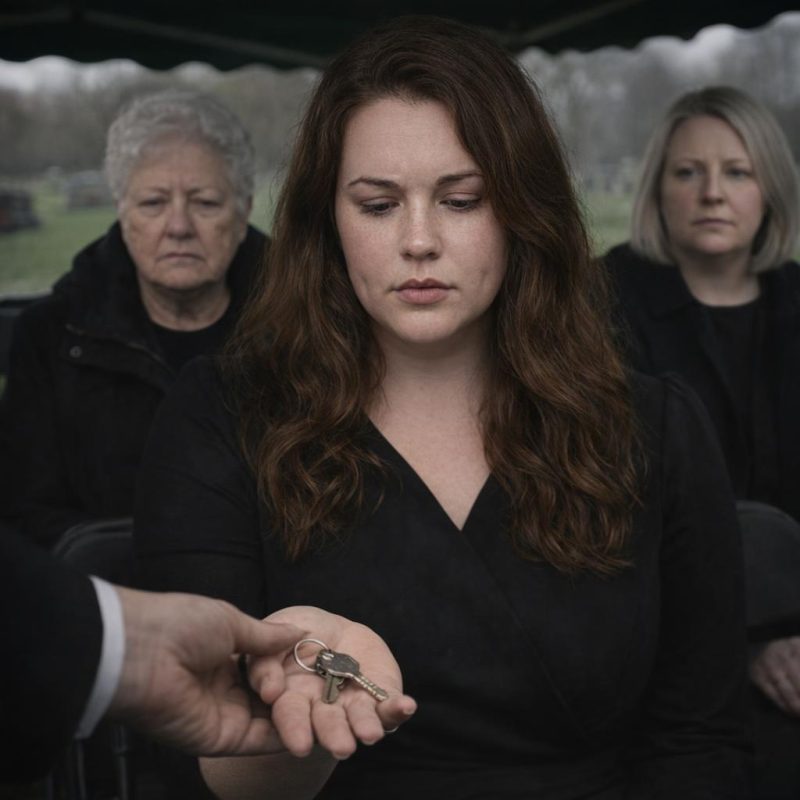 Image by RM AI
The Room That Still Smelled Like Her
I waited three days before I could make myself open that door. The sewing room hit me like a wall—peppermint tea and lavender starch, the exact smell of every childhood visit I'd ever made. Everything was exactly where she'd left it. The industrial serger sat in the corner like a sleeping animal, spools of thread organized by color on the pegboard wall, fabric scraps sorted into clear plastic bins. I stood there breathing it in, trying to feel something other than this weird hollow ache. Sarah showed up around noon with a casserole and that determined helpful energy some people have. She offered to help me sort through things, said it was too much for one person. We started with the easy stuff—buttons, zippers, measuring tapes. Then I found the customer ledger, this thick leather-bound book with Evelyn's careful handwriting filling every page. Names, dates, measurements. Except the measurements were wrong. Where it should have said '34-28-36' or 'size 8,' there were codes. Letters and numbers that didn't match any sizing system I'd ever seen. I figured it was just Grandma's personal shorthand, some system that made sense to her, but something about it felt off in a way I couldn't quite name.
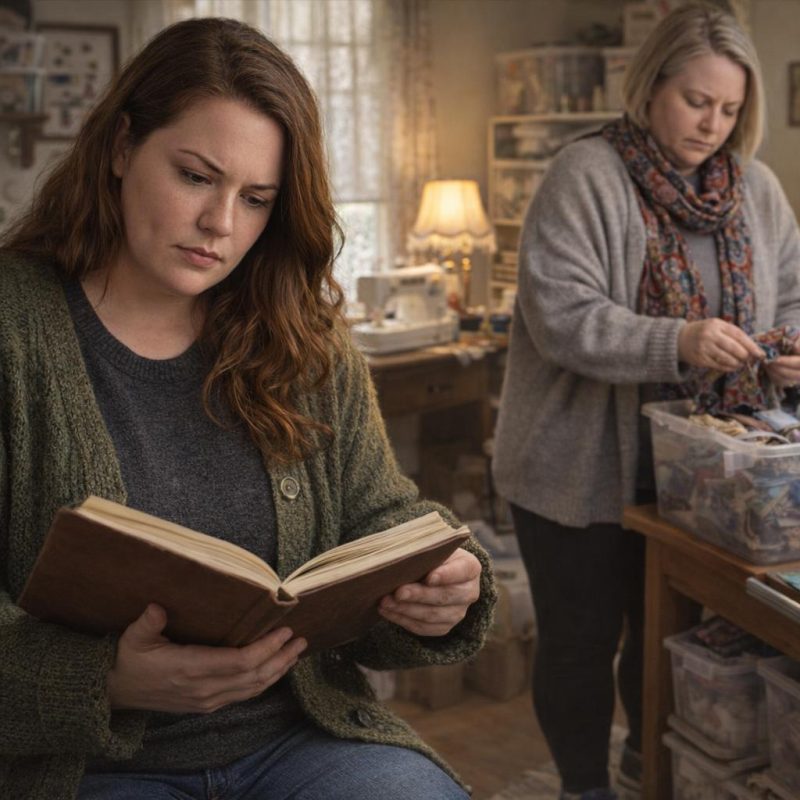 Image by RM AI
The Heavy Things We Carry
Marcus showed up Saturday morning with his truck and that easy smile I remembered from high school. We'd grown up three houses apart, spent summers catching fireflies and winters building snow forts, and somehow he'd turned into this tall, steady presence in flannel and work boots. He took one look at the industrial serger and whistled low. 'That thing weighs more than my motorcycle,' he said, and I laughed for the first time in days. We worked through the afternoon, moving furniture I couldn't budge alone, sharing stories about the neighborhood. He mentioned how Evelyn always seemed to know things before anyone told her—like she'd ask about your job interview before you'd mentioned applying, or have your favorite cookies ready the day you needed them most. 'She was observant,' I said, but Marcus just gave me this look like there was more to it. When we shifted the massive oak cabinet away from the wall, I felt it immediately. The floor gave slightly under my feet, made this hollow sound that shouldn't have been there. Marcus didn't seem to notice, was already talking about coming back tomorrow to help with the attic, but I stood there frozen, listening to that empty echo beneath the floorboards where solid foundation should have been.
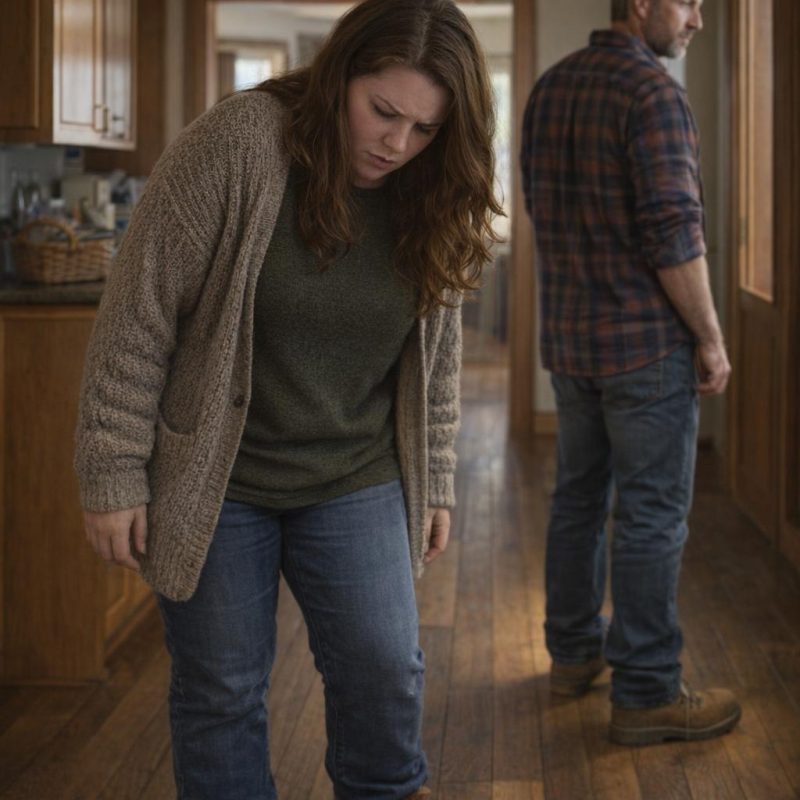 Image by RM AI
What Lies Beneath
I waited until Marcus left before I went back to that spot. Knelt down on the hardwood floor in the fading afternoon light, running my hands over boards that looked perfectly normal but felt wrong. I pressed down and felt them shift, just slightly. There was give where there shouldn't be. I started peeling back the corner of the linoleum near the cabinet—Evelyn had layered it over the original wood years ago, said it was easier to clean. Underneath, the boards looked different. Newer, maybe. And then my fingers found it. Cold metal recessed into the wood, hidden in the seam where two boards met. An iron ring, heavy and deliberate, the kind you'd use to lift something. My heart was doing this weird stuttering thing in my chest. I wrapped my fingers around the ring and pulled. For a second, nothing happened. Then I heard it—the groan of hinges that hadn't moved in God knows how long, the whisper of wood sliding against wood. A section of floor swung open like a door, and I found myself staring down into darkness, at concrete stairs descending into a space that absolutely should not exist beneath my grandmother's sewing room.
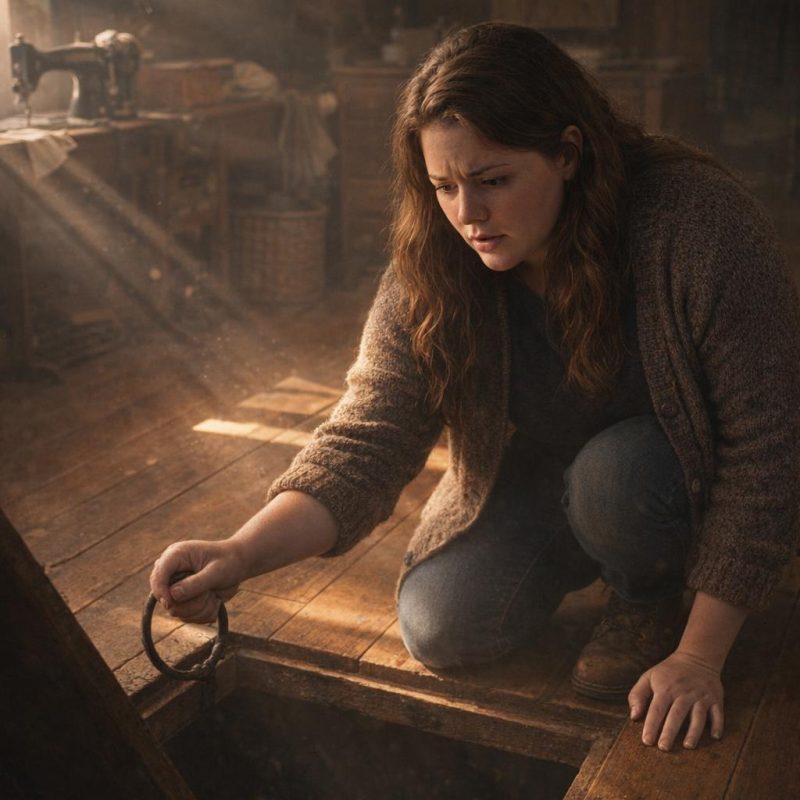 Image by RM AI
The Vault
I grabbed the flashlight from the kitchen drawer, the big Maglite Evelyn kept for power outages. My hands were shaking so badly I almost dropped it twice. The stairs were concrete, industrial, nothing like the rest of the house. Each step down felt like crossing into somewhere I wasn't supposed to be. The temperature dropped with every step—not musty basement cool, but climate-controlled cold, the kind that costs money to maintain. The flashlight beam cut through the darkness and landed on filing cabinets. A steel table. Shelves lined with boxes. This wasn't a crawlspace or a root cellar. This was an office. A workspace. Hidden beneath floorboards and linoleum and twenty-five years of my grandmother hemming pants and taking in waistbands. The air smelled like old paper and something else, something electric and stale. I moved to the nearest filing cabinet, pulled the handle. The drawer slid open with barely a whisper, smooth and well-maintained. Inside were passports. Dozens of them, stacked in neat rows, held together with rubber bands. I picked up the first stack with trembling fingers, and that's when I saw them—different names, different countries, different birth dates, but the faces in the photographs were all variations of the same woman, over and over again.
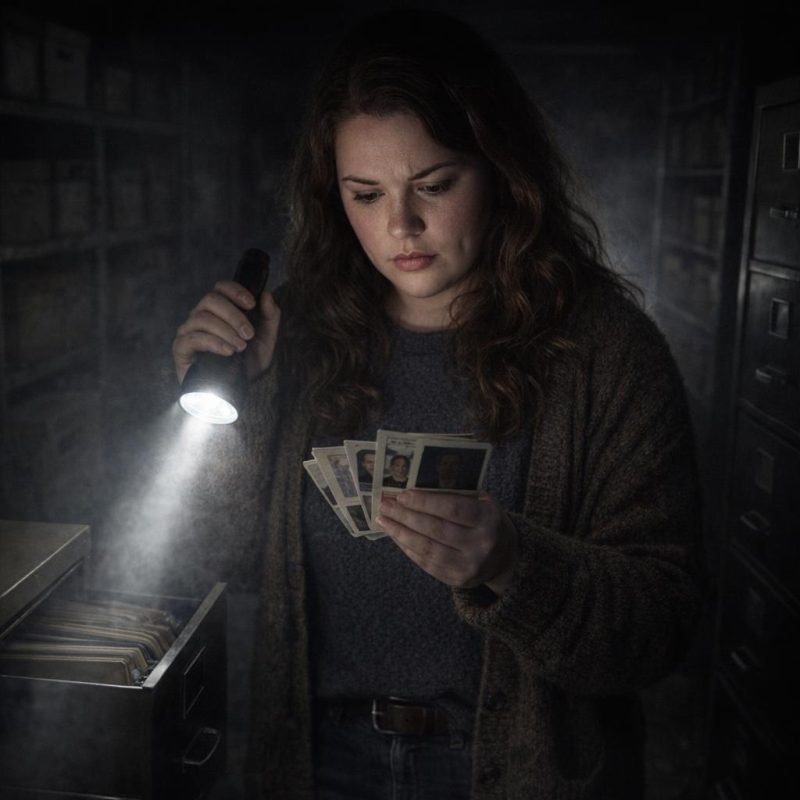 Image by RM AI
A Gallery of Strangers
I spread them across the steel table like I was laying out a hand of cards. Thirty-seven passports. I counted twice. Canadian, British, Australian, German, French. The names were different—Margaret Sutton, Anne Kowalski, Bridget O'Malley, Sophia Bergmann. But the faces. God, the faces. Same bone structure, same general features, just altered slightly. Different hair colors, different glasses, subtle changes in makeup and styling. I opened each one, checked the entry and exit stamps. These people had traveled. Extensively. Europe, Asia, South America. Some passports were nearly full, others had just a few stamps. The dates ranged from the early nineties to just last year. My grandmother had been making dresses and altering hems while running some kind of identity operation in her basement. I felt sick. Dizzy. Like the floor was tilting under me even though I was standing perfectly still. Then I got to the passport near the bottom of the stack. I almost missed it, almost set it aside with the others. But something made me open it. The photograph showed a young woman, maybe thirty, with dark hair and this determined set to her jaw. She had my mother's eyes. My grandmother's cheekbones. And she was traveling under a name I'd never heard in my entire life.
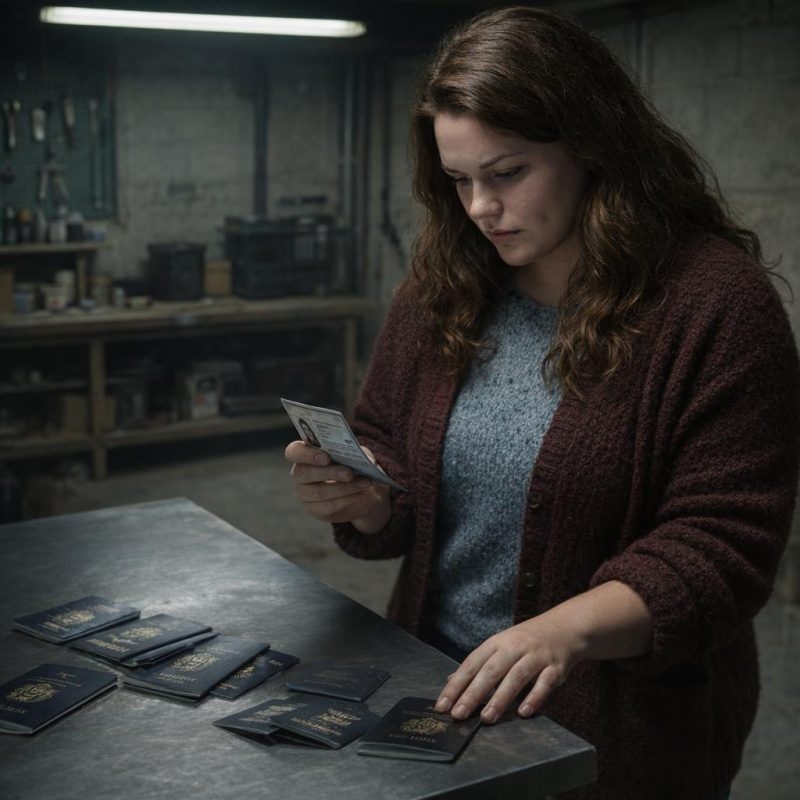 Image by RM AI
The Box of Blue Velvet
That's when I saw it. Center of the table, like it had been waiting for me all along. The blue velvet box from the will. The one the lawyer had mentioned with that strange look on his face. It was smaller than I'd imagined, maybe the size of a hardcover book, with tarnished brass hinges. My hands were shaking again as I reached for it. I expected jewelry, maybe. Bonds or stock certificates or some other inheritance thing that made sense. I lifted the lid. Inside wasn't jewelry. It was letters. A stack of them, maybe thirty or forty, each in its own envelope. Cream-colored paper, expensive looking. They were addressed to me in handwriting I didn't recognize—elegant, flowing script that looked almost old-fashioned. I picked up the first one. The postmark was dated twenty-five years ago. My fifth birthday. The next one, my sixth. I flipped through them quickly, my heart hammering. Every single birthday. Every year of my life. And underneath the letters was a thick manila envelope, sealed with red wax. But it was the letters that held me frozen, because each one was addressed to 'Claire Mitchell' in care of 'Evelyn Mitchell,' and each one had been opened, read, and carefully preserved by the grandmother who'd told me my entire life that my mother had abandoned us both.
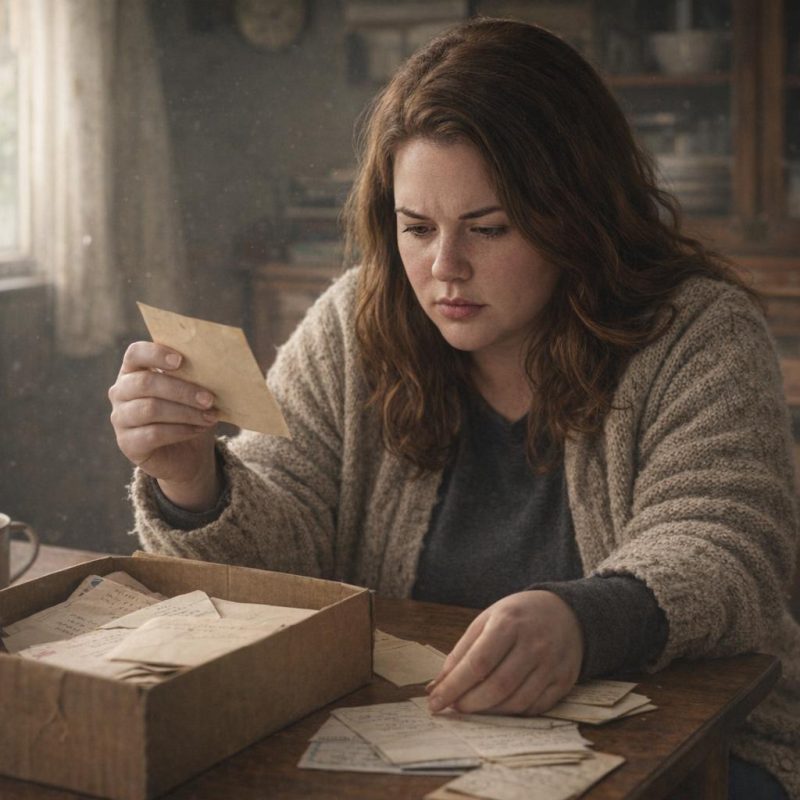 Image by RM AI
Letters from a Ghost
I read them all. Sat on that cold concrete floor in the hidden vault and read twenty-five years of birthday letters by flashlight. They were signed 'Elara'—a name I'd never heard, a name that felt like music and secrets. Each letter was different but the message was the same. I love you. I miss you. I'm sorry I can't be there. The writer knew things about me. Knew I'd gotten braces in seventh grade, that I'd made honor roll, that I'd cried for a week when our cat died. She wrote about watching me from a distance, about wanting so badly to hold me but knowing it wasn't safe. She said she was in hiding. That there were people who would hurt me if they knew we were connected. That Evelyn was protecting us both by keeping us apart. The letters got more detailed as I got older, more desperate. She wrote about the life we'd have someday when it was safe. The stories she'd tell me. The lost time we'd make up for. My face was wet and I didn't remember starting to cry. The most recent letter was dated three months ago, just before Evelyn got sick. The handwriting was shakier but still hers. Still Elara's. And it contained one single line that made my whole world tilt sideways: 'I'm in Vermont now, and I've been waiting for you to be ready.'
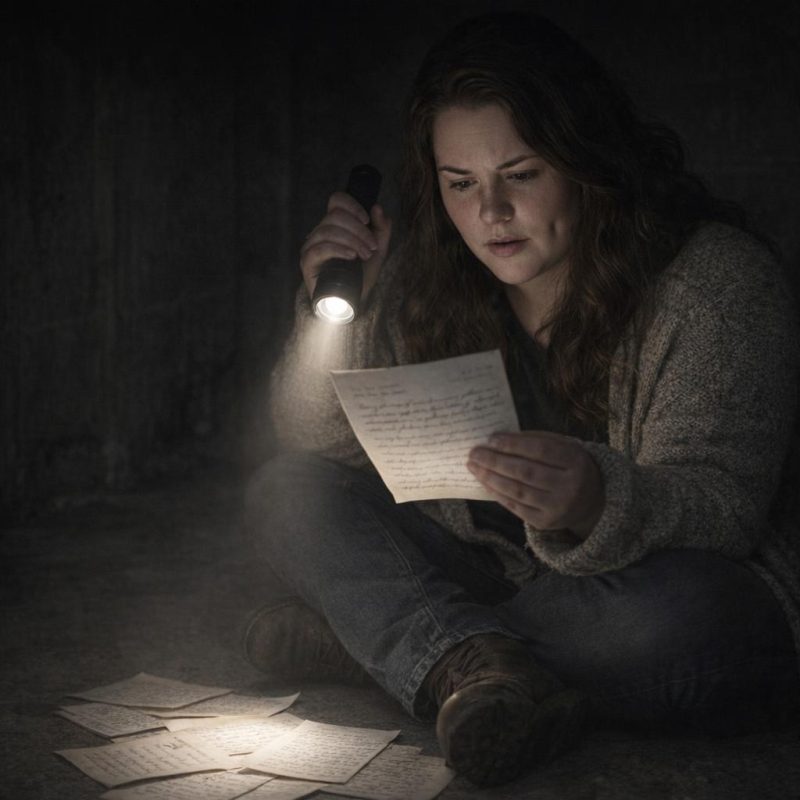 Image by RM AI
The Woman in the Photographs
I tore open the manila envelope and photographs spilled across the concrete floor like puzzle pieces from someone else's life. Except they weren't someone else's—they were Evelyn's, decades younger than I'd ever known her, standing in front of buildings I didn't recognize in cities I couldn't name. In one, she wore sunglasses in what looked like Prague, her posture alert and purposeful. In another, she stood outside a nondescript office building in what might have been Berlin, her expression sharp and focused in a way I'd never seen in any family photo. These weren't vacation snapshots. There was something about the way she held herself, the way she seemed to belong in those shadows between buildings, that made my skin prickle. I shuffled through image after image—Evelyn in London, in Vienna, always alone, always with that same watchful bearing. Then I found the one that made my hands shake. Evelyn stood beside another woman in what was clearly a government building, both of them wearing visitor badges clipped to their jackets, and the woman beside her had my eyes, my chin, my mother's face—years before she supposedly ran away to find herself.
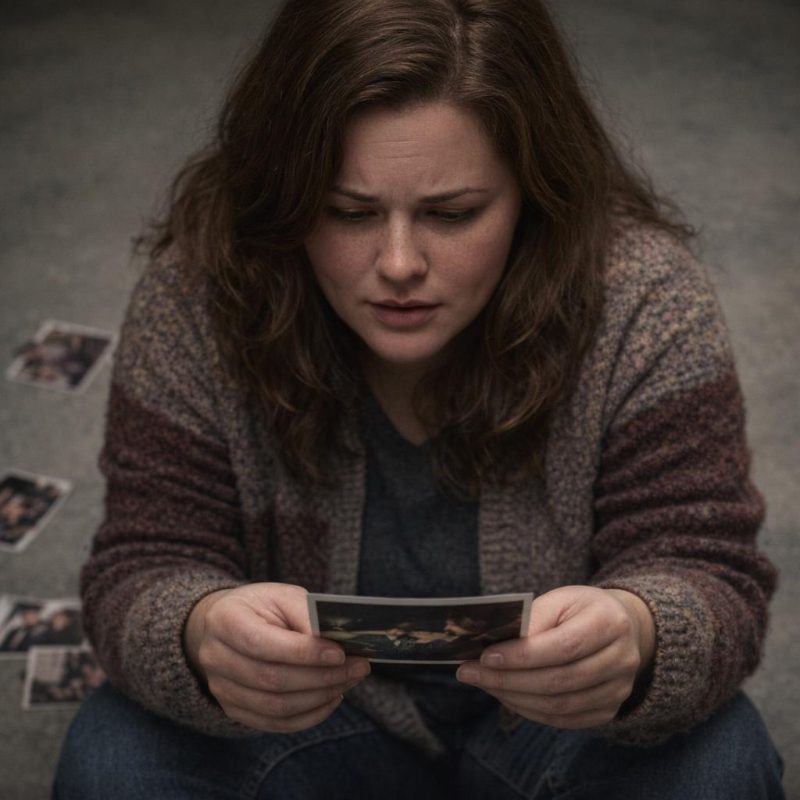 Image by RM AI
The Price of Truth
Beneath the photographs, I found a thick folder of documents, and the first page made my stomach clench. Corporate fraud investigation, 1997-1998. I skimmed through pages of legal jargon and testimony transcripts, my eyes catching on phrases like 'falsified safety reports' and 'preventable deaths.' The company had known their product was dangerous and buried the evidence. Then I saw her name: Sarah Mitchell, Lead Investigator. Not Elara. Sarah. My mother had a different name, a real name, and she'd been the one building the case against them. The documents detailed escalating threats—anonymous calls, break-ins, a car that nearly ran her off the road. Other investigators had backed out. Two had disappeared entirely. I flipped to the final page, and there it was in red ink: WITNESS PROTECTION DENIED. My vision blurred as I read the handwritten note in the margin, the letters small and precise: 'Handled privately—EM.' Evelyn's initials. Had my grandmother known about my mother's disappearance all along? Had she been the one to hide her?
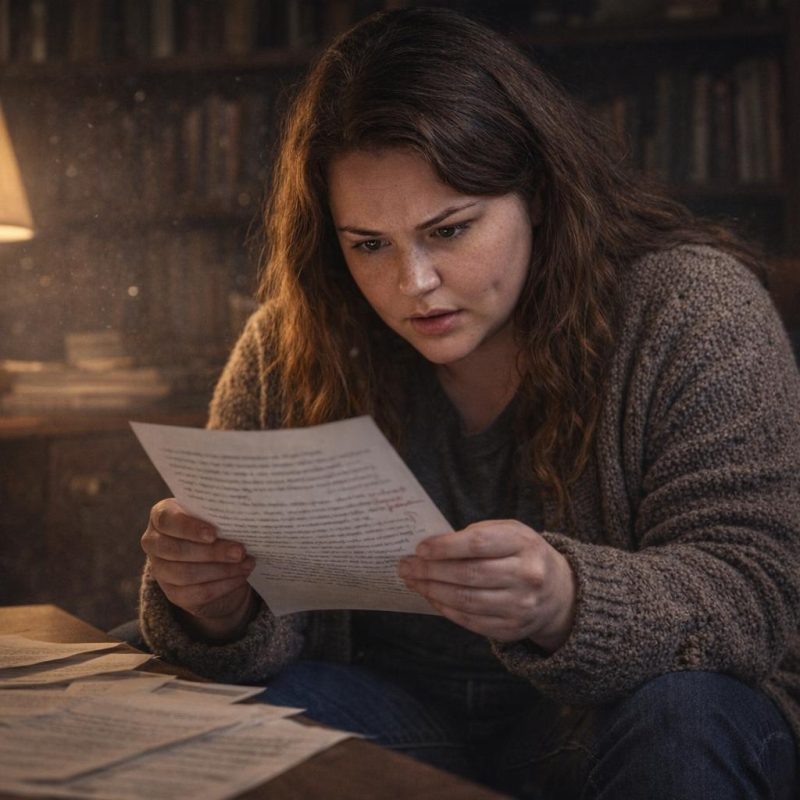 Image by RM AI
The Warning
At the bottom of the envelope, my fingers found something solid. A property deed, the paper thick and official, for an address in Vermont I'd never heard of. Attached to it with a paper clip was a brass key, old and heavy in my palm. But it was the note tucked beneath them that made my breath catch—Evelyn's handwriting, as steady and precise as ever: 'When you find this, the clock has started.' I read the instructions twice, trying to make sense of them. She'd written about the Vermont property, about how everything I needed would be there, about how I should trust Julian when he contacted me. Julian? Who the hell was Julian? My hands were shaking as I turned the paper over, looking for more explanation, but there was only one more line. I read it three times, each reading making my pulse race faster, the words sinking in like ice water through my veins: 'They will know the vault is open.'
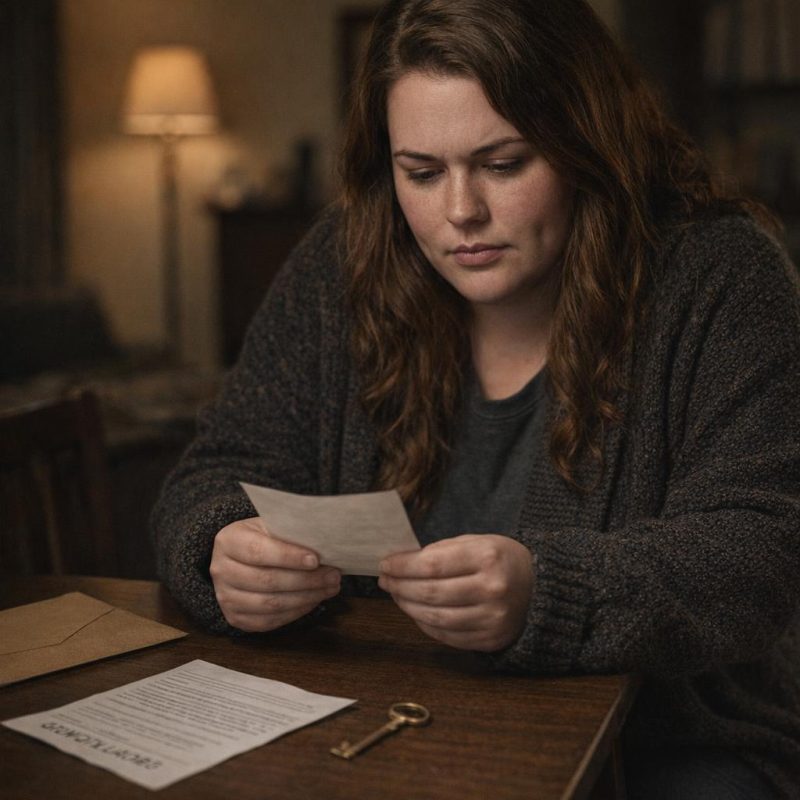 Image by RM AI
The Voice on the Phone
My phone rang, the sound so sudden in the silent basement that I nearly dropped it. Unknown number. I stared at the screen for three rings before answering, my voice coming out shakier than I wanted. 'Hello?' There was a pause, then a man's voice, careful and measured: 'Ms. Mitchell? Have you found what Evelyn left for you?' I froze, the phone pressed against my ear, my other hand still clutching the brass key. How did he know? How could he possibly know I'd just opened the vault? 'Who is this?' I managed. 'A friend of your grandmother's,' he said, which wasn't really an answer. 'I know this is confusing, but you need to listen carefully.' My heart hammered against my ribs as I waited for him to continue. Before I could ask anything else, before I could demand real answers, he spoke again, his tone urgent but not unkind: 'Don't go to the police, and don't tell anyone what you've found—I'll be in touch with instructions.' Then the line went dead.
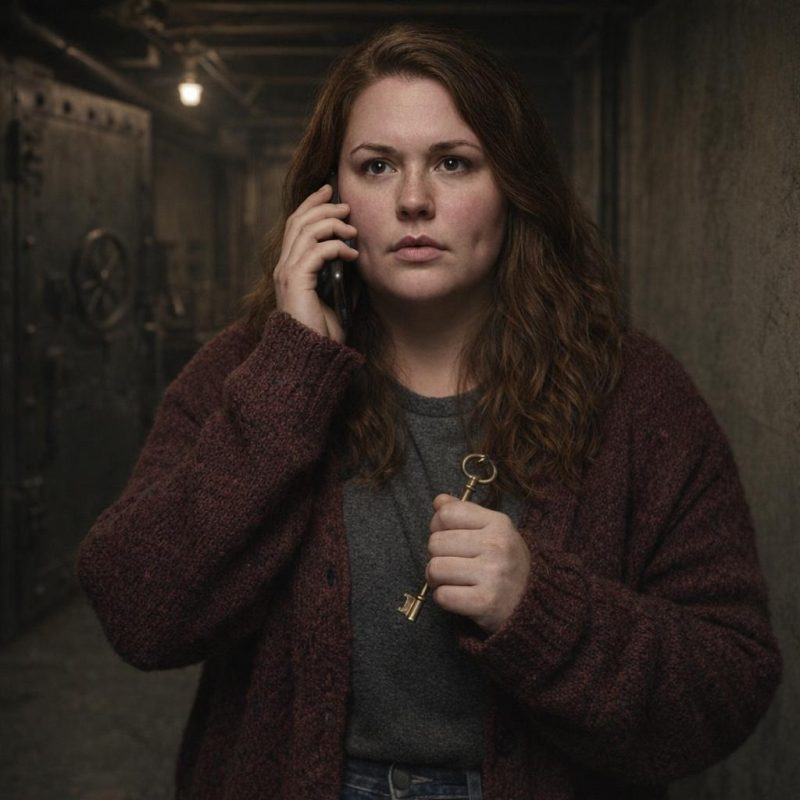 Image by RM AI
The Network
He called back exactly one hour later, like he'd been watching a timer. This time I answered on the first ring. 'My name is Julian Cross,' he said, and I heard traffic noise in the background, like he was calling from a street corner. 'I worked with Evelyn for fifteen years. I know you have questions.' That was the understatement of the century. He talked in careful circles, mentioning 'Evelyn's work' and 'people she helped' without ever quite saying what that meant. When I pressed him, he'd deflect with another vague statement about 'providing assistance to those who needed to disappear.' It felt like talking to someone who'd spent years practicing how to say everything while revealing nothing. But then he mentioned a name—Marcus Chen—and I remembered seeing that exact name on one of the passports in the vault. 'Your grandmother saved seventeen lives that I know of,' Julian said quietly, and something in his voice made me believe him. 'Possibly more she never told me about.'
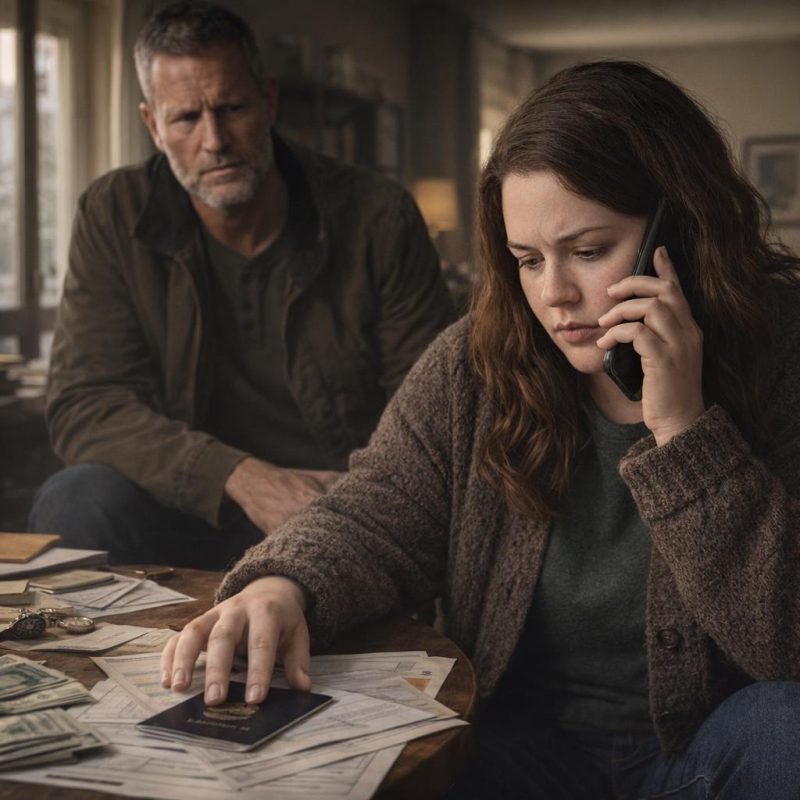 Image by RM AI
Digital Footprints
I spent the next four hours at my laptop, searching for anything about the corporate fraud case from the documents. It took digging through archived news sites and old legal databases, but I finally found it—buried under years of other scandals and settlements. The articles from 1998 were sparse, carefully worded, like someone had scrubbed the details clean. But the basics were there: a major pharmaceutical company, falsified clinical trials, deaths that could have been prevented. The case had been building toward criminal charges when suddenly everything went quiet. Settlements were reached. The company paid fines. And the investigators? Most of them moved on to other jobs, their names appearing in later articles about different cases. Except for one. I clicked on a link to a profile piece from early 1998, and my screen filled with a photograph I'd seen a thousand times in my own baby albums. The caption read: 'Lead Investigator Sarah Mitchell, who disappeared in 1998'—and the photograph accompanying the story was my mother's face.
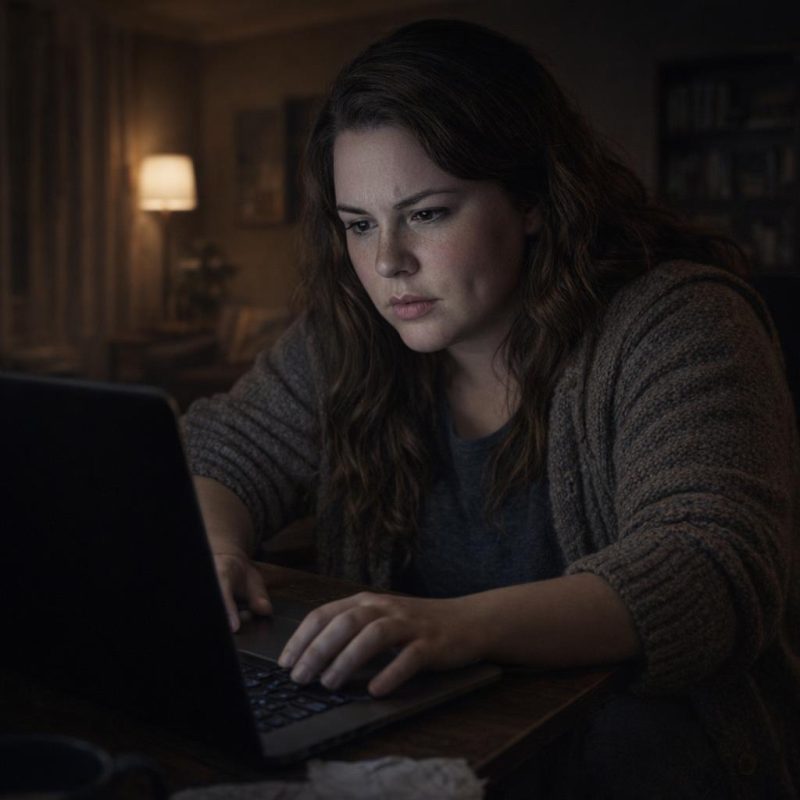 Image by RM AI
The Watchers
The dark sedan first appeared on Tuesday morning, parked across the street near the corner. I noticed it because it was the only car on that block that didn't belong to a neighbor I recognized. Wednesday, it was back in the same spot, windows tinted so dark I couldn't see inside. Thursday morning, I stood at the front window with my coffee and watched it for twenty minutes. The engine started once, idling for a few minutes before going quiet again. Someone was definitely inside. By Friday, I couldn't take it anymore. The paranoia had been building with each passing day, making me check the locks twice, peer through the curtains every hour. I grabbed my jacket and walked straight outside, my heart pounding as I crossed the lawn toward the street. I wanted to see who was watching me, wanted to demand answers. But the moment I stepped off the curb, the sedan's engine roared to life. It pulled away slowly, deliberately, and I caught a glimpse through the passenger window—a figure in dark clothing, holding up a camera, photographing the house one last time before they disappeared around the corner.
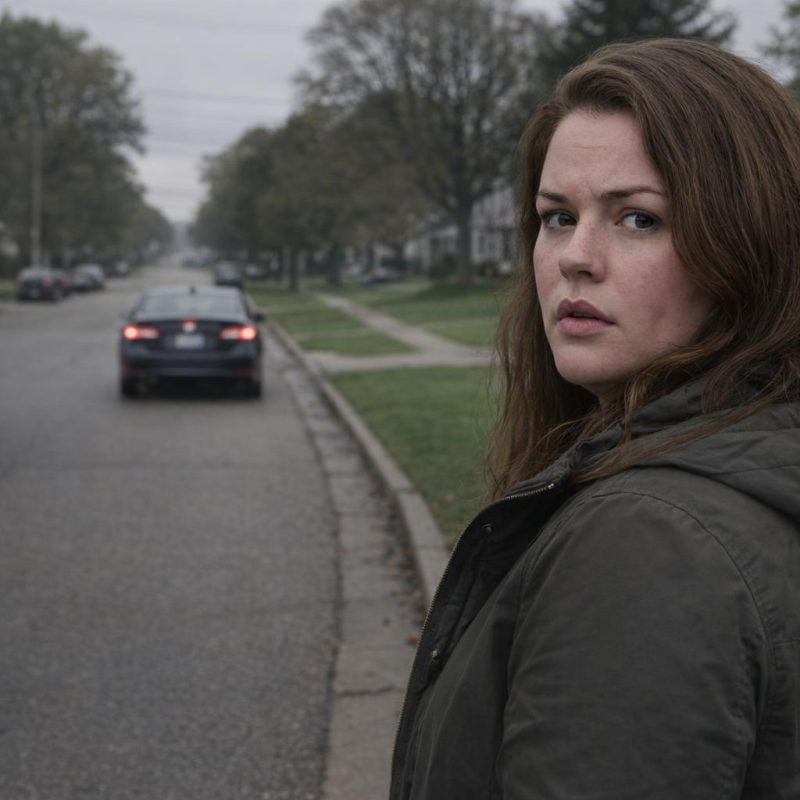 Image by RM AI
Official Channels
I called the police non-emergency line that afternoon, my hands still shaking from the encounter with the sedan. They sent someone over within an hour—Detective Rita Shaw, who introduced herself with a firm handshake and kind eyes that seemed to take in everything at once. I walked her through it all: the car appearing multiple days in a row, the tinted windows, the person with the camera. She took notes in a small leather notebook, asking precise questions about times and descriptions. 'Has anyone approached you directly?' she asked. 'Any phone calls, messages, anything unusual?' I thought about Julian's calls and shook my head, not ready to explain that particular complication. Shaw nodded, flipping back through her notes, and I started to relax slightly. Maybe this was the right call. Maybe official channels could actually help. Then she looked up at me with that same carefully neutral expression, and asked a question that made my stomach drop: 'Has anyone approached you about your grandmother's business records?'
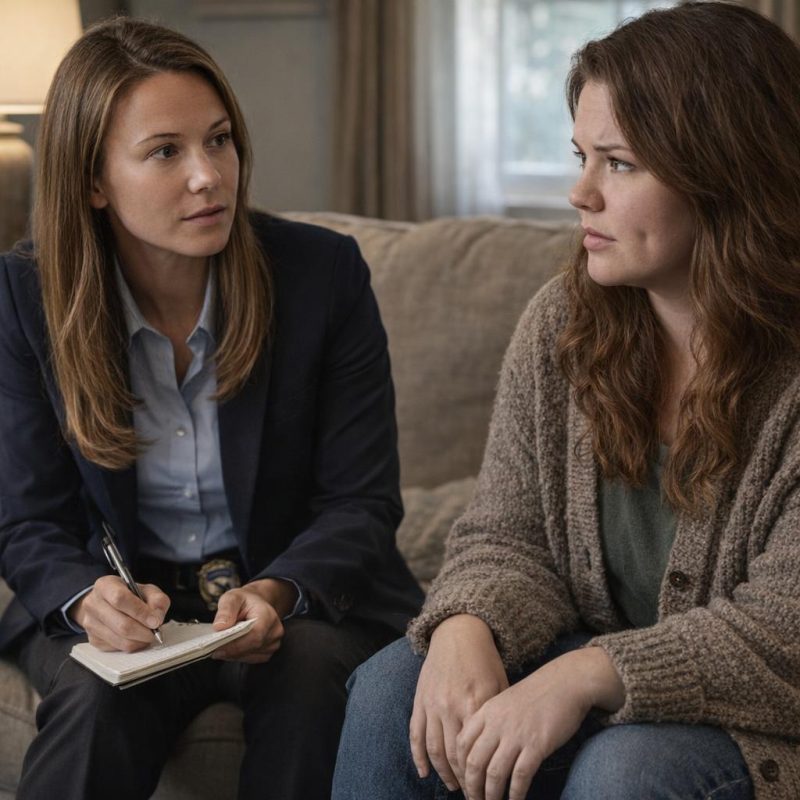 Image by RM AI
Questions at the Door
The knock came on a Tuesday afternoon while I was sorting through Evelyn's fabric scraps, trying to look normal, trying to pretend my world hadn't just exploded. The man at the door wore a rumpled suit that had seen better days and carried a leather notebook that looked expensive. He said he was a freelance journalist, working on a piece about small businesses that had shaped the community. Could he ask me a few questions about Evelyn's sewing operation? I stood in the doorway, not inviting him in, while he asked about her client list. Who were her regulars? Did she keep appointment books? Any particularly interesting custom orders over the years? His questions felt too specific, too focused on records and documentation. I gave vague answers about quilts and alterations, my pulse hammering in my throat. As he turned to leave, he paused on the porch step and glanced back with a smile that didn't quite work. He'd heard Evelyn kept meticulous records, he said casually, the kind of woman who documented everything. Had I found any unusual filing systems while cleaning out the house?
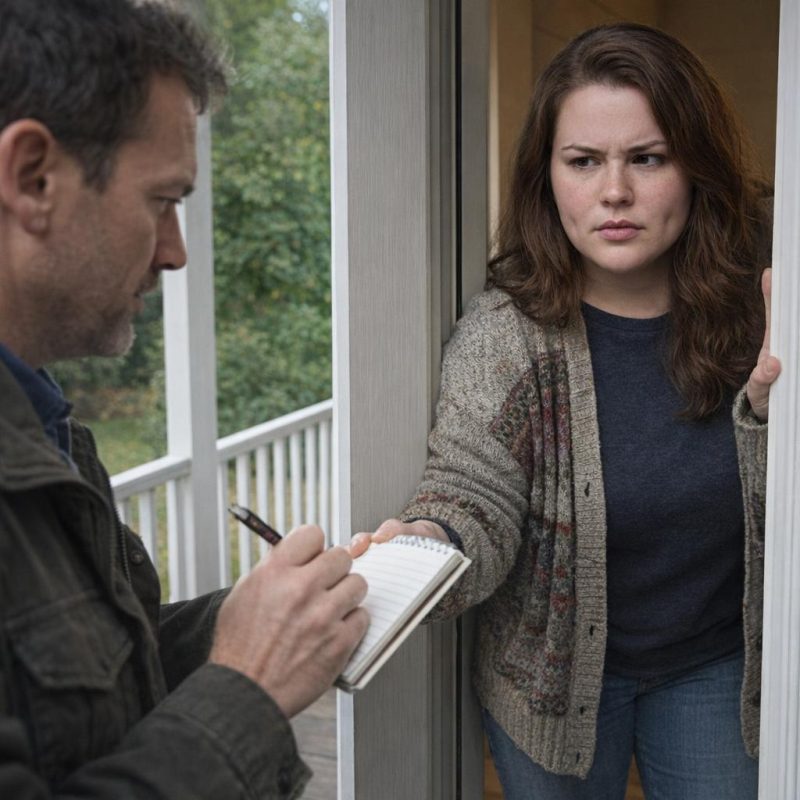 Image by RM AI
Corporate Interest
Agent Reeves arrived the next morning like he'd been waiting for his cue. He was everything the rumpled journalist wasn't—impeccably dressed in a dark suit, business cards already in hand, smile smooth as glass and just as cold. Daniel Reeves, corporate security for Meridian Holdings, investigating historical irregularities in regional business partnerships. The words sounded professional, completely reasonable, like he'd given this speech a hundred times. He asked if he could come in, and I found myself stepping aside before I'd decided to let him. He moved through Evelyn's living room like he was cataloging everything, his gray eyes missing nothing. The questions started gently—how long had the sewing business operated, did I plan to continue it, had Evelyn mentioned any corporate clients. Then he asked about records. Business ledgers, client files, correspondence. His tone stayed smooth, almost bored, but I felt the pressure underneath like a hand on the back of my neck. He wanted permission to examine Evelyn's business documents, he said. Just routine follow-up on decades-old paperwork—nothing I should worry about.
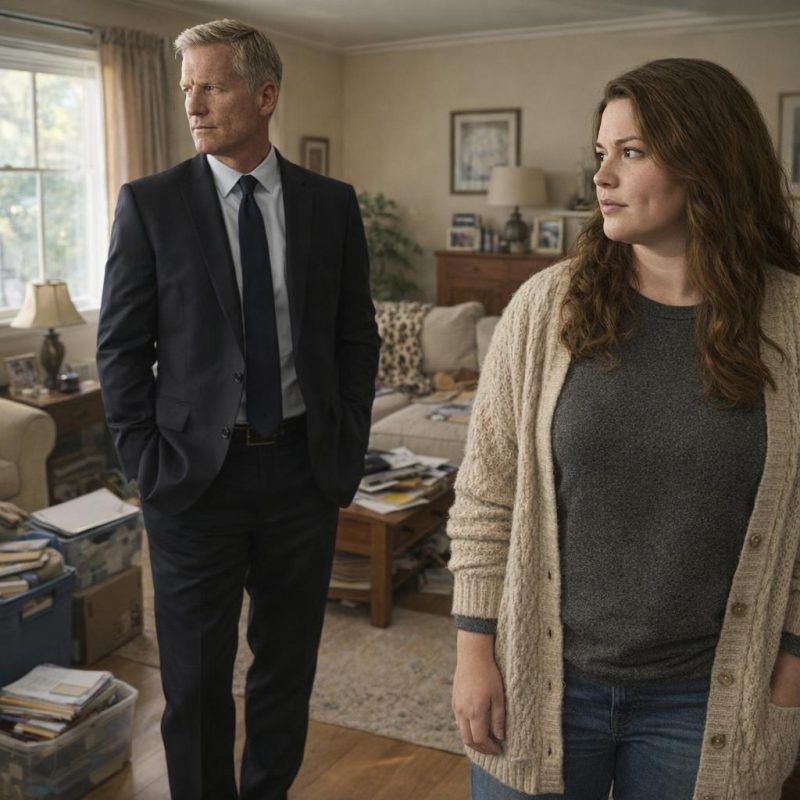 Image by RM AI
The Art of Deflection
I showed him the public ledgers, the ones Evelyn had kept in the dining room hutch. Customer names, dates, payments for hemming and repairs. My hands stayed steady as I pulled out boxes of receipts, fabric orders, the boring infrastructure of a small sewing business. Reeves examined everything with the focus of someone looking for invisible ink. I kept my voice cooperative, helpful, the confused granddaughter just trying to settle an estate. No, I hadn't found anything unusual. Yes, this seemed to be everything. He asked about storage spaces, attics, basements. I lied about the basement flooding years ago, about throwing out water-damaged boxes. The lies came easier than I expected, my voice never wavering. Reeves finally closed the last ledger and stood, smoothing his already-perfect tie. He handed me his card with that glass smile. He'd be in town for a few more days, he said—plenty of time for me to remember if there was anything else. His eyes held mine a beat too long, and I understood the message perfectly.
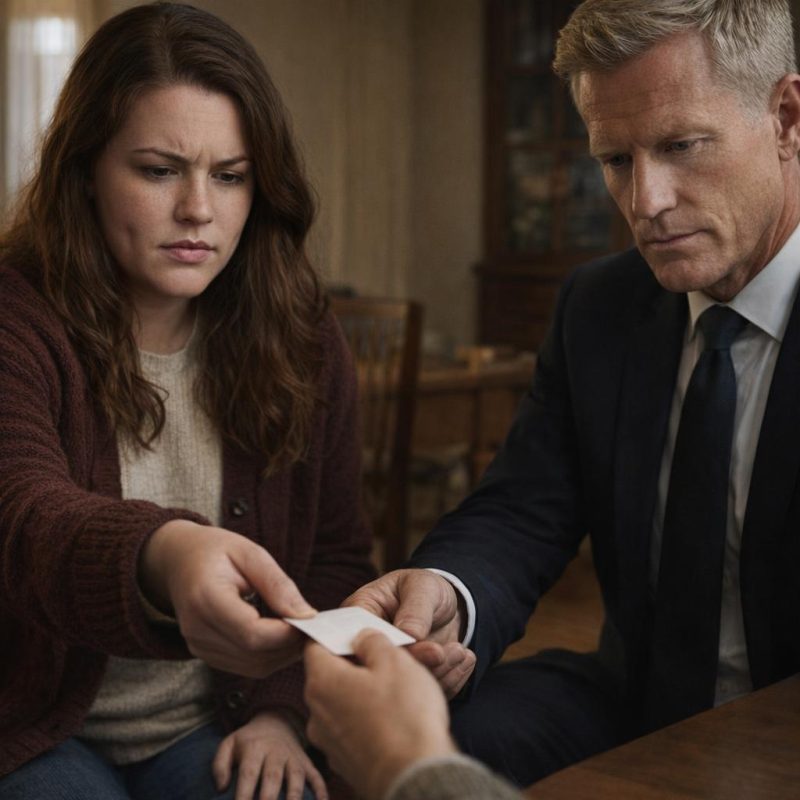 Image by RM AI
The Clock Runs Out
Julian's text came through at two in the morning, vibrating my phone off the nightstand. 'They found you faster than I expected—leave Ohio tonight.' I stared at the words in the dark, my heart doing that thing where it feels like it's trying to escape through your ribs. I should have been surprised. Should have needed time to process, to plan, to decide. But when I turned on the light, I saw the duffel bag I'd packed three days ago sitting by my closet. The messenger bag with the vault documents already organized by the door. The stack of cash I'd withdrawn in small amounts over the past week. My hands had known something my brain was still catching up to. Evelyn's voice echoed in my memory from a conversation years ago that I'd thought was just her being paranoid—always keep a bag ready, always have cash, always know your exit route. I'd absorbed her lessons without realizing I was being taught. I looked at the packed bags, at Julian's warning glowing on my phone screen, at the life I was about to abandon. Vermont. My mother. The truth. The bags had appeared piece by piece as if my hands knew something my mind hadn't yet admitted.
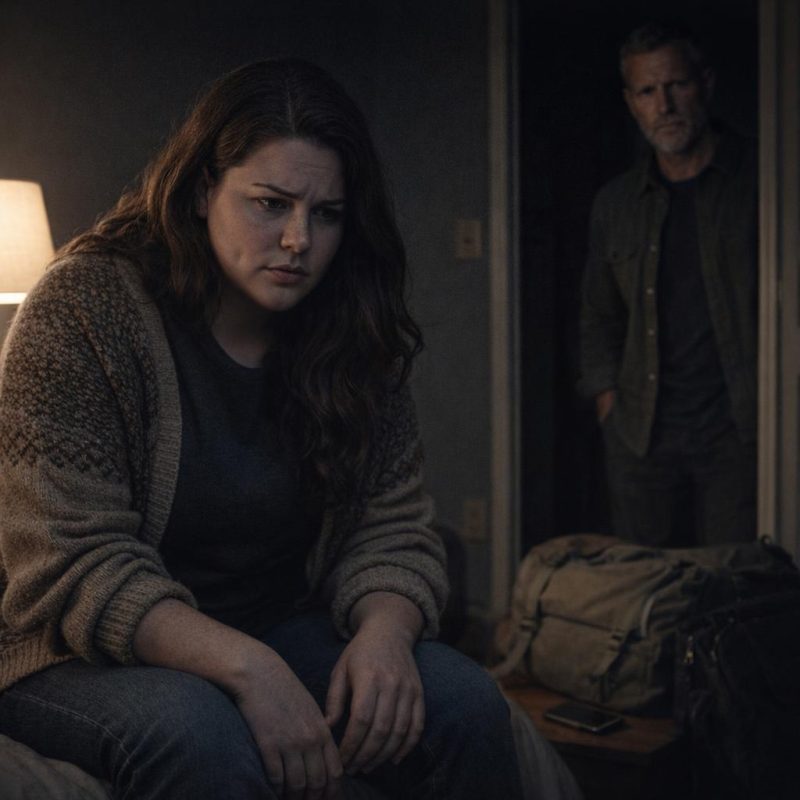 Image by RM AI
What I Could Carry
I moved through the house in the pre-dawn darkness, deciding what mattered and what didn't. Most of Evelyn's things would stay—the furniture, the dishes, the lifetime of accumulated normal that had hidden so much. I took one photo album, the small one with pictures of me as a kid. The rest could wait or rot or be sold by whoever came after. In the basement, I opened the vault hatch for the last time. The letters from Elara went into the messenger bag first, then the passports, the Vermont deed, the photographs of my mother's face. I left the corporate documents in their folders but photographed every page with my phone, backup upon backup. The cash I divided between my bags and my pockets. The whole vault's contents fit into a single messenger bag, which felt wrong somehow—twenty-five years of secrets weighing less than a laptop. I locked the hatch and slid the shelving unit back into place, my hands shaking now. The house felt like a museum of someone else's life. As I carried my bags to the car, I wondered if I'd ever return to close it properly.
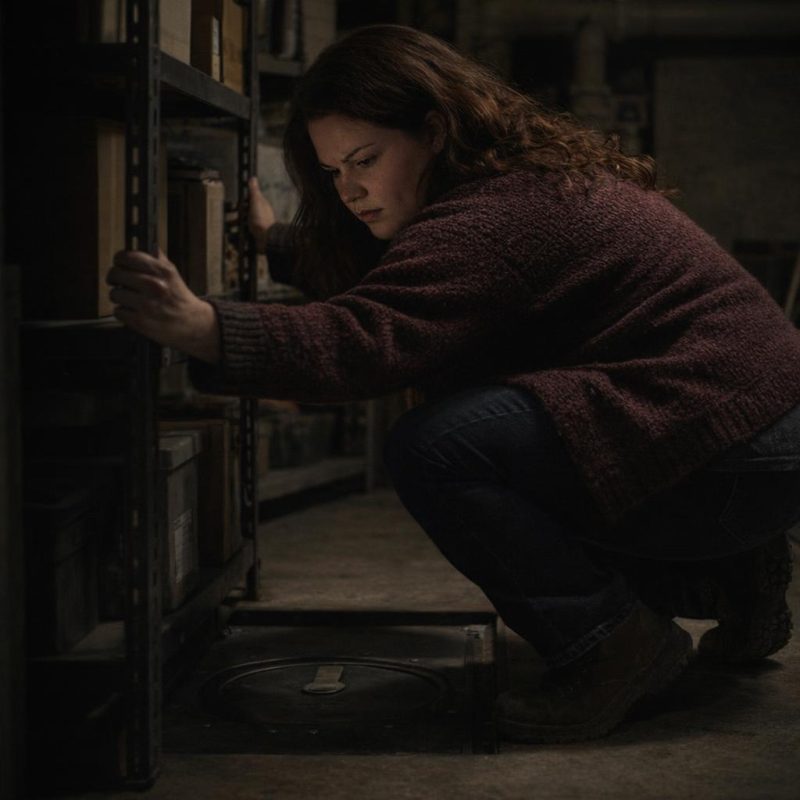 Image by RM AI
The Lie of Omission
Marcus showed up as I was loading the last bag into my trunk, because of course he did. He had that look on his face, the one that meant he'd been worrying and had finally decided to do something about it. I tried to smile like everything was fine, like I was just taking a trip. He asked where I was going and I said Vermont, family property, things to settle. The lies tasted like metal. He stood there in his work boots and flannel, hands in his pockets, and I could see him trying to decide whether to push. He asked if I was okay, if I needed help, if this had anything to do with the man in the suit who'd been asking around town about Evelyn. I said no to all of it, keeping my voice light, hating myself a little more with each word. When he pulled me into a goodbye hug, I almost broke. Almost told him everything. Then he whispered against my hair, so quiet I almost missed it—Evelyn once told him I'd need to leave someday, and that when I did, he shouldn't try to follow.
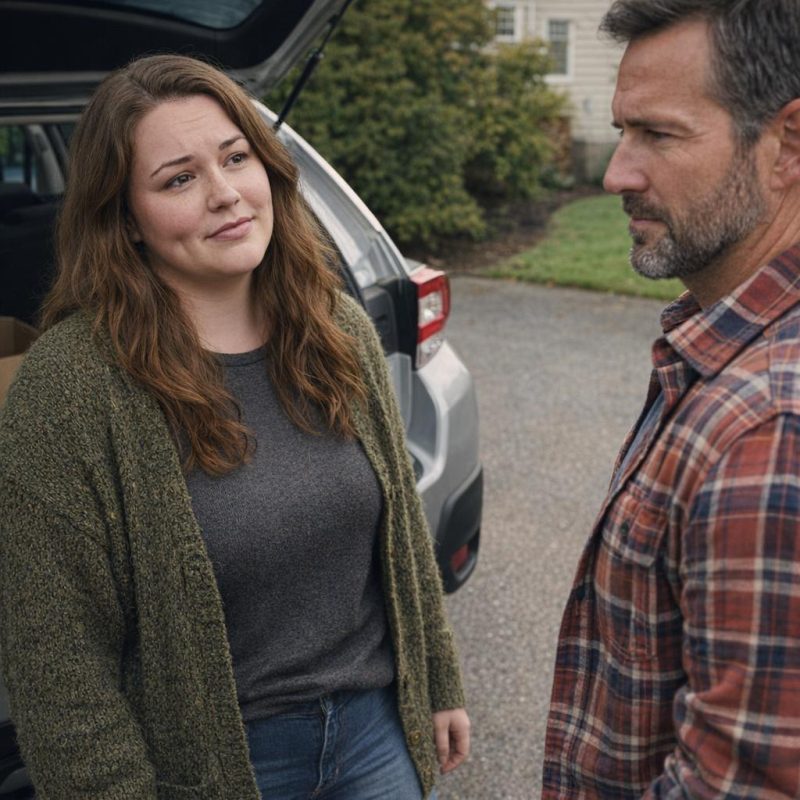 Image by RM AI
Every Mile a Question
I drove east with both hands tight on the wheel, checking my mirrors more than the road ahead. Every sedan looked suspicious. Every car that stayed behind me for more than two exits felt like a tail. I varied my speed, changed lanes randomly, took exits and got right back on the highway. Probably looked like a drunk driver to anyone paying attention. At the Pennsylvania border, I stopped for gas and circled my car twice, looking for anything that seemed wrong. Nothing. But the paranoia wouldn't let go. At a rest stop outside Harrisburg, I did it again—walked around my car slowly, running my hands along the wheel wells, under the bumpers. That's when I felt it. Small, black, magnetic. Wedged under my rear bumper where I'd never think to look. A GPS tracker, professional grade, still blinking green. My hands went cold. I stood there in the parking lot holding this tiny piece of technology, understanding that every mile I'd driven, every turn I'd made, someone had been watching. Agent Reeves knew exactly where I was.
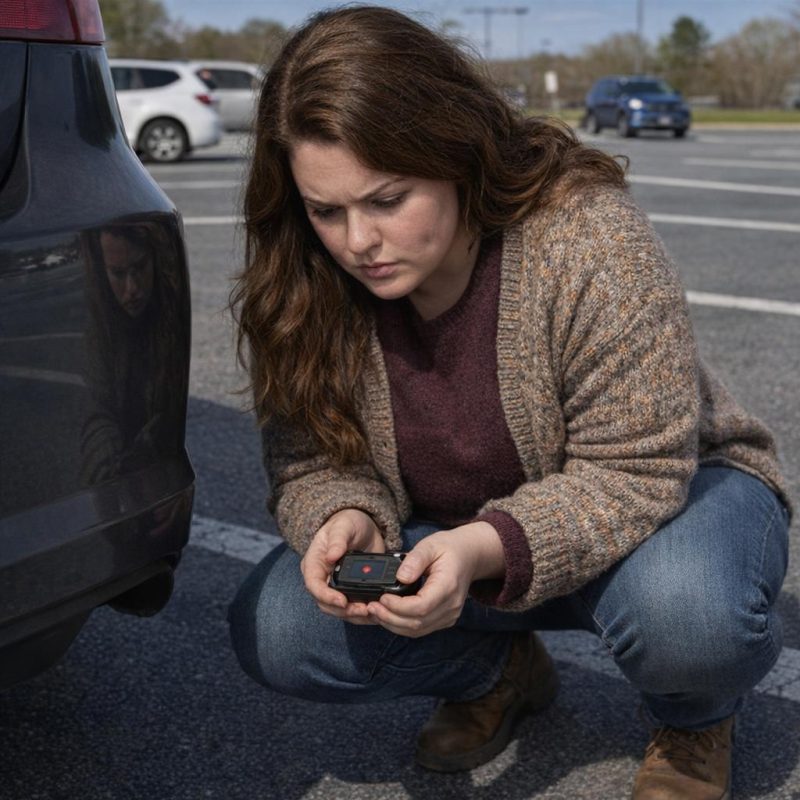 Image by RM AI
The Architecture of Hope
I sat in a cheap motel room outside Pittsburgh with my laptop open, the GPS tracker smashed and left in a dumpster twenty miles back. The Vermont town was called Millbrook, population 3,200, nestled in the Green Mountains. I scrolled through tourist websites about fall foliage and ski resorts, real estate listings for charming colonials, a local newspaper's archive of bake sales and high school sports. Nothing useful. Nothing that explained why my mother would hide there. I searched for Elara, for any variation of the name. Nothing. Then I tried Sarah Mitchell, my mother's real name, the one I'd found in the vault documents. The search results loaded slowly on the motel's terrible wifi. Tourist sites, more real estate, a bed and breakfast review. Then, at the bottom of the third page, a newspaper article from the Millbrook Gazette archives. 'New Resident Purchases Historic Property on Mill Road.' The article was brief, barely three paragraphs, about a woman named Sarah Mitchell purchasing property in town—dated three months after she officially disappeared.
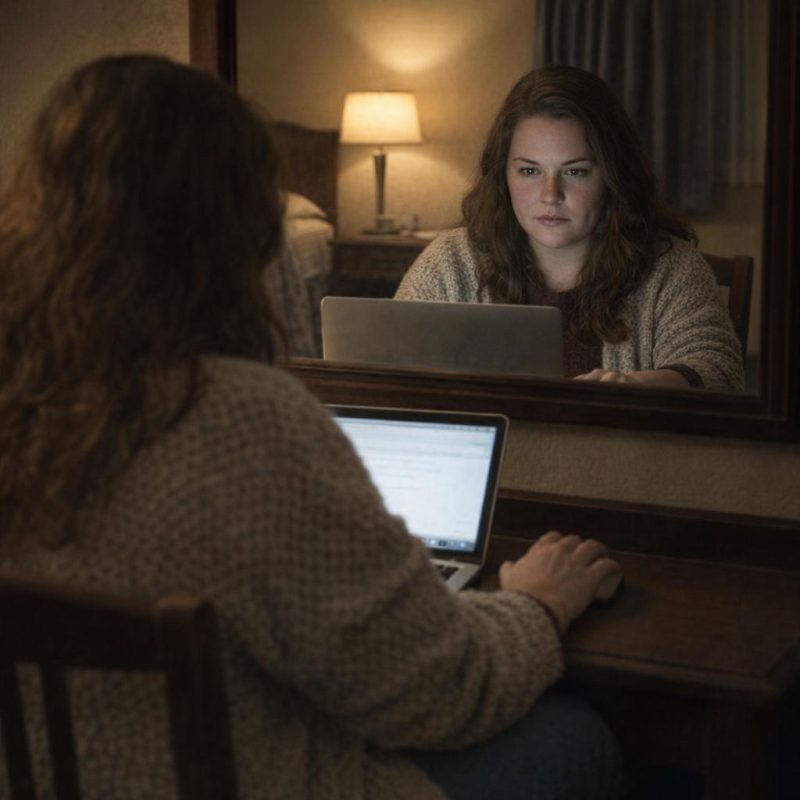 Image by RM AI
The Dead of Night
I woke up gasping at three in the morning, my heart hammering against my ribs. In the dream, Evelyn had been standing at the vault entrance, her face pale and drawn, shaking her head slowly back and forth. Not like this, she'd said. You're not ready for this. I sat up in the motel bed, my hands trembling as I reached for the water bottle on the nightstand. The room felt too small, the walls pressing in. What the hell was I doing? I was driving to Vermont based on a deed and some letters that could mean anything. I could be walking into danger. I could be making the biggest mistake of my life. Maybe I should just turn around, go back to Ohio, sell the business, forget I'd ever found that vault. I pulled out the Vermont deed again, studying Evelyn's familiar handwriting in the dim light from the parking lot. Her signature was there, steady and sure, the way she'd signed everything. I traced the letters with my finger, looking for reassurance that I was doing the right thing. That's when I noticed the date at the top of the document, and my breath caught. The deed was only six weeks old.
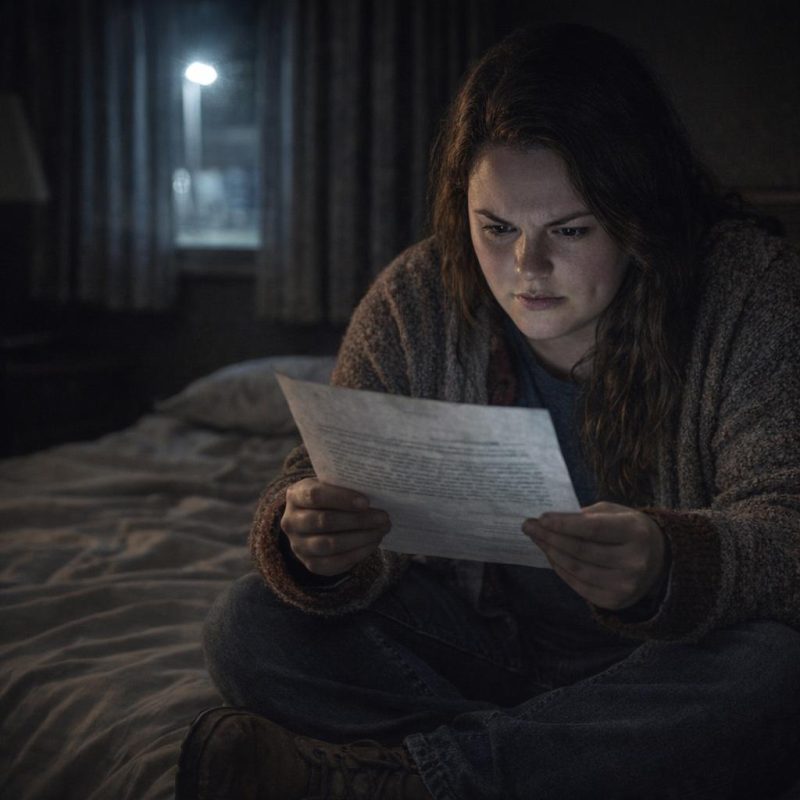 Image by RM AI
The Empty Promise
The house looked nothing like I'd imagined. I stood on the cracked sidewalk, staring at peeling white paint and windows dark as closed eyes, my stomach sinking with each detail I absorbed. The yard was overgrown with weeds pushing through the gravel driveway. A shutter hung crooked on the second floor. This wasn't a home where someone was waiting for me. This was abandonment, pure and simple. No one had lived here in months, maybe longer. I felt the weight of disappointment settle over my shoulders like a heavy coat. What had I expected? My mother standing on the porch with open arms? I walked slowly up the driveway, my shoes crunching on loose stones, looking for any sign of recent activity. Nothing. The windows reflected only gray sky and bare trees. I approached the mailbox more out of habit than hope, pulling open the rusted door. Empty, except for a single item that made my pulse quicken. A postcard lay face-down inside. I turned it over with shaking hands. No message on the front, just an address for a café in town written on the back, and below it, tomorrow's date.
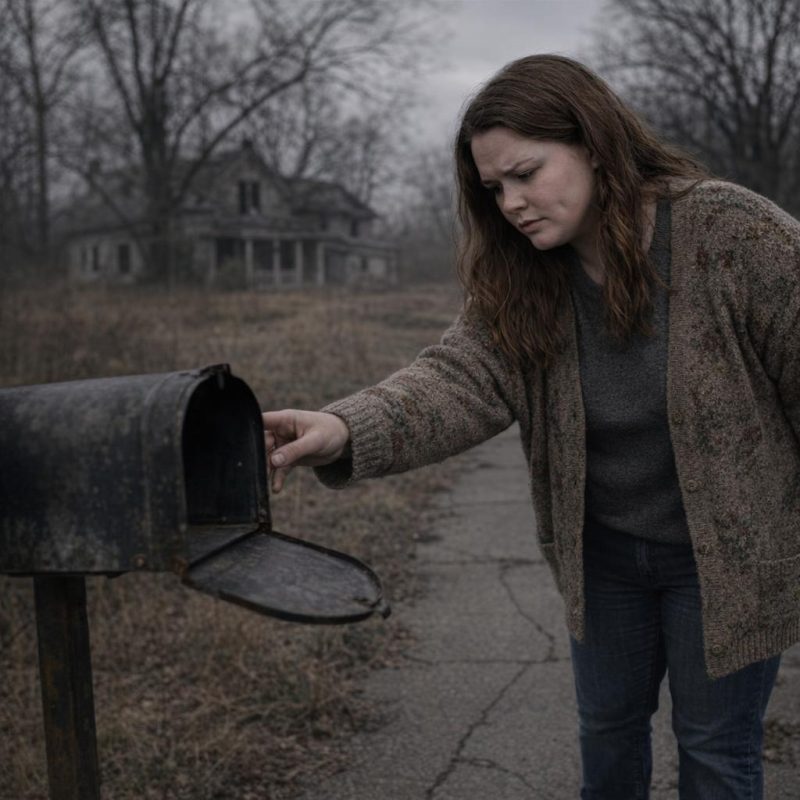 Image by RM AI
Signs of Life
I picked the back door lock with a bobby pin the way Evelyn had shown me when I was sixteen, her voice in my head saying every woman should know how to get herself out of a locked situation. The door swung open with a creak that echoed through the empty house. Inside, the air smelled stale and thick, like abandonment and possibility mixed together. Dust motes danced in the afternoon light filtering through dirty windows. I moved through each room methodically, my footsteps loud on bare hardwood floors. The kitchen showed the faintest signs of recent use—a coffee cup in the sink that wasn't as grimy as everything else, dust patterns on the counter suggesting something had been moved weeks ago. In the bedroom, I found furniture covered with sheets, a nightstand with a single book on top. The closet door stood slightly ajar. I pulled it open and found a suitcase tucked in the back corner. My hands trembled as I lifted it onto the bed and unzipped it. Inside were clothes—jeans, sweaters, a jacket—all in my exact size. The tags were still attached.
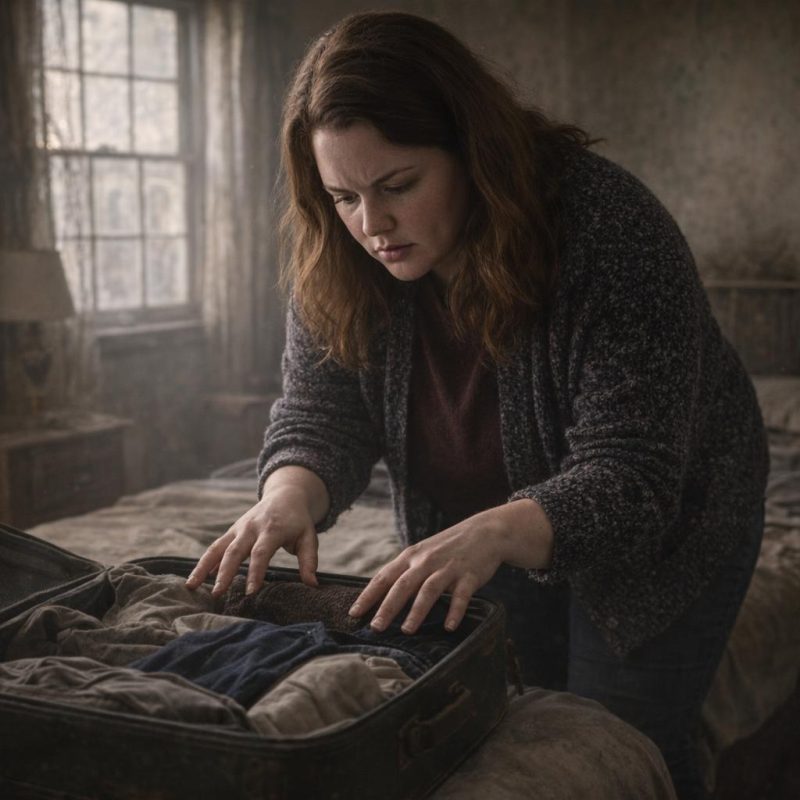 Image by RM AI
The Next Breadcrumb
I picked up the book from the nightstand, a worn copy of poetry I didn't recognize. Something about its placement felt deliberate, too centered, too obvious. I flipped through the pages and a folded piece of paper fell onto the bed. My breath caught as I unfolded it and saw the handwriting—the same elegant script from the letters in the vault. The note gave specific instructions: the café address from the postcard, a time tomorrow afternoon, a corner booth. Come alone, it said. Be patient. Security measures are necessary. I read it three times, my eyes catching on each familiar loop and curve of the letters. This was real. This was happening. Then I saw the final line, and my vision blurred with sudden tears. Trust is earned in moments, not years. I'd read those exact words in one of the birthday letters, the one from my tenth birthday. My mother had written that. My mother had written this. I pressed the note against my chest, feeling the weight of twenty-five years of waiting lift slightly from my shoulders.
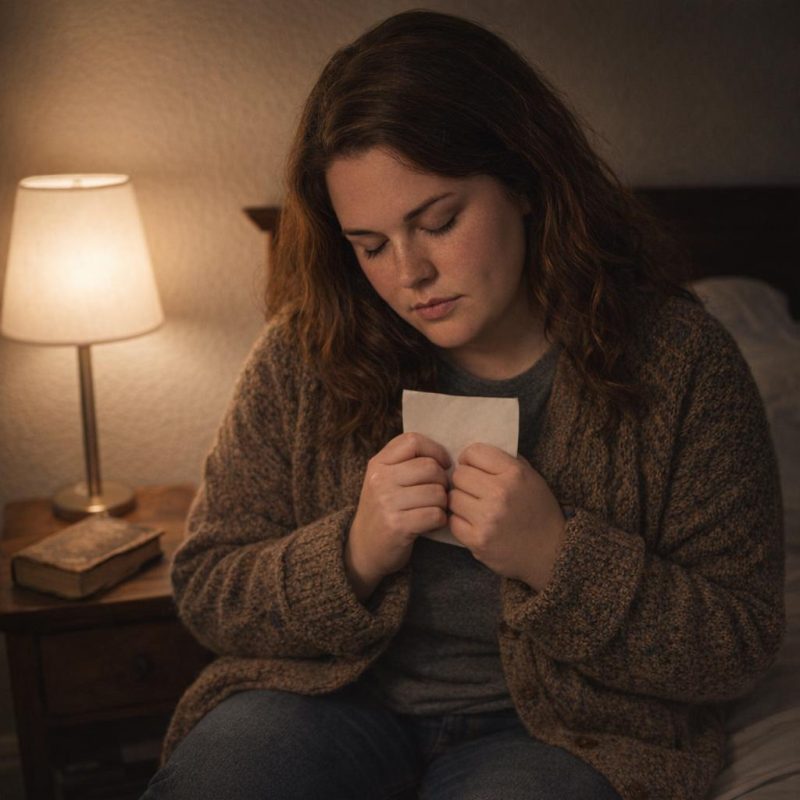 Image by RM AI
The Wait
I sat in the corner booth nursing coffee that had gone cold an hour ago, watching every person who entered the café with a mixture of hope and dread that left my hands shaking. I'd arrived thirty minutes early, chosen this spot because it gave me clear sightlines to both the entrance and the back exit. The waitress had refilled my cup twice, giving me sympathetic looks I pretended not to notice. Each time the door opened, my heart jumped. An elderly couple. A teenager with headphones. A businessman on his phone. None of them even glanced my way. I checked my watch again. Two minutes until the designated time. What if no one came? What if this was all some elaborate mistake? The door chimed again, and a woman with auburn hair entered, pausing just inside the threshold. She scanned the room with practiced caution, her movements careful and deliberate. Then her eyes found mine, and I saw unmistakable recognition flash across her face. She knew exactly who I was.
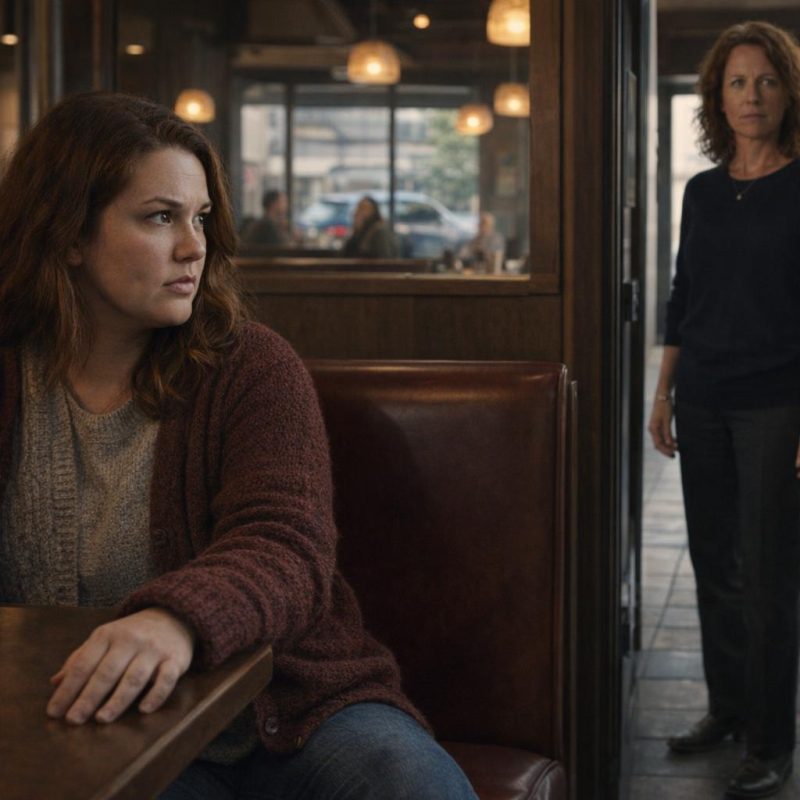 Image by RM AI
A Familiar Stranger
The woman slid into the booth across from me without asking, her movements smooth and confident. "You must be Evelyn's granddaughter," she said quietly, and the way she spoke Evelyn's name felt like a password, like proof of belonging. "I am," I managed. "And you are?" "Someone who knew your grandmother well. Someone who can help you find what you're looking for." She ordered tea from the waitress, then turned back to me with steady blue eyes. "Evelyn kept detailed records in that vault of hers. Seventeen passports, if I remember correctly." My stomach flipped. How could she know that? "You've been there?" "Not personally. But I know how she worked. The underground room, the filing system, the way she documented everything." She stirred honey into her tea. "Your mother's situation is more complicated than the letters suggested. There are reasons she couldn't contact you directly, reasons that go beyond what Evelyn could explain in those birthday notes." I leaned forward, my coffee forgotten. "What kind of reasons?"
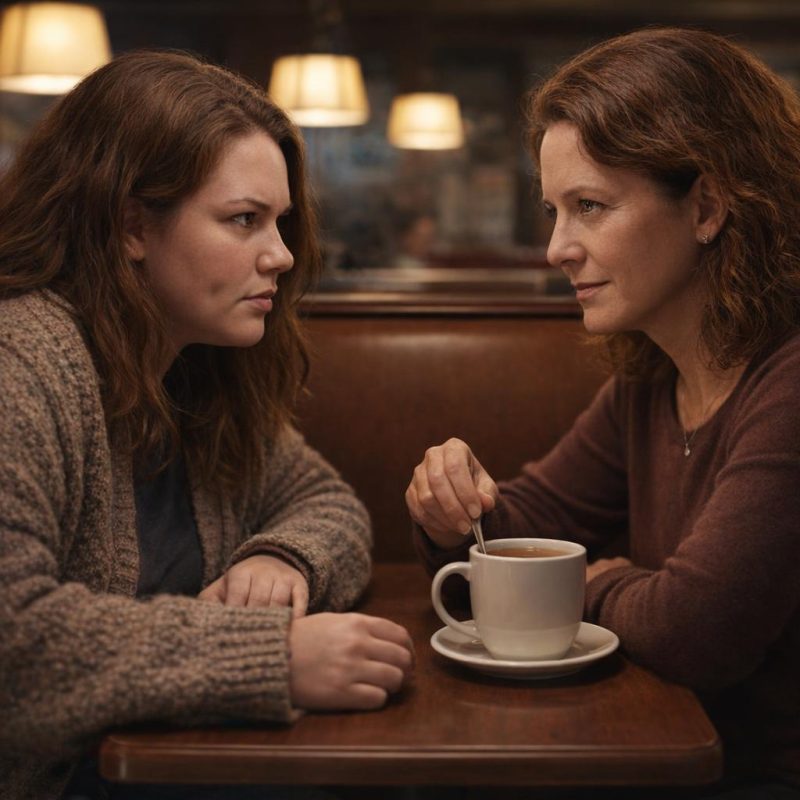 Image by RM AI
Stories That Fit
She told me stories then, each one adding weight to the secret life I'd discovered in that underground room. A woman fleeing domestic violence who needed to disappear completely. A whistleblower whose testimony put dangerous people in prison. A family escaping threats I couldn't even imagine. "Evelyn was the best," the woman said softly. "Her documents were flawless. She saved lives." I tested her, mentioning details from the vault—the passport from 1987, the name Julian Cross. She nodded at each one, adding context I hadn't known. "Julian was her first major case. That's when she realized how many people needed this kind of help." "And my mother?" I asked. "Was she one of the people Evelyn helped?" "In a way." The woman's expression grew sad. "Your mother's case was personal for Evelyn. More complicated than the others." I mentioned finding seventeen passports. She smiled, but there was no joy in it. "That was only a fraction. Evelyn helped far more people than she ever documented."
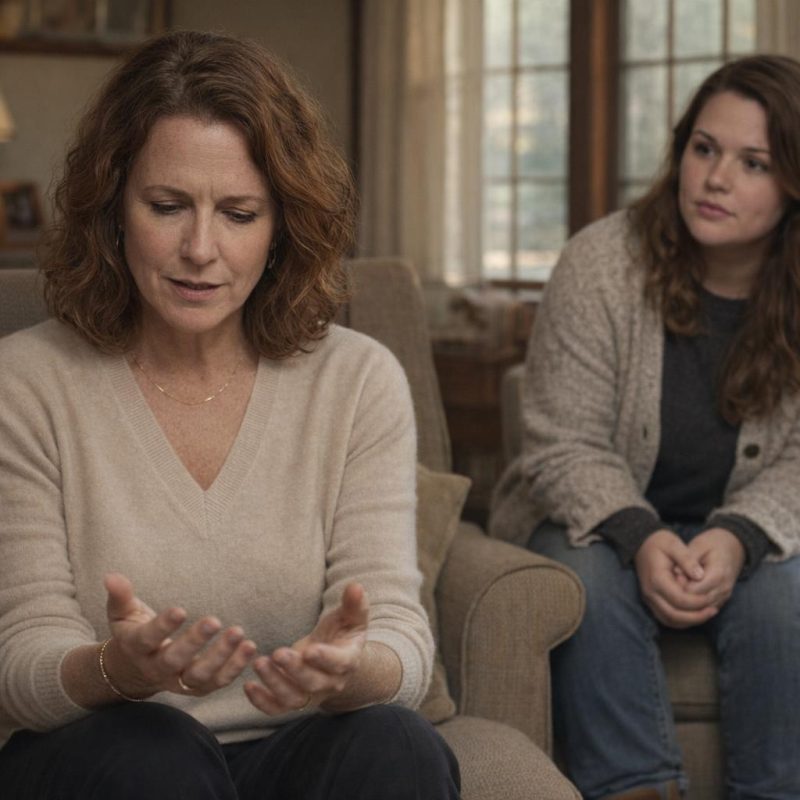 Image by RM AI
The Messenger
The woman reached into her bag and slid a sealed envelope across the table. "This is from your mother," she said. "She wanted me to give it to you directly." My hands trembled as I picked it up. "Why can't she just meet me herself?" "Security measures. She's been careful for twenty-five years. She won't risk everything now, not until she's certain it's safe." The woman's voice was gentle but firm. "You have to understand, there are people who would use you to get to her. She needs to know you weren't followed, that you can be trusted with the precautions." I tore open the envelope, my heart pounding. The handwriting inside matched the birthday letters perfectly, every loop and curve familiar. The message was brief: specific coordinates for a location outside town, instructions to arrive at dusk, and a final line that made my chest tight. Come alone. Trust the process. I'll explain everything when I see you. I looked up at the woman. "Tomorrow at dusk?" She nodded. "And you have to come alone."
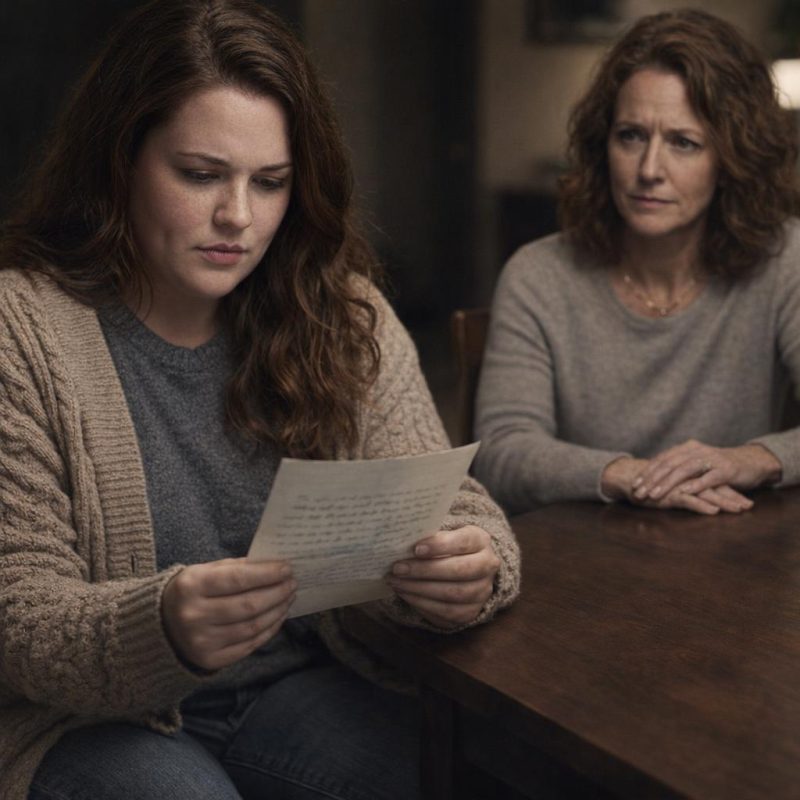 Image by RM AI
Into the Woods
The directions led me two hours north into Vermont, off the highway and onto progressively smaller roads until I was bumping along what could barely be called a logging road. My car rattled over ruts and exposed roots, branches scraping the sides like fingernails on a chalkboard. This wasn't the kind of place you stumbled onto by accident—it was the kind of place you only found if someone wanted you to find it. The sun was dropping behind the trees, casting everything in that golden-orange light that makes the woods look both beautiful and vaguely threatening. I gripped the steering wheel tighter, my phone showing no signal for the past twenty minutes. Smart move. Drive alone into the middle of nowhere to meet someone who might be my supposedly-dead mother. What could possibly go wrong? But I couldn't turn back now. Not after everything. The cabin appeared suddenly through the trees—small, weathered, with a stone chimney. And then I saw it: smoke rising in a thin gray line against the darkening sky. My heart kicked into overdrive. Someone was inside. Someone was waiting. I parked and killed the engine, and that's when I saw the silhouette move past the window—a figure backlit by firelight, pacing slowly, deliberately. She was here.
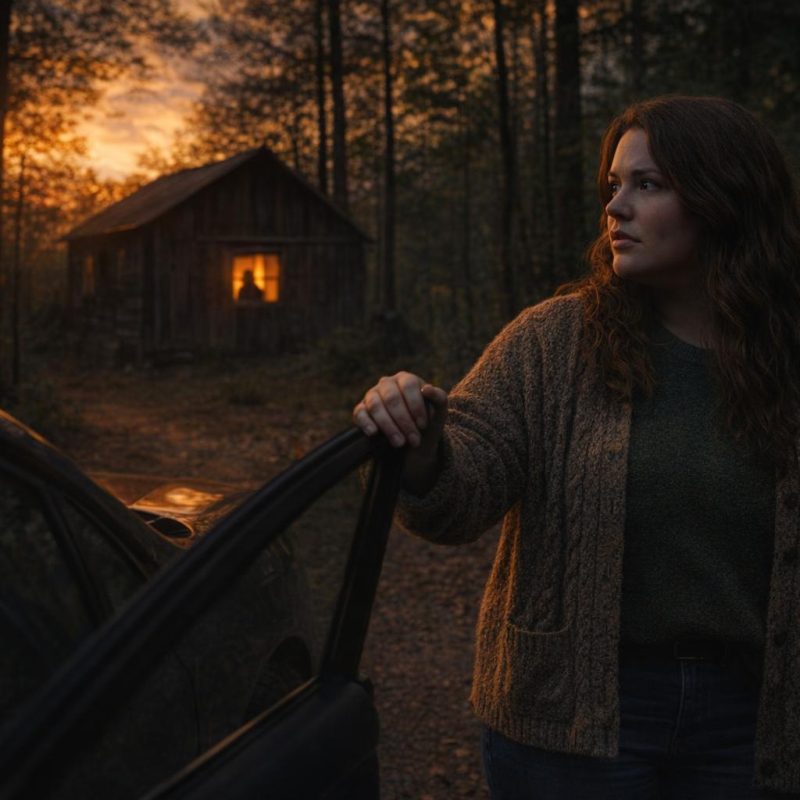 Image by RM AI
The Figure in Twilight
I sat in the car for a full minute, just watching. The figure moved past the window again, and this time I could make out more details. The right height. Auburn hair catching the light from inside. The way she moved—graceful, measured—matched the woman in those photographs from the vault. My breath caught in my throat. It was her. It had to be her. I'd imagined this moment so many times over the past weeks that it felt surreal now that it was actually happening. My hands were shaking as I opened the car door. The evening air was cool and smelled like pine and woodsmoke. I took three steps toward the cabin, and the front door opened. She stepped out onto the porch, her back to the fading light, just a silhouette at first. My heart was hammering so hard I thought I might pass out. Then she turned to face me fully, stepping into the last rays of sunlight filtering through the trees. Auburn hair framing a face I'd only seen in old photographs. High cheekbones. The same nose I saw in the mirror every morning. Her features were exactly as I'd imagined them all these years—the face I'd constructed from fragments and longing and those precious few photos Evelyn had kept.
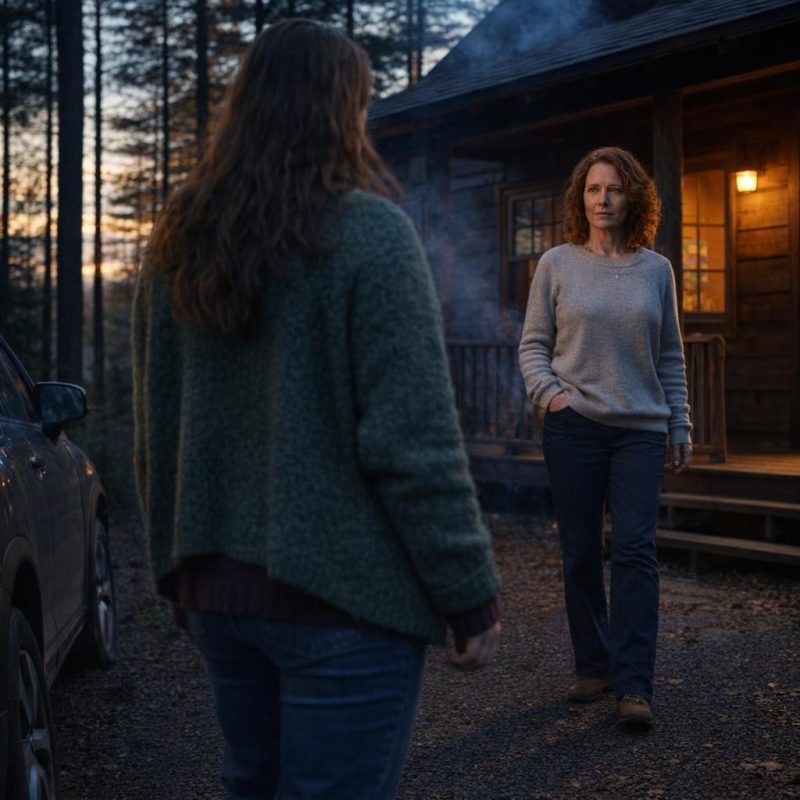 Image by RM AI
The Reunion
"Claire." She said my name like it was something sacred, something she'd been holding onto for decades. Her voice broke on the single syllable. She opened her arms, and I was moving before I could think, crossing the distance between us. We collided on the porch in an embrace that felt like it was trying to make up for twenty-five years in a single moment. She smelled like lavender and woodsmoke. I was crying. She was crying. "I'm Elena," she whispered against my hair. "I'm your mother. I'm Sarah. I've waited so long for this." We stood there for what felt like hours but was probably only minutes, just holding each other. Finally, she pulled back, cupping my face in her hands, studying me like she was memorizing every detail. "Come inside," she said. "We have so much to talk about." The cabin was small but warm, a fire crackling in the stone fireplace. We sat on a worn couch, and she reached into her pocket, pulling out a photograph. It was me as a toddler, maybe two years old, laughing at something off-camera. I'd never seen this photo before. "I've carried this through every relocation," Elena said, her voice thick with emotion. "Every new identity, every new life. I couldn't let you go completely."
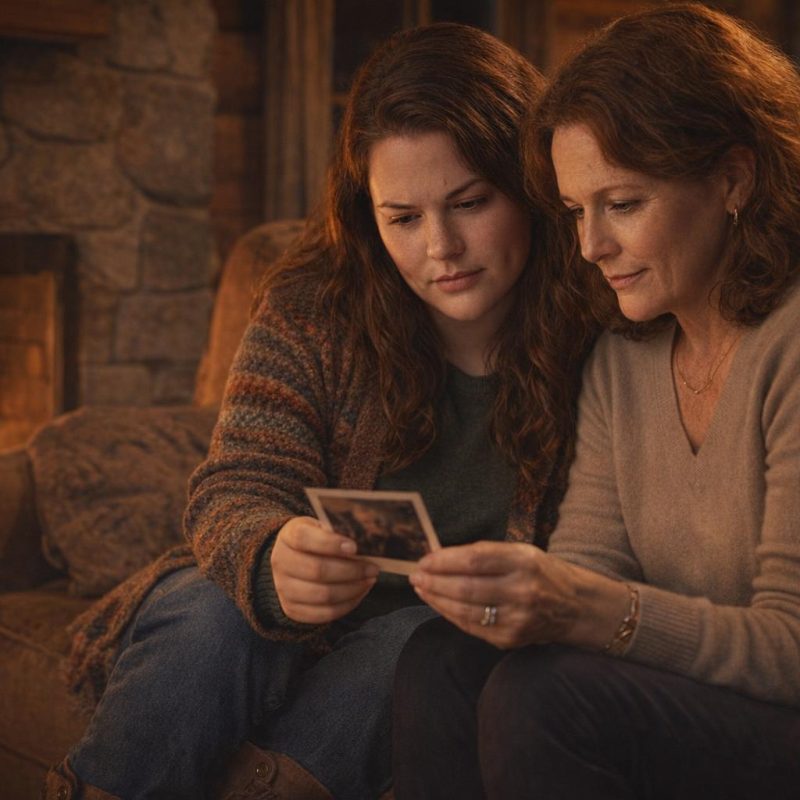 Image by RM AI
The Stories She Told
Elena talked for hours, her voice sometimes steady and sometimes breaking with emotion. She remembered things I'd forgotten—my third birthday party with the butterfly cake, how I'd insisted on wearing my Halloween costume to the grocery store in January, the way I used to line up my stuffed animals by size every night before bed. "I watched you from a distance," she said, staring into the fire. "Your high school graduation. I was there, in the back, wearing sunglasses and a hat. When they called your name and you walked across that stage, I—" Her voice cracked. "I wanted to run down there and tell everyone you were mine." I was crying again, reaching for her hand. Then she told me about the night she testified. Her voice shifted, becoming more controlled. "The corporation was committing massive fraud. Environmental violations, falsified safety reports. I had the evidence, and I went to the authorities. That's when the threats started." She named a specific executive—Marcus Holloway—who'd allegedly shown up at our house one night. "He made it clear what would happen if I didn't disappear." I frowned slightly. I'd been through those vault documents pretty thoroughly, and I didn't remember seeing that name anywhere. But maybe I'd missed something. Maybe there were files I hadn't found yet.
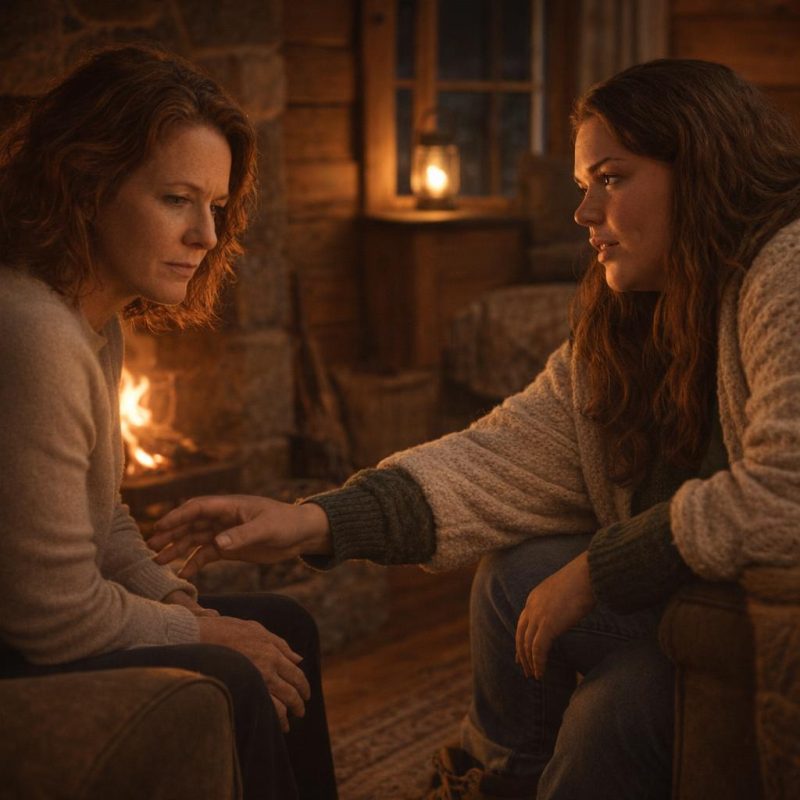 Image by RM AI
Opening the Vault Between Us
I decided to trust her completely. After all, if I couldn't trust my own mother, who could I trust? I told her everything—finding the loose floorboard, the vault beneath the sewing room, the letters signed 'Elara.' I pulled the folded pages from my bag, the ones I'd been carrying like talismans. "I brought these," I said, handing them to her. "The letters you wrote to Evelyn." Elena took them with trembling hands, unfolding the pages carefully. Her eyes filled with tears as she read her own words. I showed her the photographs, the manila envelope with the deed to this property, the passports with different names. "Evelyn left me a warning," I explained. "She said to trust no one, that people would come looking for what you left behind." Elena's reaction seemed perfect—exactly what I'd hoped for. She touched each document reverently, her fingers tracing the edges of the photographs. When I handed her the blue velvet box, she held it like it was made of glass, her fingers running over the embossed initials on the lid. Her hands were trembling noticeably now, and I felt a surge of emotion. Of course she was shaking. This was overwhelming for both of us. Finally, someone who understood. Finally, someone who could share this burden with me.
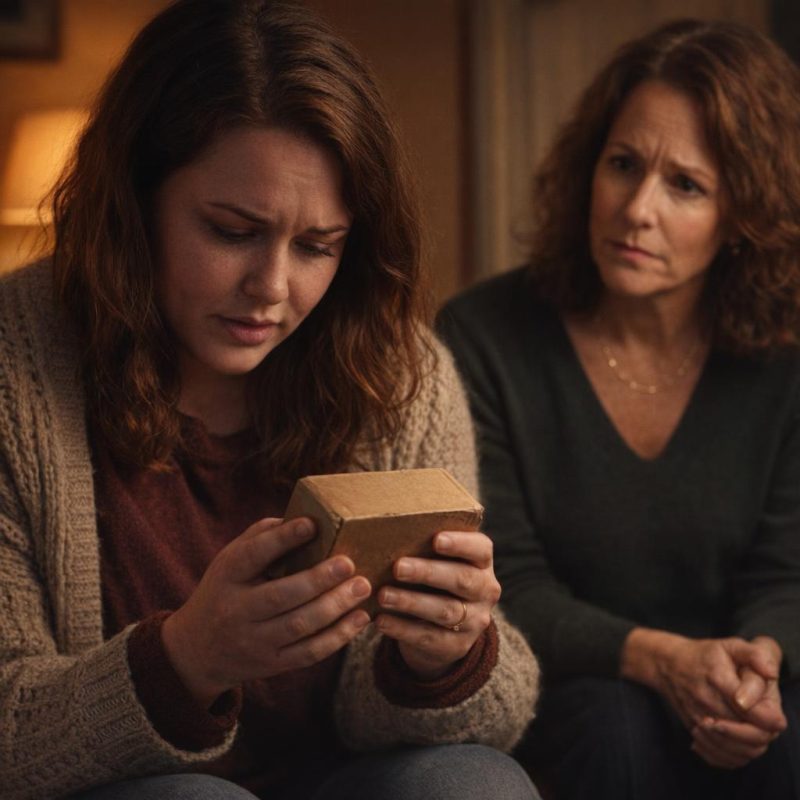 Image by RM AI
The Wrong Detail
"I remember teaching you to ride a bike," Elena said, smiling at the memory. "You were so determined. You fell three times and got right back up every time. Those red training wheels—you insisted on red because it was your favorite color." I nodded, but something felt off. The training wheels had been blue. I remembered because I'd wanted red, but the store only had blue left, and I'd cried about it. A small thing. Probably just her memory mixing up details after so many years. People misremembered stuff all the time, right? But the discrepancy lodged in my mind like a splinter I couldn't quite reach. Elena continued sharing stories, and I found myself listening more carefully now, checking details against my own memories. Most things matched. Some things felt slightly sideways. "The corporate fraud case," I said, trying to steer back to concrete facts. "I found some of the documents in the vault. The evidence you collected." "Which filing cabinet were they in?" Elena asked, leaning forward with interest. I blinked. That was an oddly specific question. How would she know there were filing cabinets? I'd mentioned the vault, but I hadn't described the layout. "The middle one," I said slowly, watching her face. "On the left side." She nodded like this made perfect sense, but something about the exchange felt wrong in a way I couldn't articulate.
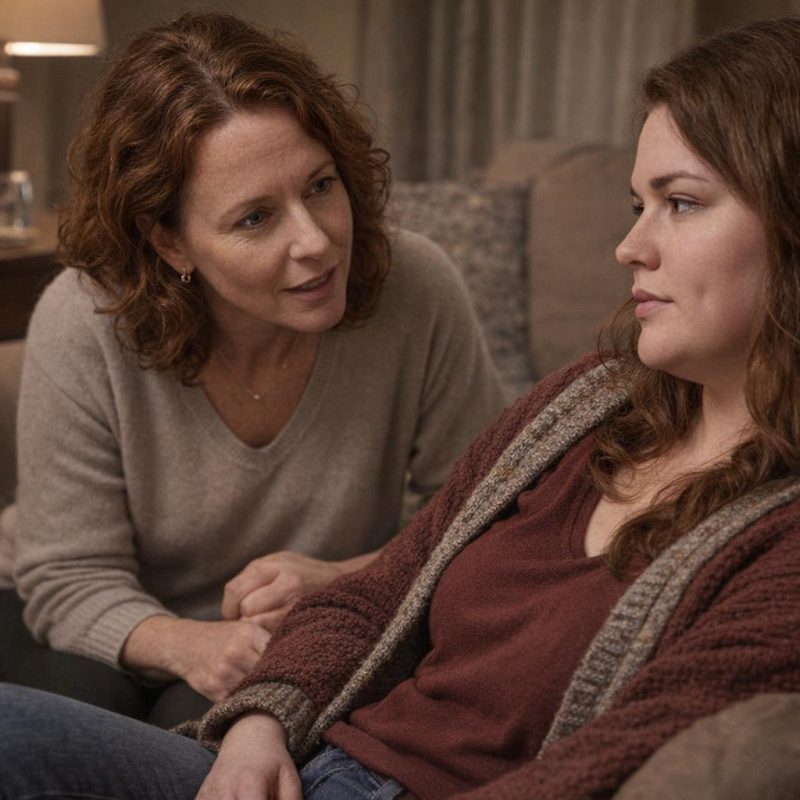 Image by RM AI
The Questions She Asked
Elena's questions started to feel different after that. More pointed. More technical. "Which documents exactly did you find in that cabinet?" she asked. "Were they the original reports or copies?" I described what I'd seen, and she followed up with more questions. Where were the passports stored? Which names were on them? Had I found any with serial numbers still visible? "Did you happen to bring any of the documents with you?" she asked, her tone casual but her eyes intent. "I'd love to see the evidence. To finally know what I risked everything for was preserved." I hesitated. Something about the way she was asking felt less like curiosity and more like inventory. Like she was checking off items on a list. "I brought some things," I said carefully. "The letters. A few photos." "What about the fraud case files? The passports?" Her interest sharpened when I mentioned the passports earlier. Now she leaned forward, her expression flickering to something I couldn't quite read before settling back into maternal concern. "Did you bring any of those?" The question hung in the air between us. Why did it matter so much whether I'd brought them? Why did she need to know exactly which documents I'd found and where? I found myself holding back, some instinct making me cautious. "I left most of the sensitive stuff in the vault," I said. "For safekeeping."
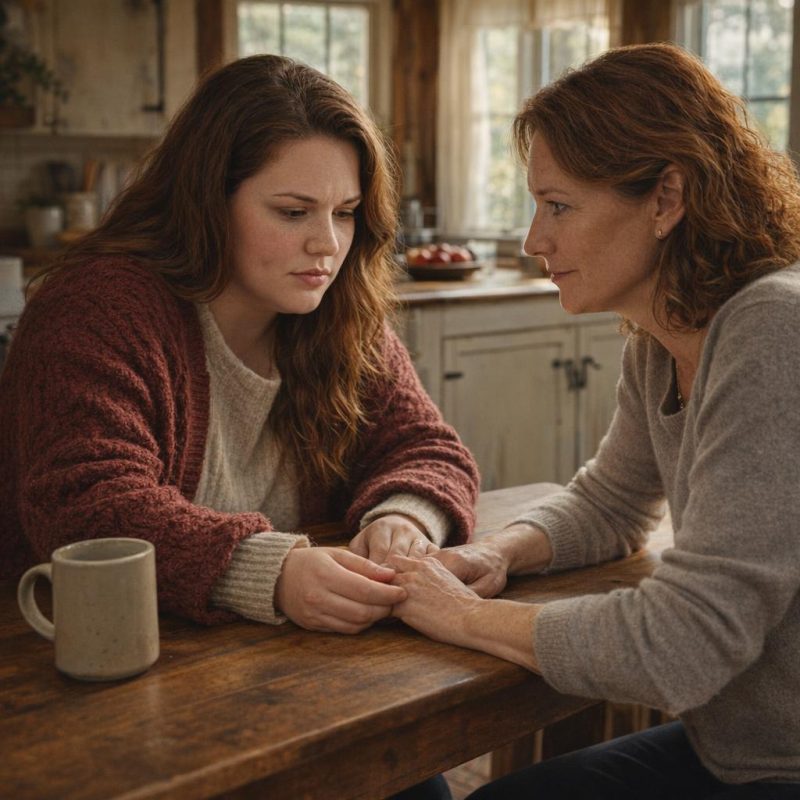 Image by RM AI
The Test
I decided to test her. The thought came suddenly, and I acted on it before I could second-guess myself. "I found something else too," I said, watching her face carefully. "A letter from Julian. To you. About a meeting you two had before you disappeared." There was no such letter. I'd invented it completely. Elena didn't hesitate. She nodded, her expression thoughtful. "What did it say?" My stomach tightened. She should have questioned that. Should have been confused or surprised. Instead, she was asking for details about something that didn't exist. "He mentioned meeting you at a restaurant," I improvised. "Discussing the case." "The Italian place downtown," Elena added, building on my fabrication. "We met there twice, actually. He was trying to convince me not to testify. Said it was too dangerous." She continued, describing a meeting that had never happened, adding specifics about what they'd ordered and what Julian had said. I watched her face as she constructed this elaborate fiction, and my stomach dropped. She'd never seen the vault contents. She didn't know what was actually in those files. She was accepting whatever I told her and building on it, trying to seem knowledgeable. Something was wrong. Fundamentally, terribly wrong. But I kept my face neutral and nodded along, my mind racing as I tried to figure out what the hell was actually happening here.
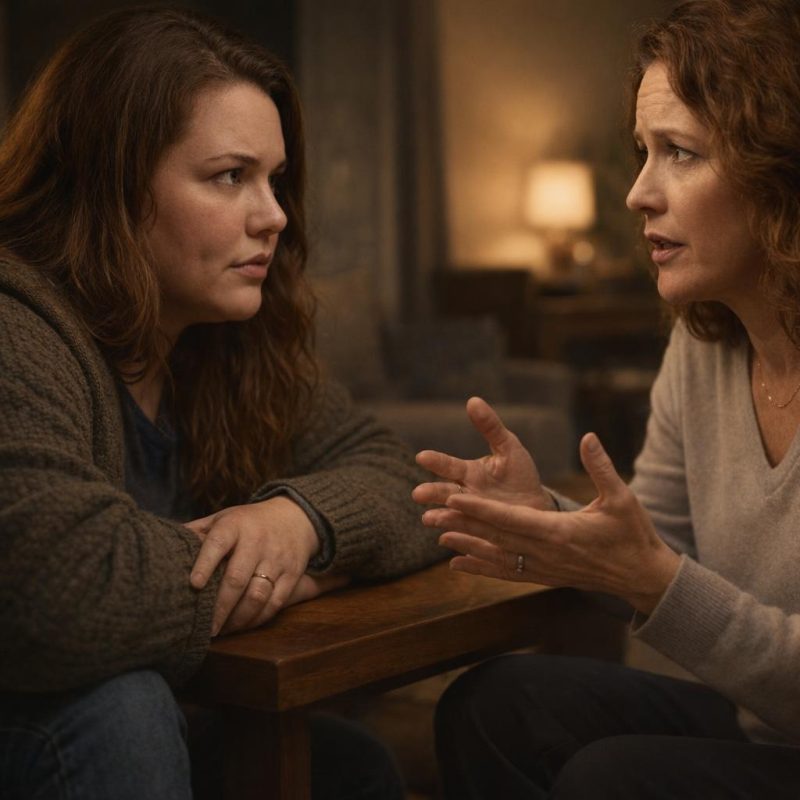 Image by RM AI
The Shape of a Lie
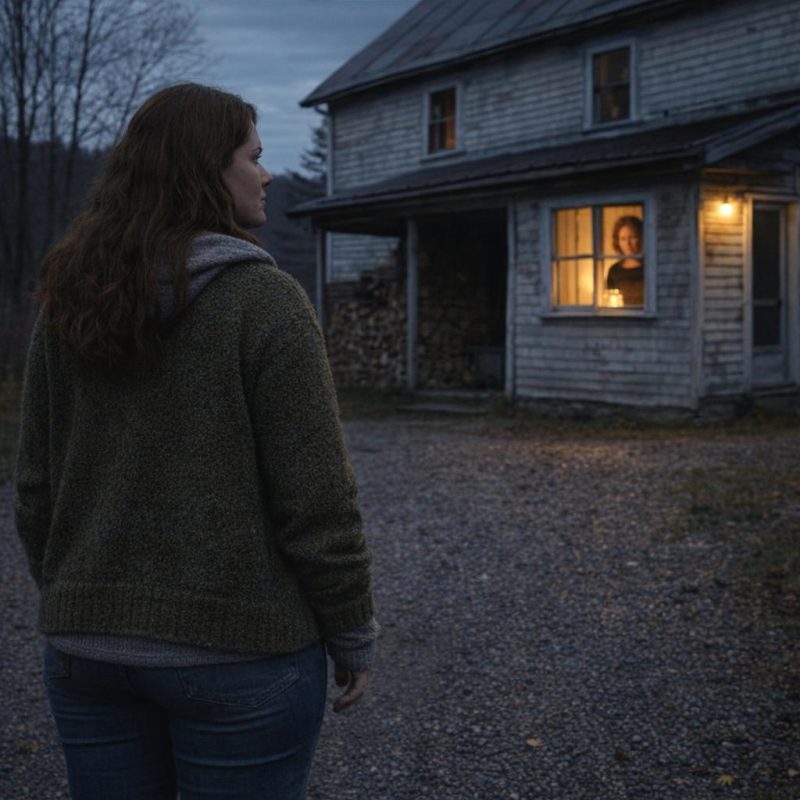 Image by RM AI
The Confrontation
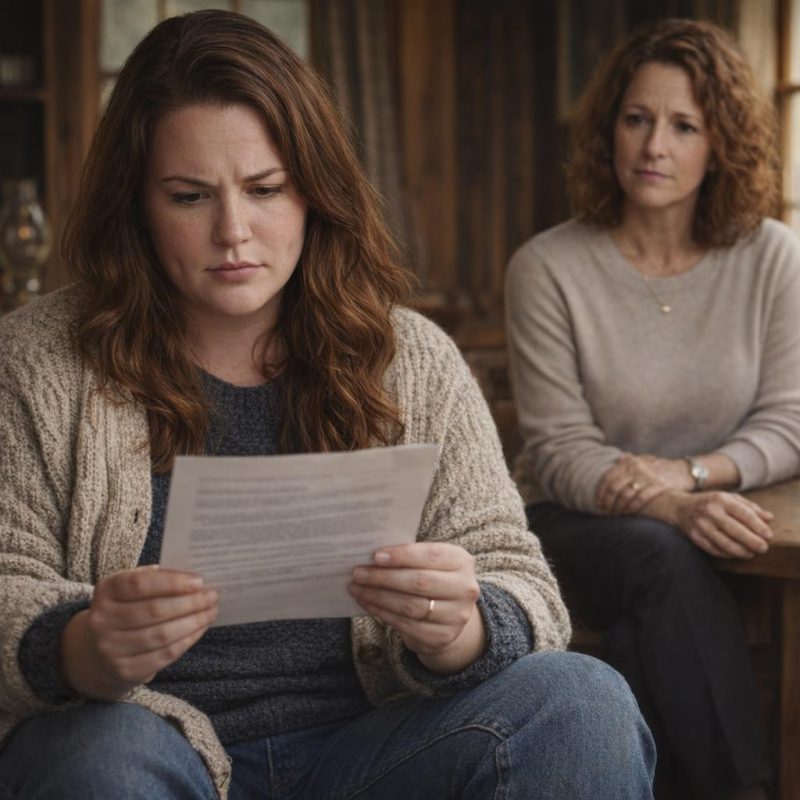 Image by RM AI
The Truth Beneath
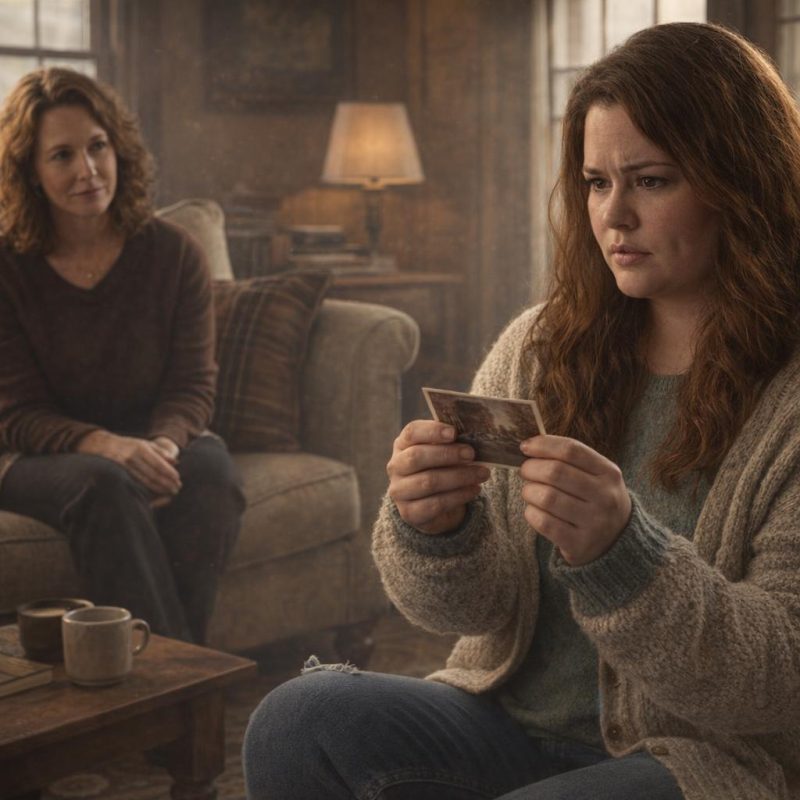 Image by RM AI
The Architect of the Trap
 Image by RM AI
What the Letters Were For
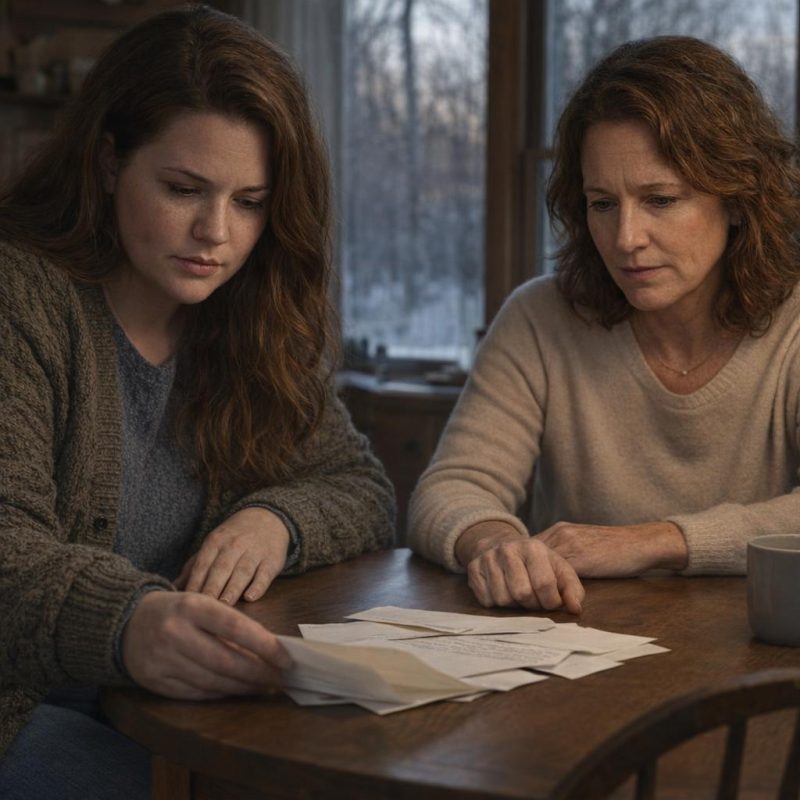 Image by RM AI
The Weight of Love
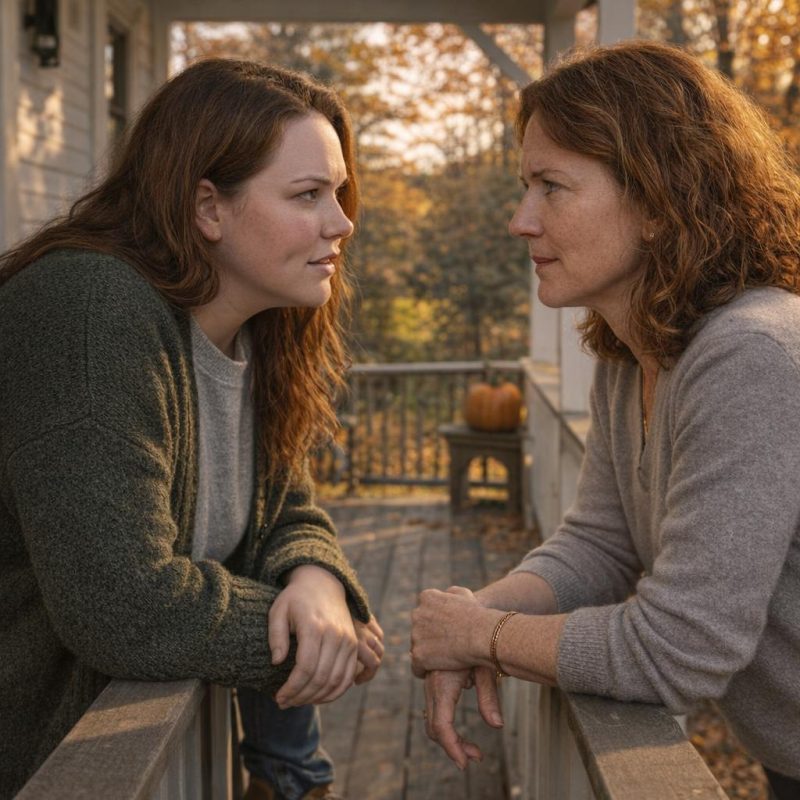 Image by RM AI
The Actress
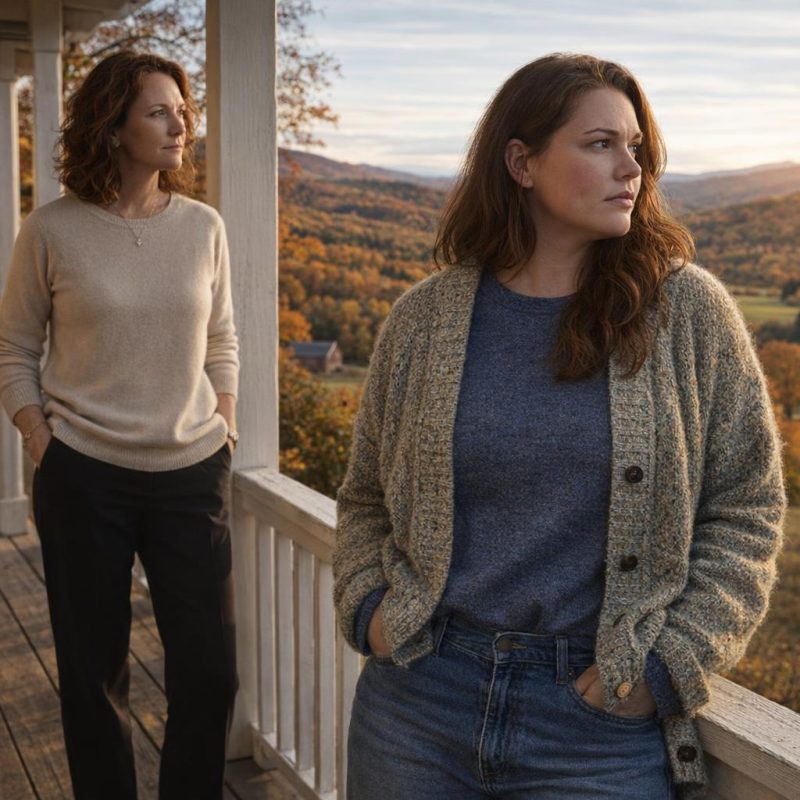 Image by RM AI
The Only Weapon
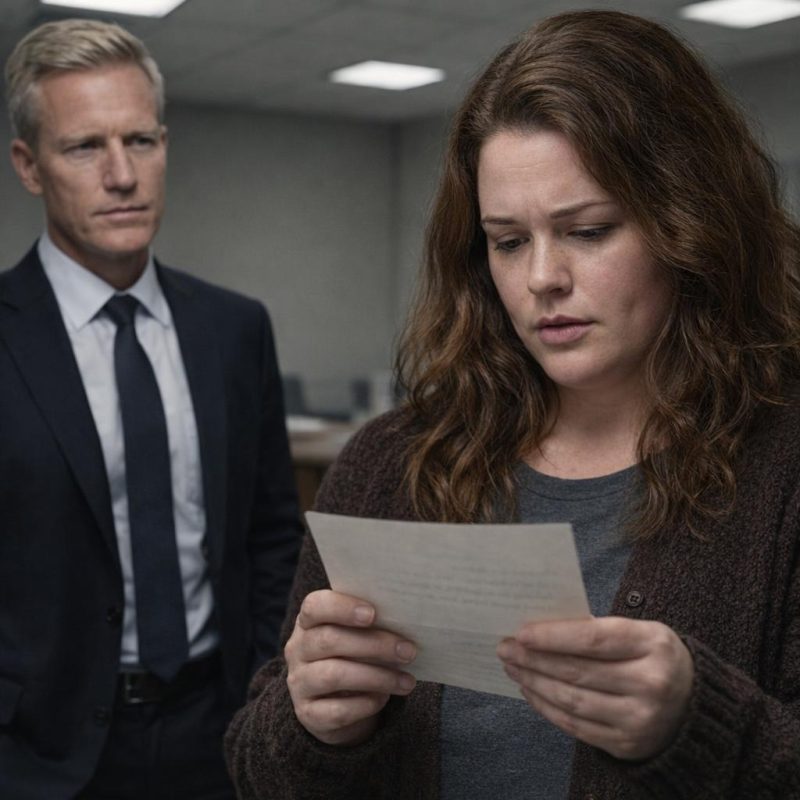 Image by RM AI
Captive Hours
They moved me to a bedroom on the second floor of the cabin, and I heard the scrape of nails being hammered into the window frame before Reeves even left the room. The door locked from the outside with a deadbolt I could hear sliding into place. I sat on the narrow bed and took inventory—a dresser with empty drawers, a lamp bolted to the nightstand, a braided rug over pine floorboards. Nothing useful. Nothing that could become a weapon or a tool. Time moved differently in that room. I counted the knots in the wood paneling. I traced the water stain on the ceiling. I listened to footsteps in the hallway, trying to map who was where and when. Elena brought me a sandwich at what I guessed was noon, wouldn't meet my eyes, locked the door again without speaking. The afternoon stretched into evening. Through the thin walls I heard Reeves making phone calls, his voice low and clipped. I pressed my ear against the plaster and caught fragments—timeline, pressure from above, running out of patience. My stomach dropped as I understood what I'd been trying not to think about. They wouldn't wait forever, and I had to find a way out before patience ran out.
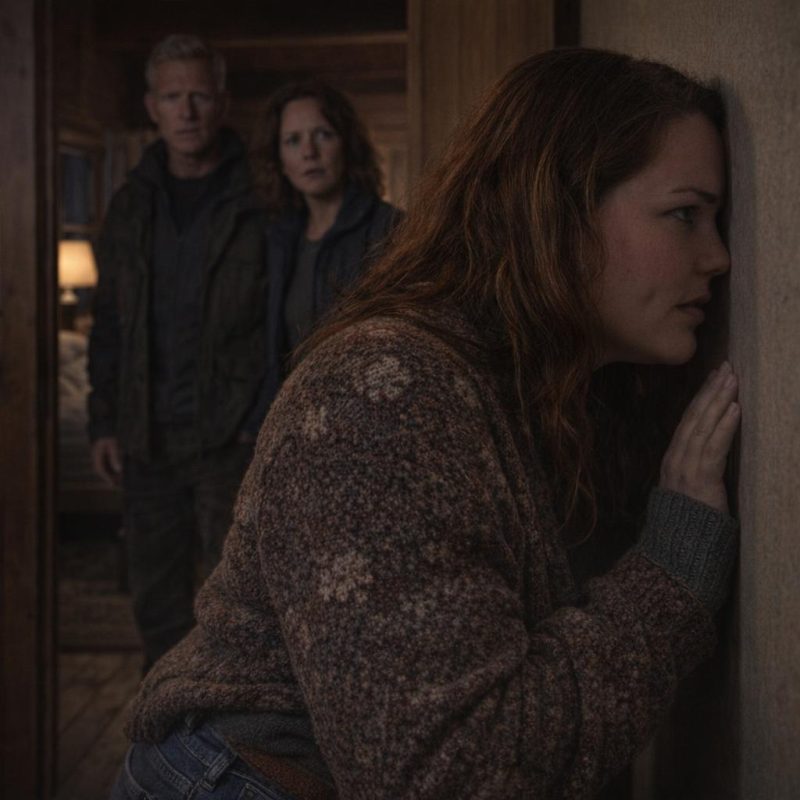 Image by RM AI
What Grandma Taught Me
Lying on that bed in the growing darkness, I kept thinking about the summer I turned twelve. Evelyn had taught me to pick locks with bobby pins, presenting it as a parlor trick, something to amuse guests at dinner parties. She'd made me practice on every door in the house until my fingers knew the feel of tumblers falling into place. She taught me how to walk on the edges of floorboards where they didn't creak, how to read a room for exits and hiding spots, how to slow my breathing when fear threatened to take over. At the time I'd thought she was eccentric, maybe a little paranoid. Now I understood she'd been preparing me for exactly this. The lessons were survival training disguised as games, and I felt her presence in that locked room like she was standing beside me, whispering instructions. I inventoried what I had—two bobby pins still clipped in my hair, a heavy ceramic lamp that could break glass or a skull, and maybe twelve hours until dawn when they'd move me or worse. I straightened the bobby pins and began to practice the lock, my fingers remembering movements I hadn't used in fifteen years. It would have to be enough.
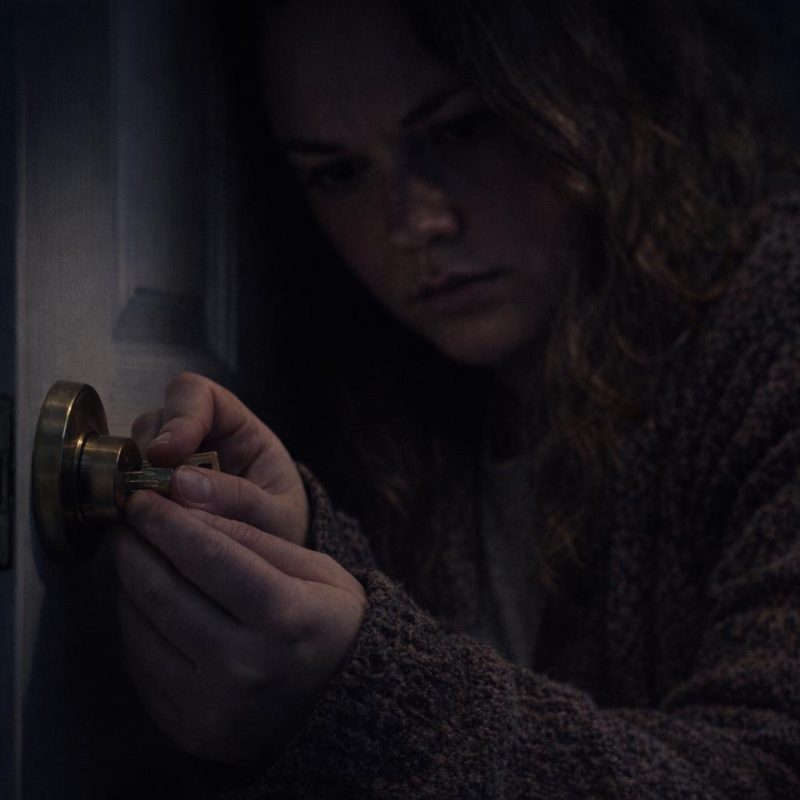 Image by RM AI
The Breaking Point
I waited until three in the morning when the cabin had been silent for over an hour. The lock took me seven minutes, my hands shaking so badly I had to start over twice, but the tumblers finally gave and the deadbolt slid free. I eased the door open an inch at a time, wincing at every tiny sound. The hallway was dark. I could hear Elena's breathing from the living room below, the rhythm of sleep. I moved along the edge of the floorboards the way Evelyn had taught me, weight on the balls of my feet, testing each step before committing. The stairs were the worst—I took them one at a time, pausing between each step to listen. Elena was sprawled on the couch, one arm flung over her eyes. The back door was fifteen feet away. I made it twelve feet before the floorboard beneath my foot screamed into the silence. Elena stirred but didn't wake. I froze, barely breathing. Then Reeves appeared in the hallway from the kitchen, his hand already reaching for me, and I swung the lamp with everything I had.
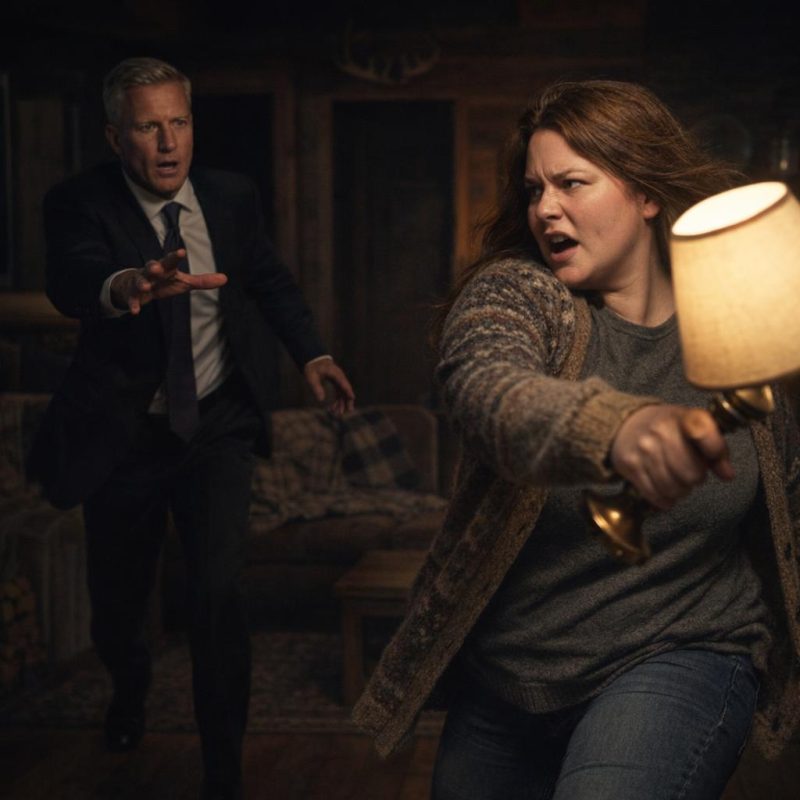 Image by RM AI
Through the Trees
The lamp connected with his shoulder instead of his head and I didn't wait to see the damage. I ran. Out the back door, across the porch, into the Vermont woods in bare feet and the clothes I'd been wearing for two days. Branches tore at my face and arms. Roots tried to trip me. The darkness was absolute under the tree canopy, and I ran blind, hands out in front of me, crashing through undergrowth like a wounded animal. Behind me I heard shouting, then the slam of the cabin door. Flashlight beams swept through the trees, cutting the darkness into moving shadows. I veered left, then right, trying to be unpredictable, trying to put distance between us. My feet were bleeding. Something sharp had cut my cheek. I could taste blood and fear. The beams were getting closer. I heard Reeves shouting directions to someone else—at least two pursuers crashing through the forest, maybe more. I had no idea which direction led to the logging road, to town, to anything resembling safety. I just kept moving, because stopping meant capture, and I realized I had no idea which direction led to safety.
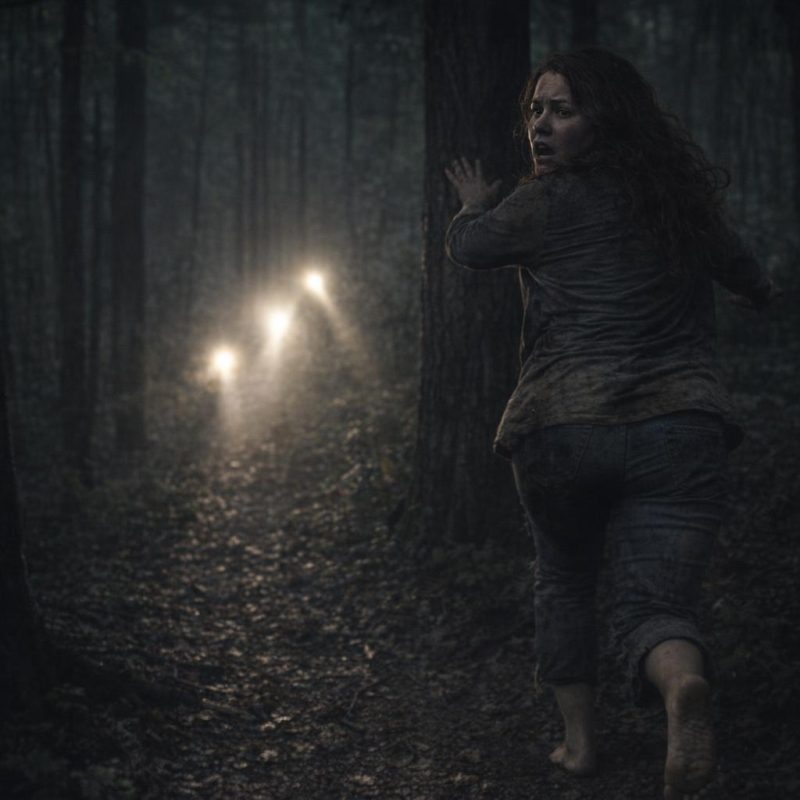 Image by RM AI
The Voice in the Dark
I found a fallen tree and crawled behind it, pressing myself into the dirt and dead leaves. My lungs were screaming. Blood dripped from my feet onto the forest floor. The flashlight beams swept past, maybe thirty yards away, and I forced myself to stay absolutely still. That's when I felt it—the hard rectangle of the burner phone still in my jacket pocket. I'd forgotten about it completely. With shaking, bloody fingers I pulled it out and dialed Julian's number, the screen brightness turned all the way down. The phone rang once. Twice. I was crouched in the dark with pursuers close enough to hear if I spoke above a whisper. Julian answered on the second ring. I barely breathed his name. There was a pause, then his voice came through, calm and certain, and he said five words that made me sob with relief: 'I know where you are.'
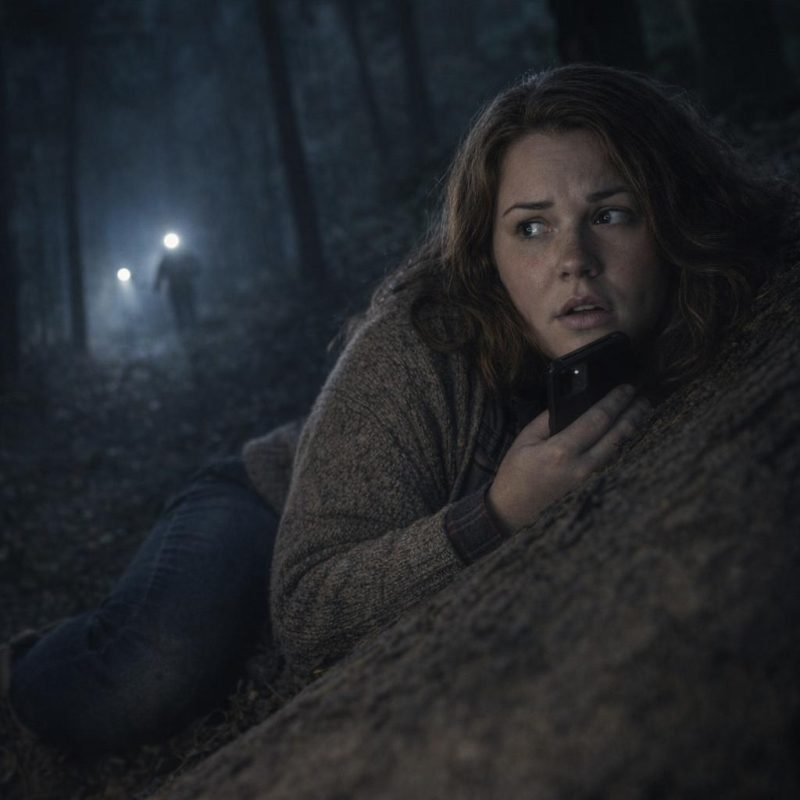 Image by RM AI
The Network Awakens
Julian kept me on the line, his voice steady in my ear, telling me to stay hidden and stay quiet. The network had been tracking Reeves since the vault was opened. They knew about the Vermont meeting. They knew it was a trap. Help was already coming. I stayed behind that fallen tree as the sky slowly lightened from black to gray. The searchers eventually gave up or moved to another section of forest. At dawn I heard an engine, then footsteps approaching from a different direction. Two people materialized from the trees—a man and a woman I'd never seen before. The woman said, 'Evelyn sends her regards,' and I nearly collapsed. They helped me to a vehicle hidden on an old fire road, wrapped me in a blanket, gave me water. We drove fast, heading south, crossing into New York within an hour. They didn't ask unnecessary questions. They were professionals, part of something Evelyn had built that I was only beginning to understand. As we crossed the state line, the man handed me a folder from the front seat and said that Evelyn had prepared this for the day the vault was opened—and it contained everything I needed to end this.
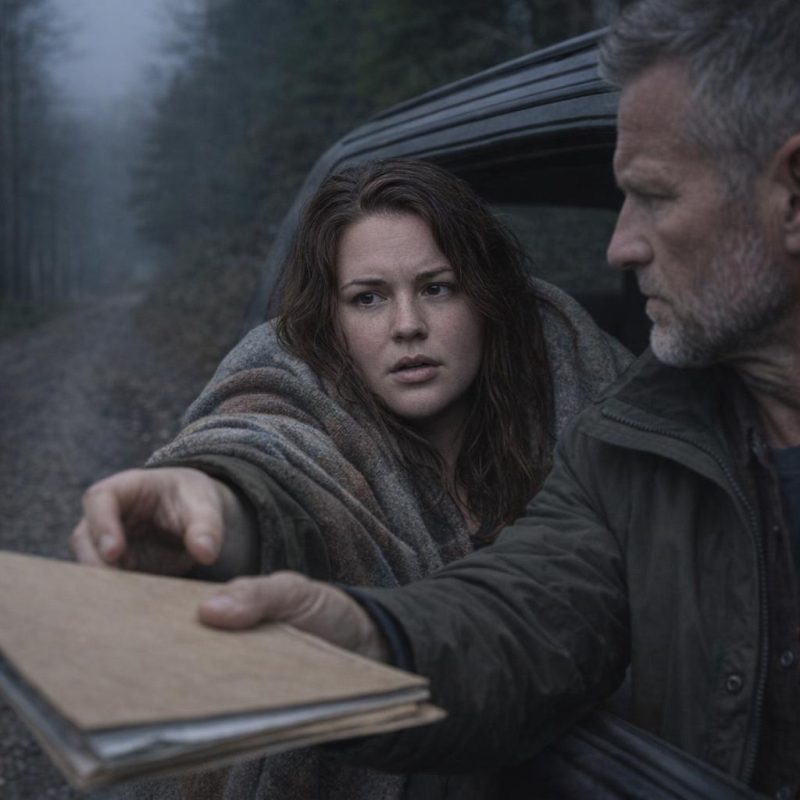 Image by RM AI
The Final Hand
Julian met me at a safe house in the Catskills, a cabin that looked nothing like the one I'd escaped from. He made coffee while I showered and bandaged my feet. Then he opened the folder Evelyn had prepared and showed me what we still had. The vault evidence wasn't just historical—it connected to ongoing fraud, to current executives, to a pattern of criminal behavior that had never stopped. Statute of limitations didn't apply to everything, and what my mother had documented in the nineties was the foundation of crimes still being committed today. Julian had contacts in investigative journalism and federal law enforcement. The evidence could bring down not just individuals but the entire corporate structure that had hunted my family for decades. But going public meant stepping out of the shadows forever. My life would never be private again. I'd be the face of this story, the survivor, the whistleblower. Julian asked if I was prepared for that, knowing what it would cost. I thought about my mother dying in that car, about my grandmother spending thirty years protecting this truth, and I said yes.
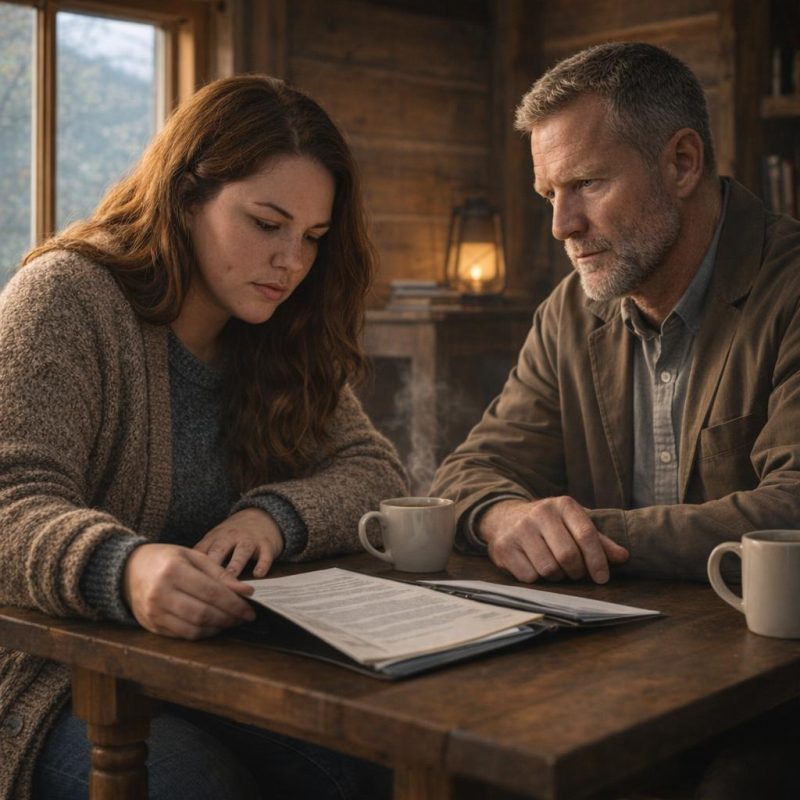 Image by RM AI
For Sarah and Evelyn
We worked through the afternoon and into the evening, organizing documents, scanning pages, creating redundant copies. Julian had a system—three major news organizations, two federal agencies, one congressional oversight committee. If one recipient buried the story, the others would run with it. I read through the evidence again, seeing it with new eyes now that I understood the full scope. Some pages had my mother's handwriting in the margins, notes and calculations in her precise script. Evelyn's annotations clarified connections, drew lines between shell companies and offshore accounts. Together they'd built an irrefutable case. I felt the weight of decades pressing down on me, the accumulated grief and rage and determination of two women who'd sacrificed everything for this moment. Julian made the calls at midnight, his voice quiet and professional as he spoke to contacts who'd been waiting for this evidence for years. By morning the documents would be in the hands of three major news organizations and federal investigators.
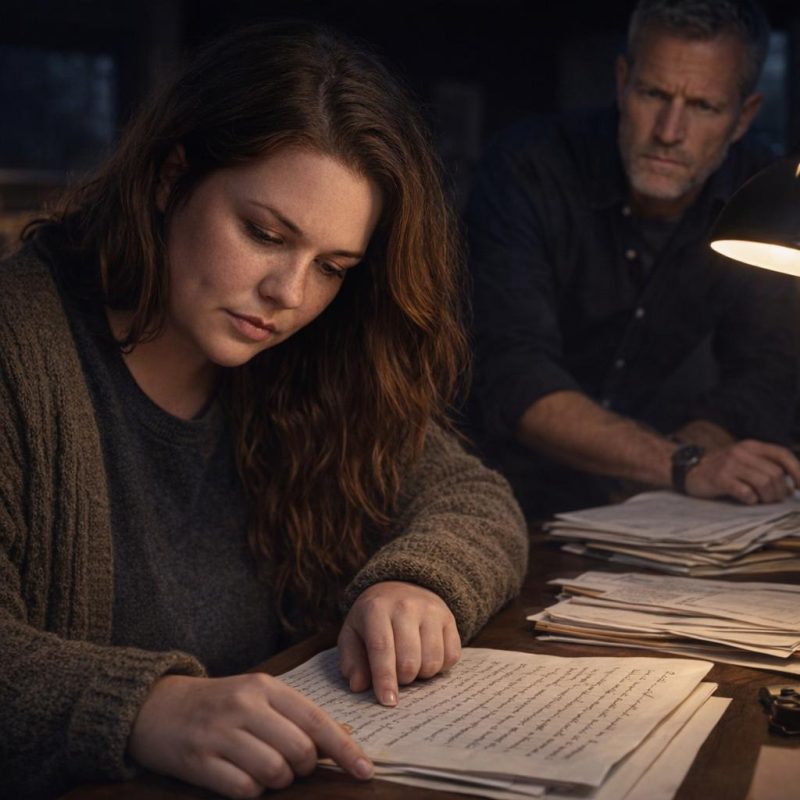 Image by RM AI
Into the Light
 Image by RM AI
The Road Home
 Image by RM AI
No More Secrets
 Image by RM AI
The Thread Continues
 Image by RM AI
KEEP ON READING
The 20 Most Recognized Historical Figures Of All Time
The Biggest Names In History. Although the Earth has been…
By Cathy Liu Oct 4, 2024
10 of the Shortest Wars in History & 10 of…
Wars: Longest and Shortest. Throughout history, wars have varied dramatically…
By Emilie Richardson-Dupuis Oct 7, 2024
10 Fascinating Facts About Ancient Greece You Can Appreciate &…
Once Upon A Time Lived Some Ancient Weirdos.... Greece is…
By Megan Wickens Oct 7, 2024
20 Lesser-Known Facts About Christopher Columbus You Don't Learn In…
In 1492, He Sailed The Ocean Blue. Christopher Columbus is…
By Emilie Richardson-Dupuis Oct 9, 2024
20 Historical Landmarks That Have The Craziest Conspiracy Theories
Unsolved Mysteries Of Ancient Places . When there's not enough evidence…
By Megan Wickens Oct 9, 2024
The 20 Craziest Inventions & Discoveries Made During Ancient Times
Crazy Ancient Inventions . While we're busy making big advancements in…
By Cathy Liu Oct 9, 2024