

I Found a Surgery I Never Had in My Medical Records—Then I Discovered Who Forged My Son's Signature
I Found a Surgery I Never Had in My Medical Records—Then I Discovered Who Forged My Son's Signature
The Entry That Shouldn't Exist
I logged into my patient portal on a Tuesday morning expecting to see my cholesterol numbers and maybe a reminder to schedule my mammogram. You know how it is—you click through the wellness ads and weight-loss program promotions, half-reading the banners about flu shots and colon cancer screenings. I was scrolling through my medical history, past the routine stuff, when I saw it: 'Surgical Procedure - Exploratory Laparoscopy.' The date was from two years ago, mid-April. I stared at the screen, trying to remember that spring. Nothing unusual came to mind. No hospital visits, no recovery time, no surgical incisions. I've had surgery before—my appendix came out when I was twenty-three—but nothing recent. And laparoscopy isn't something you forget. It requires anesthesia, recovery time, someone to drive you home. You don't just lose track of a surgical procedure. I refreshed the page, thinking maybe it would disappear, but the entry stayed right there, solid and official-looking. The date was from exactly two years ago, in the middle of April, when nothing unusual happened in my life.
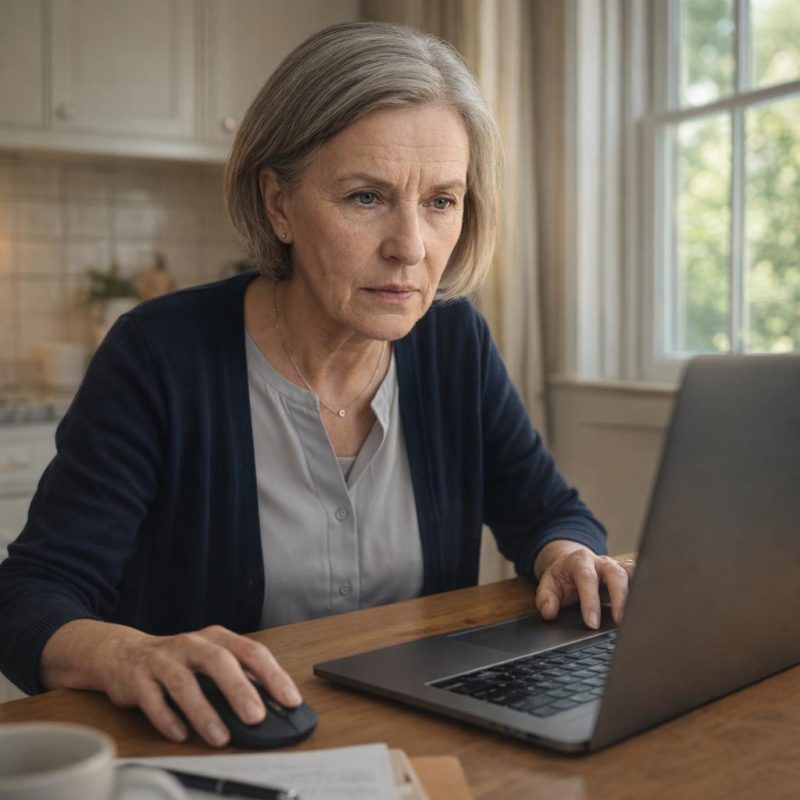 Image by RM AI
The Dismissal
I called the hospital that afternoon, my voice shaking a little as I explained the discrepancy to the receptionist. She was polite, using that practiced, soothing tone they must teach in customer service training. "This happens more often than you'd think," she said. "It's likely just a coding error by one of our data entry clerks." She made it sound so simple, so routine. A few keystrokes in the wrong field, a patient ID number transposed. She promised to submit a correction request right away and assured me it would be cleared up within a few days. I wanted to believe her. God, I wanted to believe her. It was so much more comforting than the alternatives my mind was starting to conjure. A clerical glitch made sense. People make mistakes. Systems have bugs. I thanked her and hung up, feeling my shoulders relax slightly. Maybe I'd been overthinking it. Maybe by Friday, the entry would be gone and I could forget this whole strange afternoon. Her practiced, soothing tone reminded me of how they speak to difficult patients who won't accept simple explanations.
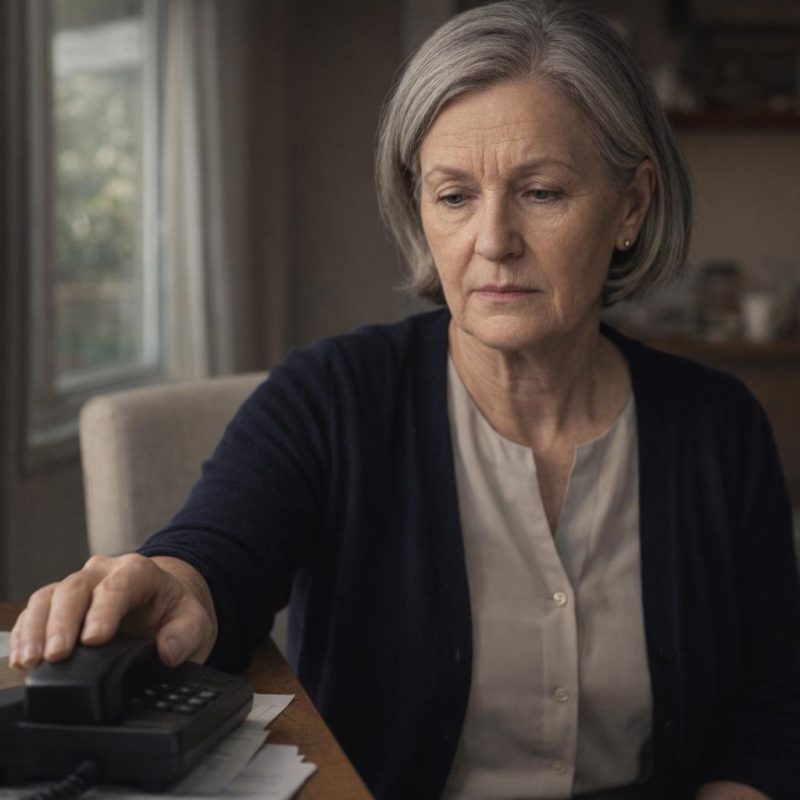 Image by RM AI
Overnight Growth
The next morning, I checked the portal again, expecting the entry to be gone. I'd slept better than I had the night before, convinced the receptionist had been right about the coding error. But when the page loaded, my stomach dropped. Instead of vanishing, the entry had expanded. A full operative report had appeared overnight, complete with specific timestamps for every stage of the procedure. Pre-op at 7:15 AM. Anesthesia administered at 7:42 AM. Incision at 8:03 AM. The anesthesia levels were documented in precise medical notation—propofol, fentanyl, dosages I didn't understand but that looked disturbingly official. There was even a narrative description of the procedure itself, written in that clinical language doctors use: 'Patient tolerated procedure well. No complications noted. Three small incisions made in standard trocar positions.' I stared at the expanding documentation, my coffee growing cold beside my laptop. The timestamps, anesthesia levels, and surgical narrative appeared with clinical precision overnight, as if the system wanted me to believe it had really happened.
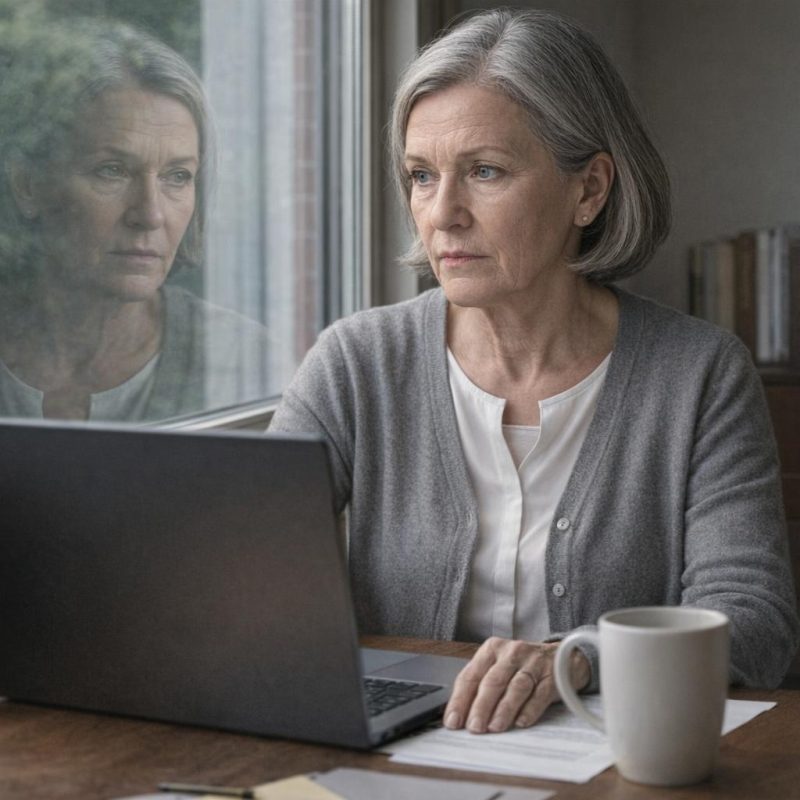 Image by RM AI
The Son Who Wasn't There
I read the operative note three times, each time hoping I'd misread it. But the words stayed the same: 'Patient's son Adam present in pre-op and recovery, supportive throughout procedure.' I sat back in my chair, the kitchen suddenly feeling heavy and silent around me. Adam. My Adam. I tried to remember where he was two years ago in April. It took me a minute, but then it came back clearly—the photos he'd sent of hawker stalls and the Marina Bay skyline, the time difference that made our phone calls awkward, his complaints about the humidity. Adam was in Singapore that entire spring. He'd been there on an eight-month engineering contract, living in a corporate apartment near the financial district. I remembered because I'd worried about him being so far away, especially after his father died. He'd sent me pictures of his temporary workspace, the view from his balcony. In April of that year, Adam was living in Singapore on an eight-month engineering contract, thousands of miles from any hospital recovery room.
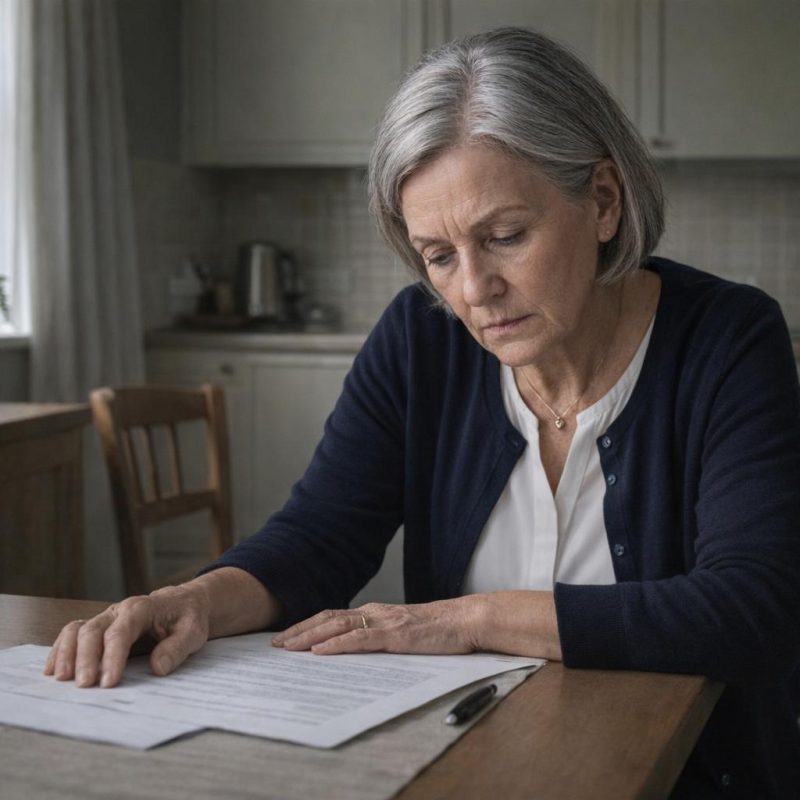 Image by RM AI
Passport Proof
I called Adam that evening, trying to keep my voice steady. "Where were you two years ago in April?" I asked, not explaining why yet. He didn't hesitate. "Singapore, Mom. The Temasek project, remember?" He sounded slightly confused by the question but not defensive. "Why?" I told him I just needed to verify something, and he offered immediately to send proof. Within minutes, my phone buzzed with a photo. His passport, opened to the pages with the stamps. I zoomed in on the images. The entry stamp into Singapore was dated March 12th, two years ago. The exit stamp was dated November 3rd of that same year. Between those dates were smaller stamps from a weekend trip to Malaysia, but nothing showing he'd left Southeast Asia during April. The stamps were crisp, official, undeniable. I stared at the photo for a long time, my hands trembling slightly. The passport stamps were crisp, official, and undeniable—he hadn't even been in the same hemisphere when someone signed his name in a hospital recovery room.
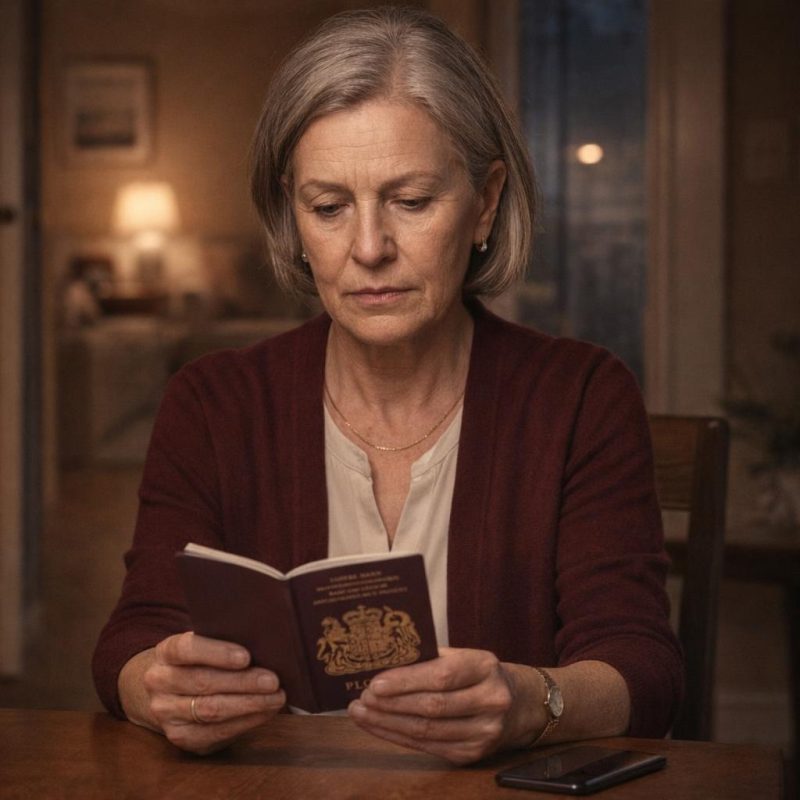 Image by RM AI
Outside Perspective
I told Jennifer everything over coffee two days later. We met at the place near her office, the one with the uncomfortable metal chairs and overpriced lattes. I needed someone to hear the whole story out loud, to tell me whether I was overthinking a bureaucratic mistake or if this was actually as strange as it felt. Jennifer listened without interrupting, her hands wrapped around her cup, her eyes steady on mine. I walked her through it all—the initial entry, the expanding documentation, the note about Adam being present, the passport stamps proving he was on another continent. "Maybe it's just a really elaborate coding error," I said, hearing how desperate that sounded even as the words left my mouth. "Like they merged my file with someone else's or something." Jennifer set down her cup carefully, her expression shifting from concerned to something more serious. She looked at me directly, and I could see she was choosing her words with care. "That's not a mistake, Claire."
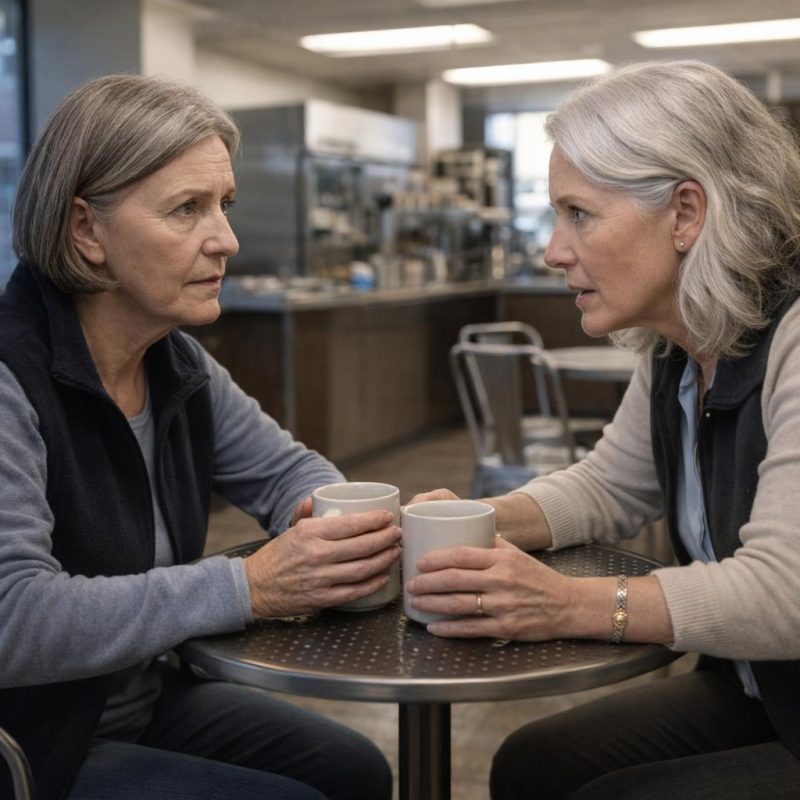 Image by RM AI
Digital Evidence
Adam sent the passport stamps by email later that day, and I printed them out as soon as they arrived. I spread the documents across my kitchen table—the operative report on one side, the passport pages on the other. I compared the dates line by line, using a highlighter to mark the timeline. The surgical procedure was dated April 18th. Adam's entry stamp into Singapore showed March 12th. His exit stamp showed November 3rd. Every entry stamp and exit visa aligned perfectly with the procedure date. There was a stamp from a weekend trip to Kuala Lumpur on April 15th, three days before the supposed surgery, and a return stamp to Singapore on April 17th, the day before. The dates created an airtight alibi, which felt absurd because Adam wasn't accused of anything. He was listed as a witness, a support person. But someone had used his name, had written it down in official medical records, had claimed he was present in a hospital recovery room when he was provably thousands of miles away. Every entry stamp and exit visa aligned perfectly with the procedure date, creating an airtight alibi for someone who was never accused of anything.
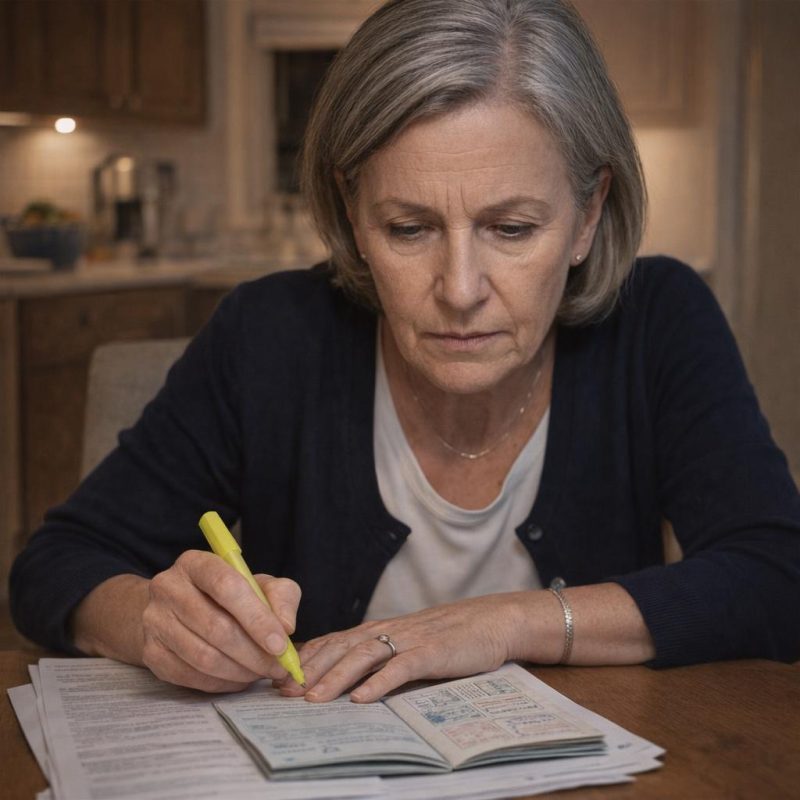 Image by RM AI
The Witness Signature
I clicked on the digital consent form in the portal and waited for the image to load. My internet was slow that afternoon, and the file appeared pixel by pixel, top to bottom. My name was at the top of the standard hospital consent form, the kind they make you sign before any procedure. I scrolled down slowly, past the paragraphs of legal language about risks and complications. The signature field was labeled 'Witness or Next of Kin.' I held my breath as the final section loaded. There it was—a signature that was supposed to read 'Adam Brennan.' I stared at the rushed, looping cursive, the letters slanting dramatically to the right. Adam doesn't write like that. He never has. Since he was a kid, he's written in neat, deliberate block letters, the kind of precise handwriting you'd expect from an engineer. This signature was careless, hurried, the kind of scrawl someone makes when they're forging a name they've seen but never practiced. The signature field labeled 'Witness or Next of Kin' contained a scrawled attempt at 'Adam Brennan' that looked nothing like my son's careful handwriting.
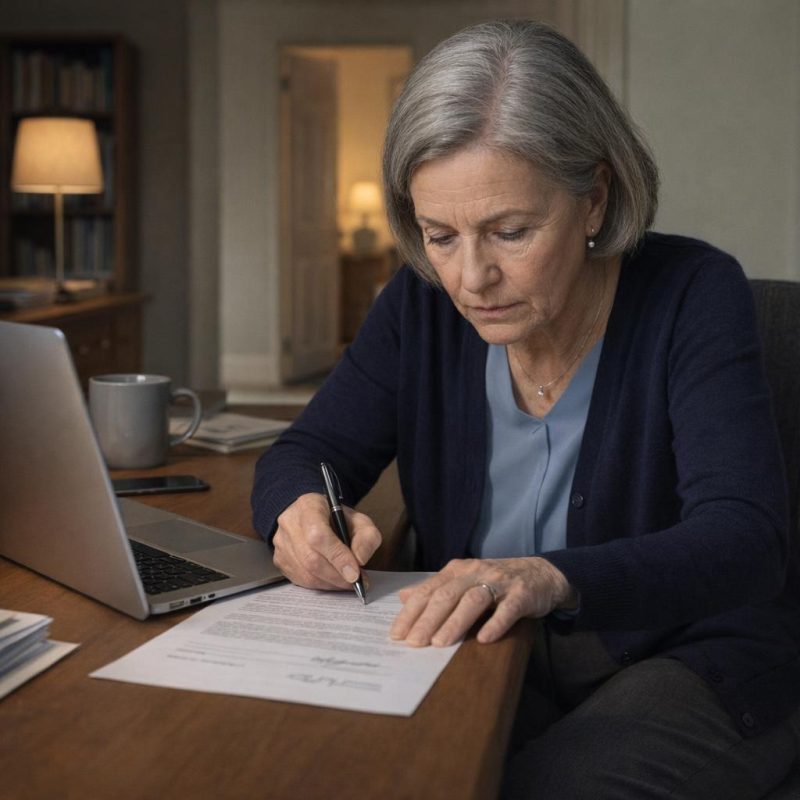 Image by RM AI
The Forged Hand
I pulled Adam's old engineering notebooks from the bookshelf in my office, the ones he'd left behind when he moved to Seattle. The spines were worn, labeled with dates from his college years in his characteristic block letters. I carried them to the kitchen table and placed them beside the printed consent form, the one with the signature that was supposed to be his. I opened the first notebook to a random page—neat, methodical rows of calculations, each letter and number precisely formed. Adam's handwriting had always been like that, the kind of careful penmanship you'd expect from someone who builds bridges for a living. I looked back at the signature on the consent form. The contrast was stark and undeniable. The forged signature was rushed, looping cursive that slanted dramatically to the right. Whoever had written it had practiced enough to get the general shape of his name, but they'd completely missed the essence of how he actually wrote. They didn't understand his engineer's precision, the deliberate way he formed each letter. I sat back in my chair, my hands trembling slightly. This wasn't a mistake or a mix-up in the system. Someone had committed deliberate fraud, and they'd been careless enough to suggest they never expected anyone to look this closely.
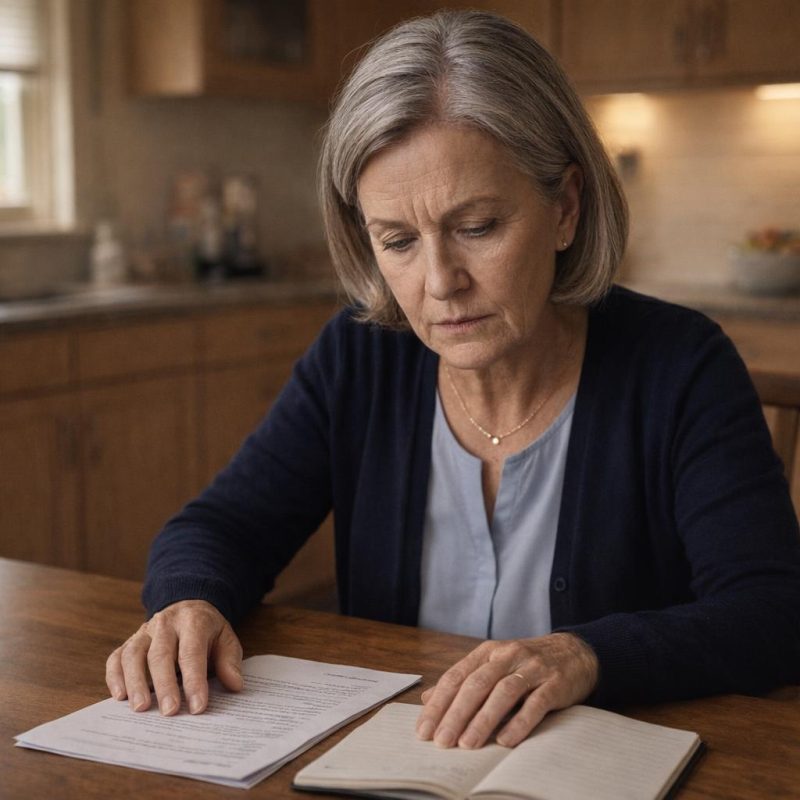 Image by RM AI
No More Phone Calls
By Thursday, I was done with phone calls. I'd spent three days leaving messages with the billing department, the medical records office, and patient services. I'd navigated automated menus and been transferred to voicemail boxes that never called back. Every conversation felt like talking to a script, and scripts don't answer the questions I needed answered. I needed to stand in front of someone at the hospital and watch their face when I asked about the forged signature. I needed to see reactions, not hear carefully worded responses designed to protect the institution. I grabbed my purse from the counter and checked that I had everything—my ID, my insurance card, the printed consent form with the fake signature, and Adam's notebook opened to a page of his real handwriting. I reviewed what I knew as I gathered my car keys: someone had forged my son's signature, documented a procedure I never had, and created a paper trail that said Adam was present when he was three thousand miles away in Seattle. The confusion I'd felt days ago had crystallized into something harder, more focused. Whoever had done this hadn't expected this level of scrutiny. I headed for the door, knowing they weren't expecting me to walk through theirs either.
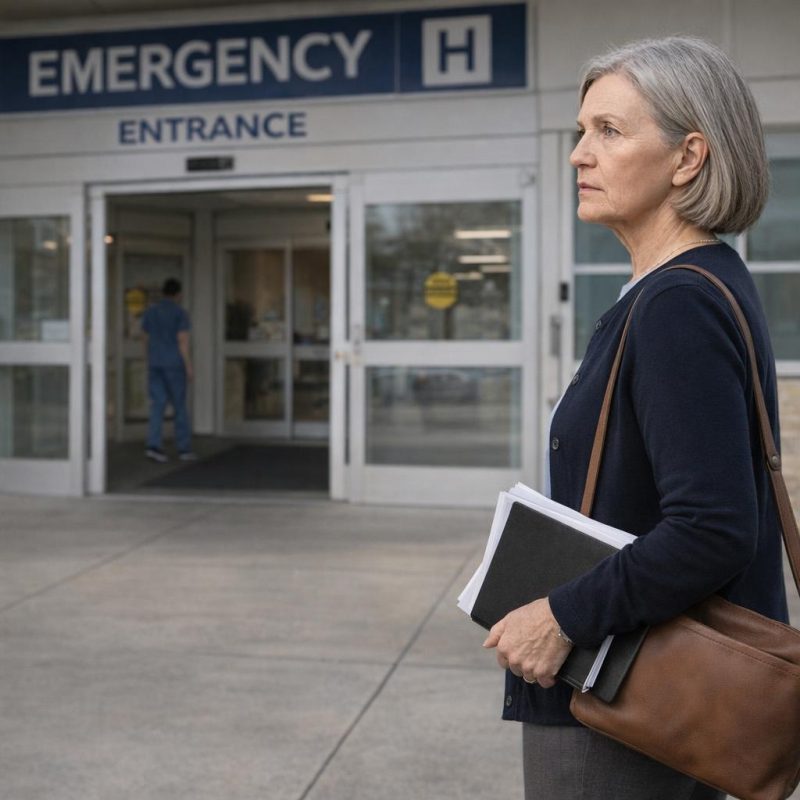 Image by RM AI
The Hesitant Clerk
The medical records office was tucked in a corner of the hospital's administrative wing, behind a door marked with small lettering that seemed designed to discourage visitors. I walked up to the counter where a young woman in scrubs looked up from her computer screen. Her name tag read 'Becca Martinez' in the hospital's standard font. I explained that I needed my complete physical medical file, not just the digital records from the portal. She listened to my request, but something in her demeanor shifted as I spoke. Her eyes darted between her computer screen and the hallway behind me, like she was checking to see if anyone was listening. She asked for my date of birth and insurance information, typing slowly, her fingers hesitant on the keyboard. When I mentioned I wanted everything from the past two years, her shoulders tensed. She told me it would take about a week to process the request, maybe longer depending on how many pages needed to be copied. Her voice was professional enough, but those nervous glances kept happening—quick looks toward the hallway, then back to her screen, then to me. I watched her carefully, trying to read what she wasn't saying. The delay felt like more than standard bureaucracy. It felt like a warning she couldn't quite bring herself to speak out loud.
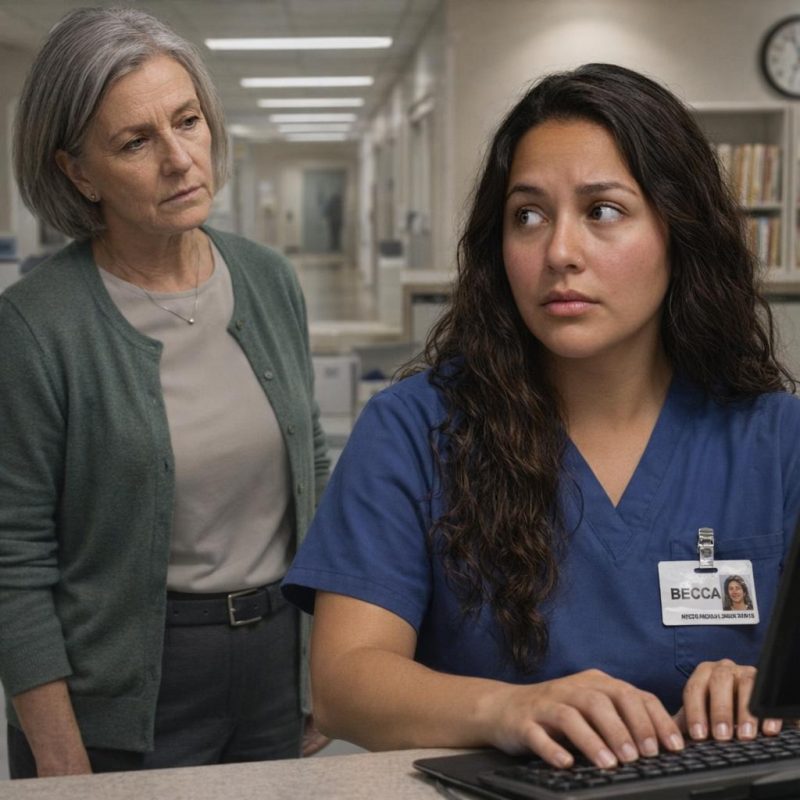 Image by RM AI
Paperwork and Heavy Hands
Becca slid a medical records request form across the counter, along with a pen attached to the desk by a beaded chain. I pulled the form toward me and began filling in the boxes—my name, date of birth, address, the date range I was requesting. My handwriting grew heavier with each line. By the time I reached the section asking for the reason for my request, I was pressing so hard the pen nearly tore through the carbon copy underneath. I wrote 'discrepancies in documented procedures' in letters that looked angrier than I felt, though maybe that wasn't true. My mind kept circling back to that phrase in the recovery room notes: 'son present.' If Adam wasn't there, who was? Why would someone need to forge such detailed documentation, complete with his signature on multiple forms? I completed the form with tense precision, signed my own name at the bottom, and slid it back across the counter. Becca picked it up, but instead of filing it immediately, she held it for a moment too long. Her fingers trembled slightly against the paper. Our eyes met briefly, and I saw something there—conflict, maybe, or fear. She wanted to say something. I was certain of it. But she just nodded, placed the form in a tray beside her computer, and told me I'd receive a call when the records were ready.
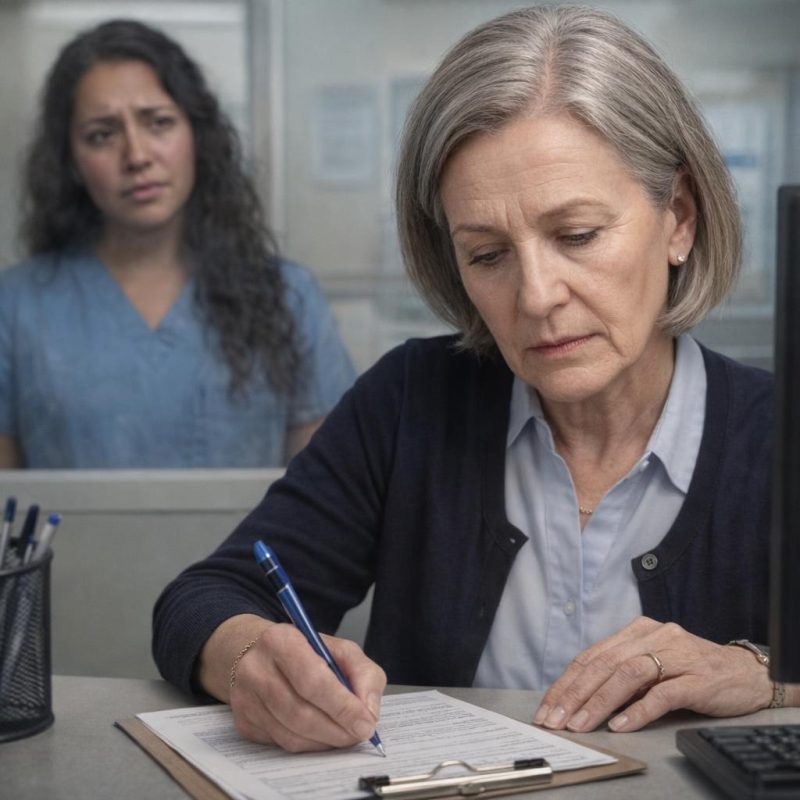 Image by RM AI
The Wait
The next seven days crawled by like weeks. I checked my mailbox every afternoon, even though Becca had said they'd call, not mail anything yet. I couldn't help myself. Each morning I woke up thinking about the recovery room, about who had been standing there claiming to be my son. Each night I lay awake wondering why someone would need to impersonate Adam in the first place. What did they gain from it? What was I missing? I spent hours at my kitchen table, reviewing the documents I'd already printed from the portal, looking for details I might have overlooked. I made lists of questions. I drafted emails I never sent. I paced the kitchen so many times I started to notice the path I was wearing in the floor between the table and the sink. By day six, the repetition had become almost meditative, except meditation is supposed to calm you down. This just made everything worse. The questions multiplied instead of resolving. Who was present? Why forge the signature? What else didn't I know about that day? What else had been documented that never actually happened? Sleep became difficult. I'd close my eyes and see that looping, careless signature, so different from Adam's careful block letters. Someone had done this. Someone specific. And I still had no idea who.
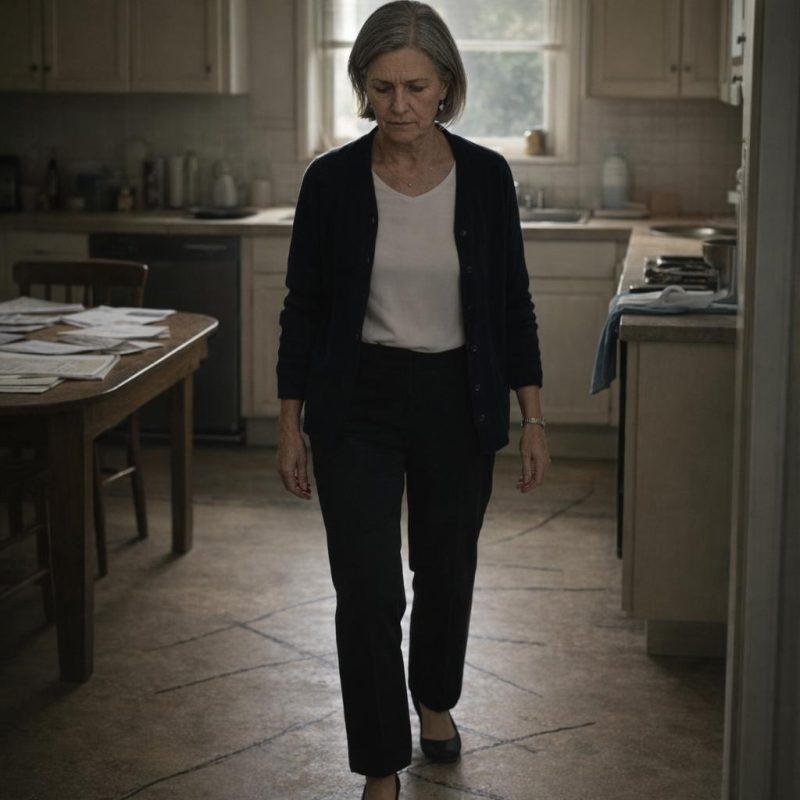 Image by RM AI
The Padded Envelope
On the eighth day, I opened my mailbox and found a padded envelope with the hospital's return address printed in the corner. My hands shook as I carried it inside. I'd been expecting a phone call, but here it was—physical evidence, delivered to my door. I sat down at the kitchen table and carefully opened the envelope. Inside was a disc in a plastic case, labeled with my name and medical record number. I held it in my hand for a long moment, feeling the weight of it. This wasn't just medical records anymore. This was evidence of a crime I didn't yet fully understand. Someone had forged documents. Someone had created a false paper trail. Someone had impersonated my son and documented procedures that never happened. The answers were on this disc. I walked to my laptop, still sitting open on the table from days of obsessive research. I slid the disc into the drive and waited. The directory loaded slowly, revealing folder after folder of scanned documents. Hundreds of pages. Intake forms, consent documents, billing records, nursing notes, discharge summaries. Somewhere in this digital haystack was the needle that would tell me who had really been there, standing in that recovery room, signing my son's name to forms he'd never seen.
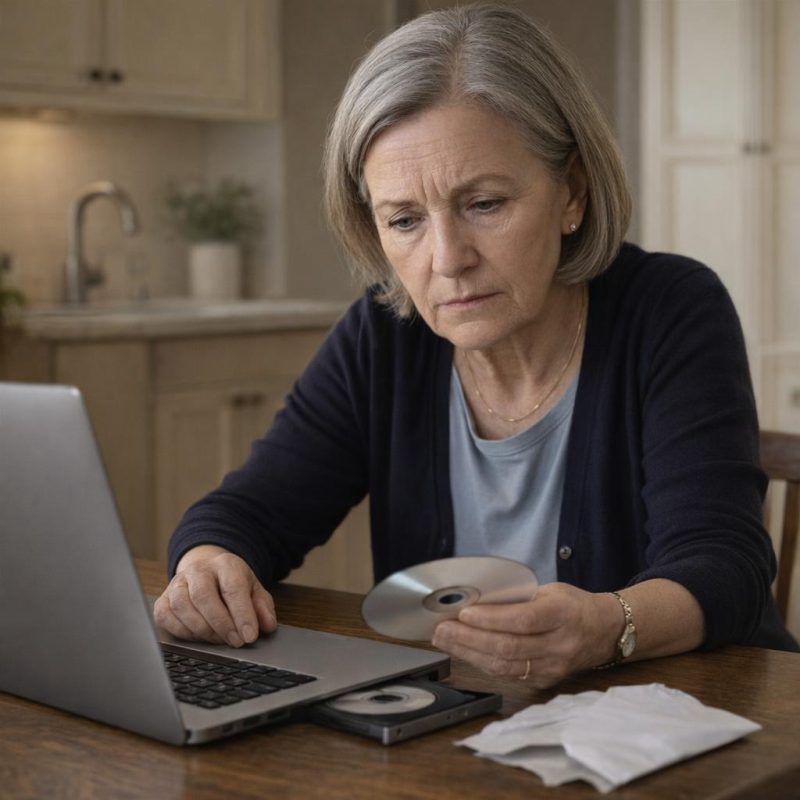 Image by RM AI
The Deep Dive
I made a full pot of coffee, the kind of preparation you do when you know you're settling in for hours. I sat down at my kitchen table with my laptop and opened the first folder on the disc. The directory was organized by date and document type, but not in any way that made finding specific information easy. I started with the intake documents from the day of the supposed procedure, reading through standard consent forms and insurance verification pages. Then I moved to the nursing notes, cross-referencing timestamps, looking for mentions of family members or visitors. I checked billing codes against the procedures listed in my portal. I read through post-operative instructions I'd never received. Hours passed. I refilled my coffee cup twice. My eyes started to burn from staring at the screen, but I kept going. There had to be something here, some document that would tell me more than the recovery room notes had. Some piece of paper that would reveal who had been present, who had signed those forms. Three hours into the review, I found it. The document was labeled 'Family Consent Acknowledgment,' buried deep in a subfolder of intake documents I'd almost skipped over. I clicked to open it, my heart pounding harder than it should have been. This was it. This was what I'd been searching for.
 Image by RM AI
The Same Forgery
The Family Consent Acknowledgment form loaded on my screen, and I scanned through the standard hospital language about patient rights and family involvement in care decisions. My eyes moved down to the signature section at the bottom. There it was again—'Adam Brennan' written in the witness field, in that same rushed, looping cursive I'd seen on the surgical consent form. The same dramatic slant to the right. The same careless scrawl that looked nothing like my son's precise block letters. I pulled up the other consent form on a second window and placed them side by side on my screen. The signatures were identical. Not similar—identical. Whoever had forged Adam's name had used the same technique on both documents, leaving the same evidence trail twice. They'd repeated their method without variation, as if they'd practiced writing his name one way and stuck with it. I sat back in my chair, feeling a strange mix of validation and deepening unease. This confirmed what I'd suspected—the forgery wasn't a one-time mistake or a panicked decision in the moment. It was repeated. Systematic. Whoever had forged his signature on the consent form had done it again here, repeating the same careless scrawl as if daring someone to notice.
 Image by RM AI
Video Call Evidence
I pulled up Adam's contact and hit the video call button, my laptop positioned so I could angle the screen toward my camera. He answered on the second ring, his face filling my phone screen—clean-cut and professional even on a Saturday morning. 'Hey Mom, what's up?' I didn't waste time with small talk. 'I need to show you something,' I said, turning my laptop screen toward the phone's camera. 'Can you see this?' He leaned closer, squinting at the image. I'd pulled up the Family Consent Acknowledgment form with the forged signature visible in the witness field. 'That's supposed to be your signature,' I said. 'From two years ago, when you were overseas.' I watched his expression change as he studied it—confusion first, then recognition as he processed what he was seeing. His jaw tightened. He knew his own handwriting, those precise block letters he'd used since high school. This wasn't even close. His face hardened as he leaned back from his camera, and I could see him working through the implications. When he finally spoke, his voice was steady but cold. 'Mom, this isn't just a mistake—this is identity fraud.'
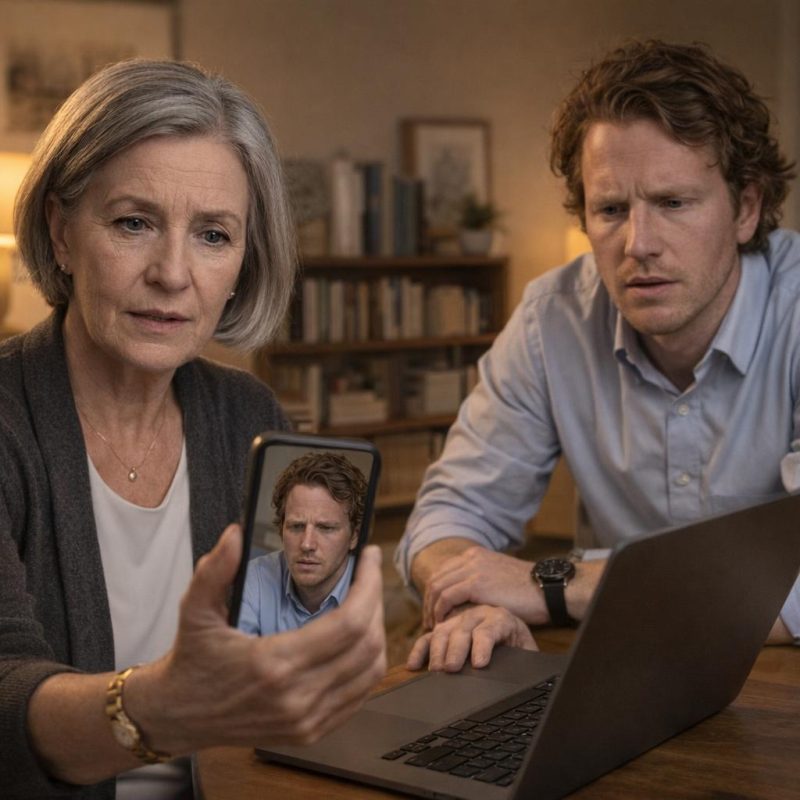 Image by RM AI
Facing the Truth
We sat in silence for a moment, the weight of those words hanging between us through our video connection. Adam ran his hand through his hair, a gesture I recognized from when he was working through complex problems at his engineering job. 'Someone deliberately used my name,' he said, his voice measured but tight. 'My identity. To authorize a procedure you never had.' I nodded, feeling that validation I'd been seeking—but also something darker settling in my chest. This wasn't a clerical error or a mix-up in the system. Someone had chosen Adam specifically, had written his name in that careless scrawl, had put him on those forms as if he'd been there. 'Was it because I was overseas?' he asked. 'Because they knew I couldn't verify or deny anything?' I'd wondered the same thing. The timing felt too convenient—Adam deployed, unreachable for quick confirmation, his signature impossible to compare in real time. We both fell quiet again, and I could see my own confusion reflected in his face. The question that had been haunting me finally formed into words: 'Why would someone put you on those forms? What was the goal?'
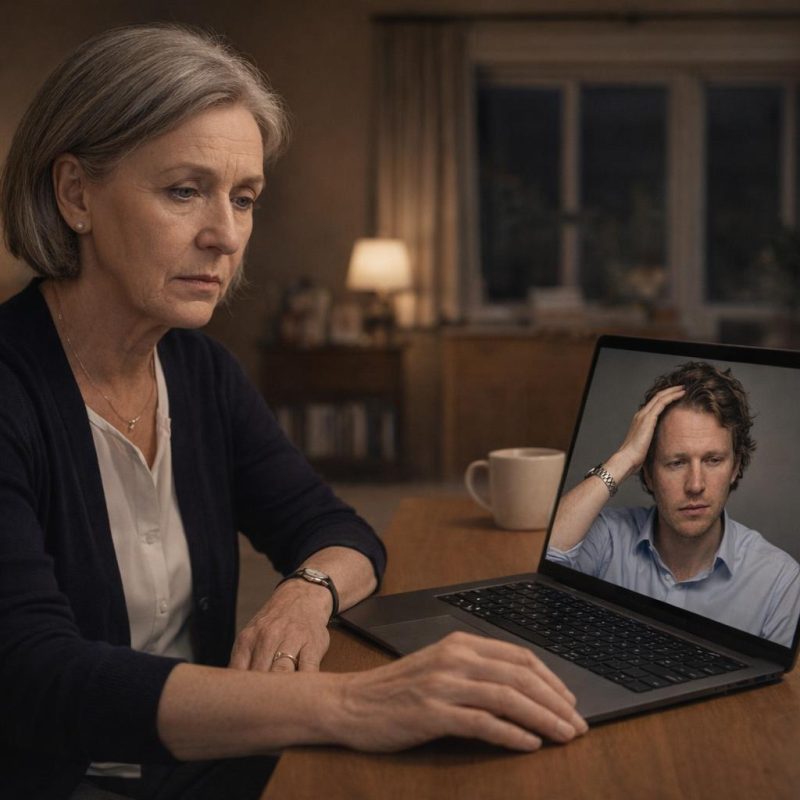 Image by RM AI
The Late Husband's Playbook
That night, I sat alone in my kitchen with a cup of tea going cold in front of me, thinking about the identity fraud and what it meant. My late husband used to work in corporate compliance before he retired, and he'd bring home stories about financial investigations that seemed impossible until someone found the right thread to pull. I remembered one piece of advice he'd given me years ago, back when I was dealing with a billing dispute: 'Sometimes ghosts leave footprints in places you don't expect.' He'd meant that fraud often creates trails across different systems—that when someone manipulates one record, they usually have to manipulate others to make it work. Medical records were one system, but what about financial records? If someone had used my identity for a phantom surgery, there might be shadows in my credit history, anomalies I hadn't thought to look for. I opened my laptop again and navigated to the credit monitoring website I'd been using for years, my heart pounding with the possibility that medical fraud might have financial shadows.
 Image by RM AI
Hunting for Footprints
I logged into the credit report website and waited for my full history to load. The familiar interface appeared, showing my credit score at the top and a timeline of accounts and inquiries below. I began scrolling through the records systematically, looking for anything that seemed out of place or unexplained. Most of it was routine—my mortgage, the car loan I'd paid off three years ago, a few credit cards I'd had for decades. I moved through the account history, then the inquiry section, finding nothing unusual. The address history came next, and I almost scrolled past it—I'd lived in the same house for twenty years, so what would there be to see? But I forced myself to slow down, to examine each entry carefully. Three pages into the report, something caught my eye. An address I'd never seen before, listed under my name in the residential history section: 2847 Maple Ridge Terrace. It was in the next county over, a place I'd never lived, never visited, didn't recognize at all. My breath caught as I stared at the dates beside it. The address had been associated with my name for exactly four months two years ago.
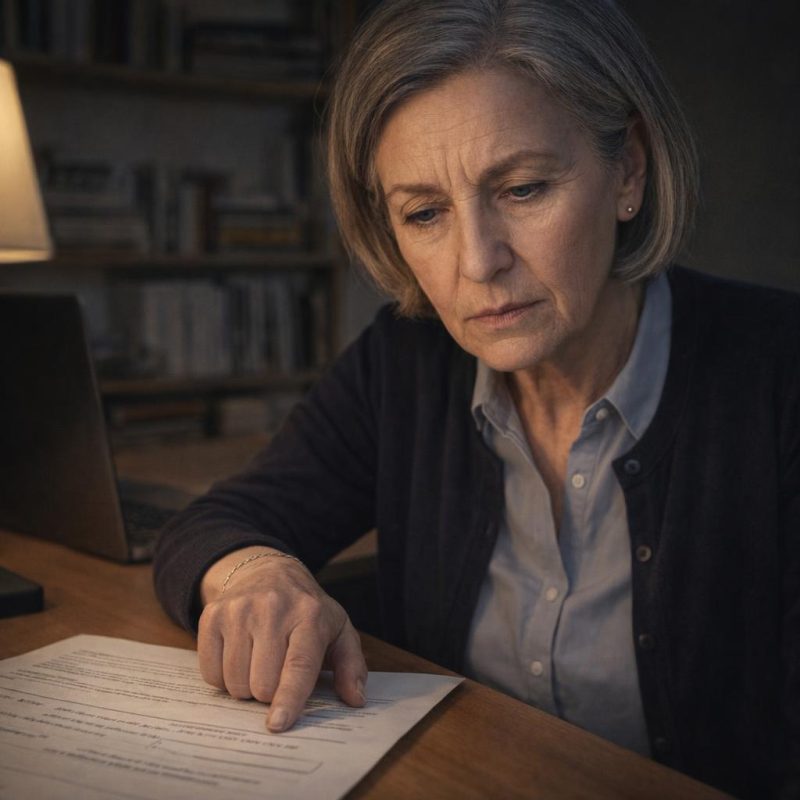 Image by RM AI
The Four-Month Window
I leaned closer to my laptop screen, studying the phantom address and its timeframe. The dates were precise: the address had appeared in my credit history in early March two years ago and vanished in late June of the same year. Exactly four months. Not three months and a few weeks, not four and a half months—exactly four. I grabbed a pen and wrote down the address and dates in my notebook, my hand shaking slightly. Four months felt like a calculated window, not a random error. Credit bureaus pulled address information from various sources—utility bills, loan applications, insurance forms. Someone had used my name and this address long enough for it to show up in my records, then made it disappear as if it had never existed. I thought about what happens in four months that would require an address. A short-term lease? A temporary residence for some specific purpose? The precision of that window felt wrong, like someone had known exactly how long they needed to borrow my identity before erasing the trail.
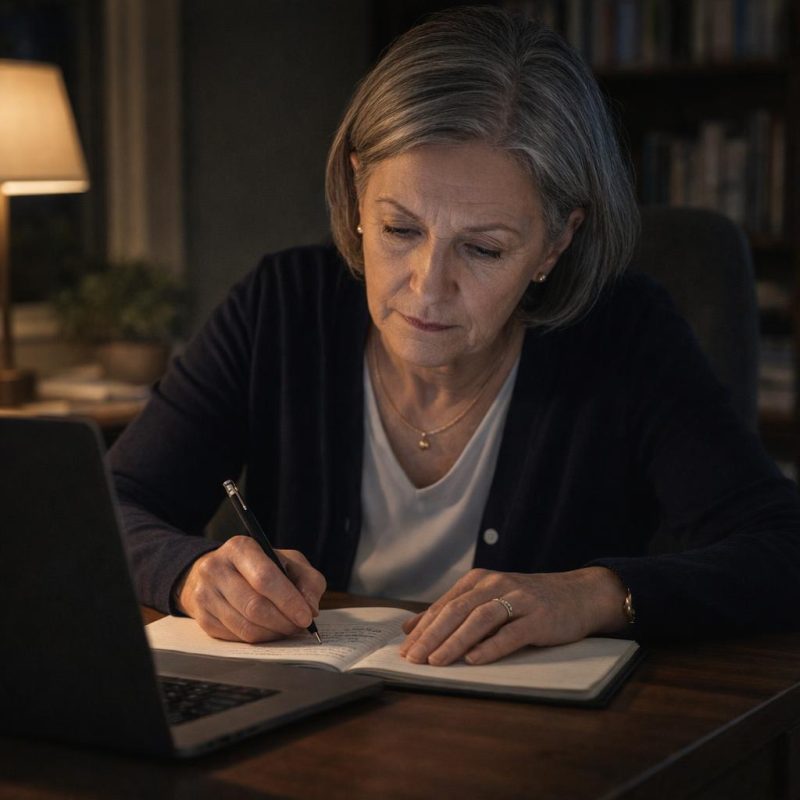 Image by RM AI
Mapping the Timeframe
I got up from my kitchen table and went to my home office, pulling out an old calendar from two years ago that I'd kept in a drawer. I brought it back to the kitchen and spread it open, marking the dates when the phantom address had been active in my credit history. Then I flipped through my notebook to find the surgery date from the medical records and marked that on the same calendar. I stared at the two sets of dates, overlaying them in my mind to see how they aligned. The address had appeared three weeks before the procedure date. It had disappeared two weeks after the supposed recovery period would have ended. The timeframes bracketed the entire medical event like invisible scaffolding—preparation before, cleanup after. This wasn't coincidence. Someone had needed that address during this specific window, had needed it to exist in my records for exactly as long as the phantom surgery narrative required. The address had appeared three weeks before the procedure and disappeared two weeks after the supposed recovery period, bracketing the entire medical event like invisible scaffolding.
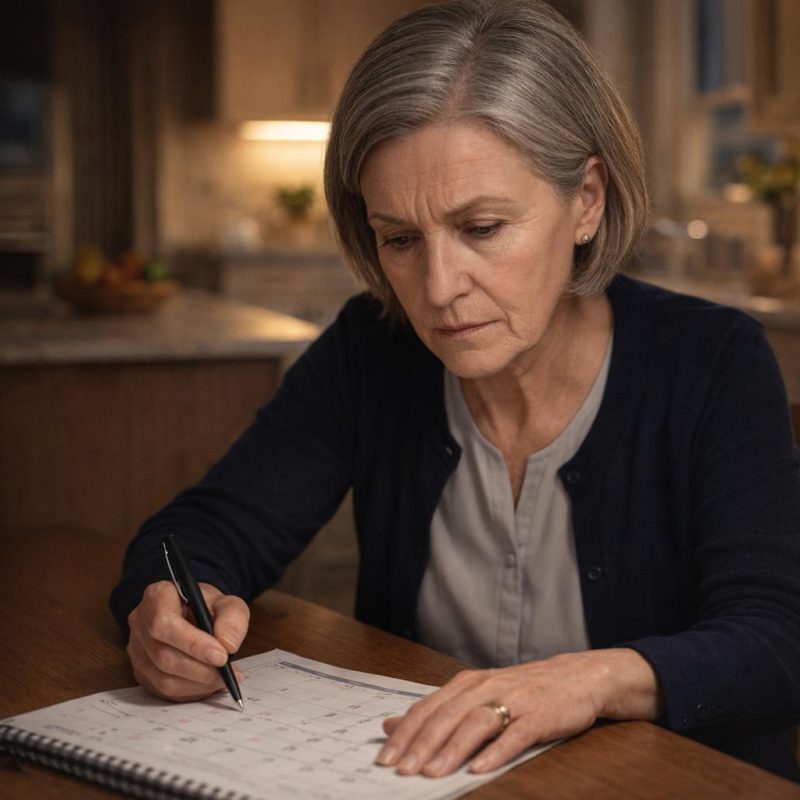 Image by RM AI
Same County
I opened a new browser tab and entered the Maple Ridge Terrace address into a mapping website. The location loaded on my screen, showing a residential street in what looked like a suburban neighborhood. I zoomed out to see the broader area, checking the county boundaries marked on the map. My stomach dropped. The address was in the next county over—the same county where the hospital was located, the hospital where the phantom surgery had supposedly occurred. I sat back in my chair, feeling that cold recognition settle over me. This wasn't random geography. Insurance companies verified local addresses for procedures, checking that patients lived within reasonable distance of the facilities they used. A local address would make a claim less suspicious, would fit the expected pattern of someone choosing a nearby hospital for surgery. Someone had chosen that specific address because of its proximity to the hospital, had built a complete geographic profile to make everything look legitimate. Insurance billing, emergency contacts, local addresses—someone had built a complete geographic profile to make the procedure look legitimate.
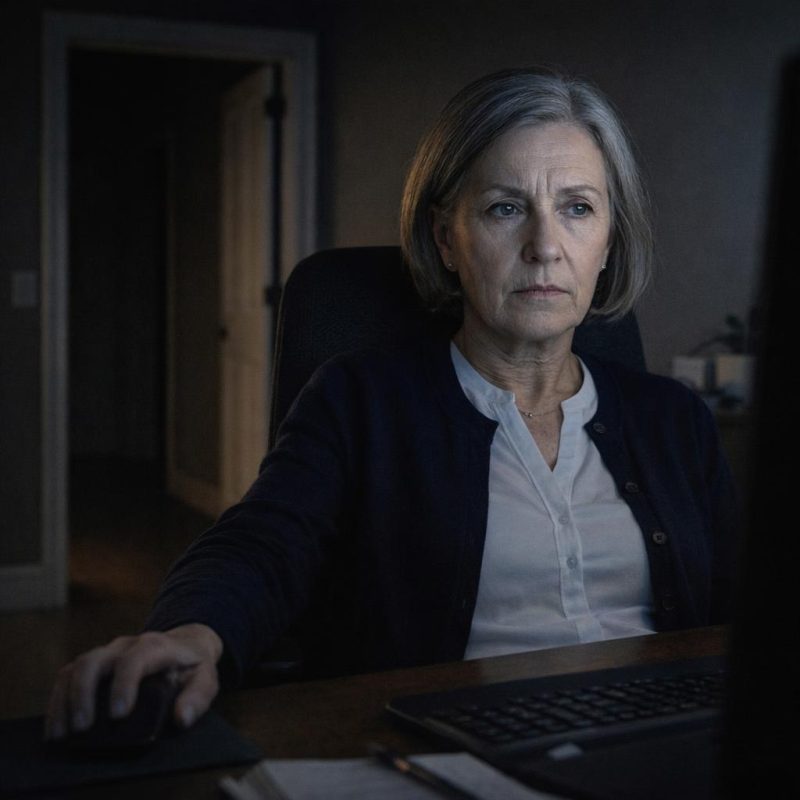 Image by RM AI
Return to the Source
I went back to the medical file on my laptop, opening the folder where I'd saved all the documents I'd downloaded from the patient portal. I'd been through these forms multiple times already, but I'd been focused on the signature, on proving that Adam hadn't signed those consent forms. Now I needed to look at everything else—the administrative details I'd skimmed past in my initial investigation. I scrolled through the intake paperwork slowly, examining fields I'd previously ignored. Patient information, insurance details, contact numbers, addresses. Who had filled out these forms? When had they been submitted? I studied the timestamp at the bottom of the Family Consent Acknowledgment: submitted electronically at 2:47 PM on the day before the supposed surgery. The address field showed my real home address, but there were other sections I hadn't examined carefully—emergency contact information, secondary phone numbers, insurance verification details. I'd been so focused on the signature that I hadn't examined the other fields on the forms—the administrative details that might reveal who had filled them out.
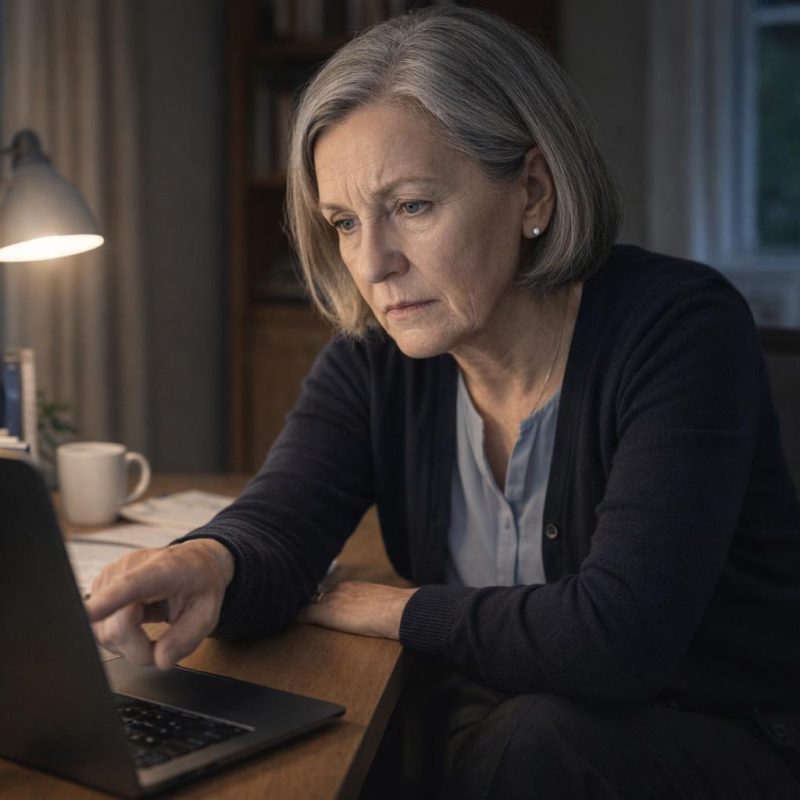 Image by RM AI
The Contact Field
I scrolled past the insurance data on the intake form, my eyes scanning through the provider codes and policy numbers I'd already verified three times. The fields blurred together—member ID, group number, authorization codes—all the administrative details that had checked out when I'd first examined them. I moved down to the next section, expecting to find the standard emergency contact information. Adam's name should have been there. He'd been my primary contact for everything since my husband died—doctor's appointments, pharmacy calls, even the dentist's office had him listed. I'd updated all those forms myself in the months after the funeral, methodically working through the stack of paperwork that required a new emergency contact. My cursor hovered over the section as it loaded on my laptop screen. The field populated with neat digital text, official-looking and properly formatted. But the name wasn't Adam's. I stared at the screen, my breath catching in my throat. The emergency contact field read: Lacey Chen. Below it, her cell phone number was printed in the same clean, digital font.
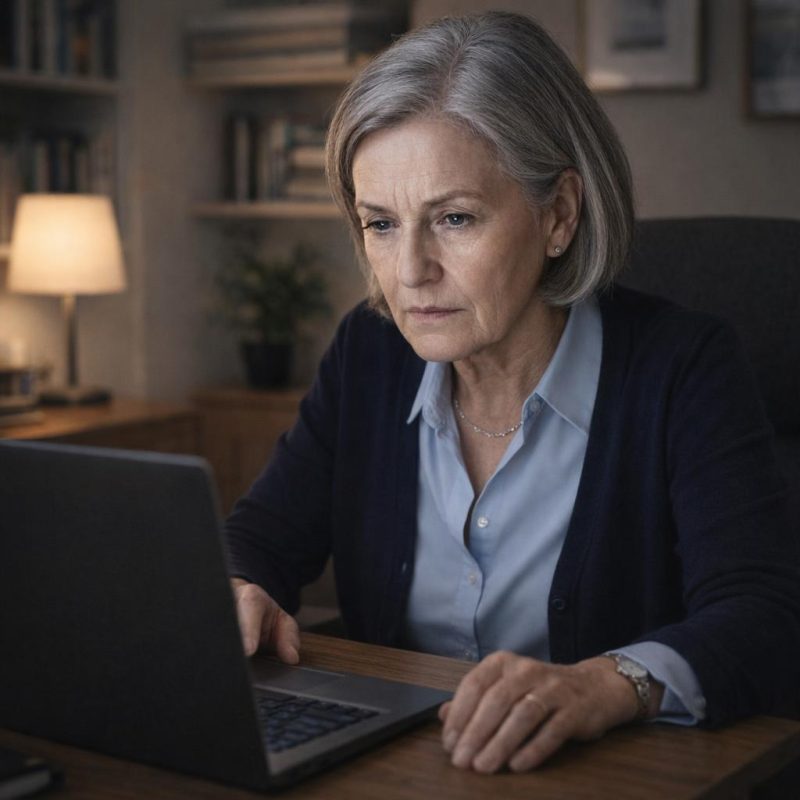 Image by RM AI
The Unexpected Name
I read Lacey's name three times, not trusting what I was seeing. My daughter-in-law's name, right there in the emergency contact field where Adam's should have been. Where Adam's had always been, for years now. I leaned closer to the laptop screen, as if proximity would somehow change the text or reveal an error I'd missed. But it remained the same—Lacey Chen, with her phone number listed below in neat, official formatting. Why would she be listed as my emergency contact? I tried to think of any conversation where I might have authorized this change, any doctor's visit where I'd filled out new paperwork and listed her instead of Adam. But I had no memory of it. None at all. Maybe there was a legitimate explanation—a hospital error, a form that got mixed up with someone else's information. But it fit too neatly with everything else I'd discovered. The forged signature. The phantom surgery. The billing codes that didn't match. I leaned back in my chair, my hands falling away from the keyboard. My mind raced through possibilities, each one more uncomfortable than the last.
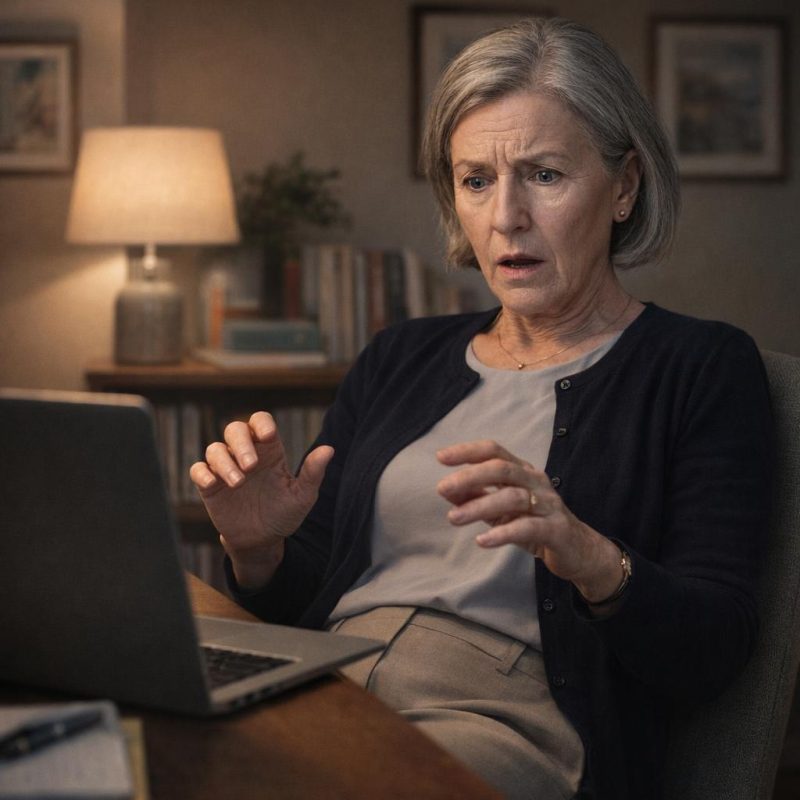 Image by RM AI
After the Funeral
I closed my eyes and let myself remember that afternoon, the one I'd tried not to think about too much because it hurt. The day after we'd buried my husband, when I could barely function, when the house felt too quiet and too full at the same time. Lacey had shown up at my door with a stack of folders and a gentle smile, saying she wanted to help me organize the paperwork I couldn't face. Insurance forms that needed updating. Medical proxy documents that required new signatures. Estate papers that had to be filed. I remembered sitting at this same kitchen table while she spread everything out in neat piles, explaining what each form was for in that calm, efficient voice of hers. She'd seemed so capable, so organized, while I could barely remember what day it was. The grief had been overwhelming—every task felt impossible, every decision too heavy. Friends kept bringing casseroles and condolence cards, and I couldn't keep track of any of it. Lacey had handled the details, pointing to signature lines and explaining what I was authorizing. I'd been grateful for her efficiency while drowning in grief, signing everything she put in front of me without reading the fine print.
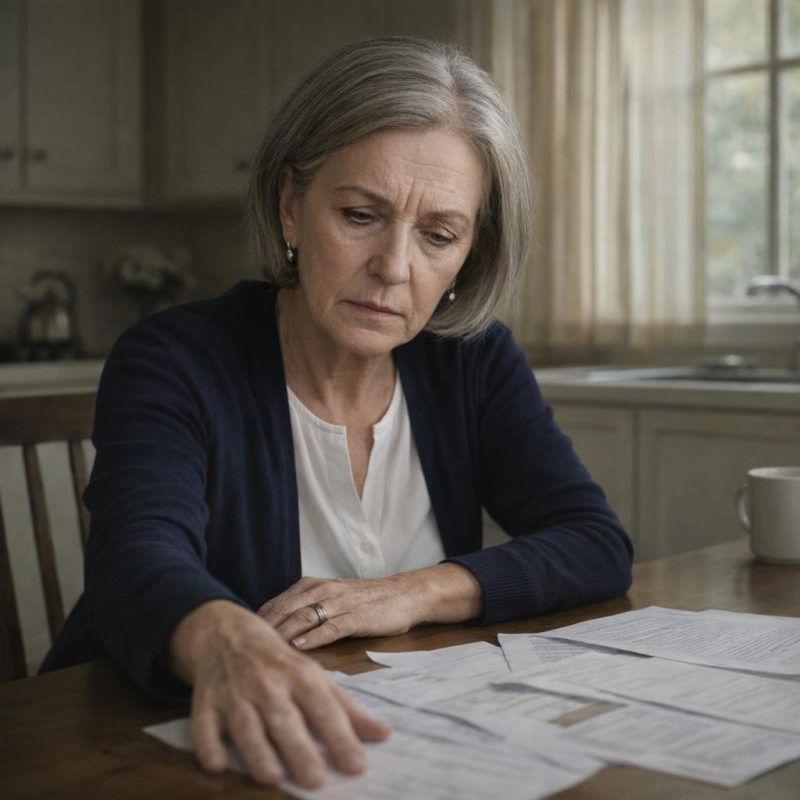 Image by RM AI
Signatures in Grief
I tried to remember the specific documents I'd signed that afternoon, but the memories wouldn't come into focus. Those weeks after the funeral were blurred by loss, each day bleeding into the next in a fog of arrangements and obligations I couldn't process. There had been so many forms—I remembered Lacey's voice explaining them, patient and clear, but I couldn't recall the actual words. Medical proxy updates, she'd said. Insurance beneficiary changes. Contact information that needed to be current. I'd signed where she indicated, trusting her to guide me through the administrative maze I couldn't navigate alone. Had one of those forms been an emergency contact authorization? Had I unknowingly made her my primary contact at the hospital system? The uncertainty gnawed at me. I could picture her sitting across from me at the table, the folders organized by category, her pen pointing to each signature line. But the specifics were lost in the haze of grief that had consumed me then. I'd trusted Lacey completely during the worst period of my life, and now I couldn't recall what authority I might have unknowingly given her.
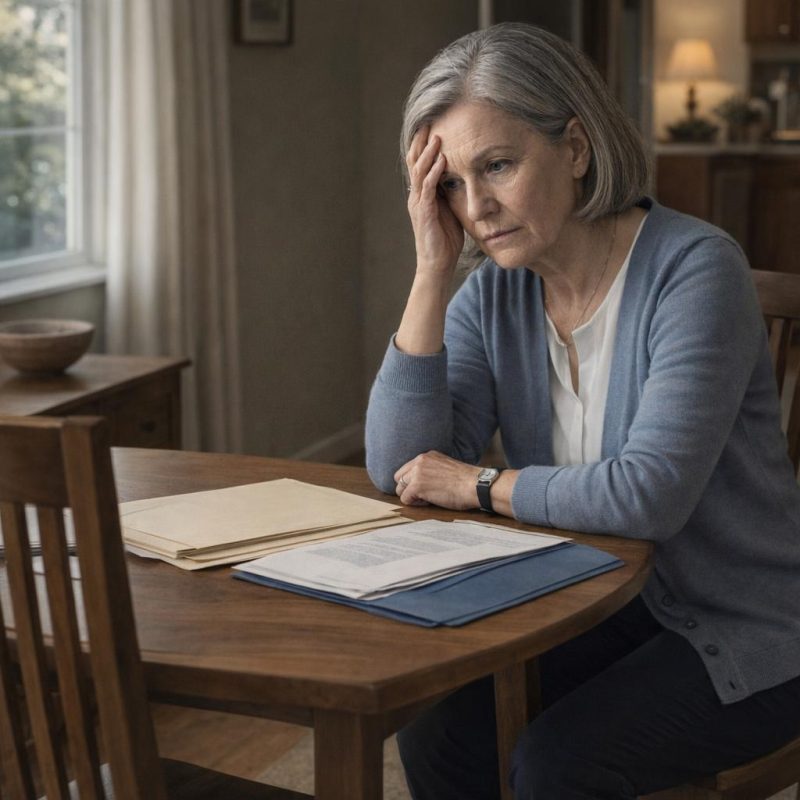 Image by RM AI
Work History
I sat at my kitchen table with a fresh notepad, trying to organize what I actually knew about Lacey's career. She'd worked in healthcare administration for years—that much I was certain of. But the specific jobs, the timeline of where she'd been when, those details had never seemed important enough to memorize. I wrote down what I could remember: healthcare admin, various positions, job changes over the years. She'd mentioned working at a surgical practice at some point, handling scheduling or billing, but when exactly? Two years ago? Three? I tried to recall conversations at family dinners, casual mentions of her workday, complaints about difficult doctors or insurance companies. The pieces were there in my memory, scattered and disconnected. I'd never thought to ask detailed questions about her work, never needed to understand the specifics of what her job entailed or what systems she had access to. Healthcare workers had access to patient information—I knew that much. But what could a scheduler actually do? What databases could they see? What changes could they make? I needed to understand what access Lacey had, but I'd never thought to connect them before—her job, her efficiency, her presence in my life at exactly the right time.
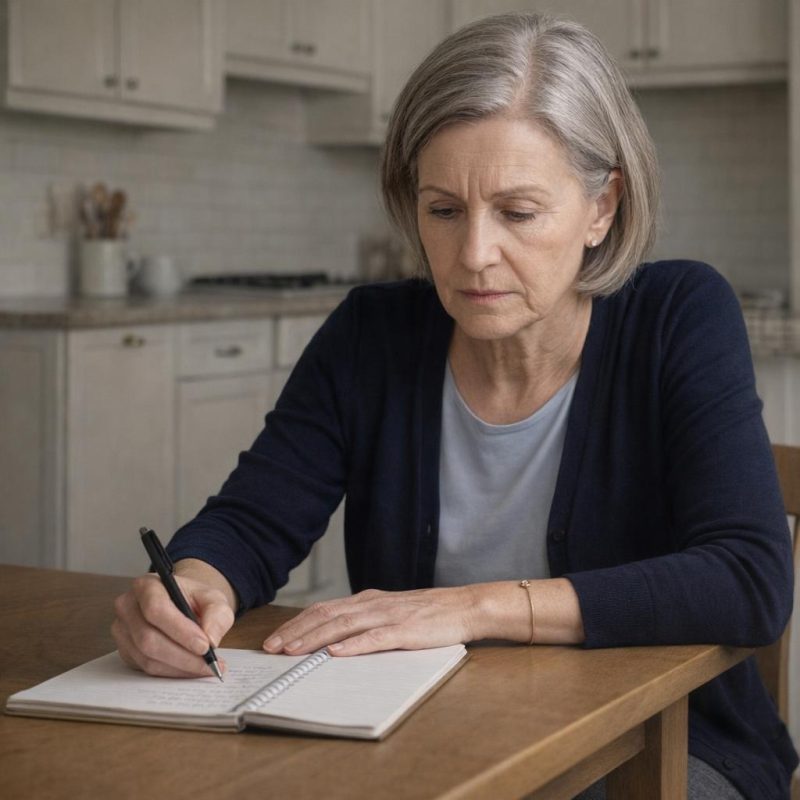 Image by RM AI
The Scheduler Position
I picked up my phone and called Adam, rehearsing the question in my head to keep my voice casual. When he answered, I asked what job Lacey had been doing two years ago, framing it as simple curiosity, like I was trying to remember something from a conversation. He answered without hesitation—she'd been working as a scheduler at a surgical clinic, he said, mentioning the clinic's name like it was common knowledge. I wrote it down carefully, thanked him, and ended the call before he could ask why I wanted to know. The moment the line went dead, I opened my laptop and searched for the clinic. The website loaded with information about their services, their physicians, their commitment to patient care. I scrolled down, looking for the corporate affiliation information that most medical facilities listed somewhere on their site. There it was, in small text at the bottom of the page: part of the Regional Health Partners network. My stomach dropped. I recognized that name immediately. It was the same health system that operated the hospital where my phantom surgery had supposedly occurred.
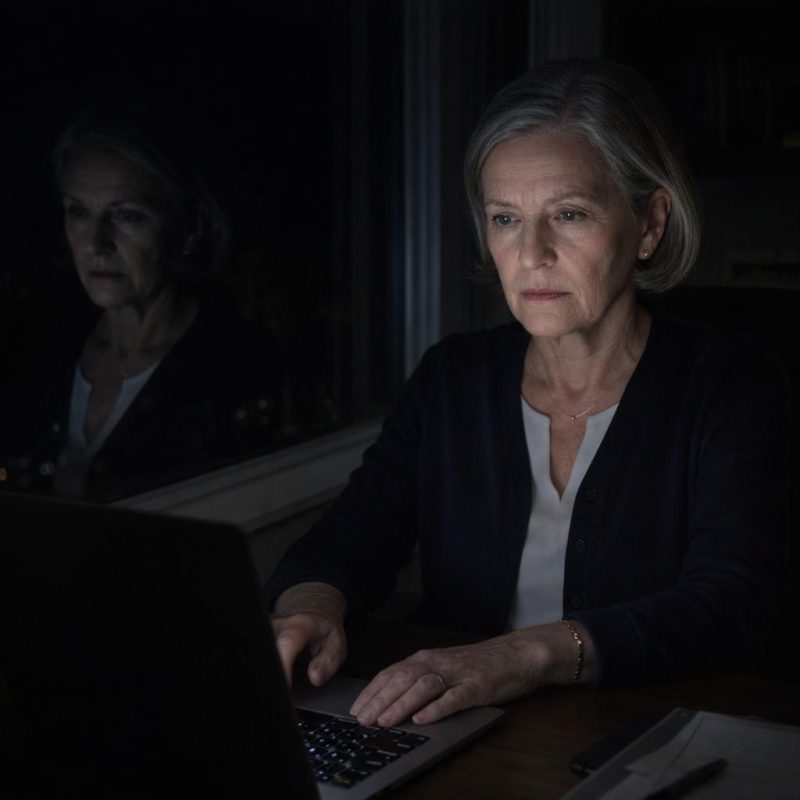 Image by RM AI
System Access
I clicked through to the Regional Health Partners website, navigating past the glossy photos of smiling doctors and state-of-the-art facilities. The corporate structure page showed the full scope of their network—twelve hospitals, forty-three affiliated clinics, all connected through integrated electronic medical records. I read through the technical descriptions of their unified system, how scheduling, billing, and patient portals were seamlessly connected across all facilities. The page about employee access explained how staff members could coordinate care across the network, verifying insurance and entering procedures from any location within the system. A scheduler at one clinic would need access to patient information across multiple facilities to coordinate referrals and verify coverage. The integration was designed for efficiency, for seamless care coordination. But I was seeing it differently now. If Lacey had worked for an affiliated clinic two years ago, she might have had portal access to the entire system—patient records, billing codes, insurance verification across all their facilities.
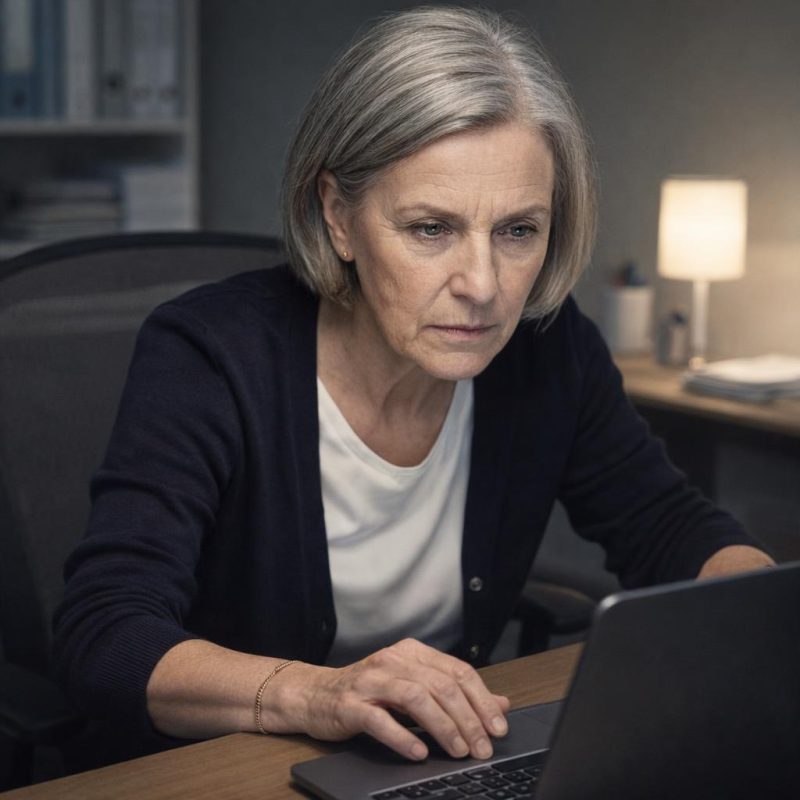 Image by RM AI
The Capabilities
I took out a fresh piece of paper and wrote at the top: Scheduler Capabilities. Then I began listing everything I'd learned, my pen moving faster as the implications accumulated. Access to patient portals across the health system. Ability to enter and modify billing codes. Insurance verification and authorization submission. Procedure scheduling in the system calendar. Input of patient demographic information. Possibly consent form generation, depending on the facility's protocols. Each line I wrote opened up new possibilities, new ways the system could be manipulated by someone who understood how it worked. Someone with scheduler access could create false entries, schedule phantom procedures, submit them for insurance billing, generate the necessary paperwork to make it all look legitimate. I underlined the last item on my list: all the tools needed to create a paper trail for a surgery that never happened. But I stopped myself there, my pen hovering over the paper. Having access didn't prove usage. Technical capability wasn't the same as actual guilt. I needed more than just understanding what was possible. Patient portal access, billing code entry, insurance verification, procedure scheduling—all the tools needed to create a paper trail for a surgery that never happened.
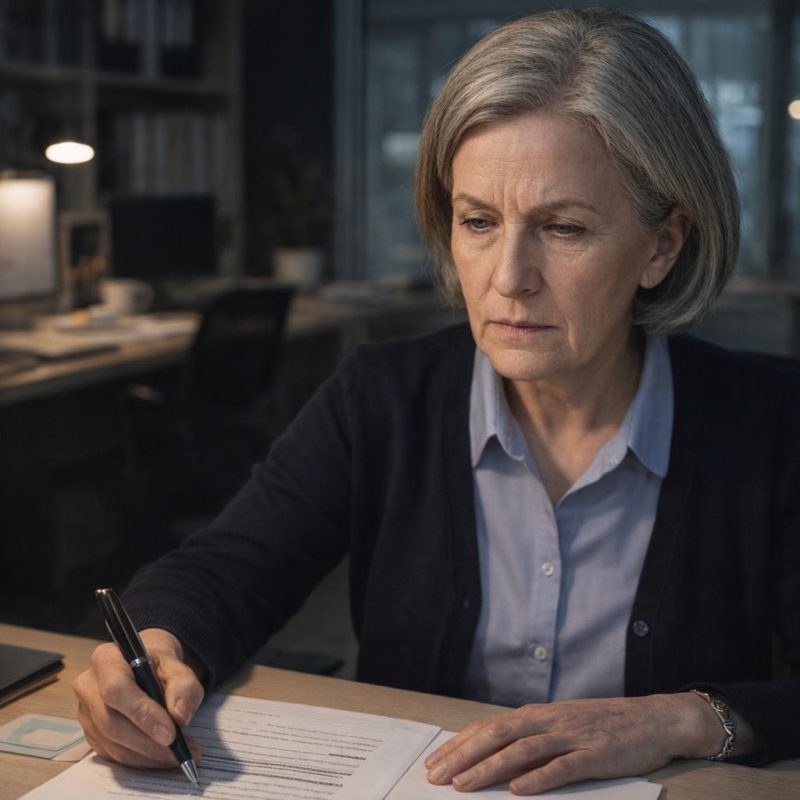 Image by RM AI
Financial Struggles
I thought back to two years ago and tried to remember the conversations I'd had with Adam and Lacey during that time. There was something about medical bills—I could picture Adam mentioning it, almost in passing, during one of our phone calls. He'd said they were having trouble with costs from some tests Lacey had needed. I remembered the concern in his voice, the way he'd tried to downplay it even as I could hear the stress underneath. The bills were significant, he'd said. They were figuring it out, but it was a lot. I'd offered to help them financially right away. I wanted to support them during what sounded like a difficult time. But Lacey had declined when Adam relayed my offer. She'd insisted they would handle it themselves, that everything would be taken care of soon. At the time, I'd thought she meant payment plans or maybe they'd been saving up. It had seemed like pride or independence, the kind of thing young couples say when they don't want to burden family. Now, sitting at my kitchen table with all these documents spread out in front of me, I wondered what Lacey had actually meant by 'taken care of.' The timing aligned too closely with the phantom surgery for comfort.
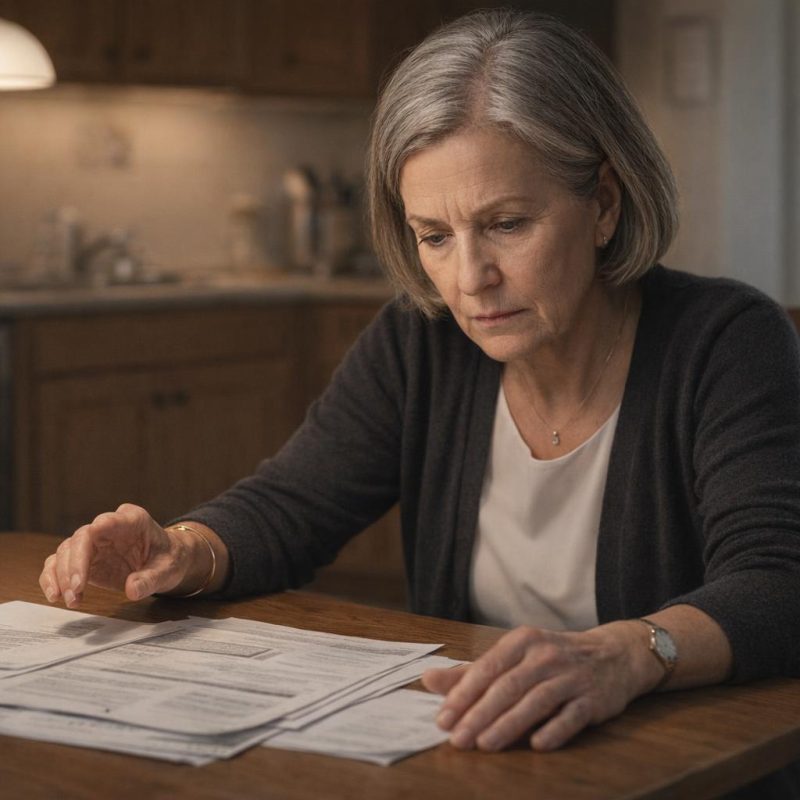 Image by RM AI
Motive Questions
I sat with my coffee growing cold and forced myself to consider the ugly possibility that someone might have needed a surgery they couldn't afford to pay for themselves. Medical debt is crushing in this country. Insurance is complex, full of loopholes and denials. If someone had access to the healthcare system and knowledge of how billing codes work, and if they had a patient identity they could borrow—someone who wouldn't notice right away—they might be able to have the procedure done and bill it to someone else's insurance. The pieces could fit together in a way that made terrible sense. I thought about the elements that would be needed. System access: check. Financial pressure: possibly. A vulnerable person to exploit: me, right after my husband's death. An alibi: Adam overseas, unable to walk into a hospital at the wrong moment. I wrote at the bottom of my notes: possible motive—medical necessity plus financial desperation. But I stopped myself there, pen hovering over the paper. Possibility wasn't proof. I couldn't let myself jump to conclusions based on circumstantial connections. If that someone had access to the healthcare system, knowledge of a grieving widow who'd just signed over emergency contact authority, and a convenient scapegoat living overseas—the pieces fit together too well to ignore.
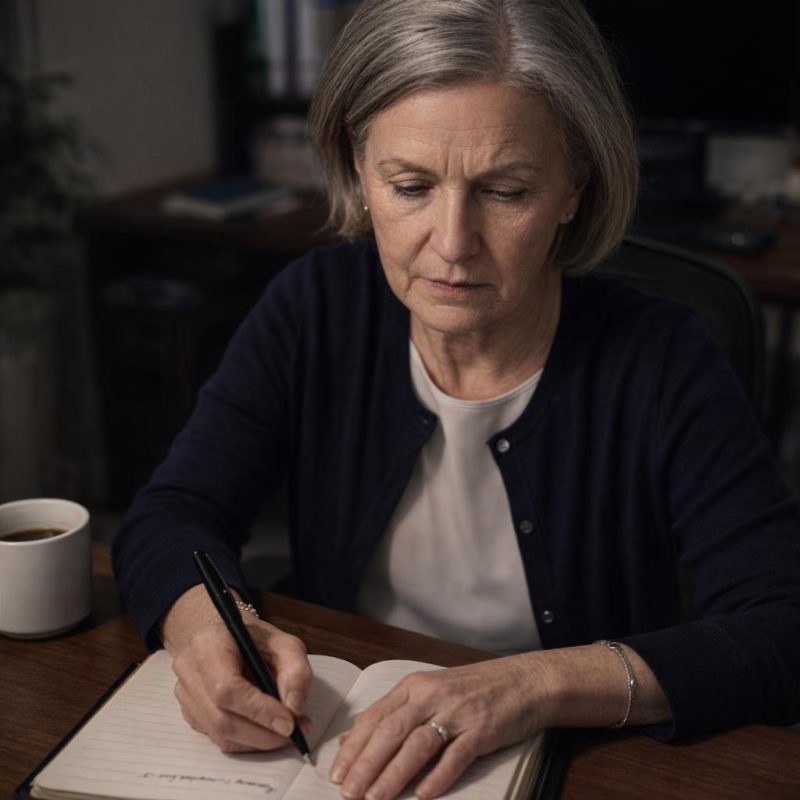 Image by RM AI
Research the Procedure
I opened my laptop and searched for what conditions typically require exploratory laparoscopy. Medical websites loaded with detailed information about the procedure. It's used to investigate abdominal and pelvic pain, to diagnose endometriosis—a painful condition I'd heard other women talk about. It can identify ovarian cysts or adhesions, and it's often used in fertility investigations. Some cases involve chronic unexplained symptoms that other tests can't pinpoint. The procedure is diagnostic, minimally invasive, with a recovery time typically lasting one to two weeks. I read through descriptions of typical patients. Often women of childbearing age. Sometimes emergency, but more often it's a scheduled diagnostic procedure. Insurance coverage can be complicated, requiring prior authorization and documentation of medical necessity. I thought about who this procedure would fit—a young woman with chronic symptoms, someone like Lacey's age and demographic. But I stopped myself from going further down that path. This didn't prove anything about Lacey specifically. Lots of women need this procedure. The fact that it matched her profile didn't mean she'd been the patient. The search results described investigating abdominal pain, endometriosis, ovarian cysts, infertility issues—problems that could affect a young woman but wouldn't necessarily require emergency surgery.
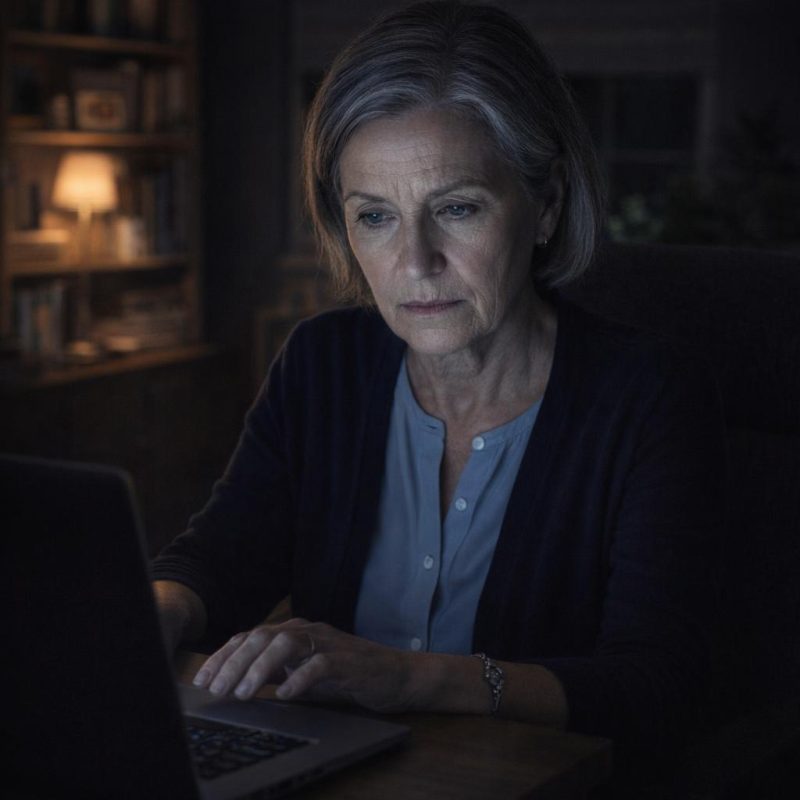 Image by RM AI
Contract Correlation
I pulled up the dates of Adam's Singapore engineering contract and laid them against the timeline of the phantom address, the surgery date, and the recovery period. His assignment had been eight months total—I found the paperwork in the folder where I keep important family documents. I wrote out the timeline on a fresh piece of paper, marking the contract start date, the end date, and calculating the middle period. Then I marked when the phantom address had appeared on my credit report. I marked the surgery date. I marked when the address had disappeared. The pattern was striking. The surgery date fell right in the middle of Adam's contract, four months into his eight-month assignment. He would have been most embedded in his work then, least likely to take time off for a visit home. His presence was thoroughly documented overseas—work visas, hotel records, project timelines. I stared at the correlation I'd mapped out. The timing wasn't random. The procedure had happened when Adam was most securely elsewhere, when using his name as a witness carried the least risk of discovery. The surgery had been scheduled during the exact middle of his eight-month absence, when he was least likely to make a surprise visit home and most securely alibi'd by an ocean and a work visa.
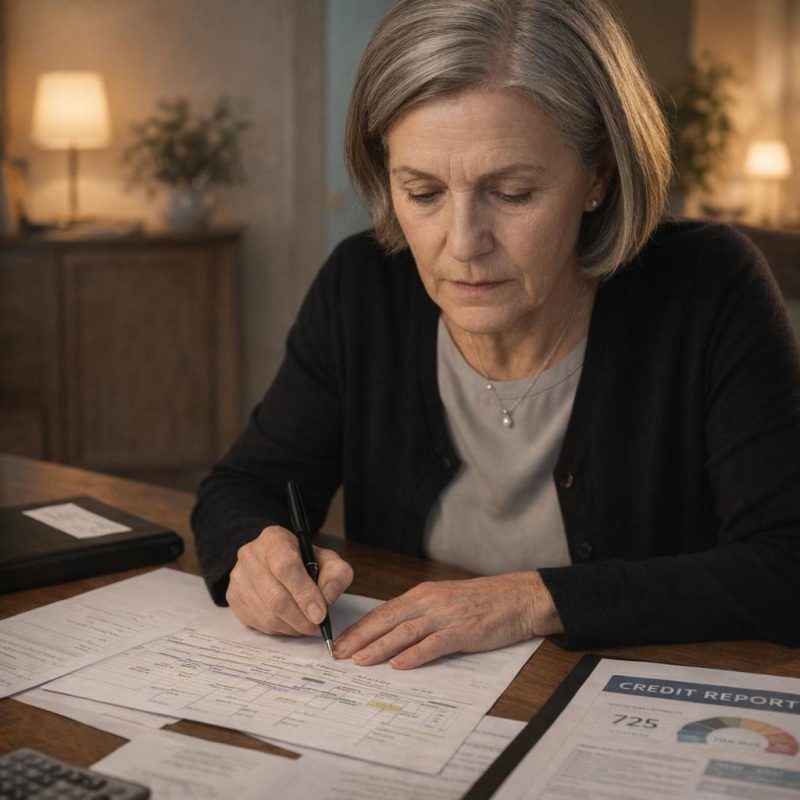 Image by RM AI
The Perfect Alibi
I stared at the timeline I'd constructed and understood that Adam's overseas absence hadn't been an obstacle for the fraud—it had been the ideal opportunity. Someone needed to use his name as a witness on those consent forms, but they couldn't risk him being around to see the paperwork or visit a hospital at the wrong moment. An eight-month overseas contract solved that problem completely. No risk of Adam walking through a hospital door. No chance he'd see documents with his forged signature. His location was documented and far away, verifiable by anyone who checked. I realized that someone would have needed to know his schedule in advance. They would have needed to know he'd be in Singapore, needed to know the contract length, needed to understand that this created a window of opportunity. Someone could have used that knowledge to their advantage, timing everything for maximum safety. The absence created a perfect alibi—both for forging his signature and for using his identity without fear of immediate discovery. I wrote in my notes: opportunity window equals Adam's overseas contract. But I had to acknowledge that knowing about the contract didn't definitively identify the person who'd exploited it. Someone would have needed to know where he'd be and for how long, using his unavailability to forge his signature without fear he'd walk through a hospital door at the wrong moment.
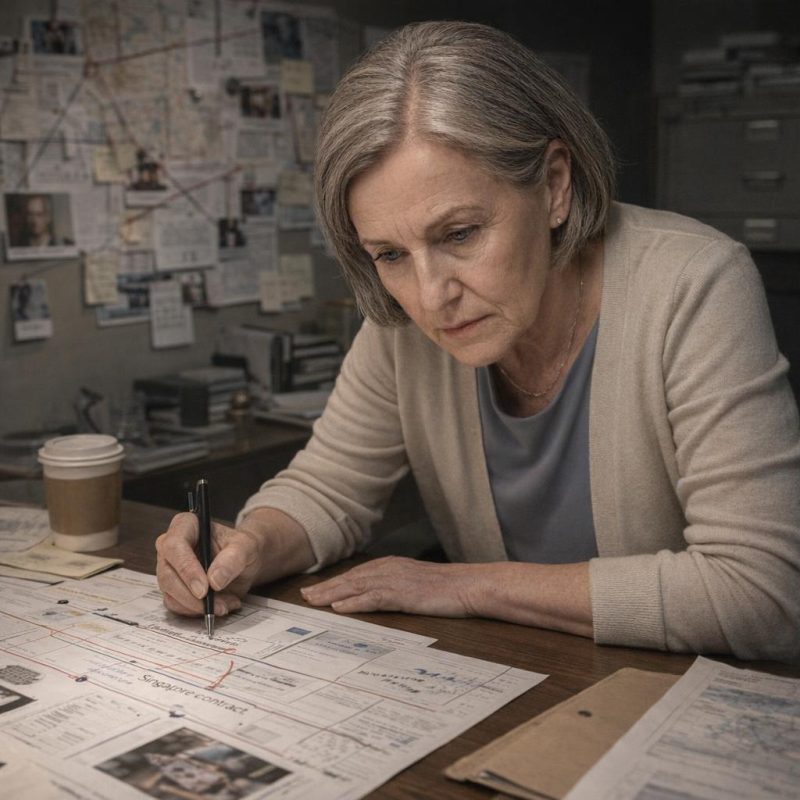 Image by RM AI
Grief Timeline
I mapped out the months after my husband's death, marking when I'd signed papers with Lacey, when the phantom address appeared, and when my grief had been at its deepest. My husband died in January two years ago. The funeral was in late January. Lacey had helped with paperwork in early February—insurance forms, estate documents, things I could barely focus on. My grief was deepest during those months. I could barely function, barely make decisions. The phantom address appeared on my credit report in March. The surgery was scheduled for April. All of this happened during the worst months of my life, when I was signing documents without reading them carefully, when I trusted anyone who offered to help without questioning their motives. I could see the correlation now. The paperwork, the emergency contact change, the address—everything had happened when I was most vulnerable. When I wouldn't scrutinize forms put in front of me. When a sympathetic voice and an efficient pen were all I needed to sign whatever was placed before me. Someone could have known I wouldn't be paying attention. Could have used my compromised state. But I still couldn't prove who or confirm intent. Everything had happened during the fog, when I'd been most vulnerable and least likely to question documents put in front of me with a sympathetic voice and an efficient pen.
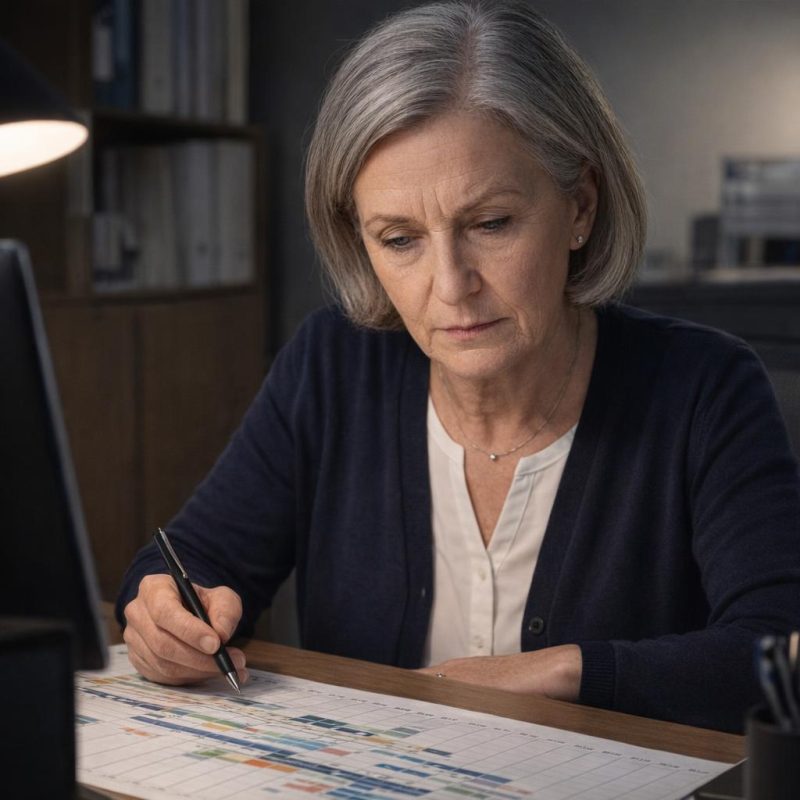 Image by RM AI
Assembly
I took a fresh sheet of paper and wrote at the top: What I Know. Then I listed each piece of evidence methodically, the way I used to organize research projects before I retired. The forged signature on consent forms—Adam's name used as witness, but he was in Singapore. The phantom address that appeared for exactly four months. The emergency contact changed to Lacey without my clear memory of authorizing it. Lacey's job as scheduler at an affiliated clinic, giving her system-wide access to portals and billing codes. Financial struggles two years ago that Adam had mentioned. Adam's overseas contract creating an eight-month absence window. My grief state when signing papers after my husband's death. The procedure type fitting young women's health issues. I stepped back and looked at the complete list. The pieces fit together. Each element supported the others. Together they formed a pattern, like stones in an arch, each one holding up the next. A pattern that pointed toward a specific person. I wrote at the bottom: Lacey? But immediately added: need more than circumstantial connections. I desperately wanted to be wrong. The pieces formed a pattern I could no longer ignore, each one supporting the next like stones in an arch that pointed toward a conclusion I desperately wanted to be wrong about.
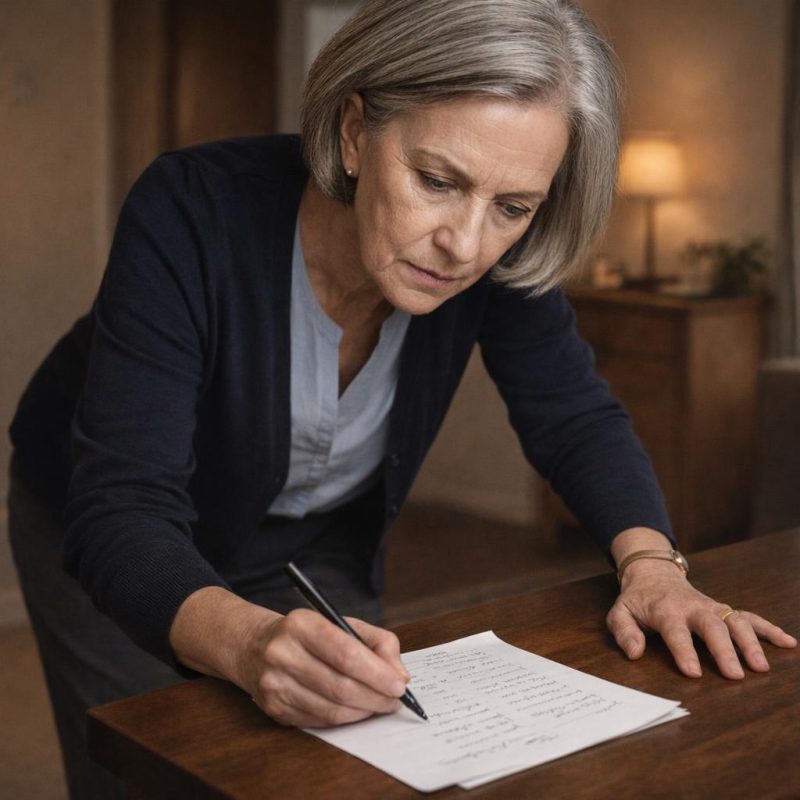 Image by RM AI
Alternative Explanations
I spent the evening trying to construct alternative explanations for the pattern I'd found, testing every theory I could imagine against the evidence spread across my kitchen table. Maybe someone at the hospital had made a series of coordinated errors? But the forged signature, phantom address, and contact change were too specific, too interconnected. Maybe another family member with access to my information? But no other family member worked in healthcare or had scheduler access to the system. Maybe a stranger using stolen identity? But a stranger wouldn't have known about Adam's Singapore contract, wouldn't have been there to help with paperwork after the funeral, wouldn't be listed as my emergency contact. I tested each theory methodically. Wrong job timing—only Lacey was a scheduler then. Wrong access—only Lacey had both personal access to me and system access to healthcare portals. Wrong opportunity—only Lacey knew about Adam's absence and my grief state. One by one, each alternative explanation crumbled under scrutiny. I was left with the explanation I'd been avoiding, the one I still wanted desperately to be wrong about. I needed more than a circumstantial pattern. I needed proof, or admission, or something definitive. Each alternative crumbled under scrutiny—wrong job, wrong timing, wrong access—until I was left with only the explanation I'd been trying to avoid.
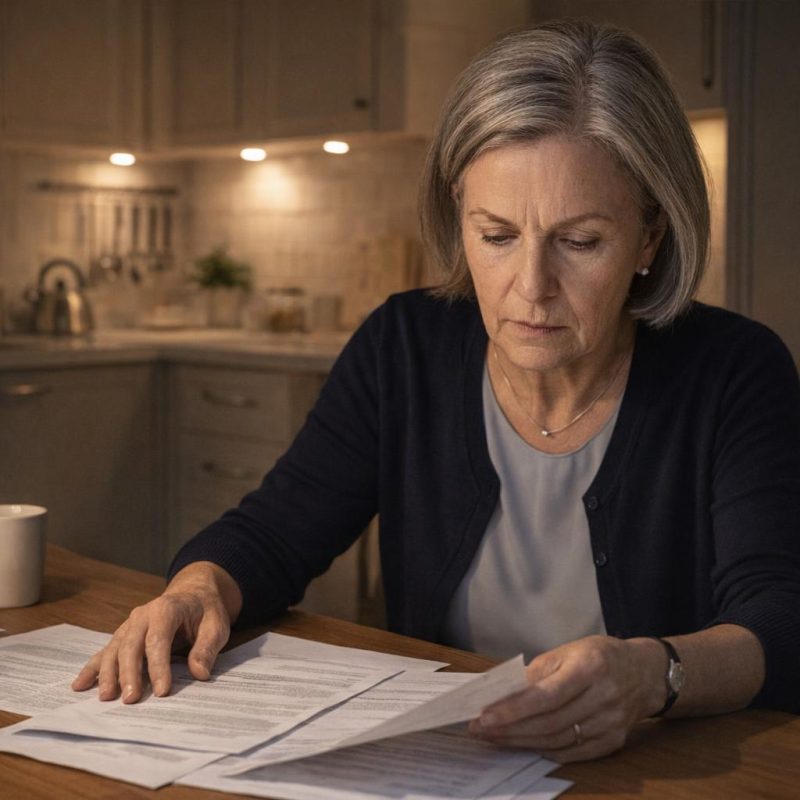 Image by RM AI
No Other Answer
I spent hours that night constructing every alternative explanation I could imagine, testing each theory against the evidence spread across my kitchen table. Maybe someone at the hospital had made a series of coordinated errors? But the forged signature, phantom address, and contact change were too specific, too interconnected. Maybe another family member with access to my information? But no other family member worked in healthcare or had scheduler access to the system. Maybe a stranger using stolen identity? But a stranger wouldn't have known about Adam's Singapore contract, wouldn't have been there to help with paperwork after the funeral, wouldn't be listed as my emergency contact. I tested each theory methodically. Wrong job timing—only Lacey was a scheduler then. Wrong access—only Lacey had both personal access to me and system access to healthcare portals. Wrong opportunity—only Lacey knew about Adam's absence and my grief state. One by one, each alternative explanation crumbled under scrutiny. When I finally put down my pen, I had run out of explanations that didn't lead back to the person I most wanted to exonerate.
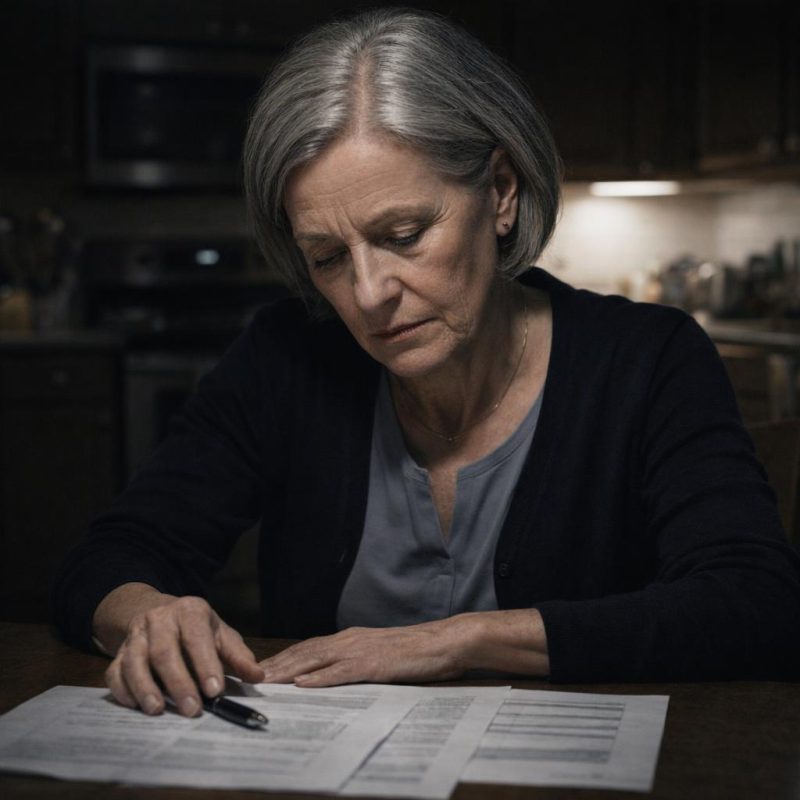 Image by RM AI
The Weight of Evidence
I sat in the silence of my kitchen and finally stopped fighting what the evidence had been telling me all along. Only one person had scheduler access at the affiliated clinic during that exact timeframe. Only one person knew Adam would be overseas for eight months. Only one person was present when I signed papers while grieving, too shattered to read what I was putting my name on. Only one person was listed as my emergency contact without my memory of authorizing it. I'd been trying to construct alternative theories because I didn't want to accept what the pattern showed, but circumstantial evidence can paint a complete picture when every piece points the same direction. The person who might have exploited me was someone I'd trusted completely, someone who came into my home during my darkest time, someone who seemed to want to help. I couldn't pretend there might be another answer anymore. The woman who had held my hand at my husband's funeral might have seen my grief as an opportunity.
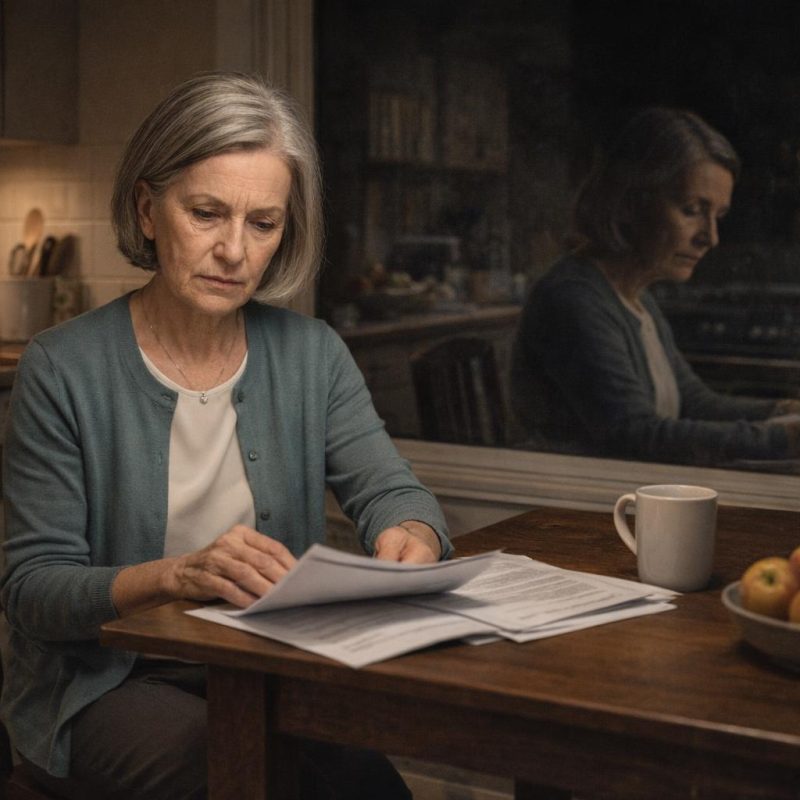 Image by RM AI
The Helping Hand
I remembered every kind gesture Lacey had made during those awful weeks after the funeral. She'd come over multiple times with folders, organizing paperwork I couldn't face, handling forms I couldn't process. Each visit had seemed helpful, caring, efficient. I remembered signing things without reading them, her calm voice reassuring me that she'd take care of everything. I remembered feeling grateful, relieved to have someone competent managing details while I could barely function. Now each memory took on a different character in my mind. The folders weren't help—they were opportunity. The efficiency wasn't kindness—it was access. The promises to handle everything weren't generosity. I felt the betrayal sink deeper into my chest with each reexamined moment. Someone I'd welcomed into my home had exploited my grief, used my vulnerability as an entry point. The intimacy of it made everything worse than if a stranger had stolen my identity. Family isn't supposed to do this to family. Every act of kindness now looked like reconnaissance, every helpful offer a chance to access something I would have protected if I hadn't been drowning.
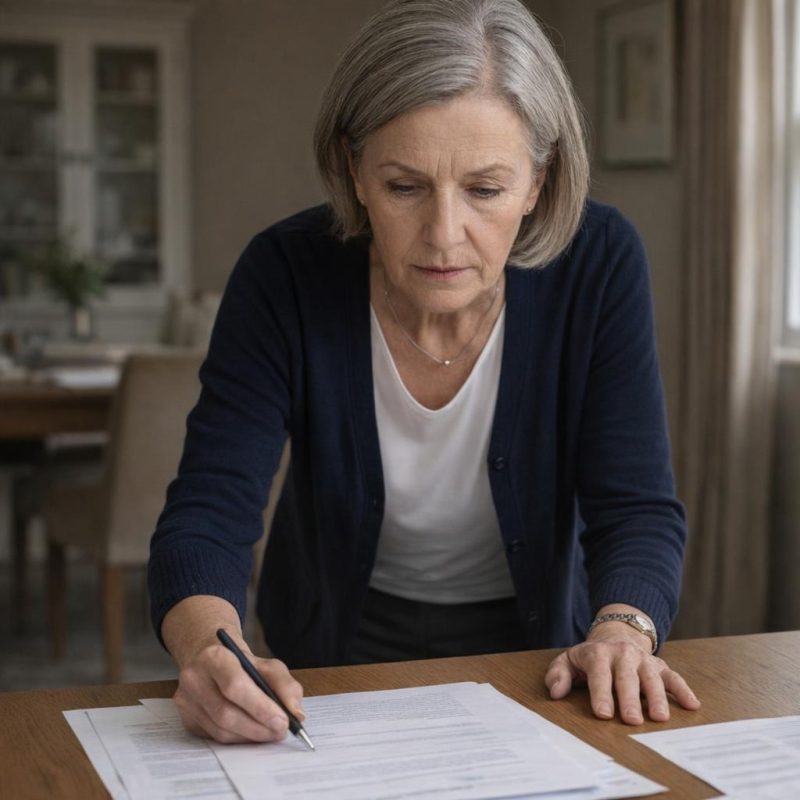 Image by RM AI
The Open Door
I examined the timing with new understanding, and the precision of it made me feel sick. My husband died in January. The paperwork visits came in February. The phantom address appeared in March. The surgery in April. All during my deepest grief period, when I would have signed anything put in front of me, when I wouldn't have questioned forms or noticed changes. If I'd been thinking clearly, I would have asked what I was signing. I would have noticed the emergency contact change. I would have read the documents before putting my name on them. But grief had made me compliant, trusting, desperate for help. Someone would have been counting on that, gambling that I'd be too broken to notice. My grief wasn't just convenient timing—it was essential to the whole thing. The fraud required me to be incapacitated by loss, unable to protect myself. My pain had been the entry point, the vulnerability that made everything else possible. It seemed I'd been targeted not despite my grief but because of it, my pain transformed into someone else's opportunity.
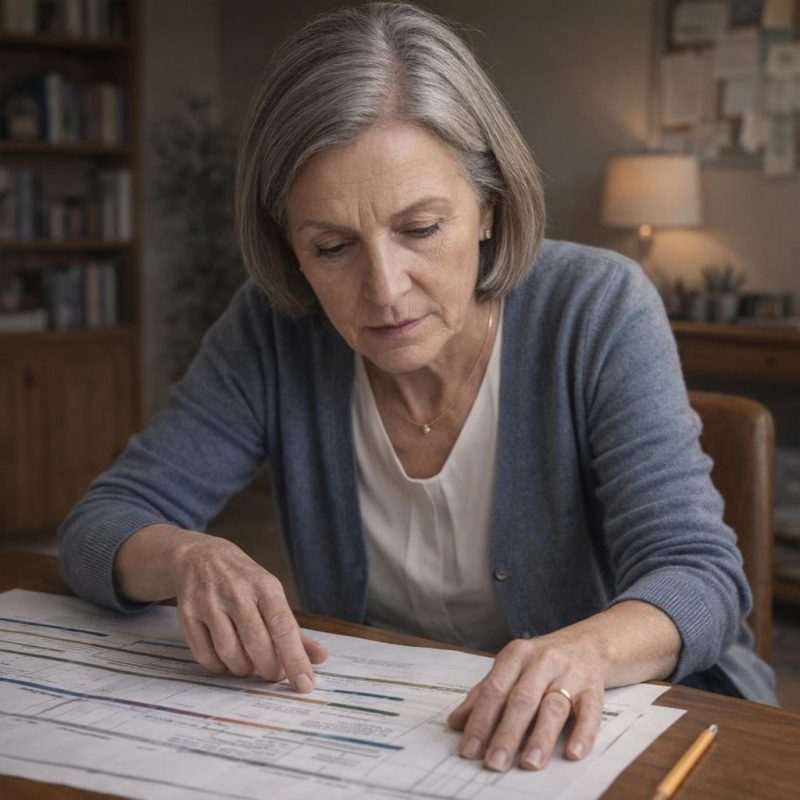 Image by RM AI
The Complete Picture
I saw it all clearly now, the complete picture snapping into focus with sudden, terrible clarity. Lacey had orchestrated everything from the beginning. She had access to the health system through her scheduler position—she could enter billing codes, schedule procedures, access patient portals. She knew Adam would be in Singapore for eight months, safely overseas and unreachable. She'd helped with my paperwork specifically to gain emergency contact status, positioning herself as the authorized person on my accounts. The phantom address provided a local billing location. The four-month window covered pre-procedure, procedure, and recovery billing. Lacey had used my insurance to cover her own medical procedure. The exploratory laparoscopy was for her health issues, not mine. Adam's name was forged because he was safely overseas, unable to question anything. My grief ensured I wouldn't notice the changes or read what I was signing. Every element was part of a coordinated scheme—access, opportunity, vulnerability, absence. This wasn't desperation or accident. My daughter-in-law had surgically extracted my identity to pay for her own medical care, and the precision of the scheme told me this was never a desperate mistake—it was a calculated plan executed by someone who knew exactly what she was doing.
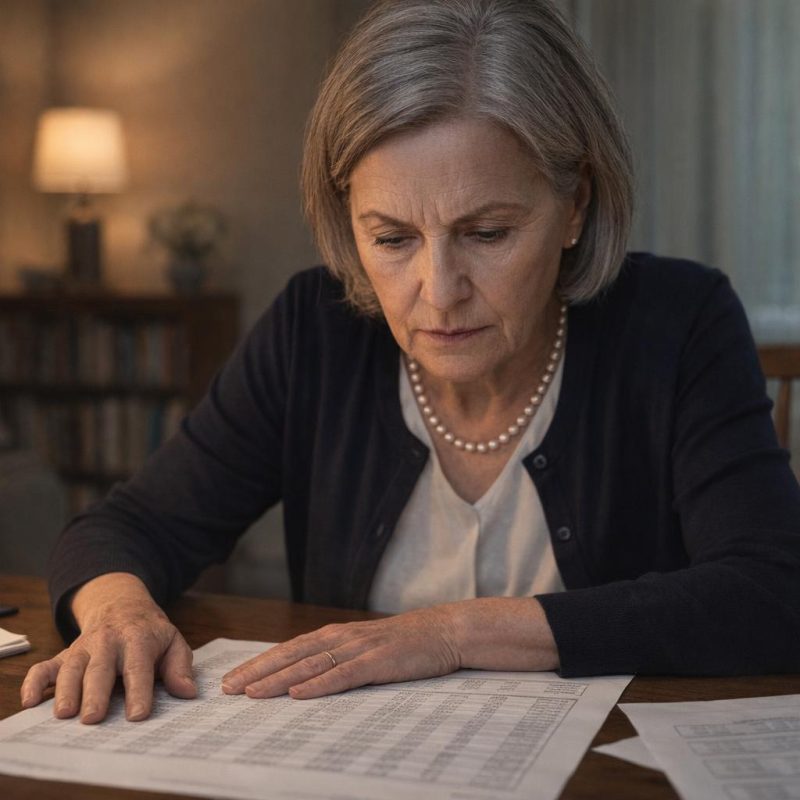 Image by RM AI
Collateral Damage
I sat with the truth for a long time, turning it over in my mind, and the worst part wasn't what Lacey had done to me—it was what this would do to Adam. This wasn't just about identity theft anymore. It was about family, about the fact that my son was married to the woman who'd exploited his mother. He had no idea what his wife had done. Telling him would destroy his marriage, shatter his trust in the person closest to him. I thought about how he'd feel when he learned the truth—betrayed not just by his wife but implicated by the forgery of his own name. Someone had used his identity to cover their crime. Adam was a victim too, and I couldn't protect him from this truth no matter how much I wanted to. But telling him felt almost as cruel as what Lacey had done, like I'd be the one detonating his life. I wrestled with being the messenger who would deliver this devastation. His marriage, his trust, his image of the woman he'd built a life with—all of it would shatter the moment I told him what I knew.
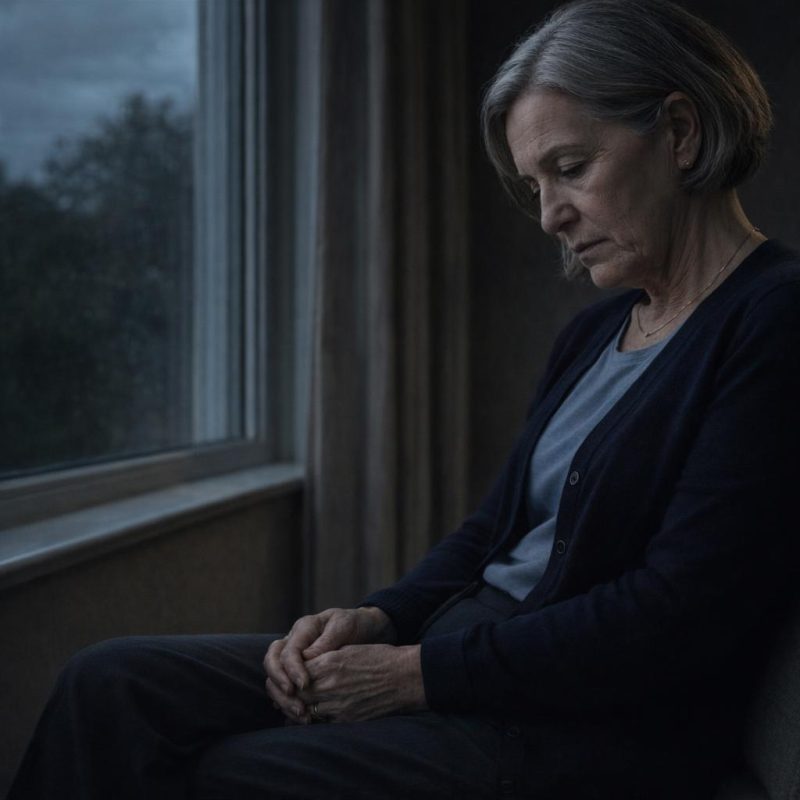 Image by RM AI
Three Paths
I took out a fresh piece of paper and made a list of my options, weighing each choice against what it would cost and what it might achieve. Option one: confront Lacey directly. This risked her denying everything or destroying evidence, but it might get answers about why and how. Option two: report to authorities first. This would create an official record and investigation, but it would remove my control over how Adam learned the truth. Option three: tell Adam first. This respected his right to know about his wife, but it put the burden of decision on him when he was already a victim. I weighed each path against my goals. I wanted justice, but I also wanted to protect Adam. I wanted answers, but I also needed documentation. Silence wasn't an option—I couldn't pretend this hadn't happened, couldn't let the person who'd exploited my grief continue living her lies unchallenged. I decided I needed to create a paper trail first, establish an official record. Then I could tell Adam and confront Lacey with protection. Any path I chose would detonate my family, but silence would mean letting the person who exploited my grief continue living her lies unchallenged.
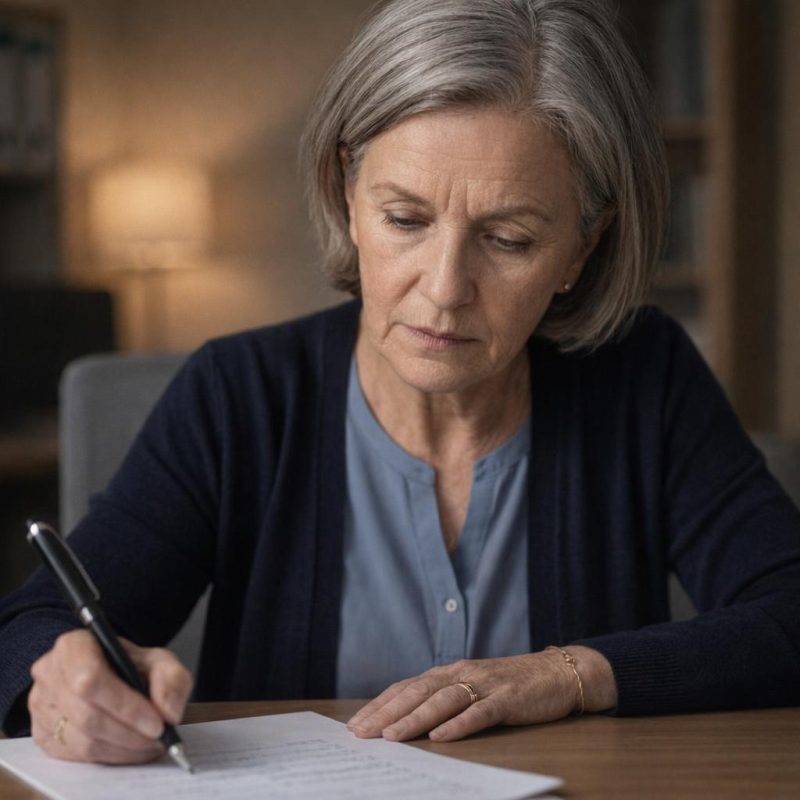 Image by RM AI
Making It Official
I called the police department's non-emergency line the next morning and asked to speak with someone about medical identity fraud. Within an hour, I was sitting across from Detective Sarah Morrison in a cramped interview room at the station. She was in her early forties with a no-nonsense demeanor, taking detailed notes throughout my account. I presented my organized findings—the phantom address, forged signatures, emergency contact change, the scheduler position, system access, financial motive. She asked pointed questions about dates, documents, relationships, timeline. I explained about Adam's Singapore contract, about my husband's death, about Lacey's visits during my grief. Detective Morrison listened carefully without dismissing anything. She explained the process for fraud investigation, the steps they'd need to take. Then she confirmed what I needed to hear: this qualified as identity theft and insurance fraud. I felt validated after weeks of solitary investigation, like I wasn't crazy for seeing what I'd seen. She listened without judgment, asked pointed questions, and when I finished, she said the words I needed to hear: 'This is a crime, and we take it seriously.'
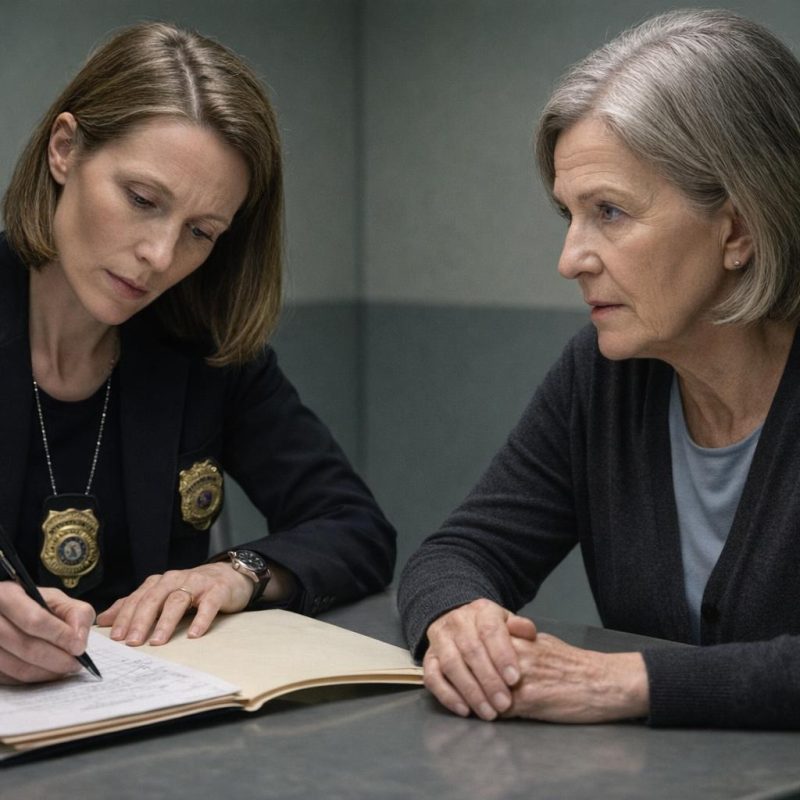 Image by RM AI
On the Record
I returned to the police station the next afternoon with a manila folder thick enough to tell its own story. Detective Morrison led me to the same interview room, and I spread everything across the table between us—the credit report with that phantom address, the operative report I'd never consented to, the intake forms with Lacey's name where my emergency contact should have been, the signature comparison showing Adam's name written in looping cursive instead of his precise block letters. She worked through each document methodically, asking questions about dates and relationships and timeline. When did Adam leave for Singapore? When did my husband pass away? How often did Lacey visit during that period? I answered everything, watching her take notes in careful handwriting. She confirmed what I already knew but needed to hear officially: my daughter-in-law was the primary suspect. She explained they'd need to contact the hospital, the surgical clinic, the insurance companies. The investigation would take time. I signed my official statement, provided my contact information, agreed to document any future interactions with Lacey. Then I handed over my organized evidence packet—copies of everything I'd assembled at my kitchen table over two weeks of solitary investigation. The weight of it left my hands and became something official, something real, something I could no longer take back.
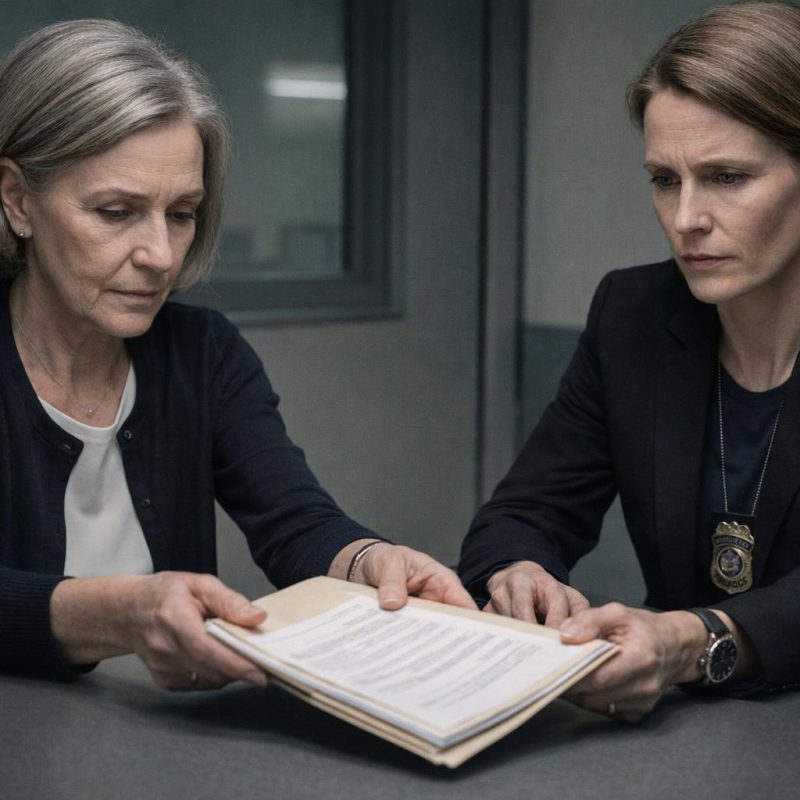 Image by RM AI
Before the Storm
I sat in my car outside the police station for ten minutes before I could make myself drive home. The investigation was official now, but I still had to face Lacey myself—I needed her to know that I knew, that she hadn't gotten away with it just because I'd been grieving and vulnerable. I couldn't do that alone. I called Jennifer as soon as I got home and asked if she could come over. She arrived within the hour, and I told her everything from the beginning—the patient portal discovery, the phantom surgery, the forged signatures, Lacey's scheduler position and system access, the way she'd exploited my grief to commit insurance fraud using my identity. Jennifer listened with her steady, grounding presence, asking clarifying questions, her anger on my behalf visible in the set of her jaw. When I told her I'd filed a police report, she nodded like that was exactly right. Then I asked what I'd really called her for: would she be there when I confronted Lacey? I needed a witness, someone to keep me grounded, someone to confirm I wasn't imagining the truth I'd uncovered. Jennifer agreed without a single second of hesitation, and I felt something settle in my chest—I wasn't facing this betrayal entirely alone.
 Image by RM AI
The Invitation
I picked up my phone the next morning and pulled up Lacey's contact. My hand was steadier than I expected. I needed to sound normal, unsuspecting, like nothing had changed since the last time we'd spoken. She answered on the third ring with her usual warm greeting. I told her I'd been going through some of my late husband's old files and found insurance paperwork I didn't quite understand—would she mind coming over to help me sort through it? The request echoed how she'd 'helped' me two years ago, during those fog-filled months after the funeral. She agreed immediately, cheerfully even, saying she could come by that afternoon. Her tone was accommodating, helpful, exactly what it had always been. I thanked her and ended the call, then sat staring at my phone. She'd agreed without hesitation, without suspicion, without any sense that something might be wrong. She had no idea she was walking into a confrontation built from her own evidence. I texted Jennifer to confirm the time, then went to the kitchen and arranged my documents on the table where Lacey would see them the moment she walked in. Everything was ready. I just had to wait for her to arrive and face what she'd done.
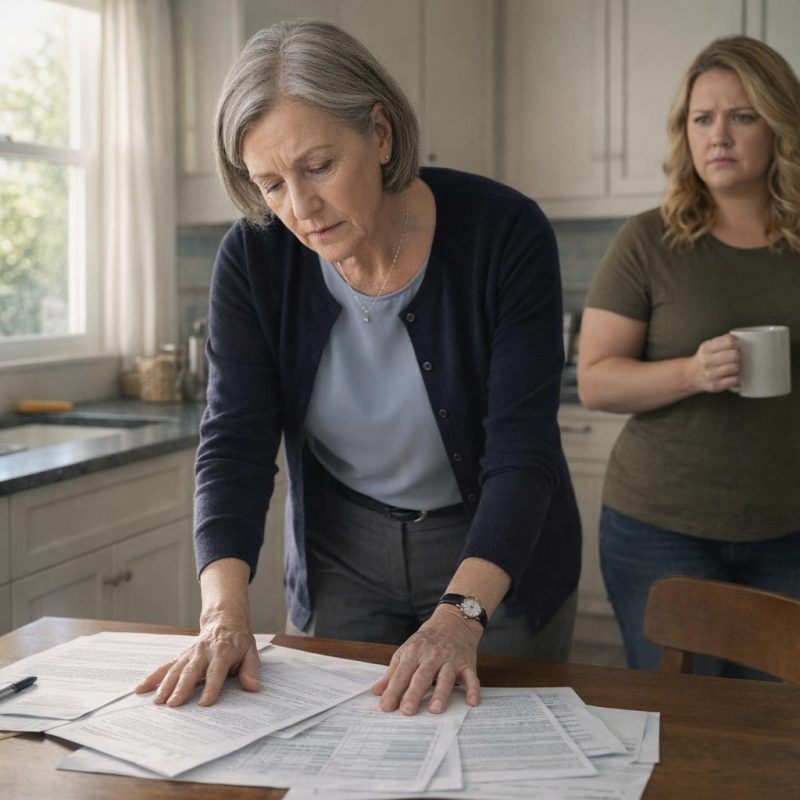 Image by RM AI
Face to Face
Lacey arrived exactly on time, letting herself in through the front door like she always did. I heard her call out a greeting as she walked toward the kitchen, her voice bright and familiar. Then she appeared in the doorway with that polished smile I'd seen a thousand times, dressed in one of her neat professional outfits, every detail carefully composed. The smile faltered the instant she saw the documents spread across my kitchen table—the operative reports, the intake forms, the credit report, the signature comparisons, all arranged in careful rows. Then her eyes found Jennifer sitting quietly in the corner chair, and something shifted in her expression. She asked what was going on, her voice suddenly careful, controlled. I invited her to sit down. She didn't move. I picked up the intake form from two years ago and held it where she could see the emergency contact field. I asked her a simple question: why was her name listed as my emergency contact on a surgery I never had? The room went very quiet. Lacey stood frozen in the doorway, and for the first time since I'd known her, I watched something shift behind that careful composure—calculation happening behind her eyes while she decided how to respond.
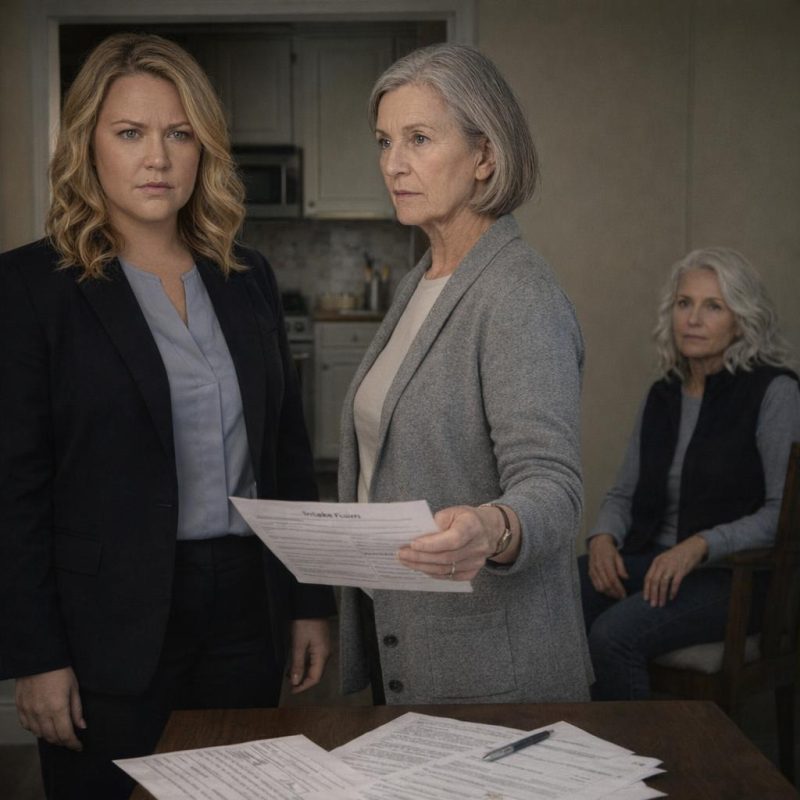 Image by RM AI
Deflection
Lacey's first response was confusion—what surgery was I talking about? She acted like she had no idea what any of this meant. I showed her the operative report dated two years ago, the procedure code, the surgeon's notes. Her expression shifted to concern. This must be a hospital error, she said. Database problems happen all the time, records get mixed up. I showed her the phantom address on my credit report, appearing in the same county as the hospital for exactly four months. She suggested identity theft by a stranger—someone must have stolen my information. I showed her the signature meant to be Adam's name, written in looping cursive instead of his precise block letters. Her explanations grew thinner with each piece of evidence. I watched her cycle through responses like she was testing which one might work—confusion, concern, misdirection, minimization. None of them stuck against the accumulated facts. Each deflection met contradicting evidence. Jennifer sat silently in the corner, witnessing everything, and I saw Lacey glance at her once, then back at me. The pressure kept building. Lacey was running out of plausible alternatives, and we both knew it. When I showed her the employment records proving she'd worked as a scheduler at the surgical clinic, her face went very still.
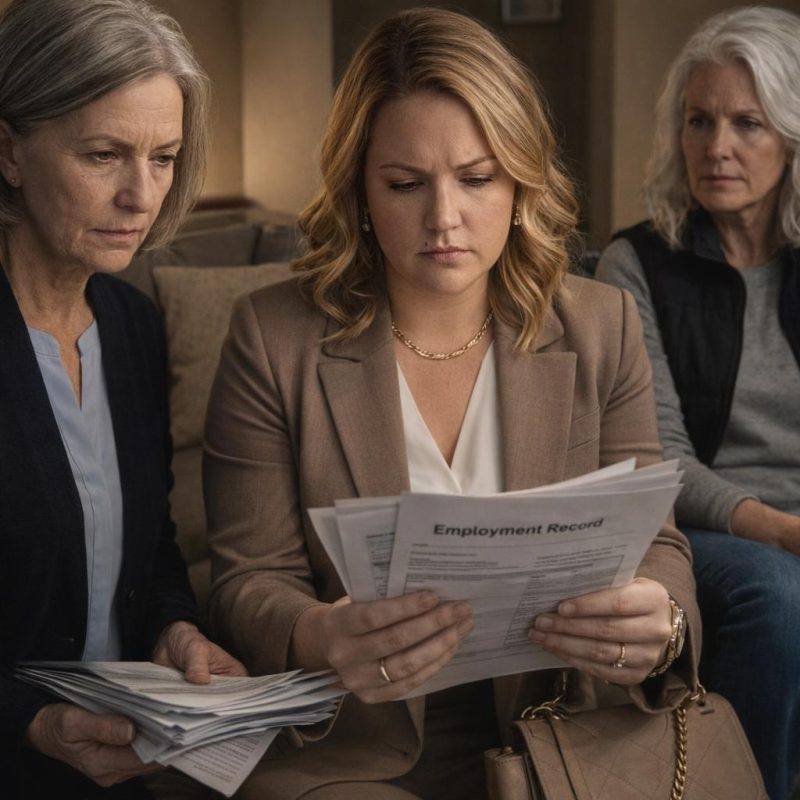 Image by RM AI
No More Excuses
I stopped asking questions and started stating facts. I told Lacey I knew about her position at the surgical clinic two years ago—scheduler with access to patient portals, billing codes, scheduling software. I laid out the timeline: the procedure scheduled during Adam's six-month Singapore contract when he couldn't verify anything, the phantom address appearing for exactly four months then disappearing, the emergency contact changed during the months I was barely functional with grief. I showed her how every piece fit together, how the access and opportunity and timing all pointed in one direction. Then I told her I wasn't asking whether she did this anymore. I was asking why. The room went silent. Lacey's face became very still, that polished composure freezing into something harder. I could see her thinking, calculating, weighing her options. She'd run out of deflections that might work against the evidence. Now she was deciding something else—whether continued denial would serve her, or whether some version of the truth might work better. Jennifer watched from the corner without speaking. I waited. The silence stretched out between us, and in that moment, I saw Lacey stop trying to construct another story and start calculating whether honesty might be her best strategy now.
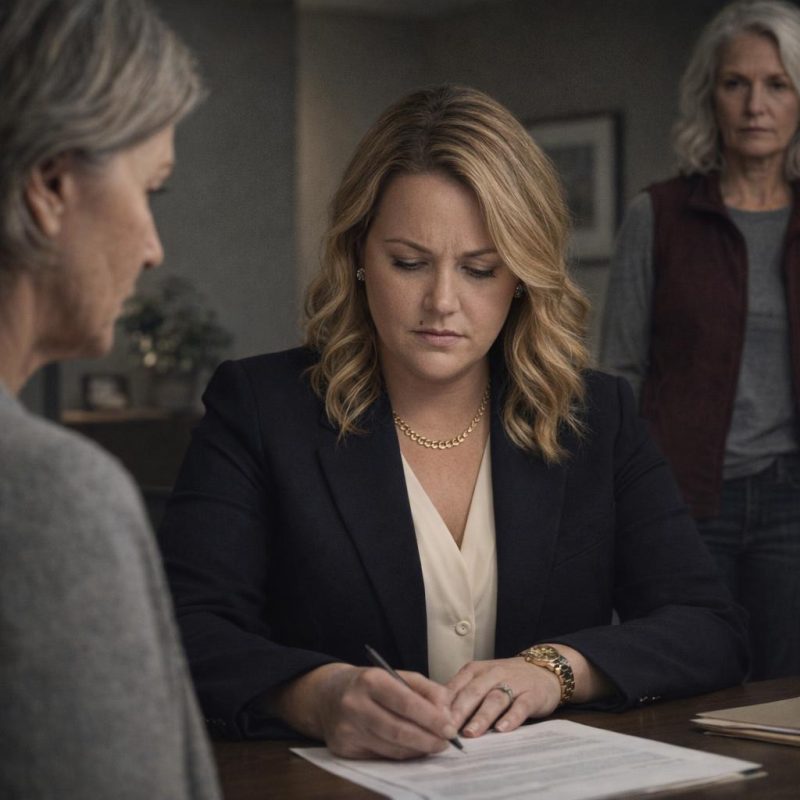 Image by RM AI
The Admission
Lacey finally spoke, and what came out wasn't an apology. She said she'd needed the surgery—endometriosis, chronic pain that was affecting her daily life. She and Adam didn't have insurance coverage for it, they were already drowning in medical debt from previous treatments. She saw an opportunity when she was helping me with paperwork after the funeral. My insurance was better, and I was so deep in grief I wasn't paying attention to anything. She described it as a desperate decision, not a scheme. She'd meant to find a way to make it right somehow, to pay it back. She never intended for me to be harmed. The surgery was real, she said, just performed on the wrong patient record. She framed everything as circumstances forcing her hand—financial pressure, medical necessity, no other options available. She minimized her agency in each choice, like the fraud had happened to her rather than being something she'd planned and executed. I listened to the self-justification, recognizing there was no genuine remorse in any of it. Only explanation and deflection of responsibility. She spoke as if circumstances had forced her hand rather than choices she'd made, and I realized she still didn't understand that the crime wasn't just the fraud—it was the betrayal of trust.
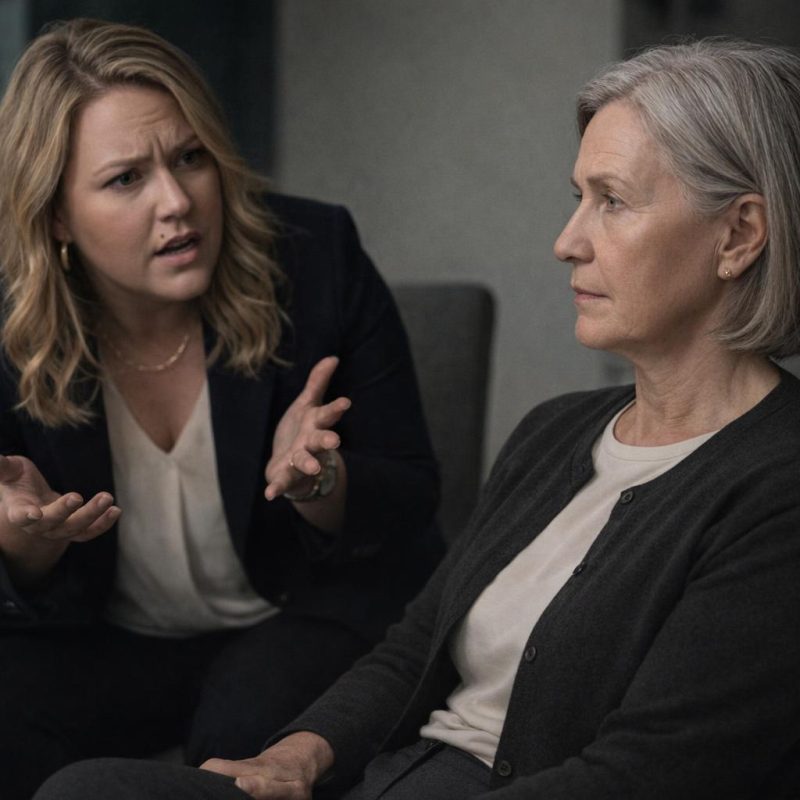 Image by RM AI
The Third Witness
I heard the front door open. I hadn't been expecting anyone else—this confrontation was supposed to be just us, witnessed only by Jennifer. Then Adam appeared in the kitchen doorway, and the look on his face told me everything. He'd been listening. Through the screen door, he'd heard enough of Lacey's admission to understand what his wife had done. He stood frozen, staring at Lacey like he was seeing her for the first time. She turned and saw him, her face going pale. She started to speak—Adam, I can explain—but he'd already heard the explanation. He'd heard her admit to using my identity, to forging his signature, to framing it all as circumstances rather than choices. The room fell into terrible silence. Adam looked at Lacey with an expression I'd never seen on my son's face before—like she was a stranger wearing his wife's face, like the person he'd married had never actually existed. I watched my son's world collapse in real time, watched trust shatter visibly across his features, and I realized this betrayal hadn't just been against me. He stood frozen in the doorway, looking at Lacey like she was a stranger wearing his wife's face, and I watched my son's world collapse in real time.
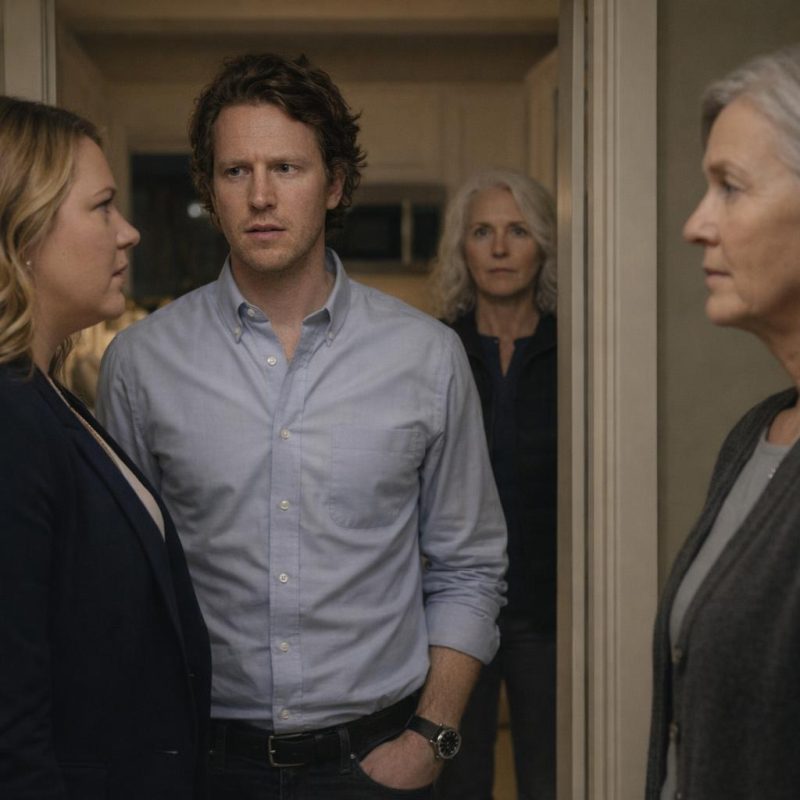 Image by RM AI
Breaking Point
Adam's voice shook when he finally spoke. "How could you do this?" He wasn't yelling—that might have been easier. His words came out quiet, broken, like each one cost him something. "How could you forge my signature? How could you use Mom's grief like that?" Lacey turned to face him fully, her composure cracking. "Adam, please, I did it for us. The medical bills were crushing us, and I knew the insurance would cover it if—" He cut her off. "If you committed fraud in my mother's name? If you made me complicit in crimes I knew nothing about?" His face hardened with each word she spoke. "You used the fact that I was overseas. You knew I couldn't check, couldn't question anything." She reached for his arm, her practiced warmth finally giving way to desperation. "We needed the money. I was trying to protect our future." Adam stepped back like her touch burned him. The physical recoil was worse than any words—I watched my son pull away from his wife like she'd become something toxic. "Leave," he said. "Adam—" "Leave. Now." The space between them felt permanent, a chasm that no explanation could bridge.
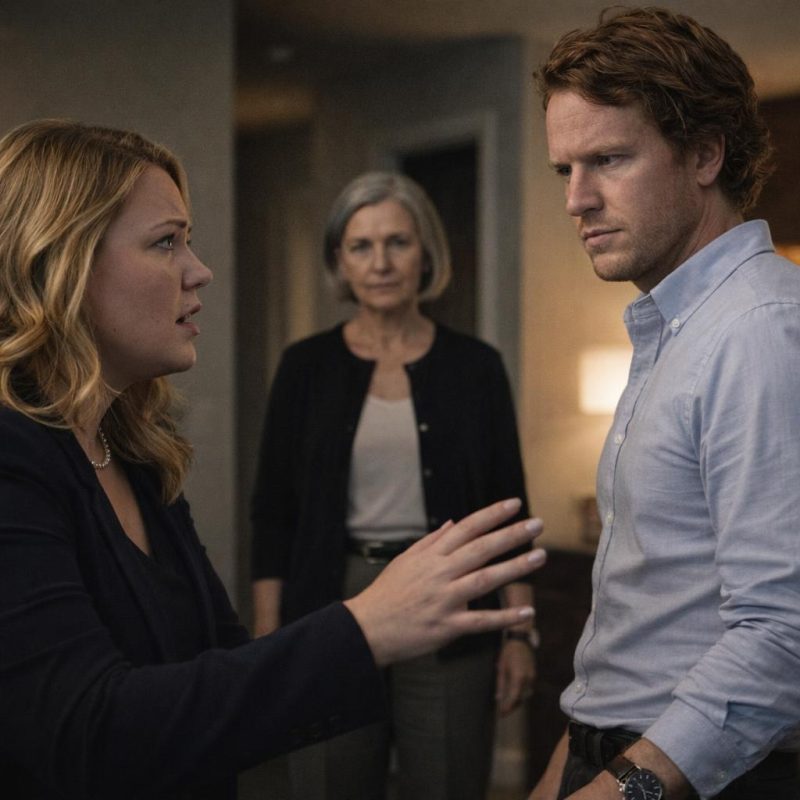 Image by RM AI
Picking Up the Pieces
The days after Lacey left blurred into a flood of administrative tasks that felt surreal in their mundane necessity. I sat across from Detective Morrison in my living room, walking through every document I'd collected, every timeline I'd constructed. She took notes in her precise handwriting, nodding as I explained how I'd traced each piece of the fraud. My insurance company opened a formal investigation. I spent hours on the phone with their fraud department, explaining the same story over and over. A lawyer I consulted walked me through my options—criminal charges, civil recovery, the long process ahead. Adam stayed with me through all of it, sleeping in his old bedroom, moving through the house like a ghost. I'd find him staring at nothing, coffee growing cold in his hands. He couldn't face going back to the house he'd shared with Lacey, couldn't reconcile the life he'd thought he had with the reality he'd discovered. I tried to support him while managing my own processing, but watching my son's pain was harder than dealing with my own betrayal. Then Detective Morrison called with news that changed everything: Lacey had retained a criminal defense attorney and was cooperating with the investigation, which meant the legal process had truly begun.
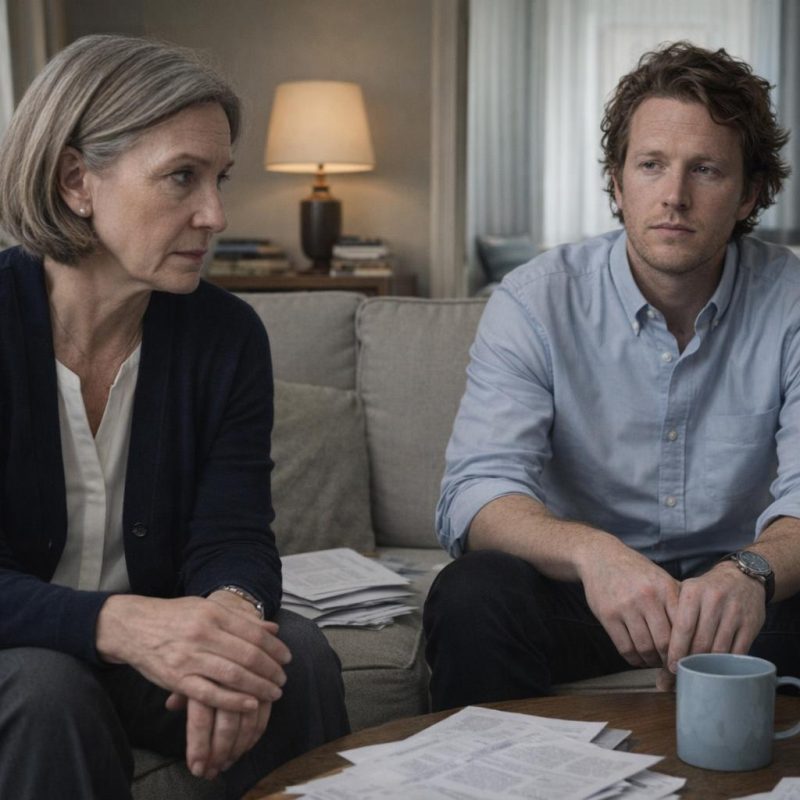 Image by RM AI
Mother and Son
We spent long evenings at my kitchen table—the same table where I'd assembled all that evidence—talking through what had happened and what came next. Adam asked me to walk him through the investigation step by step, and I showed him the portal screenshot, the billing statements, the timeline I'd constructed. "I should have noticed something was wrong," he said, guilt heavy in his voice. I reached across the table. "She hid it deliberately. She used your trust, your absence, my grief. That was the design." We talked about our family patterns, about how my grief after his father died had made me vulnerable, how Adam's deployment had created opportunity. We discussed what we'd learned about trusting carefully, questioning kindly, verifying even when it felt uncomfortable. The conversations rebuilt something between us—a foundation of honesty we'd both fought to uncover. Then one evening, Adam set down his coffee and looked at me directly. "I'm filing for divorce," he said. "I can't stay married to someone who did this." I felt grief wash over me—for the marriage he was losing, for the future he'd imagined, for the pain he'd carry forward. But I was proud of the man who refused to build his future on a foundation of fraud.
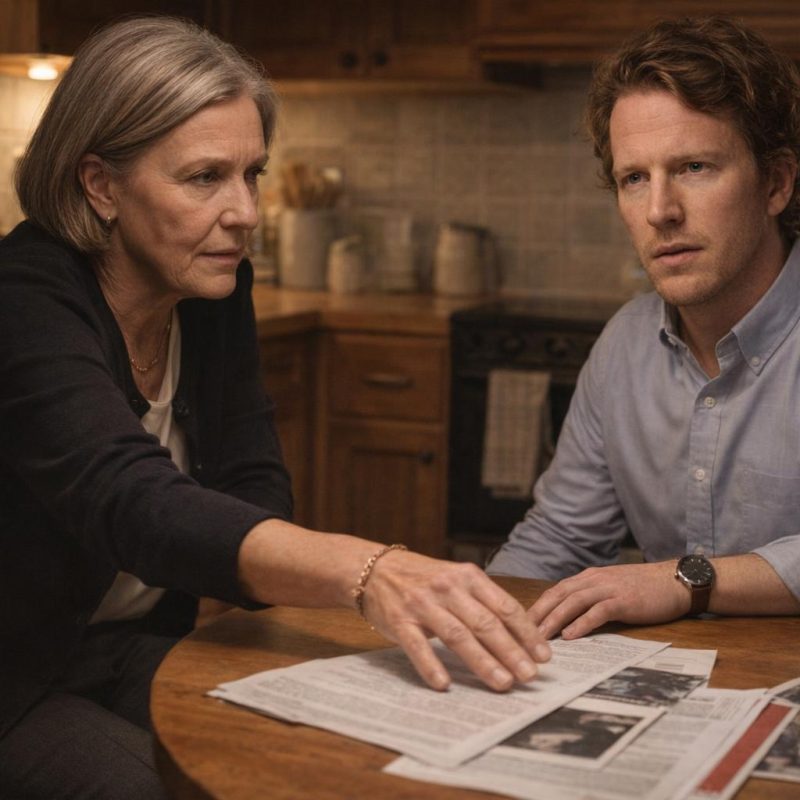 Image by RM AI
Corrected Records
Three months after I first logged into my patient portal and found that phantom surgery, I opened my laptop one final time to check. I navigated to my medical history with my heart beating faster than it should have, even though I knew what I'd find. The records showed only procedures I actually remembered: my appendix surgery from decades ago, routine mammograms, flu shots, annual physicals. Nothing that didn't belong to my actual life. The phantom surgery was gone—officially removed, my history finally my own again. The legal case against Lacey was proceeding toward a plea deal. My insurance company was pursuing restitution. Adam's divorce was moving forward, and he was rebuilding his life slowly, with the kind of careful deliberation I recognized from my own healing. I closed the laptop and stood to make myself a cup of tea, the ordinary ritual grounding me in the present moment. I thought about what the past months had taught me—about grief and vulnerability, about the importance of looking closely even when it felt paranoid, about trusting but verifying. Some wounds leave scars, I realized, watching steam rise from my cup. But scars don't have to define the life that carries them forward.
 Image by RM AI
KEEP ON READING

The story of Ching Shih, the Woman Who Became the…
Unknown author on WikimediaFew figures in history are as feared…
By Emilie Richardson-Dupuis Dec 29, 2025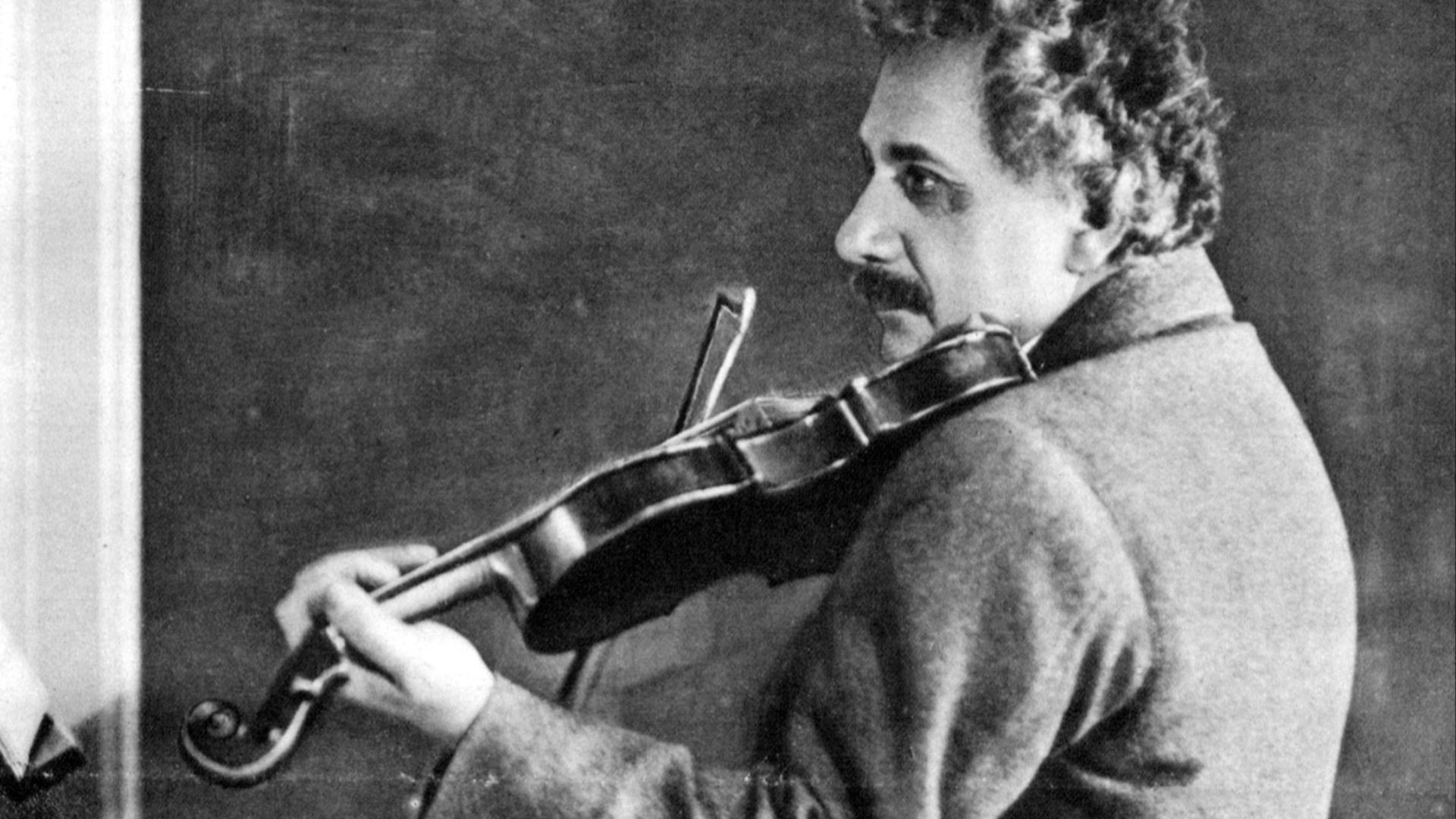
Einstein's Violin Just Sold At An Auction—And It Earned More…
A Visionary's Violin. Wanda von Debschitz-Kunowski on WikimediaWhen you hear…
By Ashley Bast Nov 3, 2025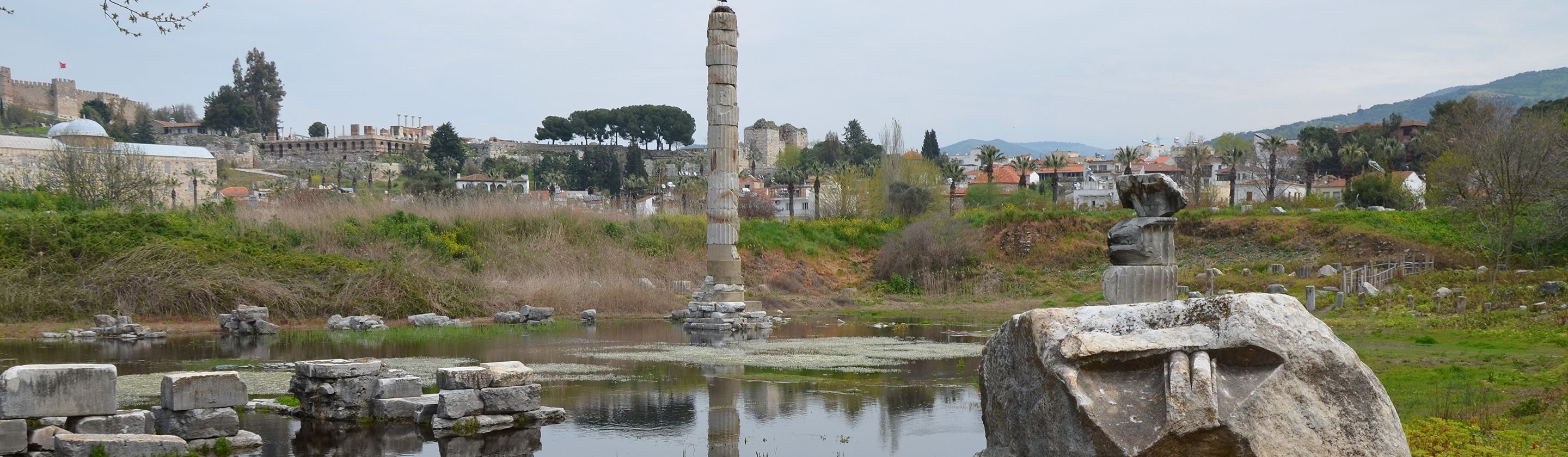
This Infamous Ancient Greek Burned Down An Ancient Wonder Just…
History remembers kings and conquerors, but sometimes, it also remembers…
By David Davidovic Nov 12, 2025
The Mysterious "Sea People" Who Collapsed Civilization
3,200 years ago, Bronze Age civilization in the Mediterranean suddenly…
By Robbie Woods Mar 18, 2025
20 Greatest Ancient Athletes In History
Ancient Olympics. Long before modern stadiums and multimillion-dollar endorsements, athletes…
By Sara Springsteen May 1, 2026
20 Soldiers Who Defied Expectations
Changing the Rules of the Battlefield. You’ve probably heard plenty…
By Annie Byrd Feb 10, 2026