

I Found Out My Adult Son Thinks He Owns My Basement—So I Taught Him What Real Ownership Looks Like
I Found Out My Adult Son Thinks He Owns My Basement—So I Taught Him What Real Ownership Looks Like
The Basement Door
Thursday afternoons have their own rhythm in this house, and Margaret has learned to move with them. She folds Leo's laundry in the upstairs hallway the same way she has done it for years — shirts stacked flat, jeans folded twice at the knee, socks paired and tucked. The basket gets heavy by the time she's done, but she carries it down the basement stairs without thinking much about it. Leo is at his desk when she pushes the door open, headphones clamped over his ears, eyes fixed on the screen. The room smells like stale air and energy drinks. She weaves around the gaming chair and sets the folded stack on the wooden chair beside his desk — the one that never gets sat in anymore. He glances up for just a second, a small nod, and then he's back in the game. Margaret doesn't say anything. There's nothing that needs saying. She climbs the stairs, pulls the basement door shut behind her, and stands for a moment in the hallway. The house settles around her the way it always does — the low creak of the floorboards, the hum of the refrigerator from the kitchen, the familiar quiet of a home that has held the same routines for a very long time.
 Image by RM AI
The Weekly Routine
Thursdays are for cleaning, and Margaret doesn't skip them. She starts with the living room, pushing the vacuum in slow overlapping rows the way her mother taught her, then moves down the hallway where the baseboards collect dust faster than seems reasonable. The bathroom takes the longest — she wipes down the counters, scrubs the mirror until it stops streaking, and gets on her knees for the grout around the tub. By the time she reaches the kitchen, her back is already talking to her. There's a sticky patch near the stove where something boiled over earlier in the week, so she fills the bucket and scrubs it on her hands and knees until the floor comes up clean. Leo's bedroom door at the top of the stairs stays closed all morning. He moved his things to the basement two years ago and that room has been a storage space ever since. She rinses the mop, hangs it to dry, and turns to put the cleaning supplies away. That's when she sees the sink. His dinner dishes from the night before are stacked there — a plate with dried sauce around the rim, a bowl, two glasses, a fork balanced on top of the pile.
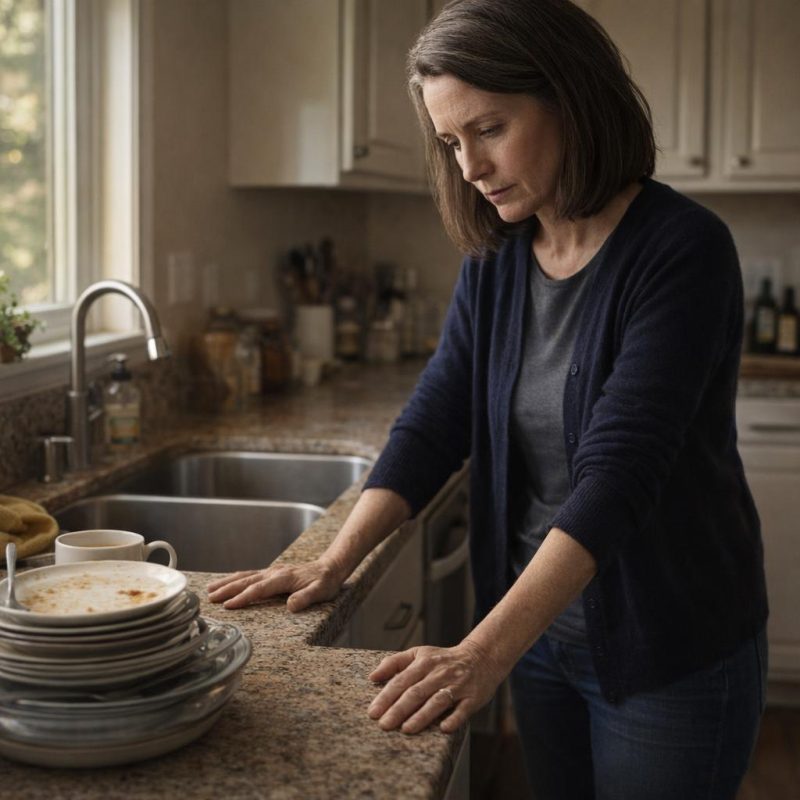 Image by RM AI
The Glow of Screens
Margaret makes the sandwich the way Leo likes it — turkey, no mustard, a little mayo on both slices of bread, cut diagonally. She adds a handful of chips on the side and carries the tray down the basement stairs just after noon. The room is darker than the rest of the house even in the middle of the day. Leo has blackout curtains on the small window wells, and the only real light comes from the three monitors arranged in a wide arc across his desk. All three screens are running the same game — different angles, different information panels. He's got his headset on and he's talking, not to Margaret, but to whoever is on the other end of the connection. Something about a strategy, a position, a move someone else made wrong. She sets the tray on the open corner of the desk without interrupting. He glances at the food for half a second, then his eyes go back to the center screen. She stands there a moment longer than necessary. There's something almost hypnotic about watching him in his element — the quick movements of his hands on the keyboard, the low murmur of his voice, the blue light washing over his face in the darkened room.
 Image by RM AI
The Laundry Pile
The hamper in the corner of the basement is overflowing again. Margaret can see it from the bottom of the stairs — a mound of dark and light fabrics spilling over the rim and onto the concrete floor. She carries the empty basket over and crouches down to start sorting. Darks in the basket, lights in a pile beside it, anything that needs a gentle cycle set aside. There are more clothes here than one person should accumulate in a week, which means Leo hasn't brought anything up to the machine on his own. He's at his desk with his headphones on, same as always, and he doesn't look over when she comes in. She works through the pile methodically — inside-out shirts turned right, pockets checked, a hoodie that smells like it's been worn every day for a week. When the basket is full she straightens up and looks at what's left on the floor. There's still a good half-hamper worth of clothes waiting. She'll need to come back for a second load. She lifts the basket and settles it against her hip, and for a moment she just stands there, feeling the full weight of it pressing into her side.
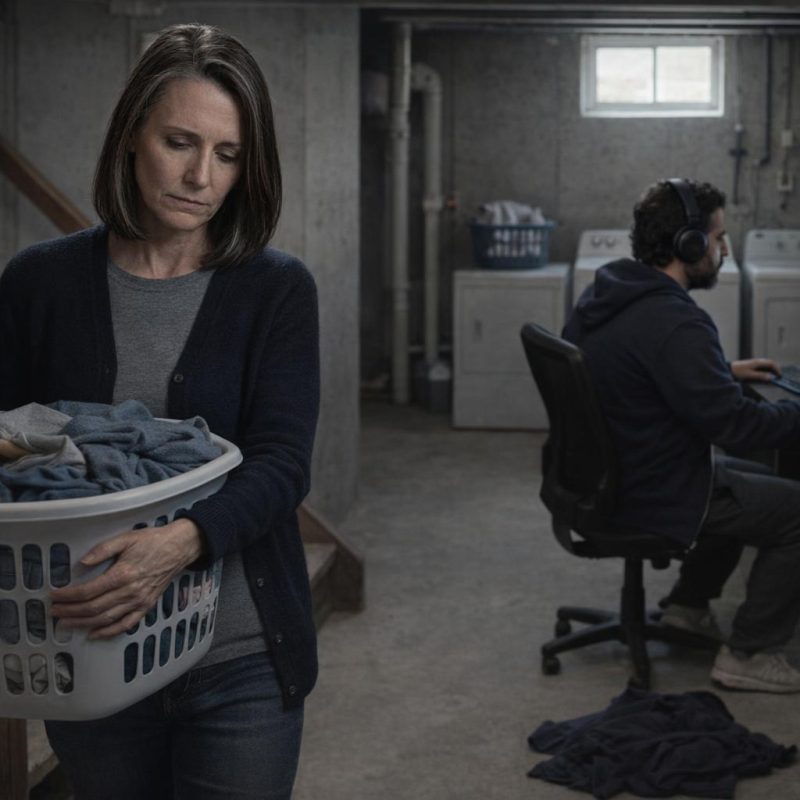 Image by RM AI
The Dinner Hour
Margaret preheats the oven at five-thirty the same way she does most evenings. Leo likes chicken tenders — the frozen kind with the crispy coating — and she has learned to time them so they come out right around six, which is usually when he surfaces for a break. She arranges them on the baking sheet, adds the fries on a second one, and slides both into the oven. While they cook she sets a place at the kitchen table. Plate, napkin, a glass of water. It takes less than a minute and she does it without thinking. When the timer goes off she pulls everything out, plates it up, and calls down the basement stairs that dinner is ready. She waits. The sounds from below don't change — the low rumble of game audio, the occasional burst of voices from his headset. She calls again, a little louder this time. There's a pause, just long enough that she thinks he might be coming up, and then his voice comes through the closed basement door, muffled but clear enough: he's in the middle of something, he'll eat later.
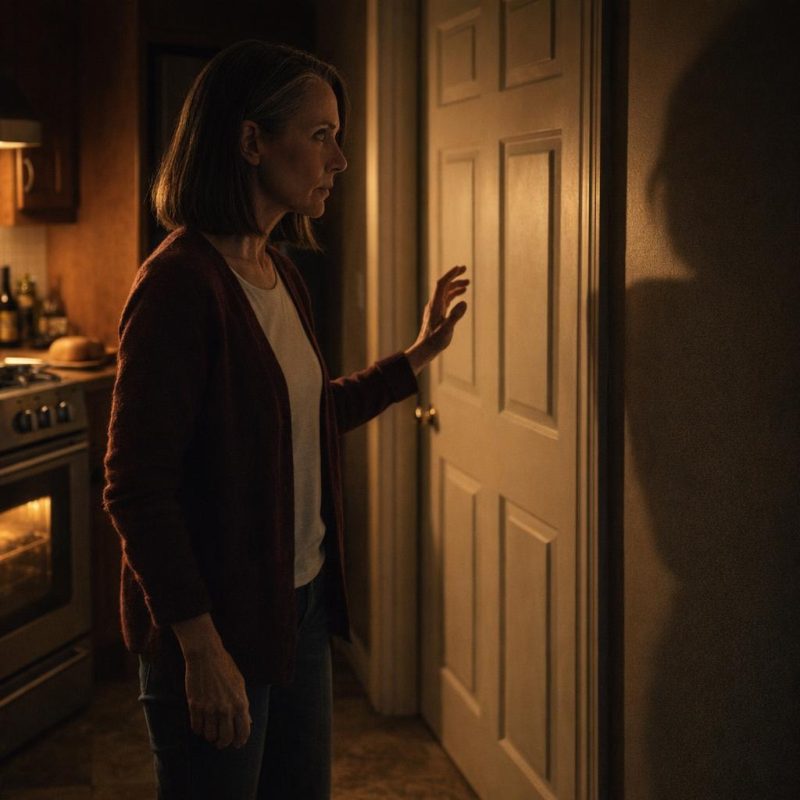 Image by RM AI
The Sleep Schedule
Margaret wakes and the room is dark and she can hear voices. It takes a few seconds to place them — Leo, and then other voices underneath his, tinny and distant, coming through his headset speakers. There's laughter, and then Leo's voice again, louder, saying something she can't make out. The basement ceiling is directly below her bedroom floor, and when he moves around down there she can feel it in the boards. This isn't the first time. She lies still for a while, listening to the muffled rhythm of it — the footsteps, the chair rolling, the occasional burst of sound from the game. After a while she gives up on sleep and goes downstairs for a glass of water. The kitchen light is already on. She doesn't remember leaving it on, which means Leo came up at some point and didn't turn it off behind him. She fills her glass at the sink and stands there in the quiet kitchen, and that's when she looks up at the clock mounted above the stove. The hands read 2:47 AM.
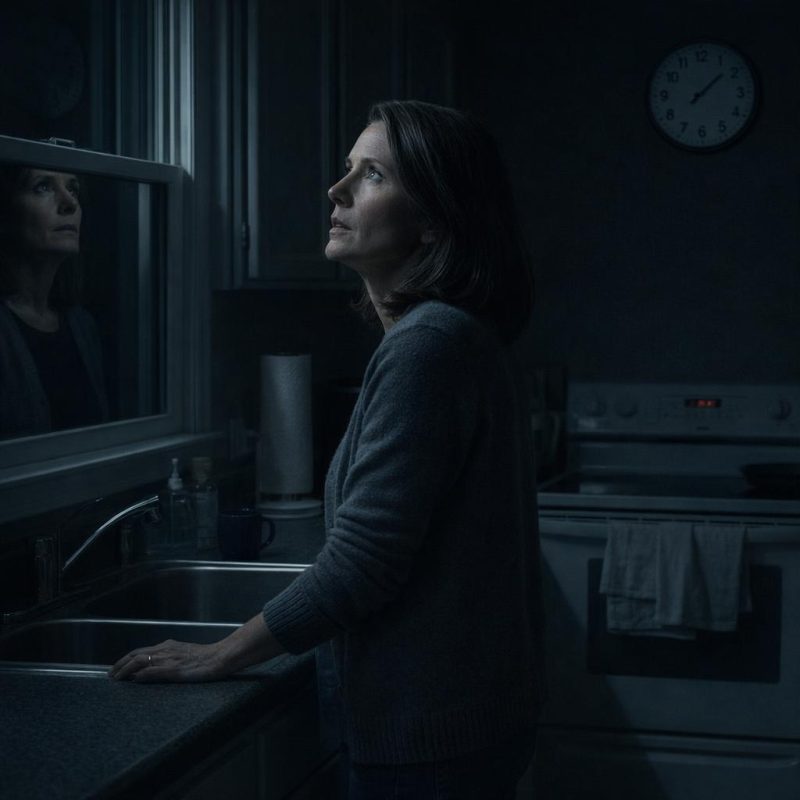 Image by RM AI
The Gaming Corner
Leo is in the bathroom when Margaret brings the vacuum downstairs, which gives her a window to clean without working around him. She starts near the base of the stairs where dust collects along the wall, then moves carefully into the main area of the basement. The cables are the hardest part — they run from the desk in every direction, looping across the floor to a row of power strips along the baseboard, and she has learned to vacuum around them rather than risk catching one. The gaming chair sits on a rubber mat that she lifts at the edges and cleans under. The desk itself she leaves alone; Leo has an arrangement to everything up there that she doesn't fully understand and she has learned not to disturb it. She works her way toward the far wall, guiding the vacuum head into the open floor space between the desk and the storage shelves. That's when she notices the corner she doesn't usually pay attention to. There's a stack of boxes there — four or five of them, brown shipping boxes with the logos of electronics retailers printed on the sides. They're sealed. She doesn't remember seeing them before.
 Image by RM AI
The Neighbor's Observation
Ruth has the good coffee, the kind that actually smells like something when it brews, and Margaret has been coming over on Friday mornings for longer than she can remember. They sit at Ruth's kitchen table with the window behind them looking out over the backyard, and for a little while the week feels manageable. Ruth asks about Leo the way she always does — carefully, like she's checking the temperature of something before she touches it. Margaret tells her he's been applying to positions online, that there are a few things he's waiting to hear back on. Ruth nods and wraps both hands around her mug. She mentions that her son moved out at twenty-six, found a place with a roommate, figured it out. She doesn't say it unkindly. Margaret steers the conversation toward the garden — Ruth has been planning a new raised bed along the south fence and she has opinions about soil composition that can fill a good twenty minutes. Ruth lets her redirect, but before she does, she looks at Margaret across the table with an expression that doesn't quite have a name — somewhere between concern and something older than concern, the look of a person who has watched a situation for a long time and is choosing, carefully, not to say everything she's thinking.
 Image by RM AI
The New Rule
It's a routine she's kept for years — fresh towels folded on Tuesday, carried down to the basement bathroom before she starts anything else. She doesn't think about it any more than she thinks about refilling the soap dish or replacing the toilet paper roll. She just does it. So when she comes down the stairs with the stack balanced against her forearm, she isn't expecting Leo to be standing at the bottom, headphones around his neck, looking at her like she's interrupted something important. He asks, carefully, if she could knock before coming down from now on. She stops on the third step and looks at him. She asks if something is wrong. He says no, nothing's wrong, he just wants a heads-up when he's gaming with his friends online — privacy, he says, like it's a reasonable word for what he's describing. She nods. She sets the towels on the shelf beside the bathroom door and goes back upstairs without saying much else. But she stands in the hallway at the top of the stairs for a moment after, the weight of the empty laundry basket in her hands, trying to place the feeling of having been stopped in a doorway she has walked through for thirty years.
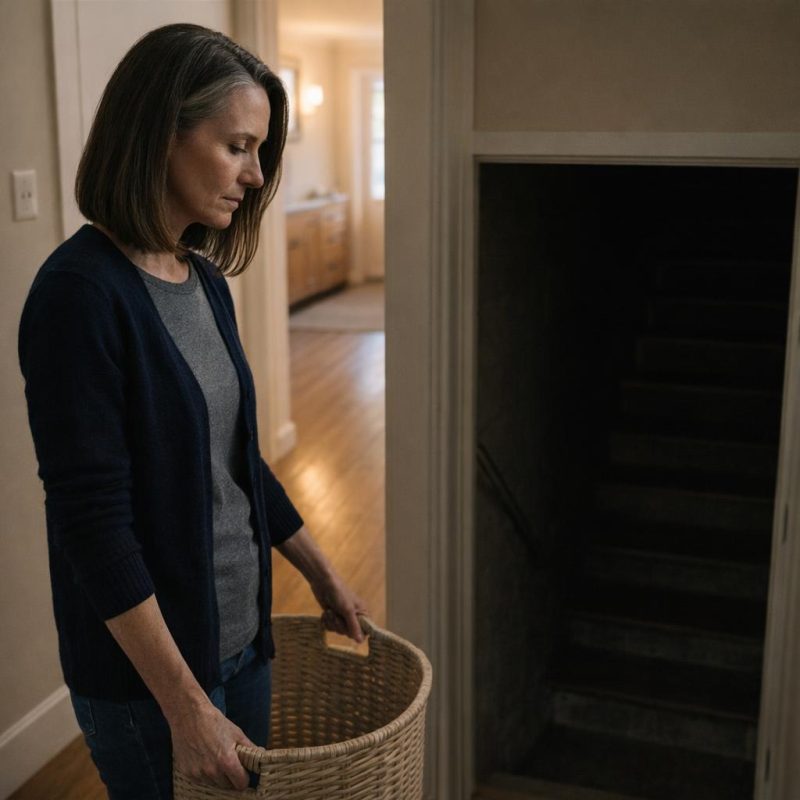 Image by RM AI
The First Knock
She tells herself it's a small thing. A knock. It costs nothing. She folds Leo's clean laundry into the basket the way she always does — shirts flat, jeans stacked — and carries it to the basement door. She raises her hand and knocks twice, the sound of her knuckles against the door frame feeling strange in a way she can't quite name. Nothing happens. She waits. She can hear the low murmur of his game through the door, voices and sound effects, the particular hum of electronics running at full load. She knocks again, a little louder. Leo calls out from somewhere below — just a minute, hang on. So she stands there in the hallway, basket propped against her hip, waiting for her son to tell her she can come into her own house. It takes another full minute before he calls up that she can come down. She carries the basket to the foot of the stairs, sets it where he'll see it, and goes back up without a word. The hallway feels the same as it always has — same carpet, same light — but standing in it just now had felt like something else entirely.
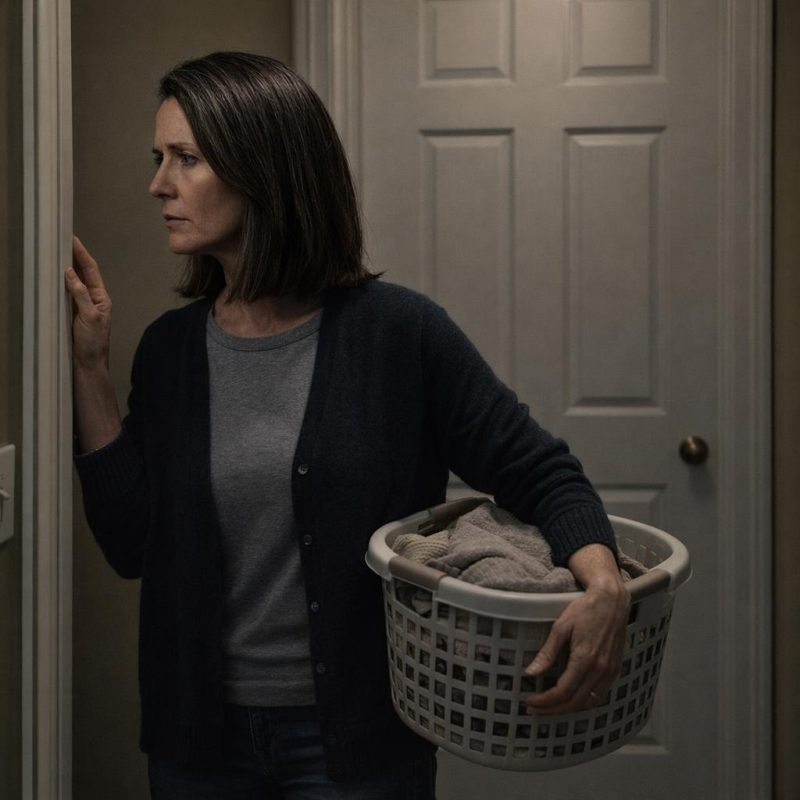 Image by RM AI
The Electric Bill
The electric bill comes on a Thursday, tucked between a furniture catalog and a water district notice. The envelope is thicker than usual, which she notices before she even opens it. She sits down at the kitchen table with her letter opener and pulls out the statement. The usage chart runs across the middle of the page in a bar graph, and this month's bar is noticeably taller than the ones beside it. She gets up and finds last year's bills in the accordion folder she keeps in the hall closet — she has always kept records, always — and brings the relevant month back to the table. The numbers are not close. Kilowatt hours up by nearly forty percent compared to the same period last year. She thinks about the basement without meaning to: the two monitors she's seen through the door, the tower unit that runs constantly, the television Leo added last spring. She doesn't draw any conclusions. She just sits with the statement in front of her, the kitchen quiet around her, the total amount due printed in bold at the bottom of the page.
 Image by RM AI
The Leaking Faucet
The kitchen faucet has been dripping for three weeks. She's put a dish towel under the spout and told herself she'd get to it, but the towel needs wringing out twice a day now and she's done putting it off. She finds the plumber's number on the list she keeps on the refrigerator — a laminated card with contacts for the electrician, the furnace company, the roofer — and makes the call before breakfast. He arrives that afternoon, a quiet man with a toolbox who doesn't waste words. He crouches under the sink, runs the water twice, and tells her the valve assembly has corroded and needs to come out entirely. She says fine, go ahead. While he works, she wipes down the counter and listens to the sounds drifting up from the basement — the particular rhythm of Leo's gaming, the occasional burst of audio from whatever he's playing. She doesn't go down to mention the plumber is here. There's no reason to. When the work is done, she signs the invoice and reaches for her checkbook, and the plumber tells her the total comes to two hundred and eighty dollars.
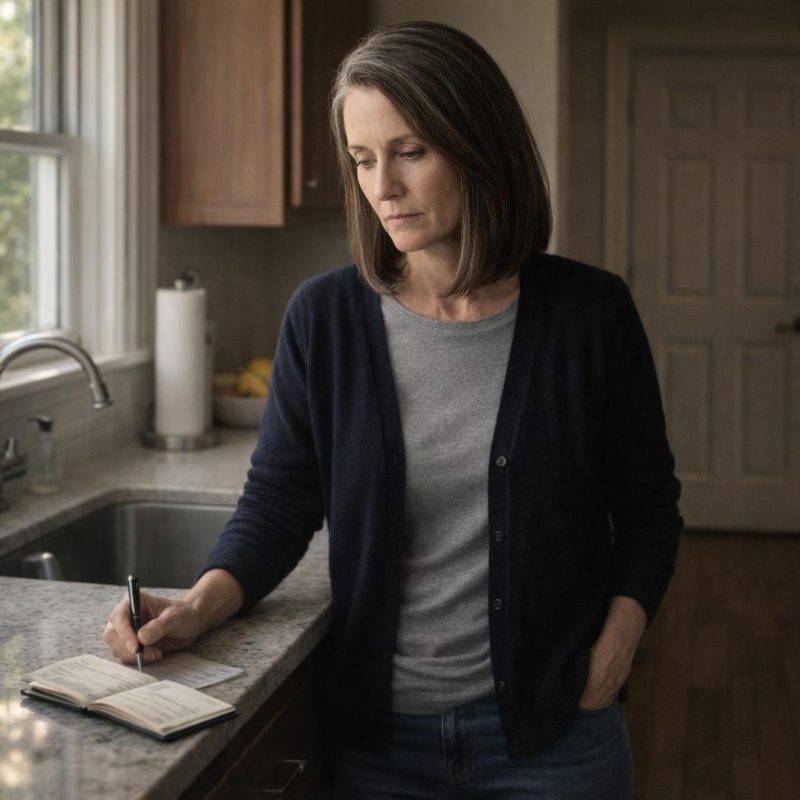 Image by RM AI
The Shared Spaces
She comes into the living room with the dust cloth and finds the couch looking like the break room at a place that doesn't have a cleaning service. There are chip bags wedged between the cushions, a candy wrapper on the armrest, and three empty soda cans lined up on the coffee table like they're waiting for something. Leo is downstairs. She can hear him. She doesn't call down. She just starts gathering — the bags, the wrapper, the cans — and carries them to the recycling bin in the kitchen. Then she comes back with the spray bottle and a cloth and works on the coffee table. There's a ring on the wood where one of the cans sat overnight, the kind that takes some effort to lift. She works at it in small circles until it fades. She straightens the throw pillow, tucks the blanket back over the arm of the couch, and stands back to look at the room. It looks like her living room again. Downstairs, the game sounds continue, uninterrupted. She sets the cloth on the counter and looks at the sticky ring that had been there, now gone, and thinks about how long it must have been sitting before she noticed it.
 Image by RM AI
The Unspoken Question
She's making a stir-fry, which gives her hands something to do while her mind works through the sentence she's been composing since she opened the electric bill. Something simple. Something that doesn't sound like an accusation. She's been trying different versions of it all afternoon — starting with the bills, maybe, or starting with the general idea of shared expenses, or just asking directly if he's thought about contributing something toward the household. She's still working on the wording when Leo comes upstairs in his socks, opens the refrigerator, and stands in front of it for a long moment before pulling out a soda. She opens her mouth. He glances at the stove and says he's in the middle of something important, a ranked match, he'll eat later. He takes the soda and goes back downstairs. She closes her mouth. She turns back to the pan and moves the vegetables around with the wooden spoon. The sentence she'd been building dissolves somewhere between the stove and the basement door, and she finishes cooking in silence, the only sound the steady hiss of oil in the pan and the faint noise of his game drifting up through the floor.
 Image by RM AI
The Territory Claim
She waits until Leo goes out — one of his rare afternoon errands — and takes the opportunity to straighten the storage shelves along the basement's back wall. It's still her house, still her storage space, and the boxes have been sliding out of order for months. She reorganizes them by category the way she always has, moves a few things off the floor, and goes back upstairs feeling like she's accomplished something small but real. Leo comes home about an hour later. She hears him go downstairs, and then she hears him come back up. He stands in the kitchen doorway and tells her, in a tone that is careful but firm, that he'd prefer she not move his things around. She explains she was only organizing the storage shelves, not touching anything of his. He says the shelves are down there, and everything down there is part of his space now. She looks at him for a moment. She says she'll leave it alone. He nods and goes back downstairs. She stands at the kitchen counter after he's gone, replaying the words he'd used — his space, he'd said, like the word belonged to him the same way the basement apparently did.
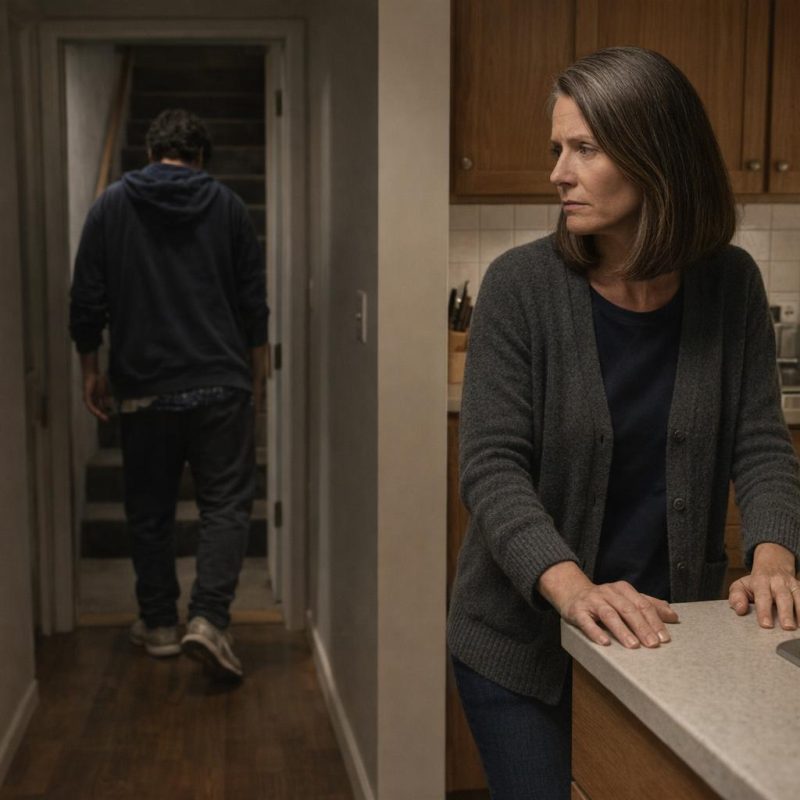 Image by RM AI
The Grocery Receipt
She puts the groceries away one bag at a time, the receipt unfolded on the counter beside her. It's a habit — she checks it against what she bought, makes sure nothing rang up wrong. The total at the bottom is four hundred and twelve dollars, which is more than she spent on groceries for the entire month of March last year. She goes through the items slowly. The energy drinks take up nearly a full column — three different varieties, two of each. Below that: frozen burritos, a case of ramen, two bags of chips, a box of the protein bars Leo started requesting in the spring. Her own items — the chicken, the vegetables, the coffee, the bread — occupy maybe a quarter of the list. She folds the receipt once, then again, smoothing the crease with her thumb. She thinks about the electric bill still sitting on the kitchen table. She thinks about the plumber's check. She tucks the receipt into her purse, not throwing it away the way she usually would, and looks once more at the line near the top of the list: energy drinks, three varieties, two of each.
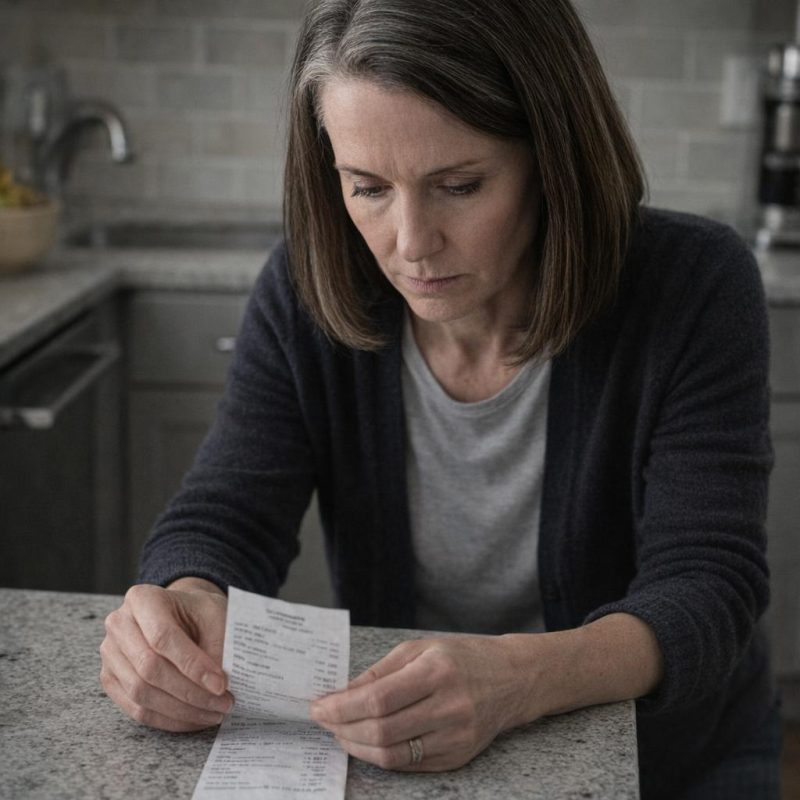 Image by RM AI
The Monthly Bills
Margaret spreads the bills across the kitchen table the way she always does on the first of the month — electric on the left, water and gas in the middle, internet on the right. It's a system. It keeps her from missing anything. The electric bill is up forty-two dollars from the same month last year, which she already expected given how often the basement lights run through the night. Water is higher too, though not by much. Gas is about what she'd budgeted. She sets each one aside after noting the amount in the small ledger she keeps in the kitchen drawer. Then she picks up the internet bill. The number at the top stops her. She reads it twice, then a third time. It's sixty-one dollars more than last month. She pulls up the account on her laptop, clicking through to the service details, and there it is — the plan has been changed to fiber premium, the highest tier they offer. The account is in her name. The billing address is her address. But the contact email listed under account preferences is not hers.
 Image by RM AI
The Silent Contribution
Margaret pays the bills online that same evening, transferring from her checking account the way she always does, and she tells herself she'll bring it up when the moment feels right. The week passes without a right moment arriving. On Tuesday Leo comes upstairs to ask what she's making for dinner. On Wednesday he passes through the kitchen while she's sorting mail and doesn't slow down. On Thursday she mentions, as casually as she can manage, that the bills came in. He nods from the doorway, says something like 'yeah, bills,' and heads back downstairs. She stands at the counter for a moment after he's gone, holding the thought she didn't finish. Friday comes and goes. Saturday he's up late — she can hear the bass from his headphones through the floor. Sunday she makes a full pot of coffee and sits with it longer than usual. She's not waiting for money, exactly. She's waiting for some acknowledgment that the lights cost something, that the water costs something, that any of it registers at all. The quiet where that acknowledgment might have been sits heavier than she expected.
 Image by RM AI
The Property Tax Statement
The envelope from the county assessor's office arrives on a Wednesday, sandwiched between a grocery circular and a credit card offer she doesn't want. Margaret recognizes the return address and sets the other mail aside before she even gets back inside. She opens it at the kitchen table with her letter opener, the one she's kept in the same drawer for twenty years. The notice is two pages. She reads the first page slowly, then the second. The assessed value of the property has been revised upward — a significant jump, the kind that comes when the neighborhood has been selling well and the county takes notice. She reads the new annual tax figure, then does the subtraction in her head. Twelve hundred dollars more per year than last year. She reads it again to make sure she hasn't misread a digit. She hasn't. She paper-clips the notice to the folder where she keeps the property documents — the deed, the insurance policy, the original mortgage paperwork from when she bought this house on her own — and sets the folder back on the shelf. The number on that county letterhead stays with her long after the folder is closed.
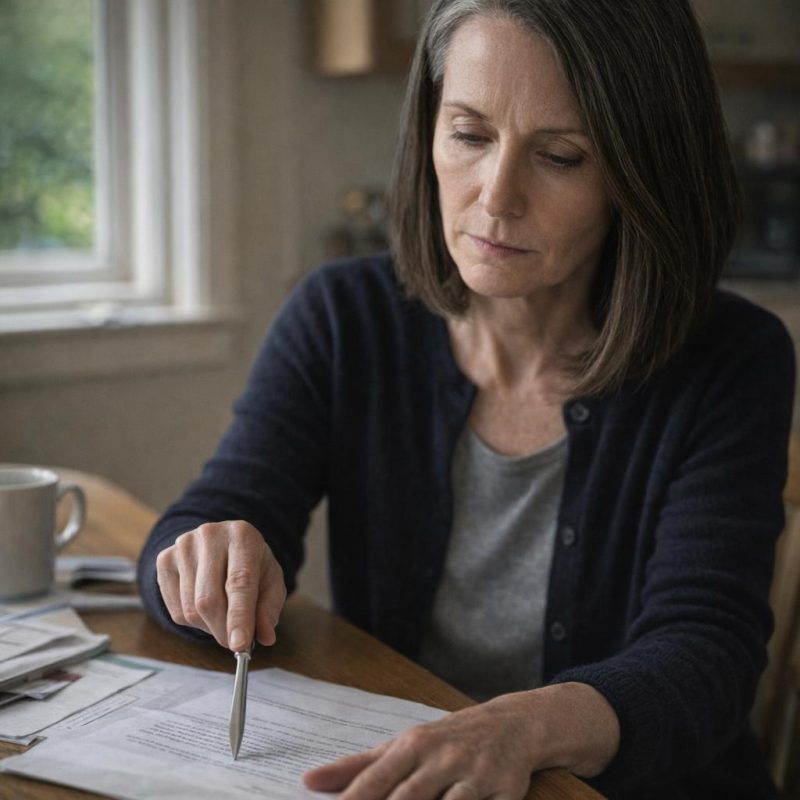 Image by RM AI
The Mental Arithmetic
Margaret can't sleep. She lies on her back in the dark and stares at the ceiling the way she used to when the kids were small and she was running the numbers in her head to figure out how to make a paycheck stretch. Old habit. The electric bill. The gas. Water. Internet — the premium tier she didn't ask for. She adds them up. Then the groceries, which have been running over four hundred dollars most months. Then the property tax, divided by twelve, which is a number that feels different now than it did a week ago. Then the homeowner's insurance, which went up in the spring. Then she thinks about the gutters she had cleaned in September, the plumber's check from two months back, the furnace filter she keeps meaning to replace. She adds a rough estimate for maintenance and repairs — something always needs doing in a house this age. She runs the total again from the top, slower this time, making sure she hasn't left anything out. The number she lands on is larger than she expected, and something in her chest tightens around it like a fist.
 Image by RM AI
The Uncomfortable Truth
In the morning Margaret sits at her bedroom desk with a yellow legal pad and a pen and writes it all down. Column by column, the way her mother taught her to keep accounts — nothing in your head that can live on paper. Electric, gas, water, internet. She writes the monthly averages from memory, which she knows are accurate because she's been paying these bills for years. Groceries. She uses the last three months as a baseline and takes the middle figure. Property tax divided by twelve. Insurance divided by twelve. She leaves a line for repairs and maintenance and writes in two hundred dollars, which is probably low given recent months but feels honest as an average. She adds the column twice. The total sits at the bottom of the page, just above the double line she draws underneath it the way her mother always did. Four thousand and sixty dollars. Every month. She sets the pen down and looks at the number for a long time. She's always known the house costs money. But seeing it written out in her own handwriting, in ink, on a page, makes it feel like something she's only now being asked to hold.
 Image by RM AI
The Additional Request
Margaret is sitting at the kitchen table with her grocery list when Leo comes upstairs. He's in the clothes he slept in, headphones around his neck, and he opens the refrigerator before he says anything. She keeps writing — bread, coffee, the low-sodium soup she's been buying since her last checkup. Then he says the energy drinks she's been getting aren't really cutting it anymore. She looks up. He names a brand she's seen at the store but never bought — the ones in the tall black cans near the back of the beverage aisle. She knows without checking that they run about six dollars each. He says the ones she usually gets are too weak, that he needs something stronger for the long sessions. She nods and writes the brand name at the bottom of her list. He doesn't ask if it's a problem. He doesn't look at the list or offer to come along or mention the cost in any way. He just pours himself a glass of water, says thanks like she's already agreed, and heads back toward the basement stairs. She finishes writing out the rest of her list. The brand name sits at the bottom, six dollars a can, added the same way she'd add milk.
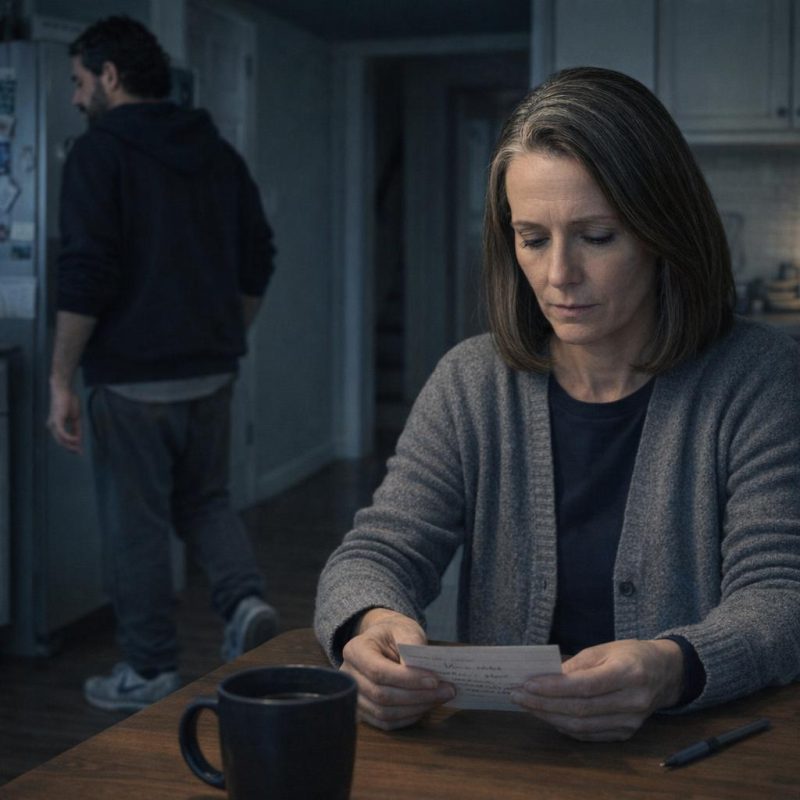 Image by RM AI
The Broken Promise
The lawn has been getting away from her. She noticed it last week and again this week — the grass along the front walk is high enough that it's starting to fold over at the tips. Leo offered to mow it two weeks ago, unprompted, which surprised her enough that she thanked him and said that would be a real help. She mentions it to him on Saturday morning when he comes up for coffee. She keeps her voice easy, just a reminder. He leans against the counter and says he can't this weekend — there's a tournament, an online thing, and he's already committed to his team. She asks if maybe Sunday would work, or sometime early next week before it gets worse. He says maybe next week, if things settle down, but he's not sure what his schedule looks like. He takes his coffee and moves toward the hallway. She stays at the counter. She doesn't push. She's learned that pushing turns a conversation into something else entirely, and she doesn't have the energy for that today. She watches him disappear through the doorway and hears his footsteps on the basement stairs, one after another, until the sound stops.
 Image by RM AI
The Repair Estimate
The contractor arrives at nine — punctual, which Margaret notes. He's been in the utility room for about twenty minutes before he comes back to the kitchen and sets his clipboard on the table. He explains that the water heater is eighteen years old, which she already knew, and that the sediment buildup he found means it's working harder than it should to maintain temperature. He says replacement isn't urgent in the way a burst pipe is urgent, but it isn't optional either — it's a matter of when, not if. He slides the written estimate across the table. Thirty-eight hundred dollars for the unit and installation, parts and labor included. She reads through the line items carefully, the way she always does, and asks a few questions about the equipment warranty. He answers them without rushing her. She tells him she'll call to confirm once she's had a chance to look at her calendar. He shakes her hand and lets himself out. She sits with the estimate on the table in front of her and turns to the second page, where the scheduling notes are printed at the bottom: installation requires a minimum two-week lead time from the date of deposit.
 Image by RM AI
The Question Unasked
Leo comes upstairs at six-thirty, which is later than she asked but earlier than she expected. She's already set the table — two plates, the pasta she made from scratch because she had the time and needed something to do with her hands. He sits down without commenting on the food, pulls out the chair with a scrape that she's heard ten thousand times, and starts eating. She opens her mouth. The water heater estimate is still sitting on the counter, the corner of it visible from where she's seated, and she has the words ready — something measured, something reasonable, just a conversation about shared costs. Then Leo says his tournament ranking moved up four spots this week, and he says it the way he says most things, like she's been waiting all day to hear it. She asks him what that means for the next round. He explains the bracket system for longer than she follows it. She refills his water glass. The estimate stays on the counter. The pasta goes cold at the edges. The silence between bites settles over the table like it belongs there.
 Image by RM AI
The Sleepless Calculation
She turns off the lamp at ten-thirty but doesn't sleep. The ceiling is the same ceiling it's always been, but at midnight it feels lower somehow. She starts with the monthly numbers she knows by heart — the mortgage payment, the utilities, the grocery runs that have quietly doubled since Leo moved back in. She multiplies each one by twelve the way she used to balance the household ledger before everything went digital. Heating oil last winter ran high. The roof repair in March. The plumber in July. She adds the water heater estimate on top of it, thirty-eight hundred dollars sitting on the pile like it's been waiting for her to notice it. Property taxes came due in September. Homeowner's insurance went up again this year, the letter still in the kitchen drawer. She adds that too. She keeps adding. The number she arrives at isn't dramatic — it doesn't announce itself. It just sits there in the dark above her, somewhere north of fifty thousand dollars for the year, and her chest tightens around it like a fist closing slowly.
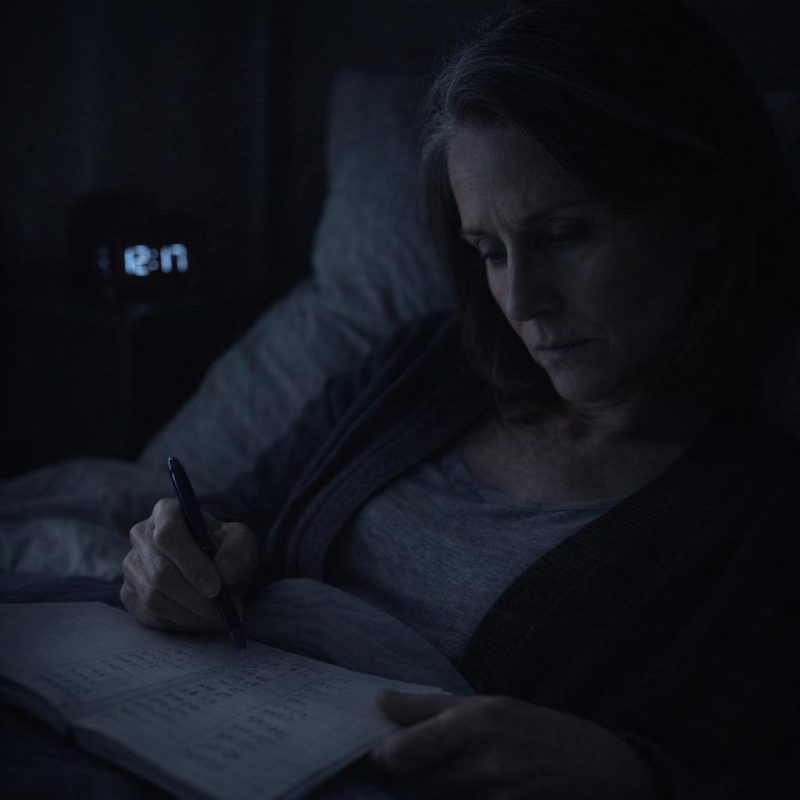 Image by RM AI
The Basement Rule
She's been doing his laundry on Thursdays for the better part of two years — it started as a practical thing, one load while she was already running her own, and it never stopped being that. On Thursday morning she carries the empty basket to the basement door and knocks twice, the way she always does. There's a pause, longer than usual, and then Leo's voice comes through the door without it opening. He says he'll bring his laundry up himself from now on. She asks if he's sure, because she's already running a load. He says he's got it handled. She stands there for a moment with the basket against her hip, not quite sure what to do with the answer. She asks if he needs anything else while she's there. He says no. She's about to turn back toward the stairs when she hears it — a small, deliberate sound from the other side of the door, metal sliding into place, and then the soft, definitive click of a lock.
 Image by RM AI
The Diminished Role
She does the upstairs on Tuesday — vacuums the hallway runner, wipes down the bathroom fixtures, dusts the windowsills in the spare room. It takes her about two hours, the same as it always has. She works her way through each room methodically, the way she's done for decades, and when she's finished she stands in the hallway with the vacuum cord looped over her arm and looks at the basement door. It's closed. It's been closed since Thursday. Leo came up for breakfast on Saturday and again last night for dinner, and both times he went straight back down without a word. She hasn't been to the bottom of those stairs in five days. Her cleaning supplies are in the upstairs closet now — she moved them there without thinking about it, sometime in the last week, as if her hands already understood something her mind was still catching up to. The basement door stays closed all week, and she stands in the hallway holding the vacuum, the house quiet around her.
 Image by RM AI
The Quiet Hours
He comes upstairs on a Wednesday afternoon, which is unusual enough that she looks up from her book. He's got his headphones around his neck and the look he gets when he wants something but is going to frame it as a reasonable request. He tells her he's started streaming his gameplay in the evenings — a few hundred viewers, he says, like she should be impressed. He explains that the kitchen is directly above his setup and that sound carries through the floor more than he expected. Pots, the kettle, the refrigerator door — all of it picks up on his microphone. He asks if she can avoid using the kitchen between six and midnight. She looks at him for a moment and then asks where she's supposed to eat dinner. He suggests she eat earlier, before six, or bring something to her room if she gets hungry later. She nods slowly. He goes back downstairs. She sits with her book open in her lap, the words on the page not quite reaching her, the evening hours she's spent in her own kitchen for thirty years now marked off in her mind like a section of road closed without warning.
 Image by RM AI
The Timeline Question
She eats dinner at five-fifteen, standing at the counter because it feels less deliberate than sitting down. By six she's in her bedroom with a cup of tea that goes cold before she finishes it. She sits on the edge of the bed and thinks about the locked door, the restricted hours, the number she calculated in the dark two weeks ago. Leo has been in the basement for six years now — she counts it out and the number surprises her, the way a familiar distance looks different when you actually measure it. The first year she told herself it was temporary. The second year she stopped saying that out loud. By the third she'd stopped thinking it. She tries to picture what changes it, what the thing is that eventually shifts the arrangement, and she can't find the shape of it. There's no event on the horizon she can point to, no natural end she can see from here. She sets the cold cup on the nightstand and the question she's been circling for weeks finally lands, plain and direct: how long is this going to go on?
 Image by RM AI
The Attic Decision
She's standing in the upstairs hallway on a Friday morning with nothing particular in front of her when she looks up at the attic panel. It's been up there all year — she's walked past it a hundred times and thought, not today, and kept walking. The hallway feels smaller than it used to, or maybe she just notices it more now. She reaches up and pulls the cord. The panel swings down and the folding ladder unfolds in sections, each one catching with a metallic snap, and a fine layer of dust drifts down and settles on the floor around her feet. She hasn't been up there since sometime last winter, maybe longer. She doesn't have a plan for what she'll do once she's up there — she just needs somewhere to put her hands. She climbs the first few rungs and the ladder flexes slightly under her weight, the way it always has, and the dim space above opens up around her, smelling of old cardboard and dry wood and time. The pull-down ladder holds steady beneath her, unfolded into the hallway below.
 Image by RM AI
The Memory Boxes
The attic is exactly as she left it — which is to say, not organized at all. Boxes stacked without a system, a rolled-up rug she meant to donate two summers ago, a lamp with a bent shade. She starts with the nearest box and finds photographs. Leo at seven, missing a front tooth, holding up a fish he caught at her sister's lake house. Leo at ten in his baseball uniform, squinting into the sun. A folder of his old school reports, the handwriting on the teacher comments careful and looping. She sets those aside in the keep pile without deliberating. There's a drawing he made in second grade — a house with a lopsided chimney and four figures out front, all of them the same height. She works through two more boxes, sorting steadily, the dust settling around her knees. Then she shifts a stack of folders and reaches for the next box. The label on the side is written in her own handwriting, block letters, slightly faded: Property Documents.
 Image by RM AI
The Deed
The box is heavier than it looks. She sets it on the attic floor and works the flaps open, and the first thing she sees is a rubber-banded stack of folders, each one labeled in her own handwriting. She pulls out the one marked Deed and unfolds the document inside. The paper has that particular stiffness of something that hasn't been touched in years, the creases sharp and slightly yellowed at the folds. She reads through the legal description slowly — the lot number, the parcel identification, the metes and bounds language she never fully understood but always found oddly reassuring in its precision. The street address is there, printed in clean type, followed by the county assessor's parcel number. And then, near the top of the first page, the ownership line. She's seen this document before, of course. She signed it twenty-eight years ago at a table in a title company office, her hand shaking slightly from the size of what she was doing. But she hasn't looked at it since. She reads the ownership line twice, then once more. Her name sits there, alone, exactly as it has for twenty-eight years.
 Image by RM AI
The Mortgage History
Behind the deed folder there's a thicker one, accordion-style, stuffed with mortgage statements going back decades. She pulls it into her lap and starts from the back, where the oldest statements are. The early ones show a balance that makes her catch her breath — not because it surprises her, but because she'd forgotten how large it once was. She flips forward through the years, watching the principal drop in increments that sometimes felt invisible when she was living through them. There were months she paid the minimum and months she paid extra, whenever she could manage it. There were years when managing it meant skipping things she didn't let herself name at the time. She finds the final statement near the front of the folder. The payment date is three years ago, and clipped behind it is a letter from the bank on their official letterhead, confirming the loan had been satisfied in full. The word satisfied strikes her as almost funny — such a mild word for what it actually took. She smooths the letter flat against her knee. Across the bottom of the final statement, in red ink, someone at the bank had stamped the words PAID IN FULL.
 Image by RM AI
The Tax Reassessment
The next folder is thinner — county tax notices, filed by year. She pulls out the most recent reassessment letter and reads through it standing up, one hand braced against a roof beam. The assessed value has gone up again. She'd known it had been climbing, the way you know something without ever sitting down to look at it directly, but seeing the number printed on official county letterhead is different. Over five years, the assessed value has risen by nearly thirty percent. She sets that letter aside and checks the next one in the stack, then the one before it, watching the number move upward year by year in steady increments. The neighborhood has changed. She's watched it change — the renovations, the new families, the sold signs that go up and come down faster than they used to. She just hadn't connected those changes to a number on a page before. Clipped to the back of the most recent notice is a single sheet she almost misses — a market analysis, printed from what looks like a county assessor's database, listing comparable home sales in her zip code. She unfolds it and finds a column of addresses, square footages, and sale prices stretching down the page.
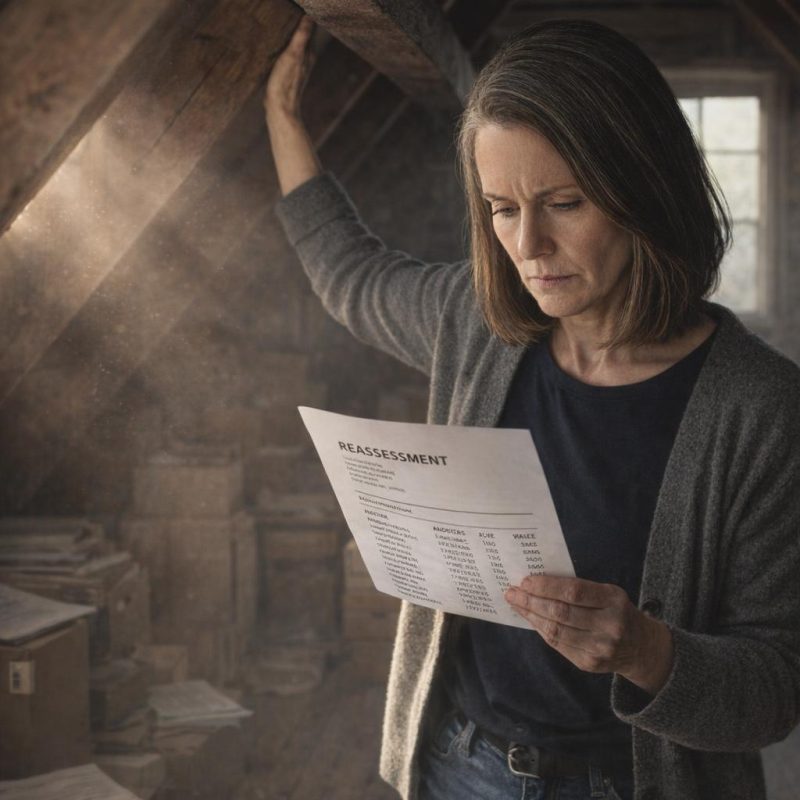 Image by RM AI
The Annual Cost
She finds a legal pad in the bottom of the property documents box, still in its plastic sleeve, and pulls it out and uncaps a pen. She's been running these numbers in her head for years — utilities, taxes, insurance, the slow accumulation of repairs — but she's never written them down in one place. She starts with property taxes, pulling the figure from the reassessment notice. Then utilities: she knows those numbers by heart, twelve months of gas and electric and water, the winter spikes, the summer ones. She adds the homeowner's insurance premium from memory, then pauses to think through the maintenance line. The furnace service last fall. The roof patch the spring before that. The plumber twice in three years. She writes each one down and adds them up separately before folding them into the running total. Groceries and household supplies go on last — the category that never stops, the one that refills itself every week without acknowledgment. She adds the column twice to be sure. Then she writes the total at the bottom of the page and draws a line under it.
 Image by RM AI
The Market Research
She's still sitting on the attic floor when she opens the real estate app on her phone. She's had it downloaded for months — one of those things you do without admitting why. She types in her zip code and filters for sales in the last six months. The results load slowly on the attic's weak signal, and she waits, the legal pad still balanced on her knee. The first few listings are familiar streets. She recognizes the corner house that sold last spring, the one with the big oak in the front yard she always admired. She taps through to the details and checks the square footage against her own house, doing the rough math in her head. Then she scrolls down. A three-bedroom on Clement Street, two blocks over, smaller lot, no finished basement. She remembers when that family moved out — it sat empty for maybe three weeks before the sign came down. She taps the listing. The sale date was two months ago. The sale price was five hundred and ninety thousand dollars.
 Image by RM AI
The Possibility
She sets the phone face-down on the attic floor and looks around at the open folders, the legal pad, the deed still unfolded beside her. The house is quiet in the way it gets on weekday mornings — the particular stillness of a large space that isn't being used. She thinks about the square footage. Four bedrooms, two and a half baths, a basement that runs the full length of the foundation. It's more house than she needs. It's been more house than she needs for a long time, and she's known that the way you know things you're not ready to do anything about. But sitting here with the numbers in front of her, the thought arrives differently. Not as a loss, not as a threat — just as a fact she's finally willing to look at directly. A smaller place. Easier to heat, easier to maintain, no roof the size of a parking lot to worry about every time it rains. She doesn't push the thought away. She doesn't reach for a reason to dismiss it. She just lets it sit there with her in the attic dust, taking shape on its own.
 Image by RM AI
The Phone Call
Near the back of the property documents box, tucked inside a folded utility map she never had any use for, there's a business card. Cream-colored stock, simple black type: David Hartwell, Property Development and Acquisitions, and a phone number. She doesn't remember where it came from — a neighborhood meeting, maybe, or something slipped under the door during one of the development pushes a few years back. She turns it over. Nothing on the back. She sits with it for a moment, then picks up her phone before she can talk herself into waiting. The line rings twice. A man answers, calm and unhurried, and she tells him she's a homeowner in the area and she's been thinking about selling. She says it plainly, the way you say something you've been turning over without quite naming it. He asks a few brief questions — the address, the property type, whether she's spoken with anyone else. She answers each one. Then there's a short pause, and his voice comes back even and professional, asking when she'd like to meet.
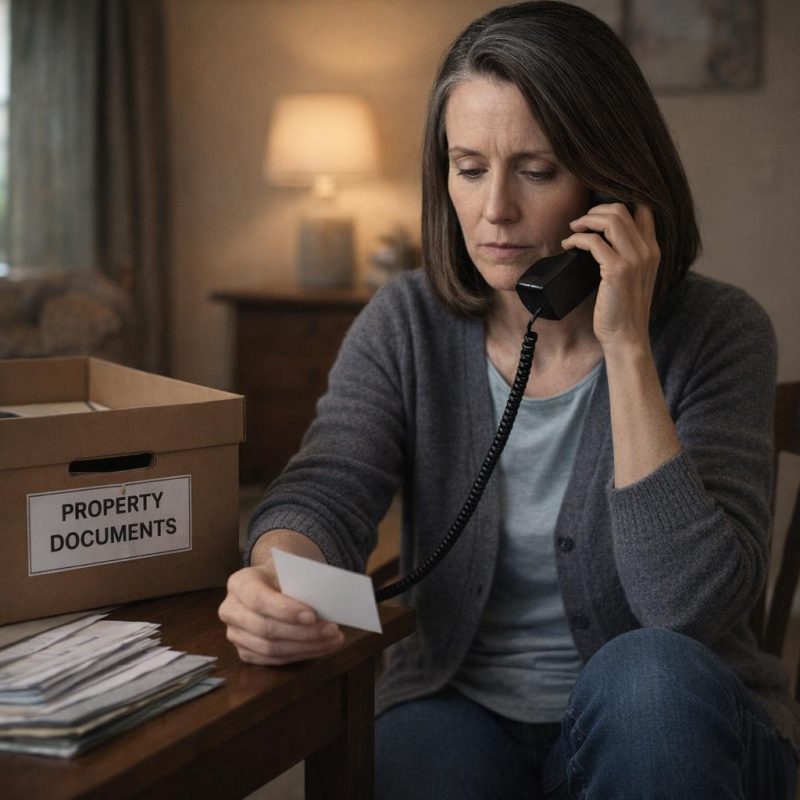 Image by RM AI
The Scheduled Meeting
She comes downstairs with the business card still in her hand. The kitchen calendar is on the counter where it always is, open to the current month. She finds Tuesday — four days from now, the morning still clear. David Hartwell said nine o'clock, and she writes that first, then his name beneath it, then the phone number from the card so she doesn't have to go back to the attic to find it. She uses a pen, not the pencil she usually keeps clipped to the calendar. The pencil is for things that might change. She caps the pen and sets it down beside the calendar and looks at what she's written. It's eleven words and a phone number. It doesn't look like much. Leo is downstairs — she can hear the low pulse of whatever he's watching through the basement ceiling — and she doesn't call down to tell him anything. The calendar stays open on the counter, Tuesday morning marked in ink.
 Image by RM AI
The Formal Offer
David Hartwell arrives at nine o'clock exactly, which she somehow expected. She opens the front door before he reaches the porch steps, and he nods the way people do when they're used to being let in. He has a leather folder under one arm and a measuring tape clipped to his jacket pocket, and he moves through the front rooms with a quiet efficiency that doesn't feel intrusive — just practiced. He notes the ceiling height in the living room, the original trim around the windows, the age of the water heater when she mentions it. He doesn't linger anywhere too long. In the kitchen he sets the folder on the table and opens it, and she sits across from him while he walks her through the numbers. The purchase price is printed at the top of the first page in plain black type, larger than the surrounding text. She reads it twice. The terms are laid out below — closing timeline, contingencies, what transfers with the property. He answers her questions without rushing her. When he leaves twenty minutes later, she stays at the kitchen table with the document in front of her, and the pages feel heavier than paper has any right to feel.
 Image by RM AI
The Solitary Weighing
She closes her bedroom door and sits on the edge of the bed with the offer in her lap. The house is quiet except for the low hum of something electronic drifting up through the floor — Leo's usual background noise, steady and distant. She reads through the offer page by page, slowly this time, without David Hartwell across the table watching her process it. The purchase price would cover a smaller place outright, something manageable, with enough left over to matter. She thinks about the utility bills she's been carrying alone. The heating costs last winter. The roof inspection she's been putting off for two years. A smaller house would mean less of all of it — less maintenance, less space to heat, less of the particular exhaustion that comes from keeping a large home running on a fixed income. She thinks about what she would say to Leo, and then she stops thinking about it because no version of that conversation feels simple. She sets the offer on the nightstand and looks at the ceiling. No clear answer comes. The silence of the house settles around her, unhurried and complete.
 Image by RM AI
The Turning Point
She pulls out the notepad where she's been keeping her numbers — utility averages, property tax, the estimate from the roofer she called last spring and never followed up with. She goes through them again, column by column, the way she has three times already this week. The math doesn't change. She thinks about the basement door, the way it's been locked from the inside for months now, the way she has to plan around her own kitchen in the evenings. She thinks about how many more winters she can carry this house on her own, and the answer she keeps arriving at is not as many as she once assumed. The offer is sitting on the corner of her desk where she moved it this morning. She's been looking at it without looking at it, the way you do with something you haven't yet admitted to yourself. There is no version of the numbers that points anywhere other than forward. She picks up her pen.
 Image by RM AI
The Final Consideration
She reads through the terms one final time, starting from the top. The closing date is six weeks out, which gives her enough time to sort through the house properly, room by room, without rushing. She thinks about what comes after — a smaller place, her own schedule, mornings that belong entirely to her. She thinks about telling Leo and then sets that thought aside. There will be a time for that conversation, but it isn't now, and she's not going to let the difficulty of it talk her out of a decision she's already made clearly and on her own terms. The offer is fair. The timeline is workable. She has looked at this from every angle she can think of, and every angle leads to the same place. She is sixty-three years old and this is her house and this is her choice. She picks up the pen, holds it for a moment, and looks at the signature line at the bottom of the page.
 Image by RM AI
The Signed Agreement
She signs each page in the same steady hand she uses for everything — checks, forms, the birthday cards she still sends by mail. David Hartwell sits across from her at the kitchen table and reviews each signature as she goes, turning pages, pointing to the initials sections without making it feel like a test. When she reaches the lease terms near the back, she slows down and reads carefully. The new owners' lease is written in plain language, which she appreciates. It covers her temporary tenancy for six months post-closing, the monthly rate, the maintenance responsibilities. She reads the tenant exclusion clause twice. It states, in direct and unambiguous terms, that Leo Anderson is not recognized as a tenant of the property and holds no tenancy rights under the new ownership. David Hartwell confirms the new owners take possession the morning after closing. She initials the clause and turns the page. When all the documents are signed and stacked, she keeps her copies in the bedroom and walks David Hartwell to the front door. Downstairs, she can hear Leo's game running. She comes back to the kitchen, and on the counter beside the calendar, Tuesday is still marked in ink.
 Image by RM AI
The Weight of Secrecy
She makes oatmeal the next morning the way she always does — water first, then the oats, then a few minutes of standing at the stove with nothing particular in her head. The signed documents are locked in the small drawer of her bedroom desk, and she is aware of them the way you're aware of something you've put somewhere safe: not anxious, just conscious. She wipes down the counter after breakfast and starts on the living room, which needs dusting along the baseboards. Around ten she hears Leo moving around below her — the particular creak of the basement floor that she's learned to read the way you learn the sounds of any house you've lived in long enough. She keeps dusting. A little before noon he comes upstairs, still in the clothes he slept in, and opens the refrigerator without saying anything. She asks if he wants coffee. He says no and takes a container of leftovers back downstairs. She watches him disappear through the basement door, pulling it shut behind him, with no idea at all what is waiting for him on the other side of six weeks.
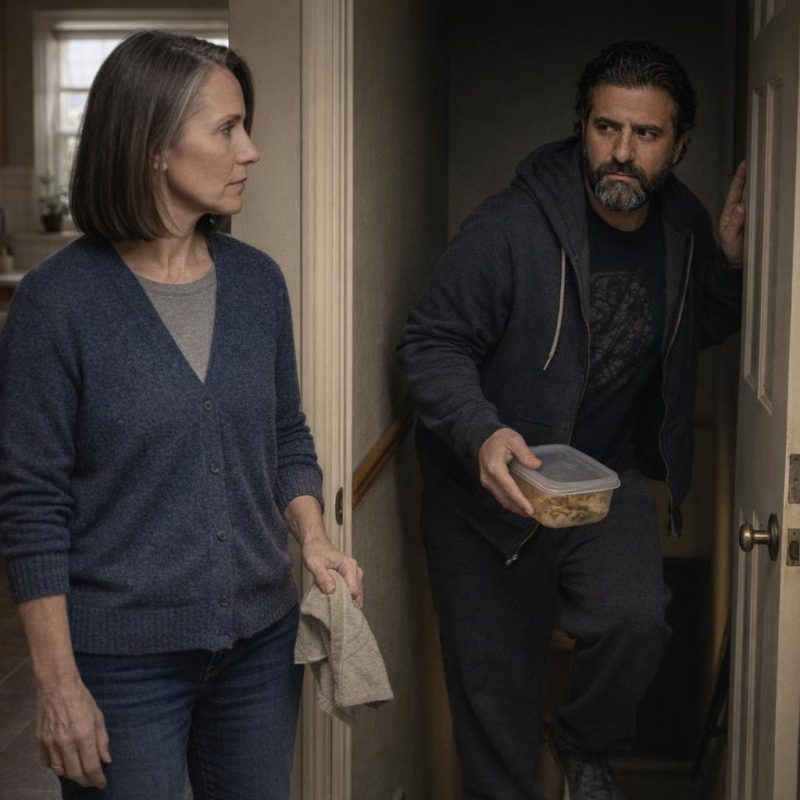 Image by RM AI
The Coordination
She checks her email after dinner, sitting at the small desk in her bedroom with the door closed. David Hartwell has sent the closing timeline — a clean, itemized list, each step dated, nothing left vague. She reads it through once and then again. The new owners have confirmed their lease terms through him, and there's a short note attached about the property's condition that she answers in two sentences. Her temporary tenancy is set for six months, beginning the day after closing, at a rate she can manage without difficulty. She responds to the questions she needs to respond to and leaves the rest. When she's done she closes the email window and sits for a moment looking at the dark screen. The whole exchange has taken less than twenty minutes. She thinks about how much of her life has been spent on things that took far longer and mattered far less. She deletes the sent messages and the received ones, clears the trash folder, and closes the laptop. The transaction is moving forward the way transactions do when everyone involved knows what they're doing.
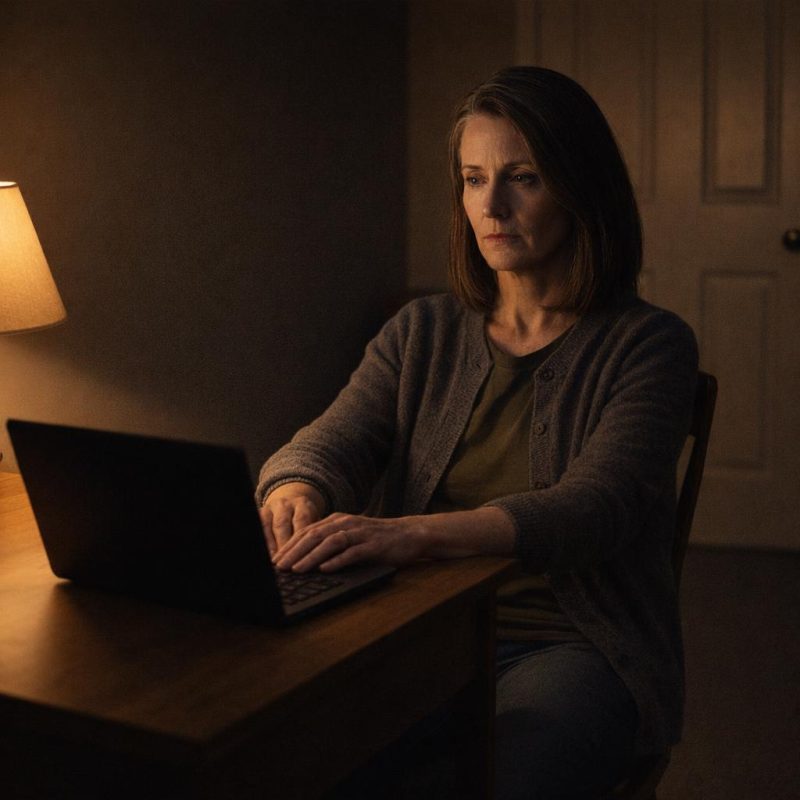 Image by RM AI
The Legal Documentation
David Hartwell comes back on Thursday with a second folder, thicker than the first. He sets it on the kitchen table and walks her through it section by section — disclosure forms, property condition statements, the title transfer paperwork, and finally the lease agreement for her temporary tenancy. She signs where she's directed and initials where she's asked, and she reads each page before she does. It takes the better part of an hour. From somewhere below them, Leo's game runs its usual low current of sound through the floor — the same as any other Thursday, as far as he knows. She doesn't rush and David Hartwell doesn't push her to. When the last page is signed he collects everything into the folder with the same practiced efficiency he brought to the first visit, thanks her, and lets himself out. She stays at the kitchen table after he's gone. The folder is in his hands now, moving toward whatever office processes these things, and the stack of completed paperwork sits in her mind like something finally set down after a long carry.
 Image by RM AI
The Approaching Date
I sit at the kitchen table with my calendar open in front of me, the same one I've kept on the wall hook by the refrigerator for years. The closing date is circled in my mind before I even pick up the pen — three weeks from today, a Thursday, the kind of date that feels both far away and already here. I trace the square with my finger first, just to feel it. Below me, Leo's game hums through the floor the way it always does, steady and oblivious. I think about telling him tonight. Then I think about telling him next week. I run through the scenarios the way I've been running them for six weeks — what he'll say, what I'll say, how the kitchen will feel when the words are finally out in the open. One week before closing gives him seven days. That's the number I keep coming back to. Seven days is enough. It's more than enough. I find the date, count back seven days, and draw a small box around it in pencil. Then I flip forward two pages to where my cruise departure sits, already marked in blue. I pick up the red pen, go back to the closing date, and circle it.
 Image by RM AI
The Chosen Moment
I spread the closing timeline across the kitchen table on Sunday evening and go through it one more time, not because I've forgotten anything but because I want to be sure I haven't. The numbers are the same as they've always been. Closing on Thursday. New owners take possession the following Thursday. My temporary tenancy runs through the weekend after that, and then I'm on a ship somewhere in the Caribbean with Ruth, watching water instead of walls. Monday is seven days before possession. Seven days is the legal minimum and I've checked that twice. I've also checked that the lease agreement David Hartwell prepared is sitting in the folder on the counter, the relevant clause marked with a small sticky tab so I don't have to fumble for it when the moment comes. I rehearse the opening sentence in my head while I wash my coffee cup. Not an apology. Not a preamble. Just the facts, laid out the way I'd want them laid out if our positions were reversed. Leo sleeps late on Mondays. I'll have coffee ready and the document on the table before he comes upstairs. I dry my hands on the dish towel, fold it over the oven handle, and look at the calendar. Monday is marked.
 Image by RM AI
The Revelation
Leo comes upstairs at half past nine, still in the clothes he slept in, heading for the coffee maker without looking at anything else in the room. I let him pour his cup before I say anything. "I need to show you something," I tell him. "Sit down." He turns around with the mug in his hand, reads something in my face, and sits. The lease agreement is already on the table. I slide it across to him without explanation and watch him pick it up. He reads the first page slowly. Then the second. I see the moment he finds the exclusion clause — his name, printed clearly, under the heading listing persons not authorized to occupy the premises. He looks up at me. "The house has been sold," I say. "The new owners take possession in one week." He looks back down at the document. He reads the clause again. I don't fill the silence. The coffee in his mug steams gently between his hands, and the kitchen holds the kind of quiet that only comes when something large has just landed and neither person has moved yet.
 Image by RM AI
The Disbelief
Leo sets the lease agreement down and then picks it up again. He reads from the top this time, slowly, like he's looking for the part that will make it make sense. I watch him turn back to the exclusion clause. He reads it a third time. "Is this real?" he asks. "Yes," I say. He puts the document flat on the table and stares at it. "When did you sign the contract?" "Six weeks ago." Something moves across his face — not anger yet, just the particular blankness of a person whose footing has gone out from under them. He finds the closing date printed near the top of the first page and I can see him counting. His lips move slightly. He looks up. "Where am I supposed to go?" he asks. The question comes out quieter than anything else he's said, stripped of the edge he usually carries. I don't answer right away. There's no answer I can give him that will make the next seven days feel like enough time, and I know that. He looks back down at the document, and the stillness that settles over him is something I haven't seen on his face in a very long time.
 Image by RM AI
The Accusations
He pushes back from the table and stands up. "How could you do this?" His voice climbs on the last word. I stay in my chair. "You went behind my back," he says. "Six weeks. You've known for six weeks and you didn't say a word to me." "The decision was mine to make," I tell him. "It's my house." "That's not the point." He moves to the other side of the kitchen, then back, like the room isn't big enough for what he's feeling. "You should have talked to me. You should have told me you were even thinking about it." "I considered it," I say. "I decided against it." "Why?" He spreads his hands. "Why would you do that? Why would you just — " He stops. Starts again. "This is my home too." "It's my home," I say, and I keep my voice level. "It has always been my home." He shakes his head. "You're kicking me out. That's what this is. You're kicking me out and you're calling it a sale." I don't argue the point. He's not wrong about the outcome, only about who is responsible for it. He turns away from me, and the sound of his voice when he speaks again fills the kitchen in a way that the walls haven't heard in years.
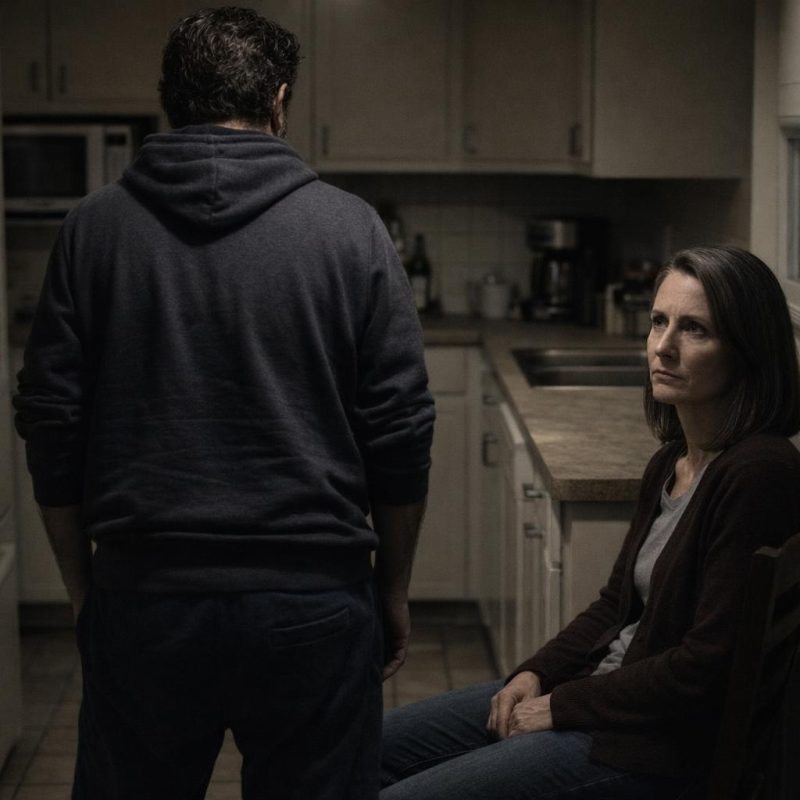 Image by RM AI
The Demands
"I want to know why," he says, turning back to face me. "I deserve an explanation." "You don't," I say. "Not for this." He stares at me like I've said something in a foreign language. "You can't just — " He stops, resets. "Fine. Fine, you sold the house. But you have to help me find a place. You have to give me more time to look." "Finding a place is your responsibility." "I don't have money for first and last month's rent. You know that." "I do know that," I say. "That's been true for several years now." He moves back to the table, plants both hands on it. "You can't throw me out with a week's notice. That's not — that's not how this works. There are rules. There are laws." "There are," I agree. "I followed them." He straightens up. His jaw is tight. "Then you extend it. You call the new owners and you ask for more time." "I won't be doing that." "Why not?" "Because the arrangement is final." He looks at me for a long moment, and when he speaks again his voice drops to something that is almost quiet, almost controlled, almost reasonable. "You owe me more time than this," he says.
 Image by RM AI
The Boundary
I stand up from the table. It's a small movement but it changes the room. "I don't owe you more time," I say. "I gave you legal notice. Seven days is what the law requires and seven days is what you have." "Seven days isn't enough to find an apartment." "Then you should start today." "Mom — " "Leo." I say his name once, flat and clear. "I am not calling the new owners. I am not extending the deadline. I am not negotiating the timeline. The house closes on Thursday. The new owners take possession the following Thursday. You need to be out before that date." He opens his mouth. "That's not enough — " "It will have to be," I say. I don't raise my voice. I don't soften it either. I've been thinking about this conversation for six weeks, running it forward and backward, and I know where every road leads. He's looking for a crack, some give in the wall, and there isn't one. I hold his gaze until he looks away. The words sit between us in the kitchen, and my voice, when I hear it in my own head, sounds like something that has been decided for a long time and is only now being said out loud.
 Image by RM AI
The Reality
Something shifts in his face. The anger doesn't disappear — it compresses, folds inward, and what comes up through it is something rawer. He pulls his phone out of his pocket and sits back down at the table. He opens an app, types something, and starts scrolling. I stay where I am. I don't offer to help and I don't leave the room. He scrolls past one listing, then another. I can see the numbers from where I'm standing — first month, last month, deposit — and I watch his expression tighten with each one. "These are all — " he starts, then doesn't finish. He scrolls faster. He tilts the phone slightly, like a different angle will change the prices. "How am I supposed to afford any of these?" he asks. "That's something you'll need to figure out," I say. He doesn't look up. His thumb keeps moving. His hands have a slight tremor to them now, the kind that comes not from cold but from the specific shock of a problem that is suddenly, undeniably real. I stand at the counter with my coffee and watch him scroll through apartment listing after apartment listing, the screen light catching the underside of his face in the morning kitchen.
 Image by RM AI
The Deadline
I set my coffee mug down on the counter and wait until he looks up from the phone. When he does, I say it plainly. The new owners arrive Wednesday afternoon. He needs to be completely moved out by Monday at noon. He stares at me. "Monday," he repeats, like the word is in a foreign language. "Monday at noon," I confirm. He asks what happens if he's not out by then, and I tell him the new owners will call the police — that's their right, and I won't be here to intervene. He asks where I'll be. I tell him I'm leaving for my cruise Tuesday morning. Something moves across his face — the last calculation, the one where he checks for a loophole and finds nothing. He asks if I'm serious. I tell him I am. He looks back at his phone, then at the table, then at me. There's nothing left to negotiate and he seems to understand that now, the way you understand something when every door in a hallway has closed at once. "Monday," I say again, steady and final. "Noon."
 Image by RM AI
The Departure Preparations
I open my laptop at the kitchen table and pull up the cruise reservation to confirm the departure details one more time — Tuesday morning, port at nine, boarding by eight. Everything is in order. I print the documents and slide them into the front pocket of my carry-on. From below the kitchen floor I can hear it: the scrape of furniture legs, the thud of boxes, the particular hollow knock of a gaming monitor being set down too hard. I don't go to the basement door. I go to my bedroom and open my suitcase on the bed. I fold my blouses first, then my trousers, then the light cardigan I'll want on the ship's deck in the evenings. Leo makes a trip up the stairs with a box, then another. I hear the front door open and close, open and close. I don't count the trips. I tuck my cruise documents into the carry-on's inner pocket, check that my passport is there, and set the bag beside the door. Then I turn back to the suitcase, smooth the last folded layer flat, and draw the zipper closed.
 Image by RM AI
The Final Hours
I'm standing at my bedroom window with a cup of tea when the truck pulls up just after eight Monday morning. Leo comes up from the basement with his gaming chair first, awkward and unwieldy, and loads it into the truck bed alone. Then the desk. Then box after box of clothes and cables and whatever else had accumulated down there over the years. I watch without moving the curtain. By ten-thirty the truck is sitting low and full. He makes one last trip down the basement stairs and comes back up empty-handed. He stands in the front yard for a moment, keys in his hand, and looks at the truck rather than the house. He doesn't come to find me. He gets in the driver's side, pulls the door shut, and the truck moves down the street and out of sight. I set my tea on the windowsill and walk down the hall. The basement door is standing open. I look down the stairs at the bare concrete floor, the empty shelving brackets on the wall, the single overhead bulb casting light on nothing at all.
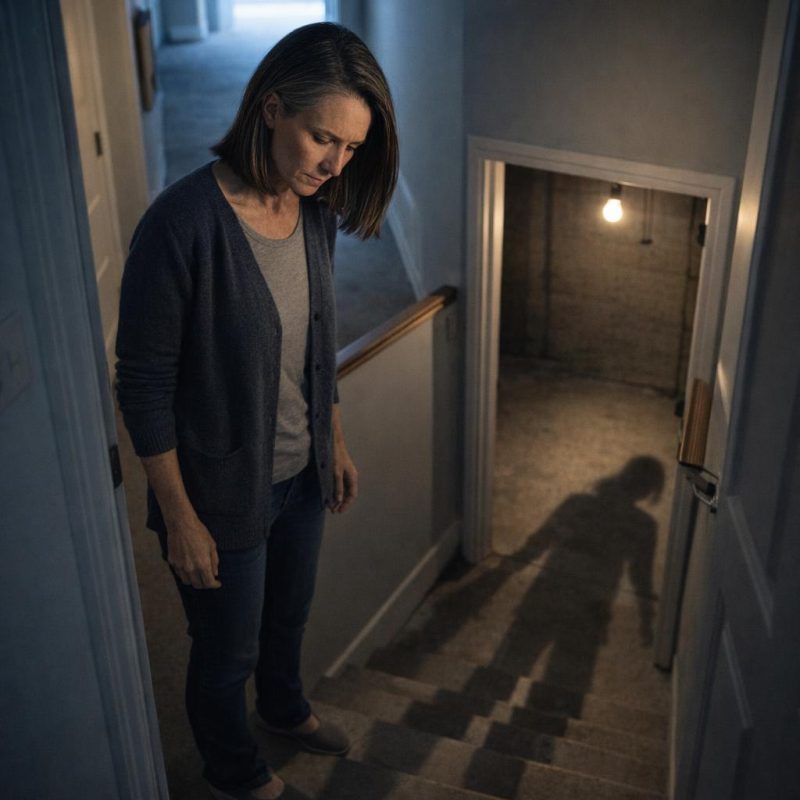 Image by RM AI
The New Beginning
I'm up before six on Tuesday. I walk through every room with the lights on — the kitchen, the living room, the hallway, the basement one last time. The house is clean and empty and entirely itself. At seven-fifteen, David Hartwell's assistant arrives at the front door with a clipboard and a polite smile. I hand over the house keys and the garage remote and sign where she points. She thanks me and I thank her and that's the whole of it. I load my suitcase into the back of the taxi that pulls up at seven-thirty, carry-on over my shoulder, passport in my coat pocket. The driver asks if I'm going somewhere good. I tell him I am. We pull away from the curb and I don't turn around right away — I look at my hands in my lap, at the cruise documents folded neatly on top of the carry-on, at the quiet ordinary Tuesday morning passing outside the window. When I do look back, the house is already small behind us, framed in the rearview mirror, getting smaller.
 Image by RM AI
KEEP ON READING

The Great Moon Hoax of 1835
JasonAQuest on WikimediaIn August of 1835, the New York Sun…
By Cameron Dick Jun 22, 2026
20 Historical Widows Who Rebuilt Their Lives All On Their…
Transforming Loss Into Authority. For some women, widowhood has brought…
By Elizabeth Graham Jun 22, 2026
20 Major Architectural Upgrades That Brought Us To The Modern…
Centuries of Practical Solutions. The modern house didn’t come about…
By Elizabeth Graham Jun 22, 2026
20 Tech Innovations That Used to Require a Full Staff…
From Staff to Software. Living like royalty a century ago…
By Sara Springsteen Jun 22, 2026
10 Women Who Used Marriage for Power & 10 Who…
Marriage Was Often a Strategy, Not Just a Romance. For…
By Emilie Richardson-Dupuis Jun 22, 2026
20 Marriage Laws From History That Ruined Women’s Lives
Marriage Took More Than a Name. For much of history,…
By Annie Byrd Jun 22, 2026