

I Found My Husband's Secret Life When I Followed Him to Miami—The Confrontation Changed Everything
I Found My Husband's Secret Life When I Followed Him to Miami—The Confrontation Changed Everything
The Zipper and the Tag
I stood in the doorway of our bedroom and watched Eric fold his shirts. He's done this a hundred times — the same deliberate tuck at the collar, the same stack of three, the same brand of dry-cleaning bag he insists on. I used to find the routine comforting. That evening I just watched. He'd laid out his toiletry bag on the bed, and the sandalwood cologne was already on — not fresh-sprayed, just present, like he'd put it on before he even started packing. I noticed that. I didn't say anything about it. He zipped the suitcase in one clean pull, checked the luggage tag twice, and lifted it off the bed without effort. 'Crunch time on the project,' he said, already moving toward the door. 'I'll be back Friday.' I smiled. I waved from the front step while his taillights dissolved into the gray of the suburban dusk. I didn't cry. I went back inside, poured myself a glass of water I didn't drink, and sat at the kitchen table in the quiet. The press of his lips against my cheek had been dry as paper.
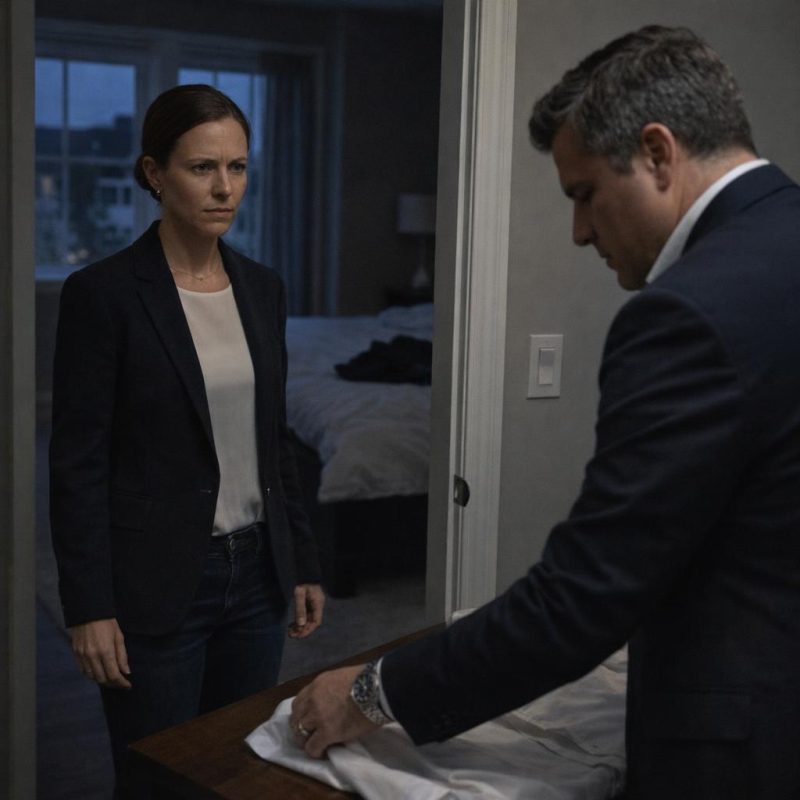 Image by RM AI
Ellie's Questions
We ate dinner as a family before he left for the airport — pasta, because Ellie had asked for it, and I wasn't going to fight that battle on top of everything else. Eric sat at the head of the table with his phone face-down beside his plate, which he never used to do. Ellie asked him what Miami looked like, whether there were flamingos, whether the hotel had a pool. He answered in short sentences. 'Probably not flamingos.' 'Maybe a pool.' 'It's just work, bug.' She watched his face when he said it, the way kids do when they're trying to read something they don't have the vocabulary for yet. I kept refilling water glasses and steering the conversation toward her science project — something about the water cycle, clouds, evaporation. Eric checked his phone twice. He excused himself before dessert to finish packing, kissed the top of Ellie's head without slowing down, and was gone from the room. Ellie pushed a piece of penne around her plate. She didn't look up when she asked me why Daddy didn't smile at home anymore.
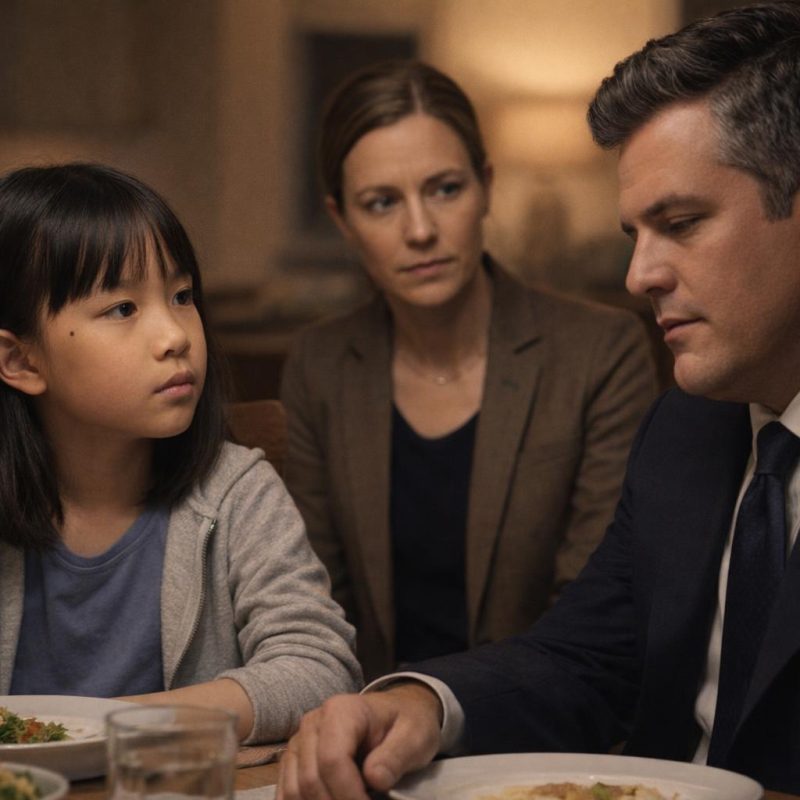 Image by RM AI
The Call to Mother
I waited until his car was fully gone — not just out of the driveway, but past the bend where the streetlights end and the road goes dark. Then I went inside and called my mother. She picked up on the second ring, the way she always does, like she's been sitting beside the phone waiting for someone to need her. I told her I needed a weekend. I said I was burned out from a client project and just needed two days to breathe. I said it the way you say things when you've already decided — no hesitation, no upward inflection at the end. She said of course, she'd come Friday morning, she'd bring the good snacks Ellie likes. She didn't press. She never presses when I use the word 'breathe' — she knows that word means something specific coming from me. I thanked her, told her I loved her, and hung up. I sat there with my phone in my lap and the kitchen light humming above me. I'd told the lie so smoothly, so cleanly, that it surprised me — the ease with which it had left my mouth.
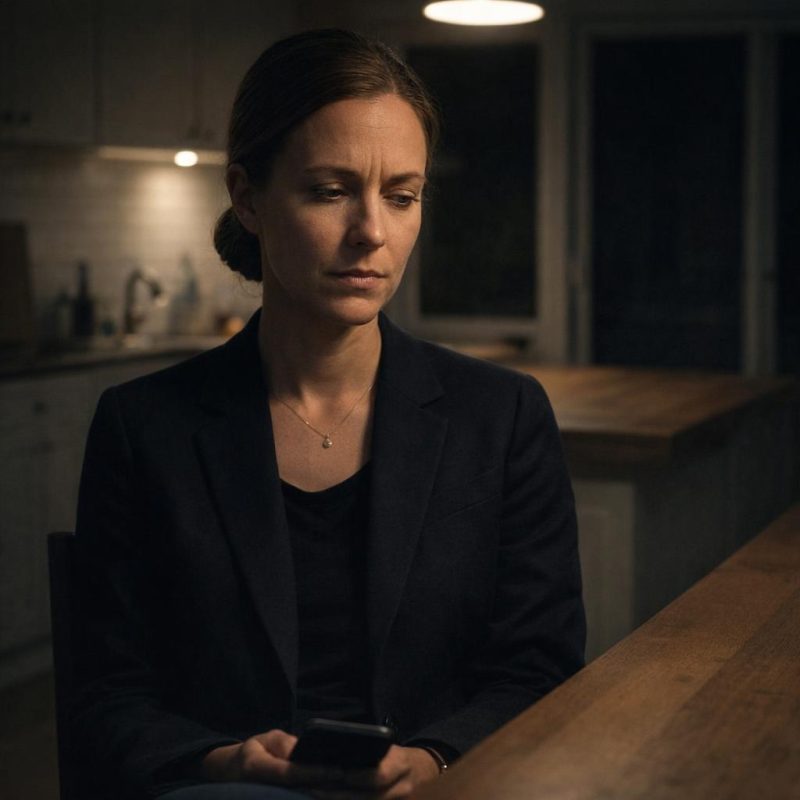 Image by RM AI
The Forgotten Charger
The house was too quiet without Ellie in it. I set up my laptop at the kitchen table and tried to lose myself in a logo redesign — a bakery client who wanted something 'warm but modern,' which is designer-speak for 'I have no idea what I want.' I worked through two cups of coffee and made real progress. Around noon I went upstairs to grab a sweater. I wasn't looking for anything. I wasn't even thinking about Eric. I just walked past the bedroom doorway and something caught my eye on his nightstand — a small white rectangle against the dark wood. His phone charger. Still plugged into the wall, the cable draped over the edge of the nightstand in a loose coil. I picked it up. Turned it in my hand. He'd had it for years, the same one, the cord slightly frayed near the connector end. I set it back down exactly where I'd found it. He probably had a spare in his laptop bag — he was always buying backups of things. I went back downstairs and opened my design file. But I kept thinking about it, that cord coiled beside the bed like a question mark.
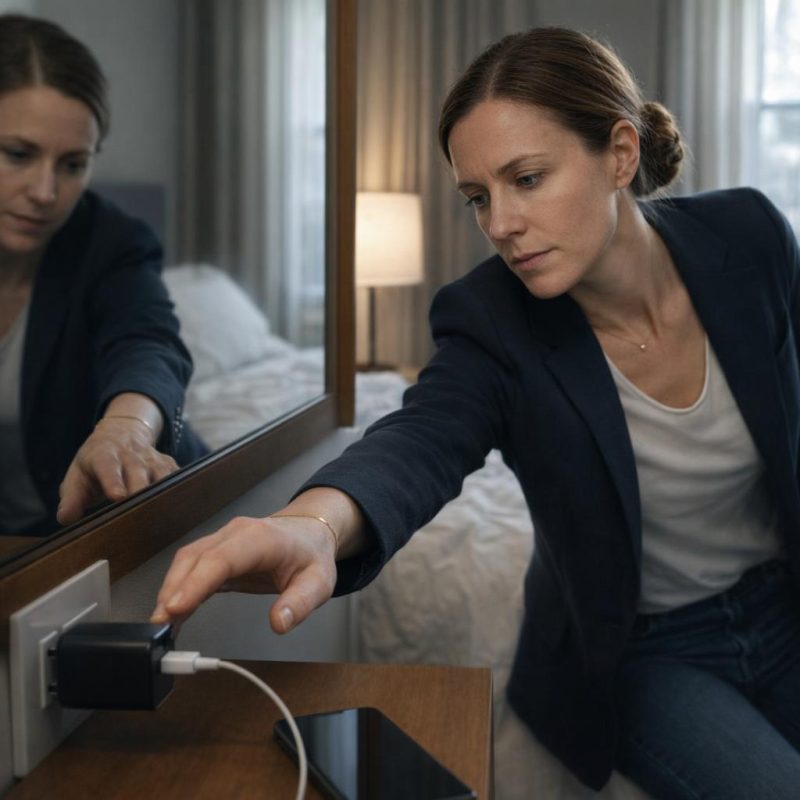 Image by RM AI
The Pattern Review
I closed my design files around four in the afternoon and just sat there. The cursor blinked at me. I'd been doing that a lot lately — stopping mid-task and staring at nothing, trying to locate the source of a feeling I couldn't quite name. It had been building for months, this low-grade wrongness, like a color that's slightly off from what it should be. I opened the desk drawer where we kept the financial papers. I wasn't sure what I was looking for. I pulled out a stack of credit card statements and started flipping through them — not forensically, just looking. There were restaurant charges from places I'd never heard of, in neighborhoods I didn't recognize. Hotel bookings in cities Eric had mentioned for work. The dates lined up with his trips. None of it was impossible. None of it was proof of anything. But something made my stomach tighten in a way I couldn't shake — a discomfort I couldn't quite place. I photographed several pages with my phone before I put them back. Then I found a statement from three months ago — and there were charges on it I didn't recognize at all.
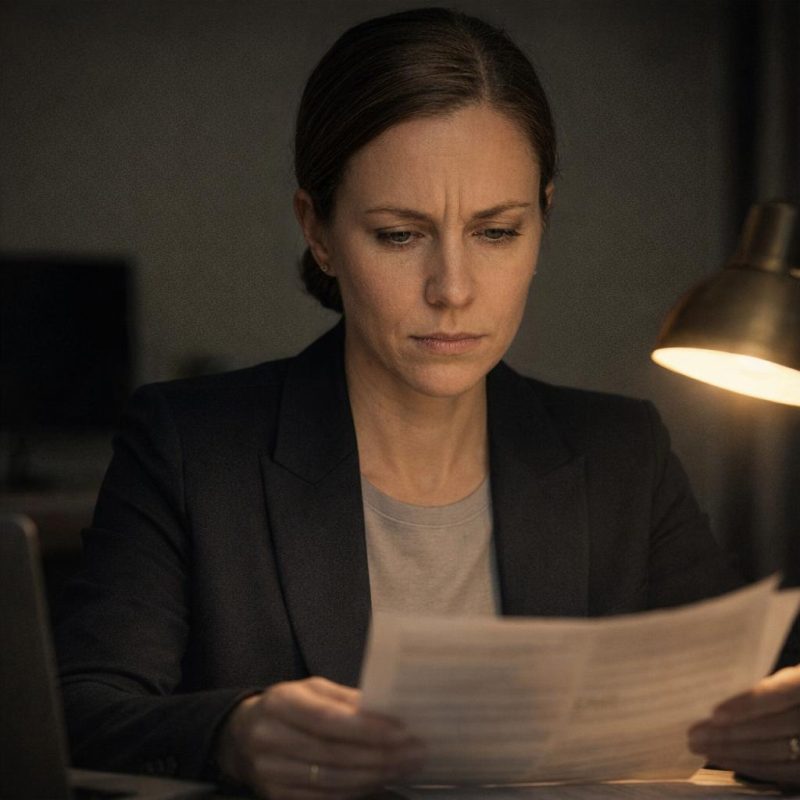 Image by RM AI
School Drop-Off
I made Ellie scrambled eggs and toast the next morning, the way she likes them — eggs soft, toast barely golden, no butter on the crust. She talked the whole drive to school about her science project, something involving a poster board and cotton balls meant to represent cumulus clouds. I nodded and asked questions and kept both hands on the wheel. The drop-off lane at her school is always a small theater of family life. I watched a father jog around the hood of his SUV to open the door for his daughter, both of them laughing at something. A couple arrived together in a station wagon, the mother leaning over to fix the father's collar before they got out. Easy, automatic gestures. Ellie hugged me tight at the entrance, her backpack bouncing as she ran inside. I walked back to the minivan and sat in the driver's seat without starting the engine. Through the windshield, the other parents moved through their mornings with a looseness I couldn't locate in myself. Their smiles came easy. My chest felt like a room someone had emptied out and forgotten to refurnish.
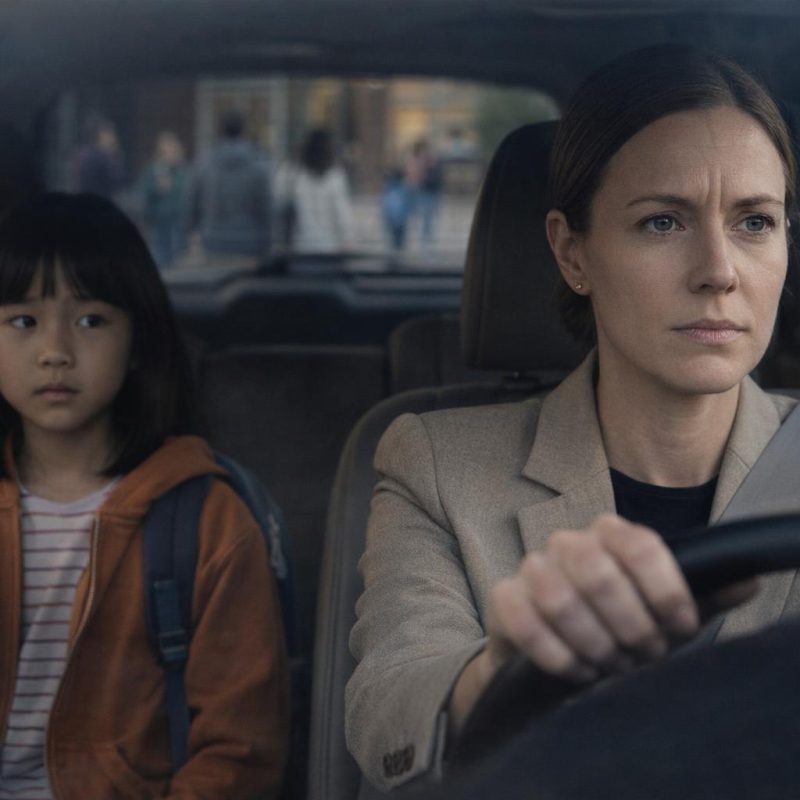 Image by RM AI
Rehearsed Messages
My phone buzzed while I was eating lunch alone at the kitchen counter. Eric. I set down my fork. The message said he'd arrived safely. That was it — four words, no punctuation, no question about how Ellie's morning went. I wrote back asking how the hotel was. He responded two hours later with a thumbs-up emoji. I stared at that for longer than I should have. I asked about dinner. He said he had a working dinner with the team. I typed out a longer message — told him Ellie was excited about her science project, that the bakery client had finally approved the logo, that the house was quiet in a way that felt different from usual. I read it back, then sent it anyway. His response came eleven minutes later. One word: 'Nice.' I put my phone face-down on the counter and finished my lunch. Eight years of marriage, and something about that single word sat wrong with me — flat and distant in a way I couldn't quite account for. This message could have been sent to anyone.
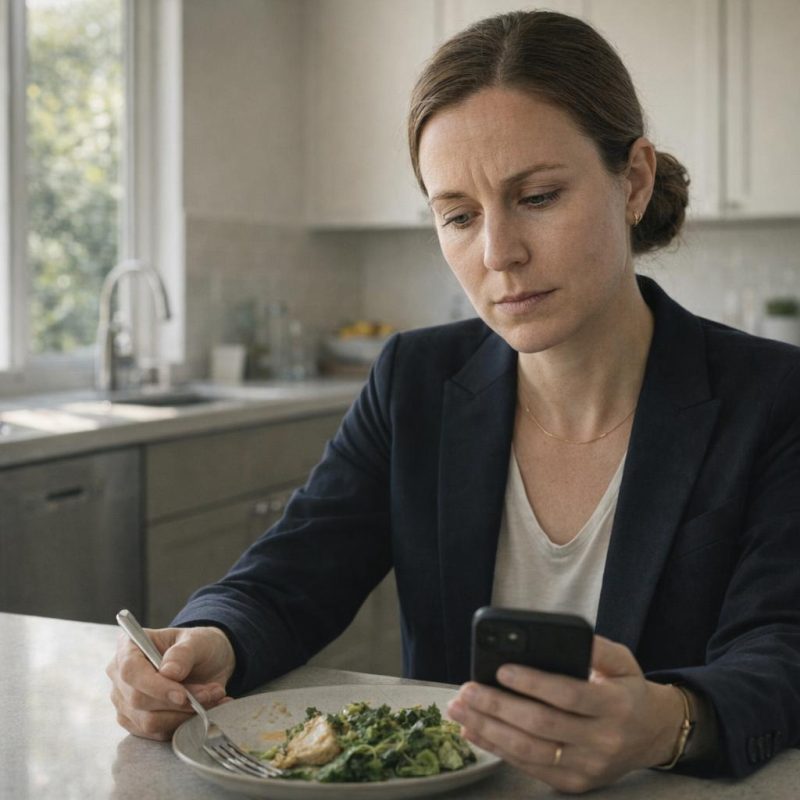 Image by RM AI
The Brief Call
I called him that evening because texting felt like shouting into a wall. He picked up on the fourth ring, and his voice was already moving — clipped, slightly breathless, like I'd caught him mid-stride. I asked how the meetings went. He said presentations, timelines, the usual. I asked what he'd had for dinner. He said he couldn't remember, something from the hotel restaurant. I asked if he'd talked to Ellie. He said he'd been meaning to call her. There were voices in the background — low, indistinct, the ambient noise of a restaurant or a lobby. I asked where he was. He said the hotel. I asked if everything was okay. He said he had an early morning, he really had to go. The call ended before I'd finished saying goodnight. I sat with the phone in my hand and replayed the last thirty seconds. Somewhere in the background, just before the line went dead, there had been a woman's laugh — close enough to hear clearly, gone before I could be sure of anything.
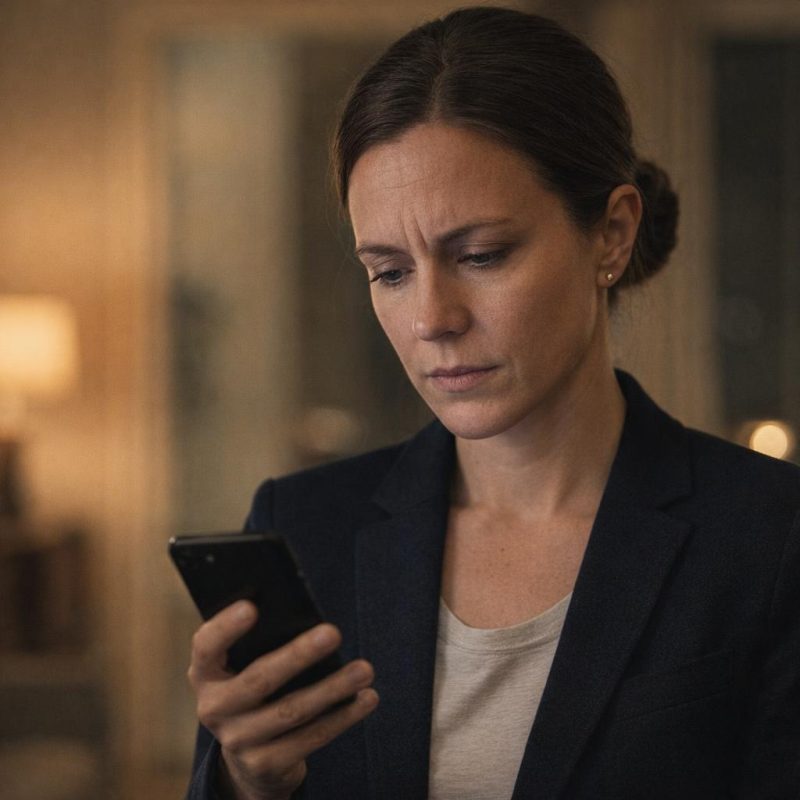 Image by RM AI
Social Media Silence
I don't know what made me open his profile that night. Habit, maybe. Or that laugh still sitting in the back of my head. Eric's Instagram was public — he'd always kept it that way, something about professional visibility — and the first thing I saw was a photo of a Miami sunset. Golden light, the kind that looks almost too good to be real. The timestamp said 7:30 PM. He'd told me he was in meetings until nine. I scrolled down slowly, the way you do when you're not sure you want to find anything. He'd liked a cluster of posts from accounts I didn't recognize — fitness accounts, travel accounts, a few that looked personal. One username stopped me. Jessica. I clicked through to her profile. Private. Just a profile photo: a woman in her late twenties, polished, smiling at something off-camera. I went back to Eric's page and stared at the sunset photo again. The caption said nothing. Just a location tag. Just Miami. I set my phone face-down on the nightstand and lay there in the dark, the ceiling above me the same as it always was, and something in my chest sat quiet and heavy, like a word I couldn't quite say out loud.
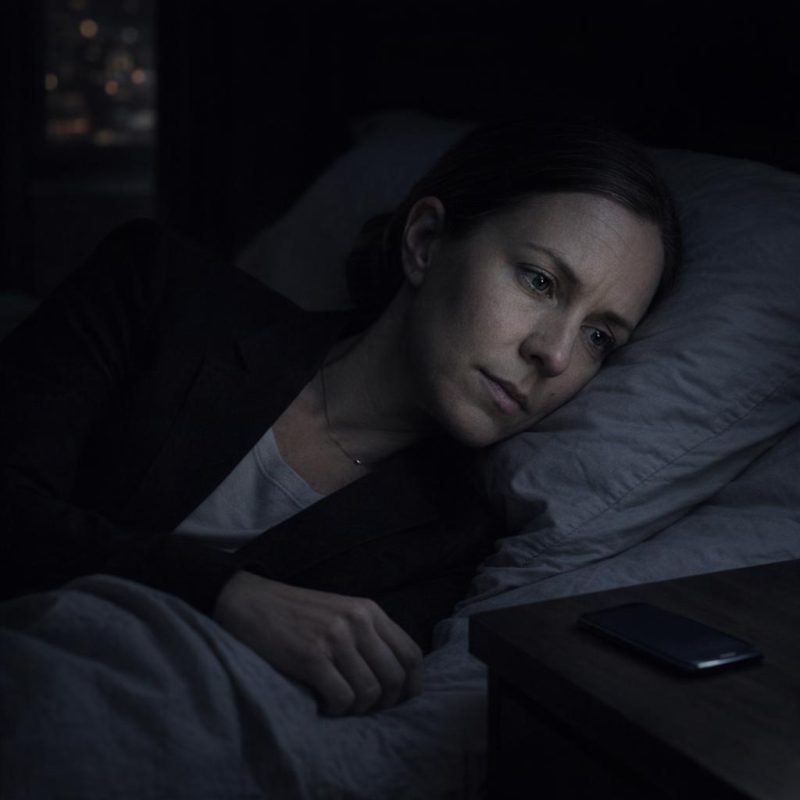 Image by RM AI
When It Started
I tried to work the next morning and couldn't. I kept opening files and closing them without doing anything. At some point I pushed back from my desk and just sat there, and my mind went to the company dinner six months ago — the one at the Italian place downtown with the low lighting and the overpriced wine. Eric had been distracted all evening. Not obviously, not rudely, but I noticed. I always notice. He kept his phone in his lap under the table, which he never used to do. I asked who he was texting and he said a client, something that needed handling before morning. He smiled at the screen — not at me, not at the table, at whatever was on that screen — and it was a private kind of smile, the kind that belongs to a moment you're not sharing with anyone in the room. I'd told myself it was work stress. After that night, the home office door started staying closed. He started coming to bed after I was already asleep. I'd filed it all under busy season, under pressure, under the thousand small explanations that feel reasonable until they don't. I sat at my desk and thought about that smile, the way it had nothing to do with me.
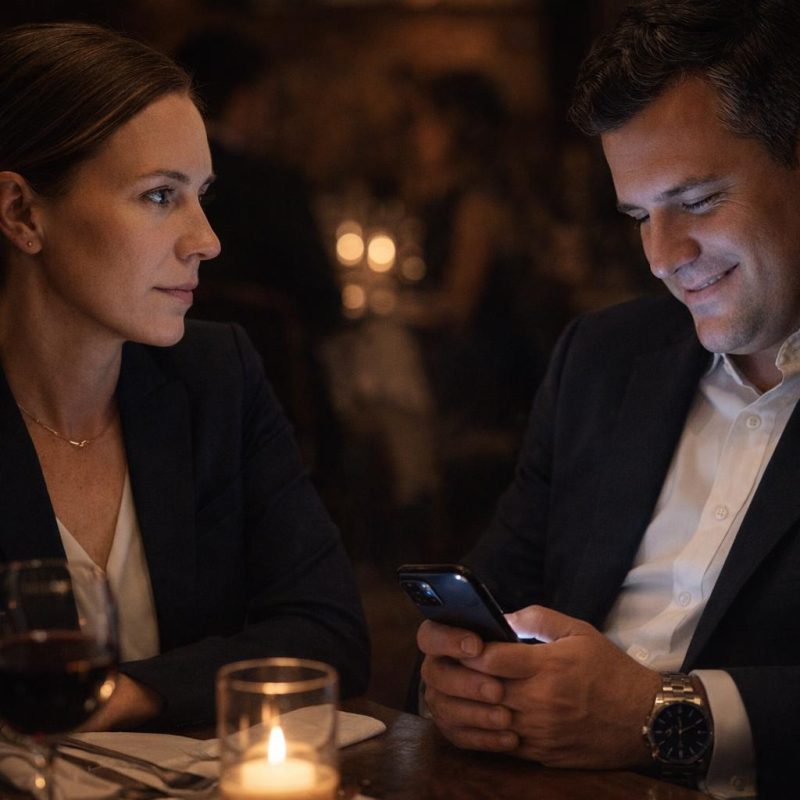 Image by RM AI
The Paper Trail
I pulled six months of credit card statements from the filing cabinet and spread them across the dining room table. It looked like a project. I'm a designer — I know how to organize information, how to find the pattern hiding inside the noise. I got a yellow highlighter and started going through line by line. Hotel charges in Charlotte, in Atlanta, in Nashville. Restaurant tabs that ran two hundred, two-fifty — amounts that don't make sense for one person eating alone. A jewelry purchase from a boutique I'd never heard of, charged in March. I'd never received anything in March. I photographed each statement with my phone, then opened a spreadsheet and started entering dates, amounts, merchant names. The numbers didn't lie, but they didn't explain themselves either. They just sat there, factual and indifferent, each one a small gap between what I'd been told and what had actually been charged. By the time I finished, it was past midnight. I hadn't eaten dinner. The table was covered in paper, yellow marks running through months of our shared finances, and I stood there looking at all of it — the careful columns, the highlighted lines, the quiet weight of six months of receipts spread across the dining table.
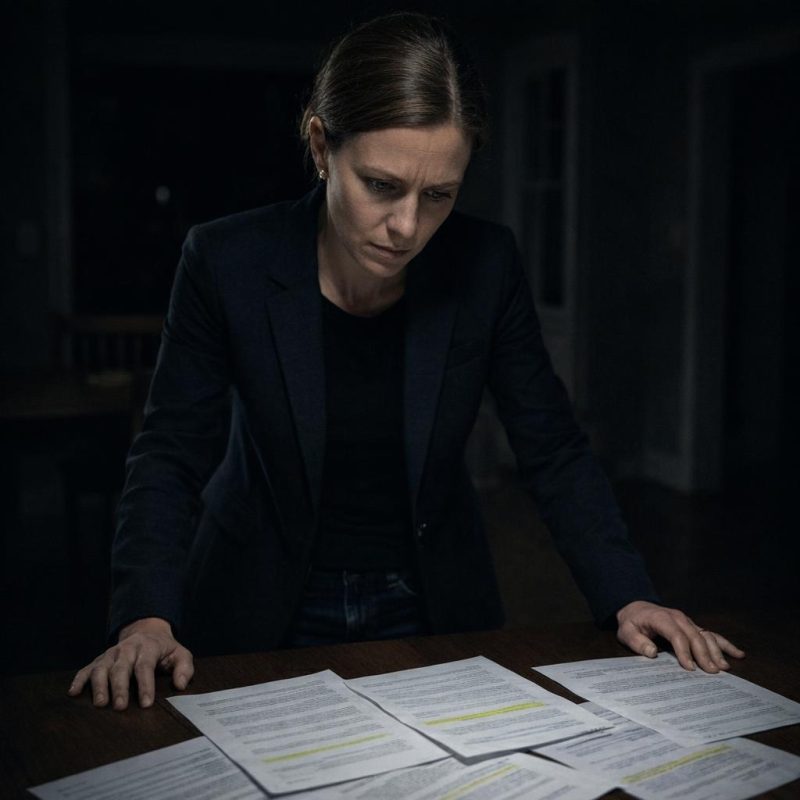 Image by RM AI
Coffee with Rachel
Rachel was already at our usual corner table when I walked in, both hands wrapped around her mug like she'd been there long enough to need the warmth. She took one look at me and said, 'Okay, what happened.' Not a question. I ordered my latte and sat down and pulled up the credit card photos on my phone. She studied them the way she studies everything — quietly, thoroughly, without performing a reaction. Then she asked when the behavior changes started. I told her about the dinner six months ago, the closed office door, the late nights, the phone always face-down. She asked about the Miami trip. I told her about the call, the background laugh, the sunset photo posted during meetings that supposedly ran until nine. Rachel set my phone down on the table between us and looked at me. 'You're not losing your mind,' she said. 'These are real things you're seeing.' I'd needed to hear that more than I'd understood until she said it. She reached across and squeezed my hand, and then she said the words I'd been circling around for days: 'You need to know for sure.'
 Image by RM AI
The Hotel Bookings
I got home from the coffee shop and went straight to the laptop. I logged into our joint credit card account and filtered the charges by category: lodging. Three bookings came up for Charlotte. Eric had mentioned Charlotte twice in the past few months — day trips, he'd said, back the same night, not worth packing a bag. I pulled up my calendar and checked the dates. Each hotel charge fell on a Saturday. I looked up the hotel names. They weren't Marriotts or Hiltons, not the kind of place you book for a conference or a client meeting. They were boutique hotels — the kind with curated playlists in the lobby and rooms that cost three hundred a night. I saved screenshots of each charge, then sat back in my chair. The evidence didn't tell me anything definitive. It just kept adding up, one quiet fact at a time, each one sitting next to the last without explanation. I turned off the screen and the room went dim around me, and I stayed there in that particular stillness — the kind that comes from knowing something is wrong and not yet knowing exactly what, both things true at once.
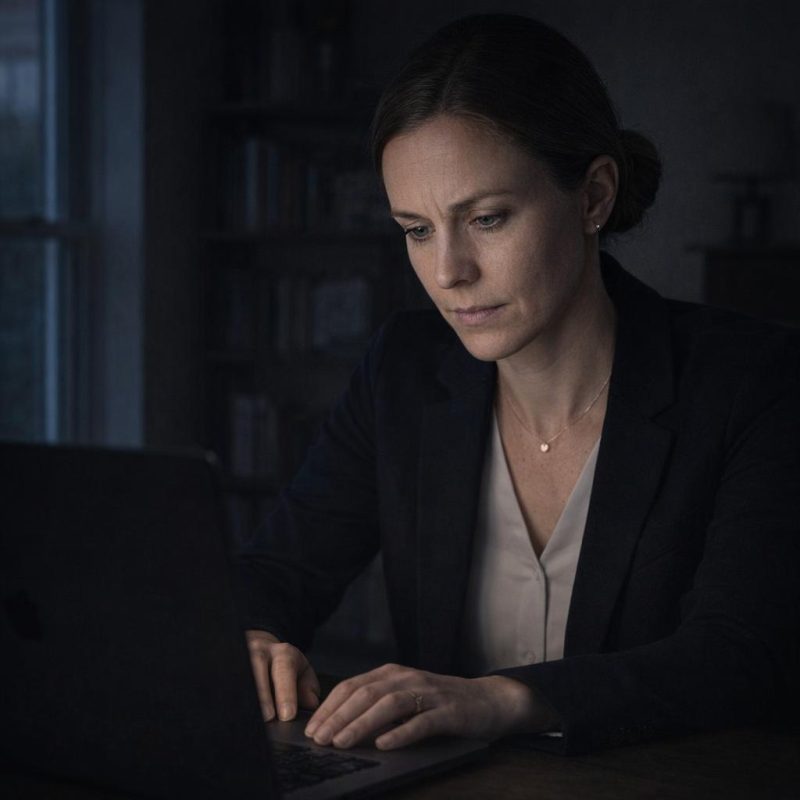 Image by RM AI
The Home Office
I stood outside Eric's home office for a full minute before I opened the door. I'd stopped going in there months ago — it had started to feel like his space in a way that made me feel like a visitor in my own house. I turned on the light. The desk was neat, labeled folders arranged in a row, everything in its place the way Eric always kept things. I opened the top drawer first: pens, paper clips, a few business cards. Nothing. I moved to the file drawer and started flipping through the folders — project names, client names, tax years. Ordinary. Then, behind the last divider, my fingers found something thinner than the rest. An unmarked folder. I pulled it out and opened it on the desk. Receipts. Restaurant receipts, hotel receipts, a few I couldn't immediately place. I photographed each one with my phone, hands steady, working methodically the way I do when I need to not feel anything yet. When I was done, I put the folder back exactly where I'd found it, closed the drawer, and turned off the light. I stood in the hallway and thought about the folder of receipts tucked behind the file dividers.
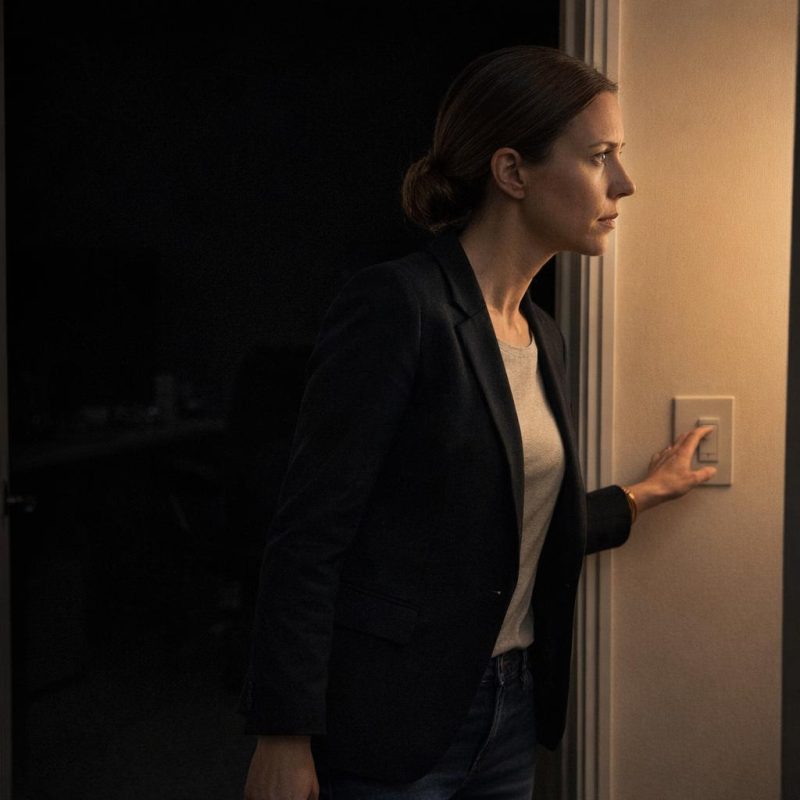 Image by RM AI
The Deleted History
Eric had taken his work laptop to Miami but left his personal one on the bedroom dresser. I'd walked past it a dozen times that week without touching it. That afternoon I sat down with it. The browser history had been cleared — recently, from the look of it, the kind of clean slate that takes a deliberate extra step. I knew how to recover deleted files. It's part of design work, retrieving assets from crashed drives, pulling back what the system thinks is gone. I ran a recovery program I'd used before and waited. The deleted history started populating the screen in fragments: searches for restaurants, a few news articles, and then hotel searches. Miami. Boutique properties. Dates that matched this week exactly. I scrolled slowly, the way you do when part of you is still hoping the next line will be something ordinary. It wasn't. A booking confirmation loaded onto the screen — a boutique hotel in South Beach, the dates matching Eric's current trip, the room type listed as a suite.
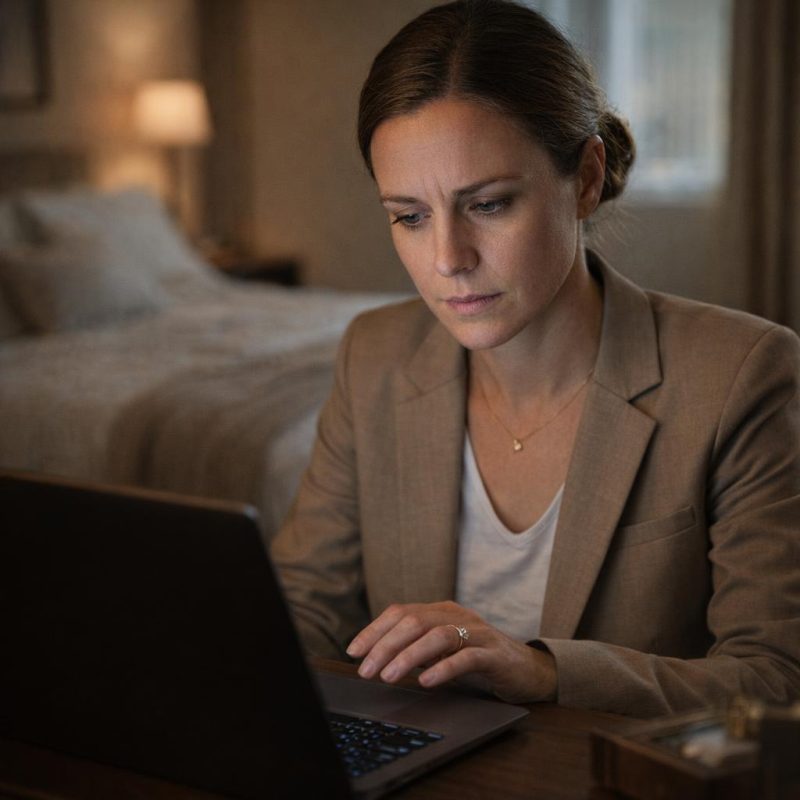 Image by RM AI
The Normal Text
I sat with the confirmation on the screen for a long time. Then I picked up my phone. My fingers didn't shake. I texted Eric: 'Hey, how's your day going?' Casual. The kind of text I'd sent a hundred times before. I set the phone down and waited. Twenty minutes later he replied: 'Meetings were productive. Long day but good.' I typed back: 'Are you getting enough sleep?' He sent a smiley face. I stared at it for a second, then wrote: 'I miss you.' His reply came faster this time: 'Miss you too. Home soon.' I set the phone face-down on the table next to the laptop, the booking confirmation still glowing on the screen behind it. The two things sat side by side — his texts and that suite reservation — and I looked at neither of them. I'd sent four messages and meant none of them, and he'd sent four back and I had no idea what he meant. I sat very still and held the shape of it: the performance of being the wife who suspects nothing.
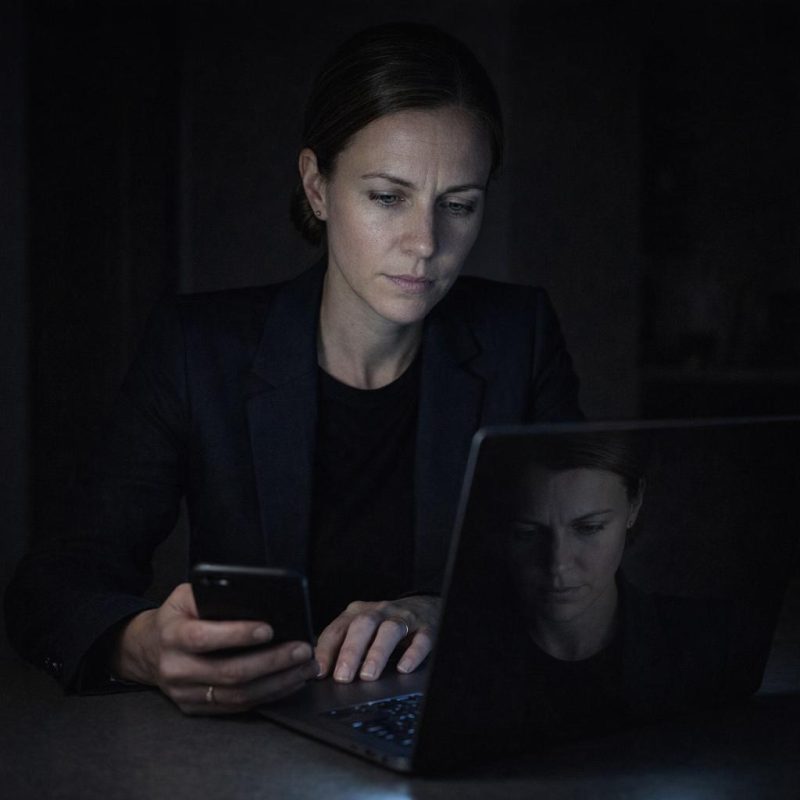 Image by RM AI
Rachel's Encouragement
Rachel called around eight, right when I'd poured myself a glass of wine I hadn't touched. She didn't bother with small talk. 'Have you made a decision?' I told her I didn't know. I told her I kept going back and forth, that maybe I was reading too much into things, that maybe the hotel booking was something I'd misunderstood. She let me finish. Then she said, 'Anna, you found a suite reservation at a boutique hotel that his company doesn't use. You're not misunderstanding anything.' I said I was worried about leaving Ellie again so soon. Rachel said my mother could watch her — she'd already thought of that. I said I was scared of what I might find. She said not knowing was worse. I sat with that for a second, because she wasn't wrong. Not knowing had been eating me alive for weeks. I'd been performing the role of the unsuspecting wife so convincingly I'd almost started to believe it myself. Rachel said she'd help me find a flight, that we could look right now, that I just had to say the word. I heard myself say yes.
 Image by RM AI
The Flight Details
I'd known Eric's email password for years. He'd given it to me once when he was traveling and needed me to forward something, and he'd never changed it. I'd never used it. Until that night. I sat at the kitchen table with my laptop and typed it in, and the inbox opened like it had been waiting for me. I found his flight confirmation in under two minutes — airline, flight number, departure time, seat assignment. All of it. The hotel confirmation was in the same folder, almost like he'd organized it for easy reference. Meridian Boutique Hotel. Room 1204. Check-in Wednesday, check-out Friday. I wrote the address down on a notepad in my careful designer handwriting, the kind I use for client presentations. Then I looked the hotel up on my phone. Small. Private. Expensive. The kind of place you choose when you don't want to run into anyone from the office. His company booked Marriotts and Hiltons — places with conference rooms and loyalty points. This wasn't that. I set the notepad beside the laptop and looked at both of them. Every detail I needed was right there, laid out in clean lines, like a blueprint I hadn't drawn.
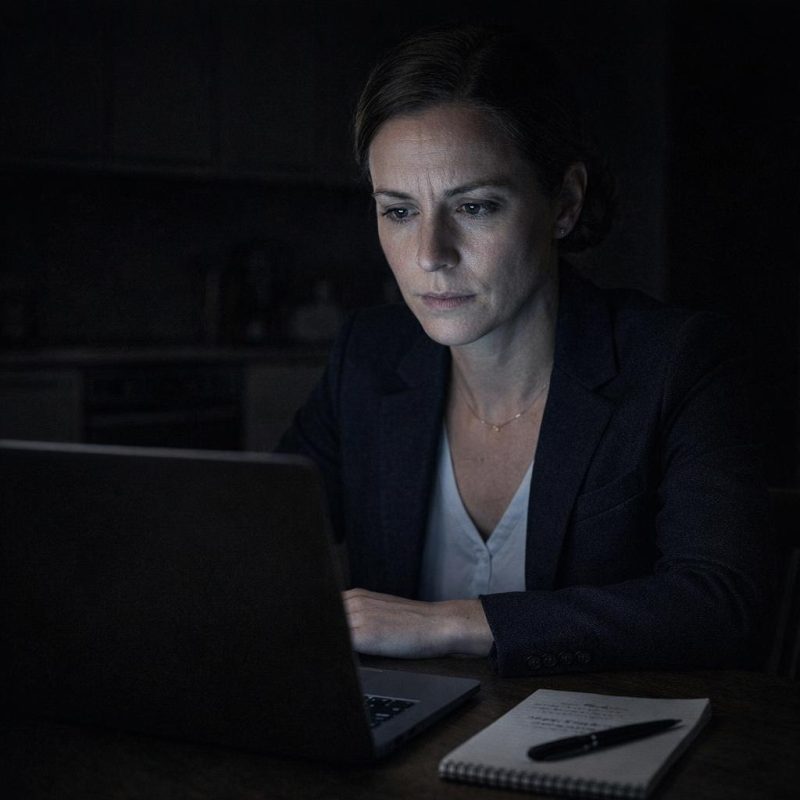 Image by RM AI
The Pattern of Lies
I opened a blank document and started typing. I don't know why — maybe because I needed to see it outside my own head, arranged in something that looked like order. I made a timeline. Every trip Eric had taken in the last six months, matched against the credit card statements I'd pulled up in another tab. The dates didn't line up the way they should have. He'd told me he was in Chicago in March, but there was a charge from a restaurant in Atlanta on the same Thursday. He'd said his Houston trip ran through Sunday, but his flight home had landed Saturday morning — I found that in his email too, a gate notification he'd never deleted. There were text messages where he'd said he was stuck in back-to-back meetings, timestamped at the same hour he'd posted a photo on LinkedIn from what looked like a hotel bar. I kept adding rows to the document. Six months of small contradictions, each one easy to explain away on its own. Together they looked different. I saved the document and closed the laptop. The wine was still sitting there, untouched and warm, and the kitchen was very quiet around me.
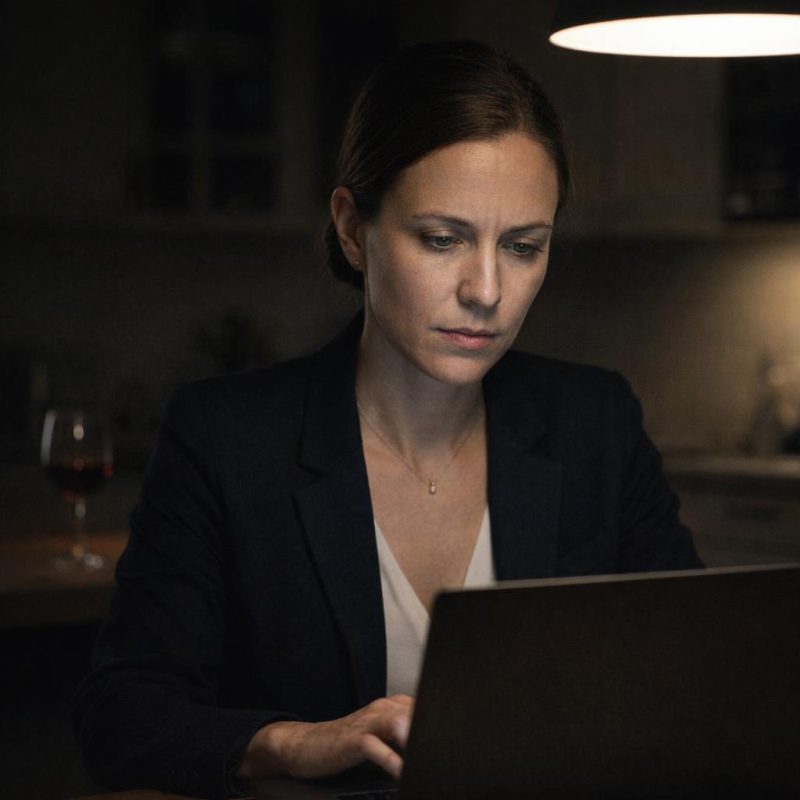 Image by RM AI
The Decision to Follow
I made the decision somewhere between midnight and one in the morning, sitting in the dark of the kitchen with the notepad still on the table. I didn't announce it to myself. I just stood up and walked to the guest bedroom. I pulled the small suitcase from the closet — the carry-on I used for short client trips — and I packed it the way I pack everything: efficiently, without wasted motion. Two days of clothes. My phone charger. My laptop. A hat and a pair of sunglasses I almost never wore. I zipped it closed and stood there looking at it for a moment. Then I called my mother. I told her I needed a weekend to clear my head, that work had been overwhelming, that I just needed a couple of days. She said of course, she'd be happy to have Ellie. She didn't ask follow-up questions, which was either grace or instinct. I booked a flight for six-fifteen the next morning, paid for it before I could think too hard about it, and set my alarm for four. Then I slid the bag under the guest bed and reached back down to pull it out again — already second-guessing the hiding, already past the point of turning back.
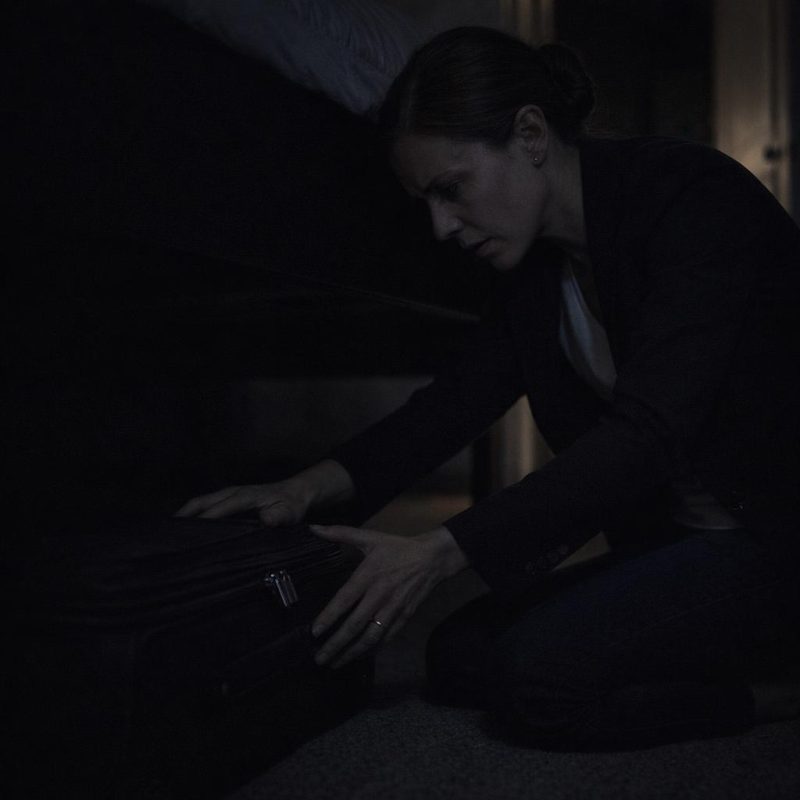 Image by RM AI
Arranging Childcare
I called my mother again the next morning, earlier than was polite, to confirm the details. She picked up on the second ring the way she always does, like she'd been awake for hours. I told her I needed to leave Friday morning, that I'd drop Ellie at school and she could pick her up in the afternoon. She said that was fine, no trouble at all. Then she asked, quietly, if everything was okay. I said yes, I just needed some space to think, that the stress had been building and I needed a couple of days to reset. She offered to keep Ellie through Sunday if that would help. I thanked her and said Friday through Saturday should be enough. Then she asked if this was about Eric. I said it was about me, about my own stress, that Eric was fine, everything was fine. The words came out smooth and practiced, which was its own kind of answer. She said she'd pick Ellie up at three and to call when I landed. I said I would. We hung up, and I stood in the kitchen holding the phone, the morning light coming through the window, my mother's easy, unquestioning trust settling over me like something I didn't deserve to be wearing.
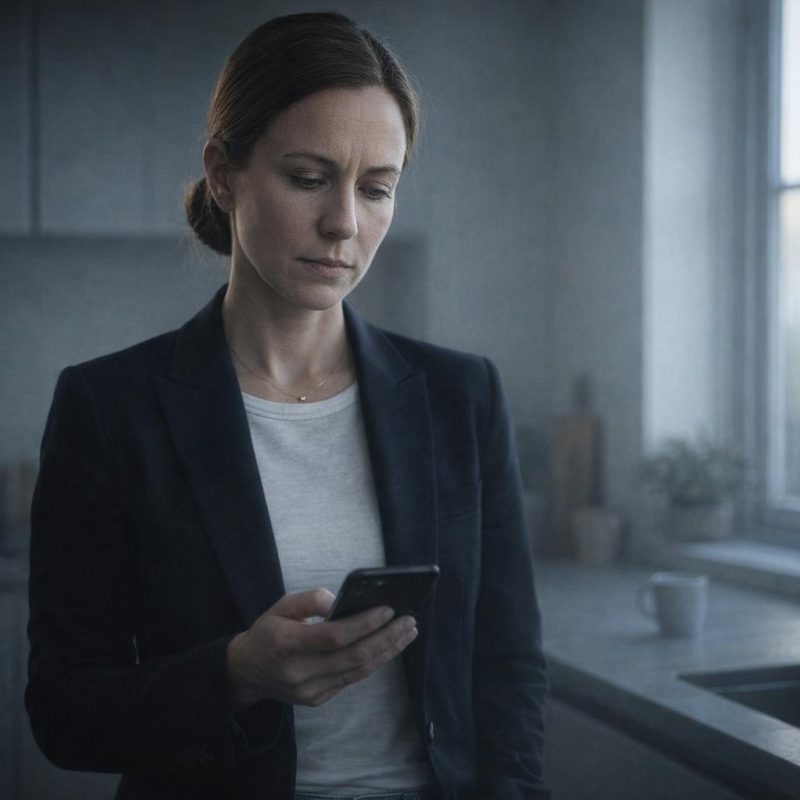 Image by RM AI
The Lie to Ellie
Ellie was already in her pajamas when I came into her room that night, her stuffed bear tucked under one arm, her hair still damp from her bath. I sat on the edge of her bed and told her I had to take a quick work trip, just for the weekend, the same kind Daddy takes sometimes. She looked up at me with those wide, serious eyes and asked if it was like Daddy's trips. I said it was similar, just for a couple of days. She thought about that for a moment, then asked if Grandma would make pancakes. I smiled and said probably yes, knowing my mother, definitely yes. Ellie seemed satisfied with that. She hugged her bear a little tighter and asked when both of us would be home at the same time again, me and Daddy, together. I told her soon, and I meant it the way you mean things when you're not sure they're true but you need them to be. I tucked the blanket around her, kissed her forehead, and turned off the lamp. In the dark of the hallway I stood still for a moment, the image of her face still behind my eyes — that open, uncomplicated trust she hadn't yet learned to question.
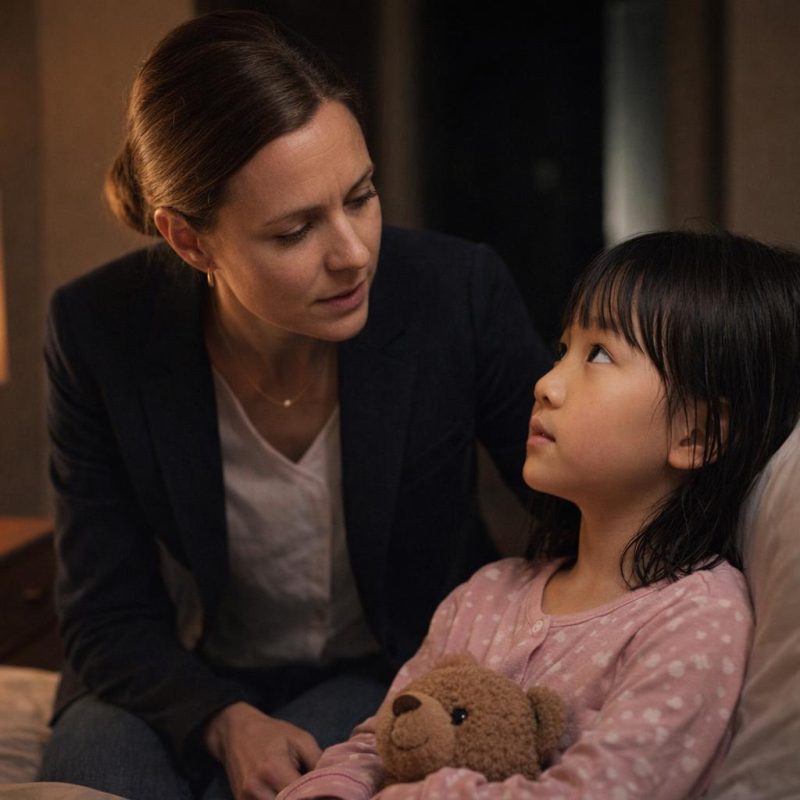 Image by RM AI
Airport Drive
My alarm went off at four and I was already awake. I'd been lying there in the dark for twenty minutes, staring at the ceiling, running through the same loop of thoughts I'd been running for days. I showered and dressed in dark jeans and a grey jacket, practical and unremarkable, the kind of outfit that doesn't announce itself. I grabbed my bag from the guest room, checked that the notepad with the hotel address was in the front pocket, and went downstairs. I left a note for my mother on the kitchen counter — Ellie's lunch is in the fridge, her library book is due Thursday — the ordinary logistics of a life that looked, from the outside, completely normal. The streets were empty at that hour, just streetlights and the occasional delivery truck, the whole city still asleep. On the highway I had the lanes almost to myself. I rehearsed things I might say if I saw Eric, different versions of the same conversation, none of them landing right. My hands stayed tight on the wheel. The airport signs started appearing overhead, green and white in the headlights, and I followed them without hesitating, all the way to the long-term parking garage, where I pulled in and cut the engine.
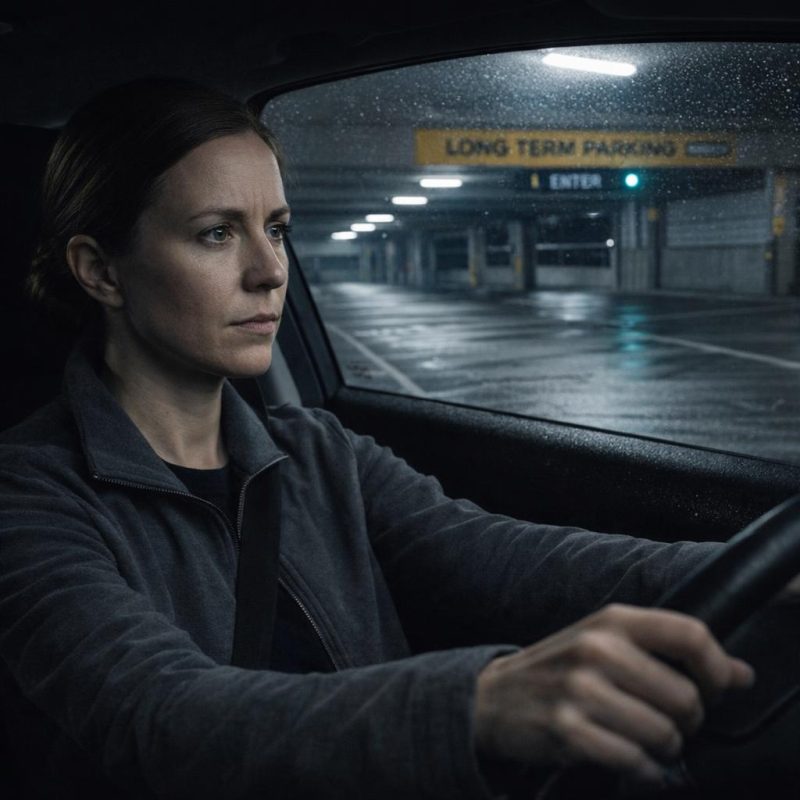 Image by RM AI
Last-Minute Ticket
The terminal was already moving when I walked in, that particular early-morning airport energy of people going somewhere with purpose. I found the airline counter and got in line behind a man with a rolling suitcase the size of a small refrigerator. When I reached the agent, she smiled the professional smile of someone who has been awake since three. I told her I needed the next available flight to Miami. She typed, scrolled, typed again. There was one leaving in ninety minutes. I said I'd take it. She asked for my ID and a form of payment. I handed her my personal credit card — not the joint account, not the one Eric could see — and watched her run it. Six hundred and forty dollars. I didn't flinch. I'd spent more than that on a single client dinner and thought nothing of it. She asked if I had any bags to check. I said no. She typed a few more things, and the printer beside her made a sound like a small, decisive exhale. She slid the boarding pass across the counter: my name, the flight number, the destination printed in clean block letters — Miami.
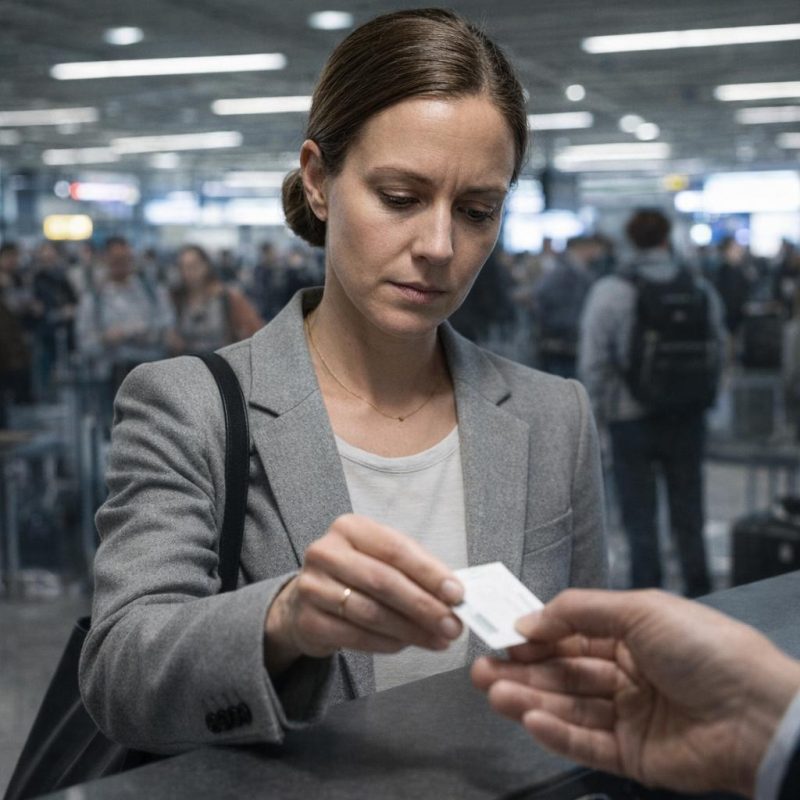 Image by RM AI
Security Line
The security line moved the way security lines always do — in small, shuffling increments that give you too much time to think. I pulled out my laptop and my shoes and placed them in the gray bin with the practiced efficiency of someone who travels for work, which I do, which made the whole thing feel even stranger. The TSA agent glanced at my boarding pass, glanced at my face, handed it back. No alarm. No flashing light that said: this woman is doing something she cannot undo. I walked through the scanner with my arms slightly raised, the way you do, and the machine beeped at nothing. On the other side, I sat on the little bench and put my shoes back on, one at a time, and watched a man in a Dolphins cap argue quietly with his wife about which terminal their gate was in. Normal. All of it completely normal. I zipped my bag, slung it over my shoulder, and walked into the departure terminal.
 Image by RM AI
The Wait
Gate D14 had the particular energy of a place where everyone is waiting for something they can't control. I found a seat near the window, angled slightly away from the main flow of foot traffic, and checked my phone. Eric had texted at seven-twelve: Good morning. Two words. I stared at them for a moment, then set the phone face-down on my knee. Across from me, a couple was having a quiet argument — the kind where both people are smiling just enough to look civil while saying things that aren't civil at all. A businessman two seats down typed without looking up. A woman in a yellow cardigan fed crackers to a toddler who kept dropping them and laughing. I watched all of it and thought about nothing useful. I tried to imagine what I would find when I landed. I tried to imagine his face. Every version I constructed felt like a rough draft — wrong proportions, wrong lighting. The gate agent picked up the intercom handset, and the ambient noise of the terminal seemed to pull back a half-step, the way sound does just before something changes.
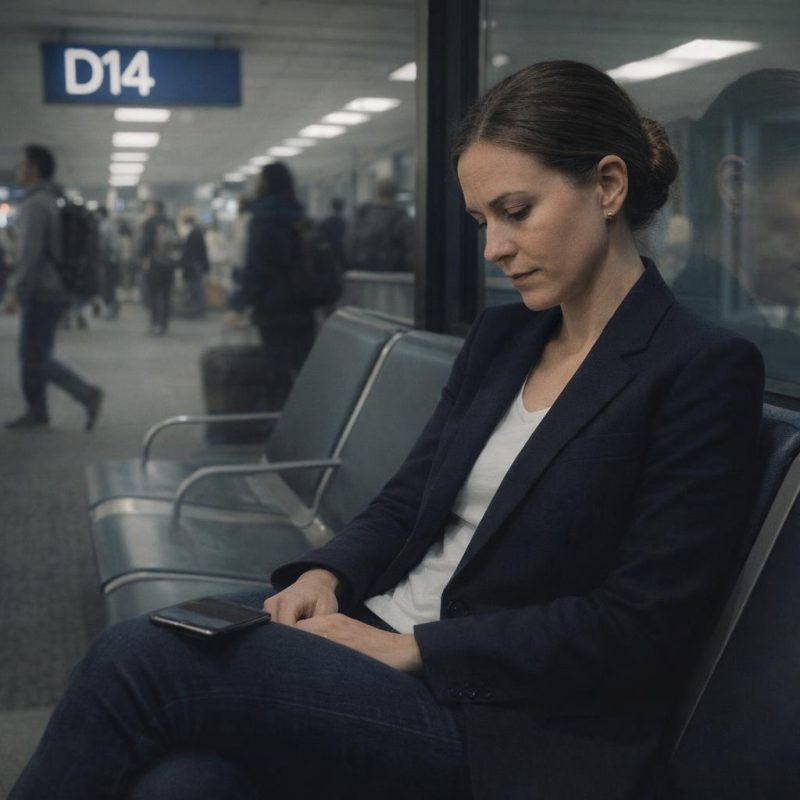 Image by RM AI
Boarding
They called my boarding group and I joined the line with my bag on my shoulder and my boarding pass on my phone. The jetway smelled like recycled air and rubber, that particular tunnel smell that means you're committed now. I found my seat near the back — window, which I'd specifically chosen because I wanted something to look at that wasn't another person's face. I stowed my bag, sat down, and pressed my shoulder against the cool plastic of the fuselage. A businessman in a gray suit took the aisle seat without acknowledging me, which was fine. I didn't want conversation. The flight attendant ran through the safety demonstration with the calm authority of someone who has said these words ten thousand times, and I watched her hands move through the motions — seatbelt, oxygen mask, flotation device — and thought that there was something almost comforting about instructions this clear. The plane pushed back from the gate slowly, the terminal sliding past the window in reverse. Then the cabin door sealed with a sound like a decision being made.
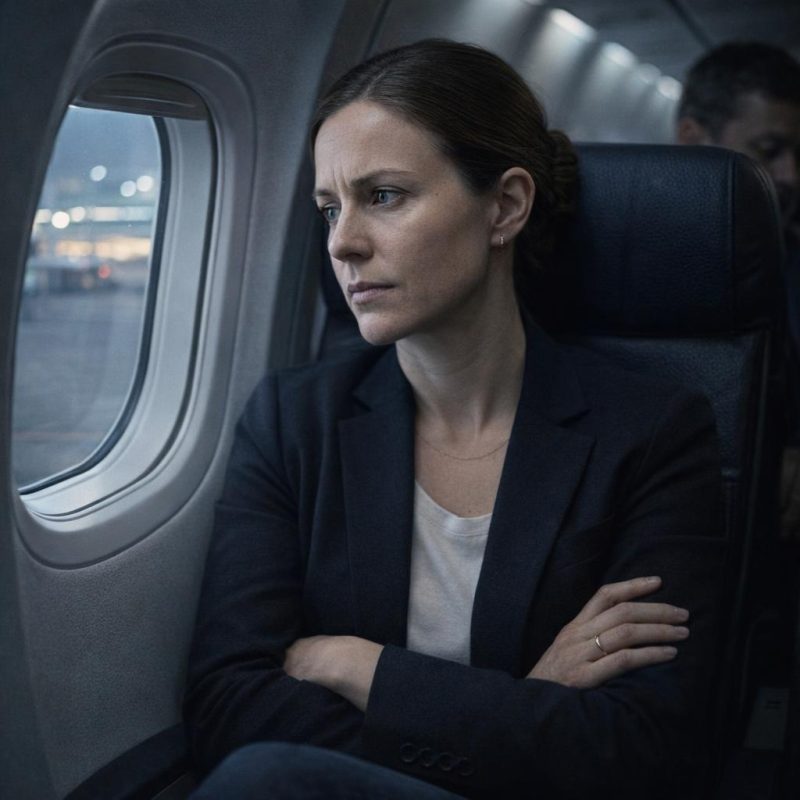 Image by RM AI
Takeoff
We taxied for what felt like a long time, the plane moving in that slow, deliberate way that makes you aware of its actual size. I watched the terminal recede through the window — the gates, the service vehicles, the ordinary infrastructure of departure — until we turned onto the runway and it all disappeared behind us. The engines changed pitch. That's the moment I always notice, when the sound shifts from idle to intent. The acceleration pressed me back into the seat, and I kept my eyes on the window, watching the runway markings blur into a single gray line. The nose lifted first. There's always that brief, tilted second where the front of the plane is already climbing and the back wheels are still on the ground, and the whole aircraft is caught between two states at once. Then the wheels left the ground, and Raleigh fell away beneath me — the roads, the rooftops, the ordinary geometry of a life I'd driven through a thousand times — and I closed my eyes and breathed.
 Image by RM AI
In Flight
Somewhere over South Carolina I opened my laptop and pulled up the Hendricks project — a kitchen renovation I'd been stalling on for two weeks. The floor plan sat there on the screen, clean lines and careful measurements, and I stared at it until the pixels stopped meaning anything. I closed the laptop. I thought about what I would say when I saw him. I tried the direct version: Eric, I know you're here. I tried the quiet version, the one where I just stood there and let him explain. I tried the version where I had evidence and laid it out like a brief, calm and organized, the way I present to clients. None of them felt right. They all assumed I knew how his face would look, what his first word would be, whether he'd go cold or go smooth or go somewhere I hadn't anticipated. I'd been married to him for eight years and I still couldn't predict him anymore, which was maybe the whole problem. The flight attendant came by with the drink cart and I shook my head without looking up. Outside the window, there was nothing but cloud and the particular blue of altitude, and no amount of rehearsing was going to prepare me for a moment I couldn't script.
 Image by RM AI
The Woman in the Lobby
The cab dropped me at the Meridian just after midnight. The lobby was the kind of place that costs money to look effortless — low lighting, a wall of tropical plants, marble floors that reflected everything. I'd stopped at a gift shop in the airport and bought a baseball cap and a pair of oversized sunglasses, which felt ridiculous at midnight but I put them on anyway. I found a chair half-hidden behind a large potted palm near the far wall and sat down with my bag in my lap. I watched the entrance. For twenty minutes, nothing. Then the glass doors slid open. Eric walked in wearing the navy blazer I'd helped him pick out two Christmases ago, and beside him was a woman — late twenties, dark hair, the kind of effortless polish that takes real effort. His hand rested on the small of her back. They walked close, their steps matched without either of them thinking about it. He said something I couldn't hear, and she smiled. Then he laughed — and that was the thing that got me. It was his real laugh, the one that starts low and catches, the one I hadn't heard in longer than I could place.
 Image by RM AI
Following to the Elevator
I stayed behind the palm until they were halfway across the lobby, then I stood and followed at a distance that felt both too close and not close enough. The marble floor made every footstep feel amplified, though no one looked at me. Eric pressed the elevator call button. The woman — she was standing close enough that their arms were touching — said something and tilted her head toward him, and he nodded. I moved behind a column near the concierge desk and watched through the gap. The elevator doors opened. He gestured for her to go first, that small, automatic courtesy, and she stepped inside. He followed. I watched the floor indicator above the doors count upward — two, five, eight, ten — and stop. The number twelve glowed amber for a moment, then went dark. I stood there in the lobby with the marble cool under my feet and the low music of the hotel filling the space around me, and the number sat in my chest like something I'd always known was coming but hadn't wanted to count.
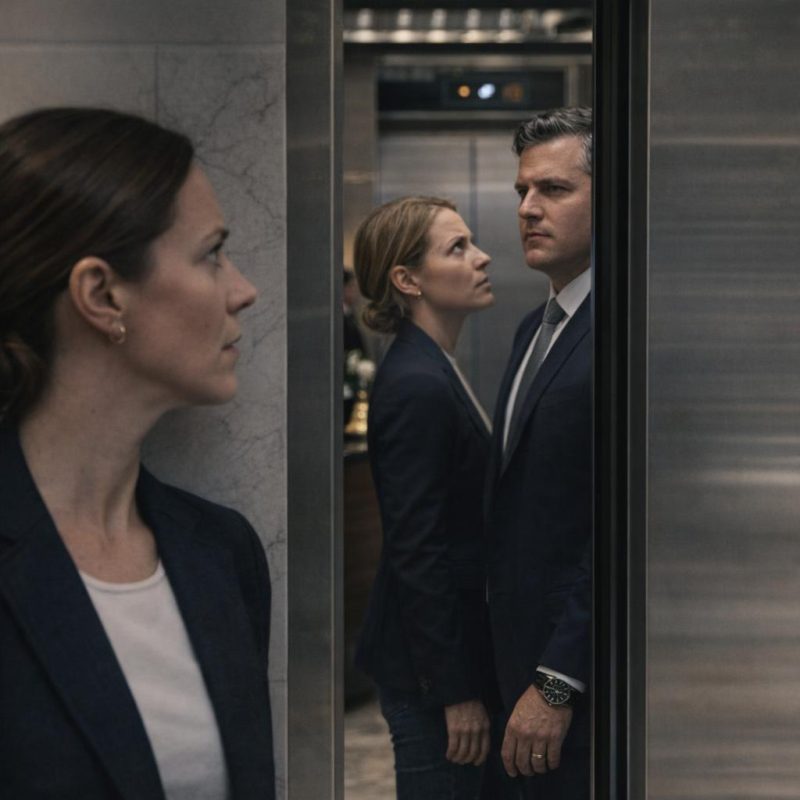 Image by RM AI
Booking the Room
The front desk clerk had the practiced warmth of someone trained to make every transaction feel like a welcome. She smiled when I approached, the kind of smile that doesn't ask questions. I told her I needed a room on the twelfth floor. She typed, checked her screen, typed again. Yes, she said, there was one available. I slid the joint credit card across the marble counter — the one with both our names on it, the one we'd opened together at a bank branch eight years ago when we were still the kind of people who did things together — and watched her run it without hesitation. I signed the receipt. She slid a small paper envelope across the counter with two key cards inside, told me the elevator was to my left, and wished me a pleasant stay. I thanked her. I picked up the envelope. She had processed the whole thing in under three minutes, efficient and pleasant, without a single question about why a woman in a baseball cap was checking into a hotel at midnight with nothing but a carry-on bag and a joint credit card that wasn't only hers.
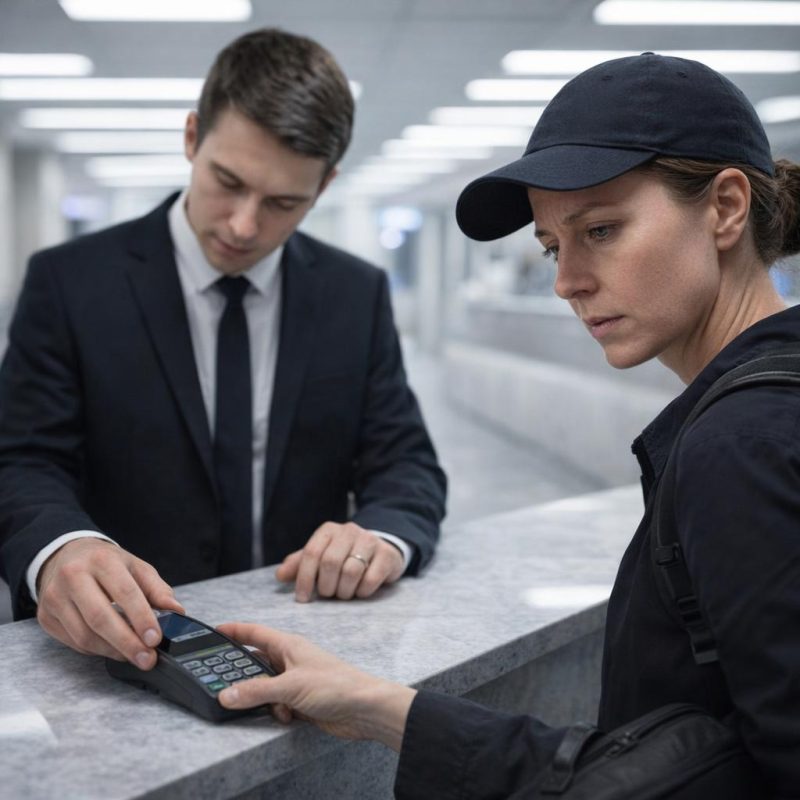 Image by RM AI
The Twelfth Floor
The elevator doors closed behind me with a soft, definitive click. I pressed twelve and watched the numbers climb. My reflection in the polished metal doors looked like someone who had a plan, which was close enough to true. The car rose smoothly, no lurching, no drama — just a quiet mechanical ascent that felt nothing like what was happening in my chest. The doors opened onto a hallway that smelled like carpet cleaner and recycled air. I stepped out. The floor was thick underfoot, the kind of plush that swallows sound. I looked left. Room numbers in brushed gold: 1201, 1202, 1203. I walked slowly, my carry-on rolling behind me without a whisper. I passed 1204 on my left. There was music coming from inside — something low and jazzy, the kind of playlist someone curates to set a mood. I kept walking. My room was 1218, further down, around a slight bend. I let myself in, set my bag on the bed, and crossed to the window. Miami glittered below me, indifferent and bright. I stood there looking at it, and 1204 stretched behind me down the hall.
 Image by RM AI
The Text Message Test
I didn't stay at the window long. I went back into the hallway and walked to 1204, stopping just outside the door. The music was still going — same playlist, same low jazz. I could hear the murmur of voices underneath it, too indistinct to parse. I pulled out my phone and typed: *Hey, how did the meeting go? Thinking of you.* I hit send. A beat of silence. Then I heard a phone buzz through the door. The music dropped a notch. I waited. My phone vibrated in my hand. His reply came in three separate messages, the way he always texted when he was performing casualness. *Boring as expected. Long day.* Then: *Miss you and Ellie.* Then: *Going to bed early, phone off soon.* I read them standing eighteen inches from the door he was behind. The woman's voice said something I couldn't make out, and Eric laughed — that easy, unguarded laugh I hadn't heard him use with me in longer than I could remember. I looked down at my phone, at the words *Miss you and Ellie*, and my thumb hovered over the screen without pressing anything. The performance of it was in my fingertips, and I just held it there.
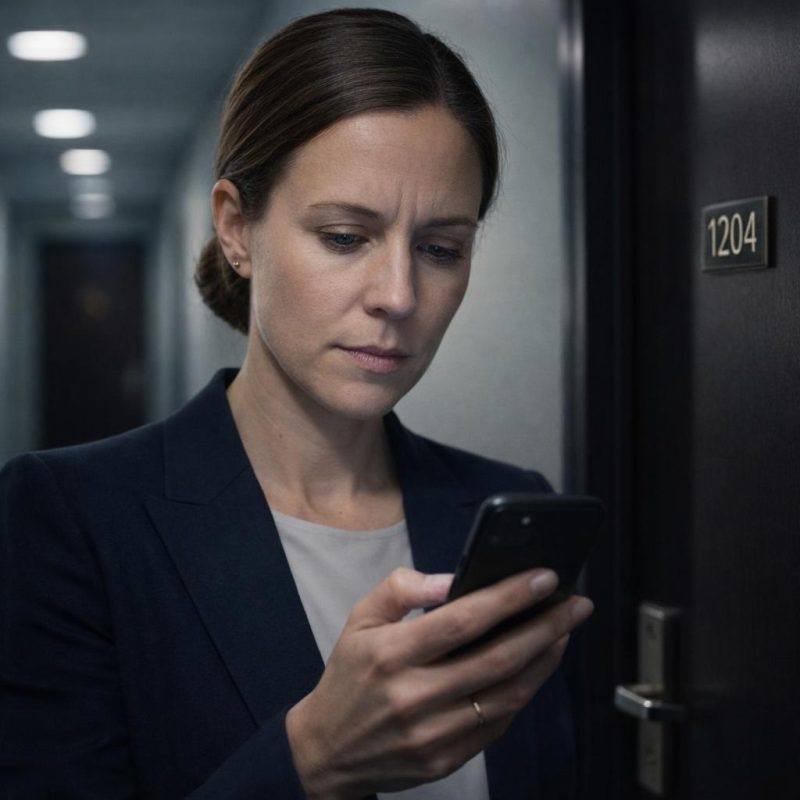 Image by RM AI
Reading His Lies
I read the messages again. *Long day. Miss you. Going to bed early.* He'd even thrown in the detail about the hotel room being cold — the kind of specific, throwaway complaint that's supposed to make a lie feel lived-in. I'd used that trick myself in design presentations, the small authentic-sounding detail that makes the whole thing land. Inside the room, glasses clinked. The woman laughed at something, a bright, unself-conscious sound. Then another message came through: *Turning off my phone now. Love you.* I stared at those two words. *Love you.* Typed with his thumbs, sent from a room where jazz was playing and wine was being poured and someone else was laughing at his jokes. I thought about Ellie asleep at my mother's house, probably curled around her stuffed rabbit, with no idea what was happening in this hallway. My hand tightened around the phone. The hallway was empty and silent except for the muffled sounds leaking under the door. Then the three dots appeared at the bottom of our conversation — he was typing again.
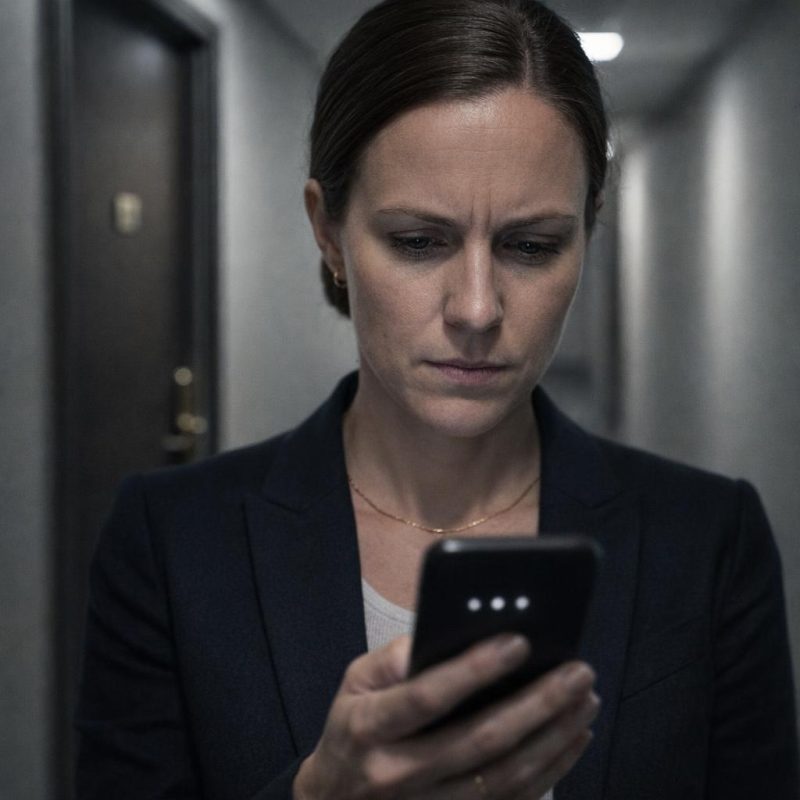 Image by RM AI
Outside the Door
I put the phone in my pocket. Whatever he was typing, I didn't need to read it. I'd already read enough. I stepped closer to the door — close enough that I could feel the faint warmth of the room on the other side, or maybe I imagined that. The jazz had shifted to something slower. I heard Eric's voice, muffled but unmistakably his, the cadence I'd listened to across eight years of dinner tables and car rides and arguments about nothing. He said something and the woman responded, her voice lighter, younger-sounding. They both laughed. It was comfortable laughter, the kind that doesn't perform itself. I stood there and let it land. Then I raised my hand. I held it there in the air, knuckles an inch from the door, and I breathed. My heart was doing something loud and structural, like a load-bearing wall deciding whether to hold. I thought about Ellie. I thought about the joint credit card I'd just used at the front desk. I thought about eight years of believing I understood the shape of my own life. My hand stayed raised. I took one more breath.
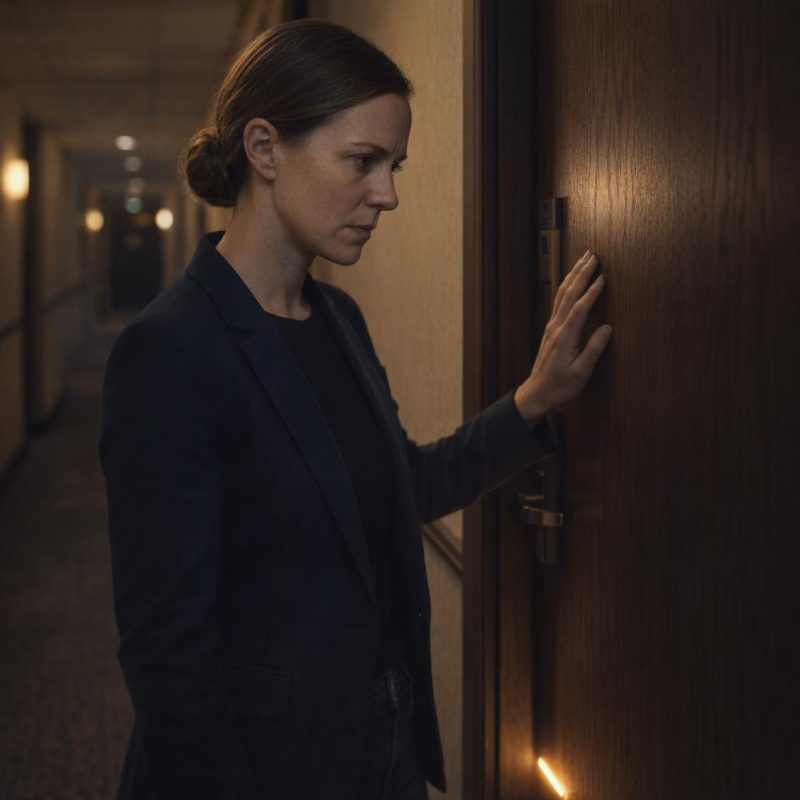 Image by RM AI
The Knock
I knocked three times. Sharp, deliberate, the kind of knock that doesn't apologize for itself. The music cut off immediately — not faded, cut, like someone's hand shot out and silenced it. I heard movement. A chair scraping. Footsteps crossing the room, heavier than the woman's would be, Eric's particular flat-footed stride that I could have identified in a blackout. He said something to her, low and quick, and her footsteps moved in a different direction — toward the balcony, I thought, or the bathroom. His kept coming toward the door. I stood very still. I wasn't shaking. I noticed that with a kind of distant surprise — I'd expected to be shaking. His footsteps slowed as they reached the door. I heard the metallic rattle of the security chain being checked, then the heavier sound of the deadbolt turning. The footsteps stopped on the other side of the door.
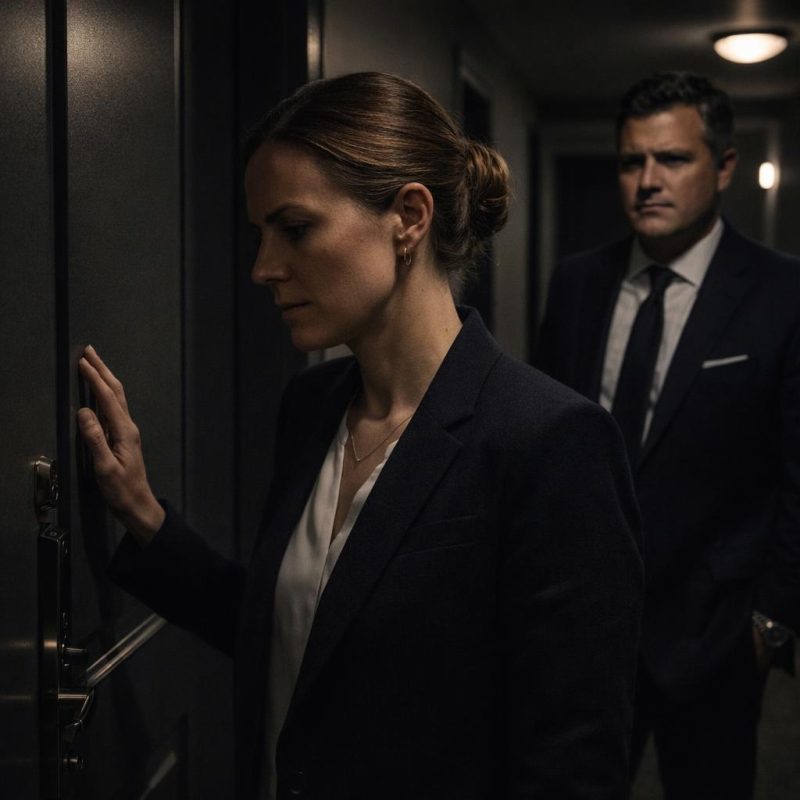 Image by RM AI
The Door Opens
The door opened. Eric stood in the frame wearing the hotel's white robe, hair damp at the edges, the kind of composed he always managed to look even when he shouldn't. Then he saw me. The color left his face in a single, visible wave — I watched it go, like a document losing its formatting. His mouth opened. Nothing came out. His hand found the door frame and gripped it, and I could see the tendons in his knuckles go white. I looked past him into the room. The balcony door was open, a warm Miami breeze moving the sheer curtain. A woman stood out there with her back half-turned, and as I looked she turned toward the door. Her expression shifted — confusion first, then something more complicated that she didn't have the composure to hide. Eric's jaw worked. He still hadn't produced a single word. He stood there with his mouth moving and nothing coming out, whatever he might have said gone somewhere he couldn't reach.
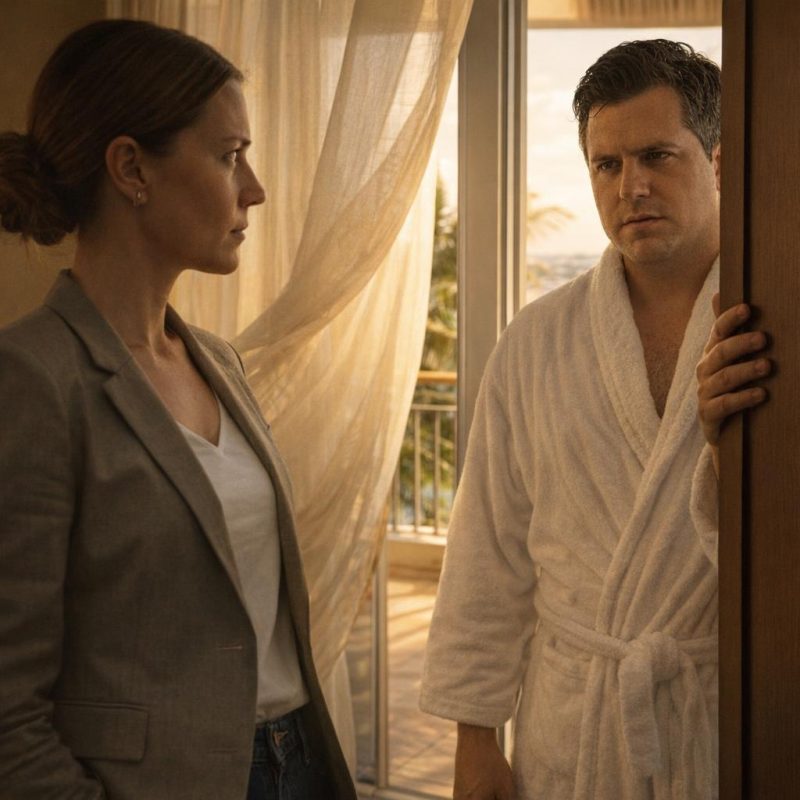 Image by RM AI
The Woman on the Balcony
I looked at her properly. Late twenties, I guessed. A black dress, hair pulled back, the kind of careful put-together that takes effort to look effortless. She'd set her wine glass down on the balcony railing and taken a step toward the door, and now she stood there caught between moving forward and staying put. Her eyes went from Eric to me and back to Eric, and whatever she found in his face didn't seem to answer her question. Eric hadn't moved. He was still gripping the door frame, still not speaking, positioned exactly between us like a man who understood, on some animal level, that there was no direction he could step that wasn't wrong. The Miami night was warm behind her, the city lights scattered across the water. I wasn't crying. I noticed that too, the same way I'd noticed I wasn't shaking in the hallway. The three of us stayed exactly where we were — me in the doorway, Eric frozen between us, the woman on the balcony with her hands empty and her face asking a question no one in that room was going to answer.
 Image by RM AI
The Ring
I looked down at my left hand. The ring caught the light from the hallway — gold, plain band, the one we'd chosen together because I said I didn't want anything fussy. I twisted it once, the way I'd done a thousand times without thinking, and then I pulled it off. It felt lighter than I expected. I held it for a moment, just looking at it in my palm. Then I reached out and opened Eric's hand and dropped the ring into it. His fingers closed around it slowly, like he wasn't sure what he was holding. I looked at him. He looked at me. I said, quietly and without any particular drama, that he should keep the room. I said he was going to need it. Then I told him the locks at the house in Raleigh were being changed by Friday.
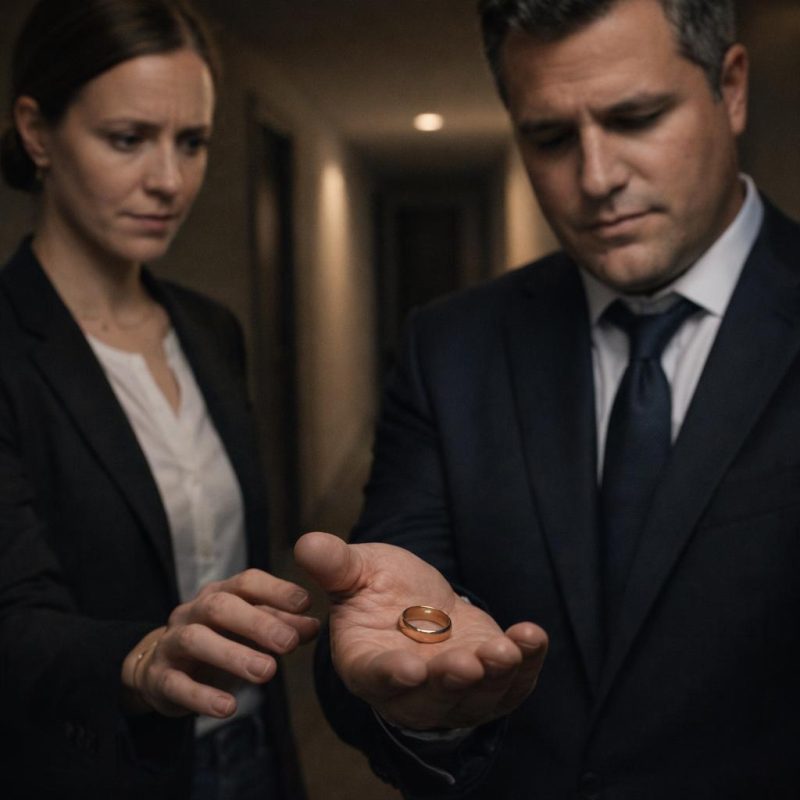 Image by RM AI
Walking Away First
I turned away from the door without another word. My heels were quiet on the hallway carpet — not the dramatic click I might have imagined in some other version of this moment, just a soft, steady rhythm moving away from him. I heard him say my name. Once, then again, louder the second time, the way you say something when you're not sure it's landing. I didn't turn around. I kept walking. The elevator was at the end of the hall and I pressed the button and the doors opened immediately, like the building itself had been waiting for me. I stepped inside and turned to face the hallway the way you do, automatically, out of habit. Eric was standing in the doorway of his room, the ring still in his hand, his mouth open around something he hadn't managed to say yet. Jessica was still on the balcony behind him, a pale shape against the Miami night. I watched the gap between the doors narrow. His face stayed exactly where it was — frozen, unfinished — until the doors closed and there was nothing left to look at but my own reflection in the polished steel.
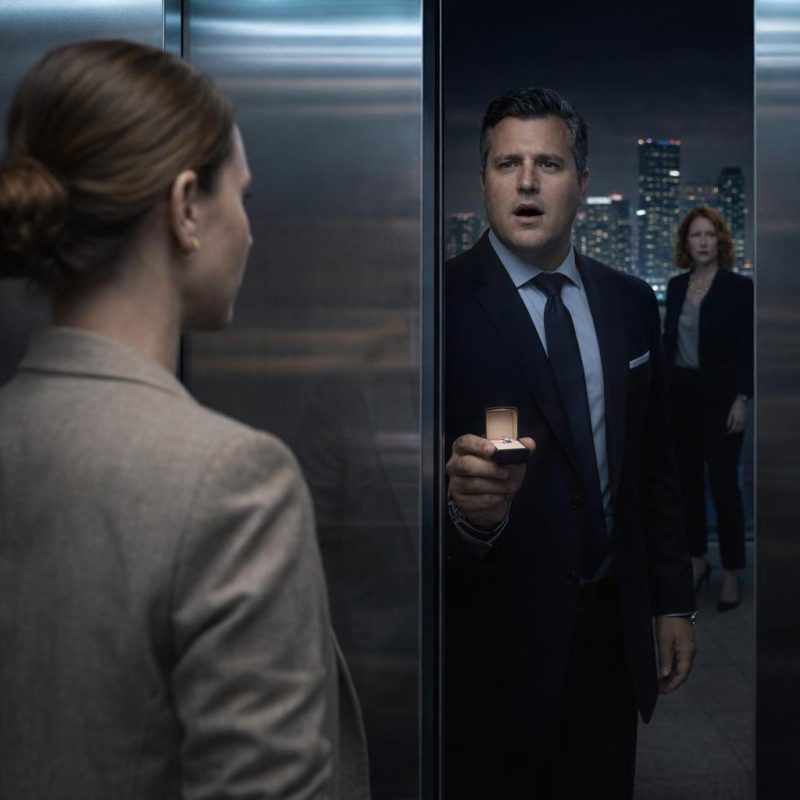 Image by RM AI
The Lobby Exit
The elevator opened onto the lobby and I walked out onto the marble floor like I had somewhere to be, which I supposed I did. The desk clerk glanced up from his computer. I didn't stop. I crossed the lobby in a straight line, past the low leather chairs and the arrangement of white orchids and the soft jazz coming from somewhere I couldn't see. The glass doors were ahead of me and the doorman stepped forward and pulled one open and I said thank you because my mother raised me right, even now, even tonight. The Miami air hit me the moment I stepped outside — thick and warm and smelling faintly of salt and exhaust, nothing like the recycled cool of the hotel. I stood at the curb for a moment and raised my hand and a taxi pulled forward almost immediately. I gave the driver the airport and he nodded and pulled into traffic. I leaned back against the seat. Through the rear window, the hotel's lit facade shrank behind us, and something I'd been carrying in my chest since I'd boarded the flight to Miami — something dense and airless — loosened just slightly as the hotel doors disappeared from view.
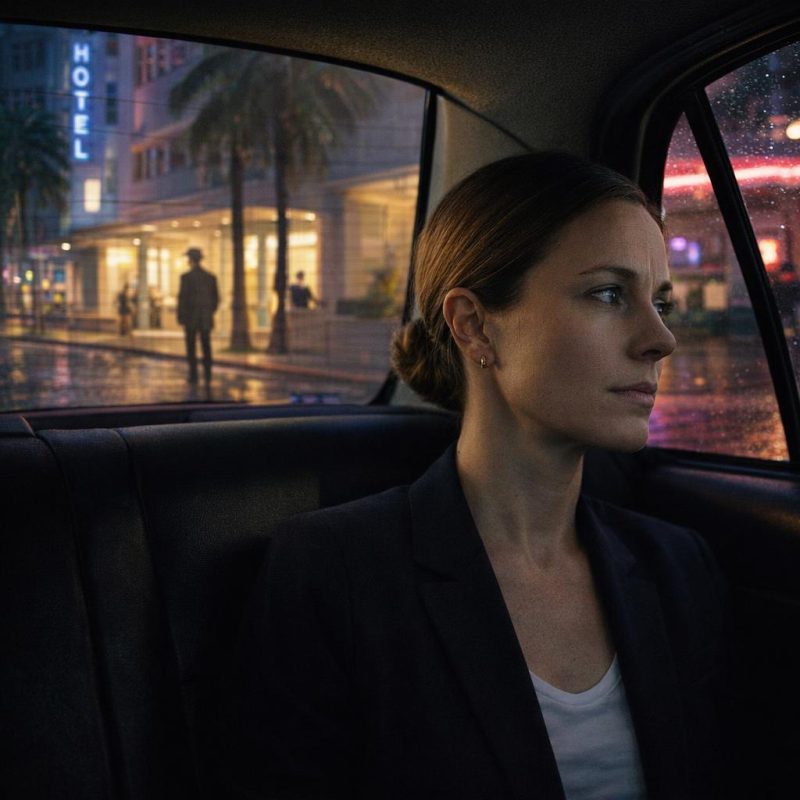 Image by RM AI
Airport Return
The driver didn't talk, which was exactly what I needed. I watched Miami slide past the window — the lit-up storefronts, the palm trees catching the breeze, the couples still out on a Thursday night like the world was perfectly ordinary. At the terminal I paid and pulled my bag from the back seat and walked through the automatic doors into the fluorescent hum of the airport. The airline counter had one agent working. The next flight to Raleigh left in just under two hours. I booked a seat, checked my bag, and went through security in a kind of focused quiet, the way you move when you're running on something that isn't quite adrenaline anymore. I found the gate and sat down in one of the hard plastic chairs and set my carry-on between my feet. My phone buzzed in my pocket. I pulled it out and saw Eric's name on the screen — one message, then a second notification before I could put it down. I didn't open them. I set the phone face-down on my knee and looked out at the dark tarmac, at the plane already waiting at the gate, its cabin lights glowing in a long row of small bright windows, the empty seat beside mine somewhere inside it.
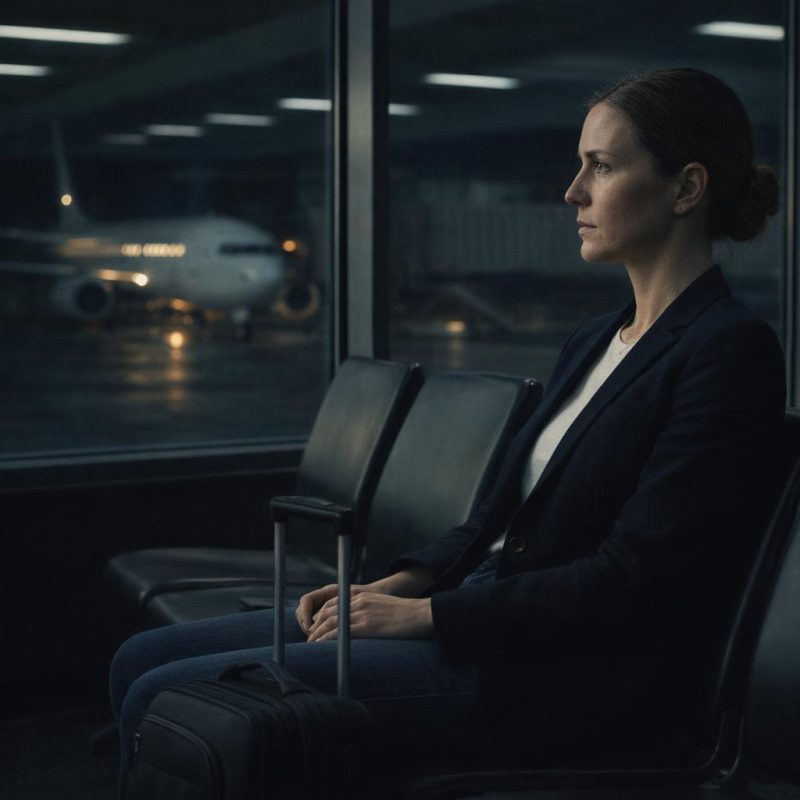 Image by RM AI
Messages Unread
The plane pushed back from the gate right on time. I had the phone in my lap and I could feel it buzz through the fabric of my jeans even before I looked at the screen. Eric's name again. Three messages. Then a fourth while I was still looking at it. I turned it face-down on the tray table. The plane taxied slowly toward the runway and the phone vibrated again, a long pulse this time — a call. I watched the screen light up through the plastic of the tray table, his name glowing faintly. I let it go to voicemail. The flight attendant came through asking for devices to be switched to airplane mode and I picked up the phone and looked at the screen one last time before I did: seven unread messages, two missed calls. I pressed the button and the notifications went dark. The engines changed pitch and the plane began to accelerate and I pressed my head back against the seat and closed my eyes. Somewhere over the Atlantic coastline, climbing through the dark, the notification count kept rising on a phone that could no longer receive them.
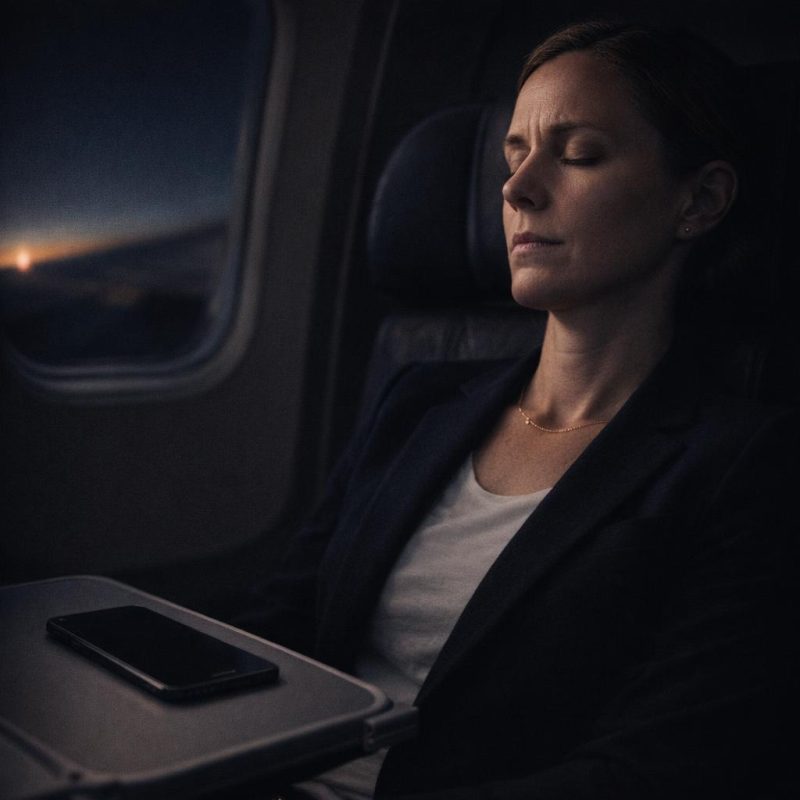 Image by RM AI
Landing in Raleigh
We touched down in Raleigh just before five in the morning. The terminal was nearly empty — a few gate agents, a janitor pushing a wide mop across the floor, the overhead lights at half-brightness like the building was still waking up. I collected my bag and walked to long-term parking and found my car exactly where I'd left it, patient and ordinary in the concrete quiet. I drove through streets that had nothing on them yet — no school buses, no commuters, just traffic lights cycling through their colors for no one. The suburbs came up around me gradually, familiar turns I could make without thinking. I turned onto my street and the houses were all dark, everyone still asleep inside their ordinary lives. My house appeared at the end of the block, the porch light off, the windows black. I pulled into the driveway and cut the engine. My phone showed twenty-three unread messages. I set it on the passenger seat and sat there with both hands in my lap, looking at the front door, the dark windows, the house that still had his name on the mortgage — and I had no idea yet what I was walking back into.
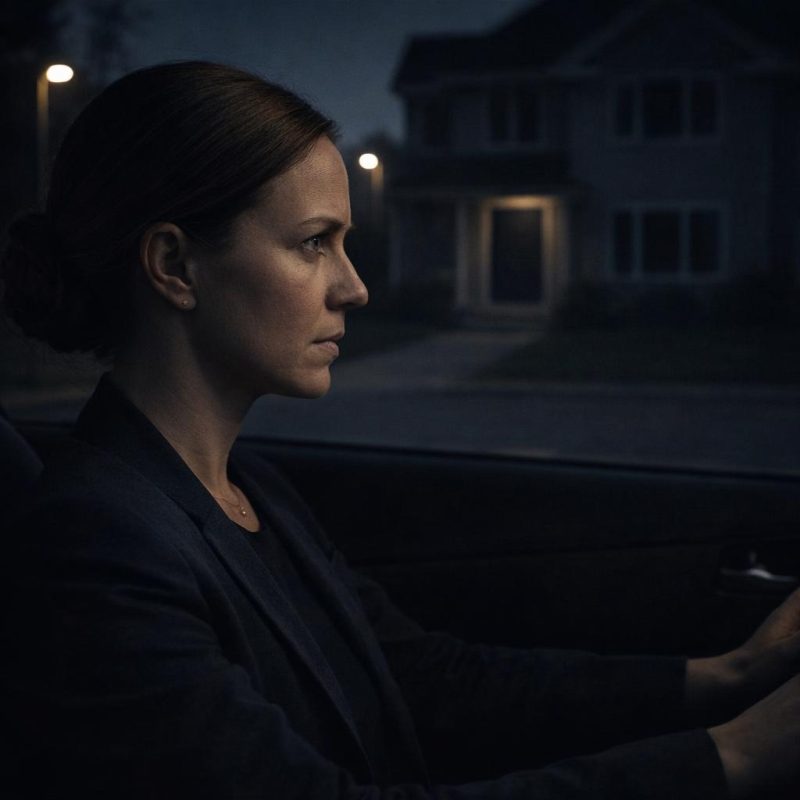 Image by RM AI
The Office Search
I went inside and didn't turn on many lights. The house smelled like itself — the particular combination of wood and coffee and whatever candle I'd burned last week — and underneath it, faintly, his cologne. I stood in the hallway for a moment and then I walked to Eric's office and pushed open the door. The room was exactly as he'd left it. Neat. Controlled. Everything in its place. I opened the file cabinet first and pulled out folders one by one, setting them on the desk in a row. Bank statements. Tax documents. Project files going back three years. I checked the desk drawers — the top one held pens, a stapler, a phone charger. Nothing. I crouched down and opened the bottom drawer. Hanging files, labeled in his precise handwriting: client names, project codes, insurance. I flipped through them slowly, one by one. Near the back, pushed behind the last labeled folder, there was one more. No label. No client name. Just a plain manila folder, thicker than the others, sitting quietly in the dark at the back of the drawer. I left my hand resting on it for a moment. The office was very still around me, the kind of still that sits just before something changes.
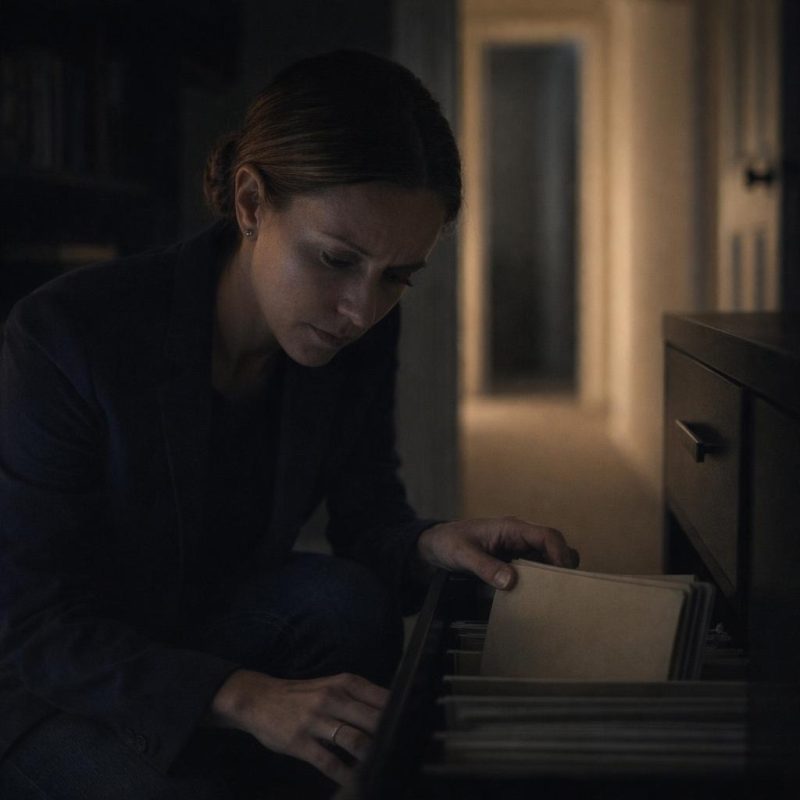 Image by RM AI
The Documentation
I pulled the folder out and set it on the desk. The first page was a typed document, single-spaced, and the header read: Custody Strategy. My hands started shaking before I finished the title. The first entry was dated four months ago. It described an incident — specific date, specific time — in which I had allegedly screamed at Ellie during a homework session, reducing her to tears. I sat there and read it twice. That evening had happened. The homework had happened. What was written on that page had not. I turned to the next sheet. Another incident, two weeks later. Another fabricated account, dated and detailed, written in the flat clinical language of someone building a record. There were printed screenshots of text messages I had never sent. There were photos with timestamps I couldn't immediately account for. There was a log — fifteen entries, each one describing a version of me I didn't recognize: erratic, volatile, a danger to our daughter's stability. There were notes referencing witnesses. There were references to a mental health evaluation he planned to request. The final page outlined asset division. He would seek full custody. I would receive supervised visitation only. I turned the folder over. On the inside cover, in his handwriting, was the label he'd written before he'd typed a single word of it: Custody Strategy — and below it, a list of fifteen incidents that had never happened.
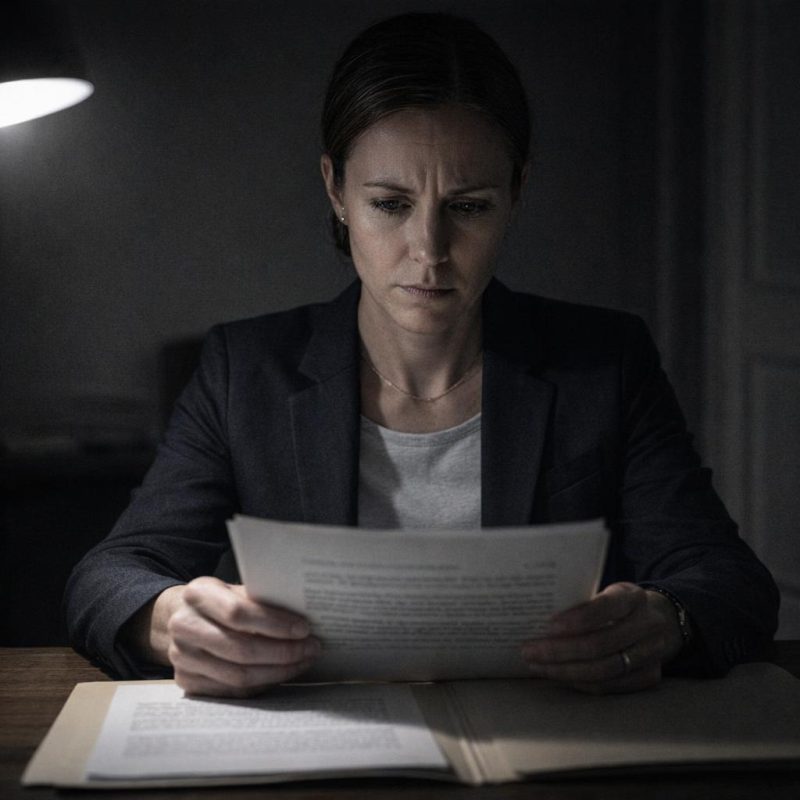 Image by RM AI
The Full Picture
I spread everything across the desk and read it all again, slower this time. The plan went back six months — two months before I'd found the first hotel charge, three months before Miami. He'd started with the small things: a normal argument about Ellie's school schedule that appeared in his notes as a screaming episode. A weekend I'd spent working late on a client deadline, documented as neglect. Emails to his attorney discussed the approach in careful, measured language — words like instability and evaluation and primary caregiver, Eric's name attached to the last one. He'd researched specific diagnostic language. He'd noted which of our mutual acquaintances might be willing to speak to his account of our marriage. Jessica appeared in the documents exactly once, described in a single line as stress relief during a prolonged period of marital difficulty, as though she were an aspirin he'd taken for a headache. He had positioned himself as the steady one, the present parent, the one who had held the household together while I unraveled — a version of our eight years that bore almost no relationship to the life I remembered living. I stood there in his office in the early morning light, the documents laid out across his desk in neat rows, and looked at what eight years had actually been building toward.
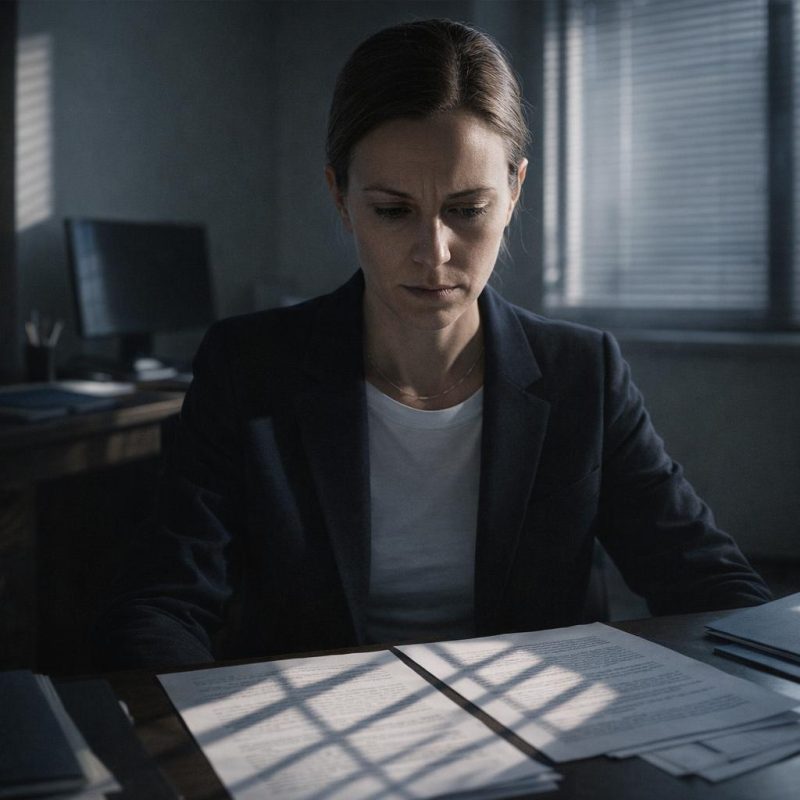 Image by RM AI
Calling the Attorney
I didn't let myself stop moving. The moment I understood what I was looking at, my hands were already reaching for my phone. I photographed every page — slowly, carefully, making sure each image was sharp enough to read in court. The folder went back into the drawer exactly as I'd found it. Then I sat on the edge of his office chair and searched for divorce attorneys in Raleigh who handled custody cases. One name kept appearing in the reviews: David Brennan. People said he was methodical. Thorough. That he didn't lose custody cases he should win. I called the number before I could talk myself into waiting. A receptionist answered, professional and calm, and I told her I needed an emergency consultation. She asked about the nature of the case. I said my husband was building a fabricated record to use against me in a custody proceeding and I had the documentation to prove it. She put me on hold. When the line clicked back, a man's voice came through — measured, unhurried, the kind of voice that had heard everything. He said his name was David Brennan, and after I gave him thirty seconds of the outline, he told me to come in today. I said I could be there in an hour. He said, "Make it forty-five minutes."
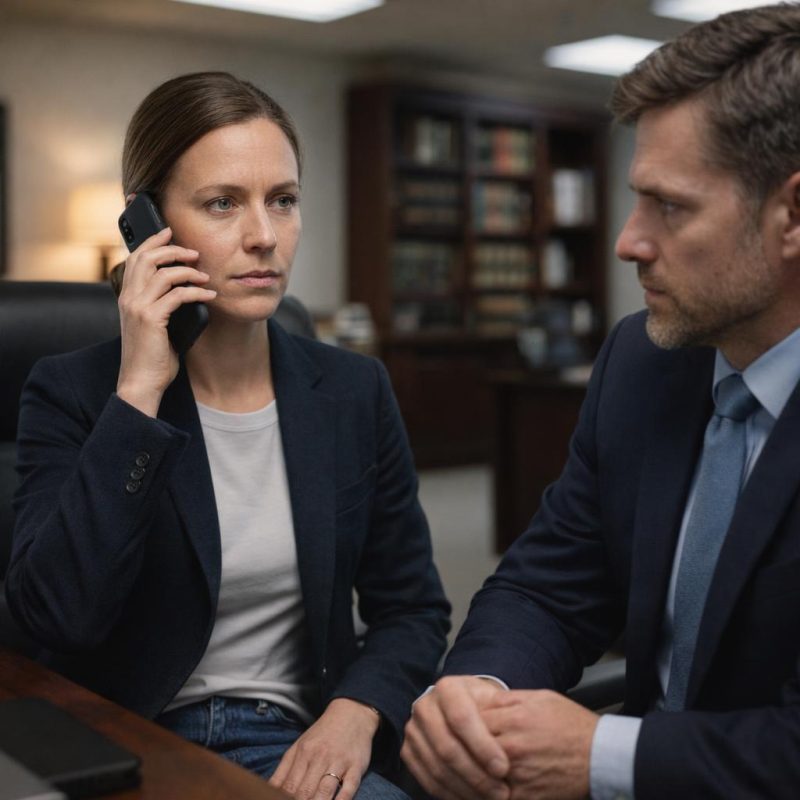 Image by RM AI
The Attorney's Office
David's conference room was all clean lines and neutral light — the kind of space designed to make everything feel manageable. It didn't quite work. I spread the phone photographs across the table in the order I'd found them, and David put on his reading glasses and went quiet. He was methodical about it. He didn't react, didn't editorialize, just moved from page to page with a legal pad beside him, making notes in a handwriting so small I couldn't read it upside down. He asked me to walk him through the timeline. I did. He asked about each incident Eric had documented — the screaming episode, the neglect claim, the instability language. I told him none of it happened. He asked if there were witnesses who could speak to where I actually was on those dates. I said yes. He photographed the documents with his own phone, added three more lines to his legal pad, and then set his pen down. He looked at me over his glasses and said the fabrication was systematic and provable — that every incident Eric had documented left a paper trail that contradicted his account. Then he laid out the steps: file for divorce today, request an emergency custody hearing, submit Eric's own folder as evidence of fraud. "This," he said, tapping the photographs, "is enough."
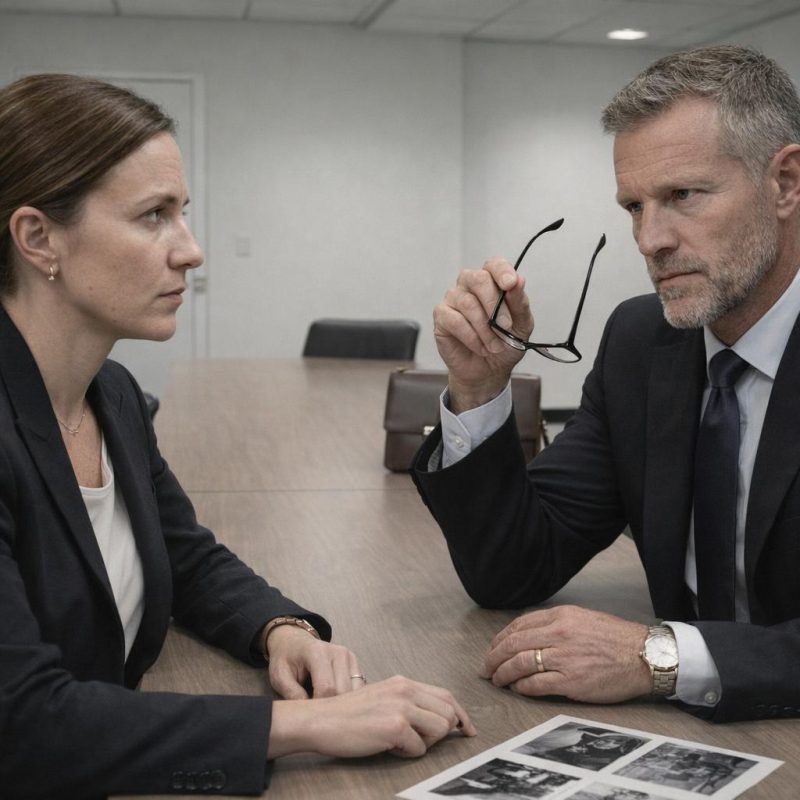 Image by RM AI
Eric Returns
I heard his car in the driveway at half past six. I was already at the kitchen table. David's business card sat in the center of it, face up, nothing else around it. The door opened and Eric came in with his suitcase, still wearing the easy confidence of someone who thought he was several moves ahead. He stopped when he saw me. I didn't say anything. He set the bag down slowly and said we needed to talk. I slid the business card across the table without a word. He picked it up. I watched his face move through something — recognition, recalibration — before he asked what it was. I told him he would be receiving divorce papers. He started to speak and I held up my hand. I said I knew about the custody plan. He asked what I was talking about, his voice careful and measured, the same voice he used in depositions. I stood, walked to his office, and came back with the folder. I set it on the table between us. He looked at it for a long moment without touching it. The kitchen was very quiet. Outside, a neighbor's dog barked twice and went still. Everything between us had already been decided, and we both knew it, and the silence held that weight without either of us having to say so.
 Image by RM AI
His Justifications
Eric opened the folder like he was handling something fragile. He flipped through the pages slowly, and I could see him assembling his response in real time — the slight pause, the careful exhale. He said it wasn't what it looked like. I didn't answer. He said he'd just been protecting himself, that I'd been unstable, that he'd had legitimate concerns. I asked him to name one real incident. He opened his mouth and closed it again. He said I was twisting things. I pointed to a date in the second section — a Tuesday I'd spent at a client presentation with twelve people in the room — and asked him to explain that entry. He said he must have remembered wrong. Then he shifted. His voice softened and he said we could work this out, that we didn't need lawyers involved, that this could still be handled between us. I told him it was too late for that. His voice rose then — not quite shouting, but close — and he said I was overreacting, that I was making something out of nothing. I stood up. I told him to leave. The folder sat open on the table between us, and his words hung in the air above it, and there was nothing in them that touched what was written on those pages.
 Image by RM AI
Standing Ground
He didn't move toward the door. He said I was making a mistake, that I was destroying our family. I told him he'd done that himself. He reached for my arm and I stepped back, one clean step, and he let his hand drop. He said we could go to counseling, that it wasn't too late. I said no. His tone shifted again — quieter, harder — and he said I would regret this. I told him that sounded like a threat. He backtracked immediately, said he only meant legally, that things could get complicated. I said my attorney was prepared for complicated. He asked about Ellie. I told him Ellie would be fine. He said he had rights. I agreed — supervised visitation rights, pending the hearing. His face went red. I pointed to the door and told him to pack a bag and leave. He stood there for a moment, jaw tight, not moving. I pulled out my phone. I told him I would call the police if he needed help deciding. He grabbed his keys off the counter. The door closed behind him, and the sound of it — not a slam, just a click, ordinary and final — settled into the room and stayed there.
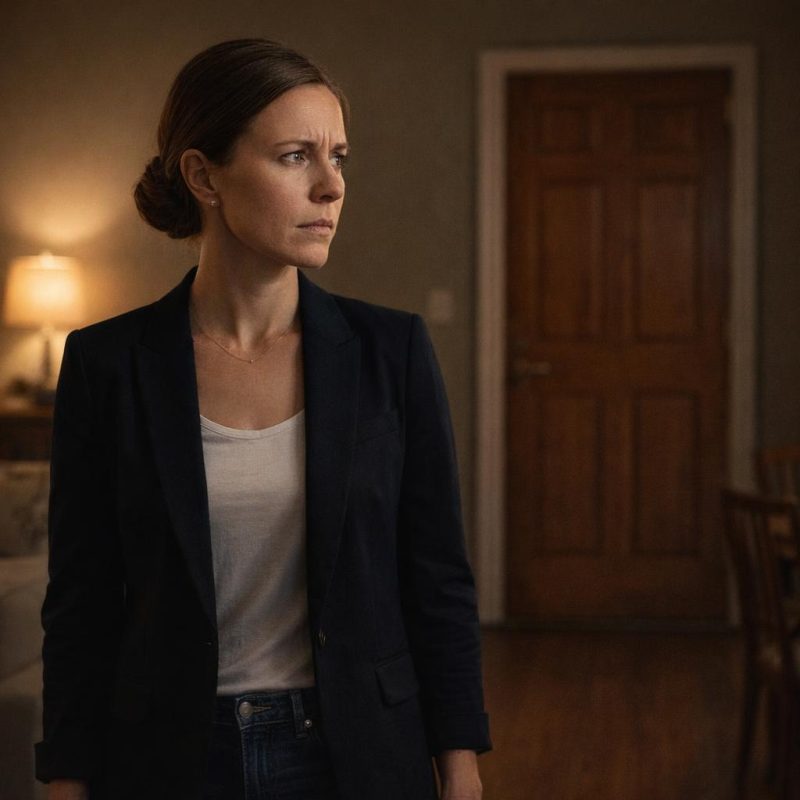 Image by RM AI
Filing Papers
David met me at the courthouse at nine the next morning. We filed the divorce petition first, then the emergency custody motion, then the request for full financial disclosure. I signed my name so many times my signature started to look like someone else's. David submitted Eric's custody strategy folder as evidence of premeditated fraud — the whole thing, emails and fabricated incident log and all. The clerk processed it without expression, the way clerks do. The court scheduled the custody hearing for two weeks out. David filed for a protective order the same afternoon and arranged for a process server to find Eric at the hotel he'd checked into the night before. I sat in David's office and waited. The afternoon light moved across the floor in slow degrees. David's assistant brought coffee I didn't drink. Then the process server called. Eric had been located at the hotel. He'd refused to sign but had accepted the papers, which David said was legally sufficient and exactly what he'd expected. I set the coffee cup down. The legal machinery was running now, and it didn't need me to push it anymore — it just needed me to stay standing. My phone buzzed on the desk: a text from David's assistant confirming Eric had been served.
 Image by RM AI
Eric's Campaign
The calls started two days later. Friends I hadn't spoken to in months, their voices careful and tilted with concern, asking if I was okay. A few of them said Eric had reached out. He was worried about me, they said. He'd mentioned I'd been under a lot of strain. One used the word breakdown. I recognized it immediately — it was lifted almost verbatim from the third page of his custody folder. I thanked each caller and got off the phone. I didn't explain. I didn't defend myself. Rachel called that evening, and she didn't bother with careful. She said people were talking and she wanted to know what was actually happening. I told her about the folder — the whole thing, the fabricated incidents, the diagnostic language, the plan. She went quiet for a moment and then said, very evenly, that she would testify to anything she'd witnessed in eight years if it came to that. I told her to hold onto that offer. The next morning, an email arrived from a mutual friend — someone I'd known since before Eric and I married — repeating his claims in language so close to his documented script that I read it twice to be sure. I forwarded it to David without comment. Eric was running the exact playbook he'd written, word for word, and now I had proof of that too.
 Image by RM AI
The Hearing
The courtroom was smaller than I'd expected. Eric sat across the aisle with his attorney, posture composed, suit pressed — still performing. David presented our petition first, then submitted Eric's custody strategy folder into evidence. Eric's attorney objected before the folder was fully on the bench. The judge overruled him and began to read. I testified about each fabricated incident — where I actually was, who could confirm it, what records existed. Eric took the stand after me. His attorney walked him through his documented concerns and Eric repeated them with the same careful language he'd used in his notes, as though saying them aloud in a courtroom made them real. Then David cross-examined. He asked Eric to produce a single piece of supporting evidence for any incident in the folder. Eric couldn't. David showed the judge the emails to Eric's prior attorney — the ones discussing the approach, the language choices, the list of potential witnesses. Eric's attorney stood and said something about context. The judge held up one hand and he stopped. She set the folder down on the bench in front of her, removed her glasses, and looked across the courtroom at Eric's attorney with an expression that needed no translation.
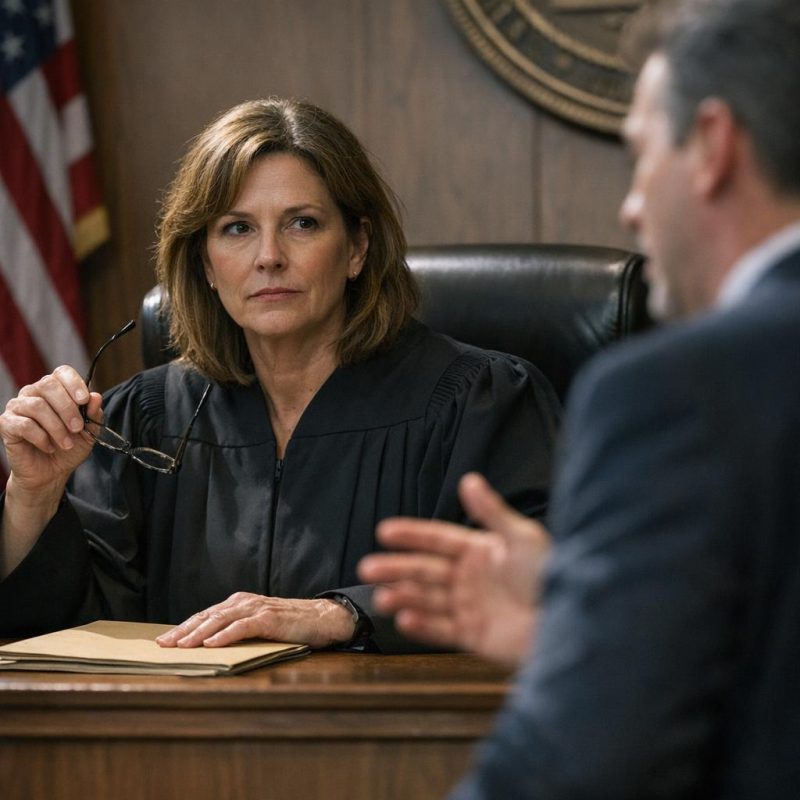 Image by RM AI
The Ruling
The judge put her glasses back on and read from the bench without looking up. She used words like 'systematic fabrication' and 'demonstrable bad faith' and 'pattern of manipulation.' Each phrase landed in the courtroom like something solid being set down. She granted me full physical custody of my daughter. Eric would receive supervised visitation — two hours per week at a monitored facility. She ordered child support, divided the marital assets equally, and denied Eric's attorney's request for reconsideration in the same breath, saying the evidence was clear and, she paused here, disturbing. Eric's attorney tried once more. The judge looked at him the way you look at a door that keeps swinging open in the wind. Then she granted the divorce and set a final hearing date for asset distribution. I felt David's hand settle briefly on my shoulder. Eric stood but didn't speak. His face had gone the color of old paper. I walked out of the courtroom into the hallway without looking back. David caught up to me a few steps later and said, quietly, that it was over. Behind us, the gavel came down.
 Image by RM AI
New Walls
The house had three bedrooms, a fenced yard, and walls that had never heard our arguments. I signed the lease on a Tuesday and cried in the parking lot afterward — not from sadness, just from the sheer weight of something finally being mine. Rachel helped us move in on a Saturday, hauling boxes and making commentary about every item she thought I should have left behind. I let my daughter choose her room first. She walked through each one slowly, the way she does when she's thinking hard, and picked the one with the window seat. Smart kid. We unpacked slowly, no particular order, no one else's schedule to follow. I set up my design workspace in the spare room and felt something loosen in my chest the moment I arranged my desk the way I actually wanted it. That night I cooked dinner in an unfamiliar kitchen and we ate on the floor because the table hadn't arrived yet. My daughter asked, between bites, if this was home now. I said yes. She smiled and went back to eating. I looked around at the bare walls — every one of them waiting, unhurried and open.
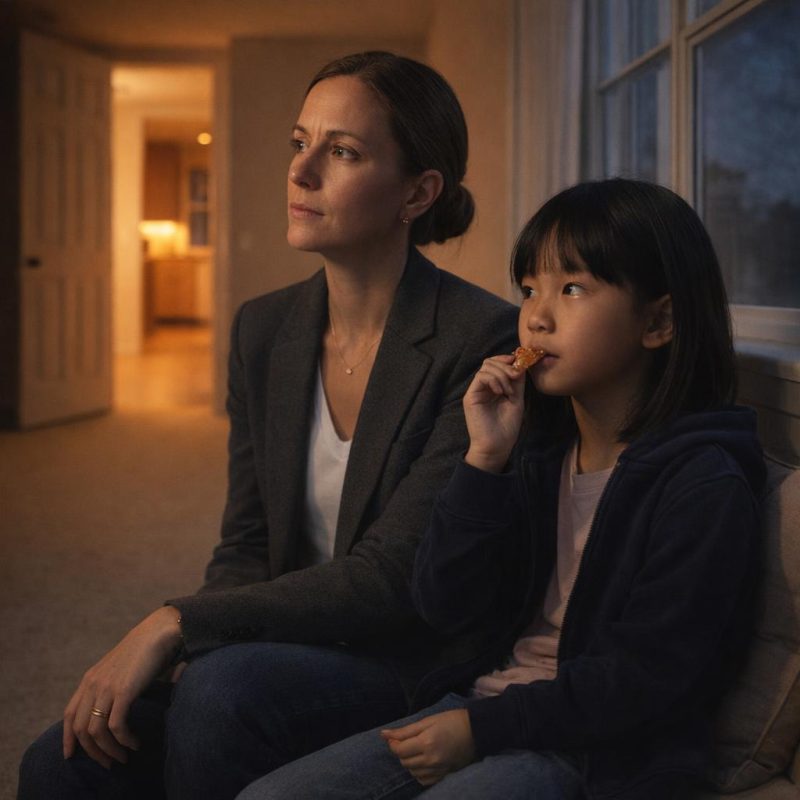 Image by RM AI
Her Own Rhythm
I updated my portfolio on a Sunday night while my daughter slept, and by Wednesday I had three responses from former clients. The work came back faster than I expected — not because it had been waiting for me, but because I had been waiting for it. I wasn't interrupted. Nobody questioned my hours or made me feel like my work was a hobby dressed up as a career. I landed a contract with a local startup, hired a part-time assistant, and watched my calendar fill in a way that felt earned rather than borrowed. Rachel referred two more clients and showed up at my door with wine to celebrate, which is exactly the kind of friend she is. I picked my daughter up from school every afternoon. We had dinner together every night. I tucked her in and came back to my desk and worked in the quiet of a house that held only my choices. Some nights I'd sit back and look at whatever was on my screen — a layout, a color study, a set of revised mockups — and feel something I hadn't felt in years. Not relief. Not just relief. Something steadier than that, and entirely my own.
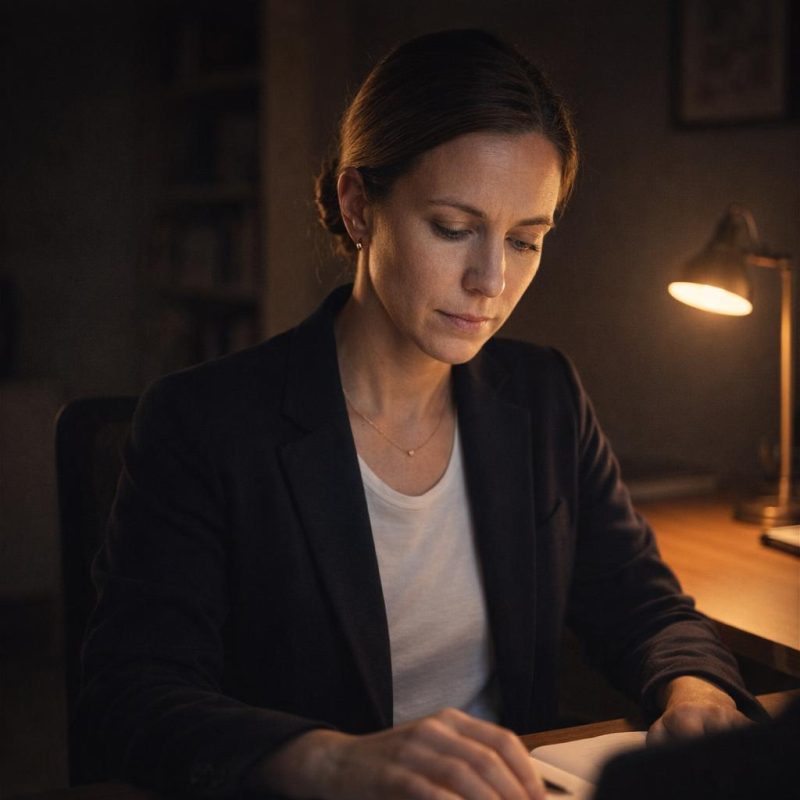 Image by RM AI
Breathing Free
Six months out, I sat on the back porch and watched my daughter run laps around the yard for no reason she could explain, which is the best reason. The yard was small. It was ours. She saw Eric twice a week at the visitation center and came home each time with drawings she'd made and stories about what she'd told him, easy and unburdened in the way kids can be when the adults finally stop making things complicated. My business had more work than I could comfortably handle, which was a problem I was genuinely happy to have. Rachel came by often. My mother came for Sunday dinners and stopped asking questions she already knew the answers to. The house felt like home in the way that only happens when you've built it yourself, piece by piece, on your own terms. I thought sometimes about the woman I'd been standing in that Miami hotel hallway — so focused on holding together something that had already come apart at every seam. I barely recognized her. My daughter called my name from the yard, laughing at something only she could see. I stood, walked toward her, and felt the evening air settle warm around me — the future opening like a door I'd unlocked myself.
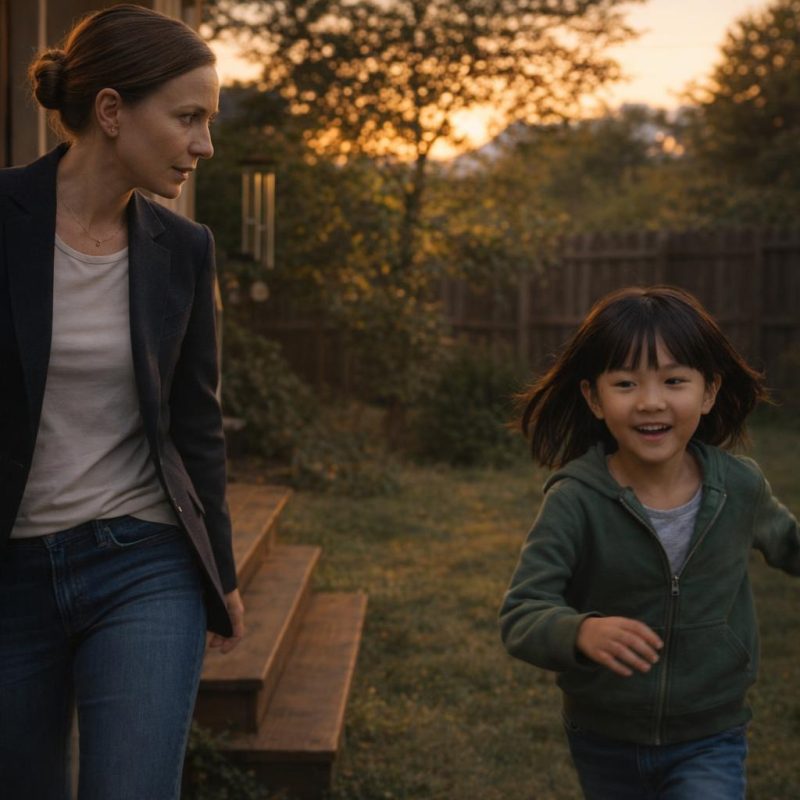 Image by RM AI
KEEP ON READING

The Origins Of 3 Common Sayings You Still Use Today
Etienne Boulanger on UnsplashMany of the phrases you use every…
By Rob Shapiro Apr 28, 2026
Was Caligula The Most Ruthless Roman Emperor?
Artur Matosyan on UnsplashRoman Emperor Caligula is one of ancient…
By Rob Shapiro Dec 18, 2025
1 Weird Fact About Every President
Washington, Lincoln, FDR. Most people know something about the lives…
By Robbie Woods Dec 3, 2024
10 Accidental Discoveries That Changed Maps & 10 That Changed…
Mistakes That Mattered. A lot of major discoveries did not…
By Cameron Dick Apr 15, 2026
10 Actors Who Perfectly Played a Historical Figure & 10…
Which Performance is Your Favorite?. Playing the role of a…
By Rob Shapiro Sep 15, 2025
10 Actors Who Perfectly Played a Historical Figure & 10…
Portraying a real person from history is one of the…
By Noone Dec 17, 2025