

I Followed My Husband to a Hotel Room in Dallas. What I Found Inside Wasn't an Affair—It Was So Much Worse
I Followed My Husband to a Hotel Room in Dallas. What I Found Inside Wasn't an Affair—It Was So Much Worse
Twenty-Two Years of Ordinary
I met Daniel at a house party in 1999, the kind where someone's older brother supplied the beer and nobody knew whose playlist was playing. He was standing in the corner holding a red cup he never drank from, and I thought that was the most interesting thing about him. Turns out it was. We got married two years later, bought a house in the suburbs four years after that, and somewhere in between we raised two kids, replaced the water heater twice, and argued about whether to get a dog. We never got the dog. Twenty-two years sounds like a long time until you're living inside it, and then it just feels like Tuesday. We had our rhythms — who took out the trash, who handled the school pickups, who remembered to call the insurance company. Daniel was the kind of man who balanced the checkbook on the first of every month and never missed a dentist appointment. I used to tease him about it. Said he was the most predictable person I'd ever loved. He'd smile at that, not offended, just steady. That was Daniel. Steady. We weren't the couple who finished each other's sentences or held hands at the movies anymore, but we were solid. We knew each other the way you know a house you've lived in for decades — every creak, every draft, every light switch that sticks. That kind of knowing settles into your bones without you even noticing it.
 Image by RM AI
Six A.M. Coffee
Daniel's alarm went off at six every morning without fail. Not six-oh-one. Not five fifty-nine. Six. I used to joke that you could set your watch by him, and honestly, you could. He'd be out of bed before the second buzz, into the bathroom, out in twenty minutes. Coffee was next — two scoops of ground dark roast, the same brand we'd been buying since 2011, brewed in the same machine we'd had even longer. He drank it standing at the kitchen counter, scrolling through his phone, never sitting. Said sitting made him feel like the day was already getting away from him. By seven-fifteen he had his jacket on. By seven-twenty he was backing the car out of the driveway. I watched him do it so many times that I stopped really watching at all. It just happened, like the sun coming up. Weekends had their own version of the same thing — golf on Saturday mornings with the same two guys from his college days, home improvement projects on Sunday afternoons that he'd plan out the night before on a legal pad. He kept those legal pads in a drawer by the fridge. There were dozens of them. I found that endearing once. I still did, really. There was something deeply reassuring about a person who showed up the same way every single day. That Tuesday morning, I stood at the kitchen window with my own coffee and watched his taillights disappear around the corner, right on schedule.
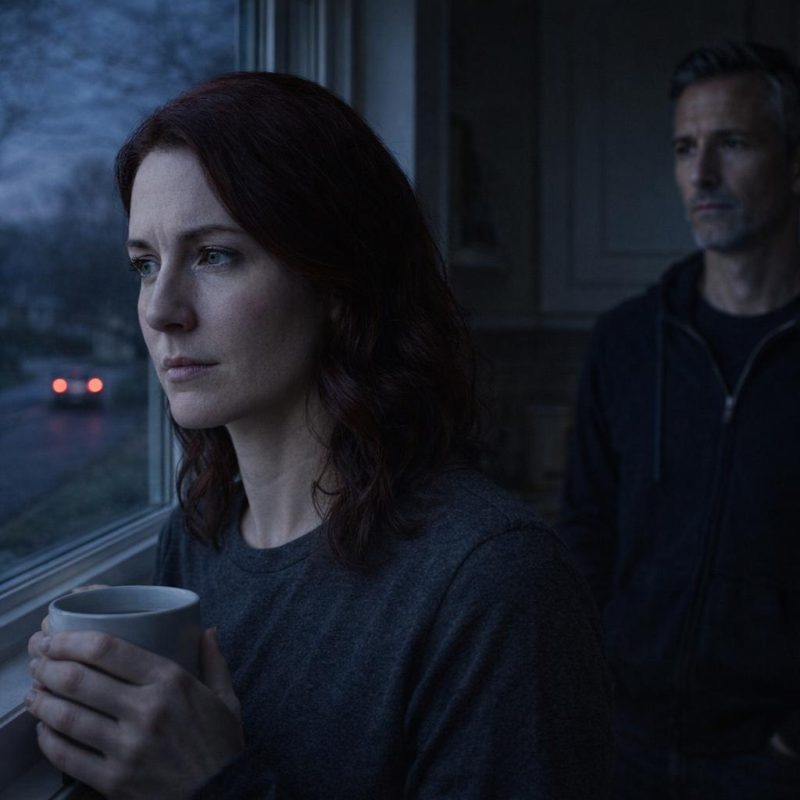 Image by RM AI
The Phone on the Counter
It started small enough that I almost didn't notice. Daniel had always kept his phone in his shirt pocket or on the nightstand — never really thought about it, never really had to. But sometime around late spring, I started seeing it face-down on the counter. Not once. Not twice. Every time. During dinner, during the news, during the quiet hour after the kids were grown and gone and we'd sit in the living room with nothing particular to say. The phone would be there, screen pressed to the granite, like it was sleeping. He checked it more too. Quick glances, the kind you make when you're expecting something. I noticed because I'm the kind of person who notices things, not because I was looking for anything. I wasn't. I told myself it was probably work — a project with a deadline, an email chain that wouldn't quit. Daniel worked in finance. There were always deadlines, always chains. I mentioned it once, lightly, something like, "You waiting on something important?" He said, "Just a work thing," and that was the end of it. His voice was easy. His face was easy. I let it go. But the phone stayed face-down through the rest of dinner, and when I cleared the plates and came back through the kitchen, it was still there, dark and pressed flat against the counter, giving nothing away.
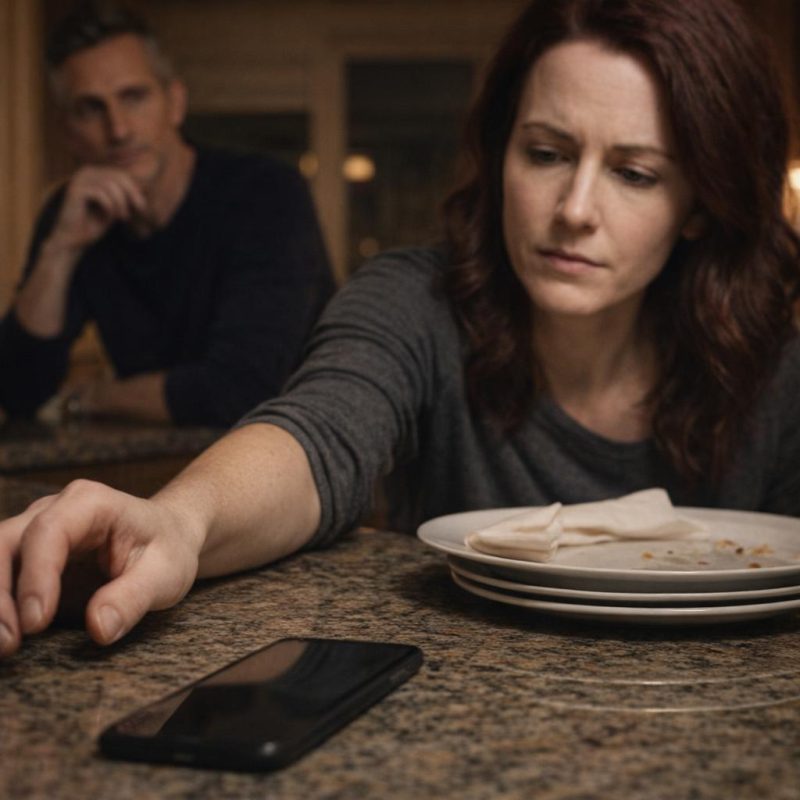 Image by RM AI
Late at the Office
The call came at six-fifteen on a Wednesday. I was already at the stove, stirring pasta, half-listening to the evening news from the other room. My phone buzzed on the counter and Daniel's name came up. I answered expecting nothing in particular. He said he was going to be late — a project had hit a snag, the kind that needed to be sorted before morning. His voice was calm, a little tired, the way it got when a deadline was pressing. It sounded completely reasonable. I said okay, told him I'd leave a plate in the oven, and hung up. I ate dinner alone at the kitchen table with the news still going in the background, and it wasn't sad exactly, just quiet. We'd had late nights before, both of us, over the years. It wasn't unusual for work to reach into the evening. I washed my dish, covered his plate with foil, and settled in with a book. He came home a little after ten, loosened his tie in the doorway the way he always did, said the project was sorted, kissed me on the cheek, and went to bed. I turned off the lamp and listened to the house settle around me in the dark, the refrigerator hum, the distant sound of a neighbor's dog, the ordinary sounds of an ordinary night.
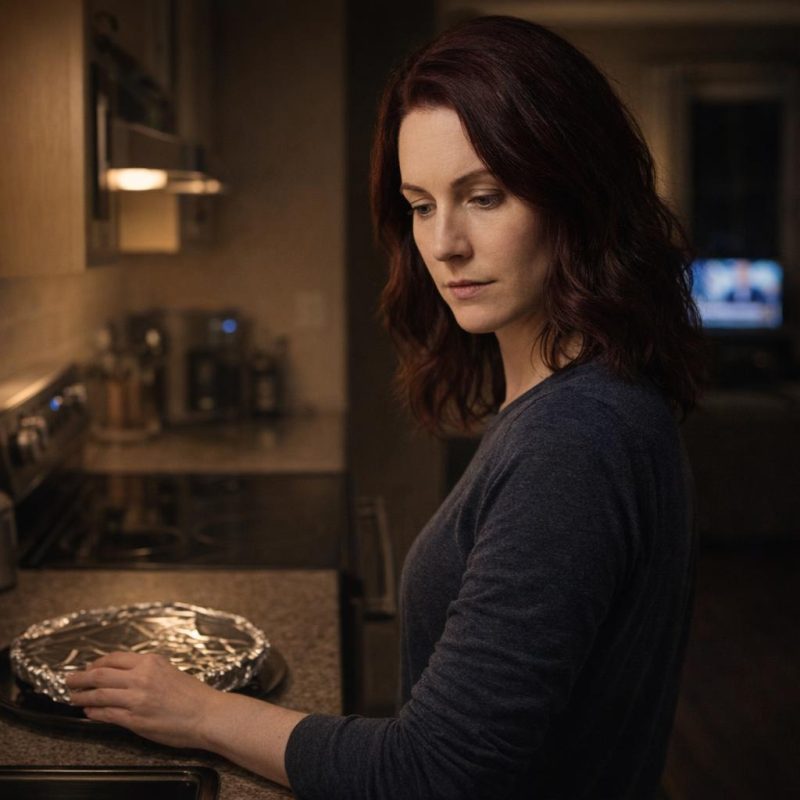 Image by RM AI
Outside Conversations
It happened on a Thursday evening, maybe three weeks after the late nights started picking up. We were in the middle of nothing in particular — I was folding laundry on the couch, Daniel was reading something on his tablet — when his phone lit up on the coffee table. He glanced at the screen, and something shifted in his posture. Not dramatically. Just a small tightening, the kind you'd miss if you weren't paying attention. He stood up, said, "Give me a minute," and walked toward the back door. I watched him step out onto the patio through the kitchen window. He paced the length of the yard twice, phone pressed to his ear, his free hand moving the way it did when he was working through something complicated. I couldn't hear a word. The glass and the distance took care of that. I told myself it was probably the same work thing, whatever it was that had been keeping him late. He was in finance — calls happened. Deals happened. I folded a pillowcase and set it on the stack and tried not to read anything into it. He came back inside about ten minutes later, set the phone down, and picked up his tablet like nothing had interrupted him. He didn't mention the call. I didn't ask. We sat there in the quiet for another hour, and I almost convinced myself I'd imagined the tightening in his shoulders. Then his phone lit up again, and he was already reaching for it, already moving toward the back door.
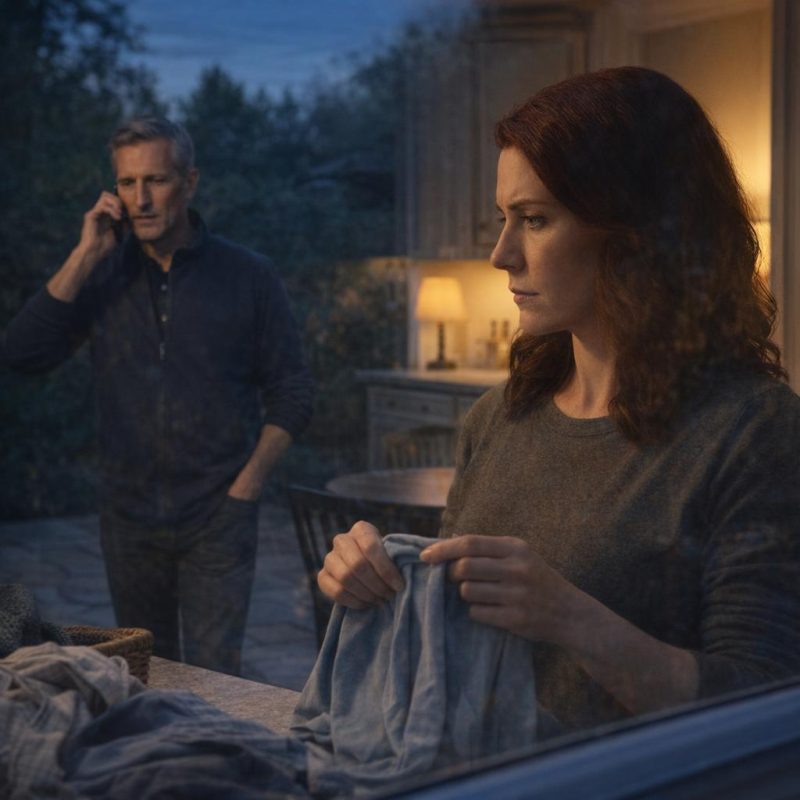 Image by RM AI
The Screen Flip
I came into the living room with a basket of laundry balanced against my hip, not thinking about anything in particular — just running through the mental list of what still needed folding before I could sit down. Daniel was on the couch, phone in hand, and the moment I crossed the threshold his hand moved. Fast. Smooth. The phone flipped face-down onto the cushion beside him in one practiced motion, screen going dark before I'd even fully registered what I was seeing. I set the laundry basket down on the armchair. He looked up at me. I looked at him. Neither of us said anything for a beat. Then he asked if I wanted to watch something, his voice easy, his expression easy, the same face I'd been looking at for twenty-two years. I said sure and sat down and started folding a shirt. He picked up the remote. The TV came on. We watched whatever he'd landed on, and I kept folding, and the room felt completely normal except for the fact that it didn't, not quite. I couldn't have explained it if someone had asked me to. Nothing had happened, technically. He'd moved his phone. People moved their phones. I turned that thought over a few times while the show played, trying to make it feel as small as it sounded. But his hand had moved so fast, and the screen had gone dark, and he hadn't said a word about it.
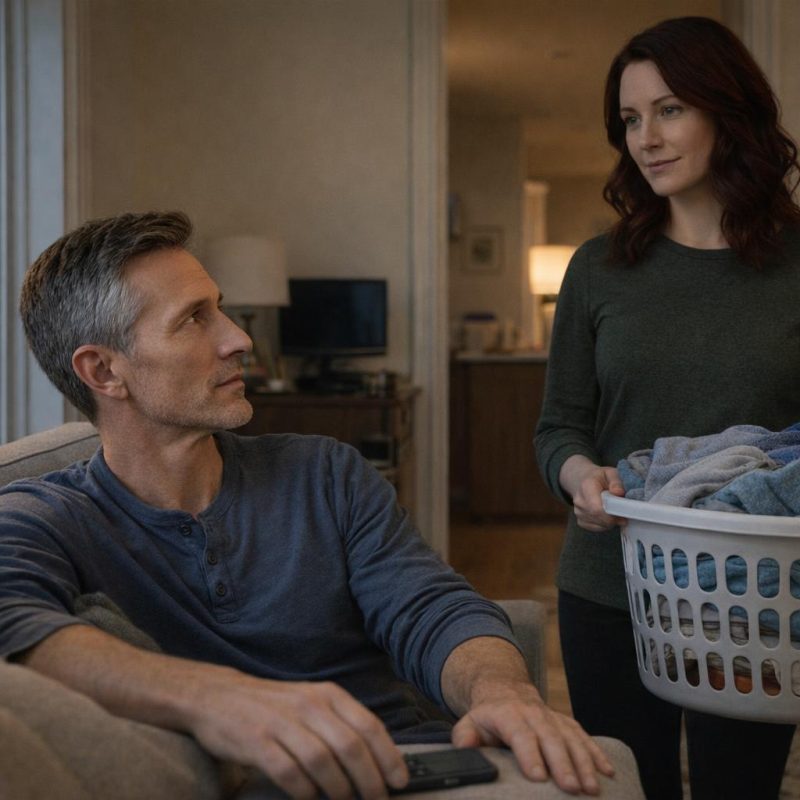 Image by RM AI
Weekend Conference
He brought it up over breakfast on a Saturday, casual as mentioning the weather. Said there was a conference in Philadelphia in two weeks — mandatory for senior staff, apparently — and he'd need to leave Friday afternoon and come back Sunday evening. I looked up from my coffee. In twenty-two years, Daniel had never had a weekend work obligation. Not once. He traveled occasionally for work, sure, but always during the week, always back by Friday. I asked him what the conference was for. He said it was an industry compliance thing, gave me a name I didn't recognize, mentioned the hotel. He had the details ready, which I told myself was just Daniel being Daniel — organized, prepared, the man with the legal pads. I said okay. I asked if he needed me to handle anything while he was gone. He said no, he had it covered. He went back to his eggs. I went back to my coffee. I turned the conference name over in my head a few times, trying to decide if it sounded familiar, and decided it didn't matter either way. These things happened. Companies had conferences. Then he set his fork down and mentioned, almost as an afterthought, that there was another trip scheduled for the following month.
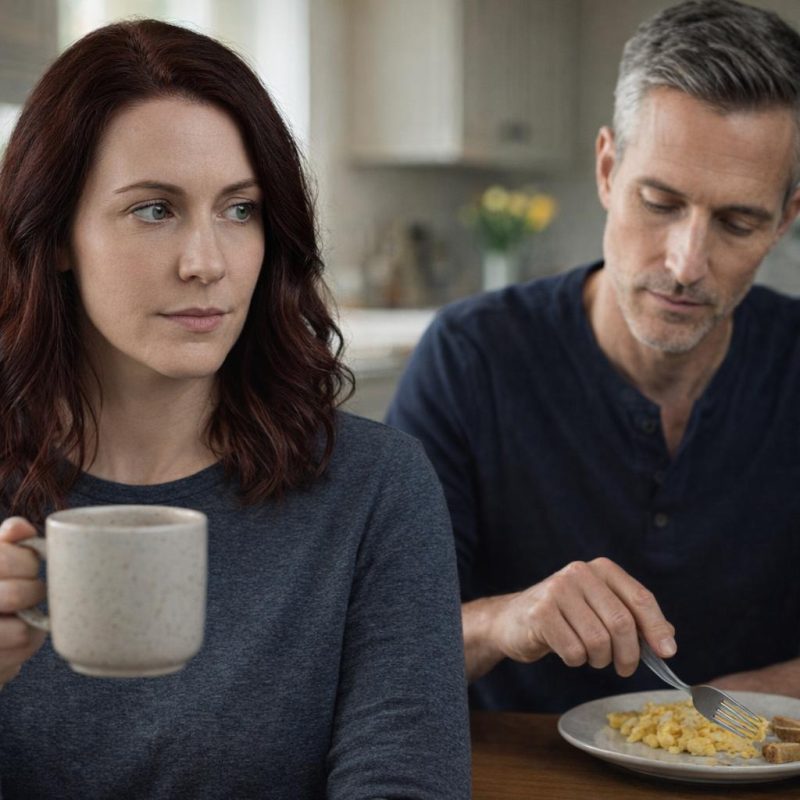 Image by RM AI
Dinner with Strangers
Sarah drove over for dinner on a Sunday, which used to happen more often before her schedule got complicated with classes and part-time work. Michael came too, which was nice — he was easy company, the kind of person who fills a room without trying. I made the pasta dish everyone liked, set the table properly, and for a little while it felt like the kind of evening I'd been missing. Sarah talked about her coursework, something about a professor who assigned readings like he was the only class she had. Michael mentioned his basketball league, a game coming up that he was quietly confident about. I laughed at the right moments and refilled glasses and felt genuinely glad they were there. Daniel sat at his end of the table and answered when spoken to. One word, sometimes two. Sarah asked him something about his week and he said fine. Michael made a joke and Daniel smiled, but it was the kind of smile that doesn't quite reach the eyes, the kind you produce on autopilot. I tried twice to pull him into the conversation — mentioned the conference, asked if he'd heard back about something at work — and both times he gave me just enough of an answer to close the door. Sarah caught my eye across the table at one point, a quick look, there and gone. Daniel excused himself before dessert, said he was tired, and the chair scraped back and his footsteps went down the hall, and the four of us — then three of us — sat with the quiet he left behind.
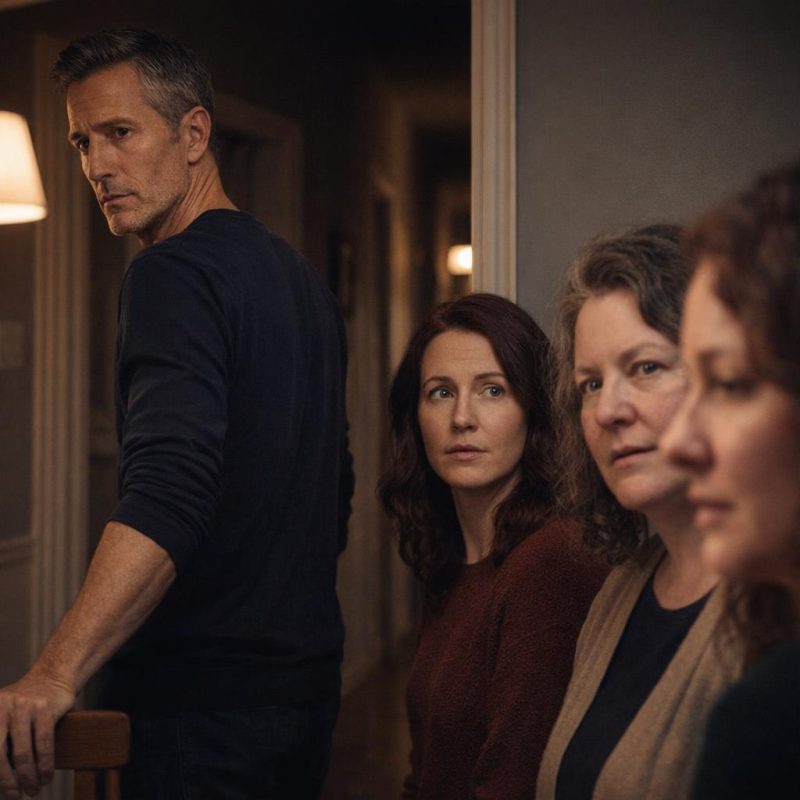 Image by RM AI
Looking Past Me
I brought up our anniversary on a Tuesday evening, which felt like the right kind of ordinary moment for it. We'd been married long enough that the date didn't need fanfare — just a plan, something to look forward to. I mentioned the restaurant on Clement Street, the one with the good risotto and the corner table we always asked for. Daniel was sitting across from me with his phone face-up on the counter, and I watched him glance at it twice while I was still talking. He said something like 'sure, sounds good' without looking up, and I asked if he wanted to make a reservation or if I should, and he said 'either way' in that tone that means he hasn't really heard you. I tried again. I said it was our twelfth, which felt like it deserved something, and he nodded and said 'yeah, definitely' and his eyes went back to the screen. I wasn't angry. I wasn't even hurt yet, not exactly. I just kept talking into the space between us, filling it with words about a dinner that suddenly felt very far away. He was right there — close enough to touch — and I had the strange, unsettling sense that I was speaking to no one at all.
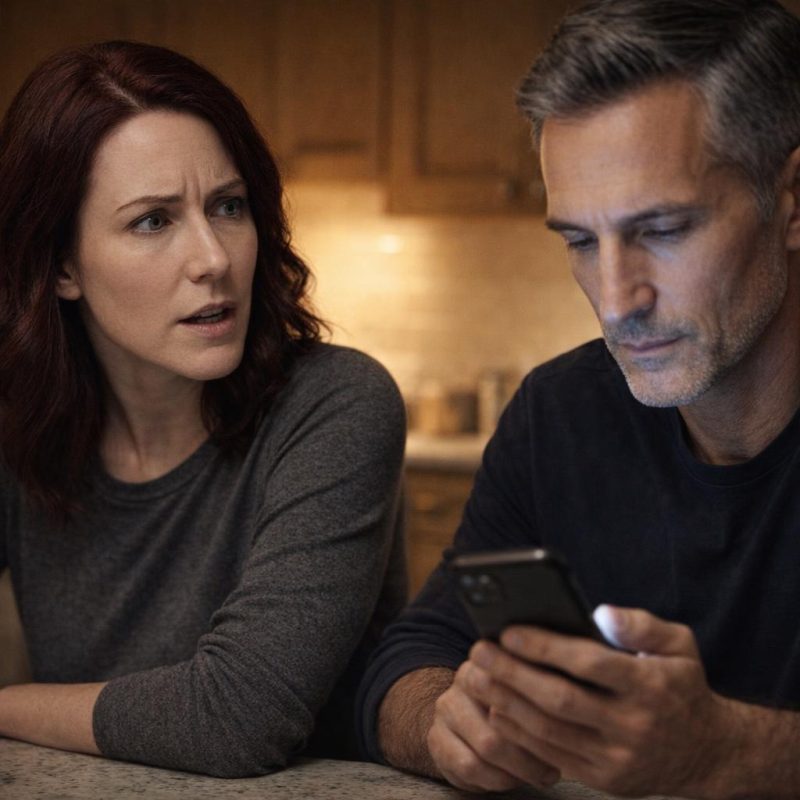 Image by RM AI
Ten-Thirty
He called at seven, which I'd started to recognize as the hour when the day's plans quietly fell apart. The message was short — project running long, don't wait up, he'd grab something on the way home. I sat with the phone in my hand for a moment after he hung up. There was something about the phrasing that snagged at me, something I couldn't quite name. I made dinner anyway, ate half of it, and left the rest covered on the stove. I told myself I wasn't waiting up, and then I sat on the couch with a book I didn't read and the television on low. He came through the door at ten-thirty, jacket over his arm, looking tired in the way that's supposed to close down conversation. I asked how it went. He said the same project, the one from two weeks ago, had hit another snag — something about a deadline being moved up, a team scrambling. He said it the same way he'd said it before. Not word for word, but close enough that something in me went quiet and still. I said okay. He went to wash up. I turned off the television and sat there in the dark for a minute, not moving, just holding the shape of what he'd said against the shape of what he'd said before.
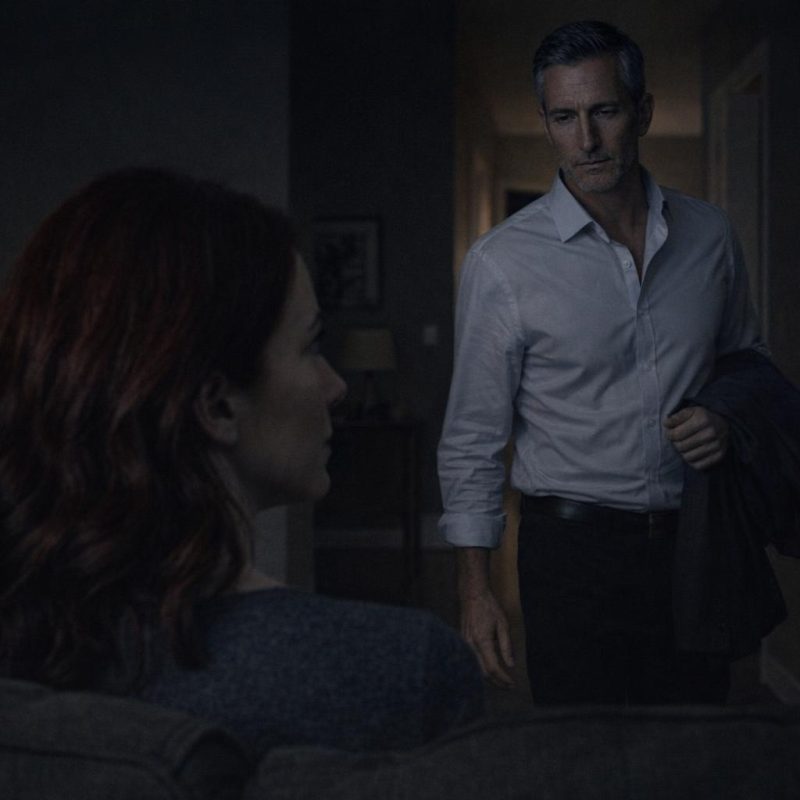 Image by RM AI
Emergency Project
He mentioned it at breakfast, between pouring his coffee and checking his phone — emergency project, same two words, same flat delivery. I was standing at the counter with my back half-turned and I felt something click into place, quiet and cold. I started counting in my head. Three times in three weeks. The same phrase, the same vague shape of an explanation that didn't invite follow-up. I turned around and asked, as casually as I could manage, what the project actually was — what department, what the deadline was tied to. He said something about a compliance review, a cross-functional thing, hard to explain quickly. He was already moving toward the door when he said it, keys in hand, bag over his shoulder. I didn't push. I just watched him go and stood there in the kitchen with my coffee going cold. I'd been giving him the benefit of the doubt the way you do when you love someone and don't want to be the kind of person who assumes the worst. But three times is a pattern, even if you don't want it to be. I didn't know what the pattern meant yet. I just knew I was done pretending I hadn't noticed it.
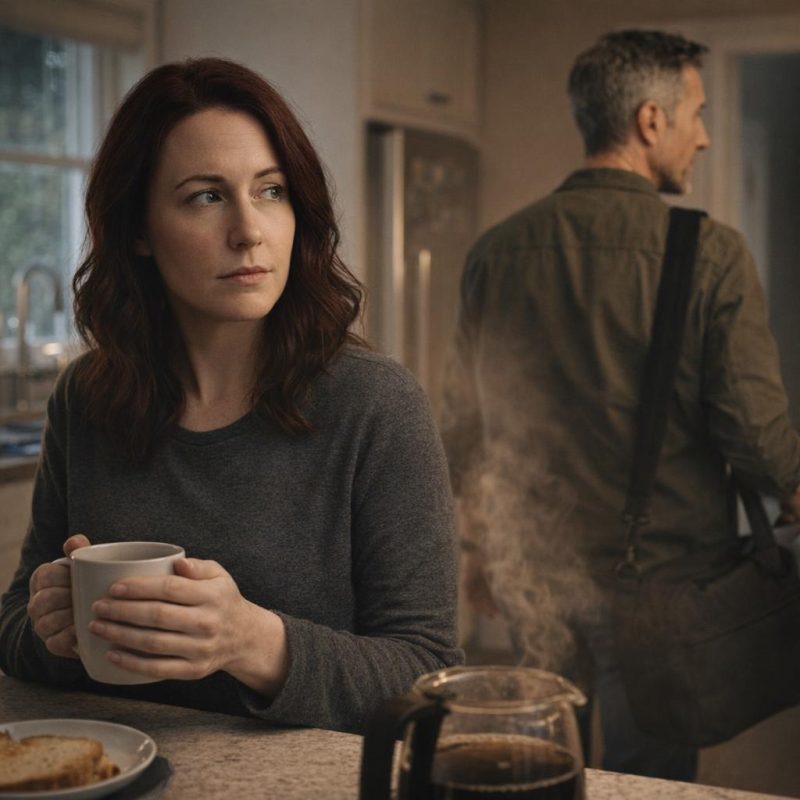 Image by RM AI
Chicago
It came up over coffee on a Saturday morning, which felt safe enough — no agenda, just the two of us at the kitchen table with nowhere to be. I asked about the Chicago conference, the one he'd mentioned a few weeks back, said I'd been meaning to ask how it went. He looked up from his mug and there was a pause, just a beat too long, the kind that wouldn't mean anything on its own but felt significant given everything else. He said it was fine, productive, the usual. I asked who else from his team had gone. He said a couple of people, named one person I'd heard of before, moved on quickly. I nodded and let a moment pass. Then I asked which hotel he'd stayed at, just making conversation, the way you do. He said something about the downtown area, near the convention center, one of those business hotels. He waved his hand slightly, like the detail wasn't worth pinning down. I kept my face neutral and took a sip of my coffee. Then I asked if he still had the conference program, because I'd been curious about one of the panels he'd mentioned — and he looked at me across the table and said he didn't think he'd kept it.
 Image by RM AI
The Receipt in the Pocket
I was taking his jacket to the dry cleaner — a Tuesday errand, nothing remarkable about it. I always check the pockets first. It's habit, the kind you build after finding a forgotten twenty or a crumpled receipt that gums up the cleaning machine. I reached into the inside breast pocket and pulled out a small folded slip of paper. A restaurant receipt. I smoothed it open against my palm and looked at it the way you look at something that doesn't immediately make sense. The restaurant name meant nothing to me, but the city printed at the top did. Austin, Texas. The date was from two weeks ago. I stood in the hallway with the jacket still over my arm and went back through the last month in my head — the trips he'd mentioned, the cities, the timelines. Austin hadn't come up. Not once. He'd talked about Chicago, about a client meeting that ran long, about traffic on the way back from the airport. Austin was not part of any story he'd told me. I set the receipt on the counter and looked at it for a long time. It was just a piece of paper. A dinner for one, mid-range wine, nothing scandalous on its face. But it was from a place he'd never mentioned, on a date I couldn't account for, and the quiet weight of that sat with me long after I'd put it down.
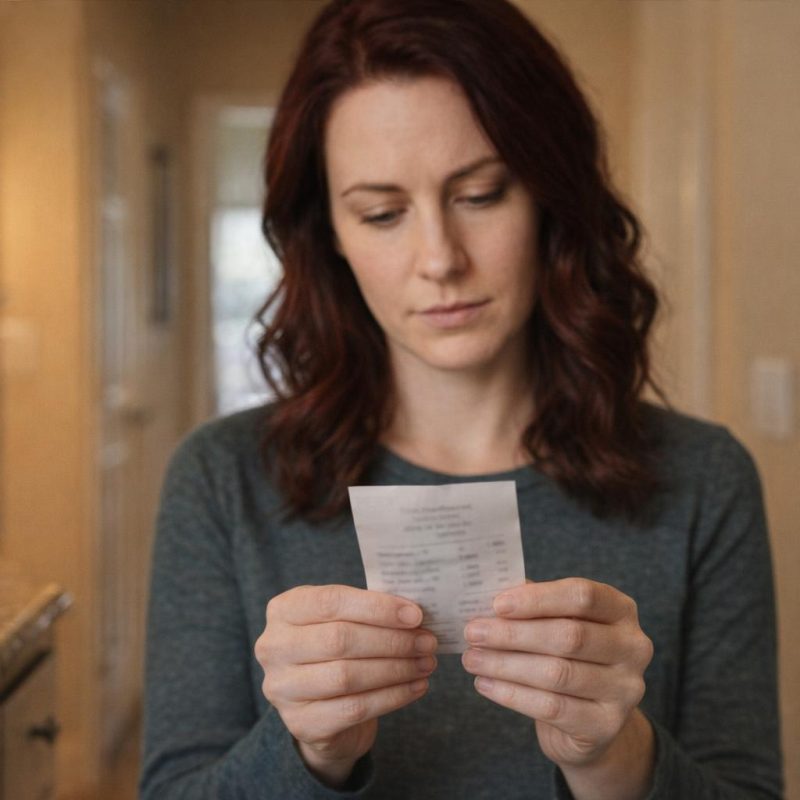 Image by RM AI
The Credit Card Statement
The credit card statement came on a Thursday, tucked in with the usual stack of mail. I opened it the way I always did, at the kitchen table with my morning coffee, half-expecting nothing. I ran my finger down the column of charges the way you do when you're not really looking for anything. And then I stopped. A hotel charge in Denver, dated the week he'd told me he was in Chicago. I went back over it twice, thinking I'd misread the city or the date. I hadn't. I kept going down the list. A restaurant charge in a city that didn't match any trip he'd described. Ride-share charges on two days he'd specifically said he drove himself. I set the statement down on the table and picked up my coffee and then set that down too. None of it was proof of anything, I told myself. Charges get miscoded. Dates blur together. There were explanations I hadn't thought of yet. But my hands had started shaking slightly, just enough that I noticed, and I sat there in the quiet of the kitchen with the statement in front of me and three charges that didn't line up with anything he'd told me.
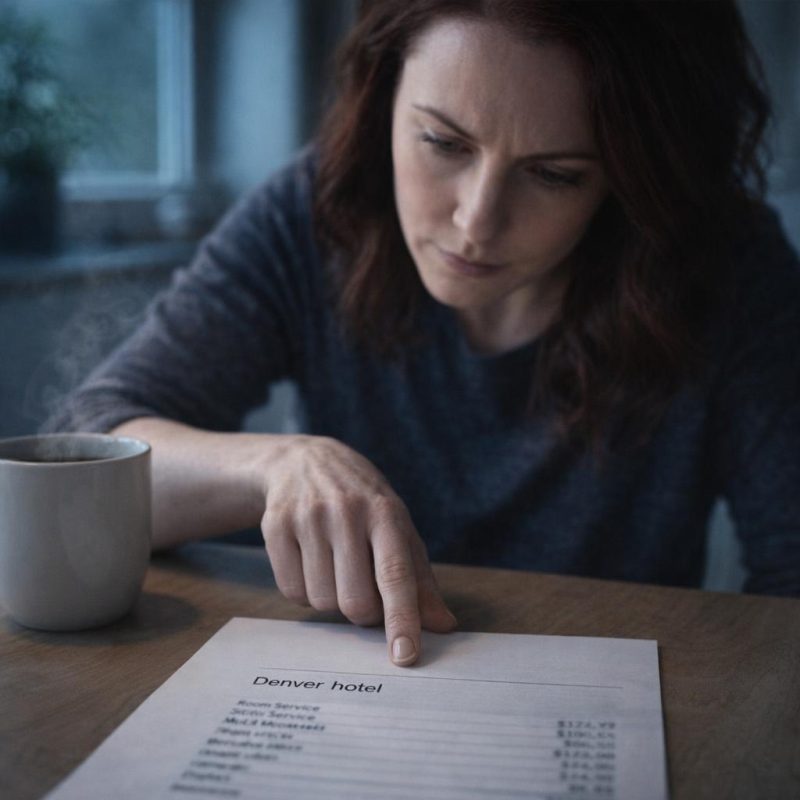 Image by RM AI
The Email
I was walking past his home office to get to the linen closet when I saw it — the laptop open on his desk, screen bright, door not quite pulled shut the way he usually kept it when he was working. I wasn't trying to see anything. I just glanced in the way you do when light catches your eye. The screen was showing an email, and I could make out the hotel chain logo at the top, the kind of formatted confirmation you get when a booking goes through. I stopped in the hallway. I could see enough — a city name, a date range — before Daniel looked up from where he was sitting and our eyes met through the gap in the door. He reached over and closed the laptop in one smooth motion, not fast enough to seem panicked but faster than he needed to. He said he was just finishing something up. I said okay and kept walking to the linen closet and stood inside it for a moment with my hand on a stack of towels, not moving. I replayed what I'd seen. Seattle, I thought. The dates had been for next week. And just before the screen went dark, I'd caught the edge of a second email below the first — another confirmation, another set of dates, a different city entirely.
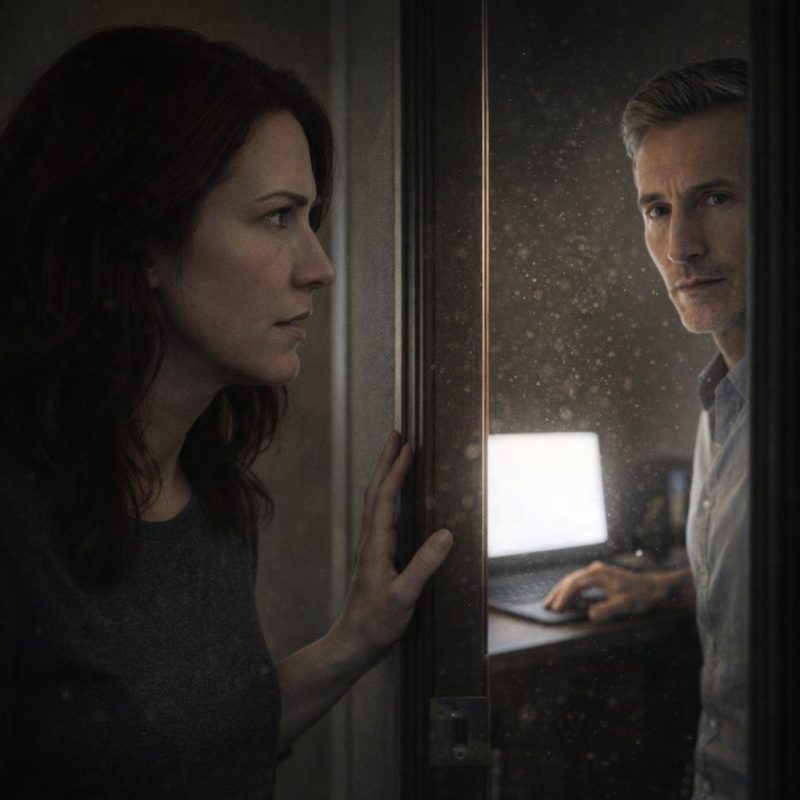 Image by RM AI
Reservation for Two
I went to print a document that afternoon and found something already in the tray. I almost set it aside without looking — junk, I assumed, something Daniel had forgotten to collect. But I glanced at it before I put it down. It was a reservation confirmation from a restaurant, the kind with the logo at the top and the booking details laid out in a clean column. The city matched one of his recent trips, the one he'd described as back-to-back meetings, no time for anything else. The date matched too. I stood at the printer and read it twice. The restaurant was upscale — the kind of place you book in advance, the kind that requires a credit card to hold the table. And at the top of the confirmation, in the field that listed the party size, it said: table for two.
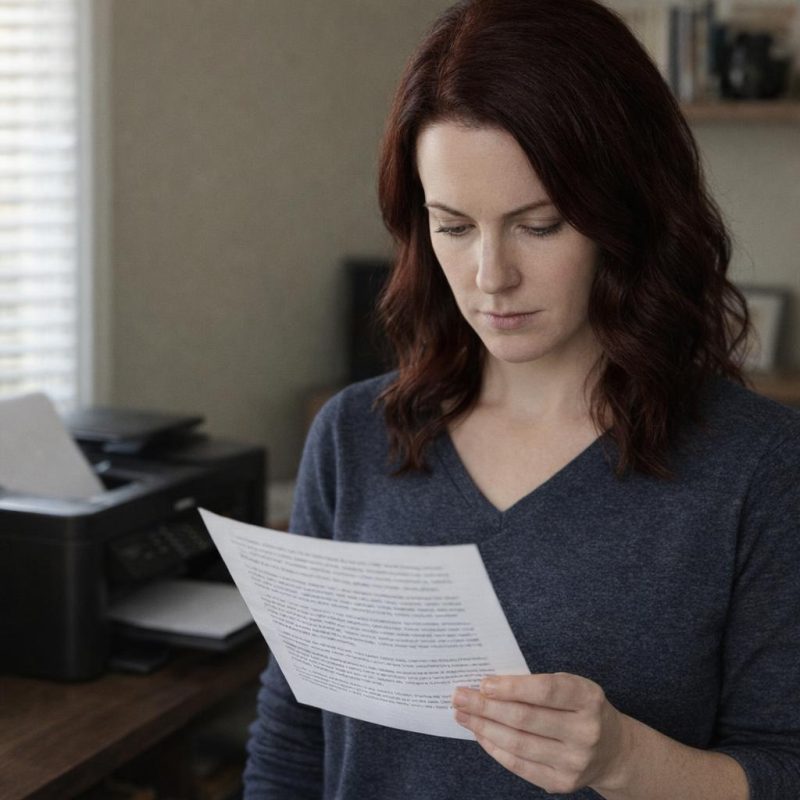 Image by RM AI
The Ride-Share History
I told myself I was just checking. That's how it starts, right? You're not snooping — you're just looking. We'd shared the ride-share account for two years because it was easier, cheaper, one less subscription to manage. I opened the app on my phone and pulled up the trip history. I started with the most recent month and worked backward. The first few trips were mine — grocery runs, a doctor's appointment, the airport drop-off I remembered. Then I hit the dates that matched his travel. Houston. Chicago. Austin. I cross-referenced each one against the calendar I'd been quietly keeping in my notes app. The trips were there, all right. But the addresses weren't hotels. They weren't conference centers or office buildings. They were residential streets. Quiet suburban neighborhoods with names like Briarwood Court and Maple Ridge Drive. I sat with that for a minute, trying to come up with an explanation that made sense. A colleague's house, maybe. A client dinner at someone's home. I kept scrolling. I screenshotted each one, my thumb moving faster than my thoughts. Then I found the one that stopped me cold — a pickup from a residential address in Austin at midnight.
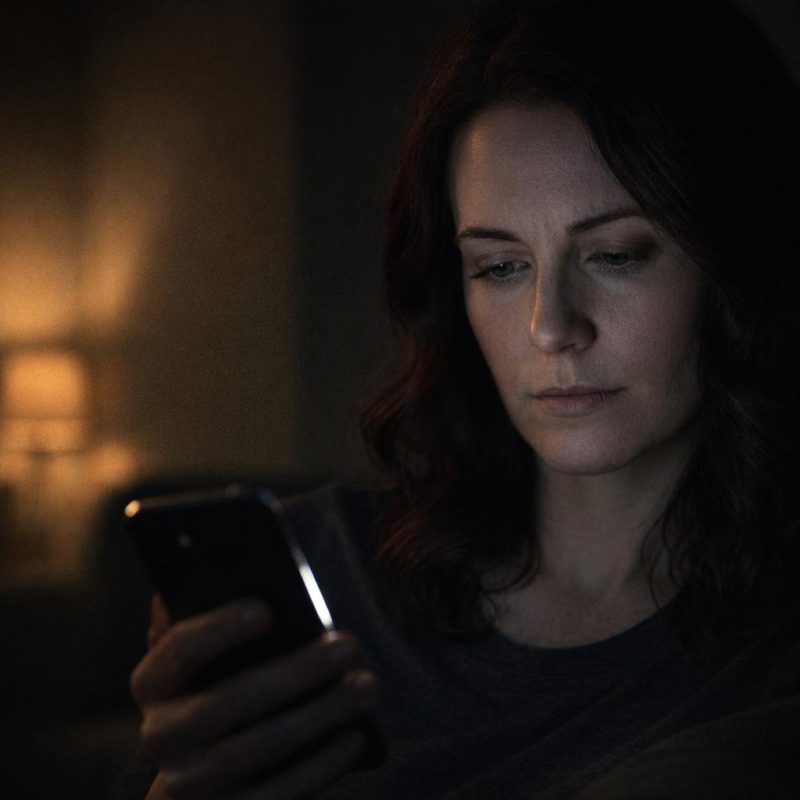 Image by RM AI
The Small Confrontation
I waited two days before I said anything, and even then I kept it small. We were in the kitchen after dinner, Daniel rinsing plates, me pretending to scroll through my phone. I mentioned it the way you'd mention a weather forecast — casual, almost bored. I said I'd seen a charge from Austin on the account and couldn't remember what it was for. He paused. Just a half-second, the kind of pause most people wouldn't catch. Then he said it was a quick day trip, a client meeting, nothing major. I asked which client. He set a plate in the drying rack and said he couldn't remember the company name offhand, that it had been a while. I nodded like that made sense. He moved on — asked if I'd seen his phone charger, mentioned something about a show he wanted to watch later. The subject was gone before I'd even decided whether to push. That was the thing about Daniel. He didn't get defensive. He didn't get angry. He just redirected, smooth and easy, like water finding a new path around a stone. I stood at the counter after he left the room, the dish towel still in my hands. The quiet he left behind felt different from ordinary quiet. It sat in my chest like something I couldn't swallow down.
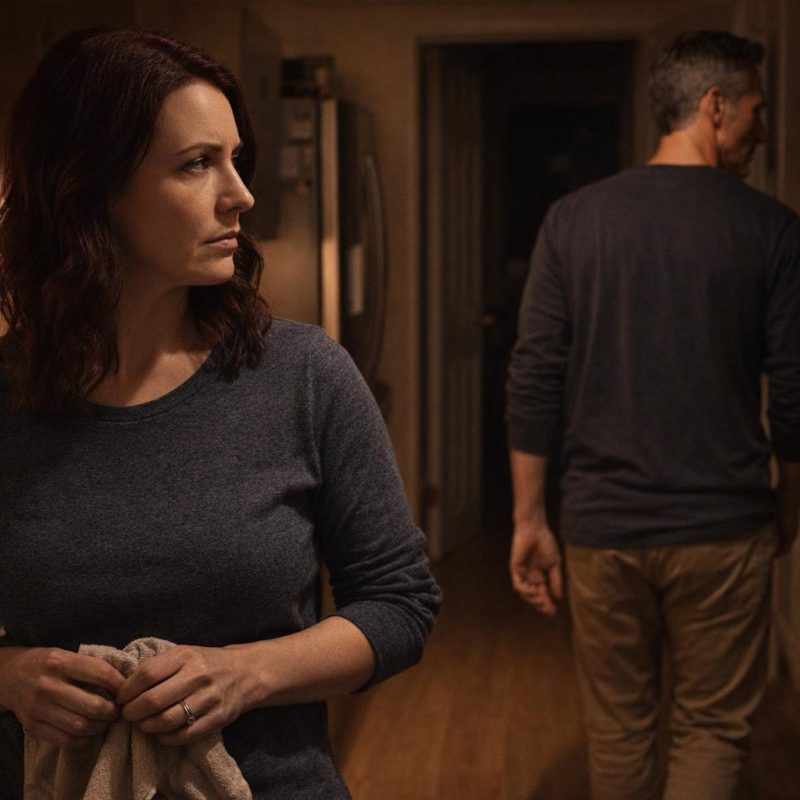 Image by RM AI
Sleepless
Three in the morning and I was staring at the ceiling again. Daniel was asleep beside me, breathing slow and even, completely undisturbed. I lay there and went through the list in my head the way you run your tongue over a sore tooth — knowing it's going to hurt, doing it anyway. The restaurant reservation. Table for two. The ride-share trips to residential addresses in cities I'd never been invited to join him in. The Austin charge he couldn't attach to a client name. The phone that was always face-down now, always on silent. The late nights that had started maybe six months ago, the ones he explained away with deadlines and conference calls in different time zones. The weekend he came home from Chicago and seemed like someone who'd been somewhere else entirely. I counted at least a dozen things that individually could mean nothing. Together they made a shape I didn't want to name. I thought about waking him up. I thought about just asking, directly, no more small questions. But I'd seen how he handled the small questions. He'd handle a big one the same way — calmly, plausibly, and I'd be left standing in the kitchen again holding a dish towel and nothing else. I needed something I could hold onto. Something he couldn't redirect. The weight of that settled into my chest and stayed there.
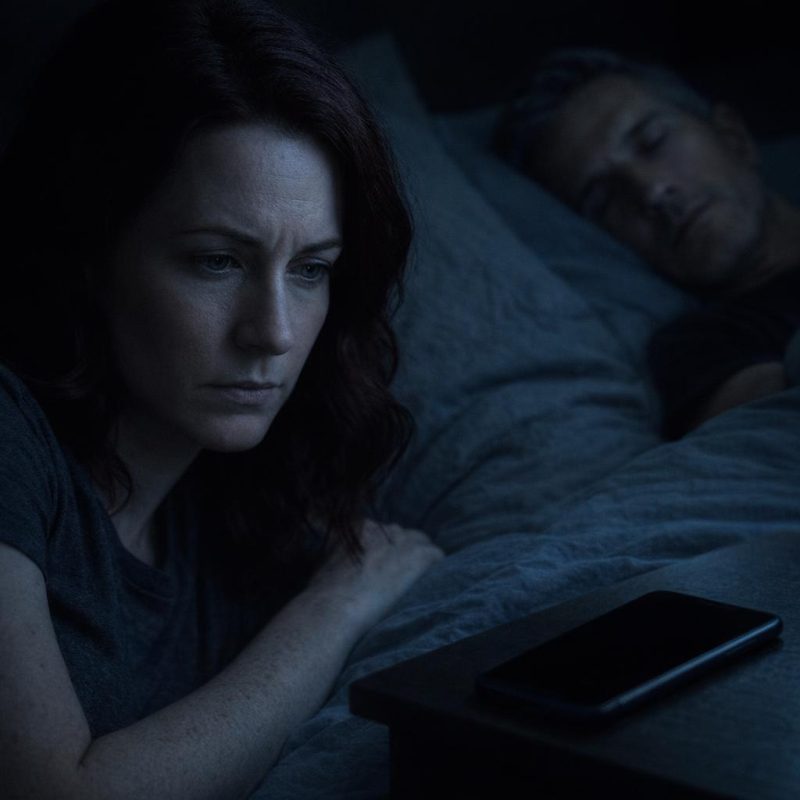 Image by RM AI
Dallas
He brought it up at breakfast on a Tuesday, the way he always announced trips — between bites, almost as an afterthought. Dallas, he said. Three days. A partnership negotiation that had been in the works for months, the kind of deal that required everyone in the same room. He named the company, described the meetings, said they were scheduled back-to-back from eight in the morning until evening. He even mentioned the hotel — a downtown property he'd stayed at before, said the conference rooms were good. I listened and asked the right questions. I said it sounded important. I asked if he needed me to hold anything on the calendar while he was gone. He seemed relaxed, grateful even, like he'd expected more pushback. He kissed me goodbye the next morning at the door, suitcase by his feet, coffee I'd made him in a travel mug. I watched him load the car from the front window. I watched the taillights until they turned the corner and disappeared. Then I sat down at the kitchen table, opened my laptop, and pulled up the airline's website. I booked a seat on the noon flight to Dallas two hours after he left.
 Image by RM AI
Three Days in Dallas
He'd actually been thorough about it, which was the part that stayed with me. The night before he left, he sat across from me at the kitchen table and walked me through the whole thing — the company name, the nature of the deal, why it mattered, which executives would be in the room. He said the hotel was the Meridian, downtown, close to the offices they'd be using. He said the days would be brutal, eight to eight probably, working dinners included. He said he'd text when he could but not to worry if he went quiet for stretches. I asked questions that sounded like a supportive wife asking questions. What's the company's main product? Is this the deal you mentioned back in the spring? He answered all of them. He seemed almost relieved, like the conversation was going better than he'd expected. I memorized every detail he gave me — the hotel name, the company, the timeline. Not because I believed him. But because I needed the map. I nodded at the right moments and refilled his water glass and thought about flight times. Later, after he'd gone to bed, I sat in the kitchen with my phone and confirmed what I'd already booked. The weight of everything he'd just told me — all those careful, specific details — pressed down on me in the silence.
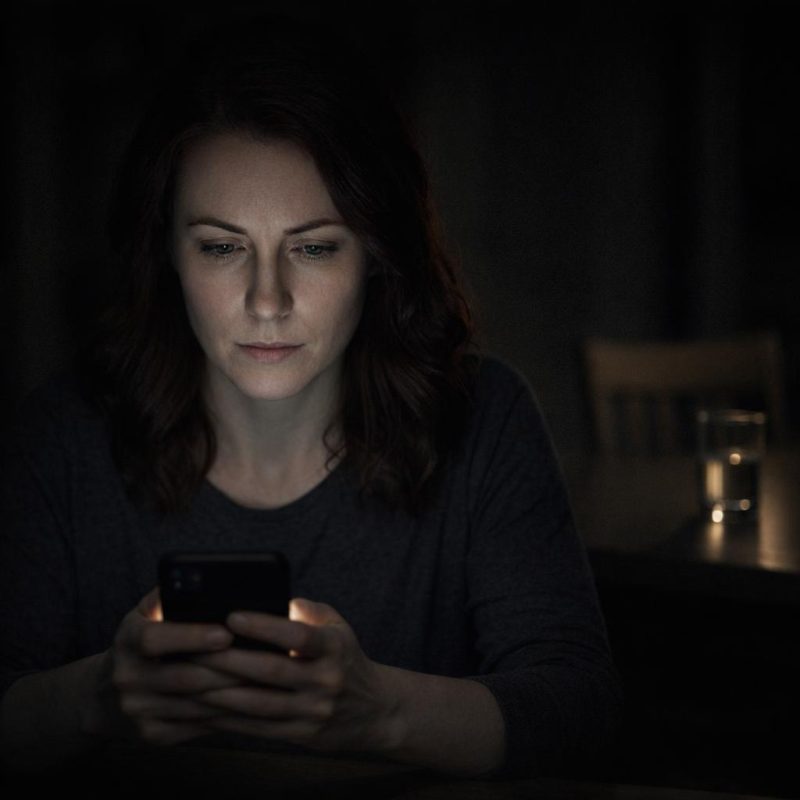 Image by RM AI
The Night Before
I didn't sleep. I'd known I wouldn't. Daniel was out within twenty minutes of his head hitting the pillow, the way he always was, and I lay beside him in the dark and went through everything one more time. The receipts. The ride-share addresses. The Austin charge with no client name attached to it. The phone, always face-down. The way he'd looked almost relieved when I didn't push back at dinner. I thought about calling the whole thing off. I thought about what it would mean if I was wrong — if I flew to Dallas and found nothing, if I'd spent three days in a hotel room two blocks from my husband for no reason. I thought about what it would mean if I was right. Neither option felt like something I could survive cleanly. At some point I considered just waking him up and asking him outright. But I'd been asking small questions for weeks and getting smooth, frictionless answers that left me with nothing. I needed to see something for myself. I needed something real. Around five in the morning, the curtains started to go gray at the edges. Daniel shifted beside me and settled back into sleep. I stared at the ceiling and felt the decision sitting in me, solid and quiet, the way a stone sits at the bottom of still water.
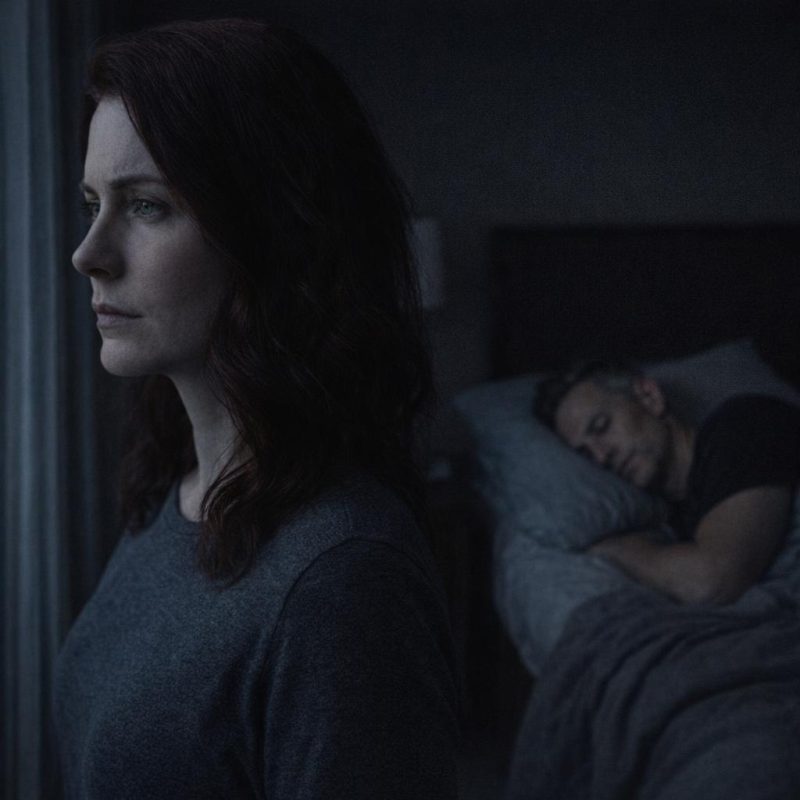 Image by RM AI
Goodbye Kiss
I made his coffee the same way I always did — two sugars, a splash of the oat milk he'd switched to last year. I handed it to him in the travel mug and asked if he had everything. He did his usual pat-down: phone, wallet, keys, laptop bag. He seemed in good spirits, a little distracted the way he always was before a big trip, running through a mental checklist I wasn't part of. We talked about nothing — whether the traffic to the airport would be bad, whether I'd remembered to call the plumber about the slow drain in the guest bathroom. Normal Tuesday morning conversation. At the door he pulled me in and kissed me, one hand on my face the way he used to do when we were first married. He said he'd call when he landed. I told him to have a safe trip and smiled and meant none of it and all of it at the same time. I stood at the front window and watched him load the suitcase into the trunk. He didn't look back at the house. He got in, reversed out of the driveway, and his taillights moved down the street and around the corner and were gone.
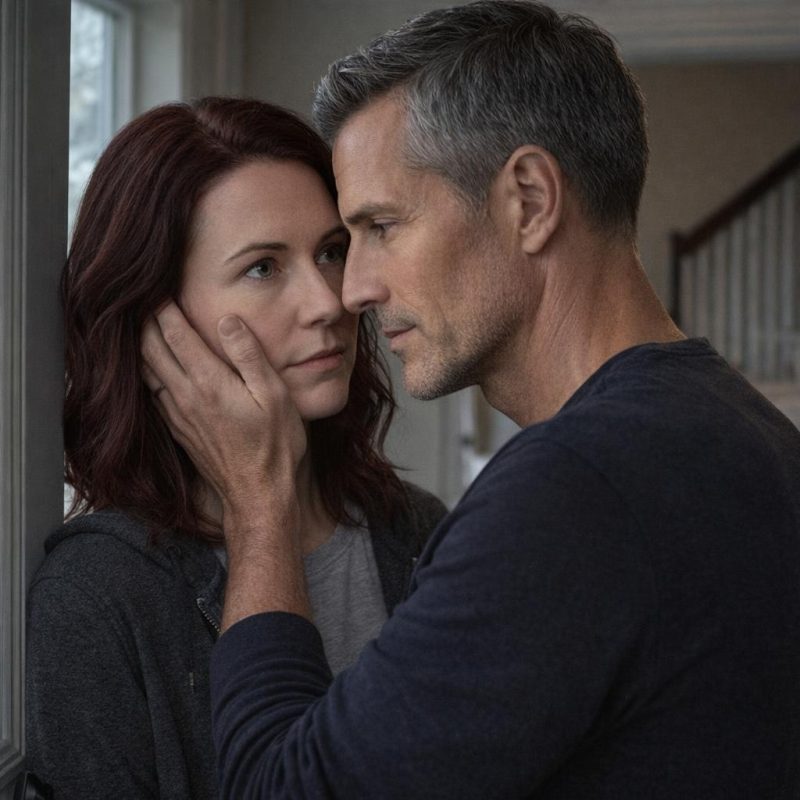 Image by RM AI
Noon Flight
The flight was smooth, which felt wrong somehow. I'd half-expected turbulence, some physical confirmation of what I was doing. Instead I got clear skies and a window seat and two hours to sit with the fact that I was flying to Dallas to follow my husband. I kept my phone in my lap and didn't open the screenshots. I didn't need to look at them again. I had them memorized. I landed just after six in the evening, took a ride-share to the hotel I'd booked — not the Meridian, not anywhere near it, but close enough. Three blocks, I'd measured it on the map. I'd paid cash at check-in, which felt both practical and absurd, like something out of a movie I'd never wanted to be in. The woman at the desk didn't blink. I took the elevator to the fourth floor and found my room and set my bag down and stood at the window. The downtown lights were coming on. Somewhere in that direction, three blocks away, Daniel was in his hotel. I stood there for a long moment. Then I turned from the window, crossed the room, and looked at the key card sitting on the dresser where I'd set it down.
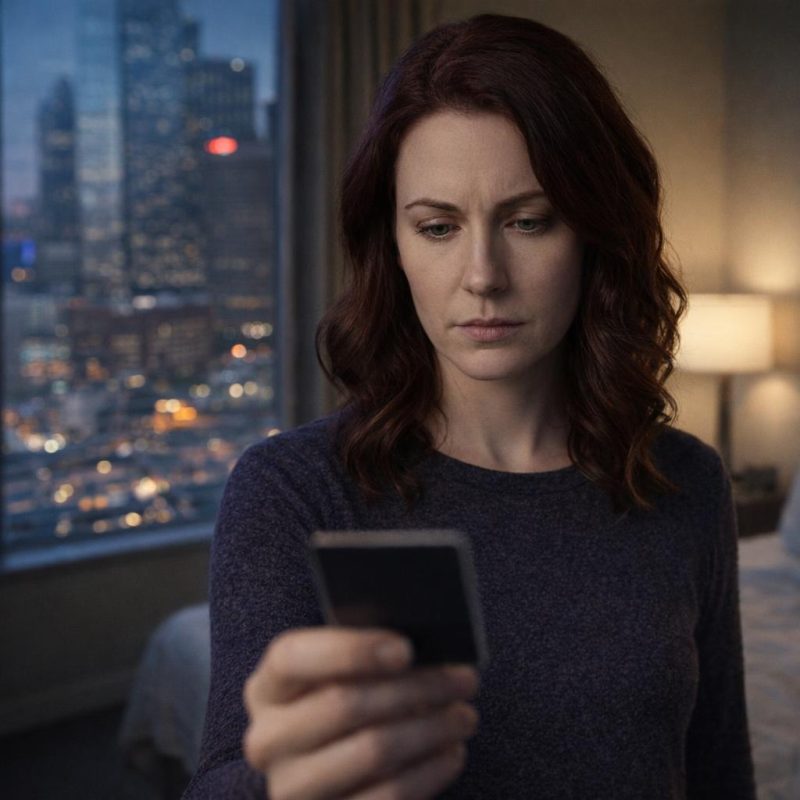 Image by RM AI
First Morning Watch
I was up before five. I didn't sleep so much as wait for morning, lying on top of the covers in my clothes, watching the ceiling go from black to gray. By six-thirty I was in the coffee shop across from the Meridian, hands wrapped around a cup I'd ordered mostly for something to hold. I'd picked a table near the window, angled so I could see the hotel entrance without being obvious about it. Or at least I hoped I wasn't obvious. My heart was doing something unpleasant every time the revolving door moved. I watched a bellman load luggage. I watched a woman in a yellow coat hail a cab. I watched a businessman check his phone on the front steps and then go back inside. At eight-seventeen I ordered a second coffee I didn't want. At eight-thirty, Daniel walked out. He was in a dark suit, no tie, briefcase in hand — the version of him I'd seen a hundred times leaving for work. I exhaled. I left a ten on the table and followed him out into the morning, staying half a block behind — and he walked straight past the financial corridor and kept going, heading somewhere I didn't recognize at all.
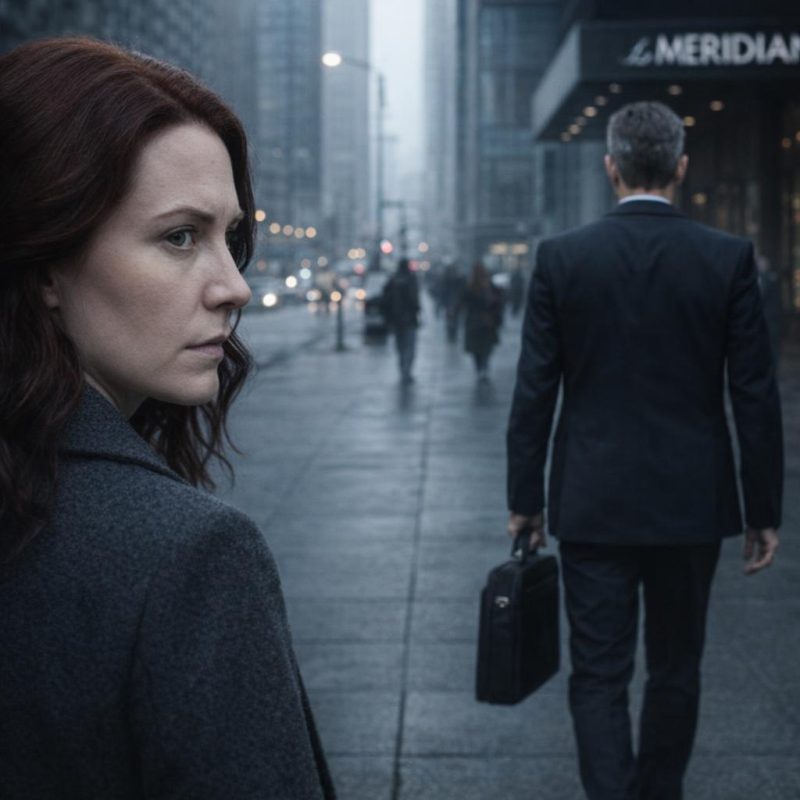 Image by RM AI
Hours Lost
He turned into a mid-rise office building on a street I didn't know the name of. No signage on the front that meant anything to me — just a number and a directory board I couldn't read from across the street. He went through the glass doors without hesitating, without looking back, and then he was gone. I found a bench on the opposite side of the street, under a tree that wasn't providing much shade, and I sat down. I told myself I'd give it twenty minutes. Twenty minutes became an hour. I bought a coffee from a cart near the corner and drank half of it standing up, watching the entrance. A few people went in and out — none of them Daniel. I thought about going inside, checking the directory, figuring out who was in that building. I didn't. I wasn't sure what I was afraid of. Being seen, maybe. Or finding out something I couldn't un-find. The second hour passed slower than the first. I moved back to the bench. I checked my phone. I put it away. I checked it again. I thought about texting him something normal, something wifely, just to see how long it took him to respond. I didn't do that either. When he finally came back through those glass doors, three hours had gone by, and I was still sitting there on that bench with no answers and a cold cup of coffee going soft in my hand.
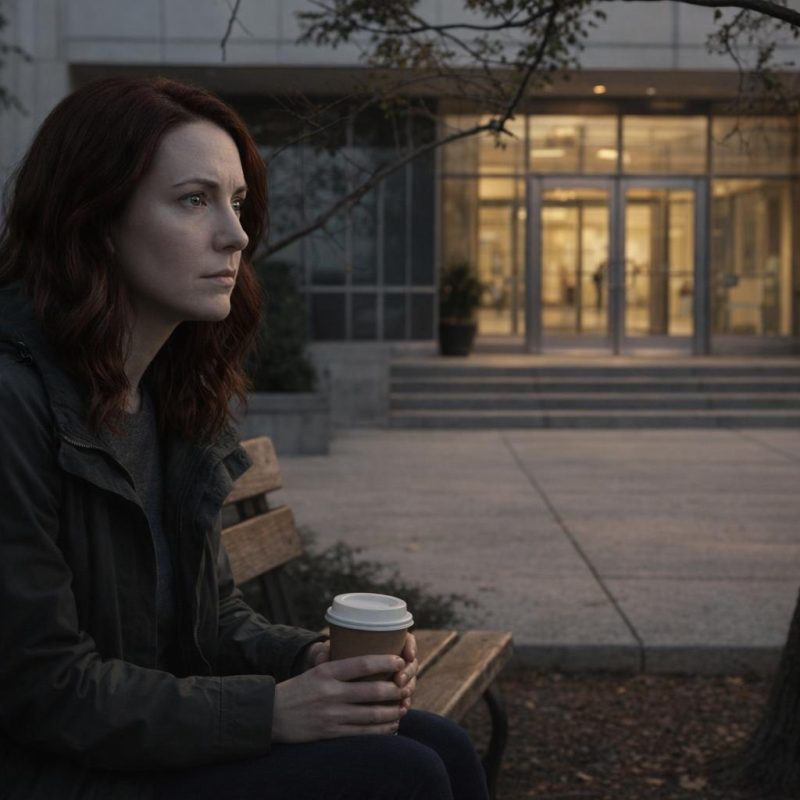 Image by RM AI
Unfamiliar Faces
He didn't go back to his hotel. He walked two blocks east and stopped outside a restaurant — one of those places with a dark awning and no prices in the window. Two people were already waiting for him on the sidewalk. An older man in a suit that probably cost more than my car payment, silver at the temples, the kind of posture that comes from decades of being listened to. And a younger woman with a briefcase held in both hands, dark blazer, hair pulled back tight. I didn't recognize either of them. I hung back near a parked delivery truck and watched. Daniel shook the older man's hand. The woman gave a short nod. Whatever they said to each other, it wasn't small talk — I could tell that much from where I was standing. Daniel's shoulders were up near his ears. His jaw was set. He kept nodding in a way that looked less like agreement and more like someone bracing for something. The older man said something and gestured toward the restaurant door. The woman with the briefcase went in first. Daniel followed. The older man paused on the threshold, looked briefly up and down the street — I pressed myself closer to the truck — and then he went inside too. I stood there on the sidewalk after they disappeared, replaying the image of Daniel's posture, the rigid line of his back, the way he'd carried himself like someone walking into something he couldn't walk away from.
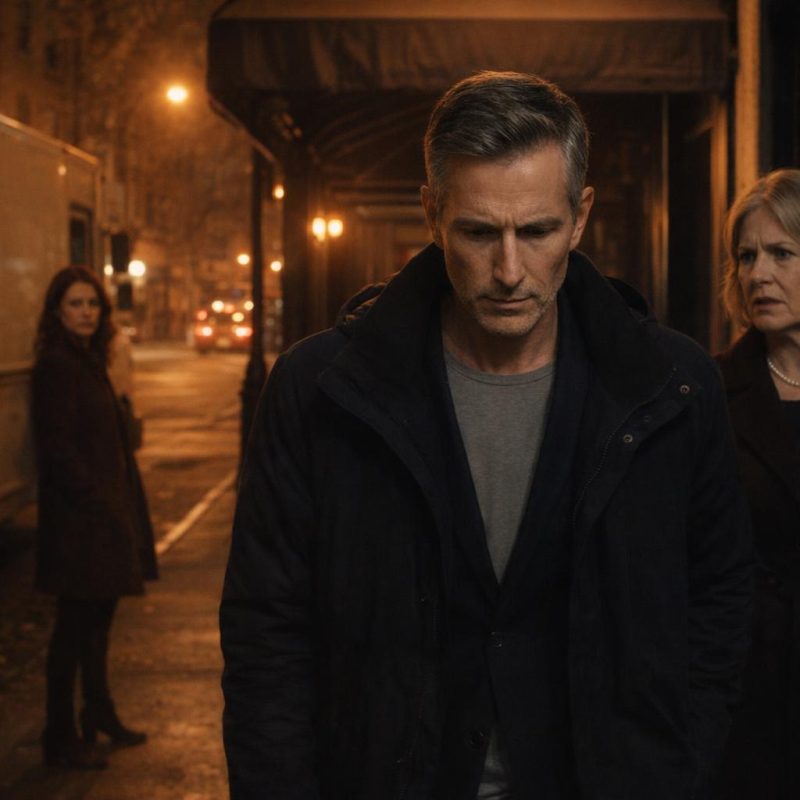 Image by RM AI
The Other Hotel
After the restaurant, I thought he'd go back to the Meridian. He didn't. He walked six blocks south and turned into the entrance of a hotel I recognized by its lobby chandelier — the kind of place that has a name carved in brass above the door and a doorman in a coat. He went straight through without stopping at the desk, which meant he either had a room there or knew exactly where he was going. I found a spot in the plaza across the street, a low concrete ledge near a fountain, and I sat down and watched the entrance. One hour passed. I moved to a coffee shop with a window seat that gave me a sightline to the front doors. I ordered something and didn't drink it. Two hours. The doorman rotated shifts. The light changed. Cabs came and went. I told myself there were a hundred explanations. A meeting that ran long. A colleague with a room there. Something boring and professional that I'd feel foolish about later. I kept telling myself that. Three hours after he'd walked through those brass-framed doors, I was still in that window seat, and Daniel had not come out.
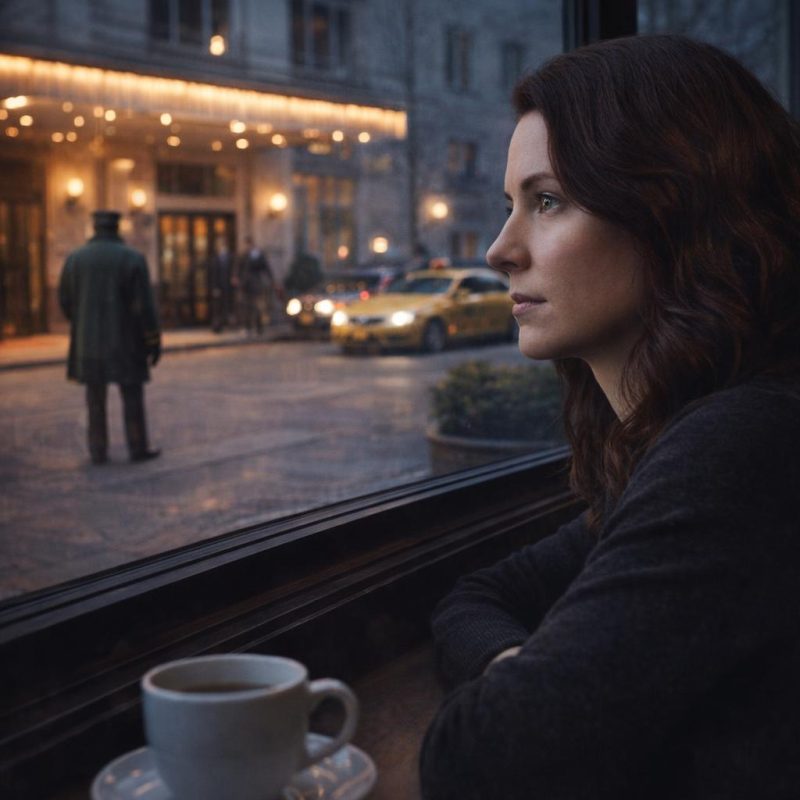 Image by RM AI
Evening Vigil
The afternoon light went sideways and then gave up entirely. Streetlights blinked on around the plaza, one by one, and the hotel across the street lit up from the inside — warm yellow rectangles stacked twelve floors high, every window a room I couldn't see into. I ordered another coffee at some point. I didn't drink it. The barista gave me a look but didn't say anything. I kept my eyes on the entrance. A couple came out laughing. A man in a baseball cap. A woman with a rolling suitcase. Not Daniel. I picked up my phone four times to call him. Four times I put it back down. What would I even say? I'm sitting in a coffee shop in Dallas watching your hotel. I'm watching a building full of lit windows and I don't know which one you're in or who you're with or what any of this means. I thought about the screenshots again. I thought about the way he'd kissed me goodbye at the airport two days ago, distracted, already somewhere else in his head. The plaza outside emptied out as the evening got later. The fountain shut off. The doorman stood alone under the awning. And I sat there in the window with my cold coffee and the dark pressing in around the edges of the glass, and I didn't move.
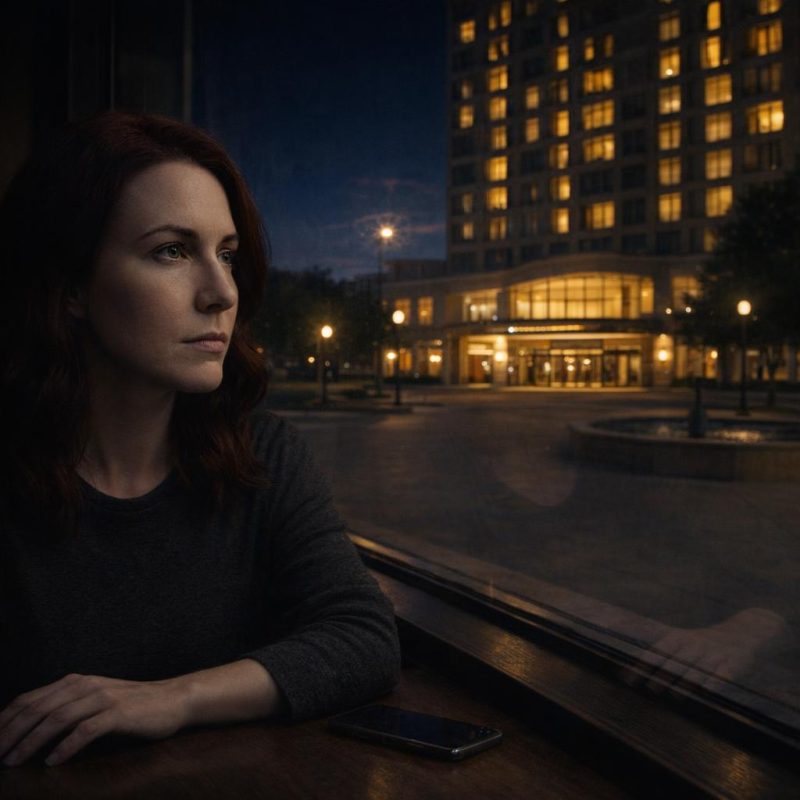 Image by RM AI
Second Evening
The second day was harder. I was back at the same coffee shop by seven-thirty, same window seat, same view of the hotel entrance. The barista from the night before was there again and she didn't say anything when I ordered, just handed me the cup with a look that might have been sympathy. I sat and I watched and the morning went by in slow increments. Nothing. At noon I ate half a sandwich I'd bought from a cart and threw the rest away. More nothing. I was starting to wonder if I'd missed him somehow, if he'd slipped out a side entrance, if I was sitting here watching an empty lobby while he was somewhere across the city doing whatever it was he was actually doing. Then at six in the evening the doors opened and he walked out. I sat up straight. He was moving fast, head down, no briefcase this time — just his jacket, hands in his pockets. He passed under a streetlight and I saw his face clearly for the first time in two days. It stopped me. I'd been bracing for something — guilt, maybe, or that particular careful blankness people wear when they're hiding something good. What I saw instead was exhaustion so deep it had carved itself into the lines around his eyes, and something else underneath it, something that looked a lot less like guilt and a lot more like fear.
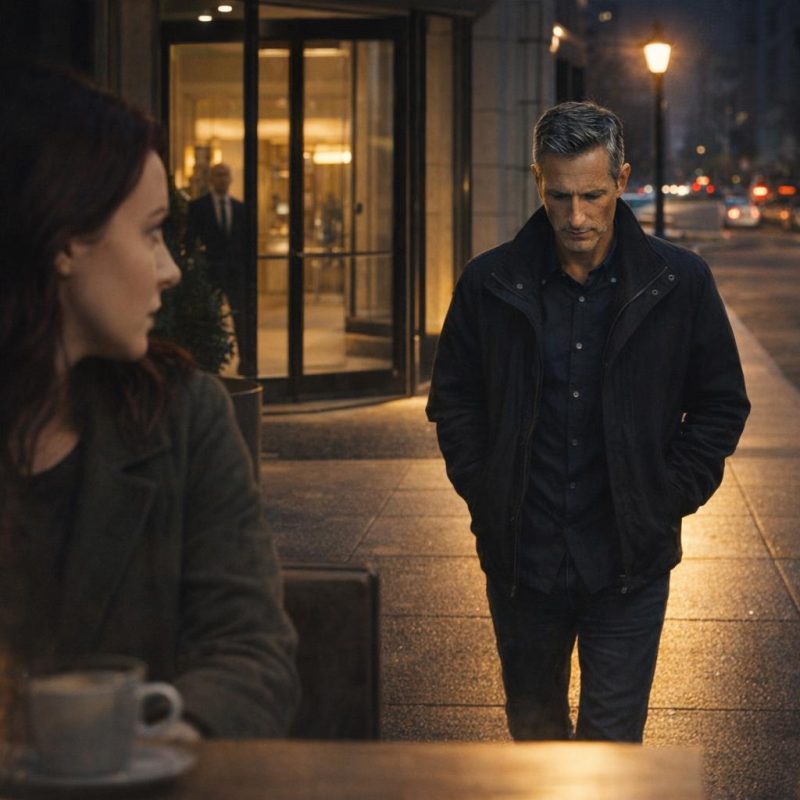 Image by RM AI
Sleepless in Dallas
I was back in my room by nine. I lay on the bed and stared at the ceiling and tried to make the pieces fit. I'd been in Dallas for two days. I'd followed Daniel to an office building where he spent three hours. I'd watched him meet two people I didn't recognize outside a restaurant, both of them tense, none of it looking anything like a lunch date. I'd watched him disappear into a second hotel for most of an afternoon and evening. And then I'd seen his face under that streetlight, and it hadn't looked like the face of a man sneaking around. It had looked like the face of a man carrying something heavy. No woman had appeared. No lingering touches, no stolen glances, nothing that matched the picture I'd built in my head from those screenshots and that sick feeling in my stomach. The meetings looked professional. The people looked professional. Everything I'd seen looked like work — serious, pressured, unhappy work of some kind I couldn't name. I turned onto my side and looked at the dark window. Maybe I'd gotten it wrong. Maybe the screenshots meant something different than what I'd assumed. Or maybe I was just exhausted and desperate to believe there was another explanation, because the alternative — that I'd flown to Dallas and upended my life over something I'd completely misread — was almost worse than what I'd originally feared. The doubt sat with me in the dark, quiet and stubborn, and I couldn't shake it loose.
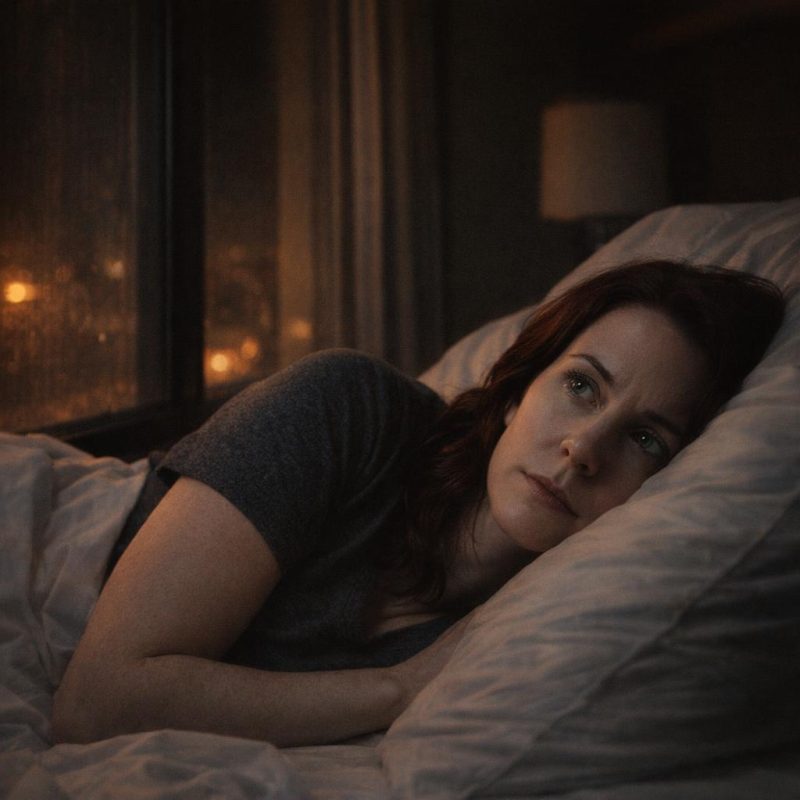 Image by RM AI
Third Morning
I woke up at five-forty with grit behind my eyes and a headache that had settled in somewhere behind my left ear. I'd slept maybe three hours. I lay there for a few minutes telling myself I could stop. I could pack my bag, take a car to the airport, go home, pretend none of this had happened. I could wait for Daniel to come home and ask him directly, like a normal person, like someone who hadn't just spent two days crouched behind delivery trucks and nursing cold coffee in a window seat. I got up and got dressed. I was back at the coffee shop by seven. The same barista was behind the counter — different shirt, same face — and when I walked in she had my order started before I reached the register. She slid the cup across without a word. I said thank you and took my usual table by the window and wrapped both hands around the cup because they were shaking again, the way they had on the first morning, except now the shaking felt less like nerves and more like something structural, like a building that's been standing too long in bad weather. I watched the hotel entrance across the street. The morning light was flat and gray. My coffee went warm, then cool. The street filled up slowly with people who knew exactly where they were going, and I sat there among them, waiting, the tiredness settled so deep into my body it had stopped feeling like tiredness and started feeling like weather.
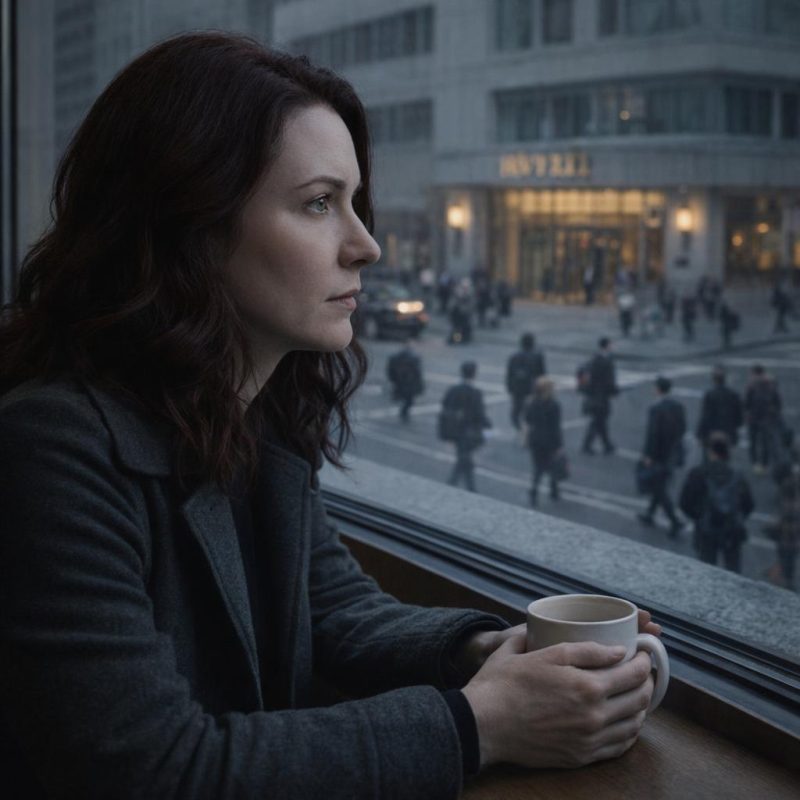 Image by RM AI
Return to the Hotel
He appeared at nine on the dot, same as the two mornings before. I had my coffee in my hand and my eyes on the hotel entrance before he even turned the corner. There was something different about him today, though — something in the way he was carrying himself. His shoulders were pulled up toward his ears, tight and hunched, like a man bracing against wind that wasn't there. He walked the same route he'd walked the last two days, same sidewalk, same pace, but slower somehow. More deliberate. He stopped once, just before the entrance, and looked back over his shoulder. Not the casual glance of someone checking for traffic. Something else. Something that made me set my cup down on the table without looking away. He wasn't moving like a man sneaking around on his wife. I'd spent two days telling myself that's what this was — that I'd find a woman, a room, some ordinary ugly explanation I could survive. But watching him stand there on that sidewalk, jaw tight, eyes scanning the street like he was checking for something he didn't want to find, I wasn't so sure anymore. I didn't know what I was sure of. I just knew I'd been sitting across the street long enough. He turned back toward the entrance, pulled the door open, and walked into the hotel.
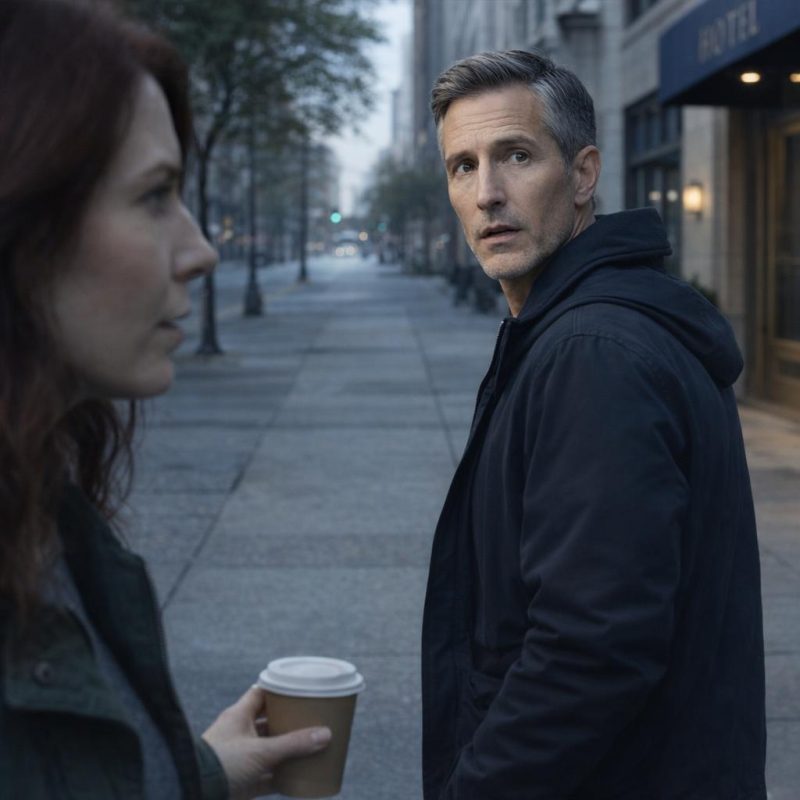 Image by RM AI
Hours Inside
Two hours passed. I know because I checked my phone so many times the battery dropped twelve percent just from the screen waking up. The plaza outside the hotel had its own rhythm — delivery guys, a woman walking a dog, a group of suits who laughed too loud and disappeared inside. None of them were Daniel. I got up and walked half a block in each direction twice, just to keep my legs from going numb, then came back to my spot like I was tethered to it. Three hours. The coffee shop had filled up and emptied out and filled up again. My second cup had gone cold. And then the revolving door moved and he was there. He had his phone pressed to his ear and he was already talking before he'd fully cleared the entrance. He paced a tight rectangle on the sidewalk — four steps one way, turn, four steps back — and his free hand kept going to his hair, fingers raking through it, over and over, like he was trying to pull something out of his own head. I couldn't hear his voice from where I was sitting. I didn't need to. His whole body was wound so tight it looked like it hurt. After about ten minutes he stopped pacing, said something short into the phone, and went back inside. His shoulders were up around his ears again, jaw set, eyes fixed straight ahead as the door swallowed him.
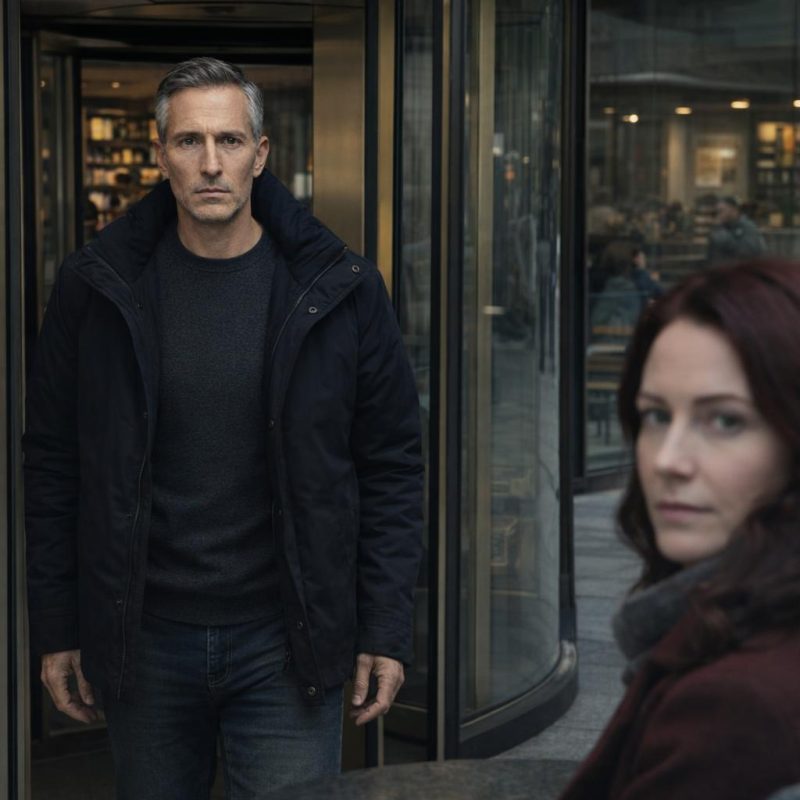 Image by RM AI
The Decision
I sat there for another ten minutes after he went back inside. Maybe fifteen. I wasn't counting anymore. I was just sitting with the weight of three days of watching and waiting and telling myself I needed more information, more certainty, more something before I could move. And then I stopped. I'd been watching this man — my husband — walk into that building for three consecutive mornings. I'd watched him pace the sidewalk like a man coming apart at the seams. I'd watched him scan the street like he was afraid of being followed. I had more information than I knew what to do with, and none of it had made anything clearer. The only thing I hadn't done was go inside. My hands were steady when I picked up my bag. That surprised me. The shaking had been so constant for so long that the stillness felt strange, almost wrong, like the quiet before something breaks. I crossed at the light. The street felt longer than it looked. I kept my eyes on the entrance and I didn't let myself slow down, because I knew if I slowed down I'd stop, and if I stopped I'd turn around and go back to the airport and spend the rest of my life wondering. I reached the entrance. I took one breath. I pushed through the revolving door.
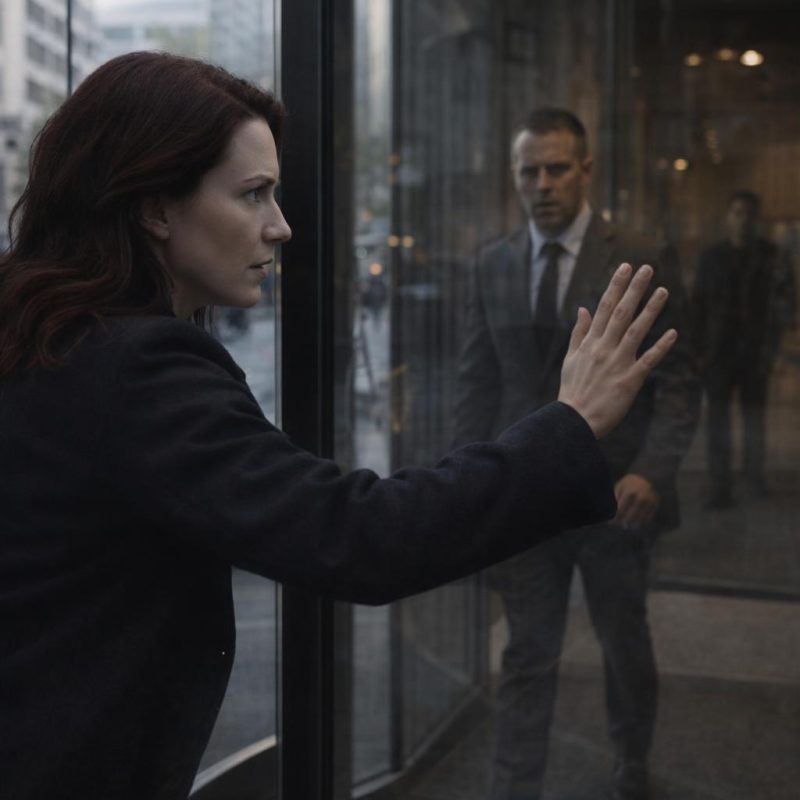 Image by RM AI
Marble and Gold
The lobby hit me like a different world. Marble floors the color of cream, veined with gray, polished so bright I could see a blurred version of myself looking back up. Gold fixtures on everything — the elevator doors, the light fittings, the trim along the front desk. It smelled like money in the specific way that expensive hotels do, some combination of fresh flowers and climate control and surfaces that have never been touched by anything ordinary. Business travelers moved through the space with the easy confidence of people who belonged there, rolling carry-ons, phones to ears, nodding at the staff by name. I stood just inside the entrance and didn't move. My heart was going so fast I could feel it in my throat. I thought about walking to the front desk and asking — asking what, exactly, I hadn't worked out. I thought about turning around. The revolving door was right behind me, the street still visible through the glass, the coffee shop across the way where I'd spent three mornings watching from a safe distance. I could still go back. I could still choose not to know. I stood there long enough that a bellman glanced at me twice. Then I turned away from the front desk and walked toward the elevator bank instead, and the marble floor was so quiet under my feet it felt like the building itself was holding its breath.
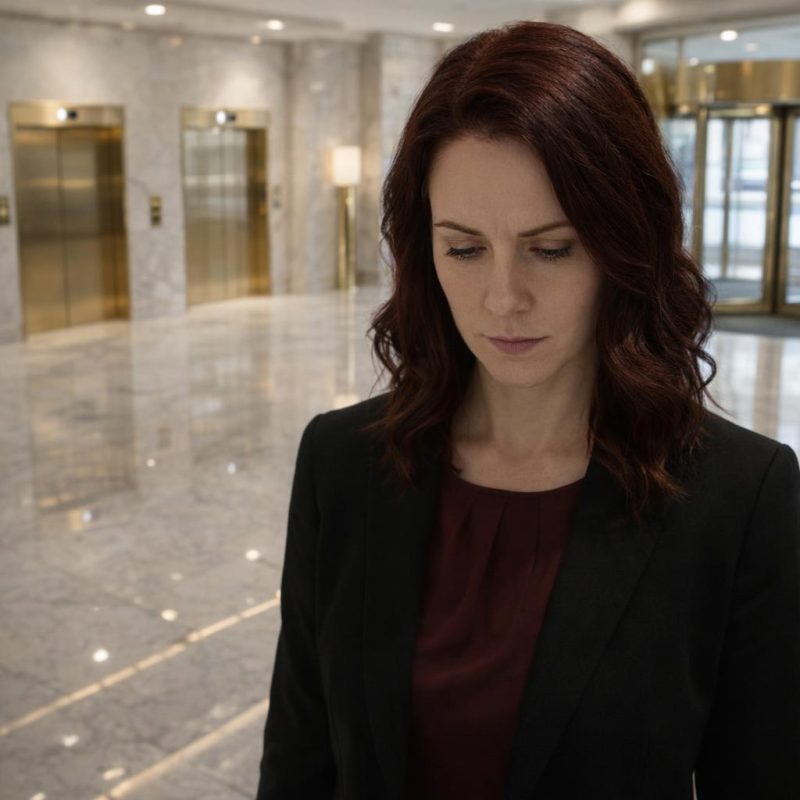 Image by RM AI
Elevator Ascending
I'd watched him from the coffee shop window on the second morning, tracked him past the lobby and toward the far end of the building. I'd counted the floors on the exterior, matched the windows to the elevator panel in my head the way you do when you have nothing but time and a bad feeling. Eight. I was almost certain it was eight. I pressed the button and stepped back and waited for the doors to close. They did, with a soft hiss that sounded final. The elevator was mirrored on three sides and I didn't look at myself. I watched the numbers instead. Two. Three. I tried to think about what I was going to say when I got there. Nothing came. Four. Five. I tried to think about what I was going to find. My mind kept sliding off the question like it was coated in something. Six. Seven. I'd spent three days building up to this moment and now that it was here I felt completely empty, like all the adrenaline had burned off somewhere between the lobby and the fourth floor and left nothing behind but the faint mechanical hum of the elevator and the sound of my own breathing. Eight. The number lit up. The elevator slowed. The doors began to open onto a long, carpeted hallway, and the quiet that came through the gap was the kind that sits in places where people are keeping things to themselves.
 Image by RM AI
Room 847
The hallway stretched in both directions, identical in each — same carpet the color of dark wine, same gold-numbered doors spaced evenly apart, same low hum of the ventilation system overhead. I turned right. I don't know why. Some instinct, or maybe just the fact that I had to pick something. I walked slowly, reading the numbers as I passed. Eight-twenty. Eight-twenty-four. Eight-thirty-one. I'd seen him come in through the main entrance and angle toward the far side of the building, away from the elevator bank closest to the street. That had stuck with me. I'd filed it away without knowing why, the way you file things when your brain is running on fear and too much coffee. Eight-forty. Eight-forty-three. The carpet absorbed every footstep so completely that the hallway felt sealed off from the rest of the world, like sound didn't travel in or out. Eight-forty-seven. I stopped. The door looked exactly like every other door on the floor — same dark wood, same gold numbers, same small peephole at eye level. But this was the one. I was certain of it in the way you're certain of things you can't fully explain. I could hear something from inside. Not music, not a television. Voices. More than one. Low and indistinct, the way conversation sounds through a solid door. I raised my hand to knock.
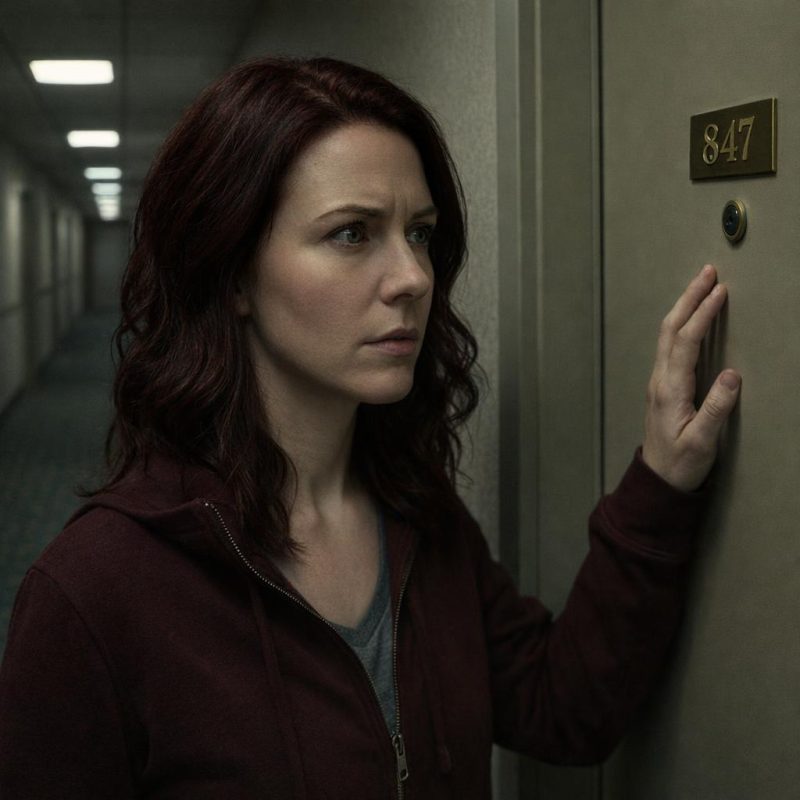 Image by RM AI
First Knock
I knocked twice, quick and light, the way you do when part of you is hoping no one answers. The sound was sharper than I expected in that sealed-off hallway, and it seemed to hang in the air for a second before the carpet swallowed it. I pulled my hand back and waited. Inside, the voices stopped. Not gradually, the way a conversation winds down — all at once, like someone had cut a wire. I stood very still. I could hear movement. Careful, deliberate movement, the kind that's trying not to be heard. Then nothing. I counted to ten in my head without meaning to, some leftover reflex from childhood, and the door stayed closed. No footsteps toward it. No handle turning. Just the low hum of the ventilation and the faint sound of my own pulse in my ears and the absolute, airless quiet of a room full of people who had decided, all at once, not to make a sound. I pressed my lips together and stared at the peephole and thought about every version of what might be on the other side of that door. None of them felt right. None of them felt like enough to explain three days of watching a man I thought I knew walk into a building like he was walking toward something he couldn't turn away from. The silence on the other side of the door settled around me like a held breath.
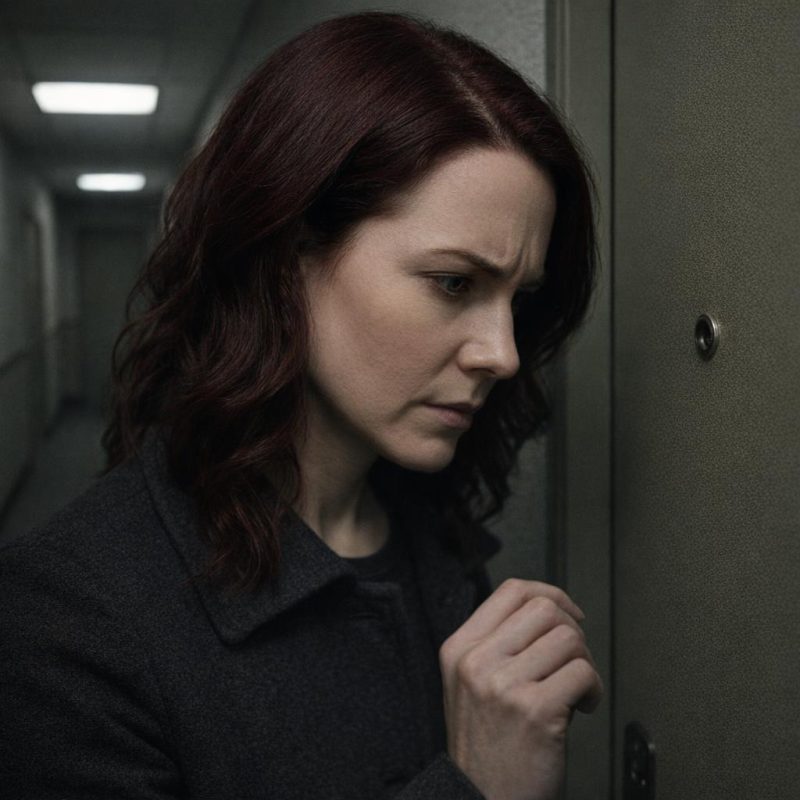 Image by RM AI
Second Knock
I gave it another thirty seconds. Maybe less. Then I raised my hand and knocked again, harder this time — three solid raps that I felt in my knuckles. The sound went through the door and into the room and I didn't pull back this time. I kept my hand up, fingers still loosely curled, like I was ready to knock a third time if I had to. For a moment there was nothing. The same sealed quiet, the same low hum of the building around me. And then I heard them. Footsteps. Slow at first, then more certain, crossing the floor from somewhere deeper in the room toward the door. I counted them without meaning to — four, five, six steps on what sounded like carpet, then a different sound, harder, like tile or wood near the entrance. They stopped. Whoever was on the other side of that door was standing close enough that I could feel the change in the air, that slight shift in pressure you get when something solid is just inches away from you through a thin barrier. The handle didn't move. No voice called out asking who was there. Just the two of us, separated by a door, both of us completely still, and the sound of my own heartbeat filling up all the space between.
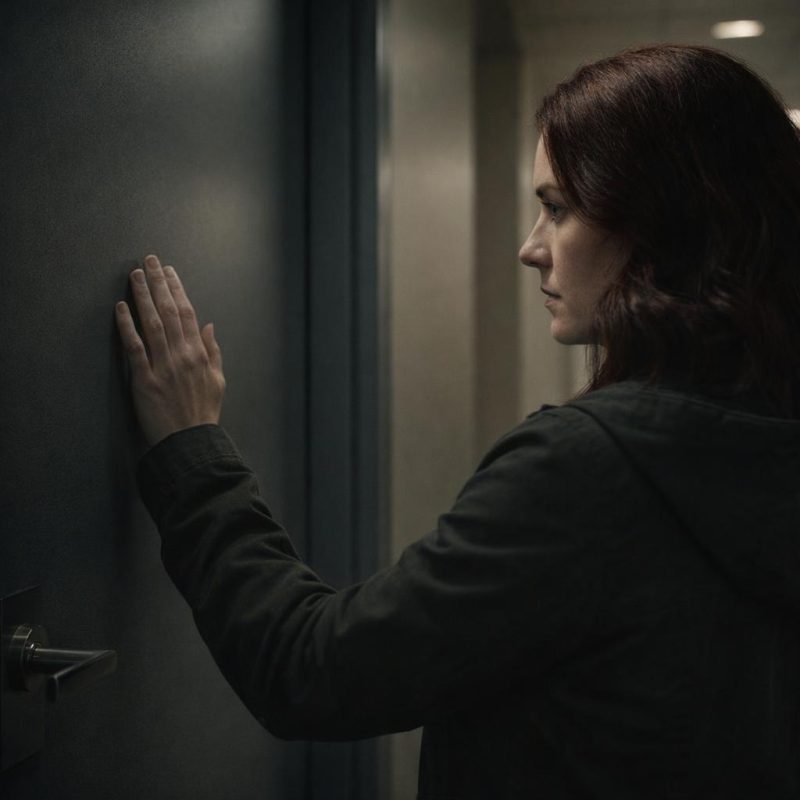 Image by RM AI
The Door Opens
The handle turned. Not from my side — from his. I watched it rotate slowly, the way you watch something you've been dreading for so long that when it finally happens, your body forgets how to react. The door swung inward, inch by inch, and then there was no more door between us. Just Daniel. He was in a dress shirt, collar open, sleeves rolled to the elbows, and he looked exactly like my husband — the same jaw, the same posture, the same hands — except that every drop of color had left his face the moment he registered me standing there. Not guilt. That's what stopped me cold. I'd spent months bracing for guilt. I knew what guilt looked like on him — the slight downward tilt of his chin, the way his eyes would slide sideways. This wasn't that. His mouth opened and closed without producing a single sound. His hand stayed on the door handle like it was the only thing keeping him upright. And his eyes — his eyes were wide and fixed on me with something I hadn't prepared for, something I didn't have a word for yet, something that looked exactly like fear.
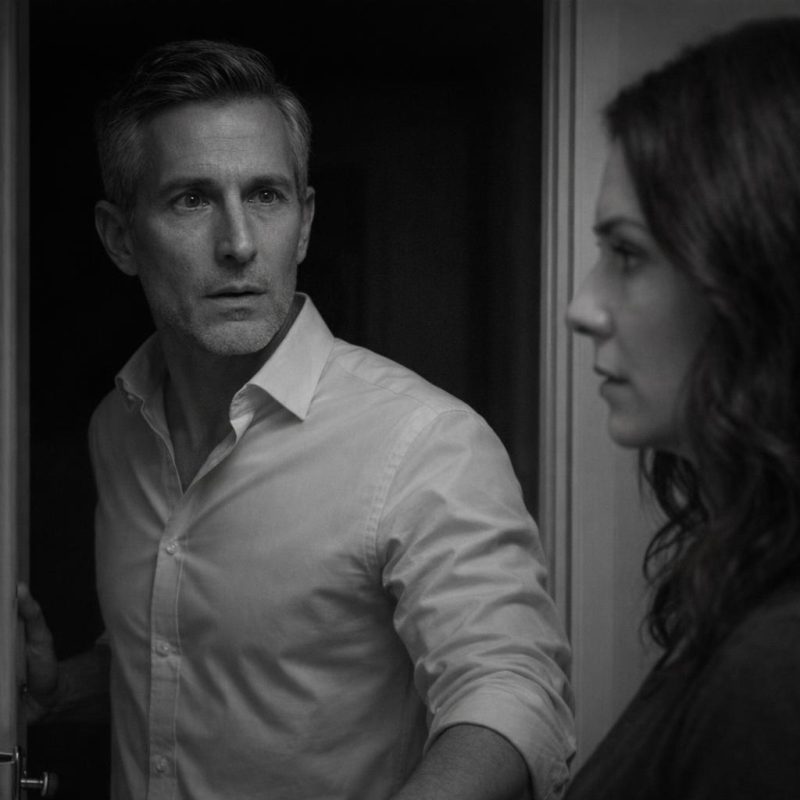 Image by RM AI
Silence
Neither of us moved. Neither of us spoke. I don't know how long we stood there — it could have been five seconds or five minutes, and I genuinely couldn't have told you which. The hallway felt like it had sealed itself around me, the low hum of the hotel's ventilation system the only sound in the world. Daniel's hand was still on the door handle. My feet were still planted on the carpet outside. I kept waiting for him to say my name, to say anything — some explanation that would rush in and fill all that terrible empty space between us. He didn't. His eyes hadn't left my face. I could see his chest moving, shallow and quick, like he was trying to get his breathing under control and not quite managing it. I wanted to speak. I had rehearsed this moment in my head a hundred times — what I would say, how I would say it, the exact words I would use to make him understand that I knew, that I'd followed him, that I wasn't going to pretend anymore. But standing there, actually looking at him, every one of those rehearsed sentences dissolved. The silence between us had weight to it, a pressure that pushed against my sternum and wouldn't let go.
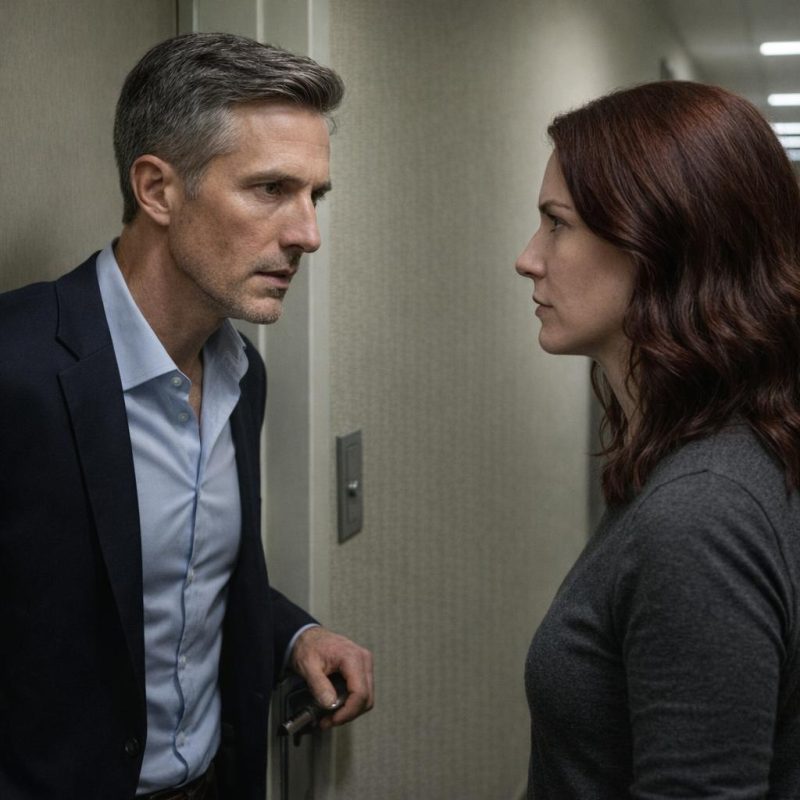 Image by RM AI
Not Alone
My eyes moved. I don't know what made them do it — some instinct, some need to understand what I was walking into — but they slid past Daniel's shoulder and into the room behind him. I was looking for her. That's the truth. After six months of suspicion, some part of me was still braced for a woman, a rumpled bed, the specific wreckage I'd been imagining. What I saw instead stopped my thoughts mid-sentence. The room was large, larger than a standard hotel room, and it had been rearranged. The bed was pushed toward the far wall. In the center of the space sat a long conference table, and it was covered — completely covered — in stacked documents, manila folders, open binders, and what looked like printed spreadsheets. A laptop sat open at one end, its screen glowing. And standing beside the table, hands clasped in front of him, watching me with an expression of careful, measured calm, was a man I had never seen before. Older. Silver-haired. A suit that didn't come off any rack I'd ever shopped near. He wasn't startled. He wasn't embarrassed. He just looked at me the way someone looks at a situation they've already thought through, and he waited. There was no woman in that room. There was no woman anywhere.
 Image by RM AI
So This Is Your Wife
The silver-haired man didn't rush. He took one step forward from the table — unhurried, deliberate in the way that people are when they've spent decades in rooms where panic is a liability — and he looked at me directly. Not through me, not past me. At me. Daniel still hadn't spoken. His shoulders had dropped in a way I'd never seen before, like something structural had given way inside him. The man's eyes moved briefly to Daniel, then back to me, and something in his expression shifted — not softening exactly, more like recalibrating. The room felt suspended. The woman with dark hair at the far end of the table had gone very still. The man reviewing documents hadn't looked up, but his hands had stopped moving. I was aware of all of it in that fractured, hyper-focused way you become aware of everything when your brain is trying to process something it doesn't have a category for. I gripped the strap of my bag. I waited. And then the silver-haired man opened his mouth, and in a voice that was quiet and even and left absolutely no room for misunderstanding, he said, "So this is your wife."
 Image by RM AI
Not an Affair
Daniel stepped back. It wasn't an invitation exactly, but I took it as one. I walked into the room and the door swung shut behind me, and then I could see all of it. The full scope of it. The conference table ran nearly the length of the space, and every inch was covered — legal pads dense with handwriting, printed documents flagged with colored tabs, stacks of what looked like financial records bound with rubber bands. A whiteboard had been set up against the wall to my left, and it was covered in a timeline — dates, company names, arrows connecting one thing to another in a web that clearly meant something to the people in this room. The laptop screen showed a spreadsheet with columns of numbers I couldn't read from where I stood. The woman with dark hair was watching me with careful, professional composure. The man with the documents had finally looked up, and his expression was focused and assessing. There was no suitcase open on the bed. No wine glasses. No evidence of anything I had spent six months dreading. Daniel stood a few feet away with his arms at his sides, and he looked like a man who had been carrying something enormous for a very long time. I turned slowly and took in the whole room again — the documents, the whiteboard, the attorneys, the investigator — and the thing I had been so certain of for so long collapsed completely. This was not an affair. This had never been an affair.
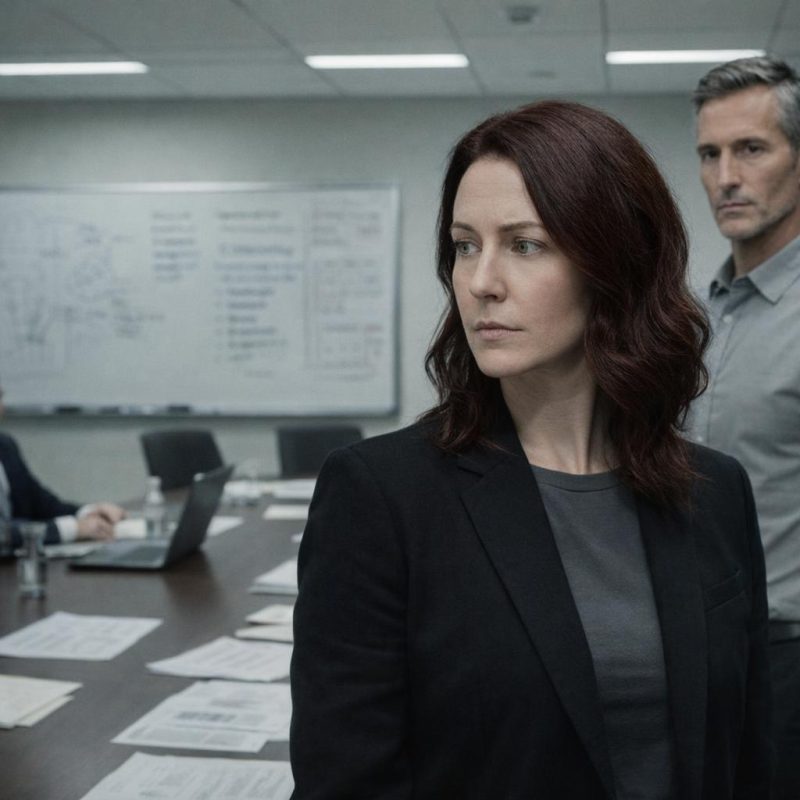 Image by RM AI
The Truth Settles
Nobody spoke. I think they understood, all of them, that I needed a moment that no one could give me and that I was going to take it anyway. My eyes moved around the room again, slower this time. The documents on the table weren't love letters or hotel receipts — they were financial records, legal filings, pages of testimony formatted in the way I recognized from years of watching Daniel bring work home. The whiteboard timeline stretched back years. The laptop spreadsheet had column headers I could read now from where I stood: account numbers, dates, dollar amounts with too many digits. I looked at Daniel. He was watching my face the way you watch someone open something fragile, braced for the moment it breaks. He looked exhausted in a way that sleep couldn't fix — hollowed out, like whatever had been sustaining him through all of this had finally run out the moment I walked through that door. Six months. Six months of locked phones and late nights and business trips and the particular silence that had moved into our house like a third person. I had built an entire story around all of it. I had been so certain. I had followed my husband to a hotel room in Dallas, and I had been completely, utterly wrong about what I would find. The weight of that settled over me and didn't move.
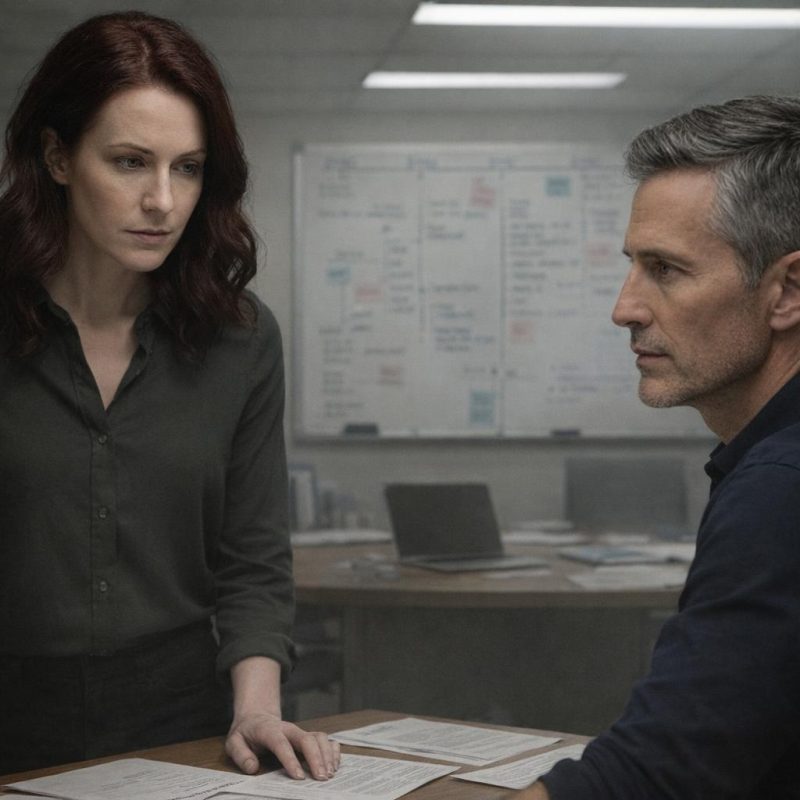 Image by RM AI
Introductions
The silver-haired man was the first to speak, and he did it gently, which I hadn't expected. He said his name was Martin. He gestured toward the woman with dark hair and said her name was Jessica — whistleblower coordinator, he called her, in the same tone someone might use to say project manager or department head, like it was the most ordinary thing in the world. The man with the documents was Alex, a corporate fraud investigator. Martin explained that they had been working with Daniel for several months, that the process had required a level of confidentiality that he understood must have been — he paused here, choosing the word carefully — difficult. From the outside. I almost laughed. I didn't. Daniel hadn't moved from his spot near the door. He wasn't looking at Martin while Martin spoke. He was looking at the floor, or maybe at nothing, in the way people look when they've stopped trying to manage how things appear. Martin's voice was measured and professional, the kind of voice built for delivering information in high-stakes rooms without letting the stakes show. He said they had been preparing Daniel's testimony for a federal investigation. He said the word clearly, without softening it, without rushing past it. Whistleblower. It landed in the room and stayed there, and I stood in the middle of all of it, not yet able to find a single word to say back.
 Image by RM AI
The Fraud Explained
Martin walked me through it in the same measured way he'd introduced everyone — no drama, no editorializing, just the facts laid out in sequence like he'd done it before and expected to do it again. Daniel had discovered it approximately six months ago, he said. Senior executives at Daniel's company — two of them, a man named Robert Chen and a woman named Patricia Vance — had been manipulating the company's financial accounts. Losses hidden from investors. Numbers adjusted across multiple quarters to make the books reflect a health the company didn't have. Martin said the word 'millions' without blinking. He said Daniel had initially tried to address it through internal channels, had gone to people he trusted inside the company, and had been shut down. He said the word 'threatened' once, briefly, and moved on before I could fully absorb it. The scheme had been running for years, Martin said — not months, years — and the exposure Daniel was preparing to deliver to federal investigators was substantial. I looked at the whiteboard. I looked at the timeline stretching back across it, the company names, the dates, the arrows. Robert Chen. Patricia Vance. Millions of dollars. Years.
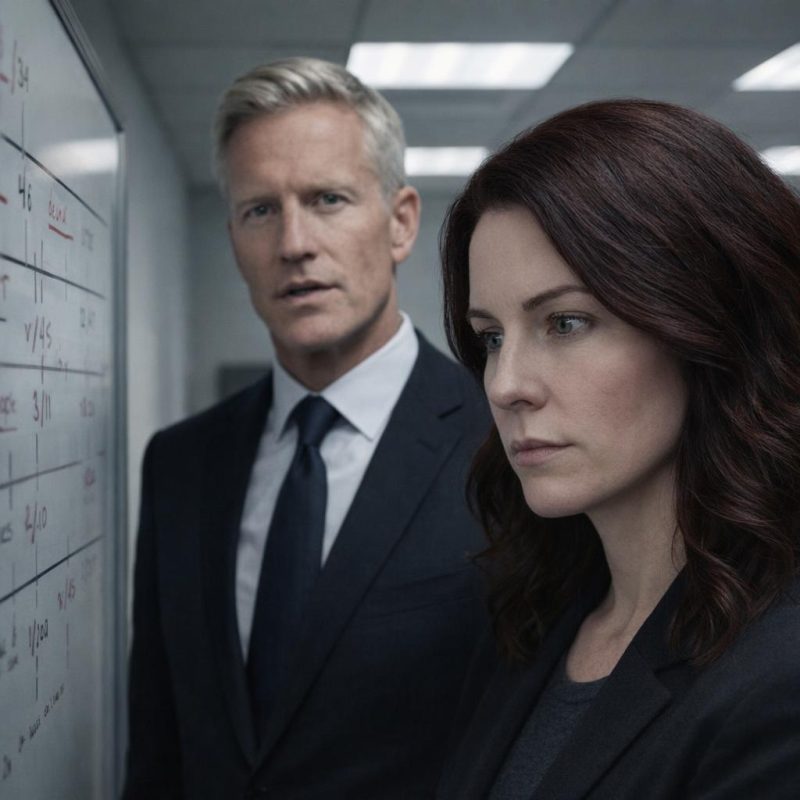 Image by RM AI
How It Started
Then Daniel spoke. His voice came out hoarse, like he hadn't used it in days, and maybe in some ways he hadn't — not for anything real. He looked at me first, not at Martin or Jessica or Alex, just at me, and I held still because I didn't trust myself to move. He said it started with a routine internal audit. His department, his numbers, a quarterly review he'd done a hundred times before. He noticed a figure that didn't line up. One figure. He said he assumed it was a data entry error — someone had transposed digits, something simple. So he dug a little deeper. Then a little deeper than that. The deeper he went, the worse it looked. Losses that had been reclassified. Accounts that had been restructured to bury the damage. Numbers that had been adjusted across multiple quarters in a pattern that was too consistent, too precise, to be accidental. He went to Patricia Vance first because she was his direct supervisor and he trusted her. She told him he was misreading the data. She told him to drop it. He went to Robert Chen next, because he thought maybe Patricia just didn't want to deal with it. Robert Chen looked him in the eye and told him to forget what he'd seen — or face the consequences. Daniel's voice cracked on that last part. He stopped, cleared his throat, and looked back at me. And then he said: "That was the moment I knew I was already in it."
 Image by RM AI
The Trap Closes
He didn't stop there. He kept talking, and I kept listening, and the room stayed very quiet around us. After Robert Chen's warning, Daniel said he went back to his desk and sat there for two hours trying to figure out what to do. He thought about going to the board. He thought about an anonymous tip to the SEC. He thought about just walking away and pretending he'd never seen any of it. But then the pressure shifted. Executives started copying him on reports he'd never been included on before — falsified reports, he understood now — and asking him to sign off on them. He refused the first time. They came back with a revised version and told him it was standard procedure. He refused again. That's when the termination language started appearing in conversations. Casual, almost offhand — phrases like "restructuring" and "redundant positions" dropped into meetings where he was the only one who'd been difficult. He said he realized they weren't just warning him anymore. They were building a paper trail that pointed at him. If the fraud ever surfaced, he was positioned to look like the one who'd signed off on it. He had no good options left. So three months ago, he called Martin's firm. Every business trip since then, every overnight stay, every conference he'd told me he was attending — he'd been meeting with the legal team, gathering evidence, building the case. He looked at Martin when he said it, and Martin gave a single, quiet nod.
 Image by RM AI
Why He Didn't Tell Me
I waited until he finished. Then I asked the only question I had left. "Why didn't you tell me?" My voice came out steadier than I expected. Daniel looked down at his hands. When he looked back up, his eyes were wet. He said he didn't want me to live with it. He said he'd been lying awake every night for months — three, four in the morning, running the numbers in his head, calculating what we'd lose, imagining worst-case scenarios he couldn't stop himself from building. He said he'd thought about telling me a hundred times. He'd gotten as far as sitting down across from me at the kitchen table, and then he'd looked at my face and thought about the kids, and he just — couldn't. He said he thought he could handle it alone. He thought if he kept it contained, kept it away from me, he could protect us from the fear he was already drowning in. He said the word "protect" like it cost him something to say it. I didn't answer right away. I looked at him — really looked at him — and I saw it for the first time, or maybe I saw it clearly for the first time: the hollows under his eyes, the way his shoulders sat, the tightness around his mouth that I'd been reading as distance for months. He hadn't been pulling away from me. He'd been holding something enormous completely alone, and the weight of it had worn him down to the bone.
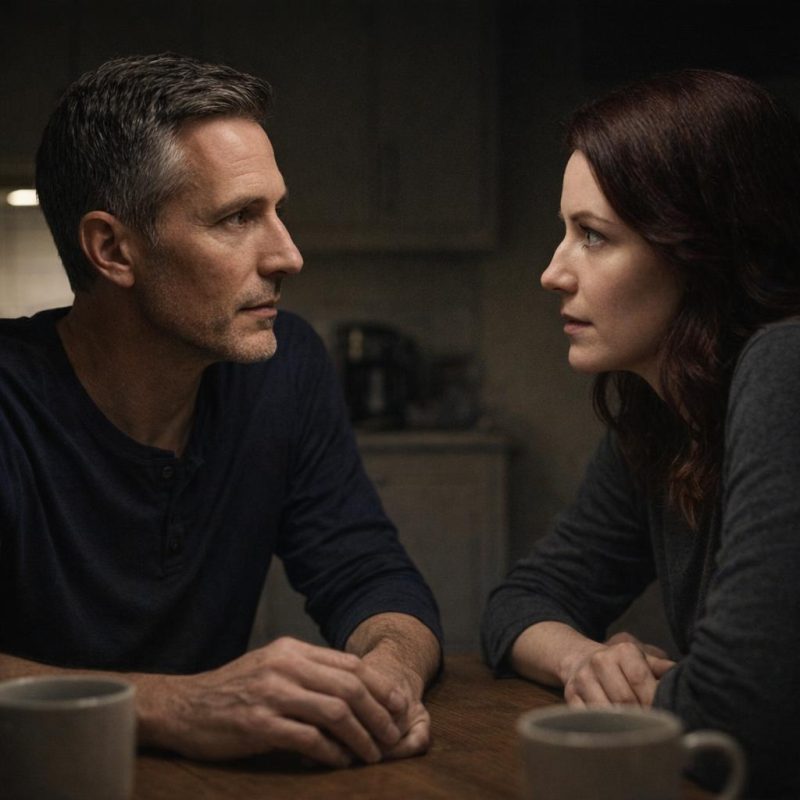 Image by RM AI
What We Stand to Lose
Martin let the silence sit for a moment before he spoke again. He said there were things I needed to understand about the financial picture, and his tone shifted just slightly — still calm, still measured, but with a new kind of weight behind it. When the fraud became public, he said, the company would almost certainly collapse. Not restructure. Not recover. Collapse. I nodded like I understood, and then he kept going and I realized I hadn't understood at all. Daniel's pension was tied to company stock. The stock options they'd been counting on for retirement — the ones we'd talked about, the ones that were supposed to give us breathing room when the kids were through college — would be worthless. The legal fees were already mounting, and whistleblower protection, Martin explained carefully, covered Daniel's employment status and shielded him from retaliation. It did not cover financial losses. It did not make the stock worth anything. It did not rebuild a retirement account. He laid it out without flinching, and I sat there doing the math in my head and coming up short every time. Everything we'd saved. Everything we'd planned. The timeline we'd built our whole future around. Jessica slid a folder across the table toward me, and I opened it and looked at the numbers, and the numbers confirmed everything Martin had just said. I closed the folder. I set it back on the table. The room felt very still around me, and the weight of what we stood to lose settled over everything like something I'd be carrying for a long time.
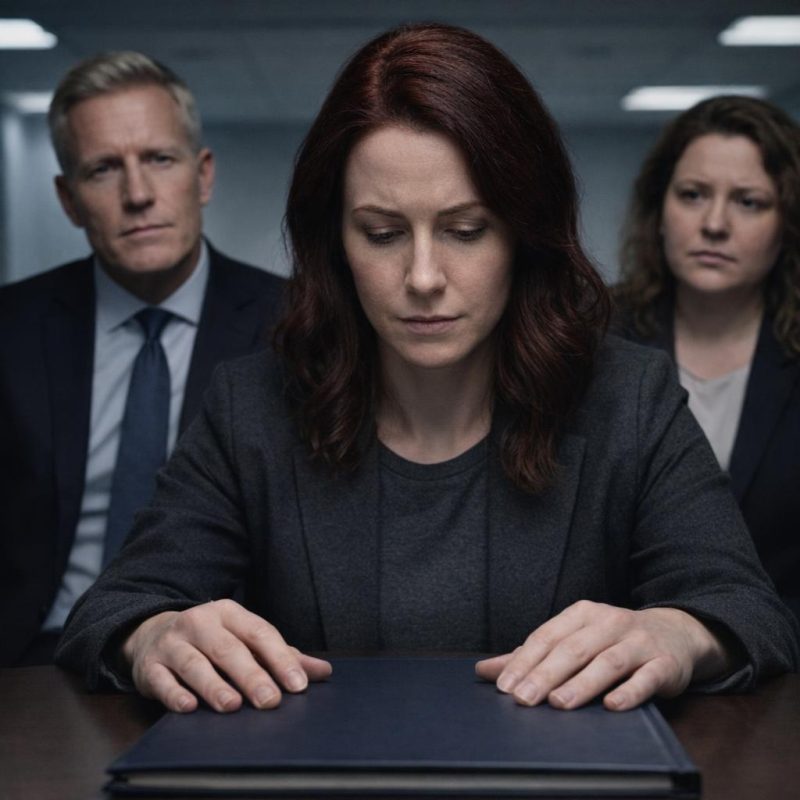 Image by RM AI
The Evidence
Alex had been quiet through most of it, but now he moved. He opened a large accordion file and began laying documents across the table in a careful, deliberate sequence — not randomly, but in order, like he'd done this before and knew exactly which piece landed hardest. He talked me through each one. The first set was quarterly reports — the official versions filed with investors, and beside each one, a second version showing the actual numbers. The gaps were not small. He showed me spreadsheets where figures had been manually adjusted, the original entries still faintly visible beneath the corrections if you knew where to look. Then he showed me the emails. Robert Chen and Patricia Vance, back and forth, discussing the adjustments in language that was careful but not careful enough — phrases like "smoothing the curve" and "managing the optics" and, in one message, a line that made my stomach drop: "Daniel's going to be a problem." That email was dated eight months ago. Alex showed me Daniel's own records next — meticulous, organized, timestamped. Every discrepancy he'd found, documented. Every conversation he'd had with the executives, noted. Every refusal to sign, logged. Three years of systematic fraud, laid out across a hotel room table in Dallas. I looked at all of it for a long time. The documents didn't leave room for doubt, and somewhere underneath the fear, something in me steadied — because whatever came next, Daniel hadn't been wrong, and he hadn't been alone in this room anymore.
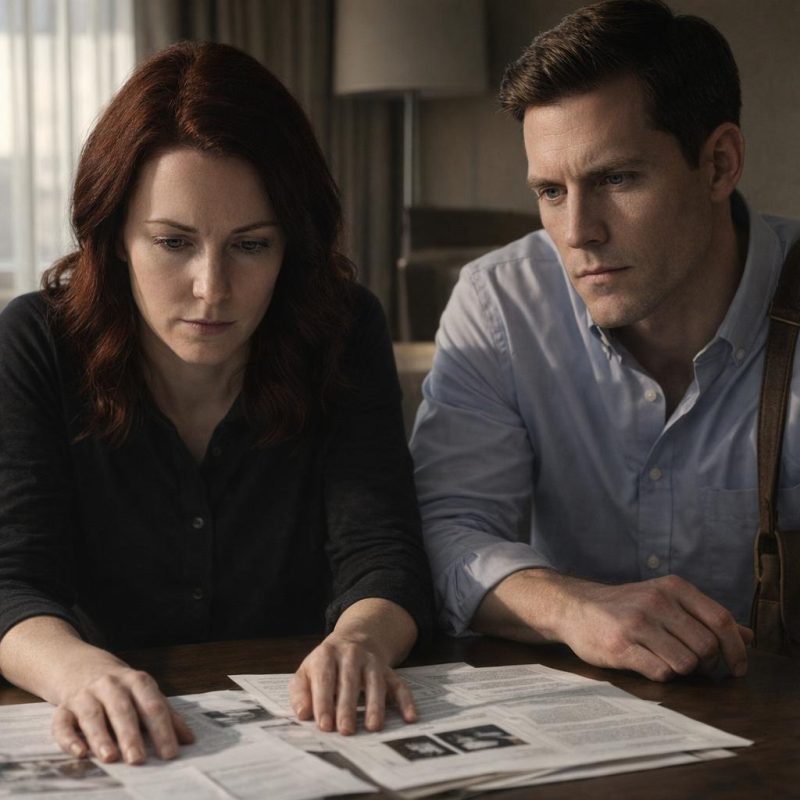 Image by RM AI
Tomorrow
Jessica had been tracking the time. She waited for a natural pause, then leaned forward slightly and said there was one more thing I needed to know — the most immediate thing. She said the federal investigators were scheduled to arrive at nine o'clock the next morning. Daniel would give his formal sworn statement. The evidence Alex had just walked me through would be submitted to a grand jury. Once that happened, she said, the investigation became official. The company would be notified within days. The media would likely have the story within a week. She said it clearly and without softening it, and I appreciated that even as the words landed like something physical. Martin added that this was the point of no return — not a phrase he used lightly, he said, but the accurate one. Once Daniel walked into that room tomorrow morning and gave his testimony under oath, there was no version of events where things went back to the way they were. I looked at Daniel. I thought about the way he'd looked standing in that hotel doorway two nights ago — the terror on his face, the way he'd said my name like he wasn't sure I was real. I understood it now. I understood all of it now. He hadn't been afraid of me finding out about an affair. He'd been afraid of exactly this moment — the moment when the thing he'd been carrying alone became something we were both standing inside. Jessica glanced at her watch, and then she said: "He goes in at nine AM."
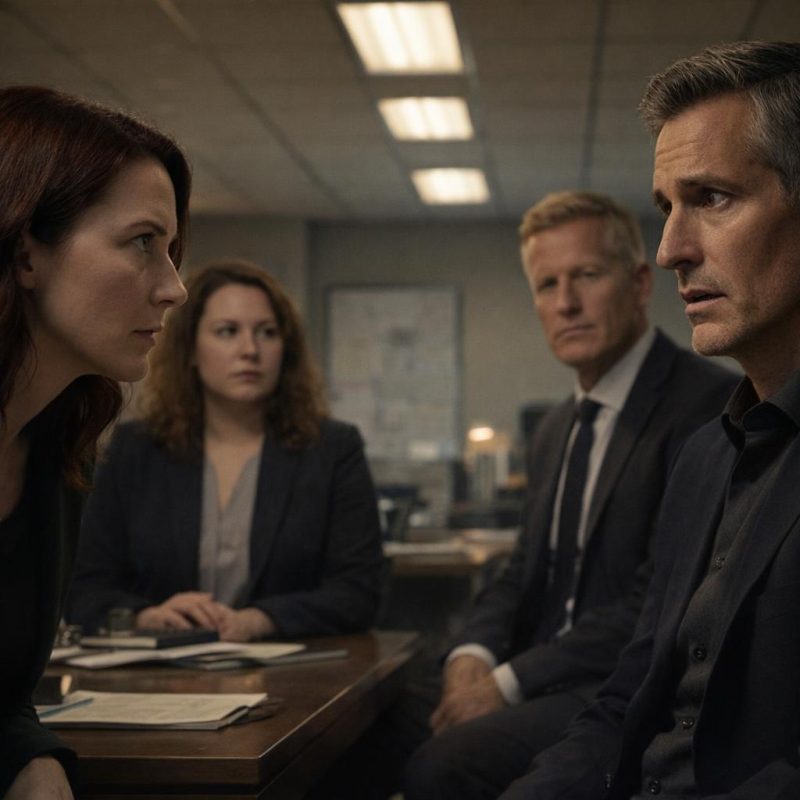 Image by RM AI
The Testimony
Morning came in hard and bright through the hotel curtains. I heard the investigators arrive — low voices in the corridor, the sound of a door opening and closing down the hall. Daniel had been up before me, already dressed, sitting at the small desk with his hands folded and his eyes somewhere else entirely. Martin arrived at eight-forty and they went over a few last things in quiet voices I didn't try to follow. At eight fifty-eight, Daniel stood up. He looked at me. I crossed the room and took his hand and held it for a moment, and then he and Martin walked out. The door closed behind them. Jessica stayed with me. She made coffee from the small machine on the counter and set a cup in front of me and didn't try to fill the silence with anything, which I was grateful for. I heard voices through the wall — muffled, indistinct, rising and falling in a rhythm I couldn't decode. I stopped trying to make out words after the first hour. I drank the coffee. I looked at the window. I watched the light move across the carpet as the morning stretched into afternoon. Two hours passed. Then a third. I had stopped looking at the clock when the door between the suites finally opened. Daniel stood in the frame. His face was gray with exhaustion, and his tie was loosened, and he looked like a man who had just set down something he'd been carrying for a very long time. He said: "It's done."
 Image by RM AI
The Call
We were home for two days before the phone rang. We'd been moving through the house carefully, both of us, like people relearning how to occupy the same space. We talked more in those two days than we had in months — not about the case, mostly, just about ordinary things, the kids, dinner, what needed fixing in the backyard. It felt fragile and necessary at the same time. Then Daniel's phone lit up on the kitchen counter. He looked at the screen and something shifted in his face. He picked it up and said "Marcus" quietly, almost to himself, and then he looked at me and put it on speaker. The voice that came through was tense and low. Marcus said he didn't have much time but Daniel needed to know — Robert and Patricia had been formally notified of the investigation that morning. Daniel went very still. Marcus kept talking. They'd already retained attorneys, he said — expensive ones, a firm out of New York that specialized in exactly this kind of case. And they weren't just defending themselves. They were building a narrative: Daniel was a disgruntled employee with a grudge, his documentation was fabricated, his testimony was motivated by a failed internal promotion. Marcus said he was sorry. He said he was worried. Daniel thanked him and ended the call and set the phone face-up on the counter between us. I looked at it. Then I looked at Daniel. Robert Chen and Patricia Vance knew — and they were already fighting back.
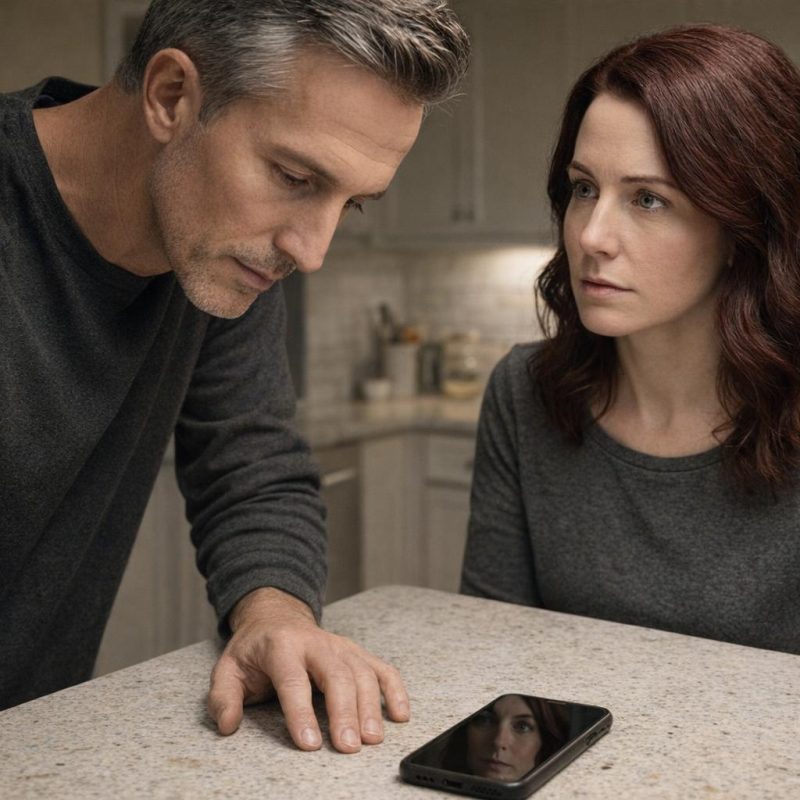 Image by RM AI
Going Public
It broke on a Tuesday morning. I was pouring coffee when my phone buzzed with a news alert — a business reporter at a financial wire service had published a piece about a forty-million-dollar fraud scheme at Daniel's former company. I read the headline twice. Daniel's name was in the second paragraph. Not buried, not vague — his full name, identified as the key whistleblower who had spent months documenting the scheme and cooperating with federal investigators. I set the mug down and called him into the kitchen and handed him my phone without saying a word. He read it standing at the counter, jaw tight, and then he looked up at me and said, 'It's done. It's out.' Within an hour, the story had been picked up by three major outlets. By noon, it was trending. Sarah called from her college dorm, crying so hard I could barely understand her. Michael texted from school — just a screenshot of the article and a single question mark. We told them to come home. That evening, all four of us sat at the kitchen table and Daniel told them everything, from the beginning, the documents, the meetings, the federal investigators, the months of silence. Sarah kept saying she wished she'd known. Michael didn't say much, just nodded slowly and reached across the table and put his hand over Daniel's. By the time we looked up, there were two news vans parked at the end of our driveway.
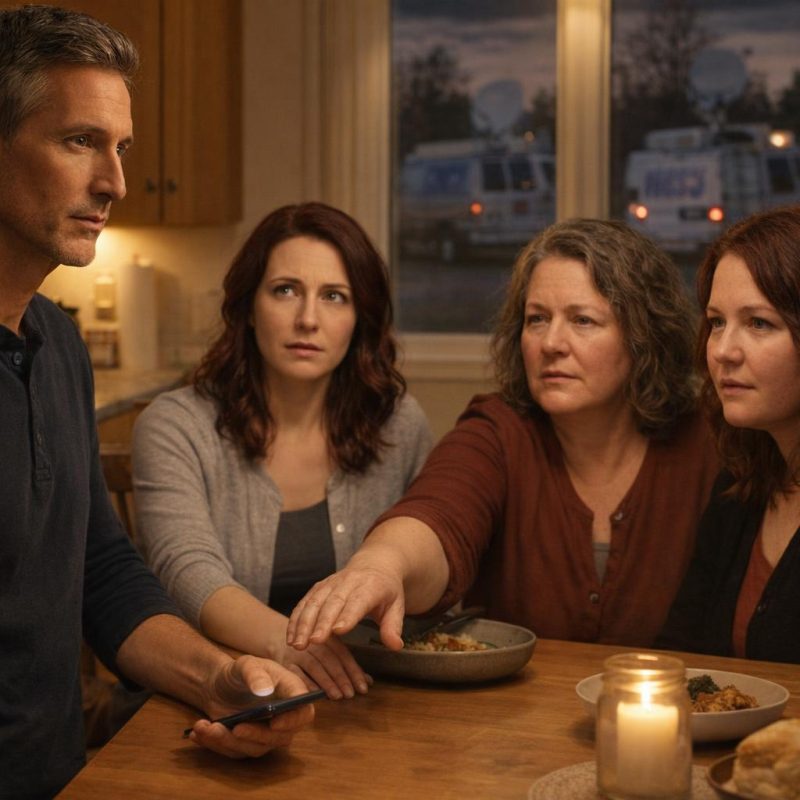 Image by RM AI
After the Storm
Three months passed the way hard months do — in a blur of phone calls, legal paperwork, and long silences that slowly stopped feeling so heavy. Robert Chen and Patricia Vance were indicted on federal fraud charges in early spring. The company filed for bankruptcy six weeks after that. Daniel's pension was gone. The stock options he'd been counting on for retirement were worthless. We lost a significant piece of what we'd spent twenty years building, and there were nights I lay awake doing the math and feeling sick. The legal fees had been manageable, barely, but they'd carved a real hole. Daniel found a new position at a smaller firm — less money, less prestige, a longer commute — and he came home from his first week looking tired but lighter somehow, like a thing he'd been carrying had finally been set down. The media attention faded faster than I expected. The vans disappeared. The alerts stopped. People moved on to the next story, the way they always do. What was left was just us — the house, the kids, the ordinary rhythm of a life that had been shaken hard and was still standing. We were different now. I won't pretend otherwise. But we were still here, still at the same table every night, and some evenings the quiet between us felt less like distance and more like something we had both finally earned.
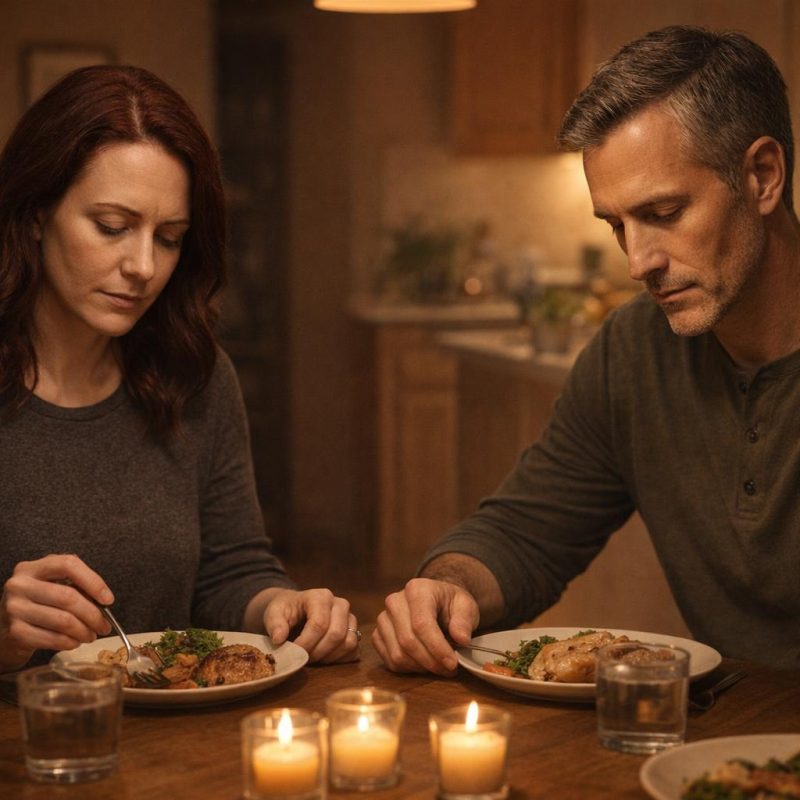 Image by RM AI
What Remains
I think about the year a lot. Not obsessively, not the way I used to think about the hotel receipt or the burner phone or the locked screen — but quietly, the way you turn something over in your hands when you're trying to understand its shape. I think about sitting in my car outside that Dallas hotel, convinced I was about to catch my husband with another woman. I think about how certain I was. How wrong I was, and how right I was at the same time, because something was being hidden from me, just not what I thought. Daniel carried that secret alone for months because he was trying to protect us, and I spent those same months building a case against him in my own head. We've talked about it openly now, all of it — the surveillance, the suspicion, the night I followed him, the moment I understood what I was actually looking at. Those conversations weren't easy. Some of them were painful in ways I didn't expect. But we had them, and we kept having them, and somewhere in the middle of all that honesty something shifted between us. Sarah and Michael have adjusted the way kids do — better than I expected, more resilient than I gave them credit for. Family dinners feel real again, not performed. There's still scar tissue. I don't think that ever fully goes away. But scar tissue is also what the body makes when it's healing, and I've learned to tell the difference.
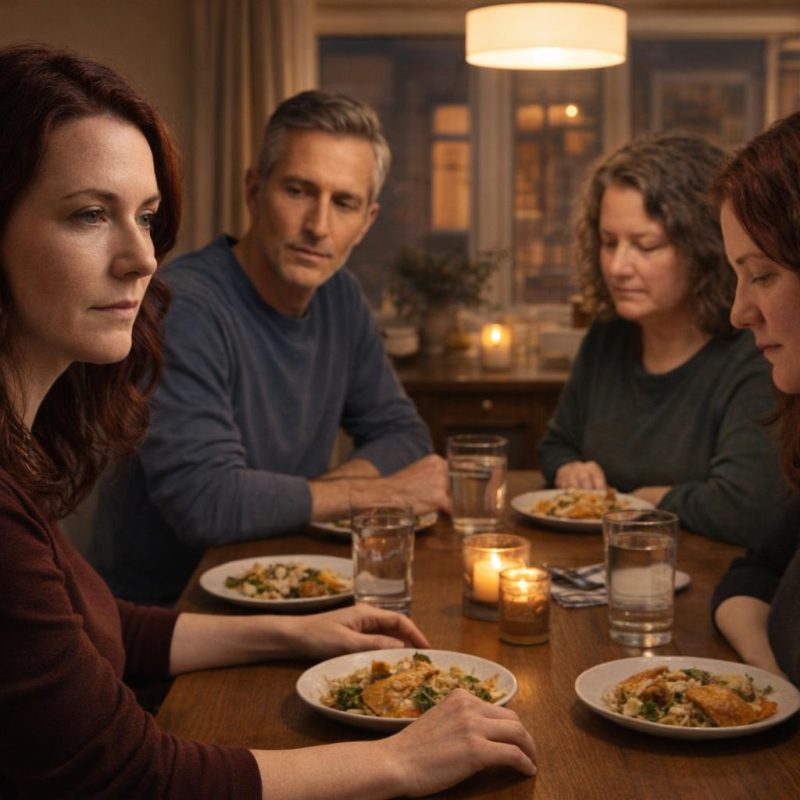 Image by RM AI
The Truth Was Worse
I still think about the moment I opened that hotel room door. I had rehearsed it so many times in my head on the drive over — what I would say, what I would see, who would be standing there. I was so sure I knew what kind of story I was in. An affair felt like something I could survive, something with a shape I recognized, something other people had lived through and come out the other side of. What I found instead was a room full of documents and a husband who had been quietly risking everything we had to do something he believed was right. An affair would have been a wound between the two of us. What Daniel had done reached into our finances, our safety, our children's futures, the retirement we'd spent decades building. It threatened all of it, and it did so in silence, for months, while I slept next to him and thought I knew what was wrong. That's what I mean when I say it was worse. Not worse because he was a bad man — he wasn't, he isn't. Worse because the stakes were so much higher than I had imagined standing in that hallway. We survived it because we stopped carrying it separately. We laid it all out on the table between us and we dealt with it together, and that's the only reason we're still here. What Daniel was hiding wasn't a betrayal of our marriage. It was the weight of his integrity — and in the end, it became ours to carry together.
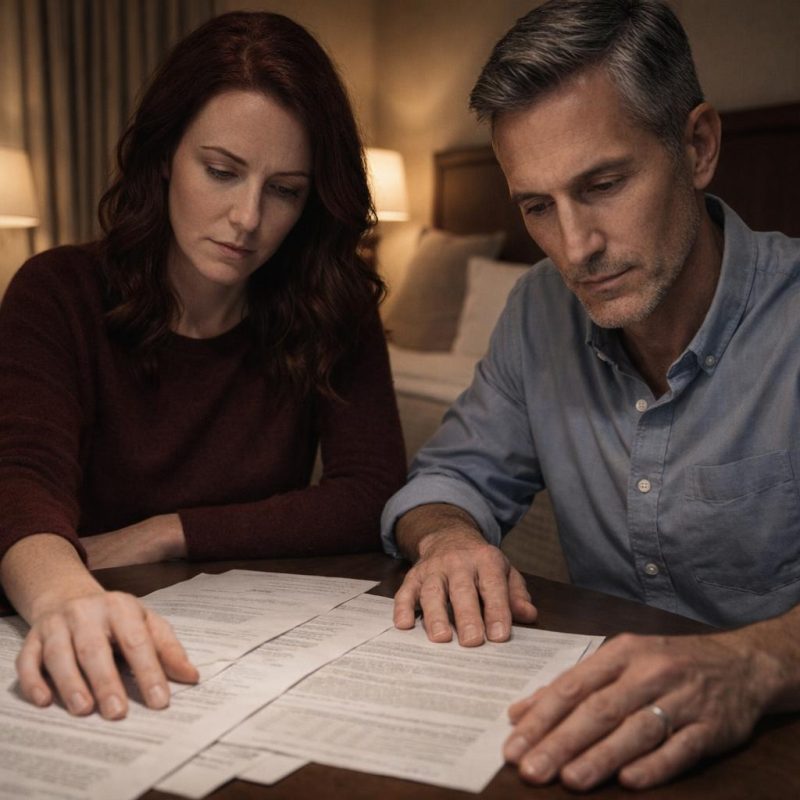 Image by RM AI
KEEP ON READING

How Lighthouses Saved Countless Ships Throughout History
Marcus Woodbridge on UnsplashFor centuries, the world's oceans served as…
By Rob Shapiro Jun 4, 2026
The Strange History of the “Poison Apple”
Avin CP on UnsplashTomatoes are so ordinary now that it’s…
By Emilie Richardson-Dupuis Jun 4, 2026
The Most Famous Media Interpretations of Dante's Inferno
Emw on WikimediaDante Alighieri’s Inferno has lasted partly because it…
By Breanna Schnurr Jun 4, 2026
How 17-Year-Old Alexander the Great Built An Empire
Unknown authorUnknown author on WikimediaWhen you think about the typical…
By Sara Springsteen Jun 4, 2026
The Election Decided by a Dead Man
Missouri State Archives on WikimediaOn the night of October 16,…
By Cameron Dick Jun 4, 2026
20 Strange Industrial Accidents That Changed the Modern World
Disasters Nobody Planned For, Lessons Everybody Uses. Industrial accidents tend…
By Cameron Dick Jun 4, 2026