

I Discovered My Husband Was Replaced By A Stranger During Our 30th Anniversary Trip
Arrival at Azure Heights
We saved for this trip for eleven years. Not in a dramatic way — just a little envelope in the kitchen drawer that we added to whenever we could, whenever the car didn't break down or the roof held through another winter. And now here we are, standing in the lobby of Azure Heights with our luggage at our feet, and I keep having to remind myself that this is real. The ceilings are impossibly high, all pale stone and warm light, and there are fresh flowers on every surface that smell like something I don't have a name for. Mark handles the check-in with that easy confidence he gets when he's happy, leaning on the counter and chatting with the front desk staff while I just stand there taking it all in. He carries both bags to the elevator without being asked, which is such a him thing to do, and when the doors open onto our floor I feel something loosen in my chest that I didn't know was tight. The suite is everything the photos promised and more. I sit on the edge of the bed and look out at the water through the floor-to-ceiling windows, and thirty years of ordinary Tuesdays and grocery runs and small kindnesses settle around me like something warm.
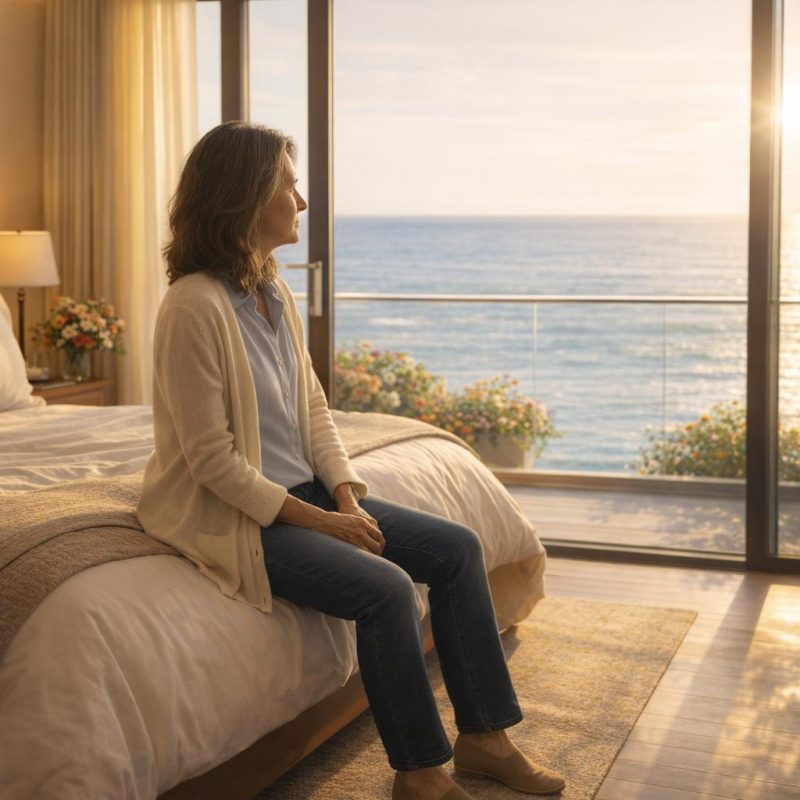 Image by RM AI
The Suite
I spend the first twenty minutes just moving from room to room, touching things. The marble in the bathroom is cool and smooth under my fingers. The robes hanging on the back of the door are thick enough to sleep in. Mark is already unpacking with the systematic efficiency that used to drive me crazy and now just makes me smile, sorting his shirts into the wardrobe while I investigate the minibar and the complimentary champagne sitting in a silver ice bucket. There's a knock at the door and the hotel manager introduces himself — dark suit, careful smile, the kind of professional warmth that feels practiced but not insincere. He walks us through the suite's features, the in-room dining menu, the spa booking line, the private balcony controls. I'm half-listening, honestly, because the view from the window has most of my attention. Mark has moved to the far side of the room to hang his jacket, and I notice the manager pause mid-sentence. It's brief — barely a beat — but his eyes track across the room toward Mark and stay there a half-second longer than the sentence requires. Then he's back to me, smooth and professional, asking if we have any questions. I smile and say no. But when I glance back at the doorway as he leaves, he's still standing there, one hand on the frame, looking in.
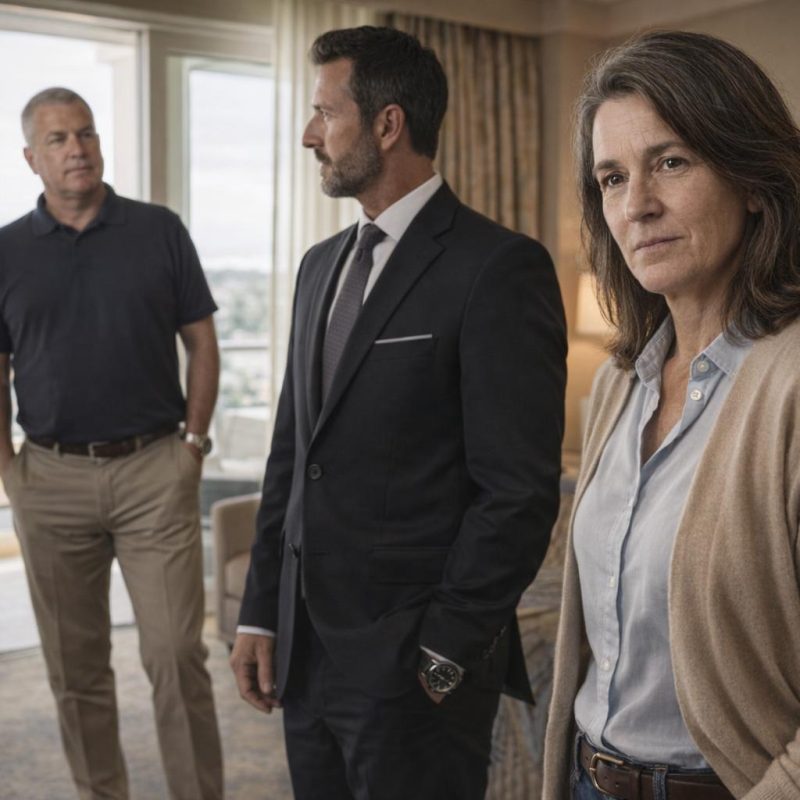 Image by RM AI
Exploring the Grounds
The gardens are the kind of thing you see in magazines and assume must be exaggerated. They're not. We walk the main path after breakfast, and the hedges are trimmed so precisely they look architectural, and there are birds I don't recognize moving through the flowering trees overhead. Mark points out the tennis courts through a gap in the greenery and says we should book a court for Thursday, and I tell him I'll embarrass him, and he says that's never stopped me before, and we're both laughing before the sentence is finished. That's the thing about thirty years — the jokes write themselves. We find the pool area and claim two chairs near the far end, away from the families with small children, and then we wander down to the spa where a woman with a very calm voice books me in for a hot stone treatment on Wednesday afternoon. By the time we reach the beach, the morning has softened into something golden and unhurried. Mark stands at the water's edge with his shoes off and his trousers rolled up, and the waves come in and pull back around his feet, and he looks relaxed in a way I haven't seen in months. I stand beside him and don't say anything. The sound of the water is enough.
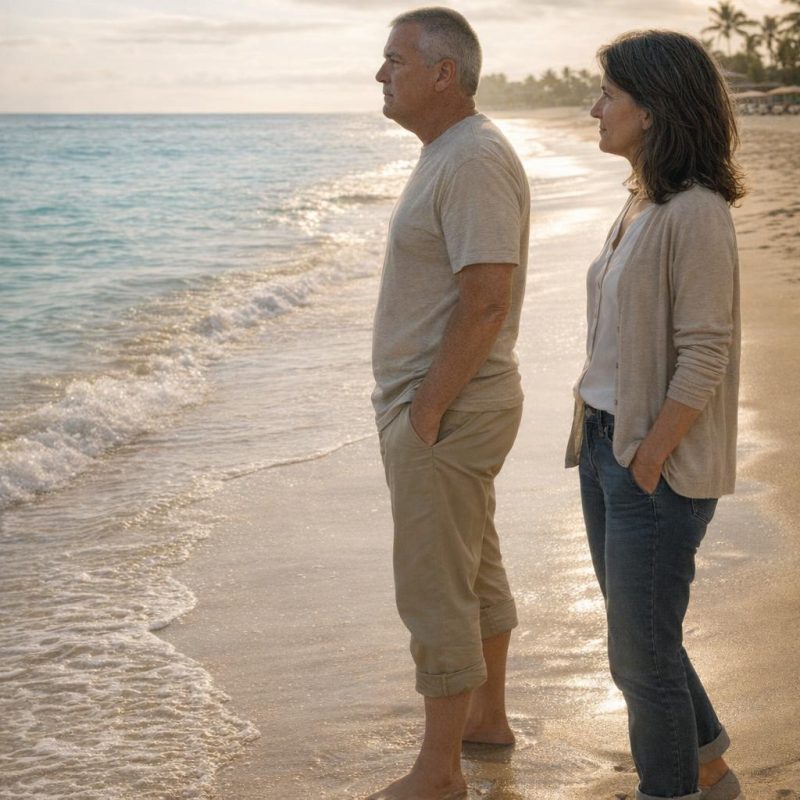 Image by RM AI
First Dinner
We dress for dinner with the particular care of people who don't often have a reason to. I wear the blue dress I bought specifically for this trip and Mark puts on the charcoal jacket that makes his eyes look very blue, and we walk down to the restaurant feeling, I think, a little like our younger selves. The table they give us has a direct view of the water, and the candles are real, not electric, and I decide immediately that this is the best meal I will ever have regardless of what they serve. We order wine and Mark reads the menu aloud in a terrible French accent that makes the couple at the next table glance over and smile. But then I notice something else. A woman two tables away — dark hair, somewhere in her forties — turns her head as Mark settles into his chair, and the turn is slow and deliberate in the way that catches your eye. Across the room, a couple seems to pause mid-conversation as Mark passes the waiter on his way back from the restroom. I watch it happen and then I tell myself I'm imagining it, that the restaurant is full of people watching other people, that this is what restaurants are. Mark pours my wine and asks what I'm thinking, and I say I'm thinking this was worth every year of saving. By the time dessert arrives, the pleasant exhaustion of a perfect day has settled into my bones.
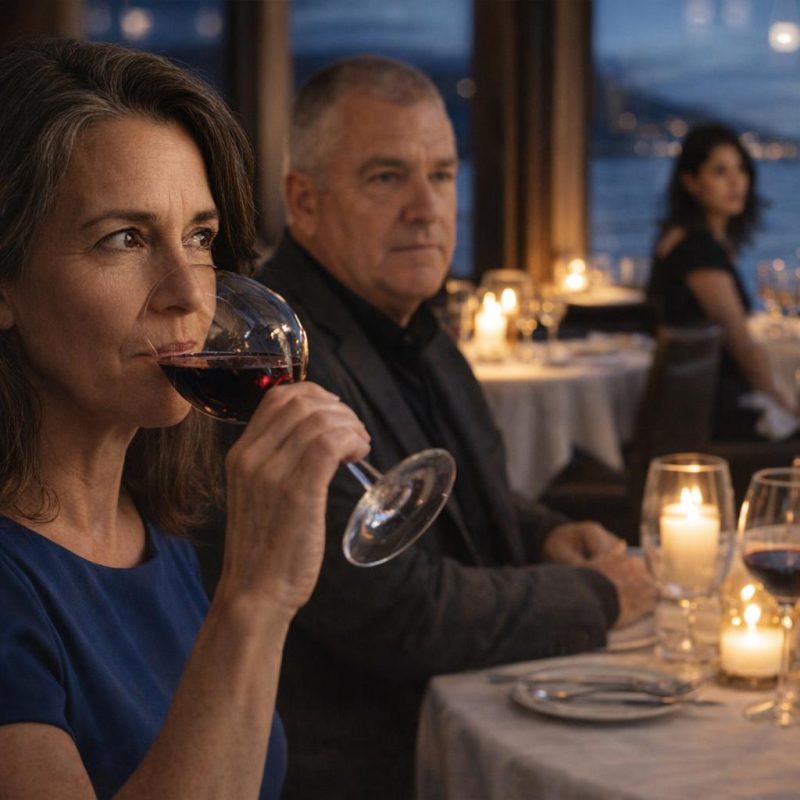 Image by RM AI
Mark's Obliviousness
Back in the suite, I kick off my heels and sit on the edge of the bed while Mark loosens his tie, and I decide to just say it. I tell him I noticed people watching him at dinner — a woman at a nearby table, a couple across the room — and that it was probably nothing but it had caught my attention. He turns around and gives me this look, half-amused, half-flattered, and says maybe he just cleans up better than I give him credit for. I laugh. He says maybe he looks like someone famous, some actor he can't name, and he does this little mock-serious pose that makes me laugh harder. It's such a reasonable explanation, delivered with such easy warmth, that I feel a little silly for bringing it up at all. He's right — we're in a nice hotel, we're dressed well, people watch people. I'm not used to seeing him in this context, that's all. He goes to the bathroom to wash up and I lie back on the bed and look at the ceiling and feel the good kind of tired, the kind that comes from a full and happy day. Then his phone buzzes on the nightstand beside me. The screen lights up with a notification and goes dark again, and Mark doesn't come out to check it.
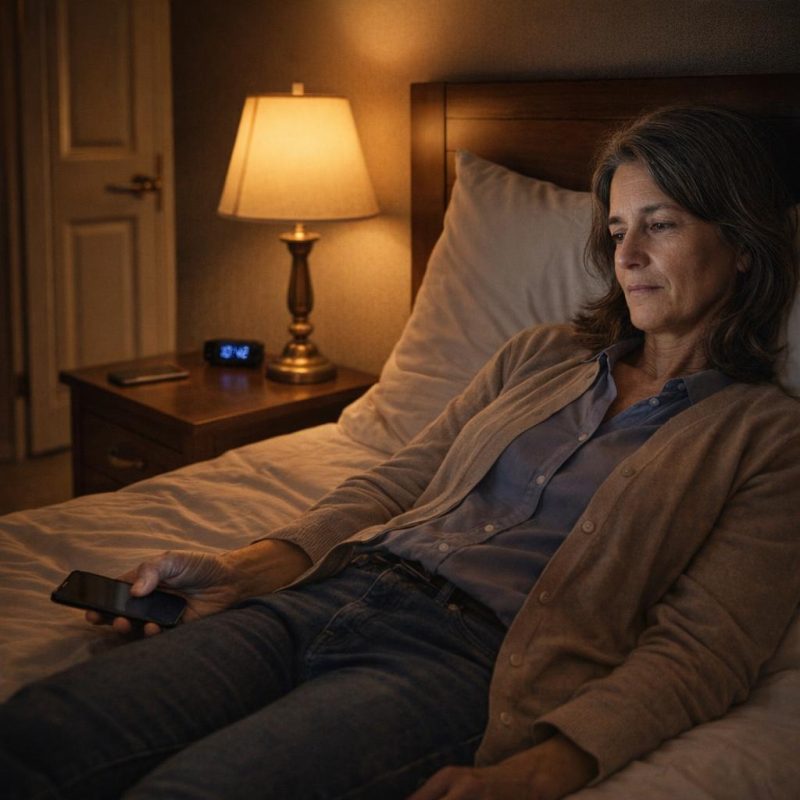 Image by RM AI
The Pattern Emerges
Breakfast is served in a bright room with tall windows and white tablecloths, and Mark gets up to check out the buffet before I've even opened my menu. I watch him walk across the room — and that's when I start counting. A man near the entrance has a newspaper open in front of him, but as Mark passes, the paper lowers and the man's head turns to follow him. A woman at the buffet, tongs in hand, stops mid-reach and rotates slowly to watch. I notice an elderly couple at a corner table — both of them — turn at the same moment, their heads moving in the same direction like they've heard the same sound. A fourth guest, a younger man near the window, shifts in his chair and angles his body toward Mark's path. I sit very still with my coffee cup halfway to my mouth. I'm not imagining this. I count back through what I just saw: four separate people, four separate tables, all turning within what felt like ten seconds of Mark walking into the room. Mark reaches the buffet and picks up a plate, completely at ease, and I set my cup down carefully and try to think of a reasonable explanation that covers all four of them at once.
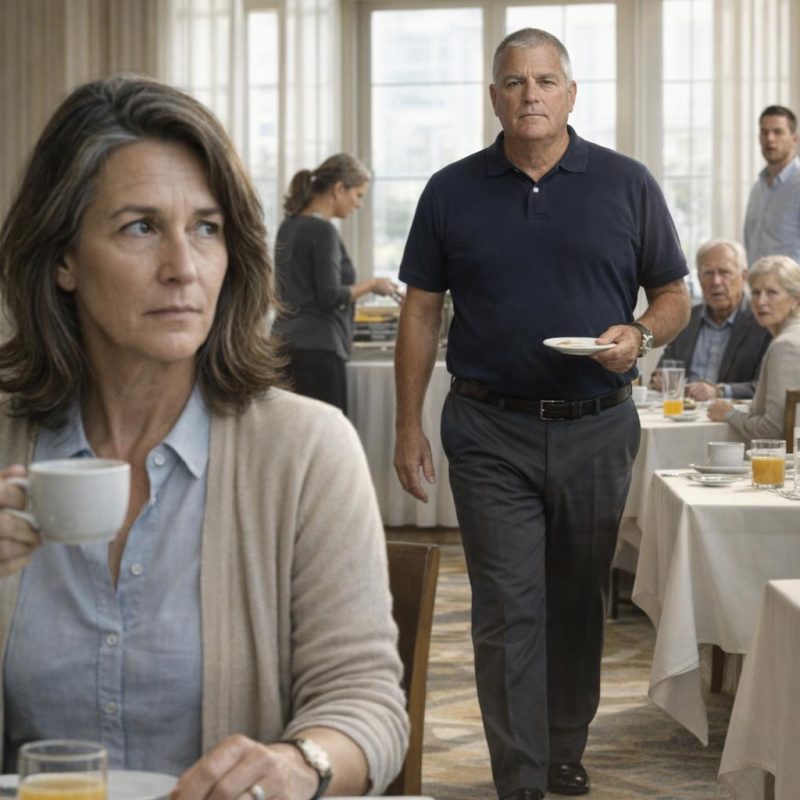 Image by RM AI
Breakfast Conversation
Mark comes back with a plate stacked higher than necessary and sets it down with the satisfaction of someone who has won something. He asks if I want him to grab me anything and I say no, I'm fine, and I mean it to sound normal and I think it does. He starts talking about the beach walk he wants to do after breakfast, a path he read about that goes around the headland, and I nod and ask the right questions and eat my eggs. But I'm aware of the other tables in a way I wasn't yesterday. I'm not staring — I'm careful not to stare — but I keep catching movement at the edges of my vision and each time I look up it's just people eating, talking, living their ordinary morning. Mark is completely relaxed. He's on his second cup of coffee and he's telling me about a podcast he listened to on the flight, something about deep-sea navigation, and his voice has that easy, unhurried quality it gets when he's genuinely content. I think about mentioning what I saw when he walked in. Then I think about last night, about how quickly I felt silly after he laughed it off, and I decide to let it sit. He finishes his coffee and suggests we head back to the room to change for the walk, and I fold my napkin and agree, and the conversation settles into the comfortable quiet of two people who have eaten a thousand breakfasts together.
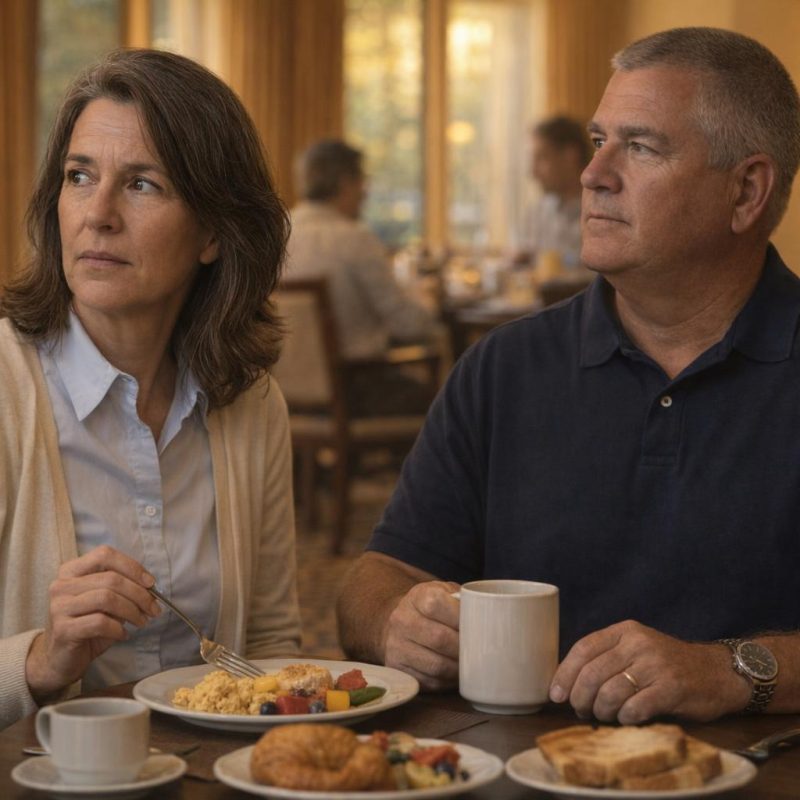 Image by RM AI
Pool Observation
We claim the same two chairs we found yesterday, and Mark drops his book on his and immediately announces he's going to get us drinks from the pool bar. I watch him cross the deck in his swim shorts and the easy, unhurried way he moves through a crowd, nodding at a passing waiter, pausing to let a child run by. I've settled back into my chair and I'm reaching for my sunscreen when I notice her — a woman in a red swimsuit, maybe forty, sitting three chairs down on the opposite side of the pool. She lifts her sunglasses up onto her head and her gaze goes straight to Mark. Not a glance. Not the casual sweep you do when someone walks past. She watches him the way you watch something you're trying to memorize. I find myself counting in my head — one, two, three — the way you do when you're trying to stay calm and objective about something that doesn't feel calm or objective at all. Mark reaches the bar and leans on the counter and says something that makes the bartender laugh. The woman still hasn't looked away. I get to fifteen before Mark turns and starts walking back, drinks in hand, and only then does she lower her sunglasses and look at the water. He hands me my drink and I take it and say thank you and don't say anything else.
 Image by RM AI
Casual Mention
We're barely through the suite door before I bring it up, and I try to keep my voice light about it — the way you do when you want to mention something without making it a thing. I tell Mark I noticed a woman at the pool watching him earlier, that it was probably nothing, just something I clocked. He sets his key card on the dresser and turns around with that patient expression he gets, the one that means he's about to be very reasonable at me. He says he didn't notice anyone, that he never really notices that kind of thing. Then he pauses, and he says it gently, the way you'd say something you'd been thinking for a while — that maybe being at a place like this, surrounded by people who look a certain way, can make anyone feel a little more aware of themselves. He mentions that turning fifty does something to how you see yourself in a room. He's not unkind about it. That almost makes it worse. I stand there holding my sandals and I tell him he's probably right, and I suggest we start getting ready for dinner, and he smiles and says that sounds perfect. But the word he used — insecure — sits in my chest the whole time I'm in the shower.
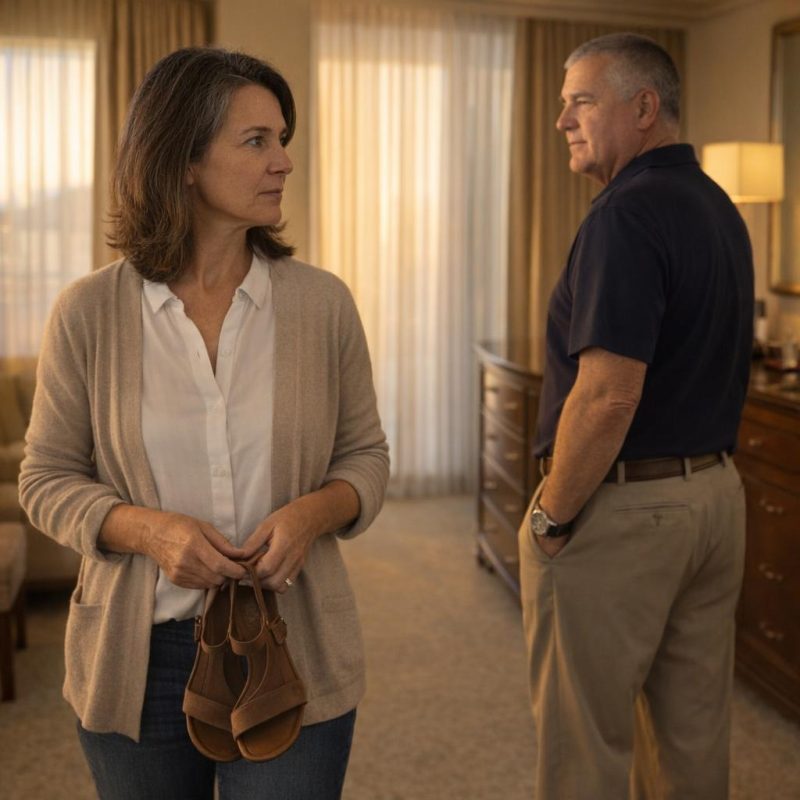 Image by RM AI
Accepting the Explanation
I'm out on the balcony before we leave for dinner, still in my robe, watching the last of the sun go flat and orange over the water. I turn Mark's words over in my head and I try to be honest with myself. I have been more aware of my body lately — the way I stand in photos, the way I compare myself to women ten years younger without meaning to. It's possible I'm projecting. It's possible I'm looking for something to worry about because I don't know how to just be happy without waiting for the other shoe. Mark comes out with two glasses of wine and puts his arm around my shoulders and says look at that, and I look, and it really is beautiful. He talks about how long we saved for this trip, how we almost cancelled twice, how glad he is we didn't. His voice is warm and easy and I lean into him a little. By the time we walk to the restaurant I've made a quiet decision to stop cataloging things and just be here. Dinner is good. Mark orders the fish and steals bites of my pasta and makes me laugh twice. I let the evening carry me. Later, back on the balcony with the lights of the marina below us, the doubt sits somewhere far off, dissolved into the dark.
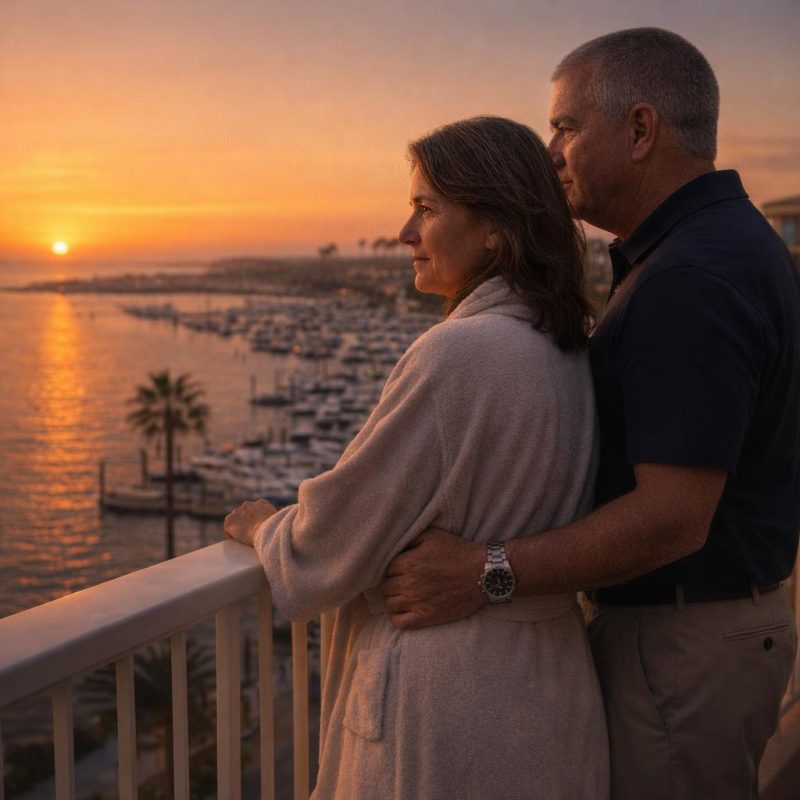 Image by RM AI
Interrupted Connection
We're in the lobby waiting for our table when Mark goes to check on the reservation and I find myself sitting near a woman about my age, dark linen dress, reading glasses pushed up on her head. She smiles when I catch her eye and I ask if she's been here long, and she says four days, and we fall into the easy rhythm of strangers comparing notes — the breakfast buffet, the beach chairs, whether the spa is worth the price. She has a dry sense of humor and I'm enjoying it. I'm about to ask where she's from when a staff member appears at my elbow, very polished, very apologetic, asking whether I'd had a chance to try the new evening menu and whether my room temperature has been comfortable. I turn to answer him and I give him the short version — yes, fine, thank you — and when I look back the woman has picked up a magazine from the side table and is flipping through it with the focused attention of someone who has moved on. Mark appears a moment later and the host calls our name. I follow Mark toward the dining room and I don't say anything about it. But the conversation had been going somewhere, and now it isn't, and I carry that small unfinished feeling all the way to our table.
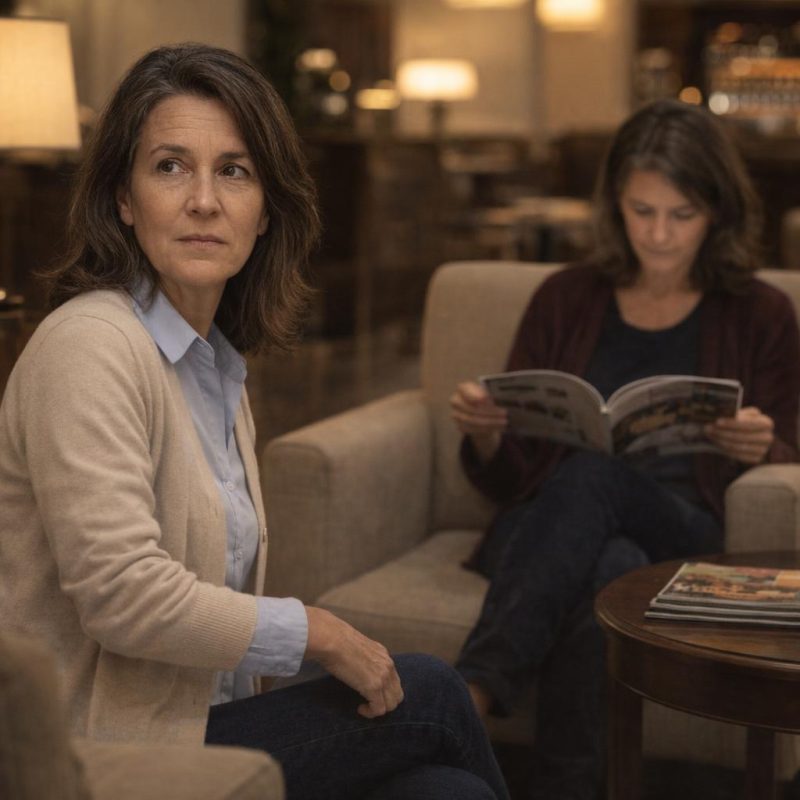 Image by RM AI
Second Interruption
Mark goes to the gym after lunch and I take my book to the bar, which is something I almost never do alone, but the afternoon feels long and I want a change of scene. The man on the stool next to mine is watching the bartender do something elaborate with a cocktail shaker and he makes a comment about it being more performance than drink, and I laugh, and we start talking. He's been here two weeks, which surprises me — most people do a week at most. I'm about to ask what keeps him here that long when I feel a presence at my left shoulder and I turn, and the hotel manager is standing there in his dark suit, hands clasped, asking whether everything in my suite has been to my satisfaction and whether I'd had a chance to book the sunset cruise before it filled up. I answer him — yes, the suite is lovely, no, I hadn't thought about the cruise — and when I turn back the man beside me has his phone out and is scrolling with the particular concentration of someone who is no longer available. I finish my drink looking at the bottles lined up behind the bar. The conversation had been about to go somewhere interesting. I'm still thinking about that when the hotel manager appears at my elbow a second time, right on cue, asking if I'd like to see the dinner specials.
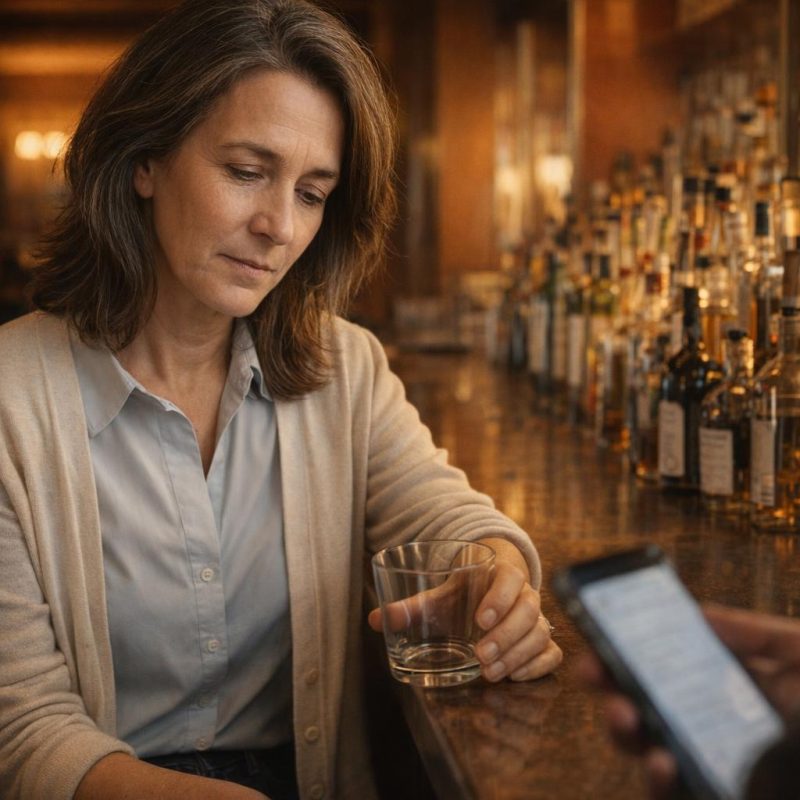 Image by RM AI
Isolation Realized
Mark is on the balcony with his book when I get back to the suite, and I sit in the chair across from him and don't say anything for a while. I start counting in my head — not the way I counted at the pool, but deliberately, going back through the days. The woman in the lobby with the magazine. The man at the bar with his phone. A couple by the pool on the second day who'd been mid-sentence when a waiter materialized between us. A man near the spa entrance who'd smiled at me and then been redirected by a staff member before we'd exchanged more than a word. Four conversations. Four interruptions. Each one polite, each one perfectly timed, each one ending the same way — with the other person turning away and me left holding the loose end of something that never got finished. I sit with that count for a moment. I don't know what it means. It could be attentive service. It could be coincidence. Luxury hotels have a lot of staff and staff have a lot of questions. I think about mentioning it to Mark and then I remember how the insecurity conversation went, and I let it go. He turns a page. The marina glitters below us. I sit with the quiet, unsettled feeling that I haven't actually spoken to anyone here except him.
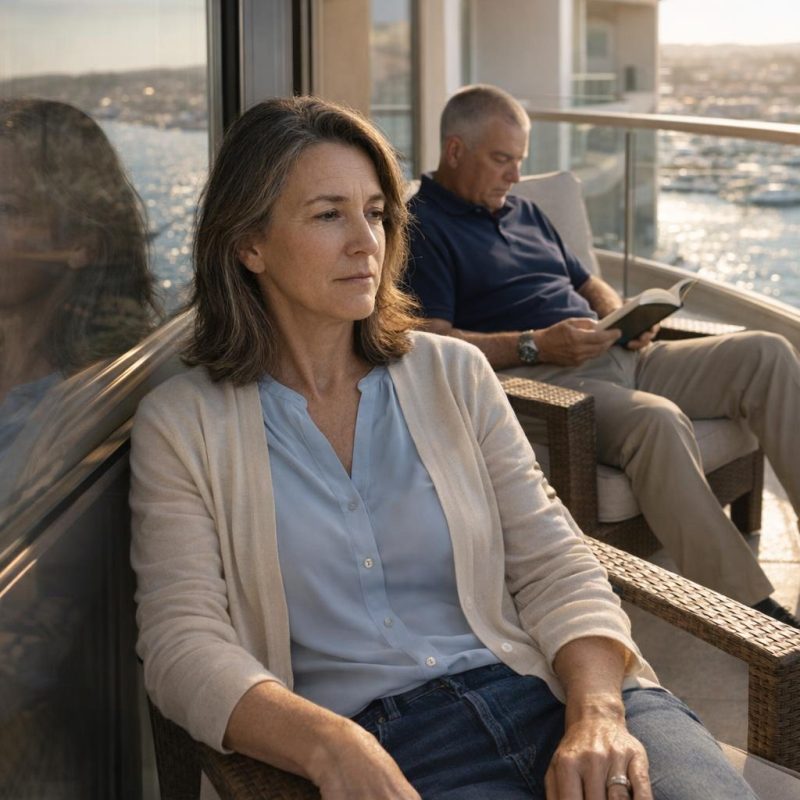 Image by RM AI
Evening Event
The cocktail reception is in the ballroom, all low lighting and string quartet and people in their good clothes holding champagne flutes. I'm looking forward to it when we arrive. But within ten minutes I start noticing things I can't quite stop noticing. When Mark moves toward the bar, I watch two men on the far side of the room shift their positions — not dramatically, just a small adjustment, the way you turn a few degrees to keep something in your peripheral vision. A couple approaches us and makes pleasant small talk about the resort, but their eyes keep drifting past my shoulder toward Mark, and not in the way people look at someone attractive. It's more like the way you track a door you're not sure is locked. A woman across the room turns her body toward us when Mark laughs at something, though she's in the middle of her own conversation. Mark doesn't seem to notice any of it. He's easy and sociable, asking questions, remembering names, doing all the things he's always been good at. I stand beside him and smile and say the right things and feel increasingly like I've wandered into a room where everyone else knows the program. We leave early — my suggestion, and he agrees without pushing back. Walking back to the suite, the string quartet fades behind us, and I carry the strangeness of the evening without any way to name it.
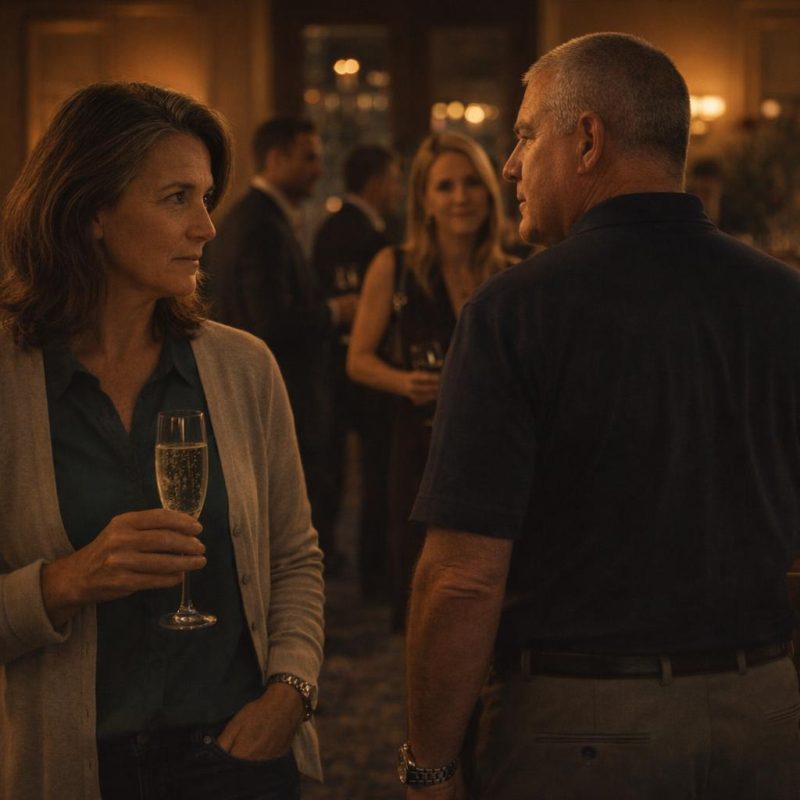 Image by RM AI
Tracking the Stares
I decide the next morning to pay attention properly — not anxiously, just carefully, the way you'd approach any problem you're trying to understand. At breakfast I let Mark go in ahead of me while I stop to check my bag, and I count from the doorway. Five people turn to look at him within maybe twenty seconds. Not all at once, not obviously, but one after another in a loose sequence, like a slow ripple. I file that away. In the lobby after breakfast, Mark stops to ask the concierge something about a boat tour, and I hang back near the seating area. A man in a pale linen shirt is reading a newspaper in one of the chairs. When Mark steps away from the concierge desk and crosses toward me, the man folds his newspaper and stands up. He doesn't approach. He doesn't speak. He just stands there, watching Mark cross the lobby, and then sits back down once Mark reaches me. I keep my face neutral. I say nothing. Mark asks if I'm feeling alright and I tell him I'm fine, just a little tired, and he suggests we take it easy this afternoon. I agree. But I'm already running the numbers in my head — times, locations, the specific quality of each look — and none of them add up to anything I know how to explain.
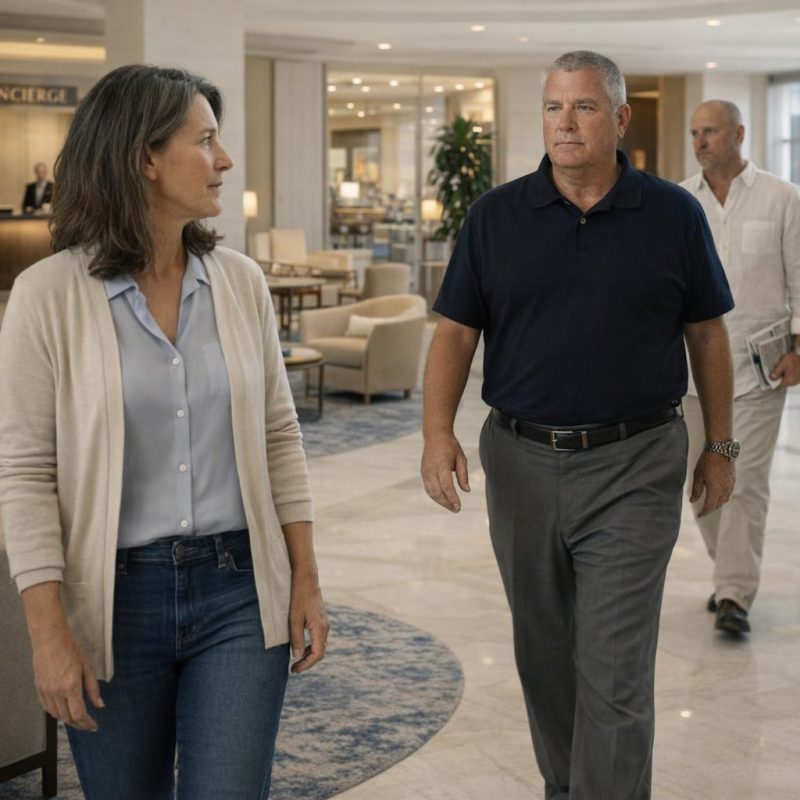 Image by RM AI
Unfamiliar Gestures
I watch Mark over breakfast the next morning and I try to do it the way you'd watch a stranger — without the thirty years of assumption layered on top. He gestures with his left hand when he's making a point, which I find myself noting because I have a memory, vague but persistent, of him being more right-hand dominant in conversation. When I say something that amuses him, his laugh comes out a half-note higher than I expect, and I sit with that for a second before I tell myself that voices change, that I'm probably misremembering. He reaches for the bread basket and I watch his wrist, the way his fingers close around the roll, and it looks right, it looks like him, and then it doesn't, and then it does again. I'm doing this to myself, I think. Thirty years is a long time and memory is not a recording. People's habits shift. People change the way they hold themselves without noticing. Mark asks what I'm thinking about and I say nothing important, just spacing out, and he smiles and goes back to his coffee. Then he tilts his head to one side while he reads the menu — a slow, considering tilt, chin dropping slightly left — and something in my chest goes very still, because in thirty years I have never once seen him do that.
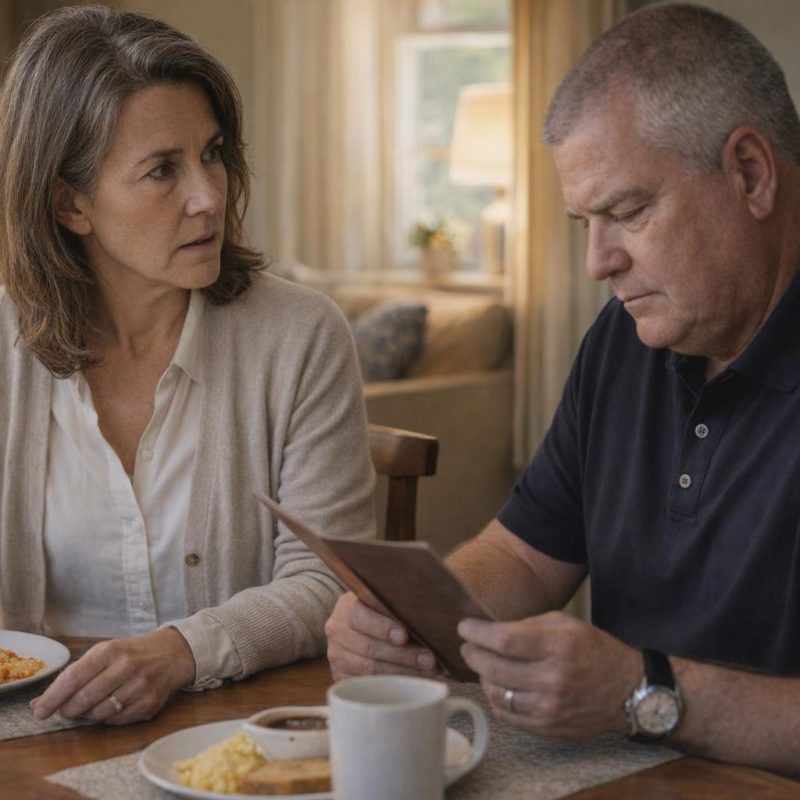 Image by RM AI
Memory Test
We walk along the beach in the late afternoon, shoes off, the sand still warm from the day. I bring up the honeymoon the way you'd bring up any old memory — casually, like it just floated up. I tell him I've been thinking about that little hotel, how perfect it was, how we almost didn't book it. He smiles and says he thinks about it too sometimes. I ask if he remembers the entrance, the way it looked from the street, and he gets this warm, nostalgic expression and starts describing it — the climbing roses, the uneven stone steps, the way the key was an actual brass key and not a card. He's good. The details are right, or close enough that I feel a flicker of doubt about my own memory. And then he says it: he loved that red door, how it made the whole place look like something out of a storybook. I keep walking. I keep my face exactly where it was. I painted that door in watercolor the summer we got back, and it has hung in our hallway for twenty-nine years. That door was blue.
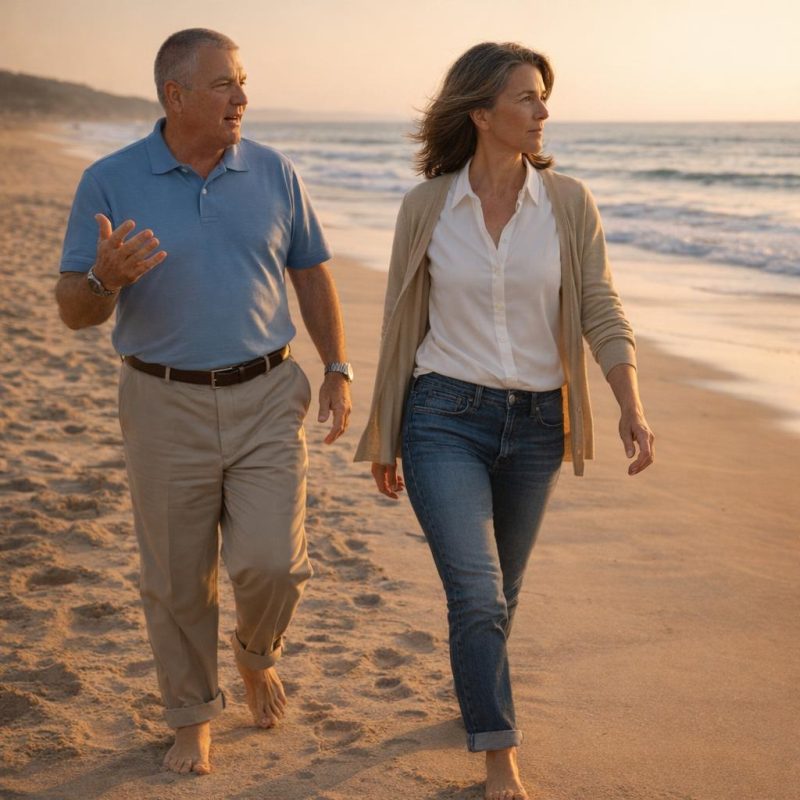 Image by RM AI
Watching the Stranger
I watch him get ready for dinner and I try to do it without letting anything show on my face. He stands at the bathroom mirror buttoning his shirt and I study the way his fingers move — methodical, starting from the bottom, which I think is right, which I think is how he's always done it, but I can't be certain anymore and that uncertainty is its own kind of vertigo. His reflection looks like him. Of course it does. Same jaw, same slight asymmetry at the left brow, same way he tilts his chin up to check his collar. I tell myself I'm doing this to myself. I tell myself that stress does things to perception, that thirty years of accumulated memory is not a photograph, that I could be misremembering the door, misremembering the head tilt, misremembering all of it. Maybe this is what the beginning of something hormonal feels like — the world going slightly sideways, familiar things losing their edges. He catches me in the mirror and asks if something's wrong. I say I was just admiring him. He smiles, and the smile is warm and easy and completely his, and I smile back, and the distance between us feels like something I can't measure.
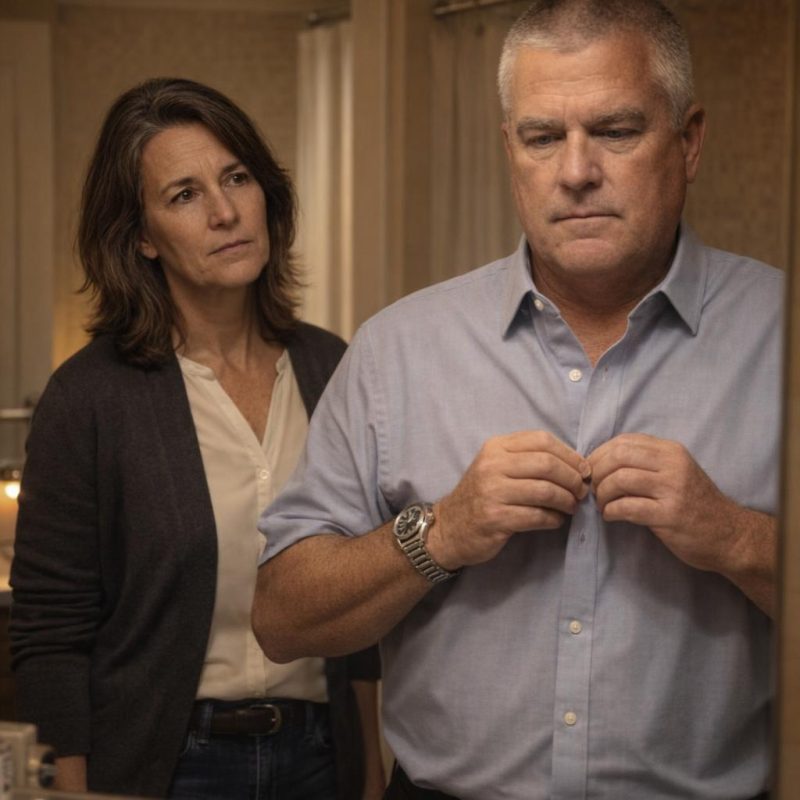 Image by RM AI
Constant Surveillance
I start noticing it properly on the third day — the way the staff seems to materialize wherever I am. In the hallway outside our room, there's always a housekeeper folding towels or adjusting a cart, never quite making eye contact but always present. At the pool, a server appears at my elbow every few minutes with a fresh water or a menu I didn't ask for. I start timing it in my head, counting the intervals, and it runs between five and ten minutes without fail. In the spa waiting area, the receptionist doesn't look at her screen the way receptionists usually do — she looks at me, steadily, with the kind of attention that feels less like hospitality and more like something else I can't name. I mention it to Mark over drinks, keeping my voice light, saying the service here is almost overwhelming. He laughs and says that's what we paid for, that this is what a real luxury hotel feels like. Maybe he's right. Maybe I've just never stayed somewhere this attentive. I sit with my glass and watch the garden and try to decide if the feeling crawling up the back of my neck is gratitude or something I should be paying closer attention to.
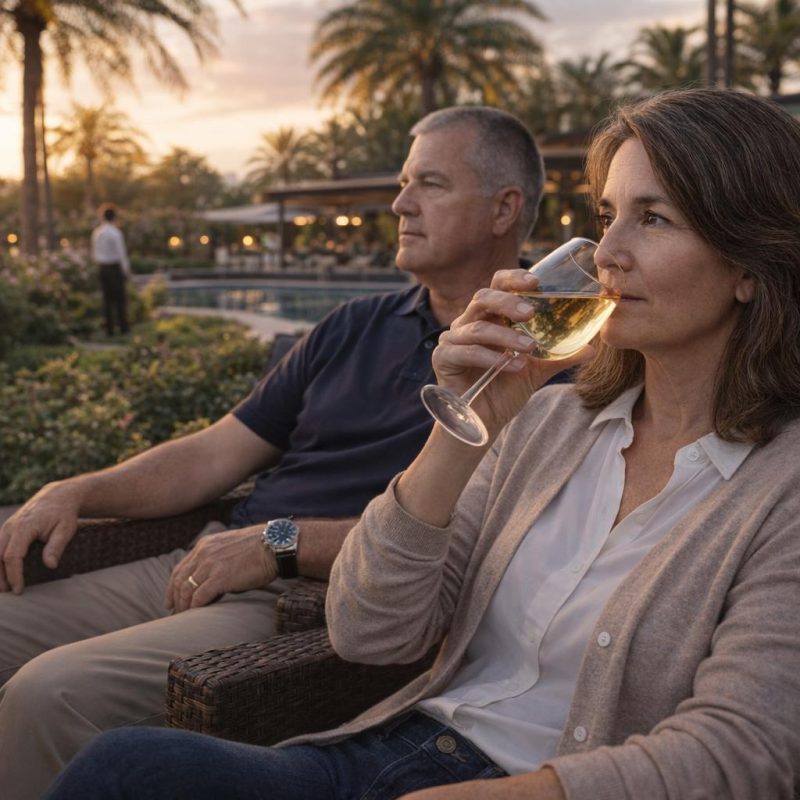 Image by RM AI
Breaking the Pattern
Mark leaves after breakfast for a tennis lesson on the far courts — I watch him cross the lobby with his racket bag and disappear through the side doors. I give it ten minutes. Then I go down to the lobby myself and find a seat near the window, and I wait. There's a woman sitting alone near the fountain, reading, a paperback held loosely in both hands. She looks relaxed, unhurried, the kind of person who's been here long enough to stop noticing the décor. I get up and walk over and ask if she's enjoying her stay, keeping my voice easy, just two guests making small talk. She looks up and smiles and starts to say something about the beach walk she took that morning. And then a staff member is beside me — young, dark jacket, the same careful neutral expression they all seem to wear — asking if I need directions to any of the hotel's facilities. I tell him I'm fine. He doesn't leave. He adjusts a nearby flower arrangement with the focused attention of someone who has nowhere else to be. The woman glances between us, murmurs something polite, and picks her book back up. I stand there for a moment, and then I walk back to my seat, and the chill that moves through me has nothing to do with the air conditioning.
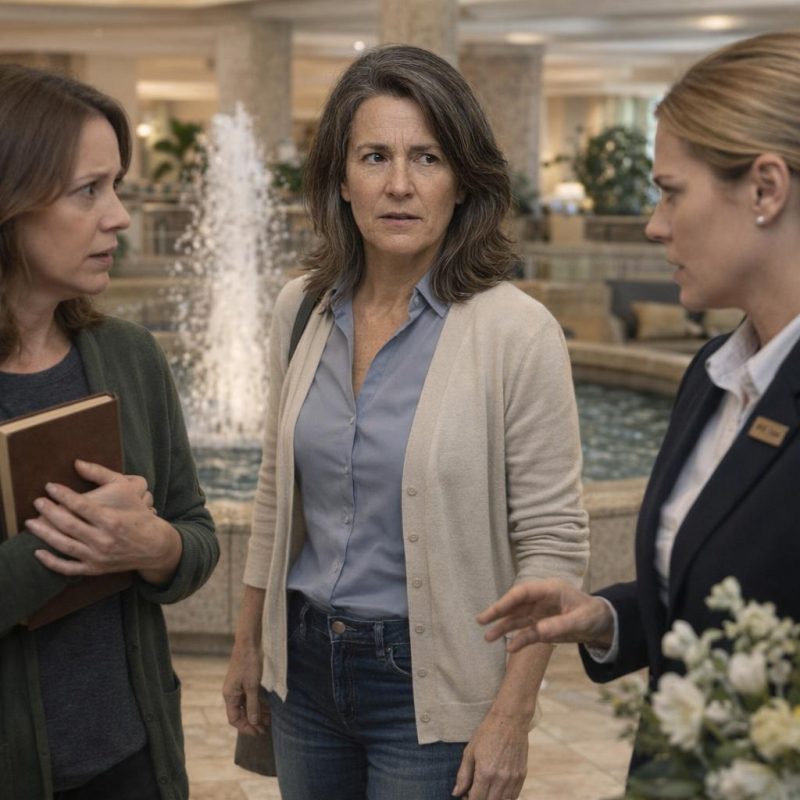 Image by RM AI
Thirty Seconds
Mark is at the gym the next morning and I take my coffee to the garden and sit with my watch face up on the armrest. There's a couple on a bench about twenty feet away, older than us, sharing a newspaper. I wait until I feel settled, until I look like someone just enjoying the morning, and then I check the time and walk over. I ask them how long they've been staying at Azure Heights, keeping my voice warm, genuinely curious. The man lowers his half of the newspaper and starts to answer — two weeks, he says, they come every year — and I'm nodding, I'm listening, I'm counting in my head. A staff member appears at my left shoulder asking if I'd like my coffee refreshed or perhaps something brought out from the kitchen. I check my watch. Twenty-eight seconds. I tell him no thank you, I'm fine, and by the time I turn back the couple has returned to their newspaper, the small opening of conversation closed as neatly as a door. I walk back to my chair and sit down and set my watch face down on the armrest this time. Twenty-eight seconds. I don't know who ordered it or why, but the number sits in my chest like a stone I can't put down.
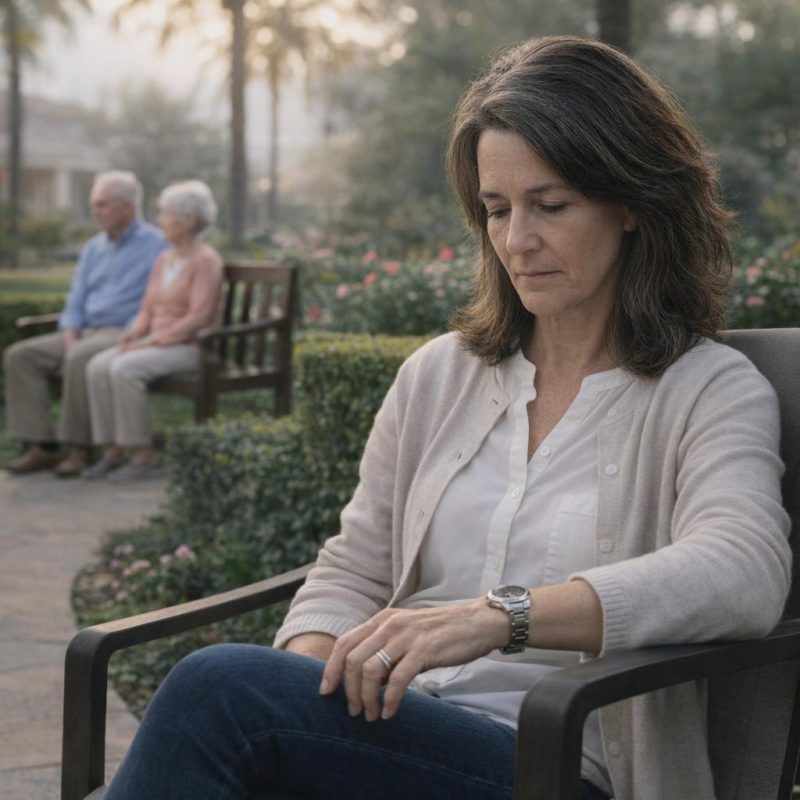 Image by RM AI
Staged Comfort
Dinner is beautiful. That's the thing — it's genuinely beautiful, the kind of evening that should feel like a gift. Candlelight, good wine, Mark asking about my afternoon with the attentiveness of someone who actually wants to know. But I keep noticing things I can't stop noticing. The server appears the moment our water glasses reach the halfway mark, not before, not after — exactly halfway. The couple at the table to our left laughs at something just as Mark finishes a story, the timing so precise it lands like a sound effect. I watch the room the way you watch a stage when you've started to see the rigging. Mark reaches across the table and takes my hand and tells me he's glad we did this, that thirty years deserved something like this. I squeeze his hand and say the food is wonderful, because it is, because that part at least is real. He talks about the wine and I listen and I smile at the right moments, and the evening moves around us like something choreographed, and I sit inside it feeling the particular loneliness of being the only person in the room who doesn't know the script.
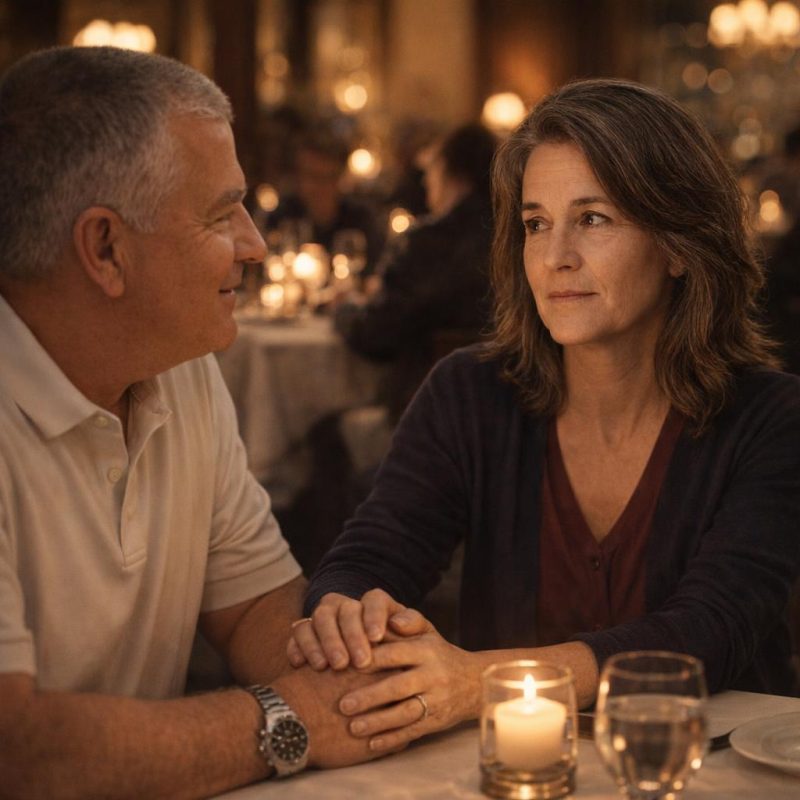 Image by RM AI
Online Search
Mark falls asleep quickly, the way he always has — or the way I remember him always having — and I lie still beside him for twenty minutes before I take my phone to the bathroom and close the door. I sit on the edge of the tub and search for Azure Heights. The official website comes up first, all soft light and curated luxury, the kind of photography that makes everything look like a memory before it's happened. I scroll through review sites next, reading quickly, looking for something I can't quite name. Most of the reviews are glowing and vague — exceptional service, unparalleled privacy, a truly unique experience. I'm about to give up when I find one from eight months ago, three stars, a reviewer who writes in the careful measured way of someone choosing their words. They describe feeling watched throughout their stay, staff appearing with an almost unsettling frequency. And then, near the end, a sentence that makes me read it twice: the other guests seemed to know each other already, they wrote, without ever having been introduced — like they were all in on something the reviewer wasn't.
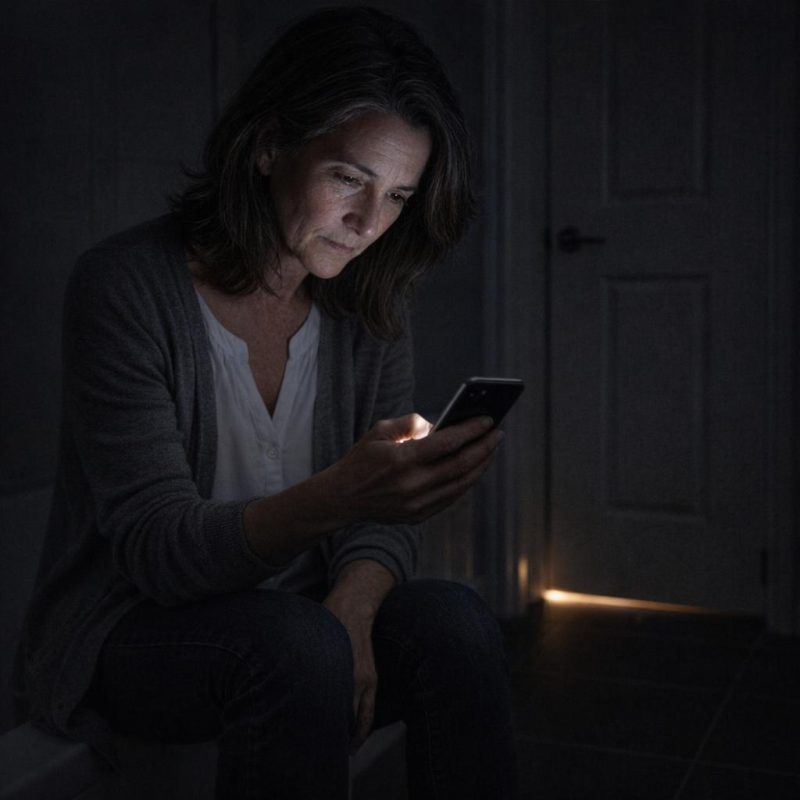 Image by RM AI
Exclusive Clientele
I screenshot the review and clear my browser history and then I sit there on the edge of the tub for another few minutes, thinking. I go back to the search and this time I look for articles — travel journalism, luxury hotel features, anything that mentions Azure Heights by name. I find a piece from a travel magazine, eighteen months old, about ultra-exclusive hotels with membership structures. Azure Heights is listed near the top. The article describes a booking process that requires written references from two existing guests, submitted in advance, verified before a reservation is confirmed. The clientele, the article notes, includes people whose names appear on the kinds of lists most people never see. I read the paragraph twice. Then I open our booking confirmation in my email and scroll through it slowly — the dates, the room type, the payment details. There is no mention of references. No verification step. No membership language of any kind. I try to think of how that could happen, whether there's an exception process, whether someone made an error somewhere. The article is still open in my other tab, and the line about references from two current guests sits there waiting.
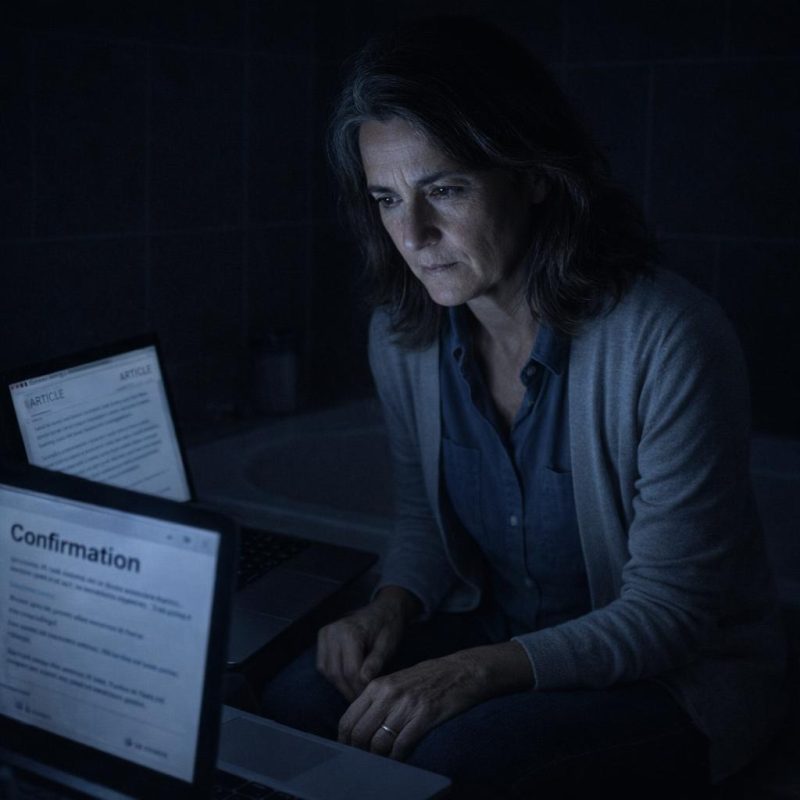 Image by RM AI
Planning the Spa
I don't sleep well. I lie there listening to Mark breathe and running the same loop in my head — the booking confirmation with no membership language, the review that mentioned a vetting process, the article about references from existing guests. By the time pale light starts coming through the curtains, I feel like I've been awake for days. Mark notices at breakfast. He sets down his coffee and says I look tired, that I should book something at the spa, let myself actually rest for a few hours. I almost say no out of reflex, but then I stop. The spa. A separate space. Time away from this room, away from him watching me, away from the careful way I've been holding myself together. I call down to the spa desk and book a ninety-minute massage and access to the relaxation lounge for the afternoon. Mark smiles when I tell him. He says he'll use the time to play tennis, that it'll be good for both of us. He kisses my forehead and says I deserve to be pampered. I nod and smile back. But what I'm actually thinking is that a few hours alone, in a quiet room, might be the first chance I've had to breathe since we arrived. I hold onto that thought like something fragile.
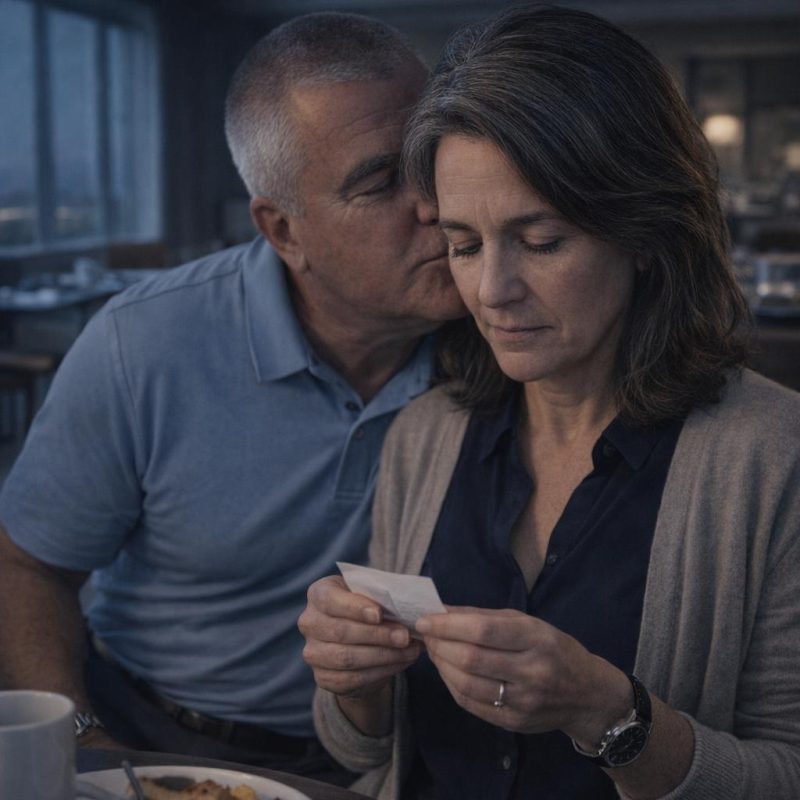 Image by RM AI
Spa Arrival
The spa reception smells like eucalyptus and warm stone, and for a moment — just a moment — my shoulders actually drop. The woman at the desk takes my name, hands me a robe and slippers, and leads me through a corridor lined with soft amber lighting. The relaxation lounge is dim and hushed, with low music that seems to come from everywhere and nowhere at once. I settle into a wide lounge chair near the far wall, pull the robe tighter, and close my eyes. I try to let the tension go. I try to stop cataloging things. For a few minutes, it almost works. Then I open my eyes. Across the lounge, maybe fifteen feet away, a woman is sitting upright in her chair rather than reclining. She has dark hair pulled back severely and the kind of stillness that doesn't look like relaxation — it looks like waiting. She is looking directly at me. Not glancing, not letting her gaze drift. Looking. I look away and fix my eyes on the ceiling. I count my breaths. When I look back, she is still watching me, her expression steady and unreadable.
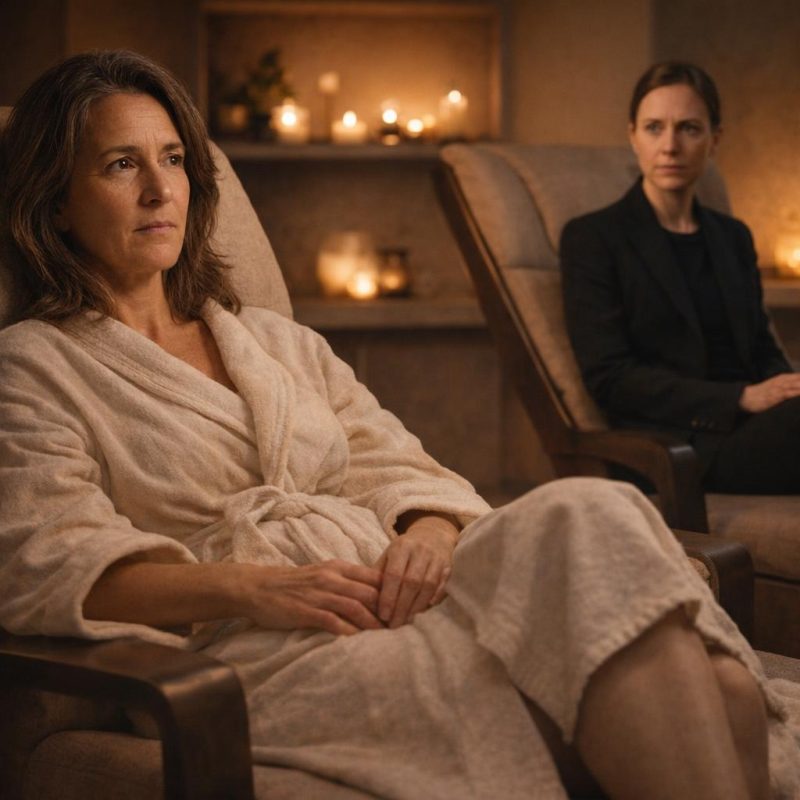 Image by RM AI
Diane's Approach
She stands before I've decided what to do about her. She crosses the lounge with a deliberate, unhurried walk and sits down in the empty chair beside mine without asking. Up close she looks to be in her late forties, with dark eyes that don't waver. She says her name is Diane and that she's sorry to intrude, but she needs to speak with me. I tell her this isn't really a good time. She nods like she expected that and asks anyway — asks if I'm here with Mark Bennett. The sound of his name in her mouth stops me. I ask how she knows that. She says she knows Mark from before. She says it quietly, without drama, like she's reporting something factual. I ask what she means by before. She folds her hands in her lap and looks at me steadily, and then she says that she was married to him — in a different life, she calls it, like the phrase means something specific to her. I stare at her, trying to find the thread that makes this make sense.
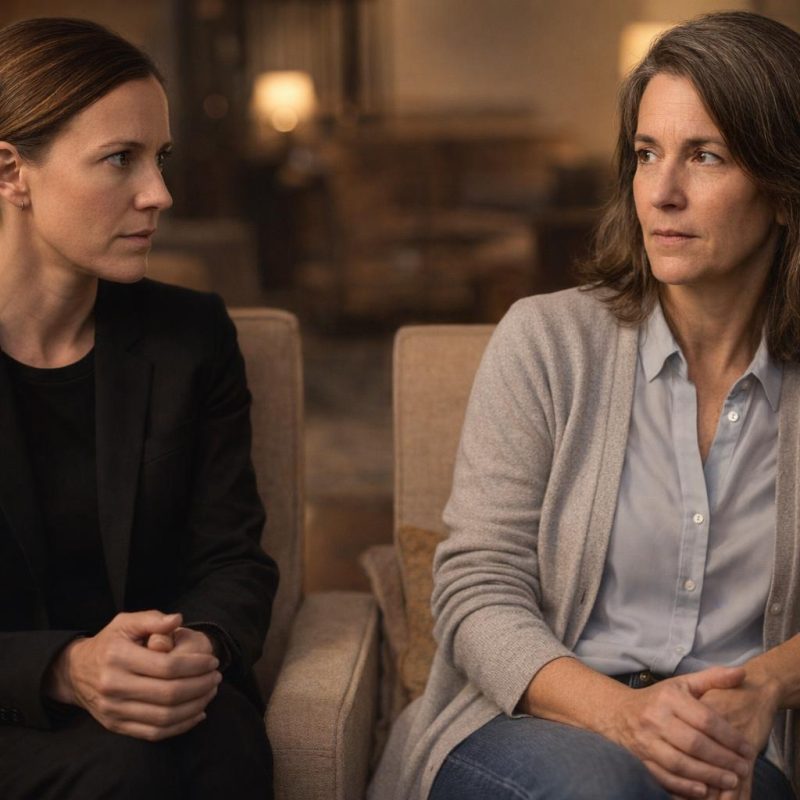 Image by RM AI
The Photograph
I tell her she must be mistaken. I say it firmly, the way you say something when you need it to be true. Diane doesn't argue. She reaches into the pocket of her robe and pulls out a photograph — a physical print, slightly worn at the edges — and holds it out to me. I take it because I don't know what else to do. The man in the photo is standing in front of the Trevi Fountain. He's younger, maybe early thirties, squinting a little in the sun, wearing a blue linen shirt I don't recognize. But the face is Mark's. The jaw, the set of the eyes, the way he holds his shoulders — it's him, or someone who could be his twin. We talked about going to Rome for our twenty-fifth anniversary and couldn't make it work financially. Rome was always the trip we were still planning. Mark has never mentioned being there. I turn the photograph over. There's nothing on the back. I turn it face-up again and look at the fountain, at the crowd blurred behind him, at the light on the water. Diane says nothing. She just watches me. The photograph sits in my hands, and I have no explanation for what I'm holding.
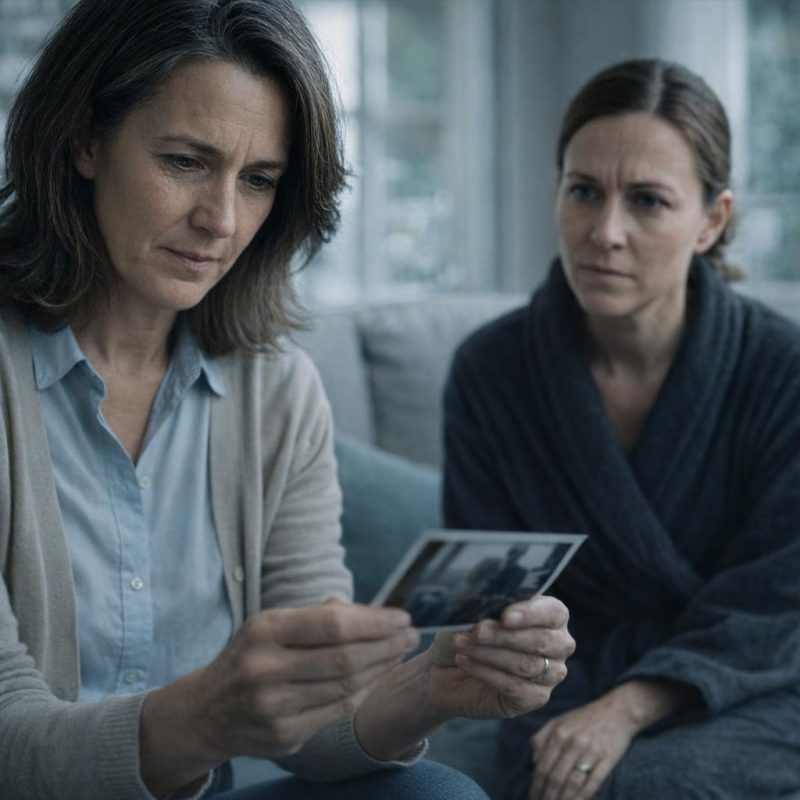 Image by RM AI
Careful Questions
I find Mark on the balcony when I get back, stretched out in one of the chairs with a paperback open on his chest. He looks relaxed in a way that feels almost offensive given the state I'm in. I sit down in the chair beside him and say I've been thinking about travel — places we haven't been yet. He sets the book down and smiles, says that sounds like a good distraction. I ask, as casually as I can manage, whether he's ever been to Rome. He shakes his head without hesitating. Says no, never been to Italy at all. I ask if he's sure — maybe a work trip, something before we met. He laughs a little and says he would absolutely remember visiting Rome, that it's not the kind of place you forget. He asks why I'm asking and I tell him I was just daydreaming, that the spa put me in a wandering sort of mood. He seems satisfied with that. He picks his book back up and says maybe we'll finally make it happen for our thirty-fifth. I nod and look out at the water. I don't push. I don't say anything else. I just let his answer sit there between us, smooth and complete and exactly what I would have expected him to say.
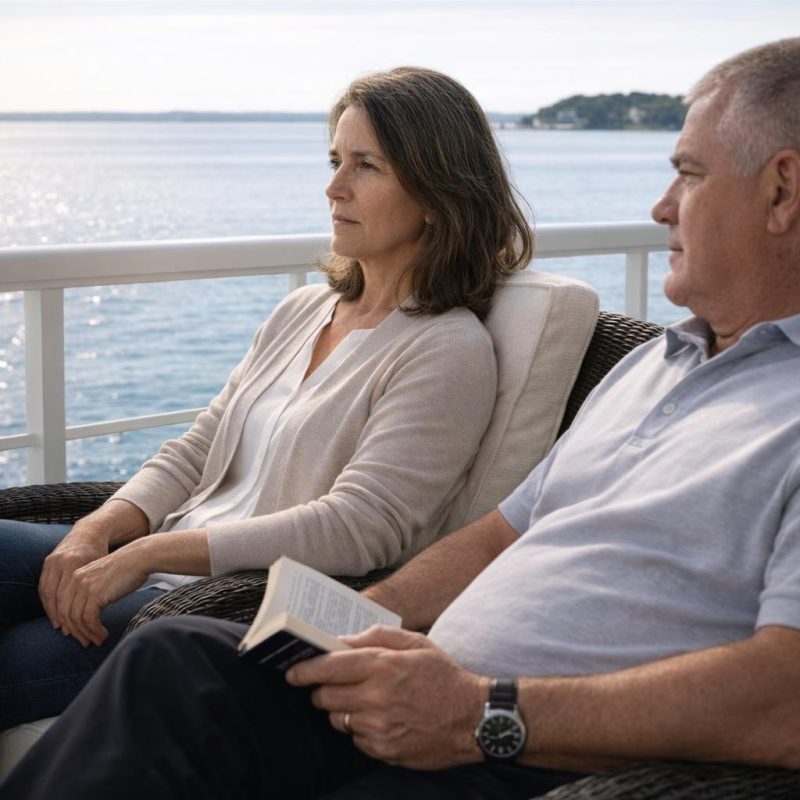 Image by RM AI
The Explanation
We're still on the balcony when I decide to go a step further. I tell him, carefully, that while I was at the spa another guest showed me a photograph — someone who claimed to know him. Someone who said the man in the photo was him, standing in front of the Trevi Fountain. Mark goes still for just a beat, then sets his book down again. He asks where this person got the photo. I say I don't know, that I didn't keep it. He asks if I can describe the woman. I give him a vague answer. He's quiet for a moment, and then he says it's probably a case of mistaken identity — that he's been told before he has a common sort of face, the kind that reminds people of someone else. He says everyone has a doppelganger somewhere, that it's more common than people think. He says it all evenly, without rushing, without any of the confusion I'd expect from someone hearing this for the first time. I watch his face as he speaks. His expression is open, almost amused. He says, with a small shrug, that whoever showed me that photo must have him confused with someone else.
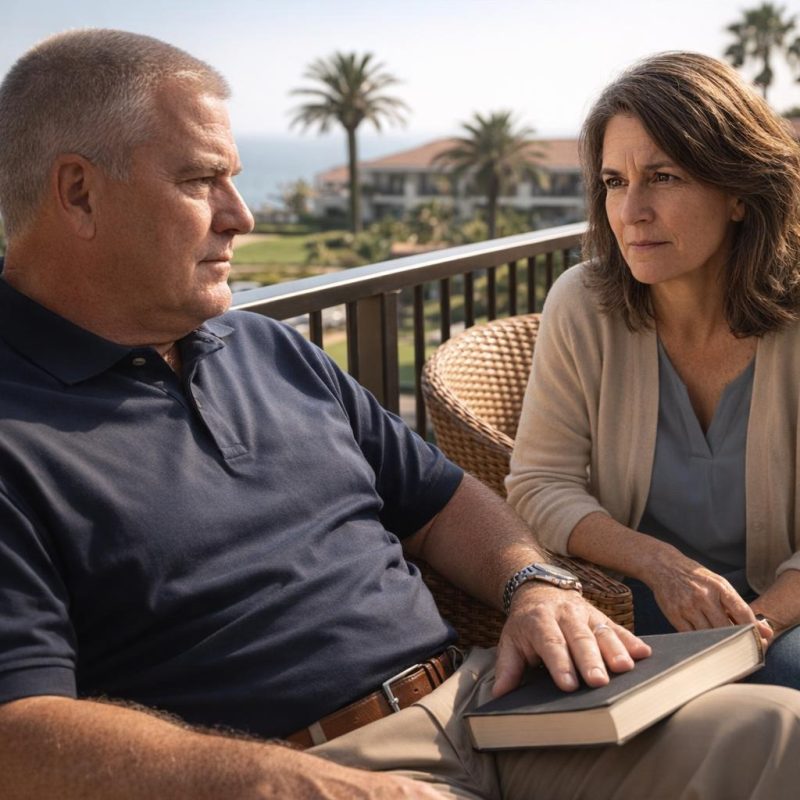 Image by RM AI
Rehearsed Words
Mark picks his book back up and finds his page, and within a few minutes he looks completely absorbed. I sit beside him and don't move. I replay the conversation in my head, word by word. The doppelganger explanation. The comment about having a common face. The calm, almost gentle way he'd offered it all up. What I keep coming back to is the speed of it. There was no fumbling, no real confusion, no moment where he seemed to need time to process what I'd told him. If someone told me a stranger at a spa had shown them a photograph claiming it was me in a city I'd never visited, I would have questions. I would want to see the photo. I would want to know who the woman was, what exactly she'd said, why she'd approached a stranger with something like that. Mark asked about the photo once and then moved on. He didn't circle back. He didn't seem unsettled. The explanation arrived whole and ready, like something taken down from a shelf. I look at the side of his face, at the easy way he turns a page. I sit with the feeling that his answer had come too quickly — too complete, too unbothered — for someone who'd heard it for the first time.
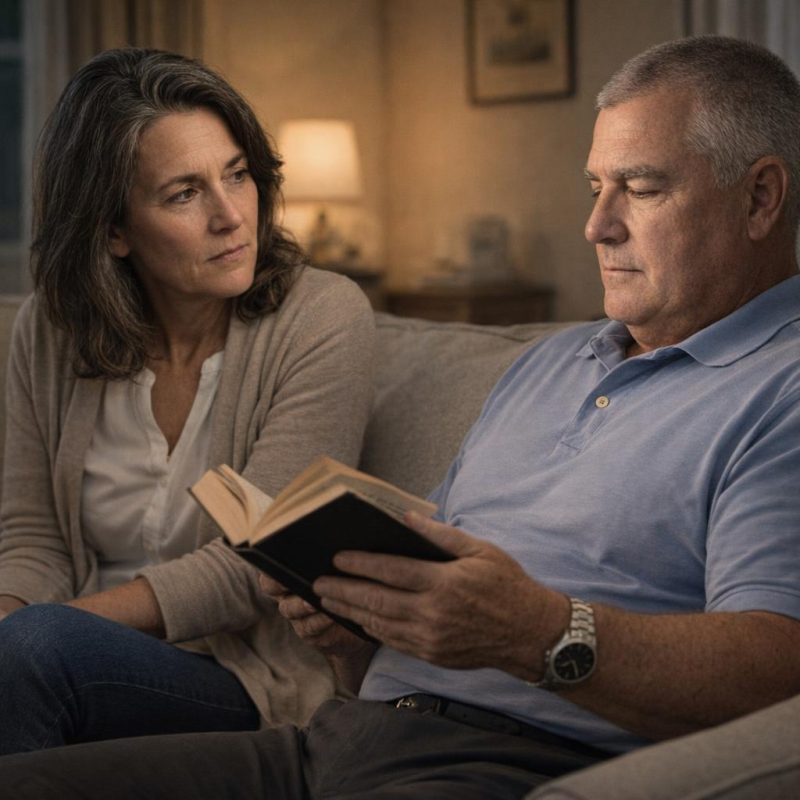 Image by RM AI
Investigative Eye
I spend the rest of the day watching him the way I used to watch students during exams — steady, peripheral, giving nothing away. At breakfast I notice how he holds his fork, tines down, European style. I try to remember if he's always done that. At the pool I watch his swimming stroke, the way he pulls through the water with a tight, efficient technique that looks almost trained. I try to match it against thirty years of summers and backyard pools and I can't quite land on a clear memory. Everything he does looks right. Nothing feels wrong in any way I can name. That's the part that keeps snagging — it all looks exactly as it should. In the afternoon we're sitting at one of the small tables near the terrace bar when his phone buzzes on the table between us. He glances down at the screen. Then, in one quick motion, he picks it up and deletes the message. I ask who it was. He says spam, doesn't look up. But before his thumb moved I saw the preview on the screen — one word, in capital letters: CONFIRM.
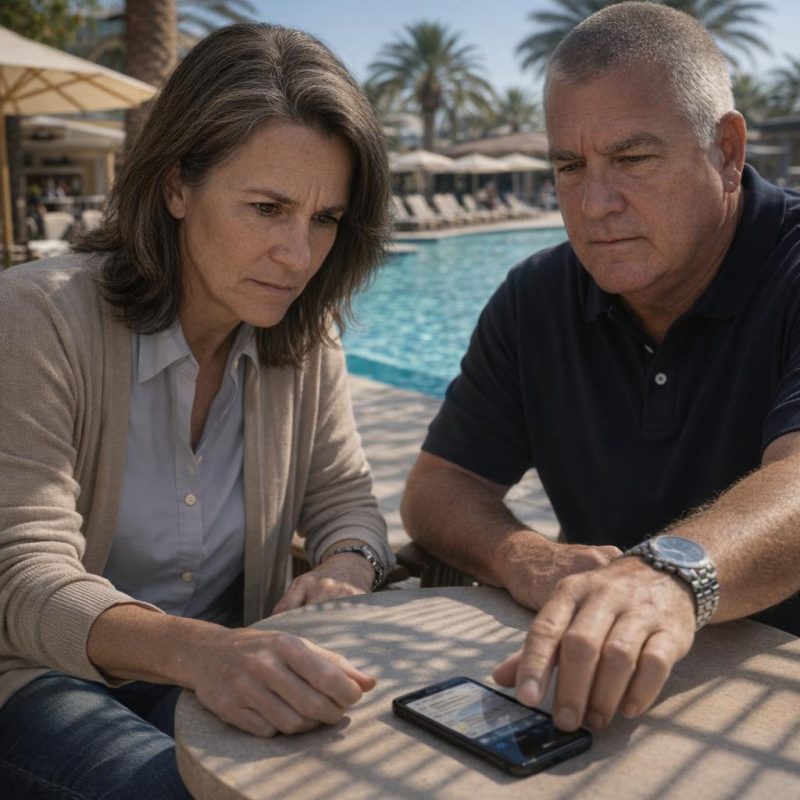 Image by RM AI
Second Memory
We're sitting at the terrace bar before dinner, the sky going that particular shade of orange I've been photographing all week, and I find myself steering the conversation toward our son's graduation. It comes out naturally enough — I mention how proud we were, how he'd looked standing up there in his cap and gown. Then I ask, almost as an afterthought, if he remembers what tie he wore that day. He doesn't hesitate. He says the blue striped one, the one he'd had for years. I nod and take a sip of my wine. I bought that tie myself. I drove forty minutes to a department store in the next town because I wanted something specific — a deep burgundy, almost wine-colored, because I knew it would photograph well against his dark suit. I have the photos in an album on the third shelf of our bookcase at home. I've looked at them dozens of times. He keeps talking about the ceremony, something about the dean's speech, and I keep nodding. My glass is cool against my palm. The evening air smells like jasmine and salt. I sit with the weight of two wrong answers now, and the jasmine doesn't smell like anything anymore.
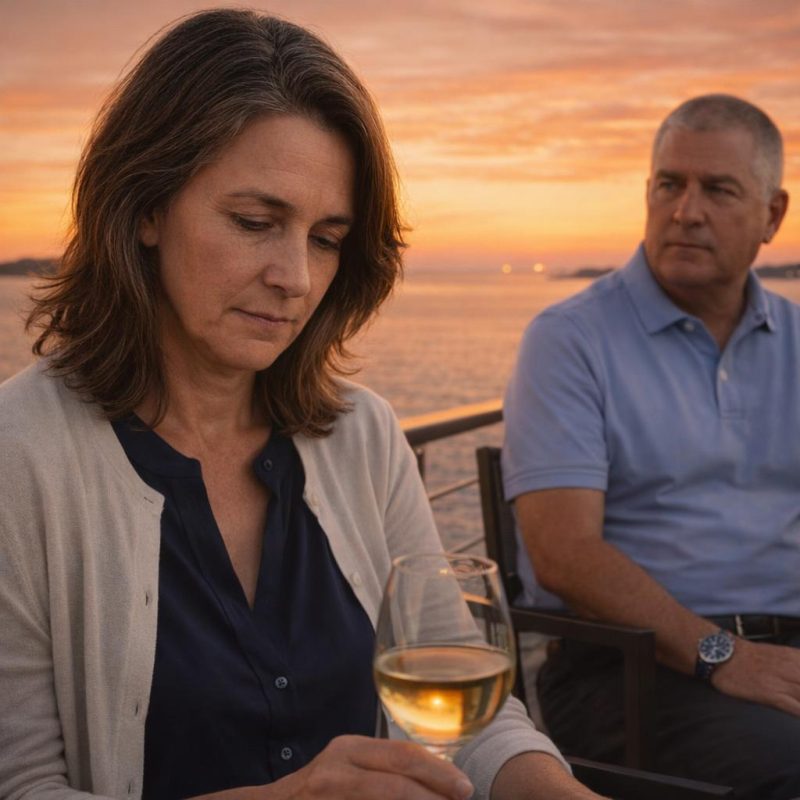 Image by RM AI
Unfamiliar Touch
Back in the suite after dinner, he puts his arms around me the way he always does — or the way I remember he always does. His hands settle on my back, but the placement is slightly off, a few inches higher than I'm used to, resting between my shoulder blades instead of at the small of my back. I tell myself I'm imagining it. I tell myself bodies shift over thirty years, that muscle memory isn't a fixed thing. When he kisses me, the pressure is gentler than I expect, the rhythm a little different, and I close my eyes and try to find something familiar in it. I almost do. Almost. I tell myself I'm tired, that I've been in my own head for days, that I'm manufacturing strangeness where there isn't any. He falls asleep quickly, the way he always has — or the way I think he always has. I lie on my back and stare at the ceiling, listening to his breathing settle into something slow and even beside me. The room is dark and quiet and perfectly comfortable. I lie there in the dark, next to the man I've been married to for thirty years, feeling completely and utterly alone.
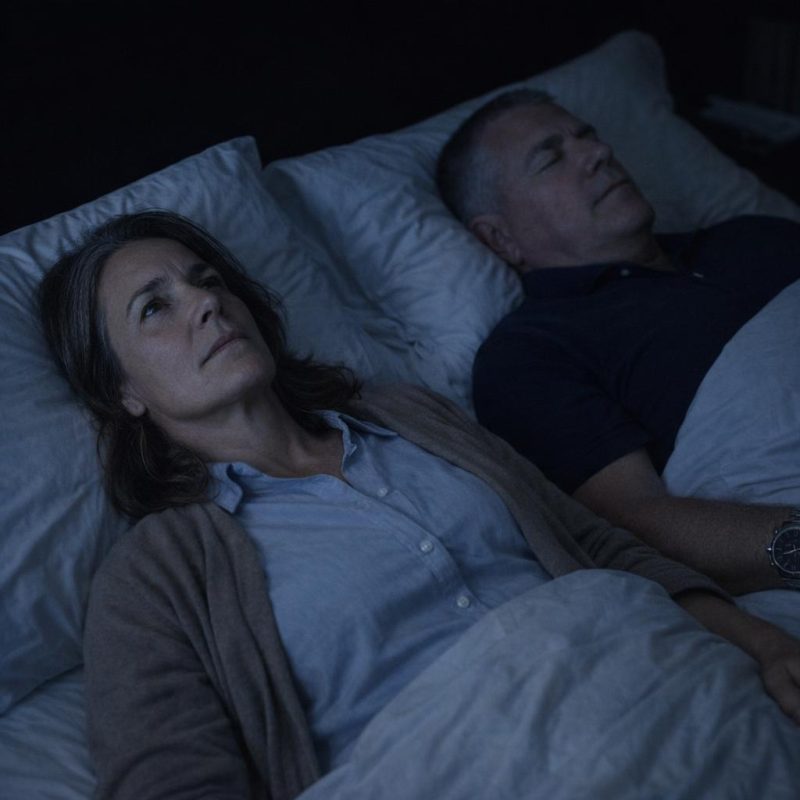 Image by RM AI
Decision to Search
I'm awake before six, watching him move around the suite getting ready for his tennis game. He's cheerful about it, already dressed in the white polo I packed for him, asking if I want to come down for breakfast first. I tell him to go ahead, that I'm going to sleep in, that I'll meet him for lunch. He kisses my forehead and says he'll be back in two hours. I listen to the door close. I count to sixty. Then I get out of bed and stand in the middle of the room in my bare feet, the carpet soft under me, the morning light coming through the gap in the curtains. I sense what I'm about to do. I feel it crossing something — some line between trust and suspicion that I've been standing at the edge of for days. But I've been running the same loop in my head since the fork, since the tie, since the deleted message with one word in capitals, and I can't keep waiting for something to resolve itself on its own. I need to know if I'm losing my mind. I need something I can hold in my hands. I take a breath, turn toward his side of the room, and look at his belongings.
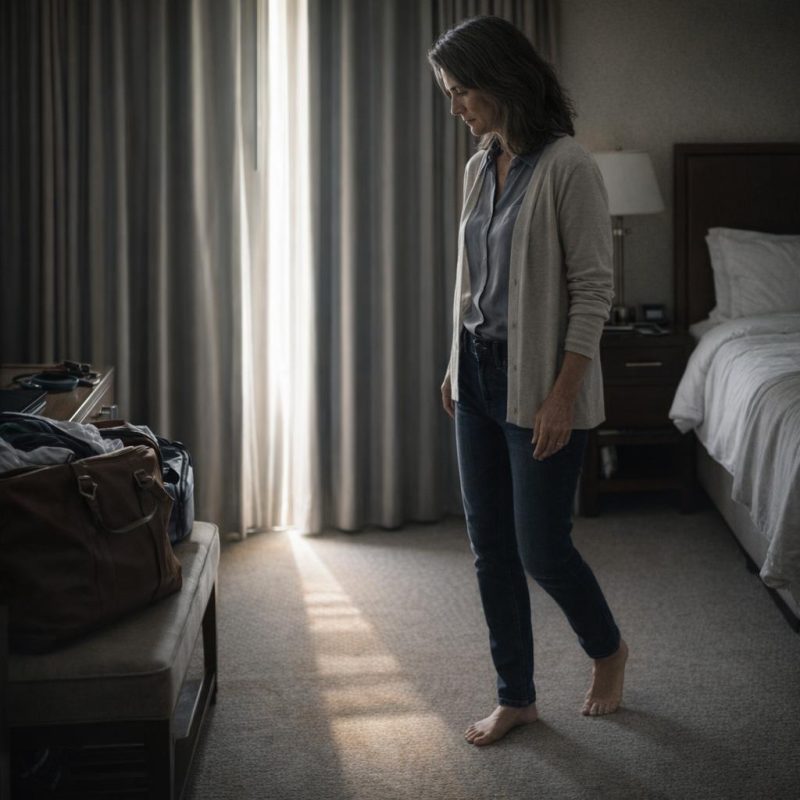 Image by RM AI
First Search
I start with his suitcase, unzipping it carefully and lifting the lid. Everything inside is neat — clothes folded with a precision that I notice but don't dwell on, shoes in their bag, a belt coiled in the corner. I go through the jacket pockets first, then the trousers. A hotel key card. A small fold of euros. Nothing else. I move to the toiletry bag on the bathroom shelf and go through it item by item. Shaving cream, a razor, deodorant, ibuprofen, a travel-sized mouthwash. All of it standard. All of it the kind of thing you'd pack for a week away. I sit back on the edge of the tub and look at the collection of objects spread in front of me. That's when it lands. There's nothing here from before this trip. No old receipt folded into a jacket pocket. No worn wallet with a photo tucked behind the cards. No loyalty card from the dry cleaner we've used for fifteen years, no crumpled parking stub, none of the small accumulated debris that lives in the pockets of a life. Every single item in this suitcase looks like it was purchased or assembled specifically for this trip, and nothing else.
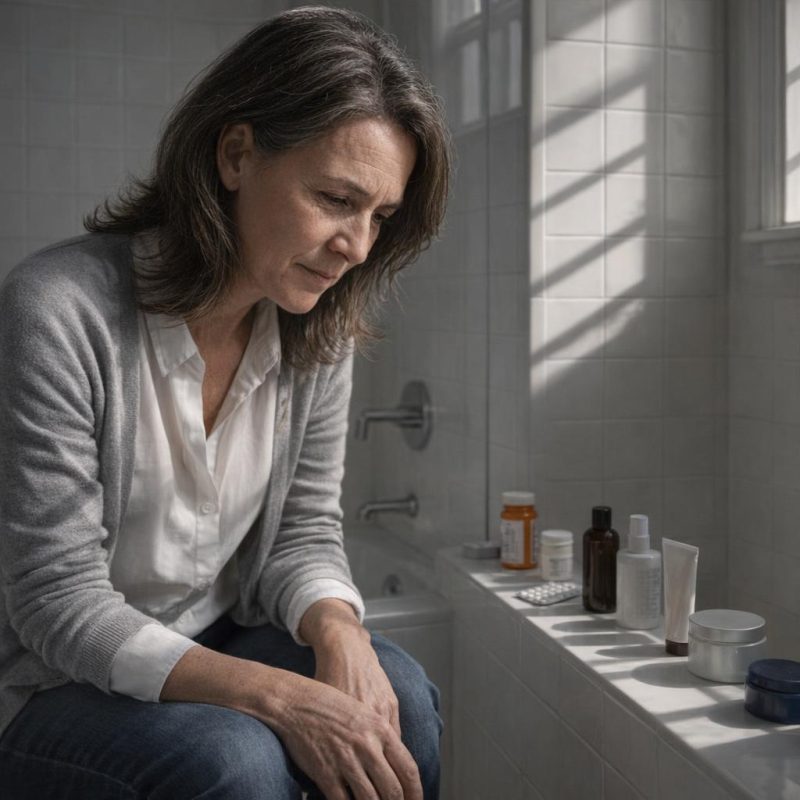 Image by RM AI
The Closet
I put everything back the way I found it and move to the closet. I go through the pockets of the hanging clothes first — the linen blazer, the light jacket he brought for cooler evenings. Nothing. I check the shelf above the hanging rail, running my hand along the back behind the folded hotel robes. My fingers touch something hard and rectangular, pushed back against the wall where the robes hang thickest. I pull the robes aside. There's a briefcase there, black leather, sitting flat on the shelf like it was placed there deliberately, out of the natural sightline. I lift it down carefully. It's heavier than I expect. The leather is smooth and barely marked, the kind of quality that suggests it's new or very rarely used. I carry it to the bed and set it down. There are two combination locks, one on each latch, both set to zero. I try the latches anyway. They don't move. I turn the case over in my hands, looking for a tag, a label, any identifying mark. There's nothing. I've never seen this briefcase before in my life, and I pull it from behind the hanging robes with my hands already starting to shake.
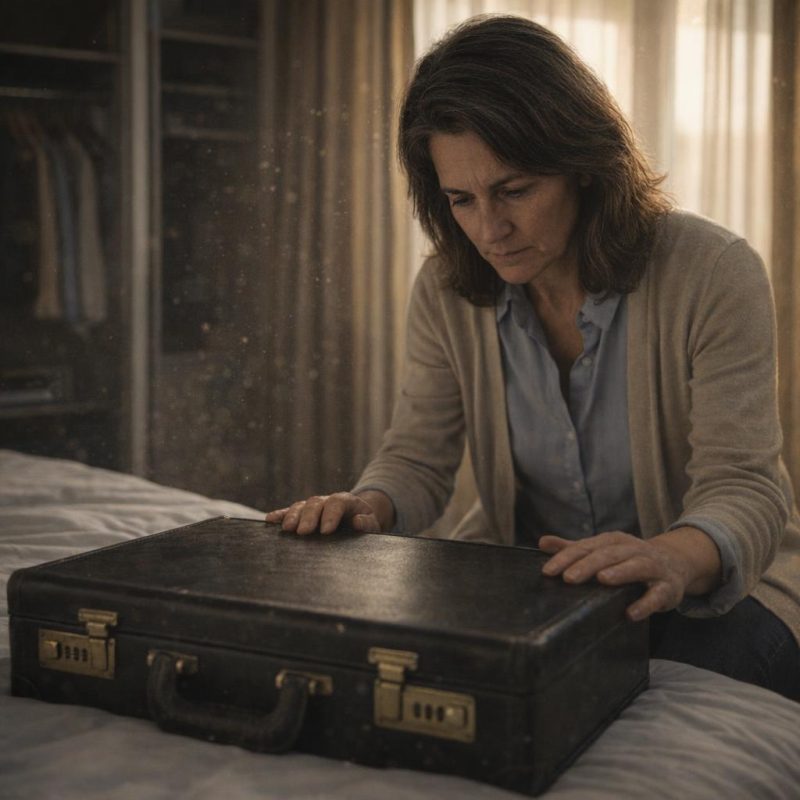 Image by RM AI
Searching for Access
I sit on the edge of the bed with the briefcase in my lap and try our anniversary date first — the month and year, then just the day and month. Neither combination moves the locks. I try his birthday, all the variations I can think of, day-month, month-day, just the year. Nothing. I try my own birthday, then our son's. The locks stay fixed. I set the case on the bed and walk to the window, trying to think. I check the time on my phone — he's been gone forty minutes, which means I have maybe eighty left, maybe less if the game ends early. I go back through the suite looking for anything with numbers on it. I check the inside cover of the book on his nightstand. I look at the notepad by the phone. I try the last four digits of our home number, then the first four. I try the year we bought our house. I try the year we were married. Each time I spin the tumblers back to zero and start again, and each time the locks hold. I set the briefcase on the bed beside me and press my hands flat against my thighs, the room quiet around me, the locked case sitting there saying nothing.
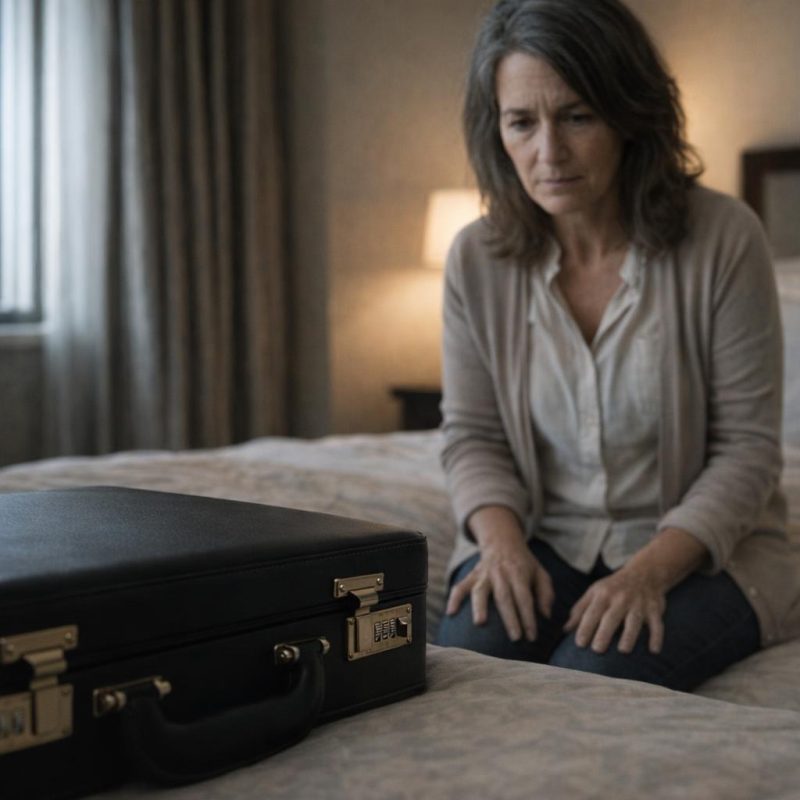 Image by RM AI
The Combination
I pull open the nightstand drawer on his side of the bed, not expecting much. There's a pen, a folded map of the resort grounds, and a hotel notepad. I almost put it back. Then I look at the notepad more carefully. There's a phone number written at the top, crossed out with a single line. Below it, written separately with spaces between them, are four digits: 7, 2, 9, 4. I stare at them for a moment. Then I grab the briefcase and spin the first tumbler to seven. The second to two. The third to nine. The fourth to four. I press the latch. There's a soft, definitive click, and the lock releases. I move to the second lock and enter the same sequence. My hands are shaking badly enough that I fumble the third tumbler and have to start again. I get it right on the second try. I press the second latch and feel the lock click open under my fingers.
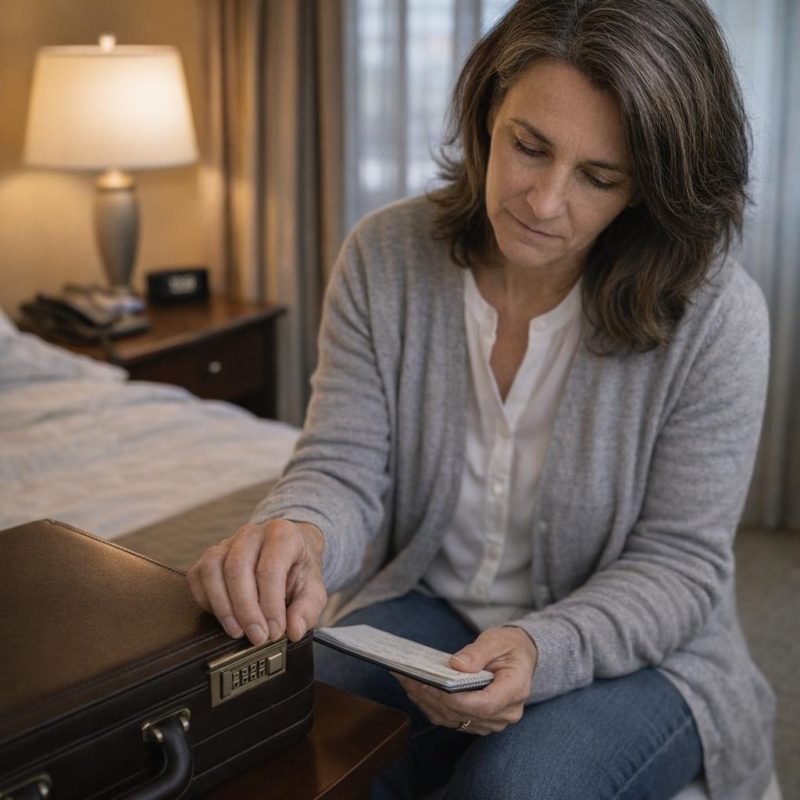 Image by RM AI
Documents
I sit very still for a moment with my hands resting on the lid. Then I lift it. Inside the briefcase are three manila folders, each one thick with paper, held closed with metal clasps. I take the first folder and open it. The pages inside are dense with text, printed on heavy stock, the kind of paper that feels formal before you've read a single word. There's a letterhead at the top from a law firm — the name means nothing to me, an address in a city I don't immediately recognize. I turn to the first page. The text is structured like a contract, numbered clauses and sub-clauses, the language precise and impersonal. I'm scanning the lines, trying to find a foothold in the dense legal language, when I hear footsteps in the corridor outside and go completely still. They pass. I look back down at the page. At the top, in bold text, centered above the numbered clauses and the law firm letterhead, I read the words: Life-Swap Transaction Agreement.
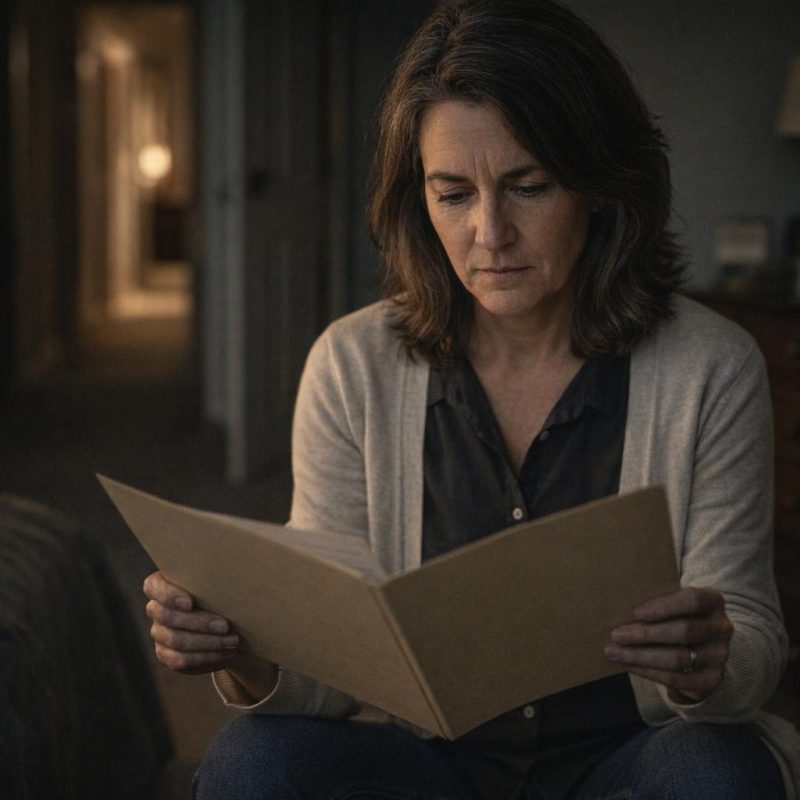 Image by RM AI
Reading the Contract
The footsteps fade down the corridor and I let out a breath I didn't know I was holding. My hands are trembling as I turn back to the first page. Life-Swap Transaction Agreement. The words sit there, perfectly ordinary in their typeface, perfectly impossible in their meaning. I read slowly, forcing myself to absorb each clause. Section two describes the transfer of personal history — documented memories, social relationships, professional records. Section four lists cosmetic preparation requirements and a timeline of procedures spanning fourteen months. I find a schedule near the back, dates going back eighteen months, each entry marking a stage I can't quite make sense of yet. Then I see the payment figure. Fifteen million dollars, wired in two installments. I read it twice. The number doesn't change. Near the bottom of the final page, in the space marked Client Signature, I see Mark's handwriting — the same slightly leftward slant I've watched sign birthday cards and mortgage documents for thirty years. His initials appear on every page after that. I gather the pages carefully and spread them across the bed, the contract laid out in sequence, and I sit there with the room very quiet around me.
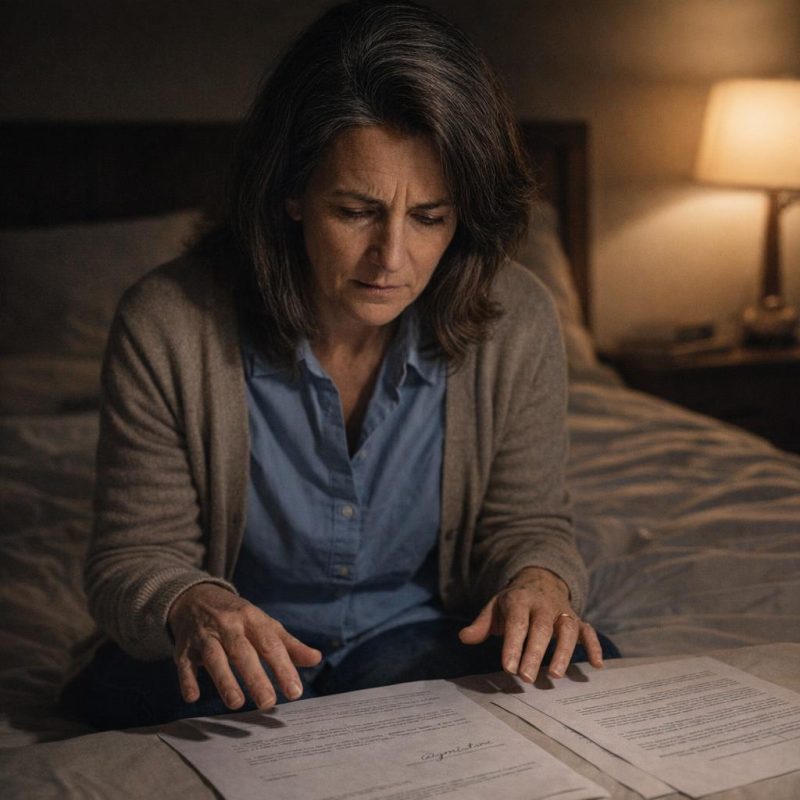 Image by RM AI
The Photographs
There's a sealed envelope tucked beneath the second folder, the flap secured with a strip of packing tape. I work it open carefully. Inside are photographs, printed on matte medical stock, each one dated in the bottom right corner and labeled with a procedure name I don't recognize. The first photo shows a man I've never seen — broader jaw, different nose, eyes set slightly wider than Mark's. The second photo shows the same man after something has changed around his cheekbones. I keep going. Photo by photo, procedure by procedure, the face in the images shifts. The jaw narrows. The nose refines. The eyes seem to draw closer together, or maybe it's the brow that changes — I can't always tell what's been altered, only that something has. By the fifteenth photograph, I'm looking at Mark's face. Not someone who resembles Mark. Mark. The hairline, the slight asymmetry at the left corner of his mouth, the particular way the skin sits at his temples. I think about the man sleeping in our bed last night, his face turned toward the window. The resemblance in this final photograph is exact in every detail I can name, and in several I can't. I set the photographs down on the bed beside the contract pages and sit very still.
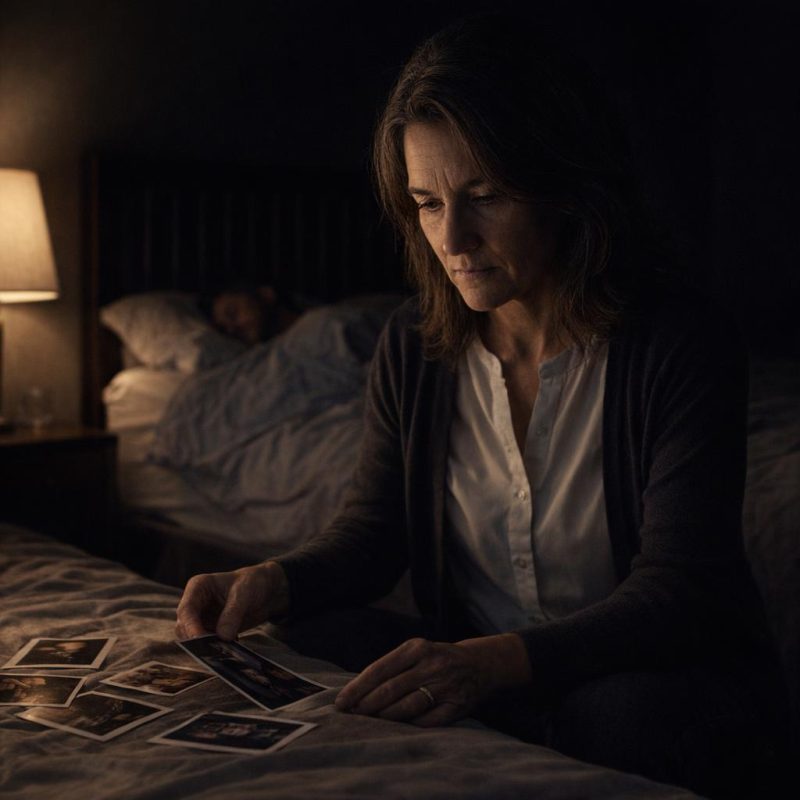 Image by RM AI
The Timeline
The third folder holds financial documents — wire transfer confirmations, routing numbers, account codes I don't recognize. The first transfer is dated four months ago. Fifteen million dollars, split across two payments, the first clearing on a Tuesday in March. I find a document titled Integration Timeline and my eyes move down the page. Mark's departure date is listed as four months prior. The replacement's arrival at our home — our home — is listed as three months ago. I count backward. March. Mark came back from that business trip in March seeming quieter than usual, a little distant, and I'd put it down to work stress. I'd made him tea. I'd asked if he wanted to talk. I sit with that for a moment and then keep reading. There's a checklist further down: learning speech patterns, memorizing family history, reviewing photograph archives, establishing daily routines. Each item is checked off in neat blue ink. The final item reads: Establish marital intimacy baseline. It's checked. I turn to the last page and find the bank transfer confirmation, stamped and dated four months ago, and the number on it is fifteen million dollars.
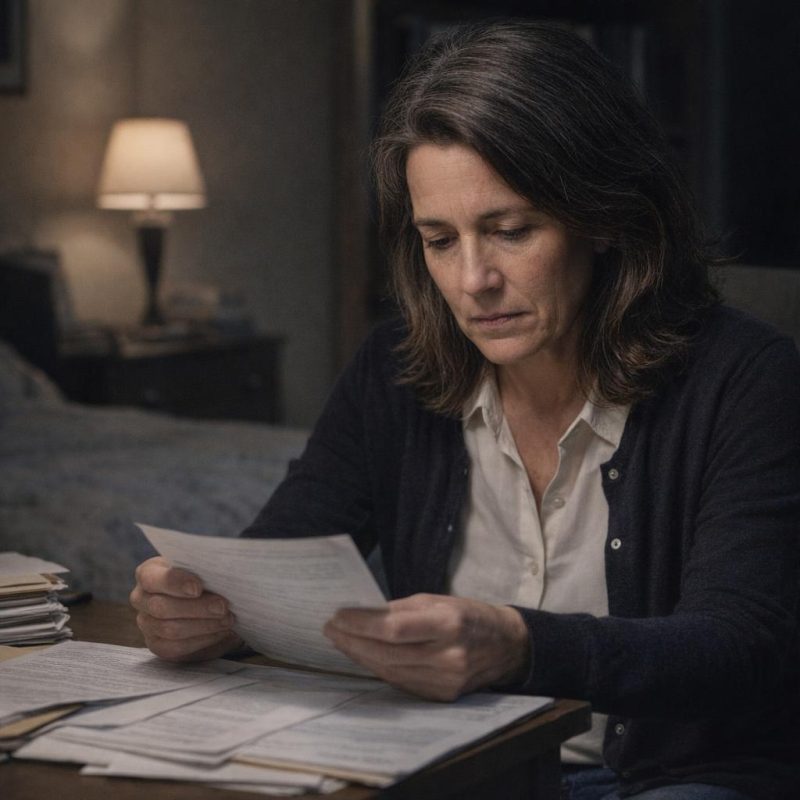 Image by RM AI
The Real Mark
At the very back of the third folder, folded in thirds, is a piece of paper that isn't printed. It's handwritten, on plain white notepaper, in handwriting I know as well as my own. I unfold it slowly. Mark's hand, unmistakably — the way he forms his lowercase g, the way he bears down slightly on the pen at the start of each sentence. He writes that he couldn't face another thirty years of the same. That he'd felt invisible for so long he'd stopped expecting it to change. That when the offer came, it felt like the first door that had opened for him in years. He writes that I'll be taken care of financially through the arrangement, that he made sure of it. He apologizes, once, in a single short sentence, and then he says he had to choose himself for once. He says not to look for him. I read it three times, searching the words for something I might have missed — some layer of meaning that would make this make a different kind of sense. Then I find the property deed folded behind the letter: a beachfront home in Grand Cayman, purchased in Mark's new name, the ink on the notary stamp still looking fresh.
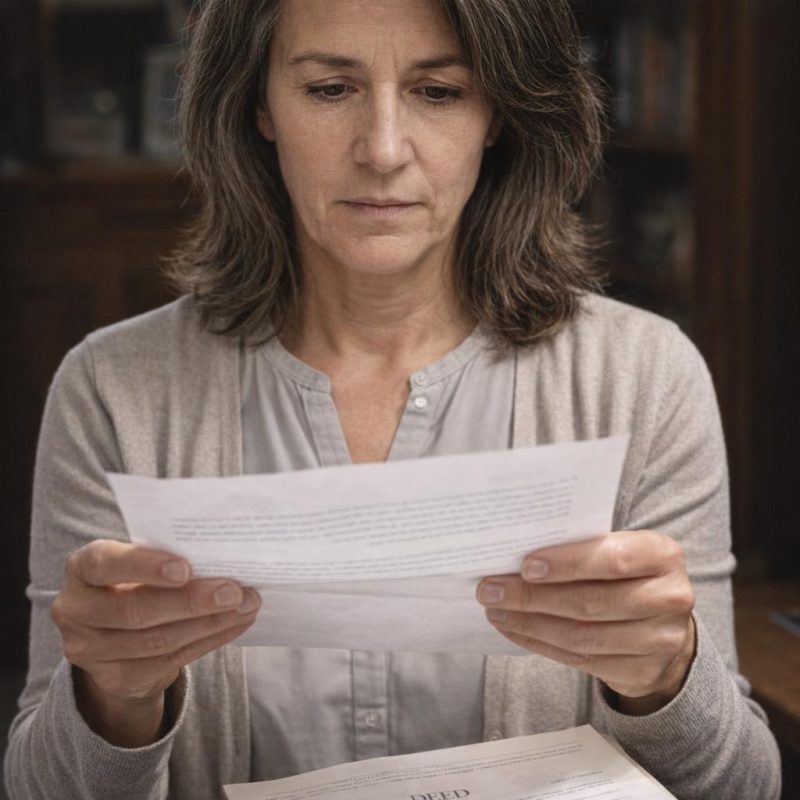 Image by RM AI
The Imposter Revealed
The final folder holds a single profile document, printed on the same heavy stock as the contract. At the top, beneath a small photograph, is a name: Jonathan Reeves. I read the summary beneath it. Tech founder. Net worth listed in the billions. A man who had, according to the document, spent twenty years building a public profile he no longer wanted. He wanted anonymity. He wanted a life that didn't require security details and press management. He wanted, the document says in language that is almost clinical, an established marriage, a middle-class social footprint, and a history that belonged to no one famous. He purchased all of it. Mark's name, Mark's history, Mark's marriage. My marriage. I think about the guests in the lobby who looked at him with that flicker of recognition. I think about the hotel manager's careful positioning, the way certain conversations were redirected. I think about the past four months — every dinner, every evening on the sofa, every moment I'd reached for the man I thought was my husband. Every single one of those moments was with a stranger. I'm still holding the profile page when I hear the key card slide into the door.
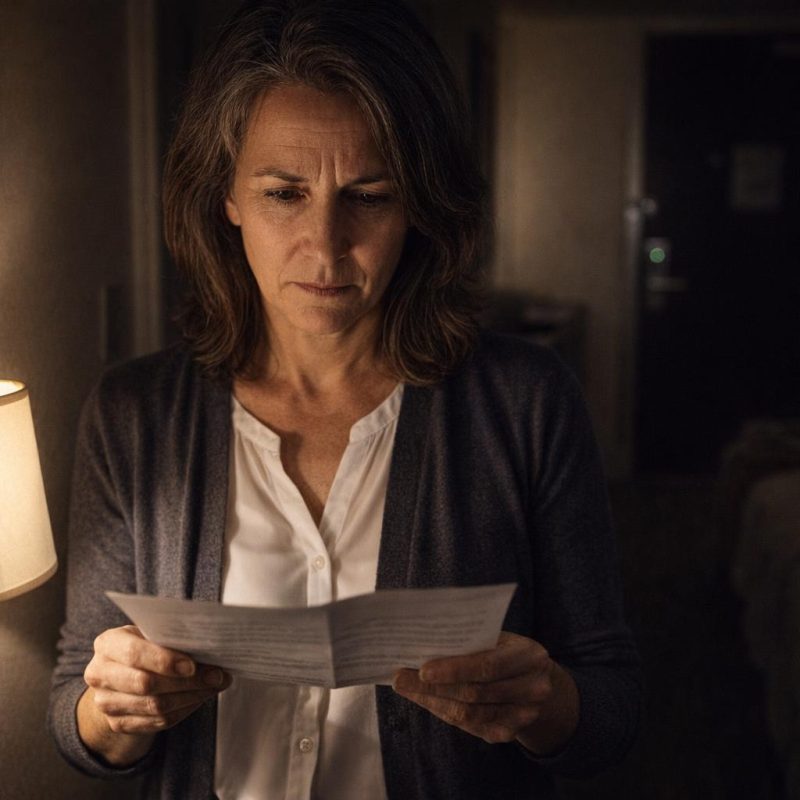 Image by RM AI
Watching the Stranger
I move fast. The folders go back into the briefcase in the order I found them, the envelope of photographs tucked beneath the second folder, the briefcase latched and back on the closet shelf before I hear the suite door swing open. I sit on the edge of the bed and press my hands flat against my thighs and make my face do nothing. He appears in the bedroom doorway still in his tennis clothes — white polo, pressed shorts, a light sweat at his collar. He asks how I'm feeling and I tell him I'm fine, just resting. He smiles, and it's Mark's smile, the exact configuration of it, and I feel something cold move through me. I watch him cross to the dresser and set down his room key. His tennis shoes are a brand Mark never wore, the kind that cost more than our monthly grocery bill. He talks about the match, the other player's backhand, and his enthusiasm has a quality I can't quite name — present but somehow adjacent to genuine. He touches the edge of the dresser as he passes it, fingertips light, the way you'd touch something in a museum. He suggests lunch and I say yes in a voice that comes out steady. He moves through the suite like every room in it already belongs to him.
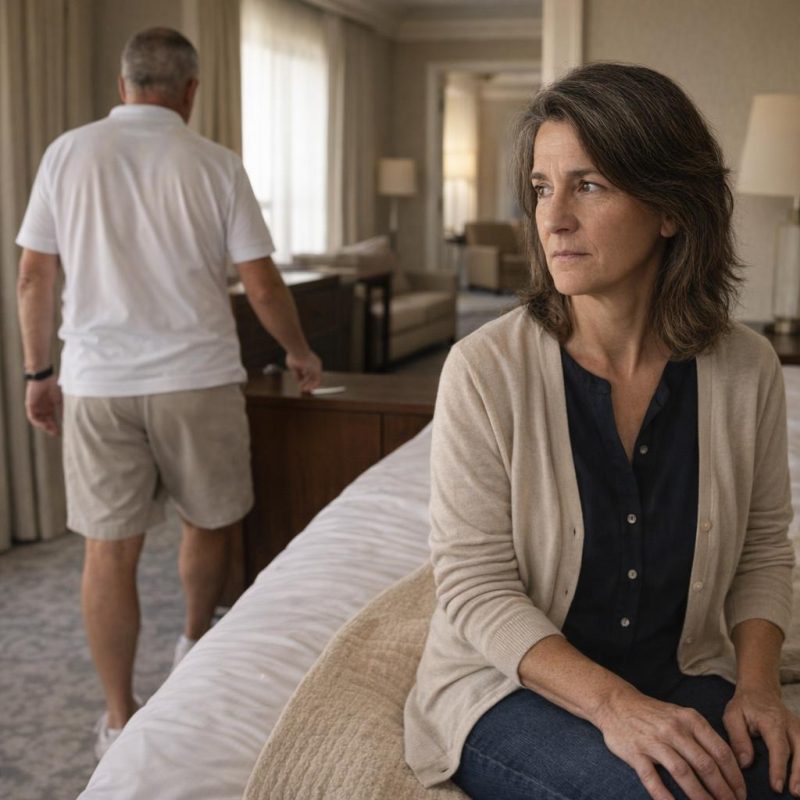 Image by RM AI
The Performance
The restaurant is bright and the menu is in French and I order the salmon because it's the first thing I can read. He orders confidently, without looking at the prices, and I notice that too. He talks about our son — gets his college major wrong, says economics when it's environmental science, and I correct him gently, the way I might correct Mark on a tired afternoon. He thanks me smoothly and pivots without missing a beat. I watch him do it. The pivot is too clean. Mark would have been embarrassed, would have made a self-deprecating joke and circled back to it. This man just moves on. He tells a story about a camping trip we took years ago and the details are almost right — the lake is right, the year is right, but the tent was blue, not green, and he says green. I don't correct him this time. I cut my salmon into pieces I don't eat and I nod at the right moments and I keep my hands relaxed on the table. The hotel manager passes our table once, his eyes moving briefly to mine, and I look back down at my plate. I sit across from this man who is wearing my husband's face and I feel the full weight of everything I now know pressing down on me from all sides.
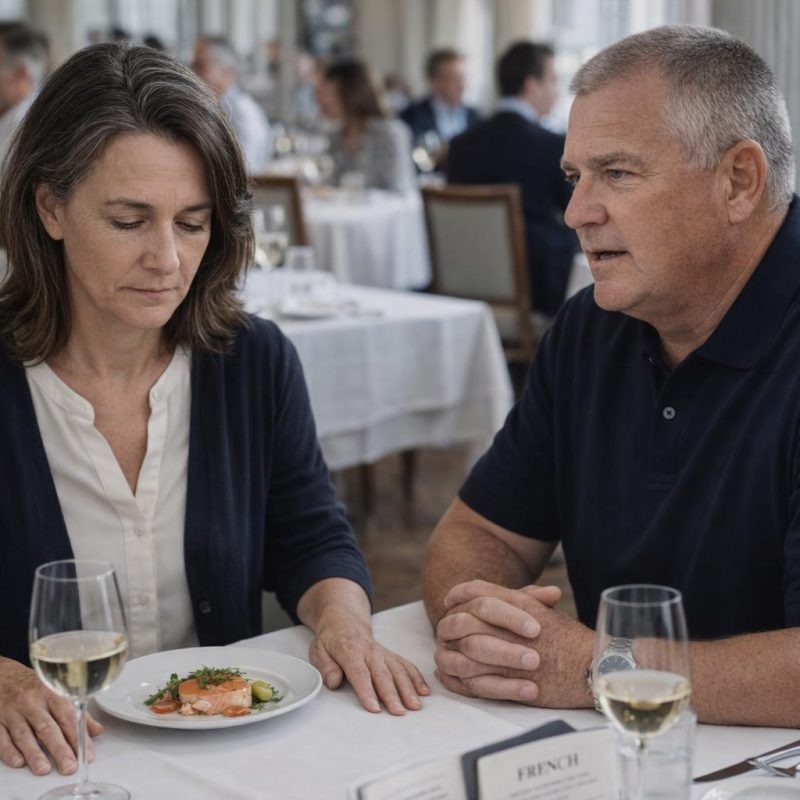 Image by RM AI
Recontextualized
After lunch he settles inside with a book and I take my coffee to the balcony. The sea is very blue and very indifferent. I think about March. He'd come back from the business trip on a Wednesday evening, rolling his suitcase through the front door, and I'd hugged him and thought he smelled slightly different — a different soap, maybe, or just travel. I'd told myself it was travel. I think about the first week after that, the way he'd moved through our kitchen opening the wrong cupboard for the mugs, twice, and laughed and said his brain was still on the road. I'd laughed too. I think about the night I'd reached for him and felt something off in the way he responded — not wrong enough to name, just slightly outside the rhythm of thirty years. I'd blamed myself. I'd thought I was the one who'd grown distant. Every miscorrected memory, every fumbled detail, every moment I'd felt the ground shift slightly beneath an ordinary Tuesday — all of it lines up now into a shape I can see completely. The real Mark has been on a beach in the Cayman Islands for four months, and I've been here, faithful and unsuspecting, and the grief of that and the violation of it sit in me at the same time, each one as heavy as the other.
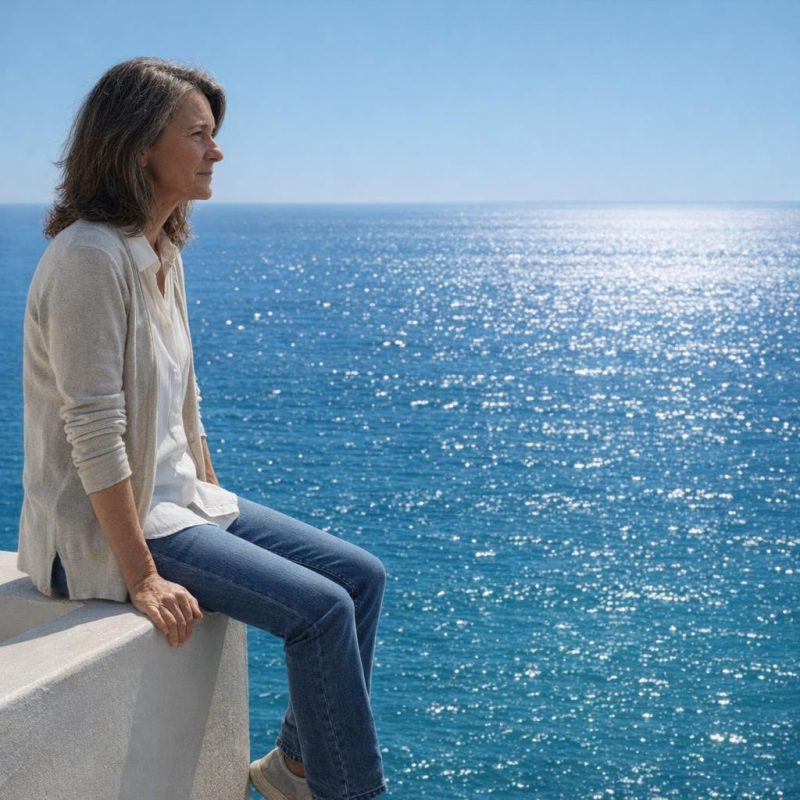 Image by RM AI
Calculating Options
He's at the gym. I know because I watched him leave with his water bottle and his easy smile, the same smile he's been wearing for four months while I had no idea. The suite is quiet. I go back to the closet, back to the briefcase, and I sit on the floor with it open across my knees. I'm not panicking anymore. Something colder has moved in — a kind of arithmetic. I think about our savings account, the one we built together over thirty years, the one that would last maybe two years if I stretched it. I think about my part-time job at the dental office, the one I kept because we always said every dollar helped. I think about what exposure looks like: lawyers, headlines, a fraud case that would swallow everything. And then I find it — a document near the back of the folder, printed on heavy cream paper, titled Spousal Provisions. I read it slowly. A trust fund in my name. Two million dollars. Ten thousand dollars a month for life. Health coverage. Housing security. All of it guaranteed, all of it already established, all of it contingent on one condition. At the bottom of the page, in clean legal language, it says the provisions are voided in full upon any disclosure of the arrangement by the designated spouse. I sit there on the closet floor holding the document, and the real Mark's handwriting is on the signature line at the bottom.
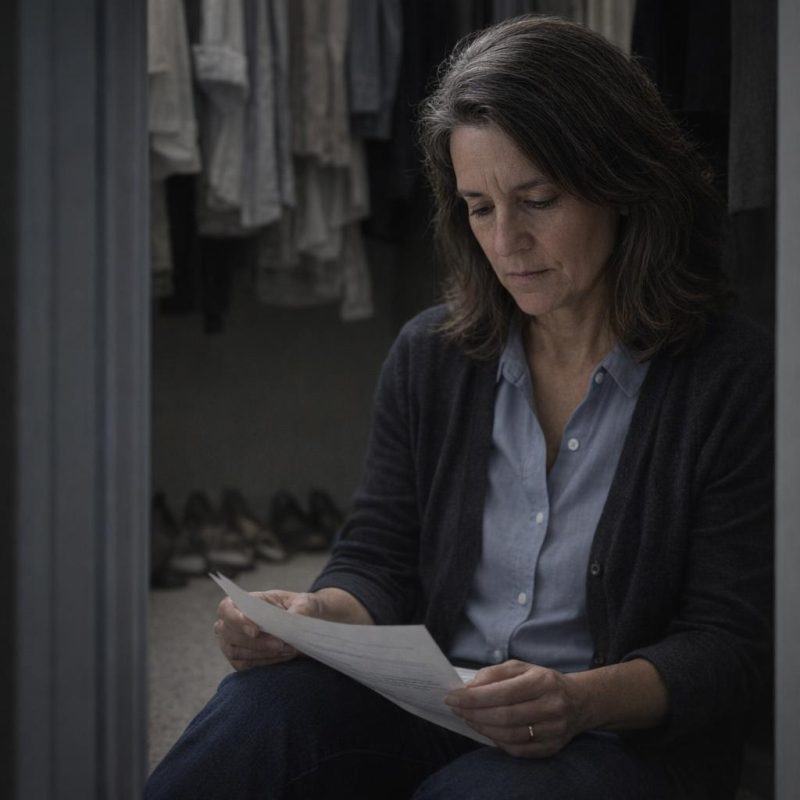 Image by RM AI
The Weight of Betrayal
I take the letter to the chair by the window, the one with the view of the sea, and I read it again. I've read it four times now and I keep looking for something I might have missed — a line where he says he loved me, a sentence where he sounds like he's sorry. It isn't there. He wrote about feeling invisible. He wrote about financial limitations and wanting more than a modest life could offer. He mentioned the trust fund like it was a generous severance package, like thirty years of marriage was an employment contract he'd decided not to renew. He never once wrote the word love. I think about the anniversary trip — the months I spent saving, the spreadsheet I kept, the small luxuries I cut so we could afford this week. He was signing documents while I was clipping coupons. He was scheduling surgery while I was planning dinners for two. I used to think we were building something together. I understand now that I was the only one still building. The man who stood beside me at the altar and said forever sold that word for fifteen million dollars, and the letter in my hands is the last thing he ever wrote to me — and his name on the final line is already someone else's.
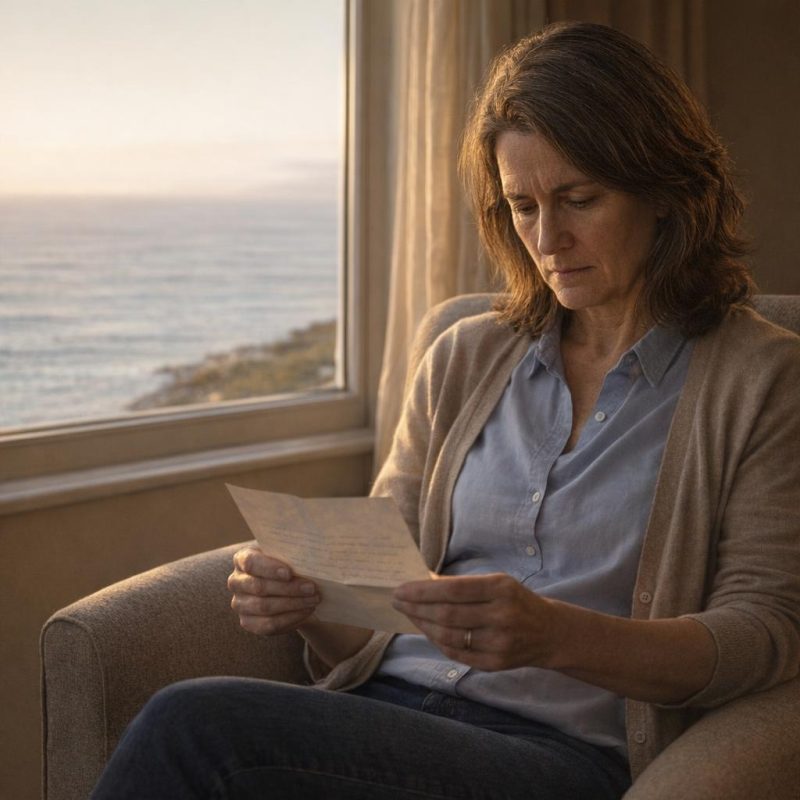 Image by RM AI
Preparing to Confront
I put everything back exactly as I found it. The letter, the contract, the photographs, the Spousal Provisions document — I layer them in the same order, close the briefcase, and return it to the shelf in the closet behind his hanging shirts. Then I sit on the edge of the bed and I think about what I'm going to say. I'm going to be calm. I'm not going to cry, not because I don't feel it, but because I need him to understand that I'm not confused or hysterical — I know exactly what I found and exactly what it means. I'll tell him I found the briefcase. I'll tell him I read the contract. I'll say his name — his real name — and watch what happens to his face. I think about what I actually want from this conversation. Not to punish him, not yet. I want to hear it from him directly. I want him to stop performing and just tell me the truth in plain language, without the smile and the careful deflections. I want to know who he actually is when he stops pretending to be my husband. I check the time. He's been gone forty minutes and the gym is twenty minutes away. I move the chair so it faces the door, and I sit down, and the room settles into a quiet that feels almost like patience.
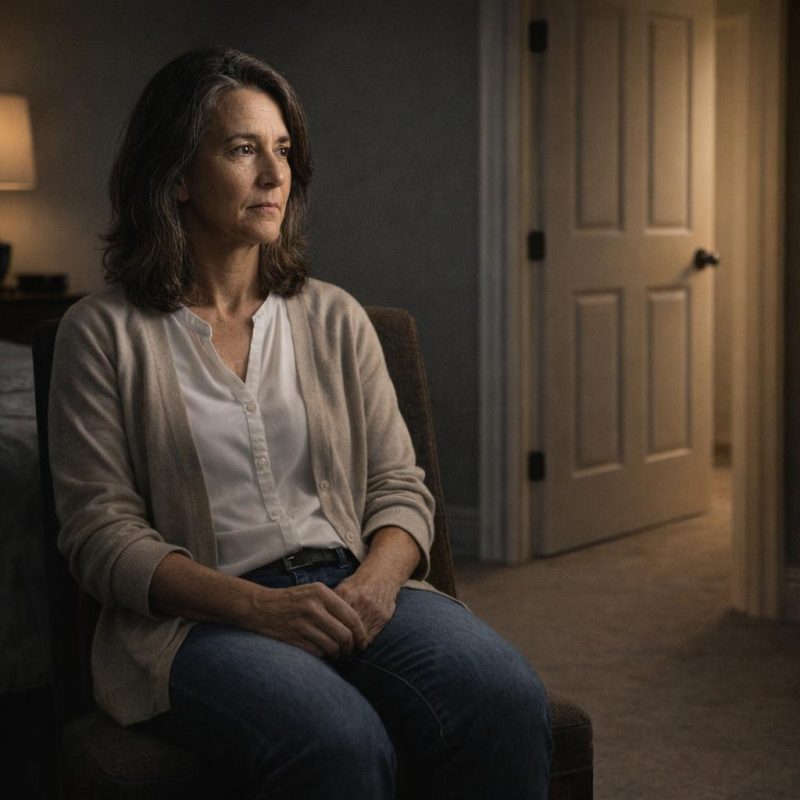 Image by RM AI
The Confrontation
He comes through the door with his gym bag over one shoulder, hair damp, already starting to say something about the pool. I say, "Sit down." My voice is level. He stops. He asks what's wrong and I tell him I found the briefcase. The color doesn't drain from his face exactly — it's more like something behind his eyes goes very still, the way a person goes still when they're deciding how much they already know you know. I tell him I read the Life-Swap contract. I tell him I saw the photographs — the before photographs, the surgical progression, the final comparison shots. I say, "I know your name is Jonathan Reeves. I know Mark left four months ago. I know what this is." He sets the gym bag down slowly, like he's buying himself a second to think, and then he sits on the edge of the bed across from me. He doesn't deny it. He doesn't reach for an explanation. He just looks at me, and for the first time since this trip began, the performance is completely gone — no warmth, no ease, no careful approximation of my husband. Just a man I've never met, sitting in my husband's clothes, looking at me with something that might be relief. I tell him I want to hear the truth from him directly. He holds my gaze for a long moment. The silence between us is the most honest thing that's happened all week.
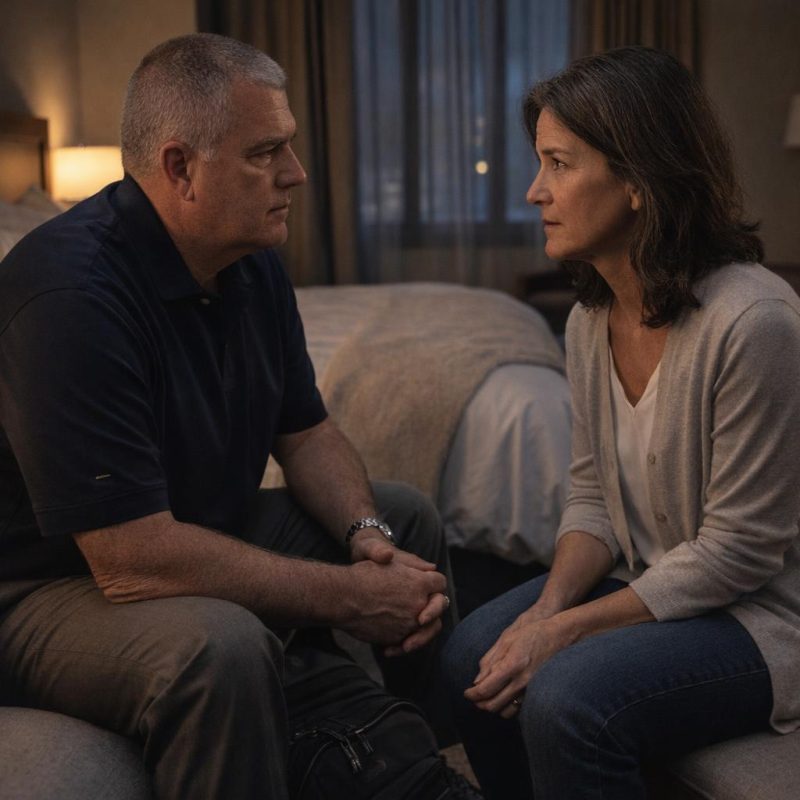 Image by RM AI
Jonathan's Admission
He says, "Yes. My name is Jonathan Reeves." He says it quietly, without drama, like he's been waiting to say it out loud for months. He tells me he built a tech company before he was thirty, that by thirty-five his face was on magazine covers, that he hadn't walked through an airport without being recognized in over two decades. He says he spent twenty-five years being watched and followed and never once being left alone, and that somewhere in the middle of all of it he stopped knowing who he was when no one was looking. He found the Life-Swap program three years ago. He says he researched it for two years before he made contact, and that he spent another year reviewing candidates before he chose Mark. I ask him why Mark specifically, and he pauses. He says Mark's life looked genuinely content. Not glamorous, not ambitious — content. A marriage with history. A son. A neighborhood where people knew his name for ordinary reasons. He says he studied Mark's life the way an actor studies a role, except he intended to stay in it permanently. The surgery took eighteen months and cost seven million dollars. A team in Switzerland. Bone restructuring, skin grafts, dental reconstruction, months of physical therapy. He tells me all of this in the same measured tone, and when he finishes, the room is very quiet, and I sit with the strange weight of being told the truth by a man I still don't know.
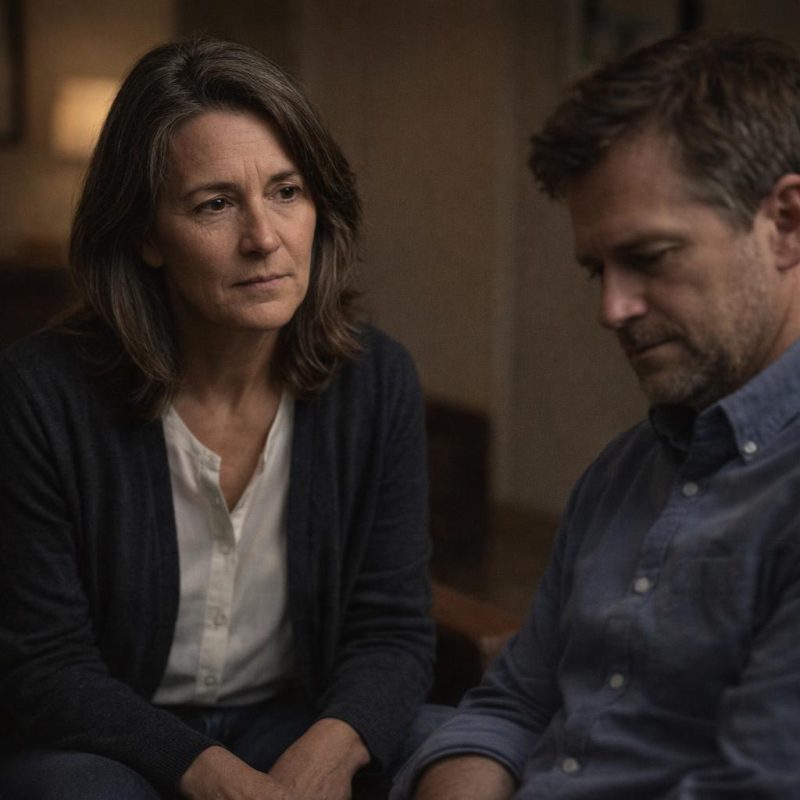 Image by RM AI
The Mechanics
I ask him how it was possible — not the surgery, I understand surgery, but the rest of it. The way he moved through our kitchen. The way he laughed at the right moments. He tells me about the footage. Mark had agreed as part of the contract to provide access to home videos, phone recordings, social media archives going back fifteen years. Jonathan says he watched hundreds of hours. He worked with a behavioral coach who specialized in physical mimicry — posture, gait, the specific way Mark held a coffee cup or tilted his head when he was listening. He worked with a voice coach for eight months. He memorized files: thirty years of history, names, dates, the story of how Mark and I met, the name of our son's first dog, the argument we had in 2009 about the kitchen renovation. He practiced Mark's handwriting daily for six months until a forensic analyst cleared it. He tells me the hardest part wasn't the surgery or the memorization. He says the hardest part was learning to move like someone who had never been watched — the particular looseness of a man who'd spent his whole life being ordinary and comfortable in it. I ask one more question, almost without meaning to: whether Mark was present for any of this. Jonathan says no. Mark was paid and gone before the final procedures began. And then he tells me that to prepare for the walk — Mark's specific walk — he spent three months studying footage of him crossing our driveway.
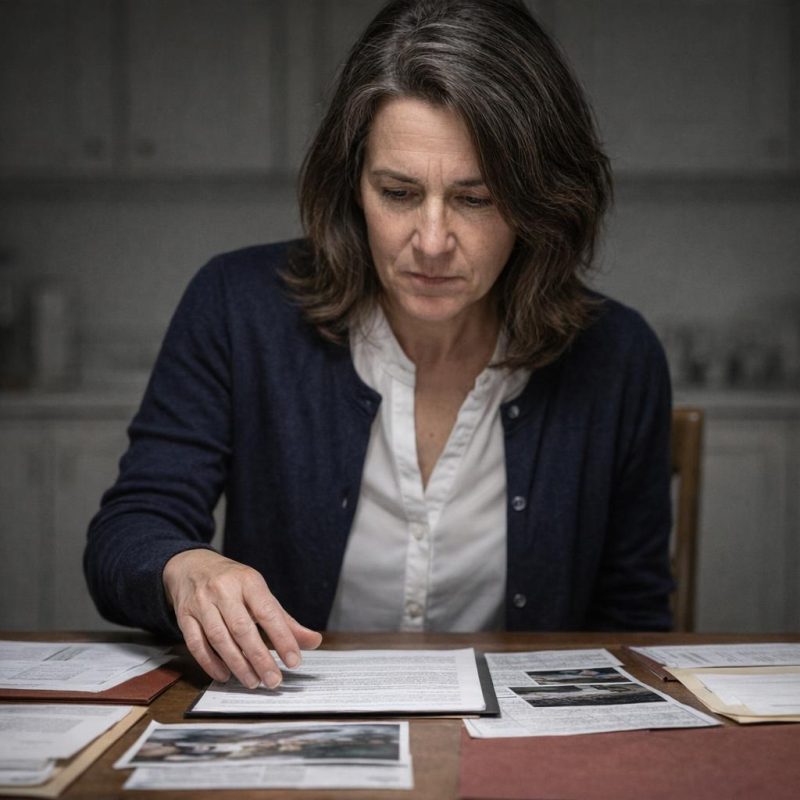 Image by RM AI
Mark's Desperation
I ask him why Mark said yes. Jonathan is quiet for a moment, and then he reaches into the nightstand drawer and pulls out a folded document. He sets it on the bed between us. It's a psychological evaluation — the Life-Swap program letterhead, Mark's full name at the top, a date from fourteen months ago. I pick it up. The evaluator's language is clinical and careful, but what it describes is a man I recognize and somehow never saw. Mark told the evaluators he felt invisible. He said he'd spent twenty years feeling like he'd disappeared into routine, that he loved his life in the abstract but couldn't feel it anymore. He said he loved me — that word is there, once, in a subordinate clause — but that he felt trapped by what our life couldn't offer. He wanted to travel without a budget. He wanted to stop calculating. The evaluation notes no signs of coercion. It notes that the subject appeared calm and certain, that he expressed relief when discussing the financial terms, and that he met all criteria for psychological suitability for permanent identity transfer. I read that phrase twice. Permanent. I set the document down on the bed and look at the date again — fourteen months ago, Mark was sitting in a room somewhere telling a stranger he felt like he'd already disappeared, and I was home planning a anniversary trip to celebrate thirty years, and the evaluation in front of me carries his signature at the bottom, neat and familiar and entirely his own.
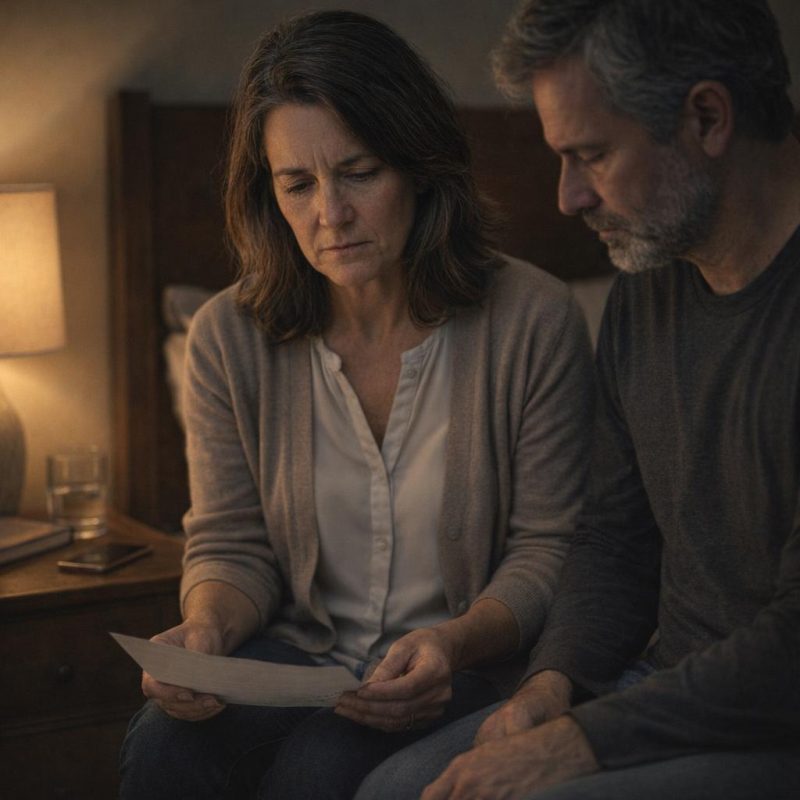 Image by RM AI
The Financial Reality
Jonathan tells me about the trust fund like he's walking me through a business proposal, which I suppose he is. Two million dollars, already established, already in my name. Ten thousand a month for life. Full health coverage. The mortgage on the house secured through a separate instrument — I'll never have to worry about it again. He says the real Mark is legally dead, his identity fully and permanently transferred, and that there is no mechanism — legal, financial, or otherwise — to reverse what's been done. He says if I go to the authorities, the trust dissolves, the provisions void, and I'm left with a fraud case that will take years and cost everything I have, and at the end of it Mark still won't come back, because Mark chose this. He says he's spent four months learning to be a good husband and that he intends to keep doing it. He says he chose Mark's life because it was worth choosing, and that includes me. I sit with all of it — the numbers, the logic, the careful architecture of an argument I can't immediately dismantle. And then he leans forward slightly, his voice pulling even and unhurried, and he says, "I can give you the security Mark never could."
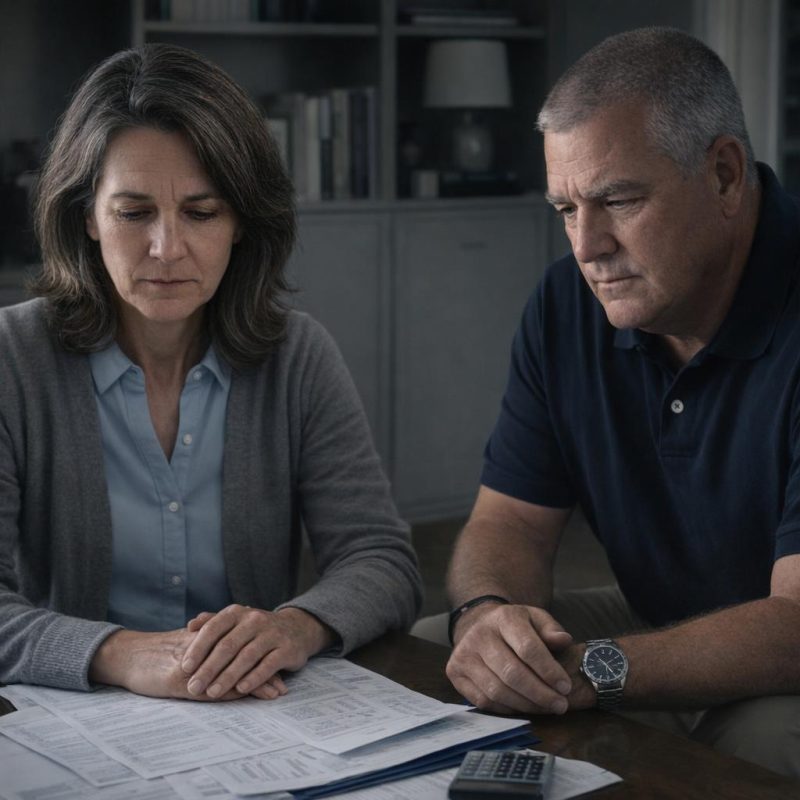 Image by RM AI
The Choice
I ask him to give me an hour. He nods, picks up his jacket, and closes the suite door behind him without a word. I take my coffee out to the balcony and sit with the city spread below me, trying to think clearly. I run through it the way I'd run through any problem — methodically, without flinching. If I go to the police, there's an investigation. There's media. There's my name attached to a fraud case that will take years to untangle, and at the end of it, the real Mark still won't come back, because he signed papers and walked away from me voluntarily. I'd lose the house. I'd lose the trust. I'd spend whatever savings I have left on lawyers. And for what — justice for a man who chose to disappear? I think about the last three years of my marriage. The distance. The silences. The way Mark stopped looking at me when I walked into a room. I think about Jonathan, who spent four months learning my coffee order and the name of my college roommate. I sit there until the coffee goes cold. Then I go inside and call down to the lobby. When he walks back through the door, I tell him I'm not going to the police — that I'm choosing the life we have, and I intend to keep it.
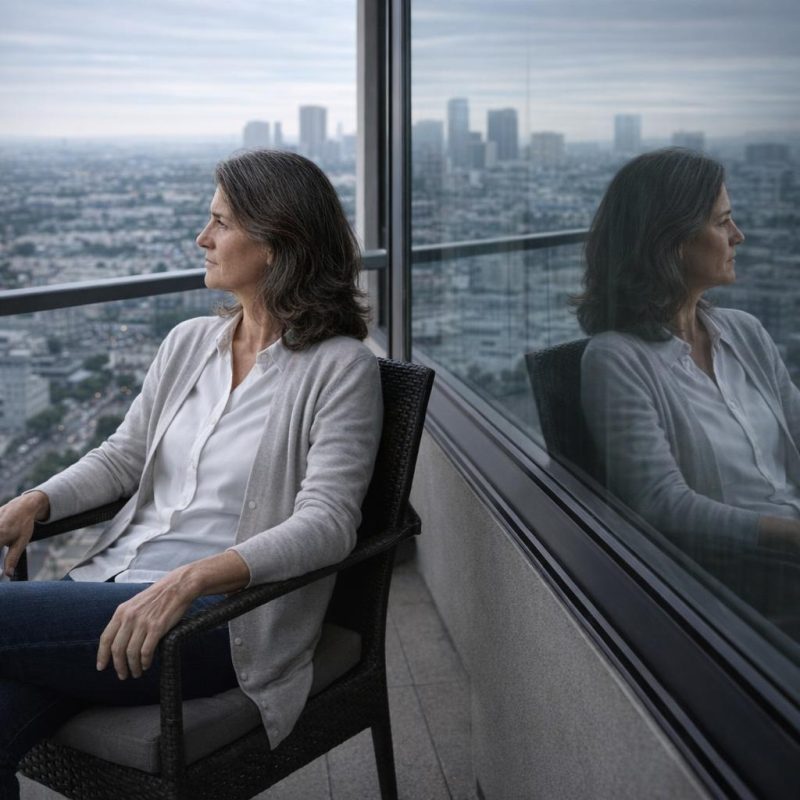 Image by RM AI
New Terms
He stands very still when I say it, and I hold up a hand before he can speak. I tell him there are conditions. In private, I call him Jonathan. Not Mark, not honey, not any of the names I used for thirty years — Jonathan. He agrees without hesitation. I tell him I want to know who he actually is — his real history, his real family, the life he walked away from. I tell him I need time to grieve what I lost, and that he doesn't get to rush that or fix it. He says he understands. I tell him I expect fidelity and I expect honesty between us, even when the honesty is uncomfortable, especially then. He says he chose this life with full knowledge of what it cost, and that he intends to honor it. We agree to go home, to return to the house and the routines and the neighbors who will see only Mark. I tell him not to thank me. He starts to anyway and I stop him with a look. I pour myself a glass of water and stand at the window while the city hums below, and the strange, quiet relief of having finally decided settles into my chest like something that had been waiting a long time to land.
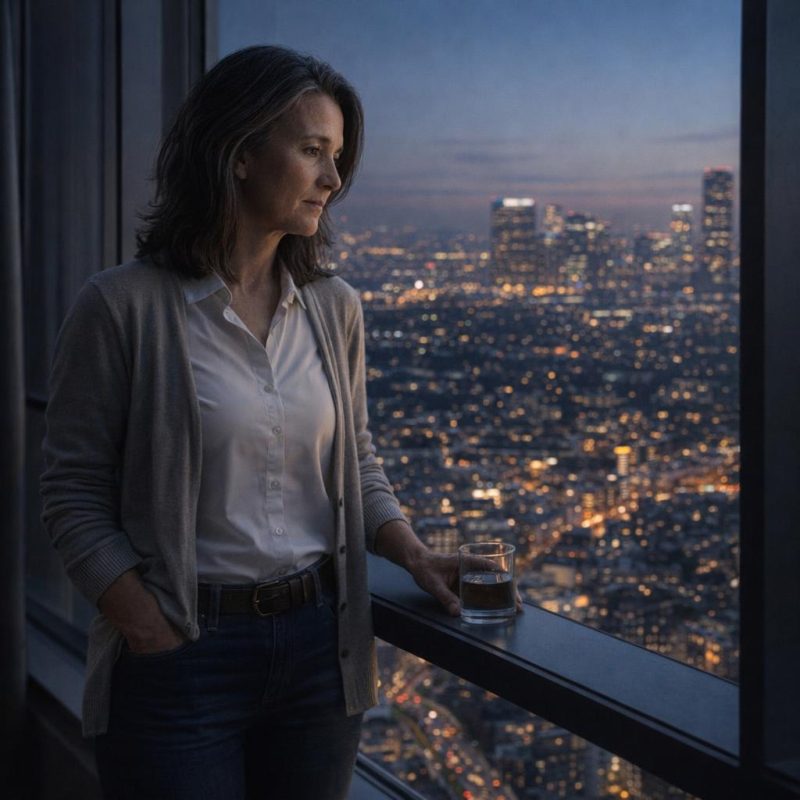 Image by RM AI
Leaving Azure Heights
I fold my clothes the same way I always do — shirts first, then trousers, then the dress I wore to dinner the night everything changed. Jonathan handles checkout at the front desk while I wait in the lobby with our bags, watching the fountain. The hotel manager crosses the marble floor toward me with his hands clasped and his expression professionally warm. He asks if everything was satisfactory. I say yes. He holds my gaze a half-second longer than courtesy requires, and I understand then that this wasn't the first time he'd managed a transition like this one. I don't ask. He doesn't offer. Jonathan returns with the receipt folded in his breast pocket and carries both bags to the car without being asked. We pull out of the Azure Heights drive and I watch the resort recede in the side mirror — the white facade, the fountain, the valets in their burgundy jackets — until the road curves and it disappears. I think about the woman who arrived here a week ago, excited and a little sentimental, ready to celebrate thirty years. Her husband is gone. A stranger sits in his place. I turn forward and look at the road, and the weight of everything I'm carrying home settles quietly around me.
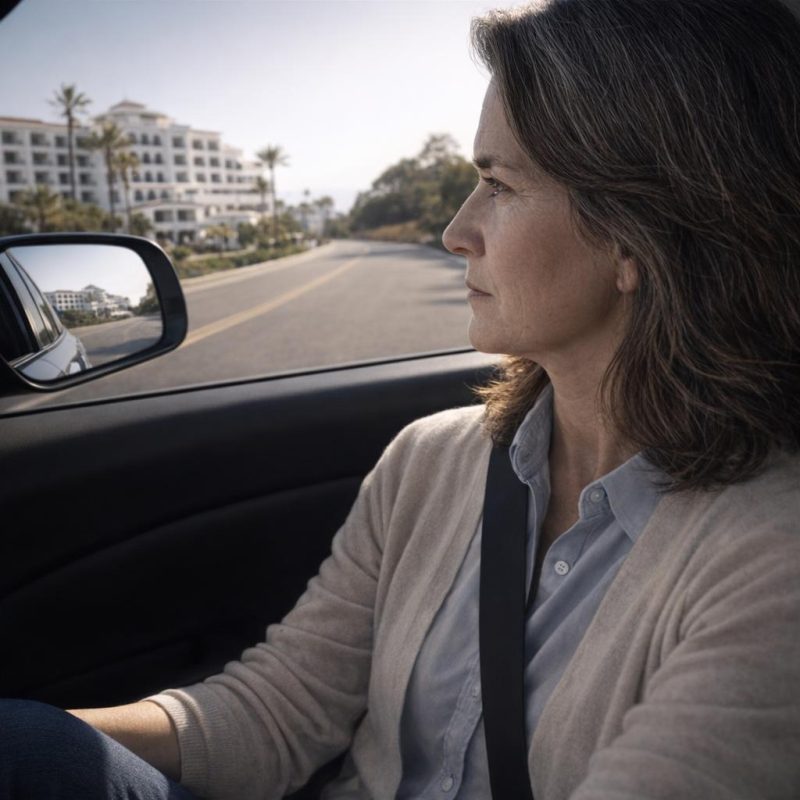 Image by RM AI
The New Normal
Three months. That's how long it takes before I stop counting. Jonathan reads the newspaper at the breakfast table the same way every morning — sports section last, coffee on the left, glasses pushed up when he's concentrating. I've learned his tells the way you learn a new house: gradually, then all at once. The trust fund deposits arrive on the first of the month and I've stopped checking the balance. Our son called last week to say his dad seemed different lately — lighter, he said, more present. I told him the anniversary trip did us good. Friends have noticed too. Someone at book club said Mark seemed like he'd finally relaxed into himself. I smiled and said I thought so too. I know now about the family Jonathan left behind, the business, the reasons he gave up one life for another. I hold that knowledge carefully, the way you hold something fragile you didn't ask to be handed. Some mornings I forget entirely. Other mornings the wrongness of it sits at the table with us like a third person neither of us acknowledges. I think about the real Mark on a beach somewhere warm, unburdened and unrecognizable. I think about what I traded and what I kept. Then Jonathan looks up from the paper and asks what I want to do this weekend, and I meet his eyes across the table and answer him.
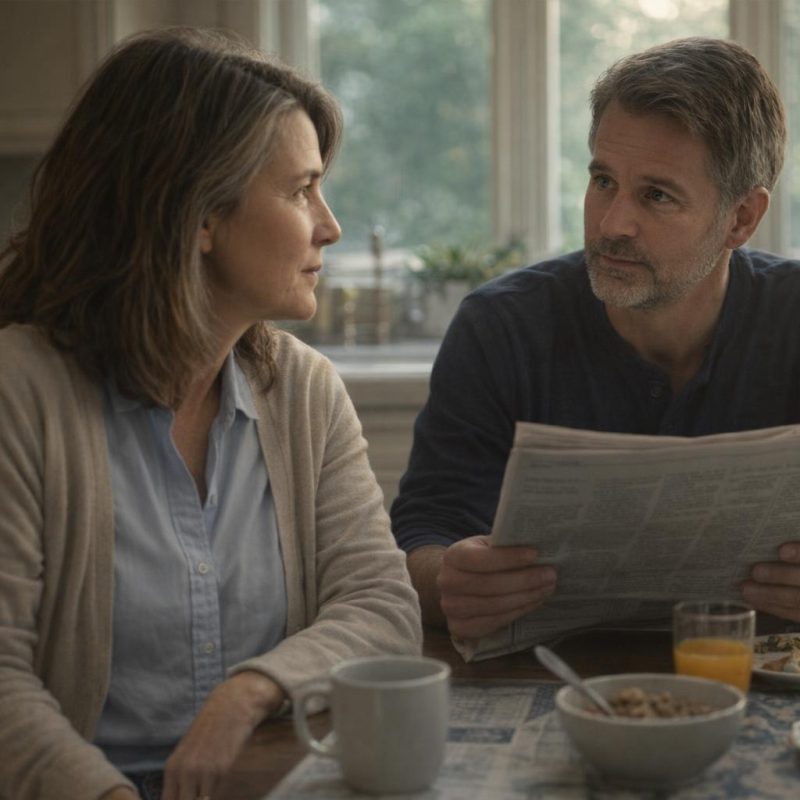 Image by RM AI
KEEP ON READING
From Heroes To Zeroes 20 Historical Figures Whose Heroism Was…
History is full of legends, but not every hero lived…
By Noone Feb 25, 2026
The Clueless Crush: How I Accidentally Invited a Hacker Into…
Fluorescent Lights and First Impressions. My name is Tessa, I'm…
By Ali Hassan Nov 4, 2025
This Infamous Ancient Greek Burned Down An Ancient Wonder Just…
History remembers kings and conquerors, but sometimes, it also remembers…
By David Davidovic Nov 12, 2025
Einstein's Violin Just Sold At An Auction—And It Earned More…
A Visionary's Violin. Wanda von Debschitz-Kunowski on WikimediaWhen you hear…
By Ashley Bast Nov 3, 2025
The Mysterious "Sea People" Who Collapsed Civilization
3,200 years ago, Bronze Age civilization in the Mediterranean suddenly…
By Robbie Woods Mar 18, 2025
This Is The Strongest Animal In All Of Earth's History
Todd Cravens on UnsplashYou may be surprised to discover that…
By Elizabeth Graham Jun 11, 2026