

I Babysat My Grandkids Every Saturday for a Year So My Son Could 'Fix' His Marriage—Then I Got a Call That Changed Everything
I Babysat My Grandkids Every Saturday for a Year So My Son Could 'Fix' His Marriage—Then I Got a Call That Changed Everything
The Careful Air Between Them
They came on a Tuesday evening, which should have felt ordinary but didn't. Michael and Jenna sat across from me at my kitchen table, both of them holding their coffee mugs like they needed something to do with their hands. Michael's fingers were wrapped all the way around his, the way he used to hold a warm cup when he was a teenager and something was bothering him. Jenna sat very straight, the way she always does when she's trying to hold herself together. They'd been struggling, they said. Not fighting exactly — more like drifting. The kind of slow drift that happens when two people get busy and stop finding their way back to each other. They'd found someone, a specialist who ran intensive Saturday morning sessions, and they wanted to try it. What they needed from me was simple: could I watch Sophie and Liam every Saturday morning for a while? I told them of course, before they'd even finished asking. I watched them choose each word so carefully, like they were afraid of saying too much or too little, and I felt my heart go soft for both of them. The kitchen smelled like the coffee I'd brewed and something quieter underneath it — the particular weight of words that had taken a long time to say out loud.
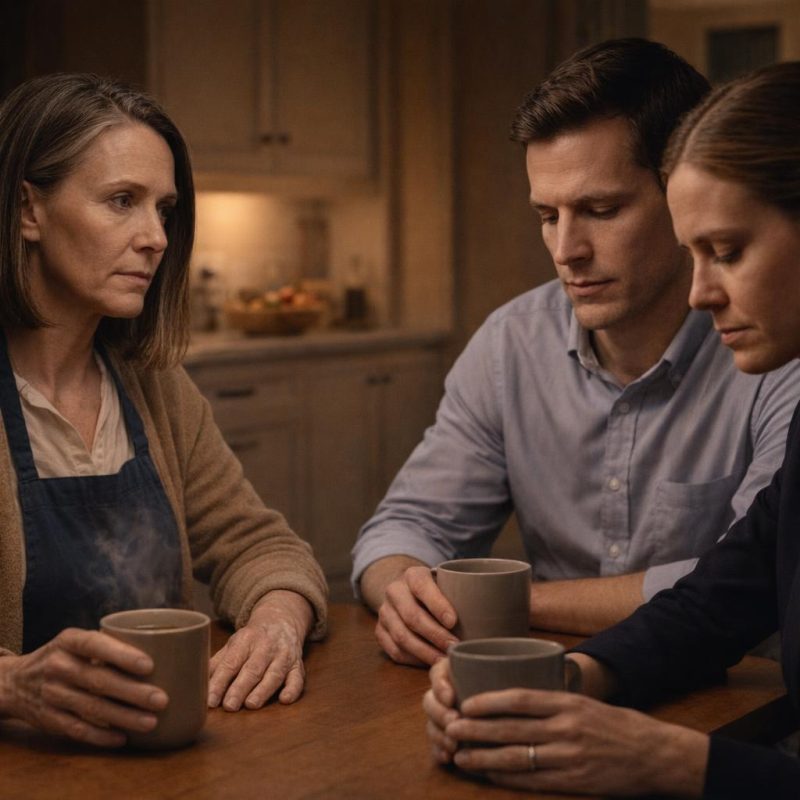 Image by RM AI
Without Hesitation
I didn't even let them finish the full explanation before I said yes. I told them I didn't need to think about it, not even for a minute. Michael's shoulders dropped — just slightly, just enough that I noticed — and something in his face went loose with relief. Jenna reached across the table and squeezed my hand, and I felt the warmth of it all the way up my arm. I was proud of them. That's the honest truth of it. A lot of couples let things go too far before they ask for help, and here were my son and my daughter-in-law sitting at my kitchen table, doing the hard thing. The sessions would be intensive, they said, several hours each time, so I shouldn't expect them back before noon. I asked if there was anything specific I should tell the children, anything they should or shouldn't know. Michael said to just tell the kids Mom and Dad have an appointment. Simple as that. I nodded and said I could do that easily. We talked a little longer about logistics, about drop-off time and what the kids liked to eat, and the whole conversation felt like something good being built. Then Michael set down his mug and said they'd start this coming Saturday.
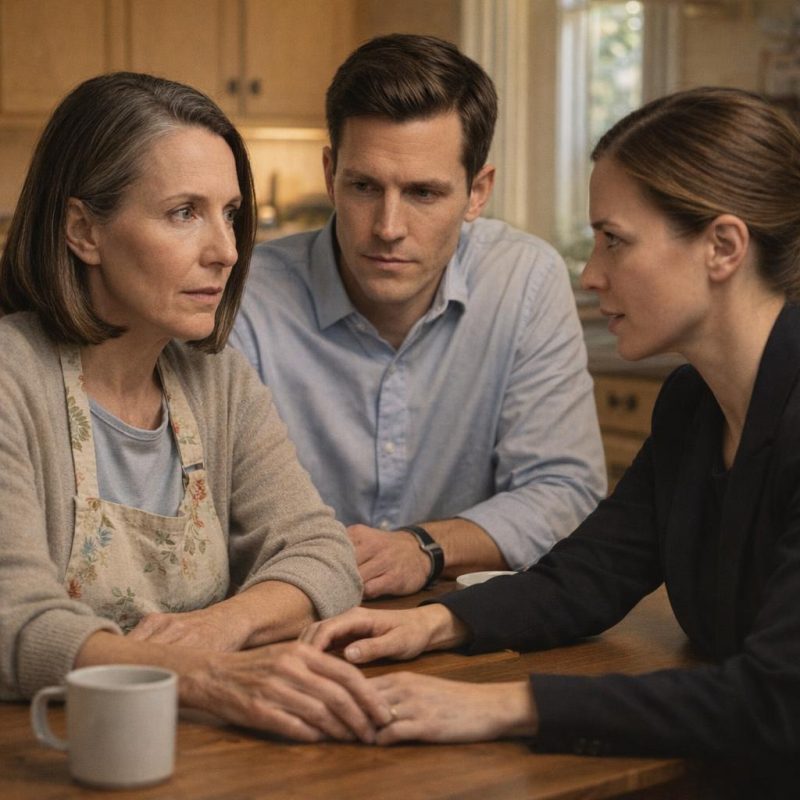 Image by RM AI
Setting the Table
I spent the better part of Wednesday going through the hall closet looking for the craft bin I'd kept since Michael was small. I found it behind a box of old tax returns — a plastic tub with a cracked lid, still holding a decent collection of crayons, a few dried-out markers I threw away, and two coloring books with only the first few pages used. I added a new box of crayons from the drugstore and a fresh pad of drawing paper, just in case. Thursday I planned the breakfast menu. I knew Sophie was seven and Liam was four, which meant I needed things that were easy and familiar and wouldn't cause a fuss at eight in the morning. I settled on eggs, toast, and fruit, with juice boxes already cold in the refrigerator. I cleared the far end of the kitchen table and set up a little station — crayons in a cup, paper stacked neatly, a puzzle I'd found at the back of the closet that looked age-appropriate. It had been months since I'd had the grandchildren for a full morning, and I'd forgotten how good it felt to prepare for someone. I stood back and looked at the table, and the kitchen felt purposeful again in a way it hadn't in a long time.
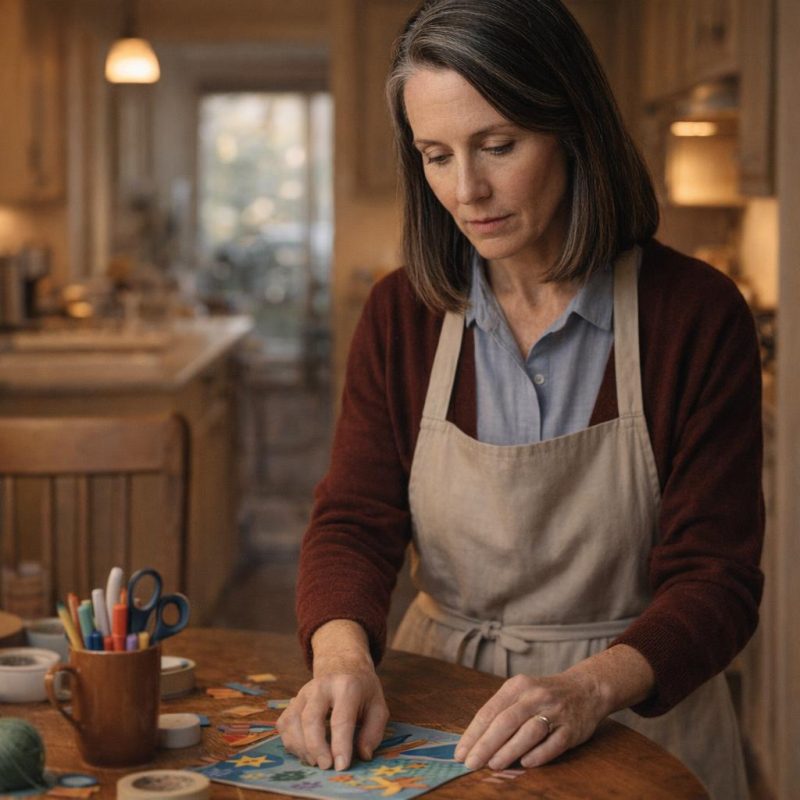 Image by RM AI
Eight O'Clock Sharp
They pulled into the driveway at eight o'clock on the dot, which surprised me a little — I'd half expected the chaos of a family running late. I watched through the front window as they got out of the car, and I noticed the shadows under Michael's eyes right away, the kind that come from not sleeping well for a while. Jenna moved with that brisk, purposeful energy she always has, getting the children out of the back seat with efficient, practiced movements. Sophie came through my front door first, already talking about something that had happened at school, and she walked straight to the kitchen table and picked up a crayon without anyone telling her to. Liam followed behind her, quieter, and asked me in his small serious voice if he could watch cartoons later. I told him absolutely, after breakfast. What struck me, standing there in my own kitchen, was that neither of them asked where their parents were going. Not once. Michael and Jenna said their goodbyes quickly — a kiss on each head, a thank-you to me — and then they were out the door. I'd expected some adjustment period, some tears or questions, but the children just settled in. Sophie was already coloring. Liam was eating his toast. The morning had simply begun, as though this was something they already knew how to do.
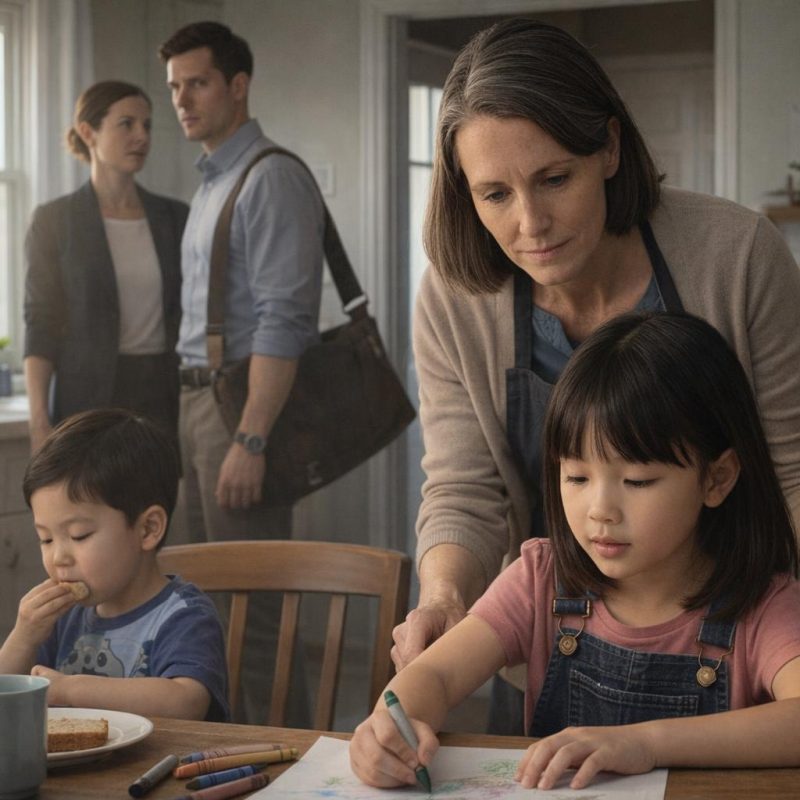 Image by RM AI
Side by Side
I walked them out to the porch while the children were still at the table. The morning air had that early chill to it, the kind that makes you pull your cardigan across your chest without thinking, and I did exactly that. Michael and Jenna crossed the driveway together, close but not touching, moving with the quiet efficiency of two people who had somewhere to be. I stood at the top of the porch steps and watched them go, feeling something I can only describe as useful in the deepest sense — like I was holding something steady so they could let go of it for a few hours. I thought about all the couples I'd known over the years who hadn't done what they were doing, who'd let the drift become a distance and the distance become something permanent. My son was not going to be one of those people. I felt proud of him all over again, standing there in the cold. Then Michael reached the car ahead of Jenna, and without breaking stride, he stepped around to the passenger side and opened the door for her.
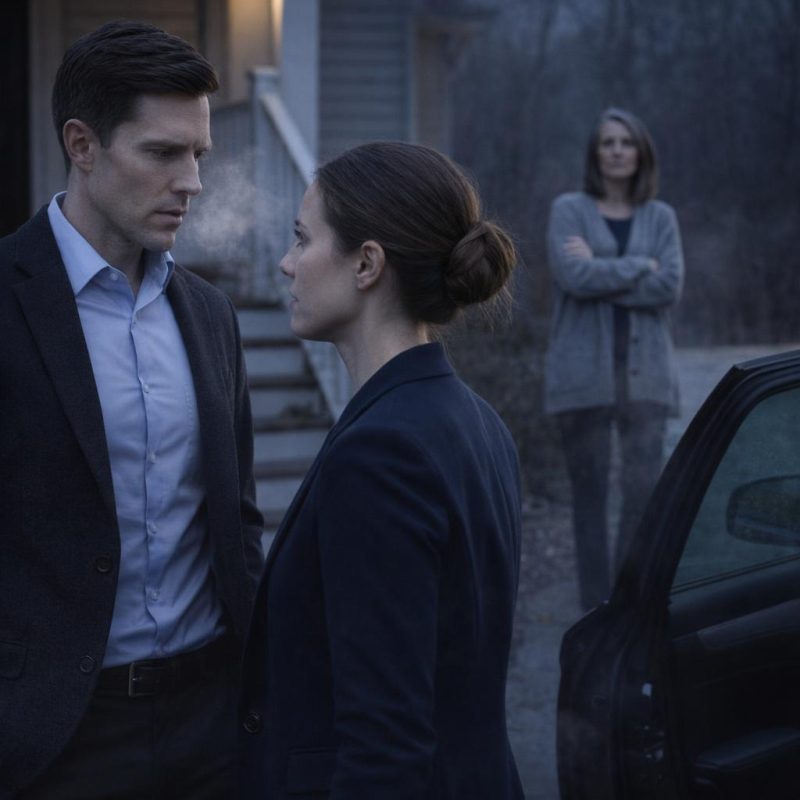 Image by RM AI
How Sophie Likes Her Eggs
By the third Saturday I had it down. Sophie wanted her eggs scrambled soft with cheese — not too runny, not too firm, with the cheese melted all the way through. If I got it wrong she'd eat it anyway but she'd go quiet in a way that told me she was being polite about it. Liam wanted his toast cut into triangles, not rectangles, and he'd eat every bite if I got that right. I learned to have the juice boxes already cold in the refrigerator because warm juice was apparently a significant problem. Sophie talked through entire meals — about her teacher, about a girl in her class named Emma, about a book she was reading, about whatever came into her head — and I learned to respond just enough to keep her going without interrupting the flow. Liam was content with the same two cartoons on rotation, week after week, the same characters doing the same things, and he'd watch with the same focused expression every time like it was all new. I set up the puzzle station at the far end of the table for the stretch after breakfast when Sophie needed something for her hands. The mornings had found their shape. And somewhere around the fourth week, I caught myself reaching for the remote before Liam even asked, already knowing exactly which channel and which show.
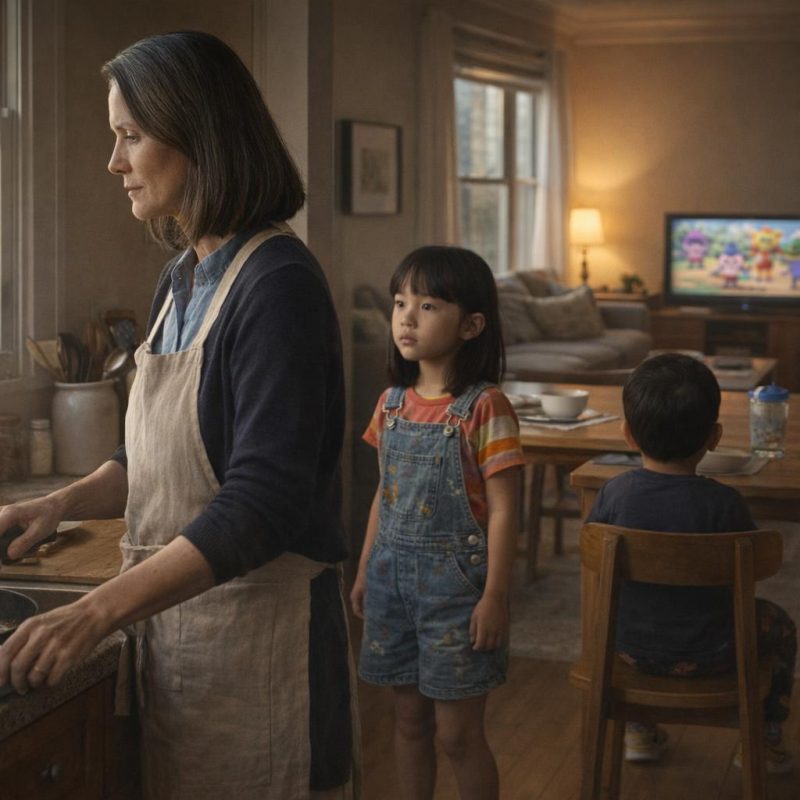 Image by RM AI
Wrung Out
I heard the car in the driveway just before noon, and I moved to the kitchen window without really thinking about it. They sat in the car for a moment before getting out — not long, maybe half a minute — and I didn't think much of it. Jenna got out first and stood beside the car, one hand resting on the roof, her face turned slightly away from the house. She looked tired in a way that went past the surface, the kind of tired that comes from spending hours on something that costs you something real. Michael came around from the driver's side and they walked toward the house together, not talking. Their faces weren't tense or unhappy with each other — just emptied out, the way faces get after a long cry or a hard conversation that finally said what needed saying. Sophie heard the car and ran to the front door before I could call her, and I heard her voice go up with that particular joy children save for their parents coming home. I didn't follow her. I stayed in the kitchen and started tidying up the lunch things, giving them a moment at the door. When I glanced back through the window, Jenna was still standing at the car, one hand pressed flat against the roof, her head bowed just slightly, before she finally pushed off and came up the walk.
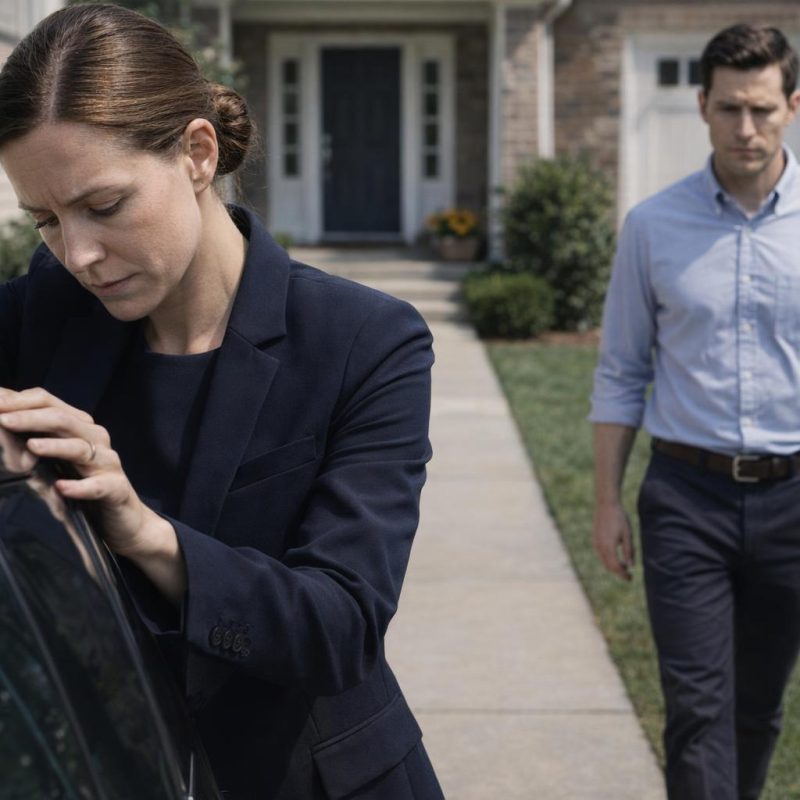 Image by RM AI
Respecting Their Privacy
I didn't ask. That was the decision I'd made before they even walked through the door, and I held to it. Whatever happened in those sessions was theirs — the hard work, the things said out loud for the first time, the particular privacy of two people trying to find their way back to each other. It wasn't mine to know. I helped Sophie gather her coloring pages into a neat stack and found the cap for her favorite marker, which had rolled under the table. Liam asked, in his small serious way, if he could come back next Saturday, and I told him he absolutely could, that I'd have the cartoons ready. Michael came into the kitchen while Jenna was getting the children's shoes on, and he said thank you — just those two words, quietly, with his hand briefly on my shoulder. I told him the children had been wonderful, which was true. I didn't say anything else. I watched from the porch as Jenna buckled them into the car, as Michael backed out of the driveway, as the car disappeared around the corner at the end of my street. I went back inside and stood in the kitchen for a moment. The coloring pages Sophie had left behind were still spread across the table, and the house had gone very quiet around them.
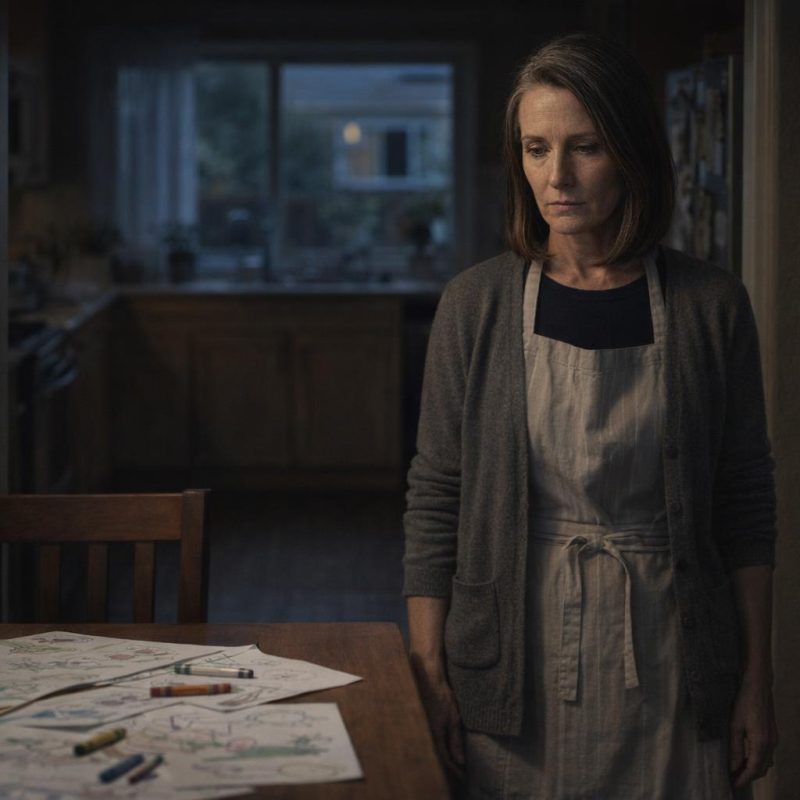 Image by RM AI
Second and Third
The second Saturday felt less like a favor and more like a plan. I had the kitchen set up before they arrived — juice boxes in the fridge, pancake batter already mixed, Sophie's markers laid out on the table in the order she seemed to prefer. When the doorbell rang, I was ready. Sophie came in talking about a dream she'd had involving a purple elephant, and Liam went straight to the couch like he'd been doing it for years. Michael and Jenna looked tired again, the same particular tiredness from the week before, but they thanked me and left without lingering. By the third Saturday, I barely had to think. Liam asked for the same breakfast as the week before — pancakes with the syrup on the side, not on top, which I had already remembered — and Sophie pulled a brand-new coloring book from her backpack and announced she wanted to start on page one. When Michael and Jenna came back at noon, they seemed a fraction less tense than before, or maybe I was just getting better at reading them. I washed the breakfast dishes after they left and stood at the window for a moment. The street was quiet, the morning already folded away, and the house felt like it had simply absorbed another Saturday without effort.
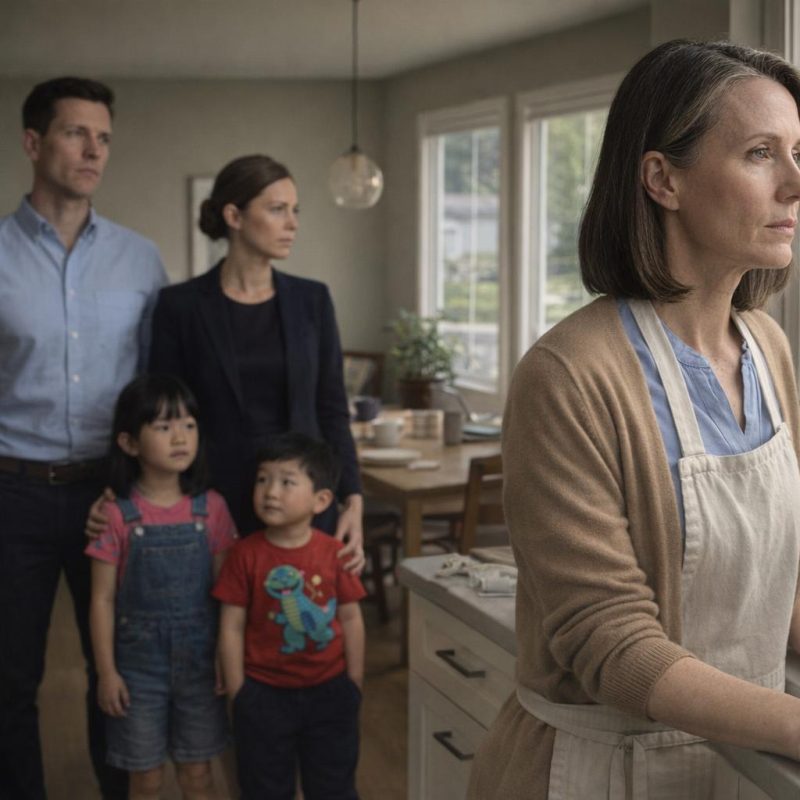 Image by RM AI
Mastering the Routine
By the fifth or sixth Saturday, I had stopped measuring things. I just knew. I knew Liam wanted exactly two tablespoons of syrup — not poured over the pancakes but in a small dish on the side so he could dip — and I knew that if I put on the cartoon with the little blue dog, he'd sit contentedly for a full hour without needing anything from me. I knew Sophie talked more when her hands were busy, that the puzzles with animals on them held her attention longer than the ones with landscapes, and that she'd ask for a second juice box around ten-thirty whether she was thirsty or not, just because she liked having one. I kept the juice boxes at the back of the second shelf, where they stayed coldest. I learned that Sophie's mood when she walked in the door told me which puzzle she'd want — if she was chatty and bright, she'd go for the harder one with the farm scene; if she was quieter, she'd reach for the simpler one with the butterflies. One morning I had the butterfly puzzle already on the table before she'd even taken off her coat, and she looked up at me with those wide eyes and said, "How did you know?" I just smiled. I already knew what she was going to ask before the words were out of her mouth.
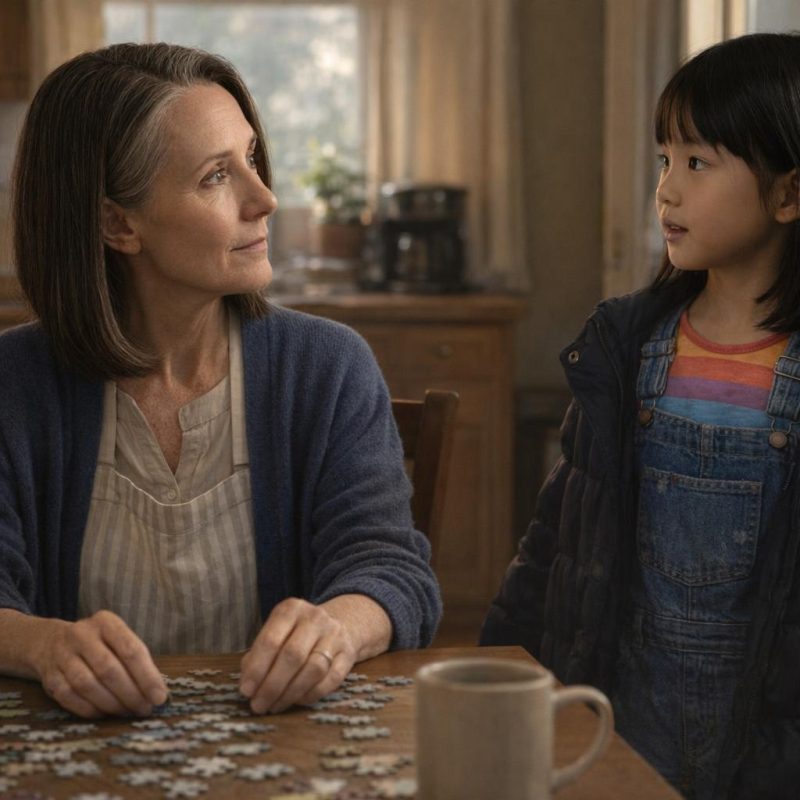 Image by RM AI
One Month Complete
It was the fourth Saturday when I counted back and understood that a full month had passed. Four consecutive Saturdays, not one missed, not one rescheduled. I stood at the kitchen counter after they'd gone and thought about what a month actually means — how much can shift in thirty days, how many couples I'd watched over the years decide that the hard work wasn't worth it and quietly stop trying. Michael and Jenna hadn't stopped. They kept showing up, tired and punctual, every single week. The children had settled into the routine so completely that Sophie no longer said goodbye at the door with any particular ceremony — she just waved over her shoulder on her way to the coloring table, like she was coming home rather than arriving. Liam had started leaving a small toy car on my windowsill between visits, a habit he'd developed without explanation, and I'd taken to leaving it exactly where he put it. When Michael and Jenna came back that fourth Saturday, I thought I noticed something — not a dramatic change, just a slight easing in the way they stood near each other. Maybe I was reading into it. But I held onto the thought anyway, turning it over gently as I dried the breakfast dishes, the weight of four quiet Saturdays settled around me like something solid.
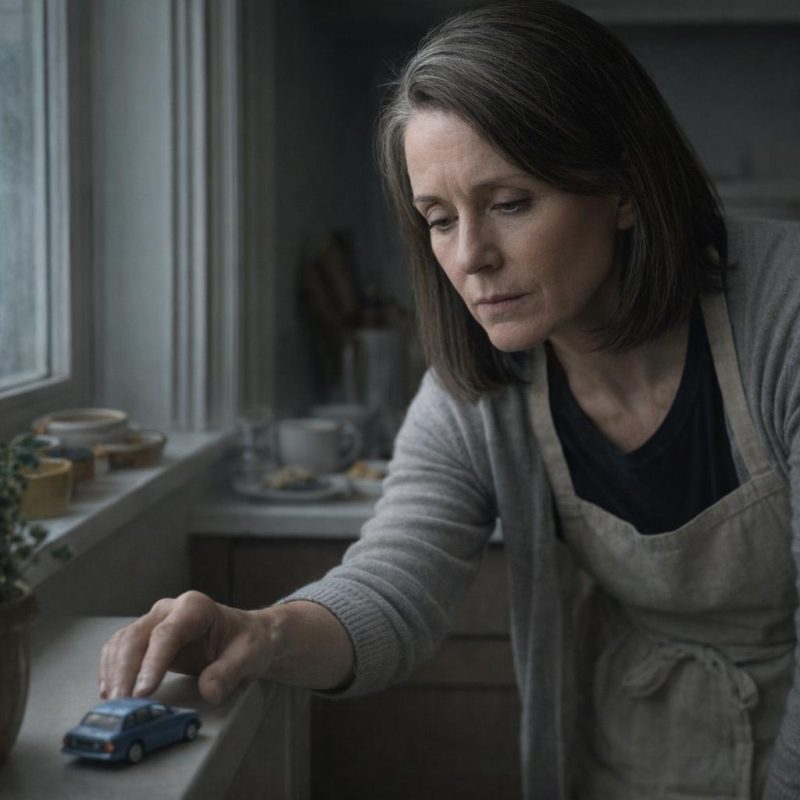 Image by RM AI
Stars on the Calendar
I'm not sure what made me do it, exactly. It was after the fourth Saturday, the house quiet again, and I was standing in the kitchen looking at the calendar on the wall — the one I'd had for years, the kind with the big squares for each day. I picked up the blue pen I keep by the phone and drew a small star in the Saturday square. Then I flipped back through the previous weeks and added three more, one for each Saturday we'd already done. Four little blue stars in a row. I stepped back and looked at them. There was something about seeing it laid out like that, something that made the whole arrangement feel more real than it had before — not just a favor I was doing, but a record of something. A commitment that had already begun to accumulate. I thought about how the stars would keep adding up, week by week, and what the calendar would look like in another month, another two. I thought about Michael and Jenna out there somewhere each Saturday morning, doing the hard work that most people find reasons to avoid. I thought about Sophie's coloring books and Liam's toy car on the windowsill. Then I stepped back and looked at those four small blue stars again.
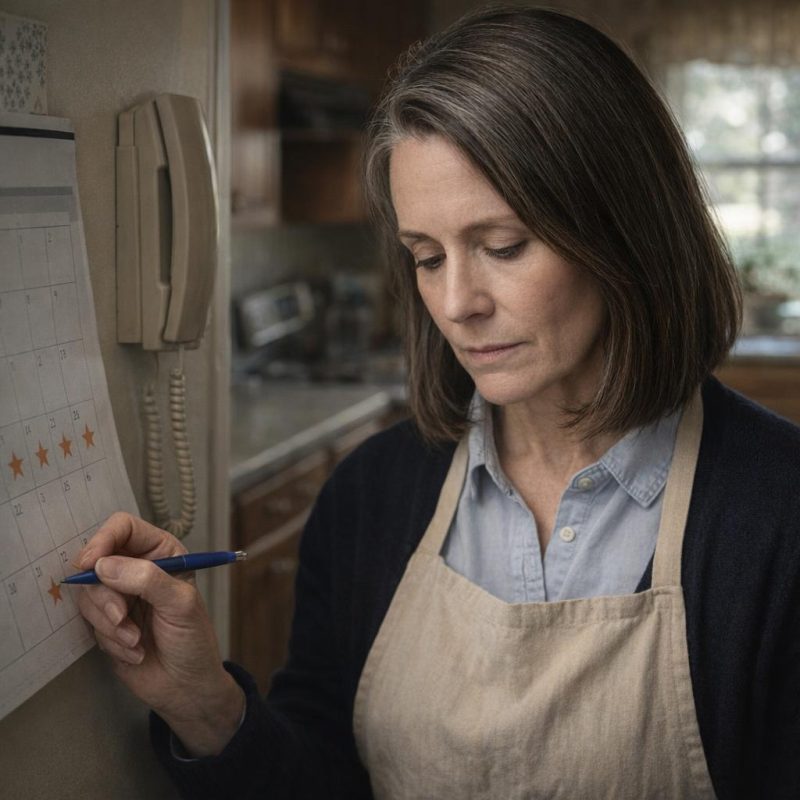 Image by RM AI
Second Month
The second month passed the way a well-worn path does — without you having to look down at your feet. By the fifth Saturday I had stopped thinking of it as preparation and started thinking of it as simply what I did. The batter was mixed before they arrived. The cartoon was already on. The puzzle Sophie would want was already on the table. Michael and Jenna came and went with the same tired punctuality, and I added a star to the calendar each week without ceremony, the way you'd mark off a habit you've stopped questioning. The children arrived each Saturday a little more at ease, if that was even possible — Liam going straight to the couch, Sophie dropping her bag and reaching for her markers before she'd finished saying hello. By the eighth Saturday, I noticed I wasn't watching the clock the way I had in the beginning. The morning simply moved, the way mornings do when you're not fighting them. I made breakfast, I sat with the children, I listened to Sophie explain the elaborate story behind whatever she was coloring that week. When Michael and Jenna came back, I handed over two children who were fed and content, and I watched the car pull away. I went inside and added the eighth star to the calendar, and the morning folded into the week behind it without a seam.
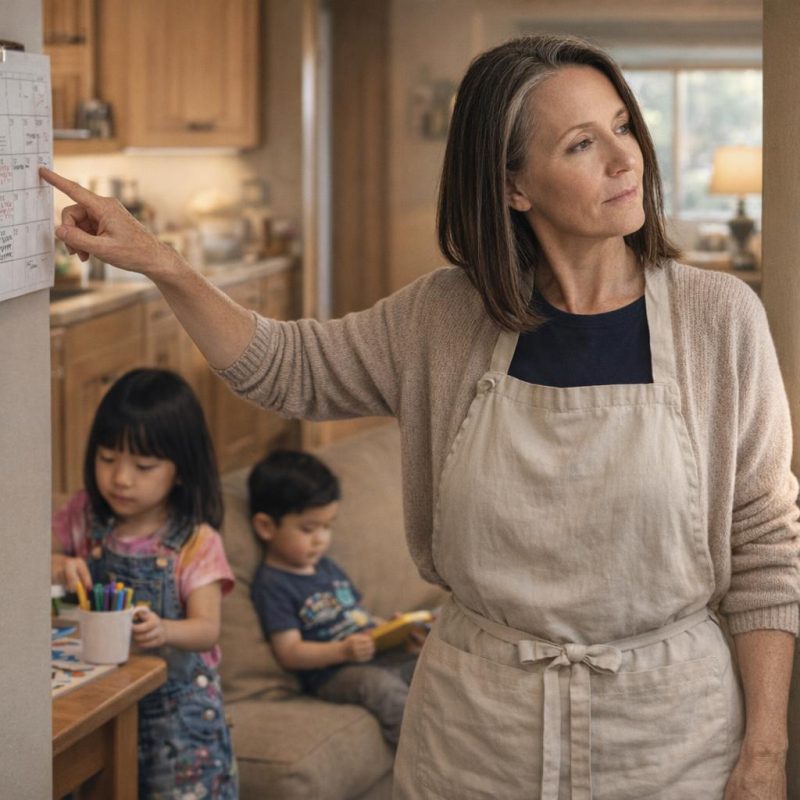 Image by RM AI
Genuinely Useful
I thought about Carol's neighbor that Saturday morning, while Sophie and Liam were settled at the table. Her neighbor had been married twenty-two years before her husband decided the work wasn't worth it anymore. Just like that — twenty-two years, and he stopped trying. I'd heard stories like that more times than I could count, people who got to the hard part and found a reason to walk away. What Michael and Jenna were doing wasn't easy, or so it seemed to me. Counseling means sitting in a room and saying the things you've been avoiding, and doing it week after week even when you're exhausted and it doesn't feel like it's working yet — at least, that was how I imagined it. They kept showing up anyway. I watched Sophie carefully color inside the lines of a horse she'd been working on for two Saturdays, her tongue pressed to her lip in concentration, and I thought about what it would mean for her if her parents gave up. For Liam, too, who was perfectly content on the couch with his cartoon, small and unbothered and trusting. I had spent years feeling like my usefulness had quietly narrowed — the children grown, the house too large, the weeks too similar. But on Saturday mornings, with the breakfast dishes drying in the rack and two small people in my living room, I felt like I was holding something steady that mattered.
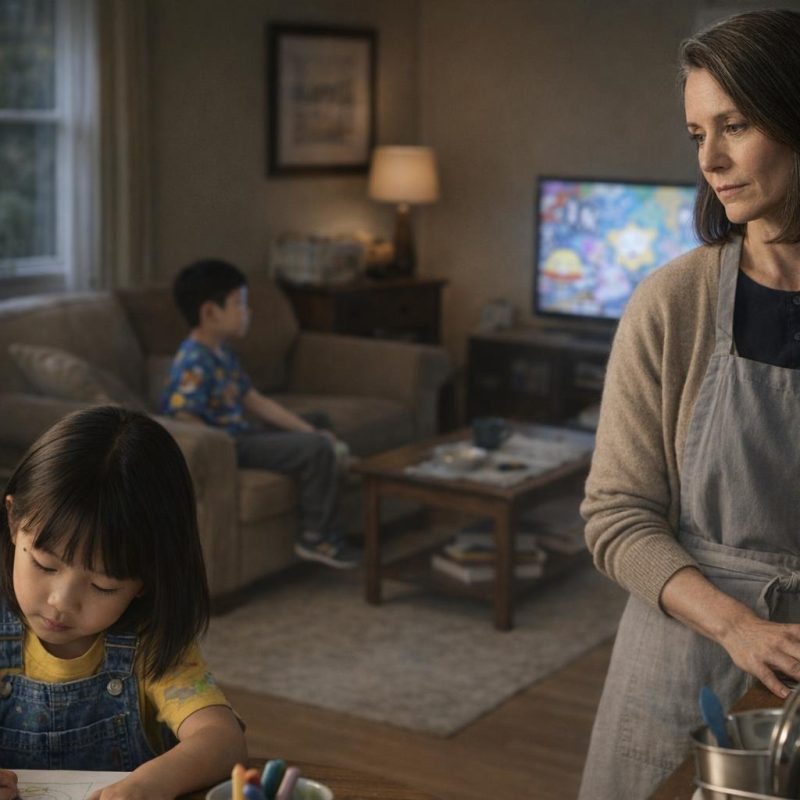 Image by RM AI
The Anchor
I started thinking of it as an anchor. That was the word that came to me one Saturday morning while I was rinsing the breakfast plates — anchor. Not a glamorous thing to be, but a necessary one. Ships don't think about their anchors. They just hold. I thought about Michael and Jenna driving somewhere each week, tired and trying, and I thought about what it meant that they could do that because someone was holding things steady at home. I was that someone. It wasn't a small thing, even if it looked like one from the outside. When they came to pick up the children that afternoon, I stood on the porch and watched the way I always did — Sophie climbing into the backseat, Liam being buckled in, Michael checking the mirror before he pulled out. Jenna gave me a small wave from the passenger window. I raised my hand back. I stayed on the porch longer than usual after the car turned the corner, the street going quiet around me, the late-morning air cool against my face. I wasn't ready to go back inside yet. I stood there with my hand still half-raised, and I said it quietly, to no one, to the empty street: "I won't let you drift."
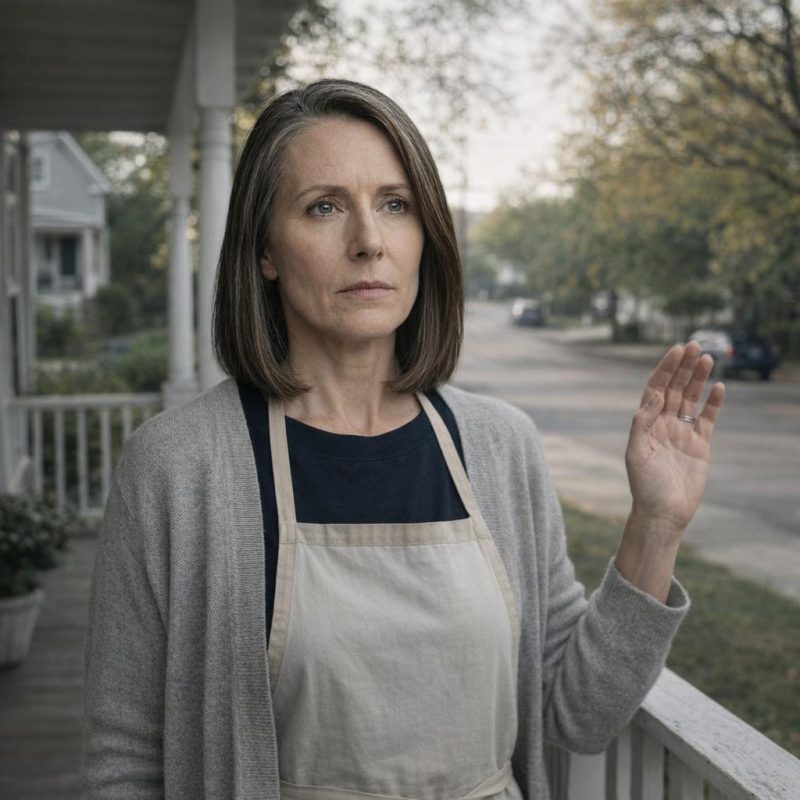 Image by RM AI
Three Months In
Three months. I didn't mark it with anything special — no cake, no phone call. I just stood at the kitchen calendar on a Sunday morning with my coffee and counted. Twelve Saturdays. Twelve small blue stars marching across three months of squares, neat and evenly spaced, one per week without exception. Sophie and Liam had been so comfortable the day before that Sophie had asked if she could keep her coloring book at my house instead of carrying it back and forth, and I'd said yes without hesitating and found a spot for it on the shelf by the window. Liam's toy car was still on the windowsill where he'd left it. I tried to remember what I used to do with Saturday mornings before all this started, and I genuinely couldn't pull up a clear picture — some combination of errands and television and too much quiet, I supposed. It felt like a long time ago. I looked at the calendar again, at those twelve small stars, each one a morning of pancakes and puzzles and cartoons, a morning of holding something steady while my son and daughter-in-law did whatever it was they needed to do. Twelve weeks. I set my coffee mug down and counted them once more, slowly, one finger moving across each starred square.
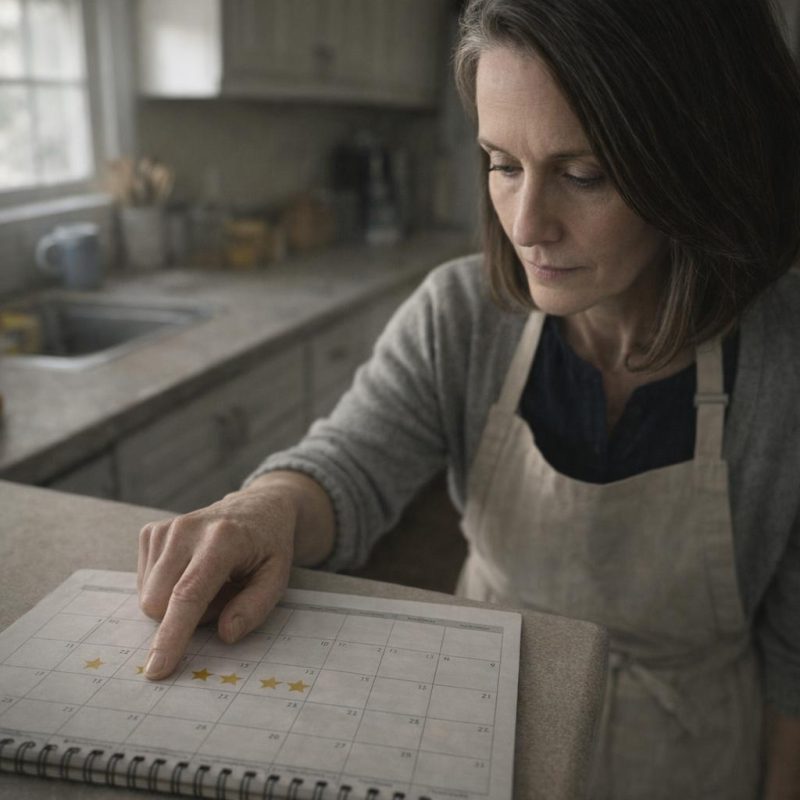 Image by RM AI
Never Questioning
It was somewhere around the fourth month that I noticed it — really noticed it, the way you notice something that's been sitting in plain sight the whole time. Sophie was at the kitchen table working on a new puzzle, her tongue pressed to the corner of her mouth the way it always was when she was concentrating, and Liam was on the living room rug with his cars lined up in a row he kept rearranging. It was a perfectly ordinary Saturday morning, pancakes already done, dishes already rinsed, and neither of them had said a word about where their parents were. Not that morning, not any morning. I stood at the counter with my dish towel and thought about that. Four months of Saturdays. Sixteen mornings of dropping off and picking up, and not once had Sophie looked up from a puzzle and asked where Mommy and Daddy were going. Not once had Liam tugged at my sleeve wanting to know when they'd be back. They just settled in, easy as breathing, like this was simply how Saturdays worked. I'd always taken that as a good sign — children who feel safe don't need to ask. But standing there that morning, I realized I couldn't remember a single time, not one, that either of them had ever asked.
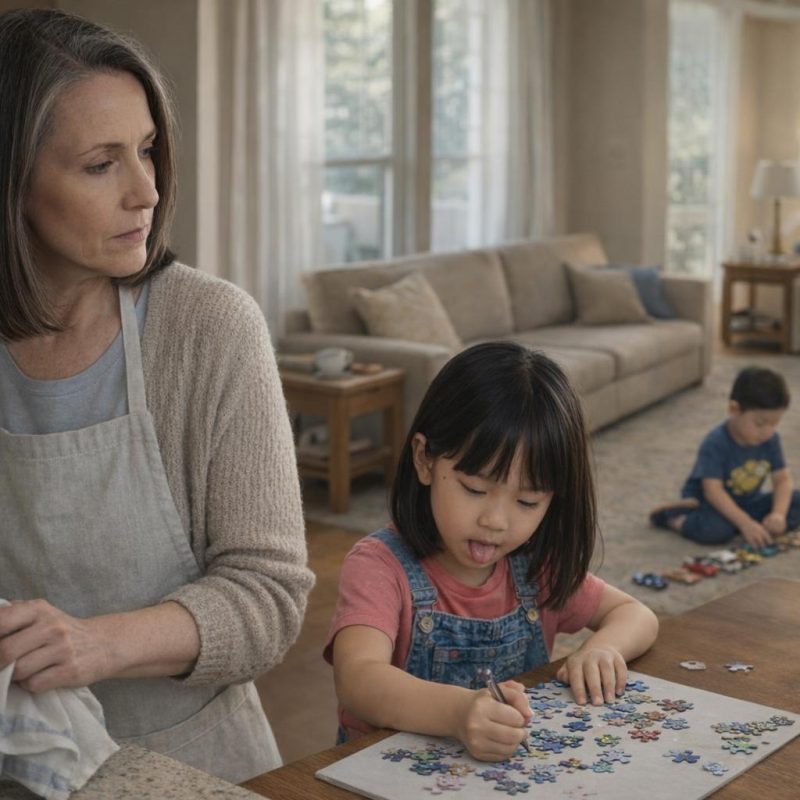 Image by RM AI
The Foliage Trip
Carol called on a Wednesday, her voice bright the way it gets when she's already half-excited about something before she's even said it. There was a foliage trip — a group of us, she said, up through the mountains for a long weekend, peak color, a little inn she'd found with a fireplace in every room. It sounded genuinely lovely. I could picture it without any effort at all: the reds and golds, the smell of woodsmoke, Carol laughing too loud at dinner. 'You have to come,' she said. 'You've been so cooped up.' I told her I couldn't, that I had the kids on Saturday and I wasn't going to leave Michael and Jenna without coverage, not when they were working so hard on things. There was a pause on her end. 'Ruth,' she said, 'you know I think what you're doing is wonderful. But you've turned down three things this fall.' I told her I knew, and that I didn't mind. She said she admired my loyalty, and I could hear that she meant it, even if she didn't quite understand it. After we hung up, I sat with the phone in my lap for a moment. The house was quiet around me, and I felt no pull toward regret.
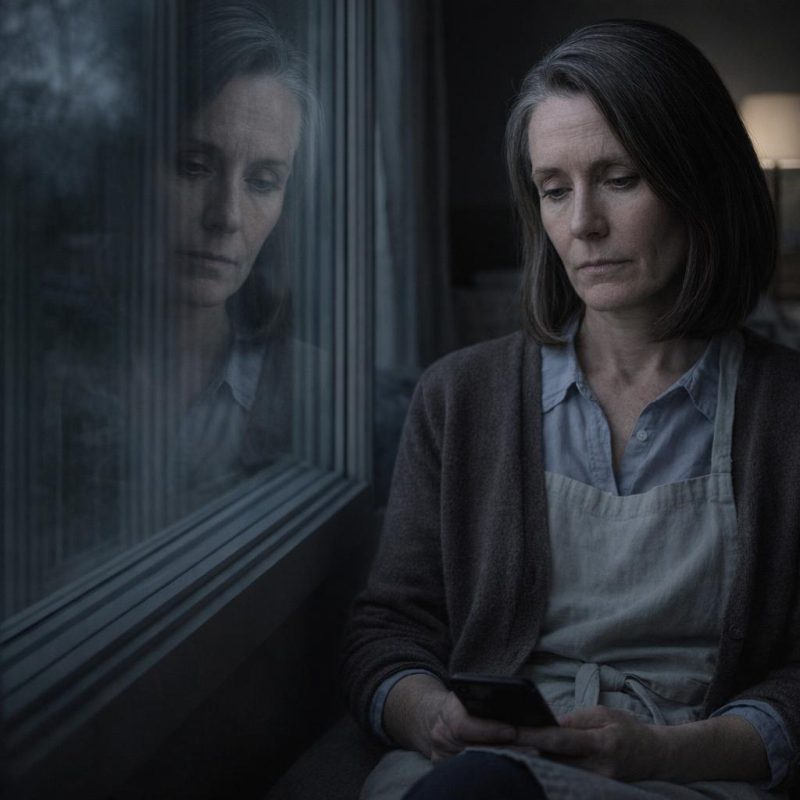 Image by RM AI
Not Missing Out
I thought about that foliage trip more than once in the days that followed — not with longing, exactly, but just turning it over the way you do with a choice you've already made and don't need to revisit. The mountains would have been beautiful. Carol would have made it fun. I knew all of that. But I also knew what I was doing on Saturday morning, and I knew why, and when I held those two things side by side there wasn't really a contest. Plenty of people would have said yes to the trip. Plenty of people would have said they'd done enough, that one missed Saturday wouldn't matter, that Michael and Jenna were adults who could figure something out. And maybe that would have been fine. But I kept thinking about what it meant to make a commitment and actually keep it — not just when it was easy, not just when nothing better came along. I thought about my son sitting across from a counselor, doing the hard work of saving his marriage, and I thought about how the least I could do was show up every single week without complaint. The foliage would come back next year. A marriage, once it broke, didn't always.
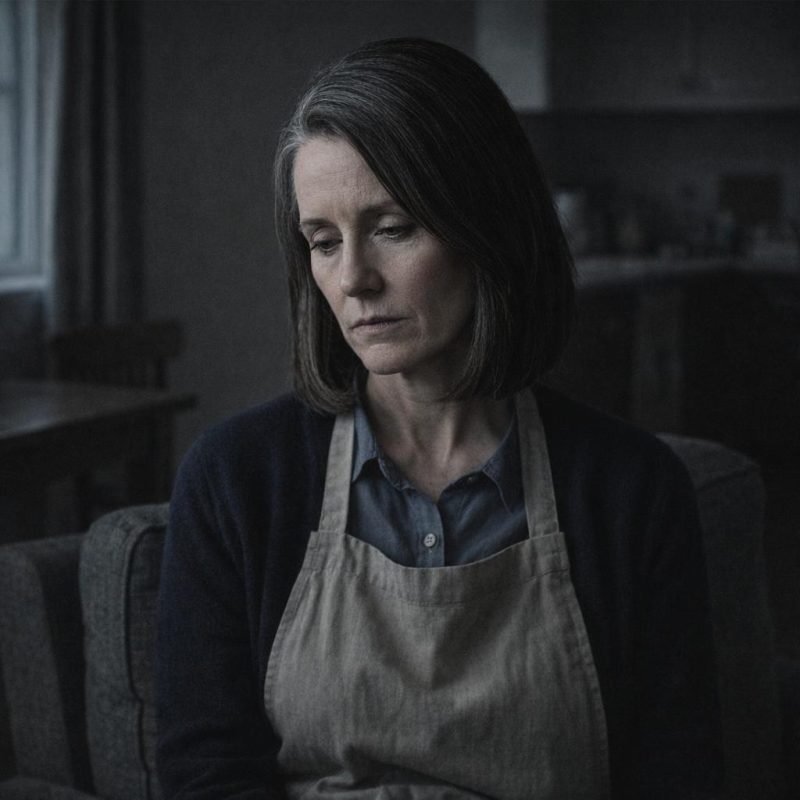 Image by RM AI
Curious and Uneasy
I started paying closer attention when they came to pick up the kids — not in any deliberate way, just the way you notice things when you've been watching the same scene long enough to catch the differences. Michael came up the porch steps one Saturday in late October and something about the way he moved stopped me. His shoulders were different. That's the only way I can describe it — they were sitting lower, easier, like he'd put something down that he'd been carrying for a long time. He wasn't rushing the way he used to, that tight-jawed hurry he'd had in the early weeks. He paused at the top step and looked out at the yard for just a second before he knocked, and there was something almost peaceful in it. Jenna came up behind him with a stride that seemed lighter too, her coat unbuttoned even though it was cool out, her face open in a way I hadn't seen in months. I felt something lift in my chest — a small, careful hope, the kind you don't want to name too loudly in case it disappears. I told myself not to read too much into a posture, into a stride. But then Michael turned toward Jenna on the porch, and I saw something move across his face that I hadn't seen there in a very long time.
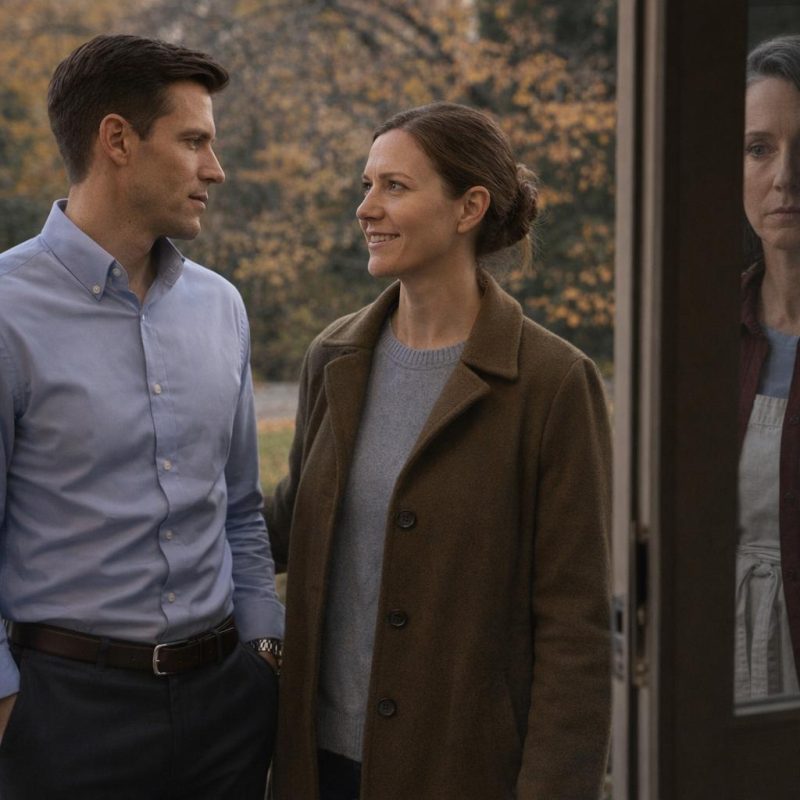 Image by RM AI
Easier Laughter
Sophie had been talking for a solid five minutes about a puzzle piece she'd lost under the couch cushion and then found stuck to the bottom of Liam's shoe, and honestly the story had more dramatic turns than it had any right to. She was acting it out a little, her hands going, her voice rising at the part where she lifted the cushion and it wasn't there. I was smiling, watching her, when I heard Jenna laugh. Not a polite laugh, not the kind you produce to be kind to a child — a real one, sudden and unguarded, the kind that catches you off guard even when you're the one making it. It came out of her before she seemed to know it was coming. Michael looked over at her when it happened, and he was smiling too, a real smile, the kind that reaches the eyes. I busied myself with Liam's jacket so I wouldn't make a thing of it. But I noticed. I'd heard Jenna laugh before, of course — she wasn't a cold person — but there had been a guardedness to her for so long, a careful management of how much she let show. This wasn't managed. This was just her, laughing at a seven-year-old's story about a puzzle piece, and the sound of it settled into the room like something that belonged there.
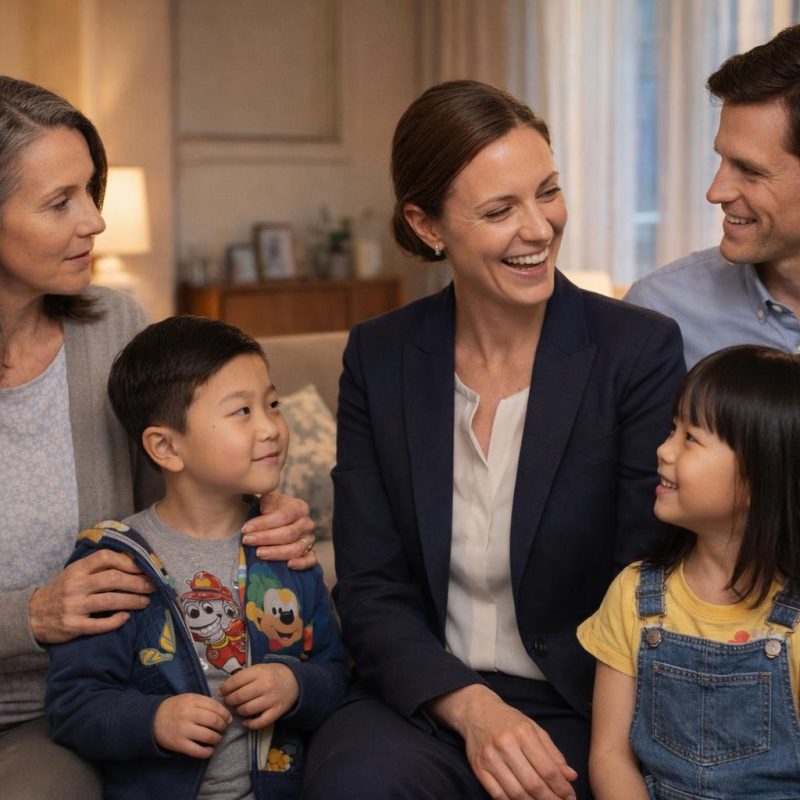 Image by RM AI
The Small of Her Back
They came up the porch steps together that Saturday, Michael just a half-step behind Jenna, and I saw his hand come up and rest at the small of her back as she reached the top. It was the briefest thing — he wasn't even looking at her when he did it, his eyes were on the door, and that was exactly what got me. It wasn't a gesture he was making for anyone's benefit. It was just something his hand did, the way hands do when they know where they belong. I stood back from the window so I wouldn't be caught watching. I remembered that gesture from years ago, from before the hard stretch they'd been going through — the easy, unthinking way they used to move around each other. It had been gone for a while. I hadn't realized how much I'd noticed its absence until I saw it come back. Sophie burst through the door a moment later with Liam right behind her, and the ordinary chaos of coats and backpacks and 'did you eat, did you eat' swallowed everything up. But I carried that small moment with me through the rest of the afternoon, quiet and warm, like a coal that hadn't gone out after all.
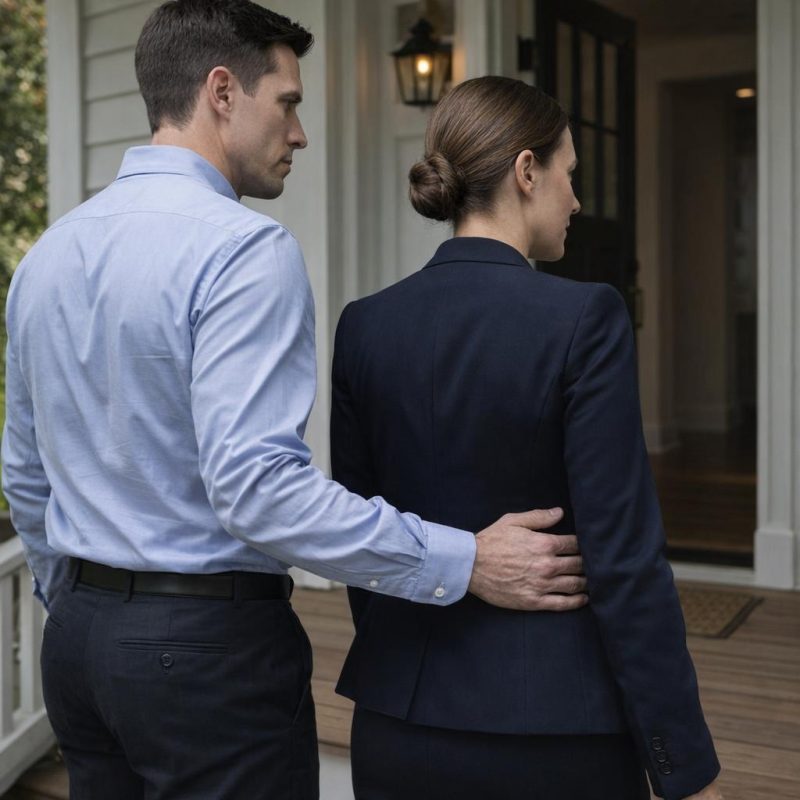 Image by RM AI
Communication Exercises
I asked, the way I sometimes did when the kids were occupied and there was a natural lull — just a casual 'how are things going, how's it all feeling?' I didn't want to pry. I just wanted them to know I was still in it with them. Michael glanced at Jenna in that way couples do when they're deciding together how much to say, and then he said they were working on communication exercises, that the process was giving them tools they hadn't had before. He said it simply, without fanfare, and I thought that was a good sign — people who are doing the real work don't usually make a production of it. I told him I was glad, that it sounded like they were taking it seriously. He nodded and looked down at his hands. There was a moment of quiet, the comfortable kind, and I was about to say something about the kids when Jenna looked up and said they were also learning to align their future goals — that that was a big part of what they were working through together.
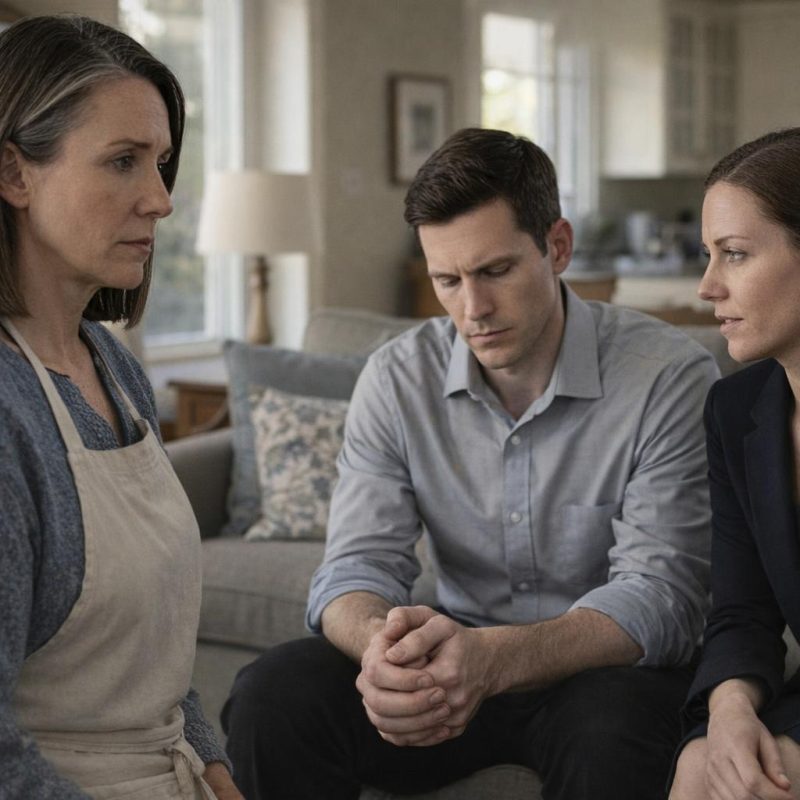 Image by RM AI
Aligning Goals
I turned that phrase over in my mind for the rest of the evening after they left. Aligning their future goals. It had a particular sound to it — the kind of language that comes from a workbook, or from a counselor who knows how to give couples a shared vocabulary for things they couldn't talk about before. I'd heard phrases like it on the radio once, some program about marriage therapy, and I remembered thinking it sounded almost too clinical, too structured. But standing in my kitchen that night, rinsing the last of the cups, it didn't sound clinical at all. It sounded like two people sitting across from a professional and being asked, seriously and carefully, what they wanted their life to look like. It sounded like homework. It sounded like effort. I set the last cup in the drying rack and stood there a moment, listening to the quiet of the house. Whatever they were doing in those Saturday sessions, it was working — the language alone told me that much. People didn't come home using words like that unless someone trained had put them there.
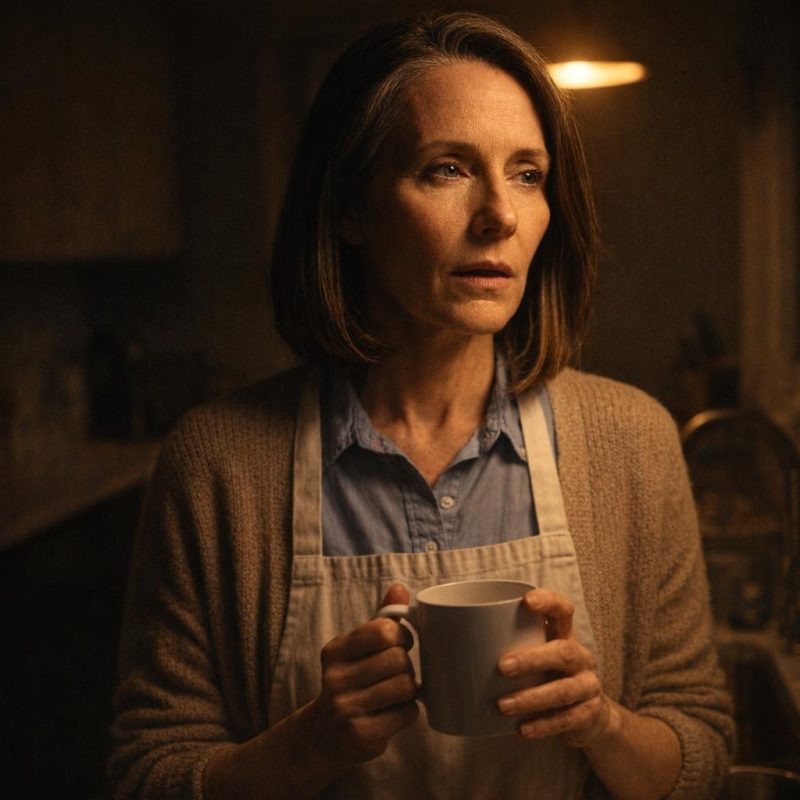 Image by RM AI
Counting Stars
I don't know exactly when I started marking the calendar with stars, but somewhere around the third Saturday I'd pulled out a blue marker and made a small five-pointed mark in the corner of the box, just to keep track. It seemed like a small thing at the time. But that evening, after the kids had gone home and the house was quiet again, I found myself flipping back through the pages — January, February, March — running my finger along the weeks. The stars had accumulated in a way that surprised me. Each one represented a morning I'd gotten up early, made breakfast, tidied the living room, and opened my door. Each one was a Saturday I'd given over willingly, happily even, because I believed in what they were doing. I counted them twice to be sure. Sixteen. Sixteen mornings of pancakes and puzzles and cartoons, sixteen afternoons of sending the children home clean and fed and content. I stood there at the kitchen counter with the calendar spread open in my hands, and something in my chest felt full in a way I couldn't quite name. I turned to the current month and ran my finger slowly over the growing constellation of blue stars.
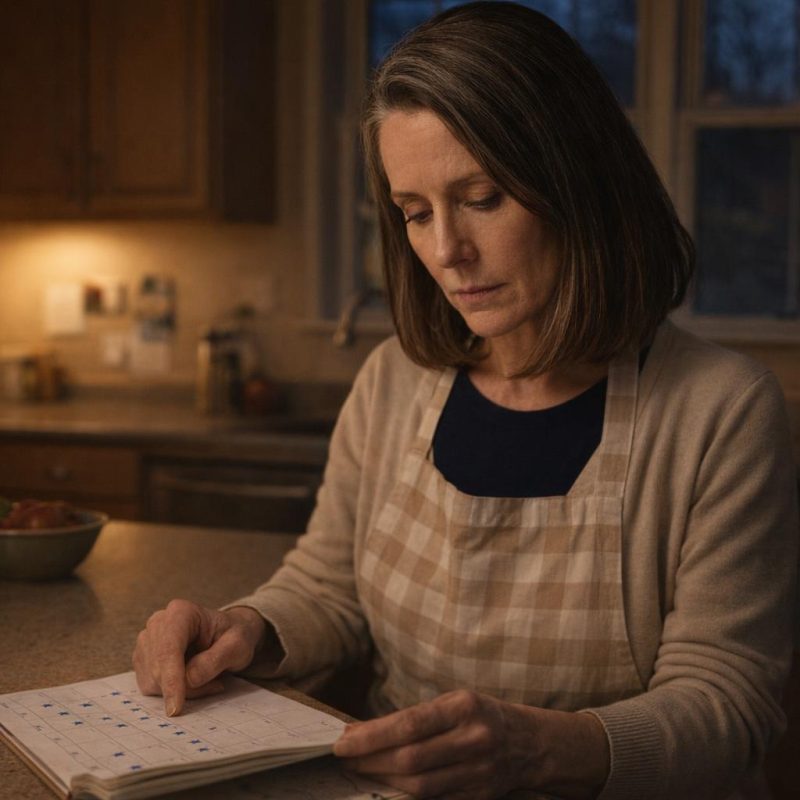 Image by RM AI
Fourth Month Begins
The seventeenth Saturday arrived the way all the others had by then — quietly, naturally, like something that had always been part of the week's shape. I was up before seven without an alarm, the coffee already brewing by the time I heard the car pull into the driveway. I didn't have to think about what to do next. The puzzle box came down from the shelf automatically. The cartoons went on. I had the orange juice poured before Sophie even had her coat off. She and Liam moved through my house the way children move through a place they know belongs to them a little, settling into corners and cushions without asking permission. Liam went straight for the basket of small cars I kept near the television. Sophie climbed into her chair at the kitchen table and asked if we had the puzzle with the lighthouse. We did. I couldn't remember anymore what I used to do on Saturday mornings before all this — what I'd filled those hours with, what had seemed worth getting up for. Whatever it had been, it felt distant now, like a habit I'd outgrown without noticing. This was just what Saturdays were. The pattern had settled into me the way a good routine does, quietly and completely, until it simply became part of who I was.
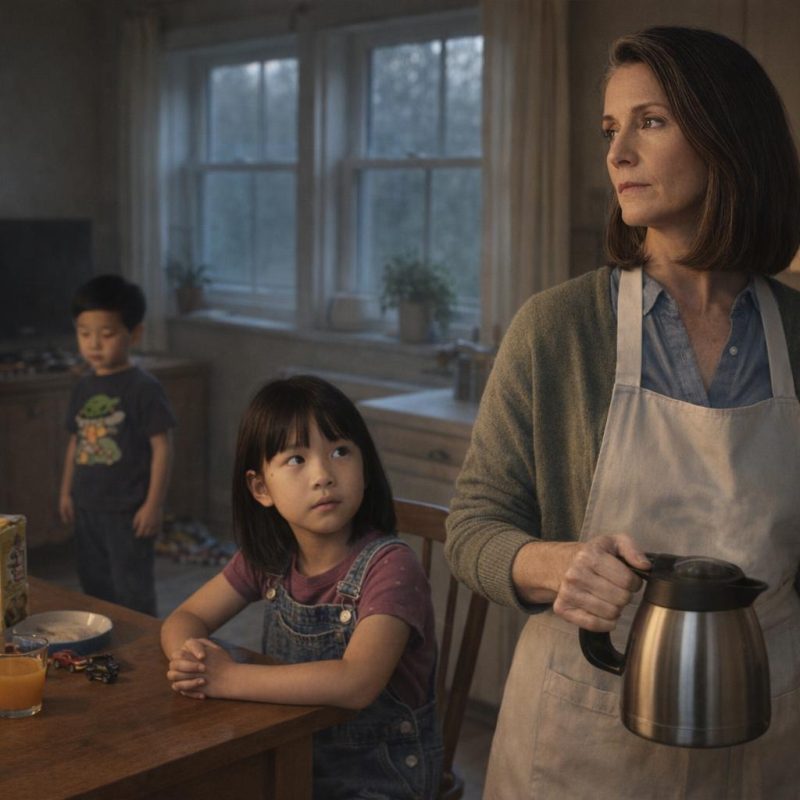 Image by RM AI
Less Careful
I noticed it first when they arrived one Saturday in late March — the way Michael held the door open for Jenna without the careful, deliberate quality that had been there before. It was a small thing, the kind of thing you'd miss if you weren't paying attention, but I'd been watching them for months by then and I knew the difference. Earlier on, there had been a certain precision to how they moved around each other — measured words, a polite distance, the kind of careful choreography that people fall into when they're trying not to say the wrong thing. That morning it was different. Jenna laughed at something Michael said before they even reached the porch steps. Not a polite laugh, a real one, quick and unguarded. Michael touched her shoulder briefly when she stepped inside, and she didn't stiffen. They said goodbye to the children without the strained efficiency I'd grown used to, and when they walked back to the car together, their pace matched. I stood at the window for a moment after they pulled away, not analyzing it, just noticing. Whatever was happening in those Saturday sessions, it seemed to be loosening something between them. The ease between them felt like the first real warmth of a season finally turning.
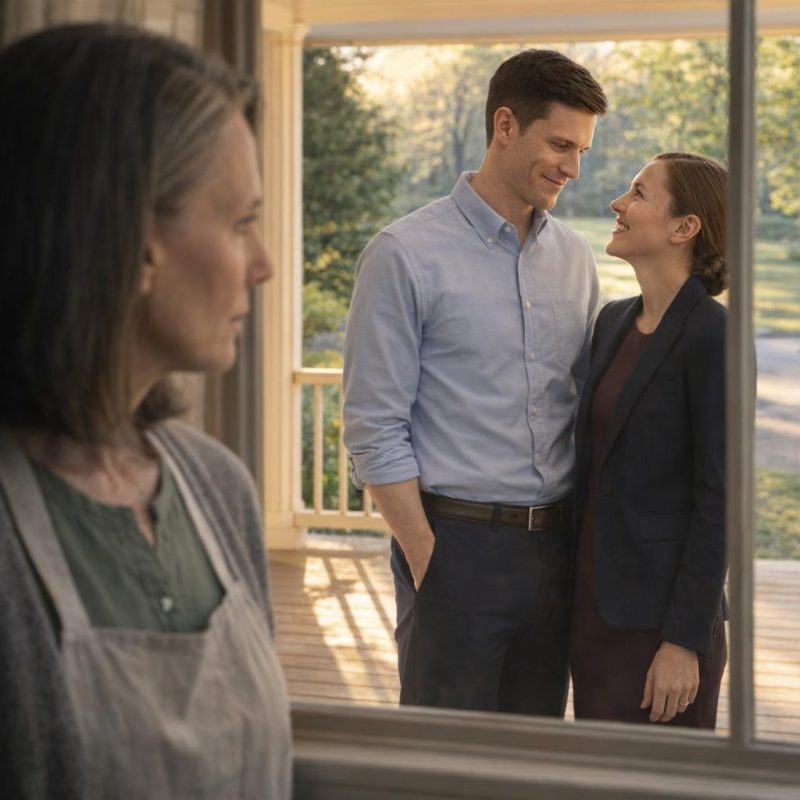 Image by RM AI
Most Marriages Give Up
I thought about Carol a lot during those weeks. We'd been friends since our children were in primary school together, and I'd watched her marriage come apart over the course of about eighteen months — slowly at first, then all at once, the way those things tend to go. She and her husband had stopped trying somewhere around year twelve, she told me afterward. Not dramatically, not with a single argument that ended everything. They'd just quietly stopped making the effort, and by the time either of them noticed, there wasn't much left to save. She'd told me once that the hardest part wasn't the divorce itself — it was knowing they could have chosen differently and hadn't. I thought about that a lot when I looked at my son and my daughter-in-law. Most people, when things get hard enough, find a reason to stop. It's easier. It requires less of you. But Michael and Jenna were showing up every single week, sitting across from someone and doing the uncomfortable work of figuring out how to stay. That wasn't nothing. That was, in my experience, genuinely rare. I felt a quiet pride in them that I didn't always know how to express. And then I thought about Carol again — about what she'd said, about choosing differently — and I thought about how different this was.
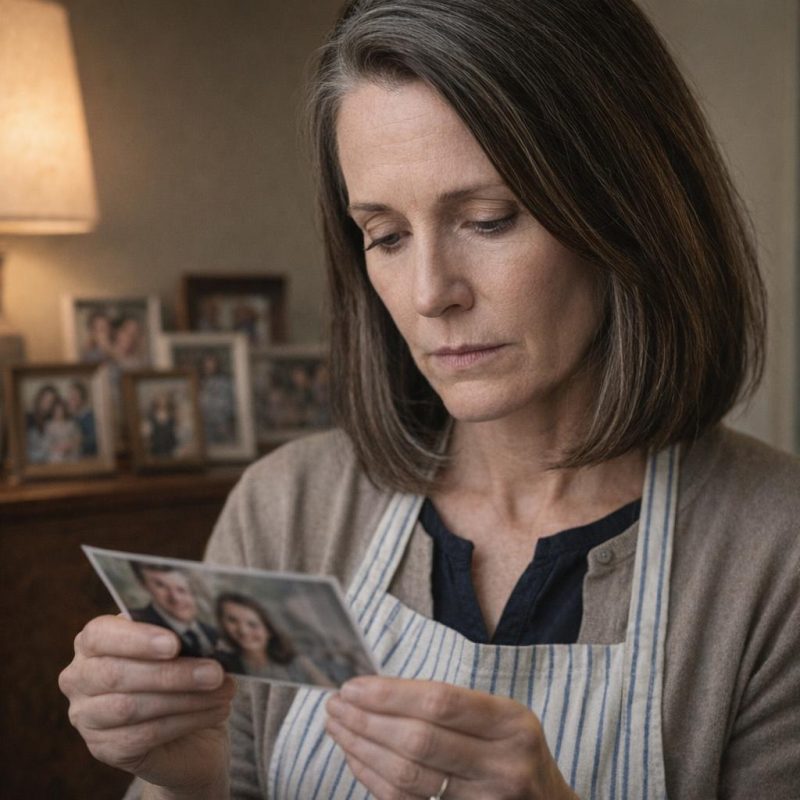 Image by RM AI
Puzzles and Stories
Sophie had a way of talking while she worked on puzzles that I came to love completely. She never stopped moving — fingers sorting pieces by color, eyes scanning the table — and the words just came out alongside the motion, easy and unfiltered, the way children talk when they feel safe. She told me about her teacher's new haircut and whether she liked it, which she didn't. She told me about a boy in her class who cried during a film and how she'd pretended not to notice because she thought that was the kind thing to do. She told me her mother had made soup from scratch last Tuesday and that it tasted better than the kind from the tin, which she said with the authority of someone who had conducted a thorough investigation. Liam sat in the other room with his cartoons, occasionally laughing at something I couldn't see, and his small laugh drifted through the doorway like punctuation. I sat across from Sophie with my tea and listened to all of it — the small domestic details of their week, the texture of their ordinary days — and I felt something settle in me that I hadn't known was unsettled. The comfort of Sophie's chatter filled the kitchen the way good light fills a room, without effort, without announcement.
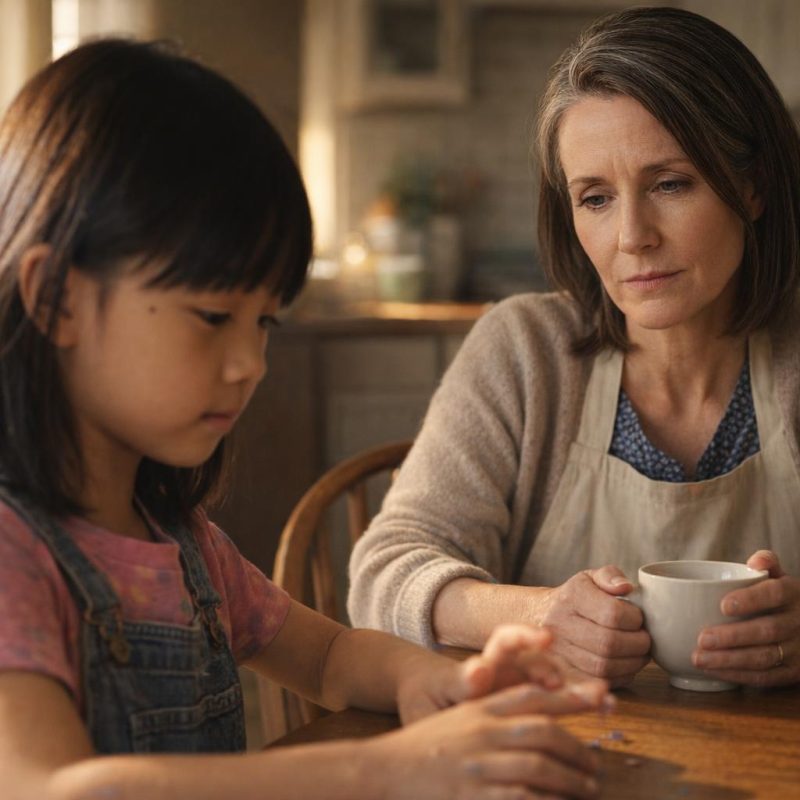 Image by RM AI
The Good Kind of Tired
It came out while she was coloring, one of those offhand observations that children make without understanding the weight of them. She was working on a page with a hot air balloon, pressing hard with the yellow crayon the way she always did, and she said her mum and dad had been tired lately. I asked, gently, what kind of tired. She considered this with the seriousness she brought to most questions. Not the bad kind, she said. The good kind. Happy-tired, she added, as though that clarified everything, and then she went back to the balloon. I sat with that for a moment. Happy-tired. I knew that feeling — the particular exhaustion that comes after you've done something that cost you something real, something that mattered. It's different from the tired that comes from drudgery or worry. It sits differently in the body, heavier but cleaner somehow. Whatever was taking up their Saturdays, it seemed to be leaving them with that particular kind of worn-through contentment. Sophie hadn't meant anything by it, of course. She was seven, and she was coloring a balloon, and she'd already moved on to choosing between two shades of blue. But her words stayed with me long after she'd finished the page, quiet and certain, carrying more than she knew.
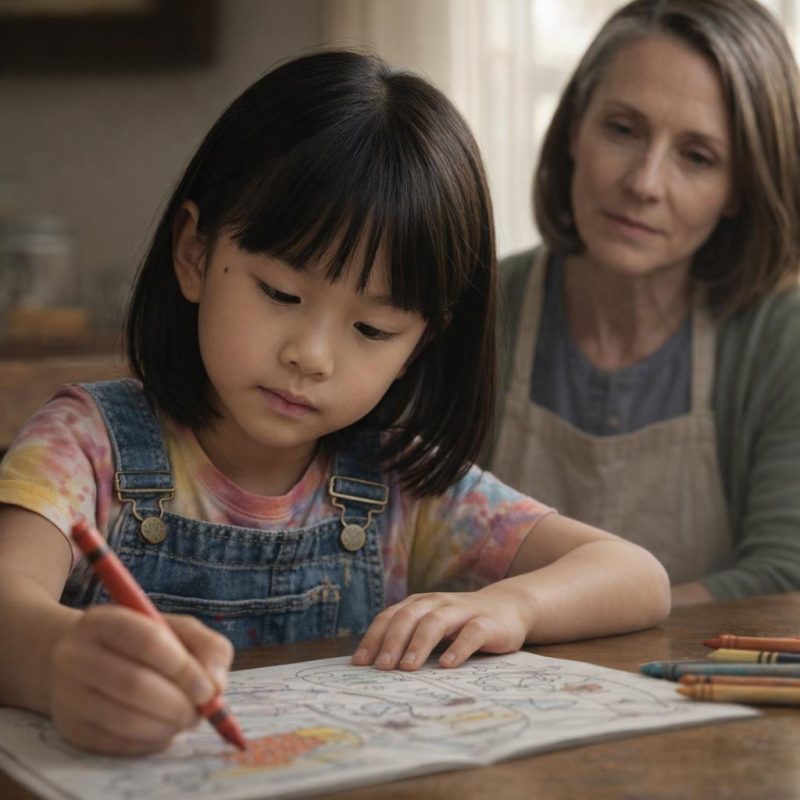 Image by RM AI
Goals at Dinner
It was a few Saturdays later when Sophie mentioned the goals. She said it the way she said most things — matter-of-factly, between bites of her sandwich — that her mum and dad talked about their goals at dinner now. Almost every night, she said. I asked what kind of goals, keeping my voice light so she wouldn't feel interrogated. She thought about it, chewing. Helping people, she said. And being better. She said it simply, without elaboration, and then asked if we had any more of the orange squash. I got up to pour it, and my mind was already turning the words over. Helping people. Being better. It sounded like the kind of language that comes from somewhere intentional — from conversations that had asked them to think beyond their own immediate difficulty. That was the kind of question worth sitting with, I thought. Not just how do you fix what's broken, but who do you want to become. I set the glass down in front of Sophie and she thanked me without looking up from her sandwich. Then she added, almost as an afterthought, that the goals were about helping people and being better at what they do.
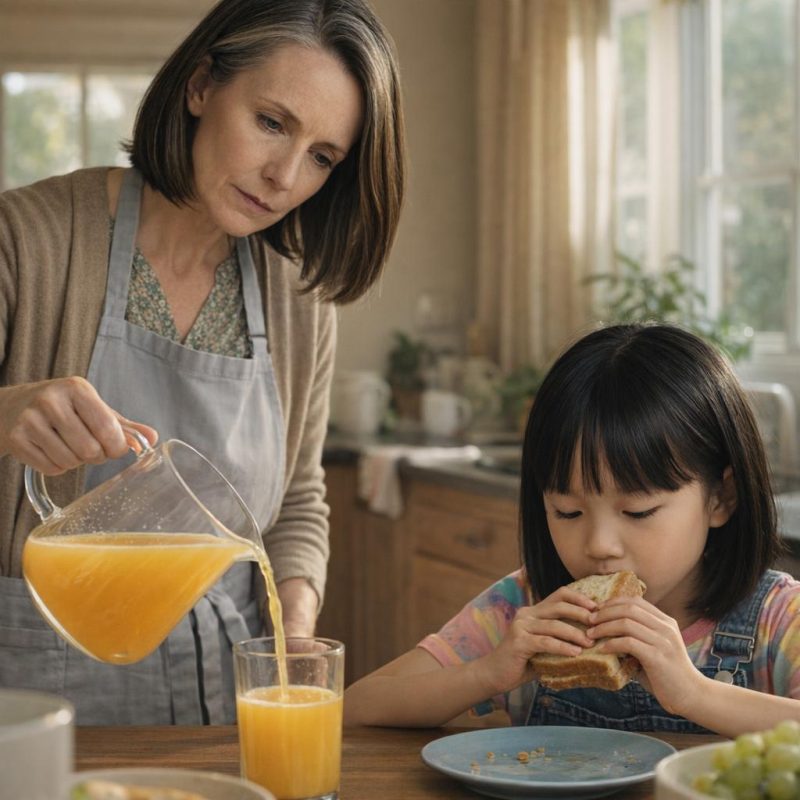 Image by RM AI
Outward-Facing Generosity
I thought about Sophie's words for the rest of that afternoon, and into the evening after the children had gone home. Helping people. Being better. There was something in those phrases that felt like more than just the language of repair — it felt like the language of expansion, of people who had moved through the hardest part of something and come out the other side with a wider view. I'd read once, in one of those magazine articles I used to clip and keep in a drawer, that the best outcome of good therapy wasn't just a fixed relationship but a changed perspective — a new capacity to think beyond your own immediate needs. That was what I heard in Sophie's description. Something in the way she'd said it so plainly, so without drama, made it feel true. I stood at the kitchen sink that evening, washing up the last of the afternoon's dishes, and I felt something I could only call gratitude — not just for them, but for whatever process seemed to be reshaping them. All those Saturdays felt like they'd been part of something larger than I'd understood when I started, though I couldn't have said exactly what shape that something was taking.
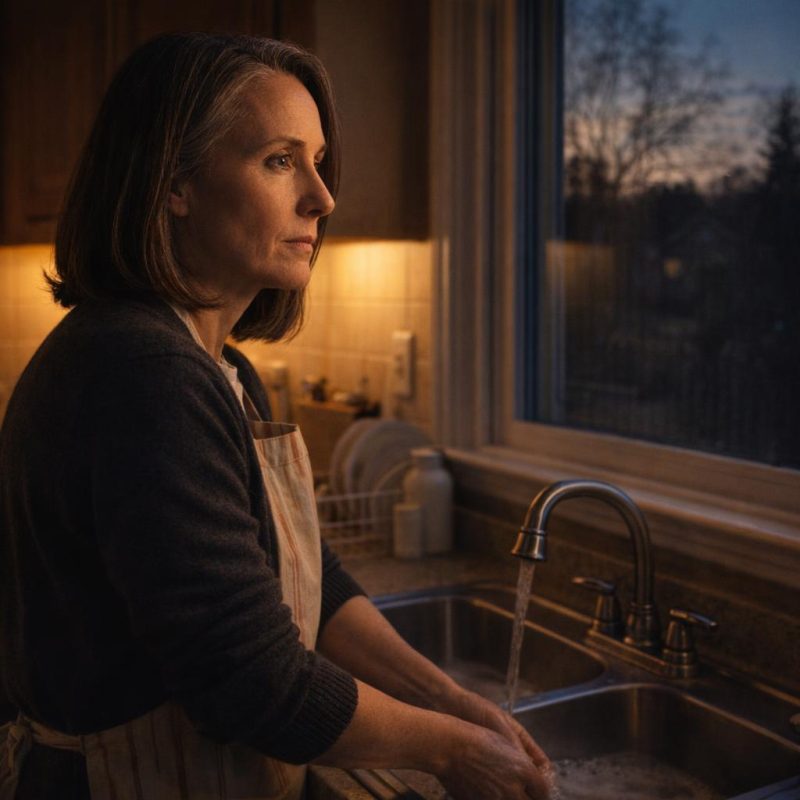 Image by RM AI
Cold Saturday in Late February
The last Saturday in February came in cold and grey, the kind of morning where the windows fog at the edges and you're grateful for something warm on the stove. I'd had chicken soup going since eight o'clock — a simple one, carrots and celery and a good handful of egg noodles — and by the time Michael dropped Sophie and Liam off, the whole house smelled like it always had on winter Saturdays, like something steady and good. Sophie settled at the kitchen table with her puzzle book almost before she'd taken her coat off, and Liam arranged himself on the living room rug with his little cars, content as ever. I moved through the morning the way you move through something you've done so many times it lives in your hands rather than your head — refilling juice cups, cutting apple slices, checking the soup without really thinking about it. At some point I stood at the counter with the juice pitcher in my hand and just looked at the two of them, so comfortable, so at home here, and I thought about how different those early Saturdays had felt — the careful, slightly formal quality of those first mornings — and how far we'd all come since then. I set the pitcher down and refilled their cups without a word, my mind still turning over all those months behind us.
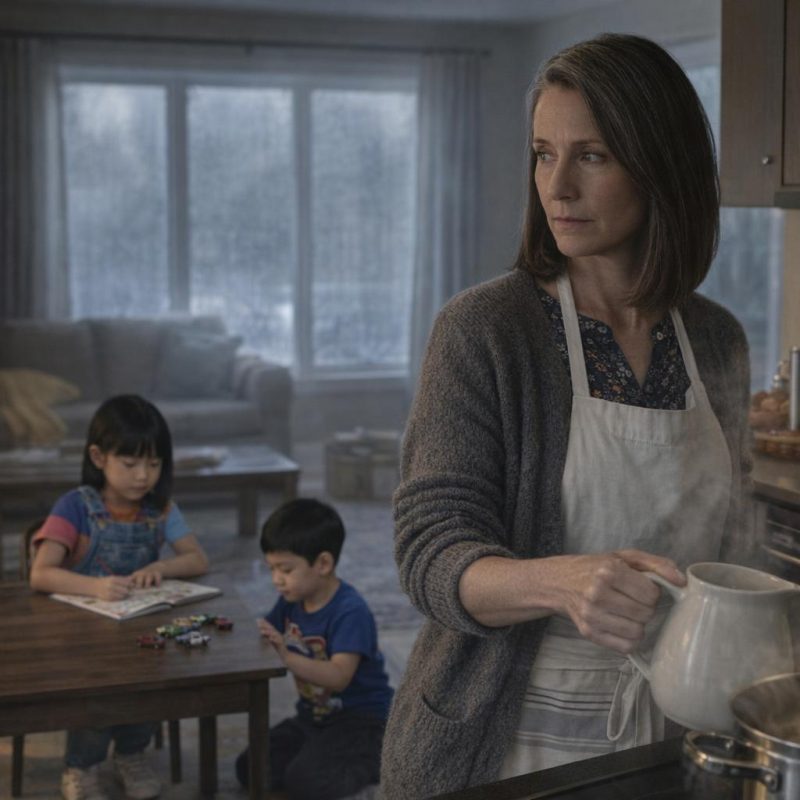 Image by RM AI
Winter Saturdays Continue
After the children had gone home that evening, I did what I'd been doing for months — I went to the kitchen calendar and uncapped the blue marker. Another Saturday, another star. I stepped back and looked at the whole thing the way you look at a wall you've been painting one careful stroke at a time, and for the first time I really let myself count. There were stars going back to early spring of the previous year, marching across the months in a neat, unbroken line. Some weeks the marker had gone on quickly, almost automatically. Other weeks I remembered exactly what that morning had held — a hard rain, Liam's ear infection, the Saturday Sophie had cried because she missed her parents and I'd held her on the couch until she settled. Every one of those mornings was there on the calendar, marked and accounted for. I pressed my fingertip lightly against one of the older stars, the ink long since dry, and felt the full weight of what that row represented — not just time, but intention, every one of those mornings chosen and given. The calendar hung there on the wall, solid and undeniable, a record of everything I'd put in.
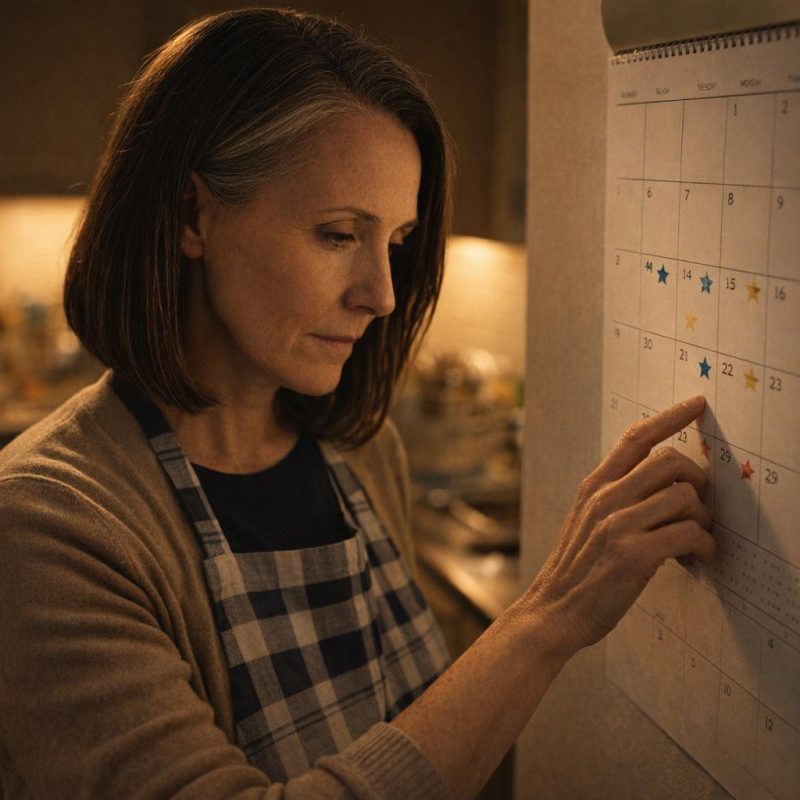 Image by RM AI
Completely Normal
By the last week of February the routine had settled so completely into my bones that I stopped thinking of Saturdays as anything other than simply what Saturdays were. I was up before seven, the kettle on, the kitchen tidied from the night before. When Michael's car pulled up I already had the back door unlocked and Sophie's puzzle book out on the table. She came in talking — she always came in talking — and Liam followed behind her with his quiet, easy way, pulling off his boots at the mat without being asked. I made oatmeal with brown sugar and sliced bananas, the same as I'd made a dozen times before, and we sat together while Sophie told me about a book her teacher had read aloud that week. Liam ate steadily and watched his sister with calm, patient eyes. I washed the bowls, dried them, put them back in the cupboard. I folded the dish towel over the oven handle the way I always did. There was nothing in that morning that felt uncertain or provisional or temporary. It simply felt like what we did, what we had always done, what we would keep on doing — as natural and unquestioned as the kettle coming to a boil.
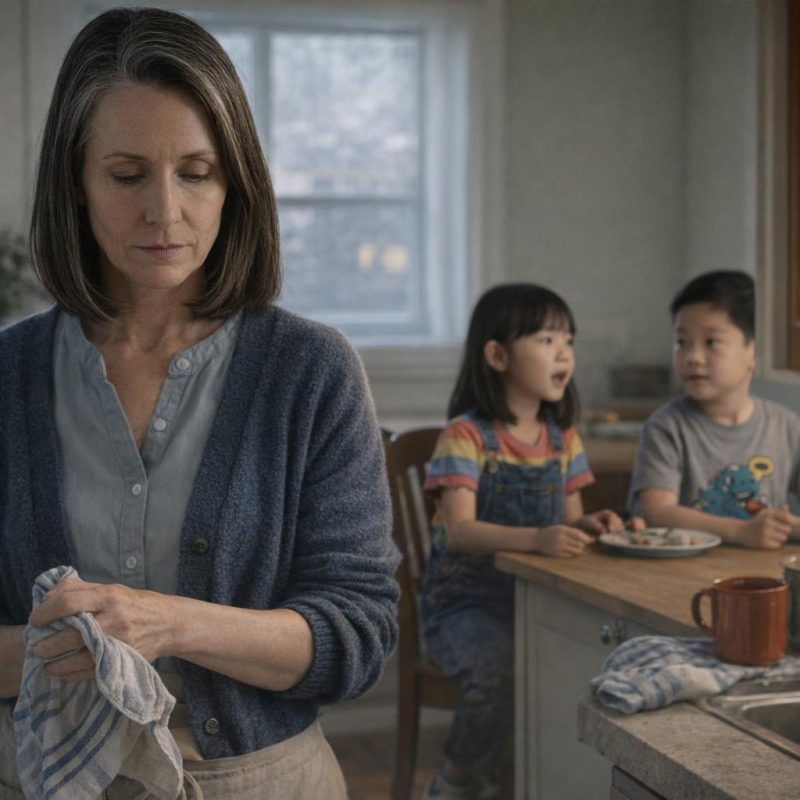 Image by RM AI
Something Small
Michael and Jenna arrived together to pick up the children that evening, which wasn't unusual, but something about the way they came in felt slightly off-key in a way I couldn't immediately name. They were cheerful — both of them — and Jenna crouched down to help Liam with his jacket zipper while Michael asked Sophie about her puzzle book. It was all perfectly normal. And yet there was a moment, just a brief one, where I glanced at Jenna and noticed that her coat was still buttoned all the way up, her bag over her shoulder, like someone who had come from somewhere rather than someone who had just left home. I noticed Michael's hair was damp at the temples, freshly combed. I told myself those things didn't mean anything — people run errands, people shower before going out — and I made myself move on from it. I handed Sophie her backpack and said something about the soup, and they thanked me warmly, and the door closed behind them. I stood in the hallway for a moment after they'd gone, and the small, nameless thing I'd noticed sat quietly at the back of my mind, not quite gone.
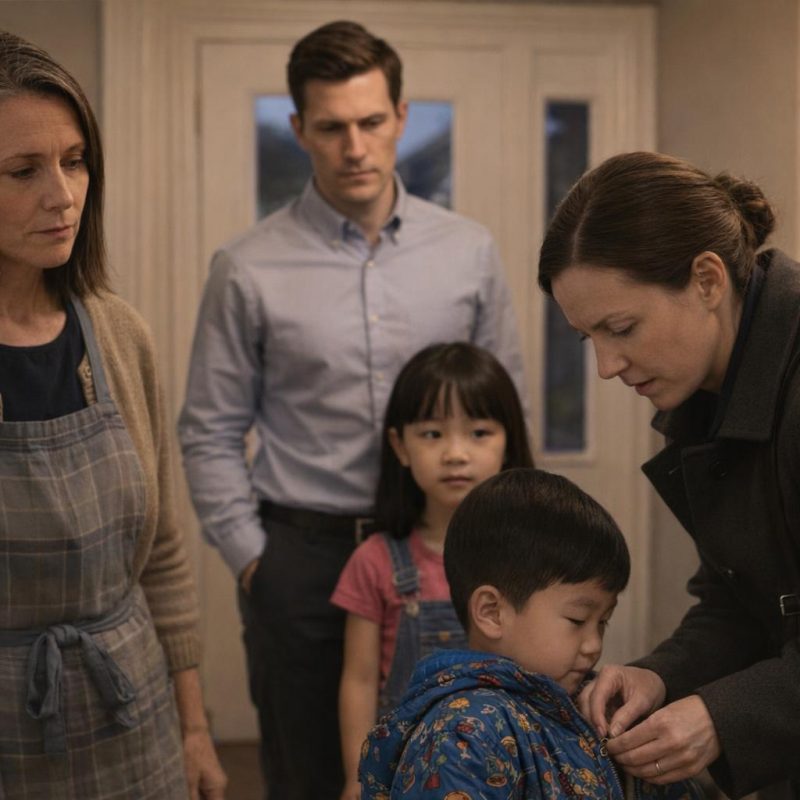 Image by RM AI
Pushing Down Doubts
I thought about it again on Sunday morning, standing at the kitchen sink with my coffee going cold beside me. Jenna's coat, buttoned up. Michael's damp hair. I turned the details over once or twice and then made myself put them down. This was exactly the kind of thing I'd always promised myself I wouldn't do — pick apart the small moments of other people's lives and build something out of nothing. They were adults. They were in counseling, doing the hard work of repairing something that had nearly broken. The last thing they needed was a mother-in-law cataloguing the way they wore their coats. I'd seen the changes in Sophie, heard it in the easy, open way she talked about home. That was real. That was evidence of something good happening, something I'd been part of. I rinsed my mug and set it on the rack and told myself firmly that I trusted Michael. I had always trusted him. Whatever I'd noticed at the door the evening before was nothing more than a tired mind looking for patterns where there weren't any. By the time I sat down with my book that afternoon, I'd mostly convinced myself of it, and the effort of getting there felt like the right kind of effort — the kind that comes from choosing to believe in people.
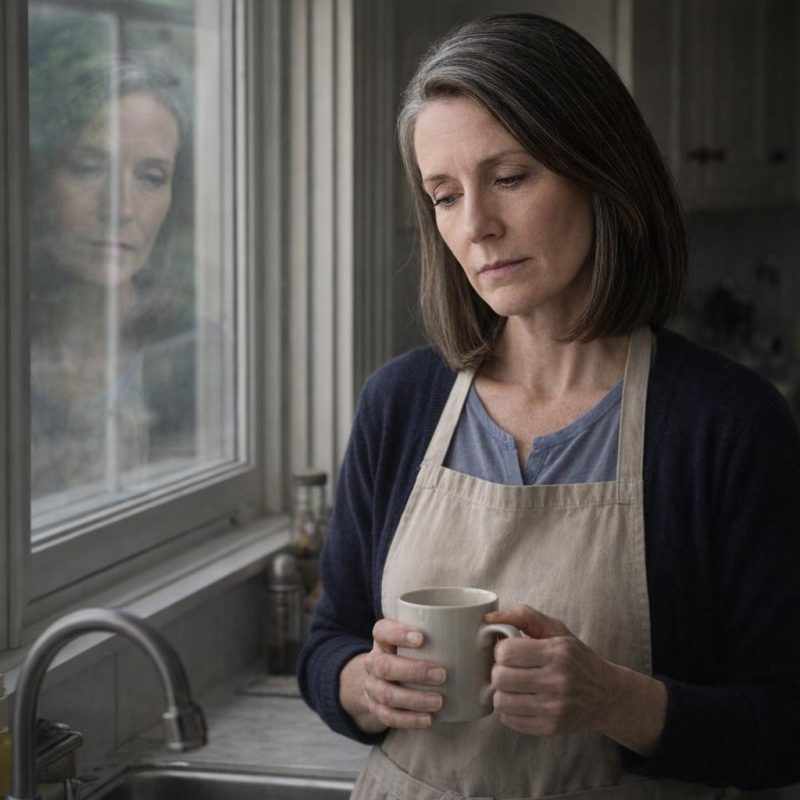 Image by RM AI
Another Detail
The following Saturday brought another small thing, and this one was harder to set aside. Jenna said something in passing when she arrived — something about traffic on the way over — and I nodded along, but later, washing up after the children had gone to bed for their quiet hour, I found myself turning the comment over. The route she'd described didn't quite match what I thought I remembered of the area Michael had mentioned once, months ago, in a brief and offhand way. I wasn't certain. I hadn't been paying close attention when he'd said it, and I couldn't be sure I was remembering it right. That was the thing — I couldn't be sure of anything. It was possible I'd misheard, or misremembered, or simply didn't understand the geography of it. I dried my hands on the dish towel and stood there for a moment. The children's voices drifted in from the living room, Sophie explaining something to Liam with great seriousness. I listened to them and tried to let the question go, but it didn't go all the way. It settled somewhere low and quiet, the way unanswered things do when you're not ready to ask them out loud.
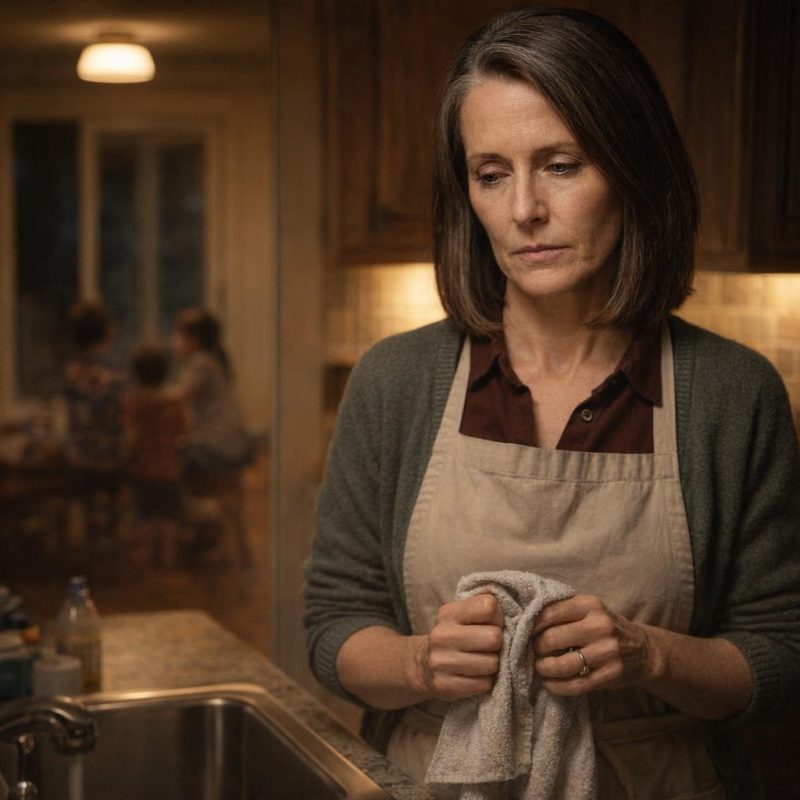 Image by RM AI
Never Mentioned the Name
It came to me on a Tuesday evening, out of nowhere, while I was folding laundry. I'd been thinking about nothing in particular — matching socks, the sound of the television in the other room — when something landed on me, plain and simple: in all the months of Saturdays, in all the conversations about counseling and progress and working through things, Michael and Jenna had never once mentioned their counselor's name. I stood there with a pillowcase in my hands and thought back through every conversation I could remember. They'd said things like 'our sessions' and 'the work we've been doing' and 'it's been really helpful.' But a name? Never. I'd never heard one. And more than that — I'd never asked. I'd sat across from my son at my own kitchen table, month after month, and I had never once said, 'What's your counselor's name?' I set the pillowcase down on the bed and tried to think of a reason why that would be, why a name would never come up naturally in nearly a year of conversation. And then I heard myself ask, quietly, in the empty room, why I had never thought to ask before.
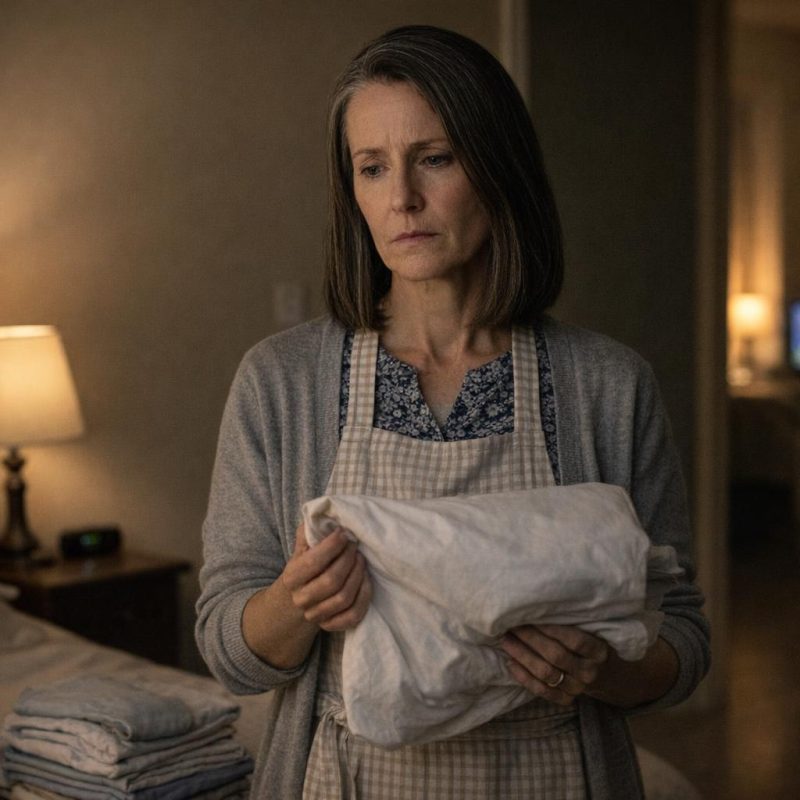 Image by RM AI
Respecting Privacy
I talked myself down from it by the next morning. Privacy — that was the word I kept coming back to. Therapy was private. Of course they hadn't mentioned a name. It wasn't the kind of thing you shared with your mother-in-law, and it wasn't the kind of thing a good mother-in-law asked about. I'd read enough about healthy family boundaries to know that the right kind of support meant holding space without pushing into it. They were adults managing something deeply personal, and the most respectful thing I could do was exactly what I'd been doing — showing up on Saturdays, keeping the children settled and loved, and not peppering them with questions they hadn't invited. I made my tea and sat at the kitchen table and reminded myself of all the things I did know: Sophie was happier, Liam was steady, Michael seemed less worn around the edges than he had a year ago. Those were real things. Those were things I could see. I folded my hands around the warm mug and let the morning come in through the window, and I told myself that trust wasn't the absence of questions — it was the choice to set them down, and I had made that choice, and it was the right one.
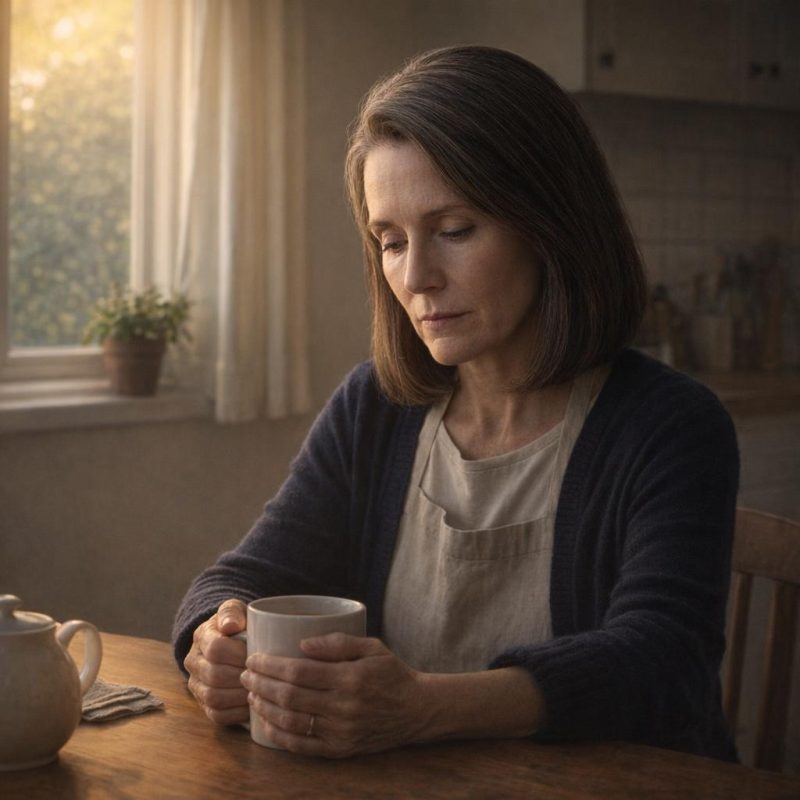 Image by RM AI
The Unease That Won't Settle
Saturday came around again the way it always did, and I was there the way I always was — coat off before Michael and Jenna had even backed out of the driveway, kettle on, Sophie already pulling her puzzle box from the shelf. The routine was so worn into me by then that my hands knew what to do before my mind caught up. But something had shifted in the weeks since I'd overheard that phone call, and I couldn't quite smooth it back down. I watched Michael more carefully when he came to the door — the way he held his keys, the way he said goodbye to the kids without quite meeting my eyes. I watched Jenna adjust her bag on her shoulder and smile at me, that same composed smile she always had, and I tried to find something in it I could name. I couldn't. That was the trouble. There was nothing I could point to, nothing I could hold up and say, there — that's it. Just a low, persistent hum of something I couldn't identify, sitting in my chest all morning while Sophie chattered and Liam lined up his toy cars along the baseboard. I folded the dish towel. I refilled the juice cups. I told myself I was probably overthinking it. But the questions stayed right where they were, and I didn't know what to do with them.
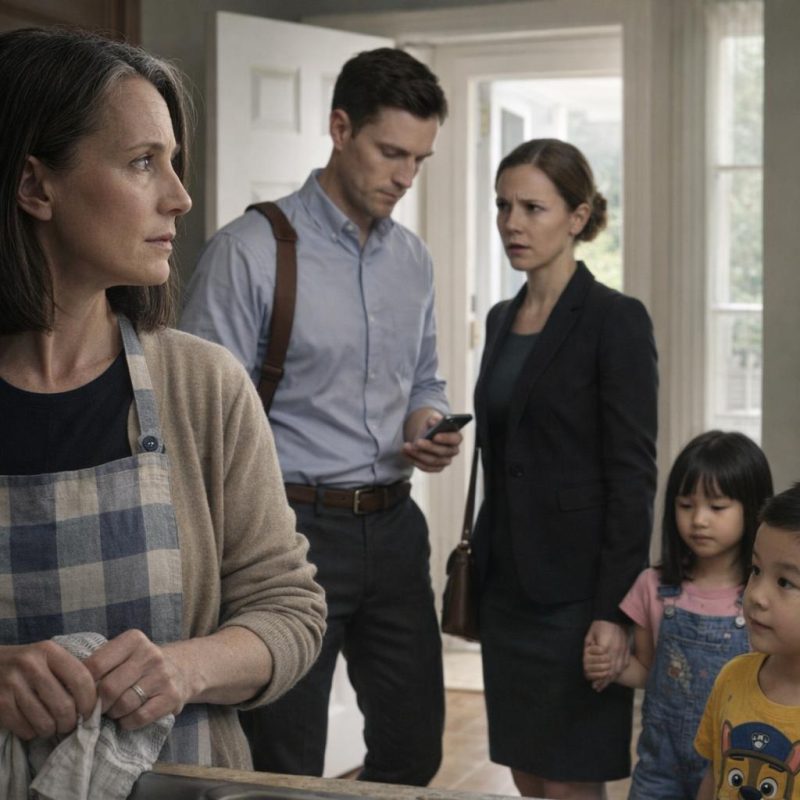 Image by RM AI
Chicken Soup Morning
The next Saturday I had chicken soup going by nine in the morning — a big pot, the kind that fills the whole house with that low, savory warmth that makes everything feel steadier than it is. Sophie and Liam were at the kitchen table, Sophie working through a coloring book and Liam pushing a small truck back and forth across the placemat with quiet concentration. I moved around them automatically, refilling juice cups, stirring the pot, wiping down the counter for the second time without really needing to. My mind kept drifting. I'd been turning the same few thoughts over all week — the phone call I'd half-heard, the name I hadn't recognized, the way Michael had looked at the door that last Saturday like he was already somewhere else. I kept telling myself it was nothing. I kept not quite believing it. Sophie asked me if the soup was almost ready and I told her another hour, sweetheart, and she went back to her coloring without a second thought. Liam made a small engine sound under his breath. The kitchen smelled like home, like every good Saturday I could remember, and I was standing right in the middle of it feeling like I was missing something I couldn't name. Then the phone rang — an unfamiliar local number on the screen.
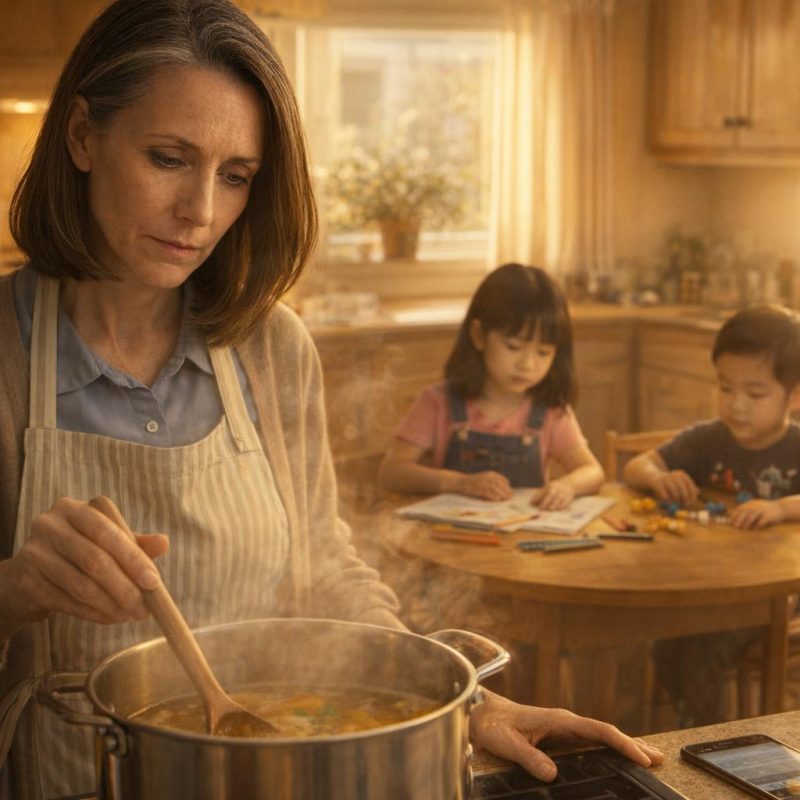 Image by RM AI
Dr. Morrison Calling
I wiped my hands on the dish towel and picked up. Sophie glanced up from her coloring book for half a second, then went back to it. The voice on the other end was calm and professional — a woman, measured in the way that people who work with families tend to be, like they've learned to carry difficult things without spilling them. She said her name was Dr. Morrison, and that she was calling from a family counseling program. Something warm moved through me when she said it. I actually felt my shoulders drop a little, like I'd been holding them up without knowing it. I thought — of course. A check-in. A follow-up. The kind of thing a good program does. I'd always hoped they were somewhere that took it seriously, and here was the proof of it, right there on a Saturday morning while the soup simmered and my grandchildren sat at the table. She asked if she was speaking with Michael's mother, and I said yes, that's me, and I waited, already half-smiling, ready to hear whatever update or scheduling note she had. Then she said she was trying to reach Michael and Jenna directly and asked if I had a good number for them.
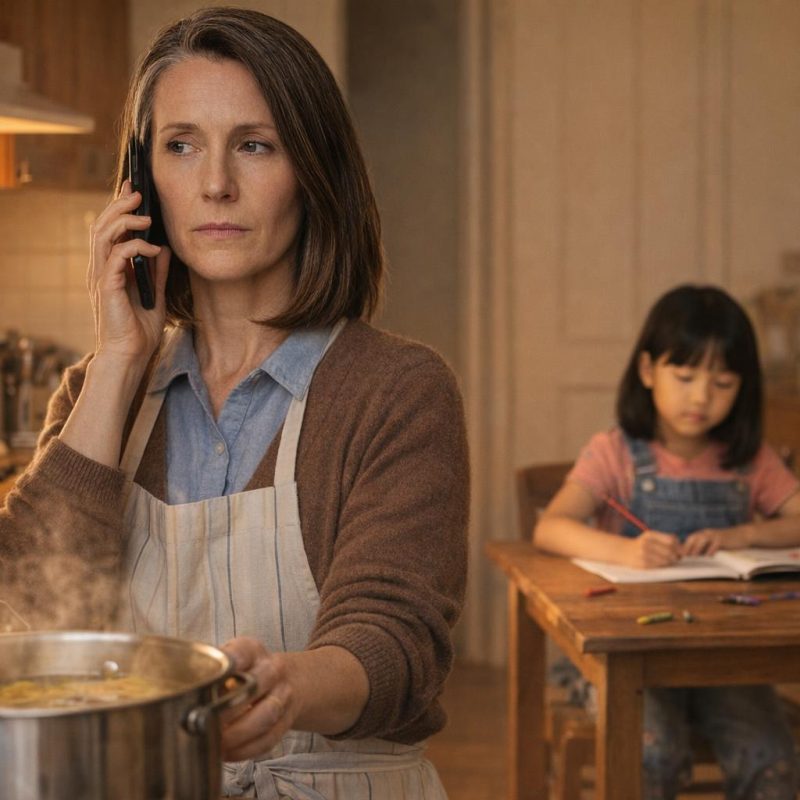 Image by RM AI
The Intake Meeting
I told her I could pass a message along when they came to pick up the children, but I was a little confused — they'd been coming every Saturday morning for nearly a year now, I said. To the sessions. I assumed she'd have their contact information on file. There was a pause on her end, short but noticeable, and I heard what sounded like papers shifting. I kept talking, filling the quiet the way you do when something feels slightly off but you can't say why. I mentioned that I'd been watching Sophie and Liam every single Saturday so Michael and Jenna could attend, that it had been going on since last spring, that I'd rearranged my whole schedule around it. I said it pleasantly, the way you explain something to someone who's simply missed a detail. Sophie asked me something from the table and I held up one finger — just a moment, sweetheart — and turned back toward the window. Dr. Morrison hadn't said anything yet. I could still hear her breathing on the other end, steady and careful, and the silence stretched out longer than it should have, longer than any ordinary pause in an ordinary phone call, and my stomach dropped before I even understood why. Then the silence kept going.
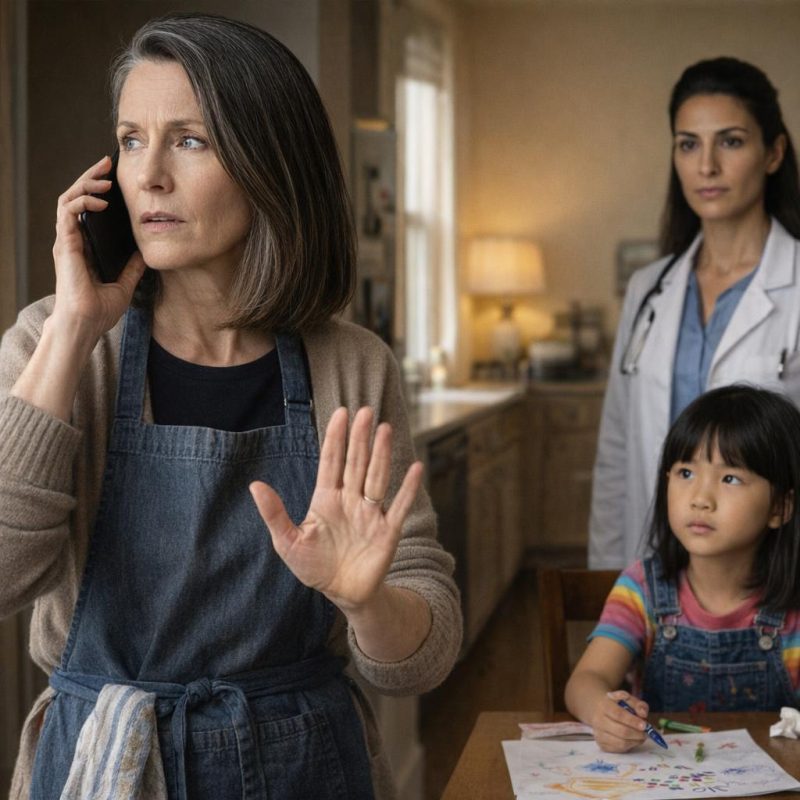 Image by RM AI
Never Attended a Single Session
Dr. Morrison spoke carefully, the way you speak to someone when you already know the words are going to land hard. She said that Michael and Jenna had filled out intake paperwork about a year ago — she remembered the file — but that they had never attended a single session. Not one. I stood very still at the kitchen window. The soup was still simmering behind me. Sophie was still coloring. The whole morning was exactly the same as it had been thirty seconds ago, and none of it made any sense. I asked her what she meant. She said it again, gently, the same words in the same order: they had completed the initial paperwork, but they had never come in. Not once in the entire year. I heard her. I understood the words individually. But they wouldn't arrange themselves into anything I could hold. A year of Saturdays. Every single one. I'd given up my weekends, rescheduled my life, told Carol I was busy, sat in this kitchen week after week believing I was helping them heal something — and they had never walked through that door. Not even once. My voice came out smaller than I expected. I asked her to please say that again.
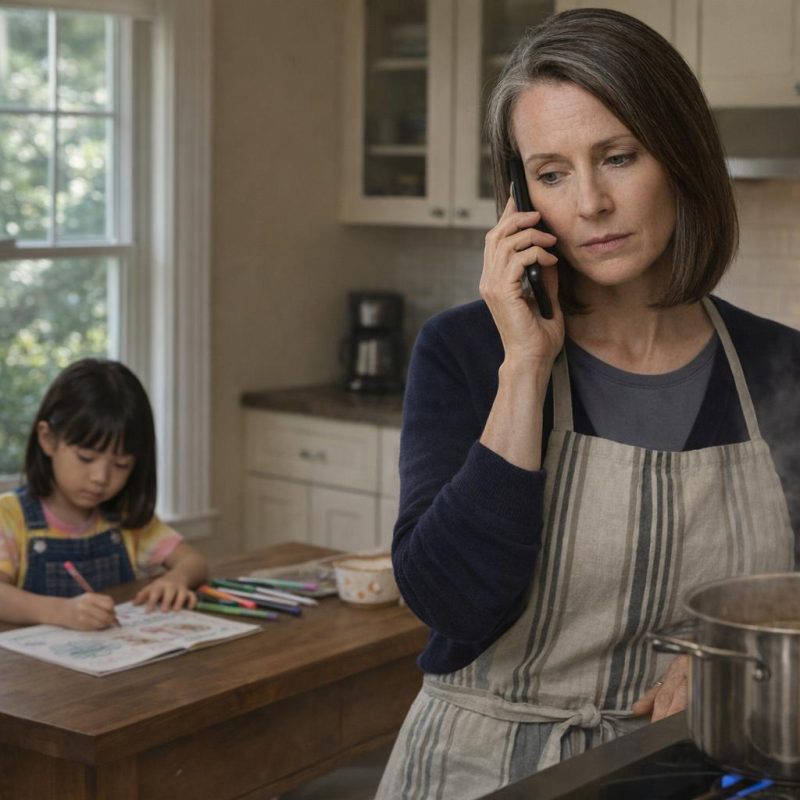 Image by RM AI
Hands Shaking
She repeated it. I thanked her — I don't know why, it was just what came out, some automatic politeness that had nothing to do with how I felt — and I ended the call. I set the phone down on the counter because my hands were shaking too hard to hold it. Not trembling. Shaking. The kind that starts in your fingers and moves up through your wrists and won't stop no matter how hard you press your palms flat against a surface. I gripped the edge of the counter and stared at the backsplash tiles and tried to breathe in a way that didn't make noise, because Sophie was right there at the table and Liam was right there on the rug and neither of them could see me like this. I counted the tiles. I focused on the smell of the soup. I told myself to stay upright, stay quiet, stay present for another few hours until Michael and Jenna came to the door — and even thinking their names sent another wave of shaking through my hands. I pressed them harder against the counter. The trembling didn't stop.
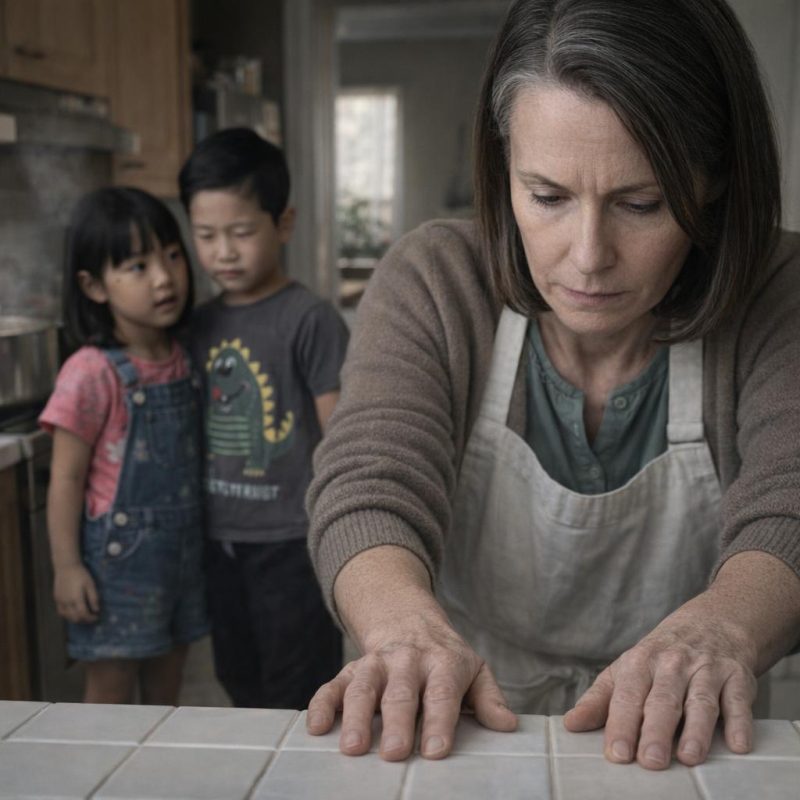 Image by RM AI
Still Coloring
I turned around slowly and looked at the table. Sophie had her head bent over her coloring book, tongue just barely at the corner of her mouth the way she always did when she was concentrating. She was coloring a house — red roof, yellow windows, a little curl of smoke from the chimney — and she was humming something tuneless and sweet under her breath, completely absorbed. Liam was on the rug in front of the television, lying on his stomach with his chin in his hands, watching his cartoon with that easy, boneless contentment that only small children have. Neither of them looked up. Neither of them had any idea. I stood at the counter and watched my granddaughter hum over her little house and my grandson blink at the screen, and I understood with a clarity that cut right through the shock that whatever I was feeling — the shaking, the disbelief, the thing rising in my chest that I didn't have a name for yet — none of it could touch them. Not today. Not while they were in my care. They were just two children on a Saturday morning, safe and warm and entirely unaware, and that was the only thing in the room that still felt whole.
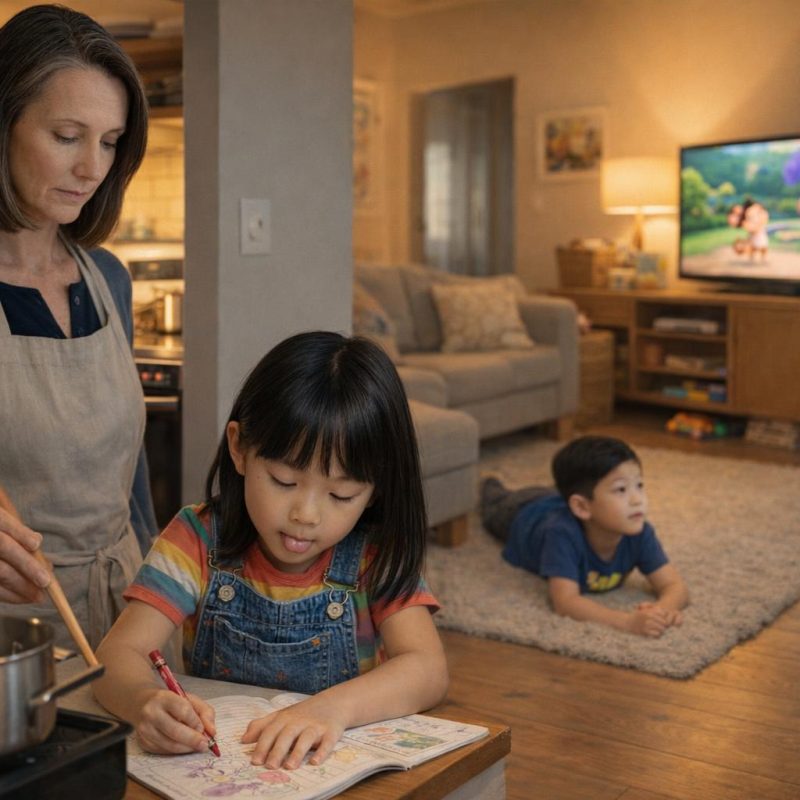 Image by RM AI
Dozens of Stars
I don't know what made me look at the calendar. Maybe I needed something solid, something I could see with my own eyes. It was hanging right there on the kitchen wall where it always was, the one I'd bought at the start of the year with the little herb illustrations at the top of each month. And there they were — the blue stars. Dozens of them, one on every Saturday square going all the way back to early spring, each one drawn in the same felt-tip marker I kept in the junk drawer. I had put them there myself. Every single one. I'd started doing it in the second month because it made me feel like I was part of something, like I was tracking progress, like each star was a small contribution to something that mattered. I moved closer to the calendar. I started counting. My finger went from square to square — March, April, May, all the way through — and with each one the number grew and the feeling in my chest grew with it, heavier and colder and harder to name. Forty-seven blue stars. Forty-seven Saturdays I had shown up, believed, and given away — every single one of them built on a lie.
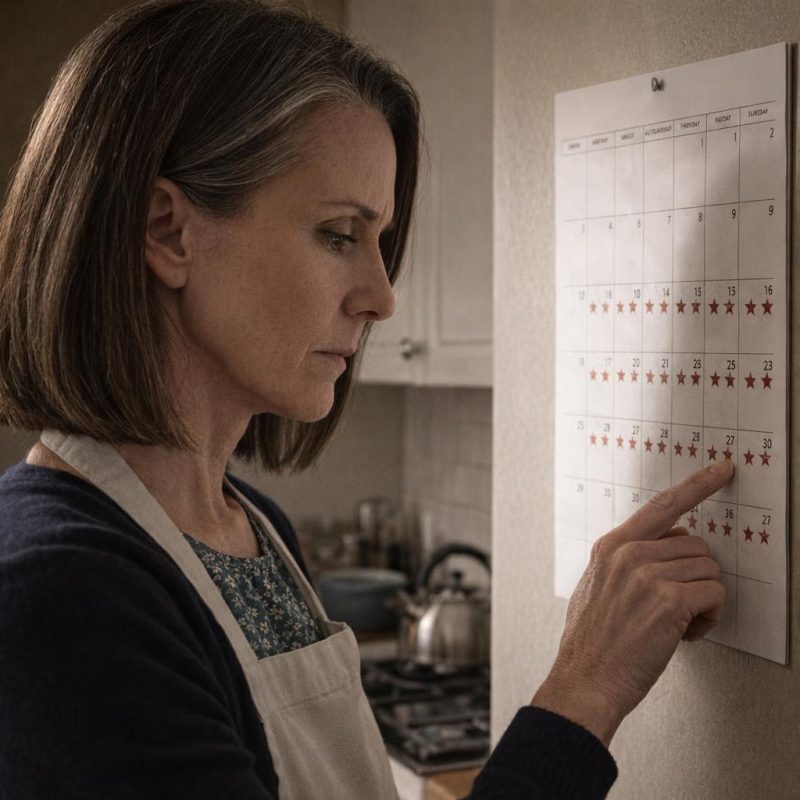 Image by RM AI
Every Saturday a Lie
I stood at that calendar for a long time. Sophie and Liam were in the living room — I could hear the cartoon voices drifting down the hall, the occasional giggle from Sophie, the soft thud of Liam shifting on the couch cushions. Normal Saturday sounds. Sounds I had built my whole week around for nearly a year. I pressed my fingertip against one of the blue stars and thought about the first Saturday morning they'd dropped the kids off. Michael had looked tired even then, and I'd felt so proud of him for doing the hard work of saving his marriage. I thought about all the times Jenna had mentioned communication exercises, the way she'd used words like 'breakthroughs' and 'homework' and 'progress.' I had believed every syllable. I had nodded along and felt grateful to be part of their healing. I had rearranged my own life around their story — cancelled plans with Carol, skipped a weekend trip, kept every Saturday sacred. And none of it was real. Not one word of it. The stars blurred a little. I didn't wipe my eyes. I just stood there with my kitchen-worn hands at my sides and let the full weight of forty-seven Saturdays settle over me like something I couldn't put down.
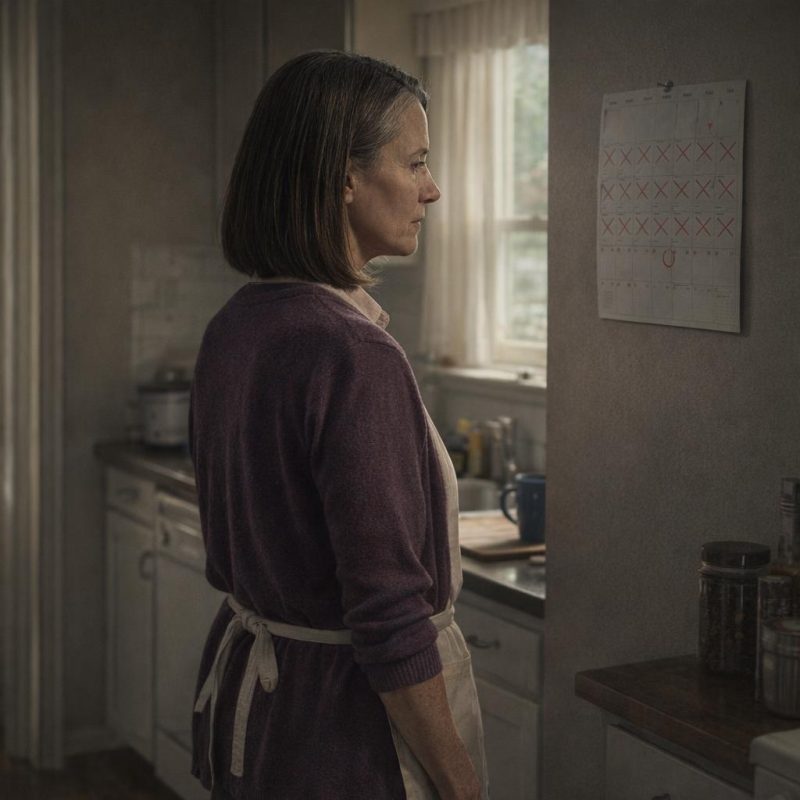 Image by RM AI
They Will Return Soon
I pulled myself away from the calendar and went to check on the kids. Sophie had moved to the floor with her puzzle pieces spread in a wide arc around her, and Liam was curled on the couch with his stuffed rabbit, half-watching the television. They looked so easy, so uncomplicated. I smoothed Liam's hair back from his forehead and he smiled without looking up. I went back to the kitchen and stood at the sink, running the water without really washing anything. My mind kept circling the same question — what was I going to say when they walked through that door? I needed to be calm. I needed to be clear. I couldn't fall apart in front of Sophie and Liam, and I couldn't let Michael and Jenna walk in and act like it was just another Saturday. I dried my hands on the dish towel and looked up at the clock on the wall. It was eleven-fourteen.
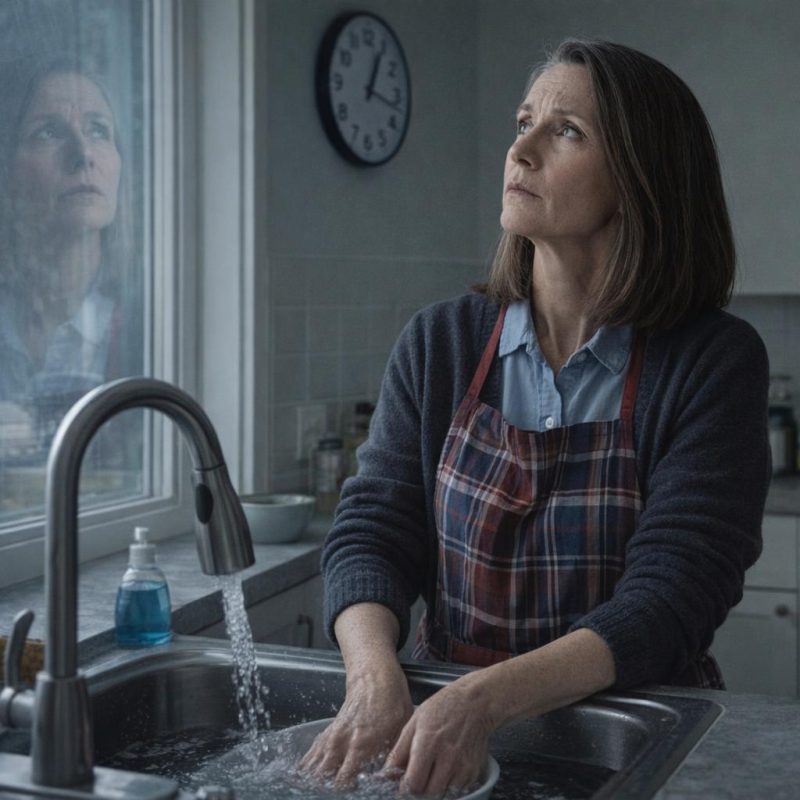 Image by RM AI
Noon Arrival
I heard the car before I saw it. That familiar engine sound pulling into the driveway, the same as every Saturday at noon, the same as it had been for nearly a year. I moved to the kitchen window without thinking — habit, pure habit — and watched them get out. Michael came around the front of the car first, rolling his shoulders back the way he always did after a long morning. Jenna followed, smoothing her jacket, tucking her hair behind one ear. They looked tired. They always looked tired on Saturdays. I used to see that exhaustion and feel a quiet ache of sympathy, thinking about the emotional weight of couples therapy, the courage it took to sit across from a stranger and excavate your marriage. Now I watched them walk up the path together and I saw it differently — two people coming down from something real, something they had chosen, something that had nothing to do with the story they'd been telling me. They were almost at the door. I stepped back from the window and put my hands flat on the counter, and the kitchen felt very still around me.
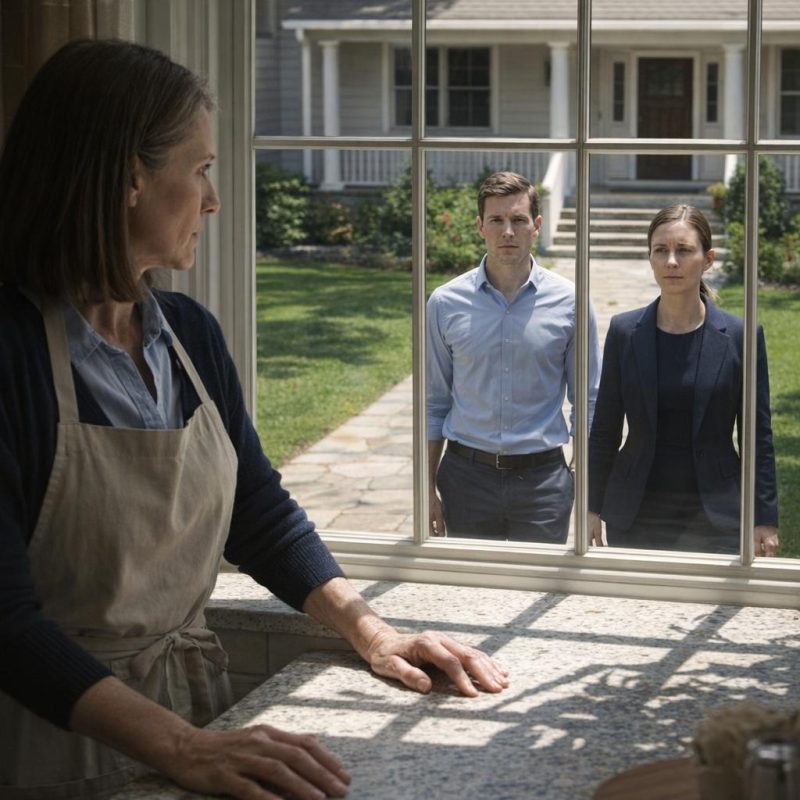 Image by RM AI
Dr. Morrison Called
Sophie heard them first and came running from the living room, throwing herself at Michael's legs the moment he stepped inside. He laughed — that easy, genuine laugh he had with his kids — and scooped her up. Jenna came in behind him, already smiling, already reaching for Liam who had padded in from the couch. It looked exactly like every other Saturday. I let it go on for just a moment. Then I said, quietly and evenly, that Dr. Morrison had called this morning. The room didn't change all at once. It changed in pieces. Michael's hand stilled on Sophie's back. Jenna's smile didn't disappear so much as it suspended, frozen somewhere between the expression she'd been wearing and whatever was coming next. They both looked at me, and I watched them understand. I asked Sophie to take her brother and go finish the puzzle in her room, that I needed to talk to Mom and Dad for a few minutes. Sophie went without argument, pulling Liam by the hand. When the hallway door clicked shut behind them, the three of us stood in the kitchen in a silence that had been a long time coming.
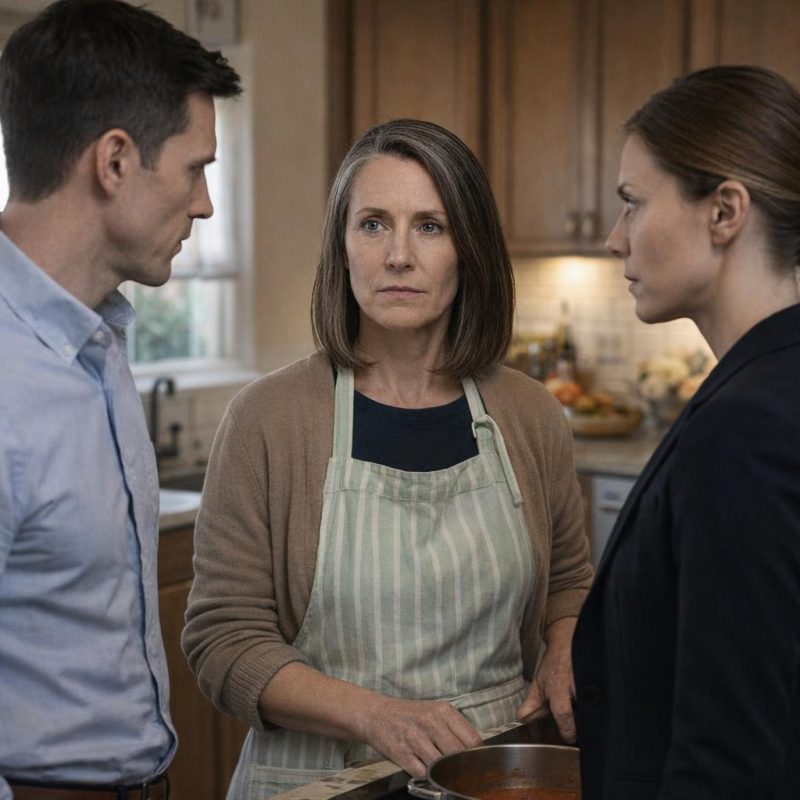 Image by RM AI
Where Were You
I didn't raise my voice. I had decided that much while I was waiting. I kept my hands wrapped around my coffee mug and I looked at them both and I asked, as plainly as I could manage, where they had actually been going every Saturday morning for the past year. Michael looked at Jenna. Jenna looked at the floor. Neither of them spoke right away, and the silence stretched long enough that I felt my grip tighten on the mug. Jenna's eyes filled. She pressed her lips together and turned slightly toward the window. Michael ran his hand through his hair — that gesture I'd known since he was a teenager, the one that meant he was trying to find words for something he didn't know how to say. He looked cornered and ashamed and something else I couldn't quite name, something that looked almost like relief. I waited. Finally he looked up at me and said there was something they needed to explain.
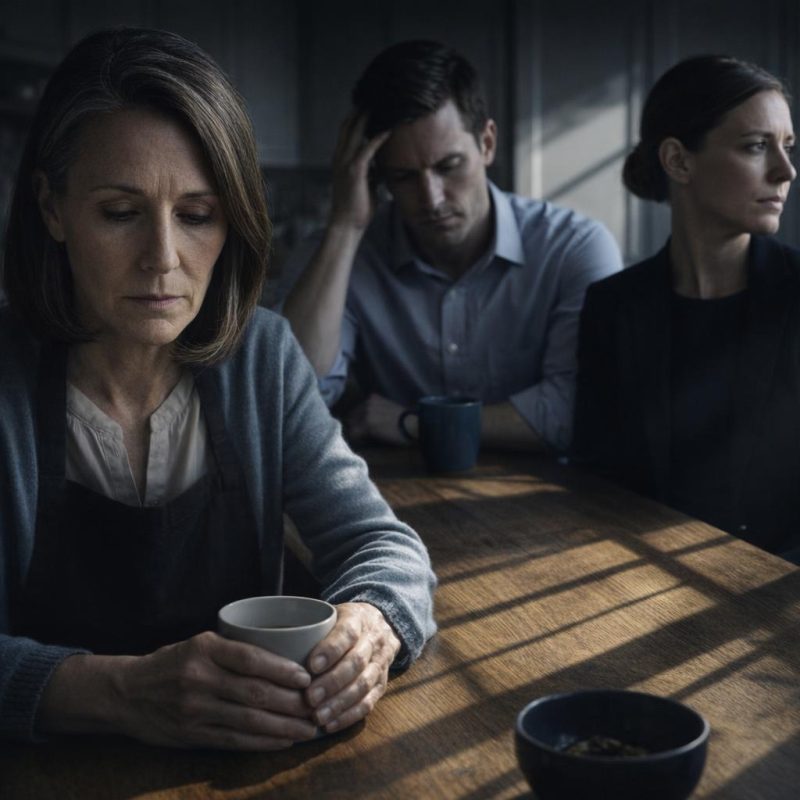 Image by RM AI
The Truth About Saturdays
Michael started talking slowly, like he was choosing each word carefully. About eight months before, he said, a colleague had told him about a volunteer program at a community center across town. It ran Saturday mornings. They taught life skills — budgeting, job applications, interview practice, basic cooking — to people who had recently been released from prison and were trying to rebuild their lives. He and Jenna had gone once to see what it was like, and they hadn't been able to stop going back. Jenna picked up from there, her voice steadier than I expected. She said the people in the program were working so hard, harder than she'd ever seen anyone work, and that showing up for them every week felt like the most useful thing she'd done in years. Michael said the exhaustion I'd seen on their faces every Saturday was real — the work was emotionally demanding in ways that were hard to describe. Sophie had seen them preparing materials at home, he said, and that was where her talk of helping people and being better had come from. I stood very still and listened to all of it. When Michael finished, he set a folded program brochure on the kitchen table between us.
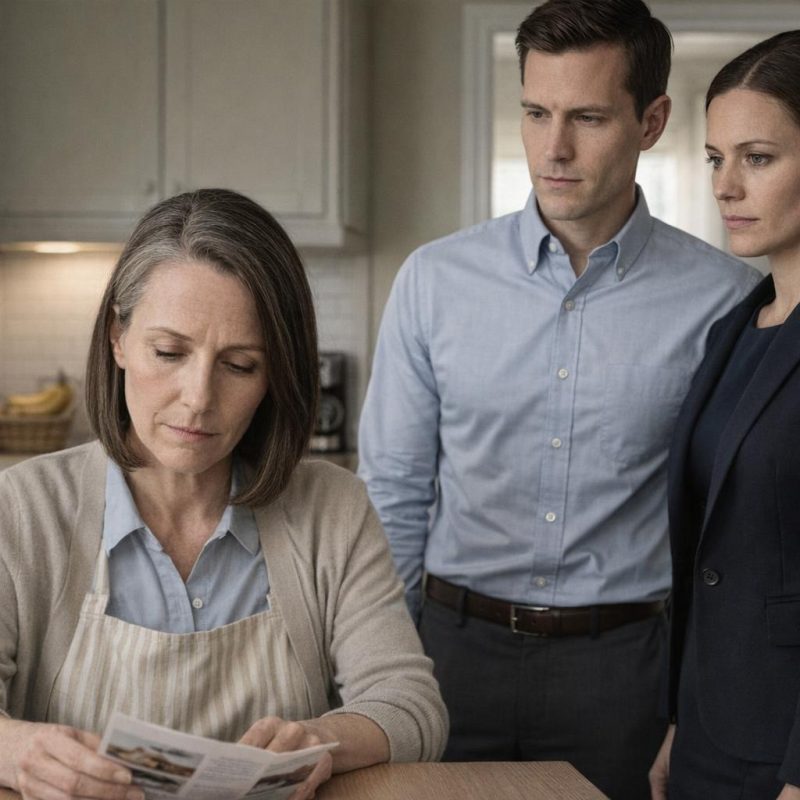 Image by RM AI
Why Lie
I looked at the brochure for a moment and then I looked back at them. I asked the only question that was left. I said I didn't understand why — why they couldn't have simply told me that. Why they had to build an entire year of Saturday mornings on a story about therapy and communication exercises and breakthroughs that never happened. Jenna glanced at Michael. Michael looked at his hands. He said he'd been afraid. Afraid of what I would think. He said he knew how I felt about people who had been in prison, or thought he knew, and he didn't want to have that argument with me. He thought I would judge them for it, or judge the people they were helping, and he didn't want to spend every Saturday defending a choice he believed in. Jenna added quietly that they knew I would watch the kids if they said it was for therapy — that I would always show up for something like that. They weren't sure I'd do the same for volunteer work. The lie had seemed simpler at the start, Michael said, and then every week it got harder to undo. He said it quietly, not as an excuse, just as the truth of how it had happened.
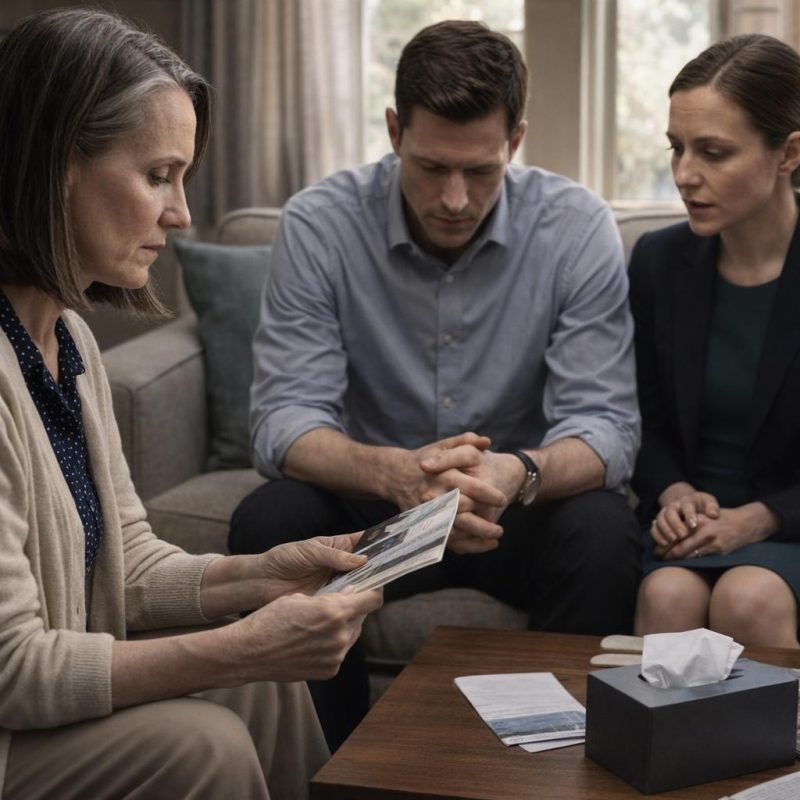 Image by RM AI
The Depth of the Hurt
I set my mug down on the counter because I didn't trust my hands anymore. I told them I needed them to hear me. I said that what they had done — the lying, the fabricated details, the weekly performance of a marriage in crisis — had hurt me in ways I was still trying to measure. But I told them that what sat underneath all of it, the reason they had felt they needed to lie in the first place, hurt me in a different way entirely. They had looked at me — their mother, their family — and decided I wasn't someone they could trust with the truth. They had assumed I would be small-minded and judgmental and unworthy of their honesty, and they had never once given me the chance to prove otherwise. I had given them forty-seven Saturdays. I had rearranged my life and my calendar and my sense of purpose around their story. And the whole time, they had been so certain of my limitations that they hadn't thought to ask. Michael had tears on his face by then. Jenna was very still. I didn't reach for either of them. I just stood in my kitchen with the calendar on the wall behind me and let the words sit in the room where they belonged.
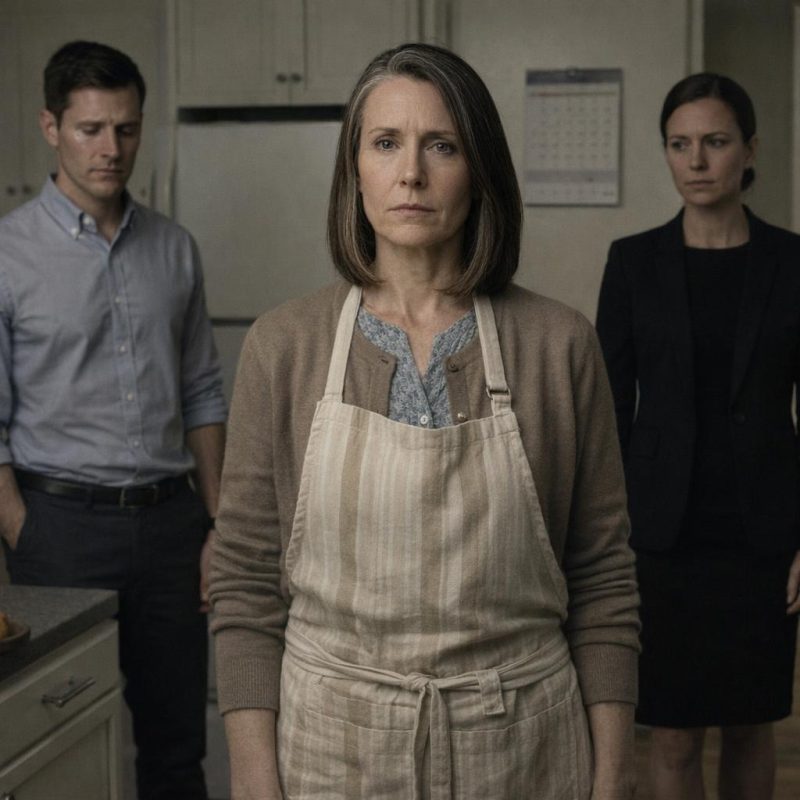 Image by RM AI
Drawing the Line
I told them I needed time. I said it plainly, without softening it, because I was done softening things. I told them the Saturday arrangement was over — that they would need to find other childcare for their volunteer work, that I couldn't keep showing up to a story I hadn't been trusted to know. Michael started to say something and I held up my hand. Not unkindly. Just firmly. Jenna stood very still near the doorway, her coat already on, and I could see she understood. They gathered the children quietly, the way you gather things when you know you've broken something and you're not sure yet if it can be fixed. Sophie came to hug me at the door and asked if they'd come back next Saturday. I crouched down and looked at her and said I didn't know, sweetheart, not right now. She accepted that the way children accept hard things — with a small nod and a question already forming about something else entirely. Liam pressed his face briefly against my shoulder. Then Michael and Jenna walked them out to the car, and I stood in the doorway and watched the four of them go — my son and my daughter-in-law loading the children in without looking back at me.
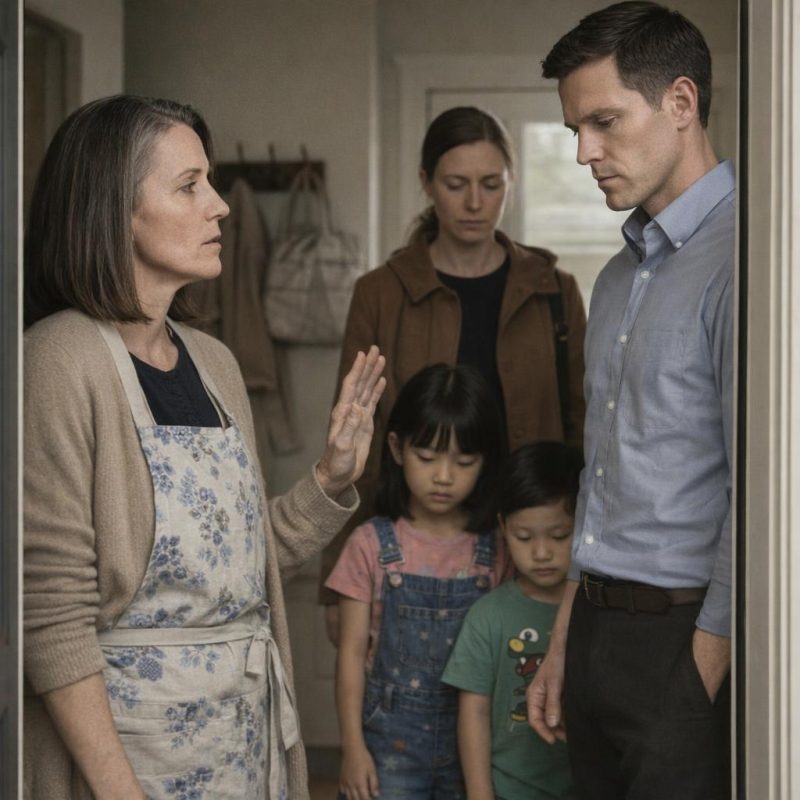 Image by RM AI
Days After
The first Saturday without them was the strangest day I'd had in a long time. I didn't know what to do with my hands. I made coffee and stood at the counter and looked at the calendar on the wall — all those blue stars marching across the weeks — and I felt the full weight of the year settle onto me at once. I thought about Sophie's puzzles spread across the kitchen table. I thought about Liam falling asleep on the couch with his shoes still on. I thought about how much of myself I had poured into those mornings, and how real that had been, even when the reason behind it wasn't. That was the thing I kept coming back to. The lie was wrong. I wasn't going to talk myself out of that. But what they had actually been doing on those Saturdays — sitting with people in crisis, helping families find their footing again — that was real and it was good. I could hold both things at once, even if it hurt to do it. I wasn't ready to forgive them yet. But I was starting to understand that forgiveness and love weren't the same muscle, and I had been using one of them all year without knowing it. The house was quiet around me in a way that felt earned.
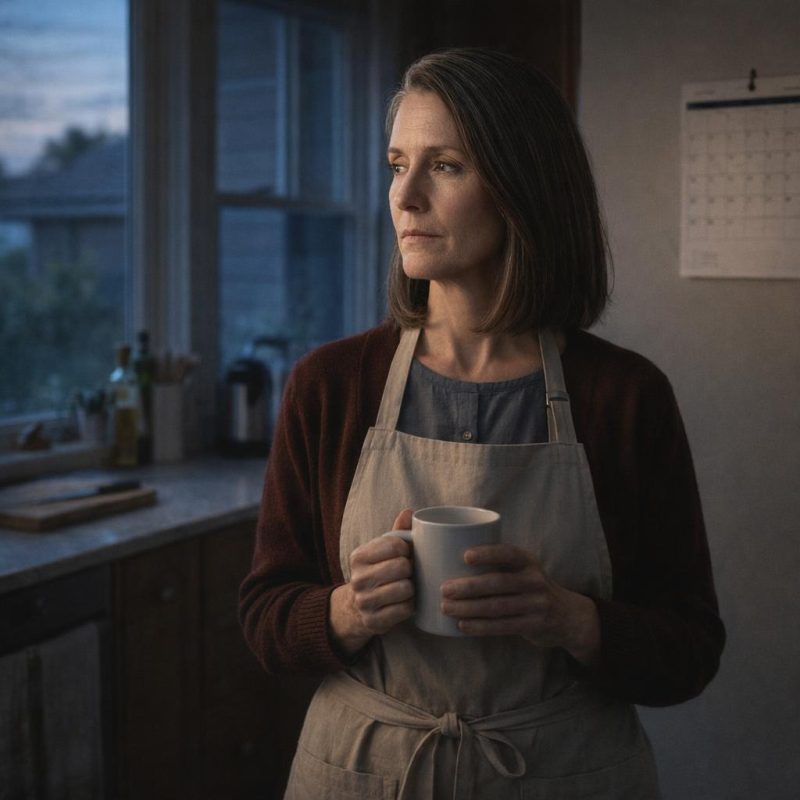 Image by RM AI
New Terms
I waited nine days before I called him. I sat with the phone in my hand for a while first, not because I didn't know what I wanted to say, but because I wanted to say it right. When Michael picked up, his voice was careful in the way it gets when he's bracing for something. I told him I wasn't calling to relitigate what had happened. I said I was calling because he was my son and I wasn't willing to let this be the end of us, but I needed him to understand that things were going to be different going forward. No more assumptions about what I could or couldn't handle. No more decisions made on my behalf about what I deserved to know. If they wanted my help — with the children, with anything — they would have to ask me honestly, and I would answer honestly, and we would go from there. He was quiet for a moment. Then he said, okay, Mom. Just that. Okay, Mom. I told him I loved him and that love wasn't the part in question. He said he knew. He said he was sorry, again, and this time it landed differently than it had in my kitchen — smaller, more private, like something he was saying to himself as much as to me. I held the phone after we hung up and let the quiet of the house hold me.
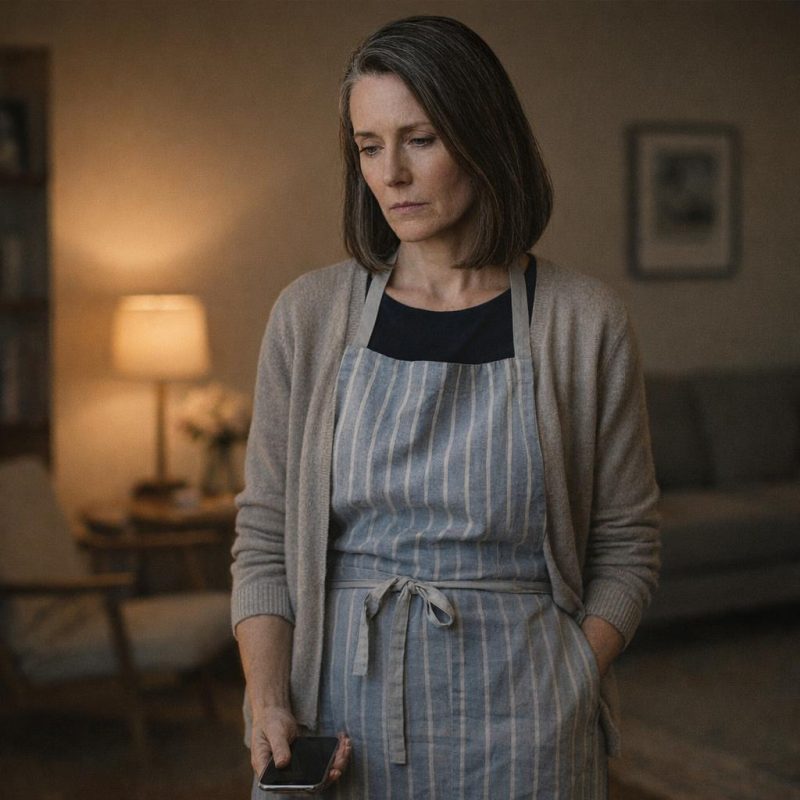 Image by RM AI
The Calendar Comes Down
I stood in my kitchen on a Tuesday morning and looked at the calendar for a long time before I touched it. All those blue stars. Forty-seven of them, give or take, marching across the weeks in my own handwriting. I had put each one up with a kind of purpose, a sense that I was doing something that mattered, and I hadn't been entirely wrong about that. But the calendar belonged to a version of the story I now knew wasn't the whole truth, and I couldn't keep looking at it every morning like it was. I took it down carefully. I didn't crumple it or throw it away — I folded it once and slid it into the drawer beside the takeout menus and the spare batteries, where things go when you're not ready to decide what they mean yet. Then I went to the closet and found the new one I'd bought at the pharmacy weeks ago and never hung. I smoothed it flat against the wall and pressed the tack in. The squares were clean and white and completely empty. No stars. No commitments written in anyone else's story. I didn't know yet what would fill them — new Saturdays, different ones, maybe mornings with the grandchildren on terms I actually understood. The new calendar hung there on the wall, every square open and waiting.
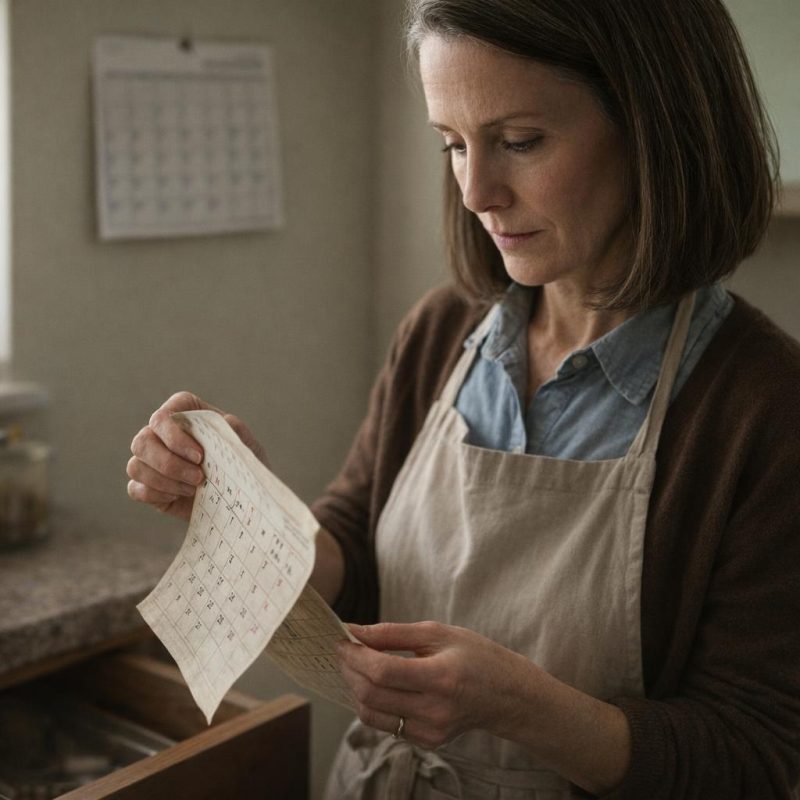 Image by RM AI
KEEP ON READING

From Heroes To Zeroes 20 Historical Figures Whose Heroism Was…
History is full of legends, but not every hero lived…
By Noone Feb 25, 2026
The Clueless Crush: How I Accidentally Invited a Hacker Into…
Fluorescent Lights and First Impressions. My name is Tessa, I'm…
By Ali Hassan Nov 4, 2025
This Infamous Ancient Greek Burned Down An Ancient Wonder Just…
History remembers kings and conquerors, but sometimes, it also remembers…
By David Davidovic Nov 12, 2025
Einstein's Violin Just Sold At An Auction—And It Earned More…
A Visionary's Violin. Wanda von Debschitz-Kunowski on WikimediaWhen you hear…
By Ashley Bast Nov 3, 2025
The Mysterious "Sea People" Who Collapsed Civilization
3,200 years ago, Bronze Age civilization in the Mediterranean suddenly…
By Robbie Woods Mar 18, 2025
The 20 Smartest Women in History
Intelligence Has Always Had More Than One Form. Calling anyone…
By Emilie Richardson-Dupuis Jun 16, 2026