


An Unexpected Call
I'm Carol, 61, divorced, and thought I was finally done with the hard parts of motherhood. You know how it goes—you raise them, you launch them, you step back and hope they call once a week. Then my phone lit up at 9:30 on a Tuesday night. "Mom?" My daughter's voice had that careful tone that immediately made me sit up straighter. "Jenna's going through a really bad breakup. Could she maybe stay with us? Just for a little while?" Of course I said yes. That's the kind of mother I've always been—the kind who keeps the guest room ready and the fridge stocked, just in case. The kind who believes young women need a soft place to land when the world gets too sharp. I was already mentally planning what comfort foods to make as I assured her it was no trouble at all. "Tell her she's welcome as long as she needs." What I didn't say was how nice it would be to have the house feel full again, to have someone to fuss over. What I couldn't have known was that when Jenna arrived the next day with red-rimmed eyes and a suitcase that looked suspiciously light for someone leaving a serious relationship, she was carrying more than just her clothes. She was bringing secrets into my home that would change everything I thought I knew about my daughter.
 Image by RM AI
A Soft Place to Land
I spent the afternoon preparing the guest room, fluffing pillows and laying out fresh towels like I was running some kind of middle-aged Airbnb. When Jenna finally arrived, my heart sank. The girl looked hollowed out, with puffy eyes that told stories her mouth wasn't ready to share. Her suitcase seemed impossibly light—the kind of packing you do when you're fleeing, not relocating. "The sheets are clean, and there's extra blankets in the closet," I told her, resisting the urge to wrap her in a hug she might not want. Instead, I did what mothers do best: I made soup. Homemade chicken noodle, the kind that steams up your glasses when you lean over the bowl. "You're safe here," I said as I set it in front of her, and something in her expression cracked open—gratitude so raw it almost made me uncomfortable. She thanked me like I'd offered her a kidney, not just a spare bedroom and some broth. My daughter squeezed her friend's shoulder, and I caught a look between them—something practiced, something protective. It wasn't just a breakup weighing on this girl; it was something heavier, something that made her hands tremble slightly as she lifted her spoon. And that's when I first felt it—that little prickle at the back of my neck that told me there was more to this story than anyone was letting on.
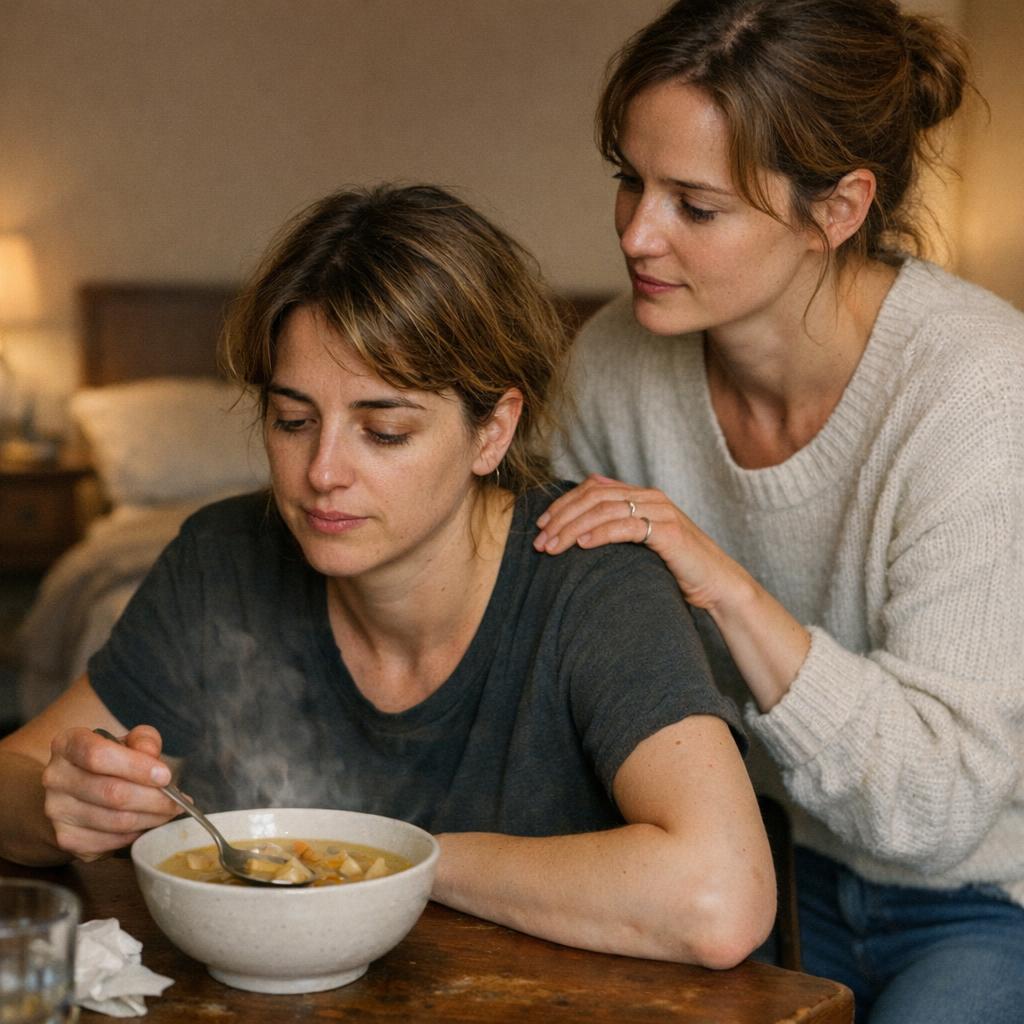 Image by RM AI
First Impressions
The first few days with Jenna in the house felt almost... normal. Pleasant, even. She insisted on helping with dishes after dinner, complimented my lasagna like it was made by a Michelin-star chef, and thanked me every morning as if I'd given her the keys to a beachfront property instead of just a guest room with a lumpy mattress. "Carol, this coffee is amazing," she'd say, cradling the mug I'd picked up at a yard sale for fifty cents. I caught my daughter watching these interactions with visible relief, her shoulders relaxing a fraction each time Jenna successfully navigated small talk with me. But there were moments—little fractures in the facade—that kept that prickle of unease alive at the base of my neck. Like how my daughter and Jenna would fall silent when I entered a room, conversation dropping like a cut phone line. Or the way they exchanged those looks—quick, loaded glances that carried paragraphs of unspoken communication. The most telling moment came during Wednesday's pot roast dinner when the phone rang. Jenna's reaction was so violent she nearly baptized the tablecloth with her water glass, her face draining of color as if the generic ringtone was announcing the apocalypse. "Just the pharmacy," I said after checking the caller ID, but the damage was done. I'd seen it—raw fear, followed by the careful reconstruction of composure. And that's when I knew for certain: whatever had brought Jenna to my doorstep wasn't just about a boyfriend who'd done her wrong.
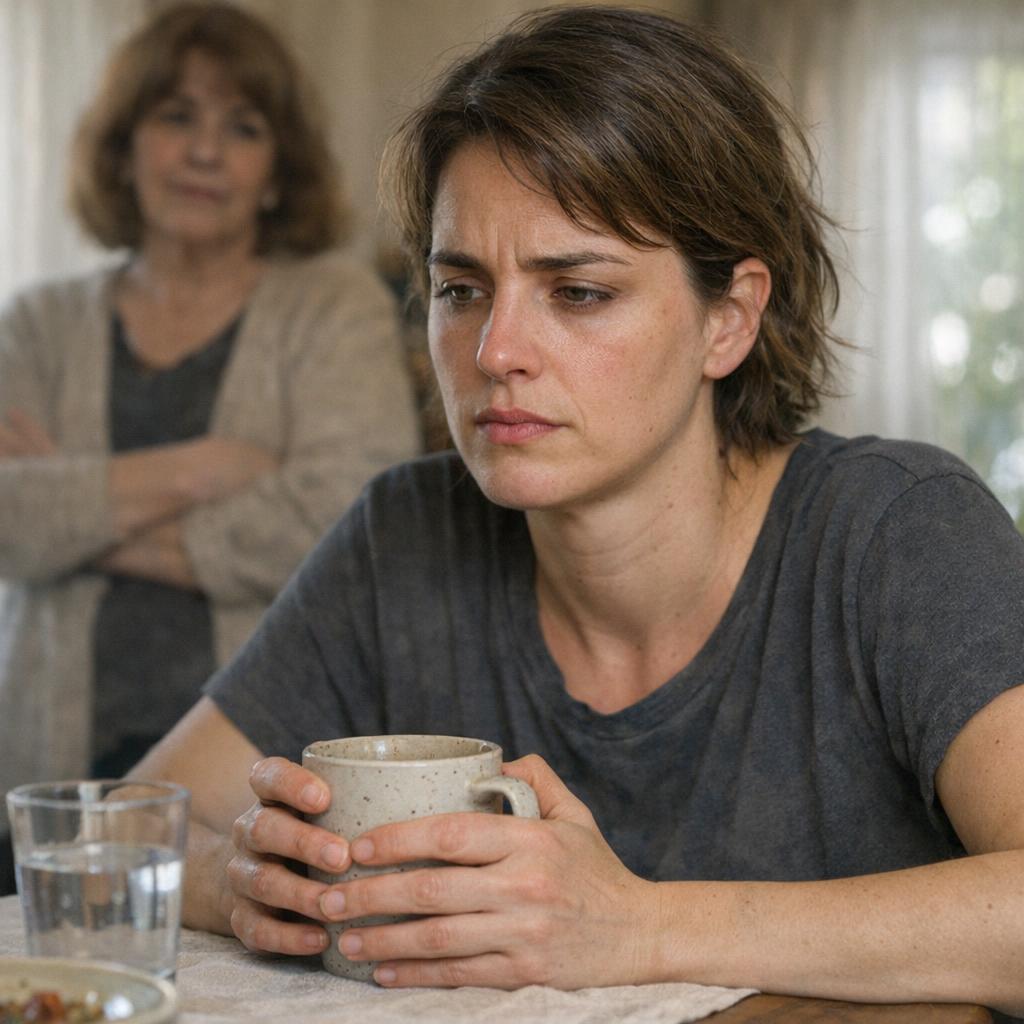 Image by RM AI
Small Discrepancies
As the days passed, I started noticing odd little discrepancies in Jenna's behavior—things that didn't quite add up to just a bad breakup. She'd physically startle when the doorbell rang, as if Amazon deliveries were harbingers of doom. Her phone would buzz, and instead of the typical millennial reflex to check it immediately, she'd stare at it like it might bite her before deliberately turning it face-down. Most telling was how she watched my daughter when she thought no one was looking—with this strange cocktail of guilt and protectiveness that made my maternal radar ping. Yesterday, while chopping vegetables for dinner, I casually mentioned running into Mrs. Winters, my daughter's old high school English teacher. "She asked about you, honey. Said she still uses your senior essay as an example." The look that flashed between Jenna and my daughter was so quick I almost missed it—but mothers don't miss much. It was loaded with something unspoken, something heavy. My daughter suddenly became very interested in stirring the pasta sauce, and Jenna excused herself to use the bathroom. I brushed it off, telling myself I was imagining things, but that moment stayed with me like a pebble in my shoe—small but impossible to ignore. And I couldn't shake the feeling that whatever secret they were keeping had roots that went back much further than I initially thought.
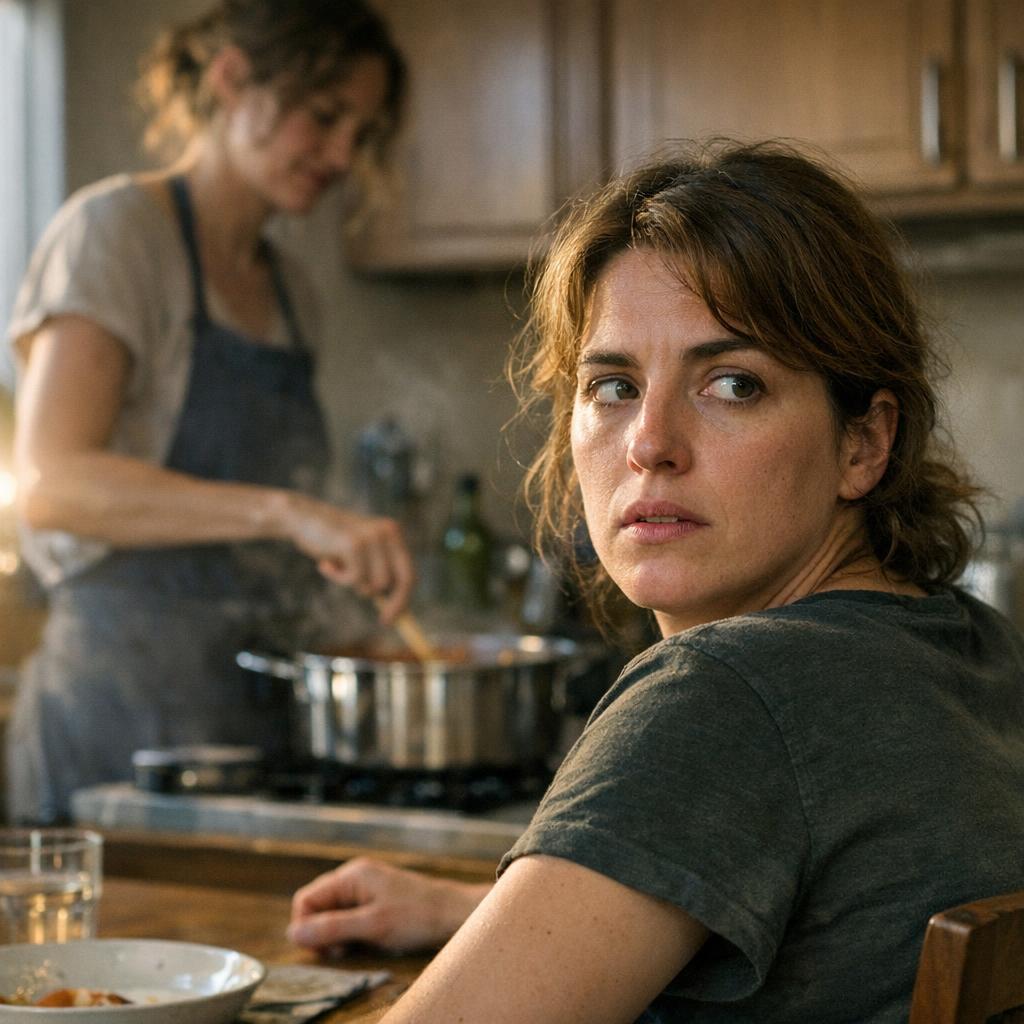 Image by RM AI
Morning Coffee
The next morning, I poured three mugs of coffee and set one in front of Jenna, who was scrolling through her phone with the haunted look of someone avoiding their notifications. "So, remind me how you two met again?" I asked casually, stirring cream into my cup. "It was at that marketing conference in Chicago, right? About five years ago?" Jenna's fingers froze mid-scroll. For a split second, her eyes darted to my daughter, who was suddenly very interested in the fruit bowl. "Um, yeah," Jenna finally said, her voice a little too bright. "The digital marketing summit. We were both at the same roundtable discussion on social media strategies." She recited the details like lines from a play she'd rehearsed but hadn't quite memorized. I nodded, watching how her shoulders remained tense even after she'd finished speaking. "It's nice that my daughter has such loyal friends," I said, meaning it sincerely. Something in those words hit Jenna hard. Her eyes welled up suddenly, and she blinked rapidly, turning her face away. "Sorry," she mumbled, reaching for a napkin. "Just allergies. Your cat, maybe?" I didn't mention that I don't have a cat. Instead, I watched as my daughter reached over and squeezed Jenna's hand—a gesture so protective it made my coffee taste suddenly bitter. Whatever was happening here went far beyond allergies, and far beyond a bad breakup.
 Image by RM AI
The Almost-Slip
A week into Jenna's stay, we were folding laundry in the kitchen—one of those mindless tasks that loosens tongues. The rhythmic folding of towels had created a comfortable silence between us when Jenna suddenly said, "Your daughter is so strong now. It must have been really hard for her back then." My hands stilled on a half-folded sheet. "Back when?" I asked, trying to keep my voice casual while my heart picked up speed. Jenna's face froze in that deer-in-headlights way that makes mothers everywhere sit up straight. For a half-second too long, she said nothing, and in that silence, I heard everything. Then she laughed—a sound as artificial as gas station flowers. "Oh, you know, college stress. All those marketing classes she was always complaining about." She resumed folding with renewed focus, but her hands weren't quite steady. I nodded and matched her pace, but the look I'd caught on her face stayed with me—the expression of someone who'd nearly stepped off a cliff in the dark. It was the face of a person who'd almost said something dangerous, something forbidden. And in that moment, I knew with absolute certainty that whatever secret they were keeping wasn't just about Jenna's ex-boyfriend. It was about my daughter, and it went back much further than five years ago at some marketing conference that probably never happened.
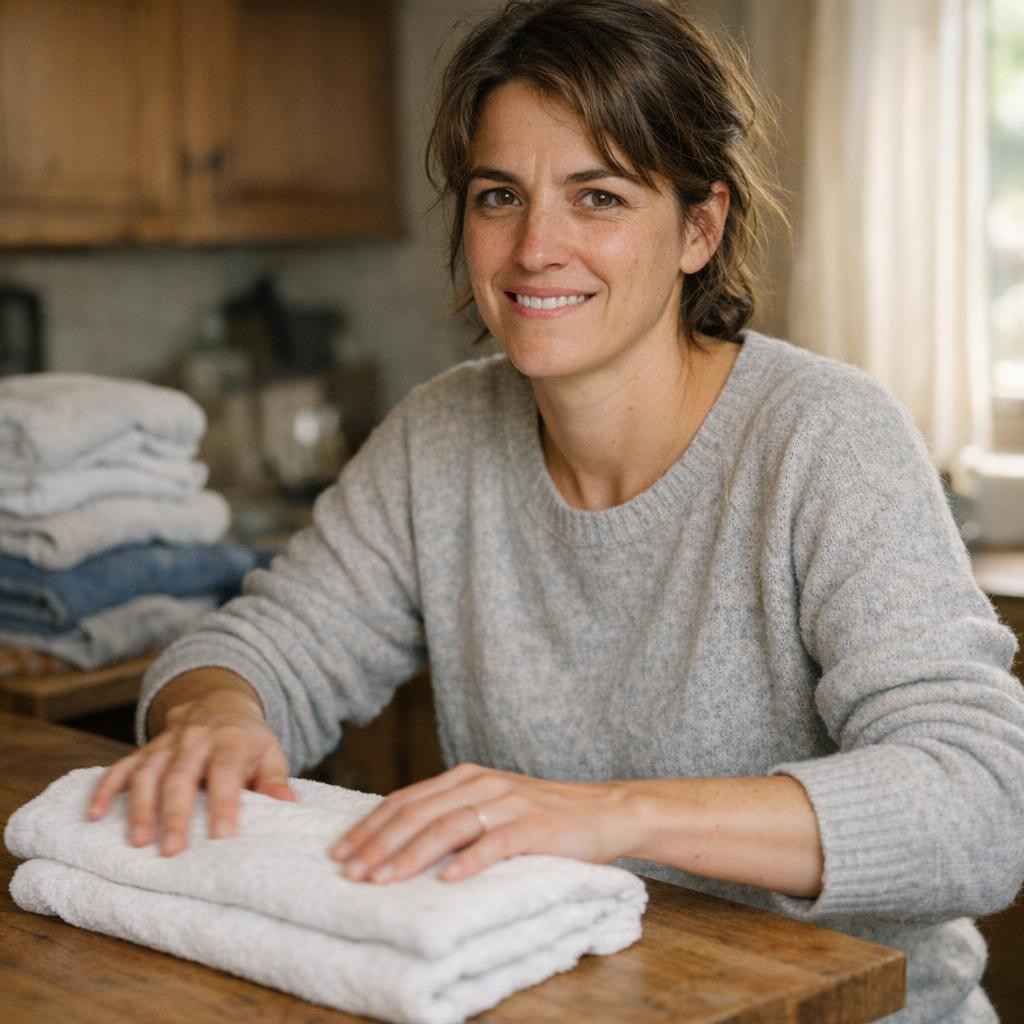 Image by RM AI
Protective Patterns
After that almost-slip in the laundry room, I started watching them like a hawk watches field mice. The patterns were unmistakable once I knew to look for them. Whenever I'd ask my daughter about her past—especially anything from her senior year—Jenna would swoop in like some conversational bodyguard. "Remember that amazing pasta place we found in Chicago?" she'd interject, smoothly changing the subject. One evening, I deliberately mentioned the "special program" my daughter had attended when she was eighteen. "That program really changed your perspective, didn't it, honey?" I asked innocently. Jenna's knuckles went white around her coffee mug, and my daughter suddenly needed to check something in the kitchen. That night, I couldn't sleep. The house has thin walls—a fact they'd apparently forgotten. Their hushed voices carried from my daughter's bedroom, urgent and strained. "You can't keep doing this," my daughter whispered fiercely. "She's going to figure it out." Jenna's response was too low to catch, but the words "he's still out there" drifted through the darkness like a ghost. I lay there, heart pounding, piecing together fragments of a puzzle I wasn't sure I wanted to complete. Whatever had happened to my daughter all those years ago, it wasn't a special program. It was something that still had the power to make her voice shake with fear.
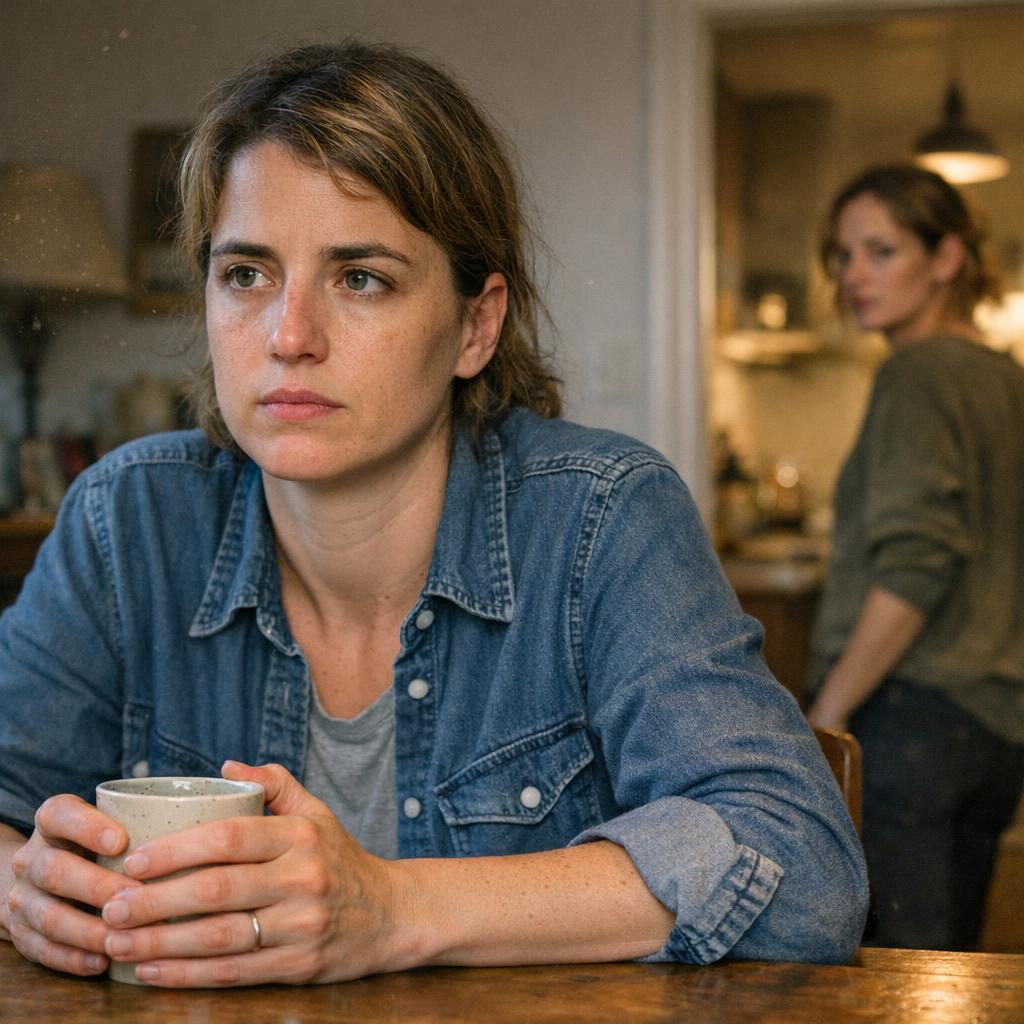 Image by RM AI
The Unexpected Visitor
I was elbow-deep in dishwater when the doorbell rang—that cheerful two-tone chime that suddenly felt ominous. I dried my hands and opened the door to find Richard Harmon standing on my welcome mat, all polished shoes and practiced smile. Our town's school board president, owner of Harmon Financial, and the kind of man whose name appears on charity gala programs. "Carol! How wonderful to see you," he said, clipboard in hand. "Just collecting donations for the community center renovations." But his eyes kept sliding past me, scanning my living room like he was taking inventory. I was about to reach for my checkbook when I heard a small gasp behind me. Jenna had appeared in the hallway, and the transformation was immediate—her face went chalk-white, her body rigid. Richard's smile flickered for just a millisecond, something dark and cold passing behind his eyes before the mask slipped back into place. "Well, I should continue my rounds," he said abruptly, no longer interested in my donation. After he left, Jenna locked herself in the bathroom for nearly an hour. I stood outside the door, listening to muffled sobs, feeling the foundation of my comfortable life beginning to crack beneath my feet. Because I'd seen that look before—the look of prey in the presence of its predator.
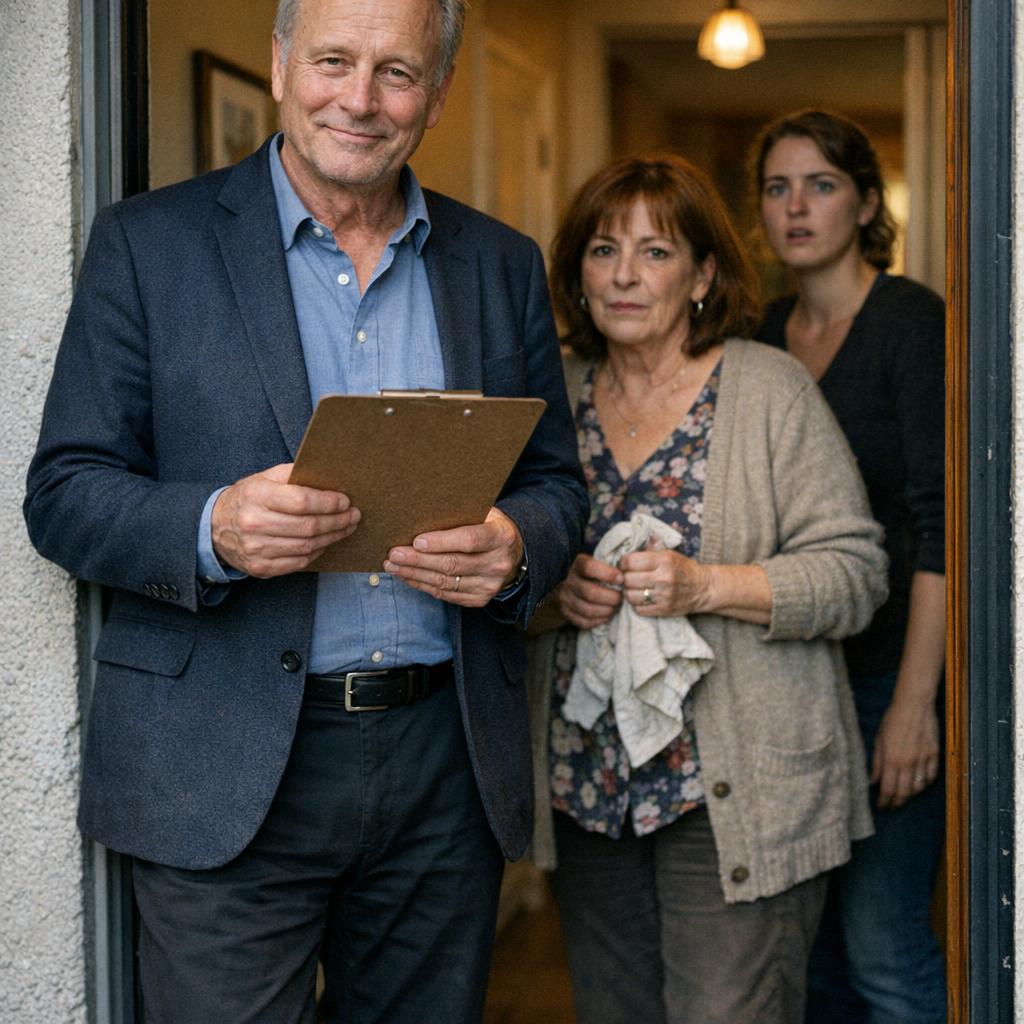 Image by RM AI
Late Night Conversations
I couldn't sleep that night, my mind racing with questions about my daughter's past. Around 2 AM, I padded downstairs for some warm milk and found Jenna sitting at the kitchen table, illuminated only by the blue glow of her phone. Tears were streaming silently down her face, but she quickly wiped them away when she saw me. "Sorry," she mumbled, "didn't mean to wake anyone." I waved away her apology and put the kettle on. "I'm a chronic insomniac these days. It's the curse of getting older." We sat in companionable silence as I made us both chamomile tea, then talked about nothing important – my grandmother's banana bread recipe, whether marigolds really keep pests away from tomato plants. But the weight of unspoken words hung between us like a fog. Just as I was about to head back upstairs, Jenna looked up at me, her eyes red-rimmed but suddenly clear. "Carol," she asked, her voice barely above a whisper, "have you ever regretted not knowing something important about someone you love? Like, maybe it would hurt to know, but not knowing might be worse?" The question hit me like a physical blow, and I knew we were standing at the edge of something that would change everything. I just didn't know how deep the drop would be.
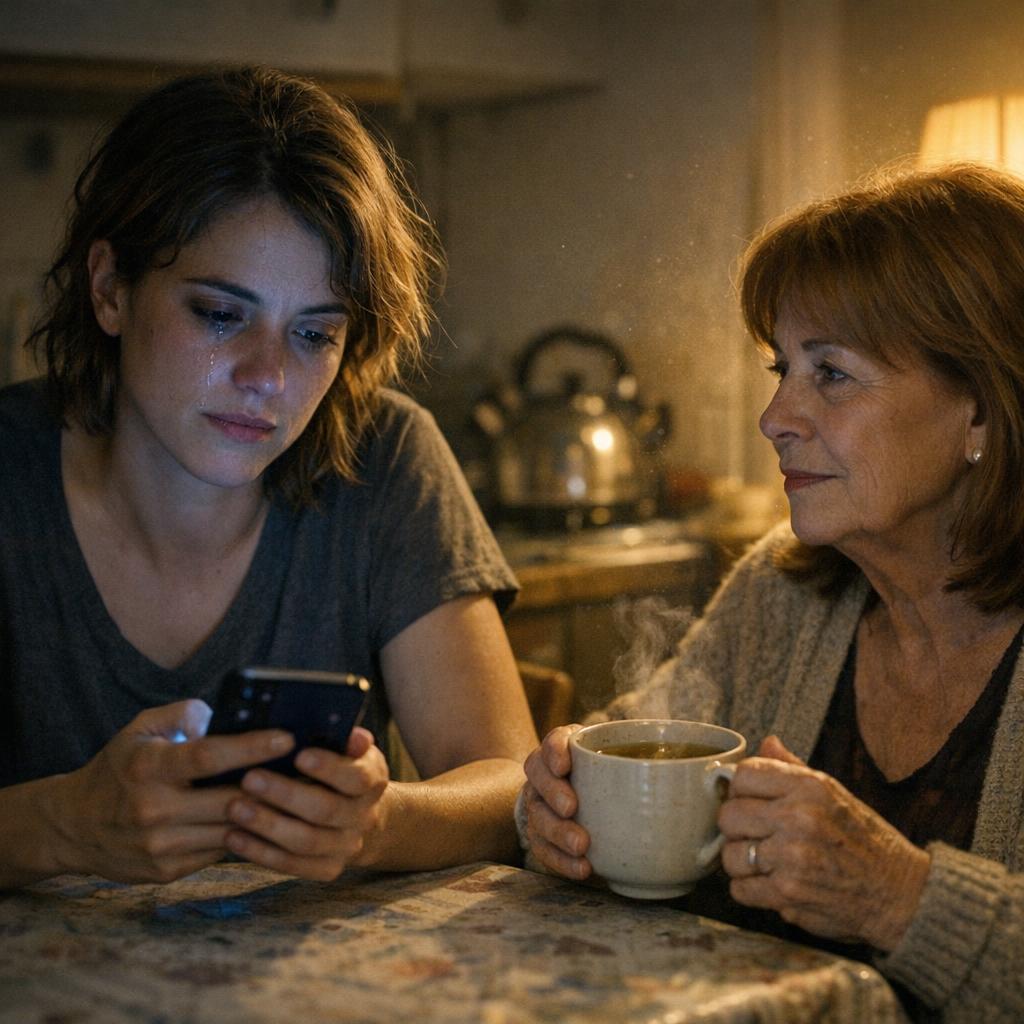 Image by RM AI
The Community Fundraiser
I should have known better than to agree to the community fundraiser. "It'll be good for us to get out," my daughter insisted, though Jenna's face told a different story. The annual event was held at the country club, all twinkling lights and champagne flutes, a place where our town's elite gathered to write checks and pat themselves on the back. I watched Richard Harmon work the room like a politician, his hand touching shoulders, his laugh just loud enough to draw attention. My daughter, I noticed, kept calculating the exact distance between herself and him, adjusting her position whenever he moved, like some bizarre dance where the goal was never to meet. When Patricia Harmon approached us, all pearls and perfume, I felt Jenna physically trembling beside me. "So lovely to have young visitors in town," Patricia said, her smile never quite reaching her eyes. "How long will you be staying with Carol, dear?" Jenna's answering smile was a masterpiece of forced politeness. "Not sure yet," she managed, her voice steady despite her shaking hands. I placed my arm around her shoulders, feeling protective in a way I couldn't fully explain. As Patricia drifted away, I caught Richard watching our little group from across the room, his expression unreadable but somehow threatening, and I suddenly understood that this fundraiser wasn't just about community spirit—it was a battlefield where the weapons were whispers and meaningful glances.
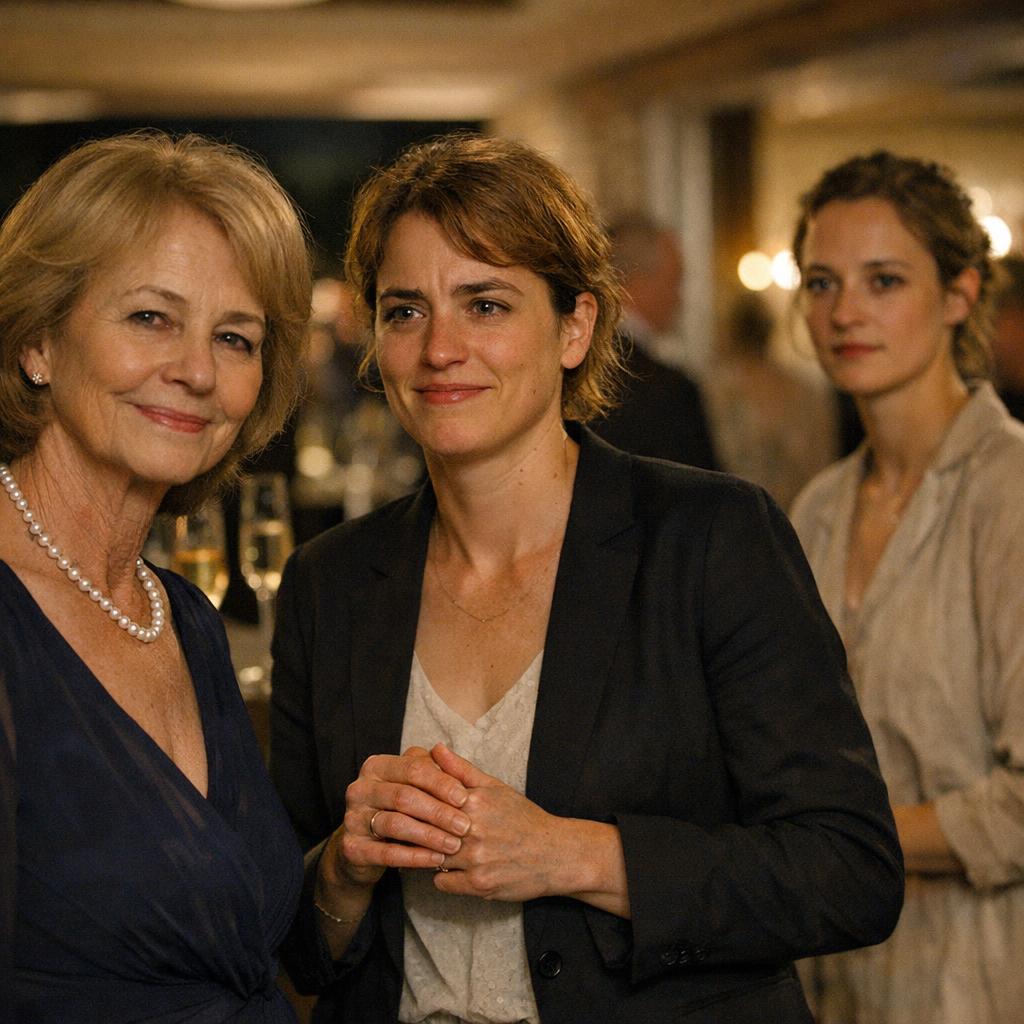 Image by RM AI
Old Friends, New Questions
I was balancing a tiny plate of canapés when Martha Donovan appeared, her silver bob gleaming under the fundraiser lights. We'd taught Sunday school together for years before she retired to Florida. 'Carol!' she exclaimed, hugging me with her free arm. 'And is that—my goodness, it's Jenna! How wonderful to see you back in town after all these years.' I felt something shift in the air around us. 'Oh, they actually just met about five years ago,' I corrected gently. 'At a marketing conference in Chicago.' Martha's forehead creased, her champagne glass pausing halfway to her lips. 'That can't be right,' she said, looking genuinely puzzled. 'I distinctly remember them together in high school. Always thick as thieves in the library.' Before I could process this bombshell, my daughter materialized beside us, her smile too bright, too fixed. 'Mrs. Donovan! It's been forever!' she gushed, linking her arm through Martha's. 'Let me show you the silent auction items. There's a weekend at that beach house you always loved.' And just like that, they were gone, my daughter steering Martha away with the precision of a hostage negotiator. I stood frozen, the canapés forgotten in my hand, as pieces of a puzzle I hadn't known existed began to click into place. If Martha remembered Jenna from high school, then everything—absolutely everything—I'd been told was a lie.
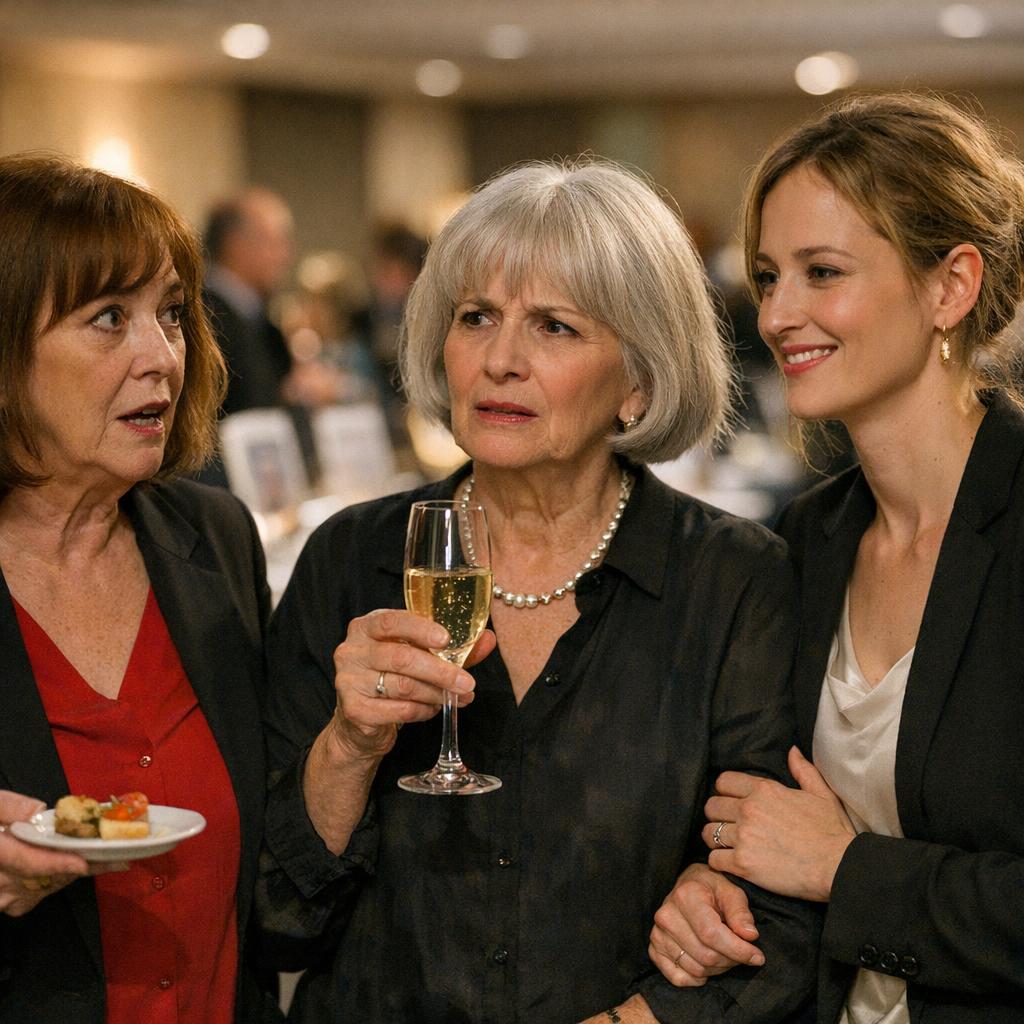 Image by RM AI
The Midnight Phone Call
The phone's shrill ring jolted me awake at 2:17 AM. I lay there disoriented, heart pounding, until I realized the ringing had stopped. Then I heard it – Jenna's voice in the hallway, urgent and frightened. 'He knows I'm here,' she whispered fiercely. I crept to my bedroom door, cracking it just enough to hear her continue, 'No, I won't let him silence me again... She deserves to know the truth.' The raw desperation in her voice made my stomach clench. I retreated to bed before she could catch me eavesdropping, but sleep was impossible now. At breakfast, I casually mentioned hearing her phone ring overnight. 'Everything okay?' Jenna's coffee cup froze halfway to her lips. 'Just my therapist,' she said, forcing a smile that didn't reach her eyes. 'Emergency session.' Her hands trembled so badly as she poured more coffee that some splashed onto the table. My daughter, who'd been quietly buttering toast, suddenly knocked over her orange juice – a clumsy diversion that wasn't fooling anyone. As I mopped up the spill, I caught the look that passed between them: pure panic. And in that moment, I knew with absolute certainty that whatever truth Jenna was protecting wasn't just about her – it was about my daughter, and it was something powerful enough to make grown women shake with fear at my breakfast table.
 Image by RM AI
The Newspaper Clipping
I was cleaning the guest bathroom on Tuesday—just a quick wipe-down, nothing invasive—when I knocked Jenna's toiletry bag off the counter. As I scrambled to collect the scattered items, my hand froze over a yellowed newspaper clipping folded between her travel-sized shampoo and toothpaste. The paper was brittle with age, at least twenty years old, showing Richard Harmon accepting some community leadership award, all white teeth and manufactured humility. What stopped my breath wasn't the article itself, but what someone had done to it: a red marker had violently circled the date, and scrawled across his smiling face in jagged capital letters was the word 'LIAR.' My fingers trembled as I held this small piece of evidence—of what, I wasn't sure yet. When I confronted Jenna in the kitchen, her face drained of color so quickly I thought she might faint. 'That's—that's private,' she stammered, snatching it from my hand with surprising force. 'Just a misunderstanding, Carol. Nothing important.' She stuffed the clipping into her pocket, immediately launching into an elaborate question about my recipe for banana bread, her voice pitched slightly too high. But I'd seen enough to know that Richard Harmon wasn't just some random community figure to her—he was someone who had earned that violent red 'LIAR' scrawled across his face, and I was beginning to suspect he'd earned much worse.
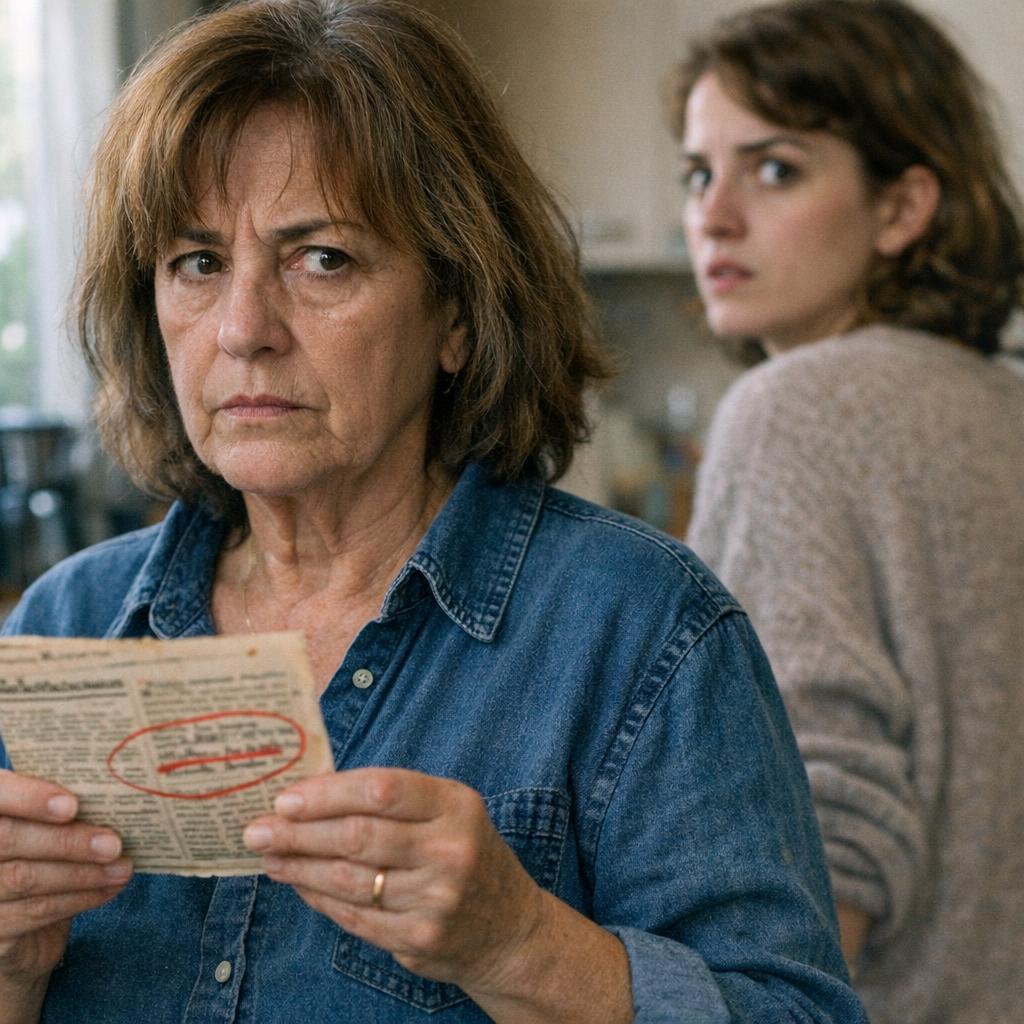 Image by RM AI
The Unexpected Text
My phone pinged while I was loading the dishwasher, a text from a number I didn't recognize: 'Ask your daughter about Pinewood Academy.' I stared at it, puzzled. No name, no context, just those six words glowing on my screen. I'd never heard of Pinewood Academy, and for a moment I considered blocking the number as spam. But something about it—the specificity, perhaps—made me hesitate. That evening at dinner, I casually mentioned it while passing the salad. "Hey, I got the strangest text today. Something about a place called Pinewood Academy. Ever heard of it?" The effect was immediate and electric. My daughter's fork clattered against her plate, peas scattering across the tablecloth. Her face went so pale I could see the blue veins beneath her skin. Before I could react, Jenna jumped in with the conversational equivalent of a smoke bomb. "Oh my god, that reminds me of this show I'm watching! It's about this boarding school where all these weird things happen to the students—" Her voice was unnaturally bright, words tumbling out too quickly as my daughter mumbled something about needing air and fled the table. The silence she left behind was deafening. I looked at Jenna, whose fake smile was crumbling at the edges, and knew with absolute certainty that Pinewood Academy wasn't just a random name—it was the key that might unlock everything.
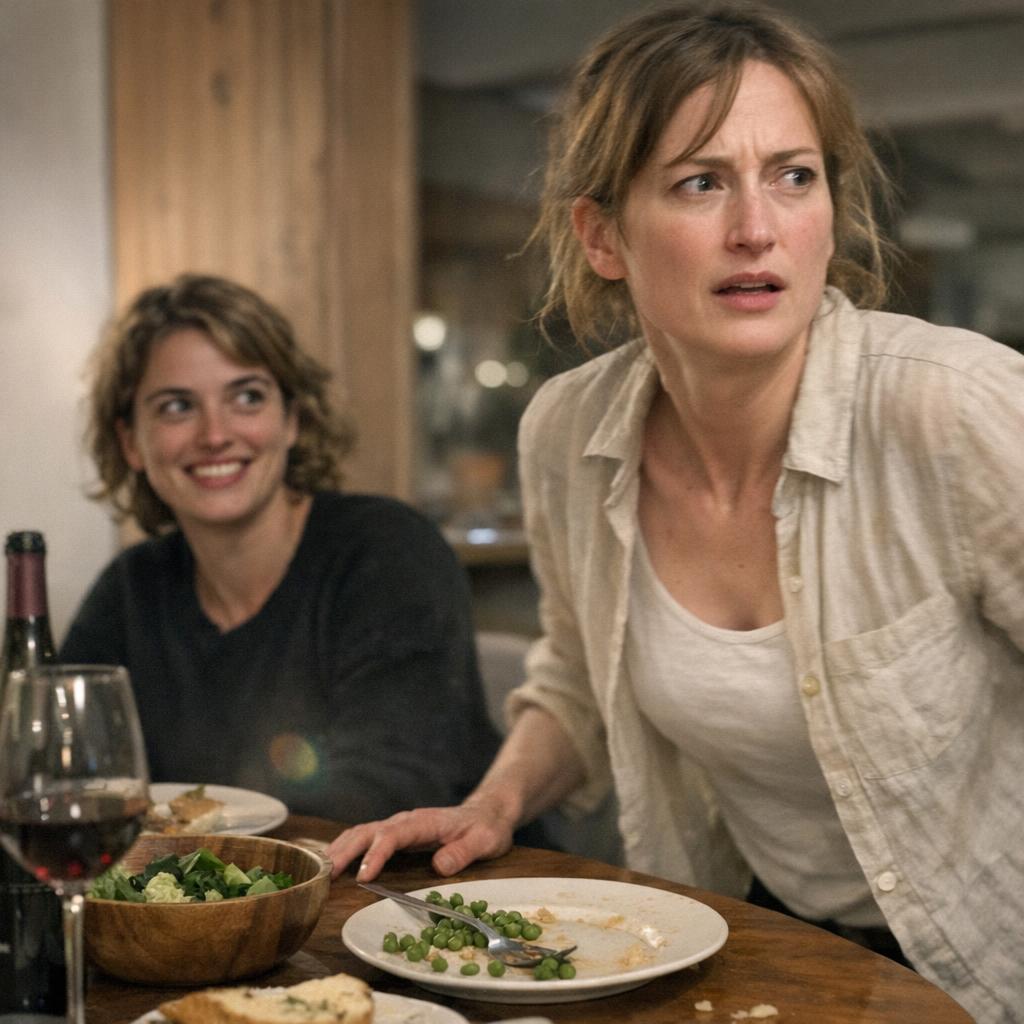 Image by RM AI
The Search History
I never meant to snoop. That's what all mothers say, right? But when my daughter left my laptop open on the kitchen table, her email still logged in, I couldn't help but notice a folder labeled 'Pinewood Records' sitting right there in plain sight. I stared at it for a full minute, my coffee growing cold, wrestling with my conscience. In the end, maternal instinct won over privacy concerns—the way it always does when we sense our children in trouble. With trembling fingers, I clicked the folder open and felt the floor drop out from under me. There they were: dozens of emails between my daughter and Jenna dating back years—not months, not since some fictional marketing conference, but years. They discussed something called 'The Harmon Situation' in careful, coded language. References to 'others who need to come forward' and 'building a case' appeared repeatedly. One line stood out with terrible clarity: 'We can't let him do to anyone else what he did to us.' I closed the laptop so quickly it made a sharp snapping sound in the quiet kitchen. My hands were shaking as I pushed it away, feeling like I'd stepped into quicksand—each movement only pulling me deeper into a truth I wasn't prepared to face. Because now I knew with sickening certainty that whatever happened to my daughter wasn't just in the past—it was actively haunting her present, and Richard Harmon was at the center of it all.
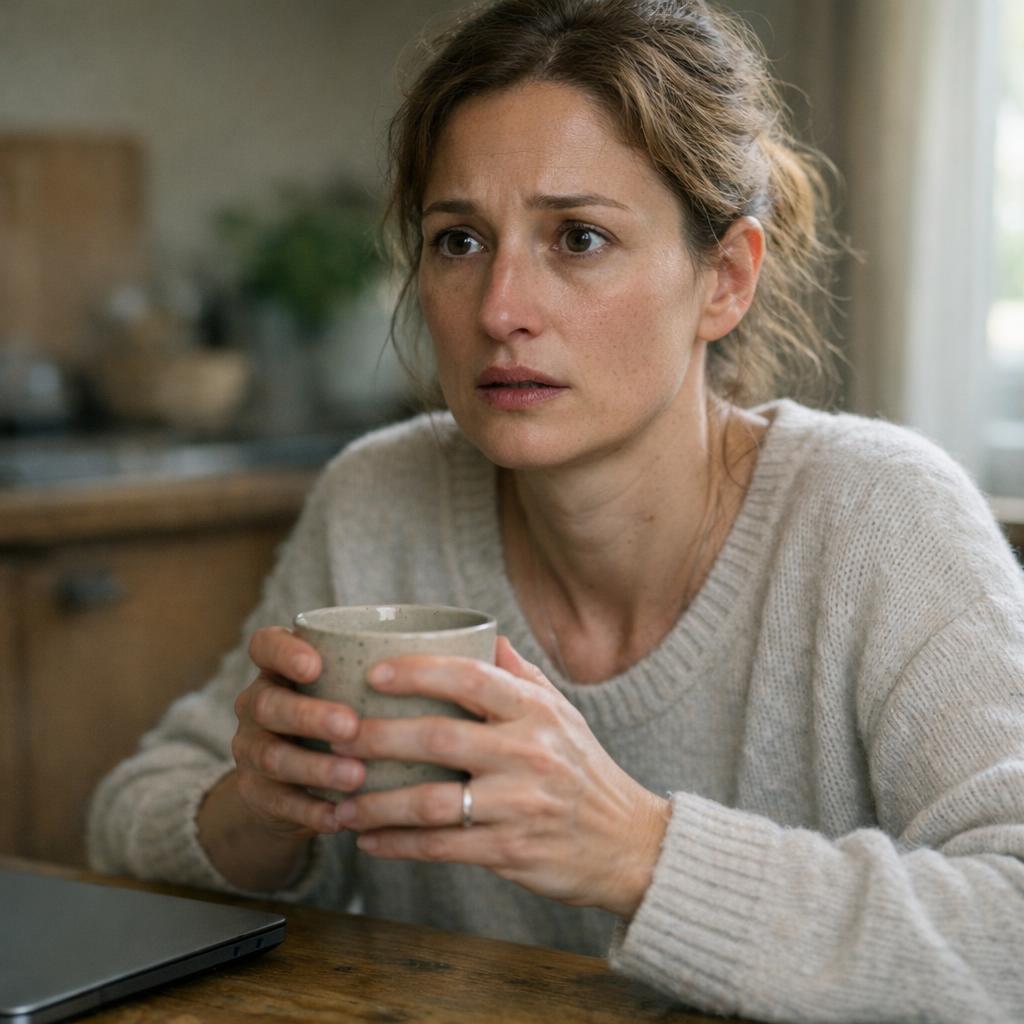 Image by RM AI
The Grocery Store Encounter
I was reaching for a box of cereal when I heard Patricia Harmon's voice behind me. 'Carol! How are you?' Her country club smile was firmly in place, pearl earrings catching the fluorescent light. We exchanged pleasantries about the weather and her husband's charity golf tournament before she leaned in conspiratorially. 'I must say, that Jenna girl staying with you—she must be incredibly brave to come back to town after everything that happened.' My hand froze on the shopping cart. 'What do you mean, "come back"?' I asked, keeping my voice deliberately casual while my heart hammered against my ribs. The transformation was immediate—Patricia's face shifted from friendly gossip to fortress mode in the space of a heartbeat. Her eyes darted around like she was checking for witnesses. 'Oh, I—I must be thinking of someone else,' she stammered, her perfectly manicured hand fluttering to her throat. 'Senior moment, you know how it is at our age.' Before I could press further, she muttered something about forgetting the milk, abandoning her half-filled cart right there between the cereals and granola bars. I stood frozen, watching her practically sprint toward the exit, and knew with absolute certainty that Patricia Harmon hadn't misremembered anything—she'd accidentally told the truth, and now she was running from it.
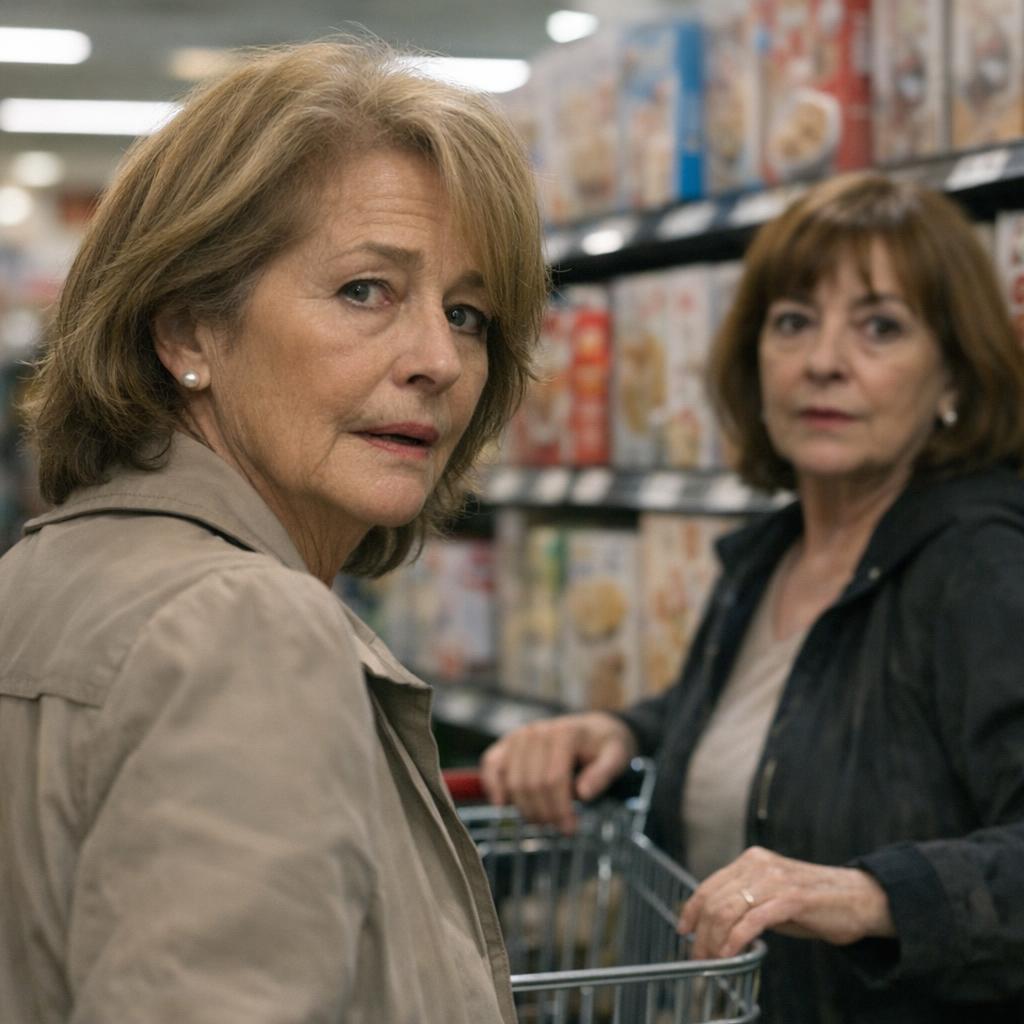 Image by RM AI
The Locked Drawer
I was rummaging through the hall closet for extra blankets—the nights had turned chilly—when I noticed something odd in my daughter's room. Her desk drawer had a small brass lock on it, something I'd never seen before. When I mentioned it over dinner, trying to sound casual, she nearly choked on her water. "Oh, that's just for work documents," she said, her eyes fixed on her plate. "Client confidentiality and all that." I nodded, pretending to accept this explanation that felt paper-thin. That night, I woke to hushed but heated voices coming from the kitchen. I crept to my bedroom door, cracking it just enough to hear Jenna's frustrated whisper: "Your mother deserves to know—she could help us." My daughter's response was immediate and fierce: "You don't understand what this would do to her." There was a long pause before Jenna replied, "What about what he did to you? To us?" I stood frozen in the darkness, my hand pressed against the cool wood of my door, as the realization washed over me: whatever was in that locked drawer wasn't about work documents—it was about evidence. And my daughter wasn't just protecting a secret; she was protecting me.
 Image by RM AI
The Old Yearbook
I was dusting the bookshelves in the living room when I found it—my daughter's senior yearbook, wedged behind some photo albums. I hadn't seen it in years. Settling into my armchair, I flipped through the glossy pages, smiling at the dated hairstyles and awkward poses. Then my heart stopped. There was Jenna—unmistakably Jenna—standing next to my daughter at the Winter Formal, both in sparkly dresses, arms linked like lifelong friends. I frantically turned more pages, finding them together in the debate club photo, the community service committee, the senior trip to Washington. The room seemed to tilt sideways as I reached the faculty section and saw Richard Harmon, listed as 'Government & Economics Teacher,' his biography noting his 'special mentorship of promising students.' My fingers trembled as I turned to the student council page and there it was—the photo that made my stomach lurch. Richard standing behind my daughter, his hand resting possessively on her shoulder, her smile frozen and empty, her eyes telling a story her lips couldn't speak. I slammed the book shut, my breathing shallow and quick. The marketing conference in Chicago. The casual introduction to Jenna. The 'special program' that took my daughter away for six months. All lies. And I had believed every single one of them.
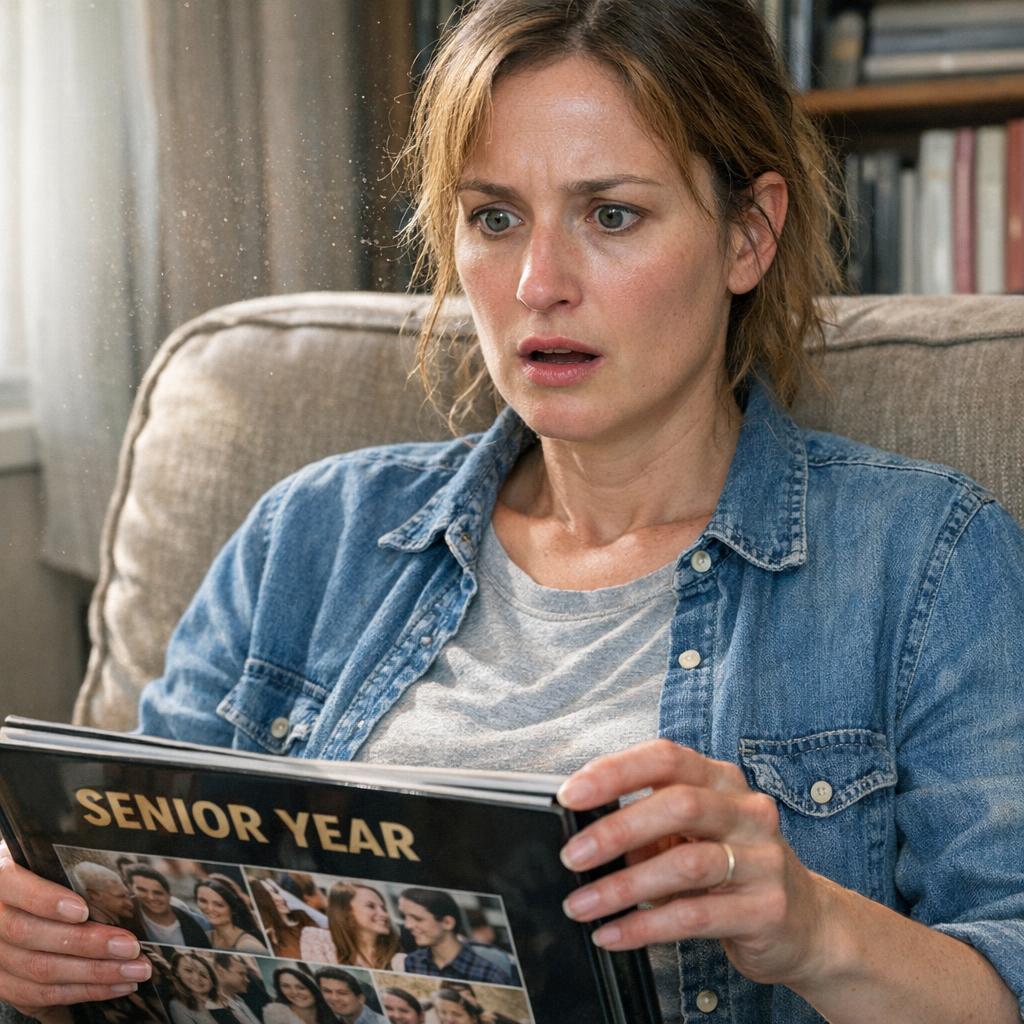 Image by RM AI
The Unexpected Ally
Martha's voice on the phone had been strained, almost apologetic, when she asked to meet for coffee. Now, sitting across from her at Brewster's Café, I watched her hands fidget with her napkin, folding and refolding it into smaller squares. 'Carol,' she finally said, her eyes not quite meeting mine, 'there's something I need to tell you.' She took a deep breath and revealed that twenty years ago, there had been rumors about Richard Harmon having 'inappropriate relationships' with female students. 'The school board hushed everything up,' she whispered, glancing nervously around the café as if Harmon might materialize at any moment. 'Parents who complained were offered settlements with strict NDAs. Teachers who spoke up suddenly found reasons to relocate.' My coffee sat untouched, growing cold as ice spread through my veins. 'Was my daughter...' I couldn't finish the sentence. Martha reached across the table and squeezed my hand, her eyes finally meeting mine with a mix of sorrow and resolve. 'I think you need to ask her that yourself, Carol.' As I walked to my car, the ground beneath me seemed to shift and crumble, and I realized with sickening clarity that the town I'd lived in for forty years wasn't just keeping secrets—it was built on them.
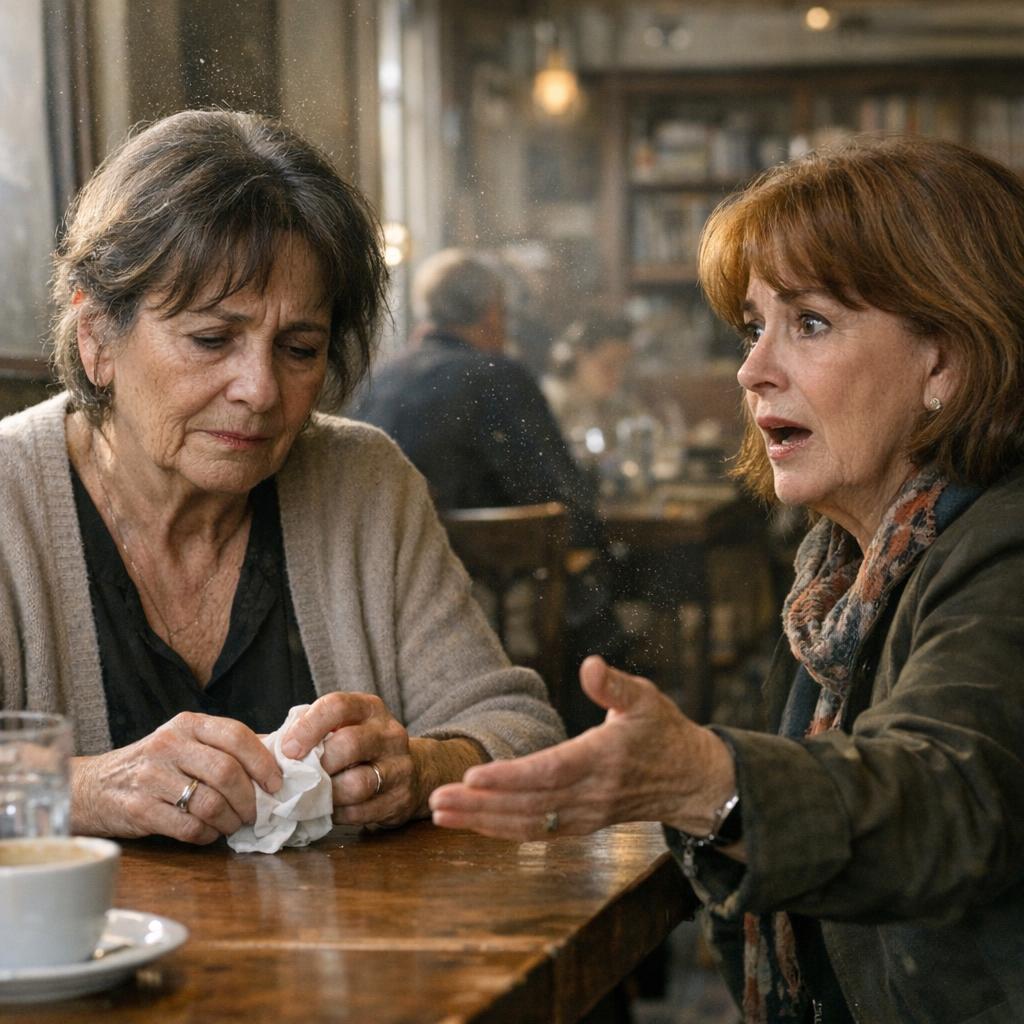 Image by RM AI
The Photo Album
The house was quiet when my daughter left for her meeting, leaving Jenna and me to tackle the hall closet. 'I'll help you organize,' Jenna offered, pulling out a dusty cardboard box from the top shelf. When she lifted the lid and saw the photo album inside, her entire body went rigid. I watched as she slowly opened it, her fingers trembling slightly against the plastic-covered pages. The album contained photos from my daughter's high school years – the ones I thought I knew everything about. Jenna's face transformed as she flipped through it, a mask of pain settling over her features. When she looked up at me, her eyes held something I'd never seen before – determination mixed with dread. 'She never told you, did she?' she asked, her voice barely above a whisper. My heart started pounding because mothers know that tone, the one that means there's no turning back from whatever comes next. I sank down beside her on the hallway floor, the box between us like some kind of Pandora's container of secrets. 'Told me what?' I asked, though part of me already knew the answer would shatter everything I thought I understood about my daughter's life. Jenna took a deep breath, closed the album, and placed her hand on top of it like she was about to testify in court. 'Carol,' she said, 'I've known your daughter since we were sixteen, and there's something you need to know about the six months she was away.'
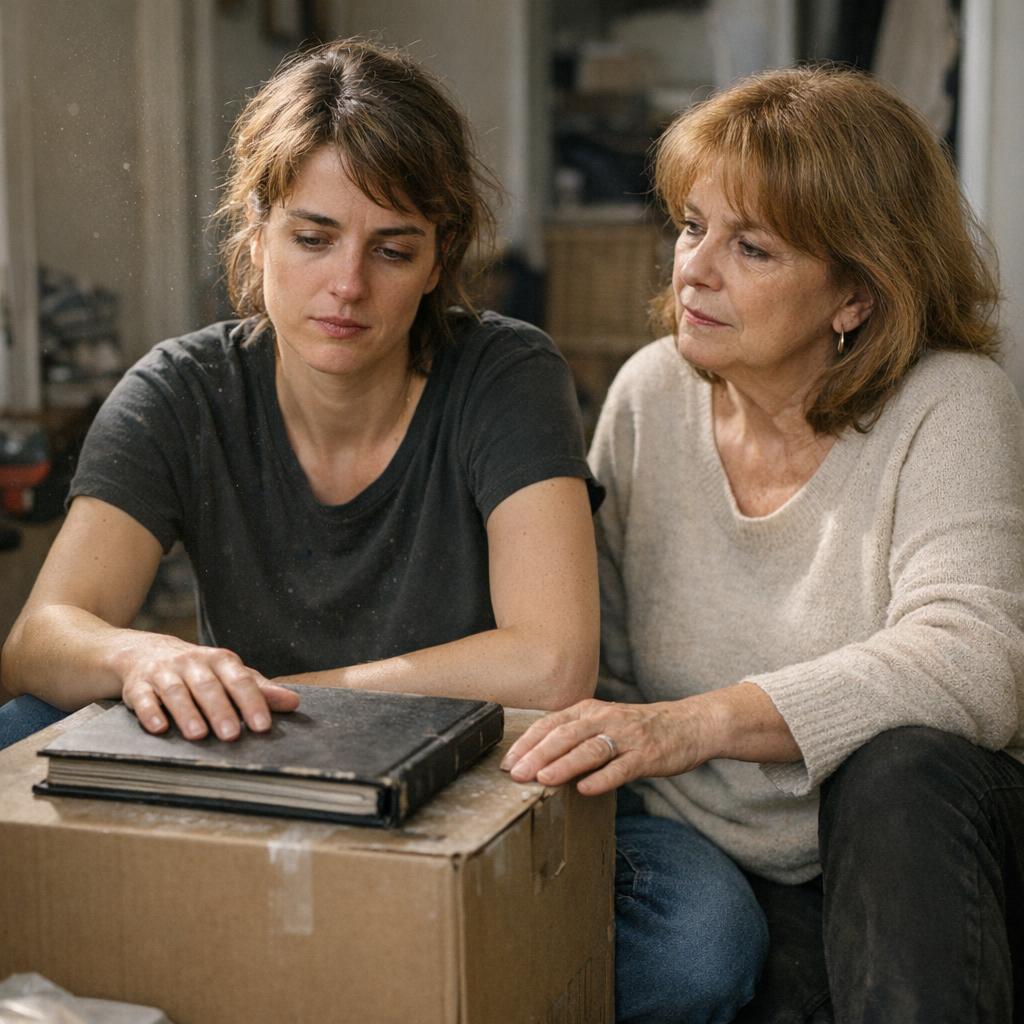 Image by RM AI
The First Revelation
Jenna's hands trembled as she placed the photo album between us, her knuckles white against the worn cover. 'Carol,' she said, her voice barely above a whisper, 'I've known your daughter since we were sixteen.' The kitchen suddenly felt too small, too warm. I watched her struggle to find words, her eyes darting between me and the album like she was mapping an escape route. 'That special program she told you about—' Jenna swallowed hard, 'it never existed.' My stomach dropped as she continued, each word landing like a stone. 'She was sent away because of what happened with Richard Harmon.' The name hung in the air between us, confirming all my worst suspicions. 'He was our teacher, but he... he singled her out.' Tears welled in Jenna's eyes as she flipped to a page in the album I'd never seen before—photos of my daughter at some kind of facility, looking thin and hollow-eyed. 'When everything came to light, the school made sure she took the blame. They protected him, not her.' I felt dizzy, memories rearranging themselves like puzzle pieces finally finding their proper places. All those Sunday phone calls where my daughter sounded so distant, all those holidays where certain topics were carefully avoided. 'There's more,' Jenna said, her voice steadying with resolve. 'And it's worse than you can imagine.'
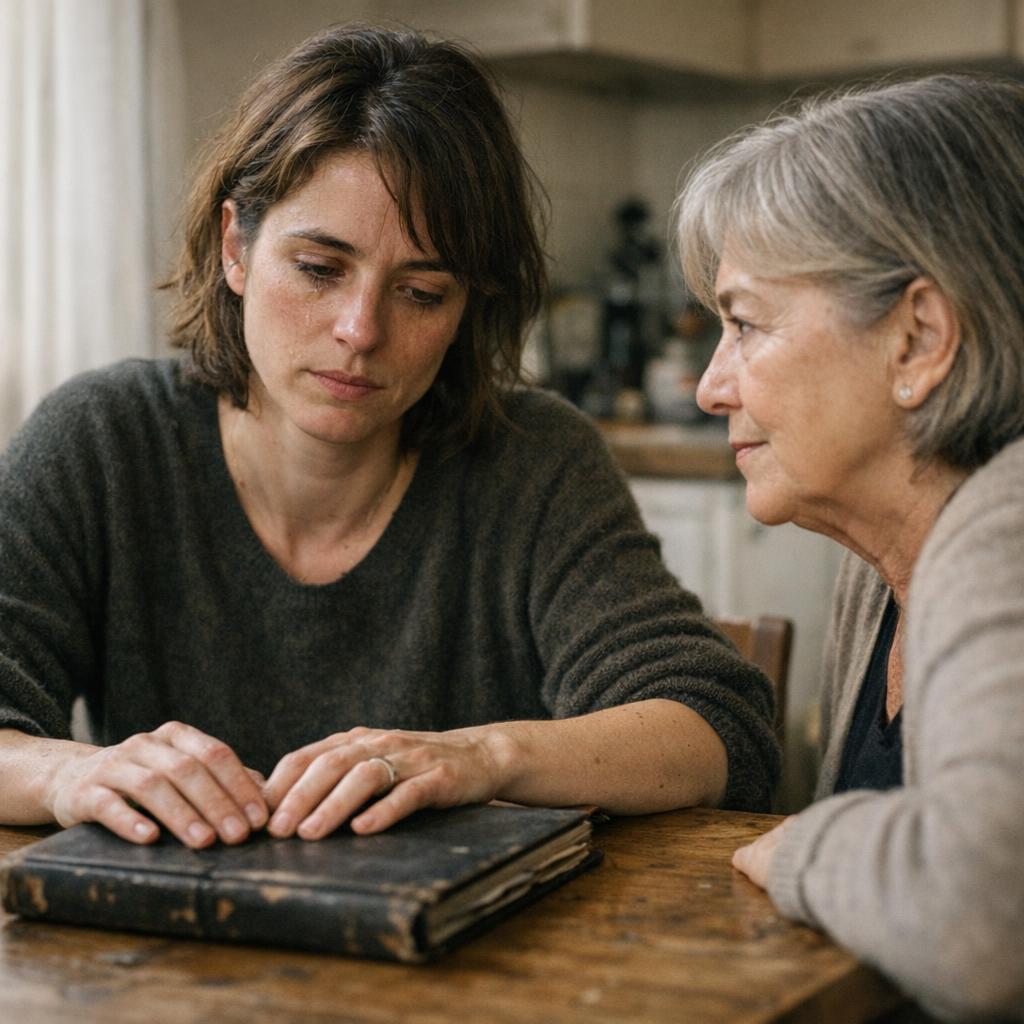 Image by RM AI
The Truth Unravels
Jenna's voice cracked as she continued, each word heavier than the last. 'Richard Harmon had a system,' she explained, her fingers nervously tracing the edge of the photo album. 'He'd identify vulnerable girls, tell them they had "exceptional potential," and offer private mentoring sessions.' My stomach twisted as she described how he'd gradually normalized inappropriate behavior—a hand on the shoulder becoming a hand on the thigh, compliments about intelligence morphing into comments about appearance. 'Your daughter wasn't the only one,' Jenna whispered, 'but she was the one they made an example of.' When whispers started circulating, Richard's friends on the school board closed ranks around him. They called emergency meetings behind closed doors, crafted careful statements about 'student misconduct,' and systematically dismantled the credibility of teenage girls who dared speak up. 'They labeled her promiscuous, attention-seeking,' Jenna said, her eyes meeting mine with painful directness. 'And the worst part? Everyone believed them. Parents, teachers, even other students.' I felt physically ill, remembering how I'd accepted that hastily arranged 'special program' without question, how I'd been so proud of my daughter for 'handling her mistake maturely.' But the real mistake had been mine—believing a system designed to protect predators instead of children.
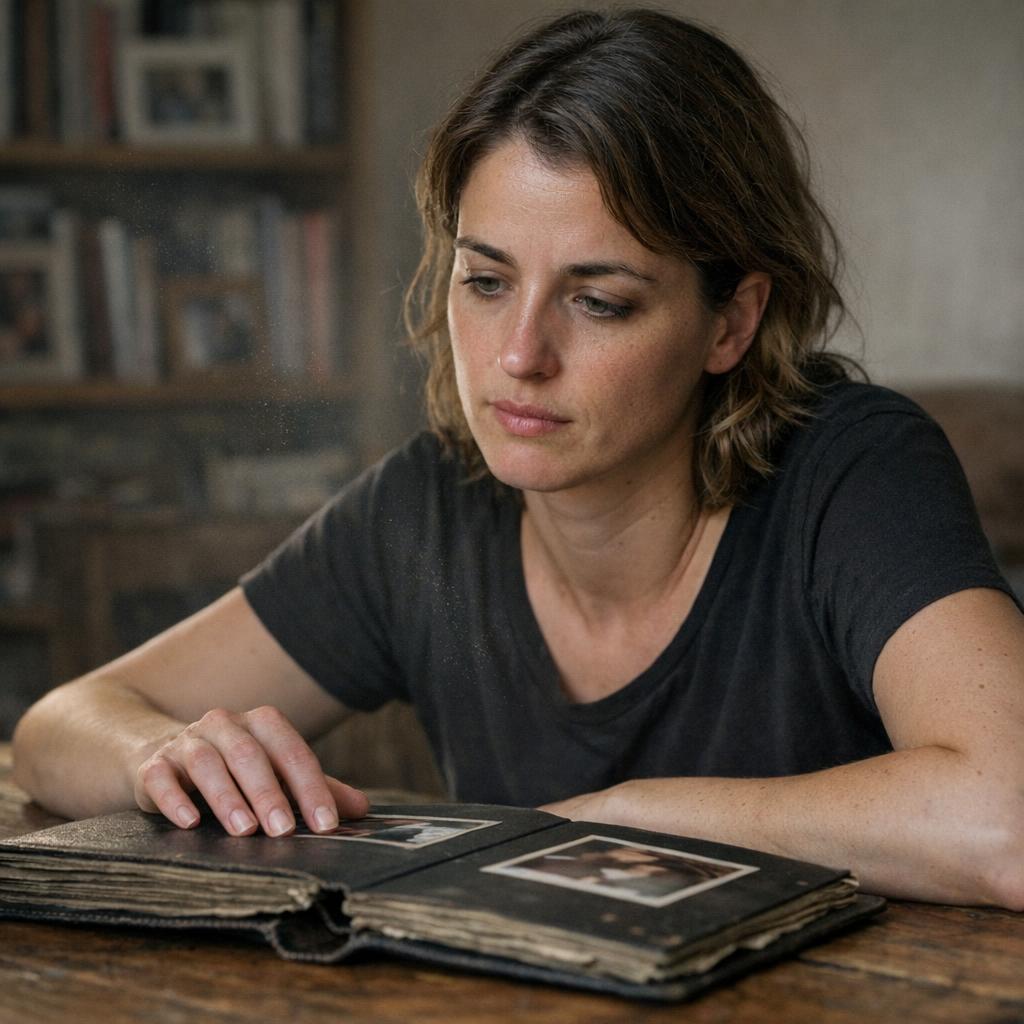 Image by RM AI
Pinewood Academy
Jenna's voice dropped to a whisper as she revealed the truth about Pinewood Academy. 'It wasn't some prestigious program, Carol. It was a facility for "troubled girls"—a place they sent your daughter to hide what happened.' My hands trembled as she explained how the school board, principal, and even some parents had agreed this was the 'best solution'—protect the school's reputation and Richard's career while removing the 'problem.' I felt physically ill remembering how proud I'd been when my daughter was 'selected' for this special opportunity. 'They made it sound like an honor,' I whispered, tears streaming down my face. Jenna nodded grimly. 'That's what they do. They rewrite the narrative. Your daughter wasn't the only one sent away, but she was the one whose absence they most carefully disguised.' She reached across the table and squeezed my hand. 'They created this whole positive story about academic excellence while she was actually in a place that treated her like she was broken—all to protect a man who should have been in prison.' The realization hit me like a physical blow: while I'd been sending care packages to what I thought was a prestigious academy, my daughter had been essentially imprisoned for the crime of being victimized by a predator the community had chosen to protect.
 Image by RM AI
The Letters
Jenna reached into her purse, her hands trembling slightly as she pulled out a bundle of letters tied with a faded blue ribbon. 'She kept every one,' Jenna said softly, placing them on the kitchen table between us. I recognized my daughter's handwriting immediately, the looping curves I'd seen on birthday cards and grocery lists for decades. As I began to read, I felt like I was watching my child disappear before my eyes. The earliest letters were confused, full of self-blame: 'Maybe if I hadn't stayed after class so many times...' By the middle of the bundle, confusion had hardened into rage: 'They're calling ME the problem while he's still teaching!' The final letters broke me completely. 'Mom would be so ashamed if she knew the truth,' she'd written to Jenna. 'It's better if she believes I'm doing something special instead of being punished for something that wasn't even my fault.' My tears fell onto the paper, smudging ink that had dried years ago. All those months I'd been sending care packages with her favorite cookies, writing cheerful letters about how proud I was, while my daughter sat alone in some facility, believing I would blame her if I knew. The most devastating realization wasn't just what had happened to her—it was that she'd carried this burden alone because she thought my love was conditional.
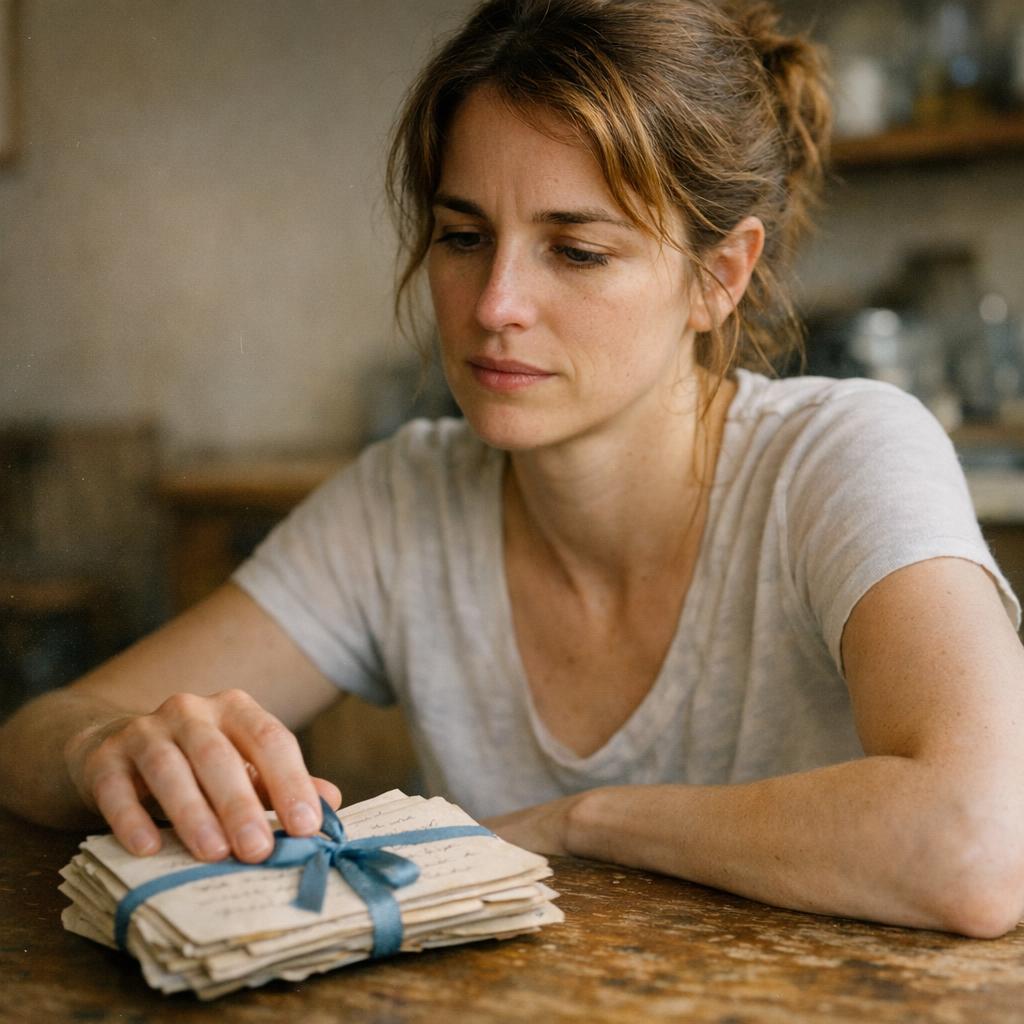 Image by RM AI
The Connection
I watched Jenna's face transform as I asked about her own connection to all this. The softness in her eyes hardened into something steely and raw. 'My breakup wasn't just any relationship gone wrong,' she said, her voice steady despite the slight tremor in her hands. 'I was dating Michael Harmon—Richard's son.' The name hit me like a physical blow. She explained how she'd discovered emails on Michael's laptop—damning evidence that Richard had been systematically paying people to keep quiet about his 'indiscretions,' including what had happened to my daughter. 'When I confronted Michael,' Jenna continued, 'he had a choice to make.' Her bitter laugh held years of disappointment. 'And he chose his father. Said I was "overreacting" and that it was "complicated family business."' She looked up at me, her eyes swimming with unshed tears. 'That's when I knew I had to leave. Not just him, but that whole web of lies they've built.' I reached across the table and took her hand, suddenly understanding why she'd come to us—not just for shelter, but for justice. What Jenna didn't know was that her arrival hadn't just exposed old wounds; it had ignited something in me that had been dormant for too long—a mother's rage.
 Image by RM AI
The Evidence
Jenna's hands were shaking as she passed me her phone. 'I saved everything,' she whispered. The screen displayed dozens of emails between Richard Harmon and various pillars of our community—the school board president, the current principal, even the editor of our local newspaper. My stomach churned as I scrolled through message after message, each more damning than the last. 'Our arrangement regarding historical matters should remain confidential,' Richard had written to Principal Matthews just three months ago. 'Reopening old wounds serves no one.' Another email to Judge Wilson mentioned 'financial considerations' for his son's college fund in the same paragraph as 'your continued discretion.' I felt physically ill, my hand covering my mouth as I realized the extent of it—this wasn't just one man's abuse of power; it was an entire system designed to protect him. 'There are seventeen girls that I know of,' Jenna said quietly. 'Seventeen lives altered while he got promotions and awards.' I handed back her phone, my hands now trembling as violently as hers. The most horrifying part wasn't just what Richard had done—it was how many people had helped him bury it, including people I'd smiled at in grocery stores, sat beside at school functions, and trusted with my daughter's education. And as I looked at Jenna's determined face, I realized with absolute clarity that I was done being silent.
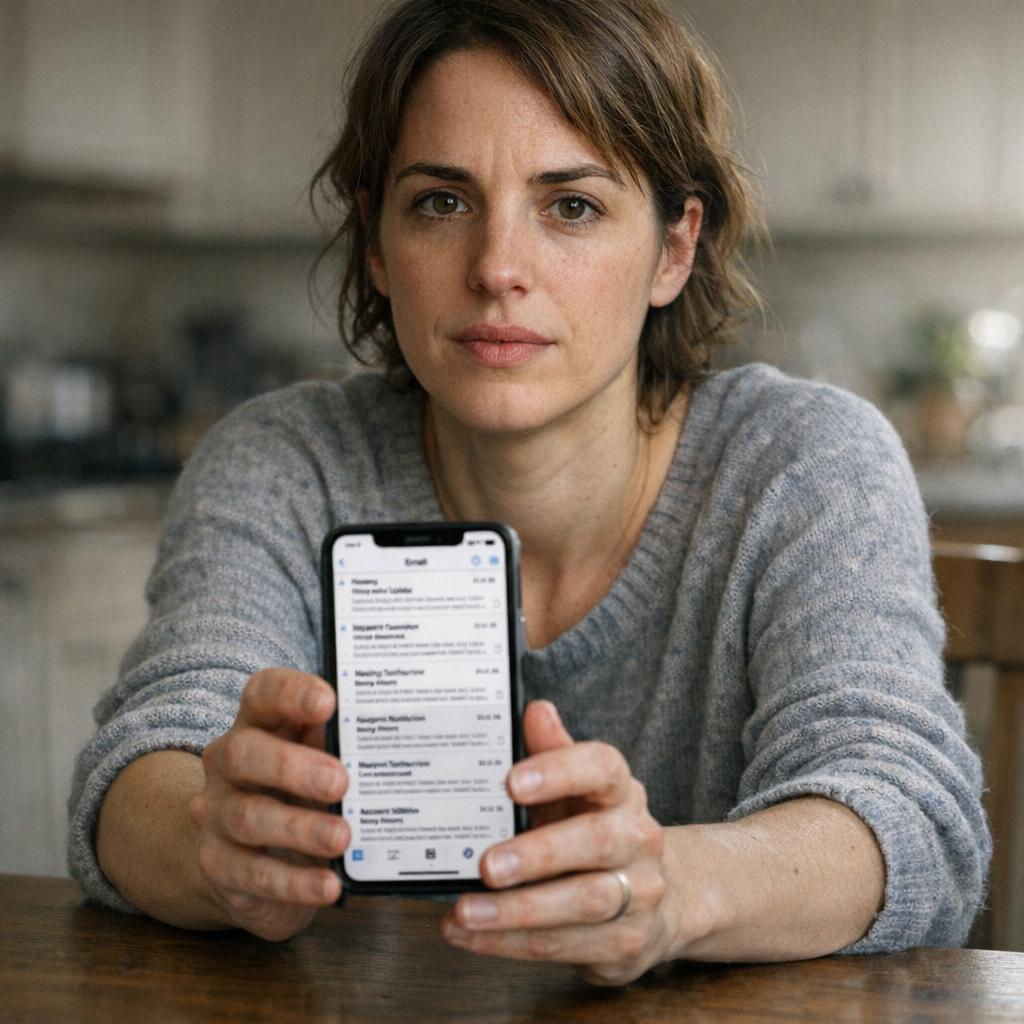 Image by RM AI
The Homecoming
The front door clicked open, and my daughter stepped into the kitchen, freezing mid-stride when she saw us. Her eyes darted from my face to the evidence spread across the table—the photo album, the letters tied with blue ribbon, Jenna's phone displaying those damning emails. The color drained from her face as twenty years of carefully constructed walls crumbled in an instant. 'You weren't supposed to find out like this,' she whispered, her voice small and broken. The unspoken truth hung in the air between us: she never intended for me to know at all. I stood up, my legs unsteady, and for a moment none of us moved. What do you say when you discover your child has carried such a burden alone? When you realize you've been living in a carefully edited version of reality? 'Honey,' I finally managed, my voice cracking, 'why didn't you tell me?' She sank into the chair across from me, tears streaming down her face. 'Because I thought you'd believe them instead of me. Everyone else did.' The three of us sat in heavy silence as the weight of two decades of secrets filled every corner of the room. I reached across the table and took my daughter's hand, feeling the slight tremble in her fingers that matched my own. What I didn't yet understand was that this moment wasn't just about uncovering the past—it was about deciding what kind of future we would fight for.
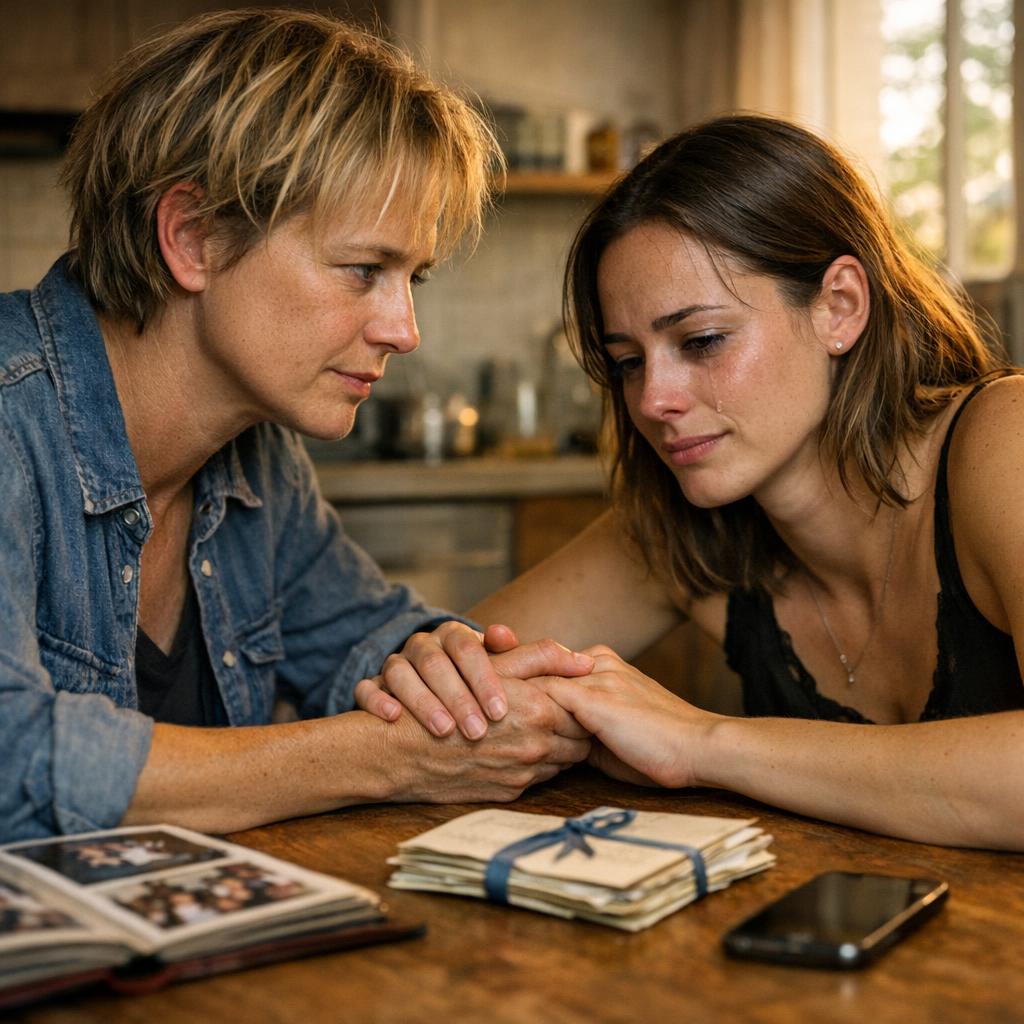 Image by RM AI
The Confession
My daughter's voice shook as she finally told her story, each word seeming to physically pain her. 'He made me feel seen, Mom,' she whispered, tears streaming down her face. 'I was struggling so much with who I was, and he noticed me.' She described how Richard had started with innocent compliments about her debate skills, then private mentoring sessions that gradually shifted from academic to personal. 'He'd touch my hand when explaining something, then my shoulder, then...' she trailed off, unable to continue for a moment. The most devastating part was how he'd convinced her each boundary crossed was her idea, her choice. When whispers started circulating, Richard had masterfully turned the tables. 'He reminded everyone about my anxiety issues from sophomore year,' she said bitterly. 'Suggested I was unstable, infatuated with him.' I felt physically ill as she described the closed-door meeting where the school board presented us with what they called a 'choice' – send her to this 'prestigious program' or face expulsion with a permanent record of misconduct. 'And the worst part?' she said, looking directly into my eyes for the first time since she'd started speaking, 'I actually believed I deserved it.'
 Image by RM AI
The Missing Piece
My mouth fell open as the pieces suddenly clicked into place. 'But your father and I were never given that choice,' I said, my voice barely above a whisper. My daughter's head snapped up, her eyes wide with confusion. 'But... they told me you both agreed. Principal Davis and Mr. Harmon sat me down and said you and Dad thought it was best if I went away for a while.' The room seemed to tilt as another layer of betrayal unfolded before us. 'Your father,' I managed, my throat tight with rage. 'He must have made that decision without me.' I remembered now—that period when communication between my ex and me had broken down completely, when he'd insisted on handling the 'school situation' because I was 'too emotional.' He'd presented the program as a done deal, a wonderful opportunity he'd secured through his connections. All those months I'd written cheerful letters to my daughter, completely unaware that she believed I had chosen to send her away in shame. The realization hit me like a physical blow—not only had my daughter been victimized by her teacher, but her own father had participated in the cover-up, allowing her to believe we had both abandoned her when she needed us most. And suddenly I understood why she'd kept her distance all these years, why our relationship had never quite recovered. She thought I had chosen Richard Harmon's reputation over her truth.
 Image by RM AI
The Phone Call
My hands were shaking so badly I could barely dial his number. After all these years, I never thought I'd willingly speak to my ex-husband again. When he answered with that familiar smug tone, something inside me snapped. 'Did you know?' I demanded, not bothering with pleasantries. 'Did you know what they did to our daughter?' His initial denials were predictable – confusion, deflection, asking if I'd been drinking. But when I laid out everything – Richard Harmon, the facility, the cover-up – his voice changed. 'Carol,' he sighed, like I was still the hysterical woman he'd divorced, 'sometimes practical decisions have to be made.' I nearly vomited. 'Practical?' I whispered. 'You let our daughter believe I abandoned her.' His justification came in that maddeningly rational tone he always used during our worst arguments. 'I was protecting the family name. Her future prospects. You were always too emotional to see the bigger picture.' I hung up mid-sentence, suddenly understanding the Sunday phone calls, the way our daughter maintained connection with me while gradually pulling away from her father. She'd known, somehow, that only one of her parents had betrayed her. What I couldn't understand was how I'd ever loved a man who could sacrifice his own child to protect a predator's reputation.
 Image by RM AI
The Others
The kitchen fell silent as Jenna's voice dropped to a whisper. 'There were others,' she said, her fingers tracing invisible patterns on the table. 'Four other girls that I know of.' My heart sank as she recounted their fates—two who fled town immediately after graduation, one who dropped out entirely, her promising future abandoned. But it was the fourth story that made my blood run cold. 'My cousin Melissa,' Jenna said, her voice breaking. 'She took her own life five years ago.' I watched tears slide down her cheeks as she described finding Melissa's journal, pages filled with experiences mirroring my daughter's—the same grooming tactics, the same isolation, the same shame. 'When her parents tried to come forward,' Jenna continued, pulling a tissue from her pocket, 'Richard's lawyers threatened them with defamation. Said they were "exploiting a tragedy" for financial gain.' I felt physically ill imagining those grieving parents, armed with their daughter's final words, being silenced by legal threats while the town rallied around its respected citizen. The realization hit me like a physical blow—Richard Harmon hadn't just hurt these girls; he'd created a system that ensured they'd never be believed, even from beyond the grave. And suddenly I understood that this wasn't just about justice for my daughter—it was about breaking a cycle that had already claimed one young life and damaged so many others.
The Real Reason
My daughter's eyes met mine with a new intensity. 'Mom, there's something else you need to know,' she said, her voice steadier than before. 'Jenna didn't just happen to need a place to stay.' The two women exchanged a look that spoke volumes. 'We've been working together for months,' my daughter continued. 'Jenna's relationship with Michael wasn't just bad luck—it was strategic.' I felt my eyebrows shoot up as Jenna nodded. 'Being with Michael gave me access to Richard's files, his emails, his entire network of protection,' she explained. 'We've been gathering evidence, building a case that even their lawyers can't dismantle.' My daughter reached across the table and took my hand. 'We think we finally have enough to come forward, to make it stick this time.' Her voice cracked slightly. 'But we needed somewhere safe to organize everything, somewhere they wouldn't think to look.' She squeezed my fingers, tears welling in her eyes. 'And I needed to tell you the truth before it all becomes public. I couldn't let you be blindsided again.' As I looked at these two women—one my daughter by birth, the other seemingly by circumstance—I realized they hadn't just been victims; they'd become warriors. And now I had to decide: would I simply support them from the sidelines, or would I join their fight?
 Image by RM AI
The Decision
The kitchen table became our war room that night, littered with coffee mugs, tissues, and printouts of emails that documented years of calculated abuse and cover-ups. None of us moved to clean up or suggested sleep. This wasn't just a revelation anymore—it was a mission. As dawn broke through my kitchen window, casting everything in that strange, hopeful light that only comes with sunrise, I looked at my daughter—really looked at her—and saw both the wounded teenager and the fierce woman she'd become. 'I've made my decision,' I said, my voice steadier than I expected. 'I'm not just going to support you from the sidelines. I'm standing with you, publicly.' My daughter's eyes widened slightly. 'Mom, are you sure? This will get ugly. People we've known for decades will turn against us.' I reached across the table and took both their hands in mine. 'Richard and his enablers counted on mothers like me staying quiet to protect our children,' I told them, feeling a strength I hadn't known in years. 'But real protection means fighting for justice, even when it's decades late.' For the first time since this nightmare began, my daughter looked at me with something like hope. What none of us realized then was that my decision would not only change our lives, but would send shockwaves through a community built on carefully maintained lies.
 Image by RM AI
The Warning
The doorbell rang at 7:30 AM, just as I was pouring my second cup of coffee. I wasn't expecting anyone, especially not Patricia Harmon with her usually perfect hair now looking like she'd run her fingers through it a dozen times. Her lipstick was slightly smudged at the corner. 'Carol,' she said, her voice oddly flat, 'may I come in?' I stepped aside, noticing how her hands trembled as she clutched her designer purse. She didn't sit when offered, just stood in my kitchen like a statue. 'Richard knows what you're planning,' she said without preamble. 'He has friends everywhere. The police chief, the district attorney, half the school board.' Her eyes, usually cold and calculating at PTA meetings, now held something I'd never seen before – fear. 'Think carefully about what you're doing.' As she turned to leave, she paused at the door, her shoulders slumping slightly. 'I've spent thirty years pretending not to know,' she whispered, not quite meeting my eyes. 'Sometimes I envy your courage.' I watched her walk to her luxury SUV, wondering if Patricia Harmon – the woman who'd hosted fundraisers in her immaculate home while her husband destroyed young lives – might actually become an ally in this fight, or if she'd remain just another silent bystander in a town full of them. What I didn't realize then was that her warning wasn't just about Richard's connections – it was the first crack in a wall of silence that had protected him for decades.
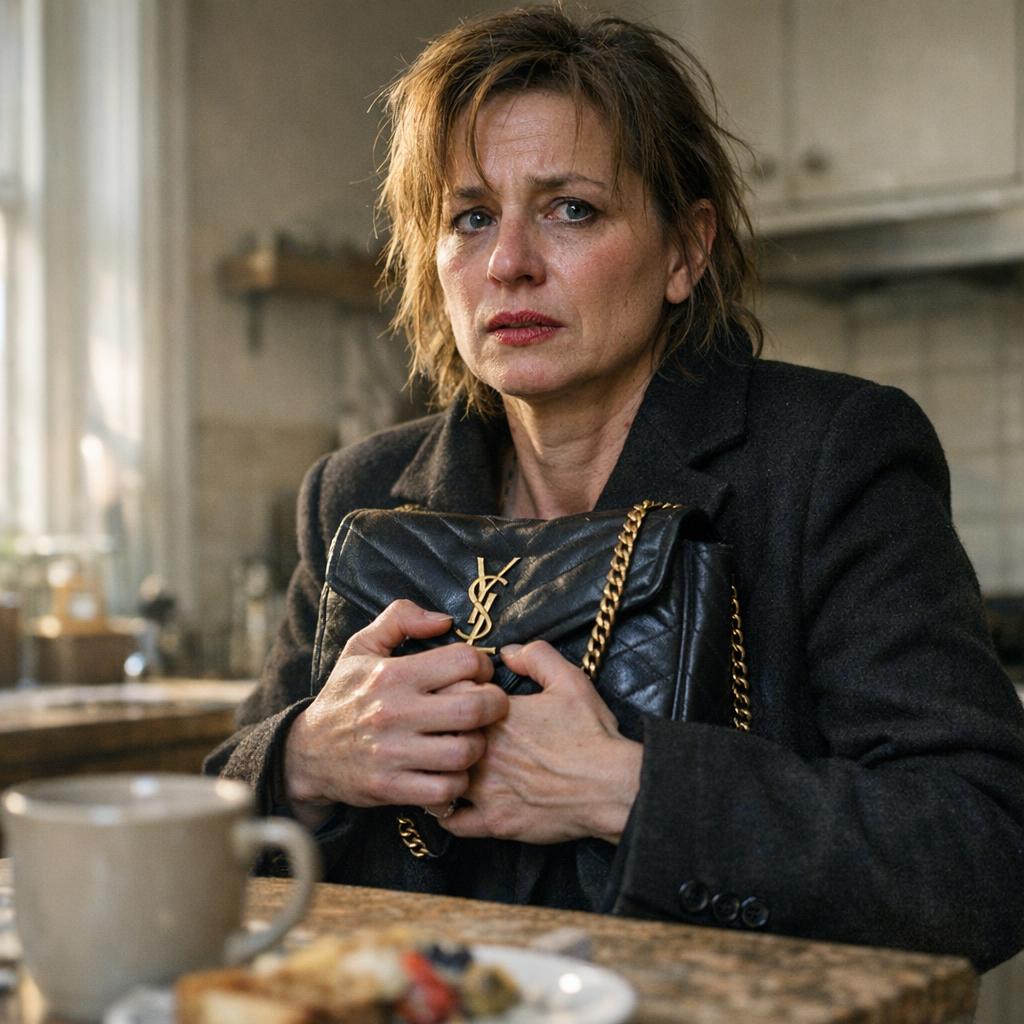 Image by RM AI
The Journalist
The coffee shop Elena chose was deliberately public yet private enough for our conversation – a strategic choice I appreciated. I watched my daughter's hands tremble slightly as she slid the folder of evidence across the table to the journalist, whose sharp eyes missed nothing. 'I've been tracking Richard Harmon for three years,' Elena confessed, her voice low but steady. 'You're the seventh woman to come forward, but the first with this level of documentation.' She methodically reviewed each email, each testimony, occasionally making notes in a worn leather journal. What struck me most wasn't just her professionalism, but the complete absence of doubt in her expression. She believed us without question. 'The pattern is textbook,' she explained, 'but institutions protect men like him because exposing one predator means acknowledging systemic failure.' When she finally looked up, her gaze was unflinching. 'Publishing this will change your lives forever. Are you prepared for that?' My daughter reached for my hand under the table, and I felt her strength flow into me as much as mine into her. 'We've been living with this for twenty years,' I said. 'We're ready for the truth.' What I didn't tell Elena was how terrified I still was – not of Richard's retaliation, but of a community that might still choose comfort over justice.
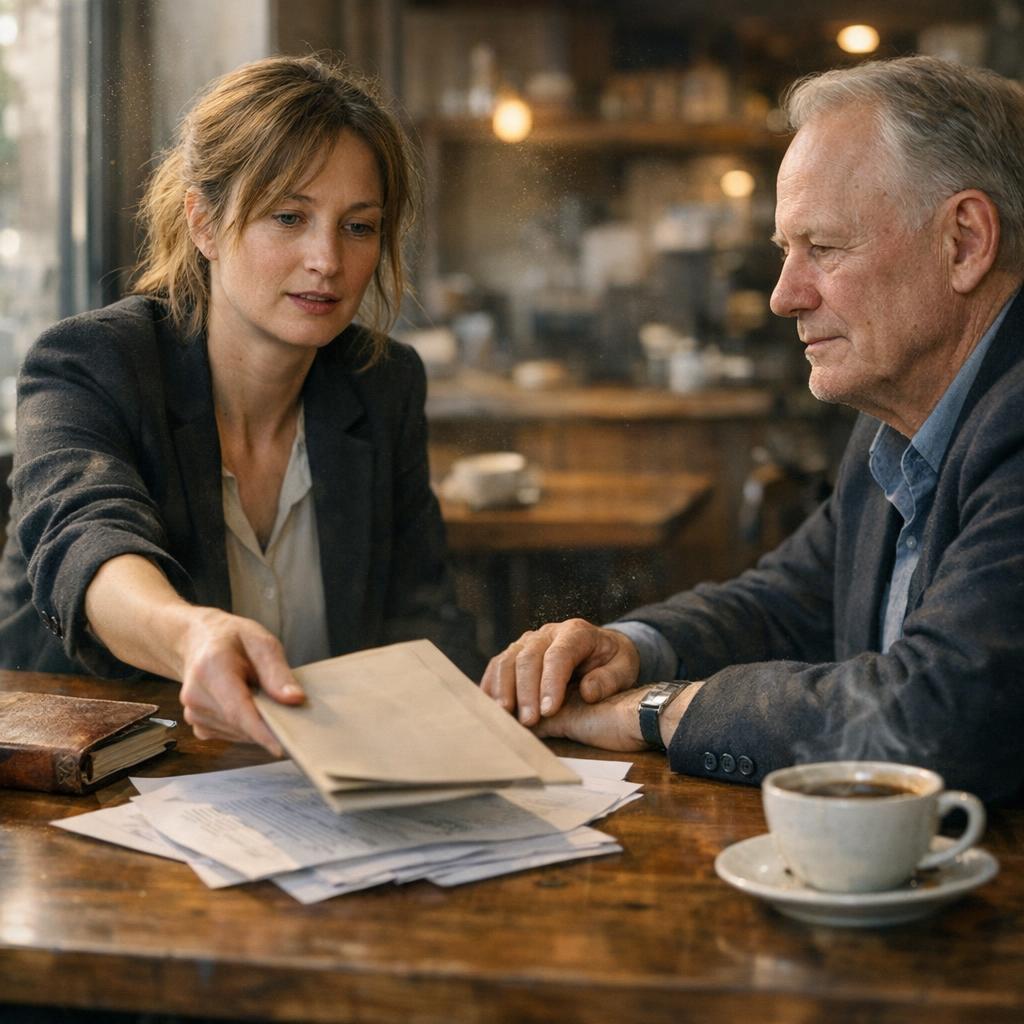 Image by RM AI
The Threat
The sound of shattering glass jolted me awake at 2:17 AM. I stumbled into my living room to find shards everywhere and a brick on my carpet, a note wrapped around it with a rubber band. My hands trembled as I read the five words: 'Drop it or regret it.' When Officer Jenkins arrived 40 minutes later, his casual demeanor felt like another violation. 'Probably just kids,' he said, barely glancing at the brick. I watched him halfheartedly take notes, his pen barely making contact with the paper. 'Actually,' I said, gathering my courage, 'I believe this is connected to Richard Harmon.' The transformation was immediate – his posture stiffened, his eyes narrowed. 'Mrs. Mitchell,' he said, using my name for the first time since arriving, 'making accusations against respected community members is serious business.' He closed his notepad with a snap. 'Folks who stir up trouble often find themselves facing consequences they didn't anticipate.' It wasn't what he said but how he said it – like a warning wrapped in official concern. As I watched his patrol car pull away without having taken a single photo of the evidence, I realized Richard's influence wasn't just in our schools and courtrooms – it was in the very system meant to protect us from threats like the one now lying on my coffee table.
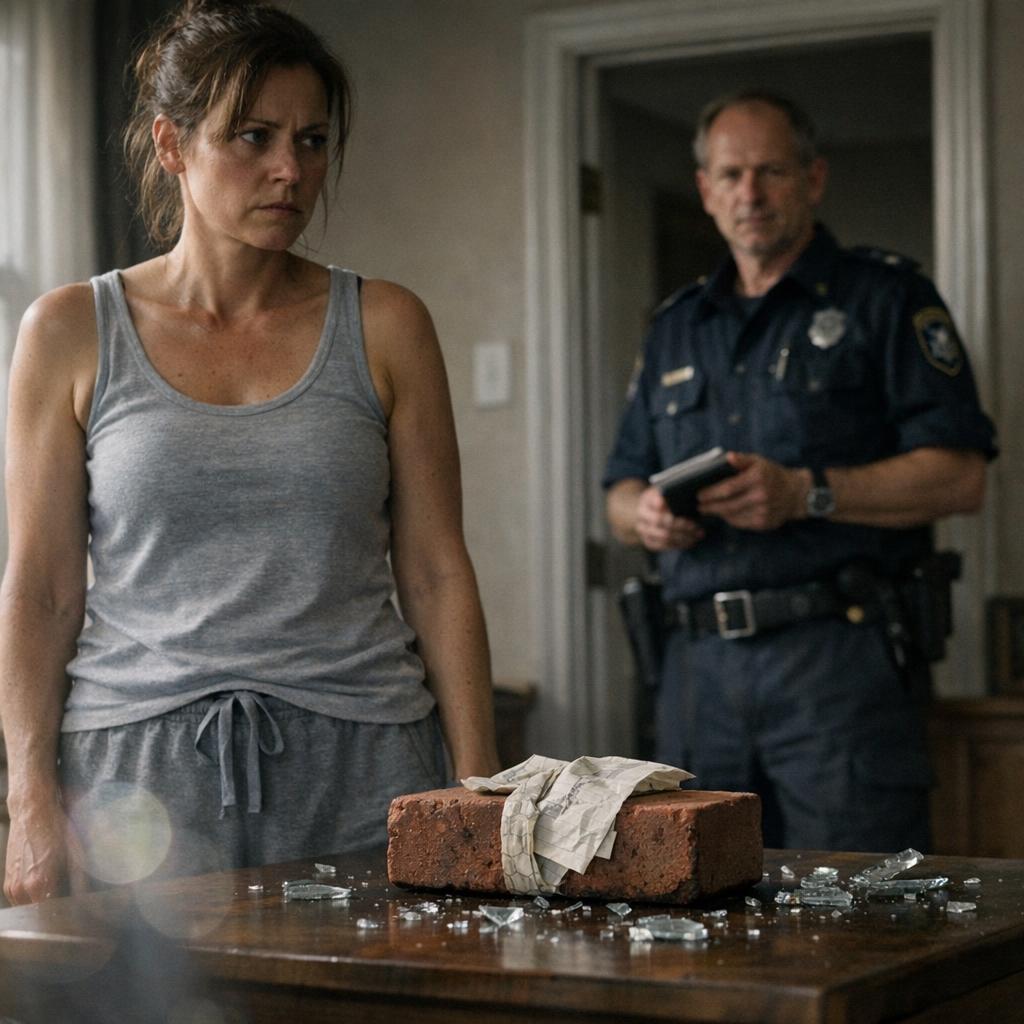 Image by RM AI
The Unexpected Ally
The doorbell rang the next morning, and I opened it to find Martha Donovan, my neighbor of fifteen years, standing there with two casserole dishes balanced in her arms and a determined look on her face. 'I heard about the brick,' she said without preamble, brushing past me into the kitchen. 'The whole town's talking.' I watched, stunned, as she arranged her dishes in my refrigerator with the efficiency of someone who'd raised four children. 'Carol,' she said finally, turning to face me, her voice cracking slightly, 'I should have spoken up years ago.' She sank into a kitchen chair, her hands trembling as she admitted that her own daughter had come to her about 'uncomfortable encounters' with Richard that she'd dismissed as misunderstandings. 'I told myself she was being dramatic,' Martha whispered, tears welling in her eyes. 'What kind of mother does that make me?' Before I could answer, she straightened her shoulders and pulled out a small notebook. 'I've already talked to Diane Peterson, Susan Whitaker, and Judy Collins. Their daughters all had similar stories. We're ready to stand with you.' I felt something shift inside me – the weight I'd been carrying suddenly felt lighter, distributed among more shoulders than just mine. What I didn't realize then was that Martha's casseroles were just the beginning of an avalanche of support that would soon bury Richard Harmon's carefully constructed reputation.
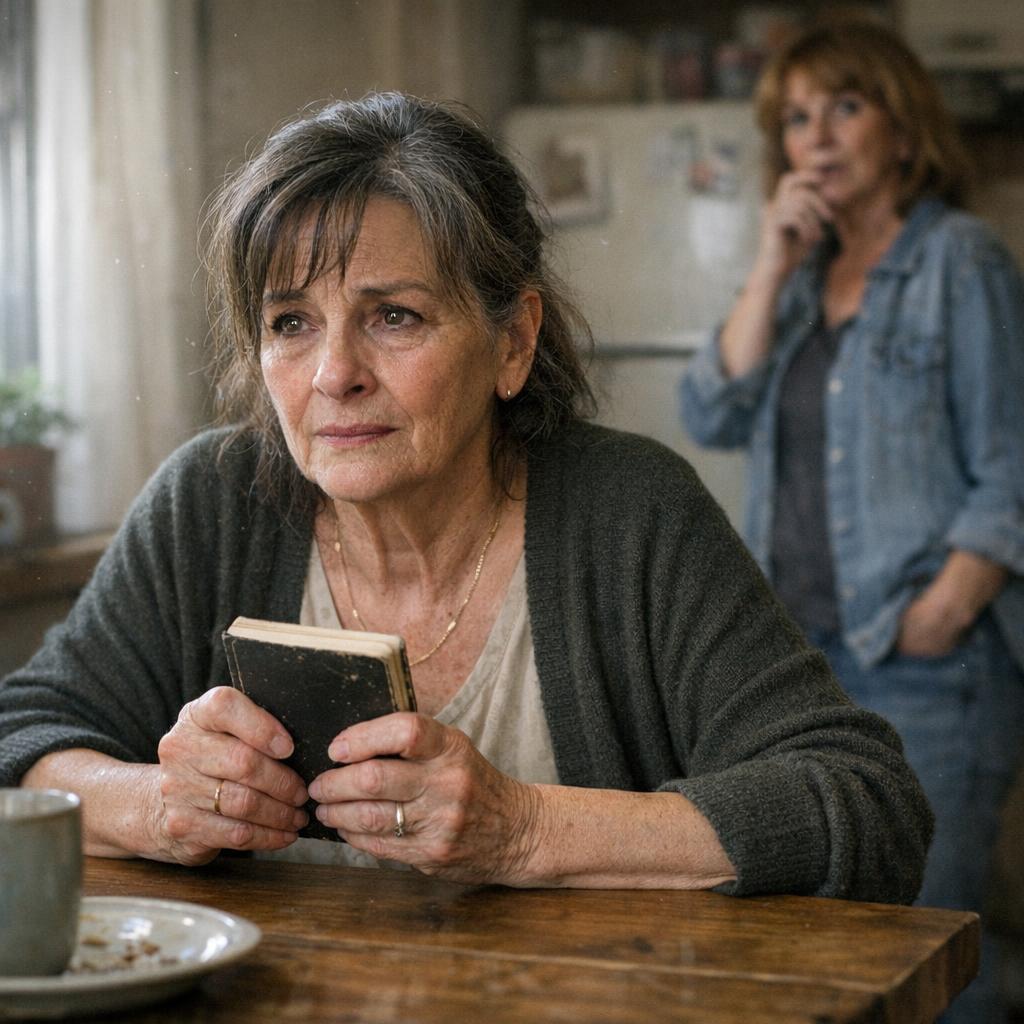 Image by RM AI
The School Board Meeting
The school board meeting room was packed tighter than I'd ever seen it. I sat between my daughter and Jenna, Martha and her group of mothers filling the row behind us like a protective wall. When public comment opened, I rose on shaky legs, feeling every eye in the room follow me to the podium. 'Good evening,' I began, my voice surprisingly steady. 'I'm here to speak about our collective responsibility to protect students from predatory adults.' I didn't need to look at Richard to feel his glare burning into me from his seat at the center of the board table. 'Our town has failed in this duty,' I continued, watching several board members shift uncomfortably in their seats. 'When we prioritize reputations over safety, we become complicit.' Principal Davis leaned over to whisper urgently to the superintendent, their faces paling as I spoke. I noticed several phones recording me, and realized with a jolt that this moment would likely be all over social media within the hour. Richard's knuckles turned white as he gripped the edge of the table, his face a mask of cold fury. What he didn't realize was that my carefully worded statement was just the opening move in a game he'd been rigging for decades – and for the first time, I wasn't playing by his rules.
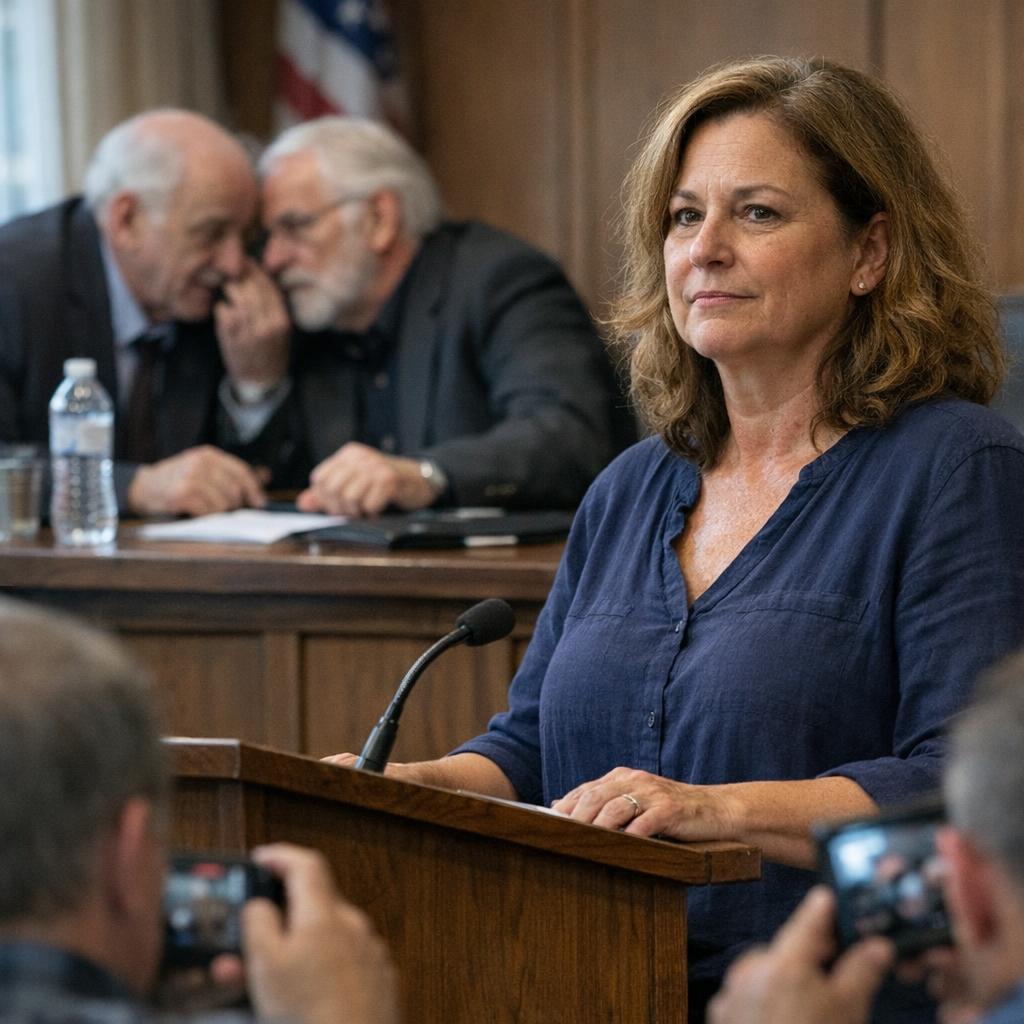 Image by RM AI
The Confrontation
I was halfway to my car when I heard his footsteps behind me. The parking lot was nearly empty now, most people having fled the tension of the meeting. 'Carol,' Richard called, his voice carrying that false warmth I once mistook for kindness. When I turned, his mask had slipped completely. His face was contorted with rage, eyes narrowed to slits. 'You have no idea what you're doing,' he hissed, stepping closer than comfort allowed. 'Your daughter was troubled - everyone knew it. Nobody will believe her now any more than they did then.' I felt my phone in my pocket and discreetly pressed record, thanking my daughter for showing me how. When I didn't cower, his tactics shifted like quicksand. 'Look,' he said, voice softening to that persuasive tone that had fooled our community for decades, 'I understand you're upset. Perhaps we could discuss a generous donation to your daughter's future endeavors.' His smile didn't reach his eyes as he added, 'Sometimes the past is better left buried, don't you think?' I stood perfectly still, letting him dig his grave word by word, knowing that his attempt to buy our silence was being captured clearly. What Richard didn't realize was that the man who'd once terrified young girls was now facing a mother who had nothing left to lose.
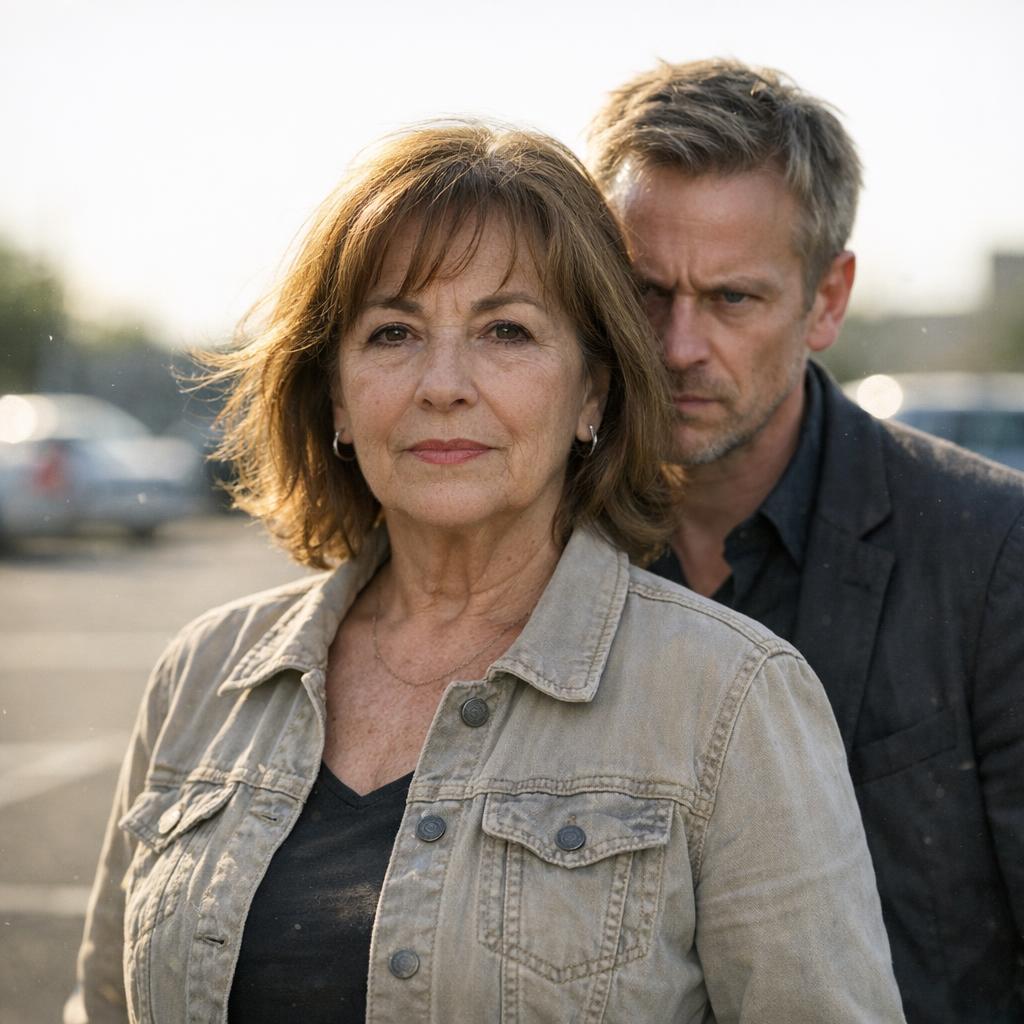 Image by RM AI
The Article
I woke up to my phone buzzing non-stop at 6:17 AM. Twelve notifications, all linking to Elena's article. She'd done it – published everything with the precision of a surgeon, cutting directly to the heart of Richard's decades of abuse without naming a single victim. 'Prominent Educator's Pattern of Predation: A Community's Silence' read the headline. My hands trembled as I scrolled through the meticulously documented timeline, the testimonies carefully anonymized but unmistakable to anyone who knew the stories. By noon, the article had been shared over two thousand times. My daughter called, her voice tight with emotion. 'Mom, three more women have already contacted Elena.' I watched from my kitchen window as neighbors avoided eye contact when passing my house, some walking their dogs on the opposite side of the street. Patricia Harmon's car hadn't left their driveway all day. The school board's Facebook page had disabled comments after hundreds flooded in demanding action. That evening, my ex-husband texted me for the first time in years: 'What have you done?' As if I was the one who had destroyed lives. What he didn't understand was that the article wasn't the end of this story – it was just the beginning of the reckoning our town had avoided for far too long.
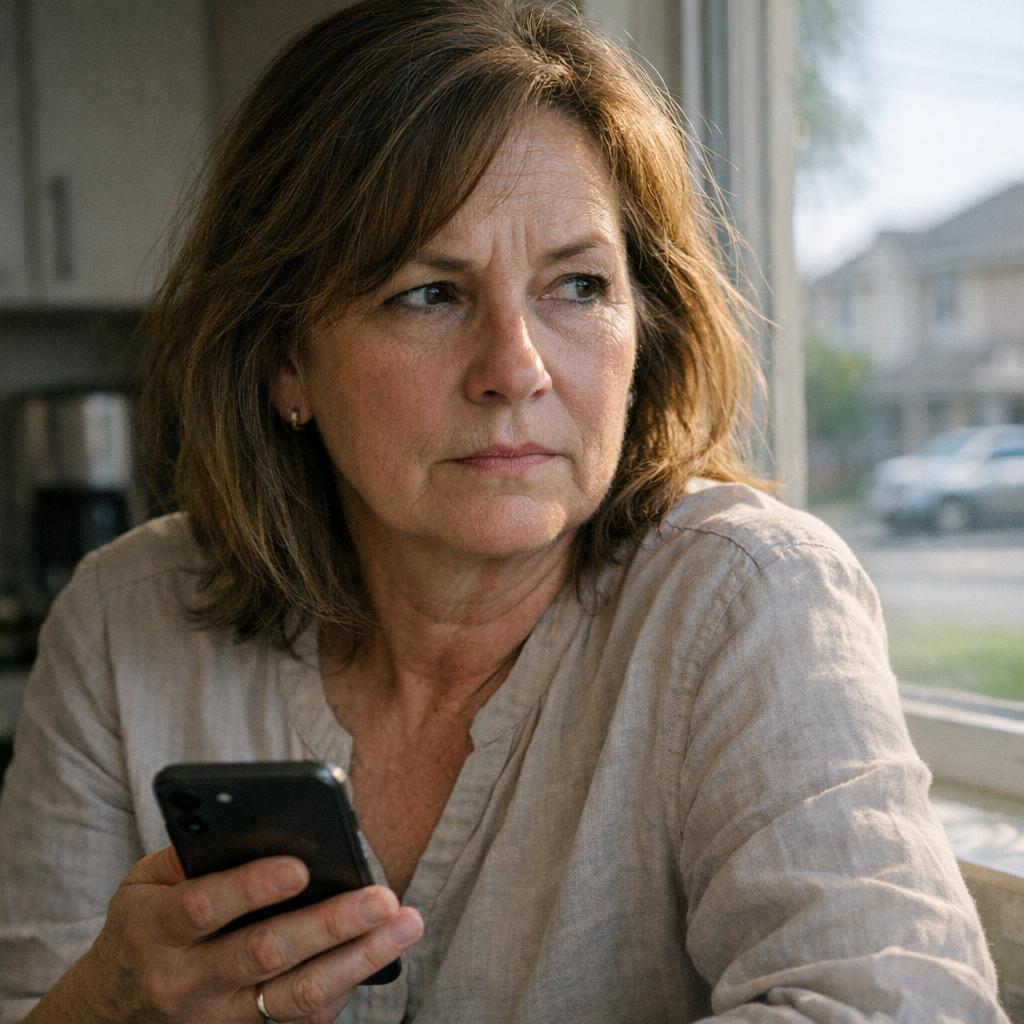 Image by RM AI
The Divide
I never imagined a small town could fracture so completely in just one week. The grocery store became a battleground of silent judgments. In aisle three, Betsy Cooper, who'd served alongside me on the PTA for six years, literally abandoned her half-filled cart when she spotted me turning the corner. Meanwhile, Janet from my book club made a point of hugging me by the produce section, loudly announcing, "I believe you, Carol." The mailbox brought daily surprises – heartfelt cards from former students of Richard's who'd "always felt something was off," sitting alongside anonymous notes calling me a "bitter divorcée destroying a good man's life." My daughter watched it all with haunted eyes, flinching when her phone buzzed with messages from old classmates suddenly wanting to "reconnect" now that her story was trending. "It's like they're choosing teams for the world's most twisted dodgeball game," she said one night, as we sorted through another day's mail – three casseroles and two death threats. The most painful moment came when my pastor called, suggesting I "take a break" from the church choir until things "settled down." What he didn't understand was that things would never settle down – not until every last secret was dragged into the light.
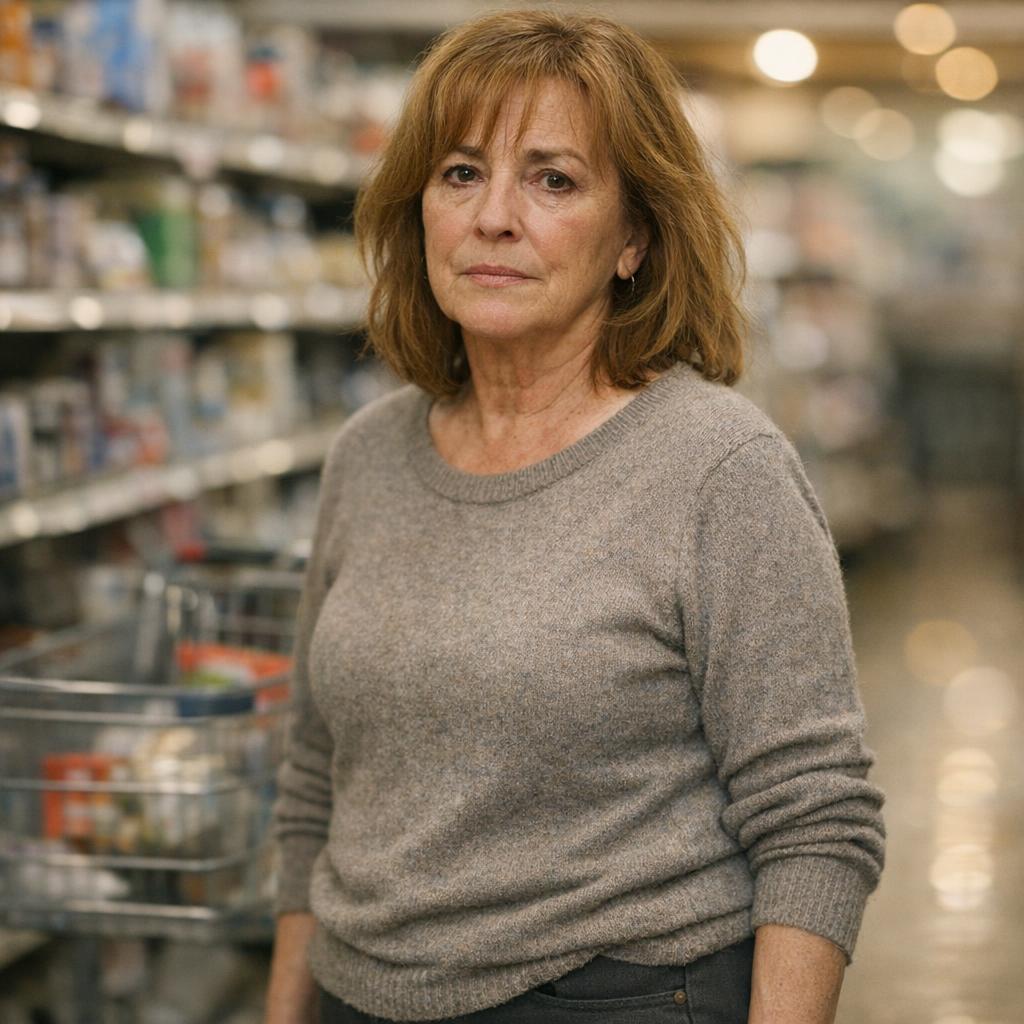 Image by RM AI
The Press Conference
I sat frozen on my living room couch, watching Richard's press conference unfold on my television like some bizarre theater production. There he stood, the picture of wounded dignity in his tailored navy suit, Patricia positioned beside him like a mannequin in designer clothes. 'These allegations are not only false but malicious,' he declared, his voice carrying that practiced tremor of righteous indignation. 'I have dedicated my life to mentoring young people.' I nearly choked on my coffee when he quoted Matthew about forgiveness, as if he was the one being wronged. Patricia never once looked at him, her eyes fixed on some invisible point beyond the cameras, her face a carefully constructed blank canvas. Only someone who had studied pain as intimately as I had these past weeks could see the slight tension in her jaw, the way her knuckles whitened around her purse strap when he mentioned 'troubled young women misinterpreting innocent guidance.' When he announced the defamation lawsuit against Elena's newspaper, his voice swelled with confidence, and I understood why: for decades, his threats had worked. People had backed down, stayed silent, chosen the easier path. But as I watched Patricia's eyes briefly flicker with something that looked remarkably like doubt, I wondered if Richard's most loyal ally might be reaching her breaking point.
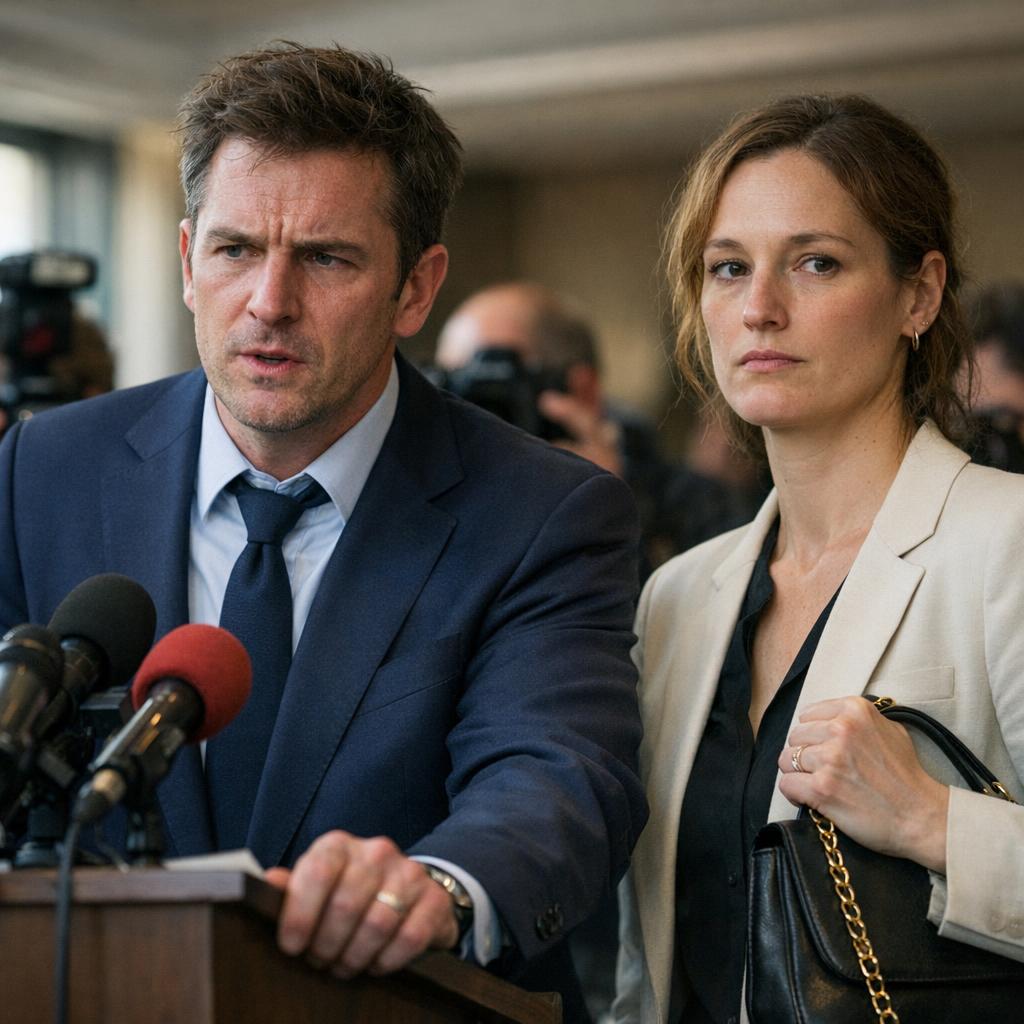 Image by RM AI
The Decision Point
My daughter sat at the kitchen table, her fingers nervously tracing the rim of her coffee mug. 'If I come forward, everything changes,' she whispered, her voice catching. 'My privacy, my career, how people see me - it all becomes about this one thing that happened when I was eighteen.' I reached across and covered her hand with mine, feeling the weight of a mother's helplessness. This was her mountain to climb; I could only stand at the base and offer support. For hours, we talked through scenarios - the media attention, the inevitable victim-blaming, the way strangers would suddenly feel entitled to opinions about her trauma. Around midnight, something shifted in her eyes. She pulled her laptop closer and began typing with a determination I recognized from when she was small and decided to learn to ride a bike despite skinned knees. 'Twenty years ago, I was sent away from my home because I was Richard Harmon's victim, not his perpetrator,' she read aloud, her voice growing stronger with each word. As she continued crafting her statement, I watched my daughter reclaim her narrative word by word, and realized that sometimes the bravest decisions aren't about fighting back, but about refusing to carry someone else's shame any longer.
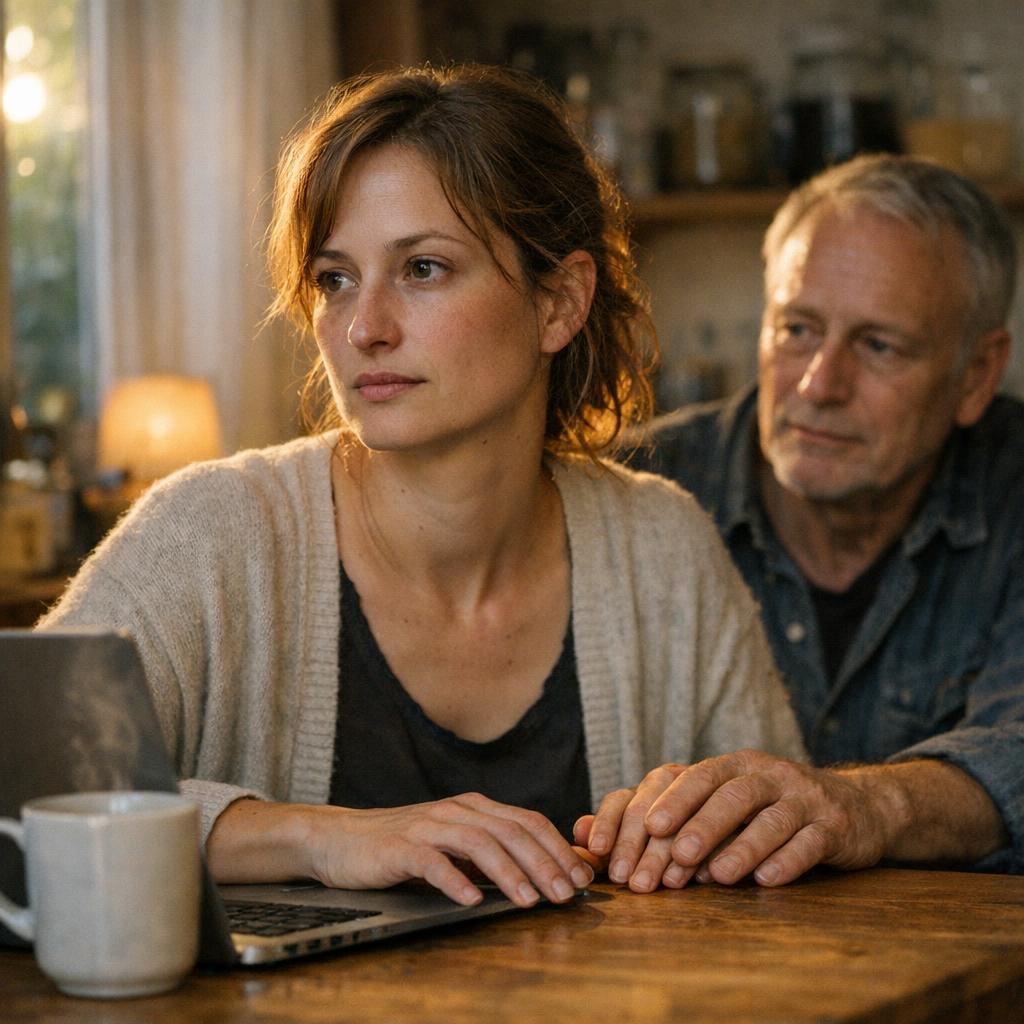 Image by RM AI
The Statement
The morning Elena's article went live, I watched my phone light up with notifications like a Christmas tree. My daughter's statement sat front and center on the newspaper's website, her words clear and unflinching, flanked by testimonies from two other women who'd stepped from the shadows. Three successful professionals with consistent stories about the same man, spanning decades. The power wasn't just in their individual accounts, but in the terrible pattern they revealed together. Richard's lawyer fired off cease-and-desist letters within hours, threatening everything from defamation to 'irreparable harm to a distinguished educator's reputation.' The newspaper's response was a single sentence: 'Truth is an absolute defense.' I was sitting on my porch swing that evening, watching the sunset paint the sky in shades of courage, when my phone rang. My ex-husband's name flashed on the screen – a rare occurrence since our divorce. His voice sounded different, stripped of its usual defensive edge. 'I made a terrible mistake back then, Carol,' he said, the words seeming to physically pain him. 'I thought I was protecting her, but I was only protecting myself from scandal.' His admission hung between us, twenty years too late but somehow still necessary. What he couldn't possibly understand was that his confession wasn't the end of anything – it was just one more piece of a puzzle that was finally, painfully, coming together.
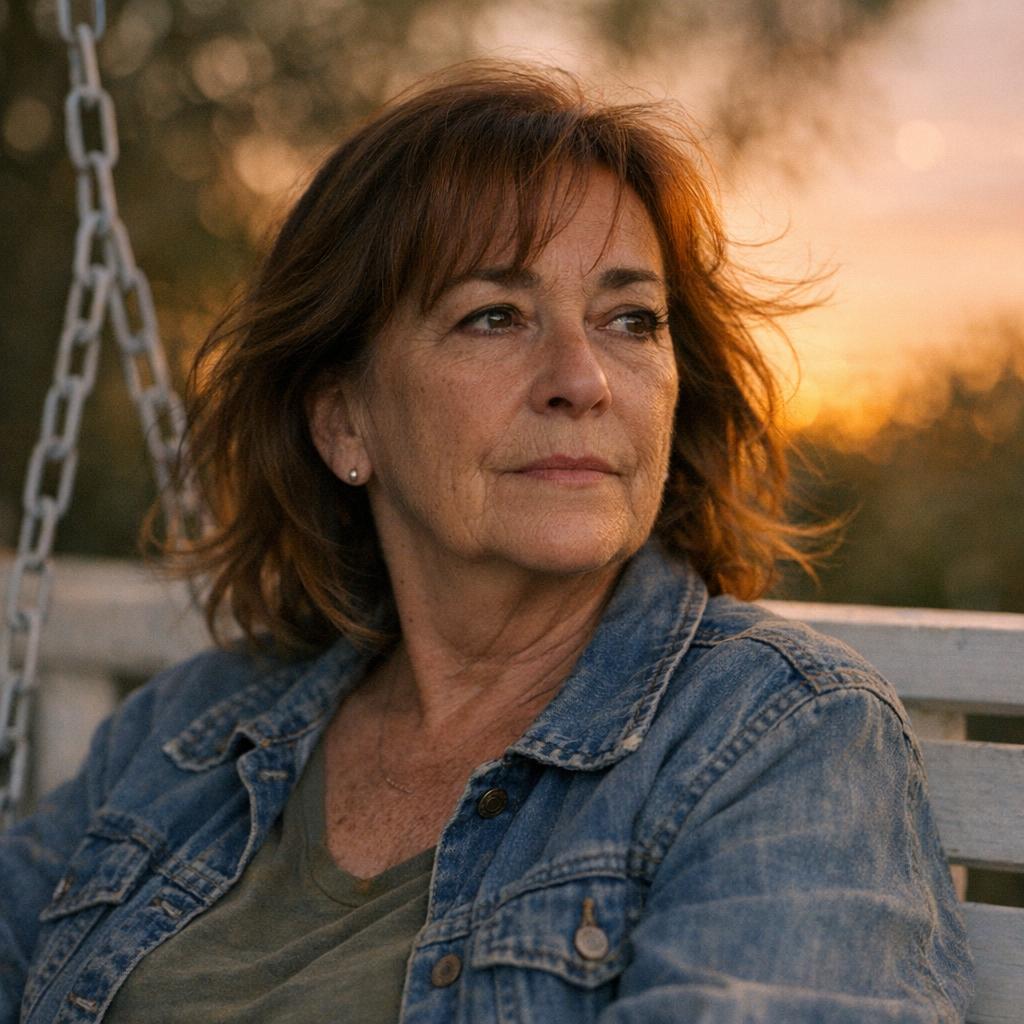 Image by RM AI
The School Board Response
The emergency school board meeting was held in the same room where I'd confronted them just days earlier, but everything felt different now. The crowd spilled into the hallway, parents and teachers shoulder-to-shoulder in uncomfortable solidarity. Richard's empty chair at the center of the table spoke volumes. Superintendent Wallace, looking like he hadn't slept in days, announced Richard's 'temporary leave of absence pending a thorough independent investigation.' The carefully chosen words couldn't mask the panic behind them. When Principal Davis stepped up to the microphone, I barely recognized him. The confident administrator who'd dismissed my concerns for decades now stood hunched and gray, his hands visibly shaking as he read from a prepared statement expressing 'deep concern for all parties involved.' The political doublespeak was infuriating. Outside after the meeting, I watched as Melissa Winters, whose daughter graduated five years ago, cornered Davis in the parking lot. 'Who knew?' she demanded, her voice carrying across the asphalt. 'How many of you protected him instead of our children?' Davis couldn't meet her eyes as he mumbled something about 'following proper protocols at the time.' What struck me most wasn't his shame, but how many other parents were nodding along with Melissa's questions, their own suspicions finally finding voice after years of silence.
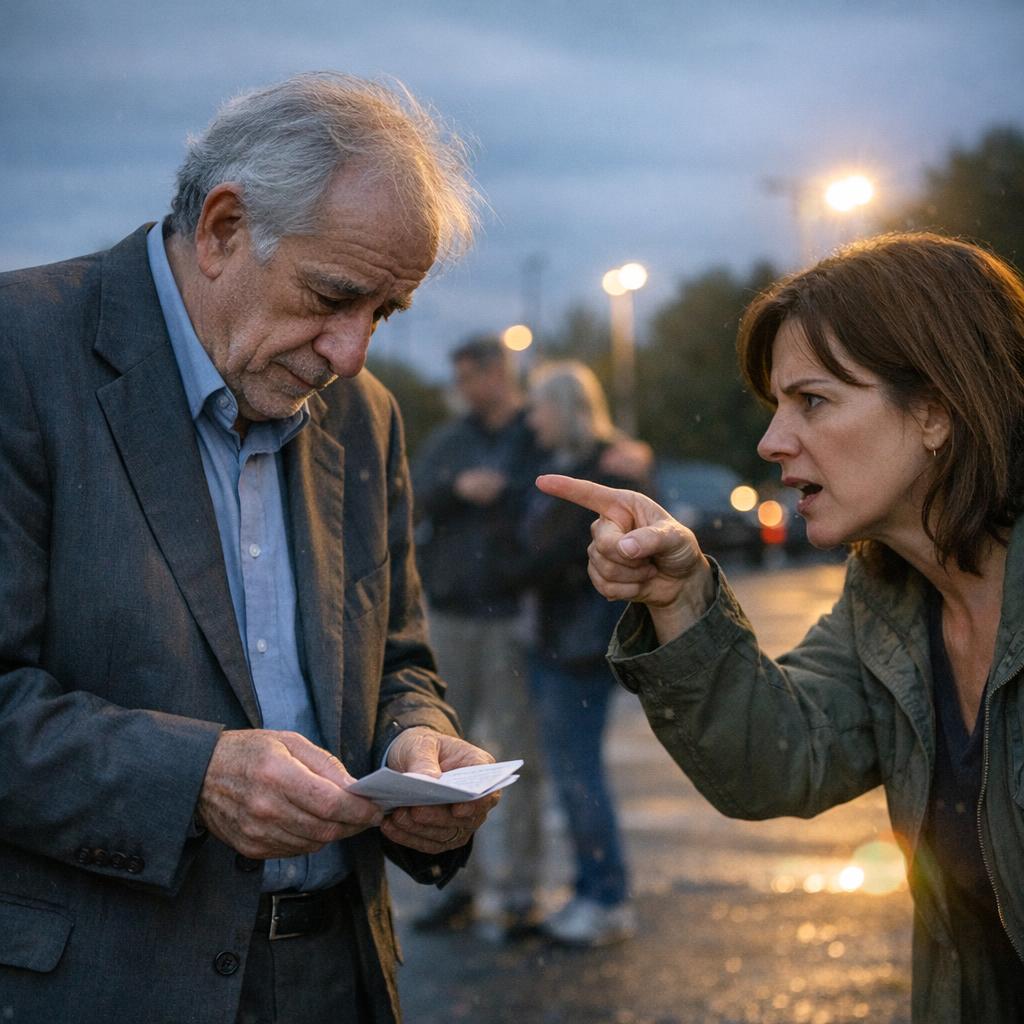 Image by RM AI
The Unexpected Visit
The doorbell rang just after dinner, and when I opened it, I found myself face-to-face with Michael Harmon. Richard's son looked nothing like the confident young man I remembered from community events. His eyes were bloodshot, his normally immaculate appearance disheveled. 'I need to speak with Jenna,' he said, his voice barely above a whisper. When I led him to the living room, Jenna immediately stiffened. 'Whatever you have to say, Carol and her daughter can hear it too,' she insisted. Michael nodded, collapsing into an armchair like his bones had suddenly turned to water. 'I found more evidence in my father's home office,' he said, sliding a USB drive across the coffee table with trembling fingers. 'Records, emails, payments... I can't defend what he did anymore.' He explained that Patricia had finally left Richard and was staying with her sister in another state. The revelation hung in the air like smoke. Before leaving, Michael turned to my daughter, his face crumpling with shame. 'I'm sorry for what he did to you,' he said, tears welling in his eyes. 'I'm sorry I didn't believe it until now.' As the door closed behind him, I realized that Richard's carefully constructed empire wasn't just crumbling—it was being dismantled from within by the very family he thought would protect his secrets forever.
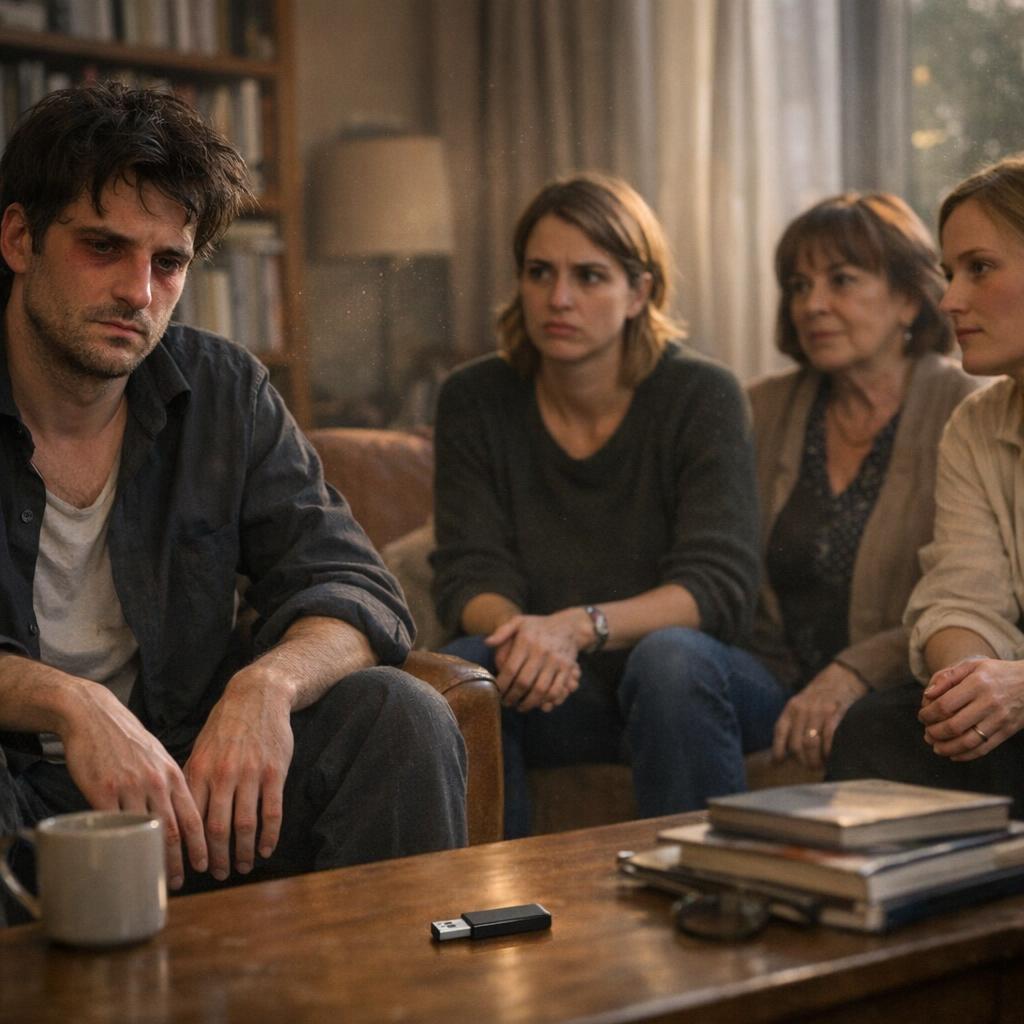 Image by RM AI
The USB Drive
The USB drive sat on my kitchen table like a ticking bomb. My hands trembled as I plugged it into my laptop, Jenna and my daughter leaning in on either side of me. What appeared on the screen made my stomach drop – hundreds of meticulously organized files spanning twenty years. 'He kept records of everything,' my daughter whispered, her voice hollow with disbelief. The emails between Richard and school officials weren't just smoking guns – they were an entire arsenal. Principal Davis's name appeared repeatedly, his carefully worded responses about 'discretion' and 'protecting the school's reputation' making me physically ill. 'There are seven other girls,' Jenna said, scrolling through a folder labeled 'Situations Managed.' I thought of all those young women, silenced just like my daughter, while men in positions of authority shuffled papers and made problems disappear. By midnight, we'd forwarded everything to Elena and contacted Martha's lawyer friend, a fierce woman who specialized in institutional accountability cases. 'This changes everything,' she told us over the phone, her voice tight with controlled fury. 'They can't claim ignorance anymore.' The next morning, I checked the school district's website and felt a small, bitter victory – Richard's smiling photo had vanished, as if the institution was already trying to erase any evidence he had ever existed. But what they didn't understand was that erasing a picture was nothing compared to erasing decades of trauma – and now we had proof that they'd known all along.
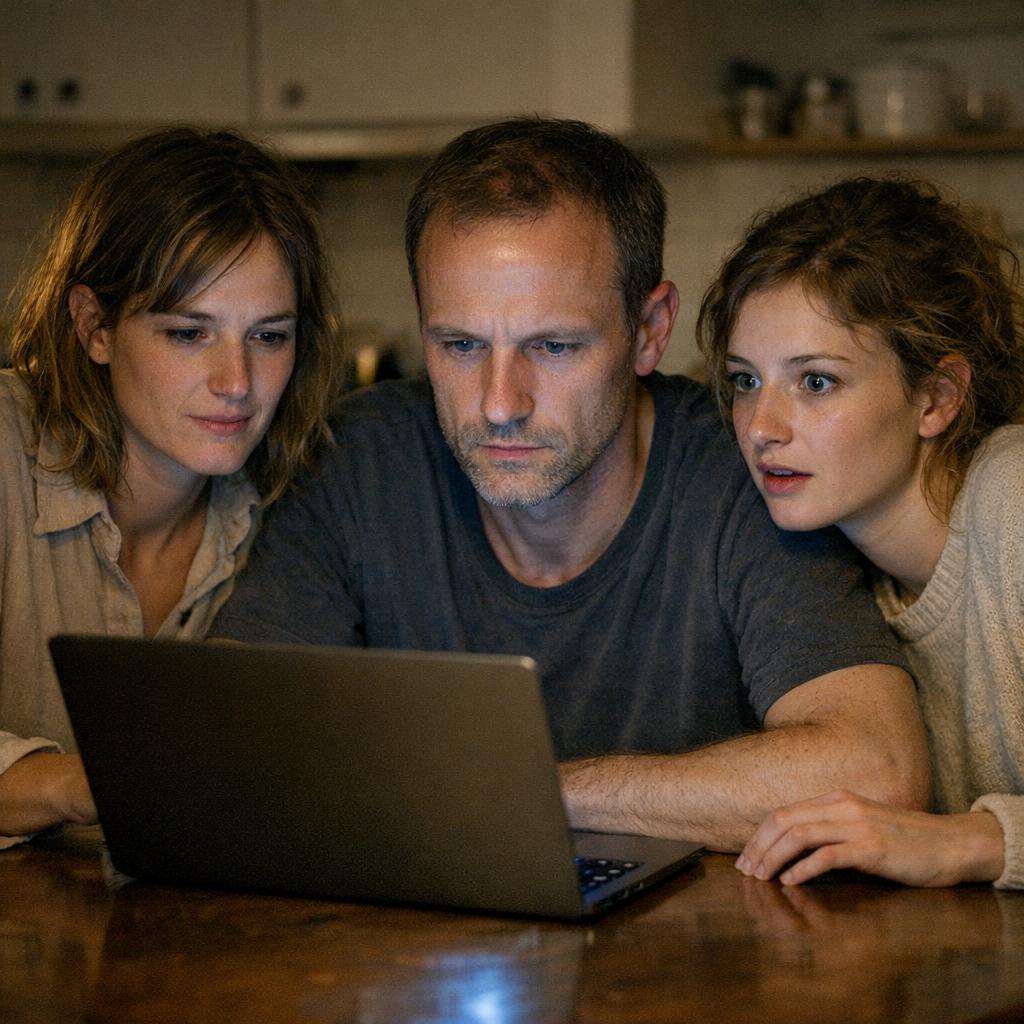 Image by RM AI
The Breaking Point
I was washing dishes when the pounding started, so aggressive I nearly dropped a plate. Through the peephole, I saw Richard swaying on my porch, his face flushed and tie askew. When I cracked the door, the smell of whiskey hit me before his words did. 'Get your daughter,' he slurred, jabbing a finger toward me. 'This ends now.' I blocked the doorway with my body, suddenly grateful my daughter wasn't home. 'You need to leave, Richard.' His laugh was ugly, desperate. 'Ruined my LIFE,' he shouted, voice echoing down the street, 'over teenage DRAMA from TWENTY YEARS AGO!' Lights flicked on across the neighborhood as he continued his tirade, spittle flying from his mouth. When he suddenly lunged forward, I stumbled back, heart hammering—but then Officer Jenkins appeared, seemingly from nowhere, placing a firm hand on Richard's shoulder. 'That's enough,' Jenkins said, his voice carrying the weight of authority Richard had once wielded. As he guided Richard toward his patrol car, Jenkins turned to me. 'I've known Richard thirty years,' he said quietly, his eyes holding mine, 'but that doesn't mean I don't know what he is.' I watched them drive away, wondering how many other people in our town had always known the truth but chosen comfort over courage.
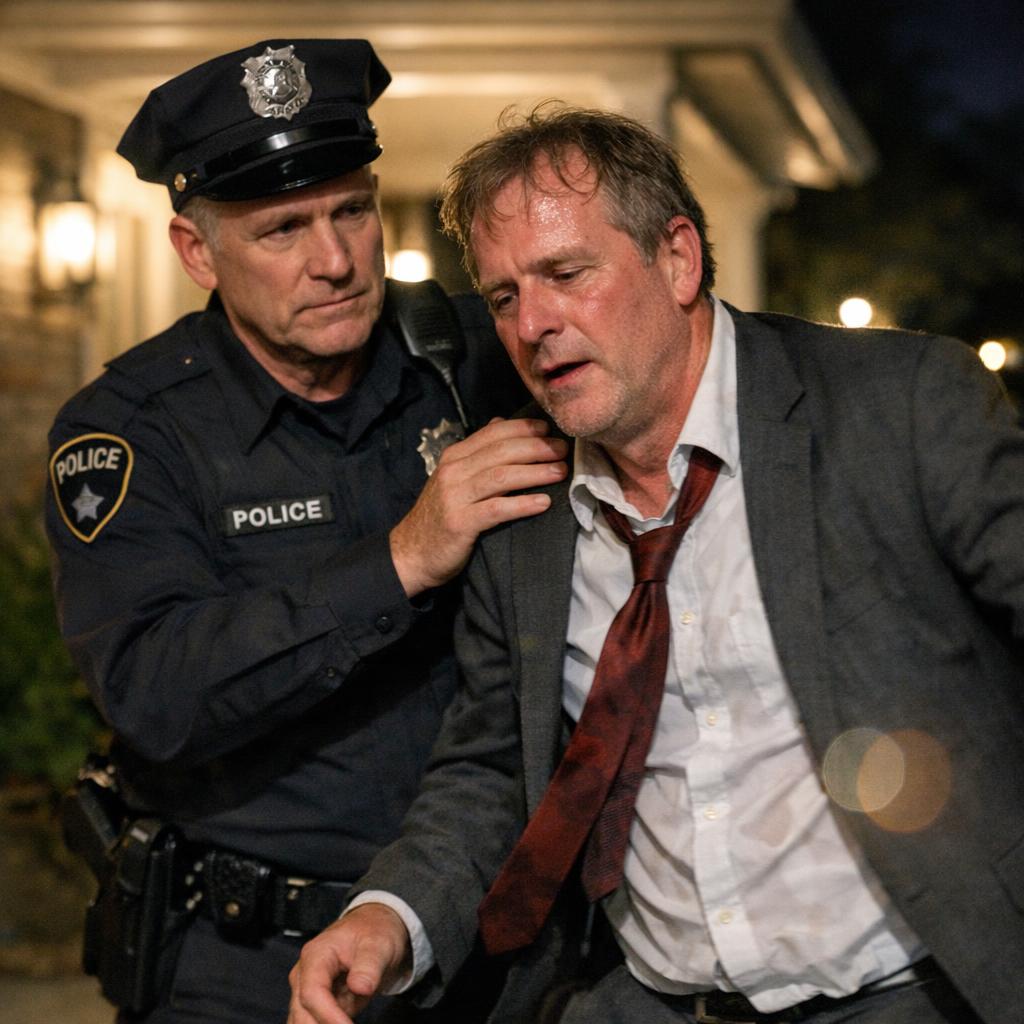 Image by RM AI
The Support Group
Martha's living room felt like a strange mix of therapy session and war council as people filled every available seat. I watched faces I'd known for years transform as they shared stories that had been buried for decades. 'I reported him in 1998,' said a woman I recognized from the library. 'The principal told me I was misinterpreting a dedicated educator's enthusiasm.' Heads nodded in grim recognition. My daughter sat quietly until Martha gently asked if she wanted to speak. When she stood, I held my breath, but her voice didn't waver. 'For twenty years, I thought I was alone,' she said, looking around the room. 'I thought I was the only one who wasn't believed.' Melissa's parents, who'd driven three hours to be here, moved through the crowd afterward to embrace her, tears streaming down their faces. 'Our daughter tried to tell us about him when she was sixteen,' Melissa's father confessed, his voice breaking. 'We told her to stop making up stories about respected adults.' As I watched them holding each other, united by shared pain and newfound purpose, I realized we weren't just victims anymore – we were becoming something Richard had never anticipated: witnesses who refused to be silenced again.
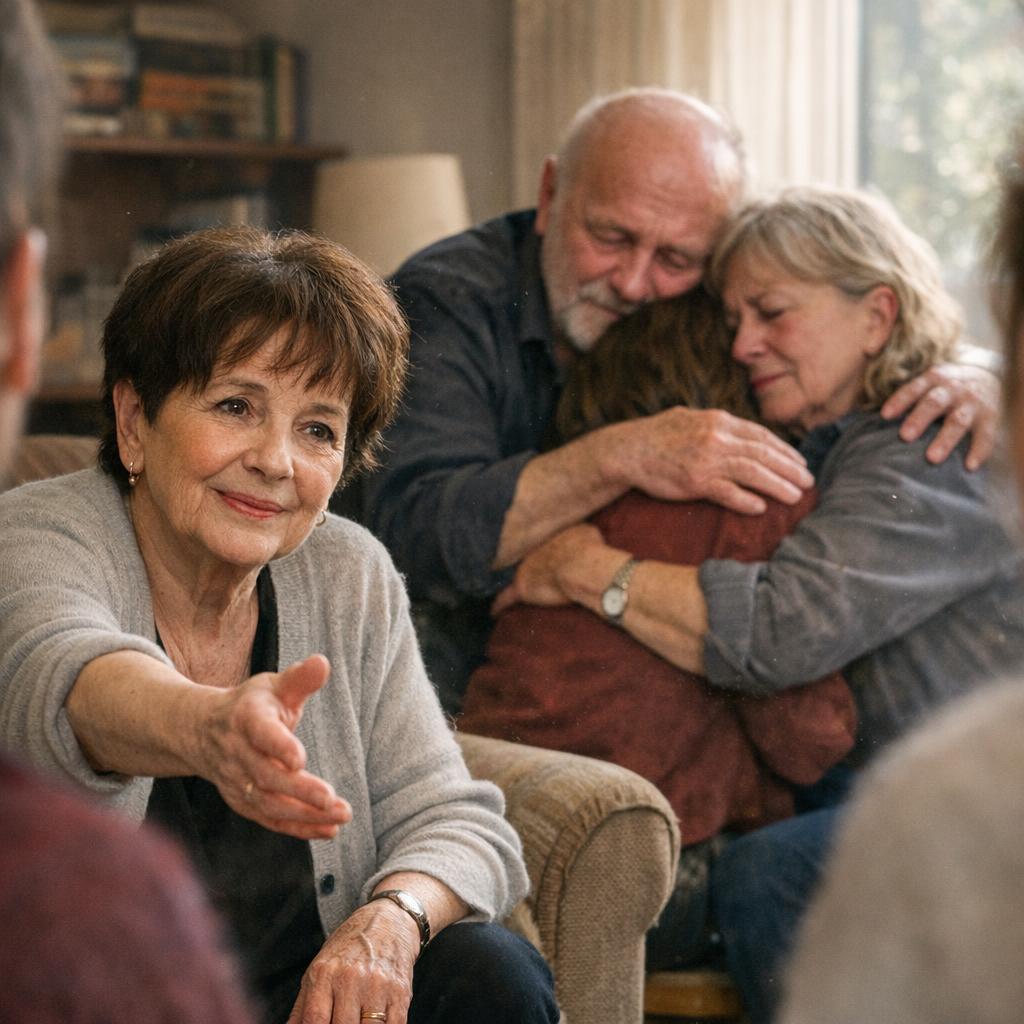 Image by RM AI
The Resignation
The email announcing Richard's resignation arrived at 9:37 AM on a Tuesday, buried between a coupon for carpet cleaning and a newsletter from my book club. 'Due to ongoing health concerns,' it read, as if decades of predatory behavior was some kind of seasonal flu. I nearly threw my phone across the room. By noon, the district had sent a follow-up email announcing Principal Davis's 'early retirement to spend time with family' – the administrative equivalent of slipping out the back door during a house fire you helped start. The local news ran footage of Superintendent Wallace standing behind a podium, sweat beading on his forehead as he promised a 'complete overhaul of reporting procedures' and an 'independent review of past complaints.' My daughter watched the press conference with me, her arms crossed tightly over her chest. 'Policies don't change cultures,' she said, her voice quiet but steel-edged. 'People speaking up changes cultures.' I nodded, thinking of the seven other girls named in Richard's files, wondering how many more remained undocumented. That evening, I received a text from Janet: 'They're calling it a victory. Is that how it feels?' I stared at her message for a long time before responding. Victory wasn't the word I'd use for what we'd achieved – it felt more like the first painful breath after being underwater too long, necessary but burning all the same. What none of us realized then was that Richard's resignation wasn't the end of anything – it was just the beginning of a much larger reckoning.
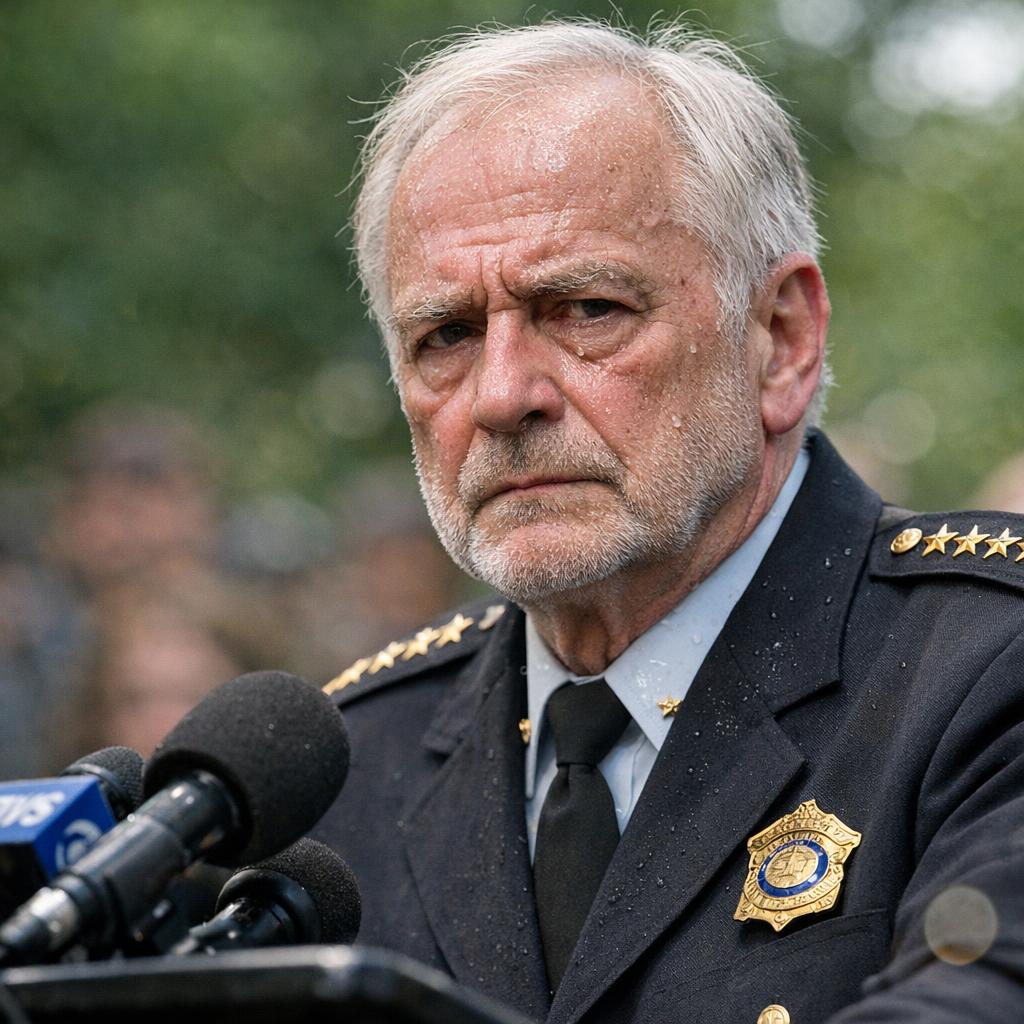 Image by RM AI
The Legal Process
The conference room at Martha's law firm felt both intimidating and hopeful as we gathered around a massive oak table. Diane Levinson, our attorney with her trademark red glasses and no-nonsense demeanor, spread out documents like battle plans. 'I won't sugarcoat this,' she said, tapping her pen against a timeline that stretched across decades. 'The statute of limitations means Richard won't see jail time for what he did to most of you.' My daughter's shoulders tensed beside me, but Diane wasn't finished. 'However,' she continued, her voice taking on an edge that made me sit straighter, 'the evidence of ongoing cover-ups and the recent payments create a whole new legal avenue.' Five women, including my daughter, exchanged glances across the table – former strangers now bound by shared trauma and determination. When Melissa asked about the emotional toll of depositions, my daughter spoke up. 'This was never about punishment,' she said quietly. 'It's about making sure the truth is on record.' Later, as we signed preliminary paperwork, I noticed how each woman's hand trembled slightly before steadying – a perfect metaphor for the journey ahead. What none of us could have anticipated was how quickly the school board would try to buy our silence, or how their first settlement offer would arrive with strings attached that would make even Diane gasp in disbelief.
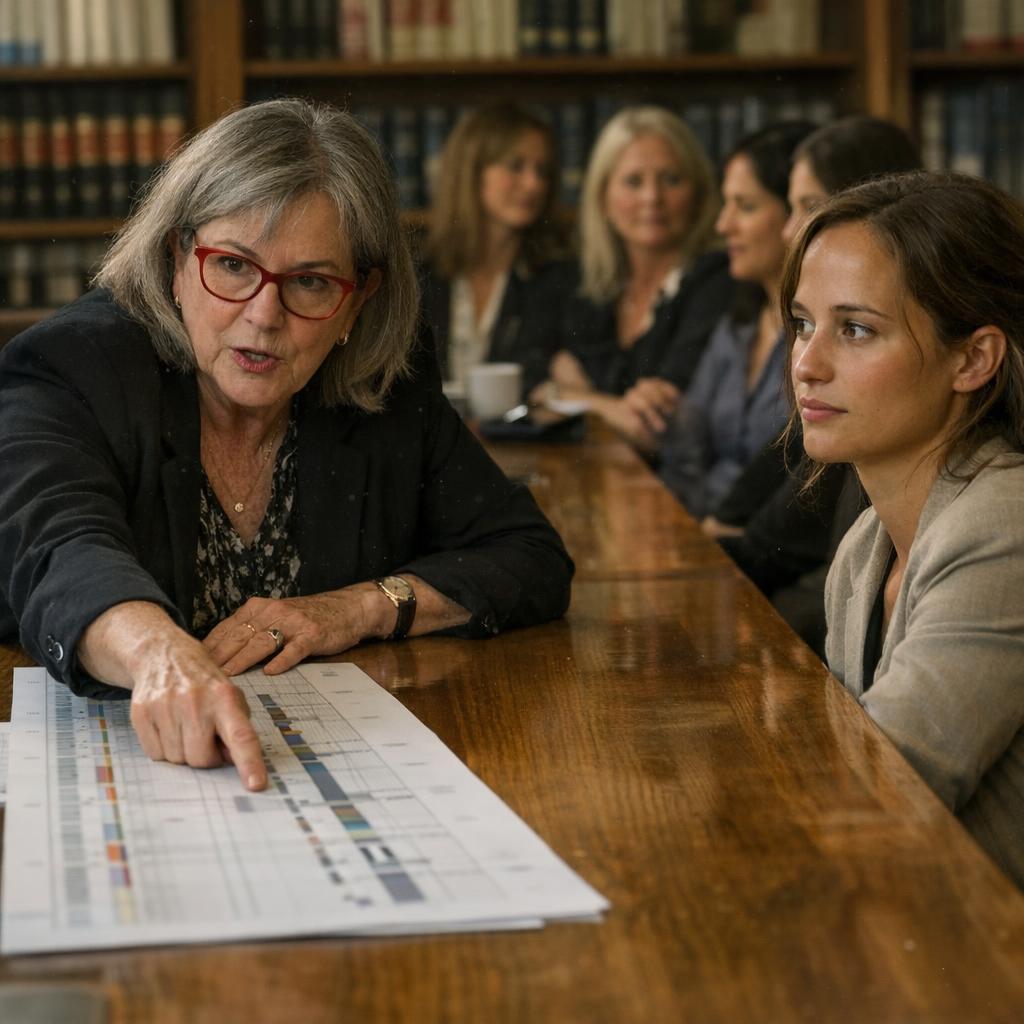 Image by RM AI
The Reconciliation Attempt
I was washing dishes when I heard the doorbell. Through the window, I spotted my ex-husband shifting nervously on the porch, looking like he'd aged a decade since I'd last seen him. 'I need to talk to her,' he said simply when I opened the door. I nodded, feeling a strange mix of resentment and relief as I called for my daughter. The look they exchanged contained twenty years of complicated history. I gave them privacy, retreating to the garden where I pretended to weed while actually straining to hear any raised voices. An hour passed before the back door slid open. My daughter's eyes were red-rimmed, but there was something different about her posture – as if someone had finally lifted a weight she'd been carrying since she was eighteen. 'He apologized,' she told me later that night as we sat on the porch swing. 'Not just for then, but for every time he chose his comfort over my truth.' She traced the rim of her tea mug, a gesture so reminiscent of her teenage self that my heart ached. 'It's not forgiveness exactly,' she added, 'but it's a beginning.' That night, I paused outside her bedroom door, a habit I'd developed since Jenna's arrival, listening for the restless tossing that signaled another nightmare. Instead, I heard only the deep, even breathing of someone finally at peace. As I turned to go, I wondered if reconciliation with the past was sometimes less about forgiveness and more about finally being seen for who you really are.
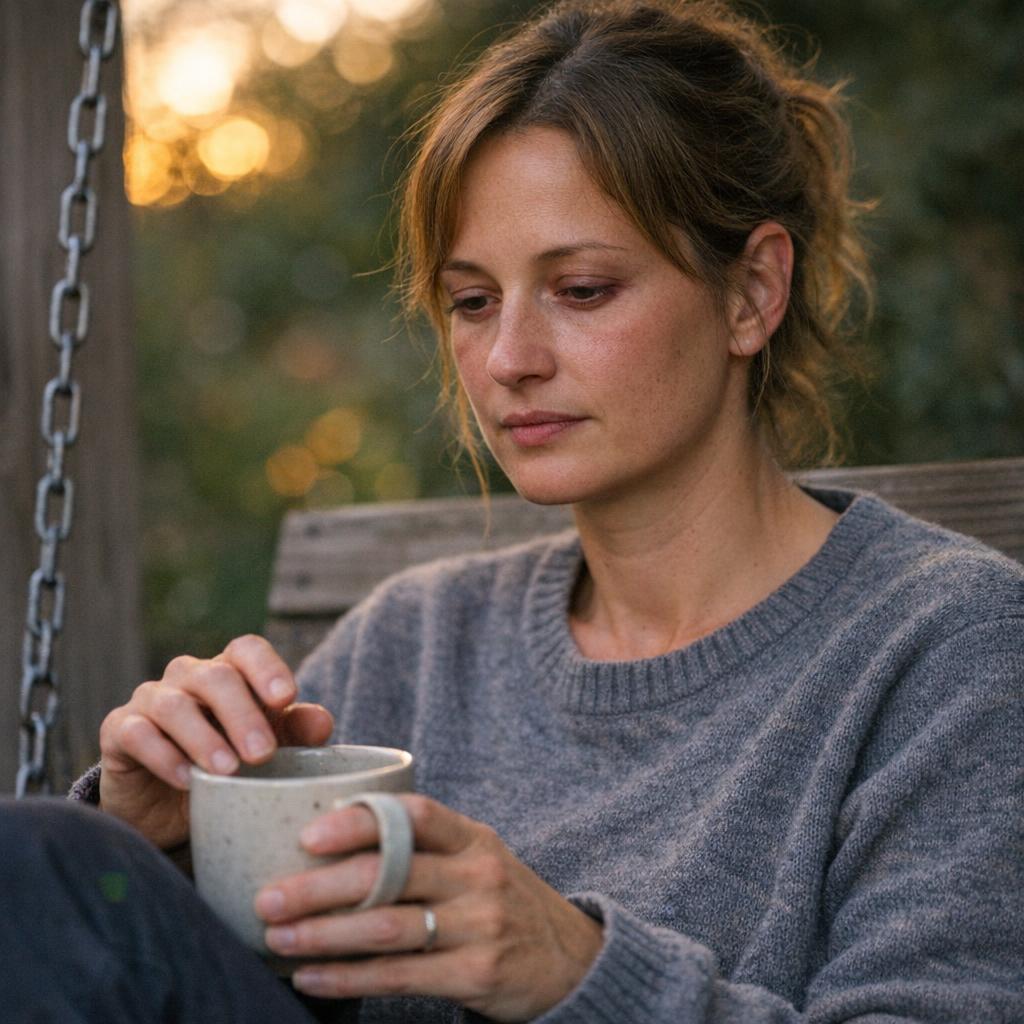 Image by RM AI
The Community Meeting
The high school auditorium hadn't been this packed since graduation season. I sat beside my daughter, our hands clasped so tightly I could feel her pulse against my palm. Superintendent Wallace stood at the podium looking like a man facing a firing squad, flanked by two new school board members who'd replaced those who'd hastily resigned. 'We are committed to institutional change,' he promised, his words echoing hollowly through the room. When they opened the floor for comments, the line at the microphone stretched down the aisle and wrapped around the back wall. A retired English teacher spoke first, her voice quavering as she described reporting Richard in 1992 only to be transferred to another school. Then came parents, former students, even the school nurse who'd documented suspicious patterns for years. What struck me most wasn't just the stories about Richard, but how many people named other teachers, other administrators, other schools entirely. 'This isn't about one bad apple,' a woman in her sixties declared, staring directly at the board. 'This is about the orchard that protected him.' When my daughter finally rose to join the line, I felt a surge of terror and pride so intense it nearly took my breath away. What none of us realized then was that this meeting wasn't just our community's reckoning – it was about to become national news.
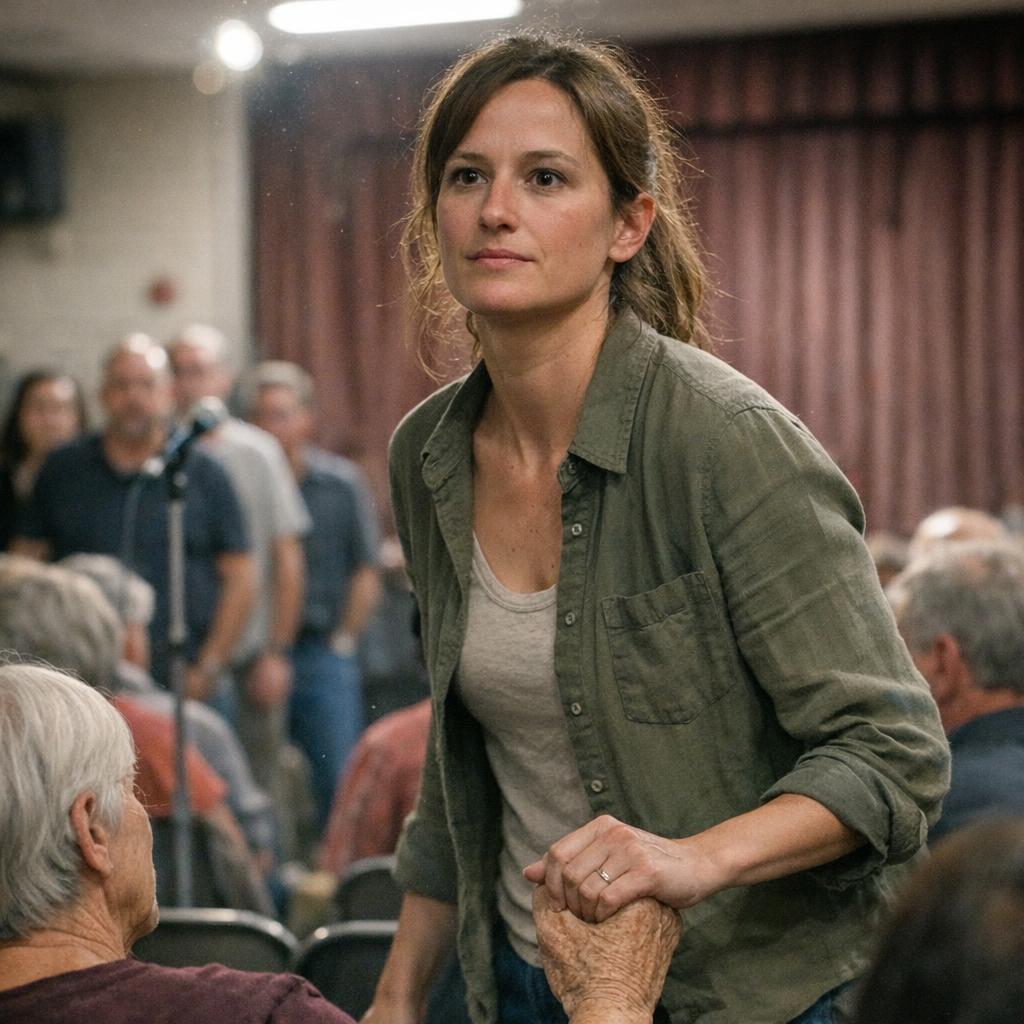 Image by RM AI
The Unexpected Letter
The cream envelope arrived on a Tuesday, nestled between bills and junk mail like a landmine in plain sight. I recognized the monogram immediately – PHH in elegant navy script. Patricia Harmon's handwriting was as perfect as her garden parties had always been. My hands trembled slightly as I slid my finger under the seal. 'I've filed for divorce,' she wrote on expensive stationery that probably cost more than my weekly grocery budget. 'For thirty years I told myself I didn't know, even when I did.' I sank into my kitchen chair, reading her confession – not just about her marriage, but about her complicity. 'I'm not asking for forgiveness, but I want you to know I've given your lawyer information about Richard's finances and the payments he made to keep people quiet. Use it however you need to.' When my daughter came home, I wordlessly handed her the letter. She read it twice, her expression shifting from surprise to something more complex. 'Sometimes the people you least expect find their courage,' she finally said, placing the letter carefully back on the table. That night, I couldn't sleep, thinking about Patricia in her empty mansion, finally choosing truth over comfort after three decades of looking the other way. What none of us realized then was that Patricia's letter wasn't just evidence – it was about to become the key that unlocked everything Richard had tried to bury.
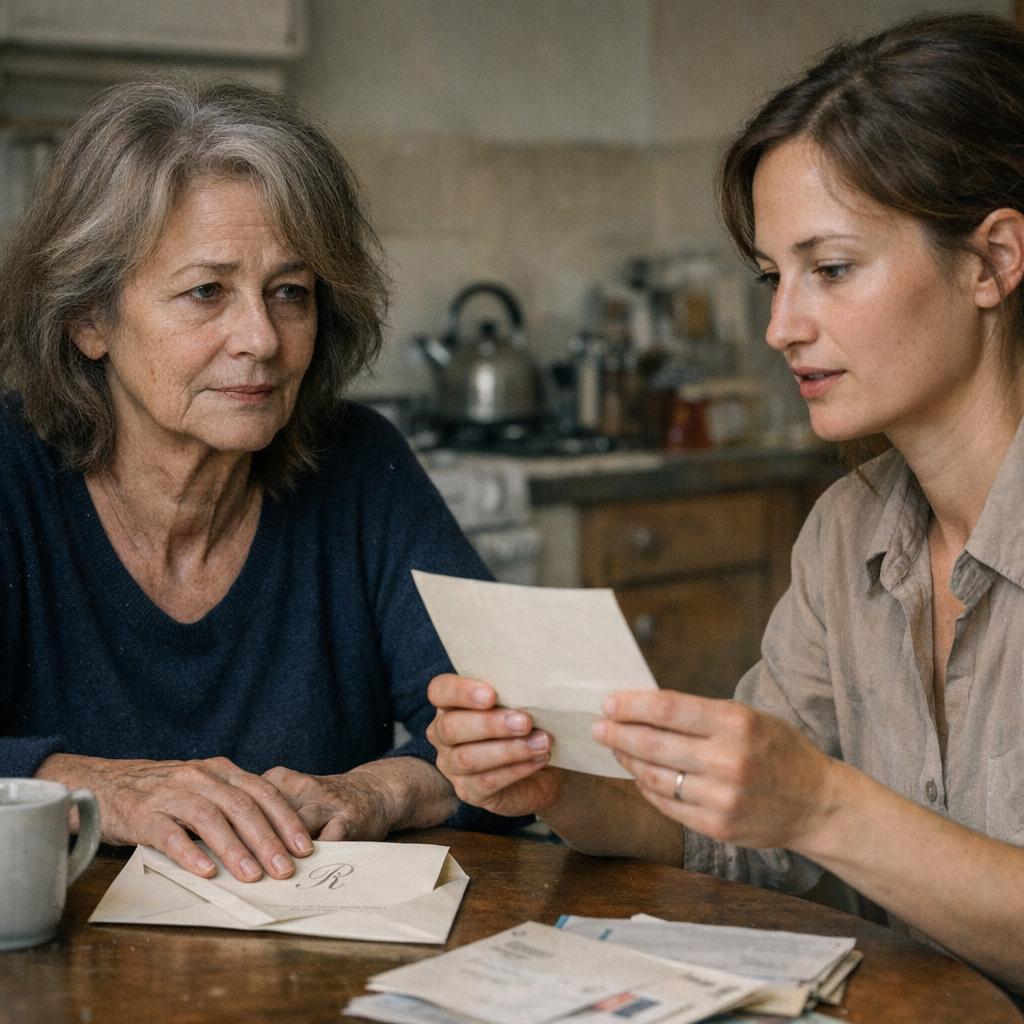 Image by RM AI
The Settlement Offer
The manila envelope from Richard's legal team arrived on a Friday afternoon, thick with papers and implications. Diane spread the settlement documents across my dining room table – the numbers were staggering, enough to pay off mortgages and fund college educations. 'They're buying your silence,' she explained, pointing to the confidentiality clauses highlighted in yellow. 'Every woman who signs agrees never to speak publicly about what happened.' I watched the other women's faces as they processed this – the relief, the temptation, the conflict. Martha kept recalculating the figures, whispering about her son's medical bills. Melissa stared out the window, twisting her wedding ring. When my daughter finally spoke, her voice was barely audible. 'What if I don't want to be quiet anymore?' she asked. Later that night, as we sat on the porch swing that had held so many of our difficult conversations, I took her hand. 'Whatever you choose, I'll support you,' I told her, watching the streetlights flicker on. 'But remember that your voice is powerful precisely because you're using it.' She nodded, tears catching the light. 'Mom,' she whispered, 'what if the money isn't worth the weight of carrying another secret?' What she didn't know yet was that Patricia Harmon had just called my cell phone with information that would make Richard's settlement offer look like the desperate move it truly was.
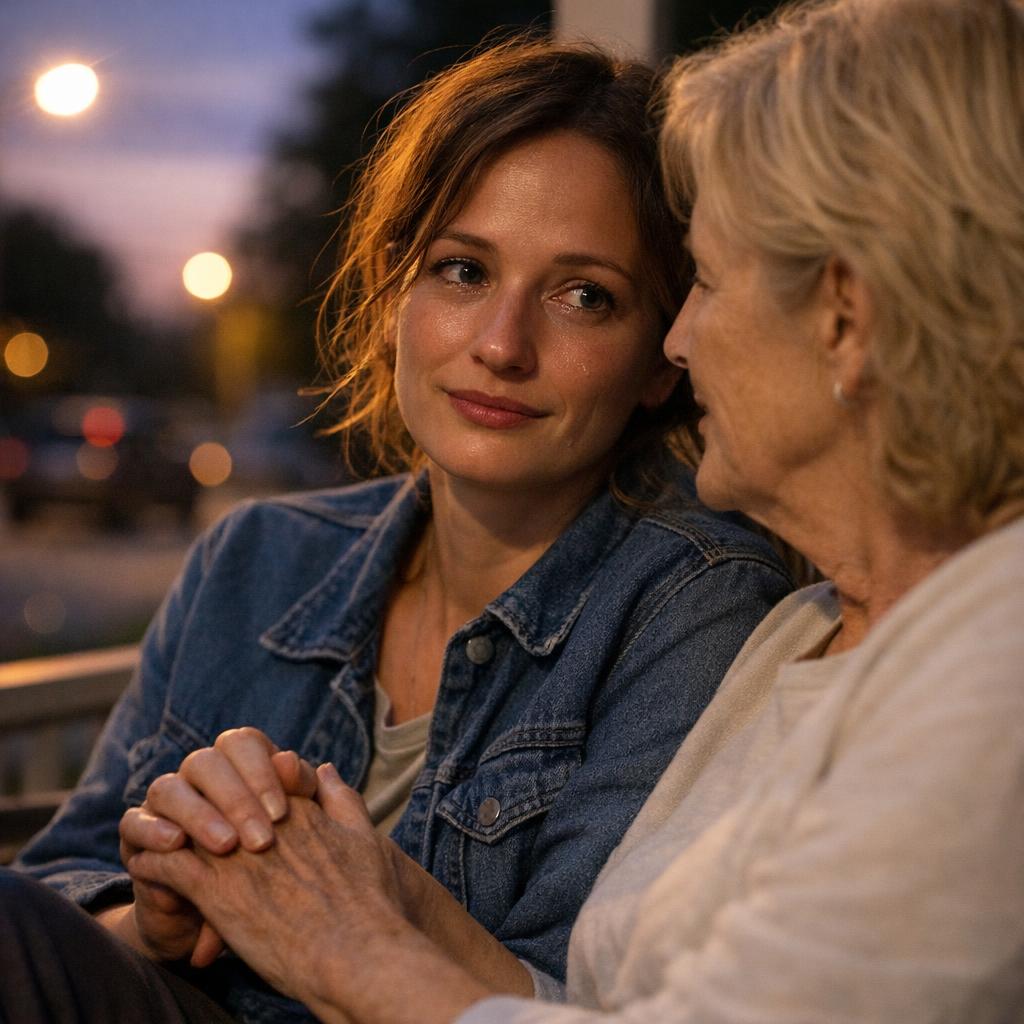 Image by RM AI
The Decision
The morning after the settlement papers arrived, my dining room looked like a war room. Five women, five decisions to make. We sat in silence, the only sound the occasional clink of coffee mugs against the table. 'I'm not signing,' my daughter finally said, her voice steady but quiet. Martha and Jenna nodded in agreement, while Melissa and Beth exchanged glances before admitting they needed the money. 'My son's medical bills,' Beth explained, tears welling. 'I understand why they need to move on,' my daughter said later as we washed dishes side by side. 'But I've been silent for twenty years. I won't be bought off now.' Richard's legal team responded with exactly the kind of intimidation we expected – threatening letters outlining a 'protracted legal battle' that would 'exhaust all available resources.' They even had the audacity to mention my daughter's 'questionable credibility' given her age at the time. When Elena's follow-up article hit the Sunday edition, detailing these pressure tactics with quotes from anonymous sources (Patricia, I suspected), the tide of public opinion shifted dramatically. My phone buzzed constantly with messages from community members offering support, legal contacts, even fundraising ideas. What none of us anticipated was the envelope that arrived the next day from Richard's son Michael, containing documents that his father never imagined would see the light of day.
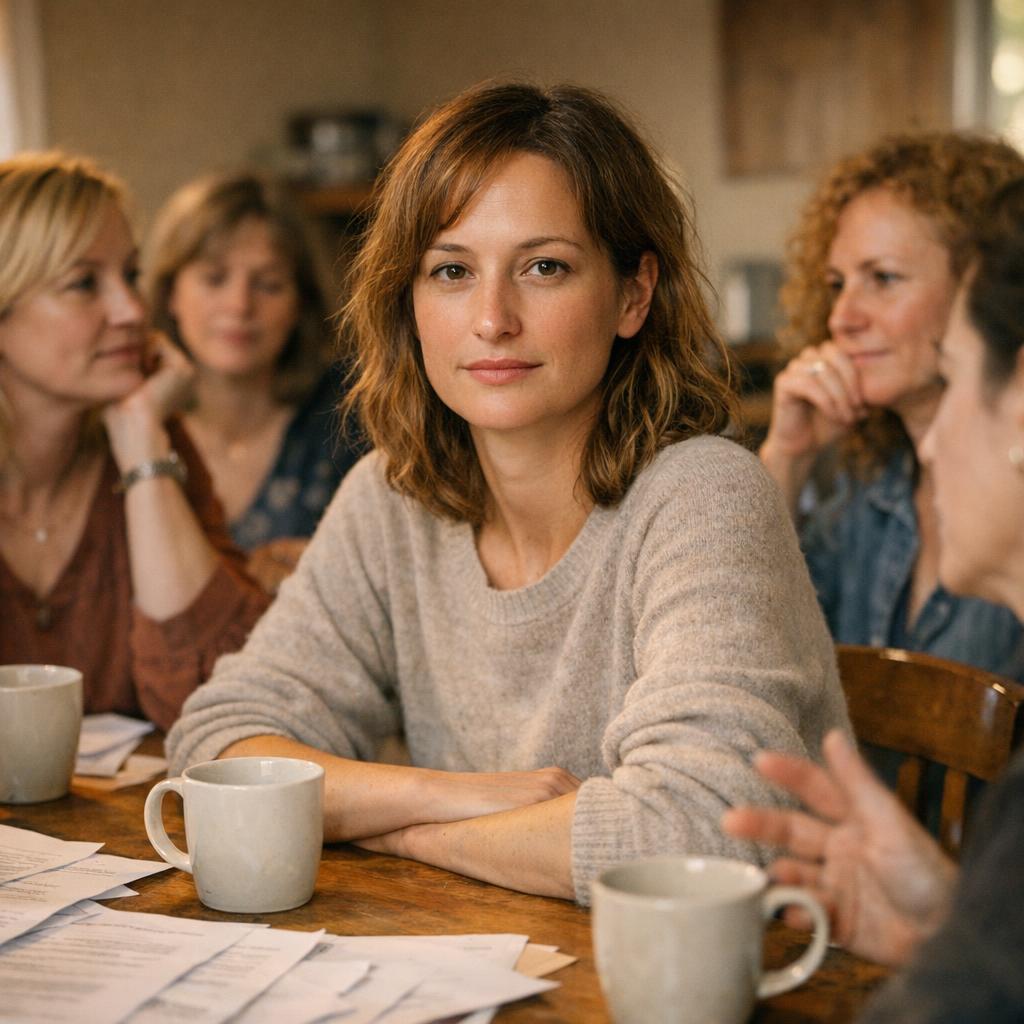 Image by RM AI
The Deposition
The law firm's conference room felt sterile and intimidating as I sat outside, my hands wrapped around a paper cup of coffee that had long gone cold. Through the heavy oak door, I could only catch fragments of my daughter's voice – steady, clinical, unflinching as she recounted what happened when she was eighteen. For three hours, I sat there, feeling every unheard word like a physical pain in my chest. Other people passed by – paralegals with sympathetic smiles, attorneys with purposeful strides – but I existed in a bubble of suspended time, remembering the girl who left for that 'special program' and returned with shadows behind her eyes. When the door finally opened, my daughter emerged looking simultaneously drained and lighter, as if she'd set down a burden she'd carried for decades. 'He couldn't even look at me, Mom,' she said, her voice quiet but strong as we walked to the elevator. 'All these years I thought he had the power, but he's just a sad old man who can't face what he did.' I wrapped my arm around her shoulders, feeling the slight tremble that betrayed her exhaustion. What neither of us realized then was that Richard's inability to meet my daughter's gaze wasn't just shame – it was fear of what was coming next.
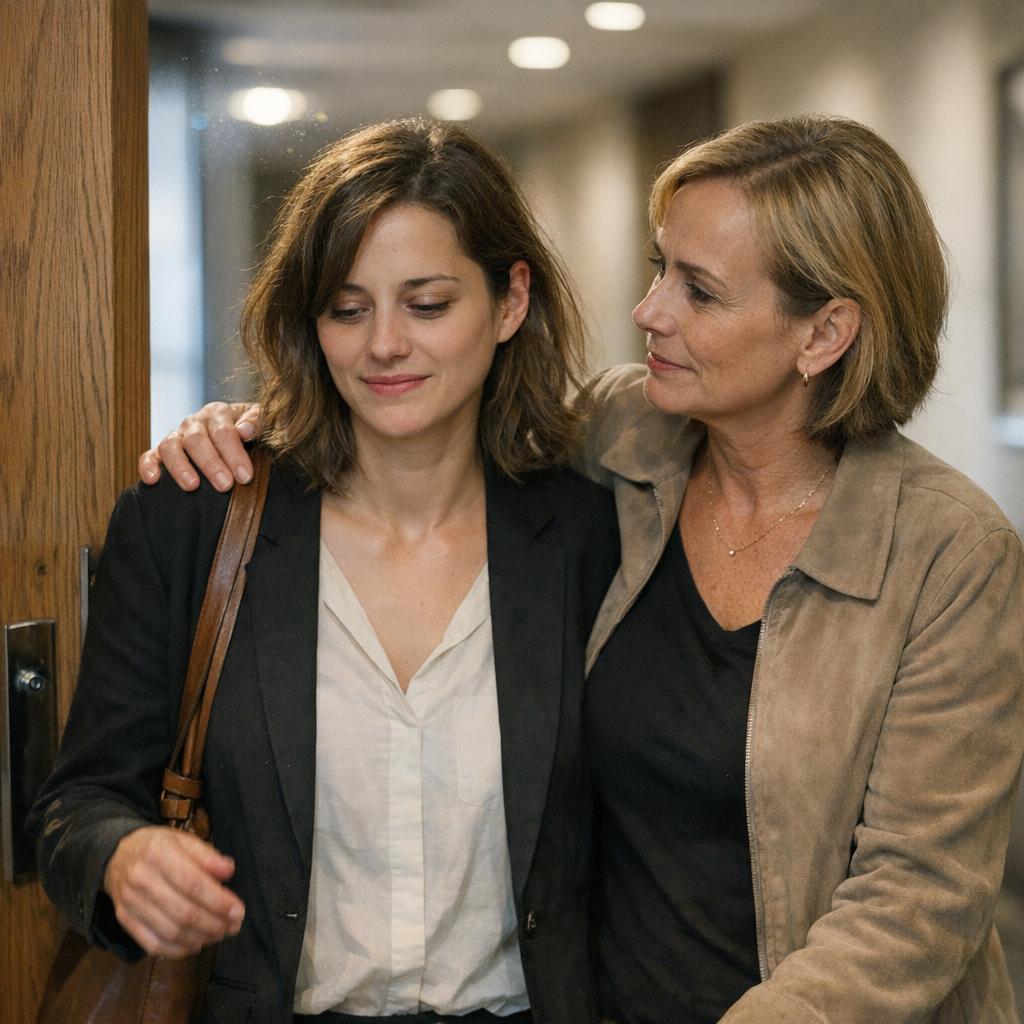 Image by RM AI
The New Beginning
I was chopping vegetables for dinner when Jenna appeared in the kitchen doorway, her posture different somehow – more upright, more certain. 'I found an apartment,' she announced, a small smile playing at her lips. 'I'll be moving out next week.' My knife paused mid-slice as I processed her words. 'I came here needing a safe place to land,' she continued, leaning against the counter, 'but I found something more important – the courage to stand up.' She told us about accepting a position with a nonprofit that supports survivors of sexual abuse, her eyes bright with purpose rather than tears. My daughter squeezed Jenna's shoulder, their shared history creating a bond I was only beginning to understand. That evening, the three of us moved around my kitchen in a dance that felt surprisingly natural – chopping, stirring, laughing. The conversation flowed easier than it had in weeks, unburdened by secrets. As we sat down to eat, I noticed how my daughter's laugh no longer seemed to catch in her throat, how Jenna's shoulders had lost their perpetual tension. The road ahead would still be difficult – depositions, possible trials, community fallout – but watching these two young women clink glasses across my dinner table, I realized something profound: sometimes healing doesn't look like closure; sometimes it looks like opening a new door and walking through it together.
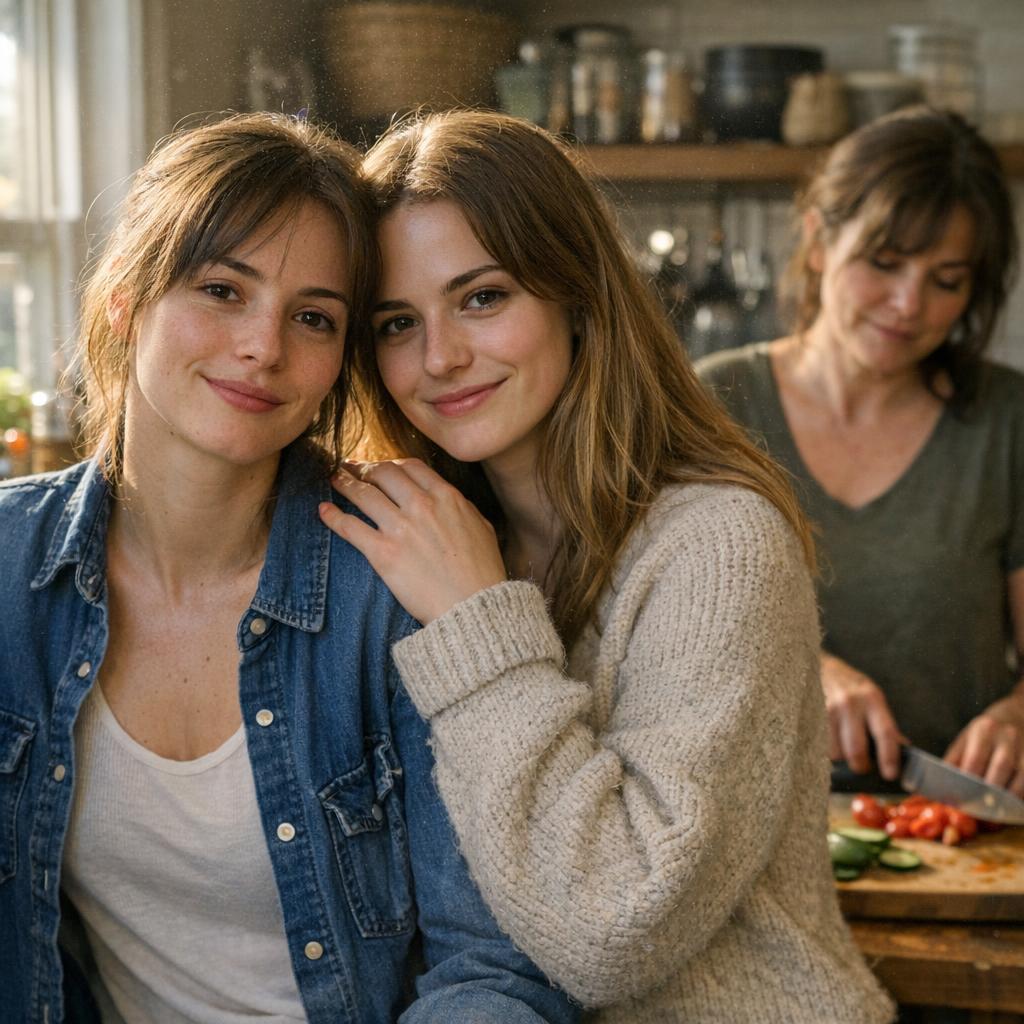 Image by RM AI
The Memorial
The high school courtyard had been transformed. Where there once was just concrete and a few neglected benches, a garden now bloomed with resilience and remembrance. I stood beside my daughter as Melissa's parents unveiled the memorial stone – "For those who speak truth to power" etched in elegant script beneath a blooming dogwood tree. My daughter squeezed my hand as she approached the garden with a smaller stone, this one bearing Melissa's name. She placed it gently at the base of the memorial, her fingers lingering for a moment. "She would have loved this," she whispered. I noticed several of Richard's former colleagues hovering at the edges of the gathering, their faces etched with the particular discomfort that comes from realizing you've been on the wrong side of history. One by one, they approached different survivors, offering awkward but seemingly sincere apologies. When the new principal stepped to the podium and announced mandatory training for all staff on recognizing and reporting inappropriate behavior, I watched my daughter's face. The slight upward curve of her lips wasn't quite a smile – it was something more powerful: vindication. As we walked back to the car afterward, she paused, looking back at the garden. "You know what's strange, Mom? I always thought closure would feel like an ending, but this feels like a beginning." What neither of us realized then was that the memorial garden would soon become a gathering place for others with stories they'd kept buried for far too long.
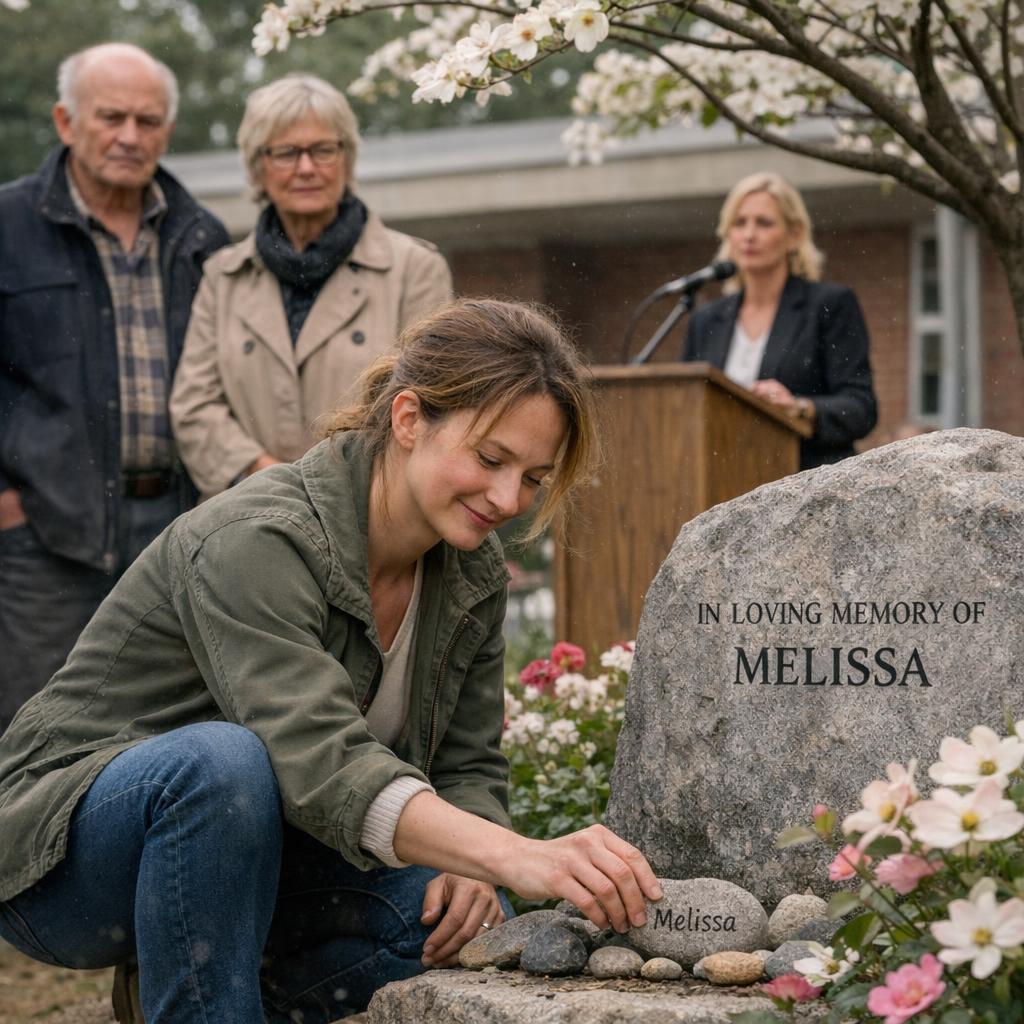 Image by RM AI
The Continuing Story
The dining room table that once held settlement papers and legal documents now cradles steaming dishes of comfort food as I look around at the faces gathered for our Sunday dinner. Six months after Jenna appeared at my door with that too-light suitcase, we've created something I never expected: a family forged in fire. My daughter laughs openly now, serving Martha an extra helping of mashed potatoes while Jenna pours wine for Beth, who's finally stopped checking her phone for threatening messages. 'To speaking truth,' my daughter says, raising her glass, and the chorus of voices that joins hers makes my heart swell. The lawsuit drags on, with Richard's lawyers filing motion after motion to delay, but that's no longer what drives us. What matters is this circle of women who've reclaimed their voices, their truth, and most importantly, their power. 'You know,' Martha says, passing the bread basket, 'I used to think healing meant forgetting. Now I realize it means remembering differently.' I nod, watching these women who've become my extended family, thinking about how the most important change isn't what happens to Richard, but what's happened to us. As we clear the plates for dessert, my phone buzzes with a text that makes me freeze – a message that proves our fight is far from over.
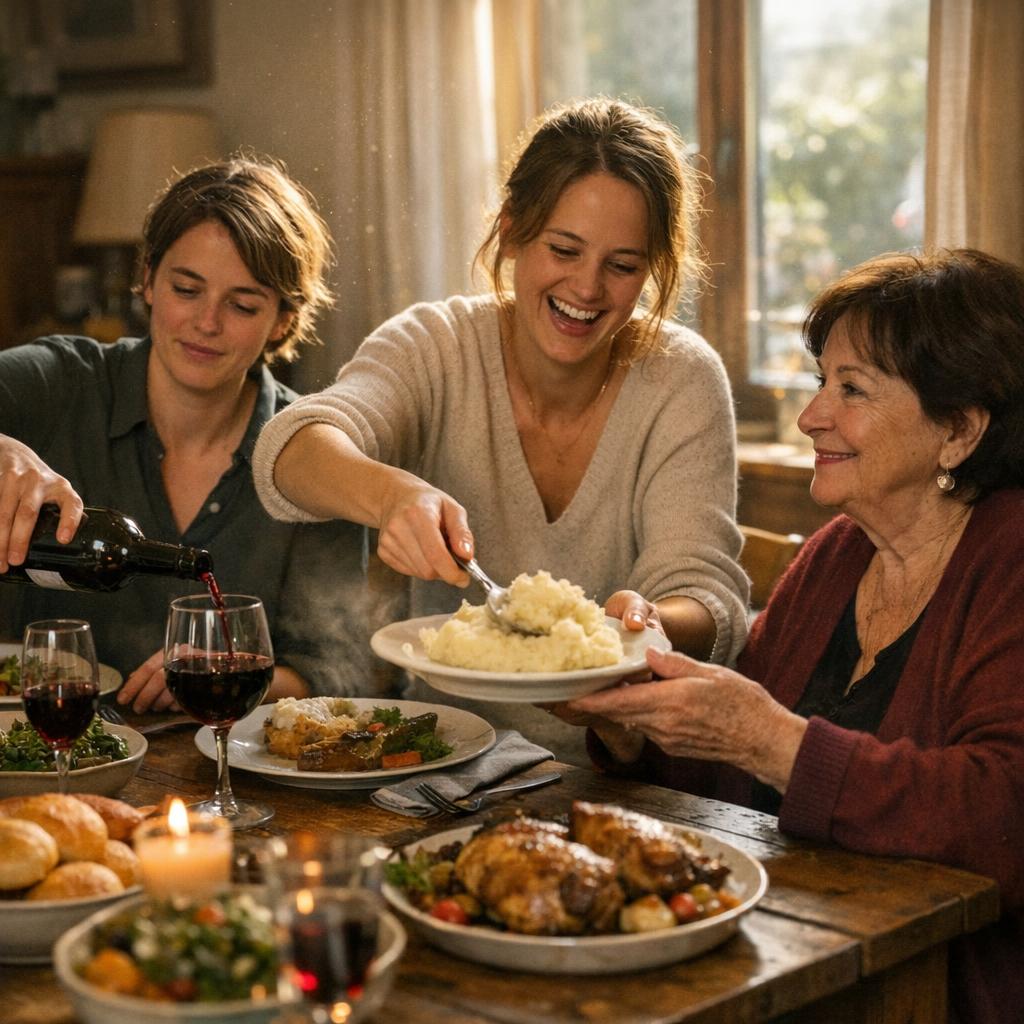 Image by RM AI
KEEP ON READING

Remembering Pope Stephen VI, The Guy Who Made A Cadaver…
A Godly Man With A Grudge. Jean-Paul Laurens on WikimediaYou…
By Ashley Bast Oct 31, 2025
From School Plays To Starting A Cult: 20 Of The…
The Books That Made Us. Many people will tell you…
By Farva Ivkovic Jan 31, 2025
20 Facts About Jane Grey, The Forgotten Queen Of England
A Quick, Messy, and Tragic Reign. Lady Jane Grey never…
By Maria Cruz Jan 31, 2025
20 Most Significant Cars In American History
Driving Into the Past. The car has defined America as…
By Farva Ivkovic Dec 31, 2025
10 Times The Lakers Made History & 10 Moments That…
Let’s Talk About the Lakers. Few teams have brought highs…
By Farva Ivkovic Dec 31, 2025
10 Historical Royals Known For Their Intelligence & 10 For…
The Weirdest Kings. Intelligent royals brought us innovative and progressive…
By Farva Ivkovic Dec 31, 2025