

Everyone Thought They Were Heroes, But I Uncovered Their Plot To Take Over The Neighborhood
Everyone Thought They Were Heroes, But I Uncovered Their Plot To Take Over The Neighborhood
The Morning After the Storm
I didn't sleep much that night. The storm had come through fast and loud, the kind that rattles your windows in their frames and makes you lie in the dark wondering if the roof is going to hold. By the time the sun came up, I already knew it was bad. I pulled on my shoes and stepped outside, and what I saw stopped me at the edge of my porch. Mrs. Calloway's oak tree — the one she'd planted when her kids were small — was lying across the street, roots and all. Three houses down, a section of roof had peeled back like the lid of a tin can, pink insulation exposed to the morning air. I walked the block slowly, and the further I went, the worse it got. Gutters torn loose. Siding buckled. One basement window I passed was already dark with water creeping up the glass from inside. Most of my neighbors are older, like me, or living alone. I kept thinking about that as I walked — who was going to call the contractors, who was going to climb up on those roofs, who was going to haul all this debris away. I didn't have an answer. I just stood there in the middle of the block, looking at what the night had left behind, the silence of it settling over everything like a second storm.
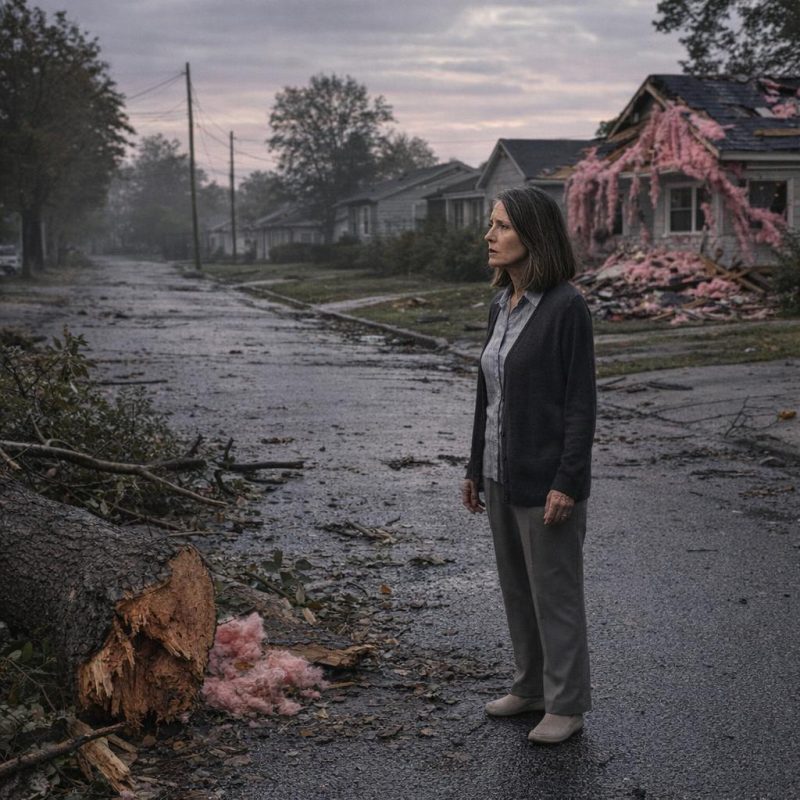 Image by RM AI
The Volunteers Arrive
It was the third morning after the storm when I first noticed them. A young man and a young woman, moving through the neighborhood with a kind of calm purpose that stood out against all the anxious milling around the rest of us had been doing. He was tall with dark hair, carrying a clipboard and a toolbox. She had auburn hair pulled back and was writing things down on a notepad as she talked to people. I watched from my front steps as they knocked on doors, introduced themselves, and actually listened to what people said. I found out their names were Caleb and Morgan. By that afternoon, they had a small crew of volunteers clearing the fallen oak from the street. By evening, they'd tarped two damaged roofs. I hadn't seen anything organized like that since the neighborhood association used to hold its annual cleanup, and even that was never this efficient. I walked over and introduced myself, and Caleb shook my hand with a firm, easy grip and told me they were with a community relief organization. Morgan smiled and said they'd been doing this kind of work for a couple of years now. I felt something loosen in my chest that I hadn't realized had been tight. These two strangers had shown up and started doing what the rest of us didn't know how to begin. Then Caleb gathered the volunteers near the curb and told them he had a plan to make sure every single household on the block got the help it needed.
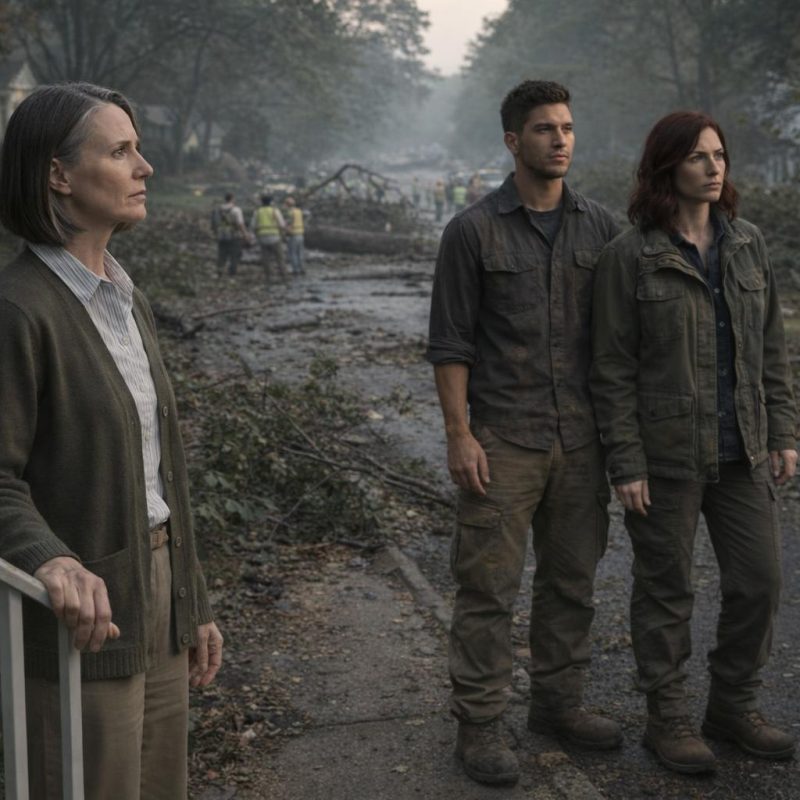 Image by RM AI
Acts of Kindness
Over the next week, I watched them work like I hadn't seen people work in a long time. Caleb would show up before eight in the morning with a crew of volunteers, and they wouldn't stop until the light was gone. They patched three roofs in a single day — I counted. Morgan had organized a meal rotation, and she was out every afternoon delivering hot food to the neighbors who couldn't get around easily. Mr. Petersen on the corner, who hadn't left his house since his hip surgery, told me it was the first hot meal he'd had since the storm hit. I started keeping a kind of mental tally of everything I saw them do, not because I was suspicious of anything, just because it was remarkable. Debris hauled away. A generator delivered to the Nguyens when their power stayed out. A broken fence post replaced without anyone asking. The volunteers they'd brought in were young, mostly college-aged, and they took direction well. Caleb had a way of explaining what needed doing that made people feel capable rather than bossed around. Morgan was quieter but just as steady. One afternoon I was standing near the community center when I saw her crouched beside Doris, my neighbor and friend, who had been crying. I didn't hear what Morgan said, but she had her hand on Doris's arm and she stayed there until Doris's shoulders stopped shaking. I stood there watching, and something in me went very still and very grateful.
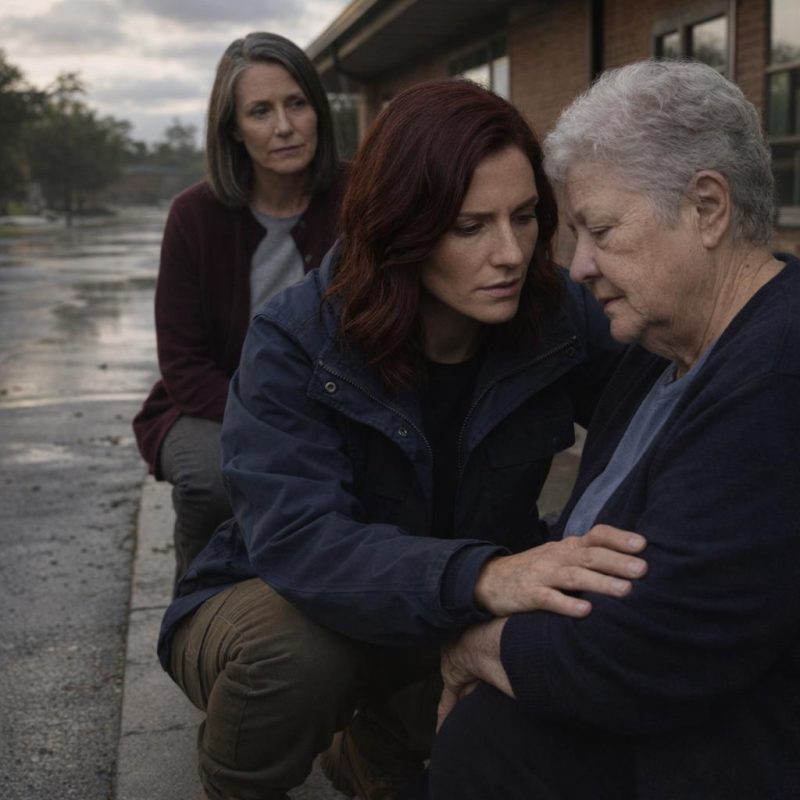 Image by RM AI
Joining the Effort
I'm not someone who sits on the sidelines for long. After ten days of watching from the edges, I walked over to the community center they'd turned into a headquarters and told Caleb I wanted to help. He looked genuinely pleased, not in a performative way, just the way someone looks when they're stretched thin and another pair of capable hands shows up. He walked me through the operation himself. They had a whiteboard on one wall with the day's repair crews mapped out by street, and a folding table covered in clipboards tracking which households had been assessed, which had received supplies, and which still needed follow-up. Morgan showed me the supply system — donated goods sorted by category, tagged with the names of residents who'd requested them. It was more organized than I expected, and I told her so. She laughed and said Caleb had a thing about systems. I started that same afternoon, sorting a fresh donation of cleaning supplies and matching them against the request list. It felt good to have something concrete to do. There's a particular kind of helplessness that comes with watching your neighborhood struggle, and having a task — a real, specific task — cut right through it. By the time the evening volunteers cleared out and the center went quiet, I had worked through the whole supply backlog. I settled into one of the folding chairs, looked at the organized shelves and the updated whiteboard, and felt, for the first time since the storm, like things might actually be manageable.
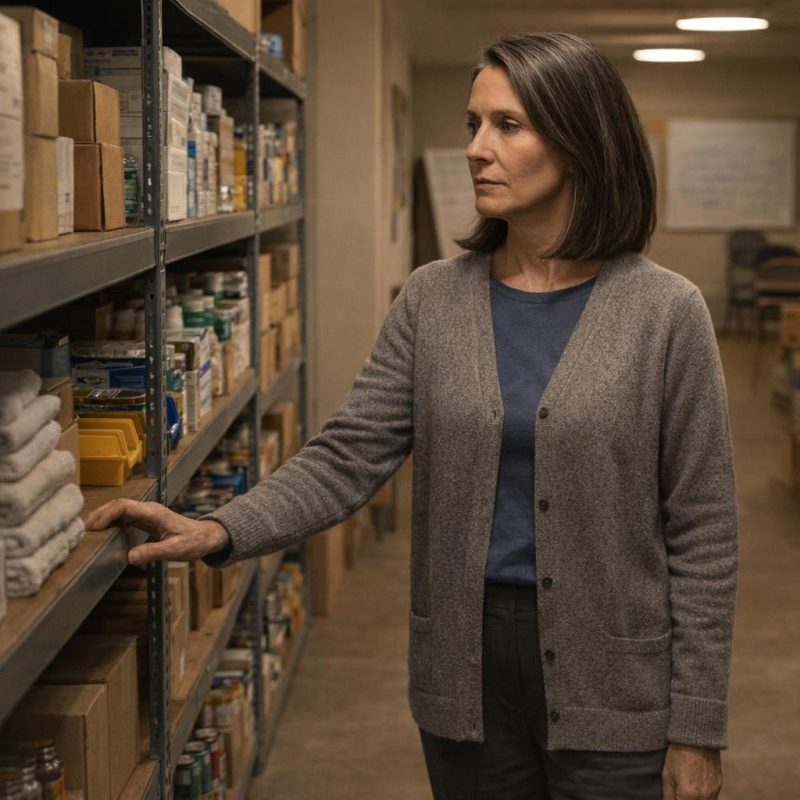 Image by RM AI
Local Heroes
The newspaper story ran on a Thursday. I picked up the paper from my front step the way I always do, and there they were on the front page — Caleb and Morgan, photographed in front of a freshly tarped roof, both of them squinting a little in the morning sun. The headline called them community heroes, which felt exactly right to me. I read the whole article at my kitchen table with my coffee. It quoted several neighbors I knew, including old Mr. Petersen, who said the volunteers had given him back his sense of security. There was a paragraph about the number of homes they'd helped, the meals delivered, the debris cleared. The reporter had done her homework. I cut the article out and set it on the counter, thinking I'd bring it to the headquarters to show the team. When I got there that morning, a few of the volunteers had already seen it and the mood was warm and a little giddy, the way it gets when people who've been working hard finally get told publicly that it mattered. Caleb seemed almost embarrassed by the attention, which made me like him more. Morgan was gracious about it, thanking the volunteers for making the story possible in the first place. I was standing near the supply table, still feeling that quiet pride of being part of something genuinely good, when I looked up and saw the newspaper photographer come through the front door with his camera bag over his shoulder, back for more pictures.
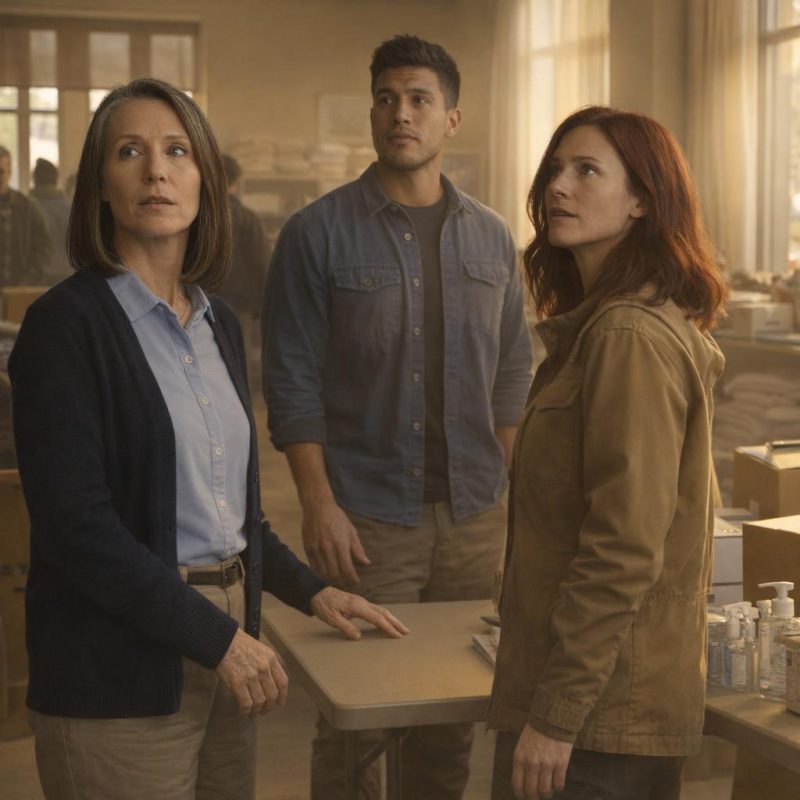 Image by RM AI
Public Praise
The community meeting was held at the high school gymnasium two weeks after the storm. Every folding chair was filled, and people were standing along the walls. I found a seat near the middle and watched the room fill up with faces I recognized — neighbors, local business owners, a few teachers. The mayor spoke first, running through the damage assessments and the city's recovery timeline. Then he paused and said there were two people in the room who deserved special recognition. When he said Caleb and Morgan's names, the applause started before he'd even finished the sentence. I clapped along with everyone else, and I meant it. The city council member who spoke next called their volunteer model something the city should study and replicate. She said it in that careful political way, but I could tell she meant it too. Caleb and Morgan sat in the front row and accepted all of it with a kind of quiet steadiness that I found more impressive than any speech could have been. They didn't grandstand. They didn't make it about themselves. When the mayor asked them to come up and say a few words, Morgan spoke briefly about the volunteers, and Caleb thanked the neighborhood for trusting them. After the formal program ended, people crowded around them. I stayed in my seat and watched the room, feeling something I hadn't felt in a while — a real, uncomplicated hope that the neighborhood was going to come through this. Then the mayor stepped forward, took Caleb's hand in both of his, and thanked him directly, face to face.
 Image by RM AI
The Daily Routine
Three weeks in, I had a routine. I arrived at the community center by eight-thirty, made a pot of coffee, and pulled out the day's volunteer assignment sheet. I knew which crews were going where, which residents were expecting supply deliveries, and which repairs were waiting on materials. Morgan had taught me the tracking system — a color-coded binder that logged every household by street, with columns for initial assessment, work completed, and follow-up needed. I'd gotten comfortable enough with it that she'd started leaving the morning updates for me to enter. Caleb would come through mid-morning, check the board, and usually find something to tease me about — my handwriting, mostly, which he said looked like a doctor's prescription. I didn't mind. It felt like the kind of easy ribbing that happens when people have settled into working together. The center itself had taken on a lived-in quality by then. Donated goods stacked neatly along one wall. A corkboard covered in thank-you notes from residents. The smell of coffee and sawdust that had become oddly comforting. I knew every corner of the place, or thought I did. It was on a Tuesday afternoon, while I was updating the binder at the back table, that I noticed it properly for the first time — a gray metal filing cabinet pushed into the far corner, padlocked, that I had never once seen anyone open.
 Image by RM AI
Becoming Part of the Team
By the end of the fourth week, the headquarters felt like a second home. I knew the volunteers by name, knew which residents were still waiting on repairs, knew that Caleb took his coffee black and that Morgan kept a granola bar in her jacket pocket for the afternoons when things ran long. I handled the morning intake, matched incoming donations to the request list, and had started fielding calls from residents directly so Caleb and Morgan could stay focused on the field work. Caleb told me one afternoon, in that straightforward way he had, that he didn't know what they'd done before I showed up. I laughed it off, but it meant something to me. I'd been retired for four years, and this was the first time since then that I'd felt genuinely useful in a sustained way, not just helpful for an afternoon but actually needed, day after day. The work had a rhythm to it, and I'd found my place inside that rhythm. I was at the back table one afternoon, working through the week's supply log, when I heard Morgan's voice from the hallway. She was on her phone, speaking in a low, even tone. I wasn't trying to listen, but the center was quiet and her words carried. She said she needed to update certain files that night, before the morning.
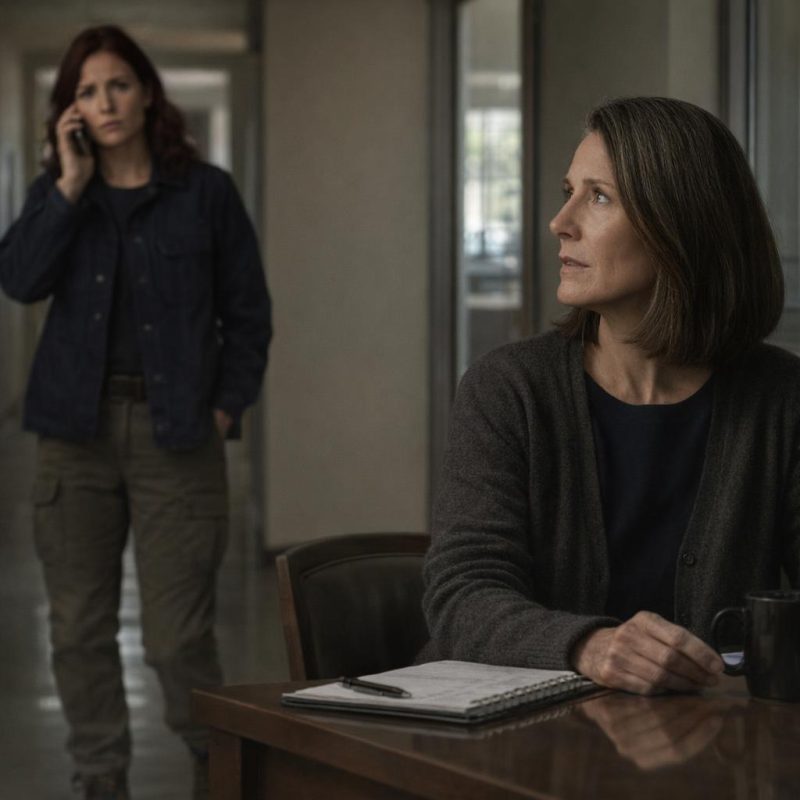 Image by RM AI
The Wrong Folder
Jack showed up mid-morning carrying a stack of folders fanned out in both arms, looking like he was one wrong step away from dropping all of them. He was one of the newer volunteers — a college kid, gangly and distracted, always wearing some university sweatshirt and moving like his brain was three steps ahead of his feet. He asked if I could help sort the volunteer assignment sheets into the right piles before the afternoon shift started. I said sure and reached out as he slid a folder off the top of the stack toward me. It was thicker than the others, and the tab was labeled in small print I didn't catch right away. I flipped it open expecting the usual grid of names and addresses and time slots. What I found instead was a spreadsheet — printed on several pages, dense with columns, the kind of layout that takes real time to build. The first column had addresses, which made sense. But the columns after that didn't. There were headers I didn't recognize, fields that had nothing to do with roof tarps or waterlogged drywall. I turned to the first page and just stood there at the table, trying to make sense of what I was looking at. The room was the same as it always was — phones ringing, someone stacking boxes near the door, the smell of coffee from the back corner. But I stayed where I was, the folder open in my hands, reading column headers that had no business being in a disaster relief binder.
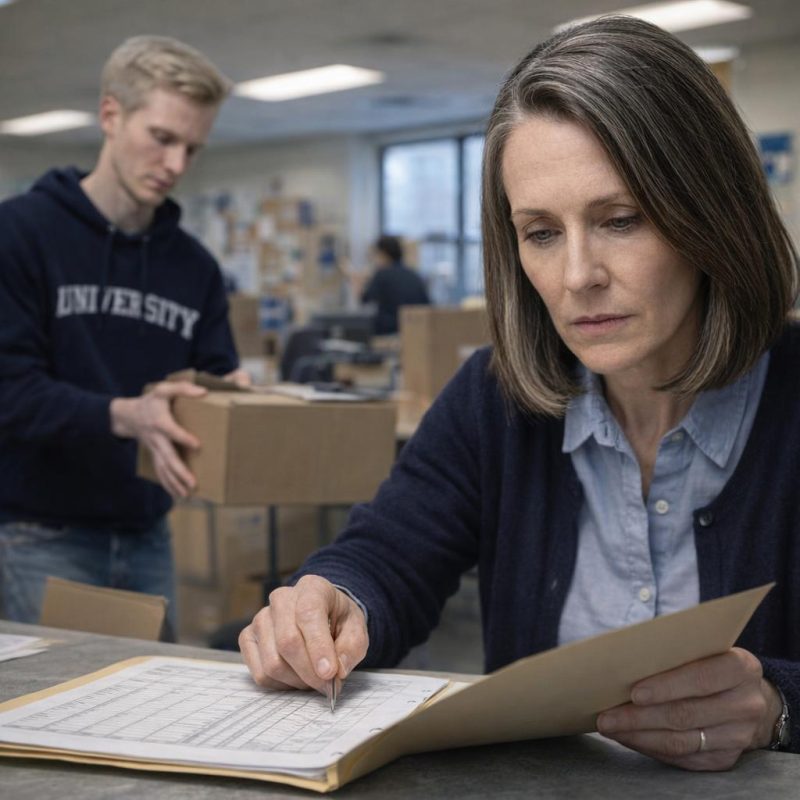 Image by RM AI
Too Much Information
I set the other folders down and gave that one my full attention. The addresses ran down the left side — street names I recognized, houses I'd walked past a hundred times. But the columns beside them told a different story. There were fields for insurance carrier and claim status, which I could almost explain away. Then there were fields for coverage limits, dispute notes, and something labeled financial indicators. I turned to the second page. There were columns tracking family structure — whether residents lived alone, whether they had adult children nearby, and if so, whether those relationships were described as active or estranged. That word stopped me. Estranged. That wasn't disaster relief language. There were notes in some cells, typed in small font, things like no local family support and adult children out of state, unlikely to intervene. I kept reading. Further along there were columns I had to read twice — one tracking property ownership history, another with a header that said estate status, and a third that referenced recent legal changes without explaining what that meant. Some cells had brief comments that felt less like data and more like assessments. One entry noted that a resident was widowed, isolated, and quote, motivated to simplify. I didn't know what that meant exactly, but it didn't sit right. I turned another page and found more of the same — row after row of people I knew, reduced to categories I couldn't quite name, each entry more personal than the last.
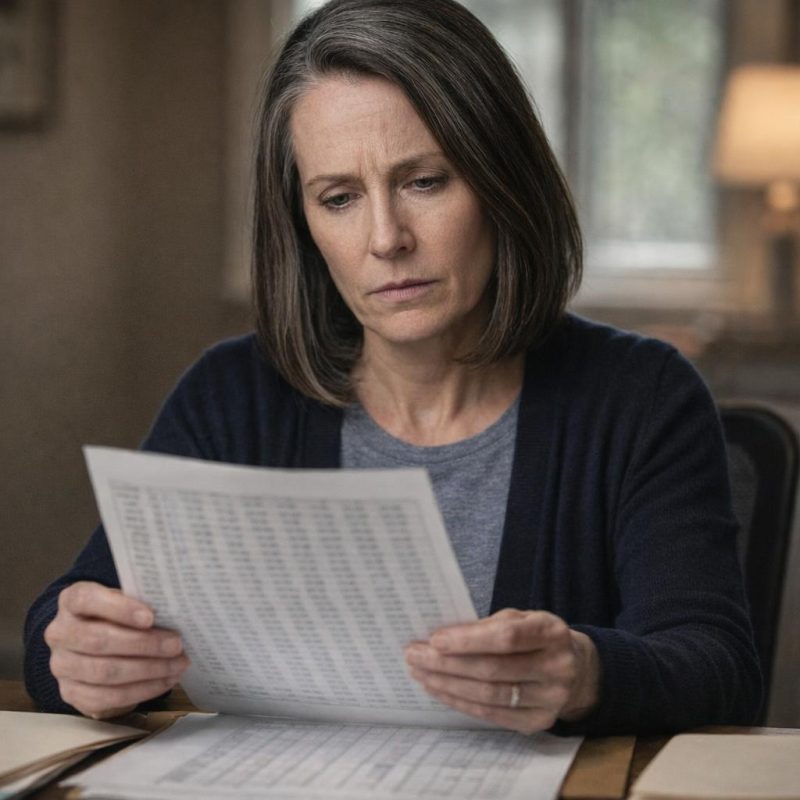 Image by RM AI
The Snatch
I waited until Jack came back around to collect the sorted folders. I kept my voice easy, the way you do when you don't want to spook someone before you understand what you're dealing with. I told him I thought he'd given me the wrong one, and I held it out so he could see the cover. His face changed immediately. The color went out of it — not gradually, but all at once, like a light switching off. He reached for the folder faster than I expected, and I let him take it. He said it was internal planning material, that it wasn't meant to go out with the general supplies, that it was just for coordination purposes. He said it twice, actually, the second time a little faster than the first. I asked him what kind of coordination required that level of detail about residents' personal situations. He said he couldn't really get into it, that it was above his level, that I should probably just forget I'd seen it. Then he tucked the folder against his chest with both arms and headed for the door without looking back at me. I stood at the table and watched him go. He moved quickly, shoulders up, the folder pressed tight like he was afraid it might escape. The door swung shut behind him, and the room went back to its ordinary noise, but something about the way he'd left — that hurried, hunched walk — stayed with me long after he was gone.
 Image by RM AI
The Stars
I went home that evening and tried to put it out of my mind. I made dinner, watched the news, did the things I normally do. It didn't work. I kept going back to those pages in my head, trying to reconstruct what I'd seen before Jack snatched the folder away. The columns came back to me in pieces — insurance disputes, family situations, that word estranged typed into a cell like it was just another data point. I remembered the addresses running down the left side, and I remembered that some of them had a small symbol beside them. A star. Not every address, but several. I'd noticed it without really registering it at the time, the way you notice something peripheral when your attention is elsewhere. But now, sitting in my kitchen with the evening quiet around me, I kept coming back to those stars. I tried to remember which addresses had them. I could picture a few — houses on my block, a couple on the next street over. I turned it over in my mind, trying to remember the exact rows, trying to see the page clearly. And then it came to me, slow and certain, the way things do when you've been circling something without meaning to. My address was on that spreadsheet. And my address had a star beside it.
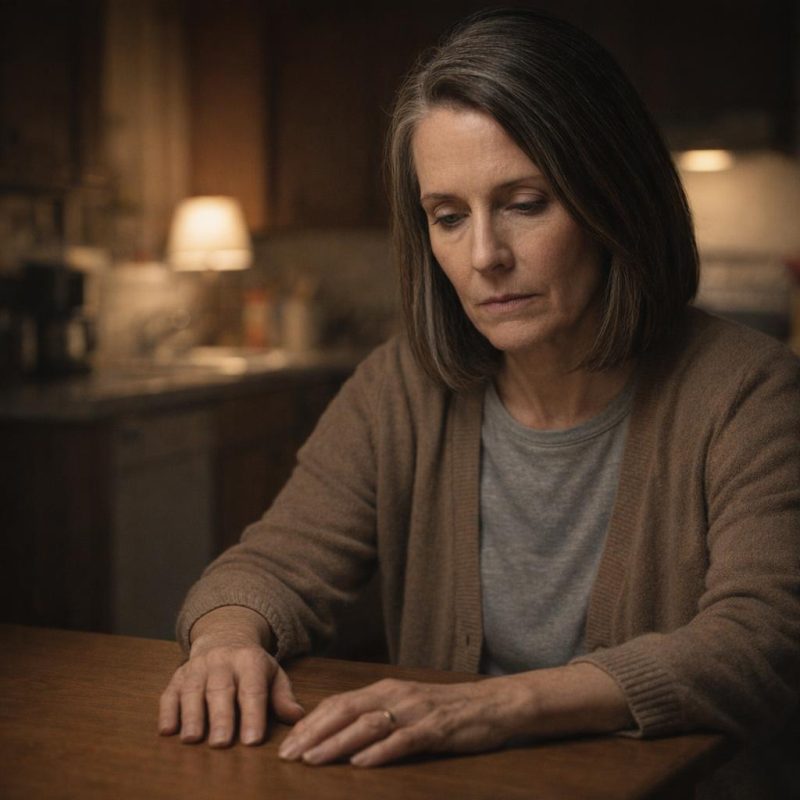 Image by RM AI
Estate Notes
I didn't sleep well. I lay in the dark and let the spreadsheet come back to me in pieces, the way you do when something won't leave you alone no matter how many times you try to set it down. I thought about the column tracking estranged children — how many cells in that column had been filled in, how specific some of the notes were. Not just estranged but out of state, or no contact in years. The kind of detail you'd only know if someone had asked careful questions or done real digging. I thought about the entries flagging residents who lived alone, who had no nearby family, who were described in ways that made them sound like they were on their own in the world. I thought about the property ownership column and what it might mean to track that alongside insurance disputes. And then I kept coming back to the one that bothered me most — the column I'd only half-registered before Jack pulled the folder away. It had been near the right edge of the page, the header small and easy to miss. But I'd seen it. It tracked which residents had made recent changes to their legal documents. Wills, I thought. That's what it meant. I lay there in the dark, staring at the ceiling, turning that over and over. Why would a disaster relief organization need to know which of its neighbors had recently updated their wills.
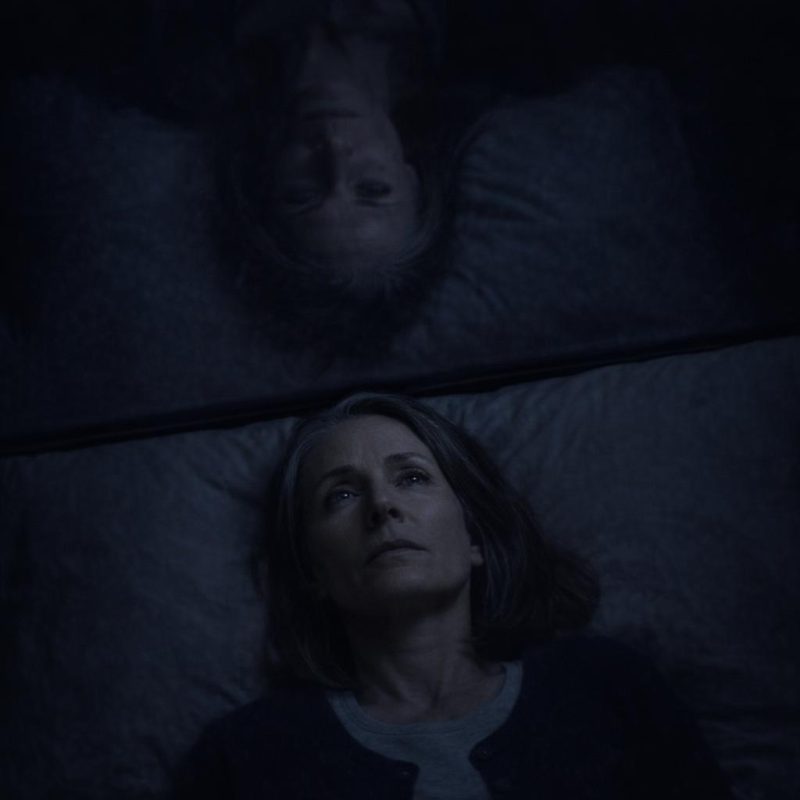 Image by RM AI
Rational Explanations
By morning I had talked myself partway down from the ledge. I sat with my coffee and went through it methodically, the way I used to approach problems at work. There were reasonable explanations, I told myself. Disaster relief is complicated. Organizations need to understand who is most vulnerable, who has resources to draw on, who might fall through the cracks. Tracking whether someone has family nearby — that could be about making sure isolated residents don't get overlooked. Insurance information made obvious sense. Even the property ownership data could be about coordinating repairs with the right people. I tried that explanation on for a while and it almost fit. Then I got to the estate notes and the will updates and it stopped fitting. I couldn't construct a version of disaster relief work that required knowing whether a neighbor had recently changed her will. I tried. I told myself maybe it was about long-term recovery planning, about understanding financial stability, about something I just didn't have the context to see clearly. But every time I built the explanation up, something in it gave way. The detail was too specific. The categories were too personal. And Jack's face when he'd seen what I was holding — that wasn't the face of someone embarrassed about a filing mistake. I finished my coffee and rinsed the cup and stood at the sink for a long moment, my own explanations sitting in my chest like something I couldn't quite swallow.
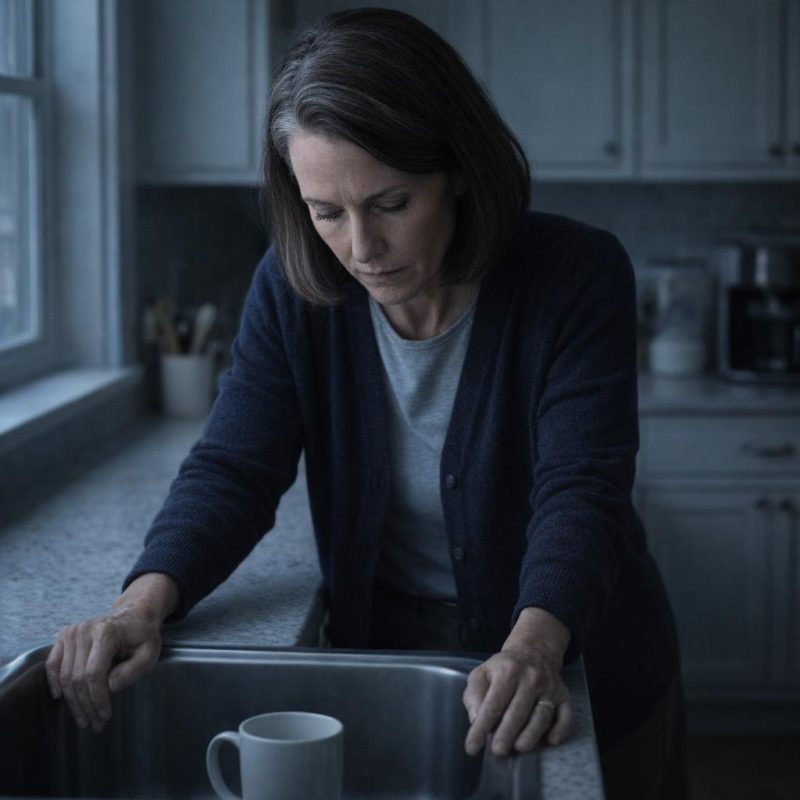 Image by RM AI
Careful Questions
I went back to headquarters the next morning and acted like nothing had changed. I handled the intake table, sorted the morning donations, made small talk with the volunteers coming in for the early shift. But I was paying attention in a different way now — quieter, more deliberate. Around mid-morning, when things slowed down, I started asking questions. I kept them general, the kind of thing a thorough volunteer might wonder about. I asked Caleb how they decided which repair requests to prioritize when two households had similar damage. He gave me a reasonable answer about structural safety and elderly residents, and I nodded and wrote something down like I was taking notes. A little later I asked one of the other volunteers how they logged information from home visits — whether there was a standard form, whether notes went into a central system. He said something vague about a shared drive and moved on quickly. I let it go and waited. By late morning Morgan was at the coordination table going through a stack of intake forms. I drifted over and helped her sort for a few minutes, keeping the conversation easy. I asked about the assessment process — how they figured out which families were carrying the heaviest load, not just in terms of damage but in terms of everything else going on in their lives. Morgan looked up from the forms, and I kept my expression open and curious, like I was just trying to do my job better. I asked her how they decided which families needed the most help.
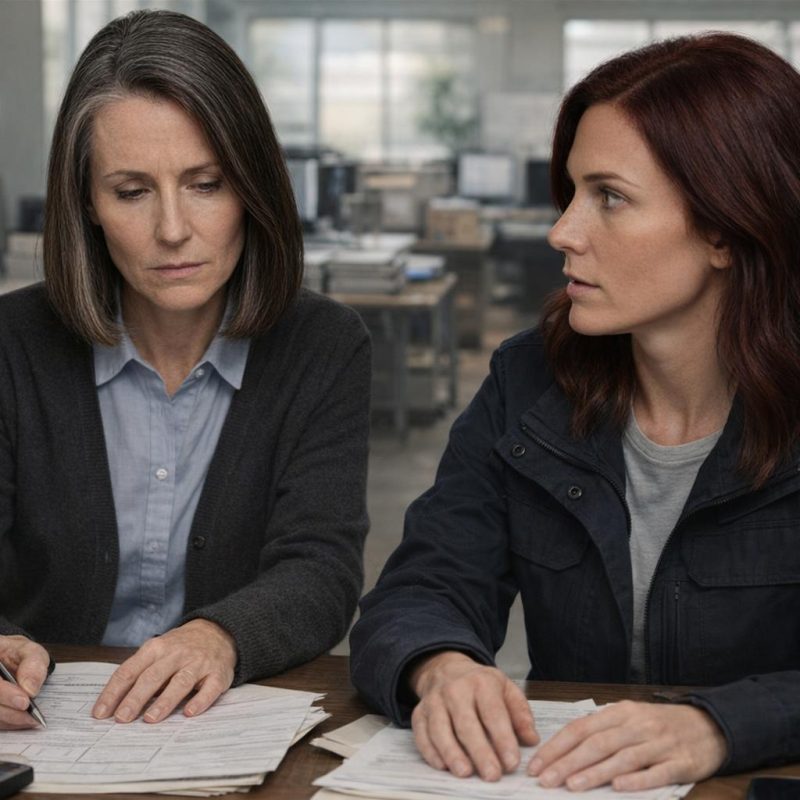 Image by RM AI
Defensive Responses
Morgan paused just a half-beat too long before she answered. She said they used a combination of intake forms and field observations, that it was pretty standard stuff, and then she turned back to the stack of forms like the conversation was finished. I asked a follow-up — something about whether there was a central record system, whether the information from home visits got logged somewhere beyond the intake sheets. She said there was a filing system but that it was mostly for internal coordination, nothing complicated. Her voice was even, her expression neutral, but she didn't quite meet my eyes when she said it. I let a few minutes pass and then asked, still casually, about the locked cabinet I'd noticed along the back wall — whether that was where the field notes were kept. One of the other volunteers, a young woman who'd been restocking supplies nearby, went still for just a moment. She didn't say anything. She set down the box she was holding and glanced across the room. Morgan's eyes followed the same line, and for just a second the two of them looked at each other — a quick, flat exchange, there and gone before either of them moved again.
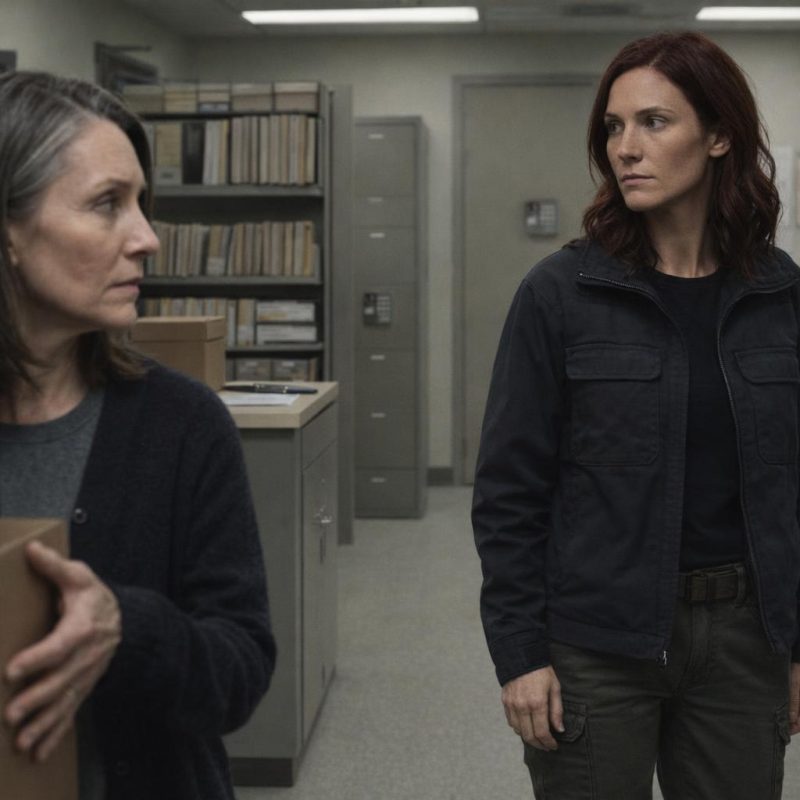 Image by RM AI
Doris Mentions Selling
I stopped by Doris's place that afternoon on the pretense of checking how her kitchen was holding up — the volunteers had patched a section of ceiling after the storm, and I wanted to make sure it wasn't showing new cracks. She answered the door in her housecoat, white curls pinned back, and waved me in like she'd been expecting company. Her place smelled like chamomile tea and the lavender sachets she kept in every drawer. We sat at her small kitchen table and she talked about how grateful she was for all the help, how she didn't know what she would have done without the young people coming around. I asked how things were going overall, whether she felt settled. She paused and said, well, Caleb had been very thoughtful about all of it. She said he'd sat with her and gone over everything — the roof, the foundation crack along the east wall, the water damage in the back bedroom. I said that sounded helpful. She nodded and said he'd mentioned more than once that repairs like these added up fast, that sometimes it made more sense to let go than to keep pouring money into an old house. I kept my expression easy and asked if that had come up just the once. Doris looked at her teacup and said no, actually — Caleb had come by three separate times to talk it over with her.
 Image by RM AI
The Pressure
I didn't push her right away. I let her talk, and she did — Doris had a way of filling silence once she felt comfortable, and I'd known her long enough to understand that. She said Caleb had been kind about it, never pushy exactly, but thorough. He'd brought paperwork the second visit — estimates from contractors, she thought, though she hadn't kept them. The numbers were high, she said. Higher than she'd expected. He'd walked her through each item and told her that a house her age, with damage like this, could easily run into the tens of thousands before it was livable again. She said he'd used the phrase 'peace of mind' more than once. That selling would give her peace of mind. That at her stage of life, she deserved not to carry that kind of burden. I watched her hands wrap around her teacup as she repeated it. She wasn't upset when she said it — that was the part that stayed with me. She said it the way you repeat something you've heard enough times that it starts to sound like your own thought. I told her she didn't have to decide anything right now, that her home was hers and there was no rush. She smiled and said Caleb had been so patient with her. The words settled over the table between us, quiet and heavy, and I sat with them long after I'd stopped knowing what to say.
 Image by RM AI
The Second Story
Two days later I ran into Frank Okafor while I was dropping off a casserole his daughter had asked me to bring over. Frank was seventy-three, a retired postal worker who'd lived on Sycamore Lane for nearly thirty years. His back porch had taken the worst of the storm — the overhang had come down and taken part of the railing with it — and the volunteers had been out to assess it twice. We stood in his front hallway and talked for a few minutes about how the repairs were coming along. He said the crew had been good, real good, and that young Caleb especially had taken the time to explain everything clearly. I asked what he meant by that. Frank said Caleb had sat with him at the kitchen table, same as he probably did with everyone, and gone through the damage item by item. Said the costs were going to be significant. Said that at a certain point, a man had to ask himself whether it made more sense to invest in a property or to take what the market would give him and find something newer, something without all these headaches. Frank said Caleb had used the words 'peace of mind.' Said carrying a house like this at their age was a burden nobody should have to shoulder alone. I stood there in Frank's hallway and felt something go still inside me. Those weren't just similar words. They were the same words, in the same order, landing in the same quiet way.
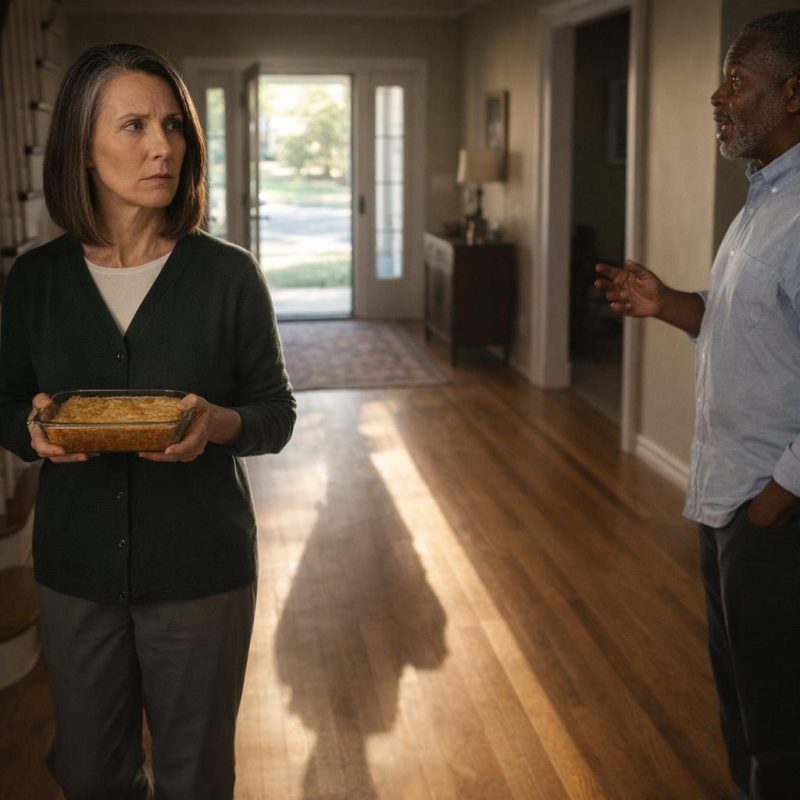 Image by RM AI
Quiet Interviews
I started being more deliberate about my rounds after that. I'd always had reasons to stop in on neighbors — a dish to return, a question about the community board meeting, a quick check on how someone's roof repair was holding. Now I paid closer attention to what came up when I asked how things were going with the volunteers. I kept it casual. I didn't lead anyone anywhere. I just listened. Eleanor Marsh on Birchwood said the young man had been very thorough, very caring, and that he'd mentioned the cost of foundation work could really add up for a house her age. She said he'd suggested she think about her options. A retired teacher named George Patel two streets over said much the same — that Caleb had come by twice, that the estimates were sobering, that Caleb had said something about peace of mind and not carrying more than you had to at this stage of life. I kept my face neutral through all of it. I thanked them for their time and moved on. By the time I got home that evening I had a list in my head — Doris, Frank, Eleanor, George — and I was turning it over and over, trying to find the innocent explanation, the one where this was just a well-meaning young man saying the same reassuring things to everyone. Then I knocked on the door of a retired firefighter named Walt Greer, and he told me Caleb had visited him three times and that he'd already called a real estate agent.
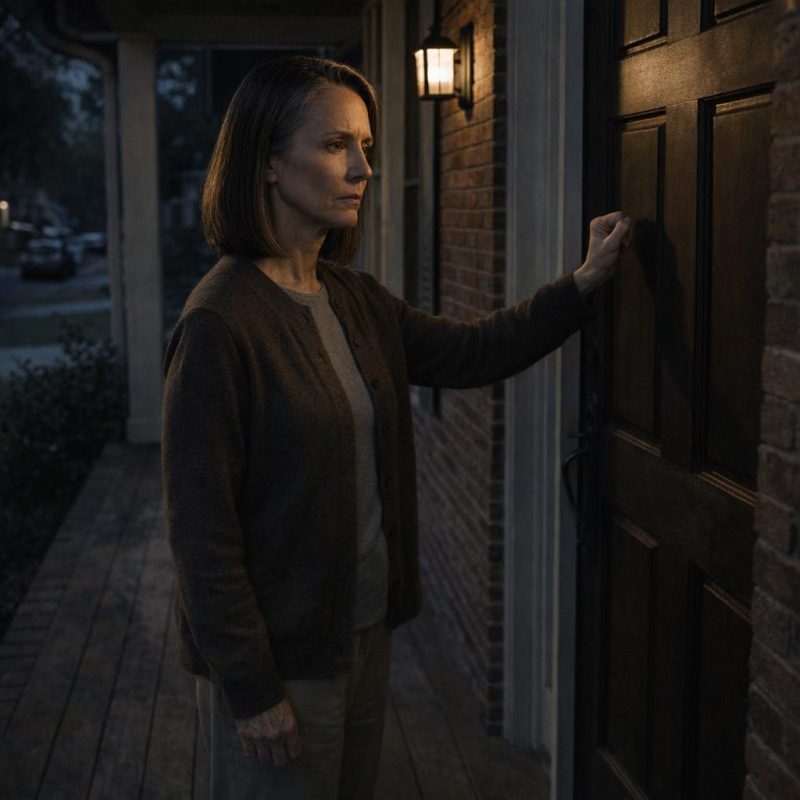 Image by RM AI
The Starred Homes
I sat at my kitchen table that night with a cup of tea I forgot to drink. I kept going back over the spreadsheet I'd seen — the one Jack had handed me by mistake, the one with the addresses and the small stars beside certain entries. I hadn't had it long enough to memorize it, but I'd looked at it long enough that certain things had stuck. I tried to reconstruct it the way you reconstruct a dream, reaching for the edges before they fade. I remembered a cluster of addresses on the east side of the neighborhood, the older blocks, the ones with the larger lots. I remembered that the stars weren't on every entry — just some of them, scattered in a way that hadn't meant anything to me at the time. I thought about Doris, about Frank, about Eleanor and George and Walt. I tried to place their addresses against what I could recall of that list. Frank was on Sycamore — I thought I'd seen a Sycamore entry with a mark beside it. Eleanor was on Birchwood. I wasn't certain about that one. But Doris — Doris was on Maple Court, and I was almost sure I'd seen Maple Court on that sheet. I closed my eyes and tried to hold the image steady. The address was there, near the middle of the page, and beside it, small and neat, was a star.
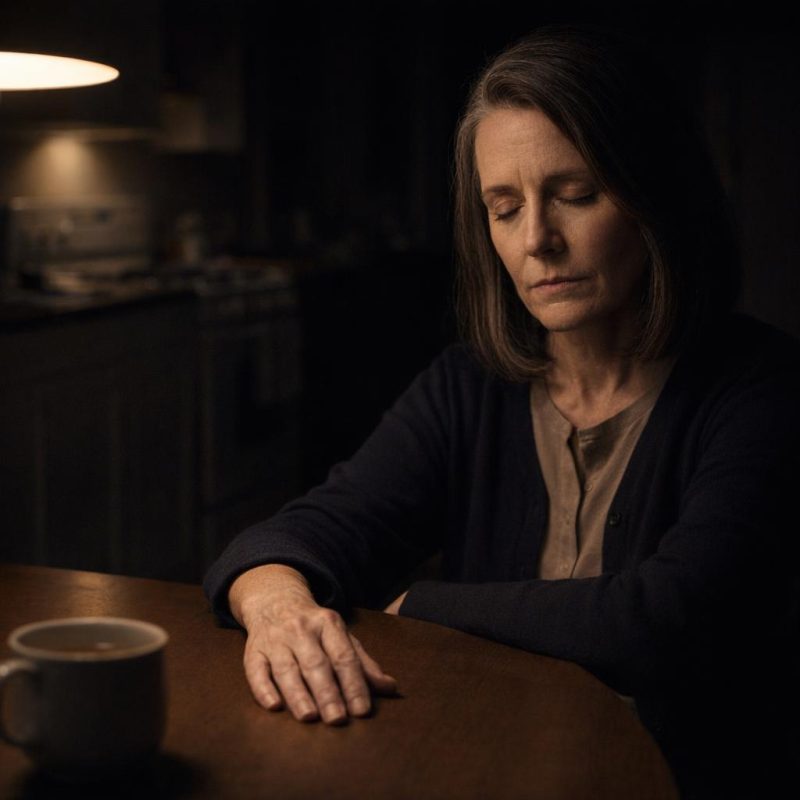 Image by RM AI
The Weight of Silence
I went back to headquarters the next morning and did what I always did — signed in, picked up my assignment sheet, started sorting donation bags in the back corner. Caleb was at the center table running through the day's schedule with a group of newer volunteers, pointing at a map of the neighborhood, explaining which streets still needed follow-up visits. He was good at it. That was the thing I kept bumping up against. He was genuinely good at this — patient, clear, the kind of person who made people feel like their situation mattered. Morgan was across the room coordinating supply runs, her auburn hair pulled back, moving between conversations with that focused efficiency she had. They worked well together. You could see it in the way they moved around each other without needing to check in, the small adjustments they made without words. I sorted bags and watched and said nothing. I smiled when someone spoke to me. I answered questions about pickup schedules and donation categories. And the whole time I carried what I suspected — what I thought I knew but couldn't prove — like something I'd tucked into my coat pocket and couldn't put down. The room was warm and busy and full of people doing what looked like good work, and I stood in the middle of it feeling more alone than I had in a long time.
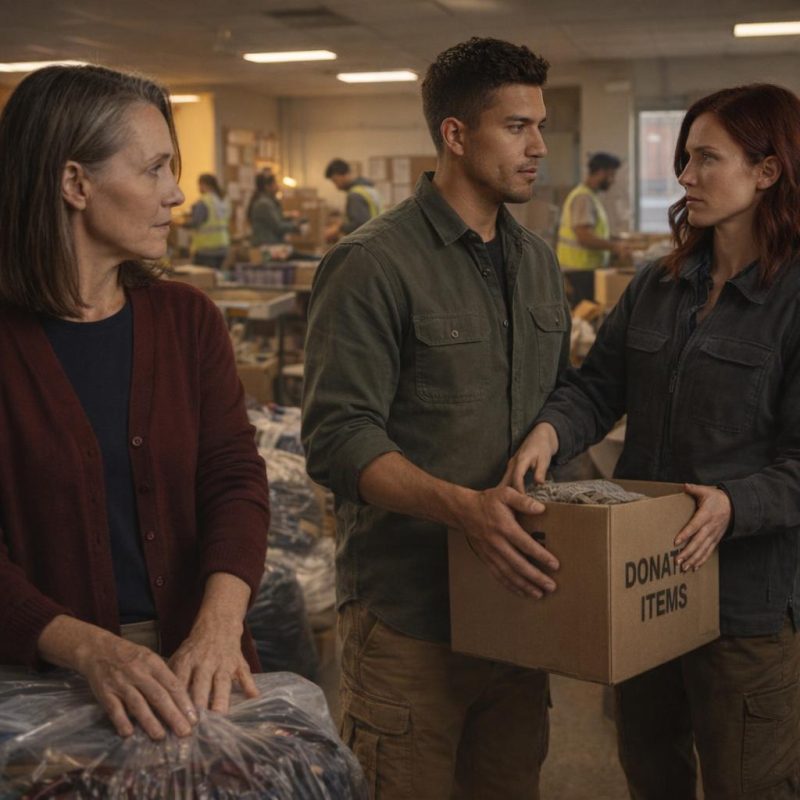 Image by RM AI
The Fourth Homeowner
I'd been meaning to check on Mr. Alvarez for over a week. He was eighty-one, a widower, and his house on the corner of Elm and Fourth had taken significant damage — part of the garage roof had collapsed and there was water intrusion along the entire north wall. When I knocked he took a while to answer, and when he did he seemed tired but glad for the company. We sat in his living room and I asked how the repairs were coming. He said slowly, that the estimates kept changing, that it was hard to know who to trust. I asked if the volunteers had been helpful. He said yes, that Caleb had come out personally and done a thorough walkthrough, written everything down, taken photographs. He said Caleb had been very professional about it. Then he paused and said something unexpected — that he'd received a letter about two weeks ago, from an investment company, expressing interest in purchasing the property. I kept my voice even and asked what he'd made of it. He said he hadn't known what to think, that he hadn't been looking to sell, that it had come out of nowhere. I asked when exactly the letter had arrived. Mr. Alvarez got up slowly and found the envelope on his side table, turned it over in his hands, and said the postmark was three days after Caleb had come to do the damage assessment — though whether that meant anything, he couldn't say.
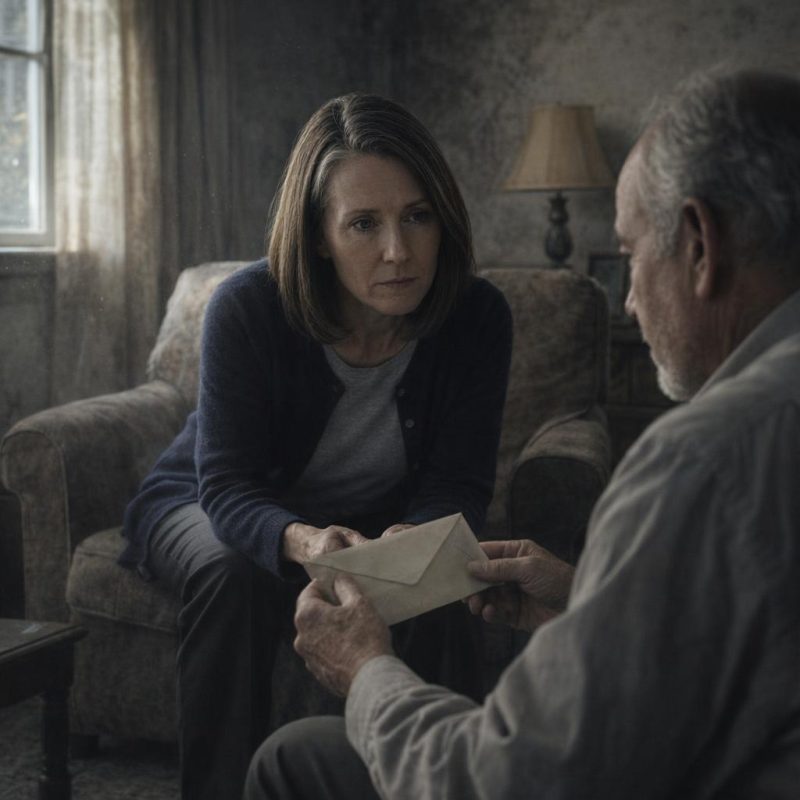 Image by RM AI
The Timeline
That evening I sat down with a legal pad and wrote out everything I had. I listed each name — Doris, Frank, Eleanor, George, Walt, Mr. Alvarez — and beside each one I wrote the date of Caleb's visit, as best I could piece it together from what they'd told me, and then the date the selling conversation started or the offer arrived. I worked slowly, checking my memory against the notes I'd been keeping in the small notebook I carried in my purse. When I finished the list and looked at it straight, the column of dates sat there in two neat rows — assessments on the left, offers or selling pressure on the right. Doris: visit in early October, selling talk began the following week. Frank: assessment mid-October, real estate call within four days. Mr. Alvarez: walkthrough on the fourteenth, letter postmarked the seventeenth. I went down the list twice. Every single entry followed the same shape — a volunteer assessment, then within three to five days, either a purchase offer from an outside investor or a conversation about selling that used language I'd now heard repeated across six different kitchens. I didn't have an explanation for how it worked or who was behind it. But the two columns on that legal pad, lined up side by side, said something I couldn't talk myself out of.
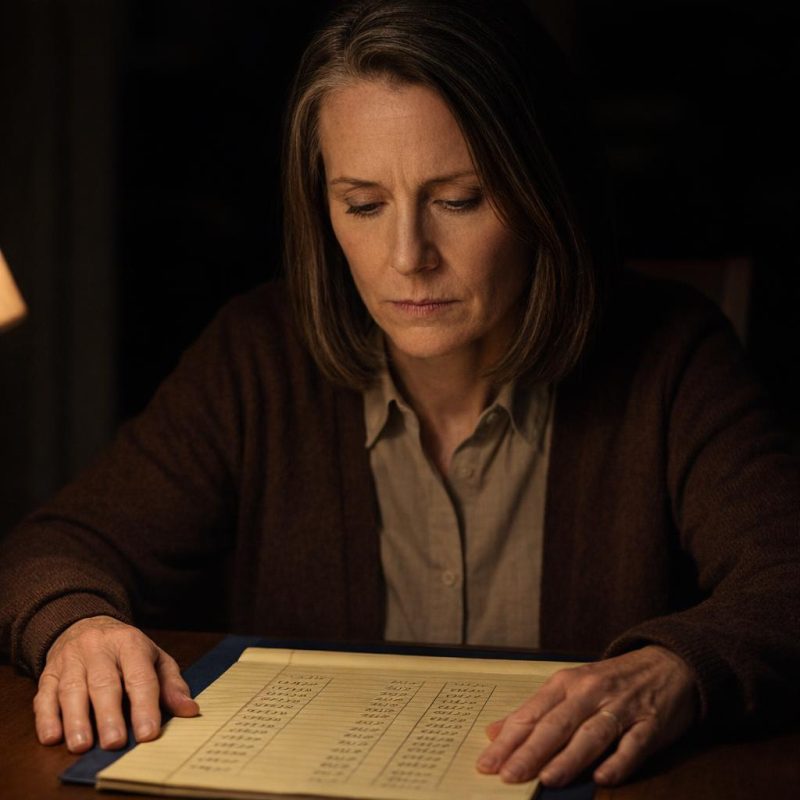 Image by RM AI
Gathering Testimonies
I spent the next three days making what I called wellness visits — stopping by to check on neighbors, asking how the repairs were holding up, whether the new roof was keeping the rain out, whether the contractor had finished the work on schedule. It was easy enough to work the other questions in naturally. I'd ask if the volunteers had come by, how the assessment had gone, whether anyone had followed up afterward. Most people were happy to talk. I kept my notebook in my purse and wrote things down as soon as I got back to my car. By the end of the second day I had added two more names to my list — Eleanor's cousin Vera on Sycamore, and a retired teacher named Mr. Okafor on the east end of Birch Street. Both had received volunteer visits in October. Both had been approached about selling within a week. I cross-checked the dates against what I already had and the pattern held. On the third day I stopped by to see a woman named Mrs. Petersen, who lived alone in a corner house with a big magnolia in the front yard. She'd mentioned the volunteers at church a few weeks back, and I'd been meaning to follow up. She made me tea and we sat at her kitchen table. By the time we'd finished the second cup, she had told me about the man who'd come by last month — very polite, she said — and advised her to think about selling before property values shifted. Then she mentioned the part that stopped me cold: he'd already had a buyer lined up for her specifically.
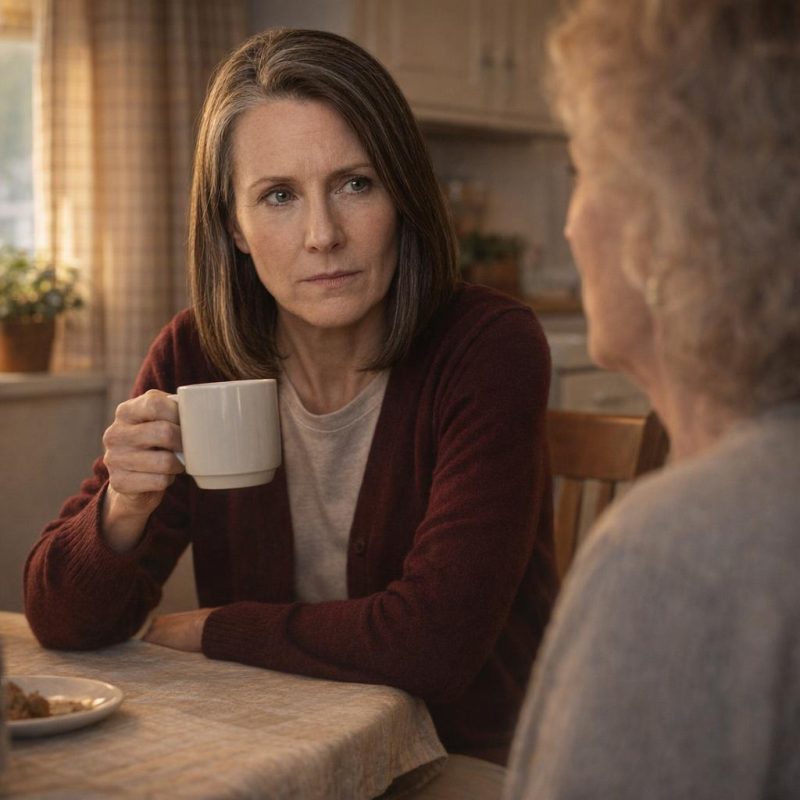 Image by RM AI
The Common Threads
That night I spread everything out on my kitchen table — the legal pad, the notebook, the loose pages I'd been adding to the stack. I went through each name slowly. Doris. Frank. Eleanor. George. Walt. Mr. Alvarez. Vera. Mr. Okafor. Mrs. Petersen. Nine people. I wrote their ages beside their names where I knew them, and most were in their sixties, seventies, or eighties. Eight of the nine lived alone. I thought about their houses — the corner lots, the deep yards, the older homes that had been paid off for years. These weren't people who talked about equity or development potential. They were people who had lived in the same house for thirty or forty years and expected to die there. I pulled out the county tax records I'd printed at the library and checked the assessed values. Every single property on my list came in well above the neighborhood average. The ones on the east end of Birch and along the Sycamore corridor were especially high. I sat with that for a while. These weren't random neighbors who happened to get a sales pitch. They were older, they were alone, their homes were worth more than most people would guess from the outside, and they'd all been softened up first by someone they trusted. I didn't have a word for what I was looking at yet, but the weight of it settled over me and didn't lift.
 Image by RM AI
Shared Traits
The next morning I went back through my notes with fresh eyes and a highlighter. I marked every address where the resident was over sixty-five. Every address where the person lived alone. Every address where the assessed value came in above a certain threshold I'd set based on the tax records. When I finished, every single starred address on my list was highlighted on all three counts. Not most of them. All of them. I sat with that for a long time. I thought about what it would take to identify those properties in advance — to know which houses had the most equity, which owners were elderly, which ones were living without a spouse or family member nearby to push back on a sales conversation. That kind of information didn't just fall into someone's lap. I didn't know how it had been gathered or by whom, and I wasn't ready to say I understood the full shape of what I was looking at. But the selection hadn't looked random to me. These neighbors had something in common beyond the storm damage, and whoever had been knocking on their doors had known which doors to knock on. I thought about Doris sitting at her kitchen table telling me she'd felt foolish for almost signing. I thought about Mrs. Petersen pouring me tea, saying the man had been so polite. The word that kept coming back to me was chosen, and it sat in my chest like something cold.
 Image by RM AI
The Developer Angle
I'd been to the city planning office once before, years ago, for a zoning dispute on our block that never amounted to anything. I remembered they kept public maps, and I figured it was worth a trip. I told the woman at the counter I was doing research on neighborhood development patterns and she pointed me toward a binder of zoning overlays and a set of printed parcel maps I could photocopy for a small fee. I took everything I thought might be useful and brought it home. That evening I taped two of the parcel maps together on my kitchen table and started marking the addresses from my list with a red pen. I worked slowly, double-checking each street number before I made a mark. When I stepped back and looked at what I had, I went still. The red marks weren't scattered. They weren't spread evenly across the neighborhood the way you'd expect if the targeting had been opportunistic. They sat together in a rough band running from the east end of Birch Street down through the Sycamore corridor and curving toward the old commercial strip near the highway. I looked at the zoning overlay I'd pulled from the binder and held it up against the map. The starred properties sat almost entirely within a single zone — one the city had flagged years ago as a potential area for mixed-use commercial redevelopment.
 Image by RM AI
The Missing Piece
I stood at my kitchen table for a long time looking at those two maps side by side. The picture they made together was hard to look away from, but it was also incomplete in a way that nagged at me. Someone had gone to a lot of trouble — identifying the right properties, sending volunteers into those specific homes, following up with sales conversations that used the same language across a dozen different kitchens. That kind of coordination didn't seem like it had happened by accident. But every time I tried to follow the thread to its end, I kept running into the same wall. Caleb and Morgan. I'd watched them work. I'd seen them haul debris and carry groceries and sit with elderly neighbors who had no one else to call. They drove an older car. Morgan wore the same three or four shirts on rotation. Caleb had mentioned once that he was still paying off student loans. These were not people who were quietly acquiring real estate. Whatever was happening with those properties, the money from those sales wasn't going into their pockets — I was fairly sure of that much. But that left a question I couldn't answer. If they weren't the ones who stood to gain, then who was? And why were their assessments the ones that kept showing up at the start of every chain? I sat down and looked at my notes again, and the question just stayed there, unanswered.
 Image by RM AI
Following the Money
I'd been so focused on the residents and the properties that I hadn't spent much time thinking about the organization itself. I knew it had a name — I'd seen it on the volunteer T-shirts and on the flyers that had gone up around the neighborhood after the storm. That evening I sat down at my computer and started searching. It didn't take long to find the registration. The nonprofit had been filed with the state about fourteen months before the storm, which I noted in my notebook. The public filing listed a registered agent and a board of directors, and I wrote down every name. Most of them meant nothing to me. I kept digging. Nonprofits above a certain size are required to file donor disclosure forms with the state, and after about forty minutes of searching I found the filing for this one. It was a standard form, two pages, listing the organization's major financial supporters for the prior fiscal year. I printed it out and set it on the table next to my parcel maps. The donor list had six names on it. Five were small local businesses I recognized — a hardware supplier, a roofing company, a property management firm. The sixth was a private investment group I had never heard of, listed as the single largest contributor by a wide margin.
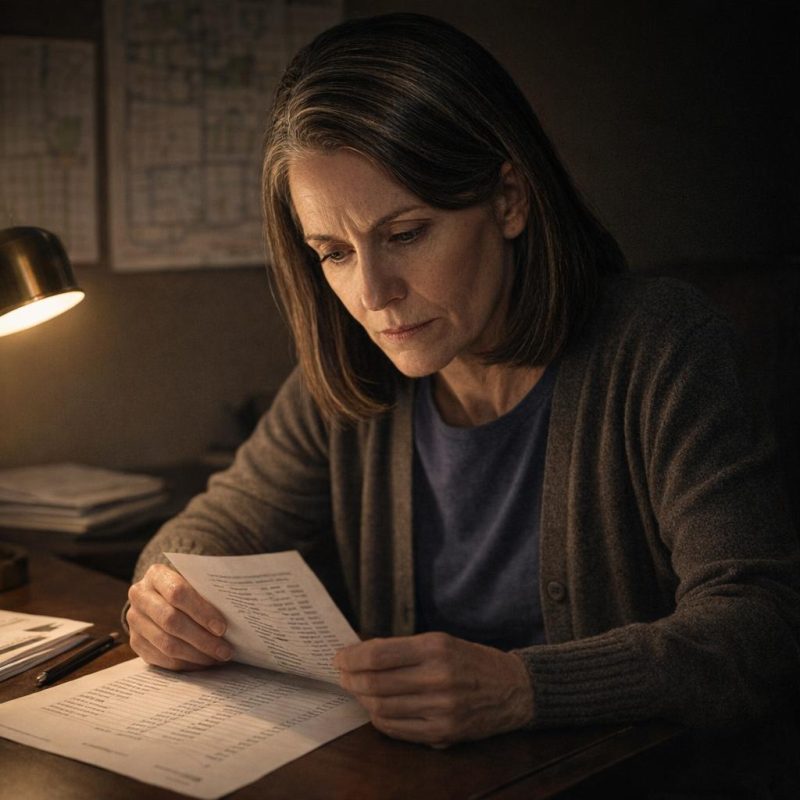 Image by RM AI
Modest Lives
I wanted to be careful about what I was assuming, so I spent a couple of evenings doing what I could to check the basic facts about Caleb and Morgan. I wasn't trying to dig into their private lives — I just needed to know whether there was something obvious I'd been missing. I found Caleb's name in a local news article from two years back, a small piece about a community garden project he'd helped organize. The article mentioned he worked as a shift supervisor at a distribution warehouse on the south side of town. I found Morgan through the nonprofit's own website, where she was listed as a volunteer coordinator. A quick search turned up an old profile from a community college job board — she'd been working part-time as an administrative assistant while finishing a degree. I drove past the address I'd found associated with Caleb's name in a public records search — a plain two-story apartment building about four miles from our neighborhood, the kind of place with a shared parking lot and a buzzer panel by the front door. Nothing about it suggested anything other than an ordinary rental. I found no property records in either of their names, no business filings, no investment accounts listed in any public document I could locate. Whatever was happening with those sales, the evidence I had pointed away from them as the ones collecting the proceeds. I sat with that for a while, and it left me more uncertain than before, not less.
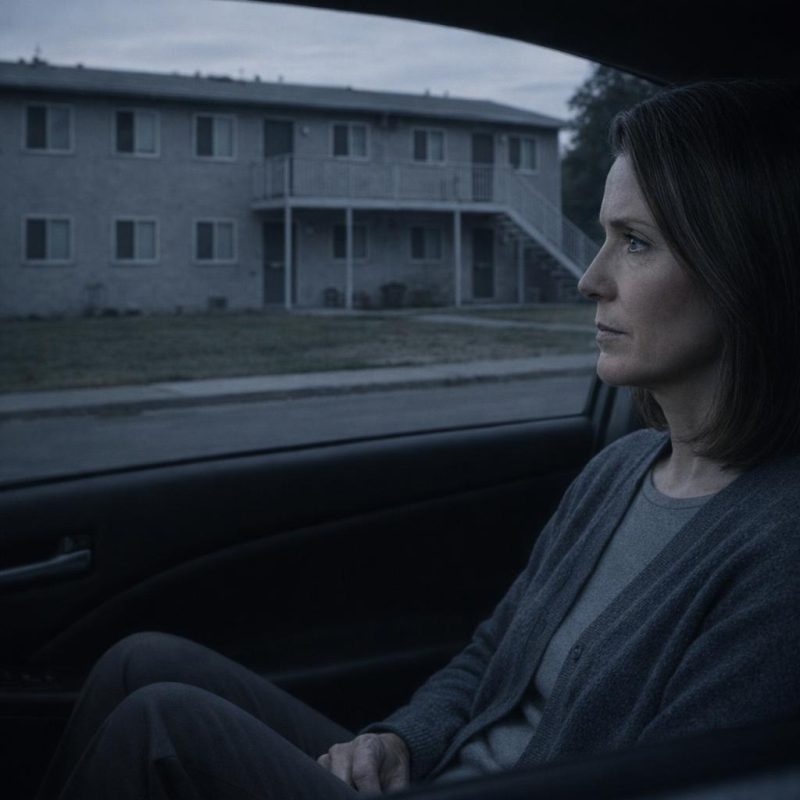 Image by RM AI
The Question of Motive
The part I kept coming back to was the why. If Caleb and Morgan weren't pocketing money from the sales, then what were they getting out of it? I turned that question over for most of an evening. Maybe they were being paid a flat fee by someone — a finder's arrangement, something that wouldn't show up in property records. Maybe they had a connection to the investors I hadn't found yet. I wrote both possibilities down and stared at them. Neither one felt quite right, but I couldn't rule them out either. What bothered me most was that everything I'd seen of them — the long hours, the genuine care they seemed to take with people, the way Caleb had stayed late to help Mr. Alvarez move furniture back into his repaired living room — none of it fit the picture of someone running a cold calculation against their neighbors. And yet the pattern was there. Their assessments, their visits, their conversations — all of it sitting at the front of every chain I'd traced. I thought about Morgan handing Doris a casserole dish and asking about her grandchildren. I thought about Caleb fixing a loose porch railing without being asked. I couldn't make those two things sit in the same frame, and the harder I tried, the less I understood about what I was actually looking at.
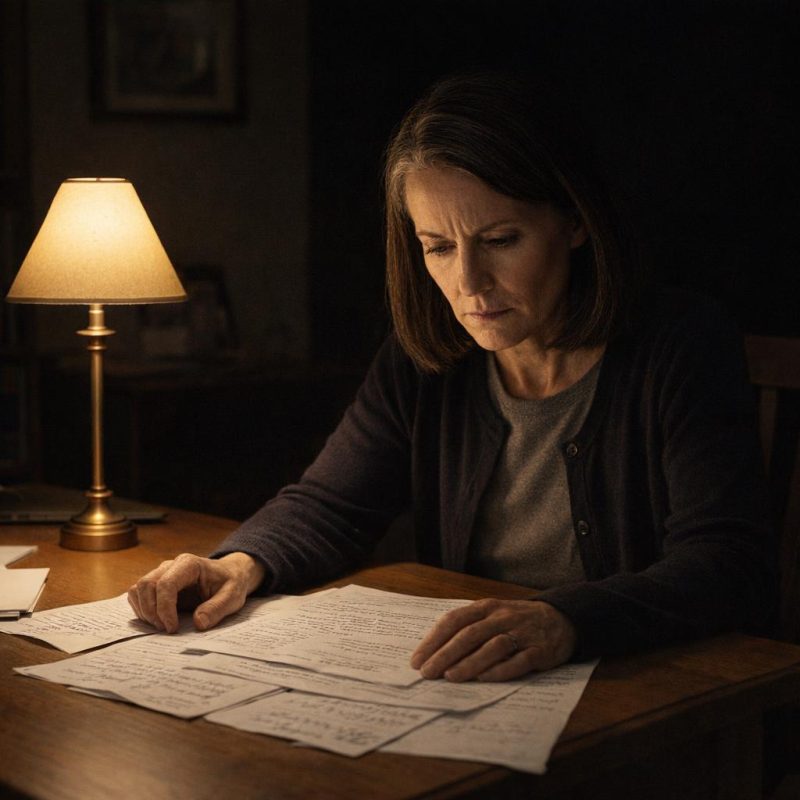 Image by RM AI
The Real Beneficiaries
I decided to stop guessing about motives and start following the money instead. I spent two days going door to door — not asking about repairs this time, but asking if anyone still had the purchase offer letters they'd received. Most people did. They'd tucked them in kitchen drawers or left them in folders on the counter, not quite sure what to do with them. I photographed every one I could get my hands on and wrote down the company names in my notebook. There were more names than I expected — six, maybe seven different entities across the letters I collected. Some sounded like real estate firms. Others had the kind of generic names that don't tell you anything: Horizon Capital Partners, Clearview Asset Group, Westfield Acquisitions. I went home and started looking them up one by one through the state's business registry. It took most of an evening and a lot of squinting at my laptop screen, but the filings were public and the information was there if you were patient enough to dig for it. Some of the companies had different addresses, different registered agents, different founding dates. But the more I cross-referenced, the more a single name kept surfacing in the ownership documents — the same parent company listed as the managing member across three separate subsidiaries. Then I pulled up a fourth filing, and there it was again.
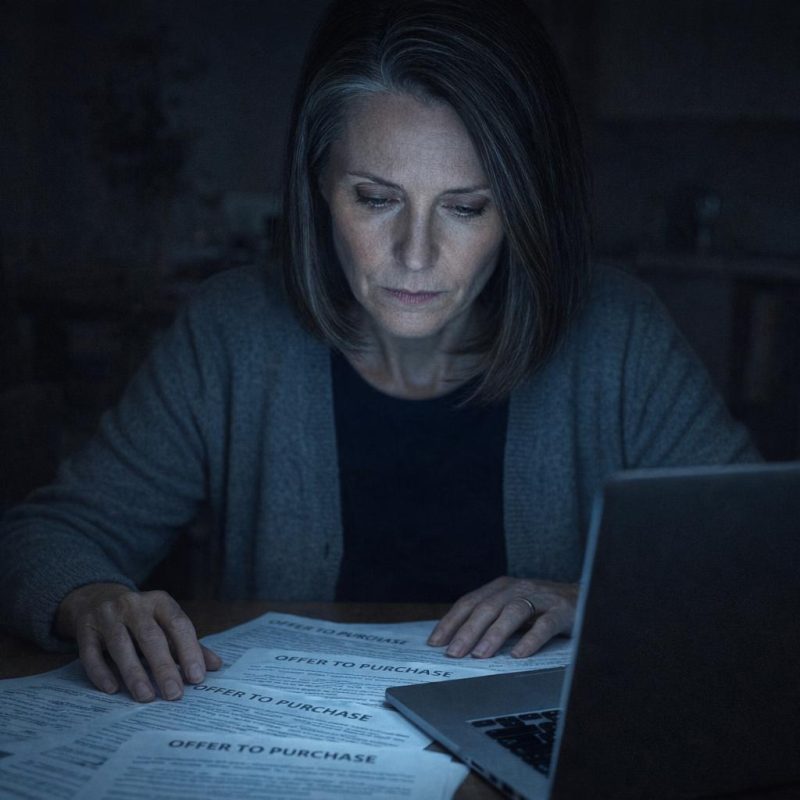 Image by RM AI
The Nonprofit's Origins
Finding the common ownership thread made me want to know more about the nonprofit itself — not just who was funding it, but where it had come from in the first place. I went back to the state's nonprofit registry and pulled up the incorporation documents. The filing was straightforward enough: articles of organization, a registered agent, a stated mission around disaster relief and community recovery. I read through it twice. Then I looked at the date. The organization had been registered six weeks before the storm hit our neighborhood. Six weeks. I sat with that for a moment. I told myself there could be an innocent explanation — maybe someone had been planning a general disaster relief effort and the storm just happened to be the first event they responded to. But the more I looked at the filing, the less that held up. There was no prior activity listed, no history of operations in other areas, no indication this group had ever responded to anything before. The stated service area in the filing was specific — not regional, not statewide, but focused on exactly the kind of older residential neighborhoods that made up our part of the city. I printed the page and set it on the table next to my other notes. The incorporation date sat at the top of the document: stamped, official, and six weeks before the first shingle blew off anyone's roof.
 Image by RM AI
Too Convenient
I kept coming back to that date. Six weeks. I tried to think through it the way a reasonable person would — maybe someone had seen weather forecasts, maybe they'd been tracking the aging infrastructure in the area and figured a disaster was eventually coming. People do plan ahead. Organizations get established before they're needed. I wrote those explanations down and looked at them. They didn't hold. Weather forecasts six weeks out don't predict which neighborhood takes the hit. And if someone was genuinely motivated by community service, why not build on an existing organization? Why incorporate something brand new, with no track record, no staff history, no prior donors? The mobilization speed after the storm had impressed me at the time — volunteers on the ground within days, supplies already organized, a system that looked like it had been rehearsed. I'd taken that as a sign of good leadership. Standing here now, looking at the incorporation date, I wasn't sure what to call it anymore. A new organization doesn't move that fast unless the groundwork was already laid. And groundwork takes time. I stared at my notes and turned the question over one more time: what were the odds that someone built this thing from scratch six weeks before the storm, with no prior history, aimed at exactly this kind of neighborhood — and it was just a coincidence?
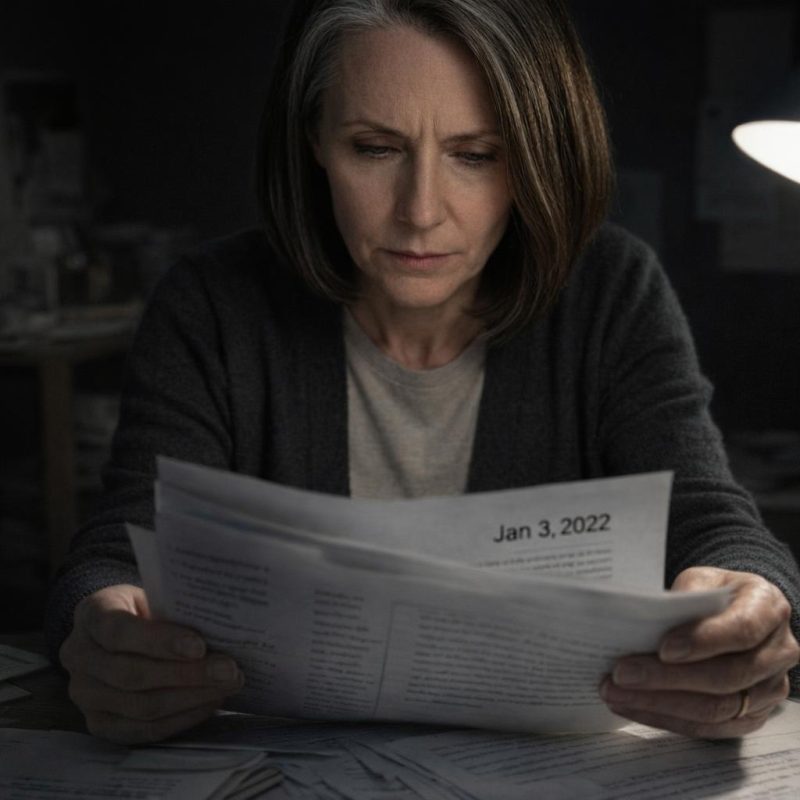 Image by RM AI
The Impossible Coincidence
I spent a morning trying to give the timing every reasonable benefit of the doubt I could think of. I wrote down every innocent explanation on a notepad and worked through each one. Maybe the founders had been planning a general community resilience program. Maybe they'd applied for a grant that required formal incorporation. Maybe the six-week gap was just how long paperwork takes and the real planning had started much earlier. I sat with each of those possibilities and tried to make them fit. None of them did. A general community resilience program doesn't incorporate with a service area description that reads like a map of our specific streets. A grant application doesn't explain why there was no prior activity anywhere, no other neighborhoods served, no public presence before the storm. And the speed of the response — the volunteers, the supplies, the intake process that ran like it had been tested — that didn't come from six weeks of preparation. That came from longer. I crossed out the last innocent explanation on my list. I didn't know yet what kind of planning this represented, or how far back it went, or who had been at the center of it. But I was no longer willing to call it luck. The incorporation date on that filing was not a coincidence.
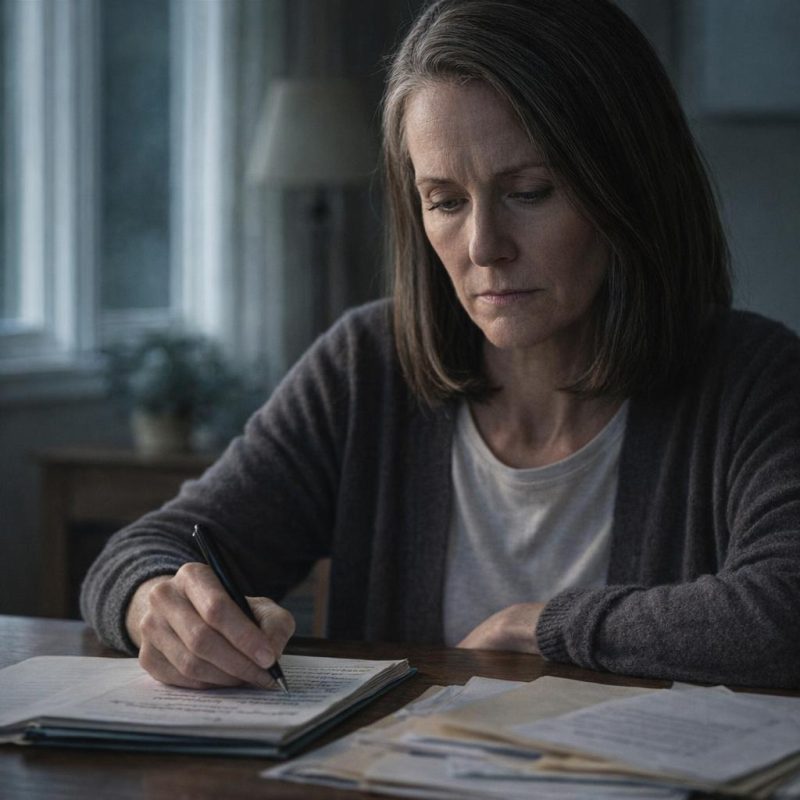 Image by RM AI
The Leadership
Once I accepted the timing wasn't accidental, I wanted to know who was actually running the organization. The nonprofit's website listed a director and four board members, all with professional headshots and short bios. I started with the director — a man named David, listed with a title that sounded appropriately nonprofit-ish. His bio mentioned community development and stakeholder engagement. I searched his name and found a LinkedIn profile, a few conference appearances, and a mention in a trade publication. None of it was disaster relief. His background was in property acquisition and commercial real estate consulting. I moved to the board members and worked through each one. One had spent fifteen years at a development firm. Another was listed as a principal at a private equity group focused on residential assets. A third had a background in zoning and land use consulting. The fourth was the only one without a real estate connection — she appeared to be a retired schoolteacher, and I wondered if she'd been added to give the board a more community-facing look. I sat back and looked at what I'd assembled. Four out of five people running a disaster relief nonprofit had spent their careers in property acquisition, development, and investment. Not a single one had a background in emergency response, humanitarian work, or community services. The director's most recent role before the nonprofit, listed plainly in his professional history, had been as a senior associate at a firm specializing in distressed property acquisition.
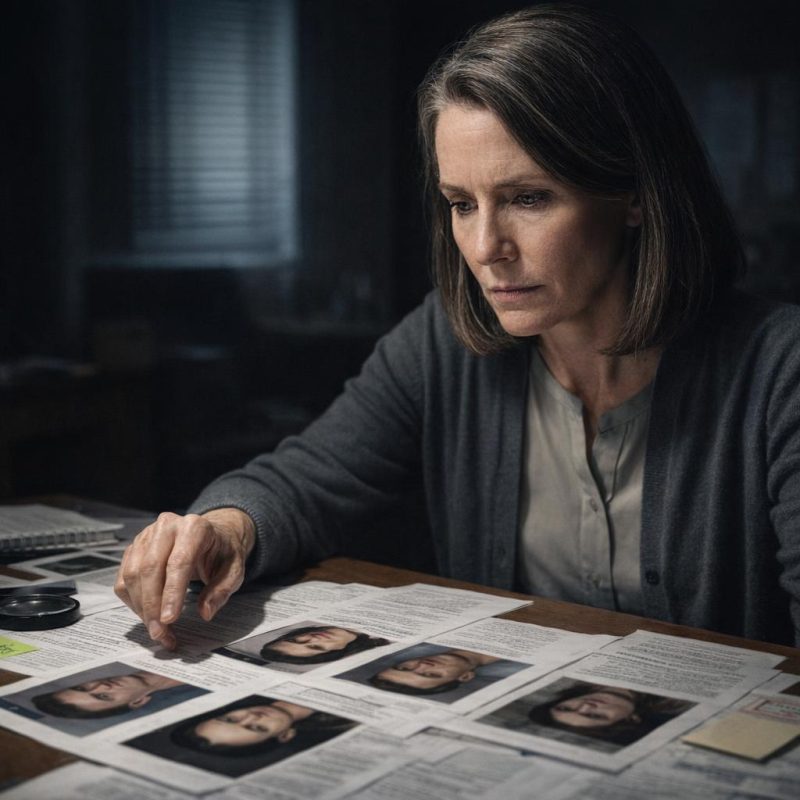 Image by RM AI
Recurring Names
The leadership backgrounds were troubling enough on their own, but I wanted to see whether the money trail connected back to anything I'd already found. The nonprofit had filed a public disclosure that included a partial donor list — not every contributor, but the larger ones were named. I printed it out and set it next to the list of investment companies I'd compiled from the purchase offer letters. I went through the donor names slowly, one by one. The first few didn't match anything. Then I hit a name I recognized — one of the subsidiaries I'd traced back to the parent company. I kept going. Two more names appeared that I'd seen in the corporate filings. By the time I reached the bottom of the donor list, I had circled four names that also appeared in my investor records. Four donors to the nonprofit were also among the entities making purchase offers to residents in the neighborhood. I sat with that for a while. The same group of investors was funding the relief organization and simultaneously sending purchase letters to the people that organization was supposed to be helping. I didn't have a word for it yet that felt adequate. I just sat at my kitchen table with both lists in front of me, the circled names staring back at me from the page.
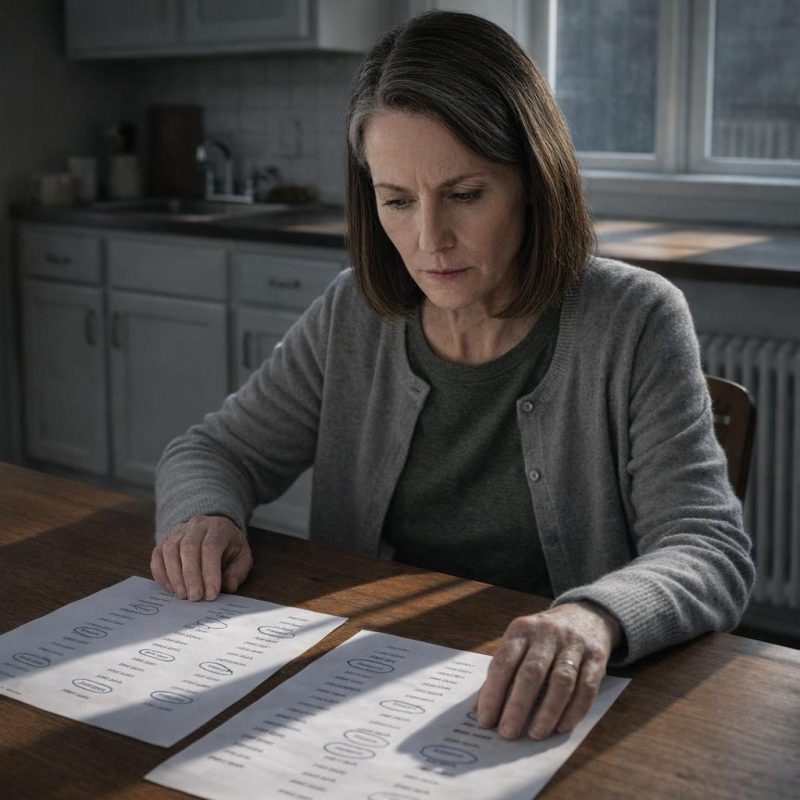 Image by RM AI
The Newspaper Archive
I needed more context — something that would tell me whether this network of names had a history I wasn't seeing. I started searching newspaper archives, working backward through local coverage of real estate and development in the city. Most of it was routine — zoning approvals, ribbon cuttings, the occasional dispute over a variance. Then, about forty minutes in, I found something. It was a piece from several years back, buried in the business section of the local paper. The headline referenced a controversial mixed-use development project that had stalled and eventually collapsed, leaving investors out of pocket and residents in the affected area frustrated. I read through the article carefully. The project had been ambitious — a large-scale redevelopment of an older residential area on the city's east side. The reporter had named several of the key figures involved. One name near the top of the article stopped me. Harold Vance, listed as a principal developer on the project. I didn't recognize the name at first. I read the paragraph again. The article described how the project had failed to secure final approvals, how financing had fallen apart, and how a group of private investors had absorbed significant losses when it collapsed. The reporter had quoted a few of those investors by name. I wrote them all down in my notebook and kept reading, trying to understand what had gone wrong and who had been left holding the bill when it did.
 Image by RM AI
The Connection
I had two lists in front of me now — the investor names from the old newspaper article about Harold Vance's failed development, and the donor names from the nonprofit's public filing. I wasn't sure what I expected to find when I started comparing them. Maybe nothing. Maybe a single overlap I could write off as coincidence. I went through the names carefully, cross-referencing one list against the other. The first match appeared on the third line. I checked it twice. Then I found a second. Then a third. By the time I'd gone through both lists completely, I had four names that appeared in both places — investors who had lost money in Harold Vance's collapsed development years ago, now listed as donors to the nonprofit operating in our neighborhood. I sat back in my chair and looked at what I'd put together. Morgan's father had been at the center of a development project that failed and cost people real money. Those same people were now funding the organization that had shown up in our neighborhood after the storm. I didn't know yet what that meant — whether it was coordination, or history repeating, or something else entirely. But one name appeared on both pages, circled in my own handwriting, and I couldn't look away from it.
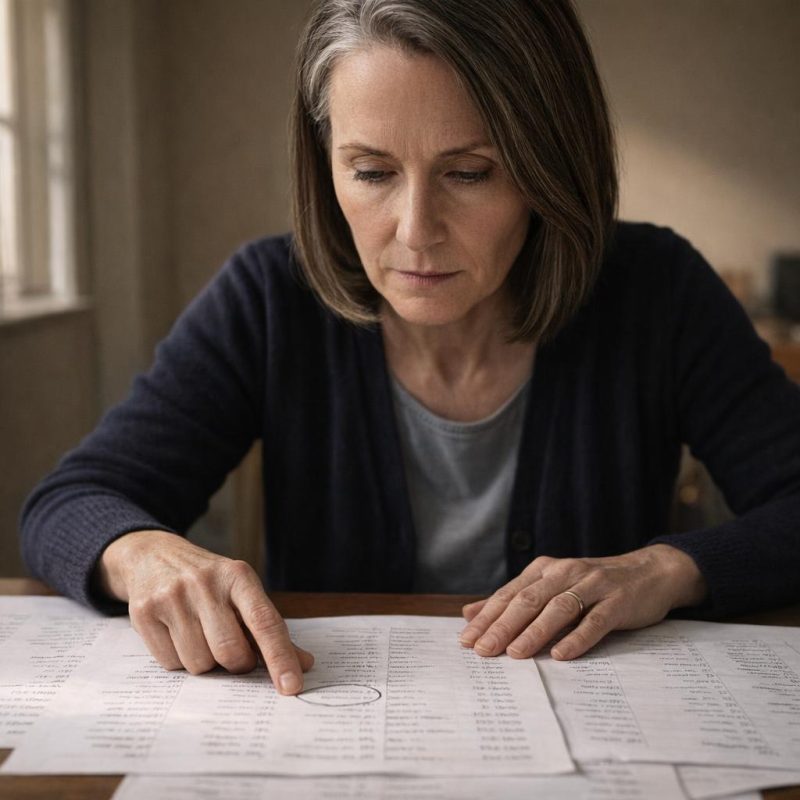 Image by RM AI
The Recurring Name
I pulled out a fresh sheet of paper and made a proper chart — three columns, three contexts, and one name I kept finding in all of them. The name was Gerald Fitch. He appeared in the old newspaper article as one of the investors in Harold Vance's failed development. He appeared in the nonprofit's public donor filing, listed near the top with a substantial contribution. And when I went back through the property acquisition offers I'd collected from neighbors over the past few weeks, his name showed up there too — attached to a holding company listed as the purchasing entity on two of the offers. I drew lines connecting the columns. I checked my work twice because I didn't want to be wrong about this. But the lines held. Gerald Fitch had lost money in Harold's collapsed project years ago. Gerald Fitch was now funding the nonprofit that had arrived in our neighborhood after the storm. And Gerald Fitch, or at least a company connected to him, was making offers on homes in the same neighborhood. I didn't know yet what the full shape of it was. I couldn't say with certainty what any of it meant or how far back it went. But I sat there at my kitchen table with that chart in front of me, three columns and one name running through all of them, and the weight of it settled over me like something I couldn't put back down.
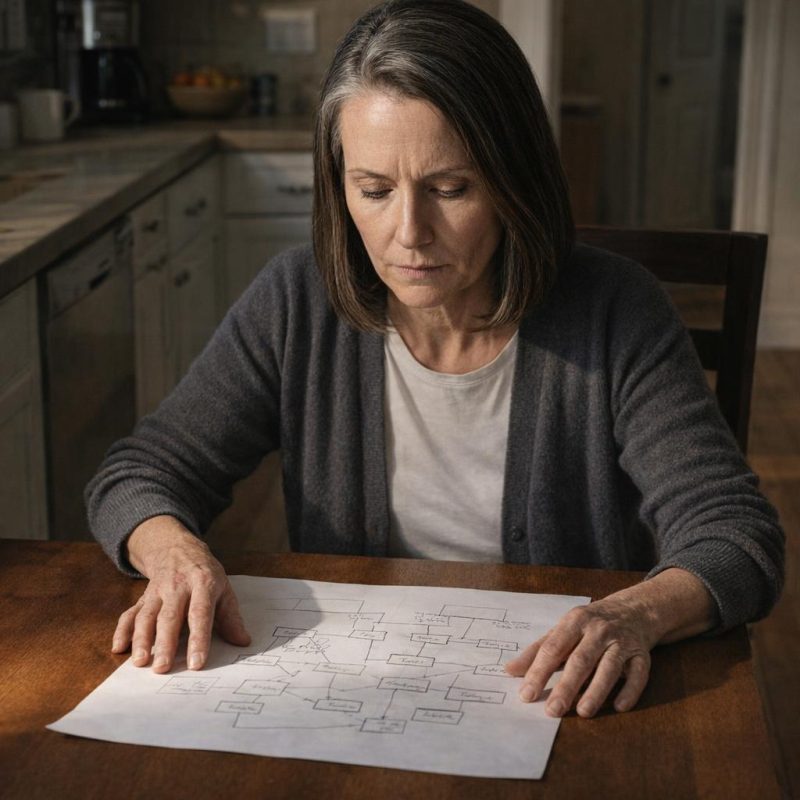 Image by RM AI
The Internal Communications
I hadn't expected anyone from inside the organization to reach out to me. So when I got a folded note slipped under my door on a Tuesday morning — no name, just a phone number and the words 'I have something you should see' — I sat with it for a long time before I called. The voice on the other end was young and careful. We met at the park two blocks over, and she handed me a manila envelope without much preamble. She said she'd been volunteering for months and that something had started to feel wrong to her, though she couldn't point to one specific moment. Inside the envelope were printed copies of internal emails — not many, maybe a dozen threads, but enough. I read them at my kitchen table that evening with a cup of tea going cold beside me. The emails discussed property acquisition in language that felt nothing like disaster relief. There were references to 'resident profiles' and 'acquisition windows' and 'conversion timelines.' One thread discussed which homeowners were most likely to accept offers quickly. Another referenced coordinating outreach schedules with follow-up pressure points. I read each one slowly, going back over certain phrases to make sure I was reading them correctly. And then I came to an email that named our neighborhood specifically — not as a community in need of help, but as a target area with identified assets — and I sat there in the quiet of my kitchen, that word 'assets' sitting on the page where our homes and our neighbors should have been.
 Image by RM AI
The Systematic Plan
I spread the emails out across my kitchen table and went through them again, this time looking for the thread that connected them. It took me most of the morning. Some of the messages were mundane — scheduling, supply logistics, volunteer coordination. But woven through them was something else entirely. There were discussions about which residents had expressed financial stress during intake conversations. There were notes about who was elderly, who lived alone, who had mentioned being underinsured. One email used the phrase 'high-conversion profile' to describe a category of homeowner. I had to read that twice. Another thread discussed timing outreach visits to coincide with moments when residents would feel most overwhelmed — right after assessments, right before repair estimates came in. I kept a notepad beside me and wrote down every phrase that stopped me cold. The list got long. What I was reading wasn't the internal communications of a relief organization trying to help people recover. The language was too precise, too categorized, too focused on acquisition outcomes. I thought about Doris. I thought about the other neighbors who had mentioned feeling pressured. I thought about how many conversations had happened at kitchen tables just like mine, with someone sitting across from a resident who had already been assessed and categorized before they walked through the door. I was still working through the last few emails when I found a message with a subject line that read 'Priority Acquisition List — Starred Properties' and opened it to find a numbered list of addresses — and several of them were homes I recognized immediately.
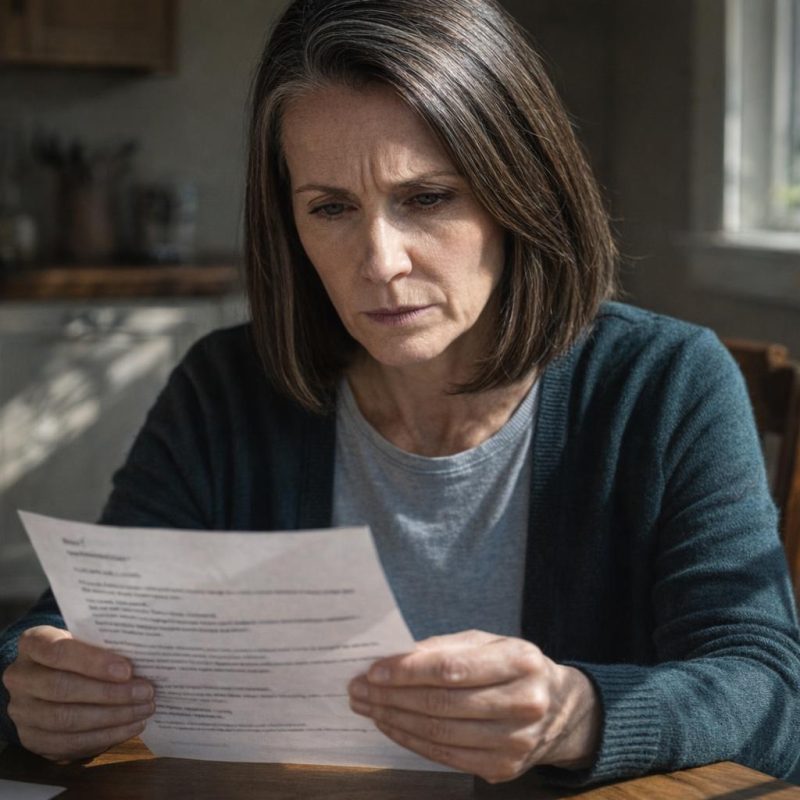 Image by RM AI
The Scope
I wrote out every address from that list onto a separate sheet of paper and then walked to my front window and looked down the street. I knew most of those houses. I'd walked past them hundreds of times. I could put faces to nearly every address — the widow on the corner who'd lived there forty years, the retired couple three doors down who'd mentioned the repair costs were more than they'd budgeted for, the man on the next block who'd told me he was thinking about taking an offer just to be done with the stress of it all. I went back to the emails and kept reading. The list wasn't limited to the starred properties. There were supplementary notes referencing additional residents throughout the neighborhood — people who had been flagged during volunteer visits as potentially open to selling. When I counted the names and addresses across all the documents, I got to thirty-one before I stopped counting. Thirty-one households. Some of them I knew well. Some I only recognized by sight. But every single one of them had been assessed, categorized, and placed on a list without knowing it. They had opened their doors to people they believed were there to help them. They had answered questions honestly because they thought the answers would get them the help they needed. I sat back down at my table and looked at those thirty-one addresses, and what I felt wasn't just anger — it was the particular weight of knowing that my neighbors had been seen as inventory.
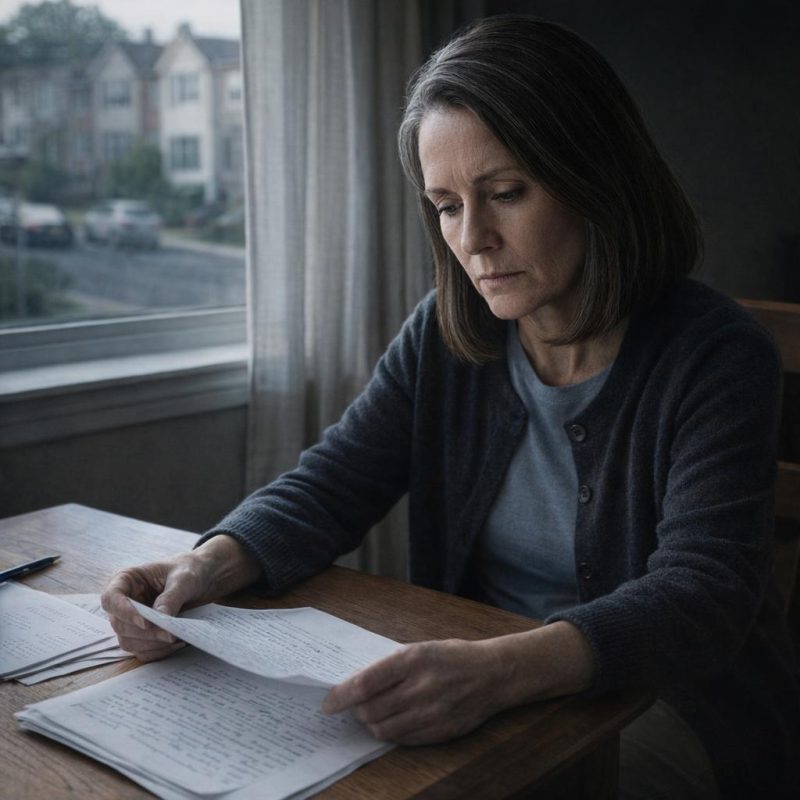 Image by RM AI
The Pre-Planned Scheme
I almost missed it. It was tucked near the back of the envelope the volunteer had given me — a single folded page that looked like a planning document rather than an email. The header was dated fourteen months before the storm. I read the date twice and then read it again. The document was a site assessment summary, and it included a map. The map showed our neighborhood with specific properties outlined and marked — not with damage assessments or repair priorities, but with acquisition status notations. 'Parcel required for Phase 2 corridor.' 'Owner resistant — long-term hold.' 'Key obstruction — priority acquisition.' I recognized the streets. I recognized the lot shapes. And when I pulled out my list of starred properties from the emails and laid it beside the map, the overlap was exact. Every starred property in the acquisition emails matched a parcel marked on this map — a map drawn more than a year before the storm ever hit. I kept reading. The document referenced a previous development proposal that had stalled because certain properties along the corridor couldn't be acquired. It referenced the same investors I'd found in the newspaper article. And at the bottom, in plain language, it outlined a strategy for creating the conditions under which resistant homeowners might become willing sellers. The storm hadn't created this plan. The plan had been waiting for a storm — and I was holding the document that proved it.
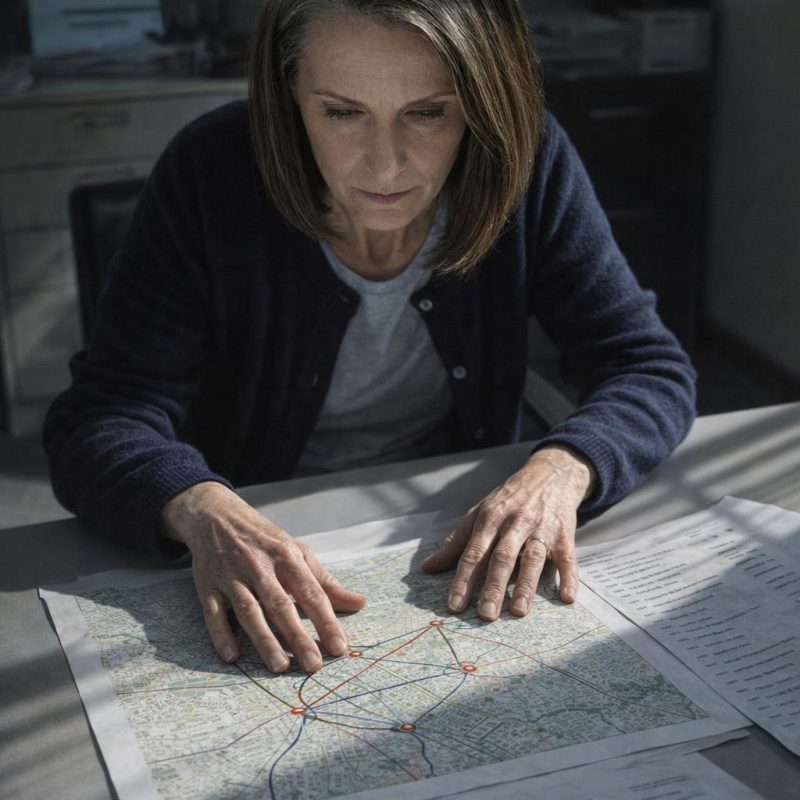 Image by RM AI
The Exploitation
I set the planning document down and went back through everything with the map beside me. The timeline was right there once I knew what I was looking at. The nonprofit had been incorporated eight months before the storm — I'd seen that in the public filings and hadn't thought much of it at the time. The volunteer recruitment had started six months before the storm, framed as general community preparedness work. The donor contributions, including Gerald Fitch's, had come in steadily in the months leading up to it. Everything had been in place before a single shingle blew off a single roof in our neighborhood. When the storm hit, they hadn't scrambled to respond. They had activated. I thought about how fast the volunteers had appeared — how organized they were, how prepared, how they already seemed to know which streets to prioritize. I'd taken that as a sign of genuine dedication. I understood now what it actually meant. I was still sitting with that when I went back through the email printouts looking for the earliest message in the thread. I found it near the bottom of the stack — sent the day after the storm made landfall, timestamped just after six in the morning, from an address I now recognized as connected to Gerald Fitch's holding company — and the subject line read 'Conditions Are Optimal.'
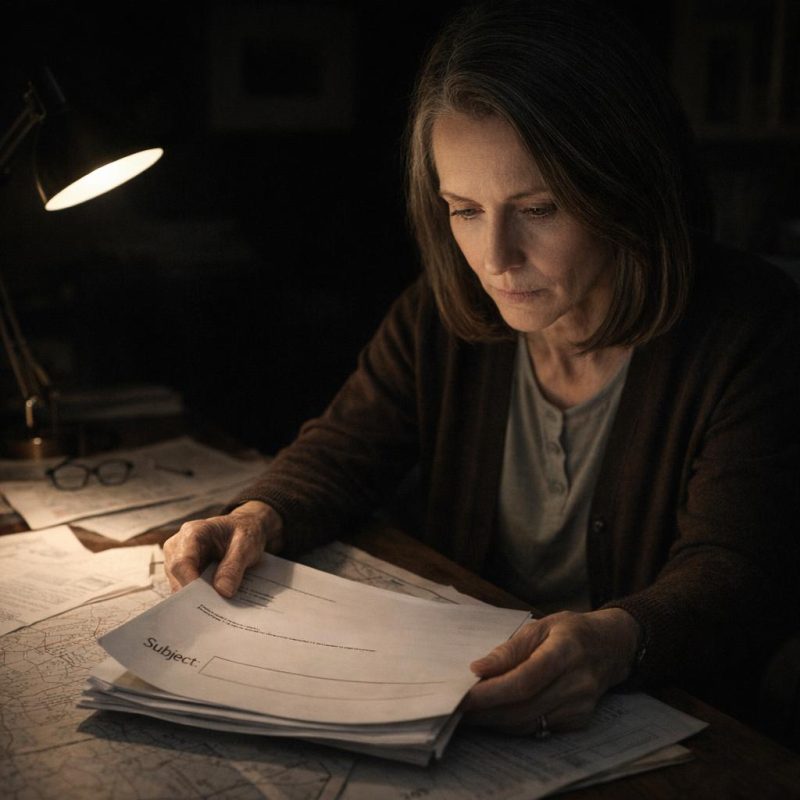 Image by RM AI
The Weight of Truth
I didn't move from my chair for a long time after that. I just sat there with the documents spread across the table and thought about Caleb fixing Mrs. Patterson's porch steps without being asked. I thought about Morgan sitting with Doris for two hours one afternoon, just keeping her company while the repair crew worked. I thought about the volunteers who had shown up in the rain, who had hauled debris and carried groceries and checked on people who had no one else checking on them. Some of that had been real. I believed that. The kindness in those individual moments hadn't been manufactured — not all of it, not by the people doing the actual work. But it had been useful. It had built exactly the kind of trust that made a follow-up conversation about selling feel like advice from a friend rather than a pitch from a stranger. That was the part that sat heaviest with me. The relief hadn't been a cover story invented after the fact. It had been a delivery mechanism — something genuine enough to work, offered by people who may not have understood what they were delivering. I thought about Doris telling me she'd felt like she was being looked after. I thought about how much that had meant to her. And I sat there in my kitchen with the evidence of how that feeling had been built, and what it had been built to accomplish, and the grief of it was quieter and heavier than any anger I'd felt all week.
 Image by RM AI
Building the Case
I started with the copies. I had a small printer in the spare bedroom and I used most of a ream of paper going through everything — the planning document with the pre-storm date, the map with the marked parcels, the email threads, the donor records, the investor overlap chart I'd made by hand. I organized everything chronologically, starting with the earliest dated document and working forward, so that anyone who read through the folder would be able to follow the timeline without me having to explain it. I labeled each section with a sticky note. I made two complete copies and kept the originals separate in a different folder. Then I started on the written accounts. Three neighbors had already told me directly about feeling pressured during acquisition conversations — I called each of them and asked if they'd be willing to write down what had happened in their own words. All three said yes without hesitating. I also wrote out my own account of finding the spreadsheet, the donor records, and the planning document, keeping it factual and in order. By the time I finished, I had a folder that was nearly two inches thick. I set it on the kitchen table and looked at it for a moment — the weight of it, the months of small observations and careful questions and one wrong folder handed to me by a nervous college student, all of it gathered into something that could finally be read by someone with the authority to act on it.
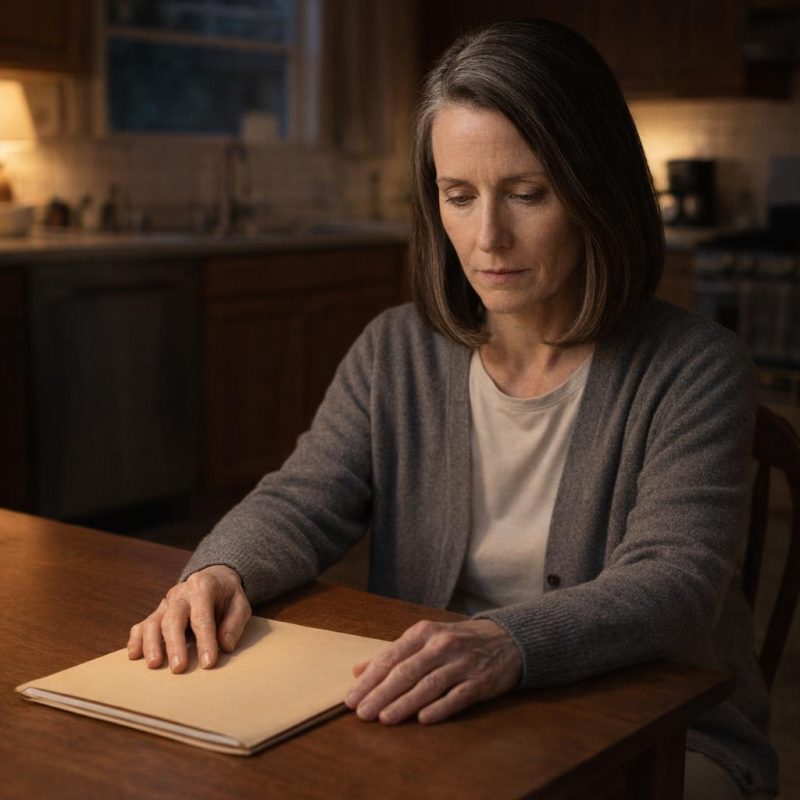 Image by RM AI
Recruiting Allies
I didn't want to walk into that meeting alone. Not because I was afraid of what I'd found — I was past afraid by then — but because I knew that one woman standing up with a folder of documents could be dismissed. A room full of people who'd lived through the same thing could not. I started with Doris. She was the one I trusted most, and she was the one who'd told me early on about the man who kept coming back to her door, asking about her house, asking whether she'd thought about her future. I sat with her at her kitchen table on a Tuesday afternoon and I laid out everything — the spreadsheet with her name and address and the little notes beside it, the map with her block circled, the emails that talked about elderly homeowners as acquisition opportunities. She didn't say anything for a long time. She just looked at the papers with her hands folded in her lap. Then she looked up at me and said, "They wrote all that down about me?" I told her yes. I told her they'd been tracking her before the storm even hit. She was quiet again. I asked her if she'd be willing to say publicly what had happened at her door — not to me, not in private, but in front of her neighbors, in front of the people who'd done it. She looked at the spreadsheet one more time, at her own name printed in that column, and she said she would.
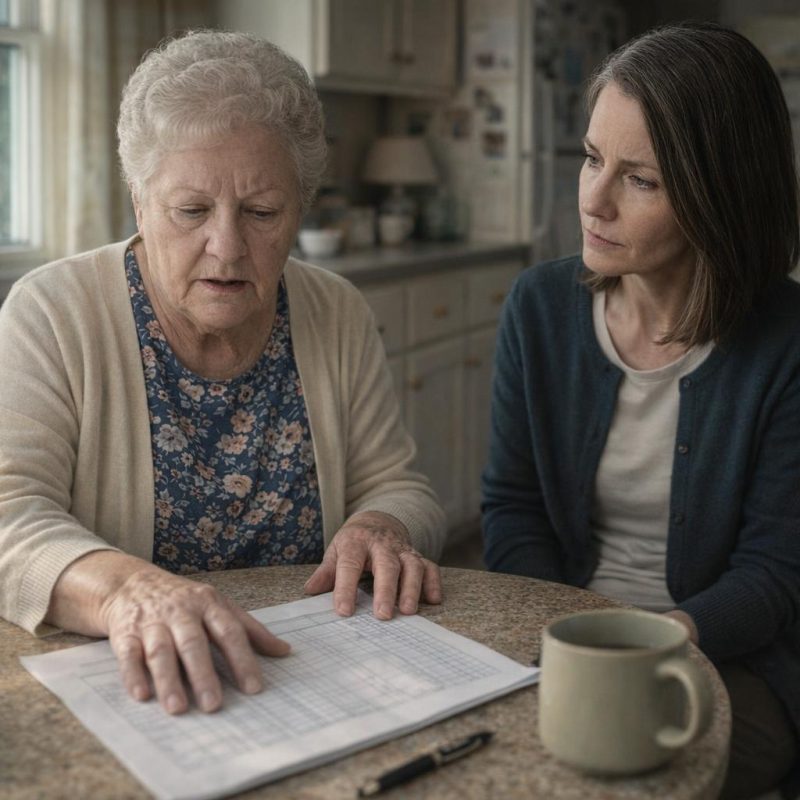 Image by RM AI
The Strategy
After Doris, I went to four more neighbors — people I knew had been approached, people who'd mentioned feeling uneasy about the conversations at their doors. Three of them had already written out their accounts for my folder. The other two I sat with in person, and by the end of both visits they'd agreed to speak. That gave me six people, including myself, who were willing to stand up in a public room and say what had happened to them. Then I found out about the meeting. One of the neighbors mentioned it — the nonprofit had sent out flyers announcing a community presentation about the redevelopment proposal, scheduled for the following Thursday at the community center. I pulled the flyer out of her hand and read it twice. They were going to stand up in front of the whole neighborhood and present the development plan as a gift. They were going to ask for support, maybe applause, maybe signatures. I called Doris that evening and told her. She said, "So that's when we go." I said yes. We spent the next two evenings going over the plan — who would speak first, who would hold the backup copies, which documents I'd display and in what order. I wanted the evidence to land in sequence, the way a timeline should, so that by the end of it no one in that room could say they didn't understand what they were looking at. By Wednesday night, every folder was labeled, every person knew their role, and the meeting was less than twenty-four hours away.
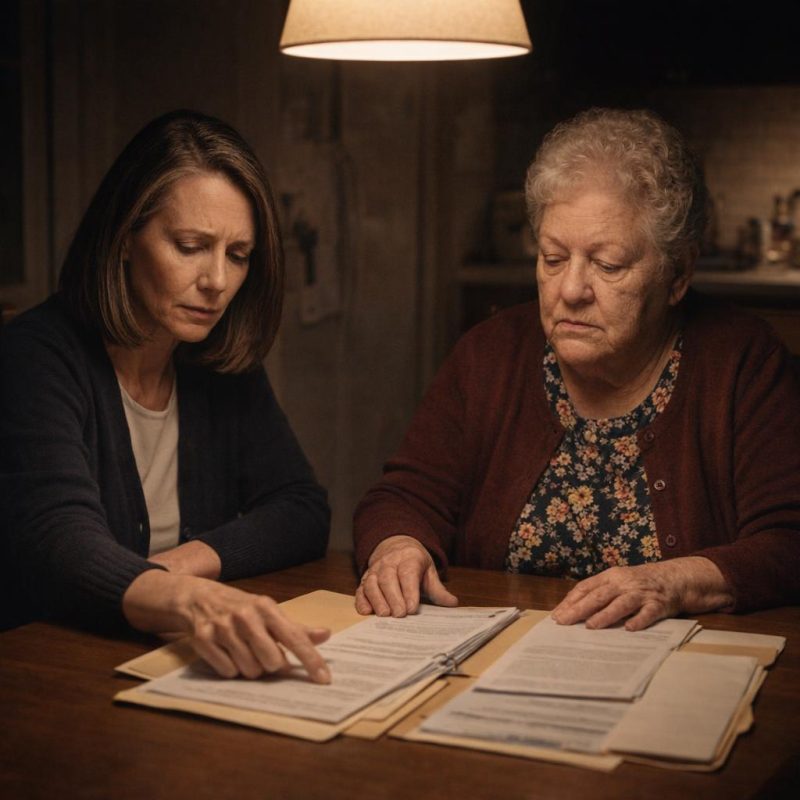 Image by RM AI
The Meeting Begins
I got to the community center thirty minutes early and took a seat near the middle of the room, close enough to the front to be heard when I stood up, far enough back to watch everything. I had my folder on my lap and two backup copies in the bag at my feet. The room filled up faster than I expected. People came in twos and threes, neighbors I recognized from the block, some I hadn't seen since before the storm. Doris came in and sat two rows behind me. She gave me a small nod. I watched Caleb and Morgan setting up near the front — arranging chairs, adjusting a projector screen, moving with the easy efficiency of people who'd done this kind of thing many times. They looked like exactly what they'd presented themselves as: organized, capable, genuinely invested. I had to remind myself what I knew. David arrived last, moving through the room with that practiced ease of his, shaking hands, making eye contact, saying names. He welcomed everyone warmly and thanked them for coming out on a weeknight. He talked about the storm, about resilience, about how far the neighborhood had come. Then he clicked to the first slide and began describing the redevelopment proposal — new mixed-use buildings, improved streetscaping, community green space. The room was attentive and quiet. I sat with my folder closed on my lap, the weight of it steady against my hands.
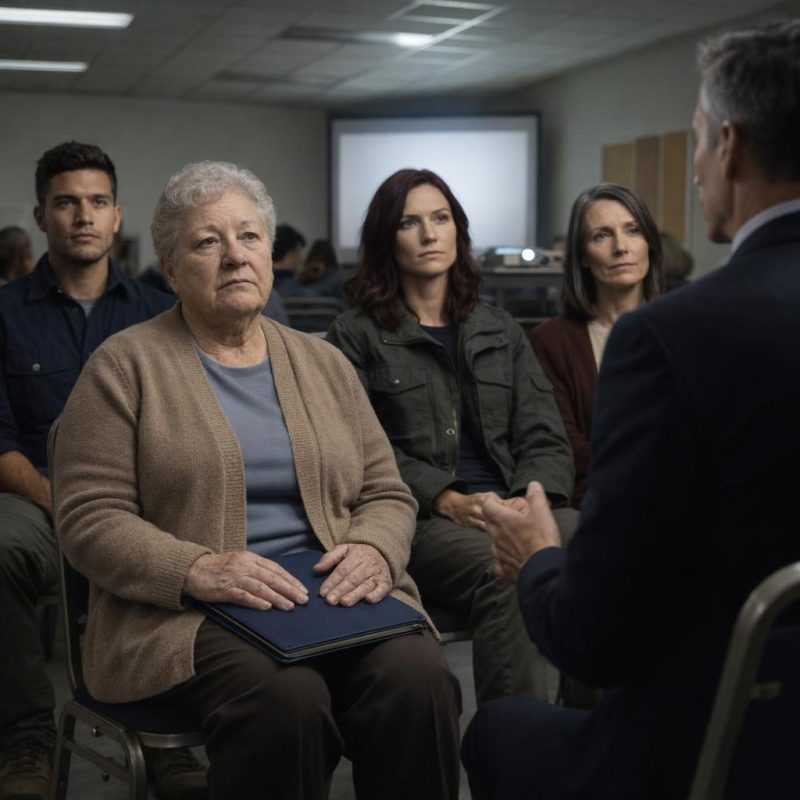 Image by RM AI
The Presentation
David moved through the slides with the confidence of someone who had given this presentation before, maybe many times. The renderings were polished — bright colors, smiling people on sidewalks, a little park where a row of older homes currently stood. He talked about property values and economic revitalization and what the neighborhood could become. People around me were nodding. A woman two seats over leaned toward her husband and said something I couldn't hear, but she was smiling. I kept my eyes moving between the screen and the front of the room. Caleb stood to David's left, arms crossed loosely, expression neutral. Morgan stood a few feet away near the edge of the presentation area. Neither of them was smiling. Caleb's jaw was set in a way that didn't match the mood David was working to create. Morgan kept her eyes on the floor in front of her more than on the crowd. I'd watched enough people in uncomfortable situations to recognize what I was seeing. David clicked to a slide showing a timeline of the proposed development phases and talked about community partnership and shared investment. The word partnership landed in my chest like a stone. I had the documents in my folder that showed exactly what kind of partnership this was — who the investors were, what they stood to gain, and how long they'd been planning it before anyone in this room lost a single shingle off their roof. I kept my hands flat on the folder and waited.
 Image by RM AI
The Opening
David finished the last slide and let the applause settle before he smiled and said he'd love to hear from the community — questions, thoughts, anything on their minds. A few hands went up. Someone asked about parking. Someone else asked about the timeline for construction. David answered each one smoothly, turning every question into another opportunity to talk about benefits. I waited through three more questions. Then I stood up. I said my name clearly and I said I lived two blocks from the community center and had been in this neighborhood for over thirty years. The room shifted — not dramatically, but I felt it, the way attention moves when someone changes the register of a conversation. I said I had documents I believed the community needed to see before anyone considered supporting this proposal. David's expression didn't change immediately, but something behind his eyes did. He said he appreciated my enthusiasm and that there would be time for open discussion after the formal presentation. I said the formal presentation was finished and the floor was open, and I was using it. A few people turned in their seats. Doris sat very still behind me. I set my folder on the empty chair beside me and opened it, and the room went quiet in the way rooms do when people sense that something is about to change. I had waited months for this moment, and now that it was here, I felt steadier than I had in a long time — just standing there, facing forward, the evidence spread open in front of me.
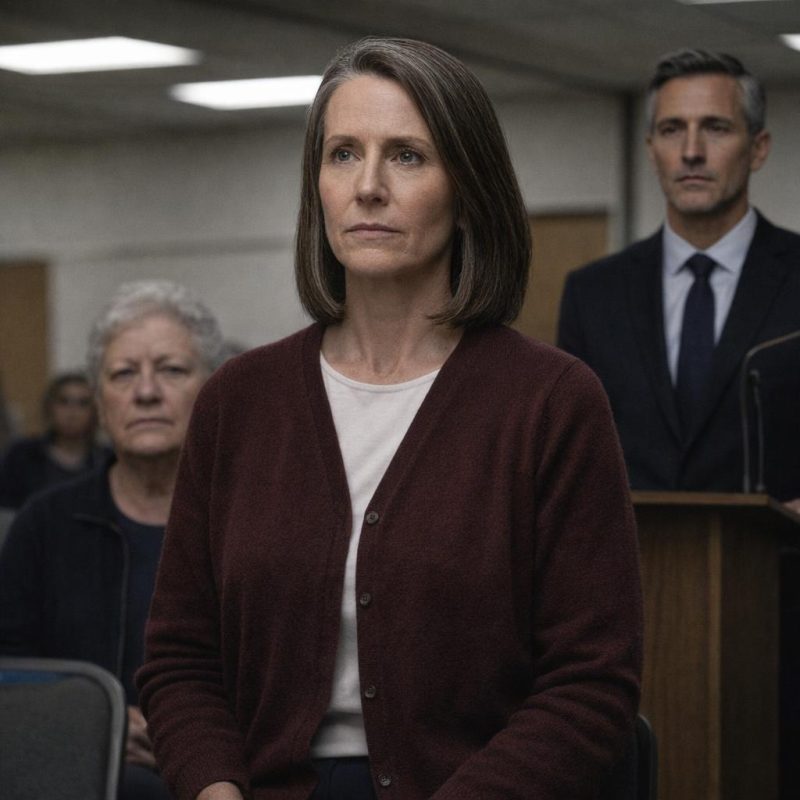 Image by RM AI
The Evidence
I started with the spreadsheet. I held up a copy and described what it was — a document listing neighborhood residents by name, address, age, property ownership status, and financial vulnerability indicators. I said it had been maintained by the organization running this meeting. I heard someone say "what" under their breath. I moved to the emails next, reading two passages aloud — one discussing acquisition timelines, one referring to elderly homeowners as high-priority targets. The murmuring in the room grew. David said from the front that documents could be taken out of context, that he'd be happy to clarify. I said I'd give him the opportunity in a moment. I showed the funding records next, the ones that traced donor contributions back to a cluster of real estate investment entities. I named the entities. I watched people in the third and fourth rows lean forward. Then I reached into the folder and pulled out the development map — the one with the date printed in the lower right corner, the one dated eight months before the storm made landfall. I held it up so the room could see it. I said this map showed every property the organization had flagged for acquisition, marked before a single house in this neighborhood had been damaged. I said the starred properties on that map matched the addresses of people in this room. I turned the map so the projector light caught it, and every marked parcel on that page was visible to everyone who cared to look.
 Image by RM AI
The Testimonies
The room didn't erupt all at once. It built, the way a fire builds — one voice, then three, then a dozen. I asked for quiet and got enough of it to continue. I said I wanted the community to hear directly from some of the people whose names appeared on that spreadsheet. Doris stood up without waiting for me to call on her. She was small and steady and she spoke clearly. She said a young man had come to her door four times over six weeks, each time asking whether she'd thought about selling, each time mentioning that the neighborhood might not recover, that she might be better off somewhere else. She said she'd felt ashamed for even considering it. Two rows back, a man named Gerald stood up and said the same thing had happened to him, that he'd been told his foundation damage was worse than it was and that selling quickly was his best option. A woman near the window said she'd been visited three times and had almost signed something before her daughter talked her out of it. Each account landed in the room like a weight being added to a scale. David stepped forward and said the organization had always acted in good faith, that individual volunteers sometimes exceeded their guidance, that this was being taken out of context. Nobody was looking at him the way they had been twenty minutes ago. The investors who had been seated along the side wall — four of them, in good suits — were no longer in their chairs.
 Image by RM AI
The Turn
The noise in the room was still rising when I saw Caleb move. He didn't walk toward David. He walked toward the microphone stand near the edge of the presentation area, the one that had been set up for audience questions. Morgan watched him take two steps and then she followed, stopping just behind his shoulder. David said his name — sharp, low, the kind of tone that expects to be obeyed. Caleb didn't stop. He reached the microphone and stood there for a moment with his hand on the stand, and the room began to quiet on its own, the way it does when people sense something unexpected is happening. Morgan put her hand briefly on his arm. He looked at her, and she gave him a small nod. I had my folder still open in front of me. I had spent months building the case that was now spread across this room, and I had not anticipated this — had not planned for it, had not known it was coming. Caleb adjusted the microphone, looked out at the room full of his neighbors, and then he looked directly at David for one long moment before he turned back to face the crowd. Whatever was about to come out of his mouth, it was not going to be a defense of the organization. I could see that much from where I was standing. He took a breath, and then he began to speak.
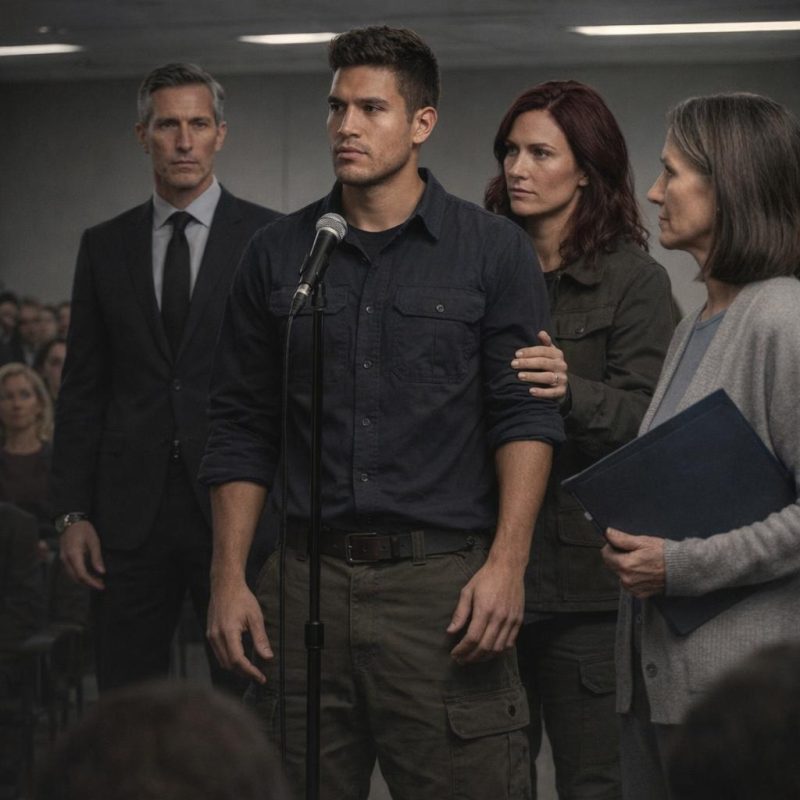 Image by RM AI
The Collapse
Caleb spoke for maybe four minutes. That was all it took. He told the room what the stars meant. He told them about the data collection, the financial profiling, the way vulnerability had been sorted and catalogued and handed to investors. He named David's organization by its legal name and its shell company name. He said he hadn't known at the start and that he was sorry — and then he set a folder on the table in front of him and said the rest was in there for anyone who wanted to see it. The room didn't explode all at once. It came apart in layers. I watched two men in the back row — the ones who had arrived together in the dark sedan — stand up and move toward the exit. Someone near the door said, loudly, that nobody was leaving yet. A woman three rows ahead of me was already on her phone. Morgan moved to the side table and laid out a second set of documents, organized by date, and residents started picking them up with shaking hands. David stepped forward and tried to speak — something about context, about mischaracterization — and the room simply would not let him. Doris, who had been sitting quietly beside me the whole evening, reached over and put her hand on top of mine. I heard someone say the words state attorney general. I heard someone else say channel seven. David's voice dropped away entirely, and the redevelopment proposal — the one that had been presented with such polish just an hour before — was rejected by a show of hands so unanimous that no one even bothered to count the opposition. The folder Caleb had set on the table was already being photographed.
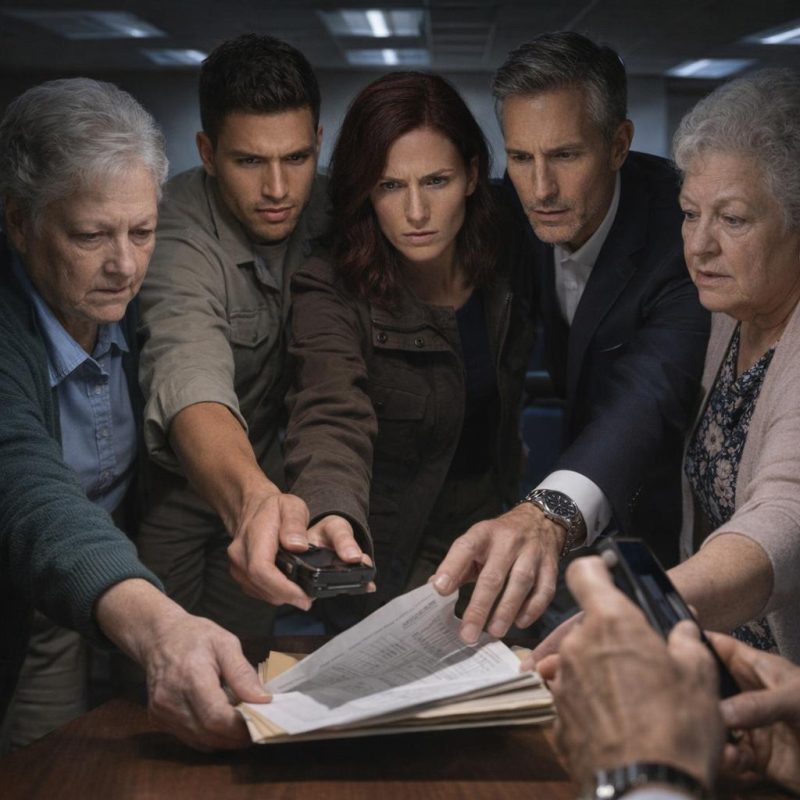 Image by RM AI
The Investigations
The weeks after the meeting moved fast and then slow, the way things do when institutions finally start grinding. The state opened a formal inquiry into the nonprofit's funding structure within ten days of the meeting. I read about it in the paper first, then saw the official notice posted on the county website — a dry, bureaucratic paragraph that somehow felt like the most satisfying thing I had read in months. Federal agencies followed not long after, looking at wire transfers and grant applications that didn't add up. The media coverage was broader than I had expected. A reporter from the city desk called me twice. I gave her the documents I had copies of and let the story speak for itself. One by one, the names I had seen on the organization's letterhead began to disappear — resignations announced in terse press releases, each one citing a desire to spend more time with family or pursue other opportunities. I recognized the language for what it was. By the fourth month, the nonprofit had formally dissolved, its assets frozen pending the outcome of the federal review. The investors who had attended that meeting faced their own scrutiny — questions about what they had known and when. None of it moved as fast as I wanted. Justice rarely does. But I sat at my kitchen table one morning with the newspaper open in front of me, the investigation findings laid out in black and white across two full columns, and the weight of the past year settled quietly around me like something finally set down.
 Image by RM AI
The Redemption Effort
Caleb and Morgan didn't disappear after the meeting. That surprised some people in the neighborhood, and I understood why — it would have been easier for them to leave, to let the legal process play out from a distance and start over somewhere else. Instead they stayed. They set up a table at the community center two Saturdays a month and helped residents file privacy complaints with the state. They worked with a legal aid organization to identify which data had been improperly collected and to push for its destruction. Some neighbors wouldn't look at them. A few said things to their faces that I won't repeat here. Caleb took it without argument. Morgan cried once, in the parking lot, when she thought no one was watching — I was, and I didn't pretend otherwise, and she didn't ask me to. Doris went to their table on the third Saturday. She sat down across from Morgan, and they talked for a long time in low voices, and when Doris stood up to leave she patted Morgan's hand the way she pats everyone's hand when she wants them to know she means it. I watched Caleb work through a stack of complaint forms one afternoon, methodical and unhurried, stopping to explain each step to an elderly man who kept losing his place on the page. There was no performance in it. No audience he was playing to. It was just the work, done carefully, because it needed doing. I didn't forgive them quickly. But I watched them show up, week after week, and that counted for something I couldn't quite name but felt clearly enough.
 Image by RM AI
The Stars Beside Our Names
I've thought a lot about what made it work — the scheme, I mean, before it didn't. It wasn't that David was unusually clever. It was that he understood something true about communities like ours: that we want to believe in people who show up and help. Caleb and Morgan had been genuinely kind. The meals were real. The roof repairs were real. The care was real, even if the organization behind it had other intentions entirely. That's what made it so hard to see and so easy to dismiss when I first started asking questions. Trust isn't a flaw. It's how neighborhoods survive. But it can be mapped, and catalogued, and handed to someone who sees it as an entry point rather than a foundation. I thought about Doris, who had almost signed papers she didn't fully understand because a young man with good manners had sat at her kitchen table and made her feel seen. I thought about all the names on that spreadsheet with stars beside them — every one of them a person who had lived in the same place long enough to love it, which was exactly what had made them a target. One accidental folder. One nervous college student who grabbed the wrong stack of papers. That was the margin. Without Jack handing me those documents that afternoon, the meeting might never have happened, the questions might never have been asked, and the neighborhood I had lived in for thirty-one years might have been quietly transformed into something unrecognizable before any of us understood we had been part of someone else's plan all along.
 Image by RM AI
KEEP ON READING
20 Political Marriages That Changed The Map
When Wedding Bells Redrew Borders. Throughout history, marriages between powerful…
By Rob Shapiro Jun 22, 2026
20 Royals Who Turned Family Drama Into National Crises
Bloodlines Gone Public. Royal families are supposed to make private…
By Cameron Dick Jun 22, 2026
20 Most Notorious Criminals in History
A Closer Look at Infamy. History is fraught with horrible…
By Christy Chan Jun 19, 2026
20 Historical Relationships Ruined by Terrible Timing
Love Doesn’t Always Conquer All. Love often struggles when entangled…
By Elizabeth Graham Jun 19, 2026
20 Women In History Punished for Loving the Wrong Person
When Love Became a Public Offense. History has never been…
By Annie Byrd Jun 19, 2026
Sin Eaters: 20 Bizarre Jobs in History Created To Deal…
Making a Living Off the Afterlife. Death has always been…
By Sara Springsteen Jun 19, 2026