


After 25 Years of Silence, My Ex-Husband Sent Me a Birthday Card That Destroyed Everything
After 25 Years of Silence, My Ex-Husband Sent Me a Birthday Card That Destroyed Everything
The Envelope I Almost Threw Away
The card arrived on my sixty-third birthday, wedged between a grocery store flyer and a credit card offer. I almost missed it. The handwriting on the envelope stopped me cold—David's careful block letters, the same ones that had signed our mortgage papers and Valentine's cards decades ago. We'd been divorced for twenty-five years. I hadn't heard from him in all that time, not a single word. My hands shook as I opened it. Inside was a simple birthday card with a generic message about wishing me well, but tucked behind it was a check and a folded letter. The letter was brief. David wrote that he'd had a health scare recently—nothing immediately life-threatening, but enough to make him think about unfinished business. He said he owed me more than money, though the check was meant as a start. He'd discovered something years ago, he wrote, something he should have told me then but didn't because he was ashamed of his own cowardice. Now he was ready to name the person who had actually stolen the money that destroyed our marriage. The letter named the person who destroyed my marriage, and it was someone I'd trusted for sixty years.
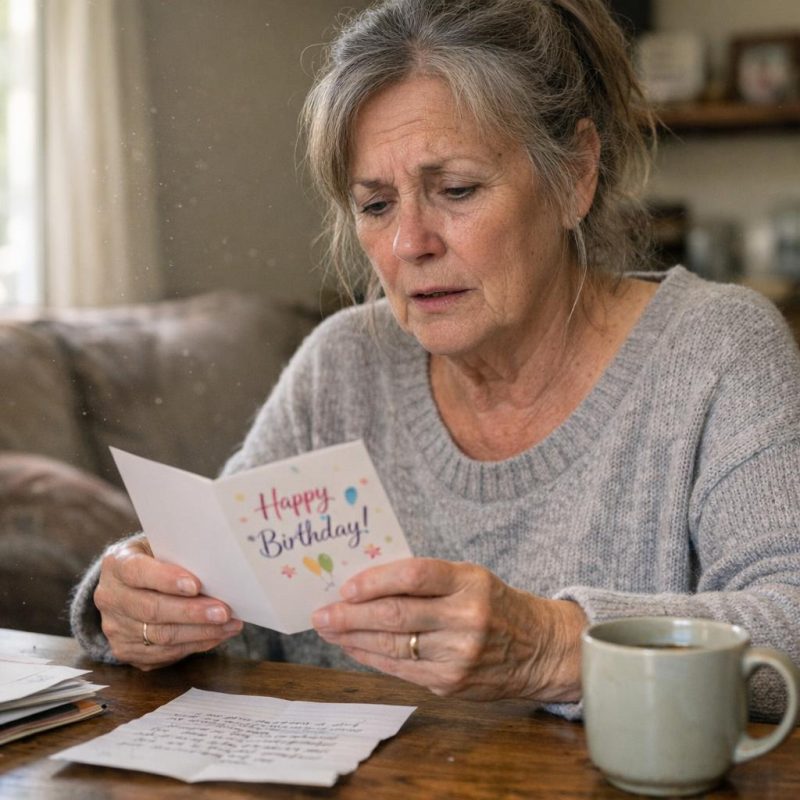 Image by RM AI
The Scandal That Shaped Me
I'd spent half my life carrying the weight of that scandal. In 1998, fifteen thousand dollars disappeared from the joint checking account David and I shared. It wasn't a fortune, but for us it was everything—our emergency fund, money we'd saved for years. David confronted me about withdrawals I swore I hadn't made. The bank records showed my signature. I told him I didn't take it, that I couldn't explain it, but he could see it right there in black and white. Our small town ate it up. The rumors spread fast: Margaret Reynolds, the woman who seemed so respectable, had stolen from her own husband and lied about it. David filed for divorce within months. I stopped going to church because I couldn't stand the stares. I lost friends who thought I was either a thief or unstable enough to forget taking my own money. For twenty-five years, I'd lived with that shame, always maintaining my innocence to anyone who'd listen, knowing most people didn't believe me. I'd spent twenty-five years believing David left because he thought I was a liar, but the letter said he'd discovered who really took the money.
 Image by RM AI
The Name I Didn't Want to Read
The name in the letter was Claire. My younger sister. I read it three times before my brain would accept what my eyes were seeing. David's letter explained that Claire had access to everything during those months she lived with us in 1997 and early 1998. She'd been going through a difficult time, recently unemployed, and we'd welcomed her into our home. She'd helped around the house, run errands, sometimes picked up our mail. David wrote that he'd found evidence years after our divorce—he didn't specify what—that proved Claire had forged my signature and taken the money in several withdrawals. He'd been too ashamed to come forward because by then I'd already rebuilt my life, and he thought he'd caused enough damage. I sat there remembering how Claire had been the one who helped me pack when I moved out. She'd held me while I cried. She'd told me I deserved better than a man who didn't trust me. Claire had been the loudest voice telling me I was better off without David, and now I understood why.
 Image by RM AI
The Sister Who Saved Me
After the divorce, Claire became the person I relied on most. She drove me to my new apartment, a cramped one-bedroom that was all I could afford. She helped me find a job when no one else in town would hire me. When I couldn't sleep, she'd come over with tea and sit with me until dawn. We'd grown closer than we'd ever been as children. For twenty-five years, she'd been my confidante, the one person who never doubted my innocence because, of course, she'd known I was innocent all along. I remembered specific moments now with new clarity: Claire assuring me that David's distrust revealed his true character, Claire suggesting I stop trying to convince people of the truth and just move forward, Claire always steering me away from looking backward. She'd shaped my entire narrative about what happened. I'd thought of her as my savior, the sister who stood by me when everyone else walked away. Every word of comfort Claire offered had been built on a lie she created.
 Image by RM AI
The Friend Who Remembers
I called Linda three days after the letter arrived. She'd been my best friend since college, one of the few people who'd stayed close through everything. I tried to sound casual. 'I've been thinking about the divorce lately,' I told her. 'Just remembering how everything fell apart.' Linda was quiet for a moment. 'That's a heavy place to visit. Why now?' I said I'd been looking through old photos, which wasn't entirely untrue. I asked her what she remembered about those days. Linda recalled how devastated I'd been, how insistent that I hadn't taken the money. Then she said something that made my stomach drop: 'You know, I always thought it was strange that Claire was the one who first suggested David might be having an affair. Remember? Before the money thing even came up.' I didn't remember that at all. Linda continued, 'She mentioned it at that coffee shop, said David had been acting distant. I thought she was trying to prepare you for bad news, but then the financial stuff happened instead.' Linda mentioned something I'd forgotten: Claire had been the one who first suggested David might be having an affair.
 Image by RM AI
The Check I Can't Cash
The check sat on my kitchen table for days. I couldn't bring myself to put it away or cash it. The amount was substantial—enough to finally fix my car properly, maybe take a real vacation for the first time in years, pad my thin retirement savings. I lived on Social Security and a small pension from thirty years of administrative work. I clipped coupons. I bought generic brands. This money would matter to someone like me. But every time I looked at it, I felt sick. Taking it would mean accepting a new reality: that I'd spent twenty-five years carrying shame that belonged to someone else. That I'd let my reputation be destroyed, let friendships die, let myself become small and quiet and apologetic, all because my sister had stolen from me and let me take the blame. The money felt like blood money, even though David clearly meant it as restitution. I couldn't decide if cashing it would be claiming what I deserved or participating in some transaction that turned my pain into a dollar amount. Taking David's money would mean accepting that the last twenty-five years of shame had been built on someone else's crime.
 Image by RM AI
The Marriage I Thought I Knew
I started thinking about my marriage differently after that. David and I had been happy once—I was certain of that. We'd had fifteen good years before Claire moved in. But I forced myself to remember the months before the money disappeared. David had been withdrawn. He'd questioned little things: where I'd been, who I'd talked to, why I'd spent twenty dollars at the grocery store instead of fifteen. At the time, I'd thought he was just stressed about work. Now I wondered what Claire had been whispering to him. Had she planted doubts before the theft, preparing the ground so her crime would fall on fertile soil? I remembered a dinner where Claire had made an odd comment about how marriage required constant vigilance, how people changed. David had looked uncomfortable. I'd brushed it off as Claire being dramatic about her own failed relationships. How many other moments had I misunderstood? How much of my marriage had already been poisoned before the scandal delivered the final blow? I realized I'd been mourning a marriage that died before the scandal, killed by suspicions Claire had planted months earlier.
 Image by RM AI
The Questions I Can't Ask
I must have started a dozen different messages to Claire over the following week. Some were long and detailed, laying out everything I knew and demanding answers. Some were short and cold: 'I know what you did.' Others tried to be measured and calm, asking for a conversation. I deleted them all. What was I even asking for? An apology felt absurdly insufficient. An explanation felt beside the point. Part of me wanted to scream at her, to make her feel a fraction of what I'd endured. Part of me wanted to understand what could make a sister do this—but did I really want to know? Each draft revealed something different about what I needed, and none of them felt right. Too angry made me sound unhinged. Too hurt made me sound weak. Too forgiving made me sound like I was letting her off. I kept coming back to one question that appeared in every version, no matter how I tried to avoid it. It was the question that terrified me most because I wasn't sure I could survive hearing the answer. The question that kept appearing in every draft was the one I feared most: why did you hate me?
 Image by RM AI
The Town That Remembers
I needed milk and eggs, simple enough. But driving to the grocery store felt like preparing for battle. Our town isn't huge—maybe eight thousand people if you count the outskirts—and the divorce had been spectacular enough that I'd spent years perfecting the art of the efficient shopping trip. Get in, get out, avoid eye contact. Twenty-five years later, you'd think it wouldn't matter anymore. But I saw Mrs. Henderson near the produce section, and her eyes lit up with recognition before sliding away. The Kowalskis, who used to live three doors down, turned their cart down another aisle when they spotted me. I'd lived with this for so long it had become background noise, like traffic or birdsong. Now, though, I found myself wondering what they'd actually heard back then. What had the church gossip chain said? What had Claire told people when they asked? I picked up a carton of eggs with shaking hands, and that's when I saw Mrs. Chen from the post office. She'd always been kind to me, even during the worst of it. She smiled at me now with such gentle sympathy that my throat closed. Mrs. Chen's sympathetic smile made me wonder: had everyone known something I didn't all along?
 Image by RM AI
The Proof He Mentioned
That night, I pulled David's letter out again and forced myself to read it slowly, paying attention to what I'd skimmed in my initial shock. He'd mentioned 'archived church records from 1997 and 1998' and 'financial documentation I obtained through considerable effort.' What records, exactly? The church kept attendance logs, counseling notes, maybe financial contributions. What could possibly be in there that proved anything? And financial documentation—bank statements? Credit card receipts? How had he even gotten access to those? The more I thought about it, the more questions multiplied. David wasn't the type to make accusations lightly, especially not twenty-five years after the fact. He'd found something concrete enough to convince him, something that had survived decades. The letter said he'd 'finally confirmed what I'd long suspected' and that he'd 'confronted Claire directly about her role.' That phrase kept snagging in my mind like a splinter. Confronted her directly. When? What had she said? Had she denied it, or had she admitted everything and asked him to keep quiet? And if she'd admitted it, what possible explanation could she have given that would make any of this make sense? If David had proof, why had he waited years to tell me, and what had Claire said when he confronted her?
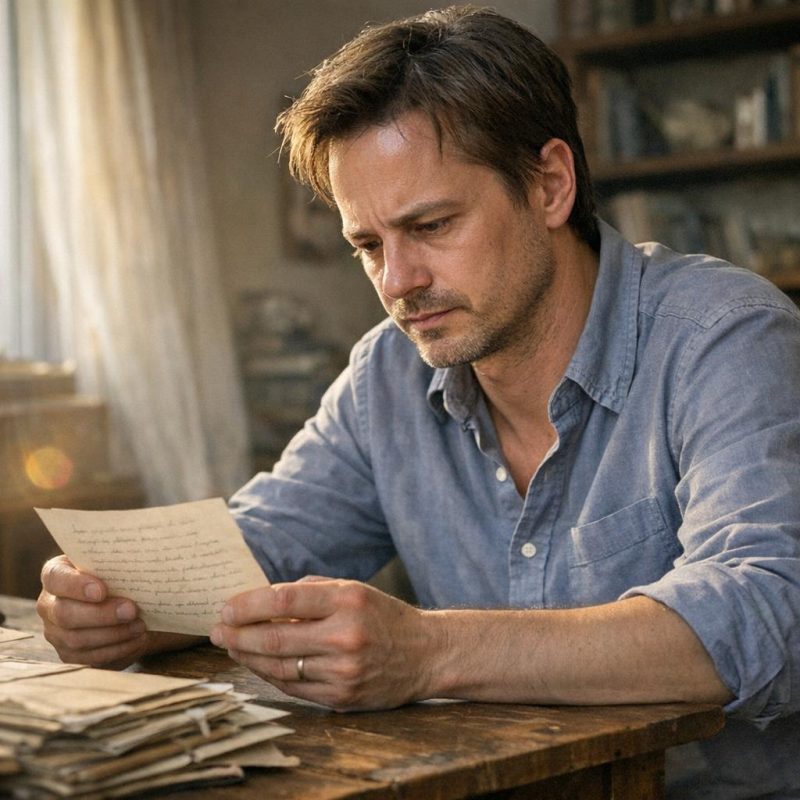 Image by RM AI
The Sunday I Avoided
Sunday morning arrived, and for the first time in maybe eight years, I didn't call Claire at ten a.m. like clockwork. We'd established this routine after our mother died, a weekly check-in that had become as automatic as brushing my teeth. I stared at my phone for twenty minutes, composing and deleting a text message. Finally, I sent: 'Not feeling great today, going to rest. Talk soon.' Simple. Neutral. Nothing that would raise alarm bells. My phone buzzed within thirty seconds. Claire calling. I let it go to voicemail. Another buzz—a text this time: 'What's wrong? Do you need anything? I can bring soup.' I set the phone face-down on the table and walked away from it. An hour later, another text: 'Margaret, you're worrying me. Just let me know you're okay.' Then another: 'I have chicken soup from that place you like. I can be there in twenty minutes.' Each notification made my heart race faster. She wasn't going to let this go easily. Our Sunday calls were sacred to her, or so she'd always said. Now I wondered if she needed them for a different reason—to monitor me, to maintain control, to keep our relationship exactly where she wanted it. Claire responded immediately with concern and an offer to come over, which filled me with a dread I couldn't name.
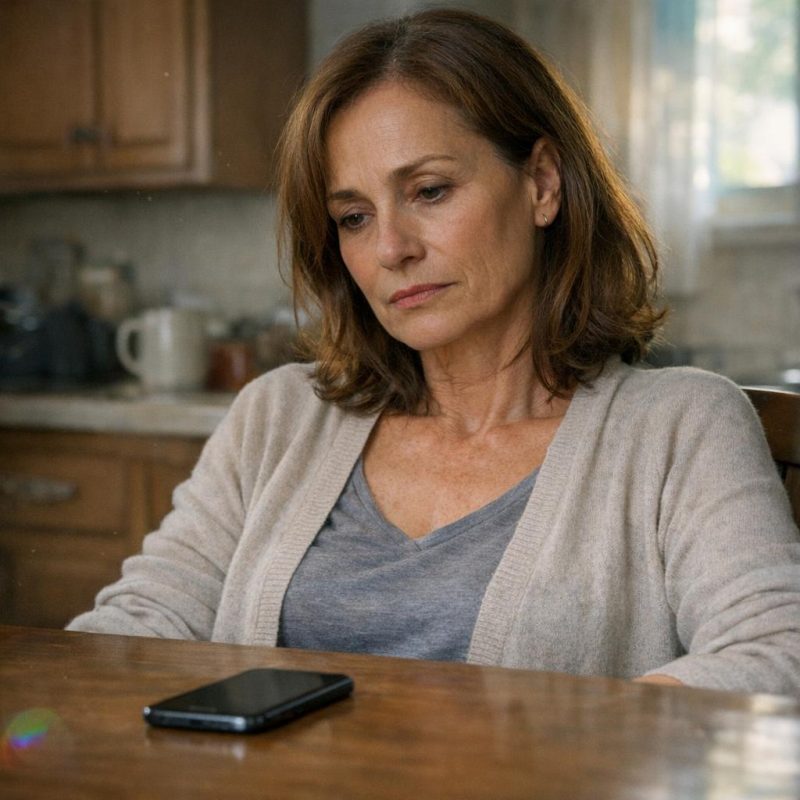 Image by RM AI
The Pastor's Memory
St. Mark's looked smaller than I remembered, though I suppose everything does when you're older. I'd avoided it for years after the divorce, the shame too raw, but Pastor Hugh had retired and the new minister didn't know me. I found Hugh in the church library, organizing hymnals with the careful precision of a man who had all the time in the world. He remembered me immediately, his face softening with recognition. We talked about inconsequential things first—his grandchildren, my work, the weather. Then I asked, as casually as I could manage, if he remembered counseling me during my divorce. 'Of course,' he said. 'That was a difficult time. You handled it with remarkable grace, considering the circumstances.' I asked what he remembered about Claire's involvement. His face brightened. 'Oh, your sister was wonderful. She came to several sessions with you, do you remember? She was so devoted to you during that time, almost protective in a way that seemed unusual. I remember thinking how lucky you were to have that support system.' The words landed like punches. Protective. Devoted. I'd remembered Claire being supportive, but several sessions? I couldn't recall her attending more than once or twice. Pastor Hugh said something that stopped my breath: 'Your sister was so devoted to you during that time, almost protective in a way that seemed unusual.'
 Image by RM AI
The Inheritance David Mentioned
I'm not proud to admit I spent three hours that evening doing what amounts to stalking David online. Social media wasn't his thing, but I found a LinkedIn profile and a mention in a business journal. More importantly, I found an obituary for Robert Brennan, David's uncle, dated November 2020. 'Survived by his nephew David Brennan and wife Susan.' The obituary included a request for donations to be made to a medical research foundation 'in lieu of flowers,' which usually meant the family was well-off enough not to need help with funeral costs. A little more digging—okay, a lot more digging—led me to public property records showing Robert had owned a house in Westchester and a vacation property in Vermont. The inheritance David mentioned in his letter was real, and it was substantial. But here's what made my hands shake as I scrolled through the dates: Robert died three years ago. Three years. David had come into money in 2020 and was writing to me in 2023. What had he been doing for those three years? Investigating? Gathering evidence? Or just working up the nerve to tell me? The inheritance was substantial, but the obituary was dated three years ago, meaning David had known the truth for at least that long.
 Image by RM AI
The Photo Album
The photo albums were in the hall closet, packed in plastic bins I hadn't opened in years. I pulled out the ones from 1994 to 1998 and spread them across the dining room table. There we were, David and me, younger and stupidly happy. Our wedding. The first apartment. Christmas at Mom's house. Birthday parties. And there, in so many of them, was Claire. I'd never noticed before how often she appeared in the background of our photos. Not front and center like family usually is, but hovering at the edges. At our anniversary dinner, she was seated three tables away with someone I didn't recognize. At my birthday party in 1996, she was in the doorway of the kitchen, watching us cut the cake. In the photo from Thanksgiving 1997, she stood behind the couch where David and I sat, her hand resting on the back near his shoulder. I pulled out a magnifying glass—yes, I actually did that—and studied her face. Was that a smile or something else? Was she happy for us or calculating? You can't read intent from a photograph, I know that. But once you start looking, you see patterns everywhere. In every photo where David and I smiled together, Claire stood just outside the frame, her expression unreadable.
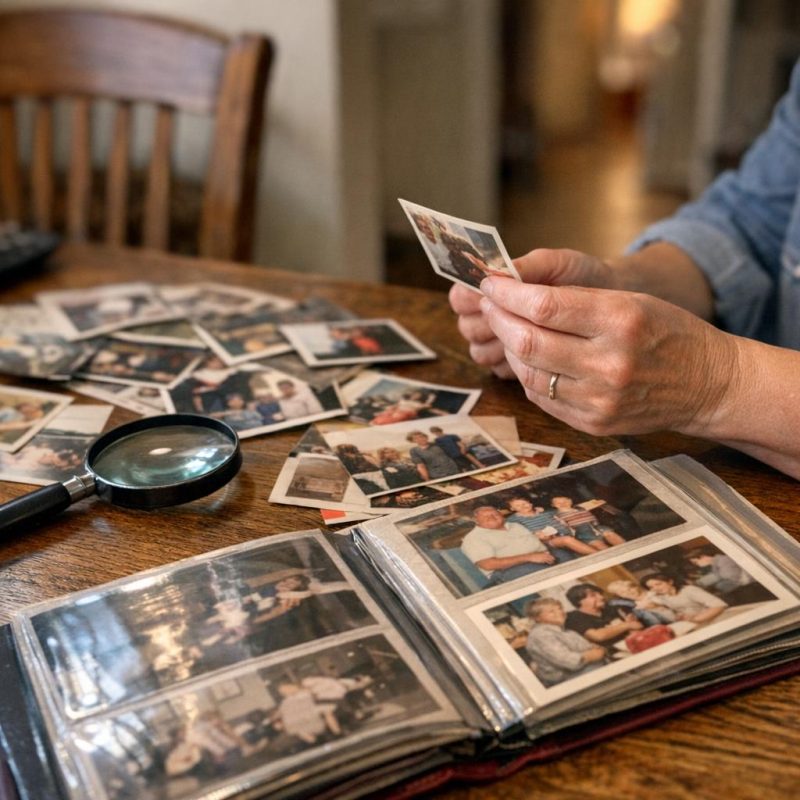 Image by RM AI
The Rough Patch Excuse
I tried to remember exactly what Claire had told me about her 'rough patch' in 1997. She'd mentioned it casually when I'd asked why she seemed stressed, why she was coming around so often. 'Work stuff,' she'd said. 'And relationship problems.' I'd been sympathetic, of course. I'd asked if she wanted to talk about it. She'd waved it away with a tight smile. 'Nothing you need to worry about. Just a phase.' But now I couldn't remember any details. What kind of work stress? She'd been at the same insurance company for years. What relationship problems? I'd never met this boyfriend she supposedly had. Never even heard his name. When had they broken up? She must have told me, but I couldn't recall the conversation. It was like trying to grab smoke. Every time I thought I had hold of a memory, it dissolved into vagueness. Had there been a boyfriend at all? Had there been actual work problems? Or had she invented a crisis that would explain why she needed to spend more time around us, more time in our house, more time alone with David when I was at my evening shift? Claire had described vague work stress and relationship problems, but I'd never met the boyfriend or heard about the job.
 Image by RM AI
The Tuesday Routine
The doorbell rang Tuesday at noon, and I knew exactly who it was before I opened it. Claire stood on my porch holding a bag from our favorite deli, smiling like nothing in the world was wrong. 'You've been avoiding me,' she said lightly, breezing past me into the house. 'I brought lunch.' I had no choice but to follow her into the kitchen, to watch her unpack sandwiches and pasta salad, to accept the plate she handed me. We sat at my kitchen table like we had hundreds of times before. She talked about her garden, about a movie she'd watched, about her neighbor's new dog. I made appropriate responses. I laughed when she told a funny story about the grocery store. I even asked questions, playing my part in our well-rehearsed routine. And the whole time, I studied her face. The way her eyes crinkled when she smiled. The familiar gesture of tucking her hair behind her ear. This was my sister. The person who'd held my hand at Mom's funeral. Who'd helped me move three times. Who'd never missed my birthday in sixty-three years. Sitting across from Claire, watching her laugh at a shared joke, I kept thinking: this woman destroyed my life and then stayed to watch.
 Image by RM AI
The Slip That Wasn't
We were halfway through lunch when Claire mentioned the house David had lived in after we divorced. 'I always wondered if that Chicago townhouse was worth what he paid,' she said, reaching for her water glass. 'The neighborhood changed so much in the nineties.' I set down my fork carefully. I'd never told Claire where David moved. Hell, I didn't even know where he'd gone until I ran into his mother at the grocery store almost a year after he left, and she'd mentioned it in passing. I'd certainly never discussed it with my sister. 'How did you know David moved to Chicago?' I asked, keeping my voice light. Claire's hand froze, just for a second, before she took her sip. 'Didn't you tell me?' she said. 'I could've sworn you mentioned it.' 'No,' I said. 'I didn't.' She laughed then, that easy laugh I'd heard my whole life. 'Oh, you know how small towns are. Someone must have mentioned it at the time. Maybe Linda? Or one of the neighbors?' She moved on to another topic smoothly, and I let her. But I'd seen it. When I asked how she knew David had taken that job in Chicago after the divorce, Claire's pause lasted just a second too long.
 Image by RM AI
The Niece's Call
Rebecca called my cell phone Thursday afternoon. 'Aunt Margaret? Do you have a minute?' She sounded hesitant, which wasn't like her. Claire's daughter had always been direct, confident. 'Of course, honey. What's wrong?' There was a long pause. 'It's Mom. I'm worried about her.' She explained that Claire had been drinking more than usual the past few weeks. Not obviously drunk, Rebecca said, but a glass of wine at lunch, another in the afternoon, more at dinner. 'She seems anxious about something. I asked if everything was okay, and she snapped at me.' I gripped the phone tighter. 'Did she say what's bothering her?' 'No, but...' Rebecca hesitated. 'This is going to sound strange, but I heard her on the phone the other day. She was in the garden, and I don't think she knew I was home. She kept saying something about old mistakes. That some things should stay buried.' My chest tightened. 'Who was she talking to?' 'I don't know. When she saw me, she ended the call really quickly and said it was just a friend.' We talked a few more minutes, and I promised to check on Claire. But after we hung up, I sat there staring at my phone. Rebecca mentioned that Claire had been 'muttering about old mistakes' lately, which meant Claire might already know that David had told me.
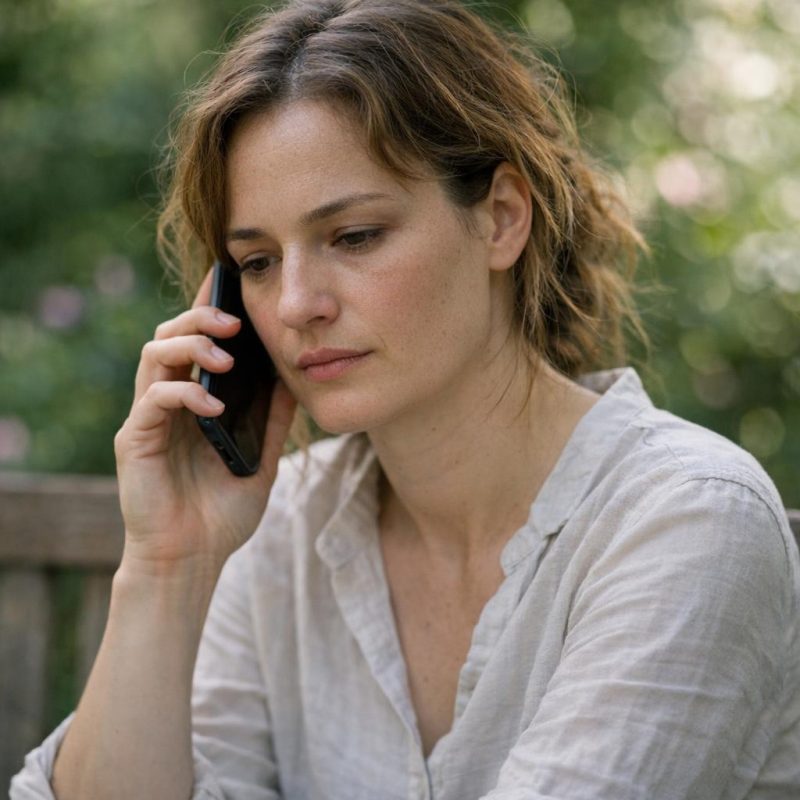 Image by RM AI
The Bank Records I Saved
Saturday morning, I went digging in the garage. The box was exactly where I'd left it twenty-five years ago, behind the Christmas decorations and old paint cans. I'd shoved it back there after the divorce was finalized, telling myself I'd throw it away eventually. But I never had. Maybe some part of me knew I'd need it someday. The cardboard was soft with age, the tape yellowed. Inside: bank statements, withdrawal slips, deposit records from those final months of my marriage. I spread them across the workbench, my hands shaking slightly as I put on my reading glasses. The light from the garage window fell across the papers, and I picked up the withdrawal slip. Five thousand dollars. My signature at the bottom. Except now, looking at it with older eyes and without the fog of grief and shock, I could see it. The 'M' in Margaret was too rounded. The loop in the 'g' didn't quite match how I'd always formed it. The slant was wrong. How had I missed this? But I knew how. I'd been too devastated, too humiliated, too desperate to explain what happened to look closely. The signature on the withdrawal slip looked like mine, but after twenty-five years, I could finally see the differences I'd been too upset to notice then.
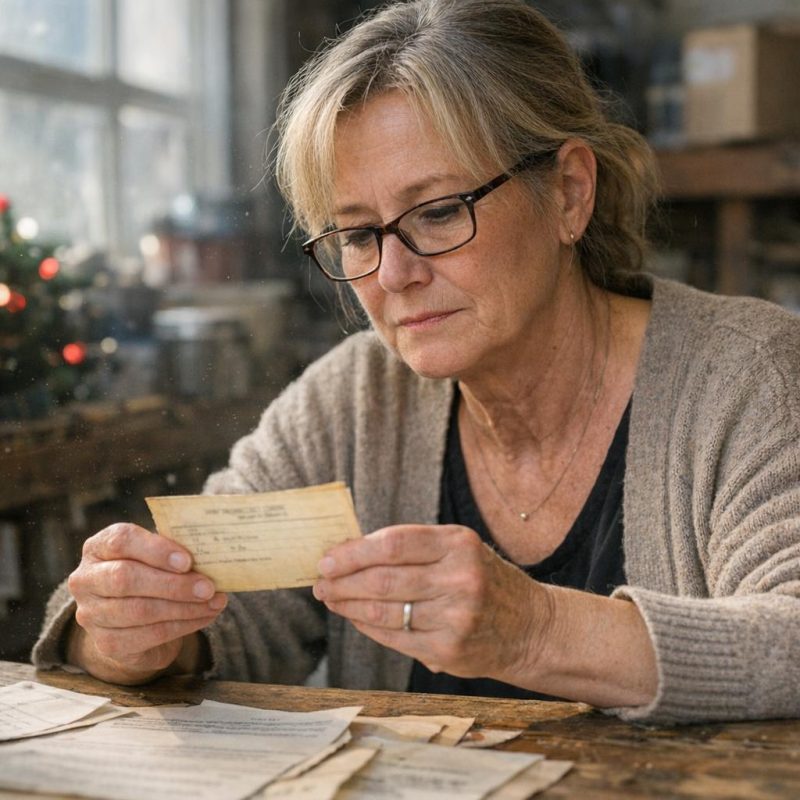 Image by RM AI
The Detail That Haunts
The memory hit me while I was making coffee Sunday morning. January 1998. I'd had the flu, one of those brutal ones that kept me in bed for a week. David was traveling for work, and I was alone, feeling miserable. Claire had come over with soup and magazines, being the perfect sister. 'Do you need anything?' she'd asked. 'Any errands?' I'd mentioned needing to deposit a check and pick up some papers from the bank. 'I can do that,' Claire had offered immediately. 'You shouldn't be out in this weather.' I'd been so grateful. I gave her my ID, my account information, my signature on the forms she'd need. She'd gone to the bank for me twice that week. I remembered her coming back with my documents, with the receipts, with everything perfectly organized. 'All taken care of,' she'd said. Three weeks later, money started disappearing from my accounts. At the time, I'd been so confused about how it happened. I'd changed all my passwords. I'd been so careful. But Claire had already had everything she needed. She'd had my signature to practice. She'd had my account numbers. She'd had time. I'd been grateful for Claire's help, never imagining she was creating the opportunity she needed.
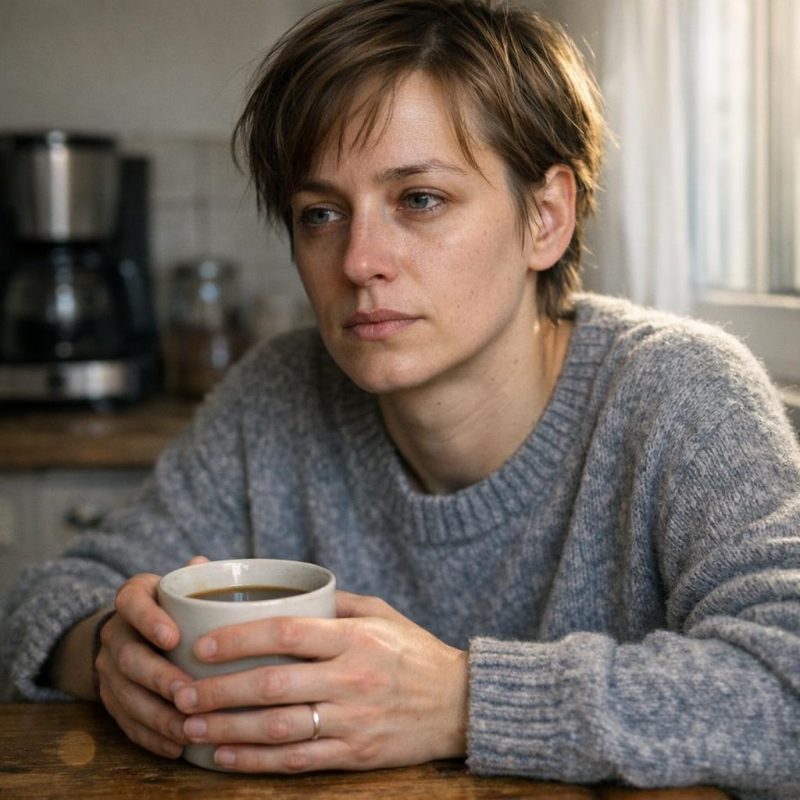 Image by RM AI
The Letter to David
I sat at my kitchen table Tuesday evening with a pen and paper, something I hadn't done in years. Email felt too casual for this. Too easy to fire off without thinking. I needed to see the words, to cross them out and rewrite them until they said exactly what I meant. 'Dear David,' I wrote. Then stopped. What was he to me now? Not my husband. Not quite a stranger. 'I received your birthday card and the letter you enclosed.' I explained about finding the bank records, about Claire's slip during lunch, about my suspicions. 'I need to know what proof you found. What made you realize it was Claire after all these years? And when you confronted her, what did she say?' The questions poured out of me. But as I read it over, I felt my resolve wavering. This wasn't just asking for information. This was opening a door I'd closed twenty-five years ago. David had divorced me believing I was a thief and a liar. He'd looked at me with such contempt in those final days. Could I really start a conversation with him now, after all this time? Did I want to hear his voice again, see his face, let him back into any part of my life? Before I could mail it, I wondered: was I ready to restart a conversation with the man who believed the worst about me for a quarter century?
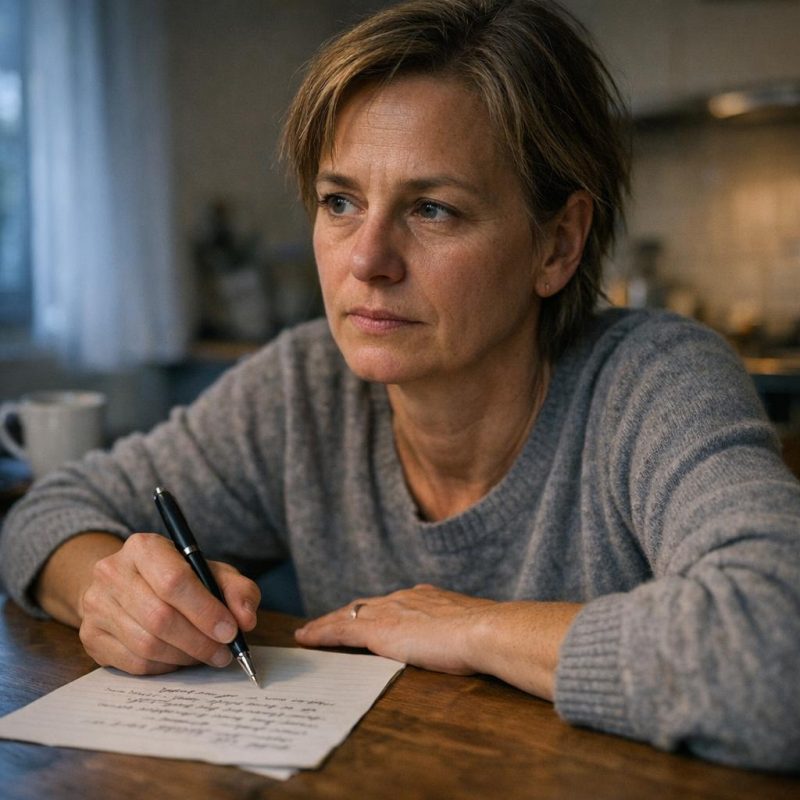 Image by RM AI
The Colleague Who Knows
Frank hadn't been hard to find. LinkedIn told me he'd retired from the firm three years ago and was doing consulting work. I called him Wednesday afternoon, explaining who I was. 'Margaret,' he said warmly. 'Of course I remember you. How are you?' We made small talk for a few minutes before I steered the conversation where I needed it. 'I know this is strange, but I wanted to ask about David. About that time when we were divorcing.' Frank's tone shifted, became more careful. 'That was rough. David was a mess for months afterward.' 'Do you remember what he said about it? About the money?' There was a pause. 'He said you'd taken it. That you'd betrayed his trust. Honestly, Margaret, I'd never seen him so devastated. He really loved you.' My throat tightened. 'Did he ever doubt it? That I'd done it?' Another pause, longer this time. 'Actually, yeah. Not at first, but later. He'd had a few drinks one night, and he said something didn't add up. That you weren't the kind of person who'd do something like that. But the evidence was there, you know? The withdrawals, the signatures. What else could he think?' Frank said David had been devastated by the betrayal, but he'd also mentioned that 'something about the whole thing never sat right with him.'
 Image by RM AI
The Question of Forgiveness
I went to church alone Sunday morning, something I'd been doing for thirty years. The sanctuary was half-empty, the way it always was in summer. I slid into my usual pew and tried to focus on the hymns, on the familiar liturgy, on anything but the anger churning in my chest. Father Michael's sermon was about grace and forgiveness. About how we're called to forgive those who wrong us, not because they deserve it, but because holding onto anger poisons our own souls. I'd heard versions of this sermon a hundred times. I'd always nodded along, believing it applied to me. But sitting there that morning, I couldn't make the words fit. Claire had stolen from me. She'd destroyed my marriage, my reputation, my life. She'd watched me suffer for twenty-five years and said nothing. And I was supposed to just forgive her? Because it was the Christian thing to do? Because holding onto anger would hurt me more than her? The congregation stood for the final blessing, and I stood with them, mouthing the responses automatically. But my mind was elsewhere. The sermon was about grace, but all I could think was that grace required someone to ask for it first.
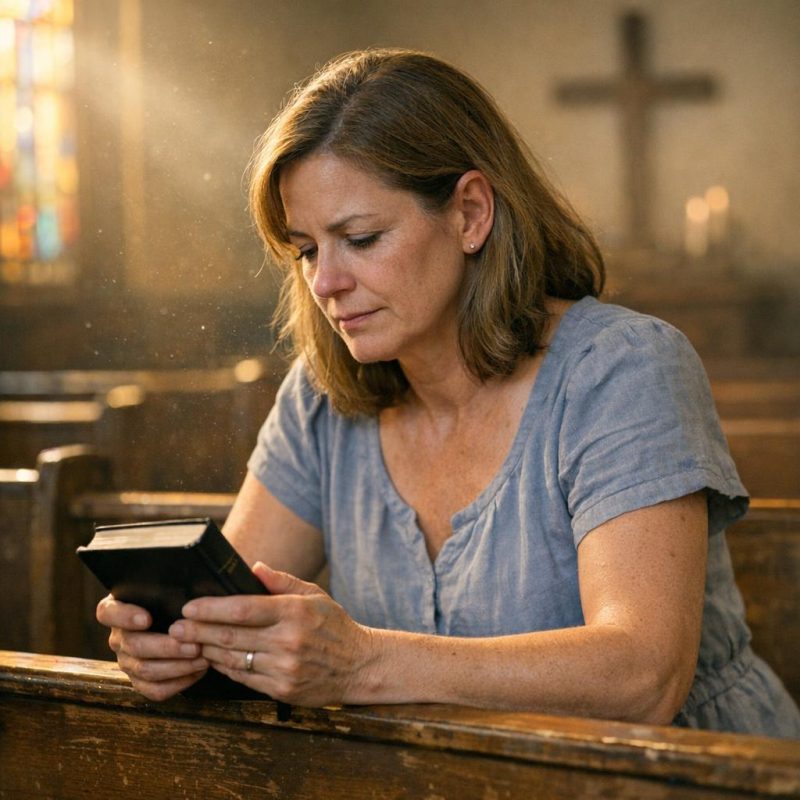 Image by RM AI
The Night Claire Called
My phone rang at eleven-thirty that night. Claire's name on the screen. I almost didn't answer, but curiosity won out. 'Hello?' 'Margaret.' Her voice was thick, slightly slurred. 'Did I wake you?' 'No, I was reading. Are you okay?' A long pause. I could hear ice clinking in a glass. 'Are you mad at me?' The question caught me off guard. 'What? No. Why would I be mad at you?' 'I don't know. You've seemed different lately. Distant. Like you're looking at me funny.' She laughed, but it sounded forced. 'I'm probably being paranoid. I've had some wine.' I kept my voice steady, casual. 'I'm not mad, Claire. Everything's fine.' Another pause. 'Really? Because if I'd done something, if there was something you wanted to talk about, you'd tell me, right? We tell each other everything.' My hand gripped the phone so hard my knuckles went white. 'Of course. We're sisters.' 'Good,' she said, and her relief was palpable. 'Good. I just... I worry sometimes. About old things. Stupid things.' We talked for a few more minutes, and then she said goodnight. I said I wasn't angry, and Claire's relieved sigh told me she'd been carrying guilt for years, maybe even hoping I'd find out.
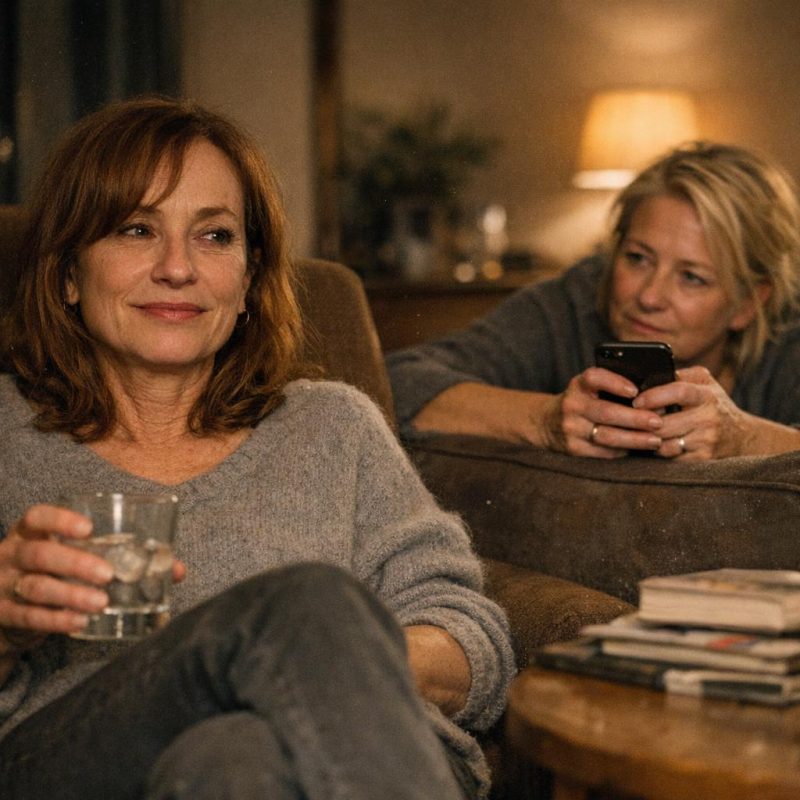 Image by RM AI
The Decision to Respond
I sat at my kitchen table for three hours before I wrote the letter. Not an email—this needed weight, permanence. I started with thank you, which felt strange after twenty-five years of silence. I told David I believed him, that the card had opened a door I'd kept bolted shut. Then I asked my questions. First: exactly when did he discover the truth? Second: what evidence did he find, and did he still have it? Third—and I rewrote this one six times—did he ever try to tell me before now? My handwriting got messier as I wrote, the pen pressing harder into the paper. I addressed the envelope to the return address from his card, sealed it before I could second-guess myself, and walked it to the mailbox at the corner. The metal door clanged shut with such finality. On the walk back, I realized there was something else I needed to know, something that would determine everything about what came next. The most important question I asked was whether Claire knew he'd told me.
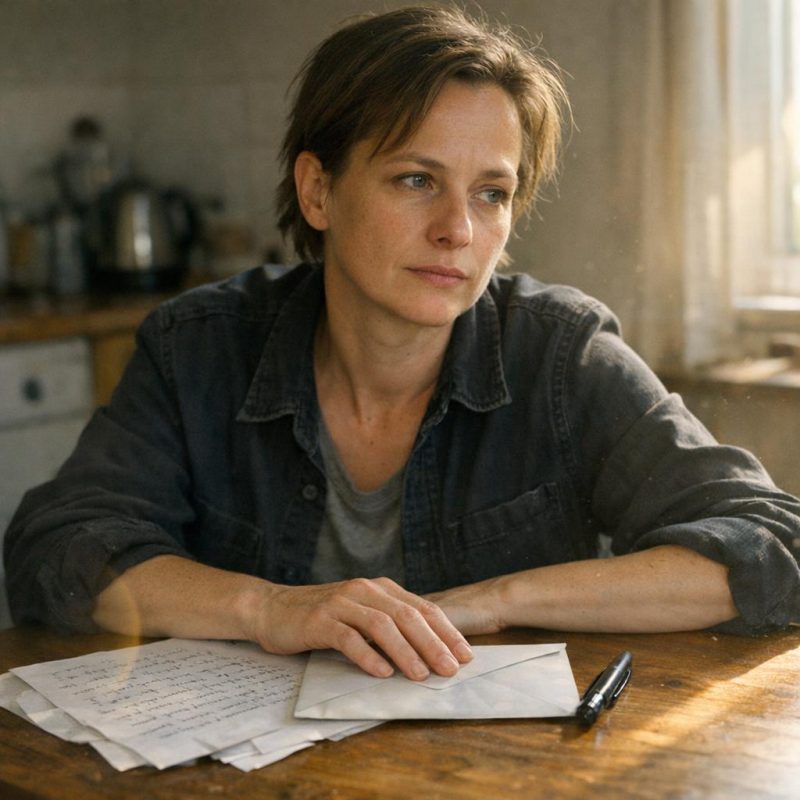 Image by RM AI
The Dreams That Return
The dreams started two nights later. In them, I was back in that apartment David and I shared, the one with the broken radiator that clanged all winter. But this time the scenes played differently. David shouting about the bank statements, me crying at the table, and there in the doorway—Claire. Just watching. In the dream she wore different faces, shifting like a mask coming loose. Sometimes she looked concerned, sometimes blank, sometimes almost pleased. I'd wake up gasping, unsure what was memory and what was my mind filling in gaps. But the dreams kept coming, each one pulling up moments I'd buried. Claire bringing us dinner during the worst of it. Claire holding my hand while I sobbed. Claire asking David quiet questions about the evidence. Thursday morning I woke up at four, shaking, because I'd remembered something real, not dreamed. A moment I'd completely forgotten: Claire watching David and me fight one afternoon, standing in the kitchen doorway with her coat still on. And her expression—God, I could see it so clearly now—almost satisfied.
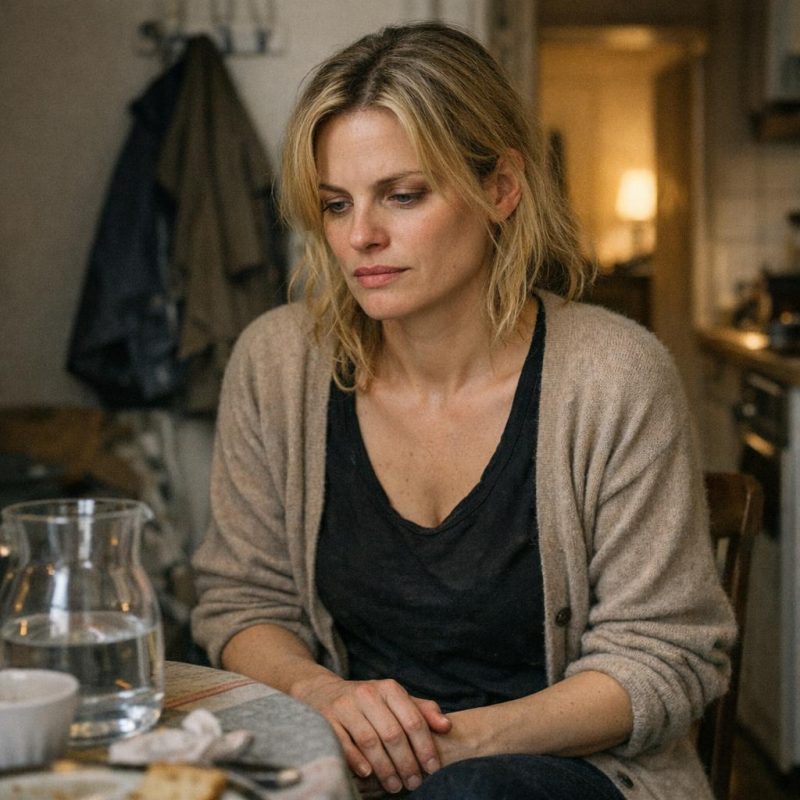 Image by RM AI
The Friend's Doubt
Linda came over Saturday with croissants and that concerned look she gets when she thinks I'm making bad decisions. 'You seem obsessed,' she said, not unkindly. 'I'm just worried you're digging up old pain that might be better left buried.' I told her about David's card, about what he'd claimed. She listened, picking at her croissant. 'Okay, but Margaret—why now? Why would he reach out after all this time? What does he want?' I said maybe he just wanted to clear his conscience. She shook her head. 'People don't work like that. They don't suddenly grow a conscience at sixty-five. And even if Claire did something back then, what good does it do to dredge it all up now? You've both moved on.' I felt something sharp in my chest. 'Have we? Or have I just been living with everyone's doubt for twenty-five years?' Linda set down her coffee cup carefully. Too carefully. 'Margaret, honey.' Her voice got soft. 'We all believed you. We did.' I pressed her on it. Asked her directly: did you ever doubt my innocence? When I pressed Linda about whether she'd ever doubted my innocence, her silence answered the question.
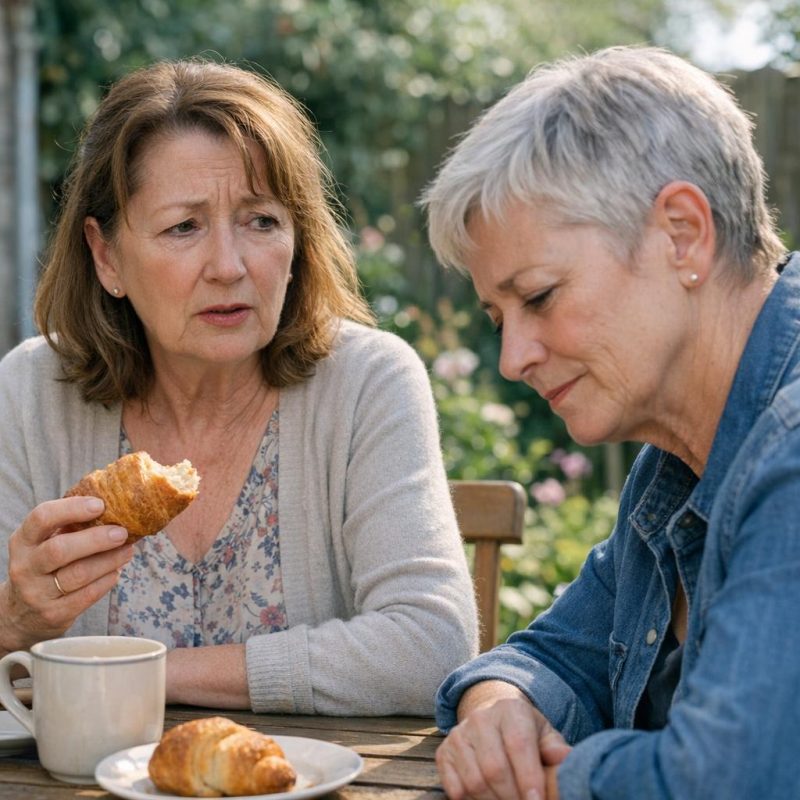 Image by RM AI
The Package from David
The package arrived on a Tuesday. FedEx, requiring a signature. It was thick, maybe fifty pages, spiral-bound like a legal brief. David's handwriting on a Post-it note stuck to the cover: 'I kept copies of everything. I'm sorry I didn't fight harder then.' Inside were bank statements with two sets of handwriting—mine, and someone else's attempting to mimic mine. Deposit slips I'd never filled out. A timeline David had constructed, month by month, showing when the forgeries appeared and when Claire had access to our apartment, our files, our mail. He'd documented everything with the precision of someone who'd worked in finance his whole life. Transaction dates. Claire's work schedule. Overlapping timelines. Then there were photographs of documents I'd never seen—a notarized statement she'd given to investigators that contradicted what she'd told me she said. My hands were shaking so hard I could barely turn the pages. And then I reached the end. The final page was a transcript of his confrontation with Claire six months after our divorce, where she'd admitted everything and then begged him not to tell me.
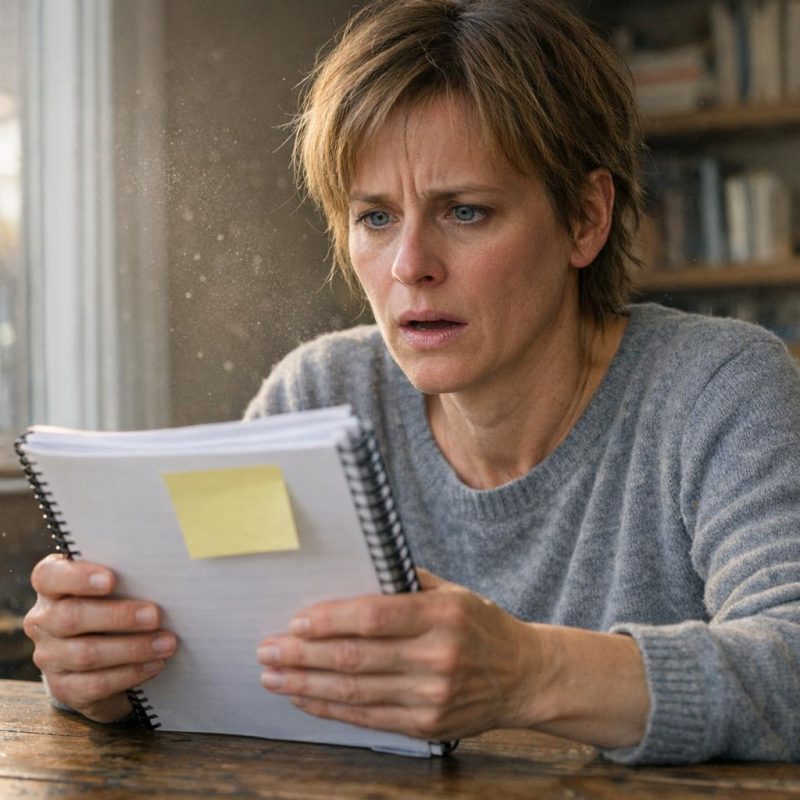 Image by RM AI
The Banker's Account
Mr. Anderson agreed to meet me at a coffee shop near his retirement community. He was eighty-two now, still sharp-eyed behind wire-rimmed glasses. I showed him David's timeline, and he studied it for a long moment. 'I remember this case,' he said finally. 'It bothered me then. Still does.' He explained that the bank's investigation had been rushed—David's employer wanted it resolved quickly to avoid negative publicity. They'd focused on the signatures, which appeared to match, and once David confirmed his wife had access to the accounts, that was enough. 'No one looked deeper,' he said. 'No one asked if someone else might have had similar access. That was the protocol failure.' I asked why not. He shifted in his seat, uncomfortable. 'Corporate pressure. David worked for a major client. The bank wanted him satisfied with our response, even if that meant...' He trailed off. I finished for him: 'Even if that meant not asking the right questions.' He nodded, looking older suddenly. Mr. Anderson said the investigation was rushed because David's employer wanted a quick resolution, and certain questions were never asked.
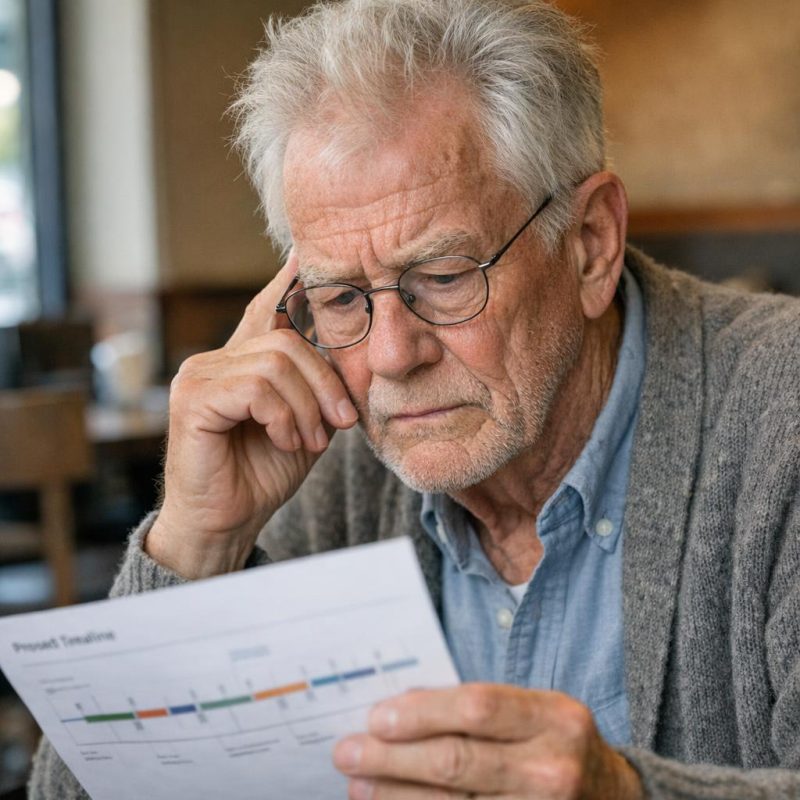 Image by RM AI
The Cost of Silence
I made a list that night. Actually wrote it out on paper, like an accounting of loss. The teaching position I'd been offered at the community college, rescinded after the scandal. My friendship with Karen and Susan, who'd stopped calling within months. The way my mother looked at me differently until she died—not quite trusting, not quite sure. The invitations that stopped coming. The introductions at parties where someone would whisper my history to someone new, and I'd see their expression change. Twenty-five years of carrying other people's suspicion like a weight in my chest. Twenty-five years of Claire comforting me about a wound she'd inflicted. I thought about David's check, still sitting in my desk drawer. Eight thousand dollars. It wasn't nothing—it was plane tickets or home repairs or six months of groceries. But it couldn't buy back my reputation. Couldn't give me back the version of myself who'd trusted easily, who'd believed people were fundamentally good. Couldn't restore the years I'd spent doubting my own memory because everyone else seemed so certain. The check from David couldn't buy back what Claire had stolen: my right to be believed.
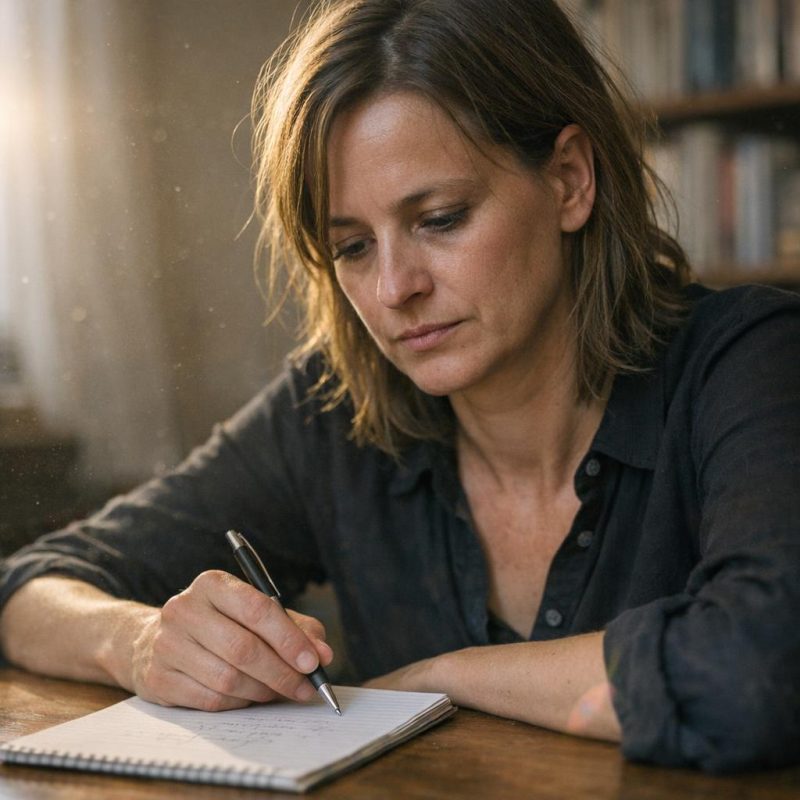 Image by RM AI
The Birthday Dinner Invitation
Claire's text came Wednesday afternoon: 'Birthday dinner next Friday at Antonio's, 7pm? Please say yes, it's tradition!' We'd been doing this for fourteen years, ever since our father died and we'd decided we needed to maintain rituals, stay connected as family. Usually it was just us and her son Michael and his wife. Sometimes Linda joined. It was always pleasant, superficial, safe. I stared at the text for ten minutes before responding. My first instinct was to refuse, to avoid her entirely. But then I thought about Michael, who deserved to know what kind of mother he had. About the evidence sitting in my desk drawer. About twenty-five years of silence. If I was going to do this—really do this—it shouldn't be in some private confrontation where she could minimize or deny. It should be public. Witnessed. Real. I texted back: 'Wouldn't miss it.' Then I called Linda and told her to come. I called Michael and confirmed he'd be there. I wanted everyone who mattered to be in that room. I accepted the invitation, deciding that if I was going to confront her, it should be surrounded by family who deserved to know the truth too.
 Image by RM AI
The Rehearsed Speech
I practiced in front of the bathroom mirror like an idiot. 'Claire, I know what you did.' Too dramatic. 'We need to talk about 1999.' Too vague. 'David sent me proof you framed me.' Too blunt, too easily deflected. I tried soft approaches: 'Can you help me understand something from back then?' I tried angry ones: 'How could you watch me suffer?' I tried everything in between, but none of it felt right. Because what I really wanted wasn't a confession—I already had that in David's transcript. What I wanted was the why. Why me? Why would you do that to your own sister? I rehearsed questions about jealousy, about childhood, about some injury I might have caused without knowing. I rehearsed staying calm. I rehearsed walking away if she denied it. I rehearsed reading from the transcript word by word until she couldn't hide anymore. Thursday night I stood in my living room and went through it one more time, trying different tones, different words, different levels of anger. But no matter how I started or what I said in the middle, every version of the confrontation ended with the same question: did you ever love me, or was I always just someone to resent?
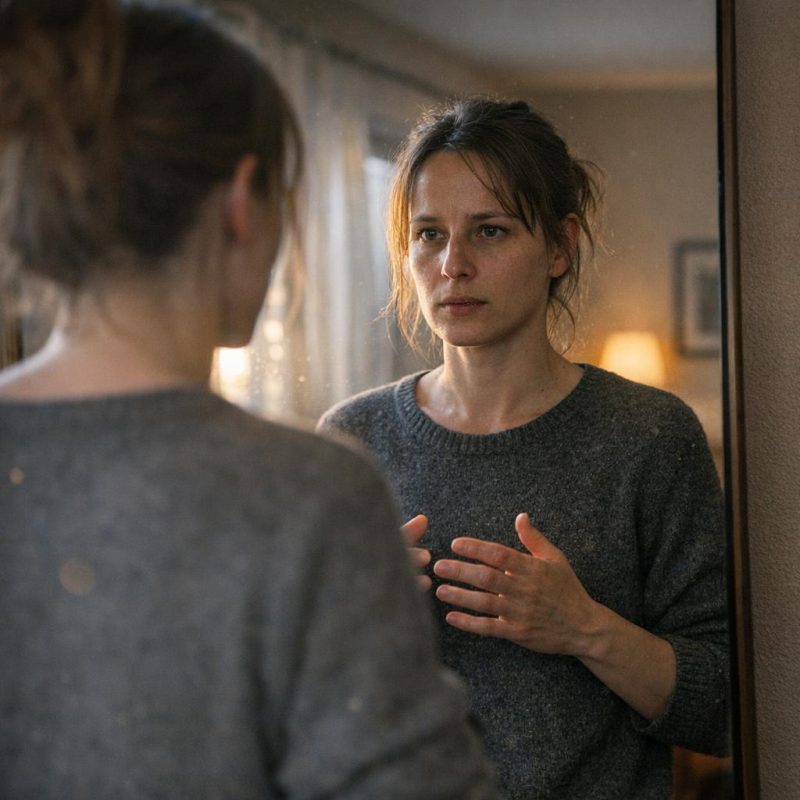 Image by RM AI
The Unopened Check
I found David's check at the bottom of my purse three days before the birthday dinner. $50,000, dated six weeks ago, the ink slightly smudged where I'd gripped it too hard when he handed it to me. I'd shoved it away and forgotten about it entirely, which probably says something about my relationship with money—or maybe just my relationship with guilt payments. I took it to the bank twice. Once on Tuesday morning, where I stood in the parking lot for twenty minutes with the engine running, door open, one foot on the pavement. Once on Wednesday afternoon, where I made it all the way to the deposit slip counter before turning around and walking out. Because if I cashed it, I'd be agreeing to something. That David's guilt money could somehow pay for what Claire had done. That $50,000 was a fair price for twenty-five years of my life. That I'd take compensation for my suffering and call us even, the way you settle a lawsuit instead of going to trial. I put the check back in my purse and zipped the pocket shut. Cashing the check would mean accepting that David's guilt money could somehow balance Claire's betrayal, and I wasn't ready for that equation.
 Image by RM AI
The Memory of Childhood
I spent Thursday morning going through old photo albums, looking for whatever I'd missed. There we were at ages eight and three, Claire holding my hand on the first day of kindergarten. Age eleven and six, building a snow fort in matching red coats. Age fourteen and nine, Claire teaching me to braid my hair. We'd been close, genuinely close, in a way that made the betrayal even harder to understand. Mom worked long hours at the hospital, and Claire took care of me—made my lunches, walked me to school, helped with homework, chased away nightmares. I was her shadow, her little duckling, always trailing after her, always wanting to be just like her. The photos stopped being happy around the summer I turned twelve. I could see it in our faces, in the way Claire stopped putting her arm around me, started standing slightly apart. Something had shifted that June, some invisible line had been crossed, but I'd never understood what I'd done wrong. I'd asked her once, years later, why she'd gotten so distant. She'd shrugged and said it was just normal teenage stuff, wanting space. We'd been close as children, but there was one summer that changed everything, though I'd never understood what I'd done wrong.
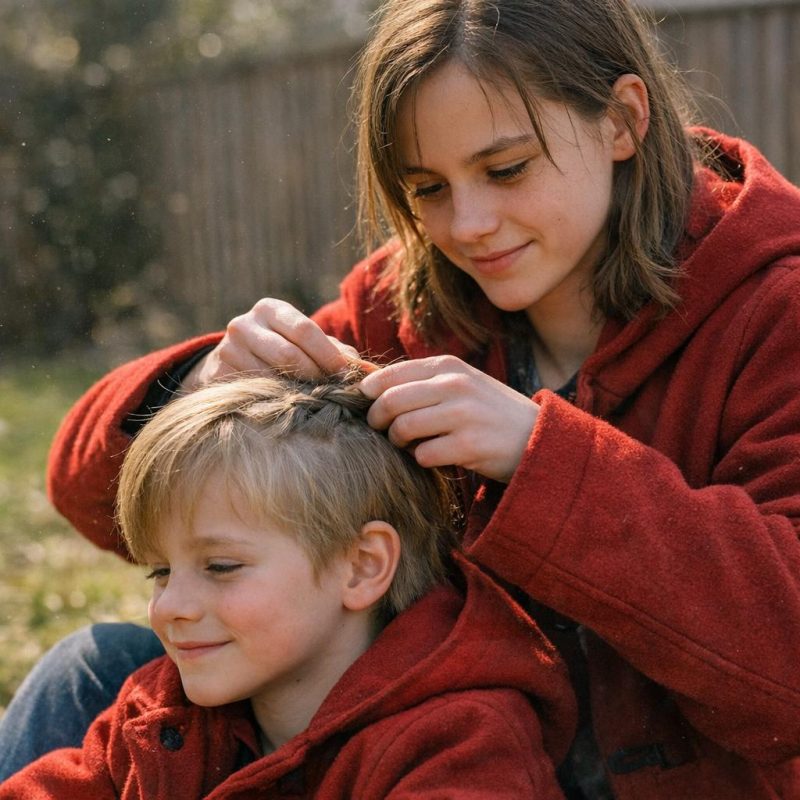 Image by RM AI
The Week Before
Friday. Saturday. Sunday. Monday. I marked them off in my head like a prisoner counting days until execution, though I couldn't tell if I was the condemned or the executioner. Each morning I woke up with the same tight feeling in my chest, the same metallic taste in my mouth. Each night I lay awake running through scenarios, every possible reaction Claire might have, every way the conversation could derail or explode. The anxiety was constant, but underneath it ran this strange current of purpose. For the first time in twenty-five years, I was moving toward something instead of just surviving. I was taking action instead of absorbing punishment. Tuesday I bought a new notebook to write down what I wanted to say. Wednesday I threw the notebook away because writing it down made it too real, too planned, too cold. I wanted to speak from the heart, even if my heart was full of rage. On Thursday, Claire texted asking if I could come early to help set up, and I realized she wanted time alone with me before the others arrived.
 Image by RM AI
The Last Normal Conversation
Claire called Friday evening while I was staring at my closet, trying to decide what one wears to destroy a relationship. 'Hey! Just confirming tomorrow, six o'clock, but come at five if you can.' Her voice was bright, cheerful, completely normal. We talked about the weather. We talked about her grocery list. We talked about whether she should make the lemon cake or try something new. I gave opinions on frosting while my throat closed up with the effort of sounding casual. She laughed at something—I don't even remember what—and I laughed back, this horrible fake sound that she didn't seem to notice. The conversation lasted maybe eight minutes, eight minutes of pure performance art, eight minutes of me dying inside while pretending everything was fine. 'I'm really glad you're coming early,' she said. 'It'll be nice to have some sister time before the chaos.' I made some agreeable noise. My hand was shaking so hard I nearly dropped the phone. Claire said 'I love you' before hanging up, the way she always did, and I couldn't say it back.
 Image by RM AI
The Outfit I Choose
Saturday morning I pulled everything out of my closet and laid it on the bed. The blue dress I'd worn to Rebecca's college graduation—too cheerful. The black pants I wore to work—too casual. The green sweater Claire had given me three Christmases ago—absolutely not, I couldn't wear her gift to her birthday while planning to gut her. I tried on six different outfits, standing in front of the mirror, imagining confronting her in each one. Nothing felt right because nothing could be right. This wasn't a dinner party. This was an ending, a funeral, the death of whatever we'd been to each other. The navy dress hung at the back of my closet, the one I'd bought for Mom's funeral seven years ago. Simple, dignified, appropriate for grief. I'd worn it once and never again, couldn't bear to, but now I pulled it out and held it up. It fit differently now—I'd lost weight since Mom died—but it still felt like mourning clothes. Which was exactly right. I chose the dress I'd worn to my mother's funeral, because this too felt like a kind of death.
 Image by RM AI
The Early Arrival
Claire's house smelled like vanilla and something burning when I arrived at five. She answered the door with flour on her face and a glass of wine already half-empty in her hand, which wasn't like her. Claire didn't day-drink. 'Thank God you're here,' she said, pulling me inside. 'I completely screwed up the first batch of cookies and I'm behind schedule and I don't know why I'm so nervous, it's just family.' But she was nervous, visibly so, her movements jerky and too fast, her laugh too high. We worked in the kitchen for twenty minutes, me slicing vegetables, her checking the oven every forty-five seconds. Small talk felt like walking through a minefield. She poured herself more wine. Then she stopped moving, stood very still at the counter with her back to me. 'Margaret,' she said quietly. 'I need to tell you something. I need to—' The doorbell rang. Claire's whole body tensed. The doorbell rang again, and through the front window I could see Rebecca's car in the driveway. Claire started to say something that began with 'I need to tell you,' but the doorbell rang and Rebecca arrived, cutting her off.
 Image by RM AI
The Dinner Gathering
Rebecca came in with flowers and wine, then Claire's neighbor Joan, then two of Claire's work friends whose names I could never remember. The house filled with noise and warmth, people laughing, hugging Claire, admiring her new curtains. I stood near the kitchen watching my sister transform into the gracious host, all her earlier nervousness smoothing away as she moved through the crowd. She looked beautiful in her burgundy dress, her hair done up, smiling at everyone's jokes. This was her element. She'd always been the social one, the one who knew how to make people feel welcome, how to hold a room. I held my glass of water—I wasn't drinking, needed to stay sharp—and watched her blow out the candles on her cake, everyone singing off-key. She was fifty-eight today. I'd ruined her twenty-fifth birthday by getting engaged to David two days before. She'd ruined my entire adult life by sleeping with him and framing me for it. We were even, in a sick kind of way. As Claire blew out her candles, I realized I'd planned to ruin her birthday the same way she'd ruined my marriage: publicly and without mercy.
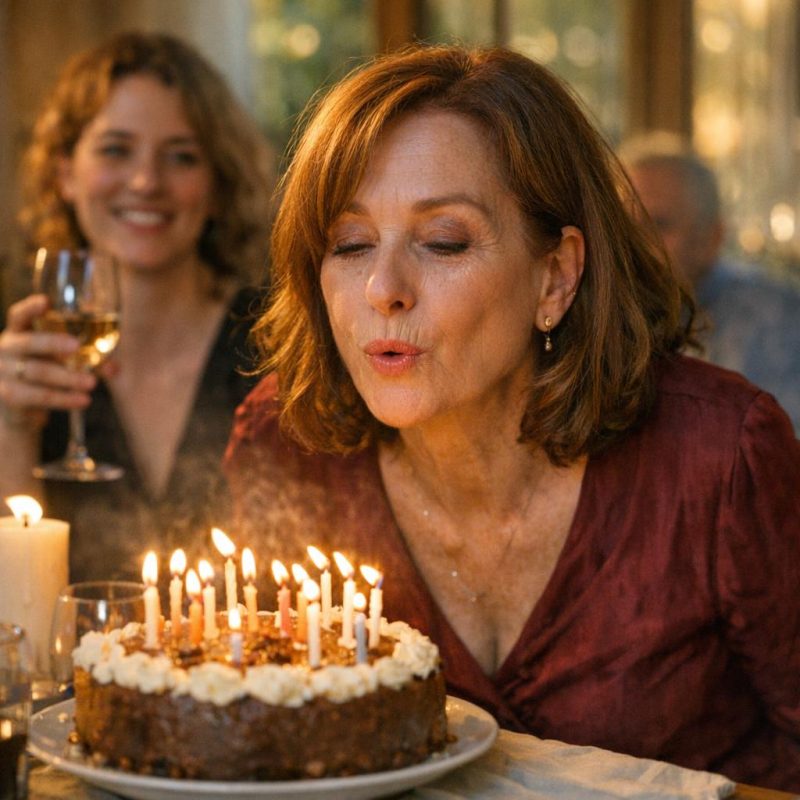 Image by RM AI
The Toast That Changes
Someone handed me a glass for the toast. Everyone turned to look at me expectantly—I was the older sister, tradition said I went first. Claire was smiling, her eyes a little glassy from wine, her face open and trusting. Rebecca stood beside her with one arm around her mother's shoulders, looking proud and happy. I opened my mouth to begin the speech I'd rehearsed, the one that started gentle and ended with David's transcript and twenty-five years of questions. But standing there looking at them, at everyone, I felt something shift. This wasn't what I wanted. Public humiliation, everyone staring, Rebecca hearing about her mother's betrayal alongside Claire's work friends and neighbor Joan. That was cruelty for cruelty's sake. That was becoming exactly what Claire had been. I wanted truth, not theater. I wanted answers, not an audience. I looked at Claire's expectant face and Rebecca's proud smile, and I asked everyone to step into the kitchen for a private family conversation.
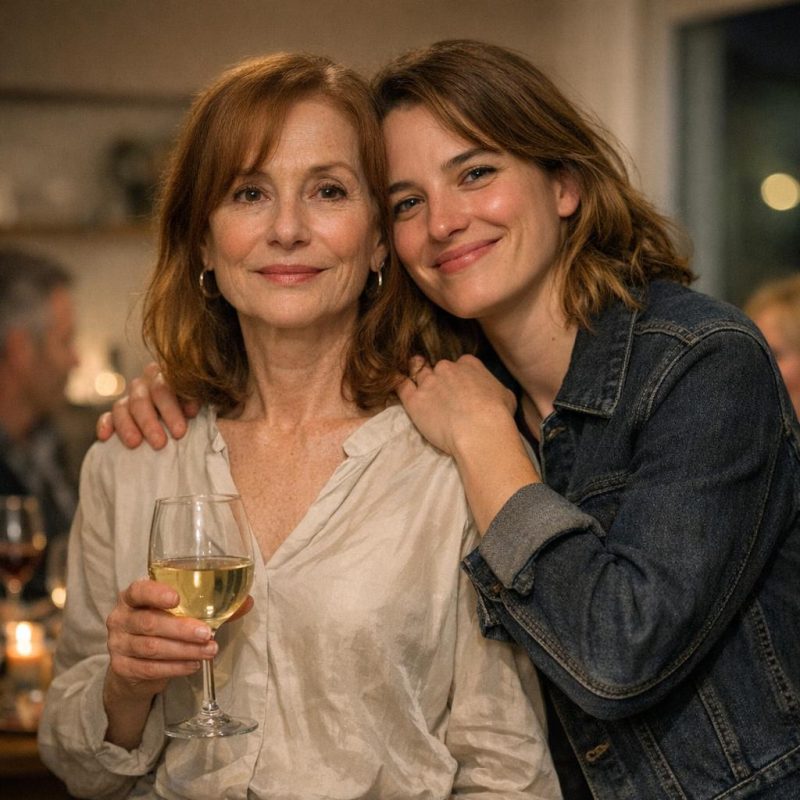 Image by RM AI
The Question I Finally Ask
The kitchen felt smaller with just the three of us standing there. Rebecca looked confused, glancing between Claire and me like she was trying to solve a puzzle she didn't know existed. Claire's smile had frozen on her face, and I could see her beginning to understand that something was very wrong. I pulled David's transcript from my purse and set it on the counter between us. 'I know about the money,' I said, and my voice sounded steadier than I'd expected. 'I know you took it from petty cash over three months. I know you let them fire me for it. I know David tried to tell me and I wouldn't listen.' Claire's hand went to her throat. 'Margaret, I—' 'I don't want excuses yet,' I said. 'I want you to look at me and tell me you did it. I need to hear you say it.' Rebecca was staring at her mother now, her mouth slightly open. The silence stretched out until I thought one of us might break. Then Claire's face went white, then red, and she said the words I'd been dreading: 'Let me explain what really happened.'
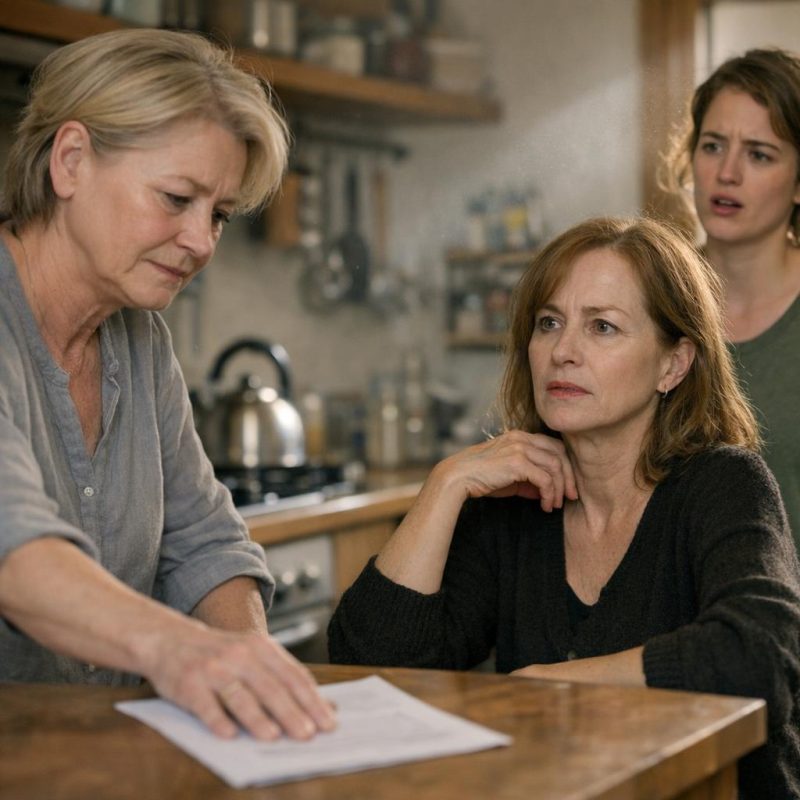 Image by RM AI
The Truth Claire Tells
Claire sat down at the kitchen table like her legs wouldn't hold her anymore. Rebecca remained standing, her arms crossed tight across her chest. 'I did take the money,' Claire said, her voice barely above a whisper. 'Not because I needed it. Because I wanted you to hurt the way I hurt.' She looked up at me, and her eyes weren't apologetic—they were angry, still, after all these years. 'You had David. You had that perfect marriage, that perfect life, and everyone loved you. Mom loved you. Dad loved you. Even my own friends thought you were so wonderful, so together.' Her voice was getting louder. 'And I was just Claire. Just the younger sister who couldn't get her life right. The one who made mistakes. The one who wasn't as good.' 'So you destroyed my marriage,' I said flatly. 'So I evened the score,' she shot back. 'I made you suffer. I made you lose something you loved. And you know what? It felt good. It felt fair.' Rebecca made a small sound, almost a gasp. Claire said she'd hated me since the summer our mother called me 'the good one,' and she'd spent forty years proving I wasn't so good after all.
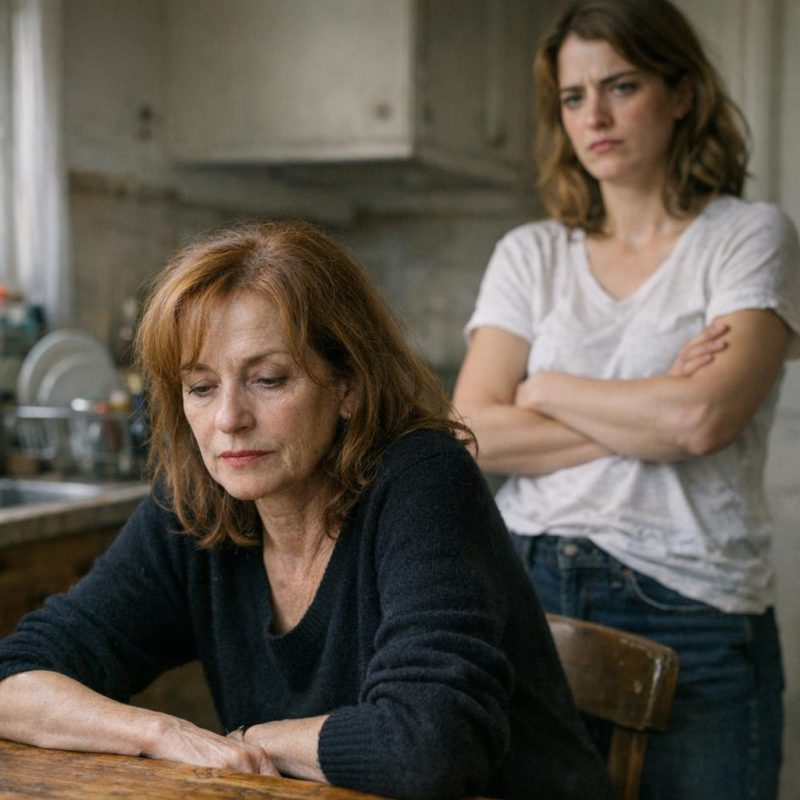 Image by RM AI
The Childhood Wound
Claire's hands were shaking on the table. 'Do you remember how Mom talked to us?' she asked. 'Every report card, every school event, every single accomplishment—it was always Margaret this, Margaret that. Margaret's so responsible. Margaret's so smart. Margaret never causes problems.' I did remember, but I'd never heard it the way Claire must have heard it. 'And what did I get?' Claire continued. 'Oh, Claire's creative. Claire marches to her own drum. Which was Mom's way of saying I was the disappointment.' Rebecca was crying quietly now, but neither Claire nor I looked at her. 'I tried so hard,' Claire said. 'I got into art school. I won awards. But it was never enough because it wasn't what you did. I wasn't you.' I felt something crack open inside my chest. 'So you spent forty years punishing me for what Mom did,' I said. 'I spent forty years trying to make you feel what I felt,' Claire corrected. 'Worthless. Second-best. Never good enough.' I remembered our mother's voice praising my grades while dismissing Claire's art, and I realized I'd been blind to the damage being done beside me.
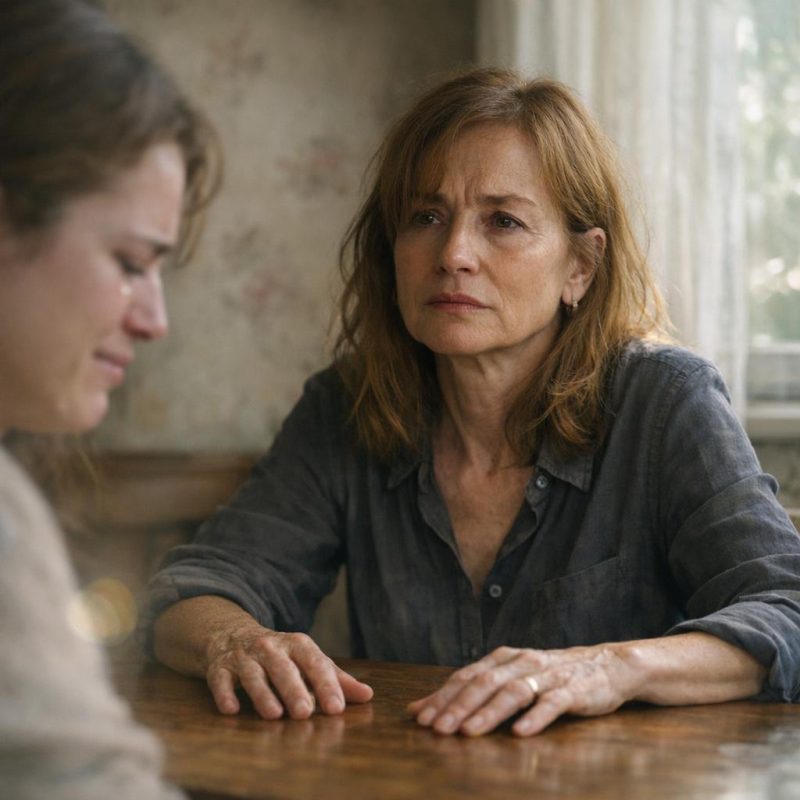 Image by RM AI
The Daughter's Horror
Rebecca's voice cut through the silence like a knife. 'What about me?' She was staring at Claire with something close to horror on her face. 'All those stories you told me about Aunt Margaret. About how she abandoned the family. How she was cold and selfish and couldn't handle her own problems. Was any of that true?' Claire opened her mouth, closed it again. 'Sweetheart, I—' 'Don't,' Rebecca said sharply. 'Don't sweetheart me. Answer the question. Did you lie to me about her my whole life?' I watched Claire struggle with whether to tell one more lie or finally surrender completely. 'I told you what I needed you to believe,' she finally said, and even I was shocked by how casually she admitted it. 'I needed you on my side. I needed someone to see me as the good one for once.' Rebecca took a step backward like she'd been pushed. 'You made me avoid her at family events. You made me feel guilty for liking her. You made me think she was the problem in this family.' Her voice broke. Rebecca looked at her mother and said, 'You made me pity Aunt Margaret my whole life, when I should have been afraid of you.'
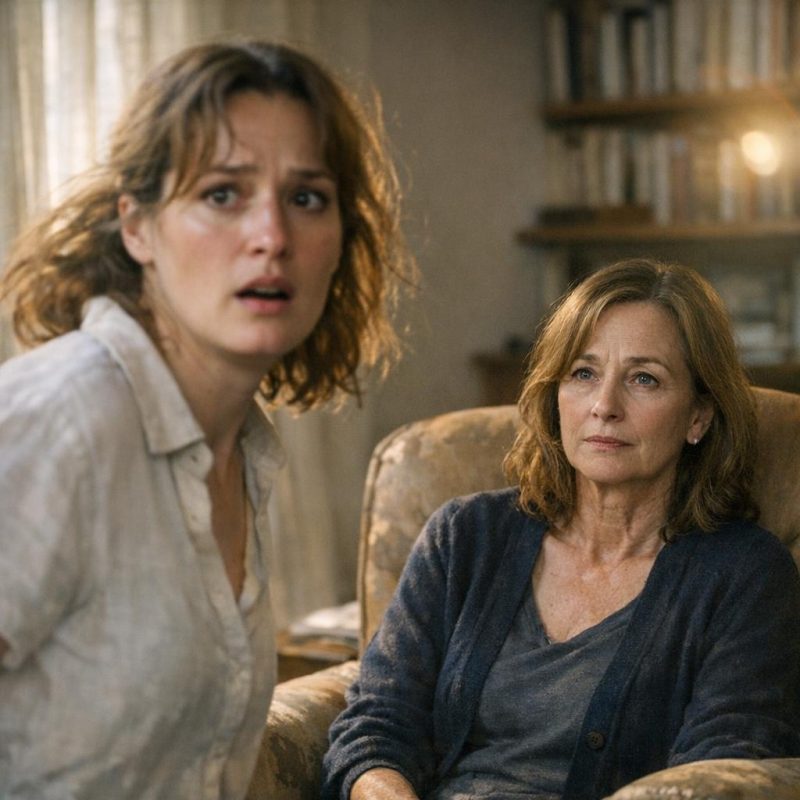 Image by RM AI
The Confession Continues
Claire was crying now, ugly tears that smeared her makeup. 'I wanted to tell you,' she said, looking at me. 'There were times over the years when I almost did. When you'd be so kind to me, so forgiving about everything else, and I'd think maybe I could just explain and you'd understand.' 'But you didn't,' I said. 'But I couldn't,' she corrected. 'Because what if you never spoke to me again? What if everyone knew what I'd done? What if I lost Rebecca?' She wiped her face with her hands. 'So I kept quiet. I told myself maybe you were better off not knowing. Maybe the truth would hurt you more than the lie.' 'When did you decide to tell me?' Rebecca asked, her voice flat. Claire didn't answer. 'Mom. When were you planning to tell Aunt Margaret the truth?' Still silence. I felt something cold settle in my stomach. 'You weren't,' I said slowly. 'You were never going to tell me. If David hadn't sent that card...' Claire admitted she'd been waiting for me to die first, hoping to take the secret to her own grave without ever facing what she'd done.
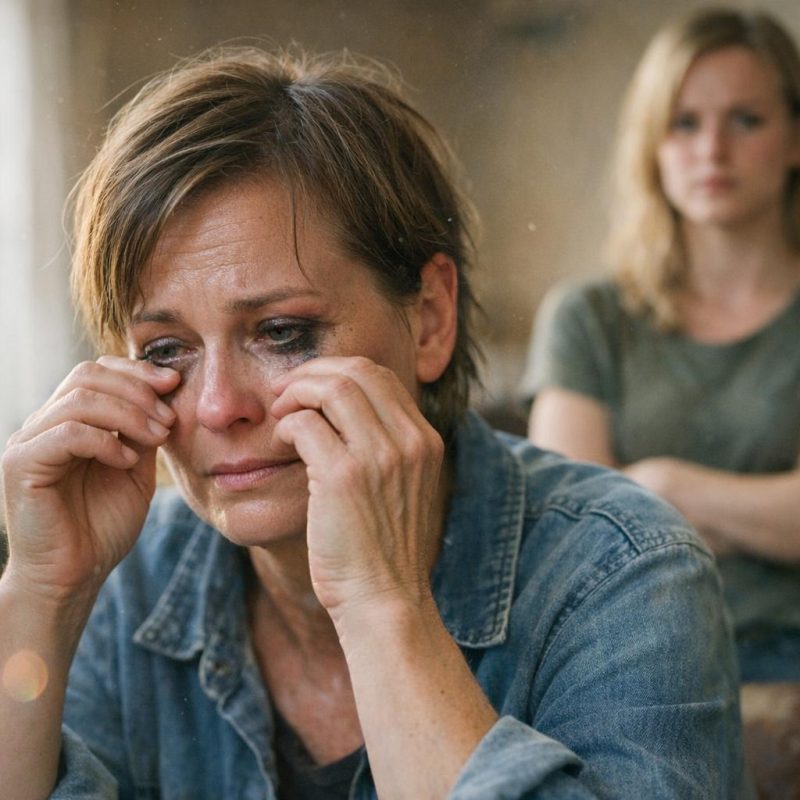 Image by RM AI
The Question of Forgiveness
The kitchen was completely silent. I could hear the clock ticking on the wall, someone laughing in the living room, the distant sound of traffic outside. Claire looked up at me with her ruined face and said, 'Can you forgive me?' Just like that. Like twenty-five years of lies and suffering could be erased with my forgiveness. Like her confession earned her absolution. 'I don't know,' I said honestly. She flinched. 'I've been going to church for twenty years trying to learn how to forgive,' I continued. 'How to let go of anger. How to move past hurt. And I thought I had. I thought I'd forgiven you for a terrible mistake made in desperation.' 'Margaret, please—' 'But it wasn't a mistake,' I said. 'It wasn't desperation. You did it on purpose. You wanted me to suffer. And I've spent twenty-five years forgiving you for something you were never sorry for.' Rebecca had moved to the far corner of the kitchen, watching us both. I told Claire I'd spent twenty-five years forgiving her for something she did on purpose, and I didn't know if I had any forgiveness left.
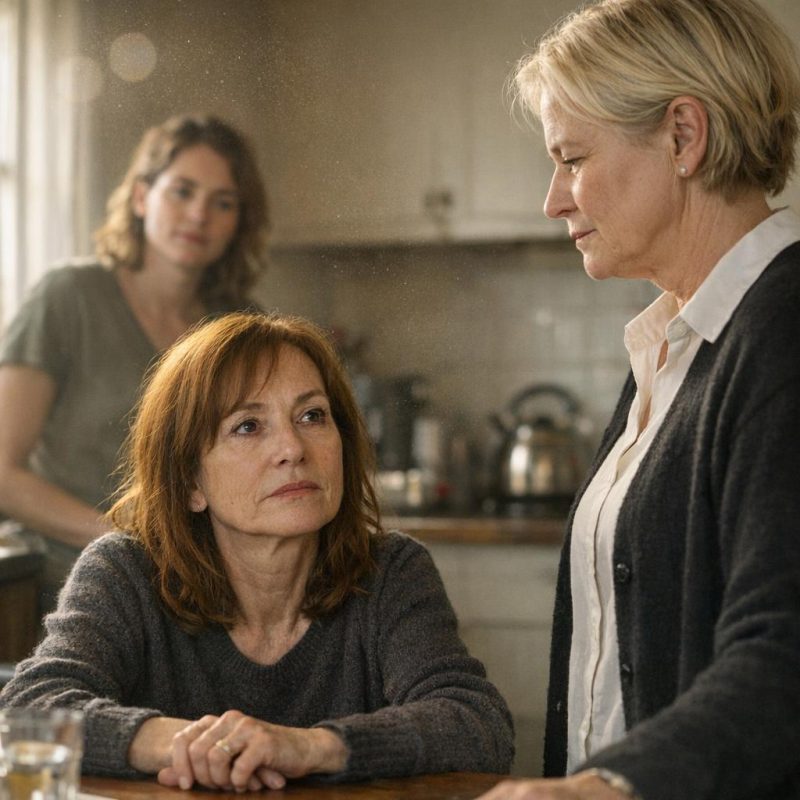 Image by RM AI
The Party That Ends
I picked up my purse from where I'd set it down. My hands felt steady now, steadier than they'd been in weeks. 'I need to go,' I said. Claire stood up quickly. 'Margaret, wait. We need to talk about this more. We need to—' 'No,' I said simply. 'We don't.' I walked past her to the kitchen door, then stopped and looked back at Rebecca. 'I'm sorry you had to hear all this,' I told her. 'I'm sorry your mother put you in this position. None of this was your fault.' She nodded, still crying. I walked through the living room where the dinner guests had gathered in awkward silence—they'd obviously heard everything through the thin walls. Joan was clutching her wine glass. Mark and Steven looked stunned. I told them I was sorry for disrupting the evening, thanked them for coming, and headed for the front door. Claire followed me into the hallway. 'Margaret. When will I see you again?' she called after me. I stopped with my hand on the doorknob. As I walked to the door, Claire called after me asking when she'd see me again, and I said, 'I don't know if you will.'
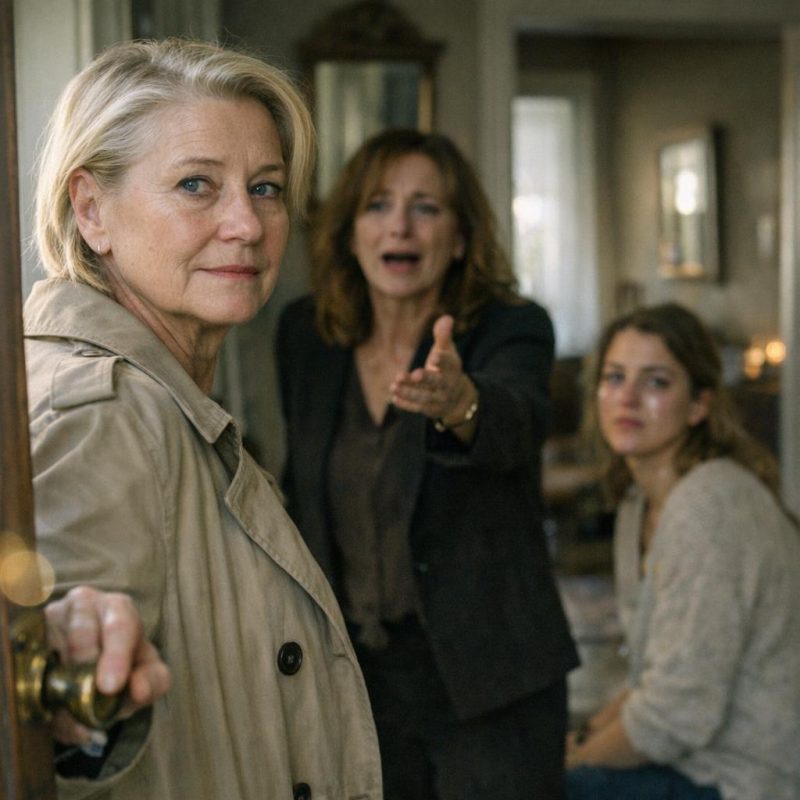 Image by RM AI
The Drive Home
I drove home in complete silence. Didn't turn on the radio, didn't call anyone, just drove through the dark streets with my hands at ten and two like I was taking a driver's test. The streetlights blurred past. I passed the supermarket where I did my weekly shopping, the church where I'd spent two decades learning to forgive, the park where Claire and I used to play as children. Everything looked the same as it had this morning, but nothing was the same at all. I thought I'd feel destroyed. Shattered. Broken open by what I'd learned. But instead I felt... lighter. Untethered. Like I'd been carrying something heavy for so long I'd forgotten what it felt like to walk without it. The truth was devastating, yes—my sister had hated me, had deliberately ruined my life, had never been sorry. But the not knowing had been worse. The doubt had been worse. The constant questioning of my own memory and sanity had been worse. For twenty-five years I'd carried the weight of a crime I didn't commit, and now that I'd set it down, I didn't know who I was without it.
 Image by RM AI
The Call from Rebecca
Rebecca called the next morning while I was still in my bathrobe, staring at the coffee maker like I'd forgotten how to use it. I almost didn't answer—the number showed up as 'Claire Mobile,' and my finger hovered over the decline button for three full rings. But something made me pick up. 'Aunt Margaret? It's Rebecca. Please don't hang up.' Her voice was soft, uncertain. Nothing like Claire's sharp certainty. 'I'm not calling for my mother. I'm calling for me. I wanted to say I'm sorry. For all of it. For not knowing, for not asking questions, for... for benefiting from what she did to you.' I sat down hard in the kitchen chair. 'You were a child, Rebecca. You didn't do anything wrong.' 'I'm not a child anymore,' she said quietly. 'And I want to know you. If you'll let me. I understand if you can't. If seeing me just reminds you of her. But I'm asking anyway, because you're my aunt, and I've never really had you in my life, and that feels like another thing she took from both of us.' I realized that losing Claire might mean losing Rebecca too, and I had to decide if I was willing to pay that price for truth.
 Image by RM AI
The Letter to David
I wrote the letter to David that afternoon, my hand cramping around the pen because I couldn't get the words right on the computer. Some things need to be written by hand. 'Dear David,' I started, then crossed it out. 'David,' I tried again. That felt better. Colder. More honest. 'Thank you for telling me the truth. You can't imagine what it means to finally know I wasn't crazy, wasn't making up my own history, wasn't the villain in my own marriage. But I need you to understand something. Your silence for all these years was another betrayal. You chose Claire's comfort over my vindication. You let me carry the weight of a lie you knew was false. You could have sent this card twenty years ago. Fifteen years ago. Ten. You waited until it was safe for you, until you'd married someone else and built a new life and didn't have to face consequences anymore. That's not courage, David. That's clearing your conscience at my expense.' I stared at what I'd written. My hand was shaking. I told David that his confession freed me, but I wasn't sure I could forgive him for choosing Claire's comfort over my vindication for so long.
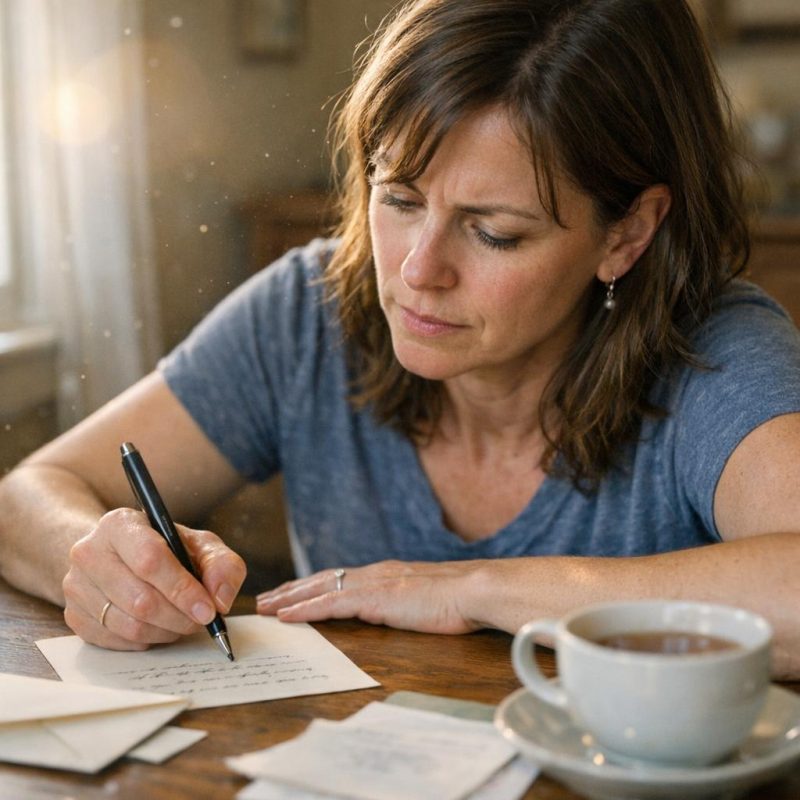 Image by RM AI
The Check Decision
The check sat on my kitchen table for three days before I finally took it to the bank. Twenty-five thousand dollars. Blood money, Linda had called it. Conscience money. The teller processed it without comment, and I watched the numbers appear in my account like a magic trick I didn't quite believe. That evening, I sat down with my laptop and searched for domestic violence shelters in the area. Not because I'd been physically abused—David had never raised a hand to me. But emotional abuse, psychological manipulation, gaslighting... those were violence too. I found a shelter that specialized in helping women rebuild after coercive control. I wrote a check for twelve thousand five hundred dollars and put it in an envelope addressed to their director. The other half I transferred to my retirement account—the one I'd been contributing to in small amounts for years, trying to build security out of nothing. It felt strange, keeping money that came from such pain. But I'd earned it, hadn't I? I'd survived what Claire and David had done to me. I'd rebuilt. I'd endured. The donation was for the Margaret who'd been abused by lies, and the money I kept was for the Margaret who survived anyway.
 Image by RM AI
The Apology from Linda
Linda showed up that Friday with two bottles of wine and tears already streaming down her face. 'I need to say something,' she said before I could even get the door fully open. 'And I need you to let me say it all the way through before you decide whether to forgive me or tell me to go to hell.' I let her in. We sat at the kitchen table—the same table where I'd written to David, where I'd made the decision about the money, where I'd been rebuilding my life one uncomfortable truth at a time. 'I doubted you,' Linda said, her voice breaking. 'During the divorce. Not all the time, and not completely, but there were moments when I wondered if maybe David was telling the truth. If maybe you'd actually done what he said. I'm so ashamed, Margaret. You were my best friend, and I let that doubt creep in, and I never told you. I just... I just acted like I'd never questioned you at all.' She was crying openly now. I reached across the table and took her hand. 'Thank you for telling me,' I said. And I meant it. I forgave Linda more easily than I'd forgiven anyone else, because she admitted her doubt instead of pretending it never existed.
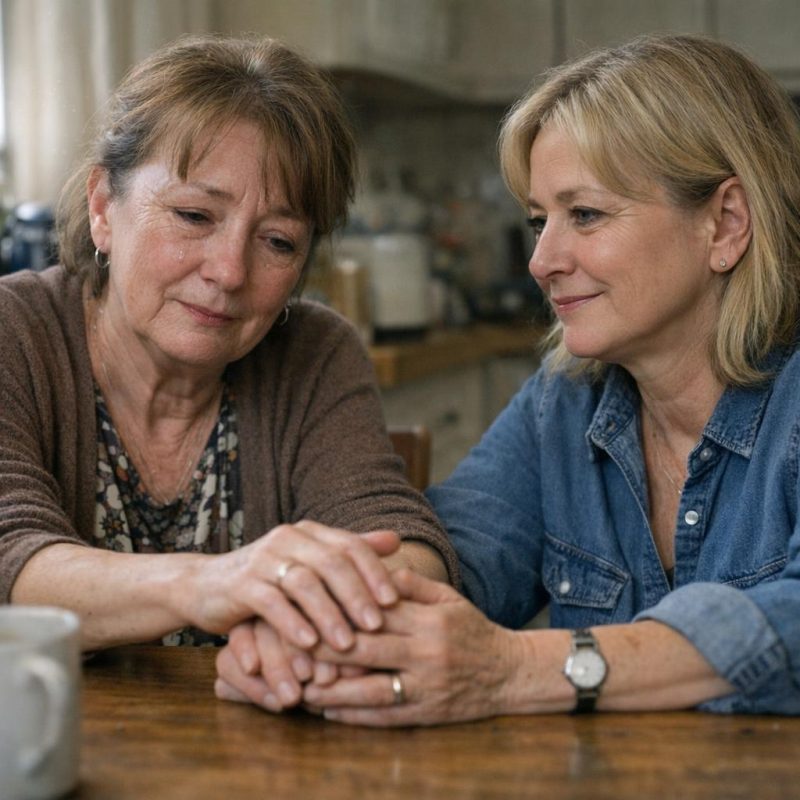 Image by RM AI
The Town Revisited
I went back to the grocery store on Sunday morning, that same place I'd driven past on my way home from confronting Claire. The automatic doors opened with their familiar whoosh, and I grabbed a cart like I had a thousand times before. But this time was different. I walked down the produce aisle with my head up. Past the deli counter where Mrs. Patterson used to whisper to her friends when she saw me. Through the cereal aisle where I'd once overheard two women discussing 'that poor David Chen and his awful ex-wife.' I didn't feel the urge to hide anymore. Didn't feel the need to rush through my shopping and escape before someone could look at me with pity or judgment. At the checkout, Mrs. Chen—no relation to David, just unfortunate coincidence—rang up my items with her usual efficiency. 'How are you doing, Margaret?' she asked, and it was just a normal question, the kind cashiers ask a hundred times a day. 'I'm good,' I said. And then I realized it was true. Not 'fine' or 'managing' or any of the careful lies I'd told for years. Mrs. Chen asked how I was doing, and for the first time in twenty-five years, I said I was good and meant it.
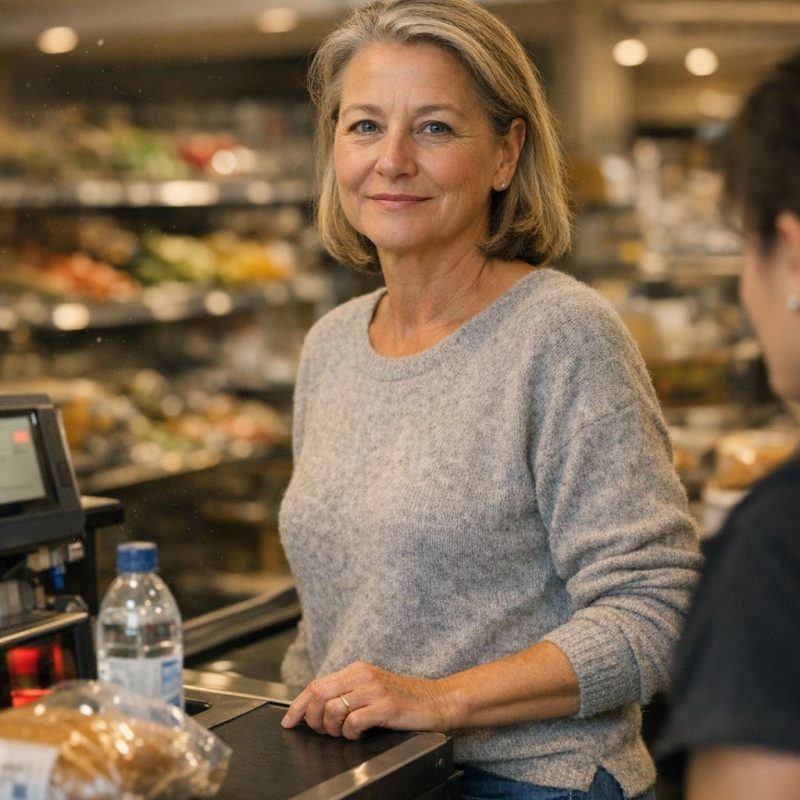 Image by RM AI
The Conversation with Pastor Hugh
I asked Pastor Hugh to meet me at the coffee shop near the church, the one where we'd had our first conversation after David's card arrived. He looked older than I remembered, more tired, but his eyes still had that same patient kindness. 'I need to tell you what actually happened,' I said, and then I laid it all out—Claire's confession, David's complicity, the years of lies I'd carried as truth. He listened without interrupting, his coffee growing cold in front of him. When I finished, I took a breath. 'I know you've been counseling me toward forgiveness for years. And I know that's what I'm supposed to do. But right now, Pastor Hugh, I can't. I can't forgive Claire. I can't even forgive David, not completely. And I don't know if that makes me a bad Christian or a bad person, but it's the truth.' He was quiet for a long moment. Then he smiled—sad, but genuine. 'Margaret, grace is supposed to be freely given. But human beings aren't God. We have limits. And maybe that's okay.' He folded his hands on the table. Pastor Hugh said that God's grace was infinite, but human grace had limits, and that's what made it precious.
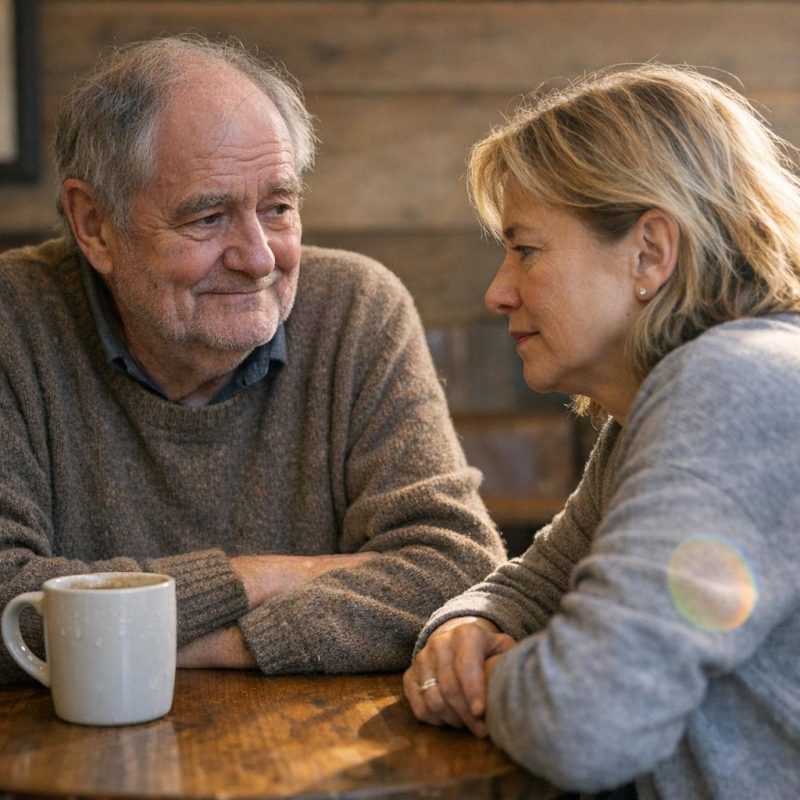 Image by RM AI
The Message from Claire
The voicemail came on a Tuesday afternoon while I was at the garden center picking out bulbs for spring planting. I didn't recognize the number, so I let it go to voicemail. When I listened to it later, standing in my driveway with my hands full of shopping bags, I almost dropped everything. 'Margaret. It's Claire.' A long pause. Breathing. 'I've started therapy. Real therapy, not the kind where I complain about everyone else. Dr. Morrison is helping me understand what I did to you, and why, and... I want to take responsibility. I want to meet for coffee. I want to tell you I'm sorry in person, not through Rebecca or anyone else. I want to start making amends, if you'll let me.' Another pause. 'I know I don't deserve your time. I know I destroyed you. But I'm asking anyway. Please call me back.' I stood there in the cold afternoon light, listening to the message twice more. Claire's voice sounded different. Smaller. Almost humble. I saved the message but didn't call back, because Claire's healing journey wasn't my responsibility anymore.
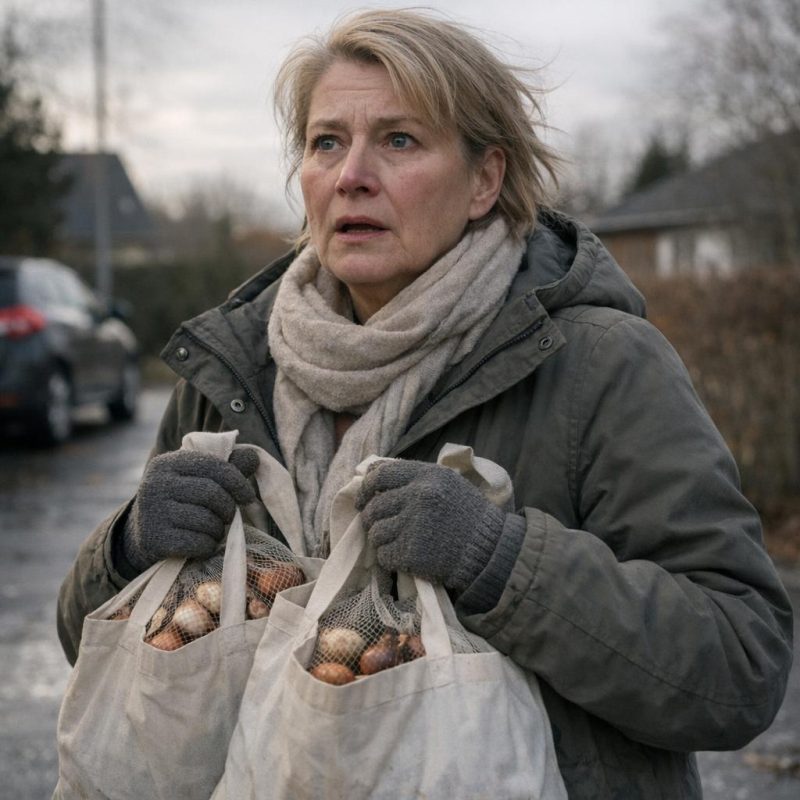 Image by RM AI
The Memory Reframed
That night, I pulled out the photo albums again—the same ones I'd looked through right after David's card arrived, when I was still searching for clues about who Claire really was. The pictures looked different now. In one, Claire and I were maybe seven and twelve, our arms around each other at the beach, both of us laughing at something outside the frame. I could see the love in that photo. I could also see, in other pictures, the way Claire's smile sometimes didn't reach her eyes when she looked at me. The way she stood slightly apart at my college graduation. The way she held baby Rebecca with fierce protectiveness, like she was guarding something precious from a threat only she could see. I'd spent months trying to figure out which version of Claire was real—the loving sister or the jealous destroyer. But looking at the photos now, I understood that both were true. She'd loved me and resented me. Protected me and sabotaged me. Been my family and my enemy. The photos proved that two things could be true: Claire had loved me once, and she'd also chosen to destroy me.
 Image by RM AI
The Birthday That Passes
My sixty-third birthday arrived on a Tuesday in late April, six months almost to the day after David's card had landed in my mailbox and split my world open. I'd told Rebecca not to make a fuss—just dinner at her place with the kids, nothing elaborate. She'd made my favorite lemon cake anyway, and her youngest had drawn me a card with wobbly letters that said 'Happy Birthday Grandma!' in purple crayon. It was lovely and uncomplicated. I'd half-expected something from David, maybe another card, though I couldn't have said whether I wanted one or dreaded it. But my mailbox held only bills and a flyer for a new pizza place. Claire didn't call either, though I'd given her my number weeks ago. The phone stayed silent all day except for a few friends checking in, people who'd been there through the mess of my divorce and had no idea about the deeper truth beneath it. I blew out the candles on Rebecca's cake and made a wish I didn't tell anyone. And that night, sitting in my quiet apartment with the leftover cake wrapped in foil on my counter, I realized something: I didn't get a card from David or a call from Claire, and the silence felt like the first honest thing between us in decades.
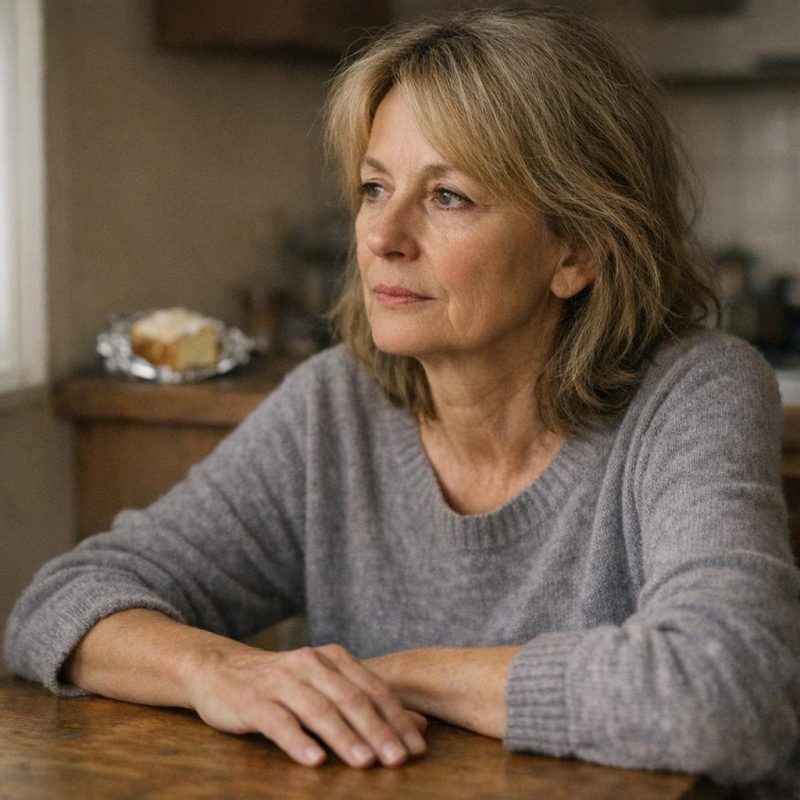 Image by RM AI
The Decision About Claire
I called Claire two days after my birthday. She answered on the second ring, her voice tight with surprise or maybe fear. 'Margaret,' she said, and I could hear her exhaling like she'd been holding her breath for months. I told her I'd thought about what she said, about wanting to try. I told her I wasn't ready now—that I needed more time, that I couldn't just show up and pretend we were starting fresh. 'Three months,' I said. 'Let's meet in three months. Neutral ground. Maybe that coffee shop near Mom's old house.' She was quiet for so long I thought the line had gone dead. Then she said, 'Okay. Three months. Thank you, Margaret.' I cut her off before she could say more. 'I'm not promising anything, Claire. I'm not promising forgiveness or some fairy-tale reunion. I'm just saying we can talk. We can see if there's anything worth building from what's left.' Her voice cracked when she answered. 'That's more than I deserve,' she said, and maybe it was, but I wasn't doing it for her. I made it clear that I wasn't promising reconciliation, only conversation, and Claire said that was more than she deserved.
 Image by RM AI
The Response to David
I wrote to David one last time. Not an email—an actual letter, handwritten on good stationery that Rebecca had given me for Christmas years ago. I told him that I'd been carrying his secret for months now, that it had changed everything and nothing all at once. I thanked him for telling me the truth, even though it came twenty-five years late, even though it arrived wrapped in a birthday card like some kind of cosmic joke. I told him I understood why he'd stayed silent, why protecting Claire had seemed more important than clearing my name back then. I didn't say I forgave him—I wasn't sure I did—but I said I was grateful. 'You gave me something I didn't know I'd lost,' I wrote. 'You gave me back my innocence, or at least proof that it existed.' I told him I didn't expect a response, that I assumed we'd never speak again, and that I was at peace with that. I sealed the envelope and dropped it in the mailbox before I could second-guess myself. I thanked David for giving me back my innocence, even if he couldn't give me back the years I spent defending it.
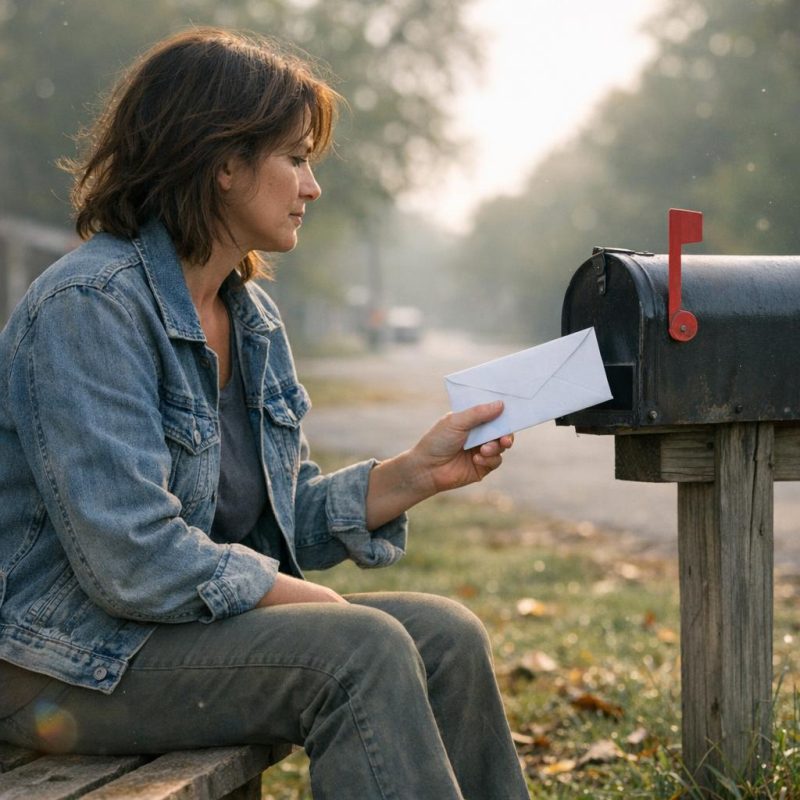 Image by RM AI
The Truth I Carry Now
At sixty-three, I'm learning that forgiveness isn't what I thought it was at thirty-eight or forty-five or even last year. It's not about deciding someone deserves to be let off the hook. It's not about forgetting or pretending the damage never happened. It's about putting down weight you were never meant to carry in the first place. For twenty-five years, I carried the shame of being called a liar, a homewrecker, someone who couldn't be trusted with her own marriage. I defended myself to anyone who'd listen, and when they stopped listening, I defended myself to the mirror. But the real gift David gave me wasn't his confession. It was permission to stop. Permission to say: that wasn't mine to carry. Claire's jealousy, David's cowardice, the lies that poisoned my daughter's childhood—none of it was mine. I don't know what will happen in three months when I meet Claire, or whether we'll ever be sisters again in any real sense. Maybe we won't. Maybe that's okay. The truth hadn't changed the past, but it had given me permission to imagine a future where I wasn't defined by lies someone else had told.
 Image by RM AI
KEEP ON READING
20 Weirdest Historical Objects in Museums
Check Out the Pickled Heart of a Saint. Museums carry…
By Rob Shapiro Oct 1, 2025
20 Ocean Mysteries We Still Haven’t Solved
Unanswered Questions Of The Ocean. The ocean covers most of…
By David Davidovic Sep 1, 2025
10 Phenomenal Mythical Creatures & 10 That Are Just Plain…
Legends Both Majestic And Peculiar. Do you ever wonder why…
By Chase Wexler Oct 1, 2025
20 Historical Predictions That Turned Out To Be True
Crystal Ball Moments In History. Do you wonder what it's…
By Chase Wexler Sep 1, 2025
10 Presidents Who Never Served In The Military & 10…
Commanders And Civilians In Office. Power can rise from very…
By David Davidovic Sep 1, 2025
20 Wars That Could Have Ended Much Sooner Than They…
Wars That Lasted Far Too Long. Wars are often remembered…
By David Davidovic Sep 1, 2025