


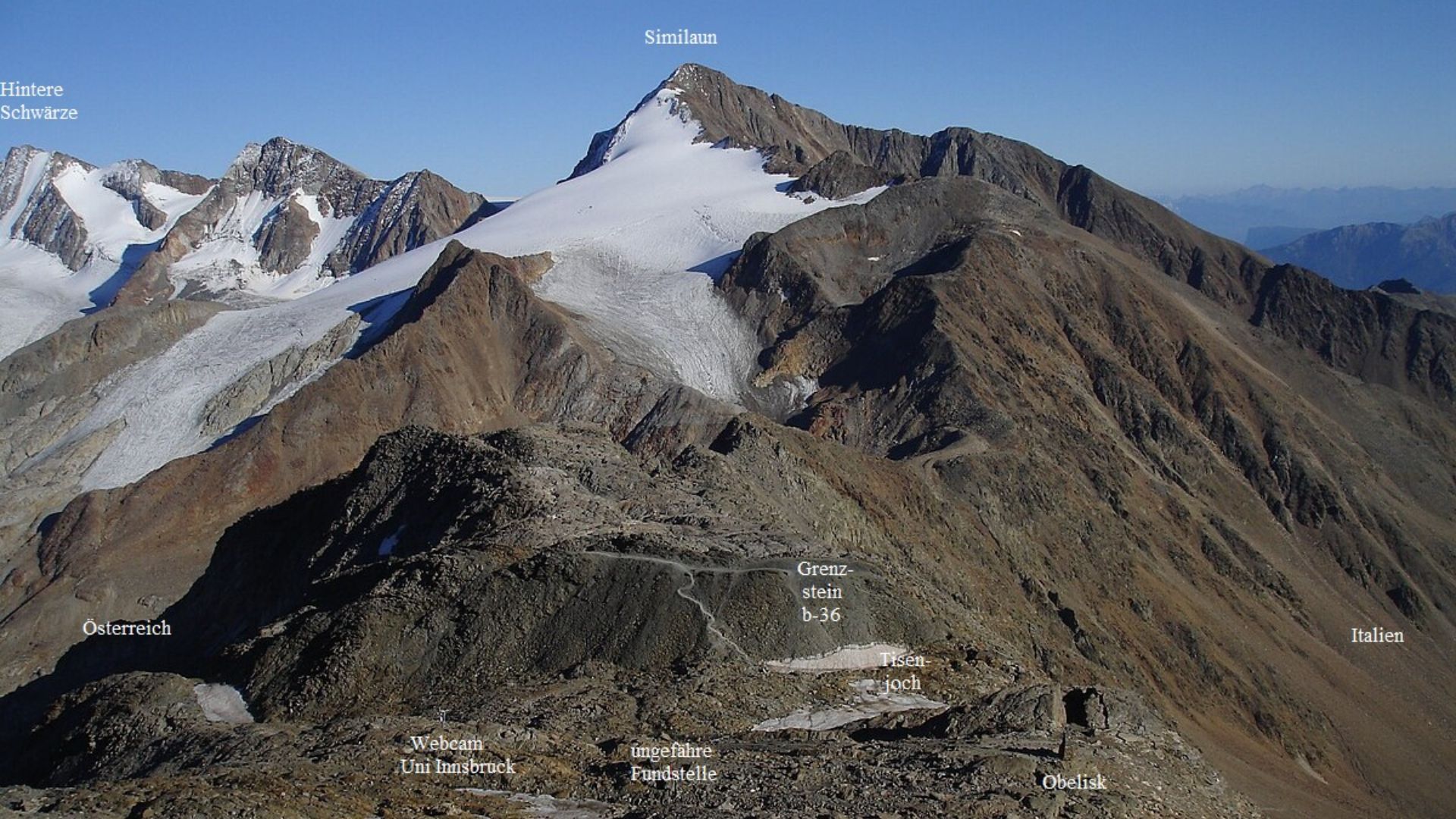
When Ötzi the Iceman was discovered in the Alps in September 1991, it was the kind of find that makes archaeologists go a little weak in the knees. Two German hikers, Erika and Helmut Simon, spotted a human body protruding from the ice near Tisenjoch, high in the mountains, and at first it looked like a recent accident. It turned out to be a 5,300-year-old natural mummy, preserved so well that scientists could study his clothing, tools, health, and even the violence that likely ended his life.
Not long after, a different story began to attach itself to the discovery, because humans can’t resist a spooky subplot. Over the years, a handful of people connected to Ötzi’s discovery and study died, and headlines started calling it the “Iceman’s curse.” If you’ve ever wondered whether that’s eerie fate or just our brains' pattern-matching in the dark, you’re in good company.
What people mean when they say “the curse”
The “curse” isn’t an ancient inscription anyone translated from Ötzi’s belt pouch, and it’s not some official claim from the museum in Bolzano. It’s a media nickname for an unsettling coincidence: several people tied to the discovery, recovery, or analysis died in strange ways. That list often includes forensic expert Rainer Henn (killed in a car crash), the discoverer Helmut Simon (who died in a mountain accident), and a few others whose deaths were then retroactively linked to the story.
Helmut Simon’s death is the one that really pours gasoline on the legend. In 2004, he went missing on a hike and was later found dead in the same mountain region where he’d discovered Ötzi. It doesn’t help that the recovery of his body became part of the lore, because the rescue-team leader Dieter Warnecke later died of a heart attack shortly after Simon’s funeral.
Then the narrative keeps building itself, because the story has a villainous momentum. Archaeologist Konrad Spindler, who was among the first to examine Ötzi in Innsbruck, died in 2005 from complications related to multiple sclerosis, and reports often frame that as another “curse” point on the scoreboard. The curse package sometimes adds other names, too, which is how legends grow: each retelling tightens the theme and smooths over the boring details.
Why it feels convincing even if you’re skeptical
A big reason the curse story sticks is that it plays perfectly with how humans process risk. We’re wired to notice clusters, especially when the cluster comes with a clean narrative and a creepy setting. Once you hear “several people connected to Ötzi died,” your mind starts scanning for meaning, because it can't possibly just be random chance.
There’s also a quiet selection bias in the way the curse gets told. Hundreds of people have been involved with Ötzi in some way across decades, from scientists and curators to climbers and journalists. The story spotlights a few dramatic deaths and ignores the much larger group who lived perfectly ordinary lives because the media knows what sells.
And then there’s the setting itself, which does a lot of work for the myth. High alpine terrain is genuinely dangerous, even for experienced hikers, and accidents can turn tragic quickly. When a person dies in the mountains, it already sounds ominous, so it slides neatly into a curse narrative without much friction.
The less spooky, more human explanation
If you want a grounded explanation, start with the most obvious one: people die, and sometimes it’s messy. A car crash is terrible, a heart attack is sudden, and mountain accidents can be brutal, but none of those require supernatural help. The curse becomes “real” mostly because the events are arranged like a thriller instead of like a statistical reality.
It also helps to remember that Ötzi himself became famous because of natural forces. Ice preserved him, melting ice revealed him, and modern science examined him, including scans that found an arrowhead lodged in his left shoulder, pointing to a violent death rather than a simple freezing accident. In other words, the real story is already intense, even before anyone adds a curse on top.
So if you’re looking for the practical takeaway, it’s not “never disturb ancient mummies,” because archaeology would be in trouble. It’s more like “be careful with stories that feel too tidy,” especially when they’re built from selective facts and a very dramatic backdrop. Ötzi doesn’t need a curse to be fascinating, and honestly, the truth is cooler than the legend.
KEEP ON READING

The Brutal Realities Of Gladiator Life Beyond the Arena
David Cruz asenjo on PexelsWhen most people think of gladiators,…
By Rob Shapiro Mar 31, 2026
The Volcano Winter That Nearly Toppled Europe
Collin Ross on UnsplashMost people, if asked to name a…
By Cameron Dick Mar 31, 2026
From School Plays To Starting A Cult: 20 Of The…
The Books That Made Us. Many people will tell you…
By Farva Ivkovic Jan 31, 2025
20 Facts About Jane Grey, The Forgotten Queen Of England
A Quick, Messy, and Tragic Reign. Lady Jane Grey never…
By Maria Cruz Jan 31, 2025
20 Priceless Historical Art Pieces Rescued By The Monuments Men
Protecting Human History. While the soldiers on the front lines…
By Sara Springsteen Mar 31, 2026
Almost Every Ancient Statue Has a Missing Nose, And It's…
Gary Todd from Xinzheng, China on WikimediaWalk through the classical…
By Elizabeth Graham Mar 31, 2026