 After John de Critz on Wikimedia
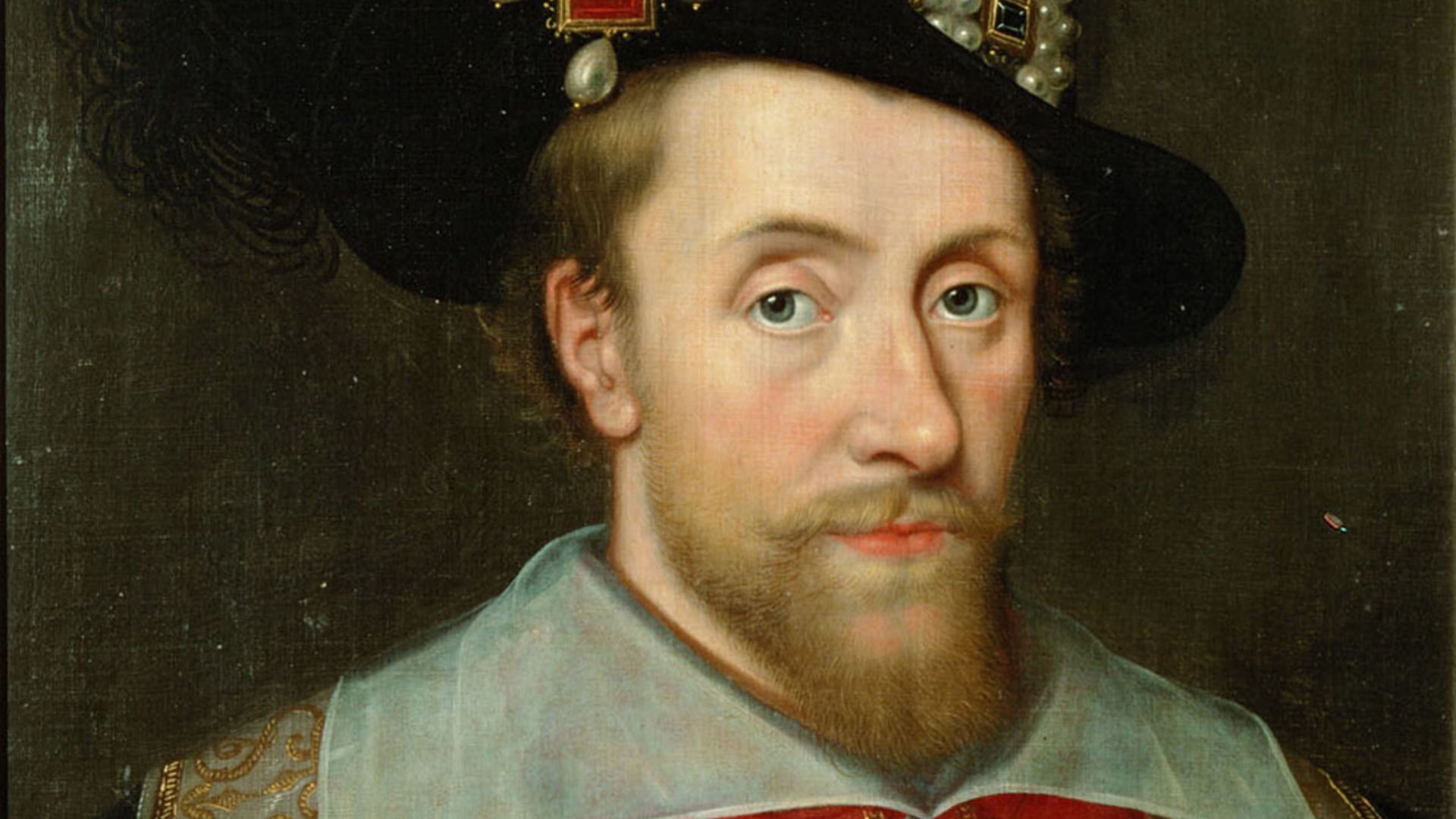
King James VI and I came to the English throne at a turbulent time.
His mother (Mary, Queen of Scots) had just been beheaded by the woman whose throne he inherited (Elizabeth I). Britain was teetering on the edge of full-blown religious war between Catholics and Protestants. And, to make matters worse, there was something witchy afoot.
Double, Double, Toil And Trouble
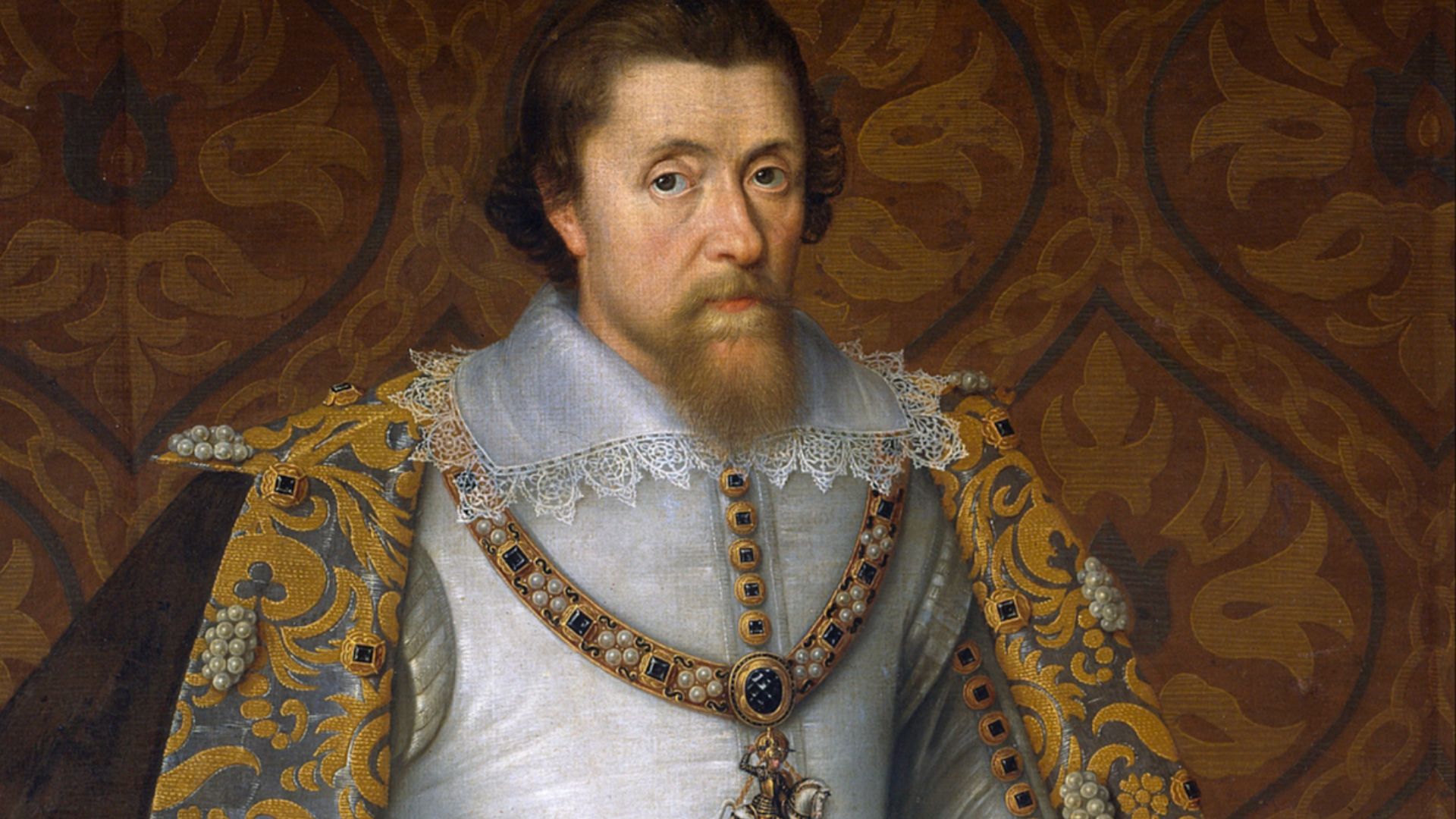 Attributed to John de Critz on Wikimedia
Historians believe that James's obsession with witch-hunting and demonology started young. Inheriting the throne of Scotland as an infant, James believed in a sort of second sight. He claimed that his mother's death "was visible in Scotland before it did really happen", sending him visions of a bloody head dancing in the air.
Losing one's mother in such a violent way would be enough to make anyone seek answers elsewhere. Unfortunately, James sought answers in the dark arts. On a trip to Denmark to meet his future bride, his interest in witchcraft only grew.
Denmark had a history of witch-hunting, and it was to witchcraft that James almost lost his bride. Violent seas in 1589 kept Anne of Denmark from meeting her husband so, James decided to meet her halfway. The royal honeymoon was anything but romantic, with storm-tossed waves battering, then sinking one of the ships.
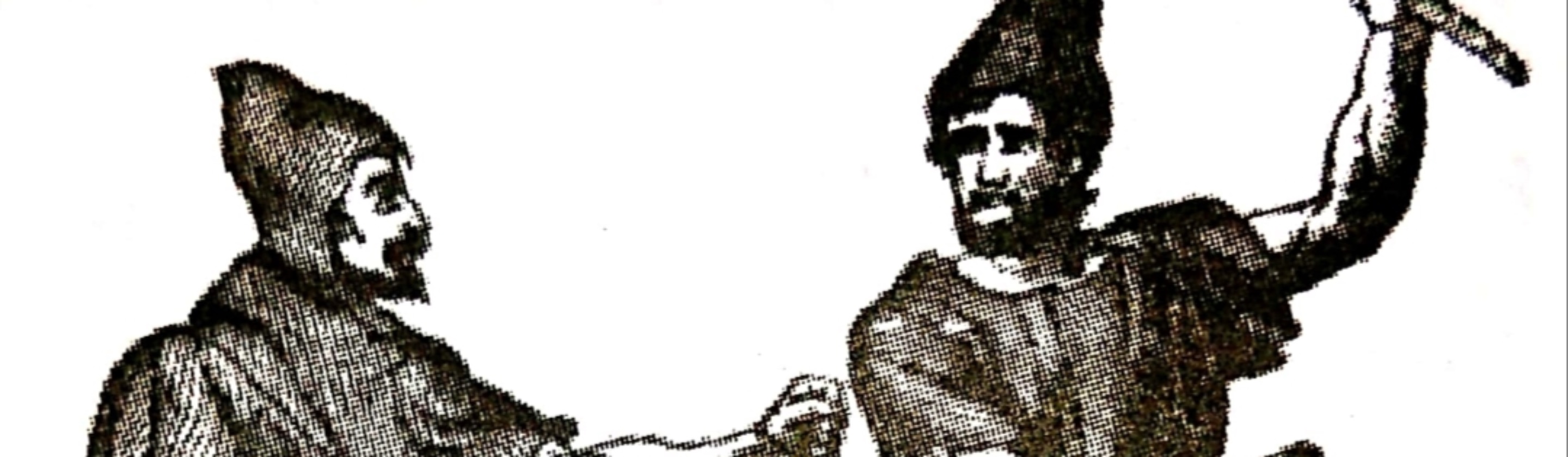
Safe on dry land, James blamed witches. Witch trials in Scotland ran for over two years, implicating 70 people, who ranged from aristocrats to maidservants. The accused were tortured with thumbscrews and sleep deprivation, made to confess to trumped-up charges before being executed anyway.
This was the first witch-hunt that James personally instigated in Scotland, but it wouldn't be the last. There was the trial of Allison Balfour in 1594, then the Great Scottish Witch Hunt of 1597. Despite having a far smaller population than England, Scotland had three times the number of witchcraft trials, with the accused numbering in the thousands.
It wasn't just Great Britain, either. In 1597, James published a dissertation called Daemonologie which spread to the continent as a whole. Inquisitors trained under James were let loose on Europe, leading to witch hunts in Norway and Germany.
Fire Burn And Cauldron Bubble
Witch trials reached their peak between 1560 and 1630, leading to more than 40,000 lives lost and countless others irreparably ruined based on accusations. When English colonists sailed to the New World, they took their fear of witchcraft with them.
These witch trials were not confined to Catholics or Protestants, nor were they limited by gender. While women were the overwhelming majority of the accused, men were not immune to witchcraft accusations. The Bible instructed the righteous not to suffer a witch to live, regardless of the witch's gender.
However, it would be disingenuous to say that these witch trials were entirely blind to gender. James grew up being the patriarch of a patriarchal society. There's significant evidence that he used his witch-hunting, along with the piety assumed with it, to draw attention away from his relationships with men.
It is difficult to make sweeping generalizations about the thousands of people whose lives were ruined by accusations of dark magic. However, there were some conclusions that can be drawn. Overwhelmingly, those accused of witchcraft were people who were outsiders in some way.
In Norway, it was the Sámi who were accused when their traditional ways went against Christianity. In the Holy Roman Empire, women who were seen as too educated or outspoken were prime targets for whispers about witchcraft. Across the ocean in Salem, the accused were poor and their accusers wealthy, sending people to their death for a few acres of land.
While witchcraft trials and witch-hunts continued following James's death, it is not coincidental that some of the most devastating trials were held when he was at his most powerful. Once a new ruler sat on the British throne, accusations of witchcraft died down, if not the witchcraft itself. It also isn't coincidental that Shakespeare wrote Macbeth, his most witchy play, when James was at his most paranoid.
Oh and, if you're wondering, "James VI and I" is not a typo. He ruled over two thrones and had two titles to match. He was James VI of Scotland and James I of England. And yes, we was also the man who commissioned the King James Bible.
KEEP ON READING