


Oppenheimer’s Last Words Make His Feelings On His Legacy Clear
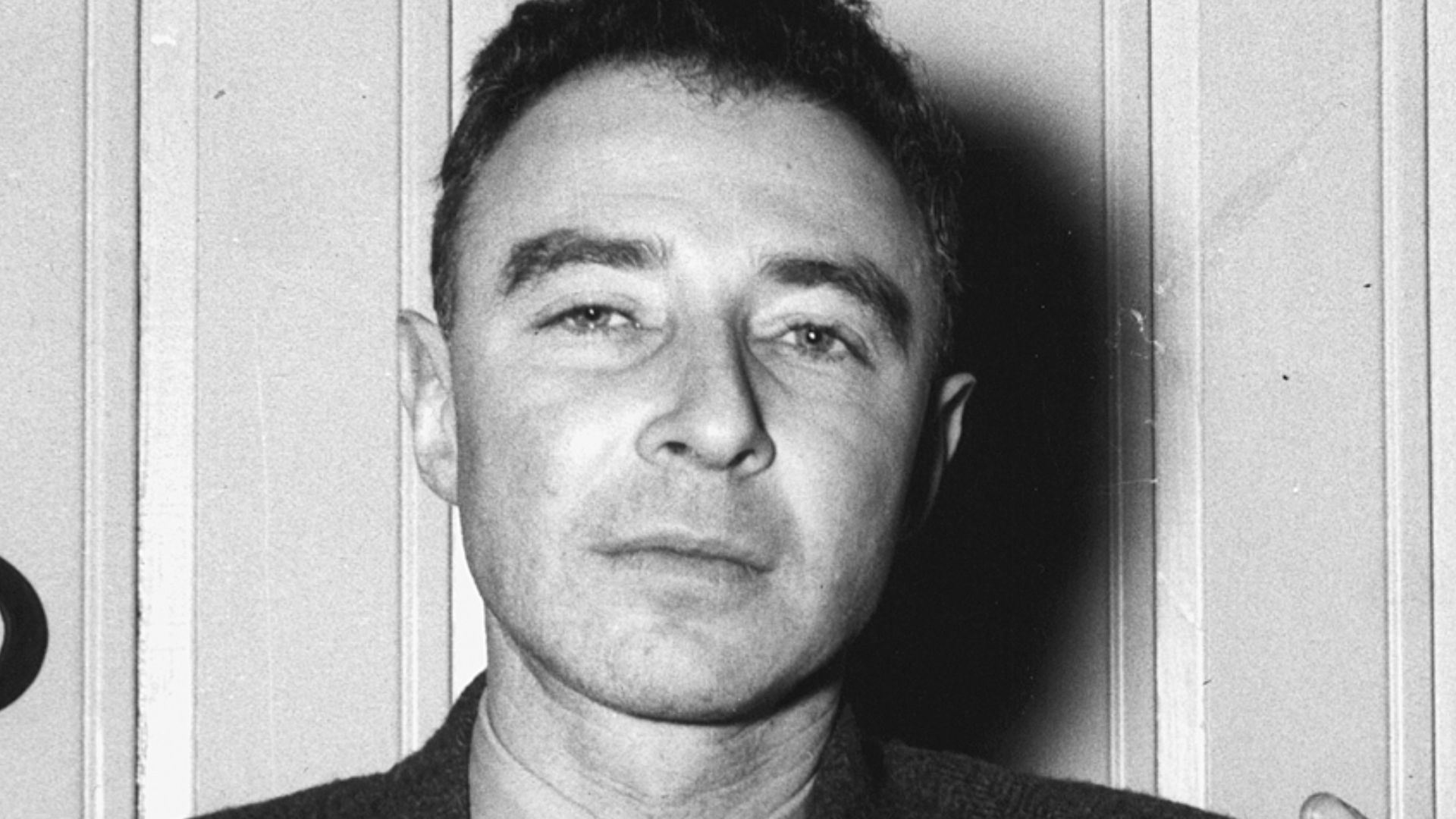 Ed Westcott (U.S. Government photographer) on Wikimedia
When you think of J. Robert Oppenheimer, your mind likely drifts to the scorched sands of the New Mexico desert or the haunting, monochromatic footage of the Trinity test. He’s forever etched into our collective memory as the "father of the atomic bomb," a title that carries an almost unbearable weight of historical responsibility. While many see him as a purely scientific figure, he was actually a deeply philosophical man who spent his final years grappling with the ethical ghosts of his greatest creation. It’s fascinating to realize that the man who unlocked the power of the stars spent his quietest moments wondering if he’d actually opened a door that should’ve remained bolted shut.
The narrative of his life didn't end with a bang in 1945; instead, it trickled toward a contemplative finish in 1967 as he faced the finality of throat cancer. You’ll find that his last words and the sentiments he shared with those closest to him weren't about grand scientific triumphs or complex mathematical proofs. Rather, they were a window into a soul that had tried to balance the necessity of war with a desperate, lifelong yearning for global peace. By looking closely at how he exited the world stage, we can finally understand how he truly felt about the mushroom cloud that would always define his name.
The Weight of a Scientific Conscience
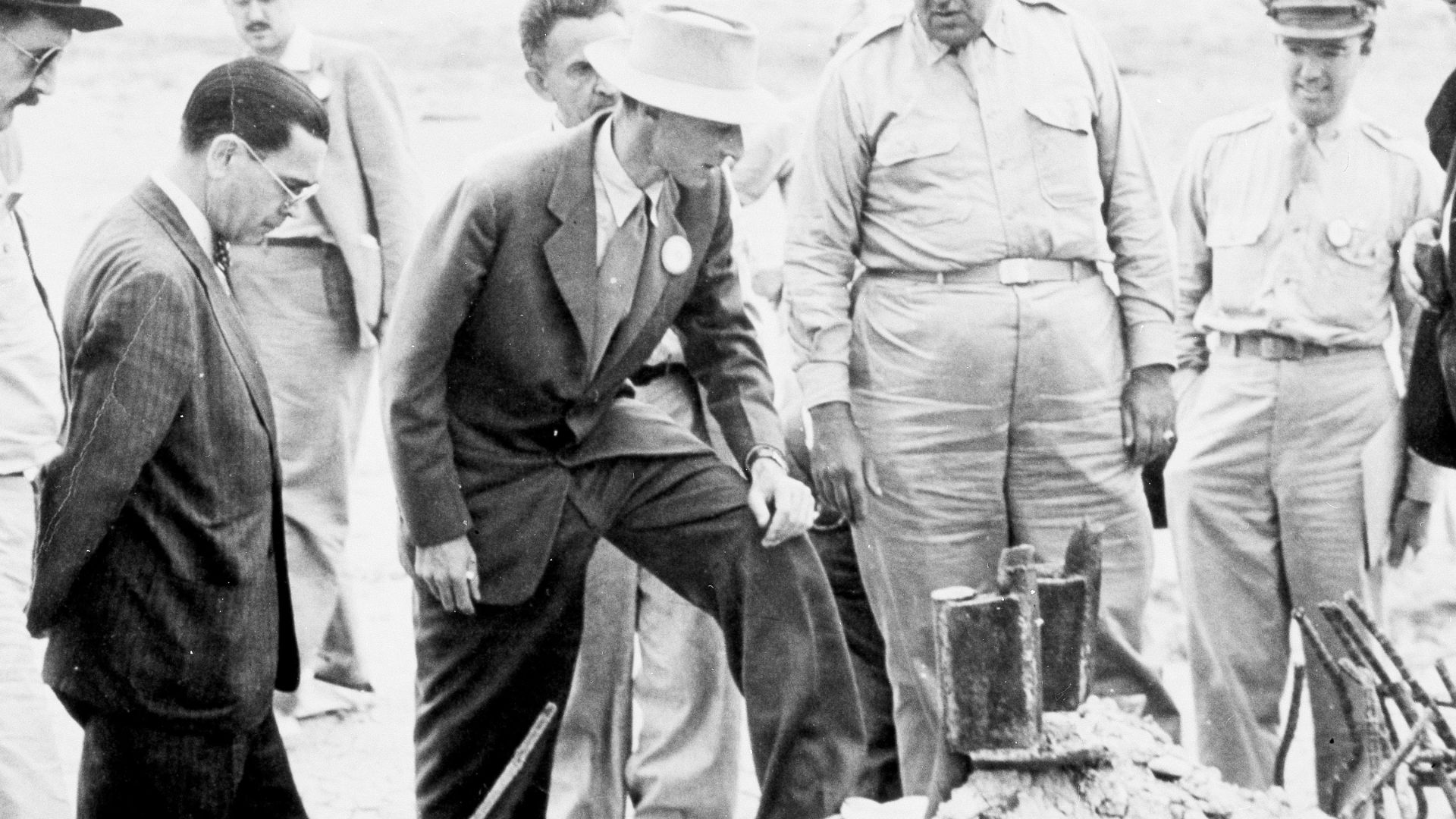 Los Alamos National Laboratory on Wikimedia
As the sun began to set on his career, Oppenheimer didn't shy away from the moral complexities that his work had unleashed upon the modern world. He frequently spoke about the "deeply troubling" nature of the nuclear age, often appearing more like a somber poet than a high-ranking government physicist. You might be surprised to learn that he never actually expressed regret for building the bomb itself, but he certainly mourned the fact that humanity wasn't yet mature enough to handle its power. It was a delicate tightrope walk between being proud of his technical success and being absolutely terrified of its long-term consequences for our species.
During his final days at his home in Princeton, he spent a significant amount of time reflecting on the Bhagavad Gita, the ancient Hindu text he’d famously quoted years earlier: “Now I am become death, the destroyer of worlds.” This famous quote is often wrongfully assumed to be Oppenheimer’s last, although it was still spoken in the twilight of his life. He didn't just see those verses as dramatic lines for a television documentary; they were the actual framework he used to process his role in the universe's grand design. His close friends noted that he seemed to find a strange sort of comfort in the idea of "duty," regardless of the outcome, even if that duty resulted in a weapon of unimaginable destruction. You can almost feel the quiet intensity of those final conversations as he tried to reconcile his brilliance with his basic human empathy.
His interactions with the scientific community in the 1960s often touched on the theme of scientific "sin," a concept he’d popularized during a lecture shortly after the war. He believed that physicists had known a certain level of darkness that could never be fully scrubbed away, no matter how many peaceful uses for atomic energy they discovered. This wasn't a cry for forgiveness, but rather a frank acknowledgment that the world had been fundamentally altered by his hand. He wanted everyone to understand that the pursuit of knowledge is never truly neutral and always comes with a heavy price tag attached to the soul.
Finding Peace in the Final Silence
Oppenheimer’s “final warning” didn’t come when his death was imminent. When he died in February of 1967, he refused to deliver one last monumental soundbite to historians or to the journalists who were expecting him to do so one last time. Oppenheimer had been analyzed by the government and the country for decades, so when his time came, he decided to exit quietly. His dying words were said to be simply, “I’m going to leave you now,” murmured to his wife Kitty before he passed into eternal rest. For a man who spent his life mastering some of the most powerful forces in the material world, he ended on a decidedly human note.
It’s as if he’d finally reached a point in his life where he no longer felt the need to justify himself to others. You won’t find Oppenheimer using his last words to proclaim his innocence or berate the political figures who robbed him of his security clearance. He merely uttered a few words to the people who loved him and let the convoluted leviathan of his public life fade into oblivion.
The lack of a dramatic "final warning" about nuclear war in his last moments actually speaks volumes about his state of mind toward the end. He’d already said everything he needed to say through his advocacy for international control and his warnings against the hydrogen bomb’s development. By choosing a quiet, intimate goodbye, he signaled that his work as a public conscience was finished and his private journey was the only thing left to attend to. You can see this as the ultimate act of reclaiming his own identity from the gargantuan myth that the world had built around his persona.
KEEP ON READING
10 Greatest Quarterbacks Of All Time & 10 That Are…
Do You Disagree?. Few topics in sports generate as much…
By Farva Ivkovic Dec 2, 2025
The story of Ching Shih, the Woman Who Became the…
Unknown author on WikimediaFew figures in history are as feared…
By Emilie Richardson-Dupuis Dec 29, 2025
20 Shakespearean Words, Translated For A Modern Audience
What’s In A Word?. Shakespeare was a wordsmith of the…
By Breanna Schnurr Dec 17, 2025
20 Inspiring Stories From Native American History
Incredible Stories Of Resilience And Endurance. Many of us didn't…
By Ashley Bast Dec 17, 2025
You Think You Have Problems? These Royal Families Were Cursed
Boasson and Eggler St. Petersburg Nevsky 24. on WikimediaHeavy is…
By Ashley Bast Dec 5, 2025
MH370: The Plane That Can't Be Found
Anna Zvereva from Tallinn, Estonia on WikimediaEleven years after Malaysia…
By Christy Chan Dec 10, 2025