Could the dead call you from the grave? That's an easy question: of course, they can't. Right? And yet, the story of Charles E. Peck might just give you pause. On September 12, 2008, Peck died in one of the deadliest commuter rail disasters in U.S. history, yet his family swears they received phone calls from him for hours after his death. Investigators, coroners, and skeptics have all tried to make sense of it, and to this day, nobody has offered a fully satisfying explanation.
The tale sits at the crossroads of tragedy and mystery, which is part of why it's stuck around in the public imagination for over a decade. It involves a documented catastrophe, a devastated family, and a string of calls that even officials couldn't account for. Here's what actually happened that day, and why the story of Charles Peck still gets people talking.
The Chatsworth Crash and Peck's Final Journey
Charles Peck was a 49-year-old customer service agent for Delta Air Lines, and he'd spent 19 years working at Salt Lake City International Airport. On the day of the crash, he was traveling to Los Angeles for a job interview at Van Nuys Airport, hoping a move to California would let him finally marry his fiancée, Andrea Katz. The couple had put off their wedding while waiting for a chance to live in the same state, so this trip carried real weight for both of them.
That afternoon, however, tragedy struck. The Metrolink commuter train Peck was riding, carrying 225 riders, collided head-on with a Union Pacific freight train in California's San Fernando Valley at a combined speed of 83 mph. The crash became known as the Chatsworth crash, and it remains the deadliest disaster in Metrolink's history. In all, approximately 138 people were injured, with 87 taken to hospitals and 46 in critical condition, and 25 people lost their lives, including Peck.
Investigators later traced the cause back to human error involving, ironically, cell phones. A preliminary investigation revealed that the engineer running the commuter train had failed to heed a red signal light, sending his train onto a single track where the oncoming freight train had been given the right of way. Teenagers who'd been texting with the engineer told investigators he'd sent his final message just seconds before the collision occurred. The National Transportation Safety Board would go on to cite distracted operation as a central factor in the disaster: "The NTSB determined that the probable cause of the collision was the failure of the Metrolink engineer to observe and appropriately respond to the red signal aspect at a control point because he was engaged in prohibited use of a wireless device, specifically text messaging that distracted him from his duties."
The Calls That Followed
Peck's fiancée found out about the wreck in an unusual and unsettling way. She heard about the crash from a news report on the radio while she was driving to the train station to pick him up, and Peck's parents and siblings soon joined her there to wait for news. What none of them knew yet was that Peck had died on impact, seated in the train's first passenger car, the section that took the brunt of the collision.
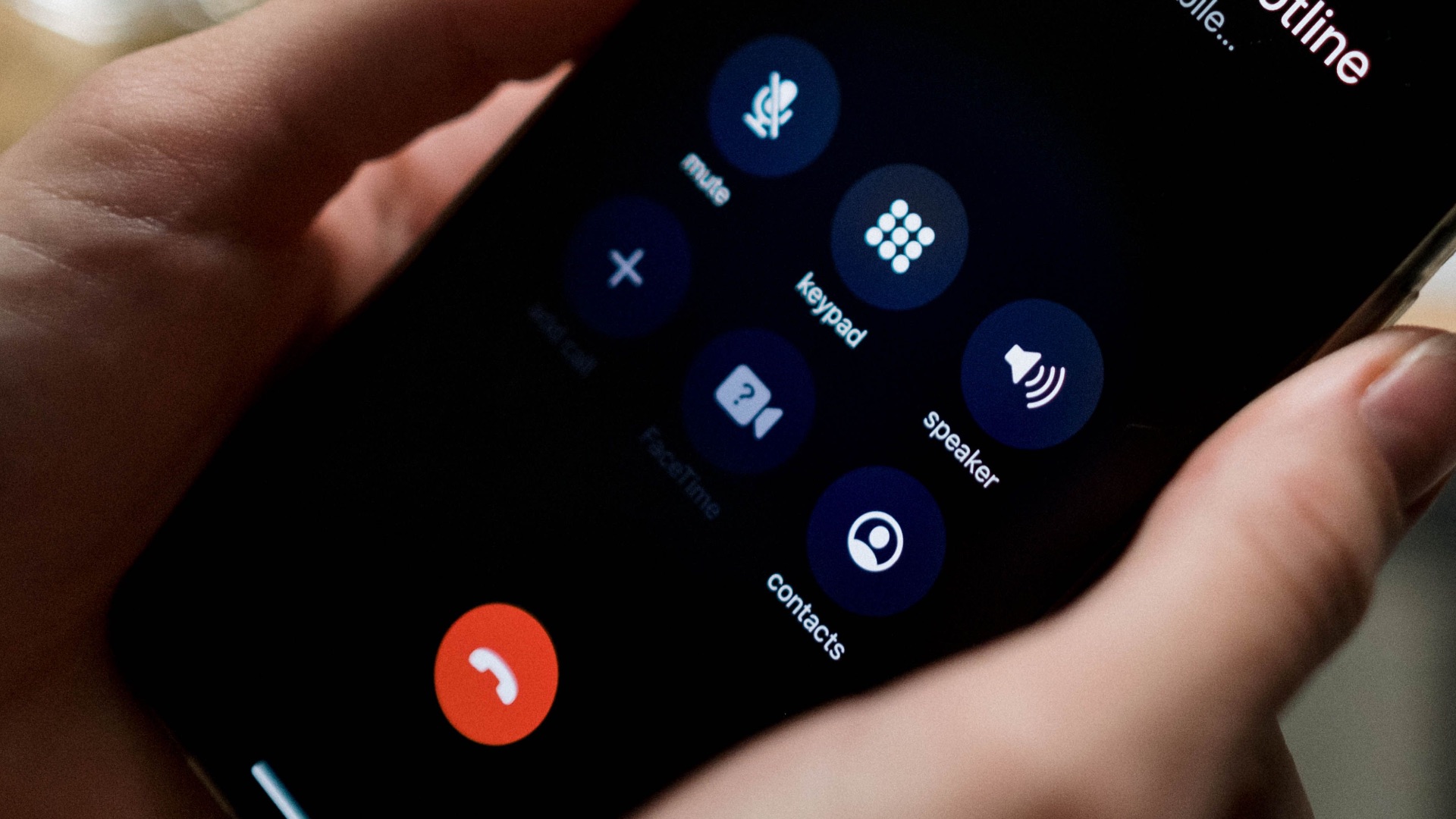
But over the following hours, something strange started happening. His cell phone placed call after call to his loved ones that night, reaching his son, his brother, his stepmother, his sister, and his fiancée. Family members reported that when they picked up, they heard nothing but static, and when they tried calling the number back, it went straight to voicemail every time. Naturally, this pattern gave them a sliver of hope that Peck might still be alive somewhere in the wreckage.
In total, his phone reportedly dialed his family 35 times, even during the night, all before his body was located. The calls didn't stop until roughly 3 a.m., which was about 11 hours after the initial crash. Rescue crews eventually recovered his body around an hour after that final call came through, bringing the strange sequence to an abrupt end.
The Investigation and the Unanswered Questions
Unsettling as it was, search teams didn't treat the calls as mere coincidence. The barrage of calls actually prompted crews to trace the phone's signal and search through the wreckage of the first train car, the location the calls seemed to be coming from. That search effort is ultimately what led them to Peck's remains, making the calls functionally responsible for locating him even if their origin stayed unexplained.
And then came the cold, hard truth: coroners who examined Peck's body found no evidence that he'd survived the impact for any length of time, let alone long enough to dial a phone dozens of times. Medical examiners were unable to reconcile the physical evidence with the timeline of the calls, leaving a gap between what the science showed and what the family experienced. Even more strange is that while Peck's remains were located, his cell phone was never found.
Without the device itself, there was no way to run forensic tests on it or determine conclusively why it kept dialing out, thus the enduring mystery. Some theories point to possible technical glitches involving the network or the phone's SIM card, or that someone else made the calls instead, but alas, none of these explanations have ever been confirmed or proven.
Whether you view it as a technical anomaly, a strange coincidence born of network malfunction, or something else entirely, the Chatsworth crash and the calls that followed remain one of the more haunting unsolved footnotes in a tragedy that claimed 25 lives. Nearly two decades later, no official investigation has managed to close the gap between what the coroners found and what Peck's family experienced that long night. All this goes to say: the next time your phone rings, you might want to mentally prepare yourself...