

Marketing crazes are some of the most emblematic markers of their eras. From the ’90s to the 2010s, there are dozens of short-lived fads whose common elements are a combination of clever branding, humor, and impeccable timing. From Beanie Babies to fidget spinners, these fads are reminders of the sheer power of basic marketing, both in terms of pop culture and even macroeconomic effects. They are evidence that consumer psychology is not merely a matter of logic or use-value but more often a matter of hype. One of the strangest, funniest, and most profitable of these crazes was the Pet Rock, an absurdly successful marketing concept of the 1970s.
The History of the Pet Rock

“No messes. No allergies. No effort.” These were the words with which ad man, Gary Dahl, introduced his new revolutionary pet: the Pet Rock. A gag aimed squarely at the excesses of consumerism and the world of self-improvement literature that Americans had come to love, the humble Pet Rock arrived on the scene in 1975 and quickly became the must-have item.
To have a Pet Rock, all you needed was an oddly shaped stone roughly the size of one’s palm. Placed in a nest of straw, the stone was presented in a little box with air holes for “breathing.” The real pièce de résistance, though, was the instruction manual for the rock, detailing directions on how to “care for and train” your new pet. Dahl’s ad copy and packaging managed to turn what could easily have been a one-hit novelty gag into a biting commentary on modern consumerism at a moment of social and political exhaustion.
The Rise and Fall
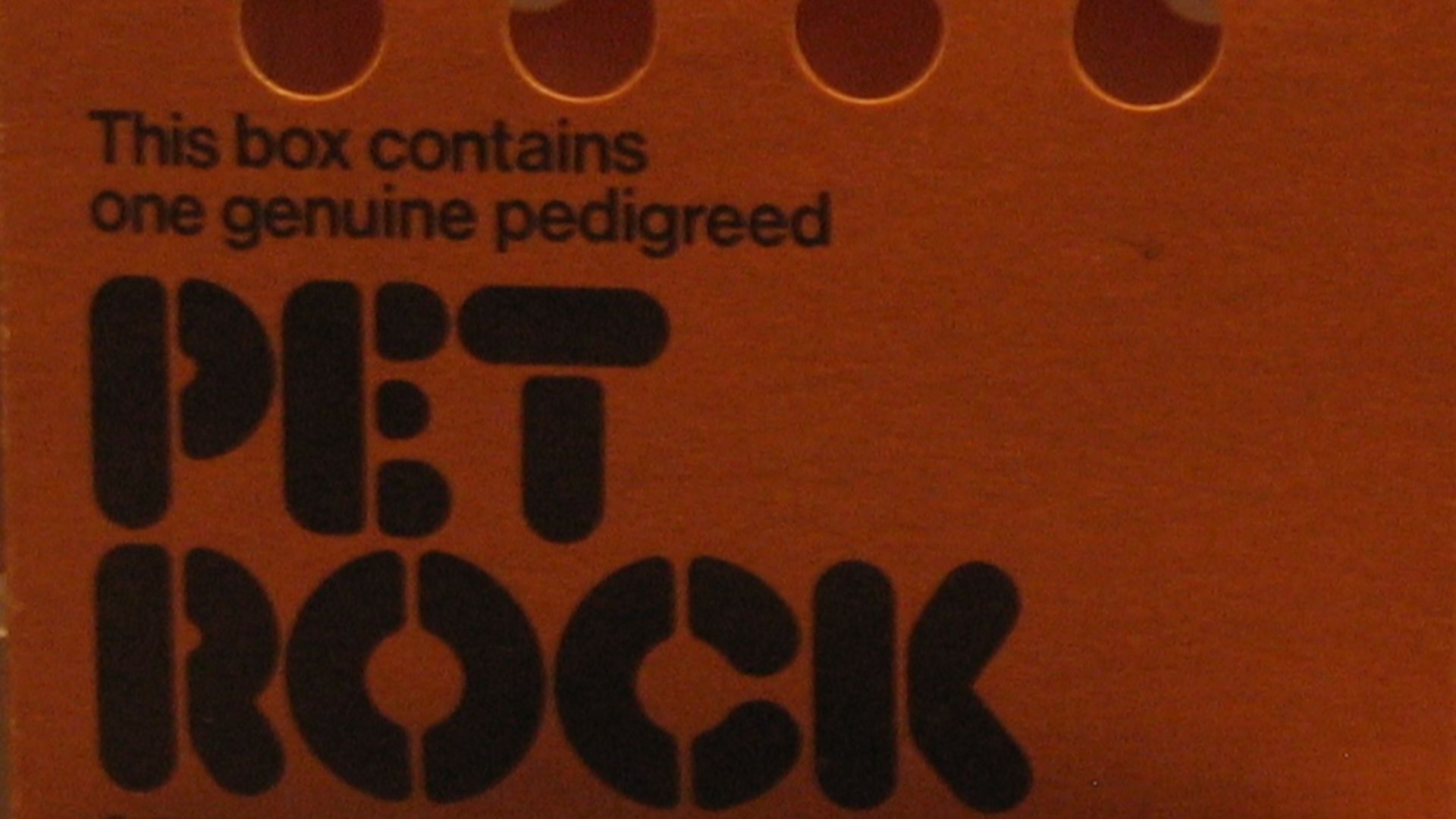
In the months before Christmas 1975, the Pet Rock’s ascent was stratospheric. The faux “pet” went from novelty to national phenomenon, with stores struggling to keep the quirky creature in stock as millions of Americans rushed to spend $3.95 on it. The product was covered on television shows, in newspaper columns, and even on the cover of Time magazine. Johnny Carson cracked jokes about it on his nightly show, while public figures like Ronald Reagan were reported to be Pet Rock owners. It was, for a short, glittering time, a bona fide pop culture icon, proof that with humor, creativity, and a little luck, even a pebble could be marketed as a million-dollar idea.
Like most fads, however, the Pet Rock’s shine faded quickly. By February 1976, stores were marking down their remaining supplies as public interest rapidly waned. Dahl had sold over a million Pet Rocks, however, earning an estimated $1 million fortune. While its cultural relevancy lasted a mere six months, the Pet Rock’s legacy has proven far more durable. It has become the textbook definition of how strong marketing, rather than the product itself, can create demand on a massive scale.
Clever Marketing

Pet Rocks were a sign of things to come. They were the TikTok food trends, ironic fashion merch, and brand collabs of today. Nothing new was really being created, it was all recycled humor or reference points that amused people. It’s the perfect example of using humor, emotion, and cultural identity to your advantage to create the next big thing. His creation may have been a gag, but it was one with a million dollars’ worth of value, if not more.
KEEP ON READING