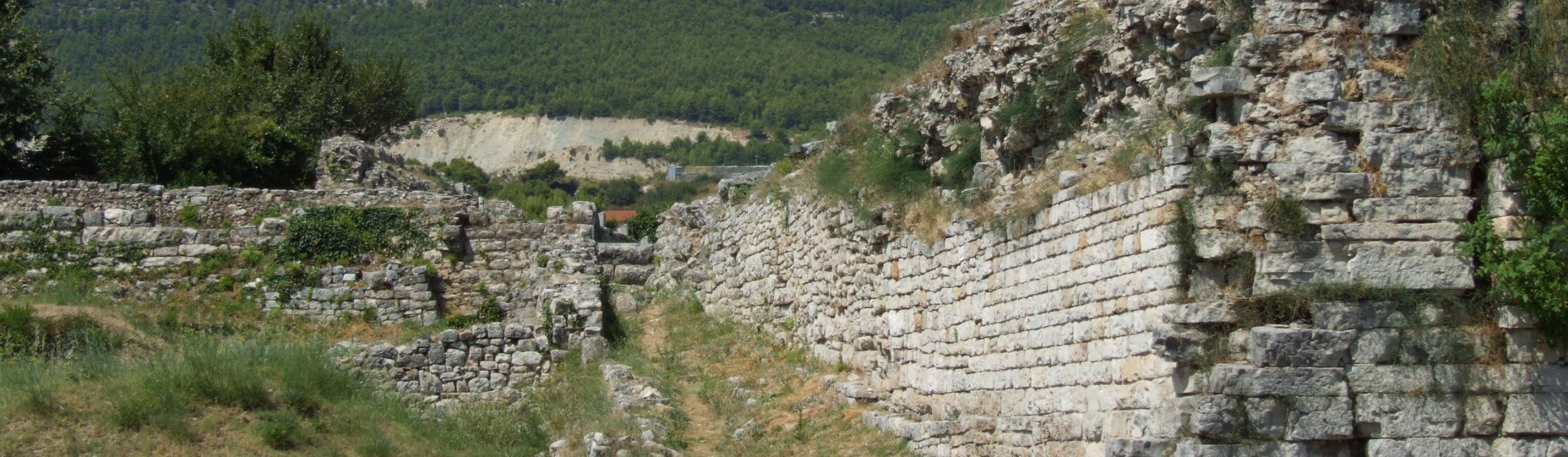
Most major archaeological discoveries don't start with anything dramatic. They start with a gravel pit. That's exactly what happened in Cham, a small municipality in the canton of Zug in central Switzerland, when workers excavating the ground hit something that didn't belong there, or rather, something that had always belonged there and had simply been waiting two millennia to be noticed. What emerged from the dirt was the remains of a Roman building complex dating back roughly 2,000 years, covering more than 5,300 square feet of stone walls, rooms, and artifacts that nobody in the region had seen since the last comparable discovery nearly a century ago.
Switzerland doesn't typically figure prominently in the popular imagination of Roman history. That territory belongs to Italy, to Britain's Hadrian's Wall, to the ruins of North Africa and the Eastern Mediterranean. But the Romans were very much present in what is now Switzerland, and this find is forcing a more serious reckoning with just how deeply. The Office for the Preservation of Monuments and Archaeology didn't mince words when it described the discovery as an "archaeological sensation," and the artifacts coming out of the ground go a long way toward explaining why.
What They Found and Why It Matters
The physical inventory of the site reads like a catalog of Roman life at its most connected and cosmopolitan. Alongside the walls themselves, archaeologists have pulled out terra sigillata, the high-quality imported Roman tableware whose Latin name translates to "sealed earth," along with detailed glass vessels, ceramic amphorae, millstones, gold fragments believed to be from jewelry, and iron nails suggesting parts of the structure incorporated wood construction. The amphorae are particularly telling: these were the shipping containers of the ancient world, used to transport wine, olive oil, and fish sauce from the Mediterranean, and their presence in central Switzerland confirms active trade networks reaching deep into what Rome considered its alpine frontier.
The coin finds added another layer. Archaeologists recovered several copper and bronze coins at the site, along with a silver denarius minted by Julius Caesar himself in the first century B.C., the face of which depicts an elephant trampling a snake or dragon. A coin like that doesn't wander into central Switzerland by accident. The presence of imported Roman tableware and detailed glass vessels suggests elite people visited or lived at the site, according to researchers, which reframes the entire location from a peripheral outpost to something considerably more significant in the Roman social and economic order.
What makes the preservation especially striking is that the top bricks of the walls were still visible above the ground when excavation began. Gishan Schaeren, head of the Department of Prehistory and Protohistoric Archaeology, noted that Roman buildings of similar scale hadn't been excavated in the Cham area in nearly 100 years, and expressed genuine surprise at how intact the remains turned out to be.
The Question That Still Doesn't Have an Answer
For all the richness of what's been recovered, the most fundamental question about the site remains open. Researchers still don't know what the building complex actually was. Christa Ebnöther, a professor of archaeology of the Roman provinces at the University of Bern, framed it plainly, asking whether the structure was a villa with a view or a temple building, with further investigation needed before anyone can say with confidence. The elevated position of the site would have provided a commanding view of the surrounding landscape, which fits either interpretation. A wealthy Roman villa built to overlook fertile land and water sources makes obvious sense. So does a religious site occupying high ground for symbolic reasons.
The uncertainty isn't a failure of the excavation; it's a reflection of how much work remains. The site sits on elevated ground where a nearby gravel hill was already inhabited several thousand years before the Romans arrived, which means the location was recognized as strategically valuable across multiple civilizations and time periods. That continuity of occupation is itself a form of evidence, pointing toward a site that served important functions repeatedly rather than one that happened to be in the Romans' path.
What's also unresolved is how the complex fits into the broader picture of Roman infrastructure in central Switzerland. The pre-Alpine region has historically yielded fewer Roman structural remains than other parts of the empire, which is part of why Ebnöther described the find's preservation as astounding. Each new room mapped and artifact catalogued adds resolution to a picture that has been blurry for a very long time.
How a Gravel Pit Changed the Larger Story
The Cham discovery didn't happen in isolation. A separate excavation in Gebenstorf, in the canton of Aargau, uncovered a Roman settlement far more extensive than researchers had anticipated, situated about 2.2 kilometers from the well-known Vindonissa Roman legionary camp. That site, earmarked for a residential development with an underground parking garage, prompted a full-scale salvage excavation covering 3,200 square meters. Taken together, these finds are building a case that Roman presence in Switzerland's interior was denser, more organized, and more socially stratified than the historical record had previously suggested.
That's the real rewrite happening here. Switzerland wasn't just a mountain corridor the Romans passed through on their way to more important places. The evidence now points toward established communities, elite households, active trade, and built infrastructure reaching well into terrain that most people still associate with medieval villages and modern banking. Karin Artho, who heads the Office for the Preservation of Monuments and Archaeology, put it simply: these pieces of the puzzle make it possible to trace the lives of ancestors and better understand the history of the region.
We tend to assume that the broad strokes of ancient history are settled, that the major discoveries have already been made and what remains is footnotes. A gravel pit in central Switzerland is a useful reminder that the ground still has things to say, and that the story of how Rome shaped Europe is probably longer and stranger and more geographically ambitious than any textbook currently has room for.
KEEP ON READING