

 commons.wikimedia.org on Google

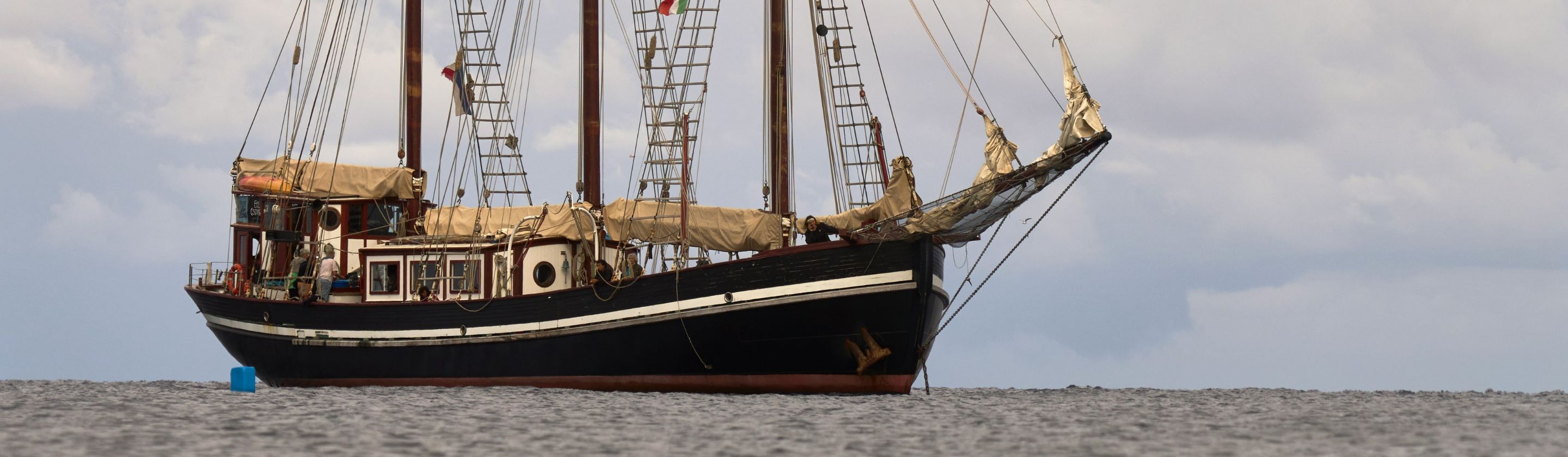
Before GPS, before weather satellites, before anyone could radio in a distress signal, the ocean was about as unpredictable as anything humans had ever tried to navigate. Ships went out and sometimes never came back. Commercial fishing still ranks as one of the most dangerous occupations in the United States, trailing only logging, and that's with every modern advantage available. Centuries ago, with wooden hulls and cloth sails and no real way to predict what the weather was about to do, the margins for error were brutally thin. Superstition didn't come from ignorance. It came from a very reasonable desire to impose some order on a world that could kill you without warning.
What emerged over centuries of seafaring was one of the richest and most specific rule sets any profession has ever developed. Some of the rules had real logic buried in them. Others were the kind of thing that sounds completely reasonable when you've been at sea for three months with nothing to do but argue with your crewmates. All of them were taken seriously, and many of them have survived into modern recreational boating in some form. Here's where the strangest ones came from.
Things You Couldn't Do
Whistling on deck was a hard prohibition on ships for centuries, and the reasoning split in two directions depending on who you asked. The dominant belief was that whistling challenged the wind, a provocation that would summon a storm to put you in your place. Practically speaking, whistling was also associated with coded communication between mutineers, according to maritime folklorists who have traced the taboo through naval records. The National Maritime Museum Cornwall, which holds records of fishing superstitions from the Cornish coast, notes that local fishermen well into the 20th century believed whistling could whip up just enough wind to cause disaster. There was one exception: the ship's cook was not only allowed to whistle but encouraged to, because as long as he was whistling he was provably not eating the rations.
Certain words were entirely forbidden aboard ships, and the list is specific enough to feel genuinely eerie. Saying the word "drown" was believed to summon the event. Saying "goodbye" was banned, which is why sailors' wives were advised not to call after their husbands once they left the house for a voyage. "Good luck," counterintuitively, was also off the table, for the same reason that theatre people still say "break a leg" instead. Words connected to land, including pigs, rabbits, foxes, and church, were considered bad omens if spoken at sea. The logic was that land references reminded the sea of where the sailors wanted to be, which would anger whatever force was keeping them afloat.
Setting sail on certain days was avoided with near-religious consistency. Friday was the most universally dreaded departure day, tied to the crucifixion, and Admiral William Henry Smyth's 19th-century nautical lexicon, The Sailor's Word-Book, described it plainly as an ill-omened day on which experienced seamen preferred not to get underway. Thursdays carried their own risk as Thor's day, the Norse god of storms. The first Monday in April was considered the day Cain killed Abel. The second Monday in August was associated with the destruction of Sodom and Gomorrah. Between all of these prohibited dates, a cautious sailor had a somewhat crowded calendar to navigate.
Things You Couldn't Bring
The banana rule is the most famous, the most specific, and the one with the most competing explanations, which is usually a sign that the original reason was lost and everyone filled in the gap. The earliest documented version of the superstition traces to the 1700s, when a disproportionate number of trading ships that disappeared in the Caribbean were carrying banana cargo. Ships transporting bananas had to sail fast enough to reach port before the fruit ripened, which meant no fishing trolling lines could be dragged effectively, so sailors associated bananas with coming back empty-handed.
There was also the ethylene gas problem: bananas release gas that accelerates the spoiling of other cargo, which looked like a curse before anyone understood the chemistry. Some ships' crates brought tropical spiders aboard hidden in the fruit, and some of those spiders had genuinely dangerous bites. By the time you combined disappearing ships, ruined cargo, and mysterious deaths, the banana had accumulated enough circumstantial evidence to be condemned.
Flowers were thrown overboard the moment they appeared on deck because of their association with funerals. An empty coffin in the hold meant someone would fill it before the voyage ended. Clergy were considered bad luck for the same reason as biblical Jonah, whose presence brought storms on his ship, and the term "Jonah" became the generic maritime word for anyone aboard who seemed to be attracting disaster.
Things That Could Save You
Not all of it was prohibition and dread. Cats were kept on ships partly for practical rodent control and partly because sailors genuinely believed they could predict weather through their behavior, a belief that has some basis in the fact that cats are sensitive to changes in atmospheric pressure. Dolphins swimming alongside the bow were read as a sign of safe passage and protection. Albatrosses were considered carriers of the souls of sailors lost at sea, which is why spotting one was good luck and harming one was catastrophic. Samuel Taylor Coleridge's 1798 poem The Rime of the Ancient Mariner, which the British Library credits as cementing the albatross superstition in popular consciousness, depicts a sailor killing one and being forced by his crewmates to wear the dead bird around his neck as punishment. The phrase "an albatross around your neck" has meant carrying a burden ever since.
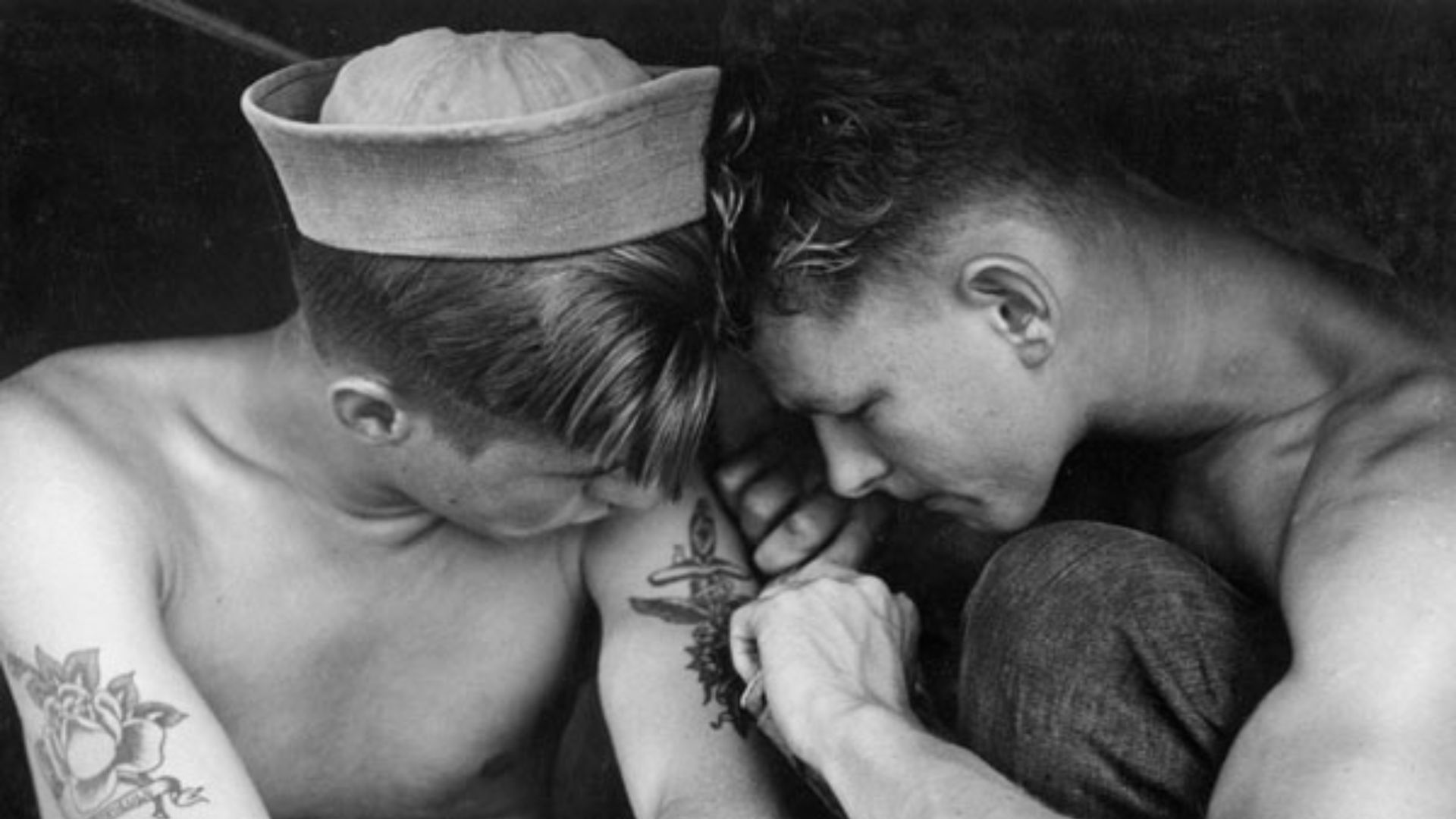
Tattoos functioned as talismans rather than decoration. A rooster and a pig tattooed on the feet were believed to guide a drowning sailor to shore. Swallows indicated you had sailed a certain number of miles. The whole system was a wearable record of where you had been and what you had survived, which in a profession that killed so many people was a way of announcing that you were still here.
KEEP ON READING
20 Weirdest Historical Objects in Museums
Check Out the Pickled Heart of a Saint. Museums carry…
By Rob Shapiro Oct 1, 2025
20 Ocean Mysteries We Still Haven’t Solved
Unanswered Questions Of The Ocean. The ocean covers most of…
By David Davidovic Sep 1, 2025
10 Phenomenal Mythical Creatures & 10 That Are Just Plain…
Legends Both Majestic And Peculiar. Do you ever wonder why…
By Chase Wexler Oct 1, 2025
20 Historical Predictions That Turned Out To Be True
Crystal Ball Moments In History. Do you wonder what it's…
By Chase Wexler Sep 1, 2025
10 Presidents Who Never Served In The Military & 10…
Commanders And Civilians In Office. Power can rise from very…
By David Davidovic Sep 1, 2025
20 Wars That Could Have Ended Much Sooner Than They…
Wars That Lasted Far Too Long. Wars are often remembered…
By David Davidovic Sep 1, 2025