

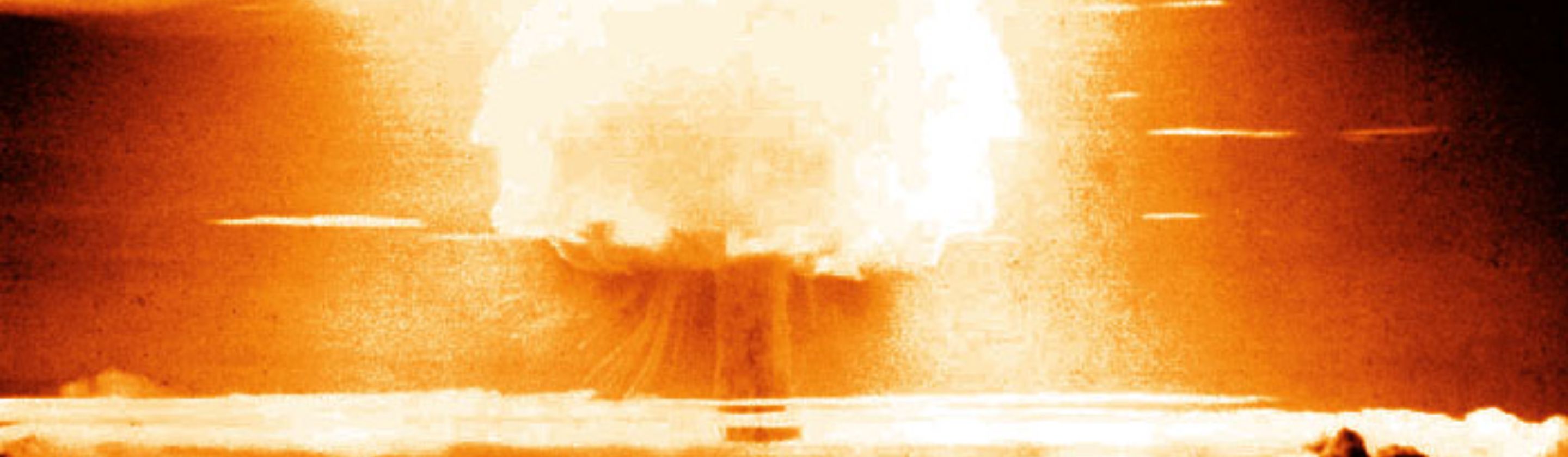
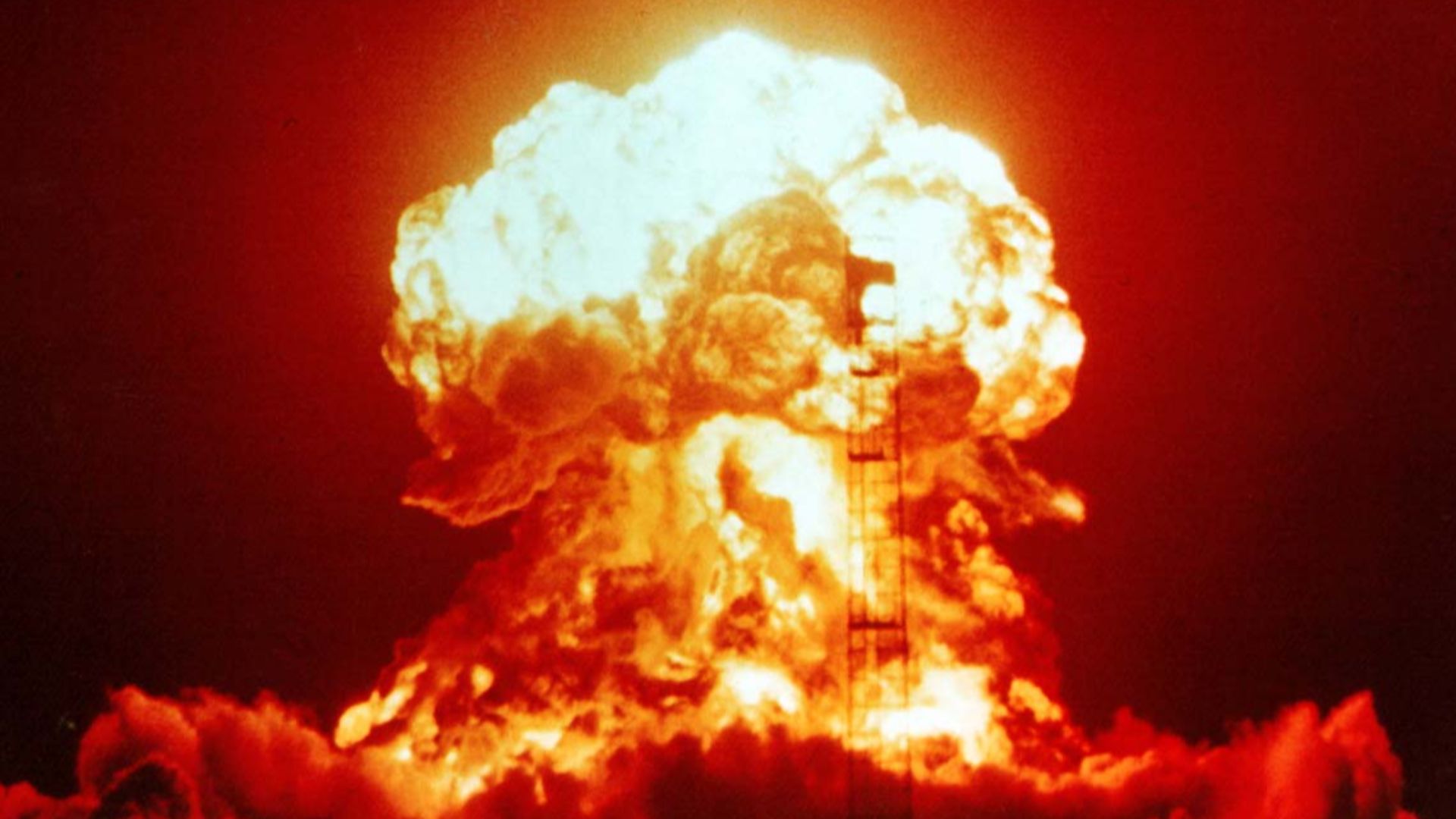
 Photo courtesy of National Nuclear Security Administration / Nevada Site Office on Wikimedia
On July 26, 1945, the United States, the United Kingdom, and China issued the Potsdam Declaration, a formal ultimatum demanding Japan's unconditional surrender or face what the document called prompt and utter destruction. The Japanese government convened, deliberated, and then Prime Minister Kantaro Suzuki stepped before the press. What he said next, and what the world heard, were two very different things.
The word Suzuki used was mokusatsu. In Japanese, the term carries real ambiguity. It can mean to withhold comment while a matter is still under consideration, essentially a diplomatic "no comment." Alternatively, it can mean to treat something with contempt, to ignore it entirely. Suzuki almost certainly intended the former. The official Japanese government position in those first critical hours was cautious non-commitment, not defiant rejection. Western wire services, and crucially, the U.S. military apparatus reading those reports, received the latter.
One Word, Two Meanings, and the Weight of History
The translation that circulated internationally rendered mokusatsu as "ignore." Domei, Japan's official wartime news agency, transmitted the statement, and it was picked up by foreign press outlets who ran with the rejection framing. By the time Japanese officials recognized the problem and attempted to clarify Suzuki's intended meaning, the diplomatic window had effectively closed. The interpreter's choice, innocent or rushed as it may have been, had collapsed a spectrum of political meaning into a single, brutal syllable.
Scholars have debated this for decades. Historian Kazuo Kawai, writing in the Pacific Historical Review in 1950, examined the mokusatsu episode in detail and argued that the ambiguity was real and the mistranslation consequential, though he stopped short of calling it the sole cause of what followed. Linguists similarly documented the word's dual register, noting that Japanese diplomatic language routinely employs strategic vagueness as a feature, not a bug. The problem was that strategic vagueness doesn't survive the telegraph.
What makes the incident so disorienting is that both governments were, in some sense, negotiating around it without directly engaging each other. Japan's Supreme War Council was internally fractured between those who wanted to pursue peace terms and those committed to fighting to the last. The mokusatsu press statement may have been designed to buy time domestically as much as to respond internationally. The Americans, for their part, were operating on a timeline shaped by the Manhattan Project.
The Bomb, the Timeline, and What Was Already in Motion
By the time mokusatsu was being mistranslated across wire services, the order to deploy the atomic bomb had already been issued. General Thomas Handy signed the directive on July 25, 1945, one day before the Potsdam Declaration was even made public. Historians including Gar Alperovitz, in his 1995 work The Decision to Use the Atomic Bomb, have argued extensively that the decision-making logic was already locked in, shaped by a combination of military momentum, Cold War positioning vis-a-vis the Soviet Union, and the enormous sunk cost of the Manhattan Project, which had consumed approximately two billion dollars in 1945 currency.
On August 6, 1945, the Enola Gay dropped Little Boy on Hiroshima. Estimates of the immediate death toll range from 70,000 to 80,000 people, with tens of thousands more dying from radiation exposure in the months that followed. Nagasaki was bombed on August 9. Japan announced its intention to surrender on August 15. The formal surrender documents were signed September 2 aboard the USS Missouri.
Whether a cleaner translation of mokusatsu would have changed any of this is a question historians continue to argue. The most sober assessment is probably that the mistranslation removed a thin but real chance at a diplomatic opening, in a situation where thin chances were the only kind available. You can't prove the counterfactual, but you also can't dismiss it.
Why This Story Still Matters
The mokusatsu incident gets raised whenever people talk about the stakes of translation, and fairly so. Language doesn't just describe diplomatic reality, it constitutes it. When a head of government speaks, the words that reach foreign capitals are the words that foreign capitals act on. The gap between what Suzuki meant and what Washington read was not a trivial semantic quibble. It was a political reality unto itself.
There's also something worth sitting with about how institutions process ambiguity under pressure. The American military and intelligence apparatus in July 1945 was not built for nuance. It was built for clarity of signal and speed of response. A word that could mean two things was almost automatically resolved into the more threatening interpretation, because that was the operationally safer read. Ambiguity, in a war footing, tends to collapse in the direction of the worst case.
We talk about miscommunication as though it's a minor, correctable human failure, the kind of thing solved by better processes or clearer memos. The mokusatsu incident is a reminder that language is load-bearing infrastructure, and when it fails, what collapses can be catastrophic and irreversible.
KEEP ON READING

The 20 Most Recognized Historical Figures Of All Time
The Biggest Names In History. Although the Earth has been…
By Cathy Liu Oct 4, 2024
10 of the Shortest Wars in History & 10 of…
Wars: Longest and Shortest. Throughout history, wars have varied dramatically…
By Emilie Richardson-Dupuis Oct 7, 2024
10 Fascinating Facts About Ancient Greece You Can Appreciate &…
Once Upon A Time Lived Some Ancient Weirdos.... Greece is…
By Megan Wickens Oct 7, 2024
20 Lesser-Known Facts About Christopher Columbus You Don't Learn In…
In 1492, He Sailed The Ocean Blue. Christopher Columbus is…
By Emilie Richardson-Dupuis Oct 9, 2024
20 Historical Landmarks That Have The Craziest Conspiracy Theories
Unsolved Mysteries Of Ancient Places . When there's not enough evidence…
By Megan Wickens Oct 9, 2024
The 20 Craziest Inventions & Discoveries Made During Ancient Times
Crazy Ancient Inventions . While we're busy making big advancements in…
By Cathy Liu Oct 9, 2024