

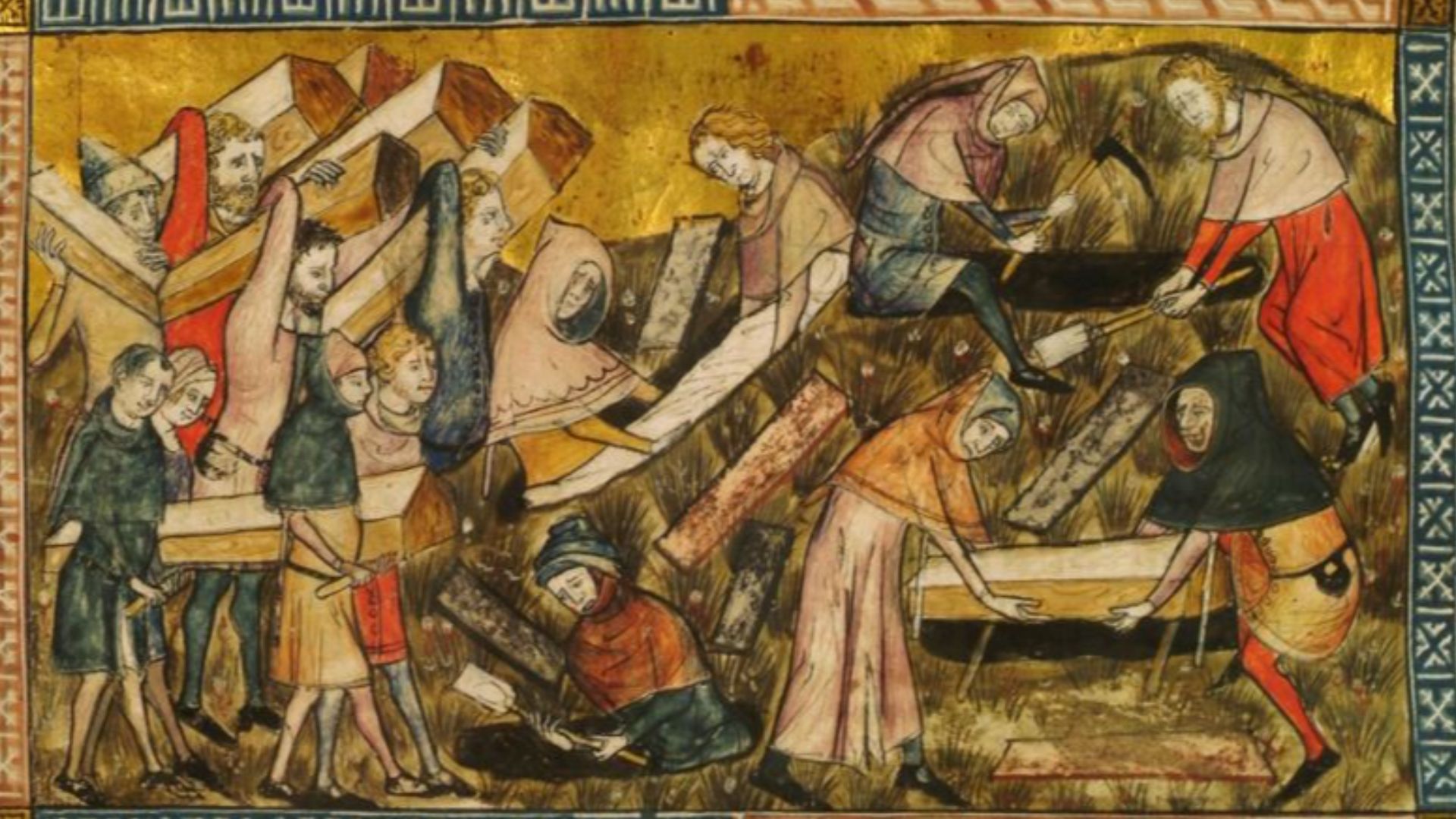
 Pierart dou Tielt (fl. 1340-1360) on Wikimedia
When people talk about the worst time in history to be alive, they usually imagine a single disaster. They picture a plague, a war, or one especially brutal ruler and assume that must have been the low point. The reality is a little messier because true historical misery usually comes from several bad forces piling on top of one another at the same time.
If you had to make the case for one century standing out as especially awful, the fourteenth century has a very strong claim. It brought famine, disease, war, social collapse, religious panic, and a level of insecurity that would make everyday life feel unstable even for people who managed to survive the biggest catastrophes. It wasn't just that terrible things happened. It was that they happened in clusters, and ordinary people had very little protection from any of them.
Why the Fourteenth Century Was So Unforgiving
The fourteenth century started badly before it became truly infamous. In Europe, the Great Famine of 1315 to 1317 caused widespread hunger after years of heavy rain, crop failure, and agricultural breakdown. If you were alive then, survival was already becoming harder long before the Black Death arrived to make everything worse. That matters because the century didn't begin with healthy, resilient societies operating from a position of strength.
Food insecurity in that period wasn't an occasional problem. A failed harvest could mean malnutrition, disease, social unrest, and a genuine fear that your household might not make it through the year. People were living much closer to the edge than modern readers sometimes realize, so even a short stretch of environmental trouble could do immense damage. When a society depends so heavily on local harvests, nature doesn't even have to be that dramatic to become terrifying.
The climate didn't help at all. Historians often connect this era to the onset of cooler, harsher conditions associated with the Little Ice Age, which made agriculture less reliable in many regions. You did not need a global catastrophe in the modern cinematic sense for life to become miserable. A colder, wetter pattern over time could quietly ruin fields, weaken bodies, and make a hard life even harder.
The Black Death Made a Bad Century Feel Apocalyptic
Then came the disaster people remember most clearly. The Black Death swept across Europe, Asia, and North Africa in the mid-fourteenth century and killed on a scale that's still difficult to fully grasp. In many places, death arrived so quickly and so often that communities couldn't process what was happening before they were already overwhelmed.
What made the plague so horrifying wasn't only the body count; it also shattered the ordinary expectations that helped people make sense of life. Families lost multiple members in quick succession, labor systems broke down, and the people who were supposed to offer stability, including clergy and local authorities, often died too. You weren't simply watching a disease spread. You were watching the normal structure of society give way under the pressure.
Fear changed behavior in ways that made suffering feel even more complete. People fled, abandoned the sick, searched desperately for explanations, and sometimes turned on minorities or outsiders in a frenzy of blame. The psychological effect must have been crushing, because no one had the medical knowledge to understand why it was happening or how to stop it. A world becomes much darker when death seems arbitrary, and explanation feels out of reach.
Misery Didn't End Once the Worst Waves Passed
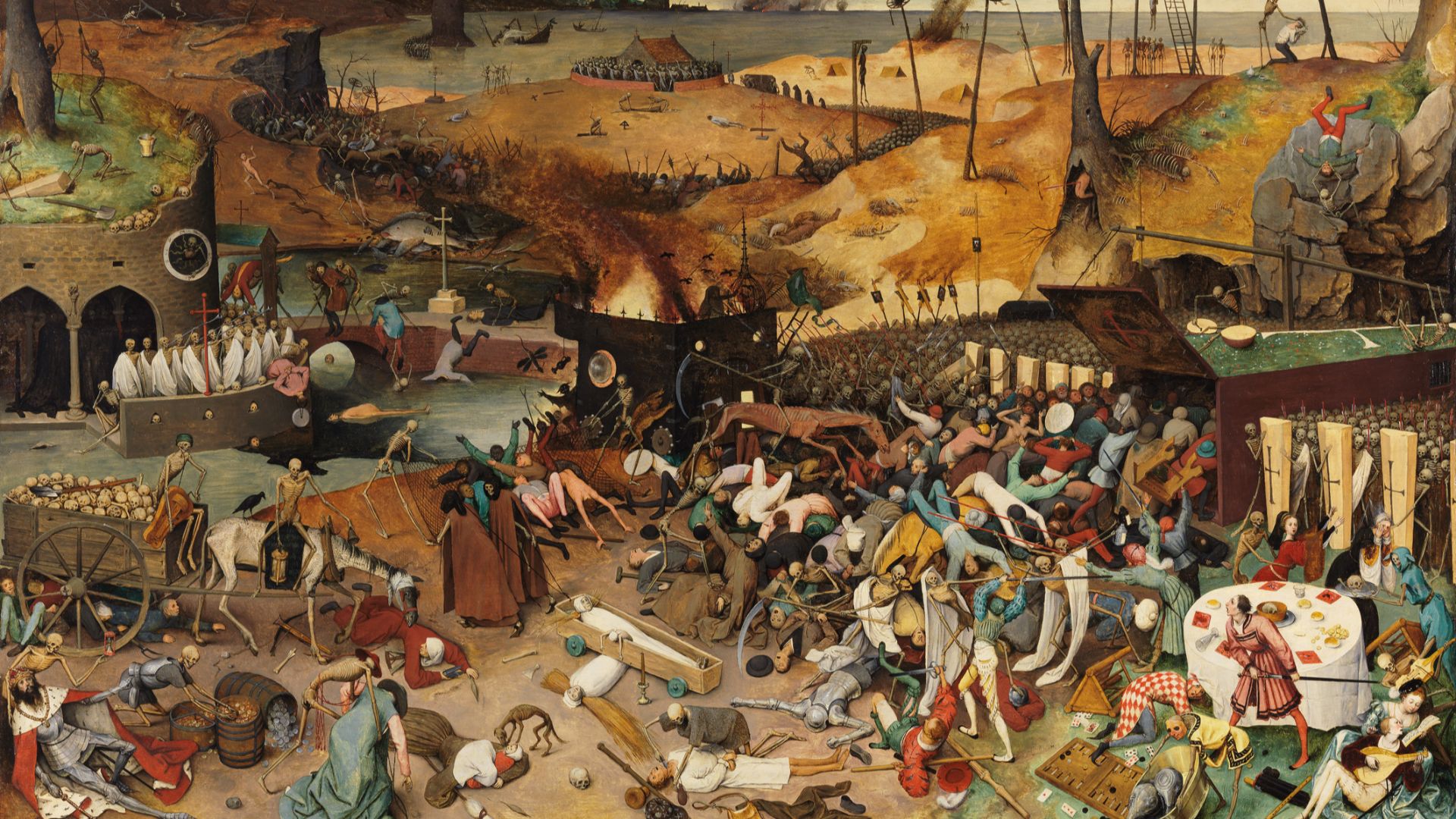 Pieter Brueghel the Elder on Wikimedia
A common mistake is to imagine that after the plague came relief. In truth, the fourteenth century kept finding new ways to make life hard. Wars continued, including major conflicts like the Hundred Years' War, and political instability meant many people moved from one form of danger straight into another. Survival in this period often meant enduring not one catastrophe, but a grim sequence of them.
Violence wasn't confined to battlefields. Raids, local unrest, peasant revolts, banditry, and shifting power struggles could bring insecurity into everyday life even for people far from the grand political centers. If you were a farmer, laborer, widow, or child, you had very little control over the forces shaping your fate.
Even religion, which offered comfort to many people, could also intensify fear during these years. A world full of plague, famine, and war encouraged apocalyptic thinking, moral panic, and a sense that divine punishment might be unfolding right in front of their eyes. That didn't exactly create a calm emotional environment. It meant that the search for meaning could easily deepen dread rather than soften it.
Of course, historians can argue about whether another century deserves the title instead. The fifth century saw cataclysmic volcanic eruptions, which plunged much of the world into perpetual cold and darkness, while the twentieth century brought industrialized killing on an unprecedented scale. Still, the fourteenth century remains a uniquely convincing candidate because ordinary life was so exposed to every kind of threat at once. You were vulnerable to hunger, disease, violence, and social breakdown, often with no reliable system to protect you from any of them. In short, if you had to choose a century to avoid, this one would deserve to be near the very top of the list.
KEEP ON READING
The Most Miserable Century To Be Alive
Pierart dou Tielt (fl. 1340-1360) on WikimediaWhen people talk about…
By Emilie Richardson-Dupuis Apr 14, 2026
The Woman History Wants You To Forget
Anthony22 (photograph)Anna Hyatt Huntington (statue) on WikimediaWhen you flip through…
By Sara Springsteen Apr 14, 2026
20 Famous Figures Who Were Obsessed With The Occult
They Believed in Demons. You've probably learned about these famous…
By Sara Springsteen Apr 14, 2026
20 Powerful Women from the Middle Ages
Women in Power. The Middle Ages are still too often…
By Christy Chan Apr 14, 2026
The Long, Weird History of People Sleeping in Two Shifts
Ron Lach on PexelsFor much of early modern Europe, sleep…
By Breanna Schnurr Apr 14, 2026
The Forgotten Expeditions Of Early Polar Explorers
Unknown authorUnknown author on WikimediaThe story of early polar exploration…
By Rob Shapiro Apr 14, 2026