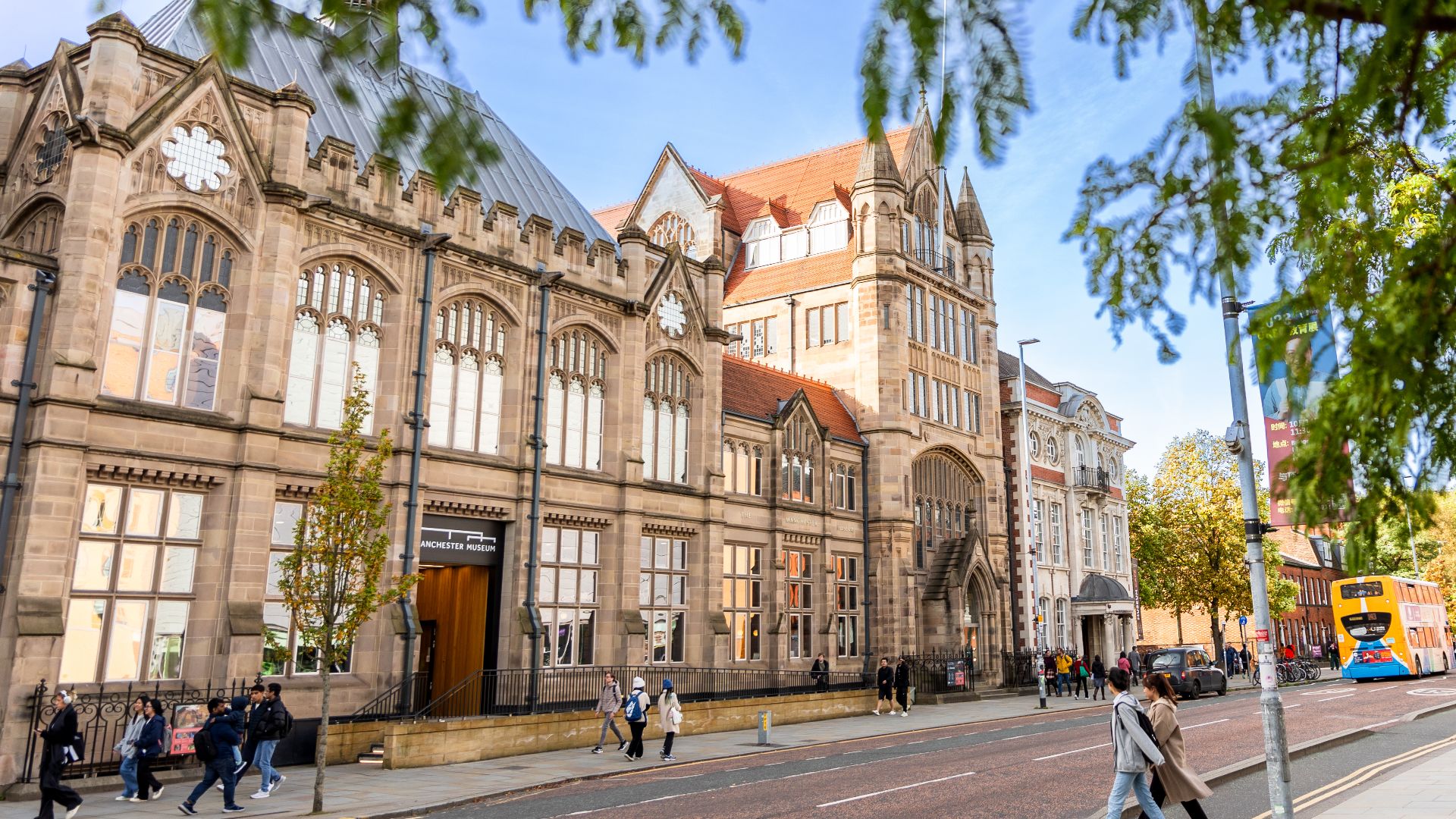
 Manchester Musuem on Wikimedia
Imagine walking through a museum and discovering that an ancient Egyptian statue has somehow changed positions overnight. You'd probably assume someone had moved it while cleaning, but what if the statue was locked inside a glass case that nobody had touched? That's exactly the mystery that puzzled staff at England's Manchester Museum in 2013.
The statue, known as Neb-Senu, was nearly 4,000 years old and had spent decades sitting undisturbed in the museum's collection. Then, for no apparent reason, it began slowly rotating until it faced the opposite direction. What followed was an investigation that attracted international attention and raised some rather unsettling questions about the ancient artifact.
The Statue That Refused to Stay Still
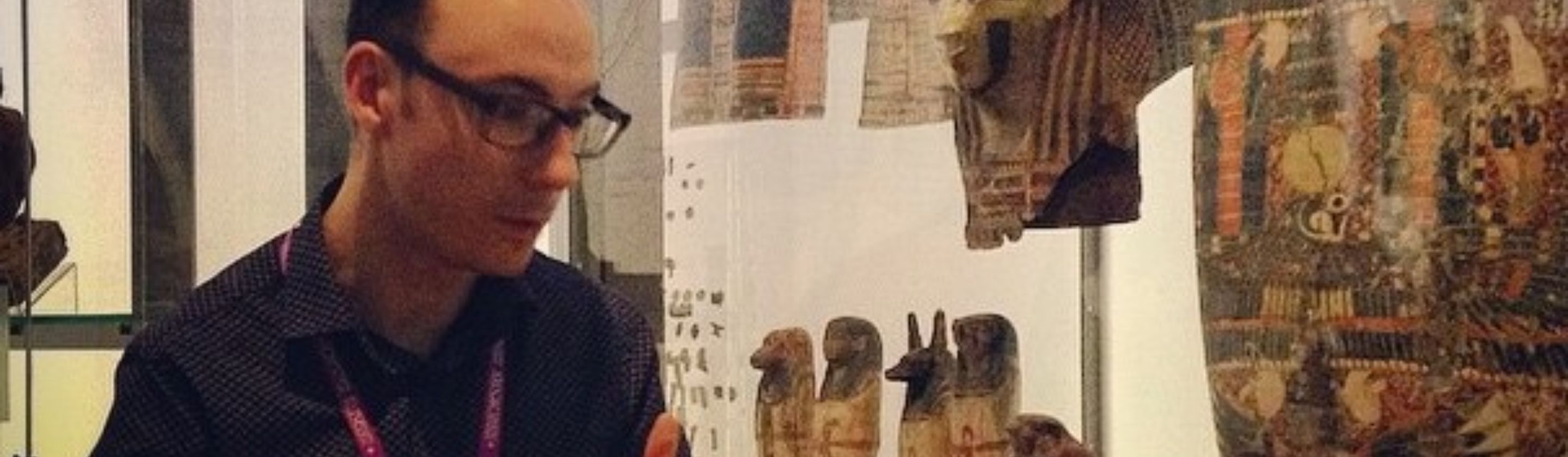
The strange activity first caught the attention of Egyptologist Campbell Price, who noticed that the small statue had somehow turned around inside its display case. At first, he figured another employee had moved it without mentioning anything. However, Price was the only person with a key to the locked cabinet.
Things got even stranger when the statue kept changing positions over the following days. While the other artifacts around it stayed perfectly still, Neb-Senu appeared to move on its own, sometimes rotating until its back faced visitors. Each time Price checked on the figure, he was left wondering what could possibly be causing it.
Hoping to get some answers, museum employees installed a time-lapse camera that photographed the statue once every minute for about a week. The footage revealed the figure gradually rotating counterclockwise, sometimes turning a full 180 degrees. Although the movement was far too slow to notice during a regular museum visit, the sped-up recording made it impossible to miss.
Perhaps the strangest detail was that the statue seemed to move mostly during the museum's opening hours. Once the building quieted down at night, its mysterious rotation generally stopped. This pattern suggested that something about the museum's daily activity was responsible.
An Ancient Object With a Connection to the Afterlife
Long before becoming an international curiosity, Neb-Senu was a fairly ordinary example of ancient Egyptian funerary sculpture. Dating to approximately 1800 BC, the figure depicts a man wearing a traditional wig and kilt, with his hands resting against his clothing. Standing just over 10 inches tall, the statue doesn't exactly look like something you'd expect to cause such a commotion.
Its original purpose, however, was closely tied to Egyptian beliefs about death and immortality. Ancient Egyptians believed that a person's existence could continue after death, provided certain religious and funerary requirements were met. Statues depicting deceased individuals sometimes served as alternative homes for their spiritual essence, particularly if their preserved bodies were damaged.
The inscription running down Neb-Senu's back added another interesting detail to the mystery. Written in hieroglyphics, the text requests traditional offerings, including bread, beer, and meat, for the deceased person's spirit. Because the statue kept turning to reveal its back, some observers began wondering whether the inscription had something to do with its strange behavior.
Unsurprisingly, the incident sparked speculation about ancient curses and restless spirits. Egyptian tombs have fueled supernatural stories for generations, especially following the discovery of Tutankhamun's burial chamber in 1922. Neb-Senu's connection to the afterlife certainly made the story more fascinating.
The Surprisingly Ordinary Explanation Behind the Mystery
Scientists eventually looked into whether everyday physical forces could explain what was happening. Physicist Brian Cox suggested that tiny vibrations traveling through the glass shelf might cause the statue to rotate because of differences in friction. Visitors walking nearby, passing traffic, and general activity inside the building could all contribute to these subtle movements.
The theory became more convincing when investigators took a closer look at the statue itself. Its base wasn't completely flat but slightly convex, meaning it could pivot when exposed to even small disturbances. As vibrations passed through the display surface, the uneven contact between the stone and glass could slowly change the figure's position.
This also explained why the surrounding artifacts stayed exactly where they were while Neb-Senu continued moving. Objects with flatter, more stable bases wouldn't necessarily react to vibrations in the same way. The statue's unusual shape and positioning made it particularly sensitive to movement, even when everything around it appeared completely undisturbed.
By August 2013, Price acknowledged that the mystery had a convincing scientific explanation after the statue was examined during gallery refurbishment. Museum staff found that gentle tapping could make it rotate, and conservation materials were later added to keep it in place. Although the exact mechanics weren't entirely settled, there was no longer any need to consider a supernatural cause.
Today, the famous spinning statue remains part of Manchester Museum's Egyptian collection, where its unusual story continues to fascinate visitors. For an artifact that spent thousands of years connected to the afterlife, becoming famous for apparently moving on its own was certainly fitting.
KEEP ON READING