
How a Circus Performance Became One of America's Deadliest Entertainment Disasters
How a Circus Performance Became One of America's Deadliest Entertainment Disasters
For generations, traveling circuses were among America's favorite forms of entertainment, bringing talented performers, exotic animals, and elaborate productions to towns and cities across the country. Families eagerly gathered beneath enormous canvas tents, looking forward to an afternoon of excitement and memorable performances. However, behind all the carefully planned entertainment, dangerous working conditions and insufficient safety precautions sometimes went overlooked.
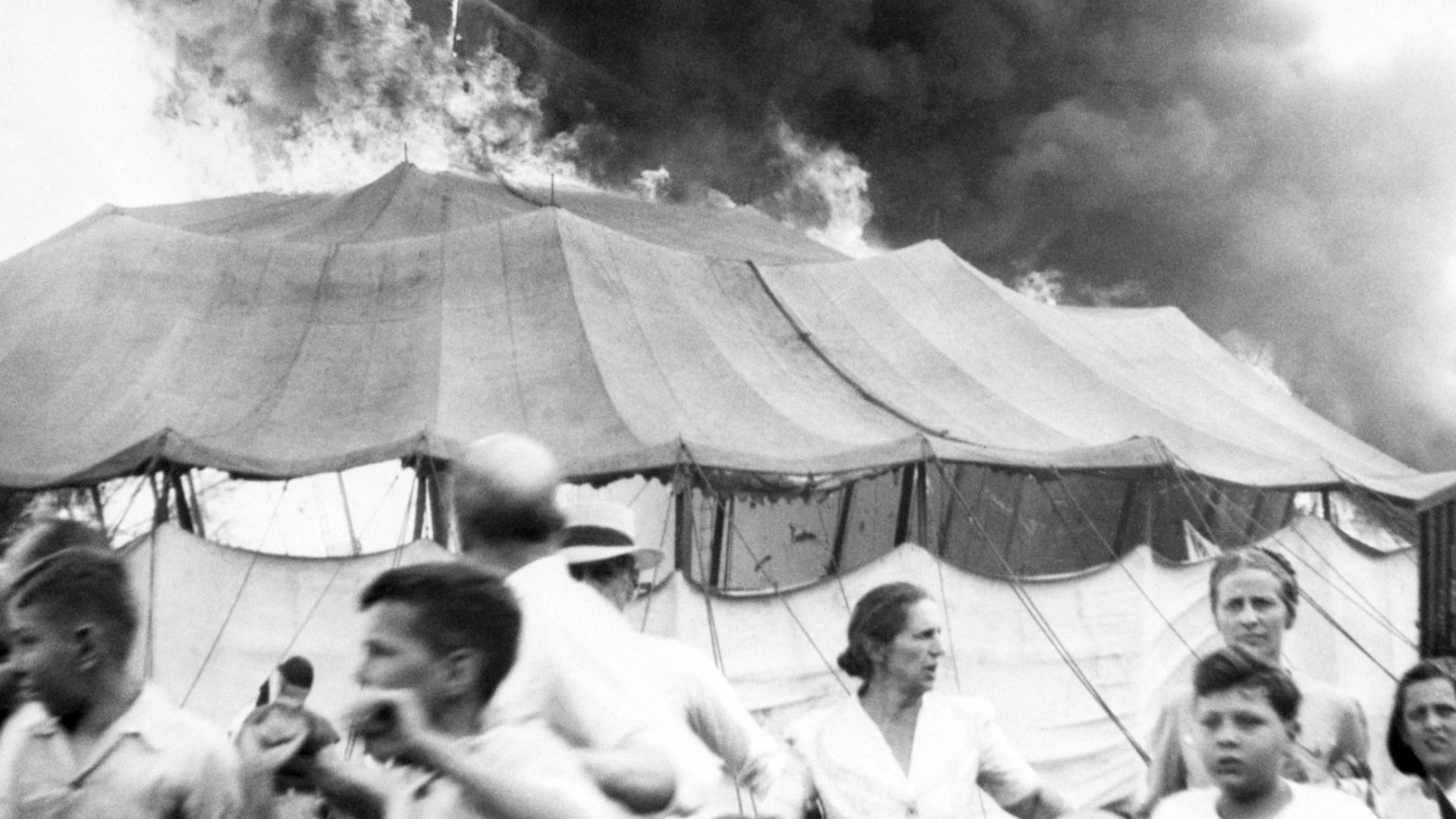
On July 6, 1944, those hidden dangers became horrifyingly clear when a fire engulfed the Ringling Bros. and Barnum & Bailey Circus in Hartford, Connecticut. Within minutes, what should've been an enjoyable afternoon became one of the deadliest entertainment disasters in American history. The tragedy claimed at least 167 lives and exposed serious safety failures that would eventually lead to major reform in public safety regulations.
An Ordinary Afternoon Turns Into a Nightmare
The circus had arrived in Hartford during World War II, when families appreciated any opportunity to escape the worries of everyday life. Thousands of spectators gathered beneath the massive big top for an afternoon performance. With temperatures approaching 90 degrees, the enormous tent provided some welcome relief from the summer heat.
Shortly after the performance began, a small fire broke out near the southwestern side of the tent. Initially, some spectators reportedly thought the flames were part of the show, while others figured employees would quickly put them out. Unfortunately, the situation worsened before most people realized the seriousness of what was happening, leaving little time for an orderly evacuation.
As flames spread upward, circus bandleader Merle Evans instructed his musicians to play "The Stars and Stripes Forever." Within the circus industry, the familiar march was an established emergency signal, alerting employees that something had gone terribly wrong. Meanwhile, terrified spectators scrambled toward the exits as burning pieces of canvas started falling onto the crowd.
Getting out proved especially difficult because metal barriers and animal passageways blocked several escape routes. Some spectators became trapped in the panicked crowds, while others desperately cut holes through the canvas to get outside. Less than ten minutes after the fire began spreading, the enormous tent collapsed, leaving hundreds injured and many others dead.
The Dangerous Practices Hidden Behind the Entertainment
Investigators soon learned that the circus tent had been waterproofed with a highly flammable mixture of paraffin wax and gasoline. That's why when the flames reached the treated fabric, they spread so quickly that ordinary firefighting efforts had little chance of stopping them.
The dangerous waterproofing mixture wasn't the only disturbing detail uncovered during the investigation. Fire extinguishers were reportedly tucked away in storage, while other firefighting equipment was located too far away to be useful during the initial emergency.
Investigators also identified major problems with the circus's evacuation arrangements, particularly the positioning of animal equipment near public exits. The organization had designed its facilities mainly around the practical needs of putting on performances and moving animals between areas. Unfortunately, those arrangements became dangerous obstacles when thousands of frightened spectators suddenly tried to escape at once.
Wartime staffing shortages added another challenge, as experienced workers were increasingly difficult to retain during the conflict. Traveling circuses relied on large crews to set up equipment, handle animals, and organize performances in unfamiliar locations. The Hartford disaster showed just how catastrophic the consequences could be when such a complicated operation didn't have adequate emergency planning or proper safety oversight.
The Aftermath That Changed American Circuses
The fire devastated Hartford, with desperate families searching hospitals and temporary morgues for loved ones who hadn't returned home. Many of the victims were children, making the tragedy particularly heartbreaking for a community already dealing with the uncertainty of wartime America.
Public anger led to criminal proceedings against circus officials, with several employees eventually serving prison sentences for involuntary manslaughter. The circus also faced enormous financial consequences, paying millions of dollars in settlements to victims and their families. Although investigators considered several possible explanations for how the fire started, its exact cause was never definitively determined.
Authorities understood that preventing another disaster would require major changes to public entertainment safety standards. Connecticut introduced tougher fire safety regulations, focusing on flame-resistant materials, accessible emergency exits, and improved evacuation planning. These reforms reinforced the expectation that spectators deserved proper protection whether they attended an event in a permanent building or a temporary tent.
The disaster also raised broader concerns about traditional circus operations, although large traveling tents continued to be used for years afterward. Ringling Bros. and Barnum & Bailey eventually retired its big-top format in 1956, shifting performances to indoor arenas instead. Today, the Hartford Circus Fire remains a tragic reminder that keeping audiences safe is every bit as important as putting on an unforgettable show.
KEEP ON READING