

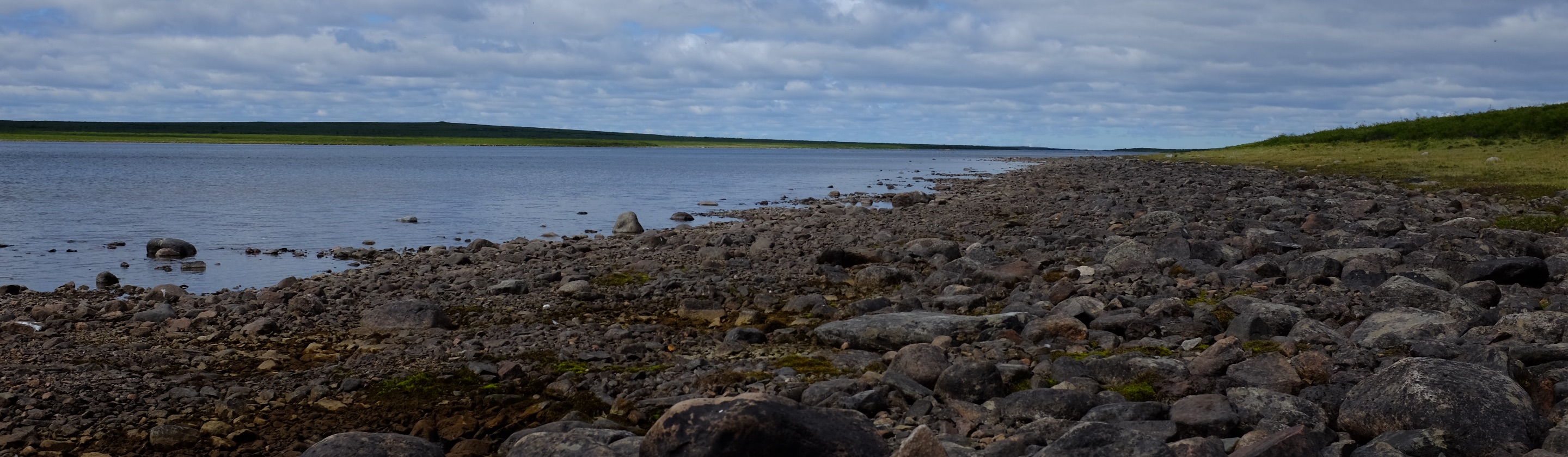
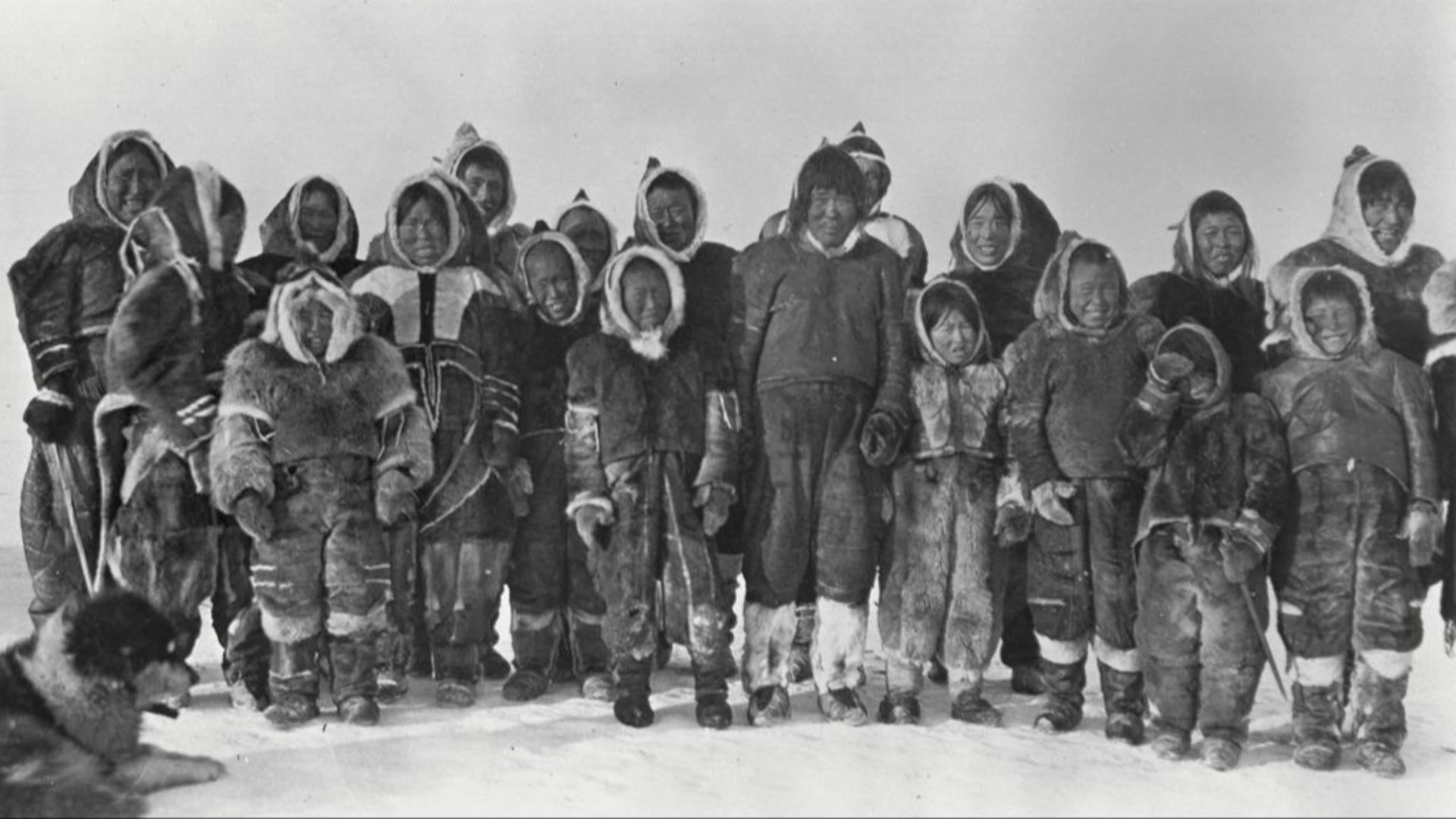
There are strange stories scattered throughout history that resist easy explanation, and the tale of Anjikuni Village (also spelled Angikuni) is one of the most haunting among them. Said to have occurred in the remote wilderness of northern Canada, this account describes the complete disappearance of an entire Inuit community without a single trace left behind. Whether you approach it as a chilling historical mystery or a cautionary tale about how legend can outpace fact, it's a story that's difficult to set aside once you've heard it.
The account first surfaced in November 1930, when a fur trapper named Joe Labelle reportedly stumbled upon the village on the shores of Lake Anjikuni in present-day Nunavut. According to the story, he found the settlement completely abandoned: food still cooking over fires, rifles left behind (tools no Inuit hunter would willingly abandon), and kayaks untouched along the shore. What he didn't find was any sign of the roughly 25 people who were supposed to be living there.
The Story as It's Been Told
The eerie details that have been passed down over the decades have fueled decades of speculation. Labelle, upon discovering the deserted camp, allegedly made his way to the nearest telegraph station and reported what he'd found to the Royal Canadian Mounted Police (RCMP). Investigators who responded to the scene reportedly confirmed his account, noting that the village showed signs of sudden, unexplained abandonment rather than a planned relocation.
Among the most disturbing details often cited is the claim that the village's cemetery had been disturbed; the graves of the community's ancestors were said to have been dug up and left open, with the remains removed or scattered. No identifiable tracks led away from the village in any direction, and sled dogs were reportedly found nearby, dead from starvation, as though they'd simply been left tied up and forgotten. Witnesses also described seeing strange blue lights in the sky above the lake around the same time, which has since become fodder for extraterrestrial theories.
The story spread widely after it was published by Canadian journalist Emmett E. Kelleher in a November 1930 edition of the Halifax Herald. From there, it took on a life of its own, finding its way into paranormal books, mystery anthologies, and eventually the internet, where it became one of the most frequently cited examples of an "unexplained mass disappearance."
Where the Facts Get Complicated
For all its compelling details, researchers and investigators who've looked into the Anjikuni case have found the evidentiary trail to be remarkably thin. The RCMP, whose involvement is central to the original story, has no record in its official archives of any investigation into a mass disappearance at Lake Anjikuni in 1930. That's a significant gap; an event of that scale would have demanded extensive documentation, and its complete absence from official records is hard to explain if the incident actually occurred as described.
Historians and folklorists have also noted that the population figure is inconsistent with what was known about Inuit settlements in that region at the time. Semi-nomadic communities in the Canadian subarctic routinely moved between locations depending on the season, food availability, and environmental conditions. It's entirely plausible that Labelle encountered an abandoned seasonal camp rather than a permanently inhabited village, though that explanation is far less dramatic than the version that made it into print.
The journalist Kelleher, who broke the story, has also come under scrutiny. Some researchers have suggested his account was embellished or fabricated outright, noting inconsistencies between his report and the geographic and cultural realities of the region. The story bears hallmarks of sensationalist journalism that was common in that era, where a kernel of truth could be inflated into something far more alarming.
Why the Legend Has Endured
Even if the Anjikuni disappearance turns out to be more myth than documented event, it continues to captivate people for understandable reasons. The setting alone—a frozen, isolated expanse of the Canadian north, far beyond the reach of ordinary life—lends the story a natural sense of dread. There's something about the idea of a place being emptied of all human life, without explanation, that taps into a deep and primal unease.
The story also benefits from the fact that parts of it, though sparse, can't be entirely disproved. Anjikuni Lake is real; the region was home to Inuit communities, and Joe Labelle was a real fur trapper who operated in the area. The bones of a plausible story are there, but what surrounds them is far harder to verify. That murky ambiguity (and perhaps, our wild, creative imagination) is precisely what keeps the legend alive.
But alas, the vanishing of Anjikuni village is likely nothing more than an embellished tale, a detailed lie. It's almost certain that Labelle had merely passed by a camp where everyone had recently migrated for the season, or that he'd misunderstood what he saw. In saying that, though, it doesn't mean that the wilderness of the Canadian north doesn't hold plenty of genuine mysteries. Whether the village vanished or whether the story itself was conjured from the imagination of a headline-hungry journalist, the tale endures as a reminder that some questions, real or invented, have a way of outlasting easy answers.
KEEP ON READING

From Heroes To Zeroes 20 Historical Figures Whose Heroism Was…
History is full of legends, but not every hero lived…
By Noone Feb 25, 2026
The Clueless Crush: How I Accidentally Invited a Hacker Into…
Fluorescent Lights and First Impressions. My name is Tessa, I'm…
By Ali Hassan Nov 4, 2025
This Infamous Ancient Greek Burned Down An Ancient Wonder Just…
History remembers kings and conquerors, but sometimes, it also remembers…
By David Davidovic Nov 12, 2025
Einstein's Violin Just Sold At An Auction—And It Earned More…
A Visionary's Violin. Wanda von Debschitz-Kunowski on WikimediaWhen you hear…
By Ashley Bast Nov 3, 2025
The Mysterious "Sea People" Who Collapsed Civilization
3,200 years ago, Bronze Age civilization in the Mediterranean suddenly…
By Robbie Woods Mar 18, 2025
Why the Titanic Didn’t Have Enough Lifeboats
Willy Stöwer on WikimediaThe Titanic disaster is often remembered as…
By Emilie Richardson-Dupuis May 21, 2026