

What Started as a Dream House Purchase Turned Into a Backyard Battle No One Saw Coming
What Started as a Dream House Purchase Turned Into a Backyard Battle No One Saw Coming
The Reward We'd Earned
So look, I'm not going to pretend we didn't feel like we'd finally made it. Dave and I had spent three years saving every dollar we could squeeze out of our paychecks, watching our friends buy houses while we lived in that cramped apartment with the neighbor who practiced drums at midnight. When the realtor walked us through that colonial in the suburbs, I kept waiting for the catch. The kitchen had granite countertops. The master bedroom actually fit our bed with room to spare. But honestly? The backyard sealed it. The pool stretched out like something from a magazine, blue and shimmering even though it clearly needed some TLC. 'We could host barbecues,' Dave said, squeezing my hand. 'This is it, Em. This is everything we worked for.' I could already picture our future kids learning to swim there, summer evenings with friends, the life we'd dreamed about during those endless saving months. The inspection came back clean, the mortgage got approved, and suddenly we were homeowners. I posted a picture of the sparkling pool online, calling it paradise — not knowing I was advertising the thing that would destroy us.
 Image by RM AI
Moving Day Magic
Moving day was exhausting but in that good way, you know? Like when you're sore from the gym but feel accomplished. Dave and I spent the first weekend unpacking boxes, arguing about where the couch should go, ordering way too much pizza. The house smelled like cardboard and possibility. Every night I'd walk through the rooms just looking at everything, still not quite believing it was ours. The pool needed some work, sure — the tiles had that cloudy look and there were leaves accumulated at the bottom — but nothing major. I'd researched pool maintenance online and felt confident we could handle it. By the third morning, I'd established my new routine: coffee at the back window, looking out at what was actually our yard now. The early light made everything look golden and perfect. The neighborhood was quiet, peaceful, exactly what we'd wanted after years of city noise and sirens. I stood there feeling genuinely grateful, thinking about how far we'd come. I stood at the back window with my coffee, watching sunlight dance on the pool water, when I saw someone staring at me from the yard next door.
 Image by RM AI
An Unusual Introduction
The woman at the fence was probably in her early sixties, well-dressed in that careful suburban way. I smiled and walked over, expecting the typical welcome-to-the-neighborhood chat. 'Hi, I'm Emma. We just moved in.' She didn't return my smile exactly, just gave this polite nod. 'Nancy. Next door.' There was a pause, and then she asked, 'How often are you planning to use the pool?' The question caught me off guard. I laughed, trying to keep it light. 'Um, pretty often? It's summer, so probably most days once we get it cleaned up.' Her expression didn't change, but something in her eyes did. 'I see,' she said, in this flat tone that made me feel like I'd given the wrong answer to a test I didn't know I was taking. We chatted for another awkward minute about the weather and the neighborhood, but the whole conversation felt off somehow. I couldn't shake the feeling that she was measuring me, evaluating something. As Nancy walked away, she turned back once and said, 'I hope you looked at the inspection report very carefully' — but we had, and everything was fine.
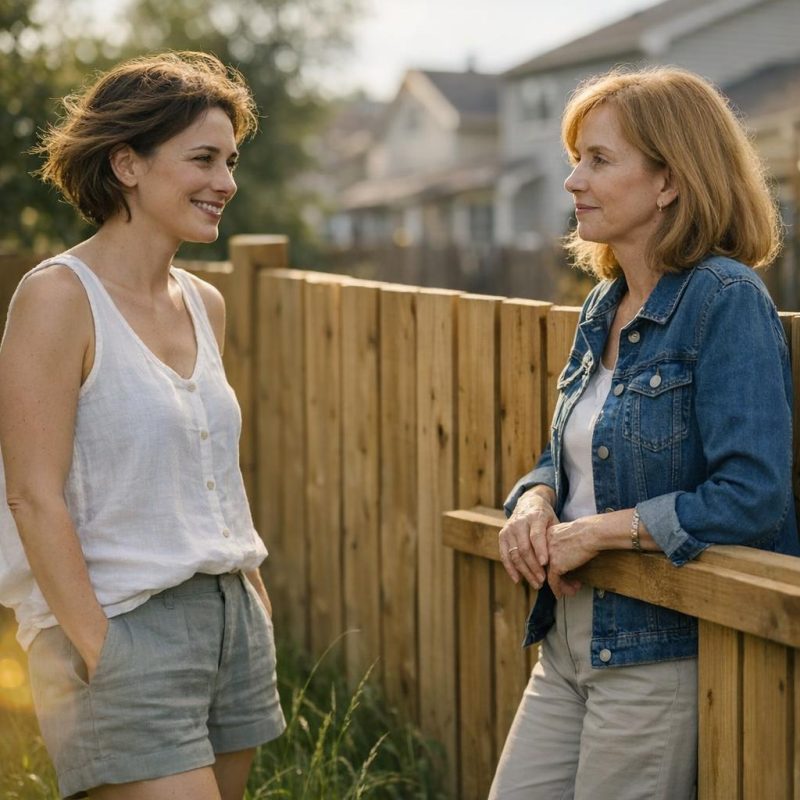 Image by RM AI
The Pool Comes to Life
Dave found a local pool service with good reviews, and when Miguel showed up on Thursday, I felt like we were taking the first real step toward making the place ours. He walked around the pool, testing the water, pointing out what needed fixing. 'Filter needs replacing, but the pump is solid. This'll be beautiful once we get it balanced.' We sat on the back patio while he worked, watching him skim leaves and scrub tiles. By the time he finished, the water had gone from murky green-blue to this gorgeous crystal clear. It looked like something from a resort. 'You guys are going to love this,' Miguel said, packing up his equipment. Dave handed him a check, and we all stood there admiring his work. Then Miguel mentioned, almost as an afterthought, 'You know, I used to service this address. Different owners, maybe four years back?' I perked up. 'Really? What were they like?' He got this weird look on his face, half-smile, half-grimace. 'Let's just say things got pretty wild back then,' he said, but when I pressed for details, he just shook his head and changed the subject. The pool guy mentioned, almost as an afterthought, that he'd serviced this address before and 'things got pretty wild back then' — but he wouldn't elaborate.
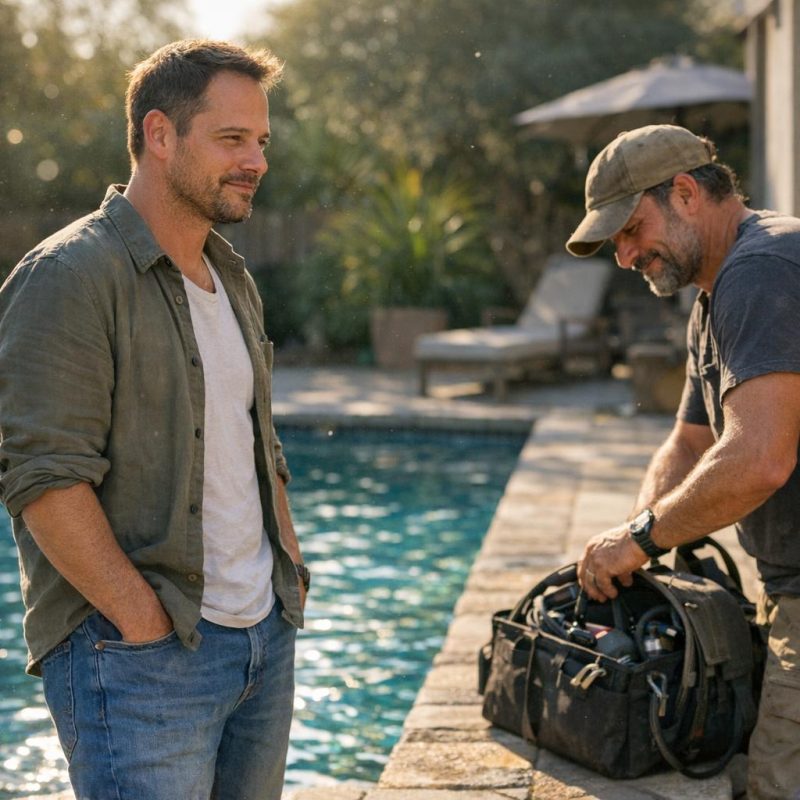 Image by RM AI
Whispers on the Street
I was getting the mail on Tuesday when a woman from three houses down stopped her car in the street. She rolled down her window with this sympathetic expression that immediately put me on edge. 'You're in the pool house, right?' she asked. I nodded, confused by the nickname. 'Just wanted to say welcome. I'm sure things will be different this time.' Different from what? I walked over to her car, trying to keep my voice casual. 'What do you mean?' She bit her lip, clearly debating how much to say. 'The last owners... they had some issues with the backyard. Pool parties that got out of hand, that kind of thing. Really strained relationships on the street.' I explained that we were quiet people, that we just wanted a peaceful place to live. She nodded, but not in a convinced way. More like she was humoring me. 'I'm sure, I'm sure. Just, you know, be mindful. People have long memories around here.' I asked what kind of issues specifically, hoping for something concrete I could address. When I asked what kind of issues, she just shook her head and said, 'You'll see' — as if something inevitable was already in motion.
 Image by RM AI
The Dog Walkers
It started happening almost every evening. This couple with a golden retriever would walk past our house, and I swear they'd slow down right in front of the pool gate. At first I thought I was imagining it, being paranoid after that weird conversation with the neighbor. But no, they were definitely lingering. The man would glance over his shoulder, the woman would lean in close to him. One night I was watering the front garden when they approached. I smiled and said hello, hoping to break whatever weird tension existed. They mumbled a greeting and kept walking, but their eyes kept drifting to the backyard. The next evening, I was in the living room when I saw them again through the window. They'd completely stopped this time, standing on the sidewalk, both staring at the pool gate. The woman was saying something to her husband, gesturing with her free hand while the dog pulled at the leash. I felt this creeping sensation up my spine, like being watched in a horror movie. I caught the woman whispering something to her husband, and when they saw me looking, they hurried away — like I'd caught them watching something forbidden.
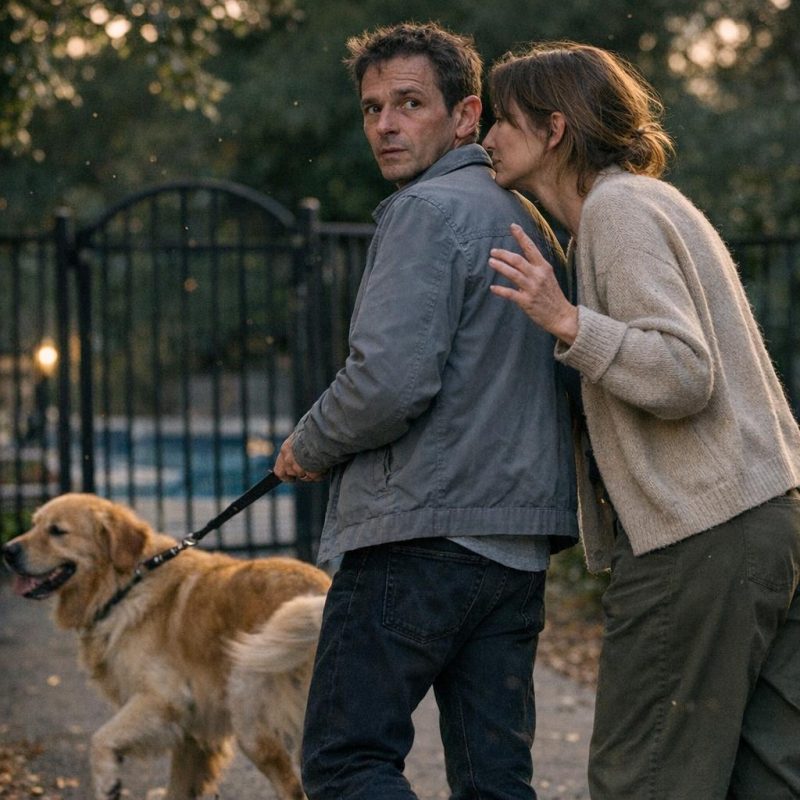 Image by RM AI
The First Anonymous Note
Dave brought in the mail on Saturday morning and handed me an envelope with a confused look. No stamp, no return address, just our house number written in careful block letters. I opened it and found a single note card inside. The message was typed, completely impersonal: 'We hope you'll be respectful of the peace this street used to have. Some of us have lived here for decades.' That was it. No signature, no explanation. I read it three times, feeling my face get hot. 'What the hell?' Dave read over my shoulder. 'That's passive-aggressive as hell. What are we even supposed to be respectful of? We haven't done anything.' He was right. We'd been model neighbors — quiet, friendly, keeping to ourselves. We hadn't even used the pool yet beyond cleaning it. I wanted to march around the neighborhood demanding to know who sent it, but Dave talked me down. 'They're probably just cautious after the last owners,' he said. 'We'll prove we're different.' But how do you prove yourself to someone who won't identify themselves? The phrase 'used to have' felt like an accusation for something I hadn't done yet — or maybe something I'd inherited without knowing.
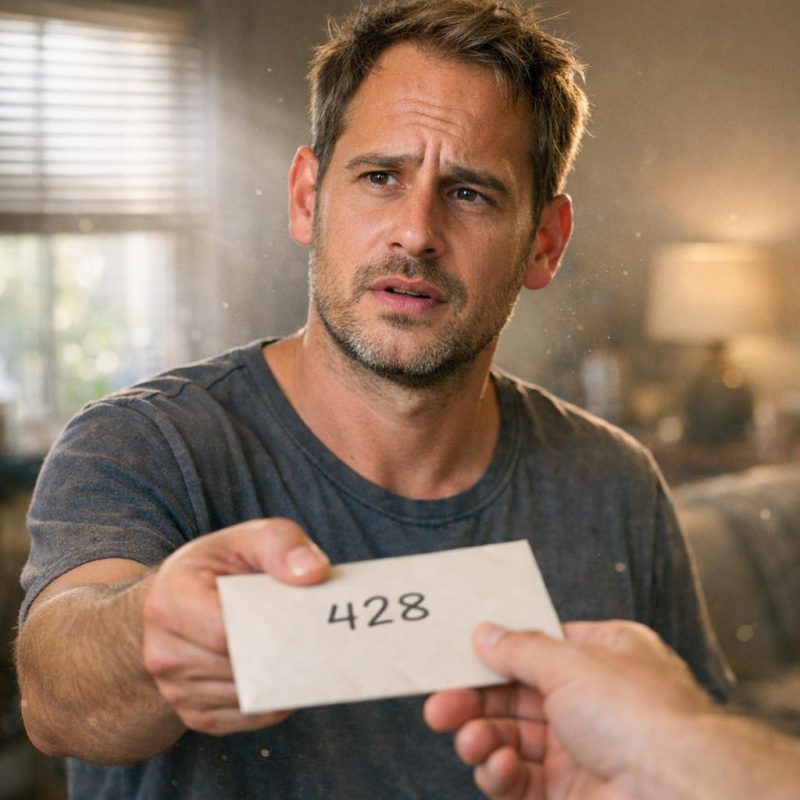 Image by RM AI
Asking Around
I called my sister Rachel that night, frustrated and confused. She told me to go into investigator mode, so that's what I did. Over the next week, I carefully brought up the previous owners in conversations with neighbors. The picture I got was pretty consistent: loud parties, music until 2 AM, drunk people in the pool, cops showing up multiple times. Mrs. Patterson from the corner said they 'made life hell for everyone on the street.' Mr. Chen mentioned not being able to sleep for two years straight. I kept explaining that Dave and I weren't like that, that we valued quiet and privacy as much as anyone. But people kept giving me these skeptical looks, like they'd heard it all before. One woman told me the previous owners 'started out nice too' before things spiraled. Rachel listened to everything and said, 'Em, you just need to show them through your actions. They'll come around.' But I wasn't so sure. The more people I talked to, the more I felt like I was fighting a reputation I'd never earned, living down sins I'd never committed. One woman told me the previous owners 'made life hell for everyone' — and when I said we weren't like that, she just said, 'That's what they said too.'
 Image by RM AI
The Peace Offering
I decided to take the proactive approach Rachel suggested. I spent an entire Saturday morning baking chocolate chip cookies — the good kind, with real butter and vanilla — and loaded them onto paper plates wrapped in cellophane with little ribbons. I felt ridiculous, like I was campaigning for class president, but I wanted these people to see us as real humans, not just the latest version of the party house nightmare. I walked door to door in the late afternoon, introducing myself, explaining that Dave and I valued peace and quiet, promising we'd be considerate neighbors. Some people seemed genuinely touched. Mrs. Patterson softened a bit, and Mr. Chen smiled and said he appreciated the gesture. But when I reached Nancy's house, two doors down, the reception was different. She opened the door, looked at the cookies, and took them with this tight, controlled smile that didn't reach her eyes. 'How thoughtful,' she said, but her tone was flat. Then she added, 'Actions speak louder than words,' while holding my gaze just a beat too long — like she was already keeping score.
 Image by RM AI
Walking on Eggshells
After that first week of making the rounds, Dave and I became obsessively careful about everything. We stopped playing music outside, even during the middle of the day. We didn't turn on the pool lights after 8 PM. We avoided having anyone over. We even planned our pool time around what we imagined were 'acceptable hours,' mostly late mornings on weekends. It was insane. We'd sit on the patio furniture in silence sometimes, watching the water shimmer in the sunlight, too anxious to actually get in and make splashing sounds. Tom from across the street stopped by one afternoon while I was reading poolside. He seemed nice enough, mentioned he'd noticed we were 'keeping things quiet,' and I couldn't tell if it was approval or just observation. Dave and I talked about it that night, sitting by our beautiful, unused pool, and he said what I'd been thinking: 'This is crazy. We're living like we're under house arrest.' He was right. We'd turned our dream backyard into a museum exhibit we were afraid to touch — and I started resenting the pool instead of enjoying it.
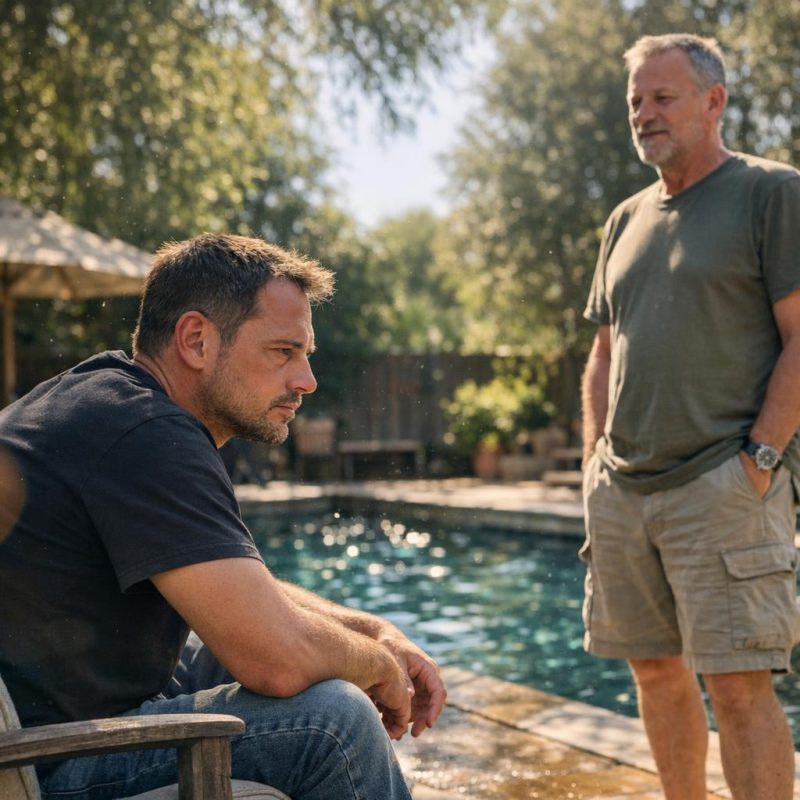 Image by RM AI
The Afternoon Incident
Rachel brought her kids over on a Saturday in late June. I'd been hesitant to invite them, but she insisted, saying I couldn't let the neighbors control my life. It was 2 PM, bright sunshine, perfectly reasonable. The kids were splashing and laughing — not screaming, just normal kid sounds — while Rachel and I sat in the shade drinking iced tea. We'd been there maybe thirty minutes when I saw Nancy appear at the fence line. She didn't say anything at first, just stood there watching. Then she called over, 'Lovely day, isn't it? Sound really carries in this heat.' Her tone was pleasant, but the message was crystal clear. Rachel looked at me, confused, and I felt my face burn with anger and embarrassment. I wanted to tell Nancy to mind her own business, that it was the middle of the afternoon, that kids were allowed to exist. But I just nodded stiffly. Linda from next door was in her yard too, watching the whole exchange with an unreadable expression. The kids went silent like they'd been caught doing something wrong, and I realized Nancy had just taught them that even laughter was a violation.
 Image by RM AI
The Fence Complaint
Two weeks later, we got a notice from the city code enforcement office. My hands actually shook when I opened it. The letter claimed we had a fencing violation and that an inspector would need to verify compliance with local regulations. I immediately pulled out our closing documents — the fence had passed inspection just three months ago. Everything was documented, approved, legal. Dave called the code enforcement office the next morning and spoke to someone who sounded genuinely confused. 'The fence is fine,' they told him. 'It meets all requirements. Sometimes we get complaints that turn out to be misunderstandings.' When Dave asked who filed the complaint, they said it was anonymous. That word stuck with me. Anonymous. Someone had deliberately filed a false complaint, knowing it would cause us stress and hassle, knowing we'd have to take time off work to deal with an inspector, knowing it would make us feel unwelcome and harassed. Dave suggested we start documenting everything — every complaint, every interaction, every weird look. The complaint was filed anonymously, and when I called the city office, they admitted the fence was completely fine — someone had just wanted it investigated.
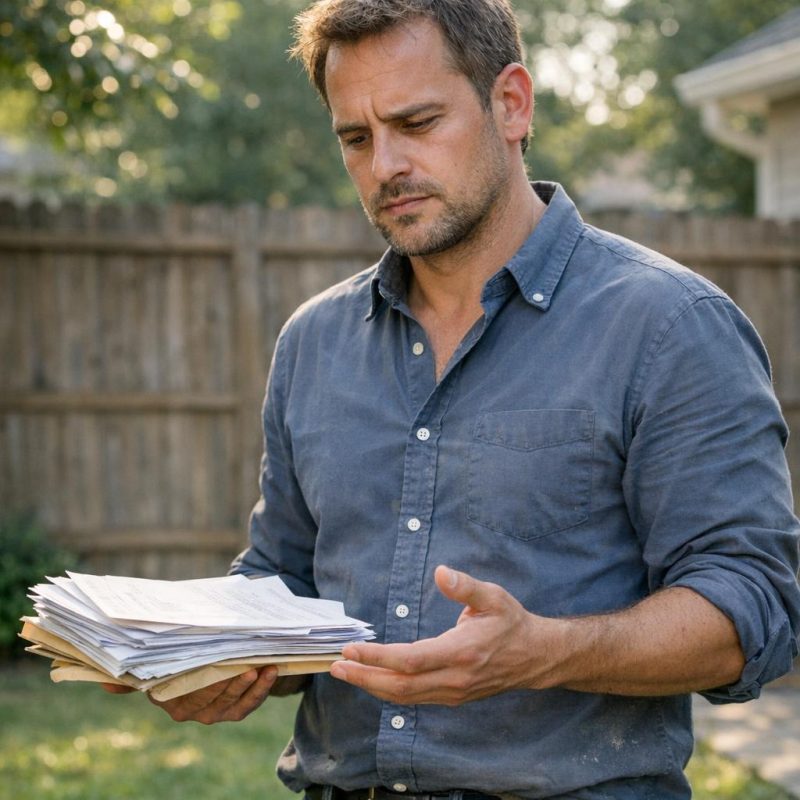 Image by RM AI
Standing Water
Three weeks after the fence complaint, another notice arrived. This one claimed we had a 'standing water issue' that posed a potential mosquito breeding hazard. I read it twice before I understood what they were saying. They were talking about the pool. Someone had filed a complaint about our pool — a properly maintained, chlorinated, filtered swimming pool — calling it standing water. I actually laughed out loud when it clicked. It was so absurd, so transparent. But the absurdity didn't make it less threatening. We had to schedule another inspection, deal with another city official, provide documentation of our pool maintenance schedule and chemical treatments. The inspector seemed almost apologetic, like he knew this was ridiculous. 'Someone's got it out for you,' he said, which wasn't comforting. Dave spent that evening researching our legal rights, printing out city codes, creating a file folder labeled 'House Harassment.' I watched him work with this grim determination, and I realized we were shifting into a different mode. We weren't confused anymore. We weren't trying to understand. I laughed when I read it, but the absurdity didn't make it less threatening — someone was actively trying to weaponize bureaucracy against us.
 Image by RM AI
Summer Plans
By mid-July, I was done hiding. I'd spent eight weeks tiptoeing around my own property, and I was exhausted. Dave and I talked it over and decided we had a right to live like normal people. We planned a small gathering — six friends, Saturday evening, just a cookout with burgers and salads. Nothing wild. We'd keep the music low, wrap things up by 9 PM, be completely reasonable. Maya was the first person I called. 'Finally,' she said when I invited her. 'I was starting to think you'd forgotten how to have fun.' I explained the whole situation — the complaints, the neighbors, the constant anxiety. She listened and then said, 'Em, this is crazy. You're nervous about having six people over at your own house. You do realize how insane that sounds, right?' She was right, of course. But she hadn't lived through the past two months. She hadn't felt the weight of constant surveillance. When I mentioned my concerns to Dave, he squeezed my hand and said we couldn't let fear control us forever. Maya said it was crazy that I was nervous about having six people over at my own house — but she hadn't seen the way the street watched us.
 Image by RM AI
The Police Arrive
The cookout was lovely for about two hours. Our friends arrived at 5 PM. We grilled, ate by the pool, kept the conversation at normal indoor-voice levels. There was no music, just talking and occasional laughter. The sun was setting beautifully, and for the first time in weeks, I felt like myself again. Then, around 7:15 PM, I saw the police car pull up to the curb. My stomach dropped. Officer Brennan got out, and I met him at the front gate before he could come to the door. 'We got a noise complaint,' he explained, looking almost apologetic. I could see my friends watching from the backyard, confused. Maya's face showed complete shock. The humiliation was physical — I felt it in my chest, in my face burning red. Officer Brennan walked to the backyard, listened for maybe thirty seconds to the sound of six adults having a quiet conversation, and shook his head. 'This is completely reasonable volume,' he said. 'You're well within your rights. I'm sorry you were bothered.' Officer Brennan looked genuinely apologetic and admitted the volume was completely reasonable — which meant someone had called the police just to make a point.
 Image by RM AI
The Aftermath
Everyone left within thirty minutes of the police showing up. They tried to be supportive, saying it wasn't our fault, but I could see the awkwardness in their faces. Maya hugged me hard before she left and whispered, 'This isn't right.' After they were gone, Dave and I sat by the pool in the dark. Neither of us wanted to go inside, but we didn't talk either. I felt like I'd been publicly branded as a troublemaker, a bad neighbor, a problem — all for having six friends over for dinner at 7 PM on a Saturday. The worst part was the silence afterward. I kept looking at the houses around us, at the dark windows, wondering who had called. Was it Nancy? Someone else? Were they watching right now, satisfied with the result? Dave finally broke the silence. 'We need to stop acting guilty,' he said. 'We didn't do anything wrong.' He was right, but it didn't help. Dave said we needed to stop acting guilty, but I could still feel eyes on us from every dark window on the block — watching, waiting, judging.
 Image by RM AI
The Warning Note
I found it Tuesday morning, taped to the pool gate with clear packing tape. A plain white sheet of printer paper, folded once, with block letters printed in thick black ink: 'SHUT IT DOWN OR EXPECT CONSEQUENCES.' My hands were shaking so hard I almost dropped it. This wasn't a noise complaint or a passive-aggressive comment anymore. This was a threat. I stood there in my pajamas, looking around the yard like whoever left it might still be watching from somewhere. The morning felt too quiet, too still. I brought it inside and showed Dave, who was making coffee. He read it twice, then set it on the counter like it might explode. 'We're calling the police,' he said. His voice was flat, controlled, but I could see the anger in his jaw. 'This crosses a line.' I agreed, but part of me wondered what the police would actually do about a note. No signature, no proof, just words on paper. But those words felt different. The words 'expect consequences' felt like a line being crossed — from passive-aggressive harassment to something darker.
 Image by RM AI
Dave's Realization
That night, after the police had taken photos of the note and filed yet another report that would probably go nowhere, Dave sat me down at the kitchen table. He had this look on his face like he'd figured something out. 'I've been thinking about what Jennifer said when we bought the place,' he started. 'About the previous owners and the neighbors.' I nodded, waiting. 'The pool isn't the problem, Em. It's what the pool represents.' He explained his theory: the neighbors had spent years fighting the previous owners over every little thing, trying to control them, wear them down. And when those owners finally sold and left, the neighbors probably thought they'd won. Then we showed up and immediately started using the pool, having people over, living our lives. 'We're not playing by their rules,' Dave said. 'And that's what pisses them off.' I sat back, processing. It made horrible sense. He was right — we weren't fighting about chlorine and deck chairs; we were fighting about power, territory, and a war that started before we arrived.
 Image by RM AI
Contacting the HOA
The HOA meeting was held in a community center that smelled like old carpet and burnt coffee. I'd emailed ahead asking to be added to the agenda, and they'd given me five minutes to speak. Karen was there, a polished woman in her mid-fifties with reading glasses on a chain and a yellow legal pad. I explained everything: the noise complaints, the police calls, the threatening note. I kept my voice steady, factual, non-emotional. Karen listened, took notes, and nodded sympathetically. 'This is absolutely unacceptable,' she said when I finished. 'We have rules against harassment in our covenants. I'll look into the complaints and see who's been filing them.' I felt a tiny spark of hope. Finally, someone in authority who seemed to care. She walked me to the door afterward, reassuring me that the board would investigate. But as I headed to my car, I glanced back through the window. Karen was whispering with another board member, and they both looked in my direction. Karen promised to look into the complaints, but as I left, I heard her whispering with another board member — and my name was definitely mentioned.
 Image by RM AI
Installing Cameras
Dave ordered the cameras on Amazon, and they arrived two days later. We spent Saturday afternoon installing them: one facing the driveway, one covering the pool gate, one pointed at the backyard, and one on the front porch. It felt surreal, mounting surveillance equipment on our own home like we were protecting a fortress instead of just trying to live in peace. Dave was methodical about it, testing angles and checking the app on his phone. 'At least now we'll have proof,' he said. I wasn't sure proof would matter, but I didn't say that. As we were finishing the last camera, I saw Nancy step out onto her porch. She stood there, arms crossed, watching us. Not yelling, not approaching, just watching with this cold, calculating expression. It wasn't anger. Anger would've been better, more human. This was something else, something that made my skin crawl. She went back inside without a word. The cameras felt like admitting we were under siege — and when Nancy saw us installing them, her expression wasn't anger, it was something colder.
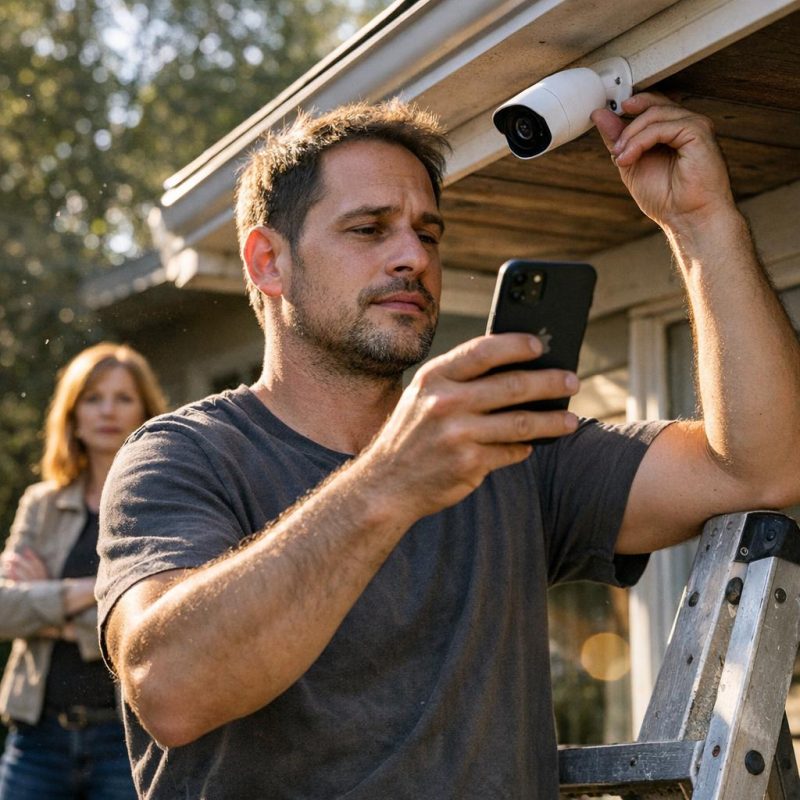 Image by RM AI
Calling the Agent
I called Jennifer on my lunch break, sitting in my car in the work parking lot. She answered on the third ring, cheerful as always. 'Emma! How are you guys settling in?' I didn't bother with small talk. I asked her directly: Did she know about any issues with the neighbors before we bought the house? There was a pause. A long one. 'The sellers are required to disclose material defects and disputes,' she said carefully. 'They signed the disclosure statement saying there were no ongoing neighborhood conflicts.' That wasn't what I asked, and she knew it. 'But did you know anything?' I pressed. Another pause. 'I'd heard rumors that the previous owners had some friction with neighbors, but nothing concrete. Nothing that would've required disclosure.' Her voice had changed, become more formal, more defensive. 'Jennifer, we've been harassed since the day we moved in. Police have been called to our house multiple times.' She got very quiet. Jennifer got very quiet, then said the sellers never disclosed any problems — but her hesitation told me there was something she wasn't saying.
 Image by RM AI
The Property Value Drop
I couldn't sleep that night, so I did what any anxious homeowner would do at 2 AM: I started researching property values. I pulled up Zillow, Redfin, and the county assessor's records. I looked at comparable sales in our neighborhood from the past year. And my stomach dropped. Our house was now estimated at forty thousand dollars less than what we'd paid six months ago. Forty thousand. I knew the market had cooled slightly, but this was different. Other homes in the area hadn't dropped like this. I woke Dave up and showed him the numbers on my laptop. He rubbed his eyes, stared at the screen, and swore quietly. 'How is this possible?' he asked. I didn't have an answer. Maybe it was coincidence. Maybe the previous owners had overpriced it and we'd overpaid. Or maybe — and this thought made me feel insane — maybe the constant police presence and neighborhood drama was tanking our value on purpose. We'd lost nearly forty thousand dollars in equity in less than six months — and I couldn't tell if the neighborhood caused it, or if someone wanted it that way.
 Image by RM AI
The Parking Complaint
Dave was pulling into the driveway after work when Tom from three doors down marched over, waving his arms. I was in the living room and saw it happen through the window. I rushed outside just as Tom was jabbing his finger toward our guest parking spot where Dave's coworker had parked earlier. 'Your visitor is too close to my driveway,' Tom snapped. 'I almost couldn't get my car out this morning.' Dave looked at the car, then at Tom's driveway. There was at least five feet of clearance. 'It's a legal parking spot,' Dave said calmly. 'On a public street.' Tom's face reddened. 'It's inconsiderate. You people have no respect for this neighborhood.' You people. I felt Dave tense beside me, but he kept his voice level. 'The car is legally parked. If you have a problem, call the city.' Tom glared at both of us, then stormed off. Dave kept his cool, but when he came inside, he said it felt like people were looking for any excuse to pick a fight — and he was right.
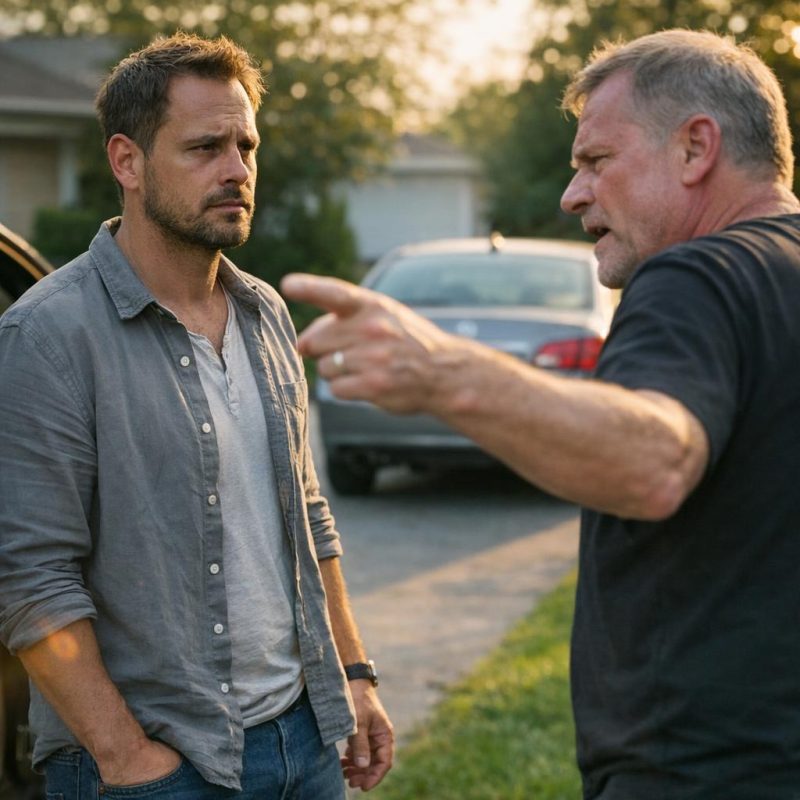 Image by RM AI
Researching Ordinances
I became obsessed with finding answers. I pulled up the county noise ordinances, the HOA covenants, the city's zoning regulations, the pool safety requirements — everything. I printed them out and highlighted the relevant sections. I spent hours cross-referencing every complaint that had been made against us with the actual laws. And you know what I found? We hadn't violated a single rule. Not one. The noise complaints were filed during legal hours. Our pool met every safety standard. Our guests parked legally. The fence height, the lighting, the landscaping — all compliant. I made a binder with tabs and documentation, like I was preparing for trial. Dave came home and found me surrounded by papers, highlighters everywhere. 'What are you doing?' he asked. 'Proving we're right,' I said. But as I said it, I realized something that made my blood run cold. Every rule was on our side, every complaint baseless — which meant the harassment wasn't about violations, it was about something else entirely.
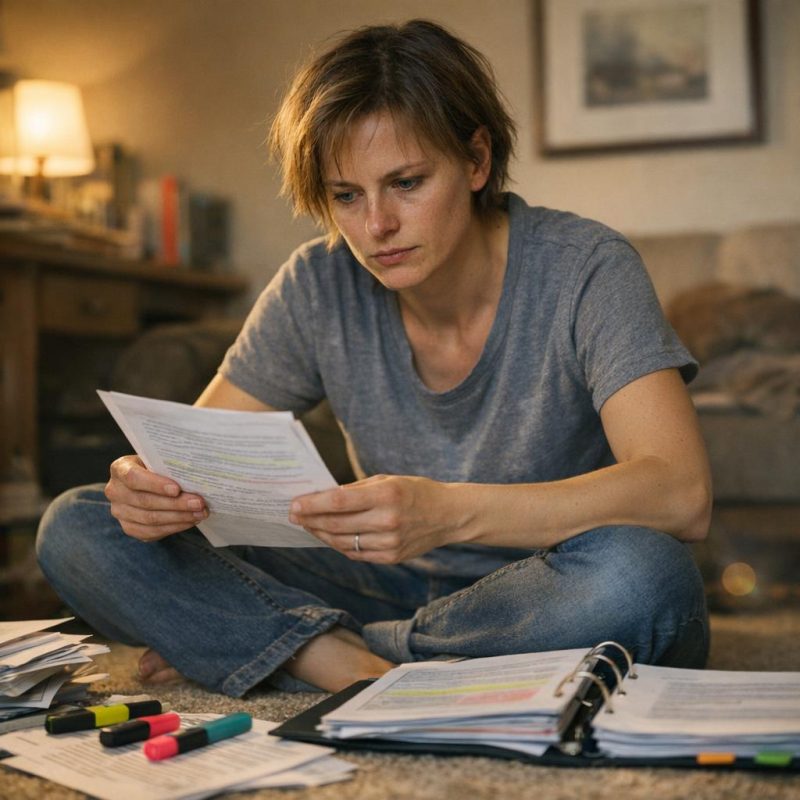 Image by RM AI
The Cold Shoulder
I started noticing it about a week after I'd compiled all my documentation. The neighbors who'd been warming up to us — the ones who'd waved back, who'd stopped to chat about the weather — suddenly went cold. Like someone had flipped a switch. Linda was the first one I really noticed. She'd been so friendly when we first moved in, brought over cookies, complimented our landscaping. We'd had actual conversations about her grandkids. But now when I saw her getting her mail, she'd duck back inside. One morning I was walking to my car and she was heading to hers. I smiled, raised my hand to wave. She looked right at me, then deliberately crossed the street to walk on the other side. It wasn't subtle. It wasn't accidental. I stood there in my driveway, hand still half-raised like an idiot, feeling this sick twist in my stomach. Other neighbors started doing the same thing — conversations cut short, averted eyes, sudden errands whenever I appeared. It was like being back in middle school, ostracized by the popular kids. I couldn't figure out what had changed. We'd been following every rule, staying quiet, keeping to ourselves. Linda, who'd seemed friendly just weeks before, crossed the street to avoid me — like someone had reminded her I was the enemy.
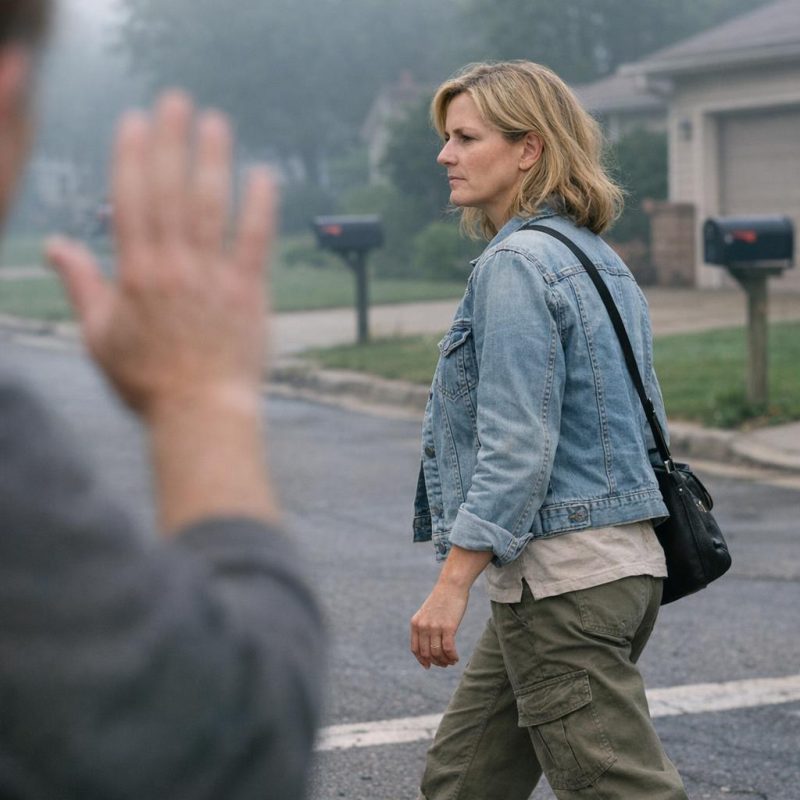 Image by RM AI
The Breaking Point Conversation
That night, Dave and I sat outside by the pool after dark. We didn't turn the lights on. We just sat there in the darkness, listening to the water filter hum. 'I don't know if we can do this,' I finally said. The words felt like surrender, and I hated saying them out loud. Dave didn't answer right away. He reached over and took my hand. 'I keep thinking about all the houses we looked at,' he said quietly. 'All the compromises we were willing to make. And this one — this was the one. This was supposed to be it.' I felt tears running down my face. 'Maybe we made a mistake.' 'Maybe,' he said. 'Or maybe someone's trying really hard to make us think we did.' We sat with that for a long time. The pool we'd dreamed about. The yard we'd imagined our future kids playing in. The home we'd saved for, sacrificed for, worked so damn hard to earn. 'We have two choices,' Dave finally said. 'We can give up, sell at a loss, let them win. Or we can fight for what's ours.' I looked at our house, our dream, everything we'd worked for. Dave said we had two choices: give up and sell at a loss, or fight for the home we'd earned — and I wasn't ready to surrender.
 Image by RM AI
Hiring Marcus
Marcus Chen's office was in a converted Victorian downtown, all dark wood and legal books. He was younger than I expected, maybe late thirties, with kind eyes that turned sharp when he reviewed our documentation. Dave and I sat across from his desk while he flipped through my binder, occasionally making notes. 'This is thorough,' he said, impressed. 'Most clients come in with vague complaints and no evidence. You've got dates, times, photographs, recordings.' He looked up at us. 'You've been documenting harassment for months now.' Hearing it framed that way — harassment, not just 'neighbor problems' — made it feel more real. More serious. 'Can we do anything about it?' I asked. Marcus leaned back in his chair, thoughtful. 'You've got a strong case. Pattern of baseless complaints, social harassment, threatening notes. We could pursue a restraining order, file a civil suit for intentional infliction of emotional distress.' My heart lifted for the first time in weeks. 'But,' he continued, and my hope deflated just as quickly, 'fighting neighbors is messy. It's expensive. Discovery gets ugly, everyone's dirty laundry comes out, and even when you win, you still have to live next to these people.' He met my eyes seriously. Marcus said we had a strong case for harassment, but he warned that fighting neighbors is messy — and expensive — and doesn't always end the way you hope.
 Image by RM AI
Documenting Everything
I became meticulous after that meeting with Marcus. I created a spreadsheet with every single incident logged by date and time. I uploaded all the camera footage to cloud storage with timestamps. I printed out the threatening notes and put them in plastic sleeves. I cross-referenced the noise complaints with our actual activities — proved that half of them were filed when we weren't even home. It took me three full days to organize everything properly. Dave would come home from work and find me at the dining table, surrounded by papers and my laptop, adding another entry to the timeline. 'You need to take a break,' he'd say gently. But I couldn't stop. Every piece of evidence felt crucial, like ammunition we'd need. I started seeing the whole picture laid out chronologically — the welcome basket, the first complaint, the escalation, the notes, the police calls, the social isolation. And then I noticed something I hadn't seen before. The complaints didn't come randomly. They came in waves, perfectly spaced out. A cluster of incidents, then a quiet period, then another cluster. Each wave worse than the last. Each quiet period just long enough for us to exhale before the next assault began. Looking at the timeline laid out, I saw something I hadn't noticed before — the complaints came in waves, perfectly timed to maximize stress.
 Image by RM AI
The Second Gathering
I decided we needed to reclaim our space. We'd been hiding, tiptoeing around, living like criminals in our own home. So I invited Maya over, just a casual Saturday afternoon by the pool. But this time I was prepared. I set up the cameras to record everything. I bought an actual decibel meter — the kind construction crews use — and kept it running to log the noise levels. We made sure to keep the music low, stayed well within legal hours, didn't drink too much. Maya noticed immediately. 'This feels like we're in a police state,' she joked, eyeing the meter. 'We kind of are,' I said. We had a nice afternoon, actually. Floated in the pool, ate sandwiches, talked about normal things. I kept glancing at my phone, expecting the police to show up. Kept waiting for Tom's face to appear over the fence or for another note to materialize on our door. But nothing happened. No complaints, no police, no angry neighbors. The day ended quietly, peacefully. And somehow that felt worse. The silence wasn't relief — it was anticipation. No police came, no notes appeared — but the silence felt worse, like we were being watched and measured for the next move.
 Image by RM AI
Nancy's Offer
Nancy showed up at my door on a Tuesday morning, dressed impeccably as always, carrying a sympathy-card expression. 'Emma, hi,' she said warmly. 'Do you have a moment?' Every instinct told me to close the door, but curiosity won. I let her in. She sat on our couch like she belonged there, folding her hands in her lap. 'I've been hearing things,' she started. 'About the tensions between you and some of the other neighbors. I feel just terrible about it.' I didn't say anything, just waited. 'I know how hard it is to be new to a neighborhood,' she continued. 'People can be cliquish, set in their ways. And I think there's been some miscommunication on all sides.' She looked at me with such genuine concern. 'I'd like to help, if you'll let me. I've lived here for twenty years — I know everyone. Maybe I could mediate, help smooth things over. Get everyone talking instead of complaining.' It sounded reasonable. It sounded kind. And for just a second, I felt this desperate hope that maybe someone finally understood, maybe this could actually be resolved. But then I noticed how she was watching me. Not looking at me — watching me. Studying my reaction with the focus of a scientist observing an experiment. She spoke with such concern and sincerity that for a moment I almost believed her — until I noticed how carefully she was watching my reaction.
 Image by RM AI
The Mediation Trap
The 'mediation' was held in Tom and Nancy's living room. I should have known better the moment I walked in and saw the setup — neighbors arranged in a semicircle facing one empty chair. My chair. Nancy greeted me at the door with that same concerned smile. 'Thank you so much for coming, Emma. This is so important.' Tom, Linda, the Johnsons from two doors down, the Patels from across the street — all there, all watching me settle into that single chair like a defendant taking the stand. Nancy sat slightly apart with a yellow legal pad, pen poised. 'Who'd like to start?' she asked gently. Tom went first. Complaints about pool noise, about parties, about disrespect for the neighborhood character. Linda followed with concerns about property values and 'the kind of people' we were attracting. The Johnsons brought up parking issues I'd never even heard about. The Patels mentioned late-night disturbances that never happened. Each person spoke like they'd rehearsed, specific dates and times, building on each other's points. I tried to respond, to defend myself, but Nancy would gently redirect. 'Let's let everyone share first, then we'll discuss solutions.' She wasn't mediating. She was orchestrating. Every neighbor had a prepared complaint, some I'd never even heard before — and Nancy sat in the corner taking notes like a prosecutor building a case.
 Image by RM AI
Walking Out
I stood up in the middle of Linda's monologue about our 'disruptive lifestyle.' Everyone stopped talking, surprised. 'I'm not doing this,' I said. Nancy looked up from her notes, confused performance. 'Emma, we're just trying to—' 'No,' I interrupted. 'You're not trying to mediate anything. You brought me here to gang up on me, to make me apologize for things I didn't do, for problems that don't exist.' Tom stood too. 'Now wait just a minute—' 'I'm done waiting,' I said. I looked around the room at all these neighbors, these people who'd been friendly and then cold, who'd filed false complaints and spread rumors. 'I've broken exactly zero rules. I've violated zero ordinances. I have documentation proving every single complaint against me is either exaggerated or completely fabricated.' My voice was shaking but I kept going. 'So no, I won't apologize. I won't promise to change. And I won't sit here and be accused by people who've already decided I'm guilty.' I walked toward the door. Nancy stood, her mask of concern still perfectly in place. 'Emma, please, I tried to help you—' she called after me, and I heard the performance in it, the plea designed for the others to hear. As I left, Nancy called after me that she'd 'tried to help' — and I realized her kindness had been a performance for an audience.
 Image by RM AI
Marcus's Warning
I called Marcus the next morning, still shaking with residual anger from the mediation ambush. He listened to my rant about Linda's accusations and Tom's performative outrage, then went quiet for a minute. 'Emma,' he finally said, 'that wasn't a mediation. That was theater.' I didn't understand at first. 'They wanted you to lose your temper,' he explained. 'To create a record of you being unreasonable, uncooperative, hostile to the community. If this escalates legally, they'd use that meeting as evidence of your character.' My stomach dropped. I'd thought I was defending myself by walking out, but maybe that's exactly what they'd wanted. 'But I didn't do anything wrong,' I said weakly. 'Doesn't matter,' Marcus said. 'Someone's thinking several moves ahead here. This isn't random neighbor drama — this is strategic.' I gripped my phone tighter. 'Who thinks like that?' There was a pause. 'That's the question we need to answer,' he said, and I felt the investigation shift from defense to something more urgent.
 Image by RM AI
Digging Into History
I couldn't stop thinking about what Marcus said. Strategic. Several moves ahead. I started researching the property's history that afternoon, digging through county records and old neighborhood newsletters I found archived online. Everyone had told me the same story about the previous owners — wild parties, police calls, constant disturbances. But when I actually looked for evidence, something didn't add up. I searched police records for the address. Found a few noise complaints over the years, but nothing like the chaos everyone described. No arrests, no citations, no pattern of disturbances. I cross-referenced the complaints with HOA meeting minutes. The language was weirdly similar across different reports, like they'd been coordinated somehow. I spent hours going deeper, checking property records and neighborhood Facebook groups from years back. The more I searched for confirmation of the terrible previous owners everyone warned me about, the less I found. No police reports matching the stories I'd heard, no public records of the chaos everyone described.
 Image by RM AI
Finding Paul
It took me three days to track down Paul, one of the previous owners who'd sold us the house. I found him through LinkedIn, messaged him explaining who I was, and asked if we could talk. He agreed to meet for coffee, sounding cautious but curious. When I walked into the Starbucks, I recognized him from the closing documents photo — tall, tired-looking, probably early fifties. We made small talk for a minute, but I could tell he was waiting for me to explain why I'd hunted him down. 'I wanted to ask you about your time in the neighborhood,' I said carefully. 'The neighbors have been... difficult.' His expression shifted, something between sympathy and wariness. 'What are they saying?' I told him about the complaints, the mediation, the stories about wild parties and chaos. 'They made it sound like you were impossible neighbors,' I said. 'Like you made everyone's lives hell.' Paul stared at his coffee for a long moment. When he looked up, his face had gone dark. 'So she's still at it,' he said quietly, and my stomach dropped.
 Image by RM AI
Paul's Story
Paul told me his story over the next hour, and it felt like watching my own life play out in someone else's timeline. The noise complaints that appeared out of nowhere. The neighbors who'd been friendly at first, then suddenly cold. The HOA meetings where he was accused of violations he'd never committed. 'We had a dinner party once,' he said. 'Six people, over by ten PM. Next morning there's a complaint filed about a rager that went until 2 AM.' He described parking disputes over spaces that were legally his, accusations of property damage he could prove he hadn't caused, whispers that spread through the neighborhood turning everyone against them. 'We tried to fight it at first,' Paul said. 'But every time we proved one complaint was false, two more would appear.' His partner had wanted to leave within the first year. Paul had held out for three, convinced it would blow over. 'I kept thinking it was just bad luck, you know? Bad timing, personality conflicts.' He shook his head. 'The worst part wasn't the harassment. It was realizing someone had been orchestrating it, and I never figured out who until it was too late.'
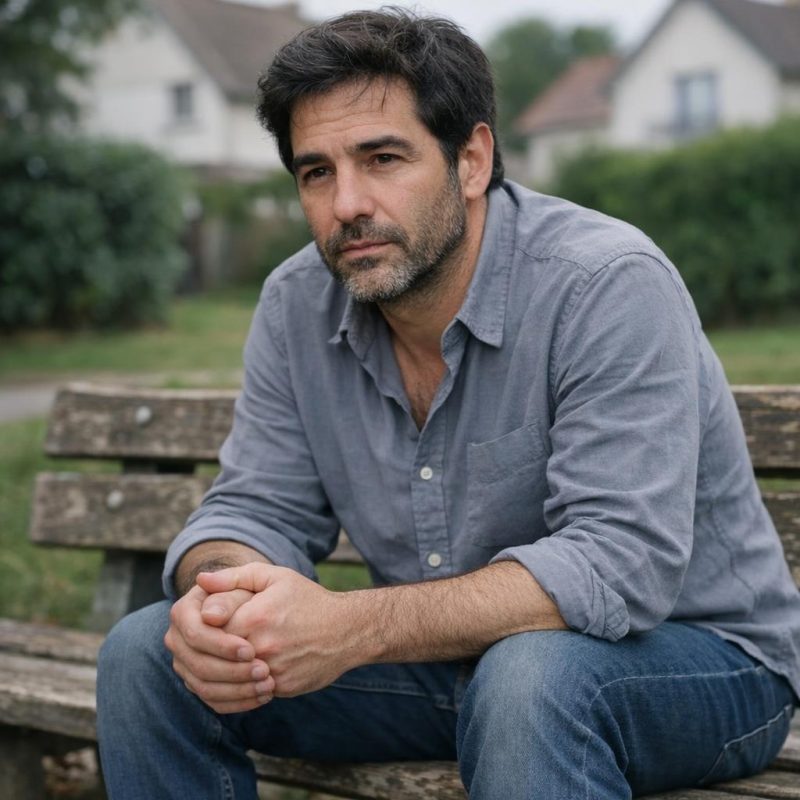 Image by RM AI
The Question of Motive
I leaned forward, desperate for answers. 'But why? Why would someone spend years doing this?' Paul looked exhausted just thinking about it. 'I've asked myself that a thousand times. What kind of person dedicates that much energy to making strangers miserable?' He'd considered every possibility — maybe someone wanted to be HOA president and saw him as competition, maybe there was some grudge he didn't know about, maybe he'd unknowingly offended someone powerful in the neighborhood. 'I thought maybe it was just how that community operated,' he said. 'Like hazing or something.' But none of those explanations really fit the sustained, deliberate nature of what he'd experienced. The coordination of it. The patience. 'I assumed it was neighborhood politics,' Paul said slowly. 'Personal grudges, power trips, that kind of petty suburban drama.' He stirred his cold coffee, staring into it like it might hold answers. 'I never imagined someone might actually want the property itself,' he said, and something clicked in my brain that I wasn't ready to examine yet.
 Image by RM AI
Researching Nancy
I went home and dove into public records with new purpose. Property sales history, deed transfers, everything I could access through the county database. I found our purchase, then worked backward. Paul's purchase before ours. The owner before him. And then I found it — buried in the records from eight years ago. An offer on the property that fell through. The buyers: Nancy Callahan and Robert Callahan. My hands went numb staring at the screen. They'd made an offer, a serious one, but they'd been outbid by the sellers' eventual choice. The sale collapsed because they couldn't match the price. I cross-referenced the dates with the HOA complaint records I'd downloaded earlier. The failed sale: March 2015. The first noise complaint against the new owners: June 2015. Three months. I sat back in my desk chair, my heart pounding. It could be coincidence. People make offers on houses all the time. But the timing. The first complaint was filed exactly three months after Nancy and her late husband couldn't match the previous owners' offer.
 Image by RM AI
The Husband's Death
I searched for more information about Nancy's husband, feeling invasive but unable to stop. I found his obituary from five years ago — Robert Callahan, beloved husband, retired teacher, community volunteer. It was one of those detailed obituaries that cost extra, filled with memories and personality. One line stopped me cold: 'Robert dreamed of retiring in the home on Willowbrook Drive, where he planned to spend his days gardening and enjoying the company of good neighbors.' The home on Willowbrook Drive. Our address. The house they'd tried to buy. The house Robert never got to retire in because they'd been outbid. I kept reading, learning he'd died relatively quickly — six months from diagnosis to death. Cancer. Did Nancy blame the stress of losing the house? Did she think the disappointment had contributed somehow? Or was it simpler and more devastating than that? I stared at Robert's photo in the obituary, his kind smile, and realized Nancy might believe she was fulfilling his dying wish. That this wasn't just about a house anymore — it was about grief, promise, and a widow with nothing left to lose.
 Image by RM AI
Confronting the Pattern
I made a timeline that night, laying out everything on our dining room table. I showed Dave the failed offer, the obituary, the complaint dates, Paul's testimony. I walked him through how every incident aligned — the noise complaints that isolated us, the mediation designed to create a record of us being 'difficult,' the constant pressure that had already driven out multiple owners. 'She's been doing this for years,' I said, my voice shaking. 'Different owners, same playbook. Make them miserable, turn the neighborhood against them, force them out.' Dave studied the papers spread across the table, his face getting paler. He picked up the property offer record, then the timeline of complaints. 'And when they sell...' he started. 'She's there to buy it,' I finished. 'Probably at a discount, because who wants a house in a hostile neighborhood?' Dave looked up at me, and I saw my own fear reflected in his eyes. He said what I'd been afraid to say out loud, what all the evidence pointed to but I couldn't quite bring myself to conclude: 'She's trying to force us to sell so she can buy it.'
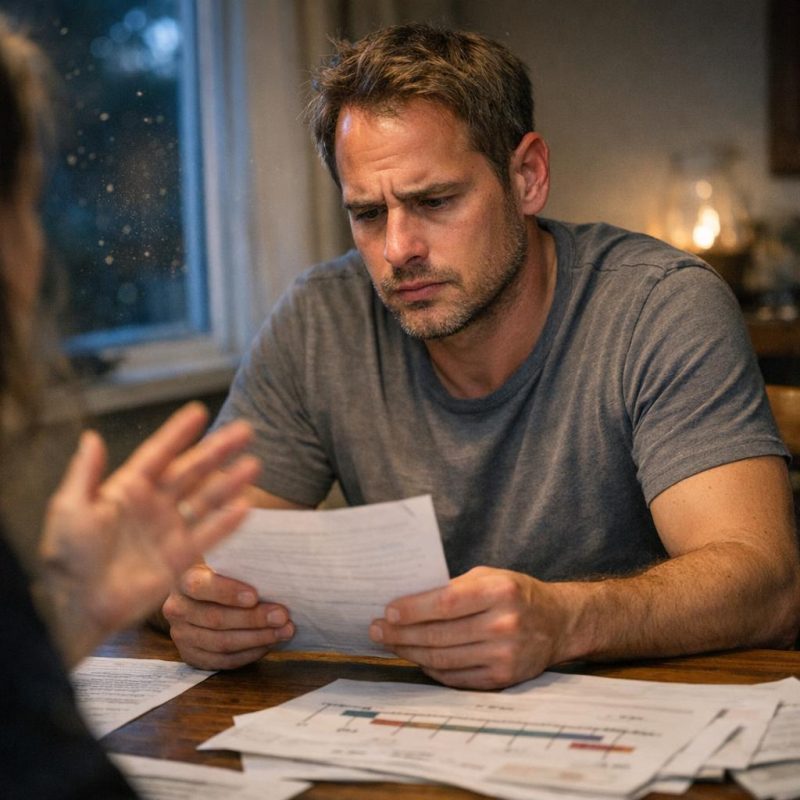 Image by RM AI
The Surveillance Footage
I went through weeks of security footage that night, sitting at my laptop with a notebook and timestamps. The cameras had been running since we installed them, capturing everything — deliveries, neighbors walking dogs, kids on bikes. I wasn't even sure what I was looking for until I found it. Nancy appeared in frame after frame, more often than I'd realized. Sometimes she was walking past at normal hours, waving at the camera like a friendly neighbor. But other times — late at night, early morning — she'd linger near our fence line, standing still, looking at the house. In one clip from 2 AM, she stood there for what felt like forever, just staring. I checked the timestamp. Nine minutes and forty-three seconds. Just standing there in the dark, her face turned toward our bedroom windows, her hands resting on the fence. The footage was grainy but clear enough. I watched it three times, my skin crawling more with each replay. In one clip, she stood at the fence for nearly ten minutes in the dark, just staring at the house — like she was imagining herself inside it.
 Image by RM AI
The Handwriting Match
I remembered the sympathy card Nancy had sent when Dave's father died last year. It had seemed thoughtful at the time, a nice gesture from a neighbor we barely knew. I found it in a box of condolence cards we'd kept, opened it, and laid it next to the anonymous notes we'd received. The handwriting wasn't identical — she'd clearly tried to disguise it on the threatening notes, making the letters blockier, more angular. But certain things were the same. The way she crossed her t's, with a little hook at the end. The unusual way she formed the letter 'y' with an extended tail that curved left. The pressure of the pen, heavier on downstrokes. I took photos of both, zoomed in, compared them side by side. My hands were shaking. Dave came over and looked at them without me saying anything. 'Oh my God,' he whispered. 'That's her.' I started to suspect that every anonymous threat, every unsigned warning, every middle-of-the-night note had come from the same hand — the one offering condolences.
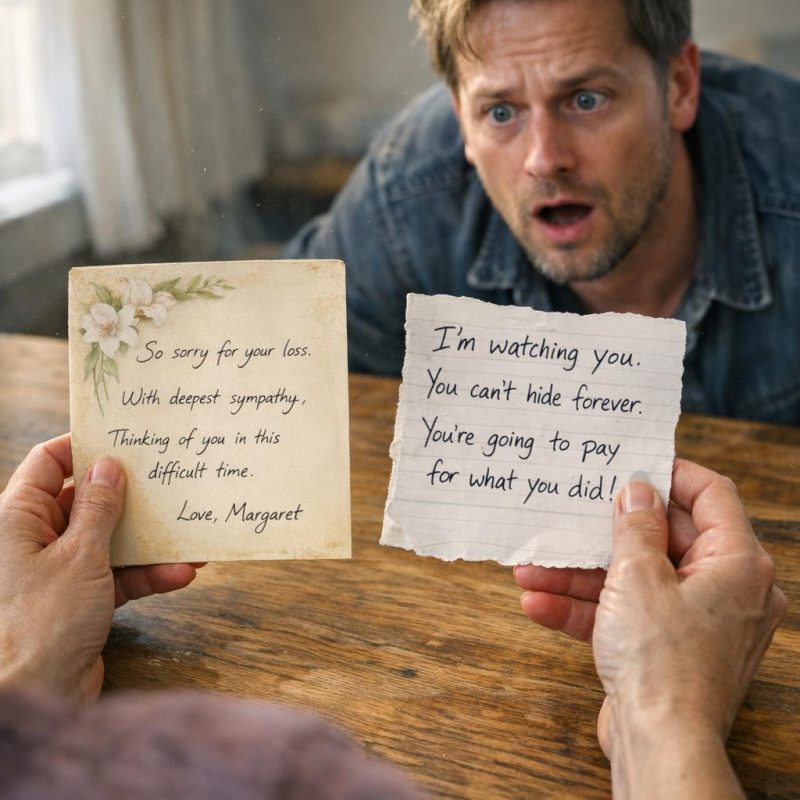 Image by RM AI
Marcus's Advice
Marcus spread everything across his conference table the next morning — the timeline, the footage, the handwriting samples, Paul's testimony, the property records. He studied it all for a long time, not saying anything, occasionally making notes. Finally, he sat back and rubbed his eyes. 'This is compelling,' he said. 'Really compelling. I believe you, Emma. But here's the problem — proving intentional property devaluation is incredibly difficult. We'd need to show not just that she filed complaints, but that she did so with the specific intent to drive down your property value so she could purchase it.' I felt my stomach drop. 'But we have all this evidence,' I said. He nodded. 'Which helps. But obsession isn't illegal. Being weird isn't illegal. Even filing multiple complaints isn't illegal if she can claim they were legitimate concerns.' He tapped the handwriting samples. 'The notes are harassment, which is better. But we need more. We need to either catch her in an undeniable act or...' He paused. 'Or force her hand somehow. Make her reveal her intentions clearly.' Marcus said obsession isn't illegal, harassment is — and we needed to catch her in the act or force her hand somehow.
 Image by RM AI
The Bait
We crafted the post carefully that evening, making it sound casual and defeated. Dave wrote it, posted it to our neighborhood Facebook group and his personal page: 'Emma and I are considering our options with the house. The neighborhood situation has been really challenging, and we might need to look at selling sooner than planned, even if it means taking a loss. Just being honest about where we're at.' We included a sad-face emoji, made it look real. My heart was pounding when he hit post. Marcus had warned us this was a risk, that we were essentially advertising vulnerability. But we needed Nancy to believe we were broken, ready to give up. I refreshed the page obsessively, watching reactions and comments trickle in. Some neighbors expressed sympathy. Others ignored it. And then, fifty-three minutes after we posted, our doorbell rang. I looked through the window and felt my breath catch. Nancy stood on our porch, her expression different than I'd ever seen it — eager, almost excited, barely containing something that looked a lot like joy. We posted it casually on social media, and within an hour, Nancy knocked on our door with an expression I'd never seen before — hope.
 Image by RM AI
The Offer
Nancy didn't waste time with small talk. She sat in our living room, hands folded in her lap, and made her pitch. 'I've been thinking about your situation,' she said, her voice sympathetic but her eyes bright. 'And I might be able to help. I'd be willing to make an offer on your house — take it off your hands so you can move on.' Dave asked what she had in mind. She named a figure that was sixty thousand less than what we'd paid, seventy-five thousand less than what the house had been worth before all this started. 'I know it's below market,' she said quickly, 'but given the neighborhood tensions and the complications with the property, I think it's fair. You wouldn't have to deal with listing it, with showings, with the uncertainty.' She had documents ready. Comps she'd pulled. A pre-approval letter. She knew our purchase price — she mentioned it specifically. She knew our mortgage amount. She knew we'd refinanced. She'd been tracking everything, watching our equity dissolve, waiting for the right moment. I began to look at her differently — she knew exactly how much we'd lost in equity, exactly what we'd paid, exactly when we'd be desperate enough to listen.
 Image by RM AI
The Police Report
Detective Harding met with me at the station two days later. I brought everything — printed screenshots of the security footage with timestamps, the anonymous notes in plastic sleeves, the handwriting comparison, copies of Nancy's offer and all her documented complaints, Paul's written testimony, the complete timeline. He took his time reviewing it, asking questions, making notes in a small leather notebook. 'This is thorough,' he said finally. 'You've clearly documented a pattern here.' I waited for the 'but.' 'But harassment cases are tricky, especially when the harassment is this calculated. The notes are concerning. The surveillance behavior is concerning. The coordinated complaint pattern is concerning. None of it individually rises to criminal charges yet.' My heart sank. 'However,' he continued, 'filing this report creates an official record. It establishes that you've reported her behavior to law enforcement. It puts her on notice. And if anything escalates — if she continues the harassment now that it's been formally reported — we have grounds for stronger action.' He closed the folder. 'Sometimes people change their behavior when they realize there's a paper trail.' Detective Harding listened carefully and said that while it wasn't enough for criminal charges yet, it established a paper trail — and Nancy needed to know we had one.
 Image by RM AI
Nancy's Reaction
Nancy appeared at our door the next evening, and I knew immediately she'd found out about the police report. Her face was different — harder, the friendly-neighbor mask slipping. 'We need to talk,' she said, not asking, just walking past me into the house. Dave came down the stairs, and she turned on both of us. 'A police report? Really? After everything I've tried to do to help you settle into this neighborhood?' Her voice had an edge I'd never heard before. 'I file legitimate noise complaints — which is my right as a resident — and you accuse me of harassment?' The way she said it, the rehearsed innocence, the victim posture. But her eyes were cold, calculating. This wasn't a concerned neighbor anymore. This was someone whose plan had been disrupted and who was angry about it. 'I've been nothing but welcoming to you,' she continued, but there was something brittle in her voice, something that sounded like a script she was reciting. 'Every gesture of friendship, every attempt to include you in the neighborhood — and this is how you repay me?' It began to look like she'd rehearsed every kind word, every sympathetic gesture — and now that the performance was over, I was staring at someone I didn't recognize.
 Image by RM AI
The Full Truth
Paul called me three days later, his voice tight with vindication and anger. 'I got them,' he said. 'I finally got the records.' He'd filed a public information request months ago — something Marcus had suggested but that took forever to process — requesting all code enforcement complaints filed for our address going back ten years. The city had finally released them. He came over that night with a folder two inches thick. Every complaint, every report, every violation claim, all with the complainant information included. Nancy's name appeared again and again. Noise violations Paul swore never happened. Property maintenance issues that were fabrications. Complaints filed on dates when Paul wasn't even home. 'She did this to me for three years,' Paul said, his hands shaking as he showed me the documents. 'She turned the whole neighborhood against me. Every time I tried to defend myself, she'd file another complaint, recruit another neighbor, make me look more unstable.' The documentation was irrefutable — a systematic, multi-year campaign of harassment designed to make the property unlivable and its owner desperate. Paul had finally obtained records through a public information request — and every anonymous complaint, every noise violation, every hostile neighbor interaction traced back to Nancy's deliberate, multi-year scheme to acquire the property.
 Image by RM AI
Understanding the Scope
Dave and I sat at the kitchen table for hours that night, going through every single document Paul had left. The noise violations? Family barbecues with music at reasonable volumes. The 'drunken arguments'? A disagreement with his brother during a cookout that Nancy had apparently described to multiple neighbors as violent screaming matches. The property maintenance complaints? Filed on weeks when Paul had contractors actively working on improvements. Every single piece of the house's 'troubled history' had been manufactured, exaggerated, or flat-out invented by Nancy. She'd approached neighbors after each supposed incident, spinning stories, recruiting witnesses, creating a narrative that made Paul seem unstable and the property cursed. The pool party incident we'd heard about from multiple sources? It was Paul's daughter's high school graduation with maybe twenty people. Nancy had filed six separate noise complaints that day and apparently went door-to-door telling everyone it was an out-of-control rager. 'She created our house's entire reputation,' Dave said, his voice hollow. 'Every warning we got, every concerned neighbor, every piece of advice about the property's history — it was all her.' The 'wild parties' had been occasional family barbecues; the 'drunken arguments' were normal disagreements exaggerated by Nancy to anyone who would listen — she'd spent years creating a false history.
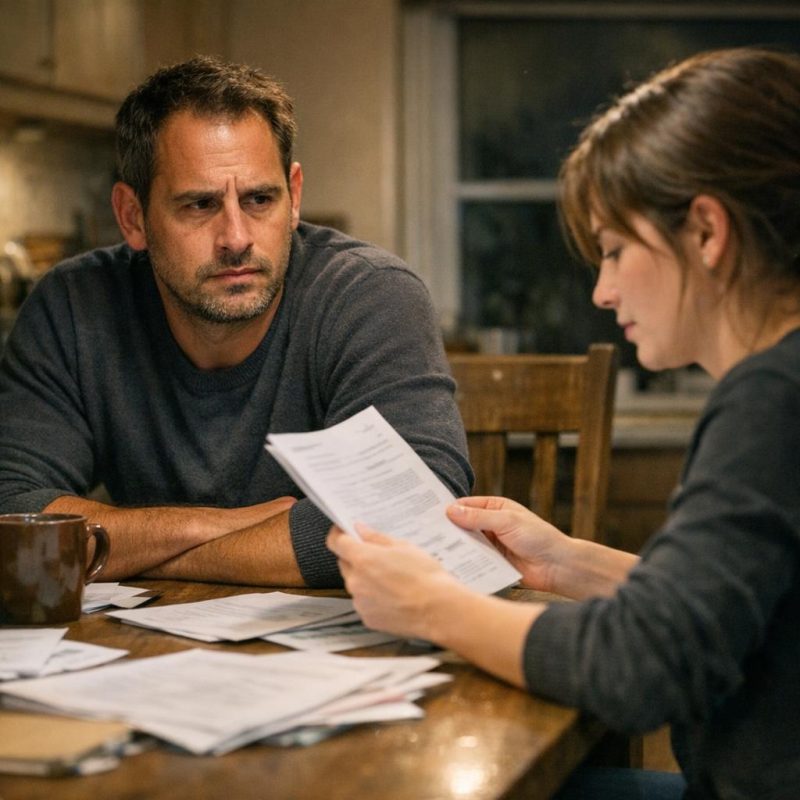 Image by RM AI
Marcus's Plan
Marcus came over the next morning, and I'd never seen him look so energized. 'This is actionable,' he said, spreading Paul's documents across our dining table. 'Intentional interference with property rights, harassment, possibly even fraud if we can prove she influenced the sale price.' He explained that Nancy's documented campaign gave us grounds for civil action — actual damages to our quality of life, potential property value impact, emotional distress. We could file for a restraining order with real teeth, pursue financial compensation, maybe even get her to publicly retract her claims. 'The evidence is solid,' Marcus continued. 'Multiple years of false complaints, witness testimony from Paul, your own documentation of her recent behavior. We have a real case here.' Dave squeezed my hand under the table. This was it — our chance to actually fight back, to make Nancy face consequences for what she'd done to Paul and to us. But Marcus's expression turned serious. 'You need to understand — when we file this, Nancy will escalate. She's not going to just accept defeat. People like her, who've gotten away with this kind of manipulation for years, they fight dirty when cornered.' He said we could sue for damages, file restraining orders, and potentially expose Nancy's scheme publicly — but we had to be prepared for her to fight back with everything she had.
 Image by RM AI
The Confrontation
I found Nancy in her driveway three days later, watering plants like nothing had happened. My hands were shaking, but I'd rehearsed this. 'I know what you did to Paul,' I said, my voice steadier than I felt. 'I have the records. Every false complaint, every manufactured incident, every lie you told the neighbors.' She didn't even look surprised. Just set down her watering can and crossed her arms. 'I know you've been systematically harassing us to drive down the property value,' I continued. 'Your offer, your complaints, your little performances — it's all documented now. It's over, Nancy. Withdraw your offer and leave us alone, or we're taking legal action.' For a long moment, she just stared at me. Then something shifted in her expression — not shame, not fear, but something almost like satisfaction that I'd finally figured it out. 'You don't understand that house the way I do,' she said calmly. 'I've watched it for thirty years. I know every inch of that property, every season, every shadow. It should have been mine five years ago, and everyone in this neighborhood knows the truth.' Nancy didn't deny it — she just smiled and said, 'That house was meant to be mine, and everyone knows you'll never be happy there.'
 Image by RM AI
Nancy's Escalation
The sheriff's deputy handed me the papers four days later. Nancy had filed for a restraining order against me, claiming I'd been harassing her, making threats, and engaging in unstable behavior that made her fear for her safety. I literally couldn't breathe as I read her statement. She'd described our confrontation as me 'screaming profanities' and 'advancing threateningly' toward her. She claimed I'd been surveilling her property, sending her 'menacing messages' through neighborhood channels, and exhibiting 'increasingly erratic behavior consistent with mental instability.' Every interaction we'd had was reframed, twisted, turned into evidence of my harassment of her. The pool music? Me deliberately disturbing her peace. Our documentation? Evidence of my 'obsessive fixation' on her. Even Paul's records were spun as proof I was 'building a case to intimidate an elderly neighbor.' Marcus arrived within an hour of my panicked call. 'This is what I warned you about,' he said, scanning the filing. 'She's flipping the entire narrative, making herself the victim. It's a classic DARVO technique — Deny, Attack, Reverse Victim and Offender.' The court hearing was scheduled for three days out. She'd twisted the entire narrative, painting herself as the victim and me as the unstable new neighbor — and the court date was in three days.
 Image by RM AI
The Court Hearing
The courtroom was smaller than I expected, fluorescent-lit and institutional. Nancy sat across the aisle with her lawyer, looking fragile and concerned — the perfect victim. But when Marcus presented our evidence, everything changed. Paul's public records requests showing years of false complaints. Our documentation of Nancy's trespassing, her offer on the property, her admission that the house 'should have been hers.' Timestamps proving her complaint timeline didn't match her claims. The judge's expression shifted as Marcus walked through each piece, methodically dismantling Nancy's story. Her lawyer tried to redirect, claiming I was 'clearly obsessed' with Nancy, but Marcus calmly presented my dated journals, our lawyer consultations, the pattern of Nancy's escalating behavior. 'Your Honor,' Marcus concluded, 'Ms. Nancy has engaged in a multi-year campaign of harassment against multiple property owners, and when confronted with evidence, she's attempting to weaponize the legal system against her victims.' The judge didn't deliberate long. 'Petition denied,' she said firmly. 'And Ms. Nancy, you are ordered to cease all contact with the petitioners. No communication, direct or indirect. Any violation will result in criminal charges.' The judge dismissed Nancy's restraining order and ordered her to cease all contact — but the look on Nancy's face told me this wasn't over.
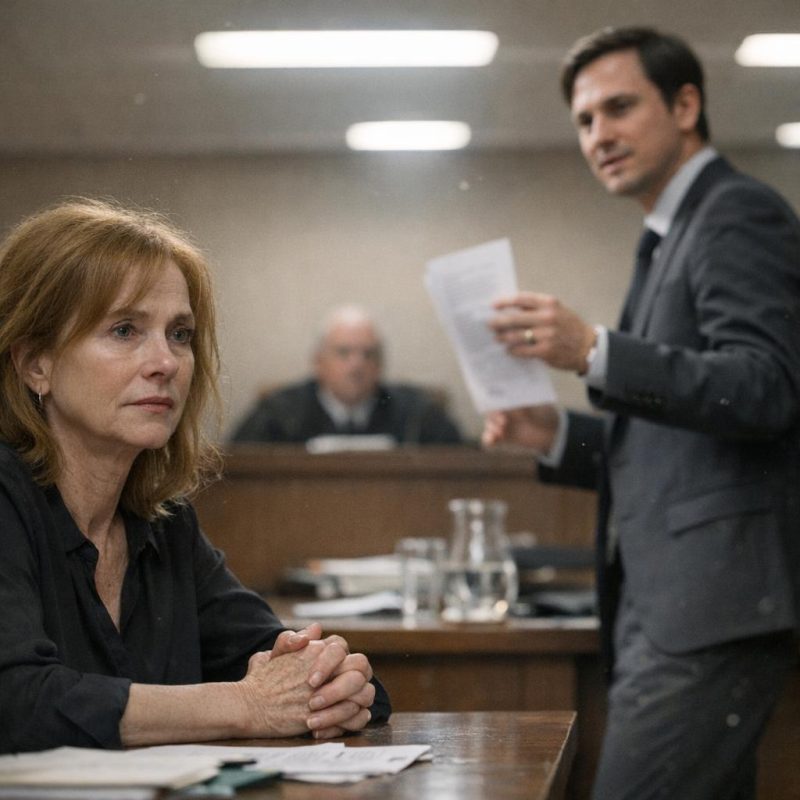 Image by RM AI
Going Public
That weekend, Dave and I drafted a letter. Not angry, not accusatory — just factual. We outlined what had happened: Nancy's documented harassment campaign against Paul, her attempts to acquire our property, the false complaints, the court's dismissal of her restraining order. We included just enough detail to be credible without being vindictive. Then we printed copies and hand-delivered them to every house on the street. The response was immediate. Tom and Linda knocked on our door that same evening. 'We owe you an apology,' Linda said, looking genuinely ashamed. 'Nancy told us Paul was impossible to live near. We believed her because... well, she seemed so reasonable.' But that was just the beginning. By the next morning, I had emails from three other neighbors. Each one told a similar story. Nancy had approached the Hendersons in 2015, describing their teenage son's car repairs as a 'illegal auto shop operation.' She'd told the Patels their prayer gatherings were 'cult activities' disturbing the neighborhood. She'd convinced half the street that the Johnsons' home business was violating zoning laws. Every family she'd targeted had eventually moved. Within hours, three other neighbors contacted me privately — Nancy had approached each of them with similar campaigns against previous residents.
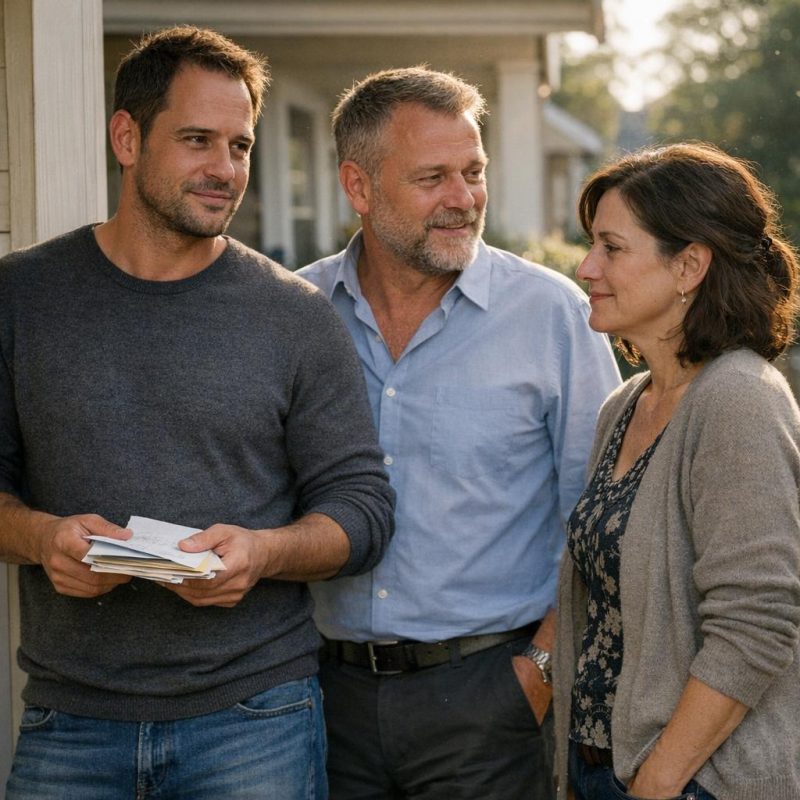 Image by RM AI
Nancy's Isolation
The neighborhood shifted almost overnight. People who'd avoided eye contact started waving. Neighbors who'd seemed cold began stopping by with apologies and stories of their own manipulations. The Patels invited us to dinner and described how Nancy had nearly driven them out three years earlier. Tom organized a block party specifically to welcome us properly. Nancy's usual morning walks stopped. Her garden, always immaculate, started looking neglected. The HOA meeting that month? She didn't show up for the first time in fifteen years, according to Linda. I'd see her sometimes through her windows, just standing there, looking out at the street. Dave thought I should feel triumphant, but honestly? I mostly felt sad. She'd spent years orchestrating these elaborate campaigns, manipulating neighbors, creating chaos — and for what? She'd never actually gotten the house. Never achieved whatever she thought owning our property would give her. And now she had nothing. The people she'd cultivated as allies realized they'd been used. The community she'd controlled had turned its back. Her power had come from isolation — isolating her targets, making them seem like problems. Nancy stopped appearing outside, stopped attending HOA meetings — and I realized that in trying to isolate us, she'd isolated herself instead.
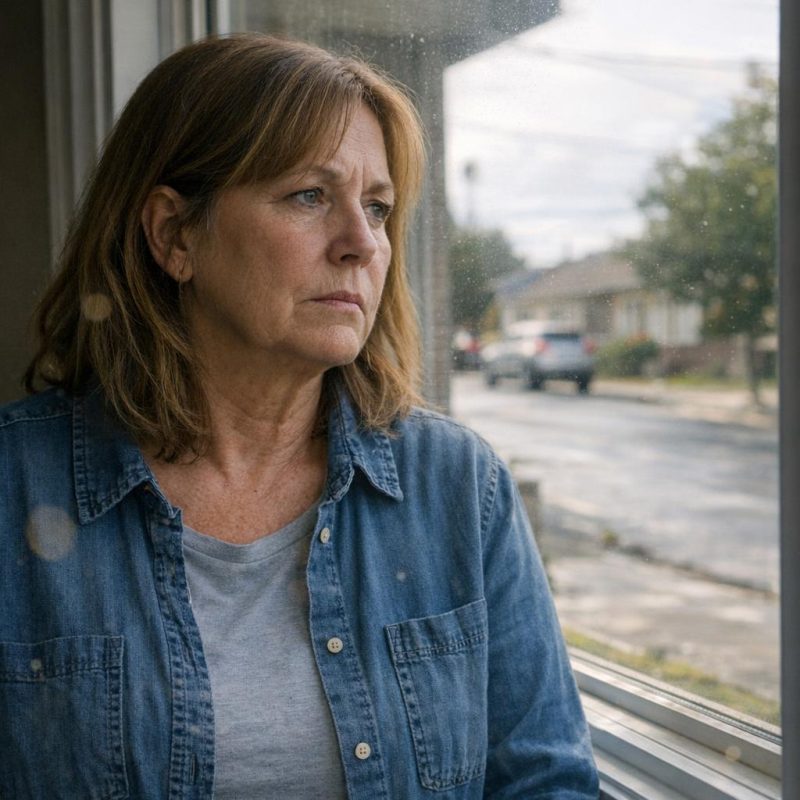 Image by RM AI
The Civil Suit
Marcus filed the civil suit on a Tuesday morning. Intentional interference with property rights, intentional infliction of emotional distress, and interference with contractual relations. We documented everything: the impact on our quality of life, the emotional toll, Paul's testimony about property value manipulation, the costs we'd incurred in legal fees and documentation. Marcus was confident. 'The court ruling gives us credibility,' he explained. 'And Nancy's pattern of behavior, now corroborated by multiple neighbors, establishes a clear case.' We weren't looking to destroy her financially — we just wanted acknowledgment, compensation for what we'd been through, and assurance this would never happen again. Dave and I talked for hours about whether this was the right move. Was it vindictive? Were we becoming what Nancy had tried to paint us as? But no — this was about justice, about making sure she couldn't do this to anyone else. The lawsuit was filed on Tuesday. By the following Monday, Marcus called with news. 'Nancy's attorney reached out,' he said, and I could hear the satisfaction in his voice. 'They want to settle. She's offering compensation and a signed agreement to cease all contact and interference.' Nancy's lawyer contacted Marcus with a settlement offer within a week — she wanted to avoid a public trial at any cost.
 Image by RM AI
The Settlement
Marcus laid the settlement agreement on the table between us. Fifty thousand dollars — enough to cover our lost equity, all legal fees, and then some. But honestly? The money wasn't what made my hands shake as I read through the pages. It was the formal admission buried in paragraph three. Nancy Westbrook acknowledged engaging in a sustained pattern of harassment, interference, and intentional infliction of emotional distress. Right there in legal language, signed by her attorney. Dave squeezed my hand. 'We don't have to accept,' he said quietly. 'We could push for trial, make it public.' I shook my head. A trial would mean months more of this consuming our lives, more stress, more nights lying awake. This gave us everything we actually needed. Marcus clicked his pen. 'It's a strong offer. The non-contact clause is ironclad — she can't approach your property, can't contact you directly or indirectly, can't make any statements about you. Violation triggers immediate financial penalties.' I signed my name. Dave signed his. The money mattered less than the signed acknowledgment that Nancy had engaged in a campaign of harassment — finally, there was proof on paper.
 Image by RM AI
Reclaiming the Pool
The invitations went out two weeks later: Pool Party at Emma and Dave's — Finally! Maya showed up first, carrying a ridiculous inflatable flamingo and a bottle of prosecco. 'About damn time,' she said, wrapping me in a hug. Rachel arrived with her kids, who immediately cannonballed into the deep end. Tom and Linda came from next door with a fruit platter and actual warmth in their eyes — not the cautious distance we'd gotten used to. Paul brought his wife. Even some of Dave's work friends showed up, the ones who'd heard the whole saga unfold over months of lunch breaks. The afternoon sun turned the water into liquid gold. Kids splashed and shrieked. Adults floated on inflatables with drinks balanced on their stomachs. Tom fired up his grill and cooked burgers for everyone, and Linda kept refilling the snack bowls. No one mentioned Nancy. No one had to. This was what the pool was always supposed to be — a gathering place, a source of joy, something that brought people together instead of tearing them apart. String lights glowed over the water, music drifted across the yard, and for the first time since we moved in, the pool felt like ours.
 Image by RM AI
What Remains
That night, after everyone left and we were picking up abandoned towels and deflated pool toys, Dave asked me if it was worth it. All of it — the stress, the money, the months of our lives consumed by one person's vindictiveness. I looked at the pool, still and perfect under the stars. 'Yeah,' I said. 'It was.' Because here's what I learned: a house is just a structure until you defend your right to live in it peacefully. We could have walked away. Sold at a loss, started over somewhere else, let Nancy win through sheer exhaustion. A lot of people would have. A lot of people probably should have, honestly — the toll it took on us was real. But we stayed. We fought. We documented and persisted and refused to be driven out of a home we'd chosen fair and square. And in doing that, in standing our ground even when it felt hopeless, we'd transformed this place from a dream house into something more solid. The trauma was real, yeah. The anxiety still flared up sometimes. But so was the pride. So was the knowledge that we'd faced down someone who'd tried to destroy us and come out standing. I'd learned that a house becomes a home not when you sign the papers, but when you fight for your right to live in it on your own terms.
 Image by RM AI
The Life We Built
A year later, I'm standing by the pool on a quiet Tuesday morning, coffee in hand, watching the early sunlight dance across the water. Dave's inside on a work call. The yard has settled into itself — the landscaping we planted has filled in, the fence we installed looks weathered in a good way, the pool furniture has that lived-in comfort of things actually used and loved. Tom waves from his deck. Linda's grandkids are visiting next weekend, and she's already asked if they can swim. Maya's coming over this afternoon just to float and catch up. This is my life now. Normal. Peaceful. Exactly what we'd imagined when we first saw the listing. Nancy still lives three blocks away in the house she manipulated someone else out of. I see her sometimes at the grocery store — we don't acknowledge each other, and that's fine. She's just another person now, stripped of the power she'd wielded through obsession and rage. The restraining order and settlement agreement are filed away in our home office, insurance policies we'll hopefully never need again. But they're there. The pool still glitters, the neighbors are truly friends now, and somewhere nearby Nancy lives with the house that was never meant to be hers — while I live in the home I earned twice over.
 Image by RM AI
KEEP ON READING

10 Book Bans That Backfired & 10 That Worked
When Censorship Misfires. Book bans get talked about as if…
By Cameron Dick Apr 8, 2026
20 Times in History Fashion Trends Were Genuinely Dangerous
Looking Stylish Hasn't Always Been a Safe Hobby. Fashion has…
By Emilie Richardson-Dupuis Apr 8, 2026
20 Historical Figures Who Were More Dangerous Than They Seemed
Power Hidden Behind a Calm Face. History is full of…
By Annie Byrd Apr 8, 2026
20 Historical Figures You Probably Share DNA With
Do You Have Famous Ancestors?. It’s easy to think of…
By Sara Springsteen Apr 8, 2026
20 Brilliant Minds History Forgot to Credit
The Overlooked Figures Who Quietly Shaped History. History often celebrates…
By Rob Shapiro Apr 8, 2026
When This Thing Fell From Space, Everyone Knew the World…
Alessandro Ferrari on UnsplashOn a crisp October evening in 1957,…
By Sara Springsteen Apr 7, 2026