

The Stranger Who Asked for My Wife by Her Maiden Name Uncovered a 35-Year Secret That Changed Our Family Forever
The Stranger Who Asked for My Wife by Her Maiden Name Uncovered a 35-Year Secret That Changed Our Family Forever
The Ordinary Tuesday
It was a Tuesday in late October, the kind of afternoon that doesn't ask anything of you. I'd been out in the garage since about two o'clock, sorting through a shelf of tools I'd been meaning to organize for the better part of a year — socket sets, drill bits, a handful of things I couldn't even name anymore. The radio was on low, some talk station I wasn't really listening to. Through the door that connects the garage to the kitchen, I could hear the soft thump and fold of laundry, Claire moving through the living room the way she always did on her days off. Twenty-seven years of marriage gives you a kind of fluency in another person's sounds. I knew her footsteps from the creak of the third stair. I knew the difference between the way she hummed when she was happy and the way she went quiet when she was thinking. That afternoon she was humming. I remember that clearly now. I set a wrench down on the pegboard, stepped back, and looked at the shelf with the mild satisfaction of a man who has done a small thing well. The house smelled like the fabric softener she always used, something faintly floral drifting in from the other room. Outside, the oak tree in the front yard had gone mostly gold. Everything felt exactly the way it was supposed to feel — settled, familiar, ours.
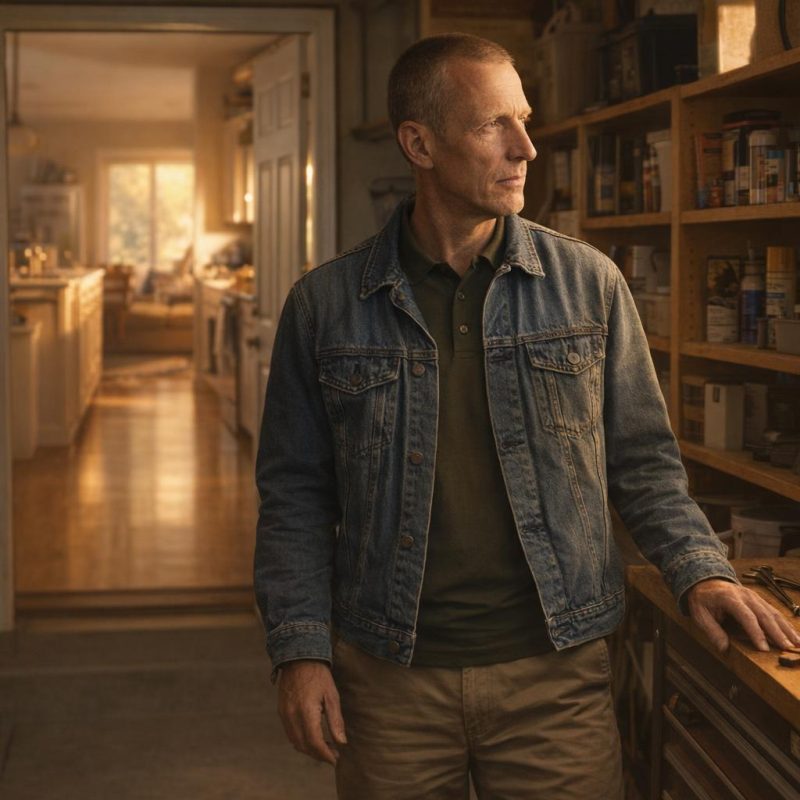 Image by RM AI
The Man Who Asked the Wrong Name
The doorbell rang around four-thirty. I wasn't expecting anyone, but that's not unusual — sometimes it's a neighbor, sometimes a delivery. I wiped my hands on a shop rag and came through the kitchen to the front door. The man standing on the porch looked to be in his mid-sixties, maybe a little older. He had gray hair and was wearing a denim jacket over a plain shirt. He looked ordinary in every way — the kind of person you'd pass in a hardware store and not think twice about. What he didn't look was comfortable. He was holding a small folded piece of paper in both hands, turning it slightly, the way people do when they're nervous and don't know what to do with themselves. I opened the door and said hello. He gave me a careful smile and asked if this was the right address. I told him it was. He glanced down at the paper, then back up at me, and asked if a woman named Karen Bennett still lived here. I stood there for a second, running the name through my head. Karen Bennett. Claire's maiden name, from before we married. I figured he must be someone from a long time back — an old colleague, maybe, or someone from her hometown. People lose track of each other. It happens. I told him to hold on and I'd go get her, and I turned back toward the house, already calling her name.
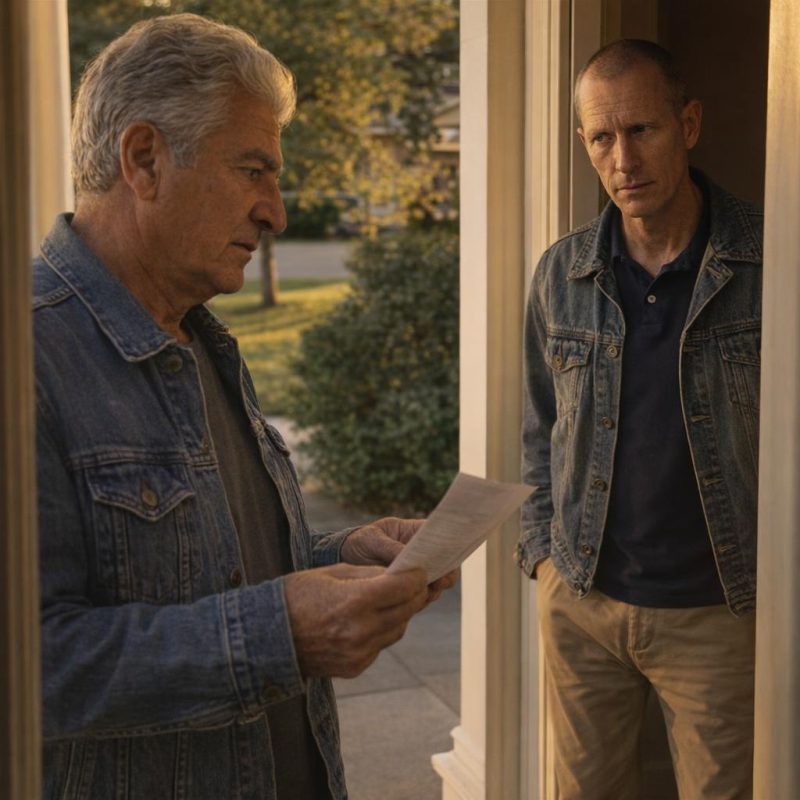 Image by RM AI
The Door Closes
Claire came down the hallway drying her hands on a dish towel, looking perfectly relaxed. I stepped aside so she could see the door, and I watched her face change. It didn't happen slowly. One moment she was fine, and the next the color had left her completely — not just pale, but emptied out, like something had been pulled from behind her eyes. She said one word, barely above a whisper. Michael. Not a question. Just his name, like she already knew it. I didn't understand that at the time. I thought maybe she was just startled to see someone she hadn't expected. She handed me the dish towel without looking at me, moved past me to the door, and stepped out onto the porch. Then she pulled the front door shut behind her. Not slammed — just closed, firmly, with a quiet click that felt louder than it was. I stood in the entryway holding her dish towel, looking at the closed door. Through the narrow window beside it I could see the two of them standing a few feet apart, Michael still holding that folded piece of paper. Claire had her arms crossed over her chest, not in an angry way, more like she was holding herself together. I didn't know what to make of any of it. I told myself there was probably a simple explanation. The house was very quiet around me, and the door stayed shut.
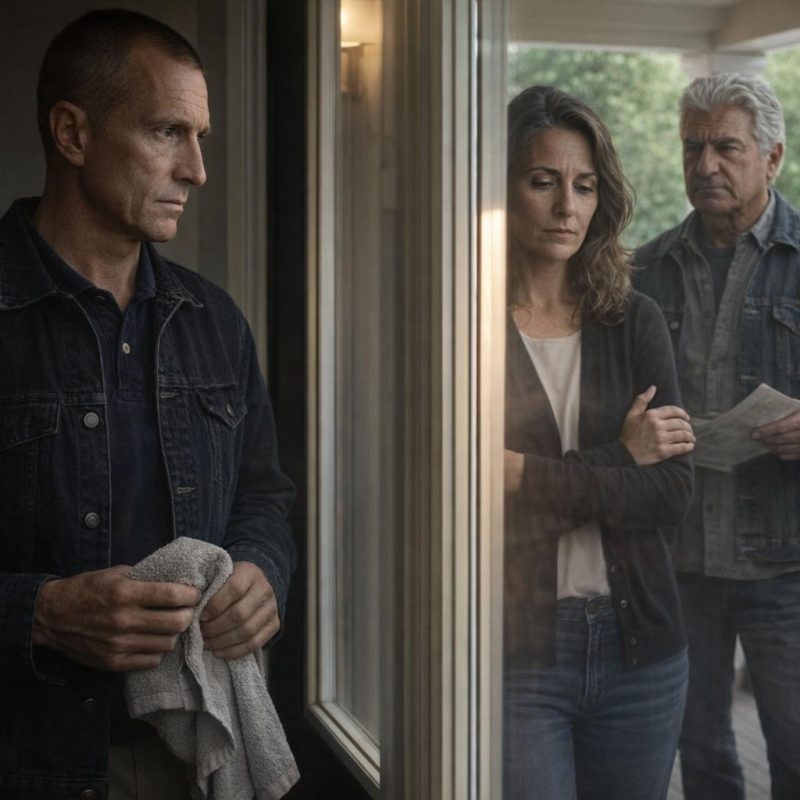 Image by RM AI
Forty Minutes
I moved to the front window and watched. I'm not proud of it, but I didn't know what else to do. They were standing at the far end of the porch, close enough to talk quietly, and I couldn't hear a word through the glass. What I could see was enough to make me uneasy. Michael spoke first, for a long stretch, and Claire listened with her head slightly bowed. At some point she put a hand over her mouth. Then she was crying — not dramatically, just tears running down her face while she stood very still. Michael looked like he was struggling too, pressing his lips together, looking away toward the yard and then back at her. They went back and forth like that for a while. Claire would say something, Michael would nod or shake his head, and then one of them would go quiet again. I checked the clock on the wall at some point and then checked it again. Nearly forty minutes passed. I made myself a cup of coffee I didn't drink. I thought about going out there, and then I thought about how Claire had closed that door, and I stayed where I was. By the time Michael finally walked back to his car, Claire was standing at the porch railing with her back to the house, not moving. I watched her stand there alone for a long moment, and I had no idea what I'd just witnessed.
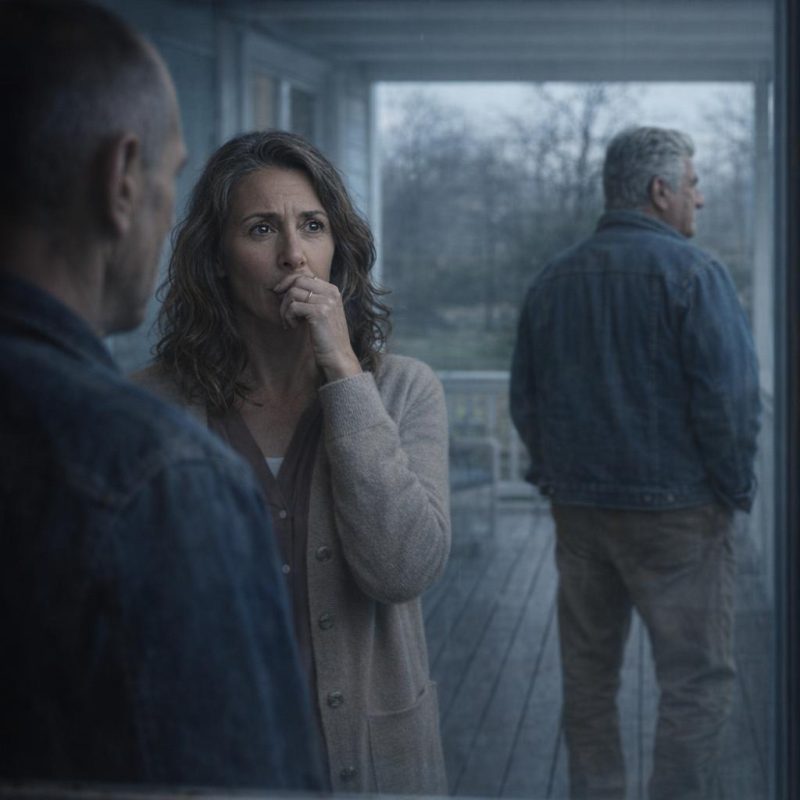 Image by RM AI
Old Friend
She came back inside a few minutes after Michael's car disappeared down the street. I was still in the living room, and I didn't pretend I hadn't been watching. I asked her who he was. She set her keys down on the side table — she'd picked them up at some point, I hadn't noticed — and she said he was an old friend. Someone she'd known years ago. She said it the way you'd say something you'd already decided to say, smooth and quick. I told her she'd been crying. She said it was just surprising, seeing him after so long. I asked how long. She said a long time. I pointed out that she'd gone pale the second she saw him, that she'd been out there for the better part of an hour, that she'd come back in looking like she'd been through something. She said people sometimes have complicated histories, and that it was nothing I needed to worry about. I wanted to believe her. I genuinely did. Twenty-seven years of marriage and I'd never had a real reason not to. But something about the whole thing sat wrong with me, and I couldn't shake it. I asked her one more time if she was okay. She said she was fine. And then she said the word friend again — and her voice caught on it, just slightly, just enough.
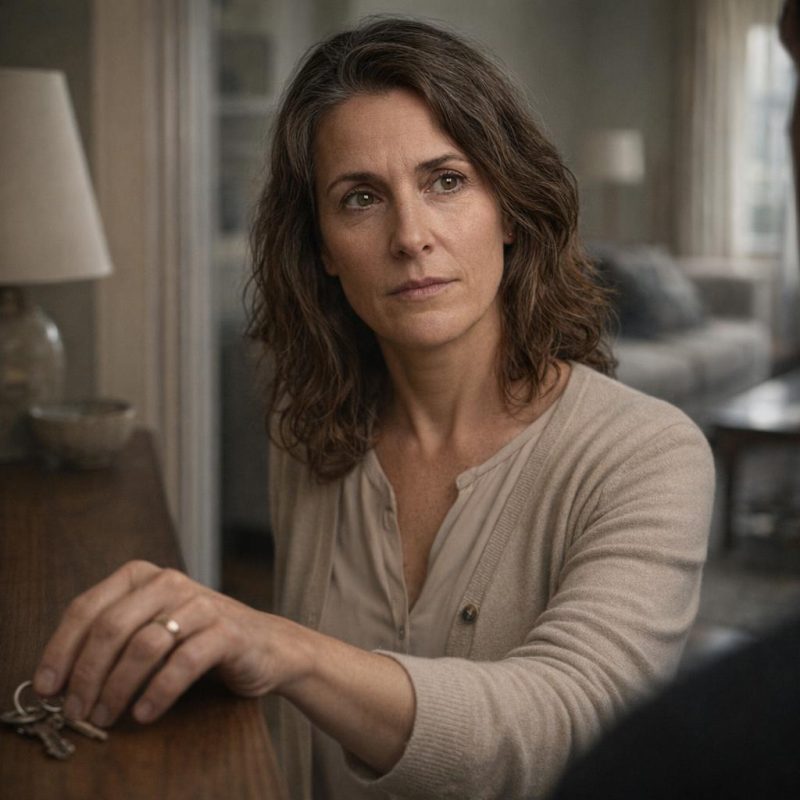 Image by RM AI
The Distance Begins
Three days went by. I kept waiting for things to go back to normal, and they almost did — but not quite. Claire was present in the house, going through all the usual motions, making dinner, asking about my day, watching television in the evenings. But there was something slightly off about it, like a song played in the wrong key. She'd answer a question and then drift somewhere else mid-conversation, her eyes going to the middle distance. She started keeping her phone face-down on the table, which she'd never done before. When it buzzed she'd pick it up quickly, glance at it, and set it back down without saying anything. I didn't ask. I told myself I was reading too much into things, that everyone has stretches where they're distracted or tired or carrying something they're not ready to talk about. I'd had those stretches myself. I tried to give her room. One evening I came into the kitchen and she was standing at the counter with her phone in both hands, not texting, just staring at the screen. She didn't hear me come in. I stood in the doorway for a moment, watching her face — and whatever was on that screen, or whatever she was thinking about, had taken her somewhere I couldn't follow.
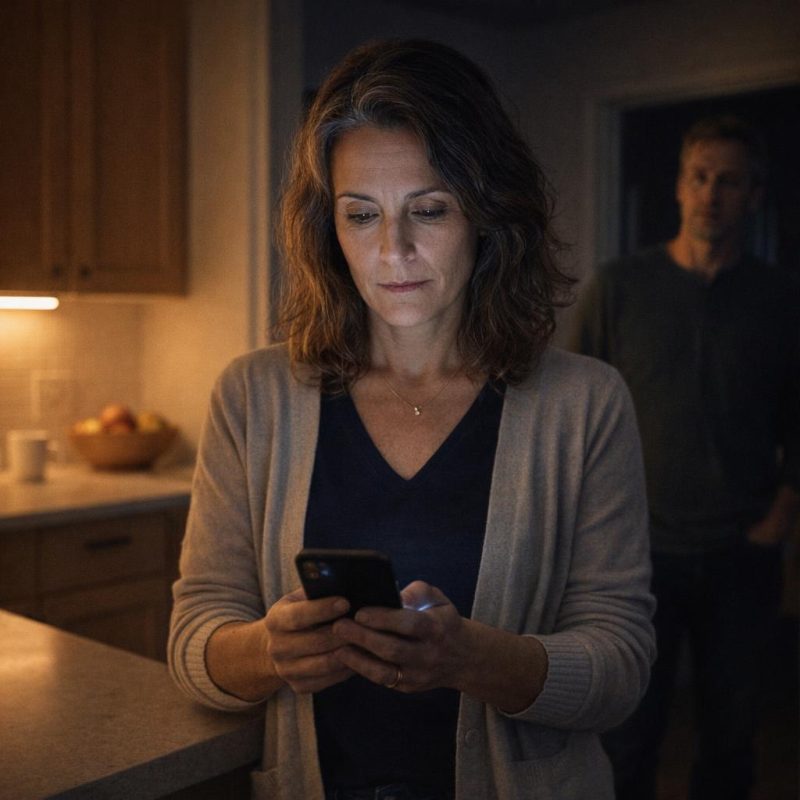 Image by RM AI
The Photo Albums
I came home early on a Thursday — a meeting had been cancelled and I didn't see the point of staying. The house was quiet when I came in, which wasn't unusual for that time of day. I set my bag down in the kitchen and went looking for Claire. I found her in the living room, sitting on the floor in front of the coffee table with her back against the couch. She had photo albums spread out around her, the old ones we kept in the cabinet under the bookshelf, the ones with the cracked spines and the sticky pages. She was crying. Not the way she'd cried on the porch with Michael — this was quieter, more private, the kind of crying that's been going on for a while before anyone finds you. I said her name and she looked up, startled, and immediately started closing the albums and stacking them. I asked her what was wrong. She said she was just feeling nostalgic, that she'd been going through some old things. I sat down on the couch behind her and looked at the albums she hadn't managed to close yet. The photos were faded, the clothes and hairstyles unmistakably from another era. I reached over and looked at the dates printed on the album spines — and they were all from the late 1980s, every one of them, from years before she and I had ever met.
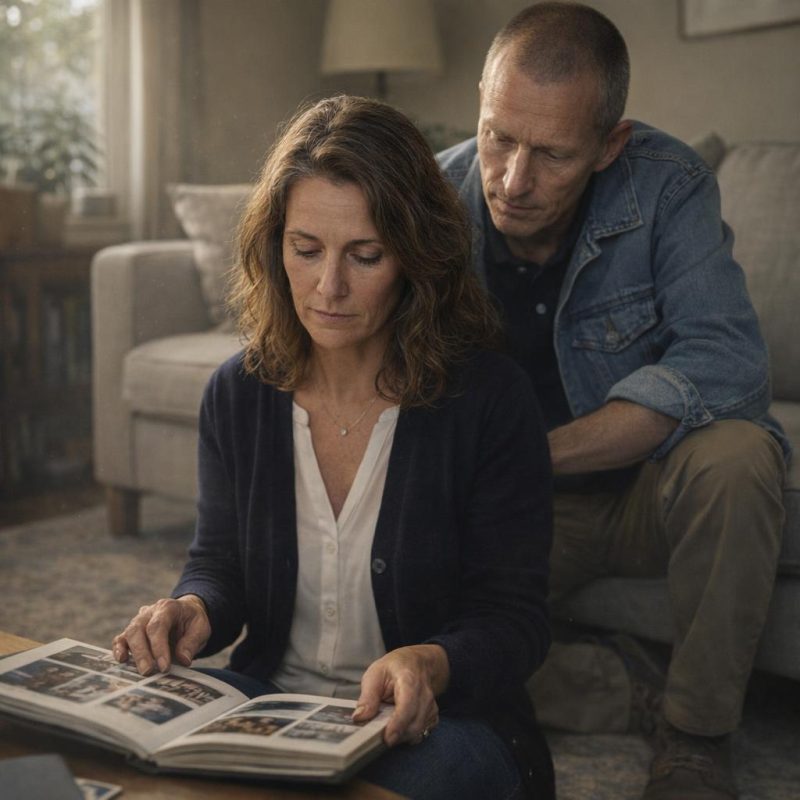 Image by RM AI
Tired
That evening I went to check on her and found the bedroom door half open. She was sitting on the edge of the bed in the dark, not doing anything, just sitting. I pushed the door open and turned on the lamp on my side of the room. Her eyes were red. I sat down next to her and asked what was going on. She said she was tired. I told her I knew she was tired, but that tired didn't explain the last week — the crying, the phone, the photo albums, the way she'd been somewhere else even when she was right next to me. She wiped her eyes with the back of her hand and said everything was fine. I told her it didn't look fine. She said she just needed a little space, that she was dealing with something and she'd talk to me when she was ready. I wanted to push. I wanted to sit there until she told me what was happening, because twenty-seven years of marriage had taught me that when Claire said she was fine in that particular tone of voice, she was anything but. But I also knew her well enough to know that pushing wouldn't get me anywhere she wasn't ready to go. So I squeezed her hand once, stood up, and went back to the living room. Her voice followed me down the hall — quiet, flat, saying she was fine — and it didn't sound like her at all.
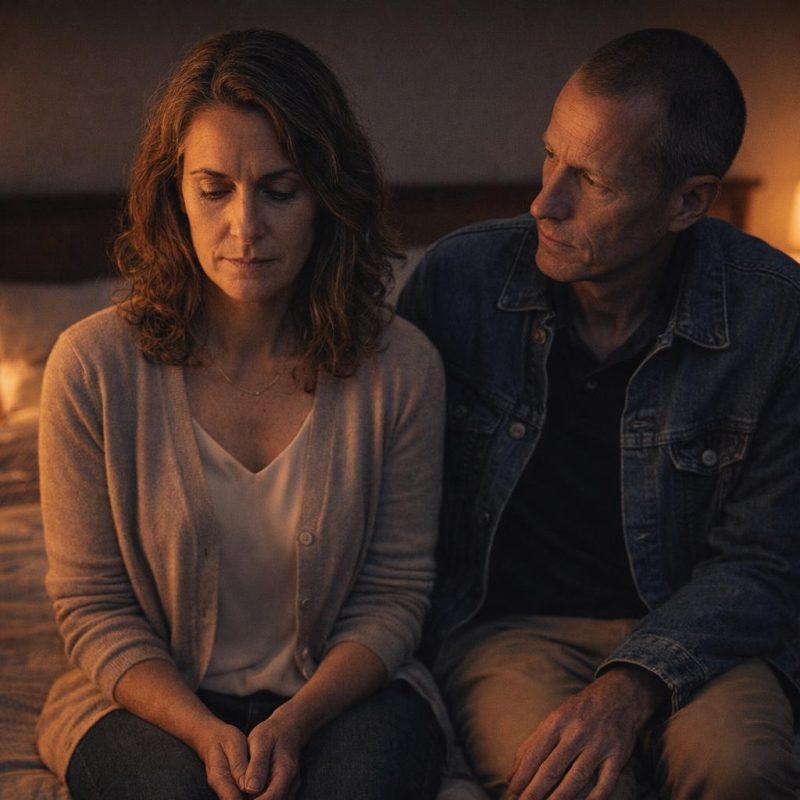 Image by RM AI
The Tension Builds
The days that followed were quieter than any we'd had in years, and not in a good way. Claire started going to bed around eight-thirty, sometimes nine, which wasn't like her at all — she'd always been the one who stayed up reading while I fell asleep first. At dinner she answered my questions with one or two words, and I stopped asking after a while because the silence felt less painful than the short answers. I caught her staring at the wall above the kitchen sink one morning, coffee going cold in her hand, and she didn't notice me standing there for a full minute. When she finally did, she just smiled — that small, tired smile that didn't reach her eyes — and turned back to the counter. I tried to give her the space she'd asked for. I told myself she'd talk when she was ready. I kept busy with small things: fixing the screen door, reorganizing the garage, anything that kept my hands moving. But the house felt different. Not loud-different, not the kind of different you could point to. Just a low, steady absence, like something had been turned down on a dial and nobody had said why. Some evenings I'd sit in the living room and hear nothing from the other rooms, and the quiet would settle around me like something with weight.
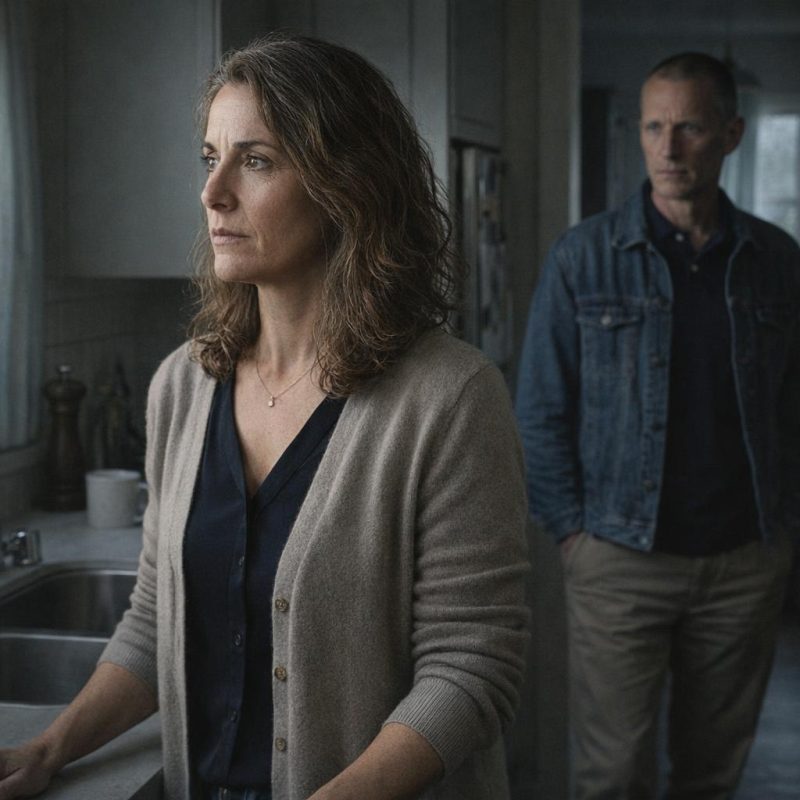 Image by RM AI
The Confrontation
I found her in the kitchen on a Thursday night, rinsing the same dish she'd already rinsed twice. I stood in the doorway for a moment and then I said her name. She turned around. I told her I couldn't keep doing this — that I knew she wasn't telling me everything, and that whatever it was, she didn't have to carry it alone. Her face did something complicated. The dish went into the rack and she gripped the edge of the counter with both hands and looked at the floor. I said I wasn't angry. I said I just needed to understand what was happening to us. She shook her head slowly, and for a second I thought she was going to shut me out again. Then her face crumpled. Not dramatically — just quietly, the way it does when someone has been holding something for too long and the muscles finally give. She said it wasn't about us. I asked her what it was about, then. She said there was something from her past. Something she hadn't told me. I asked her to explain. She said she wasn't ready. I stood there in the kitchen light, wanting to push further, feeling the frustration rise in my chest, but also something else — a small, cautious relief that she'd finally said that much, even if it wasn't nearly enough.
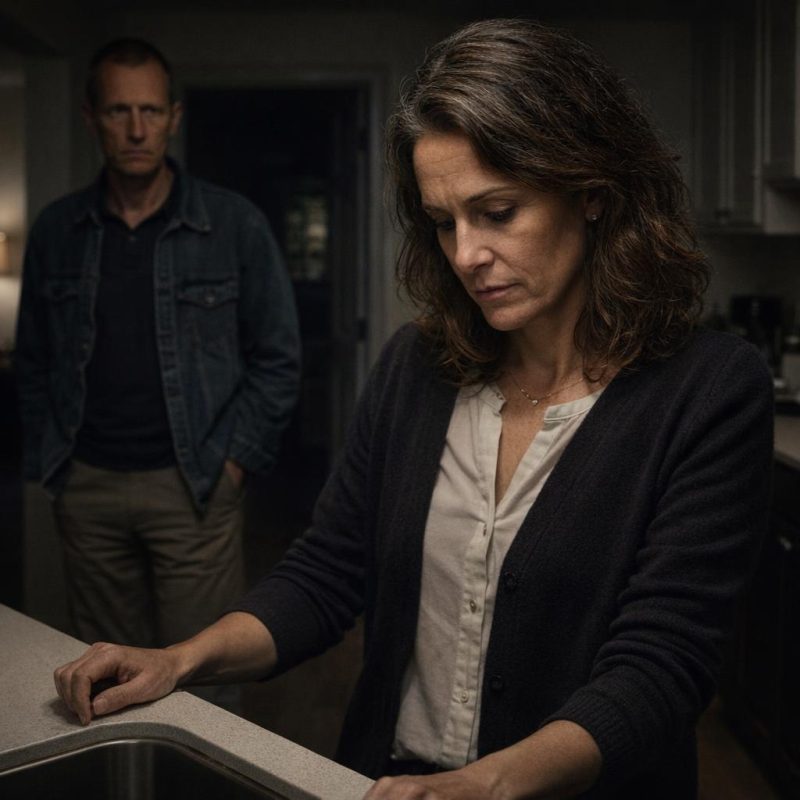 Image by RM AI
Something From Her Past
I asked her what she meant by something from her past. She shook her head and looked away, toward the window above the sink, like the answer might be out there in the dark yard somewhere. I told her that vague wasn't going to work for me — that I'd been patient, that I'd given her space, and that I needed more than two words. She started crying again, quietly, the way she'd been crying all week. She said she needed more time. I asked if it had something to do with Michael — the man who'd come to the door. She went very still. Then she nodded, just once, barely perceptible, and said nothing more. I waited. She didn't add anything. I asked if she was in some kind of trouble. She said no. I asked if someone had been hurt. She said no. I asked if it was something she'd done. She closed her eyes and didn't answer, and that non-answer sat between us heavier than anything she could have said out loud. I told her I loved her and that whatever it was, we could figure it out together. She nodded again, but she still didn't speak. I went to bed before her that night and lay there staring at the ceiling, turning the conversation over and over, and the weight of everything she wouldn't say pressed down on the room like a second blanket I hadn't asked for.
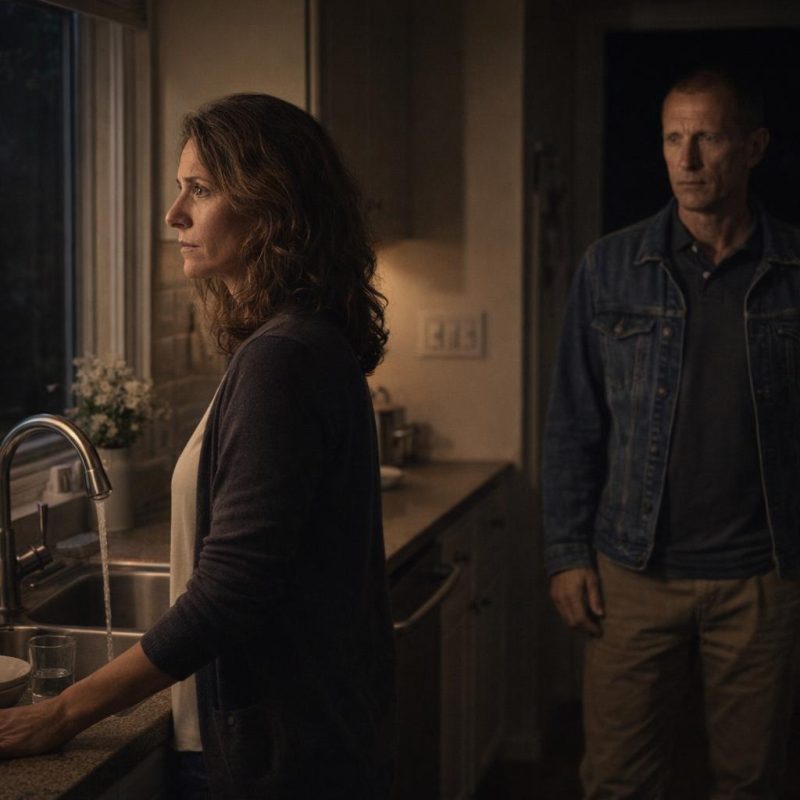 Image by RM AI
The Week of Silence
Seven days went by after that conversation, and they went by slowly. Claire was polite at meals — she asked if I wanted more coffee, she passed the salt — but the real talking had stopped. I tried a few times to circle back, gently, and each time she said she just needed a little more time. I started to wonder what more time was supposed to accomplish. I noticed she was checking her phone more than usual, and more than once I saw her delete something quickly when I walked into the room. I didn't say anything about it. I told myself there was probably an explanation. I told myself I was probably reading too much into things. Then one evening she left her phone on the kitchen counter while she went to check on something in the other room, and it lit up. I wasn't trying to look. I was standing right there, and it lit up, and I saw the screen before I could think not to. The message was from a number I didn't recognize — no name saved, just digits. Claire came back into the kitchen before I could see anything else, and she picked up the phone in one smooth motion and turned away, and I stood there with the image of that unknown number sitting in my head like a splinter I couldn't reach.
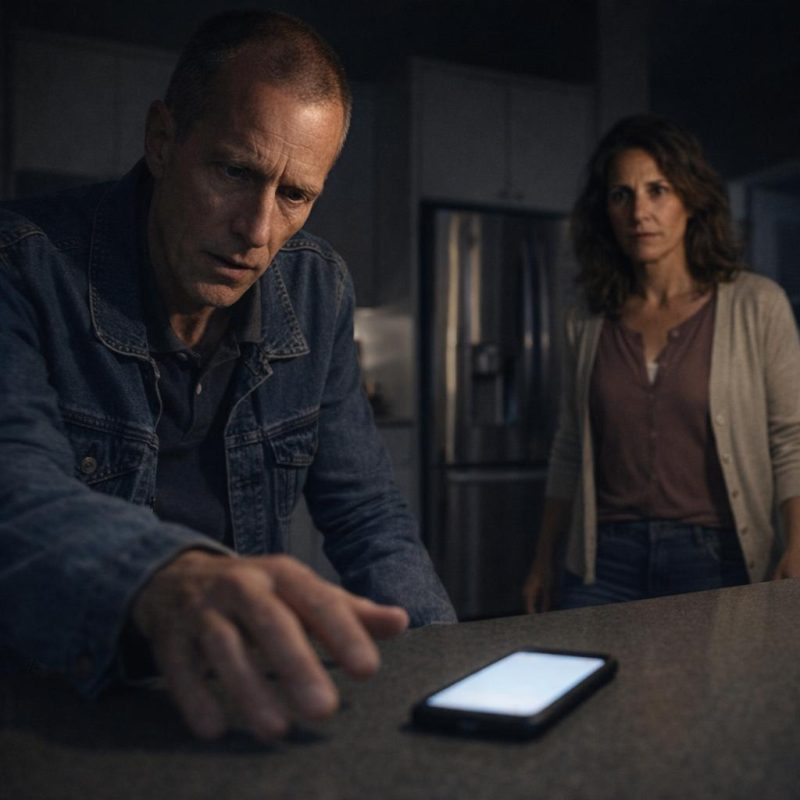 Image by RM AI
Michael Returns
It was a Saturday afternoon, about a week after the phone incident, when the doorbell rang. I was in the living room, not really watching the television so much as sitting in front of it, and when I opened the door I felt my stomach drop. Michael was standing on the porch again, same denim jacket, same careful expression. But this time he wasn't alone. There was a woman beside him — older, gentle-featured, with the kind of quiet presence that made you feel like she'd been in difficult rooms before and knew how to hold herself in them. Michael said hello and asked if they could speak with Claire. I looked at the woman. I asked who she was. Michael said her name was Linda. He didn't offer anything else, and I didn't know what to do with just a name and no context. My stomach had gone tight in a way I couldn't explain. I called for Claire down the hallway, and I heard her footsteps — hesitant, slower than usual, like she already knew something was waiting. I stood in the open doorway with Michael and Linda on the porch and the afternoon light coming in flat and cool, and none of us said anything while we waited. Then I heard Claire's footsteps stop just behind me, and the only sound left was the quiet click of two car doors that had closed out on the street a few minutes before, still resting somewhere in the back of my mind.
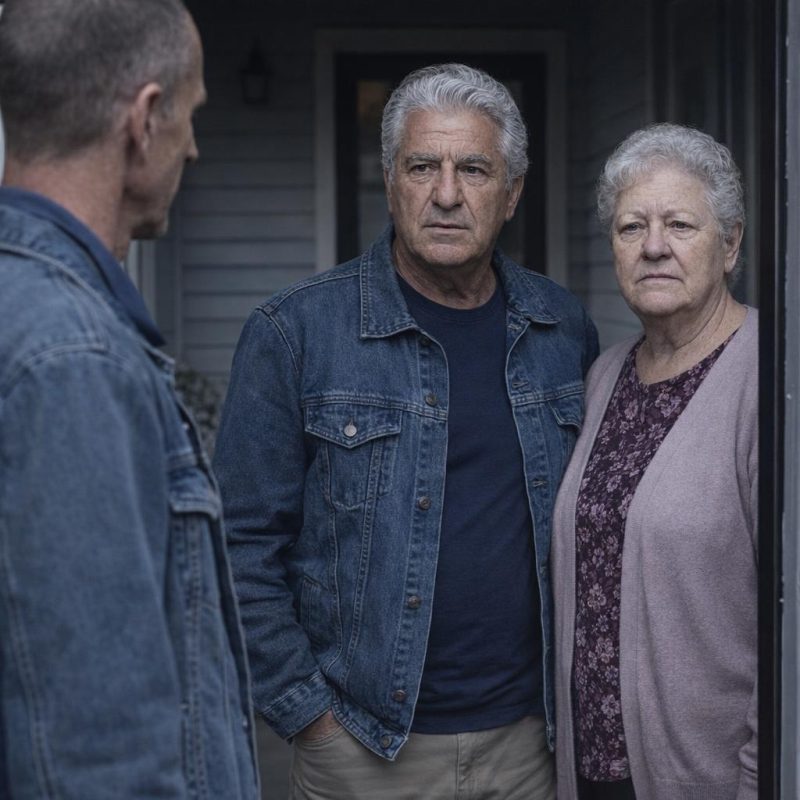 Image by RM AI
The Woman Who Made Claire Collapse
I stepped aside so Claire could see who was at the door. The moment she did, all the color left her face — not gradually, but all at once, like a light switched off. Her knees went soft and she grabbed the doorframe with one hand. Linda moved forward before I could, stepping past me onto the threshold, and she put both arms around Claire and held on. Claire made a sound I hadn't heard from her before — not quite a sob, something older than that, something that had been waiting a long time to come out. They stood there in the doorway holding each other, both of them crying, and I didn't know what to do with my hands. Michael was watching from the porch with tears running down his face, and he wasn't trying to hide them. Nobody explained anything. Nobody looked at me or said a word in my direction. I was standing in my own house, three feet from my spouse of twenty-seven years, and I had never felt further from understanding what was happening in front of me. The embrace went on for what felt like a long time. I watched Linda's hand move slowly across Claire's back, and I watched Claire's shoulders shake, and I stood there with the particular helplessness of someone watching a grief they have no name for and no part in.
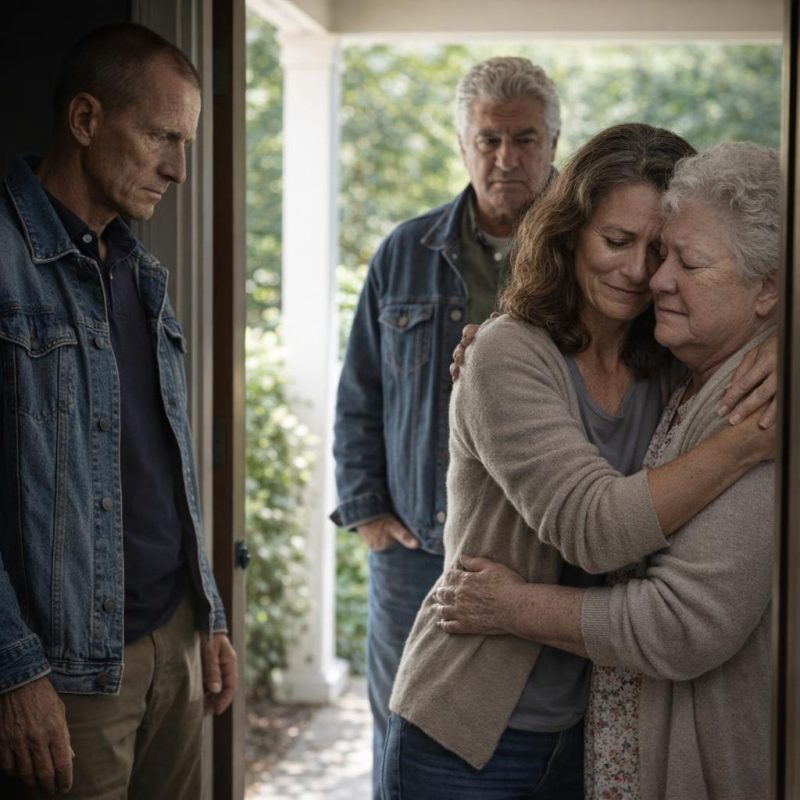 Image by RM AI
The Questions Begin
I finally said something. I asked, as evenly as I could manage, if someone was going to tell me what was going on. Claire looked at me with something close to panic in her eyes. Michael said we should all sit down. I told him I didn't want to sit down — I wanted to know who these people were and why they kept showing up at my house. Linda put a hand on my arm, very gently, and said it might be easier inside. Something in her manner made me step back. We moved into the living room, the four of us, and nobody sat for a moment. I stood near the fireplace and waited. Michael sat on the edge of the couch and leaned forward with his elbows on his knees, and he looked like a man who was searching for the right words and hadn't found them yet. He said that what he was about to tell me was going to be difficult to hear, and that he was sorry for the way this had all unfolded. Claire had gone to the armchair in the corner and was sitting with her hands pressed together in her lap, not looking at me. Michael took a breath. He said that thirty-five years ago, he and Linda had worked with an adoption agency, and that was how they had found their son.
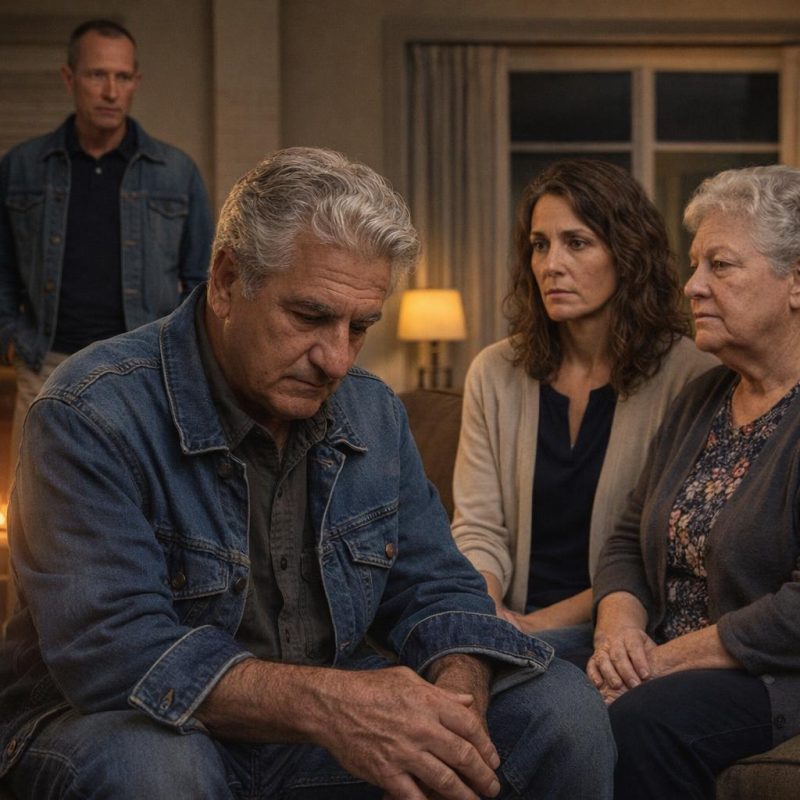 Image by RM AI
The Sleepless Night
Claire was asleep by the time I got into bed, or at least she was lying still with her eyes closed, and I didn't try to find out which. I lay on my back in the dark and stared at the ceiling and couldn't make my mind slow down. Adoption agency. The words kept turning over. Michael and Linda had a son. They'd used an adoption agency thirty-five years ago. And somehow that connected to Claire, to the man who'd come to our door asking for her by a name she hadn't used since before I knew her. I didn't have the shape of it yet, but I could feel the edges of something large. Around one in the morning I gave up on sleep. I eased out of bed without waking Claire and went into the hallway. The storage closet was at the far end, past the linen shelf, and I stood in front of it for a moment feeling like I was doing something I couldn't take back. I told myself I just needed to understand. I started moving boxes — holiday decorations, old tax files, a box of the kids' school projects I hadn't looked at in years. Then, near the back, I found one that was different. It was smaller than the others, sealed with tape that had gone yellow at the edges, and on the side, in Claire's handwriting, was a label that read 1987–1989.
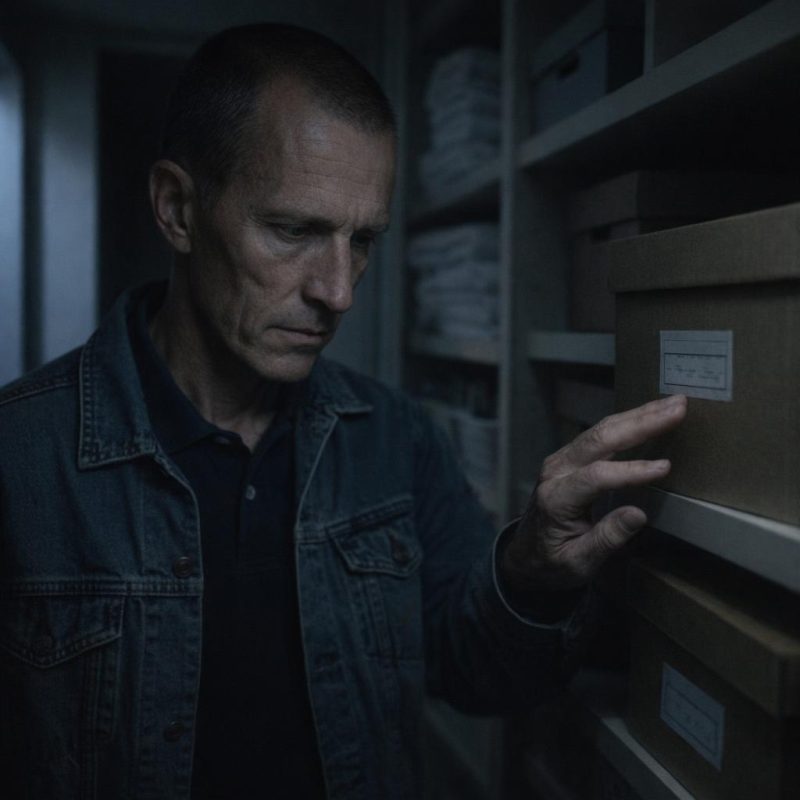 Image by RM AI
The Box
I carried the box to the garage so I wouldn't wake Claire. Set it on the workbench under the fluorescent light and stood there for a moment with my hands on the lid, telling myself I was just trying to understand. The tape pulled away in strips, brittle with age. Inside, the smell hit me first — that particular mustiness of old paper and closed spaces. On top were photographs, loose ones, the kind people used to get printed at the drugstore. Claire at what looked like a college party, laughing at something off-camera. Claire with a woman I didn't recognize, both of them squinting into summer sun. A few showed people I'd never seen at all — groups of young people at picnics, at what might have been a lake. I set them aside carefully. Underneath were some documents — old pay stubs from a restaurant, a lease agreement for an apartment in a city I didn't recognize, a few receipts for things that didn't mean anything to me. All of it felt ordinary. All of it felt like the kind of thing you'd expect to find in a box labeled with years from someone's early twenties. I was almost relieved. I told myself maybe I'd been wrong to come out here. Then I reached the bottom of the box and found one more photograph, lying face down.
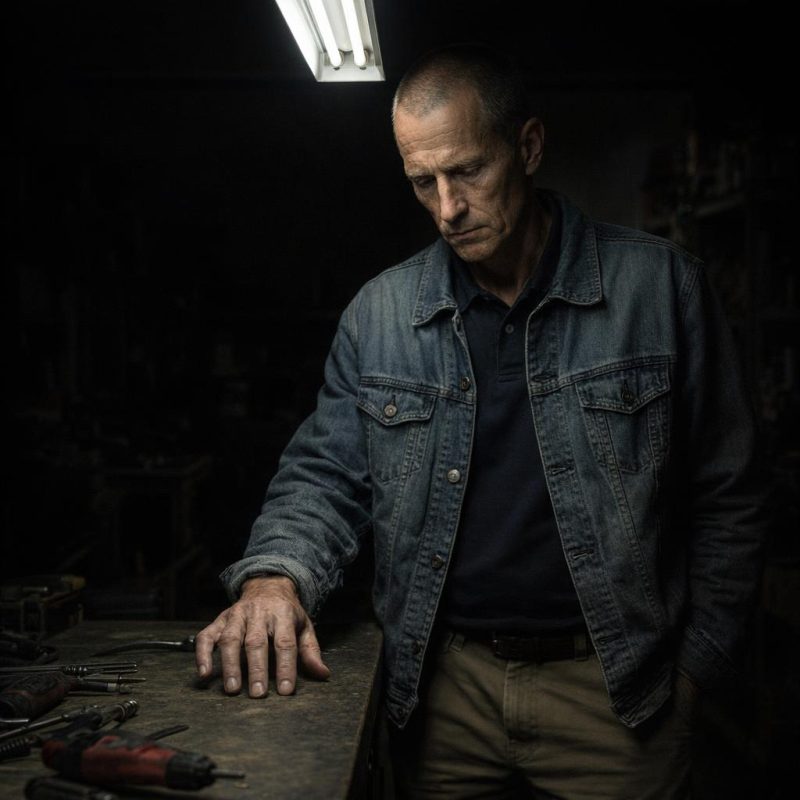 Image by RM AI
The Photograph
I turned it over slowly, the way you do when some part of you already knows you don't want to see what's on the other side. It was a photograph. Claire, younger than I'd ever known her — she couldn't have been more than nineteen or twenty — standing beside a young man I didn't recognize. He was tall, dark-haired, with his arm around her shoulders. And between them, wrapped in a hospital blanket, was a newborn baby. Both of them were looking down at the baby. Claire's face had an expression I'd never seen on her before, something that sat between exhaustion and wonder and something else I couldn't name. I flipped the photograph over. On the back, in handwriting I didn't recognize, someone had written a date: June 1988. I turned it face up again and looked at it for a long time. I had known Claire for twenty-nine years. We had been married for twenty-seven of them. She had never once mentioned a baby. She had never mentioned this young man. She had never mentioned June 1988 in any way that would have made me think it was anything other than an ordinary month in an ordinary year before we met. My hands weren't steady anymore. The photograph was small, maybe four inches by six, but it felt heavier than anything I'd held in a long time.
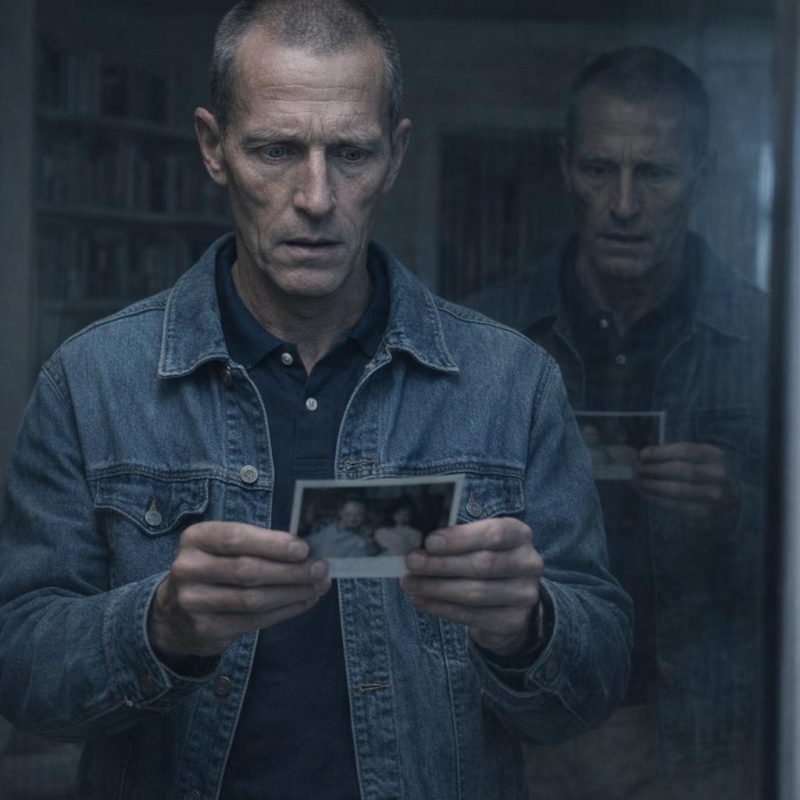 Image by RM AI
Hours
I don't know how long I sat out there. The garage light hummed above me. I kept setting the photograph down on the workbench and then picking it up again, as if looking at it one more time might make it resolve into something I could understand. Who was the young man? What had happened to the baby? How had Claire carried this for the entire length of our marriage without a single word? I wasn't angry yet — I want to be clear about that. What I felt was closer to vertigo, the sensation of standing on ground you thought was solid and feeling it shift under your feet. I kept thinking about all the conversations we'd had over the years about our pasts, about who we were before we found each other. She'd told me about college, about her parents, about Beth, about the jobs she'd worked before we met. She'd told me enough that I'd built a picture of those years, and I'd trusted that picture completely. Now I was sitting in my own garage at four in the morning holding evidence that the picture had a piece missing. A significant piece. At some point the sky outside the small garage window began to lighten at the edges. Then I heard the sound of the floorboards above me — the particular creak of the hallway outside our bedroom — and I knew Claire was awake.
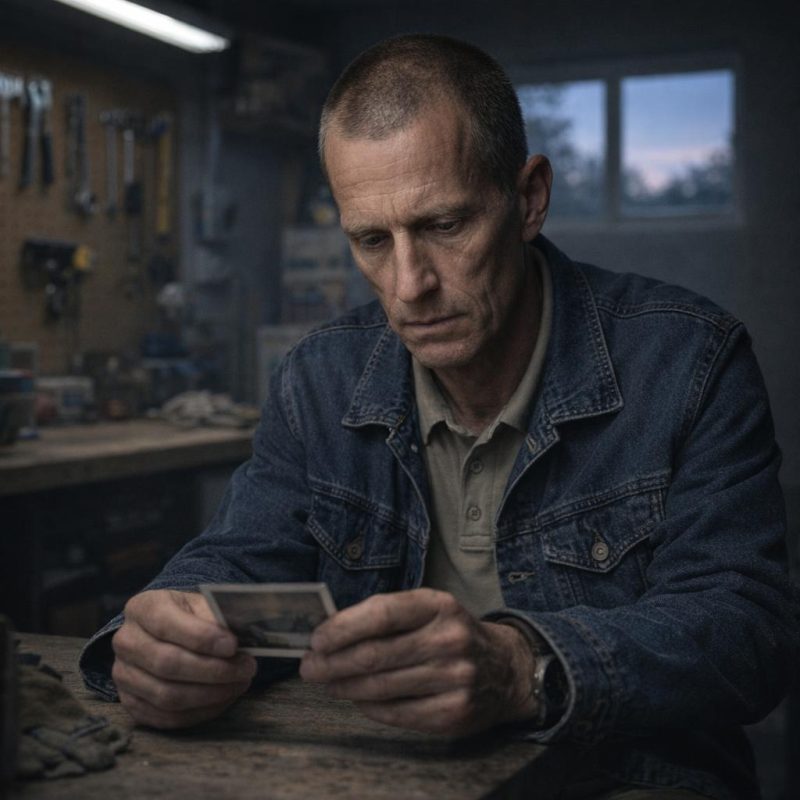 Image by RM AI
The Morning Confrontation
I went inside through the back door. Claire was in the kitchen in her robe, her back to me, filling the coffee maker the way she did every morning. I stood in the doorway for a moment watching her do something so ordinary while I was holding something so not. I set the photograph on the counter without saying anything. She turned around and saw it, and I watched the color leave her face. Not gradually — all at once, like a light switching off. She put her hand on the counter to steady herself. I asked her to tell me what I was looking at. She shook her head, and then the tears came, fast and hard, the kind that don't give you any warning. She said she was sorry. She said it more than once. I told her I wasn't angry, which was mostly true, and that I just needed her to explain. She pulled out a chair and sat down heavily, both hands wrapped around a mug she hadn't filled yet. I waited. She looked at the photograph for a long time without touching it. Then she looked up at me, and her voice came out barely above a whisper, and she said, "David, I gave birth to that baby."
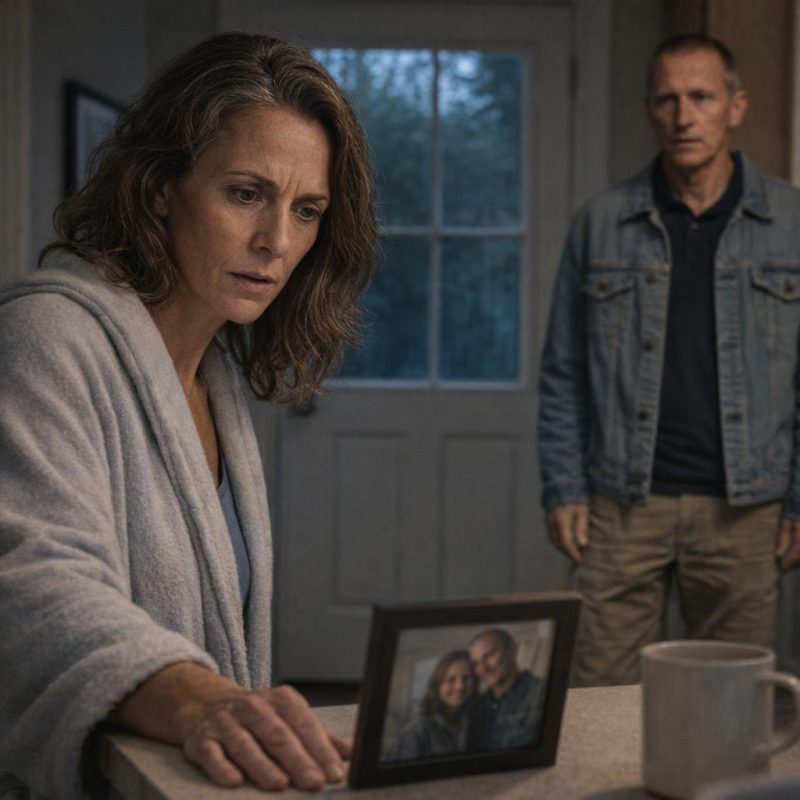 Image by RM AI
The Story She Never Told
I sat down across from her. I didn't say anything. She wiped her face with the back of her hand and looked at the photograph again, and then she started talking. She said she was nineteen. She said she'd been terrified in a way she hadn't known how to explain to anyone, not even to herself. She'd found out she was pregnant and the world had just — narrowed. That was the word she used. Narrowed. Like everything that had existed before that moment stopped mattering and there was only this one enormous fact she didn't know what to do with. She gave birth to a baby boy in June of 1988. She said those words quietly, without drama, like she'd turned them over so many times they'd worn smooth. Shortly after he was born, she placed him for adoption through an agency. She said the decision had haunted her for years afterward. She'd second-guessed it in the middle of the night, in grocery stores, at random moments when something would catch her off guard — a baby in a stroller, a certain age of child on a playground. Eventually she'd found a way to live alongside it. She'd told herself it was the right thing, that he'd gone to a good family, that she'd done what she could with what she had at nineteen years old. I sat across from her and listened to all of it without interrupting. The coffee maker finished brewing and neither of us moved to pour any.
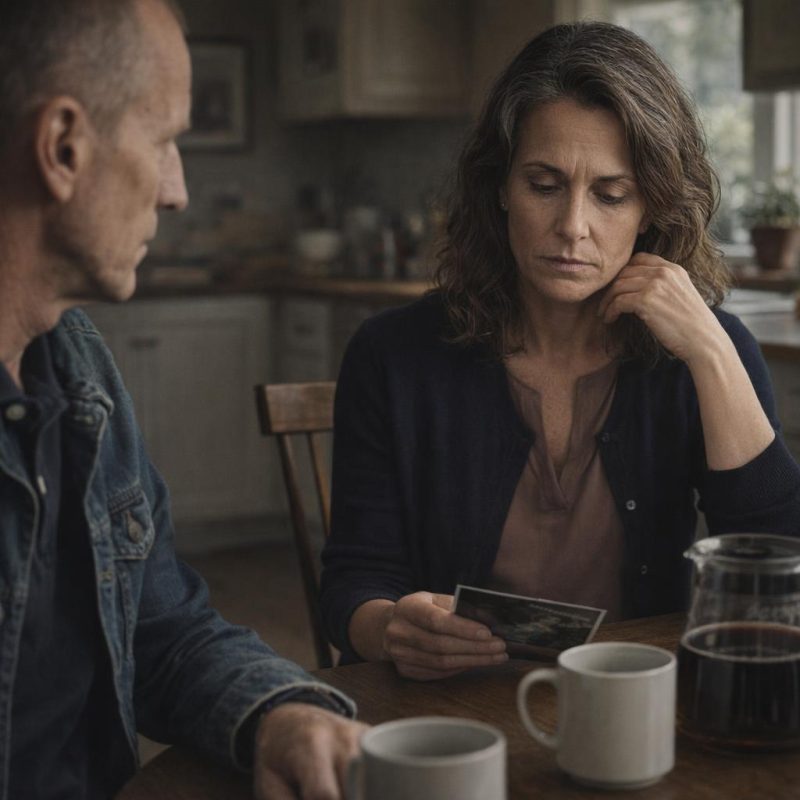 Image by RM AI
The Fear of Judgment
When she stopped talking I asked her the question I'd been holding since the garage. I asked her why she'd never told me. She looked down at the table. She said she'd wanted to, more than once. Early in our relationship, there had been moments when it had almost come out. But she'd always pulled back. I asked her why. She said she was afraid. Afraid of what I'd think of her, afraid I'd see her as someone who had given away her own child, afraid that no matter how carefully she explained it I would look at her differently afterward. She said she'd been so young and so scared and the shame of it had never fully left her, even after she'd made peace with the decision itself. The shame and the decision were two separate things, she said. She could believe she'd done the right thing and still feel ashamed of the circumstances that had led her there. I felt my chest loosen a little. I understood being young and scared. I understood making a decision under pressure and carrying the weight of it long after the moment had passed. I wasn't the same person at nineteen that I was now, and neither was she. I reached across the table and put my hand over hers. She didn't pull away. She just sat there, and her breath caught, and her voice broke on the last word she said — ashamed.
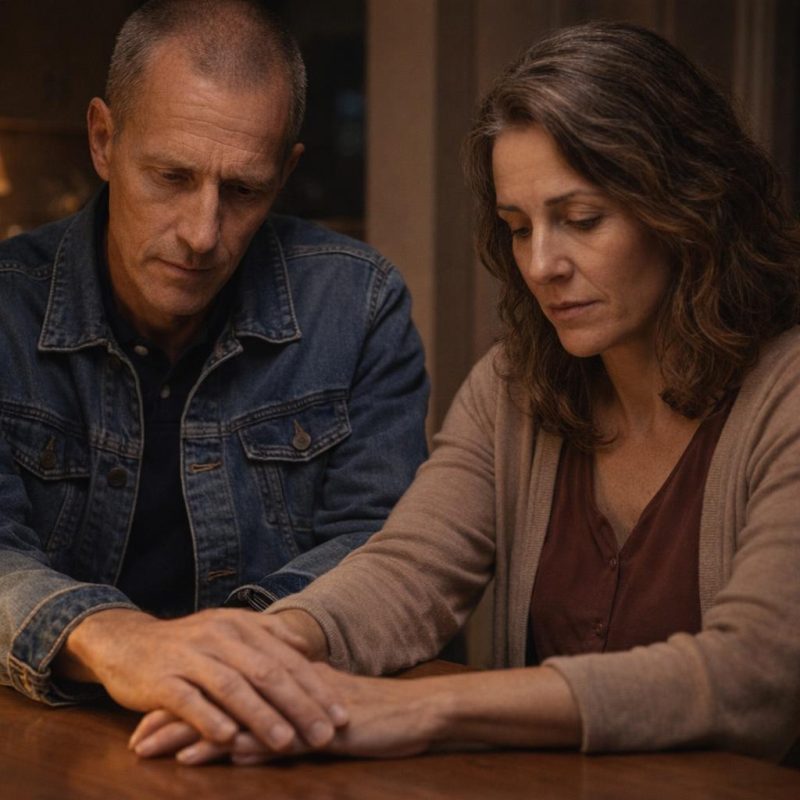 Image by RM AI
The Question About Michael
We sat like that for a while. Then I asked the question that had been underneath all the others since the night Michael had appeared at our front door. I asked her why now. Why had Michael come to the house after thirty-five years? She wiped her eyes with the edge of her robe sleeve. She said Michael had contacted her a few months ago. The adoption agency had reached out to her first — they had a process for that, apparently, a way of facilitating contact when both parties were open to it. I asked her who Michael was, exactly. She said he was connected to the adoption. I waited for her to say more, but she seemed to be choosing her words carefully, like she was deciding how much to give me at once. I asked her again why now, after all this time. She looked at me steadily, and something in her expression shifted — not relief exactly, but something adjacent to it, like she'd been carrying a specific weight and was finally setting it down in front of me. She said her son had started searching for his biological family.
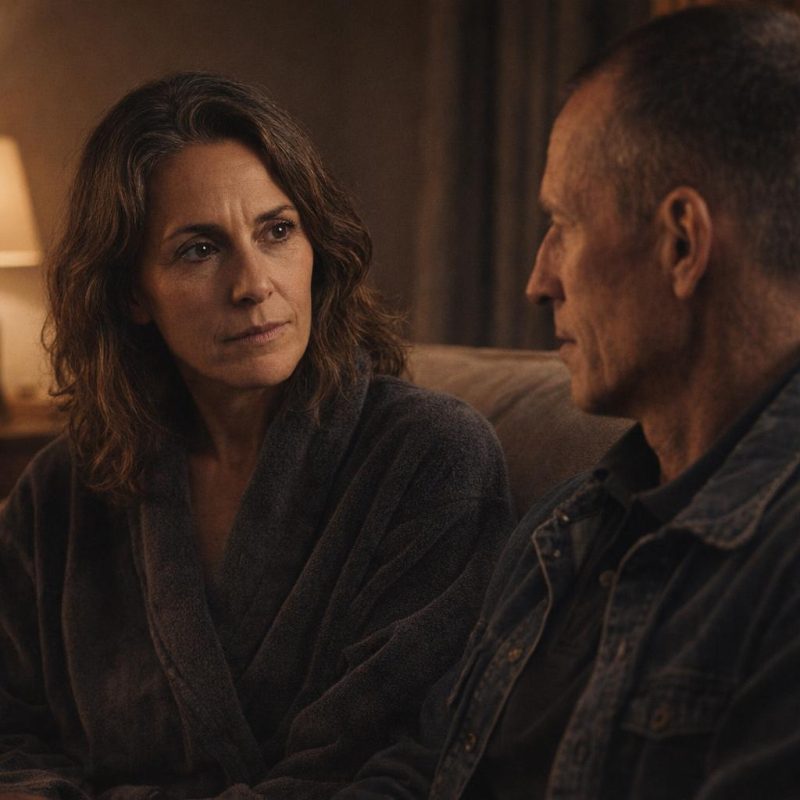 Image by RM AI
The Adoptive Father
I asked her directly who Michael was. Not connected to the adoption — who was he, specifically, to her son. She took a slow breath and set her mug down. She said Michael was the man who had adopted her son. He and his wife Linda had raised him. That was why they'd come to the house. The adoption agency had given them her contact information as part of the search process, and Michael had wanted to meet her before their son did. He'd wanted to see what kind of person she was, she said, or maybe just to make the whole thing feel less abstract before it became real. Linda had come with him for support. I sat back in my chair. I thought about the two of them standing on our porch — Michael with his hands in his jacket pockets, Linda with her hand on his arm, both of them crying in a way that had seemed out of proportion to a simple wrong address. It hadn't been a wrong address at all. I thought about the way Claire had gone pale when she'd seen them. I thought about the name they'd asked for — her maiden name, the name she'd carried before she became my spouse. All of it lined up now, piece by piece, into something I could finally see the shape of: Michael and Linda had spent thirty-five years raising Claire's son, and that son was looking for her.
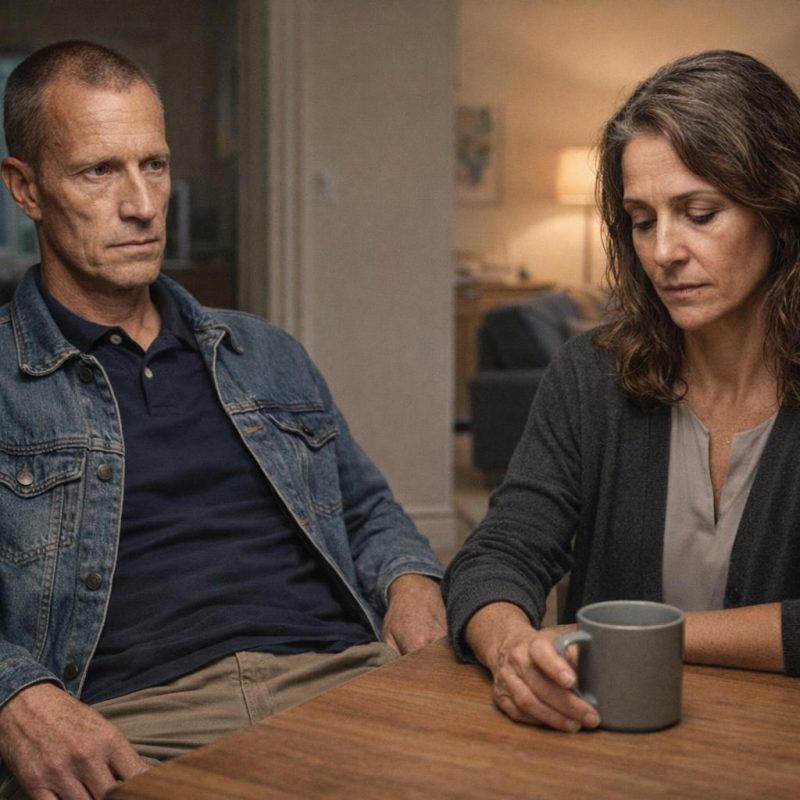 Image by RM AI
The End of the Story
I sat there for a moment just letting it settle. All of it — Michael and Linda on the porch, Claire going pale, the maiden name, the thirty-five years of silence — it had a shape now. A complete one, or so I thought. I asked her if that was why she'd been so upset these past few days, and she nodded, but the nod was slow and her eyes stayed down. I told her I wished she'd told me sooner. She said she knew. She said she was sorry. I asked if the son wanted to meet her, and she said yes. I asked when, and she said soon — Michael was going to reach out once they'd spoken to him. I told her we'd figure it out together, that it was going to be okay. I meant it. I felt something loosen in my chest, like a knot I hadn't known was there finally giving way. I thought the hard part was behind us. I thought we'd gotten to the bottom of it. Claire was quiet for a long moment, and then she looked up at me with an expression I couldn't quite read — not relief, not gratitude, something more careful than either of those. She said there was more we needed to talk about.
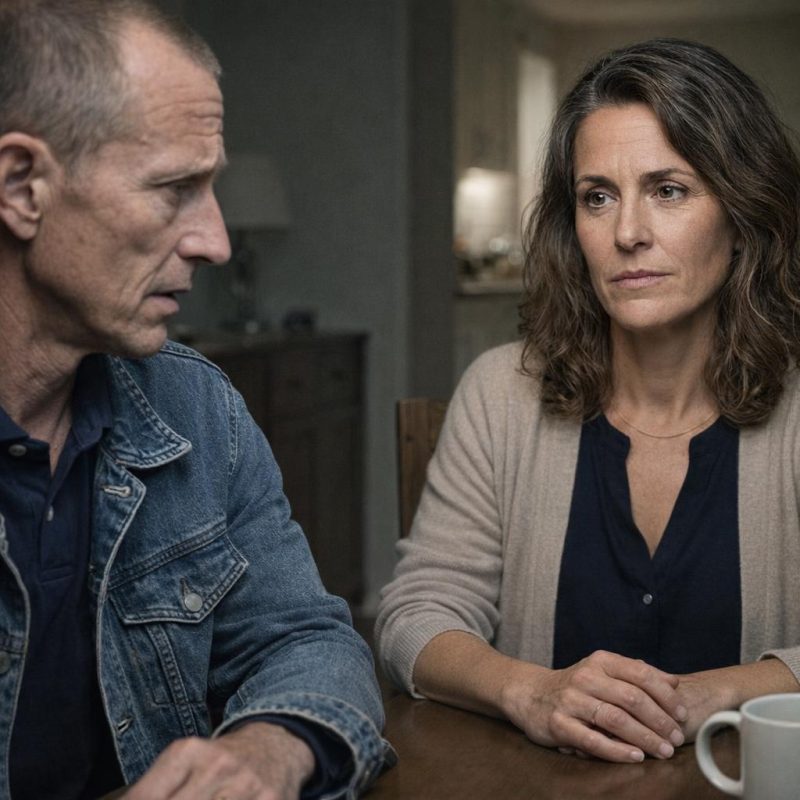 Image by RM AI
The Days Between
Three days went by. They moved slowly, the way days do when you're waiting for something you can't fully picture yet. Claire seemed a little less withdrawn — she came to the table for dinner, she answered when I spoke, she even laughed once at something on television, a short surprised laugh that she seemed almost embarrassed by. But the nervousness was still there underneath. I could see it in the way she held her coffee mug with both hands even when it wasn't cold, in the way she'd go quiet mid-sentence and look out the window at nothing in particular. I tried to be steady for her. I asked what she thought he'd be like, this son she hadn't seen since the day he was born. She said she didn't know. She said she'd tried not to think about it too much over the years because thinking about it hadn't helped. I asked if she was ready. She said she didn't know that either. We were waiting to hear from Michael about when he'd bring him by, and the not-knowing had its own particular weight. The house felt different those three days — not bad, exactly, but altered, like a room where someone had moved the furniture just slightly and you kept almost tripping over the space where something used to be.
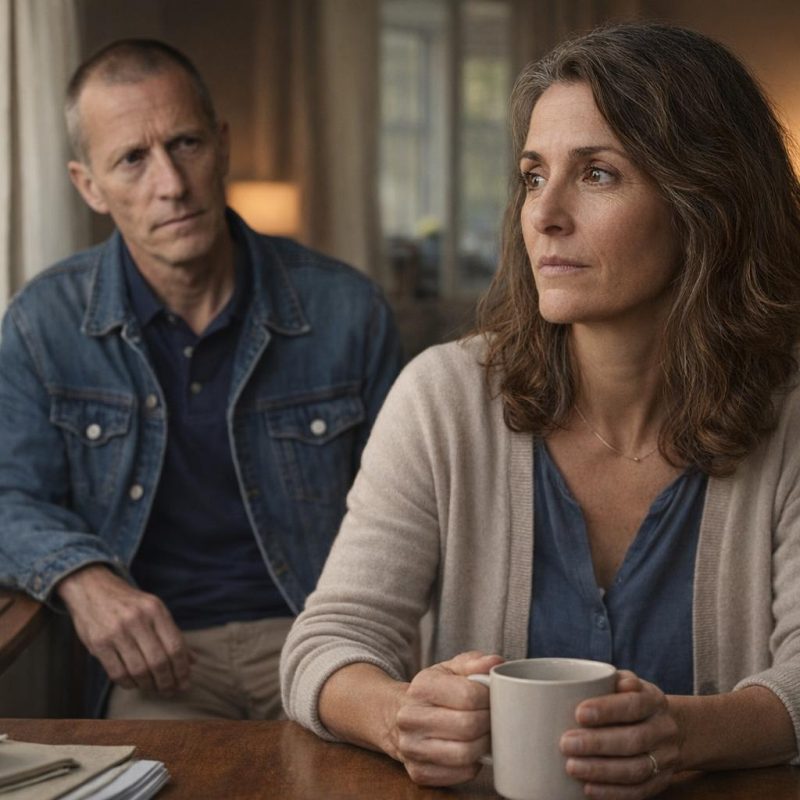 Image by RM AI
The Third Knock
I was in the living room with a book I wasn't really reading when the doorbell rang. It was a Tuesday afternoon, ordinary in every way up until that moment. Claire was in the kitchen — I could hear the faint sound of her moving around in there, a cabinet closing, water running. Then the bell rang and everything went quiet. I looked up. Through the doorway I could see her standing completely still at the kitchen counter, her hand resting on the edge of it. She didn't move toward the door. She just stood there. I set the book down and got up. She followed me into the hallway without a word, and I noticed her breathing had changed — shorter, higher in her chest. I reached the front door and put my hand on the handle. I could feel her just behind me, close enough that I was aware of the warmth of her. I didn't look back at her. I wasn't sure I wanted to see her face before I opened it. The footsteps on the porch outside were unhurried, and then they stopped, and the silence that followed pressed in around both of us.
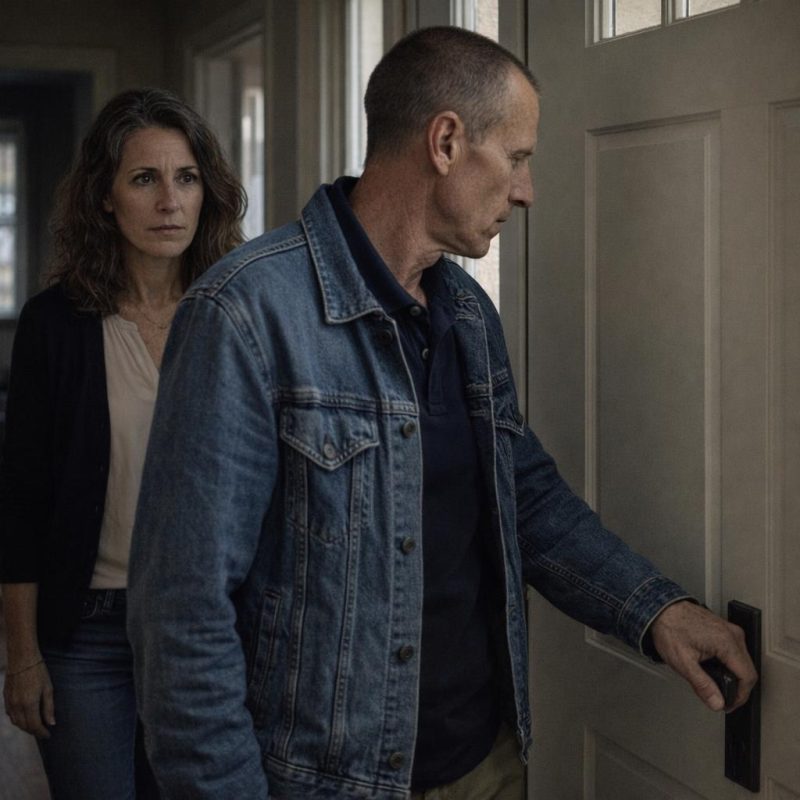 Image by RM AI
The Resemblance
I opened the door. The man standing on the porch was tall — taller than I'd expected, though I'm not sure what I'd been expecting. Dark hair, a little disheveled, like he'd run a hand through it recently and not bothered to fix it after. He was wearing a plain jacket and he had his hands loose at his sides, which somehow made him look more nervous than if he'd been fidgeting. He glanced at me briefly, then past me, and I could see him trying to find something in the hallway behind me. He looked to be in his mid-thirties. He looked like someone who had rehearsed what he was going to say and then forgotten it the moment the door opened. I started to say something — I'm not sure what — and then I looked at him properly, the way you look at someone when you're actually trying to see them. His eyes were a particular shape, slightly wide-set, with a quality to them I couldn't immediately name. I'd seen that shape before. I'd been looking at it across the breakfast table for twenty-seven years. I stepped back without thinking, and his gaze moved past me to where Claire was standing in the hallway, and I was looking at my spouse's eyes in a stranger's face.
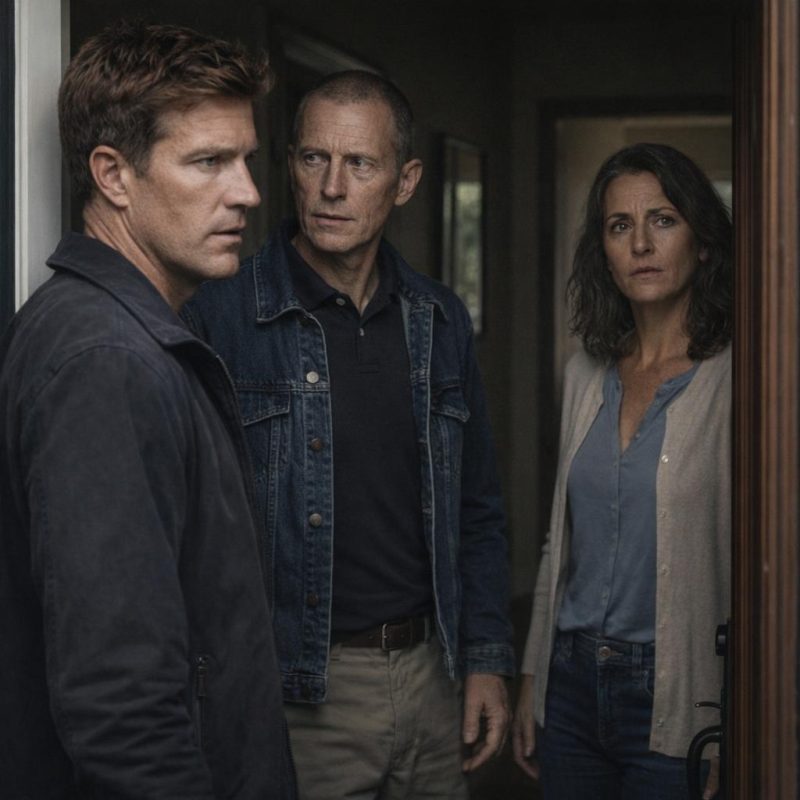 Image by RM AI
Thirty-Five Years
Claire made a sound I'd never heard from her before. It wasn't a word. It was something that came from somewhere deeper than words, a small broken exhale that seemed to take everything with it. Her knees went and she caught herself against the doorframe with one hand, the other coming up to cover her mouth. Tears were already running down her face before she'd fully registered what was happening. Jason — and I knew without being told that this was Jason — stepped forward carefully, like he was approaching something fragile. He said her name. Just her name, quietly, and that was enough. She reached for him and he let her, and they stood there on the porch holding onto each other while I stood to the side and tried to figure out where to put myself. He was crying too, though more quietly than she was, his jaw tight, his eyes closed. She kept saying something into his shoulder that I couldn't make out. I didn't try to. This wasn't mine to be part of, not in that moment. I was just the person standing nearby, watching thirty-five years collapse into a single point on our front porch, and the weight of it settled over me like something I hadn't known I'd been carrying.
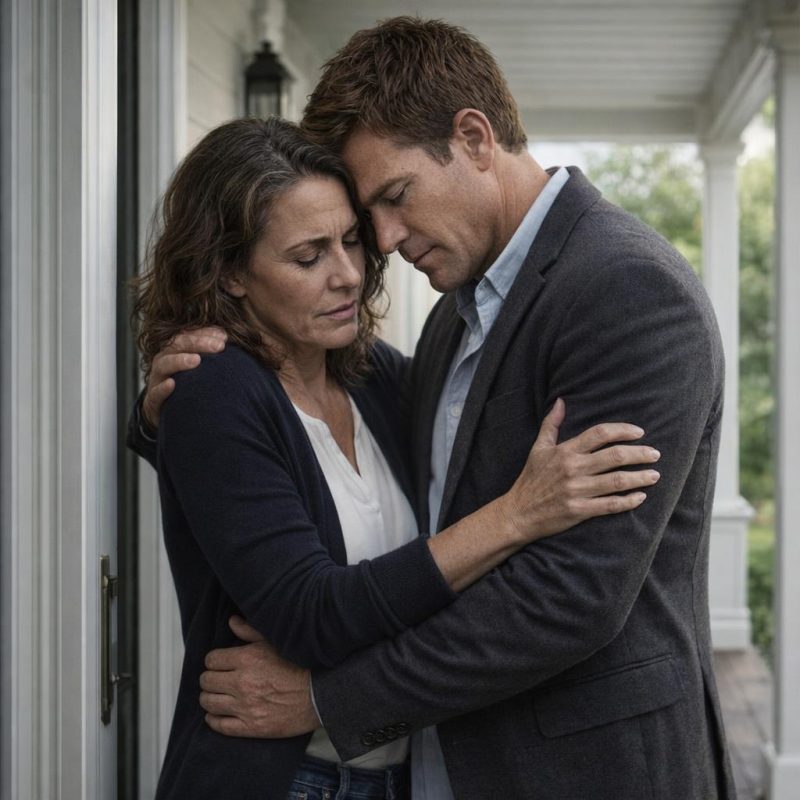 Image by RM AI
The Questions He Brought
We moved inside after a few minutes. Claire and Jason sat together on the couch, close but not quite touching, the way people sit when they're still figuring out the distance between them. I took the chair across from them and tried to make myself useful by being quiet. Claire asked him about his life — where he lived, what he did for work, whether he had a family of his own. He answered her, and his answers were warm enough, but I noticed he kept looking at her in a particular way, careful and measuring, like he was checking something against something else. He asked about her life too, and she told him a little — where we'd lived, our kids, the years in between. It felt almost normal for a few minutes. Almost like a conversation. Then he shifted forward slightly in his seat and said he had some questions, if that was okay. Claire's expression changed. It was subtle — a tightening around the eyes, a stillness in her hands — but I caught it. She said of course, whatever he needed. He looked down at his hands for a moment, then back up at her, and said there were things about the records that didn't quite make sense to him, things he needed to understand.
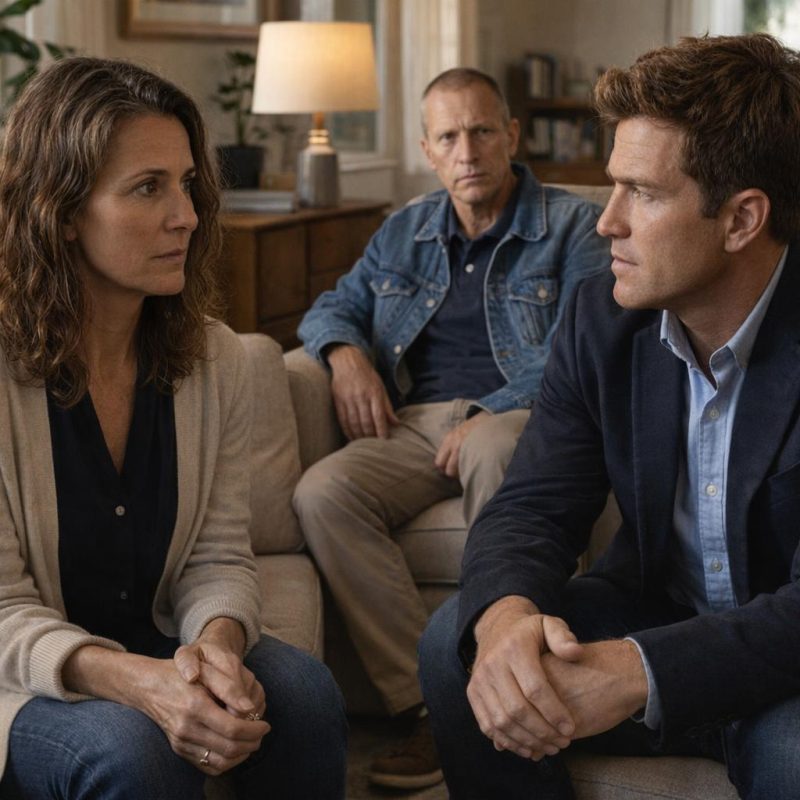 Image by RM AI
Timeline Issues
He pulled a small notebook from his jacket pocket. That detail stuck with me — the notebook, the fact that he'd come prepared. He asked Claire when she'd given birth. She told him: June of 1988, the fourteenth. He wrote it down. He asked where she'd been living at the time, and she named the city — a place she'd moved to briefly after high school, before she came back. He looked at what he'd written, then asked about the father. Claire hesitated. She said it was someone she'd known briefly, that it hadn't been a serious relationship. Jason nodded slowly and wrote something else down. Then he looked up and asked if she was certain about the dates. She said yes, of course she was certain. But something in her voice shifted just slightly when she said it, a fraction of a second's pause before the words came, and I noticed it even if she didn't. Jason looked at his notebook again. He didn't say anything for a moment. The room was very quiet — just the sound of the afternoon outside, a car passing, a bird somewhere — and the silence after his last question sat between all three of us like something none of us quite knew how to move around.
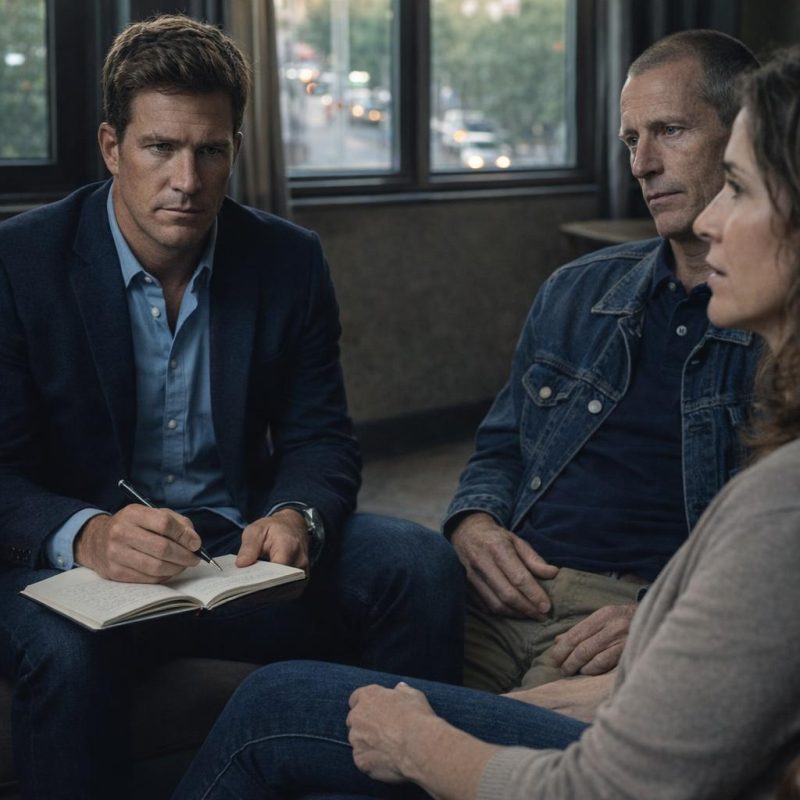 Image by RM AI
The Contradictions
Jason asked about the adoption process next — how it had been arranged, who had handled it. Claire described what she remembered: a private agency, paperwork she'd signed in a lawyer's office, her sister Beth helping her through most of it because she'd been in no state to manage it alone. Jason listened carefully. Then he said the records he'd obtained showed a different agency name than the one she'd mentioned. Claire frowned. She said she might be misremembering — it had been a long time. He asked for the name of the father, the one she'd put on the paperwork. She gave him a name. He wrote it down without reacting, without any expression I could read. Then he asked if she'd ever met the adoptive parents before the placement was finalized. Claire said no — she'd specifically asked not to, that it had been too painful to think about. Jason was quiet for a moment. He said the records indicated there had been a meeting. Claire looked at him the way you look at someone who's just told you something in a language you thought you spoke but suddenly aren't sure of, and I sat with the feeling that the shape I'd thought I understood had just shifted into something I couldn't quite make out anymore.
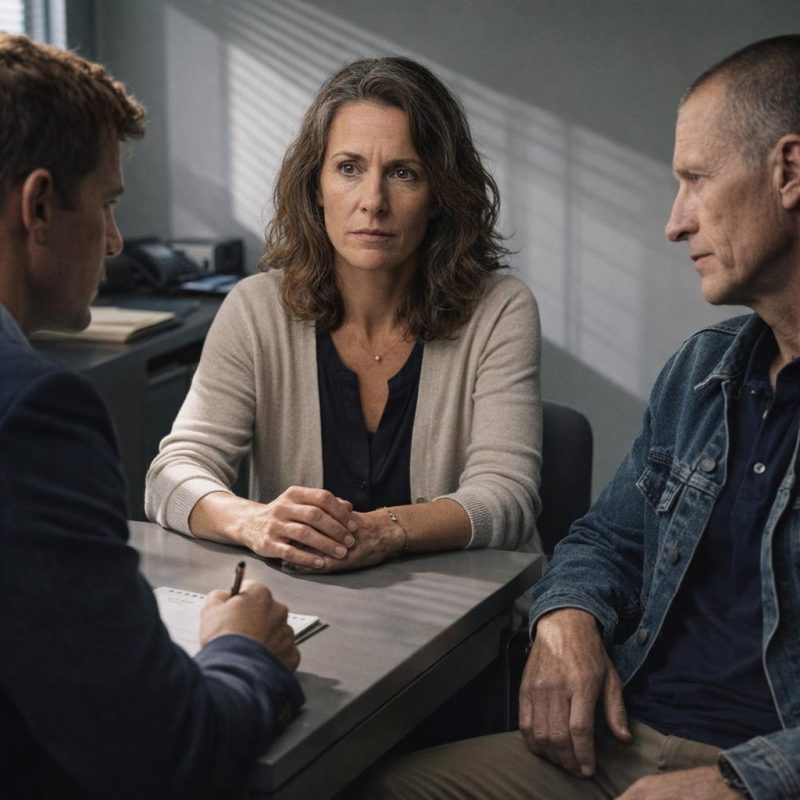 Image by RM AI
The DNA Test
The conversation had been moving in a direction I couldn't quite predict, and then Jason paused in a way that felt different from his other pauses — longer, more deliberate in its stillness. He looked at Claire carefully, the way you look at someone before you say something you're not sure they're ready to hear. He asked if she knew about a DNA test. Claire's expression went blank. Not confused exactly — blank, like the question hadn't landed in any category she recognized. She asked what DNA test. Jason said that Michael and Linda had one done years ago, that it had started as something routine, a way to build out a medical history for him as he got older. Claire nodded slowly, like she was trying to follow a map in a language she was still learning. She asked what it showed. Jason looked at her for a moment without answering. Then he said it had shown something unexpected. The color left Claire's face so quickly and completely that I reached over and put my hand on her arm without thinking. Then Jason said the test had shown something different from what everyone had assumed.
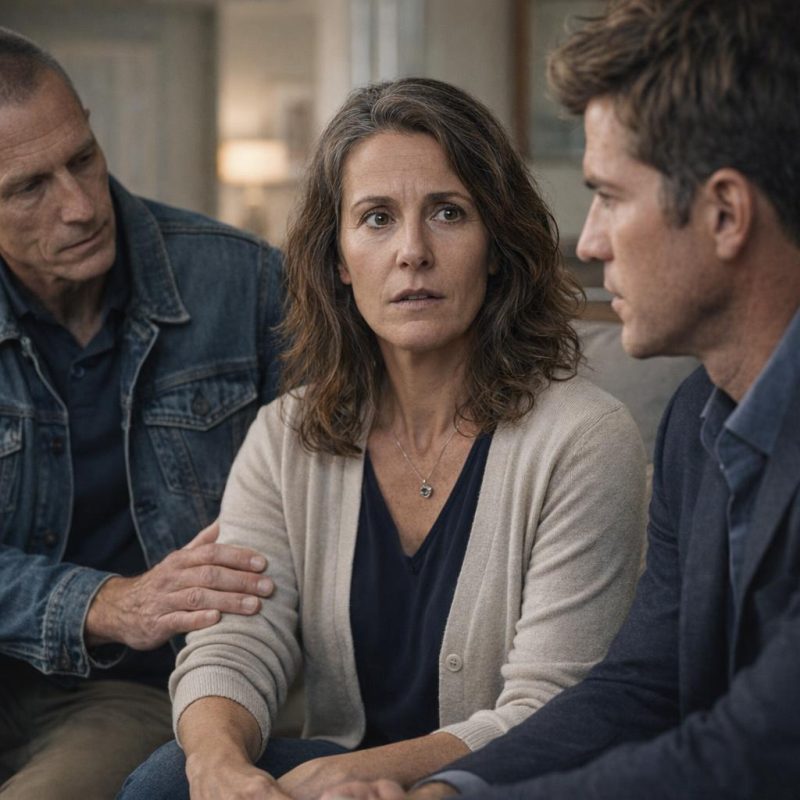 Image by RM AI
The Father She Thought She Knew
Jason set a folder on the table between them. He didn't make a production of it — just placed it there and let Claire reach for it herself. Inside were printed pages, lab results, a chain of documentation I couldn't fully parse but that Claire clearly could, at least in part. Jason explained it quietly: the DNA test had compared his profile against the man listed as the biological father on the original paperwork. The match wasn't there. Not a partial match, not an ambiguous result — no match at all. Claire stared at the pages. She said it was impossible. Jason said he understood why it felt that way, but the results had been run twice. Claire's hands started shaking against the paper. She said she didn't understand, that there had only been one person, that she was certain. Jason didn't push back. He just let her sit with it. I watched her face move through something I didn't have a name for — not quite grief, not quite panic, somewhere in the space between them. She looked up at Jason and asked how long he had known. He said almost two years. Claire set the papers down on the table, and her hands stayed there on top of them, trembling and still.
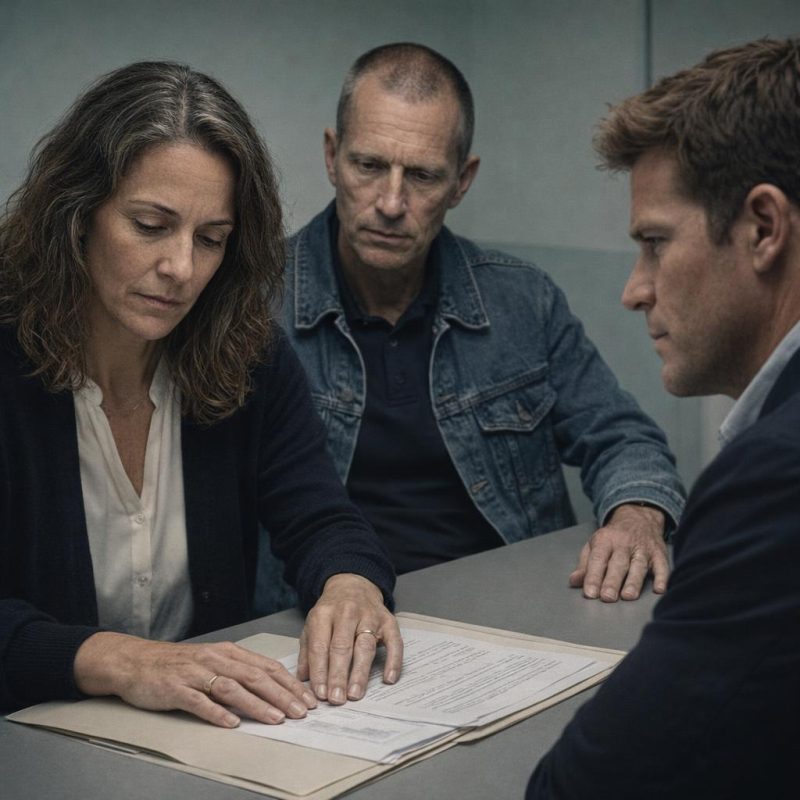 Image by RM AI
The Family Secret
Claire didn't say much for a few minutes after that. Then she picked up her phone and called Beth. I'd only met Beth a handful of times over the years — she lived two hours away and their relationship had always been warm but complicated in ways Claire never fully explained. Beth arrived in just under an hour, which told me she'd driven fast. She came through the front door and took one look at Claire's face and her own face changed. Claire told her what Jason had said. She laid it out plainly, the DNA results, the name on the paperwork, the fact that the match wasn't there. Beth sat down without being asked. She started crying before Claire even finished. Claire asked her directly — did she know something was wrong. Beth nodded. Claire's voice went very quiet. She asked why Beth had never said anything, not once in all these years. Beth looked down at her hands in her lap. Claire looked at her the way you look at someone you love and are furious at in the same breath, and then she asked what exactly Beth knew. Beth said their mother knew more. Then she said she'd been trying to protect Claire.
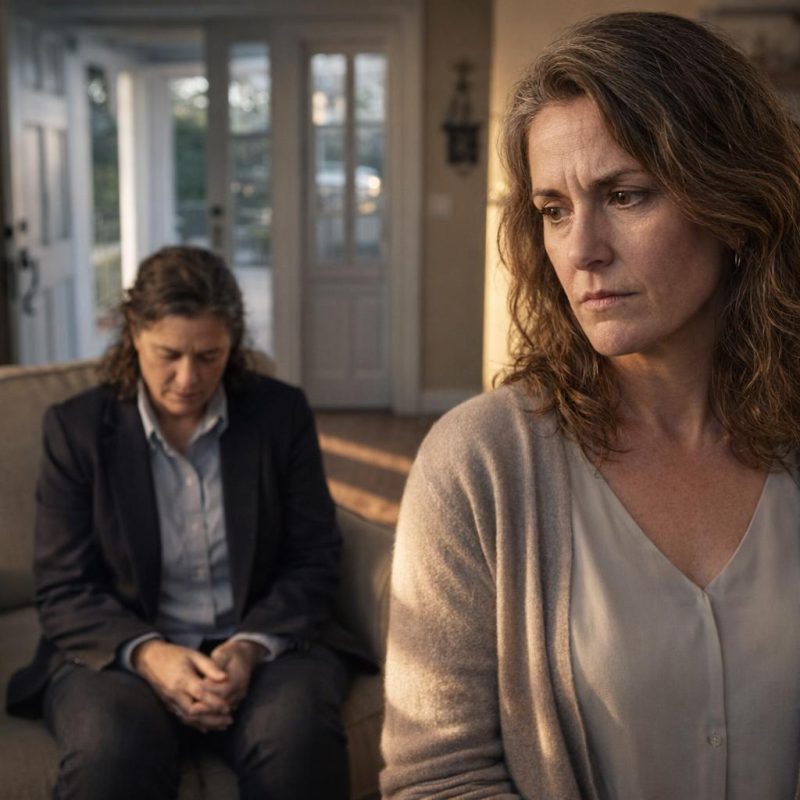 Image by RM AI
The Hidden Letters
Beth took a breath and started from the beginning, or at least the beginning as she knew it. She said there had been letters — correspondence from the adoption agency, sent to the family home in the months after the placement was finalized. Beth said she'd found them years later, tucked into a box in their mother's closet, still in their original envelopes, and that Claire had never seen them. Claire asked what was in them. Beth said she hadn't read all of them, that she'd only gotten through a few before their mother caught her and made her promise to leave it alone. She said their mother had told her Claire had been through enough, and that whatever was in those letters would only make things harder. Records had also been misplaced somewhere along the way — Beth wasn't sure if that was deliberate or just the chaos of the time, but certain documents that should have existed simply didn't. Claire sat very still through all of this. She didn't cry. She just listened with her hands folded in her lap, and I could see the effort it was taking her to hold herself together. When Beth finished, the room was quiet in a way that felt like it had weight to it, like the air itself had absorbed thirty-five years of things left unsaid.
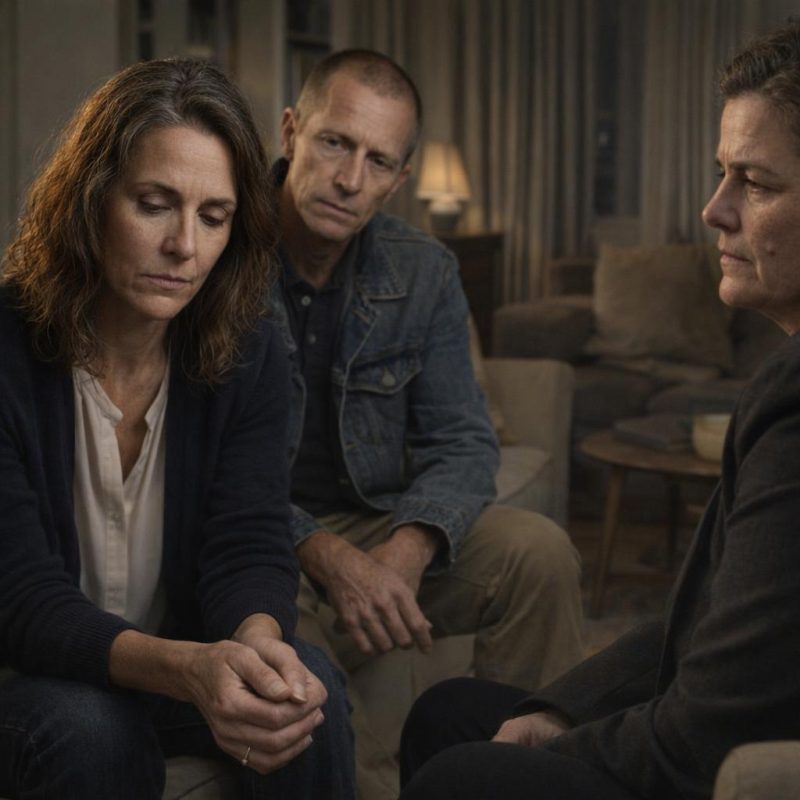 Image by RM AI
What Mother Knew
Claire asked the question I think she'd been building toward since Beth walked in the door. She asked what their mother had actually known. Beth was quiet for a moment. Then she said their mother had told her she knew who the real father was — that she'd found out before Claire even gave birth. Claire's face didn't change right away — it took a few seconds, like the information had to travel a long distance to reach her. She asked why. Why had their mother known and said nothing, not once, not in all the years that followed. Beth said she didn't know the reason, that their mother had never explained it, only insisted that some things were better left alone. Their mother had died five years ago. A stroke, quick, no warning. There had been no deathbed conversation, no letter left behind, no moment where the truth had been passed on. Claire started crying then — not the sharp, sudden kind, but the slow kind that comes from somewhere deep and tired. I moved closer to her on the couch. She didn't say anything for a long time. Neither did any of us. The question she most needed to ask had no one left to answer it, and that absence settled over the room like something permanent.
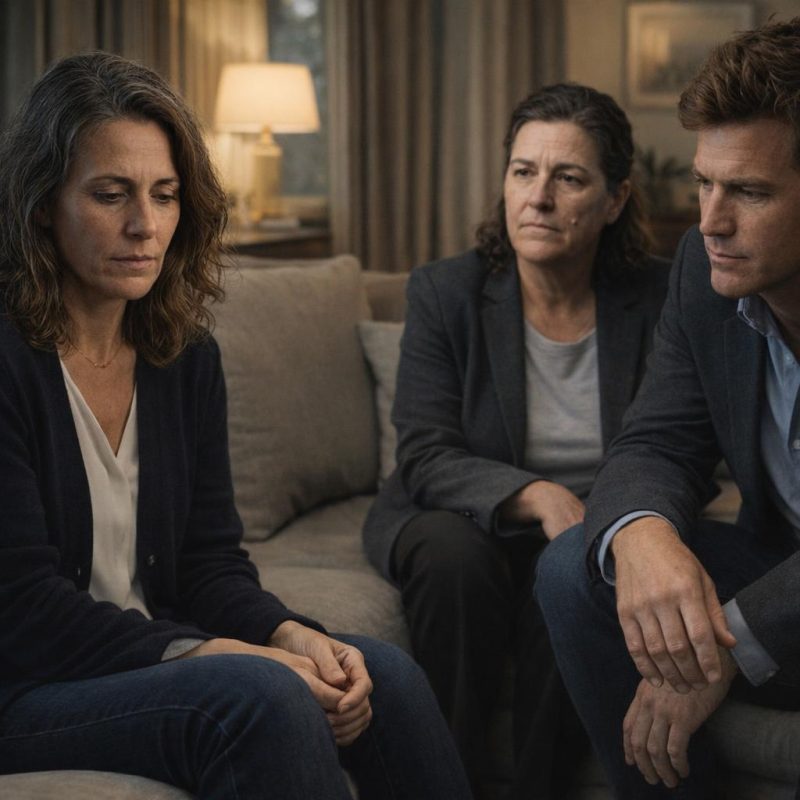 Image by RM AI
The Decision to Test
It was Jason who spoke first, after the silence had stretched long enough. He said there were things they could still find out, that the past being complicated didn't mean it had to stay hidden. He said he could help coordinate new DNA testing — proper, comprehensive testing, the kind that could map out the full picture. Claire looked at him and nodded before he'd even finished the sentence. Beth said she'd help however she could, that she still had the letters their mother had hidden and would hand them over without reservation. I told Claire that whatever she needed, whatever direction this went, I was with her. I meant it without qualification. Jason said they'd need samples from Claire and from him, and that they'd also need to track down the man Claire had believed was the father, to formally rule him out on record. Beyond that, he said, there might be other avenues — the agency records, whatever could still be retrieved, any names that surfaced in the letters Beth had kept. Claire straightened in her chair. The grief was still there in her face, but something else had moved in alongside it. She said she wanted to know the truth, all of it, whatever it turned out to be. Jason said he'd start making calls in the morning. They all looked at each other across the table, and something shifted — a quiet, collective decision that the searching was no longer optional.
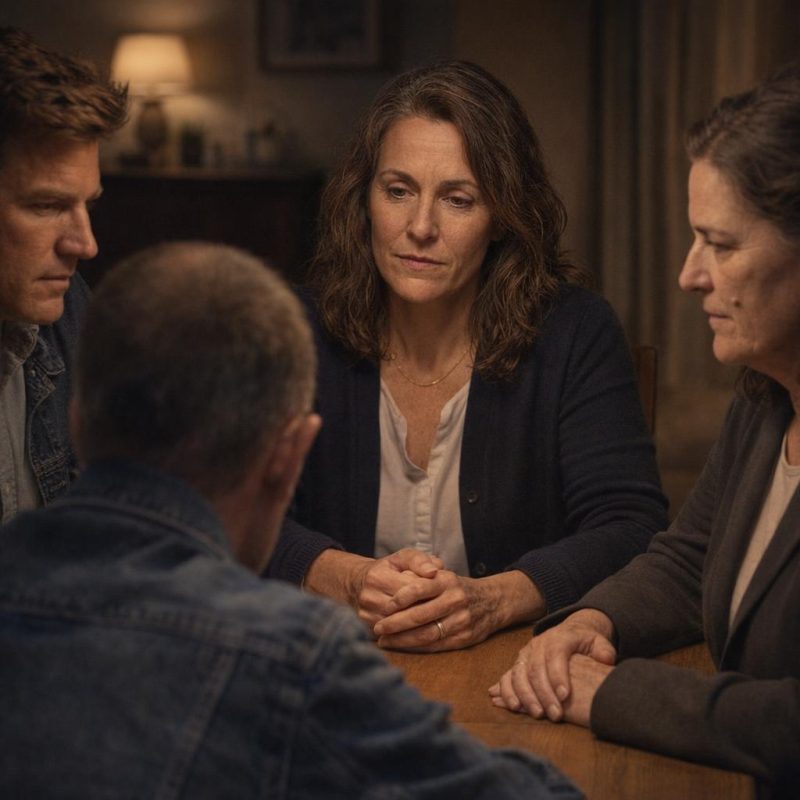 Image by RM AI
The Waiting
The tests were submitted the following week. Jason handled most of the logistics — the kit coordination, the agency records request, the paperwork that needed Claire's signature and then disappeared into the mail. After that, there was nothing to do but wait. Claire checked the mailbox every day, sometimes twice. I'd watch her come back up the front walk empty-handed and see her work to keep her expression neutral, like she was practicing for a disappointment she didn't want to feel yet. Jason called every few days with small updates — the agency had acknowledged the request, the lab had confirmed receipt, processing was running on schedule. The calls helped, but not much. Weeks passed. Claire started going through her memories of that time more deliberately, sitting at the kitchen table some evenings with a cup of tea she'd forget to drink, trying to reconstruct details from thirty-five years ago that had never been meant to matter again. She'd mention a name sometimes, or a place, and then go quiet, like she was testing whether the memory held. I didn't push. I just stayed close. The house had taken on a particular kind of stillness during those weeks — not uncomfortable exactly, but suspended, like everything in it was holding its breath alongside us.
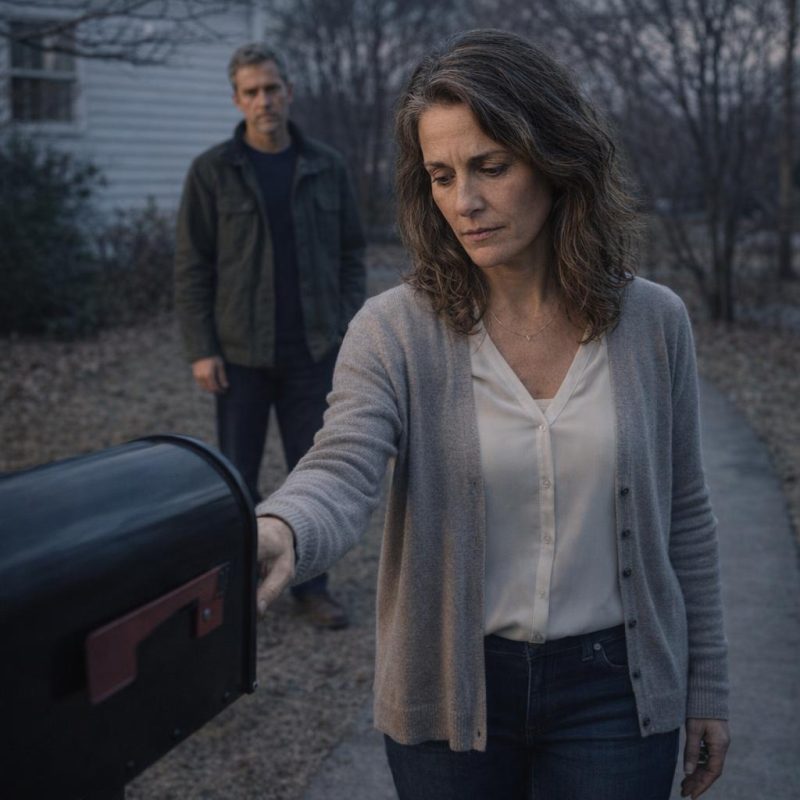 Image by RM AI
The Call
It was a Thursday afternoon when the phone rang. Claire answered it in the kitchen, and I heard Jason's voice through the receiver from where I was standing in the doorway — not the words, just the tone, which was different from his usual check-in calls. Claire's hand tightened around the phone. She asked if the results had come. There was a pause, and then she said okay, and then she said she understood, and her free hand came up and pressed flat against the counter like she needed something solid to hold onto. She asked what they showed. I could hear Jason's response but couldn't make out the words. Claire looked up at me across the kitchen. Her eyes were wide and very still, the way eyes get when the mind behind them is moving very fast. She said yes, of course, come whenever. She hung up and stood there for a moment with the phone still in her hand. Then she looked at me and said Jason needed to come over tonight, that he wanted to go through everything in person, and that he'd said it couldn't wait.
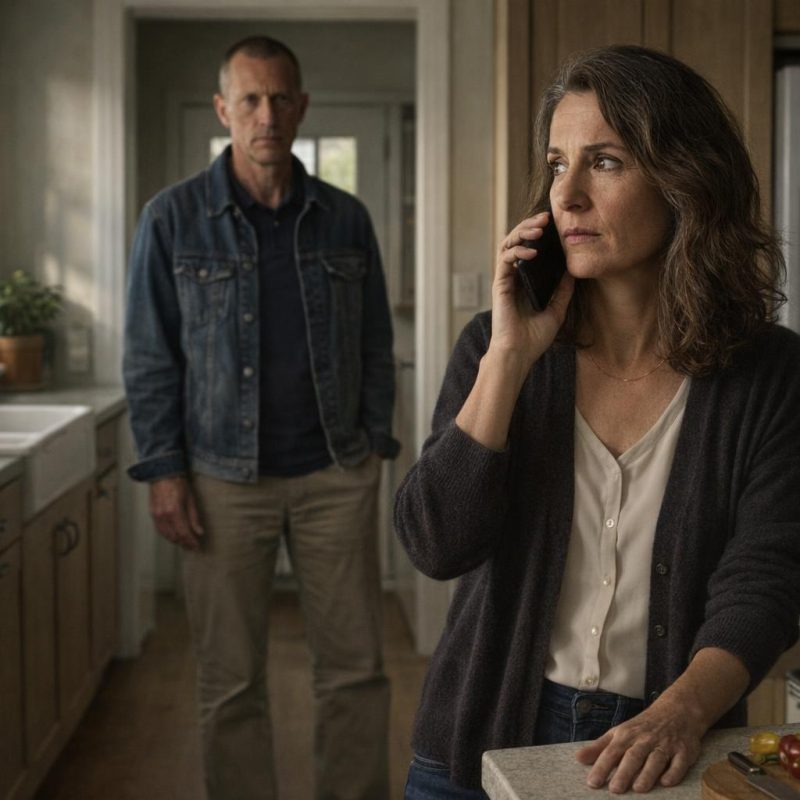 Image by RM AI
The Records Arrive
Jason arrived just after seven, and I heard his knock before Claire could get to the door. He was carrying a manila folder pressed flat against his chest, thick enough that the edges had started to curl. Beth was already there — she'd come over an hour earlier without being asked, which told me she understood what kind of night this was going to be. Claire met Jason at the door and they held each other for a moment without saying anything. I watched from the hallway, not wanting to intrude on whatever that was. We moved to the dining room without discussing it, the way people do when they all know where they're supposed to go. Jason set the folder on the table and we each took a chair. Claire sat across from him with her hands folded in her lap, and I could see her knuckles were pale. Beth sat beside her. Nobody reached for the folder. Nobody spoke. Jason looked at Claire for a long moment, then looked down at the folder, then back at her. Claire gave him a small nod. He opened it slowly, and the papers spread across the table between us — official letterheads, printed charts, handwritten notations on old forms. The four of us sat there in the lamplight with everything laid out in front of us, and the room held its breath around the table.
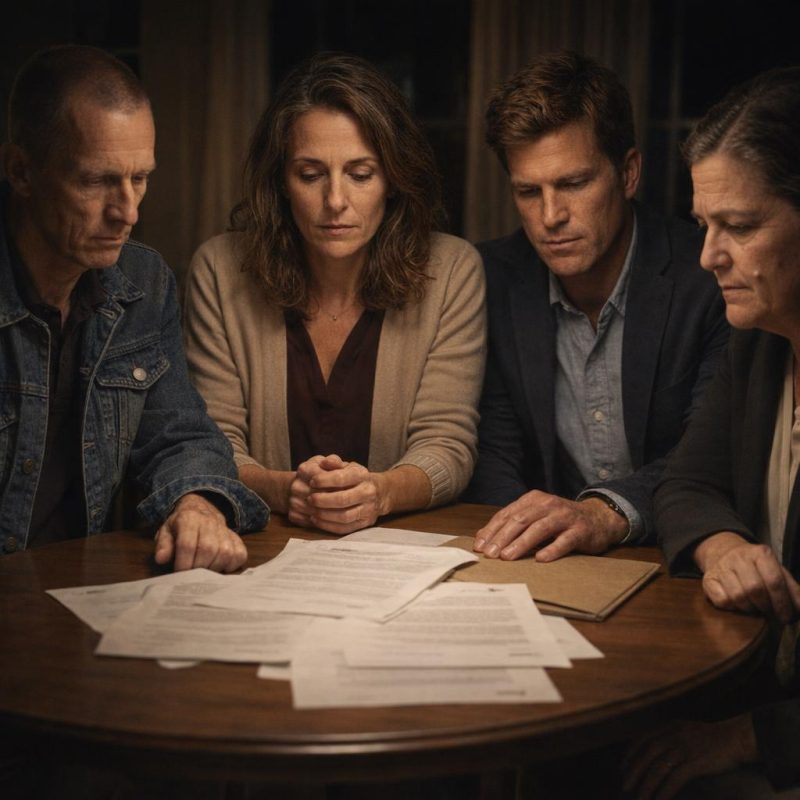 Image by RM AI
The Results
Jason walked us through the DNA comparison first. He'd had the test done through a certified lab, and the results were formatted in columns I had to squint at to follow. He explained it patiently, pointing to each row, and I tried to keep up while watching Claire's face at the same time. The test had compared Jason's DNA against a sample connected to the man Claire had believed was his biological father — a man she'd named early in this process, someone from that period of her life thirty-five years ago. The columns didn't match. Not close, not ambiguous — they simply didn't match. Jason said it plainly: there was no genetic relationship. Claire stared at the paper for a long time without speaking. Then she asked him to go through it again. He did, slower this time, and Beth leaned in beside her so they could both follow along. When he finished the second time, Claire said she didn't understand how that was possible. Her voice was very quiet. She said she had been so certain. Jason didn't push back or argue — he just let the numbers sit there on the table between them, doing what numbers do. Beth reached over and took Claire's hand. I sat with my hands around my coffee mug and watched my spouse absorb something that had apparently been wrong for thirty-five years, and the weight of that certainty — the new kind, the kind that replaces the old — settled over the table like something physical.
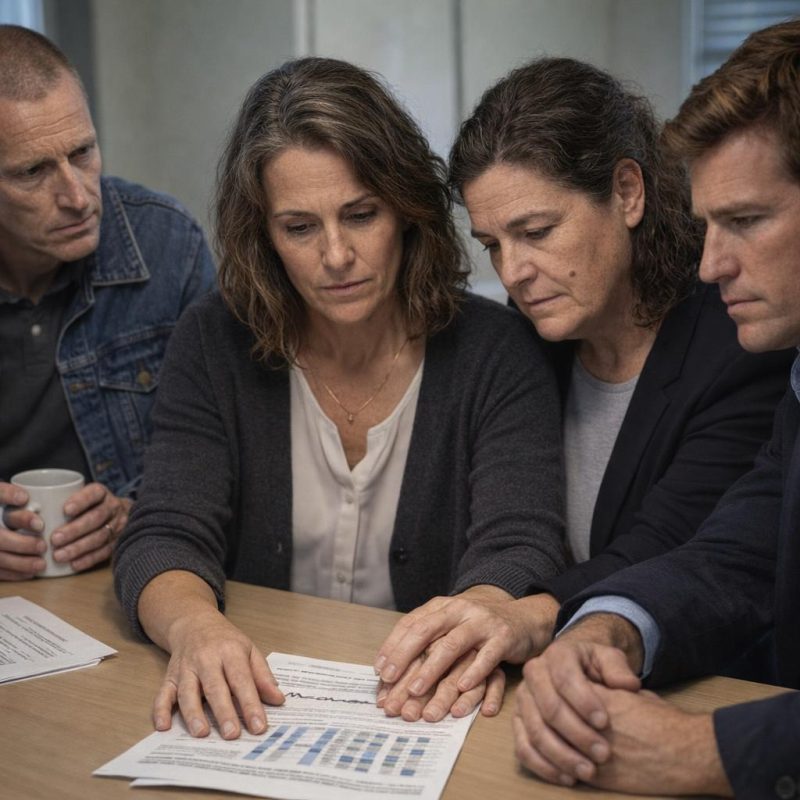 Image by RM AI
The Name in the Records
Jason let the silence hold for a minute before he reached back into the folder. He said there was something else — something he'd found in the adoption agency records that he wanted to ask Claire about. He pulled out a photocopied page, old enough that the edges had gone soft, and slid it across the table toward her. He said he'd been going through the records carefully and kept finding a name he didn't recognize. Claire picked up the page and looked at it. I leaned over to see. The document was some kind of intake form, and in the margin, written in ink that had faded to a pale brown, was a name — handwritten, not typed, like someone had added it as an afterthought. Jason asked if the name meant anything to her. Claire read it again, her lips moving slightly. She said it sounded vaguely familiar, but she couldn't place it. Beth looked over Claire's shoulder and shook her head. Jason said the name appeared more than once — on two other pages in the file, always in the margin, always in the same handwriting. He set those pages beside the first one so we could see them together. I looked at the name written there in that faded ink, the same name three times across three different documents, and it was Richard Caldwell.
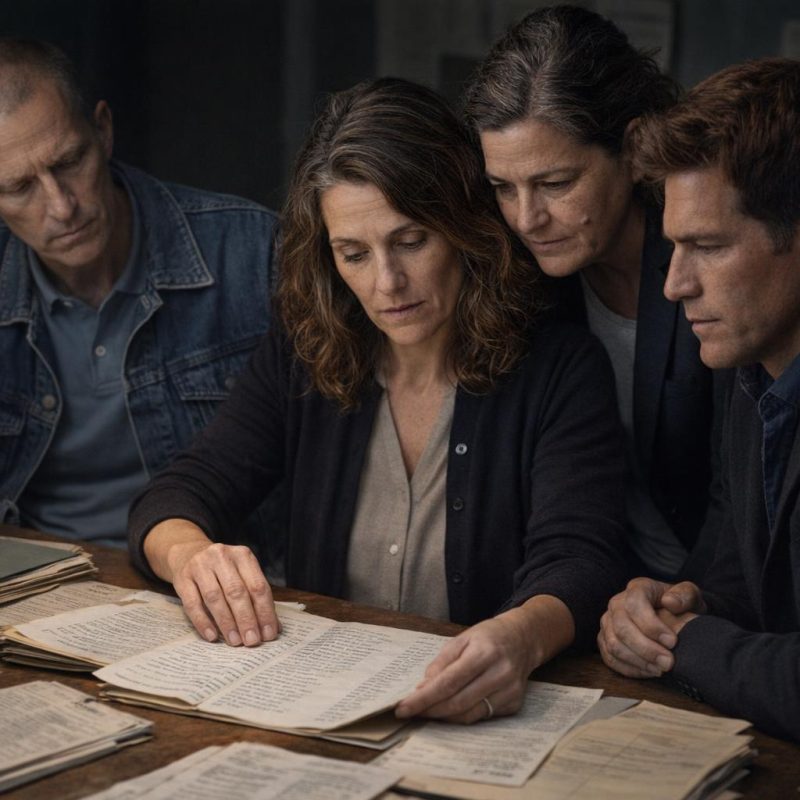 Image by RM AI
The Memory Surfaces
Claire set the pages down and pressed her fingers against her eyes. She said that time in her life was blurry — she'd been nineteen, she was working two jobs, everything from that year ran together in her memory. Jason waited. Beth didn't say anything either. I watched Claire sit very still with her eyes closed, and I could almost see her moving backward through something she hadn't visited in a long time. She said she'd been seeing a few different people casually back then, nothing serious with any of them. She said the name Richard Caldwell sounded like it could be someone she'd met, but she couldn't pull a face to go with it. Then she went quiet again. After a moment she said there was a party — she thought it was at someone's apartment near where she was living. She said she met someone there, spent some time with him over a few weeks, and then he moved away for work. She said it was brief and she hadn't thought much of it afterward. She never saw him again. She opened her eyes and looked at Jason across the table, and something in her expression had shifted — not certainty yet, but the beginning of recognition, like a shape coming into focus through fog. She said quietly, almost to herself: "I think that was him."
 Image by RM AI
The Truth Revealed
Jason nodded slowly. He said the DNA results and the records both pointed to the same conclusion: Richard Caldwell was his biological father. Not the man Claire had believed for thirty-five years. Richard Caldwell — the man from the party, the one who moved away for work, the one Claire had spent a few weeks with and never seen again. Claire sat back in her chair like something had gone out of her. She said she'd never told Richard she was pregnant. She said she hadn't even known for certain herself until after he was already gone. She'd assumed — she'd been so sure — that the other man was the father, and so that was the story she'd carried. Beth was very still across the table. I watched my spouse put it together in real time: the man she'd believed was Jason's biological father had never known because he wasn't, and Richard Caldwell had moved away without ever knowing a child existed. Thirty-five years. Claire pressed both hands flat on the table and stared at the documents. She looked overwhelmed in a way I hadn't seen before — not just sad, but unmoored, like the ground had shifted under a story she'd been standing on her whole adult life. Jason looked up from the papers and said they needed to find Richard Caldwell.
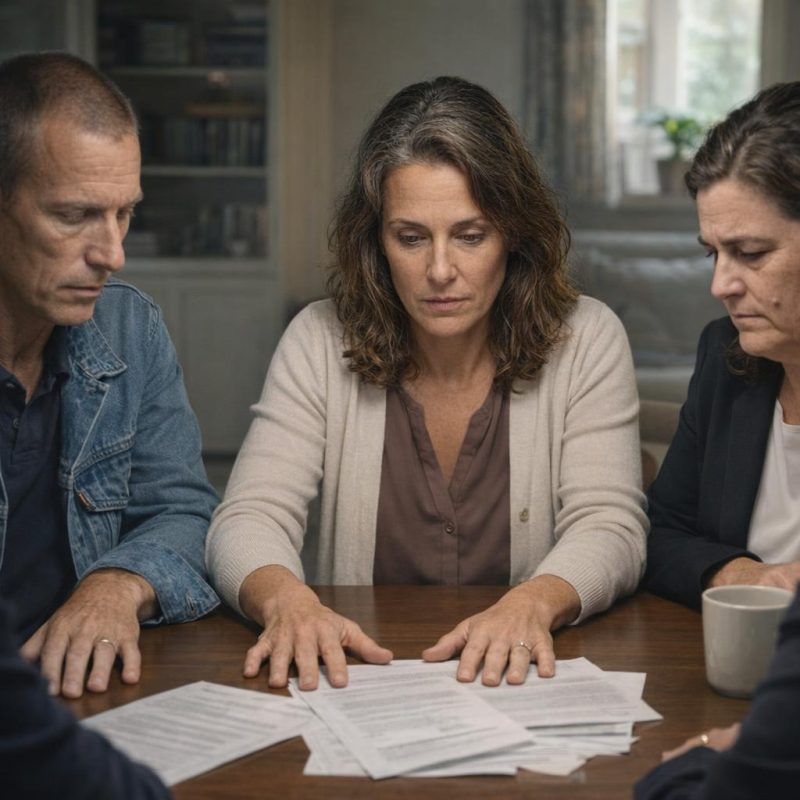 Image by RM AI
Why the Family Knew
Claire turned to Beth. Her voice was careful, like she was choosing each word before she let it out. She asked how their mother had known. Beth didn't answer right away. She looked down at the table, then back up, and I could see she'd been carrying this part for a long time. She said their mother had known because she'd known about both men. Claire had been seeing Richard and the other man during the same brief stretch of time — nothing serious with either of them, but their mother had been aware. When Claire got pregnant and Richard had already left town, their mother had done the math. Beth said it quietly but plainly: she'd looked at the timeline, she'd thought about who was still around and who wasn't, and she'd made a decision. Richard was gone. The other man was still there. Their mother thought it was simpler — cleaner — to let Claire believe it was him. She thought she was protecting Claire from having to chase down someone who'd already moved on, from the shame of a more complicated story. So she'd said nothing. And the family had followed her lead. Claire stared at her sister. Jason sat very still beside the folder. I didn't say anything. Then Beth said it in a voice pulled flat and tired: their mother had done the math, and she'd decided Richard didn't need to be part of the equation.
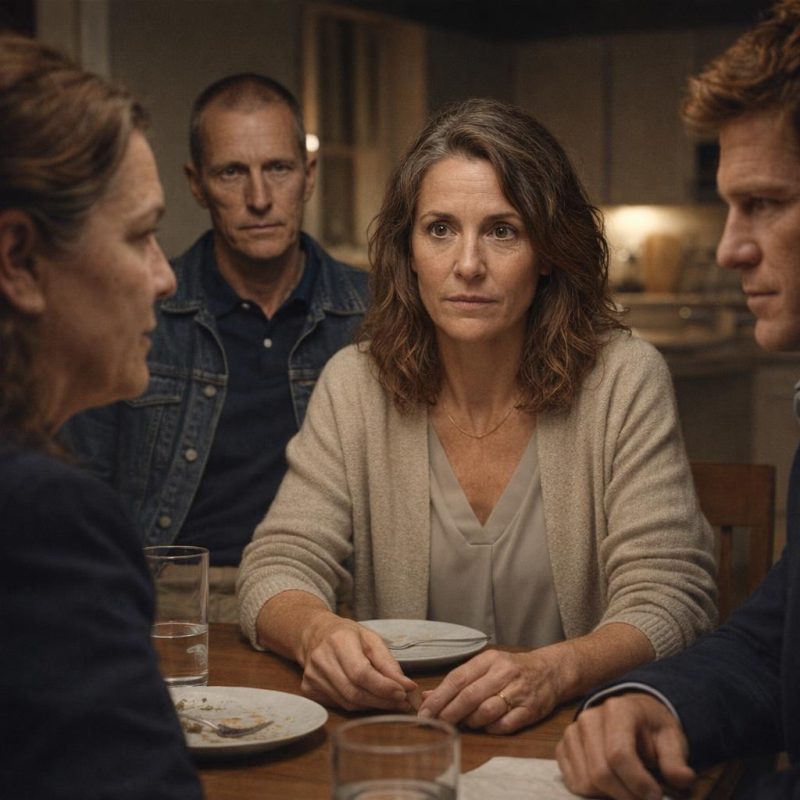 Image by RM AI
The Weight of Deception
Claire didn't respond to that. She just sat there. I watched her face go through something I didn't have a name for — it wasn't anger exactly, and it wasn't grief exactly, but it was somewhere in the territory between them. Her mother had looked at the facts and made a choice, and then the family had closed around that choice like water closing over a stone, and Claire had lived inside that closed water for thirty-five years. She'd given away a baby believing one story. She'd carried that story through her marriage, through raising our kids, through every quiet moment when she must have thought about Jason and wondered. And the whole time, the people closest to her had known it wasn't the whole truth. Beth kept saying she was sorry. She said it three or four times, each time a little quieter, and Claire didn't tell her to stop but she didn't respond either. Jason sat with his hands folded on the table, watching his biological mother with an expression I couldn't read. I reached over and put my hand on Claire's arm, and she didn't pull away, but she didn't lean in either. She was somewhere else. The papers were still spread across the table, and the lamp was still on, and the room held all of it — the apologies, the silence, the decades of a secret that had shaped everything — and none of it felt like enough to account for what had been lost.
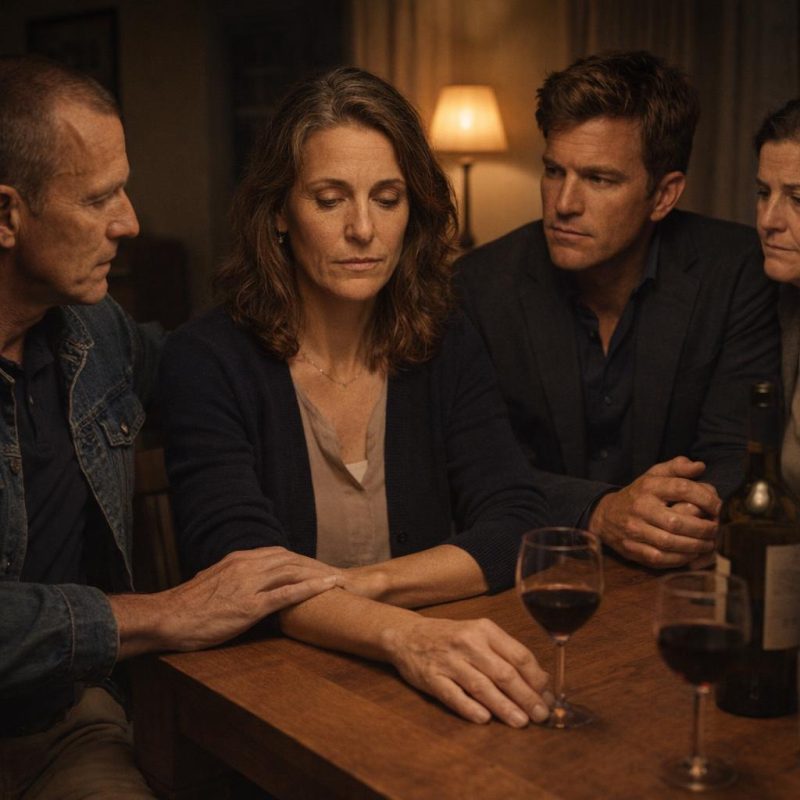 Image by RM AI
The Search Begins
Jason was the one who moved first. He gathered the papers back into the folder and said he'd start looking for Richard right away. He said the records gave him a few things to work with — a city Richard had moved to for work, an approximate age, a full name that wasn't common. Claire looked up and said she remembered the city too, or thought she did — somewhere in the Pacific Northwest, she said, though she wasn't certain. She said Richard would be close to seventy now. She said it like she was doing the arithmetic out loud and surprising herself with the answer. Jason said he'd search public records first, then social media, then whatever databases he could access. I told him I'd help however I could. Claire asked, very quietly, what they would say if they actually found him. Jason thought about it for a moment. He said they'd tell him the truth — that he had a son, that the son had been looking for him, and that none of it was his fault. Claire nodded slowly. After Jason left, she and I sat at the table for a while without talking. The folder was gone but the table still felt full of everything that had been on it. Somewhere out there was a man approaching seventy who had no idea any of this existed, and we were about to go looking for him.
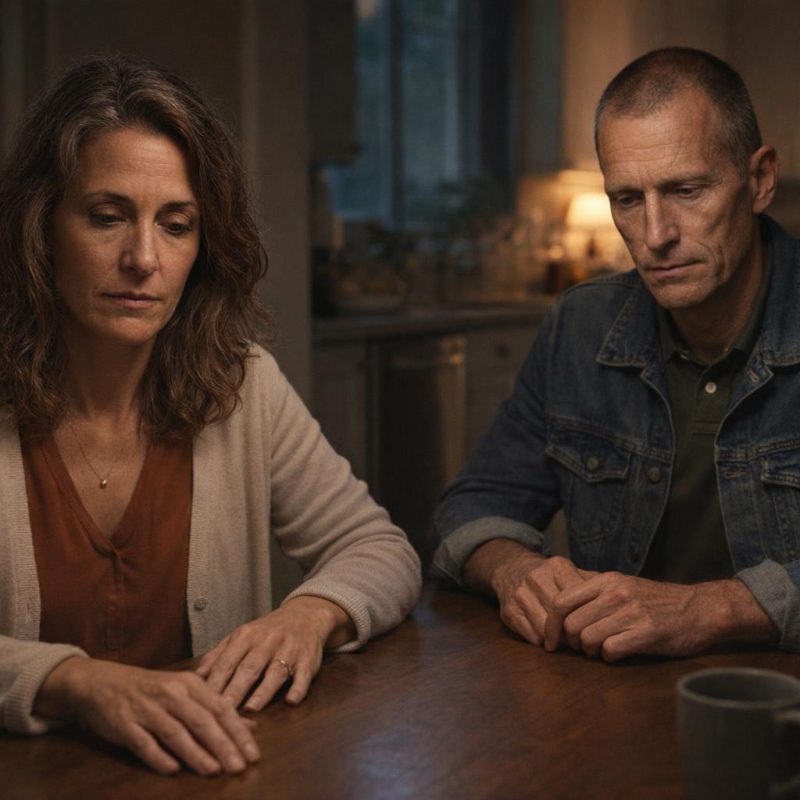 Image by RM AI
Months of Searching
The weeks after Jason left with that folder were quieter than I expected, but not easier. He called every few days at first — a lead that didn't pan out, a phone number that went nowhere, an address that turned out to be twenty years old. Claire would sit at the kitchen table while I relayed the updates, and I could see her working to keep her face neutral. She wasn't always successful. Months went by. Jason found old employment records from a company in Oregon that matched Richard's name and approximate age. He tracked a forwarding address from there to another city, then another. He reached out to people who had worked with Richard decades ago — a few remembered him, most didn't, none knew where he'd ended up. Claire stopped asking for daily updates somewhere around the third month. I think it was easier for her not to count the days. I kept checking in with Jason on my own, just so she didn't have to carry the waiting so visibly. Then one evening in early spring, my phone rang. It was Jason. His voice was different — steadier, like something had settled in him. He said he'd been going through a new database, cross-referencing retirement records with the city Claire had mentioned. I asked him what he'd found. He said, "I think I found something."
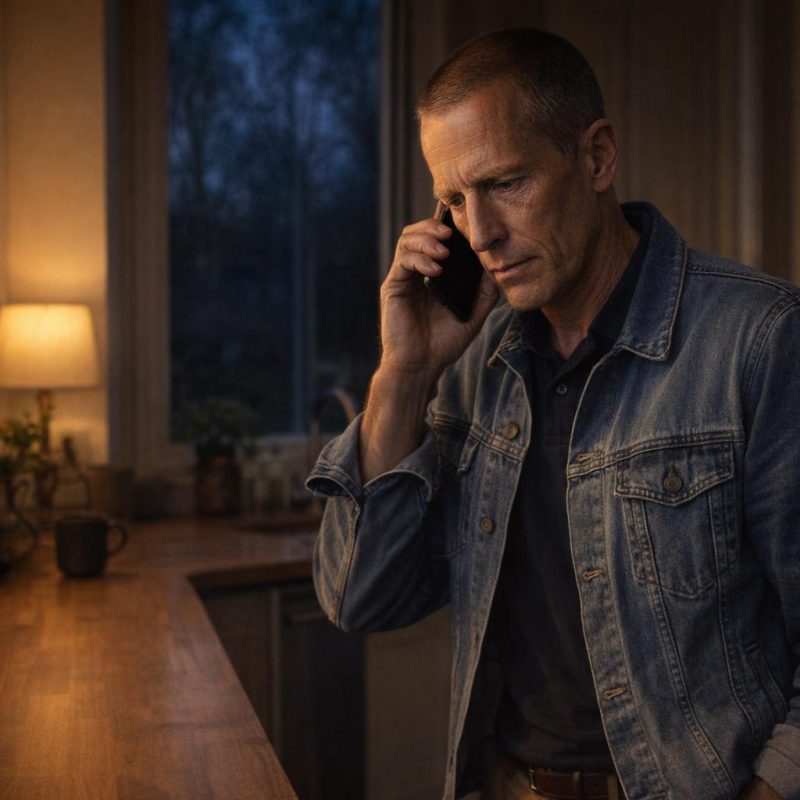 Image by RM AI
Contact
Jason had found Richard living in a small town in Idaho — retired, seventy years old, listed in a local community directory with a landline number that still worked. He told us this on a video call, Claire and I sitting close together at the kitchen table, the laptop screen between us like a window into something we weren't sure we were ready to see through. Jason said he'd called the number himself. He said he'd introduced himself carefully, explained that he was doing genealogical research, and asked if he was speaking to the right Richard. When Richard confirmed his name, Jason told him the truth — all of it. The DNA results. The adoption. The search. Claire's name. I watched her face go pale when Jason said that part. Jason said Richard had gone completely silent. Not the silence of someone hanging up, but the silence of someone trying to stay upright. Jason had waited, and then Richard had asked one question: how old was the boy? Jason told him thirty-five. There was another long pause. Then Richard said he needed some time. He asked if he could call Jason back in a day or two. Jason said of course. He gave Richard his number again, slowly, and Richard read it back to make sure he had it right. Then the line went quiet, and Jason said, "He's going to call back. I could hear it in his voice — he's going to call."
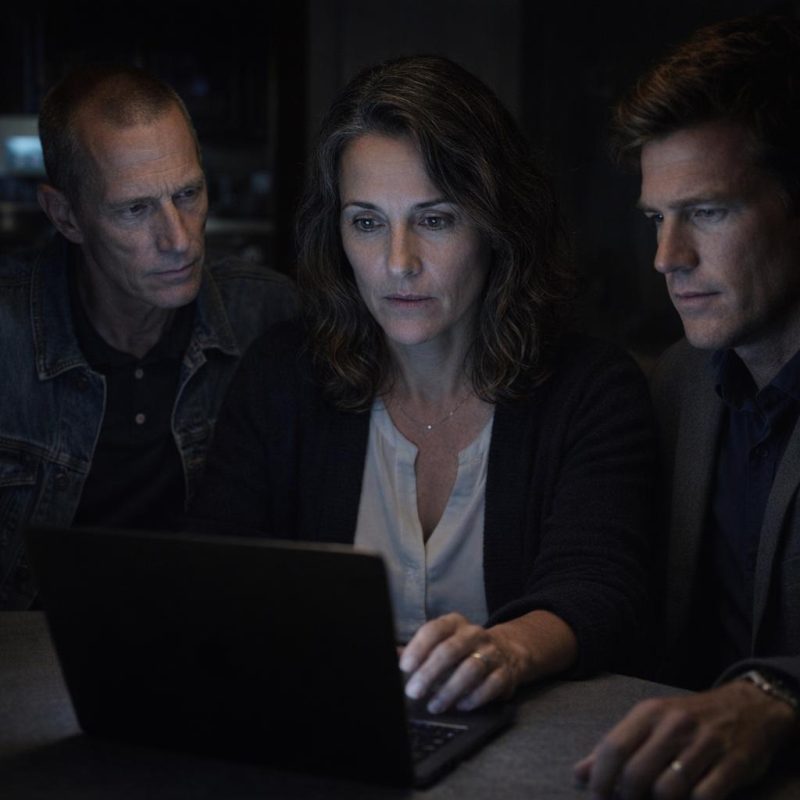 Image by RM AI
The Call Back
Two days later, Jason's phone rang at seven in the evening. He was already at our house — he'd been coming by most evenings that week, none of us wanting to be apart when the call came. He put it on speaker without hesitating, and we all leaned in. Richard's voice came through the phone pulled thin and unsteady, like he'd been holding something heavy for forty-eight hours and had only just set it down. He said he'd been crying since Jason called. He said he wasn't angry — he wanted us to know that first, before anything else. He said he wished he had known. He said it more than once, quietly, like he was still working out what it meant. He asked about Claire — was she all right, had she had a good life. Claire had her hand pressed over her mouth. I put my arm around her. Richard asked Jason if he'd had good parents, if he'd been loved, if he'd grown up okay. Jason said yes to all of it, and his voice cracked a little on the last one. Richard said he was glad. He said that mattered more than he could explain right now. The call went on for a while after that, but what I remember most is the sound of Richard crying — not dramatically, just steadily, the way grief sounds when it's been waiting a long time to be let out. The room around us held very still.
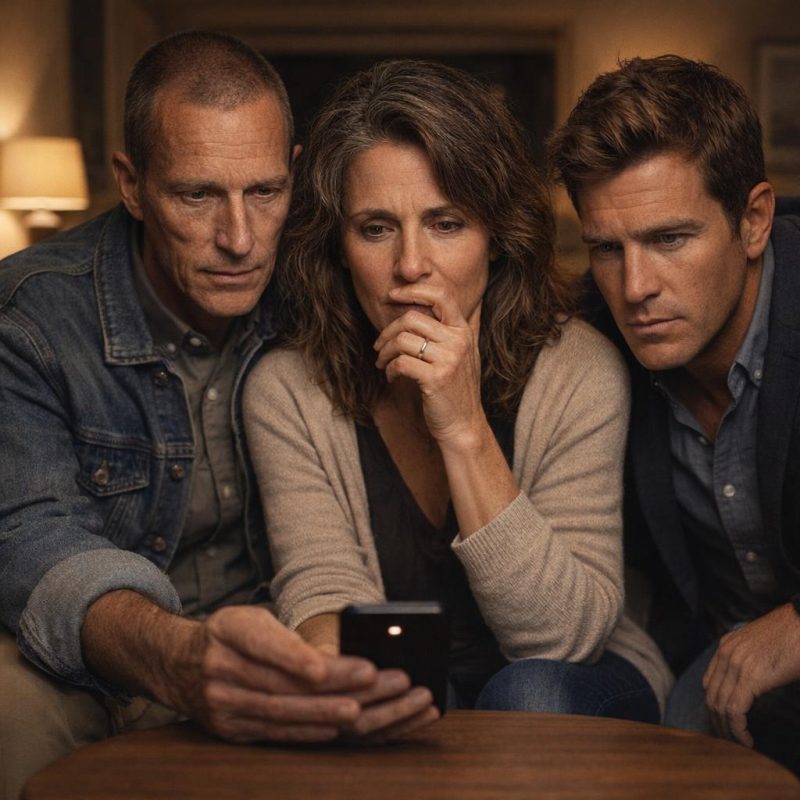 Image by RM AI
Richard's Question
Near the end of that call, Richard's voice steadied a little. He asked, carefully, if there was any chance he could meet Jason in person. He said he understood if that wasn't something anyone was ready for. He said he wouldn't push. Jason looked at Claire and me across the table, and Claire nodded before Jason could even open his mouth. Jason told Richard yes — he'd like that very much. Richard exhaled in a way that carried everything he hadn't been able to say. Then he asked, just as carefully, whether Claire would be comfortable with him being there. Claire leaned toward the phone and said yes, her voice steadier than I expected. Richard thanked her. He offered to travel to us — he said it was the least he could do, that we'd already done the hard work of finding him. They talked through dates, settled on two weeks out, and agreed on our house as the place. Before he hung up, Richard said he'd never imagined something like this was possible. He said he'd spent decades feeling like something in his life was unfinished without knowing what it was. Jason said he understood. The call ended quietly, with plans made and a date on the calendar, and the three of us sat there in the kitchen for a long time after, not quite ready to move.
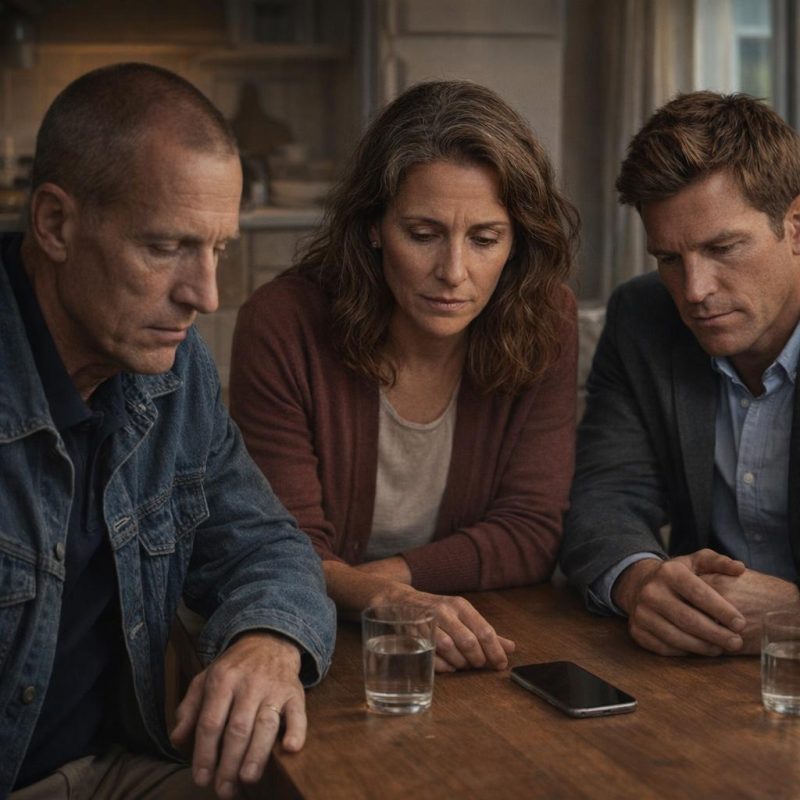 Image by RM AI
The Two Weeks
Those two weeks moved the way time moves when you're waiting for something you can't fully prepare for — slowly during the day, then suddenly gone when you looked back at the week. Jason called Richard twice more before the meeting, and I could hear from Jason's side of those conversations that they were finding their footing with each other — careful questions, careful answers, the sound of two people learning the shape of something new. Claire cleaned the house twice. She rearranged the living room furniture and then put it back the way it was. The morning Richard was due to arrive, she changed her outfit three times. I told her she looked fine each time, and each time she looked at me like I'd missed the point entirely. I probably had. She wasn't worried about how she looked. She was worried about what it would mean to stand in the same room as a man she'd known briefly thirty-five years ago, now that everything between them had been named and laid out in the open. Jason arrived an hour early and sat at the kitchen table drinking coffee without saying much. I made more coffee than anyone needed. We were all doing the same thing — filling the time with small tasks so we didn't have to sit still with the weight of what was coming. The house felt different that morning, charged with something none of us had words for yet.
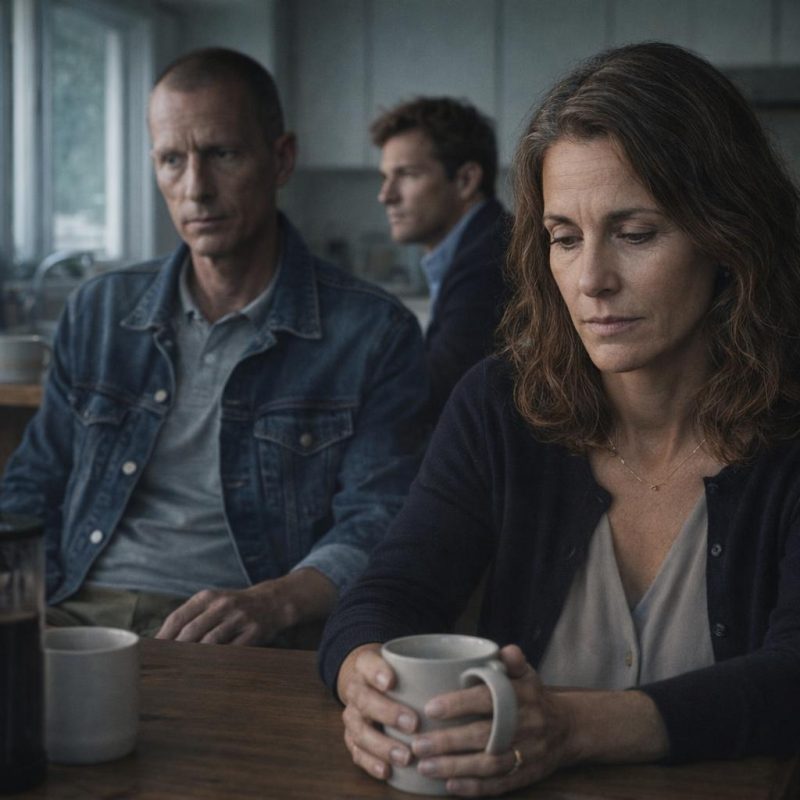 Image by RM AI
The Meeting
Richard knocked at eleven-fifteen. I was the one who answered the door. He was taller than I'd pictured — weathered in the way that men his age get when they've spent time outdoors, with gray at his temples and careful eyes that moved to my face and then past my shoulder in the same second. He introduced himself and shook my hand, and his grip was firm but his hand was trembling slightly. I told him to come in. Jason was standing just inside the hallway, and when Richard saw him, he stopped walking. I watched Richard's face do something I don't have a clean word for — it wasn't just recognition, it was something older than that, something that looked like a door opening in a room that had been sealed for decades. Jason said hello. Richard said hello back, his voice barely above a whisper. Claire was behind me in the hallway, very still. For a moment nobody moved. Then Jason extended his hand, and Richard took it — and then Richard pulled Jason in and held on, and both of them were crying, and I was standing three feet away feeling like I was witnessing something that had needed to happen for thirty-five years. I looked over at Claire. Her hand was pressed to her chest, and her eyes were closed.
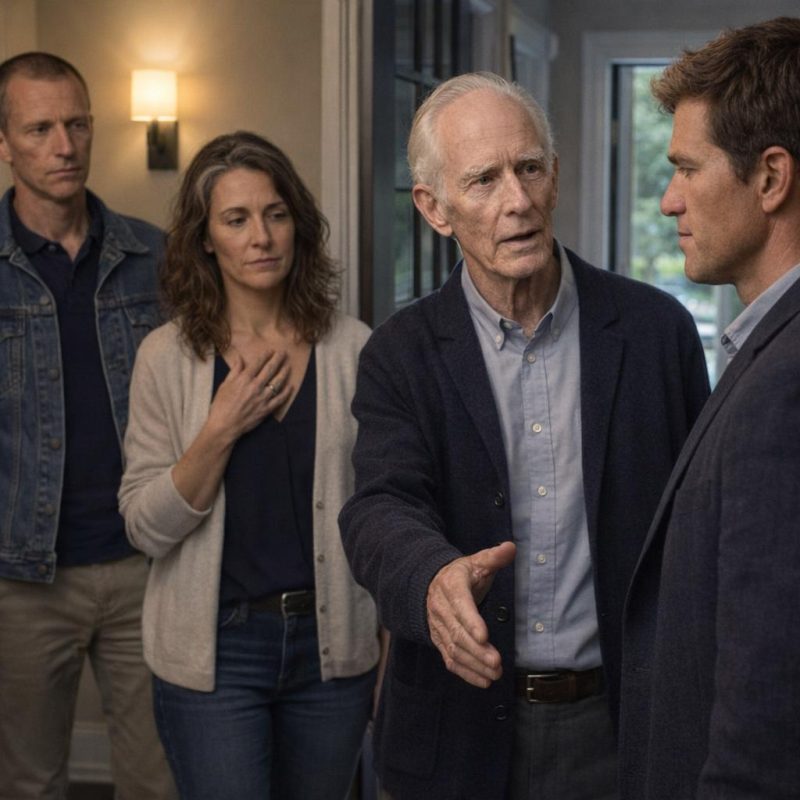 Image by RM AI
Making Sense of Lost Time
We moved to the living room after a few minutes, when everyone had collected themselves enough to sit down. Richard and Jason ended up on the couch together, close but not crowded, like they were still figuring out the distance. Claire sat in the armchair across from them. I took the chair near the window and mostly stayed quiet, which felt right. Richard asked Jason about his childhood — what it had been like, where he'd grown up, what kind of people Michael and Linda were. Jason talked about them warmly, the way you talk about people who showed up for you consistently over a lifetime. Richard listened with his whole body, nodding slowly, and when Jason finished, Richard said he was glad. He said it simply, without qualification. Then Jason asked Richard about his own life, and Richard talked about his career — engineering, mostly infrastructure work, projects in different states, which explained the moving around. He said he'd never married. He said he'd come close once, but it hadn't worked out, and after that he'd mostly focused on work. He paused for a moment, looking at his hands. He said he'd always felt like something was missing, though he couldn't have told you what. Then he looked up at Jason and asked, "What was your favorite thing to do when you were little?"
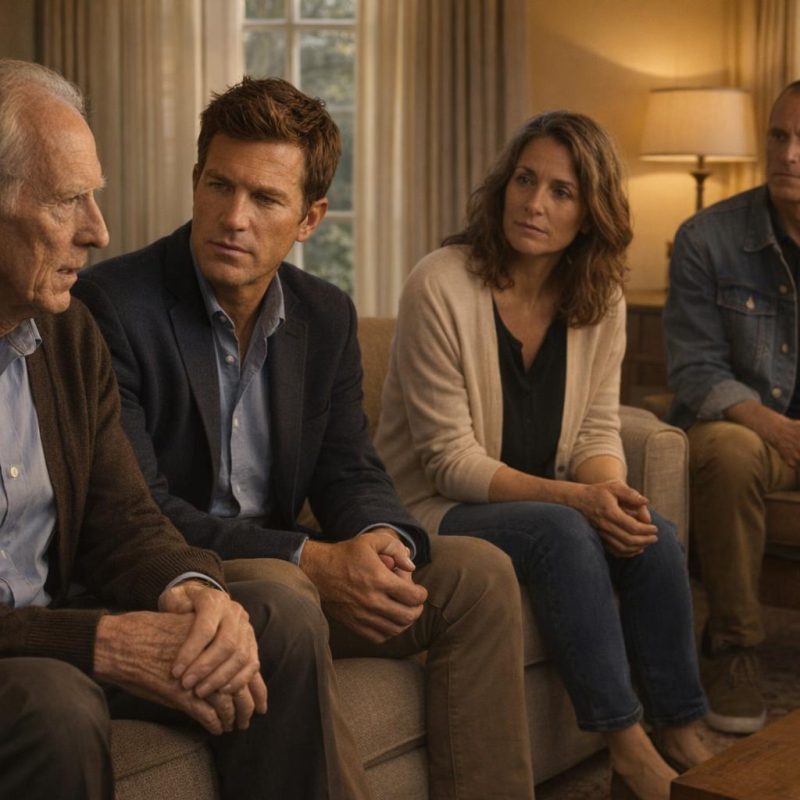 Image by RM AI
Claire and Richard
It was late afternoon by the time Claire finally spoke to Richard directly. The conversation had moved around her all day — she'd been present, she'd nodded, she'd smiled at the right moments — but she'd been holding something back, and I think everyone in the room could feel it. She waited until Jason stepped out to the kitchen for water, and then she looked at Richard and said she owed him an apology. Richard turned toward her. She told him she was sorry she'd never told him. She explained that she hadn't known for certain who the father was — that she'd believed, for a long time, that it was someone else. She said she'd been nineteen and frightened and she'd made the decision she thought she had to make. Richard listened without interrupting. When she finished, the room was quiet. He said he understood. He said he wasn't angry — not at her, not at anyone. He said they'd both been young, and that young people make decisions under pressure that they carry for the rest of their lives, and that he didn't think blame was the right thing to bring into this room. Claire's eyes filled. Richard reached across and put his hand over hers, and she let him. I sat across from them and watched, and when Richard said, "I'm just grateful I know now," something in the room shifted in a way that felt like it had been a long time coming.
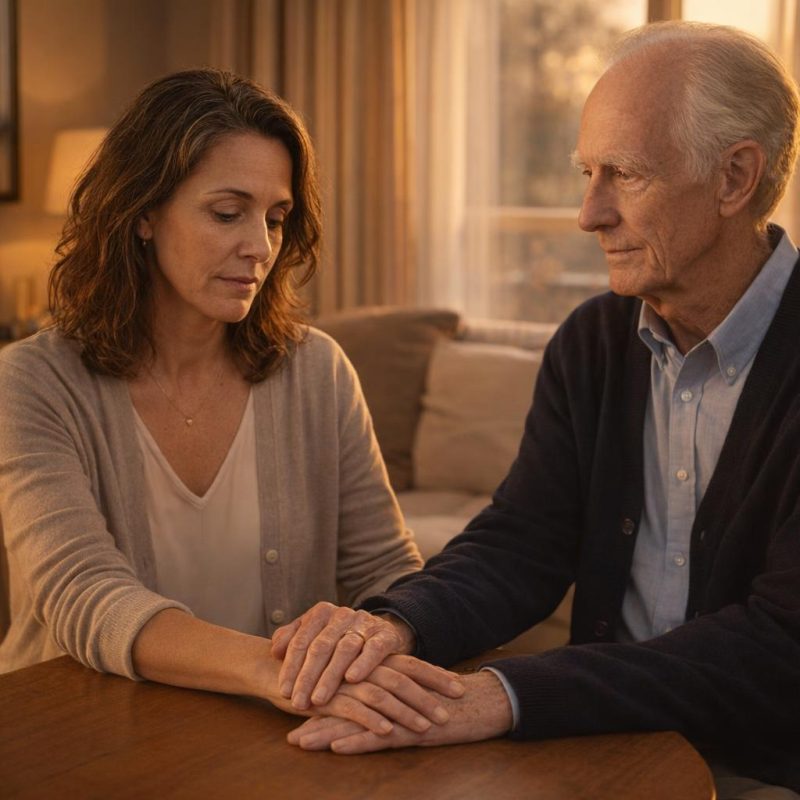 Image by RM AI
The Stranger at the Door
Michael and Linda arrived around four o'clock, and watching them walk through the door into a room that already held Jason and Richard felt like watching the last piece of something finally settle into place. Michael shook Richard's hand with both of his, and Linda pulled Jason into a hug that lasted longer than most. I stood near the window and let it happen around me, because some moments don't need managing — they just need space. At some point I looked around the room and counted: Claire, Jason, Richard, Michael, Linda, and me. Six people who hadn't all been in the same place forty-eight hours ago. Six people connected by a single decision made by a nineteen-year-old girl more than three decades back. And then I thought about Michael standing on our front porch. I thought about how he'd knocked on our door looking for Karen Bennett — a name I hadn't heard in years, a name that belonged to a version of my wife I'd never fully known. He wasn't the answer to anything. He was just the man who knocked. He'd come looking for Jason's biological mother, and in doing so he'd pulled a thread that unraveled thirty-five years of carefully held silence. Richard was the answer. Michael was just the beginning. One knock on a Tuesday afternoon had led us here, to this room, to all of this — and the stranger who started it hadn't even known what he was starting.
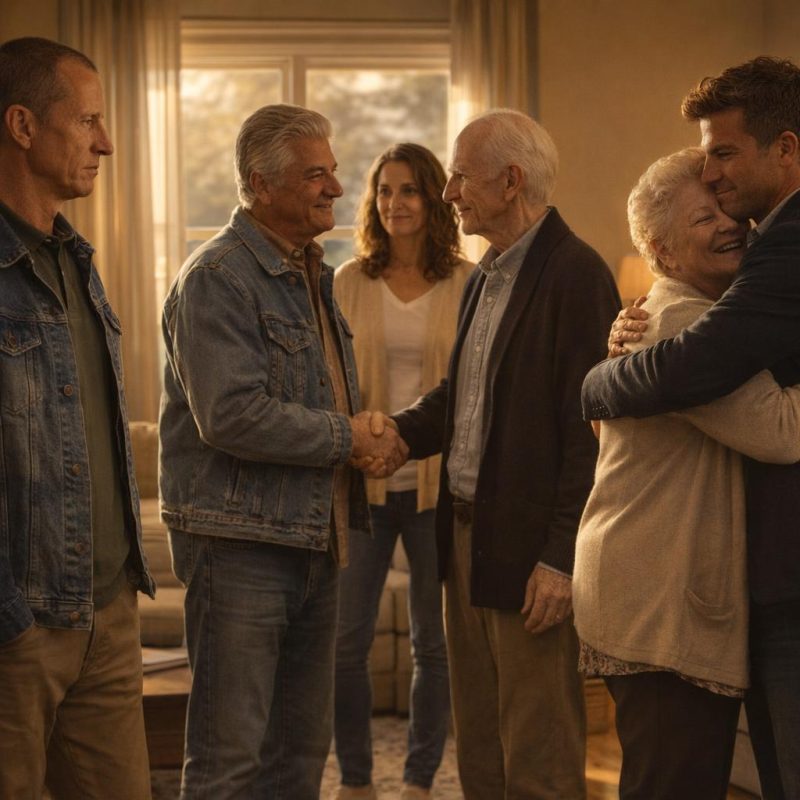 Image by RM AI
The New Family
It took a few weeks before the new shape of things started to feel real. Claire and Jason texted regularly — I'd see her phone light up and catch her smiling at it in a way that was different from before, quieter and more careful, like she was still getting used to the fact that it was allowed. Richard came to dinner twice in the first month. He and our kids got along in that slightly awkward, slightly wonderful way that happens when people are related but don't yet have the shared language for it. Michael and Linda stayed in touch too, sending photos from back home, checking in. Our kids had a half-brother they were still figuring out how to talk to. Jason had a biological father he was still figuring out how to know. Claire had a son she'd spent thirty-five years believing she'd never see again. None of it was simple. None of it arrived with instructions. But I watched Claire move through those weeks differently than I'd seen her move in a long time — lighter, somehow, like she'd been carrying something heavy in a coat pocket for so long she'd forgotten it was there, and now it was gone. The secrets were out. Every last one of them. And the family we had now looked nothing like the family we'd had two months ago, but sitting at the dinner table with all of it laid bare, it didn't feel broken. It just felt different — and different, I was learning, wasn't the same thing as wrong.
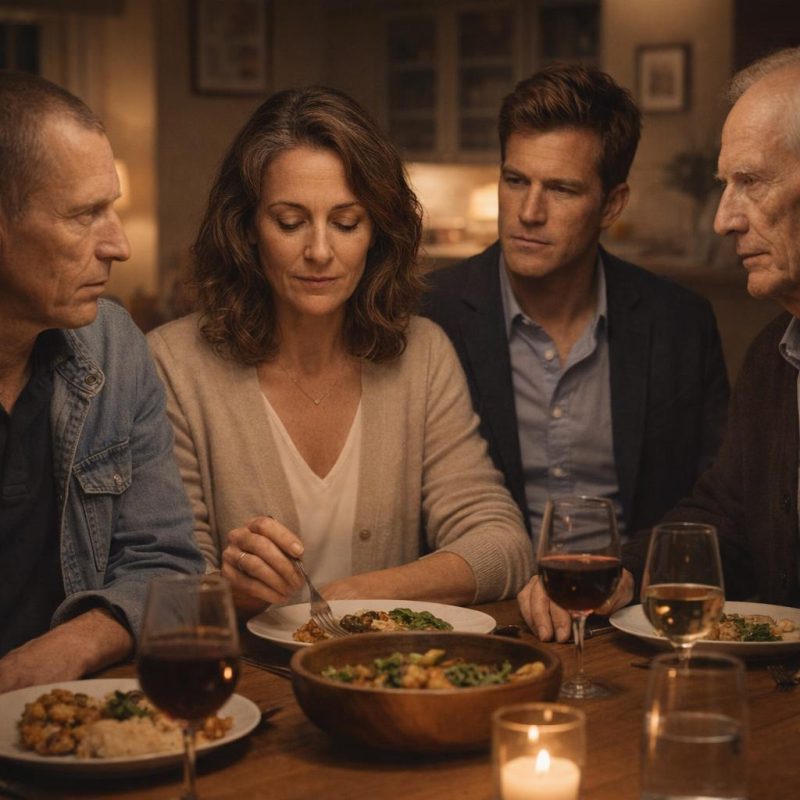 Image by RM AI
Why Secrets Survive
Claire and I talked about it one evening after everyone had gone home and the house was quiet again. I asked her, not accusingly, just honestly — why had she kept it for so long? She was quiet for a moment. Then she said she'd been ashamed. She said nineteen-year-old girls who got pregnant and gave babies away didn't talk about it, not in her family, not in that time. She said the shame had calcified into silence, and the silence had grown until it felt like the truth. I thought about Beth, who'd helped her keep it. I thought about their parents, long gone now, who'd built a whole architecture of omission around a single frightened decision. None of them had been malicious. That was the thing I kept coming back to. Nobody in this story had set out to cause harm. They'd been afraid, and shame had done the rest. Secrets don't survive because people are cruel — they survive because people are human. They survive because the truth feels too large and too late and too likely to hurt the people you love. I'd spent weeks trying to understand how something this significant could stay buried for thirty-five years, and sitting there with Claire in the quiet of our kitchen, I finally did understand. It wasn't a mystery. It was just fear, doing what fear does — outlasting the moment that created it, and growing heavier with every year it went unspoken.
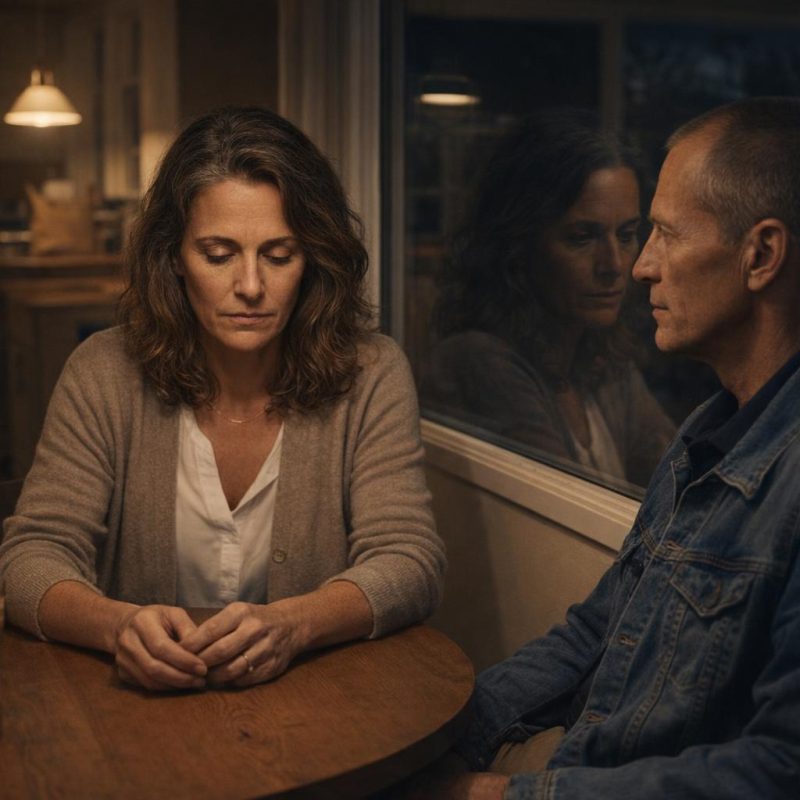 Image by RM AI
The Wrong Address
I still think about that Tuesday afternoon. I was in the kitchen when the knock came — an ordinary knock, the kind you answer without thinking. A man in a denim jacket stood on the porch and asked if Karen Bennett lived here. That name. I hadn't heard it in years. It was the name my wife had carried before she became my wife, before she became the woman I thought I knew completely. I told him he had the wrong address. And in one sense, he did. But in every sense that mattered, he'd found exactly the right door. Michael hadn't come looking for Richard. He hadn't come to unravel anything. He was just an adoptive father trying to find his son's biological mother, following a name on a piece of paper to a house on a quiet street. He asked one question and walked away not knowing what he'd set in motion. What followed was thirty-five years of silence coming apart at the seams — a hidden adoption, a biological father who hadn't known he existed, a son Claire had never stopped thinking about, and a family that had to be rebuilt from the truth up. I used to think the story started with Jason. Or with Claire, at nineteen, making an impossible choice. But it didn't. It started with a knock. A stranger asking for a woman by a name she hadn't used in decades — and everything that had been buried quietly beneath our life together finally coming to the surface.
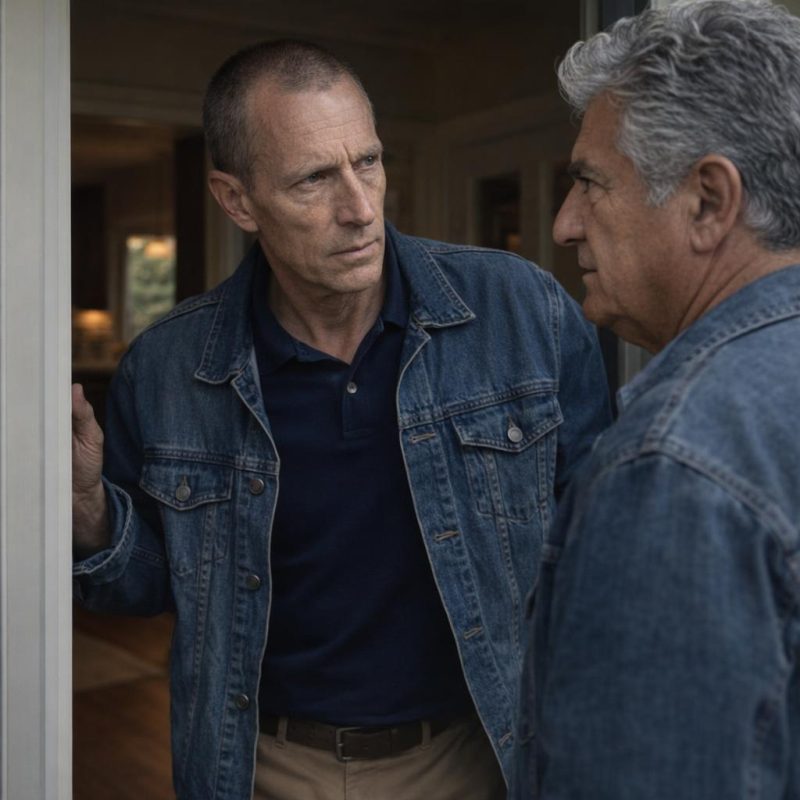 Image by RM AI
KEEP ON READING

The 10 Youngest Monarchs In History & The 10 Oldest
Age Is Just A Number. Imagine being crowned king or…
By Chase Wexler Mar 11, 2025
You Think You Have Problems? These Royal Families Were Cursed
Boasson and Eggler St. Petersburg Nevsky 24. on WikimediaHeavy is…
By Ashley Bast Dec 5, 2025
You Can Thank This Greek-Canadian For Creating Pineapple On Pizza…
Love it or hate it, pineapple on pizza sparks debate…
By David Davidovic Dec 1, 2025
Yes, Female Gladiators Existed, And Here's Everything You Need To…
History of Women in Combat. Most people picture gladiators as…
By David Davidovic Jan 17, 2026
Yes, Australians Once Lost A Battle Against Flightless Birds
David Clode on UnsplashIn 1932, the Australian military went to…
By David Davidovic Nov 24, 2025
The Y2K Bug: Why Did Everyone Think Year 2000 Was…
Alan W on UnsplashOn December 31, 1999, people all over…
By Christy Chan Dec 22, 2025