

My Neighbors Vanished Without Warning. A Month Later, A Stranger Delivered A Note With My Name On It—And Two Words Underlined At The Bottom
My Neighbors Vanished Without Warning. A Month Later, A Stranger Delivered A Note With My Name On It—And Two Words Underlined At The Bottom
The Neighbors Who Kept Their Distance
Six years is a long time to live next door to someone without really knowing them. Tom and Melissa Harrison moved in during a wet October, and I remember watching from my kitchen window as they carried boxes through the rain, their daughter Sophie darting between the movers' legs like she owned the whole street. I went over with a plate of brownies that first week — the neighborly thing to do — and Melissa smiled warmly and thanked me, and that was more or less the shape of things for the next six years. Warm, pleasant, and surface-level. We exchanged holiday cookies every December without fail. When I went away for a long weekend, Tom would water my potted plants on the front porch without being asked twice. I'd sign for their packages when they weren't home, leave them propped against the door. Sophie would wave at me from her bike, and I'd wave back. It was the kind of neighborly relationship that works precisely because nobody pushes too hard. We weren't close friends, but we were good neighbors, and in a suburb like ours, that counts for something. I never felt the distance as a lack. It just felt like the natural rhythm of two households living their separate lives side by side — cookies at Christmas, a borrowed cup of something when needed, and the quiet comfort of knowing someone was there.
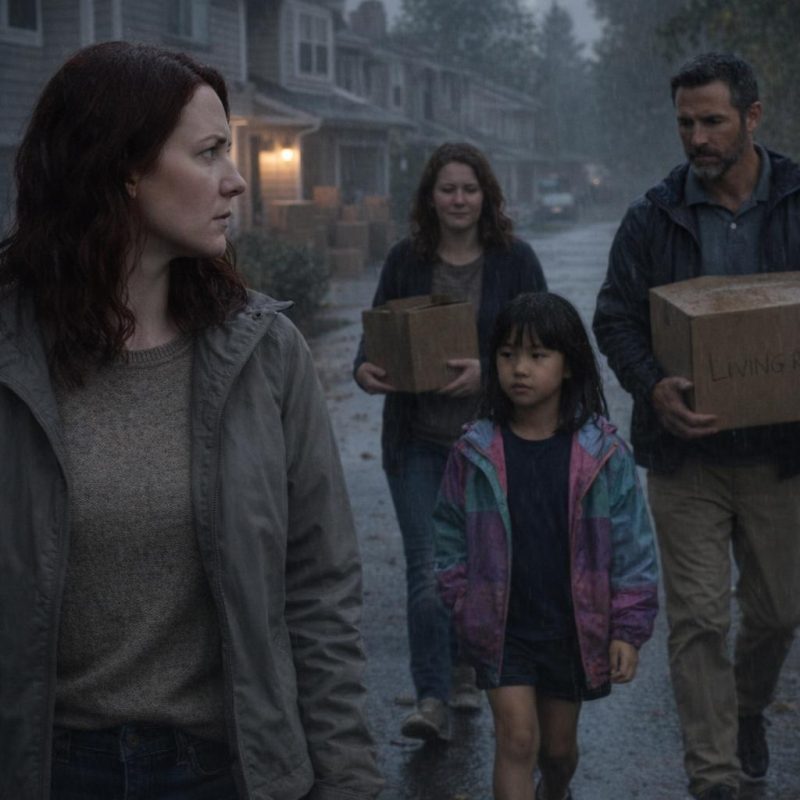 Image by RM AI
Small Things That Didn't Quite Fit
Looking back, there were small things that didn't quite fit, though I wouldn't have called them strange at the time. Once or twice I noticed an unfamiliar car parked outside the Harrison house late at night — not a guest's car, nothing I recognized from the neighborhood. It sat there with the engine off and the lights dark, and by morning it was always gone. I filed it away as nothing. A friend visiting late, maybe. Someone's rideshare waiting. Melissa sometimes had this quality during our sidewalk conversations where she'd be talking to me but her attention was somewhere else entirely — her eyes drifting toward the street, her answers a half-beat delayed. I assumed she was tired, or distracted by whatever was going on inside the house. Parents of young kids always have half their mind somewhere else. The one moment that stayed with me a little longer came during a casual chat with Tom one afternoon. I asked, the way you do with neighbors, how long they were planning to stay in the neighborhood. He laughed — easy, relaxed — and said he hoped they'd manage to stay longer than the last place. I smiled and nodded and didn't ask what he meant by that. I assumed he was talking about a previous house, maybe a landlord situation that hadn't worked out. The comment passed, and I forgot about it almost immediately.
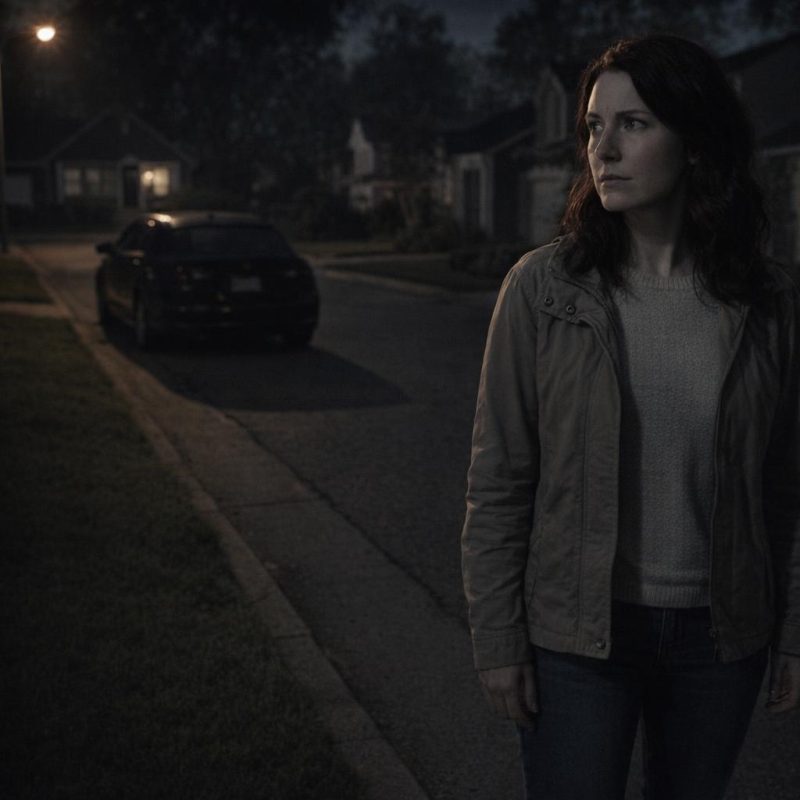 Image by RM AI
The Quiet Before Departure
It was sometime in late summer when I started noticing the quiet settling in next door. Not dramatically — nothing that would have made me stop and think. Just small things, accumulating slowly. The lights in the Harrison house were on less in the evenings. Where there used to be the warm glow from the living room window after dinner, now the front of the house sat dark more often than not. Sophie's bike, which had spent most of the summer propped against the porch railing or lying in the driveway, started disappearing into the garage. The garage door itself stayed closed for days at a stretch, which was unusual — Tom had always been the type to tinker out there on weekends with the door rolled up. One afternoon I caught a glimpse through their front window of cardboard boxes stacked in the hallway. Not a few boxes — a real stack of them, the kind that means you're serious about packing. I remember thinking, oh, they must be moving. And then I thought, huh, they haven't mentioned it. But I didn't dwell on it. People get busy. Moving is chaotic. I figured they'd knock on my door when the time came, the way neighbors do, and we'd have a proper goodbye. I kept expecting that conversation. The house next door just kept getting quieter while I waited for it.
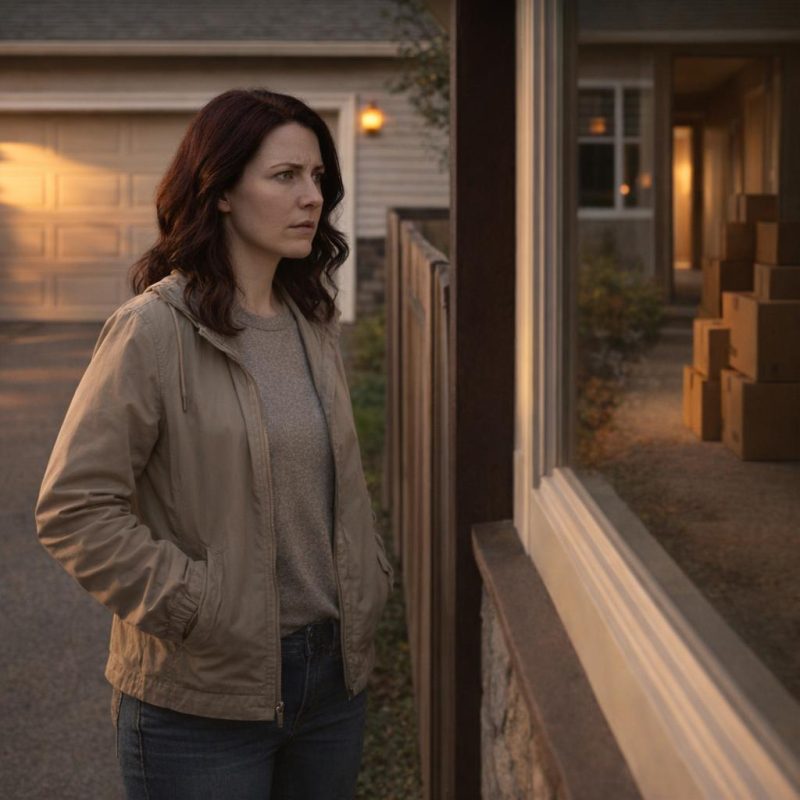 Image by RM AI
Moving Day Arrives Without Warning
The moving truck was there when I woke up on a Tuesday morning. I hadn't heard anything the night before — no conversation, no warning, nothing. I came downstairs to make coffee and glanced out the kitchen window out of habit, and there it was: a large white truck backed up to the Harrison driveway, two men already carrying furniture down the front steps. I stood there in my pajamas holding an empty mug, genuinely surprised. I watched for a while, trying to process it. Melissa was directing the movers near the front door, pointing and nodding, her movements efficient and focused. Sophie sat on the porch steps with a backpack on her lap, watching the street. I kept waiting for one of them to look over and wave me down, to give me some signal that they knew I was watching and that we'd have a moment before they left. It didn't happen. I told myself they were busy — moving day is chaos, everyone knows that. I told myself they probably meant to say something and just hadn't gotten to it yet. I got dressed and went about my morning, checking the window more than I needed to. The truck filled up steadily through the afternoon. By the time evening came, the driveway was nearly clear, and the sting of not being told — not even a text, not a note — had settled somewhere quiet in my chest.
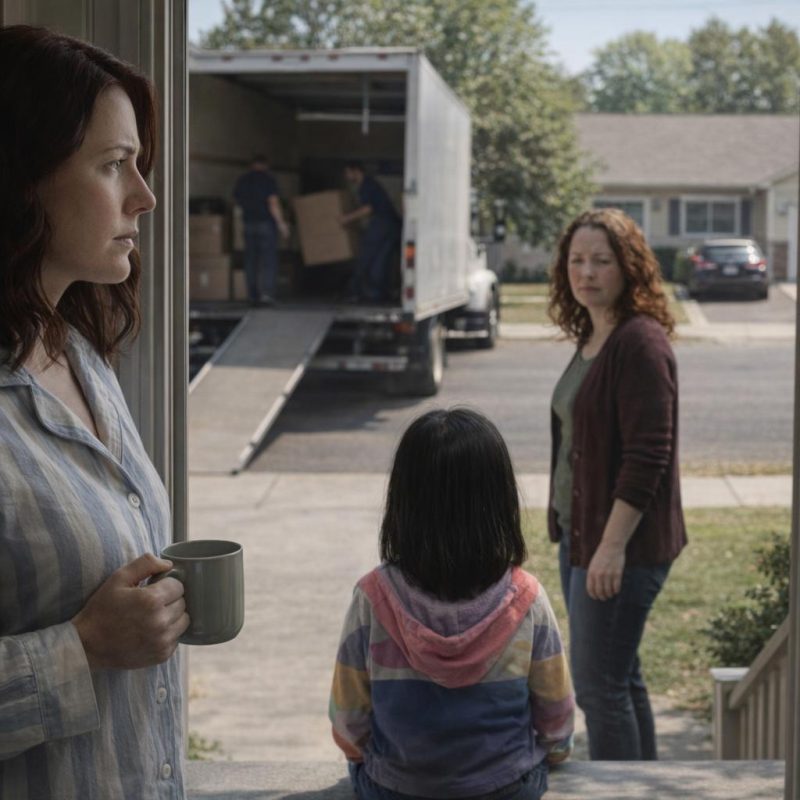 Image by RM AI
A Wave Goodbye
I stepped outside around four in the afternoon, telling myself I just needed some air. The truth was I wanted to catch one of them before they disappeared entirely. The truck was almost loaded by then, just a few boxes left on the lawn. Tom was carrying one of them toward the back of the truck when he looked up and saw me standing on my porch. He raised one hand — a single wave, quick and clean — and gave me a small nod. That was it. No smile that reached his eyes, no pause, no crossing the lawn to shake my hand or say it had been good living next door. I raised my hand back, feeling immediately awkward, like I'd interrupted something private. I wanted to call out, ask where they were headed, tell them it had been nice knowing them. But something about his posture — the way he turned back to the truck without waiting to see if I'd respond — made me stay quiet. I watched him load the last box, climb into the cab, and pull the door shut. Melissa and Sophie were already gone, I realized, probably in their own car somewhere ahead. I stood on my porch with my hand still half-raised as Tom's truck pulled away from the curb and disappeared around the corner.
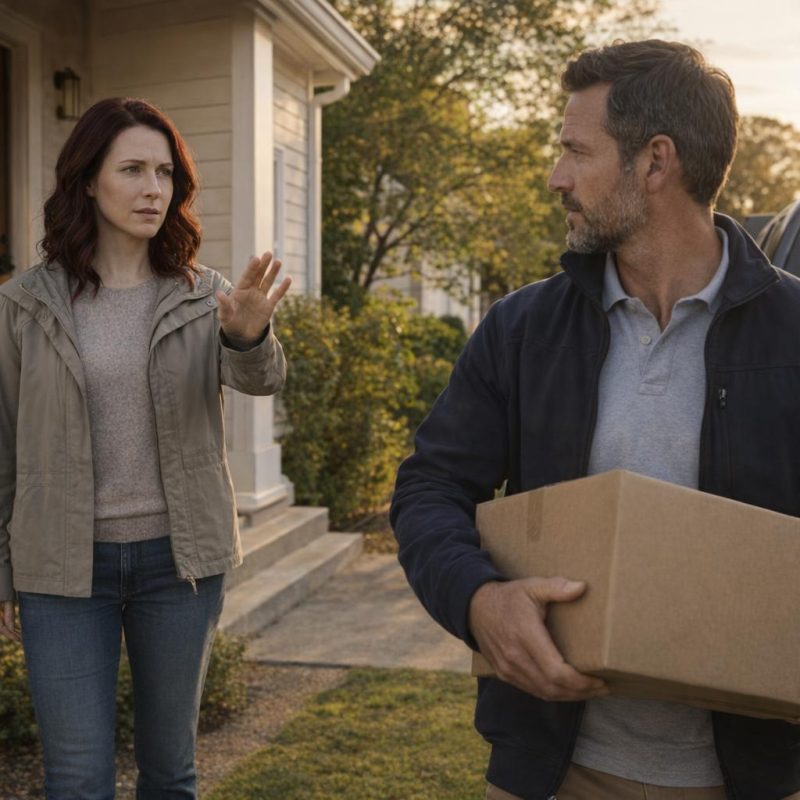 Image by RM AI
The Empty House
By that evening, the Harrison house looked like it had never been lived in. Every curtain was gone — the windows bare and dark, reflecting nothing. The driveway sat empty in a way that felt different from just a car being out. I walked to my mailbox after dinner and found myself pausing on the sidewalk, looking over at it. The porch light wasn't on. The little solar lanterns Melissa had lined up along the front path were gone too, pulled up and packed away. Even the welcome mat was missing from the front step. I'd lived next to that house for six years and I'd never once thought about its welcome mat, but its absence registered in a way I couldn't quite explain. I went back inside and made tea and told myself it was fine. People move. Neighbors come and go. I'd lived through it before on this street and I'd live through it again. I checked my phone out of habit, half-expecting a message — a forwarding address, a quick note saying thanks for everything, something. There was nothing. I sat at my kitchen table for a while, watching the window. When I finally turned off my own lights and went to bed, the Harrison house across the way was completely dark.
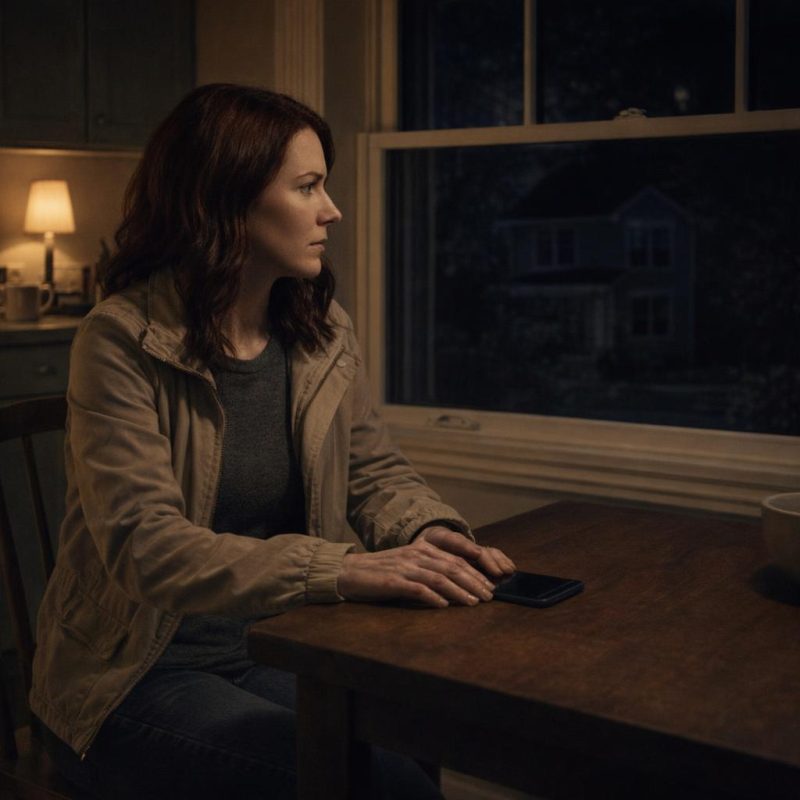 Image by RM AI
Life Moves Forward
I went back to work the next day and tried to let it go. It wasn't hard, exactly — I had enough on my plate to keep me occupied, and grief over a neighbor's departure isn't the kind of thing you can justify dwelling on for long. Mrs. Patterson from two doors down mentioned the Harrisons in passing one morning when we both happened to be getting our mail at the same time. She said something like, well, that was sudden, wasn't it, and I agreed that it was, and we both moved on. That was the extent of the neighborhood conversation about it. Life on the street adjusted the way it always does — quietly, without ceremony. I stopped glancing over at their house every time I came outside. I stopped half-expecting to see Sophie's bike appear in the driveway or Tom's car pull in after work. The empty house became just another house, a gap in the row that my eyes learned to pass over. I started a new project at work, had dinner with a friend, rearranged my living room furniture on a Saturday afternoon. Normal things. Good things. And then one evening I came home from the grocery store, arms full of bags, and as I turned to push through my front door I caught sight of the empty driveway next door, and the absence hit me again, fresh and unexpected.
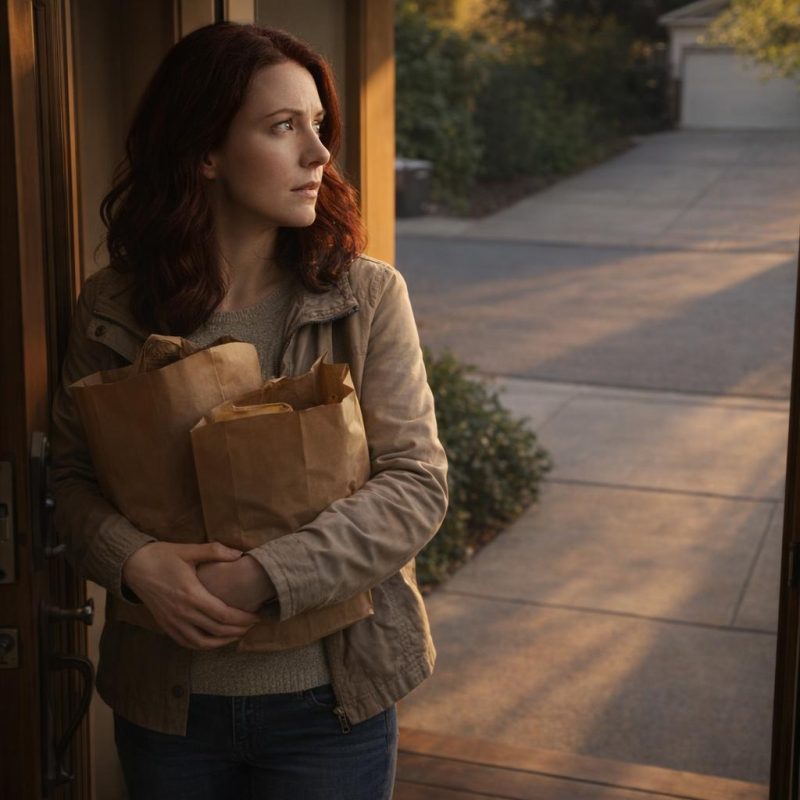 Image by RM AI
A Month of Silence
A full month went by. I know because I counted it later, after everything else happened, trying to establish a timeline. At the time, I wasn't counting anything. The days just passed the way days do when nothing unusual is happening — work, errands, evenings at home, the occasional dinner out. I stopped expecting a text or an email from Tom or Melissa. I stopped wondering where they'd landed. The Harrison house sat empty and quiet on the street, no for-sale sign appearing in the yard, no new tenants pulling up with boxes. I assumed they were handling the sale privately, or maybe still deciding what to do with it. It wasn't my business. I'd walk past it on my morning loop around the block and barely register it anymore. It had become part of the landscape, the way empty lots and shuttered storefronts eventually do — present but unremarkable. By the end of that month, the Harrisons felt like something that had happened a long time ago, not four weeks prior. I'd made my peace with the abrupt goodbye, or the lack of one. I wasn't angry. I wasn't particularly sad. I'd simply filed them away in the part of my memory reserved for people who had passed through my life briefly and moved on. The silence from their end had become, somehow, ordinary.
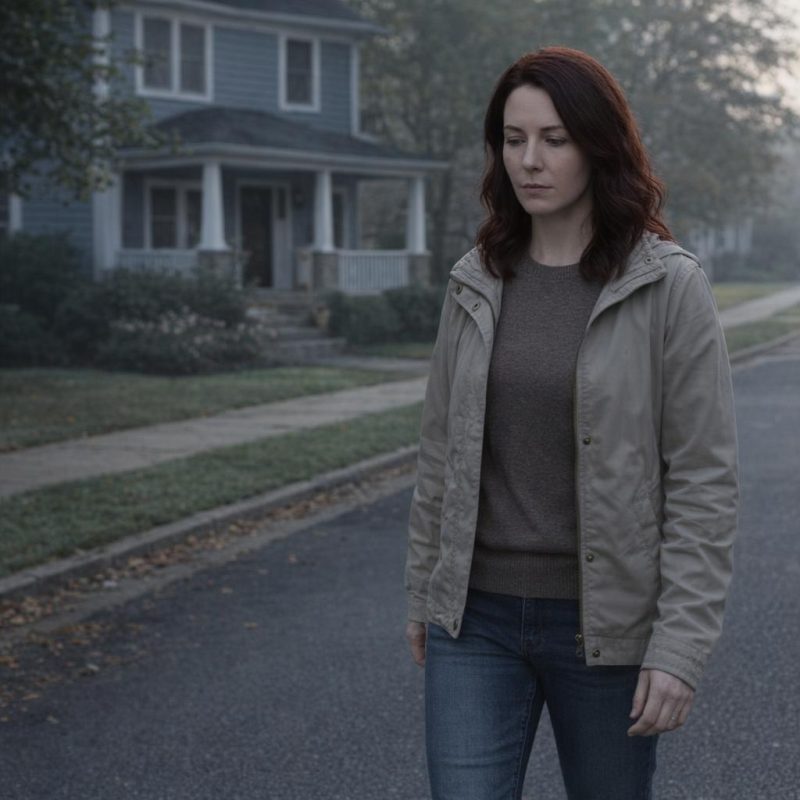 Image by RM AI
Saturday Afternoon Knock
It was a Saturday afternoon in late October, the kind that feels like a small gift — cool enough for a sweater, bright enough to leave the blinds open. I'd been home since morning, doing the kind of low-stakes housekeeping that never quite makes it onto a weekday schedule: wiping down the kitchen shelves, sorting through a drawer full of takeout menus I'd never use again, running a load of laundry I kept forgetting to switch to the dryer. The TV was on in the background, some home renovation show I wasn't really watching. I had a mug of tea going cold on the counter. I wasn't expecting anyone. I hadn't made plans. It was exactly the kind of afternoon I'd been looking forward to all week — quiet, unscheduled, mine. I was reaching up to rearrange the top shelf of the pantry when I heard it: three firm knocks at the front door.
 Image by RM AI
The Woman at the Door
I wiped my hands on my jeans and headed to the door, not thinking much of it. Could've been a neighbor, could've been a delivery I'd forgotten about. I pulled it open and found a woman standing on my front step — early fifties, I'd guess, in a neat charcoal blazer and dark slacks. Her hair was pulled back cleanly. She was holding a small leather purse in front of her with both hands, the kind of posture that reads as composed rather than nervous. She smiled when I opened the door, a measured, polite smile. Nothing about her suggested she was selling anything or had the wrong address. She looked like someone's HR director, or maybe a real estate agent between appointments. "Hi," she said, her voice even and pleasant. "I'm sorry to bother you on a weekend. I was hoping you might be able to help me." She paused just briefly, then asked if I knew the family who had lived next door.
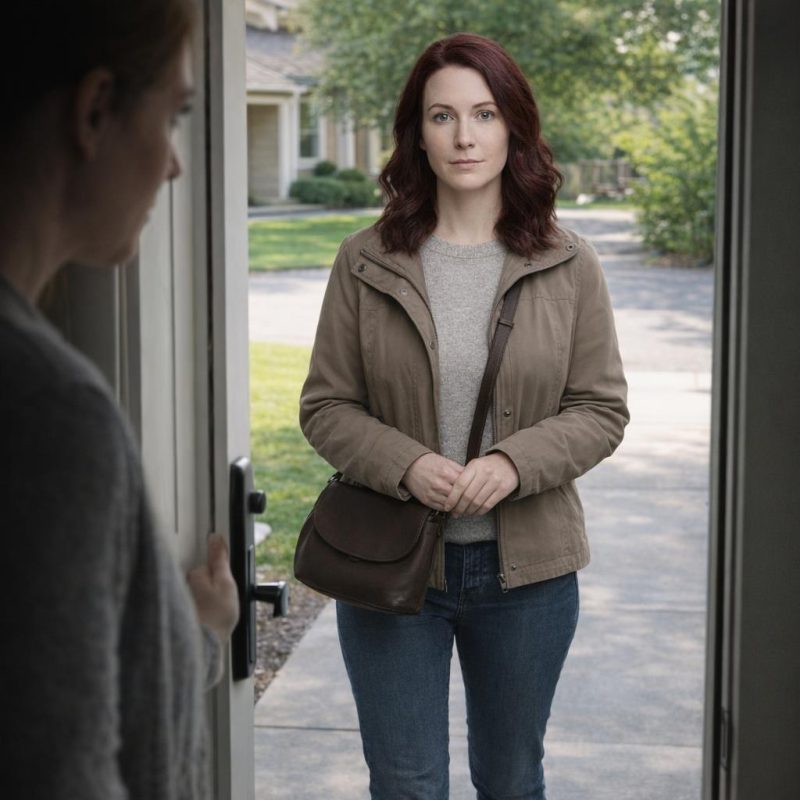 Image by RM AI
Answering Questions
"Sure," I said. "The Harrisons. They lived there for — I want to say six years? Give or take." She nodded, listening in that attentive way that makes you feel like what you're saying actually matters. I told her we'd been friendly, the way neighbors are — we'd wave across the yard, I'd taken in a package or two for them when they were traveling, Melissa had brought over cookies once around the holidays. Not close friends, I explained, but good neighbors. The kind you're glad to have. The woman nodded again, her expression open and patient. She didn't interrupt or rush me. I found myself filling in details I hadn't thought about in weeks — the way Tom was always tinkering with something in the garage on weekends, how Sophie would ride her bike up and down the block in the evenings. It felt easy, talking about them. Like being asked about something pleasant. I wasn't sure what she needed the information for, but it didn't occur to me to ask. It just felt good to be useful.
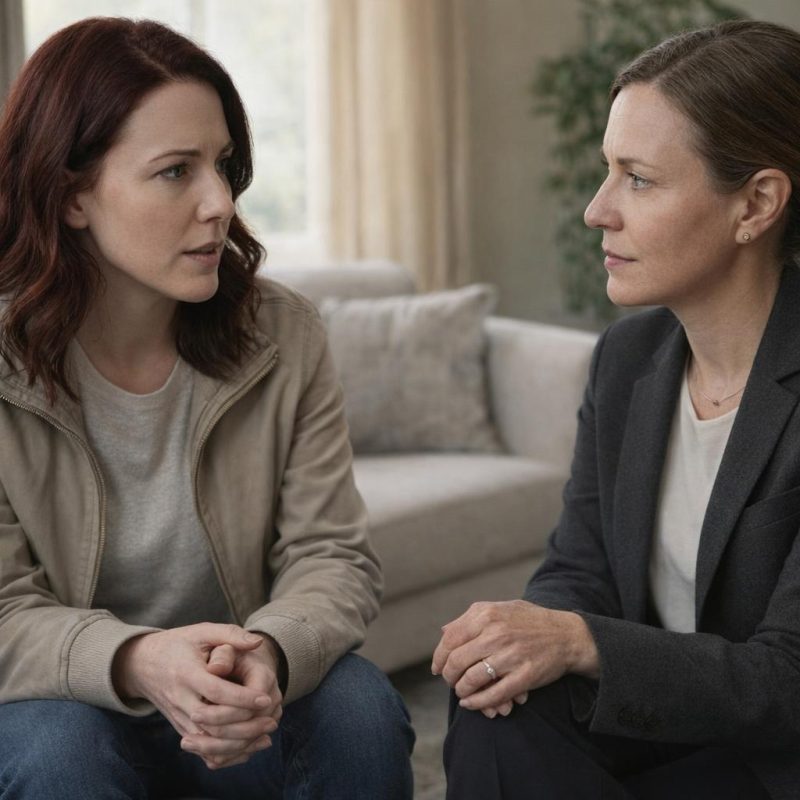 Image by RM AI
The Forwarding Address
Then she asked if they'd left me a forwarding address. I shook my head. "No," I said. "Honestly, the move was pretty abrupt. I didn't even know they were leaving until the morning of. There wasn't really time for that kind of thing." I felt a small pang saying it out loud — it still struck me as a little odd, even a month later, how quickly it had all happened. But I kept my tone light. I didn't want to make it sound like a complaint. She'd asked a reasonable question and I just didn't have a useful answer. "I'm sorry," I added, because it seemed like the right thing to say. "I wish I could be more help." She held my answer for a moment, and then something shifted in her expression — not dramatically, just a quiet settling, like a door closing gently in another room. I noticed it, and I understood it, in the way you understand someone being disappointed by news they'd half-expected. It made sense that she'd hoped for more. What I couldn't quite account for was how much it seemed to matter to her.
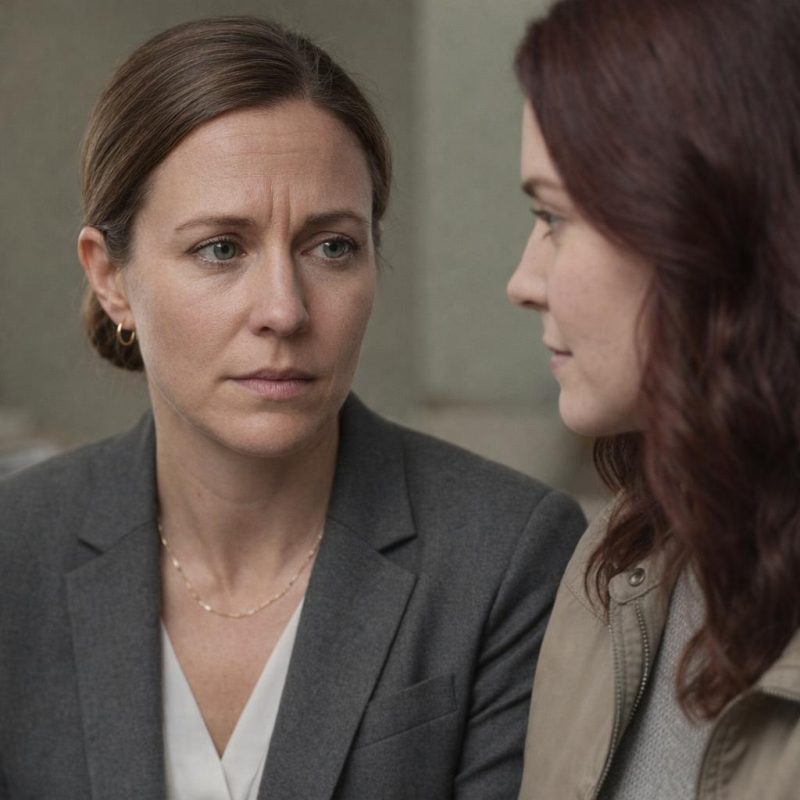 Image by RM AI
A Strange Question
She recovered quickly, smoothing back into that composed, pleasant manner. We talked for another minute or two — nothing significant, just the kind of filler conversation that happens when neither person is quite ready to end an exchange. And then she asked something that stopped me a little. She asked if the Harrisons had ever mentioned her by name. I paused. It was such a specific thing to ask. Not "did they mention anyone looking for them" or "did they say anything about old friends" — but whether they had mentioned her, specifically, by name. I told her honestly that no, they hadn't, that our conversations had never really gone that deep. She nodded like she'd expected that too. I watched her absorb it the same way she'd absorbed the news about the forwarding address — quietly, without visible reaction. But the question stayed with me after I'd answered it. There was something about the phrasing of it, the precision of it, that felt different from everything else she'd asked. I couldn't have explained why it lingered the way it did.
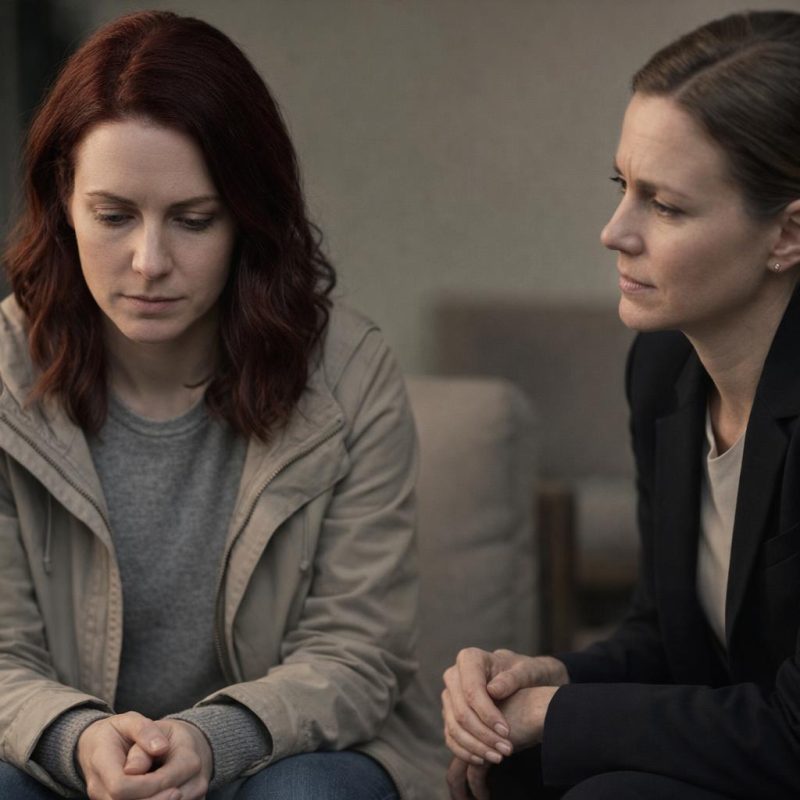 Image by RM AI
Under Scrutiny
After I answered, she didn't say anything right away. She just looked at me. Not in a rude way — she wasn't staring, exactly — but there was a quality to her attention that I wasn't used to. It was the kind of look that makes you want to check whether you've said something wrong, or left something out. I held her gaze for a second, then glanced away, then looked back. The silence stretched maybe four or five seconds, which doesn't sound like much but felt considerably longer. I had the odd sensation of being evaluated, the way you feel in a job interview when the interviewer writes something down after your answer and you have no idea what they've noted. I didn't feel threatened. I didn't feel accused of anything. I just felt — assessed. Like she was running some internal calculation I wasn't privy to. I shifted my weight slightly, one hand still resting on the door frame. She blinked, and the moment passed. But the weight of it didn't entirely lift.
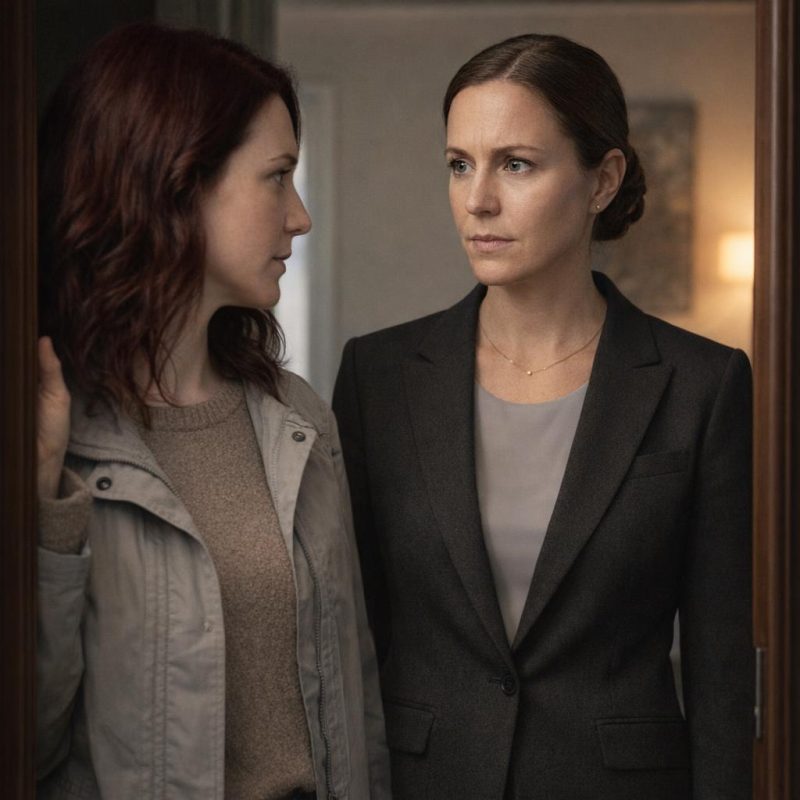 Image by RM AI
The Folded Paper
Then she reached into her purse. The movement was unhurried, deliberate in the way of someone who has done something many times and sees no reason to rush it now. She produced a folded piece of paper — standard size, folded in thirds, the kind of thing you'd get in an envelope. She held it out toward me but didn't release it immediately. "This was left at the post office," she said. "With instructions that it be delivered in person, if I came looking." I stared at the paper. I didn't take it right away. My brain was trying to catch up with what she'd just said — that the Harrisons had anticipated this woman coming to find them, had anticipated her asking questions, and had left something behind specifically for that scenario. It was a strange enough arrangement on its own. But what made my hand go still was what I could see written on the outside of the folded paper, in handwriting I recognized from a grocery list Melissa had once left on my porch with a borrowed casserole dish. My name.
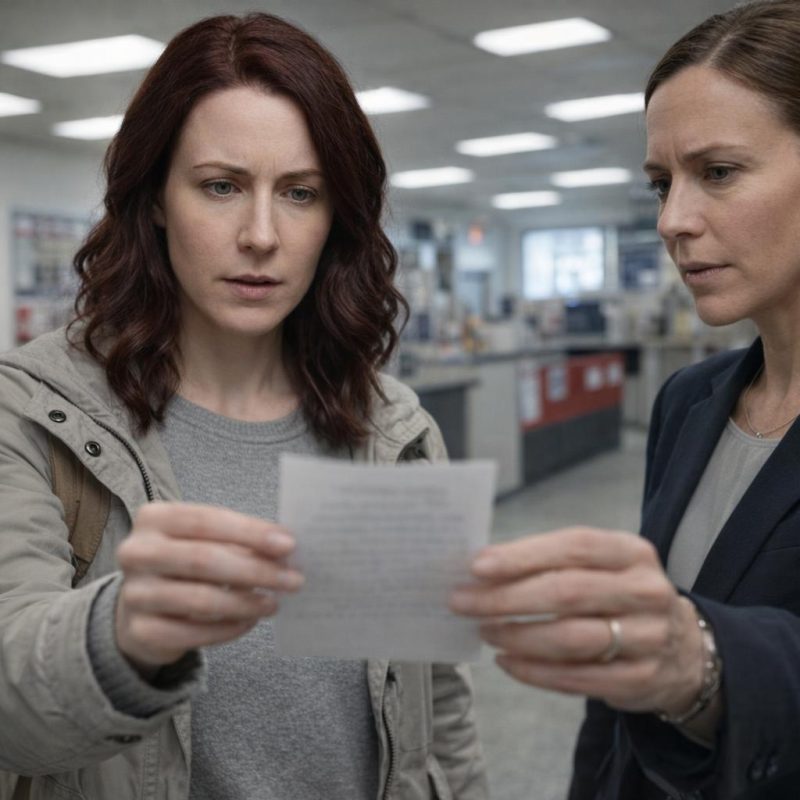 Image by RM AI
The Glance Toward the House
I reached for the paper. She didn't pull it back, but she didn't quite let go of it either — there was just a half-second of resistance, barely perceptible, before her fingers released. And in that same half-second, her eyes moved. Not to my face. Past me. I felt it more than saw it at first — that particular shift in someone's attention when they stop looking at you and start looking at something behind you. I turned my head slightly on instinct, but there was nothing there, just my front hallway, the coat rack, the edge of the kitchen doorway. When I looked back at her, her expression had already resettled into that same composed, pleasant arrangement. She was smiling again. But I'd caught it. Her gaze had moved past my shoulder and traveled — slowly, with a kind of quiet focus — across the interior of my house.
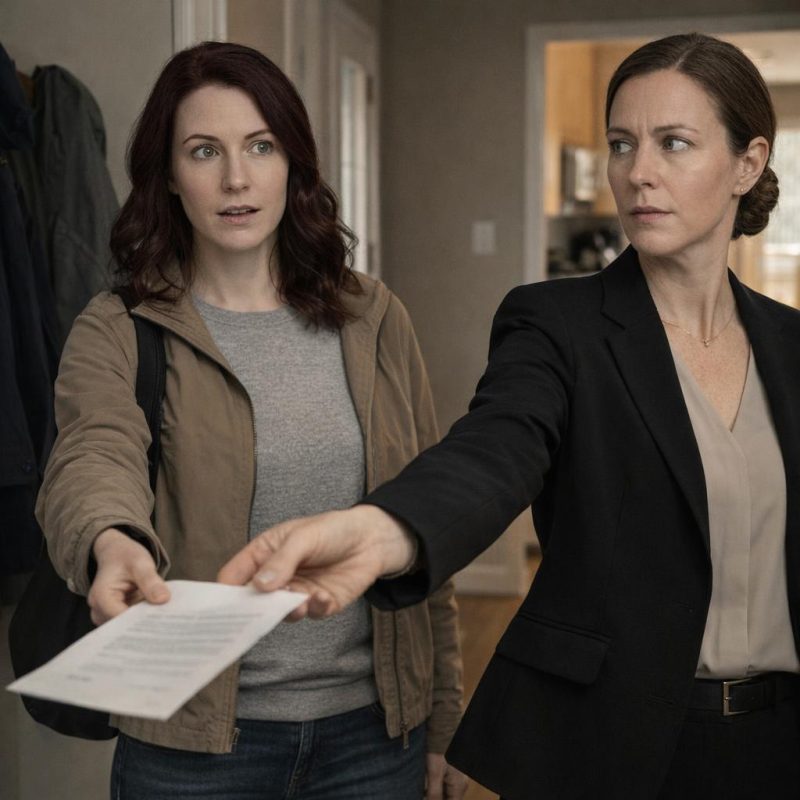 Image by RM AI
I Hope They Were Wrong
She held the folded paper out toward me, and I took it. There was that half-second of resistance I'd already noticed — her fingers releasing just a beat too slow — and then it was in my hand. She didn't say anything right away. I was looking down at the paper, turning it over, when she spoke. Her voice was quiet, almost like she was talking to herself rather than to me. 'I hope they were wrong,' she said. That was it. Just that. I looked up immediately, mouth already opening to ask what she meant — wrong about what, wrong about who — but she had already turned. She walked down my porch steps with the same unhurried, composed movement she'd arrived with, and by the time I found my voice, she was already on the front path. I said something — I think I said 'Wait' — but she didn't slow down. She reached the sidewalk, turned left, and kept walking. I stood in my doorway holding the paper, watching her go, the question still sitting unfinished somewhere in my chest. I had no idea what she meant. I still don't know if I was supposed to.
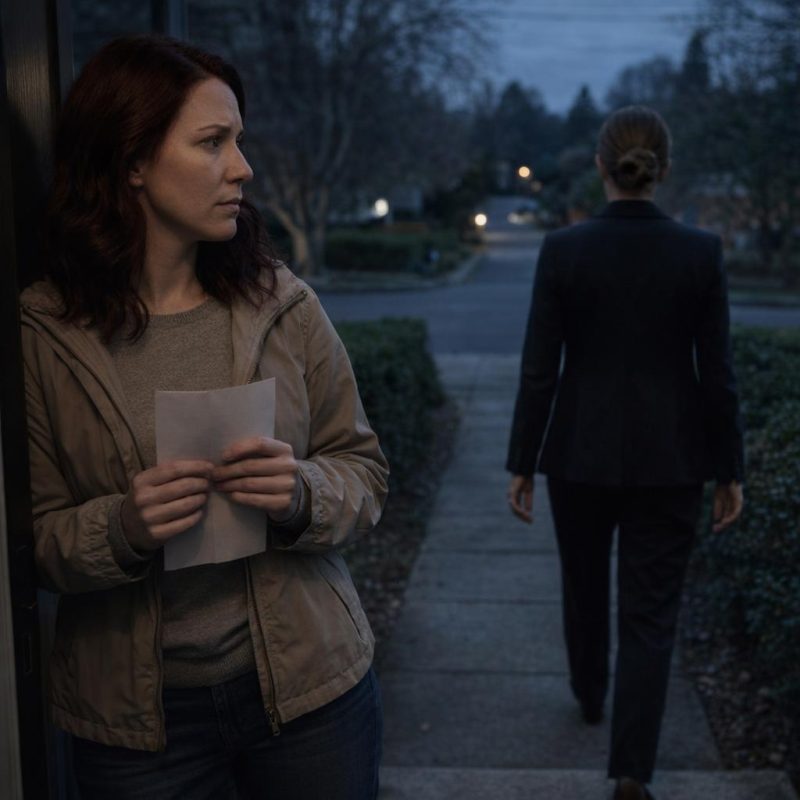 Image by RM AI
The Warning Unfolds
I didn't wait. The second she cleared the end of my driveway, I unfolded the paper. My fingers weren't quite steady. I don't know what I expected — a phone number, maybe, or a name, some kind of explanation for the strange visit and the stranger comment she'd just left me with. What I got was one sentence. Handwritten, in careful block letters, centered on the page. No greeting at the top. No signature at the bottom. No date, no context, nothing to anchor it to a person or a situation or a reason. Just one sentence, written like it was the only thing that needed to be said. I read it once. Then I read it again. Then a third time, slower, like the meaning might shift if I gave it enough time. It didn't. The words were plain enough — there was nothing ambiguous about the language itself. But without context, without any indication of who had written it or who it was about or why it had been delivered to my door by a woman I'd never met before last week, it didn't explain anything. It just sat there on the page, stark and certain, and the certainty of it was somehow the most unsettling part.
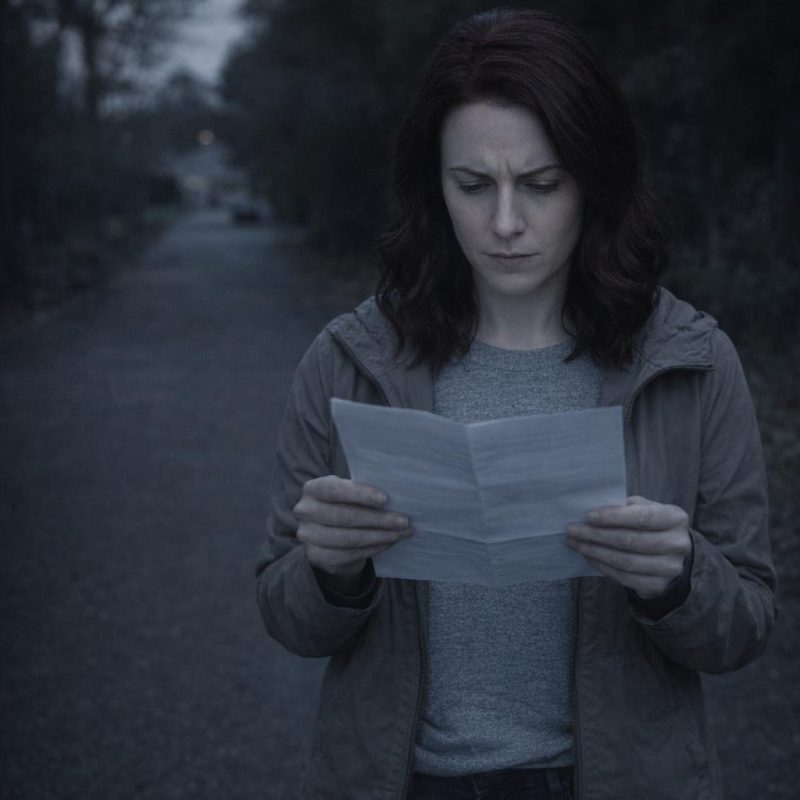 Image by RM AI
Two Words Underlined
I kept coming back to the bottom of the page. The sentence itself was short — one line, maybe ten words — but at the very end, two of those words had been underlined. Not once. Twice. Two firm parallel lines drawn beneath them, pressed hard enough into the paper that I could feel the slight ridge when I ran my thumb across it. Whoever had written this had gone back. They had looked at what they'd written, decided it wasn't enough, and pressed the pen down again. That detail kept snagging at me. A single underline might be habit, might be nothing. But two lines felt like someone leaning forward, grabbing your arm, making sure you were paying attention. I set the paper on my kitchen counter and stepped back from it, like a little distance might help me read it differently. It didn't. The two words just sat there at the bottom of the page, doubled and deliberate, and I couldn't stop looking at them. I didn't know what they referred to. I didn't know who had written them or why those particular words needed that particular emphasis. I just knew that whoever had done this had wanted me to feel the weight of it. And I did.
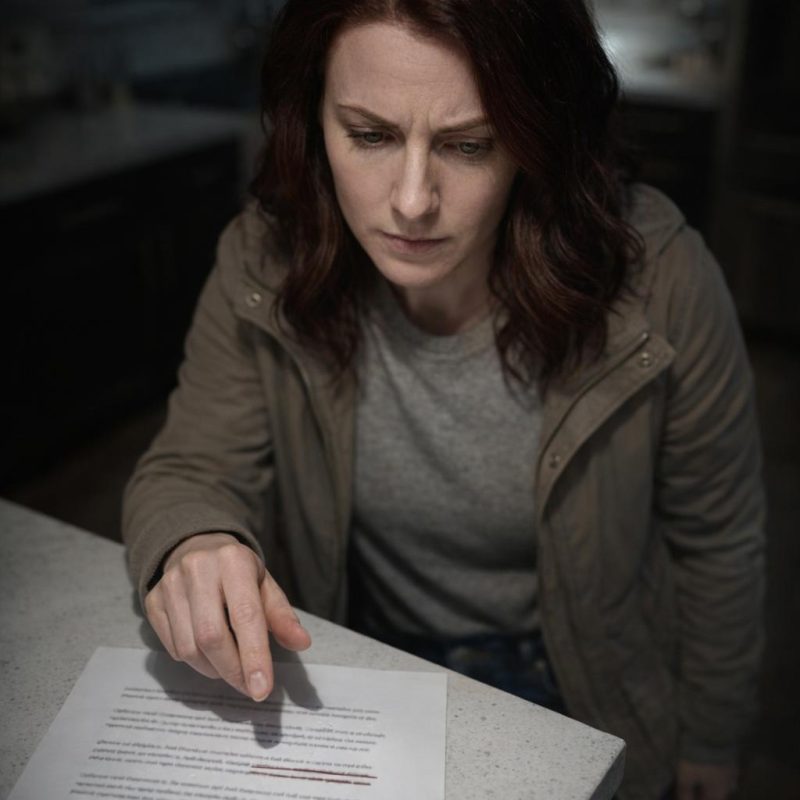 Image by RM AI
Do Not Let Her Inside
I read the whole thing again, start to finish, slowly. The sentence was simple. It wasn't coded or cryptic in its language — it was direct, the kind of thing you'd say out loud to a friend without thinking twice. Except it had been written on a folded piece of paper and hand-delivered to my door by a stranger. I turned it over, checked the back again — still blank. I looked at the envelope it had come in, which I'd left on the counter, and there was nothing on that either except my name. I went through the sentence word by word, trying to pull something useful out of it. There was a pronoun. Female. Whoever this warning was about, it was a woman. That was the only concrete thing I could extract. I looked back toward the street through my front window, but she was long gone — the sidewalk was empty in both directions, the neighborhood quiet and completely ordinary, like none of it had happened. I had no idea who the warning referred to. I didn't know any woman who posed any kind of threat to me, or who I should be keeping out of my house. I turned back to the paper on my counter and read the last line one more time: *Do not let her inside*.
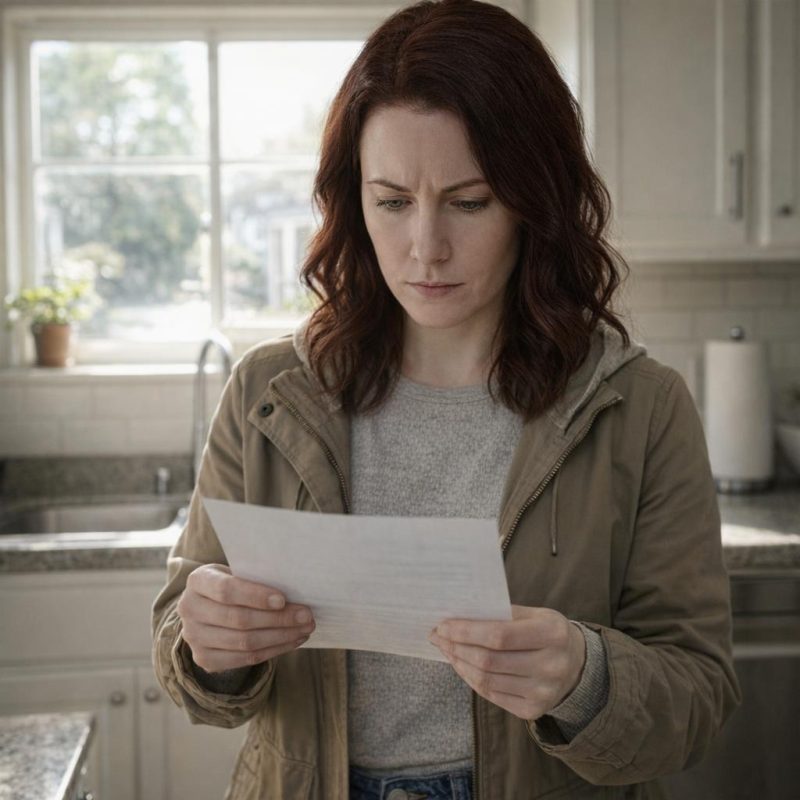 Image by RM AI
Searching for Logic
I spent the next few days trying to be reasonable about it. That's the only way I can describe it — I was actively, consciously trying to construct a version of events that made sense and didn't require me to be frightened. I told myself it was probably a family thing. A dispute over an estate, maybe, or a messy divorce where someone's ex-wife had become a problem. It happened. People got strange notes delivered to neighbors all the time in situations like that — wrong address, misdirected warning meant for someone else on the street. That felt plausible. I held onto it for about a day and a half. Then I tried the mental health angle. Someone in a difficult situation, reaching out in an unconventional way, the warning more symbolic than literal. That one lasted almost two days. I even considered that it might be a prank — some elaborate, pointless joke that I wasn't in on. Each explanation had enough surface logic to give me a few hours of relative calm. I'd turn it over, find the edges that fit, and let myself breathe a little. The note stayed on my kitchen counter the whole time, face-down, and I told myself I was handling it. For a little while, the explanations were almost enough.
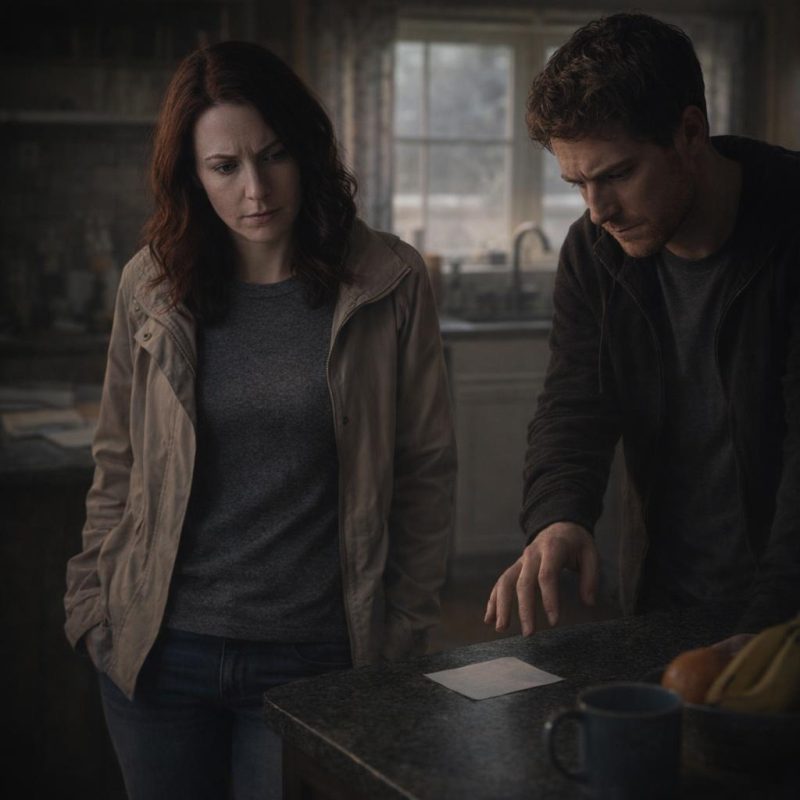 Image by RM AI
Half-Believed Theories
The problem was that none of the theories held up past a certain point. I'd pick one up, turn it around, and it would work fine until it didn't. The family dispute theory fell apart when I thought about the delivery — a stranger coming specifically to my door, knowing my name, handing it to me directly. That wasn't a misdirected note. The mental health theory collapsed when I remembered how composed she'd been, how measured, how completely in control of every word and movement. The prank theory never really got off the ground. I tried a few others. An ex-spouse with a grudge. A legal dispute spilling into the neighborhood. A workplace conflict I somehow had no knowledge of. Each one fit for a little while — long enough to feel like progress — and then something would snag, some detail that didn't line up, and the whole thing would quietly come apart. The underlined words were the part I couldn't explain away. Every theory I built could account for the note, more or less. None of them could account for that double line pressed into the paper, that insistence. By the end of the week, I had a collection of half-believed explanations and no conviction in any of them, and the note was still sitting face-down on my counter.
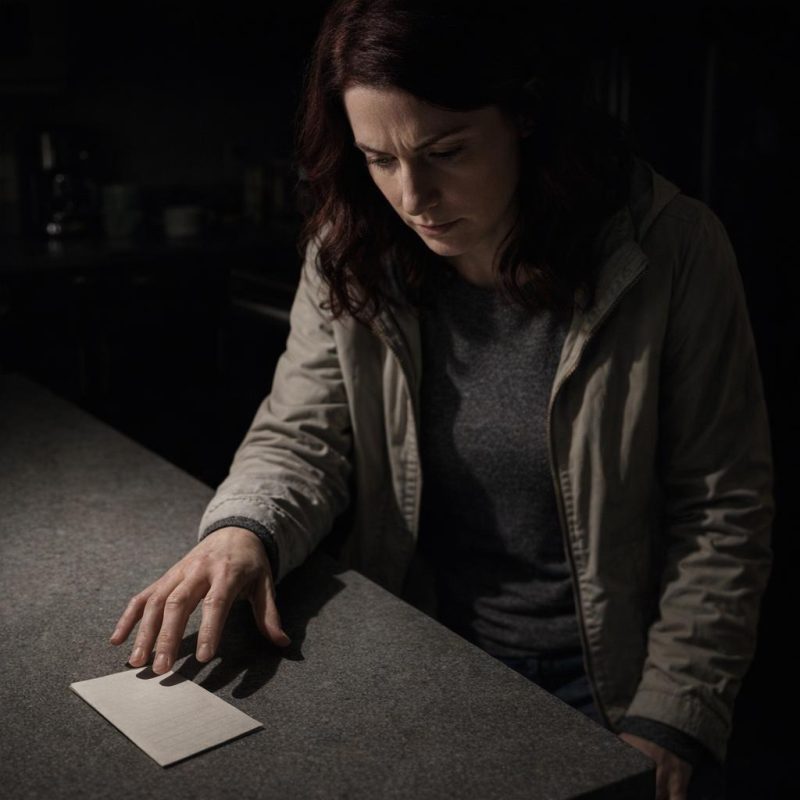 Image by RM AI
The Misdirected Package
I'd mostly stopped thinking about it by the following week. Not because I'd resolved anything — I hadn't — but because there was nothing to do with it, and I was tired of turning it over in my head without getting anywhere. I was trying to get back to normal. I was doing a reasonable job of it, actually, right up until the afternoon I went to bring in my recycling bin and nearly tripped over a package sitting at the edge of my porch. It hadn't been there that morning. I was almost certain of that. It was a medium-sized box, brown cardboard, and it had clearly been sitting somewhere for a while — the corners were soft, the surface worn and slightly discolored in patches. I stood there on my porch for a moment, looking up and down the street, but there was no one around, no delivery truck, nothing. I picked it up. It was lighter than I expected. I carried it inside and set it on the kitchen table. When I turned it over to look for a shipping label, I found bare cardboard on every side — no name, no address, no return information, no label at all.
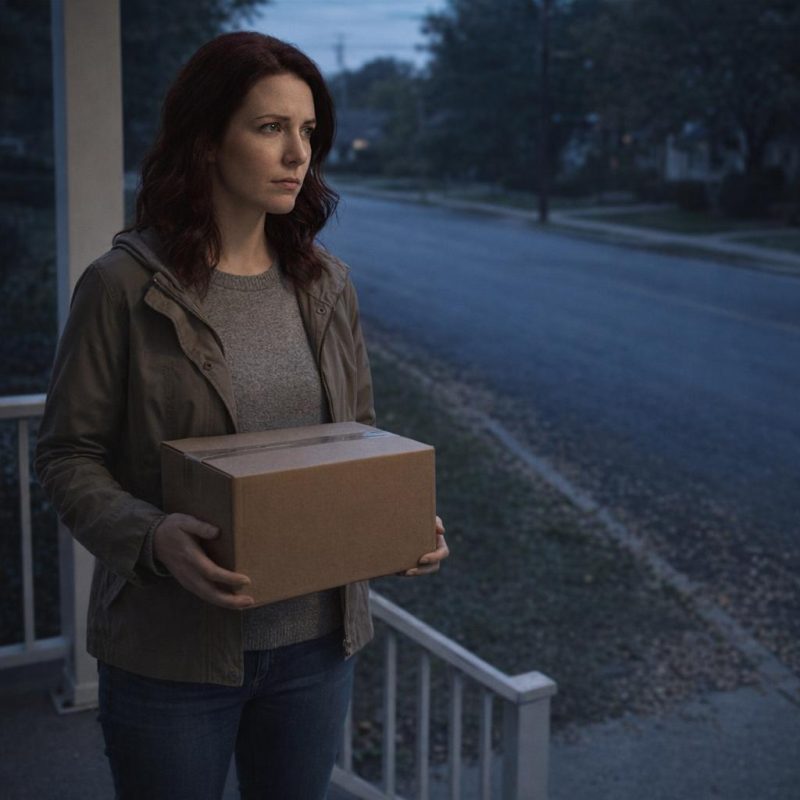 Image by RM AI
Photographs Inside
I told myself I was opening it to find out who it belonged to so I could return it. That felt responsible. Practical. I found a pair of scissors and cut the tape carefully, like I was doing something official. Inside, there was no packing slip, no receipt, no note. Just photographs. A small stack of them, loose, the kind printed on actual photo paper rather than at home on a regular printer. I lifted the first one out. A backyard barbecue — picnic table, paper plates, someone's hand reaching for a burger. Ordinary. I picked up the next one. A birthday party, a cake with candles, streamers in the background. I went through them slowly, one by one, and they all had that same quality — casual, candid, the kind of photos that end up in a shoebox rather than a frame. It wasn't until the fourth or fifth one that I stopped. I set the others down on the table and held that one closer to the light. A family at what looked like a lake, squinting into the sun. The little girl had blonde hair and an easy smile. The man beside her was fit, casually dressed, with the kind of easy smile that didn't quite reach his eyes. And the woman next to him was slender, mid-thirties, with kind eyes that were scanning something just past the camera. Tom. Melissa. Sophie.
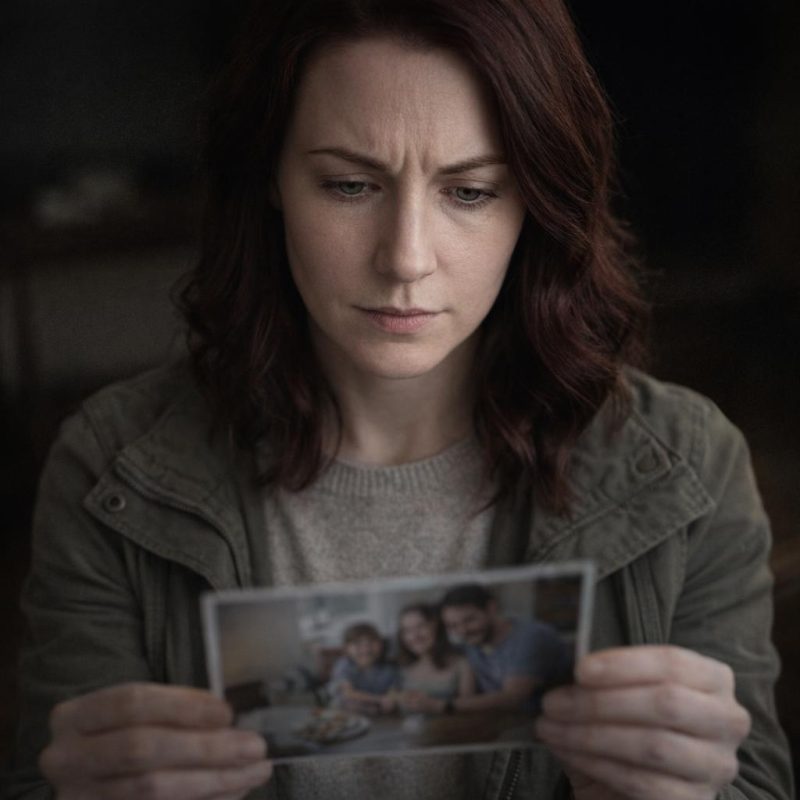 Image by RM AI
Ordinary Moments Captured
I spread the rest of them across the kitchen table, one by one, until they covered most of the surface. There were maybe fifteen in total. A birthday party — Sophie blowing out candles on a cake with pink frosting, her face lit up and delighted. Tom at a grill, spatula in hand, laughing at something off-camera. Melissa at a picnic table, head thrown back, mid-laugh, a paper cup in her hand. A Christmas morning scene with wrapping paper everywhere. Sophie on a bike with training wheels, Tom crouched beside her with his hand on the seat. They were the kind of photos that end up in a shoebox or a drawer — not posed, not curated, just life happening. Normal, ordinary, unremarkable life. I kept waiting for one of them to be different. To show something that explained why a stranger had packed them into a box and left them on my porch. But they just kept being what they were: a family doing family things, caught in small moments that didn't seem to mean anything. I picked up each one and turned it over, looking for writing, a label, anything. Most of the backs were blank. I set them in a loose row and stared at them, and the only question I had was why any of this was sitting on my table at all.
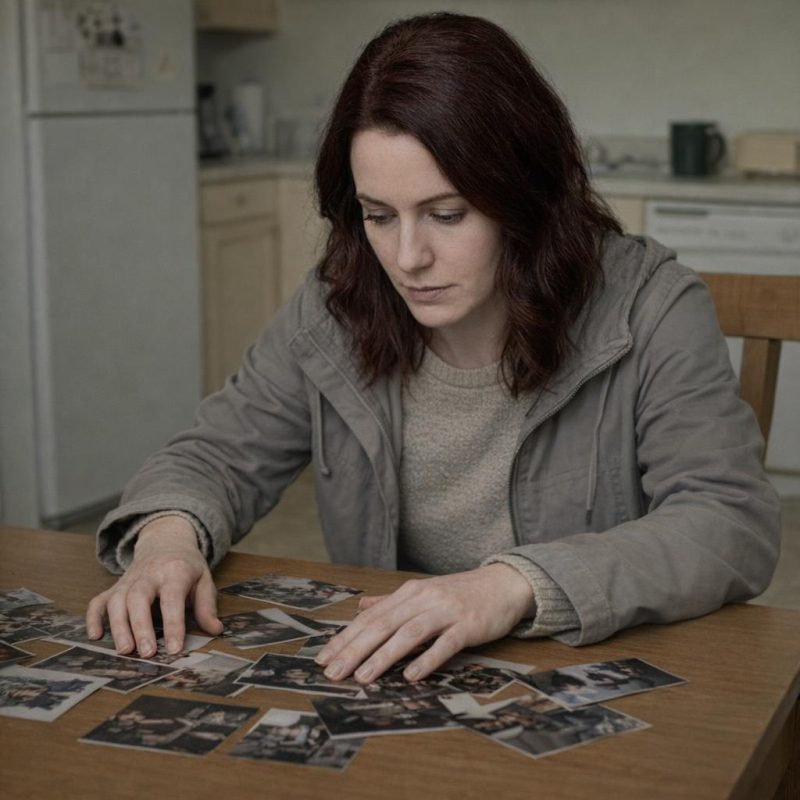 Image by RM AI
The Picnic Photo
I don't know what made me pick up the picnic one again. Maybe because it was the most crowded — there were other people in the background, a park setting with trees and a grassy open area, the kind of place where a dozen families might spend a Saturday afternoon. Tom and Melissa were in the foreground, Sophie between them, all three squinting into the sun. It looked like any other photo in the stack. I held it closer to the light and started working my way through the details the way you do when something nags at you without announcing itself. The picnic blanket. The cooler beside it. A dog on a leash tied to a nearby bench. A couple walking a stroller along a path in the middle distance. I wasn't sure what I was looking for. I just had the feeling — the low, quiet kind — that I was missing something. I moved my eyes to the far edges of the frame, the parts that weren't really the subject of the photo at all. The trees along the back. A park bench. And then, just at the edge of the tree line, slightly out of focus but still visible, a figure standing alone, facing the camera. Not part of any group. Not moving toward anyone. Just standing there, separate from everything else in the frame.
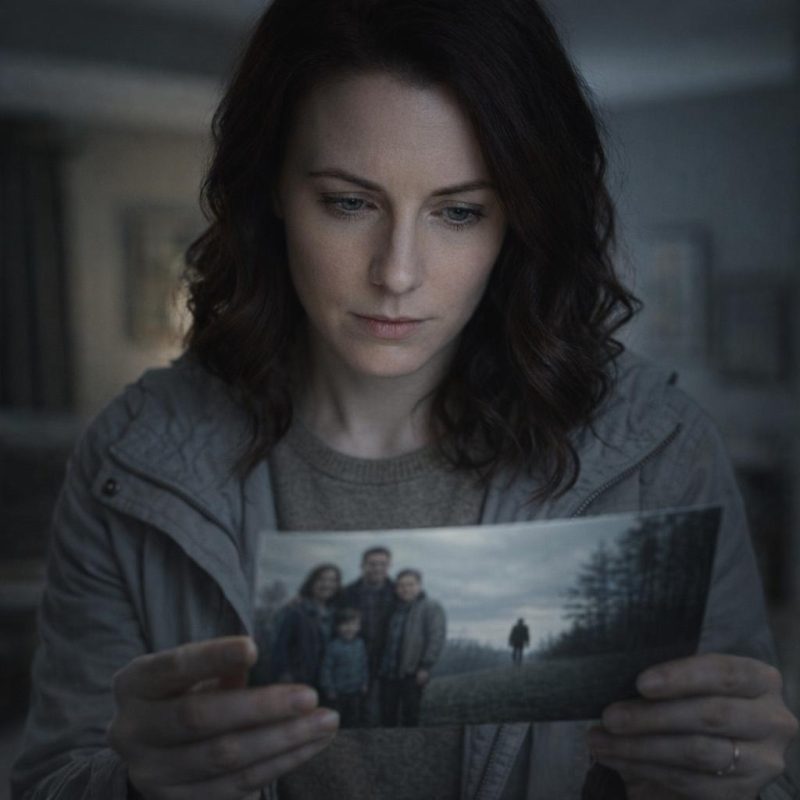 Image by RM AI
Standing in the Background
I brought the photo closer until it was almost touching my nose. The figure was a woman. She was standing maybe thirty yards behind the family, partially in the shade of the trees, and she wasn't doing anything — not eating, not talking to anyone, not watching the kids play. She was just standing there, facing in the direction of Tom and Melissa and Sophie. Her posture was straight, composed, the way someone stands when they're not in a hurry. I set the photo down and picked up my phone, scrolling back to the photo I'd taken of the note the day it arrived. Then I looked at the woman in the background again. The neat professional clothes. The composed stillness. The way she was positioned just slightly apart from everything happening around her. It was her. The woman who had come to my door. The woman who had handed me the note and told me to be careful. She was standing in the background of a photograph of my neighbors — a photograph that, based on the ages of the kids and the look of things, had been taken years before any of this started. I set the photo down on the table and didn't pick it up again. The figure at the edge of the tree line just stood there in the image, still and separate.
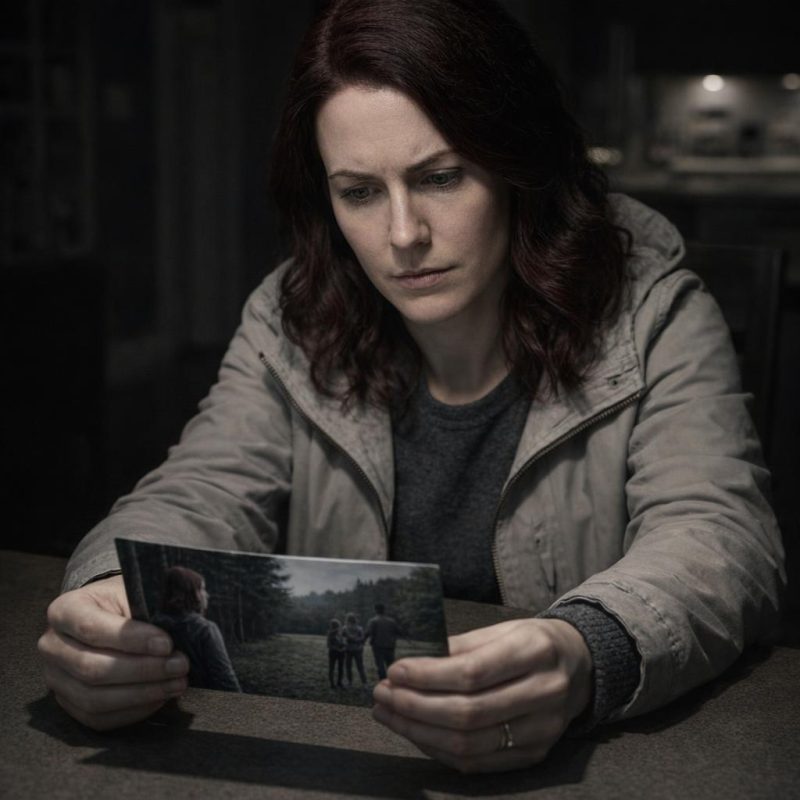 Image by RM AI
Four Years Earlier
I flipped the photo over. I'd checked the backs of most of them earlier and found nothing, but I looked again more carefully this time, running my thumb along the edges. And there it was — small, faded, printed in the corner the way some cameras and photo printers used to do automatically. A date stamp. I had to tilt it toward the window to read it clearly. The numbers were small but legible. I read them twice. Then I set the photo face-down on the table and just stood there for a second, because the date didn't make sense with anything I thought I understood about the situation. Sophie looked young in the photo — maybe five or six, still round-cheeked, still at the age where she'd need training wheels. If the date was right, this photo had been taken four years before the Harrisons moved in next door to me. Four years before I ever saw any of them. Four years before the empty house, the note, any of it. Which meant the woman in the background hadn't shown up recently. She had been there — in their lives, in their orbit, close enough to be in the background of a candid family photo — for at least that long. I turned the photo back over and looked at the date stamp again: four years, two months, and eleven days before the Harrisons ever became my neighbors.
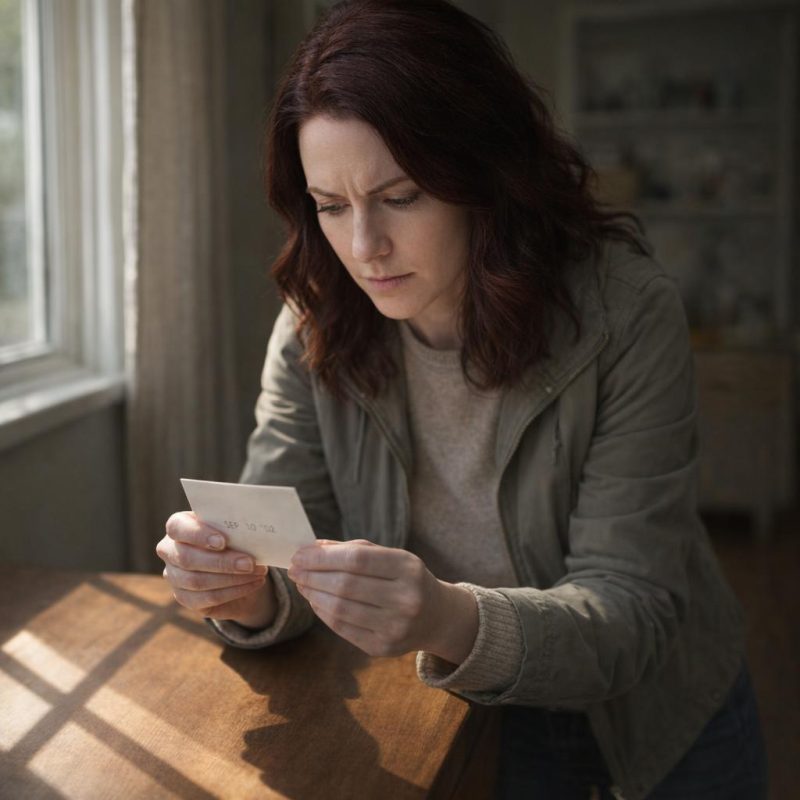 Image by RM AI
Disconnected Numbers
I went to my phone and scrolled through my contacts until I found Melissa's number — the one she'd given me the first summer they moved in, when she asked me to text if any packages showed up while they were out of town. I pressed call and listened. One ring, then the automated message: the number you have dialed is not in service. I tried it again. Same result. I pulled up Tom's number next, the one he'd given me when they borrowed my ladder two winters ago. Same thing. Not even a voicemail prompt, just the flat recorded voice telling me the line was disconnected. I sat down at the kitchen table with the photos still spread across it and tried to think through whether there was any other way to reach them. An email address, maybe — but I didn't have one. A mutual friend — but we'd never really moved past the neighborly stage of things. I thought about the note, the box, the woman at my door, and now this. Every thread I reached for came back with nothing on the end of it. I set the phone face-down on the table beside the photos and didn't pick it up again. The silence where a ringing phone should have been had a particular quality to it — not just quiet, but closed off, like a door that had been shut from the other side.
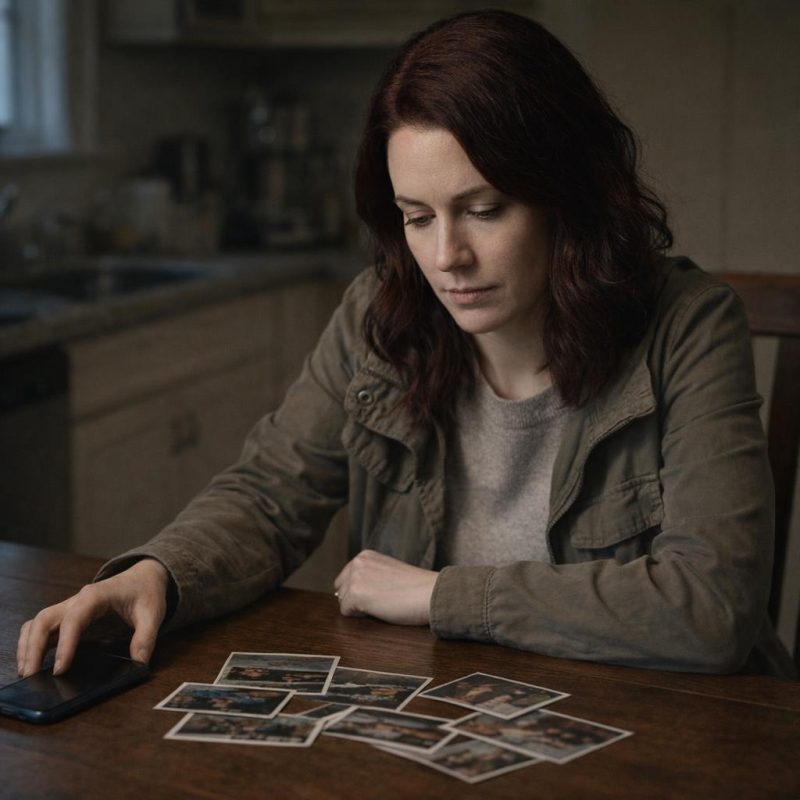 Image by RM AI
Growing Alarm
I left everything on the table and made myself a cup of coffee I didn't really want, just to have something to do with my hands. Then I sat back down and looked at it all together. The note with its two underlined words. The box of photographs showing a family I'd lived next to for three years doing ordinary things. One photo with a woman standing at the edge of the frame, composed and still, watching. A date on the back of that photo placing her there four years before the Harrisons ever moved onto my street. Two phone numbers, both disconnected, both gone without a forwarding anything. Individually, I could have explained any one of them away. A cryptic note from someone who meant well. Old photos sent by a relative. A stranger who happened to be in the background of a park photo. Numbers that get changed when people move. But sitting there together, laid out on my kitchen table, they didn't feel like coincidences anymore. I couldn't tell you exactly what they added up to. I didn't have enough pieces for that. But the feeling that had been sitting low in my chest since the day the box arrived had shifted into something heavier — the photographs spread across the table, the two dead phone lines, and the woman's face at the edge of that park photo, all of it arranged in front of me like a question I didn't know how to answer.
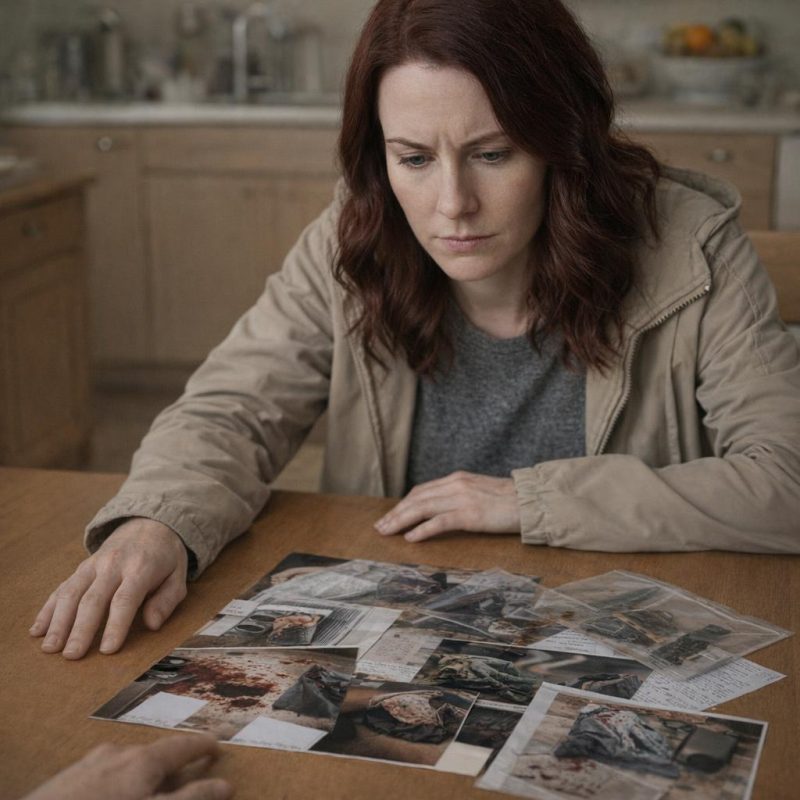 Image by RM AI
Months of Unease
Months went by. I know that sounds like I should have done something in the meantime, and maybe I should have. But there was nothing concrete to act on. No crime I could point to. No one I could call. The Harrisons were gone, their numbers were dead, and the woman who'd come to my door hadn't come back. Life kept moving the way it does — work, groceries, the slow turn of seasons. I put the photographs in a manila envelope and slid it into the drawer of my bedside table, which felt like the right distance from them. Not thrown away, but not on the kitchen table either. I'd catch myself thinking about it at odd moments. Stopped at a red light. Waiting for coffee to brew. Standing in the shower. I'd look at the house next door sometimes — still empty, a for-rent sign that came and went without anyone ever seeming to stay — and I'd think about Sophie on her bike, and Tom at the grill, and Melissa laughing at that picnic table. And then I'd think about the figure at the edge of the tree line, standing apart from all of it. I never came up with an answer that satisfied me. The questions just lived there, in the back of everything, the way certain things do when you can't resolve them and can't quite let them go either.
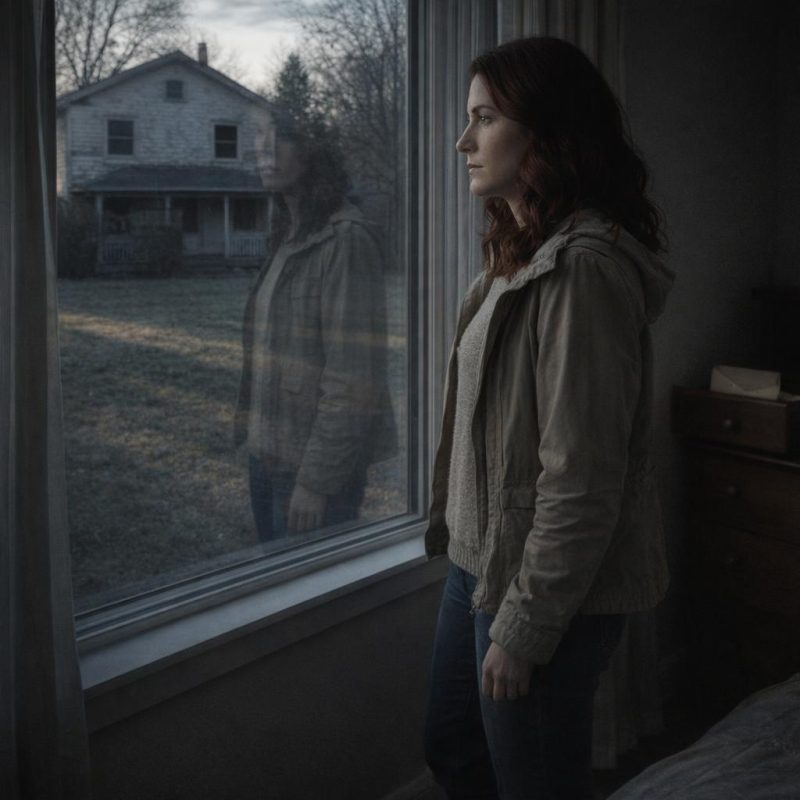 Image by RM AI
Routine Interrupted
It was a Saturday in early October, one of those mornings that still feels like summer until the wind picks up and reminds you otherwise. I was mowing the front lawn, which needed it badly — I'd let it go longer than I should have. I had my earbuds in, half-listening to a podcast I wasn't really following, just going back and forth in strips the way you do when you want to feel productive without having to think too hard. I was on my third pass when I noticed Mrs. Patterson coming down the sidewalk from the direction of her house, three doors down. She was moving with purpose, not the casual amble of someone out for a walk. I cut the mower engine and pulled out one earbud. She was a sharp woman — the kind of neighbor who noticed things, who could tell you which cars on the block didn't belong there and approximately when they'd arrived. We'd exchanged pleasantries over the years, the occasional wave, a brief conversation about the weather or the state of the street. She didn't usually seek me out. I watched her close the last few yards between us, and there was something in the set of her expression — not alarmed exactly, but deliberate, like she'd been turning something over for a while and had finally decided to say it. I waited, and the October wind moved through the yard around us.
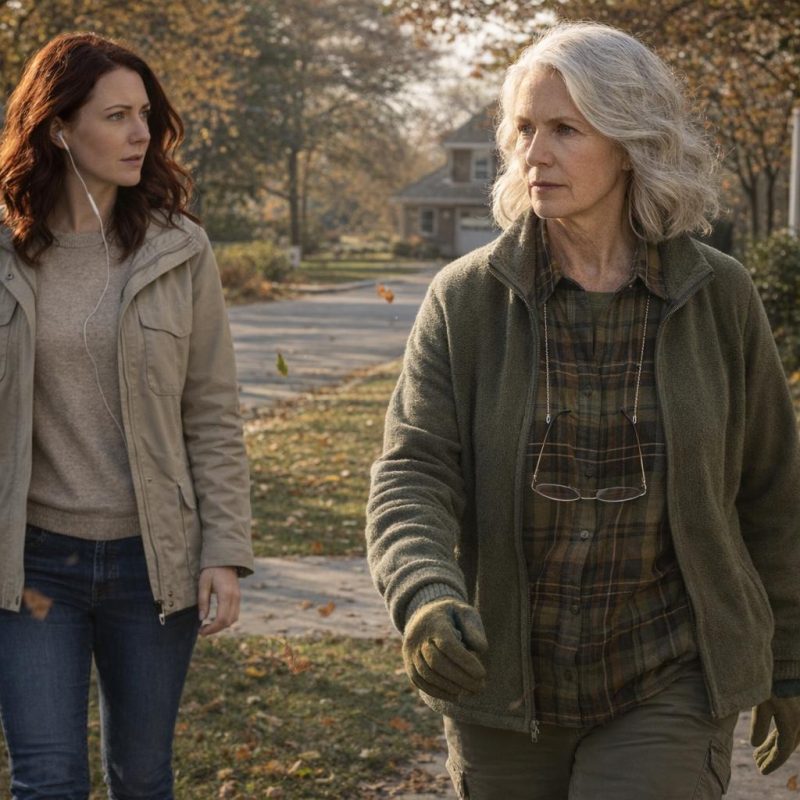 Image by RM AI
A Direct Question
I cut the mower engine the rest of the way and pulled out my second earbud. Mrs. Patterson stopped at the edge of my lawn, close enough that I could see the careful look on her face — the kind that meant she'd been sitting on something for a while. We exchanged the usual pleasantries, the kind that feel like throat-clearing before the real conversation. She asked how I'd been, I said fine, asked the same back. Then she folded her hands in front of her and looked at me with those sharp eyes of hers and said, without any particular buildup, that she'd been meaning to ask me something. I told her to go ahead. She glanced once down the street, then back at me, and asked whether anyone had come around asking about the family that used to live next door to me — the Harrisons.
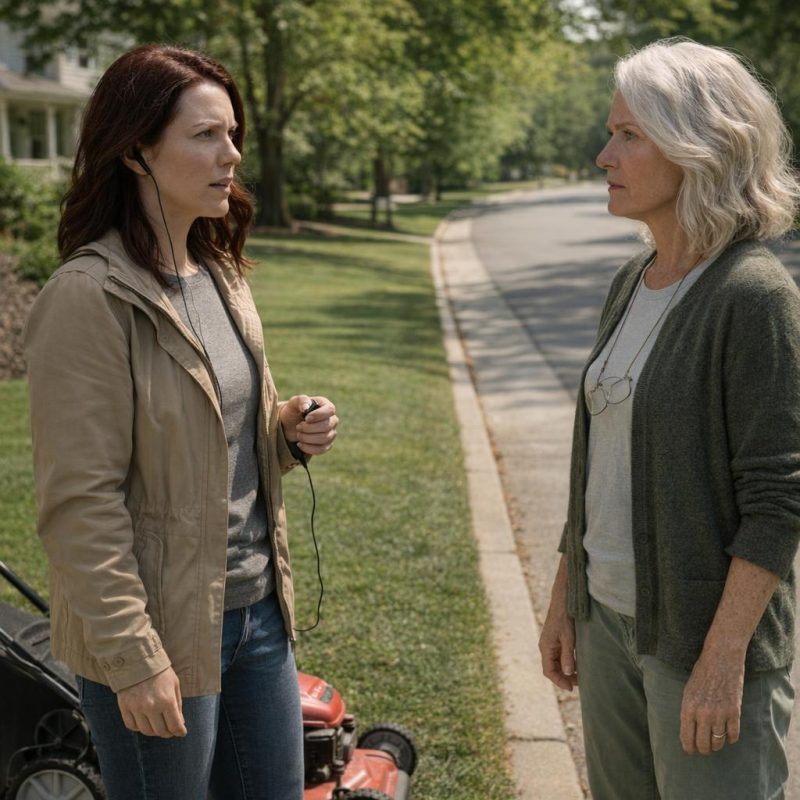 Image by RM AI
Multiple Visits
Mrs. Patterson took a breath and said a woman had come to her door a few months back. Early fifties, she said. Neatly dressed, professional-looking. Calm in a way that she'd found a little off-putting, though she couldn't explain exactly why at the time. The woman had said she was trying to get in touch with the family next door — the Harrisons — and asked if Mrs. Patterson knew where they'd gone. Mrs. Patterson told her she didn't, which was true. The woman had nodded, thanked her politely, and then stood there a beat too long, looking past Mrs. Patterson's shoulder into the hallway before she finally turned and left. I asked what kinds of questions she'd asked. Mrs. Patterson said she'd wanted to know how long the family had lived there, whether they'd seemed like they were planning to move, whether anyone had come to visit them regularly. She'd also asked about me — whether I was close with them, whether I'd been over to their house much. I felt the back of my neck go cold. I asked Mrs. Patterson if she knew whether the woman had stopped at any other houses on the street. She nodded slowly. "At least three others that I know of," she said.
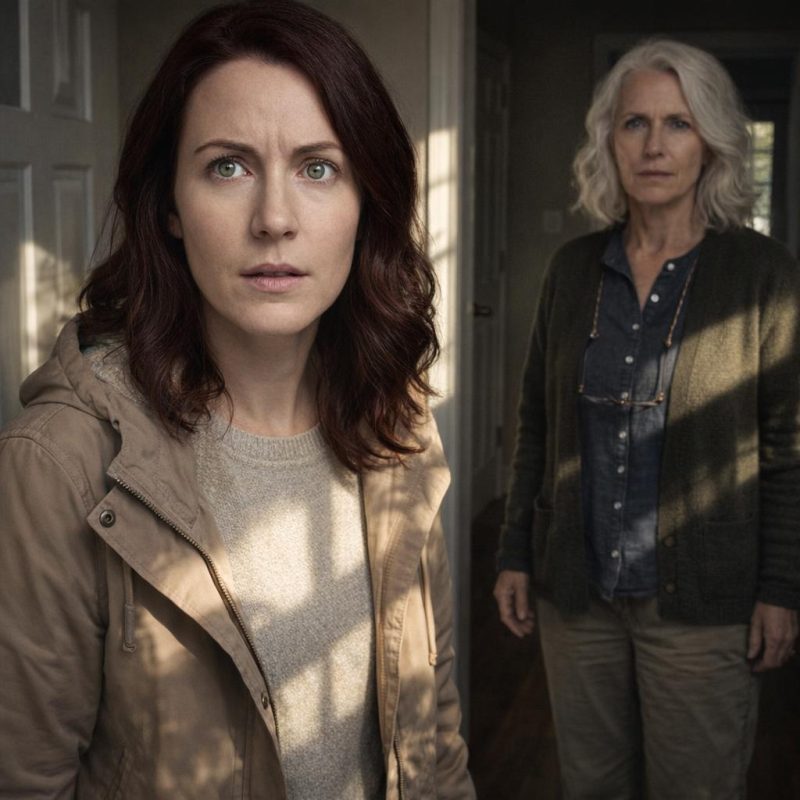 Image by RM AI
Not Random
I stood there for a moment, turning that over. At least three other houses. Maybe more. I told Mrs. Patterson that the same woman had come to my door — described the same composed manner, the same professional appearance, the same careful questions about the Harrisons. Mrs. Patterson's expression shifted, something tightening around her eyes. She said she'd wondered, after the woman left, whether she should have said less. I told her I'd had the same feeling after my own conversation with her. What bothered me wasn't any single visit — it was the shape of it. One house, you could explain away. Two, maybe. But working her way down the street, asking the same questions at each door, building up a picture from whatever scraps each neighbor could offer — that wasn't someone trying to reconnect with an old friend. I didn't say that out loud, not exactly, but I could see from Mrs. Patterson's face that she was somewhere close to the same thought. We stood there in the October wind for a moment without speaking. Then Mrs. Patterson said quietly that she wished she'd asked more questions when the woman was standing on her porch. I did too. The visits hadn't been random — every house on the block had been a stop on the same route.
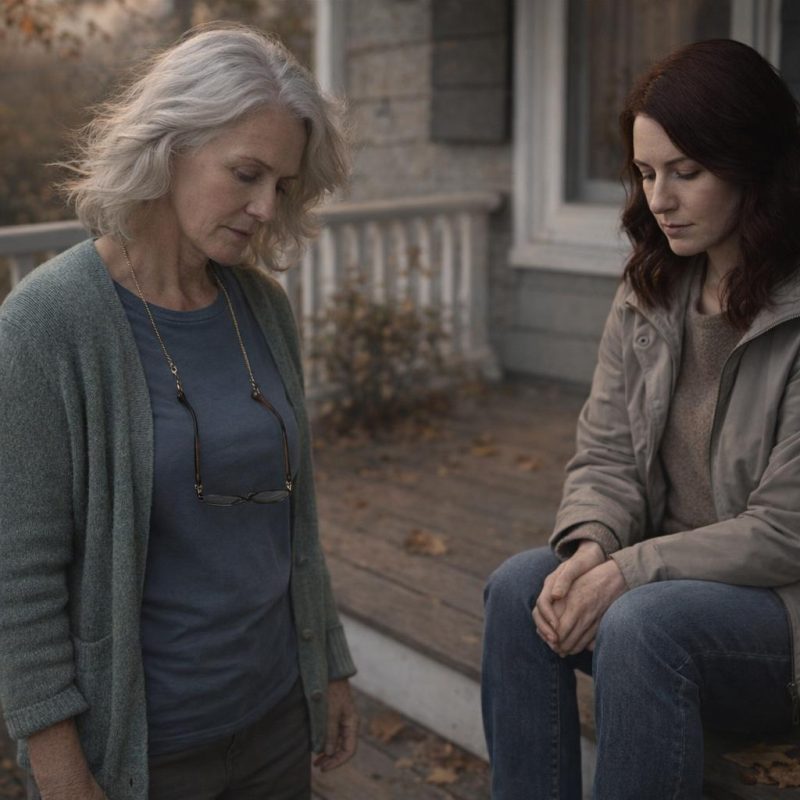 Image by RM AI
Preoccupied Months
The weeks after that conversation with Mrs. Patterson didn't get easier. If anything, they got harder, because now I had more pieces and still no picture. I'd lie awake some nights running through it — the note, Diana's visit, the questions she'd asked me, the fact that she'd asked the same questions at three or four other houses on the street. I'd think about the Harrisons leaving the way they did, no warning, no goodbye, just gone. I'd think about the two underlined words at the bottom of that note and what they were supposed to mean. I kept watching the street out of habit, half-expecting to see Diana's car parked at the curb again, or to catch a glimpse of her walking up to someone else's door. She never appeared. The months moved forward and nothing broke open. I went to work, came home, made dinner, watched the empty house next door sit quiet in the dark. I told myself I was probably making too much of it, that there was some ordinary explanation I just hadn't landed on yet. But I didn't really believe that. The note was still in my kitchen drawer, and every time I opened it for something else, I'd see it sitting there, and the weight of the whole unanswered thing would settle back over me.
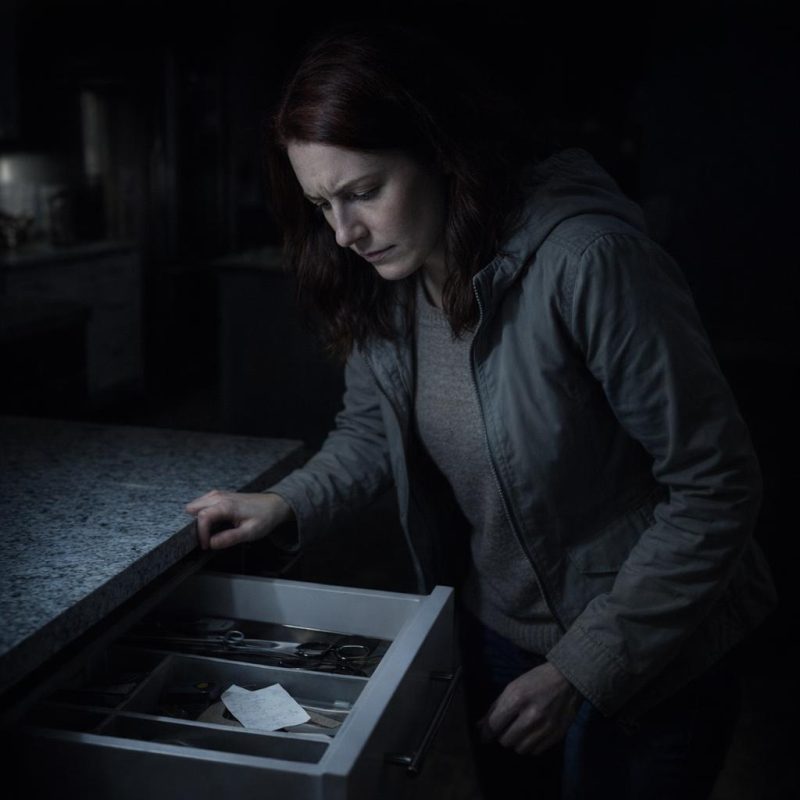 Image by RM AI
Chance Encounter
It was a Tuesday in late January when I ran into Greg. I was at the hardware store on Clement, standing in the paint aisle trying to decide between two shades of white that looked identical to me, when I heard someone say my name. I turned around and it took me a second — he'd grown a beard since I'd last seen him, and he was wearing a jacket I didn't recognize — but then it clicked. Greg. We'd worked together at the same firm for about two years, maybe four or five years back. He'd moved on before I did, and we'd lost touch the way you do when there's no particular reason to stay in contact but no falling out either. We shook hands and did the usual catching-up loop — where are you working now, how's the family, can you believe how long it's been. He seemed genuinely glad to run into me, and honestly so was I. It was the kind of accidental encounter that feels like a small gift on an otherwise unremarkable Tuesday. We ended up walking out together and standing in the parking lot for another twenty minutes just talking. I had no idea, standing there in the January cold, that the conversation was about to matter in a way I couldn't have anticipated.
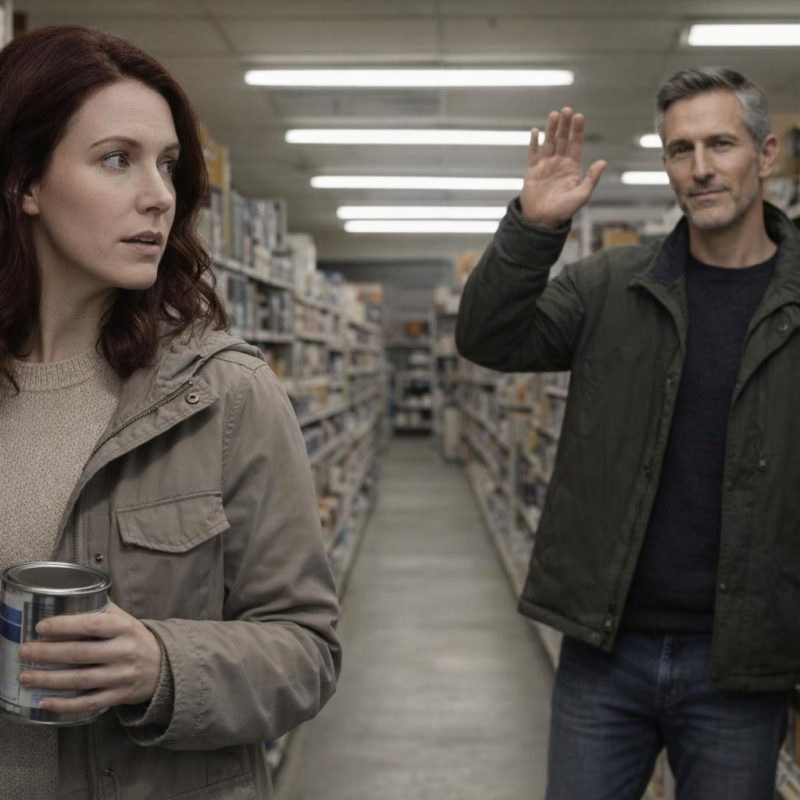 Image by RM AI
Mentioning the Move
At some point the conversation drifted the way those catch-up conversations do — jobs, the neighborhood, what had changed. I mentioned I'd been in the same house for going on eight years now, that the street had turned over a bit, new families moving in. I said the neighbors I'd been closest to had actually moved away pretty suddenly last fall — the family next door, the Harrisons. I said it the way you'd mention any ordinary thing, just filling in the shape of the last few years. I told him it had been abrupt, that there'd been no real warning, that one week they were there and the next their house was empty. I said I still thought about it sometimes, that it had left a strange feeling I hadn't quite shaken. I wasn't expecting much in response — maybe a sympathetic nod, maybe a that's too bad. What I got instead was a stillness. Greg had been relaxed up until that point, hands in his jacket pockets, easy posture. But when I said the name Harrison, something changed. He didn't say anything right away. He looked at me with an expression I couldn't immediately read — not alarmed exactly, but not neutral either. Something had landed for him, and whatever it was, it wasn't small.
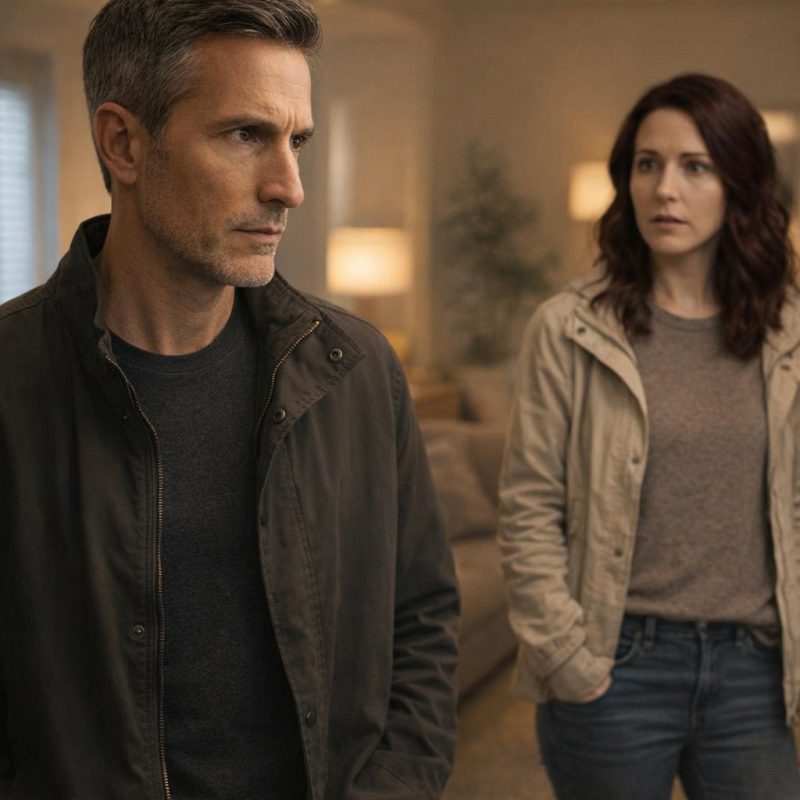 Image by RM AI
Because of Her
The silence stretched out just long enough to feel deliberate. Greg pulled one hand out of his pocket and looked down at the pavement for a second, like he was deciding something. Then he looked back up at me. "The Harrisons," he said, more to himself than to me. "Tom Harrison." He said the name like he was confirming something he'd half-expected to hear. I nodded, watching him. He was quiet for another moment, and then he asked me, in a careful voice, whether they'd finally left because of her. Just like that. Because of her. No name, no explanation, no setup — just the pronoun, dropped into the middle of the parking lot like he assumed I'd know exactly who he meant. My pulse jumped. I didn't say anything for a second. Part of me wanted to ask him to back up, to start from the beginning, to tell me everything he knew. But I also didn't want to say the wrong thing and have him pull back. So I just held still and let the question sit between us, and the cold January air settled around us both, and the weight of everything I hadn't been able to figure out for months pressed in close.
 Image by RM AI
Who Is She
I told him I knew some of it — that a woman had come to my door asking about the Harrisons, that she'd apparently gone to several houses on the street, that the family had left without a word and I'd been trying to piece together why ever since. Greg was quiet for a moment. He looked past me toward the street, then back. He seemed to be deciding where to start. I stood there in the parking lot with my heart going faster than it should have been for a conversation on a Tuesday afternoon. Then Greg looked at me steadily, and I took a breath and kept my voice as even as I could manage. "Who do you mean?" I said. "Her who?"
 Image by RM AI
Years of Obsession
Greg said her name like it explained everything — Diana. He said she'd been in Tom and Melissa's lives for years, longer than most people stay in any situation they don't want to be in. He wasn't sure exactly when it started, only that by the time he'd heard about it, the pattern was already well established. She would appear. That was how he put it — she would just appear. At a grocery store they frequented, at a park where Sophie played, at a community event they'd mentioned attending. Not once, not twice. Repeatedly, across different cities, different years. He said there were stretches where she'd go quiet — months, sometimes longer — and the family would start to breathe again. Then she'd surface somewhere new, close to wherever they'd landed. He didn't know how she found them each time. He didn't think anyone fully understood that part. I stood there in the parking lot listening to him talk, and the afternoon felt very still around me. I kept thinking about the word he'd used — obsession — and how inadequate it sounded for something that had apparently consumed years of three people's lives without their consent.
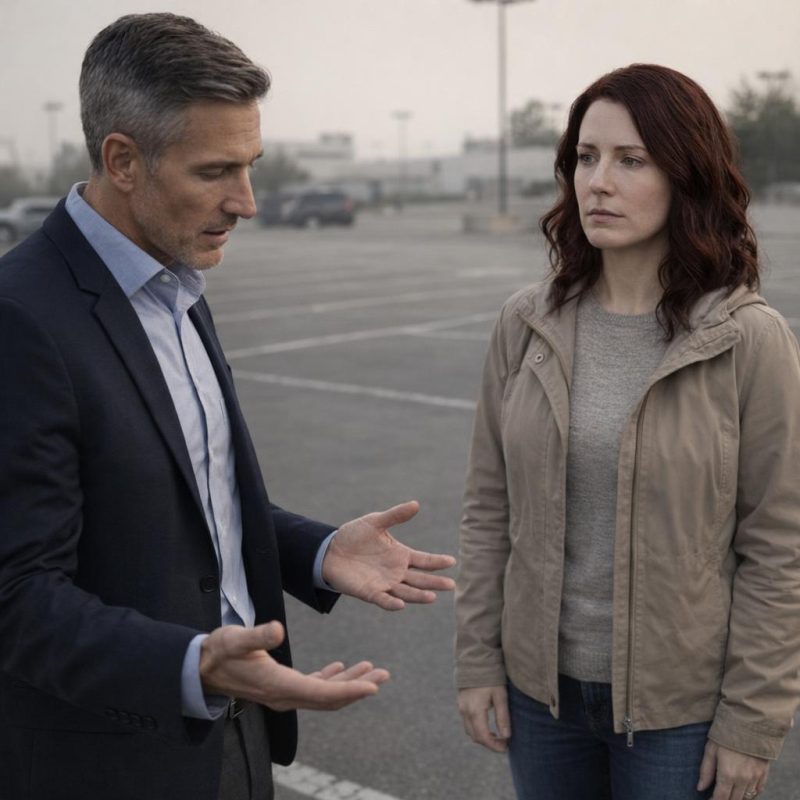 Image by RM AI
The Pattern of Pursuit
Greg described it in pieces, the way you describe something you only half-witnessed yourself. Diana would show up in the places they went — the coffee shop, the school pickup line, the neighborhood block party. Not dramatically. Not in a way that would make anyone call the police on the spot. She'd just be there, becoming a familiar face, the kind of presence that takes weeks to register as wrong. He said she'd move into neighborhoods near them at least twice that he knew of. She'd join the same gym, attend the same community meetings, introduce herself to the same people Tom and Melissa knew. And then, without explanation, she'd be gone. No confrontation, no scene. Just gone. And for a while the family would think it was over. He said that was almost the worst part — the disappearances. Because they never meant it was finished. They just meant she was somewhere else, doing something else, and eventually the cycle would start again. I didn't say anything for a long moment after he finished that part. There was something about the rhythm of it — appear, embed, vanish, return — that sat in my chest like something cold.
 Image by RM AI
Multiple Relocations
I asked Greg how many times the family had moved. He exhaled slowly, like the number itself was heavy. At least four times that he knew of, he said, maybe more. Each move was supposed to be the one that stuck — a new city, a new name on the lease, a new school for Sophie, a fresh start with no forwarding address left behind. And for a while it would work. Months would pass. Sometimes close to a year. He said Tom had told him once that the longest quiet stretch had been fourteen months, and that by month twelve Melissa had almost started to believe it was really over. Then Diana had turned up two streets away from their new place. He didn't know how. Tom didn't know how. That was the part that made it so hard to fight — there was no clear trail to cut off, no obvious leak to plug. The moves got faster after that, he said. Less planning, more urgency. They'd stopped trying to settle and started just trying to stay ahead. I looked at Greg and thought about Sophie riding her bike up and down our street like she owned it, easy and unhurried, and then I thought about how many streets just like ours she'd had to leave behind.
 Image by RM AI
Evidence Accumulates
I drove home slowly, and by the time I pulled into my driveway I wasn't really seeing the road anymore. I sat in the car with the engine off and went back through everything I had. The warning note, delivered by hand, no signature, two words underlined. The photograph Melissa had left — a woman captured from a distance, dated four years back. The woman who had come to my door, polite and composed, asking careful questions about a family she claimed to be worried about. Her visits to other houses on the street, Mrs. Patterson had confirmed that. The disconnected phone numbers that led nowhere. I laid it all out in my head like items on a table. The note had arrived after the family vanished. The woman at my door had arrived shortly after that. She'd asked whether I had a forwarding address. She'd asked how well I knew them. She'd asked whether they'd ever mentioned anyone from their past. I sat there with all of it arranged in front of me, and something about the shape of it kept pulling at the edge of my thinking — the note, the photograph, the visitor, the questions — like a pattern I could almost see but hadn't quite named yet.
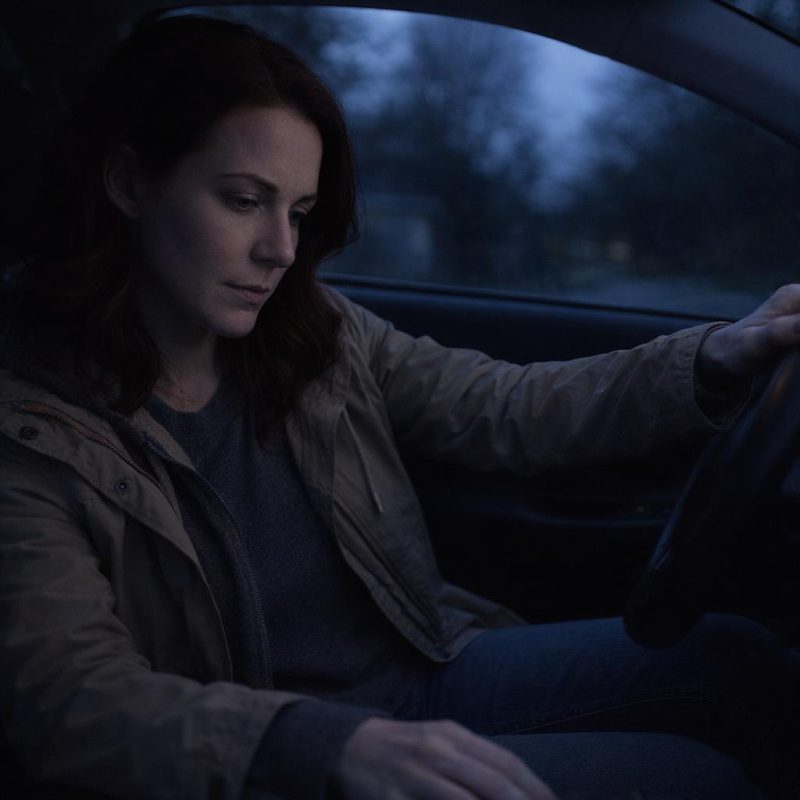 Image by RM AI
She Delivered Her Own Warning
And then I saw it. I don't know why it took that long — maybe because the idea was so strange it kept sliding off before it could land. But sitting there in my car in the quiet of my own driveway, it finally held. The woman who had come to my door asking about the Harrisons — asking whether they'd mentioned anyone, asking whether I had an address, standing on my porch with that careful, measured concern — was the same woman in the photograph. The same woman Greg had just spent twenty minutes describing to me in a parking lot. Diana had delivered the warning. Not Tom, not Melissa, not some anonymous ally trying to help. Diana had walked up to my door, handed me a note with two words underlined, and then stood there asking me questions while I answered them. The warning the family had left behind — the one I'd spent weeks trying to decode — had come from the person it was warning about. I sat very still in the driver's seat. The whole month rearranged itself around that single fact, and I felt the bottom drop out of everything I thought I'd understood.
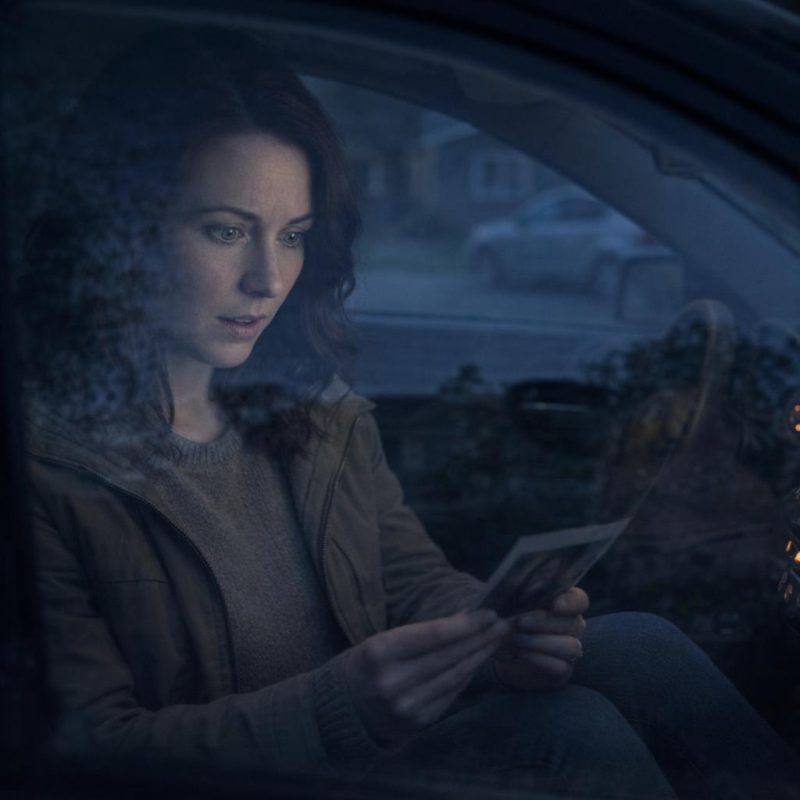 Image by RM AI
Every Question Was a Test
I went back through the visit moment by moment, and it was different now — every exchange relit from a different angle. She'd asked how long I'd known the family. I'd told her six years. She'd nodded, like she was filing it away. She'd asked whether they'd seemed stressed lately, whether anything had seemed off. I'd said I wasn't sure, that they'd left without much warning. She'd nodded again. She'd asked whether they'd ever mentioned anyone from their past, anyone who might have caused them trouble. I'd said no, not to me. She'd watched my face when I said it. I remembered thinking at the time that she seemed genuinely concerned, that her attention felt careful and kind. Now that attention felt like something else entirely — like being read. And then I remembered the last question, the one she'd slipped in near the end almost as an afterthought, her voice easy and unhurried — had they ever mentioned her by name — and I understood exactly what she'd been checking for.
 Image by RM AI
Gauging My Reaction
That question hadn't registered as strange at the time. I'd taken it as the kind of thing a worried acquaintance might ask — had they spoken well of her, had they kept in touch, was she part of their world in any way she should know about. I'd told her no, I didn't think they'd mentioned her specifically. She'd smiled and said that made sense, that they'd lost touch years ago. I'd believed her. I'd stood on my own porch and handed her exactly what she came for. Because that was what the whole visit had been — not concern, not an attempt to help. She'd come to find out what I knew. Whether the family had warned me. Whether her name had come up. Whether I looked frightened or confused when she mentioned them. I'd been confused, and I'd shown it, and she'd read every second of it. The note, the questions, the careful politeness — it had all been a way of standing close enough to measure what I knew without me ever suspecting I was being measured. I sat on my couch that evening with the photograph on the coffee table in front of me, and the feeling that settled over me wasn't quite anger yet — it was something quieter and colder, the particular discomfort of understanding that I'd been handled.
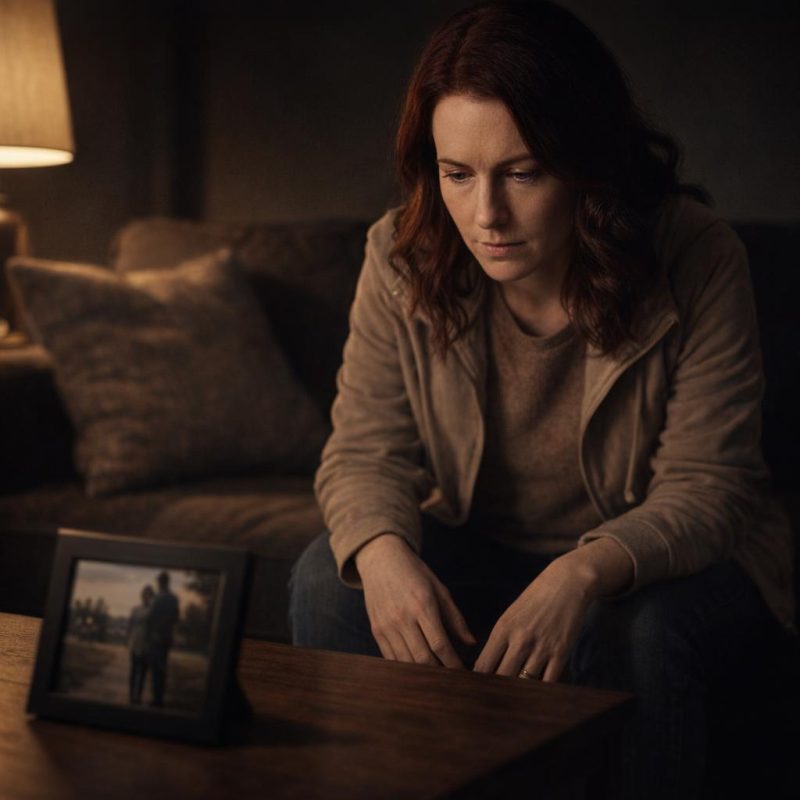 Image by RM AI
Still Hunting
What kept coming back to me, though, was her face when I'd told her I didn't have a forwarding address. I'd noticed it at the time and filed it away as disappointment — the mild letdown of someone who'd hoped for a lead. But it wasn't mild, was it. It was real. She hadn't come to my door as some kind of performance or test run. She'd come because she genuinely didn't know where they were, and she was trying to find out. The systematic visits to the neighbors, the careful questions, the note that got her through my door in the first place — all of it was a search. She was tracking them. And she hadn't found what she needed, which meant she was still looking. Somewhere out there, Tom and Melissa and Sophie had managed to disappear well enough that even Diana, with all her patience and all her years of practice, hadn't located them yet. That thought should have been a relief. Instead I sat with the photograph in my hands and felt the weight of what it meant — that wherever they were, they were still running, and the thing they were running from was still moving.
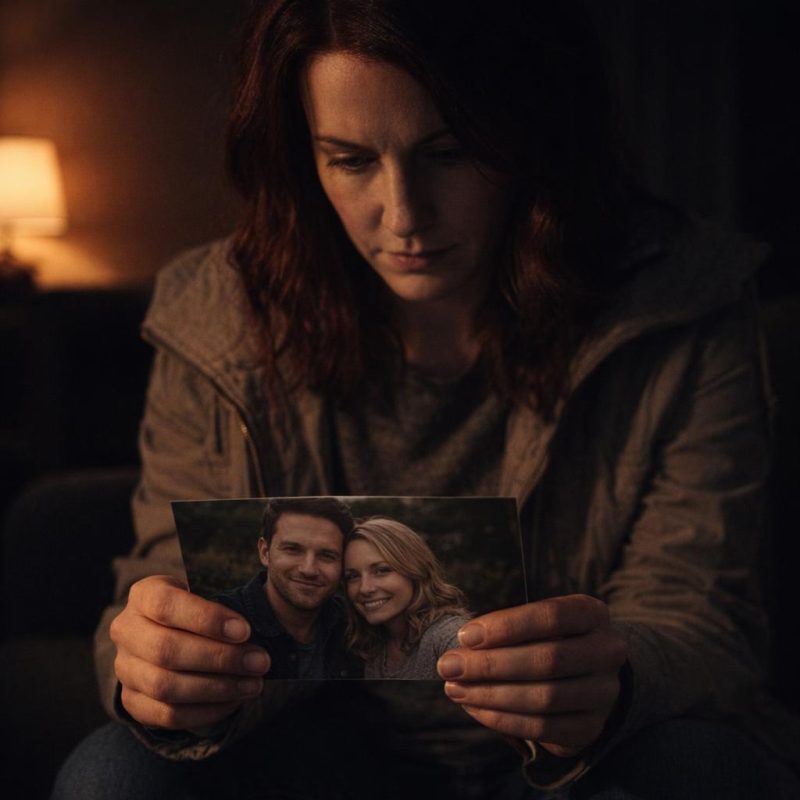 Image by RM AI
What I Revealed
I sat there going back over every word I'd said to her, trying to figure out what she'd actually walked away with. I'd confirmed I knew the family — six years, I'd told her. Six years of being neighbors. I'd said we were friendly but not close, which was true, but I kept turning that over, wondering if it told her something useful about the gaps in what I'd know. I'd told her there was no forwarding address. I'd said they left suddenly, without explanation, which she already knew — she'd been watching the street long enough to see the trucks. I hadn't given her a destination. I hadn't given her names of other people they might have contacted. I hadn't mentioned Sophie's school, or Tom's work, or anything that could be traced. But I kept circling back to the smaller things — the way I'd described the morning they left, the detail about Tom's brief wave, the fact that I'd said it seemed rushed. Had any of that helped her build a picture? Had I filled in something she was missing without knowing I was doing it? I went through it again. And then again. The photograph sat on the table beside me, and I kept thinking about every single word I'd handed her.
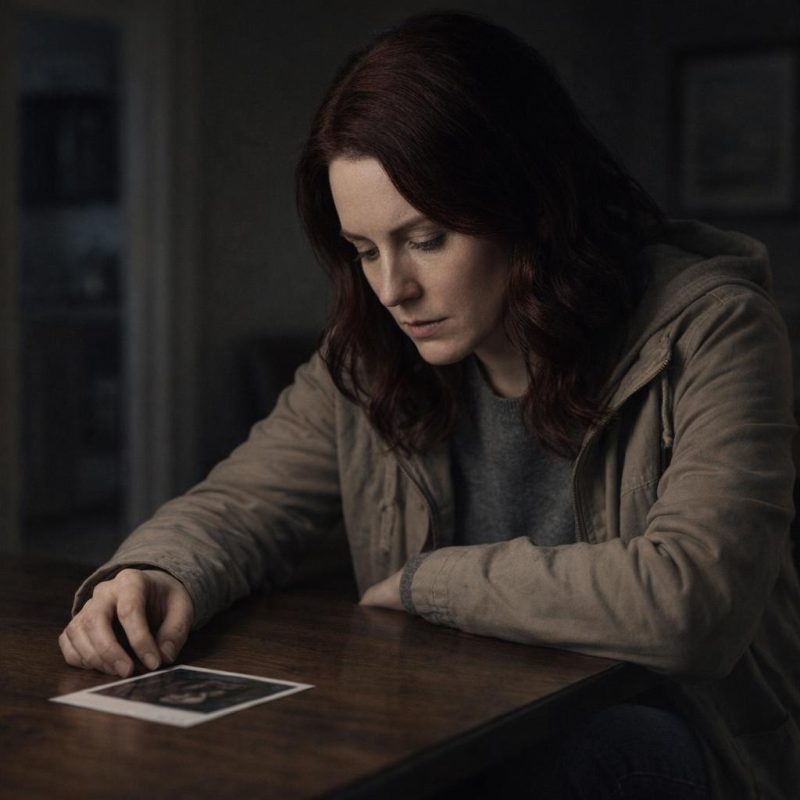 Image by RM AI
Every Glance Had Meaning
There was one moment I kept coming back to. She'd been standing in my doorway, mid-sentence, and her eyes had moved — just briefly — past my shoulder and into the house behind me. I'd registered it at the time as a distracted glance, the kind anyone might give. But sitting with it now, I understood it differently. She wasn't distracted. She was checking. She was looking to see if anyone else was home, if there was a voice in another room, a second pair of shoes by the door, any sign that I wasn't alone. She was assessing the situation before she committed to the conversation. Every question she'd asked, every careful pause, every sympathetic tilt of her head — it had all been purposeful. She hadn't come to my door as a grieving acquaintance looking for comfort. She'd come as someone running a search, and I had been part of the search. The glance past my shoulder wasn't idle. It was threat assessment. She'd been clocking my home, my habits, my solitude — cataloguing me the same way she'd catalogued every other detail on that street. I thought about that look again: quick, practiced, and gone before I'd had time to name it.
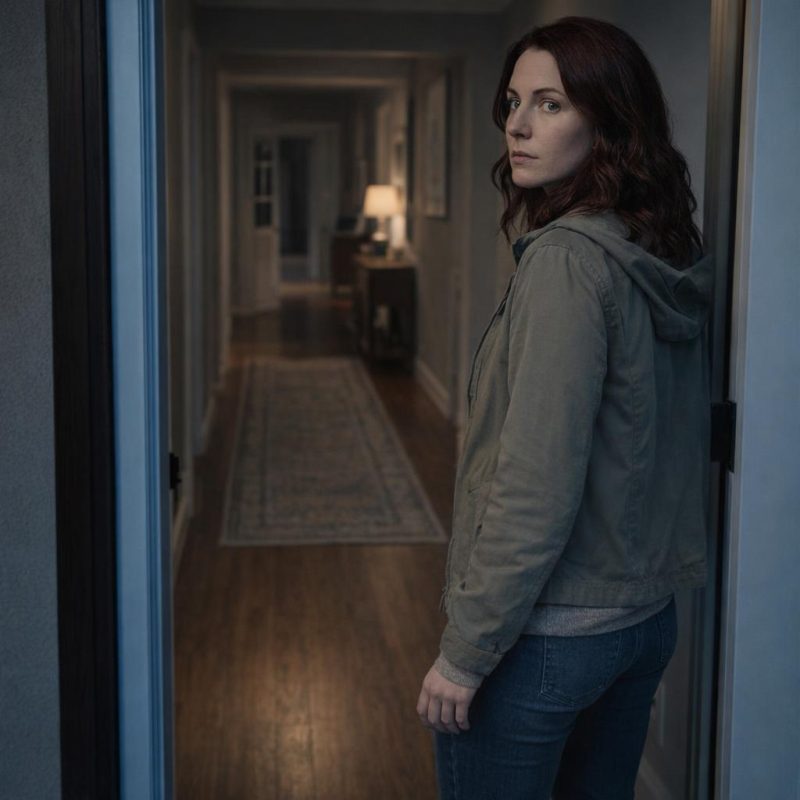 Image by RM AI
Watching for Her Return
After that, I couldn't stop watching the street. I'd catch myself pausing at the front window before I left for work, scanning the parked cars for one I didn't recognize. I started noticing things I'd never paid attention to before — which cars belonged to which houses, which faces I'd seen before, which ones were new. I'd come home and sit in the driveway for an extra minute before going inside, just looking. I checked the side gate. I checked the back fence. I started leaving the porch light on even during the day, which made no practical sense, but it made me feel slightly less exposed. At the grocery store I'd find myself glancing toward the entrance every few minutes, half-expecting to see that neat professional posture moving through the automatic doors. I knew, rationally, that she had no particular reason to come back to me. I'd already told her everything I had, which wasn't much. But knowing that didn't stop the watching. It just gave the watching a slightly different texture — less about what she might do and more about the fact that she could, if she chose to, and I wouldn't see it coming until she was already there. The alertness had settled into me like a new habit I hadn't chosen.
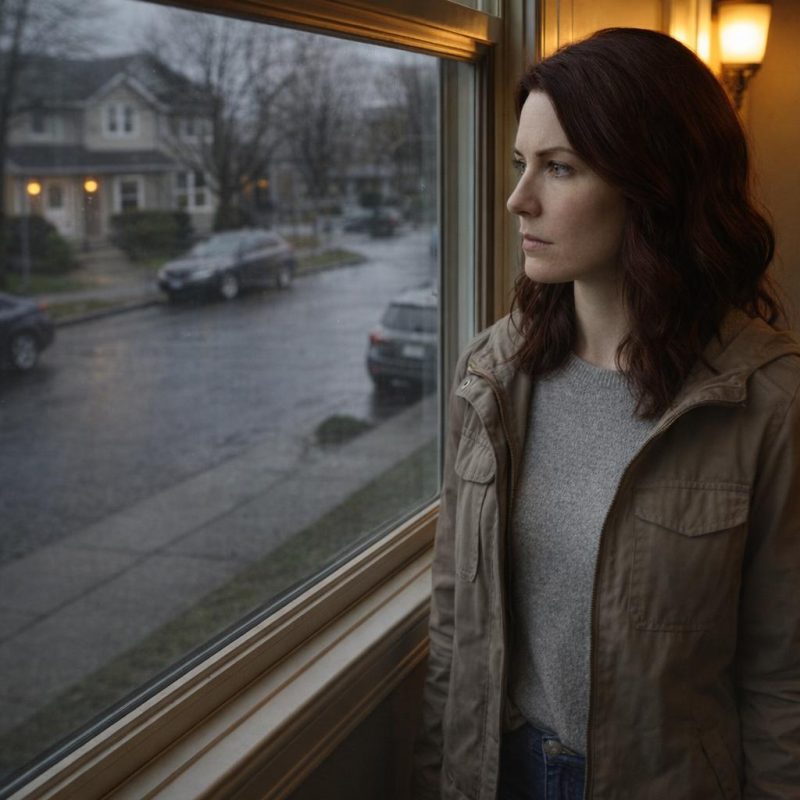 Image by RM AI
The Eerie Silence
Weeks went by. No car I didn't recognize parked at the curb for too long. No knock at the door. No note. No woman in professional attire standing at the edge of the yard with careful questions and a photograph in her bag. The neighborhood went back to being exactly what it had always been — quiet, unremarkable, the same rotation of dog walkers and delivery trucks and Mrs. Patterson tending her garden in the early morning. I should have felt relieved. I kept waiting to feel relieved. Instead the silence had a quality to it that I couldn't quite shake, like the stillness before a sound you're bracing for. I found myself wondering whether her absence meant she'd moved on — found another lead, another neighbor in another city who'd seen a moving truck and remembered a detail — or whether it meant something else entirely. Whether she was still out there, patient and methodical, working through information I didn't know she had. That was the thing about someone like her. Disappearing wasn't the same as stopping. The quiet she left behind didn't feel like an ending. It felt like a pause between one thing and whatever came next, and I had no way of knowing which side of it I was on.
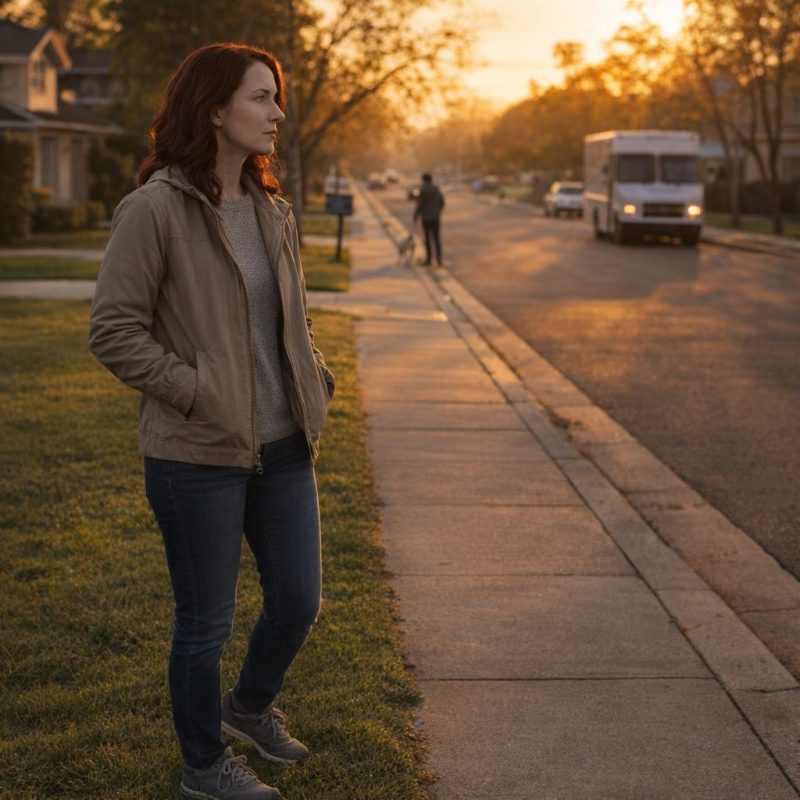 Image by RM AI
Understanding Obsession
I kept thinking about the photograph. Four years old, Greg had said — which meant she'd been carrying it for at least four years, maybe longer. Four years of following them from place to place, learning their patterns, showing up at the edges of their lives and then disappearing before anyone could name what she was doing. That kind of persistence isn't something that burns out on its own. It doesn't get tired. It doesn't decide one day that enough is enough and find something else to do with itself. I thought about what it must have been like for Tom and Melissa — not just the fear of a single incident, but the accumulated weight of years of it. The constant low-level awareness that she was somewhere behind them, patient and unhurried, waiting for them to make a mistake or stay in one place long enough to be found. Sophie riding her bike on the street, not knowing. Tom with that easy smile that never quite reached his eyes. Melissa with her kind eyes that were always scanning. I understood those things differently now. The vigilance wasn't a personality trait. It was a survival skill they'd been practicing for years. And somewhere out there, they were still practicing it, because the thing that made it necessary hadn't stopped.
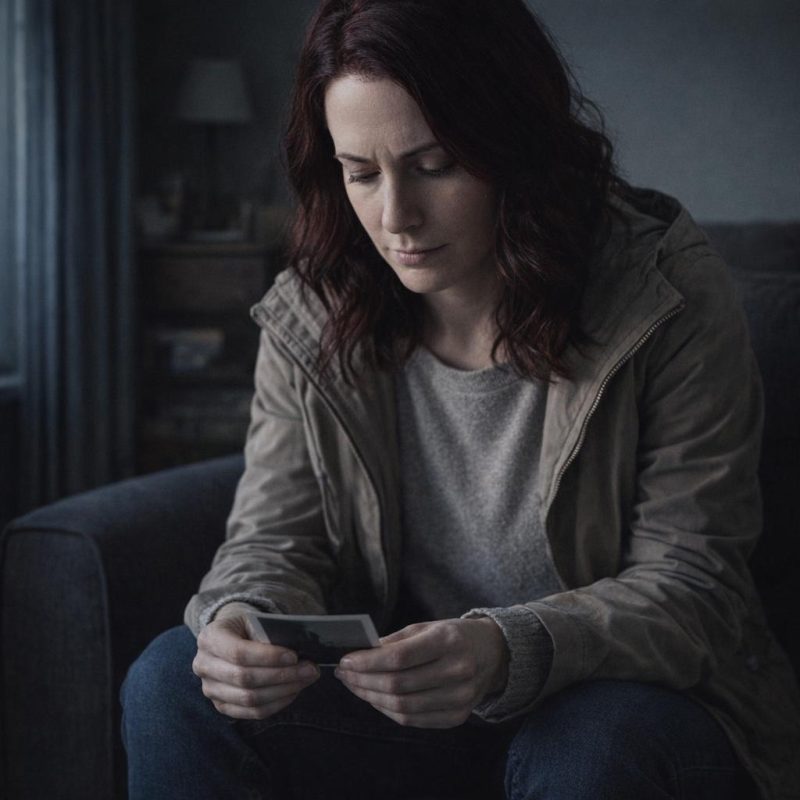 Image by RM AI
Why They Fled
I thought about the morning they left. The moving truck in the driveway before seven, the men loading boxes with a speed that felt wrong for the hour. Tom at the end of the walkway, that brief wave, the smile that didn't explain anything. No goodbye dinner, no exchange of numbers, no 'we'll keep in touch.' At the time I'd told myself people move, life gets busy, some departures are just abrupt. I'd been a little hurt, if I was honest — six years of borrowed tools and traded pleasantries, and they couldn't spare five minutes for a proper goodbye. But they hadn't been rude. They'd been careful. Every hour they spent on that street after the decision was made was an hour Diana could have used. Every conversation, every lingering farewell, every neighbor who knew their destination was another thread she could pull. They hadn't told me where they were going because they couldn't afford for me to know — not because they didn't trust me, but because they couldn't trust what I might say to the next person who came asking. The wave from the end of the walkway wasn't dismissal. It was the most they could safely give. I stood at my window now, picturing that truck pulling away from the curb, and I finally understood what I'd been watching.
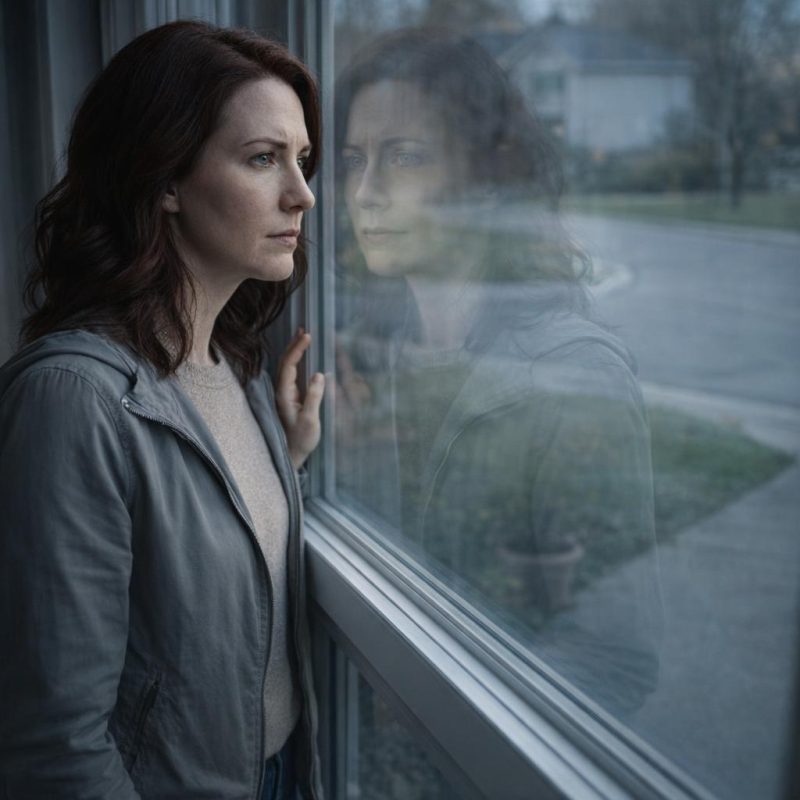 Image by RM AI
The Warning Was Protection
But here's the thing that kept stopping me. They'd known she would come. They'd been through this before — the disappearing act, the new neighborhood, the careful settling in — and they knew the pattern well enough to anticipate it. Diana would show up eventually. She would knock on doors. She would ask questions with a sympathetic face and a reasonable story. And the neighbors, who had no reason to be suspicious, would answer. Tom and Melissa knew that. They knew I would answer. And still, before they left, someone had taken the time to write that note. To fold it. To make sure it reached me. They were running — genuinely running, with everything they owned loaded into a truck before sunrise — and they still stopped to think about the people they were leaving behind. The two underlined words at the bottom weren't decoration. They were the whole point. They were trying to give me something to hold onto when she arrived, even if they couldn't explain why. They'd taken a risk doing it — a note with my name on it was exactly the kind of thing Diana could have intercepted — but they'd done it anyway. That note had been written by people who were terrified, and who cared enough to warn me despite the terror.
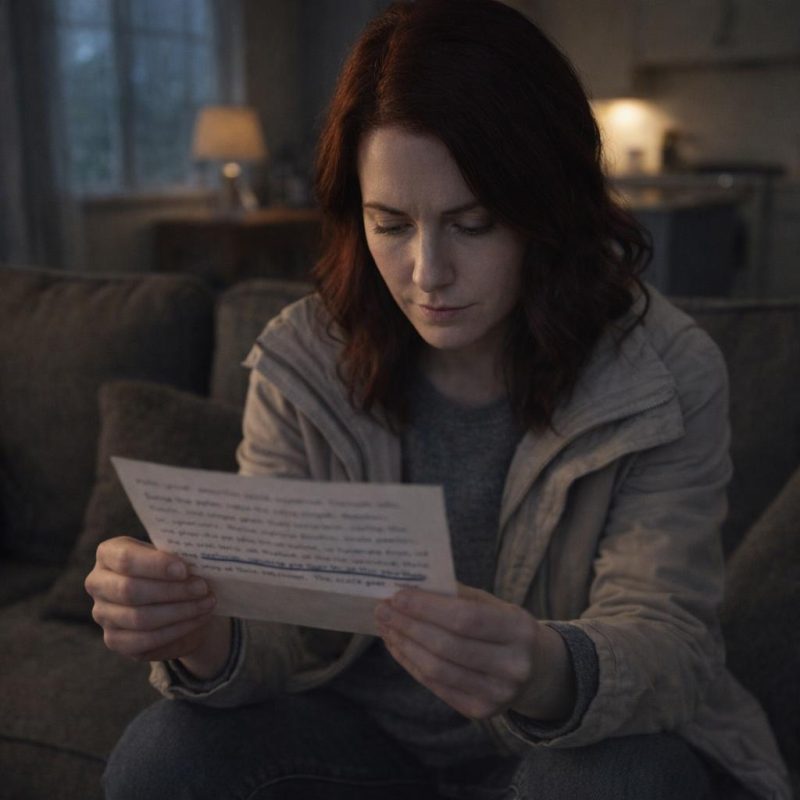 Image by RM AI
Hoping They're Safe
I didn't know where they were. I had no way to reach them, no address, no number, nothing that could be traced back to a street or a city or a school where Sophie might be riding her bike in a new neighborhood. That was the point, and I understood it now. Whatever they'd built in the six years next door to me, they'd had to leave it behind completely — and that included me. I thought about Sophie sometimes. Whether she'd found a new best friend on a new street, whether she was still as easy with her smile as she'd always been, whether any of it had started to show on her yet. I thought about Tom and Melissa, the particular exhaustion of people who'd been alert for years and couldn't afford to stop. I hoped they'd found somewhere that held. Somewhere Diana hadn't thought to look, or had looked and come up empty, or had simply — somehow — given up on. I knew that last one was probably wishful thinking. But I held onto it anyway, standing at my window on an ordinary evening, the street quiet and unremarkable in every direction, sending something out into the dark toward wherever they were.
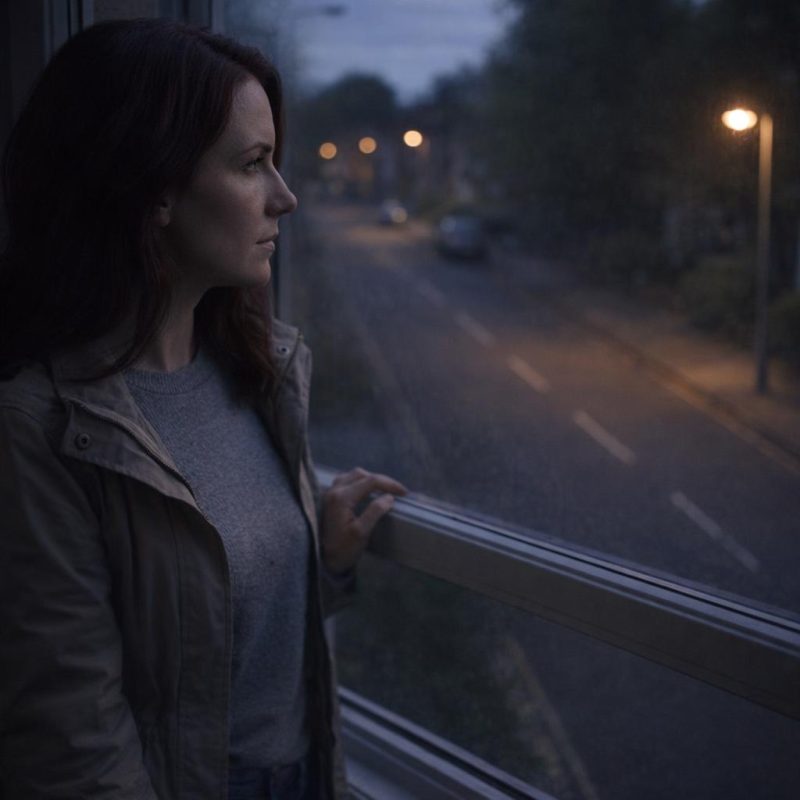 Image by RM AI
Waiting for Word
The months after Diana disappeared from my street settled into something I hadn't expected — a kind of quiet that felt both like relief and like holding your breath. I checked the mail every single day. Not because I thought there'd be anything. I knew better than that. Tom and Melissa had been careful for years, and whatever new life they'd built somewhere else, they weren't going to risk it by sending a postcard to the neighbor they'd left behind. I understood that. I did. But understanding something and feeling it are two different things, and every afternoon when I walked to the end of the driveway, I was hoping anyway. A forwarding address. A postcard with no name on it. Anything that said they'd landed somewhere safe, that Sophie was riding her bike on a new street and smiling the way she always had. Weeks turned into months. The holidays came and went. I raked leaves and shoveled snow and watched the house next door sit empty through two different sets of new tenants who didn't know anything about the people who'd lived there before them. Every day I walked to the mailbox. Every day I sorted through the envelopes. Every day I put them back down and went inside.
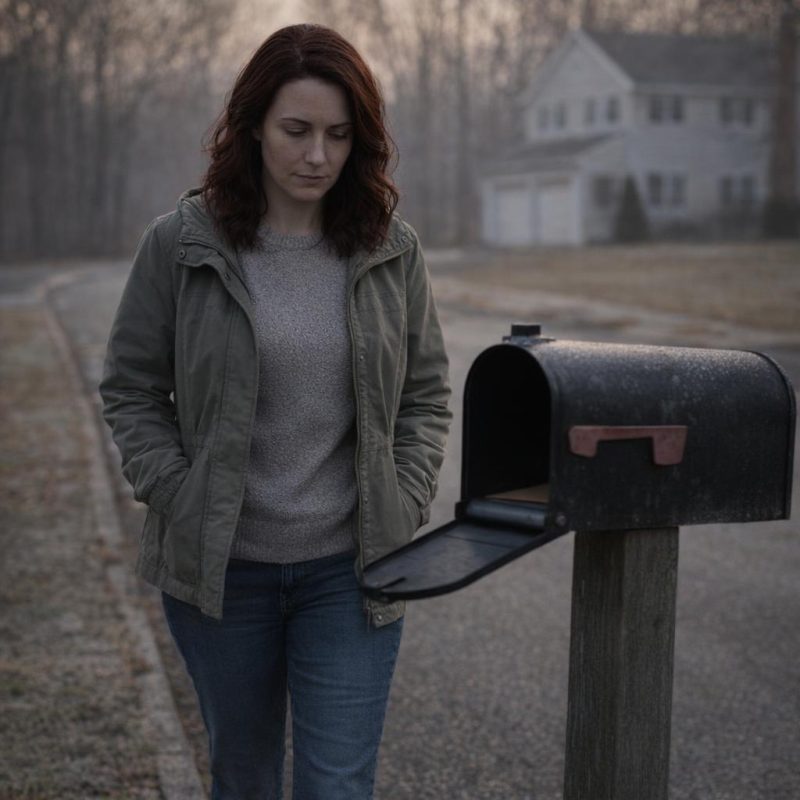 Image by RM AI
The Christmas Card
It arrived on a Tuesday in December, almost a full year after they'd gone. I almost missed it — it was tucked between a utility bill and a grocery store circular, a plain white envelope with my name and address written in handwriting I recognized before I'd even fully registered what I was looking at. No return address. A postmark I didn't recognize from a city I couldn't immediately place. My hands were shaking by the time I got back inside. I set everything else on the counter and just stood there holding it for a moment, not quite ready to open it, the way you pause before something you've been waiting for because you're afraid the waiting was better than the answer. Then I opened it. Inside was a single Christmas card — simple, nothing fancy, a snowy scene on the front. And there was Melissa's handwriting again, filling the inside panel in careful, close lines. I read it twice standing at the kitchen counter, and then I sat down on the floor right there, back against the cabinet, card held against my chest, the particular silence of a Tuesday afternoon in December settling around me like something I hadn't known I needed.
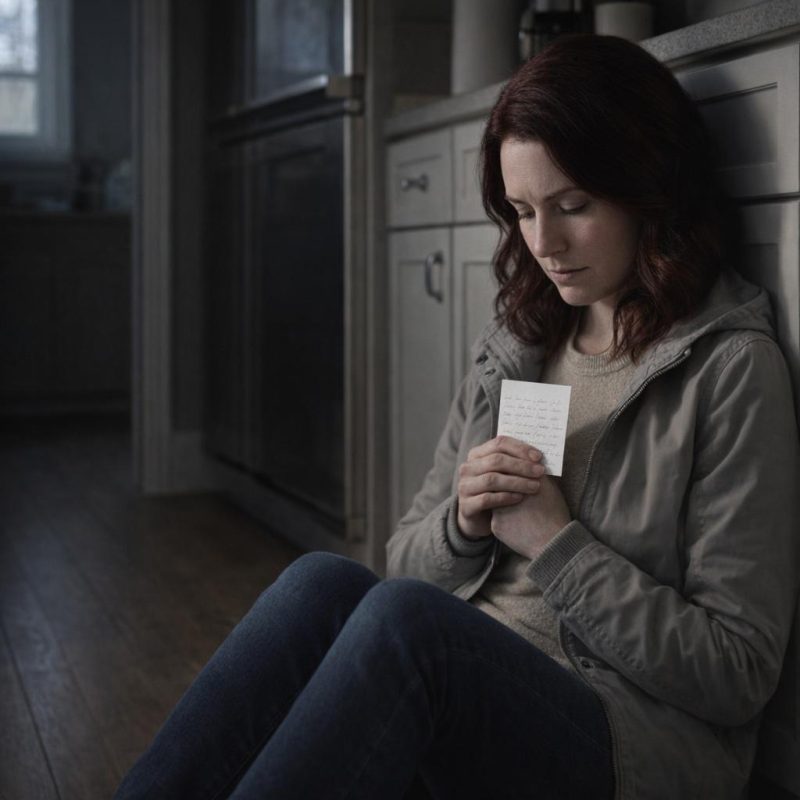 Image by RM AI
They Feared for Me
Melissa's message wasn't long, but every sentence in it landed with weight. She thanked me for being a good neighbor — for the cookies, for watching their packages, for the ordinary kindness of six years lived side by side. She apologized for leaving the way they did, without a word, without a goodbye. And then she explained something I hadn't fully considered in all the months I'd been turning the story over in my mind. When they left, she wrote, they didn't know what Diana would do next. They'd seen her shift focus before — from them to people around them, neighbors, coworkers, anyone who might have information or might simply be close enough to become useful. They were afraid that once they were gone, I might become the next person she turned toward. Not necessarily out of obsession, Melissa wrote, but out of desperation. Someone to question. Someone to watch. Someone to use. The warning they'd left — the note, the two underlined words — had been their attempt to give me something to hold onto if that happened. They hadn't known if it would be enough. They'd hoped it would be. Reading that, sitting on my kitchen floor with the card in my hands, I felt the full weight of what they'd carried for years settle quietly into the space between us.
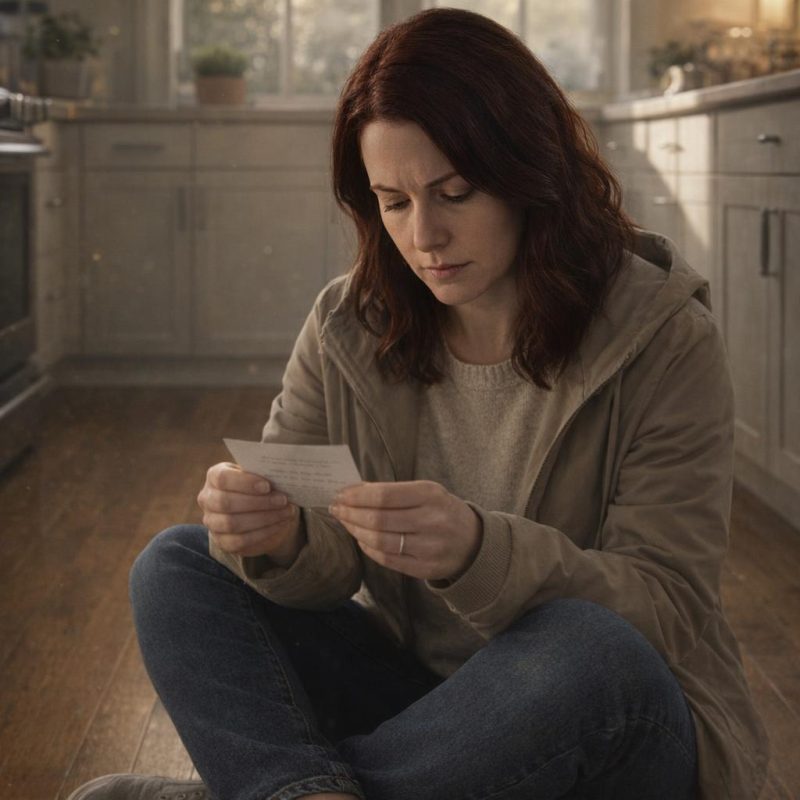 Image by RM AI
Two Words That Saved Me
I still have the note. The original one, delivered by the stranger that afternoon — the one that started all of this. I've kept it in the drawer of my nightstand, and every so often I take it out and look at those two underlined words at the bottom. Do not. The emphasis had seemed strange to me at first, almost clumsy, like whoever wrote it had pressed too hard with the pen. Now I understood it differently. It wasn't clumsiness. It was urgency compressed into the only form they could safely send. Those two words were the reason I'd hesitated when Diana smiled at me on my porch. The reason I'd kept the door between us. The reason I'd listened to the unease in my gut instead of talking myself out of it the way I might have otherwise. I'm not naive enough to think I would have seen through her on my own. She was good at what she did — patient, polished, exactly the kind of person you want to believe. Without that warning, I might have invited her in for coffee and answered every question she asked. Instead, I'd kept her at arm's length, and that distance had been enough. Two underlined words from people I barely knew, written in fear, handed to a stranger, dropped into my mailbox — and they had held.
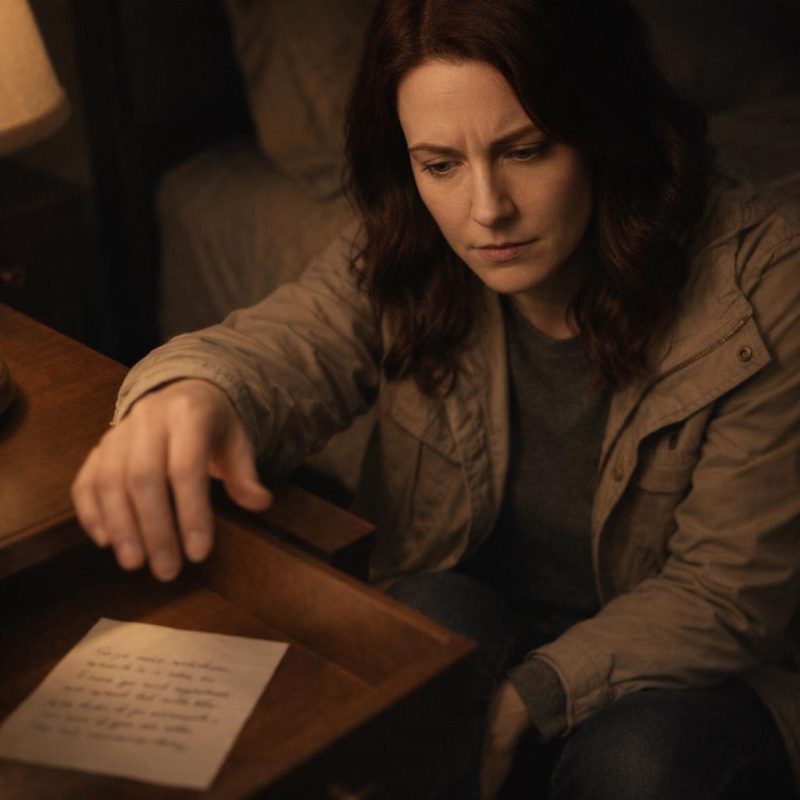 Image by RM AI
KEEP ON READING
The Origins Of 3 Common Sayings You Still Use Today
Etienne Boulanger on UnsplashMany of the phrases you use every…
By Rob Shapiro Apr 28, 2026
Was Caligula The Most Ruthless Roman Emperor?
Artur Matosyan on UnsplashRoman Emperor Caligula is one of ancient…
By Rob Shapiro Dec 18, 2025
1 Weird Fact About Every President
Washington, Lincoln, FDR. Most people know something about the lives…
By Robbie Woods Dec 3, 2024
10 Accidental Discoveries That Changed Maps & 10 That Changed…
Mistakes That Mattered. A lot of major discoveries did not…
By Cameron Dick Apr 15, 2026
10 Actors Who Perfectly Played a Historical Figure & 10…
Which Performance is Your Favorite?. Playing the role of a…
By Rob Shapiro Sep 15, 2025
10 Actors Who Perfectly Played a Historical Figure & 10…
Portraying a real person from history is one of the…
By Noone Dec 17, 2025