

My Friendly New Neighbors Tried to Destroy My Life—And The Truth Is Even Worse Than I Thought
My Friendly New Neighbors Tried to Destroy My Life—And The Truth Is Even Worse Than I Thought
The Charming Couple Next Door
I've lived on Sycamore Lane for twenty-five years, and I can tell you that this street has a rhythm to it — the same faces at the mailbox, the same dogs on the same leashes, the same wave from the Hendersons every single morning. So when the moving truck pulled up next door on a Saturday in late June, the whole street noticed. I baked a peach cobbler that afternoon, the same recipe my mother used, and I carried it over still warm. Rachel answered the door before I even knocked, like she'd been watching for someone to come. She pulled me into a hug right there on the porch — a real hug, not the polite kind — and called over her shoulder for Ethan to come meet the neighbor. He came around from the back of the house with a smudge of paint on his forearm and the easiest smile I'd seen in years. They insisted I stay for sweet tea. We sat on their porch steps for nearly two hours, talking about the neighborhood, the good hardware store on Fifth, the farmer's market on Sundays. By the time I walked home in the early evening, the air still warm and the fireflies just starting up, I felt something I hadn't felt in a while — like the street had quietly gotten a little better.
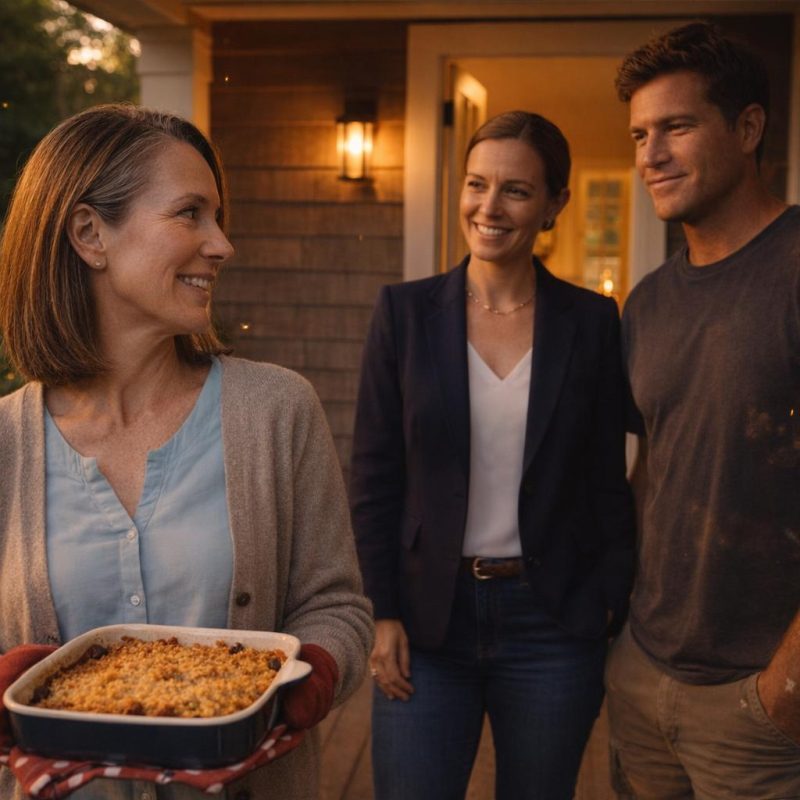 Image by RM AI
An Afternoon of Unexpected Kindness
The following Saturday, Ethan showed up at my door at nine in the morning with work gloves already on, asking if I still needed help with the garage. I'd mentioned it once, in passing, and he'd remembered. We spent the whole morning hauling boxes and sorting through decades of accumulated life — old garden tools, holiday decorations, things I'd been meaning to deal with since my husband passed. Rachel came over around noon with a pitcher of lemonade and a plate of snickerdoodles, and we took a break in the shade of the garage door. She asked about the neighborhood, about who'd been here the longest, about what the street used to look like. I told her about the block parties we used to have, about the elm tree that came down in the storm of 2011, about my husband Robert and how he'd built the raised garden beds out back with his own hands. She listened the way people rarely do anymore — leaning in, asking follow-up questions, genuinely interested. We made loose plans for dinner the following Friday. I was already looking forward to it. Then a cardboard box shifted on the shelf above us and a photograph slid out, landing face-up on the concrete floor. It was Robert and me at our anniversary dinner, maybe fifteen years ago. Rachel picked it up before I could reach it, and she went very still, studying it in a way that lasted just a beat longer than I expected.
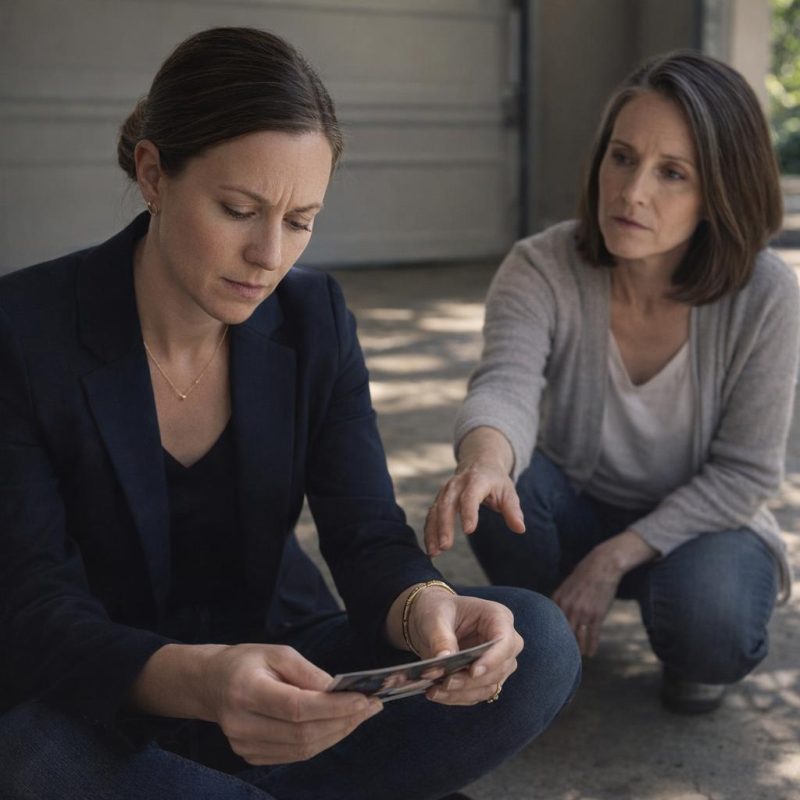 Image by RM AI
A Misunderstanding at the Door
The knock came on a Tuesday afternoon while I was deadheading the roses along the front walk. Officer Hayes was standing at the end of my path in full uniform, holding a small notepad, and my first thought was that something had happened to one of the neighbors. It hadn't. He explained, with the careful tone of someone delivering news they find slightly embarrassing, that a complaint had been filed — trespassing on neighboring property. I actually laughed. Twenty-five years on this street, and I know every property line like I know my own kitchen. I told him as much, and he nodded along in a way that suggested he believed me but still had to go through the motions. He took a few notes, said he'd mark it as resolved, and apologized for the interruption. I told him not to worry about it and offered him a glass of water, which he declined. After he left, I stood at the front window for a moment, watching his cruiser pull away. I assumed it was one of those things that happens when new people move into a neighborhood — unfamiliar faces, unfamiliar property lines, an honest mix-up. I didn't mention it to anyone. It seemed too small, too easily explained. But later that evening, sitting with my tea and the quiet of the house, the confusion settled somewhere in my chest and stayed there, small and unresolved.
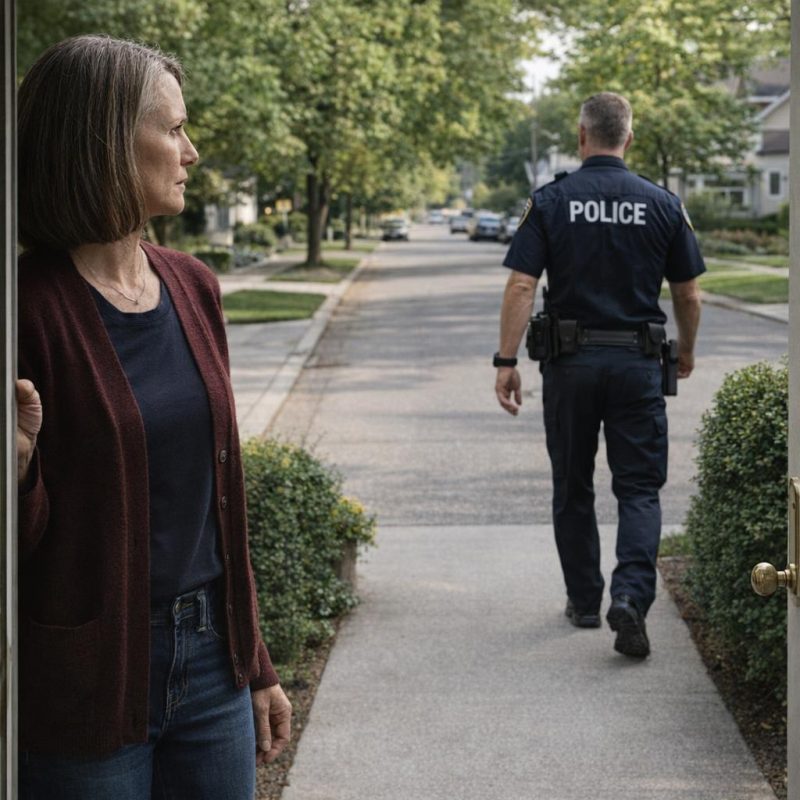 Image by RM AI
Another Visit from the Police
Exactly one week later, Officer Hayes was back. I recognized his car before he even got out, and I met him at the door with what I hoped was a patient expression. This time the complaint was harassment — repeated unwanted contact with the neighboring residents. I stared at him for a moment, genuinely trying to understand what I was hearing. Harassment. I asked him to repeat it. He did, looking more uncomfortable than the first time, and explained that the complaint described repeated unwanted contact. I told him I had brought over one cobbler on their first weekend and had one afternoon in my own garage with their help. That was the full extent of it. He wrote things down and said the details in the complaint were vague, which I could tell was his way of telling me he wasn't entirely convinced by it either. I promised him there had been a misunderstanding and that I'd be mindful going forward, though I wasn't entirely sure what I was supposed to be mindful of. After he left, I sat at the kitchen table with my hands around a mug that had gone cold. I wondered briefly if I'd somehow come across as overbearing to the new couple — too eager, too neighborly, the way older women sometimes get labeled. It seemed unlikely. But the thought sat with me, heavier than I wanted to admit, and the mug stayed cold in my hands.
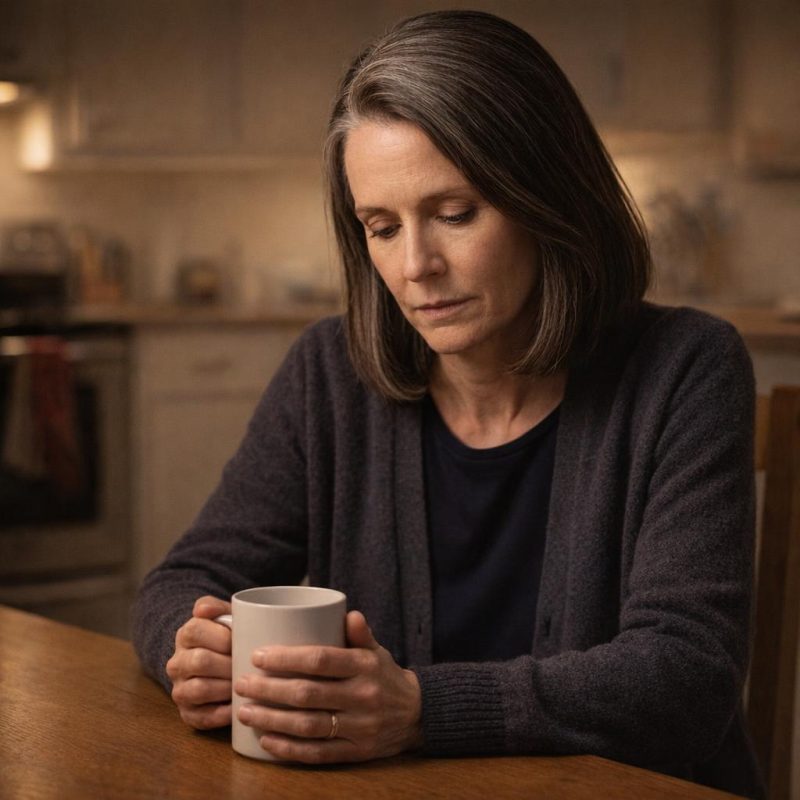 Image by RM AI
The Street That Stopped Waving
I noticed it first on a Wednesday morning walk. Margaret was coming toward me from the far end of the block, the same route we'd both walked for years, and I raised my hand to wave. She looked up, saw me, and looked away — then turned and crossed to the other sidewalk without breaking stride. I stood there for a second, hand still half-raised, telling myself she hadn't seen me. But she had. I knew she had. Officer Hayes arrived that same afternoon with a third complaint, this one about excessive noise at night. I told him, as calmly as I could manage, that I am sixty-three years old, I live alone, and I am in bed by nine-thirty without exception. He had the decency to look pained. Over the next few days I noticed other small things — a longtime neighbor who used to stop and talk about her garden suddenly had somewhere to be, a man down the street who always waved from his driveway now kept his eyes on his phone. Nobody was rude. Nobody said anything. They just stopped. I kept telling myself there was a reasonable explanation, that maybe people were busy, that I was reading into things. But the third complaint made that harder to believe. I was walking back toward my house when I saw Margaret step off the curb ahead of me and cross deliberately to the other side of the street.
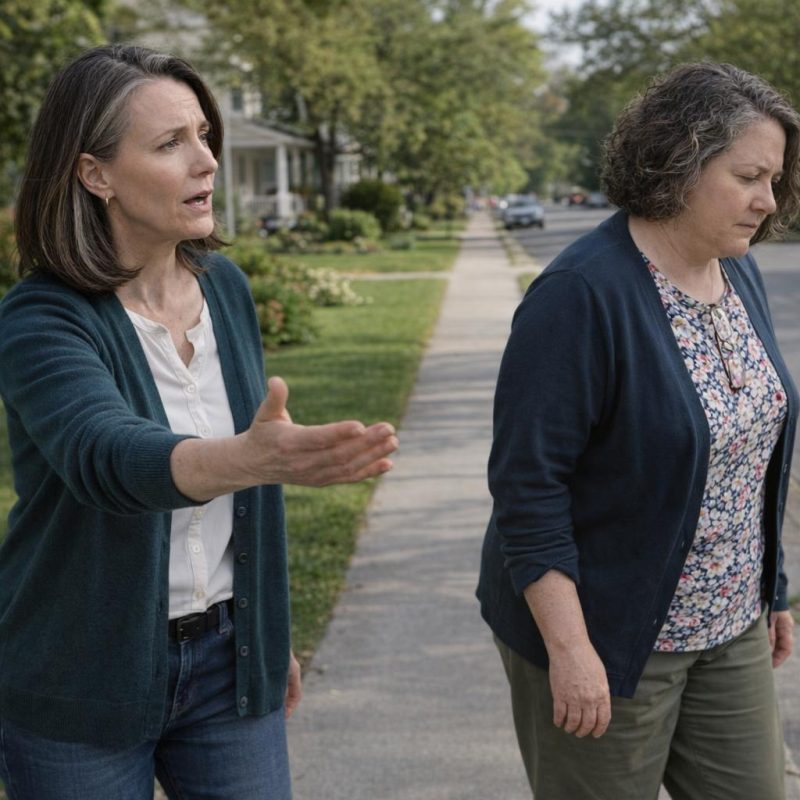 Image by RM AI
Jennifer's Worried Phone Call
Jennifer called on a Thursday evening, which told me someone had already talked to her. She opened with 'Mom, I heard there were police cars at your house' in that careful voice she uses when she's worried but trying not to sound worried. I explained the complaints — all three of them — keeping my tone light, calling them mix-ups, which is what I still believed they were. She went quiet in the way that means she's choosing her words. She asked if I'd done anything that might have upset the new neighbors, and I felt a flicker of something sharp move through me, though I kept it out of my voice. I told her no. I told her about the cobbler and the garage afternoon and the lemonade, and she said 'okay, okay' in a way that wasn't entirely convincing. She suggested I just keep to myself for a while, let things settle, not give anyone reason to complain. I said I would, even though the idea of hiding in my own home on my own street felt wrong in a way I couldn't quite articulate. We talked about her kids for a while after that — her youngest had lost his first tooth, and that made us both laugh. By the time we said goodnight, I felt steadier. But after I set the phone down on the counter and the house went quiet again, the steadiness faded, and what was left felt lonelier than before she'd called.
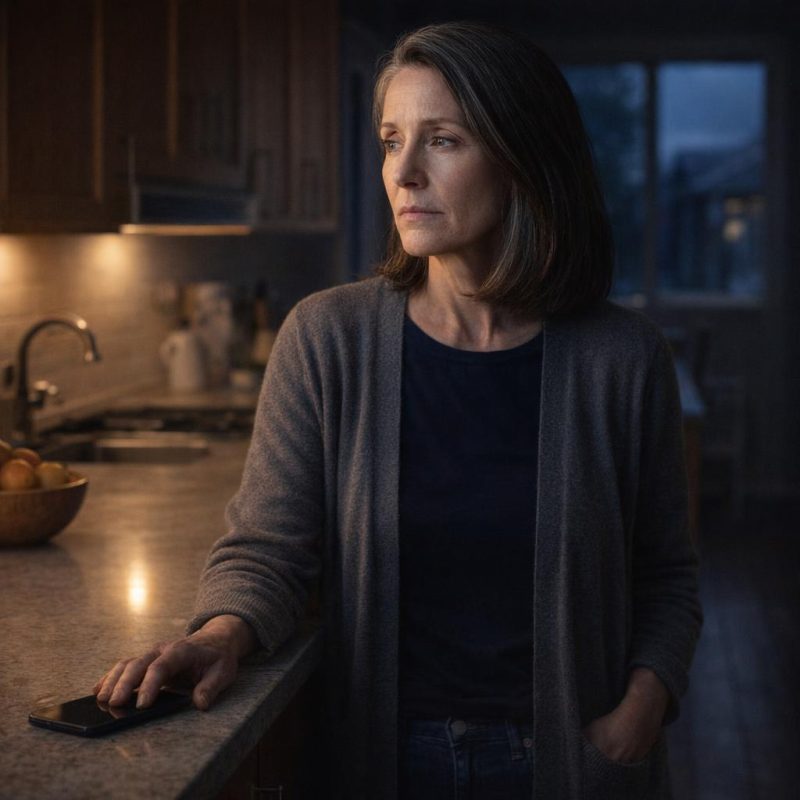 Image by RM AI
Smiles That Don't Reach the Truth
The strange thing was, Rachel and Ethan kept acting like everything was perfectly fine — because as far as I could tell, from their side of the fence, it was. Rachel was out in her front garden on Monday morning, and when she saw me she waved with both hands like I was a friend she hadn't seen in weeks. Ethan stopped me on the sidewalk Tuesday afternoon to ask about the weather turning and whether I thought we'd get frost before October. He seemed relaxed and easy, the way he always did, and asked how I was getting on. I almost said something. I had the words right there — 'do you know anything about these complaints?' — but I swallowed them. What would I even say? I had no proof of anything, and they'd been nothing but kind to me. Rachel mentioned they were planning a neighborhood barbecue and wanted me to come, and I said I'd love to, and I meant it in the moment. Ethan offered to look at my lawn mower, which had been pulling to the left all summer. I walked back to my house feeling almost foolish for the unease I'd been carrying. Maybe it really was a mix-up. Maybe someone had the wrong address. I was nearly convinced. Then I glanced back from my porch steps, and Rachel was standing at her front door, watching me go, waving with that wide warm smile.
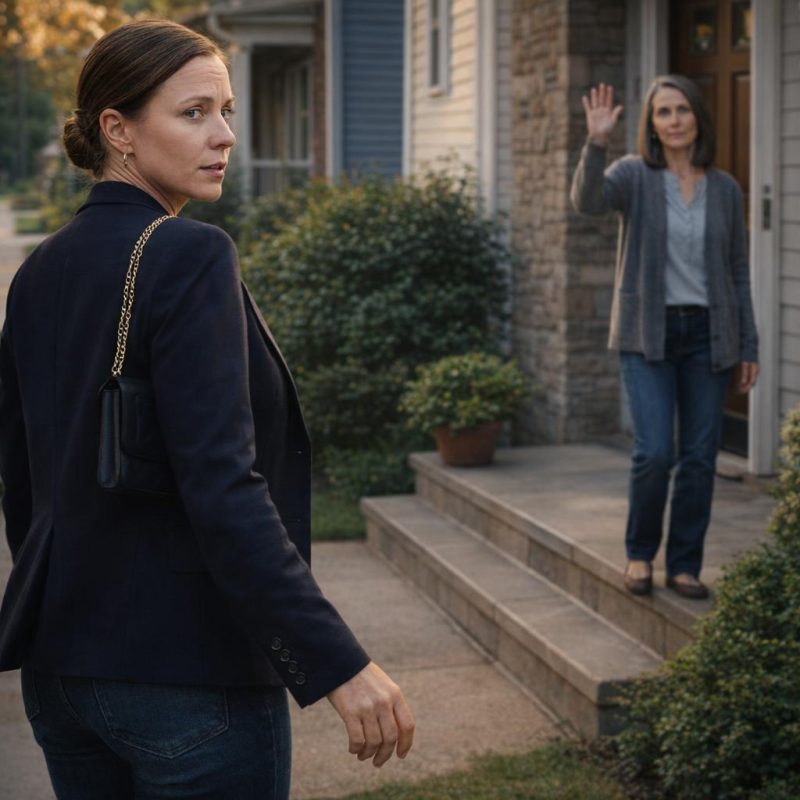 Image by RM AI
Accusations Pile Higher
Officer Hayes was back on a Monday with a complaint about illegal dumping near the property line. I walked him around to the side yard and showed him my trash bins, color-coded and labeled, sitting exactly where the city required them. I showed him my recycling schedule, printed and taped to the inside of the cabinet door. He looked at everything carefully and said very little. Two days later a different officer came — younger, someone I didn't recognize — with a complaint that I had been photographing the neighbors' house, specifically their windows. I felt the heat rise in my face before I could stop it. I told him that was not something I had done, that I didn't own a camera beyond the one on my phone, and I offered to hand him the phone right there on the doorstep so he could look through every photograph on it. He said that wasn't necessary but took notes. After he left I sat on the front steps for a long time, going over the last several weeks in my head, trying to find the thread that connected any of this to something I had actually done. I couldn't find one. I went inside and pulled out the written notice the officer had left, the one with the formal complaint language typed out in small print, and I read the line again: *suspected of photographing neighboring residence and its occupants without consent*.
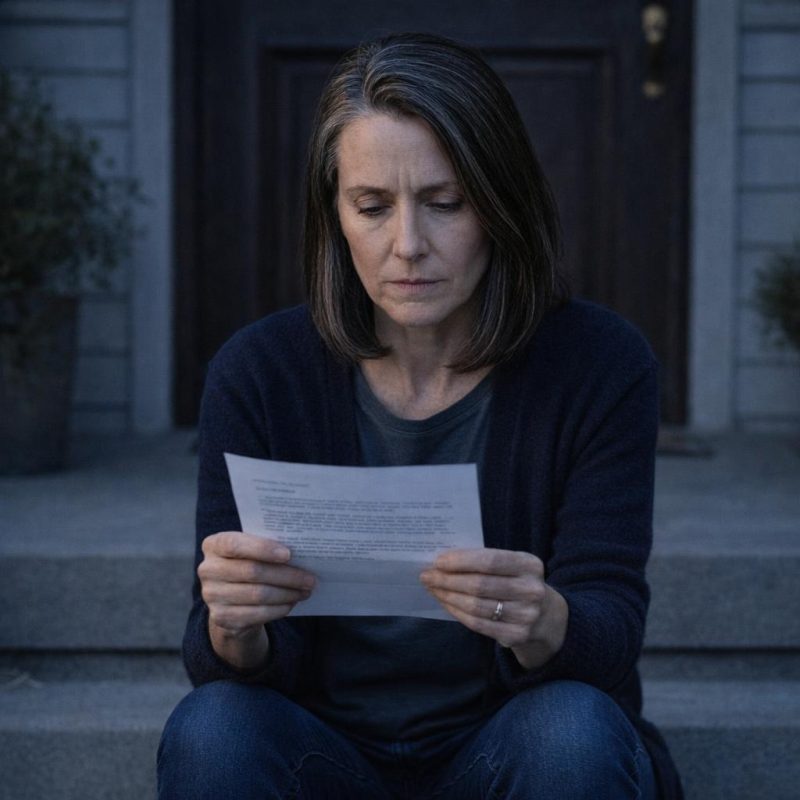 Image by RM AI
A Confrontation on the Lawn
I'd spent three days going back and forth about whether to say anything at all. Part of me wanted to just keep documenting and stay quiet. But another part — the part that had lived on this street for twenty-two years and believed in looking people in the eye — said I needed to at least give them the chance to explain. I caught them both outside on a Saturday morning, Rachel deadheading her flowers and Ethan hauling a bag of mulch from the garage. I walked over slowly, keeping my voice even, and told them what had been happening. The trash complaints. The photography accusation. The officers showing up at my door. I didn't point fingers. I just laid it out, plain and factual, and watched their faces while I talked. Rachel stopped what she was doing immediately. Her hand went to her chest and she said, 'Amanda, that's awful — we had no idea.' Ethan set down the mulch and shook his head, asking what kind of complaints, wanting specifics. They both said they hadn't filed anything, hadn't heard anything, and suggested maybe someone else on the block had a problem with me. Rachel reached over and touched my arm and said they'd keep their ears open. I thanked them and walked back to my house. I told myself their surprise had looked genuine. I almost believed it. But I walked back up my front steps still watching their faces — both of them wearing the same wide, open expression of perfect surprise.
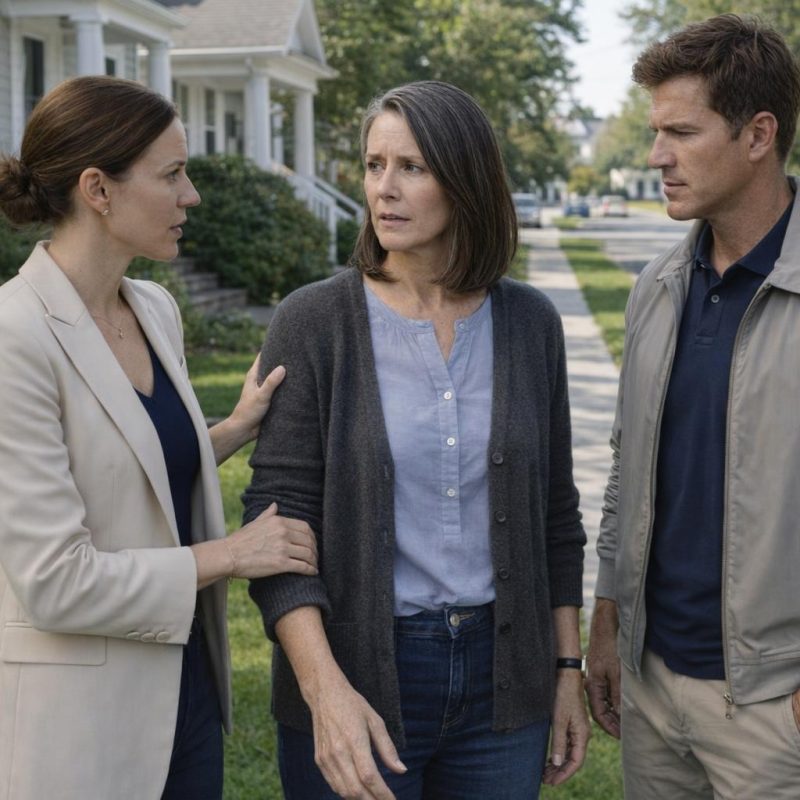 Image by RM AI
The Invisible Woman
There's a particular kind of loneliness that comes from being invisible in a place you've known for decades. I started noticing it in small ways first. A wave not returned. A conversation that ended a little too quickly. Then it got harder to ignore. I walked to the mailbox one afternoon and three neighbors who were standing together on the sidewalk suddenly found reasons to look elsewhere. I kept walking like I hadn't noticed, but my face felt hot the whole way back. The worst was Margaret. We'd been swapping garden cuttings and neighborhood gossip since her kids were in middle school. I saw her coming down her front walk one morning and lifted my hand to wave, and she turned around and went back inside. Just like that. No hesitation. I stood there for a moment with my hand still half-raised, feeling foolish. I thought about knocking on doors, explaining myself, telling people that whatever they'd heard wasn't true. But the thought of standing on someone's porch and defending myself against accusations I still didn't fully understand felt more humiliating than the silence itself. So I went home. I sat on the porch and watched the street — the same street where I'd watched kids grow up, where I'd brought casseroles after funerals, where I'd always known every face. The quiet that settled over it now felt nothing like peace.
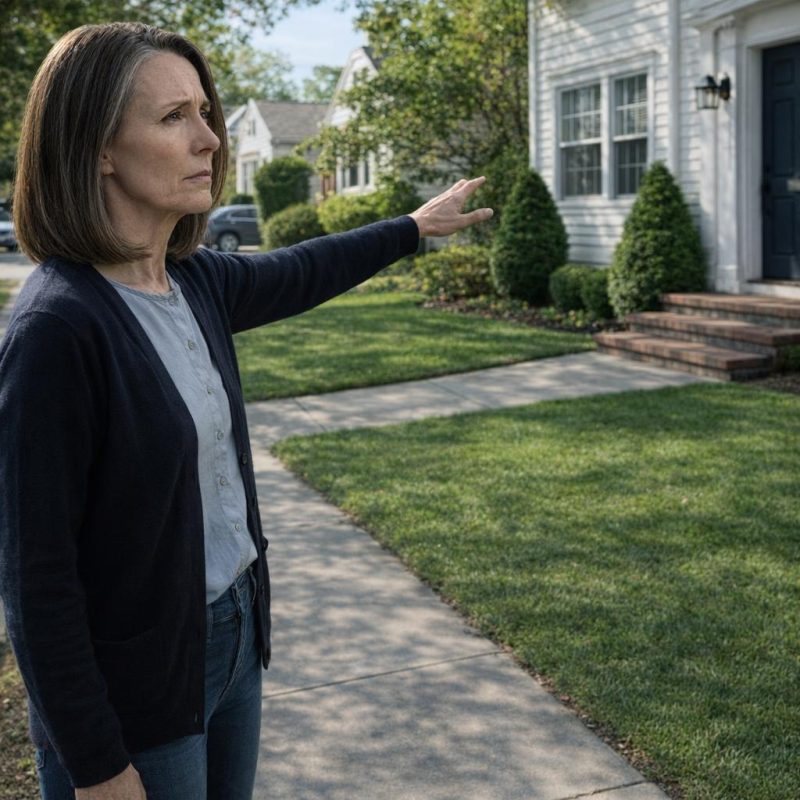 Image by RM AI
The Photographer Who Never Was
I don't know exactly when the photography accusation spread beyond the official complaint, but by the second week I could feel it. There's a way people look at you when they've heard something — a quick glance that slides away too fast, a pause before they speak. I was weeding along the front bed one morning when I heard two voices from the sidewalk drop to a murmur as they passed. They didn't stop. They used to stop. I kept my head down and kept pulling weeds, but my hands weren't steady. The idea that people who had known me for years now pictured me standing at a window with my phone pointed at a neighbor's house — it made my stomach turn. I'd always been the person who brought welcome baskets. Who organized the block's holiday card exchange. The thought that any of that goodwill could be erased by a single complaint filed by someone I barely knew made me angrier than I'd felt in a long time. I started staying inside more. I'd catch myself hesitating before going out to the garden, aware that someone might be watching from across the street, drawing their own conclusions. My own yard started to feel like a stage I hadn't agreed to perform on, and the weight of that — of being watched in a place that had always been mine — sat heavy on me long after I went back inside.
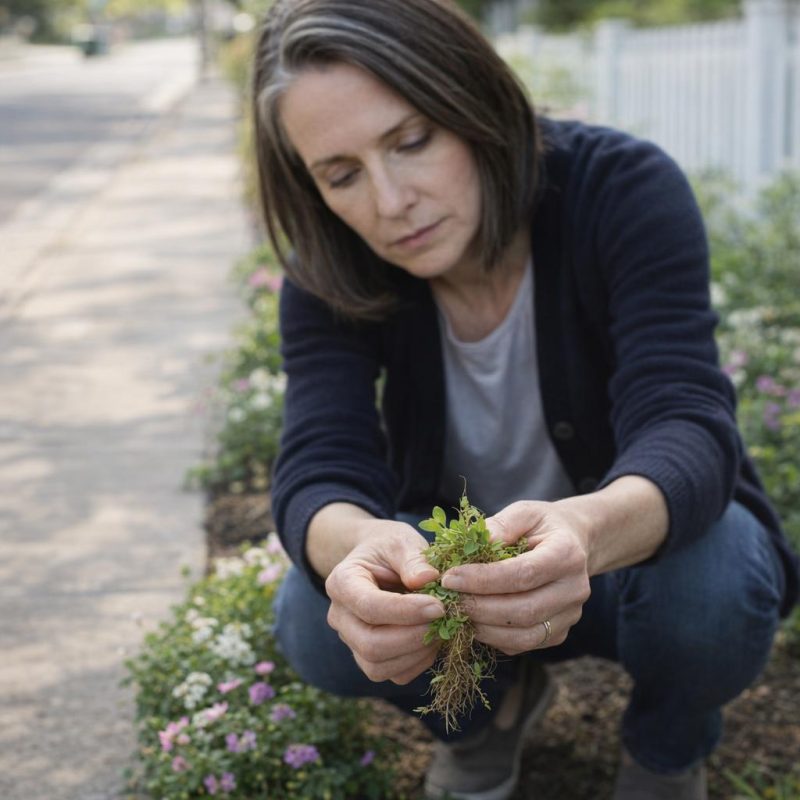 Image by RM AI
Jennifer Sees the Police Car
Jennifer wasn't supposed to come that weekend. She called from the driveway, which is how I knew something had already gone wrong before I even opened the door. I stepped outside and saw Officer Hayes walking to his cruiser at the curb, and Jennifer standing halfway between her car and my porch with her keys still in her hand, watching him go. She turned to me with that look she gets — the one she's had since she was twelve, when she knows something is being kept from her. 'Mom. What was that?' I told her it was nothing, a follow-up, routine. She didn't believe me for a second. We went inside and I made coffee and she sat across from me at the kitchen table and just waited. So I told her. Not everything, but enough — the complaints, the officers, the weeks of it. I watched her expression shift from worry to something closer to alarm. She asked if I'd thought about getting a lawyer. I said I hadn't done anything that required a lawyer. She reached across the table and squeezed my hand and said she was going to help me figure it out, that we'd get through it together. I was grateful. I was also trying very hard to seem steadier than I felt, because I could see what was underneath her reassurances. When I looked at her face across that table, the fear in her eyes was impossible to miss.
 Image by RM AI
The Notebook of Evidence
Jennifer's visit shook something loose in me. After she left I sat at the kitchen table for a long time, and then I got up, drove to the drugstore, and bought a wide-ruled spiral notebook — the kind I used to use for grocery lists and garden planning. I brought it home and opened it to the first page and started writing. Date. Time. Officer's name. Nature of complaint. I went back as far as I could remember and filled in what I knew, then kept going forward from there. I wrote down my own activities on the days complaints had been filed, what I'd been doing, where I'd been, who could confirm it. I noted which neighbors had stopped speaking to me and when. I wrote down the conversation on Rachel and Ethan's lawn, word for word as best I could recall it. I started taking photographs of my trash bins on collection days, my recycling schedule, my property line. I kept the notebook in the drawer of my nightstand, under a library book. There was something steadying about the act of writing it all down — like I was pulling the fog into a shape I could actually look at. But when I sat back and read through the pages, what I saw wasn't reassuring. The list was longer than I'd let myself admit, and it kept growing, line after line in black ink, each entry its own small weight.
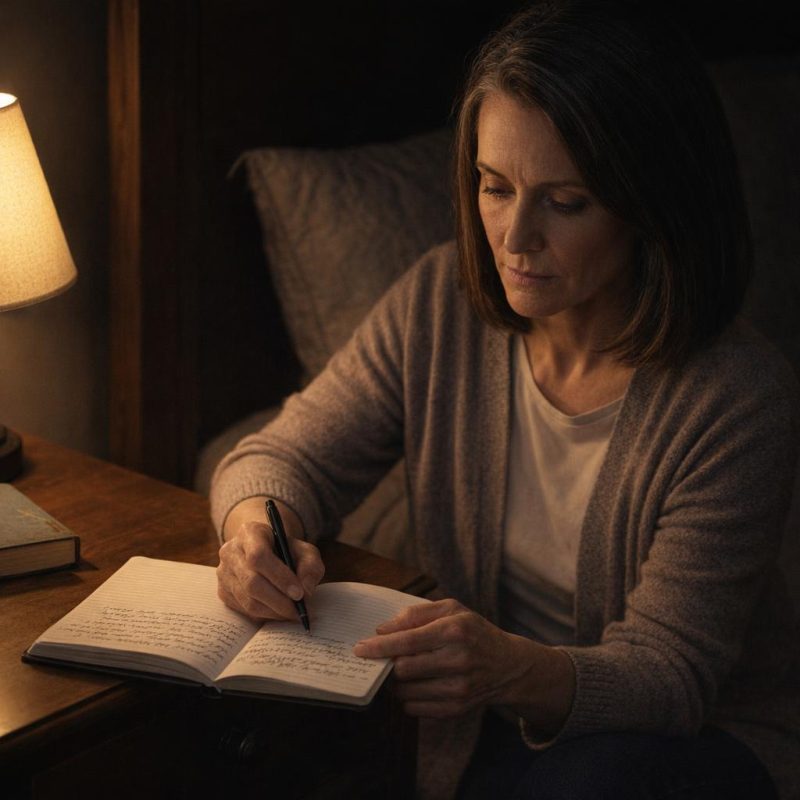 Image by RM AI
Words Through the Rose Bushes
I was trimming the rose bushes along the back property line on a Thursday afternoon, the kind of quiet work that lets your mind wander, when I heard Rachel's voice from the other side of the fence. She was on the phone. I could tell from the rhythm of it — long pauses, then short bursts of talking. I didn't move. I wasn't trying to listen, not at first, but the fence is old wood and the gaps between the boards carry sound better than you'd expect. Her tone was different from the voice she used when she waved hello across the yard. Tighter. Lower. I caught fragments: something about timing, something about patience. She said the word 'waiting' more than once, though I couldn't make out what she was waiting for or who she was talking to. There was a frustration in her voice that came through unguarded, rougher than her usual manner. Then the conversation ended and I heard the back door open and close. I stood there with the pruning shears in my hand, not moving for a moment. I told myself it could have been anything — a work call, a family disagreement, something that had nothing to do with me. I was probably reading into it because I was already on edge. But I stayed where I was a little longer than I needed to, and the sound of her voice — clipped and low and nothing like the neighbor I thought I knew — stayed with me through the rest of the afternoon.
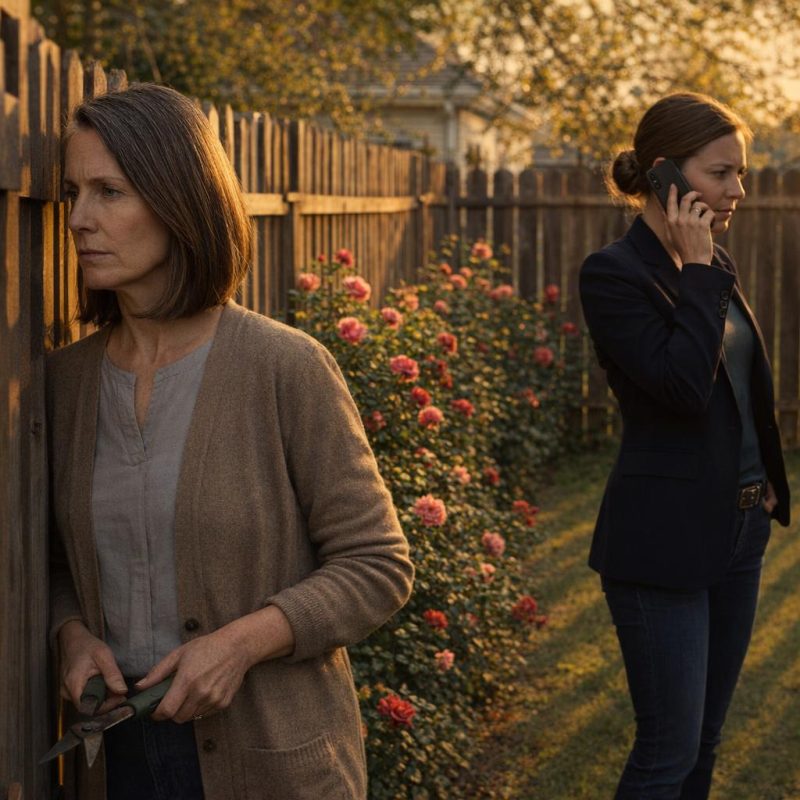 Image by RM AI
She Still Hasn't Left
Two days later I was deadheading the dahlias near the back fence when I heard her again. I almost went inside. I wish I had. This time the wind was still and her voice carried clearly, and I wasn't catching fragments — I was hearing full sentences. I froze where I was, crouched behind the dahlias, barely breathing. She said, 'She still hasn't left.' A pause. Then: 'We need another reason.' I didn't move. My heart was going fast enough that I could feel it in my throat. She kept talking but took a few steps toward the far end of her yard and her voice dropped back into something I couldn't follow. I stayed crouched in the garden until I heard her go inside. Then I straightened up slowly, set the pruning shears down on the garden bench, and walked back to my house. My hands were shaking by the time I got to the kitchen. I sat down at the table and tried to think clearly. I told myself I could have misheard. I told myself there were other explanations. But I'd heard what I'd heard, and the words sat in my chest like something cold and heavy. I didn't know who she was talking to or what the reason would be. I only knew that those words — she still hasn't left, we need another reason — were about me, and I couldn't make them mean anything safe.
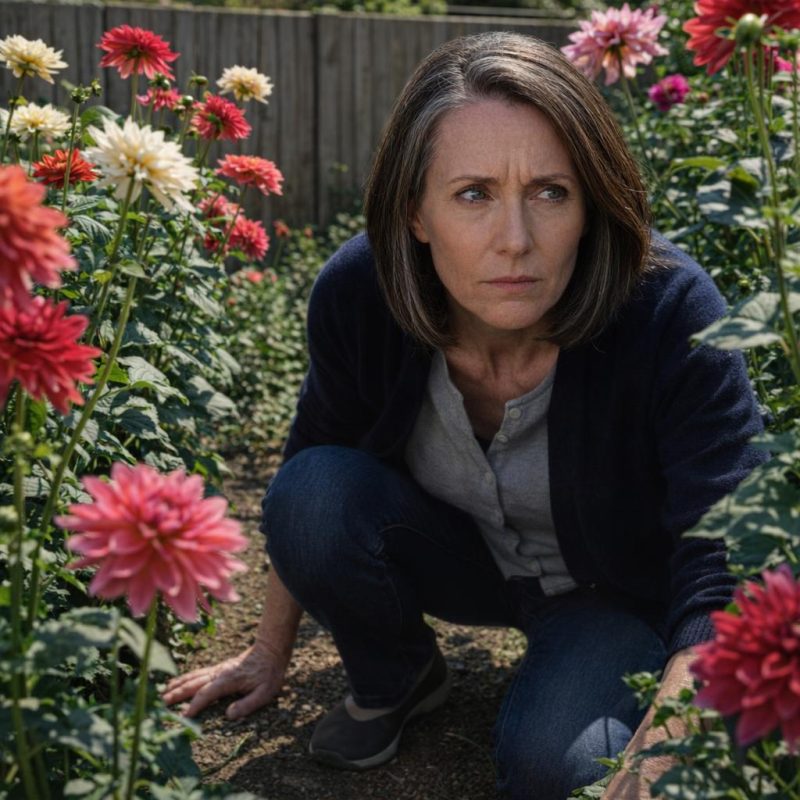 Image by RM AI
An Offer Below Value
The letter came on a Tuesday, tucked between a water bill and a furniture catalog. The envelope was heavy stock, cream-colored, with a return address I didn't recognize. I opened it at the mailbox out of habit. It was a formal offer to purchase my property — typed on letterhead, professionally worded, the kind of letter that wants to seem like a courtesy but reads like a transaction. The number they offered stopped me. It was so far below what the house was worth that I actually read it twice to make sure I hadn't misread a digit. I hadn't. I stood there on the front walk thinking about what I'd put into this house over thirty years — the kitchen renovation, the new roof, the garden that had taken me a decade to get right — and felt a flicker of irritation sharp enough to cut through everything else I'd been carrying. The letter mentioned 'changing neighborhood dynamics' as part of their rationale, which struck me as an odd phrase to put in a purchase offer. I carried it inside, read it once more at the kitchen table, and dropped it in the recycling bin. Probably a mass mailing, I thought. Developers did this sometimes — sent lowball letters to longtime homeowners hoping someone was desperate enough to bite. I almost left it there. But something made me reach back into the bin and look at the letterhead again, and I stood at the counter reading the name printed across the top of the page.
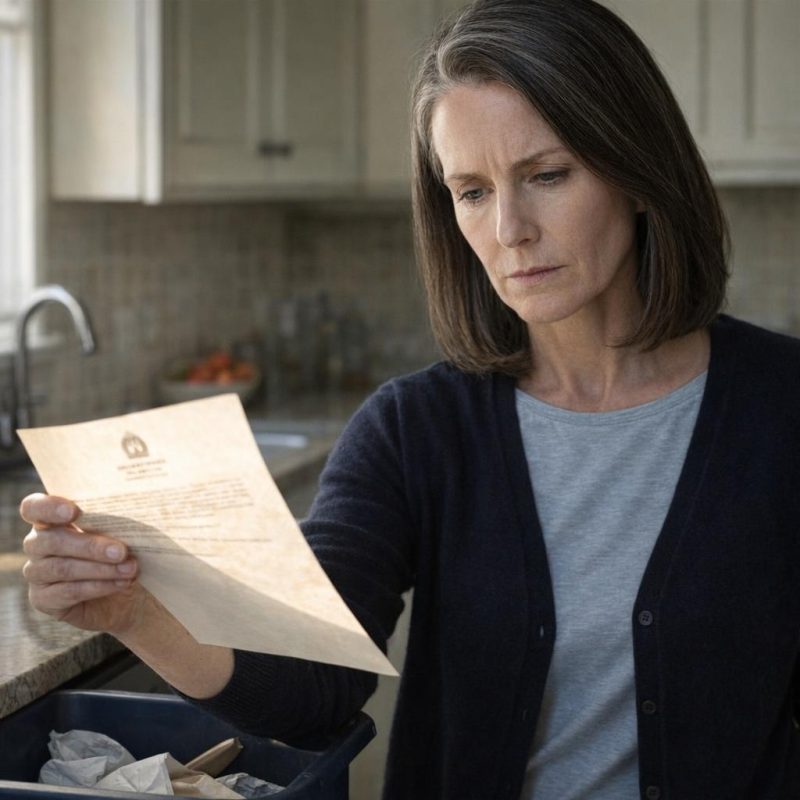 Image by RM AI
The Pattern of Departures
I'd been noticing the empty houses for weeks but kept telling myself it was just the market. People move. That's normal. But after I found that letter in my recycling bin and read the letterhead again, I started paying closer attention to which houses had sold and when. That's what finally pushed me to knock on Margaret's door. She answered looking like she'd rather not, but she let me in, and after a few minutes of small talk she seemed to decide something and sat down at her kitchen table with her hands folded. She told me the Hendersons left about eighteen months ago — code violation notices, she said, one after another, things that had never been a problem in the thirty years they'd lived there. The Patels went the following spring. Neighborhood disputes, she said, vague ones, the kind that seem to come from nowhere and don't make sense. She said it quietly, like she was still deciding how much to tell me. She'd gotten a developer letter too, she admitted, sliding her eyes away from mine. I asked about the third family, the Johnsons, and Margaret went still for a moment. She said they sold fast — faster than anyone expected — after a string of anonymous complaints filed directly with the city.
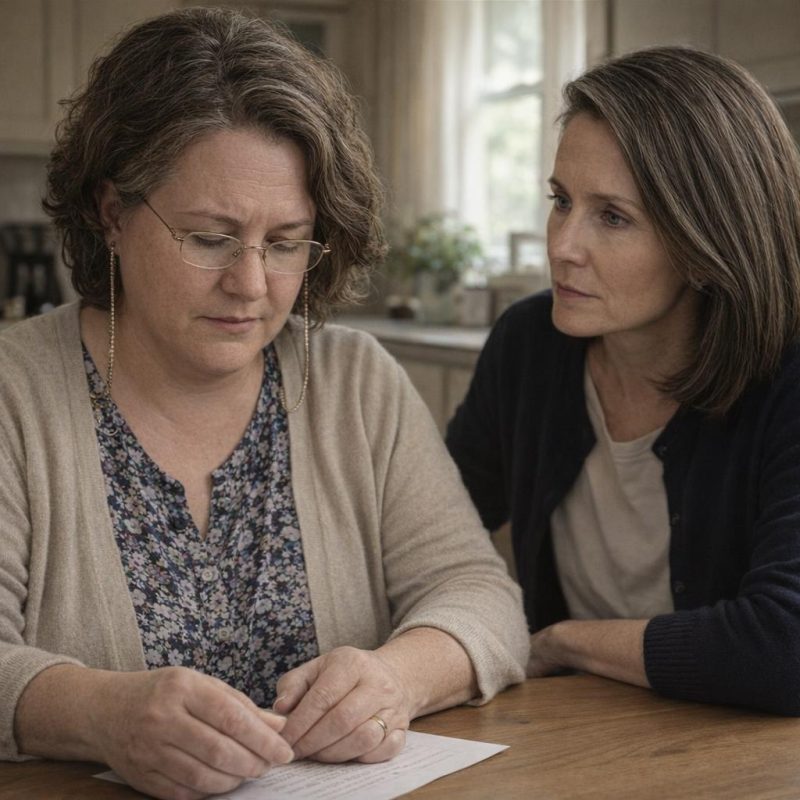 Image by RM AI
More Offers in the Mail
The second letter came two weeks after the first, same heavy cream envelope, same letterhead. This one mentioned 'an opportunity for a fresh start,' which I found almost insulting. I dropped it in the recycling without reading the full offer. The third arrived ten days after that, the number slightly higher but still nowhere near what the house was worth. Then they started coming every ten days like clockwork. Each one found a new way to reference the 'changing character' of the neighborhood, a phrase that made my jaw tighten every single time. I started dreading the walk to the mailbox, which I'd done happily for thirty years. I'd stand at the end of the front walk and just look at it for a second before reaching in, bracing myself. I threw every letter away. I didn't waver on that. But I'd be lying if I said the accumulation of it didn't wear on me — the relentlessness of it, the patience behind it, whoever was sending them clearly willing to wait me out. I wasn't going to sell. That hadn't changed. But by the time the fifth envelope arrived, I understood what it felt like to be pursued, and the weight of that settled into me like something I couldn't quite put down.
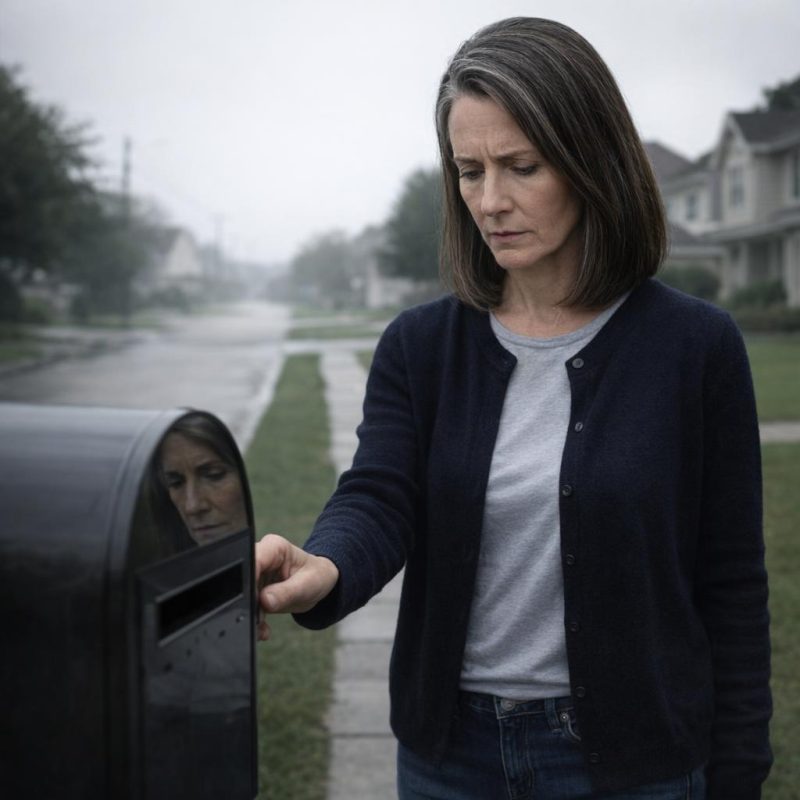 Image by RM AI
Names That Appeared From Nowhere
I'd been putting off looking them up because some part of me wasn't sure I wanted to know. But after the fifth developer letter I sat down at my kitchen table with my laptop and typed in their last name. I started with property records — the county assessor's site, the kind of thing anyone can access. Their names appeared at the current address, move-in date just under two years ago. I scrolled back further. Nothing. No prior address in the county, no previous property in the state. I tried voter registration next. Same result — registered two years ago, no prior record. I told myself maybe they'd moved from out of state, which would explain it, and tried social media. Their profiles existed but felt thin — a handful of posts, no old photos, no tagged memories from years back, no friends commenting with 'remember when.' I searched newspaper archives, local business directories, professional licensing databases. I tried different combinations of their names. I spent two hours at that table and came up with the same answer every time. Before two years ago, as far as any record I could find was concerned, Ethan and Rachel simply did not exist.
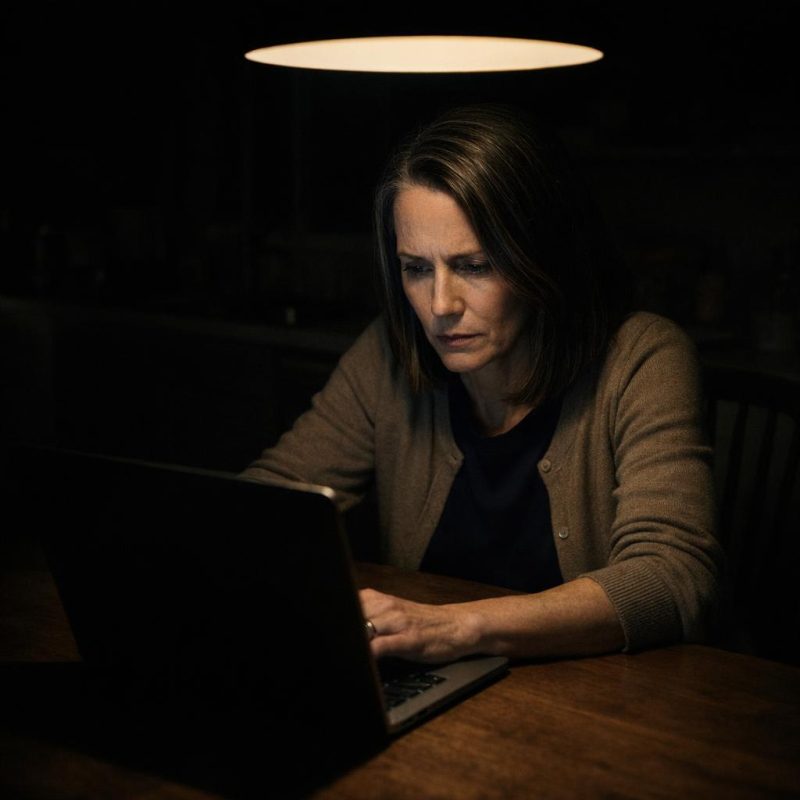 Image by RM AI
The Decision to Hire Help
I sat with the bank statement for a long time before I did anything. The money was earmarked for a trip out to see Jennifer's family — we'd been talking about it for over a year, a real visit, not just a long weekend. I felt guilty looking at the number and thinking about redirecting it. But I kept coming back to the same thought: I couldn't keep doing this alone. I didn't have the tools, the access, the know-how. I needed someone who did. I spent an evening researching private investigators in the area, reading reviews carefully the way I'd read anything important, looking for someone methodical and discreet. Detective Morris came up more than once, always with the same kind of language — thorough, professional, didn't waste your time. I called his office the next morning and made an appointment for the following week. When I hung up the phone I sat quietly in the kitchen for a moment. I felt the fear, yes. But underneath it was something steadier — a sense that I had stopped waiting for things to happen to me and had finally decided to do something about it. The vacation money would keep. The answers couldn't wait any longer.
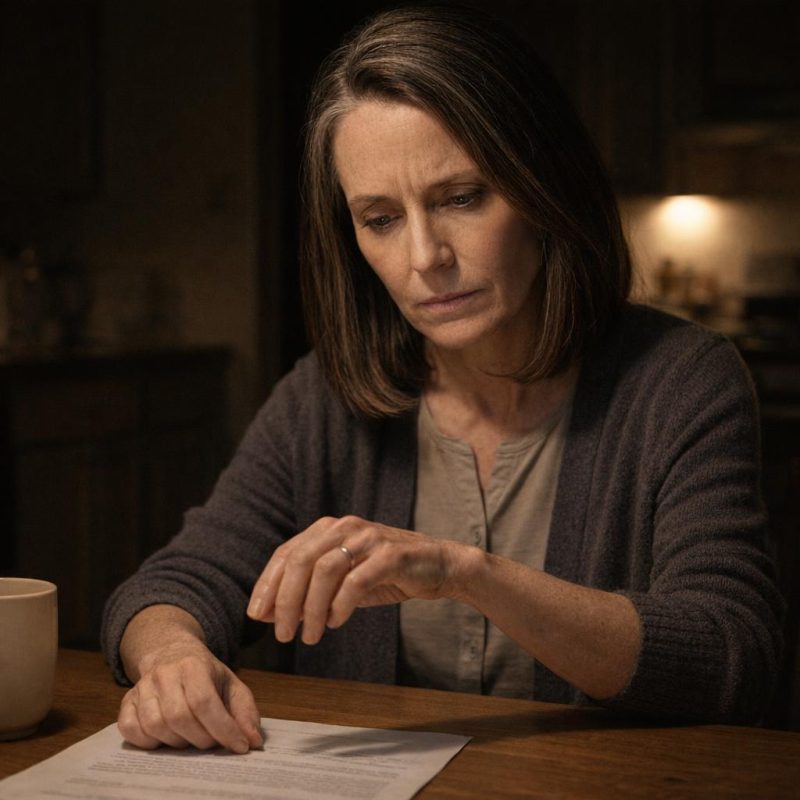 Image by RM AI
The Investigator's Office
His office was smaller than I'd expected, tucked above a dry cleaner on Merchant Street, with a window that looked out onto the parking lot. Detective Morris was mid-forties, weathered in a way that suggested he'd seen a lot without being hardened by it. He gestured to the chair across from his desk and let me talk. I'd brought my notebook — every incident logged with dates, times, and details — and I walked him through the whole thing from the beginning. The police complaints. The escalation. The developer letters. The neighbors who'd left. He listened without interrupting, which I appreciated, and took notes in a small spiral pad. When I mentioned overhearing Rachel on the phone that afternoon, he looked up briefly but didn't comment. When I told him about the records search — how their names appeared two years ago and nowhere before that — he set his pen down and asked me to repeat the part about the voter registration. I did. He nodded slowly. He said the pattern I was describing was worth looking into, said it plainly and without drama, and quoted me a fee that was fair. I wrote the check at his desk. Walking back to my car afterward, I noticed my shoulders had dropped about two inches — the first time in weeks I hadn't been carrying everything entirely alone.
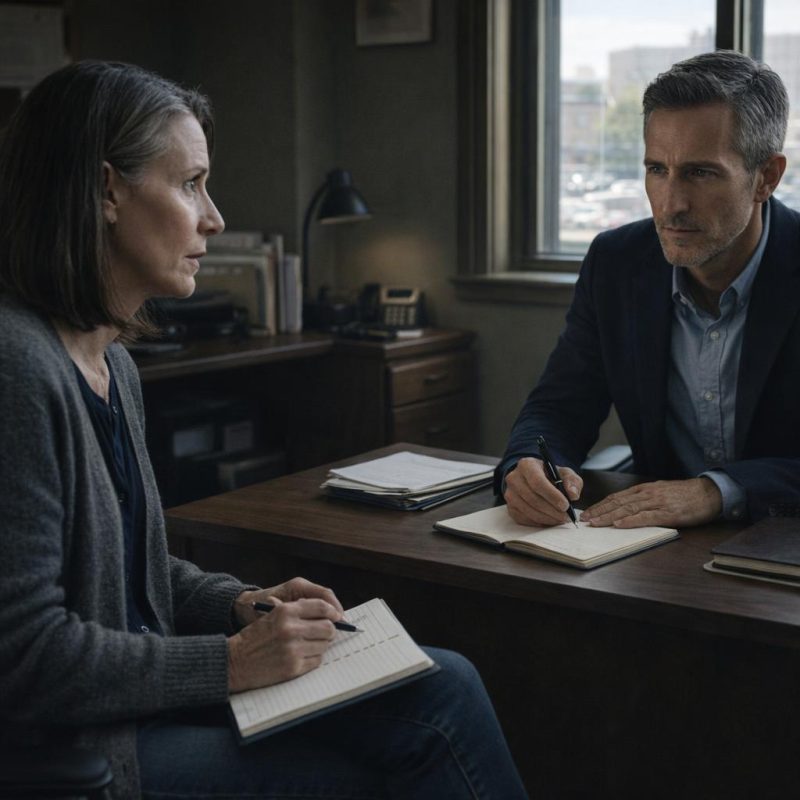 Image by RM AI
The Search Begins
He called on a Thursday afternoon while I was pulling weeds along the back fence, and I nearly dropped my phone getting it out of my pocket. He'd confirmed what I'd found on my own — no property records for either of them before the current address, no prior addresses anywhere in the state database. But he'd gone further. No business licenses, no professional registrations, nothing in the state's public records going back more than two years. Their driver's licenses had both been issued as new-resident licenses, same window of time. He said it was consistent with someone relocating from out of state, but that the complete absence of any digital footprint before that point was less common than people assumed — most people leave some kind of trail even when they move. He said he was going to run their names through national databases and broader public records searches. I thanked him and stood there by the fence for a moment after we hung up, the weeds still in my hand. I'd been right that something didn't add up. Having that confirmed didn't make me feel better exactly — it made the ground feel less solid. Then my phone buzzed again and I looked down at the screen: it was Detective Morris, calling back less than a minute later, saying he'd already found something odd.
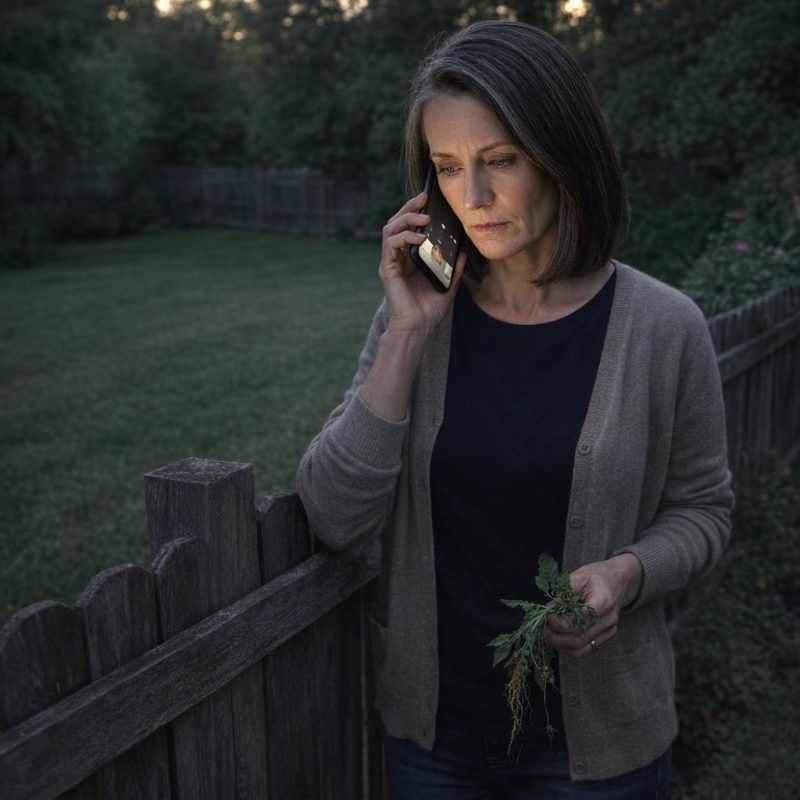 Image by RM AI
Waiting for Answers
The days after that call had a strange quality to them — stretched out and too quiet at the same time. I kept my notebook on the kitchen counter and wrote down what I noticed: what time their car left in the morning, when it came back, whether the lights were on in the front room. I felt a little foolish doing it, but I kept doing it anyway. One morning Rachel waved to me from the driveway, that easy warm smile she always had, and I made myself wave back and keep my face neutral. Ethan noticed my mailbox post was wobbling and offered to help reset it. I told him I had someone coming to look at it, which wasn't true, and he nodded and said to let him know if I changed my mind. He was pleasant about it. They were both always pleasant. That was the part that wore on me most — the absolute normalcy of it, the way nothing on the surface gave anything away. I checked my phone more times than I could count. I slept badly, waking at small sounds from the direction of the house next door, lying still in the dark and listening until the sound resolved into nothing. The not-knowing had its own particular weight, and by the end of that week I had stopped pretending it didn't.
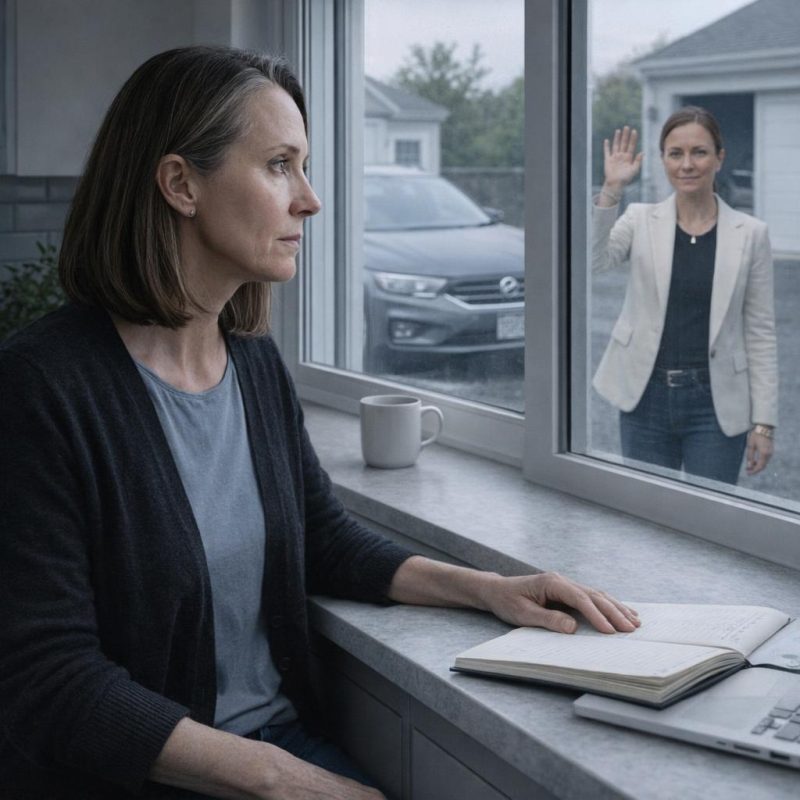 Image by RM AI
A Name From the Past
Detective Morris called on a Tuesday morning, and I could tell from the first few words that he had something. He'd found records showing Rachel had used a different last name until exactly two years ago — the change had gone through legal channels, properly filed, nothing hidden about the paperwork itself. He gave me the former surname slowly, spelling it out, and I wrote it down on the notepad I kept by the phone. He said he hadn't yet found a clear reason for the change — no marriage record connecting the two names, no obvious legal circumstance that would explain it. He was going to keep pulling threads, he said, search for any connections between that name and the neighborhood, the developer letters, anything that might link up. I thanked him and we hung up. I sat at the kitchen table and looked at what I'd written — just a name, two words on a yellow notepad, no context yet, no explanation. I didn't know what it meant. I didn't know if it meant anything at all. But I kept sitting there with it, the morning light coming through the window, the name just sitting there on the page, carrying a weight I couldn't yet account for.
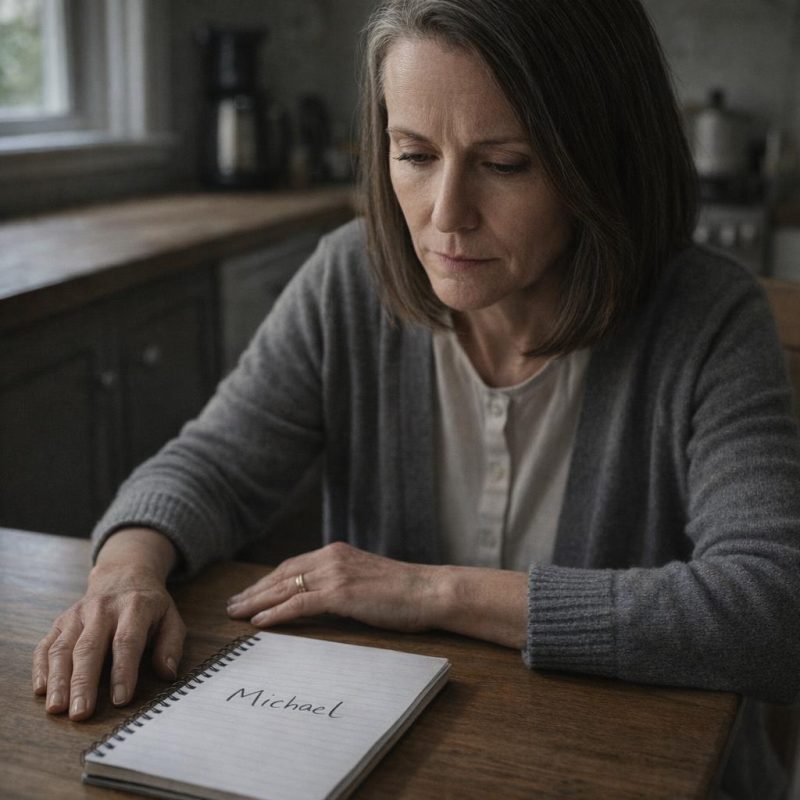 Image by RM AI
The Investigator Goes Silent
I called Detective Morris on a Wednesday afternoon, just to check in, see if he'd found anything more on that name he'd given me. It went to voicemail. I left a message, kept it brief, said I was just following up. I wasn't worried yet — investigators get busy, I knew that. But when I called again Thursday morning and got voicemail again, something tightened in my chest. I sent an email that evening, polite and patient, the way I try to be. Nothing came back. By Friday I was checking my inbox every hour. Saturday, still nothing. I told myself there was a reasonable explanation. I told myself a lot of things that weekend. On Monday morning I drove to his office — a small suite above a tax preparation place on Garfield Street, the kind of building that smells like old carpet and fluorescent lights. The woman at the front desk looked up when I came in, and something in her expression shifted before I even said his name. I told her I was a client, that I hadn't been able to reach him. She looked down at her desk, then back up at me, and said that Detective Morris would not be continuing with my case.
 Image by RM AI
Someone Powerful Enough to Scare Him
I sat in my car in the parking lot behind his building for a long time after that. The refund check was in my purse — she'd handed it to me in an envelope, already prepared, like they'd been expecting me to come in. That detail kept snagging at me. Someone had written that check before I walked through the door. I stared at the brick wall in front of me and tried to think clearly. Detective Morris was a professional. He'd been doing this work for years, had a framed license on his wall and a filing cabinet full of cases. Whatever he'd found — or started to find — had been enough to make him hand back the money and go quiet. I thought about the other families who'd sold and left. The Hendersons. The Patels. The couple on the corner whose name I could never remember. I'd wondered about them before, but now the wondering felt different, heavier. I considered, sitting there in that parking lot, whether I should just let this go. Whether whatever was behind all of this was simply too large for one person to push against. I pulled out of the lot slowly. I checked my mirrors twice before I reached the street. The feeling that followed me home wasn't something I could name — just a low, steady pressure, like weather moving in that I couldn't see yet.
 Image by RM AI
The Warrant at Dawn
They knocked at seven in the morning, which is its own kind of cruelty. I was still in my robe, coffee just starting to brew, and when I opened the door Officer Hayes was standing on my porch with two other officers behind him and a piece of paper in his hand. He looked genuinely sorry about it, which almost made it worse. He said there had been a report of stolen jewelry believed to be on the property, and that he had a warrant to search the garage. I told him there was nothing stolen in my home. I told him he was welcome to look anywhere he wanted because he'd find nothing. I said it calmly, I think, though my hands were shaking by the time I stepped aside. They were thorough. I'll give them that. They went through every shelf, every bin, every box I'd stored out there since 1998. I stood in the driveway in my robe and watched my garage get turned inside out. And the neighbors came out. Of course they did. Margaret was on her porch within ten minutes, arms crossed, watching. Curtains moved up and down the block. A few people stood openly in their yards, not even pretending they weren't looking. The search took nearly two hours. When it was over, Officer Hayes told me they hadn't found anything. Then I watched the officers carry the last of the opened boxes back through my garage door.
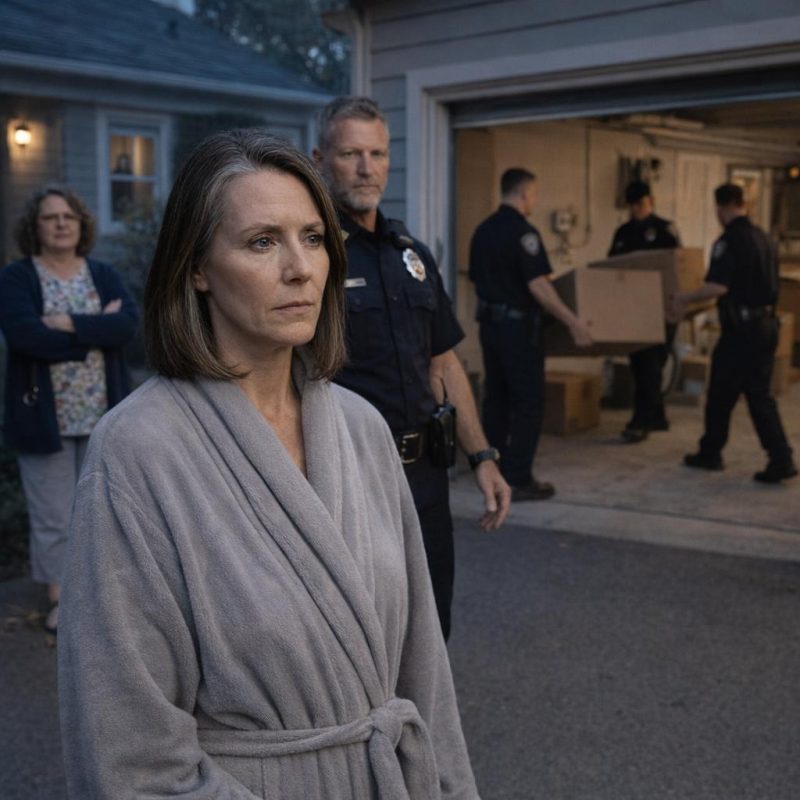 Image by RM AI
The Neighborhood Watches
The police cars pulled away and I was still standing in the driveway. I don't know how long I stood there. Long enough for the street to go quiet again, though it never really did — there were still people on their porches, still figures behind glass. I looked toward Margaret's house and she turned away before our eyes could meet. Just turned, went inside, closed the door. That small motion landed harder than I expected. We'd known each other for over twenty years. She'd brought me soup when my husband died. And now she couldn't look at me. I understood, standing there in the morning light, that it didn't matter what the officers had or hadn't found. The warrant itself was the verdict. The search itself was the sentence. People had watched police go through my garage, and that image was going to live in this neighborhood long after any explanation I could offer. I went inside and pulled every curtain closed. I sat down in the living room in the half-dark and didn't move for a while. I'd lived in this house for twenty-five years. I'd raised my daughter here, buried my husband from here, grown a garden in the backyard that came back every spring without being asked. And now every window on the block held a face that had already decided what kind of person I was.
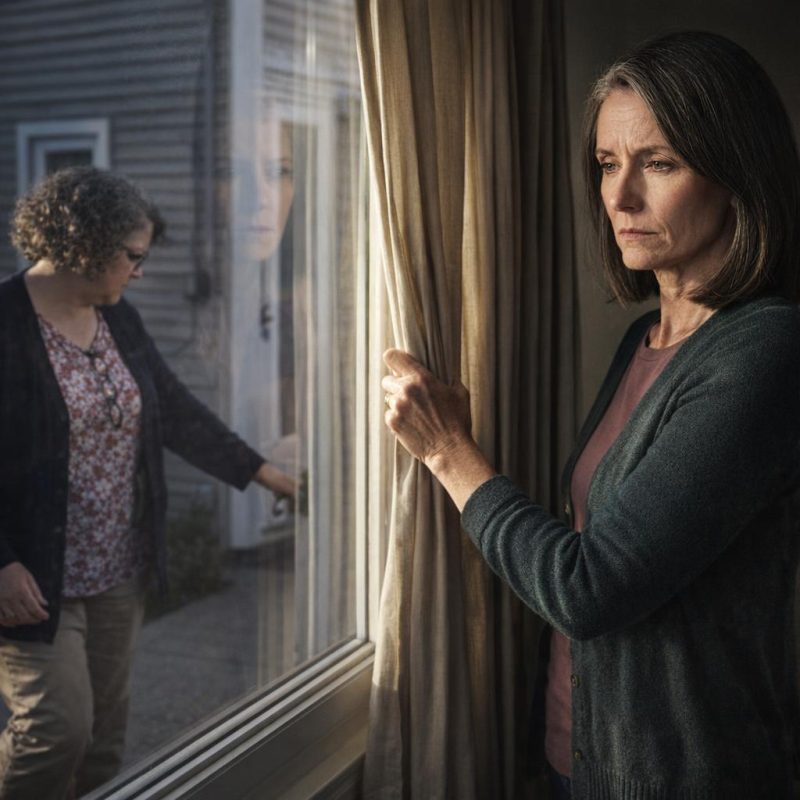 Image by RM AI
Jennifer Says It's Time
Jennifer showed up that evening with a overnight bag and red eyes, which told me a neighbor had already called her. She found me in the living room with the curtains still drawn and the lights still off, and she sat down next to me on the couch and didn't say anything for a minute, which I appreciated. Then she said, Mom, you need to sell this house. She said it quietly, not like an argument, more like something she'd been holding all day and couldn't hold anymore. I told her I'd thought about it. She said thinking about it wasn't enough, that this had gone too far, that no piece of property was worth what was happening to me. I didn't argue. I didn't have the energy to argue, and honestly, sitting there in the dark, I wasn't sure she was wrong. She talked about the guest room at her place, about realtors she knew, about how fast the market was moving. She said I could start over somewhere that didn't carry all of this weight. I listened. I didn't say yes and I didn't say no, and I think that scared her more than a flat refusal would have. She made us tea and stayed close to me all evening, and somewhere around ten o'clock, when she thought I might be drifting off, she said quietly that she couldn't keep watching this happen to me.
 Image by RM AI
The Attic on a Rainy Afternoon
The next afternoon was gray and close, the kind of day that makes the inside of a house feel smaller than it is. Jennifer had gone to work but made me promise to call if anything happened. I climbed up to the attic telling myself I was just organizing — getting a sense of what was up there, nothing more. But I knew what I was really doing. I was seeing if I could leave. The attic smelled like cedar and old paper and something I couldn't name that I'd always associated with that space. Boxes were stacked along both walls, most of them labeled in my husband's handwriting, that particular slant he had, the way he always printed the letters too large. I opened one and found Christmas ornaments wrapped in tissue paper, each one placed carefully, the way he did everything. Another held his old work clothes, folded. I sat down on the floor with a photo album across my knees and stayed there longer than I meant to. Jennifer at six, gap-toothed and squinting into the sun. The two of us at the kitchen table on some ordinary Tuesday. The garden in its first year, more dirt than flowers. I'd thought I was ready to think practically about leaving. But sitting up there on the dusty floorboards, surrounded by boxes in his handwriting, I wasn't sure I knew how to carry all of it somewhere else.
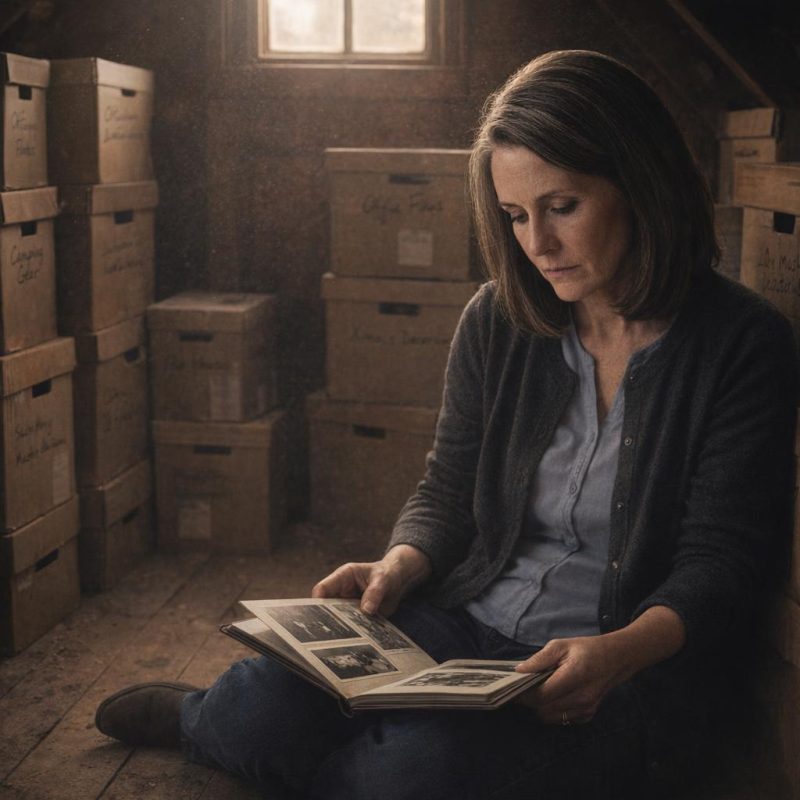 Image by RM AI
A Box Marked 'Business - 1990s'
I kept moving boxes to reach the back corner, where things had been pushed over the years and half-forgotten. That's where I found it — a box I didn't remember seeing before, or maybe one I'd simply stopped registering. It was labeled in his handwriting: Business - 1990s. I sat with it for a moment before I opened it. Inside were legal documents, property records, letters on letterhead from firms I didn't recognize. Papers relating to some kind of local land development deal, the kind of thing he'd been involved in peripherally over the years — he'd had a small stake in a few local projects back then, nothing I'd ever paid much attention to. I lifted out a stack and leafed through slowly. There were names of local businessmen, property owners, signatures on transfer documents. I didn't know most of the names. The papers had that particular smell of old documents — dry and faintly sweet, the ink gone slightly brown at the edges. I set the box carefully to one side, meaning to bring it downstairs and go through it properly. Whatever he'd thought was worth keeping, he'd kept for a reason. I sat there a moment longer with one of the pages in my hand, the dust from the box still settling around me, the afternoon light thin and gray through the small attic window.
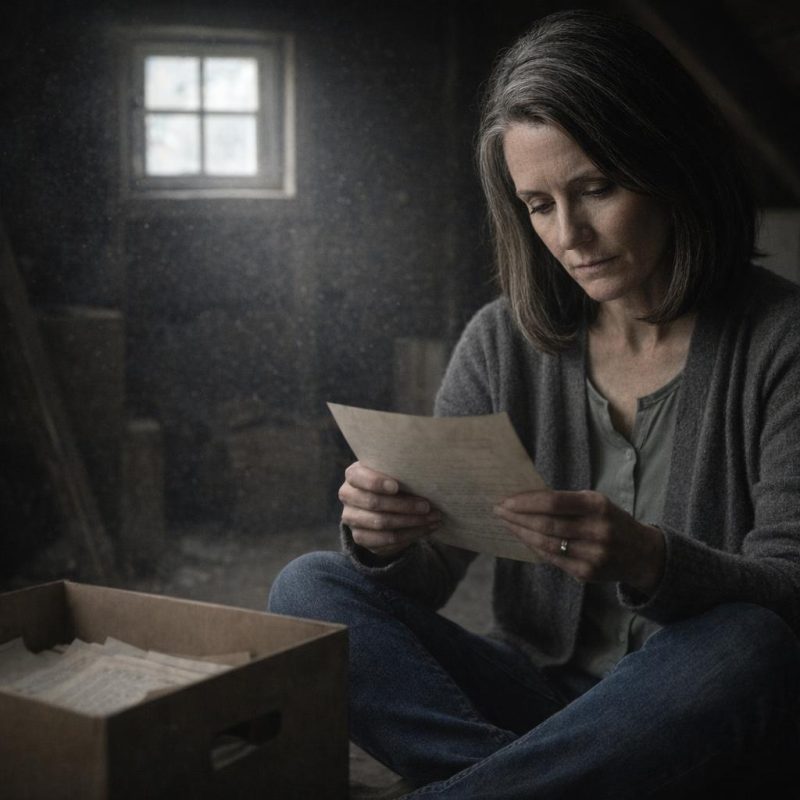 Image by RM AI
A Surname in the Documents
That evening I spread everything out across the kitchen table, the way I used to watch him do when he was working through something — documents in rows, oldest to newest, left to right. I made myself go slowly. Property deeds, transfer records, correspondence between parties I didn't know. Some of it was dry and technical, the kind of language that blurs after a while. I read through the first several pages carefully, then the next. I was about halfway through the stack when I stopped. There was a name on one of the property deeds — listed as a partial owner in a parcel transfer dated 1994. I read it twice. Then I got up and went to the notepad by the phone, the yellow one where I'd written down what Detective Morris had spelled out for me weeks ago. I brought it back to the table and held it next to the document. The name on the deed and the name on my notepad were the same. I checked two more documents in the stack. It appeared again. And again. I sat very still with the papers in front of me, my heart going faster than it should have, trying to make sense of what I was looking at — a name I hadn't expected to find anywhere near my husband's old files, staring back at me from a thirty-year-old property deed.
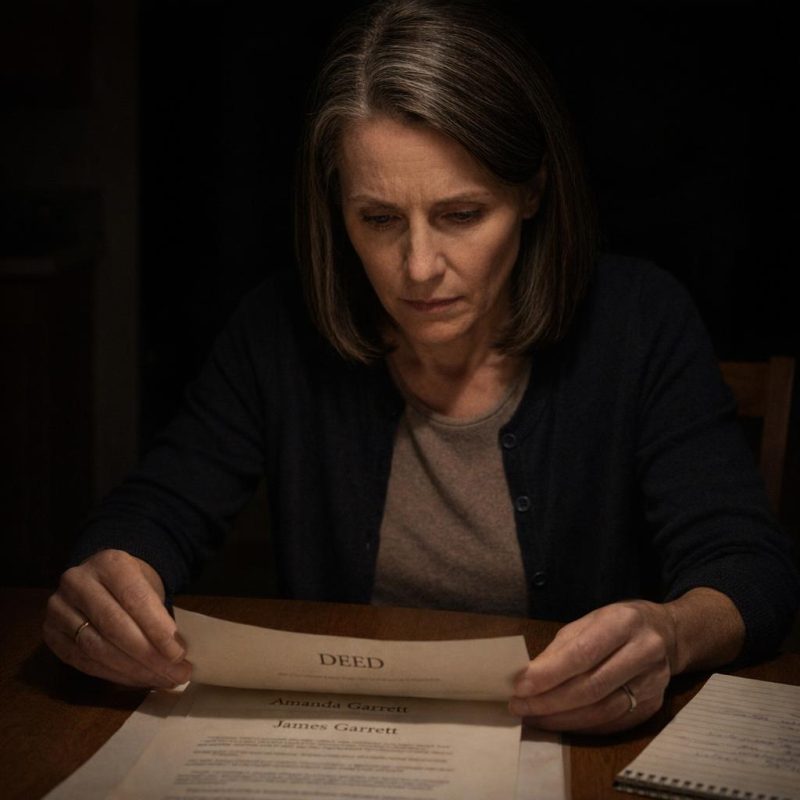 Image by RM AI
The Father Who Lost Everything
I didn't sleep much that night. By six in the morning I was back at the kitchen table with my laptop open and that name typed into the search bar. It took a while — the older the records, the harder they are to find — but I started pulling up property histories, county assessor archives, anything I could access without paying for a subscription service. What I found stopped me cold. The surname on that deed matched a family that had once owned a substantial tract of land in this county — not just a lot or two, but a large parcel that had been in the family for generations. I found a scanned plat map from the early 1980s. I had to zoom in twice to be sure, but the boundaries were unmistakable. That land — all of it — was where our neighborhood now stood. My street. My house. The cul-de-sac where the kids used to ride bikes on summer evenings. All of it had once belonged to one family. I sat back and looked out the window at the yard I'd tended for thirty years, the oak tree my husband had planted the spring after we moved in, and thought about what it must feel like to lose something that had been yours that long. The ground beneath my feet had a history I'd never known.
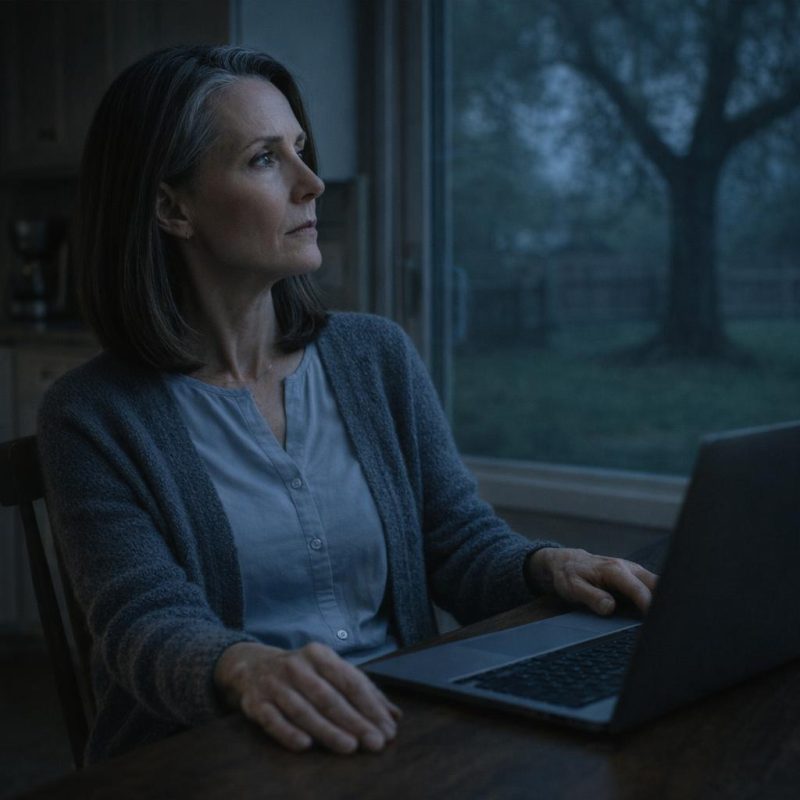 Image by RM AI
Scandal and Forged Documents
The county library had digitized some of its newspaper archives going back to the 1970s, and I spent most of that morning working through them. I had to try several search combinations before the right articles surfaced. When they did, I read them slowly, twice each. There had been a legal dispute — a serious one. Rachel's father had filed suit claiming that documents transferring the property out of his family's name had been forged. The case had gone on for nearly two years. There were quotes from his attorney, references to contested inheritance records, testimony about signatures that didn't match. In the end, the court ruled against him. The property was sold, the proceeds distributed to parties the family disputed, and within a year the articles stopped mentioning them at all. One small follow-up piece noted the family had relocated out of state. I found a photograph in one of the older articles — a man standing in front of what looked like an open field, his expression unreadable. The caption named him. I sat with that image for a long time. Whatever the truth of what happened in that courtroom, this family had lost everything — their land, their standing, their home — and the scandal had followed them out of town. The weight of that kind of loss settled over me like something I could almost feel.
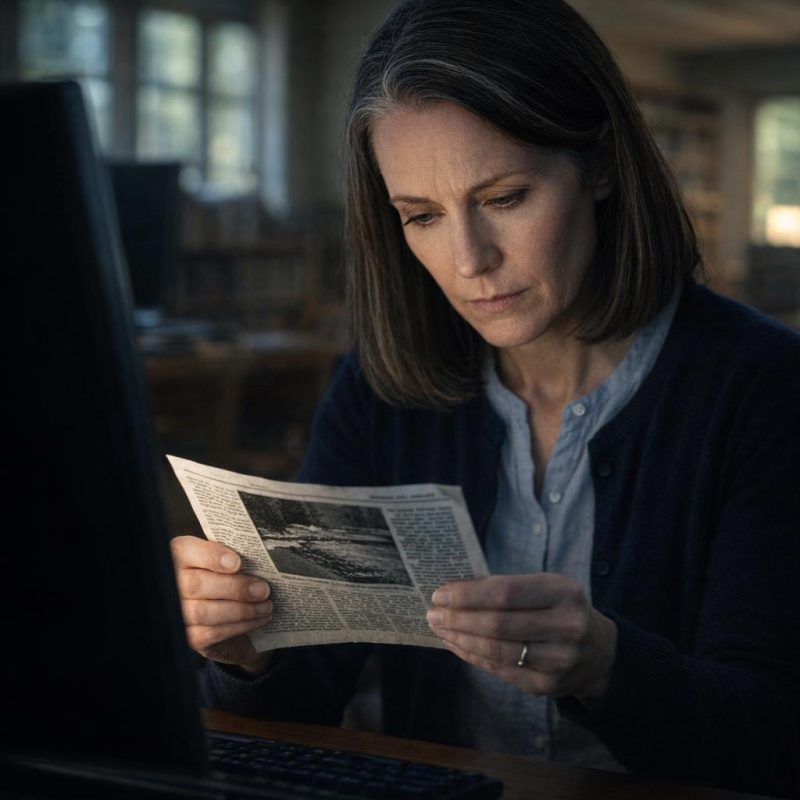 Image by RM AI
The Belief That Drove Her Here
I spread the documents and printouts across the table again and went through them in order, the way you do when you're trying to build a sequence that makes sense. My husband's name appeared in two of the older records — listed as a consultant on the property transaction, someone brought in to assess value or verify paperwork, I wasn't entirely sure which. His handwriting wasn't on anything. His signature wasn't on anything. But his name was there, attached to the deal that had ended with a family losing everything they had. I sat with that for a long time. I thought about Rachel — the careful way she'd introduced herself, the warm smile, the casserole dish. I thought about how she'd chosen this street, this house next door, this particular widow to make her target. I wondered if she believed my husband had played a role in what happened to her father — if she'd grown up with that story and carried it for thirty years before finding her way back here. I didn't know yet whether my husband had done anything wrong. But something about the way she'd moved in next door, the way all of it had unfolded, made me think she had a reason — and that the reason had something to do with him.
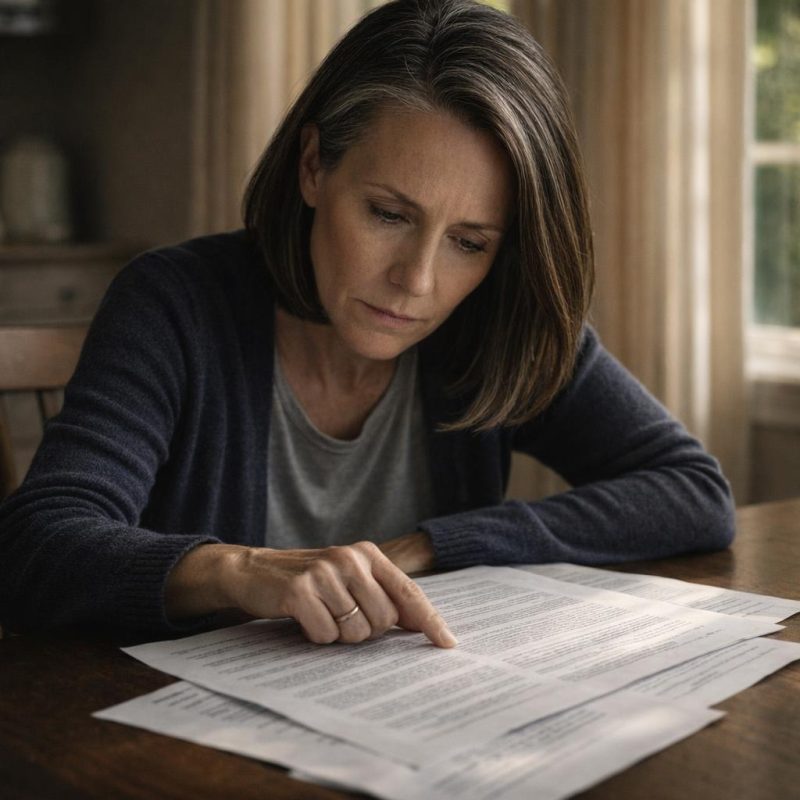 Image by RM AI
Questions Without Answers
I tried to remember. That's the honest truth of it — I sat there and I tried as hard as I could to pull up something useful from thirty years ago. My husband had done consulting work back then, mostly for local businesses and a few real estate transactions. He'd mentioned it in passing the way people mention work they consider routine. I couldn't recall him ever saying anything about a disputed property or a family losing land. He wasn't the kind of man who brought trouble home with him, and I'd never had reason to ask. I went back through the box, more carefully this time, setting aside anything with a name or a date I didn't recognize. There were a handful of business cards held together with a rubber band that had gone brittle and snapped when I touched it. Most of the names meant nothing to me — accountants, a title company, someone from a surveying firm. I set them in a small pile and kept going. Near the bottom I found a folded invoice and two more cards that had been tucked inside it. I almost set them aside with the others. But the name on the top card caught my eye — not a person's name, a company name — and I turned it over in my fingers, trying to place it. The card read Caldwell Development Group, with a phone number and a post office box address.
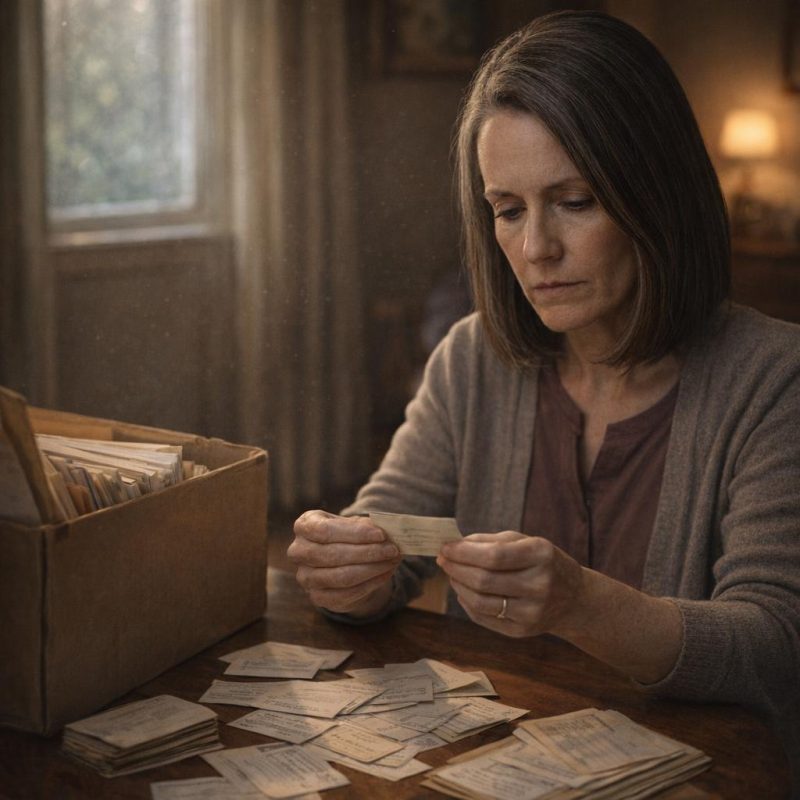 Image by RM AI
The Developer's Name Appears
I set the card down and went to the stack of letters on the counter — the purchase offers I'd been receiving for the past several months, the ones I'd stopped opening after the third or fourth. I found the most recent one and unfolded it. The letterhead was clean and professional, the kind of thing designed to look trustworthy. Caldwell Development Group. Same name. I picked up the business card again and held it next to the letter. The logo had been updated at some point, the font was different, but the company name was identical. I checked the postbox address on the card against the return address on the letter — different, which made sense if they'd moved offices over thirty years — but the name was the same. This company had been connected to the original property deal that destroyed Rachel's family. And now they were the ones sending me letters every few weeks, asking me to name my price. I searched the company name online and found their current website, their recent projects, a LinkedIn page for someone listed as principal. I sat there looking at the screen, turning the old business card over and over in my hand. The same company name appeared in records from thirty years ago and on the letter sitting in front of me now — and I still couldn't see why they were back, or what any of it had to do with Rachel moving in next door.
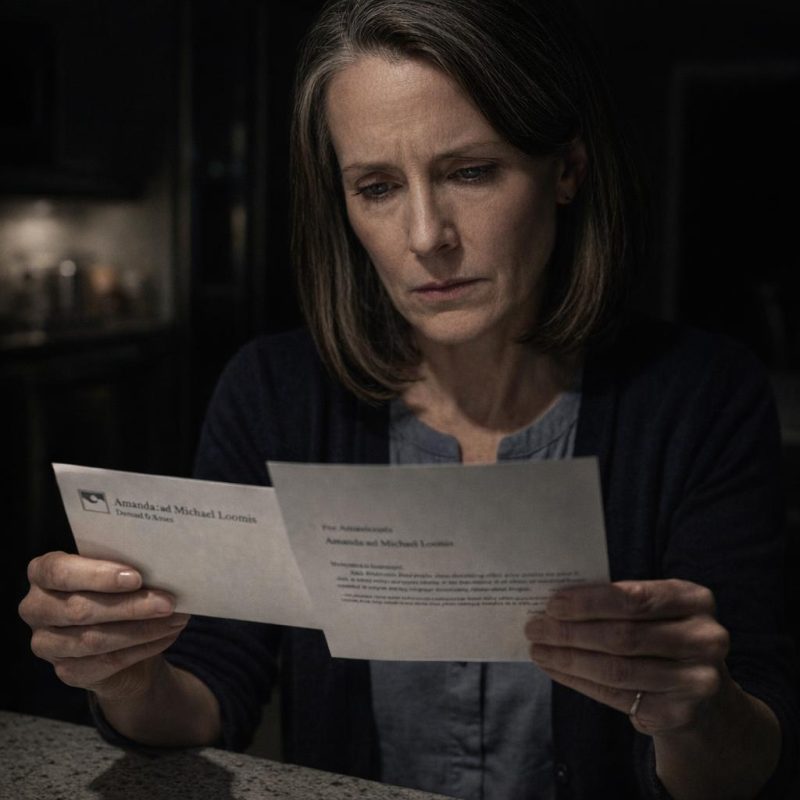 Image by RM AI
Pieces That Don't Fit
I got out a legal pad and wrote it all down in a column, oldest to newest, the way you'd lay out a timeline for someone else to follow. Rachel's father owned the land. A dispute arose over forged documents. He lost the case and the property was sold. My husband's name appeared in the records as a consultant on that transaction. The land was subdivided and the neighborhood was built. Decades passed. Caldwell Development Group began sending purchase offers to residents on my street. Rachel moved in next door and the harassment started. I read through the column twice and then I sat back and stared at it. Something about the sequence felt wrong, and I couldn't put my finger on exactly what. I could imagine Rachel coming back here with old anger driving her — that part had a shape I could almost follow. But why would the same developer connected to her father's loss be involved in whatever was happening now? Would Rachel have any reason to work alongside the company that had taken everything from her family? I drew a line between Caldwell's name and Rachel's and put a question mark next to it. The more I looked at the timeline, the more I felt like I was reading a story with a page torn out somewhere in the middle, and no way yet to know what had been written on it.
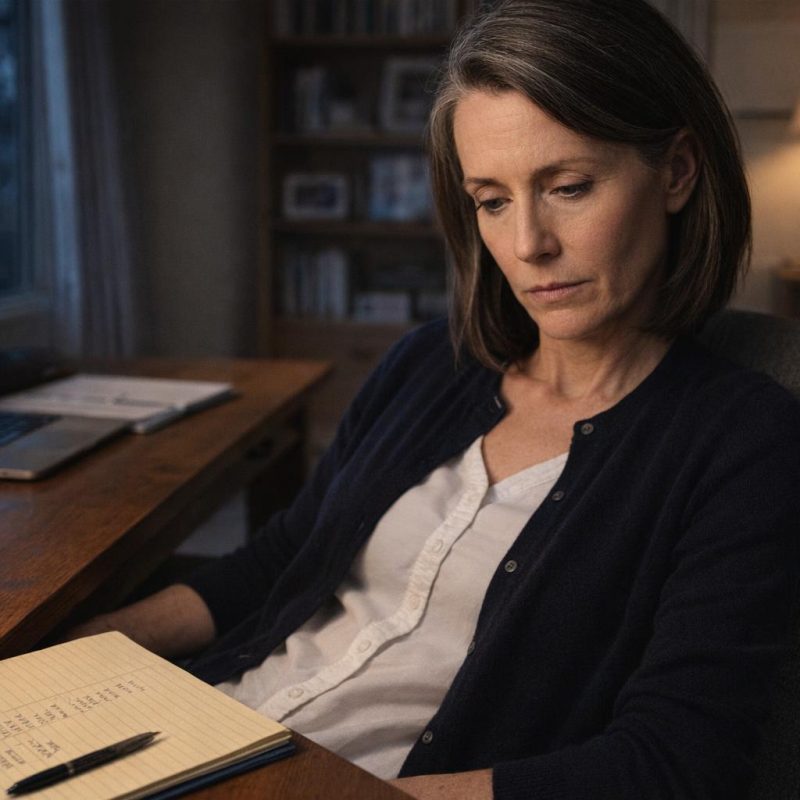 Image by RM AI
Following the Money
I spent the better part of the next day following Caldwell Development Group's project history as far back as the public record would let me go. Their website listed recent developments — luxury condominiums, mixed-use buildings, a boutique hotel conversion. But I wanted the older work, the projects before the polished website existed. I found it in county permit records and local news archives from other towns. Once I started looking, something kept repeating. In each case, Caldwell had acquired an entire block or close to it — older homes, established neighborhoods, longtime residents. In two of the towns I found short articles about disputes among neighbors before the sales happened: noise complaints, code violations filed against specific properties, a petition that went nowhere. Then the sales, one after another, and then the demolitions, and then the construction cranes. I found a quote from a resident in one of those towns, a woman who said she'd felt pushed out but couldn't prove anything. I read that sentence three times. The neighborhoods those families had lived in for decades were gone now, replaced by buildings with amenity packages and rooftop terraces. I thought about my street — the oak trees, the driveways with the basketball hoops, the flower beds people had been tending since before I arrived. The thought of all of it leveled and replaced sat in my chest like something I couldn't quite breathe around.
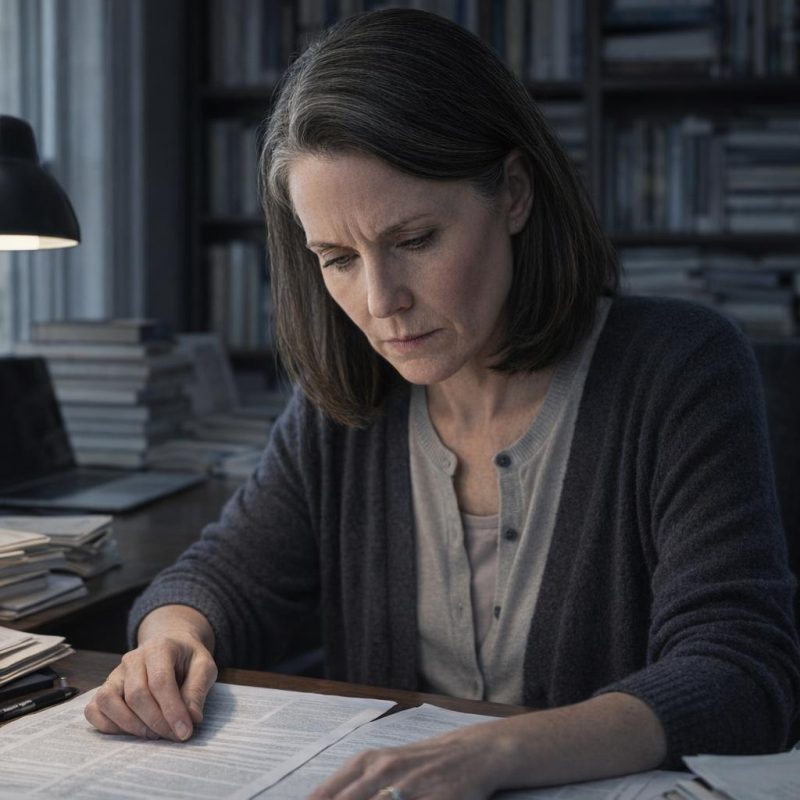 Image by RM AI
Evidence of Manipulation
I pulled up the county property transfer records for my street and started going through the recent sales — the Hendersons, who'd left after the fence dispute turned ugly; the Patels, who'd stopped returning calls after the noise complaints started; the Johnsons, who'd told me they just wanted a fresh start somewhere quieter. I found each transaction. Every one of them had sold to the same buyer: Caldwell Development Group, LLC. I wrote down the sale prices and then looked up the assessed values for the same properties. The gap was significant — not a little under market, but well under, the kind of number you'd accept if you were exhausted and just wanted out. I added up what I could estimate Caldwell had saved across those three sales alone and sat back from the screen. It was hundreds of thousands of dollars in acquisition costs they hadn't paid. And my house was still on the list. I was the last holdout on a block they'd been quietly buying up for two years. I didn't know yet exactly where Rachel fit into all of this — whether she understood what she was part of, or whether something else entirely was driving her. But the purchase letters, the harassment, the complaints, the pressure — something about the numbers on my screen didn't match the story I'd been telling myself, and I needed to understand what I was actually looking at before I made another move.
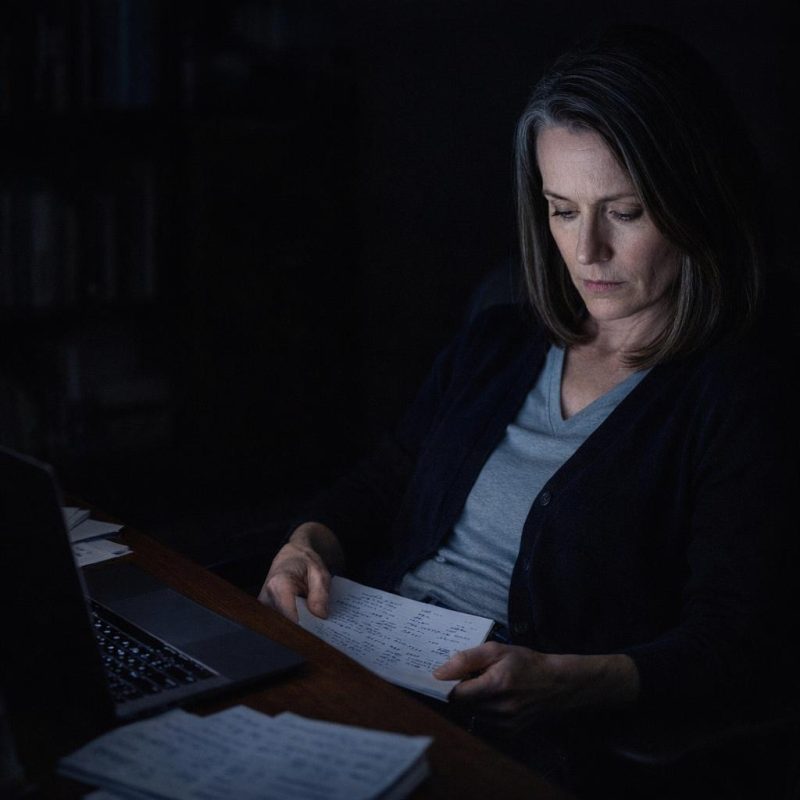 Image by RM AI
The Developer's Long Game
I kept pulling threads. Once I had the property transfer records in front of me, I couldn't stop — I went back further, past the last two years, past the last decade, all the way to the early nineties. Caldwell Development Group had been filing permits and acquiring land in this county for thirty years. The company name changed twice, the principals shifted around, but the address on the filings stayed the same and the signature at the bottom was always a variation of the same name. I found a cluster of transactions from 1994 — a neighborhood on the east side of town that had been cleared for a strip mall that never got built. Then another in 2003, a row of older homes near the river that became a parking structure. The same gap between assessed value and sale price. The same compressed timeline. I printed what I could and spread the pages across the kitchen table. Somewhere in the middle of the stack I found a document from 1991 — a land dispute involving a local family, a contested title, a notary signature I recognized as my husband's. He'd been a witness on a filing, nothing more, but his name was there, one page away from Caldwell's. I sat with that for a long time, not moving, the kitchen quiet around me, the weight of thirty years pressing down on every page.
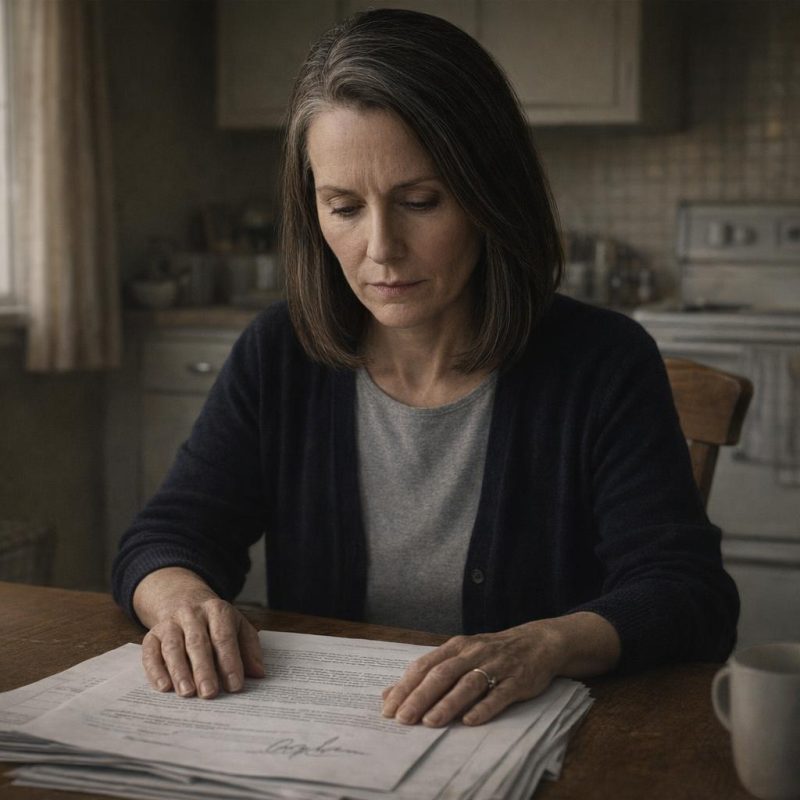 Image by RM AI
A Pattern Across Town
I got out a legal pad and started mapping it by hand — dates, neighborhoods, project names, sale prices. Three clusters stood out beyond my own street. Riverside Commons in 2003. The Elmwood corridor in 2009. A stretch of older bungalows near the fairgrounds that had been cleared by 2014. I found an online forum where former Elmwood residents had posted about what happened to them — noise complaints filed by unknown parties, code violations that appeared out of nowhere, neighbors who stopped speaking to each other after anonymous tips circulated. One woman wrote that she'd lived on her street for twenty-two years before she finally gave up and sold. She said she never understood why everyone turned on each other so fast. I read her post twice. Then I searched for similar threads from the Riverside neighborhood and found three more. The details were different but the shape was the same — the slow erosion, the isolation, the feeling that the ground had shifted under people who had done nothing wrong. I counted the households across all three areas. Somewhere between forty and fifty families, by my rough estimate. People who had built their lives in those places and been quietly pushed out. I sat back from the table and looked at what I'd written, and the anger that settled into my chest felt less like heat and more like something solid and cold.
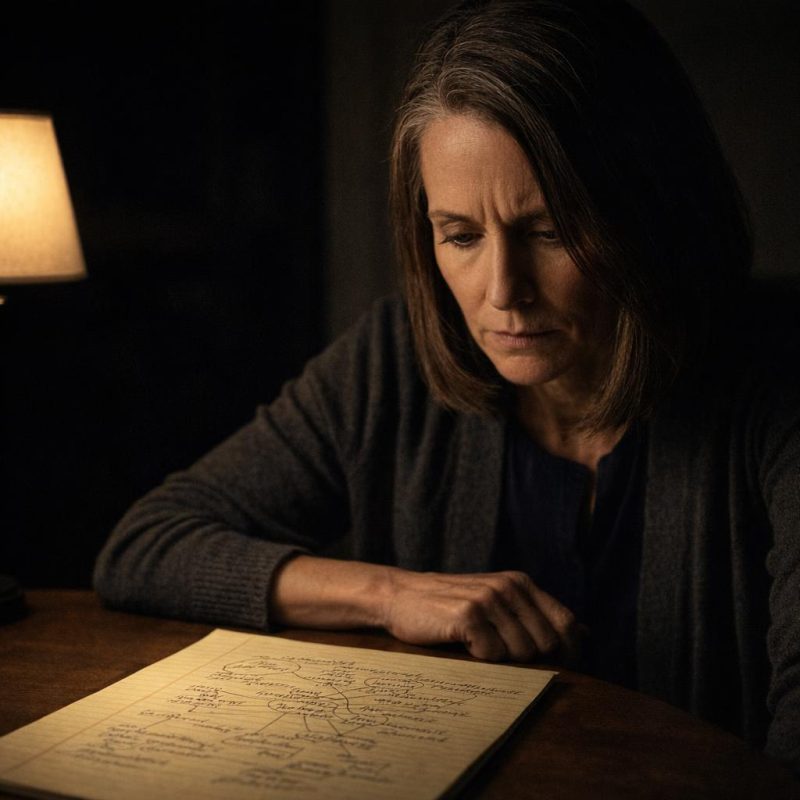 Image by RM AI
Preparing for Confrontation
I bought a box of manila folders at the drugstore and spent the better part of a Saturday organizing everything by category — property transfers, assessed values, sale prices, permit filings, the forum posts I'd printed, the newspaper clippings from the Elmwood and Riverside projects. I made a timeline on a fresh sheet of paper, starting in 1991 and running forward to the present, marking each neighborhood cluster with a different color. Then I wrote out a separate sheet just for my street — every incident, every complaint, every date I could pin down. When I laid it next to the broader timeline, the spacing was almost identical to the earlier campaigns. I wasn't sure yet who to take this to. The police hadn't exactly covered themselves in glory so far. The county planning office felt too close to the money. I looked up the contact page for the regional newspaper and wrote down the name of their investigative desk editor. I also found the state attorney general's public corruption tip line and copied that number onto a notepad by the phone. I was frightened — I won't pretend otherwise. Whatever I did next was going to make me more visible, not less. But I'd already been a target. At least this way I'd be a target who was fighting back. I drove to the bank, rented a safe deposit box, and locked a full copy of everything inside it.
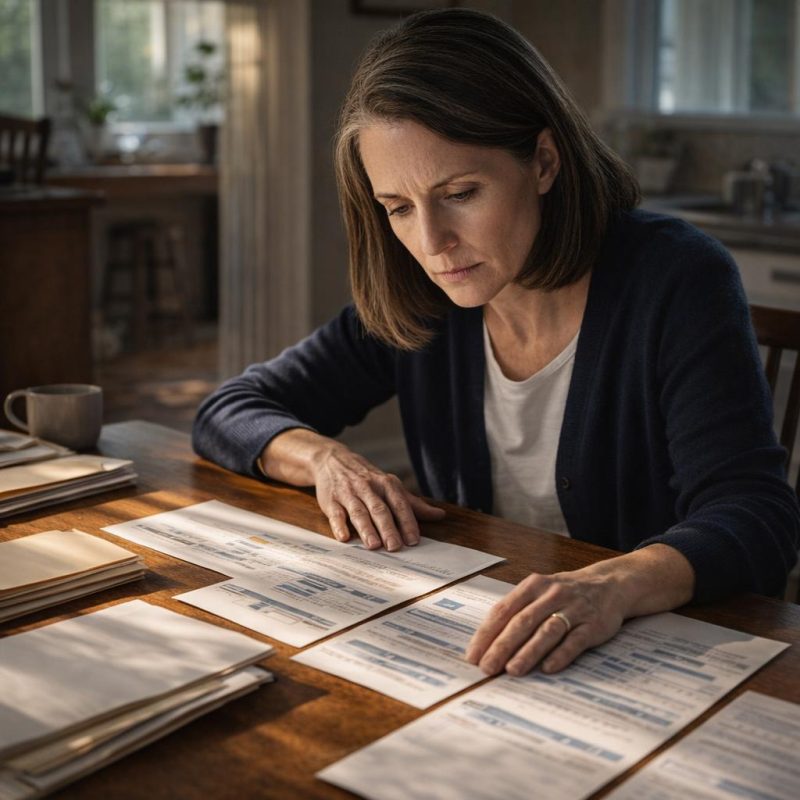 Image by RM AI
Rachel at the Door
It was past eight o'clock when I heard the knock. I wasn't expecting anyone — Jennifer had called earlier and we'd already talked, and I'd told her I was turning in early. I went to the door and looked through the peephole. Rachel was standing on my porch alone, no Ethan in sight, her arms crossed tight against her body like she was cold even though the evening wasn't cold. I stood there for a moment without moving. Every instinct I'd developed over the past several months told me not to open that door. But something about the way she was standing stopped me — she wasn't composed the way she usually was, that careful, polished stillness she always carried. I put the chain on and opened the door a few inches. She looked up, and I could see her eyes were red and her face was drawn in a way I hadn't seen before. She said she needed to talk to me, that it was important, that she was sorry to come so late. Her voice came out uneven, nothing like the smooth, measured tone I'd grown used to bracing against. I told her to wait. I stood there another moment, weighing it. Then I took the chain off and stepped back. She came inside and sat on the edge of my couch, hands clasped in her lap, and when she finally looked up at me, her face carried something I hadn't seen on her before — not the practiced warmth, not the careful smile, just something stripped down and raw.
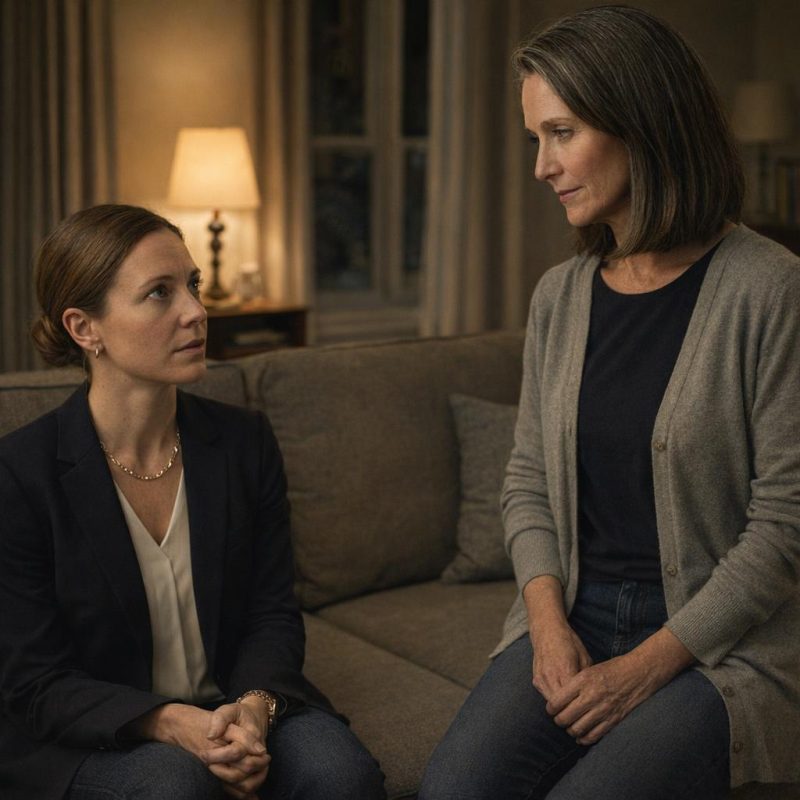 Image by RM AI
The Truth About Thomas Caldwell
She started talking and didn't stop for a long time. She said she'd come back to this town two years ago because she believed her family had been cheated — that her father had lost everything because of fraud, and that my husband had been part of it. She said a man named Thomas Caldwell had come to her with documents. Emails, notarized records, a chain of transactions that seemed to show my husband had forged paperwork that collapsed her father's business and cleared the way for a land grab. She said Caldwell's exact words were that he wanted to right an old wrong — that if she moved in next door and applied enough pressure, I'd eventually sell, and once the street cleared she could buy back the land her father had lost. She believed him. She filed the complaints because he told her to. She said the things she said to the neighbors because he coached her on what would land. And then, a few weeks ago, she found the original county records — the ones Caldwell hadn't altered. My husband's name was on them, but not the way Caldwell had shown her. He'd been trying to help her father, not hurt him. The fraud had come from somewhere else entirely. Rachel's voice broke when she said it. She pulled out her phone and showed me a recording — Caldwell's voice, unhurried and certain, telling her exactly which complaints to file and when. She said she had emails too, and that she'd bring everything tomorrow. Then she said the name again, clearly, like she needed me to hear it land: Thomas Caldwell.
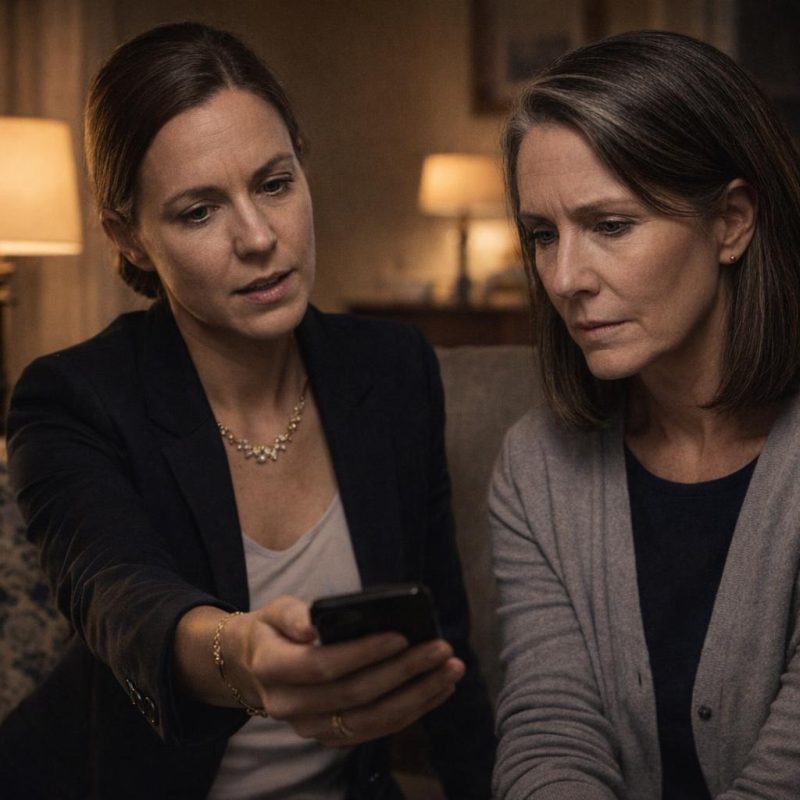 Image by RM AI
Evidence of the Scheme
She came back the next morning with a canvas tote bag and spread everything across my kitchen table. There were printed emails — Caldwell's address in the header, Rachel's in the reply chain — with specific instructions: which code violations to report, which neighbors to approach, what language to use with the police. There were bank transfer records showing Caldwell had covered Rachel's first three months of rent and moving costs. There were text messages where he'd walked her through exactly what to say to Officer Hayes, almost word for word. I recognized some of the phrasing. I'd heard it used against me. Rachel showed me the fabricated documents Caldwell had given her — the ones with my husband's name on them. She pointed out where the dates had been altered, where a signature had been lifted and placed on a different page. She'd only caught it because she'd finally pulled the originals from the county archive herself, and the notary stamp sequence didn't match. Her hands were steady as she explained it, but her voice wasn't. She said she'd spent two years believing she was fighting for her father's memory, and the whole time Caldwell had been using her anger like a tool. I was still furious at her — I won't pretend that went away overnight — but I was also looking at the evidence in front of me, and it was thorough and it was damning. Then I turned to the last page in the stack: an email where Caldwell laid out his promise to Rachel in plain language, telling her the land would be hers once I was gone.
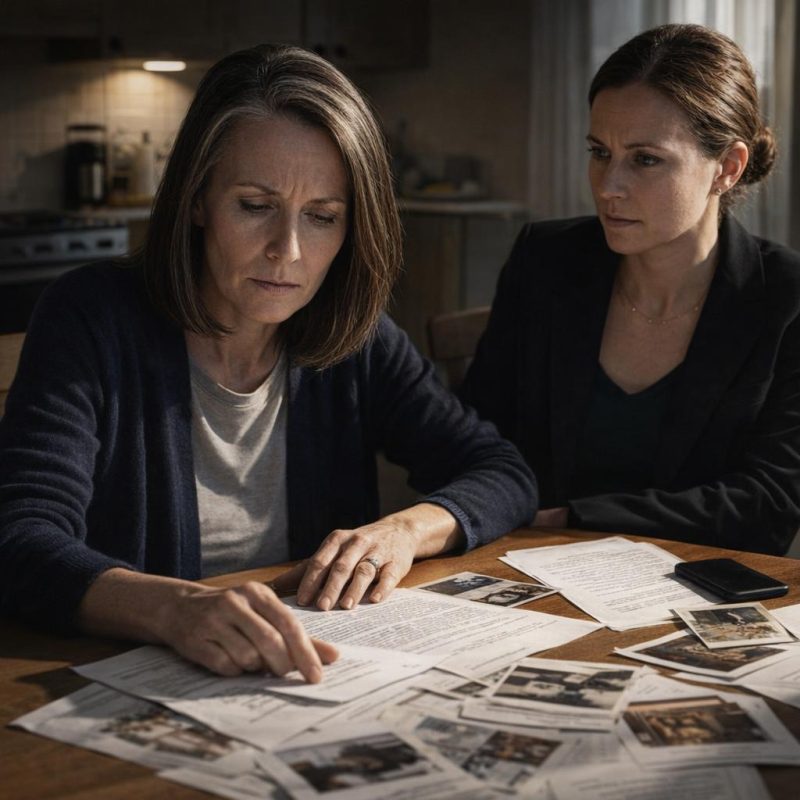 Image by RM AI
An Uneasy Alliance
We sat across from each other for a while after that without saying much. The documents were still spread between us on the table, and neither of us moved to gather them up. I told her I didn't know if I could forgive her. I said it plainly, not to be cruel, just because it was true and she deserved honesty more than she deserved comfort right now. She nodded and said she wasn't asking for forgiveness. She said she just needed a chance to make it right, and that she understood if I didn't believe her yet. I told her about the other neighborhoods — Elmwood, Riverside, the fairgrounds corridor. I showed her my timeline and the forum posts from families who'd gone through the same thing years before us. She read through them slowly. When she looked up, something in her face had shifted — not surprise exactly, but a kind of grim recognition, like a number she'd been carrying in her head had just gotten much larger. She said we had to stop him. I said we'd need more than what was on this table to make anything stick. She said she'd get whatever I needed. We shook hands at the end of it — a formal, careful gesture, the kind you make with someone you're not sure you trust but have decided to work with anyway. The handshake lasted only a second, but the weight of what it meant sat with me long after she left.
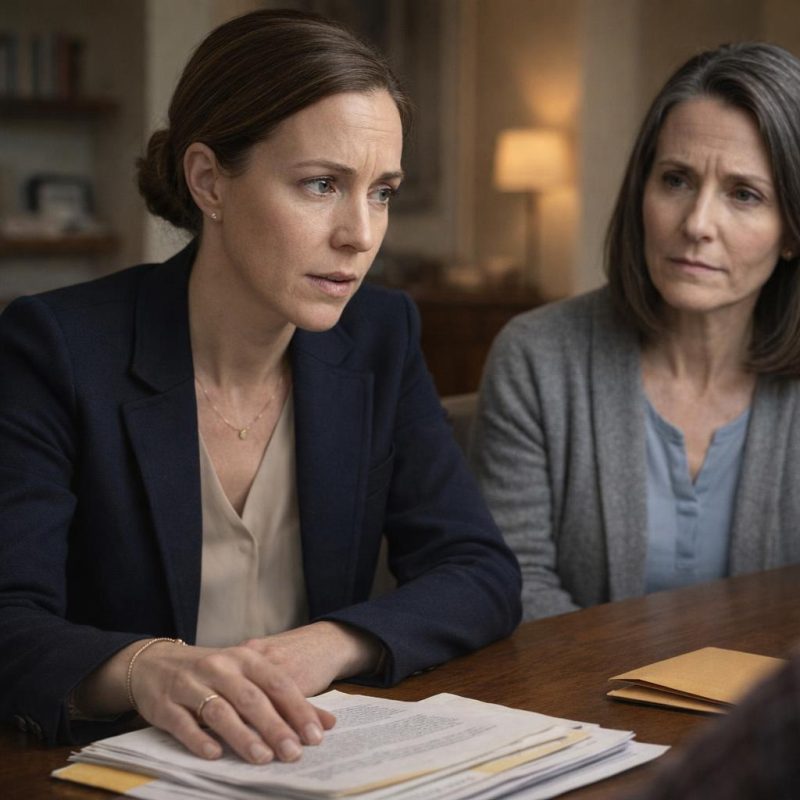 Image by RM AI
Building the Case
We met at my kitchen table every morning for three days. Rachel brought her communications with Caldwell — the full email threads, the text chains, the two recordings she'd made on her phone during their later calls when she'd already started to suspect something was wrong. I added my property records, the financial documents, the printed forum posts, the timeline I'd built across four decades of his projects. We worked methodically, sorting everything into categories: the false complaints, the fabricated documents, the financial transfers, the pattern across other neighborhoods. On the second day, Rachel reached out to a woman from the Elmwood forum. The woman called back within an hour and talked for forty minutes. She knew two other families who'd kept records. By the third morning we had statements from four households across three different neighborhoods, each one describing the same sequence of events. Rachel admitted she'd recorded one more conversation with Caldwell — a phone call from six weeks ago where he'd discussed the timeline for my street in terms that left very little room for interpretation. I photographed every page and stored copies in three separate places. The file on my kitchen table had grown thick enough that I had to press it flat to close the folder, and every time I looked at it, something in me that had been clenched tight for months loosened just slightly.
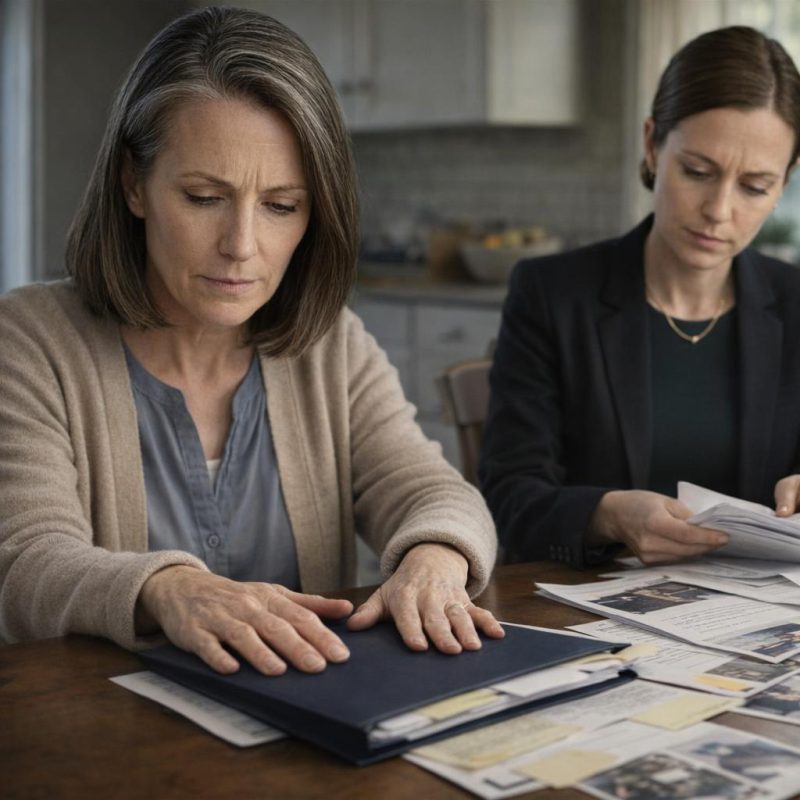 Image by RM AI
Ethan's True Identity
We were deep into organizing the evidence folders when the knock came — three firm raps, not the tentative kind. Rachel went still. I watched her face shift when she opened the door and found Ethan standing on my porch, hands in his jacket pockets, expression carrying something I couldn't quite read. She stepped back to let him in without saying a word, and the silence between them felt loaded in a way I didn't understand yet. He looked around the table — the stacked folders, the printed records, the timeline I'd taped together across three sheets of paper — and then he looked at Rachel with something that might have been relief or might have been guilt. "I need to tell you both something," he said. "Something I should have said a long time ago." Rachel crossed her arms. I stayed where I was. He pulled out a chair and sat down without being invited, which told me whatever was coming wasn't small. He set a thick manila envelope on the table and kept his hand flat on top of it. He said he wasn't Rachel's husband. He said he'd never been her husband. He said he was an investigative journalist, and that he'd been researching Thomas Caldwell's corruption for two years.
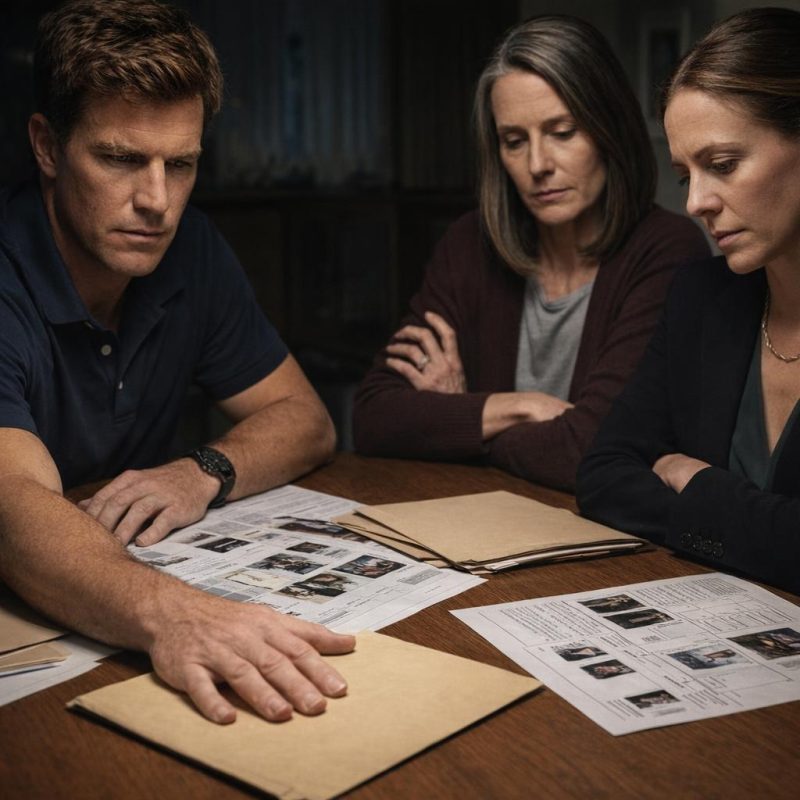 Image by RM AI
The Final Pieces
Rachel didn't speak for a long moment. Her face had gone the color of old paper, and when she finally sat down, she did it slowly, like her legs had stopped trusting themselves. I stayed quiet and let Ethan talk. He spread his documents across the table — financial records, property transfers, bank statements going back thirty years. He walked us through each one carefully, the way someone does when they've lived inside a story long enough to know exactly where the hard parts land. He explained how Caldwell had identified Rachel's father as a target, how the fraud had been constructed to look like negligence on her father's part, how the forged paperwork had been buried in county records where no one would think to look. He showed us the money trail — the property sale proceeds flowing into a shell account, then into the seed capital for Caldwell's first development company. Rachel picked up one of the pages and held it close, reading it twice. Her hands weren't steady. Ethan said quietly that her father had never done anything wrong. That he'd actually been trying to surface the discrepancy when he died. Rachel set the page down and pressed both palms flat against the table. Then she turned to me, eyes wet, and said she was sorry — just those two words, but she meant every syllable of them. The document in front of her showed Caldwell's signature on a transfer dated three months before her father lost everything.
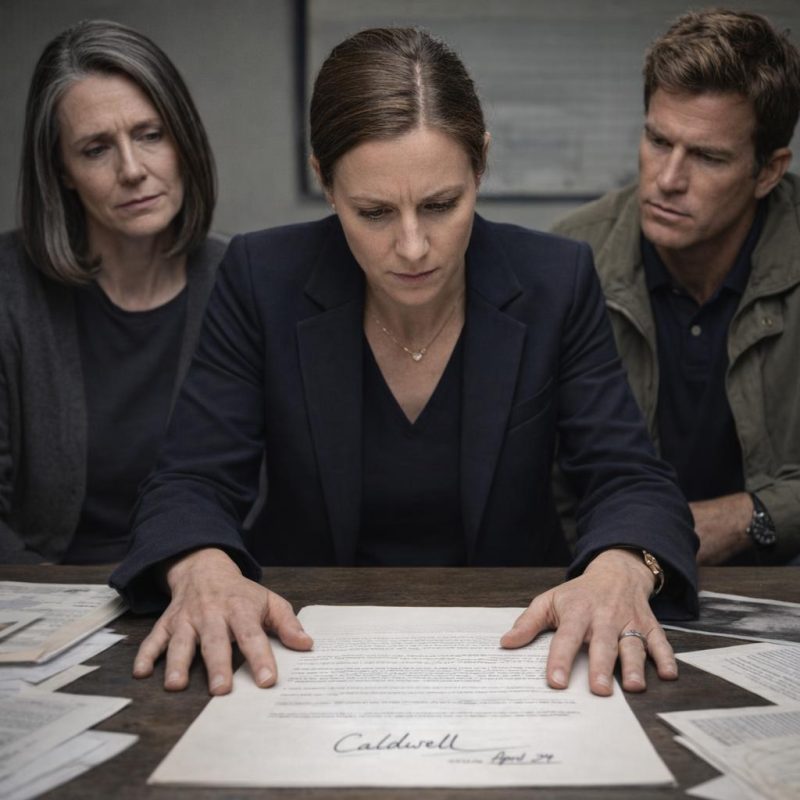 Image by RM AI
Preparing for the Town Meeting
We worked until nearly midnight, sorting everything into a presentation order that told the story from the beginning — not our beginning, but Caldwell's. Ethan had a system, and Rachel and I fell into it without much discussion. We made five copies of the full evidence packet, one for each council member and one for the record. Ethan had already contacted his editor, who was sending a reporter and a photographer to the meeting. Rachel practiced her testimony out loud twice, standing at the end of my kitchen table like it was a podium, her voice breaking once and then steadying. I practiced mine in my head, over and over, while I made coffee and washed the cups and pretended I wasn't terrified. Jennifer called just after ten. She said she'd be there, front row if she could get it, and that I should just look at her face if I lost my nerve. I told her I wouldn't lose my nerve. She said she knew that, but the offer stood. After Ethan and Rachel left, I sat at the table for a while with the lights still on, the folder closed in front of me, forty years of this neighborhood pressing quietly against the walls of the room. Tomorrow everything would be different, one way or another, and the house around me felt like it already knew.
 Image by RM AI
The Council Chamber
The council chamber was fuller than I'd ever seen it — every seat taken, people standing along the back wall, a cluster of reporters near the side door with cameras and notepads. I walked in with Rachel on my left and Ethan just behind us, and I felt the room register our arrival in small ways: a turned head here, a nudged elbow there. Jennifer was already inside and caught my eye from three rows back, giving me a single firm nod. Margaret was seated near the middle, and when our eyes met she looked away first. Caldwell was in the front row, exactly where I'd expected him to be. He wore a dark suit that probably cost more than my monthly mortgage payment, and he was leaning slightly toward one of the council members, speaking in a low, comfortable voice, completely at ease. He didn't look like a man who had anything to worry about. The council moved through routine business — a zoning variance, a road repair contract — and I sat with my folder on my lap and kept my breathing even. When the chair called Caldwell's development proposal, he stood and spoke for eight minutes about community investment and economic growth, and the room listened politely. I watched the council members' faces and thought about everything inside that folder. The public comment period hadn't opened yet, but it was coming, and the weight of what I was carrying settled into something that felt almost like calm.
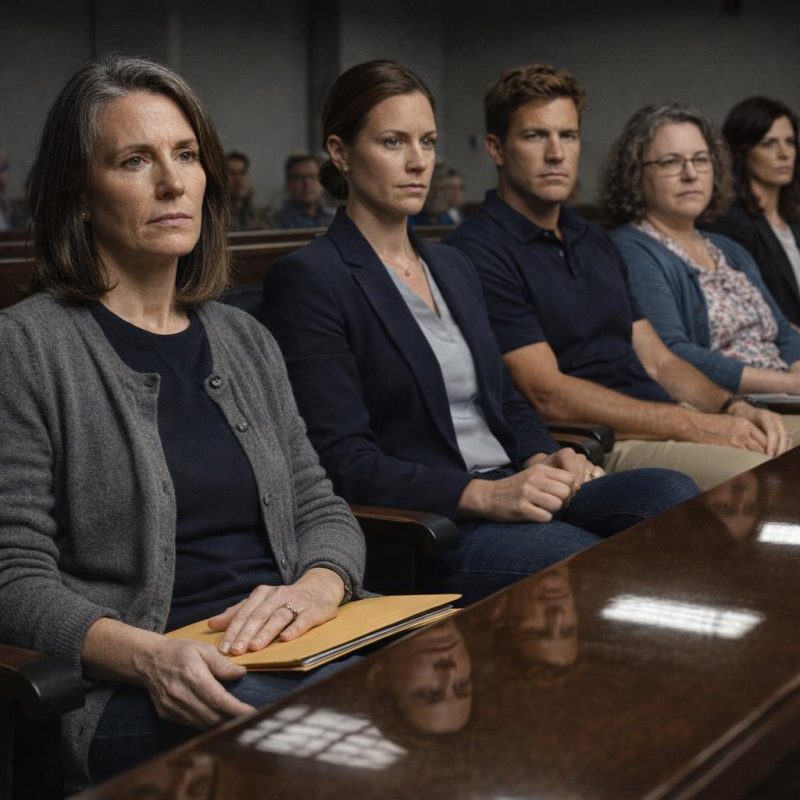 Image by RM AI
Speaking Truth to Power
When the chair opened public comment, I stood before I could think too hard about it. My voice came out smaller than I wanted at first — I heard it and made a conscious decision to push through. I introduced myself, said how long I'd lived on my street, and then I started laying it out. The timeline of complaints. The pattern of code violations that appeared out of nowhere. The property values that dropped on paper while Caldwell's offers arrived on cue. I passed copies of the financial records to the council members one by one, walking the length of the table to hand each one personally, and I watched them open the folders and start reading while I kept talking. I described the three other neighborhoods. I named the families. I showed the purchase prices against the assessed values and let the numbers speak. Caldwell sat very still in the front row. His expression didn't collapse — he was too practiced for that — but something behind his eyes shifted, a recalibration I could see from where I stood. One of the council members asked me to repeat a figure. I repeated it. Another asked how long I'd been compiling the records. I told her four months, though the story went back much further than that. When I finished and sat down, the room held a silence that felt different from ordinary quiet — the kind that means everyone in it is thinking the same thing at the same time, and none of them are sure yet what to do with it.
 Image by RM AI
Rachel's Testimony
Rachel stood next, and I could see the tremor in her hands from where I sat. She introduced herself and said her family had owned property in this town thirty years ago. She said it plainly, without drama, and that plainness made it land harder. She described how Caldwell had come to her with documents — papers she now knew were fabricated — that told her the fraud against her father had been committed by someone else, someone whose family still lived here. She said she had believed him. She said she had filed complaints she knew now were false, had done things she was ashamed of, because she'd been handed a story that felt like justice and turned out to be a weapon. Her voice broke once, and she stopped, and the room waited for her. She looked at me and said she was sorry, in front of everyone, and I nodded because it was all I could manage. Then she turned back to the council and laid out the emails — Caldwell's instructions, his reassurances, his promises about the land. She read one passage aloud in full. Caldwell rose from his seat and said this was fabricated, that she was a troubled woman with a grievance, and the council chair told him firmly to sit down and wait his turn. Rachel watched him settle back into his chair, and then she said, clearly and without hesitation, that Thomas Caldwell had used her grief as a tool, and she looked directly at his face as she said his name.
 Image by RM AI
The Journalist's Evidence
Ethan stood and identified himself by name and outlet — a publication I recognized, one that had broken two significant corruption stories in the past decade. He said he'd been investigating Thomas Caldwell for two years. The room shifted audibly, a collective intake of breath and rustle of movement. He laid it out methodically: five cities, thirty years, the same sequence of events each time — fabricated complaints, coordinated pressure, below-market acquisitions, substantial profit. He had financial records showing the total across all projects. He named the figure. Someone behind me said something under their breath. He presented the original fraud against Rachel's father — the forged documents, the redirected sale proceeds, the shell account that fed Caldwell's first development venture. He had testimony from victims in three other cities who had agreed to go on record. He had documentation of two municipal officials in other towns who had received payments during approval processes. Caldwell stood up and said loudly that this was a coordinated smear, that he had lawyers, that every person in this room would hear from them. His voice had lost the easy confidence from earlier — it came out higher, tighter, with an edge that sounded more like panic than authority. The council chair called for order twice. Ethan waited, then said he had already delivered the complete file to the county prosecutor's office that morning, and the room erupted. Officer Hayes, seated along the side wall, had his notebook open and was writing steadily without looking up.
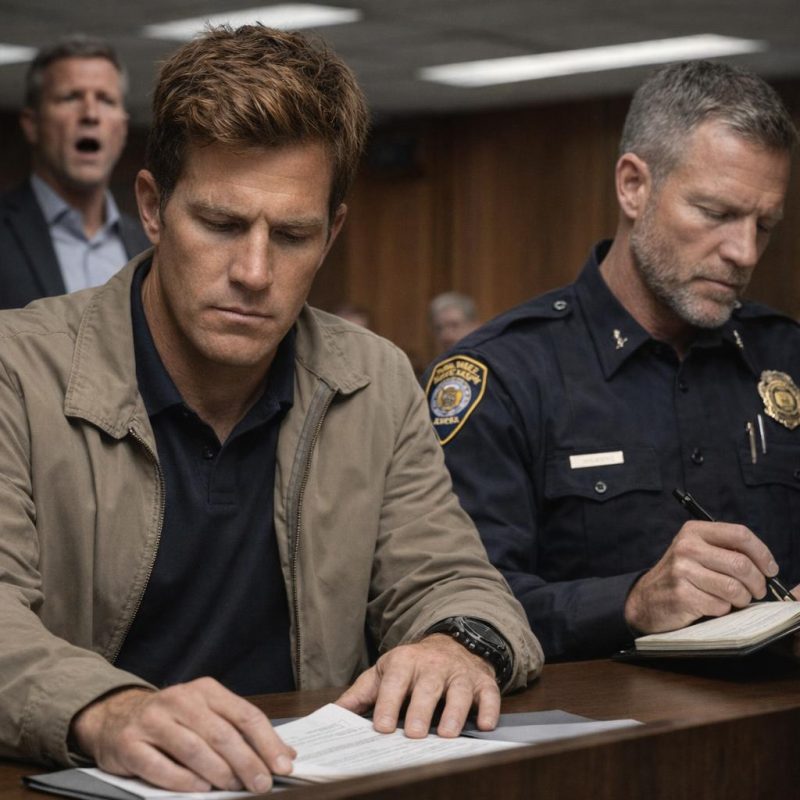 Image by RM AI
The Community Responds
The council chair called for a vote on Caldwell's development proposal without much preamble. All five members voted no. The chair read the result into the record and then announced that the council was formally referring the full body of evidence to the county prosecutor and requesting a review of all permits and approvals associated with Caldwell's projects in the county going back fifteen years. The room broke into noise. Caldwell moved toward the side exit and walked directly into a cluster of reporters who had been waiting there since Ethan's testimony. I watched him stop, recalibrate, and then stand very still while the questions came at him. Margaret made her way down the row toward me. She stopped in front of me and said she was sorry — that she'd been afraid, that she hadn't known, that she should have asked more questions. I told her I understood, and I meant it. Other neighbors stood during the extended comment period and spoke — about pressure they'd felt, about conversations that had seemed strange in retrospect, about houses on adjacent streets that had sold under circumstances that now looked different. Jennifer had her arm around my shoulders and I hadn't noticed exactly when that had happened. Officer Hayes rose from his seat along the wall and stated for the record that he and his department would cooperate fully with any investigation. I was trying to hold myself together when the council chair's voice cut through the room, calling for an immediate criminal investigation into Thomas Caldwell's conduct across all jurisdictions.
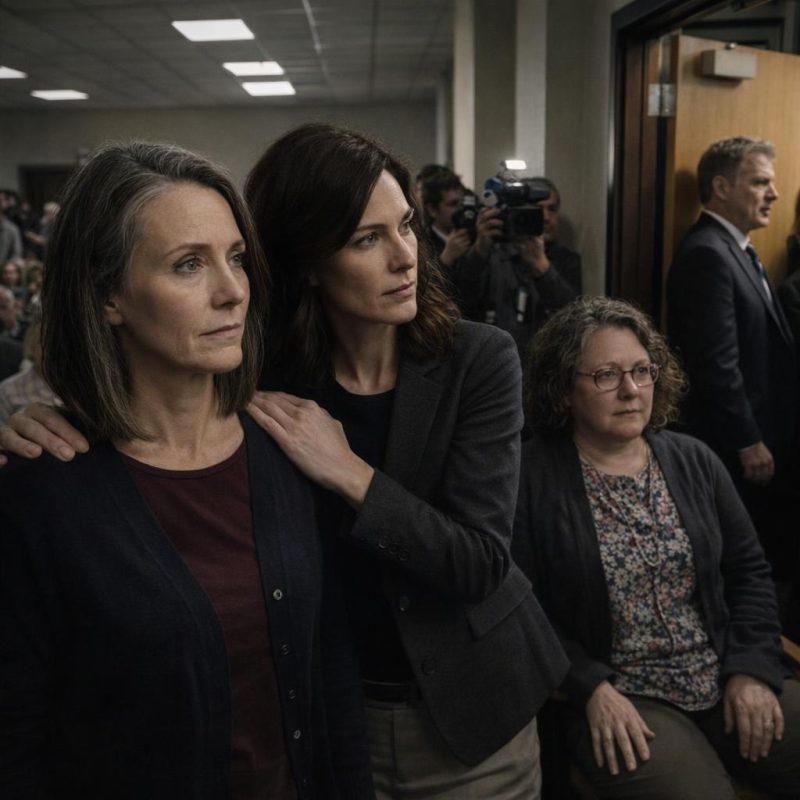 Image by RM AI
Charges Filed
The call came on a Tuesday morning, just after eight. A woman from the county prosecutor's office introduced herself and told me that criminal charges had been filed against Thomas Caldwell — fraud, conspiracy, and witness intimidation. She read the charges in a measured, professional voice, and I sat at my kitchen table with my coffee going cold in front of me, just listening. Jennifer was already on her way over when Ethan knocked on my back door with his laptop open, showing me the article that had gone live that morning. His byline was at the top. Within the hour, it was being shared everywhere. By afternoon, two other cities had announced they were opening their own investigations into Caldwell's past projects. His development company filed for bankruptcy before the end of the business day — investors had started pulling out before the ink was dry on the charges. Rachel came over that evening and sat across from me at the kitchen table, and the three of us watched the news coverage together while Jennifer kept refreshing her phone for updates. Detective Morris called to say he would be offering testimony to the prosecutor and that he was sorry it had taken this long. I told him I appreciated the call. I meant that too, mostly. Then the breaking news banner crossed the bottom of the screen: Thomas Caldwell had been taken into custody.
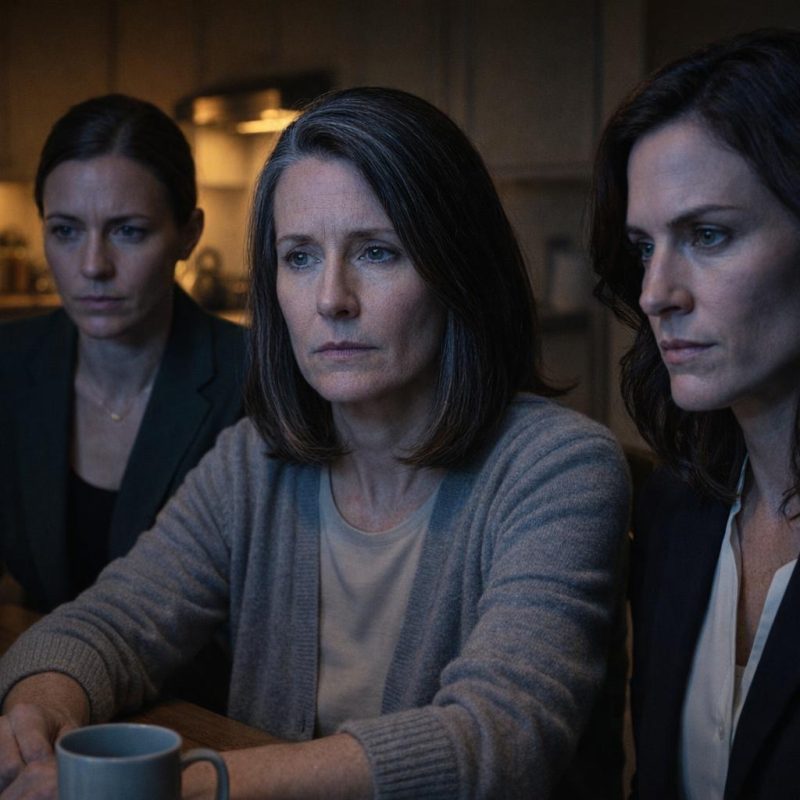 Image by RM AI
Rachel's Apology
Rachel knocked on my front door on a Thursday evening when the street was quiet and the light was going soft and gold. She asked if we could sit on the porch, and I said yes, and we did. She didn't bring anything — no wine, no flowers, nothing to fill the silence. She just sat in the chair that used to be my husband's and folded her hands in her lap and said she didn't expect forgiveness. She said she needed me to know that she understood what she had done — the months of fear, the isolation, the way I had started to doubt my own memory of my own life. She said her anger at Caldwell had been real, but that she had let it make her careless about who got hurt along the way, and that was on her. I listened without interrupting, which wasn't easy. When she finished, I told her that forgiveness wasn't something I could hand over like a casserole. I told her I knew something about grief being turned into a weapon — I'd watched it happen to other people, and I understood how it worked. She nodded and didn't try to argue. We sat there for a while after that, watching a neighbor walk a dog down the middle of the street. Before she left, Rachel said thank you for listening. I stayed on the porch after she was gone, and the evening settled around me like something slowly exhaling.
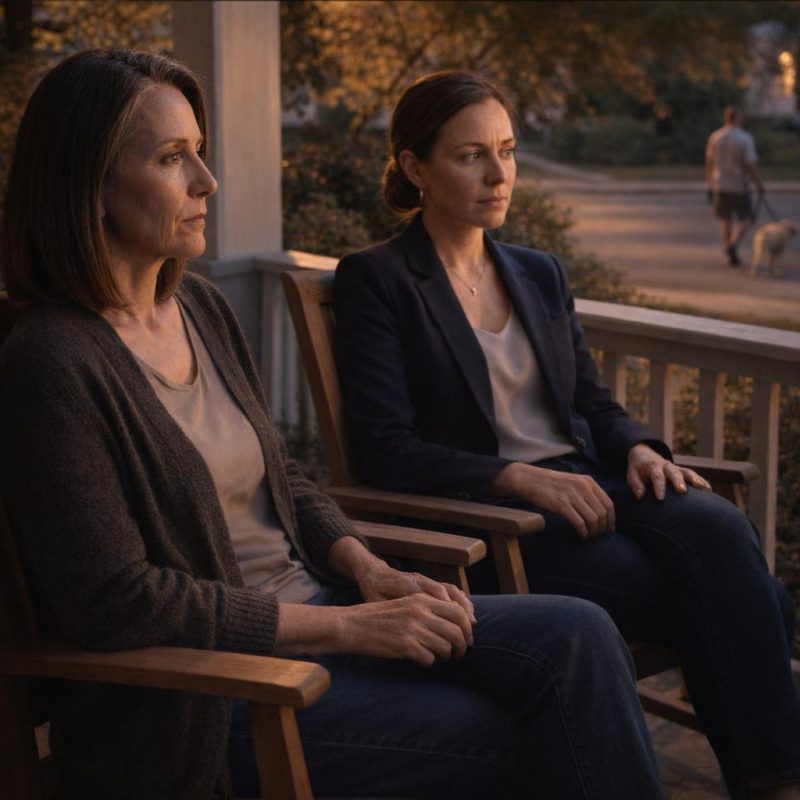 Image by RM AI
The Street Heals
Spring came in quietly that year, the way it does when you've been waiting for it too hard and then one morning you just look up and the forsythia is already blooming. I got back into the garden in early April, and it felt like reclaiming something I hadn't realized I'd surrendered. Margaret crossed the street one Saturday morning while I was on my knees pulling up dead growth from the flower bed. She stood at the edge of the yard for a moment before she came any closer, and then she asked if she could help. We worked side by side for an hour before she said what she'd come to say — that she was sorry, that she'd been a coward, that she should have stood by me instead of pulling away. I told her the truth: that I'd missed her. The Hendersons came back in May and bought their old house back at a price that made me want to cry for them, but they were smiling when they pulled into the driveway with the moving truck. I helped carry boxes. A few weeks later, someone organized a block gathering — nothing formal, just folding tables and potluck dishes and kids running through sprinklers in the street. Jennifer brought her kids, and I watched them tear across my yard like they owned it. At some point I realized I was laughing, really laughing, for the first time in longer than I could easily measure. The street felt like itself again.
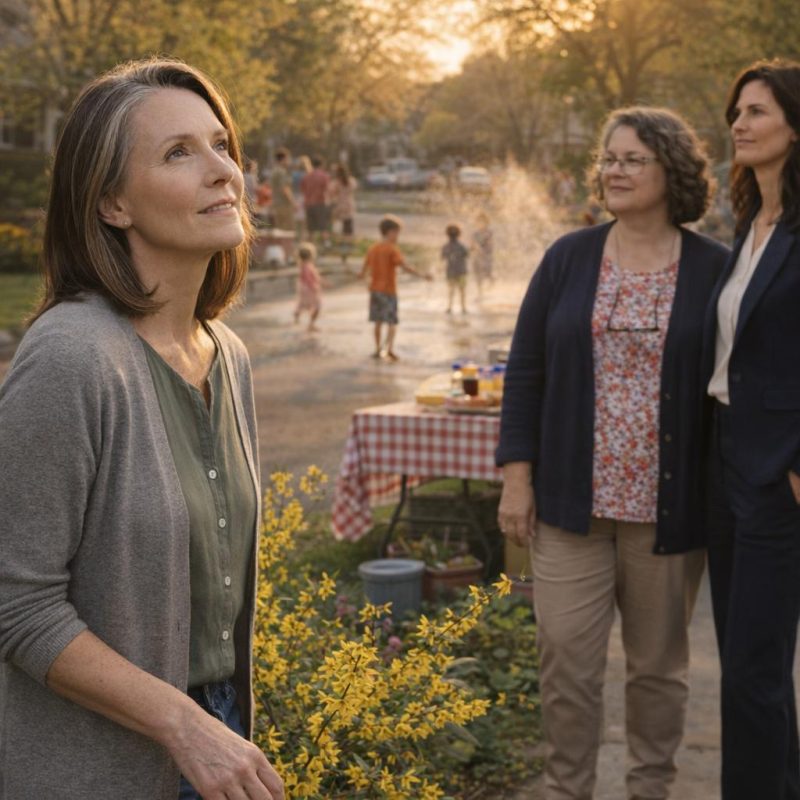 Image by RM AI
What Almost Was Lost
On a warm evening in late July I sat on my porch and let myself think about all of it from the beginning. I thought about the day Rachel and Ethan moved in with their matching smiles and their housewarming wine, and how I had been so genuinely glad to have neighbors again. I thought about how close I had come to packing boxes and signing papers and walking away from the only home I had left of my marriage. I thought about the families who had already left before anyone knew enough to stop it — people who had sold under pressure and never understood why their street had suddenly turned cold. I thought about my husband's name being attached to rumors he never had the chance to answer, and what it had cost me to sit with that. Ethan stopped by in the early evening and showed me the follow-up piece he'd filed — Caldwell's conviction, the full scope of it laid out in print. Jennifer called while he was still there, and I could hear the pride in her voice even through the phone. I told her I was fine. I told her I was better than fine. After Ethan left I sat alone in the cooling air and thought about what would have happened if I had given up — if I had taken the easier road and let the silence win. The truth had been buried under decades of paperwork and pressure and carefully managed fear, and it was out now, all of it, sitting in the open where anyone could see it.
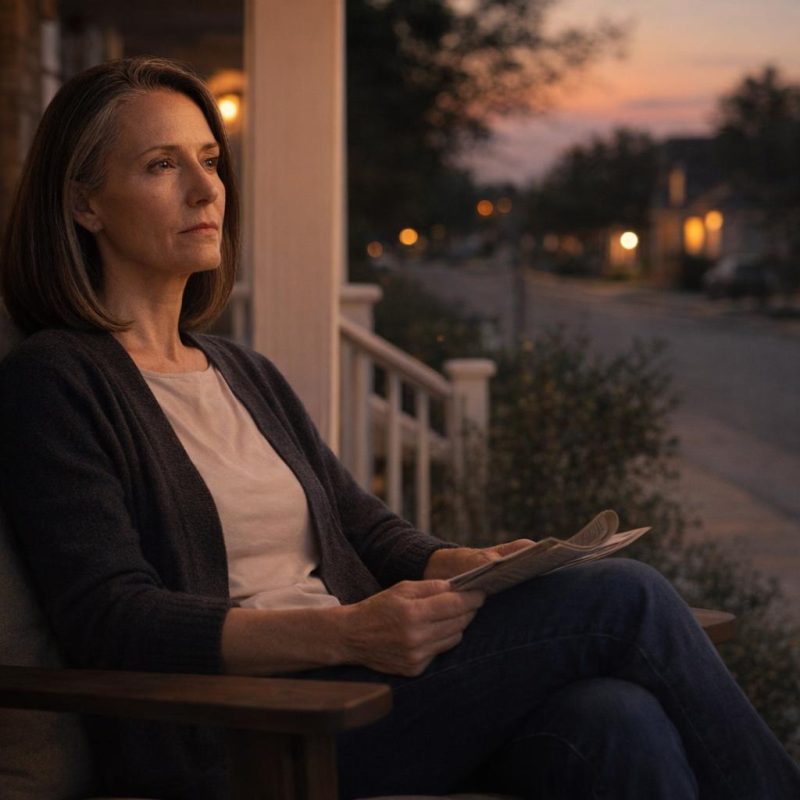 Image by RM AI
KEEP ON READING
The 20 Most Recognized Historical Figures Of All Time
The Biggest Names In History. Although the Earth has been…
By Cathy Liu Oct 4, 2024
10 of the Shortest Wars in History & 10 of…
Wars: Longest and Shortest. Throughout history, wars have varied dramatically…
By Emilie Richardson-Dupuis Oct 7, 2024
10 Fascinating Facts About Ancient Greece You Can Appreciate &…
Once Upon A Time Lived Some Ancient Weirdos.... Greece is…
By Megan Wickens Oct 7, 2024
20 Lesser-Known Facts About Christopher Columbus You Don't Learn In…
In 1492, He Sailed The Ocean Blue. Christopher Columbus is…
By Emilie Richardson-Dupuis Oct 9, 2024
20 Historical Landmarks That Have The Craziest Conspiracy Theories
Unsolved Mysteries Of Ancient Places . When there's not enough evidence…
By Megan Wickens Oct 9, 2024
The 20 Craziest Inventions & Discoveries Made During Ancient Times
Crazy Ancient Inventions . While we're busy making big advancements in…
By Cathy Liu Oct 9, 2024