


The Hero in the Cockpit
I'm Emma, 28 now, sitting cross-legged on my apartment floor surrounded by faded childhood drawings of airplanes with stick-figure pilots waving from cockpit windows. Every crayon-smudged page tells the same story—the one I believed with my whole heart growing up. While other kids' dads sold insurance or worked factory shifts, mine supposedly commanded the skies. "My daddy's a pilot," I'd announce proudly in elementary school, chest puffed out like I'd won some cosmic lottery. The lie was so seamless, so perfectly crafted that it became my identity. Those drawings weren't just art projects; they were evidence of a reality I never questioned. I'd trace my fingers over the cockpit windows now, remembering how I'd imagine him up there, flying over mountains and oceans while other fathers were stuck in traffic. It's almost funny how children accept the worlds adults build for them. We don't look for the cracks in the foundation because we don't know foundations can crack. I carefully stack the drawings, wondering how many other lies are hidden in the memories I thought were solid ground.
 Image by RM AI
Childhood Memories: The Man Who Flew Away
I still remember that show-and-tell day in first grade like it was yesterday. Standing in front of twenty curious six-year-olds, I clutched my dad's 'pilot' keychain from 'Amsterdam' (at least that's what he told me) and launched into an elaborate description of how my father navigated massive airplanes through thunderstorms. 'He has to be super brave,' I explained, my voice rising with pride. 'That's why he can't come to stuff sometimes.' Mrs. Peterson nodded encouragingly, clearly impressed, while Timmy Jenkins—whose dad managed the local hardware store—looked positively envious. The questions came rapid-fire: 'Does he fly to China?' 'Has he seen aliens up there?' 'Can he do loop-de-loops?' I answered confidently despite knowing absolutely nothing about aviation. That night at home, I sat at our kitchen table pushing dinosaur-shaped chicken nuggets around my plate. 'Mom, when's Dad coming back from his route?' I asked, the three-week absence feeling like forever in kid-time. Mom's smile tightened at the corners as she rinsed a plate that was already clean. 'Soon, honey. Very soon.' She always said that, but 'soon' seemed to stretch like bubble gum, getting thinner and thinner until it finally snapped.
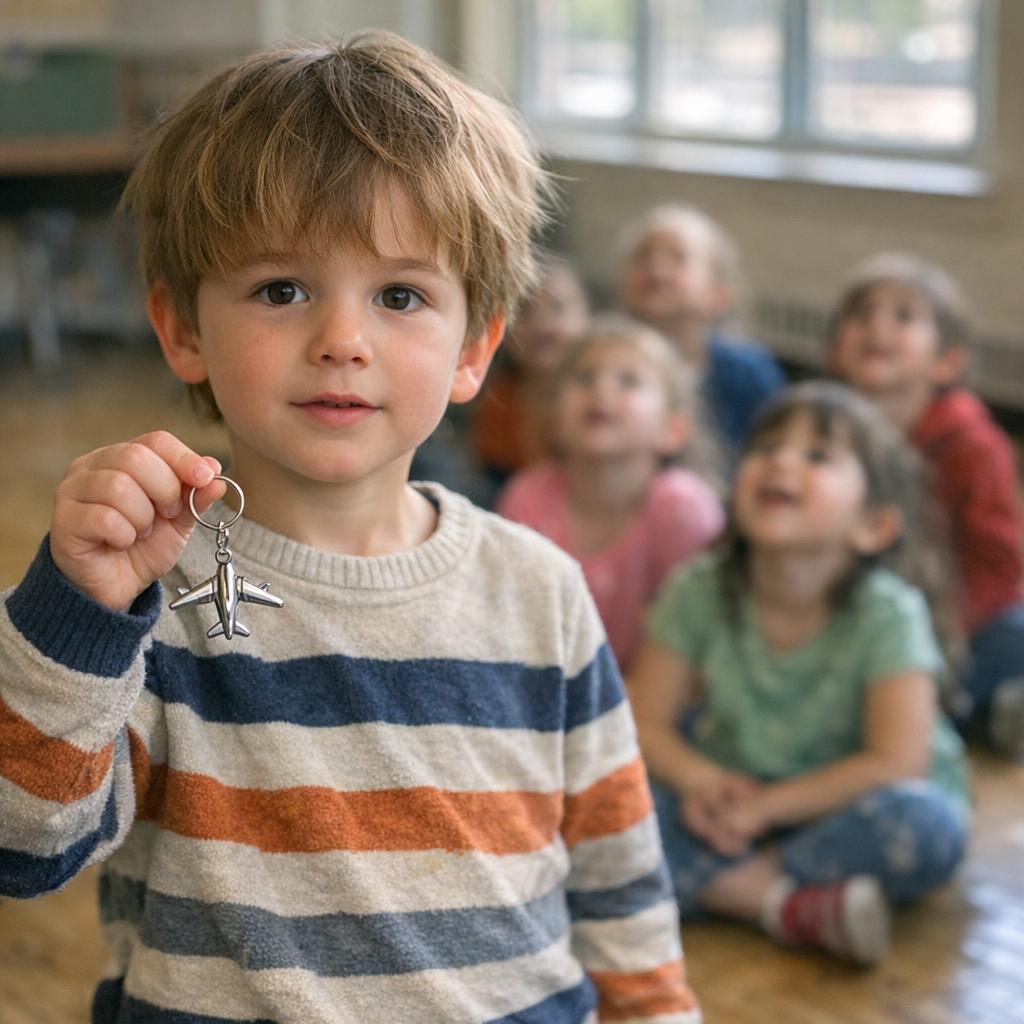 Image by RM AI
The Souvenirs
Dad's homecomings were like Christmas mornings—rare and magical. I was nine when he returned with that snow globe from Paris, a tiny glass world where perfect flakes fell on a miniature Eiffel Tower. 'Had to sprint through Charles de Gaulle to find this for you, kiddo,' he said, ruffling my hair as I cradled it like a precious gem. Mom's smile tightened at the corners—that familiar tension I'd later recognize as doubt—while she aggressively chopped vegetables for dinner. 'Tell us about Paris, honey,' she said, her voice carrying a weight I couldn't understand then. Dad launched into tales of terrible turbulence over the Atlantic and French air traffic controllers with impossible accents. I sat mesmerized, hanging on every word, while Mom's knife hit the cutting board with increasing force. That night, I placed the snow globe on my nightstand, shaking it repeatedly until I fell asleep, watching glitter swirl around that perfect little city. I imagined Dad soaring above those same buildings, waving down at the tiny people below. It never occurred to me to question why the base of the globe had a small, partially scratched-off sticker that read 'Orlando' in faded letters.
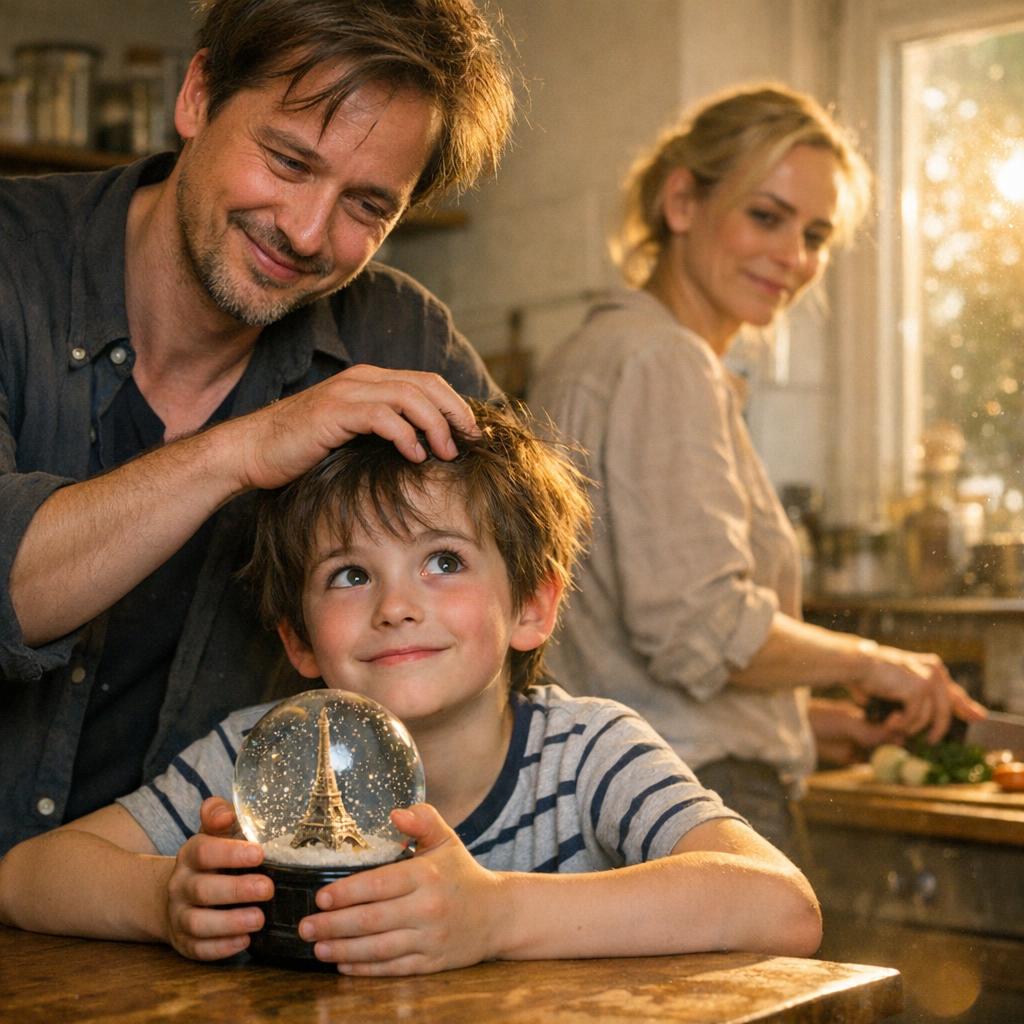 Image by RM AI
The Missing Birthday
My seventh birthday was supposed to be special. Mom went all out with an airplane-themed party—blue frosting clouds on the cake, little plastic planes as party favors, and even those paper cups with jets printed on them. 'Your dad promised he'd be here this time,' she whispered that morning, squeezing my shoulder with more hope than certainty. Two hours before my friends arrived, the phone rang. I watched Mom's face fall as she listened, her knuckles whitening around the receiver. 'Another emergency route,' she mouthed to me, covering the mouthpiece. I nodded bravely, already used to disappointment wearing the mask of importance. Later, as my friends gathered around the cake shaped like a 747, Mrs. Peterson asked where my pilot dad was. Mom straightened her shoulders and smiled that tight smile I knew too well. 'He's saving lives by flying safely today,' she announced, as if reading from a script we'd both memorized. The other parents nodded appreciatively while I blew out candles, wishing not for toys but for my dad to just show up once. That night, after everyone left, I needed to use the bathroom but stopped cold when I heard muffled sobs behind the door. Mom was sitting on the closed toilet lid, face buried in a dish towel, shoulders shaking. I backed away silently, feeling like I'd witnessed something I wasn't supposed to see—the first crack in the perfect story she'd built around our lives.
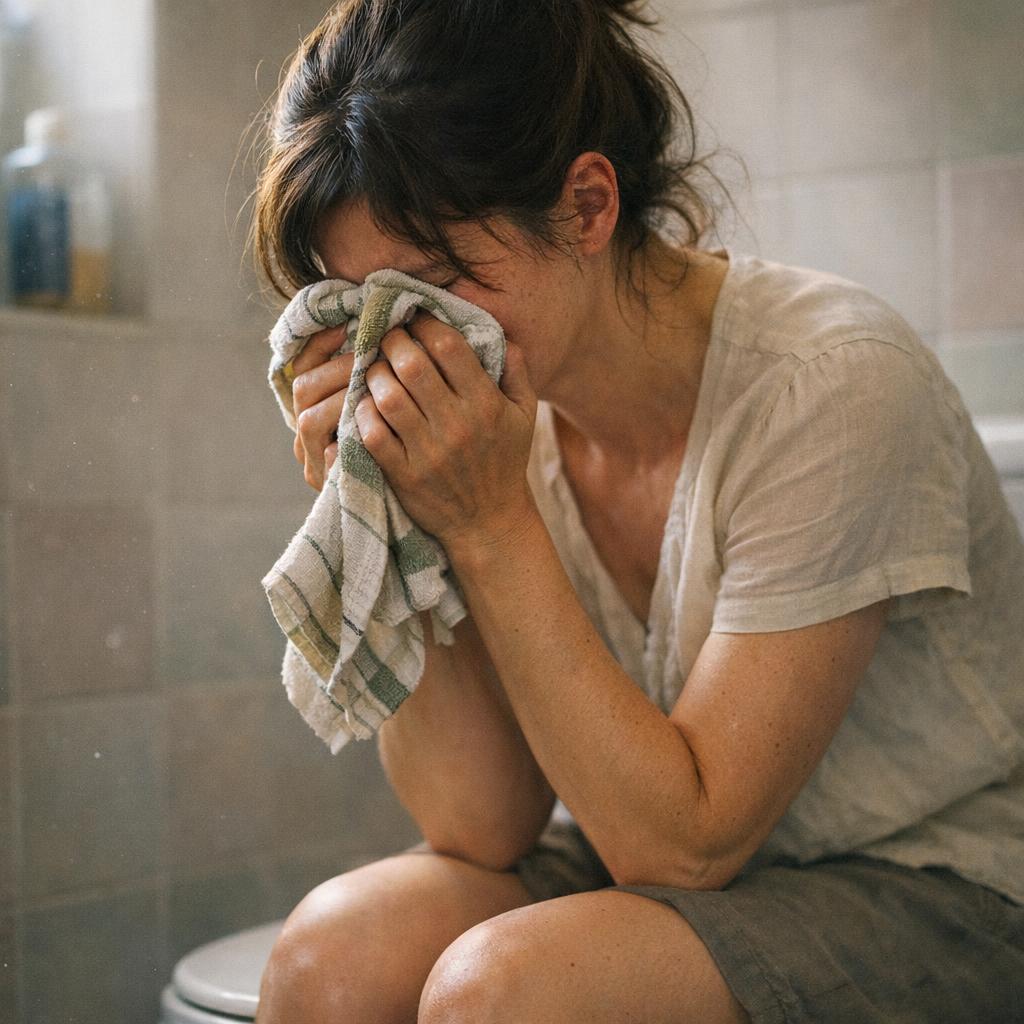 Image by RM AI
The School Play
Fifth grade was my big break—landing the role of Dorothy in our school's production of The Wizard of Oz. I practiced for weeks, Mom patiently listening to me belt 'Somewhere Over the Rainbow' until our neighbors probably considered moving. 'Dad's going to be so impressed,' I told her, spinning in my blue-checkered dress. 'He'll try his best to make it, honey,' she replied with that familiar strain in her voice—the one that meant 'don't get your hopes up.' Still, I reserved the best seat in the auditorium, even taping a 'RESERVED FOR PILOT DAD' sign on it (Mrs. Peterson thought it was adorable). On performance night, I peeked through the curtain between every scene, scanning the audience for his face. That empty seat glared back at me like an accusation. I nailed every line, clicked those ruby slippers with extra emphasis, all while thinking maybe he'd surprise me and slip in late. When the final curtain fell and parents rushed forward with flowers and hugs, Mom appeared with a bouquet and tears in her eyes. 'You were amazing!' she gushed. I nodded, still glancing toward the entrance. 'Emergency route to Chicago,' she explained softly, handing me a small package. 'But he sent this.' Inside was a silver star keychain with 'My little star' engraved on the back. I wore it on my backpack for years, not realizing it was the first souvenir that would eventually lead me to question everything.
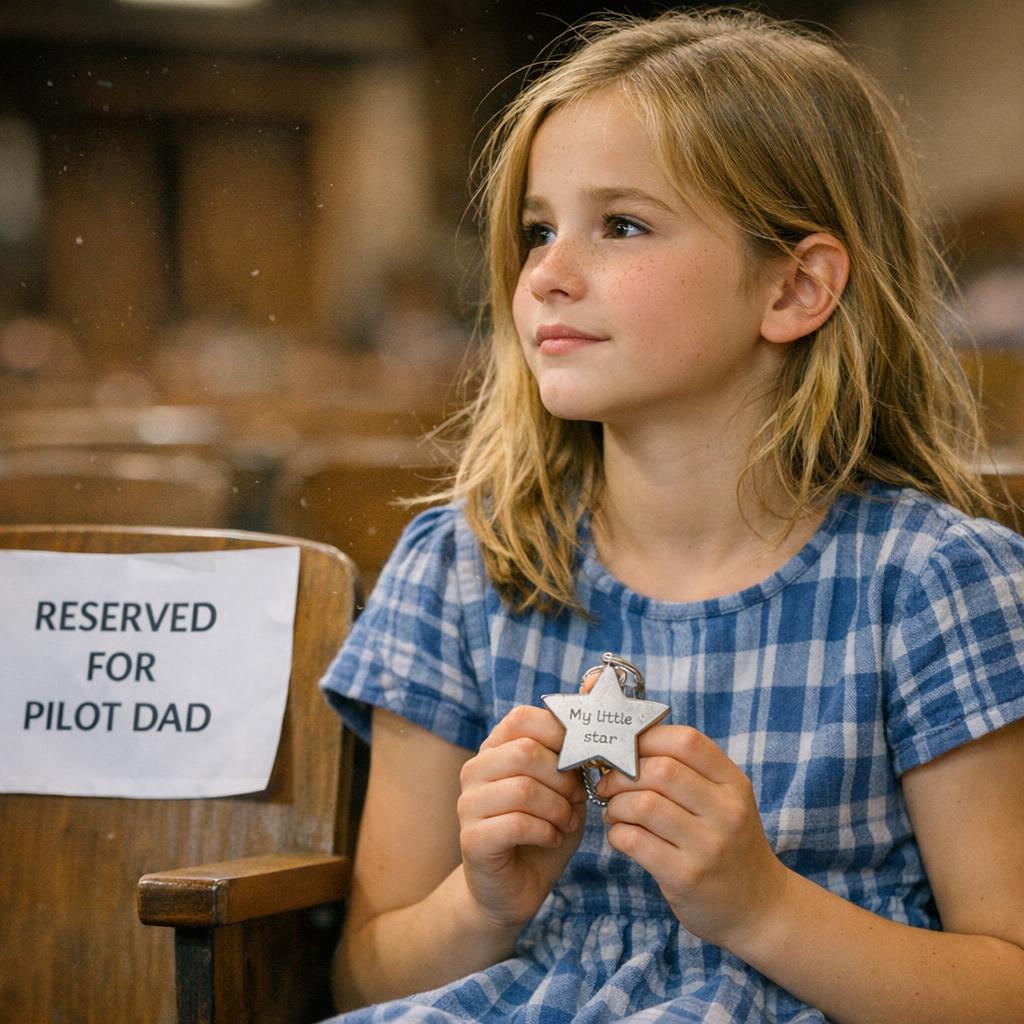 Image by RM AI
The Rare Homecoming
I still remember the day Dad returned after that month-long absence. The front door opened, and there he was—larger than life with his perfect smile and that cologne that smelled like faraway places. "Look what I brought my favorite kiddo from Australia!" he announced, presenting a plush koala with a tiny Australian flag stitched to its paw. Mom transformed before my eyes, like someone had flipped a switch. Suddenly she was wearing lipstick, cooking his favorite lasagna, and laughing at stories that didn't seem particularly funny. For those three magical days, our house felt like a movie set—everything brighter, louder, more important. Dad would scoop me up like I weighed nothing, my feet dangling as he'd spin me around. "One day, I'll teach you to fly," he promised, his eyes crinkling at the corners. "You've got pilot's blood." I'd nod solemnly, already picturing myself in a cockpit beside him. At night, I'd clutch that koala and fall asleep to the sound of adult voices downstairs—sometimes laughing, sometimes hushed and tense. I didn't know then that years later, I'd find an identical koala in a Florida airport gift shop, complete with the same little flag, and feel my entire childhood shift beneath my feet.
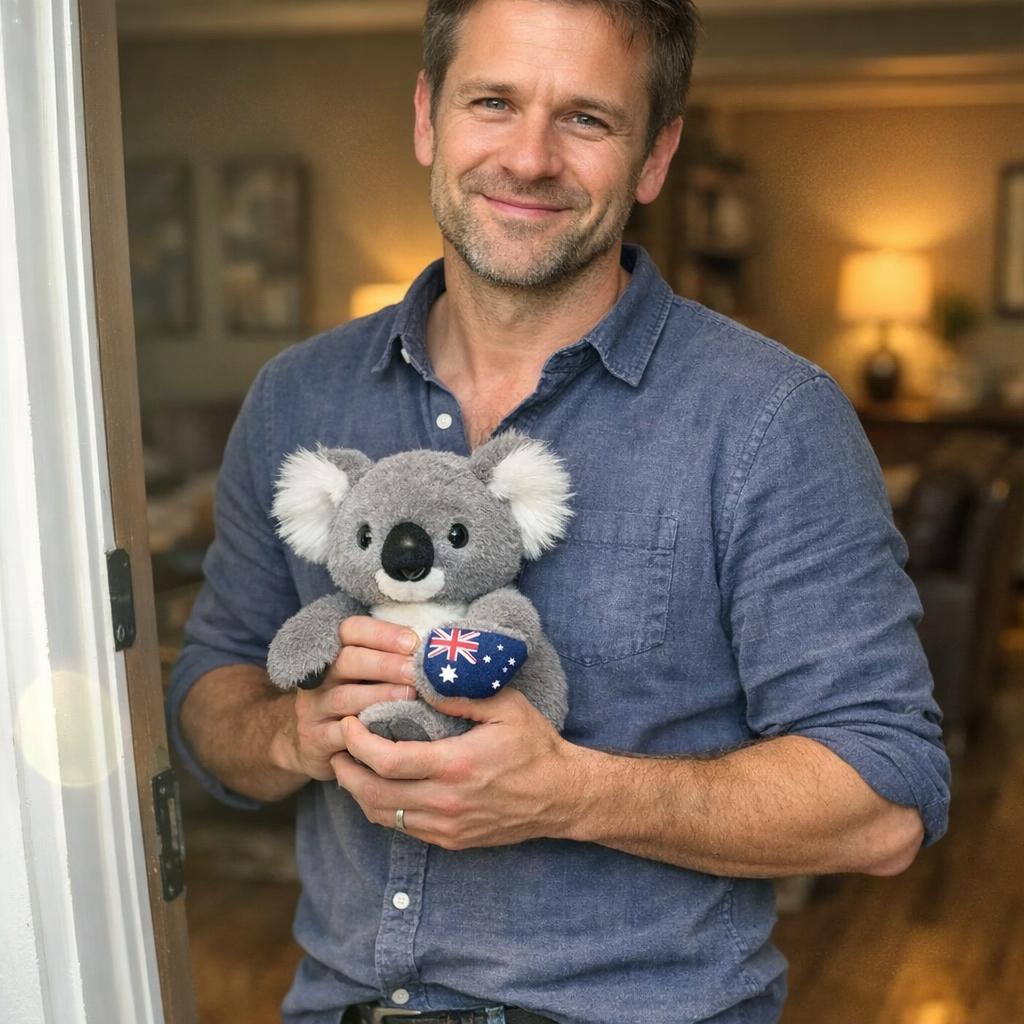 Image by RM AI
The Midnight Departure
I was twelve when I caught Dad in one of his midnight departures. The digital clock's red numbers glared 3:17 AM when I stumbled into the hallway, following the hushed voices that had pulled me from sleep. There he was, kneeling beside his suitcase in the dim light of our entryway. No crisp uniform, no captain's hat—just jeans and that navy sweater my mom had given him for Christmas. 'Dad?' My voice sounded small in the darkness. He looked up, startled, then softened his expression into that easy smile that always made everything okay. 'Hey kiddo, sorry I woke you. Emergency flight to Seattle.' He zipped the suitcase with finality. I frowned, my sleepy brain catching something off. 'But... where's your uniform?' The question hung in the air like a wrong note. Mom appeared suddenly beside me, her hand firm on my shoulder. 'He changes at the airport, honey. Security reasons.' Her voice was too bright for 3 AM. Dad kissed my forehead, his cologne wrapping around me like a familiar blanket. 'Back before you know it.' As Mom guided me back to bed, I glanced over my shoulder and caught a glimpse of Dad checking his phone, his face illuminated by the screen—not the confident pilot I'd imagined commanding the skies, but a man who looked... nervous. It would be years before I understood what that midnight scene really meant.
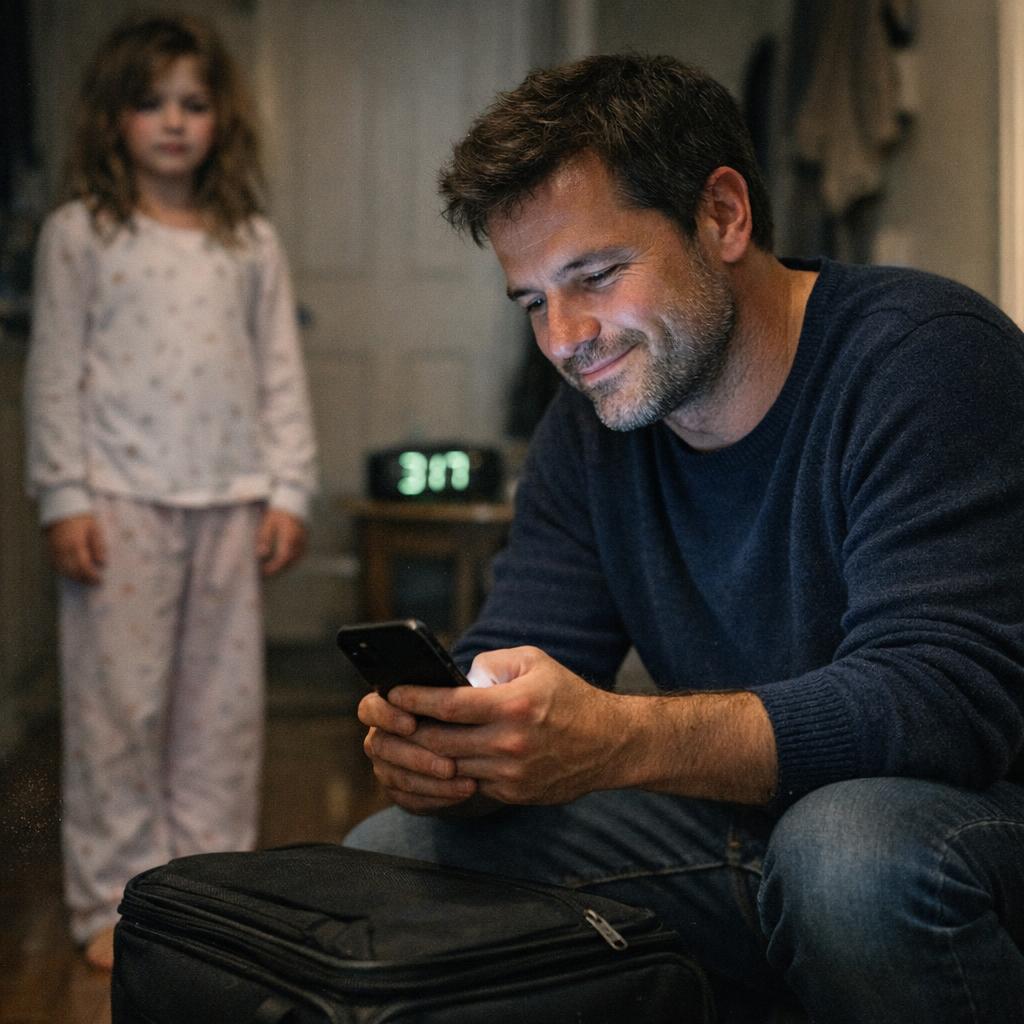 Image by RM AI
The School Project
I'll never forget the 'Career Day' project in Mrs. Lawson's third-grade class. While other kids had straightforward assignments—Tommy's mom was a dentist, Sarah's dad owned the hardware store—I had the coolest job to showcase: airline pilot. I spent an entire weekend creating what I considered a masterpiece: a tri-fold poster board with magazine cutouts of commercial planes, cotton-ball clouds, and a carefully drawn portrait of Dad in a captain's hat with four gold stripes on the sleeves. I even included a hand-drawn map showing imaginary flight routes across continents. When presentation day arrived, I stood proudly before my classmates, describing how my dad navigated through storms and was responsible for hundreds of lives. Then Mrs. Lawson asked the question that made my stomach drop: "Which airline does your father work for, Emma?" I froze. How could I not know this basic detail? "Um..." My mind raced through possibilities as twenty-three pairs of eyes stared at me. That afternoon, I practically ambushed Mom the second I got home. "What airline does Dad fly for?" Her hands paused mid-dishwashing, soap bubbles sliding down her wrists. "TransGlobal Airways," she finally said, not meeting my eyes. "It's smaller, not like the big ones you see commercials for." I wrote it carefully on my poster that night, not realizing I'd never seen that name on any airport terminal or luggage tag—and wouldn't find it years later when I searched online, because some lies are too big to fit on a child's poster board.
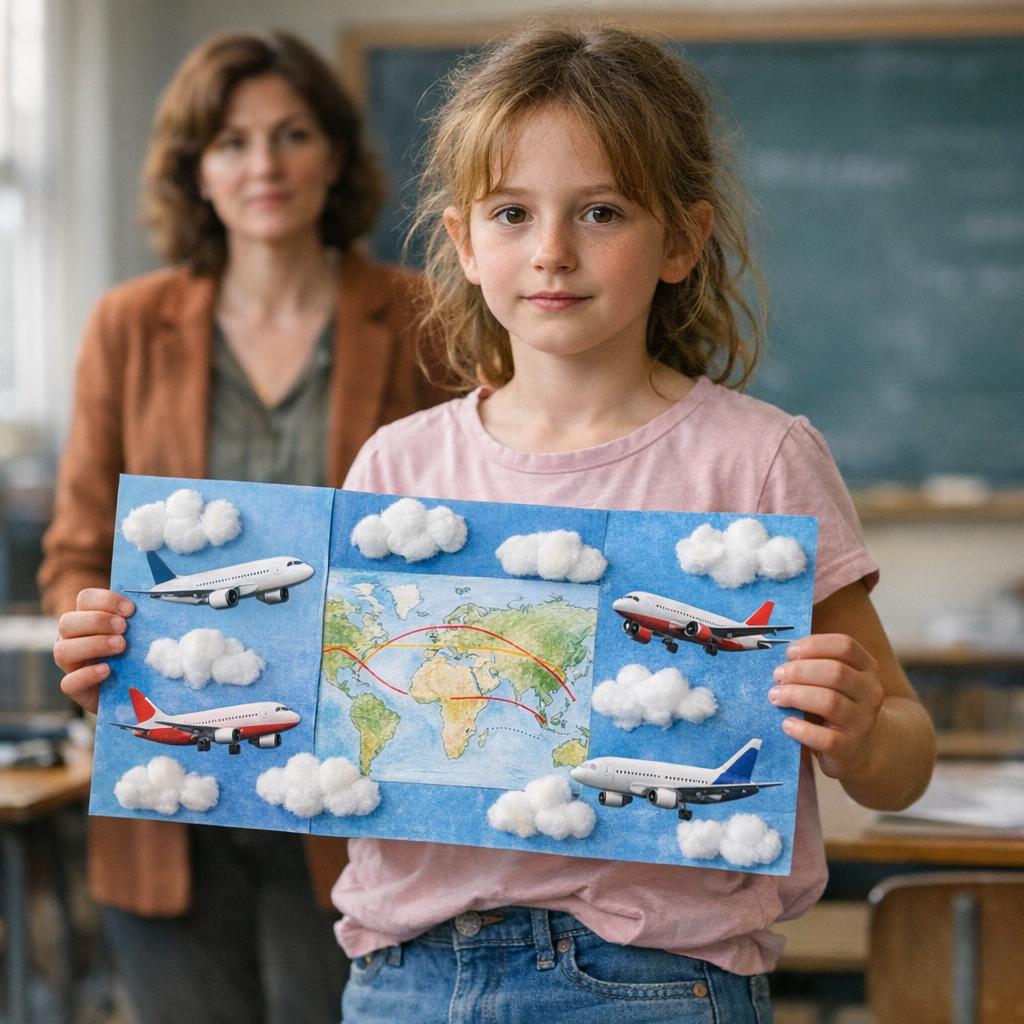 Image by RM AI
The Playground Comparison
I was nine when the first real doubt crept in. We were sitting in a circle on the playground, sharing stories about our parents' jobs during lunch break. Lily, my best friend with the sparkly butterfly clips, was going on about how her dad called every single night when he was on the road driving his big rig. 'He even lets me hear the truck horn sometimes!' she exclaimed, beaming with pride. Then Jessica chimed in about her flight attendant mom who sent daily photos from different cities—the Eiffel Tower yesterday, Big Ben today. 'She's probably served your dad coffee before!' Jessica said, nudging me. Something cold settled in my stomach. Dad never called us. Not once. No photos, no postcards that weren't delivered in person with his dramatic stories. That evening, I approached Mom while she folded laundry, trying to sound casual. 'How come Dad doesn't call us when he's flying?' Mom's hands froze mid-fold, a pillowcase suspended between her fingers. 'Oh, honey,' she said, not meeting my eyes, 'there are international regulations about pilots using phones during flights.' She quickly changed the subject to homework, but I caught the slight tremble in her voice. That night, I lay awake wondering why truck drivers could call but pilots couldn't, and why that explanation felt as flimsy as paper airplane wings.
 Image by RM AI
The Christmas Without Snow
I was thirteen the year Dad showed up for Christmas, a rare December appearance that Mom hadn't prepared me for. 'Look who made it home!' she announced with forced cheer as he walked through the door, arms laden with gifts wrapped in colorful paper covered in Spanish text. 'Just flew in from Madrid,' he declared, setting down his suitcase with that theatrical flair I'd come to associate with his homecomings. I hugged him, breathing in that familiar hotel-lobby cologne, while something nagged at the edges of my excitement. Earlier that morning, I'd glanced at Mom's weather app while she checked her phone—Madrid was buried under heavy snowfall, flights delayed across the board. Yet here was Dad, coat completely dry, not a snowflake or travel delay in sight. During dinner, I caught Mom eyeing the luggage tag on his carry-on, her expression shifting as she read whatever was written there. When she noticed me watching, she casually detached the tag and slipped it into her pocket. 'What was that?' I asked later while we washed dishes. 'Just an old tag,' she replied too quickly. 'Airlines reuse them sometimes.' That night, as I lay in bed listening to their muffled conversation downstairs, I realized I'd never actually seen snow on Dad's coat—not once in all his winter 'flights.' It was like he existed in a separate weather system from the rest of the world.
 Image by RM AI
The Pilot's Daughter
Fifth grade was the year I became obsessed with aviation. I checked out every book on planes from our school library, memorizing cockpit layouts and emergency protocols like other kids memorized baseball stats. I wanted Dad to be proud, to see that I was studying his world. Mom fueled this passion, bringing home model airplane kits and subscription copies of 'Flight Monthly.' I'd spend hours assembling those plastic 747s, carefully applying decals and imagining Dad at the controls. 'You're just like your father,' Mom would say, watching me work with a strange mix of encouragement and something else I couldn't name. When Dad finally returned after a six-week 'international route,' I ambushed him with questions about crosswinds and altimeter readings. 'What's your procedure for cabin depressurization, Dad?' I asked eagerly over dinner. His fork paused midway to his mouth, and something flickered across his face—discomfort? Panic? 'It's, uh, complicated, kiddo,' he mumbled, quickly changing the subject to my math grades. I noticed Mom watching him closely, that familiar tension returning to her shoulders. Later, I found my aviation books stacked neatly in a corner, as if someone had been flipping through them, checking for something. It wasn't until years later that I realized what that something might have been—mistakes in the story he'd been telling us all along.
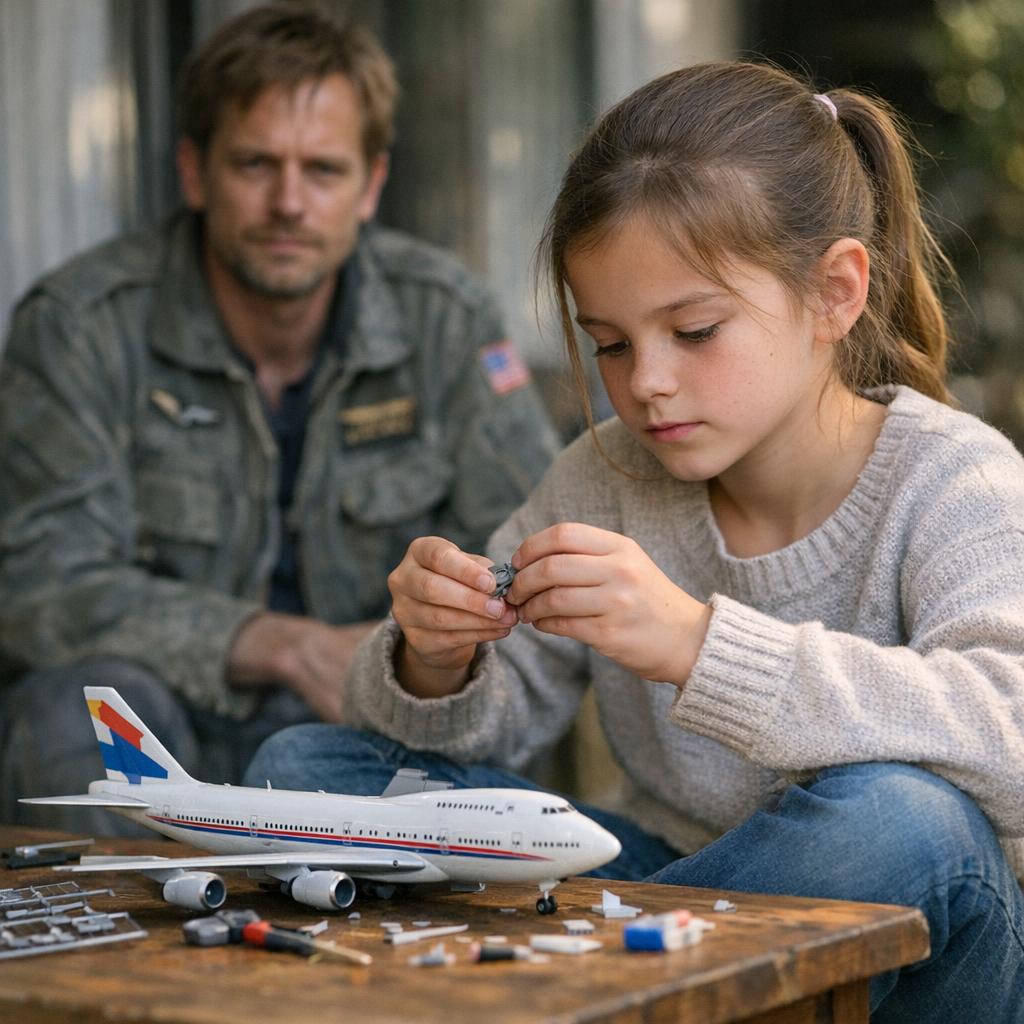 Image by RM AI
The Missing Uniform
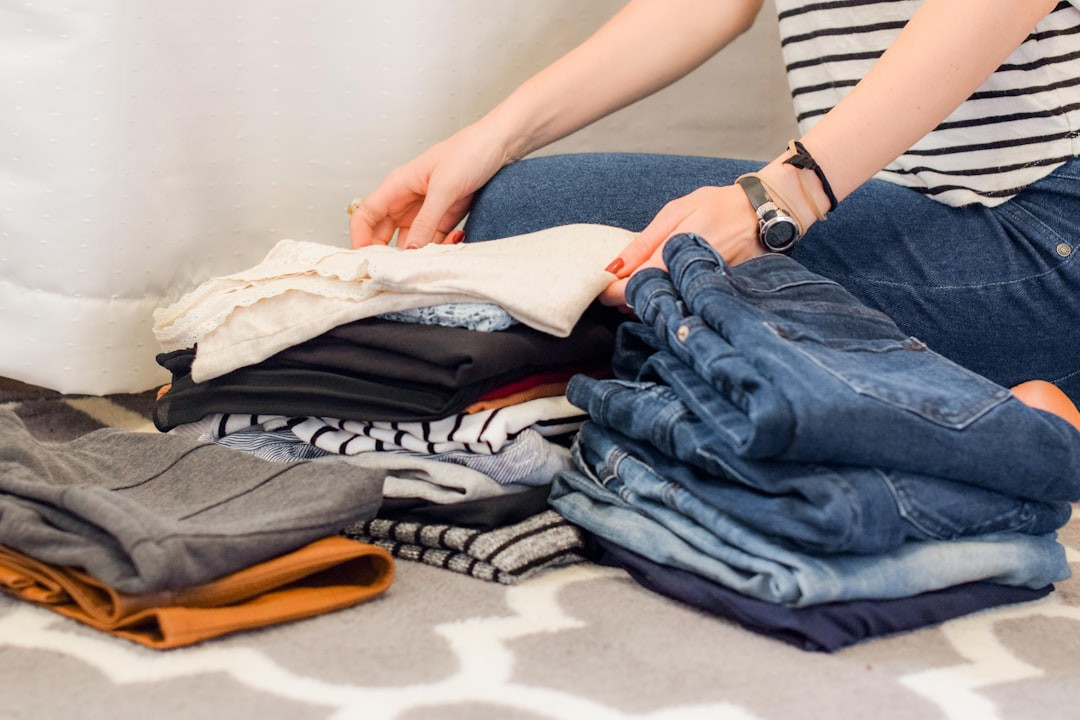
I was thirteen when I decided to surprise Dad by organizing his closet during one of his longer 'routes.' Mom was at the grocery store, and I figured I'd finally do something useful with my restless energy. I started folding his casual clothes, arranging his shoes, and then realized something was missing—his uniform. The crisp, professional outfit with gold stripes that I'd drawn on countless school projects was nowhere to be found. Not hanging up, not in storage bins, not even stuffed in the back corner where winter coats hibernated. When Mom returned, I asked her casually, trying to sound like I wasn't questioning the foundation of our family mythology. 'Hey Mom, where does Dad keep his pilot uniform? I wanted to hang it properly.' Her hands froze mid-air, grocery bag suspended like time itself had stopped. 'Oh, honey,' she said, her voice unnaturally high, 'they keep those at the airline headquarters now. Security reasons.' She busied herself unpacking vegetables with unusual focus. That night, I got up for water and heard her in the kitchen, phone pressed to her ear, voice low and urgent: 'She was looking for your uniform today.' A pause. 'I know what I told her, but you need to get your story straight.' Another pause. 'This isn't sustainable anymore.' I backed away silently, my heart pounding against my ribs like it was trying to escape the truth before I could.
The Career Day Absence
Career Day was circled in red on our kitchen calendar for months. 'Please, Mom, can Dad come this time?' I begged, imagining how the other kids would stare in awe as my father explained what it was like to command the skies. Mom promised to ask him, her smile not quite reaching her eyes. 'He'll try his best, honey.' The morning of Career Day arrived with a hastily scribbled note on the counter instead of my dad: 'Sorry kiddo, emergency flight to Tokyo. Love you to the moon.' I trudged into school clutching Mom's explanatory note, which Mrs. Harrington read with a slight furrow in her brow. 'Another international flight? Your father certainly is... dedicated,' she said, her pause speaking volumes. I slumped in my seat as accountants, nurses, and even Tommy's garbage collector dad captivated the class with their surprisingly interesting jobs. When my turn came, I recited the usual script about Dad's important work keeping passengers safe, but this time I noticed something different. The parents in the back of the room exchanged those looks—the kind adults give each other when they think children can't interpret them. Mrs. Peterson's eyebrows raised slightly toward Mr. Gonzalez, whose slight head shake felt like a silent conversation about me. That afternoon, for the first time, I wondered if everyone else could see something in my story that I couldn't.
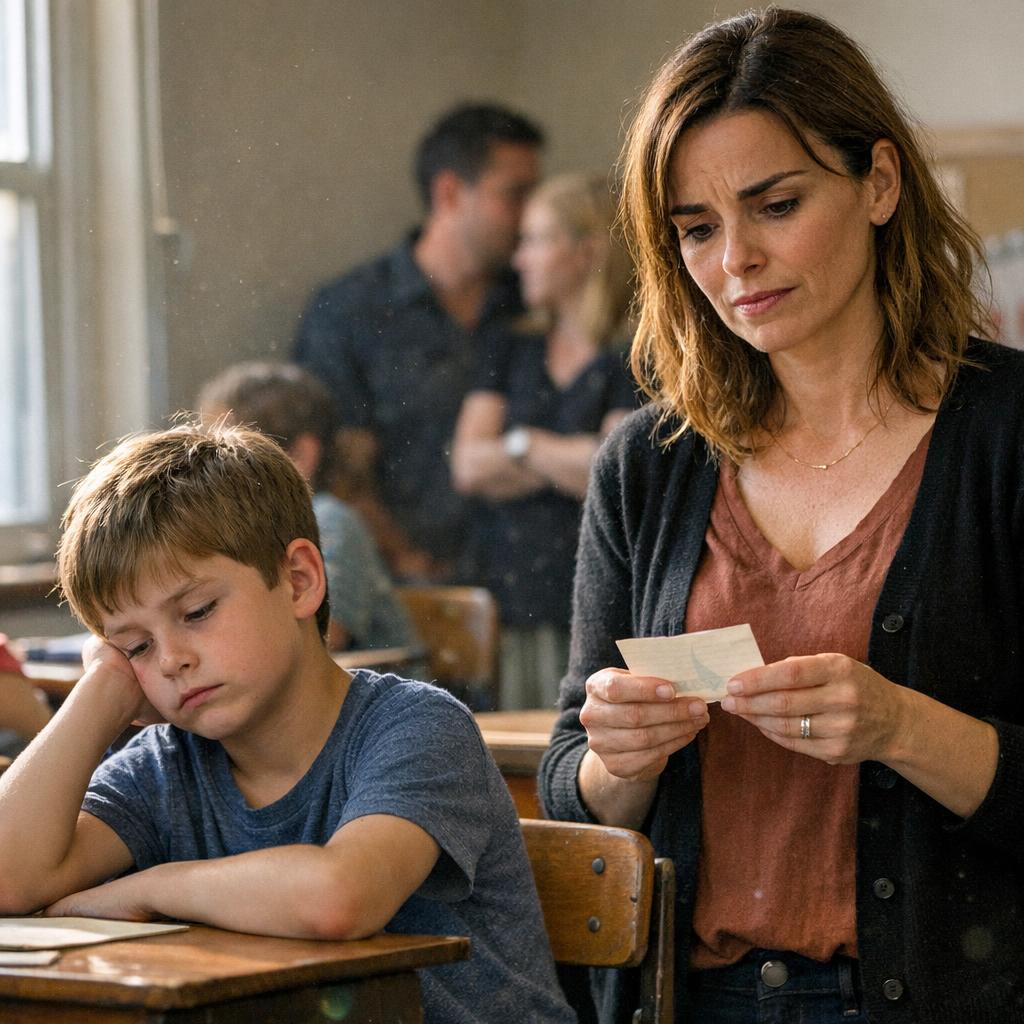 Image by RM AI
The Airport Drop-Off
I was fourteen when I finally convinced Mom to let me drive Dad to the airport. After years of watching him disappear with vague promises of return, I wanted to see where the magic happened—where my father transformed from just Dad into Captain Dad, commander of the skies. Mom's reaction surprised me. 'I don't think that's necessary,' she said too quickly, her coffee cup hovering mid-air. But I persisted until she relented with a tight smile that didn't reach her eyes. The morning of his departure, Dad seemed oddly nervous, checking his watch repeatedly as Mom drove us toward the airport. 'Just drop me at the main terminal,' he instructed, though I'd researched enough to know pilots usually entered through employee entrances. When I asked if I could come inside to see his plane, maybe meet his co-pilot, his hand squeezed my shoulder a little too firmly. 'Security protocols, kiddo. No exceptions, even for pilot's daughters.' He kissed my forehead, grabbed his suitcase, and waved as we pulled away. But as Mom accelerated, I turned back just in time to see him do something that made my stomach drop—instead of walking into the terminal, my airline captain father was climbing into the back of a yellow taxi. I watched, frozen, as it pulled away in the opposite direction of the airport entrance, taking with it another piece of the story I'd believed my entire life.
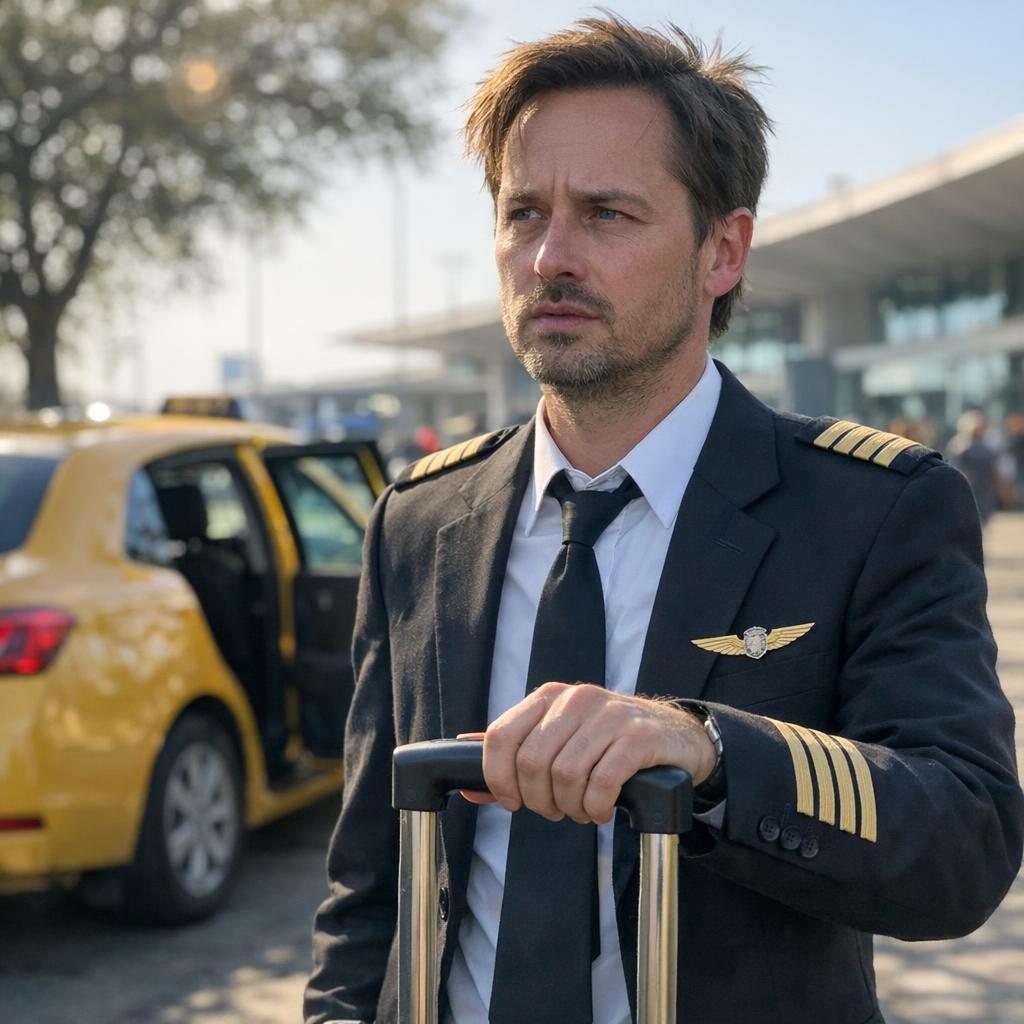 Image by RM AI
The Middle School Doubts
Seventh grade was when the cracks in my dad's pilot story really started to show. While my friends' parents showed up together for science fairs and band concerts—matching in their business casual and proud smiles—my mom always came alone, clutching her purse like a life preserver. "Your dad's on a transatlantic tonight," she'd explain to my teachers, who nodded with that mixture of sympathy and something else I couldn't quite name. I started noticing how Sarah's dad, an actual truck driver, called every night from the road, while my "pilot" father couldn't manage a simple check-in call. One evening after dinner, I cornered Mom with questions I'd researched online. "What type of aircraft does Dad usually fly? Is it Boeing or Airbus?" Her hands froze mid-dishwashing. "Emma, why the interrogation?" she snapped, something I'd never heard in her voice before. "He flies whatever they assign him." When I pressed about his airline's hub cities, she slammed the sponge down. "Enough! Don't you have homework?" That night, I created a secret document on my computer titled "Dad's Story" and began listing all the inconsistencies. The file grew longer each week, but I wasn't ready to face what those bullet points were adding up to—a truth that would change everything I thought I knew about my family.
 Image by RM AI
The Overheard Argument
I was fifteen when I heard the argument that changed everything. Dad had been home for two whole days—a miracle in itself—and I was riding the high of his presence, soaking up his attention like a plant that had been kept in the dark. I was heading to the bathroom when their voices stopped me cold in the hallway. 'You promised more time this month,' Mom hissed through their bedroom door, her voice tight with an anger I rarely heard. 'I can't keep covering for you.' Dad's response was muffled, but certain phrases cut through clearly: 'financial arrangement' and 'both sides.' Both sides? What sides? My stomach twisted as I realized they weren't discussing flight schedules or airline politics. This sounded like... negotiations. I must have made a noise because suddenly the argument stopped. Their bedroom door swung open, and there they were—Mom with red-rimmed eyes and Dad with that plastic smile that never quite reached his eyes. 'Hey kiddo!' he said, his voice unnaturally bright. 'I was just telling your mom we should all go for ice cream.' The speed at which they transformed from whatever they really were into the parents they wanted me to see was almost impressive. As we piled into the car ten minutes later, I watched Dad's hand on the steering wheel, wondering which 'side' I belonged to in whatever arrangement he was juggling.
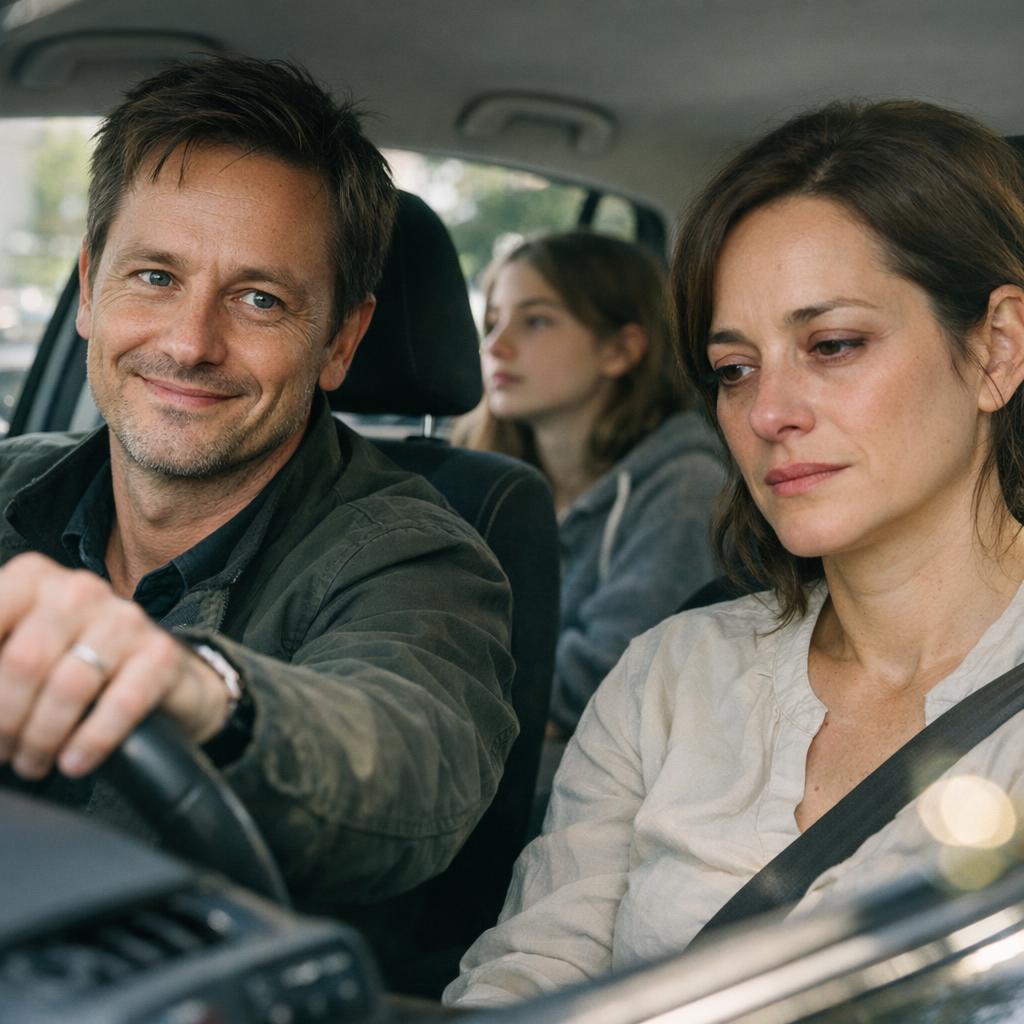 Image by RM AI
The Pilot's Daughter No More
In eighth grade, I quietly retired the pilot story. It wasn't a dramatic announcement—I just stopped mentioning it, like outgrowing a childhood nickname. When classmates asked what my dad did, I'd shrug and say, "He travels for business," then quickly change the subject. The vagueness felt safer than the elaborate fantasy I'd been carrying around. Mom noticed, of course. I'd catch her watching me during parent-teacher conferences when teachers would ask about "the family," and I'd answer with carefully edited versions of our life. Once, after I described Dad as "working in transportation" to my science teacher, Mom squeezed my hand under the table—whether in gratitude or warning, I couldn't tell. At home, we developed this unspoken agreement to stop mentioning his "flights" or "routes." The model airplanes I'd once proudly displayed were quietly relocated to a box in my closet. The aviation magazines disappeared from our coffee table. It was like we were both acknowledging a truth without having to say it out loud. The weird part? Dad didn't seem to notice the change when he visited. He still brought those airport souvenirs, still told those stories about turbulence and exotic destinations. But now when he'd say, "Tell your friends I flew over the Grand Canyon," I'd just nod and never pass the message along. I was becoming fluent in family fiction, learning which parts to believe and which parts to silently translate into whatever reality was hiding underneath.
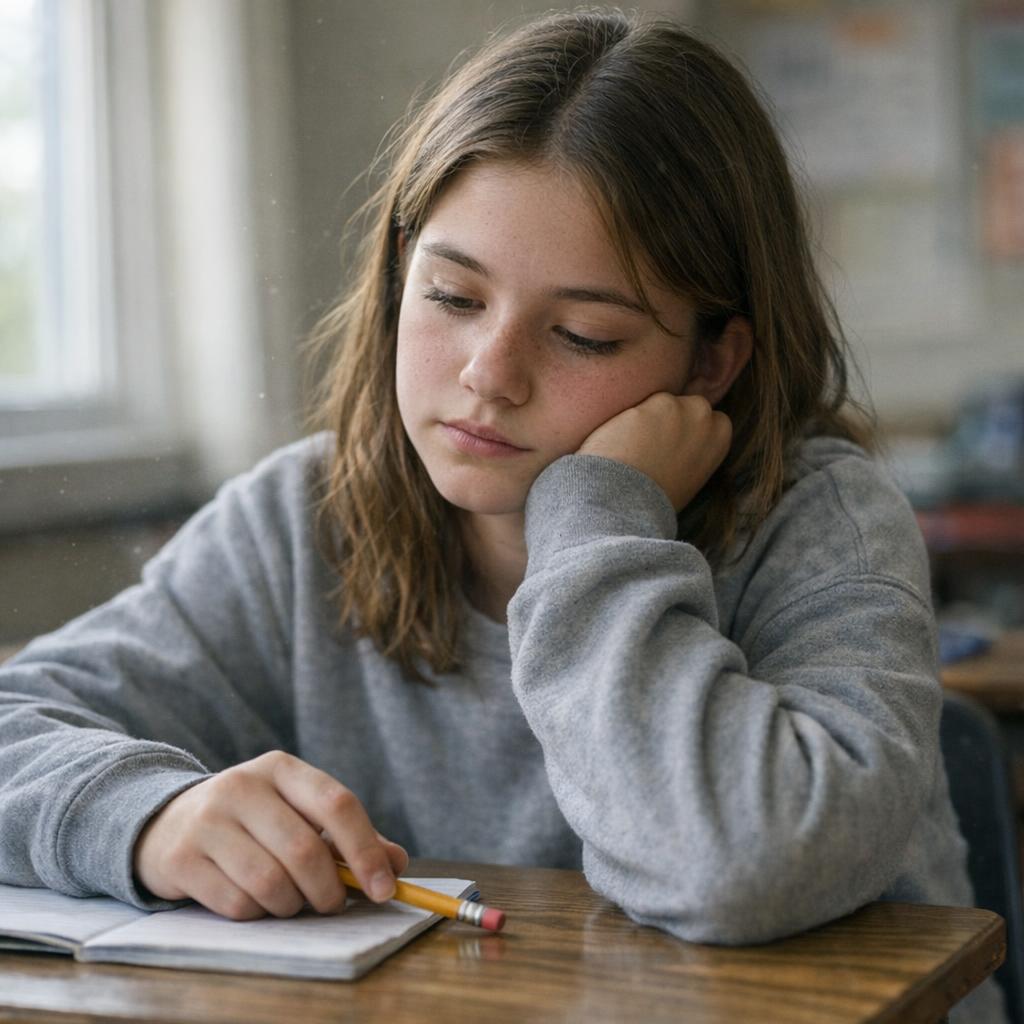 Image by RM AI
The Mysterious Phone Call
I was sixteen when I caught Mom in what I can only describe as her 'other life.' It was around midnight, and I'd padded downstairs for water, my bare feet silent against the cool tile. That's when I heard her in the kitchen, phone pressed to her ear, her voice a harsh whisper I barely recognized. 'I know,' she hissed into the receiver, 'but you promised... You promised.' The raw anger in her tone made me freeze in the doorway. This wasn't my mother—not the woman who packed my lunches and maintained our carefully constructed family fiction. This was someone else entirely—someone negotiating terms, someone at the end of her rope. When she spotted me, the transformation was terrifying. Like someone switching channels, her face smoothed out, her posture straightened, and suddenly she was just Mom again, hanging up with a casual 'We'll talk later' as if she'd been chatting about grocery lists. 'Homework finished?' she asked, her voice now warm honey instead of cut glass. I nodded, unable to reconcile these two versions of her. As I carried my water back upstairs, I realized with a sickening clarity that I wasn't the only one living a double life in our house—Mom had been performing too, and I had no idea which version was real.
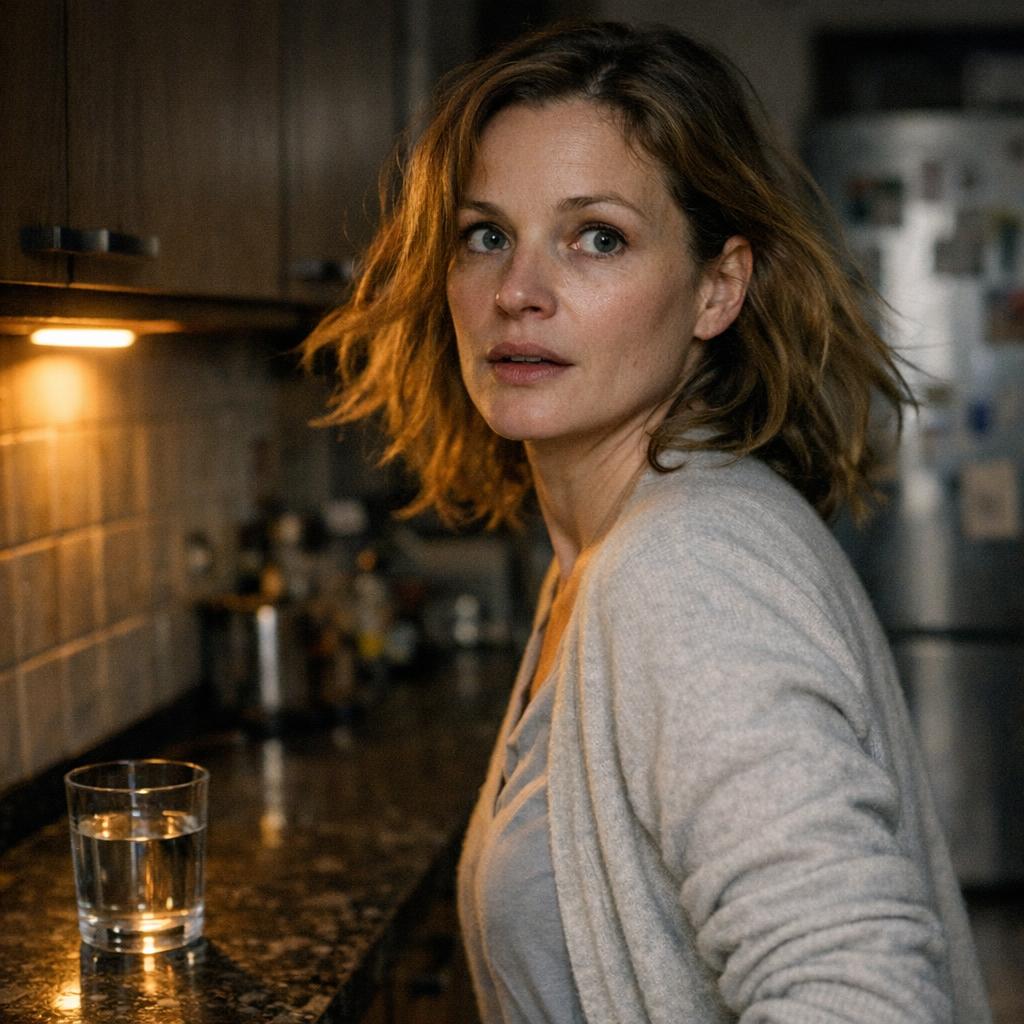 Image by RM AI
The High School Awakening
High school brought a new level of awareness I wasn't prepared for. I started noticing things that my younger self had willingly overlooked. Like when Dad claimed he'd just returned from Tokyo but had absolutely no idea about the massive earthquake that had dominated global news for days. 'Oh, we were rerouted,' he'd say vaguely, avoiding eye contact. Or how he'd return from supposedly rainy London with a tan that belonged on someone who'd been lounging on a beach somewhere. The most telling sign, though, was his phone behavior. He'd angle it away from me whenever texting, like the screen itself might betray him. And those phone calls? He'd step outside for them regardless of weather—once even standing in the snow for fifteen minutes while Mom and I watched through the window, pretending not to notice. 'Airline business,' he'd explain with that practiced smile when he returned, shaking snowflakes from his jacket. I'd nod and smile back, both of us performing our parts in this strange family play. But inside, something was hardening in me—a determination to finally uncover what was really happening. Because if Dad wasn't flying planes across the world, where exactly was he going? And more importantly, who was he when he wasn't being my father?
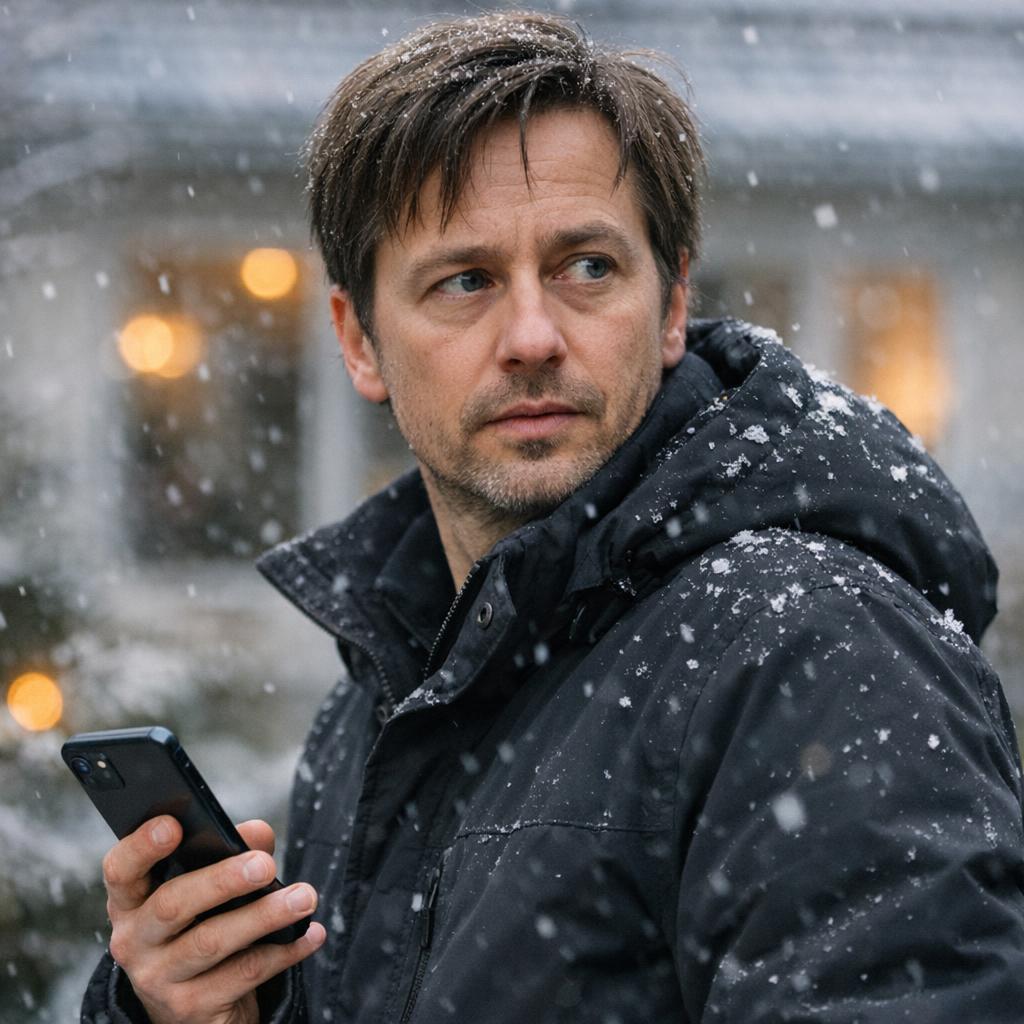 Image by RM AI
The Graduation Absence
My middle school graduation was supposed to be different. I'd earned honors, and Dad had actually promised to be there this time. 'Wouldn't miss it for the world, kiddo,' he'd said during his last visit, ruffling my hair like I was still seven instead of thirteen. But the morning of the ceremony, Mom's phone rang, and I already knew from her face what was coming. 'Emergency flight to Chicago,' she explained, not quite meeting my eyes. 'He's so proud of you.' As I walked across the stage to accept my academic achievement certificate, I scanned the audience like I always did, hoping for a miracle. But there was just Mom, sitting alone in the third row, clapping with tears streaming down her face. That night, while looking for tape in Mom's desk drawer, I found something that made my stomach drop – a bank statement showing a large deposit from 'R. Lawson.' My dad's name was Richard Lawson. The deposit had come in the same day as my graduation. I stared at that paper for what felt like hours, wondering why my father would need to transfer money to my mother on the exact day he was supposedly called away for work. It was like finding a puzzle piece that finally connected two pictures I'd been trying to reconcile my entire life.
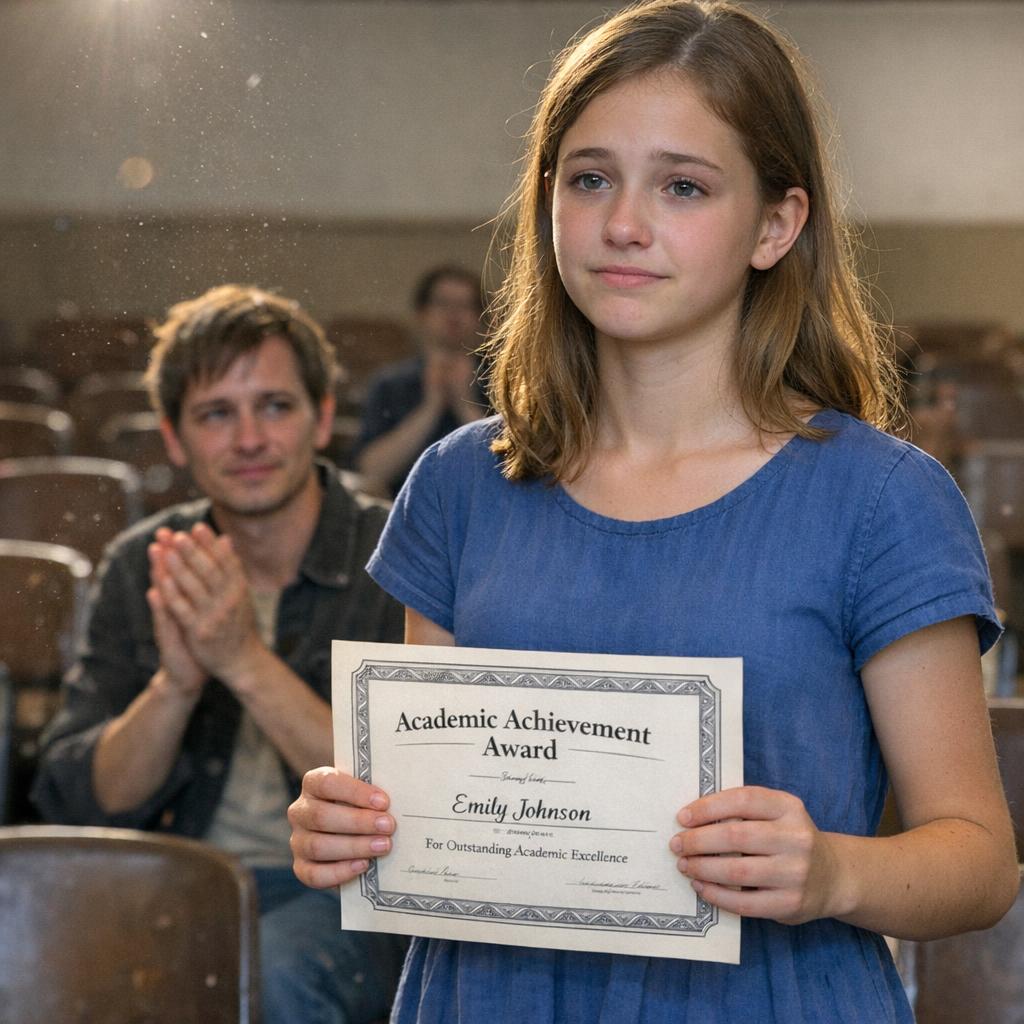 Image by RM AI
The Wallet Discovery
It happened during one of Dad's rare weekend visits home. He'd left his wallet on the kitchen counter while he showered—something so ordinary yet so out of character for a man who seemed to guard his possessions like state secrets. I stood there, staring at the worn leather fold, hearing the shower running upstairs. My heart hammered against my ribs as I reached for it, feeling like a spy in my own home. Inside, where there should have been an airline ID, pilot's license, or anything connecting him to the skies he supposedly commanded, I found something that made my stomach drop: a business card. 'Richard Lawson, Regional Sales Director' for some pharmaceutical company I'd never heard of. No wings. No airline logo. Nothing that suggested he'd ever set foot in a cockpit. When he came downstairs, hair still damp, I held up the card with shaking hands. 'What's this?' The question hung between us like a live wire. His face did that thing—that micro-expression of panic before the smooth recovery. 'Oh, that's my cover identity,' he said with practiced casualness. 'Security reasons. Airlines don't want pilots targeted.' Mom appeared from nowhere, as if summoned by the threat to our family fiction. 'Who wants lasagna?' she chirped, her voice unnaturally bright. I tucked the card back, nodding as if I believed him, but something had shifted permanently. If he was lying about this, what else was hidden behind that perfect smile?
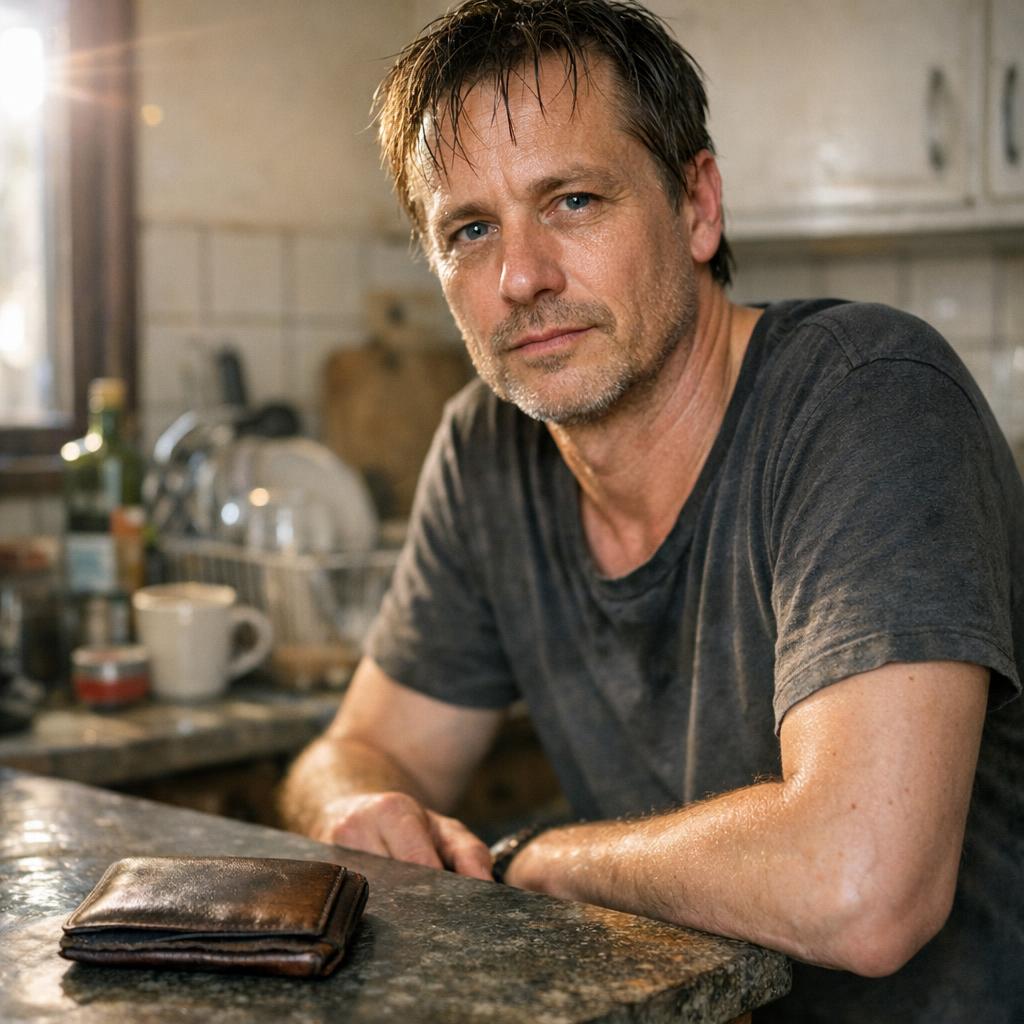 Image by RM AI
The Sophomore Rebellion
Sophomore year brought a new version of me—one armed with a press badge and a growing suspicion. Joining the school newspaper wasn't just about padding my college applications; it was about learning how to ask questions that mattered. I started small, interviewing teachers about curriculum changes, but quickly developed a knack for spotting inconsistencies in people's stories. Funny how skills transfer. At home, I began applying this newfound investigative approach to the elaborate fiction we'd been living in. "So Dad, what's the procedure for handling a cabin depressurization at 30,000 feet?" I'd ask casually over dinner. His eyes would flicker to Mom before answering vaguely about oxygen masks. "And what model aircraft were you flying last week?" Another deflection. The questions became more pointed as my confidence grew. Then came the evening I'd been building toward for weeks. Dad was packing for another "route," and I leaned against his doorframe, arms crossed. "You know, it's weird," I said, my heart hammering but my voice steady. "I've never once seen you leave wearing a uniform. Don't airlines have strict dress codes for pilots?" The silence that followed was so complete you could hear the clock ticking downstairs. Then came the sound of shattering glass from the kitchen—Mom dropping something, her timing as perfect as her panic. Dad's face hardened into something I'd never seen before, something that wasn't meant for his daughter to witness.
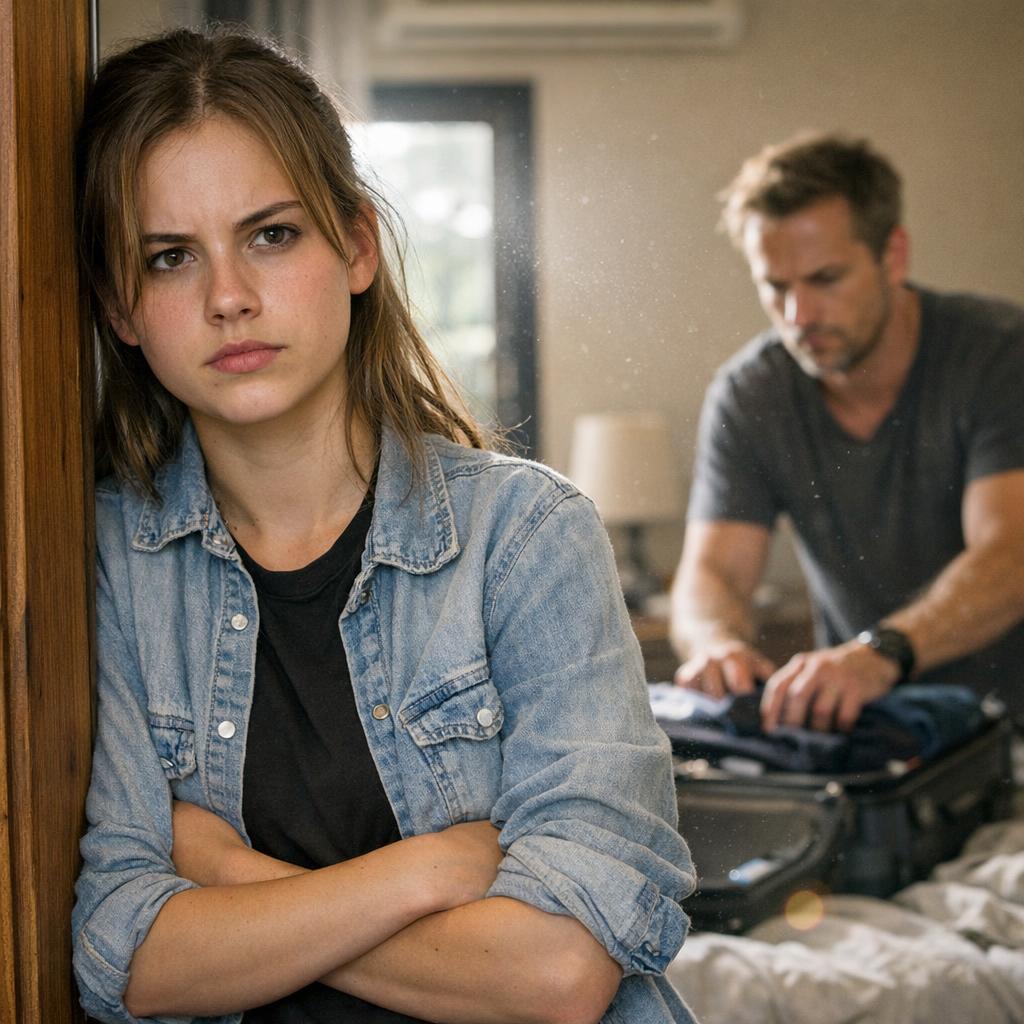 Image by RM AI
The Neighbor's Comment
I was sixteen when Mrs. Kowalski shattered what remained of our family fiction with just one casual comment. She was dropping off a plate of her famous pierogi when she mentioned it. 'I saw your father last weekend at that new Italian place in Westbrook,' she said, arranging the plate on our counter. 'He was with his family—those kids of his are getting so big!' She said it so casually, like commenting on the weather, not realizing she'd just dropped a bomb. 'But... Dad was in Singapore last weekend,' I said slowly, watching her face. Mrs. Kowalski's expression shifted from friendly to uncomfortable in an instant. 'Oh! I must be mistaken,' she backpedaled, suddenly very interested in rearranging the pierogi. When I told Mom later, her face drained of color so quickly I thought she might faint. 'Mrs. Kowalski is getting older,' she said, her voice unnaturally high. 'She probably saw someone who looked like your father.' But that night, I heard her through the heating vent, her voice trembling as she hissed into the phone: 'You need to be more careful. People are noticing.' I lay in bed, staring at the ceiling, wondering how many other neighbors had seen my father living his other life just one town away, and how long my mother had been covering for him.
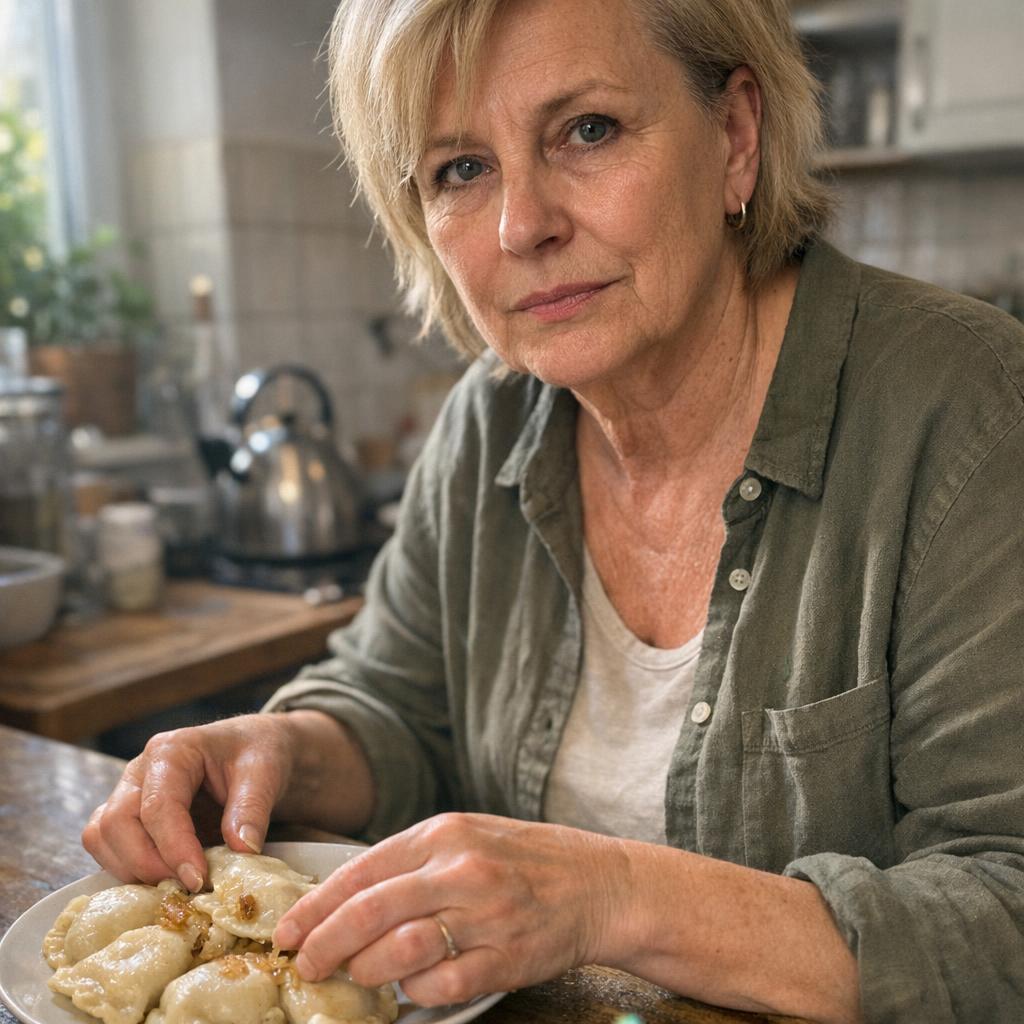 Image by RM AI
The Junior Year Investigation
Junior year arrived with a new sense of purpose. I started a leather-bound journal—the kind with a tiny lock that felt like a vault for secrets—and began documenting everything about Dad's visits. Each entry became a detective's case file: dates he appeared and disappeared, contradictions in his stories about flight paths that didn't exist, weather patterns that didn't match his supposed destinations. I created a color-coded system for his absences—red for predictable disappearances (first week of July, every year), blue for suspicious phone behavior, yellow for the Sunday mornings his phone always went straight to voicemail. The patterns emerged like constellations once you knew what to look for. When I casually mentioned to Mom how Dad never seemed to be around for my cousin's annual Fourth of July barbecue, her coffee cup froze halfway to her lips. "Are you... keeping track of him?" she asked, her voice barely above a whisper. When I showed her my journal, her face crumpled. "You're spying on your own father," she said, tears welling in her eyes. But her reaction only confirmed what I already suspected—she wasn't shocked by what I'd discovered, only that I'd been paying attention. What she didn't know was that my investigation was about to take a digital turn that would change everything.
 Image by RM AI
The College Application Essay
I stared at my laptop screen, cursor blinking at the start of my college application essay. 'My father, the pilot...' I'd typed, then immediately hit delete. For years, I'd defined myself through his supposed career, but now? I couldn't bring myself to perpetuate the lie. Instead, I wrote about growing up surrounded by uncertainty, about learning to question the narratives adults construct. About finding strength in discovering truth, even when it hurts. When my English teacher read it, she called it 'uncommonly honest' and asked if I was comfortable sharing something so personal. 'More comfortable than pretending,' I told her. Mom hovered around me that evening, asking repeatedly to read my essay. 'It's private,' I said, closing my laptop. Her face fell, and I recognized the look—the same one she wore whenever Dad's stories started unraveling. Later that night, Dad called with his usual last-minute cancellation for my debate tournament. 'Emergency flight to Madrid,' he explained, his voice practiced and smooth. For the first time, instead of disappointment, I felt something unexpected: relief. Relief that I wouldn't have to sit in the audience searching for a face that was probably somewhere else entirely, with someone else's child. As I hung up, I wondered if the other family got the same excuses, or if we were the ones who always came second.
 Image by RM AI
The Unexpected Visit
Dad showed up on a random Tuesday afternoon, no warning text, no call—just the sound of his key in the lock while I was sprawled on the couch doing calculus homework. I nearly jumped out of my skin. 'Hey kiddo!' he said, dropping his suitcase by the door like this was a scheduled visit. He looked different—tired around the eyes, his usually perfect hair slightly messy, his collar wrinkled. Mom wouldn't be home from work for hours, which left us in this weird limbo of forced conversation. 'So, where were you flying this time?' I asked, watching his face carefully. His eyes did that thing—that quick dart to the side before settling back on me with practiced ease. 'Oh, you know. All over.' He waved his hand vaguely. 'The usual routes.' When I pressed for specifics, he just smiled and said, 'Everywhere and nowhere, kiddo.' I'd heard these exact phrases for years, but this time they rang hollow, like listening to a song you once loved and suddenly realizing the lyrics make no sense. He kept checking his phone, thumbs typing rapid responses to texts he angled away from my view. That's when it hit me—this wasn't a surprise visit for me. He was hiding from something. Or someone.
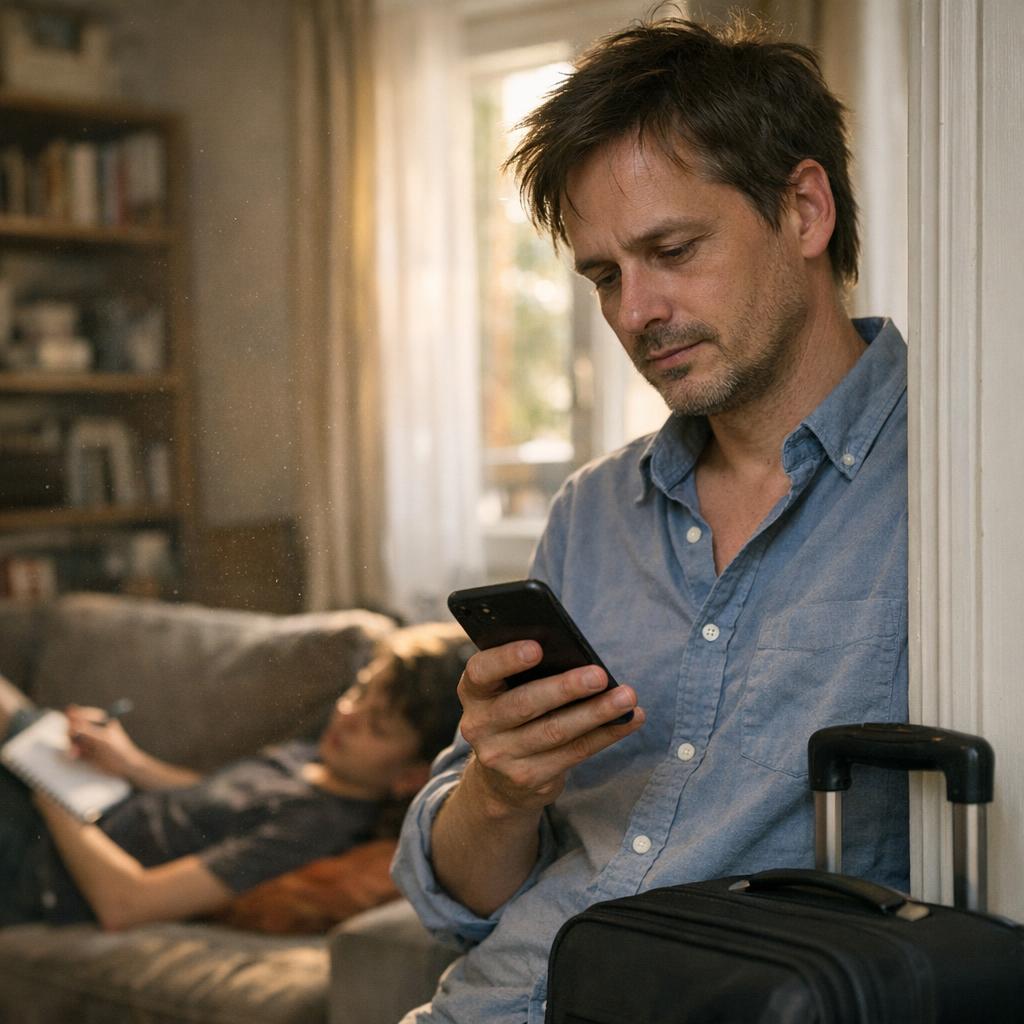 Image by RM AI
The Midnight Confession
It was nearly 2 AM when my bedroom door creaked open. Mom stood there, silhouetted against the hallway light, looking smaller than usual. Without a word, she crossed the room and perched on the edge of my bed, just like she used to when I was little and had nightmares. Her weight created a familiar dip in the mattress. 'Your father loves you,' she said suddenly, her voice cracking slightly. The statement hung in the air between us, unprompted and heavy with something I couldn't quite name. I propped myself up on my elbows, squinting at her in the dim light. 'Why are you telling me this now?' I asked, my heart picking up speed. She reached out and smoothed my hair back from my forehead, her hand cool against my skin. 'Because I need you to know that much is true,' she whispered. Her eyes glistened with unshed tears. Before I could ask anything else—before I could demand the whole truth that seemed to be hovering just behind her words—she stood up and walked to the door. 'Mom?' I called after her, but she just shook her head and slipped out, leaving me alone with the weight of what she'd said... and everything she hadn't. I stared at the ceiling until dawn broke, wondering what had finally pushed her to this midnight confession, and what terrible truth was waiting on the other side of it.
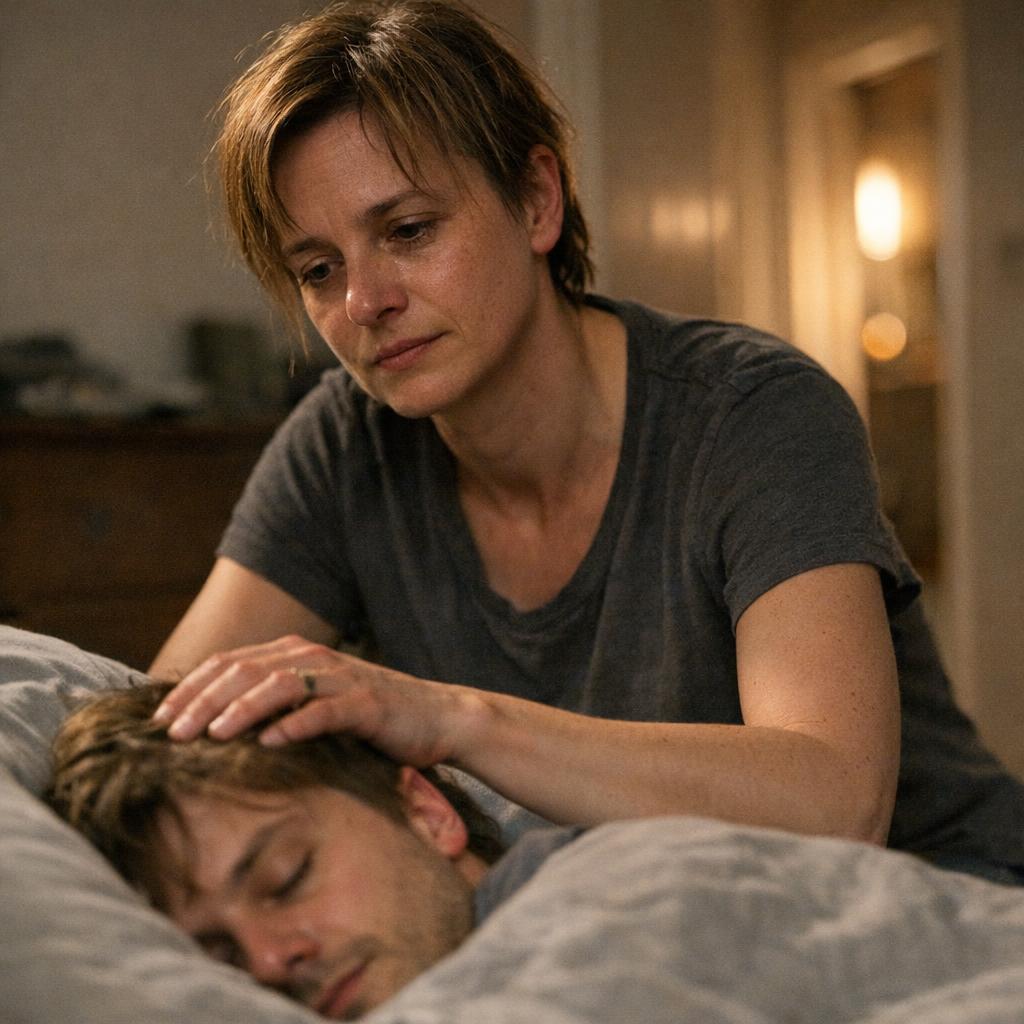 Image by RM AI
The Senior Prom
Senior prom—the quintessential American high school milestone. Dad had promised not just to be there, but to drive me and Tyler in what he called 'proper style.' I'd actually believed him this time. Maybe because he'd sounded so sincere on the phone, or maybe because I was still that little girl desperate for her father's approval. The morning of prom, my phone buzzed with a text: 'Emergency flight to Dallas. So sorry kiddo. Take lots of pictures.' Not even a call. Just digital disappointment, neatly packaged in blue bubbles. As I stood in Mom's garden, the corsage Tyler had brought trembling slightly on my wrist, I watched Mom's face. She kept checking her phone between photos, her smile faltering each time the screen lit up. I recognized that look—she was waiting for something, probably another excuse, another story to tell me later. When Tyler's dad stepped forward with his camera, saying, 'Let me get some father-daughter style photos for you,' I saw Mom's eyes glisten. She'd planned those photos—had even bought a new frame for them. As Mr. Peterson put his arm around my shoulders for the picture, I wondered if Dad was posing for prom photos with another daughter somewhere else, or if we were the only family he consistently disappointed.
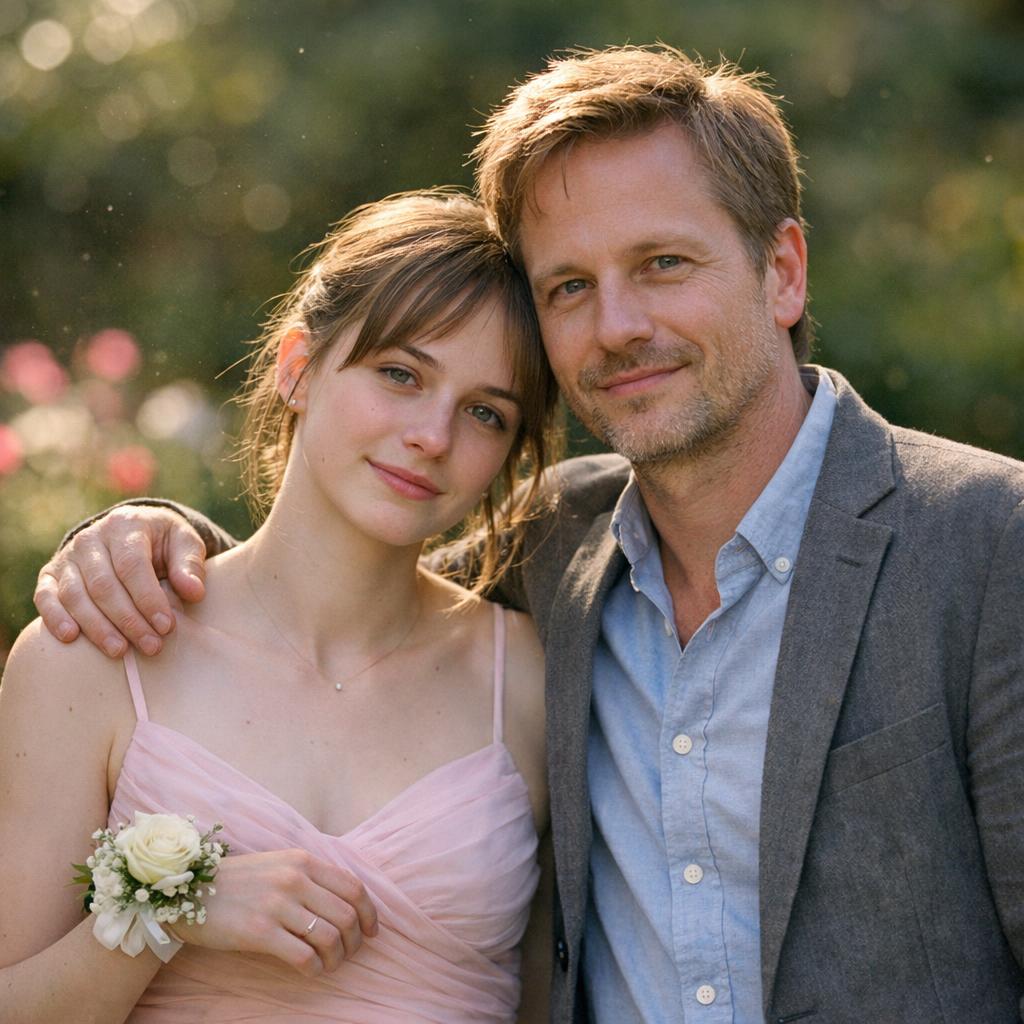 Image by RM AI
The Graduation Promise
Graduation day loomed on the calendar like a final exam I wasn't prepared for. Not because of the ceremony itself, but because of Dad's promise. 'I'll be there front and center,' he'd sworn during our last phone call, his voice carrying that familiar conviction that had fooled me countless times before. Mom threw herself into planning a celebration dinner with an intensity that broke my heart—calling restaurants, ordering a custom cake, even buying a new dress. 'It's your big day,' she insisted, though I caught her checking flight status updates when she thought I wasn't looking. One night, I found her sitting at the kitchen table surrounded by photo albums. 'It doesn't matter if he shows up,' I told her, placing my hand on her shoulder. She looked up at me with eyes that had aged decades in moments. 'Of course it matters,' she whispered, though her expression said she'd already rehearsed his absence. I wanted to tell her I'd stopped expecting him years ago, that I'd learned to celebrate milestones without searching the crowd for his face. Instead, I helped her choose between restaurant options, pretending we both believed he'd actually sit at the table with us. What neither of us knew was that graduation day would bring something far more significant than a diploma—a truth that would finally set us both free.
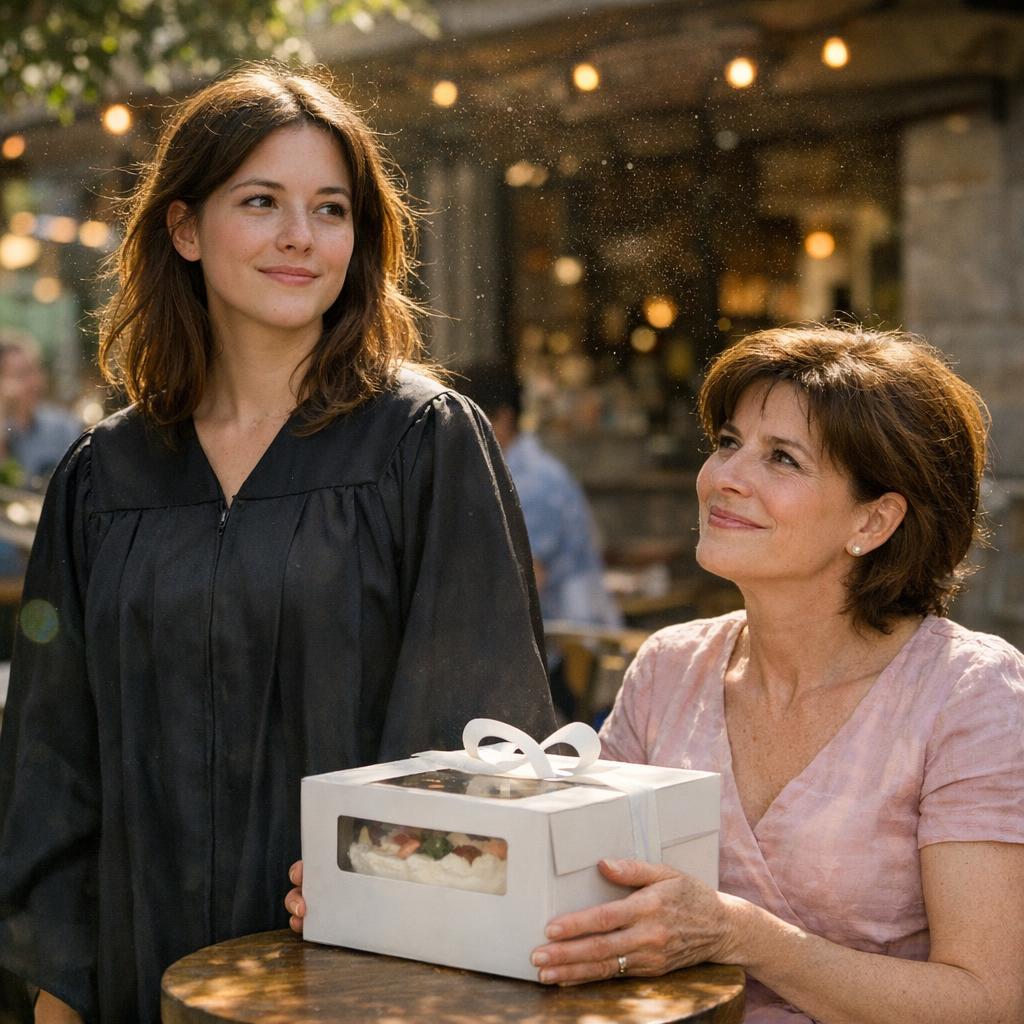 Image by RM AI
The Empty Chair
Graduation day arrived with the kind of perfect weather that feels like a cosmic apology for all the storms you've weathered. I sat in my polyester gown, sweating under the June sun, while periodically glancing at the audience. Mom had saved a seat right beside her in the front row—prime real estate she'd arrived an hour early to secure. That empty chair screamed louder than any of the cheering parents around it. When they called my name, I crossed the stage with a smile plastered on my face, searching the crowd one last time. Nothing. Just Mom, standing alone, her phone clutched in one hand while she frantically took photos with the other. At the restaurant afterward, she kept excusing herself to check her phone, each time returning with a brighter smile and a weaker explanation. "He's just delayed," she insisted, rearranging the untouched place setting across from me. When she disappeared for the third time, I followed her to the hallway by the restrooms. She was wiping her eyes, freshly applied mascara already smudged at the corners. "He's not coming, is he?" I asked, though we both knew the answer. What I didn't expect was what she said next, her voice barely above a whisper: "He can't. His wife found out."
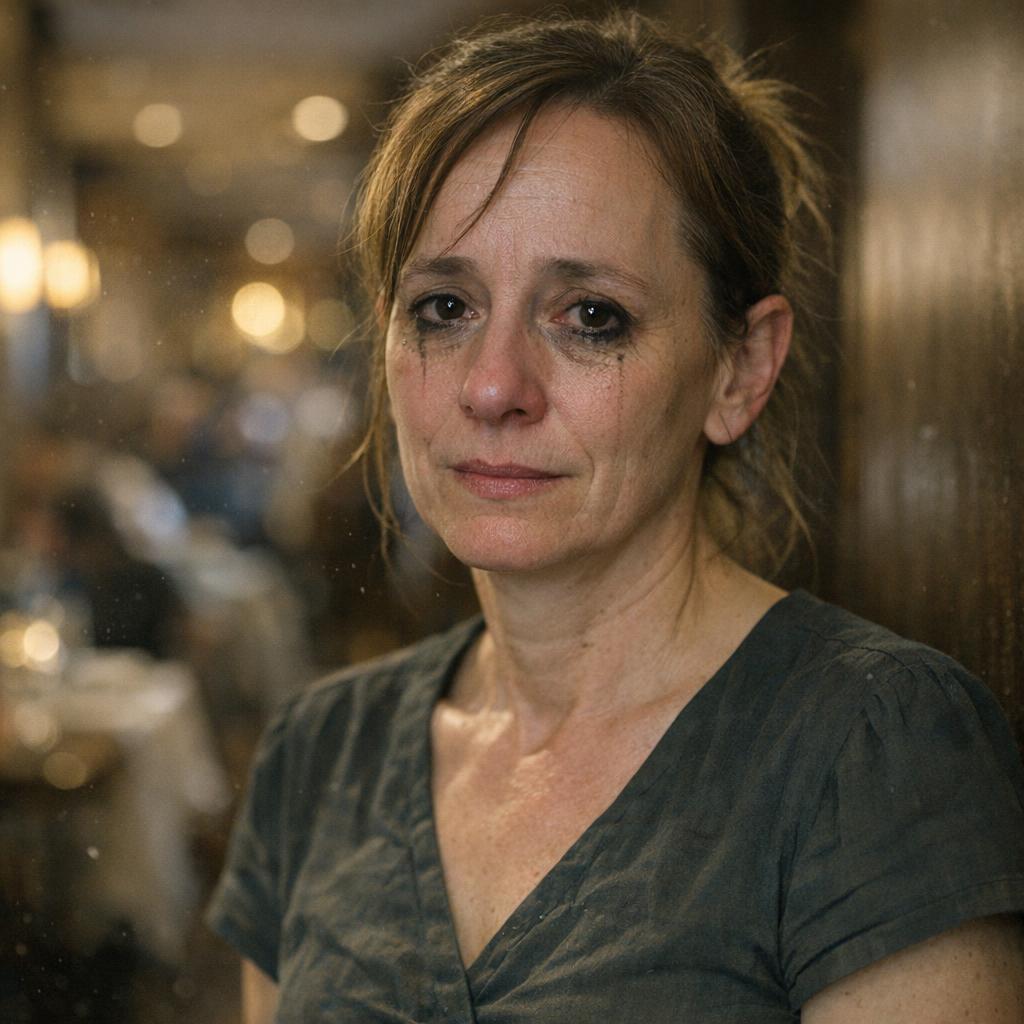 Image by RM AI
The Belated Arrival
Dad showed up three days after graduation, sauntering through the front door like he hadn't missed the most important day of my high school career. He was carrying a small blue box with a silver ribbon—the kind that screams 'expensive apology.' Mom hovered nervously in the kitchen doorway as he slid the box across the breakfast table to me. 'Sorry about missing the ceremony, kiddo. Mechanical issue grounded us in Denver.' His smile was practiced, confident, as if he truly believed I was still that wide-eyed child who thought her father commanded the skies. I opened the box to find a watch that probably cost more than my entire semester of textbooks would in college. The weight of it felt wrong in my hands—heavy with guilt rather than luxury. I looked up at him, something shifting inside me. The years of doubt crystallized into certainty. 'You're not a pilot,' I said quietly, my voice steadier than I expected. The words hung in the air between us, simple but devastating. His face froze, that perfect mask slipping for just a second before he could recover. The silence that followed was broken only by Mom dropping her coffee cup, the ceramic shattering on the kitchen floor like the lie that had finally broken. In that moment, watching the coffee spread across the tile like spilled secrets, I realized we had reached the point of no return.
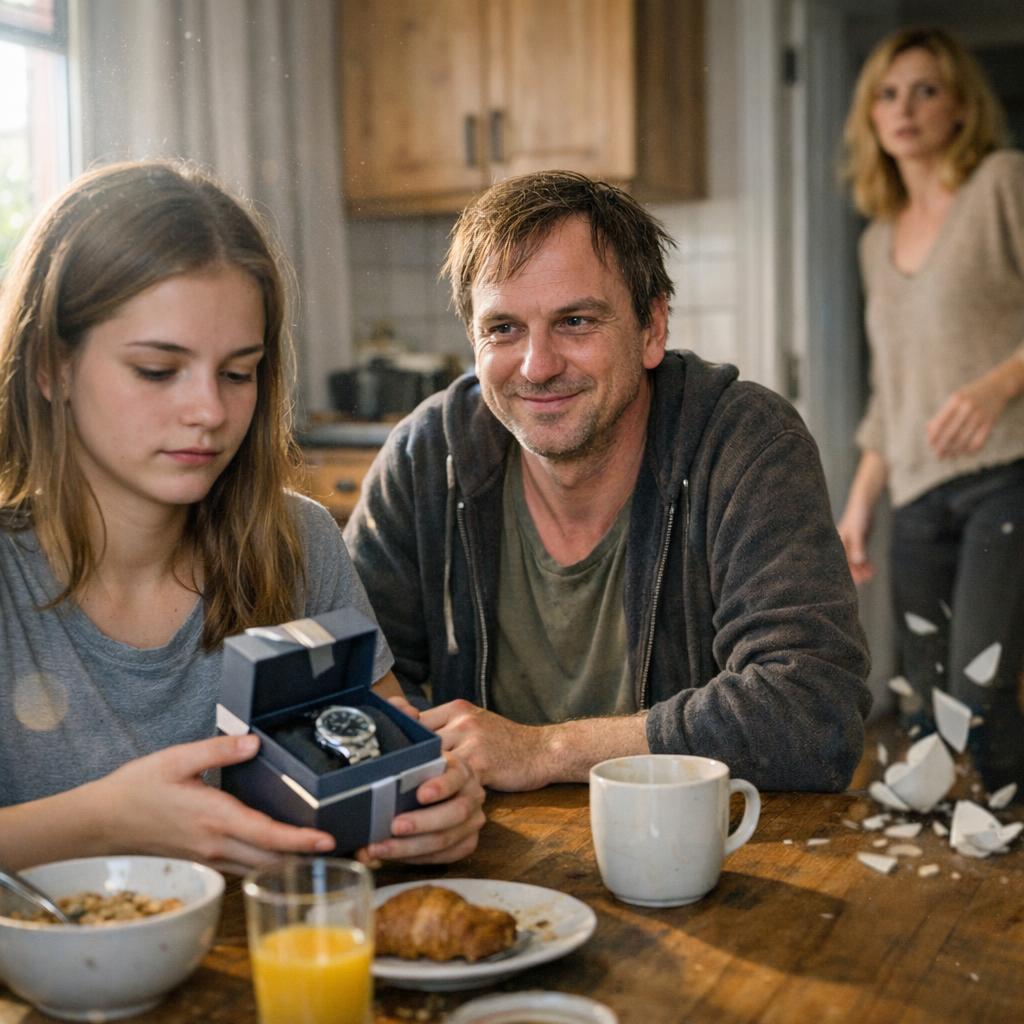 Image by RM AI
The Non-Denial
I watched Dad's face carefully, searching for the denial I'd expected—the practiced smile, the dismissive laugh, the quick change of subject. But it never came. Instead, he looked at Mom with an expression I'd never seen before—a silent communication between them that excluded me completely. 'Diana,' he said quietly, 'maybe it's time.' Those four words hit like a thunderclap. Mom's face crumpled instantly, tears streaming down her cheeks as she fled the room without a word. Dad sank into his chair, suddenly looking ten years older. 'It's complicated, kiddo,' he began, running his hand through his hair. I cut him off before he could spin another story. 'No more complications,' I said, my voice surprisingly steady. 'Just the truth.' He nodded slowly, his eyes fixed on the expensive watch still sitting in its open box between us. 'You deserve that,' he admitted. 'But I need to talk to your mother first. Tonight, after dinner, we'll sit down and I'll explain everything.' He reached for my hand, but I pulled away. 'Everything?' I pressed. 'No more pilot stories?' He winced at the word 'stories,' then nodded again. 'No more stories,' he promised. As he left to find Mom, I sat alone at the kitchen table, surrounded by the shards of her broken coffee cup and the realization that by nightfall, the family I thought I had would be revealed as something entirely different.
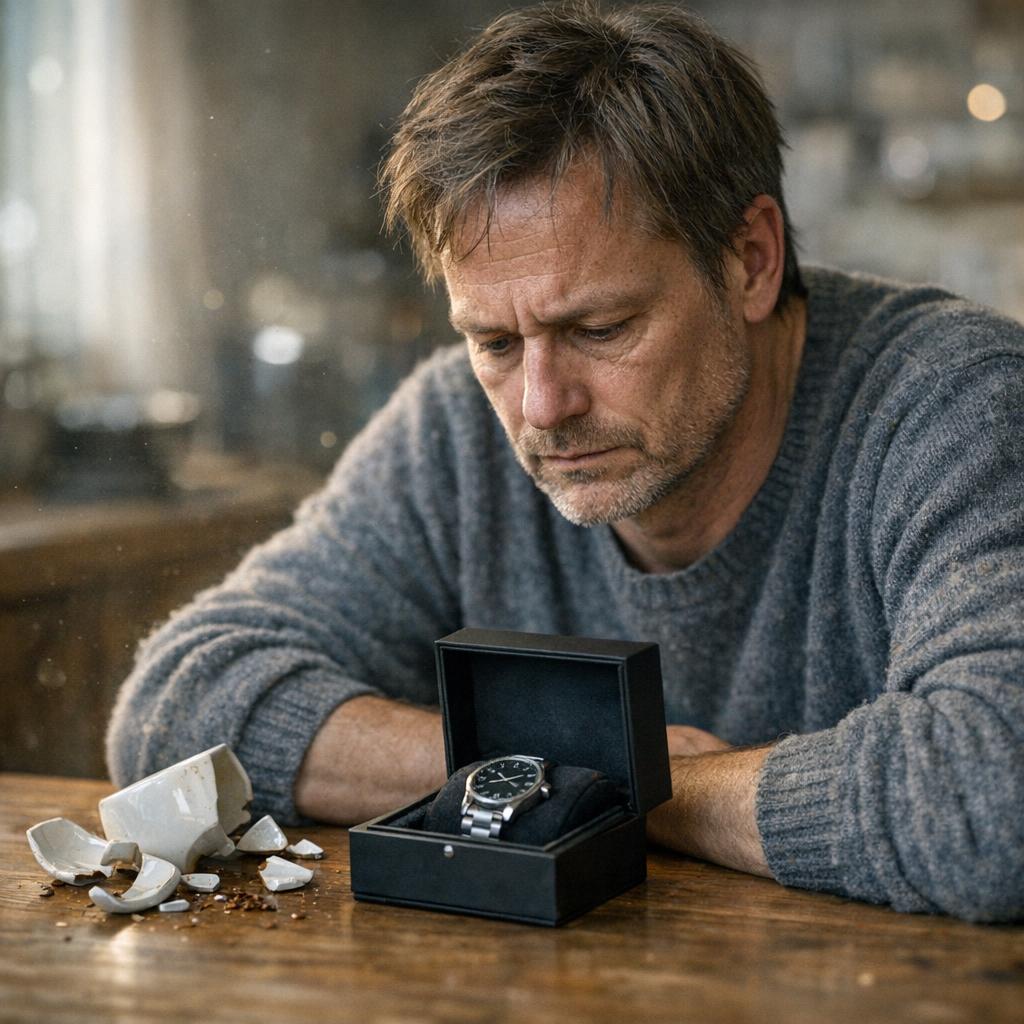 Image by RM AI
The Vanishing Act
I came home from graduation dinner to find Dad's suitcase gone. No note, no text, just vanished—like he'd mastered the art of disappearing long before I discovered his double life. By evening, Mom sat me down at the kitchen table, her eyes red-rimmed but her voice surprisingly steady. 'Your father thought it would be better this way,' she said, folding and unfolding a napkin until it resembled origami. When I demanded answers—the full truth he'd promised just hours earlier—she just shook her head. 'He does love you, Emma. That part was never a lie.' The words felt hollow, like trying to salvage something precious from a house fire when everything was already ash. I couldn't breathe in that house anymore—every corner held a memory tainted by deception. Every family photo on the wall felt like a prop from some elaborate stage production. I packed a bag while Mom watched from my doorway, neither of us knowing what to say. 'I'm staying at Sophia's,' I told her, not asking permission. She just nodded, looking smaller than I'd ever seen her. As I walked out, I realized the pilot story wasn't the only fiction in our family—the idea that we were a family at all might have been the biggest lie of all. What I didn't know then was that Dad's final vanishing act would lead me to a truth far more devastating than anything I'd imagined.
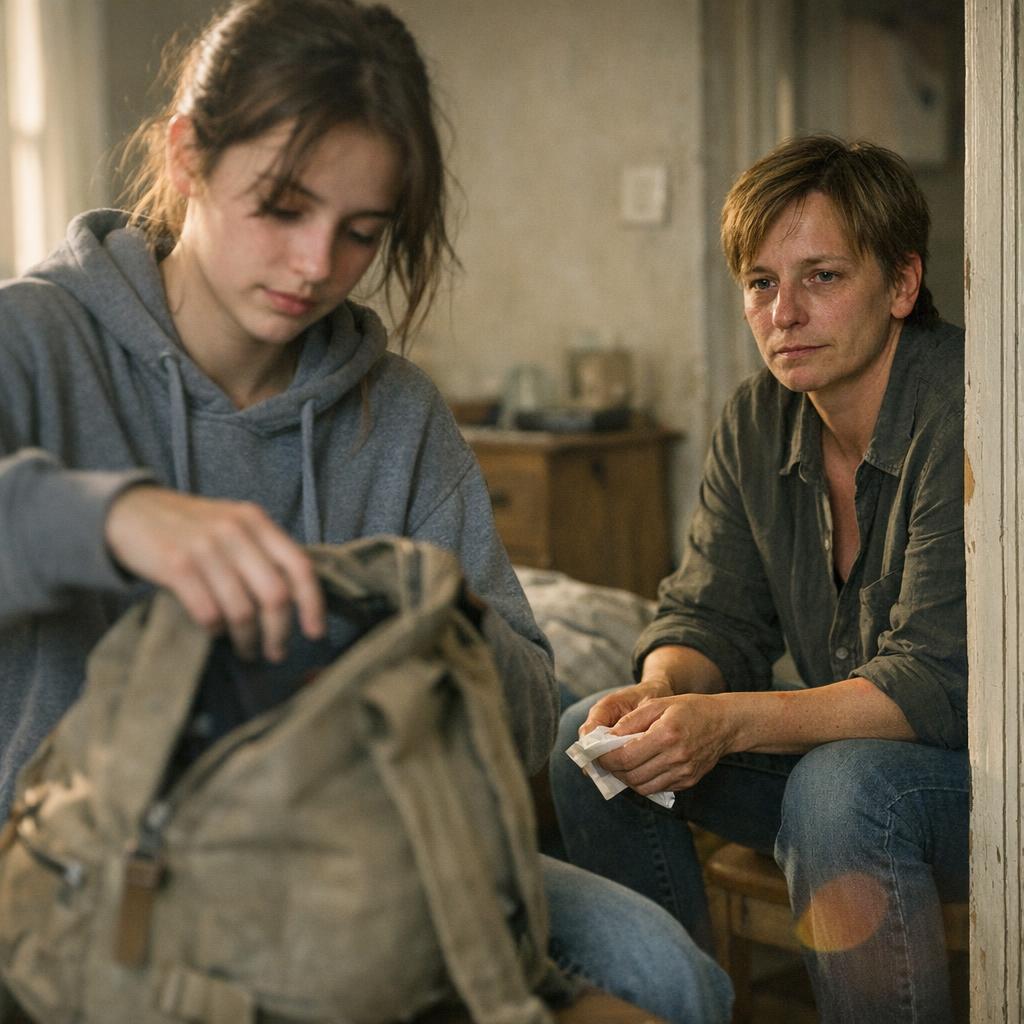 Image by RM AI
The College Escape
I left for college two months early, claiming it was for a summer program but really just desperate to escape the house of lies I'd grown up in. Mom drove me the four hours to campus, our car filled with the weight of unspoken truths rather than the excited chatter most freshmen probably experienced. We barely spoke, the radio filling silences that stretched between us like state lines. When we arrived, she helped me unpack with mechanical efficiency, arranging my books and hanging clothes like she was setting up a display, not her daughter's new life. Just before leaving, she pressed an envelope into my hand. 'For emergencies,' she said, her voice catching. Inside was a stack of cash and a handwritten note: 'I'm sorry for everything.' Five words that somehow carried eighteen years of apology. When we hugged goodbye in the parking lot, I found myself patting her back, whispering that everything would be okay—a strange role reversal where I was comforting her instead of the other way around. As her car disappeared down the campus drive, I felt a confusing mix of liberation and abandonment. I was finally free from the pilot story, but completely unprepared for what I'd discover when I decided to use some of that emergency money to find out exactly who my father really was.
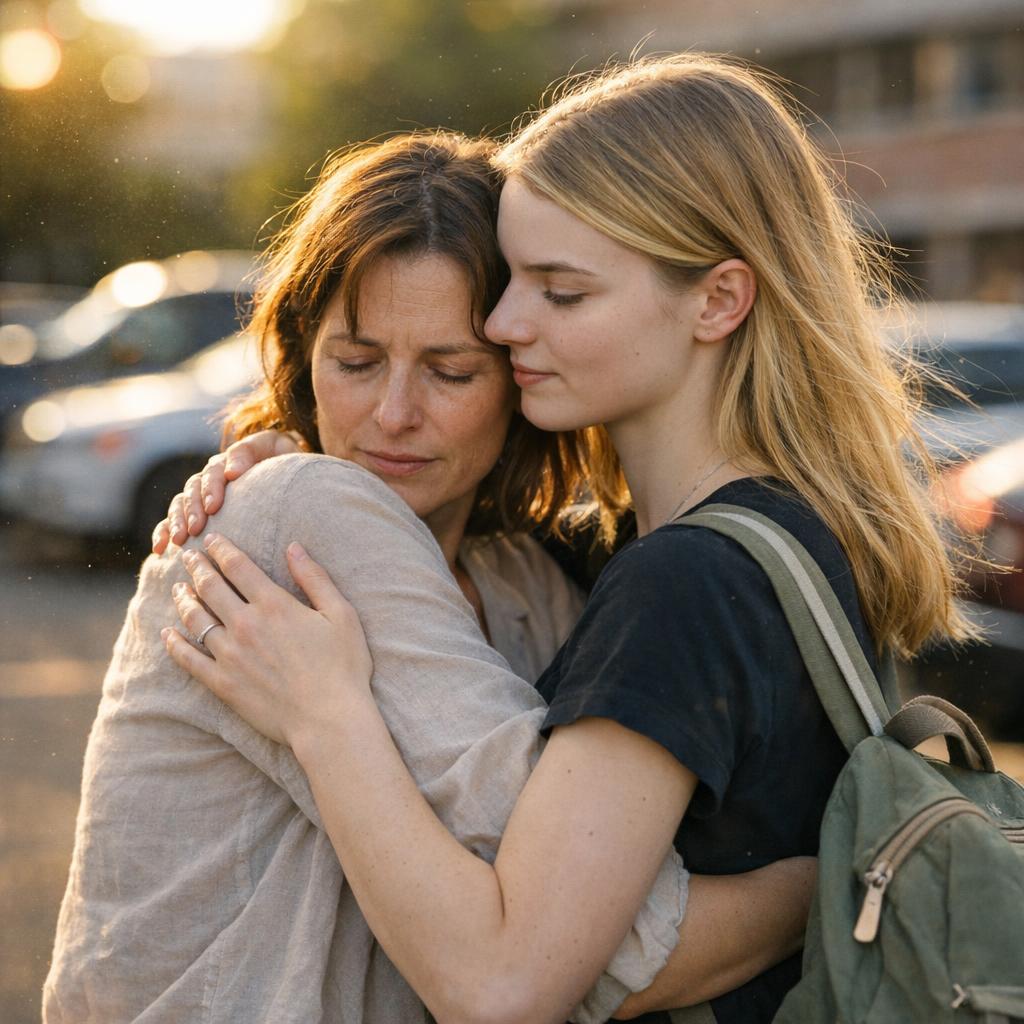 Image by RM AI
The Freshman Investigation
My Intro to Investigative Journalism class became my unexpected salvation. While other freshmen were decorating dorm rooms and finding their way to parties, I was creating a detailed spreadsheet of my father's appearances and disappearances throughout my childhood. Red for missed birthdays. Blue for random Tuesday visits. Yellow for promised appearances that never materialized. The pattern emerged like a neon sign I'd somehow missed my entire life—Dad was never with us for the same dates each year. Christmas Eve but never Christmas morning. My birthday but never my mom's. The second week of July, always mysteriously "on route." My roommate, Tara, found me at 3 AM, hunched over my laptop with puffy eyes and a room plastered with sticky notes and printed calendars. "What are you doing?" she asked, genuinely concerned. I couldn't explain that I was forensically dissecting my childhood, so I just mumbled something about a journalism project. But as I stared at the evidence wall I'd created, the truth was undeniable. These weren't random absences—they were commitments to another life. Another family. What I didn't realize then was that my amateur investigation was about to uncover something far worse than I'd imagined.
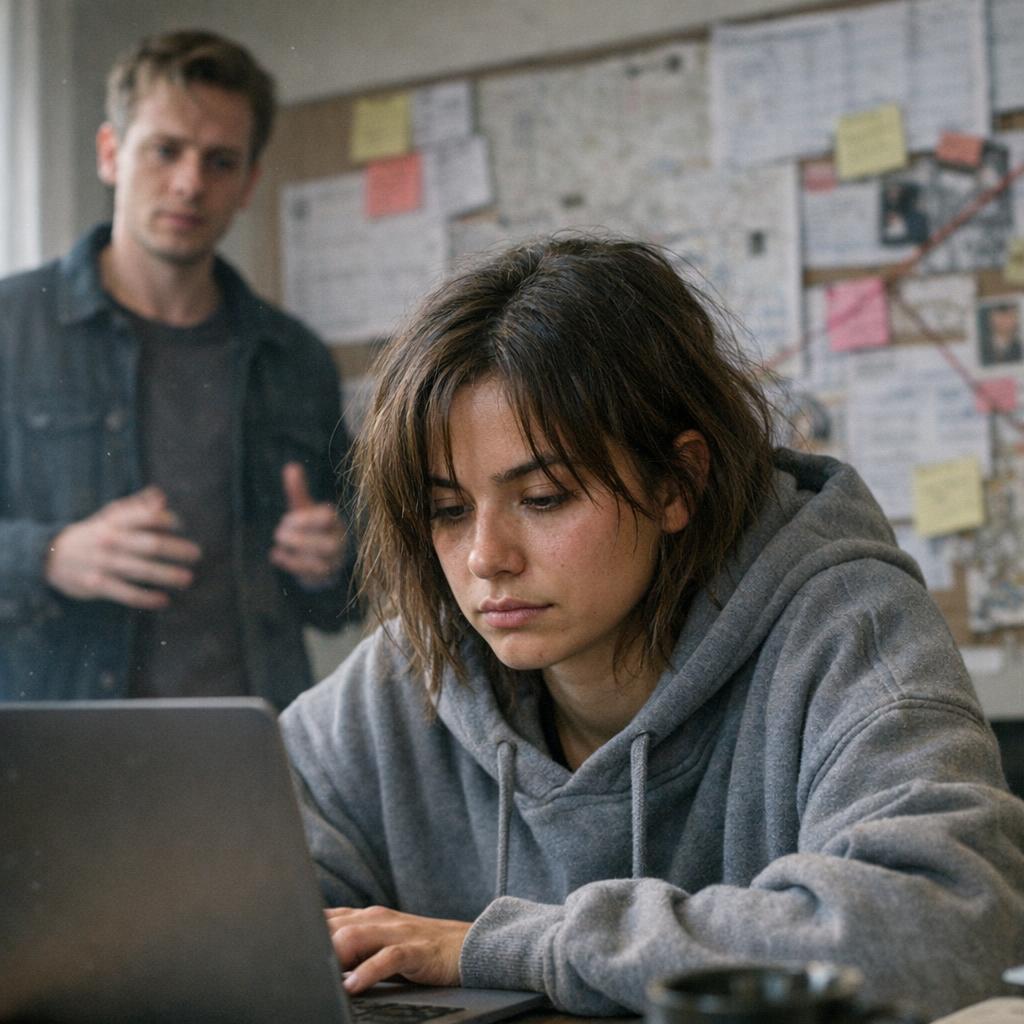 Image by RM AI
The Social Media Search
I spent most of freshman year hunched over my laptop, obsessively searching for my father online. 'Richard Lawson' yielded nothing but strangers with his name—doctors, lawyers, real estate agents—none of them the man who'd pretended to fly planes for eighteen years. Then one night, fueled by cheap dorm coffee and spite, I tried 'Rich Lawson' instead. Bingo. A locked Facebook profile appeared with a thumbnail too small to confirm, but something in my gut twisted with recognition. I created a fake account—'Emily Chen, Northwestern University'—complete with stock photos and vague interests. My hands trembled as I sent the friend request, like I was reaching across some forbidden boundary. For weeks, that request sat pending while I ignored my mom's increasingly desperate voicemails. 'Emma, please call me back. We need to talk about this.' Delete. 'Emma, your father wants to explain.' Delete. 'Emma, I know you're angry, but—' Delete. I couldn't bear to hear her defenses anymore. Every night, I'd check that Facebook profile, refreshing it like it was oxygen, waiting for access to the truth. What I didn't realize was that when that friend request was finally accepted, I'd be staring at not just one family photo, but years of them—holidays, graduations, and birthdays that perfectly aligned with my father's absences.
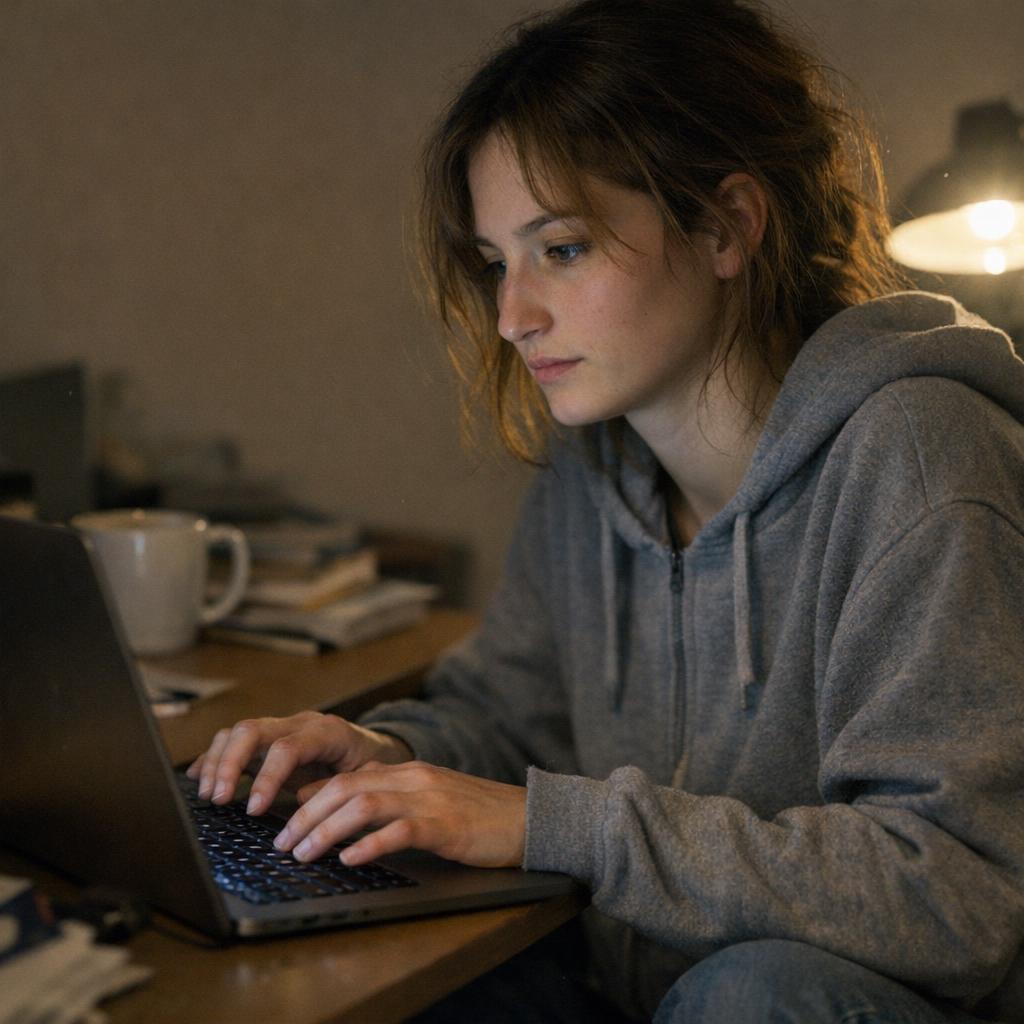 Image by RM AI
The Thanksgiving Confession
I came home for Thanksgiving break, dreading the inevitable small talk and pretending everything was normal. Mom looked like she'd aged five years in three months—thinner, grayer, with dark circles under her eyes that makeup couldn't hide. After an awkward dinner where we both avoided mentioning Dad, she found me in the kitchen as I was cutting slices of pumpkin pie. 'I need to tell you something,' she said, her voice barely above a whisper. We sat at the kitchen table, pie untouched between us, as she finally offered some truth. Dad had been married when they met—not divorced like he claimed. 'I found out years into our relationship,' she confessed, tears welling in her eyes. 'By then, I was pregnant with you and had quit my job to move for his "promotion."' Her hands trembled as she reached for mine. 'I made a deal with the devil,' she whispered, 'but I got you out of it.' The weight of her words hung in the air between us. All those years of lies weren't just about protecting me—they were about protecting herself from the humiliation of admitting she'd stayed with a man who had never truly been hers. As I processed this revelation, I realized with a sickening clarity that there was still one question I hadn't asked: if his first family was his real one, what did that make us?
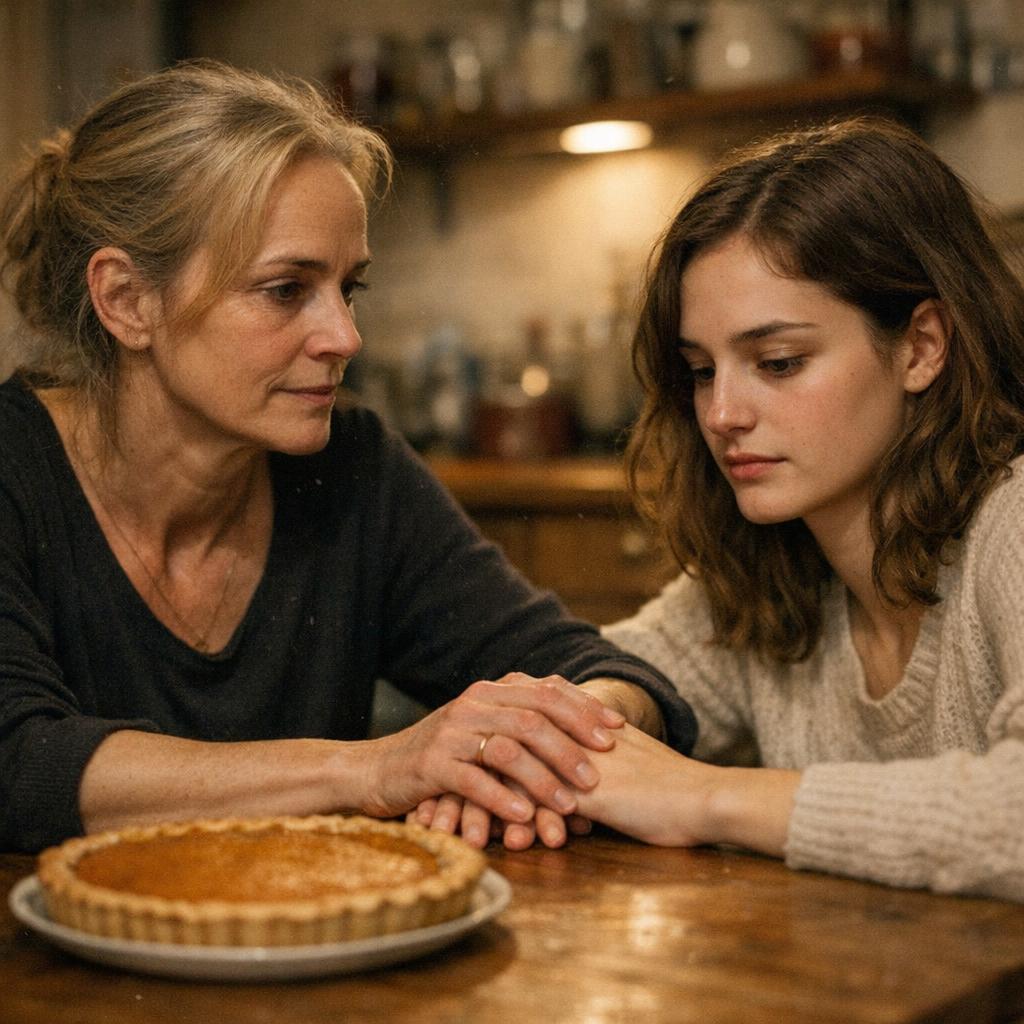 Image by RM AI
The Half-Truth
Mom's confession hung in the air between us like smoke, acrid and suffocating. I could tell she was only giving me half the story—the beginning, but not the decades of elaborate lies that followed. When I pressed her, she stared at her untouched pie and admitted creating the pilot story when I was four and started asking uncomfortable questions about Dad's absences. 'It seemed better than the truth,' she whispered, her voice cracking. 'More heroic. What was I supposed to tell a little girl? That her father had another family he loved more?' The words hit me like a physical blow. I sat there, trying to process that my entire childhood identity had been crafted around a convenient fiction. 'Does his other family know about us?' I finally asked, the question that had been burning inside me since I'd seen those Facebook photos. Her silence stretched between us, longer and more damning than any confession could have been. She wouldn't meet my eyes, and that told me everything I needed to know. We weren't the other family—we were the secret. I left the next morning at dawn, cutting my visit short, my suitcase packed with more questions than clothes. What I didn't realize was that the answers I sought were about to find me first.
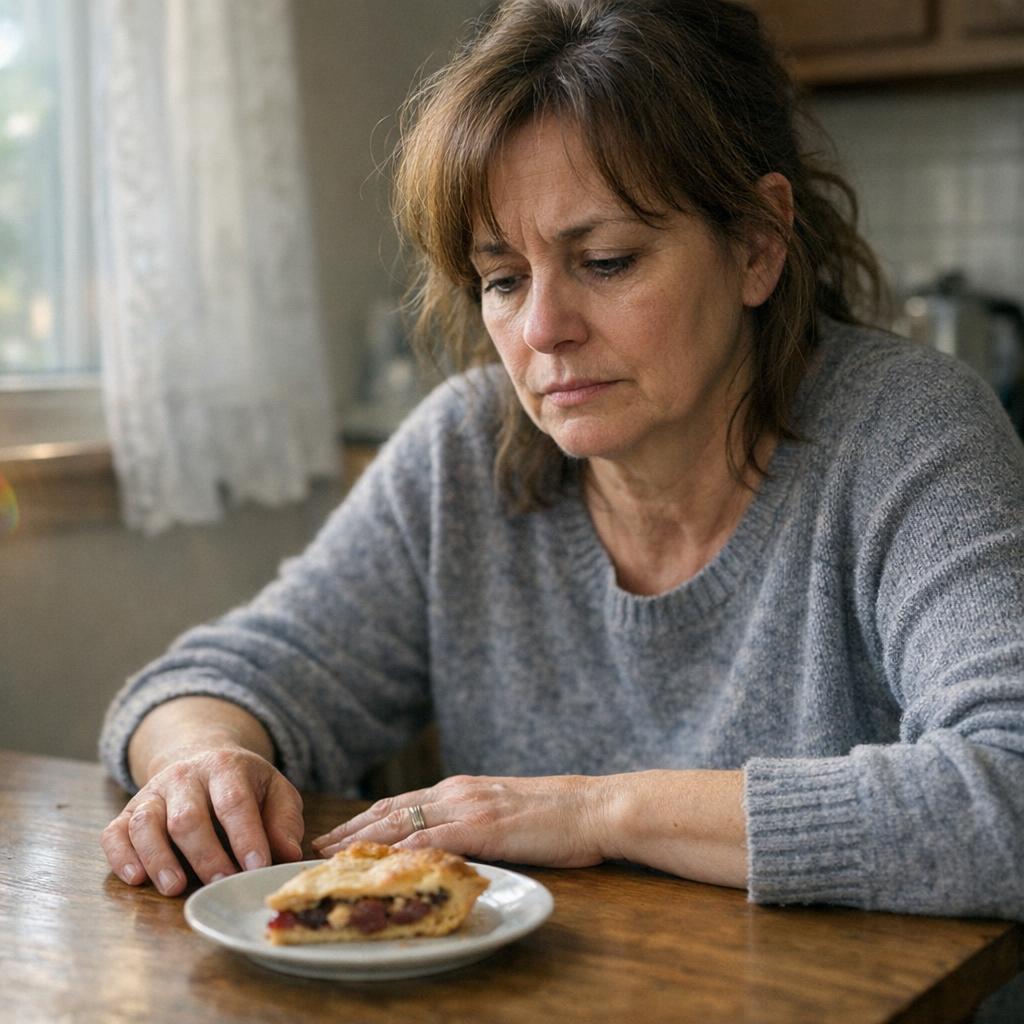 Image by RM AI
The Christmas Card
The Christmas card arrived three days before winter break, sitting innocently among campus flyers and credit card offers in my dorm mailbox. I recognized Dad's handwriting immediately—the same confident strokes that had signed countless permission slips and birthday cards throughout my childhood. Inside was a $50 Amazon gift card and a note that read simply: 'Thinking of you, kiddo. Call if you want to talk.' That was it. No explanation for eighteen years of lies. No acknowledgment of his double life. No apology for vanishing after graduation. Just the same casual tone he'd always used, like nothing had changed between us. I stood in the empty dorm hallway, trembling with rage, and tore the card into tiny pieces, scattering them into the trash can. But an hour later, I found myself digging through that same trash, carefully retrieving every scrap, meticulously taping them back together like some pathetic puzzle. I hid the reconstructed card in my desk drawer, beneath my journalism notebooks filled with evidence of his deception. I hated myself for not being able to throw it away permanently, for that small, childish part of me that still wanted to believe in the hero pilot dad I'd invented in my head. What terrified me most wasn't the card itself, but the realization that despite everything, I was still waiting for an explanation that could somehow make this all make sense.
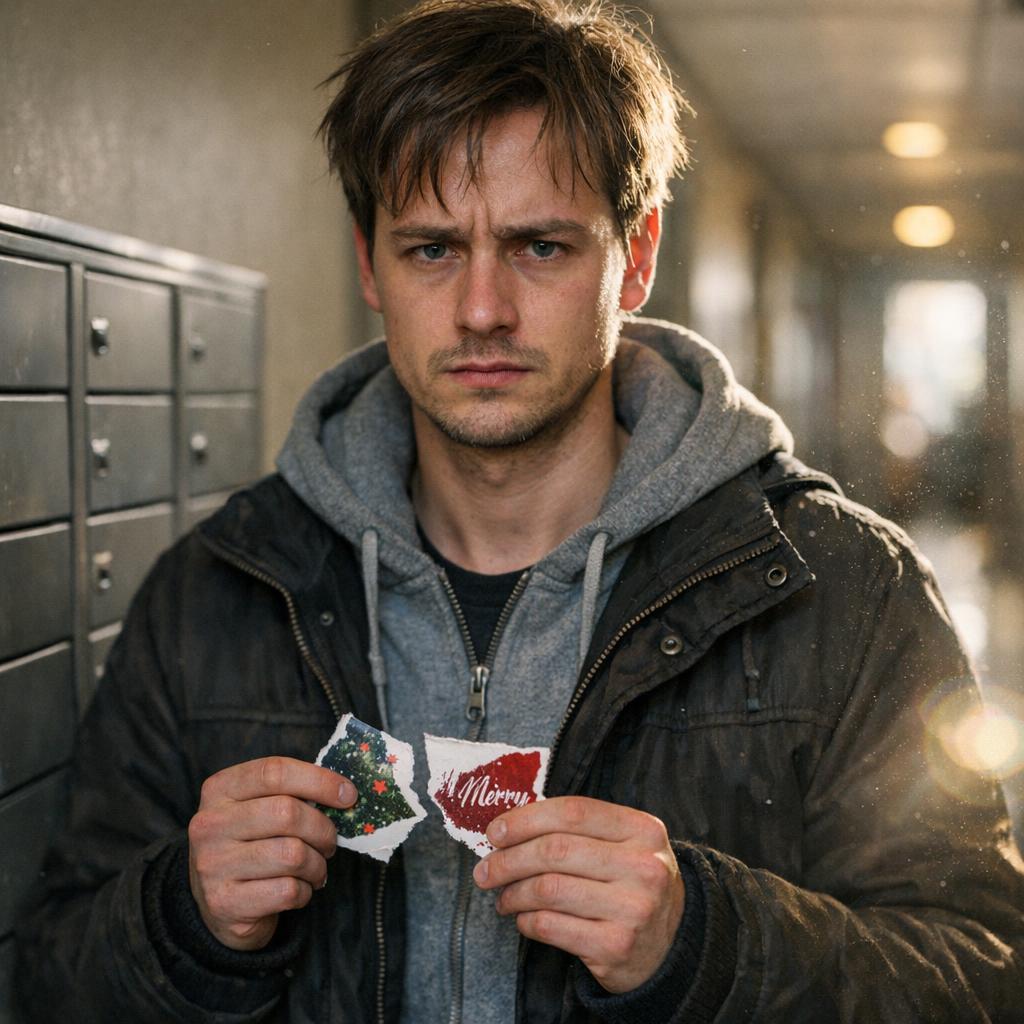 Image by RM AI
The Accepted Request
I returned to campus after winter break, my mind still churning with unanswered questions about Dad. Checking my laptop that first night back, my heart nearly stopped—the friend request to 'Rich Lawson' had been accepted. With trembling fingers, I clicked on his profile and felt the floor drop out from under me. There he was—MY dad—smiling in photos with a woman I'd never met, his arm draped casually around her shoulders like it belonged there. Two teenagers stood beside them in most pictures, a boy and girl who had his eyes, his smile. I scrolled frantically, feeling like I was watching someone else's home movies playing in reverse. Beach vacations. Thanksgiving dinners. Graduation ceremonies. Christmas mornings. The timestamps were a knife to my heart—he'd been with them during my dance recitals, during my hospital stay for appendicitis, during every 'emergency route' that kept him from my life. I sat there until 3 AM, illuminated only by my screen's blue glow, methodically saving photos as evidence of the complete parallel life he'd built while I drew pictures of airplanes for him. What broke me wasn't the photos themselves, but the candid moments where he looked so genuinely happy—happier than I'd ever seen him with us.
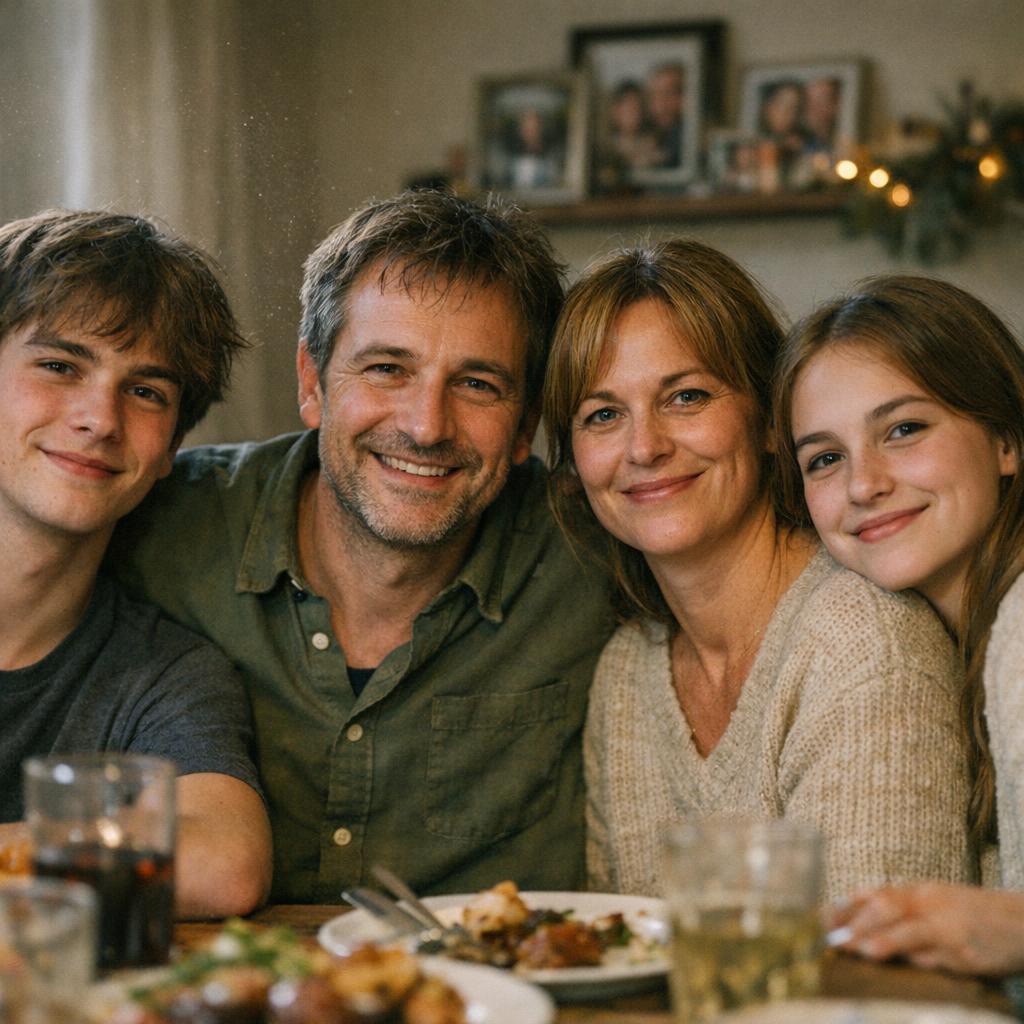 Image by RM AI
The Family Photo
I stared at the photo until my eyes burned, unable to look away from the evidence of my father's betrayal. There he was, beaming with pride, his arm wrapped around a girl in a graduation cap and gown—on the exact same day I'd scanned the audience for his face and found only an empty chair. The timestamp was like a knife to my heart: May 28th, 4:30 PM. While I was accepting my diploma alone, he was celebrating with his real daughter. I printed the photo on the library's color printer, spending money I didn't have just to make the betrayal tangible. Back in my dorm, I pinned it to my wall like some twisted vision board—a reminder of the truth I could no longer deny. That night, Tara found me curled on my bed, sobbing so hard I couldn't breathe. "Emma, what's wrong?" she asked, sitting beside me. I pointed at the photo but couldn't form words through my tears. How could I explain that the man I'd worshipped my entire life had chosen to attend another daughter's graduation instead of mine? That while I was giving my valedictorian speech to an audience missing the one person I'd written it for, he was smiling for someone else's camera? What hurt most wasn't just his absence from my graduation—it was the realization that in the story of his life, I was just a footnote.
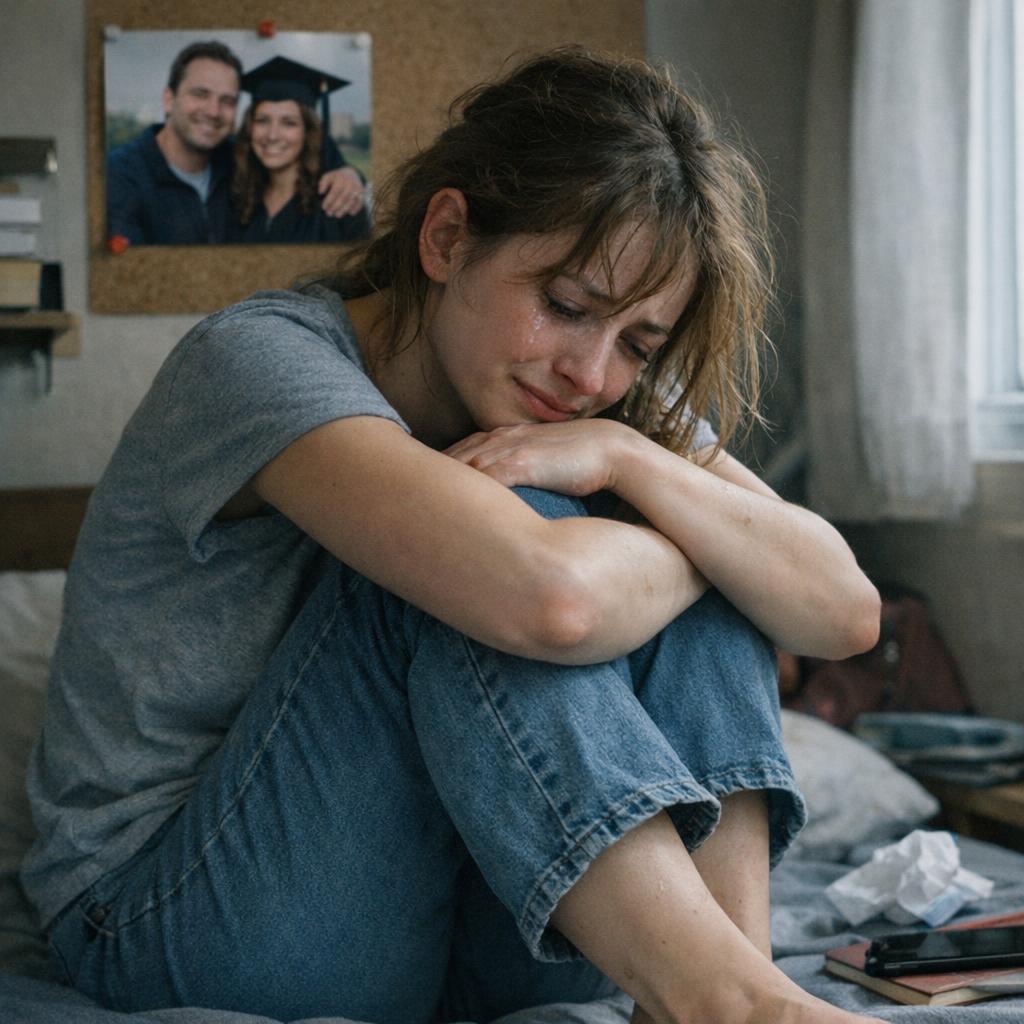 Image by RM AI
The Confrontation Call
I stared at my phone for hours that night, the contact simply labeled 'Dad' glowing on my screen like some kind of twisted beacon. At exactly 2 AM—when I knew he'd be disoriented enough to answer without thinking—I pressed call. My heart hammered against my ribs as it rang once, twice, three times. Then his groggy voice: 'Hello?' I took a deep breath, steadying myself. 'I found them,' I said, my voice surprisingly calm despite the hurricane inside me. The silence that followed was deafening—a confession without words. I could hear his breathing change, quickening with panic. 'Emma,' he finally said, my name sounding foreign in his mouth, 'we need to talk in person.' Not 'What are you talking about?' or 'Who did you find?' Just immediate acknowledgment that he'd been caught. Eighteen years of lies, and he couldn't even muster the energy for one more. I hung up without agreeing to meet, my thumb pressing the red button with finality. Then I blocked his number, my hands trembling so badly I had to try twice. I sat in the dark of my dorm room afterward, feeling strangely hollow yet somehow lighter—like I'd finally cut loose a balloon I'd been desperately clutching my entire life. What I didn't realize then was that this wouldn't be our last conversation—not by a long shot.
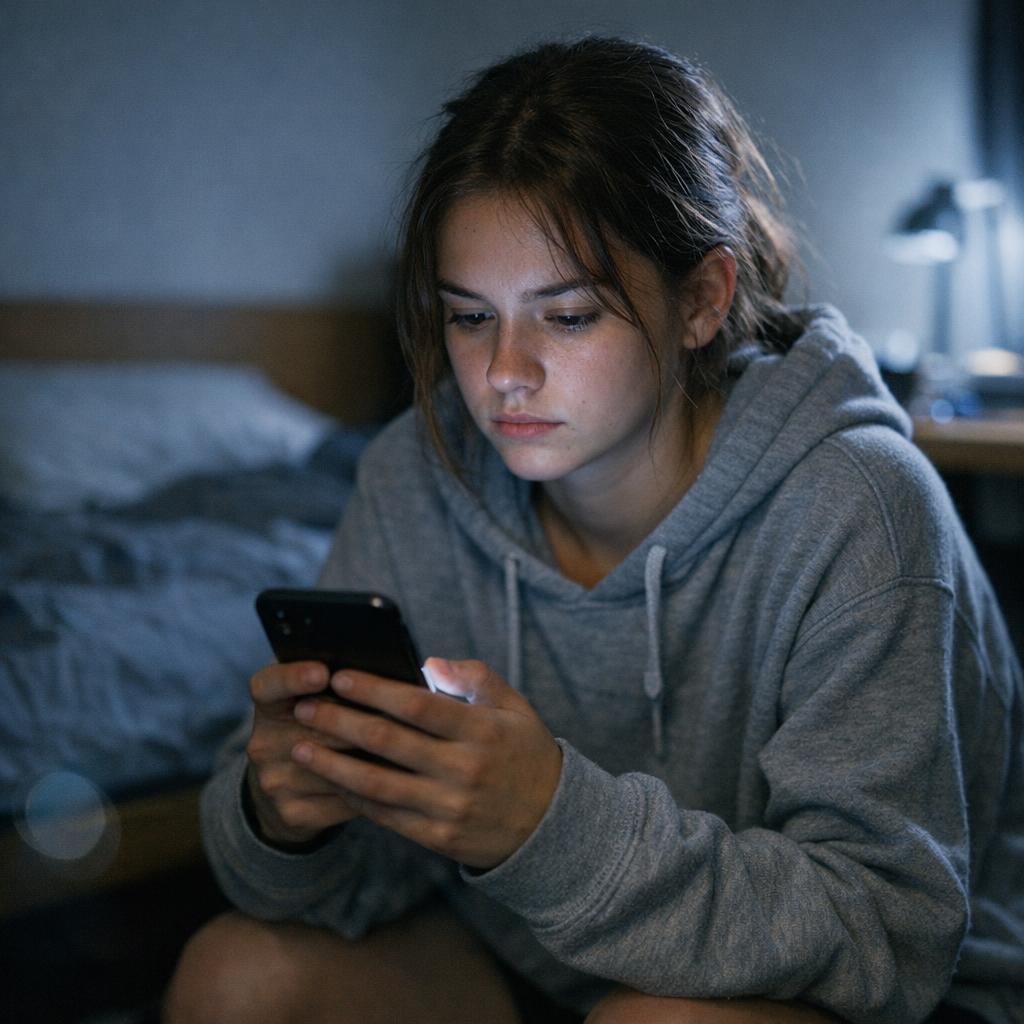 Image by RM AI
The Campus Appearance
Two days after I hung up on him, I heard a knock on my dorm room door. Not expecting anyone, I opened it without checking the peephole—a mistake I immediately regretted. There stood Dad, looking simultaneously familiar and like a complete stranger. His hair was grayer than I remembered, and dark circles shadowed his eyes, but he still wore that cologne that smelled like hotel lobbies and lies. 'Emma,' he said, his voice cracking slightly. 'Please, can we talk?' I felt my entire body go cold, then hot with rage. The audacity of this man to show up unannounced after eighteen years of part-time parenting. I kept the door chain on, creating a physical barrier between us that felt symbolically right. 'You missed my graduation to attend hers,' I said flatly, watching his face crumple as the words landed. He knew exactly who 'hers' was. No confusion, no denial—just the unmistakable look of a man finally caught in his own web. 'I can explain everything,' he pleaded, his hand against the door frame. 'Just give me ten minutes.' I stared at him through that narrow opening, at the man I'd spent my childhood idolizing, and felt nothing but hollow disappointment. 'No,' I said simply, and closed the door in his face. I slid down against it, hugging my knees to my chest as I listened to his footsteps hesitate, then slowly retreat down the hallway. What I didn't know then was that those retreating footsteps weren't taking him very far at all.
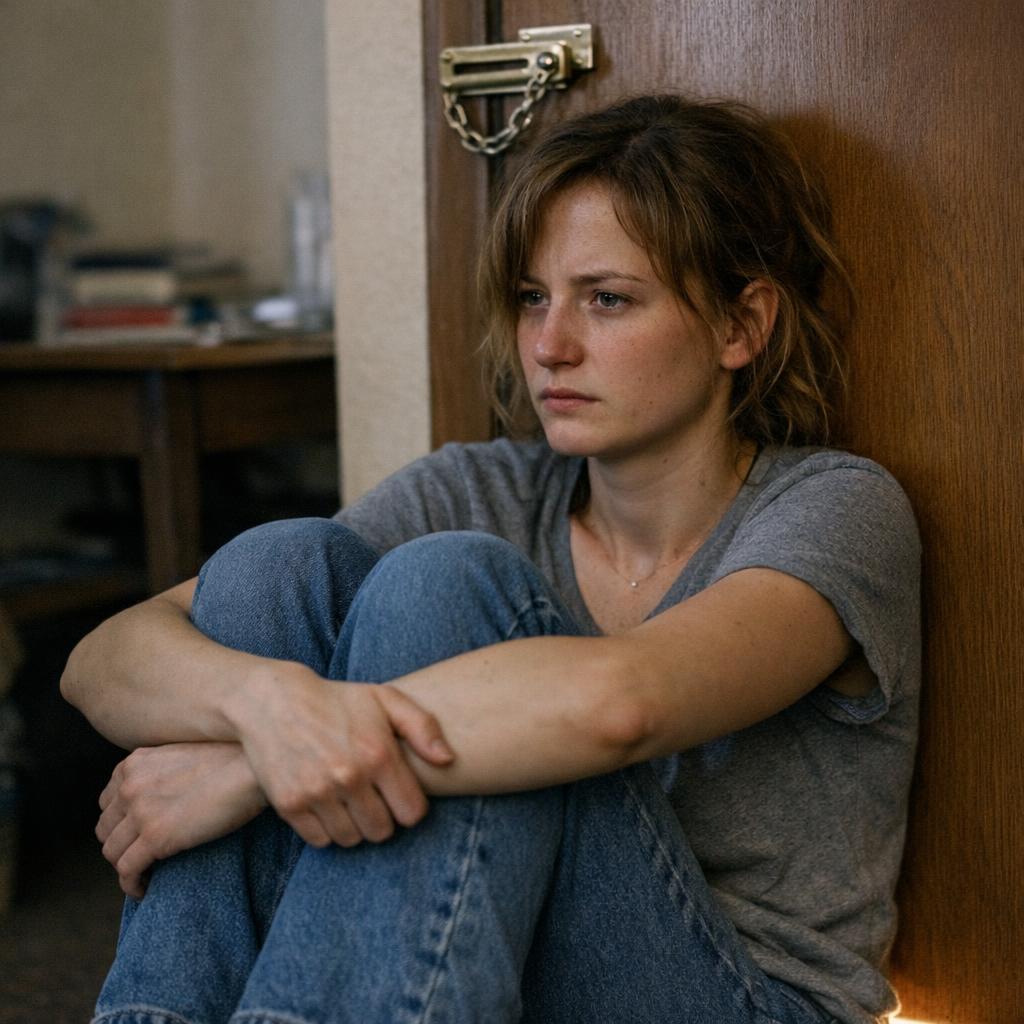 Image by RM AI
The Mother's Warning
My phone lit up with Mom's name that evening, just hours after I'd shut the door in Dad's face. 'Your father told me he tried to see you,' she said, her voice tight with anxiety. When I confirmed I'd sent him packing, she exhaled so loudly I could practically feel her relief through the phone. 'Be careful, Emma. He's... persuasive when he wants something.' There was a warning in her tone I'd never heard before—like she was finally acknowledging the manipulation I'd been subjected to my entire life. I gripped the phone tighter, my knuckles whitening. 'Did you know?' I asked, the question that had been burning inside me. 'About his daughter's graduation being the same day as mine?' The silence that followed was excruciating—stretching between us like a physical thing. I didn't need to hear her answer; her painful hesitation told me everything. She'd known all along. She'd watched me scan the audience for him, had listened to me practice my valedictorian speech knowing full well he'd chosen his other daughter over me. And she'd said nothing. Just accepted his choice as she always had, protecting him even as he broke my heart. What I couldn't understand then was why she was warning me now, after eighteen years of covering for him—and what exactly she thought he might be persuasive about.
 Image by RM AI
The Therapy Beginning
I finally broke down and scheduled an appointment with the campus counseling center after three sleepless nights of staring at those Facebook photos. Dr. Novak's office was small but comforting—plants on every surface, a box of tissues strategically placed within arm's reach. I brought the printed family photo with me, placing it face-down on her desk like it might burn me if I held it too long. 'My father isn't a pilot,' I said, my voice surprisingly steady. 'He has another family.' I waited for shock, for disbelief, for something. Instead, Dr. Novak nodded calmly, like I'd just told her I was changing my major. 'Double lives are more common than most people realize,' she said, her voice gentle but matter-of-fact. She didn't try to minimize my pain or offer empty platitudes about forgiveness. Instead, she asked the question that would haunt our next several sessions: 'The question now is what you want to do with this truth.' I stared at her, suddenly realizing I had no idea. Did I want revenge? Closure? To expose him to his 'real' family? Or did I just want to understand how someone could compartmentalize their love so completely that they could look their daughter in the eyes and lie for eighteen years straight? What terrified me most wasn't the betrayal itself, but the growing suspicion that I might be more like my father than I wanted to admit.
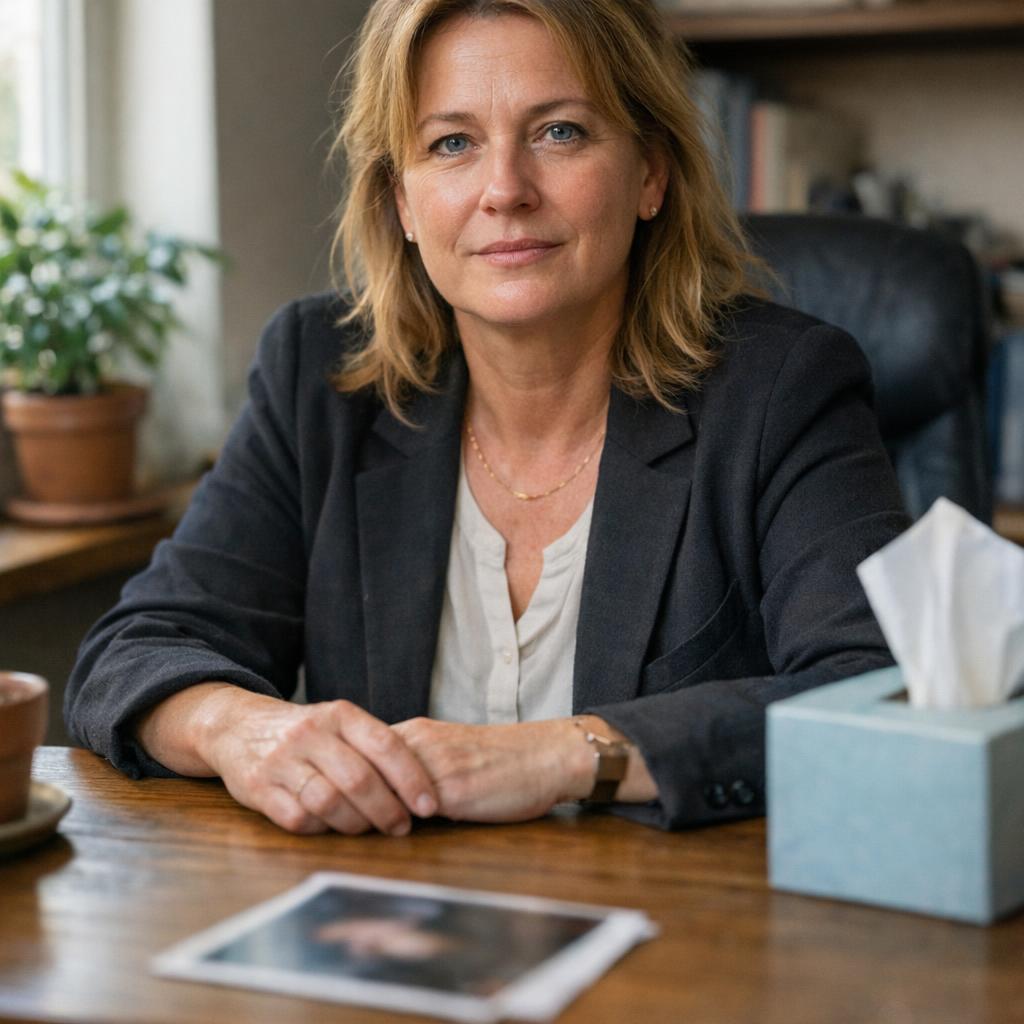 Image by RM AI
The Letter Campaign
The first letter arrived three weeks after I slammed my dorm door in Dad's face. Plain white envelope, his unmistakable handwriting, postmarked from a town I'd never heard of. Inside was a single page filled with his familiar scrawl: 'Remember when we built that kite from scratch when you were seven? You insisted on purple streamers even though I said they'd make it too heavy.' I read it five times before realizing I was crying. Every Tuesday after that, like clockwork, another letter would appear. Each one contained a carefully selected memory—the time we collected seashells at Montauk, the night he taught me constellations from our backyard, the Christmas he assembled my bike at 3 AM. Never an explicit apology, just these fragments of the father he occasionally managed to be. I created a shoebox archive for them, labeled simply 'LIES?' with a question mark I couldn't bring myself to remove. During therapy, Dr. Novak asked why I kept them if they caused me pain. 'Because they're evidence,' I said, 'that I wasn't completely imaginary to him.' What I didn't tell her was that I'd started drafting responses—angry, heartbroken letters I'd never send—each one beginning with the same question: 'If those moments were real, how could you bear to miss so many others?'
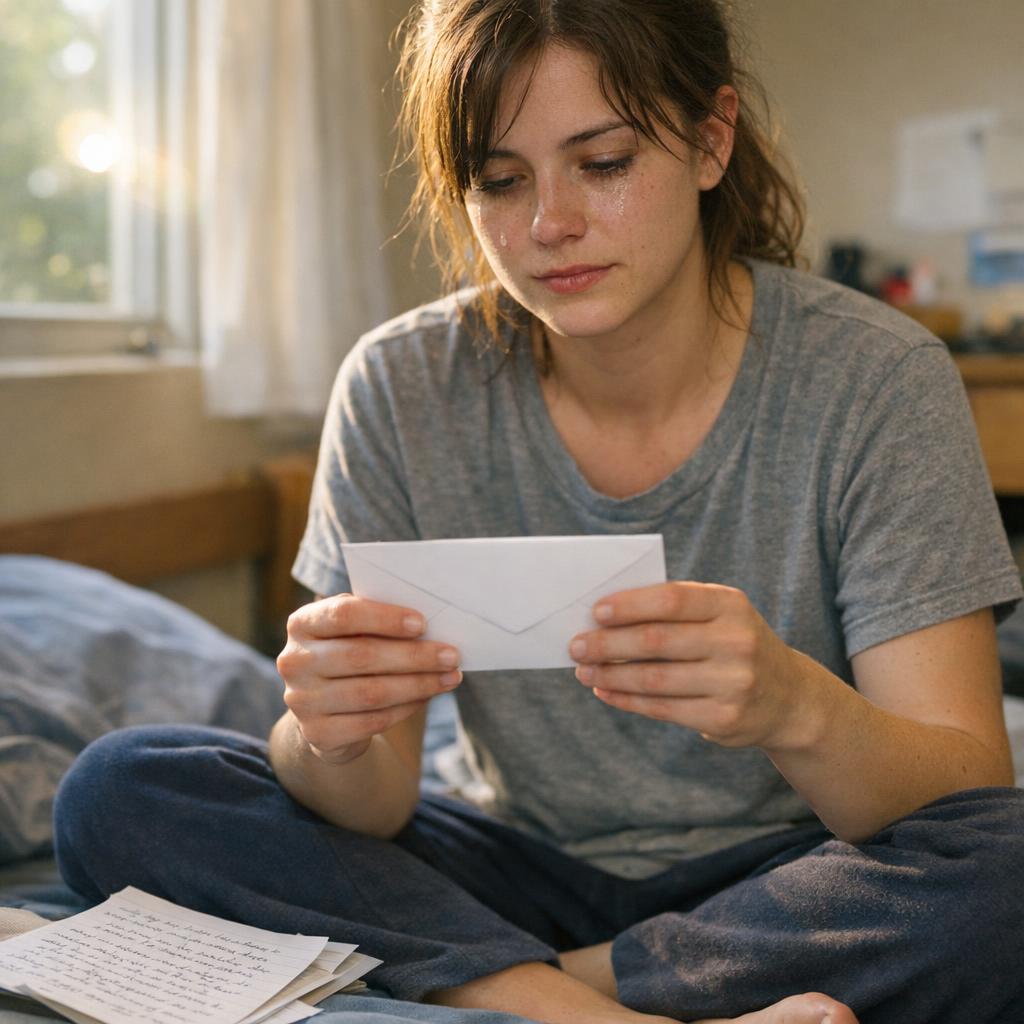 Image by RM AI
The Summer Decision
As sophomore year wound down, the thought of going home for summer break made my stomach twist into knots. The house that once felt like my sanctuary now seemed like a museum of elaborate lies. Mom had been texting daily, her messages filled with plans for home-cooked meals and movie nights—as if we could just pretend the foundation of our family hadn't crumbled. When I got the email about a journalism internship in Philadelphia, I applied immediately, not even caring about the details. The day I got accepted, I called Mom instead of texting—I owed her that much. 'I won't be coming home this summer,' I said, my voice steadier than I felt. 'I got an internship.' The silence on the other end lasted so long I thought we'd been disconnected. 'I understand,' she finally said, though her voice cracked in a way that made my chest ache. 'Just know you always have a home here.' I wanted to scream that a home built on lies wasn't really a home at all, but instead I just thanked her and promised to call weekly. What I didn't tell her was that I'd received another letter from Dad yesterday—this one containing a check and an address in Philadelphia. The same city as my internship. The same city where, according to my research, his other family lived.
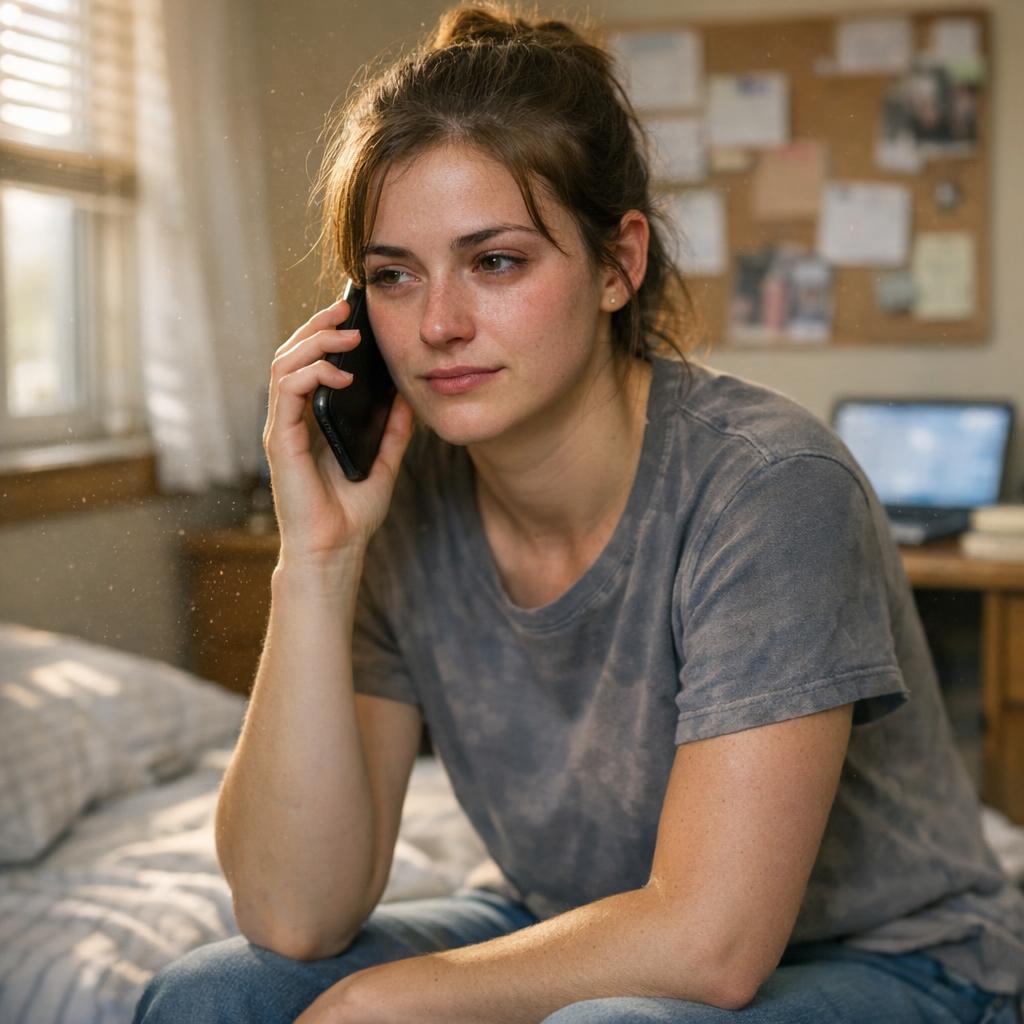 Image by RM AI
The Unexpected Encounter
I was three weeks into my internship at Keystone Publishing when my editor assigned me to cover a pharmaceutical conference for their trade magazine. 'Just get quotes from the keynote speakers,' she said, handing me a press badge. I scanned the program absentmindedly until a name punched me in the gut: 'Richard Lawson, Regional Director, Meridian Pharmaceuticals.' My father—not the airline pilot of my childhood fantasies, but a pharmaceutical executive. I stood frozen in the lobby, debating whether to call in sick. Instead, I found myself slipping into the back row of the conference hall, watching as he strode confidently to the podium. The room fell silent as he began speaking about market projections and sales strategies. I barely registered his words, too fixated on how at home he looked in this world—his real world. This wasn't the man who disappeared for 'emergency routes'; this was a respected professional with business cards and colleagues who slapped his back as he passed. I sank lower in my seat, notebook untouched, as the crushing realization washed over me: while I'd been drawing pictures of airplanes, he'd been building an entire career I knew nothing about. What terrified me most wasn't his presence on that stage, but the moment our eyes would inevitably meet across the crowded room.
 Image by RM AI
The Lobby Confrontation
I spotted him before he saw me—standing at the edge of the conference room, scanning faces as people filed out. When our eyes finally met, his expression shifted from shock to something like hope, and my stomach dropped. I wanted to run, but my feet carried me toward the lobby instead, where he followed. We sat in those stiff hotel chairs—the kind designed to keep you from getting too comfortable—while he attempted to explain eighteen years of deception. 'It started before you were born,' he said, his voice lower than I remembered. 'I never meant for it to continue this way.' His hands fidgeted with his conference badge, the pharmaceutical company logo mocking every airplane drawing I'd ever made. When I finally asked the question that had been burning inside me—why he couldn't just choose one family—he looked down at his polished shoes. 'I couldn't bear to lose either of you.' The words hung between us like smoke. I stood up without warning, my chair scraping loudly against the marble floor. Several business people glanced our way, but I didn't care. I walked away without saying goodbye, his excuses ringing hollow in my ears. What haunted me most as I pushed through the revolving doors wasn't his pathetic explanation—it was the realization that in his twisted mind, he genuinely believed he'd been loving us both.
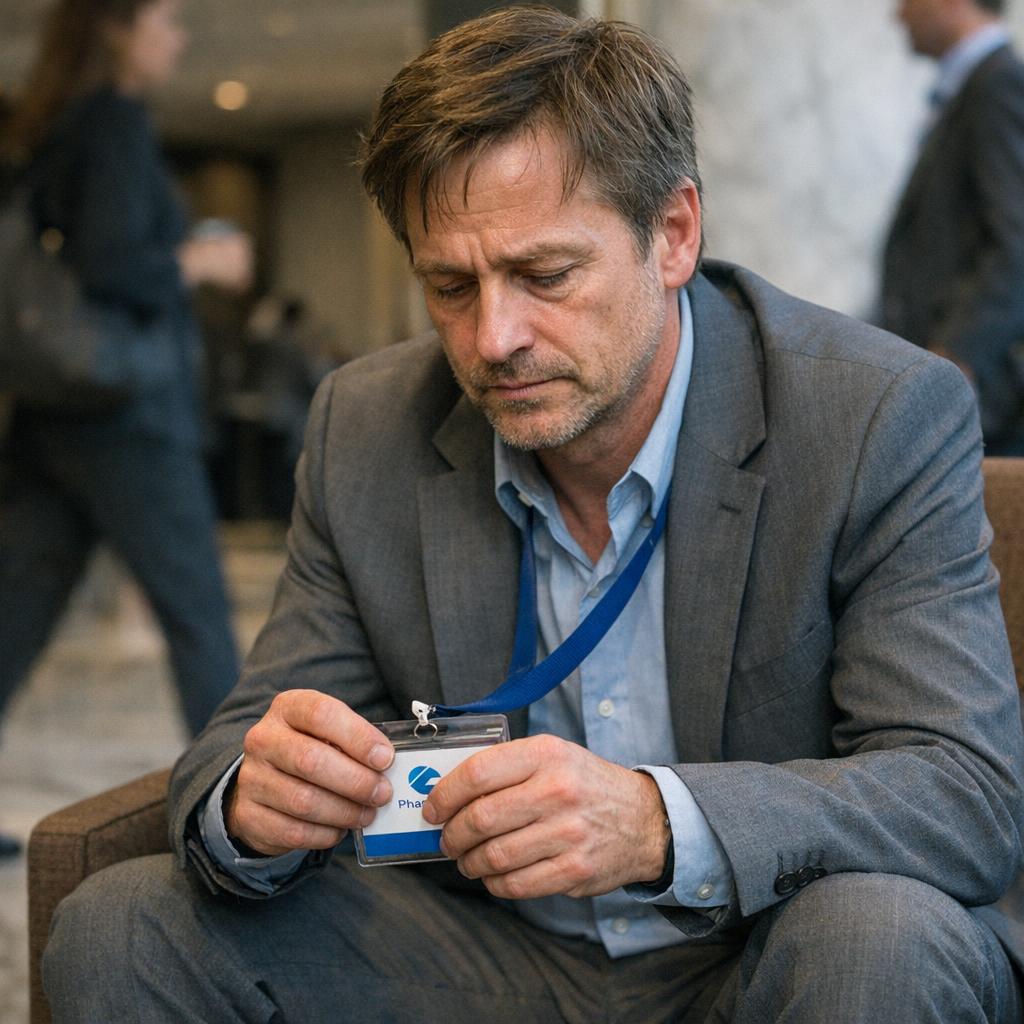 Image by RM AI
The Other Daughter
I was scrolling through my notifications a week after the conference when my heart nearly stopped. There it was—a message request from 'Eliza Lawson,' the profile picture unmistakably showing the girl from Dad's family photos. The other daughter. His real daughter, according to the timestamps on all those graduation photos and family vacations. 'I think we should talk,' her message read. 'I just found out about you.' Three simple sentences that confirmed my entire existence had been hidden from her too. My finger hovered over the delete button for what felt like hours. What would I even say to her? 'Hey, surprise! Our dad's been living a double life!' But curiosity won out over anger. With trembling hands, I typed my phone number and hit send, then tossed my phone across the bed like it had suddenly turned radioactive. For the next forty-five minutes, I paced my tiny apartment, jumping at every notification sound. When my phone finally rang with an unknown number, I stared at it for three full rings before answering. The voice on the other end sounded so eerily similar to mine that goosebumps erupted across my arms. 'Emma?' she asked tentatively. 'This is Eliza... I guess I'm your sister.'
 Image by RM AI
The Sister Call
I answered Eliza's call with my heart in my throat. 'Hello?' I managed, my voice barely audible. 'Emma? This is Eliza... I guess I'm your sister.' The similarity in our voices was uncanny—like hearing myself on a recording but slightly different. We talked for hours that night, comparing notes on the man who'd divided himself between us. 'He always brought me these little keychains from airports,' she said, and I felt my stomach drop. 'Me too,' I whispered. 'And did he call you...' we both said simultaneously, '...kiddo?' We laughed, then cried, then laughed again at the absurdity of it all. The symmetry of our lives was both comforting and devastating. Her story mirrored mine perfectly—Dad constantly 'traveling for work,' gone for weeks at a time, showing up with grand gestures and disappearing just as quickly. 'Did you know about me?' I finally asked, the question that had been burning inside me. There was a pause, then her voice, soft and sincere: 'Never. Not until last month.' I believed her instantly. We were both victims of the same elaborate performance, both supporting actresses in a play where we thought we had leading roles. What I didn't realize then was that Eliza's discovery about me wasn't accidental—and she wasn't calling just to connect with a newfound sister.
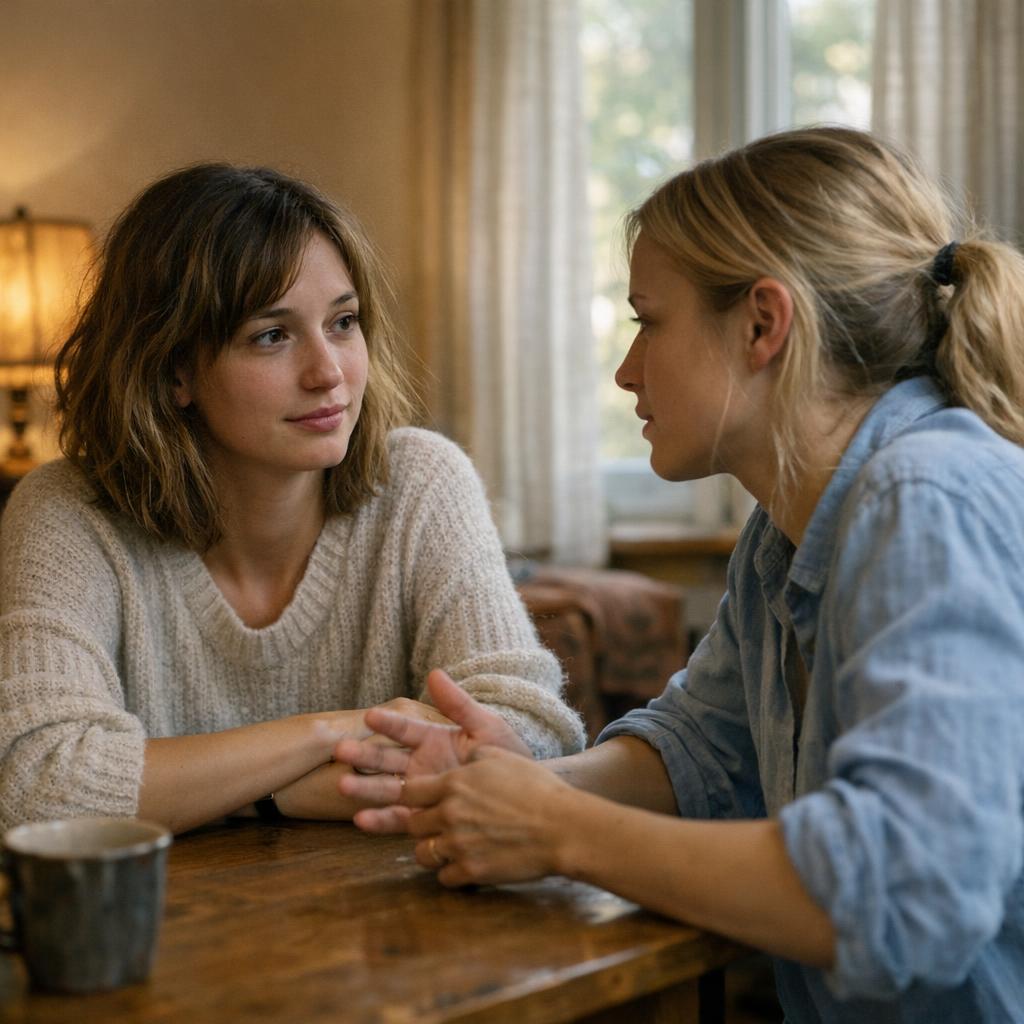 Image by RM AI
The Brother Revelation
Eliza called again the next day, this time with a surprise that made my stomach drop. 'Emma, I have someone here who wants to talk to you,' she said, her voice hesitant. 'It's Thomas... our brother.' I gripped my phone so tightly my knuckles turned white as a deep male voice came on the line. Unlike Eliza's cautious approach, Thomas radiated anger. 'I found out about you through bank statements,' he said bluntly. 'Dad's been making regular payments to your mom for years. He told us it was for a sick cousin.' I closed my eyes, another lie unraveling. For the next three hours, we traded stories like playing cards, each revelation more painful than the last. Thomas was two years older than me, a business major who'd once idolized our father. 'He taught me to drive in his company car,' Thomas said bitterly. 'The same weekends he was supposedly flying planes for you.' We pieced together a timeline of our childhoods, discovering that Dad had methodically alternated holidays, birthdays, and school events between us. 'It's like he had a spreadsheet for his love,' Eliza whispered at one point. What none of us realized then was that our newfound sibling bond would soon be tested in ways we couldn't imagine—especially when Thomas revealed what else he'd found in those financial records.
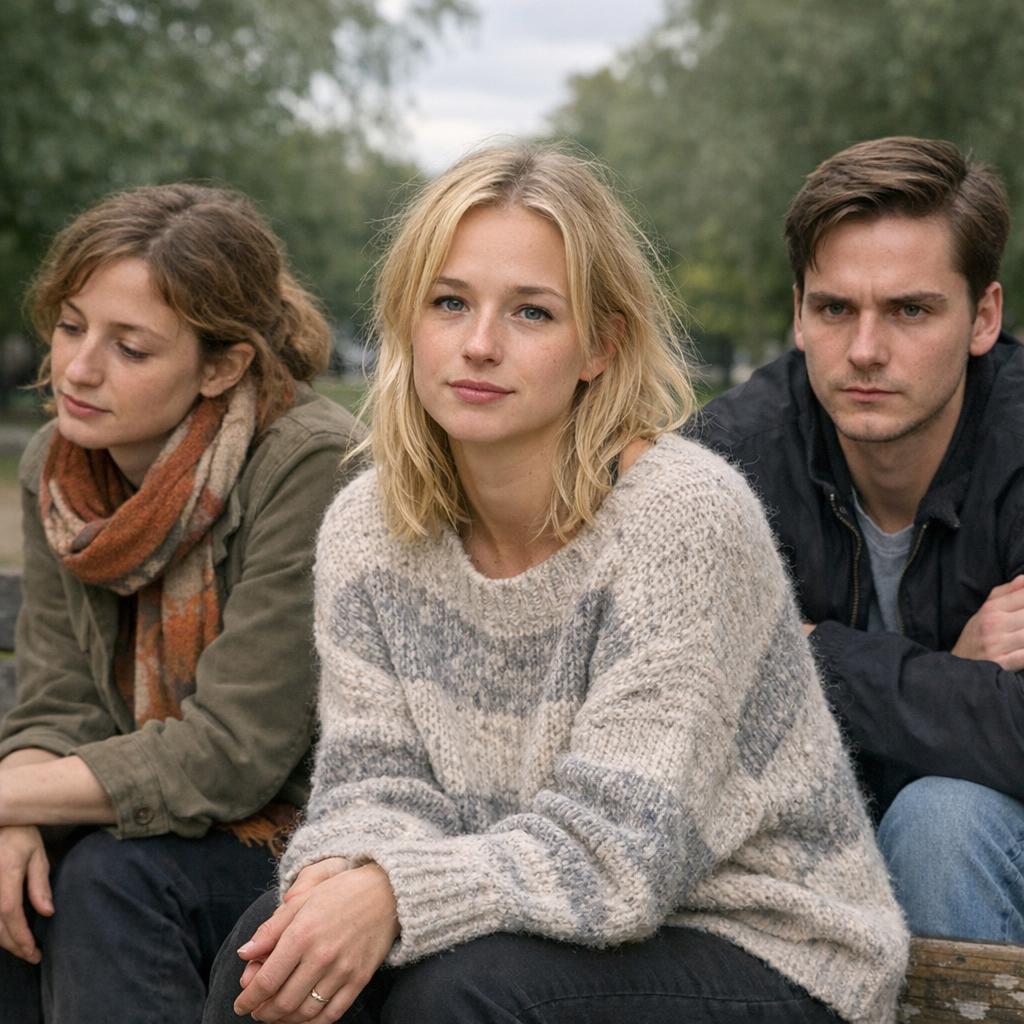 Image by RM AI
The Other Mother
I sat on my bed, staring at my phone after Eliza dropped another bombshell. 'Our mother—Margaret—she had no idea about you or your mom,' she said, her voice cracking slightly. 'Dad's been kicked out. She found his second phone with all the messages.' I felt a strange mix of vindication and guilt. Someone else's life was imploding because of my father's lies. 'What did he tell her about his job?' I asked, almost afraid to hear the answer. Eliza laughed, but it was hollow, empty. 'That's the thing—he actually was a pharmaceutical executive who traveled for work. At least that part wasn't a lie.' I closed my eyes, processing this. While my childhood was filled with imaginary cockpits and fictional flight paths, his other family got something closer to the truth. 'So I got the pilot fantasy, and you got reality,' I said, bitterness seeping into my voice. 'I don't know which is worse.' We sat in silence for a moment, two daughters trying to reconcile different versions of the same man. 'Margaret wants to meet you,' Eliza finally said, and my heart stopped. 'She says she has questions only you might be able to answer.' What I couldn't possibly know then was that meeting my father's 'real' wife would reveal secrets even more devastating than the ones I'd already uncovered.
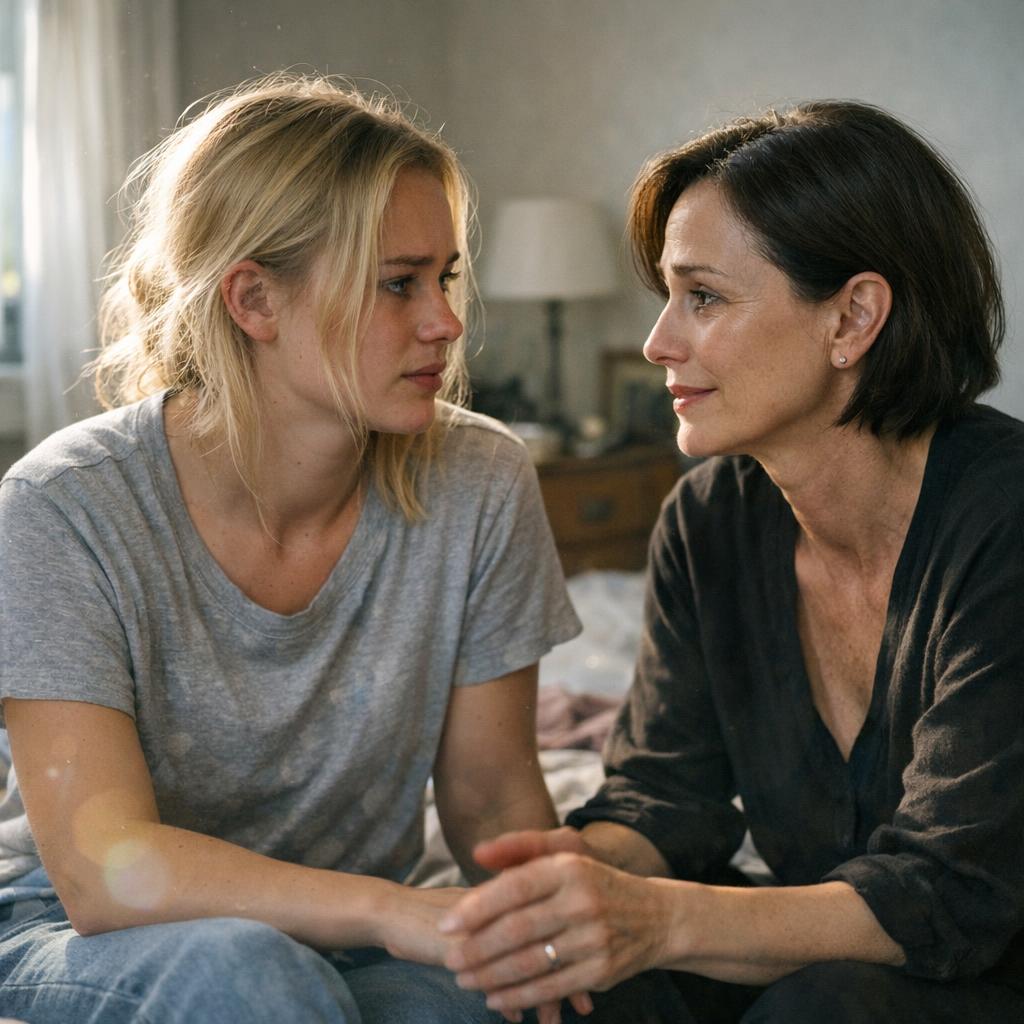 Image by RM AI
The Coffee Meeting
I sat across from Eliza at a small table in Crossroads Café, a quaint coffee shop that marked the halfway point between our campuses. Meeting her in person was like looking into some bizarre funhouse mirror—we had different coloring (she got Dad's blue eyes while I inherited Mom's brown ones), but our mannerisms were eerily identical. The way we both tucked hair behind our ears when nervous. How we stirred our coffee counterclockwise. Little genetic echoes that confirmed what DNA would tell us. "Look at this," she said, sliding her phone across the table to show me a photo of her sixteenth birthday. Dad stood behind her, that signature proud smile I knew so well. I pulled out my phone and found my own sixteenth birthday picture—same smile, different location, three months apart. "He gave us both the same bracelet," she noted, pointing to my wrist where I still wore the silver chain with the tiny star charm. I hadn't been able to take it off, even knowing what I knew now. We spent hours like this, archaeologists excavating parallel childhoods, piecing together the elaborate scheduling system that allowed one man to be two fathers. What we didn't realize then was that these shared memories weren't just coincidences—they were carefully calculated duplications designed to prevent slip-ups in his double life.
 Image by RM AI
The Mother's Meeting
I finally went home that weekend in late October, when the trees along our street had turned that perfect shade of gold I remembered from childhood. The moment Mom opened the door, I knew something had shifted. She'd lost weight—too much—and fine lines I'd never noticed before mapped her face like roads on a weathered atlas. Our house felt smaller, quieter. Over dinner (she'd made my favorite lasagna, though she barely touched hers), I told her about meeting Eliza. I expected shock, maybe anger, but Mom just nodded slowly, pushing pasta around her plate. 'I always knew this day might come,' she admitted, her voice steady but distant. 'Did you ever think about leaving him?' I asked, the question that had been burning inside me for months. She looked out the kitchen window, at the bird feeder Dad had installed years ago but never filled. 'At first I stayed for financial security,' she said, 'then out of habit, and finally because leaving meant admitting I'd wasted my life on a lie.' Her eyes met mine, suddenly clear and sharp. 'But you need to understand something about your father that I've never told anyone—not even Dr. Novak knows this part.'
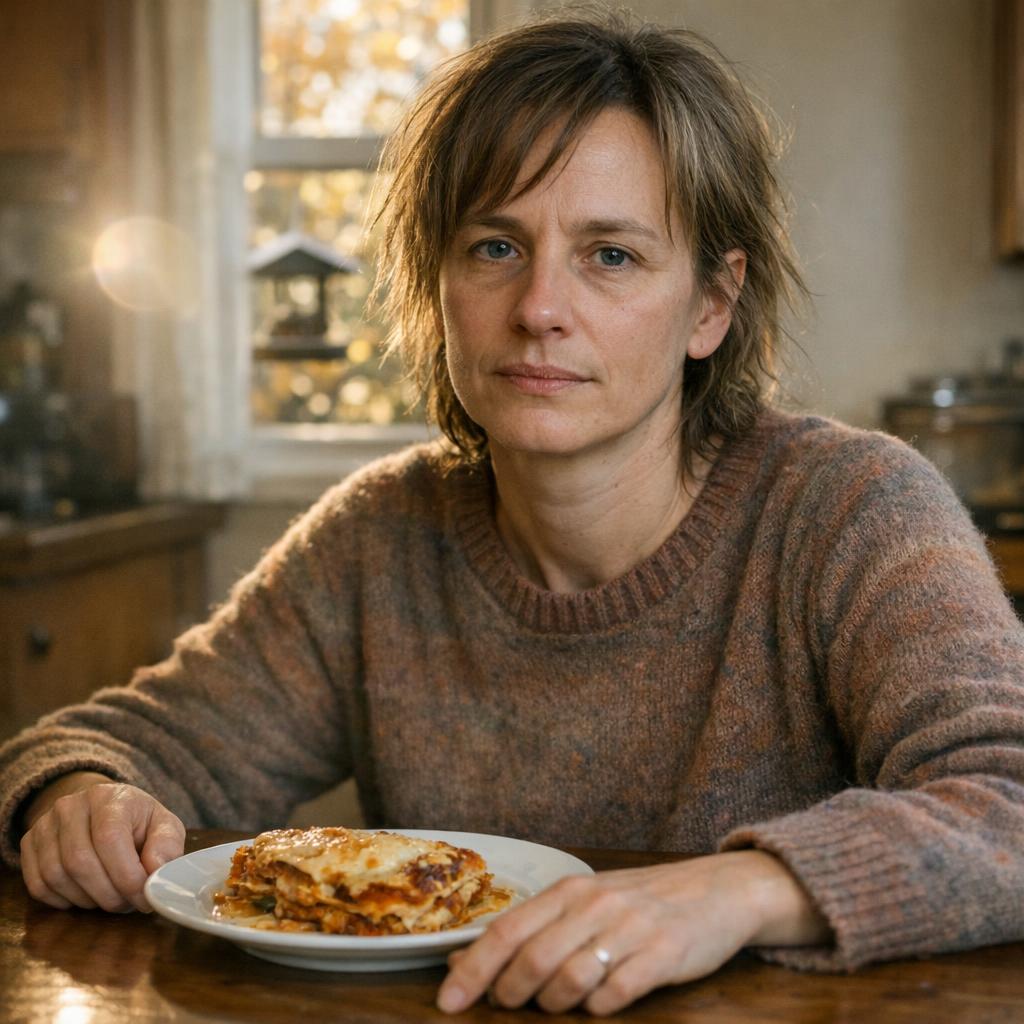 Image by RM AI
The Father's Plea
I was helping Mom wash dishes when the doorbell rang. She froze, hands dripping with soapy water, and we both knew who it was before she even opened the door. Dad stood on the porch looking like he'd aged a decade since I'd seen him at the conference. His crisp pharmaceutical executive polish was gone, replaced by a rumpled shirt and dark circles under his eyes. 'Can I come in?' he asked, his voice smaller than I'd ever heard it. Mom just stepped aside, her face unreadable. He sat at our kitchen table—the same one where he'd told countless stories about imaginary flights—and confessed that both families had cut him off. Margaret had filed for divorce. Eliza and Thomas weren't speaking to him. 'I know I don't deserve forgiveness,' he said, looking directly at me, 'but I want you to know I truly love you. I always have.' For the first time, I saw him not as the hero pilot of my childhood or the villain who'd deceived us, but as something more complicated—a deeply flawed man who'd built a house of cards so elaborate that he couldn't dismantle it without destroying everything. What shocked me most wasn't his appearance or his words, but what Mom did next.
 Image by RM AI
The Siblings' Decision
We met at a dimly lit restaurant downtown—three strangers connected by DNA and deception. I arrived first, fidgeting with my napkin until Eliza walked in, followed by Thomas five minutes later. The waitress probably thought we were friends catching up, not half-siblings meeting for the second time ever. 'I think we should confront him together,' Thomas said after our appetizers arrived, his voice tight with the same anger I'd heard on the phone. 'Make him face all three of his children at once.' He stabbed at his calamari like it had personally wronged him. Eliza traced the condensation on her water glass, avoiding eye contact. 'I don't know if I'm ready for that,' she admitted. I surprised myself by saying, 'He's still our father,' which earned a scoff from Thomas. 'A father is someone who's there,' he countered, 'not someone who divides himself like a time-share property.' We fell silent, the weight of our shared betrayal hanging over the table. I studied their faces, searching for pieces of myself, wondering if they were doing the same. We ordered dessert but barely touched it, and when the check came, we split it three ways—perfectly equal, unlike our father's love. We parted without making a decision, but as I watched them walk away, I realized something that chilled me to the bone: we might have inherited more than just his features.
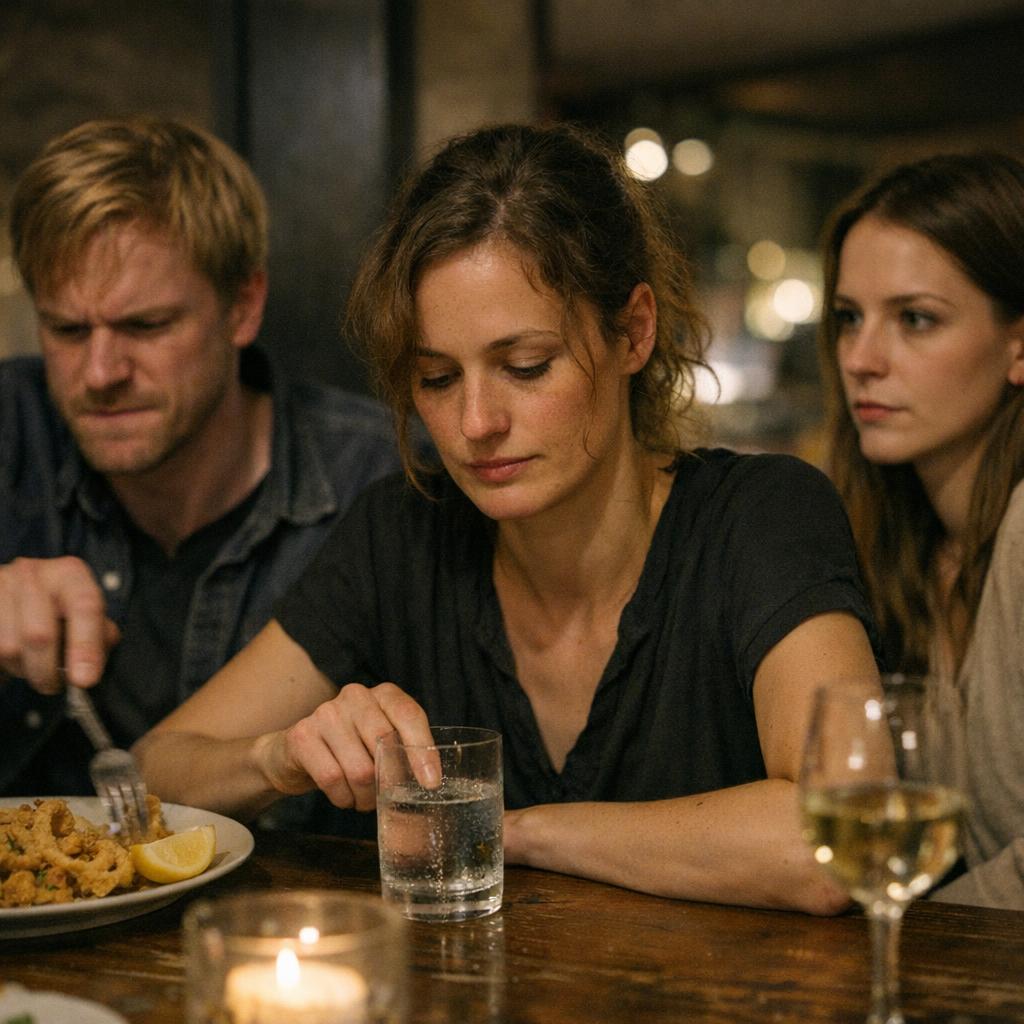 Image by RM AI
The Therapy Breakthrough
I started seeing Dr. Novak three weeks after the coffee shop meeting with my siblings. Her office was warm and inviting, with plants that seemed impossibly healthy and a couch that had just the right amount of give. 'Your father maintained two separate lives for over twenty years,' she said during our fourth session, her voice gentle but firm. 'That requires extraordinary commitment.' I scoffed, crossing my arms. 'Commitment to lying.' She tilted her head slightly. 'Or commitment to not losing either family.' That simple reframing hit me like a physical blow. 'If he didn't care,' she continued, watching my face carefully, 'why maintain both families for decades? Why not just leave?' I sat with that question, turning it over in my mind like a strange artifact. The truth was complicated and painful: he loved us, just not enough to choose or be honest. Tears spilled down my cheeks as I whispered, 'So the love was real, even if everything else was fake?' Dr. Novak nodded. 'The context was a lie. The emotions weren't necessarily.' For the first time since discovering my father's double life, I felt something shift inside me—not forgiveness exactly, but a crack in the wall of anger I'd built. What I didn't realize then was that this breakthrough would lead me to make a decision that would change all our lives forever.
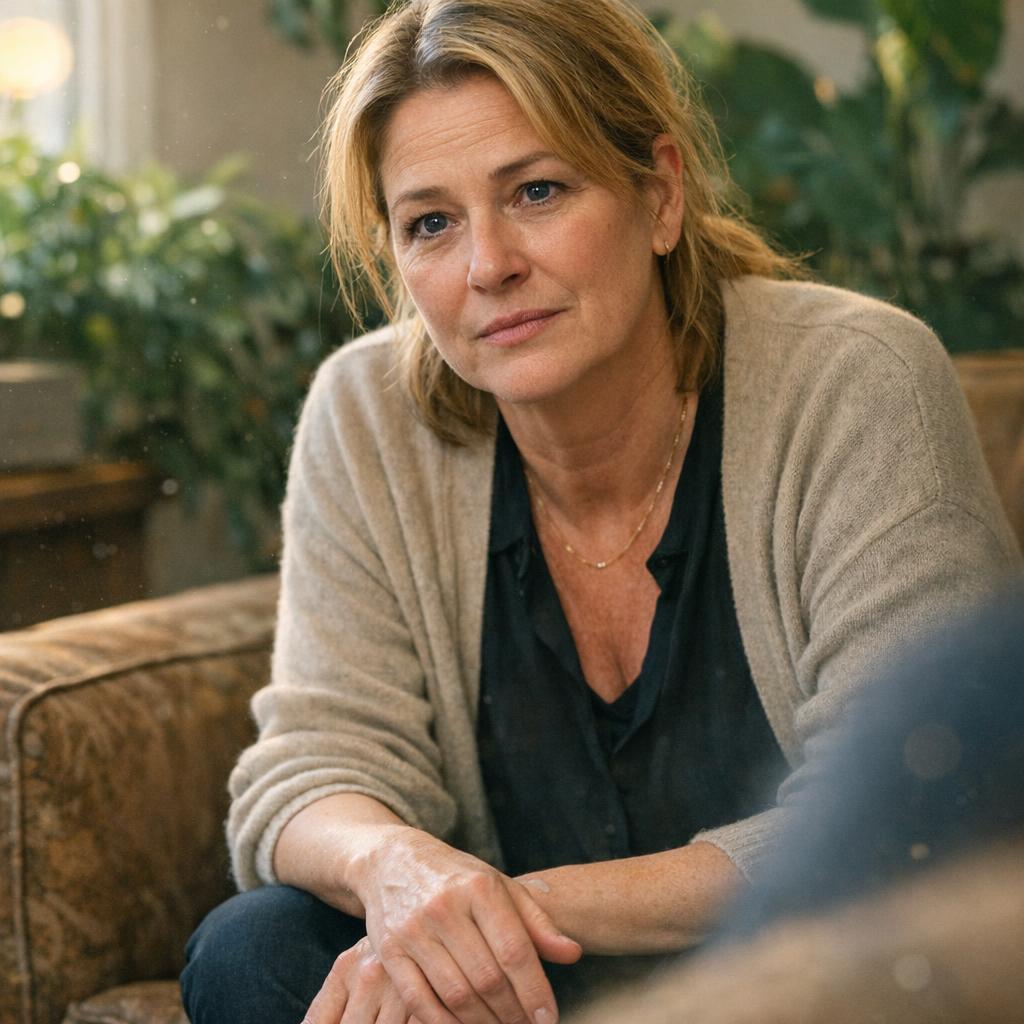 Image by RM AI
The Family Dinner
Six months after my world imploded, I found myself sitting across from my father at Marcello's—the same restaurant where he'd taken me for my high school graduation. The irony wasn't lost on me. I'd chosen it deliberately, wanting to see his reaction when he realized where we were meeting. He arrived fifteen minutes early, already nursing a scotch when I walked in. 'Emma,' he said, standing awkwardly as if unsure whether to hug me. I just nodded toward the chair. His hands trembled slightly as he adjusted his napkin, folded and refolded it until it was perfectly aligned with the edge of the table. 'I never meant to hurt anyone,' he finally said, his voice barely audible above the restaurant chatter. 'I got trapped in my own web.' I took a sip of water, letting the silence stretch between us until he squirmed. 'Was any of it real?' I finally asked, the question that had kept me awake for months. He reached across the table for my hand, his eyes wet with tears I couldn't tell were genuine or practiced. 'Every moment with you was real, Emma,' he whispered. 'The only fiction was where I went when I left.' I wanted to believe him, but as I looked into those familiar eyes—the same ones that had convinced me of imaginary flights for eighteen years—I realized there was something he still wasn't telling me.
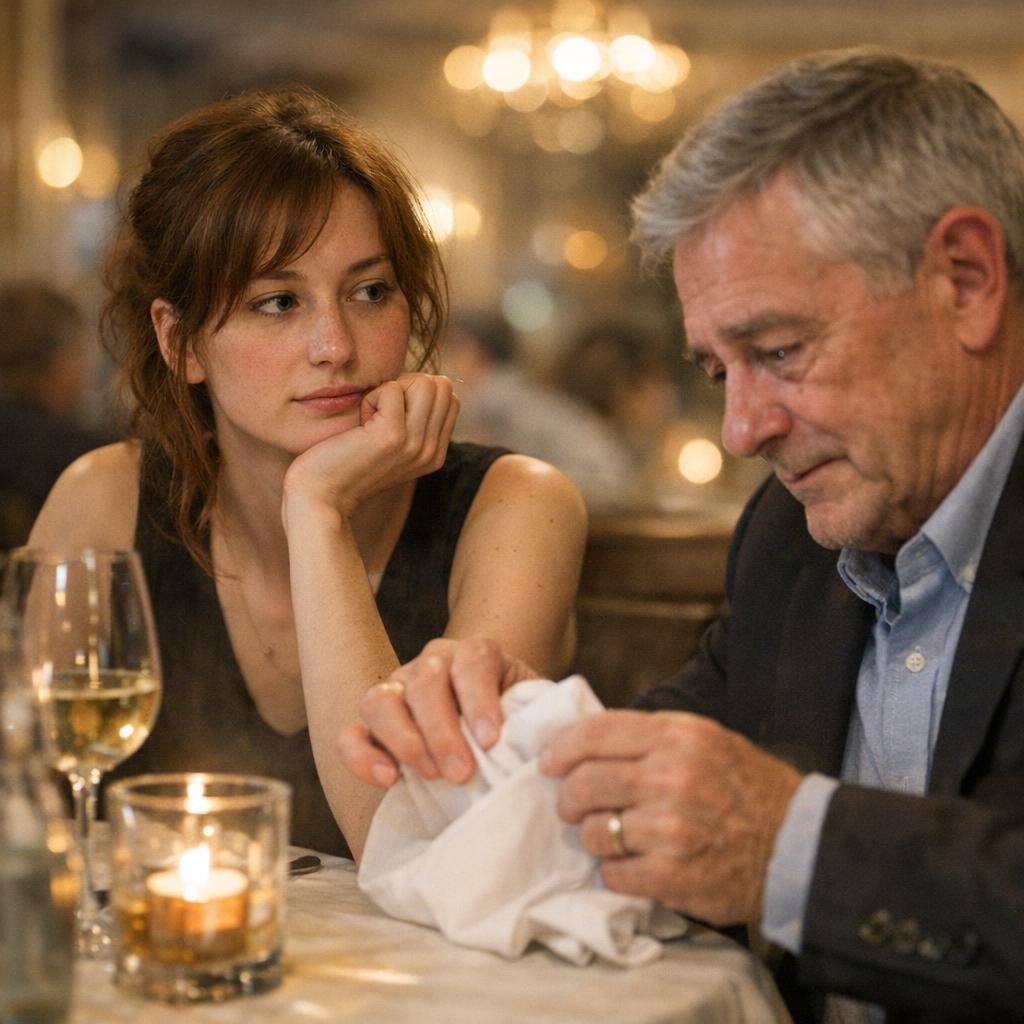 Image by RM AI
The New Story
At 28, I've built what I call my 'patchwork family' – a cautious web of relationships with everyone involved in my father's double life. Mom and I have weekly coffee dates where we talk about everything except him, unless I bring him up first. Dad sends birthday cards that arrive exactly three days early, like he's calculated the perfect timing to show he cares without seeming desperate. Eliza and I text almost daily, sharing the weird little genetic quirks we've discovered we share (we both sneeze in threes and hate cilantro). Thomas remains the most distant, though he'll occasionally send me articles about psychology with the caption "thought you'd find this interesting." We attempted a holiday gathering last year – all of us in one room – and it was as awkward as you'd expect, with conversations that carefully danced around the elephant in the room. But we tried, and that counts for something. I've learned that love and lies can coexist in the same heart, that mothers will create entire fictional worlds to protect their children's image of their father, and that the stories we tell ourselves are sometimes more powerful than reality. What I never expected was how my father's talent for compartmentalizing would show up in my own life – especially when I met someone who made me question everything I thought I knew about trust.
 Image by RM AI
KEEP ON READING
Was Caligula The Most Ruthless Roman Emperor?
Artur Matosyan on UnsplashRoman Emperor Caligula is one of ancient…
By Rob Shapiro Dec 18, 2025
1 Weird Fact About Every President
Washington, Lincoln, FDR. Most people know something about the lives…
By Robbie Woods Dec 3, 2024
10 Actors Who Perfectly Played a Historical Figure & 10…
Which Performance is Your Favorite?. Playing the role of a…
By Rob Shapiro Sep 15, 2025
10 Actors Who Perfectly Played a Historical Figure & 10…
Portraying a real person from history is one of the…
By Noone Dec 17, 2025
10 Actors Who Weren't Up To Playing A U.S. President…
Who Wouldn't Vote Woody Harrelson for President?. Actors who sign…
By Rob Shapiro Oct 22, 2025
10 Amazing Popes & 10 Who Weren't So Great
An Odd Cast of Characters Throughout History. From popes who…
By Henry Judd Apr 29, 2025