

My Mother-in-Law Tried to Steal My Newborn From the Hospital - What I Found in Her Bag Made Me Call Security
My Mother-in-Law Tried to Steal My Newborn From the Hospital - What I Found in Her Bag Made Me Call Security
The First Morning
I wake up and for a split second I have no idea where I am. The ceiling is wrong, the light is wrong, and there's a dull ache radiating from somewhere low in my abdomen that reminds me, fast, that nothing about the last twenty-four hours was a dream. The hospital room comes into focus — the beeping monitors, the IV line taped to the back of my hand, the thin blanket that smells like industrial detergent. Then Nurse Julie is beside me, her floral scrubs bright against the pale morning light, and she's saying something soft and reassuring about the morning feeding. She wheels the bassinet closer and I see Lily for the second time in my life, really see her — this tiny, dark-haired creature wrapped in a pink swaddle, her little mouth already working like she knows exactly what she needs even if I don't. I try to sit up and my whole body protests. Julie guides me through the diaper change with a patience I don't deserve at six in the morning, talking me through each step like it's the most normal thing in the world, and I fumble through it with shaking hands. When it's done and Lily is back in my arms, I just hold her. I don't have words for it yet. I just feel the weight of her, small and warm and impossibly real against my chest.
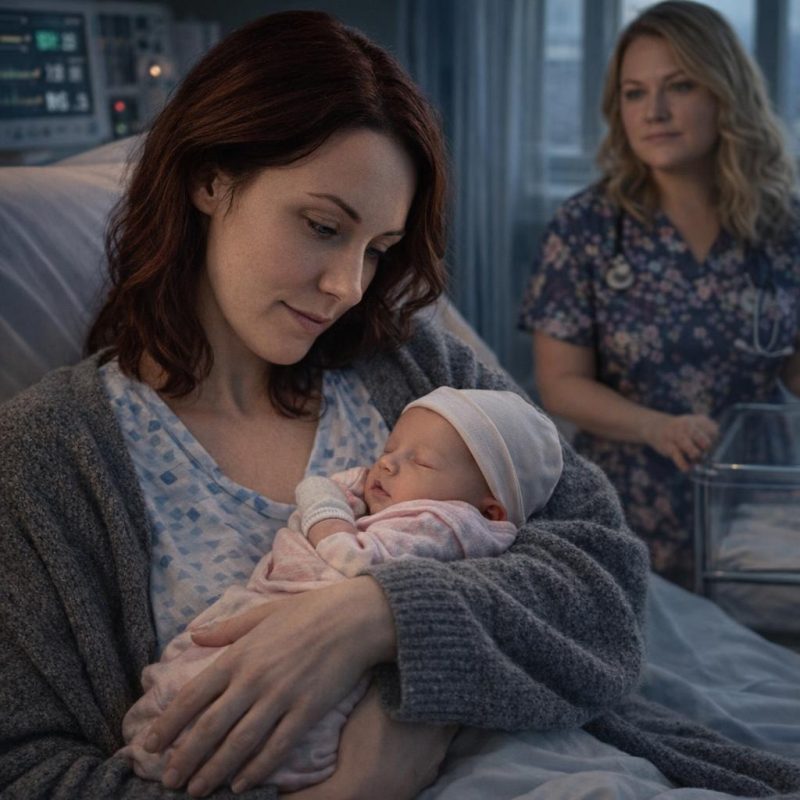 Image by RM AI
The Doctor's Assessment
Dr. Patel arrives during what I think is mid-morning, though time has gone strange and slippery since the delivery. David is in the chair beside my bed, his sandy hair sticking up on one side, still wearing the same rumpled clothes from yesterday. He reaches over and squeezes my hand when the doctor walks in, and I'm grateful for that small anchor. Dr. Patel is brisk but warm — she checks my incision with careful hands, asks me to rate my pain, listens to my breathing. I ask her, maybe a little too eagerly, when I can go home. She gives me a look that's kind but honest. She explains that the labor was harder on my body than a typical delivery, that there was more trauma than she'd like, and that she wants to monitor me for at least another day, possibly two. I nod like I'm taking it in stride. David nods too, though I can see the exhaustion behind his eyes. Then Dr. Patel sits on the edge of the rolling stool and tells us that even after discharge, full recovery will take six to eight weeks minimum — longer if I push too hard too soon. She says the words 'accept help' twice, like she knows something I don't. I'm still processing the number when she says it again: six to eight weeks.
 Image by RM AI
Learning Together
By afternoon, it's just the three of us — me, David, and Lily — and the room feels both too small and somehow exactly right. David pulls his chair up close to the bed and we try the feeding again, his big hands hovering uselessly but helpfully near my elbow while I attempt to get Lily to latch. She's not cooperating. I'm not cooperating either, honestly. I mutter something frustrated under my breath and David reads me a tip from the discharge packet in his most serious voice, like he's presenting a quarterly report, and it's so absurd that I almost laugh. Almost. We get there eventually, sort of, and Lily settles into a rhythm that feels fragile and miraculous at the same time. David reads the rest of the discharge instructions aloud while she feeds — what to watch for, what's normal, what isn't — and we talk in low voices about what the first night home might look like. I tell him I'm scared. He says he is too. Neither of us pretends otherwise, and that honesty feels like the most solid thing in the room. Then Lily's eyes flutter shut mid-feed, her mouth going slack, her whole body going boneless with the particular abandon of a sleeping newborn. David and I look at each other. Neither of us speaks. The quiet between us, watching her sleep, is the closest thing to peace I've felt in days.
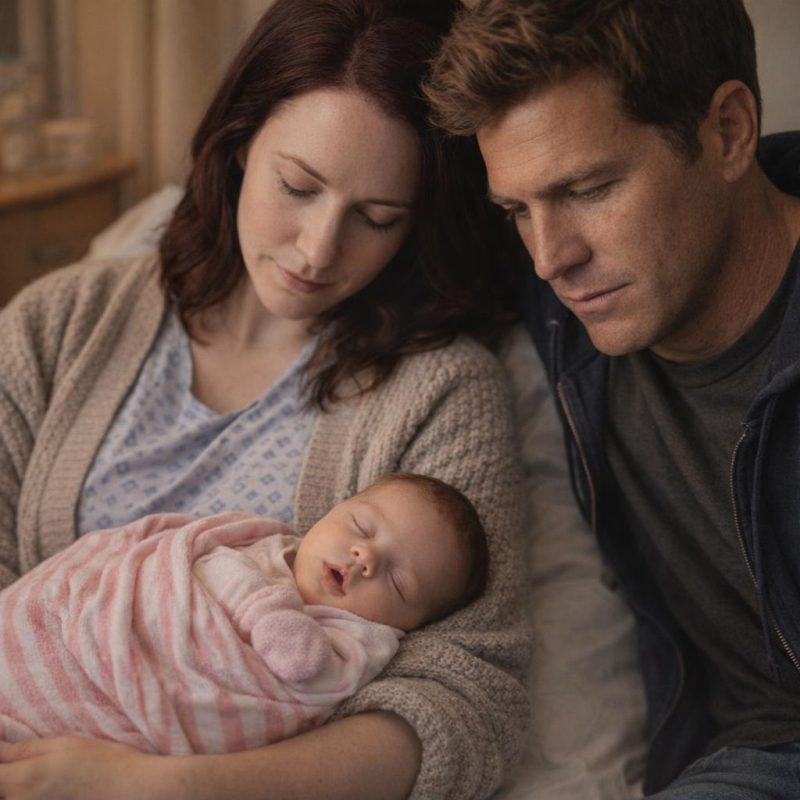 Image by RM AI
Martha Arrives
Martha arrives just after lunch, and I hear her before I see her — the click of heels in the corridor, a bright voice telling someone in the hallway that yes, she's the grandmother. She comes through the door carrying two large shopping bags and wearing a cream-colored blazer that probably costs more than our car payment. She goes straight to David, wraps him in a hug that lasts a beat longer than necessary, and I sit up a little straighter in my hospital bed, smoothing the blanket over my lap like that's going to help anything. When she turns to me, her smile is wide and her eyes do a quick, efficient sweep from my face to my hair to the IV line still in my hand. 'Oh, sweetheart,' she says, and the word lands soft but the tone underneath it doesn't quite match. 'You look exhausted.' I tell her I'm doing well, thank you, just a little tired. She tilts her head and asks, with what sounds like genuine concern, whether I've had a chance to look in a mirror today. David jumps in immediately, redirecting her toward the bassinet, telling her to come meet Lily. Martha moves toward it with her hands already reaching, her whole face lighting up in a way that's genuinely warm. I watch her look down at Lily and I try to hold onto the warmth of that moment. But her earlier words are still sitting in the air, and I can't quite shake them.
 Image by RM AI
The Critique Begins
It starts small, the way these things always do. Martha notices the room thermostat first — too warm, she says, newborns overheat easily, did the nurses not explain that? I tell her the nurses set it. She adjusts it anyway. Then she watches me try to position Lily for a feeding and steps in with a correction before I've even finished settling her, demonstrating a hold I've never seen with the confidence of someone who has never once been wrong. I mention what our pediatrician recommended. Martha waves that off with a small laugh and says modern doctors make everything so complicated, that she raised David without any of this fuss and he turned out fine. David, to his credit, tries to redirect her. She talks over him pleasantly, the way someone does when they're not being rude, just certain. She picks up the package of diapers from the side table and reads the brand name with an expression I can only describe as politely appalled, then sets it back down without a word, which is somehow worse than if she'd said something. I notice the pattern — the small corrections landing one after another — but I tell myself she means well. She's excited. She's a grandmother meeting her granddaughter for the first time. I'm still telling myself that when Martha sets down the diaper package, turns toward the bassinet, and reaches for Lily without a word, without a glance in my direction, without asking.
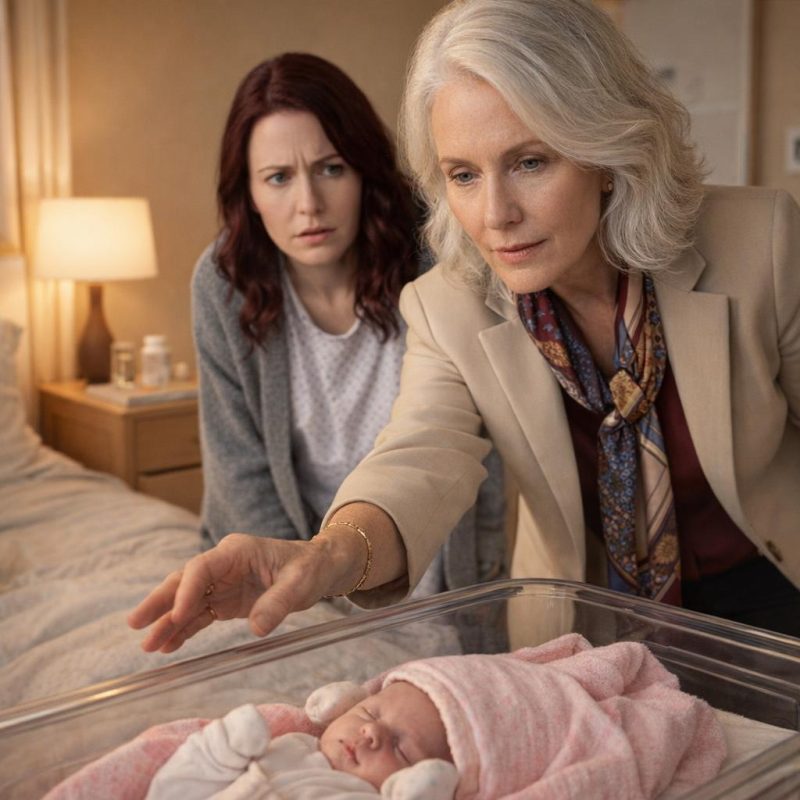 Image by RM AI
Too Tired to Care
Martha holds Lily with the ease of someone who has done it a thousand times, and I watch from the bed, trying to look relaxed. Lily is alert in a way she wasn't earlier, her dark eyes wide and unfocused, and Martha comments on it — how bright she is, how aware, what a good sign that is. Then her gaze comes back to me. She says my dark circles are concerning. She asks, in a voice pitched like genuine worry, whether I've managed any real sleep since the delivery. I explain that the hospital schedule doesn't exactly encourage it — the checks every few hours, the feeding attempts, the monitors. Martha nods slowly, like she's filing this information away. She says something about how a mother's milk supply depends on rest, that stress and exhaustion affect everything, that she's seen it happen. David starts to say that I'm doing great, that we're both just adjusting, and Martha lets him finish before she says, gently, that she's not criticizing — she's just worried. She says I look too worn down to manage the nighttime feedings on my own. The word 'alone' hangs there even though David is right in the room. I open my mouth to respond and then I stop, because Martha's eyes have moved — slowly, deliberately — from my face down to Lily in her arms.
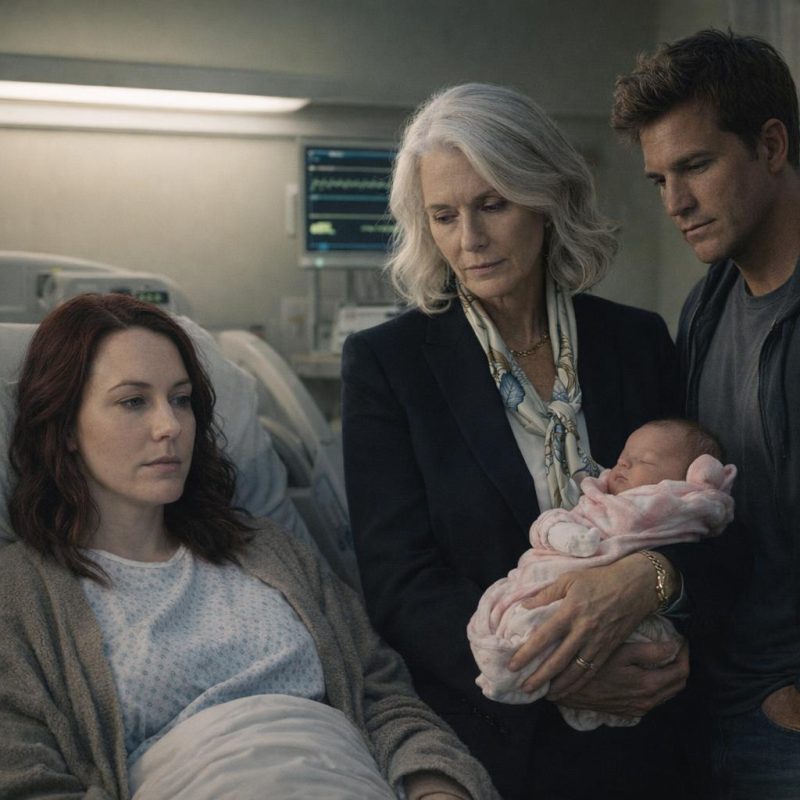 Image by RM AI
The Offer
Martha shifts Lily slightly in her arms, the way someone does when they're settling in for a longer conversation, and says she has a suggestion. Her voice is measured, reasonable, the tone of someone presenting a solution to a problem everyone can see. She says Emma needs rest — real rest, not hospital-chair rest — and that she has a proposal that could help everyone. My stomach tightens before she even finishes the sentence. She says she could take Lily home with her for the first few nights. Just until I've had a chance to recover properly. She describes it like a gift: uninterrupted sleep, no nighttime alarms, time to heal. She says she raised David just fine and she knows exactly what a newborn needs. I look at David. His expression is careful, unreadable, the face he makes when he's trying to figure out the right thing to say. Martha adds that her house is only twenty minutes away, that it's not like she'd be far, that I could call anytime. I'm aware of my own heartbeat in a way I wasn't a moment ago. I want to say something but the words aren't forming fast enough. Then Martha says, with a small, certain smile, that she already has everything ready at her house.
 Image by RM AI
The First Refusal
There's a beat of silence after Martha says it — the kind that has weight. I look at David and something passes between us that doesn't need words. I turn back to Martha and thank her, genuinely, for wanting to help. Then I tell her we want Lily home with us. David says it right after me, clear and calm: they appreciate it, but no. Martha's smile stays in place for a moment, like it hasn't gotten the message yet. Then it shifts. She asks if I'm sure, if I've really thought about how hard the first nights are going to be, if I understand what I'm taking on. I tell her we'll figure it out together. She looks at David then, not at me, and says they're being a little naive — that exhaustion does things to new parents, that she just doesn't want us to struggle unnecessarily. David says, quietly but without any give in it, that they appreciate the offer and they're taking Lily home. Martha doesn't argue after that. She doesn't storm out. She just adjusts Lily in her arms, very slowly, and when she finally looks up, the smile is back — but the skin around her mouth has gone tight.
 Image by RM AI
Her Own Experience
I think we're done with that conversation, and then Martha starts again. She says she understands — she really does — that I want to do this on my own. She says she felt the exact same way when David was born. She describes it like a badge of honor, that fierce need to prove you can handle it. Then she pivots, almost seamlessly, into the part where she wishes someone had talked her out of it. The sleepless nights. The feeding struggles. The moment she was so exhausted she sat on the kitchen floor and cried for twenty minutes. I try to redirect — I ask about her garden, whether the roses came back this year. She answers for about four seconds before circling back to how newborns need consistency and how consistency takes experience. David catches my eye from across the room. I give him a small, tired smile. I try again, mentioning the drive home, whether traffic will be bad. Martha says the drive is exactly why it makes sense for her to take Lily tonight. I stop arguing. Not because she's won. Just because every word I have left feels like it costs something, and I'm already running low.
 Image by RM AI
The Repetition
There's a brief silence after I stop responding, and I think maybe that's it. Then Martha says, almost casually, what about just one night. Not several — just the first night home, when I'll be the most tired, when my body is still recovering. She says it like she's offering to pick up groceries. David says, gently but clearly, that they've already decided. Martha nods like she's heard him, and then about two minutes later she mentions again that the offer stands, just for one night, no pressure. I say no, thank you. She rephrases it — not as taking Lily, but as giving us a chance to sleep. I say we're fine. She brings it up a third time framed as a question: wouldn't it be nice to have one full night of rest before the real work begins? I feel something tighten in my chest that isn't quite anger and isn't quite fear. David says they're committed to doing this together, and Martha smiles and says of course, of course. The room goes quiet again. I watch her adjust Lily's blanket with careful, practiced hands, and something about the way she doesn't quite let go sits with me long after she's stopped talking.
 Image by RM AI
Changing the Subject
I try the garden again. Martha gives me maybe three sentences about her hydrangeas before she mentions that hydrangeas are actually toxic to babies and she's already researched which plants are safe for a nursery. I try a different angle — I bring up David's cousin's wedding next spring, ask if Martha's looking forward to it. She says she is, and then immediately wonders aloud whether Lily will be old enough to travel by then, and what the best way to travel with an infant is, and whether we've thought about that. David tries — he mentions a project at work, something about a deadline coming up. Martha asks how much paternity leave he's taking, because babies need their fathers present, especially in the early weeks. I look out the window and comment that the weather's been nice. Martha agrees and says it's actually ideal weather for keeping a newborn indoors, away from allergens. Every door I open leads to the same room. I stop trying to find a new one. I just sit there, watching Martha hold my newborn daughter, her attention fixed on Lily with an intensity that doesn't waver, doesn't drift, doesn't include anyone else in the room.
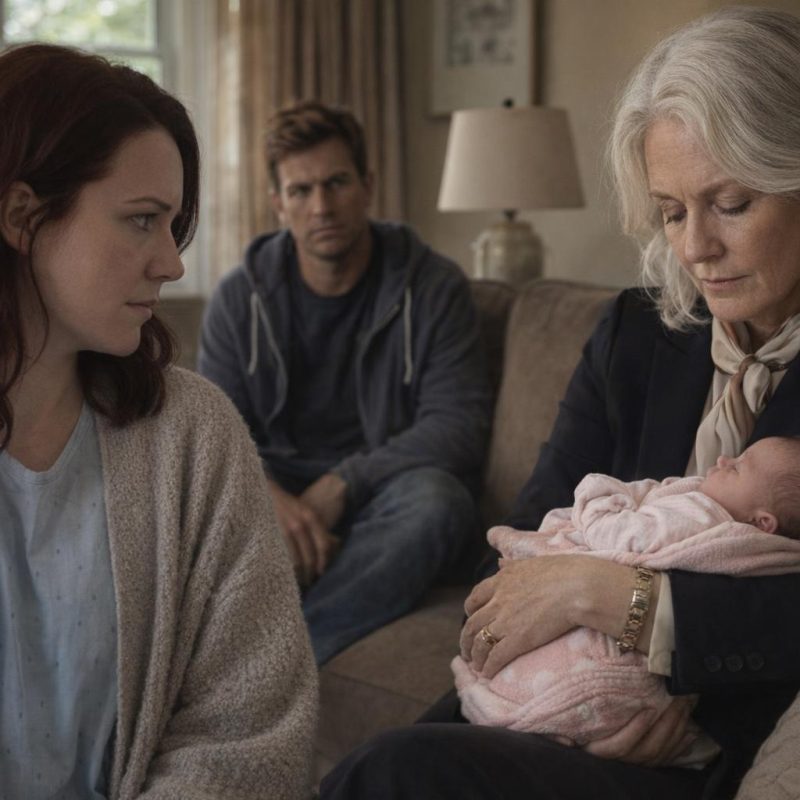 Image by RM AI
David's Support
Martha makes another comment about how I need to rest while I can, her voice carrying that particular tone that sounds like concern but lands like a verdict. David sets down his coffee cup and says, quietly, that I'm stronger than she might think. Martha's head tilts slightly. He keeps going — says we've talked through our plan, that we know it won't be easy, that we're doing it together. Martha says he doesn't really understand yet, that he'll see once they're home and the nights start stacking up. David says, still calm, still without any edge in it, that they appreciate everything she's offering and that their answer is no. He doesn't raise his voice. He doesn't apologize for it either. I feel a wave of relief so strong it almost makes me dizzy, followed immediately by a low, uncomfortable guilt — because I can see what it costs him to say it that plainly to her. Martha doesn't respond right away. She looks at David for a long moment, and something moves across her face — not anger exactly, but something that sits just underneath it, something that pulls the warmth out of her expression and leaves the surface perfectly smooth.
 Image by RM AI
Brief Reprieve
Martha excuses herself to make a phone call, and I wait until the door clicks shut behind her before I exhale. David comes to sit on the edge of the bed, and I look at him and say it plainly: something about his mother's persistence feels wrong to me. Not pushy-grandmother wrong. Something else. He rubs the back of his neck and says she's always been like this — strong opinions, strong delivery. I tell him it's more than that. It's the way she keeps coming back to it after we've already said no, the way each refusal seems to reset her like it didn't happen. He doesn't argue with me. He looks uncomfortable, which I take as its own kind of answer. I ask if she was like this when he was growing up, and he's quiet for a second before he says she always had very specific ideas about the right way to do things. He says it carefully, like he's choosing each word. I nod. Lily makes a small sound in her bassinet, and we both look at her. The room feels different with just the three of us in it — lighter, easier to breathe, like something that had been pressing against the walls had stepped outside with Martha.
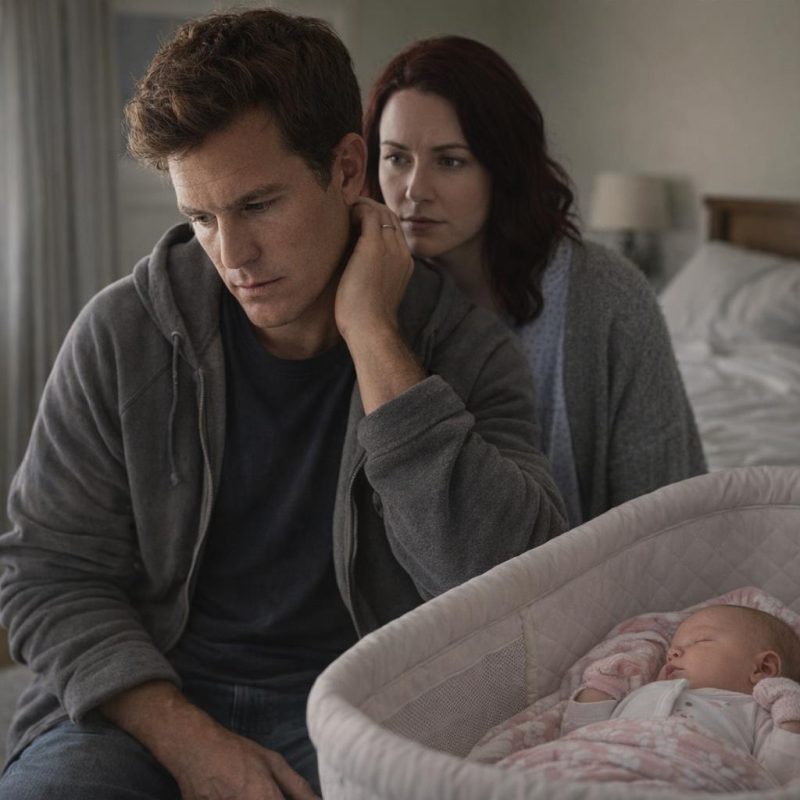 Image by RM AI
Best Intentions
David reaches over and takes my hand. He says his mother has been talking about being a grandmother for years — that this is a big moment for her, that she goes overboard with everything she cares about. I nod, because I want to believe that. He says she'll settle down once we're home and into a routine, that the intensity is just excitement. I try the explanation on like a coat that's almost the right size. He's probably right. She raised him, and he turned out to be someone I trust completely. She means well — I know that's what I'm supposed to land on. David adds that she can be a lot, but her heart is in the right place, and I say yes, I know, because I do know that, or I want to. Lily shifts in the bassinet, her tiny fist uncurling and curling again, and I watch her and try to let David's version of things settle over me. But there's something that won't quite lie flat — a small, persistent weight in my chest that stays there even after I've talked myself into agreeing with him.
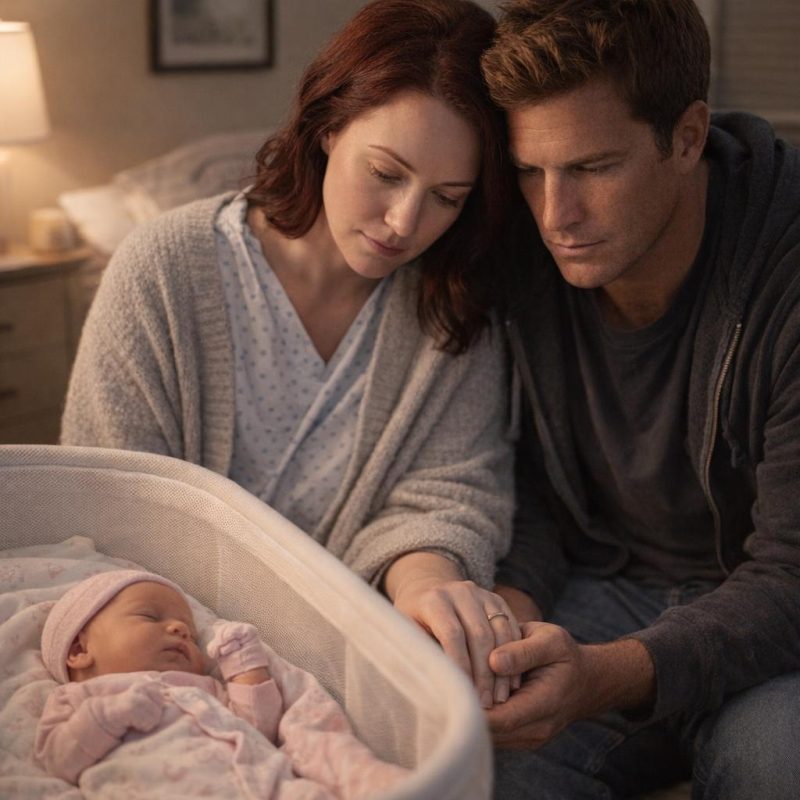 Image by RM AI
My Baby
Martha comes back in still holding her phone, and before she's even fully through the door she's moving toward the bassinet. She lifts Lily with practiced ease and says, softly, there's my baby. I notice it but don't say anything — it's a grandmother thing, I tell myself, people say that. She settles into the chair and starts talking about what my baby needs in those first weeks at home, the schedule, the light levels, the temperature of the room. David is scrolling through something on his phone and doesn't look up. I watch Martha's face while she talks, the way she looks down at Lily with an expression I can't quite read — total absorption, like the rest of the room has stopped existing. She calls her my little one when she talks about sleep patterns. I count it, then feel a little ridiculous for counting it. I tell myself I'm tired and reading into things. Then Martha looks up from Lily, looks directly at me across the room, and says my baby is going to need a very calm environment, and that's the third time she's said it — my baby — and something in the way she holds my gaze while she says it makes the words land differently than they should.
 Image by RM AI
Constant Correction
Nurse Julie comes in to check Lily's vitals, and I take the opportunity to lift Lily from Martha's arms and settle her against my chest for a feeding. I'm still figuring out the positioning — everything about this is still new — and before I've had ten seconds to adjust, Martha says my hand is in the wrong place, that I need to support the head differently. I shift my grip. She says that's still not quite right and demonstrates in the air with her own hands. Nurse Julie glances over but doesn't say anything yet. I try again, and I think I have it, and Martha tells the nurse that I could probably use a bit more instruction on the hold. I feel heat rise in my face. Nurse Julie says I'm doing fine, that it takes a few tries, and gives me a small reassuring nod. Martha makes a sound that isn't quite agreement. Then she steps closer, and without asking, without pausing, her hands come down over mine and physically reposition my arms around my own daughter.
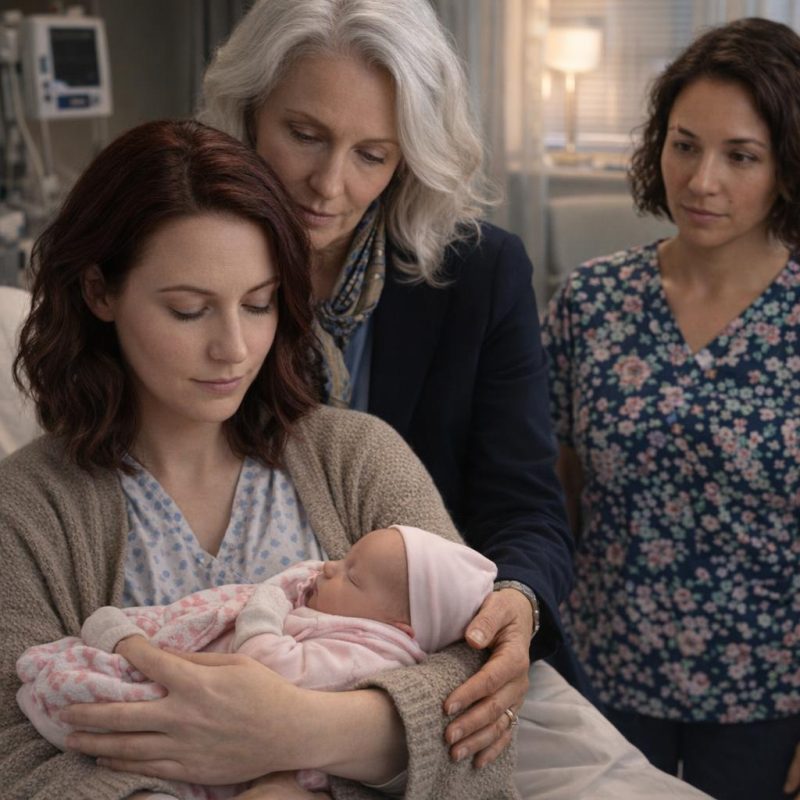 Image by RM AI
Public Criticism
Lily latches on and I feel a small rush of relief — we're getting it, we're figuring this out together. Then Martha says, almost conversationally, that the latch doesn't look quite right to her. I keep my eyes on Lily and try not to react. Nurse Julie glances over from the vitals monitor and says the latch looks fine, that Lily is feeding well. Martha makes a small sound, the kind that isn't agreement, and says she's sure the nurse knows best, but in her experience a proper latch looks a little different. She describes, in detail, how she fed David. Nurse Julie says, patiently, that every baby is different and every mother finds her own way. Martha tilts her head and wonders aloud — gently, pleasantly — whether I might not be producing quite enough yet, whether that could be why Lily seems restless. I feel the heat climb up my neck and into my face. Nurse Julie steps closer, checks the feeding, and tells me I'm doing everything right, that my supply is coming in exactly as it should. I nod and keep my eyes down. And then Nurse Julie looks at me — not at Martha, not at the chart — just at me, with an expression I can't quite name but can't stop thinking about.
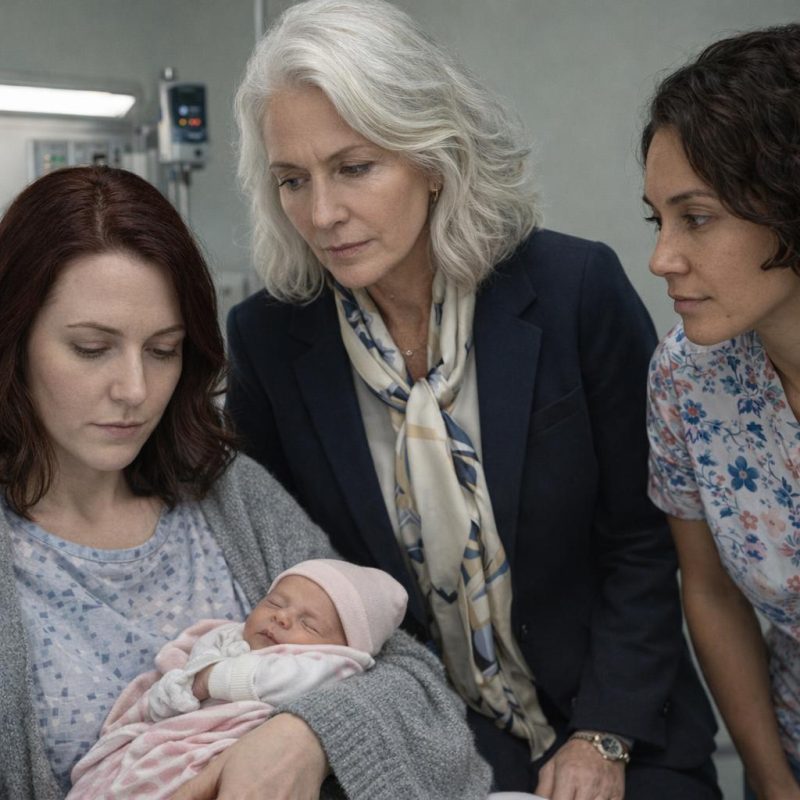 Image by RM AI
The Concerned Look
Martha excuses herself to use the restroom, and the room goes quieter the moment the door clicks shut. Nurse Julie doesn't leave right away. She finishes noting something on her tablet, then sets it down on the counter and asks, in a tone that's different from her clinical one, how I'm really doing. I open my mouth to say fine, and what comes out instead is a wavery, unconvincing version of the word that fools neither of us. She nods like she expected that. She says, carefully, that some family members can be a lot to manage in those first hours, that it's completely normal to feel overwhelmed by the people around you, not just by the baby. I feel my eyes sting and I blink hard, because I am not going to cry in front of a nurse over my mother-in-law. She tells me, quietly, that I have every right to ask visitors to step out if I need rest, that the staff can support that if it becomes necessary, and that I only need to say the word. I nod. I don't trust my voice enough to say anything else. She squeezes my hand once before she goes, and after the door closes I sit with Lily against my chest and feel the full weight of everything Nurse Julie hadn't said out loud.
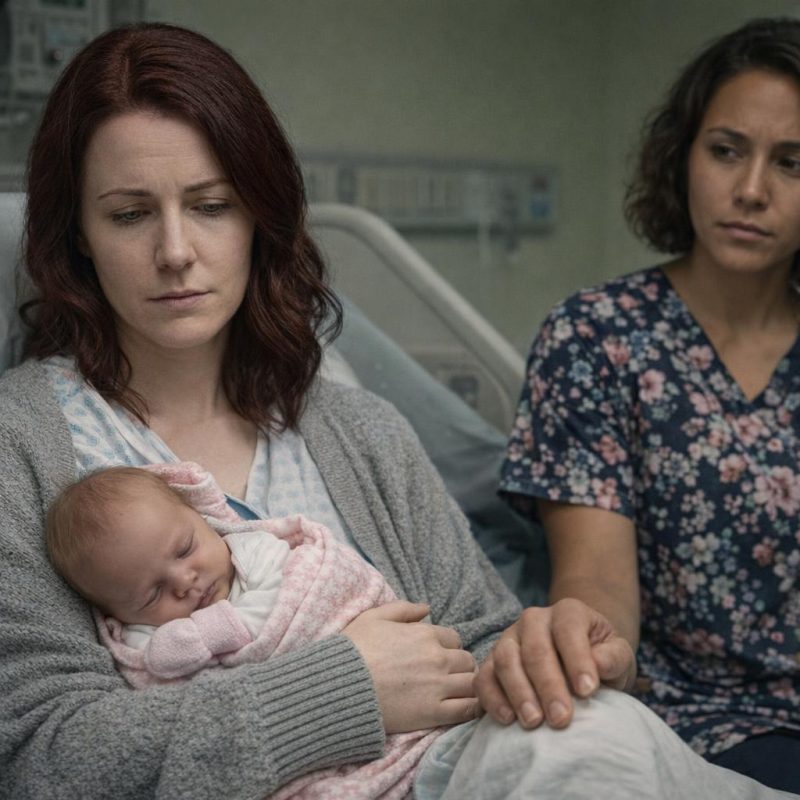 Image by RM AI
Without Asking
I must drift off for a few minutes because the next thing I'm aware of is movement near the bassinet — a soft rustling, the particular sound of someone lifting something carefully. I open my eyes. Martha is standing at the bassinet with Lily already in her arms, adjusting the blanket around her with practiced ease, like it's the most natural thing in the world. She didn't ask. She didn't say anything, didn't touch my shoulder, didn't even glance over to see if I was awake. I sit up too fast and feel it in every muscle. I reach out and say her name and ask her to please give me the baby. Martha looks up with a mild expression and says she was just checking on her, that I needed the rest. I say I'd like to hold her now and keep my arms out. Martha says of course, naturally, and begins the motion of handing Lily over — and then pauses. Just for a moment. Her arms stay curved around my daughter, her eyes drop back down to Lily's face, and something moves across her expression that I can't read from where I'm sitting. Then she steps forward and places Lily in my arms. I pull her close and don't say anything else, but I don't stop thinking about that pause.
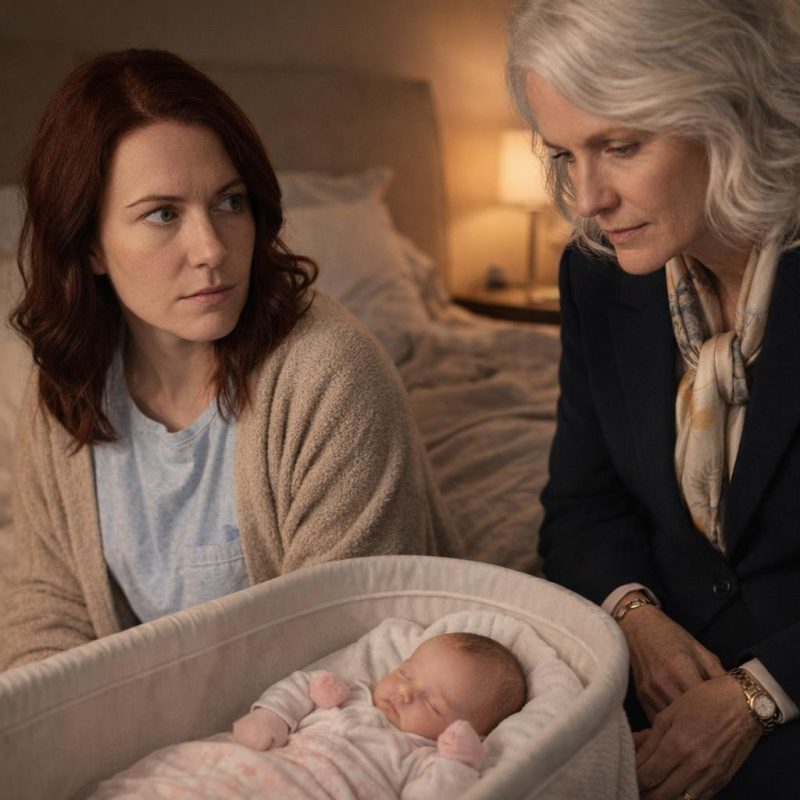 Image by RM AI
The Hesitation
Martha is walking slow circles near the window, Lily tucked against her shoulder, talking to her in a low murmur about the garden at her house and the birds that come to the feeder in the mornings. It's sweet, I tell myself. It's a grandmother talking to her granddaughter. I watch from the bed and try to hold onto that framing. Then Lily makes a small rooting motion and I say I need to feed her. Martha glances over and says she doesn't think Lily is showing hunger cues yet, that she's just settling. I tell her I know my daughter's cues and hold out my arms. Martha keeps talking to Lily, adjusting her position slightly, like she didn't quite hear me. David looks up from his phone. I say please, and I put enough behind it that the word lands differently than the ones before it. Martha finally turns toward me — and I watch her arms tighten around Lily, just slightly, just for a second, before she crosses the room and hands her over.
 Image by RM AI
The Nursery at Her House
Martha settles back into the chair by the window and starts talking about how much she's looking forward to Lily's first visit, how the light in the back room is so lovely in the mornings. Then she mentions, almost as an aside, that the nursery is all ready for her. I look up. I ask what she means by nursery. Martha smiles and says she's set up the spare room — crib, changing table, the little dresser she found at that antique place she loves. She lists the items like she's reading from a checklist: blackout curtains, a sound machine, a rocking chair she had reupholstered. David lowers his phone and asks when she did all of this. Martha waves her hand and says she's been putting it together for a while, that she wanted to be prepared. I look at the crib in the corner of my hospital room, at Lily sleeping in it, and something about the word 'prepared' sits strangely with me — I can't quite place why. I ask her, as evenly as I can, why she felt she needed a full nursery at her house. Martha looks at me with a pleasant, unreadable expression. The silence that follows sits in the room like something with weight.
 Image by RM AI
Vague Answers
David sets his phone down completely now, which means he's paying attention. He asks his mother again — when exactly did she set all of this up? Martha says she's been collecting things here and there, that it wasn't any one moment, just a gradual thing. David asks if she started before Lily was born. Martha tips her head and says the room is a lovely soft yellow, that she agonized over the shade for weeks, did she mention that? I watch David try again, asking her to just give him a rough idea of the timeline. Martha laughs — a light, deflecting sound — and says she honestly doesn't remember exactly, that time moves differently when you're excited about something. David rubs the back of his neck, which is what he does when he's trying to stay patient. Martha reaches over and adjusts Lily's blanket, smooth and unhurried, like the conversation has already moved on. I sit with the discomfort of watching her sidestep a simple question without ever quite answering it.
 Image by RM AI
Helping Pack
The discharge paperwork is starting to come together and the room has that end-of-something energy — David is with Lily, the nurse has been in twice, and I'm thinking about what needs to go back into my overnight bag. Martha stands up and says she'll help me get organized, that there's no reason for me to be doing all of this right now. I tell her thank you, but I've got it, that it's really not much. She nods like she's heard me and then moves toward the bag anyway. David is focused on Lily, working through a diaper change with the careful concentration of someone who is still learning the steps. I say again that I'm fine, that I don't need help with the packing. Martha crouches down next to the bag and says it's no trouble at all, that she's happy to do it. I watch her hands find the zipper. I watch her pull it open. And then I watch her hands already moving inside my bag.
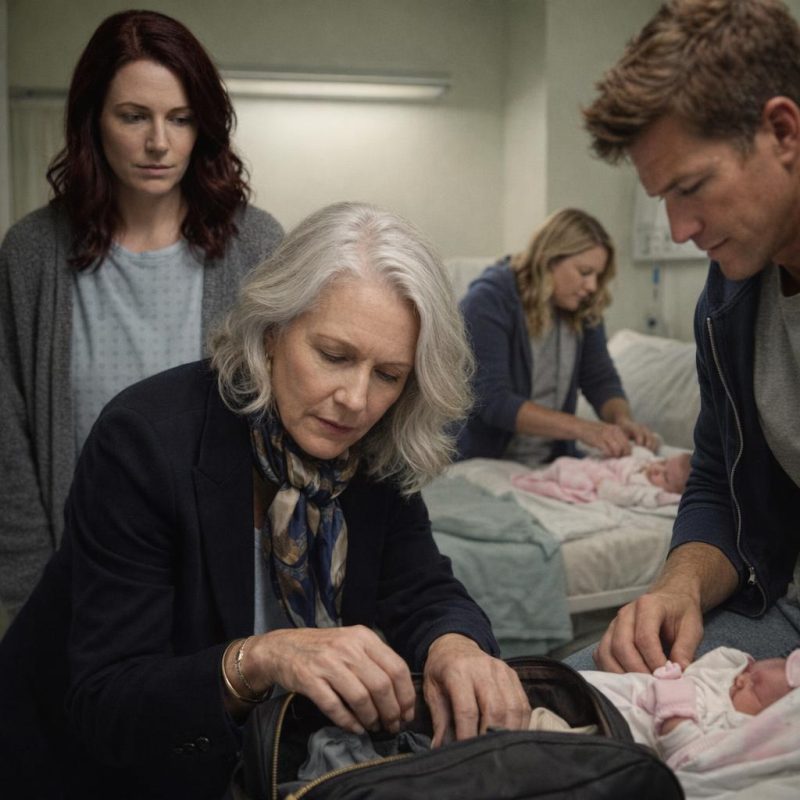 Image by RM AI
Stop
I say her name. Not loudly, but clearly — the way you say something when you need it to land. Martha looks up from the bag with an expression of mild surprise, like she's been caught doing something she genuinely didn't think was a problem. I tell her I'd like her to please stop going through my things, that I'll pack my own bag. She straightens slightly and says she was only trying to help, that she didn't mean any harm by it. I tell her I know, and I mean it to sound final. David looks over from the changing table, reading the room, and I can see him deciding whether to say something. Martha looks down at the item in her hands — one of my shirts, half-folded — and her expression shifts into something harder to read, something that isn't quite hurt and isn't quite anger. The silence stretches. David doesn't fill it. I don't fill it. And then Martha's hands pause mid-fold, the shirt still caught between them, and nobody in the room moves.
 Image by RM AI
Organizing Anyway
Martha sets my shirt down on the bed — slowly, like she's doing me a favor — and steps away from the bag. I let out a breath. And then, not five seconds later, she moves to the bedside table and starts straightening the water cups and the little stack of cards people sent. I watch her do it. I actually watch her do it, and I can't quite believe what I'm seeing. David clears his throat and says, Mom, we've got everything under control in here. Martha says she's just tidying up a bit, that it won't take a moment, and she says it in the same pleasant tone she'd use to offer someone a cup of tea. She moves to the flowers next, rotating the vase a few inches, fanning out the cards. Then she's at the counter where we've laid out the baby supplies — wipes, diapers, the little nasal bulb — and she's reorganizing those too, stacking things into a different order than I had them. I'm sitting in this hospital bed, two days postpartum, watching my mother-in-law rearrange my life like I'm not in the room. And then she crosses to the bassinet and starts rolling it closer to the door, and I watch every inch of it move.
 Image by RM AI
Asking Her to Stop Again
I say her name again. Martha. Louder this time. She stops with her hands still on the bassinet frame and looks at me with an expression of patient, slightly wounded attention, like a teacher waiting for a student to finish an outburst. I tell her she needs to stop touching our things. All of it — the table, the counter, the bassinet. I tell her we don't need help organizing, that we have a system, and that I need her to please sit down and leave everything where it is. My voice comes out steadier than I feel. Martha turns to face me fully, and her face does something I haven't seen it do before — it goes very still, very composed, in a way that feels less like calm and more like a door closing. She says she's only trying to help. I tell her I understand that, but we need space right now. David stands up from the chair, and for a second I think he's going to say something useful. Martha looks at him then — just looks at him — and whatever she puts into that look, it stops him cold. He goes still, standing halfway between us, and his face does something complicated that I don't have the energy to decode.
 Image by RM AI
Discharge Paperwork
Nurse Julie comes in with the discharge paperwork on a clipboard, and the timing feels like a small mercy — something official to focus on, something that has nothing to do with the tension sitting in the middle of the room. David takes the clipboard and starts reading through it. Martha drifts closer, the way she does, and asks what address they're using for the forms. David says our home address without looking up. Martha asks if that's still the apartment, or if we've moved since last year. I feel my guard go up at that. David says it's the same place, still reading. Martha leans in toward the clipboard, and I watch David shift his body — just slightly, just enough — so the form angles away from her line of sight. Nurse Julie asks if we have any questions about the discharge instructions, and I say no, thank you, keeping my eyes on Martha. She's still angled toward the paperwork, her gaze tracking the form even as David holds it away from her. I couldn't have said exactly what bothered me about the question. It was a normal thing to ask. But the way her attention stayed fixed on that address line sat with me long after Nurse Julie left the room.
 Image by RM AI
Deflecting Questions
Martha tries again a few minutes later, once Nurse Julie is gone. She asks if she has the right address for sending gifts, says she wants to make sure things get to us and not to some old record somewhere. David doesn't look up from the forms. He says it's the same as always, and that he'll text her later if anything's changed. Martha says she'd just feel better knowing now, while she's thinking of it. David sets the clipboard against his knee, angles his body so he's between her and the paperwork, and starts filling in the fields without another word. It's not dramatic. He doesn't make a speech about it. He just quietly closes off the line of questioning with his posture and his silence, and Martha's mouth pulls tight at the corners. It is. I'm watching from the bed with Lily against my chest, and I feel something loosen in me — not all the way, not enough to actually relax, but enough to breathe. David handled it. He saw what was happening and he handled it without making it a whole thing, and right now that feels like more than I could have asked for.
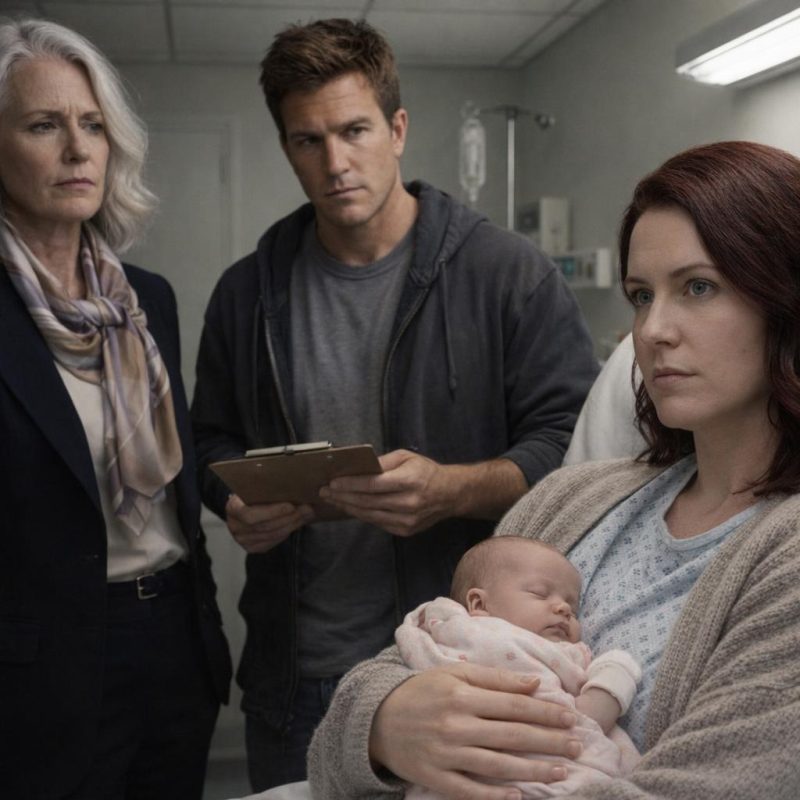 Image by RM AI
Dressing for Home
I lift Lily out of the bassinet carefully, the way I've been doing it for two days now, still not entirely sure I'm doing it right. The going-home outfit is the whole point of this moment — I've been thinking about it since before she was born, this tiny white onesie with yellow ducks that my mom gave me at the shower. I start with the hospital shirt, working the snaps loose, and Martha is suddenly right there. Not across the room. Right there, close enough that I can feel the warmth of her standing behind me. She says the neck opening looks tight, that I should try it from the bottom up. I don't answer. I keep my hands moving. She says the diaper tab looks loose on the left side, and before I can say anything her hand comes around my arm and adjusts it herself. I step to the side, putting my hip between her and the changing pad. She steps with me. She keeps up a steady stream of commentary — the angle of Lily's leg, the way I'm holding the onesie open — and I'm trying to stay focused on my daughter's face, on her tiny fingers, on anything except the fact that I can feel Martha's breath on the back of my neck.
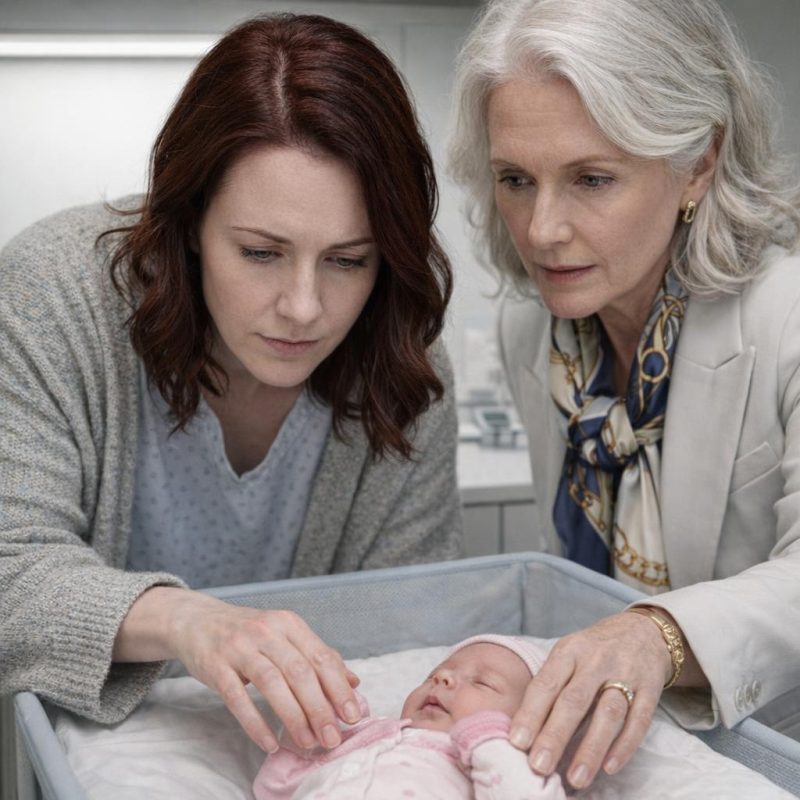 Image by RM AI
The Missing Onesie
I reach into the overnight bag for the onesie and my hand closes on a sleep sack, a hat, a pair of socks. I move those aside and dig deeper. It's not on top, which is fine — I packed a lot. I start pulling things out more deliberately, setting them on the bed in a row. The striped sleeper. The extra swaddle. The little cardigan my sister sent. I go through everything twice, checking between the folds of each item in case it got tucked inside something else. David asks what I'm looking for and I tell him — the white onesie with the yellow ducks, the one my mom picked out, the one I specifically set aside for today. He nods and says he knows the one. I unzip the front pocket, check the side pocket, shake out the sleep sack. Nothing. I turn the bag upside down and pile everything onto the bed in one go, every single item, and I go through the pile piece by piece with both hands. The onesie isn't there.
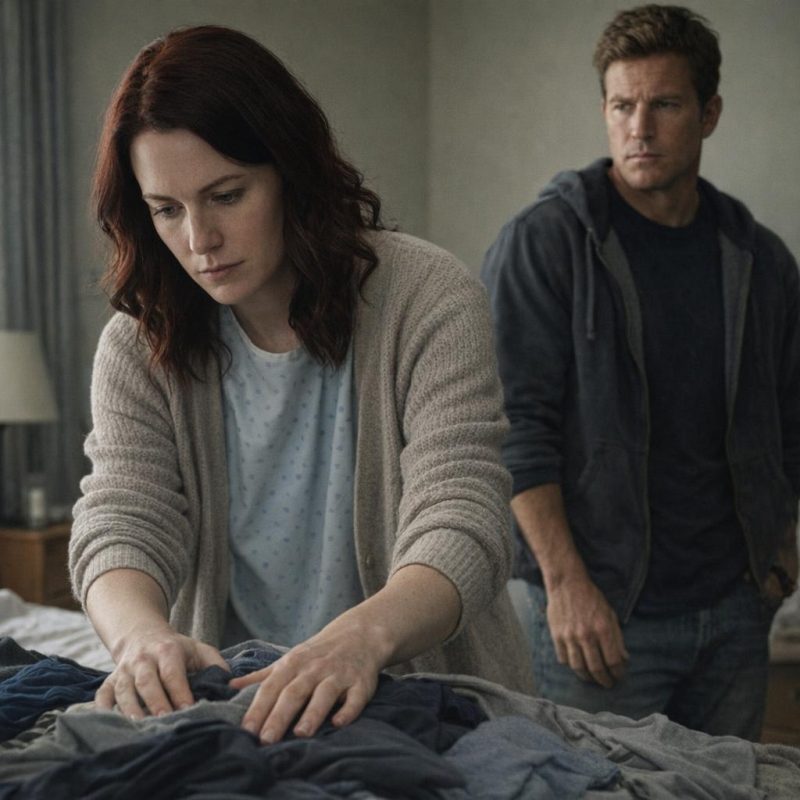 Image by RM AI
Can't Find It
David starts checking his own bag without me having to ask, pulling things out and setting them on the chair. I go through the hospital drawers — the narrow one beside the bed, the cabinet underneath — even though I know I didn't put it there. I check the bathroom, the little shelf above the sink, the hook on the back of the door. Nothing. David gets down and looks under the bed, checks behind the recliner. Martha sits in her chair near the window and watches us. She doesn't offer to help. She doesn't say anything. I ask David if he remembers seeing me pack it and he says yes, definitely, he watched me fold it and put it in the bag two nights ago. That should make me feel better. It doesn't. I stand in the middle of the room with the bag turned inside out on the bed and I can't make the math work — I packed it, David saw me pack it, and now it's gone. Lily is lying on the changing pad in her hospital shirt, waiting, and I feel the tears starting to build behind my eyes in that stupid, exhausted way that has nothing to do with the onesie and everything to do with the onesie.
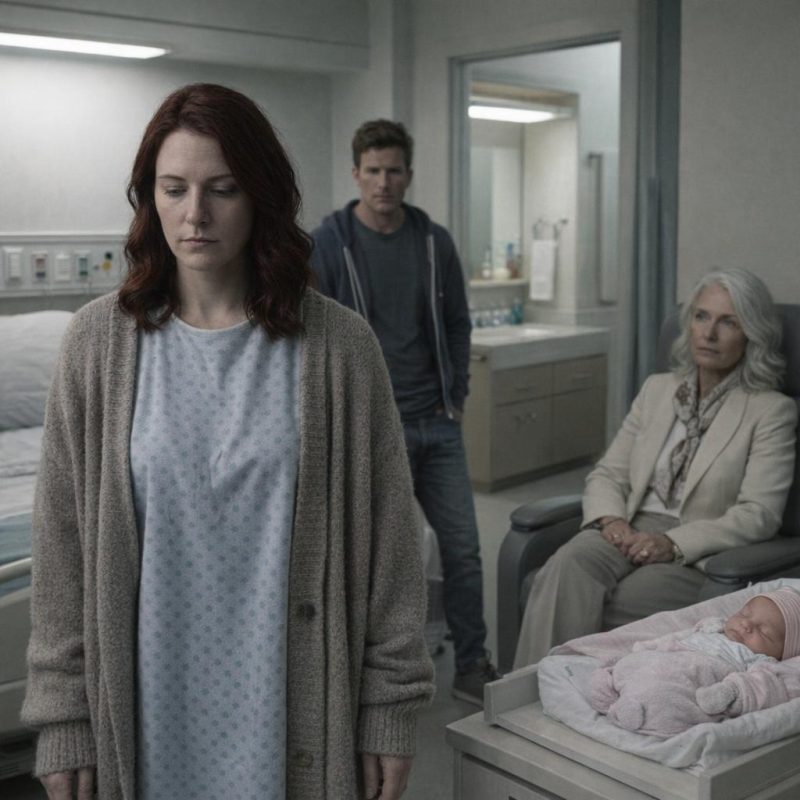 Image by RM AI
Martha's Backup Clothes
Martha says, from her chair, that she has something in her purse if we need it. I look up. She's already reaching into the large structured bag she carries everywhere, and she pulls out a small folded onesie — pale yellow, soft-looking, clearly newborn size. David asks why she brought baby clothes. Martha says she always comes prepared, that she thought it might be useful to have a backup. She holds it out toward me, and I stare at it for a moment. It's a perfectly nice onesie. That's not the problem. The problem is that she reached into her purse and produced a newborn outfit like it was a pack of tissues — so matter-of-fact, so ready, as if this were the most natural thing in the world to be carrying. I tell her thank you, but I want to find my own. Martha shrugs and tucks it back into the bag. David and I exchange a look over her head, and I go back to searching. But the image of that onesie appearing out of her purse stays with me — the neat fold of it, the exact size of it — and I can't quite shake the feeling that something about it was off, even if I couldn't have said exactly what.
 Image by RM AI
Searching the Room
I tell myself I'm going to find it. The onesie I packed is in this room somewhere — I know it is — and I'm not going to let it go just because Martha produced a backup from her purse like a magician pulling a rabbit out of a hat. I check behind the rolling table first, crouching down to peer underneath. Nothing. I pull open the closet again and go through it more carefully this time, pushing aside the extra blanket the nurse left, checking the shelf above the hanging rod. David watches me from the edge of the bed, bouncing Lily gently against his shoulder. He suggests, not for the first time, that we could just use something else. I tell him no. I want the one I brought. Martha sits quietly in the corner chair, her large bag on her lap, and I try not to look at her. I move methodically — bedside table, window ledge, the narrow gap between the wardrobe and the wall. And then I turn toward the corner where Martha's chair sits, and I notice something on the floor just behind it.
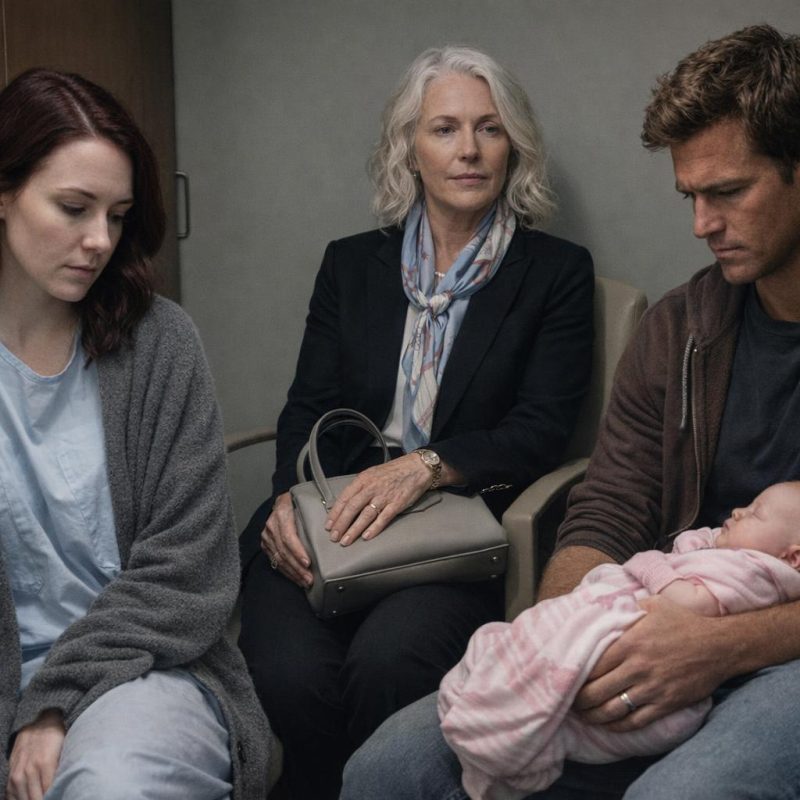 Image by RM AI
Under the Chair
I get down on one knee and check under the bed first, pressing my cheek almost to the cold linoleum to see into the shadows. There's a dropped pen and a thin layer of dust and nothing else. I push myself back up, one hand on the mattress for balance, and move to the bedside table, checking behind it and along the baseboard. Martha shifts in her chair. I catch the movement in my peripheral vision — a small adjustment, a straightening of her posture — and I file it away without looking directly at her. I tell them I just need another minute. David nods. And then Martha speaks, and her voice has a different quality to it than it's had all afternoon — clipped, a little too even. She says maybe they should get going, that they've been here long enough. I pause with my hand still resting on the bedside table. I tell her we're fine, that there's no rush. She says it again — that they should really get going — and this time there's an edge underneath the words that I haven't heard from her before.
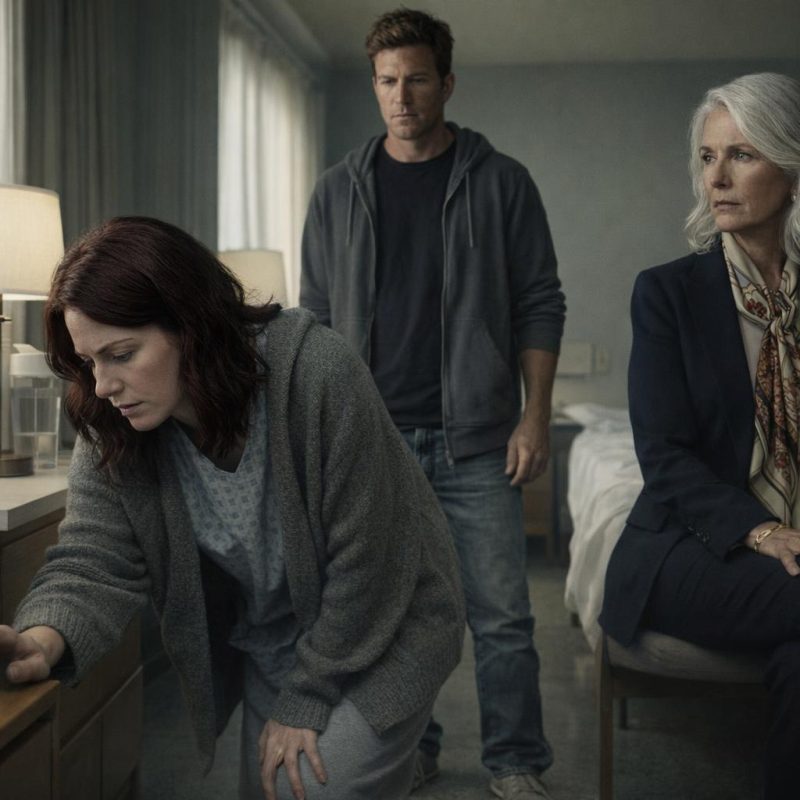 Image by RM AI
The Corner Chair
I walk toward the corner chair. It's a simple thing — three steps across the room — but Martha is on her feet before I get there. She moves to stand between me and the corner, her bag still over one arm, her posture suddenly very straight. I stop. I ask her to move. She says there's nothing over there, that I'm being thorough to a fault, that I should just let it go. Her voice is smooth but her jaw is tight. I tell her I'm just checking everywhere, that it'll only take a second. She doesn't step aside. David looks up from Lily and asks his mother what's wrong. Martha says nothing is wrong, that she just thinks we're wasting time. But she still doesn't move. She stands there in front of that corner like she's planted, and her face has gone a little strained around the eyes — the kind of strain that doesn't match the casual tone she's trying to hold. David looks at her, then at me, and I can see him trying to work out what's happening. I'm trying to work it out too.
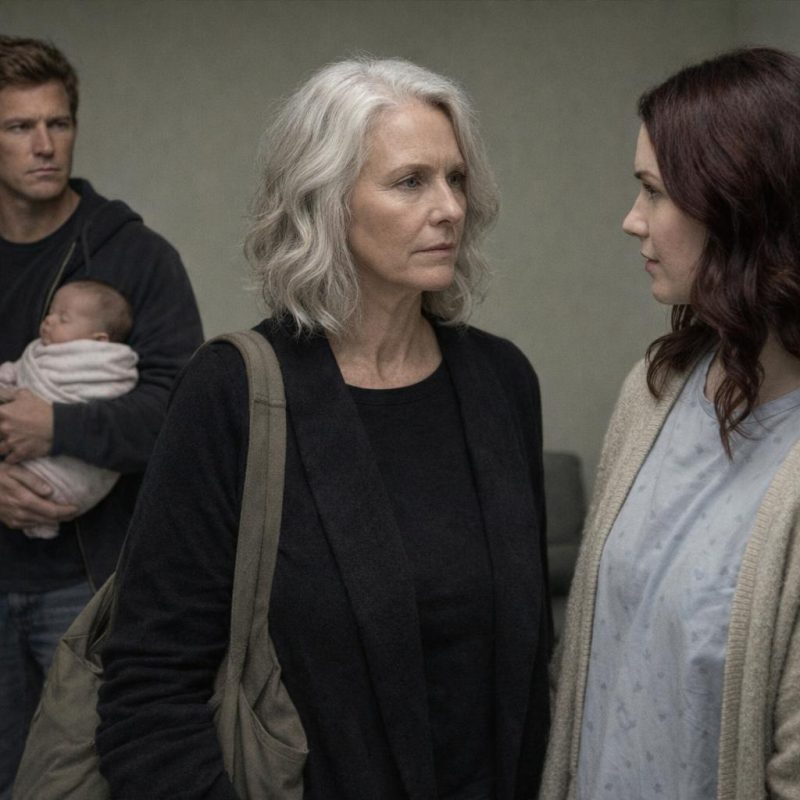 Image by RM AI
Something Wrong
Martha says they're going to be late. I ask, as calmly as I can manage, late for what. She pivots — says the baby needs to get home, that hospitals are full of germs, that Lily shouldn't be here any longer than necessary. David points out, gently, that we have plenty of time and that Lily is exactly where she's supposed to be. Martha doesn't acknowledge him. She takes a small step closer to the corner, not away from it, and her hand tightens on the strap of her bag. I watch her face. She's working very hard to look relaxed, and the effort of it is visible in the set of her mouth, in the way her eyes keep not quite meeting mine. She says again that they should go, and this time she doesn't bother dressing it up with a reason. David says, quietly, Mom. Just one word. Martha's chin lifts. And I stand there in the middle of the room, looking at the way she's positioned herself between me and that corner, and the only thing I'm certain of is that she doesn't want me to look behind that chair.
 Image by RM AI
Behind the Chair
I step around her. I don't ask again. Martha makes a sound — not quite a word, more like the beginning of one that she cuts off — and I'm already reaching behind the chair, my fingers closing on something that isn't the wall and isn't the floor. It's fabric. Structured fabric, with a strap. I get both hands on it and pull it out into the light. It's a diaper bag. Large, navy blue with white trim, the kind with multiple exterior pockets and a wide zip-top opening. I've never seen it before in my life. I stand there holding it, and the room goes very quiet. Martha makes that sound again, sharper this time. David leans forward from the bed, Lily still against his shoulder, and asks what that is.
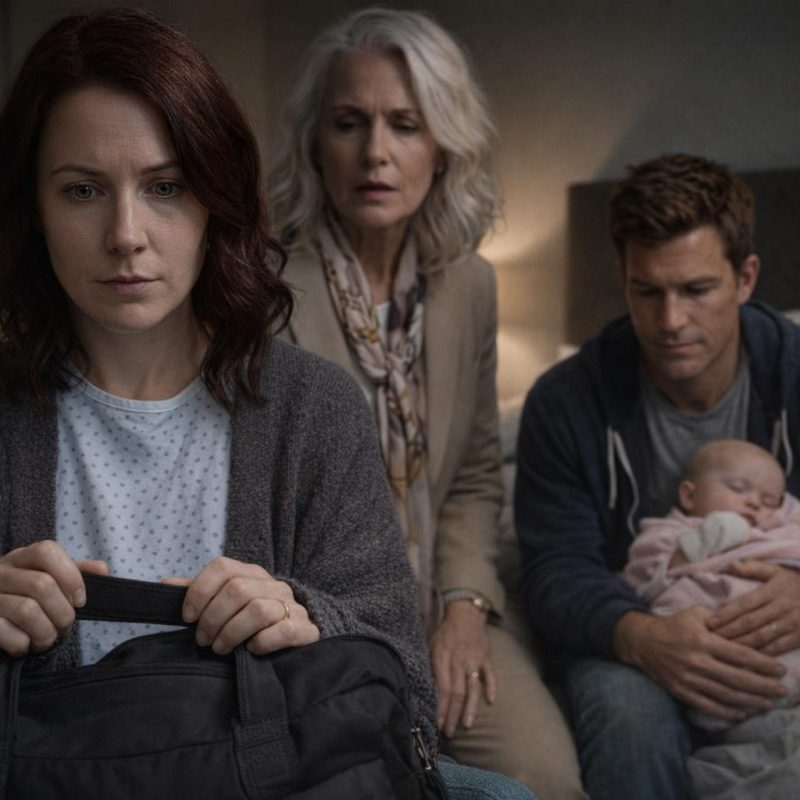 Image by RM AI
Not Mine
I stare at the bag in my hands. It's heavy — heavier than it should be if it were empty — and the fabric is stiff and new-looking, like it hasn't been used before. David asks again where it came from. Martha says it's hers, that she brought it. I ask her why it was behind the chair. She says she didn't hide it, that she just set it down and it must have slid back. Her voice is even, almost bored, like this is a perfectly ordinary thing to be explaining. I tell her I've never seen this bag. She says she bought it recently, that she wanted to bring some supplies in case we needed anything. David looks at her for a long moment and then looks at me. My hands are shaking — I can feel it, a fine tremor in my fingers where they grip the straps. The bag sits in my arms, solid and unfamiliar, and Martha's explanation hangs in the air between us, and none of it sits right with me.
 Image by RM AI
Just Supplies
Martha reaches for the bag. I pull it back against my chest. She says there's nothing important in there, that I'm making a scene over nothing. David asks her what kind of supplies she brought. She lists things — diapers, wipes, a spare blanket — her voice patient and a little condescending, like she's explaining something obvious to someone slow. I look at the bag. It's too heavy for diapers and wipes. The sides are full, the zip-top pulled taut across the top. Martha says I'm being ridiculous, that I should just give it back and we can all move on. She reaches for it again. I take another step back. Lily makes a small sound from David's shoulder, and for a second everyone looks at her — this tiny, perfect person who has no idea what's happening in this room. Then I look back down at the bag in my arms. My fingers find the zipper pull, cold and smooth against my thumb, and I hold it there.
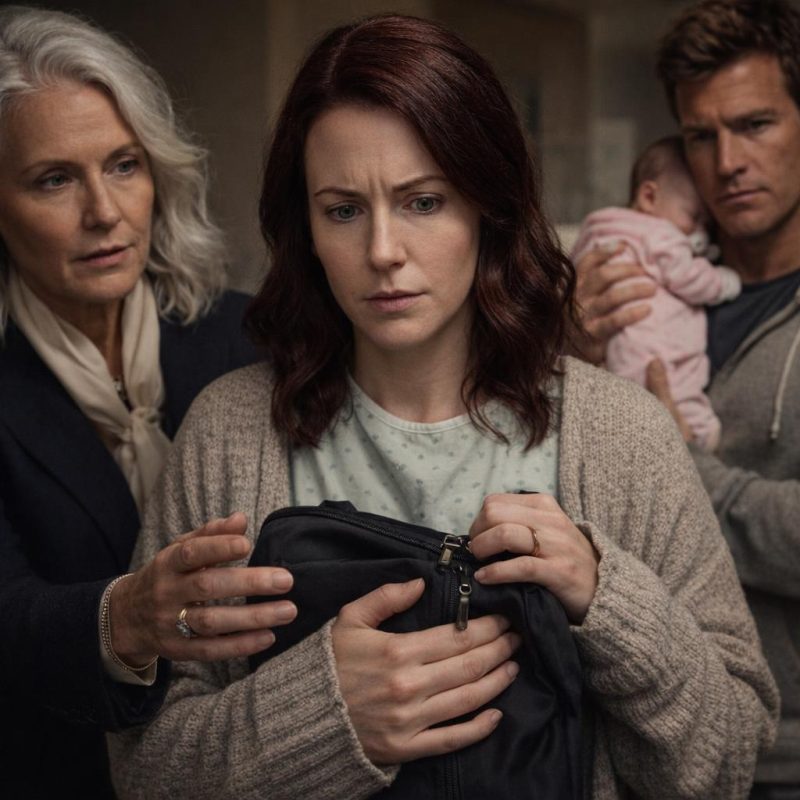 Image by RM AI
Opening It
Martha tells me to stop. I unzip the bag. The zipper runs the full length of the top in one long pull, and I fold back the opening and look inside. Baby clothes. Not diapers, not wipes — clothes, packed in tight, folded in neat stacks. I reach in and pull out the first thing my hand closes on. It's a onesie. White with small yellow ducks, soft and unwashed-smelling, the tag still attached. I turn it over and find the size printed on the label. Six months. I set it on the bed and reach in again. Another outfit — a tiny pair of leggings and a matching top, pale green, size six to nine months. Then a sleeper, footed, in a size marked nine months. David leans over my shoulder, looking into the bag, and says nothing. Martha's voice rises behind me, telling me to give it back, that I have no right, that I'm being completely unreasonable. I pull out another outfit — then another — none of them in a size Lily is wearing now.
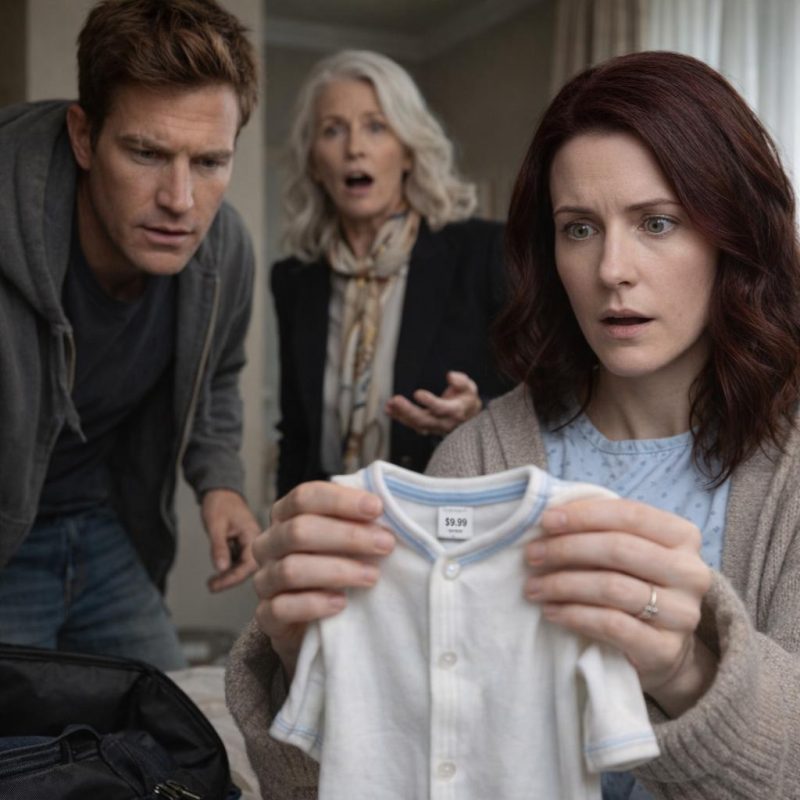 Image by RM AI
Bottles and Schedules
I set the clothes aside in a pile on the bed and reach deeper into the bag. My fingers close around something hard and smooth — plastic, cylindrical. I pull it out. Then another. Then a third. Baby bottles, still sealed in their packaging, the kind with the slow-flow nipples designed for newborns. David straightens up beside me. "Why did you bring bottles, Mom?" he asks, and his voice is careful, the way it gets when he's trying not to sound alarmed. Martha says she thought we might need extras, that hospitals never have enough, that she was just being practical. I set the bottles on the bed next to the clothes and reach in again. My hand finds something flat and folded near the bottom — paper, thick, like it was printed and creased deliberately. I pull it out and unfold it. It's typed. Single-spaced. A header at the top, and below it, a grid of times running from six in the morning to midnight, each slot filled in with an amount in ounces. A feeding schedule. Precise. Detailed. More detailed than anything the nurses have given us. I stand there holding it, and something cold moves through my chest and doesn't leave.
 Image by RM AI
All the Pockets
Martha takes a step toward me, her hand out, palm up. "Give me the bag," she says. Her voice has an edge to it now, something clipped and tight underneath the usual polish. I don't look at her. I set the feeding schedule on top of the pile of clothes and unzip the front pocket of the bag. Inside: two pacifiers still in their cases, a small digital thermometer, a packet of gas drops. David asks his mother what's going on, and she tells him I'm invading her privacy, that this is completely inappropriate, that she brought things to help and I'm treating her like a criminal. I zip the front pocket closed and move to the side of the bag. There's a slim exterior pocket there, the kind with a hidden zipper tab. Martha's voice rises — sharper now, faster — telling me to stop, telling me I have no right, telling me I need to calm down. My fingers find the zipper tab on the side pocket and pull. The pocket opens. I reach in. And there, folded small and pressed flat against the lining, is paper.
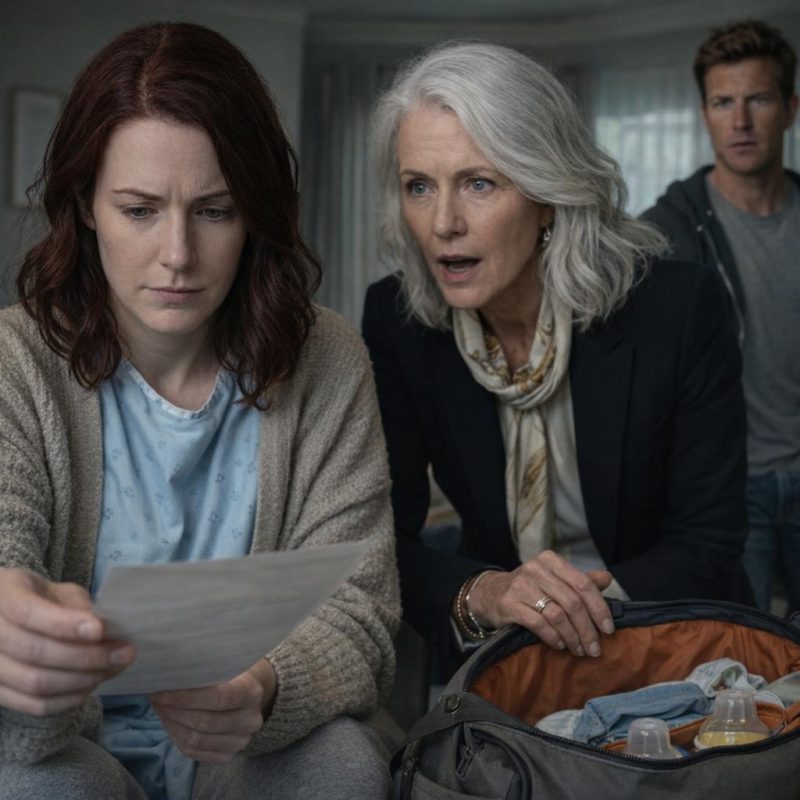 Image by RM AI
The Side Pocket
I pull the paper out slowly. It's folded in thirds, the way you'd fold a letter to fit in an envelope. Martha moves fast — faster than I expect — and her hand shoots out toward it. David steps between us without a word, just shifts his body so she can't reach me, and she pulls back. My hands are shaking as I work the folds open. The paper is thick, cream-colored, the kind you'd use for something formal. I get the first fold open, then the second. Martha says it's nothing, just a draft, that I'm making something out of nothing. David asks her what kind of draft. She doesn't answer him. I smooth the paper flat against my palm and look at the top of the page, and the words there are printed in a clean, formal script — the kind you'd see on a card sent to family, the kind you'd frame and keep. The header reads: Birth Announcement.
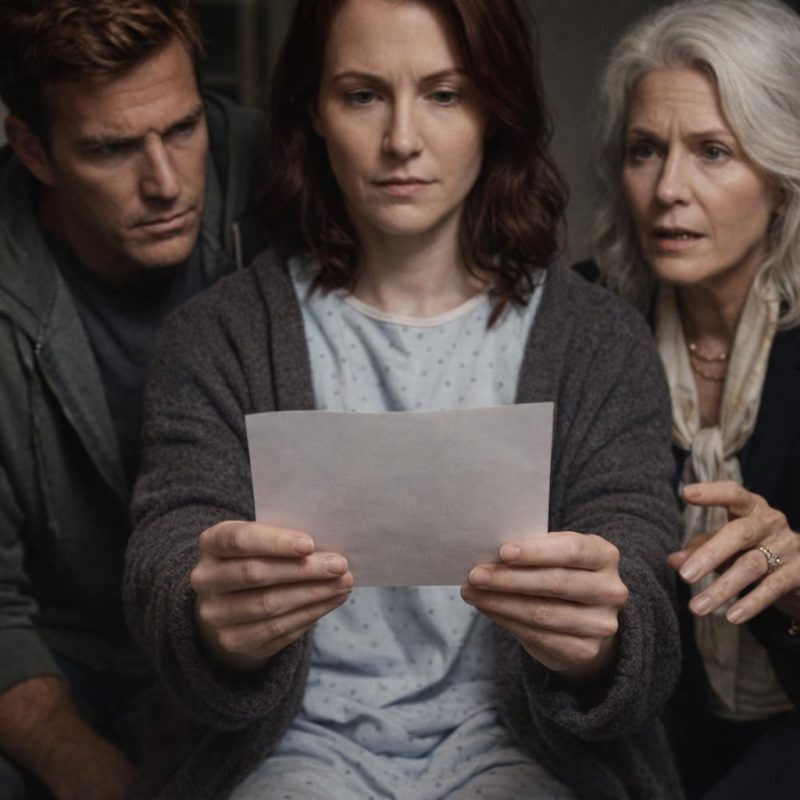 Image by RM AI
Reading It
I read it. My eyes move down the page slowly, taking in each line. Lily's name is there — her full name, spelled correctly. Her birth date. Her birth weight. The words are warm and celebratory, the kind of language you'd send to extended family, to old friends, to people who'd want to know. And then I reach the address line. I read it once. I read it again. The street name isn't ours. The city isn't ours. I know that address — I've driven to it for holidays, dropped David off there after visits, watched it recede in the rearview mirror more times than I can count. It's Martha's address. David leans over my shoulder and goes completely still. I can feel him stop breathing for a second. I read the line a third time, slowly, making sure I'm not misreading it, making sure the exhaustion isn't playing tricks on me. The address printed beneath Lily's name and birth date, listed as her home, is Martha's house.
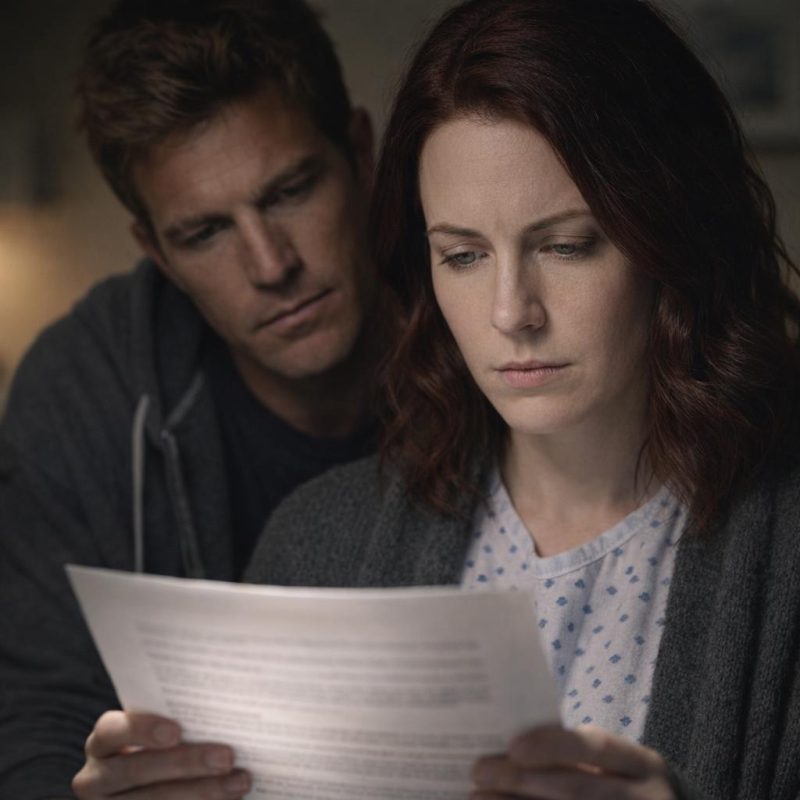 Image by RM AI
Primary Residence
I read the words again. Primary residence. Martha's address. I look at the bag on the bed — the months of clothes in graduated sizes, the bottles, the feeding schedule timed to the hour. I look at Lily in her bassinet, asleep and small and completely unaware. And then it lands, all of it at once, every piece clicking into place: the nursery Martha had already decorated, the offers to take Lily overnight from the very first week, the way she'd talked about my daughter's future as though she were the one making the decisions. This wasn't preparation. This wasn't a grandmother being overeager. She had packed a bag to take my daughter out of this hospital and not bring her back. She had printed a birth announcement listing her house as Lily's home. She had a schedule for feeding her, clothes for the next nine months, everything she'd need to walk out of here and simply — keep her. David says his mother's name. Just that. One word, low and flat, in a voice I have never heard from him before. I look at Martha, and she is already watching me, and she knows that I know exactly what she came here to do.
 Image by RM AI
Explain This
I hold the birth announcement up so Martha can see it clearly. My hand isn't shaking anymore. "Explain this," I say. "Explain why my daughter's birth announcement has your address on it." Martha's face goes pale beneath her makeup, the color draining fast. She says it's a misunderstanding, that I'm reading too much into it, that she can explain everything if I'll just calm down. I ask her how an address is a misunderstanding. She opens her mouth and closes it. David steps forward and tells her to tell us the truth — not an explanation, not a story, the truth — and his voice is so quiet it's almost worse than if he'd shouted. Martha's eyes move between us, back and forth, landing on David and then sliding away. She starts to say something about wanting to help, stops. Starts again, something about the early weeks being hard, stops again. Her composure, the thing she walks into every room wearing like a second outfit, is coming apart in real time, and I watch her search for the version of this that still makes her look reasonable.
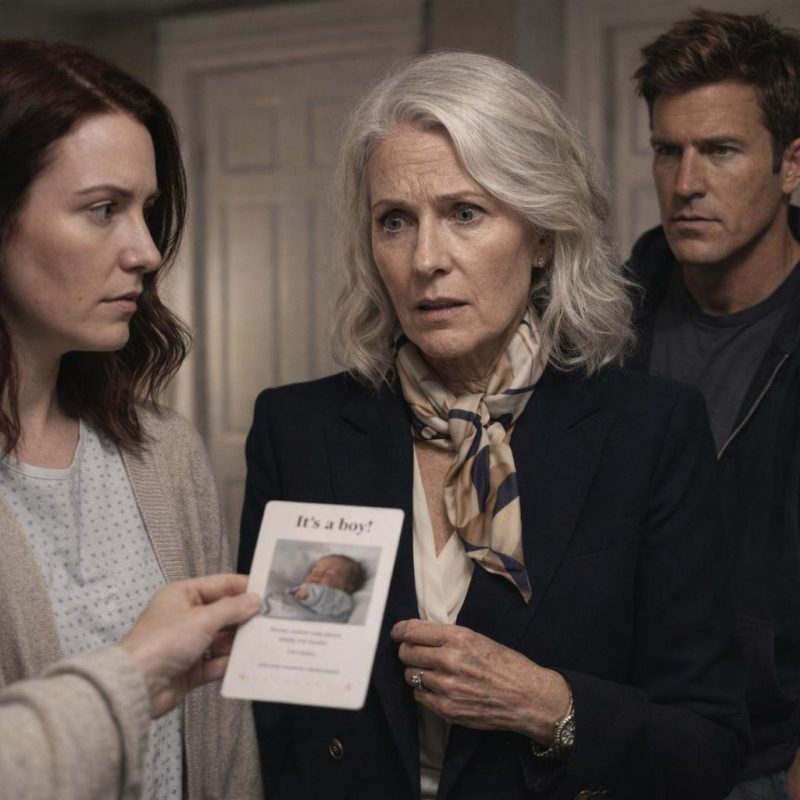 Image by RM AI
Just a Draft
Martha pulls herself together enough to speak. She says she was drafting options — just options, nothing decided — because she wanted to be ready to help in whatever way we needed. I ask her why the address is wrong. She says it was a typo. David says, quietly, that his childhood address isn't a typo. Martha pivots — says she thought we might want to stay with her for the first few weeks, that new parents need support, that she was only thinking of us. I hold up the feeding schedule. I ask her about that too. She says she was being prepared, that she read about the importance of routine for newborns, that she only wanted to make things easier. I ask about the nine months of clothes in graduated sizes. She says grandmothers buy ahead, that it's normal, that I'm twisting everything she did out of love into something sinister. I don't say anything after that. I just look at her. She fills the silence with more words — softer now, more careful — but none of them touch what's sitting in the middle of the room between us, and we all know it.
 Image by RM AI
David Understands
David reaches over and takes the birth announcement from my hand. He reads it the way I did — slowly, line by line, all the way to the bottom. Then he looks at the bag. The clothes. The bottles. The schedule still sitting on top of the pile. He's quiet for a long time. When he finally looks up at his mother, he asks her, in a voice that comes out almost gentle, if she planned to take Lily. Martha reaches for his arm. He steps back before she can touch him. She says his name — just "David" — and he shakes his head once, small and final. He tells her he can't believe she would do this. Not to Emma. Not to him. Not to their daughter. Martha starts to say something, and he turns away from her, toward me, toward the bassinet where Lily is sleeping. I watch his face in the moment he fully understands what his mother brought into this room, and what she came here to do, and the grief in it is something I will carry for a long time.
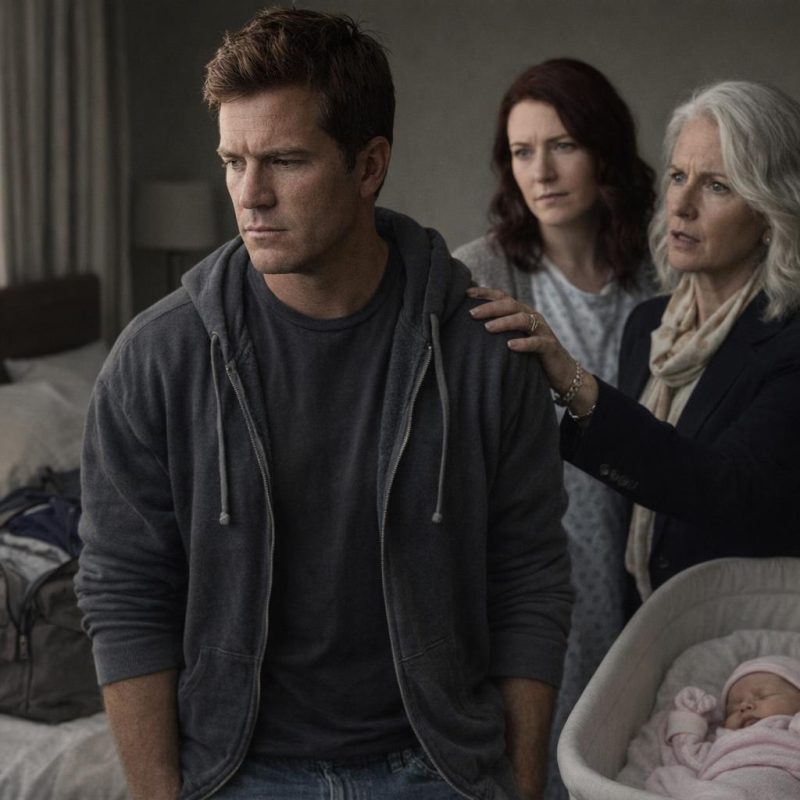 Image by RM AI
Too Weak
Martha doesn't even pause. She looks at me — really looks at me, like she's cataloguing everything wrong with what she sees — and says I don't understand how hard this is going to be. She says I look pale. She says I look exhausted. She says a woman who can barely sit up in a hospital bed has no business being solely responsible for a newborn. David tells her to stop. She doesn't stop. She says she raised him perfectly fine on her own, that she knows what it takes, and that clearly I don't. She says someone had to think about what was best for the baby, because it was obvious I wasn't capable of it. The rage that moves through me isn't hot — it's cold and very clear, like something snapping into focus after being blurry for too long. I look at Lily in the bassinet, her tiny chest rising and falling, and I feel something settle in me that has nothing to do with exhaustion and everything to do with being her mother. Martha is still talking. I stop hearing the words. And then, through the noise of whatever she's saying, I hear her tell David that she would have been a better mother to Lily than I could ever be.
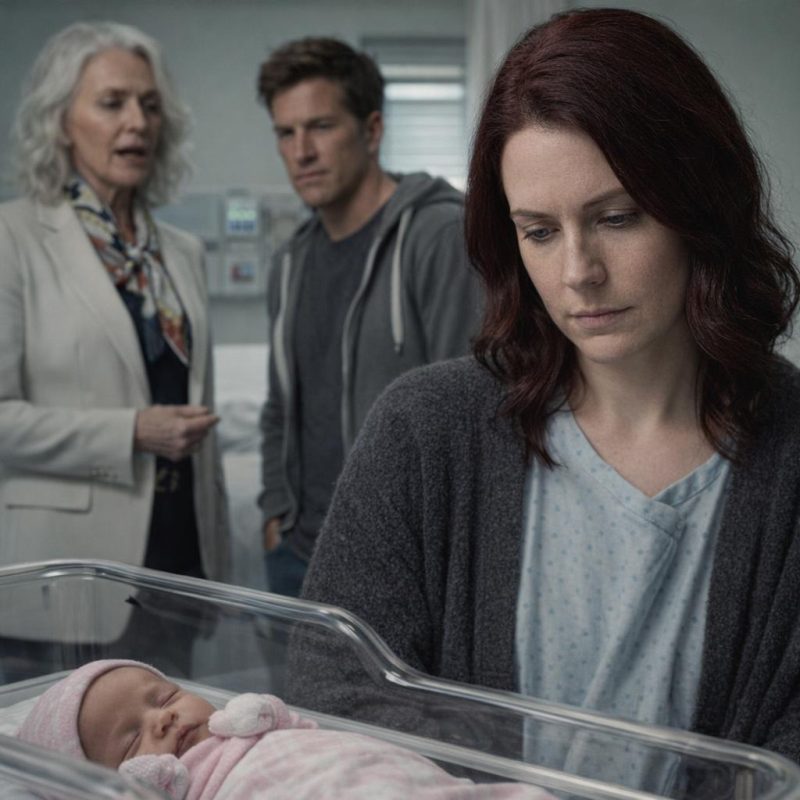 Image by RM AI
Leave
I tell her to get out. Not loudly — I don't have the energy for loud — but clearly enough that there's no room to misread it. Martha says she's not leaving until we talk this through like adults. David steps forward and tells her she needs to go, now, that this conversation is over. Martha says we're overreacting, that she was only trying to help, that we're both too emotional to see that. I push myself up from the bed, which takes more out of me than I want to admit, and I move to stand between her and Lily's bassinet. My legs are shaking. I don't move. Martha says she has a right to see her grandchild. I tell her she has no rights in this room. She looks at me for a long moment, and then her eyes slide past me — past David, past the bassinet — and land on the car seat sitting by the door, the one she brought herself, the one with her address on the tag. Her hand lifts, just slightly, and reaches toward it.
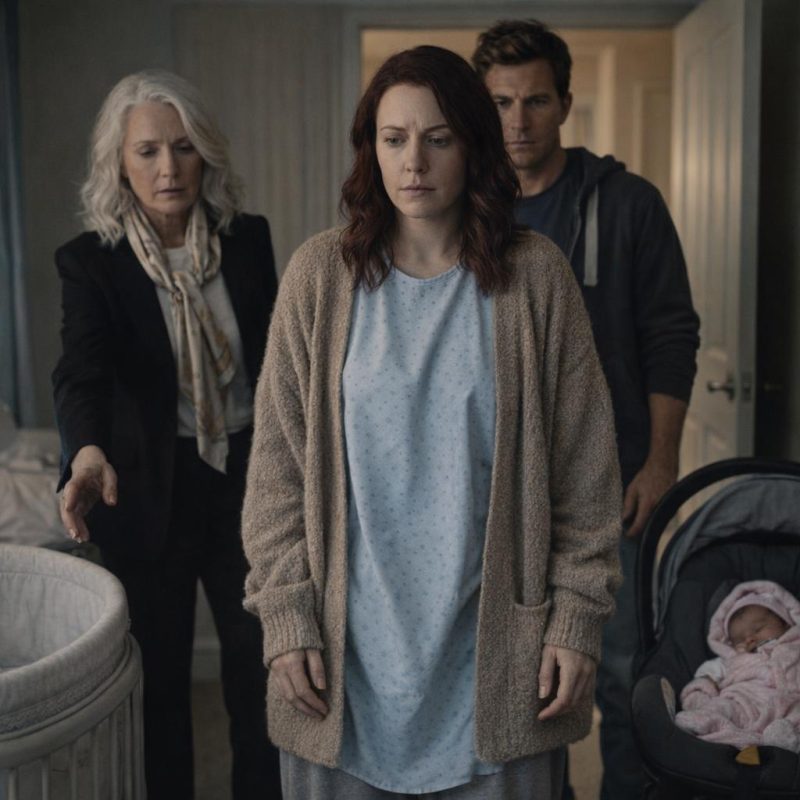 Image by RM AI
Blocking Her
I move before I think about it. I step sideways, putting myself between Martha and the car seat, and I feel the pull in my abdomen from the movement but I don't stop. David is beside me in two steps, shoulder to shoulder, and for a second the three of us are just standing there in this terrible stillness. Martha's voice breaks when she speaks. She says she just wants to hold the baby one more time. She says she just wants a chance to say goodbye properly. I tell her no. She says please, and the word sounds strange coming from her, like a word she doesn't use often and doesn't quite know how to carry. David tells her she needs to leave. His voice is quiet and final. Martha's eyes fill, and I watch her look at her son like she's waiting for him to change his mind, and he doesn't. I reach back with one hand and find the call button on the bed rail. My fingers close around it. Standing there between Martha and my daughter, I feel something I haven't felt since this whole nightmare started — like the ground is finally solid under my feet.
 Image by RM AI
Calling Security
I press the button. Martha says my name — just my name, sharp and disbelieving — and I don't answer her. A few seconds pass and then Nurse Julie's voice comes through the speaker, calm and professional, asking what I need. I tell her I need security in my room. There's a brief pause, and then she says security is on the way. Martha's face goes white. She says I'm being ridiculous. She says I'm going to regret this. David doesn't move from beside me. He doesn't say anything, and he doesn't have to. Martha swings between anger and something that looks almost like pleading — she says we're family, she says she made a mistake, she says this is not who we are. I hold Lily against my chest and I don't respond to any of it. I've already said everything I needed to say. The call button is still warm under my fingers, and somewhere down the hall I can hear the quiet crackle of a radio, and the knowledge that help is already moving toward this room settles over me like something I didn't know I'd been waiting for.
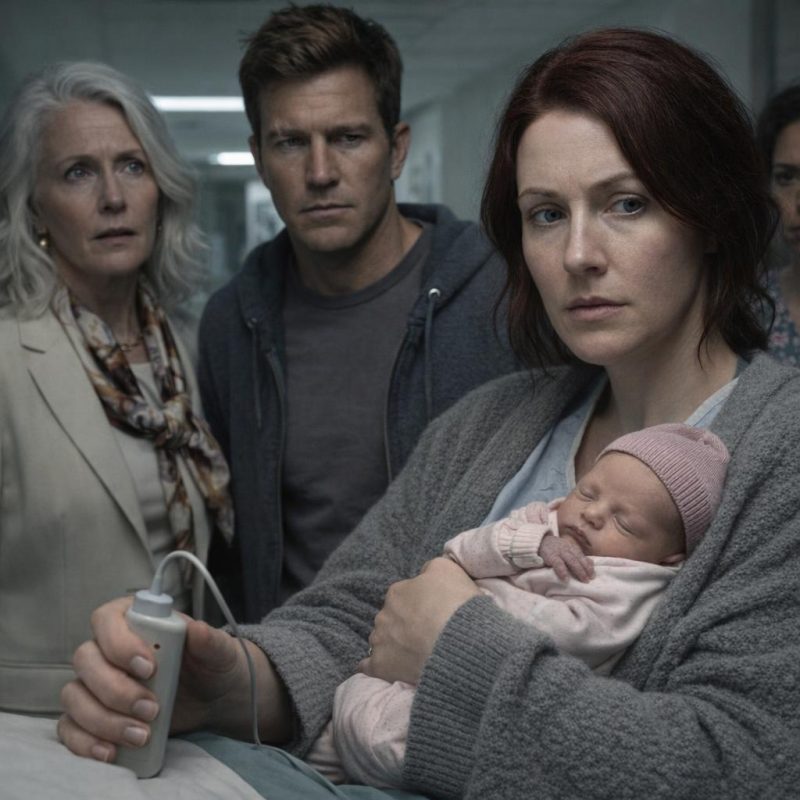 Image by RM AI
Waiting
The minutes that follow are some of the longest of my life. Martha cries. Real tears, running her mascara, and she says she only wanted to help, that everything she did came from love, that we're punishing her for caring too much. I hold Lily and I don't say a word. Then the tears shift — the way they always do with her — and she tells me I've turned David against his own mother, that I've poisoned this family, that she sees exactly what I've been doing all along. David says quietly that I didn't turn him against anyone, that he read the same document I did, that he made his own choice. Martha says she'll never forgive this. She says that to him, not to me, and I watch something move across David's face — grief, maybe, or the particular exhaustion of finally seeing something clearly — and then he looks away from her. Lily makes a small sound against my shoulder, and I press my lips to the top of her head. The room goes quiet except for Martha's uneven breathing. And then, from somewhere down the hallway, I hear the steady, unhurried sound of heavy footsteps getting closer.
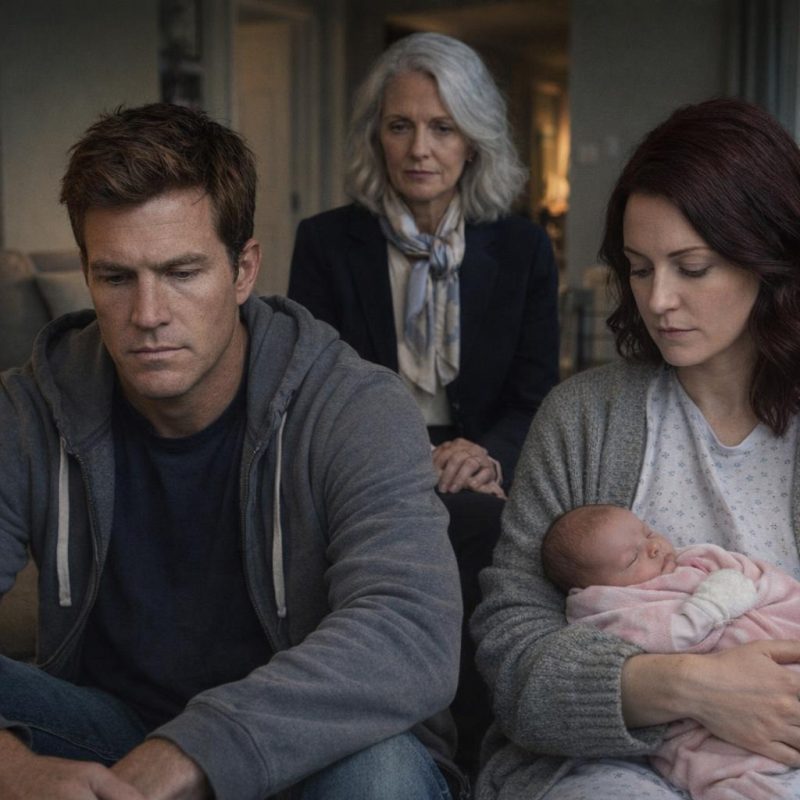 Image by RM AI
Officer Morris
Officer Morris fills the doorway the way people in authority sometimes do — not aggressively, just completely. He's broad-shouldered and calm, and he looks around the room once before he asks what the situation is. I reach for the birth announcement on the bed beside me and hold it out to him. I tell him I found it in a bag my mother-in-law brought into the room — that it has her home address on it instead of ours, and that the bag also contains infant clothes, formula, and a feeding schedule she wrote herself. He takes the document from me and reads it. Martha steps forward and starts to explain — she says it was a misunderstanding, a clerical error, that she was only trying to be prepared. Officer Morris holds up one hand without looking at her and keeps reading. When he finishes, he looks at Martha and asks, evenly, whether the address on the paper is hers. She says yes, but — and he doesn't let her finish the but. He looks at the diaper bag still sitting open on the chair, and then he looks back at the document in his hand, and I watch his expression settle into something careful and deliberate as he reads it through one more time.
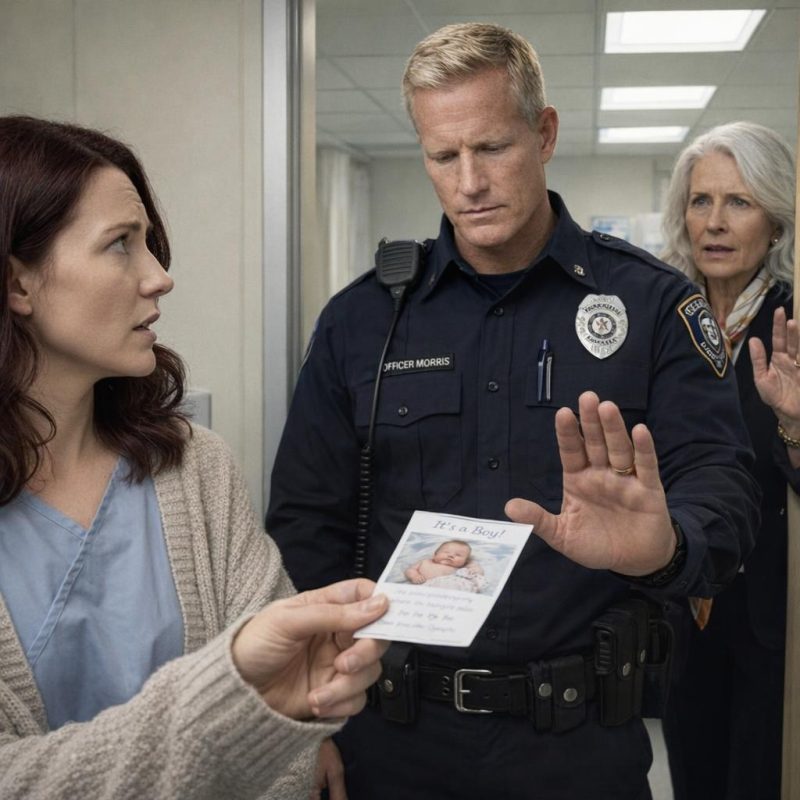 Image by RM AI
The Nurse Confirms
Nurse Julie appears in the doorway behind Officer Morris, still in her floral scrubs, and she takes in the room with the kind of quick, practiced read that comes from years of knowing when something is wrong. Officer Morris asks if she's been caring for me, and she says yes, she's been my primary nurse since admission. He asks if she observed anything concerning during the family's visit. Nurse Julie doesn't hesitate. She says she noticed the grandmother attempting to take the baby to the nursery without the parents' knowledge earlier in the stay. She says she observed her using language that suggested she viewed herself as the primary caregiver rather than a grandparent. She mentions the repeated boundary violations — the unsolicited instructions, the attempts to redirect staff, the way she spoke about the baby's care as though the parents weren't in the room. Martha says the nurse is misunderstanding everything, that she was only being helpful, that this is a gross exaggeration. Nurse Julie doesn't argue with her. She just looks at Officer Morris and says she wanted to document her observations in case they became relevant. Officer Morris thanks her, and writes something in the small notepad he's pulled from his breast pocket. I feel the tight coil in my chest loosen, just slightly, hearing my own quiet worry confirmed in someone else's steady, professional voice.
 Image by RM AI
Escorted Out
Officer Morris closes his notepad and tells Martha she needs to leave the hospital. Martha says she has every right to be here, that she's the grandmother, that no one can make her go. He tells her, without raising his voice, that the parents of the patient have requested her removal and that he's here to facilitate that. Martha looks at David. It's the kind of look designed to make someone feel like a traitor, and I see David absorb it — see his jaw tighten, see him hold it — and he doesn't move toward her. He doesn't meet her eyes. Officer Morris steps beside Martha and takes her arm, gently but with a firmness that makes clear it isn't a suggestion. Martha pulls against it for just a moment, then stops. As he guides her toward the door she turns back and calls David's name, once, the way you say something when you're hoping it will change everything at the last second. David looks at the floor. Officer Morris moves her through the doorway, and the door swings shut behind them, and Martha is gone.
 Image by RM AI
After
The door swings shut and the room goes so quiet I can hear the monitors beeping down the hall. I'm still sitting on the bed with Lily pressed against my chest, and my hands are trembling — not from fear exactly, more like my body finally getting the message that the danger has passed and it doesn't know what to do with that. David is standing by the window with his back to me, one hand braced against the frame, and neither of us says anything for what feels like a full minute. I'm the one who breaks it. I ask if he's okay. He turns around and his face looks like someone wrung it out. He says he doesn't know. Then he says he's sorry — sorry he didn't see it sooner, sorry it got this far. I tell him I barely saw it myself, and that's the truth. I wasn't some genius who figured it all out from day one. I was just a mother who got scared enough to look. He crosses the room and sits down beside me on the bed, and we both look down at Lily, and then his hand finds mine.
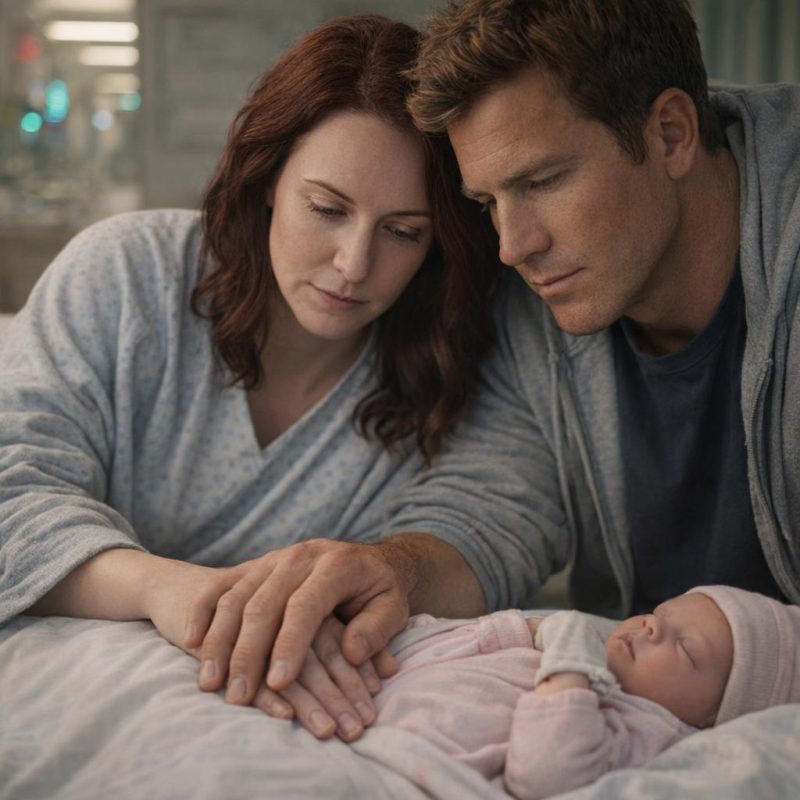 Image by RM AI
No Contact
We don't argue about it. That's the thing I keep coming back to — there's no back and forth, no 'let's give her another chance,' no 'she's still family.' David says his mother cannot be in our lives, and I say yes, and that's it. He picks up his phone and blocks her number right there in the hospital room. I tell him we need to document everything — the bag, the formula, the ID bracelet, the things Officer Morris wrote down — and he agrees immediately. He says we should tell our pediatrician at Lily's first appointment so it's on record. I feel something loosen in my chest when he says that, the relief of having a plan, of not being alone in this. He promises me he will protect our family. We talk quietly about what to tell his aunts and cousins, the ones who will inevitably call when Martha starts working the phones. We decide to keep it simple and honest. I hold Lily while we talk, and she sleeps through all of it, her tiny chest rising and falling, completely unbothered. The decision sits between us, solid and done, and I don't feel the need to revisit it.
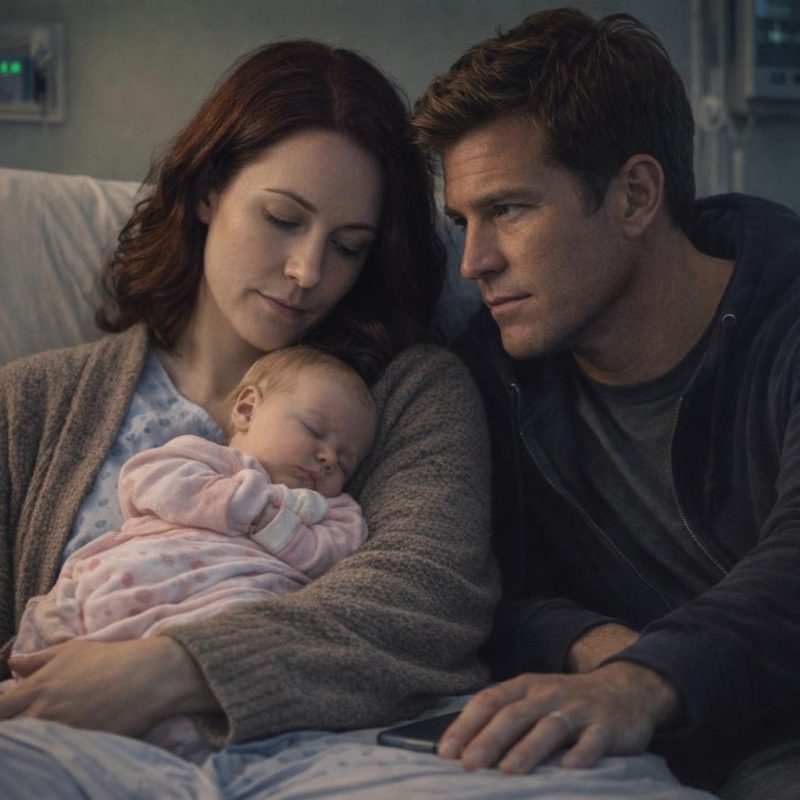 Image by RM AI
Home Security
We bring Lily home on a Tuesday afternoon, and by Wednesday morning David is on the phone with a locksmith. I sit at the kitchen table with my laptop, nursing Lily on one side and researching security camera systems on the other, which is maybe the most new-parent thing I've ever done. We pick a system with cameras at the front door, the back entrance, and the garage. David calls our building manager and gives him Martha's description and a photo, and asks that she not be allowed past the lobby. The building manager doesn't ask many questions, which I appreciate. I start a folder on my desktop — photos of the items from her bag, the incident report number Officer Morris gave us, the name of the hospital administrator we spoke to before discharge. David suggests we consult a family attorney about a restraining order, just to understand our options, and I add that to the list too. Every step feels like laying down a floorboard — one more solid thing between Lily and whatever Martha might try next. By the time the locksmith leaves and the new keys are in my hand, something has shifted in my chest, something quiet and steady that wasn't there before.
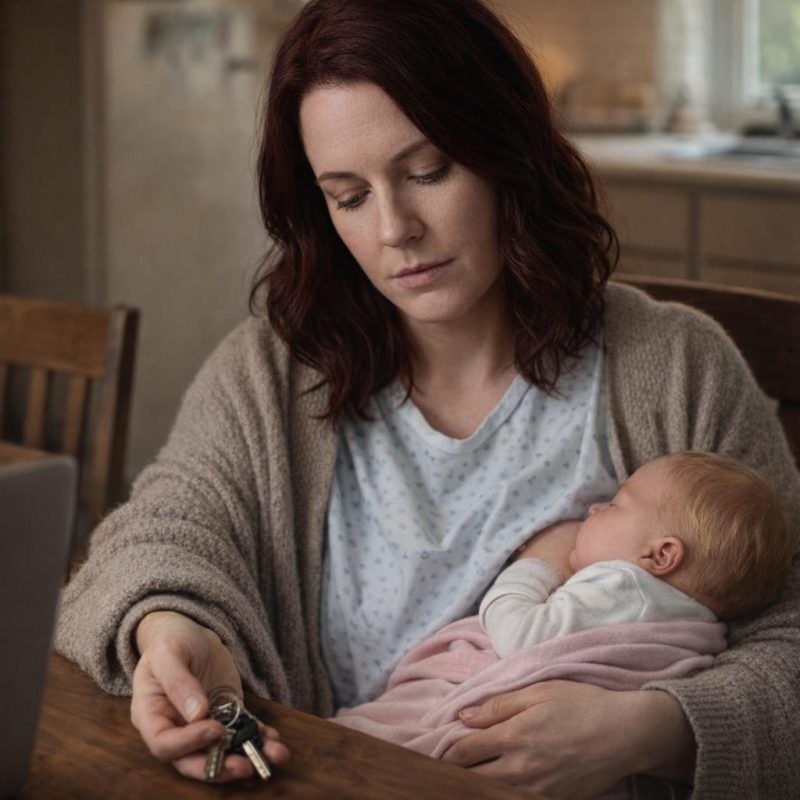 Image by RM AI
Trusting Instincts
It's late now, the kind of late that only exists when you have a newborn — not quite night, not quite anything else. I'm in the armchair by the window feeding Lily, and the house is locked and lit and ours. David brings me tea without being asked and sits on the arm of the chair beside me, and we watch her eat with the focused intensity of two people who still can't believe she's real. I think about how close it felt — not in a dramatic way, but in the quiet way that fear settles into you after the fact. I knew something was wrong from the very beginning. I second-guessed myself every single time, and I trusted myself anyway, and I'm glad. That's the thing I want to hold onto. Not the anger, not the image of Martha's face as Officer Morris walked her out, but this — the weight of Lily in my arms, the tea going warm in my hands, David's shoulder against mine. New motherhood is terrifying and enormous and nothing prepares you for it. But I looked at my daughter and I chose her, every time, even when I wasn't sure. And she is here, and she is safe, and I did that.
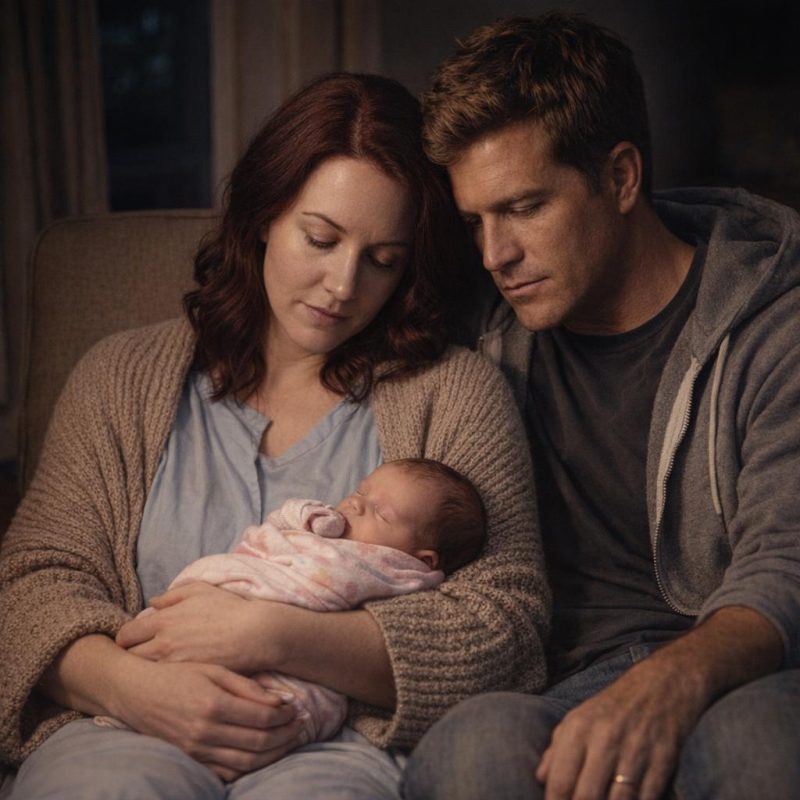 Image by RM AI
KEEP ON READING
The Day the Sun Didn’t Rise: The Unexplained New England…
Alina Nichepurenko on UnsplashImagine waking up on a spring morning,…
By Sara Springsteen Jun 18, 2026
20 Facts About Animal Symbolism In Paintings
The Sacred Clues Across History. Animal symbolism is a detail…
By Elizabeth Graham Jun 18, 2026
How a Single Telegram Pushed America Into World War I
Sammie Sander on PexelsThe year is 1917, and the United…
By Cameron Dick Jun 18, 2026
The Marriage Bed As A Political Object
Fæ on WikimediaA bed is naturally a private space—it's where…
By Elizabeth Graham Jun 18, 2026
20 Most Inappropriate Relationships From History
Private Attachments With Public Consequences. It’s easy to think of…
By Annie Byrd Jun 18, 2026
How Early Navigation Techniques Guided Explorers Across Oceans
Maël BALLAND on PexelsLong before satellites, digital maps, and advanced…
By Rob Shapiro Jun 18, 2026