

My Mother-In-Law Left a Baby Monitor in Our Guest Room. The Footage Revealed a Secret She'd Been Hiding for Years.
My Mother-In-Law Left a Baby Monitor in Our Guest Room. The Footage Revealed a Secret She'd Been Hiding for Years.
The Week Begins
Martha arrives at half past two on a Tuesday, which somehow feels earlier than it should. I hear James's car in the driveway and take a slow breath before I open the front door, already wearing the smile I've been practicing since we confirmed the dates. She steps out looking exactly like herself — sharp eyes behind those reading glasses, a measured smile, two large suitcases that suggest she's packed for a month rather than a week. James is already hauling the bags toward the guest room before I've finished saying welcome. I put the kettle on and ask about the drive, and Martha tells me about the traffic near the interchange in a way that implies it was somehow avoidable. The baby is in his bouncer in the living room, and Martha crouches down and tells him he's gotten so big, and for a moment she looks genuinely soft. I carry the tea tray in and we all sit together in that careful, polite way families do when everyone is trying. James catches my eye across the room and gives me a small nod, the kind that means he appreciates this. I nod back. Later, after Martha has gone to unpack and James is washing up, I stand at the kitchen window and count quietly to myself — six more days, and the number settles over me like something I'll just have to carry.
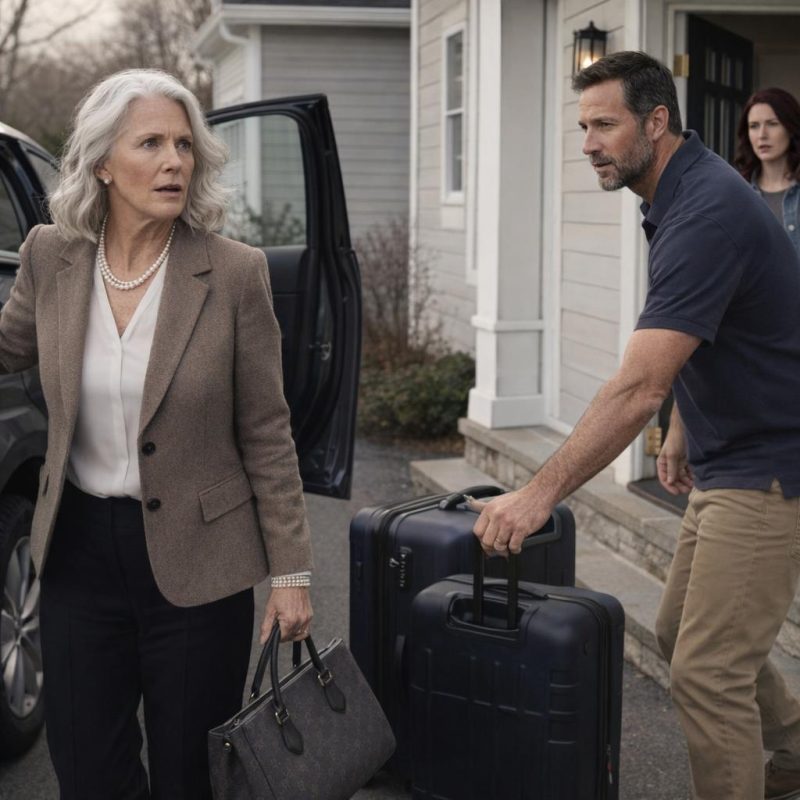 Image by RM AI
Grandmother Knows Best
Dinner is chicken and roasted vegetables, nothing complicated, and I set the table while Sophie drags her chair out with both hands and announces that Grandma is staying in the room next to hers. Martha takes her seat and immediately reaches over to adjust the baby's bib, which he doesn't need adjusted. I bring out the serving dishes and we all find our rhythm, passing things around, filling glasses. Sophie asks why Grandma doesn't live with us all the time, and James laughs a little too quickly. Martha says something warm about how she loves her own home, and I smile and agree that everyone needs their own space. The baby fusses in his high chair and I offer him a piece of soft carrot, and that's when Martha tilts her head and says, gently, that she's noticed I seem to feed him quite often — that it might be worth looking into whether he's actually hungry each time or just looking for comfort. She says it the way people say things when they want you to know they've been thinking about it for a while. James reaches for the bread basket. Sophie is watching my face with the focused attention of a child who has learned that adult expressions tell a different story than adult words. I keep my voice even and say we're following our pediatrician's guidance, and Martha says, of course, of course — and then suggests that perhaps the schedule itself is worth revisiting.
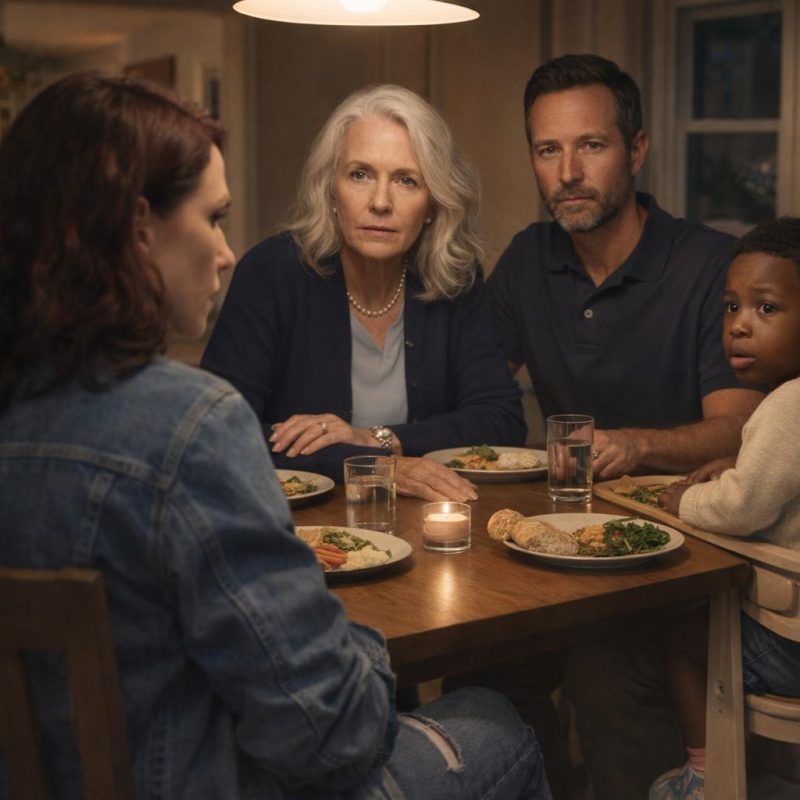 Image by RM AI
The Guest Room Requirements
The morning after Martha arrives, she asks James if he can help her with the guest room. I offer to help too, but she waves me off with a smile and says James knows how she likes things. I go back to the kitchen and listen to the sounds of furniture being shifted — the scrape of the bed frame across the hardwood, James asking where she wants it, Martha's voice giving precise instructions. When I peek in later, the bed has been moved away from the corner near the window and positioned closer to the center of the far wall. Martha is standing in the middle of the room with her arms crossed, looking at the arrangement the way someone looks at a math problem they're still not sure about. She asks James to move the small armchair two feet to the left. He does it without complaint. She asks for extra pillows, and I bring them from the hall closet. She stacks them on the chair in a specific way and then walks the perimeter of the room slowly, checking angles. James catches my eye and mouths the word sorry, and I shake my head a little to say it's fine. Later he tells me his mother has always been particular about sleeping arrangements, that she's been this way his whole life. I tell him it's no trouble. But I keep thinking about the firmness in her voice when she asked him to move the bed — not a request, exactly, more like a correction.
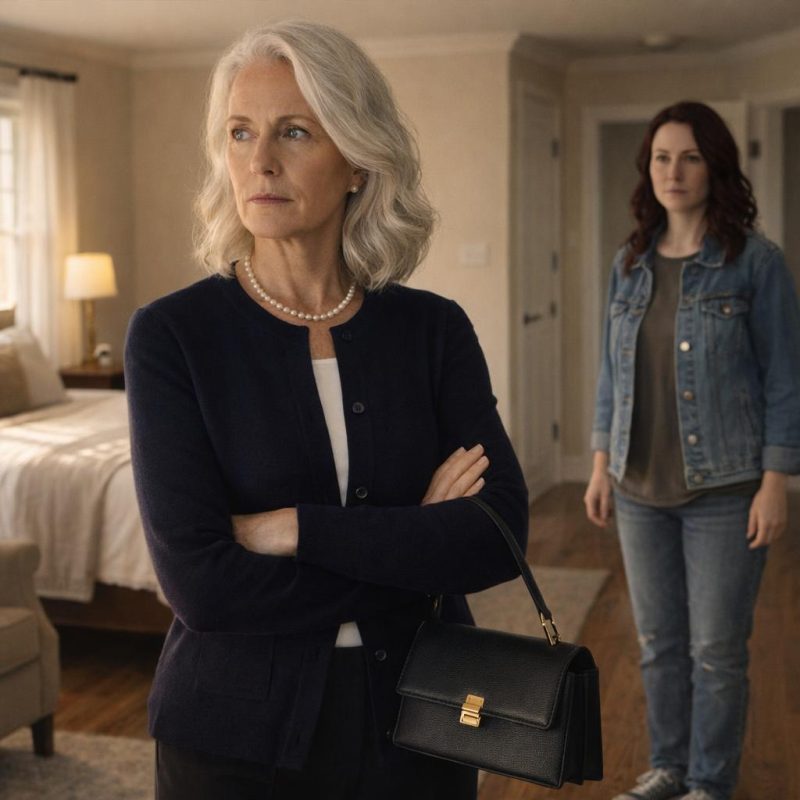 Image by RM AI
Routines Under Scrutiny
By Thursday morning I've developed a kind of internal brace I apply before entering any room Martha is already in. She watches me put the baby down for his nap with the focused attention of someone taking notes, and when I come back to the kitchen she mentions that James never needed such a strict schedule — that he slept when he was tired and woke when he wasn't. I say that every baby is different and pour myself a coffee. I take Sophie to the park after lunch to give us all some air, and when we come back Martha is sitting in the living room with Sophie's tablet in her lap, not using it, just holding it. She asks how much screen time Sophie gets each day, and I explain our limits, and Martha nods slowly in the way that means she disagrees but has decided to be gracious about it. She tells a story about how James grew up without any of that and turned out just fine. Sophie is sitting on the floor nearby, pretending to color, but I can see her watching us. When the baby wakes crying, I go to him immediately, and Martha calls after me that sometimes it's good to let them settle on their own. I don't answer. I pick him up and hold him against my shoulder and stand there in the dim room for a moment, and the tightness in my chest from the third comment of the day just sits there, quiet and familiar.
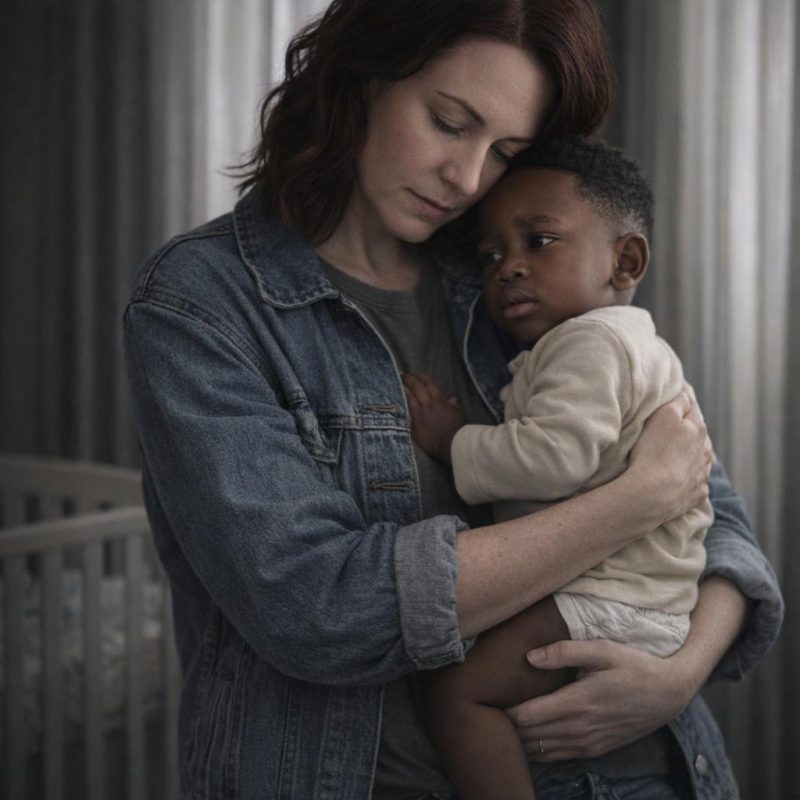 Image by RM AI
Caught in the Middle
I make pasta for dinner because it's fast and I'm tired, and Martha sits at the kitchen island while I cook and mentions, conversationally, that James always loved her pot roast growing up — that there's something about a slow-cooked meal that makes a house feel like a home. I stir the sauce and say that sounds lovely. At the table, the conversation drifts to family traditions, and Martha suggests, warmly, that it might be nice for me to learn some of James's favorite childhood recipes — that it would mean a lot to him, she thinks. James is looking at his plate. Sophie knocks over her water glass and I'm up immediately with a dish towel, and while I'm mopping it up Martha says, almost to herself, that children really do need firmer boundaries around the table. James laughs — that short, nervous laugh he uses when he doesn't know what else to do — and says something about how kids will be kids. I wait for him to say something more. He reaches for his wine instead. Martha smiles and says she just means it lovingly, and James says he knows, Mom, and the moment closes over like water. I excuse myself to put the baby to bed, and as I carry him down the hall I hear James telling Martha the pasta is really good, actually — and he means it as a kindness, I know he does, but it still lands the wrong way.
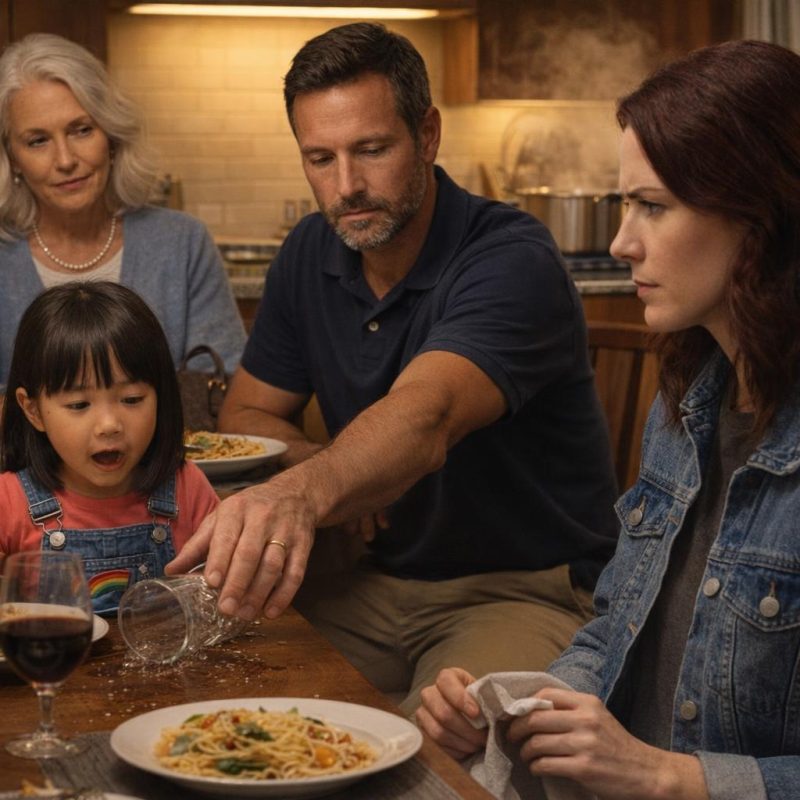 Image by RM AI
Sleep Training Advice
The baby is up twice before midnight and once more around three, and by morning I'm running on coffee and stubbornness. Martha is already at the kitchen table when I come downstairs, and she looks at me with an expression that manages to be both sympathetic and pointed. She says she heard him through the wall — that it must be exhausting. I agree that it is. She sets down her mug and says she's been thinking, that what he really needs is proper sleep training, a consistent method, something structured. I've heard this before from other people and I have my answer ready, but Martha keeps going. She says she'd be happy to help monitor his patterns at night, to keep track of when he wakes and for how long. She says she actually has a baby monitor she brought with her — that she could set it up in the guest room so she could listen in and help me track his cycles without me having to be up every time. I tell her thank you, genuinely, but that we have our own system and we're working through it. She nods, but the look on her face is the one she gets when she's filed something away rather than let it go. James comes in and hears the tail end of it and thanks his mother for the offer, squeezing her shoulder, and Martha says of course, she just wants to help. She sets her baby monitor down on the counter, and it sits there between us.
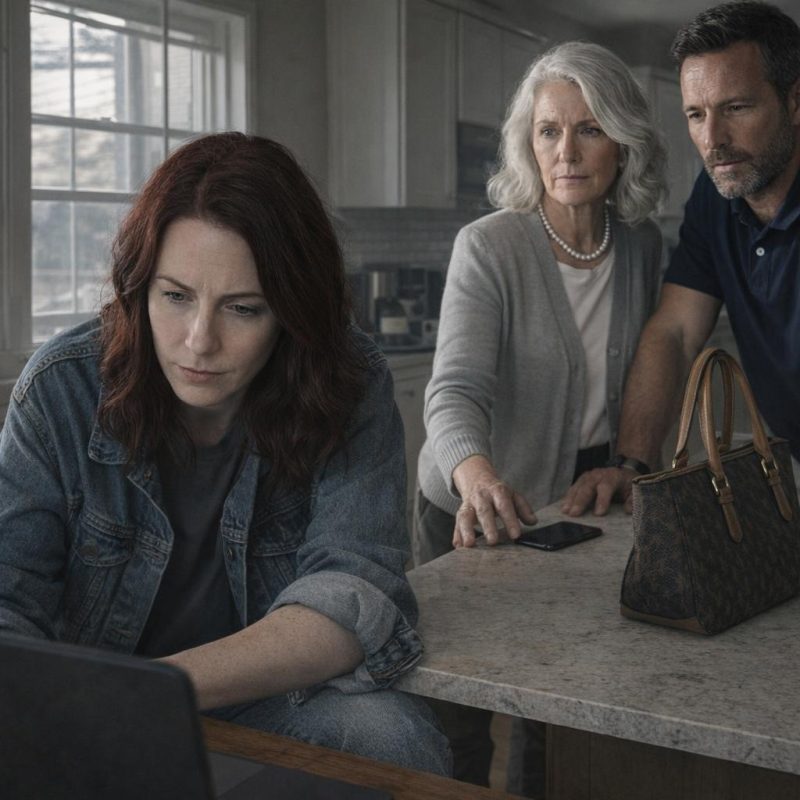 Image by RM AI
Small Territorial Battles
I go to make Sophie's lunch on Friday and spend a full minute opening the wrong cabinet before I understand what's happened. Everything has been moved. The mugs are above the stove now. The snack bins are on the bottom shelf. The spices have been alphabetized and shifted to the cabinet nearest the window. Martha is in the living room and calls out that she hopes I don't mind — she was up early and thought she'd make things a bit more logical. Sophie appears in the doorway and asks why Grandma moved all our stuff, and I tell her Grandma was just trying to help, which is the true answer and also not the complete one. Martha comes in and offers to walk me through the new system, and I say that's okay, I'll figure it out, and she looks mildly hurt in the way that makes it hard to object further. I find my favorite mug on the highest shelf, the one I need a step stool to reach, and I get the step stool and get the mug and say nothing. Martha suggests the playroom might benefit from a similar reorganization, and I tell her the playroom is fine as it is. I take the laundry basket to the bedroom and close the door and fold towels for a while just to be somewhere she isn't. And then I open the pantry to get Sophie a snack — and every single shelf has been completely rearranged.
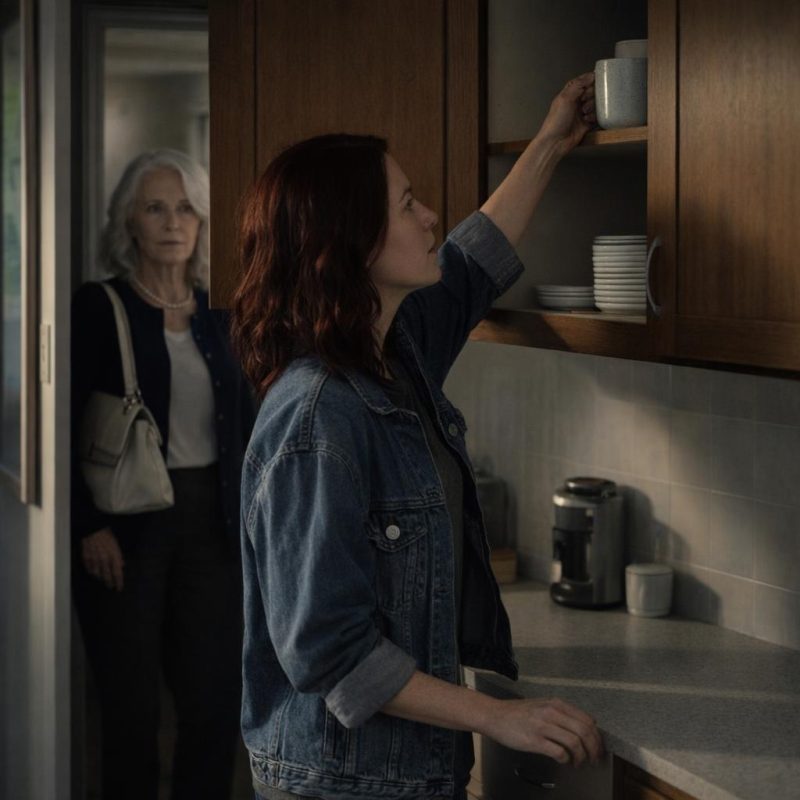 Image by RM AI
The Distracted Guest
Something shifts in Martha on Friday afternoon, though I couldn't tell you exactly when it starts. At breakfast she checks her watch twice before her coffee is finished, which I notice because she's usually the one making the rest of us feel rushed. She's quieter than she's been all week — less interested in the baby's schedule, less inclined to offer commentary on how I load the dishwasher. When I mention a grocery run, she declines to come, which surprises me because she's joined every errand so far. I find her standing at the living room window when we get back, just looking out at the street, and she doesn't hear me come in at first. She goes to her room early in the afternoon, which James notices too — he asks at dinner if she's feeling all right, and she says she's just not sleeping as soundly as she'd like, that the new environment takes some adjusting. It's a reasonable answer. James accepts it. I probably would have too, except that I keep thinking about how thoroughly she rearranged this house in four days, how little anything here seemed to unsettle her before today. I clear the dinner plates and watch her from across the kitchen, and she's sitting with her hands folded in her lap, not talking, not watching the baby, not watching any of us — just somewhere else entirely, behind her eyes.
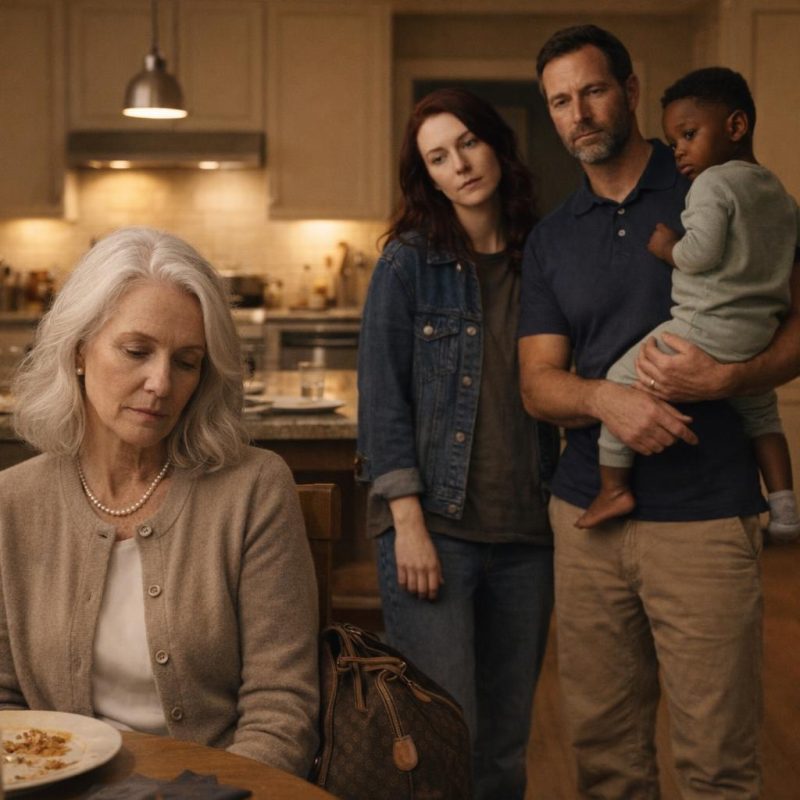 Image by RM AI
Prolonged Goodbyes
Departure day and Martha comes downstairs forty minutes late, still in her robe, saying she just needs a little something before she starts packing. James makes her toast. I make her coffee. Sophie climbs into her lap and Martha lets her, which is sweet, but I'm also watching the clock because the baby's morning nap window is closing and I haven't had a moment to myself in eight days. Martha eats slowly, reminiscing about a walk she and James took when he was Sophie's age, a story I've heard twice this week already. Then she goes back upstairs to pack and I think, okay, twenty minutes. An hour and fifteen minutes later, James goes up to help her carry bags. I hear them talking through the ceiling. Sophie asks me three times when Grandma is leaving and I say soon, sweetheart, soon. When Martha finally comes down, she hugs everyone twice, gives James a list of vitamins he should be taking, crouches down to squeeze Sophie and the baby one more time, and then James walks her to the car. I watch from the window. They stand by the trunk talking for what feels like another ten minutes. And then her car turns the corner and disappears, and the house goes quiet in a way that feels like the first full breath I've taken all week.
 Image by RM AI
Return to Normal
The next morning I make scrambled eggs without anyone suggesting I add more butter, and it's the best eggs I've ever cooked. James comes downstairs looking lighter somehow — shoulders lower, jaw unclenched — and he scoops Sophie up and spins her around in the kitchen while the baby bangs a spoon on his high chair tray. It's loud and chaotic and completely ours. The baby goes down for his nap without a fight, which feels like a gift. While he sleeps, I put the kitchen back the way I like it — spices alphabetical, mugs handles-out, the good cutting board back on the counter where it belongs. James finds me doing it and instead of saying anything, he just leans in the doorway and says, "I know she's a lot. I'm sorry for some of it." I tell him it's fine, and mostly I mean it. Then I look down the hall toward the guest room and think about the sheets that still need washing, the surfaces that need wiping down, the whole room that needs to stop feeling like hers. James says he'll help later. I tell him I'll get started now while the baby's still sleeping.
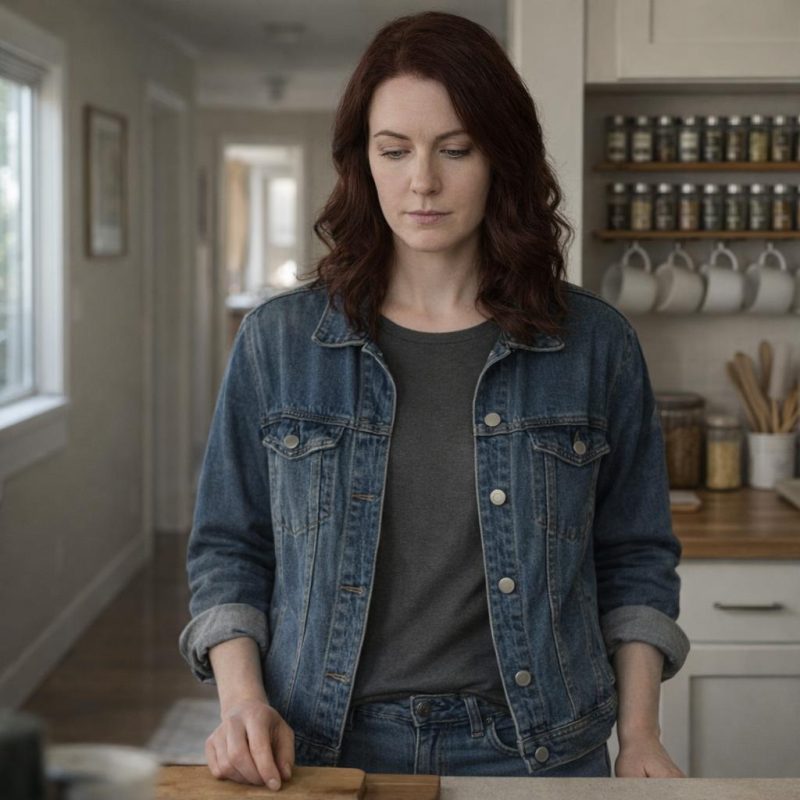 Image by RM AI
Stripping the Bed
The guest room smells like her perfume, that powdery floral thing she wears, and I open the window first before I do anything else. I strip the bed in one efficient pull — fitted sheet, flat sheet, pillowcases — and bundle everything into a ball on the floor. There's a hair tie on the nightstand and a folded tissue tucked under the lamp base, small evidence of a week I'm glad is over. I wipe down the nightstand, the dresser, the top of the mirror frame where dust collects. I vacuum under the bed, which turns up nothing except a dust bunny and a lost crayon of Sophie's, probably from months ago. I straighten the chair in the corner, smoothing the cushion, repositioning the decorative pillows the way they're supposed to sit. I carry the linens downstairs and start the wash, and when I come back up and stand in the doorway, the room already looks more like itself — neutral, quiet, just a room again. The window lets in a thin line of afternoon light and the perfume is already fading. I stand there for a moment and just let it be empty.
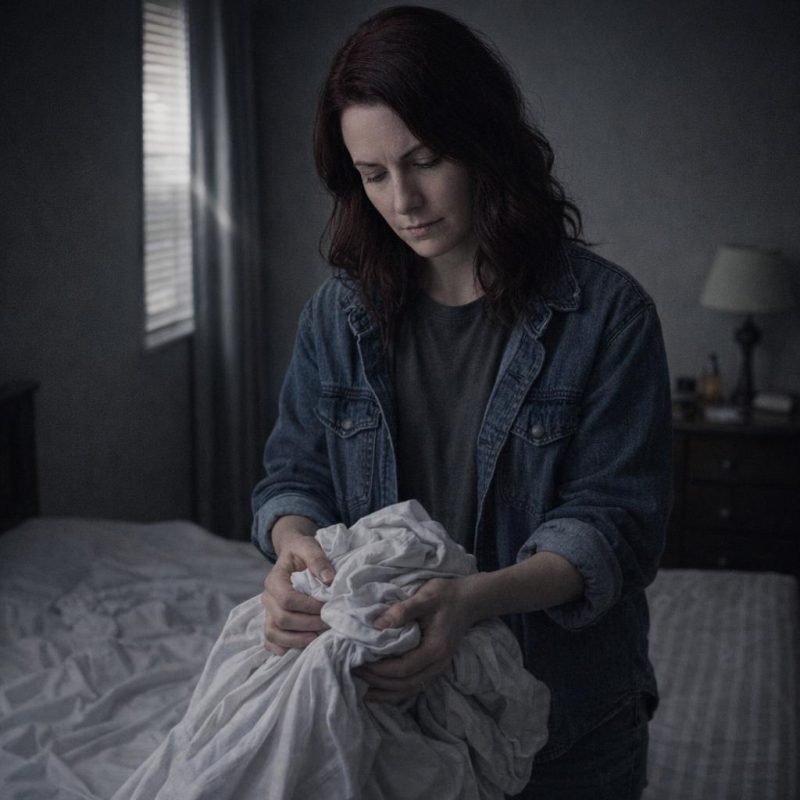 Image by RM AI
Behind the Pillows
I go back upstairs to do a final pass and the decorative pillows on the chair are still bothering me — they're sitting too far forward, bunched up instead of propped. I reach in to fix them and something shifts behind them, heavier than a pillow should be. I pull the front cushion aside and there's something wedged in the gap between the back cushion and the chair frame. I work it loose and it comes free in my hand. It's small, white, rectangular — a baby monitor. Not ours. Ours is the gray one with the little antenna, still sitting on the shelf in the nursery where it always lives. This one is different, a model I don't recognize, and it's been sitting back there behind the pillows where you'd never see it unless you were specifically looking. I turn it over in my hands. It's clean, not dusty, not old. I think about Martha mentioning a monitor at some point during the week — something about having one in case she heard the baby at night. I assumed she meant ours. I stand there in the middle of the guest room, holding a baby monitor that doesn't belong to me.
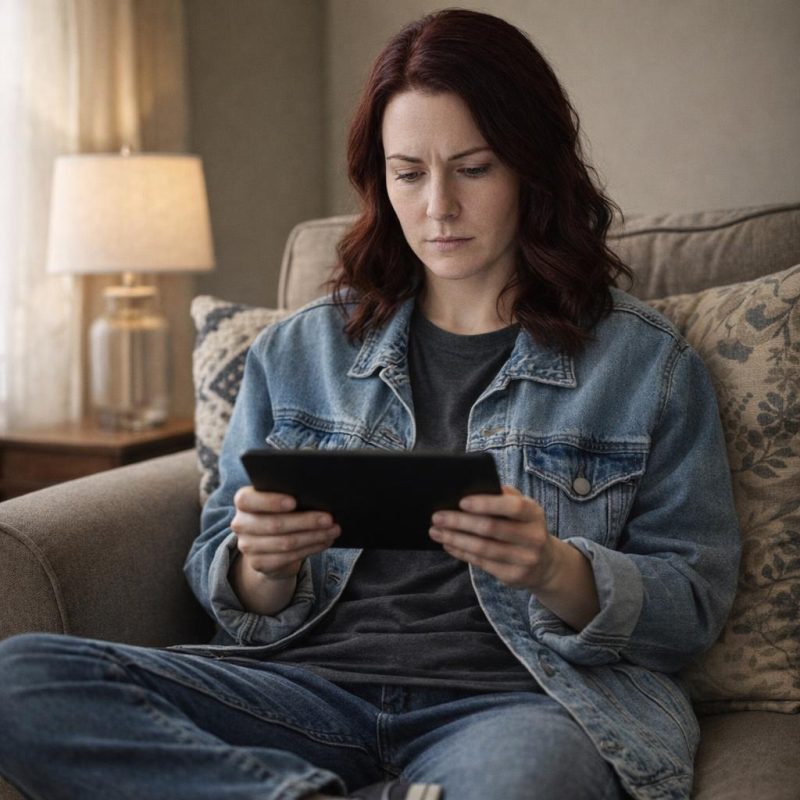 Image by RM AI
The Forgotten Device
I sit down on the edge of the stripped mattress and turn the monitor over again. The power button is on the side and when I press it nothing happens — the battery's dead or it's been switched off. I try to think back through the week. Martha had mentioned something about wanting to hear the baby if he cried at night, wanting to be helpful. I'd thought she meant she'd just listen through the wall. Maybe she'd set this up in here so she could hear the nursery from the guest room without bothering us. That would be like her, actually — doing something without asking, convinced it was the right call. The baby starts fussing from down the hall and I carry the monitor with me when I go to get him, settling him on my hip while I look at the device again. It's a nicer model than I expected, with a small lens on the front that I assume is a camera. I turn it over once more. It's probably nothing. She probably just forgot to pack it in the rush of all those prolonged goodbyes. I set it on the dresser and bounce the baby gently, but my eyes keep drifting back to it, sitting there on the wood, and I can't quite settle on a reason why that feels like enough of an explanation.
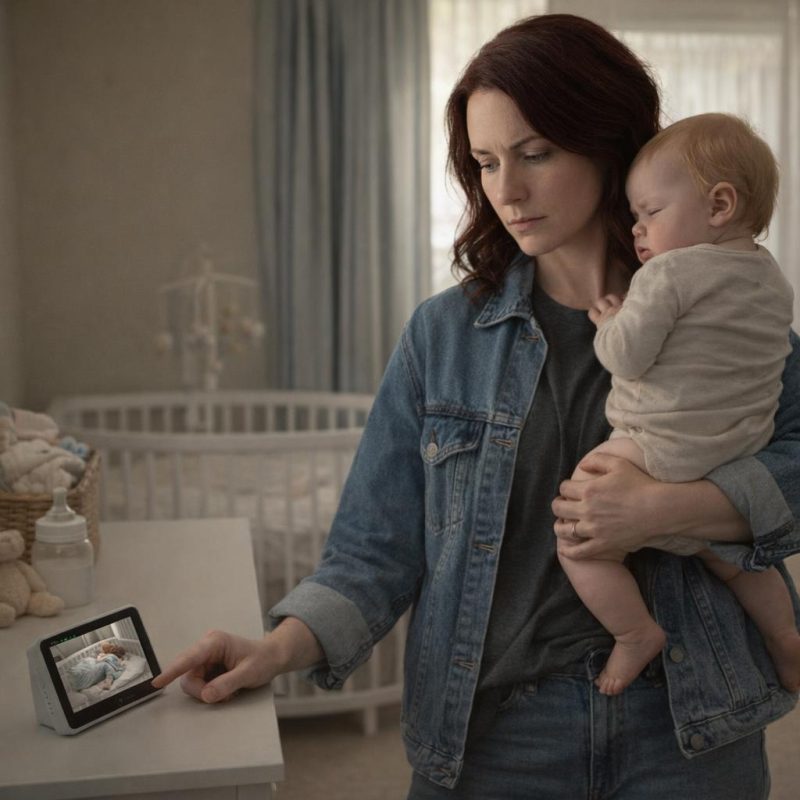 Image by RM AI
Watching Us
I keep coming back to the monitor through the afternoon. I feed the baby his lunch, wipe his face, put him down for his second nap, and the whole time I'm running through Martha's comments from the week — the way she'd hovered in the nursery doorway, the little observations about how long I let him fuss before going in, the raised eyebrow when I put him down awake. She'd been watching us parent all week with her arms crossed and her opinions barely contained. And now I'm holding a camera she'd set up in the room next to the nursery. I think about her lying in that guest bed at night, monitor in hand, listening for every sound through the wall. Maybe watching. The idea of it sits in my stomach like something cold. This is our home. These are our nights, our routines, our private fumbling-through-it moments that belong to us and not to her. I know I can't prove what she was doing with it. Maybe I'm reading too much into it. But I look at the monitor sitting on the dresser and I feel the particular discomfort of someone who suspects they've been observed without their knowledge, in a space they thought was theirs.
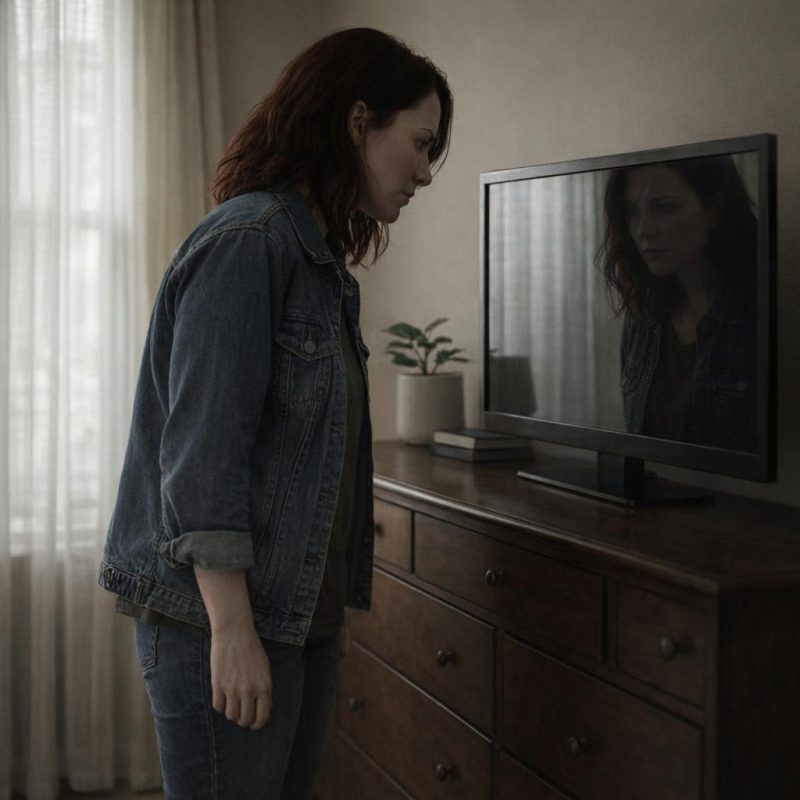 Image by RM AI
He'll Just Defend Her
After dinner I wait until Sophie wanders off to the living room with her crayons before I set the monitor on the kitchen table in front of James. He picks it up, turns it over the same way I did, and sets it back down. "Where'd you find it?" I tell him — behind the pillows on the guest room chair, tucked back where you wouldn't see it. He nods slowly. "She probably set it up so she could hear the baby at night," he says. "She mentioned wanting to help if he cried." I tell him it feels like more than that, that there's a camera on it, that it was hidden. He gives me the look — the patient, slightly tired look that means he's about to smooth something over. Sophie appears in the doorway asking what we're talking about and James tells her nothing, sweetheart, go finish your drawing, and she disappears again. I try once more. I tell him it doesn't feel right, that I'd like to know what it was actually pointed at. James picks up the monitor, glances at it again, and sets it back down. "She was probably just trying to help," he says.
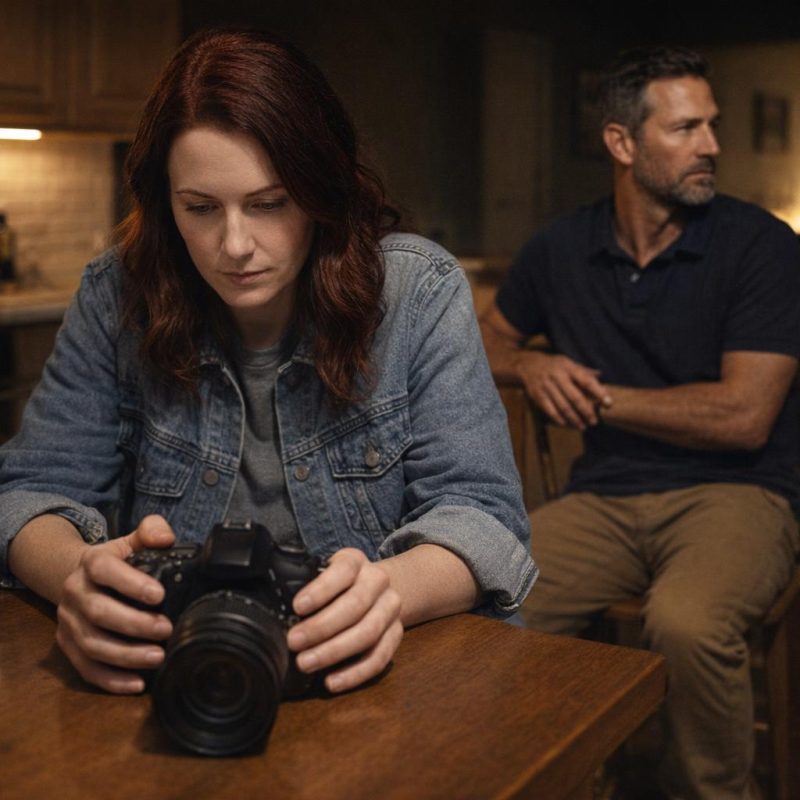 Image by RM AI
The Wrong Angle
I take the monitor back to the guest room after James falls asleep. I sit in the chair where it was hidden and I hold it up the way it must have been sitting — propped in the gap behind the cushion, angled slightly by the shape of the chair back. I look at where the lens is pointing. It's not aimed at the bed. It's not aimed at the door. I stand up and hold it at the height it would have been, tilting it to match the angle it was wedged at, and I follow the line of the lens down toward the floor. The far corner of the room. I walk over and look at it — just floorboards, the baseboard, the wall meeting the floor in an ordinary right angle. Nothing there. No vent, no outlet, nothing that would explain why you'd want a camera pointed at it. I crouch down and look more carefully. Still nothing. I stand back up and look at the monitor in my hand, then back at the corner. I sit back down in the chair, genuinely lost, because whatever Martha was watching, it wasn't the baby. The lens pointed straight at the corner of the floor.
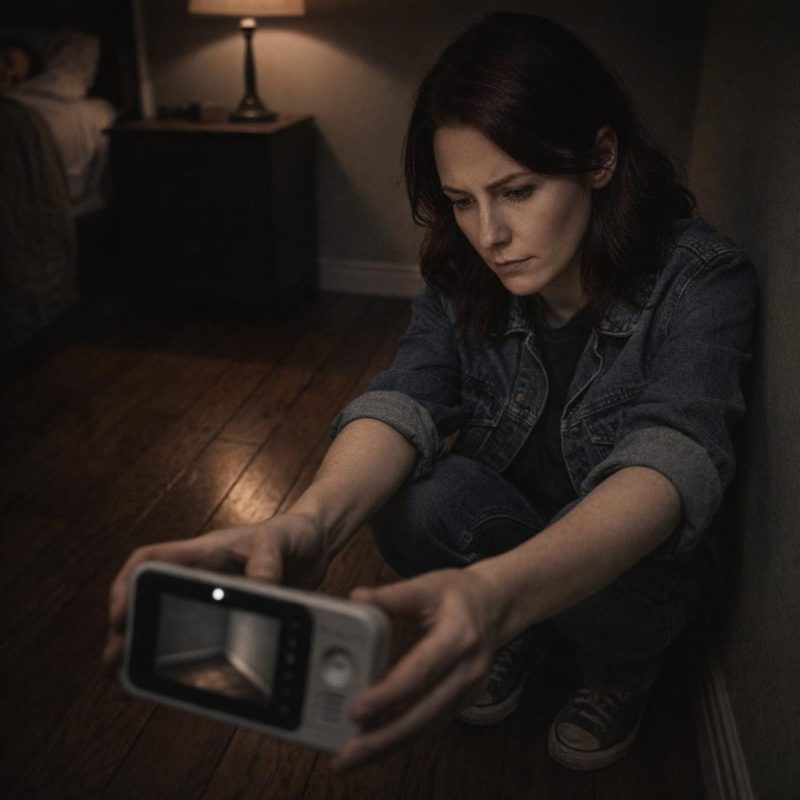 Image by RM AI
Saved Footage
I turn the monitor over in my hands, really looking at it this time — not just as a thing that shouldn't be there, but as a thing that might tell me something. It's a basic model, nothing fancy, the kind you can pick up at any big-box store. I run my thumb along the edges, feeling for anything I missed. There's a small panel on the side, barely noticeable, the kind of thing you'd overlook if you weren't looking for it. I press the edge of my thumbnail against it and it pops open. A slot. I stare at it for a second, my brain catching up. A memory card slot. I tilt the monitor toward the lamp on the nightstand and look inside, and my stomach drops a little, because it's not empty. There's a card in there — small, dark, already seated like it belongs. My hands aren't entirely steady as I work it free. I hold it up between two fingers and just look at it. Whatever was in front of that lens all week, it's on here. I think about the laptop on my desk, the one with the card reader built into the side, and I'm already moving toward the bedroom door.
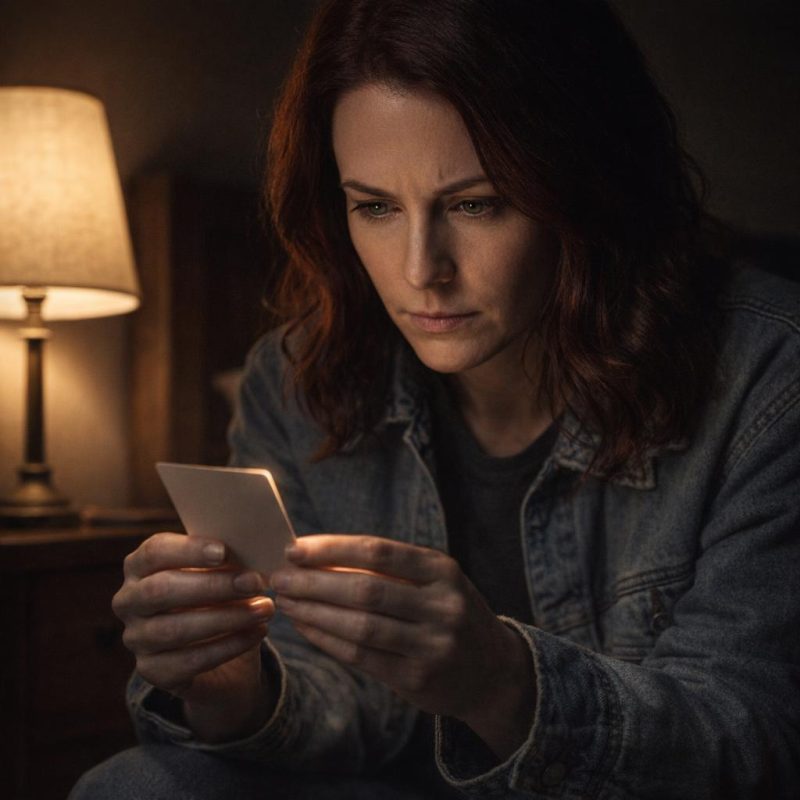 Image by RM AI
The First Night
I close the bedroom door and sit cross-legged on the bed with the laptop open in front of me. The card reader accepts the card with a soft click. There are several video files, each one labeled with a date and a timestamp. I open the first one — Martha's first night in the guest room. The footage is dim, shot in whatever low-light mode the monitor uses, and it shows exactly what I expected: the corner of the floor, the baseboard, the wall. Nothing else. Martha's shadow crosses the frame once as she gets into bed, and then there's just stillness. I fast-forward. The timestamp ticks upward — 11 PM, midnight, 1 AM — and nothing moves. The corner of the floor sits there, gray and unremarkable. I keep scrubbing forward. At some point I start to feel a little foolish, like maybe I've built this into something it isn't. Maybe the monitor slipped behind the cushion by accident. Maybe there's a completely ordinary explanation I haven't thought of yet. The timestamp climbs toward 2 AM and the frame stays empty and quiet, and I sit there watching a corner of my own guest room floor, wondering if I'm wasting a night of sleep over nothing.
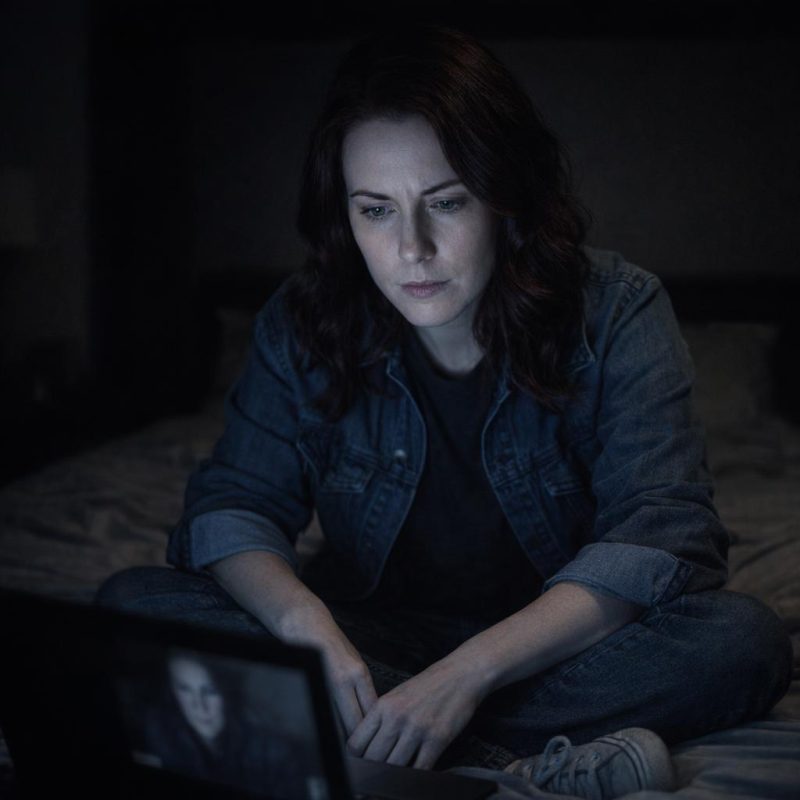 Image by RM AI
Three in the Morning
I almost close the laptop. I'm tired, my eyes are dry, and the footage has given me nothing for nearly two hours of recorded time. But I let it keep playing, scrubbing forward in slow increments, and then the timestamp rolls to 3:00 AM and something changes. I stop fast-forwarding. There's movement at the top of the frame — feet, bare feet, stepping into view from the direction of the bed. I sit up straighter without meaning to. I rewind a few seconds and watch again. The feet are unhurried. They move with a quiet steadiness, crossing the floor directly toward the corner the camera faces. I don't need to see a face to know it's Martha. I unpause and watch her kneel down, her knees settling onto the floorboards, her hands coming forward into the frame. She reaches toward the floor, fingers spread, feeling along the boards in the dim light. My chest is tight in a way I can't quite explain. I don't move. I don't reach for my water glass or shift my position on the bed. I just sit there, watching her hands move against the floor in the gray quiet of 3 AM.
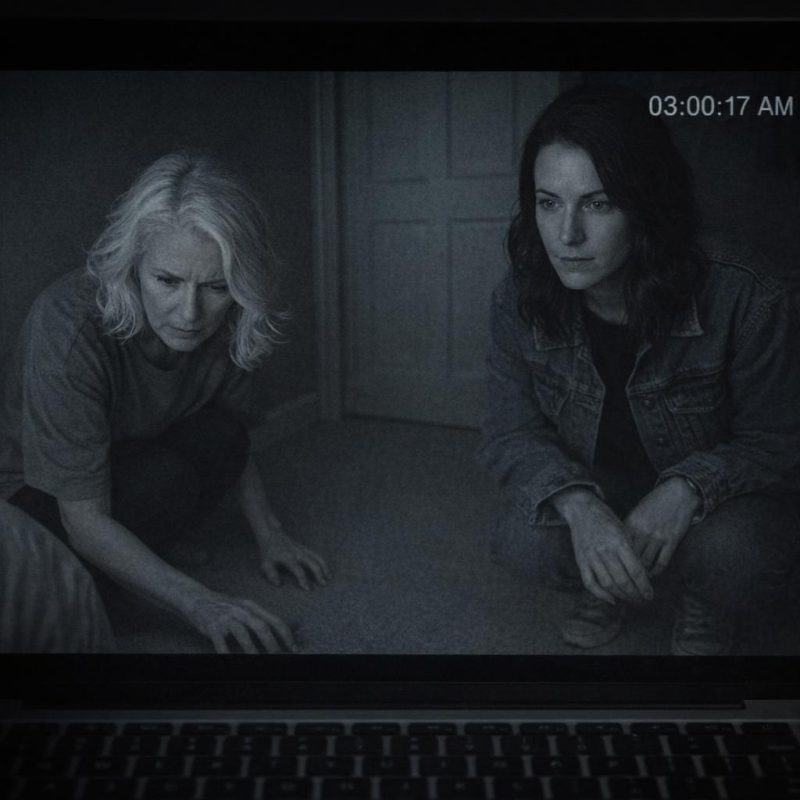 Image by RM AI
The Tool
I lean closer to the screen. Martha's hands are doing something deliberate — not just feeling around, but working at something specific. I pause the video and squint at the frozen image. She's holding something. It's thin, flat, maybe four or five inches long — it catches a faint edge of light when she angles it. A letter opener, maybe, or something like one. I unpause and watch her slide the thin end of it into the gap between two floorboards. She works it slowly, back and forth, with a kind of patience that doesn't look like frustration. My grip on the laptop tightens. The floorboard she's working at doesn't seem nailed down the way the others are. There's give to it. I can see the edge lifting slightly as she levers the tool, a thin line of shadow opening up between the board and the subfloor beneath it. I pause again and just stare at the screen. I think about that corner — the one I crouched down and examined myself, the one that looked like nothing. I unpause, and I watch her slide the tool deeper into the gap between the boards.
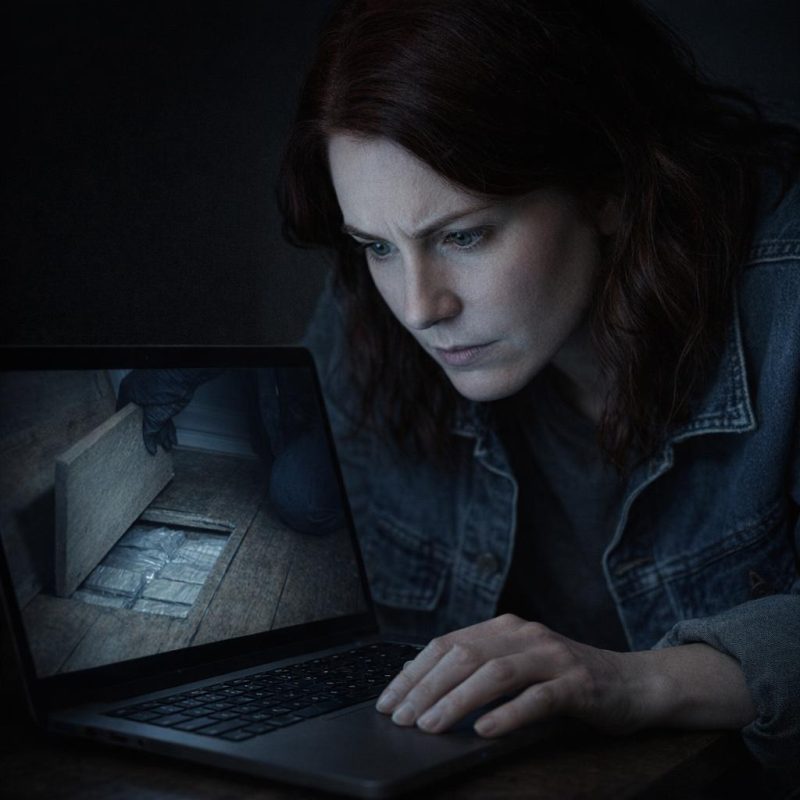 Image by RM AI
The Metal Box
Martha lifts the board free and sets it aside, and then she reaches into the space underneath. I hold my breath without deciding to. Her hands come back up holding something small — a box, metal by the look of it, dull and dark in the low-light footage. She sits back on her heels and holds it in her lap. I pause the video and stare at the image. The box looks old. Not antique-store old, but worn in the way things get when they've been handled a lot — the corners rubbed smooth, the surface dull. Martha opens the lid. I lean in close enough that my nose is almost touching the screen, but the camera angle is wrong. I can see her looking down into it, her head bowed slightly, but the contents are out of frame. She stays like that for what the timestamp tells me is nearly four minutes. Four minutes, sitting on the floor of my guest room in the middle of the night, looking at whatever is inside that box. I sit back. The bedroom is quiet around me, James breathing steadily on his side of the bed, the house completely still. I look at the paused image on my screen — Martha's bowed head, the box in her hands — and I feel the full strangeness of what I'm watching settle over me.
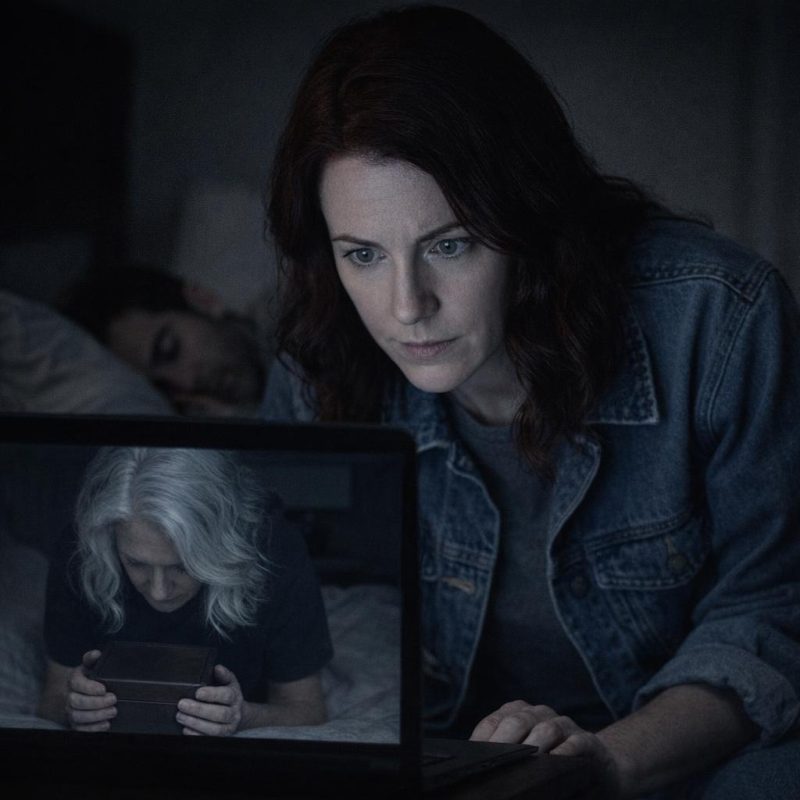 Image by RM AI
Replacing the Evidence
Martha closes the lid. The movement is careful — not rushed, not careless. She lowers the box back into the space beneath the floorboard, and I watch her position it, adjusting it slightly, like placement matters. Then she lifts the board and sets it back into the gap. She runs her fingers along the seam where the board meets the others, pressing gently, checking the fit. She does this twice. Then she stands, brushes her palms against her knees, and walks back toward the bed. The timestamp reads 3:17 AM. I sit back against the headboard and let out a slow breath. What strikes me — what I can't stop turning over — is how unhurried all of it was. No fumbling, no hesitation, no pausing to listen for sounds in the hallway. Every movement had a kind of ease to it, the kind that comes when a task is simple and familiar rather than urgent. I don't know what to make of that. I don't know what to make of any of it. I close the laptop halfway and sit in the dim room, the image of Martha's hands pressing along that floorboard seam still sitting behind my eyes.
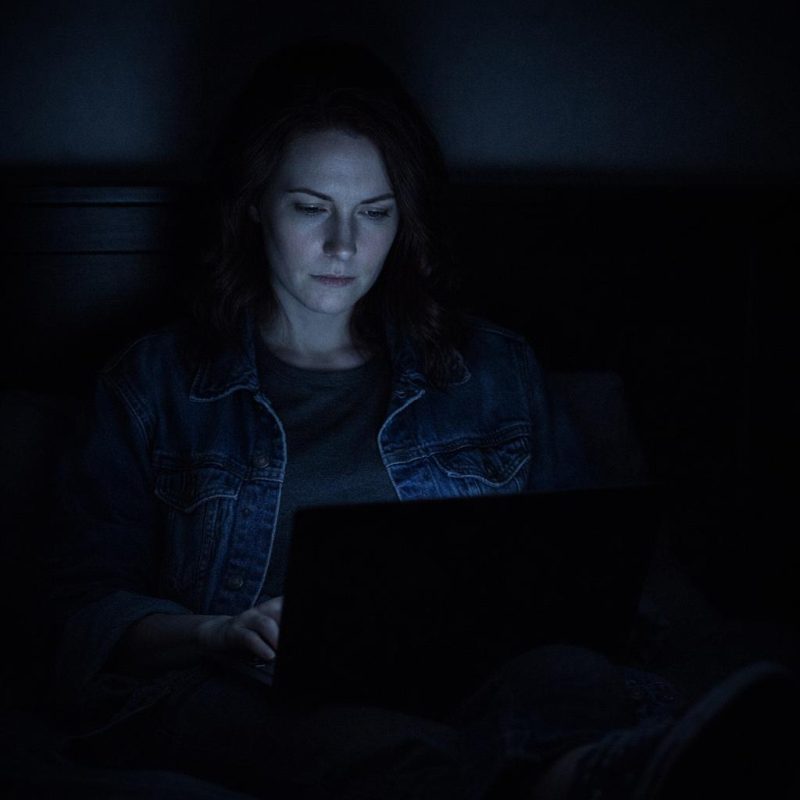 Image by RM AI
Night Two
I open the second night's file and skip straight to 2:55 AM. I tell myself I'm just checking. Maybe the first night was a one-time thing — insomnia, a strange impulse, something she needed to look at once and then put away. The timestamp ticks forward. 2:58. 2:59. My stomach is already tightening before it happens. At 3:00 AM exactly, the feet appear in the frame again. Same bare feet. Same unhurried pace. Moving in the same straight line toward the same corner of the floor. I don't pause it this time. I just watch. She kneels. The thin tool appears. The board lifts. The box comes up. She sits with it for — I check — four minutes again, almost to the second. Then the lid closes, the box goes back, the board goes down, the seam gets checked. She stands, brushes her knees, walks back to bed. The timestamp reads 3:16 AM. I close the laptop and press my hands flat against my thighs. Two nights. Same time, same corner, same sequence, one minute apart on the end timestamp. I open the laptop again, and I pull up the third night's file, and I jump directly to 3:00 AM, and Martha's feet step into the frame right on schedule.
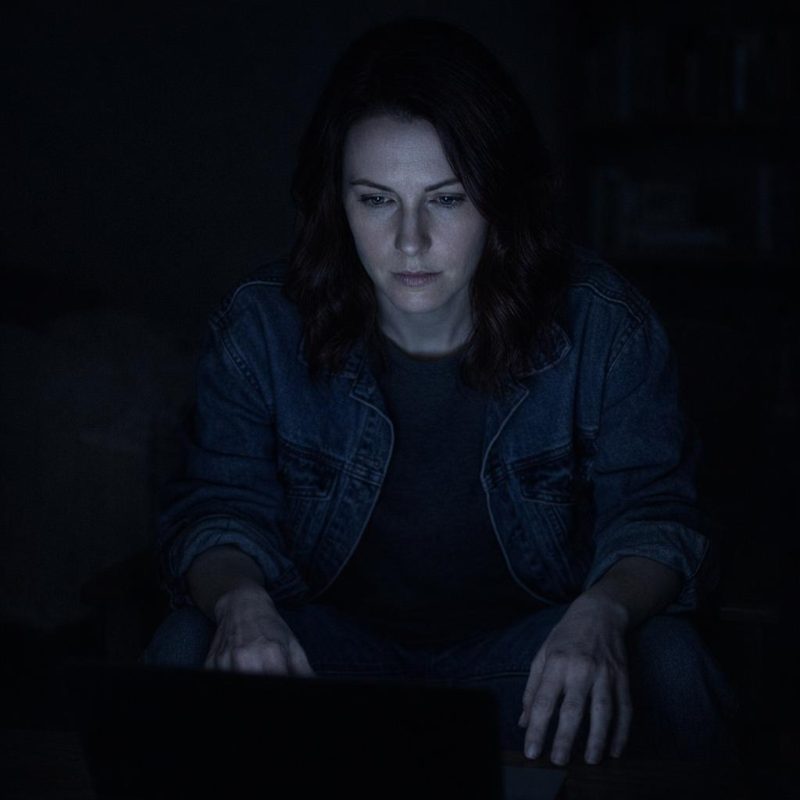 Image by RM AI
The Third Night
I watch the third night all the way through without pausing. Tool, board, box, four minutes of stillness, box back down, board replaced, seam checked, back to bed. The end timestamp reads 3:15 AM. I write the three numbers down on the notepad I keep on the nightstand: 3:17, 3:16, 3:15. I stare at them. Then I open the fourth night's file. I skip to 2:59 AM and I sit there with my finger hovering over the trackpad, not fast-forwarding, just waiting. The timestamp turns to 3:00 AM. Martha's feet step into the bottom of the frame.
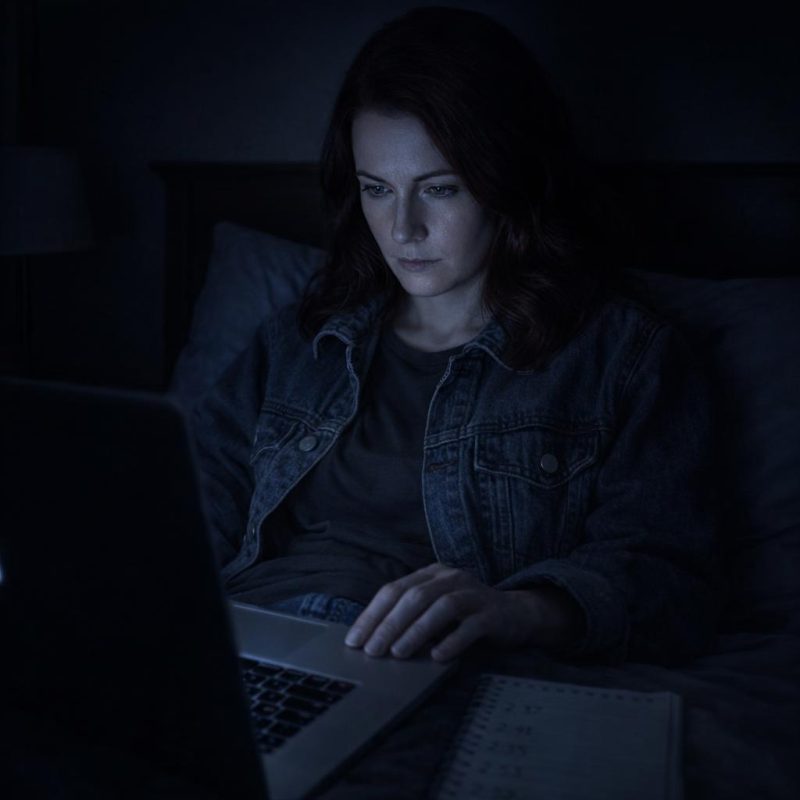 Image by RM AI
Every Single Night
Night five loads and I already know what I'm going to see. 3:00 AM. Martha's feet at the bottom of the frame. The tool. The board. The box. Four minutes of stillness. Then everything back in place, seam checked, back to bed. I watch it anyway, all the way through, because I need to be sure. Night six is the same. I write down the timestamp — 3:14 AM — and my hand is steadier than I expect it to be, which somehow feels worse than if it had been shaking. By the time I open the seventh file I'm not even leaning forward anymore. I just sit there with the laptop on my knees and watch Martha cross the floor in the dark for the seventh time, kneel at the same corner, lift the same board, open the same box, and stay there for the same four minutes of absolute stillness — seven nights, every single night of her visit, the same corner, the same ritual, without variation.
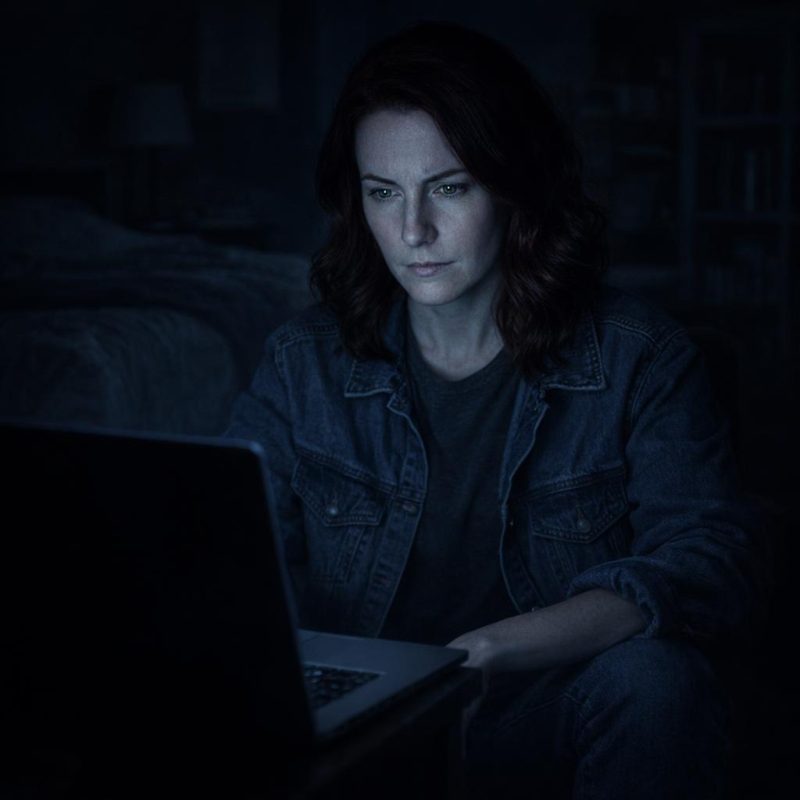 Image by RM AI
Waiting for the Right Moment
I come downstairs trying to look like someone who slept fine. James is already in the kitchen, pouring cereal for Sophie, the baby on his hip. He mentions the park — something about the weather being good, the kids needing to run around. I tell him that sounds great. Maybe a little too quickly, but he doesn't notice. I help get Sophie's shoes on and find the baby's jacket while James loads the stroller into the car. He pauses at the door and asks if I want to come. I tell him I've got cleaning to catch up on, laundry, the usual. He gives me a tired smile and says okay. Sophie waves from the driveway. I wave back. I stand at the window and watch the car back out, watch it reach the end of the street, watch it turn and disappear. I don't move until I can't hear the engine anymore. The house settles around me — the refrigerator hum, the tick of the hallway clock, the particular quiet that only happens when you're completely alone in a place that's usually full of noise.
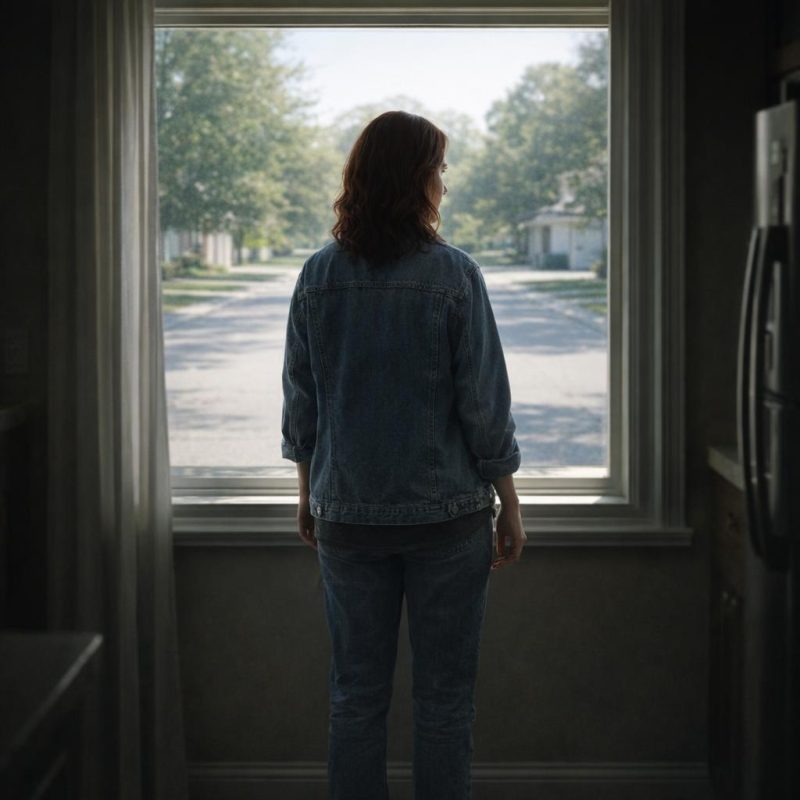 Image by RM AI
The Corner
I close the guest room door behind me even though I'm alone. Old habit, or maybe just nerves. The room looks exactly the way it always does — bed stripped, curtains open, the faint smell of Martha's hand lotion still hanging in the air. I walk to the corner the camera faced. I know the exact spot from watching the footage so many times. I kneel on the hardwood and it's harder on my knees than I expect. I start running my fingers along the boards, pressing lightly, moving from one to the next. Most of them are solid, no give at all. Then I reach the one near the baseboard and something shifts. It's subtle — not a creak, more like a slight flex under my palm, a fraction of movement that the others don't have. I press again to make sure I'm not imagining it. I'm not. I run my fingernail along the edge and feel the gap, barely there but real. I sit back on my heels and look at it. Just a floorboard. Except it isn't. I press my palm flat against it one more time and feel the faint give beneath my fingers.
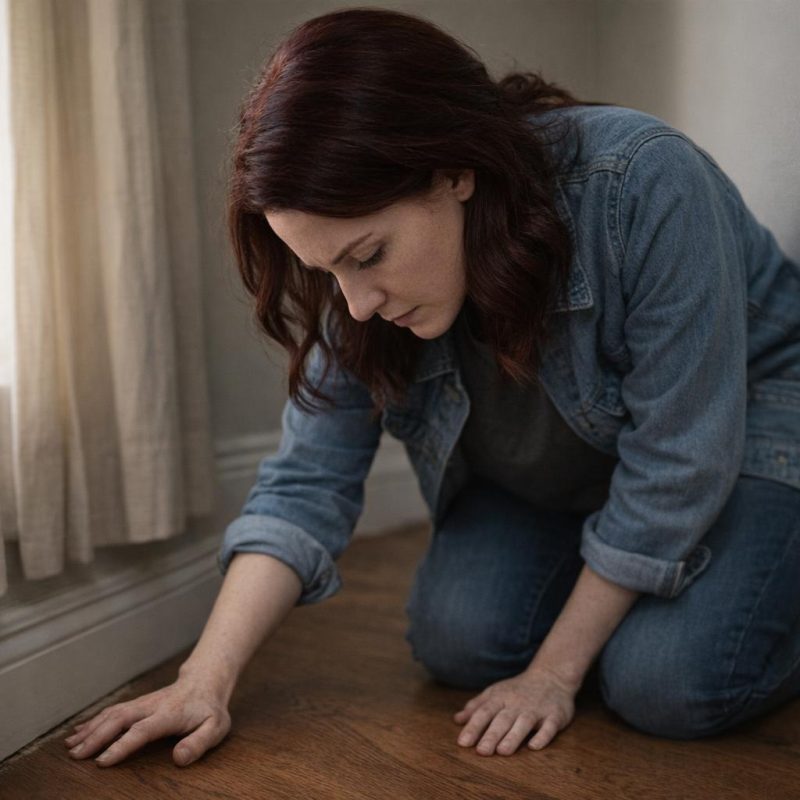 Image by RM AI
Finding a Tool
I stand up and look around the room. Martha used something thin and flat in the footage — I couldn't make out exactly what, but it had a narrow edge. I try the nightstand drawer first. Nothing useful. Then I cross to the small writing desk in the corner and pull open the top drawer. There's a pen, a notepad, a few rubber bands — and a letter opener. Brass handle, narrow blade, just enough edge to work with. I pick it up and test the tip against my thumb. It'll do. I carry it back to the corner and kneel again, positioning myself the way I watched Martha position herself, night after night. I find the edge of the loose board and press the tip of the opener into the gap. It catches. I work it back and forth the way she did, slow and careful, feeling the board shift a little more with each pass. My hands aren't entirely steady but I keep going. The board lifts slightly on one side. I take a breath, adjust my grip, and slide the letter opener deeper under the edge of the board.
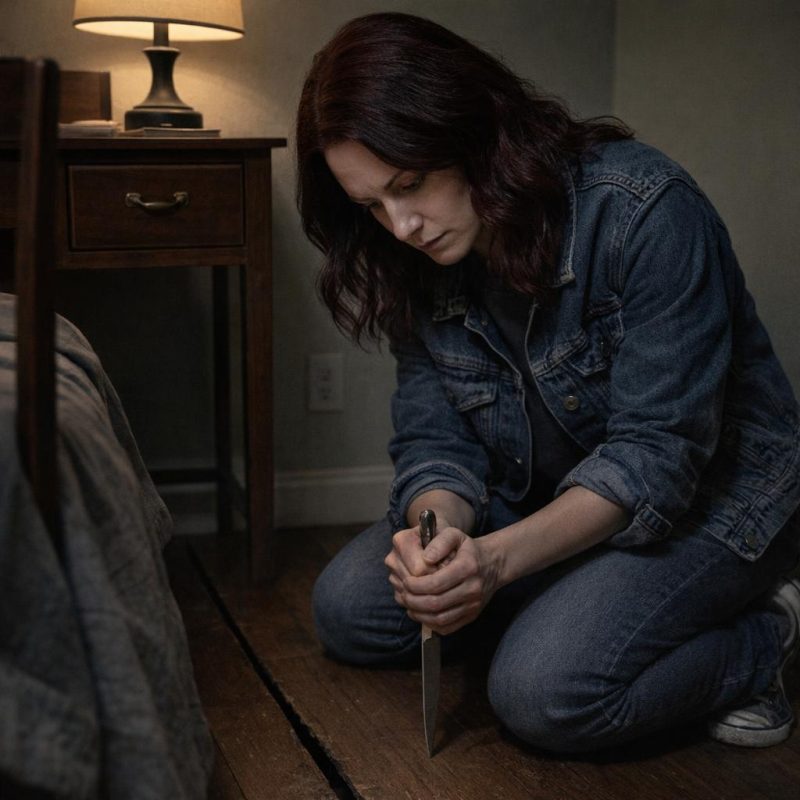 Image by RM AI
The Hidden Space
The board comes up enough for me to see into the space beneath. I lean over it and the smell hits me first — dust and something older, like paper left in a closed room for a long time. It's dark down there. I pull out my phone and turn on the flashlight, angling it into the gap. The beam sweeps across rough wood joists and a layer of dust and then catches on something solid sitting between the beams. Small. Metal. A box. It's exactly what I saw in the footage — same shape, same dull finish, same size. My pulse goes up fast. I reach toward it and then stop because I hear something outside. A car engine, slowing. I go completely still, flashlight still pointed into the gap, not breathing. The engine doesn't stop. It keeps going, past the house, fading down the street. Not James. I let the breath out slowly. I look back down at the beam of light cutting through the dark beneath the floor, the small metal box sitting there exactly where Martha left it, and I stay very still with the darkness beneath the floor.
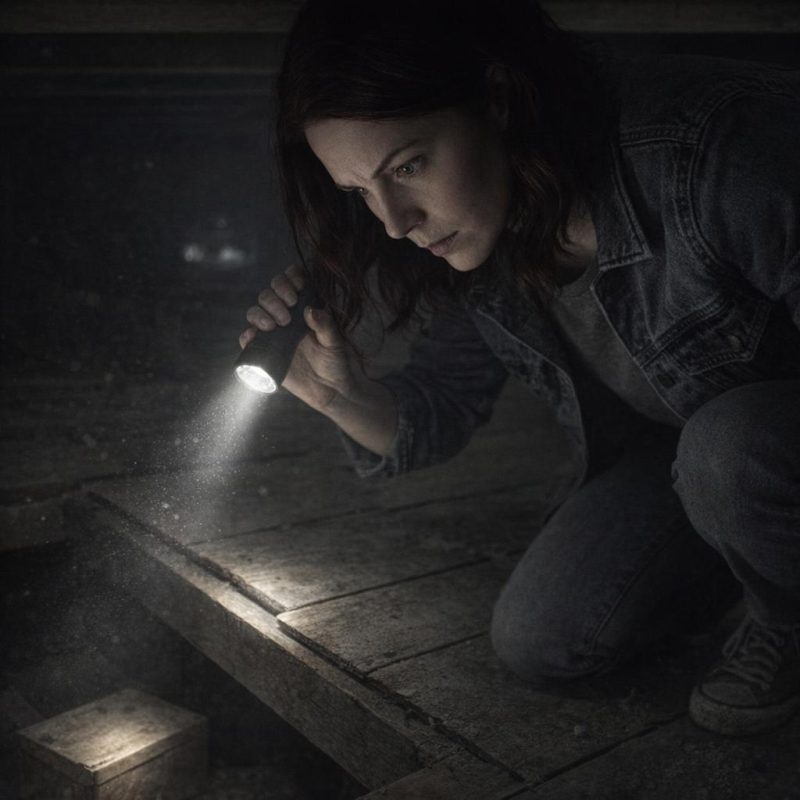 Image by RM AI
Lifting the Box
I reach into the gap with both hands. The space is tighter than it looked and I have to angle my wrists to get a grip. My fingers close around the box and the first thing I notice is the weight — heavier than something that size should be, solid in a way that makes my stomach tighten. I lift it out carefully, keeping it level, and sit back on the floor with it in my lap. The metal is cold against my palms even through the warmth of the room. I turn it over slowly. The finish is dull and slightly pitted, the kind of wear that comes from years, not months. There's a simple clasp on the front, the kind that folds down and hooks into a small loop. No lock. I run my thumb over the clasp without opening it. I'm aware, in a way I can't quite shake, that I've crossed some kind of line just by taking it out. Whatever is in here, Martha hid it under the floor of my house and visited it every night for a week. My hands tremble slightly as I sit there holding the box.
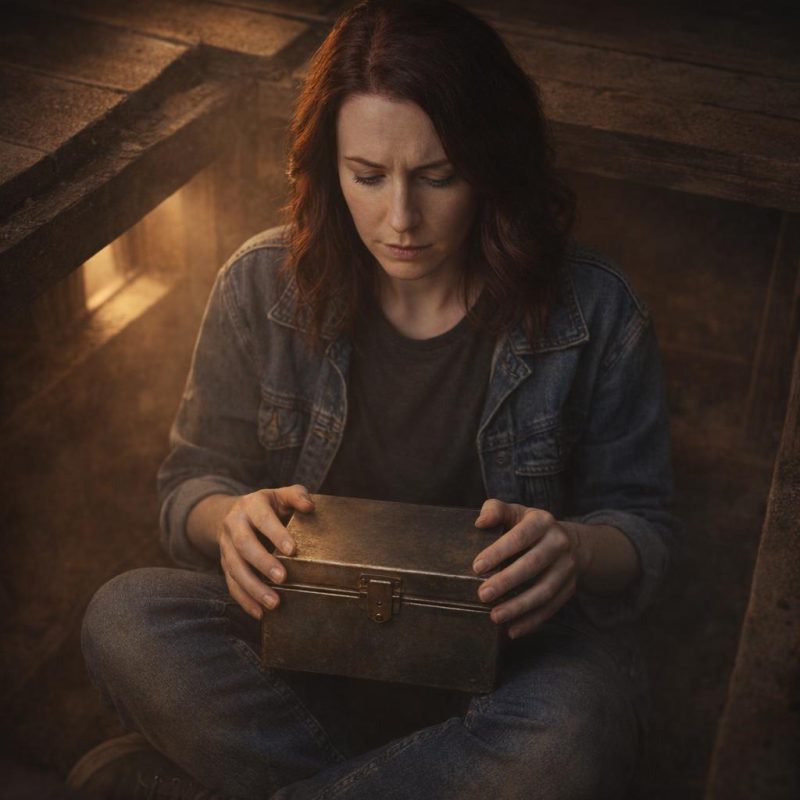 Image by RM AI
Opening the Clasp
I press my thumb under the clasp and flip it open. The lid resists for a second — a faint creak of metal that sounds enormous in the quiet room — and then it gives. Inside, nestled against each other, are several small journals. The covers are cloth, faded to a color that might have been blue or green once, worn soft at the corners from handling. Folded papers are tucked between them, some yellowed at the edges. I pick up the top journal carefully, the way you'd handle something you're not sure will hold together. The binding is cracked and the spine has that particular stiffness of old glue. I open it to the first page. The handwriting is small and careful, the kind of careful that takes effort — letters formed with deliberate attention, slightly uneven, the pen pressure inconsistent in the way it is when someone is still learning how to make their hand do what they want. I don't recognize it. I turn the page and read a few lines without taking in the meaning, just looking at the shape of the words. I close the journal gently and set it back, and I sit there on the floor of the guest room looking at the journals inside.
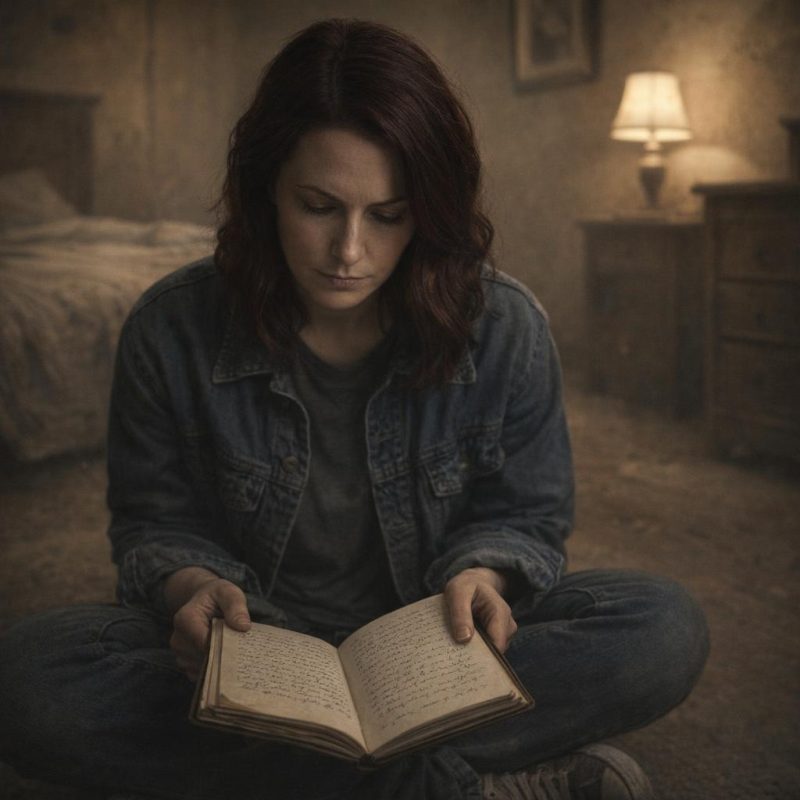 Image by RM AI
A Child's Hand
I pick the journal back up and look more carefully this time. The letters have that particular quality — rounded, slightly oversized, the loops in the lowercase letters wider than an adult would make them. Whoever wrote this was young. Not a young adult. A child. I flip through several pages and the handwriting stays consistent, careful in that labored way, like someone concentrating hard on each word. I set it down and pick up the second journal. The handwriting here is similar but different — a little tighter, a little more confident, the loops slightly smaller. The same person, I think, but older. I check the dates at the top of the entries. The first journal starts in what looks like the early eighties. The second picks up a few years later. I pull out a third and the handwriting shifts again, more assured, the letters starting to lean. The same hand, growing up across the pages. I sit with all three journals open in my lap, the dates lined up in my head, trying to work out whose childhood I'm holding. I look back at the first page of the first journal and trace one of the childish loops in the writing.
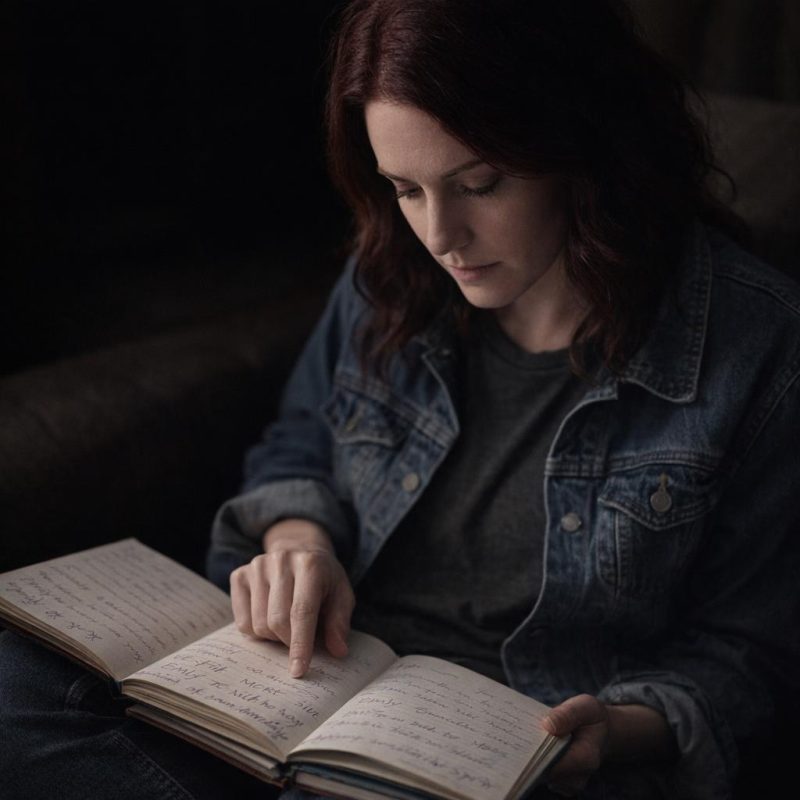 Image by RM AI
The Name
I flip back to the very first page of the first journal — not the first entry, but the inside front cover, the part I'd skimmed past before. There's something written there in the same rounded, labored handwriting. A name. I have to tilt the journal toward the light to read it clearly. I sit there holding the journal and the room feels very still. I think about the story Martha has told at family dinners more than once — the house fire when James was a teenager, how they lost everything, all his childhood things, photos and papers and keepsakes, all of it gone. James always got quiet when she told it. A little sad, a little resigned, the way you get when a loss is old enough that you've made peace with it. I tilt the journal toward the light one more time and read the name written on the inside cover in a child's careful hand — James, the J slightly oversized the way kids make them when they're still learning how letters work.
 Image by RM AI
The Fire That Never Was
I sit with the journals spread across my lap and try to think through the fire story carefully. Martha told it the way people tell things they've repeated so many times the edges have gone smooth — at Thanksgiving one year, and again when Sophie asked about old photos of her dad as a little boy. She said the fire took everything. Photos, school papers, report cards, all of it. James had nodded along, that quiet accepting look on his face, like a man who'd long since stopped grieving something he couldn't get back. I'd felt sorry for him every time. I look at the three journals now, intact, the covers worn but whole, the pages filled with his handwriting at different ages. They aren't ash. They aren't gone. They're here, in a box, under the floor of our guest room. I set the journals down carefully and reach for one of the folded documents tucked alongside them. My hands aren't quite steady. I don't know why Martha would keep these hidden instead of giving them to James. I don't know what she told herself about it. But the fire story — the one James believed, the one I believed — those journals sitting in front of me make it impossible to hold onto.
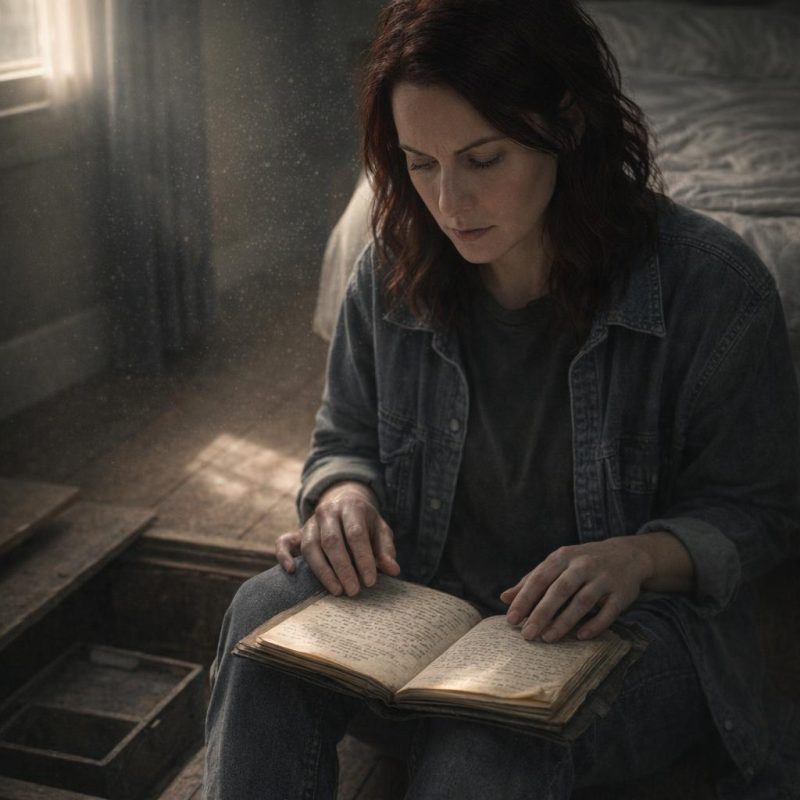 Image by RM AI
Reading His Words
I set the folded papers aside for a moment and open one of the middle journals instead. The handwriting here is more confident than the first — James at maybe ten or eleven, I'd guess. The entry I land on is dated a Tuesday in what looks like late autumn. He writes about going to the hospital after school. He says his dad looked tired but smiled when he walked in. The next entry is a few days later. His dad had a bad night. James writes that he sat in the hallway outside the room for a while because he didn't know what to do with his hands. I have to stop reading for a second. I know James lost his father when he was young — he's told me that much, in the sparse way he talks about it, like the memory lives behind glass. But reading it in his own words, in the handwriting of a scared kid trying to make sense of something too big for him, is completely different. I flip forward a few pages. The entries get shorter. His father's name appears less. The fear between the lines gets quieter in a way that feels worse than if he'd written it out loud. I sit there holding the journal, reading about a boy I never got to know, and my throat aches.
 Image by RM AI
Important Conversations
I keep reading, turning pages slowly now. There's an entry where young James writes that his dad wanted to talk to him about something important — something about the future, about making sure James would be okay. James writes that he didn't really understand all of it, that there were words he didn't know, lawyer words, and that his dad had papers on the bed beside him. He writes that his dad said don't worry, it's all taken care of, you'll understand when you're older. The next entry is a week later. His dad wanted to talk again but was too tired that day. James writes that they were going to finish the conversation soon. There's an entry after that, and another, but the conversation doesn't come back up — the entries shift to smaller things, school, a friend's birthday, the way the hospital smelled. I turn a few more pages looking for the follow-up, the part where his father finished explaining, where James writes that he finally understood. It isn't there. Whatever his father had wanted to tell him, whatever those papers on the hospital bed were about, the conversation never got finished on these pages. I sit with the journal open in my lap, the afternoon light going flat through the window, and the weight of everything his father had wanted to say settles over me like something I can't put down.
 Image by RM AI
Hiding the Evidence
I'm still sitting on the floor with the journal open when I hear it — a car door, then James's voice from the driveway calling something to Sophie. I move before I've finished thinking. I close the journal and stack it with the others, hands shaking slightly, and lower them back into the box. The folded documents go in on top. I press the lid down, lower the box into the gap in the floor, and fit the floorboard back into place. I'm on my feet brushing dust from my knees when I hear Sophie's footsteps on the stairs, fast and uneven the way she always runs. James appears in the doorway a second later with the baby on his hip, both of them pink-cheeked from the park. He looks at me, then at the room. "What are you doing in here?" "Just finishing up the cleaning," I say. "Wanted to make sure it was actually done." He nods, already distracted by the baby grabbing at his collar, and I keep my face neutral and my breathing even. Sophie squeezes past him into the room and wraps her arms around my waist, and I hold onto her maybe a half-second longer than usual. James doesn't notice. He's already heading back down the hall. I stand there with Sophie pressed against me and listen to his footsteps fade.
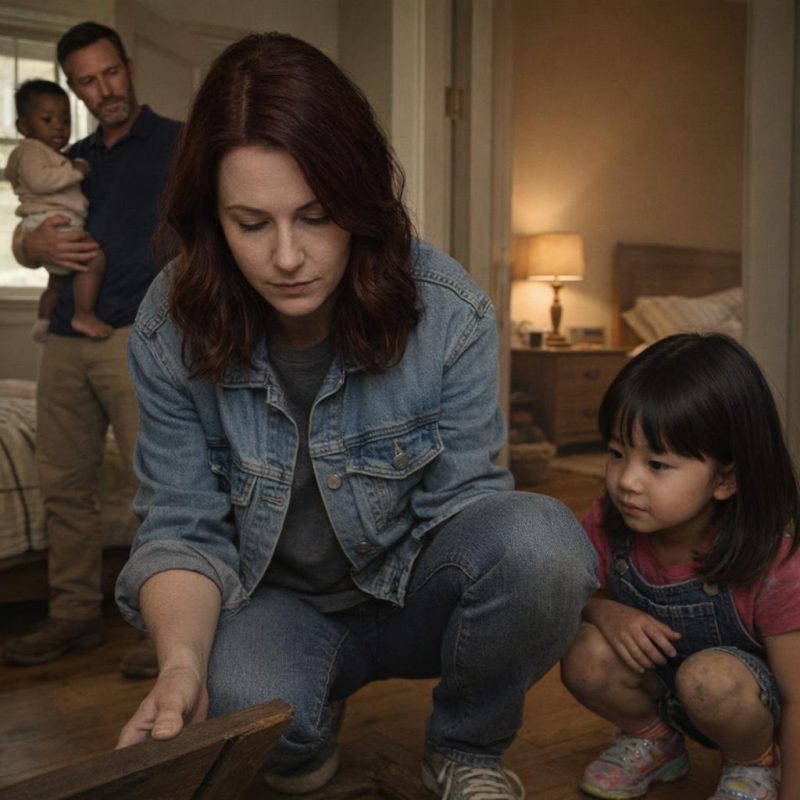 Image by RM AI
Acting Normal
Dinner is pasta and a salad I throw together on autopilot. James talks about the park — the baby tried to eat wood chips, Sophie made a friend near the swings, there was a dog that Sophie followed for ten minutes. I laugh in the right places and ask the right questions and spoon food onto plates and cut things into smaller pieces, and the whole time there's a low hum running underneath everything, like a frequency I can't turn off. Sophie chatters about the playground and I listen and respond and none of it reaches me all the way. James asks if I'm okay somewhere around the second glass of water and I tell him I'm just tired, which is true enough that it doesn't feel like a lie. We do bath time and stories and the long negotiation of getting the baby down, and by the time we're both in bed I'm so wound tight I'm surprised James can't feel it. He falls asleep faster than I expect. I lie there in the dark listening to his breathing even out, and I think about his handwriting at ten years old, careful and round, writing about his father in a hospital bed. I think about the conversation that never got finished. I tell myself I'll go back tomorrow when James takes the kids out again. The house is quiet around me, ordinary and unchanged, and I don't sleep for a long time.
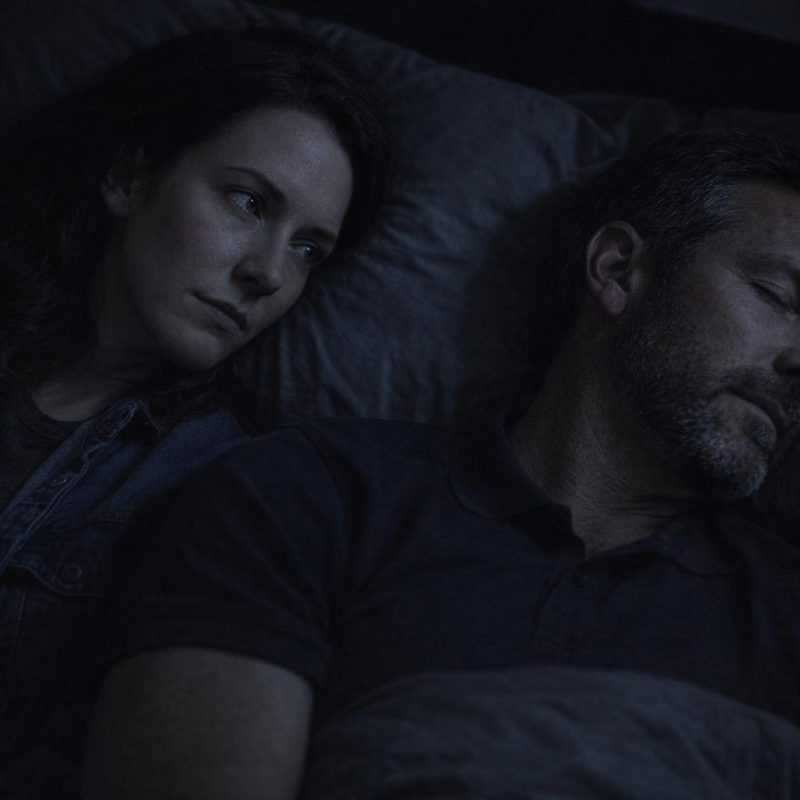 Image by RM AI
The Documents
James takes Sophie and the baby to his sister's place the next morning — a standing Sunday thing I've never been more grateful for. I wait until the car is out of the driveway, then I go straight to the guest room. The floorboard comes up easier this time. I lift the box out, set it on the floor, and take out the folded documents I'd only glanced at the day before. There are three of them, each one creased along the same lines, like they've been folded and unfolded more than once. I open the first one carefully. The paper is heavier than regular printer paper, the kind used for official things, and the print is dense and formal. I have to read the first paragraph twice before the language starts to make sense. It's a trust document. James's father's name is printed near the top, and there's a date in the upper right corner that puts it about eight months before James mentioned his dad died. I unfold the second document and it's related — an amendment or addendum, I think, with more dates and more formal language about distributions and conditions. I set them side by side on the floor and look at them. I don't fully understand the legal language yet, but the shape of what I'm holding is starting to come through, and I sit with the documents spread open in front of me, the morning light coming in flat and even, not quite ready to read further.
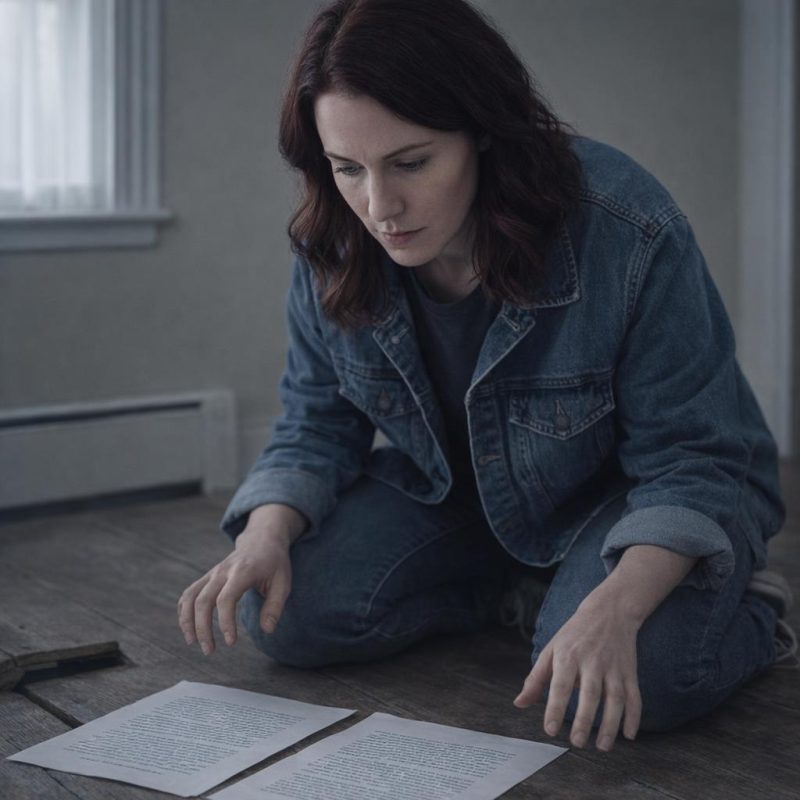 Image by RM AI
The Trust Fund
I read the trust document through twice, slowly, working through the formal language sentence by sentence. James's father set it up before he died — that much is clear. The amount listed makes me go still. It's substantial. More than substantial. The kind of number that changes things. The document lays out specific instructions: the trust was to be distributed to James when he turned twenty-five, with a secondary distribution at thirty if the first hadn't been claimed. There are conditions listed, a named trustee, a process for notification. I read the trustee line again. Then I read it a third time. Martha's name is printed there in the same clean legal font as everything else, and next to it, her role: sole trustee, with full authority over distribution. I sit on the floor of the guest room with the papers in my hands, the morning quiet around me. The distribution date printed on the first page is more than a decade old. The number at the top stares back at me, and I don't know what to do with what I'm looking at.
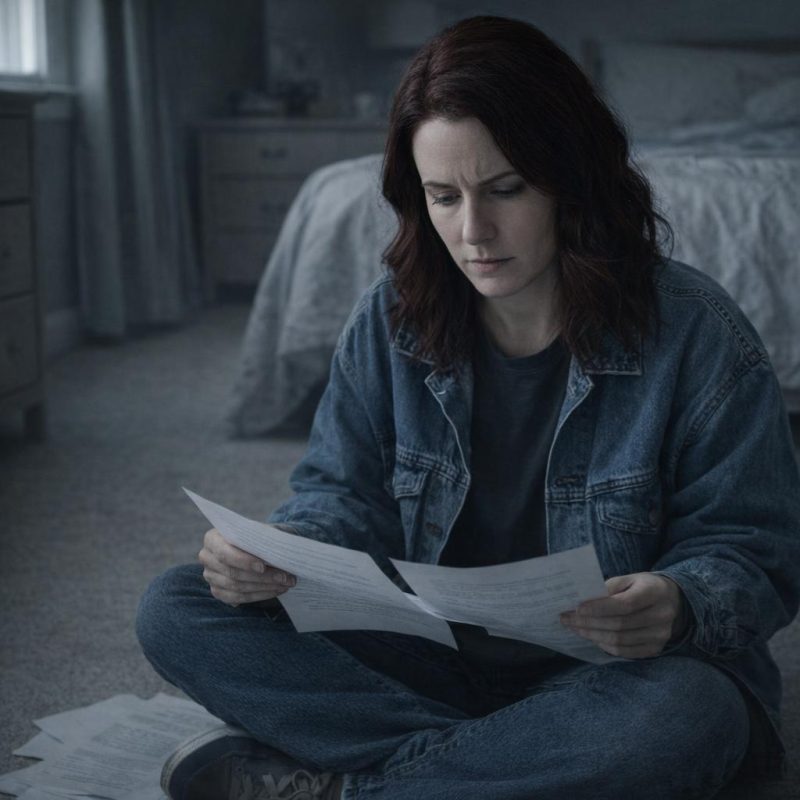 Image by RM AI
Legal Language
I spread the documents out on the guest room floor and start over from the beginning. The legal language is dense in a way that makes my eyes slide off the page — words like "per stirpes" and "spendthrift provision" and "discretionary distribution authority" that I have to look up one by one on my phone. I photograph each page first, hands moving carefully, making sure every line is legible. Then I sit back and try to work through what I actually understand. The trust was established by James's father. The beneficiary is James. The distribution was supposed to happen when James turned twenty-five, with a secondary trigger at thirty if the first hadn't occurred. He's thirty-six now. I do the math twice, like doing it again will change the answer. There are pages of conditions and clauses, references to legal review processes and trustee discretion, and every time I think I've grasped something solid, another clause loops back and complicates it. I take photos of the pages I can't parse and make a note to look up each term. The documents feel significant in a way I can't fully articulate yet — like holding something heavy without knowing what it weighs.
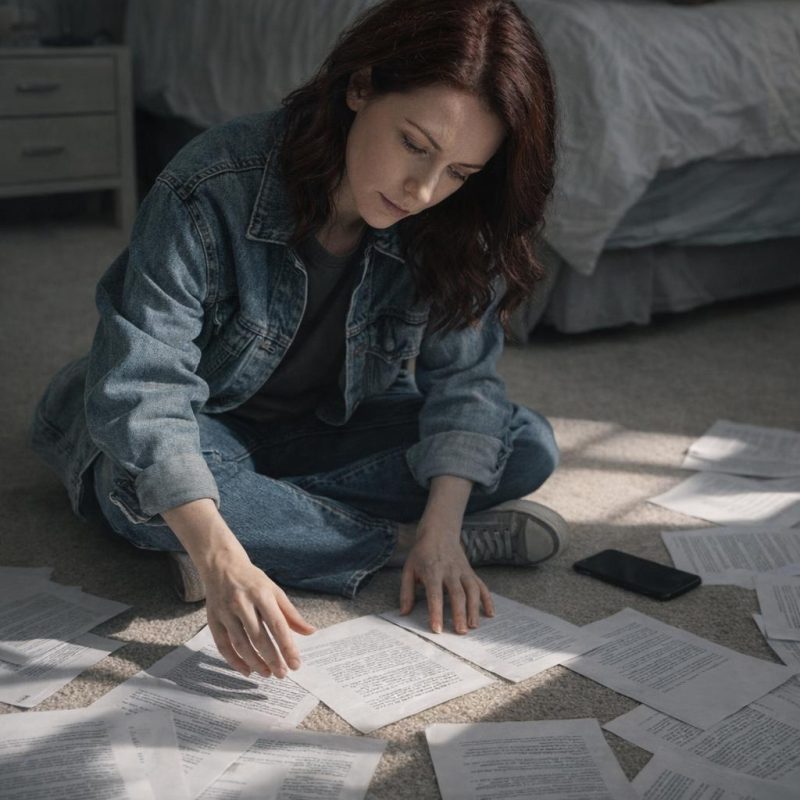 Image by RM AI
The Trustee
Martha's name appears on more pages than I expected. I keep finding it — her signature at the bottom of one form, her printed name in the trustee designation block on another, her initials on a page of amendments I almost missed. I look up what a trustee is actually supposed to do, reading through a plain-language legal site on my phone while the documents sit spread around me. The role is clear enough: the trustee holds the assets and is legally obligated to distribute them to the beneficiary according to the trust terms. Martha had full authority over the money. She was the one responsible for making sure James received it. I go back through the pages looking for any record that she did — any distribution form, any acknowledgment, any letter to James explaining the terms of what his father had left him. I find nothing like that. Just her name, over and over, in the trustee line. James has never once mentioned an inheritance. Not when we were scraping together a down payment, not when he was working extra shifts after Sophie was born, not ever. I sit with that absence, and it settles over me like something cold.
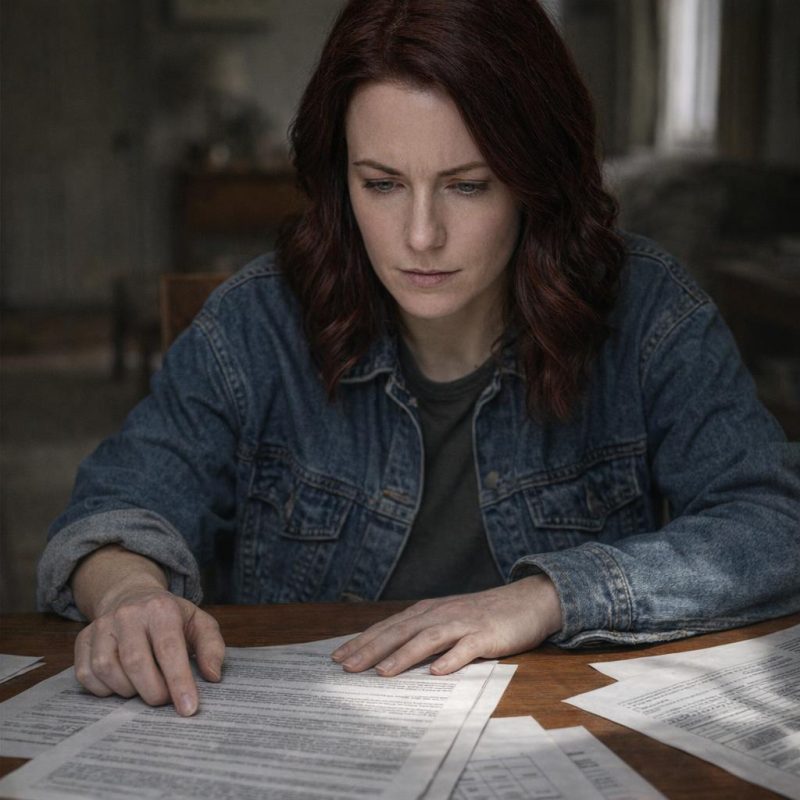 Image by RM AI
The Missing Distribution
I go through every page a second time, slower, looking specifically for proof that the distribution happened. A transfer confirmation. A letter to James. A signed receipt. Anything that would show the money moved from the trust to him. There's nothing. I check the trust terms again — the language is unambiguous. Distribution was mandatory at age twenty-five. The trustee had no discretion to simply not act. I think about the years James and I spent watching every dollar, the student loans that followed us into our thirties, the month we had to ask my parents for help covering a car repair because we didn't have the cushion. James never mentioned money from his father. Not once. Not a hint of it. I try to think of a legitimate reason the distribution might not appear in these documents — maybe it was handled separately, maybe there's a file I'm not seeing. But I've been through every page twice now, and the absence is total. No transfer. No acknowledgment. No record that James ever received a single dollar of what his father left him. I don't know where the money went, and that question sits in the room with me like a third presence.
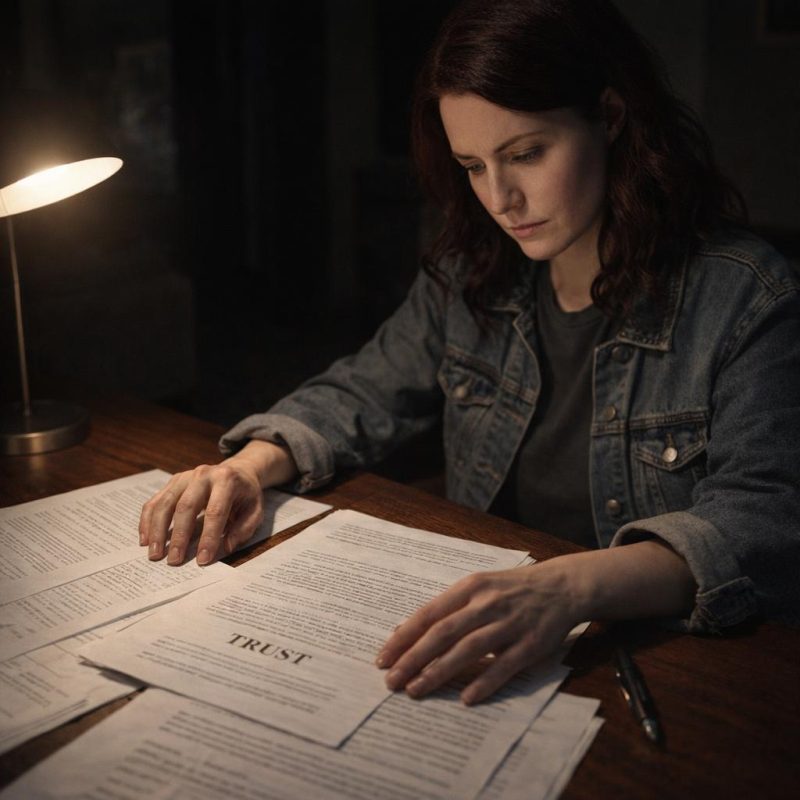 Image by RM AI
The Suppression Papers
There's one document I unfolded and set aside earlier because I couldn't immediately place it — a single page, slightly different paper stock from the rest. I pick it up again now. It's dated two years after the distribution deadline. The header references the trust by name and number. The body of the document is short, maybe four sentences, citing unresolved legal complications requiring further review before distribution could proceed. It names Martha as the authorizing trustee. I read it twice, then a third time, trying to find the legal issue it references. There's no attached filing. No court case number. No correspondence from an attorney. Just the claim that further review was needed, and a signature at the bottom authorizing the hold. I turn the page over, looking for something on the back. Nothing. I check the other documents for any follow-up, any resolution, any record that the supposed legal complication was ever identified or resolved. There's no follow-up anywhere in the stack. The page sits in my hand, and at the bottom, in the same careful cursive I've seen on birthday cards and Christmas tags for seven years, is Martha's signature.
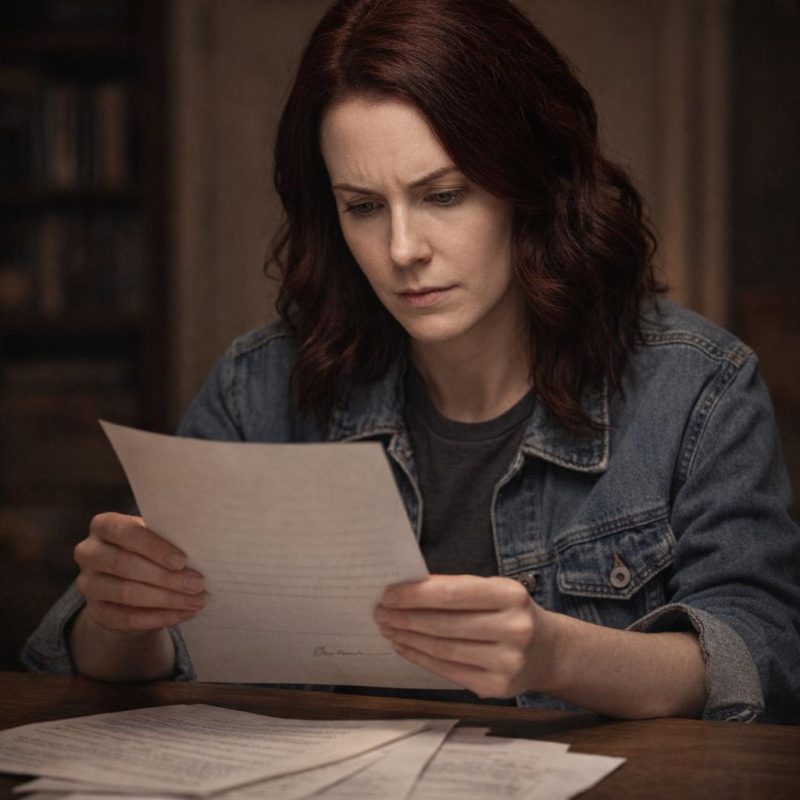 Image by RM AI
The Decade of Lies
I sit with all of it spread in front of me and let myself see it clearly for the first time. The distribution never happened. The document citing legal complications has no case number, no attorney, no actual issue attached to it — nothing that would justify freezing the trust, and yet the trust stayed frozen. James turned twenty-five, then thirty, then thirty-six, and the money his father left him never moved. I think about the journals — the ones hidden under this floorboard, the ones that mentioned the inheritance, the ones James was told were destroyed in a house fire. There is no record of any legal complication in this paperwork. There is no record of distribution. There is no record that James was ever notified his father had left him anything at all. I think about Martha's house, the renovations she did a few years back, the trips she takes, the new car she bought last year while James and I were still paying off our old one. The trust fund amount is printed on the first page. James has never seen a dollar of it. Martha has had access to those funds for over a decade — the journals hidden, the fire story holding, the floorboard undisturbed — and the full shape of what she has done lands on me all at once.
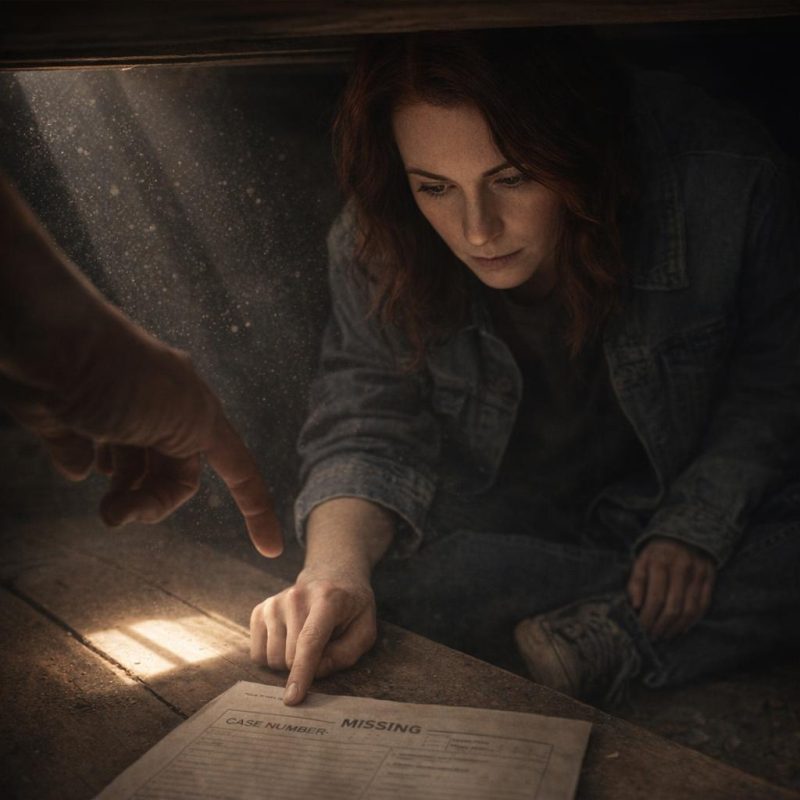 Image by RM AI
The Scope of Betrayal
I look at the number on the first page again. I've been avoiding it, almost, the way you avoid looking directly at something that might burn. It's enough to have paid off our mortgage. More than enough. I think about the year James worked two jobs — the overnight shifts he picked up after Sophie was born because we were terrified of the gap between what we made and what we owed. I think about the conversation we had, sitting at the kitchen table at midnight, about whether we could afford a second child. We decided we couldn't, not yet, not for a few more years. Martha sat across from us at that same table at Thanksgiving and told us we should be more careful with money. She said it gently, the way she says everything, with that particular smile that makes it hard to argue. She watched James work himself into exhaustion. She watched us delay and sacrifice and stress over numbers that would have been irrelevant if she had simply done what she was legally required to do. She criticized our financial choices while the money that belonged to her son sat somewhere she controlled. I look at the total one more time, and the number doesn't get smaller.
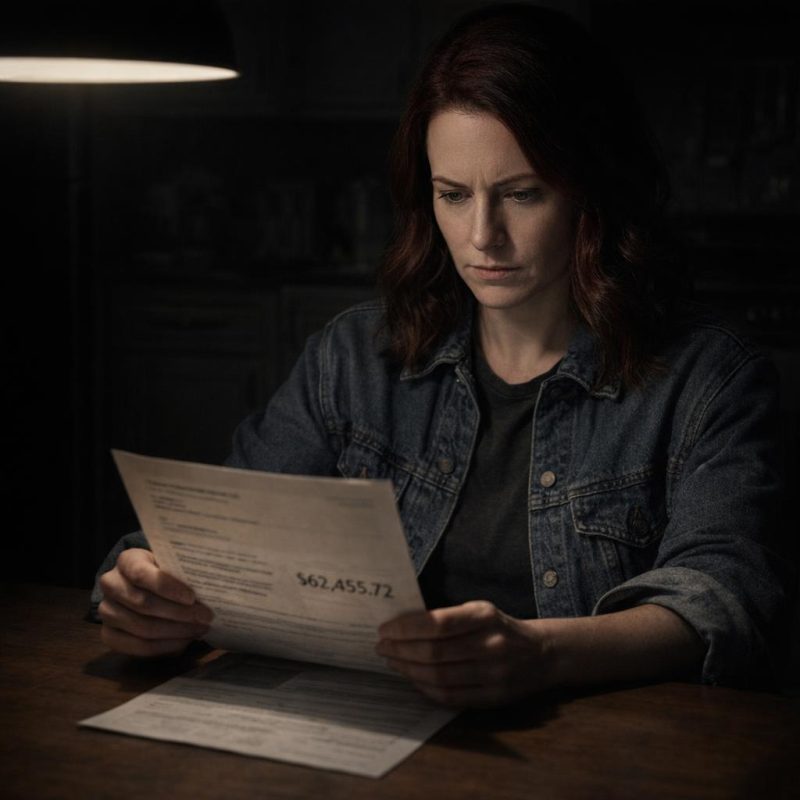 Image by RM AI
Sitting With It
I don't move for a long time. The documents are still spread around me on the floor, and I just sit in the middle of them. I think about every visit Martha has made to this house. The way she holds the baby, that practiced warmth, the grandmother performance she gives every single time. I think about her holding Sophie as a newborn, cooing over her while James and I were running on no sleep and real financial fear, and I feel something turn over in my stomach. She gave us advice about budgeting once. She suggested we look into refinancing. She brought a casserole when the baby was born and stayed four days and rearranged my kitchen cabinets without asking, and the whole time — every single visit, every hug, every holiday — she knew. The midnight trips to this room make a different kind of sense now. She wasn't checking on us. She was checking on this. Making sure the box was still here, still hidden, still safe under the floorboard where no one would find it. My anger is enormous and I have nowhere to put it. The guest room is quiet around me, the morning light unchanged, the house holding its breath.
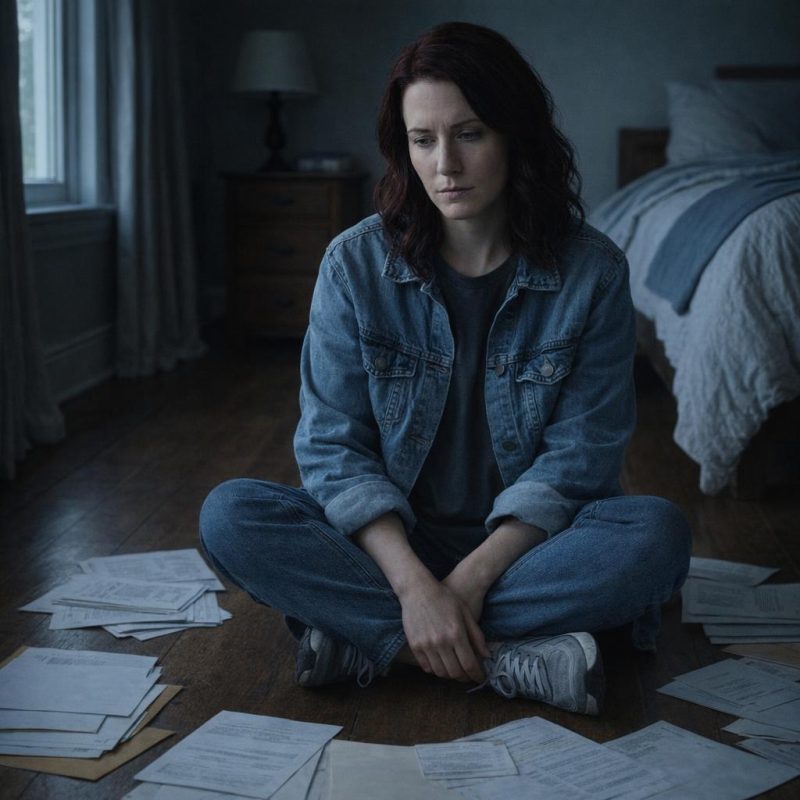 Image by RM AI
Documenting Everything
I pick up my phone and start from the beginning. Every page, every document, every journal entry — I photograph them all systematically, making sure each image is sharp and the text is fully legible before I move to the next. Martha's signatures, the trustee designation, the suppression document with its hollow legal language and no supporting case number, the dates, the amounts — I capture all of it. I create a folder on my phone and label it with today's date. Then I back everything up to cloud storage and watch the upload bar move until it finishes. When it's done, I stack the documents carefully back in the order I found them, fold the journals closed, and place everything back into the metal box. I lower the box into the space under the floorboard. I press the board back into place, testing each corner until it sits flush, until the seam disappears back into the floor the way it was before I ever found it. I stand up and look at the room. Nothing looks disturbed. The box is where Martha left it, the evidence is where it's always been, and now I have every page of it saved somewhere she can't reach.
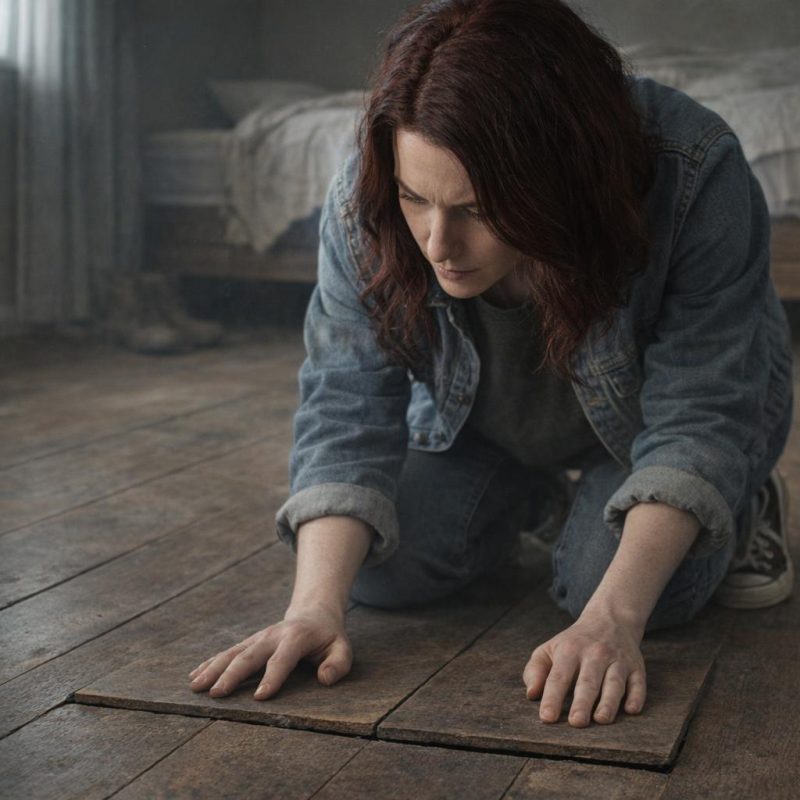 Image by RM AI
How to Tell Him
I come downstairs holding the railing a little tighter than usual, trying to arrange my face into something that looks like a normal afternoon. James is at the kitchen counter making sandwiches, and Sophie is beside him on her step stool, pressing the bread down with both palms the way she always does. The baby is in his high chair, banging a spoon against the tray. It's so ordinary it almost breaks me. I stand in the doorway for a second and just watch them — James laughing at something Sophie said, the baby shrieking with delight at the noise he's making. I think about how to start. I found something in the guest room. Your mother has been lying to you. There's a box under the floorboard. None of it sounds right. None of it sounds like something you say while sandwiches are being made. He'll need to sit down. He'll need time. He'll need me to be steady when I tell him, and I'm not steady yet. James glances over his shoulder and catches me standing there. He asks if I'm okay, and I pull up a smile and say I'm just tired. Then he calls my name again from across the kitchen, and something in his voice makes me go still.
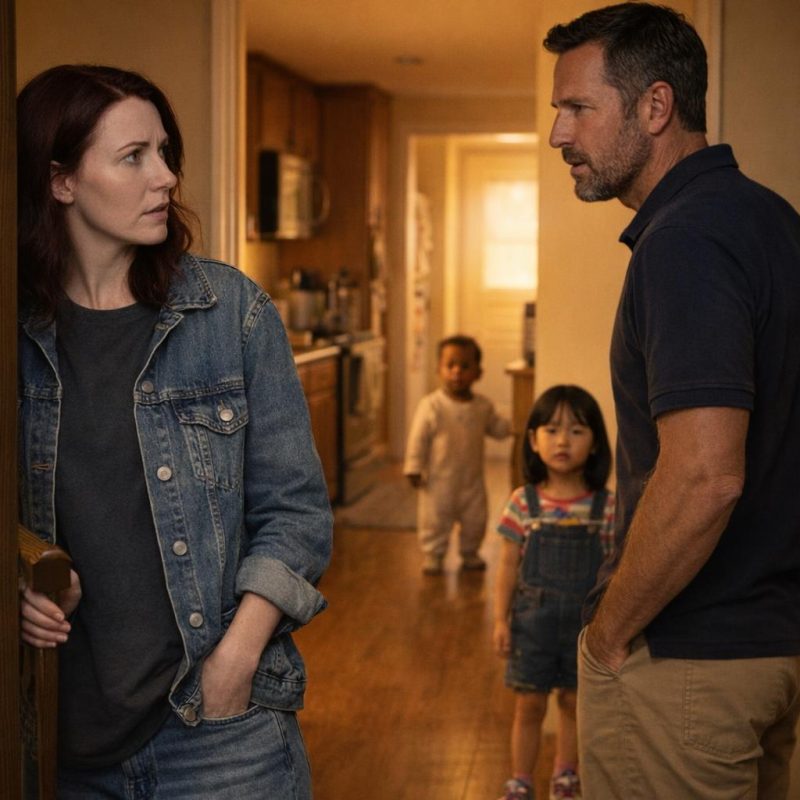 Image by RM AI
Not Yet
He's asking if I want mustard on mine. That's all. Just mustard. I let out a breath I didn't know I was holding and say yes, please. I slide into my chair at the table and help Sophie with her cup, and I tell myself: not yet. Not with the kids right here, not with the baby throwing crackers and Sophie narrating every single thing on her plate. I need him to be able to fall apart if he needs to, and he can't do that in front of them. So I get through lunch. I get through the afternoon, through Sophie's toys spread across the living room floor and the baby's nap and the slow crawl of the clock on the microwave. James suggests a movie after the kids go to bed, and I say that sounds good, and I mean it differently than he does. We do the whole bedtime routine together — bath, pajamas, the baby's white noise machine, Sophie's extra story that somehow becomes two stories. When I finally pull Sophie's door closed and hear her settle into quiet, I stand in the hallway and take one long breath. Tonight. I'll tell him tonight, once the house goes still.
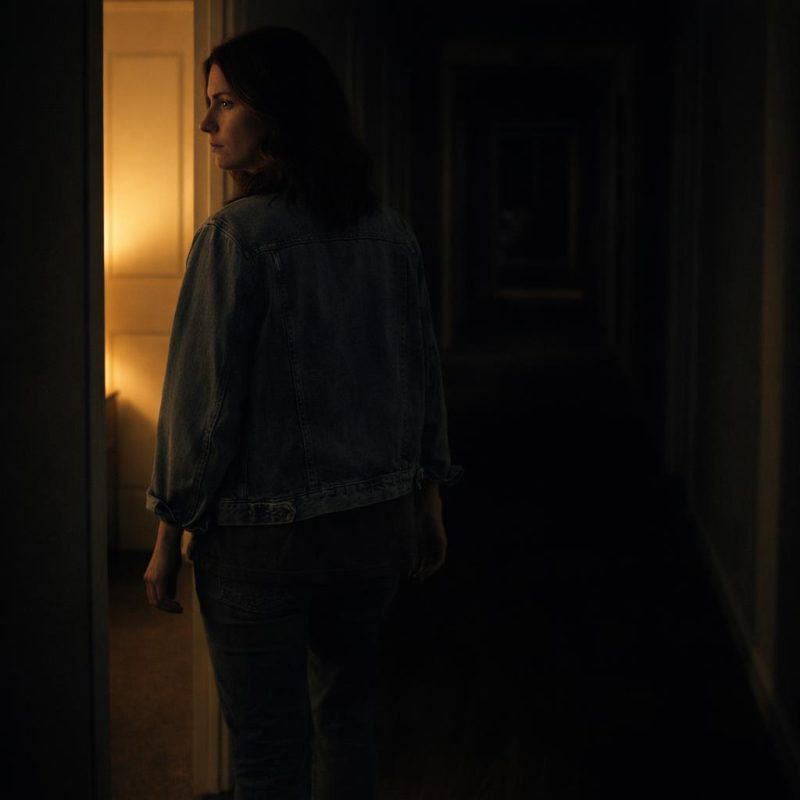 Image by RM AI
The Journals
The movie stays paused at the opening credits. I tell James I need to show him something first, and something in my voice makes him set down the remote without asking why. I go upstairs and come back with the metal box. I set it on the coffee table between us and watch his face go from curious to uncertain. I tell him I found it in the guest room, under a loose floorboard. He looks at the box, then at me. I open the latch and lift the lid. I take out the journals and set them in front of him. He picks up the top one slowly, the way you'd handle something fragile, and I watch his hands as he opens the cover. He goes very still. He turns a few pages, and I can see him reading — really reading — his own name in his own childhood handwriting. He says, quietly, that these were supposed to be gone. His voice doesn't rise. It just gets careful, the way voices do when something doesn't make sense yet and the mind is still trying to catch up. He looks at me, and the question in his eyes is one I don't have a simple answer for, and the look on his face — somewhere between recognition and something much older than that — stays with me long after he looks back down at the page.
 Image by RM AI
The Fire Story
He asks me where exactly I found them, and I walk him through it — the loose board, the metal box, the way everything was packed like it had been there a long time. He listens without interrupting, turning the journal over in his hands like he's checking that it's real. Then I ask him if he remembers what his mother told him about the fire. He nods slowly. He says she told him everything burned. His childhood things, the photos, the papers — all of it. He'd grieved that. He'd made peace with it years ago, the way you make peace with something you can't change. He sets the journal down on the coffee table and just looks at it. It's intact. The pages aren't singed. The cover isn't warped. There's no smoke damage, no water stains, nothing that suggests it was ever anywhere near a fire. He picks it up again and opens it to a random page, and I watch him read a few lines of his own handwriting — some ordinary entry about a school day, something small and forgotten — and I see the moment the math stops adding up for him. He doesn't say anything for a while. The journal sits open in his lap, and the story he'd been told for decades quietly comes apart around the edges.
 Image by RM AI
The Monitor Footage
I tell him there's more, and I go get my laptop. I pull up the baby monitor app and turn the screen toward him. I explain that I found the monitor in the guest room — that it wasn't one of ours, that it was already there when Martha arrived. He frowns at it, not understanding yet why it matters. I press play on the first night's footage. The timestamp reads 3:04 AM. The room is dark and grainy, and then the door opens. We watch Martha come in. She moves to the corner of the room without turning on a light, kneels down, and pries up the floorboard. She lifts out the box, opens it, checks the contents, closes it, and puts it back. The whole thing takes less than four minutes. James doesn't say a word. I show him the next night. Same time, same corner, same careful movements. I show him all seven nights. Every single one. He watches his mother move through that dark room in silence, checking on something she'd hidden under the floor of our house, in the room where our children sleep down the hall. When the last clip ends, he closes the laptop slowly, and the quiet that settles over the couch between us holds the weight of all seven of those nights at once.
 Image by RM AI
The Trust Documents
I reach into the box and take out the legal documents. I hand them to James without saying anything first, because I think he needs to read them himself rather than hear my summary. He takes them and starts at the top, and I watch his eyes move across the page. He reads about the trust his father established. He reads the amount. His hands tighten on the paper — not dramatically, just a small, involuntary grip, the kind your body makes when something hits before your mind has fully processed it. I tell him what I understand about the distribution schedule: that he was supposed to receive it at twenty-five. He looks up at me. He's thirty-six. He looks back down and keeps reading. He finds Martha's signature on the trustee designation. He finds the suppression document — the one with the legal language about postponing distribution, the one with no supporting case number, the one that exists only because someone signed it. He reads it twice. I can see him reading it twice. He sets the pages down on the coffee table and smooths them flat with one hand, and then he just stares at the number on the trust document — the amount his father had set aside for him — and his hands won't stop shaking.
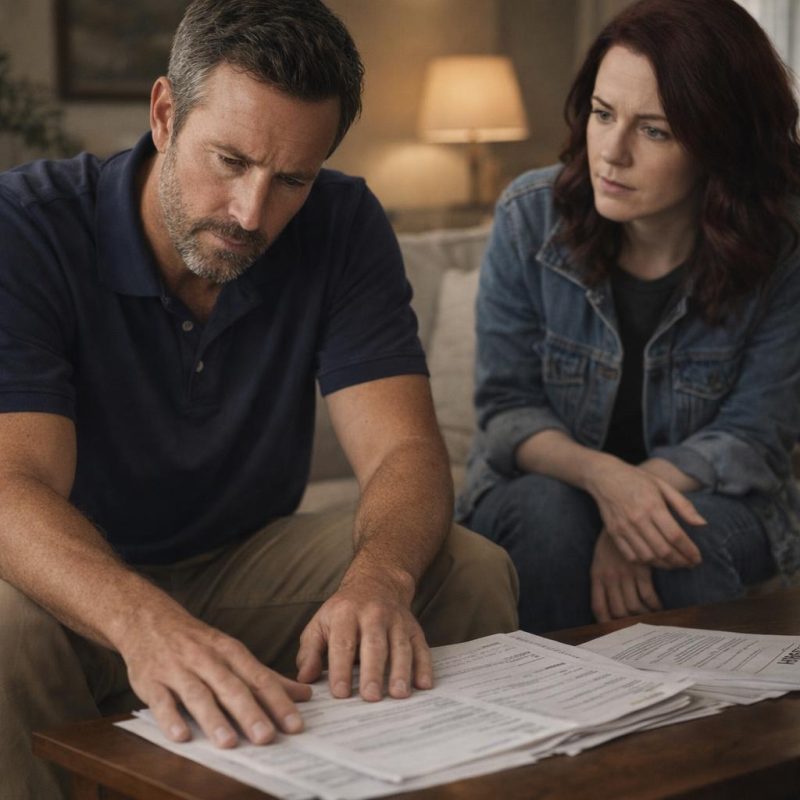 Image by RM AI
The Decision
He sits like that for a long time. I don't push. I just stay beside him and let the silence do what it needs to do. Eventually he asks how long I've known, and I tell him the truth — that I found everything today, just hours ago. He nods like he's filing that away. He picks up the suppression document again and reads it one more time, and when he sets it down his jaw is set differently than it was before. He says he can't let this go. I tell him I know. He says he needs to talk to her — not over the phone, not in a text, face to face. I tell him I'll be there with him, whatever he needs. He looks at me for a moment, and I think he's trying to figure out how to hold all of it at once — the journals, the footage, the documents, his father's name on a trust he never knew existed. Then he straightens up and says we should call her tomorrow morning. I agree. We sit together at the coffee table with the documents spread between us, and before either of us says another word, James picks up his phone and sets it face-up on the table between the papers — ready for morning.
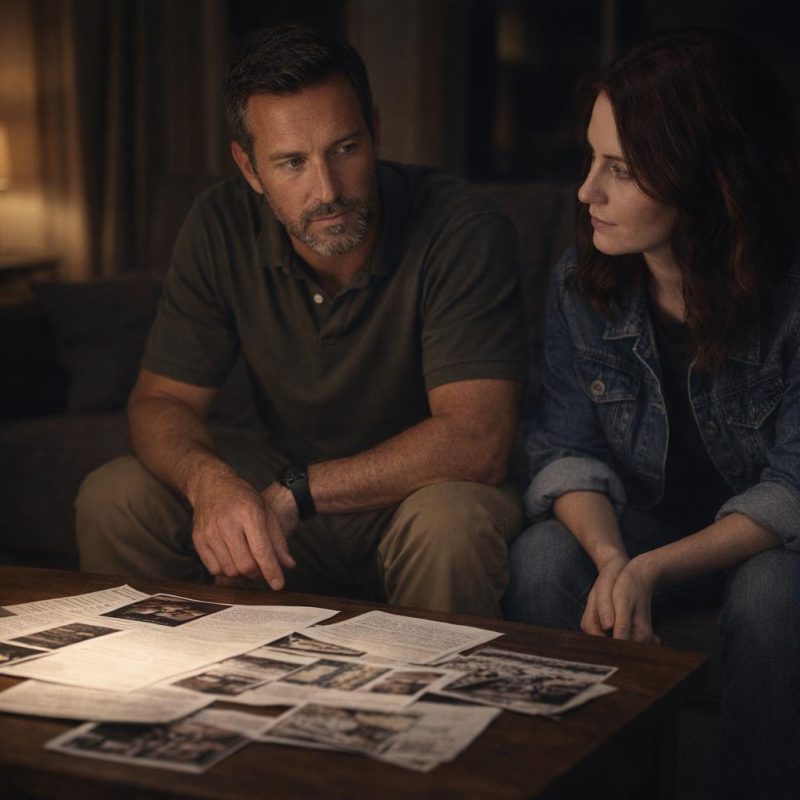 Image by RM AI
The Call
He picks up the phone before I've even finished my coffee. I stand close enough that I can hear both sides. Martha answers on the second ring, her voice bright and easy the way it always is when James calls. He doesn't match her tone. His voice comes out flat and measured, stripped of the warmth he usually gives her without thinking. He tells her she needs to come to the house today. There's a pause on her end, and then she asks if something is wrong. He says they need to discuss something important, in person. She tries to ask what it's about — her voice shifts, just slightly, the brightness pulling back a fraction. He tells her she'll understand when she gets here. Another pause, shorter this time. And then she says she can come this afternoon.
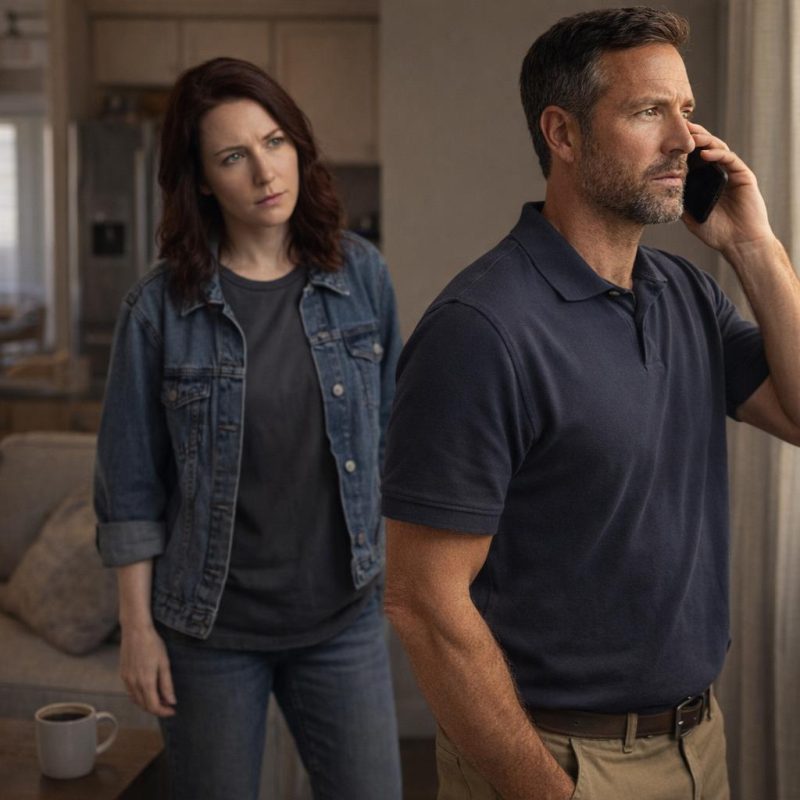 Image by RM AI
Face to Face
Martha arrives at two in the afternoon, dressed like she's coming for Sunday lunch — pressed blouse, reading glasses on a chain, a small smile already arranged on her face. I open the door and say almost nothing. James is waiting in the living room, standing, not sitting. He doesn't go to hug her. Martha's smile flickers when she sees his posture. She asks what's going on, her voice still carrying that practiced warmth. James doesn't answer right away. He picks up the metal box from the coffee table and sets it down in front of her. Her eyes drop to it and something in her face goes still. He opens it. He lays the journals out first, then the trust documents, one by one, like he's been rehearsing this. Martha starts to speak — something about context, about how things were complicated after his father died — but James cuts her off. He asks where the money is. She says she needed it. She says his father would have understood. James tells her, quietly and without raising his voice, that she's a thief. The word lands in the room like something physical. Martha's composure finally breaks, and through tears she admits she's been drawing from the funds for years.
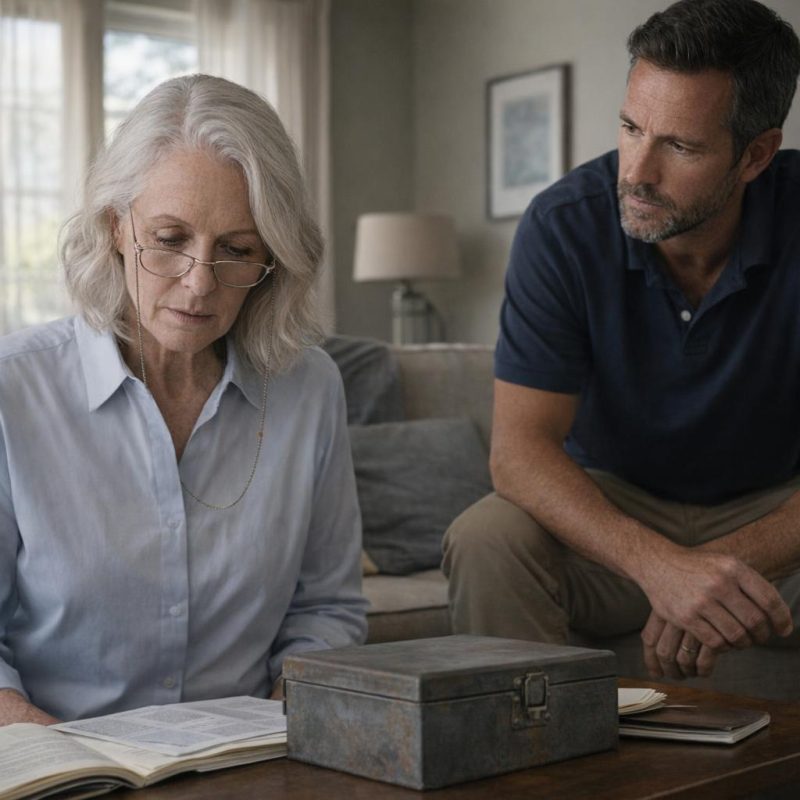 Image by RM AI
The Terms
James doesn't raise his voice once. That's the part that stays with me — how steady he is through all of it. He tells Martha she will return every dollar. He says he's already spoken to a lawyer and that the documents in that box are more than enough to move forward. Martha protests that she doesn't have it all anymore, that some of it is gone, that she can explain where it went. James says she'll figure it out. Then he tells her she's not welcome in this house anymore. Martha's face crumples. She asks about the grandchildren — her voice breaks on the word — and James tells her she lost that right when she chose to steal from them. I stand beside him and I don't say a word, because there's nothing I need to add. Martha asks for forgiveness. James tells her to leave. She gathers her bag slowly, like she's hoping someone will stop her. She walks to the door and pauses with her hand on the frame, looking back into the room. James keeps his eyes forward. I watch the door close behind her, and the house goes quiet in a way it hasn't felt in years.
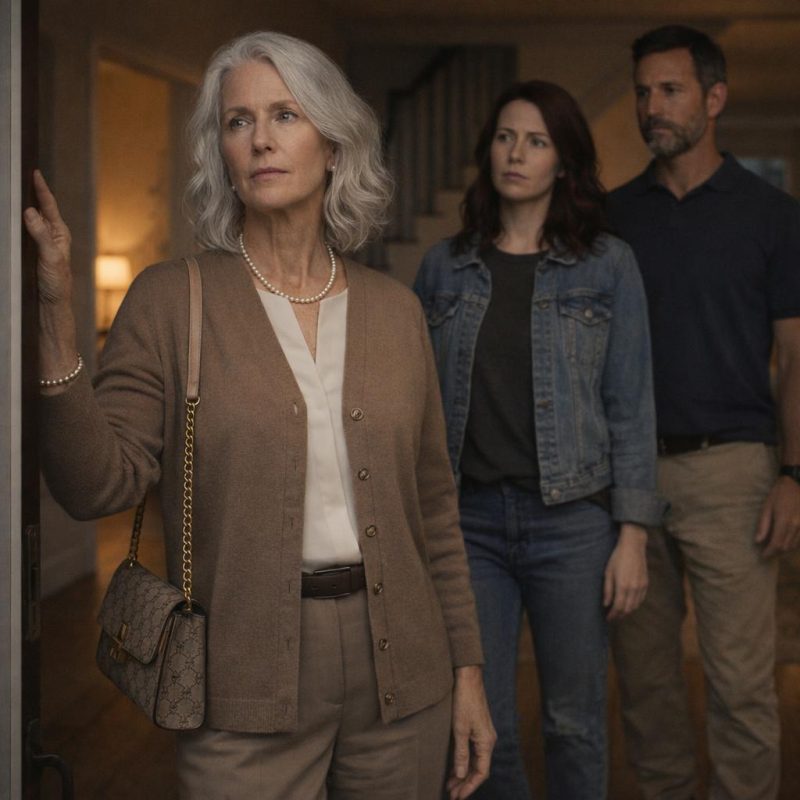 Image by RM AI
Processing the Loss
James sits on the couch for a long time after she's gone, not moving, not talking. I sit beside him and take his hand and just let the silence be there. After a while he says it feels like his mother died. I tell him I understand. He says the woman he thought she was — the one who made his lunches and came to every school play and cried at his wedding — that person never really existed, or at least not the way he believed. I don't try to argue with that. Sophie wanders in from the hallway and asks where Grandma went. James pulls her close and tells her Grandma had to go home. Sophie accepts that the way kids do, and goes back to her toys. The baby fusses from the playmat and James picks him up and just holds him, and I watch my spouse cry quietly into our son's wispy hair. We talk late into the night after the kids are asleep — about his father, about the journals, about what comes next. At some point James says he's glad I found the truth. He says he's glad I didn't hide it from him. I squeeze his hand and the room settles around us, still and finally honest.
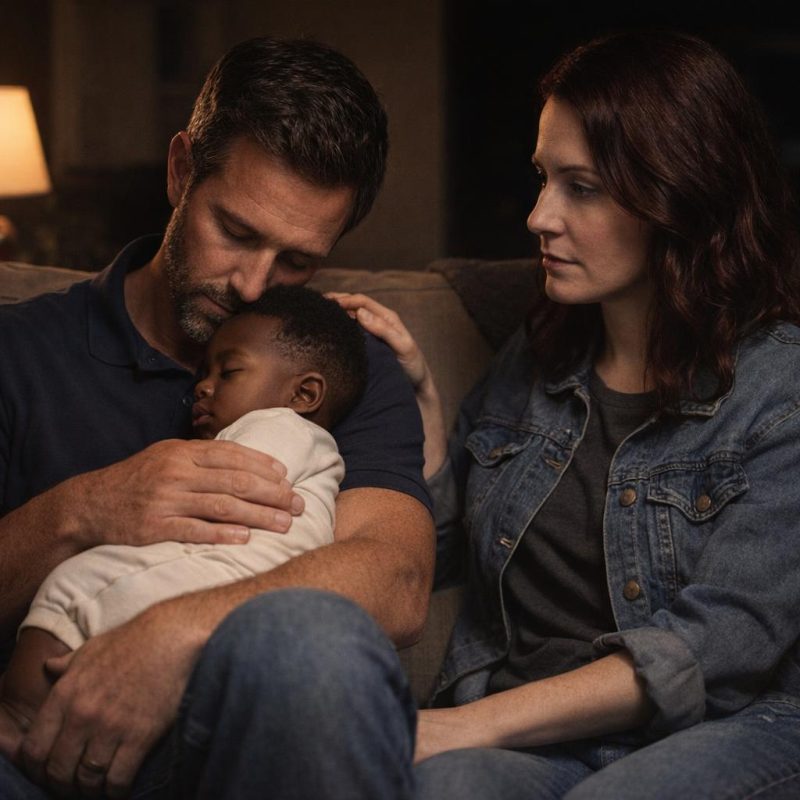 Image by RM AI
The Floor Stays Empty
James calls the lawyer the next morning. The process will take time — that's the honest answer — but we have the journals, the trust documents, the records from the metal box, and apparently that's more than enough to start. We sit at the kitchen table afterward and talk about what we'll do with the money when it comes back. Nothing dramatic. Maybe the kids' college funds. Maybe the roof we've been putting off. James says he wants to keep the journals regardless of how any of it resolves. They belonged to his father, and now they belong to him. I suggest we move the metal box somewhere safer than a floorboard. He agrees, but then he pauses and says we should leave the space itself empty. I ask him why. He says it's a reminder — of what was hidden there, of what we found, of what we chose to do with it. We go to the guest room together and stand in the doorway for a moment. James pulls the loose board back one last time, and we both look down at the empty space beneath the floor.
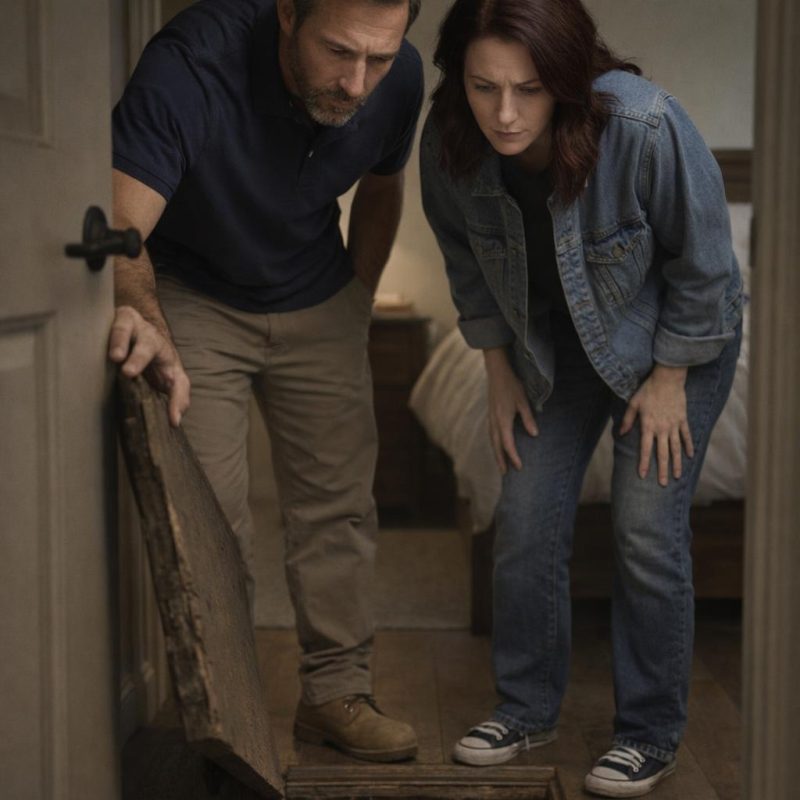 Image by RM AI
KEEP ON READING
10 Greatest Quarterbacks Of All Time & 10 That Are…
Do You Disagree?. Few topics in sports generate as much…
By Farva Ivkovic Dec 2, 2025
The story of Ching Shih, the Woman Who Became the…
Unknown author on WikimediaFew figures in history are as feared…
By Emilie Richardson-Dupuis Dec 29, 2025
20 Shakespearean Words, Translated For A Modern Audience
What’s In A Word?. Shakespeare was a wordsmith of the…
By Breanna Schnurr Dec 17, 2025
20 Inspiring Stories From Native American History
Incredible Stories Of Resilience And Endurance. Many of us didn't…
By Ashley Bast Dec 17, 2025
You Think You Have Problems? These Royal Families Were Cursed
Boasson and Eggler St. Petersburg Nevsky 24. on WikimediaHeavy is…
By Ashley Bast Dec 5, 2025
MH370: The Plane That Can't Be Found
Anna Zvereva from Tallinn, Estonia on WikimediaEleven years after Malaysia…
By Christy Chan Dec 10, 2025