

My Head Had Been Pounding For Days—But What The Tests Revealed Left Even The Doctor Panicking
My Head Had Been Pounding For Days—But What The Tests Revealed Left Even The Doctor Panicking
The Morning Everything Changed
I'd like to say there was some dramatic warning, but honestly, I was just standing in my kitchen that Tuesday morning trying to remember if I'd already added salt to the eggs. The headache had been building for hours—that dull throb behind my right eye that felt like someone tightening a vise. I pressed my fingertips against my temple and told myself it was stress. Work had been insane, the house felt too empty since Emma moved out, and I'd been sleeping poorly. Mark came downstairs and stopped when he saw me gripping the counter. 'Sarah, you look terrible,' he said, which was not what I needed to hear. I waved him off. 'Just a headache. I'm fine.' But I wasn't fine. The pain was different this time—sharper, more insistent. I'd been getting these headaches for maybe a week, brushing them off as tension or hormones or whatever middle-aged excuse I could find. Mark suggested I call the doctor, but I had meetings all morning. When I caught my reflection in the microwave door and barely recognized the pale, hollow-eyed woman staring back, I knew I couldn't wait any longer.
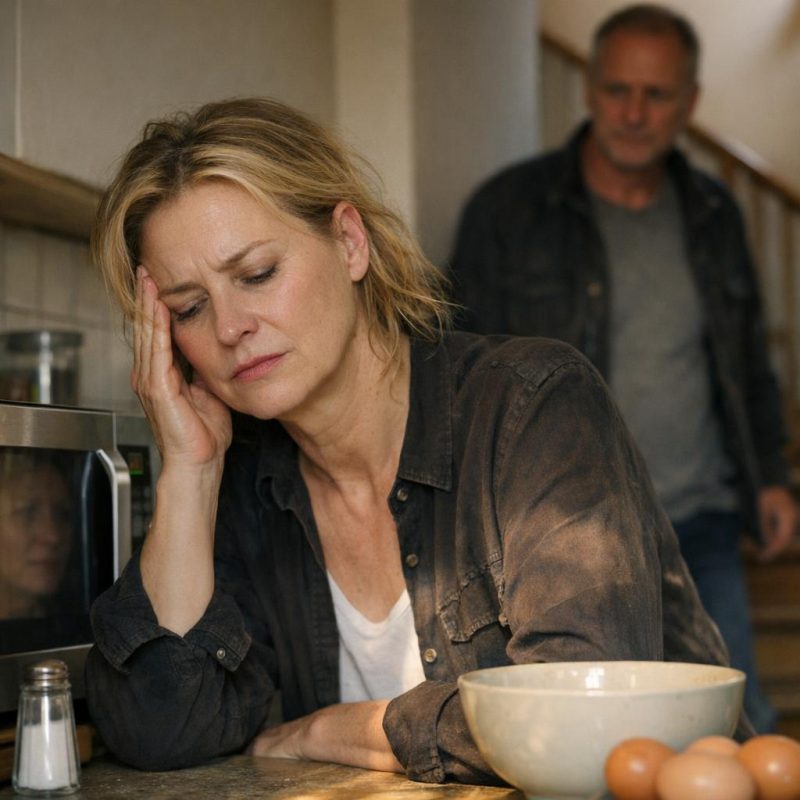 Image by RM AI
The Three Days Before
Looking back now, I can pinpoint exactly when it started. Three days before that Tuesday morning, I'd woken up with what felt like a normal headache—nothing unusual, the kind I'd chase away with ibuprofen and coffee. By afternoon, it had settled into a constant pressure, like my brain was pressing against my skull from the inside. I blamed it on the stress of Emma's transition to her new apartment. Mark noticed me rubbing my temples at dinner, but I brushed it off. The next day, the headache came back stronger, and I started forgetting small things—where I'd put my phone, whether I'd responded to an email. I told myself it was empty nest syndrome, that foggy feeling they talk about when your kid leaves. By day three, I was standing in the middle of the grocery store holding a list I'd written that morning, completely unable to process what was on it. The words looked familiar but meaningless. I stood there for what felt like minutes, people pushing carts around me, and I couldn't remember why I'd come there at all—not what I needed, but why I was there.
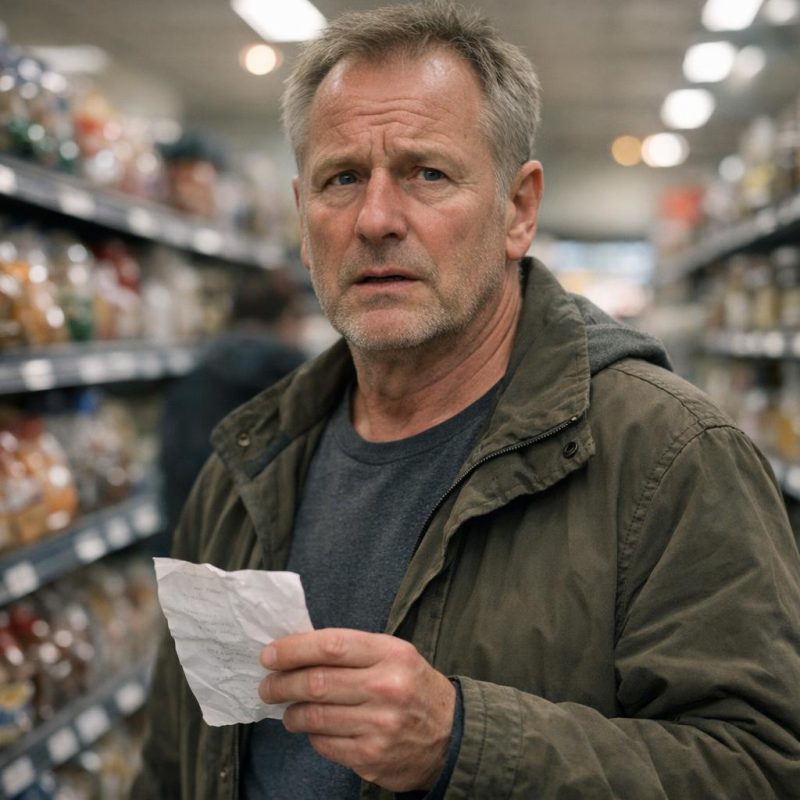 Image by RM AI
The Breaking Point
I didn't sleep that night. The pain had evolved into something living, pulsing behind my eyes with every heartbeat. Around three in the morning, I got up and sat on the bathroom floor with a cold washcloth pressed to my forehead, trying not to wake Mark. When he found me there at dawn, he didn't ask permission—he just said, 'We're going to the hospital. Now.' I was too exhausted to argue. The drive felt surreal, like I was watching it happen to someone else. The morning light hurt my eyes even through sunglasses. Mark kept glancing over at me, his jaw tight, and I wanted to tell him I was sorry for being stubborn, for waiting so long. The emergency room was surprisingly empty for a Wednesday morning. We checked in, answered questions, filled out forms. A nurse took my vitals without much expression. Then we sat, Mark holding my hand, both of us pretending to read our phones. The fluorescent lights hummed overhead, making my headache worse. When they finally called my name in the waiting room, I felt both relief and a dread I couldn't explain.
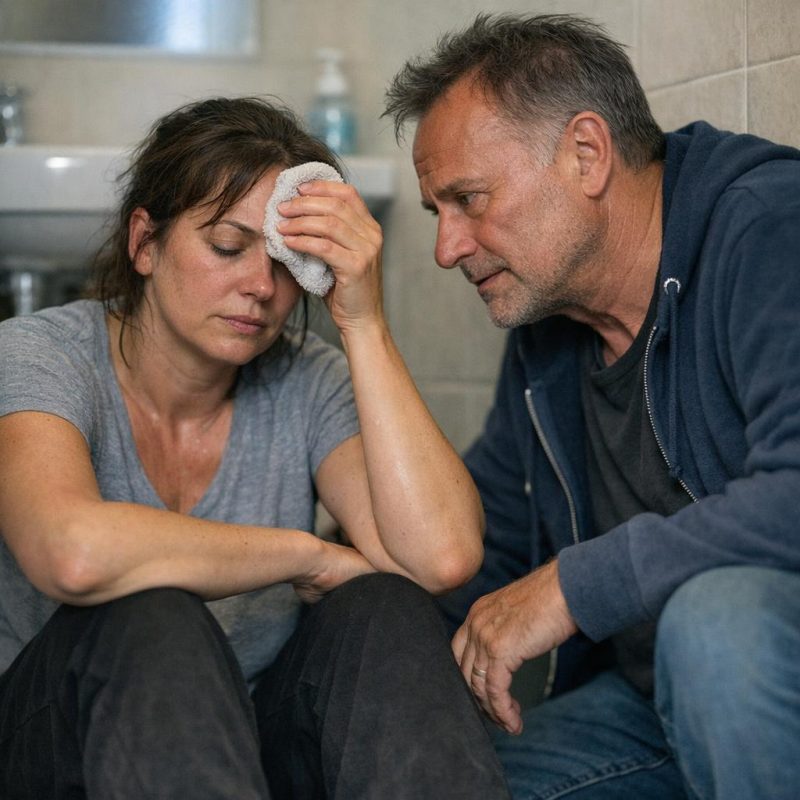 Image by RM AI
The Questions I Should Have Asked Earlier
The examination room was small and cold, one of those spaces designed to make you feel vulnerable. Nurse Linda—her badge said her name—asked me to describe my symptoms, and as I listed them out loud for the first time, I heard how bad it sounded. The headaches. The memory lapses. The light sensitivity that had gotten so bad I'd started wearing sunglasses indoors. The weird dizziness when I turned my head too quickly. The nausea I'd blamed on skipping meals. She wrote everything down without judgment, but I could feel it—that creeping shame of being a woman in her fifties who'd ignored so many warning signs. 'How long has this been going on?' she asked. 'About a week,' I said, then corrected myself. 'Well, maybe longer. I'm not sure.' Mark squeezed my hand. Linda wrapped the blood pressure cuff around my arm, and I watched the numbers climb on the digital monitor. Her expression shifted—subtle, but I caught it. She unwrapped the cuff, checked again, then paused while looking at the readings. She frowned at the monitor, wrote something quickly on her clipboard, then quietly excused herself.
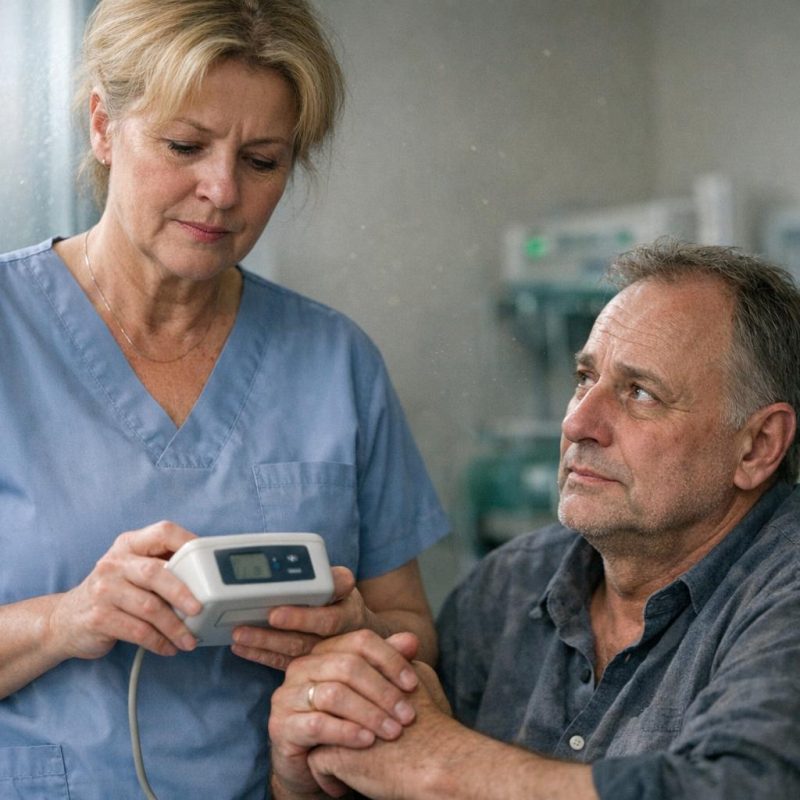 Image by RM AI
Waiting Room Purgatory
After they took me for a CT scan—which was its own special kind of claustrophobic nightmare—Mark and I sat in that tiny room waiting for results. He tried to make conversation about normal things, about whether we needed to buy more dog food, whether the gutters needed cleaning before winter. I appreciated the effort, but we both knew what we were doing. Killing time. Distracting ourselves from the possibilities neither of us wanted to name. I started building a case in my head for why this was all an overreaction. Maybe it was just migraines. Maybe I needed glasses. Maybe I was perimenopausal and this was just another delightful symptom no one warns you about. I'd almost convinced myself, actually started to relax a little. Mark even smiled at something on his phone and showed me a meme Emma had sent to the family chat. We were laughing—actually laughing—when I glanced up at the small window in the door. I almost convinced myself I was overreacting—until I saw Dr. Morrison's face through the window.
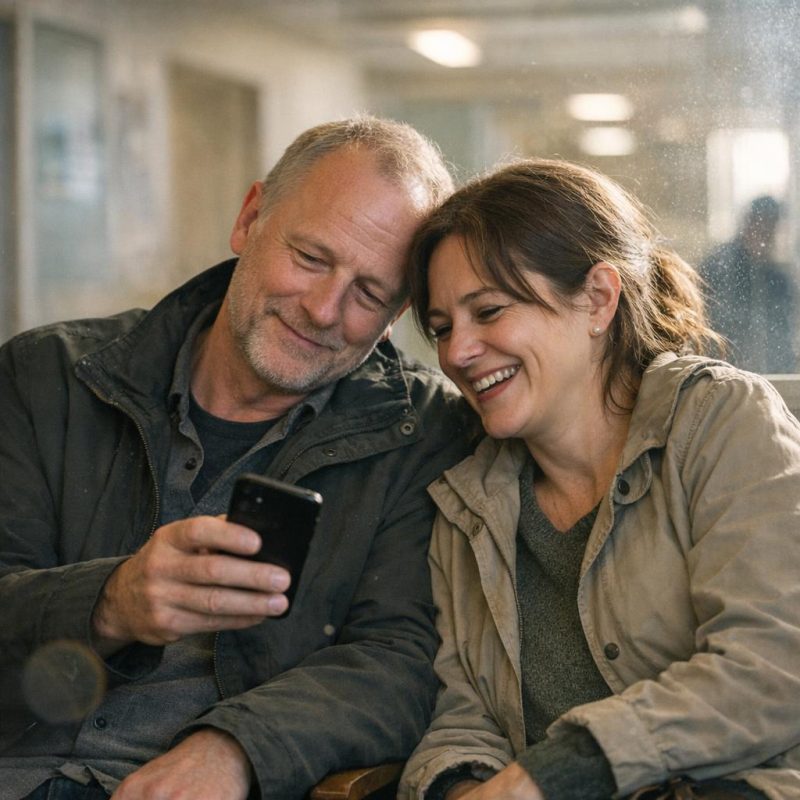 Image by RM AI
The Doctor Who Rushed
The door opened and Dr. Morrison came in fast—not running, but moving with that kind of controlled urgency that makes your stomach drop. She was younger than I expected, maybe mid-forties, with her hair pulled back and reading glasses hanging from a chain around her neck. She didn't do the usual small talk, didn't ease into it. Mark and I both straightened in our chairs, and I felt him reach for my hand again. Dr. Morrison pulled up a stool and sat down, holding a tablet with what I assumed were my scan results. Her eyes moved between the screen and my face, and something about her expression made my heart start racing. 'Mrs. Patterson,' she said, and the formality of it felt wrong, too serious. She took a breath, and I watched her choose her words carefully. The room felt smaller suddenly, the air thinner. I could hear the clock on the wall ticking, could hear Mark breathing beside me. She said, 'This isn't a normal headache,' and the room suddenly felt too small.
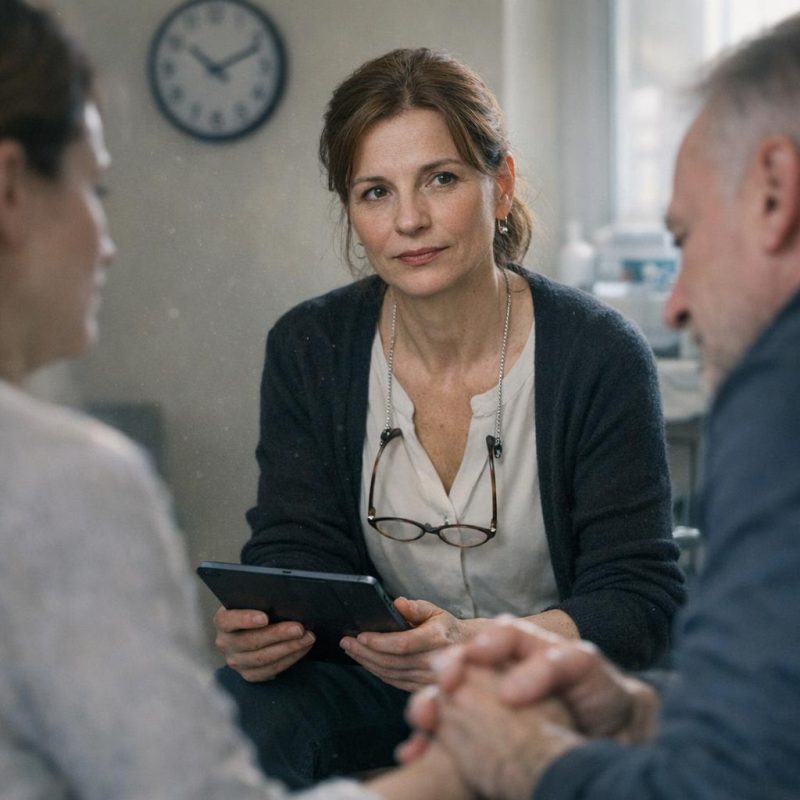 Image by RM AI
The Pause That Changed Everything
Dr. Morrison paused—just a few seconds, but it felt like forever. She looked down at her tablet, then back at me, and I knew she was trying to find the right way to say something terrible. Mark's hand tightened around mine. 'Your CT scan shows an abnormality,' she said carefully. 'A mass. In your frontal lobe.' I heard the words, but they didn't make sense at first. A mass. In my brain. That's where tumors go, I thought stupidly. That's where cancer lives. Mark made a sound beside me, something between a gasp and a whisper. Dr. Morrison kept talking—something about needing more tests, an MRI, a neurologist, but her voice sounded far away. I felt weirdly calm, like I was floating above the scene, watching this happen to someone else. She was pulling out her phone, saying something about calling in specialists, about getting me admitted immediately. The word 'immediately' brought me back into my body. She finally said the words I'd been dreading: 'There's something in your brain.'
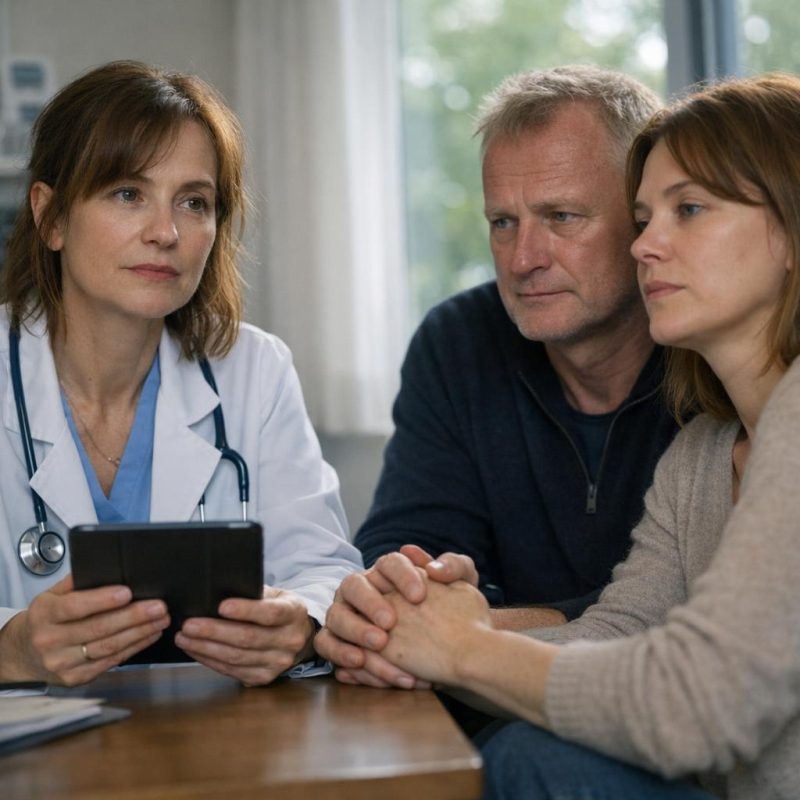 Image by RM AI
When Your Daughter's Voice Cracks
They moved me to a different room, started an IV, began the process of admitting me. Mark sat in the corner looking pale and lost. Dr. Morrison had stepped out to consult with a neurosurgeon. And I knew I had to call Emma. I stared at my phone for a full minute before I could make myself dial. She answered on the second ring, cheerful. 'Hey, Mom!' I tried to keep my voice steady. 'Honey, I need you to listen to me. I'm at the hospital. They found something on a brain scan and they're admitting me.' The silence on the other end was deafening. Then I heard her breathing change, heard her trying not to cry. 'What do you mean, something?' Her voice cracked on the last word, and that's what broke me—not the diagnosis, not the scan, but hearing my daughter's fear. She was asking questions I couldn't answer, promising things I couldn't promise back. Emma said she'd be on the next flight, and I realized I'd never heard her sound so scared.
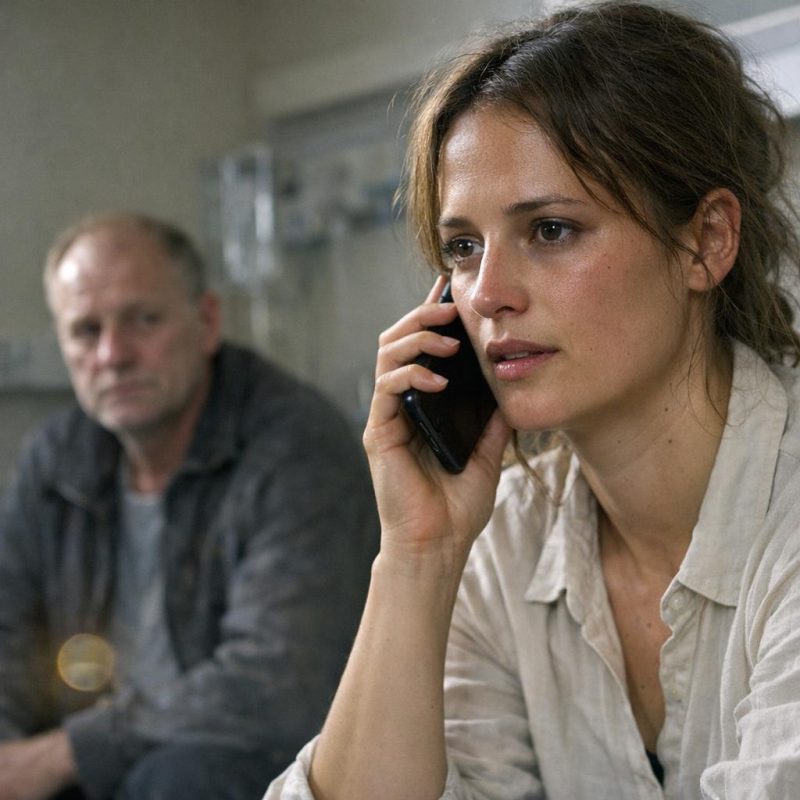 Image by RM AI
The Son Who Thought Mom Was Invincible
Jake burst through the door less than an hour after I'd called him, his hair still messy from sleep, his face so pale I thought he might faint right there. He'd driven from his apartment across town like the road was on fire. My son—my baby, really, though he's twenty-four and would hate me calling him that—stood frozen in the doorway, staring at the IV in my arm, the monitors beside the bed. 'Mom,' he said, and his voice broke on that one word. I watched him trying to process it, this woman in the hospital bed who was supposed to be invincible. Mark stood to give him a hug, but Jake went straight to me, kneeling beside the bed like a little boy again. 'You're going to be fine,' he said, squeezing my hand too tight. 'This is nothing. You're the strongest person I know.' He kept repeating it, these assurances I couldn't give him back, his eyes searching mine for confirmation. I nodded and tried to smile, but I could see it in his face—the fear, the disbelief, the desperate need to believe his own words. He kept saying I'd be fine, over and over, like he was trying to convince himself more than me.
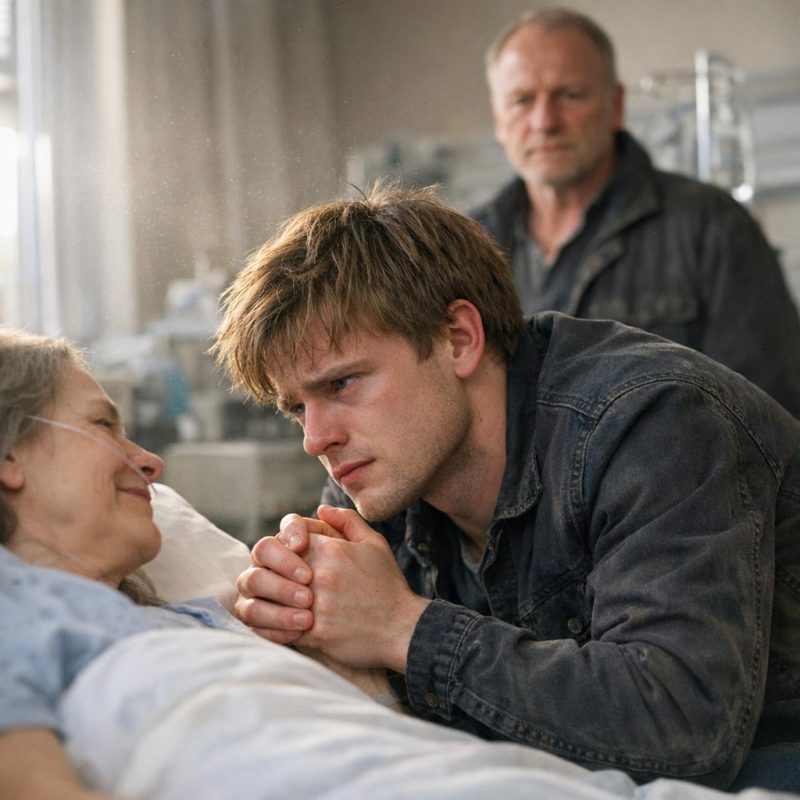 Image by RM AI
The Words You Never Want to Hear
Dr. Morrison came back about twenty minutes later with a tablet in her hands and that careful expression doctors get when they're about to deliver bad news. She pulled up a chair so she was eye level with me, which somehow made it worse. Mark stood behind her, and Jake moved closer to my other side. 'The scan shows abnormal pressure building in your brain,' she said, her voice gentle but direct. 'There's bleeding—we call it a subarachnoid hemorrhage—and it's creating a dangerous situation.' She showed us the images, pointing to areas that looked like shadows, like storm clouds gathering in my skull. I tried to focus on her words: intervention, monitoring, neurosurgical consultation. Jake's hand tightened on mine. 'How dangerous?' Mark asked, his voice rough. Dr. Morrison didn't look away from me when she answered. 'Without treatment, this type of bleeding can cause stroke, permanent brain damage, or worse.' She used the word 'life-threatening,' and suddenly the fluorescent lights seemed too bright.
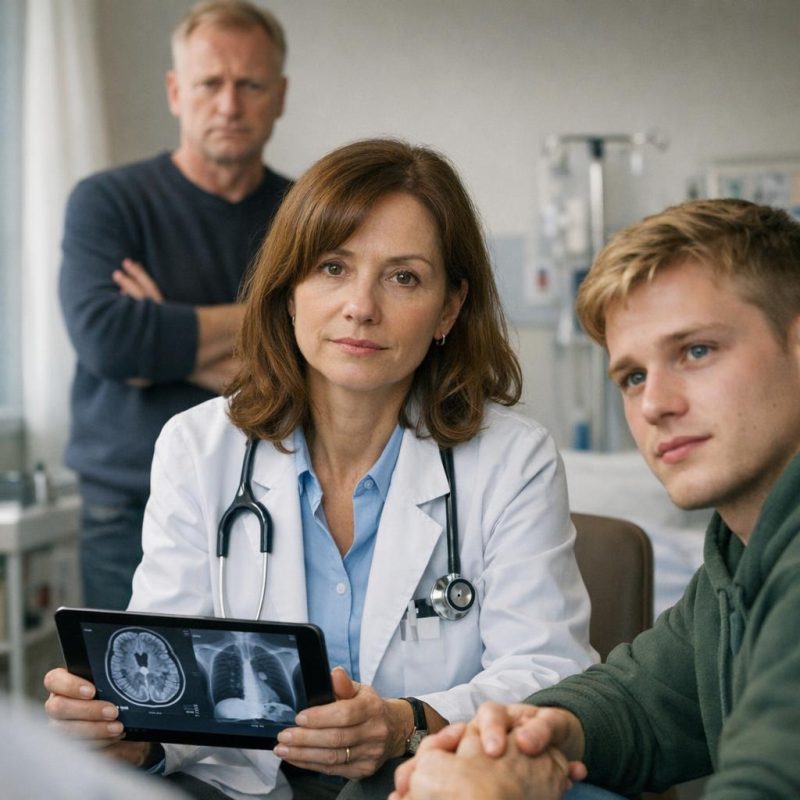 Image by RM AI
The Specialist Who Looked Concerned
They brought in Dr. Reeves maybe an hour later—this tall, silver-haired man with serious eyes and the kind of presence that makes a room go quiet. He was a neurological specialist, Dr. Morrison explained, and he'd reviewed my scans. He shook my hand, then Mark's, then studied the images on his tablet with a frown that made my stomach drop. 'Mrs. Chen,' he said, looking up at me with an expression that offered absolutely no comfort. He asked me questions about the headache, about my symptoms, about my medical history. The whole time he kept glancing back at the scans like they were a puzzle he couldn't solve. 'I'll be honest with you,' he finally said, and I braced myself. 'The bleeding pattern here is unusual. It doesn't follow the typical presentation we see with most aneurysms.' Jake started to ask what that meant, but Dr. Reeves was already ordering the nurse to prepare me for transport. He said the bleeding pattern was unusual, and he needed to run additional tests immediately.
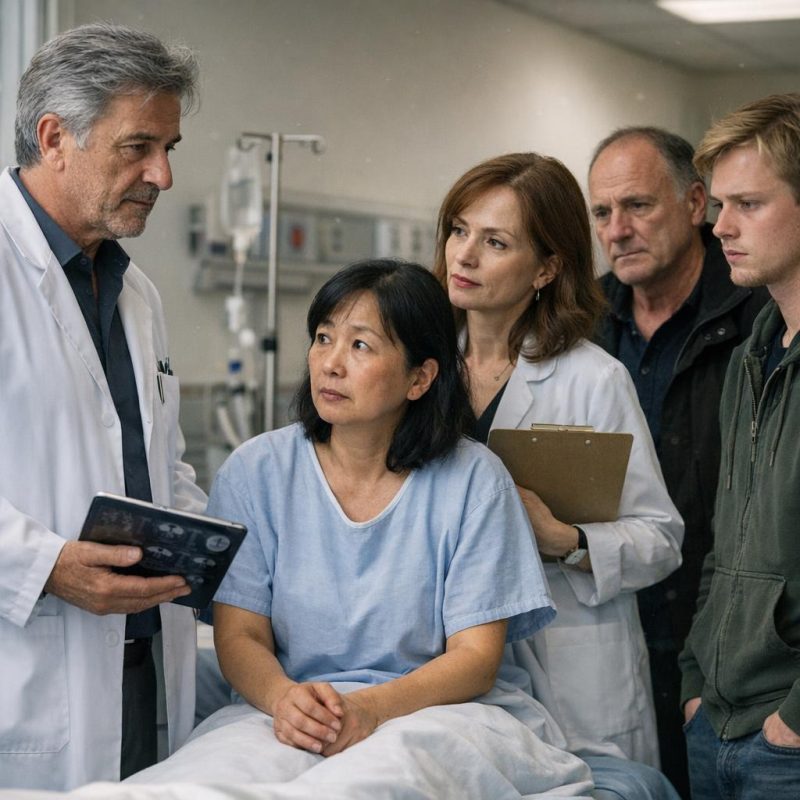 Image by RM AI
The Hospital Room That Became Home
They moved me to a regular room around seven that evening, after the additional scans and what felt like a hundred more questions. It was a double room, but the other bed was empty, which felt both lonely and fortunate. The machines started their chorus—beeping, humming, the blood pressure cuff inflating every thirty minutes with a sound like a sigh. Mark pulled the visitor chair close to my bed and refused to leave even when the nurse suggested he get dinner. They'd given me something for the pain and something else for the pressure, medications with names I couldn't pronounce. The room had that particular hospital smell—antiseptic and fear and something else I couldn't identify. I watched the IV drip, counted the ceiling tiles, tried not to think about the shadows on the scan. This was my life now, at least for tonight: machines and monitors and Mark's worried face in the dim light. The medication made everything feel cottony and distant. Mark held my hand as I drifted in and out of medicated sleep, and I dreamed of drowning.
 Image by RM AI
The Middle of the Night Terror
I woke to someone touching my arm, checking the IV line, and for a confused moment I had no idea where I was. The room was dark except for the glow from the machines and the light seeping under the door from the hallway. A nurse—her badge said Linda—was adjusting something on the monitor above my head. 'Sorry to wake you, honey,' she whispered. 'Just need to check your vitals.' Mark was asleep in the chair, his head at an angle that would give him a terrible neck ache. The clock on the wall said 3:17 AM. Linda wrapped the blood pressure cuff around my arm and I watched the numbers climb on the screen. 'Can you tell me your name?' she asked gently. 'And do you know where you are?' I opened my mouth to answer, to say something obvious—of course I knew where I was, I was in the hospital, my name was Sarah Chen. But the words wouldn't come. The room spun slightly. My mind went blank, completely blank, like someone had erased a whiteboard. The nurse asked if I knew where I was, and for a terrifying moment, I couldn't answer.
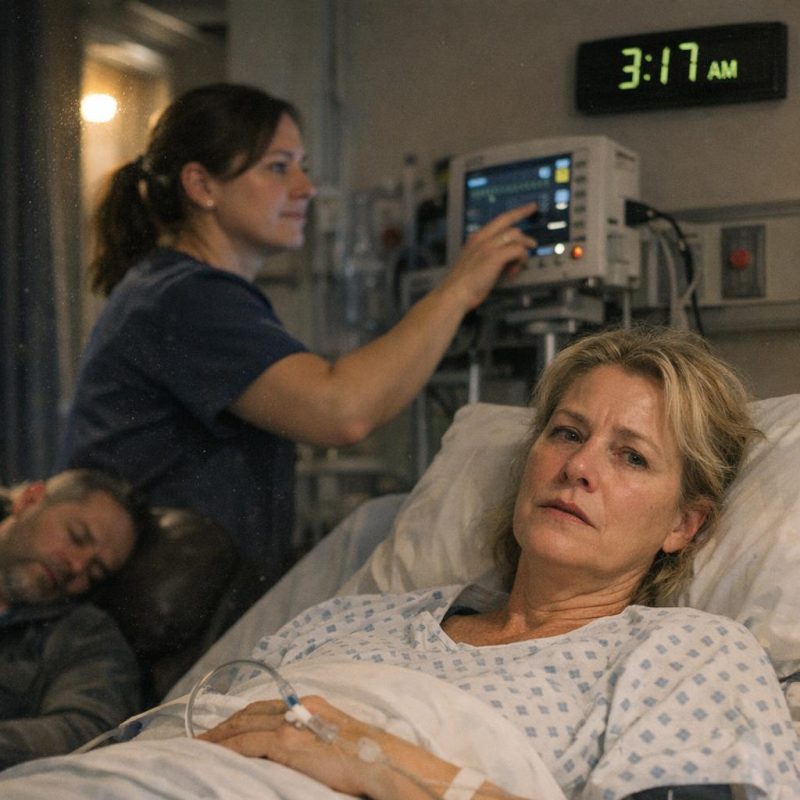 Image by RM AI
Emma Arrives
The door opened just after six AM, when the sky outside the window was turning that pale gray color that comes before sunrise. Emma practically ran into the room, still wearing her travel clothes, her eyes red from crying or exhaustion or both. I'd been awake for an hour, staring at the ceiling and trying not to think about my 3 AM confusion episode. 'Mom,' she said, and then she was at my bedside, her arms around me, careful of the IV but holding on like I might disappear. Jake stood up to hug his sister, and Mark woke with a start. I breathed in the familiar smell of her shampoo and felt something in my chest crack open. My daughter, my firstborn, who I'd brought into this world and protected from everything I could. Now she was here trying to protect me. 'You're okay,' she kept saying into my shoulder. 'You're going to be okay.' But when she pulled back to look at me, I saw the fear in her eyes—raw and desperate and young. She hugged me so tightly I could barely breathe, and whispered, 'You're going to be okay,' but I heard the question in her voice.
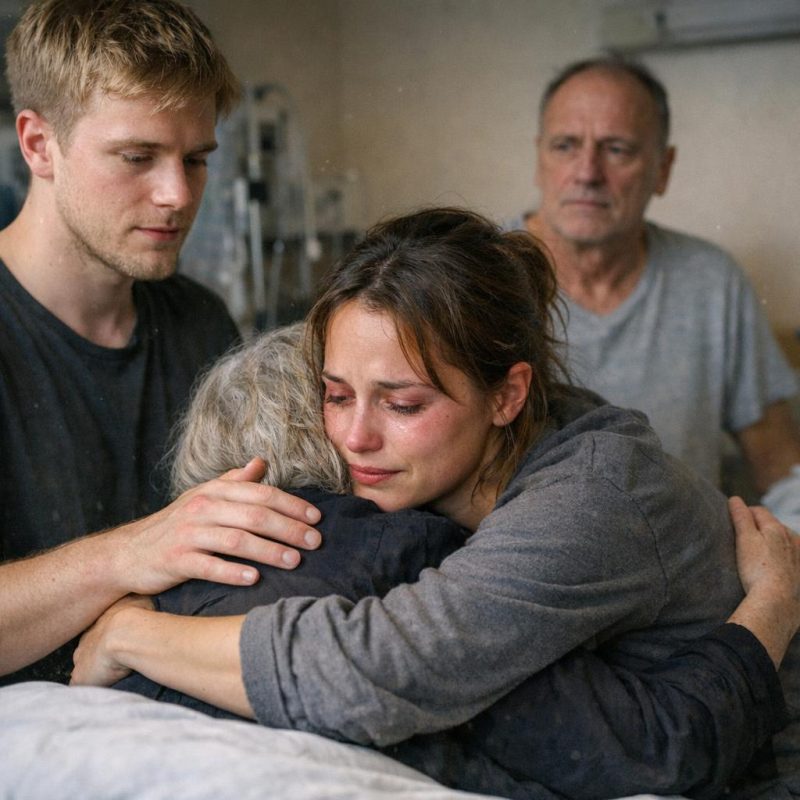 Image by RM AI
The Friend Who'd Been Through Worse
Cathy showed up around noon with a bag of my favorite ginger candies from the Korean market, which made me cry for some reason. She'd texted earlier asking if I wanted visitors, and I'd said yes because Cathy had been my best friend for twenty-three years and there was no pretending with her. She pulled up a chair, shooed Mark and the kids out for coffee, and just sat with me for a minute in silence. 'This is terrifying,' I finally said, and she nodded. 'I know.' Then she told me about her own diagnosis seven years ago—ovarian cancer, stage three, the surgery and chemo and the year she thought she wouldn't see her son graduate high school. 'The thing I learned,' she said, unwrapping one of the ginger candies and handing it to me, 'is that you have to be your own advocate. Doctors are human. They miss things. They get tunnel vision.' She looked at me hard, the way only old friends can. 'Trust your gut. If something feels wrong about your treatment, speak up.' Cathy squeezed my hand and said, 'Trust your gut—if something feels wrong about your treatment, speak up.'
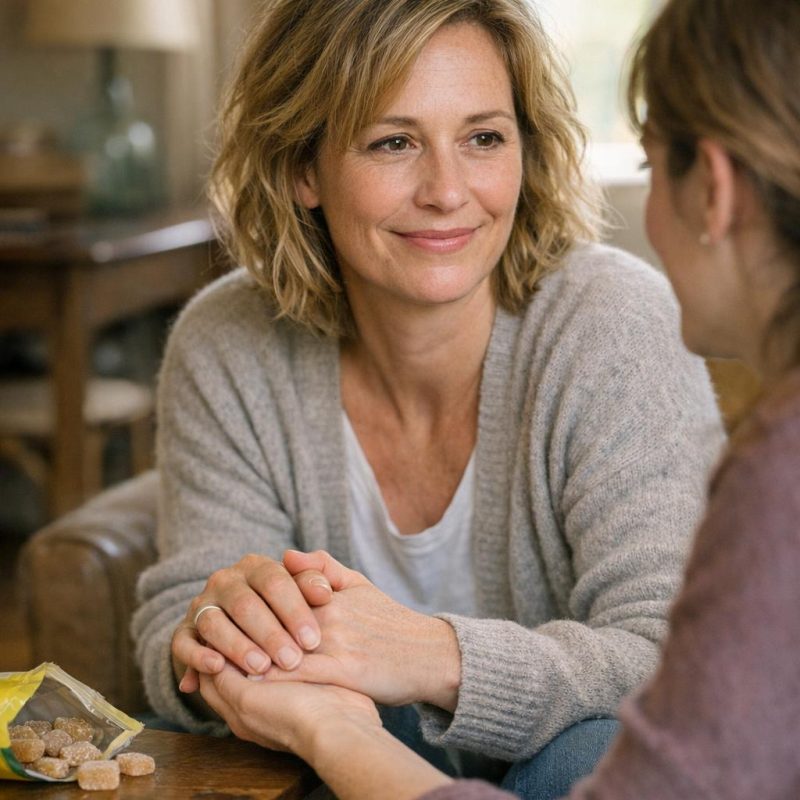 Image by RM AI
The Test Results That Didn't Add Up
Dr. Reeves came in late afternoon with a folder full of new test results and that same troubled expression I was starting to recognize. Mark and Emma both stood up straighter when he entered. He pulled up the latest scans on the room's monitor—more images of my brain, more shadows and light. 'I've consulted with two other specialists,' he said, which didn't sound reassuring. 'And we all agree that something about this presentation is atypical.' He pointed to areas on the scan, explaining blood patterns and pressure points in language I only half understood. 'Most subarachnoid hemorrhages follow a predictable pattern,' he continued. 'But yours doesn't fit. The location, the distribution, even the rate of bleeding—it's not what we'd expect.' Emma asked what that meant for treatment, and Dr. Reeves hesitated. 'It means we need more information before we proceed. I want to be absolutely certain we're treating the right thing.' He said, 'We're missing something,' and ordered another round of bloodwork.
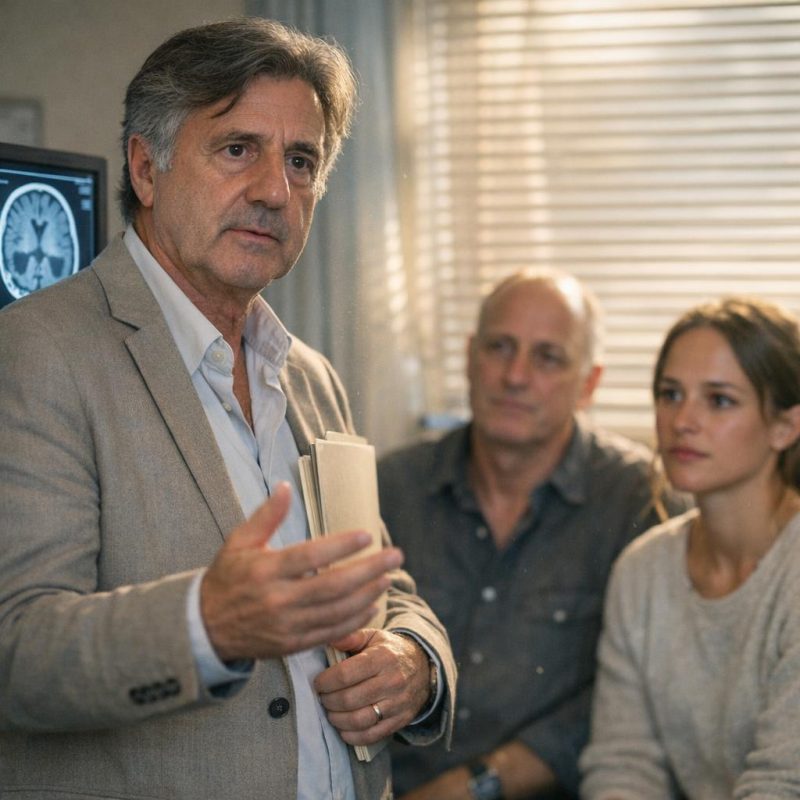 Image by RM AI
When Treatment Feels Like Guesswork
They started me on medication the next morning—something to reduce the pressure in my brain, Nurse Linda explained as she prepared the IV. I recognized her from my first night, the one with the steady hands and calm voice. She double-checked the dosage against my chart, then against her computer screen, then against my wristband. Standard protocol, I told myself, but the triple-checking felt different this time. More cautious. 'This should help with the headaches,' she said, but her eyes didn't quite meet mine. I wanted to ask her what she thought was wrong with me, whether she'd seen cases like mine before, but something in her expression stopped me. She looked uncertain. Not about administering the medication—she was clearly skilled at that—but about whether it would actually help. Mark squeezed my hand as the medication entered my system, and I tried to feel optimistic. The nurse administered the injection, and I couldn't shake the feeling that they were shooting in the dark.
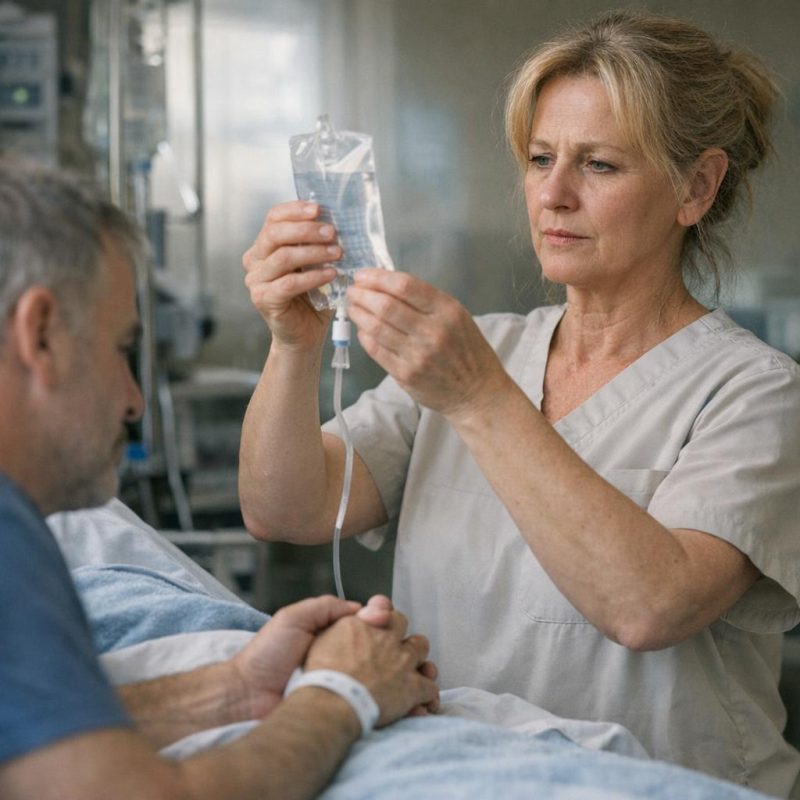 Image by RM AI
The Second Opinion That Changed Nothing
Dr. Patel arrived the following afternoon, introduced as a neurology specialist from another hospital. He was younger than Dr. Reeves, with wire-rimmed glasses and a methodical way of moving through my file. Mark stood near the window while Dr. Patel examined me, asking the same questions I'd already answered a dozen times. He spent twenty minutes reviewing my scans with Dr. Reeves, their voices low and technical. I caught fragments: 'atypical distribution,' 'inconsistent with standard presentation,' 'no clear source identified.' When Dr. Patel finally addressed me directly, he was professional but didn't offer the clarity I'd been hoping for. 'Your case is certainly unusual,' he said carefully. 'The bleeding pattern, the symptom progression—it's not what we typically see.' I asked what that meant for my treatment. He glanced at Dr. Reeves before answering. 'It means we need to keep investigating.' He left the room looking puzzled, and I heard him tell Dr. Reeves, 'I've never seen this presentation before.'
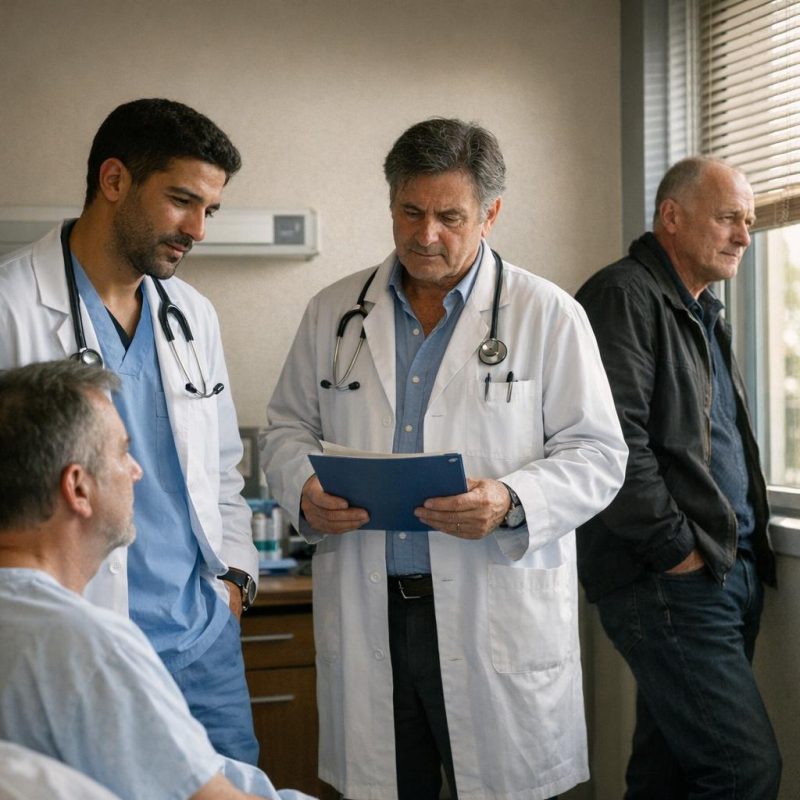 Image by RM AI
The Insurance Call That Felt Off
The woman from hospital administration appeared later that day, introducing herself as Rebecca from the insurance coordination office. She had a clipboard and a professional smile that didn't quite reach her eyes. Standard procedure, she assured me, just needed to verify some information about my coverage. But the questions felt off somehow. She wanted to know about my policy limits, whether I had supplemental insurance, who my beneficiaries were. I answered mechanically, still foggy from the medication, wondering why she needed such detailed financial information. Mark had stepped out to get coffee, so I was alone with her. 'And your husband is the primary beneficiary?' she asked, making a note. I nodded, feeling strangely exposed. She asked about my employer's coverage, about any life insurance policies, about things that seemed irrelevant to my hospital stay. She asked about my policy limits and beneficiaries, and something about her tone made me uncomfortable.
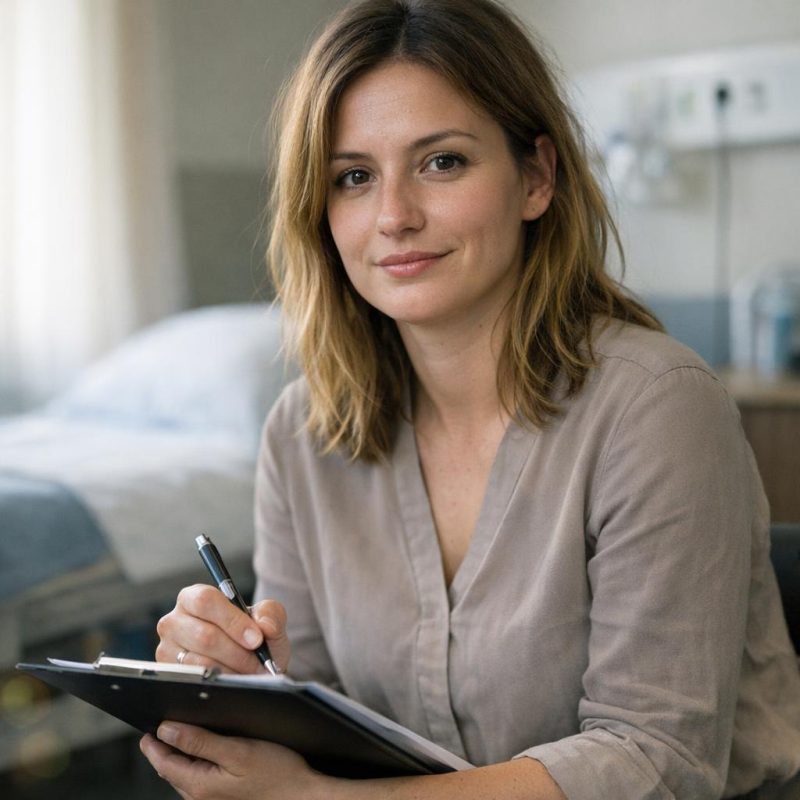 Image by RM AI
The Night My Symptoms Got Worse
The headache came back with a vengeance around two in the morning. Not gradual—it hit like someone had driven a spike through my skull. I tried to call for the nurse, but my hand wouldn't find the call button properly. Everything looked wrong, distorted. Mark woke up in the chair beside my bed when he heard me moaning. He was asking me questions, but his words sounded underwater, distant and warped. The room tilted sideways. I knew I should recognize him—some part of my brain registered that this person cared about me, was worried—but his name was gone. Just completely gone. 'Sarah, can you hear me? Sarah?' The panic in his voice finally cut through the fog. Nurse Linda rushed in after he hit the emergency button. She took one look at me and started barking orders into the hallway. I couldn't remember Mark's name when he asked if I was okay, and I saw real fear in his eyes.
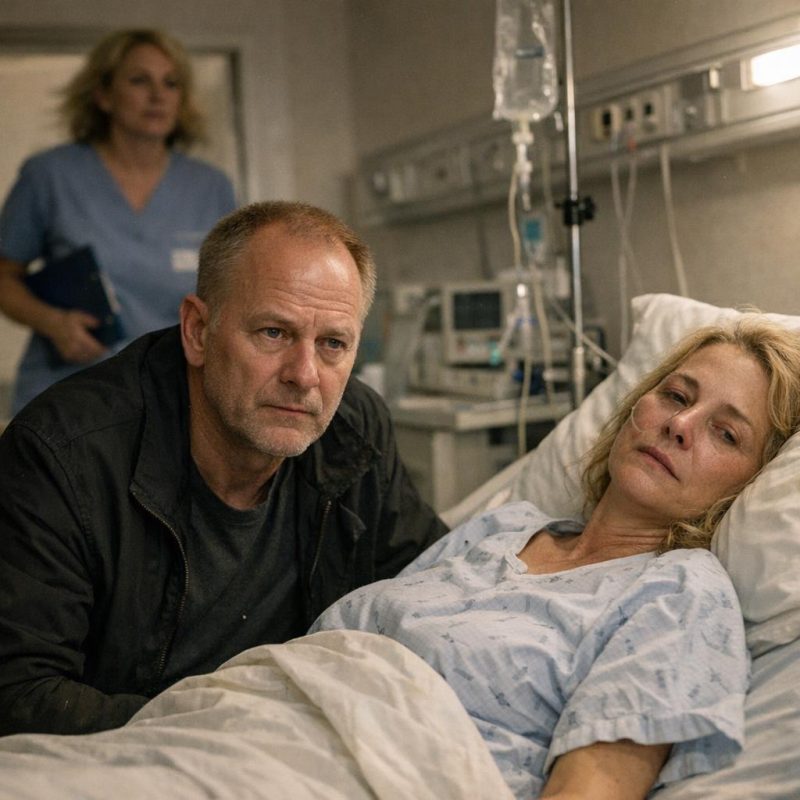 Image by RM AI
The Emergency Scan at Dawn
They wheeled me down to imaging before dawn, the fluorescent lights streaking past like comets. I was barely conscious, floating in and out on waves of medication they'd given me to manage the crisis. Dr. Morrison was there—I hadn't seen her since my first few days—along with Dr. Reeves and what looked like half the neurology department. Their faces were serious, mouths moving in conversations I couldn't quite follow. The CT scanner hummed around me, that familiar mechanical sound now tinged with urgency. Someone kept asking me to stay still, but I wasn't sure I was moving in the first place. Time felt elastic, stretching and compressing. Mark wasn't allowed in the imaging room, and I remember feeling utterly alone surrounded by all those people. The results came back faster than usual—I could tell by the way everyone clustered around the monitors, pointing and discussing in rapid voices. Through the medication haze, I heard someone say, 'We need to prep for surgery,' and my blood ran cold.
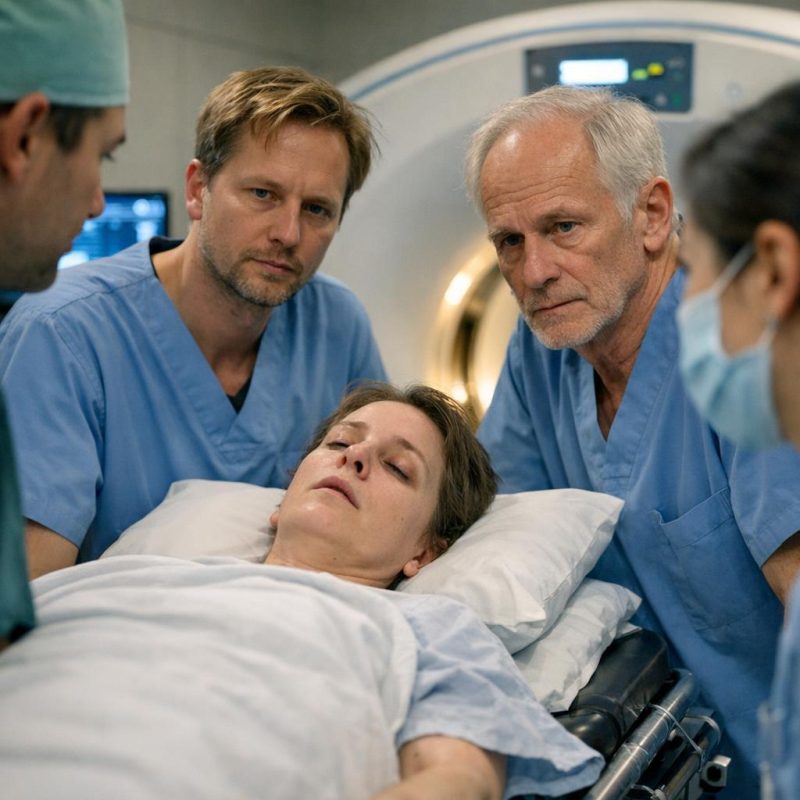 Image by RM AI
The Coordinator Who Knew Too Much
Rebecca appeared again while I was still recovering from the emergency scan, which struck me as odd timing. I was barely coherent, hooked up to more monitors than before, and she wanted to 'follow up on some information.' She asked about my family's medical history this time—had anyone else had brain hemorrhages, were there genetic conditions I knew about, did I have siblings with health issues. Her persistence felt invasive, especially given my state. Mark was in the hallway talking to Emma, who'd rushed over when he called about the crisis. 'Just trying to complete our records,' Rebecca said with that same professional smile. But then she mentioned specific details that seemed beyond her scope—my life insurance policy amount, the fact that Mark and I had updated our wills last year. I was too weak to question it properly, too disoriented to trust my own suspicions. She mentioned my life insurance policy amount, and I wondered how she knew that information.
 Image by RM AI
The Surgery That Didn't Happen
They were supposed to operate at noon. The surgical team had already briefed Mark and Emma, the consent forms were signed, and I'd been prepped and fasting since the night before. Then around ten in the morning, something shifted. The crushing headache that had been my constant companion for days started to ease. Not dramatically, but noticeably. When Dr. Reeves came to do the pre-surgical check, I could answer his questions clearly, could track his penlight with my eyes, could remember everyone's names. He looked stunned. He ordered another immediate scan, and when those results came back, they showed improvement. The pressure had decreased. The bleeding seemed to have stabilized on its own. Mark cried with relief when Dr. Reeves said they were postponing the surgery. Emma looked between me and the doctor like she was trying to solve a puzzle. I felt grateful but also deeply unsettled by the sudden reversal. Dr. Reeves looked relieved but confused, saying, 'This doesn't follow any pattern I know.'
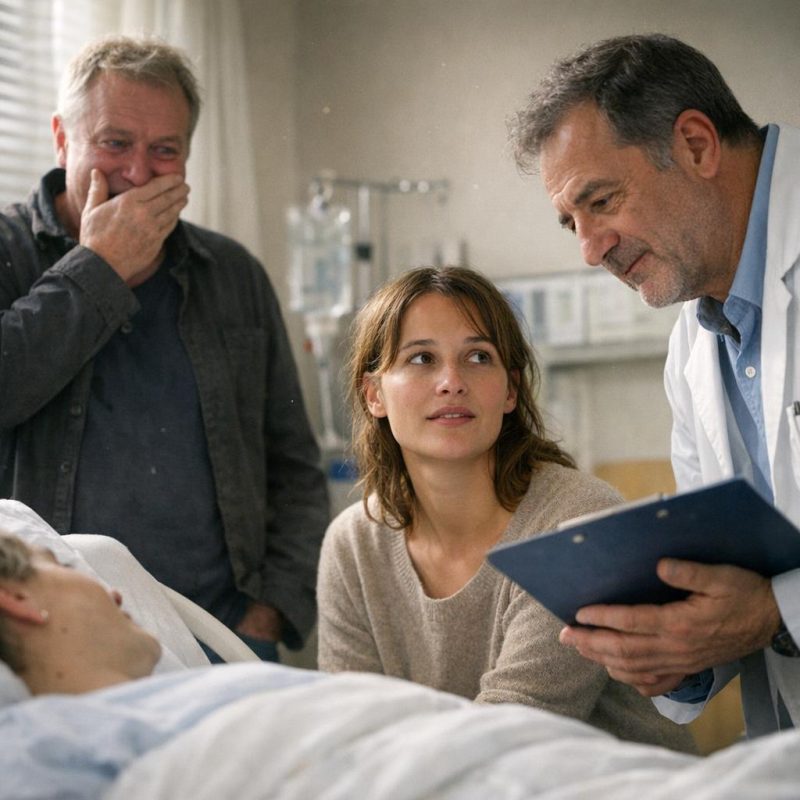 Image by RM AI
The Questions I Started Asking
Something about the whole situation stopped making sense to me as I lay there that afternoon, clearer-headed than I'd been in days. The initial crisis, the mysterious improvement, the crisis again, now another improvement—it felt less like a medical condition and more like something erratic and unpredictable. When Dr. Reeves came by during evening rounds, I asked him directly. 'Could this be something other than a brain hemorrhage?' He paused, his hand on the door frame. 'What makes you ask that?' I described the pattern—how my symptoms seemed to come and go with no real correlation to treatment, how even the specialists couldn't make sense of it. How nothing about my case seemed to follow the rules everyone expected. He pulled up a chair, which he'd never done before, and really listened. I could see him turning it over in his mind, reconsidering assumptions. He hesitated before saying, 'We've been assuming this is neurological, but maybe we should look elsewhere.'
 Image by RM AI
The Toxicology Screen Nobody Ordered
Dr. Chen appeared in my room that afternoon with a completely different energy than any of the other doctors I'd seen. He was new to my case, called in from toxicology after Dr. Reeves mentioned our conversation. He introduced himself to Mark and me, then pulled up the tablet with my entire medical history displayed across the screen. 'I've been reviewing your timeline,' he said, scrolling through weeks of data. 'The pattern of symptoms—the way they escalate and resolve without clear correlation to treatment—it's unusual for a neurological event.' Dr. Reeves stood by the door, arms crossed, watching. Dr. Chen looked up at me directly. 'Has anyone run a comprehensive toxicology panel?' I blinked. 'Toxicology? Like for drugs?' He shook his head. 'For any foreign substances. Medications, environmental exposures, anything that might be chemically induced.' The room felt smaller suddenly. Mark leaned forward in his chair. Dr. Chen tapped something on the screen, then looked at Dr. Reeves. 'These symptoms could be chemical,' he said, and suddenly everyone in the room went quiet.
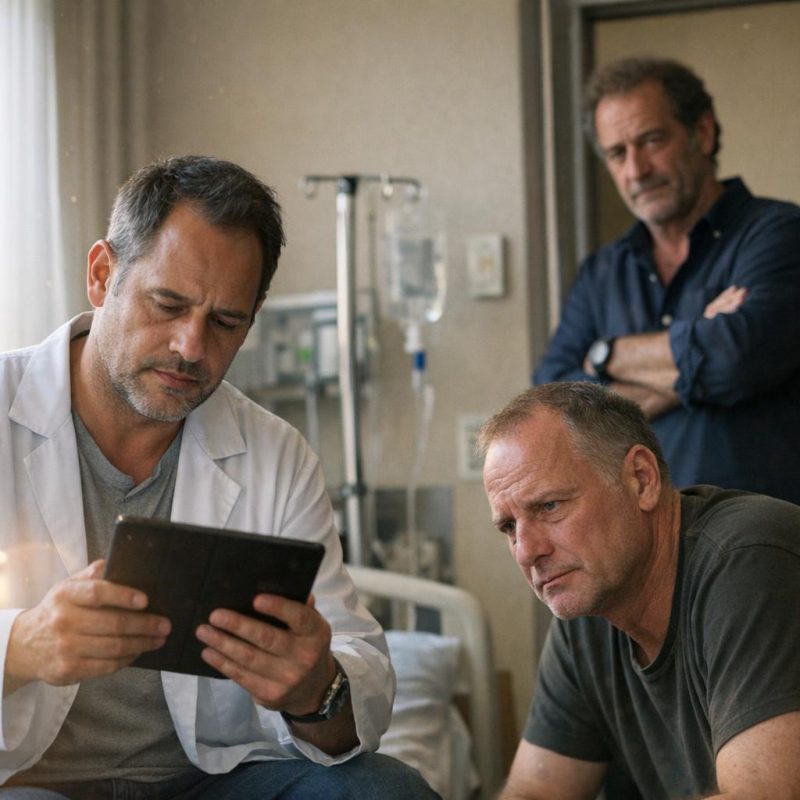 Image by RM AI
Waiting for the Test That Could Explain Everything
They drew blood that evening, and then the waiting started. Mark pulled his chair close to my bed, and we just sat there for a while, not really talking. Emma and Jake arrived around seven, and I could see the confusion on their faces when I explained what Dr. Chen had suggested. 'Chemical?' Emma repeated. 'Like, poisoning?' I didn't want to use that word, but yeah, that's what we were talking about. Jake looked pale. 'But how? From what?' That's when my mind started racing backward through everything—hospital meals, water pitchers, medications, the endless parade of pills in those little paper cups. I'd been here for weeks. How much had I actually consumed without thinking twice about it? The nurses brought everything, I took it, I trusted it all implicitly because you're supposed to trust hospitals, right? Mark must have seen something in my face because he reached for my hand. 'What are you thinking?' he asked quietly. I looked at him, then at Emma and Jake. Mark asked if I'd taken anything unusual, and I realized I couldn't account for everything I'd consumed in the hospital.
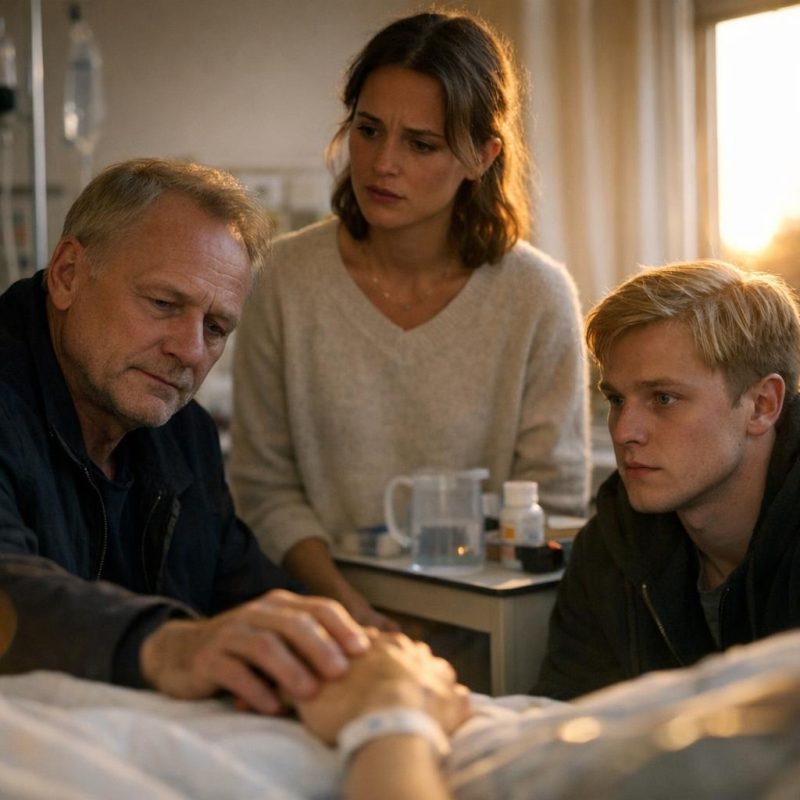 Image by RM AI
The Nurse Who Seemed Too Interested
Nurse Linda came by twice the next morning, which wasn't particularly unusual except that she didn't really do anything medical either time. The first visit, she adjusted my IV even though it was running fine. The second time, she straightened the blankets that didn't need straightening and asked how I was 'holding up emotionally.' Something about her tone felt off. Then she started asking questions that seemed to drift away from my immediate care. How was Mark handling everything? Was he still working, or had he retired? I said he'd retired last year, mostly to end the conversation. She nodded thoughtfully, then asked if we'd talked to any financial advisors about long-term care costs. I felt my eyebrows go up. 'Not really,' I said carefully. She smiled and said she only asked because she'd seen families struggle with the expenses, that it was good to plan ahead. Then she asked about our retirement accounts—whether we had good life insurance, if everything was 'in order.' I watched her face, trying to read what was behind the questions. She asked about my husband's retirement accounts, and I couldn't think of any medical reason she'd need that information.
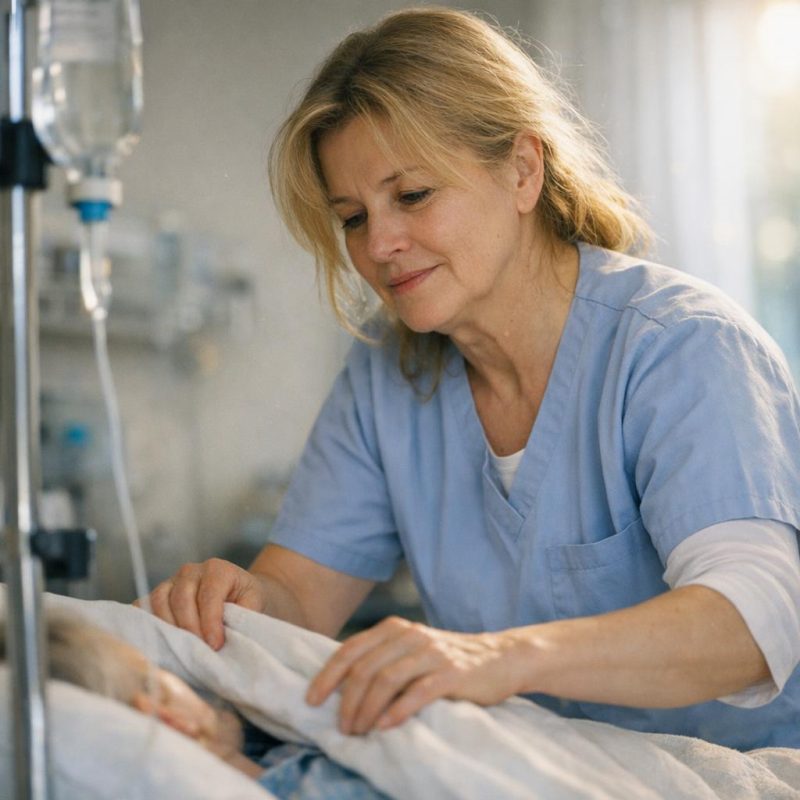 Image by RM AI
The Day Rebecca Visited Three Times
Rebecca showed up around ten that morning with coffee she said she'd brought for Mark. Sweet gesture, except Mark doesn't drink coffee, which she would've known if she actually knew us well. She stayed for maybe five minutes, asked how I was feeling, then left. Two hours later, she was back, this time saying she'd forgotten to mention that the nurse's station needed to update my contact information. That took thirty seconds. By the third visit, around four in the afternoon, I was genuinely confused. She brought a magazine she thought I might like, chatted about nothing for a few minutes, then settled into the chair by the window. I was exhausted and decided to just close my eyes, let her think I'd fallen asleep so she'd leave. I kept my breathing slow and steady. I heard her stand up, expected to hear footsteps toward the door. Instead, the room stayed quiet. I could feel her presence, sense her stillness. My skin prickled with awareness. On her third visit, she stayed after I pretended to fall asleep, and I felt her standing there watching me.
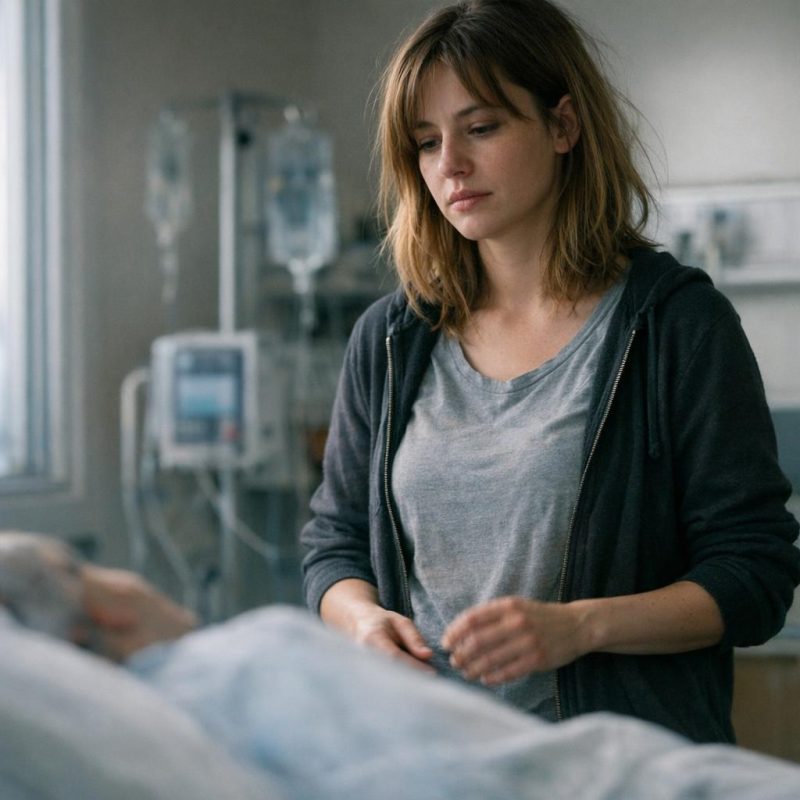 Image by RM AI
The Toxicology Results That Raised More Questions
Dr. Chen came back two days later with a folder in his hands and an expression I couldn't quite read. Mark and Emma were both there, and I think we all held our breath when he closed the door behind him. 'We have preliminary results,' he said, sitting down. My heart was pounding. He opened the folder, scanned the page, then looked up at us. 'There are trace compounds in your bloodstream that we need to discuss.' I felt Mark's hand tighten on mine. Dr. Chen explained that toxicology had identified several substances that didn't belong—chemicals that weren't metabolic byproducts, weren't environmental contaminants, weren't anything that should naturally occur. Emma leaned forward. 'But she's been on a lot of medications here. Could it be from those?' Dr. Chen shook his head slowly, and I saw something in his eyes that made my chest constrict. 'That's what we checked first,' he said quietly. 'We cross-referenced everything she's been prescribed since admission.' He paused, choosing his words carefully. He said the substances found weren't consistent with any medication she'd been prescribed.
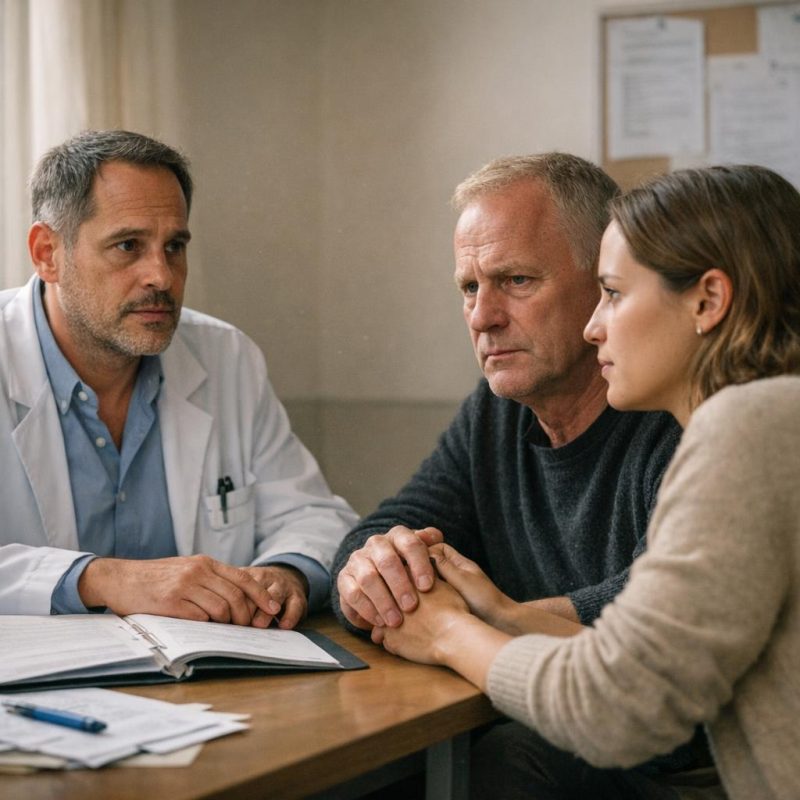 Image by RM AI
When 'Mistake' Becomes 'Investigation'
Within an hour, my room filled with people I'd never seen before. Hospital administrators, risk management, someone from legal. Dr. Chen stood near my bed looking grim while a woman in a navy suit asked me to recount my entire hospital stay in detail. Who had access to my room? Who brought meals? Who administered medications? Mark kept interrupting, demanding to know what was happening, why this suddenly felt like an interrogation. Dr. Morrison appeared in the doorway, her face drawn and serious. She pulled Dr. Chen aside, and I watched them have a hushed conversation I couldn't hear. The woman in the suit was talking about 'chain of custody' and 'documentation protocols' and I felt like I was underwater, everything muffled and surreal. Then someone—I think it was one of the administrators—said they needed to review 'whether this was accidental or deliberate,' and the room seemed to tilt. That word hung in the air. Deliberate. Intentional. Not a mistake. Someone used the word 'deliberate,' and I felt my stomach drop.
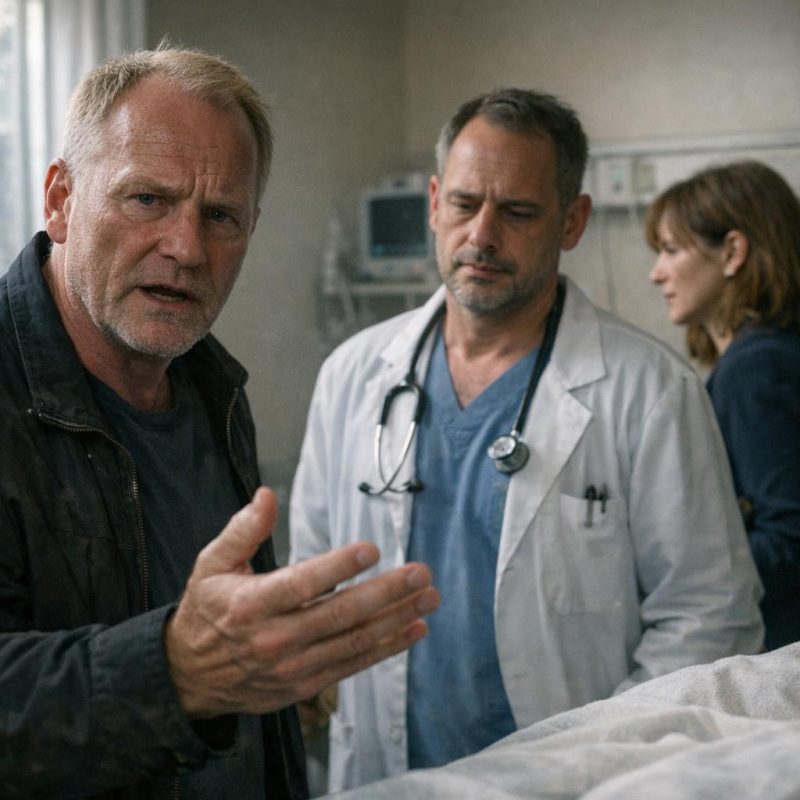 Image by RM AI
The Records Rebecca Tried to Access
Mark stayed with me through the night while hospital security did whatever investigation they were doing. Dr. Chen came back the next morning, and I could tell immediately something had shifted. He had printouts with him—access logs, he explained. Digital records of who entered the hospital's patient database and when. 'We found something concerning,' he said, spreading the papers on my bed table. Rebecca's name appeared highlighted throughout the documents. She'd accessed my full medical records seventeen times over the past three weeks. More troubling, she'd attempted to access my financial information—insurance details, beneficiary records, things completely outside her role. Mark stared at the timestamps. 'Why would she need any of this?' Dr. Chen pointed to one entry in particular. 'This is from two AM, three nights ago.' I felt cold wash through me. Three nights ago was when my symptoms had suddenly worsened again, when I'd woken up disoriented and struggling to breathe. They said she'd been in the system at 2 AM the night before my symptoms worsened, and I felt sick.
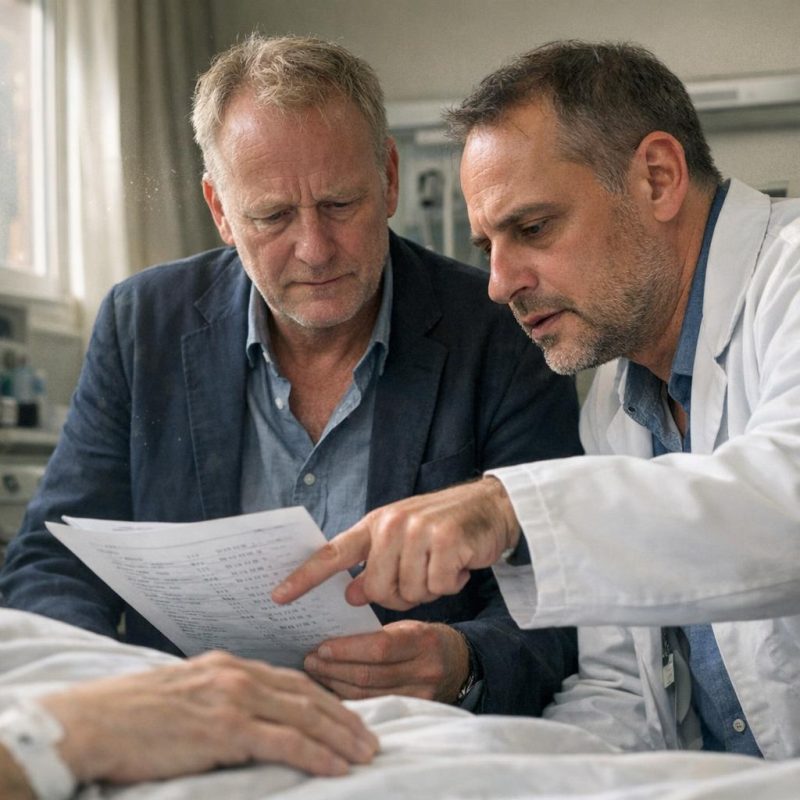 Image by RM AI
The Other Patients Who Got Sick
I thought that was the worst of it. Then Dr. Chen returned that afternoon with Mark, Emma, and a hospital security officer I hadn't met. He looked like he'd aged since morning. 'We've been reviewing similar cases in the ward,' he began, and I felt Mark tense beside me. 'Similar how?' Emma asked. Dr. Chen explained that two other patients had experienced unexplained neurological symptoms in recent months—symptoms that came and went without clear medical cause, symptoms that didn't respond to treatment the way they should. Both patients had been in this same ward. Both had been here for extended stays. I was almost afraid to ask. 'What happened to them?' Dr. Chen's jaw tightened. 'One recovered after being transferred to another facility. The other...' He stopped, looked down at his hands. 'We didn't figure it out in time.' The silence was suffocating. Emma made a small sound. Mark's face had gone gray. Dr. Chen's voice was rough when he continued. He said one of them died before they figured out what was wrong, and his voice cracked.
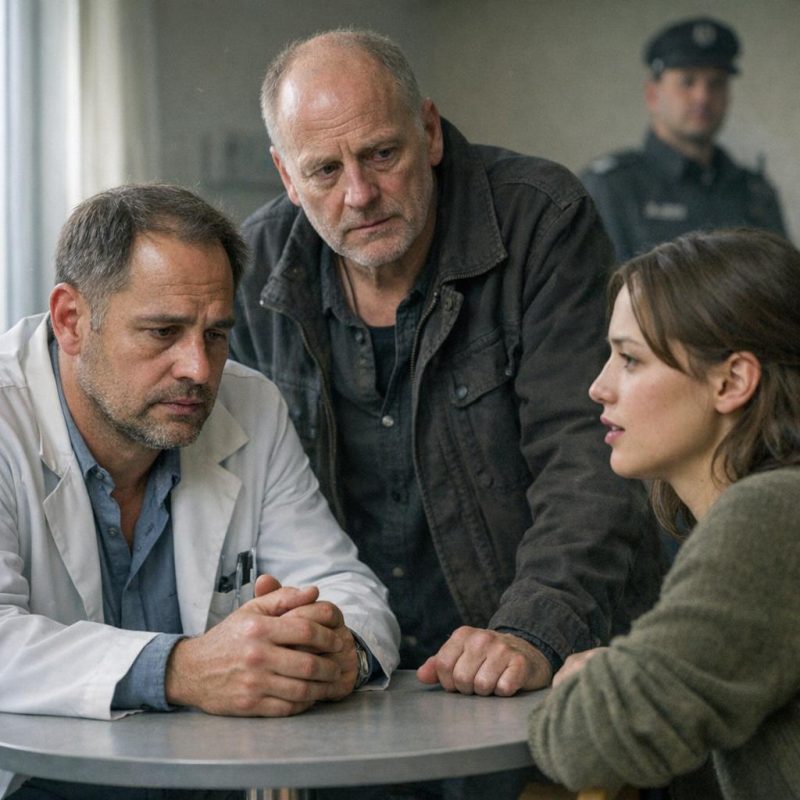 Image by RM AI
Rebecca's Sudden Absence
I didn't realize Rebecca was gone until late afternoon. Nurse Linda came in to check my vitals, and I asked when Rebecca would be back—I had questions about the medication schedule, wanted to understand what had been happening to me. Linda's expression shifted, became guarded. 'She called in sick this morning,' she said, adjusting the IV line without meeting my eyes. Something in her tone made my stomach drop. 'Sick?' I pressed. 'When was the last time anyone actually saw her?' Linda glanced toward the door, then back at me. Her voice was barely above a whisper. 'Yesterday evening. She left right after shift change.' The timing felt wrong. Dr. Chen had confronted her yesterday afternoon, and by evening she was gone. I watched Linda's hands tremble slightly as she made notes on my chart. 'Is that... normal?' I asked, though I already knew the answer. Linda set down her pen and looked directly at me for the first time. 'Security's been looking for her,' she whispered, and I knew Rebecca was running.
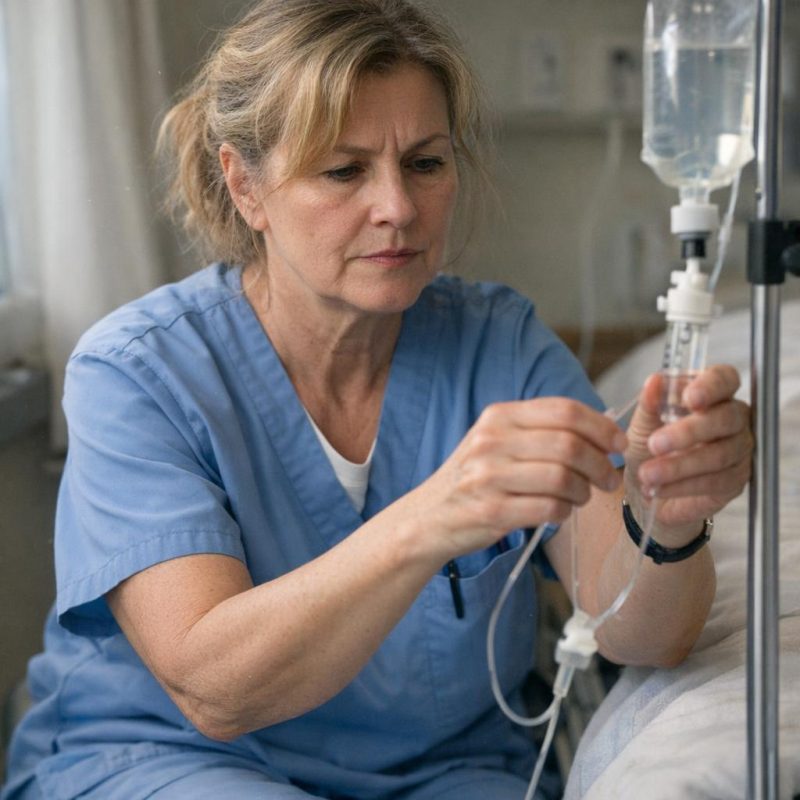 Image by RM AI
The Insurance Policies That Connected Everything
Mark was in my room when Dr. Chen arrived with two hospital administrators I'd never met. Their faces told me this was serious. 'We've been working with investigators,' Dr. Chen began, pulling up a chair. One of the administrators—a gray-haired man with wire-rimmed glasses—opened a folder. 'We've found a pattern,' he said quietly. 'All of Rebecca's recent patient contacts had substantial life insurance policies.' My mouth went dry. 'How would she even know that?' I asked. The administrator exchanged a glance with Dr. Chen. 'That's what we're trying to determine. But the connection is undeniable.' Mark leaned forward, his jaw tight. 'How many patients are we talking about?' The room went silent. Dr. Chen's voice was strained when he answered. 'At least six that we've identified so far. All within the last three years.' The gray-haired man closed the folder slowly, deliberately. 'But that's just what we've found in preliminary review.' He paused, and I could see the calculation in his eyes. They said Rebecca had been working at the hospital for eight years, and I wondered how many others there had been.
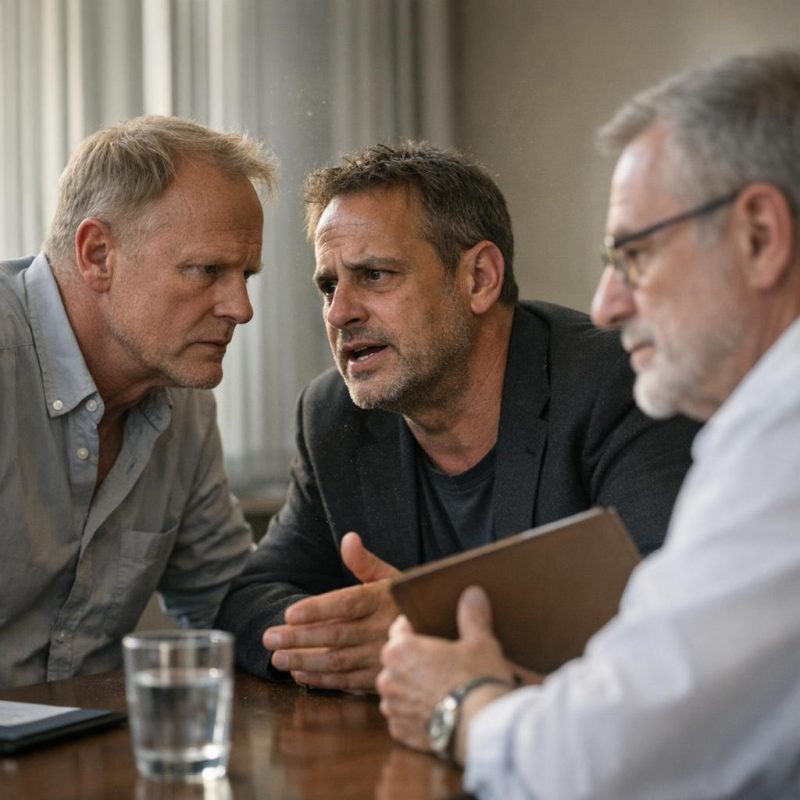 Image by RM AI
My Symptoms That Finally Made Sense
Dr. Chen pulled up a chair and finally explained what had been happening inside my body. 'The toxin Rebecca used is a heavy metal compound,' he said, his voice careful and clinical. 'In controlled doses over time, it creates symptoms that perfectly mimic a brain hemorrhage—the headaches, the confusion, the neurological issues.' I stared at him, processing. 'That's why you kept looking for bleeding that wasn't there.' He nodded. 'It's almost impossible to detect without specifically testing for it. The symptoms escalate, then sometimes improve when dosing stops, creating an unpredictable pattern.' My hands felt cold. 'How close was I?' Dr. Chen's expression darkened. 'Closer than I want to think about. The concentration in your system was approaching lethal levels.' He explained how the toxin accumulates, how it damages organs slowly, how the body tries to compensate until it simply can't anymore. 'Your decision to come to the hospital, to insist something was wrong even when we couldn't find it—that persistence saved you.' He met my eyes directly. He said if I'd gone home instead of coming to the hospital, I would have died within days.
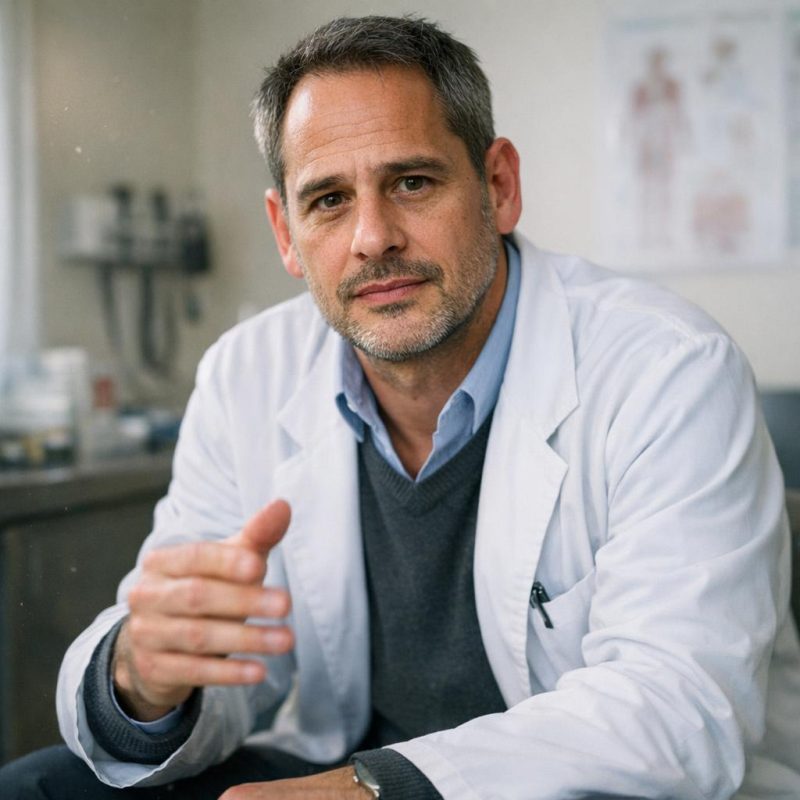 Image by RM AI
The Treatment That Could Save Me
The chelation therapy started that evening. Nurse Linda explained the process while setting up the IV—a chemical solution that would bind to the heavy metals in my system and help my body eliminate them. 'It's going to take time,' she said gently. 'But this will work.' I watched the clear liquid drip into the line, finally receiving treatment that addressed the actual problem instead of chasing phantom symptoms. Dr. Chen stopped by during his rounds, checking the dosage and my initial response. 'You might feel worse before you feel better,' he warned. 'The toxin has been in your system for weeks. Getting it out is a process.' Emma called while I was mid-treatment, and I could hear the relief in her voice when I told her they'd started the right medication. Mark sat beside me, reading work emails but present in a way that mattered. The IV bag slowly emptied, and I felt a strange mixture of hope and exhaustion. I was finally on the path to recovery, but the psychological weight of what had happened pressed down on me. Dr. Chen warned it would be weeks before I felt normal, and I wondered if I'd ever feel safe again.
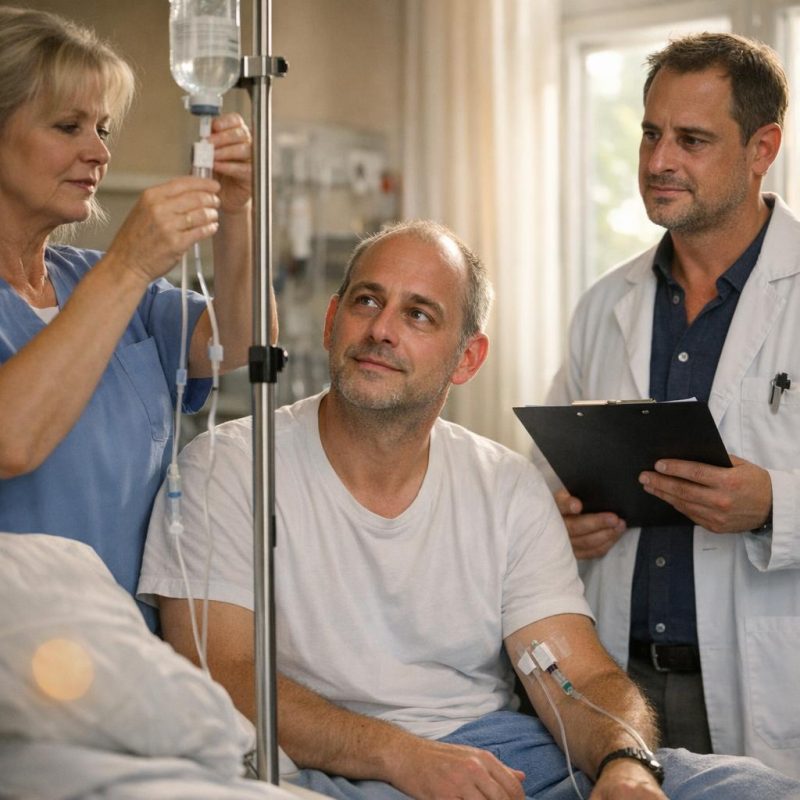 Image by RM AI
The Search for Rebecca
Hospital security spent the next day reviewing surveillance footage, and they let us watch some of it in a conference room down the hall. Mark wheeled me down in a wheelchair—I was still too weak to walk far. The security director, a former police officer with kind eyes, queued up the relevant clips. 'This is from two nights ago,' he said. 'When your symptoms significantly worsened.' We watched Rebecca moving through the hallway, her movements confident and unhurried. She swiped her badge at the medication room door and disappeared inside. The timestamp showed 11:47 PM—well after normal rounds. Dr. Chen leaned forward, his hands clasped tightly. 'How long was she in there?' The security director checked his notes. 'Seventeen minutes. Much longer than typical medication retrieval.' We watched her emerge, carrying nothing visible, and head toward the patient wing. Toward my room. Mark's hand found mine, gripped it hard. The security director advanced the footage slowly, frame by frame. They found footage of her in the medication room the night my symptoms worsened, and she was smiling.
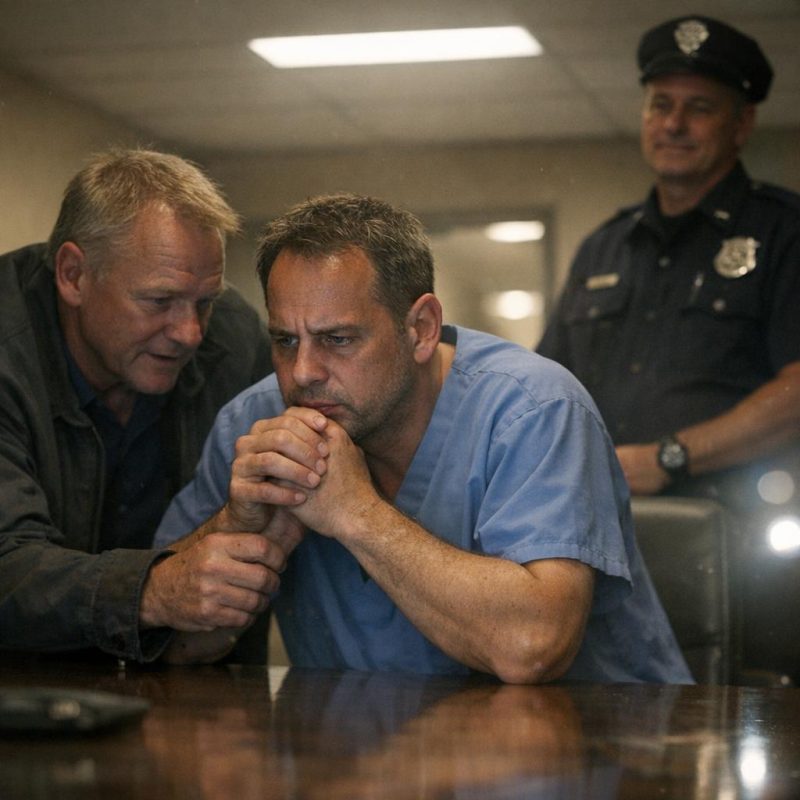 Image by RM AI
The Patients She'd Helped Before
Dr. Morrison came to see me the next morning with Rebecca's personnel file. I almost didn't want to look at it. 'I thought you should know,' she said quietly, sitting down. 'Rebecca wasn't... she wasn't always like this.' She opened the file, and I saw pages of commendations, patient testimonials, awards for exceptional care. 'Eight years of glowing reviews,' Dr. Morrison continued. 'She genuinely helped hundreds of patients. Maybe thousands.' I stared at the photocopied letters of gratitude, the recognition from hospital administration, the thank-you cards from families. It didn't make sense—how could someone who did so much good also do such calculated harm? 'I don't understand,' I said. Dr. Morrison's expression was troubled. 'Neither do we. The psychological profile we're building shows someone who was capable of real compassion, real skill. She saved lives.' She paused, choosing her words carefully. 'But she also methodically ended them.' The cognitive dissonance was staggering. This wasn't a simple monster—it was someone who could be both healer and killer, sometimes on the same shift. Dr. Morrison said, 'That's what makes this so disturbing—most of the time, she was actually good at her job.'
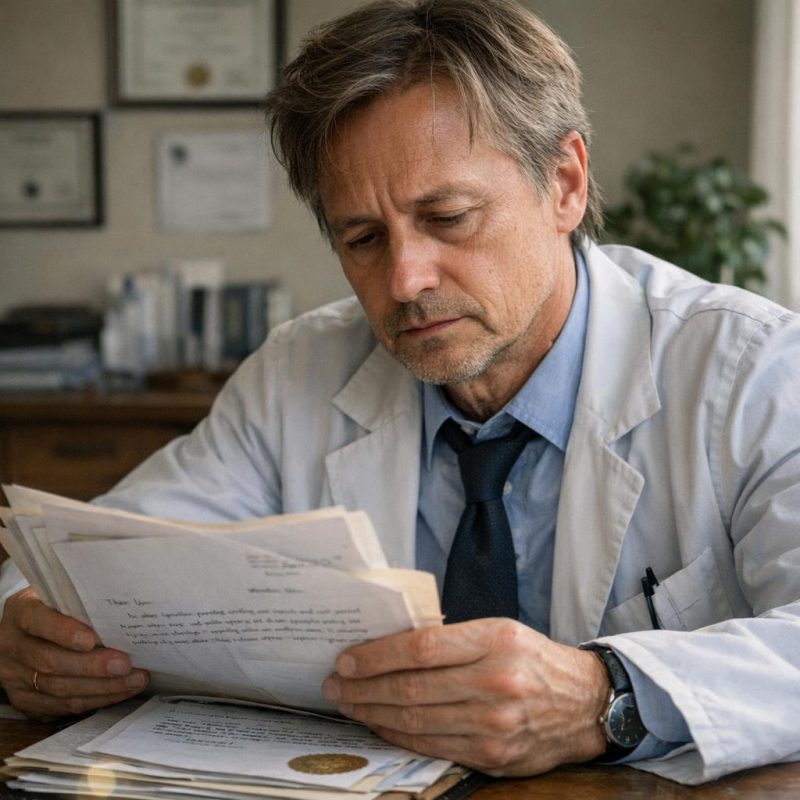 Image by RM AI
Cathy's Warning That Now Made Sense
I kept thinking about what Cathy had said to me weeks ago, before any of this made sense. Trust your gut. Those three words echoed in my head as I lay in the hospital bed, finally understanding what my instincts had been screaming all along. I'd felt uneasy around Rebecca, had noticed things that didn't quite add up, had questioned her care in ways I couldn't articulate. My body had known something was wrong even when my conscious mind made excuses. I reached for my phone and called Cathy. She answered on the second ring. 'Sarah? How are you feeling?' Her voice was warm, concerned. 'Better,' I said. 'Because of you.' I heard her breath catch. 'What do you mean?' I told her about Rebecca, about the toxin, about how her advice to trust my instincts had made me question things I might have otherwise accepted. About how that questioning had saved my life. The line went quiet for a moment. Then I heard her crying—soft, relieved sobs. 'I just wanted you to advocate for yourself,' she managed. 'I had no idea...' I called Cathy and told her she'd saved my life, and she cried.
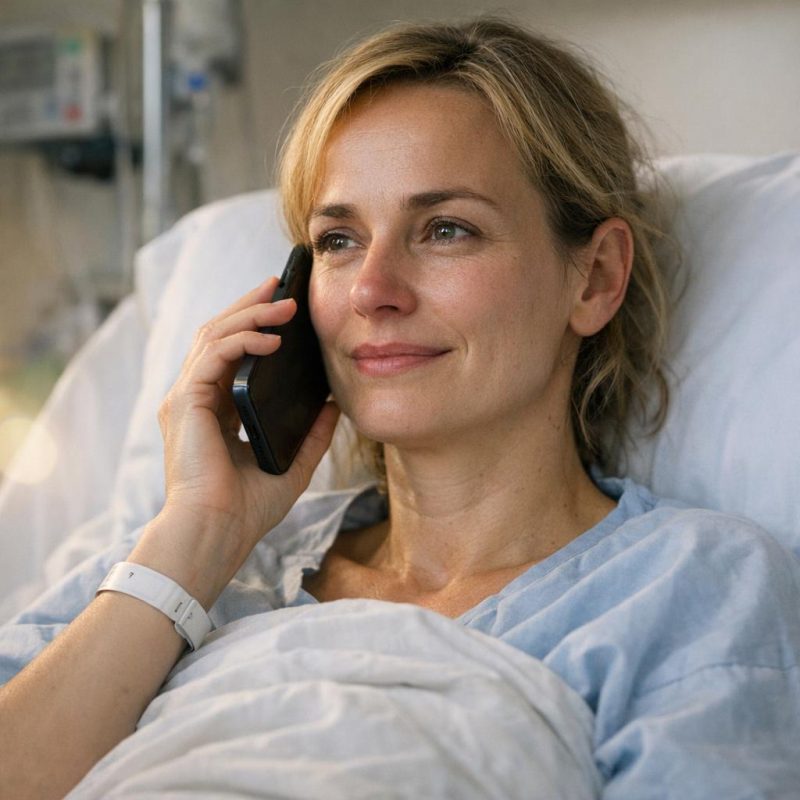 Image by RM AI
The Financial Trail They Discovered
The investigators returned with financial records that made everything horrifyingly clear. Dr. Chen and Mark were both in my room when the lead detective—a tired-looking woman with sharp eyes—laid out the evidence. 'We've traced multiple wire transfers to offshore accounts linked to Rebecca's identity,' she explained, showing us printouts of transaction records. 'The timing correlates directly with patient deaths.' I felt sick looking at the numbers. Each transfer represented someone who'd died, someone whose family thought they'd lost a loved one to natural causes or medical complications. 'How much?' Mark asked, his voice hollow. The detective flipped through pages, her expression grim. 'We're still tracking all of it, but what we've found so far...' She paused, and I could see her struggling with the enormity of it. 'The pattern goes back at least five years. Possibly longer.' Dr. Chen's face had gone pale. 'Five years,' he repeated quietly. The detective nodded. 'Different hospitals, different cities, but the same method. The same careful selection of victims.' She set down the documents and looked directly at me. The amounts were staggering—hundreds of thousands of dollars over several years.
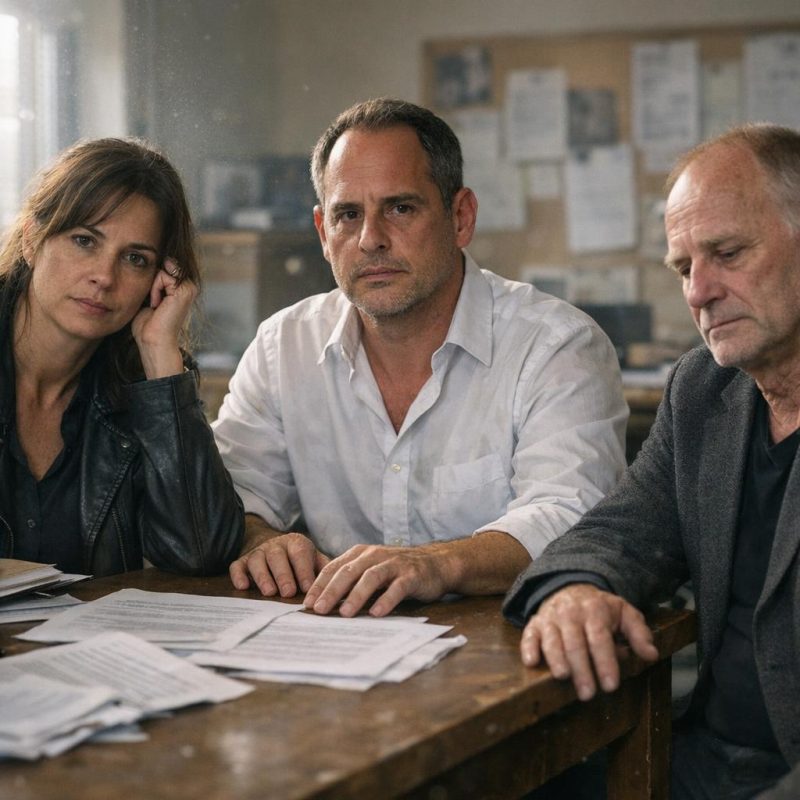 Image by RM AI
The Night I Nearly Died
Dr. Chen came back later that evening, when Mark was dozing in the chair beside my bed. He pulled up a stool and spoke in that measured, clinical way doctors use when they're about to tell you something heavy. 'I need you to understand how close this was,' he said, looking directly at me. 'If you'd waited another day—even twelve more hours—we would have been dealing with cascading organ failure.' The room felt smaller suddenly. He explained it step by step, the way my kidneys were already struggling, how my liver enzymes were climbing, how the toxin was essentially strangling my system from the inside. 'By tomorrow night, we would have been looking at dialysis. Maybe transplant listing if you were lucky.' His voice was steady, but I could see the concern in his eyes. 'Sarah, you came in right at the edge.' Mark's hand found mine in the dim light, his fingers cold and tight. I kept thinking about how I'd almost talked myself out of coming to the ER that day, how I'd thought maybe I was overreacting. Dr. Chen said my organs would have started shutting down within forty-eight hours, and I held Mark's hand tighter.
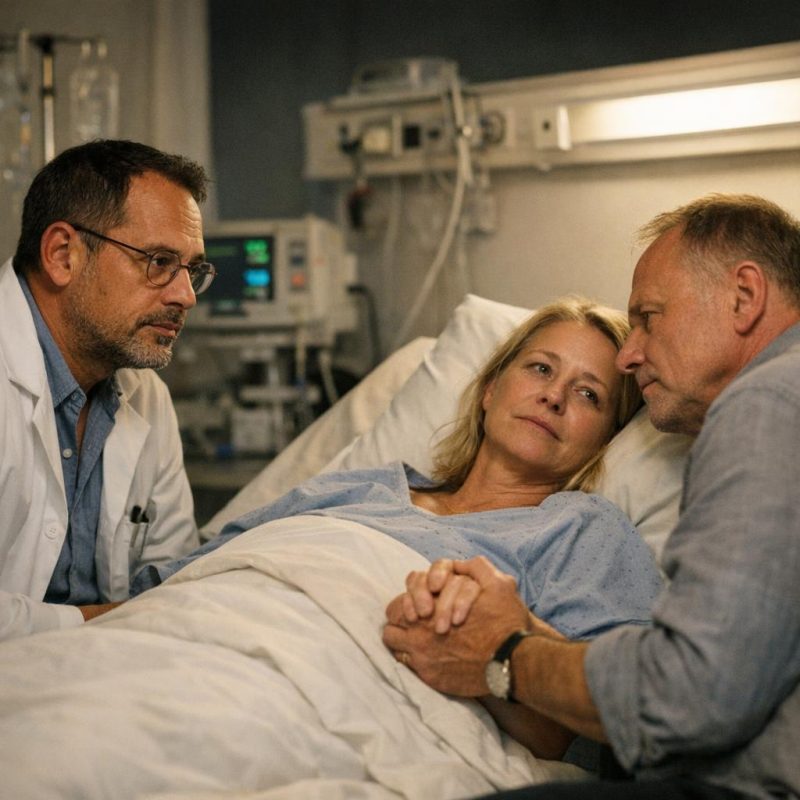 Image by RM AI
The Pattern Nobody Wanted to See
The hospital administrator showed up the next morning with Dr. Morrison and a folder full of spreadsheets. They looked exhausted, like they'd been up all night, which they probably had. Dr. Morrison sat on the edge of my bed while the administrator—a gray-haired woman named Patricia—spread out documents on the rolling table. 'We've been analyzing Rebecca's patient assignments going back three years at this facility,' Patricia said, her voice tight. 'There's a pattern.' Dr. Morrison pointed to highlighted sections. 'Every victim had comprehensive insurance policies, most with life insurance riders. High coverage limits, specific policy types.' I felt my stomach turn as they walked us through it. The patients weren't random. They were selected based on insurance profiles, vulnerability, lack of immediate family. 'The targeting was methodical,' Patricia said quietly. 'She knew exactly what she was looking for.' Mark leaned forward, studying the papers, then looked at me with an expression I couldn't quite read. Dr. Morrison met my eyes and said something that made my blood run cold: 'Sarah, you fit the profile perfectly, and I understood how deliberately I'd been chosen.'
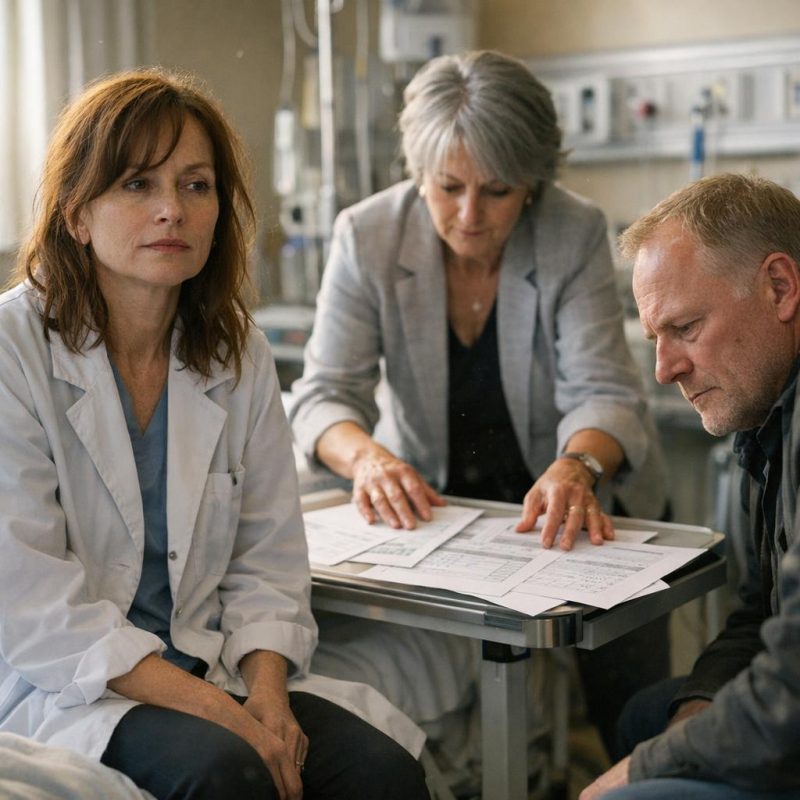 Image by RM AI
Emma's Anger That Surprised Me
Emma came by that afternoon, and the moment she walked through the door, I could see she was barely holding it together. Jake followed behind her, looking worried. She sat in the chair Mark had vacated, staring at me for a long moment before the dam broke. 'Someone tried to murder you,' she said, her voice shaking with fury. 'Someone poisoned you because they wanted money.' I'd never seen my daughter like this—not angry-crying like when she was a teenager, but genuinely enraged. 'Mom, this wasn't random. This wasn't some medical mistake. Someone looked at you and decided your life was worth dollars.' Jake put a hand on her shoulder, but she shook him off. She stood up, pacing the small room like a caged animal. 'All those people who died—they were someone's mother, someone's father. And she just...' Her voice cracked. Emma turned back to me, her face fierce and wet with tears. 'I want to find her myself,' she said, and I saw a protective ferocity I'd never seen before.
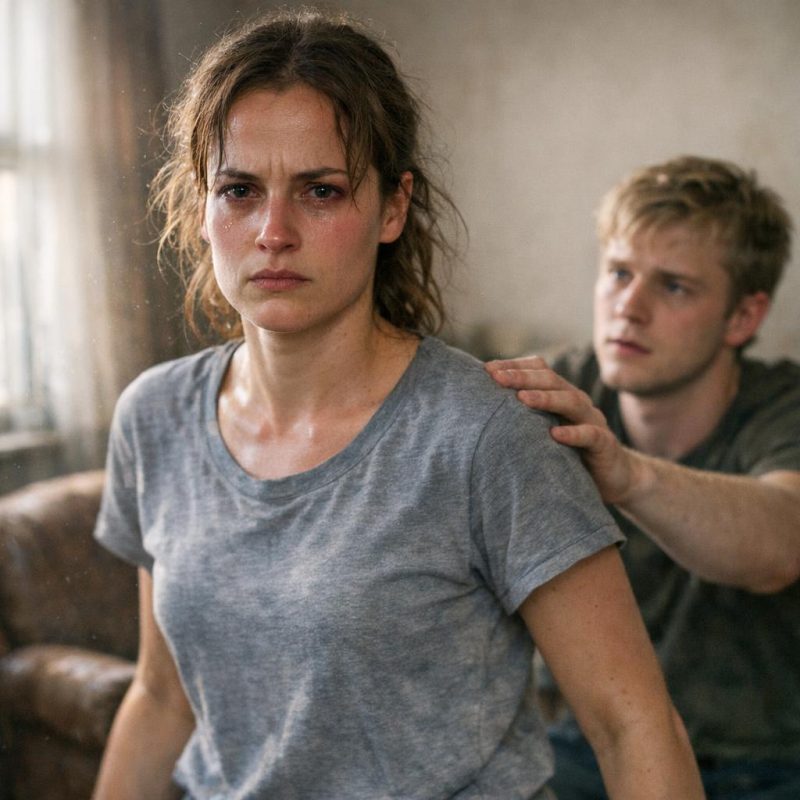 Image by RM AI
The Colleague Who Suspected Something
Nurse Linda came to my room two days later, looking like she hadn't slept. I remembered her from previous shifts—quiet, competent, always efficient. She stood in the doorway for a moment before stepping inside, her hands twisting together. 'I need to tell you something,' she said, and her voice was raw. 'I noticed things about Rebecca. Little things that seemed off.' She sat down heavily, and I could see the guilt written across her face. She'd seen Rebecca spending extra time with certain patients, always the ones who seemed alone, the ones without families hovering around. 'She'd volunteer to take specific cases, always had reasons that sounded legitimate.' Linda's eyes filled with tears. 'I thought maybe she was just being thorough. Maybe a little intense.' But there were moments, she admitted, when Rebecca's attention seemed too focused, too calculated. 'I told myself I was imagining things. That I was being paranoid.' Her voice dropped to almost a whisper. 'I should have said something to someone. I should have reported it.' She said she'd noticed Rebecca paying special attention to certain patients, and she'd regret staying silent forever.
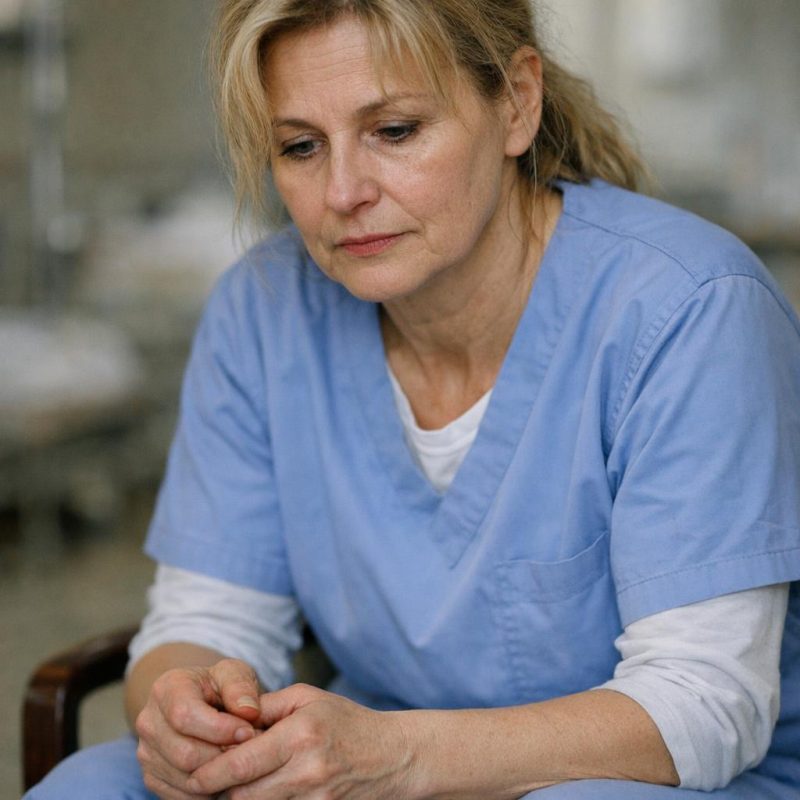 Image by RM AI
The Medication Room She Had Access To
Dr. Chen came in with a hospital security officer the following morning, both of them looking grim. They'd been reviewing access logs for the medication storage areas, and what they'd found was disturbing. 'There's a significant security flaw in our system,' the officer admitted, spreading out access reports on my bed tray. Rebecca had been able to access the restricted medication room without oversight—no secondary authorization required, no automatic logging of specific drugs removed. 'We have badge swipes showing entry and exit,' he explained, 'but nothing tracking what was actually taken once someone was inside.' Dr. Chen's jaw was tight with anger. 'She could walk in, take whatever she wanted, and as long as the inventory counts seemed reasonable, nobody questioned it.' The oversight was astonishing. They showed me months of access records—Rebecca entering the medication room during odd hours, sometimes multiple times per shift. 'The system assumed that if you had credentials, you had legitimate reasons,' the security officer said. 'Nobody was cross-referencing access with patient assignments or dosage records.' They said the system had failed, and nobody had been monitoring who accessed what.
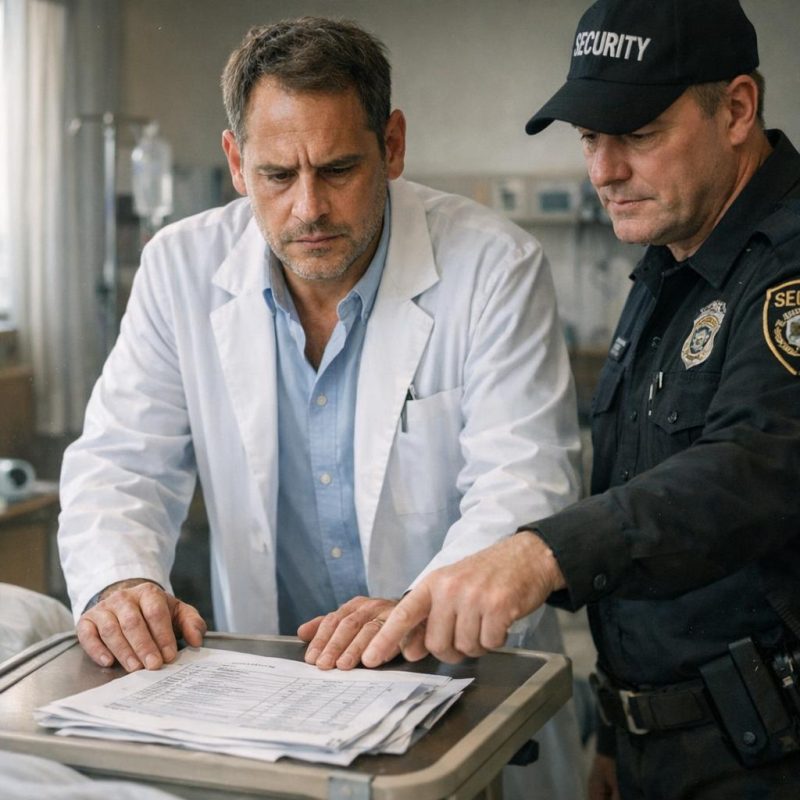 Image by RM AI
The News That Rebecca Was Found
Detective Warren called Mark's phone on a Tuesday afternoon, and I watched my husband's face change as he listened. When he hung up, he turned to me with an expression caught between relief and disbelief. 'They found her,' he said simply. Rebecca had been located in a neighboring state, living in a cheap extended-stay motel under the name Jennifer Collins. When police arrived, she'd answered the door calmly, like she'd been expecting them. Dr. Chen came by later with more details the detective had shared. She'd had nearly forty thousand dollars in cash hidden in the motel room, along with three different sets of identification documents. 'She had a bus ticket purchased for Friday,' Dr. Chen told us, his voice carefully neutral. 'Destination Mexico City.' The police found maps, highlighted border crossing points, pages of notes about starting over somewhere new. Her apartment here had already been cleared out, mail forwarded to a PO box she'd apparently abandoned. Everything pointed to a carefully planned disappearing act. They said she'd been preparing to vanish completely, and I realized how close she'd come to getting away with it.
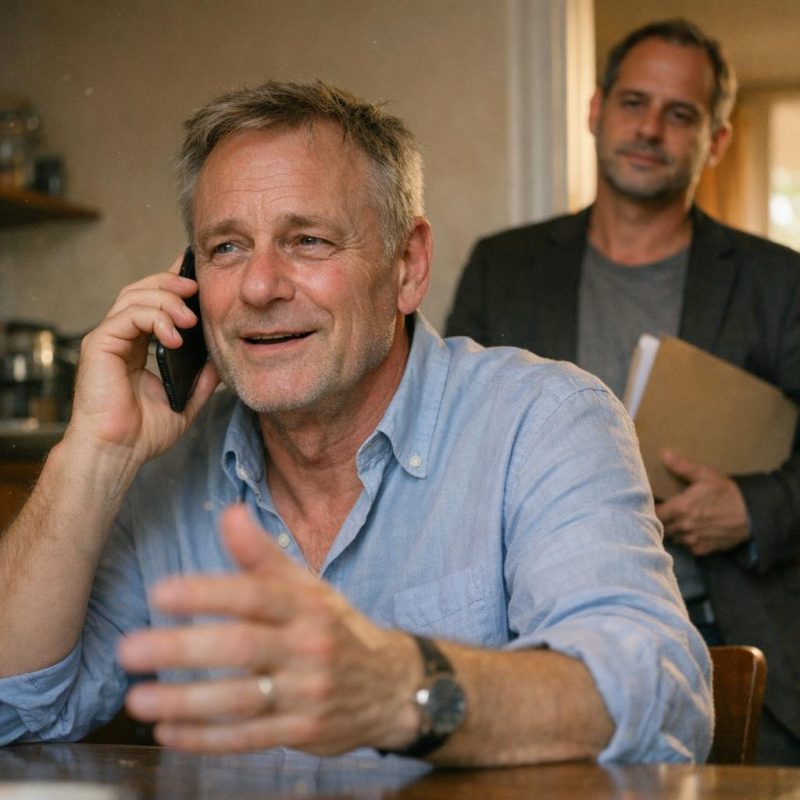 Image by RM AI
What She Told Police
Detective Warren came to my room himself the next day to tell me about Rebecca's statement. He pulled up a chair, looking tired and frustrated. 'She's claiming she was trying to help people,' he said, his tone making clear what he thought of that. According to her preliminary interview, Rebecca had portrayed herself as a mercy killer, someone who'd been ending the suffering of patients who were already dying. 'She says she only selected patients who were terminal or in severe pain,' Warren explained. But the evidence told a different story entirely. Mark asked about the money, and Warren's expression hardened. 'She claims the financial transactions were unrelated. Says she'd been saving for years, that the timing was coincidental.' He flipped through his notes. 'But when we press her on specific patients, her story shifts. First she says they were all dying, then she says some were headed that direction, then she says she might have misremembered.' I felt sick listening to this. Warren stood up, tucking his notebook away. The detective said her story kept changing, and the truth was about to come out.
 Image by RM AI
The Scheme That Had Been Running for Years
They all came to tell me together—Detective Warren, Dr. Chen, and two federal investigators who'd joined the case. Mark was there, and I'd asked Emma and Jake to come because I wanted them to hear this directly. Warren laid it out methodically, and with each revelation I felt reality shifting beneath me. Rebecca hadn't been mercy killing anyone. She'd been running a systematic insurance fraud scheme, targeting patients with high-value life insurance policies. 'She had contacts at insurance companies who fed her information,' one of the federal agents explained. 'Policy holders who were hospitalized, vulnerable, without close family scrutiny.' She'd done this at three different hospitals over eight years, moving whenever suspicions started building. The poisoning was slow enough to mimic natural decline, fast enough to ensure payout before too many questions were asked. 'She'd collect a percentage of the death benefit through fraudulent beneficiary claims and forged documentation,' Warren said. The numbers were staggering. Emma grabbed my hand, her face pale. They said she'd done this at three hospitals over eight years, and I was victim number seventeen.
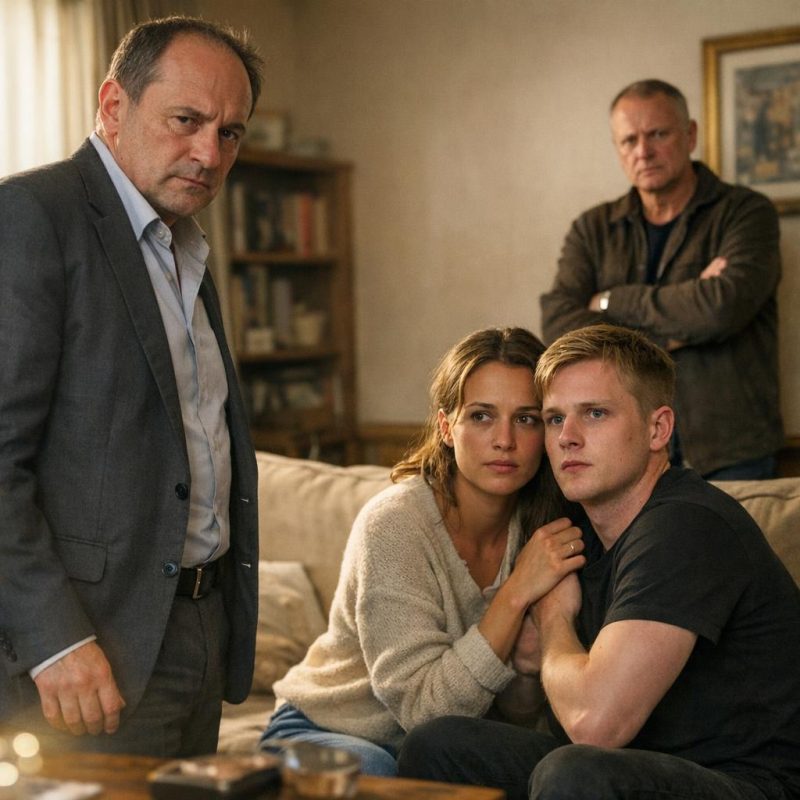 Image by RM AI
The Accomplice Nobody Expected
Detective Warren called us in three days later with an update that made the whole thing even more sinister. Mark drove me to the station, and we sat in that same conference room where they'd first told me about the fraud scheme. Warren had printouts spread across the table—emails, bank transfers, policy documents with highlighted sections. 'We found her partner,' he said, sliding a photo toward me. The woman in the picture looked professional, polished, wearing a blazer and pearls in what looked like a corporate headshot. Her name was Linda Cavanaugh, and she'd worked in the claims department at Guardian Life Insurance for twelve years. She'd been feeding Rebecca information about high-value policy holders who'd been hospitalized, vulnerable people without close family watching. They communicated through encrypted apps, coordinated timing, split the payouts through a network of shell companies. 'She made it look like legitimate beneficiary changes,' Warren explained. 'Forged signatures, fake documentation, the whole operation.' My stomach turned thinking about how calculated it all was, how many people had to fail for this to work. Detective Warren said the accomplice had been arrested that morning, and the whole network was being dismantled.
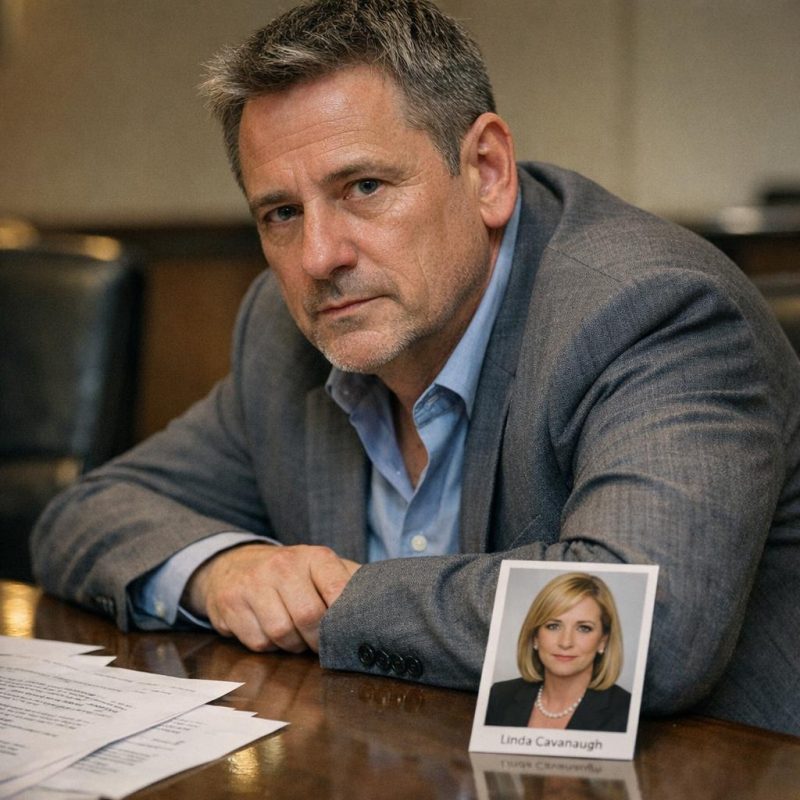 Image by RM AI
The Families of the Other Victims
The victim advocacy group organized a meeting two weeks later for families of Rebecca's other victims, and I almost didn't go. The thought of facing people whose loved ones had actually died felt overwhelming—what right did I have to be there when I'd survived? But Mark convinced me I needed to hear their stories, and Emma offered to come along for support. We met in a community center conference room, about fifteen people gathered in a circle of metal folding chairs. They introduced themselves one by one, sharing names and relationships: a daughter who'd lost her father, a husband who'd lost his wife, a sister, a son. Each story was different but horribly similar—the unexpected decline, the doctors who couldn't explain it, the grief mixed with confusion. A woman named Patricia, who'd lost her mother at the hospital in Ohio, reached across and took my hand when I spoke. 'You gave us answers,' she said quietly. 'You gave us the truth we never got.' We exchanged phone numbers afterward, this strange community bound by Rebecca's crimes. One woman said, 'At least you survived to tell the truth,' and I felt the weight of representing those who couldn't.
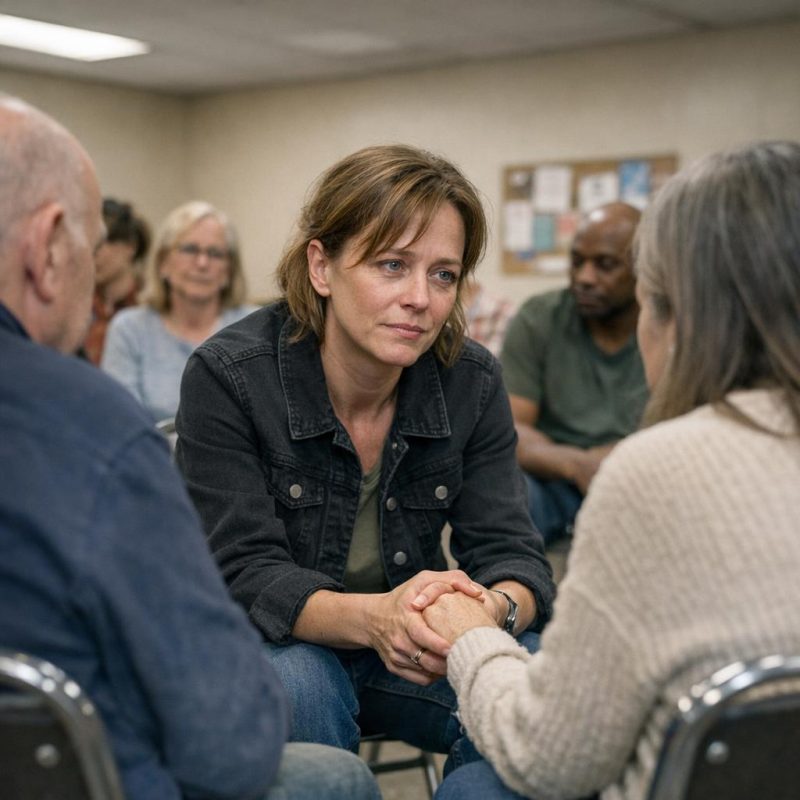 Image by RM AI
Rebecca's Arraignment
The arraignment was scheduled for a Thursday morning, and I told Mark I needed to be there. Emma and Jake both took time off work to come with us, and Detective Warren met us outside the courthouse to walk us through security. The courtroom was smaller than I'd expected, wood-paneled and institutional, with fluorescent lights that made everything look washed out. We sat three rows back on the prosecution side, and I kept my hands folded in my lap to stop them from shaking. When they brought Rebecca in, I barely recognized her. She wore an orange jumpsuit instead of scrubs, her hair pulled back severely, no makeup, hands cuffed in front of her. She looked diminished somehow, less powerful than the woman who'd stood beside my hospital bed with poison in her pocket. The judge read the charges—seventeen counts of attempted murder, multiple counts of fraud, conspiracy, forgery. Rebecca stood silent, her lawyer answering for her. I couldn't stop staring at her, this person who'd tried to kill me for money. Then, just before they led her out, Rebecca looked at me across the courtroom, and for just a moment, I saw something that might have been regret.
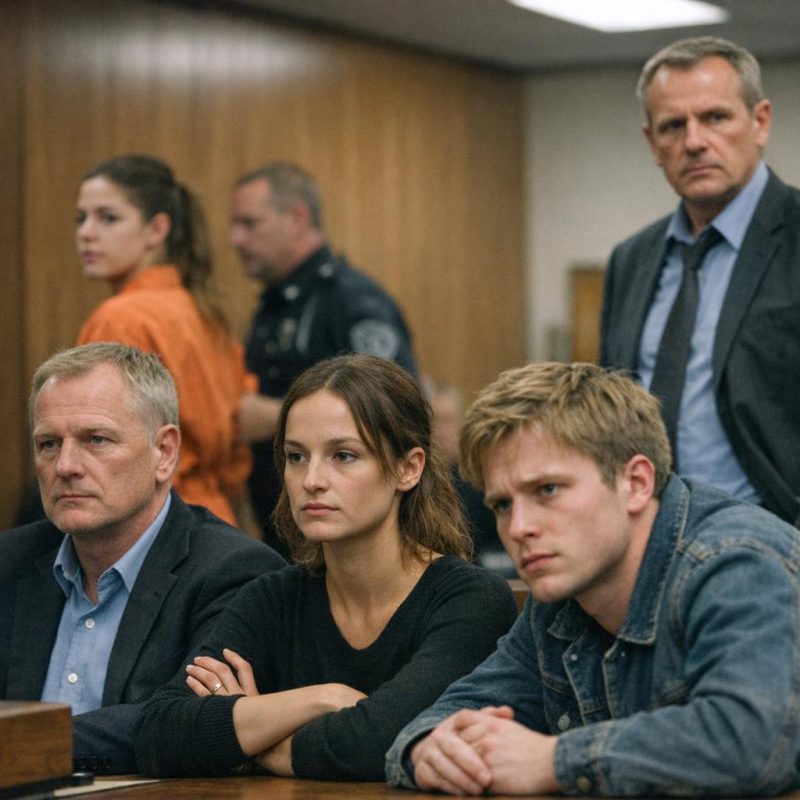 Image by RM AI
The Charges That Kept Coming
The charges kept multiplying over the next month as investigators dug deeper into Rebecca's history. Detective Warren would call with updates—new evidence from the hospital in Pennsylvania, financial records from the Ohio facility, testimony from staff members who'd noticed suspicious patterns but never reported them. Each conversation added another layer to the nightmare. Federal charges were filed for wire fraud and interstate conspiracy. Individual states added their own counts of murder, attempted murder, elder abuse, theft. The prosecutor's office sent me copies of the charging documents, and I sat at my kitchen table with Mark, reading through page after page of legalese that translated into human suffering. 'They're building an airtight case,' Mark said, but his voice was tight. I thought about Patricia and the other families, about how these weren't just charges but people who'd died alone and confused. The legal machine was finally moving, grinding forward with the weight of documentation and evidence. When Warren called to say the final count was forty-three separate charges across four states, I had to sit down. They said she could face multiple life sentences, and I felt both satisfaction and emptiness.
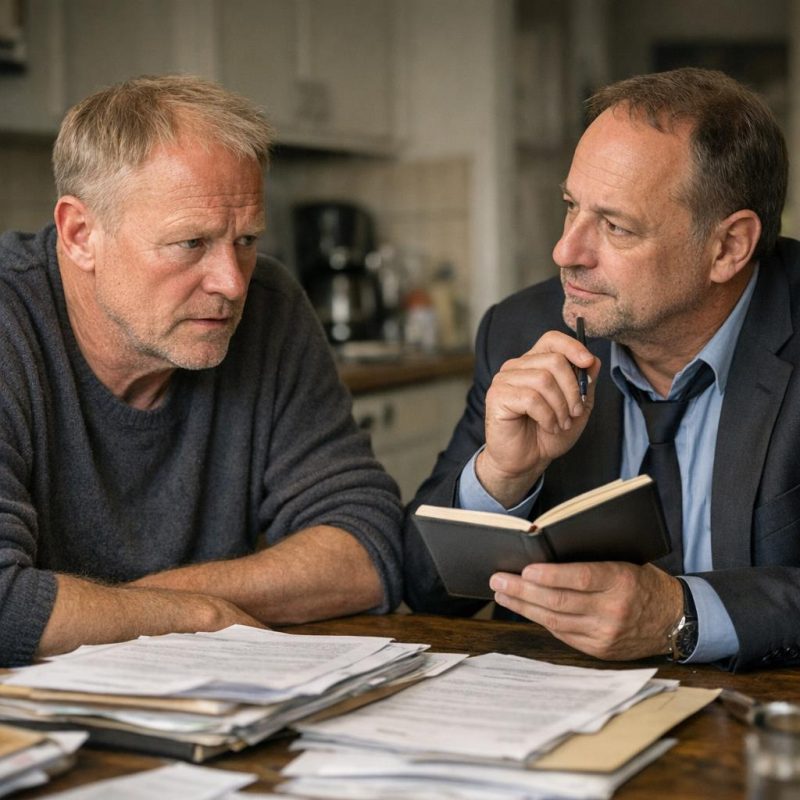 Image by RM AI
My Testimony That Changed Everything
The prosecutor asked me to come in for a formal deposition six weeks before the trial date. Her name was Katherine Mendez, and she'd been handling major fraud cases for fifteen years. We met in her office downtown, Mark beside me, a court reporter in the corner typing everything. Katherine walked me through my entire experience—the headaches, the hospitalization, every interaction with Rebecca I could remember. 'Tell me about the day you realized something was wrong,' she said, and I described finding Rebecca in my room that night, the way she'd startled, the insulin vial. We went over my medical records, the toxicology reports, Dr. Chen's testimony about the deliberate poisoning pattern. 'Your case is different from the others,' Katherine explained carefully. 'You survived. You can testify to her intent, her methods, her demeanor. The other victims can't.' She leaned forward, her expression intense but kind. 'The families of the deceased victims have circumstantial evidence, but you have direct experience. You're the difference between a strong case and an unbeatable one.' The prosecutor said, 'You're the key witness who can put her away forever,' and I accepted that responsibility.
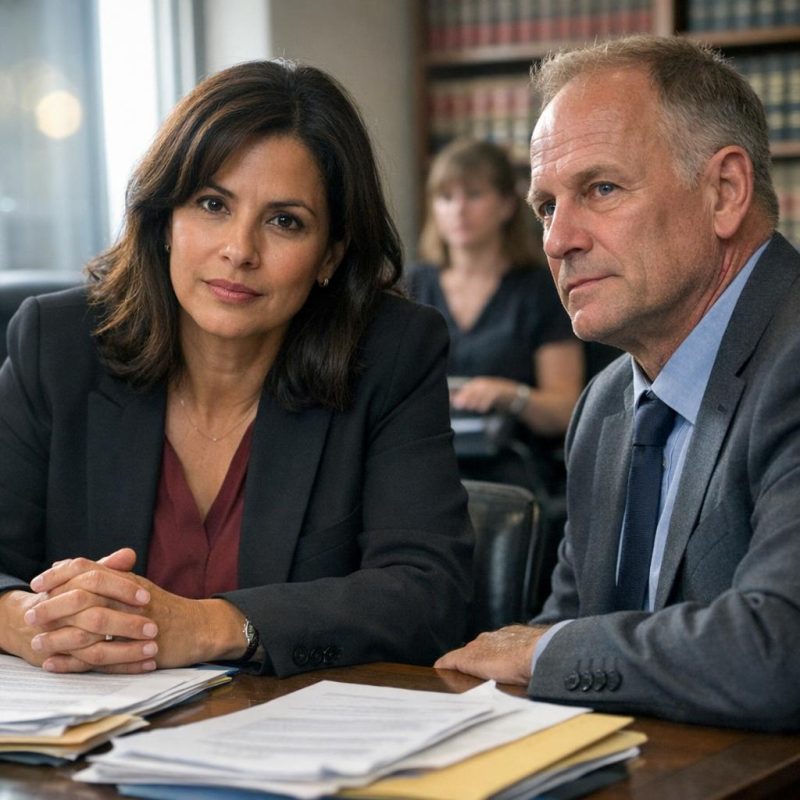 Image by RM AI
The Hospital's Public Apology
The hospital scheduled a press conference for a Monday afternoon, and they invited me to attend. I wasn't sure I wanted to go—part of me still felt angry at the institution that had employed Rebecca for two years without catching her. But Dr. Morrison called personally to ask me to be there, and something in her voice made me agree. Mark drove me to the hospital's main administrative building, and we were escorted to a conference room where local news cameras were already set up. The CEO stood at a podium with hospital board members flanked behind him, Dr. Morrison and Dr. Chen among them. He read from a prepared statement about systemic failures in background checks, inadequate oversight of medication administration, and the lack of proper reporting mechanisms for suspicious activity. He announced new security protocols, mandatory training, and an independent review of all patient deaths over the past five years. The words were corporate and careful, probably written by lawyers. But then he paused, looked directly into the audience until his eyes found mine, and his voice changed. The CEO looked directly at me and said, 'We failed you,' and I nodded because it was true.
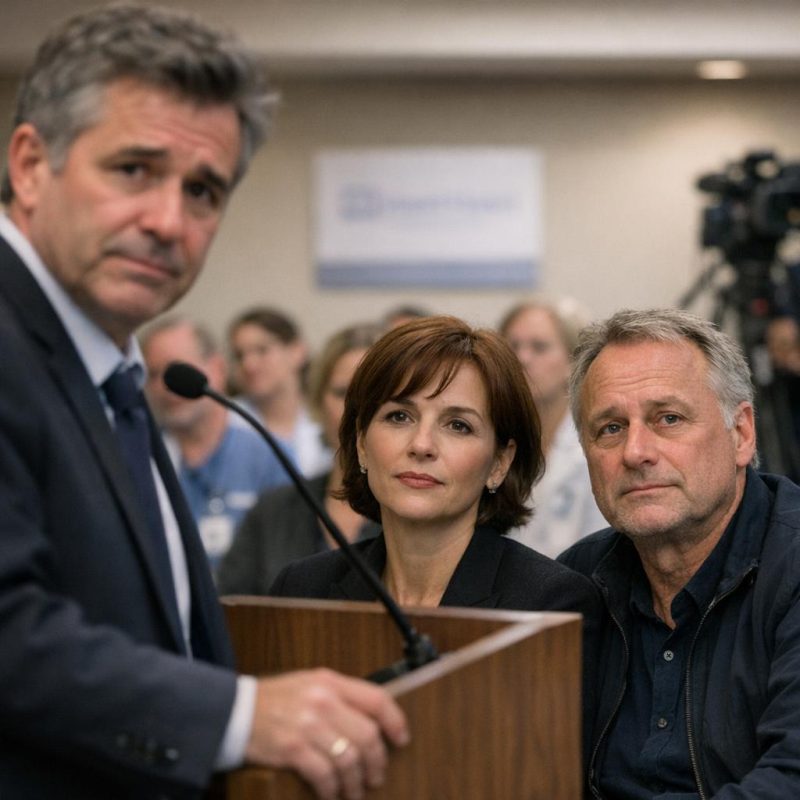 Image by RM AI
Rebecca's Plea Deal Offer
Katherine Mendez called me on a Tuesday evening, her voice carefully neutral in a way that immediately put me on alert. 'Rebecca's defense team has proposed a plea deal,' she said. 'I wanted to discuss it with you before we make any decisions.' Mark and I drove to her office the next morning, and Emma met us there at my request. Katherine laid out the terms: Rebecca would plead guilty to fifteen counts of second-degree murder and one count of attempted murder in exchange for dropping the remaining charges. She'd receive thirty years to life with possibility of parole, avoiding a lengthy trial. 'It guarantees conviction,' Katherine explained. 'Trials are unpredictable, and this would spare you from testifying.' Detective Warren was there too, leaning against the wall with his arms crossed. 'It would also spare the other families from reliving everything in court,' he added. I thought about Patricia, about the husband who'd lost his wife, about all those people in the community center. 'What happens if I say no?' I asked. Katherine met my eyes steadily. The prosecutor said the choice was mine, and I realized I held Rebecca's fate in my hands.
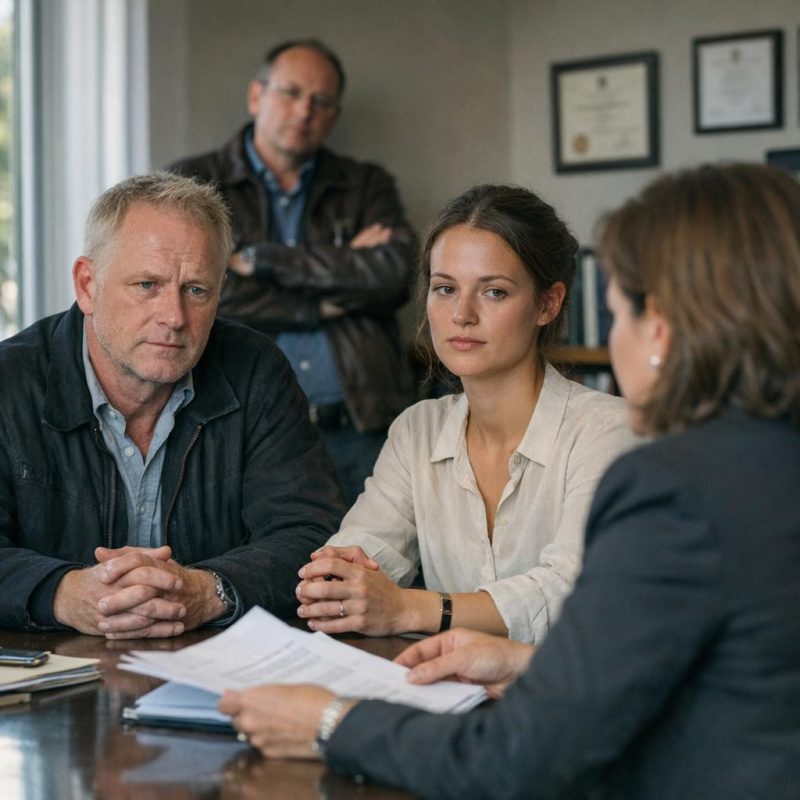 Image by RM AI
The Decision I Made for All of Us
I didn't answer right away. I asked for time to think, and Katherine gave me three days to decide. I called Patricia that night, and then the son who'd lost his father, and the woman from Pennsylvania whose sister had died. We talked for hours, each conversation circling around the same question: what did justice actually look like? Mark thought the plea deal made sense—guaranteed punishment, no risk, no trauma of a public trial. Emma worried about what testifying would do to me. But when I closed my eyes, I kept seeing that community center, those faces, that shared grief that came from never fully understanding what had been taken from them. I thought about Rebecca in that courtroom, looking almost human for a moment. A plea deal would bury the details, seal the records, give her privacy she'd never given her victims. When I called Katherine back on the third day, my voice was steady. 'I want a trial,' I told her. 'I want everything exposed, every detail, every victim's story told in open court. The families deserve that.' I said, 'The other families deserve to hear everything,' and Mark squeezed my hand in support.
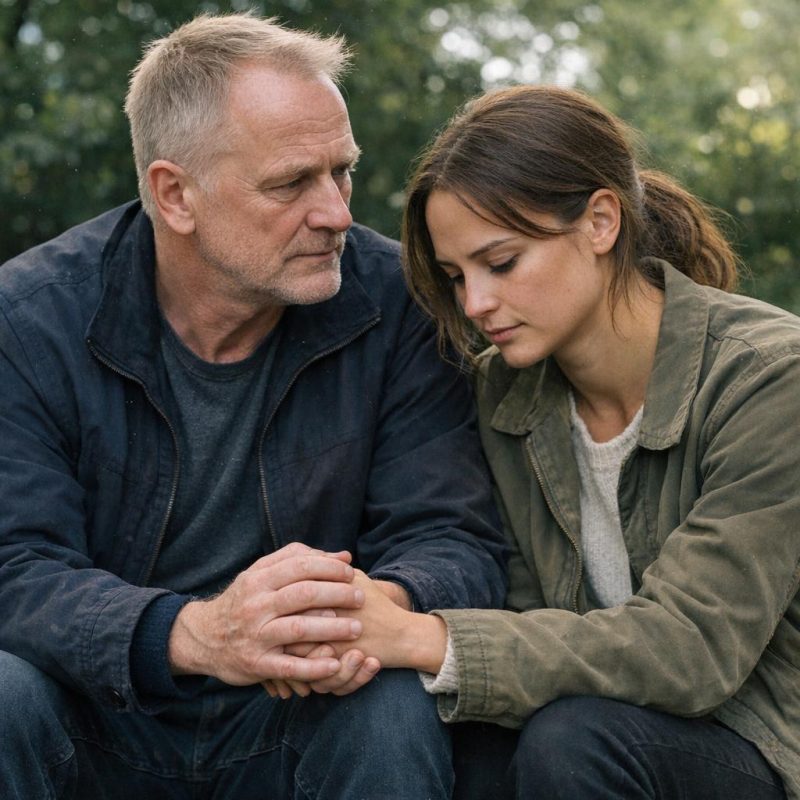 Image by RM AI
The Trial That Brought It All Together
The courtroom was packed with victims' families when I took the stand. Rebecca sat at the defense table in a gray suit, looking smaller than I'd imagined during all those months of waiting. Katherine walked me through it methodically—the headache that wouldn't stop, the ER visit, the heparin that should have helped but nearly killed me. I described waking up hemorrhaging, the terror in Mark's eyes, the way my world shrank to a hospital room where I wasn't sure if I'd see morning. Then we connected it to the others. Patricia's husband. The Pennsylvania woman's sister. The young father in Oregon. Detective Warren had built the case beautifully—travel records, medication access logs, the pattern that only became visible when you stepped back far enough to see it. The defense tried to rattle me, but I'd lived through worse than cross-examination. When they asked if I could be absolutely certain Rebecca had tampered with my medication, I looked straight at the jury and said, 'I know what she did.' The deliberation took six hours. When the guilty verdict was read, I cried for all of us—the living and the dead.
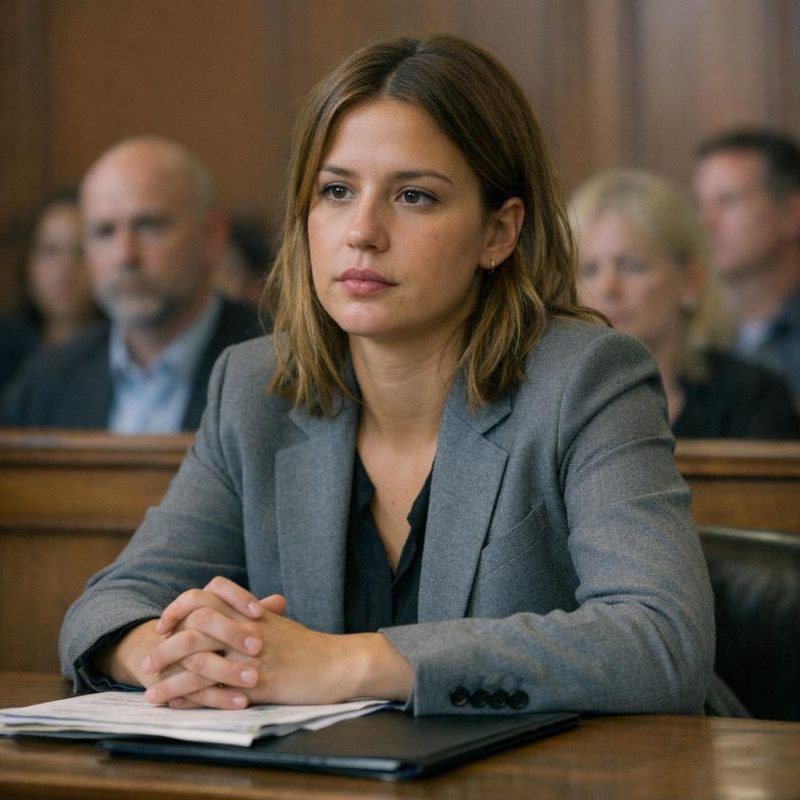 Image by RM AI
Learning to Sleep Again
The nightmares started about three weeks after the trial ended. I'd wake up gasping, convinced I was hemorrhaging again, feeling phantom warmth spreading beneath me. Mark would hold me in the dark, whispering that I was safe, that it was over. But trauma doesn't care about verdicts. I jumped at sudden noises. I couldn't walk past a hospital without my heart racing. My doctor recommended a therapist who specialized in medical trauma, and I started going twice a week. Dr. Chen never pushed me to 'move on' or 'let it go.' She said healing looked like learning to live with what happened, not erasing it. Some days I felt strong, purposeful, grateful to be alive. Other days I couldn't get out of bed. The hypervigilance was exhausting—checking expiration dates obsessively, researching every medication, reading reviews of every doctor before appointments. Mark was patient, but I could see the worry in his eyes. He'd survived his own health crisis; he understood that surviving wasn't the same as being okay. My therapist said healing wasn't linear, and I was learning to accept that some scars don't fade.
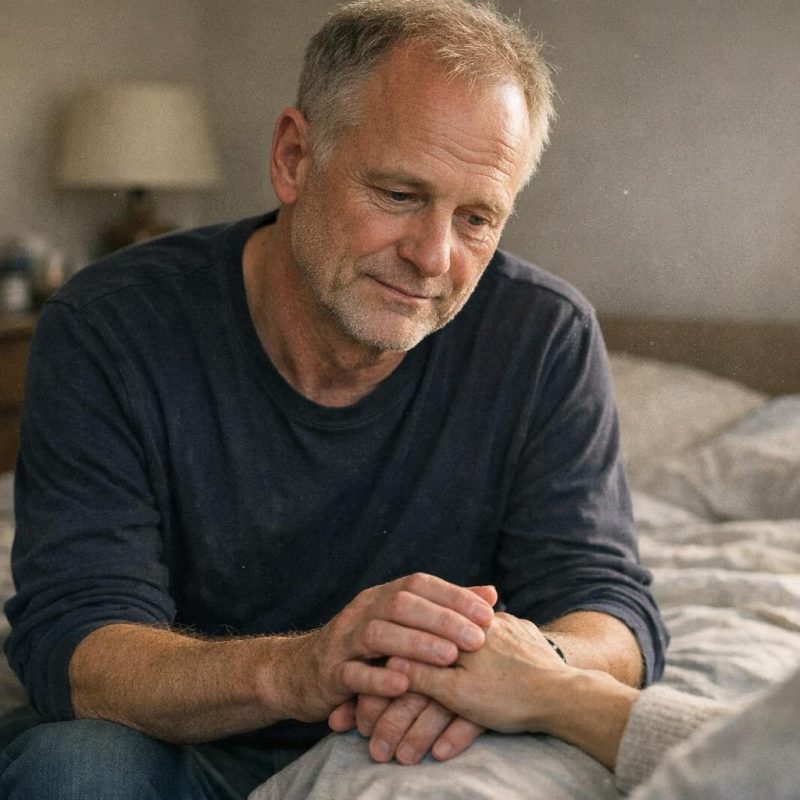 Image by RM AI
The Foundation We Started
Six months after the trial, I got a call from Patricia. 'I've been thinking,' she said, 'about how many people might still be out there—victims we don't even know about yet.' That's how it started. We gathered the families, the survivors, the people who'd lost someone to medical harm. Cathy flew in from Seattle, still carrying the weight of her brother's death. The son from Pennsylvania joined via video call. We met in a conference room Emma had arranged, and Mark took notes while we talked about what had been taken from us: trust, security, the belief that hospitals were safe spaces. But we also talked about what we could build from that loss. Jake, who'd been researching patient advocacy programs, presented a proposal for a foundation that would push for hospital oversight reforms, support victims of medical harm, and fund independent investigations when patterns emerged. The legal battle had exposed Rebecca, but it hadn't fixed the system that let her operate for so long. At our first board meeting, I looked around at faces united by tragedy and saw hope for change.
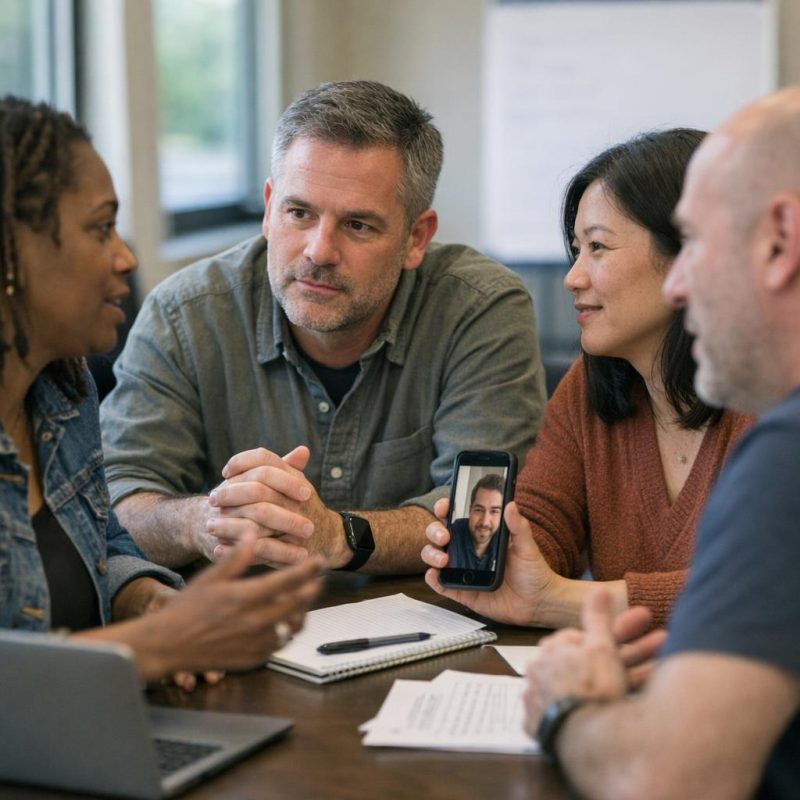 Image by RM AI
The Headache That Saved My Life
Sometimes I think about how it all started—with a headache I almost ignored. If I hadn't gone to the ER that night, if the timing had been different, if Rebecca had been more careful, I might have become just another unexplained death, a medical mystery that families mourned but never understood. Instead, that headache led us to the truth. It exposed a killer, saved unknown future victims, connected grieving families who'd been isolated in their loss. The foundation has helped twelve families so far, pushing for investigations, advocating for policy changes, creating resources that didn't exist before. Emma's in graduate school now, studying healthcare administration with a focus on patient safety. Jake volunteers with us between classes. Mark and I take walks every evening, grateful for ordinary moments we'll never take for granted again. I still see Dr. Chen, still have days when the trauma surfaces unexpectedly. But I've learned something about survival—it's not just about living through the worst moment, it's about what you build from the rubble. I still get headaches sometimes, but now I know the difference between pain that warns you and pain that teaches you—and I'm grateful I lived to learn it.
 Image by RM AI
KEEP ON READING
From Heroes To Zeroes 20 Historical Figures Whose Heroism Was…
History is full of legends, but not every hero lived…
By Noone Feb 25, 2026
The Clueless Crush: How I Accidentally Invited a Hacker Into…
Fluorescent Lights and First Impressions. My name is Tessa, I'm…
By Ali Hassan Nov 4, 2025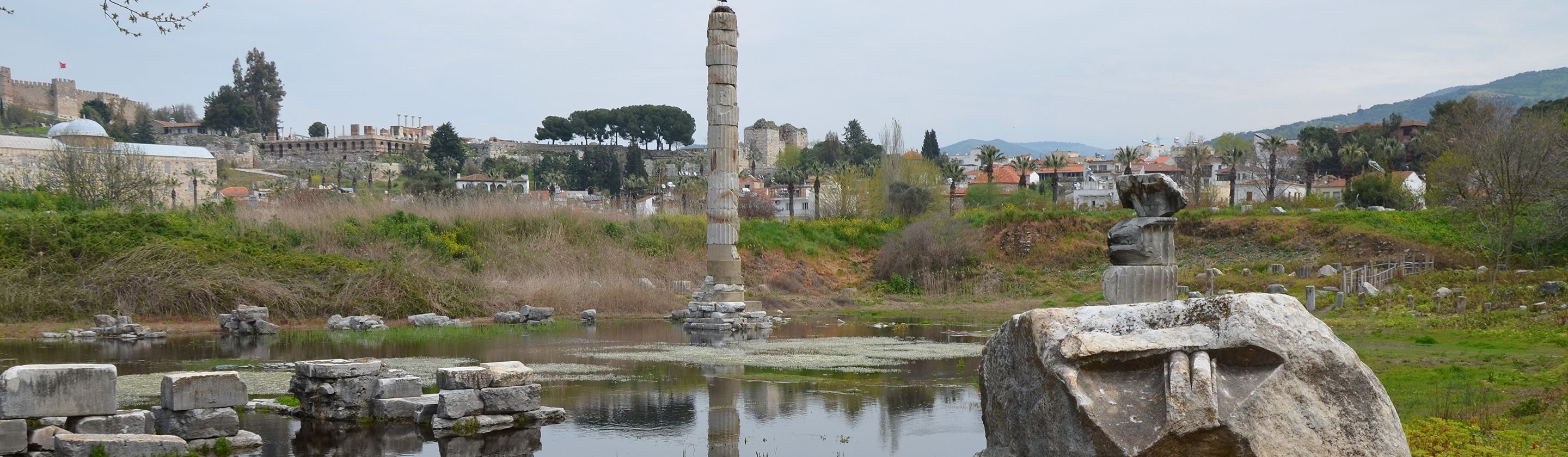
This Infamous Ancient Greek Burned Down An Ancient Wonder Just…
History remembers kings and conquerors, but sometimes, it also remembers…
By David Davidovic Nov 12, 2025
Einstein's Violin Just Sold At An Auction—And It Earned More…
A Visionary's Violin. Wanda von Debschitz-Kunowski on WikimediaWhen you hear…
By Ashley Bast Nov 3, 2025
The Mysterious "Sea People" Who Collapsed Civilization
3,200 years ago, Bronze Age civilization in the Mediterranean suddenly…
By Robbie Woods Mar 18, 2025
This Time Period Was the Single Best Time to be…
Rowyn flowerdew on WikimediaIf you ask the question in purely…
By Emilie Richardson-Dupuis Mar 24, 2026