Oleg Gordievsky was a colonel of the KGB who rose to become the Soviet Union's chief intelligence officer in London, all while secretly feeding classified information to British MI6 for over a decade. That sentence alone should be enough to make you stop. The man running Soviet espionage in one of its most important postings was simultaneously the West's most valuable intelligence asset. The whole architecture of Cold War suspicion, in that particular case, had been completely hollowed out from the inside.
He died on March 4, 2025, at 86 years old, leaving behind a legacy that historians and intelligence analysts are still measuring. His story isn't just a good spy thriller, though it is absolutely that. It's a window into how ideology breaks, how trust gets weaponized, and how one man's quiet conviction altered the trajectory of a superpower standoff that could have ended in nuclear catastrophe.
A True Believer Who Stopped Believing
Gordievsky was born into the Soviet system, the son of an NKVD secret police officer, and trained in the same institution where a young Vladimir Putin would later learn his craft. Everything in his upbringing pointed toward lifelong loyalty. He was bright, multilingual, and ambitious, exactly the profile the KGB selected and cultivated. Fluent in Russian, German, Swedish, Danish, Norwegian, and English, he rose quickly through the ranks and was posted to East Berlin in August 1961, just before the Berlin Wall went up.
What he saw there started a slow unraveling. Watching the Wall go up, watching families split apart, watching the rhetoric of a worker's paradise enforced at gunpoint, he was then further outraged by the Soviet crushing of the Prague Spring reform movement in Czechoslovakia in 1968. The ideology he had been raised inside was visibly betraying its own promises. He had read enough Western literature and seen enough of democratic freedoms to understand that the socialist utopia reflected in communist propaganda was a lie, and once that realization set in, it didn't recede.
When he was eventually approached by MI6, he agreed, but with three conditions: he didn't want to damage his KGB colleagues, he didn't want to be secretly photographed, and he wanted no money, stating he wished to work for the West out of ideological conviction, not for personal gain. In 1974 he formally agreed to pass secrets to MI6, describing the step as "nothing less than undermining the Soviet system." MI6 gave him the codename SUNBEAM. The most consequential intelligence relationship of the Cold War had begun over coffee in Copenhagen.
The Man Who Helped Prevent a Nuclear War
In 1983, the US and NATO conducted Able Archer, a five-day exercise that simulated the buildup to a DEFCON 1 nuclear war. Combined with the recent arrival of new Pershing II missiles in Europe and aggressive rhetoric from the Reagan administration, many in Soviet leadership genuinely believed the exercise was cover for a real first strike. Soviet nuclear forces in Eastern Europe were placed on alert. Aircraft began being loaded with weapons. The world was closer to catastrophe than most people alive at the time understood.
Gordievsky was among those who could relay to Western leaders, through his clandestine communications with MI6, that Soviet officials genuinely feared an American strike was imminent. That intelligence impressed upon President Reagan that the Soviet Union's fears were real, and contributed to his eventual rapprochement with Mikhail Gorbachev. When Gorbachev visited Britain in 1984, Gordievsky was secretly briefing both sides, helping guide what the Russians would say to the British and simultaneously warning the British what to expect from the Soviet delegation. Thatcher's famous assessment that Gorbachev was someone the West could do business with was made possible, in part, by what Gordievsky quietly arranged.
The intelligence he provided was so valuable it was being passed all the way to the Oval Office, though MI6 never revealed its source. The CIA, determined to identify the British asset, established a task force to find out. What the CIA didn't know was that its own head of counterintelligence was a KGB spy, meaning the KGB was spying on the CIA, which was secretly investigating MI6, which was running an asset inside the KGB. As a description of Cold War paranoia eating itself, it's hard to improve on.
The Escape That Should Have Been Impossible
In May 1985, Gordievsky was abruptly recalled to Moscow. He had been betrayed, though he didn't know it yet, by CIA officer Aldrich Ames, who had passed his identity to the KGB. On returning, he was drugged and interrogated for five hours. He wasn't arrested yet, but the walls were closing. He later wrote in his memoir that if he did not break out of the Soviet Union within the next few weeks, he would die.
The MI6 escape plan, codenamed Operation Pimlico, required him to appear on a specific street corner on any Tuesday at 7 pm carrying a Safeway plastic bag. He was then to make his way to Leningrad, take a bus north toward the Finnish border, get off mid-route, and wait in a forest for a British exfiltration team. The British cars, traveling with diplomatic plates, had only a minute behind a curve to get out of their KGB escort's sight. Gordievsky dove into a boot, and the cars continued past the checkpoint before the KGB vehicle came around the corner. The signal that they had crossed safely into Finland was a recording of Sibelius's "Finlandia" played inside the car. A British diplomat then called MI6 to deliver the message that the luggage had arrived and was all in order.
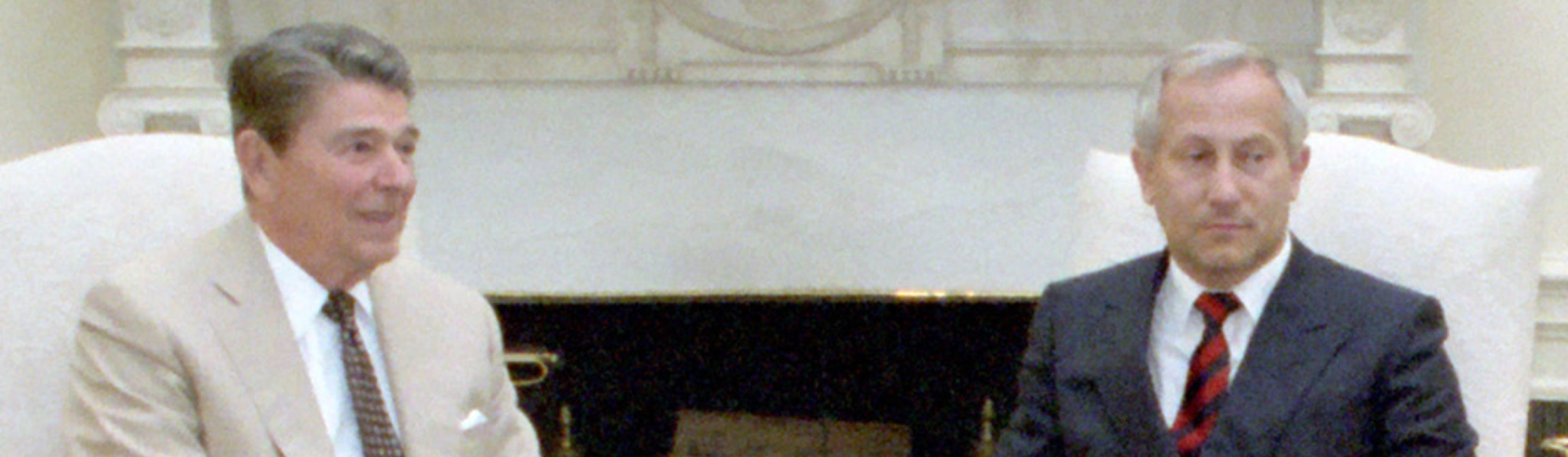
The Soviet Union subsequently sentenced Gordievsky to death in absentia. He spent the following decades in Britain, writing about the KGB, briefing Western governments, and living under security protection. He met with both Margaret Thatcher and Ronald Reagan, co-wrote a comprehensive history of the KGB, and continued cooperating with Western intelligence services long after his escape. The man the KGB trained, trusted, and promoted turned out to be the most damaging asset the organization ever produced, a fact that still stings at something fundamental about the limits of loyalty and the power of conscience.
KEEP ON READING