

My Coworker Sent a Card to My House That Almost Destroyed My Relationship – Then I Found Out What She Was Really Planning
My Coworker Sent a Card to My House That Almost Destroyed My Relationship – Then I Found Out What She Was Really Planning
The Monday Morning Routine
Monday mornings at the firm have their own particular rhythm, and I've come to depend on it. I'm usually at my desk by eight, coffee in hand, working through whatever landed in my inbox over the weekend before the open floor fills up with noise. This Monday is no different. I pull up the weekend email backlog first — a handful of client check-ins, a revised brief from the creative side, two automated reports I need to cross-reference before the week gets away from me. The quarterly campaign performance numbers are sitting in a shared folder, and I spend the better part of the morning pulling them into a clean summary deck. Conversion rates are up on the digital side, but the print allocation is underperforming against projections, and I flag that for the client presentation later in the week. By mid-morning I've got the project timelines mapped out and team assignments confirmed. There's something grounding about this part of the job — the part where the work is just the work, where the numbers either add up or they don't. I refill my coffee, settle back into my chair, and let the familiar rhythm of spreadsheets and data carry me through the afternoon.
 Image by RM AI
The New Collaboration
The cross-departmental kickoff meeting is scheduled for ten, and I grab my notebook and head to the large conference room on the third floor. There are maybe twelve people around the table — project leads, a couple of account managers, and a few faces I don't recognize from the creative division. The meeting gets underway quickly, and that's when Sarah from the creative team takes the floor to walk us through the initial concepts. She's organized, clearly prepared, and the deck she presents is sharp — strong visual direction, solid rationale for the demographic targeting she's proposing. I ask a few questions about how the messaging aligns with the brand guidelines we've been working from, and she answers without missing a beat, pulling up a secondary slide I hadn't expected her to have ready. We go back and forth a little on the 25-to-40 segment, and she makes a note to revisit the copy framing before the next review. By the time the meeting wraps, she's already volunteered to coordinate the timeline between our two teams, which saves me a conversation I was going to have to initiate anyway. I'm back at my desk, reviewing my notes, when the email from her arrives — a detailed summary of every action item, owner, and deadline from the meeting, organized by team.
 Image by RM AI
Building the Campaign
The week moves fast once the campaign work picks up momentum. Sarah's team turns around the first round of creative mockups by Wednesday, and I spend a good portion of Thursday morning going through them carefully — checking the messaging against our brand standards, flagging anything that feels off-tone, and noting where the visual hierarchy needs adjustment. I send my feedback over in a structured document, trying to be specific rather than vague, because vague feedback just creates more revision cycles. By Friday afternoon, Sarah's team has incorporated most of my notes into a revised set of concepts, and the changes are solid. The copy is tighter, the call-to-action placement makes more sense, and the color palette finally feels consistent across formats. We get on a quick call to align on the budget allocation — there's a small disagreement about how much to weight the social spend versus the display network, but we work through it without it becoming a thing. I approve the preliminary materials before end of day and send a note to my manager flagging that we're on track. Sitting at my desk after the call, looking at the revised mockups side by side on my screen, I feel the particular satisfaction that comes when a project stops being a collection of moving parts and starts looking like something real.
 Image by RM AI
The Lunch Invitation
I'm halfway through a sandwich when Sarah sets her tray down across from me in the cafeteria. It's not unusual — the open seating means people end up at the same table all the time — and we've been working closely enough that it would be strange to pretend otherwise. We talk about the campaign for a few minutes, the usual status-check conversation, and then she shifts gears. She asks how long I've been at the company, and I give her the short version — came over from a mid-size agency about three years ago, took this role because the accounts were more interesting. She asks about the agency, what kind of work I did there, and I answer without going into much detail. Then she asks what I do on weekends, whether I'm more of a stay-in or go-out person. I tell her I keep it pretty low-key, mention that I spend most of my time outside of work with my partner, and steer the conversation back toward the upcoming client presentation. She follows the redirect without any friction, and we spend the rest of lunch talking through the Q3 deliverables. It's only later, walking back to my desk, that I notice the conversation had drifted somewhere I hadn't quite intended — not far, just a degree or two off from where I'd expected it to land.
 Image by RM AI
The Weekly Rhythm
The week settles into its usual shape. Morning standup runs about fifteen minutes — project updates, blockers, nothing that requires more than a quick note. I spend most of Tuesday and Wednesday in my inbox, fielding client status requests and drafting responses that are thorough enough to be useful without opening up new threads of questions. I pass Sarah's desk a few times on the way to the printer, and we exchange the kind of brief, functional acknowledgments that happen naturally when you're in the middle of shared work — a quick word about a file, a nod about a deadline. Thursday afternoon I stay late to finish a presentation deck that's due first thing Friday, and the floor is mostly empty by the time I'm wrapping up. The work is straightforward, and I'm glad for the quiet. I save the final version, close my laptop, and start gathering my things. It's only when I glance up toward the far end of the open floor that I notice Sarah still at her desk, not looking at her screen — looking across the room, in my direction.
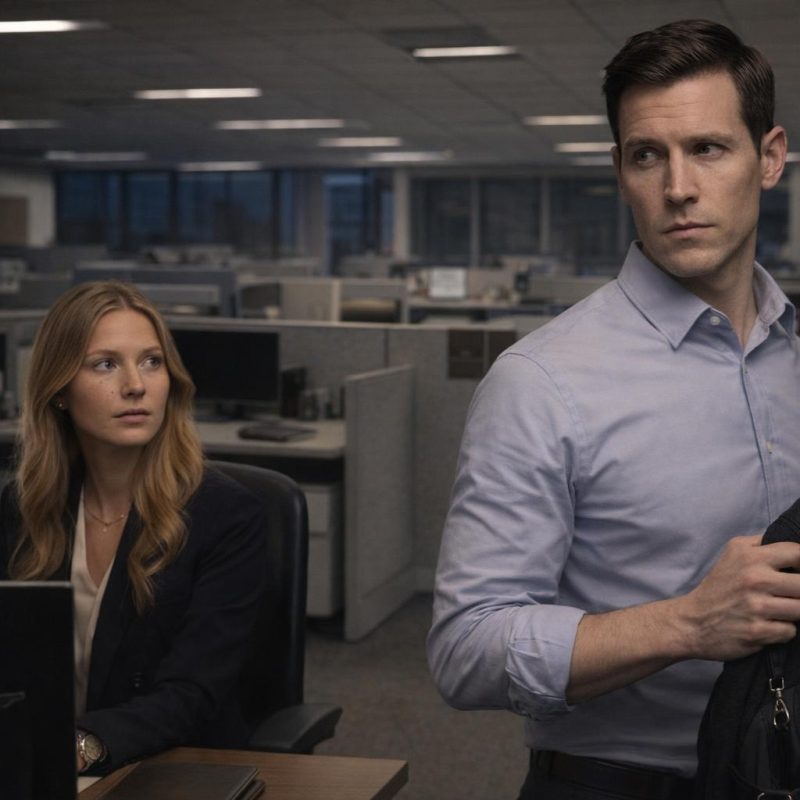 Image by RM AI
Home with Maya
Saturday evening, Maya and I cook dinner together the way we usually do on weekends — she handles the sauce, I handle everything else, and we talk over each other in the kitchen until something smells good enough to stop. We eat on the couch and end up watching a documentary neither of us planned to finish, and then we finish it anyway. Sunday morning we go for a walk through the neighborhood, the kind with no particular destination, stopping for coffee at the place on the corner that always has a line but moves quickly. In the afternoon I help her hang a set of shelves she's been meaning to put up for weeks — it takes longer than it should because we can't agree on the level, and then we agree, and it looks exactly right. There's an ease to days like this that I don't take for granted. We've built something steady, and I'm aware of that in the way you're aware of good weather — not dramatically, just as a fact of the day. I'm on the couch reading when my phone buzzes on the cushion beside me. It's a text from Sarah, asking if we can connect first thing Monday to go over the meeting agenda.
 Image by RM AI
The Coffee Suggestion
Sarah stops by my desk around two-thirty on Tuesday, which isn't unusual — she's been checking in regularly since the campaign kicked off. She leans against the partition and mentions that she's been thinking about the next phase of the campaign and wants to brainstorm somewhere away from the office noise. She suggests the coffee shop two blocks over, says a change of environment sometimes helps her think through the bigger-picture stuff. It sounds reasonable. We've been heads-down on execution for weeks, and stepping back to look at the strategic layer isn't a bad idea. I tell her I can do after five, once I've cleared my afternoon calls. She says that works, and heads back to her side of the floor. I finish my calls, close out my email, and grab my bag. We walk over together, talking about a client feedback note that came in that afternoon, and I'm already mentally organizing the campaign questions I want to work through. The coffee shop is quiet for a Tuesday evening — a few people on laptops, low music, the smell of espresso cutting through the ambient noise. I find a table near the window and pull out my laptop, ready to get into it.
 Image by RM AI
Redirecting the Conversation
I open the campaign metrics file and start walking through the numbers, but Sarah doesn't open her laptop. She wraps both hands around her cup and asks, almost offhandedly, whether I'm seeing anyone. I tell her yes, mention Maya by name, and turn my screen slightly toward her to redirect us back to the data. She says that's nice, asks a follow-up question about how long we've been together, and I give a short answer — a few years — and move on. I point to the engagement drop-off in the third week of the last campaign cycle and ask whether her team had flagged it. She looks at the screen, and we're back in the work for a while. Then she asks about where I see myself in the next couple of years, whether I'm thinking about moving into a director role. I talk about the current project pipeline, the accounts I'm hoping to grow, keeping it grounded in what's actually in front of me. By the time we finish our coffee, we've covered enough ground on the campaign that I feel like the meeting was worth it. We walk back to the office parking lot in the early evening quiet, the streetlights just starting to come on, the day winding down around us in a way that feels ordinary and unhurried.
 Image by RM AI
The Arm Touch
The hallway outside the conference rooms is one of those in-between spaces where conversations happen fast and people keep moving. Sarah catches me near the copy station on a Tuesday afternoon, asking about the campaign launch timeline, and I'm happy enough to talk through it — we're still a few weeks out and there are moving parts that need coordinating. I run through the key dates, she asks a couple of sharp questions about the vendor deliverables, and it's a productive two minutes. At some point I make a comment about the approval bottleneck being the real wildcard, and she laughs — a genuine laugh, not a polite one — and says that's exactly what she'd been thinking. Then she makes her point about the contingency window, and her hand comes to rest on my forearm for just a second, the way people sometimes do when they want to make sure you're tracking what they're saying. I shift my weight slightly, glance at my phone out of habit, and she's already moved on to talking about the vendor check-in schedule. I tell her I have a meeting in five and she waves me off easily, says we'll pick it up later. I head down the hall, and by the time I reach the conference room door, I've already moved on to thinking about the agenda. The moment her hand rests on my forearm is just part of the afternoon, nothing more.
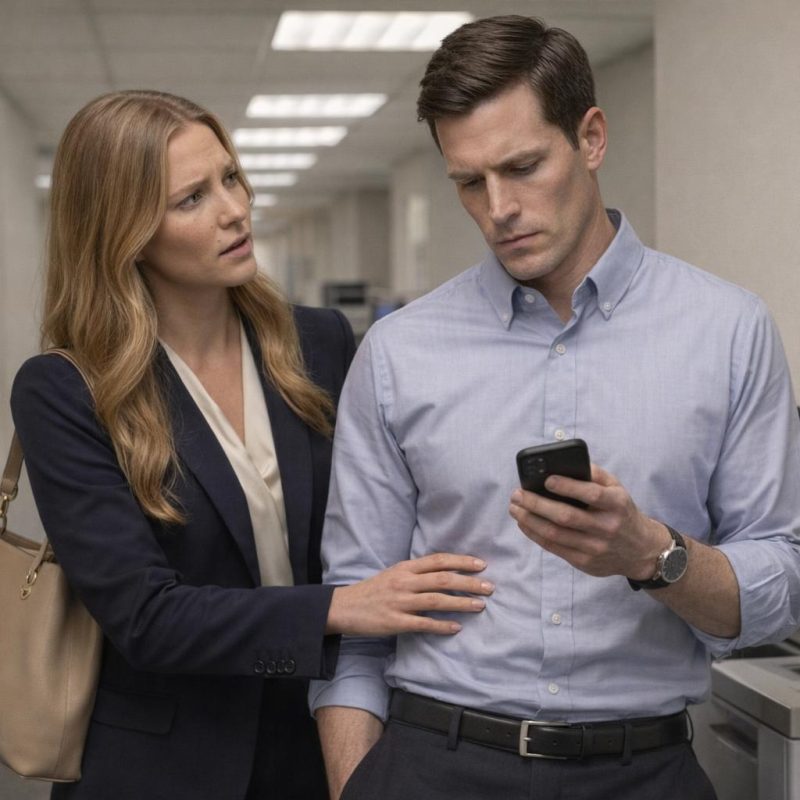 Image by RM AI
James's Observation
I'm refilling my water bottle in the break room on a Thursday morning when James comes in for coffee. We've worked in the same department long enough that small talk comes easy, and he asks how the campaign collaboration is going. I tell him it's been productive, that Sarah's team has good instincts on the creative side. He nods, pours his coffee, and then says something that makes me set my bottle down. He mentions that Sarah seems really engaged with the project — more than he'd expect for a standard cross-team collaboration. He says it in a measured way, not gossipy, more like someone flagging something they've been turning over. I ask him what he means. He says he's noticed her asking around — not about the campaign, but about me. Where I live, whether I'm seeing someone, what I do outside of work. He keeps his tone even, says he just thought I should know, and that he's probably reading too much into it. I tell him I appreciate the heads up and mean it. He tops off his coffee and heads back to his desk without making a bigger deal of it than it needs to be. I stand there for a moment, running back through the last few weeks in my head. Then James leans back through the doorway and says Sarah had asked him just yesterday whether I ever came to after-work events alone.
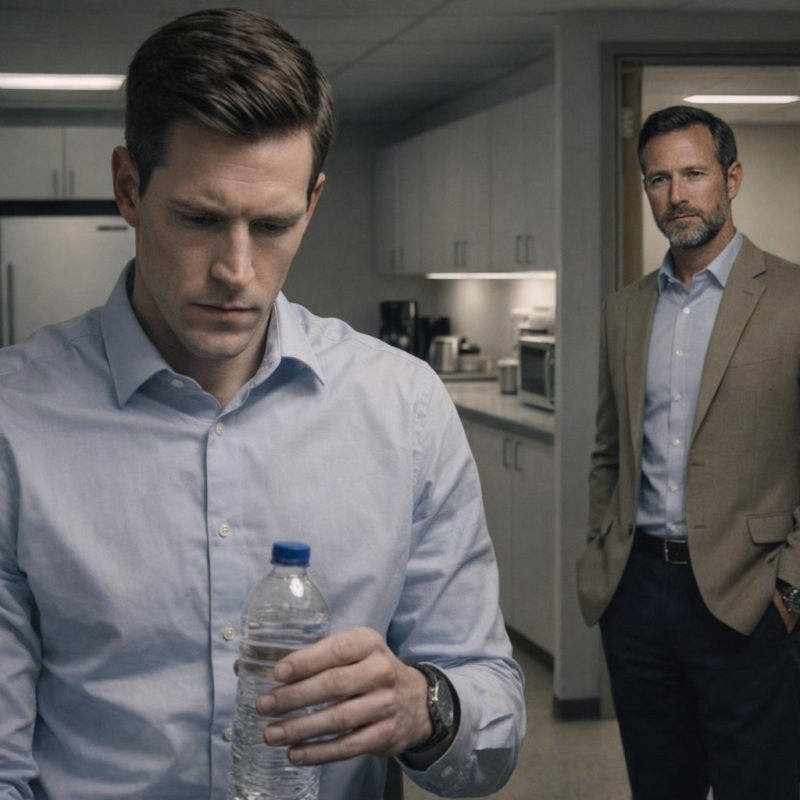 Image by RM AI
Maintaining Distance
The rest of that week, I keep things simple. Sarah sends me two emails — one about the vendor timeline, one about a slide deck for the stakeholder update — and I reply to both within the hour, short and on-point, nothing extra. When I see her in the break room Wednesday morning, I'm already on my way out with my coffee, and I give her a quick nod and keep moving. She sends a message Thursday asking if I want to grab lunch and talk through the next phase, and I write back that I'm up against a deadline and suggest we use the project board to track any open items. She responds with a thumbs-up emoji and that's the end of it. I route most of my updates through the project management system for the rest of the week — it keeps everything documented and removes the need for side conversations. It's not dramatic. I'm not avoiding her in any obvious way, just keeping the interactions where they belong: in writing, on task, professional. By Friday afternoon the office has that end-of-week quiet, the kind where half the floor has already mentally checked out and the overhead lights feel softer somehow. I finish my last task, close my laptop, and sit for a moment before packing up. The week had been exactly as uncomplicated as I'd needed it to be.
 Image by RM AI
The Group Happy Hour
The email comes in on a Wednesday, sent to the full team distribution list — Sarah, subject line reading something like 'Campaign Launch Celebration — Friday Happy Hour.' She's picked a bar two blocks from the office, mentions it's a chance to mark the milestone before everyone pivots to the next phase, and signs off with a note that partners and plus-ones are welcome. I read it twice. My first instinct is to decline — I've been keeping things low-key and a Friday evening feels like unnecessary exposure. But I scroll through the thread and see that James has already replied saying he'll be there, and two other colleagues from the creative side have chimed in. It's a group thing, clearly. A team event with a reply-all thread and a plus-ones policy isn't the kind of thing I need to read anything into. I type a short confirmation — something like 'Looking forward to it, see everyone Friday' — and hit reply-all. Sarah responds to the thread within the hour, enthusiastic and addressed to the group, talking about how much the team has earned a proper send-off for the launch. Reading it back, it sounds exactly like what it is: a coworker organizing a team outing. The casual, group-wide tone of the whole exchange settles something I hadn't quite realized I'd been holding onto.
 Image by RM AI
Maya Joins the Team
Maya and I get to the bar a little after six, and the team is already spread across two high-top tables near the back. James spots us first and waves us over, and I introduce Maya to him and a couple of the others from the creative side. She's easy in a room full of strangers — asks good questions, remembers names, laughs at the right moments. I'm glad she came. Sarah finds us maybe twenty minutes in, working her way over from the other end of the bar. I introduce them — 'Sarah, this is Maya, my romantic partner' — and Sarah smiles and says something warm about how much she's heard about the campaign work. Maya mentions that I've been talking about the launch for weeks, that she's glad it's finally something worth celebrating. The three of us exchange a few sentences about the project, easy enough. Then Maya reaches over and takes my hand, just naturally, the way she does, and I catch Sarah's face in that moment. Something moves across it — quick, almost imperceptible — and then her expression smooths back into a polite smile and she says she's going to check in with a few other people before the night gets away from her.
 Image by RM AI
The Shift in Temperature
After that, Sarah stays on the far side of the bar for the rest of the evening. I notice it without meaning to — she's talking to people, laughing, holding her drink, doing all the things you do at a work happy hour — but she doesn't come back to our end of the room. James drifts over at one point and we end up in a good conversation about the next quarter's account targets, and Maya gets pulled into a separate thread with someone from the creative team about a podcast they both apparently listen to. It's a good night, genuinely. But I keep catching Sarah in my peripheral vision, and each time I look over she's got her phone out, scrolling or typing, more focused on the screen than the room. Around eight, I glance toward the spot where she'd been standing and she's gone. No goodbye, no wave across the bar, no 'great night everyone' — just gone. On the drive home, I mention it to Maya, something like 'did you notice Sarah left without saying anything?' Maya shrugs and says maybe she had somewhere to be. I let it go. But the abruptness of it sits with me in a way I can't quite shake.
 Image by RM AI
The Quiet Week
The following week, the dynamic shifts in a way I can't ignore. Sarah had been a near-daily presence in my inbox before the happy hour — quick questions, project check-ins, the occasional forward of something tangentially relevant. That week, nothing. I send a project update on Tuesday covering the post-launch metrics and the handoff timeline for the next phase. The message shows as read within the hour. No reply. I see her in the hallway on Wednesday — she's coming out of the kitchen as I'm heading toward the conference rooms — and she gives me a nod, the kind you give a colleague you recognize but aren't stopping for, and keeps walking. I don't chase it. I complete the campaign wrap-up tasks on my own, pulling the data I need from the shared drive and filling in the gaps myself. It's actually easier in some ways, not having to coordinate. But there's something slightly off about the silence after weeks of steady back-and-forth, and I find myself checking the thread a couple of times just to confirm what I already know. The last message in the project channel is my Tuesday update. Below it, the small icon showing Sarah had opened it, and nothing after that — just the read receipt sitting there, unanswered.
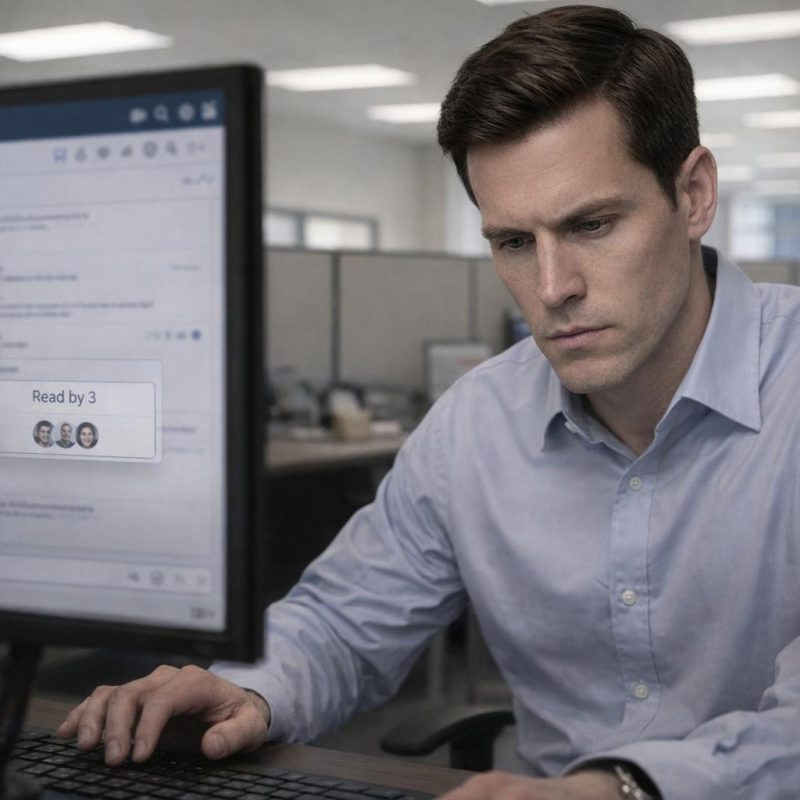 Image by RM AI
The Dinner Invitation
The message comes in on a Thursday afternoon, a direct message rather than a project channel post. Sarah asks if I'd be free for dinner the following week, mentions a specific restaurant downtown — one of those places with a reservation waitlist — and frames it as a chance to talk through the direction for the next campaign phase before the kickoff meeting. I read it once, then read it again. The project channel exists for exactly this kind of planning conversation. So does email. So does the shared brief document that both our teams have access to. A specific restaurant with a waitlist isn't a working lunch — it's something else, and I'm not sure how to name it without feeling like I'm making assumptions. I draft three different replies over the course of the afternoon, each one trying to find the right balance between professional and clear. I don't want to be rude. I don't want to make it awkward if I'm reading the situation wrong. But I also know I'm not going to say yes, and finding the words to say no without turning it into something bigger than it needs to be is harder than it should be. I close the draft window and sit with the weight of having to decline again.
 Image by RM AI
The Polite Decline
I spend the better part of an hour on the reply. Not because the words are complicated, but because I want them to land exactly right — firm without being cold, clear without being accusatory. I type out that I have prior commitments with Maya that week, which is true, and that for anything campaign-related I'd suggest we loop in the full team and schedule a proper meeting through the project channel. I read it back twice. It's polite. It's professional. It says no without making a production of saying no. I hit send before I can second-guess myself again and set my phone face-down on the desk. The read receipt comes through almost immediately — two small checkmarks confirming she's seen it. Then nothing. No reply. No typing indicator. Just the message sitting there, delivered and read, and the particular kind of quiet that follows when you've said something you can't unsay and you're waiting to find out what it costs you.
 Image by RM AI
Sarah Opens Up
I'm refilling my water bottle in the break room on Wednesday when Sarah comes in. She looks tired in a way that's different from the usual end-of-week tired — something around her eyes, something in the way she sets her mug down without her usual precision. I ask if she's doing okay, because it's the kind of thing you ask a coworker, and she pauses for a moment before she answers. She says she and her partner split up about three weeks ago. She says it quietly, like she's still getting used to saying it out loud. I tell her I'm sorry, and I mean it. She talks for a few minutes — nothing dramatic, just the kind of low-level exhaustion that comes with a relationship ending, the way the apartment feels different, the way weekends suddenly have too much space in them. I listen. I offer the kind of general things you say when someone is hurting and you don't know the full story. She thanks me for listening, and I tell her things tend to get easier. I excuse myself not long after, water bottle in hand, but the quiet rawness in her voice when she talked about feeling alone stays with me longer than I expect.
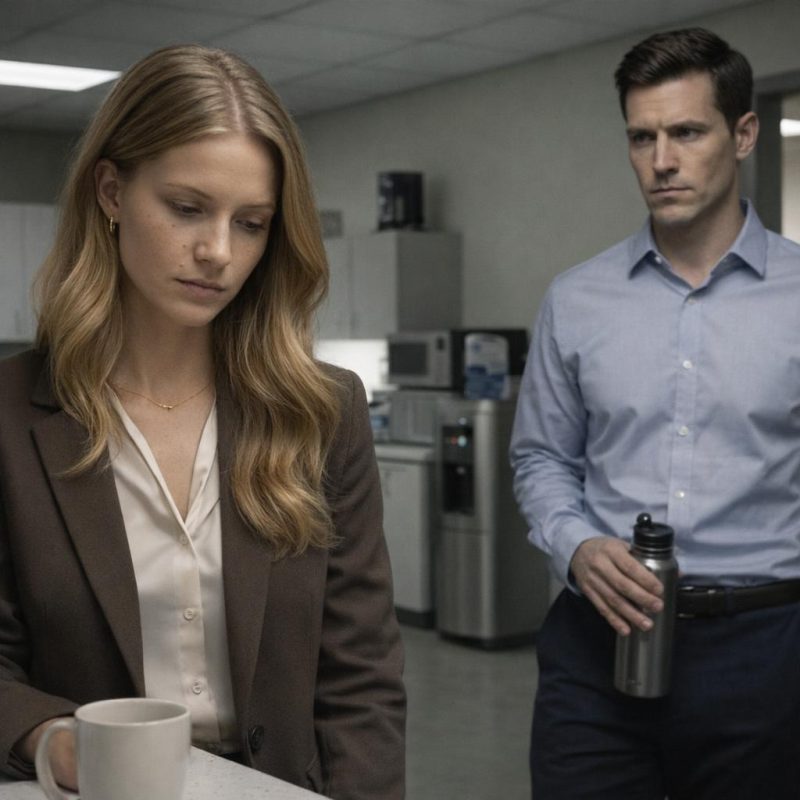 Image by RM AI
Offering Advice
She catches me the next morning near the coffee station and picks up where we left off, asking — almost shyly — how I think people get back to feeling like themselves after something like that. I keep my answer general. I tell her what I'd tell anyone: lean on the people who already know you, find something outside of work that takes up mental space in a good way, give yourself permission to not have it figured out yet. She nods along, and there's something in her expression that looks like genuine relief at being heard without being given a to-do list. I steer us back toward the campaign timeline after a few minutes, mentioning the kickoff prep and the deliverables due before end of month. She takes the cue without resistance, says she appreciates the perspective, and we part ways at the hallway junction. Walking back to my desk, I feel like the conversation landed where it needed to. Nothing overstepped. Nothing promised. Just two colleagues talking, and the quiet hope that we've found our way back to something that feels like normal.
 Image by RM AI
The Spa Weekend Mention
It starts as small talk on a Thursday afternoon, the kind that fills the space while we're both waiting for a shared document to load. Sarah mentions she's been looking at a boutique hotel about two hours outside the city — somewhere to decompress, she says, reset before the next campaign push. I make a noncommittal sound and keep my eyes on my screen. She keeps going. She names the hotel, describes the property — a converted farmhouse, apparently, with a spa wing and private garden suites. She mentions the specific treatments they offer, the thread count of the linens, the fact that they source their restaurant menu locally. It's a level of detail that catches my attention without me quite being able to say why. People research hotels. People get excited about trips. But there's something about the specificity of it — the way she describes each feature like she's reading from a brochure she's already memorized — that makes me glance up from my screen when she mentions the name of the hotel a second time.
 Image by RM AI
The Weekend Invitation
She comes by my desk late on Friday afternoon, when most of the floor has already cleared out. She mentions the hotel weekend again — says she's booked it for the following month, that she's really looking forward to having a few days away from everything. I tell her that sounds like a good idea, still half-focused on the report I'm trying to finish. Then she says it. She says I seem like I could use a break too, that the spa packages are genuinely restorative, and that there's plenty of room if I wanted to join her for the weekend. I stop typing. I look up. She's watching me with an expression that's open and calm, like she's suggested something entirely reasonable. I feel the discomfort settle in my chest before I've even formed a response — the kind that comes when a line has been crossed and you're still processing exactly where the line was. She goes on briefly about the amenities, the quiet, the distance from the city, filling the silence I haven't managed to break yet. I sit with the weight of what she's just asked, the directness of it, the fact that she's invited me to spend a weekend away with her as though the answer might be yes.
 Image by RM AI
The Clear Boundary
I take a breath and keep my voice even. I tell her I appreciate the thought, but I have to be straightforward with her — I'm in a committed relationship with Maya, and a weekend away like that wouldn't be appropriate, not for me, not professionally, not personally. I say it without hedging. She listens without interrupting, her expression staying neutral in a way that takes some effort to read. I add that I want to keep things between us professional, that I value being able to work well together, and that I think it's important we're both clear on where those boundaries are. She nods. She says she understands, that she didn't mean to make things uncomfortable. Her voice is measured, and she doesn't push back or try to reframe it. She picks up her bag from the chair beside my desk and straightens her jacket. I watch her gather her things without rushing, and when she says goodnight and steps away from my desk, the word no — said plainly, without apology — settles into the space she leaves behind.
 Image by RM AI
The Understanding Response
She comes back Monday morning, and I brace for something — awkwardness, a shift in tone, maybe a pointed comment dressed up as professionalism. Instead she stops at my desk and apologizes. She says she's sorry for putting me in an uncomfortable position, that she misread things and she takes responsibility for that. Her voice is steady at first, measured in the same way it was Friday, but then it wavers slightly when she says she sometimes misjudges how close she's gotten to people. I tell her we're fine, that we can absolutely keep working together without this hanging over us, and I mean it. I don't want the project to suffer. I don't want things to be tense every time we're in the same room. She nods and says she appreciates that, and she starts to turn away. I'm already reaching for my keyboard when I catch it — the glassiness at the edge of her eyes, the way she blinks once and turns before anything spills over.
 Image by RM AI
The Quiet Days
The week that follows is quiet in a way I hadn't realized I needed. Sarah's emails come through on schedule — project updates, file shares, a question about the campaign brief — and every one of them is exactly what it should be: professional, brief, on-topic. I see her once in the hallway on Wednesday, and she gives me a polite nod as we pass. That's it. No lingering. No small talk. I put my head down and work through the campaign deliverables, hit two milestones I'd been pushing toward for weeks, and feel the particular satisfaction of a week where the work is the loudest thing in the room. By Friday afternoon the floor is winding down around me, people gathering bags and making weekend plans in the elevator lobby. I close my laptop, think about calling Maya to figure out where we're having dinner, and notice that the low-level tension I'd been carrying in my shoulders all month is gone.
 Image by RM AI
The Cold Shoulder
Friday starts like any other day. I get in early, set my coffee down, and pull up my task list. When Sarah arrives, I glance up and give her the same nod I'd give anyone. She doesn't return it. Not a flicker. I figure she's distracted, so I let it go. By mid-morning I notice she's taken lunch at a different time than usual — I pass the break room at noon and it's empty, then spot her eating at her desk an hour later with her back angled toward the wall. It's a small thing. I tell myself it's nothing. In the afternoon I see her laughing with a group near the printer, easy and relaxed, and something about that lands a little sideways — not because I expect anything from her, but because the contrast is hard to miss. Around three-thirty she starts packing up her bag. I'm about to say something, just a casual have a good weekend, but she's already moving. She takes the side corridor instead of the main one, the longer way around, and I watch her push through the side exit door without once looking back.
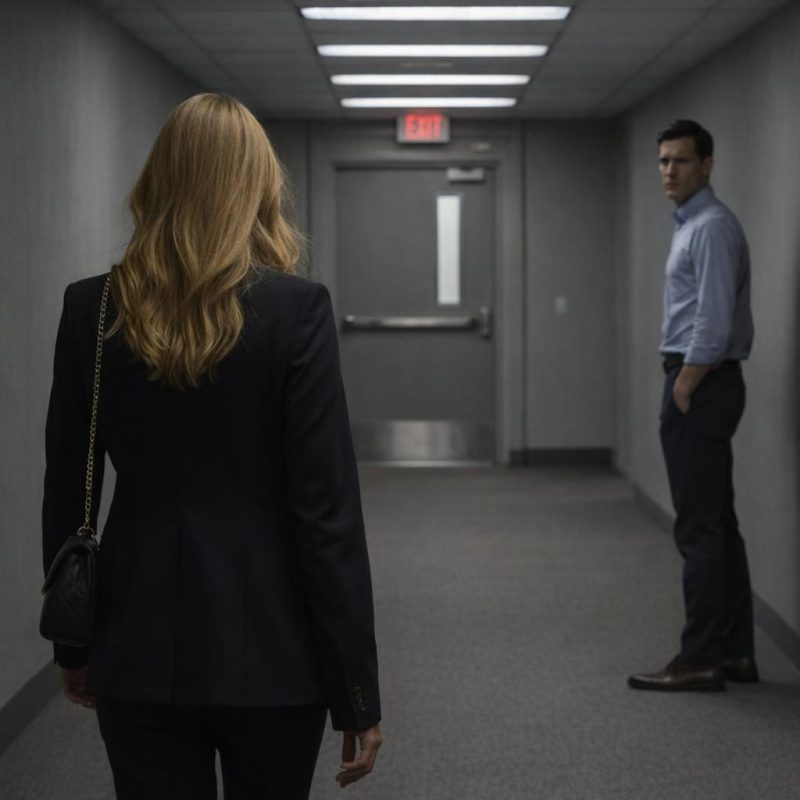 Image by RM AI
Family Weekend
We leave straight from the apartment Friday evening, bags already packed from the night before. Maya takes the first stretch of highway while I handle the music, and somewhere around the second hour we stop arguing about the playlist and just talk — the easy kind, about nothing in particular, the way we used to before everything got complicated. My parents' place is lit up when we pull in, my mom already on the porch. Saturday morning I'm out in the yard by eight, helping my dad clear the back fence line while Maya sits on the steps with her coffee, occasionally offering commentary that makes my dad laugh harder than anything I say. We eat dinner at the big table that evening, the kind of meal that takes two hours because nobody's in a hurry to leave it. That night, lying in my old childhood bedroom with the same slightly-too-soft mattress and the streetlight coming through the curtain gap, I feel the week drain out of me completely. Maya's already asleep beside me. The house is quiet. Whatever had been sitting in the back of my mind all week doesn't follow me here.
 Image by RM AI
Monday Returns
Monday morning feels like stepping back into a different skin — the commute, the badge tap, the elevator, the particular hum of the office coming to life. I set my bag down and notice right away that Sarah's desk is empty. No coat on the chair, no coffee cup, screen dark. I don't think much of it at first. James stops by around nine, refilling his mug, and mentions almost in passing that Sarah called in sick. I nod and go back to my inbox. There's a backlog from the weekend — a few client threads, a revised brief that needs a response, two calendar invites I'd missed. I work through them steadily, and by noon I've cleared most of it. The afternoon is quiet in a productive way. No interruptions, no awkward hallway moments, just the work. I stay until six, finish a section of the campaign deck I'd been putting off, and head out feeling like I've actually caught up for the first time in weeks. Back at my desk before I leave, I glance once across the floor at the empty chair and the dark monitor where Sarah usually sits.
 Image by RM AI
The Cold Return
Sarah is back Tuesday morning. I see her coat on the chair before I see her, and when she comes in from the elevator I say good morning the same way I always do. She nods. No words. I tell myself she's still not feeling well and leave it at that. Around ten I send her an email about the campaign timeline — a simple question, two sentences, the kind of thing that usually gets a paragraph back. What I get is: 'Friday.' That's the whole reply. One word. I read it twice, then close the thread. In the break room at lunch she's pouring coffee when I walk in. She caps her travel mug, picks up her phone, and walks out before I've even reached the counter. I stand there for a second, not sure what just happened. It's not hostile exactly — it's more like I've become invisible to her, like the version of me she used to make small talk with has been quietly retired. I spend the rest of the afternoon trying to focus on the deck, but the question keeps surfacing: what changed over the weekend? Then, late in the day, I ask her a simple question about a shared file — and her answer comes back in a tone so clipped and flat it stops me mid-sentence.
 Image by RM AI
The Unexpected Delivery
I get home Wednesday evening later than usual, still turning over the day in my head. I check the mailbox on the way in — habit more than expectation. There's the usual stack: a utility bill, a furniture catalog, something from the insurance company. And then, underneath all of it, an envelope I don't immediately place. No return address. My name and the home address written by hand in ink I don't recognize — careful, deliberate letters, slightly forward-leaning. I stand there on the front step for a moment, holding it. It's not a birthday. It's not a holiday. I can't think of anyone who would send a handwritten card to this address right now. I bring everything inside and set the stack on the kitchen counter. The other mail gets sorted quickly. The envelope sits where I put it, face up under the overhead light. I don't open it yet. I'm not sure why — something about the handwriting, or the absence of a return address, or just the timing of it. I make myself a glass of water and lean against the counter, looking at the unfamiliar script curving across the front of the envelope.
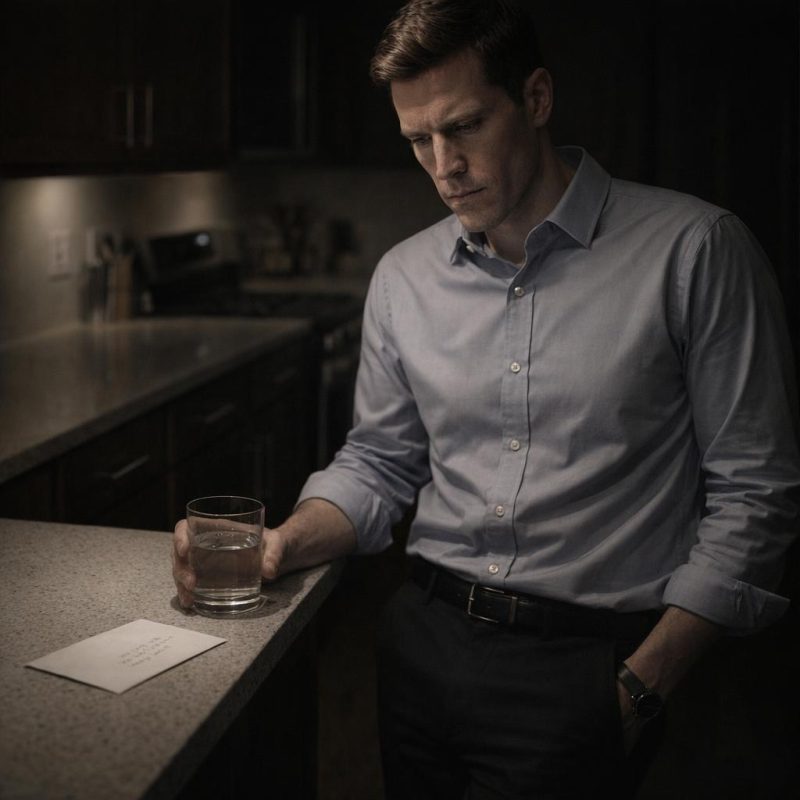 Image by RM AI
The Fabricated Story
I open it standing at the counter. It's a card — the kind you'd find in a boutique shop, heavy cream stock with a small pressed flower on the front. The handwriting inside is the same careful forward-lean from the envelope. I start reading and my brain takes a second to catch up with what my eyes are processing. It describes a weekend. A specific one — a boutique hotel, the name printed right there in the middle of the card like it belongs in a travel review. The Alderton. I know that name. Sarah mentioned it weeks ago, unprompted, in the middle of a conversation about nothing. The card goes on. Spa treatments. A private dinner. Phrases like 'our time together' and 'what we found there' written in a tone that assumes a shared memory I don't have. My hands have gone very still. I read it again from the top, slower this time, checking whether I've misread something, whether there's a joke buried in it somewhere that I'm missing. There isn't. The card is signed with a single initial. I set it down on the counter and just stand there, the specific details of a weekend I never had sitting in front of me in someone else's handwriting.
 Image by RM AI
Maya Finds the Card
I'm still standing at the counter when I hear Maya's key in the lock. I reach for the card — I'm not sure if I'm going to put it away or just hold it — and then she's already inside, dropping her bag by the door, saying something about the traffic on the bridge. She comes into the kitchen and her eyes go straight to the counter the way they always do, scanning for the mail. I watch her pick up the card before I can say anything. 'What's this?' she asks, already reading. I open my mouth. I say her name. She doesn't look up. The room goes very quiet. I start talking — I tell her it came in the mail today, that I don't know why it exists, that none of what it describes is real. She's still reading. When she finally looks up, I can see her working through it, trying to find the version of this that makes sense. 'This is the hotel,' she says, and her voice is careful in a way that's worse than if she'd raised it. 'The one you mentioned.' I tell her I never went there. I tell her nothing happened. I watch her face change as she reads the card a second time.
 Image by RM AI
The Receipt
Maya sets the card down and I pick up the envelope to show her there's no return address — and that's when I feel it. Something still inside. I tip the envelope and a small folded slip of paper slides out onto the counter. A receipt. Printed on thin thermal paper, the kind that comes from a card reader. I pick it up and read it. A lingerie purchase — a store name I recognize, a dollar amount that isn't small. Maya leans in beside me. Neither of us says anything for a moment. I turn the receipt over, then back, looking at the full printout. There's a date printed at the top in the small standard font those receipts always use. I stare at it. My brain runs the calculation automatically, the way it does when something doesn't fit. That date is Saturday. The Saturday I was in my parents' backyard pulling fence posts with my dad while Maya sat on the steps with her coffee. Maya sees it at the same moment I do. She straightens up slowly. 'How do you explain that?' she asks, her voice gone quiet. I look at the date on the receipt, and I have no answer.
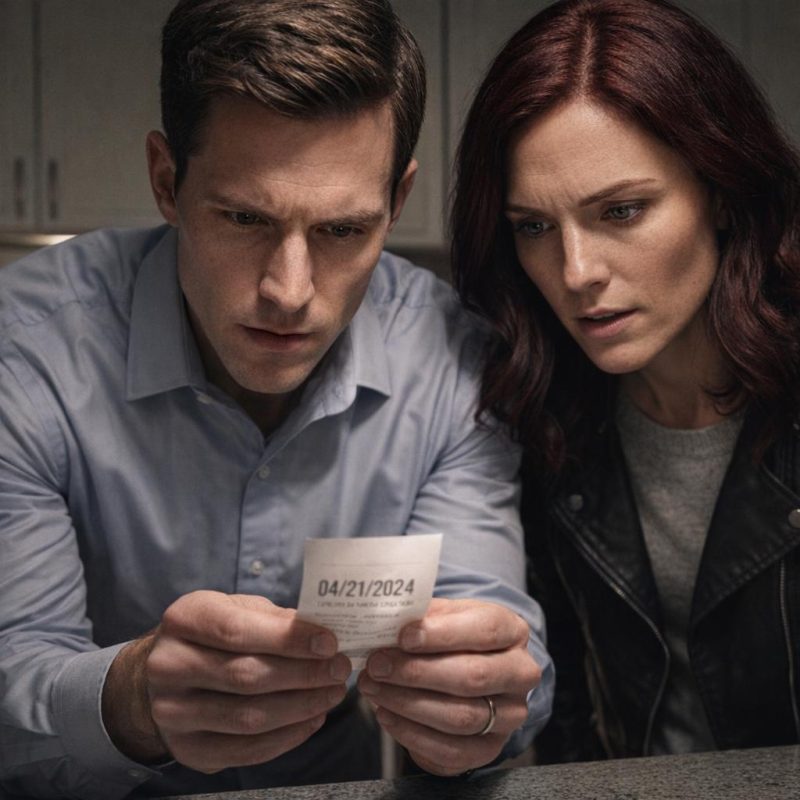 Image by RM AI
The Impossible Timeline
I set the receipt flat on the counter and point to the date printed at the top. 'Look at that,' I say. 'That Saturday. We were at my parents' house. You were sitting on the back steps with your coffee when I was pulling fence posts with my dad.' Maya looks at the date. She doesn't argue with it. 'I know we were there,' she says quietly. 'I'm not saying you weren't.' But something in her voice stays careful, like she's holding a door open just a crack. I tell her the receipt has to be wrong — a misprint, a fake, something — because there's no other explanation that makes sense. She asks why someone would go to the trouble of faking a receipt and mailing it to our house. I don't have an answer for that. I tell her I don't know, but that I didn't buy anything from that store, and I wasn't anywhere near it that weekend. She nods slowly, but the nod doesn't reach her eyes. She says she needs some time to think. I watch her carry her coffee to the other room, and the distance between us feels heavier than anything I know how to lift.
 Image by RM AI
The Growing Doubt
We circle back to it that evening, the receipt sitting on the kitchen table between us like something neither of us wants to touch. I go through it again — the date, the weekend, the fact that I was with her the entire time. Maya listens. She doesn't interrupt. When I finish, she picks up the receipt and looks at it for a long moment. 'I want to believe you,' she says. 'I do.' But she sets it back down without saying that she does. I ask her directly — do you believe me? She looks at the table. She says the card and the receipt together are hard to just set aside. I tell her nothing happened with Sarah, that I don't know why any of this is showing up at our door, but that I need her to trust me while I figure it out. She says she needs more than my word. She says she needs something she can actually hold onto. I promise her I'll find out what's going on. She says okay. But she doesn't look at me when she says it, and the silence that follows swallows the word whole.
 Image by RM AI
The Unanswered Call
I call Sarah's cell phone Tuesday night and it rings through to voicemail. I hang up without leaving a message and try again an hour later. Same result. Wednesday morning I send a text — short, direct, asking her to call me when she gets a chance. No response by noon. I try calling from my office line in the afternoon, thinking maybe she's screening my number. It rings four times and drops to voicemail again. By Wednesday evening I'm pacing the kitchen, running through every possible explanation and landing on none of them. I try her cell one more time. When the voicemail picks up, I stay on the line. I keep my voice level. I ask her to call me back as soon as she can. I end the call and set my phone face-up on the counter, and I leave a voicemail asking Sarah to explain the card.
 Image by RM AI
The Prank Claim
Sarah calls Thursday morning while I'm still at my desk with my first cup of coffee. She sounds bright, a little confused, like someone who just heard something unexpected and is working through it in real time. She asks what card I'm talking about. I describe it — the envelope with no return address, the handwriting, the receipt tucked inside. There's a pause, and then she says that's bizarre. She says she didn't send anything to my house. She asks if I'm sure it came from her, and I tell her the card was signed with her name. Another pause. Then she says someone must be playing a cruel joke — on both of us, she adds, like she's a victim in this too. She asks if I have any enemies at work, anyone who might want to stir up trouble. I tell her I can't think of anyone. She says she's sorry this is happening and that she hopes Maya and I are okay. She sounds genuinely concerned. I hang up and sit with my coffee going cold, and something about how smoothly the whole conversation had gone stays with me long after the call ends.
 Image by RM AI
Examining the Evidence
The receipt is still on the kitchen table where Maya left it. I pick it up Friday morning after she leaves for work and take it to the window where the light is better. I've looked at it before, but this time I go line by line. Store name, date, item description, dollar amount — all the standard fields. Then I get to the bottom. There's a row of smaller print I'd skimmed past before. An account number. A long string of digits formatted in a way that looks familiar in a way I can't immediately place. I stare at it. The format — the prefix, the length, the way the digits are grouped — looks like the kind of account number I see on internal expense reports at work. Not a personal credit card. Something else. I set the receipt down on the table and look at it from a slight distance, like that might help me see it differently. A personal purchase from a lingerie store, paid through what looks like it might be a corporate account. I sit with that detail for a long time, the account number at the bottom of the receipt sitting in my mind like something I haven't found the right question for yet.
 Image by RM AI
The Fraudulent Charge
I open the company expense portal on my laptop Saturday morning, the receipt propped against my coffee mug for reference. I navigate to the search function and enter the date from the receipt, then the dollar amount. The system takes a few seconds. A single entry populates. I lean closer to the screen. The store name matches. The date matches. The amount matches down to the cent. I scroll right to see the full entry details — the employee name, the ID number attached to the charge. My eyes move across the row and stop. The name on the entry is mine. The employee ID number is mine. I sit back in my chair and look at the screen without moving. The entry is there in the system — my name, my ID, a lingerie purchase I never made. I take a screenshot. Then another, making sure the full entry is visible — the date, the amount, the store, and my name sitting at the top of the record. My hands are steady but my chest isn't, and I keep staring at the screen because I can't quite make myself look away from the charge listed under my employee ID.
 Image by RM AI
Building the Case
I spend the next two hours at my kitchen table building a file. I take four screenshots of the expense entry from different zoom levels, making sure my name and employee ID are legible in each one. I photograph the physical receipt with my phone, then scan it with the document app so I have a clean digital copy. I open a blank document and start typing a timeline — the first time Sarah invited me to lunch, the dates she stopped by my desk, the weekend at my parents' house, the date on the receipt, the date the card arrived. I pull up my calendar and cross-reference each entry, adding the specific dates where I have them. I note the account number format and type a separate paragraph about what I found in the expense system. I save everything into a single folder, label it with the date, and back it up to my external drive. When I finally sit back and look at what I've assembled, it's more than I expected — a clear sequence with dates and documentation at each step. I close the laptop and leave my hands resting on the lid, the growing file of evidence sitting quietly inside it.
 Image by RM AI
Seeking Validation
I catch James before the Friday morning team meeting and ask if he has ten minutes. We find an empty conference room and I close the door. I lay it out for him — the card, the receipt, the expense entry under my name — and I set the screenshots on the table so he can see them. He doesn't reach for his phone or look at the clock. He reads through everything carefully, asks me to walk him back through the timeline, and listens without interrupting. When I finish, he's quiet for a moment. Then he says he's glad I told him. He says he's noticed Sarah focus on colleagues before in ways that have made him uneasy — something about the intensity of it, though he says he's never been able to put his finger on exactly what bothered him. He doesn't elaborate beyond that, but he says it clearly, like it's something he's thought about more than once. He tells me to document everything and take it to HR, and that he'll back me up if it comes to that. I walk out of that conference room still carrying all the same evidence, all the same uncertainty — but for the first time in days, the weight of it feels like something I don't have to hold entirely on my own.
 Image by RM AI
The GPS Solution
Maya is sitting on the couch with her knees pulled up, watching me pace the length of the apartment for what feels like the hundredth time. I've been going over everything out loud — the card, the receipt, the expense entry — trying to find something I've missed, some piece of evidence that doesn't require anyone to simply take my word for it. She hasn't said much. Her eyes follow me, tired and patient, but I can see the strain in them. I stop in the middle of the room and press my hands against the back of my neck. There has to be something concrete. Something that can't be argued with. And then it hits me — the company vehicles. Every one of them has GPS tracking installed through the fleet management system. I've known about it for years; it's standard policy for insurance and mileage reporting. I turn toward Maya and tell her: the car I drove that weekend was a company vehicle. She straightens slightly and asks if I can pull those records. I tell her the IT department maintains the tracking system and that the logs would show every location, every timestamp, for the entire weekend. For the first time since I found that card, something in my chest loosens — because those vehicle logs could show exactly where I was.
 Image by RM AI
Requesting the Data
I get to the office forty minutes before most people arrive on Monday morning. The IT department is on the second floor, and I take the stairs rather than wait for the elevator. There's one technician already at his desk — headphones around his neck, coffee still steaming — and he looks up when I knock on the open door frame. I explain that I need GPS tracking logs from a company fleet vehicle, and I give him the vehicle ID number and the date range: Friday through Sunday of the weekend in question. He pulls up the fleet management interface without any hesitation, types in the vehicle number, and confirms the data is there. He asks whether I need the raw export or a formatted report. I tell him either will work, and he walks me through the formal request process — I have to submit it through the company portal so there's a proper record of the pull. I sit down at the terminal he points me to and fill out the request form carefully, double-checking the vehicle ID and the timestamps before I submit it. The technician glances at his screen and tells me the data exists and can be downloaded once the request clears the system.
 Image by RM AI
The Location Proof
The email comes through just after lunch — a notification that my GPS data request has been processed and the file is ready for download. I close my office door, open the portal, and pull up the tracking export. The file loads as a timestamped log, coordinates updating every few minutes across the entire weekend. I scroll to Friday evening first. The vehicle arrived at my parents' address at 6:47 PM and the coordinates are exact — I cross-reference them against the street address and they match without any ambiguity. I keep scrolling. Saturday morning, same location. Saturday afternoon, same location. Sunday, the vehicle doesn't move until just after 2 PM, when it logs the return route. Every single entry across the entire weekend places the car at one address. I take screenshots of the full log, save the original export file to a separate folder, and add both to the documentation I've been building. Then I sit back in my chair and look at the screen — at the rows of coordinates and timestamps that don't waver, don't contradict, don't leave any room for interpretation. The numbers just sit there, steady and indifferent, marking exactly where I was.
 Image by RM AI
The Spreading Story
James catches me in the hallway outside the break room just before the afternoon stand-up. He asks, quietly, if I'm doing okay — and something in the way he says it makes me stop. I ask him what he means. He glances toward the open office behind us, then back at me, and says that Sarah mentioned something to a few people last week — something about a weekend trip. My stomach drops. I ask him to be more specific. He says she brought it up in conversation, the way you'd mention something that actually happened — a boutique hotel, a weekend away. He says she seemed upset when she talked about it, like she was confiding in people rather than gossiping. I stand there trying to keep my expression neutral while everything in my head starts moving too fast. The card was one thing. The expense entry was another. But this is different — this is a story being told out loud, to real people, in a building where my reputation is the only thing standing between me and whatever comes next. James is still watching me carefully. I tell him I need to show him something. We're halfway back to my office when I hear one of the junior analysts mention the weekend trip Sarah had described.
 Image by RM AI
The Harassment File
James pulls up the shared drive on my office computer and navigates to a folder under Sarah's project directory — one she apparently hadn't locked down properly. He says he noticed it a few days ago and wasn't sure what to make of it. I lean in. There are several documents inside, named with dates and initials. I open the first one and start reading. The language is formal, structured — the kind of document you'd file with HR. I keep reading. It describes a pattern of unwanted advances, references one-on-one meetings, mentions a hotel weekend. It describes the card. It references the expense entry. James is very still beside me. I scroll further and find a second document — notes, bullet points, a rough outline of a timeline. At the bottom of that page, there's a section with my job title, my current project assignments, and a line about the senior role opening in the next quarter. I look at the screen for a long moment. Then I look at James. He's staring at the same line I am. I scroll back to the top of the first document and find the draft complaint with my name listed as the accused harasser.
 Image by RM AI
Reframing the Past
I sit alone in my office after James leaves, the door closed, the screen still open in front of me. I go back through everything — not the documents, but the actual moments. The coffee invitation in the first week, casual and collegial, easy to say yes to. The touch on my arm in the hallway, brief enough to seem accidental, but in full view of two other colleagues. The dinner suggestion, framed as a team thing until it wasn't. The hotel invitation, which I turned down, and which I now understand was the centerpiece of something much larger than I'd let myself consider. I think about the tears in the break room — how visible they were, how quickly word seemed to travel afterward. Each moment, standing alone, had seemed like ordinary workplace friction. Uncomfortable, yes. Worth documenting, maybe. But ordinary. Sitting here now, I can see the shape of it differently — not as a series of isolated incidents but as a sequence, each one adding a layer, each one witnessed or recorded or both. I don't move for a long time. The office hums around me, phones ringing somewhere down the hall, keyboards clicking, the ordinary sounds of a workday continuing without any awareness of what I'm sitting with — the pattern of it, laid out in front of me, impossible to unsee.
 Image by RM AI
The Manufactured Evidence
I pick up the card again — the physical one, still in the evidence folder I've been keeping — and read it through one more time. I've read it a dozen times before, but this time I'm not looking for what it says. I'm looking at what it was built to do. The handwriting is careful. The wording is specific enough to imply intimacy without being explicit — exactly the kind of language that would read differently to Maya than it would to an HR investigator. The hotel name printed on the receipt is the same one Sarah mentioned in passing weeks ago, the one she said she'd heard was nice. I'd barely registered it at the time. The corporate account used for the charge is one I have access to — not one I use often, but one that would appear in my expense history if anyone pulled the records. The card was addressed to my home. Maya was always going to find it. I set the card back down on the desk and don't reach for anything else. The room is quiet. I sit with the weight of how precisely each detail had been fitted into place — the hotel name, the account number, the address, the wording — every piece of it pointing in one direction, toward one purpose.
 Image by RM AI
The Career Motive
James comes back after the afternoon meeting wraps up and we go through the rest of the folder together. Most of it is what I've already seen — the draft complaint, the timeline notes. But near the bottom of the file list there's a spreadsheet I haven't opened yet. James clicks on it. It's a comparison document — two columns, my current role on one side, the senior position on the other, with salary figures, project ownership, reporting lines. There are tabs along the bottom: one labeled with my name, one labeled with hers. I click through to mine. It's a breakdown of my current responsibilities, my project portfolio, the promotion timeline that my manager and I had discussed privately three months ago. I don't know how she had access to that information. James scrolls down without saying anything. At the bottom of the tab there's a handwritten-style note field — the kind you can add in the cell comments — and it lists my upcoming project assignments by name, with estimated completion dates. James points at the screen and says quietly that she would have been next in line for the role if I were gone. I look at the spreadsheet for a long moment, then scroll back to the top — to Sarah's notes about my upcoming promotion and project assignments, laid out in a document I was never supposed to find.
 Image by RM AI
Sharing the Truth
I spread everything across the kitchen table before Maya gets home — the timeline printout, the GPS data, the expense screenshots, the card, the receipt, and the spreadsheet with my name on one tab and Sarah's on the other. When Maya walks in and sees it all laid out, she stops in the doorway. I don't say anything at first. I just let her look. She sets her bag down slowly and comes to the table, and I walk her through it piece by piece — the invitations I turned down, the card that showed up at our address, the lingerie charge filed under my employee ID on a weekend I was two hours away at my parents' house. I show her the GPS log. I show her the draft complaint with her name in it, the one Sarah had written weeks before any of this came to a head. Maya reads it twice. Then she looks up at me and says she's sorry — not in a rushed way, but in the way people say it when they mean it all the way through. We sit together at the table for a long time after that, the evidence still spread between us, and something that had been pulled tight in my chest for weeks finally goes quiet.
 Image by RM AI
The Complete Package
We stay up past midnight putting the package together. Maya sits beside me at the laptop while I build the master document — a clean, numbered timeline starting from the first invitation and running through every incident in order. I attach the expense screenshots with the employee ID circled, the receipt with the date highlighted, the GPS log showing my location that entire weekend. I include the card and a photo of the envelope with our home address on it. I add James's written account of what he'd observed over the past several months, formatted as a witness statement. Then I attach the draft harassment complaint and, behind it, the career advancement spreadsheet — Sarah's tab, my tab, the cell comments listing my upcoming project assignments. Maya reads through the full package once I've assembled it and says it's clear, that anyone reading it would understand exactly what happened. I save it to three separate locations and print two hard copies. I label the folder with the date and close the laptop. The cover page reads: Summary of Fraudulent Activity and Fabricated Complaint — with every exhibit listed beneath it in order.
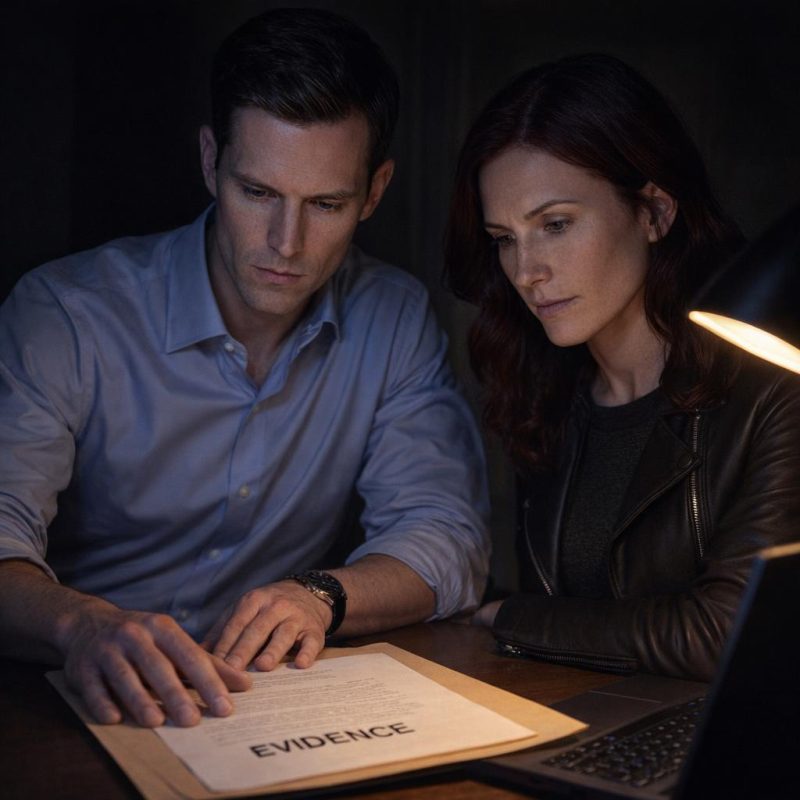 Image by RM AI
The HR Meeting Request
I draft the email to Diana on Sunday evening, sitting at the kitchen table with the printed folder beside me. I keep it short — I indicate that I need to request an urgent, confidential meeting regarding a matter involving financial fraud and false accusations, and that I have a prepared evidence package ready to present. I don't name Sarah. I don't lay out the details. I just make clear that it's serious and that it can't wait. I send it at seven-forty-two and don't expect a response until morning. Diana replies at eight-fifty-three. She says she can meet me at eight the next morning, that she'll have the conference room reserved, and that I should bring whatever documentation I have. I confirm immediately. I spend the rest of the evening going through the package one more time — checking the order of the exhibits, making sure the timeline is clean, reading the cover page again. By the time I close the folder and set it by the door for the morning, the apartment is quiet and the weight of what I'm about to walk into settles over me like something solid.
 Image by RM AI
Presenting the Timeline
I arrive at the HR office eight minutes early. Diana is already there, coffee in hand, and she closes the conference room door behind us without being asked. I appreciate that. I start at the beginning — the first lunch invitation I declined, the after-work drinks, the weekend trip to the coast that I turned down clearly and more than once. I describe the card arriving at our home address, the one signed with a personal note that had no business being sent there. I explain the timeline contradiction: the card references a weekend when I was at my parents' house, a fact I can document. Diana asks when I first noticed the pattern of invitations. She asks whether I ever responded in writing. She asks about the card specifically — who else had access to my home address through work systems. I answer each question with the date, the context, and the corresponding exhibit number in the folder. I don't editorialize. I just walk her through it in order. Diana writes steadily the entire time, filling two pages of her legal pad, and she doesn't look up from her notes except to ask the next question — her pen moving in careful, deliberate strokes across the page.
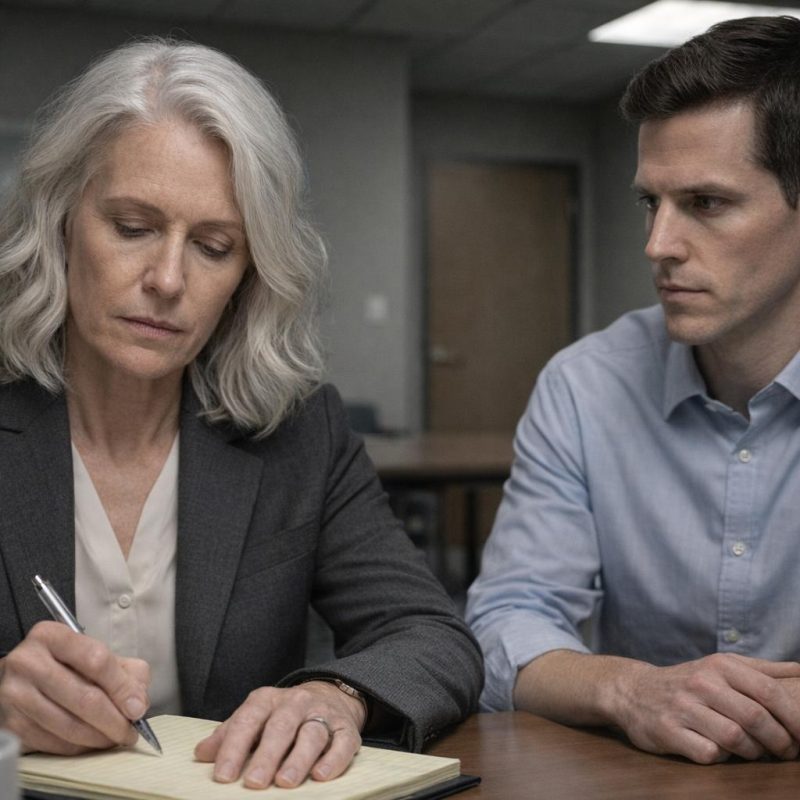 Image by RM AI
The Fraud Evidence
I slide the receipt across the table and set the expense system screenshot beside it. Diana picks up the receipt first, reads the date, reads the vendor name, then sets it down and looks at the screenshot. I explain that I never made this purchase, never authorized it, and was not in the city that weekend — and that the charge was filed under my employee ID in the corporate expense system. Diana leans forward. She asks me to confirm the employee ID on the screenshot is mine. I point to the number. She writes it down, then looks at the receipt date again and cross-references it against the timeline page in the folder. I tell her I have GPS vehicle data placing me at my parents' address the entire weekend. She asks to see it. I pull up the log on my laptop and turn the screen toward her — timestamps, coordinates, every stop. Diana is quiet for a moment. Then she says that unauthorized use of a corporate account to file a fraudulent expense is a terminable offense, and that she'll need to pull the system records directly. She reaches for her notepad. I watch her face change as she looks back at the evidence — something behind her eyes going from careful attention to something sharper and more immediate.
 Image by RM AI
Sarah's Arrival
Diana steps out of the conference room for about three minutes. When she comes back, she tells me she's asked Sarah to come down. She says it matter-of-factly, the way she says everything, and then she sits back down and straightens her notepad. I stay where I am. The evidence is still laid out across the table — the receipt, the screenshots, the GPS log, the timeline. I don't move any of it. I pour myself a glass of water from the pitcher on the credenza and sit with my hands flat on the table. The wait is maybe seven minutes. Then the door opens. Sarah steps into the conference room, and for just a moment — less than a second — something crosses her face when she sees me sitting there across from Diana's notes and the open folder. Then it's gone, replaced by the composed, polished expression she wears like a second skin. Diana tells her to sit down and explains that this is a formal investigation meeting. Sarah smooths her jacket, pulls out the chair across from me, and sits.
 Image by RM AI
The Harassment Claim
Diana starts with the expense entry. She sets the receipt and the screenshot in front of Sarah and asks her to explain the charge filed under my employee ID. Sarah looks at both documents for a moment. She says she doesn't know anything about that purchase. Diana asks again, specifically — whether Sarah has ever accessed my corporate expense account. Sarah says no. Then Diana asks about the vendor, the date, the amount. Sarah's jaw tightens slightly. She looks at me, then back at Diana, and something shifts in her posture. She says she thinks there's a larger context Diana needs to understand. She says I have been making her uncomfortable for weeks. She says the hotel trip wasn't something she suggested — that I pressured her to go, that the whole situation has been one-sided and unwanted. She says the purchase might be connected to that, that I was trying to manipulate the situation. Her voice is steady and her hands are still. Diana writes something down and asks Sarah whether she has any documentation of these claims, any record of reporting the behavior. Sarah says she has been preparing to file formally, that she has witnesses, that this has been building for some time. I sit across from her and listen to her tell Diana that I harassed her and forced the hotel trip.
 Image by RM AI
The Draft Complaint
I wait until Sarah finishes. Then I open the folder to the second-to-last tab and slide a printed document across the table to Diana. I tell her this is a harassment complaint draft I found saved in a shared project folder — and I give her the file path and the creation date. Diana picks it up. The document names me as the subject. It describes a pattern of unwanted pursuit, a coerced hotel stay, inappropriate gifts. Diana reads it without speaking. I watch Sarah's face as Diana reads. The color drains out of it in a way that isn't subtle. Diana looks up from the page and asks Sarah to explain why a formal complaint was drafted weeks before the incidents it describes. Sarah says it was just notes, that she was processing her thoughts. I slide the career advancement spreadsheet across next — Sarah's tab open, my promotion timeline laid out in her cell comments, my upcoming project assignments listed by name. Diana looks at it for a long moment. She looks at the draft complaint again. She looks at the spreadsheet. Then she sets both documents down side by side on the table, picks up her pen, and the conference room goes completely still.
 Image by RM AI
Legal Involvement
Diana sets her pen down and tells us she needs to make a call. She steps out of the conference room without looking at either of us, and the silence she leaves behind is the kind that has weight. Sarah doesn't speak. I don't either. About twelve minutes later, Diana comes back with a man I don't recognize — mid-fifties, dark suit, a leather portfolio under his arm. She introduces him as the company's legal counsel and asks him to take a seat. Diana walks him through the evidence methodically: the expense reports, the receipts, the spreadsheet with my name in Sarah's cell comments, and finally the draft harassment complaint with its creation date sitting weeks before the incidents it describes. Legal counsel reads without interrupting. He turns pages slowly. When he finishes, he closes the portfolio and says this documentation reflects multiple terminable offenses — fraud, false documentation, and fabricated accusations against a colleague. Diana turns to Sarah and tells her she is being placed on immediate administrative leave pending the conclusion of the investigation. She turns to me and says I should remain available for follow-up but that my conduct throughout has been appropriate. Then she thanks me, directly, for bringing this forward. Legal counsel's words sit in the room: multiple terminable offenses, stated flat and without qualification.
 Image by RM AI
The Termination
Three days pass. I check my phone more than I should and try to focus on work that keeps sliding out of reach. Then Diana calls and asks me to come to her office. I sit across from her desk and she doesn't make me wait. She tells me the investigation is complete. Sarah has been terminated, effective immediately, for fraud, false documentation, and misuse of company resources. The findings were unambiguous. My record, Diana says, is completely clear — no notation, no flag, nothing. She pauses and then says she's sorry for what I went through, and the way she says it doesn't sound like a formality. She tells me the promotion will proceed as planned and that the project leads have already been notified. I thank her for being thorough, and I mean it. When I stand up to leave, my legs feel steadier than they have in weeks. I walk out of the HR office and into the hallway, and the fluorescent hum of the building sounds exactly the same as it always has — but something in my chest has gone quiet in a way it hasn't been since the morning that card arrived at my house.
 Image by RM AI
Rebuilding Trust
I get home before Maya does and I sit on the couch without turning on any lights. When she walks in and sees my face, she stops in the doorway and asks if it's over. I tell her yes. Sarah is gone. It's done. Maya crosses the room and sits down next to me and for a moment neither of us says anything. Then she exhales — long and slow — and says she's so relieved she doesn't know what to do with herself. I tell her I'm sorry for the stress I put her through, and she shakes her head and says that's not how she sees it. She says she's sorry too, for the moments she let doubt creep in, even briefly. I tell her I understood it. I would have doubted too. We talk for a long time after that — about how we handled it, about the nights it felt like too much, about the fact that we didn't walk away from each other when it would have been easier to. Maya says the whole thing showed her something she already believed but now actually knows: that we can face something hard and come out the other side still holding on. We make plans for a weekend away, somewhere quiet, just the two of us. Later, sitting beside her with the apartment finally still around us, I feel the weight of the last several weeks settle and release.
 Image by RM AI
Moving Forward
Monday morning I'm back at my desk before most people arrive. The office looks the same — same carpet, same overhead lights, same hum of the HVAC — and I'm glad for the ordinary of it. James stops by mid-morning, coffee in hand, and leans against the doorframe. He asks how I'm doing, and I tell him I'm good, genuinely. He nods like he already knew that. I thank him for what he did — for noticing, for saying something, for not letting me feel like I was imagining things. He says he's glad I documented everything, that the paper trail is what made it airtight. I tell him I almost didn't. He gives me a look that says he's heard that before. After he leaves I sit with that for a minute — how close it came to going a different way, how much it mattered to write things down, to keep receipts, to trust what I was seeing even when I second-guessed myself. I pull up the new project brief and start reading. The promotion paperwork is sitting in my inbox, signed and countersigned. By the time I close my laptop at the end of the day, the office has emptied out around me, and I feel grounded in a way that doesn't need explaining — steady, clear-eyed, and ready for whatever comes next.
 Image by RM AI
KEEP ON READING

The story of Ching Shih, the Woman Who Became the…
Unknown author on WikimediaFew figures in history are as feared…
By Emilie Richardson-Dupuis Dec 29, 2025
Einstein's Violin Just Sold At An Auction—And It Earned More…
A Visionary's Violin. Wanda von Debschitz-Kunowski on WikimediaWhen you hear…
By Ashley Bast Nov 3, 2025
This Infamous Ancient Greek Burned Down An Ancient Wonder Just…
History remembers kings and conquerors, but sometimes, it also remembers…
By David Davidovic Nov 12, 2025
The Mysterious "Sea People" Who Collapsed Civilization
3,200 years ago, Bronze Age civilization in the Mediterranean suddenly…
By Robbie Woods Mar 18, 2025
The Day the Sun Didn’t Rise: The Unexplained New England…
Alina Nichepurenko on UnsplashImagine waking up on a spring morning,…
By Sara Springsteen Jun 18, 2026
20 Soldiers Who Defied Expectations
Changing the Rules of the Battlefield. You’ve probably heard plenty…
By Annie Byrd Feb 10, 2026