

My Best Friend's Son Spread Vicious Rumors About Me After Her Death, But Her Hidden Journals Revealed The Truth
My Best Friend's Son Spread Vicious Rumors About Me After Her Death, But Her Hidden Journals Revealed The Truth
The Call That Changed Everything
The call came on a Tuesday morning, which somehow made it worse — ordinary days have no business carrying news like that. It was Carol's daughter Megan on the line, her voice thin and careful, telling me that her mother had passed in the early hours, quietly, after only a few weeks of what we'd all hoped was a manageable illness. I sat down on the kitchen chair and I don't think I said much of anything for a long moment. Thirty years. Thirty years of birthday cards left on each other's doorsteps, of Thanksgiving tables and Christmas mornings and the kind of Tuesday phone calls that meant nothing and everything at the same time. Carol wasn't just my best friend — she was the person who knew every version of me, the young woman I'd been and the older one I'd become, and she had loved both without reservation. We had held each other through divorces and diagnoses and the deaths of our own parents. She was, in every way that mattered, the sister I never had by blood. I kept telling myself to say something useful to Megan, to be the steady one, but the words wouldn't come. After we hung up I just sat there in the kitchen, the phone still warm in my hand, the house around me so quiet it felt like the walls were holding their breath.
 Image by RM AI
An Unexpected Honor
Megan called again the following afternoon, and I was grateful just to hear a voice that had known Carol the way I had. She sounded steadier than the day before, though I could still catch the rawness underneath. She asked if I would be willing to say a few words at the service — something personal, something that captured who her mother really was. I had to press my hand flat against the kitchen counter to keep myself together. Of all the things Megan could have asked me, this felt like the most meaningful. Who else had thirty years of stories? Who else remembered the way Carol laughed at her own jokes before she even finished telling them, or how she always brought two desserts to every potluck because she could never choose just one? Megan said the family wanted people to hear from someone who had truly known her mother, not just as a neighbor or a colleague but as a real and lasting friend. I told her I would be honored. I meant it in a way I don't have words for even now. We talked for a little while longer about the arrangements, and by the time we said goodbye I already had the first line of what I wanted to say forming somewhere in the back of my mind. I told Megan I would be there, and that I would do her mother proud.
 Image by RM AI
Sorting Through Decades
I spent the better part of three days at my kitchen table with a legal pad and a box of old photographs. The photographs were the hardest part. I'd pull one out and there we'd be — Carol and I at some long-ago Fourth of July, sunburned and laughing at something neither of us could probably remember, or the two of us at her kitchen table the winter her mother was sick, both of us looking tired in the way that only real worry makes you tired. There were birthday dinners and one memorable road trip we took in our fifties that we swore we'd never speak of again and then talked about for years. I wrote and rewrote the remarks more times than I can count. Every draft felt either too long or too small for what I was trying to say. How do you compress thirty years into five minutes without losing the person entirely? I kept starting over, crossing out whole paragraphs, trying to find the sentences that were actually Carol and not just a list of events. By the third night I had something I felt she would have recognized — not perfect, but honest, which was the only thing she ever really asked of anyone. I turned off the kitchen light sometime past midnight, the legal pad finally still in front of me, and sat for a moment in the dark with the quiet satisfaction of having done something that needed doing.
 Image by RM AI
The Call That Withdrew the Invitation
The phone rang the night before the funeral, and when I saw Megan's name on the screen I assumed it was a small logistical detail — a time change, a parking note, something ordinary. Her voice told me otherwise before she'd finished her first sentence. It was careful in a way that the previous call hadn't been, measured in a way that felt like she was reading from something she'd rehearsed. She told me the family had talked it over and they'd decided to keep the service a little shorter than originally planned. They were going to limit the remarks to immediate family only. She was sorry, she said. She hoped I understood. I asked, gently, whether something had changed, and she said no, nothing had changed, they just wanted to keep things simple and brief. I didn't push. I didn't have it in me to push. The grief was sitting so heavily on my chest by then that even a small argument felt like more than I could carry. I told her I understood, and I think I meant it, or at least I wanted to mean it. After we said goodnight I sat with the phone in my lap and listened to Megan's strained voice in my memory, the way it had pulled tight around the edges of that explanation, careful and uncomfortable in equal measure.
 Image by RM AI
A Hollow Explanation
I sat at the kitchen table for a long time after that call ended. The legal pad with my remarks was right there in front of me, three days of work in my own handwriting, every crossed-out line and rewritten sentence still visible underneath. The explanation Megan had given me — keeping things shorter, simpler — wasn't unreasonable on its face. Families make those decisions. Services get trimmed. I knew that. But something about the timing of it, the night before, after I'd already written and rewritten and written again, sat in me like a stone I couldn't quite swallow. I didn't have the energy to call back and ask harder questions. The grief had taken most of what I had, and what was left didn't feel like enough to spend on an argument I wasn't sure I had the right to make. Carol's service was Carol's family's to arrange. That was true whether it hurt or not. I told myself that several times while I sat there. Eventually I picked up the legal pad, carried it to the small desk in the hallway, and set it in the drawer beneath a stack of old envelopes, face down, out of sight.
 Image by RM AI
Sitting in the Back
I dressed carefully the morning of the funeral, the way Carol always said you should dress for the people you love — not to be seen, but to show respect. I drove to the church alone and arrived a few minutes early, which I immediately regretted because it meant standing near the entrance longer than I wanted to. The room was already filling with people I recognized, neighbors and old friends and faces from the years Carol and I had moved through together. I saw Megan near the front, speaking quietly with someone from the family, and I didn't approach her. Something about the way the room was arranged — the family clustered at the front, the rows filling in behind them — made me feel the distance between where I belonged and where I was standing. I found a seat near the back, close to the aisle, where I could see the photographs of Carol arranged near the altar without being in anyone's way. It was a strange feeling, sitting there. I had known this woman for thirty years. I had held her hand in hospital waiting rooms. And yet I sat near the back like someone who had read about her in a program and wanted to pay their respects, the family at the front of the room feeling very far away.
 Image by RM AI
The Cold Shoulders
The service itself was beautiful, and Carol deserved every word of it. But somewhere in the middle of it I started noticing something I couldn't quite name. A woman I'd known for years — someone Carol and I had both attended the same neighborhood block parties with for over a decade — glanced in my direction from across the aisle and then looked quickly away, the way you look away from something you weren't supposed to see. I told myself it was nothing. People are distracted at funerals. Eyes go everywhere and nowhere. But then it happened again with someone else, a man whose wife had been in Carol's book club, and then again with a couple I'd exchanged Christmas cards with for years. Each time, the same small flinch of avoidance, the same careful redirection of attention. I started to feel self-conscious in a way I hadn't expected, smoothing my jacket, checking that I hadn't somehow sat in the wrong place or done something without realizing it. Ellen was seated two rows ahead of me and slightly to the left. We had been neighbors for years, the kind of neighbors who wave from driveways and stop to talk about nothing in particular, and I had always liked her. When the service ended and people began to stand and move, I caught her eye — or I thought I did — and she turned away without a word.
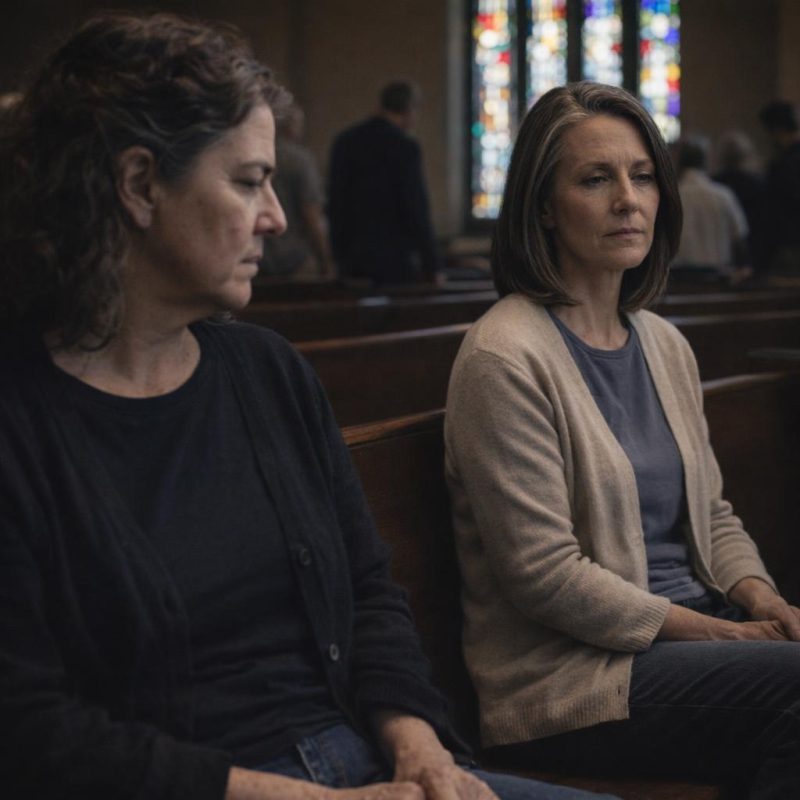 Image by RM AI
Neighbors Who Look Away
After the service people gathered in the fellowship hall, the way they always do, small clusters forming around coffee and plates of food that nobody really wanted to eat. I moved through the room slowly, the way you do when you're not sure where you belong. I spotted a neighbor I'd known for at least fifteen years — we'd swapped garden cuttings, helped each other with groceries during bad winters — and I walked toward her with what I hoped was a normal expression on my face. She saw me coming. I was close enough to be certain of that. She said something brief to the woman beside her, touched her arm, and the two of them drifted toward the far side of the room. I stood there for a moment and then kept moving, telling myself there was a reasonable explanation. A few minutes later I saw another acquaintance, someone who had always stopped to chat at the grocery store, and as I turned in her direction she angled herself toward a different conversation without looking back. Then a third. Then a fourth. Each one a small, clean pivot away from me, each one just plausible enough on its own to dismiss, but together forming something I couldn't keep explaining away — a pattern, quiet and consistent, moving through the room like a current I was only just beginning to feel.
 Image by RM AI
Leaving in Humiliation
I didn't say goodbye to anyone. I just picked up my purse from the chair where I'd set it, slipped out through the side door of the fellowship hall, and walked to my car in the parking lot like someone who had somewhere important to be. I didn't. I had nowhere to be except away from there. Carol had been my best friend for thirty years. I had sat with her through her worst nights, driven her to appointments she was too frightened to attend alone, held her hand in that final week when words had mostly stopped being useful. And the people who had watched me do all of that had stood in that fellowship hall today and turned their backs on me, one by one, like I was something to be avoided. The drive home took twenty minutes, and I spent every one of them going back over the afternoon in my head — the neighbor who'd touched her friend's arm and drifted away, the woman from the grocery store who'd angled herself into another conversation, the third, the fourth, each one so smooth and practiced that I'd almost convinced myself I was imagining it. Almost. I couldn't make sense of it. I kept turning it over, looking for the angle I was missing, the thing I'd said or done that could explain it, replaying each cold moment as the familiar streets passed by outside my window.
 Image by RM AI
Ellen's Question
The three days after the funeral passed the way grief days do — slowly, and with a kind of muffled quality, like the world had wrapped itself in something thick. I didn't go out much. I made tea I didn't finish, sat in the chair by the window where Carol and I used to talk when she visited, and tried to let myself feel the loss without the confusion tangled up in it. It didn't really work. On the third afternoon, there was a knock at my front door. It was Ellen, my neighbor from two houses down — we'd known each other for years, the kind of neighbors who look out for each other without making a production of it. She was standing on my porch with her coat still buttoned, like she hadn't planned to stay long, and her expression was the kind that people wear when they're carrying something they'd rather not be carrying. I invited her in. She came as far as the entryway and then stopped, and there was a pause that felt longer than it probably was. She said she wanted to ask me something, and that she hoped I wouldn't take it the wrong way. I told her to go ahead. She looked at me steadily, the way Ellen always does when she's being direct, and asked me whether the rumors going around about me were true. I stood there in my own entryway and had absolutely no idea what she was talking about.
 Image by RM AI
The Accusation Revealed
I asked her what rumors, and the way her expression shifted told me she'd assumed I already knew. She took a breath and said that several people connected to Carol's family had been talking — quietly, privately, but talking. She said they were claiming that I had manipulated Carol during the final years of her life. That I had used our friendship to pressure Carol into changing important financial documents. That I had, in effect, taken advantage of a dying woman who trusted me. I heard the words come out of Ellen's mouth and I laughed. I couldn't help it — it was the kind of laugh that comes out when something is so far removed from reality that your body doesn't know what else to do with it. Me, manipulating Carol. Carol, who had a will of iron and an opinion on everything and who had once reduced a bank manager to a stammering apology with nothing but a calm, level stare. The idea that anyone who had known Carol for five minutes could believe she'd been pressured into anything by anybody was genuinely, absurdly funny to me. I was still half-smiling when I looked back at Ellen's face. She hadn't moved. She wasn't smiling. Her expression was exactly what it had been when she walked in — careful, serious, uncomfortable. And the laughter went out of me like air from a punctured tire, because I understood then that Ellen hadn't come to dismiss what she'd heard.
Understanding the Funeral
I looked at Ellen for a long moment, really looked at her, and what I saw was a woman who had weighed whether to come to my door at all and had decided she owed me the truth. She wasn't here to gossip. She wasn't here to accuse me. She was here because she'd heard something serious and she cared enough to ask me directly rather than let it sit. That was when the cold settled in — not the grief kind, which I'd been living with for weeks, but something sharper and more disorienting. I started going back over the fellowship hall in my mind, but differently this time. The neighbor who'd touched her friend's arm and moved away. The woman from the grocery store. The third, the fourth. I had spent three days trying to find an innocent explanation for all of it, some social awkwardness or misread signal that would make it add up to nothing. But it wasn't nothing. Those people had heard something about me before they ever walked into that hall — and whatever they'd heard had been enough. They had stood in the same room as me at Carol's funeral and turned away. Someone had put that idea into the minds of people who had known me for years, and those people had believed it enough to turn away from me at my best friend's graveside.
 Image by RM AI
Demanding Answers
After Ellen left, I sat at the kitchen table for a while and let the anger come. I'd been holding it at arm's length since she walked in, trying to stay steady, trying to think clearly, but once the door closed behind her it arrived in full and I was almost grateful for it, because it was cleaner than the hurt and it gave me something to do with my hands. I wasn't going to sit in my kitchen and let this stand. Thirty years of friendship. Thirty years of showing up, of being present, of loving Carol and her family as my own — and someone had taken all of that and twisted it into something ugly and spread it around like it was fact. My hands were shaking when I picked up the phone, but my voice, when I found it, was steadier than I expected. I called Megan, Carol's daughter, because she was the one I thought might actually talk to me. We had known each other since she was young, and whatever had happened between us in that fellowship hall, I believed there was still something in her that remembered who I was. The phone rang twice, three times. I sat up straight in my chair, the way you do when you're preparing yourself, and I held onto the anger because it was the only thing keeping the grief from swallowing me whole. The line clicked, and Megan's voice came through — careful, guarded, like she'd been expecting the call.
 Image by RM AI
Megan's Denial
I didn't waste time on pleasantries. I told Megan that I'd had a visitor that afternoon, that I'd heard what was being said about me, and that I needed her to tell me what she knew. There was a pause on her end — not a long one, but long enough. She said she wasn't sure what I was referring to. I told her specifically: the accusations that I had manipulated Carol, that I had pressured her into changing financial documents. Another pause. She said she hadn't really heard much, that she didn't want to get involved in things she didn't fully understand, that people talk after a loss and it's hard to know what to make of it. Every sentence she gave me was smooth and careful and just slightly beside the point, the way answers are when someone is trying not to answer. I pressed harder. I told her that these weren't idle comments — that people had treated me like a stranger at her mother's funeral, that my name was being attached to accusations serious enough to change how people who had known me for years looked at me. Megan's voice went quieter, and I could hear the strain in it, the effort of someone trying to hold a position they weren't entirely comfortable holding. She said again that she didn't really know what I was talking about. And I sat there on the other end of the line, holding the phone, listening to her tell me she had no idea.
 Image by RM AI
Jason's Name
I told Megan that I wasn't going to let her off the phone with nothing. I said it plainly, without raising my voice, because I'd learned a long time ago that calm is harder to deflect than anger. I told her that her mother had been my best friend for thirty years, that I had been at Carol's side through things Megan hadn't even known were happening, and that I deserved the truth. There was a silence on the line that felt different from the ones before it — less like evasion and more like something giving way. When Megan spoke again, her voice was lower, and she chose her words the way someone does when they're saying something they'd rather not say. She told me that she hadn't started any of it. She said she wanted me to know that. I told her I believed her, and I waited. She said that after Carol passed, her older brother had talked to the family. That he'd been the one saying things. That he'd been the one telling people that I had influenced Carol, that my closeness with her mother in those final years hadn't been what it looked like. Megan's voice dropped further, and she said his name like she was aware of the weight of it — Jason.
 Image by RM AI
The Heirloom Story
I asked Megan to tell me exactly what Jason had been saying — not the general shape of it, but the specific words, the specific claim. She was quiet for a moment, and then she told me. Jason had been telling the family that Carol had originally planned to leave certain heirlooms to relatives — pieces that had been in the family for a long time, things with history attached to them. He was saying that Carol had changed her mind about those plans after spending more time with me in her final years, and that the change hadn't come from Carol herself. The implication was clear enough without Megan spelling it out: that I had been there, close and constant, and that Carol's decisions had somehow bent in my direction because of it. I felt something hot move through my chest, and I told Megan, as evenly as I could manage, that her mother had never once in thirty years made a decision because someone else wanted her to. Carol had been one of the most clear-eyed, self-determined people I had ever known. The suggestion that she could be steered — by me or by anyone — was not just wrong, it was an insult to who Carol was. Megan didn't argue with that. She just said, quietly, that Jason's version of it was that Carol had planned to leave the Whitmore brooch and the writing desk to family, and that by the end, those plans had changed.
 Image by RM AI
The Spreading Story
After I got off the phone with Megan, I sat for a while and just let the shape of it settle. Then I started making calls. I reached out to a few of the mutual friends Carol and I had shared over the years — women we'd known from church, a couple from the neighborhood, one relative of Carol's I'd stayed in touch with after the funeral. I kept my questions simple. I just asked if they'd heard anything, if anyone had been in touch with them about Carol's estate or her final wishes. What came back surprised me. Not one person, not two — nearly everyone I spoke with had heard some version of the same story. The Whitmore brooch. The writing desk. The implication that Carol's choices had been influenced by someone close to her at the end. And every single thread led back to Jason. What unsettled me most wasn't the story itself — it was the timing. One of Carol's cousins mentioned that Jason had brought it up at a family gathering months before Carol passed. Another friend said she'd heard it even earlier than that, sometime during the last stretch of Carol's illness, when Carol was still alive and still making her own decisions. I sat with that for a long time. The story had been spreading while Carol was still here to contradict it — and I couldn't stop turning over the question of why he would have started so early.
 Image by RM AI
The Attorney's Office
I'd never had reason to contact Carol's attorney before. That had always been Carol's business, and I'd respected that boundary the way you do with a friend's private affairs. But after everything I'd been hearing, I felt like I needed something solid to stand on — not rumors, not secondhand accounts, but actual facts. I looked up the name of the firm Carol had mentioned to me once in passing, and after a few calls I reached Mr. Richard Huang's office. His assistant was polite but careful, and I half-expected to be turned away. Instead, Mr. Huang agreed to see me. He had a quiet, measured manner on the phone — the kind of voice that doesn't give anything away but doesn't feel cold either. I drove to his office on a Tuesday morning, found parking without much trouble, and sat in a waiting room that smelled faintly of old paper and carpet cleaner. There were framed prints on the walls, the kind of neutral art that's chosen specifically not to distract anyone. I folded my hands in my lap and watched the second hand on the clock above the reception desk move in its slow, steady circle. I wasn't sure what I was hoping to hear. I only knew I needed to hear something true, from someone who had actually been there, before I let myself form any stronger opinions about what had been going on.
 Image by RM AI
No Changes Made
Mr. Huang came out to greet me himself, which I hadn't expected. He shook my hand, led me back to his office, and settled into his chair with the careful, unhurried manner of someone who has learned that patience is a form of respect. He explained right away that there were limits to what he could share — confidentiality obligations that existed regardless of the circumstances — and I told him I understood. I wasn't there to pry into Carol's private affairs. I just wanted to know whether a specific claim had any basis in fact. I explained, as plainly as I could, what Jason had been saying: that Carol had changed her estate plans in her final years, and that those changes had come about because of my influence. Mr. Huang listened without interrupting. Then he opened a folder on his desk, reviewed something quietly for a moment, and looked up at me. He said he could confirm one thing without compromising his obligations. The estate documents, he told me, had remained essentially unchanged during the period I was describing. No significant alterations. No major redirections of assets. The plans Carol had put in place were the plans that had stood. I nodded and thanked him, and he gave me a small, careful nod in return. I drove home with that confirmation sitting quietly in my chest — not triumphant, not even fully relieved, just still, the way a room feels after a long argument finally goes silent.
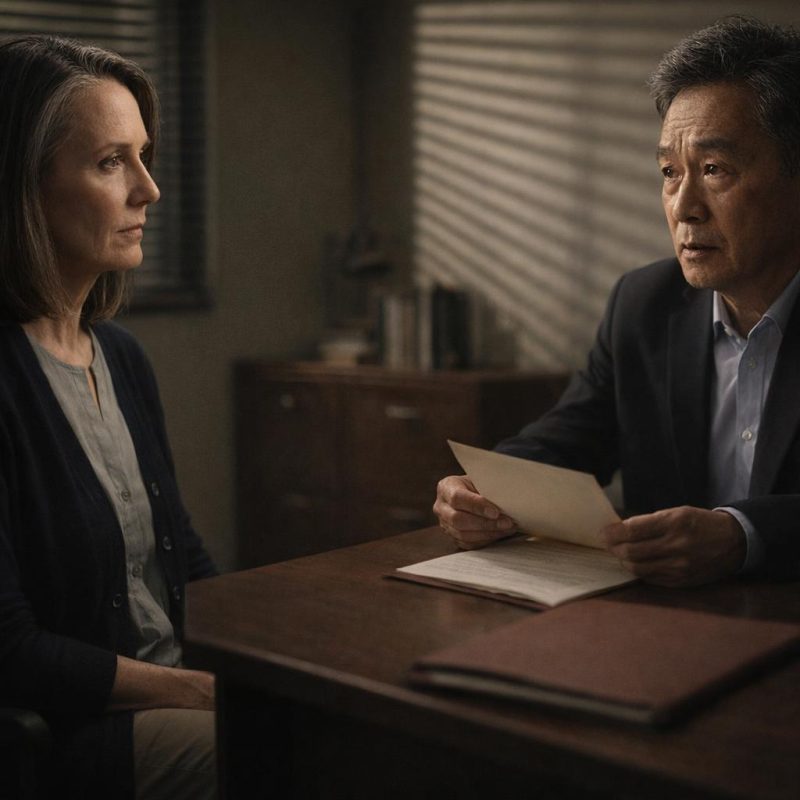 Image by RM AI
The Question That Emerged
I took the long way home without meaning to. I just kept driving, turning down streets I didn't need to be on, because I wasn't ready to sit in a quiet house with my thoughts yet. Mr. Huang had confirmed it plainly: nothing significant had changed. The estate Carol left behind was essentially the estate she had planned years before her illness took hold, before I was spending more time with her, before any of the timeline Jason had been describing. Which meant the foundation of everything Jason had been saying — the whole premise of it — wasn't supported by the facts. And yet he had been telling that story to relatives, to mutual friends, to anyone who would listen, for months. He had started before Carol even died. I kept turning that over as I drove. If the accusations were baseless, if there was nothing in the estate documents to point to, then what was the story actually for? What was it doing? I'm not someone who jumps to conclusions. I've lived long enough to know that people do strange things when they're grieving, and that grief can make a person look for someone to blame even when the blame doesn't fit. But this didn't feel like grief. It felt like something with a purpose I couldn't quite see yet. I pulled into my driveway and sat in the car for a few minutes, staring at nothing, asking myself what Jason was really trying to accomplish.
 Image by RM AI
Carol's Journals
A few days after my visit to Mr. Huang's office, I was on the phone with one of Carol's cousins — a woman named Ruth who had known Carol since childhood and who had always been kind to me at family gatherings over the years. We were talking about Carol the way you do when the grief is still fresh enough to need tending, sharing small memories, the kind that don't mean much to anyone else but feel important to hold onto. And then Ruth mentioned, almost in passing, that Carol had kept journals. Not a single notebook, not a brief diary she'd started and abandoned — journals, plural, going back nearly twenty years. Ruth said it the way you mention something you assume the other person already knows. I had to ask her to repeat it. In thirty years of friendship, Carol had never once mentioned keeping a journal. I'd known her through marriages and moves and illnesses and losses, and she had never said a word about it. I didn't know what to make of that at first. Maybe it was simply a private thing she'd kept to herself, the way some people do. But sitting there with the phone in my hand, I felt the weight of it — twenty years of Carol's thoughts, written down somewhere, in her own words, in her own hand.
 Image by RM AI
Jason's Obsession
I asked Ruth a few more questions, gently, trying not to seem too eager. She didn't know much about the journals themselves — hadn't read them, didn't know where Carol had kept them. But she did know one thing, and she mentioned it with a slight hesitation that told me she wasn't sure how I'd take it. Jason had been asking about the journals. Not once, not casually — he'd been asking repeatedly, and not just Ruth. He had called other family members, had brought it up at the gathering after the funeral, had circled back to the subject more than once with people who had no idea where the journals were. Ruth said the word she'd use was persistent. I thanked her and got off the phone, and then I sat at my kitchen table and thought about that. There was nothing wrong, on its face, with a son wanting his mother's journals. That was a reasonable thing to want. But something about the way Ruth had described it — the repetition, the reach of it, the fact that he'd asked so many different people — didn't sit quite right with me. It wasn't the interest itself that gave me pause. It was the intensity of it, the way it seemed to matter to him in a way that went beyond ordinary grief or ordinary curiosity.
 Image by RM AI
The Repeated Questions
Over the next few days I made a few more calls, checking in with people I hadn't spoken to since the funeral. I told myself I was just staying connected, keeping those threads alive the way you do after you lose someone who was the center of a whole web of relationships. But I was also listening. And what I kept hearing, from more than one person, was a version of the same thing Ruth had told me. Jason had been asking about the journals — and not just asking where they were. He had been asking, specifically, whether Carol had given them to me. That question had apparently made the rounds. A cousin on Carol's father's side mentioned it. A woman from Carol's old book club said Jason had called her out of the blue and worked his way around to it. Each time, the question was essentially the same: had Carol ever said anything about giving the journals to her friend? Had she mentioned passing them along to me for safekeeping? I found that strange. I hadn't known the journals existed until Ruth told me. The idea that Carol might have given them to me had never crossed my mind. But Jason had been asking that question — of multiple people, more than once — and I couldn't figure out why he would think to ask it at all.
 Image by RM AI
The Odd Fixation
I kept coming back to the contradiction, turning it over the way you turn a stone in your hand, looking for the angle that makes it make sense. On one side: Jason had been telling people for months that I had manipulated Carol, that I had used my closeness with her to steer her decisions, that I was not to be trusted. On the other side: he had been asking, repeatedly and specifically, whether Carol had trusted me with her journals. Those two things didn't fit together. If he genuinely believed I was the kind of person who had taken advantage of a dying woman's confidence, why would he think Carol would have handed me something as personal as twenty years of private writing? And if he thought Carol might have given them to me, what did that say about what he believed Carol actually thought of me? I wasn't drawing any firm conclusions. I knew I didn't have enough to do that. But the shape of it felt off — like two pieces from different puzzles that someone had tried to press together. He was worried about something specific, I thought. Not about me in general. Not about the estate in general. Something particular, something that might be sitting inside those journals, was pulling at him hard enough that he'd asked the same question of half a dozen people without seeming to care how it looked.
 Image by RM AI
Sorting Carol's Belongings
Word travels in small communities, even when you're not part of the conversation. I heard about the sorting through the usual channels — a neighbor who'd stopped by to drop off a casserole, a woman from Carol's church who called to check on me, a brief mention from someone who'd seen cars parked outside Carol's house three days running. They were going through everything, I was told. Boxes from the garage. Closets. The storage areas under the stairs. Jason was directing most of it, from what I gathered, deciding what stayed and what went. I wasn't invited, and I hadn't expected to be. That didn't make it easier to sit with. Carol had thirty years of accumulated life in that house — things we'd picked out together at flea markets, photographs from trips we'd taken, small objects that carried whole conversations inside them. The thought of those things being sorted by people who didn't know their weight was hard to push away. But underneath the ache of being excluded, something else was turning quietly. I found myself wondering what they were moving through, what corners they were opening, what they might come across without knowing what they were looking at. I didn't say that to anyone. I just listened when people mentioned it, asked a careful question or two, and waited to hear what the sorting turned up.
 Image by RM AI
The Sealed Envelope
She called on a Tuesday afternoon, her voice carrying that particular mix of excitement and uncertainty that comes when someone isn't sure whether their news is good or alarming. She was one of the women who'd volunteered to help with Carol's belongings — someone Carol had known through a quilting group, steady and careful and the kind of person who notices things. She told me she'd been working through a stack of old photo albums, the kind with the sticky pages and the plastic film over them, when something slipped out from between the covers of one. A sealed envelope. She said it was tucked deliberately, not fallen in by accident — pressed flat against the inside back cover, held in place by the album's spine. She'd almost missed it. She turned it over, she said, and that's when she saw the name written on the front. She paused before she told me whose name it was, and in that pause I felt something shift in my chest — a kind of stillness that comes just before something lands. She said my name. The envelope was addressed to me, in Carol's handwriting. I didn't say much after that. I thanked her, asked her to keep it safe, and told her I'd come by. After I hung up, I sat in the kitchen for a long time, the afternoon light moving slowly across the table, thinking about the fact that Carol had hidden something for me to find.
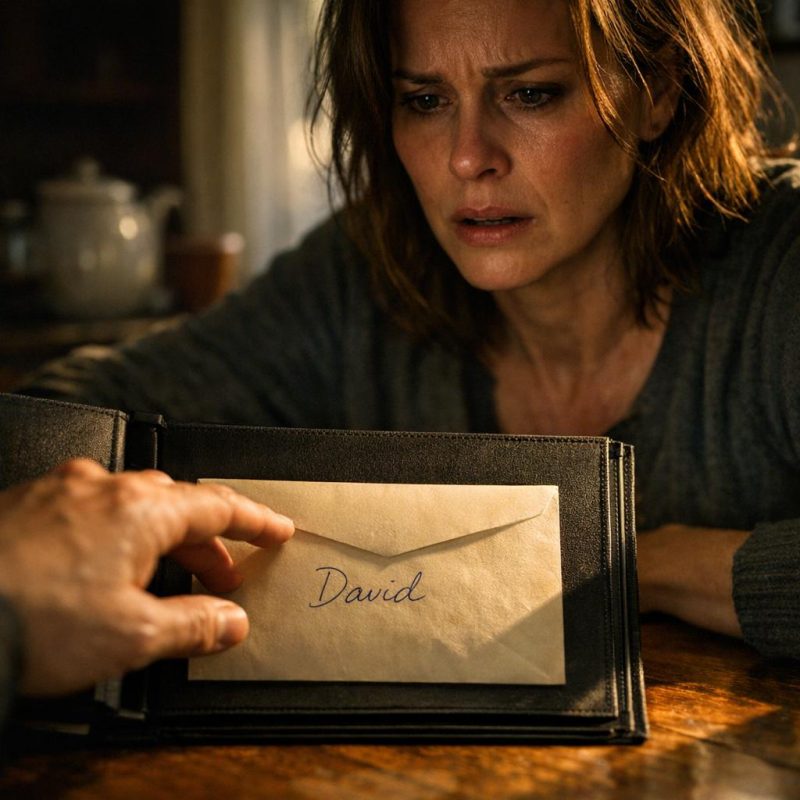 Image by RM AI
Addressed to Me
She brought it over the next morning, holding it with both hands the way you hold something you know matters. It was a standard white envelope, nothing remarkable about it except for the name written across the front — my name, in Carol's handwriting, the letters careful and deliberate the way her handwriting always was when she was being intentional about something. I turned it over in my hands for a moment before I opened it. The seal had held perfectly. Inside was a single folded page, and when I opened it, the date at the top stopped me — she had written this months before she died, back when she was still well enough to sit at her kitchen table and think clearly about what she wanted to say. I stood there in my hallway, the family friend watching quietly from a few feet away, and I looked at the words Carol had put on that page. Her handwriting was so familiar to me — the slight leftward lean of her letters, the way she always pressed a little harder on the downstrokes — that for a moment it felt less like reading and more like hearing her voice in the room.
 Image by RM AI
The Storage Key
The note was short. Carol had never been one for unnecessary words when she had something important to say, and this was no different. She wrote that she had been thinking about loose ends, about the things she wanted to make sure were handled properly if the time came sooner than expected. She mentioned a key. She said she had given it to me years ago, during a conversation she hoped I still remembered, and she asked me — if anything happened to her — to hold onto it and to trust my own judgment about what to do with what it opened. She said she trusted me. Those three words sat on the page simply, without decoration, and they were the ones that made my eyes sting. I folded the note carefully and held it for a moment before I let myself think about the key. A key. I turned the word over slowly, trying to pull something up from the back of my memory. Carol had given me a key. I was almost certain she had, at some point — there was a faint shape of a memory there, the sense of a small object pressed into my palm, a brief explanation I hadn't thought much about at the time. I couldn't bring it into focus yet. I just stood there, holding her note, the weight of her trust settling over me like something I hadn't known I was still carrying.
 Image by RM AI
Years Earlier
It came back to me gradually, the way old memories do — not all at once, but in pieces, each one pulling the next into view. It had been years ago, maybe six or seven, during one of those ordinary afternoons we spent at her kitchen table with coffee going cold between us. She had brought it up almost casually, the way Carol sometimes introduced things that mattered to her — sideways, without fanfare, as though she were mentioning something she'd nearly forgotten. She said she had a storage locker across town, one she'd been keeping for years, and that it held things she wanted to make sure stayed in the right hands. Family photographs. Letters. Scrapbooks she'd put together over the decades. Things that told the story of her life the way she wanted it told. She slid a small key across the table toward me and asked if I'd keep it safe. I remember thinking it was a sweet thing to ask, a little old-fashioned, and I'd said of course without asking many questions. She'd smiled and changed the subject, and I'd put the key in my pocket and eventually into a drawer, and the years had moved on the way years do. Sitting with that memory now, I could hear her voice so clearly — unhurried, certain, already thinking several steps ahead in the quiet way she always had.
 Image by RM AI
The Storage Facility
I found the key on a Thursday morning, in the back of the small wooden box I keep in my bedroom dresser where I put things I don't want to lose and then promptly forget about. It was exactly where I must have left it — a plain silver key on a simple ring, with a paper tag attached that had a unit number written on it in Carol's handwriting. I sat on the edge of the bed and held it for a moment, then got my coat. The storage facility was on the east side of town, one of those low, long buildings with orange doors that all look the same from the outside. I found the unit number without much trouble. The lock was stiff from years of sitting untouched, and I had to work the key twice before it turned. I stood there with my hand on the latch, aware that whatever Carol had put in this room had been waiting, undisturbed, for a very long time. I thought about her writing that note, tucking it into the photo album, trusting that I would eventually find my way here. Then I lifted the latch, and the door swung open.
 Image by RM AI
Boxes of Memories
The unit was smaller than I'd expected, but Carol had used every inch of it with the same quiet orderliness she brought to everything in her life. Boxes were stacked along the walls, each one labeled in her careful hand — photographs, correspondence, keepsakes, holiday. I pulled the chain on the single overhead bulb and stood there for a moment just taking it in. The first box I opened held photographs, hundreds of them, loose and in envelopes and tucked into those small paper sleeves that photo labs used to use. Faces I recognized, faces I didn't, decades of Christmases and birthdays and ordinary Tuesdays that Carol had thought worth keeping. The next box held letters and cards, bundled with rubber bands that had gone brittle with age. I recognized some of the handwriting on the envelopes. One bundle was tied with a piece of blue ribbon, and I didn't open it. A third box held scrapbooks — thick ones, the covers worn soft at the corners, pages dense with ticket stubs and newspaper clippings and photographs with captions written beneath them in Carol's hand. I sat down on the concrete floor without really deciding to, a scrapbook open across my knees, and the smell of old paper and Carol's particular brand of careful love settled around me like something I hadn't known I was still missing.
 Image by RM AI
The Journals Jason Searched For
I don't know how long I sat there before I noticed the box in the far corner. It was pushed back against the wall, slightly apart from the others, and it was heavier than it looked when I pulled it toward me — the kind of weight that comes from dense, compact things stacked with care. I opened the flaps and looked inside. They were journals. Bound ones, the kind with cloth covers and ribbon markers, stacked in neat rows with their spines facing up. There were more of them than I could count at a glance — years and years of them, from the look of it, the covers ranging from faded to barely worn. I recognized Carol's handwriting on the spine labels immediately, the same careful letters from the note, from the key tag, from thirty years of birthday cards and grocery lists left on my counter. My hands had gone very still. I thought about the questions Jason had been asking — the same question, to person after person, about whether Carol had trusted me with her journals. I thought about how much it seemed to matter to him. And then I reached into the box and lifted the journals out, one careful stack at a time.
 Image by RM AI
Beginning to Read
I carried the box home in two trips, setting it carefully on the kitchen table like it might break if I wasn't gentle with it. I made tea I didn't drink, sat down, and opened the first journal. Carol's handwriting filled the pages in that familiar way of hers — unhurried, slightly slanted, the letters formed with the same care she brought to everything. The early entries were exactly what you'd expect from someone who kept a journal the way other people keep a garden: tended to regularly, full of small, ordinary things. She wrote about the weather, about a recipe she'd tried and found wanting, about a neighbor's dog that kept getting into her flower beds. She wrote about Megan's birthday dinner and a movie she'd seen twice because she liked it that much. She noted when the hydrangeas bloomed and when the first frost came. I read slowly, not skimming, because I didn't want to miss anything — I kept reminding myself that whatever Jason had been so anxious to find, it was somewhere in these pages. But for a long while, there was nothing that felt like a secret. There was only Carol, writing about her days the way she always lived them — quietly, attentively, with a kind of steady appreciation for small things that I had always loved about her. I sat with that for a while, the warmth of her voice coming off the page as though no time had passed at all.
 Image by RM AI
Concerns About Jason
I don't know exactly when the tone began to shift. It wasn't a single entry — it was more like a gradual change in weather, the kind you don't notice until you realize the light has gone different. Carol still wrote about ordinary things, but Jason's name started appearing more often, and when it did, something in her sentences tightened. At first it was small things — a visit that left her feeling unsettled, a phone call that went longer than she'd wanted. She didn't write dramatically about it. That wasn't Carol's way. But I knew her voice well enough to hear what was underneath the careful phrasing. She wrote once that Jason had stopped by unannounced and that she'd felt, afterward, like she needed to sit quietly for a while. She wrote that she loved him, of course she did, but that some of his visits left her tired in a way she couldn't quite explain. The entries about him grew more frequent as the months went on, and they grew more careful too — as though she was choosing her words with particular attention, even in a private journal meant for no one but herself. I turned the pages slowly, reading each one twice. I wasn't sure yet what I was looking at. But the shift in her voice when she wrote about her son was something I couldn't unfeel once I'd noticed it — a quieter, more guarded Carol than the one who had written so freely about hydrangeas and borrowed recipes.
 Image by RM AI
Pressure for Money
The entries about money started appearing in the journals from about three years before Carol got sick. She wrote about it the way she wrote about everything difficult — carefully, without excess, as though she was trying to be fair even to the page. Jason had asked her for money. That much was plain. He'd asked more than once, and the requests had a pattern to them: they came when he was between things, between jobs or between plans, and they were always framed as temporary, always accompanied by a reason that sounded reasonable enough on its own. Carol wrote that she had helped him when she could, and that she had tried not to keep score. But the requests kept coming, and at some point the word she used shifted from asking to pressing. She wrote about one afternoon in particular — a Sunday, she noted the day — when she had told him she couldn't help that time, that she needed to be careful with her own finances. She wrote that he had reacted badly. She didn't elaborate much beyond that, but the sentence that followed was short and sat alone on the line: he raised his voice at me, and I didn't know what to say. I set the journal down for a moment. Then I picked it up again and turned to the next entry, where Carol had written, quietly and without drama, that Jason had called again asking for money the following week.
 Image by RM AI
Demanding Access
A few journals in, the entries took on a different quality — more specific, more careful, as though Carol had started writing with a kind of deliberate precision she hadn't used before. She began noting dates more consistently. She began writing down exact conversations rather than impressions of them. And somewhere in the middle of a journal with a dark green cover, she wrote about Jason asking to see her financial records. Not once — several times, across several entries. She wrote that he had asked about her accounts, about what her father had left her, about how things were set up. She told him it wasn't something she felt comfortable sharing, and he pushed back. She used that word: pushed. She wrote that he told her it was a reasonable thing for family to know, that he was only asking because he cared about her security. She wrote that she had nodded and changed the subject, and that he had brought it up again the next visit. I read those entries twice, then a third time. I wasn't sure what to make of it exactly, but something about the repetition felt significant in a way I couldn't dismiss. The last entry on the subject in that journal ended with Carol's own words, copied out in her careful hand: *He asked again today about the accounts — said he just wanted to make sure everything was in order.*
 Image by RM AI
Anger When Refused
Carol was not a woman who used strong language lightly. She chose her words the way she chose everything — with care, with consideration, without waste. So when I read the word frightened in her handwriting, I stopped. It appeared in an entry from about two years before she got sick, tucked into a paragraph that had started calmly enough, describing a visit from Jason that had gone badly. She had told him again that she wasn't going to give him access to her accounts. Carol wrote that he had stood up from the table, that his voice had gone loud in a way that surprised her, that he had said things she didn't want to repeat even to herself. She wrote that after he left, she sat at the kitchen table for a long time without moving. And then she wrote: I don't think he means to frighten me, but sometimes I am. I had to put the journal down after that. I sat with my hands flat on the table, looking at nothing in particular, thinking about all the Sunday afternoons I had spent in Carol's kitchen without knowing any of this was happening. She had never said a word to me. Not once. I thought about what it must have cost her to carry that quietly, and the thought settled in my chest like something heavy and permanent, the kind of weight that doesn't lift when you stand up.
 Image by RM AI
A Discovery Before Illness
The entries from the months just before Carol's diagnosis were different from everything that had come before them. The handwriting was the same, but the tone had changed in a way I felt before I could name it — more focused, more deliberate, like someone who had stopped writing to process and started writing to document. She mentioned, in an entry dated about six weeks before she first went to the doctor, that she had found something. She didn't say what, not in that entry. She wrote that she had been going through some papers — old ones, from her father's estate — and that she had come across something that didn't look right to her. She wrote that she wasn't sure yet what it meant, that she needed to look more carefully before she said anything to anyone. She wrote that she hoped she was wrong. That phrase stopped me: I hope I am wrong. I read it three times. It was such a Carol thing to write — that instinct to give the benefit of the doubt even when something had already worried her enough to put it in writing. I turned the page slowly, not rushing, because I had the feeling I was standing at the edge of something and I wanted to be careful about how I stepped. The weight of those words — I hope I am wrong — stayed with me long after I had moved on to the next entry, sitting in the room around me like a presence I couldn't quite name.
 Image by RM AI
Money from the Trust
Carol had always been organized. It was one of the things I had admired about her for thirty years — the way she kept things in order, the way she could put her hand on any document she needed within minutes. So it didn't surprise me that when she started tracking something, she tracked it carefully. What surprised me was what she had been tracking. Over the next several entries, she laid it out in the methodical way that was entirely her own: dates, amounts, small notations in the margins. Her father had established a family trust years before he died, and Carol had been the primary beneficiary. She wrote that she had gone back through the statements — years of them, apparently — and that she had started noticing withdrawals she couldn't account for. They were small, she wrote. Small enough that they were easy to overlook. She had written down what she found: a withdrawal here, another there, amounts that were modest on their own but that added up when she laid them side by side. She wrote that she had gone back two years, then three, then further. She wrote that the pattern, once she saw it, was hard to unsee. I sat with the journal open in my lap, reading her careful columns of numbers, and felt something cold and quiet settle over me — not panic, not yet, just the particular stillness that comes when something you feared might be true begins to take on the weight of evidence.
 Image by RM AI
Clues Pointing in One Direction
Carol had been careful in her journals — careful in a way that felt, reading it now, like she had known she was writing something that might matter later. She never wrote a name directly in those entries about the trust. She wrote around it, the way you write around something you're not ready to say out loud. But she documented everything else. She wrote about who had been given administrative access to the trust years earlier, when her father's health was failing and someone needed to help manage the paperwork. She wrote about who had been asking her questions about the trust's structure, about what the terms allowed, about whether distributions could be made without her signature. She wrote about who had keys to the filing cabinet where she kept the original documents. None of it was an accusation. Carol wasn't built for accusations. But the entries accumulated, detail by detail, and I found myself reading each one more slowly than the last, not certain yet what they added up to, only that I wasn't ready to stop. I turned to the next entry, my hands steadier than I expected them to be, and read the line Carol had written in her careful, unhurried hand: *The only person who ever had full access to the account records, besides myself, was the one who has been asking me about them for the past two years.*
 Image by RM AI
Seeing Jason's Motive
I sat on the floor of my living room with Carol's journals spread around me in a loose circle, the way you might lay out pieces of a puzzle before you understand what the picture is supposed to be. I had been reading for hours. My tea had gone cold. Outside, the light had shifted from afternoon to early evening without my noticing. I kept going back to the same cluster of entries — the ones from the two years before Carol's illness, when her handwriting was still steady and her thoughts still moved in that careful, organized way I had always admired. She had written about the trust with a kind of restrained worry, never quite naming what she feared, but circling it the way you circle something you're not ready to touch. She noted dates. She noted amounts that didn't match what she expected. She noted who had been asking questions about the account structure, about what the terms allowed, about whether certain distributions could be processed without her direct approval. And then there were the entries about me — about the things people had started saying, the whispers that had reached her ears even as she was getting sicker. She had written those down too, with a quiet sadness that was almost harder to read than the financial notes. The timing of it all sat with me in the fading light, not yet a certainty, but heavy enough that I couldn't set it aside.
 Image by RM AI
Jason Learns About the Storage Unit
I hadn't told anyone directly, but word travels the way it always does in families — sideways, through the people you least expect. I had mentioned the storage unit to Megan when she called to check in, just in passing, just to let her know I had found some of Carol's things. I hadn't said much about the journals specifically, only that Carol had kept records of things that mattered to her. That was apparently enough. Within two days, I heard from a family friend who had spoken to someone who had spoken to Jason, and the message that came back was not subtle. He had wanted to know exactly what I had found. He had wanted to know whether I had read everything. He had wanted to know what I intended to do with it. The family friend relayed all of this with an apologetic tone, clearly uncomfortable being in the middle of it, but unwilling to let me be caught off guard. I thanked her and sat with the phone in my lap for a long time after we hung up. I hadn't expected the news to travel so fast, or for his response to be quite so immediate. There was nothing I could do about it now. The journals were safe, tucked away where I had put them, and whatever came next would come. I sat in the quiet of my kitchen, knowing that Jason knew, and let that fact settle around me like a change in the weather.
 Image by RM AI
Jason's Demand
He called on a Thursday morning, earlier than I would have expected, which told me something in itself. I had just poured my first cup of coffee when the phone rang and his name appeared on the screen. I almost let it go to voicemail. I didn't. His voice was tight from the first word — not angry exactly, but pulled in a way that made every sentence feel like it was being held under pressure. He said the journals were family property. He said I had no legal right to remove them from the storage unit. He said Carol would not have wanted her private writings in the hands of someone outside the family. He used the word "family" four times in the first two minutes, which I counted because it struck me as deliberate, the way repeating a word can be a way of reminding someone of their place. I told him I hadn't removed anything improperly, that I had been given access to the unit, and that I needed time to think about the appropriate next steps. He didn't like that answer. His voice pulled tighter. He said he expected me to return everything immediately, that he would arrange to have someone collect it, that this wasn't a request. I told him I understood what he was saying. I did not tell him I would comply. I set the phone down after we hung up and looked at my coffee, still steaming, and then my phone lit up again with a second call from Jason.
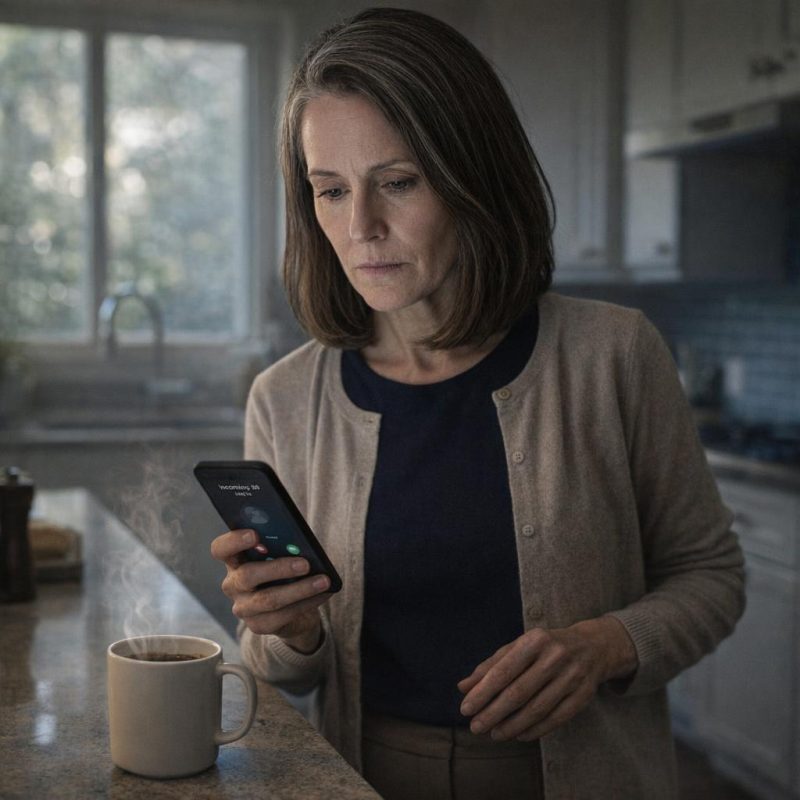 Image by RM AI
His Extreme Reaction
I didn't answer the second call. I let it ring through and sat with the silence that followed, turning the conversation over in my mind. I had known Jason for most of his adult life. I had watched him grow up in Carol's house, had sat at her table with him at holidays, had seen him at his best and at his most difficult. I knew what his ordinary voice sounded like, and what I had heard on that call was not it. There was a quality to his urgency that went beyond irritation or even genuine grief over his mother's belongings. He hadn't asked what the journals contained. He hadn't asked whether Carol had written anything meaningful, anything he might want to preserve. He had gone straight to possession — who had the right to hold them, who had the authority to demand them back. That was the part that stayed with me. A person worried about their mother's memory asks what she wrote. A person worried about something else asks who has it and when they can get it back. I went back to Carol's entries and read through the sections I had marked, slowly, one more time. The dates she had recorded. The questions she had noted being asked of her. The access she had documented being granted, years earlier, to someone who needed to help manage the paperwork. His voice on the phone, pulled tight and flat, sat alongside those pages in my mind.
 Image by RM AI
The Truth Carol Knew
I think I had been circling the truth for days without letting myself land on it, the way you sometimes know something before you're ready to say it plainly. But sitting there that afternoon with Carol's journals open in front of me and Jason's two unanswered calls still sitting in my phone log, I finally let myself see it whole. Jason had been taking money from the family trust for years — not in large amounts that would have triggered immediate alarm, but in small, careful withdrawals that individually looked like nothing and collectively added up to something significant. Carol had noticed. Of course she had noticed. She was meticulous about money, always had been, and she had started tracking the discrepancies quietly, the way she did everything — without confrontation, without accusation, just documentation. She had been trying to understand what she was seeing before she said anything to anyone. And then she got sick. And before she got sick, before the diagnosis changed everything, Jason had started talking about me. He had started telling people I was manipulative, that I had too much influence over his mother, that I was the kind of person who inserted herself into situations for her own benefit. He had built that narrative while Carol was still well enough to push back on it — which meant that by the time she was gone and couldn't speak for herself, anyone who came forward with questions about the trust would already have a reason to doubt them. I sat with Carol's open journal in my lap, and the full shape of what he had done spread out before me like a map I hadn't known I was reading.
 Image by RM AI
Consulting the Attorney
I called Mr. Huang the next morning. He had handled Carol's estate from the beginning, and I trusted his judgment more than I trusted my own at that point — I was too close to it, too tangled up in the grief and the anger and the long history of it all. I told him everything. I told him about the storage unit, about the journals, about what Carol had documented over those two years before her illness. I told him about Jason's call, about the demand, about the urgency in his voice that had felt like something other than grief. Mr. Huang listened without interrupting, which was one of the things I had always appreciated about him. When I finished, he was quiet for a moment, and then he told me that the trust records were already under review — that certain irregularities had flagged during the estate process and that a formal examination was underway. He said Carol's journals, if they contained what I was describing, could be significant. He said the documentation she had kept, the dates and the access records and the questions she had noted, could provide context that the financial records alone couldn't supply. He asked me whether I was willing to turn the journals over to the investigators handling the review. I told him I had been waiting for someone to ask me exactly that. I agreed to provide everything I had, and as I said it, I felt something settle in my chest that had been restless for a very long time.
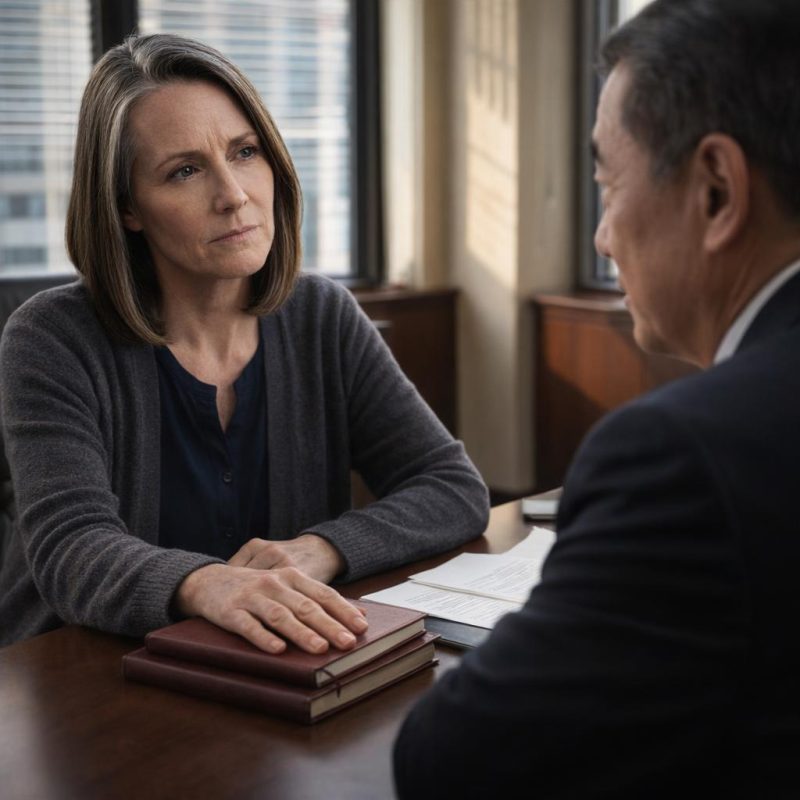 Image by RM AI
Providing the Evidence
I met with the investigators at Mr. Huang's office on a Tuesday, which felt like an ordinary day for something that didn't feel ordinary at all. I had packed the journals carefully, wrapped in the same cloth I had used to carry them home from the storage unit, and I set them on the conference table one by one. There were seven of them in total. The investigators were professional and unhurried, and they asked me to walk them through what I had found and in what order. I did my best to be precise — to describe what Carol had written without editorializing, to let her words carry the weight rather than my interpretation of them. They asked clarifying questions about the dates, about the access Carol had referenced, about the timeline of her illness relative to the entries. I answered everything I could and told them plainly when I wasn't certain. At the end of the meeting, they told me the journals would be retained as part of the review and that I would be contacted if they needed anything further. I signed what needed to be signed. I shook hands. I walked out into the afternoon light and stood on the sidewalk for a moment before I found my car. I had carried those journals for weeks, reading Carol's careful words over and over, and now they were where they needed to be. The weight of them was gone from my hands, and what remained felt quieter than I had expected.
 Image by RM AI
The Investigators' Discovery
The investigators contacted me six weeks later. The woman who called was measured and precise, and she told me that the review of the trust records had been completed and that the findings were consistent with what Carol's journals had documented. Small amounts, she said, moved at irregular intervals over a period of nearly eight years. Each transaction, taken alone, fell within ranges that didn't automatically trigger review. Taken together, the total was substantial — enough to matter significantly to a trust of that size, enough to have affected what Carol had intended to leave behind. The pattern in the financial records matched the dates and the concerns Carol had noted in her journals with a closeness that the investigator described as remarkable. I thanked her and sat with the phone in my lap after we said goodbye, the afternoon quiet around me. I hadn't doubted what Carol had written — not really, not once I had read it carefully enough to understand what she was tracking. But there is a difference between believing something and having it confirmed by people whose job it is to find the truth. Carol had been right. She had seen it clearly, documented it carefully, and trusted that the record she left behind would eventually speak for itself. Sitting there in the quiet, I felt the particular stillness that comes not from resolution exactly, but from knowing that Carol's careful, unhurried handwriting had told the truth all along.
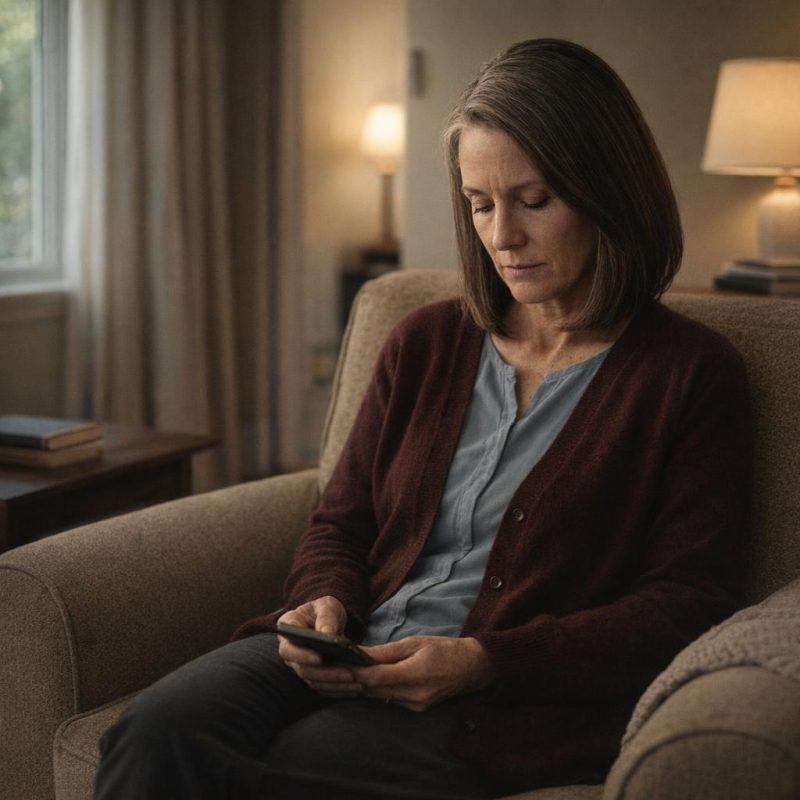 Image by RM AI
Understanding the Scope
The investigator called again about two weeks after that first confirmation, and this time she had more to share. She walked me through the timeline in careful detail — not just the totals, but the shape of it, the way it had been constructed over time. The first irregular transaction appeared nearly nine years before Carol died. Nine years. I had to ask her to repeat that, because the number didn't settle easily. Jason had begun small, she explained, amounts that looked like routine administrative adjustments to anyone who wasn't watching closely. Over the following years the intervals shifted — sometimes months apart, sometimes closer together — but the amounts stayed carefully below the thresholds that would have drawn automatic scrutiny. He had administrative access to the trust accounts through a role Carol had given him in good faith, and he had used that access with a patience that was difficult to fully absorb. The investigator used the word sustained more than once, and each time she did, I felt the weight of it differently. This wasn't a moment of desperation or a single bad decision. It had been going on while Carol and I had lunch together, while we celebrated birthdays, while she sat across from me and talked about her garden and her grandchildren and never once let on how worried she had become. The investigator told me the earliest transaction they could document with certainty dated to a spring nearly a decade ago.
 Image by RM AI
The Family Meeting
The attorney arranged the meeting for a Thursday morning at his office downtown. He had framed it in the letter as a gathering to address outstanding estate questions, which was true enough as far as it went. I arrived thirty minutes early, my hands steadier than I expected them to be. The investigators were already there, two of them, with folders arranged on the conference table in a way that looked orderly and deliberate. Megan arrived next. She came in quietly, her eyes moving around the room before settling on me, and she gave me a small, uncertain nod that I returned without comment. She looked like she hadn't been sleeping well. She sat down across from me and folded her hands on the table and didn't say anything, and I didn't push. The attorney spoke briefly with the investigators in a low voice near the window. I watched the door. I had been sitting with the knowledge of what those folders contained for weeks now, and there was something almost surreal about waiting for the moment when that knowledge would stop being mine alone. I heard the elevator down the hall, then footsteps, then the door opened. Jason walked in with his jaw set and his shoulders squared, the expression of a man who had come prepared to argue about money and heirlooms and the particular grievances he had been carrying since his mother's funeral.
 Image by RM AI
Presenting the Records
The attorney opened the meeting with a few formal words about the purpose of the gathering, and then he introduced the two investigators by name and explained their role in the review of the trust records. Jason shifted in his chair. I noticed it — a small adjustment, a tightening — but he kept his expression composed. The lead investigator spoke first, her voice even and unhurried. She explained that the review had been completed and that the findings were documented and ready to be presented. Then she opened the first folder and began. The records were printed on clean white paper, each page organized by date and transaction type. She walked through them methodically, reading amounts and dates aloud, pausing occasionally to indicate where a corresponding entry appeared in a second document. The pattern was not subtle once it was laid out that way. Taken one at a time, each transaction might have looked like a routine adjustment. Laid out across nine years on a conference table, they told a different story entirely. I watched Jason's face as the pages accumulated. The composed expression he had carried into the room began to shift — not dramatically, not all at once, but in the small ways that faces shift when something a person has kept carefully contained starts to press against the edges. Megan sat very still beside him. The folders sat open on the table between us, and the room held the particular quiet of people absorbing something they could not unhear.
 Image by RM AI
Carol's Voice
After the financial records had been presented, the lead investigator set down her pen and reached for a different folder — thinner, with a small label on the tab that I recognized as the notation system the attorney's office had used when cataloguing Carol's journals. She explained that excerpts from the personal journals of the trust holder had been reviewed as part of the investigation and that several passages were directly relevant to the findings. She asked if she could read them aloud. The attorney nodded. Jason said nothing. The investigator began to read, and Carol's voice came into the room as clearly as if she had been sitting at the table with us. The words were Carol's — her careful, precise sentences, her habit of noting dates and small details, her way of circling a worry before naming it directly. She had written about Jason asking to review the account statements. She had written about feeling uneasy when certain numbers didn't match what she remembered. She had written, in one entry, that she loved her son and that loving him did not make it easier to see what she was beginning to see. Megan made a small sound beside me and pressed her fingers to her mouth. Jason sat with his hands flat on the table and his eyes fixed somewhere past the investigator's shoulder. I felt Carol in those words the way you feel a person's presence in a room before you see them — something warm and unmistakable, still entirely herself.
 Image by RM AI
The Evidence Accumulates
The investigator continued through the morning, and the evidence did not thin out or soften as it accumulated — it only became more precise. The financial records and Carol's journal entries corresponded with a closeness that left very little room for interpretation. A date Carol had noted in her journal as the day she first asked Jason directly about a particular withdrawal matched a transaction record exactly. An entry where she described his explanation — vague, she had written, and not quite answering what I asked — appeared three days after a transfer that the investigators had flagged as inconsistent with any authorized purpose. His signature appeared on the authorization forms for several of the larger transactions. The investigators had cross-referenced the dates against Carol's documented health appointments, and in more than one instance, a withdrawal had occurred on a day when Carol was at a medical facility and would not have been reviewing account activity. Megan had stopped trying to hold herself together. She sat with her hands in her lap and her eyes red, not looking at her brother. Jason had gone very quiet. He was still in his chair, still present in the room, but something had gone out of his posture — the squared shoulders, the set jaw, the readiness to argue. The pages on the table between us held nearly a decade of careful, patient documentation, and the room carried the settled weight of something that had finally, irrevocably, been seen.
 Image by RM AI
Jason's Defenses Crumble
Jason spoke for the first time in nearly an hour. He said the transactions had been authorized — that Carol had known about them, had approved them, that there had been an understanding between them that wasn't reflected in the formal paperwork. His voice was measured, but it had lost the easy confidence he had carried into the room. The lead investigator responded without raising her voice. She indicated the authorization forms on the table and noted that Carol's signature did not appear on the relevant documents. She pointed to the dates of the withdrawals that had occurred during Carol's medical appointments. Jason said there had been a misunderstanding about the process, that he had believed he had standing approval. The investigator set a specific document in front of him — a letter from the trust's oversight committee, dated two years before Carol died, clarifying the authorization requirements in explicit terms. Jason looked at it. He said perhaps there had been a miscommunication. The investigator said the records did not support that characterization. Megan had her face turned toward the window. I sat across from Jason and watched him work through each explanation in turn, watched each one meet the table's evidence and stop there, watched his voice get quieter with each exchange until he was speaking in something close to a murmur. Then he stopped speaking altogether, and his eyes moved to the table in front of him, and something in his face went very still.
 Image by RM AI
Years of Manipulation
The lead investigator summarized the findings in plain language. Over a period of approximately nine years, Jason had used his administrative access to the trust to divert funds through a series of transactions structured to remain below automatic review thresholds. The total, when aggregated, was substantial. The pattern was consistent across the full period — small amounts, irregular intervals, always within the range of what might appear routine to a casual review. Carol had documented her growing concerns in her journals beginning roughly four years before her death, and the journal entries corresponded precisely with the financial records. She had confronted Jason at least twice, according to her own writing, and had received explanations she described as unsatisfying. She had not, in the end, taken formal action — the investigator noted this without editorializing — but she had continued to document what she observed. Megan sat with her arms crossed tightly over her chest, her eyes on the table. Jason had not spoken since his last explanation had been set aside by the evidence. The attorney made a note on his legal pad. I looked at the folders spread across the conference table — the financial records, the journal excerpts, the authorization forms, the committee letter — and the full shape of what Jason had done across nearly a decade of his mother's trust sat there in plain sight, documented and dated and impossible to argue away.
 Image by RM AI
The Preemptive Attack
It was the attorney who raised the question of timing — specifically, the timing of the rumors. He asked the investigators whether the record showed any correlation between the period when Jason had begun spreading accounts of my supposed manipulation of Carol and the period when Carol had begun asking questions about the trust. The lead investigator consulted her notes. She said the earliest documented instance of Jason raising concerns about my influence over Carol — a conversation he had with a neighbor that the neighbor had later described to the estate's representatives — occurred approximately eight months before Carol died. Carol's journal entries showed that she had begun asking Jason pointed questions about specific transactions roughly ten months before her death. I sat with that gap for a moment. Two months. He had begun building the case against me two months after Carol started pressing him for answers. The attorney asked whether the record supported the inference that the two timelines were connected. The investigator said she could speak only to what the documents showed, and what they showed was that the rumors had begun while Carol was still alive and actively questioning the trust activity. Megan looked up from the table for the first time in several minutes. I thought about every conversation I had lost, every friendship that had gone quiet, every person who had looked at me differently in the months after Carol died — and understood that Jason had begun laying that groundwork before she was even gone.
 Image by RM AI
Discrediting the Witness
The lead investigator laid it out plainly, and I sat there listening to the shape of it — the full architecture of what Jason had done. He had started with me because I was the one person Carol trusted completely. Thirty years of friendship meant that if Carol had ever confided in anyone about what she was finding in those trust documents, it would have been me. Jason knew that. So before I could become a problem, he made sure I would never be believed. The rumors weren't random. They were specific — that I had inserted myself into Carol's finances, that I had isolated her from her family, that I had cultivated her dependence on me for my own benefit. Every accusation was designed to mirror what he himself had actually done to her. The investigator noted that the accounts he spread were consistent across multiple people, which suggested they hadn't been casual complaints but something he had repeated deliberately and often. He had told the same story to neighbors, to extended family, to people at her church. By the time Carol died, the groundwork was already laid. If I had walked into any room with evidence in my hand, I would have looked like exactly what he had described — a manipulative woman with something to gain. Megan had gone very still across the table. Jason's jaw was tight, his eyes fixed somewhere past my shoulder. The investigator set down her notes and said that the strategy had failed because Carol had documented everything herself — and Carol had trusted me with the key to find it.
 Image by RM AI
The Rumors Collapse
Word moved faster than I expected. Within a week of that meeting, I started getting calls — some from people I hadn't spoken to in months, some from people I hadn't expected to hear from at all. The tone was the same each time: halting, apologetic, a little ashamed. A cousin of Carol's who had stopped returning my messages left a voicemail that ran nearly four minutes. A woman from Carol's church sent a card with a handwritten note inside that I read twice before I could put it down. But it was Ellen who came to the door. She stood on my porch on a Tuesday afternoon with her hands clasped in front of her, and she said she was sorry — that she had told me what she heard because she thought I deserved to know, but that she had let it sit in her mind longer than she should have, and that she was ashamed of that. I told her I understood. I meant it. She had been the one to warn me in the first place, and I had never forgotten that. I invited her in and we sat at the kitchen table the way we used to, and she stayed for almost two hours. The apologies kept coming after that, and I accepted each one as honestly as I could. But there was a tiredness underneath all of it that the apologies couldn't quite reach — the particular exhaustion of having been right about something you never wanted to be right about. I sat with that for a long time after Ellen left, the house quiet around me.
 Image by RM AI
Megan's Apology
Megan called on a Thursday evening, and I almost didn't answer. I'm glad I did. Her voice was unsteady from the first word, and she didn't try to hide it. She said she had been trying to find the right words for days and had finally decided there weren't any right words, so she was just going to say what was true. She said she was sorry. She said she had known me her whole life — had grown up watching her mother and me sit at kitchen tables and talk through every hard thing that came — and that when Jason started saying those things about me, some part of her had known it didn't fit. But she had let herself believe it anyway because it was easier than the alternative. She said she thought about the funeral, about the speaking invitation she had withdrawn, and that she couldn't think about it without feeling sick. I told her I forgave her, and I meant that too. Carol had loved her daughter, complicated and all, and I wasn't going to carry anger toward Megan when Carol herself had never stopped reaching toward her. But I also knew, sitting there with the phone pressed to my ear, that something between us had shifted in a way that wouldn't fully shift back. Forgiveness and trust aren't the same thing, and I had learned that the hard way. When we said goodbye, it was warm enough. The silence after felt like the honest part — the weight of everything that had passed between us, settling where it would.
 Image by RM AI
Carol Knew Me Well
I went back to Carol's journals one last time after everything had settled. I wasn't looking for anything in particular — I think I just needed to sit with her again, in the only way I still could. I had read most of the entries by then, but there was one near the very end of the final volume that I had passed over before, maybe because the handwriting was smaller and the ink lighter, the way her writing got when she was tired. I read it slowly. She had written it about three weeks before she went into hospice. She wrote about the storage unit, about the key, about why she had decided to leave it with me instead of anyone else. She said she wasn't sure I would ever need to use it. She hoped I wouldn't. But she wrote that if it ever came to that — if the truth ever needed finding — she knew I was stubborn enough to find it. She wrote that thirty years of friendship had taught her exactly what kind of woman I was, and that she trusted that completely. I sat on the floor of my living room with the journal open in my lap and let myself cry in a way I hadn't allowed since the funeral. She had known. She had known me well enough to plan for the worst and trust me with it anyway. The last line of that entry read: "Denise will not let it go. That's why it has to be her."
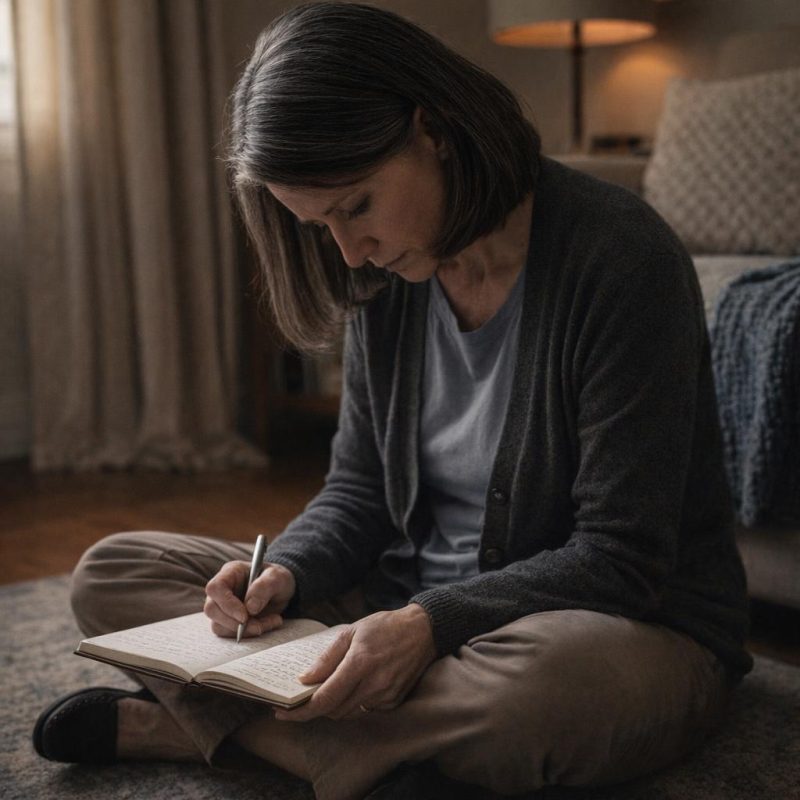 Image by RM AI
KEEP ON READING

20 Weirdest Historical Objects in Museums
Check Out the Pickled Heart of a Saint. Museums carry…
By Rob Shapiro Oct 1, 2025
20 Scariest Missing Persons Cases in History
Eerie Disappearances. There's something uniquely unsettling about a person who…
By Christy Chan May 1, 2026
20 Greatest Ancient Athletes In History
Ancient Olympics. Long before modern stadiums and multimillion-dollar endorsements, athletes…
By Sara Springsteen May 1, 2026
10 Phenomenal Mythical Creatures & 10 That Are Just Plain…
Legends Both Majestic And Peculiar. Do you ever wonder why…
By Chase Wexler Oct 1, 2025
10 Presidents Who Never Served In The Military & 10…
Commanders And Civilians In Office. Power can rise from very…
By David Davidovic Sep 1, 2025
20 Wars That Could Have Ended Much Sooner Than They…
Wars That Lasted Far Too Long. Wars are often remembered…
By David Davidovic Sep 1, 2025