

I Found a Pink Gym Bag in My Husband's Car—His Brother's Reaction When I Asked About It Made My Blood Run Cold
I Found a Pink Gym Bag in My Husband's Car—His Brother's Reaction When I Asked About It Made My Blood Run Cold
The Pink Gym Bag
Saturday mornings had a rhythm to them, and I liked that. Coffee first, then whatever needed doing. Mark had been talking about the family trip for weeks, and I figured cleaning out his car was the least I could do before we loaded it up with luggage and snacks and the kids' endless requests. I grabbed a trash bag and headed out to the driveway while he was still inside making coffee. The car wasn't bad — a few receipts in the cupholder, Jack's juice box wrapper wedged under the seat, the usual. I worked my way to the back, reached behind the passenger seat, and my hand closed around something soft. I pulled it out and held it up. It was a gym bag. Small, pink, the kind with a structured base and a gold zipper pull. The fabric had that smooth, expensive feel to it — not the kind of thing you'd grab off a clearance rack. I turned it over in my hands. It wasn't mine. I didn't own anything in that shade of pink, and I definitely didn't own anything that looked like it cost that much. I set it on the driveway and looked at it for a moment. Nothing alarming. Just a bag that didn't belong to me, sitting in my husband's car. I picked it up again, and the weight of it settled into my palms.
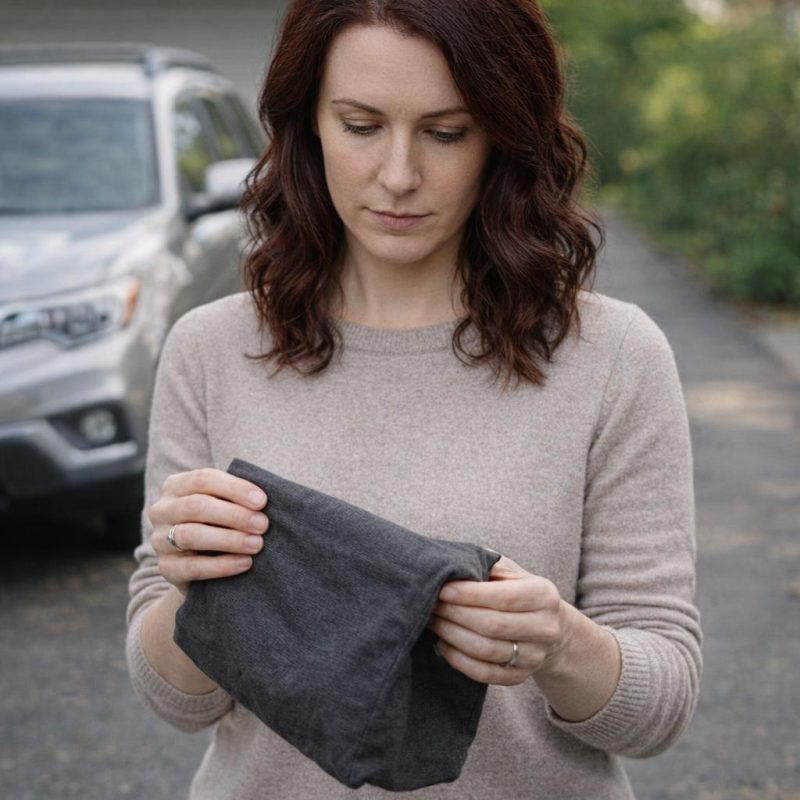 Image by RM AI
A Colleague's Bag
I carried the bag inside and set it on the kitchen counter. Mark was at the coffee maker, back to me, and Sophie was at the table working through a bowl of cereal with the focused silence only a ten-year-old can manage. Jack was somewhere down the hall, making the kind of noise that meant he was either playing or destroying something. I kept my voice easy. 'Hey — whose bag is this? I found it behind the passenger seat.' Mark turned around, glanced at it, and turned back to pour his coffee. 'Oh, that. Someone from work left it in my car after the team thing last month. I keep meaning to drop it off.' He said it the way you'd say you keep meaning to replace a lightbulb. No pause, no shift in posture, nothing. 'Do you know whose it is?' I asked. 'Yeah, one of the women on the project team. She texted me about it actually — I just haven't gotten around to it.' He shrugged and took a sip of his coffee. Sophie looked up from her cereal for exactly one second, then looked back down. Jack came barreling into the kitchen asking about breakfast, and just like that the conversation was over. I put the bag by the door so he'd remember to take it. It made sense. It was a perfectly reasonable explanation. Mark picked up his mug and walked back toward the living room without another word.
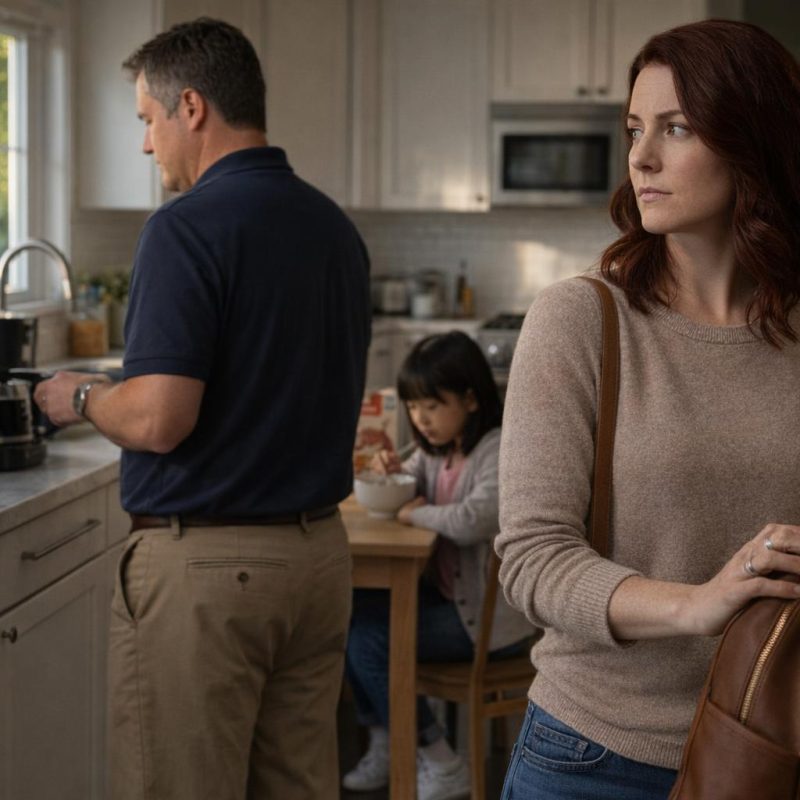 Image by RM AI
The Guilt
By the time I'd loaded the dishwasher and wiped down the counter, I'd already started feeling bad about myself. Not in a dramatic way — just that low, quiet kind of bad. The kind that comes from knowing you had a thought you shouldn't have had. Because I had wondered, for just a second, standing there in the driveway with that bag in my hands. I'd felt something flicker. And now, with Mark's perfectly reasonable explanation sitting in my head, that flicker felt embarrassing. Twelve years. We had been married for twelve years. We'd moved twice, survived a layoff that nearly broke us, raised two kids through sleepless years and school transitions and all the ordinary chaos that either pulls people apart or holds them together. We'd been held together. There had never been anything — no late nights that didn't add up, no distance I couldn't explain, no moment where I'd looked at him and thought something was wrong. He was steady. He had always been steady. And here I was, standing in my own kitchen, feeling a flicker over a gym bag that belonged to someone from his office. I put the sponge down and looked out the window at the backyard where the kids' bikes were leaning against the fence. I was the kind of person who trusted her husband. I had always been that person. The quiet shame of having doubted him, even for a moment, settled somewhere behind my ribs and stayed there.
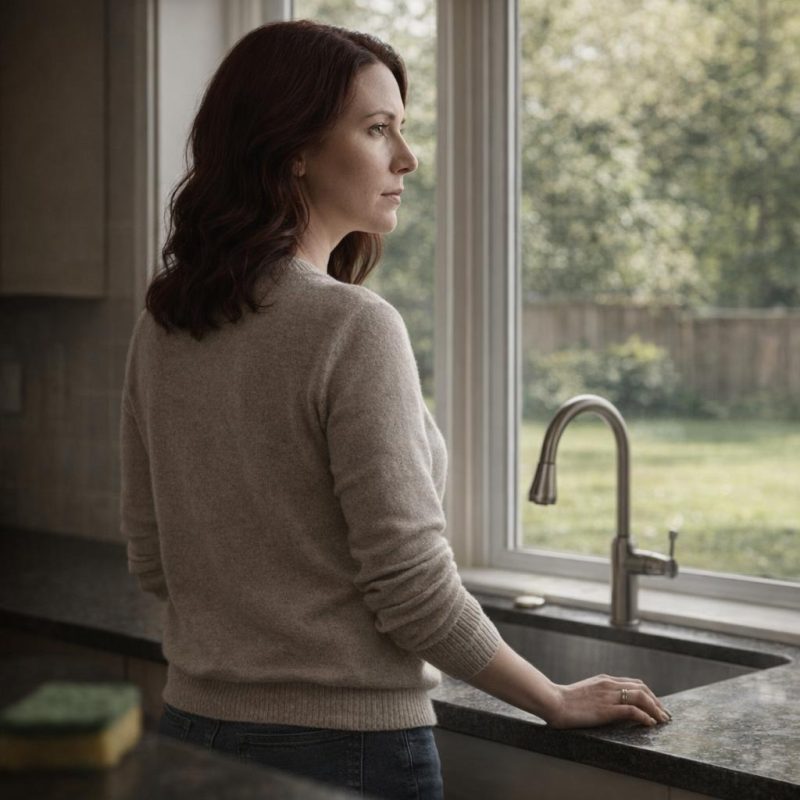 Image by RM AI
Curiosity
The afternoon moved the way Saturdays do — slowly, in pieces. Mark took Jack to the hardware store. Sophie disappeared into her room with a book. I folded laundry, started a grocery list, did the small maintenance work of keeping a household running. But every time I passed through the entryway, I noticed the pink bag sitting by the door. It wasn't bothering me, exactly. It was just there. I'd glance at it and keep moving. Then I'd come back through and glance again. At some point I stopped in front of it and stood there for a moment. Mark had said someone from work texted him about it. Which meant there was probably a name attached to it somewhere — a phone number, a business card, something tucked inside. If I found contact information, I could just text the woman myself and save Mark the trouble. That was a reasonable thing to do. Helpful, even. I wasn't snooping. I was just thinking practically, the way I always did. I picked up the bag and carried it to the kitchen table. The house was quiet. Mark and Jack weren't back yet, and Sophie had her headphones on — I could hear the faint tinny sound of music from down the hall. I set the bag in front of me and looked at it. It was just a bag. I was just going to look for a name. The decision settled in my chest, calm and ordinary.
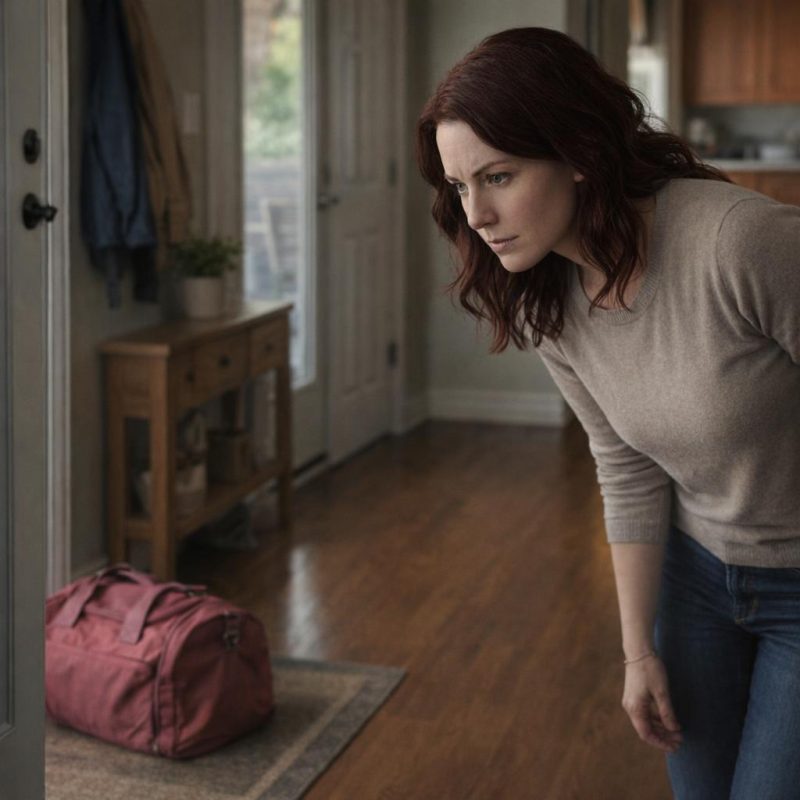 Image by RM AI
Unzipping
I sat down at the kitchen table and pulled the bag toward me. The gold zipper pull was cold between my fingers. I told myself again what I was doing — looking for a business card, a wallet, a name written on a tag somewhere. Something that would make it easy to get the bag back to its owner. That was all. The house was still quiet. Mark's car wasn't in the driveway yet. Sophie's music was a faint pulse from down the hall. I turned the bag over and checked the outside first — no luggage tag, no name written on the bottom, nothing clipped to the strap. I ran my thumb along the zipper. The fabric was soft under my hands, that same smooth, expensive texture I'd noticed in the driveway. I hesitated for just a second. Not because I thought I'd find anything. Just because it felt slightly strange to go through someone else's things, even with good intentions. But that was the point — good intentions. I was trying to help. I took a breath, gripped the zipper pull, and drew it slowly across the top of the bag, the teeth separating one by one in the quiet kitchen, until I had pulled the zipper all the way open.
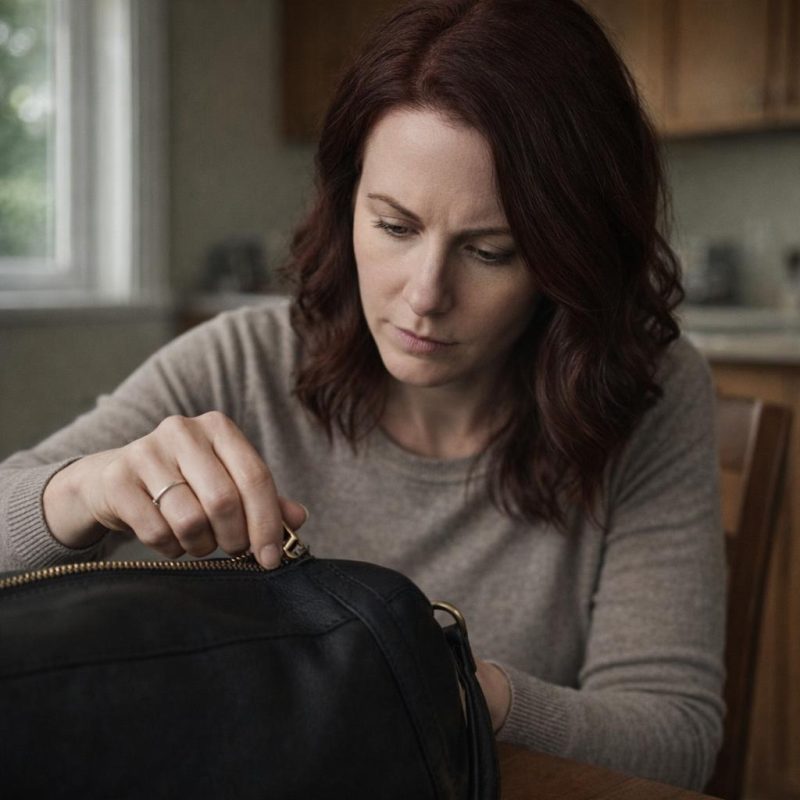 Image by RM AI
The First Items
The first thing I pulled out was a phone charger — one of the standard ones, white cable, small block adapter. I set it on the table. Nothing unusual about that. People left chargers everywhere. I reached back in and felt around, fingers moving through what seemed like folded fabric, maybe a light jacket or a spare shirt. Then my hand closed around something small and hard. I pulled it out. It was a key. A single key on a small keychain — the kind with a little enamel charm on it, a pale blue flower, delicate and deliberately chosen. Not a car key. A house key, by the shape of it. I set it on the table next to the charger and looked at both of them. The charger I could explain away without effort. The key was harder. I turned it over with my finger. People kept spare keys in all kinds of places, I told myself. Maybe it was a spare to her own house, just tucked in her bag for convenience. That was possible. That was probably it. But something about it sat slightly wrong — the way a picture hangs just a fraction off-level and you can't stop noticing it even when you're trying not to. I wasn't alarmed. I wasn't even close to alarmed. I just kept looking at it, the small weight of the key resting in my palm.
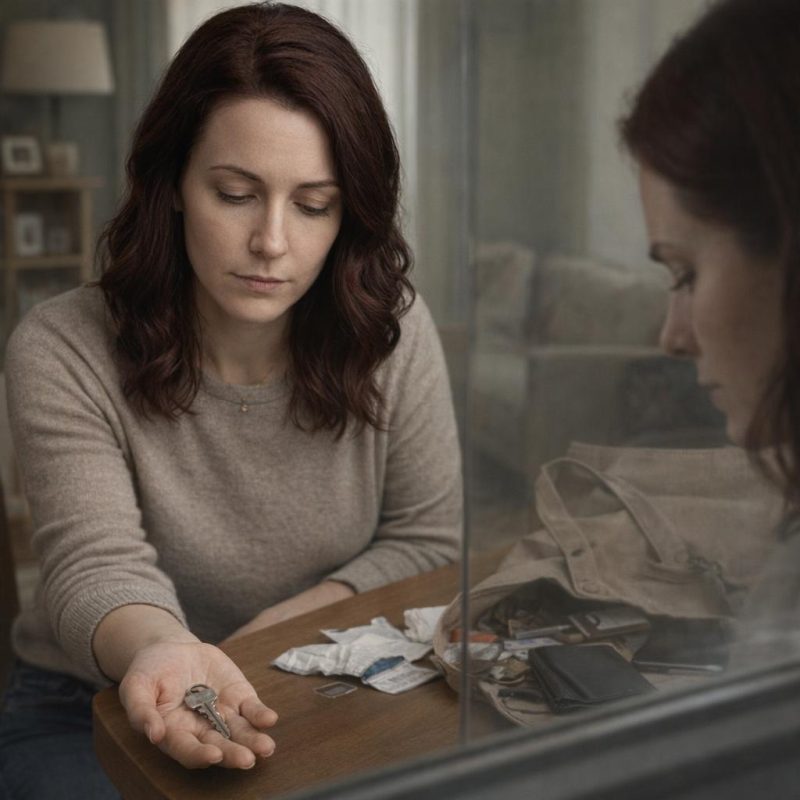 Image by RM AI
The Birthday Card
I set the key down and reached back into the bag. My fingers found something flat and stiff — an envelope. I pulled it out and held it under the kitchen light. It was a standard greeting card envelope, the kind you'd find at any drugstore, cream-colored with a slight texture to it. Sealed. I turned it over. The front was blank except for a name written in the center in blue ink, in handwriting I didn't recognize — looping, careful letters, the kind of handwriting that belongs to someone who still takes their time with it. My stomach did something small and quiet. Not a lurch. Just a tightening, like a thread being pulled taut. I told myself it was nothing. People gave colleagues birthday cards. It was a normal, friendly thing to do. The charger, the key, the card — taken separately, each one had an explanation. I was still in that place where explanations were available, where I could line things up and make them reasonable. I set the envelope flat on the table in front of me and smoothed it with my hand. The handwriting was neat and unhurried. And there, written across the front of the envelope in those careful looping letters, was Mark's name.
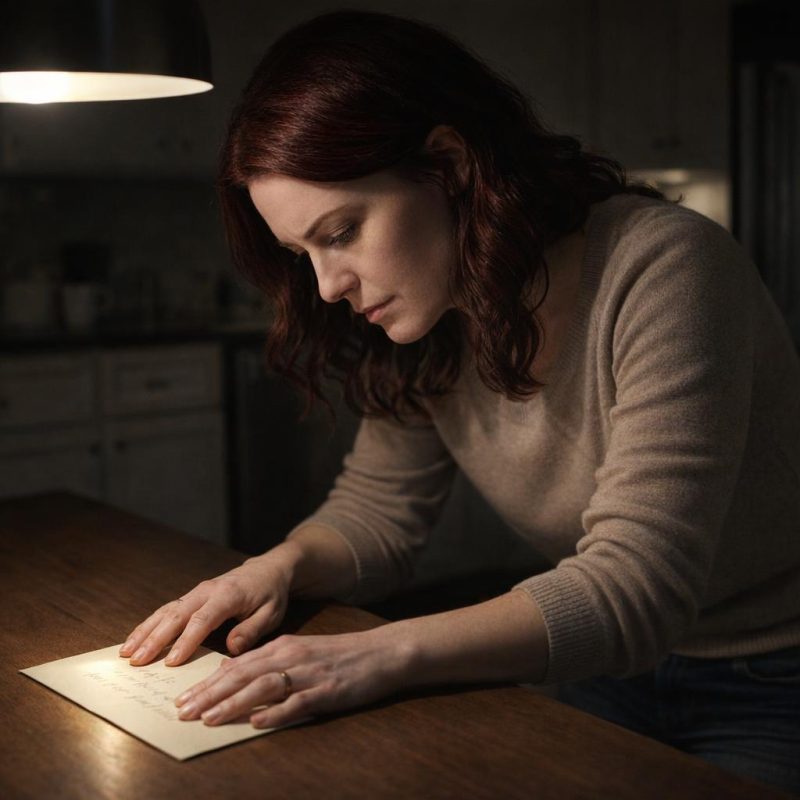 Image by RM AI
Private Jokes
I sat with the envelope for a moment before I opened it. I told myself it was just a birthday card. People wrote birthday cards to colleagues. It didn't mean anything. I slid my finger under the flap and eased it open. The card inside had a simple design on the front — nothing I registered, because I was already opening it to the message. The handwriting was the same careful loops, filling most of the inside panel. I read it slowly. There were references I didn't follow — something about a running joke involving bad coffee and a specific diner, something about a trip that had apparently been hilarious in retrospect. The tone was warm in a way that felt lived-in, the way you write to someone when you have a long history of small moments together. Not romantic, exactly. Nothing I could point to and say, there, that's the thing. But familiar. Deeply familiar, in a way that made me feel like I was reading something I wasn't supposed to see. I read it twice. Then I turned to the bottom of the card, where the message ended, and I read the name signed there — a single first name, written in the same careful hand. It wasn't a name I recognized. It wasn't a name Mark had ever mentioned to me.
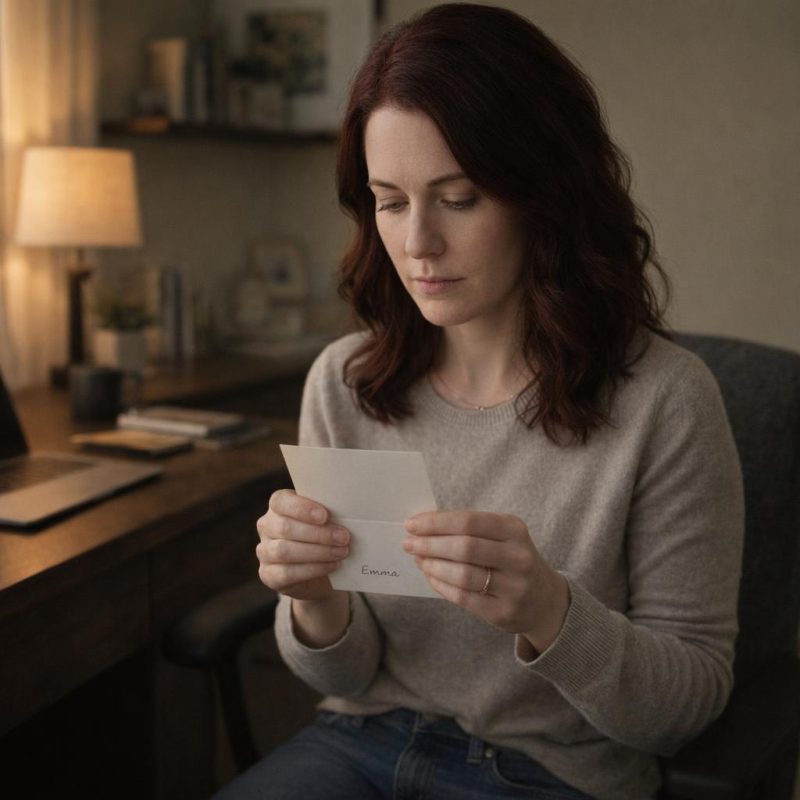 Image by RM AI
The Anniversary Date
I almost missed it. I was about to set the card down when my eye caught the date written in the upper corner — the sender had dated it, the way some people do, like a letter. I stared at it. Then I looked again. The numbers didn't change. It was our anniversary. Mine and Mark's. The exact date we'd gotten married twelve years ago. I told myself that was a coincidence. Lots of things happen on the same date. Birthdays, anniversaries, random Tuesdays — the calendar doesn't belong to anyone. But my hands had gone very still, and I was aware of my own breathing in a way I hadn't been a moment before. Because that night — that specific anniversary — Mark had worked late. He'd texted me around seven to say a project had run over. I'd made dinner for the kids and eaten alone and told myself it was fine, these things happen. I'd believed him without question. I set the card flat on the table and smoothed it with my palm. Then I picked it up and read the date again. And then I read it a third time, just to be absolutely certain I hadn't made a mistake.
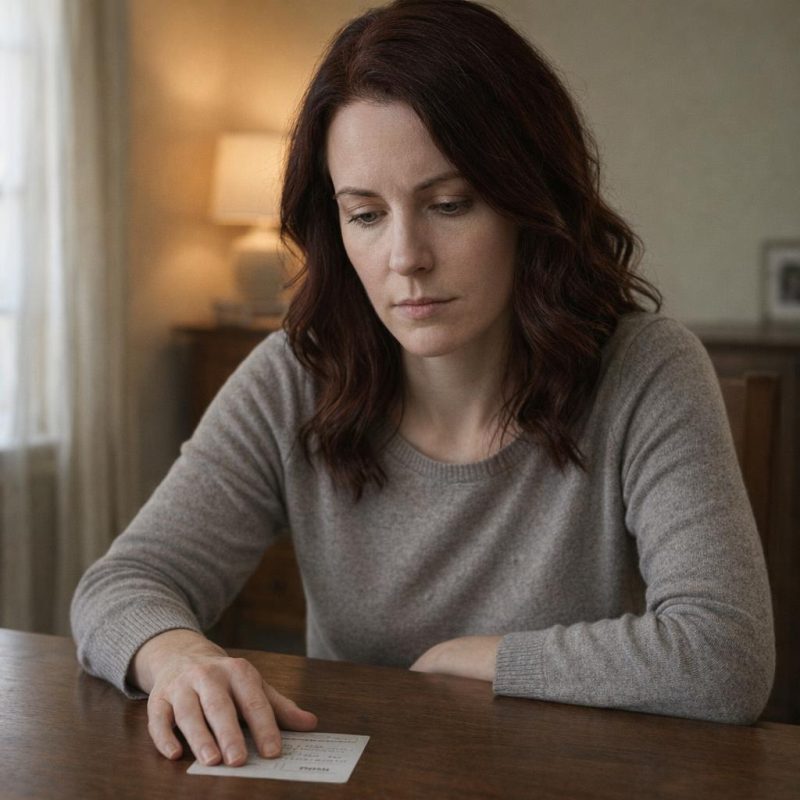 Image by RM AI
Staring at the Evidence
I laid everything out on the kitchen table like I was trying to solve something. The pink gym bag sat on the chair beside me. The card was open in front of me, the date still staring up from the corner. The spare key sat to the left of it, small and unremarkable. The phone charger was coiled next to that. I looked at all of it together and tried to think clearly. The key could belong to a gym locker, or a storage unit, or a friend's place Mark was watching while they traveled. The charger was a common model — half the people I knew had one exactly like it. The card was warm and familiar in tone, but colleagues could be warm. People had long friendships at work. The date was almost certainly a coincidence. I told myself all of this slowly and carefully, the way you talk yourself down from something. And some of it almost worked. I got as far as almost believing the key before I looked at the date again and the almost fell apart. I put my hands flat on the table and listened. The kids were at school. Mark was at work. The house was completely quiet around me, and the quiet had a weight to it I couldn't quite shake.
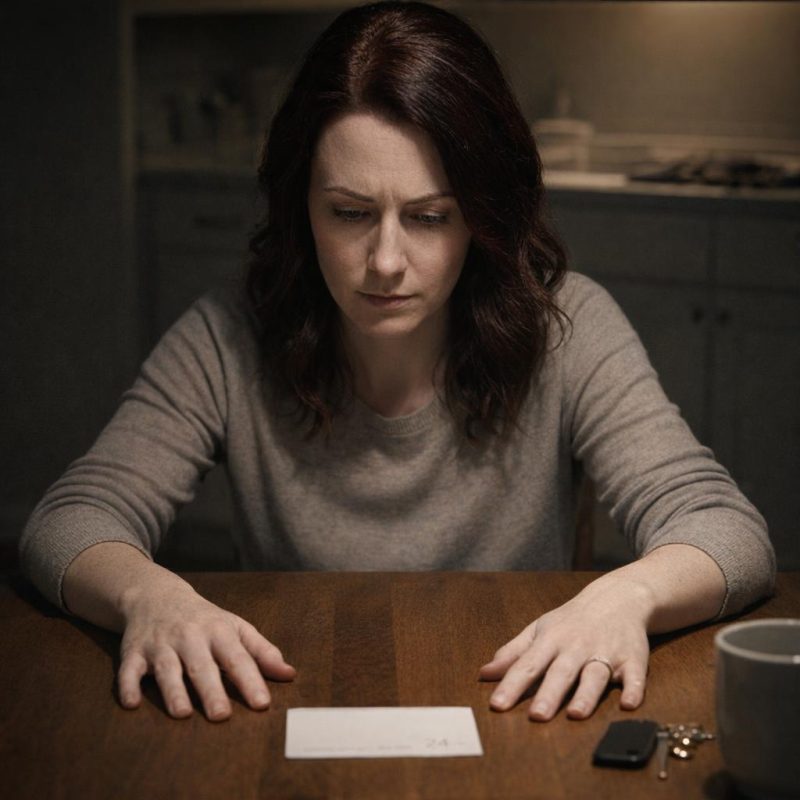 Image by RM AI
Telling Myself Stories
I spent the better part of that morning building a case for myself. The sender had probably written the date weeks earlier — people did that, dated cards when they bought them and then forgot to send them on time. Or maybe it was just a number that happened to line up. Our anniversary wasn't a rare date. Other people got married on it. Other people had birthdays on it. The world didn't arrange itself around my marriage. And the tone of the card — that warm, familiar tone — that was just how some people wrote. Some people were effusive with colleagues. Some people maintained close friendships at work that their spouses never fully knew about because there was nothing to know. I'd had friendships like that myself, years ago. I made coffee I didn't drink and stood at the kitchen window and told myself I was doing that thing I sometimes did — finding patterns in noise, building a story out of coincidence because some part of me needed a story to explain a feeling I couldn't name. I was good at that. I knew I was good at that. I put the card back in the envelope and slid it into the bag and set the bag on the top shelf of the closet. But the feeling didn't go with it. It stayed right where it was, quiet and patient, like it had nowhere else to be.
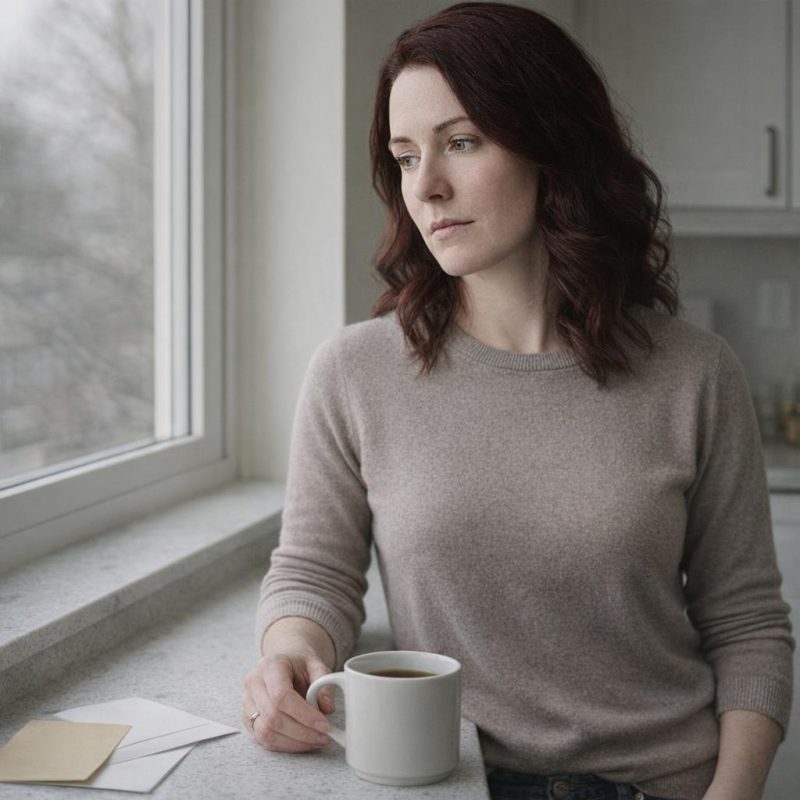 Image by RM AI
The Business Trips
The week that followed felt ordinary on the surface. Mark came home at his usual time most evenings, helped Jack with a school project about volcanoes, argued gently with Sophie about screen time. We ate dinner together and talked about nothing in particular — a neighbor's new dog, a pothole on the main road that had been there for months. I watched all of it and participated in all of it and said nothing about the card. But I was paying attention in a way I hadn't been before. I started noticing how often Mark mentioned travel. A client meeting in the city. A conference he'd registered for. A site visit that had come up suddenly. Each one had a reasonable explanation attached to it, and I'd accepted each one at the time without much thought. That was the thing — I'd never had reason to think twice. I tried to remember how many trips there had been in the past few months and found I couldn't hold them all in my head at once. One evening after dinner, while Mark was upstairs with the kids, I picked up his work calendar from the counter where he'd left it open on his phone. I scrolled back through the past month. There were three out-of-town trips logged there, back to back, each one marked with a city I didn't recognize.
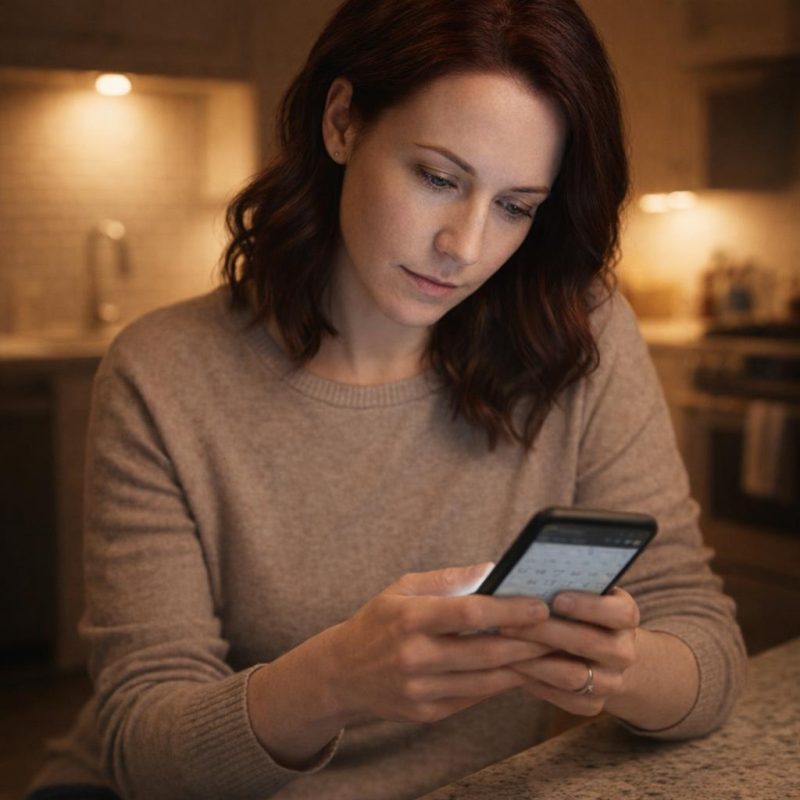 Image by RM AI
The Schedule Changes
I started going back through the months in my head, the way you replay a conversation after the fact looking for the thing you missed. There was the Tuesday in March when Mark had texted to say his afternoon meeting had run long and he wouldn't make it to Sophie's school concert. I'd sat in the third row with Jack on my lap and told Sophie afterward that Dad was sorry, that work had been crazy. She'd nodded in that careful way she had, the way that meant she understood more than she was saying. Then there was the Friday in April — a dinner we'd planned with friends that Mark had cancelled the morning of, something about a deadline that couldn't move. And the Saturday in May when he'd left early and come back late and said the client had needed hand-holding through a presentation. Each one had made sense on its own. Each one had a shape that fit the life we lived, the job he had, the way things sometimes went. I hadn't questioned any of them. I'd filled in the gaps myself, the way you do when you trust someone — you give them the benefit of the doubt so automatically you don't even notice you're doing it. Laid end to end now, though, each small gap sat next to the others, and the shape they made together was harder to dismiss.
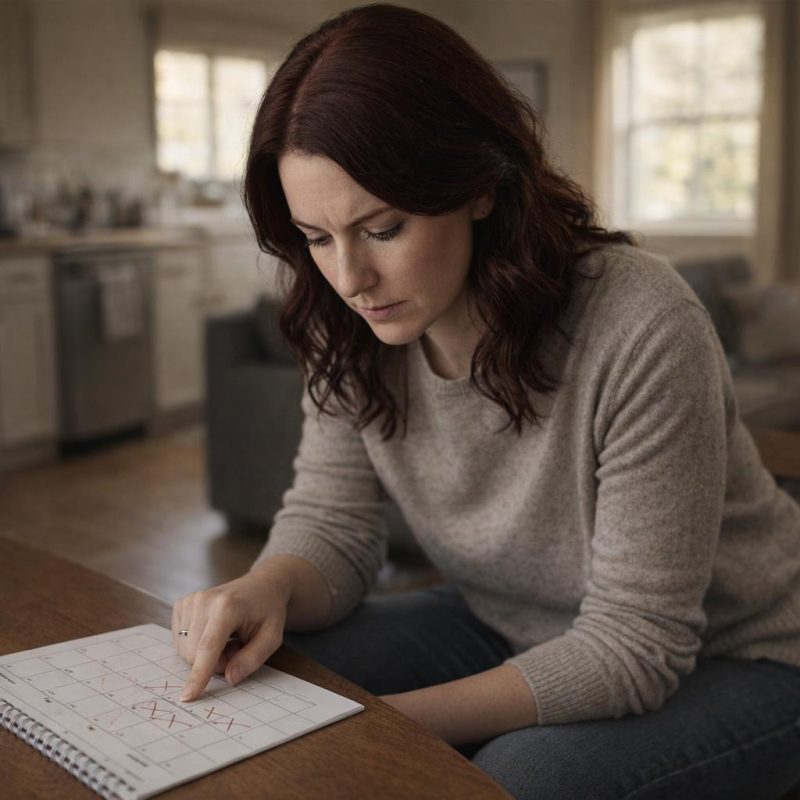 Image by RM AI
Local Events
It was a Sunday morning, and Mark was reading something on his phone at the kitchen table when he mentioned it casually — a charity fitness event happening the following weekend, a 5K route that apparently ran through the park two streets over. He said it the way you mention something you've just read, offhand, like it had just crossed his screen. I said something neutral and let it pass. But later, washing up after breakfast, I found myself turning it over. Because it wasn't the first time. There had been a farmers market in February he'd known about before I did. A community fundraiser in the spring he'd mentioned in passing. A yoga class series at the local gym that he'd brought up once, unprompted, with specific details about the schedule. Mark was not a community calendar person. He'd told me that himself, more than once — that he didn't follow local events, that he found the neighborhood newsletters cluttered and easy to ignore. I'd always been the one who tracked that kind of thing for our family. I stood at the sink with the water running and thought about how he kept knowing things he'd said he didn't follow. It wasn't proof of anything. I knew that. But it sat in my chest alongside everything else, and I couldn't find a comfortable place to put it down.
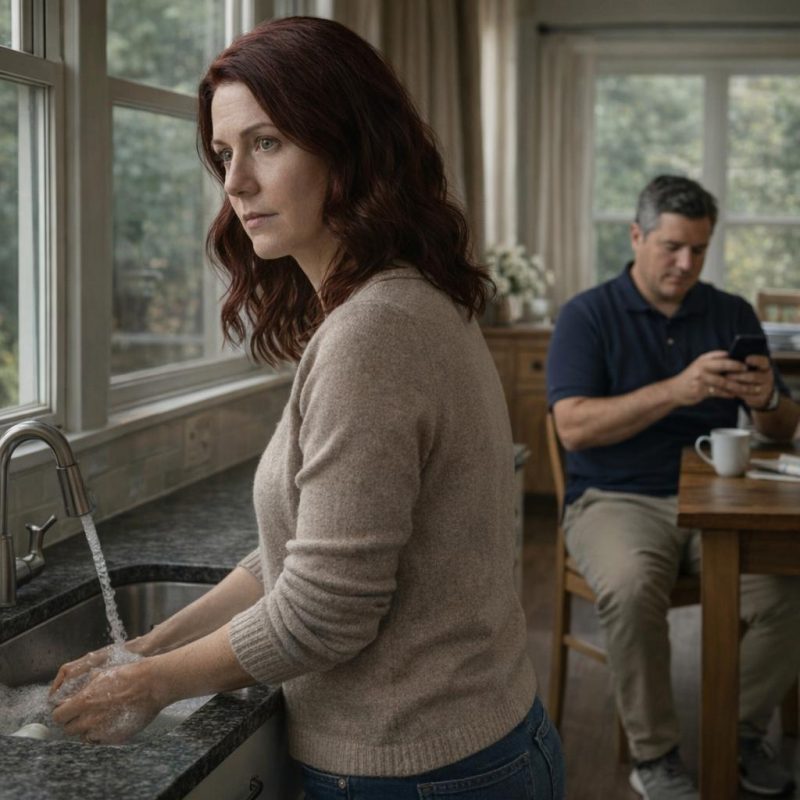 Image by RM AI
The Decision to Confront
By Thursday I'd made up my mind. I couldn't keep carrying it around — the card, the date, the trips, the small things that didn't quite line up. I needed to ask him. Not accusingly, I told myself. Just directly. Just: I found this in the gym bag, can you tell me what it is. That was all. A reasonable question with a reasonable answer, and maybe the answer would be so simple I'd feel embarrassed for the week I'd spent turning it over. Sophie and Jack were at the kitchen table when I got home, Sophie working through a worksheet with her pencil moving in careful lines, Jack drawing something elaborate in the margins of his homework that was definitely not his homework. I made them a snack and sat nearby and tried to look like a person who wasn't rehearsing a conversation in her head. Mark was due home by six. I watched the clock without meaning to. I thought about starting with the gym bag, or starting with the date, or just putting the card on the table and letting him explain it. I rearranged the order a dozen times. By the time I heard his car in the driveway, I had the words lined up and ready: I found something in your car, and I need you to tell me what it means.
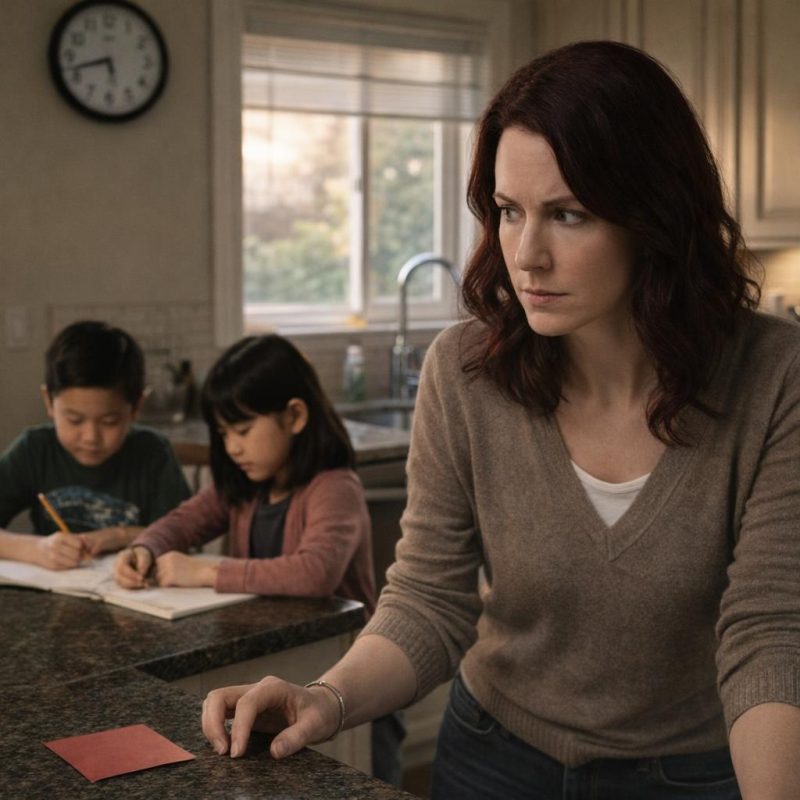 Image by RM AI
Showing Him the Card
I waited until the kids were upstairs. I could hear Jack's feet on the ceiling above us, that particular thumping run he did between his room and the bathroom, and Sophie's music playing low through her closed door. Mark was in the kitchen pouring himself a glass of water, still in his work clothes, jacket draped over the back of a chair. I took the card out of the envelope and set it on the counter in front of him without saying anything first. He looked down at it. I watched his face. He picked it up, read it — or looked at it, at least — and then set it back down. I'd expected something. Surprise, maybe. Or that particular stillness people get when they're caught off guard. What I got instead was a short exhale through his nose and a slight tightening around his eyes, the kind of expression that crossed his face when I asked him to deal with something he found inconvenient. His jaw shifted. He looked up at me, and then back at the card, and the look on his face wasn't guilt or panic or confusion. It was annoyance.
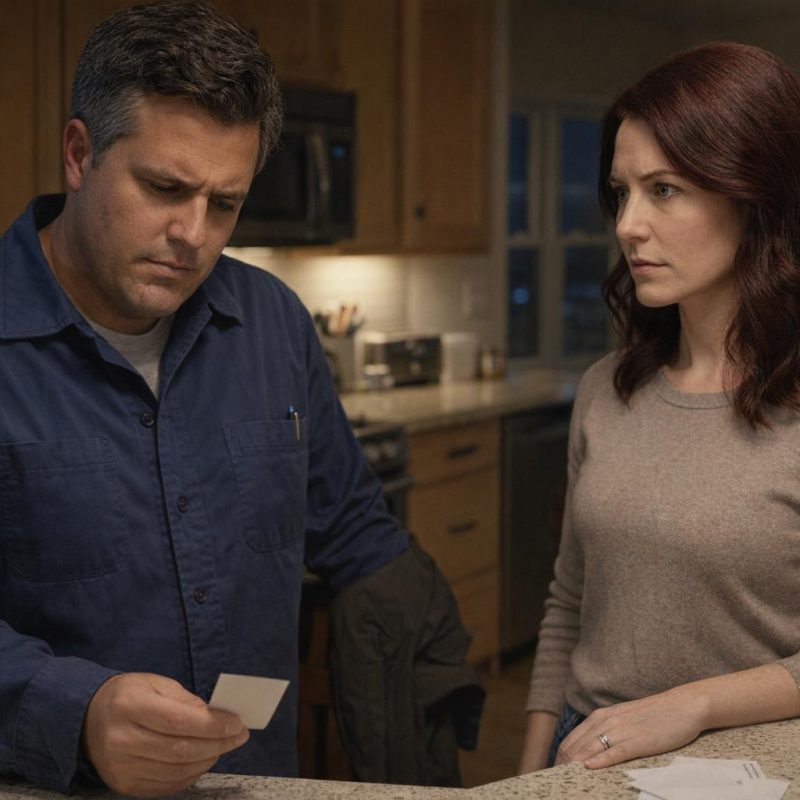 Image by RM AI
She's a Colleague
He picked the card up again, turned it over once, and set it back down. "She's a colleague," he said. Just like that. Flat, like it was the most obvious thing in the world. I asked him why a colleague would have a spare key to our house. He said it was probably an old key, that he couldn't even remember giving it out, that it didn't mean anything. I asked about the tone of the card, the way it was written, the fact that it didn't read like something you'd send to a work contact. He said some people were just friendly like that, that I was reading too much into it. I stood there trying to find the right words and kept coming up empty. Every answer he gave me slid off the question like it hadn't been asked at all. Then I pointed to the date printed inside — our anniversary, the same week, the same numbers — and asked him to explain that. He looked at it for a second. Then he looked at me. And then he shrugged.
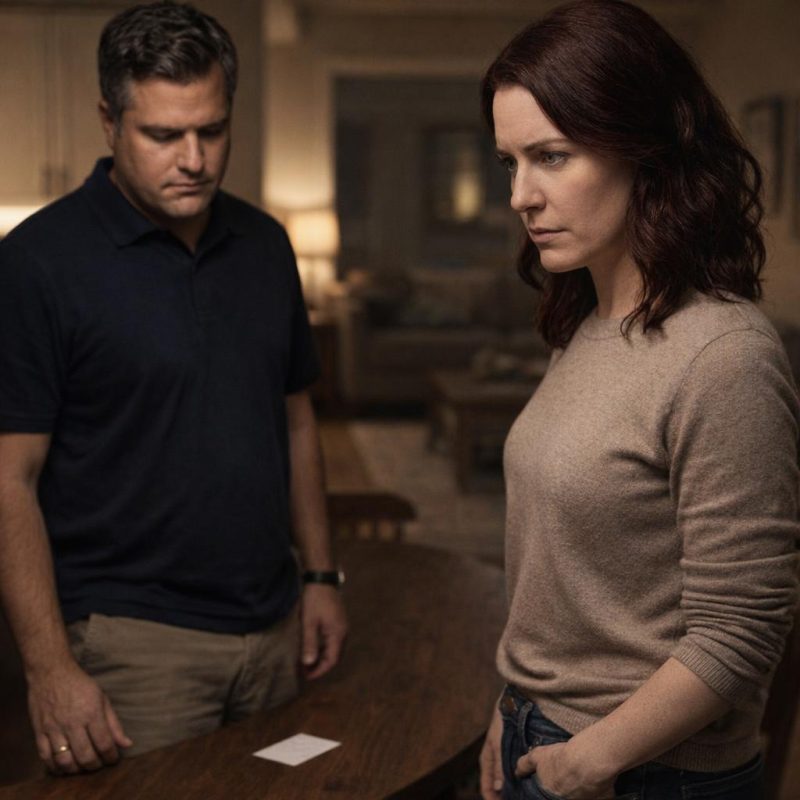 Image by RM AI
The Hollow Answers
He walked out of the kitchen after that. Not storming out, nothing dramatic — just picked up his glass of water and moved toward the living room like the conversation had reached its natural end. I stood at the counter for a moment, the card still sitting there between us even though he was already gone. I'd gone into that conversation hoping for something I could hold onto. An explanation that made sense. A reaction that told me I was wrong to worry. What I got instead were three non-answers and a shrug. The key was old. The tone was just friendliness. The date was a coincidence. Each one technically possible. Each one impossible to argue with directly. And yet none of them added up to anything I could actually believe. I put the card back in the envelope and slid it into the kitchen drawer. The house was quiet now except for the sound of the television coming on in the other room. I leaned against the counter and tried to figure out what I was supposed to do with the feeling that had settled into my chest — the particular weight of a conversation that answered nothing at all.
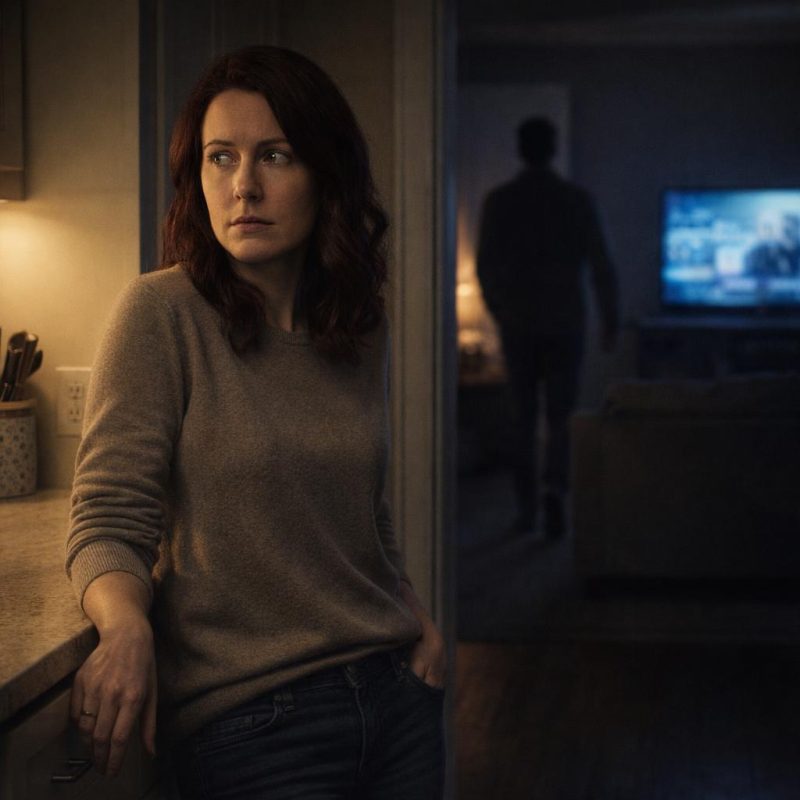 Image by RM AI
Trying to Let Go
I told myself to let it go. I said it out loud once, quietly, standing at the kitchen sink the next morning while the coffee brewed. Let it go. Mark had given me an explanation. It wasn't a satisfying one, but it was an explanation. Colleagues could be overly familiar. Old keys got forgotten. Dates were sometimes just dates. I made lunches and signed permission slips and helped Jack find his library book and reminded Sophie about her science project, and for stretches of an hour or two I almost managed it. Almost. But then I'd be folding laundry or waiting for the pasta water to boil and the card would surface again in my mind, that looping handwriting, that particular phrasing. I wasn't looking for it. It just came back. Mark moved through the week the same as always — easy, unhurried, stopping to ruffle Jack's hair, asking Sophie about her day. He seemed fine. He seemed completely fine. And I kept watching him and trying to borrow some of that ease for myself, trying to match his certainty that there was nothing here worth worrying about. I couldn't quite get there. The doubt didn't leave. It just went quiet.
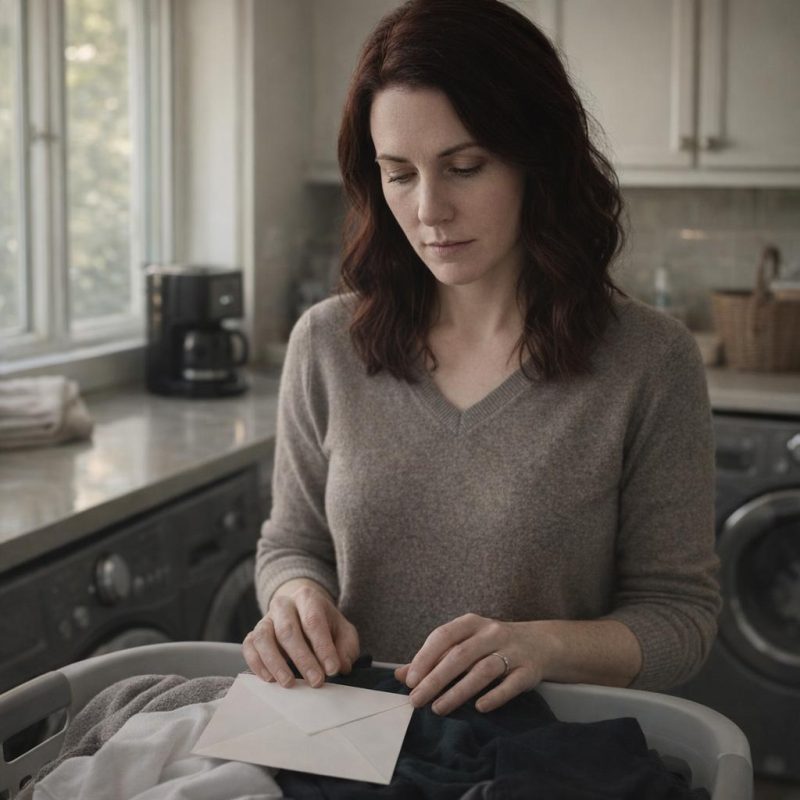 Image by RM AI
The Invitation
Linda called on a Tuesday evening while I was helping Jack with his reading. Mark answered, and I could hear his side of it from the hallway — yeah, sure, sounds good, we'll be there. He came and found me after and said his mother was putting together a family dinner for Saturday, nothing formal, just everyone over at the house. I said yes before he'd even finished the sentence. I surprised myself with how quickly I said it. There was something about the idea of being in a full house, surrounded by noise and food and people who had nothing to do with pink gym bags or birthday cards — it felt like relief before it had even happened. Mark seemed pleased. He went back to whatever he'd been doing, and I sat with Jack and his reading book and thought about Saturday. Linda's house was always warm, always a little too loud, always smelling like something good on the stove. I needed that. I needed to sit at a table with people I knew and feel like things were ordinary. I needed to remember what normal felt like. I found the calendar on the fridge and wrote it in.
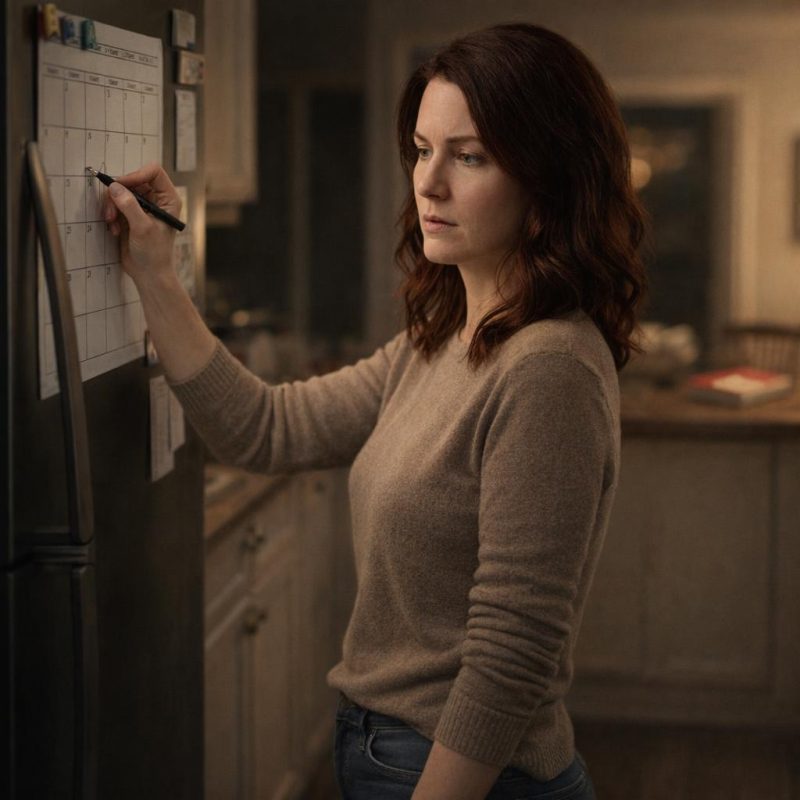 Image by RM AI
Pretending Normal
The week moved the way weeks do when you're trying to get through them without thinking too hard. I made dinners. I drove to school pickups. I sat with Sophie while she finished her science project and listened to Jack retell the plot of a movie he'd seen at a friend's house, every detail slightly wrong in ways he was completely confident about. Mark was there through all of it — present, easy, joking with the kids at the dinner table, loading the dishwasher without being asked. On the surface it looked exactly like our life. I kept waiting for it to feel like our life too. I smiled at the right moments. I laughed when Jack said something funny. I answered when Mark spoke to me and tried to make the answers sound like they came naturally. Some of them did. Some of them I had to reach for. By Thursday I was tired in a way that had nothing to do with sleep. It was the effort of it — the constant small adjustments, the monitoring of my own face, the work of making sure nothing showed. I kept telling myself Saturday would help. I kept telling myself I just needed to get to Saturday.
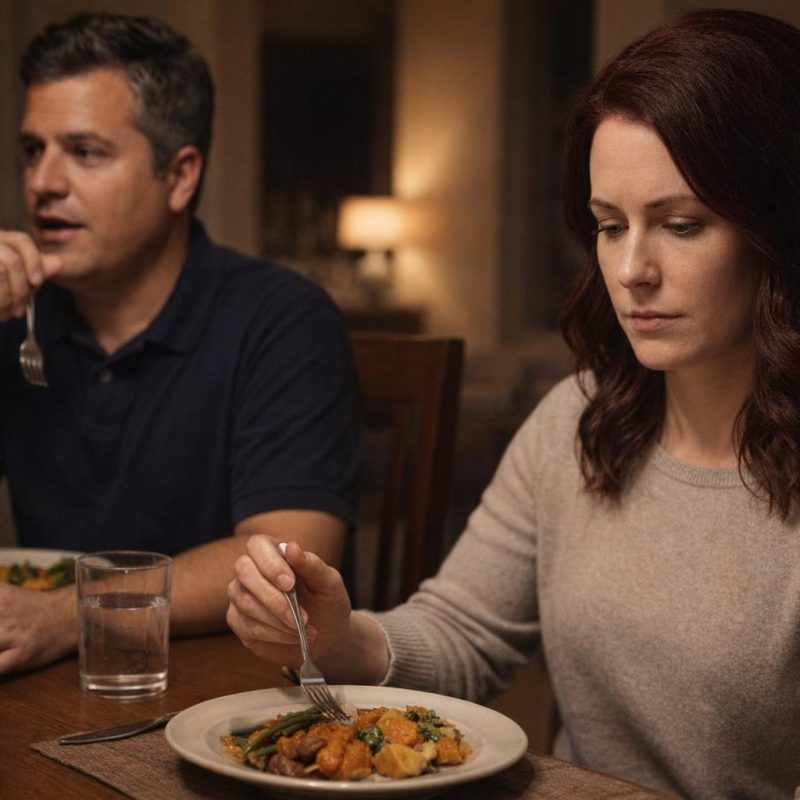 Image by RM AI
The Nagging Feeling
Friday night, after the kids were in bed and Mark had fallen asleep on the couch with the television still on, I sat at the kitchen table by myself. I'd poured a glass of wine I wasn't really drinking. The house was quiet in that particular way it gets late at night, all the small sounds settling in. I thought about the card again. I'd been thinking about it all week, in the background, underneath everything else — underneath the school runs and the dinners and the conversations about nothing. I kept turning Mark's explanations over in my mind, looking for the angle where they made sense, and I kept not finding it. Maybe I was being paranoid. That was possible. I'd asked myself that question enough times that it had started to lose its shape. Maybe I was the kind of person who found problems where there weren't any. Maybe the card really was nothing. But the feeling wouldn't go away. It sat with me through every ordinary moment of every ordinary day, patient and quiet, like something waiting to be looked at directly. I didn't know what to do with it. I just knew it wasn't gone.
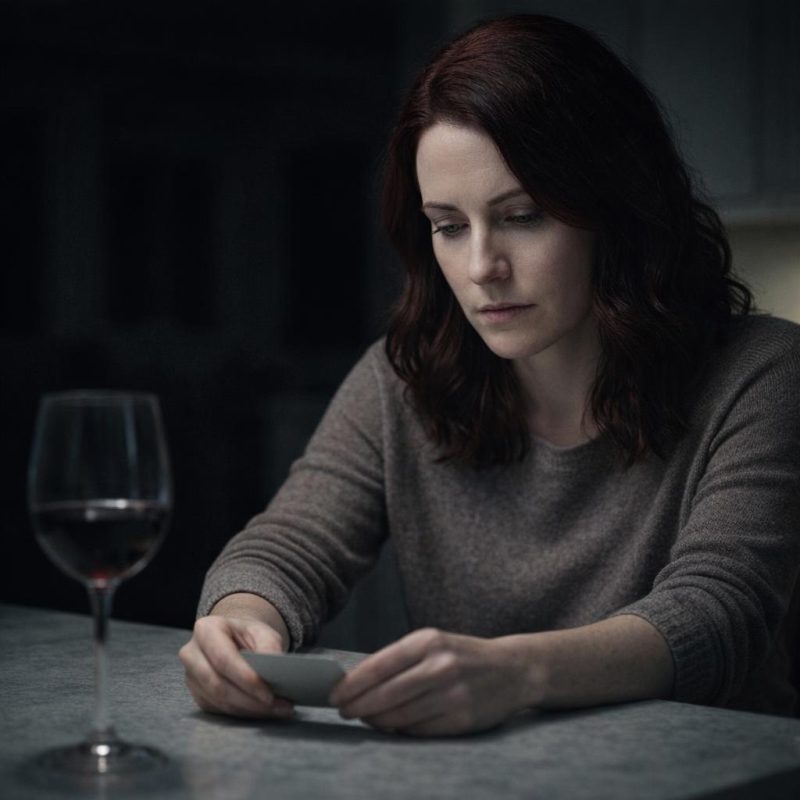 Image by RM AI
The Dinner Approaches
Saturday morning, before anyone else was up, I went to the kitchen drawer. I stood there for a second with my hand on the handle, listening for footsteps upstairs. Nothing. I opened the drawer and took out the envelope. The card looked the same as it always had — same looping handwriting, same careful words, same date printed inside like it belonged there. I told myself I was just looking at it again. I told myself I didn't have a plan. I took my phone off the counter and photographed it anyway — the front, the inside, both pages. The light wasn't great but the words came out clear enough. I put the card back in the envelope and the envelope back in the drawer and closed it. I stood there for a moment after, phone in hand, not entirely sure what I'd just done or why. I wasn't going to show anyone. Probably. I just wanted to have it. Some part of me felt better knowing it was there on my phone and not only in a drawer I couldn't take with me. I set the phone face-down on the counter and went to put the kettle on. Upstairs, I heard Jack's feet hit the floor.
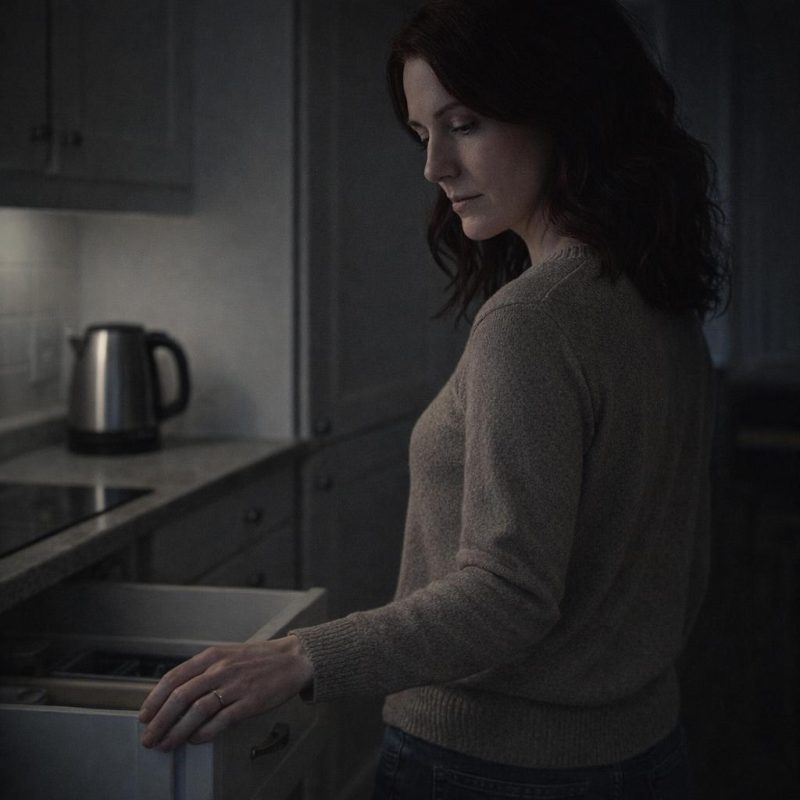 Image by RM AI
Saturday Morning
The morning had that particular Saturday energy where everyone needed something at the same time. Sophie couldn't decide between two tops and wanted my opinion on both, twice. Jack had lost his good shoes — the ones Linda always noticed — and we found them eventually behind the coat rack, one of them inexplicably damp. Mark was in a good mood, the easy kind that came naturally to him on weekends, making Jack laugh about something in the kitchen while I helped Sophie with her hair. It looked like a normal Saturday. It felt like one too, in patches. I moved through it all — the getting ready, the small negotiations, the finding of things — and I was present for most of it. But the phone was in my pocket, and I was aware of it the whole time. Not constantly, not every second, but the way you're aware of something that doesn't quite belong. I'd check that it was still there without meaning to, just a hand against my hip, just a small confirmation. The photo was on it. The card was on it. And no matter how ordinary the morning looked from the outside, I couldn't stop feeling the weight of it sitting there against my side.
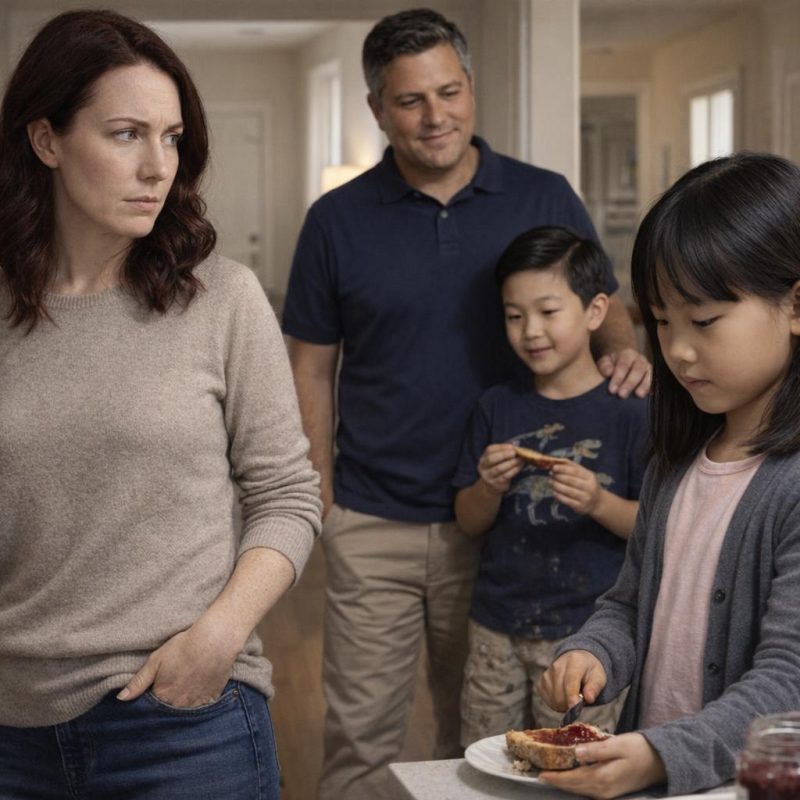 Image by RM AI
The Drive Over
The drive to Mark's parents' house took maybe twenty minutes on a normal day. That day it felt like an hour. Mark had the radio on low and was talking about his father's new grill setup — something about a side burner, a rotisserie attachment, I don't know. I caught maybe every third word. Sophie and Jack were in the backseat doing what they always did on car rides, half-arguing, half-laughing about something only they found funny. Mark glanced back at them in the rearview mirror and smiled. I watched the streets pass outside my window. The same streets we'd driven a hundred times. The same turns, the same corner store, the same church with the broken letter on its sign. Everything looked exactly the way it always had. My hand was in my lap, close to my pocket. I wasn't reaching for the phone. I just knew it was there. The photo was still on it. The card was still on it. And I still hadn't decided what I was going to do with any of it — whether I'd show someone, whether I'd say something, whether I'd just carry it through the whole afternoon and bring it back home with me untouched. The decision sat there, unresolved, the whole ride.
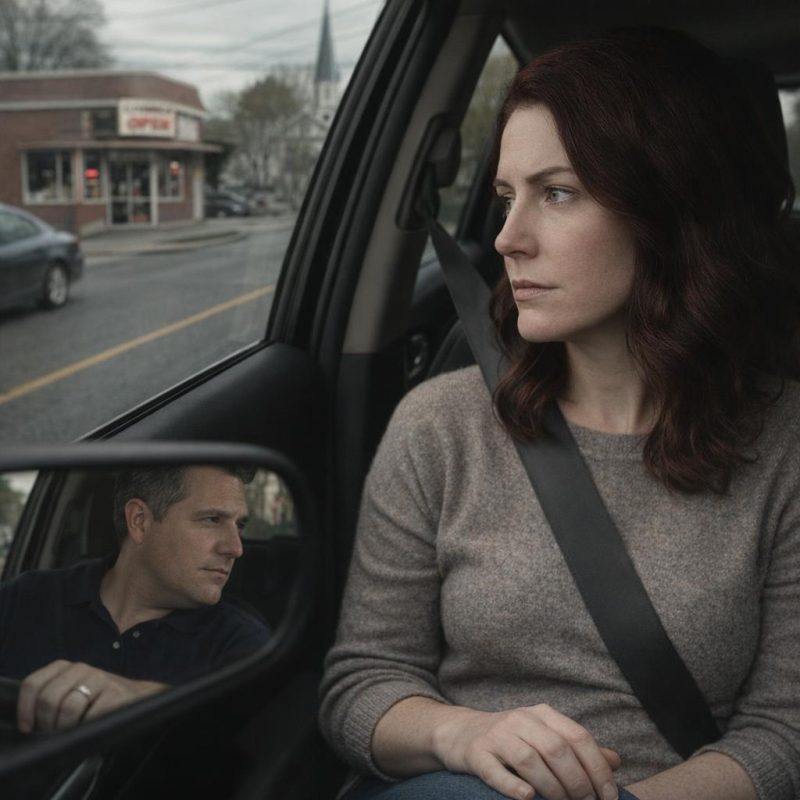 Image by RM AI
Arrival
Linda was at the front door before we even made it up the porch steps. That was her way — she always seemed to sense when a car pulled into the driveway. She hugged the kids first, then me, then said something warm about my hair that I managed to smile at. Robert was already out back, she told us, had been out there since nine in the morning with the new grill like it was a second job. Mark laughed and headed straight through the house toward the back door. Sophie and Jack were already gone, disappeared into the backyard the way kids do, like the house was just a passageway to somewhere better. And then it was just me and Linda in the kitchen, and she was pulling things from the refrigerator and asking me about the drive over and whether Jack had recovered from his cold last week. I answered everything. I asked about her garden. I admired the new curtains she'd hung in the breakfast nook. I was present. I was polite. I was doing everything right. The phone was in my pocket the whole time, and I didn't touch it once, and Linda smiled at me across the counter like everything was exactly as it should be. And for a moment, standing there in her warm kitchen with the smell of something already baking, it almost felt that way.
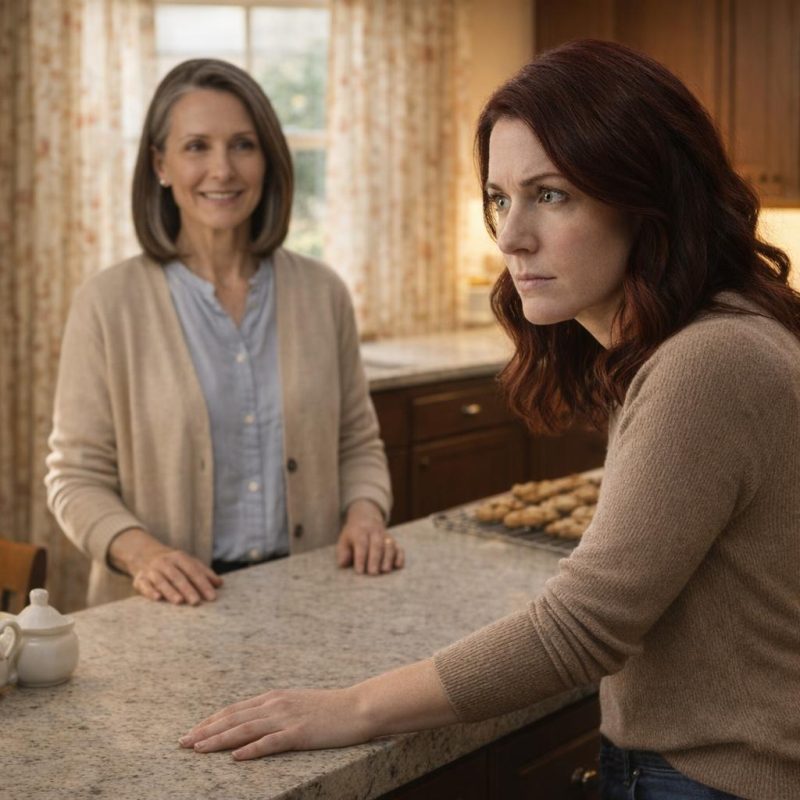 Image by RM AI
Mark Steps Outside
Robert's voice carried through the back door — something about the temperature gauge, something about needing an extra set of hands. Mark set down his drink and said he'd be right there, the way he always did when his father called, no hesitation. He gave my shoulder a quick squeeze as he passed, the kind of casual, automatic gesture that used to feel like nothing and now made me go very still inside. Then the back door swung shut behind him and he was gone. Linda was at the counter, focused on the potato salad, humming something low under her breath. She asked me if I'd mind chopping the tomatoes and I said of course not and picked up the knife and started cutting. The kitchen was warm. The window above the sink looked out onto the backyard where I could see Mark and Robert bent over the grill together, talking, pointing at something. Normal. All of it completely normal. I kept my eyes on the cutting board. I kept my breathing even. The phone was still in my pocket. I hadn't made any decisions. I wasn't going to do anything rash. I was just going to get through the afternoon. That's what I told myself. And then I heard the front door open.
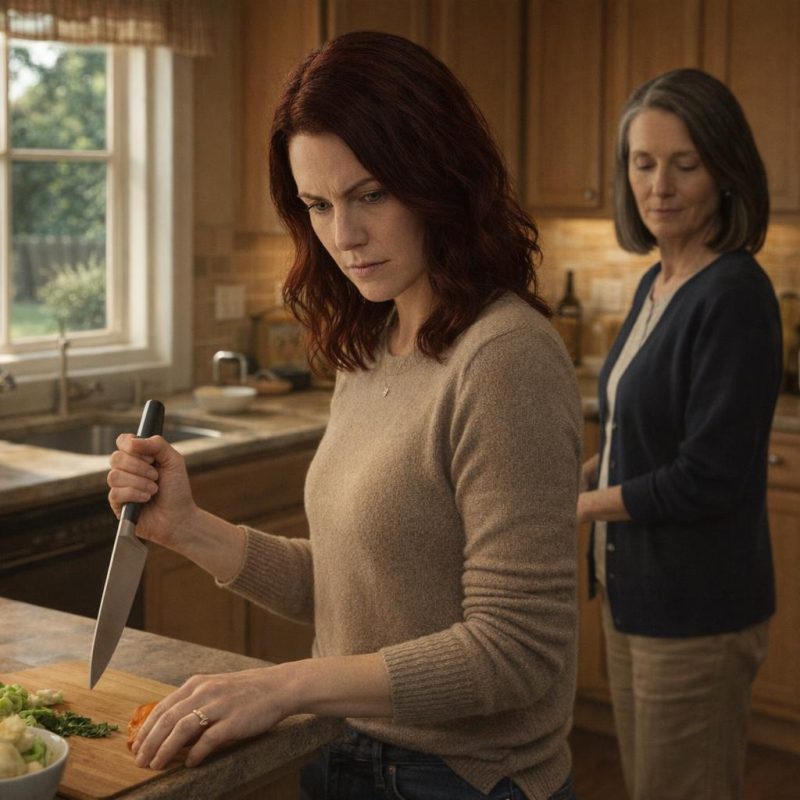 Image by RM AI
Daniel Arrives
It was Daniel. I heard Linda call his name from the kitchen and then his voice came back, easy and familiar, and a minute later he was in the doorway with his jacket still on, grinning the way he always did when he walked into a room. He hugged Linda, stole a piece of bread from the basket on the counter, and she swatted his hand and told him to behave. He came over and hugged me too, the kind of hug that felt genuinely glad to see you. Daniel had always been like that with me — easy, uncomplicated. From the very beginning he'd treated me like I actually belonged in the family, not like someone who'd married into it. I'd always appreciated that about him more than I'd ever said out loud. Linda wiped her hands on her apron and said she was going to check on the kids in the backyard, and then it was just the two of us in the kitchen. Daniel leaned against the counter and started telling me something about a parking situation he'd had on the way over, and I laughed in the right places, and the afternoon light came through the window, and for a few minutes the weight in my pocket felt almost manageable. Almost like something I could set down, just for a little while.
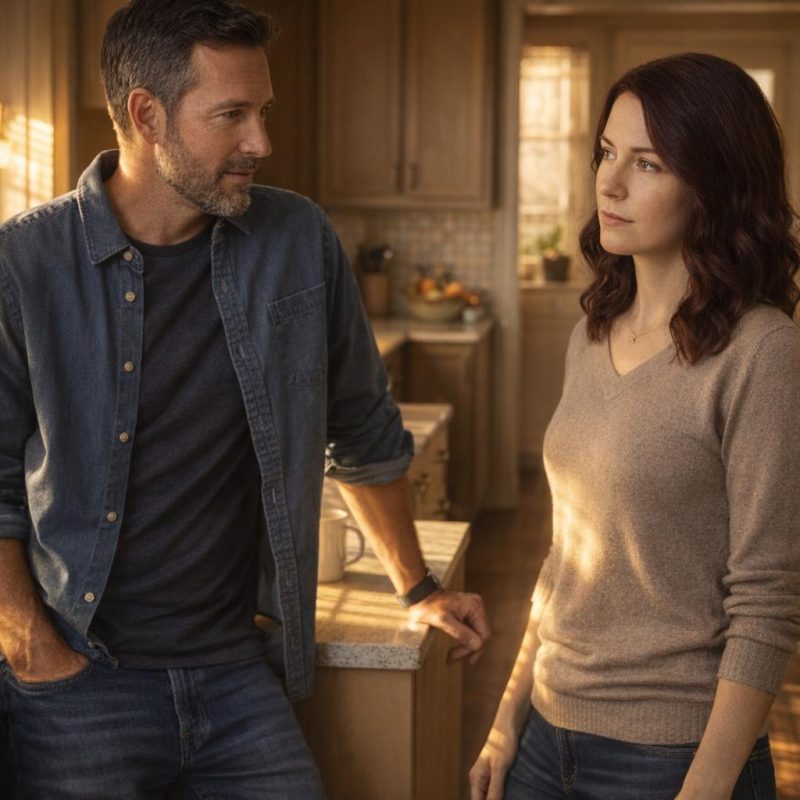 Image by RM AI
The Moment of Decision
I don't know exactly when I decided. There wasn't a moment where I thought it through and concluded it was the right call. One second I was listening to Daniel talk about something his neighbor had done to their shared fence line, and the next second my hand was already moving toward my pocket. It wasn't planned. It wasn't careful. It was just — I needed to show someone, and he was there, and I trusted him, and the kitchen was empty, and I was so tired of carrying it alone. I pulled out my phone. My hands were steadier than I expected. I opened the photo of the card — the one I'd taken in the car, the handwriting, the words — and I turned the screen toward him without saying anything first. I didn't explain it. I didn't give him context. I just held it out and watched his face. I think I expected confusion. Maybe a question. Maybe he'd shrug and tell me it was nothing, and I'd feel foolish, and we'd move on. I think some part of me was hoping for exactly that — for someone to look at it and make it small again. I held the phone steady and waited for him to tell me I was overthinking it.
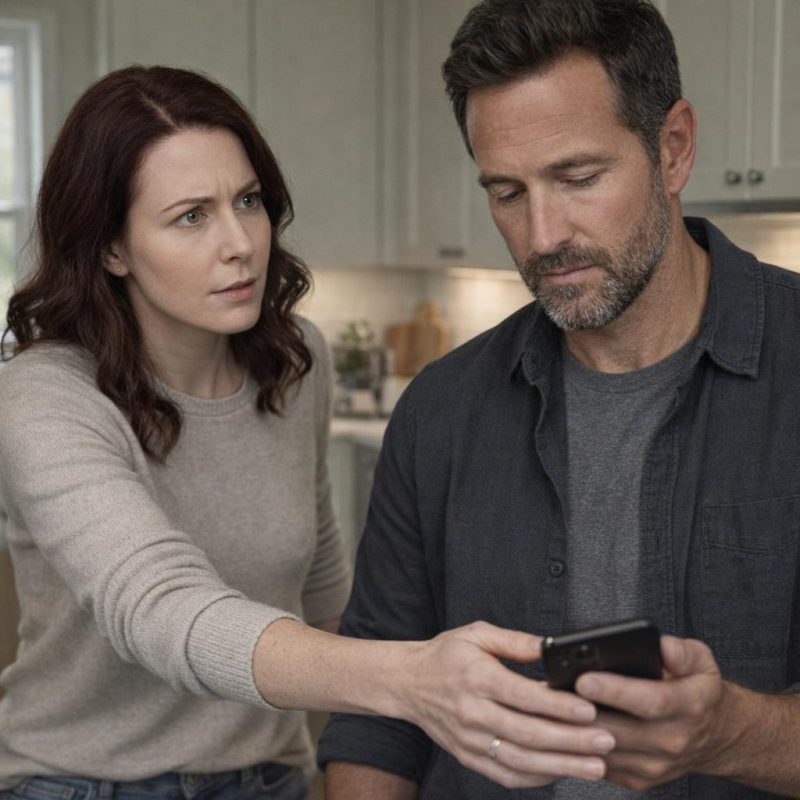 Image by RM AI
Daniel Freezes
He didn't say anything. That was the first thing I noticed — the silence where a response should have been. Daniel looked at the screen, and I watched his face, and something happened to it that I can't fully describe. It wasn't confusion. It wasn't the mild curiosity I'd been bracing for. His whole body went still. Not the stillness of someone thinking — the stillness of someone who has just seen something they weren't prepared to see. His jaw tightened. His eyes stayed fixed on the screen. He didn't look up at me, didn't make a sound, didn't shift his weight or reach for the phone or do any of the small things people do when they're just processing something ordinary. He just — stopped. The kitchen felt very quiet. I could hear the muffled sound of Robert and Mark outside, the distant shriek of one of the kids laughing in the yard. All of it far away. In here it was just the two of us and the phone between us and a silence that was growing heavier by the second. My heart had started doing something uncomfortable in my chest. I kept the screen turned toward him and waited. And then I watched all the color leave his face.
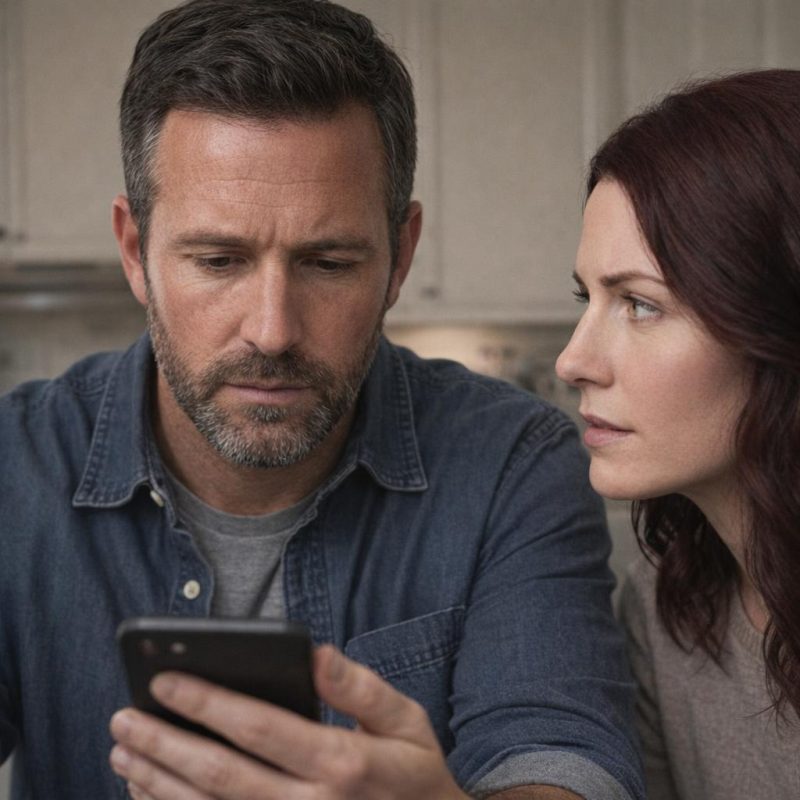 Image by RM AI
The Stare
He looked up at me. Then back at the phone. Then at me again. I didn't move. I don't think I was breathing properly. His expression had shifted into something I couldn't quite name — it wasn't just surprise, it was deeper than that, something closer to disbelief, like he was looking at something that shouldn't exist. He blinked. Looked at the screen again. His mouth opened slightly and then closed without producing a word. I had never seen Daniel at a loss before. He was the kind of person who always had something to say, who filled silences naturally, who made everything feel a little lighter just by being in the room. This version of him — still, pale, staring — was someone I didn't recognize. I wanted to ask him what was wrong. I wanted to say something, anything, to break whatever was happening between us. But I didn't. I just held the phone and watched him look at it and look at me and look at it again, and the fear that had been sitting low in my stomach all week started climbing. The sounds from outside — the grill, the kids, Mark's voice somewhere in the yard — felt like they were coming from a different world entirely. The weight of his silence pressed down on everything.
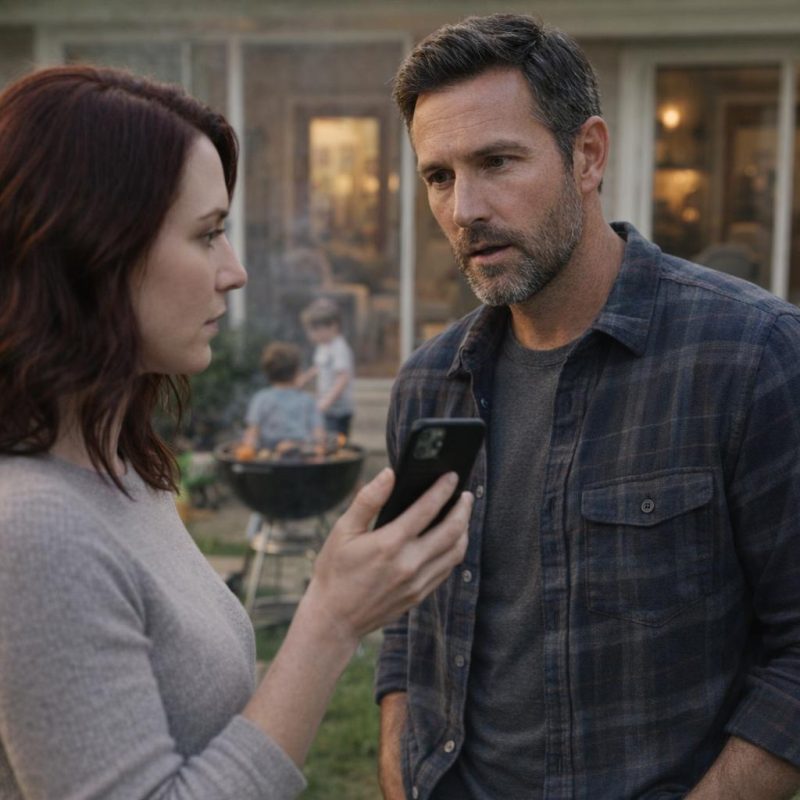 Image by RM AI
Where Did You Get This
He finally spoke. His voice came out wrong — tight, careful, like he was measuring each word before he let it out. "Where did you get this?" That was all. Not what is this, not who sent this, not some version of the reassurance I'd been half-hoping for. Just: where did you get this. I told him. I said I'd found it in a gym bag. In Mark's car. He went very still again when I said that, a different kind of still than before, and I kept going because I needed him to understand the whole thing. I told him the bag had been in the back seat. I told him it was pink. His face changed the moment I said that — something shifted behind his eyes, and he looked at me with an expression I hadn't seen on him before. "The pink bag?" he said. "You found it in the pink bag?"
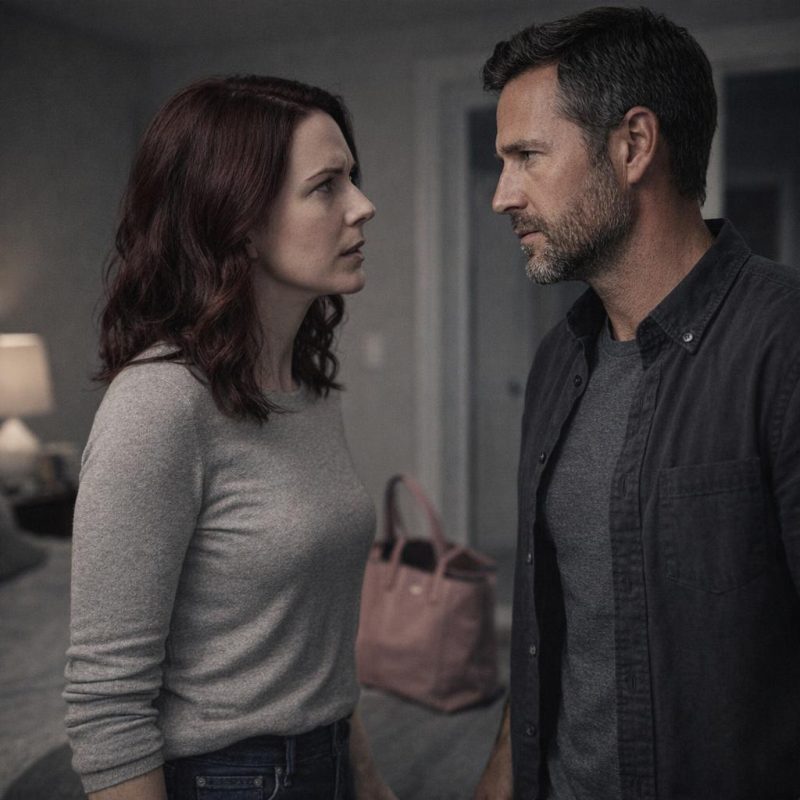 Image by RM AI
He Knows the Bag
"Yes," I said. "The pink one." I watched his face and something in it shifted — not surprise exactly, more like a door closing behind his eyes. He knew. I could see it in the way his jaw tightened, the way he looked down at the card in his hand and then back at me, like he was trying to figure out how much I already knew. "The pink gym bag," he said again, quieter this time, almost to himself. I nodded. I didn't say anything else because I didn't want to give him a reason to stop talking. He set the card down on the counter between us and pressed his fingers flat against it, like he was steadying himself. He didn't look at me for a long moment. When he finally did, there was something in his expression I couldn't name — not guilt exactly, not pity, but something in between. Something that told me this wasn't news to him. The bag, the card, whatever this was — none of it was news to him. And that knowledge settled over me like a weight I hadn't asked to carry.
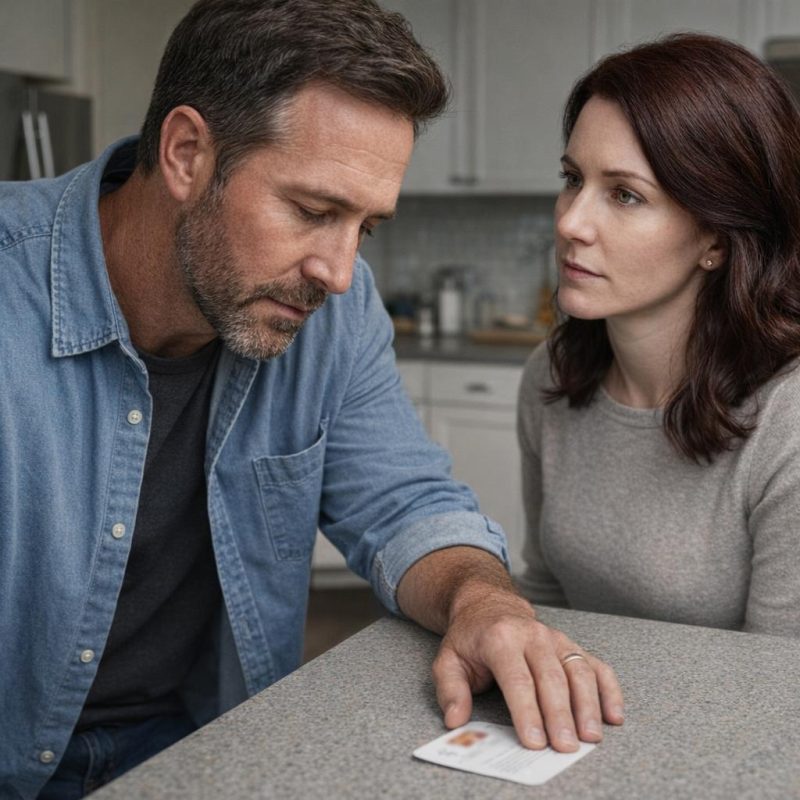 Image by RM AI
The Anniversary Question
I pointed to the date on the card. My finger was steadier than I felt. "The anniversary," I said. "Our anniversary. Did whoever sent this know when it was?" Daniel looked at the card. Then he looked at me. Then he looked back at the card. I watched his throat move when he swallowed. He didn't answer. I asked again, slower this time, because I needed him to understand I wasn't going to let this go. "Did she know when our anniversary was, Daniel?" He still didn't say anything. He just stood there with his hands flat on the counter and his eyes somewhere between me and the middle distance, like he was trying to find a version of this conversation that didn't end badly. There wasn't one. I could feel my heart beating in my ears. The kitchen felt smaller than it had a minute ago. He opened his mouth once, then closed it. Outside, I could hear the kids somewhere in the backyard, Jack's voice carrying over the fence. Inside, between me and my brother-in-law, there was nothing but silence. And that silence told me more than any answer he could have given.
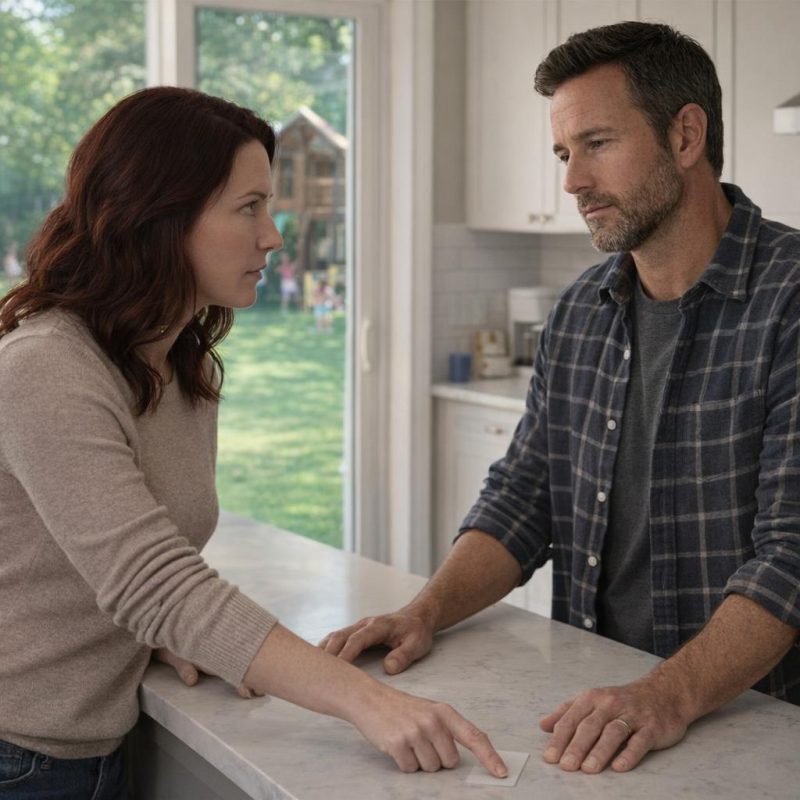 Image by RM AI
You Really Don't Know
He finally looked at me — really looked at me — and the expression on his face stopped me cold. It wasn't discomfort anymore. It was something closer to disbelief. Like I'd said something that didn't compute. He tilted his head slightly, the way you do when you're trying to figure out if someone is joking. I wasn't joking. I hadn't been joking about any of this. "Emma," he said, and the way he said my name made my stomach drop. Careful. Measured. Like he was about to say something he couldn't take back. "Do you — " He stopped. Started again. "Does Mark know you're asking me this?" I told him no. I told him Mark wasn't home. He nodded slowly, like that explained something. Then he looked at me with that same expression — that disbelief still sitting on his face — and said, "You really don't know, do you." It wasn't a question. He said it like a fact he'd just discovered, like something had just clicked into place for him. And the way he said it — quiet, almost sad — made every hair on my arms stand up.
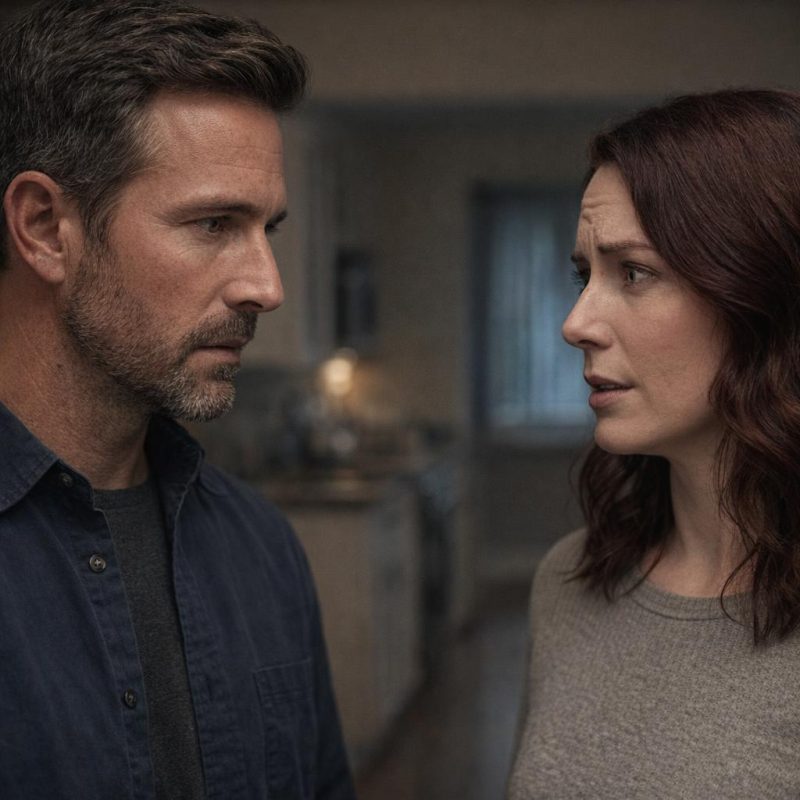 Image by RM AI
Know What
"Know what?" My voice came out louder than I meant it to. It bounced off the kitchen walls and I saw Daniel flinch slightly. I didn't apologize. I couldn't. I was past the point of managing my tone. "Daniel. Know what?" He pushed back from the counter and turned away from me for a second, one hand going to the back of his neck. I'd seen Mark do that exact same thing when he didn't want to answer a question. The similarity hit me somewhere I wasn't expecting. When Daniel turned back around, he looked like a man who had just realized he'd walked into something he couldn't walk back out of. He wasn't angry. He wasn't cold. He just looked genuinely, deeply uncomfortable — the kind of uncomfortable that comes from knowing you're about to change something that can't be unchanged. "I don't — " he started. "I don't know how much I should be the one to tell you." I told him he was already the one telling me. I told him there was no one else in this kitchen. He looked at the card on the counter. He looked at me. He took a slow breath in, and I stood there barely breathing, waiting for whatever was about to come out of his mouth.
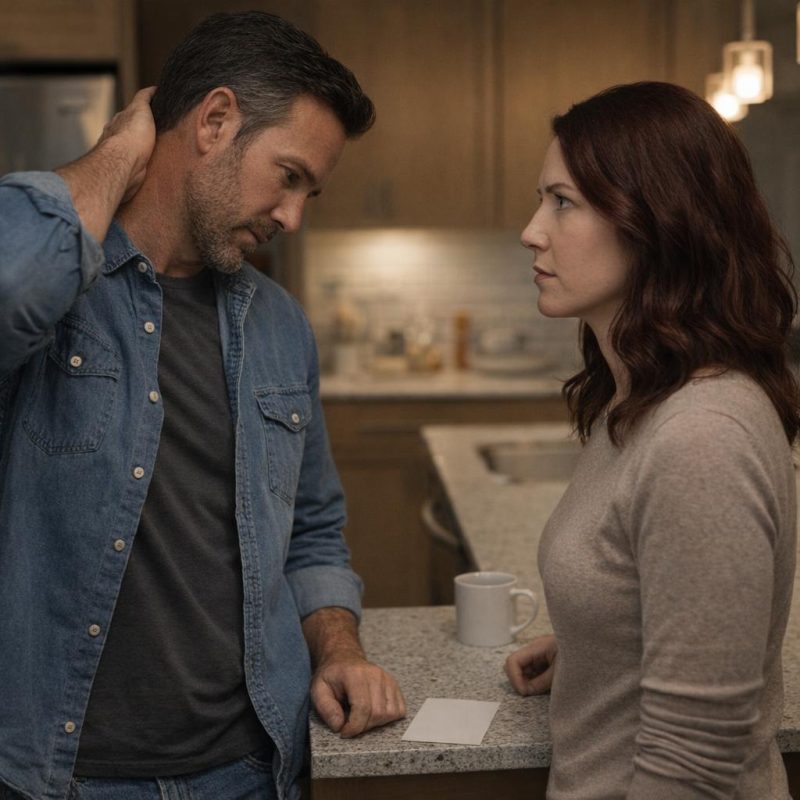 Image by RM AI
Rachel
He didn't look away from me when he asked it. That was the thing I kept coming back to afterward — he held eye contact, like he wanted to see my face when the question landed. "Did Mark ever mention someone named Rachel to you?" I turned the name over in my head. Rachel. I went through everything — every story Mark had ever told me, every name that had come up over twelve years of marriage, every person at every family dinner, every friend he'd mentioned in passing. Nothing. The name meant absolutely nothing to me. I told Daniel that. I said, "No. I've never heard that name." And I watched something shift in his face — not relief, not surprise exactly, but a kind of grim confirmation, like I'd just answered a question he'd been afraid to ask. He looked down at the counter. He pressed his lips together. When he looked back up at me, there was something in his eyes that I can only describe as dread. Not for himself. For me. And then he said, "She sent the bag."
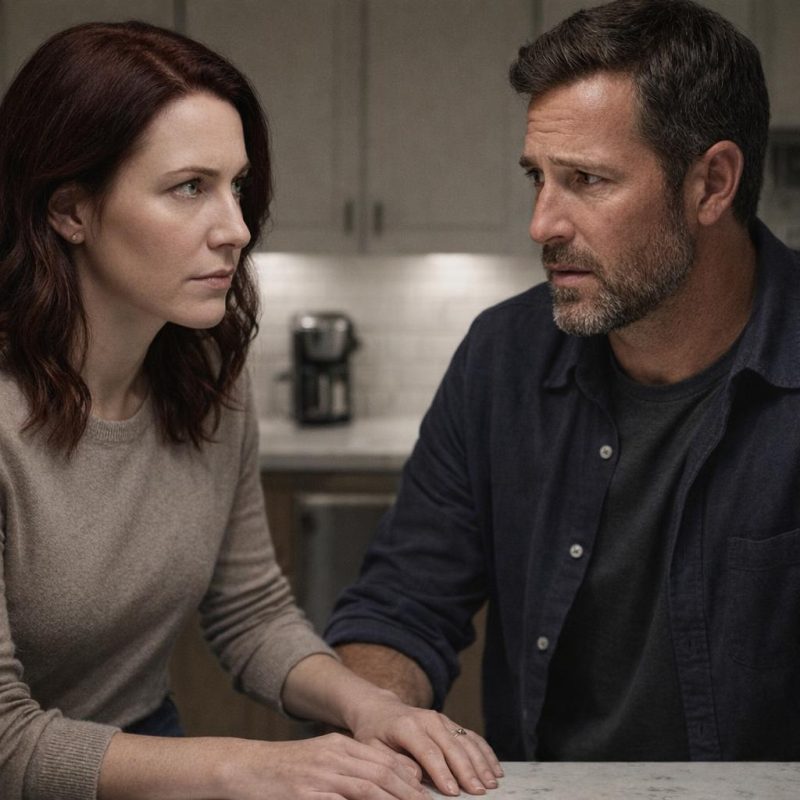 Image by RM AI
Never Heard That Name
"I've never heard that name," I said again, because I needed him to understand I wasn't misremembering. Not once. Not in passing. Not a friend of a friend, not someone from work, not a name on a Christmas card. Rachel was a complete blank. Daniel stared at me. He didn't say anything for a moment, and the silence had a different quality to it now — heavier, like something had just been confirmed that he hadn't wanted confirmed. He looked almost pained. I watched him process it, watched him work through whatever he was working through, and I felt the ground shift under me in a way I couldn't explain. His expression had changed — something in his face had gone tight, the way a face goes when a piece of information lands somewhere unexpected. I didn't know what that something was yet, but I could feel the shape of it — large and old and settled, like it had been sitting in the room long before I walked in.
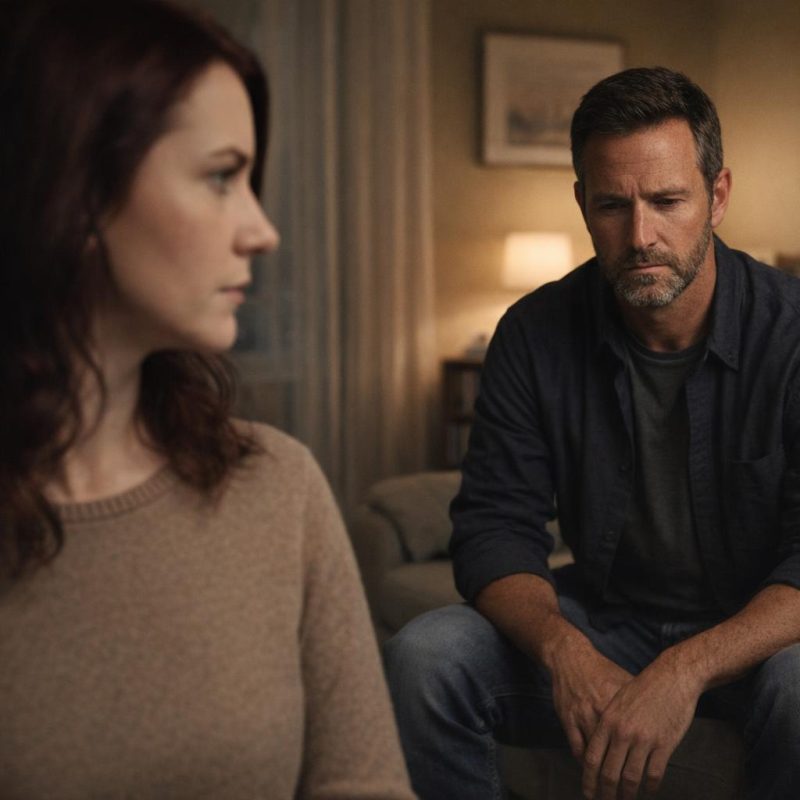 Image by RM AI
The Reluctant Explanation
He started talking slowly, like he was choosing each word off a shelf and checking it before he set it down. He said Rachel had been part of Mark's life for a long time. Years. Before I came into the picture. He said it the way you say something you assume the other person already knows the outline of — filling in details, not laying the foundation. But I didn't know the outline. I didn't know any of it. I kept my face as still as I could and let him talk, because I was afraid that if I reacted too much he'd stop. He said her name a few more times, and each time it landed the same way — a name that clearly meant something, though I had no frame for what. Rachel. He paused at one point and looked at me, checking, and I gave him the smallest nod I could manage just to keep him going. I was hearing all of this for the first time. Every single word of it. And somewhere in the middle of his careful, halting explanation, I understood that I had been the only one who didn't know.
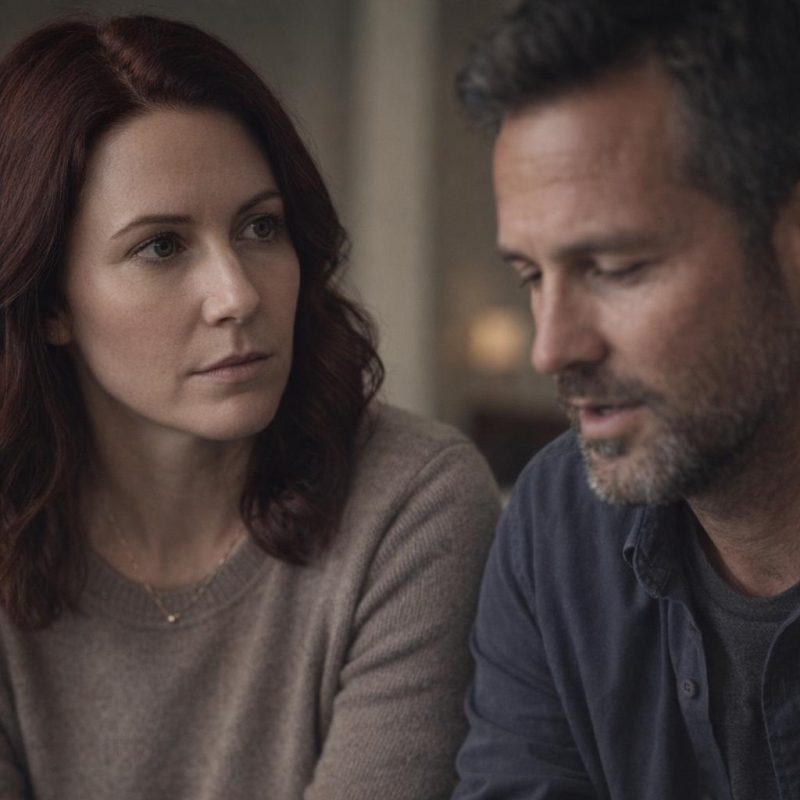 Image by RM AI
Not Casual
"It wasn't casual," Daniel said. He said it plainly, without softening it, and I felt those three words land somewhere in the center of my chest. Not casual. I turned that over while he kept talking, while he looked at the counter instead of at me, while he said it in the careful way people say things they wish someone else had said first. He told me it had been serious. He said it like that was the part I needed to understand before anything else made sense. I asked him how serious. He looked up at me then, and something in his expression shifted as he decided how much to give me at once. He said the family had known her. Not known of her — known her. Linda and Robert. Family dinners. Holidays. I stood there and felt the full shape of what I didn't know pressing in around me, all the years of it, all the dinners and conversations and family moments I'd walked into without understanding what had come before. And then Daniel said, "Everyone knew her, Emma. She was around for years."
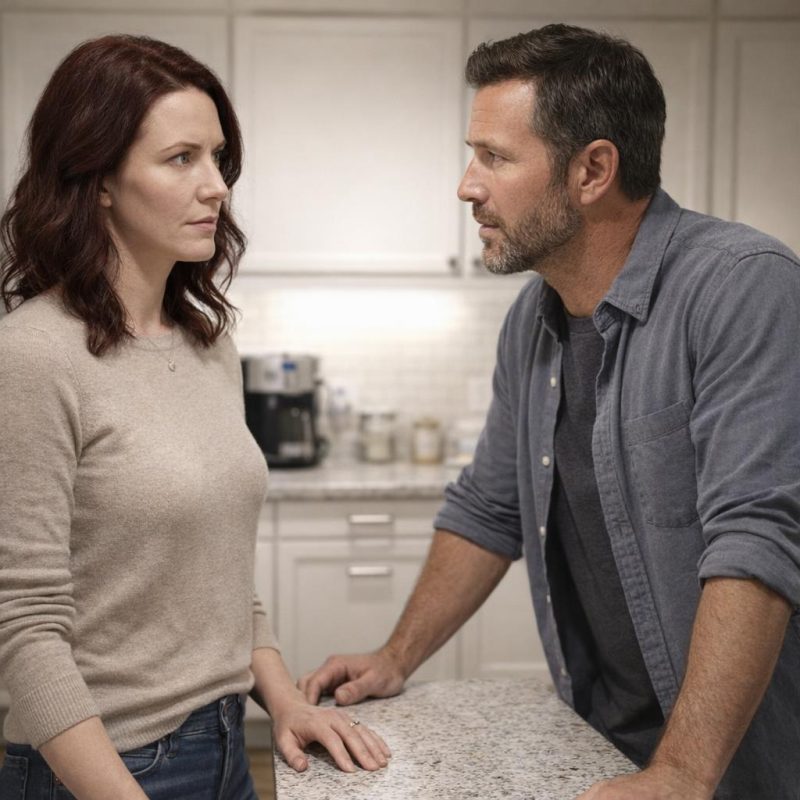 Image by RM AI
Serious Enough
I asked Daniel what he meant by serious, and he took a breath before he answered. He said the family had expected her to become part of it. Permanently. He said it the way you say something you've been carrying for a long time and are finally setting down. I stood there trying to absorb that. Not a girlfriend he'd dated for a few months. Not someone he'd seen casually before we met. Someone the family had looked at and thought: yes, her. Someone Linda and Robert had made room for at the table, not just once but over and over, until she was just part of how things worked. I thought about all the years I'd been part of this family. All the dinners I'd sat through, all the holidays, all the small moments I'd thought I understood. I'd walked into something with a history I hadn't been given. And the history wasn't small. It wasn't a footnote. Daniel was still looking at the counter, and I didn't push him to look up. I just stood there with the full weight of what serious actually meant pressing down on me, quiet and enormous.
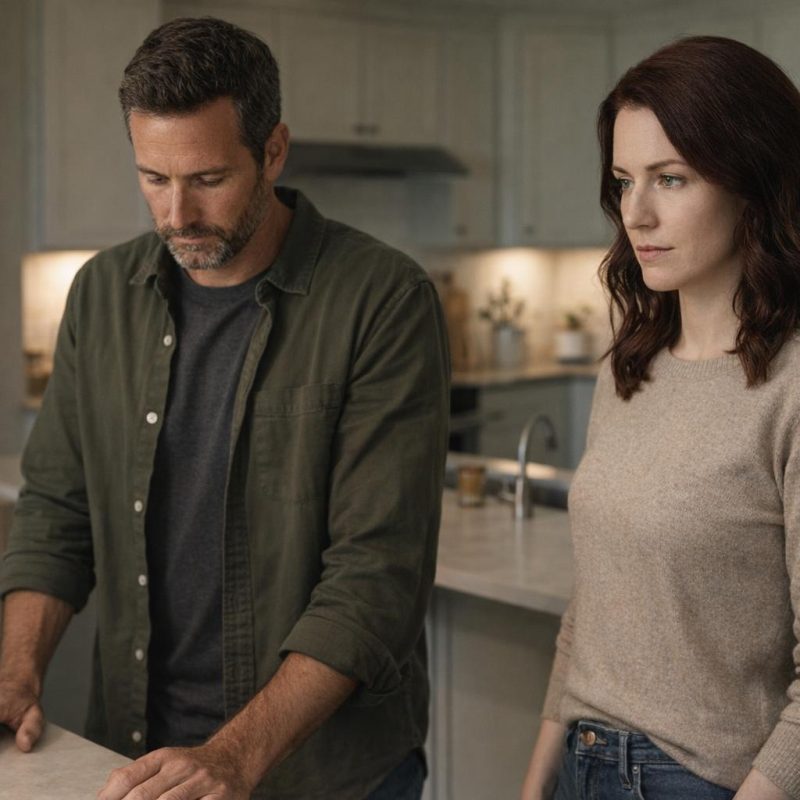 Image by RM AI
She Never Left
I asked Daniel if they'd stayed in touch after it ended. He nodded slowly, like he'd been hoping I wouldn't ask that. He said it hadn't been a clean break. He said there were holiday cards. Birthday messages. He said it in pieces, like he was measuring how much I could take at a time. I kept my hands flat on the counter and listened. He said the contact had continued over the years. Not constantly, he said, but consistently. I turned that word over. Consistently. That meant it had been happening while we were dating. While we were planning our wedding. While I was pregnant with Sophie, and then with Jack. While I was building what I thought was our life together. All of it. The whole span of our marriage. And somewhere in the background of all of it, there had been cards and messages and a connection I had never been told existed. Daniel finally looked at me, and I could see he was sorry. But sorry didn't change the shape of it. I stood there thinking about all those years, all that quiet contact moving through our life without my knowledge, and I couldn't find the bottom of it.
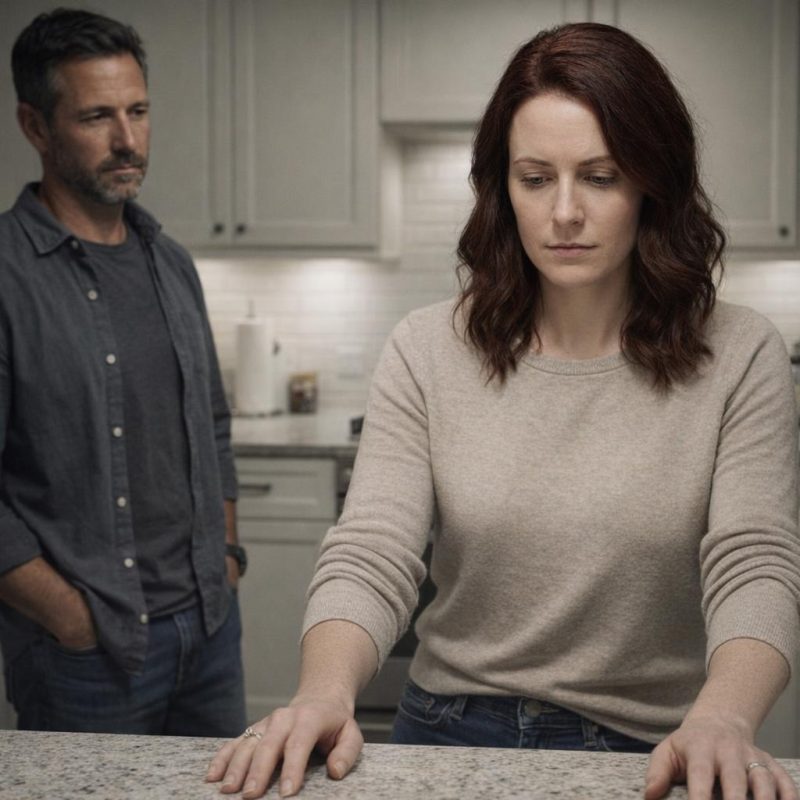 Image by RM AI
Family Connections
Daniel shifted his weight and looked toward the window, and I could tell there was more. I asked him to just say it. He said the families had stayed close. Not just Mark and Rachel — the families. His parents and her parents. He said they still saw each other. Events, gatherings, that kind of thing. He said it carefully, like he was aware of exactly how it was landing. I asked him what kind of gatherings. He said things came up over the years. Occasions where both families ended up in the same place. He looked genuinely uncomfortable now, like he hadn't fully thought through what it would mean for me to hear all of this at once. I thought about Linda's easy warmth, the way she moved through a room full of people like she knew everyone's history. I thought about Robert at the grill, quiet and certain. They had both known. They had all known. Every person at every family dinner I'd ever attended had known something I hadn't. Daniel rubbed the back of his neck and said, quietly, that both families still got together sometimes — even now.
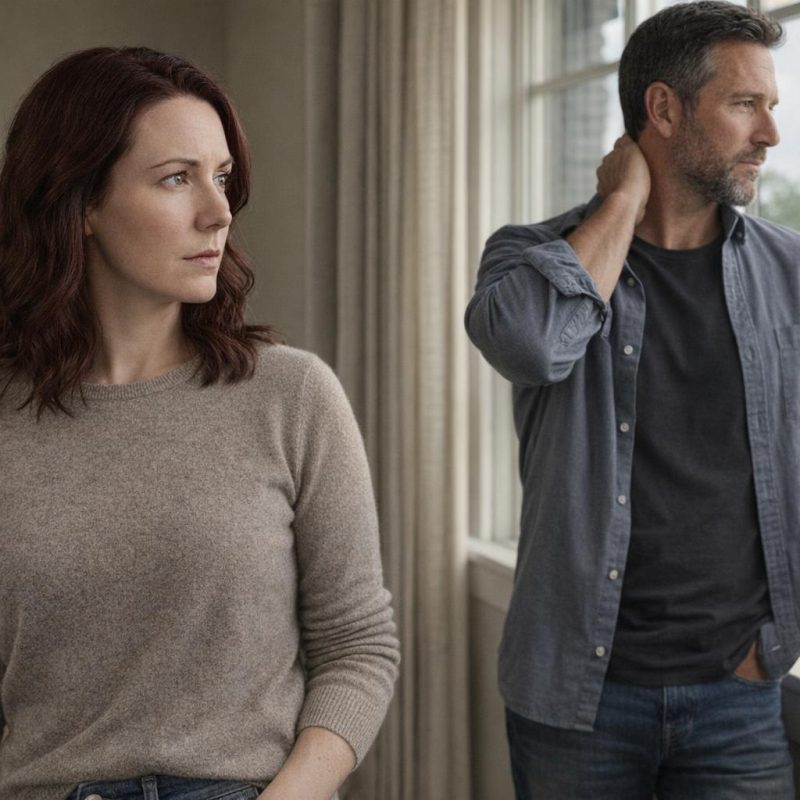 Image by RM AI
The Volunteer Events
I asked Daniel how they stayed connected after all this time, and he said it had started through charity work. Fitness fundraisers, he said. Events where volunteers showed up and worked alongside each other. He said Mark and Rachel had both been involved for years, that it had come out of the family connection naturally. He said it like it was a reasonable explanation. Maybe it was. I wasn't sure I was capable of deciding what was reasonable anymore. But I stood there and felt something click into place that I hadn't been able to reach before. Fitness fundraisers. Charity events. An athletic woman with a warm smile who had never fully left. I thought about the bag. Pink, with a logo I hadn't recognized. Sitting in the back of Mark's car like it belonged there. I'd turned it over in my hands and told myself there was an explanation. I'd given him every benefit of the doubt I had. And now I was standing in his mother's kitchen listening to his brother describe a world that had been running parallel to mine for over a decade, and the pink gym bag sitting in Mark's car made a terrible, specific kind of sense.
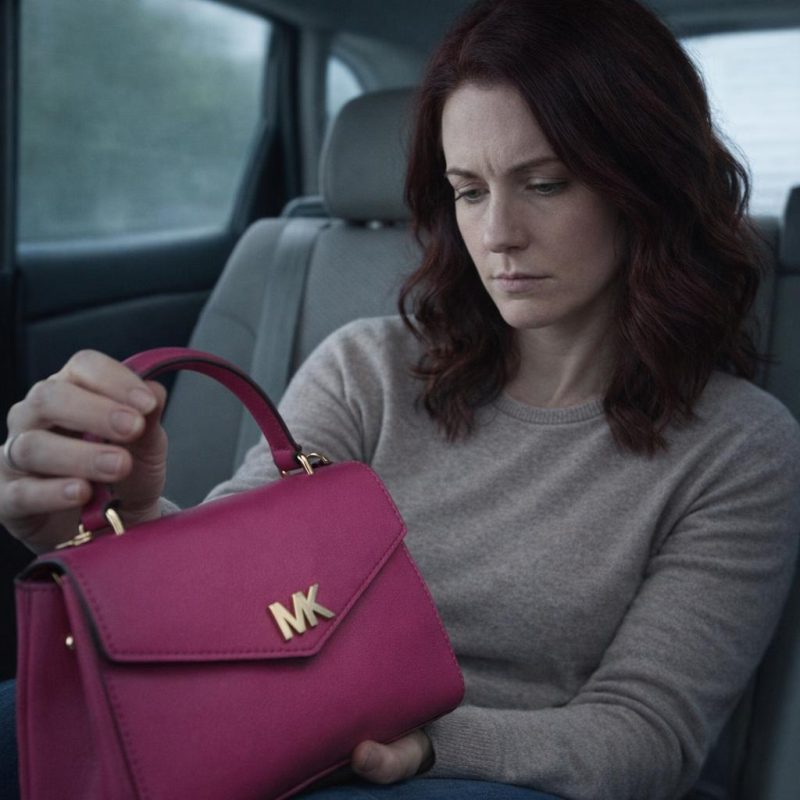 Image by RM AI
His Fiancée
I don't know what made me ask the next question. Maybe I already felt the answer coming. I asked Daniel how serious it had really been — more serious than an engagement? He went very still. Then he said it. He said Rachel had been Mark's fiancée. He said they had planned a wedding. He said the word plainly, without softening it, and I heard it land in the room between us like something dropped from a height. Fiancée. Not a girlfriend. Not someone he'd dated seriously. A woman he had chosen, in front of his family, and said yes to. A woman his parents had welcomed as a future daughter-in-law. A woman who had been woven into the fabric of this family long before I ever arrived. And then the wedding hadn't happened, and the families had stayed close, and the cards had kept coming, and the gym bag had ended up in the back of my husband's car, and I had spent twelve years married to a man who had never once told me any of it. The birthday card. The bag. Every small thing I'd tried to explain away rearranged itself in an instant. I felt the floor of everything I thought I knew drop away beneath me.
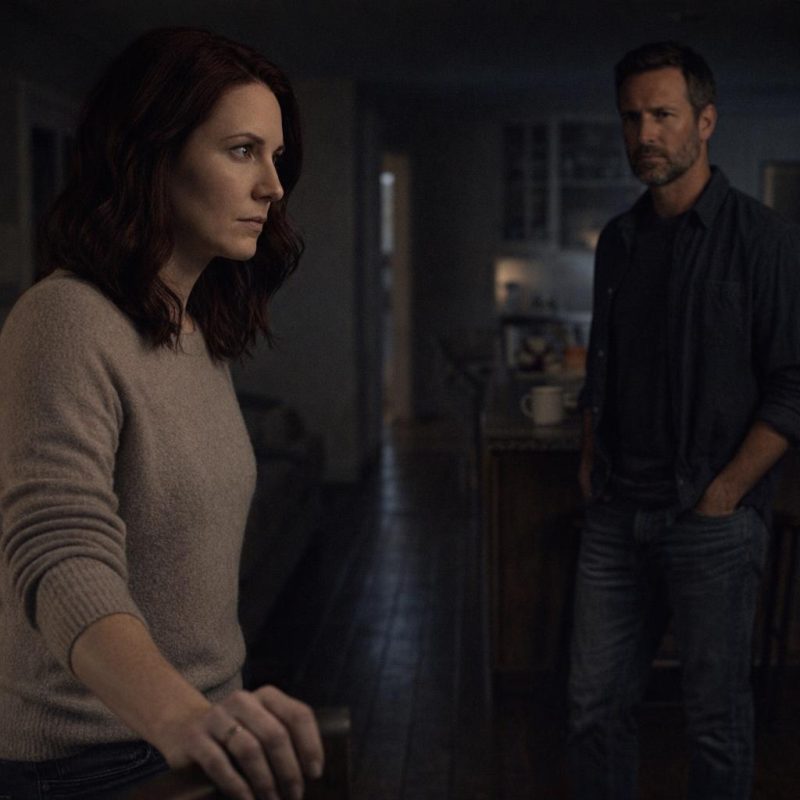 Image by RM AI
Everyone Knew
Daniel stopped talking and I didn't fill the silence. I couldn't. I was thinking about every family dinner I'd ever sat through. Every holiday at Linda and Robert's. Every time I'd felt like I was still learning the rhythms of this family, still finding my place in it. All of it had been built on top of something I hadn't been given. Linda knew. Robert knew. Daniel had known the whole time. Every person who had passed me a dish or asked about the kids or hugged me at Christmas had known that Mark had once planned to marry someone else, that she had never fully left, that her name was still moving quietly through their lives. And no one had ever said a word to me. Not once. Not in twelve years. I looked at Daniel and he looked back at me with an expression that was somewhere between relief and regret, like a man who had finally put down something heavy and wasn't sure he'd done the right thing. I wanted to say something but I had no idea where to start. And then I heard footsteps on the back porch.
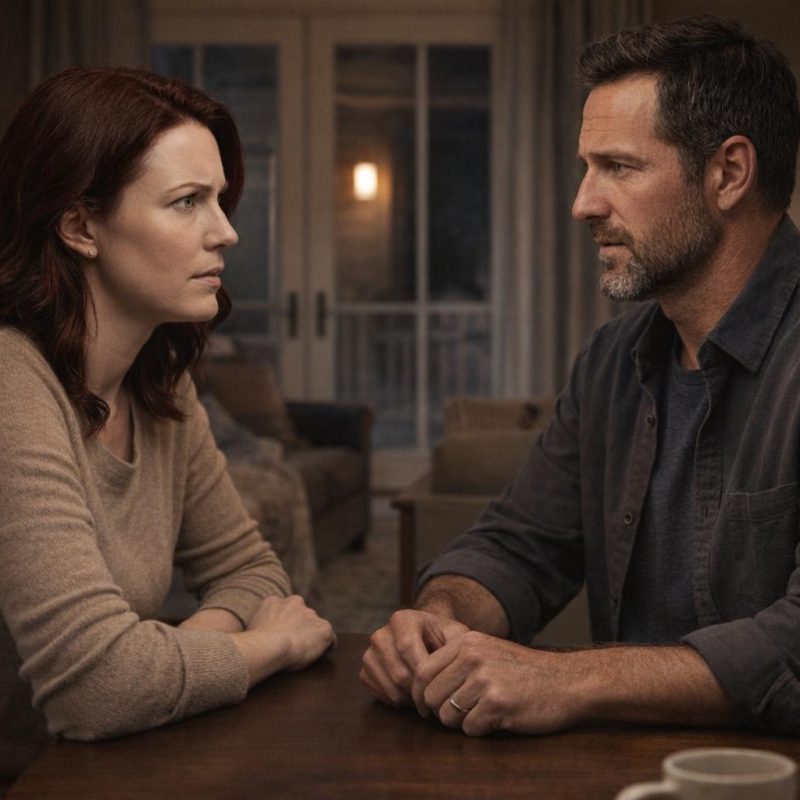 Image by RM AI
The Expression
The back door opened and Mark came in, still holding his phone, still wearing the easy expression of someone who'd just stepped outside for a few minutes. He looked at me first. Then at Daniel. Then back at me. The easy expression didn't exactly fall — it just stopped working. Something moved through his face that I recognized as the moment a person understands they've arrived too late. Daniel didn't move. I didn't move. The three of us stood in Linda's kitchen in a silence that had weight and shape and edges. Mark's jaw tightened slightly. He looked at his brother once, a quick look, and Daniel dropped his gaze to the floor. Mark didn't say anything. I didn't say anything. There was nothing to say yet, and I think we all knew it. Whatever was going to happen next was going to happen somewhere else, not here, not in front of his mother's good dishes and the smell of whatever was still warming on the stove. The knowledge of what Daniel had told me sat in the room between all three of us, solid and unmovable, and none of us reached for it.
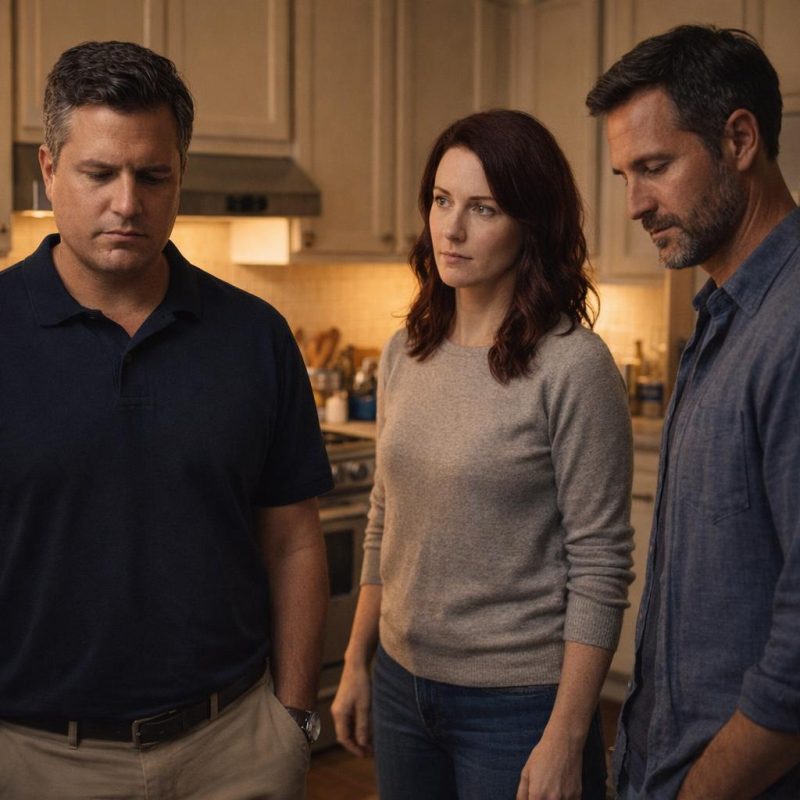 Image by RM AI
Leaving
I walked to the bottom of the stairs and called up to Sophie and Jack that we were leaving. Sophie appeared at the top of the stairs first, reading my face the way she always did, going quiet and careful the way she did when she sensed something was wrong. Jack came bounding down behind her asking if we could stop for ice cream. I said maybe, which was the easiest thing to say. I found their shoes and handed them over without looking at Mark. He didn't ask why we were leaving early. He didn't try to explain or stall or pull me aside. He just went and got his keys. Linda came out of the living room and I told her we had an early morning, and she nodded with a smile that didn't quite reach her eyes. Robert raised a hand from his chair. Daniel stayed in the kitchen. We moved through the house and out the front door and into the car, and I buckled my seatbelt and stared straight ahead while Mark started the engine. Sophie sat in the back with her hands folded in her lap. Jack had already moved on to something else entirely. Mark pulled out of the driveway and neither of us said a word, and the silence in the car settled around us like something that had been waiting there all along.
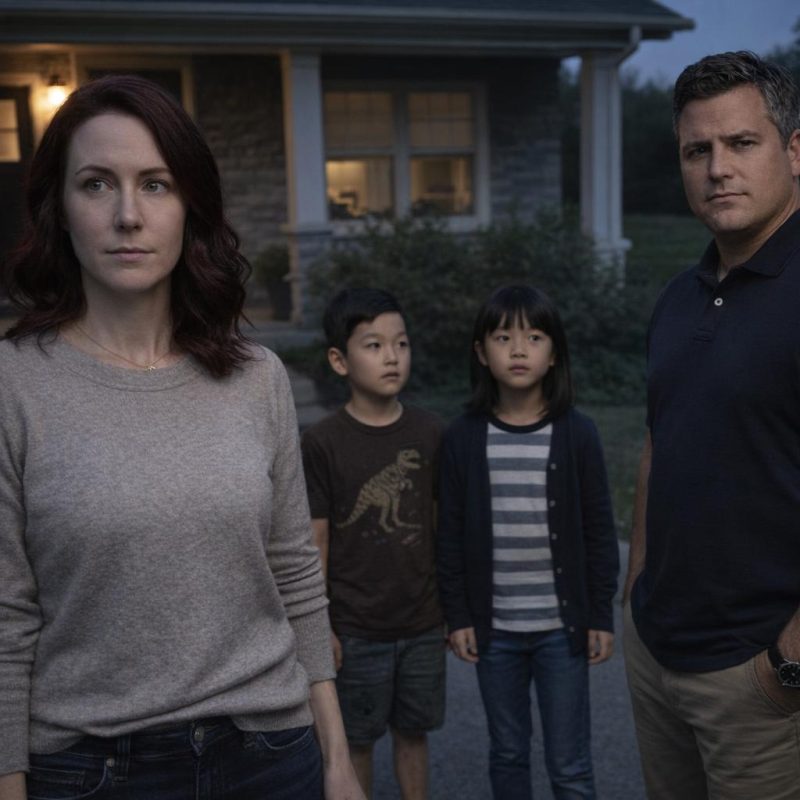 Image by RM AI
The Drive Home
The drive home took twenty minutes and felt like two hours. Mark's hands were tight on the steering wheel the whole way — I could see the tendons in his knuckles from where I sat. I kept my eyes on the window. The streetlights came and went. Sophie didn't say a word in the backseat, and Jack had fallen quiet too, which almost never happened. I don't know if they felt it or just read us, but neither of them asked for anything. I counted intersections. I watched a gas station slide past, then a pharmacy, then the park where we used to take the kids on Sunday mornings. I thought about all the Sunday mornings. I thought about all the family dinners and the holiday cards and the casual mentions of Rachel's name that I had never once been given context for. The rage in my chest was so contained it had gone still, like water just before it boils. We turned onto our street and I could see our porch light on from the end of the block. Mark slowed the car. And then, before he could pull into the driveway, I heard my own voice come out flat and quiet: "How long were you two together?"
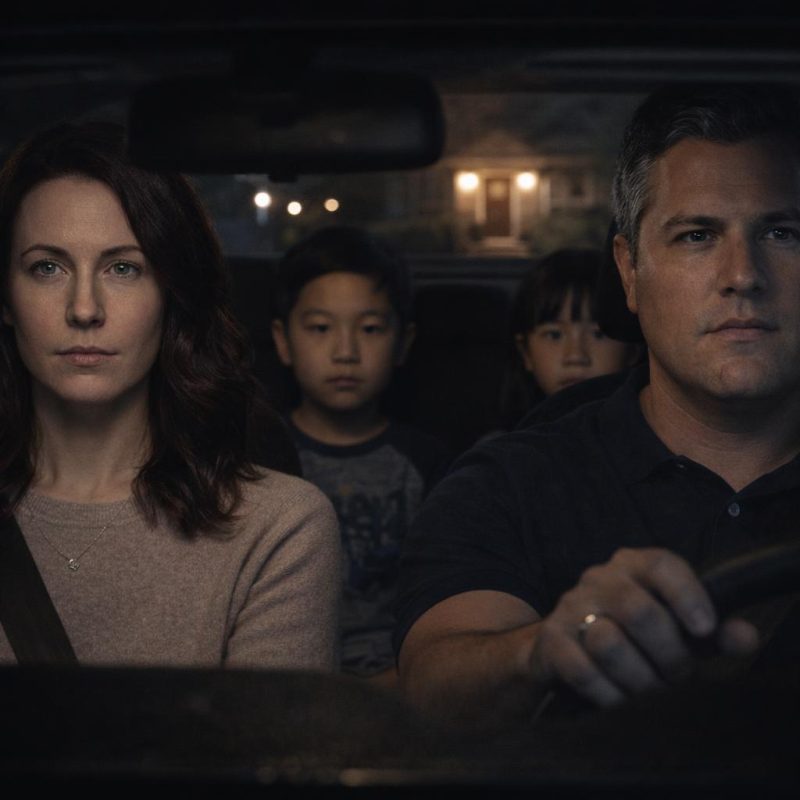 Image by RM AI
The Admission
He didn't answer right away. He pulled into the driveway and put the car in park and sat there with his hands still on the wheel. Jack stirred in the backseat and asked if we were home. I said yes, just a minute, stay put. Mark looked straight ahead at the garage door. Then he took a long breath, the kind that means whatever comes next is going to cost something, and he said it quietly enough that I almost had to lean in to hear him. He said they had been together for three years. He said it got serious. He said — and here his voice dropped even lower, like he was hoping the words might not fully land if he kept them small enough — that they had been engaged. I didn't move. Sophie had gone very still in the back. Jack was pressing his face against the window, oblivious, watching a neighbor's cat cross the lawn. Mark said it again, maybe because I hadn't reacted, maybe because he needed to hear himself say it out loud. Engaged. The word sat in the car between us like something solid, taking up space, and I could not find a single thing to say to it.
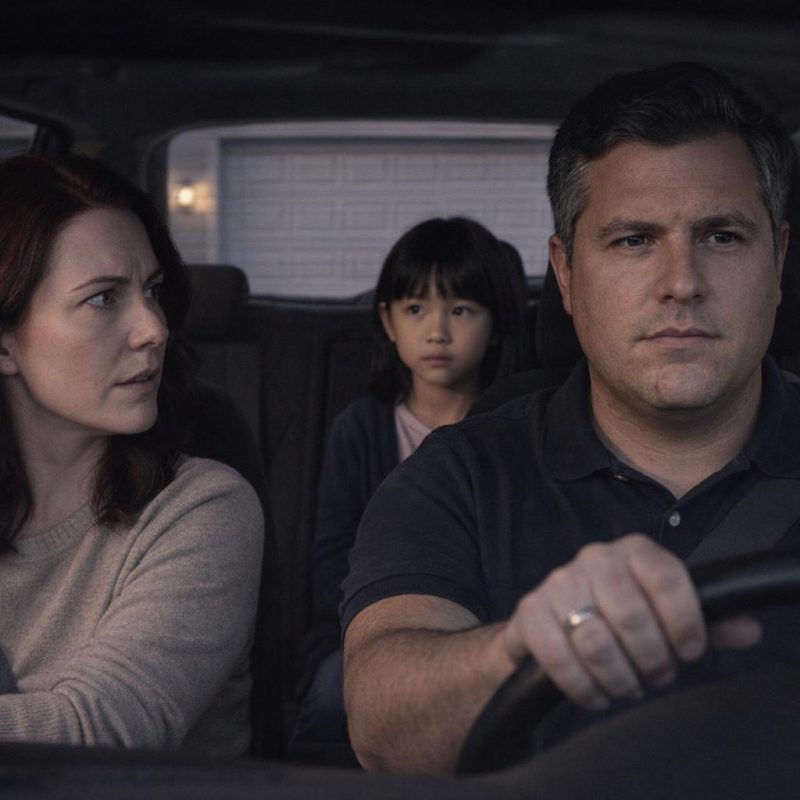 Image by RM AI
Inside
We got inside without speaking. I told Sophie and Jack to go upstairs, wash up, get ready for bed. Sophie looked at me for a moment with those careful eyes of hers, and I kept my face as steady as I could. She took Jack by the hand and they went up the stairs without a single argument, which told me everything about what they had picked up on. I heard their footsteps cross the hallway above us. I pulled out a kitchen chair and sat down. Mark came in behind me and stood near the counter for a moment, then sat across from me at the table. The overhead light was too bright. I didn't get up to change it. I folded my hands on the table and looked at him and waited. He opened his mouth once and closed it. He looked at the table, then at me, then at the table again. I didn't help him. I had spent the entire drive home holding everything in, and I was not going to make this easier for him now. The refrigerator hummed. Somewhere upstairs, water ran through the pipes. I sat with my hands folded and let the silence do what it needed to do.
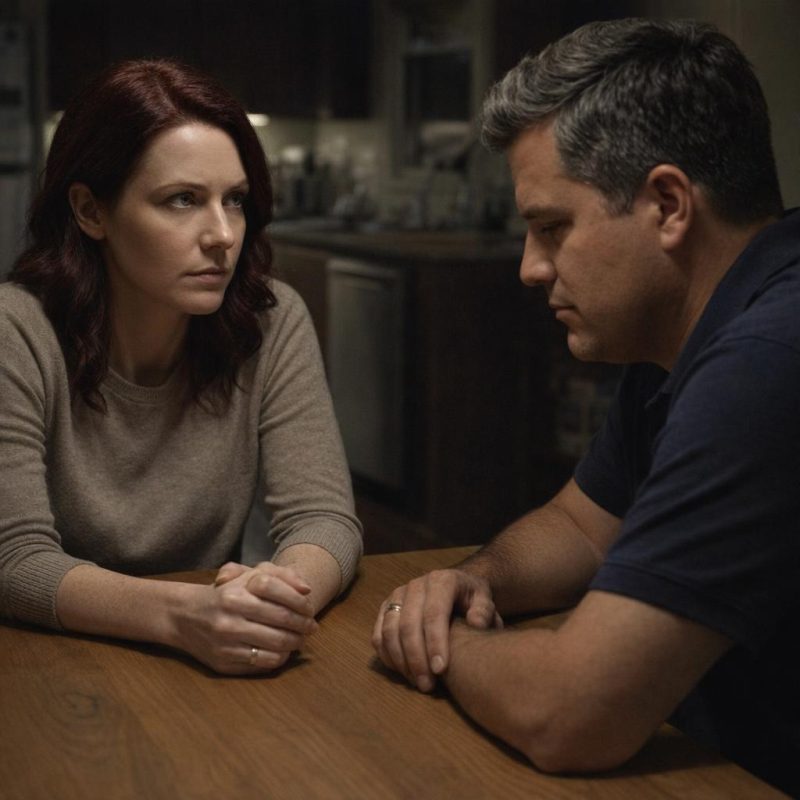 Image by RM AI
The Wedding That Didn't Happen
He started slowly, like someone picking their way across ice. He said they had been engaged for over a year. He said they had picked a date, booked a venue — some place outside the city, he said, a garden venue, he thought it had a gazebo. He said it like those details were beside the point now, which maybe they were. He said the relationship ended before the wedding happened. He said it plainly, without drama, the way you'd report a fact you'd long since made peace with. I listened. I kept my hands flat on the table. I waited for the part where he explained why it ended — what happened, who decided, whether it was mutual or a rupture or something in between. But that part didn't come. He talked around it. He said things like it just didn't work out and we both knew it wasn't right, and each time I thought he was about to get to the actual reason, he moved on to something else. I noticed it. I didn't say anything yet, but I noticed it. The venue with the gazebo, the date they had set, the wedding that never happened — all of it was there on the table between us, and the one thing that would have made sense of it was the one thing he hadn't said.
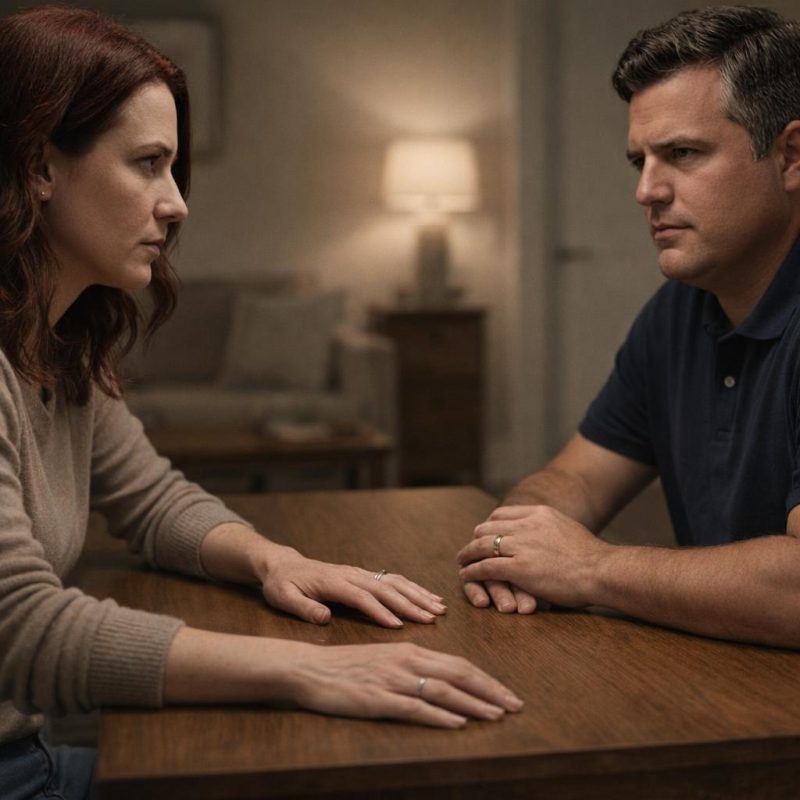 Image by RM AI
The Families Stayed Close
He moved on to the families. He said their parents had known each other for years before he and Rachel ever got together — that the connection went back further than the relationship did. He said after the breakup, nobody wanted to throw away twenty years of friendship over something that hadn't worked out between two people. He said it the way you'd say something obvious, like he was explaining why you don't cancel a dentist appointment just because you're nervous. Holiday cards kept coming. Birthday messages got sent. The occasional gathering included both families because that was just how it had always been. He said that last part — that was just how it had always been — and I think he meant it as an explanation. I think he genuinely believed that the length of something made it reasonable. I sat there and I understood, maybe for the first time, how a person could let a boundary dissolve so slowly they stopped being able to see where it had been. It hadn't been a decision, exactly. It had been a hundred small non-decisions, each one easier than the last, until the whole arrangement had simply become the furniture of his life — present, unremarkable, never once introduced to me.
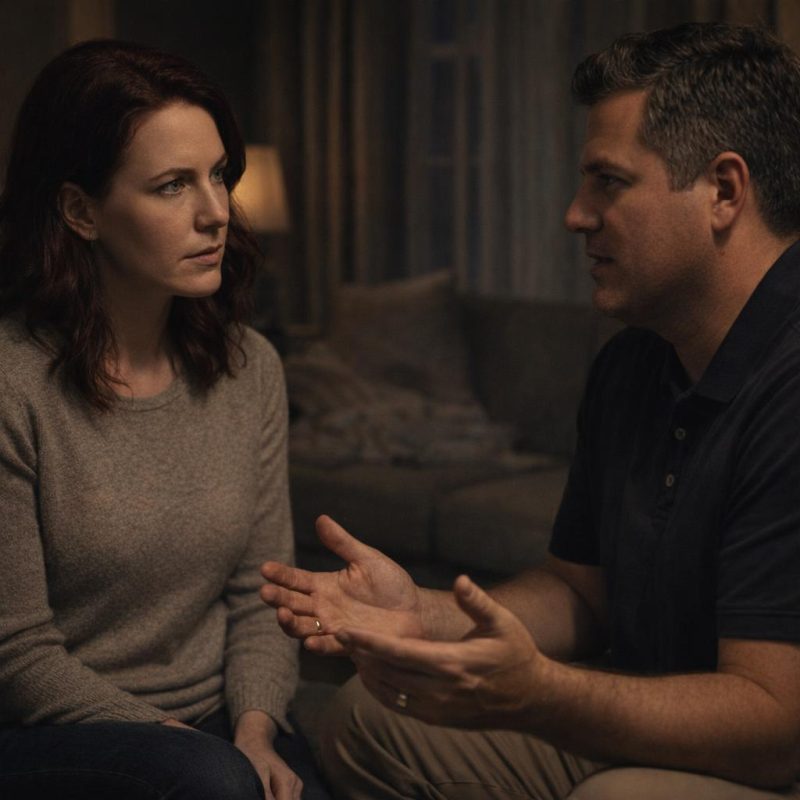 Image by RM AI
He Never Told Me
I let him finish. Then I asked him why he had never told me. Not about the gym bag, not about the key — about any of it. About Rachel. About the engagement. About the fact that a woman I had met at family gatherings for twelve years had once been planning to marry my husband. He looked at me like the question surprised him, which surprised me. He said he didn't think it was important. He said it was in the past, that it had been over long before he met me, that bringing it up would have only made things complicated for no reason. I asked him if he understood what twelve years meant. Twelve years of dinners. Twelve years of holidays. Twelve years of me standing in a room with someone whose history with him I had never been given. He rubbed the back of his neck and said he should have told me, he could see that now. He said he was sorry. And then he said the thing that landed like a door closing: he said he just didn't think it mattered.
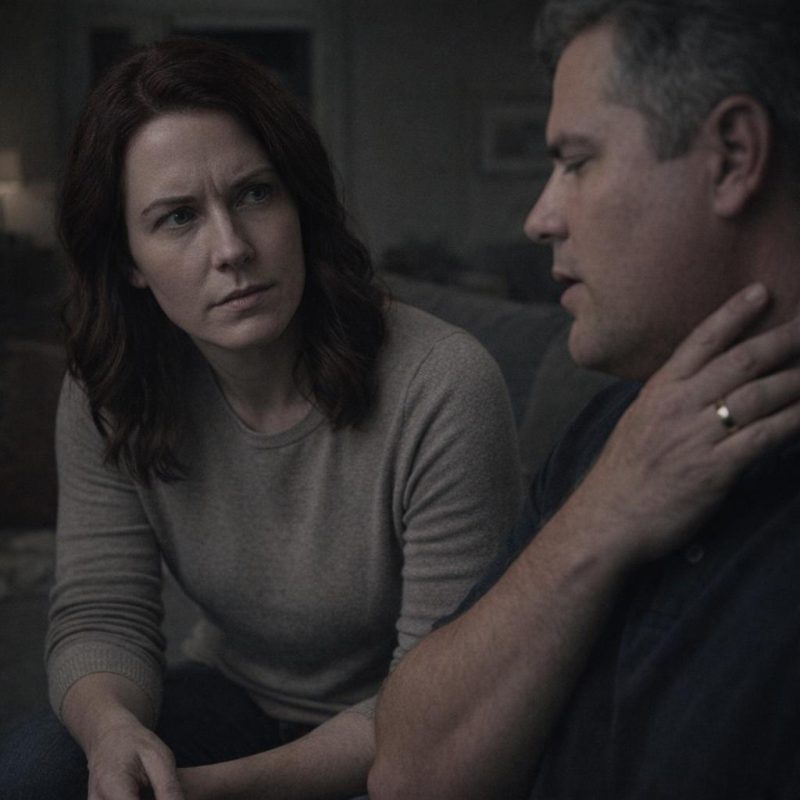 Image by RM AI
The Spare Key
I asked about the key. I told him that was where this had all started — the pink gym bag in his car, the spare key inside it. He nodded like he had been waiting for this part. He said the bag was Rachel's, not his. He said they had both volunteered at a charity fitness event a few weeks back — a fundraiser, he said, organized through the community center. They had been loading and unloading equipment, and Rachel had set her bag in his car to free up her hands. She forgot it when they were done. He said he had been meaning to return it and just hadn't gotten around to it. The key, he said, was hers — her own house key, or a gym locker key, he wasn't entirely sure, but it wasn't his and it wasn't a key to anything of ours. He said it plainly, and I believed him. I believed the whole thing, actually — the event, the bag, the forgotten key. None of it pointed to an affair. I sat with that for a moment, turning it over, and the relief I might have expected didn't come, because the bag and the key had never really been the problem. His name for Rachel, in twelve years, had never once crossed his lips to me.
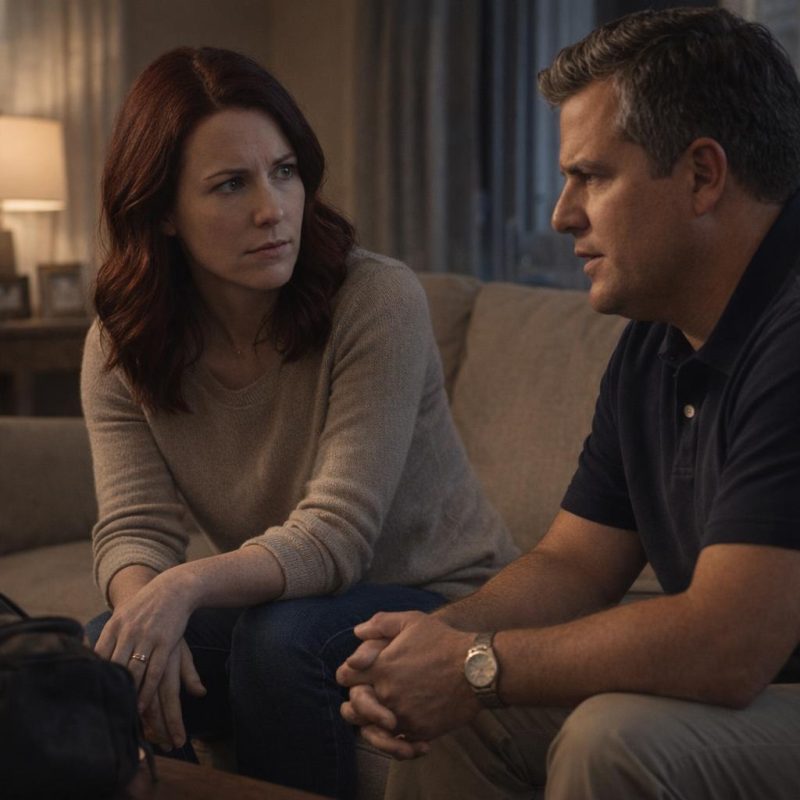 Image by RM AI
No Affair
I told him I believed him. I said I didn't think he had been having an affair. I watched something in his shoulders drop — actual physical relief, like a weight coming off — and he started to say something, something that sounded like the beginning of it's okay then, and I stopped him. I said it wasn't okay. He looked confused, genuinely confused, and that confusion made something in me go very quiet and very clear. I told him that hiding Rachel's existence from me for twelve years was a lie. Not a dramatic lie, not a cruel one, but a lie by omission that had lasted our entire marriage. I told him I had stood in rooms with her not knowing who she was to him, and that everyone else in those rooms had known. His mother knew. Daniel knew. Robert probably knew. I had been the only person at those tables who didn't have the full picture, and nobody had thought to hand it to me. He started to say that nothing had happened, that there was nothing to tell, and I looked at him and said that the secrecy itself was the damage — that was the thing he still wasn't seeing.
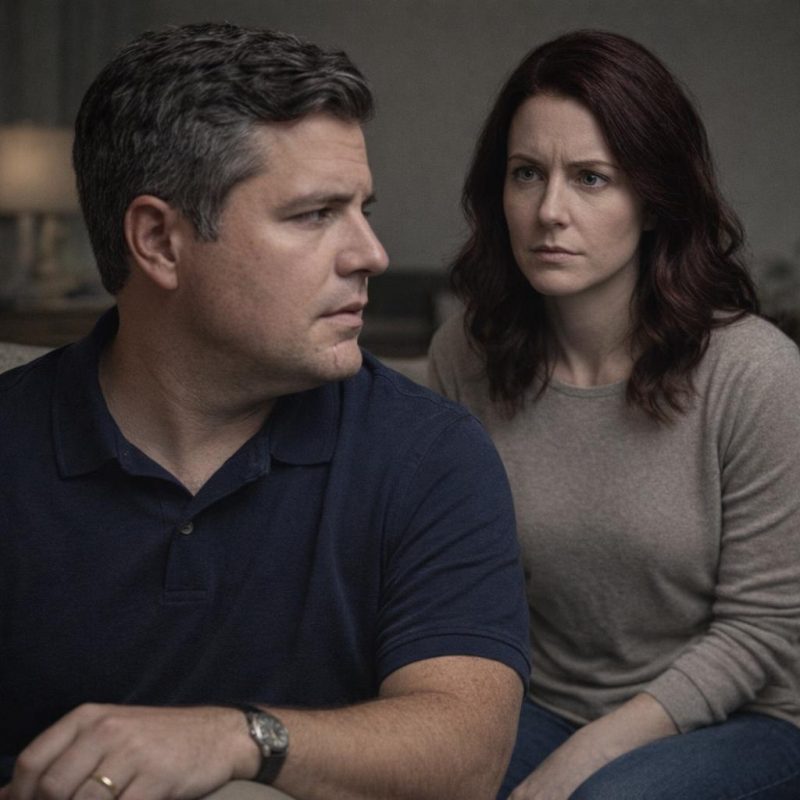 Image by RM AI
The Real Betrayal
He went quiet for a long time after that. Not the defensive quiet of someone building a counter-argument — just stillness. I let it sit. I told him that I had spent twelve years at his family's table, at holiday dinners and birthday parties and Sunday afternoons, and every single person in that room had known something about my husband that I didn't know. His mother. His brother. Probably his father. They had all looked at me and smiled and passed the bread and never once thought to say: there's something you should know. He started to say that it hadn't seemed important, and I stopped him. I said that was exactly the problem — that he had decided for me what I needed to know about my own marriage. That the choice had never been mine. He looked at the floor for a moment, and when he looked back up, something in his face had shifted. He said he hadn't thought about it that way. He said he'd told himself it was old history, that it didn't matter, that bringing it up would only cause pain. I said: whose pain were you protecting? He didn't answer right away. Then he said, quietly, that he thought he'd been protecting himself. That sentence landed between us and neither of us moved.
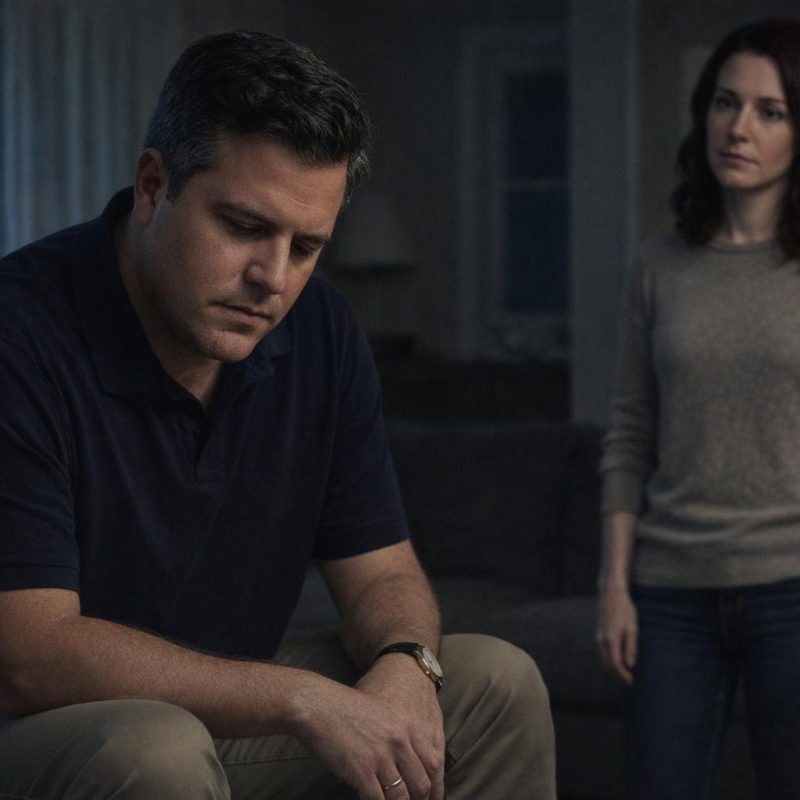 Image by RM AI
What Comes Next
He went upstairs after a while. He said he needed to give me space, and I think he meant it. I sat at the kitchen table and didn't move for a long time. The house was quiet in that particular way it gets late at night — the refrigerator hum, the occasional creak from upstairs, the sound of nothing happening. I thought about twelve years. I thought about the woman I had been when we got married, how certain I had felt, how much I had trusted the version of our life I thought I understood. I thought about all the small moments I had misread — not because I was foolish, but because I hadn't had the full picture. That was the thing I kept coming back to. I hadn't been wrong to trust him. I had just been trusting an incomplete version of the truth. I didn't know yet what I wanted to do with that. I didn't know if trust was something you could rebuild once you understood it had gaps, or if knowing about the gaps changed the structure of the whole thing permanently. I sat there with the kitchen light on and the rest of the house dark, and I didn't have an answer.
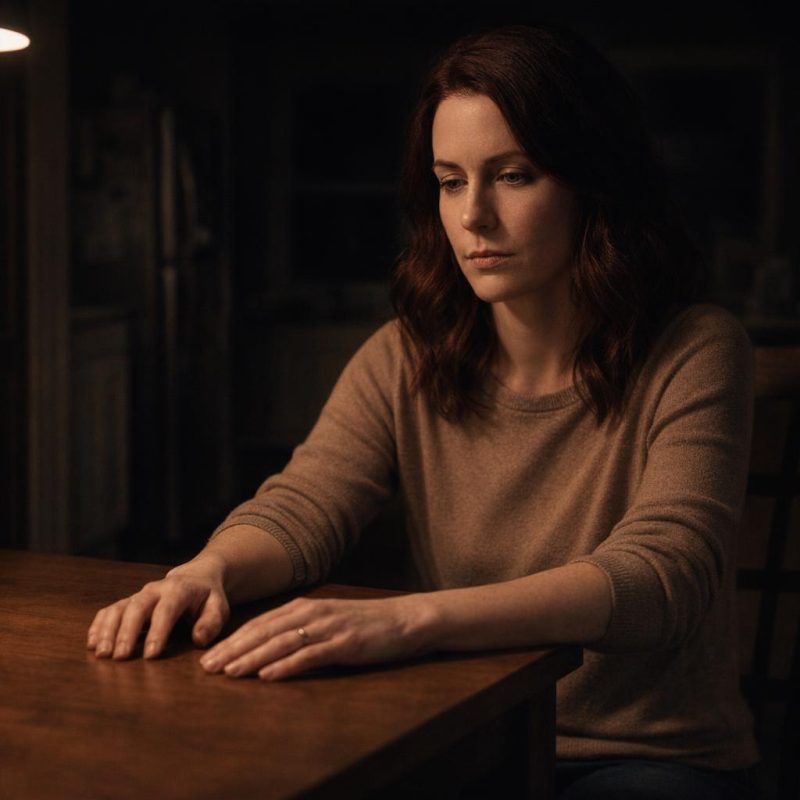 Image by RM AI
The Conversation
We didn't fix anything in one conversation. That's not how it worked. Over the next several days, we talked in pieces — sometimes after the kids were in bed, sometimes in the car, sometimes in the middle of something ordinary like making dinner, when one of us would say something and the other would stop what they were doing and actually listen. I told him what I needed. I said I needed complete transparency going forward — not just about Rachel, but about anything that touched our life together. No more decisions made on my behalf about what I could handle knowing. He said he understood. He said it more than once, and I watched to see if it held up across different conversations, and mostly it did. We talked about Rachel. I told him I hadn't decided yet whether I was comfortable with her remaining part of his family's life, and that I needed time to figure that out. He said he would follow my lead. I didn't know if I believed every part of that yet, but I believed he was trying. The conversations were hard and slow and sometimes we went to bed without resolving anything. But we kept having them, and somewhere in the middle of all that difficult honesty, something fragile and new had started to take shape between us.
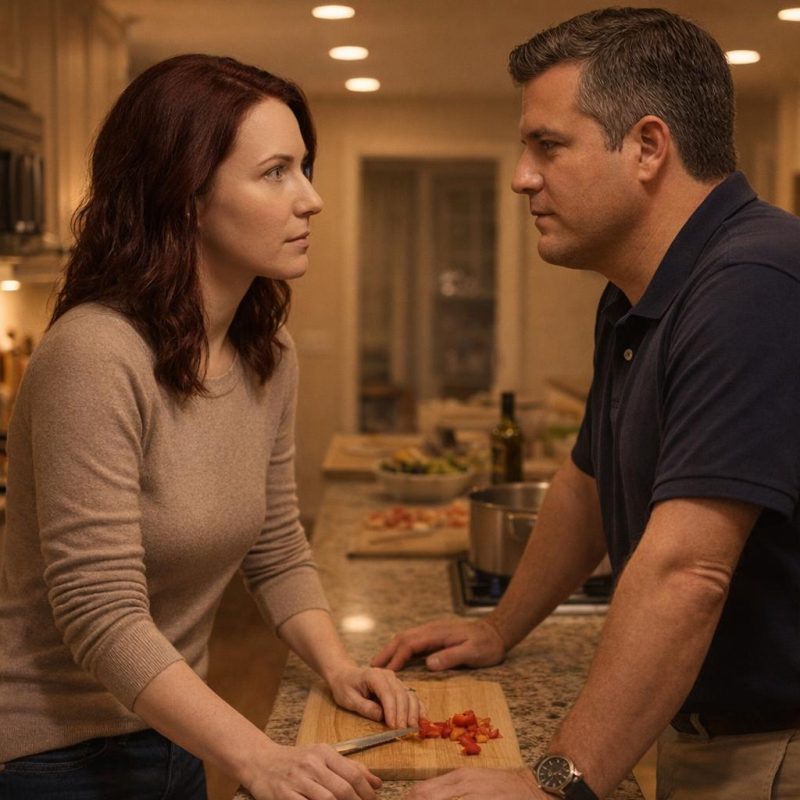 Image by RM AI
The Pink Gym Bag
The pink gym bag was still sitting by the front door. I had walked past it so many times in the last week that I had almost stopped seeing it, but that morning I stopped and looked at it properly. It was just a bag. Bright pink, a little worn at the handles, the kind of thing you'd throw gym clothes into without thinking twice. It had started all of this — or rather, it had been the thing that finally made me ask the question I should have been able to ask years ago. I picked it up. Mark was in the kitchen and he came to the doorway when he heard me moving around. I told him I was going to return it to Rachel myself. He looked at me for a moment, and I could see him working out whether to say something. He didn't try to talk me out of it. He just nodded and said okay. I didn't know exactly what I would say to her when I got there. I didn't know what kind of woman she was, or what she understood about the situation, or whether the conversation would be easy or awful. But I was done letting other people manage the information in my own life. I picked up my keys from the hook by the door and held them in my hand.
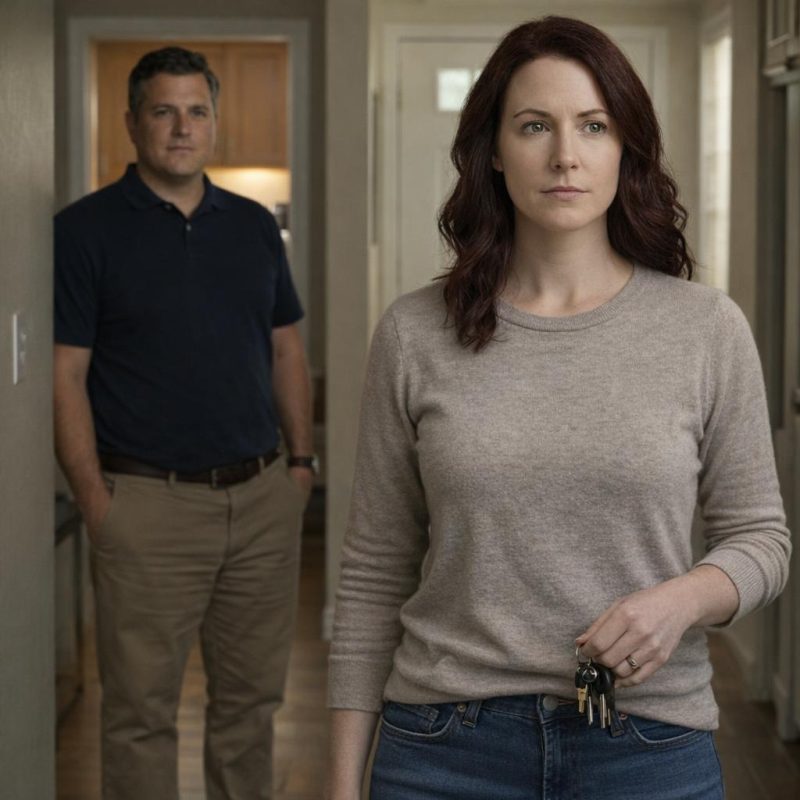 Image by RM AI
KEEP ON READING
The 20 Most Recognized Historical Figures Of All Time
The Biggest Names In History. Although the Earth has been…
By Cathy Liu Oct 4, 2024
10 of the Shortest Wars in History & 10 of…
Wars: Longest and Shortest. Throughout history, wars have varied dramatically…
By Emilie Richardson-Dupuis Oct 7, 2024
10 Fascinating Facts About Ancient Greece You Can Appreciate &…
Once Upon A Time Lived Some Ancient Weirdos.... Greece is…
By Megan Wickens Oct 7, 2024
20 Lesser-Known Facts About Christopher Columbus You Don't Learn In…
In 1492, He Sailed The Ocean Blue. Christopher Columbus is…
By Emilie Richardson-Dupuis Oct 9, 2024
20 Historical Landmarks That Have The Craziest Conspiracy Theories
Unsolved Mysteries Of Ancient Places . When there's not enough evidence…
By Megan Wickens Oct 9, 2024
The 20 Craziest Inventions & Discoveries Made During Ancient Times
Crazy Ancient Inventions . While we're busy making big advancements in…
By Cathy Liu Oct 9, 2024