

I'm 61 and Thought I'd Found Love Again Until I Discovered My Boyfriend Had Three Different Names
I'm 61 and Thought I'd Found Love Again Until I Discovered My Boyfriend Had Three Different Names
After the Ending
I stood in the doorway of the community center on a Tuesday morning, clutching my purse like it might anchor me to something solid. The divorce had been final for eight months, but I still felt like I was floating through someone else's life. At sixty-one, I'd expected to be planning retirement trips with my husband, not figuring out how to fill the endless empty hours alone. The marriage had ended not with drama but with a slow fade, until one day I realized I'd become invisible in my own home. So here I was, signing up to volunteer serving meals to seniors, which felt darkly funny since I wasn't that far from needing those meals myself. The coordinator, a cheerful woman named Patricia, welcomed me with genuine warmth that caught me off guard. She explained the Tuesday and Thursday schedule, showed me around the kitchen, and talked about the program like it mattered. I nodded and smiled, trying to look more confident than I felt. Then Patricia mentioned something that made me pause. She said they had several regulars my age who'd been volunteering for years, people who'd become close friends, who looked forward to these days together. It was such a small thing, but standing there in that bright community room with the smell of coffee and the sound of chairs being arranged, I felt something I hadn't felt in months. For the first time since the divorce, I felt something other than dread about the future.
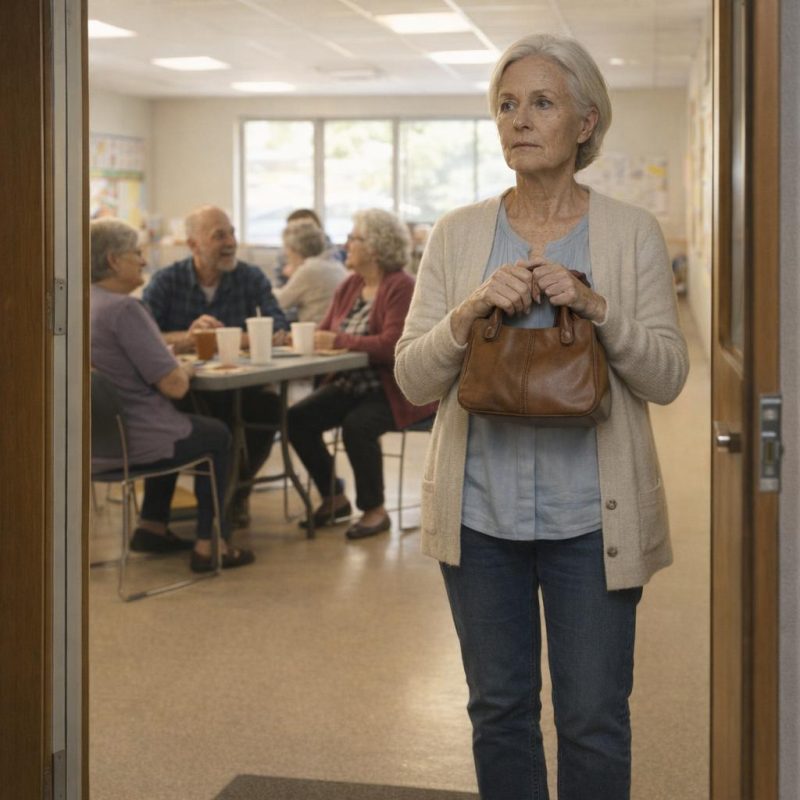 Image by RM AI
The Man Who Listened
I met Grant during my second shift, and honestly, the first thing I noticed was how different he seemed from every other man I'd encountered since the divorce. He was working the serving line with this quiet efficiency, no fuss, just steady hands and a patient smile for each person who came through. I'd been on exactly two coffee dates that friends had arranged, and both men had spent the entire time either complaining about their exes or bragging about their retirement portfolios. Grant didn't do either. We ended up working side by side organizing supplies in the storage room, and he asked me thoughtful questions about how I was finding the volunteer work, whether I'd done anything like this before. His voice was soft, unhurried, like he actually cared about my answers. I found myself relaxing in a way I hadn't expected, telling him about my background in library work, about wanting to do something that felt useful. He listened without interrupting, without steering the conversation back to himself. It reminded me how invisible I'd felt in my marriage, how my ex-husband had perfected the art of looking at me without seeing me. Grant's attention felt different, genuine. He mentioned he'd been volunteering for several months and really enjoyed the routine, the sense of community. When cleanup was finished and people started leaving, he asked if I'd like to stay for coffee. His tone was so casual and unhurried that I said yes before my usual caution could stop me.
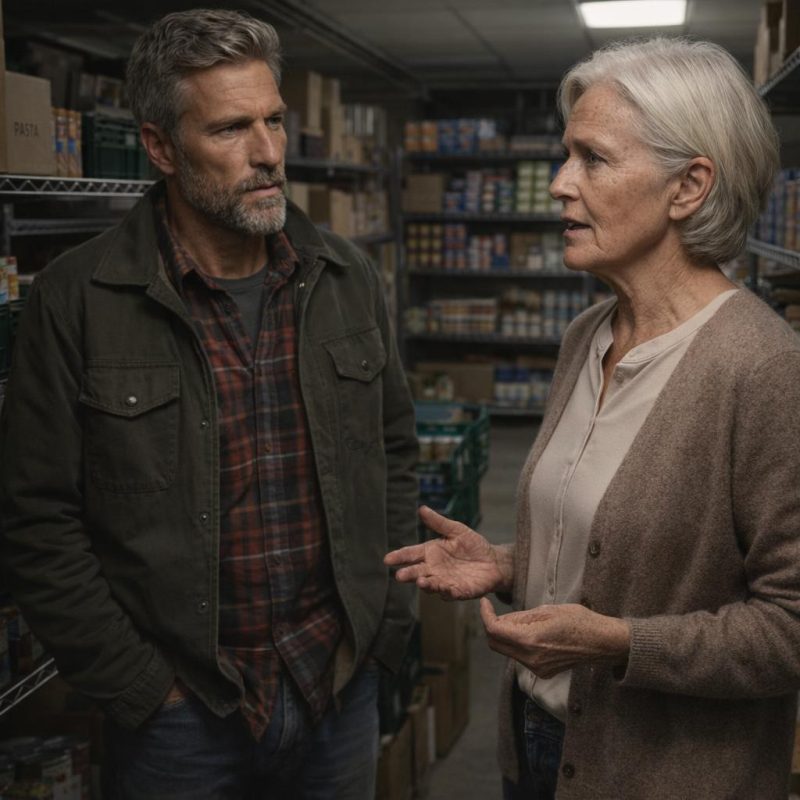 Image by RM AI
Small Details
Grant remembered I'd mentioned preferring tea to coffee, and when he brought me a cup after our third shift together, I just stood there for a moment holding the warm mug. It had been so long since anyone paid that kind of attention to the small things I said. We'd fallen into this pattern of talking after our volunteer shifts, sitting in the empty community room while the afternoon light slanted through the windows. He asked about my life with genuine curiosity, never interrupting, never waiting for his turn to talk. I noticed he did this with other volunteers too, learning their names, remembering their preferences, asking about their grandkids or their garden projects. It wasn't performative, it was just who he seemed to be. One afternoon, I asked him what had brought him to volunteering, and he got quiet for a moment. He said his wife had passed away some years ago, and his voice carried this sadness that felt real, not rehearsed or attention-seeking. I didn't push for details, just nodded and said I was sorry. He thanked me and changed the subject, asking about a book I'd mentioned the week before. I found myself relaxing more each time we talked, despite all my post-divorce caution about trusting anyone again. We discovered we'd both joined the volunteer program around the same time, both looking for something to fill the empty spaces in our lives. As we talked in the empty community room that day, he mentioned his wife had passed away some years ago, and the sadness in his voice felt real enough that I wanted to know more.
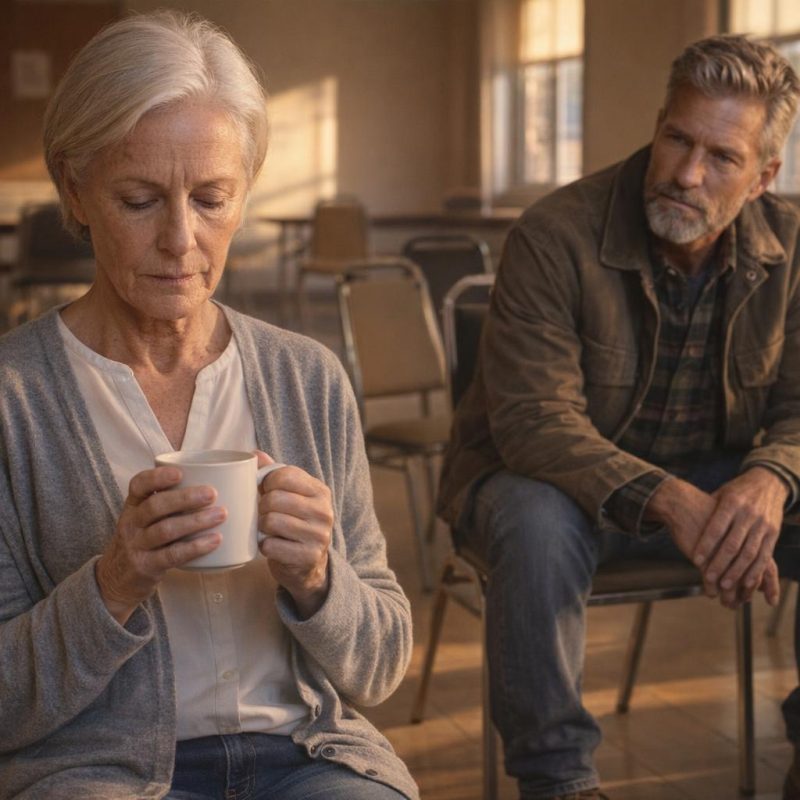 Image by RM AI
Stories of Loss
Grant shared more about his late wife over coffee at a nearby diner, and I have to say, the way he spoke about his grief struck me as surprisingly healthy. We'd moved beyond the community center by then, meeting for actual coffee dates at this little place two blocks away. He told me his wife had died of cancer six years ago, back when they were living in another state. The way he described it felt genuine, with small imperfect details that you can't really fake. He talked about the hospital visits, about how she'd insisted on planting bulbs that last fall even though she wouldn't see them bloom. There was sadness in his voice, absolutely, but not the kind of overwhelming grief that meant he was trapped in the past. I'd worried about that, honestly, about being someone's rebound or emotional crutch. But Grant seemed like he'd done the work of mourning, like he'd made peace with his loss without forgetting her. He said he'd moved here needing a quieter life after everything, wanting to start fresh somewhere without all the memories. That made perfect sense to me. I shared a bit about my divorce, about feeling invisible in my own marriage, and his response was compassionate without being patronizing. He didn't try to fix anything or offer advice, just listened and acknowledged how hard that must have been. The conversation deepened something between us, made it feel more real. When I asked how long he'd been widowed, he said six years and added that he'd moved here from out of state to start fresh, which made perfect sense until much later when it didn't.
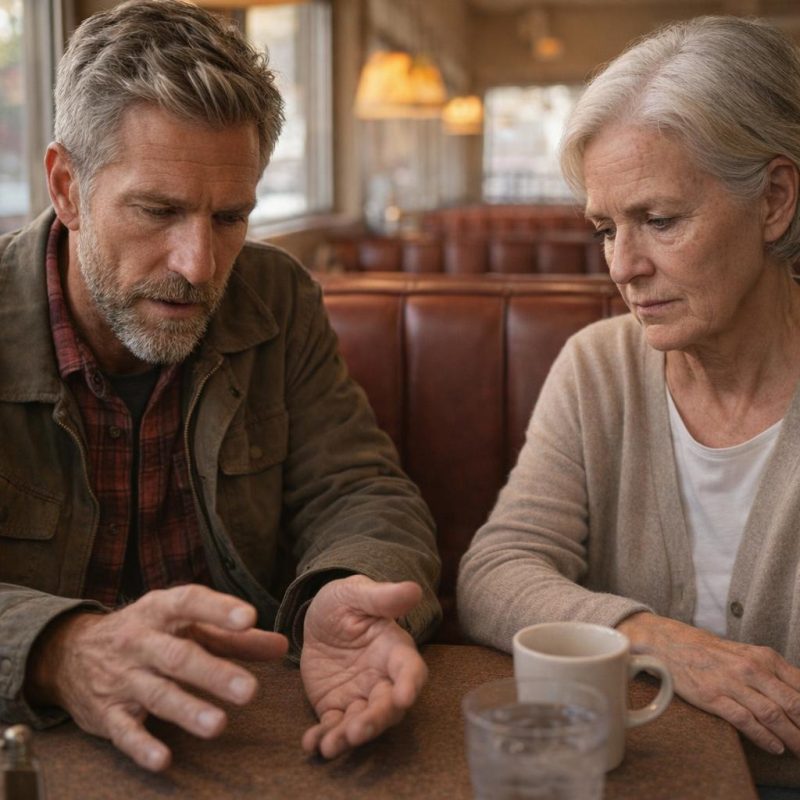 Image by RM AI
Being Seen Again
Coffee after volunteering became our routine, and I caught myself looking forward to Tuesdays and Thursdays in a way I hadn't anticipated anything in years. I started taking more care with my appearance on volunteer days, nothing dramatic, just making sure my hair looked nice, wearing the earrings my daughter had given me. Grant continued to be attentive in ways that made me feel seen again. He'd ask about my week, remember things I'd mentioned in passing, follow up on conversations we'd had days before. It was such a contrast to my marriage, where I'd felt like background noise in my own life. I found myself telling him things I hadn't shared with anyone, about my fears of being alone, about wondering if I'd wasted too many years trying to fix something that was already broken. He never made me feel foolish for those feelings. We talked about books, about places we'd traveled, about the small frustrations and joys of daily life. The emotional connection was growing stronger than any physical attraction, though I'd be lying if I said I didn't notice the way his eyes crinkled when he smiled. But Grant never rushed anything, never pushed for more than I was ready to give. He just expressed that he enjoyed my company, that these conversations meant something to him too. When Grant walked me to my car after our fifth or sixth coffee date and said he really enjoyed my company, I realized with a mixture of excitement and terror that this was becoming something real.
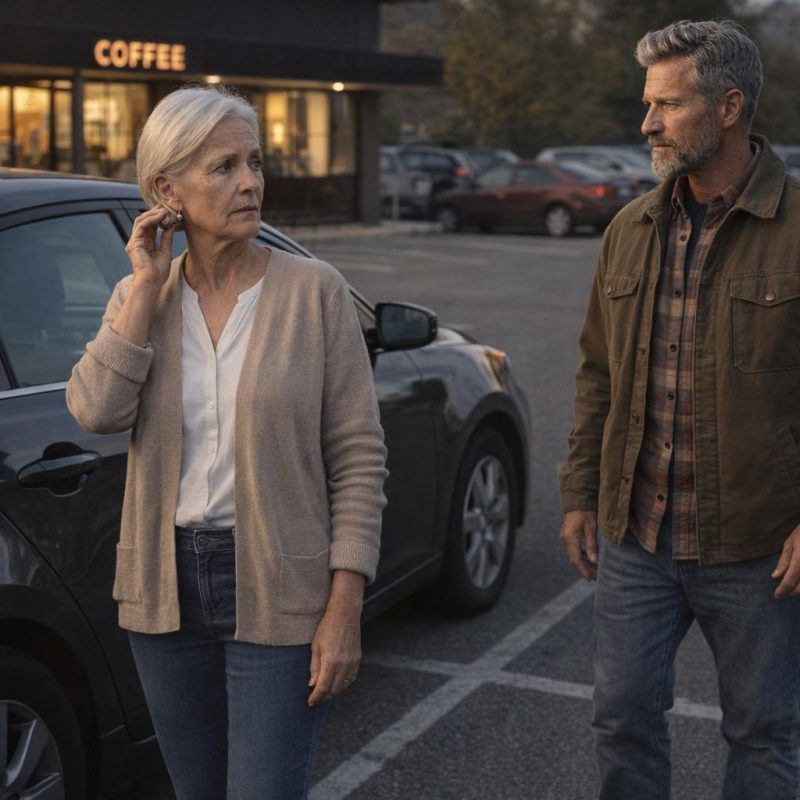 Image by RM AI
Sunday Drives
Grant invited me for Sunday afternoon drives through the countryside, and as we explored back roads together, he told stories about his years in construction management that made him seem steady and accomplished. These drives became something I looked forward to all week, this time outside the structure of volunteering where we could just be ourselves. He'd pick me up in his well-maintained sedan and we'd head out with no particular destination, just seeing where the roads took us. Grant talked about restoring old homes, about the satisfaction of bringing something beautiful back to life. He knew about load-bearing walls and foundation issues, about the difference between Victorian and Craftsman architecture. The details sounded authentic, the kind of knowledge you only get from actually doing the work. He described specific projects, challenges he'd faced, solutions he'd found. I enjoyed seeing him in this relaxed setting, watching him get animated about things he was passionate about. We'd stop at farm stands or small-town diners, building these shared experiences that felt like we were creating something together. On our third Sunday drive, he mentioned leaving the city because he needed space after everything that had happened. I assumed he meant his wife's death, the grief and memories that must have made staying there unbearable. It seemed like a natural desire for change, for a fresh start somewhere quieter. On our third Sunday drive, he mentioned leaving the city because he needed space after everything that had happened, and I didn't think to ask what 'everything' meant beyond his wife's death.
 Image by RM AI
The Arizona Mix-Up
Grant mentioned living in Arizona during a story about desert landscaping, but I was certain he'd previously told me he lived in Nevada after his wife died. We were on one of our Sunday drives, talking about the different places we'd lived, and he was describing this house with a yard full of cacti and succulents. He said something about the Arizona heat and how different it was from here, and I felt this little jolt of confusion. I could have sworn he'd said Nevada before, that he'd moved to Nevada after his wife passed. Maybe I was misremembering, maybe he'd said both states at different times and I'd gotten them mixed up. I didn't want to seem like I was interrogating him or keeping track of every detail like some kind of detective. So I mentioned it gently, just said I thought he'd told me Nevada before. He laughed, not defensively, just this easy laugh, and said he'd lived in both places and sometimes mixed up the timeline himself. It was a reasonable explanation, the kind of thing that happens when you're recounting years of your life. People move around, especially after major life changes, and timelines blur together. His manner was so casual, so unbothered, that I felt silly for even bringing it up. When I gently pointed out the discrepancy, he laughed and said he'd lived in both places and sometimes mixed up the timeline, which seemed reasonable enough that I let it go.
 Image by RM AI
Shifting Timelines
The timeline of his wife's illness seemed different when Grant mentioned it during dinner, and I couldn't quite place why the story felt slightly off from what he'd told me before. We were at a nicer restaurant this time, celebrating two months of whatever this was between us, and somehow the conversation had turned to caregiving and medical decisions. He referenced the duration of his wife's cancer treatment, something about how long she'd been in treatment before the end. But something about the sequence felt different, like the pieces didn't quite line up with what he'd said that day at the diner. Had he said six months of treatment or a year? Had she been diagnosed in spring or fall? I couldn't pin down exactly what had changed, just had this nagging sense that the story had shifted somehow. I didn't mention it during dinner because I didn't want to ruin the evening, didn't want to seem like I was cross-examining him. Later that night, lying in bed, I tried to reconstruct his exact words from our earlier conversations, but I couldn't remember precisely what he'd said the first time. Maybe my memory was faulty, maybe the stress of the divorce had affected my ability to retain details. Maybe I was being overly suspicious because of everything my ex-husband had put me through, seeing problems where none existed. The doubt lingered despite all my rational explanations. I tried to reconstruct the details in my mind afterward but couldn't remember exactly what he'd said the first time, which made me wonder if I was just being paranoid.
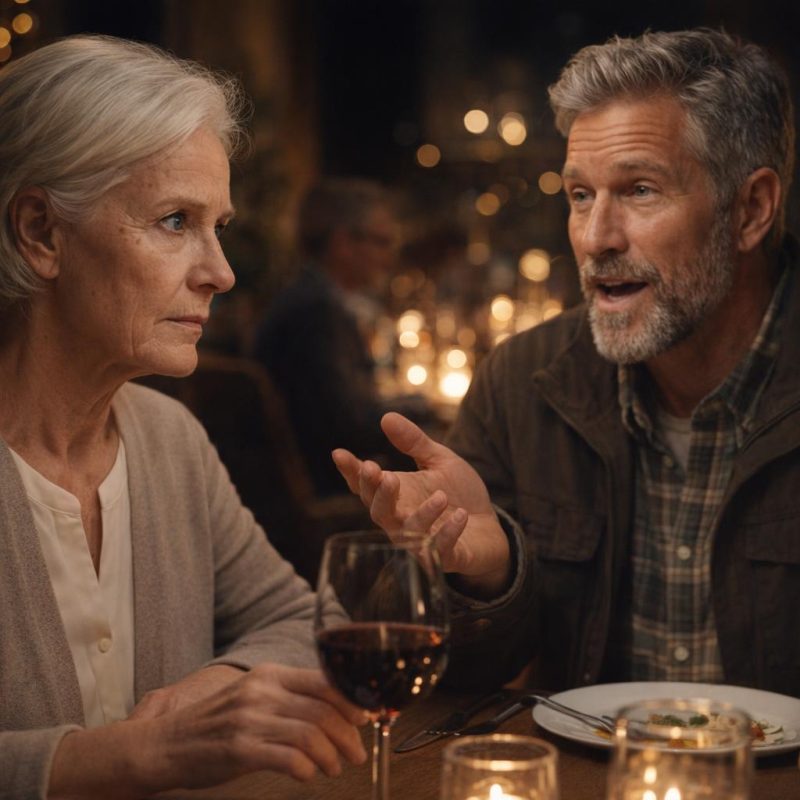 Image by RM AI
Deeper In
I signed up for three extra volunteer shifts that week, telling myself it was because the program really needed the help. But honestly? I knew exactly why I was doing it. Grant would be there, and I'd started looking forward to our time together more than I wanted to admit. We'd fallen into this easy rhythm, working side by side, our conversations flowing naturally between meal prep and delivery routes. He'd tell me about a book he was reading, I'd share something funny my daughter had texted, and it all felt so comfortable, so normal. I caught myself smiling at nothing sometimes, just thinking about seeing him later. The relationship had become central to my happiness in a way that both thrilled and terrified me. During one afternoon delivery, I was chatting with Mrs. Chen, a sweet woman in her eighties who always insisted on showing me photos of her grandchildren. She mentioned something in passing about recognizing Grant from months ago. "Such a nice young man," she said. "I used to see him at the community center over on Riverside, before he started coming to our location." I smiled and nodded, but my mind caught on that detail. Grant had never mentioned volunteering at another center. It seemed like something that would've come up naturally in conversation, wouldn't it? Maybe it wasn't important. Maybe he'd just forgotten to mention it, or maybe it had been so brief it didn't seem worth bringing up. I told myself there were probably a dozen innocent explanations, but the question followed me home anyway.
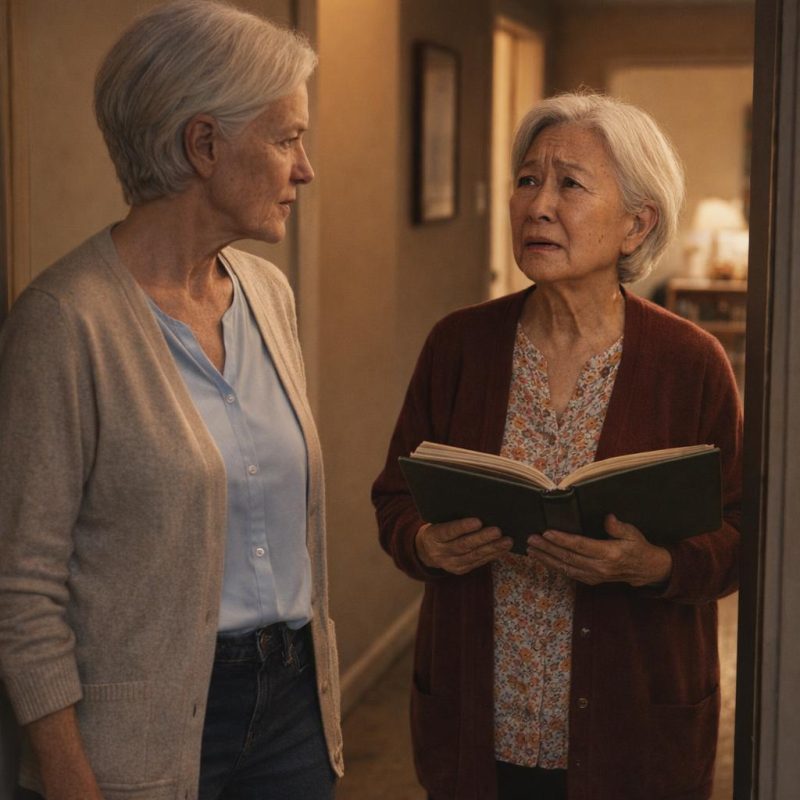 Image by RM AI
The Photograph
Grant invited me to his apartment for dinner on a Thursday evening, and I'd be lying if I said I wasn't a little nervous. It felt like a step forward, seeing where he lived, getting a glimpse into his private space. The apartment was neat, almost sparse, with minimal decoration. Everything had its place, nothing cluttered or chaotic. I appreciated the tidiness but noticed how impersonal it felt, like a hotel room someone had been living in for a while without really settling. While he was in the kitchen checking on the pasta, I wandered over to a bookshelf near the window. A framed photograph caught my eye, the only personal touch in the whole room. It showed what appeared to be a family gathering, maybe a holiday dinner or reunion. People smiled around a table, glasses raised. But something about it looked off. The composition was too perfect, the lighting too professional. And nobody in the photo bore any obvious resemblance to Grant. Different coloring, different features. I picked it up, studying it more closely. "That's a nice family photo," I said when he came back with wine glasses. "Though I have to say, nobody really looks like you." I meant it as a light joke, just making conversation. Grant laughed, but it came out too loud, almost startling in the quiet apartment. "Oh, you know how it is with family," he said quickly, moving to the window. "Hey, come look at this view. You can see the whole downtown from here. More wine?" The subject change was smooth enough that I couldn't call it evasive, but the moment stuck with me through the rest of the evening.
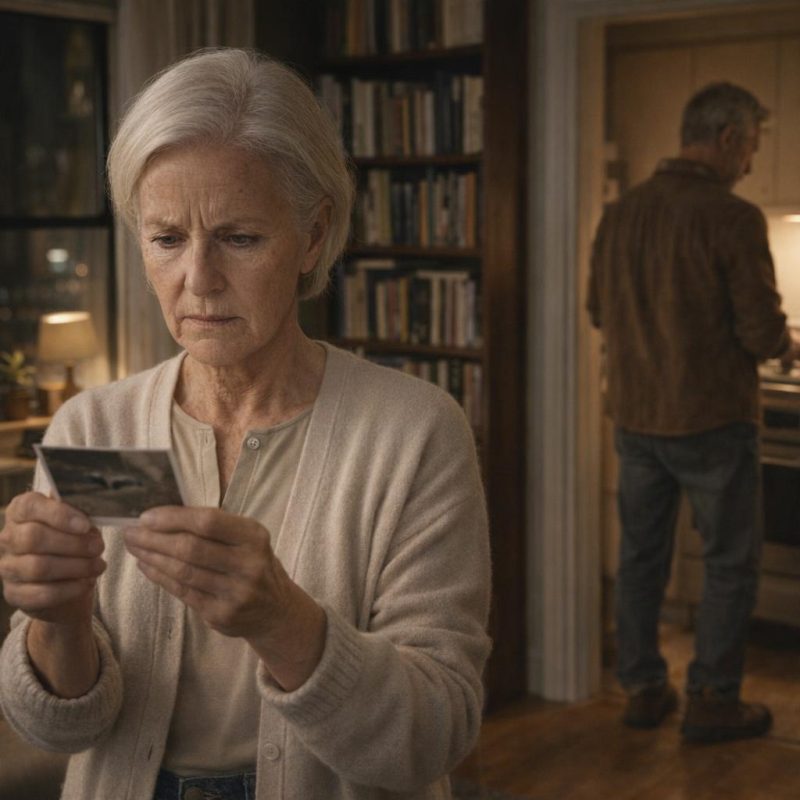 Image by RM AI
Digital Footprints
We were having coffee after a Sunday volunteer shift when Grant mentioned how exhausting he found the whole social media thing. "Never been on Facebook, never will be," he said, shaking his head. "I don't understand why people need to broadcast every moment of their lives." I nodded, understanding the sentiment even though I kept a minimal Facebook presence myself, mostly to see photos of my grandkids. The conversation moved on to other topics, and then somehow circled back to Janet, another volunteer who'd recently posted about her daughter's wedding. "I saw she mentioned the venue had that whole vintage barn theme," Grant said. "With the string lights and everything. Looked beautiful in the photos." I paused mid-sip. "Wait, how did you see the photos if you're not on Facebook?" He didn't miss a beat. "Oh, she showed me on her phone the other day. We were talking about wedding planning and she pulled it up." It was possible. Completely plausible, actually. People showed each other things on their phones all the time. But the details he'd mentioned were specific, the kind you'd notice from scrolling through an album, not from someone quickly showing you their screen. I made a joke about him secretly having a Facebook account, half-watching his reaction. He laughed it off easily, and we moved on. But I added it to the mental list I was trying not to keep, another small thing that didn't quite fit but couldn't be called a lie either.
 Image by RM AI
Accumulation
I started keeping track without meaning to. Arizona, then Nevada. The timeline of his wife's illness that shifted slightly between tellings. The family photo that looked like it came with the frame. The social media thing. None of it was dramatic. None of it was proof of anything except maybe a bad memory or casual imprecision in conversation. People misremembered details all the time, mixed up timelines, forgot to mention things. I knew that. But collectively, these small inconsistencies created this low hum of unease I couldn't quite shake. We spent a Saturday afternoon at a local art fair, and Grant was perfectly himself. Attentive, funny, genuinely interested in the pottery I stopped to admire. He bought me a small ceramic bowl because I'd mentioned liking the glaze. We shared a funnel cake like teenagers. Nothing about his behavior seemed off or suspicious. I watched him more carefully than usual, looking for I don't know what. Signs of deception? But what did deception even look like in everyday moments? He just seemed like Grant, the same man I'd been getting to know for months now. That night, lying in bed, I wondered if my ex-husband had broken something fundamental in me. Maybe I was damaged now, unable to accept kindness without searching for the catch. Maybe I was sabotaging something good because I'd been hurt before and couldn't risk it happening again. The thought made me feel guilty and sad. I decided not to mention my concerns, at least not yet, but the unease persisted despite all my rational explanations.
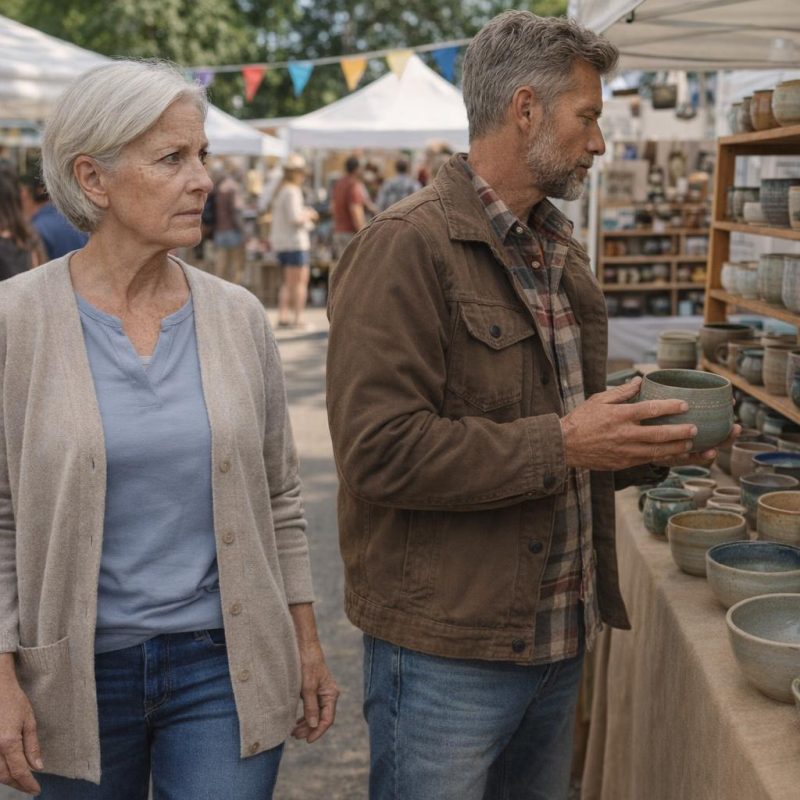 Image by RM AI
The Paranoia Question
I kept thinking about my marriage, about all those months when I'd ignored my instincts because I wanted to believe everything was fine. My ex had been having an affair for over a year before I finally confronted him, and looking back, there had been signs I'd chosen not to see. Was I overcompensating now? Seeing deception everywhere because I'd missed it before? Grant and I took a drive out to the lake on Sunday, and he was particularly sweet that day. He'd brought a thermos of coffee and remembered I liked it with just a splash of cream. We walked along the shore, talking about nothing important, and he listened to me ramble about my daughter's new job with genuine interest. At one point, he took my hand and stopped walking, turning to face me. "I'm really glad you came into my life," he said, and his eyes were so sincere it made my chest ache. "I wasn't sure I'd ever feel this way about someone again." I wanted desperately to silence the doubting voice in my head. I wanted to just be happy, to accept this gift of connection and companionship without questioning it. He deserved that, didn't he? He'd been nothing but kind and patient with me. Maybe the problem wasn't Grant at all. Maybe the problem was me, unable to trust, unable to let go of past betrayals and just live in the present moment. I squeezed his hand and smiled, trying to mean it completely, but even as we stood there in that tender moment, I couldn't quite make the unease disappear.
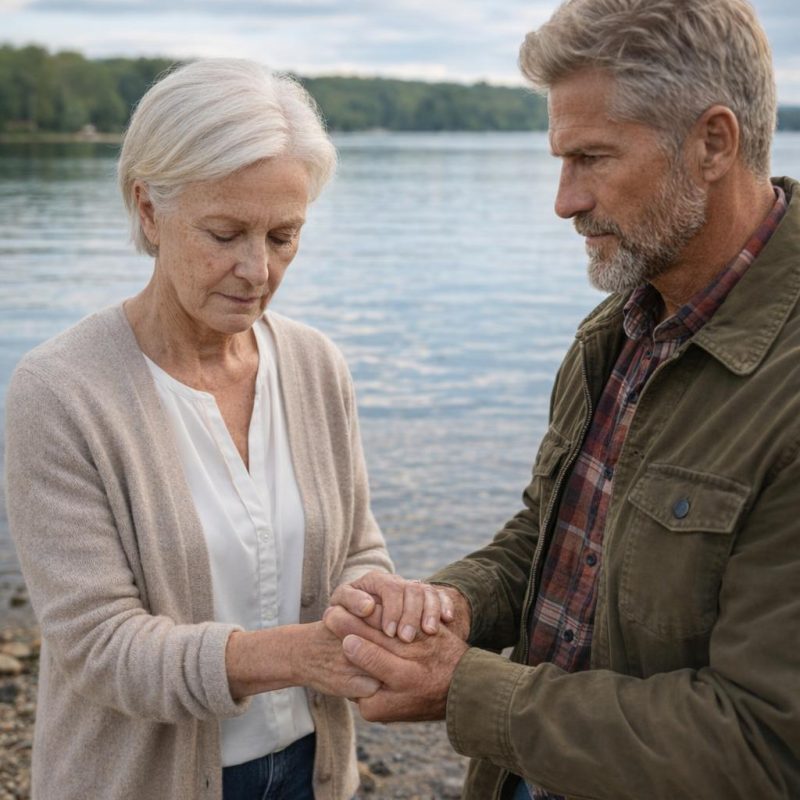 Image by RM AI
Background Static
We fell into our pattern over the next couple of weeks. Tuesday and Thursday volunteer shifts, dinner on Saturdays, occasional Sunday drives. On the surface, everything seemed perfect. Grant was consistent, reliable, affectionate in that gentle way of his. He remembered small things I mentioned, asked about my daughter, made me laugh. I tried to focus on those positives, on the actual relationship in front of me rather than the questions circling in my head. But underneath it all, that quiet hum of uneasiness followed me home each night. I'd replay conversations, trying to catch inconsistencies, then feel guilty for essentially spying on someone I was supposed to be building trust with. We had a particularly lovely dinner at an Italian place downtown, sharing tiramisu and talking about books we'd loved. The evening felt easy and warm, exactly what I'd hoped dating at this age could be. Then, as we were getting ready to leave, Grant mentioned he'd be away the following week. "Visiting some old friends from my construction days," he said, helping me with my coat. "Haven't seen them in years, figured it was time." I nodded, smiling, but realized he hadn't said where these friends lived. And I couldn't remember if he'd ever mentioned them before. It seemed like the kind of detail that would come up naturally, wouldn't it? Old friends you were close enough with to plan a visit? I didn't ask for clarification, afraid of seeming controlling or suspicious, but the question added itself to all the others I was trying not to ask.
 Image by RM AI
Paying Attention
I started paying closer attention after that, really listening to the details Grant shared. Not interrogating, just noting things, trying to track whether his stories stayed consistent. It felt sneaky and wrong, like I was investigating someone I cared about, but I couldn't seem to stop myself. During a Thursday volunteer shift, Grant was chatting with Tom, one of the other regular volunteers, while I was nearby organizing meal containers. They were talking about winter weather, how different regions handled snow. "When I was living in Colorado, we'd get these massive storms," Grant said. "I remember one year we were snowed in for almost a week. Beautiful but brutal." I kept sorting containers, but my hands had gone still. Colorado. He'd never mentioned Colorado to me. Not once. In all our conversations about where he'd lived, where he'd worked, he'd mentioned Arizona and Nevada. He'd talked vaguely about city living versus small towns. But Colorado had never come up. I was certain of it. I listened for more details, waiting to see if he'd elaborate, but the conversation shifted to Tom's experiences in Minnesota. Grant moved on to another topic easily, naturally, like he hadn't just added another state to his increasingly complicated geography. How many places had he actually lived? And why did the list keep expanding in conversations with other people but not with me? I finished organizing the containers in silence, my mind racing while my face stayed calm.
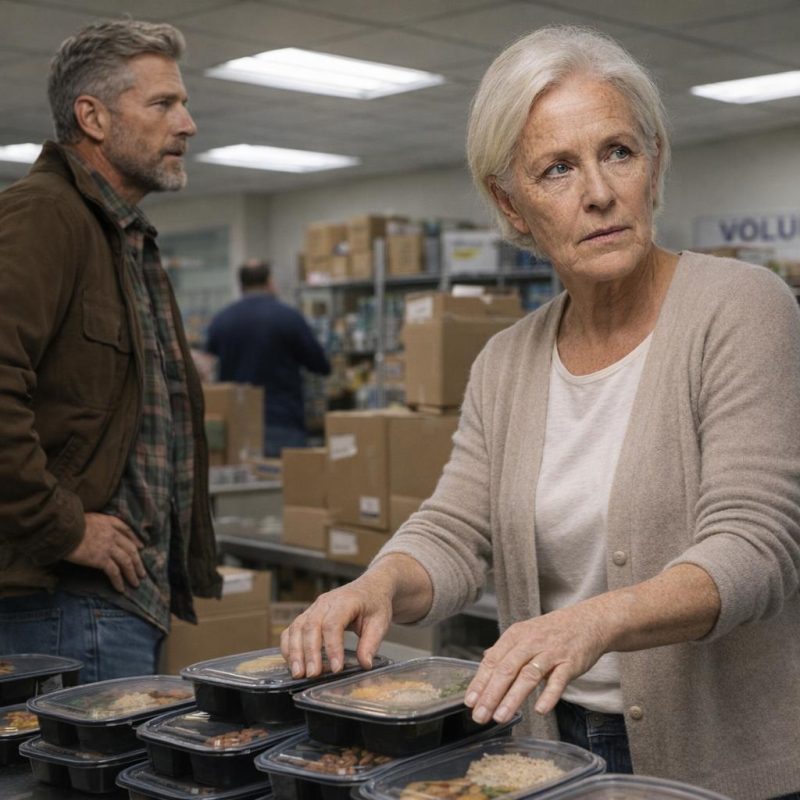 Image by RM AI
Mental Notes
I kept a mental ledger after that, adding each new contradiction as I noticed it. Arizona, Nevada, Colorado. The shifting timeline. The photograph. The social media inconsistency. The friends he'd never mentioned before. I felt ridiculous, like some paranoid detective tracking clues to a crime that probably didn't exist. But I also couldn't shake the feeling that something was wrong, that these pieces added up to a picture I couldn't quite see yet. My behavior started changing without me fully realizing it. I became quieter during our time together, more reserved. I'd catch myself watching Grant instead of just being with him, analyzing his words instead of simply listening. The ease between us started to feel strained, at least on my end. We were having dinner at his apartment on a Tuesday when he set down his fork and looked at me directly. "Is something bothering you?" he asked. "You've been quiet lately. Distant." The concern in his voice seemed genuine, which somehow made me feel worse. "I'm just tired," I said, which wasn't entirely a lie. "Work's been stressful." He accepted the explanation, but I could see the worry in his eyes. And I realized, sitting there across from him, that I was pulling away emotionally even as I continued going through the motions of the relationship. I was still showing up, still smiling, still holding his hand, but part of me had already started retreating, protecting itself. I felt guilty for not being honest, but I wasn't ready to confront him with a list of inconsistencies that might mean nothing at all.
 Image by RM AI
The Fear of Seeming Crazy
I sat on my couch that night with my phone in my hand, typing and deleting the same message over and over. "Hey, I've been meaning to ask about something..." Delete. "Can we talk about your time in Arizona?" Delete. "I noticed you mentioned Nevada once but..." Delete. Each version sounded worse than the last. Too accusatory. Too paranoid. Too much like a woman who couldn't let go of her divorce baggage and trust anyone new. I imagined Grant reading any of these messages and thinking I was damaged, suspicious, the kind of person who interrogates their partner over innocent inconsistencies. Maybe that's exactly what I was becoming. I set the phone down and picked it up again three times in an hour. The rational part of my brain kept insisting these were small things, explainable things, the kind of minor contradictions that happen in any relationship. But another part of me, quieter but more insistent, whispered that something was wrong. That my instincts were trying to tell me something I didn't want to hear. I thought about my marriage, how I'd ignored small warning signs for years, convincing myself I was being oversensitive. I didn't want to repeat that mistake. But I also didn't want to sabotage something good because I was too broken to trust anymore. By midnight, I'd drafted and deleted seven different messages, and my phone screen was still blank. I decided that if I couldn't find the courage to ask honest questions, maybe I didn't trust him enough for this relationship to continue, but the thought of ending things felt almost as frightening as staying.
 Image by RM AI
A Warning Delivered
I was organizing canned goods at the volunteer center on Thursday afternoon, sorting donations into categories the way I'd done a hundred times before. The rhythm of it usually calmed me, but I'd been distracted all week, my mind circling back to Grant and all those small inconsistencies I couldn't quite shake. Harriet approached me while I was stacking soup cans, and something about her expression made my stomach tighten before she even spoke. She glanced around to make sure the other volunteers were out of earshot, then touched my arm gently. "Can I talk to you for a minute?" Her voice was low, serious in a way I'd never heard from her before. We stepped into the storage area, away from the main floor. Harriet's face showed genuine concern, not the gossipy curiosity I might have expected. She looked like she was weighing something heavy, deciding whether to speak or stay silent. My heart started beating faster. "I don't want to overstep," she said carefully, her eyes searching mine. "But I feel like I should ask." She paused, and in that pause I felt the ground shifting beneath me. "Has Grant told you why he had to leave the last town he lived in?" The question was specific, pointed, implying there was a significant reason I should know about. I felt the floor shift beneath me.
 Image by RM AI
What She Wouldn't Say
"What do you mean?" I asked immediately, my voice sharper than I intended. "What happened in his last town?" Harriet's expression tightened, and I could see her second-guessing whether she should have said anything at all. She looked toward the doorway, then back at me, clearly struggling with how much to reveal. The hesitation itself told me this was serious, not just small-town gossip or casual speculation. "Harriet, please," I said. "If you know something, I need to hear it." She was quiet for what felt like forever, her hands fidgeting with the volunteer badge clipped to her shirt. I could see the internal debate playing out across her face, the weighing of consequences. Finally, she spoke, her words measured and careful, like she was worried about what might happen if she said too much. "I just think you need to be cautious with Grant." That was it. That was all she would give me. Before I could ask what she meant, before I could press for details or context or anything concrete, she stepped back. "I'm sorry, I shouldn't have said anything," she murmured, and then she walked away, leaving me standing alone among the canned goods with my heart pounding. My previous doubts, all those small inconsistencies I'd been cataloging, suddenly felt validated by someone else's concern, and that validation was somehow more terrifying than my own suspicions had been.
 Image by RM AI
The Conversation That Changed Everything
I couldn't focus on anything else for the rest of the volunteer shift. Harriet's warning echoed in my mind, transforming every previous inconsistency into something that suddenly felt dangerous. Arizona, Nevada, Colorado. The photograph with people he'd never mentioned. The friends who appeared and disappeared from his stories. The timeline that never quite added up. Before, these had seemed like minor contradictions, the kind of thing that might have innocent explanations. Now they felt sinister, like pieces of a puzzle I'd been too naive to see. I kept glancing at Grant across the room as he helped sort donations, his movements calm and unhurried as always. He looked the same as he had yesterday, last week, two months ago. But I was seeing him differently now, wondering what he was hiding, what had happened in that previous town that made Harriet warn me to be cautious. When he caught me staring, he smiled that patient smile I'd grown to love, and I felt my stomach twist. He came over during a break, concern in his eyes. "You seem distracted today," he said gently. "Everything okay?" I nodded, deflected, said something about being tired. But I knew I wasn't hiding my troubled state well. The rest of the shift felt endless. I knew I had to confront Grant directly, even though part of me was terrified of what I might discover.
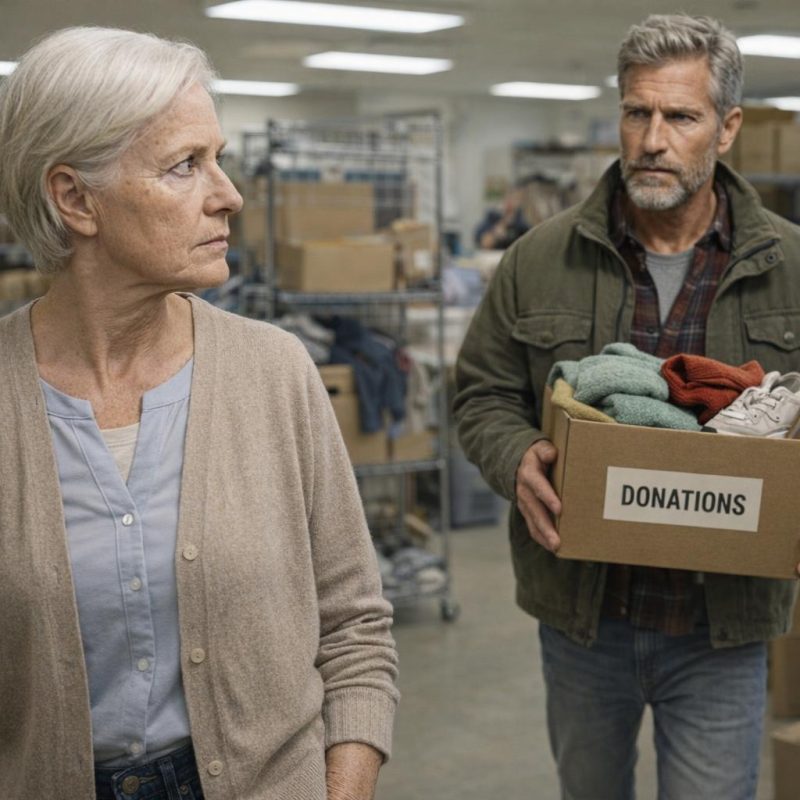 Image by RM AI
Days of Distraction
I spent the next several days replaying Harriet's warning in my mind while trying to appear normal during my shifts and conversations with Grant. It was exhausting, maintaining that facade of normalcy while my thoughts spiraled constantly. Every time I saw him, I found myself watching for signs of deception, analyzing his words for hidden meanings, looking for cracks in whatever story he'd been telling me. But he seemed exactly the same as always, which only made me doubt myself more. Maybe Harriet had him confused with someone else. Maybe she was spreading rumors based on incomplete information. Small towns thrived on gossip, after all. Simple tasks at the volunteer center became difficult because I couldn't focus. I'd lose track of what I was doing, find myself staring into space, replaying that conversation in the storage area over and over. Grant noticed, of course. By the third day, my distraction was obvious enough that he couldn't ignore it anymore. We were restocking shelves together when he set down the box he was carrying and turned to me. "Something's been bothering you," he said, his voice gentle but firm. "I can tell. Can we talk after our shift?" It wasn't really a question. I nodded, feeling my pulse quicken, and I knew I couldn't avoid the conversation any longer.
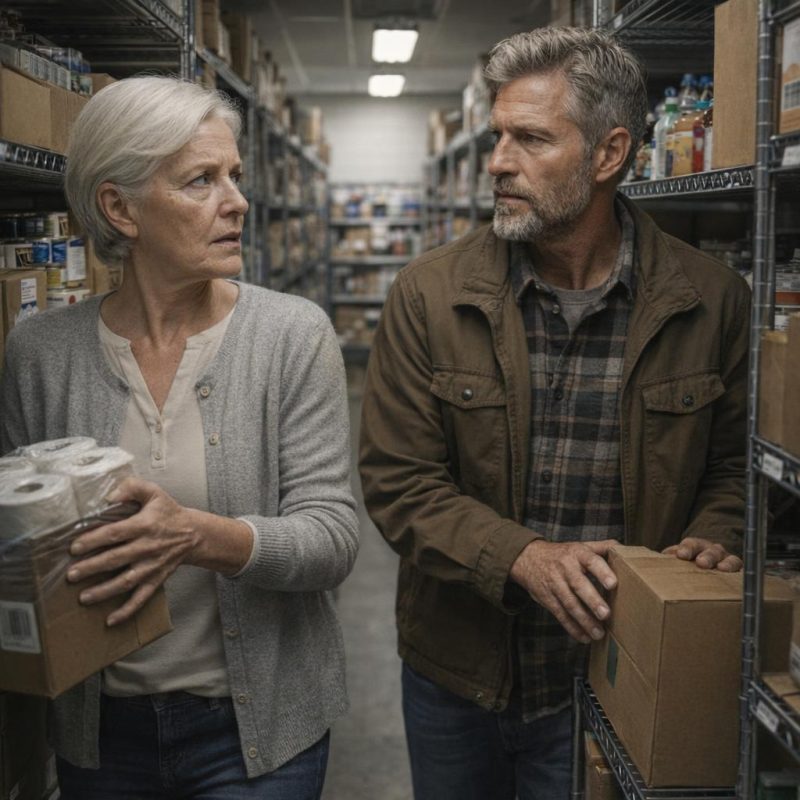 Image by RM AI
Building Courage
I spent the afternoon rehearsing different ways to ask Grant about his past without sounding accusatory, but every version felt either too aggressive or too passive. "Harriet mentioned something about your previous town" sounded like I was ambushing him with gossip. "I was wondering about where you lived before" felt too timid, too easy for him to deflect. "Why did you leave your last town?" was direct but felt harsh, like an interrogation. I tried softer approaches, more casual phrasings, but nothing felt right. My anxiety built as the shift wound down and our planned conversation approached. Part of me wanted to cancel, to text him and say I was tired, that we could talk another time. But I knew avoiding the question would only make things worse, would let my doubts fester and grow until they poisoned everything between us. When we finally sat down across from each other at the coffee shop after our shift, I felt my carefully rehearsed questions evaporate. Grant's expression was so gentle, so genuinely concerned about whatever had been bothering me, that my prepared approach felt almost cruel. How could I look at this patient, caring man and accuse him of hiding something sinister? Maybe I was being unfair, letting Harriet's vague warning and my own divorce-damaged instincts turn innocent inconsistencies into evidence of deception. The gentle concern in his eyes made my prepared questions feel almost cruel.
 Image by RM AI
The Temperature Change
I took a breath and tried to keep my voice casual, conversational. "I was curious about something," I said. "You mentioned living in a few different places before moving here. What made you leave your previous town?" I watched his face as I asked, and what I saw made my chest tighten. His entire demeanor shifted in a way I'd never seen before. The calm, patient expression I'd grown accustomed to disappeared, replaced by something harder, more guarded. His body language changed instantly, his shoulders tensing, his jaw tightening. "Why are you asking me that?" His voice had an edge I'd never heard before, sharp enough to make me flinch. "Did someone say something to you?" I tried to backtrack, to make it sound like simple curiosity, but he cut me off. "Let me guess. Harriet." He said her name with something close to contempt. "She doesn't know what she's talking about. Small towns love their rumors, and she's apparently decided to spread them." The coldness in his tone felt like meeting a stranger. This wasn't the gentle, patient man who'd held my hand and listened to my stories about my divorce. This was someone else entirely, someone defensive and sharp-edged. His voice turned even sharper as he leaned forward slightly. "Are you questioning me because you don't trust me?" The coldness in his tone felt like meeting a stranger.
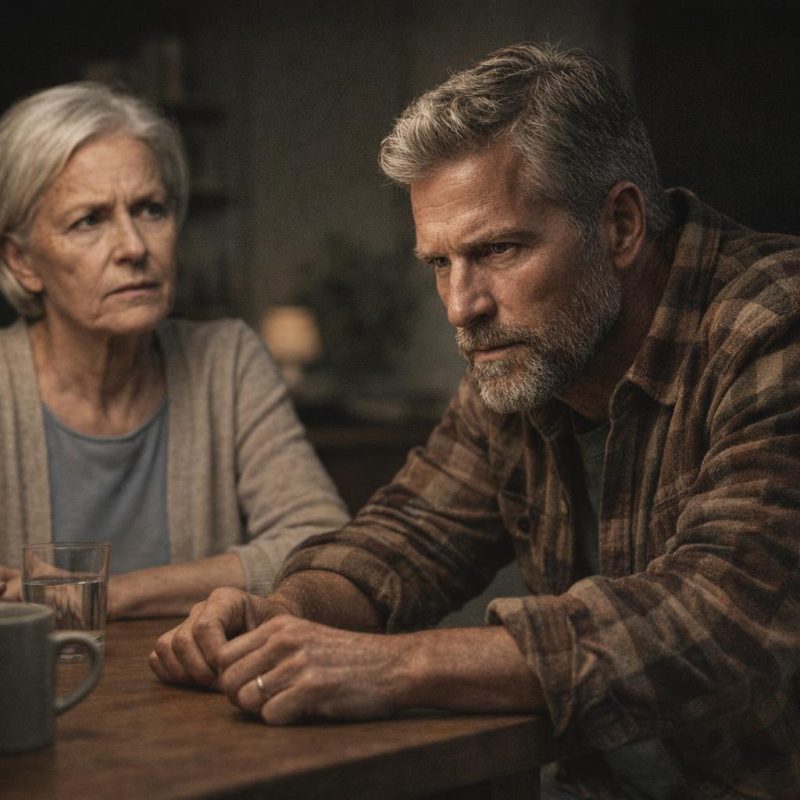 Image by RM AI
The Trust Question
Grant's question hung in the air between us, and I felt the entire dynamic of the conversation shift. Suddenly I wasn't the one asking for answers. I was the one being questioned, the one who had to justify myself. "Do you trust me or not?" he asked again, his voice direct and challenging in a way that felt designed to put me on the defensive. And it worked. I found myself stammering, trying to explain that I did trust him, that I was just confused by some things that didn't add up, that I wasn't accusing him of anything. But even as I spoke, I could hear how weak I sounded, how apologetic. He'd turned the entire conversation around on me, made it about my trust issues instead of his inconsistencies. His expression was hard to read, neither overtly angry nor gentle, just watchful and waiting. I felt pressure building in my chest, the need to prove I wasn't some paranoid, damaged woman who couldn't trust anyone after her divorce. "I'm sorry," I heard myself say, though I wasn't entirely sure what I was apologizing for. "I didn't mean to sound like I was interrogating you." The words felt wrong leaving my mouth, like I was betraying myself somehow, but I couldn't seem to stop them. I heard myself apologizing even though I wasn't sure what I was apologizing for, and the words felt wrong leaving my mouth.
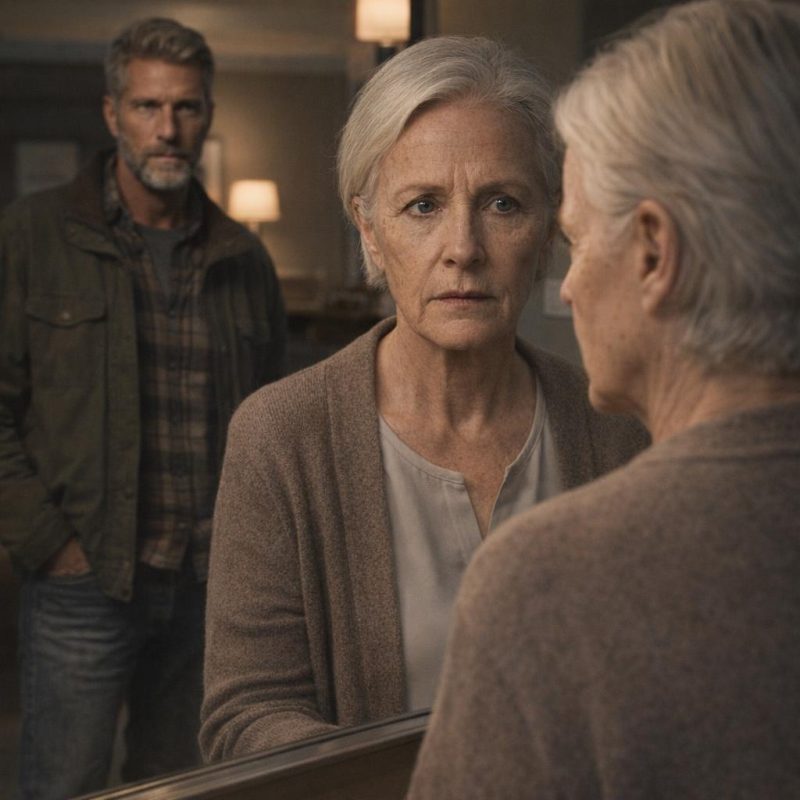 Image by RM AI
The Apology That Felt Wrong
I kept apologizing, the words tumbling out faster than I could stop them. "I'm probably just being paranoid," I told him, forcing a laugh that sounded hollow even to my own ears. "The divorce really messed with my head, you know? Made me see problems where there aren't any." I watched his expression shift as I spoke, the hardness in his eyes softening, his shoulders relaxing. He was visibly relieved that I was taking the blame, that I was the problem and not him. "I understand," he said, his voice gentle again, the warmth returning like he'd flipped a switch. "Trust issues are completely normal after what you've been through." He reached across the table and squeezed my hand, and I squeezed back even though something felt off about the whole exchange. We finished our coffee with him being attentive and kind, asking about my week, making plans for the weekend. By the time we said goodbye in the parking lot, you'd think nothing had happened at all. But walking to my car, I replayed the conversation in my head, and that's when it hit me. I'd just apologized for trusting my own instincts, for asking reasonable questions about inconsistencies in his story. The wrongness of that settled in my stomach like a stone, heavy and cold and impossible to ignore.
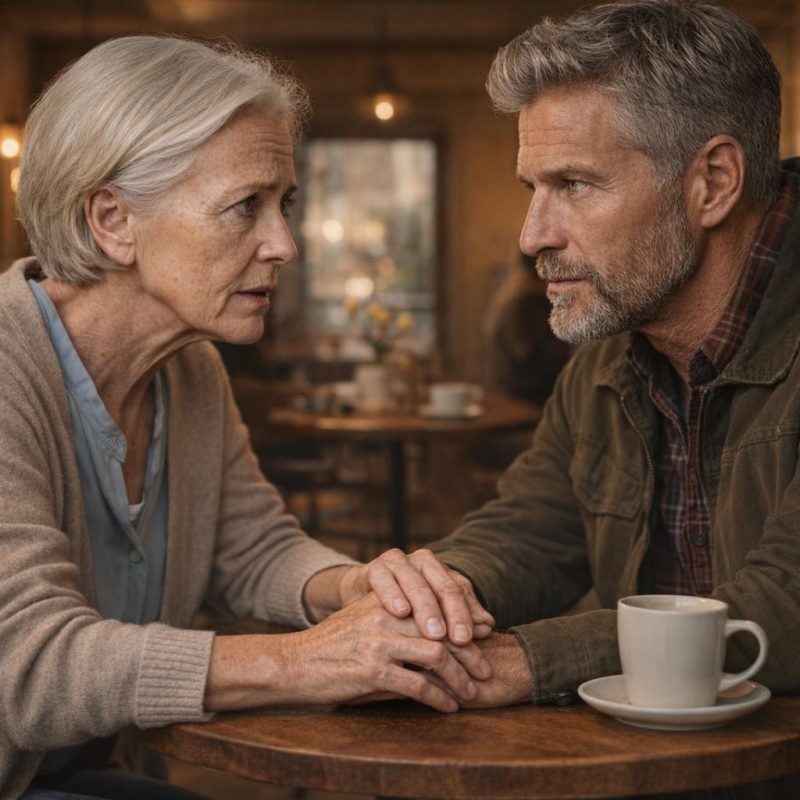 Image by RM AI
Searching for Proof
I sat at my computer that night with a glass of wine I wasn't drinking, staring at the search bar on a public records website. My finger hovered over the mouse, and I felt like I was about to cross a line I couldn't uncross. This wasn't who I was. I didn't investigate people I was dating. I didn't snoop or spy or doubt. Except I did doubt, didn't I? Harriet's warning kept echoing in my head, and Grant's cold expression when I'd questioned him had revealed someone I didn't recognize. I typed his name slowly, each letter feeling like a small betrayal. Grant Morrison. The search button seemed to glow on the screen, daring me. I thought about closing the laptop, about choosing to trust him, about being the kind of person who gave people the benefit of the doubt. But I also thought about that missing wife, about the vague timeline, about how smoothly he'd turned my questions back on me. I clicked search. The page loaded with that spinning wheel that makes time feel elastic, stretching out forever. Results began populating the screen with addresses and dates and other information that should have been straightforward. My heart pounded as I scrolled through the entries, and something about the timeline felt wrong, inconsistent with everything Grant had told me about his life.
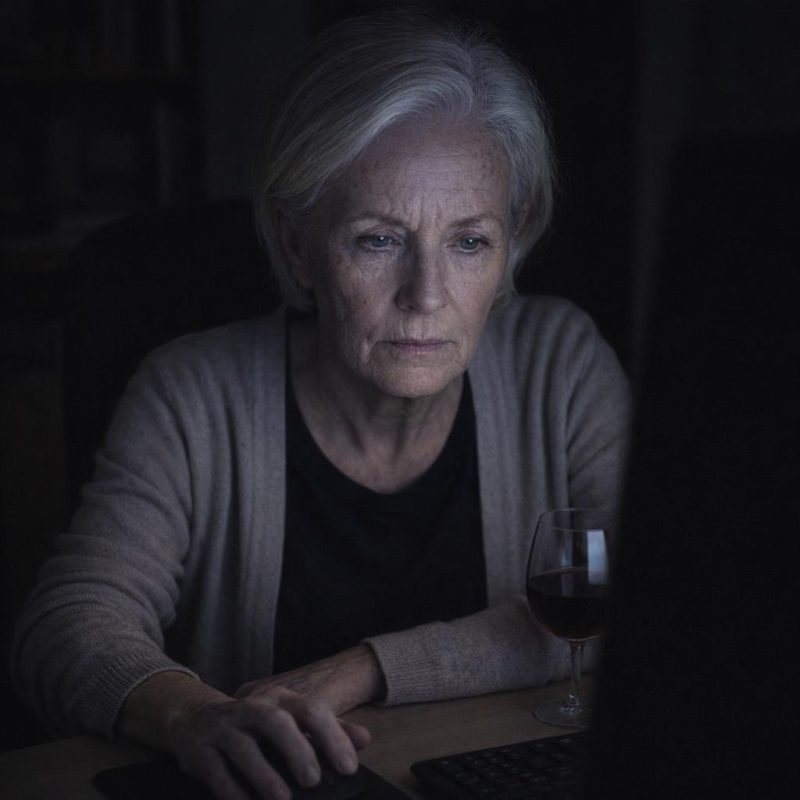 Image by RM AI
Missing Pieces
I searched specifically for a marriage license, thinking that would be the easiest thing to verify. Grant had said he'd lived in Riverside County with his wife, so I started there, entering his name and the approximate dates he'd mentioned. Nothing came up. I tried different year ranges, thinking maybe I'd misremembered when he said they'd married. Still nothing. Maybe I had the wrong county. People move around, right? I expanded the search to San Bernardino County, then Orange County, checking each one methodically. My coffee went cold beside me as I worked, the house silent except for the clicking of my mouse. I tried Los Angeles County even though he'd never mentioned living there. Nothing matched. I sat back and stared at the screen, trying to make sense of it. Maybe marriage records weren't all digitized. Maybe there was a clerical error. Maybe his wife had kept her maiden name and I needed to search differently. I expanded the search to the entire state of California, entering every variation of his name I could think of. The database churned through records while I held my breath. When the results loaded, there was still nothing that matched his timeline or the story he'd told me about marrying his high school sweetheart. My hands started trembling as I gripped the edge of my desk, because the complete absence of any record felt significant in a way I couldn't quite name yet.
 Image by RM AI
Address Gaps
I switched to searching his address history, thinking that might fill in some blanks. The records showed him at his current apartment starting three years ago, which matched what he'd told me. Before that, there was an address in a different part of town from about six years ago. But then there was nothing. A gap of several years where Grant Morrison apparently didn't live anywhere at all, at least not anywhere that left a paper trail. I cross-referenced the gap with the timeline he'd given me about his wife's illness and death. He'd said she'd been sick for two years before she passed, and that had been about eight years ago. So during the time he claimed to be caring for his dying wife, there was no record of him living anywhere. I tried to make it make sense. Maybe he'd been renting informally, paying cash, not on any lease. Maybe he'd been living with family. But the gap was too long, too complete. I found another gap earlier in the records, another stretch of years where he simply vanished from documentation. I felt foolish for accepting his stories without question, for being so eager for companionship that I hadn't asked basic questions. But I also felt scared, genuinely scared, about what these missing years might mean. Where had he actually been? Had anything he told me been true? The fear of having been completely deceived settled over me like a weight I couldn't shake.
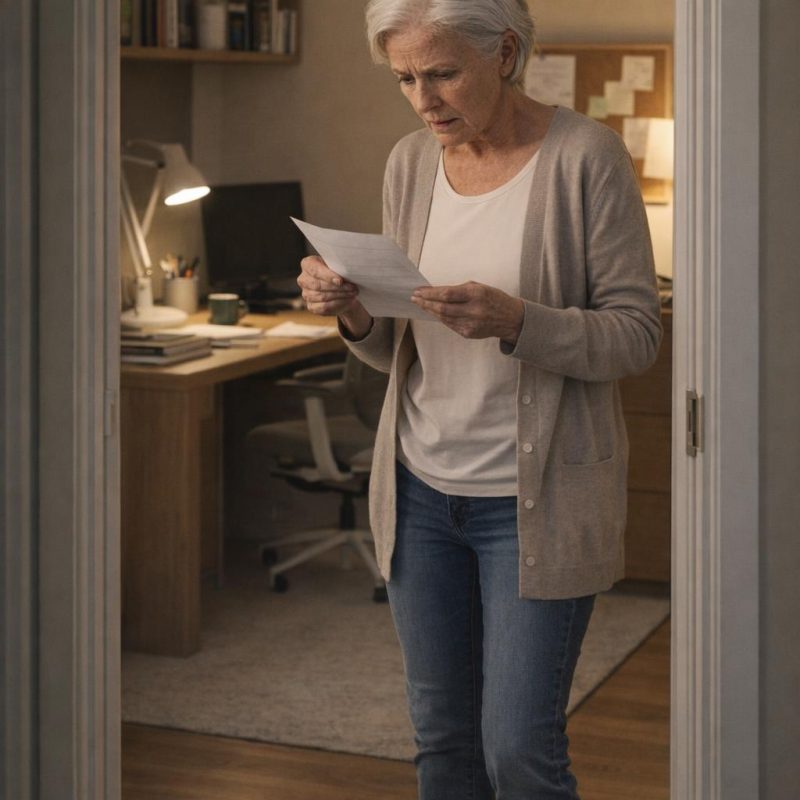 Image by RM AI
A Different Name
I was about to close the laptop when I saw it buried in the search results. A legal name change record from ten years ago. I clicked on it, and there it was, official court documentation showing that Grant Morrison had legally changed his surname. His previous last name was listed right there in black and white on the official form. I stared at it, my heart hammering so hard I could feel it in my throat. The name meant nothing to me. I'd never heard it before, had no context for it. But the fact that he'd legally changed his identity and never mentioned it made everything else feel darker, more deliberate. I'd been dating this man for months, had let him into my life, into my home, and I didn't even know his real birth name. Every inconsistency I'd noticed suddenly felt connected to this hidden identity change. The missing marriage license, the gaps in his address history, the vague stories about his past. They all pointed to someone who'd deliberately obscured who he really was. I sat there in the glow of my computer screen, trying to imagine what would cause someone to legally change their name. Running from debt? From a criminal record? From an ex-wife who wasn't actually dead? The possibilities that came to mind were all frightening, each one worse than the last. The discovery made me dread what else I might find if I kept digging.
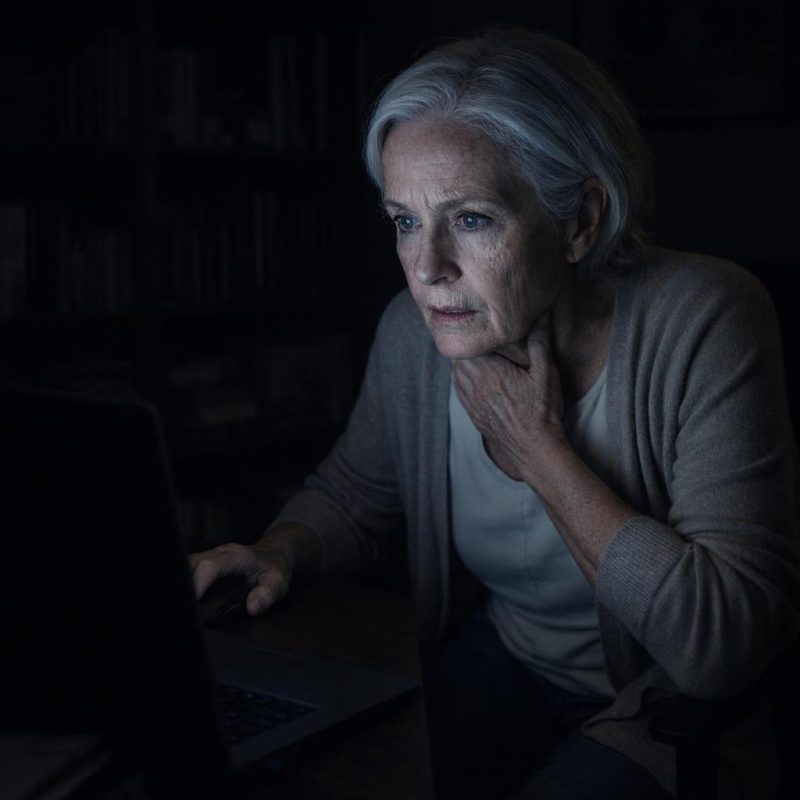 Image by RM AI
The Brother Excuse
I met Grant for dinner two nights later at the Italian place we both liked, and I'd rehearsed what I was going to say a dozen times. I waited until we'd ordered, until he was relaxed and smiling, and then I brought it up casually. "So I was doing some paperwork for my insurance," I lied, "and I accidentally stumbled across something. Did you change your last name at some point?" I watched his face carefully. There was a flicker of something, surprise maybe, but he recovered so quickly I almost missed it. "Oh, that," he said, his voice easy and unconcerned. "Yeah, about ten years ago. I had this situation with my brother, we had a falling out over family stuff. It got pretty ugly, and I just wanted a clean break from all of it." His explanation came smoothly, the words flowing like he'd told this story before. Too smoothly, actually. I nodded like it made perfect sense, like people changed their legal names over sibling disputes all the time. "That must have been hard," I said, giving him space to elaborate. But he just shrugged and changed the subject, asking me about my daughter, steering the conversation away from his past with practiced ease. I didn't push. I was afraid of revealing how much I actually knew, how deep my investigation had gone. But I caught myself wondering, as he talked about his plans for the weekend, how many times he'd told that particular story about the estranged brother, and whether any of it was true.
 Image by RM AI
Three Names
I couldn't let it go. That night I searched for the previous name, the one from the legal change document, thinking maybe that would give me answers. I found old community newsletters, archived local news, random mentions in public documents. And then I found it. A volunteer center newsletter from five years ago, one of those cheerful community publications with photos of people serving meals or organizing donation drives. There was Grant in one of the pictures, smiling at the camera, looking exactly like himself. Except the caption identified him by a completely different surname. Not Grant Morrison. Not the name from the legal change record either. A third name I'd never heard before. I zoomed in on the photo to make sure it was really him. Same face, same patient smile, no question it was the man I'd been dating. I pulled up the legal name change document again, then my original search results, laying out all three names side by side on my screen. Three different surnames, all connected to the same person, all used within the last decade. I stared at them until the words started to blur together, my mind racing through possibilities. The realization that I might not know his real name at all, that Grant might not even be his actual first name, made my blood run cold.
 Image by RM AI
The Loneliness Factor
I lay awake that night, staring at the ceiling while my mind churned through everything I'd discovered. The multiple names, the missing records, the gaps in his history. I kept replaying how we'd met, how he'd approached me at the bookstore with that patient smile, how he'd been so understanding about my divorce, so willing to take things slow. Had I been targeted? Had my loneliness been that obvious, that visible to someone looking for an easy mark? The thought made me feel sick. I'd been so grateful for his attention, so flattered that someone wanted to spend time with me after years of feeling invisible in my marriage. I'd ignored the vague answers about his past because I wanted to believe in the connection we had. I'd apologized for my own suspicions because I was afraid of being alone again. I wondered if that's what he'd counted on, if he'd seen a vulnerable divorced woman and known exactly how to play it. The thought that my own vulnerability might have made me an easy target felt almost worse than the possibility that Grant, or whatever his real name was, had been lying all along. I didn't know yet if he was dangerous or just dishonest, didn't know if I was in actual danger or just being used. But lying there in the dark, listening to every creak of my house, I felt foolish and frightened in equal measure, and I had no idea what to do next.
 Image by RM AI
Asking for the Truth
I waited until Tuesday afternoon when I knew the volunteer center would be quiet. I'd spent the weekend rehearsing what I'd say, how I'd ask, trying to find words that didn't make me sound paranoid or desperate. But when I walked in and saw Harriet sorting donated books in the corner, alone for once, all my careful planning evaporated. I just walked over and said it straight out. "Harriet, I need you to tell me everything you know about Grant." My voice came out steadier than I felt. She looked up from the books, and I watched her face shift from surprise to something like sympathy. She didn't ask what I meant or pretend not to understand. She just studied me for a long moment, and I could see her weighing something in her mind. "I wondered if you'd come to me," she said quietly. "I've been debating whether to say something for weeks now." I felt my stomach drop. So there was something to tell. "Please," I said. "I've found things that don't add up. The different names, the gaps in his history. I need to know if I'm being paranoid or if there's a real reason to be worried." Harriet glanced around the empty room, then back at me with concern in her eyes. She studied my face for a long moment before nodding slowly and suggesting we talk somewhere private after the shift ended.
 Image by RM AI
The Weight of Knowing
We sat in Harriet's car in the volunteer center parking lot, the windows fogging slightly in the evening chill. She'd turned off the engine but left the keys in the ignition, her hands resting on the steering wheel like she needed something to hold onto. I sat in the passenger seat feeling like I was waiting for test results I already knew would be bad. "Before I tell you this," Harriet said, not looking at me, "I want you to understand that what I'm about to share might change how you see Grant completely." Her voice was gentle but serious. "I've gone back and forth about whether to say anything because I don't have proof of everything, just pieces and patterns and things that happened years ago." I felt my chest tighten. "But you think I should know." "I think you deserve to make an informed decision," she said carefully. She turned to face me then, her expression full of concern. "Once I tell you this, you can't unhear it. And I don't know if it'll make things clearer or just more complicated." I looked at her silver hair catching the parking lot lights, at the worry in her eyes, and I realized she'd been carrying this knowledge for a while now, watching me with Grant and wondering what to do. "I need to know anyway," I said, and she took a deep breath before beginning a story that made my worst fears seem almost naive.
 Image by RM AI
The Pattern
"I lived in Millbrook," Harriet began, naming a town about two hours north. "That's where I knew Grant before. Or knew of him, really. This was maybe seven or eight years ago." She paused, choosing her words carefully. "He was very involved in the community there. Volunteering at the senior center, helping with meals on wheels, organizing fundraisers. People loved him. He had this way of making everyone feel cared for, especially the older residents." I felt cold despite the closed car. "He became particularly close to several women in town," Harriet continued. "Widows, mostly. Women who'd lost their husbands and were navigating life alone. He'd help them with yard work, drive them to appointments, just be there when they needed someone." She looked at me. "And over time, some of those friendships became romantic relationships." My mouth went dry. "How many?" "Three that I know of for certain. Maybe more." Harriet's voice was quiet. "And here's the thing. Each relationship followed a similar arc. He'd be attentive and helpful, they'd grow close, and then there would be some financial entanglement. A loan he needed, an investment opportunity, shared expenses for something." She paused. "And then the relationship would end, and the women would realize money was missing." She said several widowed women there became emotionally involved with him, and while nobody accused him of outright theft, each relationship ended with confusion and missing money.
 Image by RM AI
The Disappeared Funds
"The money always disappeared through channels that seemed legitimate at first," Harriet explained. "Grant would present some urgent business situation. A property investment that needed quick capital. A family emergency that required temporary help. Or just shared expenses for trips or home improvements that somehow never got properly settled." She shook her head. "The amounts varied depending on the woman's situation. Sometimes a few thousand, sometimes much more. But it was always presented with such sincerity, such apparent need." I felt sick. "And he never paid it back?" "No. There were always reasons. The business deal fell through. The family situation got complicated. He'd promise to make it right and then the relationship would deteriorate." Harriet's hands tightened on the steering wheel. "But here's what really disturbed people once they started comparing notes. It wasn't just the money. It was how well Grant seemed to know each woman before he ever got close to her." She turned to look at me directly. "He knew their routines, their fears, their financial situations. He knew about family conflicts and health concerns and vulnerabilities. He'd ask thoughtful questions and remember every detail, and it made each woman feel so seen and valued." Her voice dropped. "Until they realized he'd been gathering information all along." She said what frightened people most wasn't the money itself but realizing how thoroughly Grant had studied each woman before entering her life.
 Image by RM AI
Being Known
As Harriet described how Grant would remember small preferences and ask follow-up questions about things the women had mentioned weeks earlier, I felt my stomach turn. The tea. He'd remembered how I took my tea after I'd mentioned it once in passing. He'd asked about my daughter's job and remembered details about her life that I'd shared casually. He'd known about my divorce settlement, my retirement account, the equity in my house. I'd thought he was just attentive, just genuinely interested in my life. I'd felt so grateful to be truly listened to after years of my ex-husband barely hearing me. "He made each woman feel special," Harriet was saying. "Like she was the only person in the room. Like her thoughts and feelings mattered deeply to him." Every word felt like a punch. That's exactly how Grant had made me feel. Seen. Valued. Important. And now I was sitting in a car learning that this attentiveness might have been strategic, that every kind gesture and remembered detail might have been part of gathering information about my vulnerabilities and resources. I thought about how he'd learned about my loneliness, my fear of being alone, my guilt about not trusting people. Had he been taking notes? Building a profile? Every conversation we'd had suddenly felt different, tainted. I couldn't tell if I was sitting with someone who cared about me or someone who'd been gathering information all along.
 Image by RM AI
The Inconsistency
"Wait," I said, something suddenly occurring to me. "If Grant was running cons on vulnerable women, why would he keep volunteering so publicly? Why risk being recognized by coming to community centers where people from his past might see him?" Harriet's expression shifted, and I could see I'd touched on something she'd wondered about too. "That's the part that's never made complete sense to me," she admitted. "If he was really trying to hide or move on to new targets, you'd think he'd stay away from places where he might run into people who knew his history." She frowned. "When I first saw him here, I was shocked. I thought maybe he didn't know I'd moved to this area, but even so, the volunteer work itself seems like a risk." I felt a flicker of something, though I couldn't tell if it was hope or just more confusion. "So maybe the story isn't what people think?" "I don't know," Harriet said honestly. "The pattern in Millbrook was real. The missing money was real. The hurt those women felt was absolutely real." She looked at me. "But you're right that his behavior doesn't entirely fit someone who's deliberately hiding or hunting for new victims. I've wondered about it myself." She admitted the story didn't entirely make sense, which was partly why she'd hesitated to warn me, but she still felt I needed to be careful.
 Image by RM AI
He Knows
Grant showed up at my door that evening just as the sun was setting. I saw him through the window before he knocked, standing on my porch with his shoulders hunched in a way I'd never seen before. When I opened the door, he looked visibly shaken. "Did you talk to Harriet about me?" he asked before I could say anything. His voice wasn't angry or defensive. It was almost frightened. I stood there frozen, my hand still on the doorknob. I hadn't expected him to know so quickly. I hadn't expected him to come here. And I definitely hadn't expected the look on his face, which wasn't the cold calculation I'd been bracing for but something closer to panic. "Yes," I said, because there was no point lying. His hands were trembling slightly as he ran them through his hair. "I thought so. I saw you two in the parking lot." He looked at me with an expression I couldn't quite read. Not anger. Not the smooth reassurance he'd offered before when I'd questioned him. This was raw and afraid and completely threw me off balance. I'd spent the drive home from Harriet's car preparing for confrontation, for denial, for manipulation. Instead, his face showed something closer to fear, which I hadn't expected at all.
 Image by RM AI
A Different Truth
Grant sat down heavily on my porch steps without asking, like his legs wouldn't hold him anymore. He stared at his hands for a moment before speaking. "Parts of what Harriet told you are true," he said quietly. "I'm not going to deny that. But the truth isn't what people in Millbrook believe. It's not what it looks like." His voice was so tired, so defeated. I stayed standing in the doorway, keeping distance between us, my arms crossed. I didn't know what to believe anymore. Every instinct I had felt compromised. "I know how it sounds," he continued, still not looking up at me. "Multiple women, missing money, leaving town. I know exactly how that looks." He finally raised his eyes to meet mine, and I saw exhaustion there that seemed to go bone-deep. "But if you're willing to listen, I can explain what actually happened. Not the version people tell, but what was really going on." He wasn't making excuses or offering smooth explanations. He just sat there looking worn down and afraid, waiting. "Do you want to hear it?" he asked. "The real story?" I stood there torn between everything Harriet had told me and the genuine pain I saw in his face. Despite everything, despite all my fear and suspicion and the sick feeling in my stomach, I found myself nodding.
 Image by RM AI
The Financial Advisor Story
Grant took a slow breath and started talking, his voice quiet but steady. "After my wife died, I was lost," he said. "I didn't know what to do with myself, with the house, with anything. A financial advisor reached out to me—said he specialized in helping people manage estates after loss." He rubbed his hands together like he was cold despite the warm evening. "He seemed so professional, so knowledgeable. He helped me sort through everything, and honestly, he made that whole nightmare easier." I stayed standing, listening, my arms still crossed. "I started meeting other people at a grief support group," Grant continued. "Widows mostly, women trying to figure out their finances alone for the first time. When they'd mention their struggles, I'd tell them about this advisor who'd helped me so much." His voice got quieter. "I referred maybe six or seven women to him over the course of a year. He talked about these retirement community developments—safe investments with steady returns, perfect for people our age." Grant finally looked up at me. "I trusted him completely. I had no idea the investments were fraudulent until everything started collapsing and people had already lost their savings."
 Image by RM AI
The Weight of Blame
"I was never charged with anything," Grant said, and there was something hollow in his voice. "The police investigated, but I hadn't handled any money directly. I'd just made introductions, given recommendations." He stared at the porch boards between his feet. "But those women—they blamed me anyway. And they had every right to." I shifted my weight, still keeping my distance. "One woman lost forty thousand dollars. Another lost nearly everything she had for retirement. They'd trusted me, and I'd sent them straight to someone who destroyed their security." His hands were shaking slightly. "I'd see them at the grocery store, at church, around town. The way they'd look at me—or worse, the way they'd look away." He pressed his palms against his knees. "I couldn't sleep. Couldn't eat. Every day felt like walking through a minefield of people I'd hurt, even though I'd been fooled too." I found myself comparing his version to what Harriet had told me. The facts aligned, but the framing was completely different. In his telling, he was another victim. In hers, he was the architect. "The guilt became unbearable," he said quietly. "That's why I left without telling anyone where I was going."
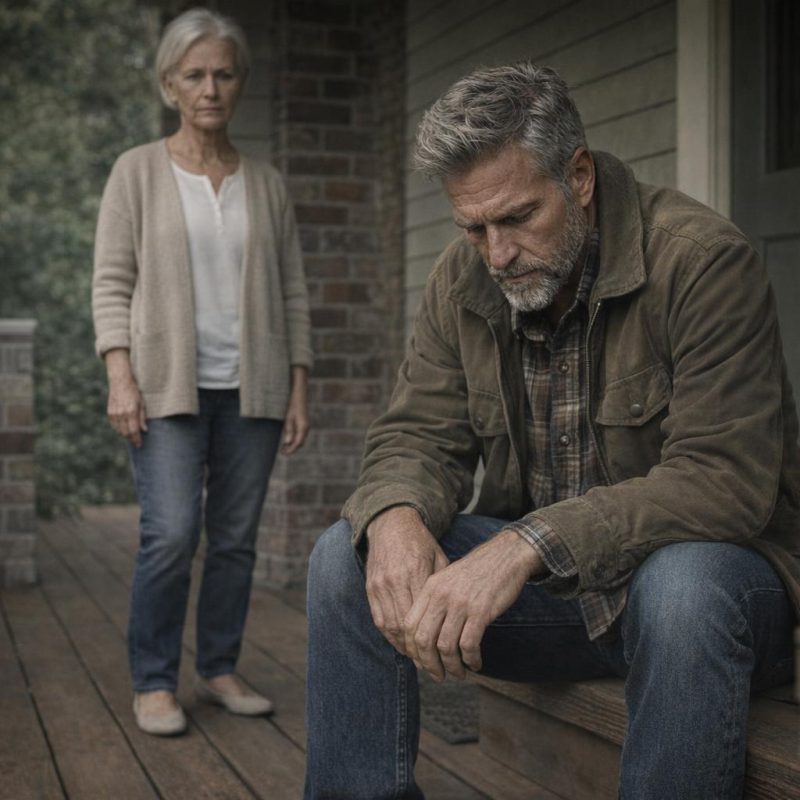 Image by RM AI
Running From Shame
"The name change," I said, and it wasn't quite a question. Grant nodded slowly. "I changed it legally about two years after I left that town," he said. "I thought if I could just start somewhere fresh, without people immediately connecting me to the scandal, maybe I could build a normal life again." He looked exhausted just talking about it. "But it didn't work that way. I'd settle somewhere, start making friends, and then someone from my past would recognize me or the story would surface somehow." His voice was barely above a whisper now. "The whispers would start all over again. The looks. The questions. So I'd move again." I wanted to ask why he hadn't just told me all this from the beginning, but I already knew the answer. Who wants to lead with that story on a first date? "The thing about my estranged brother—that was easier than explaining all of this," he admitted. "I'm sorry I lied to you. I should have been honest from the start." Part of me genuinely ached for what he was describing. The shame of it, the endless running, never being able to escape your past. But another part of me kept circling back to the same question: was this really the whole truth, or just another version designed to make me sympathize?
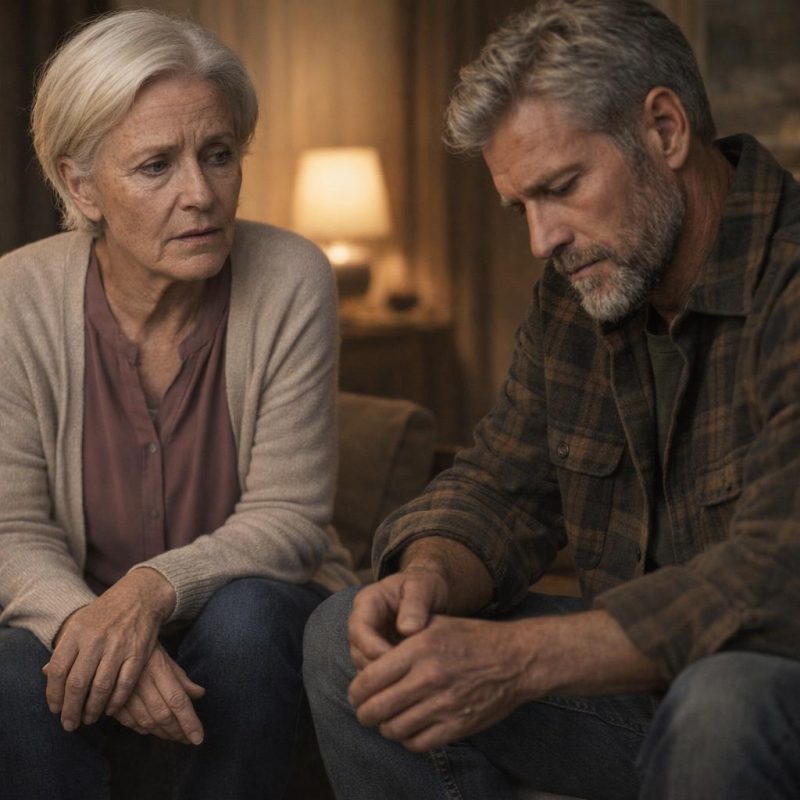 Image by RM AI
The Bulletin Board
I was at the volunteer center on a Tuesday afternoon, helping Martha sort through boxes of old donation records that had been piling up in the back storage room. Honestly, it was mindless work—exactly what I needed to stop thinking about Grant and Harriet and everything I didn't know how to process. We were organizing files by year, deciding what could finally be shredded and what needed to be kept for tax purposes. Behind one stack of boxes, I noticed a dusty bulletin board covered with yellowed newspaper clippings. "What's all this?" I asked Martha. She glanced over. "Oh, that's ancient history. Articles about fundraising events from way back. Nobody's touched that board in probably fifteen years." I started looking at the clippings more closely—photos of charity auctions, community dinners, volunteer appreciation events. Then one photograph stopped me cold. The image showed a group of people at what looked like a community fundraiser, all dressed up and smiling for the camera. And there, on the left side of the photo, was a face I recognized immediately. My heart started pounding so hard I could hear it in my ears. The caption beneath the photograph read: "Local residents gather for annual charity gala. Pictured: Daniel Mercer Jr., son of prominent financial advisor Daniel Mercer Sr., with community volunteers." The face in the photograph was unmistakably Grant, but the caption identified him by an entirely different name connected to a story I recognized all too well.
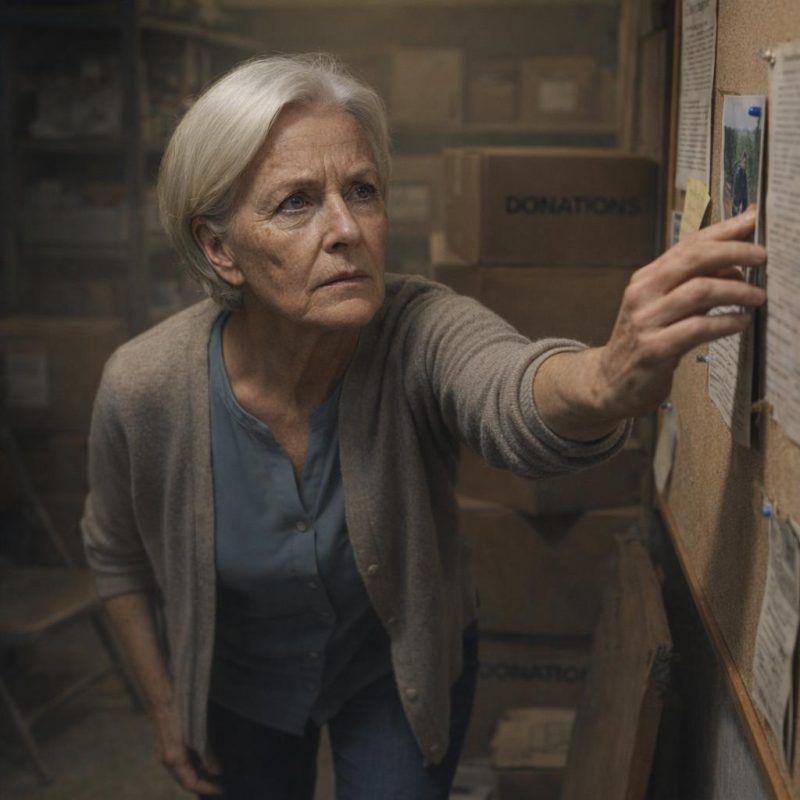 Image by RM AI
The Son
I pulled the clipping off the board carefully, my hands shaking. Martha was saying something about needing to run an errand, but I barely heard her. I read the article once, then again, then a third time, each word sinking in deeper. The piece was from about twenty years ago, a feel-good story about local fundraising efforts. It mentioned Daniel Mercer Sr. as a "respected financial advisor" who had organized the event. His son, Daniel Jr., had helped coordinate volunteers. The timeline matched exactly when Grant said he'd lived in that area. The photograph didn't lie—that was Grant's face, maybe fifteen years younger, but absolutely him. Daniel Mercer. The same name Harriet had mentioned. The fraudulent financial advisor who had destroyed those women's lives. Grant wasn't just someone who'd been caught up in Daniel Mercer's scheme. Grant WAS Daniel Mercer. Or rather, he was Daniel Mercer's son. The actual perpetrator of the fraud had been his father. Everything I thought I understood about Grant's story collapsed and reformed into something entirely different as I realized he hadn't been an unwitting victim of the scandal—he had been its legacy.
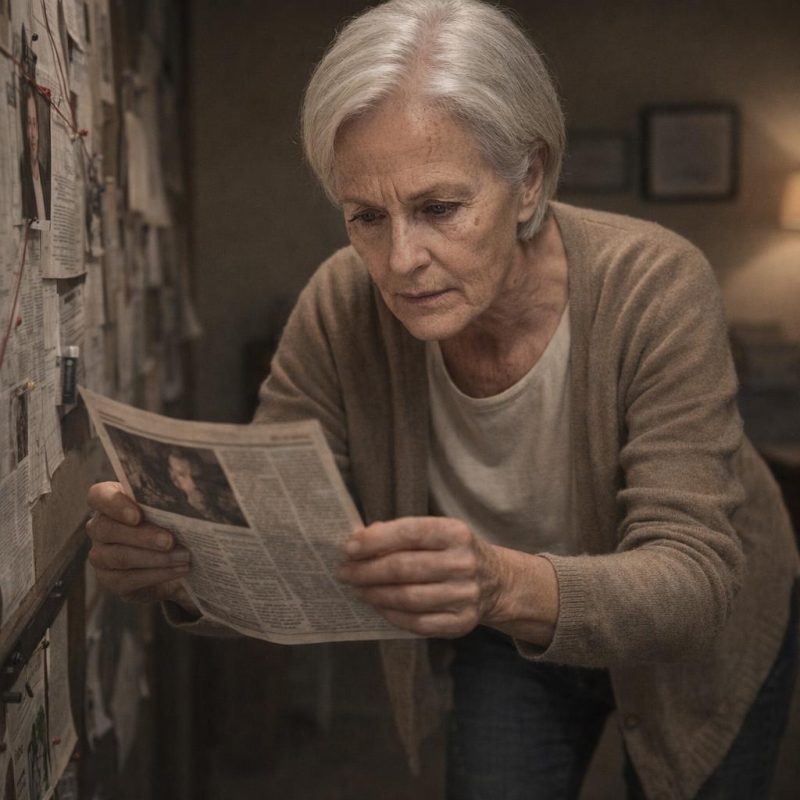 Image by RM AI
The Full Confession
I showed up at Grant's apartment that night with the newspaper clipping in my hand. When he opened the door and saw my face, saw what I was holding, something in him just broke. "Come in," he said quietly, and this time I did. We sat at his small kitchen table, the clipping between us like evidence at a trial. "Why didn't you tell me you were Daniel Mercer's son?" I asked, my voice harder than I'd intended. Grant closed his eyes. "Because I'm ashamed," he said simply. "Because that's the truth I've been running from my whole adult life." He opened his eyes and looked at me directly. "My father wasn't just incompetent or foolish. He was deliberately predatory. He targeted lonely older women specifically because they were unlikely to report their losses out of embarrassment." My skin crawled hearing it said so plainly. "He knew exactly what he was doing," Grant continued, his voice thick with shame. "He'd identify women who were isolated, vulnerable, who had modest savings from insurance payouts or divorce settlements. He'd befriend them, gain their trust, then convince them to invest in developments that didn't exist." I stared at him, horrified. He said his father had specifically targeted lonely older women because they were unlikely to report their losses out of embarrassment, and the calculated cruelty of that strategy made my skin crawl.
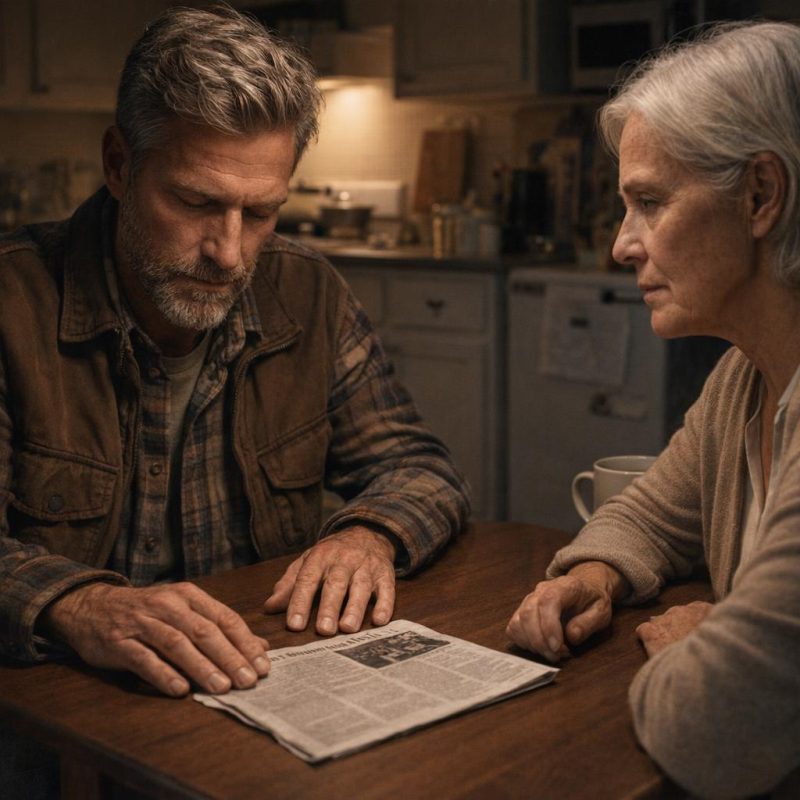 Image by RM AI
The Documents
"I didn't know the full extent of what he'd done while he was alive," Grant said, his voice barely steady. "I knew there had been problems, that some investments had gone bad. But I believed his version—that he'd made mistakes, trusted the wrong partners, that it was complicated." He got up and paced to the window, his back to me. "After he died, I had to go through his estate. That's when I found the documents." His shoulders tensed. "He kept records, detailed notes about how he identified targets. Widows, divorcees, women living alone with modest savings. He had a system." I felt sick just listening. "There were files on each woman," Grant continued. "Notes about their vulnerabilities, their loneliness, what approach would work best. It was like reading a predator's hunting journal." He turned back to face me, and I could see tears in his eyes. "I threw up. Actually got physically sick reading what my father had done, seeing it all laid out so methodically." His voice broke. "The man I'd known my whole life, who taught me to ride a bike and helped me with homework—he was a monster who deliberately destroyed vulnerable people's lives." I watched him relive that discovery, and I couldn't doubt the genuineness of his anguish. He said reading those papers made him physically sick, and I believed him because I could see the memory of that discovery still haunted him.
 Image by RM AI
The Inheritance
Grant sat back down at the table, his hands clasped tightly together. "After I found those documents, I couldn't keep the inheritance," he said. "My father left me everything—his house, his savings, investments he'd made with money he'd stolen from those women." He looked at me with an intensity I hadn't seen before. "So I decided to use it all to repay them. Every penny." I stared at him, not quite understanding. "For the past nine years, I've been tracking down the women my father defrauded," he continued. "I found as many as I could through public records, old addresses, whatever information I could piece together. And I've been sending them money anonymously." My mouth fell open. "Some got checks in the mail with no return address. Others found deposits in their accounts they couldn't explain. I never told them who I was or why they were receiving the money. I didn't want their gratitude or forgiveness. I just wanted them to have back what my father stole." His voice was steady now, certain. "I've spent nearly every dollar of that inheritance making restitution. That's why I've moved so much, why I've been so secretive. I was tracking people down, verifying addresses, making sure the money reached the right women." I stared at him in stunned silence as I realized the man I'd suspected of being a con artist had actually spent years trying to undo damage he never caused.
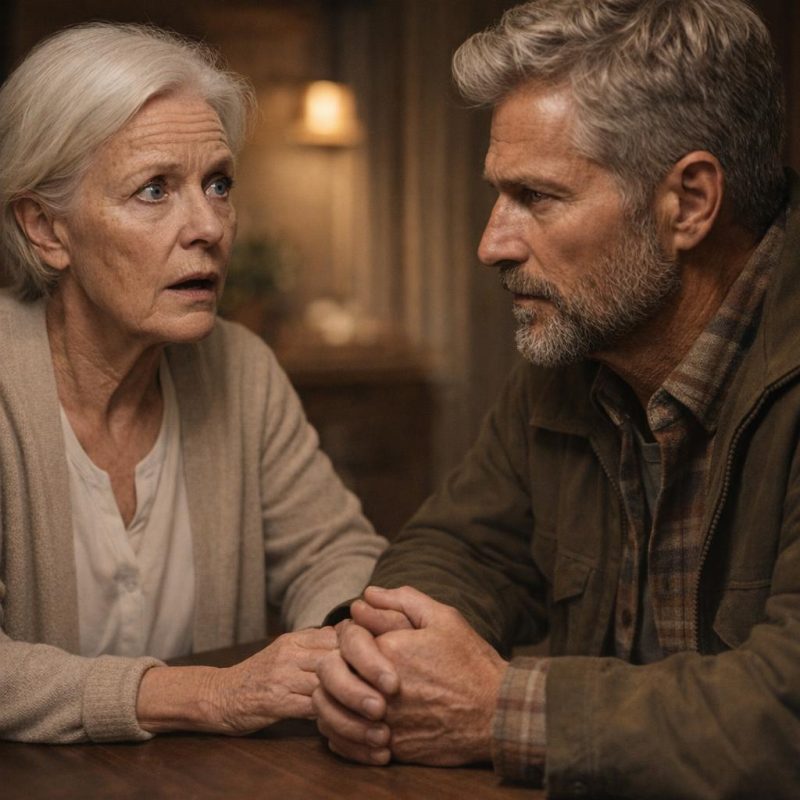 Image by RM AI
The Constant Running
Grant's hands trembled slightly as he continued. "I kept moving because I couldn't stand being Daniel Mercer's son," he said. "Not because I was running from the law or hiding from debts. I was running from the shame." He explained how he'd settle somewhere, start volunteering, make friends, and then someone would inevitably ask about his family or his past. "Every time I had to lie or deflect, it felt like I was becoming him," he said. "So I'd leave and try again somewhere else with a different name, thinking maybe this time I could just be a normal person doing normal things." He'd been Grant in one town, Michael in another, David somewhere else. The volunteering was always real, he insisted—his genuine attempt to do something good regardless of what name he used. "I never wanted credit for the restitution payments," he said. "I just wanted those women to have their money back without having to think about the Mercer family ever again." His voice cracked slightly. "But the shame followed me everywhere, no matter what I called myself." I watched exhaustion settle over his features like a physical weight. The loneliness in his eyes as he described years of carrying a burden that wasn't technically his own made me finally understand why someone might tell so many half-truths just to feel normal for a while.
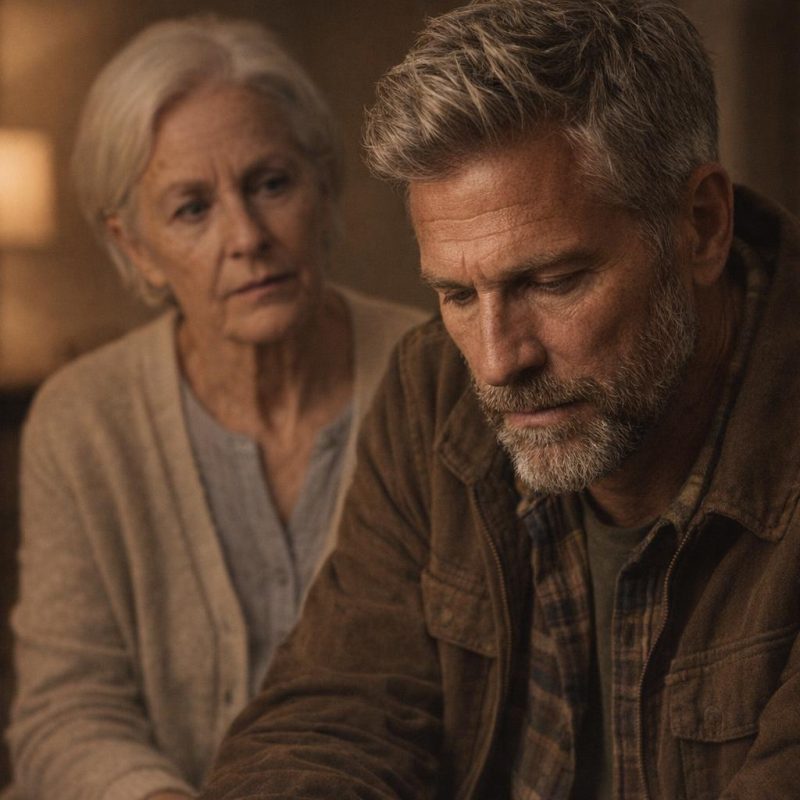 Image by RM AI
Unconvinced
I met Harriet at the coffee shop two days later, needing to share what I'd learned. I explained everything—Grant's father's fraud, the inheritance, the anonymous restitution payments over nearly a decade. I watched her face as I spoke, hoping to see understanding dawn the way it had for me. Instead, her expression remained carefully neutral, almost pitying. "Lorraine, I've heard stories like this before," she said gently when I finished. "Men who have explanations for everything. Beautiful, compelling explanations that make you want to believe them." She reminded me that I was only hearing Grant's version of events, with no independent verification. "Manipulative people always have reasons," she continued. "They're never just the villain in their own story. They're always the misunderstood hero, the victim of circumstances, the person trying to make things right." I felt my certainty waver slightly. "I've seen too many women at the shelter believe men exactly like this," Harriet said, her voice kind but firm. "They had documents too. They had tears and explanations and stories that made perfect sense." She reached across the table and squeezed my hand. "I'm not saying he's definitely lying. I'm saying you can't know for sure based only on what he's told you." Her certainty made me wonder if I was being naive all over again.
 Image by RM AI
The Gathering Storm
Harriet's expression shifted then, becoming more serious. "I need to tell you something," she said. "I haven't just been listening to your concerns these past weeks. I've been making calls." My stomach dropped. She explained that she'd managed to contact several women from Grant's previous town—women who'd known him as Michael, who'd been part of the same volunteer community. "They're coming here," Harriet said. "To the fundraiser next weekend. They want to confront him publicly about what happened, about why he disappeared without explanation." Panic rose in my chest. "Harriet, no. Please. Just give me time to verify his story first. If he really made those payments, there has to be proof—" She shook her head firmly. "These women have waited years for answers. They've lived with confusion and suspicion and half-truths. They deserve to confront him face to face." I begged her to wait, to postpone, to give me just a few more days to investigate. "I can't stop them even if I wanted to," Harriet said. "They're already planning to drive up. They've taken time off work. They need this closure." I felt trapped between two impossible positions—protecting Grant from public humiliation or respecting these women's right to demand answers. The fundraiser had become an approaching deadline I was powerless to prevent, and these women had waited long enough for answers and wouldn't be stopped.
 Image by RM AI
Before the Storm
The days before the fundraiser crawled by with agonizing slowness. I kept picking up my phone to warn Grant, then setting it down again. Part of me wanted to protect him from what was coming—the public confrontation, the humiliation, the accusations in front of people he'd worked alongside for months. But another part of me wondered if this was exactly what needed to happen. If his story was true, wouldn't he be able to prove it? Wouldn't the truth hold up under scrutiny? I told myself that a man who'd really spent years making restitution would have documentation, evidence, something concrete to show for his efforts. And if he didn't—well, then maybe Harriet was right about him all along. I decided to let events unfold without my intervention, to see what would emerge when Grant was finally forced to answer for his past publicly. The morning of the fundraiser arrived gray and heavy. I got there early, watching volunteers arrange tables and hang decorations, everyone cheerful and unaware of what was about to happen. Then Grant arrived, carrying boxes of supplies, his movements calm and unhurried. He smiled at people, made small talk, helped set up the donation table. I watched him interact with the same gentle patience I'd come to recognize, and my heart ached knowing everything was about to collapse around him.
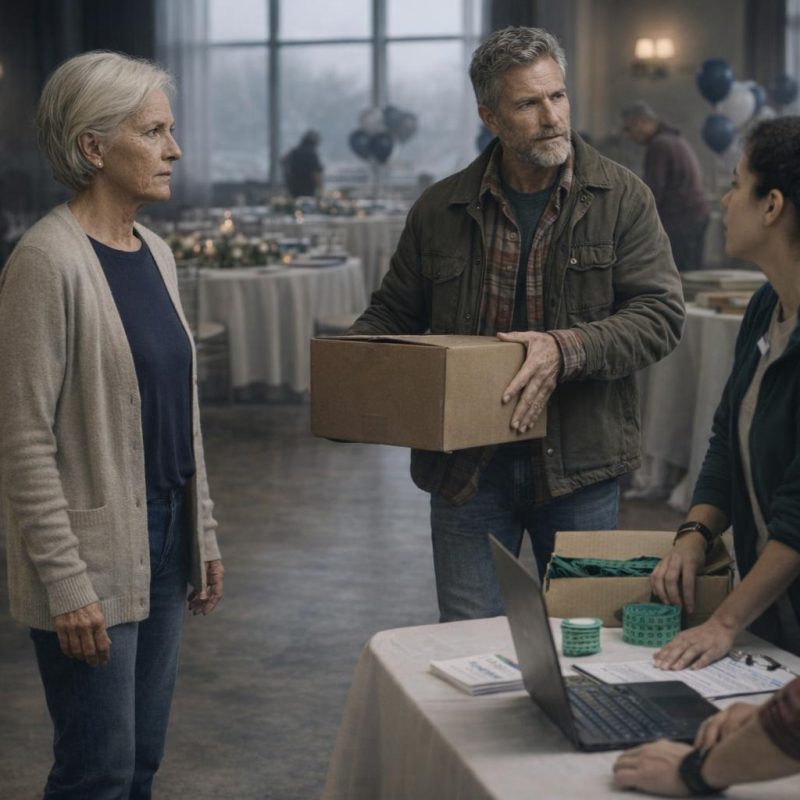 Image by RM AI
The Confrontation
The fundraiser had been running smoothly for about an hour when I saw them enter. Four women, maybe five, walking in together with Harriet leading the way. They weren't dressed for a casual community event—they looked purposeful, determined. I watched Grant notice them from across the room. His face went completely pale. The box he'd been holding slipped slightly in his hands before he caught it. I saw recognition flash across his features, followed immediately by something that looked like resignation, like he'd always known this moment would eventually come. The women moved through the crowd with Harriet, and conversations began dying down as people sensed something significant happening. One of the women—tall, probably in her sixties, with steel-gray hair—stepped forward. The room grew quieter. She stopped a few feet from Grant, and I could see her hands shaking slightly despite her determined expression. "I think we need to talk, Michael," she said, her voice carrying across the suddenly silent space. "Or should I call you Grant? Or maybe we should use your real name—Daniel Mercer's son." The words hung in the air like an accusation and a question combined. I watched Grant's face as every person in that room turned to stare at him, suddenly wondering why Daniel Mercer's son thought he could just disappear and start over like nothing happened.
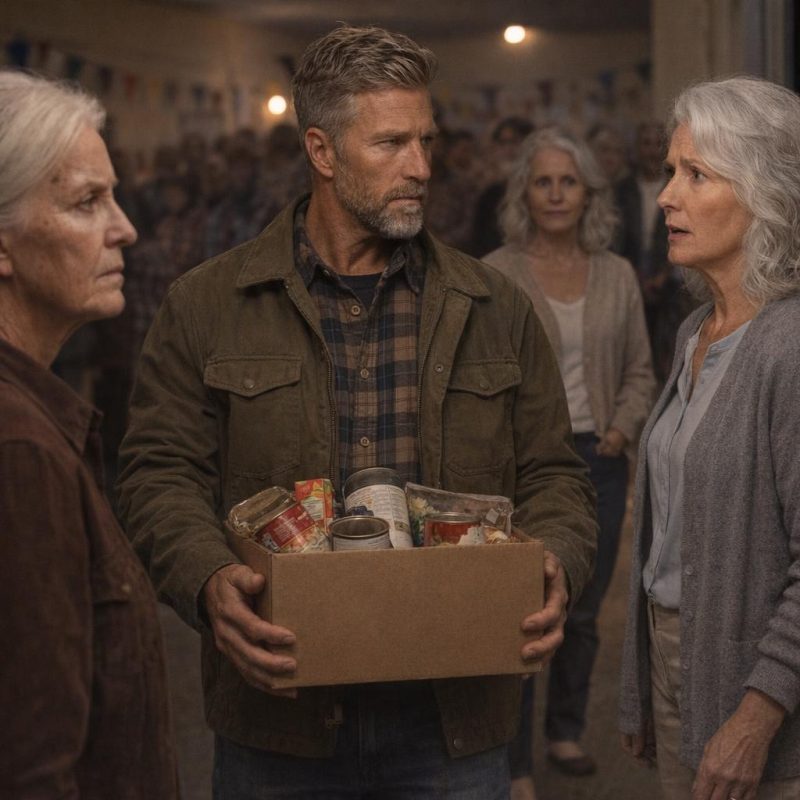 Image by RM AI
Accusations
The women didn't wait for Grant to respond. They took turns, each one stepping forward with her own story. "Your father convinced me to invest my divorce settlement," one woman said, her voice shaking. "Twenty-three thousand dollars. Gone." Another described losing her mother's life insurance payout. A third talked about the college fund she'd been building for her grandchildren, wiped out in a scheme she'd been too embarrassed to report. They spoke about broken trust, about feeling stupid, about years of shame and silence. One woman's voice cracked as she described how the financial loss had forced her to keep working past retirement age. "And then you just disappeared," another said. "No explanation, no goodbye. We thought maybe you'd help us understand what happened, but you just vanished like your father did." Through it all, Grant stood completely still. He didn't interrupt, didn't defend himself, didn't try to explain. His face showed pain with each accusation, but no anger, no defensiveness. He simply absorbed every word like he believed he deserved to hear it. I stood frozen nearby, barely breathing, watching this man I'd come to care about face the consequences of his father's actions. The accusations continued for what felt like hours but was probably only minutes. When the last woman finished speaking, silence fell over the room. Then Grant reached down into the bag at his feet and pulled out a worn manila folder.
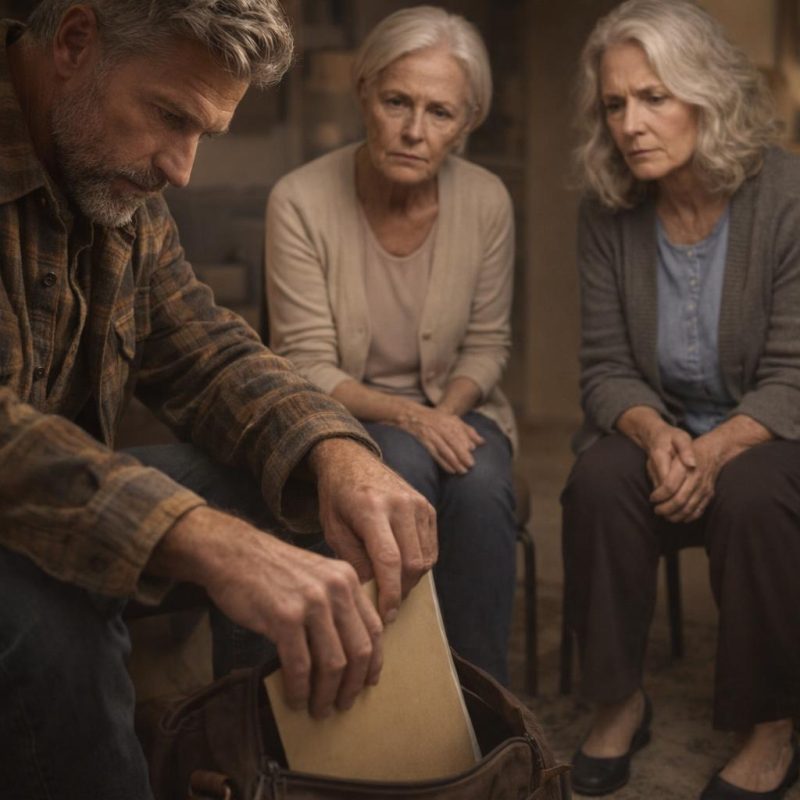 Image by RM AI
The Folder
Grant's hands were steady as he opened the folder. He didn't say anything at first, just began laying papers out on the nearest table. Canceled checks. Bank statements. Wire transfer receipts. Letters. He organized them methodically, without drama or commentary, like he was simply presenting facts. I moved closer, trying to see what he was showing them. The documents covered years—dates ranging back nearly a decade. Each check or transfer was made out to a specific name, specific amounts. Some were for a few thousand dollars, others for much more. "I received these years ago," one of the women said slowly, picking up a copy of a check. "I never knew where they came from. There was no return address, no explanation." Another woman leaned forward, her eyes scanning the bank records. "I got money too," she whispered. "Three separate deposits over two years. I thought it was some kind of mistake." One by one, the accusers fell silent as they recognized their own names on the documents Grant had brought. I watched understanding spread across their faces—the mysterious payments they'd received years ago, the unexplained deposits they'd questioned and eventually accepted, had all come from the same source. They were suddenly realizing where that mysterious money had come from.
 Image by RM AI
The Evidence
Grant finally spoke, his voice quiet but clear. "After my father died, I found out what he'd done," he said. "He left me everything—his house, his investments, his savings. All of it built on money he'd stolen from you and others like you." He pointed to the inheritance documents in the folder. "I couldn't keep it. So I spent the last ten years tracking down everyone I could find." He explained how he'd used public records, old addresses, whatever information he could piece together. "I liquidated everything gradually," he continued. "The house, the investments, the accounts. I sent payments anonymously because I didn't want your gratitude or forgiveness. I just wanted you to have back what was yours." He showed them the progression—how the payments had started small and increased as he sold off assets. "I never identified myself because I didn't want you to have to think about the Mercer family ever again," he said. "I just wanted to make it right, even though I knew I never really could." The women stood in stunned silence, some with tears streaming down their faces. Others sat down heavily, as if their legs wouldn't hold them anymore. I watched Harriet's face as she processed what she was seeing, her certainty visibly shaken. The anger in the room transformed into something I couldn't quite name as people realized they had been confronting the man who had been secretly trying to make things right all along.
 Image by RM AI
Silence
The silence that settled over that room wasn't the awkward kind you get when someone tells a bad joke. It was profound, the kind that makes you aware of your own breathing. I watched people stare at the documents spread across the table, then at Grant, then back at the papers, as if the information might rearrange itself into something that made sense with their previous understanding. Nobody seemed to know what to do with their hands. A few women who'd been crying earlier now stood frozen, tears still wet on their cheeks but their expressions completely transformed. Grant didn't say anything more. He just stood there quietly, not demanding acknowledgment or apology, not even looking particularly vindicated. He looked tired, honestly, like someone who'd been carrying something heavy for too long and had finally set it down. I found myself watching Harriet specifically, the way her face cycled through what looked like disbelief, then confusion, then something that resembled grief. She picked up one document, set it down, picked up another. Her certainty—that rock-solid conviction she'd arrived with—was crumbling right there in front of everyone. The confrontation she'd orchestrated had become something else entirely, and I could see her struggling to reconcile the man she'd come to expose with the evidence of what he'd actually been doing all these years. Harriet stared at the documents spread across the table, and I watched her face cycle through disbelief, confusion, and something that looked almost like grief for the injustice of her own assumptions.
 Image by RM AI
Complicated Trust
In the days after the fundraiser, I noticed something interesting about how people processed what they'd learned. Some of the community members seemed ready to embrace Grant's redemption story completely, treating him with a kind of reverent sympathy whenever they saw him. Others remained visibly uncomfortable, and honestly, I understood why. Money doesn't undo emotional damage, you know? It doesn't erase the years of confusion or the embarrassment of having been fooled, even if the person who fooled you is dead. One of the women—I won't say which one—pulled me aside at the grocery store and told me something that stuck with me. She said even if the payments were real, even if Grant's intentions were pure, she still felt like she'd been played. By the father if not the son, but the feeling was the same. Grant seemed to accept the mixed reactions without demanding more. He didn't go around seeking forgiveness or trying to convince the skeptics. Harriet had become subdued, almost withdrawn, and I suspected she was processing her own misjudgment as much as anything else. I found myself thinking about how we expect forgiveness to be simple—you apologize, you make amends, everything's resolved. But real life is messier than that. One victim explained privately that proof doesn't equal resolution, and years of confusion and embarrassment left lasting wounds that no check could heal.
 Image by RM AI
Seeing Clearly
It all clicked into place for me one evening when Grant and I were finally alone, really alone, without the weight of secrets between us. I suddenly understood that every inconsistency I'd noticed, every half-truth that had made me suspicious, hadn't been evidence of a criminal life at all. They were signs of someone exhausted from carrying shame that technically belonged to another person. The Arizona-Nevada confusion? That was just fatigue, not deliberate deception. The name changes were escape attempts, not criminal evasion. Even that staged photograph probably came from some desperate attempt to create a past that didn't hurt to remember. Every single thing that had set off alarm bells in my head traced back to the unbearable weight of inherited guilt. I thought about how lonely his secret mission must have been—spending a decade tracking down victims, liquidating assets, sending anonymous payments, all while knowing he could never explain himself without forcing people to relive their trauma. When I told him I finally saw him clearly, that I understood who he actually was beneath all the protective layers, his face did something I'd never seen before. The relief that washed over him was so profound, so visible, that I realized something that broke my heart a little. When I told him I finally saw him clearly, he looked at me with such relief that I realized he'd been waiting years for someone to understand.
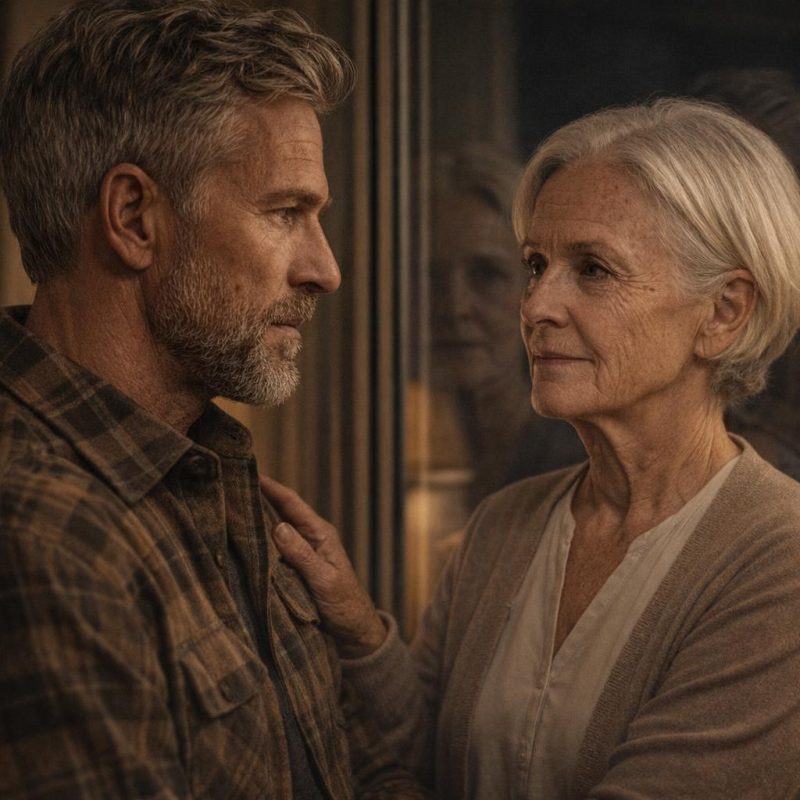 Image by RM AI
The Question of Inheritance
I'd spent so much time after my divorce worrying about the wrong things. I'd been afraid of getting my heart broken again, of being lied to, of discovering too late that I'd misjudged someone's character. But sitting with Grant after everything had come out, I realized the real challenge of finding love at sixty-one wasn't any of those things. It was deciding whether someone deserves to be judged forever by the worst thing connected to their name. I thought about my own divorce, how I'd worried people would judge me for it, reduce me to that one failure. Grant represented a bigger question—can people escape family legacy? Can you be seen for who you are rather than whose child you are? He asked me directly one evening, his voice quiet and vulnerable in a way that showed how much he was risking. Could I imagine a future with someone still carrying his father's shadow? I thought about it for a moment, really thought about it, because he deserved an honest answer. Then I took his hand and looked at him—not at his history, not at his father's crimes, but at him. I told him we all carry shadows from our pasts, from our families, from our mistakes and our losses. When Grant asked if I could imagine a future with someone still carrying his father's shadow, I took his hand and told him we all carry shadows—the question is what we do in the light.
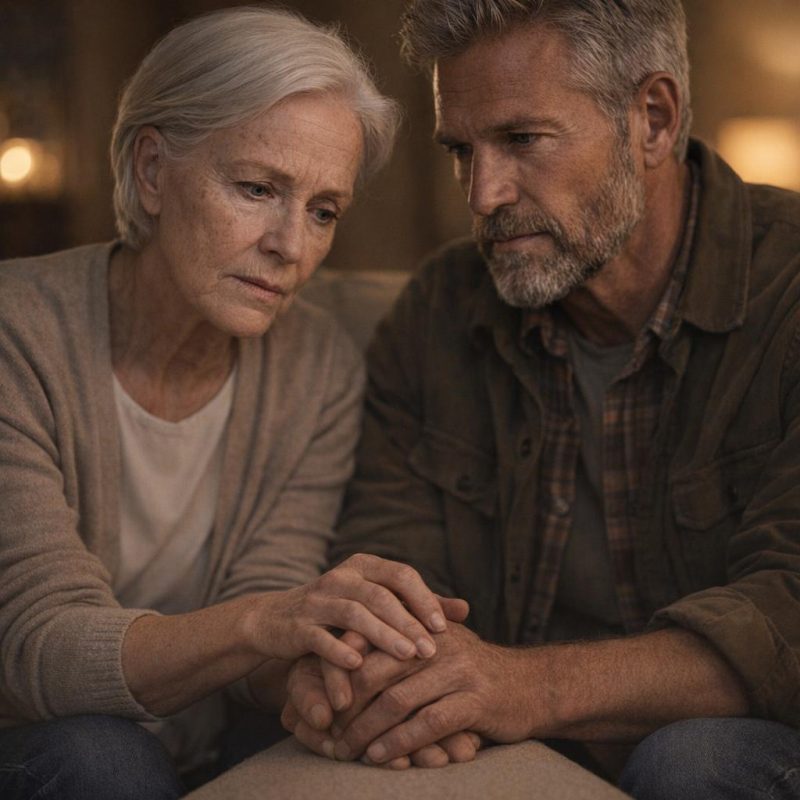 Image by RM AI
KEEP ON READING

20 Powerful Ancient Egyptian Gods That Were Worshipped
Unique Religious Figures in Ancient Egypt. While most people are…
By Cathy Liu Nov 27, 2024
The 10 Scariest Dinosaurs From The Mesozoic Era & The…
The Largest Creatures To Roam The Earth. It can be…
By Cathy Liu Nov 28, 2024
The 20 Most Stunning Ancient Greek Landmarks
Ancient Greek Sites To Witness With Your Own Eyes. For…
By Cathy Liu Dec 2, 2024
10 Historical Villains Who Weren't THAT Bad
Sometimes people end up getting a worse reputation than they…
By Robbie Woods Dec 3, 2024
One Tiny Mistake Exposed A $3 Billion Heist
While still in college, Jimmy Zhong discovered a loophole that…
By Robbie Woods Dec 3, 2024
30 Lost Treasures That Vanished From History
Buried treasure, missing artefacts, legends of ancient gold in them…
By Robbie Woods Dec 3, 2024