

I Won $45 Million in the Lottery. My Estranged Kids Showed Up With a Lawyer—So I Gave Them a Dinner They'd Never Forget
I Won $45 Million in the Lottery. My Estranged Kids Showed Up With a Lawyer—So I Gave Them a Dinner They'd Never Forget
The Winning Ticket
I was standing in my kitchen making tea when I checked the ticket. Just a random Tuesday evening, nothing special. I'd bought it three weeks earlier at the convenience store on my way home from the library where I work—or worked, I suppose I should say now. Five numbers and the Powerball. I checked them twice, then three more times on my phone, hands shaking so badly I nearly dropped my reading glasses into the sink. Forty-five million dollars. The number didn't even feel real. It was like reading words in a foreign language I didn't quite speak. I sat down at my little kitchen table, the one I'd bought at a yard sale fifteen years ago, and just stared at that slip of paper. My first thought wasn't excitement, weirdly enough. It was more like vertigo, like the floor had shifted beneath me. I wanted to call someone, to share this impossible moment, but my contact list felt like a cemetery of dead connections. My kids hadn't called in months. My ex-husband was remarried in Phoenix. Margaret next door would be happy for me, but this felt too big, too vulnerable to share just yet. As I tucked the ticket into my nightstand drawer, I wondered who I would even tell—and realized the answer was no one.
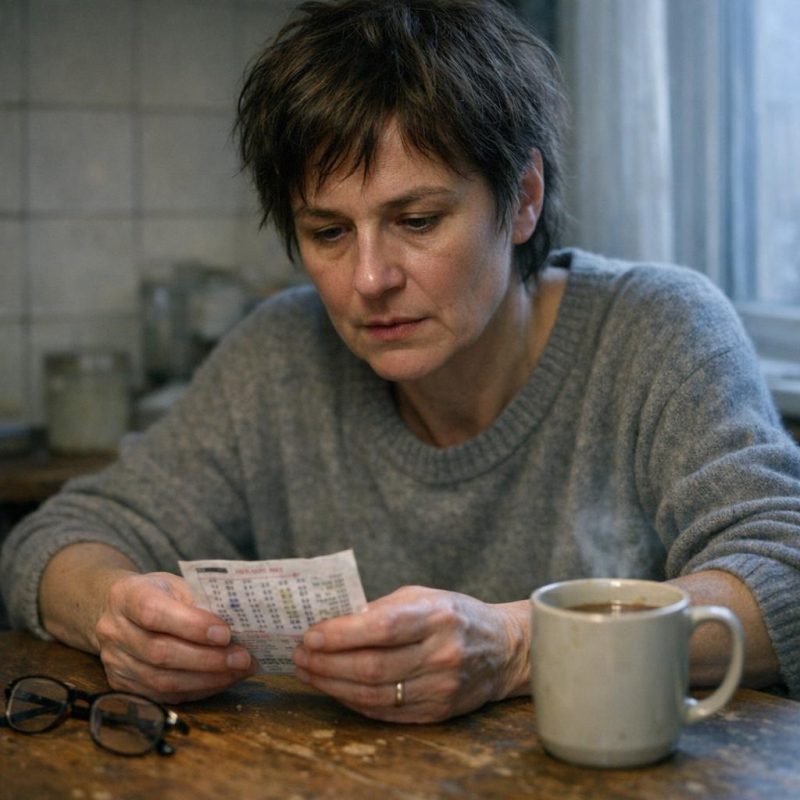 Image by RM AI
The Quiet Life
The quiet had become normal over the past decade, the kind of silence you stop noticing until something forces you to hear it. I'd wake up, make coffee for one, drive to the library, reshelve books in the order they belonged. Tuesdays and Thursdays, Margaret would knock on my door around seven with leftovers or some excuse about needing to borrow sugar she'd return the next day. She was the only person who seemed to remember I existed. We'd sit at my kitchen table and talk about her grandchildren, the neighborhood gossip, anything that filled the空間. I never told her how much those visits meant. My own children had drifted away years ago, after the divorce, after I couldn't afford to keep helping them financially. Sarah stopped calling first. Then Brian. Kevin held out the longest, but even his monthly check-ins had faded to birthday texts, then nothing. I'd tried, God knows I'd tried. Invitations to holidays they were 'too busy' for. Phone calls that went to voicemail. Eventually, you stop reaching out because the rejection hurts worse than the loneliness. Margaret asked me if I'd heard from my kids for my birthday last month, and I lied and said yes.
 Image by RM AI
The Leak
The newspaper article appeared on Friday morning. I don't know how they got my name—lottery winners are supposed to have some privacy option in our state, but apparently, I'd missed signing some form. There it was, front page of the local section: 'Local Librarian Wins $45 Million Jackpot.' They'd used my staff photo from the library website, the one where I'm smiling awkwardly in front of the biography section. My phone, which typically sat silent for days except for spam calls, started buzzing before I'd finished my morning coffee. First, a text from Sarah: 'Mom! Just saw the news! Call me ASAP!' Then Brian, then Kevin. All within twenty minutes of each other, like they'd coordinated it. Messages piled up, each one breathless with excitement, peppered with exclamation points and heart emojis they'd never used before. I sat there staring at my phone, watching the notifications multiply. Cousins I hadn't spoken to in years. High school friends who'd never responded to my Christmas cards. Everyone suddenly remembered my number. I read through Sarah's messages carefully, noting the progression from 'OMG Mom!' to 'We need to talk' to 'I've been so worried about you.' Sarah's voicemail said she'd been 'worried sick' about me—funny, since she hadn't returned my call six months ago when I had the flu.
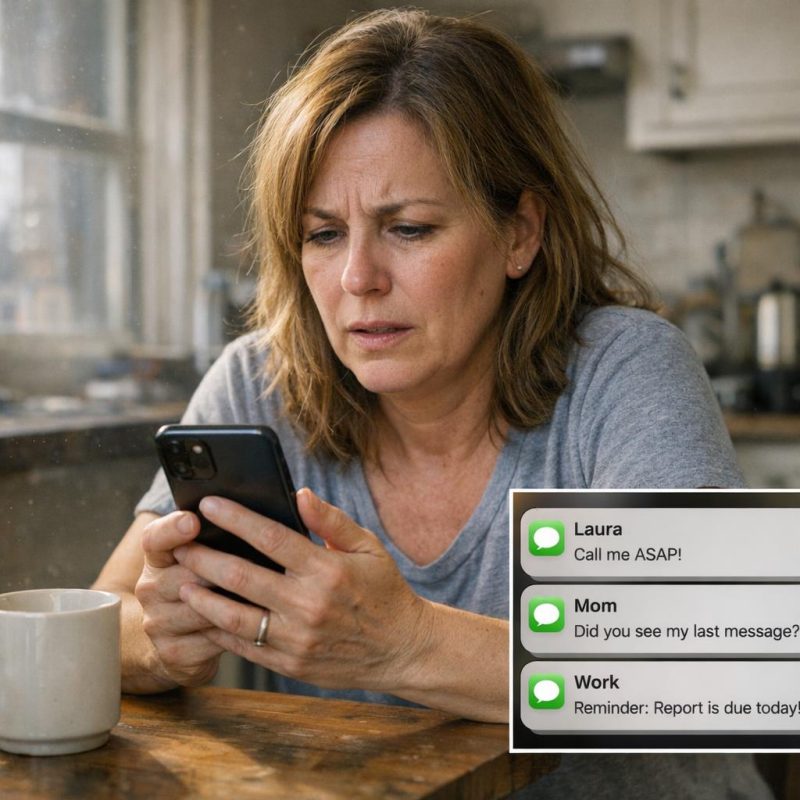 Image by RM AI
The First Call
Sarah called again that afternoon, and this time I answered. 'Mom! Oh my God, I can't believe it!' Her voice had that bright, performative quality I remembered from when she wanted something as a teenager. We made small talk for a few minutes, navigating the awkwardness of two people who'd become strangers. She asked about my health, the weather, whether I was still working at the library—questions she could have asked any time in the past eight months but hadn't. I answered carefully, waiting to see where this would go. She laughed too loudly at things that weren't funny. She called me 'Mama,' which she hadn't done since college. The whole conversation felt like a script she was reading, hitting marks she thought I wanted to hear. Then she shifted gears, her voice dropping into something meant to sound sincere. 'We should really get together, you know? As a family. To celebrate this amazing thing that's happened to you.' I gripped my phone tighter, staring at the wall. The word 'family' hung there between us, suddenly weaponized. Before hanging up, Sarah said we should 'celebrate as a family'—a phrase she'd never used when I invited them to Thanksgiving.
 Image by RM AI
Brian's Excuses
Brian's call came the next morning, Sunday, which was notable because Brian never called on weekends. 'Hey, Mom. Look, I know I've been terrible about staying in touch.' His voice carried that sheepish quality he'd perfected as a kid after breaking something valuable. 'Life's just been crazy, you know? The business, the kids, everything.' I let him talk, listening to the excuses pile up like debris. He asked about the lottery, of course, trying to sound casual about it, like it was just another topic of conversation. Then he circled back to the business he'd started two years ago, the one he'd never quite explained to me. 'Things have been rough lately, economically speaking. You know how it is.' I did know. I knew that tone. It was the same one he'd used at twenty-five when he needed rent money, at thirty when his car died. The ask hadn't come yet, but it was there, hovering just beneath the surface of his words. 'But hey, family's what matters most, right? Always has been to me.' He said he'd always valued family above everything—which made me wonder why he'd skipped the last three Christmases.
 Image by RM AI
Kevin's Charm
Kevin texted instead of calling, which was very Kevin. A long, scrolling message that appeared on my phone Tuesday evening, each bubble popping up one after another. He wrote about memories I'd almost forgotten—the time we'd gone camping when he was eight, the birthday cake I'd made shaped like a dinosaur, how I'd taught him to ride a bike in the park. 'You were always there for us, Mom. You're honestly my inspiration.' He used words like 'blessed' and 'grateful,' the kind of language he'd picked up from self-help podcasts or motivational Instagram posts. He promised to visit soon, maybe next weekend if I was free. He said he'd been thinking about me constantly, feeling guilty about the distance between us. The message went on for paragraphs, each sentence carefully constructed to tug at something. I sat on my couch reading it over and over, trying to match this version of Kevin with the one who'd sent exactly three text messages in the past year, all of them under ten words. The nostalgia felt real, but so did the timing. I read the message three times, trying to remember the last time Kevin had called me anything other than 'Mom' in a hurried voicemail.
 Image by RM AI
The Dinner Invitation
I decided to invite them over on Wednesday afternoon. I'm still not entirely sure why I did it—maybe some part of me wanted to believe this could be real, that the money had somehow been the only barrier between us. Or maybe I needed to see it play out, to confirm what my gut was already telling me. I composed the message carefully: 'It would mean a lot to have you all here for dinner. Saturday at six?' Simple, warm, non-confrontational. I sent it to all three of them in a group text, which I'd never done before. The responses came fast. Sarah: 'YES! Can't wait!' Brian: 'Wouldn't miss it, Mom.' Kevin: 'This is going to be amazing. Love you.' I stared at those replies, feeling something twist in my chest. Part hope, part dread, all confusion. I started planning the meal almost immediately—pot roast, the kind I used to make when they were kids. I told myself I was giving them a chance to prove me wrong, that maybe I was being cynical and jaded. That maybe they really did want their mother back. As I sent the invitation, I couldn't tell if I was hoping for reconciliation or testing a theory I didn't want to believe.
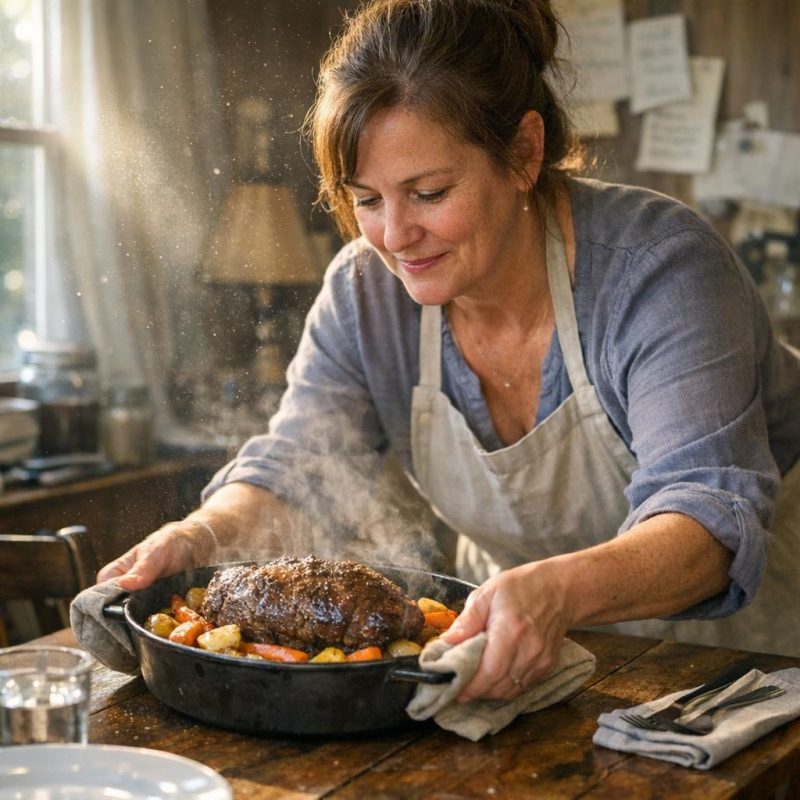 Image by RM AI
The Lawyer Mentioned
Sarah called Thursday evening with a question that made my blood run cold. 'Hey Mom, so I was thinking—this is such a big moment for you, and there's a lot to think about financially. My friend knows this really good lawyer, Mr. Henderson, who specializes in helping people who come into money suddenly. Would it be okay if I brought him to dinner? Just so he can give you some advice?' Her tone was so casual, like she was asking to bring a bottle of wine. I stood in my kitchen, phone pressed to my ear, processing what I'd just heard. A lawyer. To a family dinner. The first family dinner in years, and she wanted to bring a lawyer. 'Why would we need a lawyer at a family dinner?' I asked, keeping my voice level. Sarah laughed, this light, dismissive sound. 'Oh Mom, I'm just being practical! You need to protect yourself, make sure you're making smart decisions. Trust me, it'll be helpful.' She kept talking, reassuring me, but I'd stopped listening. The pieces were arranging themselves into a picture I didn't want to see. I asked why we'd need a lawyer at a family dinner, and Sarah laughed it off as 'just being practical.'
 Image by RM AI
Margaret's Warning
Margaret showed up Friday morning with two bags of groceries—fresh herbs, good olive oil, things she knew I loved but rarely bought for myself anymore. 'For tomorrow's dinner,' she said, setting them on my counter. We made coffee, and she sat across from me at my small kitchen table, her hands wrapped around her mug. 'Linda, honey, I need to say something, and I hope you won't take it the wrong way.' Her voice was gentle but serious. She told me about a friend of hers, Ruth, who'd won a settlement years ago. Ruth's adult children had swooped in, full of concern and advice, bringing financial advisors and lawyers. Within eighteen months, Ruth was living in a studio apartment, and her kids had stopped calling. 'I'm not saying your children are like that,' Margaret said carefully. 'But when money comes into the picture, people change. Even good people.' I nodded, staring into my coffee. Part of me wanted to tell her about the lawyer Sarah planned to bring, about how orchestrated everything felt. But I couldn't say it out loud yet. She squeezed my hand and said, 'Just remember, honey, real love doesn't have a price tag.'
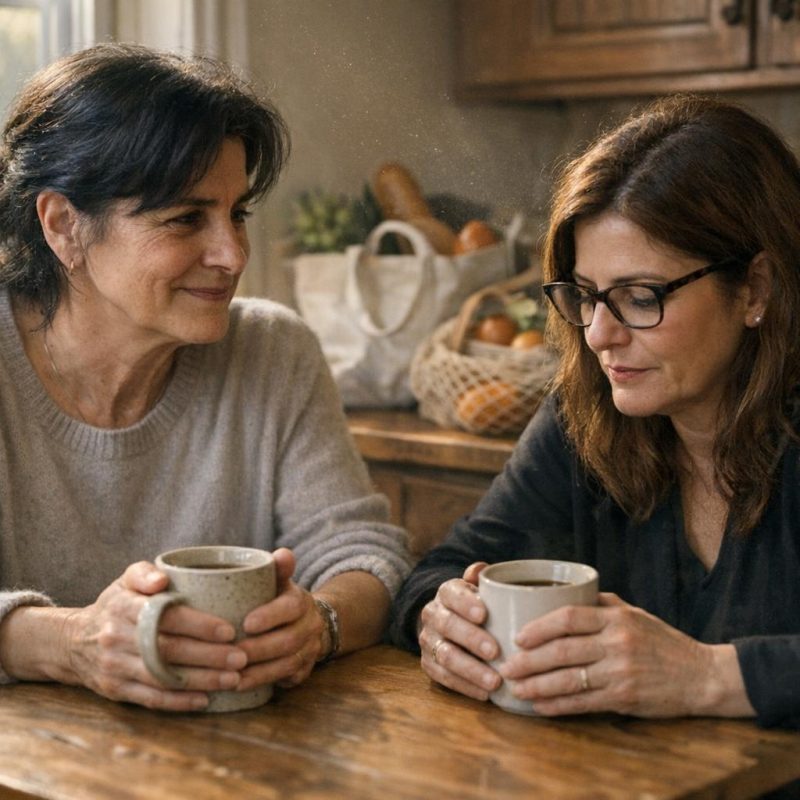 Image by RM AI
Shopping for Dinner
I spent Saturday afternoon at three different grocery stores, tracking down ingredients I hadn't bought in years. For Sarah, I found the fancy imported pasta she'd loved as a teenager, the kind I could never afford back then but splurged on for special occasions. For Brian, I picked up everything for my homemade lasagna—the recipe I used to make for his birthday every year until he stopped coming home for birthdays. Kevin's favorite had always been my pot roast with those little red potatoes, so I bought the best cut of beef I could find, even though it made me wince at the register. The bill came to over two hundred dollars, more than I usually spent on groceries in a month. I kept adding items to the cart—the good butter, fresh parmesan, the chocolate they all used to fight over. Standing in the checkout line, I watched the total climb and didn't care. Maybe it was foolish, spending money I'd just won on children who hadn't bothered to visit when I had nothing. But I needed to do this. I needed to give them one more chance to remember who I was, who we'd been. As I loaded the bags into my car, I wondered if they'd even remember these were the meals I used to make when they still came home.
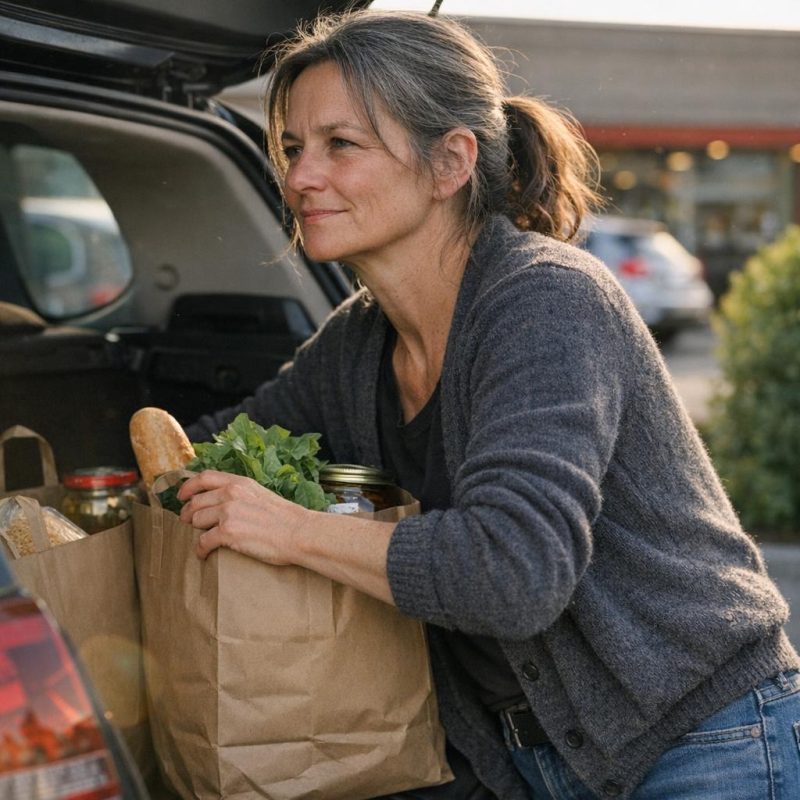 Image by RM AI
Sleepless Night
I didn't sleep that night. I lay in bed watching shadows move across my ceiling, my mind cycling through memories I usually kept locked away. Sarah at eight, insisting on helping me bake cookies even though she made a mess of the kitchen. Brian at ten, bringing me dandelions from the yard like they were roses. Kevin curled up next to me on the couch, small and warm, asking me to read just one more chapter. When had it changed? I couldn't point to a single moment. It had been gradual—missed calls that became shorter conversations, visits that stretched further apart, holidays they were 'too busy' to attend. I'd watched them build lives that didn't include me, and I'd told myself it was natural, that this was what happened when children grew up. But now, lying awake at three in the morning, I couldn't ignore the timing. Five years of silence, and suddenly, right after the lottery news broke, they all wanted to reconnect. They all had time for dinner. They all cared about my wellbeing enough to bring a lawyer. I kept asking myself the same question: if they really cared, why did it take 45 million dollars to bring them back?
 Image by RM AI
The Morning Of
Sunday morning, I cleaned my apartment like I was preparing for an inspection. I scrubbed the kitchen until my hands were raw, vacuumed the threadbare carpet in the living room, tried to fluff the couch cushions that had gone flat years ago. Standing back to look at the place, I saw it through their eyes—the peeling paint I'd gotten used to, the crack in the bathroom mirror I never fixed, the ancient refrigerator that hummed too loudly. Sarah lived in a renovated Victorian. Brian had just installed heated floors in his place. Kevin's apartment building had a doorman, for God's sake. And here I was, in a one-bedroom walk-up with windows that rattled when the wind blew. I set the table with my grandmother's china, the delicate plates with the blue flowers that I only used once or twice a year. They were beautiful, genuinely valuable—probably the only things I owned that were. I arranged them carefully, added the cloth napkins I'd ironed that morning, put out the crystal water glasses I'd gotten as a wedding present forty years ago. Everything looked lovely, formal, special. I set out my grandmother's china—the one thing of value I owned—and wondered if they'd even notice.
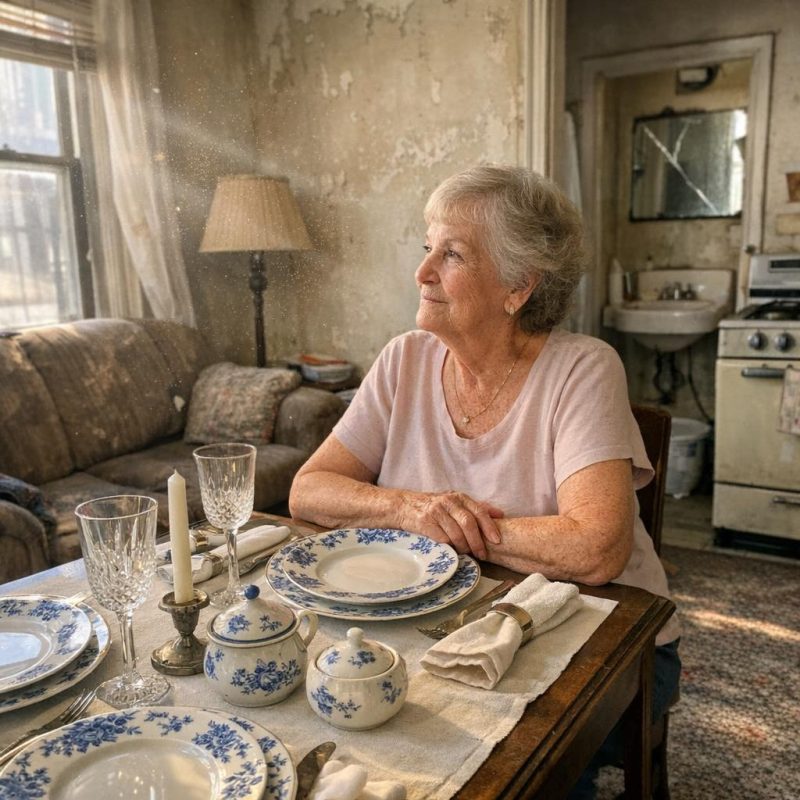 Image by RM AI
The First Arrival
Sarah knocked at four-thirty, half an hour before I'd told everyone to arrive. She swept in wearing a designer dress I recognized from a recent magazine, carrying a bottle of wine that probably cost more than my monthly electric bill. 'Mom!' she said brightly, kissing my cheek. 'Your apartment is so charming. So... cozy.' The way she said 'cozy,' I knew she meant small. Cramped. Poor. She walked through my living room like she was touring a museum, commenting on things—'Oh, you still have that old bookshelf!' and 'This lamp is so vintage!'—in a tone I couldn't quite read. I offered her wine, but she said she'd wait for the bottle she'd brought to breathe. She settled on my couch, crossing her legs, looking polished and perfect and completely out of place. We made awkward small talk about the weather, about traffic, about nothing real. I asked about her work, and she gave me vague answers. She asked if I was 'getting used to' the money, like it was a new pair of shoes I needed to break in. The whole time, she kept glancing at her phone. She hugged me tightly and whispered, 'We have so much to talk about, Mom,' and I felt a chill run down my spine.
 Image by RM AI
Brothers Unite
Brian and Kevin arrived exactly at five, together, which told me they'd coordinated. Brian held a enormous bouquet of lilies—my least favorite flower, though I'd mentioned that years ago and clearly he'd forgotten. Kevin carried a fancy box of chocolates, the expensive kind from that boutique downtown. They both hugged me, these careful, performative embraces that felt like we were actors in a play. 'You look wonderful, Mom,' Brian said, though I was wearing the same casual dress I always wore. 'Doesn't she look wonderful?' Kevin agreed too enthusiastically, like he was trying to convince himself. They complimented everything—the apartment, the table setting, the smell of food cooking. Their words felt rehearsed, synchronized. Sarah joined us, and suddenly my small living room felt crowded with these three polished strangers who happened to share my DNA. They talked among themselves, catching up, laughing at inside jokes I wasn't part of. I stood there watching them, my own children, and felt like an outsider in my own home. They looked successful, confident, united—a team. And I was the opposing side. Kevin called me 'Mama,' a name he hadn't used since he was seven, and I had to look away to hide my reaction.
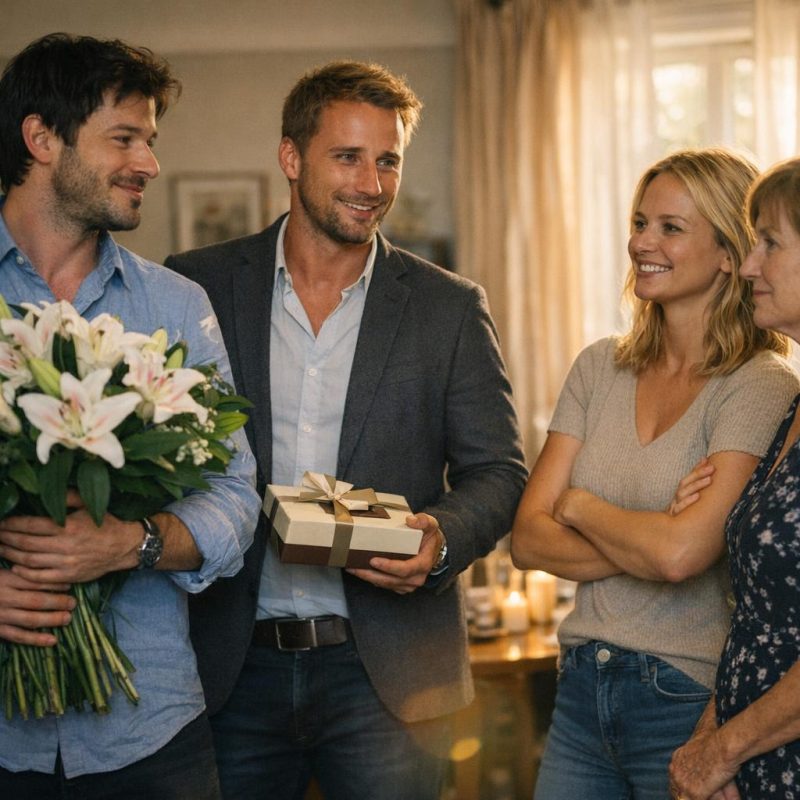 Image by RM AI
The Unexpected Consultation
I excused myself to check on the pot roast, but really I needed to breathe. In my tiny kitchen, away from their watchful eyes and careful smiles, I felt my hands shaking. I pulled out my phone and, without really thinking it through, called David Chen. He answered on the second ring. 'Linda? Is everything alright?' His voice was calm, professional, exactly what I needed. 'I just... I need to confirm. Everything we discussed, everything we set up—it's all finalized?' There was a pause. 'Yes, Linda. Everything is in place, exactly as you instructed. The trusts, the allocations, all of it. Are you having second thoughts?' I looked through the kitchen doorway at my children, gathered in my living room, waiting. 'No,' I said quietly. 'No second thoughts. I just needed to be sure.' 'You're sure,' David confirmed. 'Everything is protected. Everything is done.' We said goodbye, and I stood there for a moment, phone in my hand, listening to my children's laughter from the other room. It sounded so genuine, so warm. It sounded like a family. David assured me everything was finalized, and I hung up feeling strangely calm—like I'd just armed myself for a battle I didn't want to fight.
 Image by RM AI
Small Talk and Big Lies
Over appetizers—the bruschetta I'd made from scratch—they entertained me with stories from their lives. Sarah talked about a major client she'd landed, describing the deal in detail I couldn't follow, clearly enjoying my impressed nods. Brian shared news about his daughter Emma's achievements at school, her perfect grades, her talent for piano. 'She's incredible, Mom. Really incredible. You'd be so proud.' Would be. As if I'd never met her, which was almost true—I'd seen Emma maybe four times in her eight years. Kevin described his promotion, the corner office, the salary increase. They passed stories back and forth like a ball, each one trying to outdo the last, painting pictures of these full, successful lives. Lives I knew nothing about because they'd never told me. Lives I hadn't been invited to witness. I smiled and asked questions and acted fascinated, playing my role in whatever this performance was. They asked about my plans for the money—casually, like they were just curious—and I gave vague answers. 'I'm still figuring it out,' I said. Brian mentioned his daughter's ballet recital and invited me to the next one—an invitation I knew would never actually come.
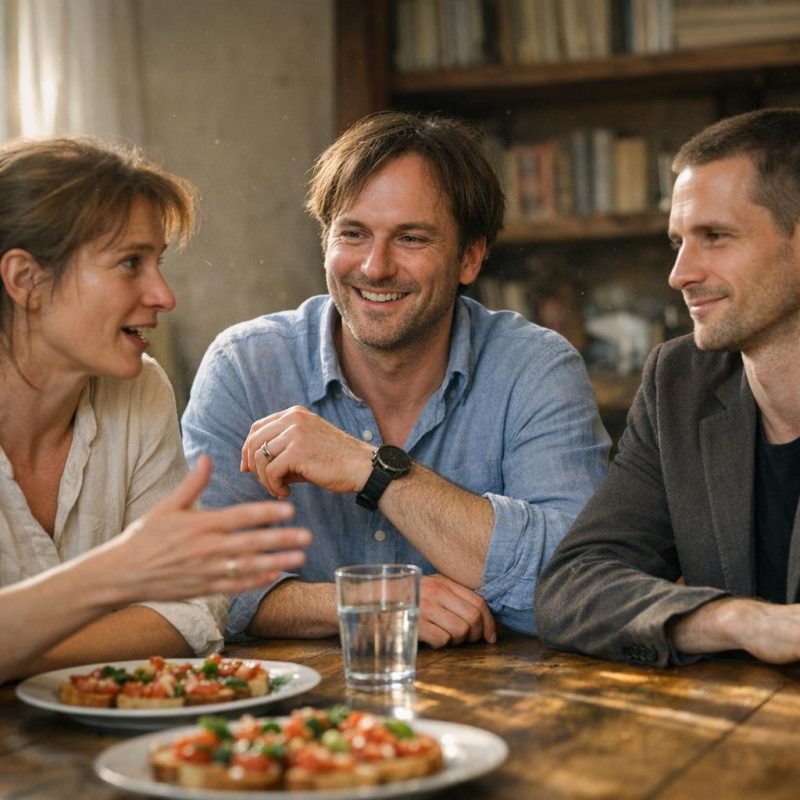 Image by RM AI
The Lawyer Arrives
Mr. Henderson arrived an hour late, full of apologies about traffic and a difficult client. He was younger than I expected—early fifties maybe—with the kind of carefully maintained appearance that screamed successful attorney. Gray suit, expensive watch, leather briefcase that looked like it cost more than my monthly pension used to be. 'Mrs. Chen, I'm so sorry to keep you waiting,' he said, extending his hand with practiced warmth. 'Your children have told me so much about you.' The greeting felt rehearsed, like he'd delivered it to dozens of clients before me. Sarah jumped up to take his coat, and Brian pulled out a chair at the table, the two of them moving in coordinated efficiency. Kevin poured him water without being asked. They'd done this before, I realized—not with me, but with someone. Some version of this performance. Mr. Henderson settled into his seat, setting the briefcase carefully beside his chair. 'Please, don't let me interrupt your lovely dinner,' he said, though of course he already had. As he shook my hand, I noticed Sarah and Brian exchange a quick glance—the kind of look people share when a plan is in motion.
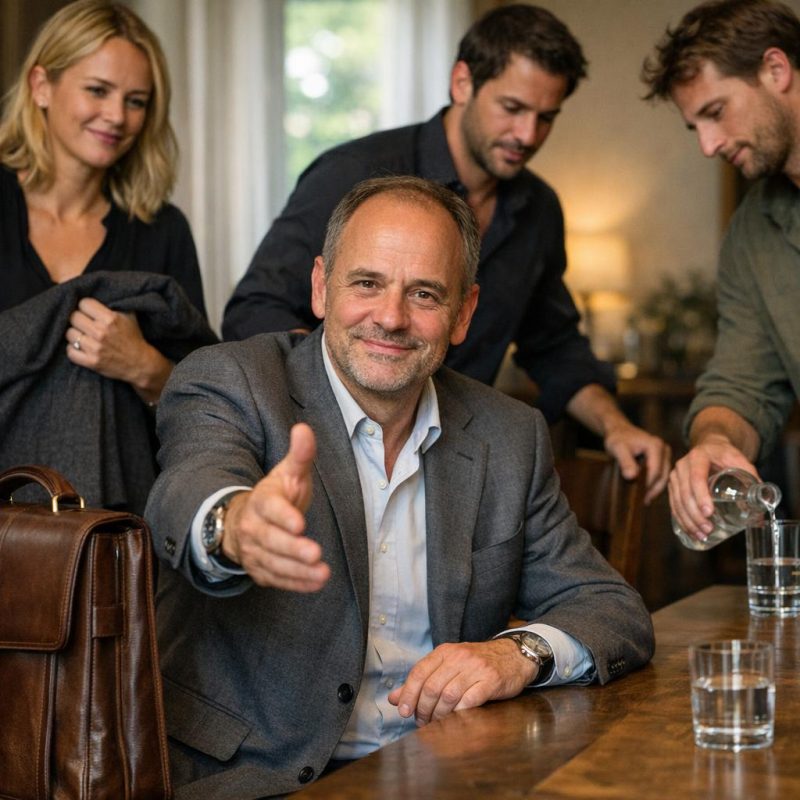 Image by RM AI
Dinner Served
I brought out the main course—pot roast with roasted vegetables, the kind of meal that takes all afternoon to prepare properly. My children praised it immediately, their compliments flowing like rehearsed lines. 'Mom, this is amazing,' Kevin said. 'You always were the best cook,' Brian added, though he hadn't eaten my cooking in three years. Sarah cut her meat with exaggerated care, making appreciative noises with each bite. 'Just like I remembered,' she said. Even Mr. Henderson joined in, commenting on the tenderness of the beef, the perfect seasoning. Their praise felt hollow, transactional—currency they were spending to buy something I couldn't quite name yet. I watched them eat, watched them perform this pantomime of a family dinner, and felt the familiar weight of being useful to them settling over my shoulders. My roast was good because it served a purpose tonight. I was worth their attention because I had something they wanted. The knowledge sat in my chest like a stone. Sarah said the roast reminded her of 'home,' and I wanted to ask which home she meant—because she hadn't visited mine in five years.
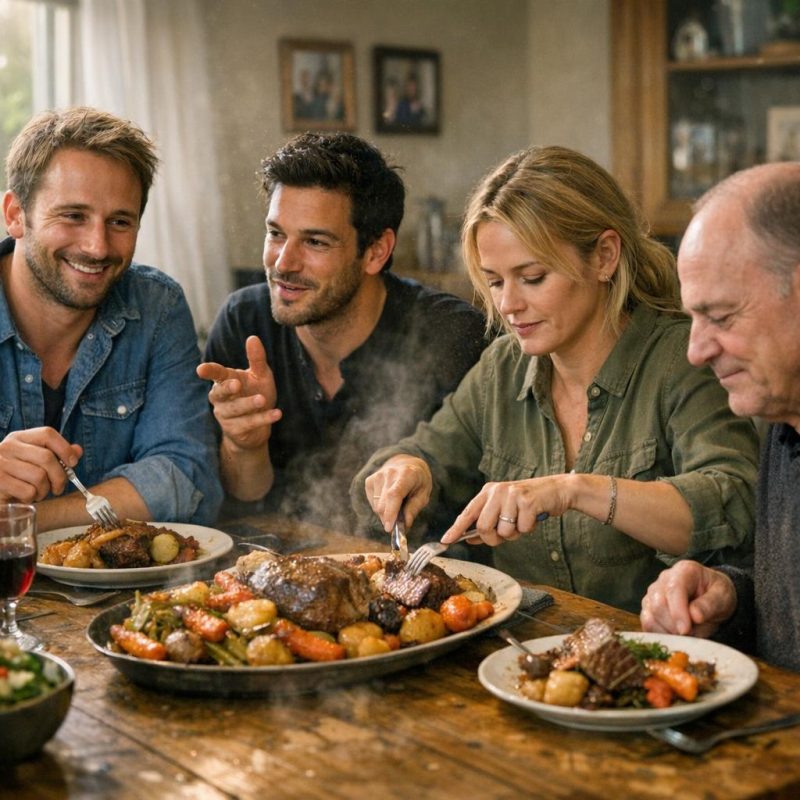 Image by RM AI
The First Hint
Kevin set down his fork and leaned back in his chair, adopting that casual pose people use when they want you to think they're not working an angle. 'You know, Mom,' he said, 'large sums of money like this can be really overwhelming. Have you thought about getting professional help managing it?' The question hung in the air, seemingly innocent. Mr. Henderson nodded thoughtfully, as if Kevin had raised an excellent point he hadn't considered. Sarah and Brian both looked at me expectantly, waiting for my answer. I took a sip of wine, buying myself a moment. 'I've been managing my finances for 65 years just fine,' I said evenly. 'Paid off a mortgage, raised three children, built a retirement fund. I think I can figure it out.' The words came out more sharply than I'd intended, but I was tired of being treated like I was incompetent. Kevin's smile flickered—just for a second—before he recovered. 'Of course, of course,' he said quickly. 'I just meant that lottery winnings are different. More complex.' But the damage was done. I told him I'd been managing my finances for 65 years just fine, and the table went quiet for just a moment too long.
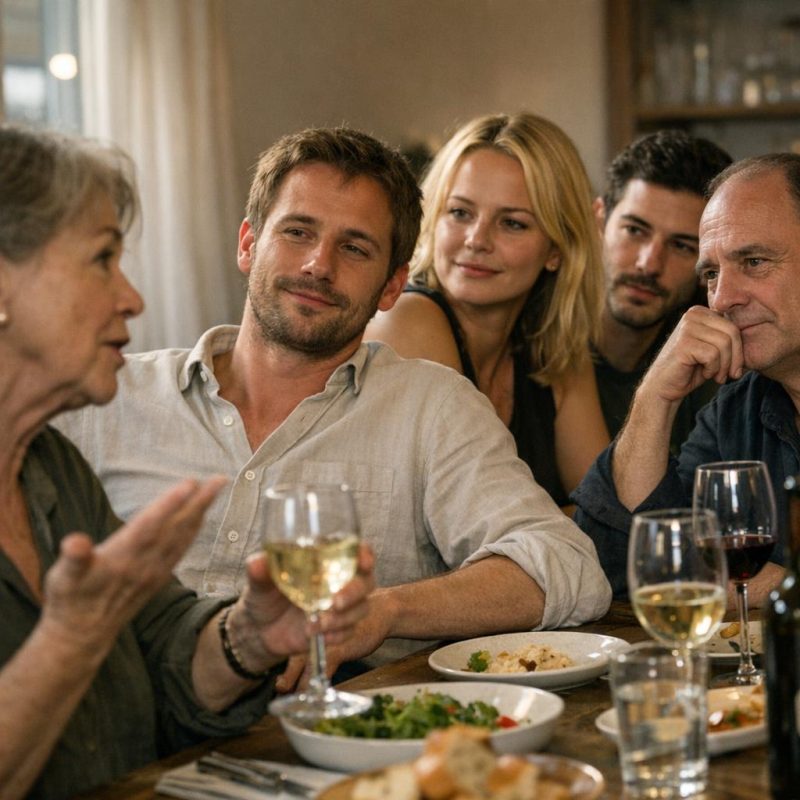 Image by RM AI
Rachel's Text
My phone buzzed in my pocket during the uncomfortable silence. I pulled it out, intending to silence it, but saw Rachel's name on the screen. Rachel from the library, my colleague for the past fifteen years. My friend, if I was being honest—maybe my only real friend. The text was short: 'Thinking of you tonight. Remember what we talked about. Family isn't always blood. You've got people who love you for YOU. Call me if you need me.' I stared at the words, feeling something crack open in my chest. Rachel knew about tonight—I'd told her over coffee yesterday, tried to laugh about it, pretend I wasn't terrified of whatever was coming. She'd listened, really listened, and then said things I needed to hear but couldn't quite believe. 'Excuse me,' I said, standing up. 'I need to use the restroom.' I could feel their eyes on my back as I walked down the hall, could imagine what they were saying to each other with me gone. In the bathroom, I locked the door and read Rachel's message three more times. I excused myself to the bathroom and stared at Rachel's message, feeling like someone had thrown me a lifeline I desperately needed.
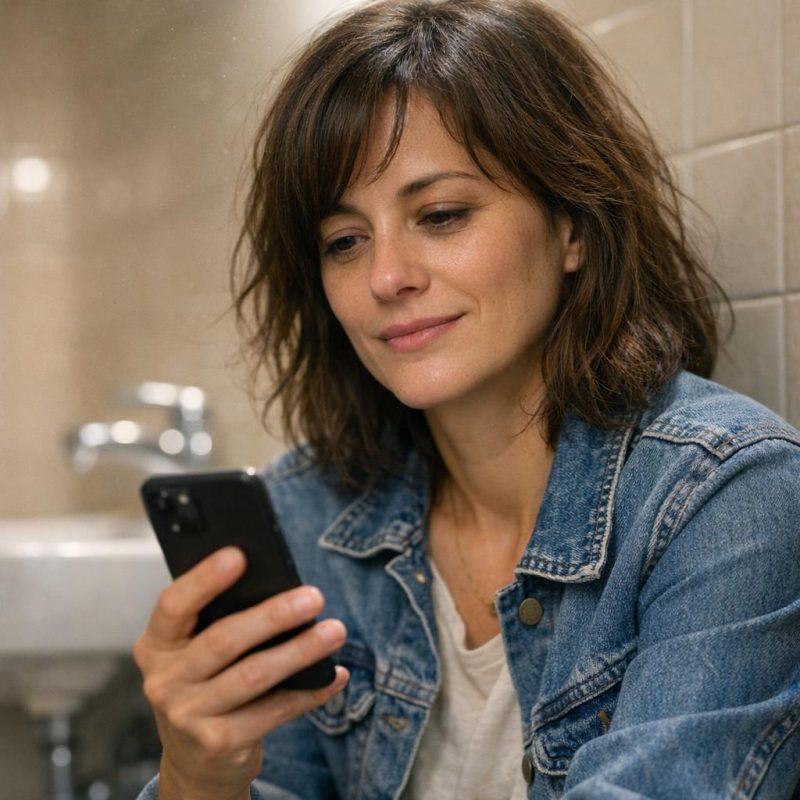 Image by RM AI
Brian's Business Woes
When I returned to the table, Brian was talking about his business—a tech startup or consulting firm or something I'd never quite understood. 'The market's been brutal,' he was saying, shaking his head with theatrical despair. 'We've had to lay off staff, cut back on everything. Jennifer's been so stressed about it.' Jennifer, his wife, who I'd met exactly twice. 'It's been tough, really tough. We're managing, but...' He trailed off meaningfully, looking down at his plate. Then he glanced at Mr. Henderson, just the briefest flick of his eyes, and I saw the lawyer give an almost imperceptible nod. This was choreographed. Every word, every pause, every meaningful look. They'd planned this conversation, decided who would say what and when. Brian sighed heavily, the sound of a man carrying the world's weight. 'I guess some people just have luck, you know?' He looked at me then, his expression carefully neutral. 'I wish I had your good fortune, Mom. I really do.' He sighed and said he wished he had my 'good fortune,' and I wondered if he realized how much that phrase revealed.
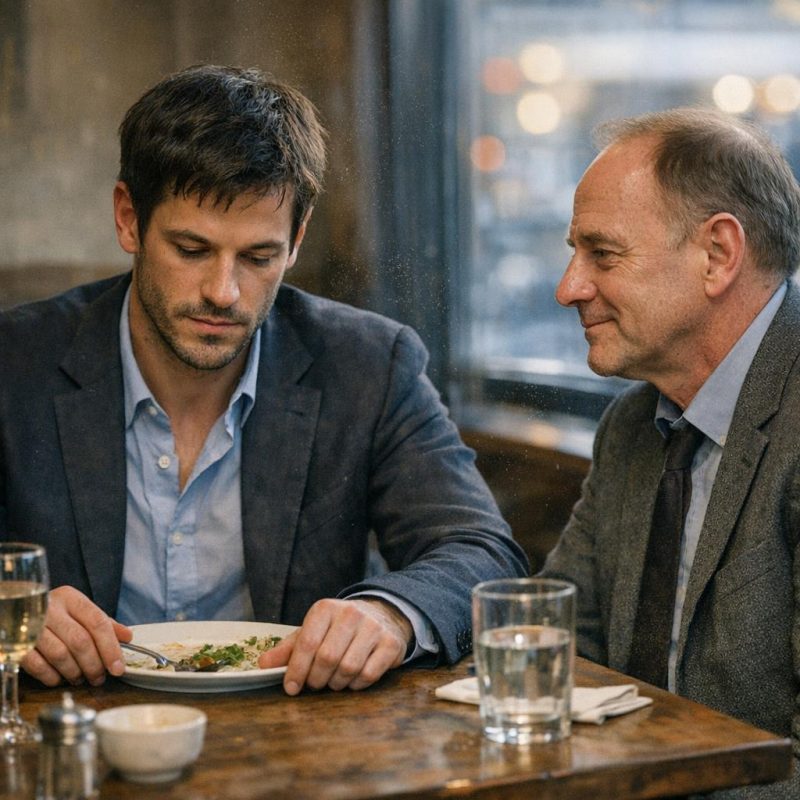 Image by RM AI
Sarah's Children
Sarah picked up where Brian left off, the baton passed smoothly in their relay race of need. 'I was looking at college savings calculators last week,' she said, cutting her vegetables into precise pieces. 'Do you know what four years at a good university costs now? For one child?' She laughed, but there was no humor in it. 'I have three kids, Mom. Three. The tuition alone would be over half a million dollars, and that's if costs don't keep rising.' She talked about private school fees, music lessons, sports programs, tutors. The litany of expenses went on and on, each one presented as evidence of her sacrifice and dedication. 'Being a parent is expensive,' she said, looking directly at me. 'But you do what you have to do, right? You sacrifice. You put your children first, no matter what.' Mr. Henderson nodded solemnly, as if Sarah had said something profound. Kevin murmured agreement. I sat there holding my wine glass, thinking about the birthday cards I'd sent that went unacknowledged, the Christmas presents returned unopened. She said she'd do 'anything' for her kids, and I thought about all the things I'd done for mine that they'd already forgotten.
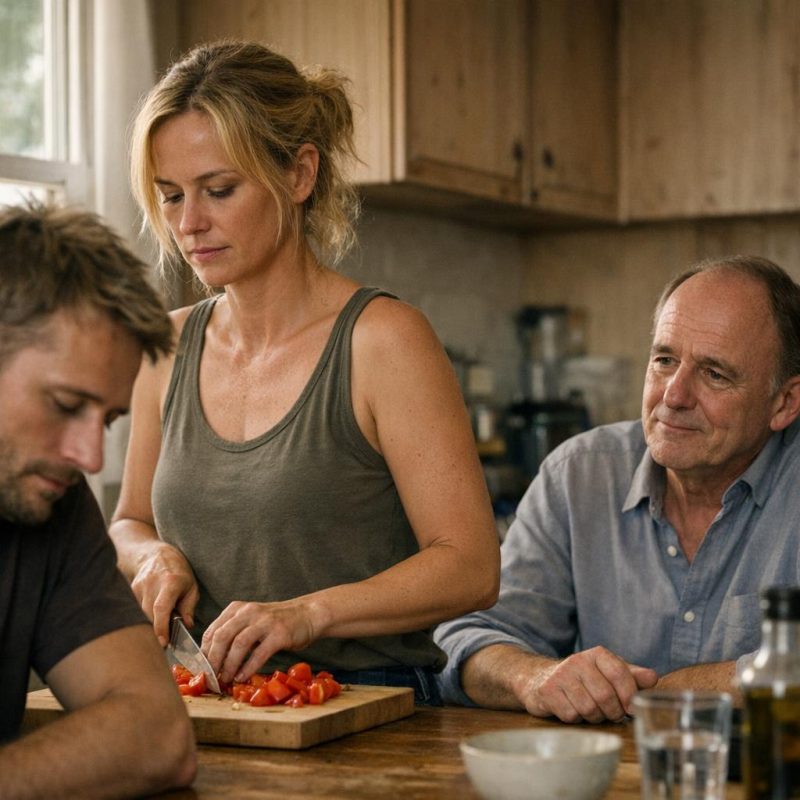 Image by RM AI
The Briefcase Opens
Mr. Henderson cleared his throat—a practiced sound that commanded attention without being aggressive. He reached down and lifted his briefcase onto his lap, the leather creaking softly. 'Linda,' he said, using my first name with the presumed intimacy professionals affect, 'Sarah asked me here tonight to review some options with you. Just to make sure you're fully informed about your choices.' His fingers worked the brass latches. Click. Click. The sound felt final somehow, like a cell door closing. 'Now seems as good a time as any,' he continued, opening the case. I could see the edge of documents inside, official-looking papers with dense text. Sarah, Brian, and Kevin all sat up straighter, their casual dinner postures abandoned. This was what they'd been waiting for. The reason for the invitation, the meal, the reconciliation theater. As papers rustled, I set down my fork carefully, the china making a soft clink against the plate. 'Is this really the time and place for business?' I asked, keeping my voice level. Mr. Henderson looked up at me with practiced sympathy and said, 'Family always comes first.'
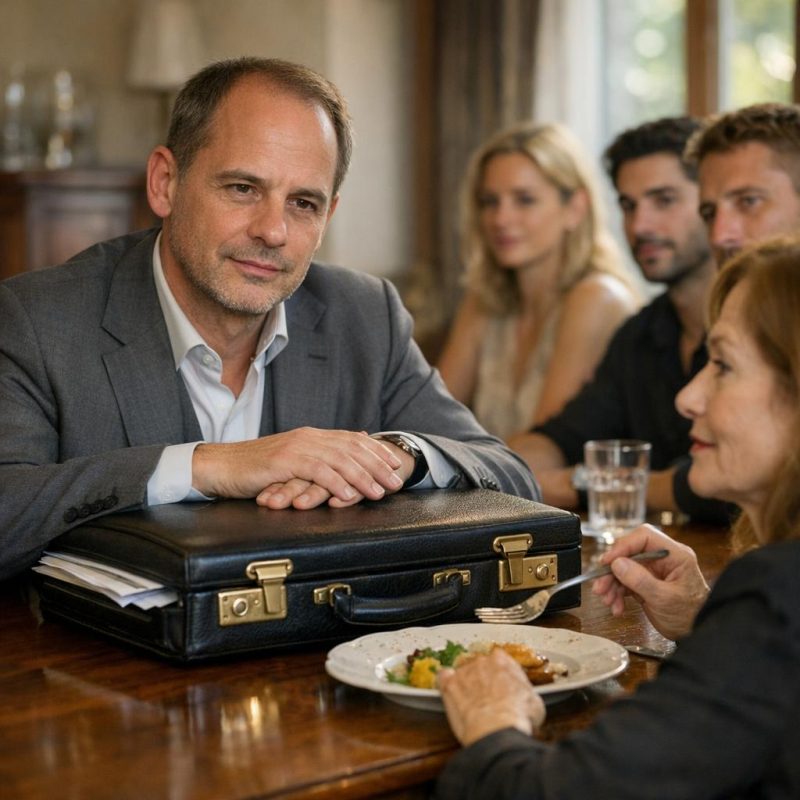 Image by RM AI
The Trust Proposal
He pulled out a document, several pages thick, and laid it on the table between us. 'What I'm proposing,' Mr. Henderson said, slipping into presentation mode, 'is a family trust structure. Very common with large lottery winnings, actually. It would protect your assets while ensuring proper management.' He flipped through pages, pointing at sections I couldn't read from where I sat. 'Your children would serve as trustees—managing the investments, handling the complexities—while you'd receive a monthly allowance. Comfortable, of course. More than enough for your needs.' Brian leaned forward, nodding. Sarah's expression was earnest, concerned. Kevin watched me carefully. 'This provides fiduciary responsibility,' Mr. Henderson continued, 'protection from poor investments or predatory schemes. It also allows for strategic planning around generational wealth, tax optimization, legacy planning.' The words flowed smoothly, professionally. He'd given this speech before, I was certain. Maybe to other lottery winners, other suddenly wealthy people with eager relatives. I sat there listening to him explain how they'd take control of my money 'for my own good.' He used words like 'fiduciary responsibility' and 'generational wealth,' and all I could think was—they practiced this speech.
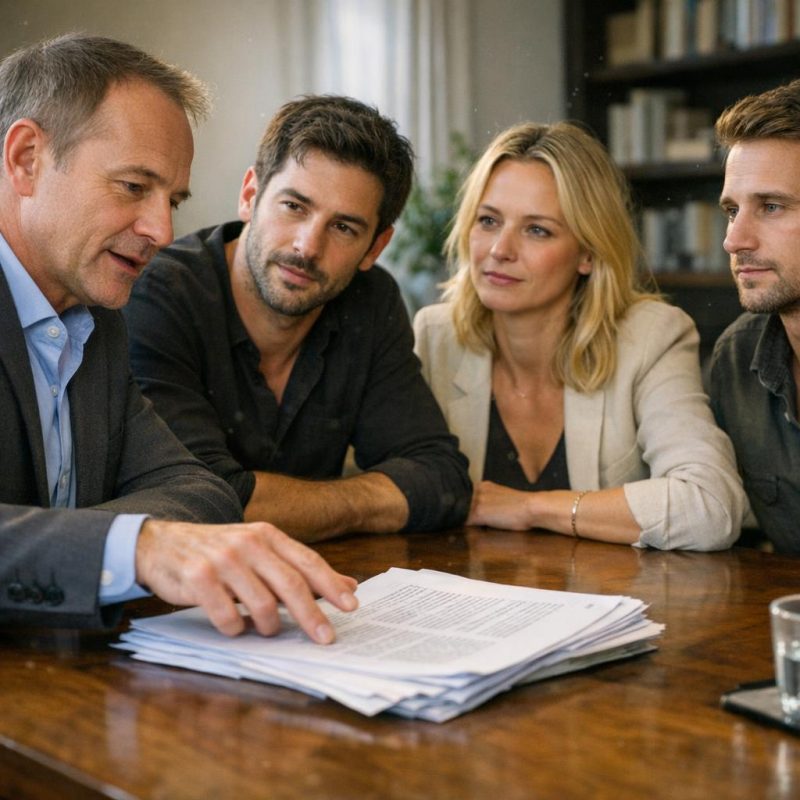 Image by RM AI
Sarah's Concern
Sarah reached across the table and took my hand. Her skin was smooth and warm, her grip gentle but somehow possessive. 'Mom,' she said, her voice dropping to this tender register I hadn't heard in years, 'we're just worried about you. Studies show that cognitive decline accelerates after sixty, especially when people face complex financial decisions.' She squeezed my hand. 'We don't want you to be taken advantage of by scammers or make investments you don't understand. This is about protecting you.' I looked down at her manicured nails against my worn fingers. She was thirty-eight years old and talking to me like I was a confused child who'd wandered into traffic. I'd raised three kids on a teacher's salary, managed a household budget for forty years, put them all through college. But now, suddenly, I was too mentally feeble to handle my own money. The thing was, she delivered it all with such practiced concern, such careful tenderness, like she genuinely cared about my well-being. She looked at me with such fake concern that I almost laughed—almost.
 Image by RM AI
Kevin's Enthusiasm
Kevin jumped in then, his voice bright with enthusiasm. 'I think it's actually a great opportunity, Mom. Not just financially, but for all of us.' He leaned forward, his eyes shining with what looked like genuine emotion. 'We could finally spend real time together. Family dinners, holidays, vacations. You wouldn't have to worry about bills or investments or any of that stress. We'd handle everything, and you could just... enjoy life. Enjoy us.' His voice caught slightly on that last word. 'We could be a real family again. Like we used to be.' I watched him sell this fantasy, this vision of holidays and togetherness that the money would somehow magically create. Kevin had always been the emotional one, the one who knew exactly which heartstrings to pull. He was using my loneliness like a weapon, and he probably didn't even realize how cruel that was. Or maybe he did. Maybe that made it more effective. He said we'd finally be a 'real family again,' and I realized he didn't hear how painful those words actually were.
 Image by RM AI
Brian's Legacy Talk
Brian shifted in his seat, taking a different angle. 'Let's talk about legacy, Mom. Your grandchildren—Sarah's kids, Kevin's daughter. This money could secure their futures. College funds, trust accounts, opportunities we could never provide otherwise.' He spoke with the authority of the eldest, the one who'd always taken charge. 'This isn't really about you or what you want to do with the money. It's bigger than that. It's about family responsibility, about ensuring the next generation has advantages we didn't have.' He paused, letting that sink in. 'You've already lived your life. You've had your career, raised your kids. This is about their future now. About being selfless enough to think beyond your own immediate desires.' The words came out so smoothly, so reasonably. He'd framed my entire existence as something already completed, already finished. Like I was just supposed to hand everything over and fade into the background because my useful years were behind me. Something inside me went very, very still.
 Image by RM AI
The Silence
I didn't say anything. I just sat there, looking at each of them in turn. Sarah with her concerned expression starting to falter. Brian with his assured confidence beginning to waver. Kevin with his emotional appeal hanging unanswered in the air. Mr. Henderson with his expensive suit and rehearsed presentation. The silence stretched out, filling the dining room like fog. I could hear the clock ticking in the hallway, the sound of a car passing outside, the faint hum of the refrigerator. Sarah opened her mouth, then closed it. Brian glanced at Mr. Henderson, who adjusted his papers. Kevin looked down at his hands. They weren't used to me being quiet. Their whole lives, I'd been the one who smoothed things over, who filled awkward silences, who made everyone comfortable. But I just sat there, completely still, watching them squirm. It was remarkable how uncomfortable people get when you simply stop playing your assigned role. Mr. Henderson cleared his throat. 'Mrs. Patterson, do you have any questions about the trust structure?' I smiled. 'Just one,' I said, 'but I'm not quite ready to ask it yet.'
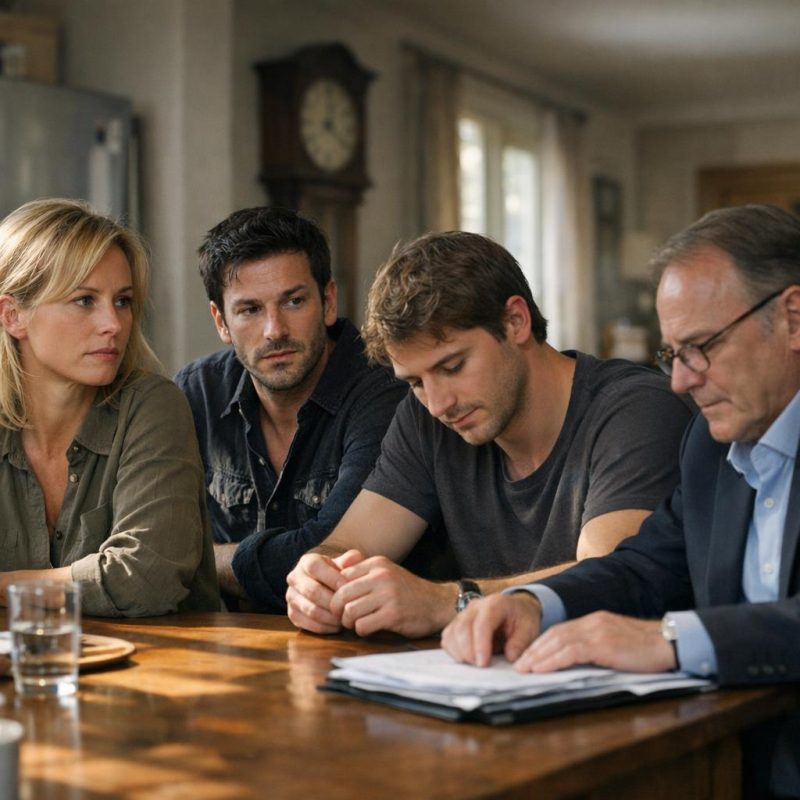 Image by RM AI
The Question
I let the silence hold for another beat. Then I leaned back in my chair and asked the question I'd been saving. 'Where was all this concern for my well-being last Christmas?' My voice was calm, almost conversational. 'I'm just curious. Because I spent Christmas Eve eating a Stouffer's lasagna by myself, watching other people's families on television. I called each of you that day. Left messages. Never heard back.' I watched their faces. 'Or the Christmas before that. Or my birthday last year. Or any of the times I invited you to visit.' I folded my hands on the table. 'So I'm wondering—when exactly did this deep worry about my cognitive abilities and financial security begin? Was it before or after the news reported my lottery win?' The words came out measured, quiet, but they landed hard. I could see it in the way Sarah's hand flew to her throat, in the way Brian's jaw tightened, in the way Kevin's face drained of color. Mr. Henderson looked down at his papers like they might offer him an escape route. The question landed like a grenade, and I watched three faces go pale in perfect unison.
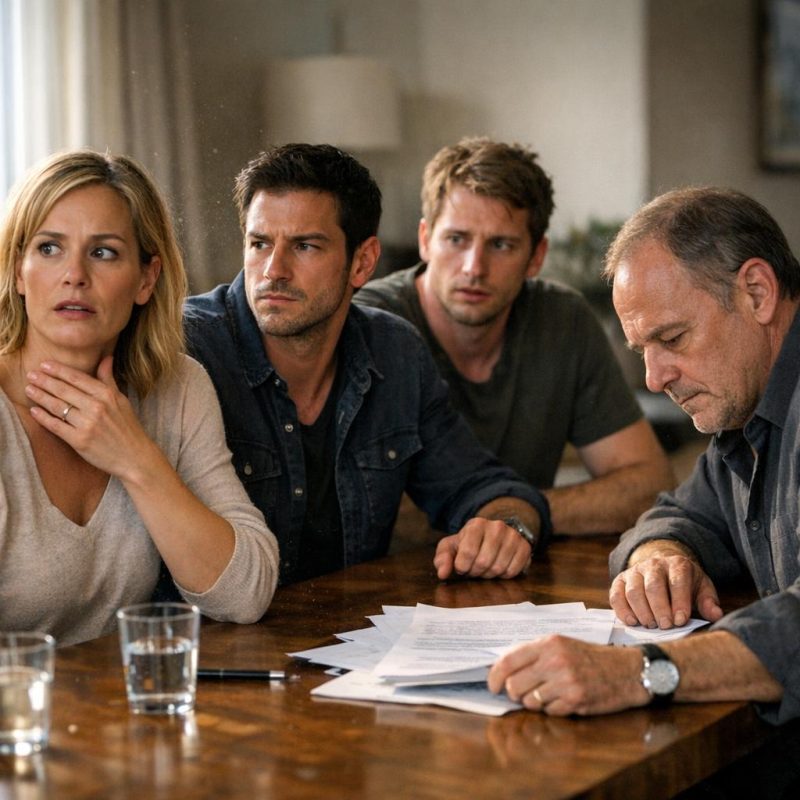 Image by RM AI
Kevin's Excuses
Kevin recovered first, stammering out words in a rush. 'Mom, that's not—I mean, work was insane last year. We had that project deadline right before Christmas, and then Jenny's parents wanted us for New Year's, and I kept meaning to call but—' His voice trailed off. He looked at Sarah for support, but she was staring at her water glass. 'It wasn't that we didn't care. We just... life got busy. You know how it is. Time gets away from you.' He tried a weak smile. 'I was going to call. I really was. It just kept slipping my mind.' The excuses sounded hollow even as he spoke them. Too busy for one phone call in twelve months? Too busy for his mother on Christmas? He'd found time to research trust structures, apparently. Found time to hire a lawyer and coordinate this whole ambush dinner. Kevin fidgeted with his napkin. 'I meant to call,' he said again, quieter this time. I let those words sit between us like the lie they were.
 Image by RM AI
Sarah's Deflection
Sarah tried to take control of the narrative. 'Mom, I think we're getting off track here.' Her voice had shifted from tender concern to something more businesslike. 'Yes, we haven't been as present as we should have been. We can acknowledge that. But dwelling on the past isn't productive.' She gestured at the papers Mr. Henderson had spread across the table. 'What matters now is making smart decisions about the future. About protecting this money and using it wisely. We're here now, aren't we? We're trying to help.' She attempted her earlier concerned expression, but it didn't quite reach her eyes this time. 'Can't we just move forward from here? Start fresh? Let's not let old hurt feelings derail what could be a really positive thing for everyone.' The deflection was skillful, I had to give her that. Acknowledge the minimum, redirect to the goal, frame objections as emotional baggage. She'd probably used similar tactics in business negotiations. But her voice lacked the conviction it had carried earlier. She knew how it sounded. She said we should focus on moving forward, and I thought—yes, let's do exactly that.
 Image by RM AI
Brian's Frustration
Brian's patience was wearing thin. I could see it in the tightness around his mouth, the way his fingers drummed once against the table. 'Mom, you're being emotional about this. We're trying to have a rational conversation about financial planning, and you're bringing up hurt feelings and missed phone calls.' He used his reasonable voice, the one that suggested I was the problem. 'No one's perfect. We get busy. Life happens. But that has nothing to do with whether this trust structure makes financial sense.' He gestured at Mr. Henderson. 'We brought a professional here to help you understand the complexities involved. The least you could do is consider it rationally instead of getting upset about Christmas dinner.' His voice had an edge now. 'You need to calm down and think about this logically. Stop being so irrational.' I looked at him—my eldest son, telling me to calm down while trying to convince me to hand over forty-five million dollars. The irony was almost beautiful. He told me to 'calm down,' and I realized I'd never felt calmer in my entire life.
 Image by RM AI
The Apron Pocket
I reached into my apron pocket—the same apron I'd worn while cooking this entire meal—and pulled out a small piece of paper I'd folded there hours earlier. The movement was deliberate. Slow. I placed it on the table between the dinner plates and Mr. Henderson's leather briefcase, right next to the trust documents they'd brought for me to sign. It looked insignificant, really. Just a folded square of paper, a little creased from being in my pocket. But the reaction it got was immediate. Sarah stopped mid-breath. Brian's eyes narrowed. Kevin leaned forward slightly, trying to see what it was. Mr. Henderson's professional mask slipped for just a second, replaced by genuine curiosity. Nobody spoke. The only sound was the clock in my hallway and someone's breathing—I think it was Sarah's, coming a little faster now. I smoothed the paper flat with one finger, not unfolding it yet, just letting them wonder. The tension in that room could have powered a small city. All eyes locked on that paper like it was a ticking bomb, which in a way, it was.
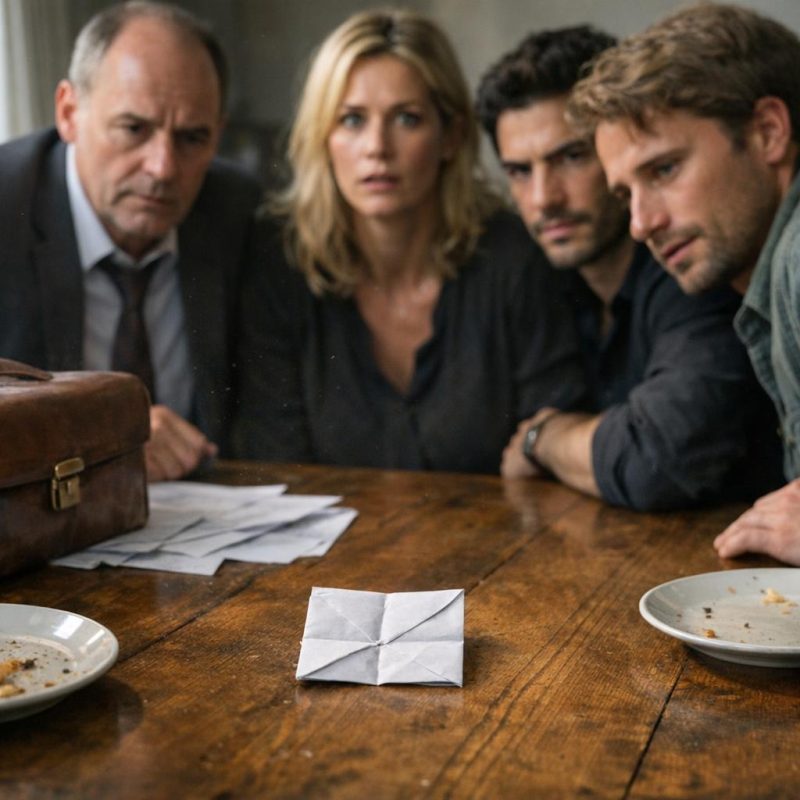 Image by RM AI
The Lawyer's Interest
Mr. Henderson broke the silence first, his lawyer instincts kicking in. He leaned forward with that particular blend of professional curiosity and calculated interest that attorneys perfect over years of practice. 'Mrs. Crawford,' he said, his tone carefully neutral, 'what do you have there?' I could see the wheels turning behind his eyes. He was already strategizing, already thinking about how to incorporate whatever this was into his clients' favor. He probably assumed I'd prepared some kind of counteroffer, maybe my own trust structure with different terms. Maybe he thought I'd consulted another lawyer, drawn up competing documents. His hand moved slightly toward his briefcase, ready to pull out whatever form or precedent he'd need to negotiate. Sarah was watching me like a hawk. Brian had gone very still. Kevin's mouth was slightly open. They were all waiting for me to show my hand, expecting me to play the game by their rules. I looked at Mr. Henderson directly, and my voice was steady when I spoke. 'It's not a negotiation,' I said. I told him it wasn't a negotiation—it was a receipt.
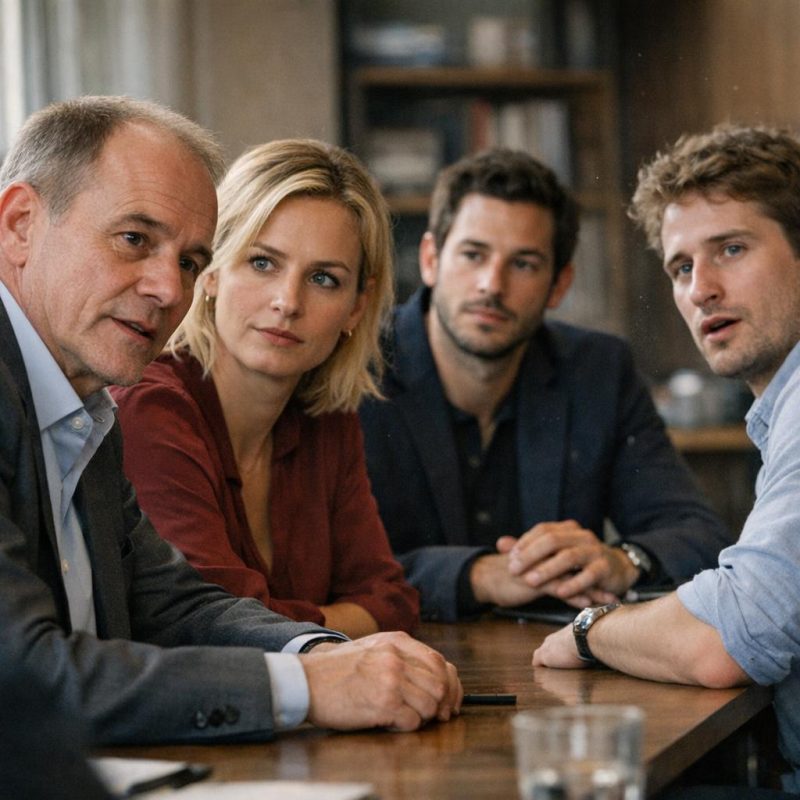 Image by RM AI
The Foundation
I unfolded the paper and slid it toward the center of the table where everyone could see it, though I knew the legal language wouldn't mean much to my children at first glance. 'This is a signed donation contract,' I said, keeping my voice calm and clear. 'I've transferred ninety percent of my lottery winnings—that's forty million, five hundred thousand dollars—to a foundation dedicated to supporting isolated elderly people.' The words hung in the air like a grenade with the pin pulled. 'People who sit alone in apartments waiting for children who never call. People who spend holidays staring at silent phones. People exactly like I was three months ago.' I watched comprehension dawn on their faces in stages. First confusion—surely they'd misheard. Then understanding—no, they'd heard correctly. Then the calculations, the mental math of what ninety percent meant, what was left, what they'd come here expecting versus what actually remained. The color drained from Brian's face. Kevin's mouth formed a perfect O. Mr. Henderson picked up the document with professional detachment, but even he looked surprised. Sarah's face went from confusion to horror in the space of a single breath.
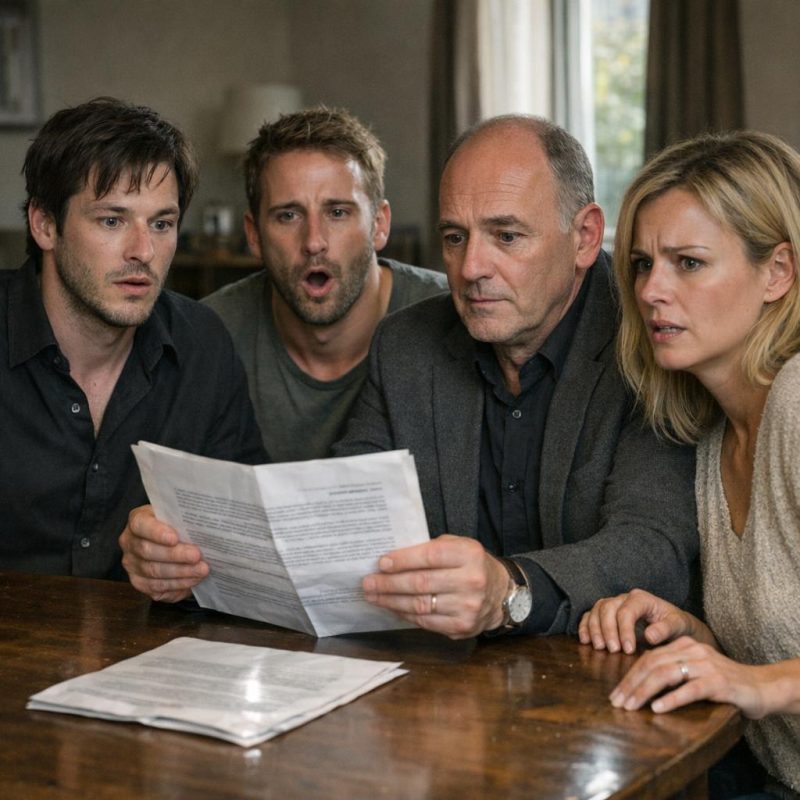 Image by RM AI
Brian's Outburst
Brian exploded out of his chair so fast it scraped against my floor. 'What the fuck did you do?' His voice cracked on the last word, all pretense of civility shattered. 'How could you—how could you just throw away forty-five million dollars without even consulting us?' His face had gone red, the same shade it used to turn when he was seven and didn't get his way. 'That's family money, Mom! FAMILY money! You had no right—' He was pacing now, his hands gesturing wildly. Sarah looked like she was in shock, her mouth opening and closing without sound. Kevin had his head in his hands. Mr. Henderson sat very still, the document now resting on the table in front of him, his professional neutrality barely masking what looked like secondhand embarrassment. I let Brian rage for a moment, let him get it all out. Then, when he paused to take a breath, I asked quietly, 'When did it become family money, Brian?' The question landed like a slap. He stared at me, his jaw working, but no words came out. 'I won that ticket. My name. My numbers. My money.' I asked him when it became 'the family's money,' and he couldn't answer.
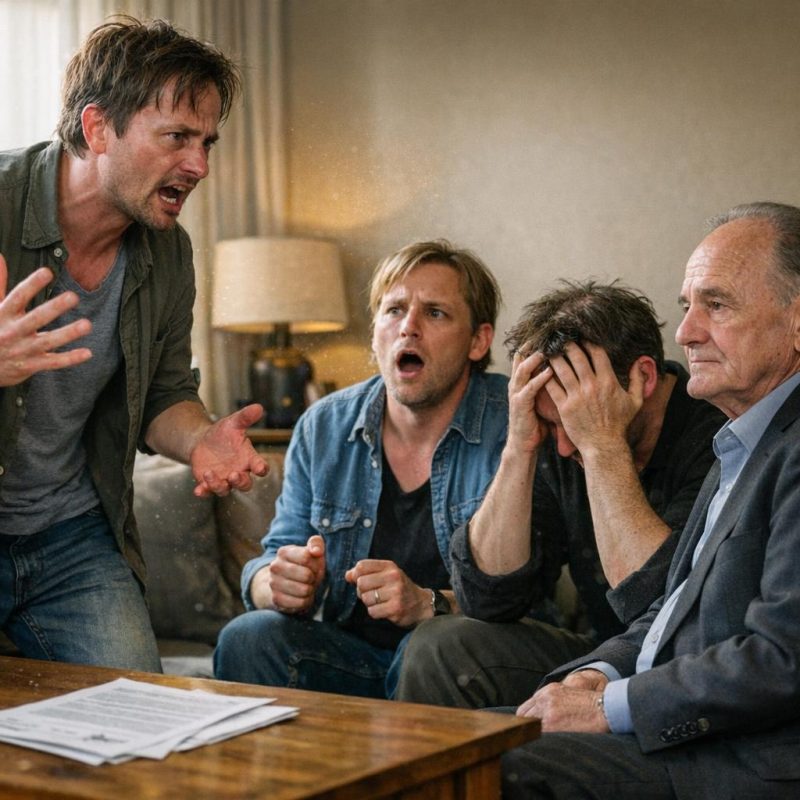 Image by RM AI
Sarah's Calculation
Sarah recovered first—she always was the quickest thinker of the three. I watched her visibly compose herself, smoothing her expression back into something resembling calm, though her hands trembled slightly as she reached for her water glass. 'Okay,' she said, her voice tight but controlled. 'Okay. Let's think about this rationally.' She was using her problem-solving voice, the one she probably used in business meetings. 'Is this donation legally binding? Has the money actually transferred yet, or is this just a contract?' She looked at Mr. Henderson with something close to desperation. 'There are ways to reverse charitable donations, aren't there? Under certain circumstances? Undue influence, perhaps? Mental incompetence?' Her words got faster as she spoke, grasping at legal straws. 'Mom's sixty-five, she just came into a large sum of money, she might not have been thinking clearly—' Mr. Henderson picked up the document again, and I saw him scan it with professional thoroughness. His expression didn't change, but something in his posture told me everything I needed to know. He set the paper down carefully. 'The contract is ironclad,' he said quietly. 'The donation is final and irrevocable. The transfer occurred two weeks ago.' Mr. Henderson examined the document and confirmed it was ironclad—and I watched Sarah's last hope crumble.
 Image by RM AI
Kevin's Tears
Kevin had been silent through Brian's outburst and Sarah's desperate legal queries, but now he made a sound—half sob, half gasp—and when I looked at him, there were actual tears on his cheeks. 'How could you do this to us?' His voice broke beautifully, perfectly calculated for maximum emotional impact. 'To your grandchildren? Emma and Sophie deserve to have opportunities, to go to good schools, to have stable futures.' The tears were flowing freely now. 'I thought—I thought you loved them. I thought you loved us.' He put his face in his hands, shoulders shaking. 'We're your family, Mom. We're your blood. And you've just—you've betrayed us. Destroyed everything. My girls' college funds, their security, their whole future—' His voice cracked again. It was a good performance, I'll give him that. If I hadn't spent the last five years watching him ignore my existence, I might have been moved. But I had spent those years alone. I'd learned to recognize manipulation when I saw it, especially when it came wrapped in tears and talk of grandchildren he'd never once invited me to see. He asked how I could be so selfish, and the irony was so thick I could taste it.
 Image by RM AI
Mr. Henderson's Exit Strategy
Mr. Henderson cleared his throat—a small, professional sound that cut through Kevin's theatrical sobbing. He began placing his documents back into his briefcase with precise, practiced movements. The trust papers. His notes. His pen. Click, click, click. Everything had its place. 'I think,' he said carefully, not quite meeting anyone's eyes, 'this has become a family matter that should be discussed privately. Without outside parties present.' Translation: he wanted no part of whatever was about to happen in this dining room. He'd done his due diligence, brought the paperwork, made his pitch. But he was smart enough to recognize a lost cause when he saw one. And probably smart enough to recognize that the professional relationship he'd been hired for had just evaporated along with forty million dollars. He stood, smoothing his jacket. 'Mrs. Crawford, thank you for dinner. Sarah, Brian, Kevin—I'll be in touch.' He was already moving toward the hallway, toward escape and plausible deniability. His hand was on his briefcase handle. One foot already turned toward the door. As he stood to leave, I told him to wait—there was one more thing he needed to hear.
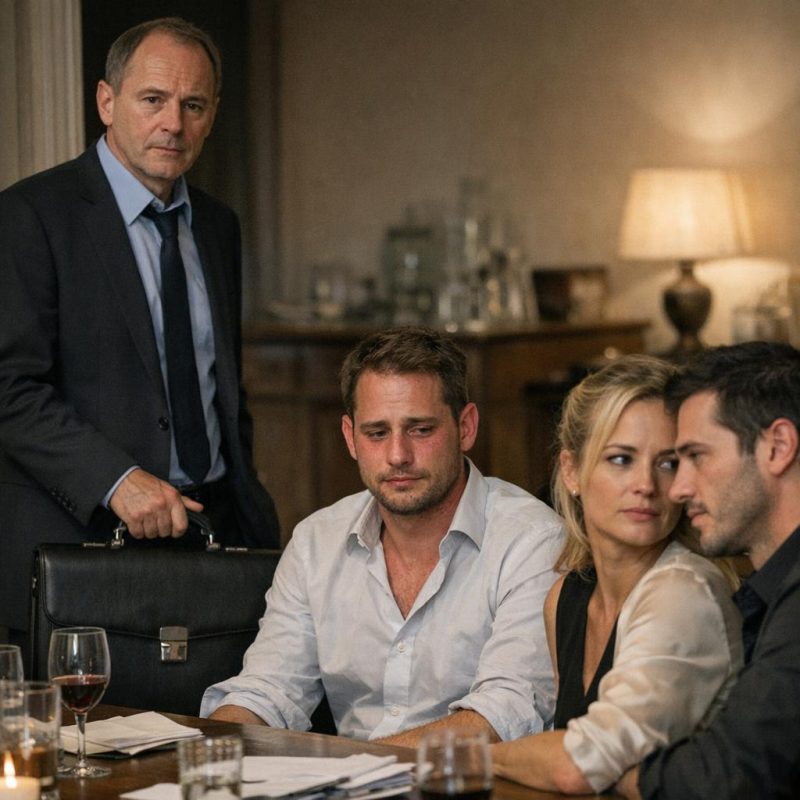 Image by RM AI
The Apartment Sale
Mr. Henderson froze mid-step, and I saw resignation cross his face. But he turned back, professional to the end. 'I've also sold this apartment,' I said, and watched three faces register fresh shock. 'The buyers take possession in six weeks. I'll be gone in four.' I pulled out my phone—I'd had the confirmation email ready—and showed them the flight booking. 'One-way ticket to Barcelona. From there, maybe Portugal. Or Morocco. I haven't decided yet.' Sarah made a small sound. Brian's face had gone from red to pale. Kevin had stopped crying entirely, just staring at me like I'd grown a second head. 'The remaining ten percent of my winnings—four point five million—is more than enough to live on for the rest of my life, especially traveling through countries where the dollar stretches. I've already arranged everything. Passport. Visas. Vaccinations. Storage for the few things I'm keeping.' I looked at each of them in turn. 'I spent sixty-five years being the person everyone expected me to be. Reliable Linda. Patient Linda. Linda who waits by the phone.' My voice was steady and calm. I told them the 'Linda' who waited by the phone for calls that never came was gone—she left the moment that ticket was booked.
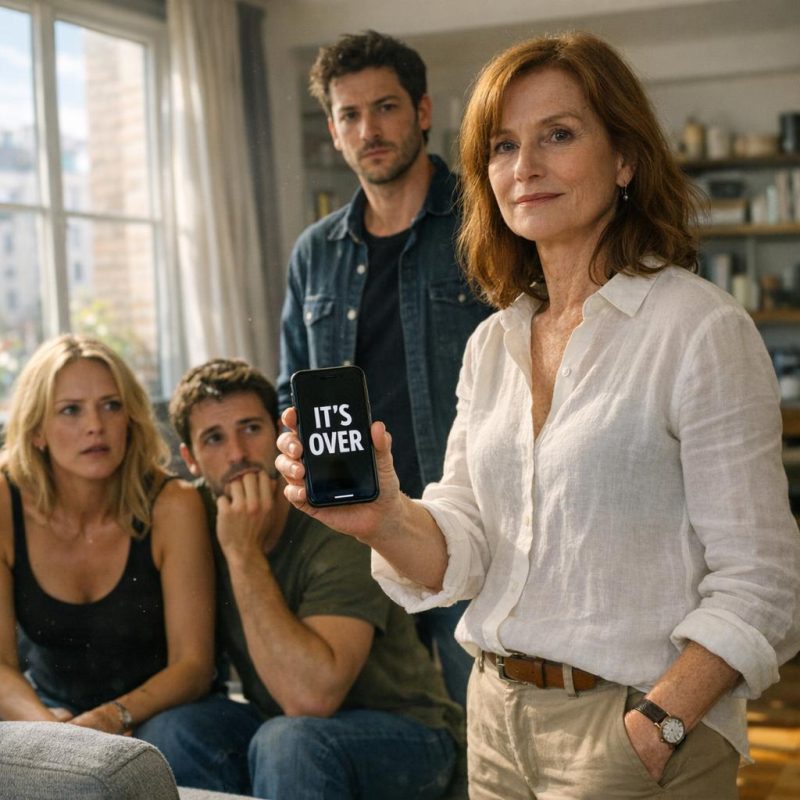 Image by RM AI
Sarah's Desperation
Sarah stood up so abruptly her chair scraped against the floor. 'Mom, please,' she said, and her voice cracked in a way I hadn't heard since she was a teenager. 'We can—we can do better. We will do better. I know we haven't been there, but we can be a family again. A real family.' Her hands were shaking as she reached toward me. Brian nodded frantically beside her, and even Kevin looked up with something like hope in his red-rimmed eyes. 'We'll visit. Every month. Every week if you want. We'll call. We'll—Mom, please don't leave.' There was genuine panic there, I could see it. Whether it was about the money or about losing me, I honestly couldn't tell anymore. Maybe they couldn't tell either. Sarah's mascara had smudged under her eyes, and she looked younger somehow, more vulnerable. For a second—just a second—I felt that old maternal tug, the instinct to comfort her. Then I remembered ten years of silence. Ten years of unanswered calls and lonely holidays. I set down my water glass with a soft click. 'I appreciate the offer, Sarah,' I said quietly. 'I really do. But I spent ten years hoping for exactly that—and my hope has run dry.'
 Image by RM AI
The Inheritance Clause
Kevin made a choking sound. 'But—what happens to the money when you're gone?' he asked, and I almost laughed at how transparent it was. Even now, even after everything, they were calculating. 'That's actually a good question,' I said. I pulled out another document from the folder I'd prepared—yes, I'd come to this dinner ready for everything. 'I've updated my will. Any assets remaining at the time of my death will be divided equally among several beneficiaries.' I watched their faces brighten with cautious hope. 'Margaret, my neighbor who brought me soup when I had pneumonia last winter. The Thompsons from 3B who helped me carry groceries when my hip was bad. Dr. Chen, who made house calls when I couldn't afford the emergency room co-pay.' I listed them methodically, watching comprehension dawn. 'People who actually checked on me. Who cared whether I lived or died.' Sarah's mouth fell open. Brian's face went from pale to gray. Mr. Henderson adjusted his glasses, saying nothing. 'That's—you can't—' Brian sputtered. 'That's spiteful!' I met his eyes steadily. 'I wouldn't call it spiteful, Brian,' I said. 'I'd call it justice.'
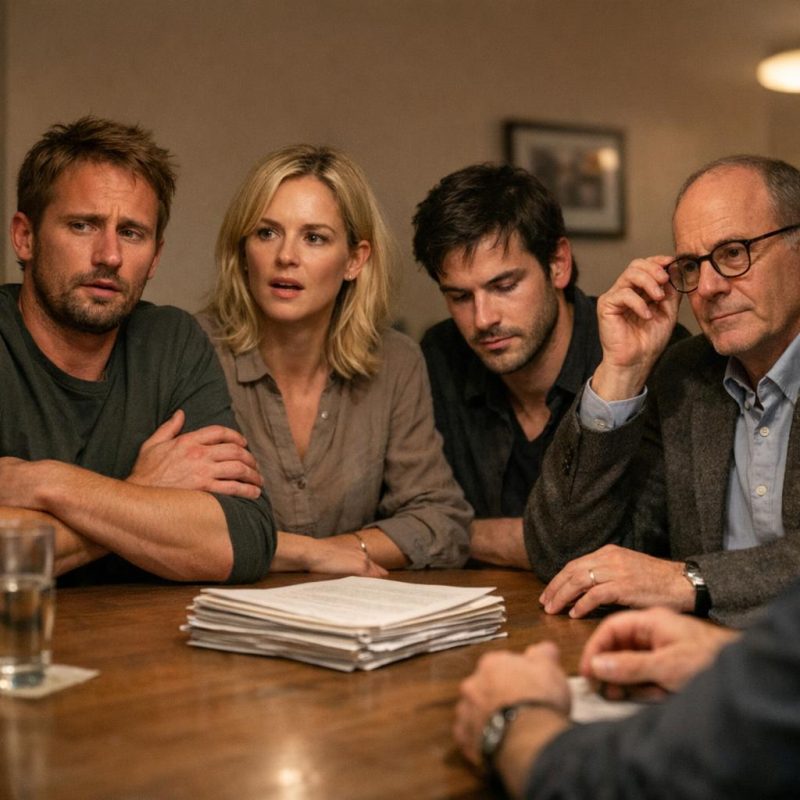 Image by RM AI
The Metaphor
I stood up then, my legs steadier than they'd been in years. The dinner plates still sat between us, the meal I'd made with my own hands while they'd plotted with their lawyer. 'Let me put it in terms you might understand,' I said. My voice was calm, almost gentle. 'For ten years, I was like a tree you planted in your yard. You admired it when it was convenient, mentioned it to friends when it suited you. But you never watered it. Never pruned it. Never checked if it was diseased or dying.' I could see Sarah flinch, but I continued. 'Then one day, that tree suddenly bore fruit—beautiful, valuable fruit. And you came running with baskets, demanding your share of the harvest.' I paused, letting them absorb the metaphor. 'But you can't harvest fruit from a tree you refused to water for a decade. That's not how trees work. That's not how family works either.' Kevin's head dropped. Brian's jaw clenched. Sarah looked like she wanted to argue but couldn't find the words. Even Mr. Henderson had gone very still, his legal pad forgotten on his lap. The words hung in the air like a verdict, and no one could argue against them.
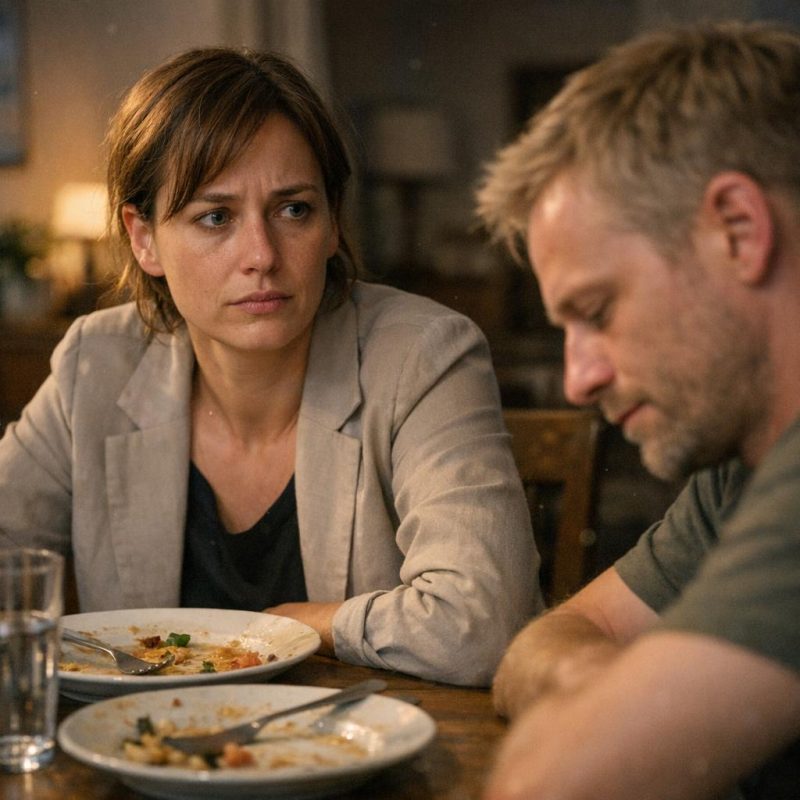 Image by RM AI
Showing Them Out
I walked to the door and opened it, the hinges creaking slightly in the sudden silence. The hallway light spilled into my apartment, bright and harsh after the warm lamplight we'd been sitting in. I stood there, one hand on the doorknob, and gestured toward the exit. 'I think it's time for you all to leave,' I said. Not angry. Not cruel. Just factual. Mr. Henderson gathered his papers first, professional instinct taking over. He nodded to me—almost respectfully, I thought—and walked out without a word. Brian stood up next, his chair scraping back. He looked like he wanted to say something, his mouth opening and closing, but nothing came out. Kevin followed him, shoulders hunched, still not meeting my eyes. Sarah was the last. She paused in front of me, and for a moment I thought she might hug me, or cry, or make one final plea. Instead, she just whispered, 'I'm sorry, Mom,' so quietly I almost didn't hear it. 'I know,' I said back. And I did. But sorry wasn't enough anymore. They filed past me into the hallway, their footsteps echoing on the tile floor. I watched them go, my hand steady on the door. As they filed out in stunned silence, I realized I'd never felt taller in my life.
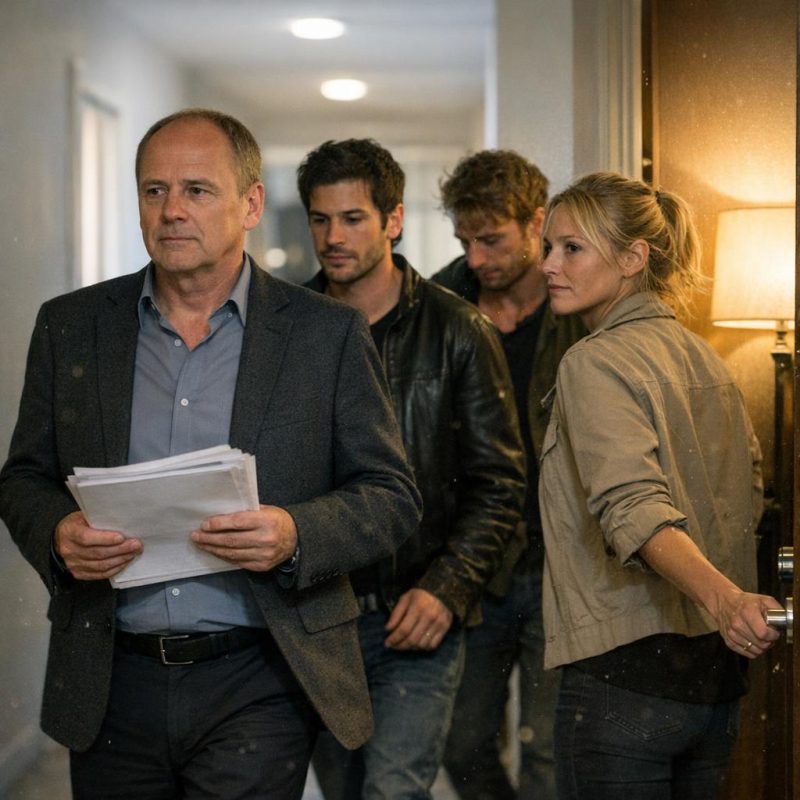 Image by RM AI
The Departure
I closed the door and walked straight to my living room window. Four floors down, I could see them emerge onto the sidewalk under the streetlights. Sarah gestured wildly, her arms moving in sharp, angry motions. Brian paced back and forth, running his hands through his hair. Kevin stood apart from them both, staring at his phone. Even from up here, I could read the body language—recrimination, panic, rage. They weren't comforting each other. They were blaming each other. Sarah pointed at Brian. Brian shouted something back. Kevin looked up from his phone long enough to say something that made Sarah wheel on him. It was fascinating, in a horrible way, watching them turn on each other now that there was no prize to fight for. After about five minutes, they split up—Sarah stalking to her car alone, Brian and Kevin getting into separate vehicles. Mr. Henderson's sedan pulled out first, followed by Kevin's SUV, then Brian's sports car. Sarah sat in her driver's seat for a long moment before starting her engine. I watched her taillights disappear down the street. The sidewalk was empty again, just like it had been before they came. I wondered if they'd ever understand that the real loss wasn't the money—it was the relationship they'd squandered years ago.
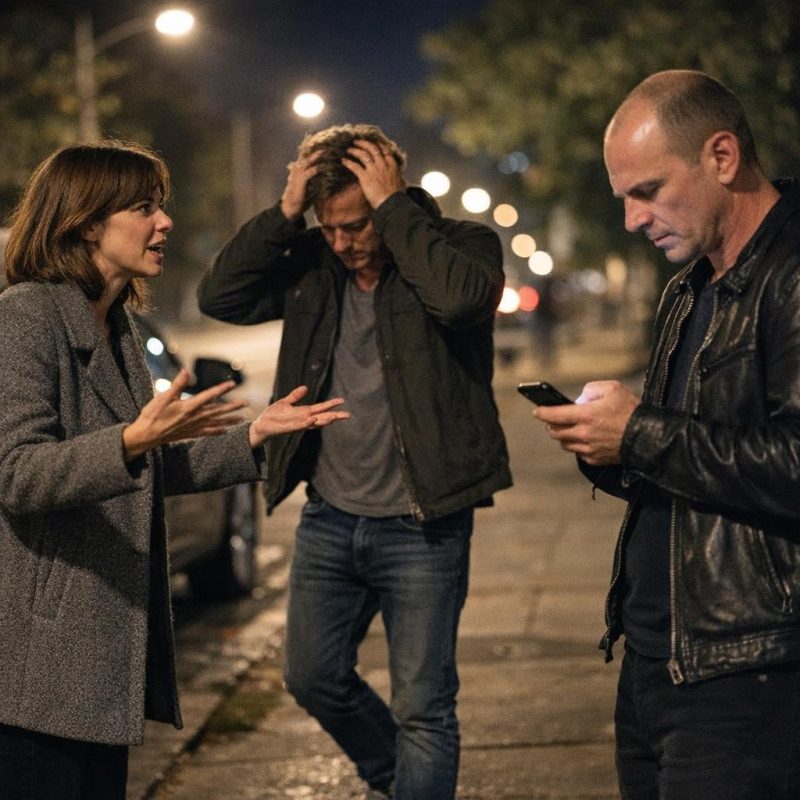 Image by RM AI
The Quiet After
I turned away from the window and looked at my apartment. The dining table still held the remnants of dinner—my grandmother's china, the cloth napkins I'd ironed that morning, the water glasses still half-full. The apartment was quiet. Not the oppressive silence of loneliness I'd lived with for so long, but something different. Peaceful, maybe. I started clearing the table, stacking the plates carefully. Sarah had barely touched her chicken. Brian had eaten everything, I noticed—even in crisis, he'd cleaned his plate. Kevin's food was pushed around, rearranged but not consumed. I carried everything to the kitchen and filled the sink with hot, soapy water. My grandmother's china couldn't go in the dishwasher, so I washed each piece by hand, feeling the familiar weight of the plates, the delicate curve of the teacups. These dishes had served meals to my family for three generations. Tonight might be the last time. I'd have to decide what to keep, what to sell, what to donate before I left for Barcelona. As I washed my grandmother's china, I thought about all the years I'd spent waiting for this family to come back—and how freeing it was to stop.
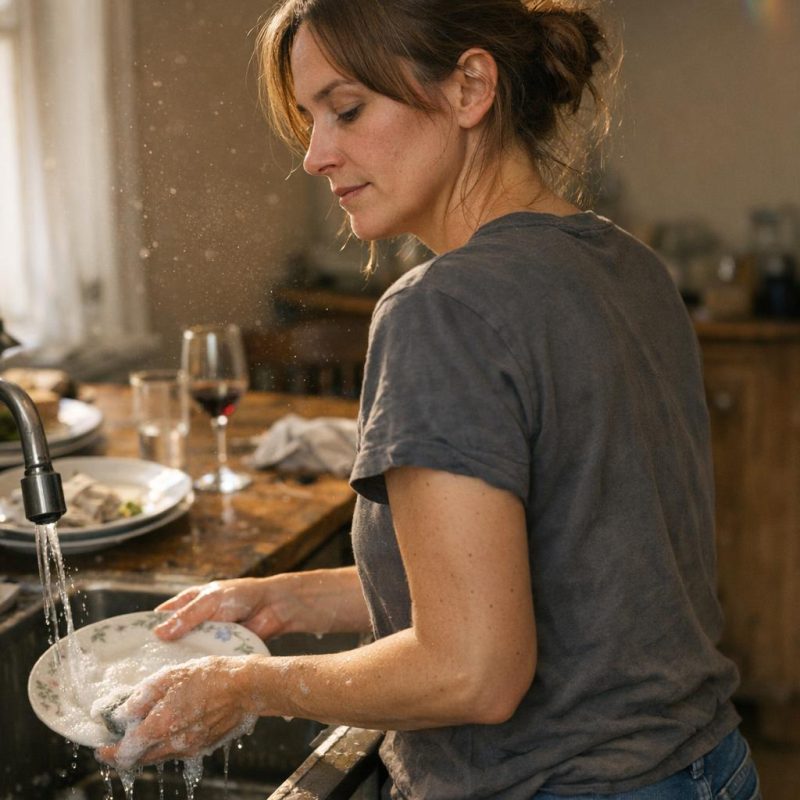 Image by RM AI
Margaret's Visit
I was drying the last plate when someone knocked on my door. For a second, my heart jumped—had they come back? But the knock was gentle, familiar. I looked through the peephole and saw Margaret standing in the hallway, holding a bottle of wine. I opened the door and she took one look at my face and said, 'That bad, huh?' I laughed—actually laughed—and let her in. We sat on my couch, and I told her everything. The lawyer. The demands. Sarah's desperation. The inheritance clause. The tree metaphor. My flight to Barcelona. Margaret listened without interrupting, sipping her wine, nodding in places. When I finished, she was quiet for a long moment. 'You know what's funny?' I said. 'I thought I'd feel terrible right now. Guilty. Like a bad mother.' I twisted my wine glass in my hands. 'But I don't. I feel... light.' Margaret set down her glass and pulled me into a hug. Not a polite, performative hug like Sarah had given me when she first arrived. A real one, the kind that says 'I see you and you're not alone.' When she pulled back, there were tears in her eyes. 'You're the bravest person I know, Linda,' she said quietly. And looking at her kind, weathered face, I started to believe her.
 Image by RM AI
The Truth About the Plan
Margaret refilled our glasses and studied me. 'Can I ask you something?' she said. 'When did you know? When did you realize they were only coming for the money?' I took a sip of wine, considering. Then I decided she deserved the truth—the whole truth. 'The day the news leaked,' I admitted. 'The day my face showed up in the paper, I knew exactly what would happen. I've known my children for thirty-eight, thirty-five, and thirty-two years, Margaret. I know their patterns.' Her eyebrows went up. 'So tonight...' 'Was completely planned,' I finished. 'I consulted with lawyers before Sarah even called. Set up the trust. Changed my will. Booked the flight. Made copies of every document. I knew they'd bring a lawyer, so I made sure mine had already covered every possible angle.' I watched Margaret's face shift from surprise to something like awe. 'The dinner, the confrontation—all of it?' she asked. 'All of it,' I confirmed. 'I could have ignored their calls, but I wanted them to understand. To see what they'd become. To know what they'd lost.' Margaret sat back against the couch, shaking her head. 'Do you feel guilty?' she asked finally. 'For orchestrating it all?' I met her eyes and told her the truth—I felt free.
 Image by RM AI
The Pattern Recognition
Margaret leaned forward, her wine glass forgotten. 'So when exactly did you see this pattern?' she asked. I took a breath and told her about my mother's death, fifteen years earlier. Mom had left a modest inheritance—maybe thirty thousand dollars split three ways. You'd have thought she'd left millions by how they behaved. Sarah hired a lawyer to contest the division. Brian accused me of manipulating Mom in her final days. Kevin sided with whoever was winning at any given moment. They circled that money like vultures for eight months, spending more on legal fees than the inheritance was worth. I watched my mother's memory get torn apart over what amounted to the cost of a used car. The night it finally settled, I sat alone in Mom's empty house and made myself a promise. I wrote it down in her old recipe book, actually: 'Never let them treat you like a bank again.' I'd kept that recipe book all these years. It was packed in my suitcase right now, along with everything else that actually mattered. I'd sworn back then that I'd never let them treat me like a bank again, and I'd kept that promise.
 Image by RM AI
David Chen's Role
Margaret refilled her glass, processing everything. 'So the lawyer, David Chen—when did he come into this?' I smiled, remembering that first frantic phone call. 'Forty-eight hours after my face hit the newspaper,' I said. 'Before Sarah called. Before any of them reached out.' David had been recommended by the lottery commission's legal team. I'd called him the morning after the news leaked, voice shaking, asking how fast we could protect everything. He'd cleared his schedule. We'd met that afternoon and worked through the night—setting up the trust, drafting the will changes, creating legal frameworks so tight that even the best lawyer couldn't find a crack. 'The foundation paperwork was signed before Sarah left her first voicemail,' I told Margaret. She looked stunned. 'You moved that fast?' I nodded. 'I had to. I knew what was coming.' Margaret set down her glass carefully. 'Did you hope you were wrong about them?' she asked quietly. That question hit harder than I expected. I looked at my hands, at the age spots I'd stopped trying to hide. 'I did,' I admitted. 'Right up until Sarah mentioned the lawyer.'
 Image by RM AI
Sarah's Late-Night Call
My phone rang at midnight, three days after the dinner. Margaret had gone home hours earlier. I was half-asleep on the couch, some old movie playing on mute. Sarah's name lit up the screen. I almost didn't answer, but curiosity got the better of me. 'You manipulative bitch,' she said instead of hello. No tears yet—those would come later. 'You planned this whole thing. You set us up.' I sat up, fully awake now. 'I gave you dinner, Sarah. That's all you asked for.' 'You humiliated us!' Her voice cracked, and there came the tears. 'You made us look like greedy monsters in front of a stranger. You're giving away OUR inheritance to people you don't even know!' The rage and grief were cycling now, coming in waves. 'How could you do this to your own children? We're your FAMILY!' I waited until she ran out of breath. The apartment was so quiet I could hear my own heartbeat. 'You betrayed us,' she whispered finally, like a child. 'You betrayed your own family.' I closed my eyes. 'Betrayal requires trust, Sarah,' I said softly. 'And you destroyed that long before the lottery.'
 Image by RM AI
Brian's Threat
Brian didn't call. He texted instead, a series of messages that started arriving at 2 AM. The first few were angry but coherent—accusations about my 'mental state' and 'undue influence.' Then they got darker. 'We're contesting the donations,' one read. 'You can't just give away what belongs to your children.' Another: 'Our lawyer says we have grounds for elder abuse. You're clearly not thinking straight.' The final one, sent at 2:47 AM: 'This isn't over, Mom. We'll see you in court.' I screenshot every single message, my hands surprisingly steady. Then I forwarded them all to David Chen with a simple subject line: 'Brian's thoughts.' I didn't expect a response at three in the morning, but my phone pinged almost immediately. I guess lawyers don't sleep much either. David's reply was four words and a punctuation mark that somehow conveyed absolute confidence: 'Let them try—this paperwork is bulletproof.'
 Image by RM AI
Kevin's Apology
Kevin showed up at my apartment door on a Tuesday afternoon, looking like he'd dressed for a funeral. Dark suit, white roses, eyes already red from crying. Margaret was at the market, thank God—I didn't need an audience for this. 'Mom,' he said, voice breaking on the single syllable. 'Can we talk? Please?' I let him in, more out of morbid curiosity than anything else. He set the flowers on my counter like an offering. 'I'm so sorry,' he started, and the tears began in earnest. 'Sarah and Brian, they pushed me into this. I never wanted the lawyer. I never wanted any of it. I just want my mom back.' It was a good performance, I'll give him that. He'd always been the most naturally gifted actor of the three. 'I know I messed up,' he continued. 'But we can fix this, right? We can start over?' I looked at those expensive flowers, probably forty dollars at least. Looked at his designer suit. His Rolex. 'Kevin,' I said quietly, 'would you be here right now, with or without the flowers, if I'd been broke?' He opened his mouth. Closed it. Stared at his shoes. Couldn't look me in the eye.
 Image by RM AI
The Foundation Visit
The Riverside Senior Center didn't look like much from the outside—just a converted church basement with a hand-painted sign. But inside, it was warm. Alive. I'd asked to visit the place my donation would support, and the director, a tired-looking woman named Patricia, had agreed immediately. She walked me through the lunch program first, where maybe thirty elderly people sat at folding tables, eating soup and talking. 'Most of them would be eating alone otherwise,' Patricia explained. 'Some wouldn't be eating at all.' Then she introduced me to Dorothy, an eighty-year-old widow with hands twisted by arthritis. 'This is the woman I told you about,' Patricia said to her. Dorothy's eyes filled with tears immediately. She stood up—slowly, painfully—and wrapped her arms around me. 'My heat was getting shut off next week,' she whispered against my shoulder. 'The emergency fund you made possible, it's going to cover my bills through winter. You just saved my life.' I held this stranger, this woman whose name I hadn't known a week ago, and felt something crack open in my chest. Not breaking—opening. I finally understood what wealth really meant.
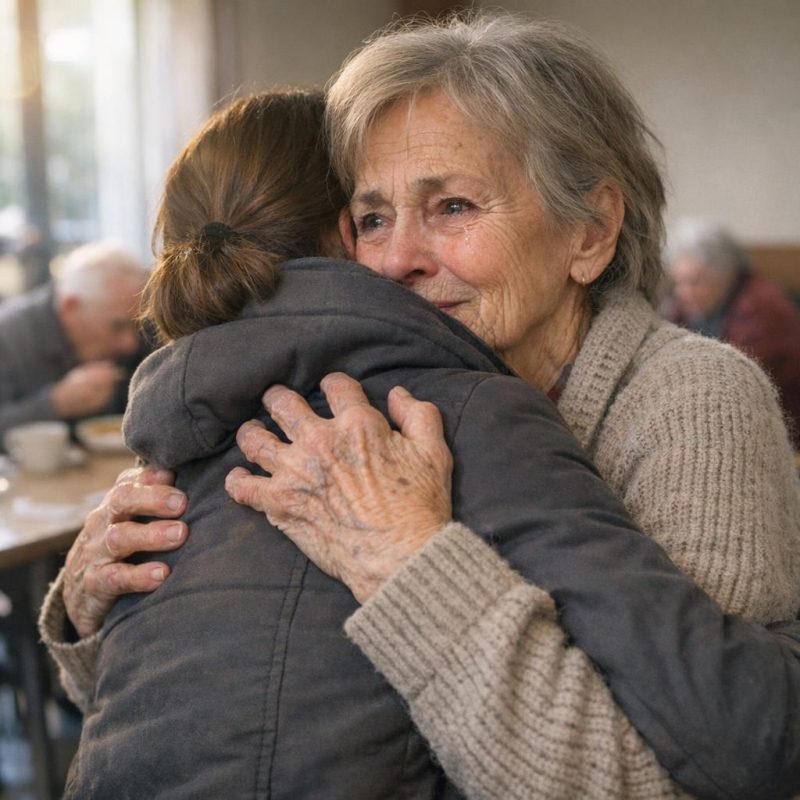 Image by RM AI
The News Interview
The reporter from Channel 7 met me at a coffee shop downtown, all professional smiles and sympathetic head tilts. Her name was Amanda, and she'd been covering my donation to the senior center as a feel-good local interest piece. 'We'd love to hear your story,' she said, setting up a small camera. 'What inspired such incredible generosity?' I'd debated this for days—whether to do the interview, whether to go public. Margaret thought I should. David Chen had no objection. So I sat there under the too-bright lights and talked about loneliness. About what it means to be invisible. About elderly people choosing between medication and food, heat and housing. About how money could build bridges or burn them. 'What about your own family?' Amanda asked near the end, glancing at her notes. 'I understand you have three adult children. They must be so proud.' I smiled, and I knew the camera caught it—that particular smile that says everything and nothing. 'Some families are chosen, not inherited,' I said.
 Image by RM AI
The Children's Response
The cease-and-desist letter arrived via certified mail two days after the interview aired. Three pages of legal letterhead, representing Sarah Thompson, Brian Thompson, and Kevin Thompson jointly. My children had finally united around something—trying to shut me up. The letter accused me of 'defamation,' 'public humiliation,' and 'intentional infliction of emotional distress.' It demanded I issue a public retraction, stop giving interviews, and cease making 'disparaging statements' about my family. Failure to comply would result in 'immediate legal action.' I read it twice, looking for anything genuinely threatening. Found nothing. I photographed it and sent it to David Chen with the message: 'The kids sent me a love letter.' He called instead of texting, and I could hear the smile in his voice. 'You know what this is?' he asked. 'It's the tantrum of people who know they've lost. There's no case here. They're just making noise.' He paused. 'Honestly? You should frame it.'
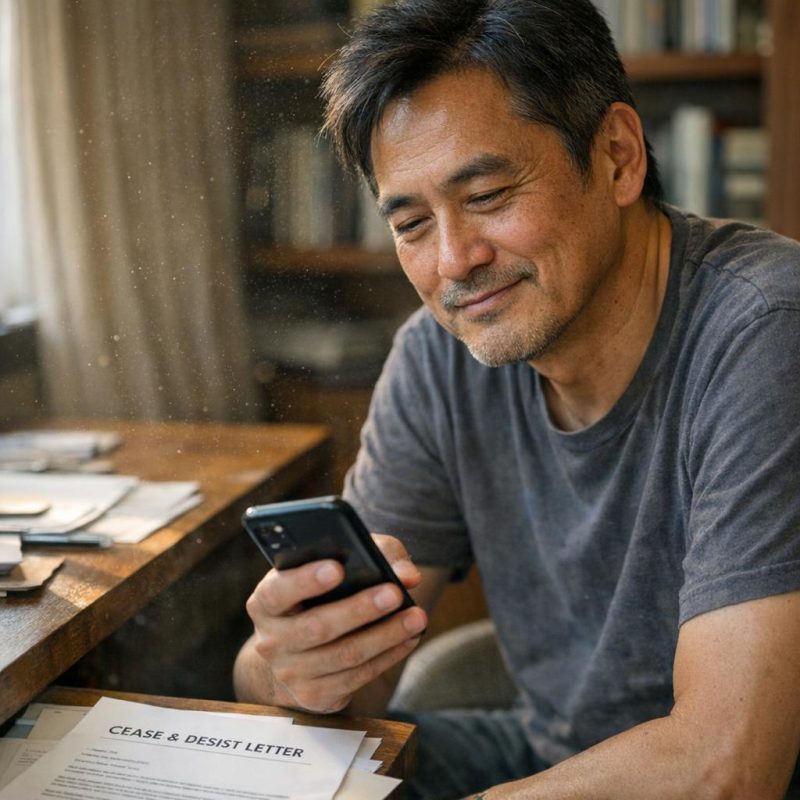 Image by RM AI
The Last Goodbye
I spent the final morning packing the last of my belongings into boxes destined for storage. Most of it would stay there indefinitely—I was traveling light now. The apartment looked bare, echoey, like it had already forgotten me. I walked through each room one last time, running my fingers along the kitchen counter where I'd made countless meals for people who never said thank you, the living room where we'd hosted holiday dinners that always ended in tension. Before I left, I wrote a note and placed it on the kitchen table in a sealed envelope addressed to 'Sarah, Brian, and Kevin.' Inside, I'd written simply: 'I forgive you for using me. I forgive you for not loving me the way I loved you. But I won't forget. I won't pretend it didn't happen. I'm choosing to remember everything clearly, and I'm choosing myself. I hope you find whatever it is you're looking for—but you won't find it in my wallet anymore. Be well.' I locked the door for the final time and didn't look back—some chapters are meant to close.
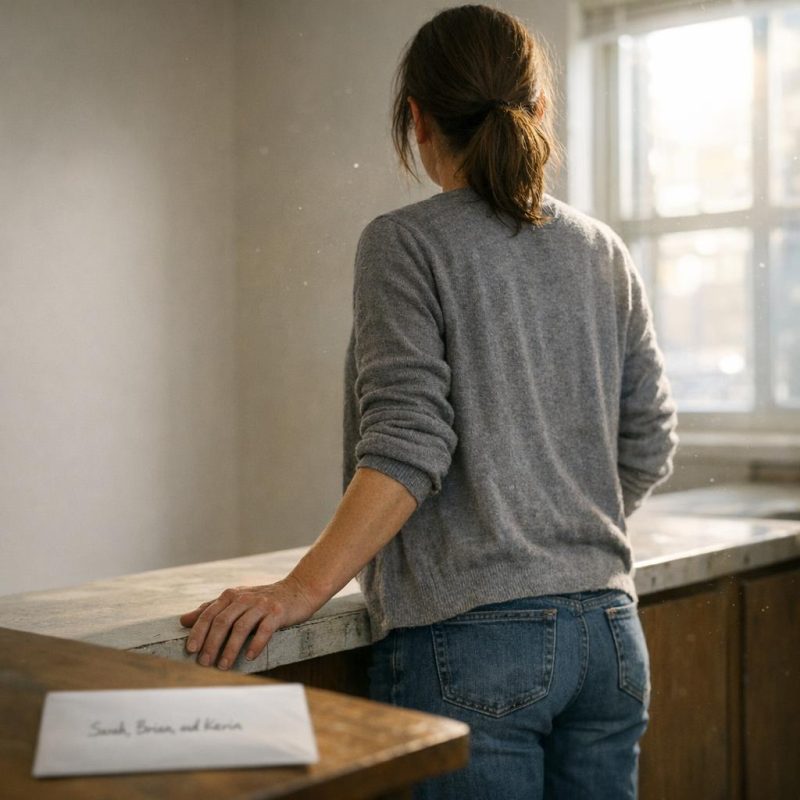 Image by RM AI
First Destination
Paris in October was everything the movies promised and nothing like I expected. The hotel was tiny, tucked into a side street in the Marais, with a crooked staircase and windows that didn't quite close properly. I loved it immediately. My first night, I couldn't sleep—not from jet lag, but from the surreal awareness that I was actually here, that I'd actually done it. The next morning, I found a café two blocks away and ordered a café crème in terrible French. The waiter smiled kindly and answered in English, and I didn't even feel embarrassed. I sat at a small table on the sidewalk, watching people hurry past with their baguettes and their purpose, and something shifted inside me. For sixty-five years, I'd measured my worth by how useful I was to other people. I'd been a wife, a mother, a caretaker, a disappointment, a target, a meal ticket. But sitting there with my mediocre coffee and my terrible accent, I was just... me. As I sat at a café watching the world go by, I realized I'd spent 65 years living for others—and now it was finally my turn.
 Image by RM AI
Letters from Home
Margaret's emails became my lifeline to the foundation. She sent photos of the first scholarships being awarded—three single mothers beaming at the camera, holding certificates that would change their lives. She forwarded articles about the community programs we'd funded, updates about the financial literacy workshops that were booked solid for months. 'Your money is doing more good than you probably realize,' she wrote. 'People are crying in my office—the good kind of crying.' Then, almost as an afterthought in one email, she mentioned that the children had stopped calling entirely. 'I think they've figured out you're serious,' she wrote. 'Sarah tried once more, asking if I'd heard from you. I told her you were traveling and unavailable. She didn't ask again.' A week later, another update: 'I saw Brian's LinkedIn—he's started a new job. Looks like they're all moving on with their actual lives.' And then the line that made me smile into my gelato in Rome: 'They've moved on to easier targets,' and I felt grateful I was no longer available.
 Image by RM AI
The Life I Chose
Six months into my travels, I found myself in a small coastal town in Portugal, watching the Atlantic crash against ancient cliffs. I'd been to eight countries by then. I'd made friends I'd never see again and eaten meals I'd never forget. I'd gotten lost in train stations and found myself in conversations I couldn't have imagined a year ago. Somewhere along the way, I'd stopped checking my phone obsessively, stopped waiting for my children to apologize or my ex-husband to acknowledge what he'd done. I'd stopped defining myself by their absence. The lottery win had given me financial freedom, sure. But the real gift came when I finally understood that their love had always been conditional—and I could choose to stop meeting their conditions. I'd spent decades trying to earn something that should have been freely given. Now I was spending my days exactly as I wanted, answerable to no one, generous with people who actually deserved it. I'd won the lottery twice—once with money, and once when I learned that the greatest wealth is owning your own life.
 Image by RM AI
KEEP ON READING

The story of Ching Shih, the Woman Who Became the…
Unknown author on WikimediaFew figures in history are as feared…
By Emilie Richardson-Dupuis Dec 29, 2025
Einstein's Violin Just Sold At An Auction—And It Earned More…
A Visionary's Violin. Wanda von Debschitz-Kunowski on WikimediaWhen you hear…
By Ashley Bast Nov 3, 2025
This Infamous Ancient Greek Burned Down An Ancient Wonder Just…
History remembers kings and conquerors, but sometimes, it also remembers…
By David Davidovic Nov 12, 2025
The Mysterious "Sea People" Who Collapsed Civilization
3,200 years ago, Bronze Age civilization in the Mediterranean suddenly…
By Robbie Woods Mar 18, 2025
A Common Historical Myth Most People Still Believe
Trnava University on UnsplashHistory is often described as a collection…
By Sara Springsteen Apr 21, 2026
20 Soldiers Who Defied Expectations
Changing the Rules of the Battlefield. You’ve probably heard plenty…
By Annie Byrd Feb 10, 2026