

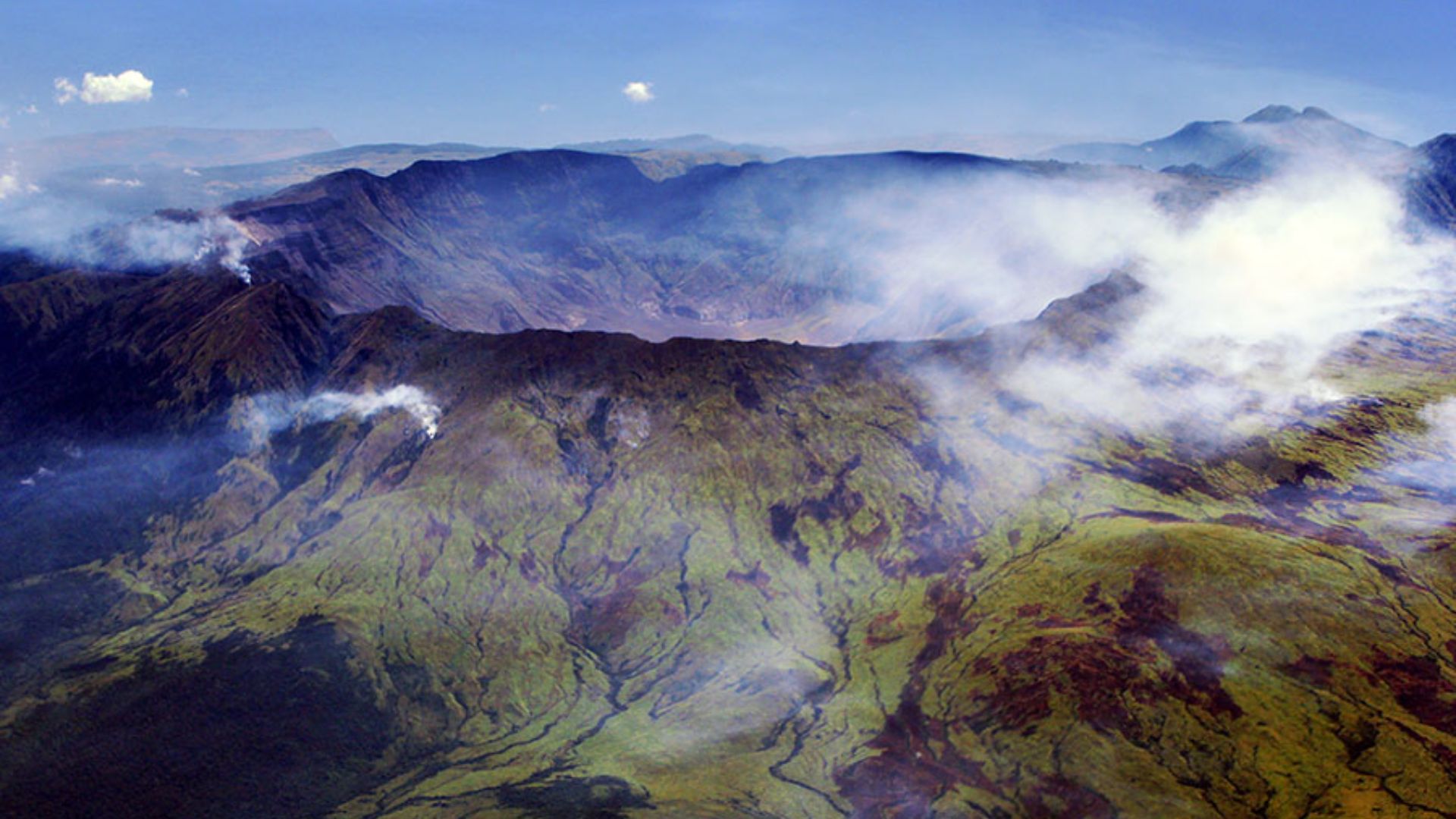
 Jialiang Gao (peace-on-earth.org) on Wikimedia
There are years that leave a mark on the calendar and years that leave a mark on everything else. 1816 was the latter. Across the Northern Hemisphere, spring arrived and then summer simply didn't follow. Crops froze in June. Livestock starved. Families who had survived everything their particular corner of the world could throw at them found themselves undone by the sky, which had quietly stopped cooperating sometime in the previous year and showed no sign of resuming normal behavior.
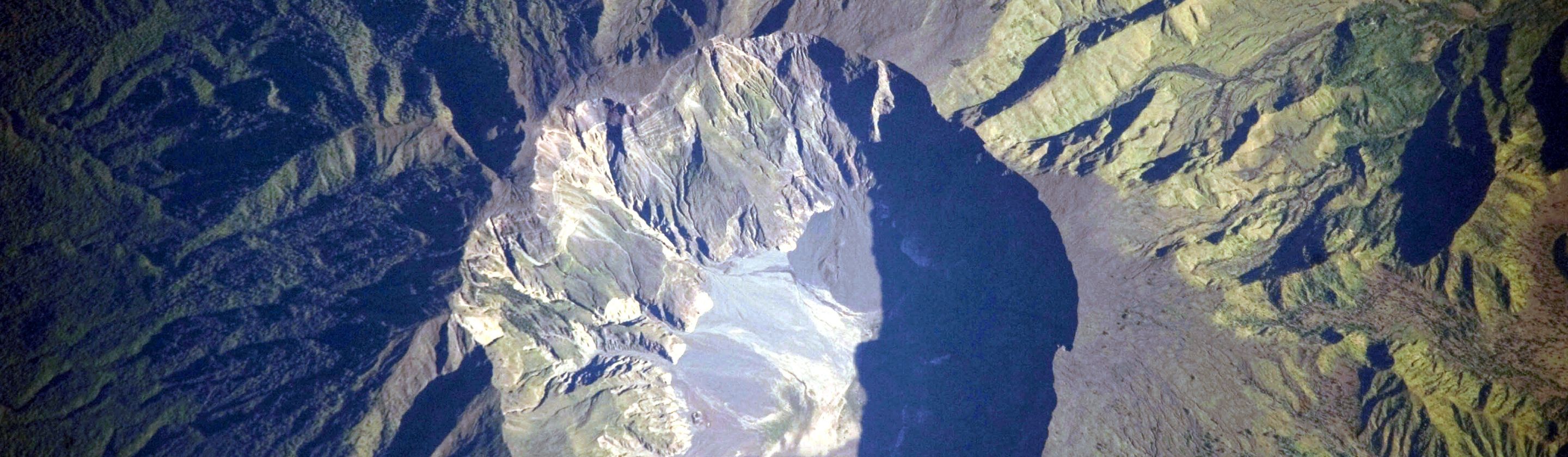
The cause was a volcano most people in Europe and North America had never heard of, located on an island most of them couldn't have placed on a map. Mount Tambora, on the island of Sumbawa in the Dutch East Indies, had erupted in April 1815 in what remains the largest volcanic eruption in recorded human history. The damage it caused was immediate and catastrophic in Indonesia. The damage it caused everywhere else arrived slowly, traveled silently, and lasted long enough that people living through it had no framework to explain what was happening to them.
The Mountain That Rewrote the Weather
The scale of the Tambora eruption is still difficult to absorb. It ejected an estimated 150 cubic kilometers of material into the atmosphere and killed approximately 71,000 people through the blast, pyroclastic flows, and the tsunamis and famine that followed in the immediate region. The Volcanic Explosivity Index rates it at 7, a category with fewer than ten confirmed events in the last 10,000 years. For context, the 1883 eruption of Krakatoa, which is far better remembered in Western historical consciousness, ranks a full point lower on the same scale.
What made Tambora globally catastrophic rather than regionally catastrophic was the sulfur dioxide it pumped into the stratosphere. An estimated 60 megatons of sulfur dioxide formed a stratospheric aerosol veil that circled the planet and began reflecting solar radiation back into space. This wasn't a weather event in any ordinary sense. It was a sustained reduction in the amount of sunlight reaching the Earth's surface, and it persisted for years. Global mean temperatures dropped by an estimated 0.4 to 0.6 degrees Celsius, a number that sounds modest until you see what it actually did to the growing season.
The effects became visible in 1816, roughly a year after the eruption, by which point the aerosol veil had fully distributed itself across the Northern Hemisphere. People observed a persistent "dry fog" across parts of Europe and North America, a stratospheric haze that dimmed the sun without producing rain or clouds in any familiar sense. Benjamin Franklin had speculated decades earlier that volcanic eruptions might affect climate. He didn't live to see his theory confirmed at this scale.
A Continent Starving in Silence
New England bore the most documented climate disruption in North America. June brought killing frosts across Vermont, New Hampshire, and Maine. Snow fell in Quebec in June. July and August produced further frost events, destroying what farmers had managed to replant after earlier losses. The region had already been economically strained by the aftermath of the War of 1812, and the agricultural failure that 1816 delivered onto that fragility was devastating. The year acquired the nickname "Eighteen Hundred and Froze to Death" in New England vernacular, a phrase with the flat, exhausted quality of people who had run out of more elaborate ways to describe their situation.
Europe was worse. The continent was already destabilized by the Napoleonic Wars, and the harvest failures of 1816 and 1817 produced famine conditions across Switzerland, France, Germany, and Ireland. Typhus, which spreads rapidly in populations weakened by hunger and displacement, moved through the affected regions with particular efficiency. Grain prices across Western Europe spiked dramatically. Food riots broke out in multiple countries. Contemporary accounts describe a level of rural desperation that exceeded anything most living Europeans had experienced.
China and India recorded significant disruptions as well. The monsoon patterns that agricultural cycles in South Asia depended on were disrupted, and drought and flood events outside normal ranges were documented across the region. The volcanic winter was global in a way that the people living through it had no language to describe, because the concept of globally connected climate systems simply didn't exist yet as a framework for understanding experience.
What the Cold Left Behind
The summer of 1816 produced at least one thing that has outlasted the famine, the frost, and the misery. Lord Byron, Percy Shelley, Mary Godwin (not yet Mary Shelley), and physician John Polidori were confined to the Villa Diodati near Lake Geneva by the relentless cold and rain. Byron proposed they each write a ghost story. Mary Godwin, eighteen years old, began writing what would become Frankenstein. Polidori produced The Vampyre, the novella that established the modern template for vampire fiction. Both works emerged directly from the atmosphere of that strange, lightless summer, and both have never been out of print.
The famine also reshaped population geography in ways that are still visible. Tens of thousands of New Englanders migrated westward into New York, Ohio, and beyond, accelerating the settlement patterns of the American interior. In Europe, the crisis contributed to emigration waves that would compound across subsequent decades. Karl Drais, a German inventor, developed his Laufmaschine in 1817, a human-powered running machine that served as the direct ancestor of the bicycle. Some historians connect its invention to the collapse of horse populations, which had died or been slaughtered for food during the famine, making personal transport an urgent practical problem rather than an engineering curiosity.
What 1816 demonstrated, with a clarity that no subsequent generation has fully absorbed, is how completely human civilization depends on climatic conditions staying within a relatively narrow band of normal. The systems we build assume a stable sky. When the sky changed, everything downstream changed with it.
KEEP ON READING
10 Greatest Quarterbacks Of All Time & 10 That Are…
Do You Disagree?. Few topics in sports generate as much…
By Farva Ivkovic Dec 2, 2025
The story of Ching Shih, the Woman Who Became the…
Unknown author on WikimediaFew figures in history are as feared…
By Emilie Richardson-Dupuis Dec 29, 2025
20 Shakespearean Words, Translated For A Modern Audience
What’s In A Word?. Shakespeare was a wordsmith of the…
By Breanna Schnurr Dec 17, 2025
20 Inspiring Stories From Native American History
Incredible Stories Of Resilience And Endurance. Many of us didn't…
By Ashley Bast Dec 17, 2025
You Think You Have Problems? These Royal Families Were Cursed
Boasson and Eggler St. Petersburg Nevsky 24. on WikimediaHeavy is…
By Ashley Bast Dec 5, 2025
MH370: The Plane That Can't Be Found
Anna Zvereva from Tallinn, Estonia on WikimediaEleven years after Malaysia…
By Christy Chan Dec 10, 2025