

I Was Fired for Being 'Not the Right Fit' — Then I Found the Fake Performance Reviews My Boss Had Been Writing
I Was Fired for Being 'Not the Right Fit' — Then I Found the Fake Performance Reviews My Boss Had Been Writing
Not the Right Fit
I don't remember exactly what I was expecting when Daniel called the team meeting that Tuesday morning. A project update, maybe. A new deadline. Something routine. What I got instead was Daniel leaning back in his chair at the head of the conference table, hands loosely folded, telling us — telling me — that I was no longer the right fit for the company. He said it the way you'd announce a schedule change. Casual. Measured. Like he'd already moved past it before the words even landed. He mentioned something about exploring other opportunities, about the team evolving in a different direction. No specifics. No performance issues named. Just that phrase — not the right fit — hanging in the air like it explained everything. I sat with my hands folded in my lap and tried to keep my face neutral, tried to process what was happening in real time, but my brain kept snagging on the same question: what did that even mean? Sophie had her eyes fixed on her notebook. Greg was adjusting his glasses. Nobody looked at me. And Daniel just kept talking, his voice even and unhurried, filling the room with words that somehow said nothing at all.
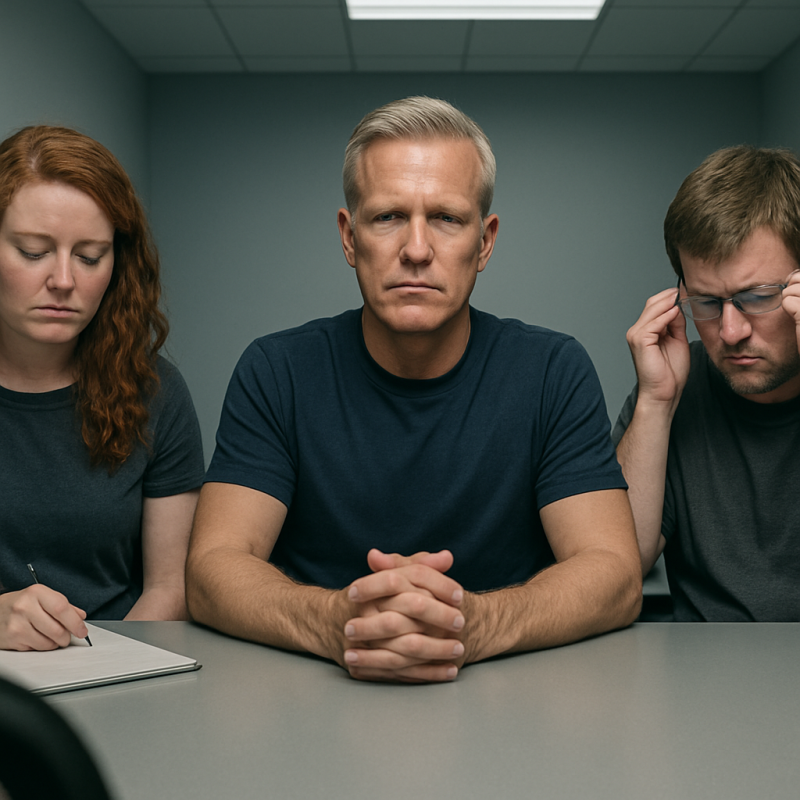 Image by RM AI
The Silence Around the Table
Daniel kept talking after that, wrapping things up the way you'd close out any ordinary agenda item, and I kept waiting for someone to say something. A question. A comment. Anything. But the room stayed quiet in a way that felt almost rehearsed. Sophie's pen moved across her notebook even though I couldn't imagine what she was writing. Greg pushed his glasses up and studied the table like there was something fascinating in the grain of the wood. A couple of other people had their eyes locked on their laptops, fingers hovering over keyboards without actually typing. I tried to catch someone's eye — anyone's. I looked at Sophie first, then Greg, then the guy across from me whose name I always had to remind myself of. Nothing. Not even an accidental glance. Daniel's voice filled the silence with the kind of smooth, practiced delivery that made everything sound reasonable, and I sat there trying to figure out if I was missing something obvious. The room felt smaller than it usually did. Quieter. Like the air had been let out of it. And when I finally looked around the table one more time, really looked, not a single person would meet my eyes.
 Image by RM AI
Walking Out
At some point I understood that sitting there wasn't doing me any good. I pushed my chair back slowly, the way you do when you're trying not to make a sound, and gathered my notebook and my phone from the table. Daniel gave me a nod — professional, bland, the kind you'd give a vendor leaving after a routine check-in. Nobody else moved. Nobody said anything. Not a goodbye, not a see you later, not even one of those awkward half-smiles people offer when they don't know what else to do. I walked to the door alone, and the only sound I was aware of was my own footsteps on the carpet. I pulled the door open, stepped into the hallway, and let it fall shut behind me. I stood there for a moment, not quite ready to move, the fluorescent light humming overhead. And then, almost immediately — maybe ten seconds, maybe less — I heard voices start up again on the other side of that door. Muffled, indistinct, but easy and unhurried, like a meeting that had simply moved on to the next item.
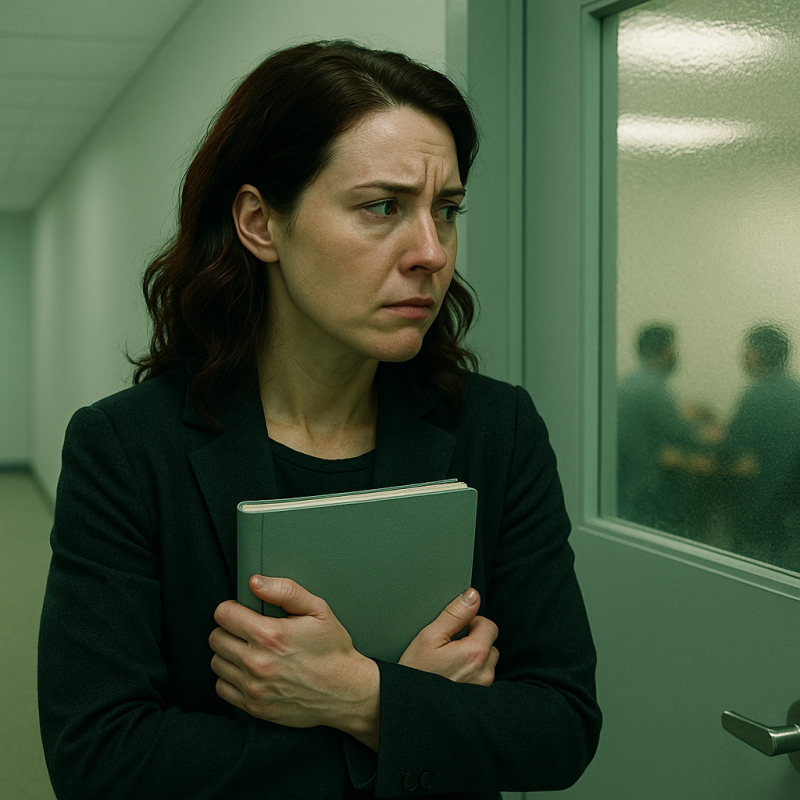 Image by RM AI
Back at Her Desk
I made it back to my desk without talking to anyone. I sat down, pulled my chair in, and looked at my monitor. There was an email draft I'd been working on before the meeting — a project summary, half-finished, cursor still blinking in the middle of a sentence. I couldn't make myself read it. I put my hands on the keyboard and left them there, not typing, just resting, like my body was going through the motions of being a person who worked at a desk. Around me, the office kept moving. Keyboards clicked. Someone laughed at something near the kitchen. A phone rang twice and stopped. None of it had anything to do with what had just happened, and that was the strangest part — the complete, ordinary continuity of everything. I stared at the same three lines of that email for what felt like a long time. The desk had a small scratch near the left corner that I'd always meant to report to facilities and never did. My coffee mug was still there, still warm. The framed photo I'd brought in during my first week was still propped against the monitor. All of it exactly where I'd left it — and somehow none of it felt like mine anymore.
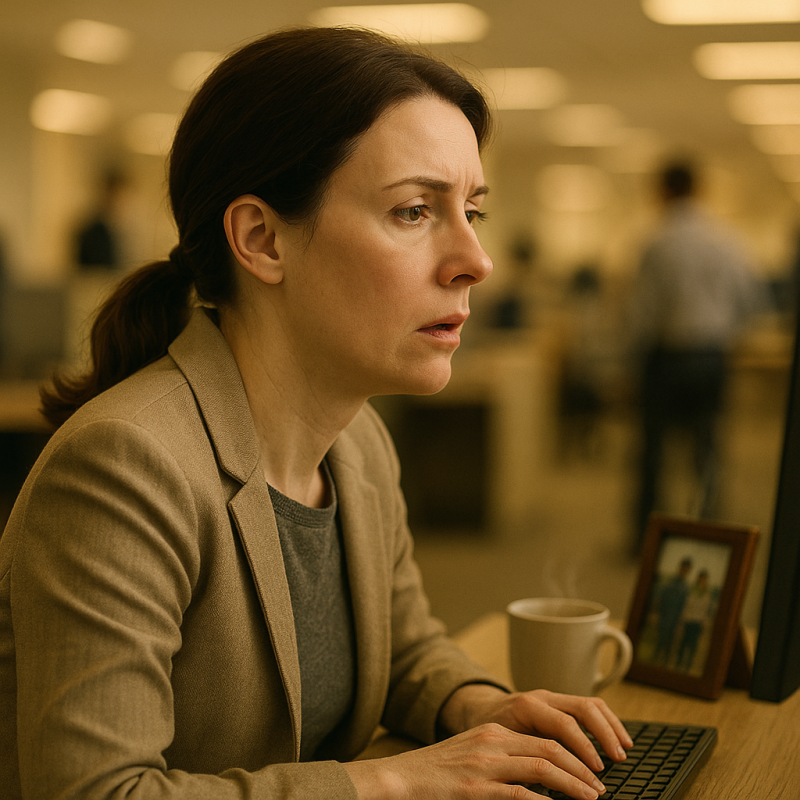 Image by RM AI
The First Year
I don't know how long I sat there before my mind started drifting backward. It happens when you can't make sense of the present — you go looking for solid ground somewhere in the past. I kept landing on my first year at the company, which felt like a completely different story from the one I was sitting inside now. Daniel had been different then. Or at least he'd seemed different. He'd stop by my desk after I turned in a report and tell me I had a sharper eye for detail than anyone else on the team. In our one-on-ones he'd lean forward, actually engaged, asking follow-up questions about my process. He told me once that my approach was exactly what the team had been missing. I remembered how that felt — not just the compliment, but the specific weight of being seen by someone who had the authority to see you. I'd worked hard that year. I'd believed the feedback was real. Sitting at my desk now, I needed to know if I'd imagined it, so I opened my email and typed his name into the search bar. The results loaded slowly. And there it was — a message from Daniel, sent fourteen months ago, with a subject line that read: *You are exactly what this team needed.*
 Image by RM AI
Great Work from Emma
Once I found that first email, I couldn't stop. I kept scrolling, kept searching, and the results kept coming. There were more than I expected — a whole thread of them going back through my first eighteen months, messages where Daniel had forwarded my reports directly to Michael and the rest of senior leadership. He'd cc'd me on most of them, which I remembered thinking at the time was a generous thing to do, a way of making sure I got credit. Looking at them now, lined up in my inbox one after another, the pattern was hard to ignore. The reports were specific — quarterly summaries, process audits, the compliance tracking I'd built from scratch. And the subject lines Daniel had written when he forwarded them weren't vague or perfunctory. They were pointed. Enthusiastic, even. I clicked through message after message, each one sent to Michael's address with my work attached, and the same phrase kept appearing in the subject line, over and over: *Great work from Emma.*
 Image by RM AI
The Messy Project
The emails pulled me further back, and I found myself thinking about the Hargrove project — the one that nearly fell apart in the third quarter two years ago. Three major deliverables had collided in the same two-week window, and the tracking system we'd been using wasn't built to handle that kind of overlap. Details were slipping. Deadlines were getting confused. I remember the particular low-grade panic of watching something complicated start to unravel and not being sure who was responsible for catching it. Daniel had pulled me aside one afternoon, away from the open floor, into the small glass-walled room we used for calls. He'd closed the door and looked at me with what I can only describe as genuine relief — like he'd been waiting to have this conversation. He said the project needed someone who could hold all the moving pieces at once, someone who wouldn't let things fall through. I'd worked late for the better part of three weeks after that, rebuilding the tracking sheet, cross-referencing every deadline, flagging conflicts before they became problems. The project landed on time. Daniel acknowledged it in the next all-hands, said the team had pulled together. And somewhere underneath the memory of all that work, I could still hear his voice from that afternoon in the glass room, quiet and certain: *You're the only one I trust to keep this on track.*
 Image by RM AI
Career Goals and Training
What I kept coming back to, sitting at that desk, was how much I had believed in the trajectory. Daniel hadn't just praised my work — he'd talked about my future like it was something worth investing in. He'd started our one-on-ones by asking where I saw myself in five years, and he'd actually listened to the answer, taking notes sometimes, nodding in a way that felt considered rather than performative. He'd suggested a project management certification that the company would cover, and a leadership development program that he said he'd already mentioned to Michael. I'd signed up for both. I'd done the coursework on weekends. He'd bring up my name in broader conversations, I knew, because Michael had referenced something I'd worked on in a context that made it clear Daniel had flagged it. I used to look forward to those check-ins in a way I hadn't expected to feel about a workplace. There was something about being asked the right questions by someone who seemed to genuinely want the answers. I'd come from two jobs before this one where I'd felt invisible, where good work disappeared into the machine without acknowledgment. This had felt different. For the first time in my career, I'd walked into those meetings believing I was somewhere I could actually build something real.
 Image by RM AI
When Did It Change
I kept trying to find the moment. I'd go back through the months in my head, looking for the specific meeting, the specific week, the specific comment that marked the before and after. There had to be one. That's how these things work, right? Something happens, and then things are different. But every time I tried to trace it back, the thread just dissolved. I'd land on a memory that felt like it might be the turning point — a meeting where he'd seemed distracted, a week where the check-ins had felt shorter — and then I'd remember something warmer that came after it, and the whole theory would fall apart. I tried to remember the last time he'd given me feedback that felt genuinely engaged, the kind where he'd ask follow-up questions and push back on my reasoning in a way that meant he'd actually read what I sent. I couldn't place it. Not because nothing came to mind, but because the memories blurred together in a way that made sequencing them feel impossible. I kept thinking I must have missed something obvious. Some signal I'd been too busy or too trusting to catch. But the harder I looked, the less certain I became — not just about when it had changed, but whether I was even reading the timeline correctly at all.
 Image by RM AI
Gradual and Subtle
What I eventually landed on was this: there was no single moment because the change hadn't arrived as a moment. It had arrived as a series of almost-nothings. A meeting that ran five minutes shorter than usual. A reply that was a little more clipped than I expected. A project update where he nodded along but didn't ask any of the questions he normally would. Each one, on its own, was completely dismissible. I'd dismissed all of them, in real time, because that's what you do when you trust someone. You give them the benefit of the doubt. You assume they're tired, or distracted, or dealing with something you don't know about. You don't build a case out of a short email. But looking back from where I was sitting now, I could see the shape of it — the way those small moments had stacked up, one on top of another, until the weight of them was undeniable. The problem was that I could only see the shape in retrospect. At the time, I'd been standing too close to notice the pattern forming. And that thought sat with me in a way I couldn't quite shake: if I'd been paying closer attention, would I have seen it coming?
 Image by RM AI
Yeah, Looks Fine
There was one specific shift I kept coming back to. For the first year and a half, Daniel's feedback had been detailed in a way I genuinely valued. He'd mark up documents with actual notes. He'd say things like, 'The logic in section three is solid, but I think you're burying the lead — move the recommendation up.' Specific. Actionable. The kind of feedback that made the next draft better. Then at some point — and I still couldn't tell you exactly when — that stopped. I remember presenting a competitive analysis I'd spent the better part of two weeks on. I'd cross-referenced three data sources, built out a summary matrix, flagged the two findings I thought had the most strategic relevance. I slid it across the table and waited. He glanced at it for maybe thirty seconds. 'Yeah, looks fine,' he said, and gave a small shrug before moving on to the next agenda item. I remember sitting there with this deflated feeling I didn't know what to do with. No notes. No questions. No pushback. I told myself he was probably just busy. But the thing about 'yeah, looks fine' is that it gives you nothing to work with — and after the feedback he used to give, the silence where the specifics used to be felt like its own kind of answer.
 Image by RM AI
Particular About Formatting
The feedback getting vaguer was one thing. But then the comments started. Small ones, offhand, the kind that come wrapped in a smile so you can't quite object to them. The first one I really remember landed in a team meeting — one of those mid-morning check-ins where everyone's half-paying attention. I'd flagged a formatting inconsistency in a shared report, something that would have caused problems downstream if it went out to the client that way. Daniel looked up from his laptop and said, 'Emma's really particular about formatting, aren't you?' He said it lightly, with a little laugh, and Sophie and Greg chuckled along the way you do when the manager sets the tone. I laughed too, because what else do you do in that moment. But the word stayed with me afterward. Particular. It was the same quality that, six months earlier, he'd called meticulous in a performance review. Same behavior, different word — and the difference in how those two words land is not subtle. Meticulous means you care about getting it right. Particular means you're difficult about something that probably doesn't matter. I told myself I was reading too much into it. That it was just a throwaway comment, the kind people make without thinking. But I couldn't quite get the word to sit right.
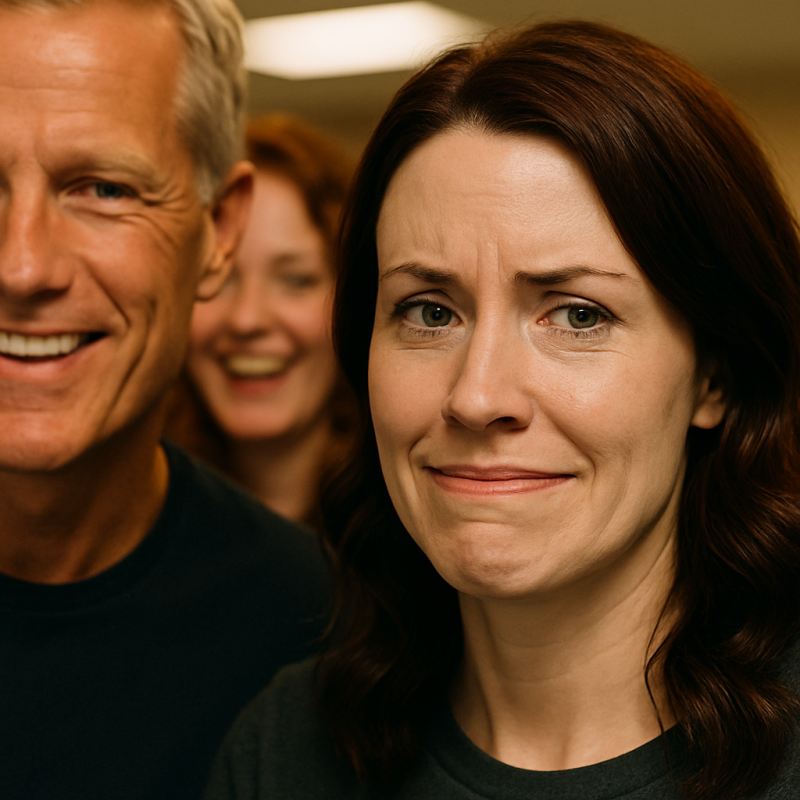 Image by RM AI
Overthinking It Again
A few weeks after that, I was presenting the quarterly analysis to the team. I'd put real work into it — broken the numbers down by segment, flagged the variance in the northeast region, built out a slide that walked through the three scenarios we'd need to plan for depending on how Q4 moved. I was maybe halfway through the third scenario when Daniel cut in. 'Are you overthinking it again?' He said it with a half-smile, the kind that makes it hard to know if you're supposed to laugh. I lost my place completely. I remember looking down at my notes and the words just wouldn't organize themselves back into the sequence I'd had them in. I said something like, 'Ha, maybe a little,' and tried to pick up the thread, but the momentum was gone. The rest of the presentation felt like I was recovering rather than presenting. What I noticed, though — and I noticed it in the way you notice something you immediately try to talk yourself out of — was the quiet that followed his question. Not laughter, not agreement, just a beat of silence that sat over the room before anyone moved.
 Image by RM AI
Coffee with Sophie
A few days after the presentation, Sophie and I grabbed coffee the way we used to do a couple of times a week — just the two of us, the place around the corner with the good oat milk. It felt normal at first. We talked about a client deadline, complained about the new expense reporting system. I waited until we were most of the way through our cups before I brought it up, and I kept it as casual as I could manage. 'Has Daniel seemed kind of weird to you lately?' I said it like it was barely a question, like I was just making conversation. Sophie's hands were wrapped around her cup and she went still for just a second before she answered. She said something about how he'd been under a lot of pressure with the Q4 targets, that senior leadership had been pushing hard. It was a reasonable answer. It was also the kind of answer that doesn't actually answer anything. She moved on quickly — asked me something about the weekend, I think — and I let her redirect because I didn't want to make it a whole thing. But I'd watched her face in that half-second before she spoke, and something had moved across it that I couldn't name.
 Image by RM AI
The Look Sophie Gave
I thought about Sophie's face for the rest of that afternoon. Not obsessively — or at least I told myself it wasn't obsessive — but it kept surfacing. The way she'd gone still. The way the answer had come out smooth and reasonable and completely beside the point. I'd known Sophie long enough to know when she was being careful with her words, and that had been careful. What I couldn't figure out was why. The most straightforward explanation was that she'd noticed something too and didn't want to get in the middle of it. That felt plausible. But there was another possibility I kept circling back to and then backing away from: that she knew something specific, something I didn't, and had made a decision not to tell me. I didn't want to land on that one. It felt like the kind of thought that, once you let it in, starts reshaping everything around it. So I kept telling myself I was probably reading too much into a two-second pause. People go still when they're thinking. It doesn't mean anything. But the deflection had been so immediate, so practiced, that the more I replayed it, the more I came back to the same uncomfortable place: Sophie's expression had shifted the moment I asked, and she had not looked at me the same way for the rest of that coffee.
 Image by RM AI
Finding Something to Worry About
The quarterly metrics presentation was two weeks later. I'd prepared carefully — maybe more carefully than usual, if I'm honest, because after the overthinking comment I was second-guessing my own instincts about what counted as thorough versus excessive. I'd actually cut two slides I'd originally planned to include, just to make sure the deck didn't run long. The presentation itself went fine. I walked through the numbers, flagged the dip in retention we'd need to watch in Q1, answered a couple of questions from Greg. And then, as I was wrapping up, Daniel leaned back in his chair and smiled at the room. 'Emma always finds something to worry about in the numbers,' he said. Easy, conversational, like he was sharing something fond and familiar about me. The team laughed — Sophie, Greg, even me, because by then laughing along had become a kind of reflex. But I felt it land somewhere underneath the laughter. My retention flag wasn't anxiety. It was the whole point of running the analysis. And yet somehow, in the space of one sentence, it had been reframed as a personality quirk — something charming and slightly excessive about me — and I'd sat there and smiled while it happened.
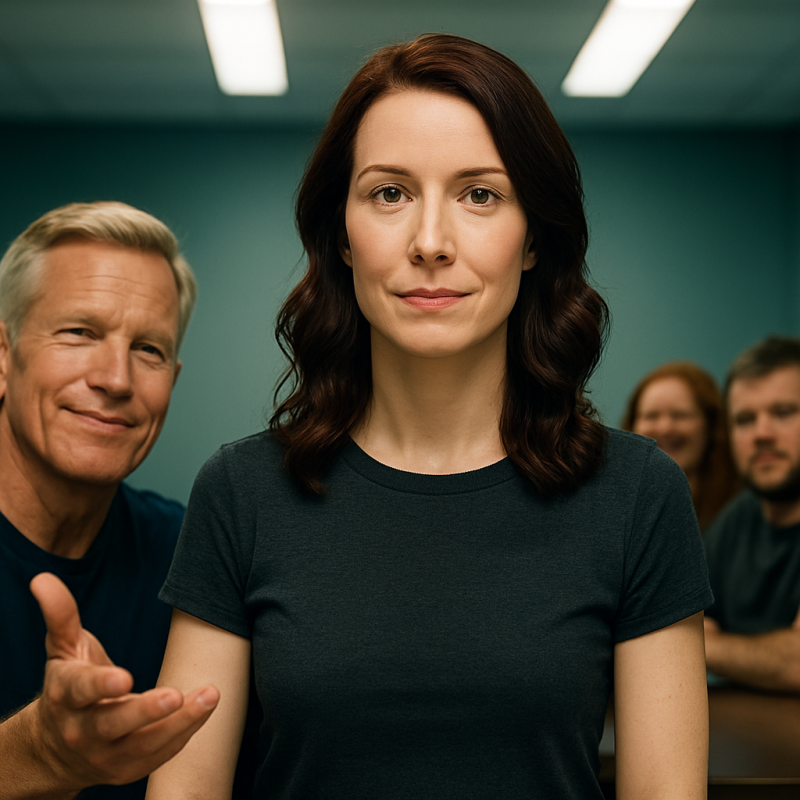 Image by RM AI
Of Course Emma Caught That
It was a vendor invoice, and the discrepancy wasn't even subtle — a line item billed twice, different descriptions, same amount. I flagged it in an email to Daniel with the two line numbers highlighted, the way I always did when I caught something that needed a second look. He forwarded it to the team without much comment, and I thought that was the end of it. But in our next team check-in, he brought it up. 'Of course Emma caught that,' he said, leaning back in his chair with that easy half-smile. 'She catches everything.' Sophie glanced down at her notebook. Greg adjusted his glasses. Nobody said anything, and Daniel moved on to the next agenda item like he'd just paid me a compliment. Maybe he had. That was the part I kept turning over afterward — I genuinely couldn't tell. Catching a billing error was literally part of my job. It saved the company money. But the way he said 'everything' had a weight to it, like thoroughness was a compulsion I couldn't help rather than a skill I'd developed, and I heard it again on the drive home — she catches everything — sitting in my chest like something I was supposed to be embarrassed about.
 Image by RM AI
Competence as Neuroticism
I started keeping a mental list without meaning to. It wasn't something I decided to do — it just happened, the way your brain starts tracking a sound once you've noticed it once. The overthinking comment after the strategy deck. The 'finds something to worry about' line during the metrics presentation. The 'catches everything' from the invoice meeting. Each one had arrived wrapped in a smile, framed as a joke or a fond observation, the kind of thing you'd feel ridiculous objecting to. But when I laid them out in sequence, they all pointed in the same direction. Thoroughness had become anxiety. Attention to detail had become a compulsion. Flagging risks had become finding things to worry about. Every strength I thought I had was showing up in his comments as a slightly exhausting personality trait. I told myself I was probably reading too much into it — that Daniel was just the kind of manager who made offhand remarks without thinking them through, that the pattern I was seeing was something I was constructing, not something that was actually there. But I'd spent years working with data, and I knew what a pattern looked like. I just didn't know yet what this one meant. The jokes kept landing, and I kept smiling, and the gap between those two things quietly widened.
 Image by RM AI
Performing for the Room
The comment that week was about my follow-up emails — something about how I was 'nothing if not thorough' when it came to making sure things didn't fall through the cracks. It got a small laugh from Sophie and a polite smile from Greg, and I did the thing I always did, which was smile along and let it pass. But this time I noticed something I hadn't quite clocked before. When Daniel said it, he didn't look at me. He looked at the room. His eyes moved to Sophie first, then to Greg, like he was checking whether the line had landed, whether they were tracking with him. It was a small thing. The kind of thing you could easily explain away — he was just making eye contact with the group, that's what people do when they're talking. But it sat with me afterward. The comments were never pulled aside, never quiet, never just between the two of us. They were always in meetings, always in front of the team, always in a room with witnesses. I didn't know what to do with that observation. I couldn't explain why it mattered or what it meant. I just knew that the jokes weren't really for me. They were for everyone else watching.
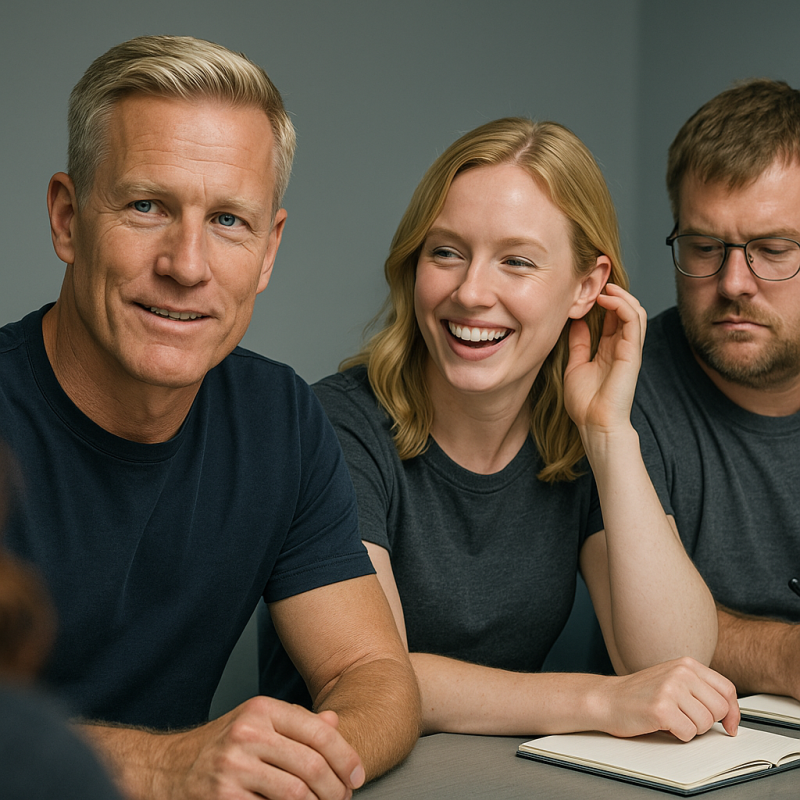 Image by RM AI
Building Toward Something
There was another one the following Tuesday. Something about how I'd 'probably already run the numbers three different ways' before the meeting had even started — said with a grin, to the room, while I was pulling up my laptop. The team laughed. I laughed. I was getting good at the laugh by then, the one that said I'm in on the joke, I'm not precious about this, I can take it. But driving home that evening I found myself replaying not just that comment but all of them, laid out in a row, and something about the sequence felt different than it had before. Individually, each one was dismissible. A throwaway line. A manager being a little careless with his words. But I couldn't shake the feeling that the jokes weren't just jokes — that they were adding up to something I couldn't quite see the shape of yet, and that I was the subject of whatever it was.
 Image by RM AI
Slack Goes Quiet
The week after the 'probably already run the numbers' comment, I started noticing the quiet. It wasn't dramatic — nothing about this period ever was. It was just that my Slack messages started taking longer to get responses. Questions I posted in the team channel that would have gotten two or three replies within the hour started sitting there, read receipts accumulating, actual answers not coming. I'd ask something specific about a project handoff and get nothing back until the next morning, if at all. At first I told myself people were busy, that it was a heavy week, that I was probably being oversensitive again. But it kept happening. I'd message Sophie directly about something we were collaborating on and the response would come back short, clipped, just enough to technically answer the question. Greg stopped reacting to things I shared in the channel, even the updates he used to acknowledge with a quick reply. I went back through my message history a couple of times, trying to figure out if I'd said something that had landed wrong, if there was a moment I could point to where the dynamic had shifted. I couldn't find one. The silence had arrived gradually, without a clear starting point, and it sat in the space where the back-and-forth used to be.
 Image by RM AI
Emoji Reactions
I tried rephrasing. That was my first instinct — maybe my questions were too long, too detailed, too easy to scroll past without engaging. So I started keeping them shorter. One question per message, specific and direct, the kind of thing that should have a clear answer. What I got back, more often than not, was a thumbs-up. Sometimes a checkmark. Once, memorably, a small green circle that I think was meant to signal 'got it' but told me absolutely nothing about whether the actual issue had been resolved. I'd ask whether a vendor contact had been updated in the system and get a thumbs-up. I'd flag that a deadline had shifted and get a checkmark. The reactions acknowledged that I'd sent something. They didn't answer anything. I tried following up in a second message, asking directly for a yes or no, and sometimes that worked and sometimes it just generated another emoji. Sophie had always been the person I could count on for a real back-and-forth, even on small things. Now her responses were as minimal as everyone else's. I sat with one of those thumbs-up reactions on my screen for longer than I should have, trying to figure out what it actually meant, and coming up with nothing useful. It was an answer that wasn't an answer, and I was getting a lot of those.
 Image by RM AI
Break Room Silence
I went to the break room around ten-thirty on a Thursday, which was usually a quiet time — most people had already done their morning coffee run and settled back in. But Sophie and Greg were both there, standing near the counter, talking in the low easy way people do when they're not in a hurry. I heard Sophie laugh at something as I pushed the door open. Then they saw me. The conversation stopped. Not gradually, not trailing off naturally the way it does when someone walks in and the topic just shifts — it stopped, cleanly, like a switch. Sophie looked down at her mug. Greg straightened up and adjusted his glasses. I said good morning. They both said it back, politely, and then nobody said anything else. I got to the coffee machine and went through the motions — pod in, cup under, wait for it to fill — and the silence behind me stayed exactly where it was. Nobody picked the conversation back up. Nobody asked me anything. I took my cup and said something like 'have a good one' and walked back out into the hallway. And it was only when I was halfway back to my desk that I noticed I'd been listening to my own footsteps the whole way down the corridor.
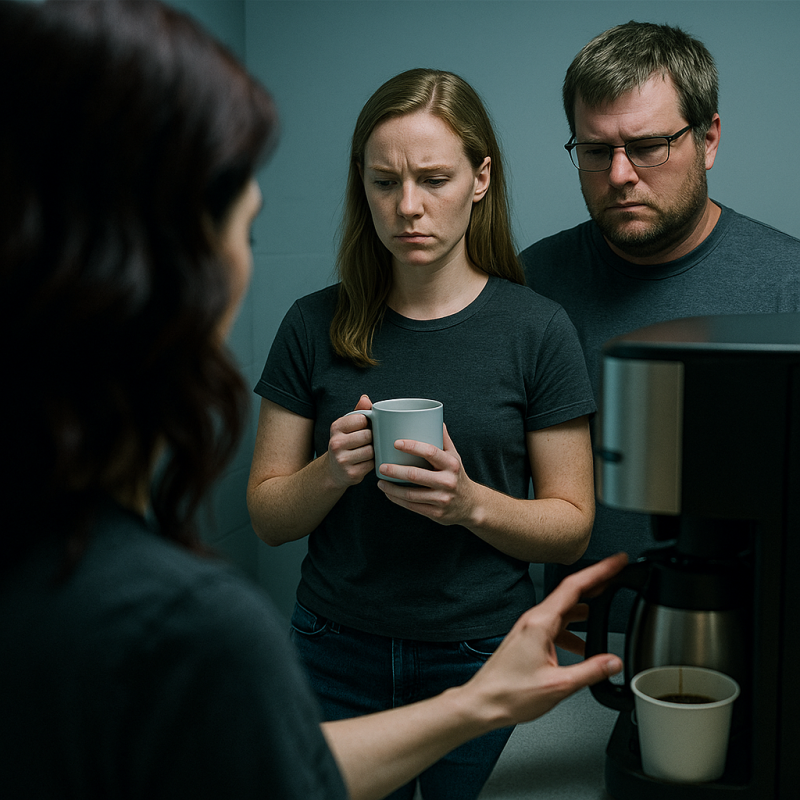 Image by RM AI
Sophie Suddenly Busy
Sophie and I used to talk every day. Not about anything important, usually — project updates, lunch plans, the kind of low-stakes back-and-forth that makes a workday feel less like a workday. She used to stop by my desk on her way to get water, on her way back from a meeting, sometimes just because she was walking past. That had stopped. I'd noticed it gradually, the way you notice a sound that's gone missing rather than one that's arrived. I tried catching her at her desk a couple of times that week. The first time, she said she was in the middle of something urgent and could we talk later. I said of course. Later didn't come. The second time, she said she had a deadline and gave me a quick apologetic smile that didn't quite reach her eyes. I started paying attention to the routes she took through the office, the way you do when you're trying to understand something you can't directly ask about. She wasn't busier than usual — I could see her screen from certain angles, and the pace looked the same as always. But one afternoon I tried to catch her attention as she passed the end of my row, and she was already turning toward the corridor before I'd finished saying her name.
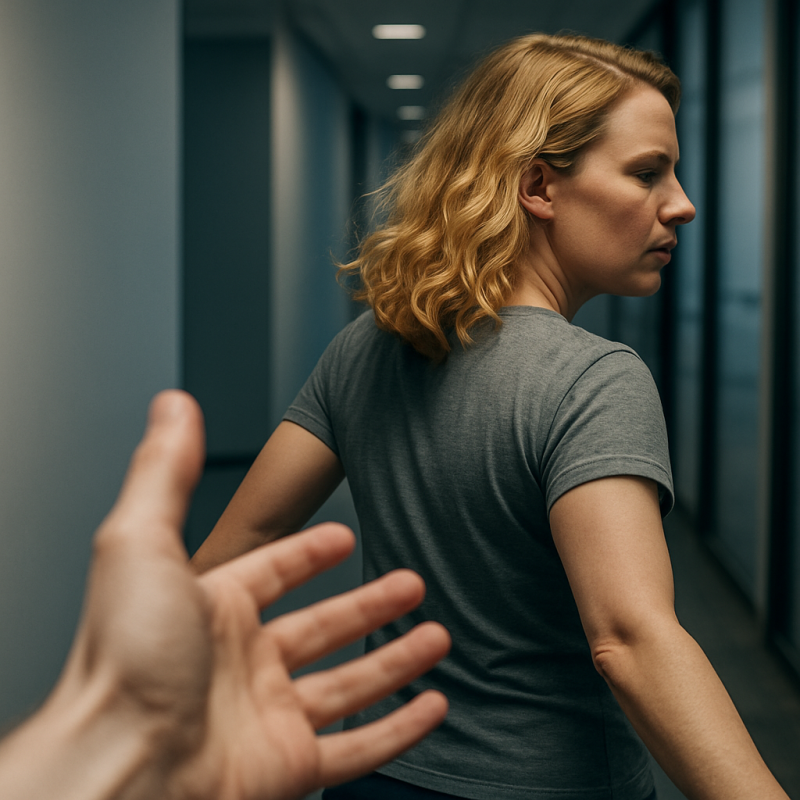 Image by RM AI
Questions Directed Elsewhere
The meeting started at ten, same as always. I had two projects on the agenda — the Harmon rollout and the Q4 reporting framework — and I'd spent part of the previous evening pulling together updated status notes in case anyone needed specifics. Daniel opened the session the way he always did, relaxed and unhurried, moving through the slide deck like he had all the time in the world. I sat where I usually sat, notepad open, pen ready. The Harmon rollout came up first. Daniel summarized the current phase, and I leaned forward slightly, ready. He moved on without looking at me. I waited. Sophie offered a comment about stakeholder communication and Daniel nodded, made a note. I thought maybe the next slide would bring it back around. It didn't. The Q4 framework came up twenty minutes later. I had built that timeline from scratch — every milestone, every dependency. I knew it better than anyone in that room. I kept my expression neutral and waited for someone to turn toward me. Nobody did. Greg was looking at his laptop. Sophie was writing something down. Daniel was talking. Then I heard Daniel ask Greg what the projected completion date was on the timeline I had created.
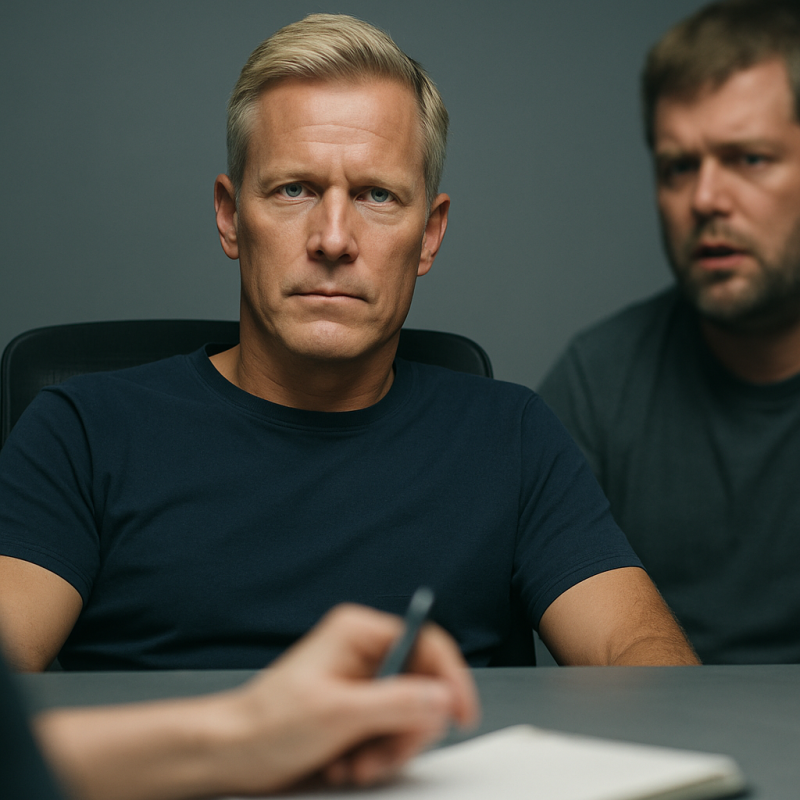 Image by RM AI
Offering Input
I told myself it was fine. Maybe Daniel just wanted a second perspective. Maybe Greg had been looped in on something I hadn't seen. I kept finding reasons that made the meeting feel less strange than it was. But then a technical issue came up — data reconciliation across the reporting periods — and I knew that one cold. I'd spent three weeks on a nearly identical problem the previous quarter and had documented the whole approach. I waited for a natural pause, found one, and offered the solution. I kept it brief and specific: the reconciliation lag was almost certainly a mapping issue at the source level, and I walked through the fix in about four sentences. Sophie gave me a small nod. Greg glanced up from his screen. Daniel said something like 'good point' and then immediately turned back to the slide. No one asked a follow-up question. No one wrote anything down. The conversation picked up right where it had been, the same thread, the same voices, as if I'd said nothing at all. I sat there with my pen still in my hand, the solution still hanging in the air between us, and felt the particular quiet of a room that had already moved on without you.
 Image by RM AI
The Story Already Written
I caught Greg at his desk later that afternoon, after most people had cleared out for a late lunch. It wasn't anything urgent — I just needed to confirm which version of the project tracker he was referencing for the weekly update, because two versions were floating around and I wanted to make sure we were aligned. It was the kind of question we'd have sorted out in thirty seconds six months ago. He looked up when I said his name, adjusted his glasses, and told me he thought it was the one Daniel had shared on Tuesday. He said it quietly, without quite meeting my eyes, and then he looked back at his screen. That was it. No 'let me pull it up,' no 'actually, can you check something for me while you're here.' Just the answer, minimal and complete, and then the clear signal that the conversation was over. I stood there for a second longer than I needed to. The office hummed around me — keyboards, the distant sound of someone's call, the air conditioning cycling on. Greg's eyes were already back on his work. I walked back to my desk with the strange, settled feeling that whatever was happening had already been decided, and I was the last one to know it.
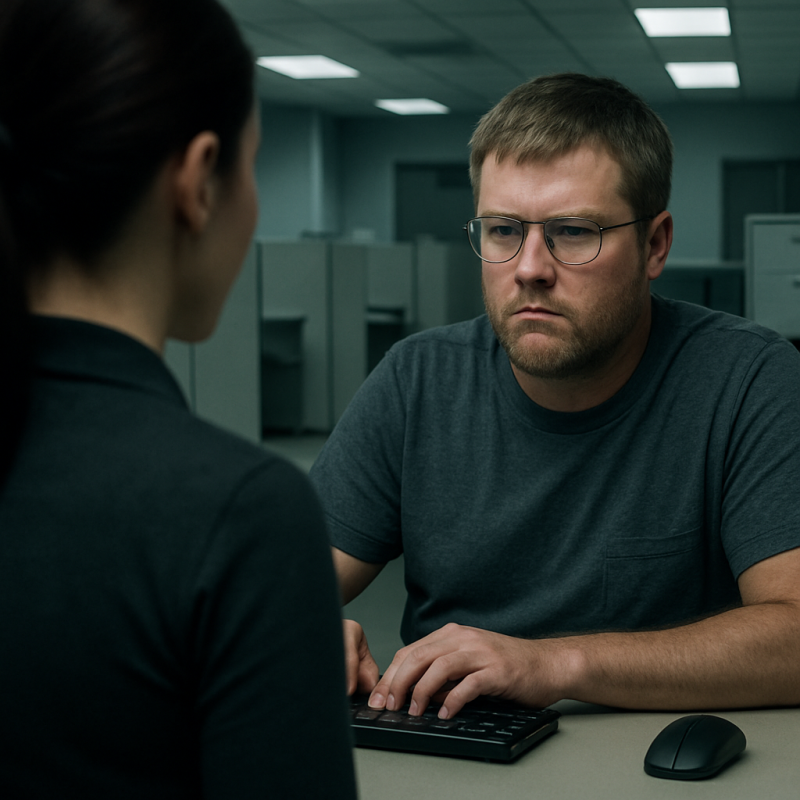 Image by RM AI
Combing Through Six Months
I sat at my kitchen table that night with a cup of tea I kept forgetting to drink. I went back through the last six months in my head, project by project, trying to find the thing I must have missed. The Harmon rollout — I'd hit every milestone. The Q4 framework — built it ahead of schedule. The vendor audit in September — I'd flagged three discrepancies that saved the team a significant rework cycle. I tried to think about client interactions. Had I said something wrong in a meeting? Misread a tone in an email and responded badly? I went through the faces, the conversations, the threads I could remember. Nothing surfaced. I thought about the smaller things — had I been difficult in some way I wasn't aware of? Too blunt in a feedback session? I turned it over and over, the way you do when you're sure the answer is there and you just can't see it yet. The tea went cold. The apartment was quiet. The need to find something — anything — that explained what was happening felt almost physical, like pressure behind my eyes. I opened my laptop and pulled up my project files to find the error I must have made somewhere.
 Image by RM AI
Line by Line
I started with the Q4 framework because that was the one that had come up in the meeting. I read through it the way you read something you're trying to see for the first time — slowly, looking for the gap, the assumption that didn't hold, the number that didn't track. The structure was sound. The methodology was documented clearly. I checked the underlying data pulls, cross-referenced the source tables, looked at the formulas. Everything held. I moved to the Harmon rollout documentation. Same thing — clear milestones, accurate status updates, nothing that looked like a miss or a shortcut. I went through the vendor audit report next, then two smaller project summaries from earlier in the year. I read my own writing like it belonged to someone I was trying to evaluate fairly. I found a few places where I might have been more concise, one section where the executive summary could have led with the finding instead of the methodology. Minor things. The kind of things that don't matter. By midnight I had been through most of what I'd submitted in the past four months, and I hadn't found what I was looking for. The work was solid. That should have been a relief. It wasn't.
 Image by RM AI
All On Schedule
The next morning I went through my email folders before I'd even made coffee. I pulled up every sent confirmation, every project delivery thread, every 'please find attached' I'd sent over the past six months. I sorted by date and went through them one by one. The Harmon phase-two deliverable — submitted two days early. The Q4 draft — sent the morning it was due, with a follow-up summary no one had asked for. The vendor audit — delivered on a Friday afternoon, ahead of the Monday deadline. I checked the client-facing threads too. The feedback I could find was positive — one client had specifically replied to thank me for the turnaround time. I pulled up my project timelines and laid them against the actual delivery dates. Every line matched or beat the target. I sat back and looked at what I'd assembled on the screen. There was no pattern of lateness. No cluster of missed windows. No thread where something had slipped and I'd had to scramble to recover. The documentation said I had been doing my job well, consistently, without gaps. I sat with that for a long time — the strange, flat feeling of evidence that should have answered something but only made the silence around me harder to explain.
 Image by RM AI
Positive Reviews
I almost didn't open the performance review folder. I'd been through enough files by that point that I half-expected to find something I'd misremembered, some rating that was lower than I thought, some comment I'd glossed over at the time. I found the folder in my personal drive, the one I kept for documents I might need later. There were two formal reviews in there — one from eight months ago, one from four months ago. I opened the more recent one first. Daniel had completed it. I read through the categories slowly: project delivery, stakeholder communication, technical accuracy, team contribution. The ratings were good. Better than good. He'd written specific comments under most of the categories — things like 'consistently delivers ahead of schedule' and 'brings analytical rigor that elevates the team's output.' I read it twice. Then I read it a third time, because something about seeing it in writing made it feel less real, not more. I thought about the meeting two days ago, about Greg being asked for the timeline I'd built, about the way the room had moved past my input without pausing. I looked back at the document on my screen, at Daniel's name in the reviewer field, and read the words 'exceeds expectations' from four months ago.
 Image by RM AI
Checking Everything
I kept going. I don't know what I was looking for at that point, but stopping felt worse than continuing. I pulled up my HR portal and checked my sick day usage for the year. I'd taken four days — two in February when I had the flu, two in July for a family thing. The team average, which I could see on the shared leave tracker, was closer to seven or eight. I checked my calendar next, going back through every week since January, looking for missed meetings or scheduling conflicts I might have forgotten. I found one — a standup I'd moved by thirty minutes in March because of a conflicting client call, which I'd flagged in advance. That was it. I went through my expense reports next, line by line, looking for anything that might have been flagged or questioned. Everything was within policy, everything had receipts attached, everything had been approved without comment. I sat back from the screen. I'd gone through six months of my own record looking for the thing that explained what was happening to me, and I hadn't found it. My attendance record was better than the team average.
 Image by RM AI
No Smoking Gun
My expense reports were clean. My attendance was better than the team average. My project deliverables had all landed on time, or close enough that no one had flagged them. I sat back from my laptop and looked at what I'd built — six months of my own record, laid out in front of me like evidence in a case I was trying to win. And there was nothing there. No missed deadline that had cost the company a client. No complaint from a stakeholder. No pattern of lateness or absence or poor judgment. I'd been so certain that if I looked hard enough, I'd find the thing — the one moment where I'd dropped the ball badly enough to explain all of this. But the record didn't give me that. What it gave me instead was something harder to sit with. If there was no catastrophic mistake, then the problem wasn't something I'd done. It was something I was. And I had no idea how to fix that. I couldn't revise my personality. I couldn't resubmit myself with corrections. The absence of an answer didn't feel like relief — it felt worse than finding something wrong would have.
 Image by RM AI
No Follow-Up
I kept waiting for the next step. That's what you do, right? Something gets announced, and then there's a process — a formal meeting, a written warning, a performance improvement plan with checkboxes and timelines. I'd been through enough corporate cycles to know how these things were supposed to work. So I checked my calendar. I checked it the morning after the announcement, and then again that afternoon, and then every day for the rest of that week. No meeting appeared. No HR appointment materialized. No email arrived with a subject line that said next steps or follow-up or anything that suggested someone was moving this forward. I refreshed my inbox more times than I want to admit. I drafted responses to emails that hadn't been sent yet. I rehearsed conversations that never got scheduled. By Friday, the silence had taken on a weight I hadn't expected. Confrontation, at least, gives you something to push back against. A formal warning has language you can respond to. But silence doesn't have edges. You can't argue with it or prepare for it or defend yourself against it. The week just ended, and nothing had happened, and somehow that felt heavier than anything else could have.
 Image by RM AI
Waiting for Test Results
I started checking my email the way some people check their phones after a first date — compulsively, irrationally, with a specific kind of hope that curdled a little more each time the inbox came up empty. Every few minutes, I'd tab over from whatever I was supposed to be working on and hit refresh. I told myself I was just staying on top of things. I wasn't. I was waiting for a diagnosis. That's the only way I can describe it — it felt exactly like waiting for test results, that particular suspended dread where you can't make plans or relax or think about anything else because the answer is coming and you don't know what it is yet. My phone was face-up on my desk at all times. I jumped every time a notification sound came through, then felt the small deflation when it turned out to be a calendar reminder or a Slack ping from a project thread I'd been copied on weeks ago. I tried to draft a quarterly summary I owed to Michael. I wrote two sentences and stopped. The words wouldn't stick. Nothing would stick. I was too busy waiting for something that kept not arriving. I hit refresh one more time, and my inbox filled with a vendor newsletter, a meeting recap, and an automated system notification.
 Image by RM AI
Constant Knot
The knot in my stomach became something I stopped noticing because it was always there. That's the thing about sustained anxiety — at some point it stops feeling like a symptom and starts feeling like your baseline. I'd wake up with it. I'd carry it through my commute, through my morning coffee, through whatever meeting I was supposed to be present in. I sat across from Sophie in a team check-in that week and watched her look at her notebook instead of at me, and I couldn't tell if that meant something or if I was reading into everything now. Greg adjusted his glasses twice during a five-minute standup and left without making eye contact, and I caught myself cataloguing it like it was data. Every interaction felt like it might contain information I needed, and the effort of monitoring all of it was exhausting. I couldn't focus on the actual work in front of me. I'd read the same paragraph of a project brief four times and retain nothing. I wanted resolution — even bad resolution, even the version where someone sat me down and said it plainly. At least then I'd know what I was dealing with. Instead, the uncertainty just sat in my chest, heavy and unmoving, and I carried it home with me every night.
 Image by RM AI
Everything Normal
I was walking back from the kitchen with my coffee when I saw Daniel coming down the hallway toward me. My whole body went tight. I didn't know what to do with my face, whether to look away or hold eye contact or say something first. I hadn't spoken to him directly since the meeting. He was carrying a folder and moving at his usual pace, unhurried, like a man with nowhere urgent to be. And then he looked up, saw me, and nodded. Just a nod. The kind you give a coworker you pass in the hall on any ordinary Tuesday. Bland and brief and completely, utterly normal. He didn't slow down. He didn't say anything. He just nodded and kept walking, and I stood there holding my coffee cup with both hands, watching him turn the corner. I replayed the moment for the rest of the afternoon. That nod. That perfectly calibrated, nothing-to-see-here nod. He had sat across from me and told me I wasn't the right fit for the team, and now he was nodding at me in the hallway like we were two people who had never had that conversation at all.
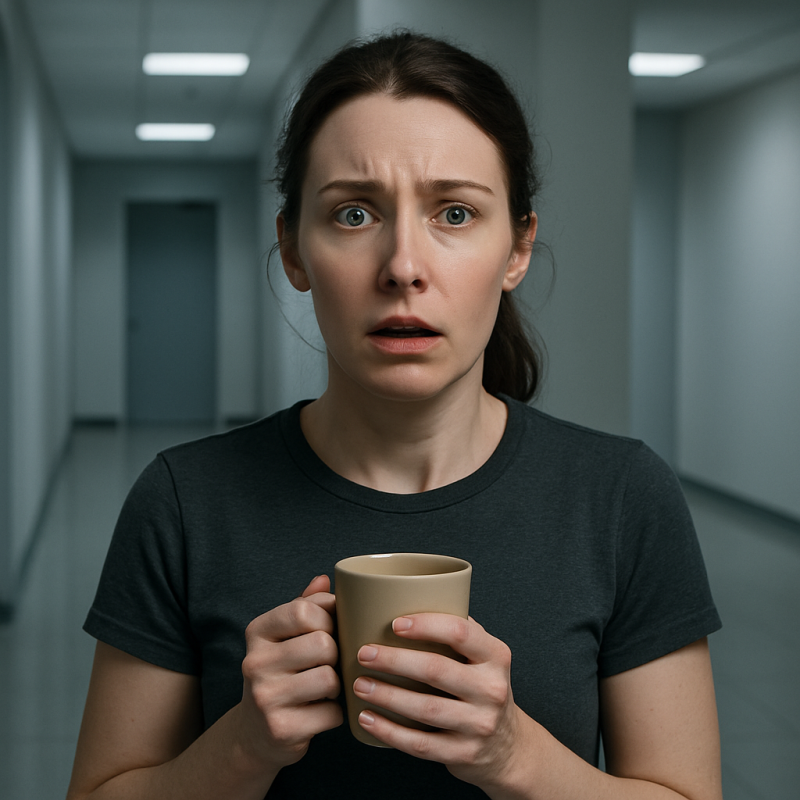 Image by RM AI
Designed to Unbalance
Another week went by. Then most of another one. Daniel kept nodding at me in hallways. He said good morning once, near the elevator, in the same tone he would have used to comment on the weather. No HR email arrived. No meeting appeared on my calendar. I was still showing up, still completing my assigned work, still sitting in the same team meetings I'd always sat in — except now there was this thing underneath all of it that no one was acknowledging. I started paying attention to the timing of things. How long the silence had been going on. Whether there was a pattern to when Daniel was visible versus when he wasn't. I couldn't find one, or maybe I was looking too hard. I didn't know what the waiting was for. I didn't know what it was accomplishing, or whether it was accomplishing anything at all. Maybe it was just how these things moved — slowly, bureaucratically, without urgency. But it didn't feel accidental. It felt too consistent for that, too steady — though I couldn't have said what, if anything, that consistency meant. I sat with that feeling most nights, turning it over, unable to name what it was or what it meant.
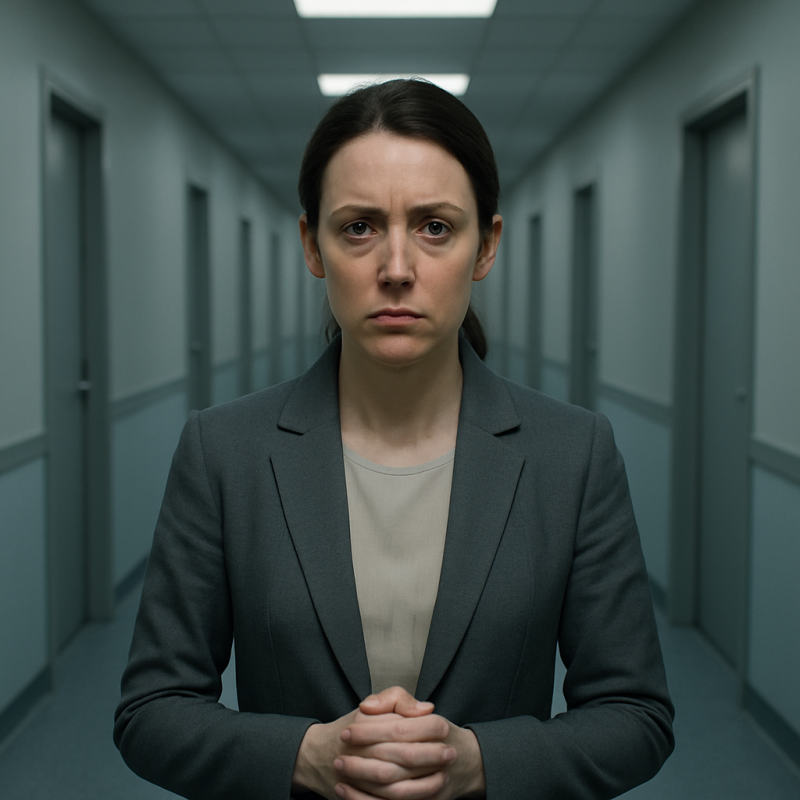 Image by RM AI
Constant Waiting
I stopped sleeping well somewhere around the third week. Not dramatically — I wasn't lying awake staring at the ceiling for hours. It was subtler than that. I'd fall asleep fine and then wake up at four or five in the morning with my mind already running, already cataloguing the day ahead, already bracing. I'd lie there in the dark and try to think about something neutral and find that I couldn't. Every thought looped back. I couldn't make plans that extended more than a few days out because I didn't know what my situation would be by then. I couldn't settle into the present because the present felt temporary and unstable. At work, I moved through my tasks like I was going through motions I'd memorized but no longer understood the purpose of. I answered emails. I attended meetings. I produced the deliverables I was supposed to produce. But the energy it took to maintain that surface while carrying everything underneath it — the waiting, the not-knowing, the constant low-level vigilance — was more than I had to give. By the end of each day, I had nothing left. I'd get home, sit on my couch, and feel the particular emptiness of someone who has been holding themselves together for too long.
 Image by RM AI
Quick Chat
It was a Thursday afternoon, somewhere around three-thirty, when the email came in. I almost missed it — I'd been staring at a spreadsheet long enough that the numbers had stopped meaning anything, and I was running on the kind of tired that makes everything feel slightly underwater. The sender was listed as HR General. The subject line said Quick Chat. I read it twice before I opened it. The body was two sentences, signed by Jennifer. She was requesting a brief meeting the following day, Friday, at two p.m. No agenda. No context. No explanation of what we'd be discussing. I read it a third time, then a fourth, turning the words over like there was a code in them I hadn't cracked yet. After weeks of silence — weeks of hallway nods and empty inboxes and mornings spent bracing for something that never arrived — two sentences from HR felt enormous. Something about those two words felt nothing like what they claimed to be. I set my phone face-down on the desk, and my stomach dropped straight through the floor.
 Image by RM AI
Searching for Subtext
I read it again. And then again. Quick chat at two words that could mean absolutely anything, or nothing, or everything I was afraid of. I kept turning the phrasing over, looking for the seam where the real message was hiding. Jennifer's name at the bottom. No subject line beyond that. No agenda attached. No 'looking forward to connecting' or 'just a routine check-in' to soften it. I drafted a reply three times asking what we'd be discussing, and deleted all three. Asking felt like admitting I was scared. Not asking felt like walking into something blind. I tried to tell myself that HR sent these kinds of emails all the time — that quick chat was probably exactly what it claimed to be. But after weeks of silence, weeks of nothing, two sentences from HR didn't feel routine. It felt like the quiet before something. I couldn't find the subtext I was looking for, no matter how many times I read it. There was nothing there to find. Just two sentences, sitting on my screen, giving me nothing and taking everything.
 Image by RM AI
Friday at Two
Thursday afternoon was a write-off. I stared at my monitor and moved things around on my desk and pretended to work, but nothing landed. I went home and lay in bed running through every possible version of the meeting — what Rachel might say, what I might say back, whether I should bring notes or whether that would look defensive. I didn't sleep so much as drift in and out of something that felt like sleep but left me more tired than before. Friday morning arrived like a punishment. I made coffee and couldn't drink it. I made toast and left it on the counter. I got to the office early because staying home felt worse, and then I sat at my desk watching the clock in a way I hadn't done since I was a kid waiting for the school bell. Every time I tried to type something, my hands weren't quite steady. Eleven o'clock felt like it took a week. Noon felt longer. By one-thirty I had stopped pretending to work entirely and was just sitting there, watching the minutes move, the whole morning pressing down on me like something I couldn't name.
 Image by RM AI
Third Floor Corner
I got to the third floor at one fifty-eight. The door to the small conference room was already open, which I hadn't expected, and I stopped in the doorway for just a second before I made myself walk in. Jennifer wasn't there. The woman sitting at the table was someone I recognized from the org chart but had never spoken to directly — Rachel, from employee relations. She looked up when I came in and gestured toward the chair across from her without saying anything first. No hello, no how are you, no sorry for the confusion about who you'd be meeting with. I sat down. The room was quiet in a way that felt deliberate, though I couldn't have said why. Rachel had a laptop open on the table, angled so I couldn't see the screen. And between us, centered on the table like it had been placed there carefully, was a closed manila folder. I didn't look at it directly. I looked at Rachel instead, trying to read something in her face. There was nothing to read. And then my eyes went back to the folder anyway.
 Image by RM AI
Professional Mask
I folded my hands on the table the way you do when you're trying to look calmer than you are. Rachel thanked me for coming in — same even tone, no warmth in it, no edge either, just the flat professional register of someone who had done this exact thing many times before. She didn't explain why she was here instead of Jennifer. She didn't offer context or preamble. I kept watching her face for something — a flicker of sympathy, a tightening around the eyes, anything that might tell me which direction this was going. There was nothing. Her expression was so carefully controlled it felt almost architectural, like something built and maintained rather than natural. I thought about asking her directly what this was about, but the words didn't come. The silence between us had a weight to it. Then Rachel's hand moved across the table, fingers resting briefly on the edge of the folder, and she slid it across toward me.
 Image by RM AI
Team Performance Review
I picked it up with both hands because one didn't feel steady enough. The paper was heavier than I expected — printed, stapled, ten pages at least. Rachel said Daniel had submitted it earlier in the week. Her voice was the same measured register as before, like she was reading from a script she'd memorized so thoroughly it no longer required feeling. I looked down at the first page. My stomach dropped before I'd read a single word of the body. This wasn't a conversation. This wasn't a quick chat. This was a document — formal, printed, submitted through official channels — and my name was in the title and the subheadings below read Communication Concerns, Missed Deliverables, Team Collaboration Issues. I sat there holding it, the paper slightly warm from the printer or from my hands, I couldn't tell which. The header read Team Performance Review. Below that, in the author field: Daniel Kerr.
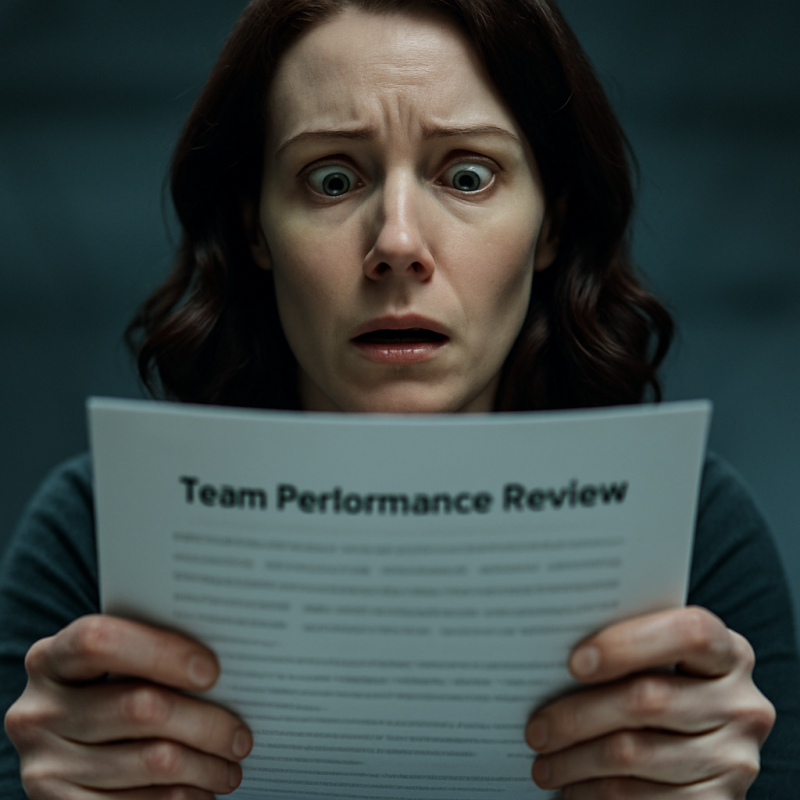 Image by RM AI
Vague Enough to Believe
I made myself start reading. The first section was under Communication Concerns, and the language was so careful, so clinical, that it took me a moment to understand what I was actually looking at. It referenced challenges in timely stakeholder communication during a recent budget reconciliation cycle. I knew that project. I had lived inside that project for three weeks — the late nights, the version-controlled spreadsheets, the email threads I'd kept organized down to the timestamp. I knew every decision that had been made and why. But the description in front of me didn't match any of it. According to the document, I had caused delays on key deliverables by failing to communicate status updates in a timely manner. The language was vague enough that someone who hadn't been there might have nodded along. It didn't name specific dates or specific emails. It didn't have to. It just needed to sound plausible, and it did — it sounded completely, devastatingly plausible. I turned the page and kept reading, and the project I had worked so hard on sat in front of me described in a way I almost didn't recognize.
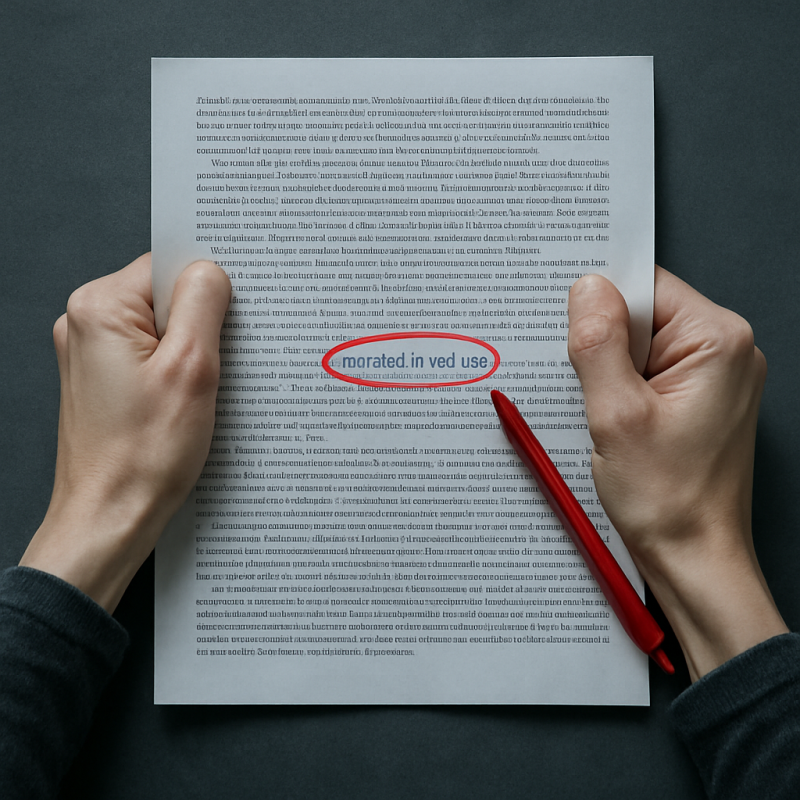 Image by RM AI
Daniel's Unclear Instructions
The next section was about a client call from two months back. The document described it as an instance of critical updates not being communicated effectively, resulting in client confusion and reputational risk to the team. I remembered that call. I remembered it clearly, the way you remember things that made you feel bad even when you couldn't entirely explain why. What the document didn't mention — what it left out entirely — was that Daniel had given me the briefing materials the morning of the call, less than an hour before it started, and half of what he'd sent was incomplete. I'd flagged it. I had sent him a message asking for the missing figures, and he hadn't responded before the call began. I'd done the best I could with what I had. The confusion on that call hadn't come from me failing to communicate. It had come from not having the information I needed in the first place. But none of that was in the document. Daniel's name appeared in the author field at the top and nowhere else. The weight of that omission settled over me and didn't lift.
 Image by RM AI
Meticulous Nature Weaponized
I kept reading, and somewhere around page six I stopped being surprised. The pattern was too consistent to miss. My attention to detail was framed as overthinking that slowed team momentum. My thoroughness was described as an inability to prioritize efficiently. Every quality that had ever been cited as a strength — the careful documentation, the follow-through, the habit of double-checking before signing off — had been turned ninety degrees and reframed as a liability. I thought about the early months, when Daniel used to joke about how particular I was, how he'd say it like it was a compliment, like being meticulous was something he valued. I had taken it as praise. I had leaned into it. And now I was sitting in a conference room on the third floor holding ten pages of evidence that those same qualities had been used to build something against me, each strength mapped to a corresponding failure, the whole document assembled from the parts of me I'd thought were worth something. I sat with the folder in my hands and felt the full weight of it — not just what it said, but what it had taken to write it.
 Image by RM AI
Copy for My Lawyer
I closed the folder slowly, the way you close something you know you'll never be able to unsee. Rachel was watching me from across the table with that practiced stillness she'd maintained the entire meeting, and I took a breath before I spoke. My voice came out steadier than I expected — steadier than I felt. I told her I'd need a copy of everything in that folder. All of it. She started to say something about standard procedure, about how documentation requests typically went through a formal process, and I let her finish before I said it plainly: I wanted to review the materials with my attorney. The word landed in the room like something physical. Rachel's expression didn't collapse or shift dramatically — it was smaller than that, just a slight tightening around her eyes, a fractional pause before she nodded and said she'd arrange the copies. But I caught it. After weeks of watching people in that office perform composure, I had gotten very good at reading the spaces between what people said and what they meant. She reached for her pen, and I watched her write something down.
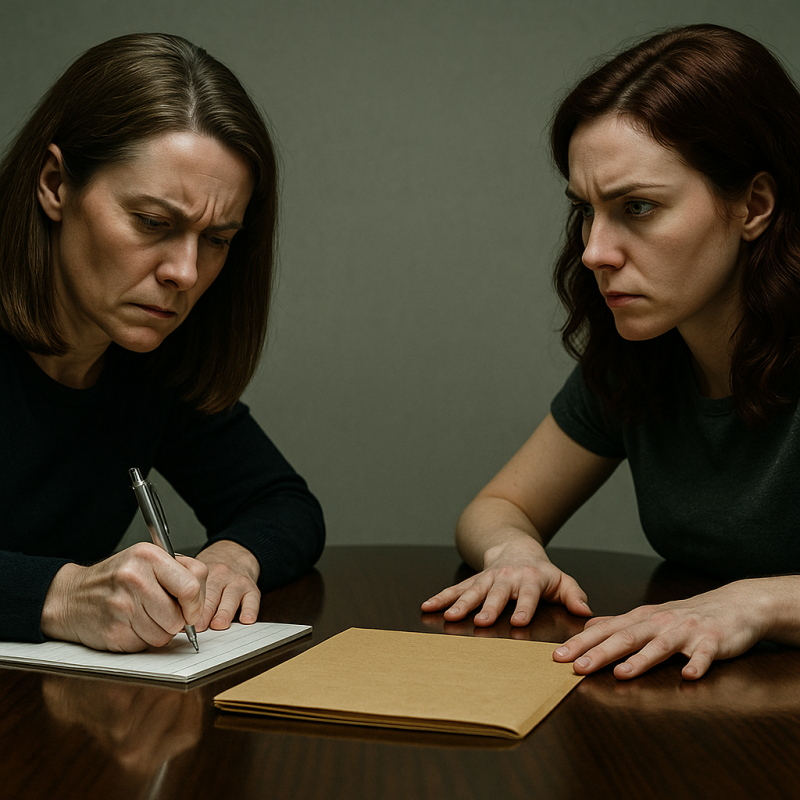 Image by RM AI
Actual Emails and Records
I was home by four and had my laptop open before I'd even taken off my coat. I knew what I was looking for — I just needed to find it fast enough that the momentum didn't die. I pulled up the budget reconciliation project first, the one Daniel's report had described as an example of my failure to communicate proactively. I had the emails right there: three separate messages I'd sent him asking for the missing vendor figures, each one timestamped, each one unanswered until the deadline had already passed. I found the client call notes from the Hargrove account, the ones where I'd flagged the gap in Daniel's prep materials two days before the meeting. I saved everything into a new folder and kept going. By nine o'clock I had emails, meeting notes, project logs, and approval chains going back fourteen months. I printed the stack and laid it out on my kitchen table in chronological order, each document a direct counter to something in that folder. The pile was four inches thick.
 Image by RM AI
Lisa Thornton
Lisa Thornton's office was on the fourteenth floor of a building downtown, and she had the kind of quiet that made you feel like the room was actually listening. I spread everything across her conference table — Daniel's report on one side, my evidence on the other — and walked her through the timeline while she read. She didn't interrupt much. She asked about the budget reconciliation emails, asked me to confirm the timestamps, asked whether Daniel had ever responded in writing to my clarification requests. I told her he hadn't. She made a note. When she got to the Hargrove call documentation, she paused and read it twice. Her expression had been professionally neutral for most of the meeting, but somewhere around page eight of Daniel's report it shifted — not dramatically, just a sharpening, the way someone's face changes when a pattern they've seen before comes into focus. She set the folder down and looked at me across the table. She said she'd seen enough. I had spent weeks wondering if I was reading the situation wrong, if I was too close to it to see it clearly. Sitting across from Lisa, I felt the particular relief of someone finally seeing exactly what I saw.
 Image by RM AI
Systematic Documentation Fraud
Lisa used the phrase 'systematic documentation fraud' the way someone uses a term they've used before — precisely, without drama, like naming a species they'd already catalogued. She said the pattern was too consistent to be accidental: the vague language, the reframing of strengths as liabilities, the absence of any contemporaneous written warnings before the termination. She told me she'd handled cases like this before, that manufactured performance documentation was a known tactic in workplace retaliation, and that the specificity of my counter-evidence made this one of the cleaner examples she'd seen. She explained that the company could be liable — not just for the termination itself, but for the process used to justify it. I sat there and let the words settle. I had known something was wrong for months. I had second-guessed that knowing, talked myself out of it, wondered if I was being paranoid or oversensitive or too attached to my own version of events. And now a woman who did this for a living was sitting across from me, calling it by its name. The relief and the horror arrived at exactly the same moment, and I couldn't have told you which one was louder.
 Image by RM AI
Praise to Termination
Lisa asked me to build a complete timeline, so I spent the next two days doing exactly that. I went back to the beginning — the first month, when Daniel had sent a company-wide email praising the Q3 audit I'd led, calling my attention to detail 'exactly what this team needs.' I printed it and put it at the top. Then I found the April performance review, the one where he'd rated me 'exceeds expectations' in three categories and written that I was 'a reliable anchor for the team's quality standards.' I printed that too. Then I documented the turn: the first vague comment about 'team fit' in a one-on-one, the joke about me being 'too in the weeds,' the meeting I hadn't been copied on, the project I'd been quietly removed from. I added dates to everything. At the end of the timeline I placed Daniel's termination report — the document that described me as a consistent underperformer who struggled with prioritization and collaboration. The April review and the termination report sat two inches apart on my kitchen table, and they did not describe the same person or the same work.
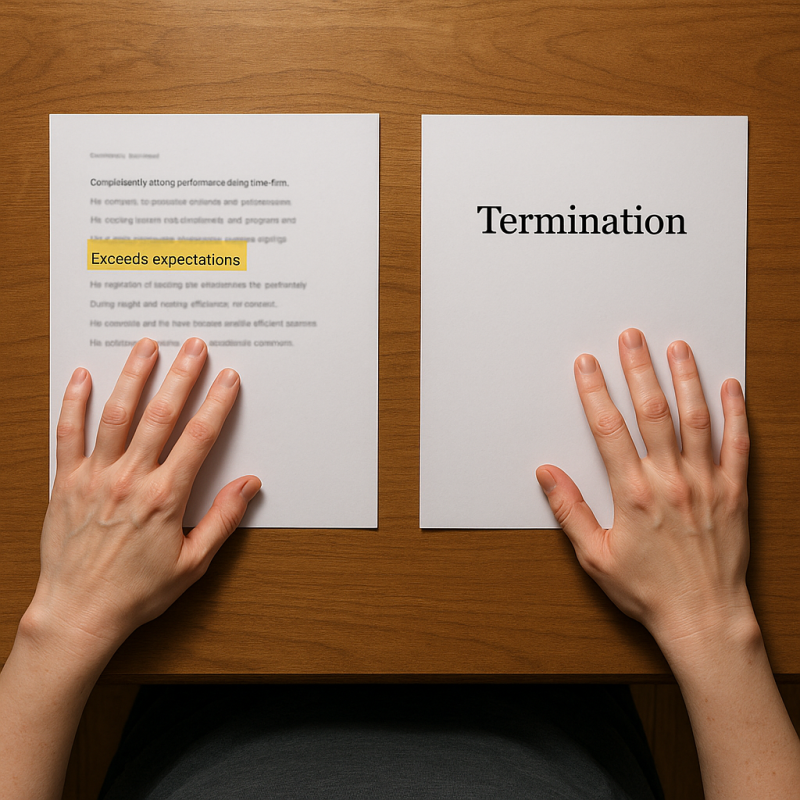 Image by RM AI
Formal Complaint
Lisa and I spent three sessions drafting the formal complaint. She was methodical about it — every claim sourced to a specific document, every contradiction mapped to a timestamp, nothing asserted that the evidence didn't directly support. The complaint named Daniel. It named the documentation. It included the full timeline, the contradicting emails, the performance review from April, and Lisa's written legal analysis of the pattern. I addressed it to Rachel in HR and copied Michael Bradford, the senior manager Daniel reported to. I had not spoken to Michael since my first year at the company, when he'd shaken my hand at a department meeting and said something forgettable about the team's potential. I wondered briefly what it would feel like to read this email from his position. Then I stopped wondering and focused on the screen. Lisa had reviewed the final draft that morning and told me it was solid. I read it one more time, checked that every attachment had uploaded, and hit send.
 Image by RM AI
Investigation Opened
HR opened the formal investigation six days after I sent the complaint. Rachel called to inform me, using the kind of careful procedural language that told me the company's legal team was now involved. I met with the investigators the following week — Rachel, an outside HR consultant I hadn't seen before, and Michael, who sat at the far end of the table and said very little. Lisa was on the phone, available if needed. I walked them through the timeline from the beginning, document by document, email by email. When I got to the budget reconciliation section, I laid my three unanswered emails next to Daniel's claim that I had failed to communicate proactively. The outside consultant made a note without looking up. I answered every question they asked, and I asked for clarification when a question was unclear rather than guessing at what they meant. At the end of the meeting, Rachel told me Daniel had been asked to provide a written response to the allegations. I drove home steadier than I'd felt in months. Two days later, Rachel called again to tell me his response had been received and that the investigators had questions about several of his answers.
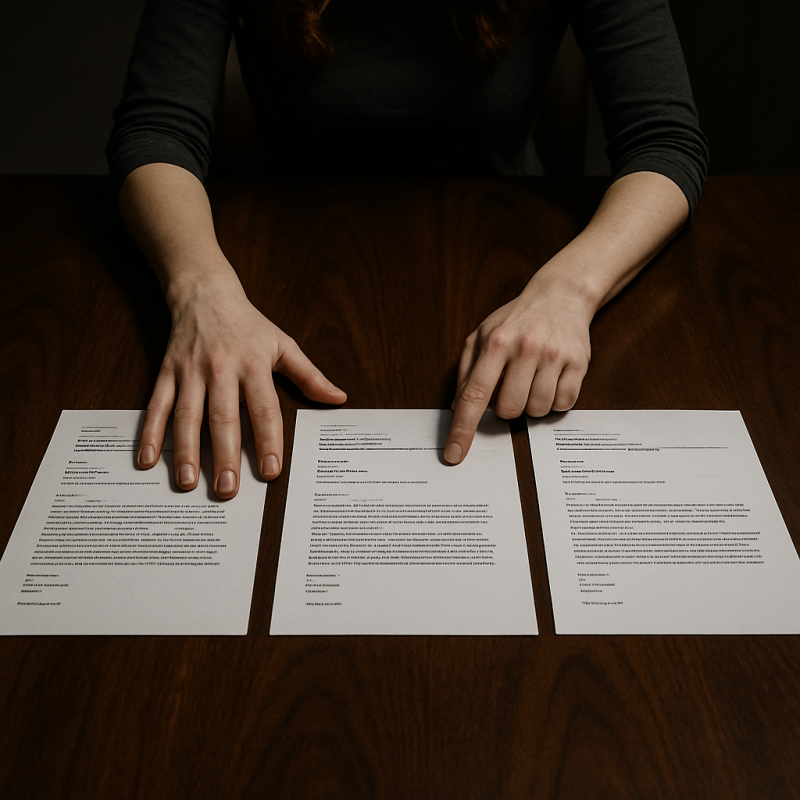 Image by RM AI
Contradictions Emerge
Rachel sent me a summary of the investigation's findings so far, and I read it at my kitchen table with a cup of coffee going cold beside me. Daniel's written responses had been compared against the documented timeline, and the gaps were significant. He had described the budget reconciliation failure as a unilateral breakdown in my communication — but the investigators had my three timestamped emails asking him for the missing figures, none of which he'd answered before the deadline. He had characterized the Hargrove situation as an example of my failure to prepare adequately, but the call notes showed I had flagged the gap in his materials two days prior. The investigators had noted the inconsistencies formally. According to Rachel, when they presented Daniel with the email records directly, his account of both incidents changed — and when she told me that on the phone, I heard something I hadn't expected: the sound of a story falling apart.
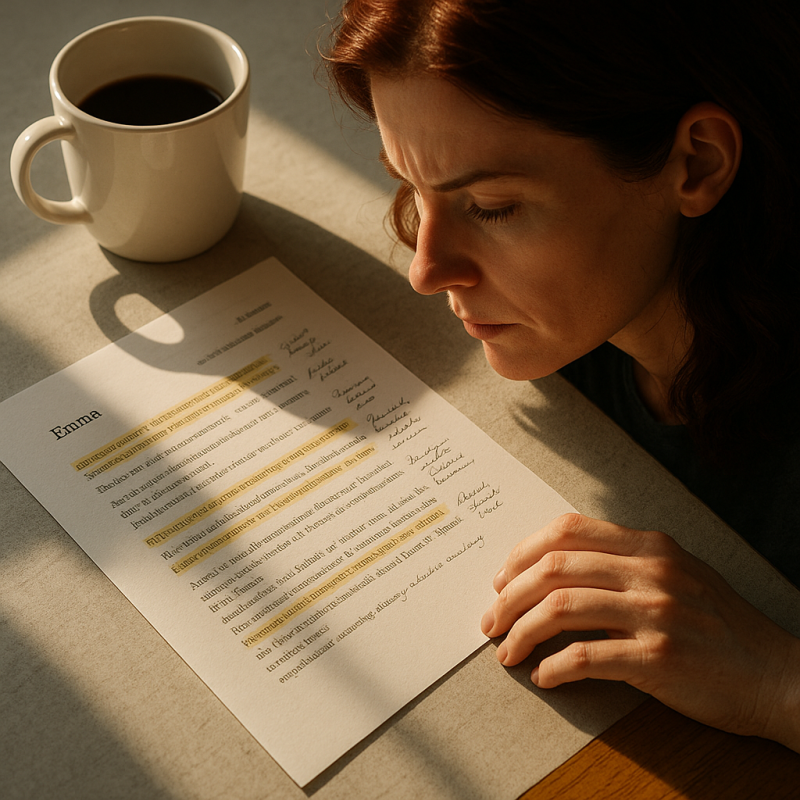 Image by RM AI
Placed on Leave
Rachel called me on a Tuesday morning, and I knew from the first two seconds of her tone that something had shifted. She asked if I had a few minutes, which was the kind of question that meant she already knew I did. She told me the investigation findings had been escalated to Michael, that the fabricated documentation had been formally flagged, and that the company was taking the matter seriously. I sat very still at my desk and just listened. Then she said it: Daniel had been placed on administrative leave, effective immediately, and was barred from the office for the duration of the investigation. She told me my position was secure. She told me the fabricated reviews would be removed from my file. She said the company wanted to make this right. I asked her to repeat the part about my position, and she did, in the same even tone, without hesitation. I had spent months being told, in a hundred quiet ways, that I was the problem. I had watched my own record get rewritten around me. And now Rachel was telling me that Daniel — not me — was the one being removed from the building.
 Image by RM AI
Settlement and Admission
Lisa walked me through the settlement offer at her office, page by page, with a yellow legal pad beside her and a highlighter she kept clicking open and closed. The company was offering financial compensation, a full clearing of my employment record, and — the part that made me read the paragraph twice — a formal written acknowledgment that the documentation used in my termination process had been fabricated and did not reflect my actual performance. They were admitting it. In writing. Lisa said it was a stronger admission than she usually saw at this stage, and she said it in a way that told me she meant it. Michael had signed off on the terms. Rachel had sent the paperwork. I initialed each page where Lisa pointed, and when I signed the last one, I set the pen down and sat back in the chair. I had wanted someone to say out loud that what happened to me was wrong. Now it was in a document with the company's letterhead at the top. I should have felt triumphant. Instead I just felt the full weight of how long it had taken to get there, settling into my shoulders like something I'd been carrying without realizing it.
 Image by RM AI
Different Company
They offered to reinstate me fully — same title, same team, clean record, no asterisk. I sat with that offer for almost two weeks. I made lists. I talked it through with Lisa, with my sister, with myself at two in the morning when I couldn't sleep. The job itself had never been the problem. I had been good at it, and I knew that now in a way I hadn't been allowed to know it for a long time. But every time I pictured walking back through those doors, I thought about the conference room where Rachel had told me I wasn't the right fit. I thought about Sophie staring at her notebook. I thought about Greg adjusting his glasses and saying nothing. The trust wasn't something that could be reinstated along with my title. A new company had reached out through a recruiter two months earlier, and I had kept the conversation going quietly, not sure why. I interviewed. I got an offer. It was a lateral move in terms of title, a modest step up in terms of everything else. I accepted it on a Thursday afternoon, sitting at the same kitchen table where I had read Rachel's investigation summary. I wasn't leaving because I had lost. I was leaving because I had already won, and I got to decide what came next.
 Image by RM AI
Trusting Instincts
Looking back, I can trace the moment I first felt it — that low, persistent sense that something had shifted in a way I couldn't name. It was months before the termination meeting, before the performance reviews, before any of it became undeniable. A meeting where Daniel's tone changed just slightly. An email cc'd to someone it didn't need to be cc'd to. Small things I filed away and then talked myself out of. I told myself I was being sensitive. I told myself I was reading into things because I was stressed, because I was tired, because I had always been the kind of person who overthought. The gaslighting worked, in part, because I helped it along. I handed it the tools. Every time my instincts said something is wrong here, I was the one who answered back: you're probably imagining it. I wasn't imagining it. I had never been imagining it. The experience cost me a year of my professional life and more than that in confidence and sleep. But it gave me something back too — a clarity about my own perceptions that I don't think I would have found any other way. The next time something feels wrong, I won't wait for a paper trail to give myself permission to believe it.
 Image by RM AI
KEEP ON READING
10 Greatest Quarterbacks Of All Time & 10 That Are…
Do You Disagree?. Few topics in sports generate as much…
By Farva Ivkovic Dec 2, 2025
The story of Ching Shih, the Woman Who Became the…
Unknown author on WikimediaFew figures in history are as feared…
By Emilie Richardson-Dupuis Dec 29, 2025
20 Shakespearean Words, Translated For A Modern Audience
What’s In A Word?. Shakespeare was a wordsmith of the…
By Breanna Schnurr Dec 17, 2025
20 Inspiring Stories From Native American History
Incredible Stories Of Resilience And Endurance. Many of us didn't…
By Ashley Bast Dec 17, 2025
You Think You Have Problems? These Royal Families Were Cursed
Boasson and Eggler St. Petersburg Nevsky 24. on WikimediaHeavy is…
By Ashley Bast Dec 5, 2025
MH370: The Plane That Can't Be Found
Anna Zvereva from Tallinn, Estonia on WikimediaEleven years after Malaysia…
By Christy Chan Dec 10, 2025