

Errands and Quiet Houses
When Mom called Friday night asking if I'd spend Saturday with her, I said yes before she even finished the question. It had been three months since Dad died, and the house still felt wrong without him—too quiet, too empty, like all the air had been sucked out when we closed the door after the funeral. She didn't say she was lonely, because Mom never said things like that directly, but I could hear it in the pauses between her words. So Saturday morning I drove over to the brick ranch house where I grew up, the one that used to smell like Dad's coffee and whatever project he had going in the garage. Now it just smelled like the lavender candles Mom kept lighting and forgetting about. She was waiting by the door in her usual cardigan and jeans, purse already on her shoulder, and she smiled when she saw me but it didn't quite reach her eyes. We climbed into her old Subaru—the one Dad always said ran on duct tape and prayer—and she handed me a short list of errands written in her careful handwriting. I figured we'd hit a few stores, maybe grab lunch, kill a Saturday the way you do when you're just trying to keep someone company. By the time we reached the third stop, I still had no idea that Mom had something specific in mind.
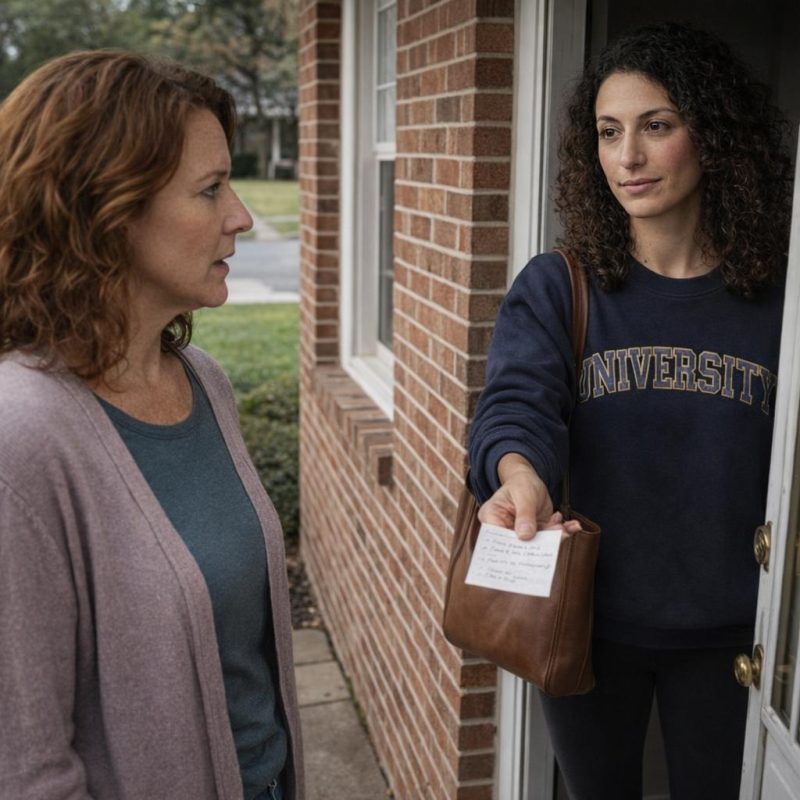 Image by RM AI
Tomatoes and Generic Coffee
The lamp repair shop smelled like old wood and machine oil, and Mom handed over Dad's reading lamp without any visible emotion, though I saw her fingers linger on the brass base for just a second. Then we hit the fabric store where she bought a single spool of navy thread, paying with exact change she'd already counted out in the car. At the farmers market she insisted on smelling every single tomato before choosing four, and I watched her compare prices on green beans like we were still living paycheck to paycheck instead of sitting on Dad's life insurance and pension. She clipped a coupon for the generic coffee at the grocery store even though the name brand was only thirty cents more. It was so completely, perfectly Mom—the same careful habits she'd had my entire life, the same practical approach to everything. I found it comforting, honestly, that grief hadn't changed this part of her. We'd been out for almost three hours when she suggested stopping for soup at the little cafe near the hardware store, the one with the chalkboard menu and mismatched chairs. I was hungry, she looked tired, and it felt like the natural end to a low-key Saturday. When she suggested stopping for soup at the little cafe, I thought the day would end exactly as expected.
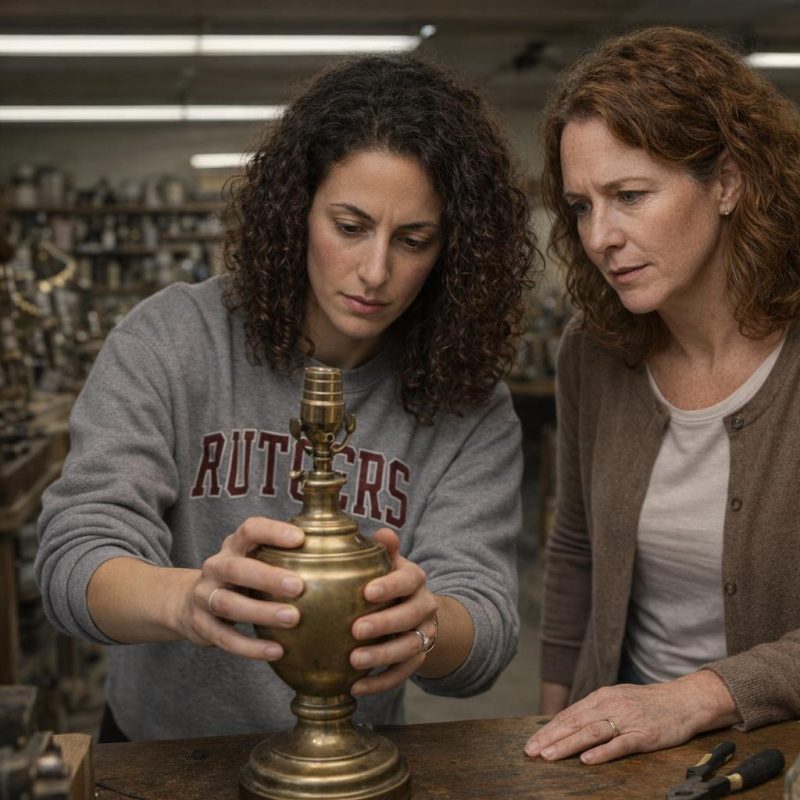 Image by RM AI
Saint & Alder
We were halfway through our soup when Mom set down her spoon and said, very casually, that she wanted to visit Saint & Alder. I actually laughed out loud because I thought she was joking. Saint & Alder was the fanciest restaurant in the city—the kind of place you saw in magazine spreads, where people proposed and celebrated promotions and wore clothes that cost more than my textbooks. I was wearing old jeans and a college sweatshirt with a coffee stain on the sleeve. Mom was in her weekend cardigan, the one with the stretched-out pockets. "You're serious?" I asked, and she nodded like she'd just suggested Target. She explained it was about the Hart scholarship dinner, the one she and Dad had started years ago for culinary students. She wanted to see if Saint & Alder might be a good venue for it. "Your father loved kitchens," she said quietly, looking down at her soup. "Loved watching people cook, loved feeding people." My throat got tight the way it always did when she mentioned him in present tense and then corrected herself. But I still didn't understand why we'd go to the fanciest restaurant in the city dressed like this.
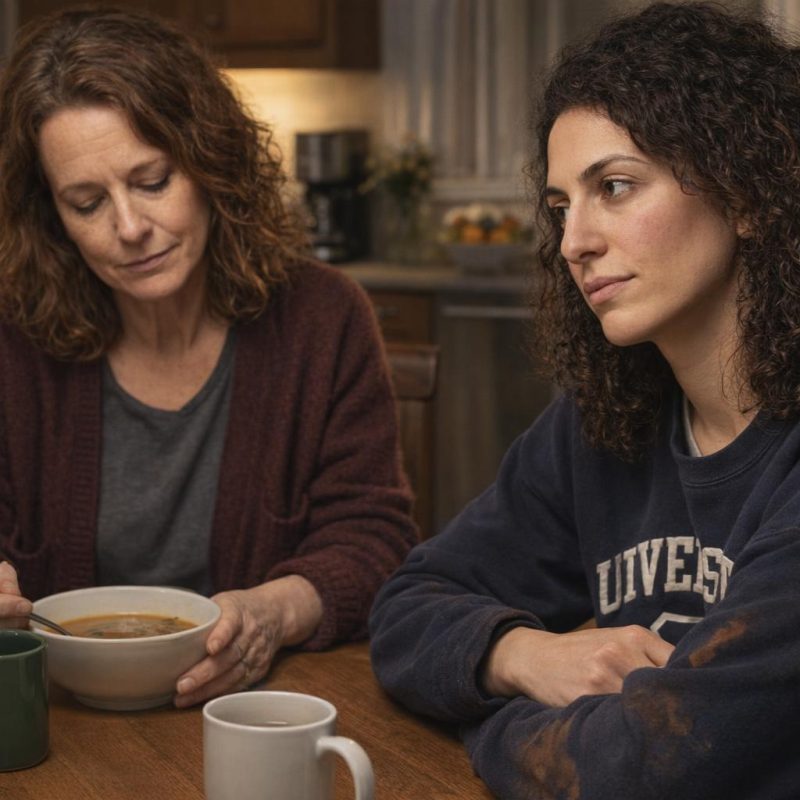 Image by RM AI
The Look
The moment we stepped through the doors of Saint & Alder, I felt it—that pause, that quick visual inventory people do when they're deciding whether you belong. The hostess looked up from her stand and her smile appeared exactly on cue, but something in her eyes had already made a calculation. The restaurant was all white tablecloths and polished wood, soft lighting that probably cost more to install than my car was worth, and every other person in the lobby was wearing the kind of casual that only looks casual when it costs three hundred dollars. I was suddenly, painfully aware of my sneakers, of Mom's worn leather purse with the broken zipper she kept meaning to fix. The hostess—her name tag said Chelsea—let her gaze travel from my shoes up to Mom's cardigan and back down again, and I swear the temperature in her smile dropped ten degrees. She said "Good afternoon" in a voice that was technically polite but somehow felt like the opposite. Then she asked if we had a reservation, and her tone made it clear she already knew the answer.
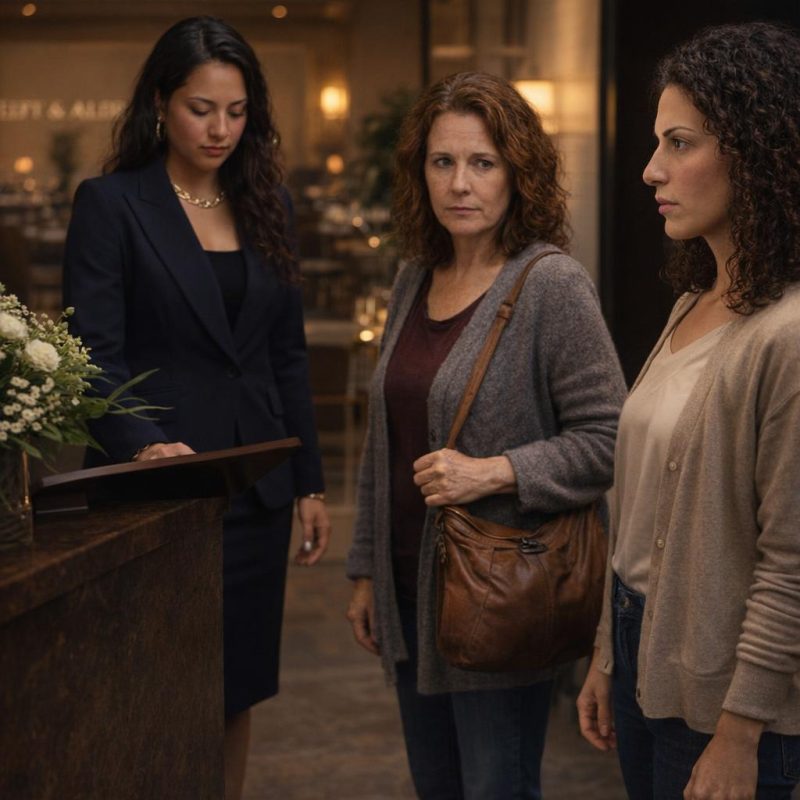 Image by RM AI
That Type of Function
Chelsea directed us to a narrow bench by the coat stand, not to the cushioned chairs in the actual waiting area where two women in expensive athleisure were already sitting with little glasses of sparkling water. We waited ten minutes while those women were seated and two more parties were greeted and escorted past us. When the floor manager finally appeared, he was wearing a charcoal suit that probably cost more than my rent, and his smile was so practiced it looked painful. "Daniel Fletcher," he said, extending his hand to Mom but barely glancing at me. Mom explained about the Hart scholarship dinner—sixty to seventy people, springtime, a celebration for culinary students. I watched Daniel's face do this thing where he was clearly calculating something behind his eyes while nodding sympathetically. "Our private room may not be the best fit for that type of function," he said, and I felt my spine straighten. Mom asked if we could see it anyway, and he said they only showed the space during scheduled consultations. Then he suggested their "sister property on the pier" which had "a more casual atmosphere." He said it like he was doing us a favor. He slid a glossy folder across the host stand and started explaining menu tiers in this slow, careful voice like we might not understand words with more than two syllables. He mentioned "community-oriented dinners" and "more forgiving price structure" and something about hotel banquet spaces that might be "more appropriate." I snapped. I actually snapped at him, asked why Mom couldn't just see the damn room, and that's when Mom placed her hand on my wrist the same way she used to calm me down when I was little.
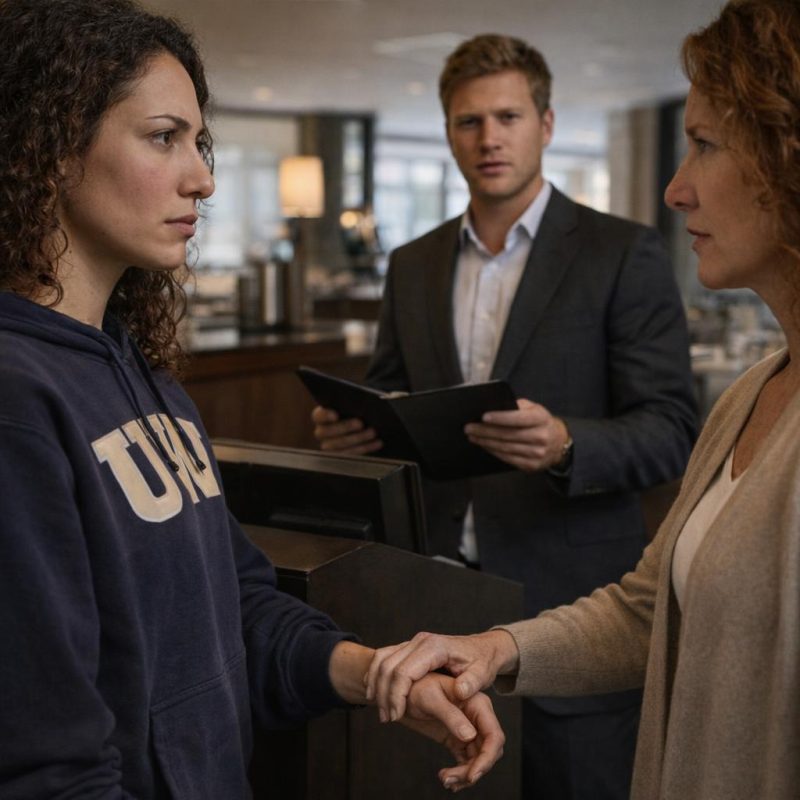 Image by RM AI
The Phone Call
Daniel slid the glossy folder toward Mom like he was handing over coupons, offering the contact information for a "lovely banquet manager nearby" who specialized in events that were "more accessible." I was done. I was ready to grab Mom's arm and walk out and never think about this place again, maybe leave a scathing review on every platform I could find. But before I could move, Mom stood up calmly and said "one moment" in that quiet voice that meant she was thinking about something. She stepped outside onto the sidewalk, and I followed as far as the doorway, still shaking with anger. Chelsea was pretending not to watch from the host stand, but I could see her eyes tracking Mom through the window. Mom took out her phone and made a call. I only caught fragments—"Hello, Luca? It's Evelyn Hart"—and then something about being downstairs at Saint & Alder, and then just "now" in a tone I couldn't quite read. The last thing I heard clearly was "I think we need to talk" before she hung up and came back inside without explaining anything. She said 'I think we need to talk' to someone named Luca and hung up before I could hear more.
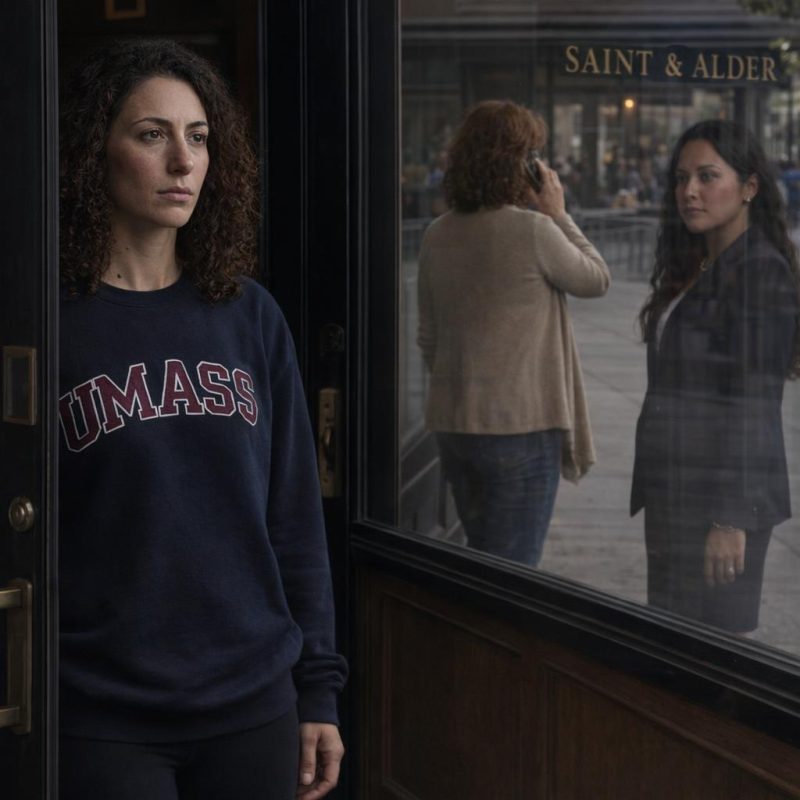 Image by RM AI
Chef Luca
Less than a minute after Mom hung up, the kitchen door burst open so hard it banged against the wall, and a chef in a white coat strode across the dining room moving so fast that a server actually pressed herself flat against the wall to let him pass. The entire energy of the front room shifted—people looked up from their tables, a busboy froze mid-reach for a water glass. The chef was younger than I expected, maybe mid-thirties, with dark hair that was silvering at the temples and an apron still tied at his waist like he'd just walked away from active prep. He didn't even glance at Daniel or Chelsea. He went straight to my mother and said "Why didn't anyone come get me?" with genuine concern in his voice, and then he bent down and kissed her cheek like she was family, like this was the most natural thing in the world. I registered that this must be Luca, the person she'd called, but that was about all my brain could process. Daniel had gone visibly pale. The warmth between Mom and this acclaimed chef made absolutely no sense to me. He went straight to my mother and kissed her cheek like she was family, and I had absolutely no idea what was happening.
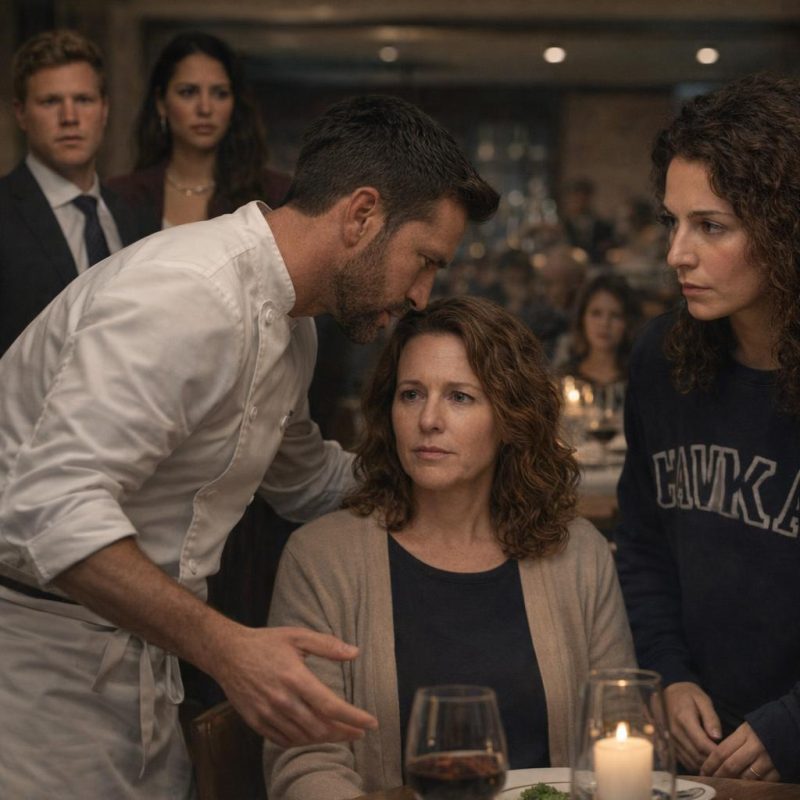 Image by RM AI
The Scholarship
Luca turned toward Daniel and his entire expression hardened in a way that made the floor manager take a small step backward. "Why didn't anyone come get me when Mrs. Hart arrived?" he asked, and it wasn't really a question. Then he said, looking directly at Daniel, that my mother was the reason he went to culinary school. That the Hart scholarship had paid his full tuition when he was nineteen years old, washing dishes at a Greek place three blocks from here, thinking culinary school was something that happened to other people. He said Saint & Alder had been trying to earn the annual Hart scholarship dinner for two years. The entire room had gone silent. Even Chelsea looked like she'd stopped breathing. Daniel started apologizing, but it was only arriving now, after everything, after the calculations were already visible. I stood there processing the fact that Mom had funded this man's entire education, that she'd been doing this for years, that there was this whole part of her life I apparently knew nothing about. Mom was still holding the glossy folder Daniel had given her, and she glanced down at it and said quietly that she'd wanted to see how the staff treated people before making a decision. Mom glanced down at the glossy folder still in her hands and said she'd wanted to see how the staff treated people before making a decision.
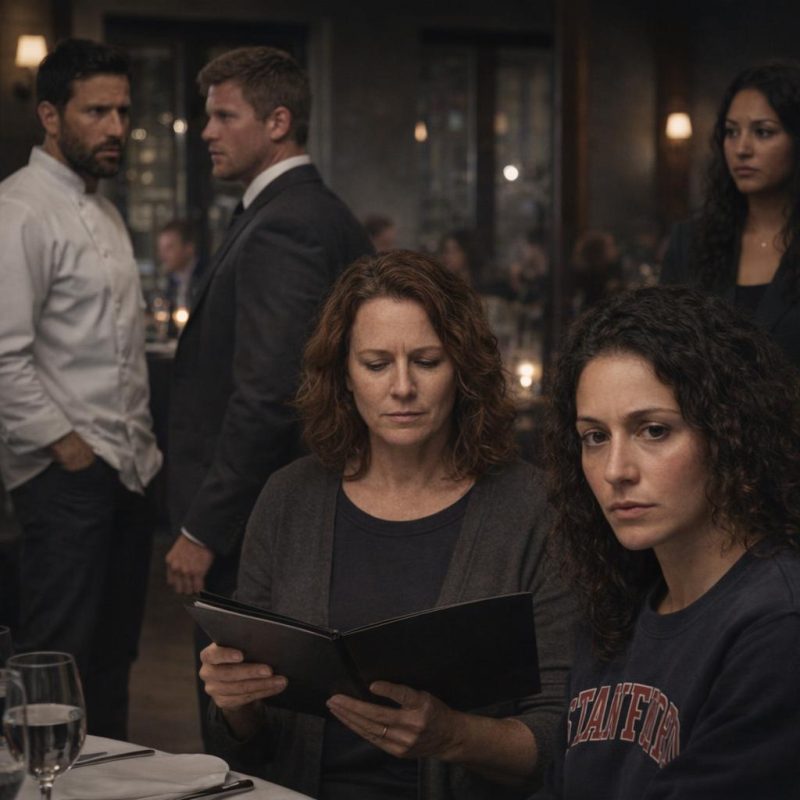 Image by RM AI
The Room Upstairs
Luca turned to my mother and asked if she'd like to see the private dining room herself, and the way he said it—respectful, almost pleading for the chance to show her—made something shift in the air. Mom paused, considering, and I swear everyone in that lobby held their breath. She finally nodded, just once, and Daniel moved aside so fast he nearly collided with the wall behind him. The entire dynamic had flipped in minutes. We started up the staircase, Luca leading in his chef's coat, Mom following with that same calm composure she'd had all morning, and me trailing behind trying to process what I'd just witnessed. I kept stealing glances at her as we climbed, watching how she carried herself, how Luca kept turning back to make sure she was comfortable on the stairs. She looked completely at ease with his deference, like this was normal for her. I'd spent the whole morning thinking I was protecting her from being dismissed, from being treated like she didn't matter. But she hadn't needed my protection at all. She'd been watching, waiting, seeing exactly how people behaved when they thought she was nobody. And now I was following her up these stairs, realizing I had no idea who my mother actually was.
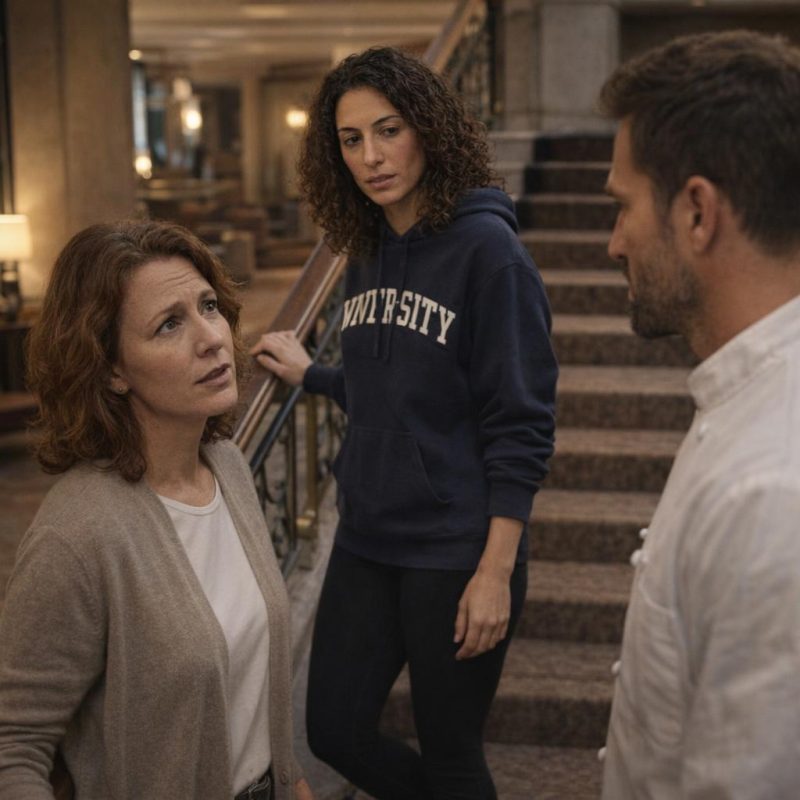 Image by RM AI
The Quiet Drive
On the drive home in the old Subaru, I finally asked her straight out if she'd known what would happen at the restaurant. Mom kept her eyes on the road and said she'd had a feeling about the place, which wasn't really an answer. I pressed a little, asking how well she knew Luca, and she explained he was the first Hart scholarship recipient, back when Dad was still alive. Her voice got softer when she mentioned Dad. I asked how many other recipients she stayed in touch with, and that's when she smoothly changed the subject to dinner planning—what kind of menu she wanted, how many courses, whether we should do family-style or plated service. I felt this mild frustration building because I could see what she was doing, but I also didn't want to push too hard. She started talking about wanting something Dad would have appreciated, something that honored his love of bringing people together over food. I tried to circle back to my question about the other recipients, but she redirected again, this time to guest list considerations. I noticed the pattern but let it go. I was impressed by how she'd handled everything at Saint & Alder, but new questions were forming about what else I didn't know.
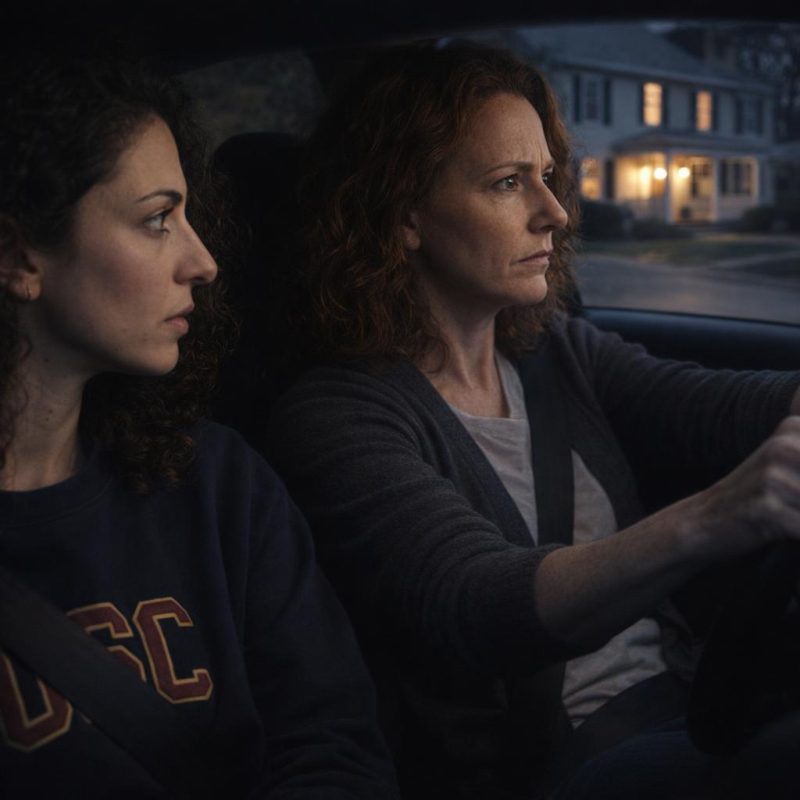 Image by RM AI
Guest Lists and Notebooks
When we got home, Mom pulled out this worn notebook from her desk drawer, and I could see it was filled with names and details about the scholarship dinner. The pages looked well-used, not something she'd just started recently. I offered to help coordinate everything—venues, RSVPs, whatever she needed—and she accepted with this warm gratitude that made me feel useful. We sat at the kitchen table going through the potential guest list together, and I started counting names. For a single scholarship recipient dinner, the list seemed really long. I asked how many people she was thinking, and she said she wanted to invite past recipients, make it a community celebration. That made sense, but when I asked how many scholarships had been awarded over the years, her answer was vague, kind of noncommittal. The notebook had more detail than seemed necessary for a simple event—some entries had business names next to personal names, notes about dietary restrictions, connections between people. Mom explained she wanted to celebrate the recipients' successes, show how the program had helped people build careers. I felt good about helping, but I couldn't shake this slight puzzlement about the scale of everything. The list of potential guests seemed longer than I expected for what I'd thought was a straightforward scholarship event.
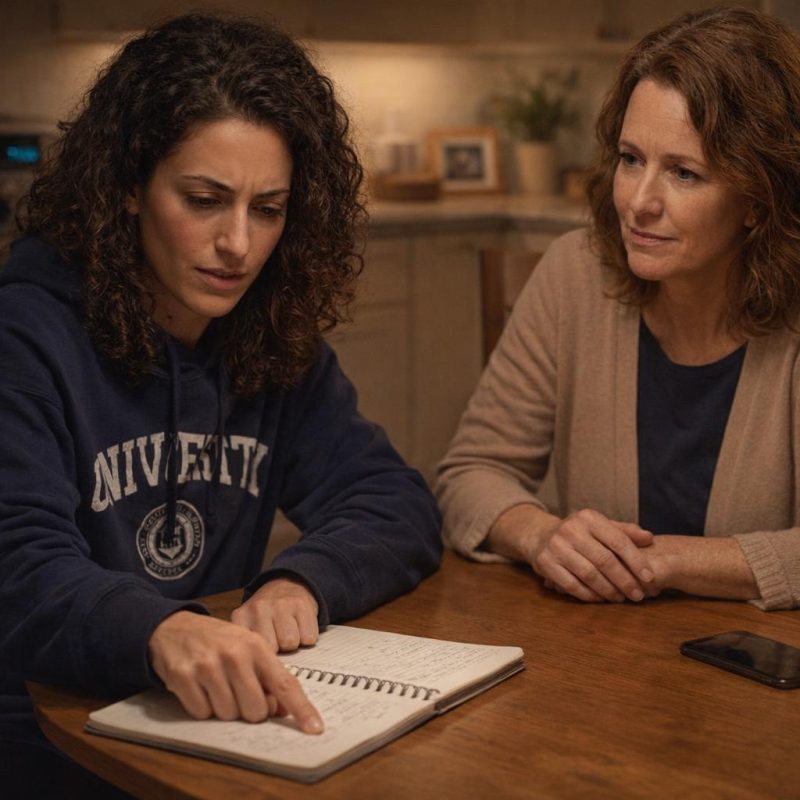 Image by RM AI
Meeting at Saint & Alder
We returned to Saint & Alder the following week to meet with Luca about the dinner, and the difference from our first visit was immediate. Chelsea spotted us the moment we walked in and practically ran to get Luca, her entire demeanor transformed into something almost anxious to please. Luca emerged from the kitchen within moments, greeting Mom warmly and me respectfully, then escorted us upstairs to the private dining room himself. He'd brought sketches and menu ideas, spreading them across the table like he'd been working on this for days. Then he said something that stuck with me—he mentioned having thought about this menu for years, that he'd been waiting for Mom to let him host the dinner. Let him, not agree to. Like he'd been pursuing this opportunity and she'd finally said yes. Mom listened to his ideas with quiet attention while he described dishes inspired by Dad's love of feeding people, talking about my father like he'd known him personally. But Dad had died when Luca was still in culinary school, so how did he know these details? I realized Mom must have told him stories over the years, shared things about Dad I hadn't even thought to mention. Luca mentioned he'd been thinking about the menu for years, waiting for Mom to let him host this dinner.
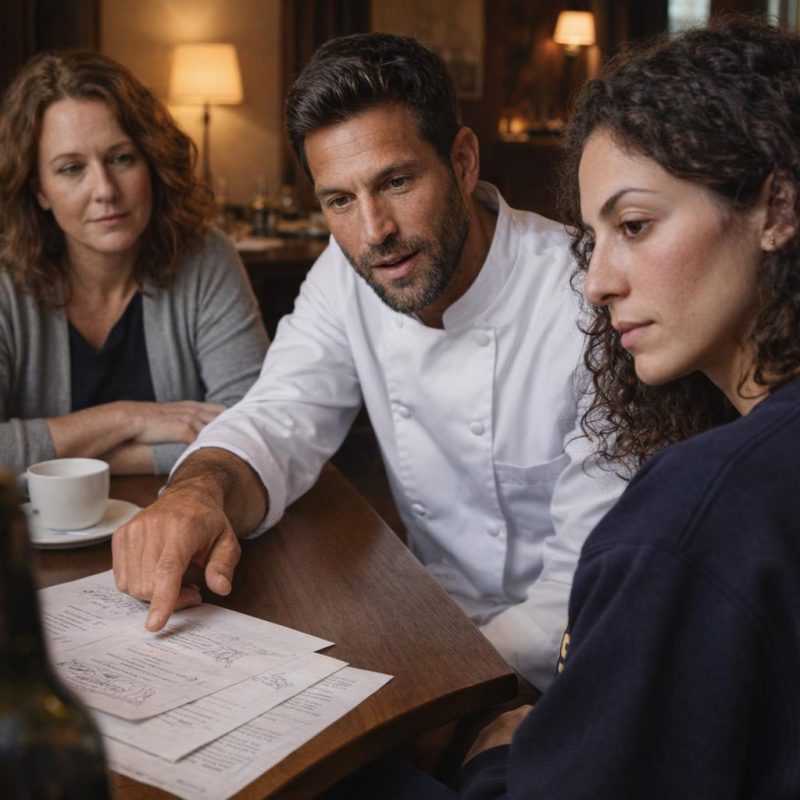 Image by RM AI
Other Recipients
During the menu planning, Mom casually mentioned a bakery by name, suggesting we get bread from there for the dinner. Luca recognized it immediately, said the owner was exceptional, and Mom noted she'd visited the place last month. I caught that—she'd been to this bakery recently, knew it well enough to recommend it. Then she brought up another recipient who ran a farm-to-table restaurant, speaking about their menu with the kind of detailed knowledge you only get from actually eating there. Luca and Mom discussed these people naturally, like they were shared connections, part of some network I was only now glimpsing. I asked if she kept in touch with all the scholarship recipients, and Mom smiled, responding that the scholarship was about building community. It was a warm answer that somehow didn't actually address my question. I noticed the deflection but couldn't pinpoint why it bothered me. Luca seemed completely unsurprised by the network Mom was describing, like this was normal. I started counting mentally—how many recipients had she referenced in just this one conversation? Three? Four? And she'd spoken about each of them like she knew their businesses, their lives, their current situations. When I asked if she kept in touch with all of them, she just smiled and said the scholarship was about building community.
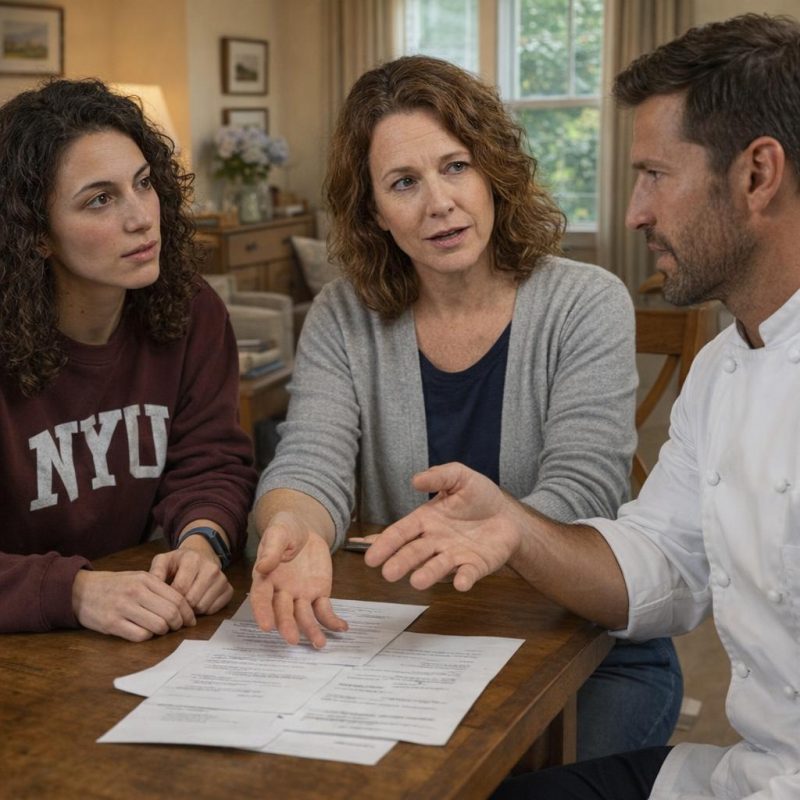 Image by RM AI
Phone Calls
Over the next few days at Mom's house, I noticed her phone ringing more often than usual. Calls came from numbers I didn't recognize, and she'd step into the other room or outside to take them, speaking quietly enough that I couldn't hear the content. This happened multiple times—I'd be working on the guest list spreadsheet and her phone would buzz, she'd glance at the screen, then excuse herself. After one call, I asked who it was, and she said just someone helping with the dinner. Technically accurate, probably, but it felt incomplete. She didn't volunteer names or details. I found the privacy odd but not alarming—Mom was entitled to private conversations. Still, I couldn't figure out why dinner planning required so many phone consultations. She seemed comfortable and purposeful during these calls, not stressed or secretive exactly, just... contained. I'd catch her through the window sometimes, pacing the back porch with the phone to her ear, and wonder what needed to be discussed that I couldn't overhear. It wasn't like her to be this guarded with me. I couldn't shake the feeling that something was happening just beyond my view. When she came back from one call, I asked who it was, and she said just someone helping with the dinner.
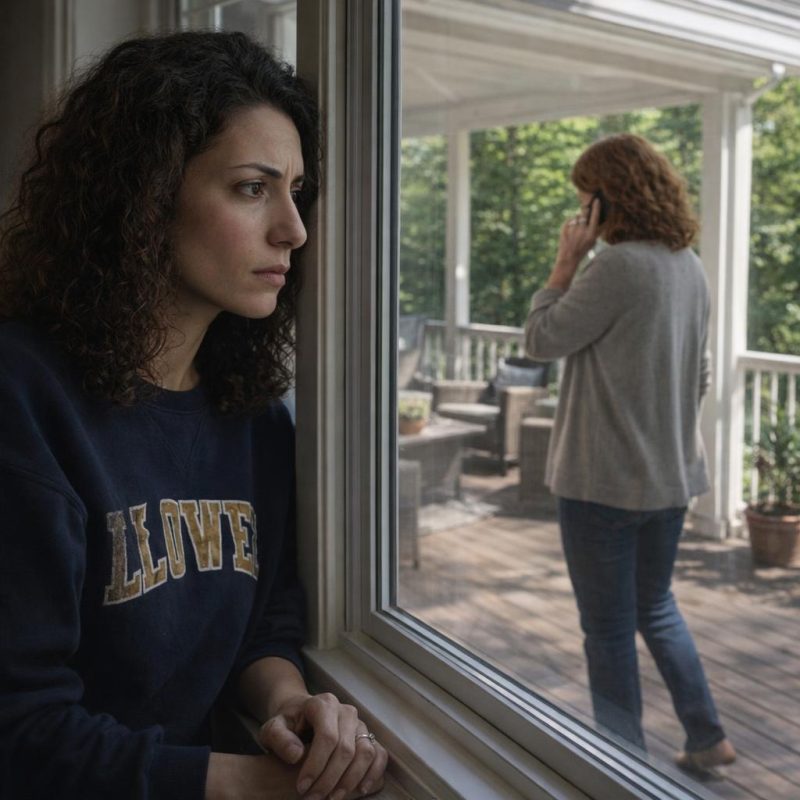 Image by RM AI
The Growing List
When Mom showed me the updated guest list a few days later, I counted over sixty names. I stared at the document, trying to figure out how one scholarship dinner needed this many people. I asked why the list was so long, and Mom explained she wanted to bring the community together, make it a real celebration. That sounded nice, but I pressed—were past dinners this large? She admitted this year was bigger than previous ones, said she wanted to make it special. I scrolled through the names, recognizing maybe a quarter of them. Many entries included business affiliations—restaurants, catering companies, culinary schools. Mom explained these were people who'd benefited from the scholarship program over the years. I asked if all of them were past recipients, and her answer got vague again, something about community members and supporters. I wondered if sixty people was excessive, if maybe she was overdoing it in her grief, trying to fill space with activity. But Mom seemed certain about the number, confident in her planning. I agreed to help coordinate everything, but the puzzlement was growing. I asked if this was normal for the annual event, and Mom said this year was going to be special.
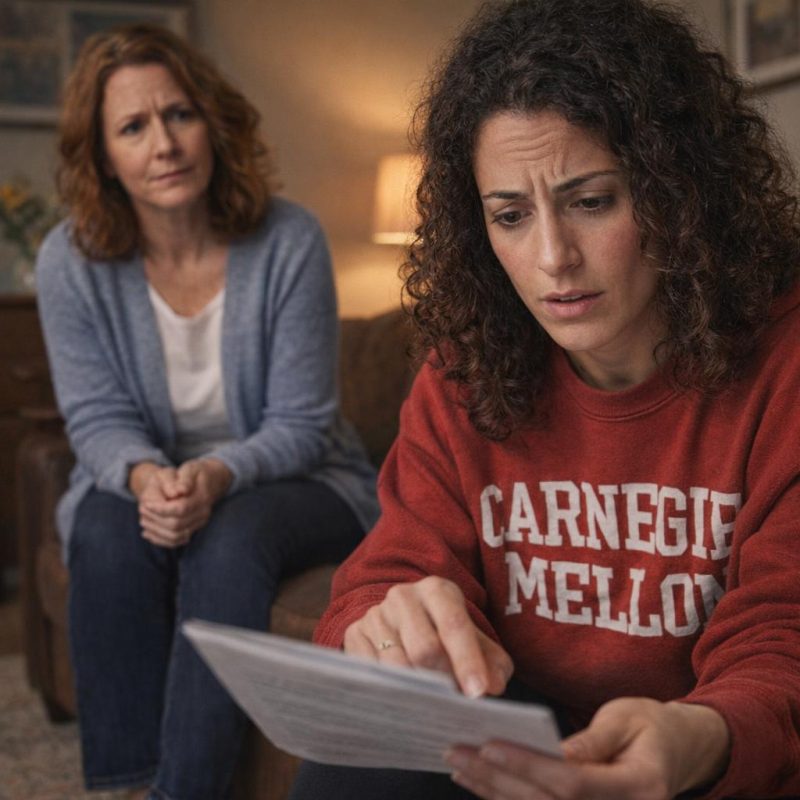 Image by RM AI
The Bakery
Mom drove me to a bakery across town to meet James Chen, and the moment we walked in, I saw it—the same grateful warmth Luca had shown. James's face lit up when he saw Evelyn, and he came around the counter to hug her like she was family. He introduced himself to me, mentioned knowing about me from Mom's stories, then showed us around the bakery he'd built. The place was charming and clearly successful, with steady customer flow and a case full of beautiful pastries. James explained he'd gone to culinary school through the Hart scholarship, that before that he'd been working overnight shifts at a factory, thinking culinary school was something that happened to other people. He said the scholarship changed his entire life trajectory. Now he employed six people, served the community daily, had built something real and lasting. Mom discussed using his bread for the dinner, and James enthusiastically agreed, honored to contribute. He casually referenced other recipients in conversation—mentioned knowing Luca, knowing others from the culinary program—and I realized there was this whole network of people Mom had helped. James's success was tangible, visible, deeply impressive. He mentioned that without the scholarship, he'd still be working overnight shifts at the factory, and I realized Mom had changed his entire life.
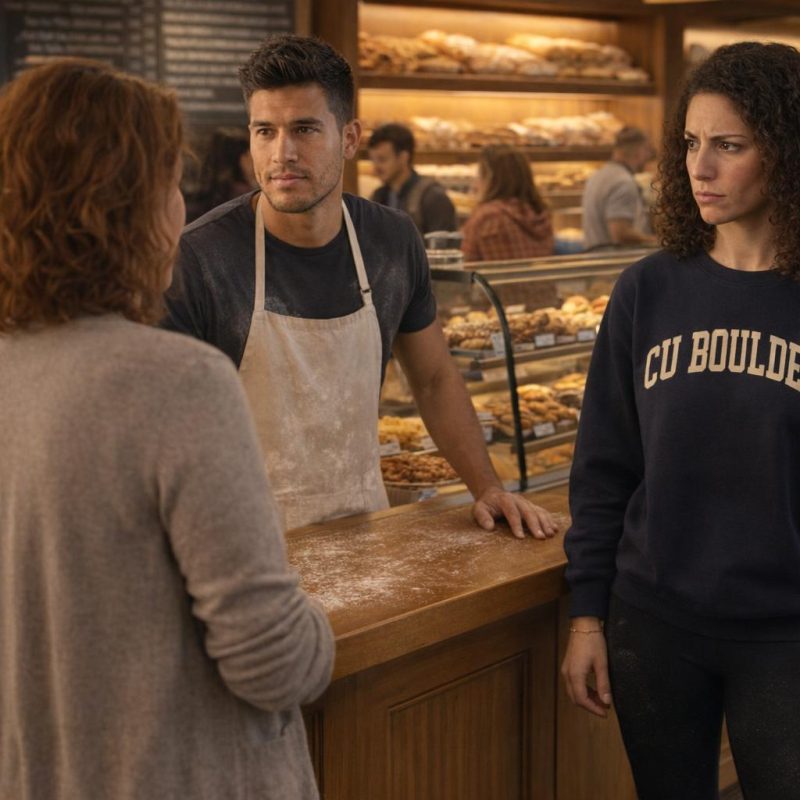 Image by RM AI
The Network
While we sat at one of James's small café tables drinking coffee, he started talking about the other scholarship recipients like they were all part of this extended family I'd somehow never heard about. He mentioned Maria, who ran an Italian restaurant downtown and made the best handmade pasta he'd ever tasted. Then there was someone who did high-end private catering for tech companies. Someone else had started a Caribbean food truck that was absolutely killing it on the east side. Another recipient taught at the culinary institute now—James said they'd been one of the first scholarship recipients, maybe five or six years ago. He talked about a holiday gathering last year where a bunch of them had met up, swapping stories and supporting each other's businesses. Mom sat there with this quiet smile, completely comfortable with all these names and connections I was hearing about for the first time. I kept trying to count in my head—that was at least seven people, plus Luca and Sofia made nine, and James kept saying things like "several of us" and "the group." When we finally left the bakery, I turned to Mom in the car and asked her directly how many scholarships she'd actually given out. She paused, then said she'd lost count. Lost count. How do you lose count of something like that?
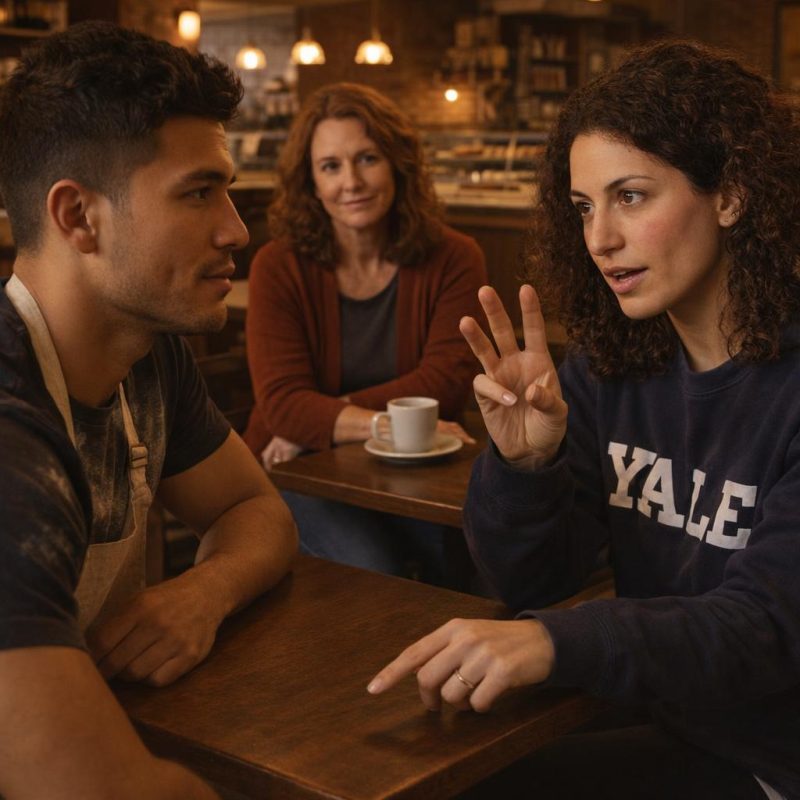 Image by RM AI
The Calendar
I was at Mom's house a few days later helping prep for the dinner, and she mentioned needing her grocery list. I checked the usual spots—kitchen counter, refrigerator door, the little desk in her office. That's when I saw her calendar lying open, and I wasn't trying to snoop, but the entries just caught my eye. Portland, two months ago. Seattle, six weeks back. Chicago last month. Each trip was three or four days, and I had absolutely no memory of her mentioning any of them. I'd been calling her regularly, asking how she was doing, picturing her spending quiet days at home. I brought the calendar out to the kitchen where she was chopping vegetables. "When did you go to Portland?" I asked. She glanced up, completely unfazed. "Oh, I was visiting some old friends." I pressed her—which friends? She gave me this vague answer about people from way back, nothing specific. The whole thing felt off. Why wouldn't she have mentioned traveling during our weekly calls? The trips seemed completely inconsistent with the grieving widow I thought I'd been checking in on. When I asked about the trips, she said she'd just been visiting some old friends.
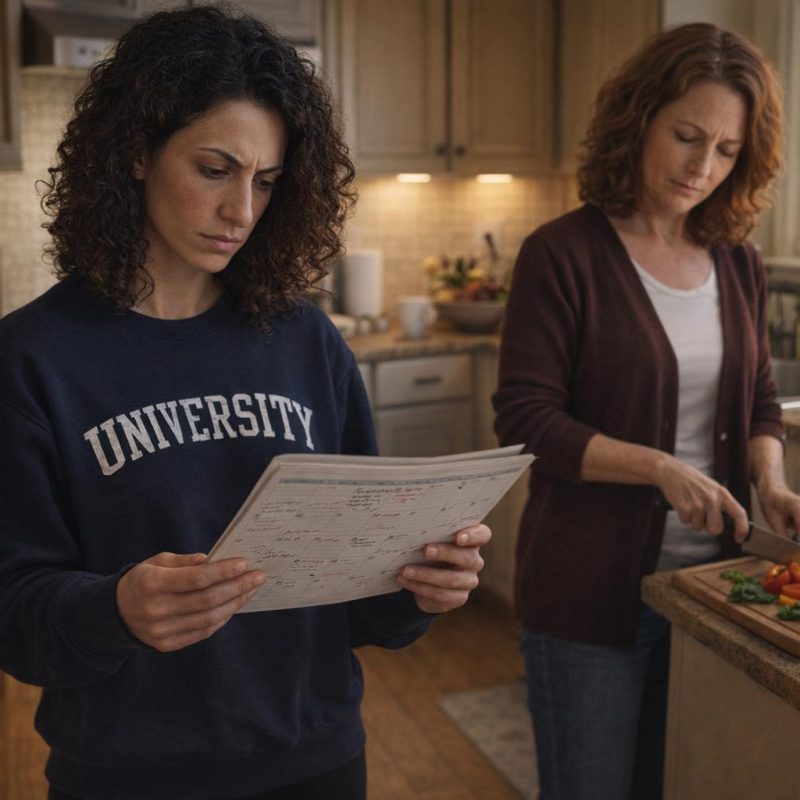 Image by RM AI
The Appointments
After seeing those travel entries, I started actually paying attention to Mom's calendar whenever I was at her house. What I found was kind of shocking—her schedule was packed. Multiple appointments every single week, meetings with people whose names I didn't recognize, lunch dates, coffee meetings, office visits. I'd been imagining her spending most days alone at home, maybe running errands or working in the garden. But the calendar told a completely different story. Mom was busy. Really busy. One entry in particular caught my attention: "meeting with R. Stone, 2pm." I asked her who R. Stone was. "Oh, that's just about some paperwork," she said, not even looking up from the dish she was washing. What kind of paperwork? "Just administrative things for the scholarship." The answer felt insufficient but not exactly dishonest, which somehow made it more frustrating. I noticed other appointments scattered throughout—names like J. Martinez, K. Thompson, people I'd never heard her mention. Mom's life was clearly much fuller than she'd been letting on, and I felt this growing unease about being kept completely outside this entire part of her world. One entry just said 'meeting with R. Stone' and when I asked who that was, Mom said it was about paperwork.
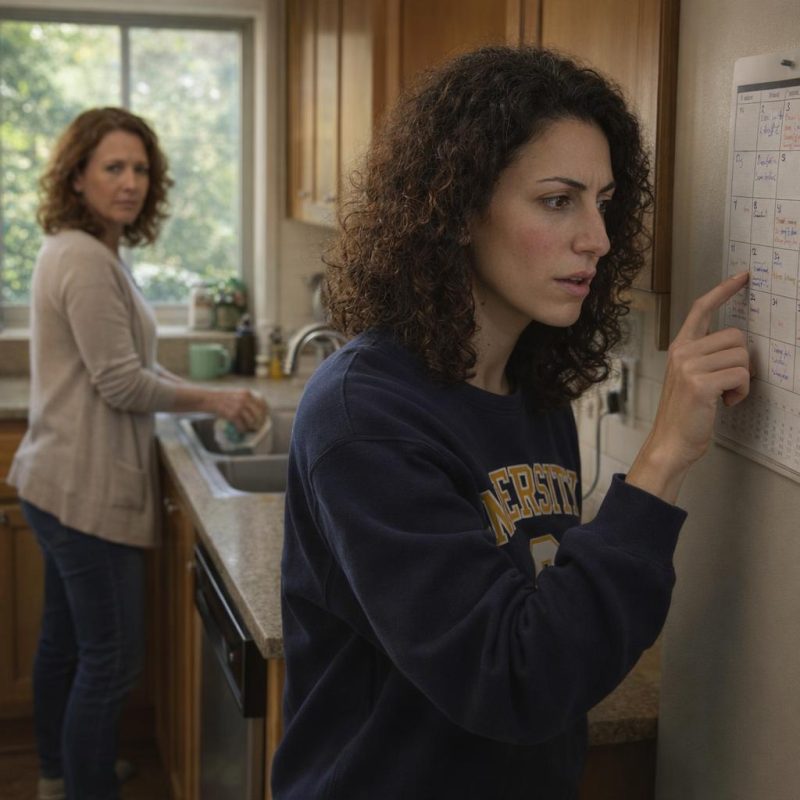 Image by RM AI
Sofia's Food Truck
Mom called and asked if I could meet her to talk with someone else who'd be helping with the dinner. We drove to this spot near the waterfront, and I was expecting maybe another restaurant, but we pulled up to a food truck. Bright, colorful, with "Sofia's Kitchen" painted on the side in bold letters. This woman in a vibrant chef's bandana saw Mom and her entire face lit up. She practically ran over and hugged Evelyn like they were family. "This woman is a miracle worker," Sofia said, turning to me with this huge smile. She introduced herself, shook my hand enthusiastically, then insisted on making us lunch. While we ate her incredible tacos, Sofia told me her story—she'd been waitressing, dreaming about culinary school but knowing she'd never afford it. Mom had made it possible. She mentioned knowing James, knowing Luca, referenced a group chat where scholarship recipients stayed connected. I was counting in my head again. Luca, James, Maria, Sofia, all the others they'd mentioned. The number just kept growing. "I'm just one of many," Sofia said at one point, and that phrase hit me hard. After we left, I couldn't hold it in anymore. I asked Mom directly how big this scholarship thing actually was.
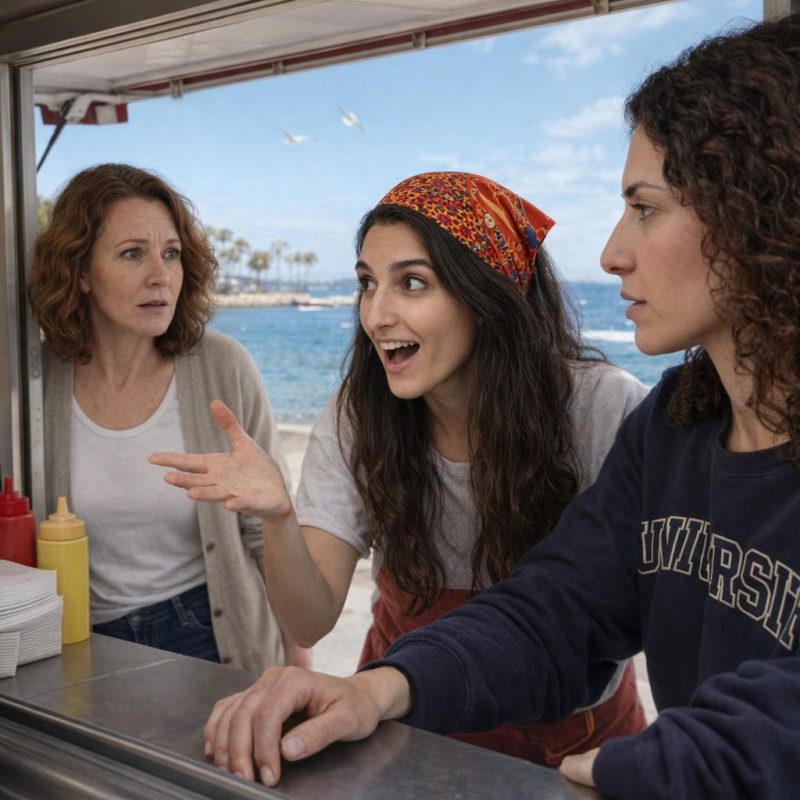 Image by RM AI
Mapping the Network
I went home that evening and pulled out a notebook. I started writing down every single scholarship recipient Mom had mentioned—Luca, James, Sofia, Maria, the private caterer, the food truck owner, the culinary institute instructor. I grabbed a map of the city and started marking locations of their businesses. They were everywhere. Different neighborhoods, different cuisines, spanning the entire metro area. I counted at least twelve people I'd heard referenced, probably more if I included the vague mentions. I tried to calculate rough costs based on what I knew about culinary school tuition. The number felt substantial but not impossible from Dad's life insurance and estate. The next morning, I brought my list to Mom's house and showed it to her. She glanced at it with this mild smile that I was starting to recognize as her deflection face. "You're missing quite a few people," she said calmly. I asked her how many quite a few meant. She said she didn't have an exact count handy, which felt like a non-answer. My carefully constructed map was apparently only showing me part of the picture. When I showed Mom my list the next morning, she glanced at it and said I was missing quite a few people.
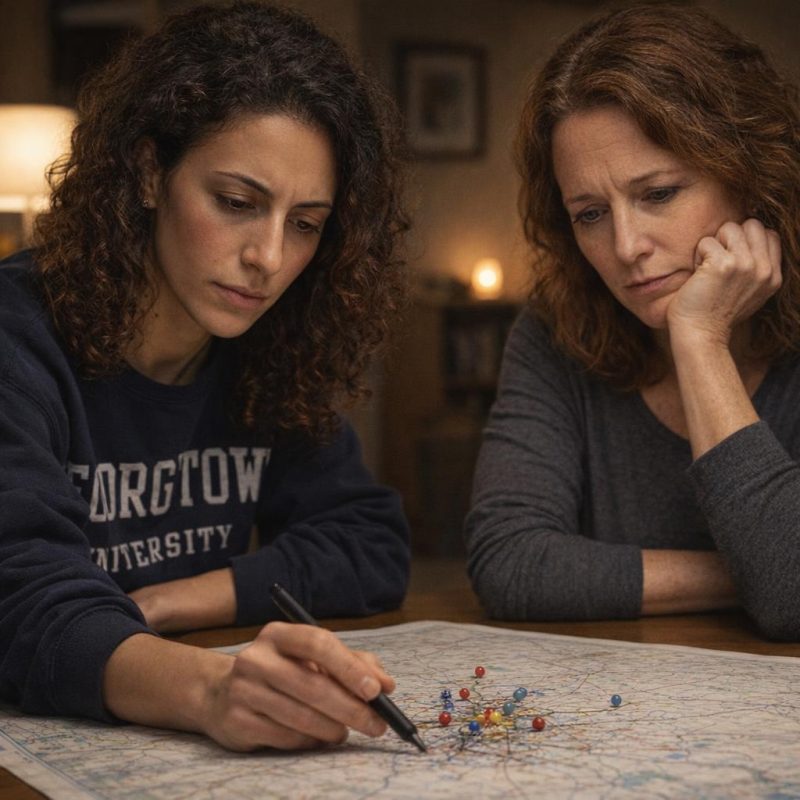 Image by RM AI
The Incomplete Answer
I sat Mom down over coffee the next day because I needed actual answers. I asked her directly—how many people have you helped through culinary school? She took a sip of her coffee and said, "Enough to make a difference." That wasn't an answer. I pushed for a number. She said she focused on individuals, not statistics. I tried a different angle—where does all the funding come from? She mentioned Dad's life insurance and some investments, which sounded reasonable but felt incomplete. Were there recipients in other cities? She confirmed some people had moved or started businesses elsewhere, which explained the travel I'd seen on her calendar. I asked about yearly budget, trying to get some concrete sense of scale. Mom gently redirected the conversation back to dinner planning. "I'd rather focus on the people than the counting," she said. Every question I asked hit this same soft wall. She wasn't being dishonest exactly, just maddeningly vague. I finally agreed to drop it, but the frustration sat heavy in my chest. I asked Mom directly how many people she'd helped through culinary school, and she told me enough to make a difference but not enough to satisfy my question.
 Image by RM AI
Trust the Process
A few days later, I finally told Mom how I was really feeling. "I feel like you're keeping secrets from me," I said. She put down the invitation she'd been addressing and looked at me with those calm, observant eyes. She acknowledged that she'd been somewhat private about details, said some things were easier to show than tell. Then she asked me to trust the process. Trust the process. Like I was a kid being told to wait for Christmas morning. I asked why I couldn't know now if I was going to know at the dinner anyway. She said the dinner was when all the pieces would come together, that I'd appreciate it more experiencing it unfold naturally. Her calm certainty was hard to argue against, even though I felt patronized. I reluctantly agreed to wait, but inside I was frustrated. We went back to working on practical dinner tasks—seating arrangements, menu details, timeline. Mom seemed satisfied that the conversation was settled. I wasn't, but I didn't know what else to say. I agreed to wait, but the phrase 'trust the process' made me feel like a child being told to be patient.
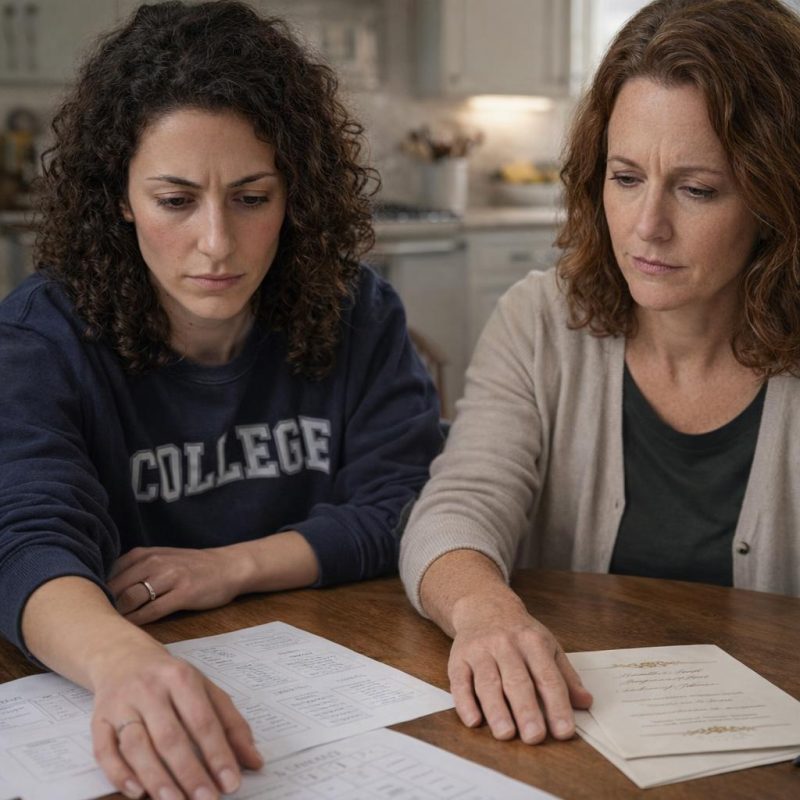 Image by RM AI
The Phone Manner
I was at Mom's house a few days later working on the dinner invitations when her phone started ringing. First call was about venue logistics with Saint & Alder—I heard Mom's voice shift into this assured, specific tone, directing details about table arrangements and timing. Twenty minutes later, another call, this time coordinating with multiple recipients about their contributions to the dinner. She spoke with easy authority, never hesitant, completely in command. Then a third call came in, and it sounded like someone asking for business advice. Mom offered suggestions with this confidence and expertise I'd never heard from her before. This wasn't the quiet, grieving widow I thought I'd been helping. This was someone who handled things, who made decisions, who clearly ran something much bigger than I'd understood. Each call was efficient, professional. She never raised her voice but was obviously in charge of every conversation. When the third call ended, I realized I was staring at her. She noticed and asked if something was wrong. I said no, just surprised by how different she sounded on the phone. She gave me a slight smile and went back to her paperwork. After the last call, she caught me staring and asked if something was wrong.
 Image by RM AI
The Search
I went home that night and couldn't stop thinking about those phone calls. The way Mom had sounded—so assured, so in control—kept replaying in my head. I opened my laptop and typed "Hart Memorial Scholarship" into the search bar, expecting to find something substantial. Maybe a website, some news coverage, anything that matched the scale of what I'd been discovering. Instead, I found almost nothing. There was a single mention on the community college's culinary program page—just a basic description saying it was an annual scholarship for culinary students. No details about how many people received it, no application process outlined, nothing about the selection criteria. I tried searching for news articles next, thinking maybe there'd been some coverage when it launched. Found one brief mention in a college newsletter from two years ago. That was it. I searched "Evelyn Hart scholarship" and "Marcus Hart culinary" and got basically nowhere. Even when I tried searching individual recipient names along with the scholarship, I'd find their businesses but zero connection to the Hart program mentioned anywhere. The absence of information felt really strange. Something that had apparently helped dozens of people build successful careers should have more visibility than this.
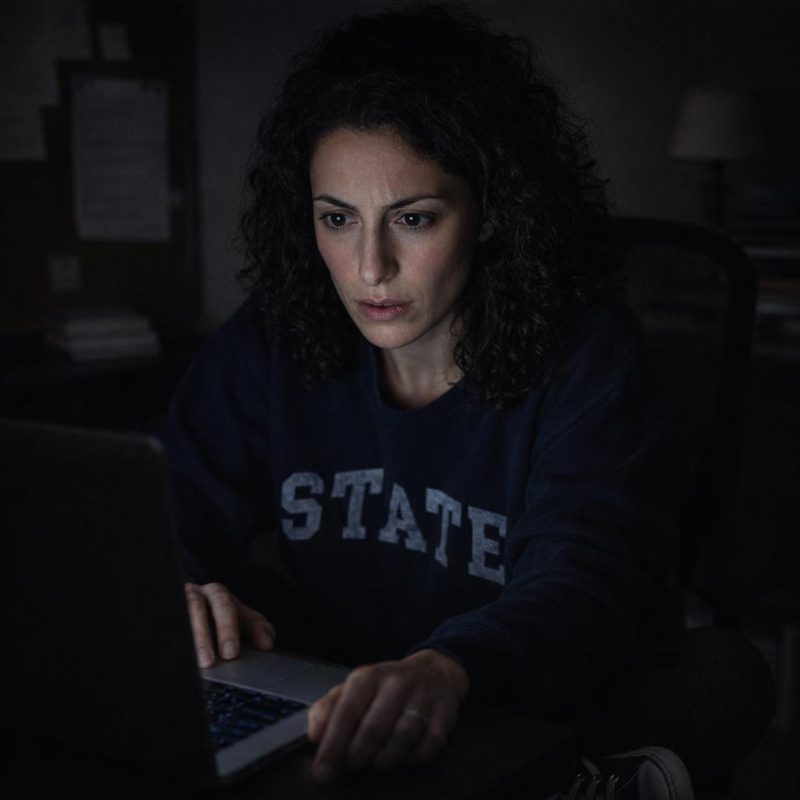 Image by RM AI
The Travel Pattern
A few days later, I stopped by Mom's house when she was out running errands. I'd offered to take out her recycling as a favor, and when I lifted the bin, I noticed printed travel confirmations mixed in with the paper. I know I shouldn't have looked, but I pulled them out. Portland, Seattle, Chicago, Denver, Austin, San Francisco. Six different trips over the past four months, each one lasting two to four days. I took photos of the confirmations with my phone before putting them back. When I got home, I pulled up everything I'd learned about the scholarship recipients and started cross-referencing dates. The Portland trip lined up exactly with when James's bakery had expanded to a second location. Seattle corresponded with a restaurant opening I'd heard mentioned in passing. Chicago matched a catering business launch. Every single trip connected to some kind of recipient milestone. I sat there staring at my notes, trying to figure out what this meant. Was Mom just attending these openings as a supportive presence? Or was there something more coordinated happening? I couldn't tell if she was an observer or if these visits served some other purpose. The pattern felt way too consistent to be coincidental.
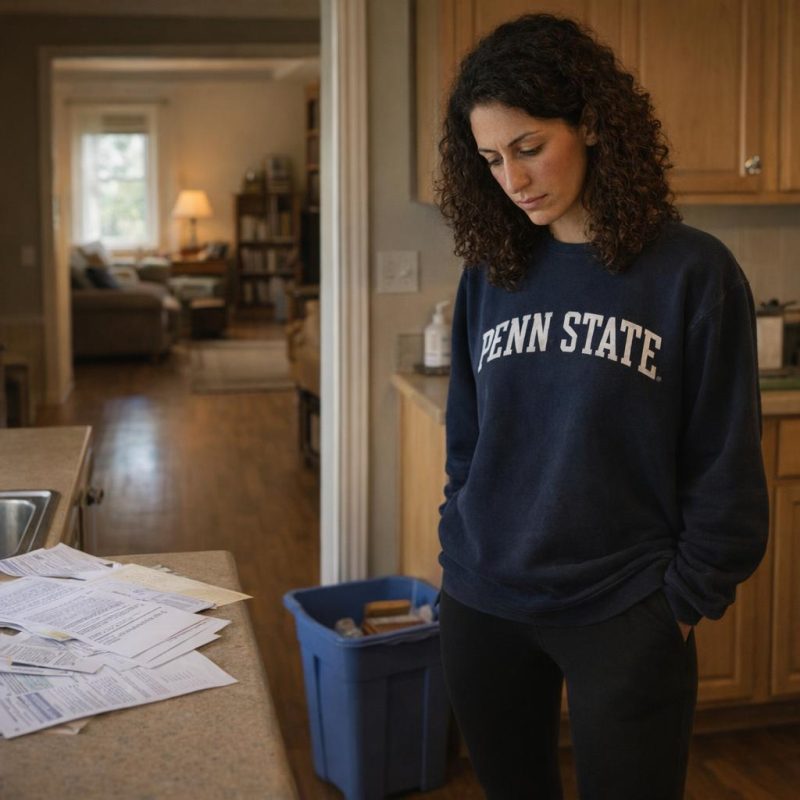 Image by RM AI
The Money Question
That night, I couldn't sleep. I kept thinking about all those trips, all those recipients, and wondering how Mom was actually funding this. I got up and pulled out the copy of Dad's estate documents from my filing cabinet—I had them because I'd helped Mom with paperwork after he died. I reviewed the life insurance payout, checked the investment account values, calculated the rough total after the house was paid off. Then I started doing math. Culinary school tuition isn't cheap. I looked up current costs and estimated what it might have been over the past several years. Multiplied that by the fifteen to twenty recipients I knew about. Added in at least five years of operation based on Luca's timeline. The numbers I came up with were significant. Like, a really substantial portion of Dad's estate would have been spent. I sat there with my calculator, running the figures again, wondering if Mom was burning through principal instead of just living off investment returns. The thought made my stomach hurt. Was she compromising her own financial security for this? She still lived in the same modest house, still drove that old Camry. I wanted to ask her directly about the finances, but that felt intrusive, maybe even accusatory. I just felt this growing protectiveness, this worry that she'd taken on more than she could sustain.
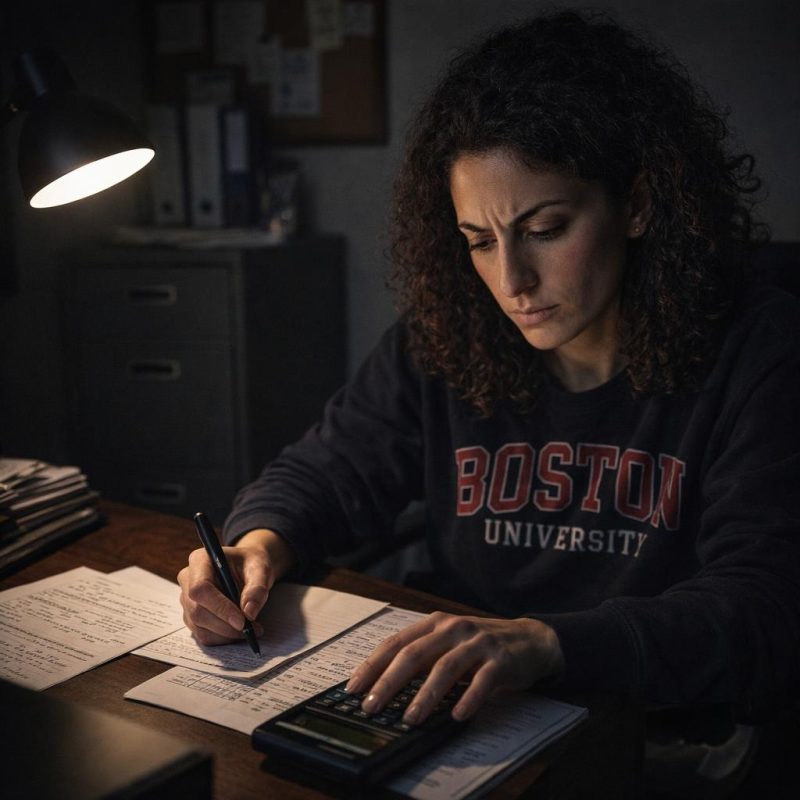 Image by RM AI
Overextended
I met my best friend Jenna for coffee the next day because I needed to talk this through with someone. I explained everything—the scholarship network, Mom's constant travel, the busy schedule, all of it. I told her I was worried Mom had taken on way too much, that she might be overextending herself financially and emotionally while still grieving Dad. Jenna listened to everything, then asked how Mom actually seemed when I saw her. I had to admit Mom seemed energized, purposeful, more engaged than she'd been in years. Jenna suggested maybe this work was how Mom was processing her grief. She pointed out that Mom was helping people through Dad's legacy, and perhaps that gave her a sense of purpose and connection she needed. I sat there with my coffee getting cold, considering this perspective I hadn't really allowed myself to see. I'd been viewing Mom as this fragile widow who needed protecting, someone I had to worry about and watch over. Maybe Mom was actually stronger and more capable than I'd been giving her credit for. But even as I considered Jenna's point, I couldn't shake the worry about the finances and the sheer scope of what Mom had built. The concern felt too real to just dismiss.
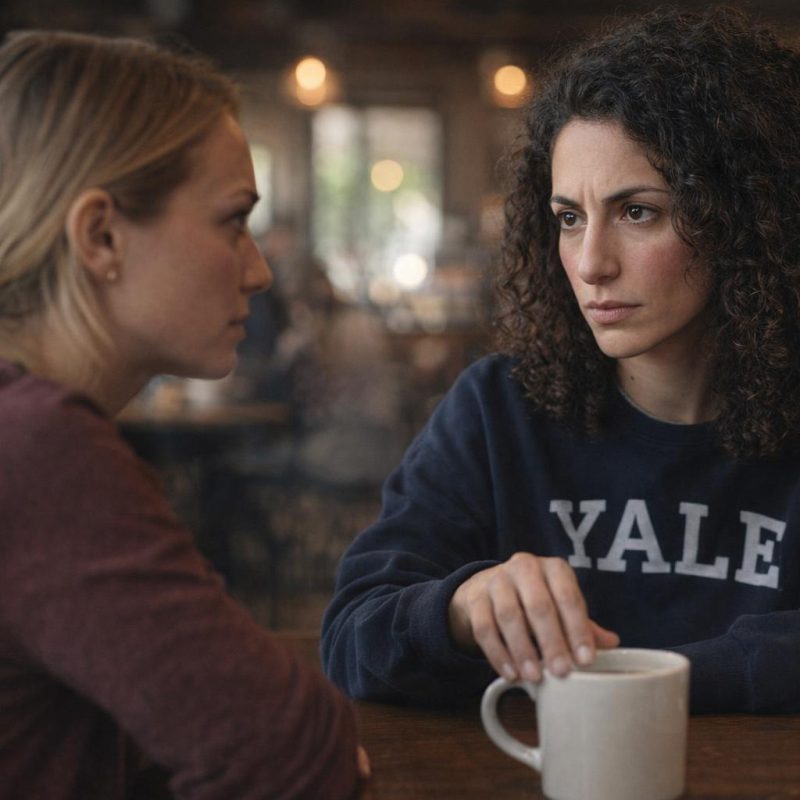 Image by RM AI
The Confrontation
I drove to Mom's house the next afternoon without calling first. I needed answers now, not at some dinner weeks away. She was home with paperwork spread across the dining table when I walked in. I told her we needed to talk, and I didn't want to wait anymore. I listed everything I'd discovered—the extensive travel, the dozens of recipients, the busy schedule that never seemed to stop. I said I was concerned about her finances and her wellbeing, and I asked why she was being so secretive with her own daughter. Mom set down her pen and gave me her complete attention. She said she understood why I was concerned and acknowledged she'd been private about certain details. But she insisted she wasn't in trouble or overextended. I asked why she couldn't just explain everything right now, and she said some things needed context to make sense. She promised I wasn't being excluded because of a lack of trust—she was protecting something important and needed me to be patient. I felt this sharp hurt in my chest. I asked if she didn't trust me to understand. Mom's expression softened, and she assured me that wasn't it at all.
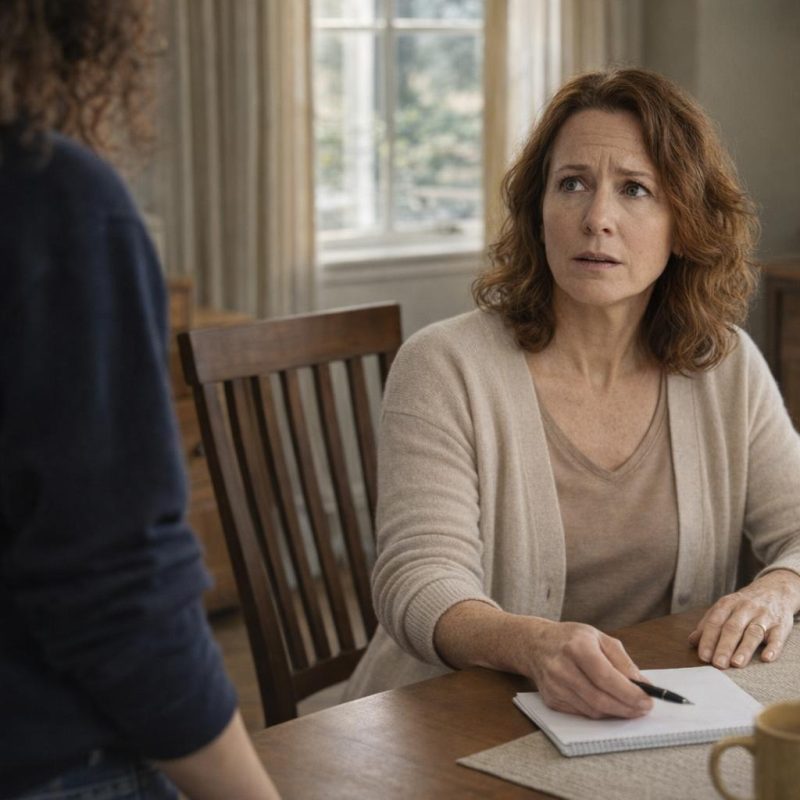 Image by RM AI
Wait Until the Dinner
Mom reached across the table and took my hand. She said she knew this was hard and frustrating, and she asked one more time for me to wait until the scholarship dinner. She explained that's when everything would make sense—the dinner was designed to show rather than tell. I sat there struggling between wanting immediate answers and wanting to trust her. I looked at her face and saw complete certainty there. No anxiety, no evasion, just this calm, steady purpose. I finally told her okay. I'd stop investigating and wait. I'd trust her timeline. The relief in her expression was immediate. She stood up and hugged me tightly, and I felt her take a deep breath. Then she whispered that I was going to be proud. She said this was what Dad and she had built together, called it their shared dream. I held onto that phrase—"built together." I kept turning it over in my mind, wondering what exactly they'd built that required this much secrecy and planning. But I'd made a promise. I agreed to stop pushing and decided to focus my energy on helping with the dinner preparation instead.
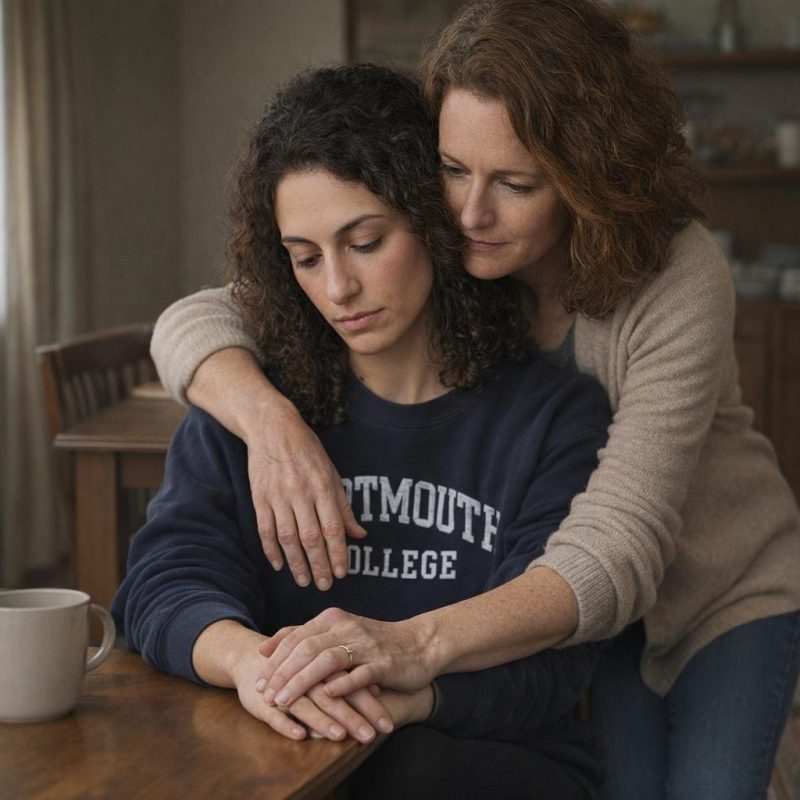 Image by RM AI
The Expanding Circle
Over the next two weeks, the dinner planning intensified in a way I hadn't expected. I started receiving calls and emails from people I'd never met, and everyone seemed to know exactly what their specific role was. Luca coordinated all the kitchen and menu aspects with this commanding efficiency. James handled sourcing for bread and baked goods. Sofia arranged the beverage program and service flow. Other people I didn't know managed invitations, decorations, and seating arrangements. I sat in on a group video call with eight participants, and everyone contributed ideas with this easy confidence and familiarity. They referenced past events and what had worked well before. I found myself wondering what past events they were talking about. After the call, I asked Mom how everyone knew what to do so instinctively. She said they'd all been part of this kind of event before, but she didn't elaborate on what "this kind" actually meant. I noticed people deferred to Mom's final decisions, but they collaborated like an experienced team, not like volunteers figuring things out. The level of organization felt professional, almost corporate. I helped wherever I was directed, but I couldn't shake the feeling I was watching something I didn't fully understand.
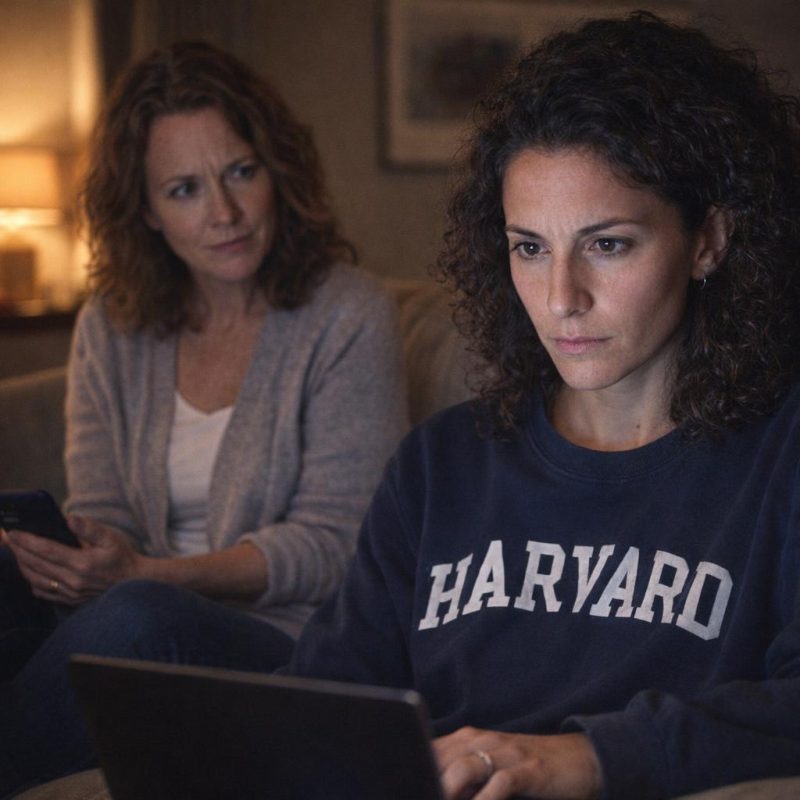 Image by RM AI
Daniel's Apology
A formal letter arrived at Mom's house a few days later, and she called me over to read it. It was from Saint & Alder on restaurant letterhead, signed by Daniel Fletcher himself. He offered a sincere apology for how the staff had treated us during our first visit, acknowledged they'd failed to meet the restaurant's values, and requested an opportunity to meet and discuss the dinner arrangements. He offered upgraded accommodations and services. Mom read the whole thing aloud to me over coffee, and I'm not going to lie—I felt pretty vindicated hearing Daniel apologize. Then Mom asked what I thought she should do. I was surprised she was consulting me. She had the power to decline, to choose a different venue entirely. Saint & Alder clearly needed this event more than Mom needed them. I watched her consider the options with this strategic thoughtfulness—not vindictive, just careful and measured. She decided to meet with Daniel but on her terms, setting the meeting for her preferred time and location. As she wrote her response with calm authority, I understood something I'd been missing. Mom had been in a position of power all along.
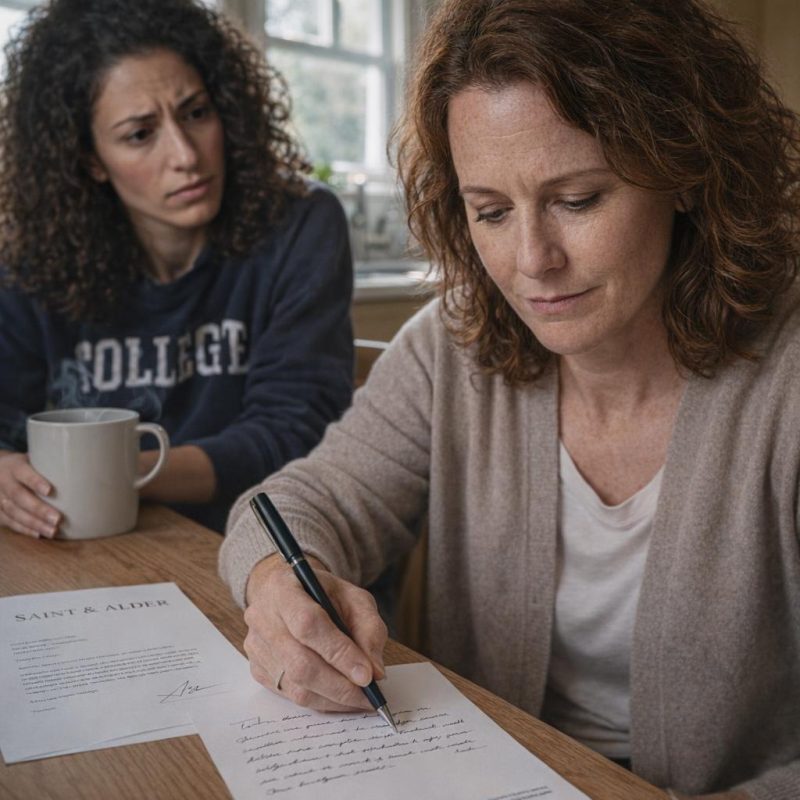 Image by RM AI
The Numbers
The meeting at Saint & Alder happened on a Tuesday afternoon, and Luca spread out his detailed cost breakdown across the table like he was presenting a work of art. I sat next to Mom while he walked us through every line item—premium ingredients sourced from specific suppliers, custom menu development, full service staff for sixty-five guests. I started doing mental math as he talked, and the numbers kept climbing higher. When he got to the total, I had to stop myself from physically reacting. This dinner was going to cost more than I'd spent on an entire semester of college. More than my car. I glanced at Mom, expecting her to negotiate or at least look concerned, but she just nodded thoughtfully like we were discussing grocery shopping. Luca must have noticed my expression because he quickly jumped in, saying he wanted to offer a significant discount. He explained that the scholarship program had changed his life, that he wanted to give back, that he'd charge only for ingredients with no labor markup. It was an incredibly generous offer, and I felt myself relax slightly. Mom thanked him genuinely, her voice warm with appreciation. Then she said the foundation would pay full price because his work deserved proper compensation.
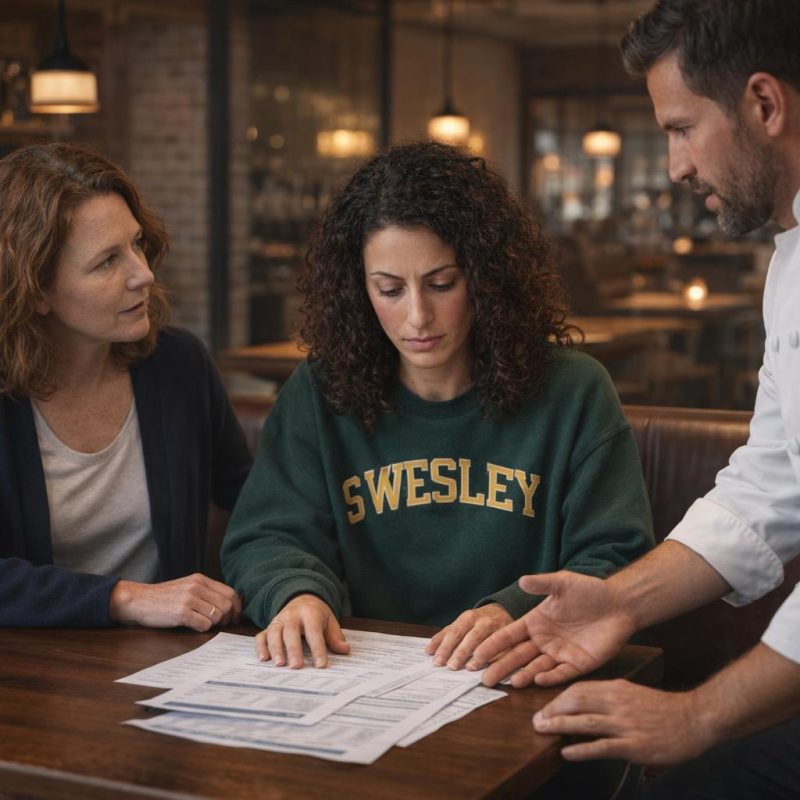 Image by RM AI
Rebecca Stone
I was at Mom's house the following afternoon, working on seating arrangements at her dining room table, when the doorbell rang. A well-dressed woman in her forties stood on the porch with a leather portfolio tucked under her arm. Mom greeted her warmly as Rebecca and introduced her to me as the foundation's attorney. Rebecca shook my hand with professional efficiency, and we settled back at the dining room table while she spread out documents. She and Mom discussed things I couldn't quite follow—liability, board responsibilities, bylaws. I sat quietly, trying to piece together what any of this had to do with a scholarship dinner. Rebecca produced several documents for Mom to review and sign, her reading glasses hanging from a silver chain around her neck. Then she turned to me with another document, explaining it was a nondisclosure agreement. She said it covered information I'd learn at the dinner and asked if I'd be willing to sign it before attending. I looked at Mom, completely confused. Mom said it was standard procedure, nothing concerning, but that I could choose whether to sign. Rebecca added that it just protected the privacy of recipients and donors. I didn't understand why a scholarship dinner needed NDAs.
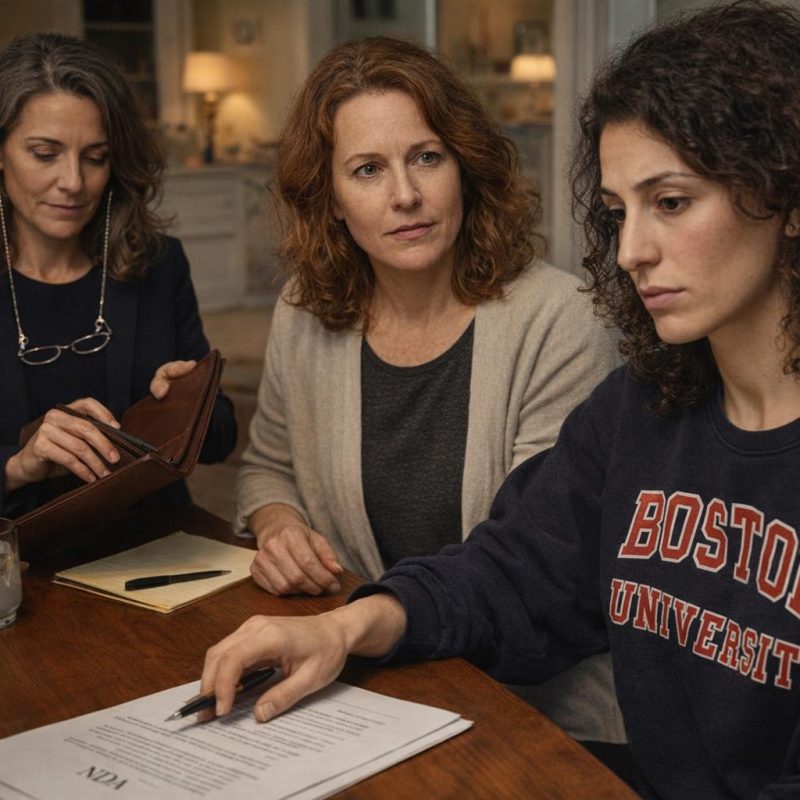 Image by RM AI
Foundation and Board
Rebecca excused herself to use the bathroom, and I found myself alone with the documents scattered across Mom's table. My eyes scanned the visible papers almost automatically. The letterhead read 'Hart Culinary Foundation'—not 'Hart Memorial Scholarship' but 'Foundation.' One document discussed an upcoming board of directors meeting. Another mentioned endowment management. There were references to multiple program initiatives, plural. My heart started racing as I read these terms. This sounded much bigger than a simple scholarship. Rebecca returned and began gathering the documents efficiently, and Mom came back from the kitchen carrying coffee. I asked directly what the Hart Culinary Foundation was, saying I'd thought it was just a scholarship. Mom acknowledged it was more than that, her voice calm and measured. She said the dinner was when the full scope would be revealed. I felt alarm spreading through my chest. Foundation implied a formal organization, significant structure, professional operations. How had I missed something this substantial being built? Mom remained completely calm, asking if I still wanted to help with the dinner. I said yes, but I felt like the ground was shifting beneath me.
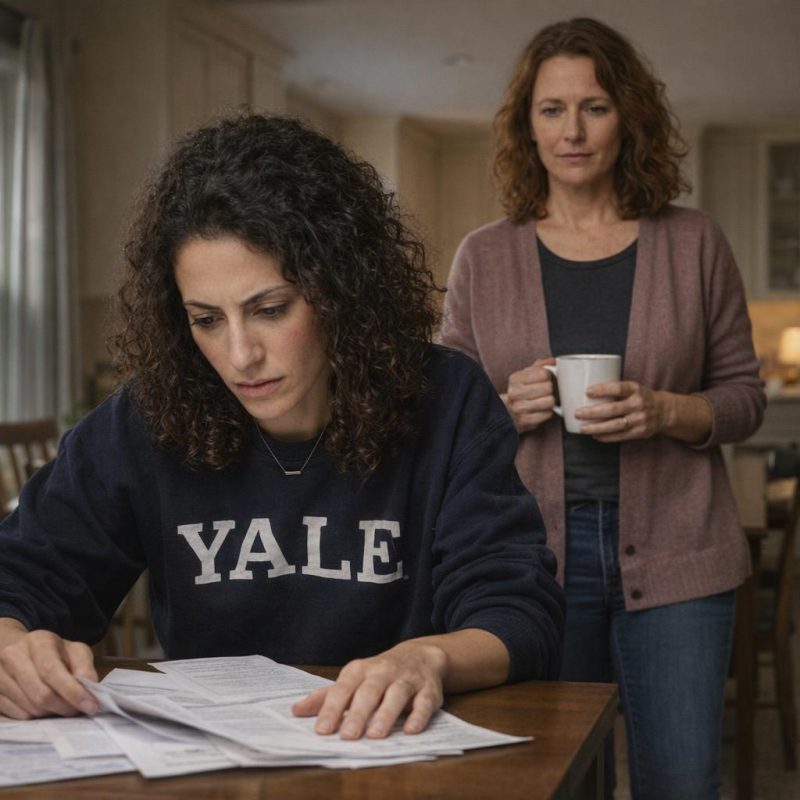 Image by RM AI
The Files
Mom asked me to grab printer paper from her home office, and I walked into the room I rarely visited. Three large filing cabinets stood along the wall, their drawers labeled with neat tabs. The first cabinet read 'Scholarship Recipients A-M' and 'Scholarship Recipients N-Z.' The second showed 'Small Business Grants' and 'Community Kitchen Project.' The third displayed 'Professional Development' and 'Emergency Assistance Fund.' I stood frozen, processing what the labels meant. Each drawer implied a separate program. I opened the scholarship drawer and found dozens of thick files, each one stuffed with documentation. I pulled open the small business grants drawer—more files, different names, detailed applications. Mom wasn't running one scholarship. She was operating multiple distinct programs. My hands shook slightly as I closed the drawers and grabbed the printer paper I'd come for. I returned to the dining room where Mom was working on her laptop. She looked up and seemed to know something from my expression, asking quietly if I'd found the paper. I nodded, unable to articulate what I'd just seen. The filing cabinets had revealed something I couldn't ignore.
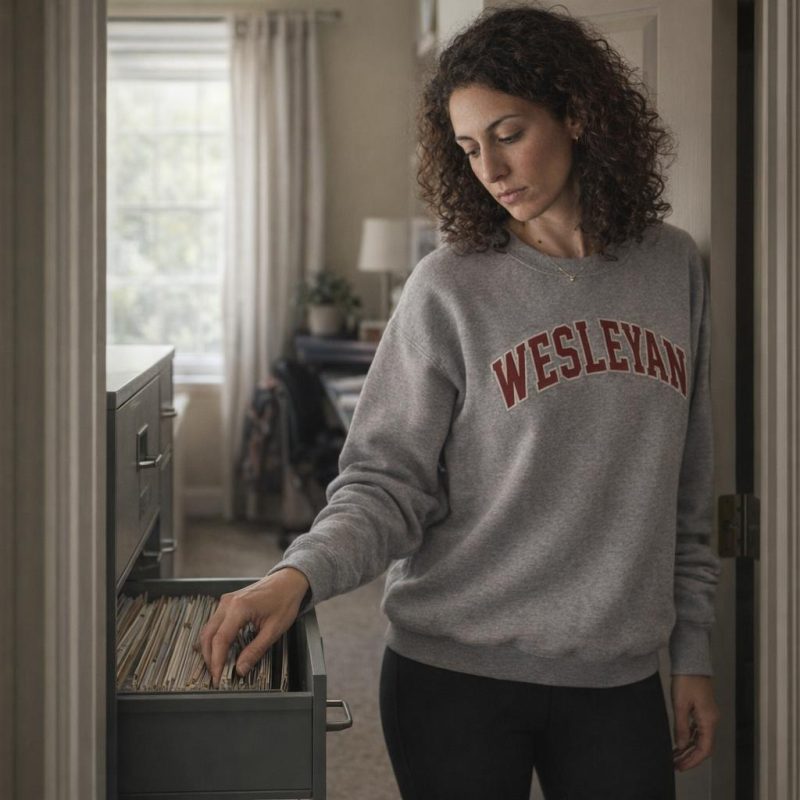 Image by RM AI
The Scale
I asked if I could use Mom's office to work on some planning details, and she agreed easily before returning to her own tasks. I closed the office door and began systematically opening the file drawers. I started counting recipient files in the scholarship drawer, stopped at fifty when I realized there were more drawers to check. The small business grants drawer held twenty-three files. The community kitchen project contained detailed plans, budgets, and partnership agreements. The emergency assistance fund showed records of one-time grants to struggling recipients. I sat down in the desk chair, overwhelmed. I opened a file labeled 'Partnership Organizations' and found correspondence with culinary schools across eight different states—community colleges, technical schools, specialty programs. Mom had relationships with administrators nationwide. I found a budget spreadsheet with large numbers, carefully tracked and professionally managed. This wasn't a hobby or a small memorial project. This was a major philanthropic operation. Mom had built something massive while appearing quiet and withdrawn. A folder labeled 'Partnership Organizations' contained contacts at culinary schools in eight different states.
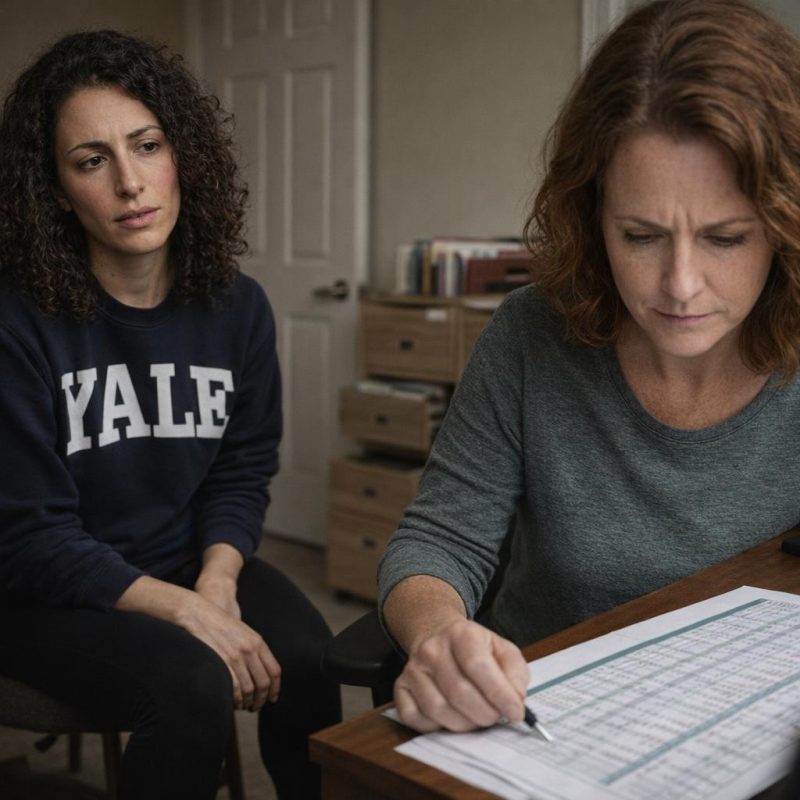 Image by RM AI
Reframing Everything
I stayed in the office, processing everything I'd discovered. I thought back to the months after Dad died, remembering how Mom had been so quiet, spending so much time alone in this room. I'd interpreted it as depression or withdrawal, signs she was struggling to cope. Now I saw it completely differently. Mom had been working. The times she'd seemed distant, she might have been coordinating programs or reviewing applications. The simple lifestyle wasn't poverty or frugality born from grief—it was a choice to direct resources toward something. Dad's death hadn't been the end of their shared dreams. It had been the catalyst for Mom to implement them. I recalled conversations where Mom had deflected my questions about how she spent her time, and I wondered if she'd been protecting something still forming. The trips, the phone calls, the busy calendar—all signs of active leadership, not aimless grief. I felt foolish for missing what was happening right in front of me, but also genuinely impressed by Mom's focus and capability. I finally emerged from the office after an hour and found Mom on the phone in the kitchen, coordinating something with confidence and precision. That authoritative tone I'd noticed before suddenly made complete sense.
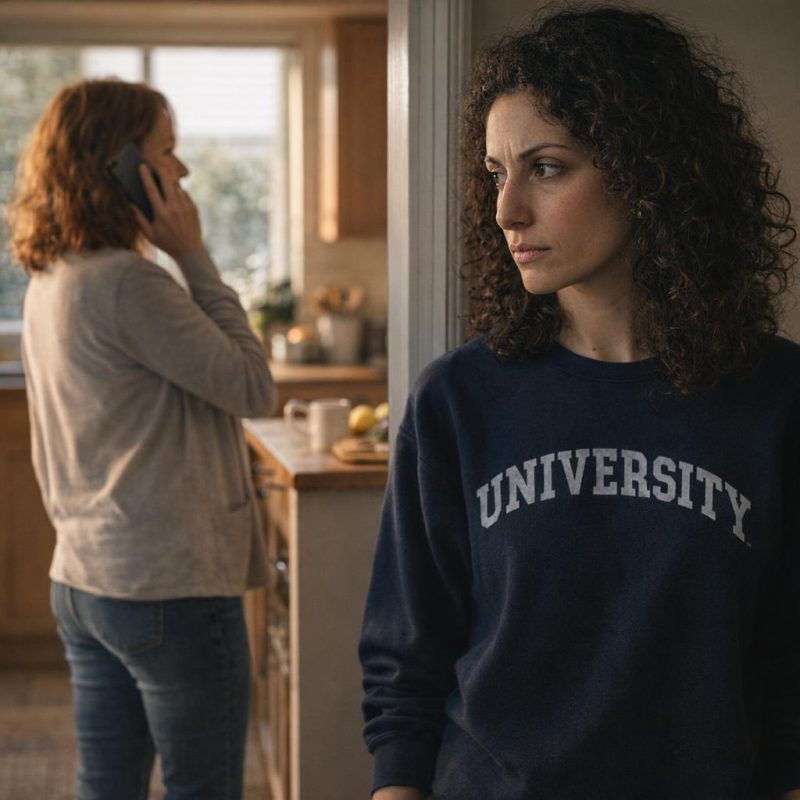 Image by RM AI
Thomas Bradley
I called Thomas Bradley, Dad's friend from college, and asked if we could meet for coffee because I needed advice. He agreed immediately, and we met at a quiet cafe the next afternoon. Thomas had kind eyes and a comfortable presence that made him easy to talk to. I explained everything I'd discovered—the files, the programs, the scale, the foundation. I told him about my confusion over why Mom had kept it all secret. Thomas listened carefully, nodding occasionally, his expression thoughtful. When I finished, he smiled gently and said he'd been wondering when I'd finally figure out what Evelyn was doing. I asked if he'd known all along. Thomas confirmed he'd been on the foundation board since the beginning, that he'd helped Marcus and Evelyn set it up years ago. I asked why no one had told me. Thomas said it had been Evelyn's choice when to share, explaining that this was Marcus and Evelyn's plan together, something they'd worked on for years before Marcus died. He said Evelyn had been honoring Marcus's vision all this time. He encouraged me to talk to Mom directly and promised I'd be proud when I understood everything. Then he said I should talk to her before the event because there were things I needed to understand about what my role could be moving forward.
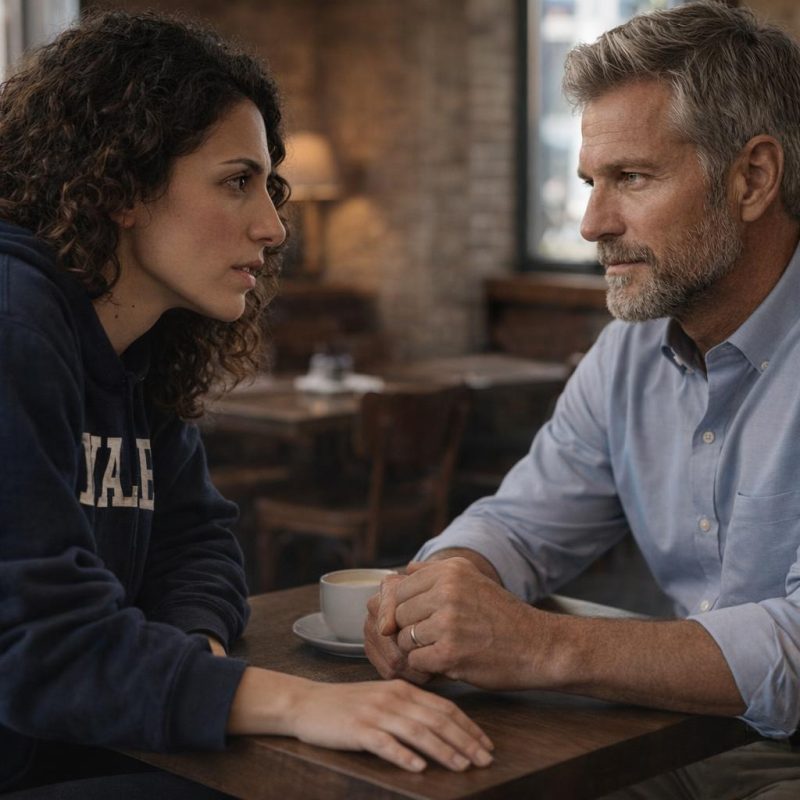 Image by RM AI
The Confirmation
Thomas and I ordered second coffees, and I asked how long the foundation had actually existed. He explained that Marcus and Evelyn had started planning it five years before Dad's death. They'd wanted to create lasting impact in the culinary world because Marcus loved feeding people and wanted to help others do the same. After Marcus died, Evelyn had pushed forward with their plans, building quietly and carefully for three years. Thomas confirmed the foundation was a substantial organization with multiple programs, professional staff, and a significant endowment. Then he told me something that made everything click into place—the scholarship dinner was actually the foundation's official launch event, the first public announcement of its full scope. I asked why Mom had waited so long to tell me. Thomas suggested Evelyn had wanted it established before involving family, that she'd wanted to prove it could work. He mentioned that I might have a role in the foundation's future if I was interested after learning everything. He encouraged me to talk to Mom before the dinner, saying there were things she should explain personally about Marcus's wishes and our family legacy. I left the coffee shop with new understanding, knowing I needed one final conversation with Mom. He said I should talk to her before the event because there were things I needed to understand about what my role could be moving forward.
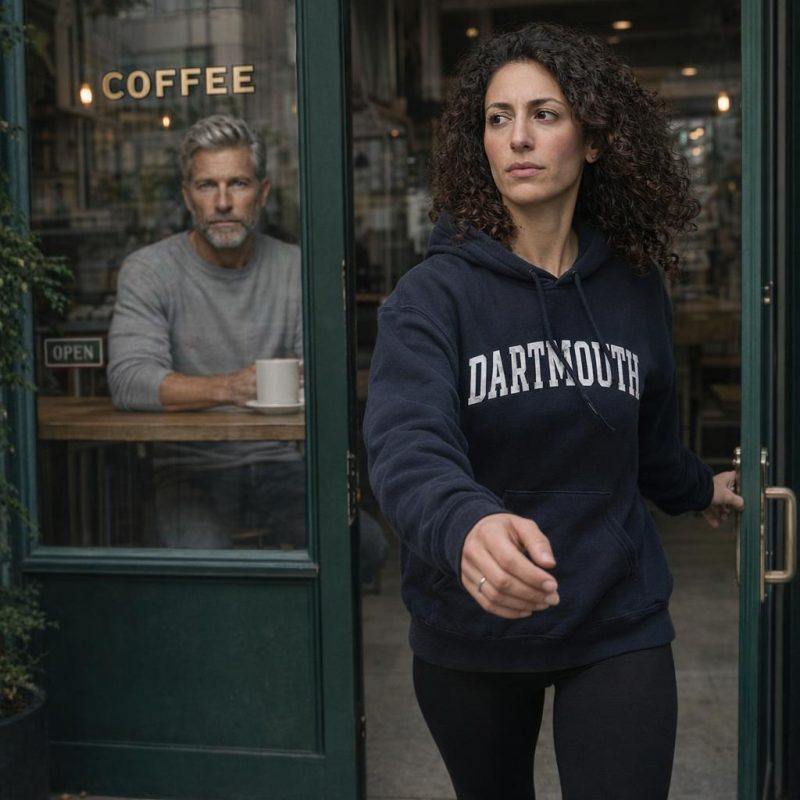 Image by RM AI
The Last Morning
I woke up at six in the morning knowing I couldn't wait until the dinner. The conversation with Thomas had left me with too many questions, and honestly, I was done with the careful waiting and the polite distance. I'd spent three years assuming Mom needed space to grieve, and now I knew she'd been building something massive while I tiptoed around her feelings. I threw on jeans and a sweatshirt, grabbed my keys, and drove to her house without calling ahead. The sun was just coming up, painting everything in that soft early light that makes the world feel like it's holding its breath. I half-expected to find the house dark and quiet, maybe have to wait on the porch like some kind of intervention ambush. But when I pulled into the driveway, I could see the kitchen lights already on. I let myself in through the side door, the way I always did, and stopped in the doorway. Mom was sitting at the kitchen table with two cups of coffee already poured, steam rising from both of them, as if she'd been waiting for me.
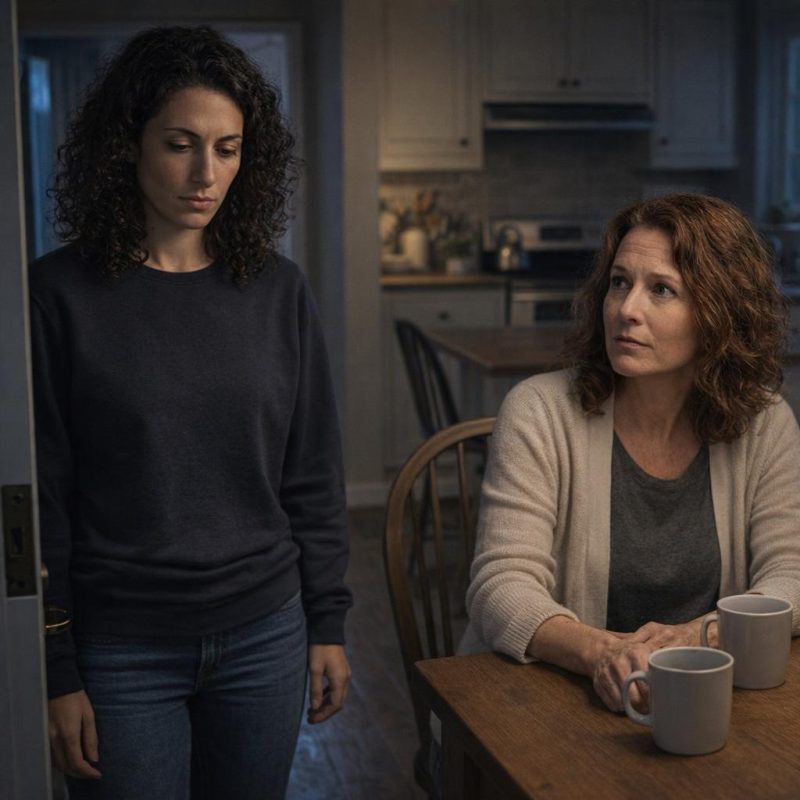 Image by RM AI
Complete Honesty
I sat down across from her and didn't waste time with small talk. I told her I'd seen the filing cabinets in her office, all those folders with names and programs I didn't recognize. I mentioned the budget spreadsheets, the partnership documents, the labels for programs that went way beyond a simple scholarship. I said I'd talked to Thomas, that he'd confirmed the foundation existed and was substantial. I asked her directly why she'd kept this from me for three years. Mom listened without interrupting, without defending herself, just holding her coffee cup and watching me with those calm, observant eyes that had always seen more than I realized. When I finally ran out of words, she reached across the table and took my hands in hers. Her grip was warm and steady. She said she'd been waiting three years to have this conversation with me. She admitted she hadn't been sure I was ready to hear it, that the dinner was supposed to be the moment when everything came together. But she acknowledged I deserved to know now, and her expression showed something like relief at finally being able to share. She took a deep breath and said it started before Dad died.
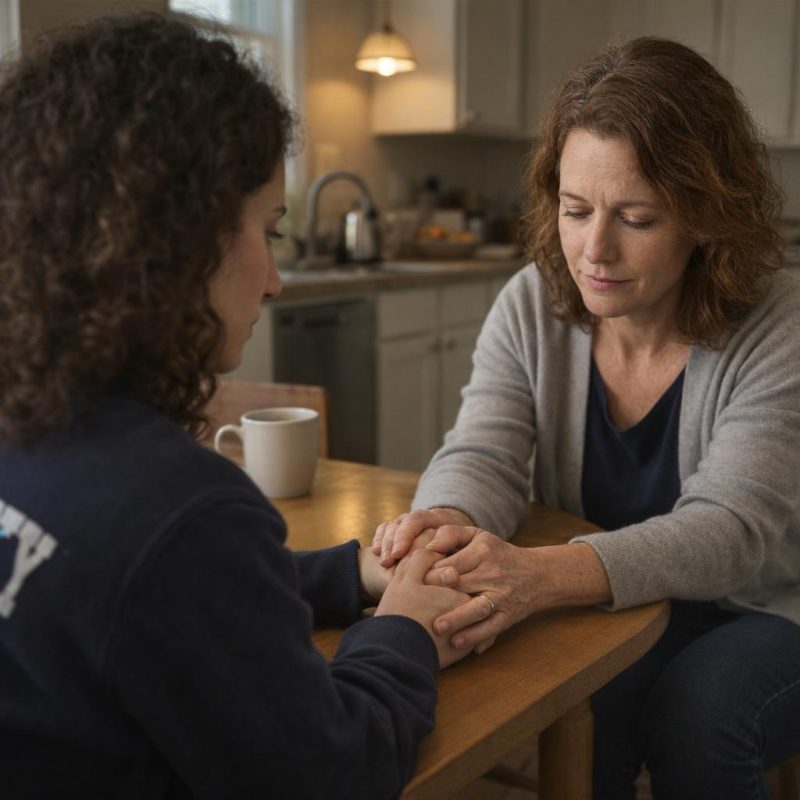 Image by RM AI
The Foundation
Mom began from the beginning, explaining that she and Dad had started planning the Hart Culinary Foundation five years before he died. They'd dreamed of supporting people who wanted to feed their communities, she said, people like Dad who believed cooking for others was the highest calling. It started as a simple scholarship idea, but it grew as they researched the barriers people faced in the culinary industry. When Dad got sick, it accelerated their planning because they wanted the foundation ready to launch even if he didn't survive. The Hart Memorial Scholarship was the first program they established, Mom explained, but it was always intended as just one piece of a larger organization. Her voice was steady as she told me the foundation now operated seven distinct programs, each designed to address different barriers in the food industry. I sat there listening with my coffee getting cold, realizing that every trip she'd taken, every phone call I'd interrupted, every meeting she'd rushed off to had been part of this. The quiet years I'd interpreted as grief had actually been implementation. She said the scholarship I knew about was just the first of seven programs they'd designed together.
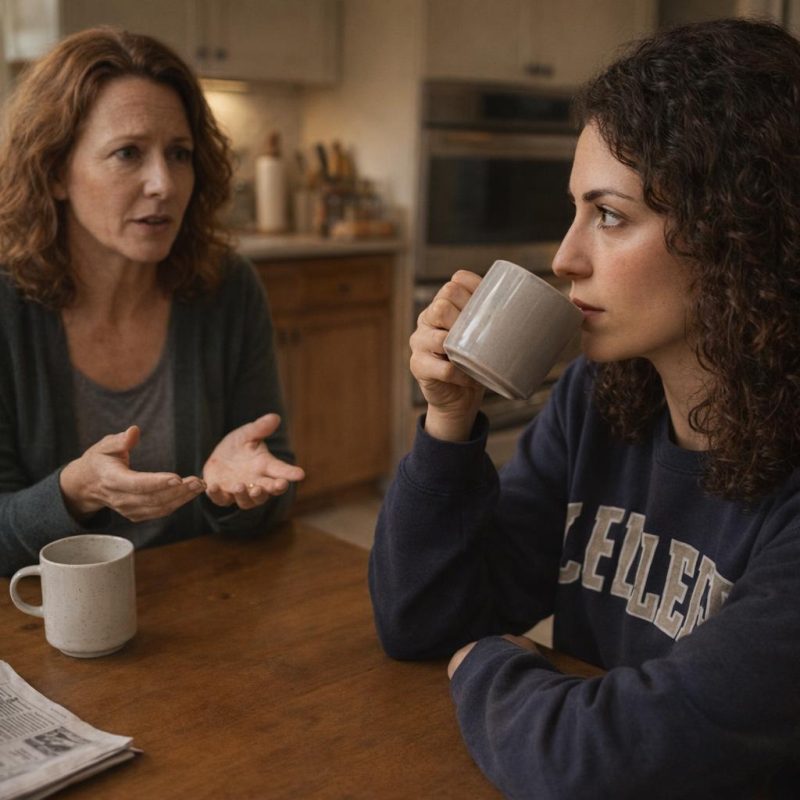 Image by RM AI
Over One Hundred
Mom stood up and disappeared into her office, returning with a bound document that looked professionally designed and substantial. She handed me the Hart Culinary Foundation annual report. I opened it to the executive summary and my hands started trembling. The foundation had served one hundred twenty-seven individuals in the past three years. The programs were listed in clean typography: Hart Memorial Scholarship, Small Business Launch Grants, Community Kitchen Initiative, Emergency Assistance Fund, Professional Development Network, Equipment Access Program, Regional Partnership Program. Operations spanned eight states. Partnerships with fourteen culinary schools. I turned pages seeing recipient success stories, financial statements that showed an endowment that had grown through careful investment and fundraising. Mom explained they had three full-time staff members now. The board included Thomas, Rebecca Stone, and other community leaders I recognized from Dad's restaurant days. I kept flipping through, absorbing the scale of what she'd built, until I reached the board of directors page. There, at the top of the list, I saw my father's name: Marcus Hart, Founder, with a note beside it that read 'In Memoriam.'
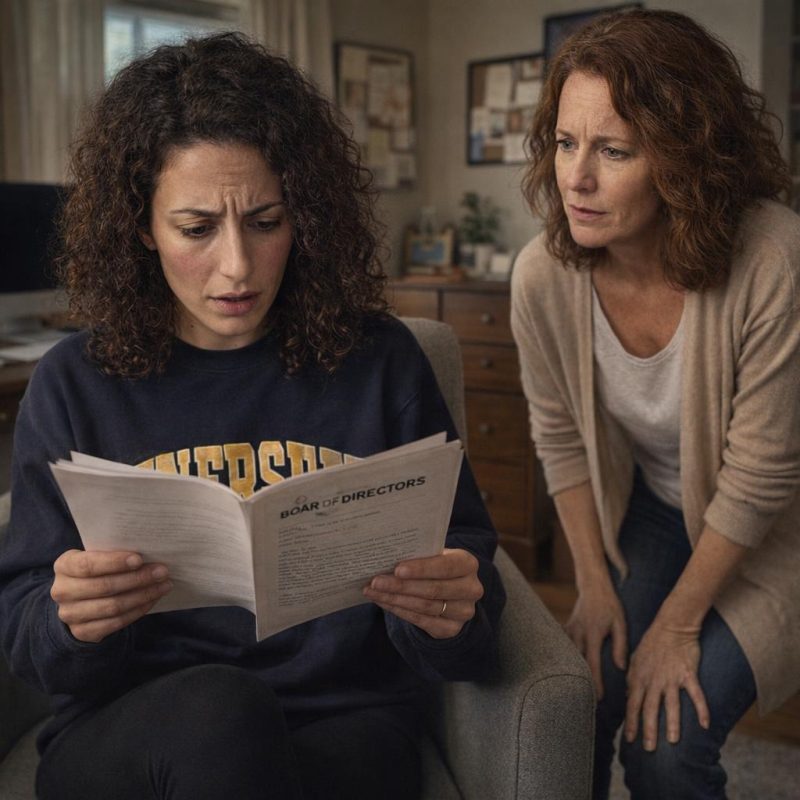 Image by RM AI
Dad's Dream
Mom sat back down and continued explaining that the foundation was Dad's dream as much as hers, something they'd planned together during his final years when he knew he was running out of time. She said he'd been diagnosed six years ago, that they'd had time to prepare and plan. Dad had wanted his love of feeding people to continue beyond his life, so he'd researched barriers in the culinary industry during his illness. He'd found that talented people often couldn't afford training or access capital for small food businesses. Together, they'd designed programs to address those specific needs. Mom had implemented everything after his death, turning their shared vision into reality. She paused, then stood again and retrieved an envelope from a locked desk drawer. She handed it to me without saying anything. The address was in Dad's handwriting, my name written in his familiar script. My throat tightened. The letter was dated three months before he died. I opened it with shaking hands and read his words asking me to help Mom someday, to support the dream they'd built together. He said he was proud of who I was becoming. I read it twice while tears streamed down my face, and Mom just sat there giving me time to process his words.
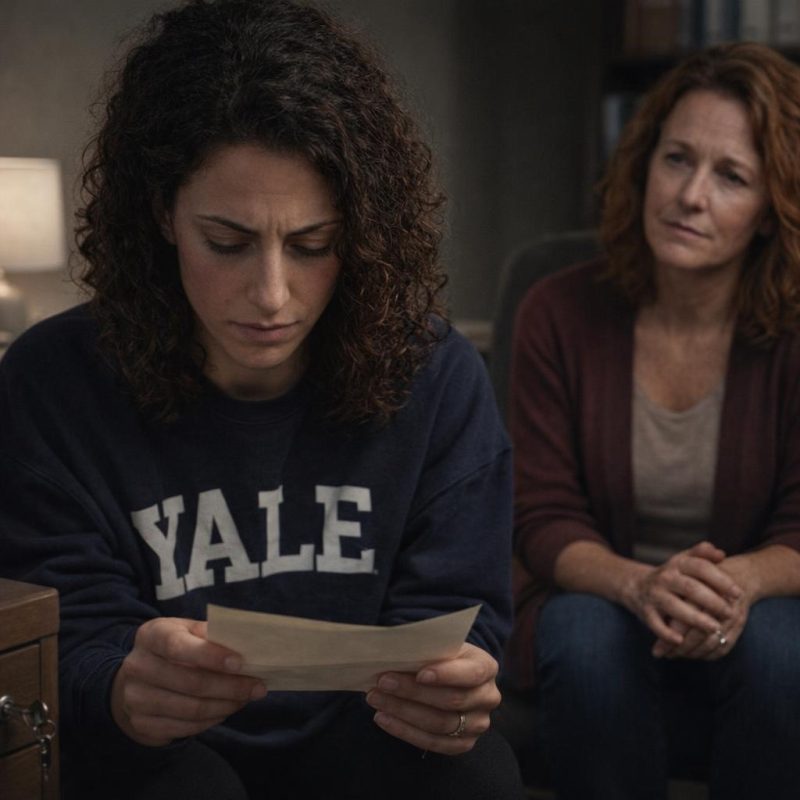 Image by RM AI
The Community Kitchen
After I'd pulled myself together, Mom suggested we take a drive. We ended up at a converted warehouse in the neighborhood where Dad had grown up, a building I'd driven past a hundred times without really seeing. Inside, it had been transformed into a professional kitchen space with six cooking stations, industrial equipment, and proper storage facilities. Mom explained this was where scholarship recipients could practice their skills and serve free community meals twice weekly. The recipients volunteered here, giving back to the neighborhood that had shaped so many of them. She showed me the dining area that seated fifty people, walls covered with photos of past community events. I recognized some faces from the files I'd seen in her office. As I walked through the kitchen admiring the professional setup, I stopped at a framed photo on the wall. Dad in his apron, spatula in hand, grinning at the camera while serving pancakes at a neighborhood breakfast years ago. The caption read 'Marcus Hart - Our Inspiration.' I stood there absorbing what it meant—that Dad had loved feeding people more than anything, and this kitchen was that love made permanent. Mom stood beside me quietly, and I finally understood the heart of everything she'd been building.
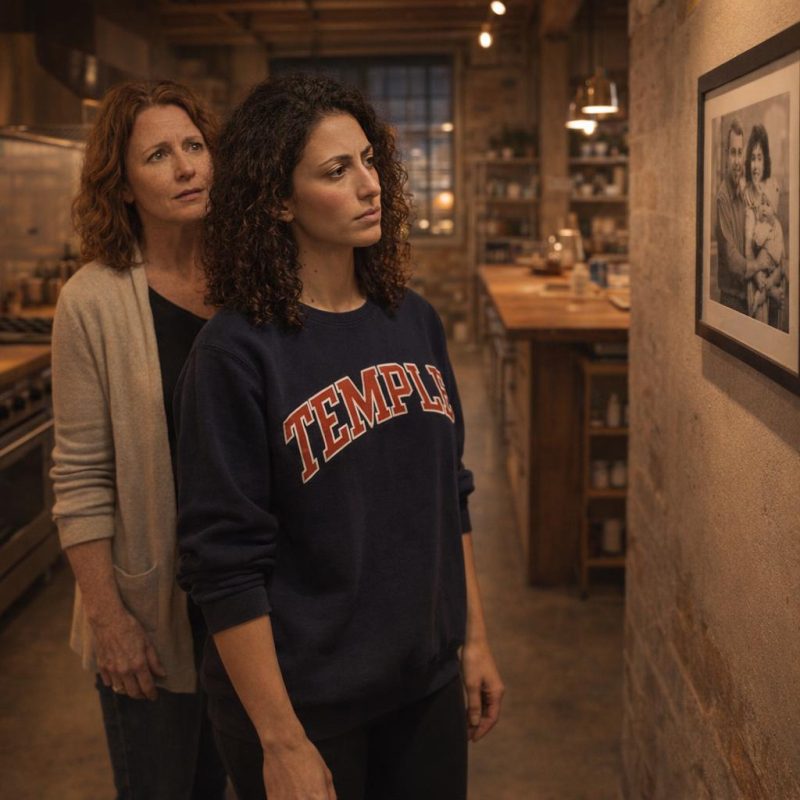 Image by RM AI
Why the Secrecy
Back at Mom's house, I finally asked the question that had been bothering me since I'd first discovered the files. Why keep this secret from me for three years? Mom took her time answering, and when she did, she was completely honest. She said she hadn't been sure it would work at first, that the foundation could have failed and the money could have been wasted. She didn't want me worrying or trying to help before it was ready. But she also admitted she'd known I would be protective, that I would have tried to talk her out of the risks. I might have questioned using Dad's estate this way. And here's the thing—she was completely right. I had viewed her as a fragile widow who needed protection. I absolutely would have worried about the finances and might have discouraged the ambitious expansion. Mom said she'd needed to prove it to herself first, to build something undeniably successful before revealing it. I accepted this explanation even though it still stung a little. I understood she'd been protecting both the mission and my peace of mind. She said she'd also been afraid I would try to protect her from taking the risk, and I realized she was completely right about that.
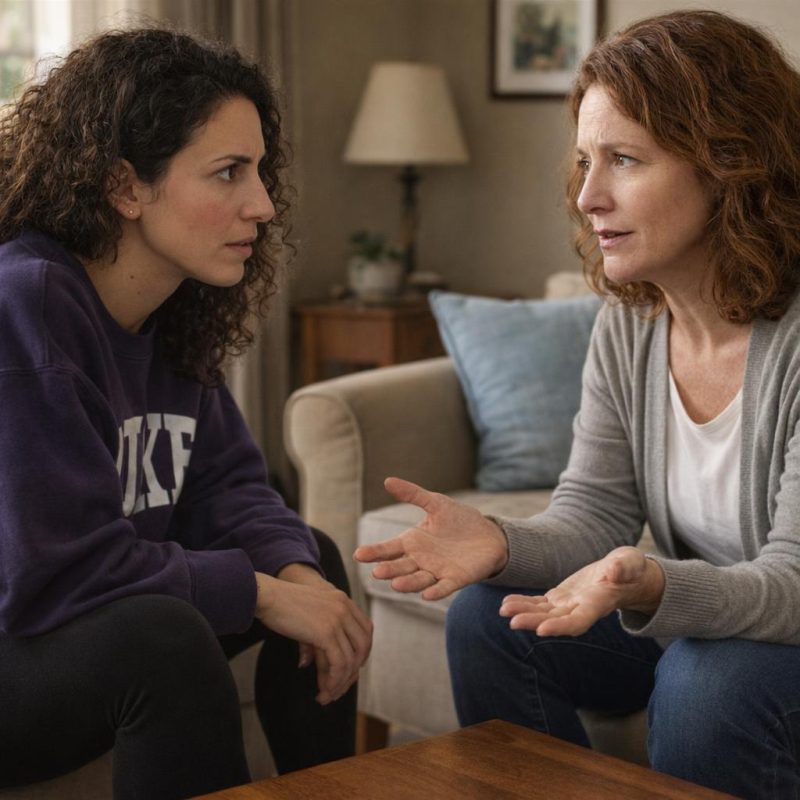 Image by RM AI
The Launch
Mom confirmed that the scholarship dinner was actually the Hart Culinary Foundation's official public launch. Media invitations had been sent, local politicians and culinary industry leaders were attending, and recipients from across all seven programs were coming together for the first time. The foundation staff would be introduced, and they'd present the annual report publicly. Then she asked if I would be willing to help—not just with logistics, but as a family representative. She wanted me to speak about Dad at the dinner, to share memories of his love of feeding people and what it had meant to our family. I said yes without hesitation. I felt honored to be part of this moment, to represent Dad's memory in front of everyone who'd been touched by what my parents had built together. Mom's face transformed with genuine joy, a happiness I hadn't seen since before Dad got sick. She showed me the program schedule, and I saw my name listed under 'Family Address.' The weight and privilege of that role settled over me as we began planning exactly what I would say. Mom smiled in a way I hadn't seen since before Dad got sick.
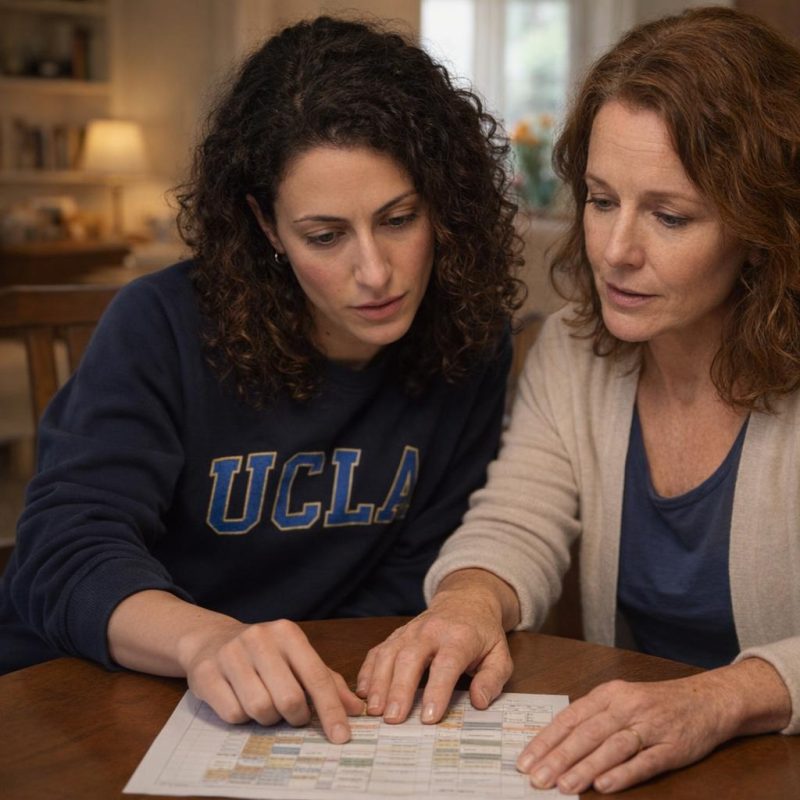 Image by RM AI
The Full Team
Mom invited me to the foundation office for the first time the next morning, and I realized I'd been driving past this small professional building downtown for years without knowing she worked there. The suite on the third floor had the foundation's name on the door in simple lettering. Inside, three staff members waited in a conference room: a program director who managed all seven scholarship tracks, a finance manager who handled the actual money, and a communications coordinator preparing for the launch. Rebecca Stone sat at the table in her capacity as board counsel, reading glasses on their silver chain, leather portfolio open in front of her. Thomas Bradley arrived moments after us, greeting Mom with the easy warmth of someone who'd watched this organization grow from nothing. Mom ran the meeting with clear authority I'd never witnessed before. Staff reported on dinner preparations with the efficiency of people who knew their roles perfectly. The board discussed launch communication strategy, media talking points, and post-event follow-up. I sat there watching my mother be the CEO of a substantial organization, and the professionalism of every person in that room made me understand how seriously they all took this work. The meeting concluded with discussion of the foundation's future, and then Rebecca Stone handed me a folder labeled 'Board Development Proposal' and I saw my own name on the first page.
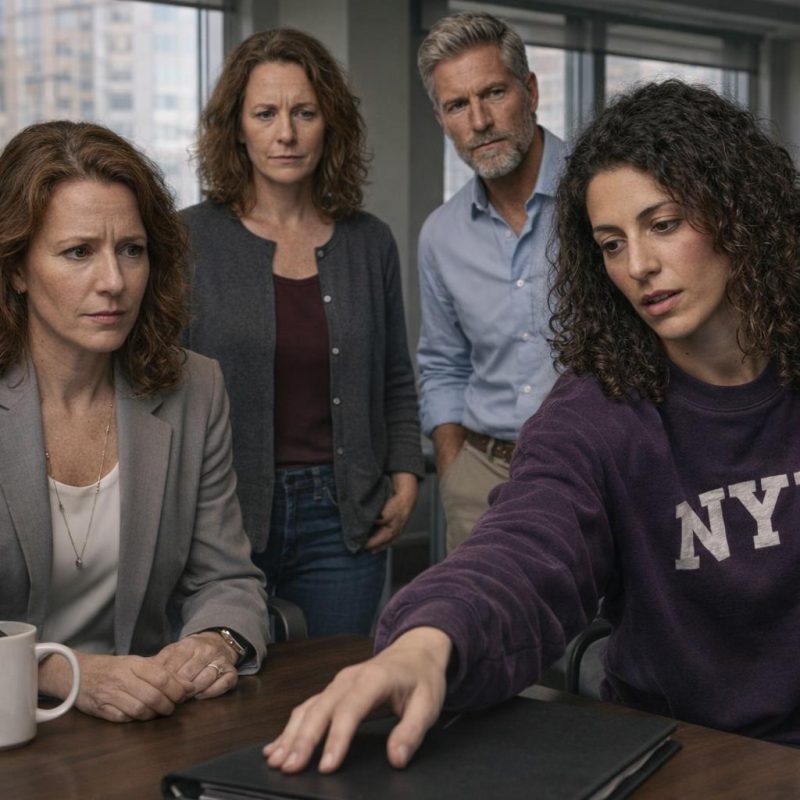 Image by RM AI
The Rooftop
The day before the dinner, Luca met us at Saint & Alder's entrance with a completely different energy than our first visit. His staff nodded respectfully as we passed, and I could feel how much had changed in the months since Mom had quietly transformed his restaurant's future. He led us up to the rooftop garden where the dinner would happen, and I actually gasped when we stepped outside. The space was stunning—city views stretching in every direction, herb gardens growing along the perimeter, tables arranged for sixty-five guests with centerpieces bearing the foundation logo. Luca walked us through the menu progression, explaining how each course honored Dad's cooking philosophy: simple ingredients prepared with love. Mom touched the herb plants gently, and Luca mentioned he'd planted some specifically for this dinner. I watched her move through the space with quiet authority, and it hit me that this was Mom's event, Mom's vision, Mom's moment to step into the light she'd been avoiding for three years. Luca turned to us both, his voice serious, and said tomorrow would change everything for the culinary community in our city. Standing there in that beautiful space, I believed him completely.
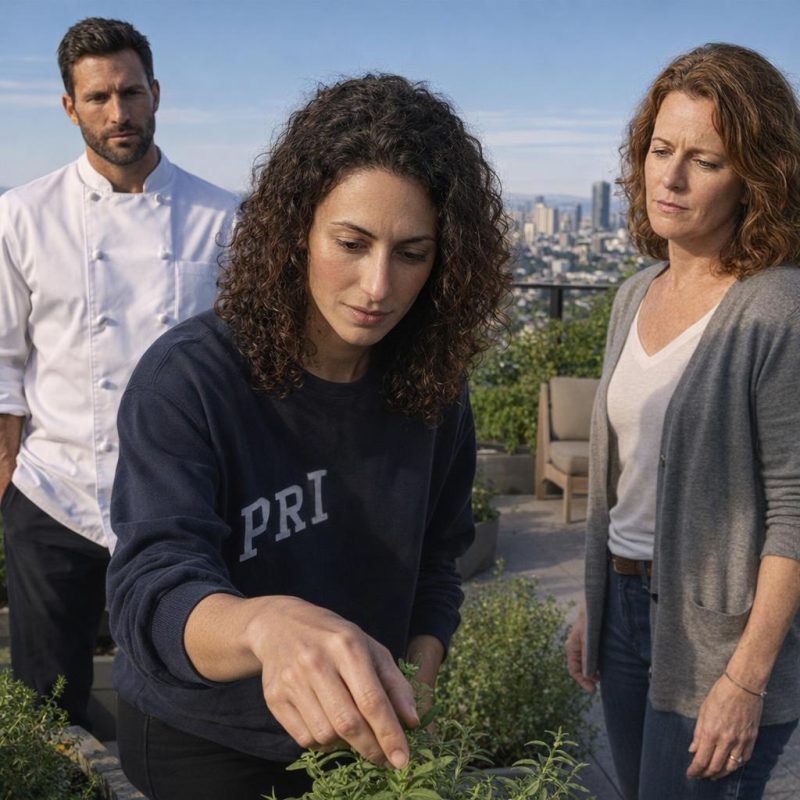 Image by RM AI
The Last Week
The week leading up to the dinner became the most intense period I'd experienced since Dad's illness. I took time off work to help full-time, and our days blurred together in a rush of press inquiries from local food publications, guest confirmations from every expected attendee, and recipients coordinating travel from out of state. The foundation staff worked long hours finalizing every detail while Mom remained impossibly calm through all the escalating activity. We did a final menu tasting at Saint & Alder that went perfectly, reviewed speech drafts until I could recite mine in my sleep, and finalized table assignments after careful consideration of who should sit with whom. The night before the dinner, I went home exhausted but buzzing with excitement, believing everything was finally ready. I slept soundly for the first time in days. Then I woke up the morning of the event to my phone buzzing repeatedly on the nightstand. Seventeen missed calls had accumulated overnight. The voicemail notification showed Luca's name, and when I played it, his voice sounded strained and urgent in a way that made my stomach drop. He said there was a problem and I needed to call him immediately.
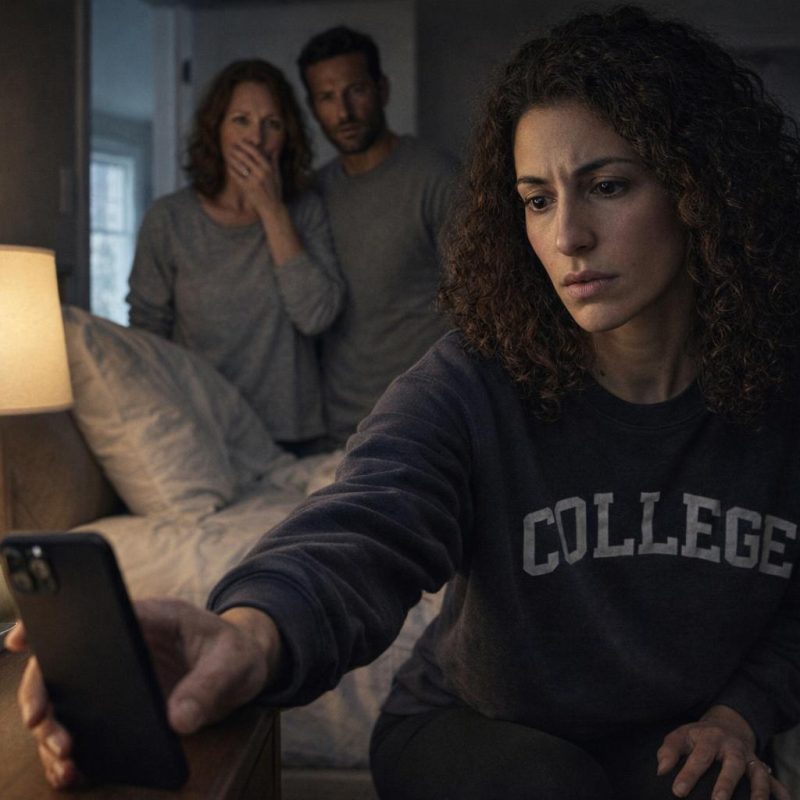 Image by RM AI
The Sabotage
I called Luca back with shaking hands, and what he told me made the room spin. Daniel Fletcher—the sous chef who'd been fired after our first visit to Saint & Alder—had contacted their main ingredient supplier overnight. He'd spread rumors about unpaid invoices and implied the foundation event might not pay its vendors, making the supplier nervous enough to cancel the morning delivery. Half the dinner ingredients were now unavailable, and it was already eight AM with the dinner starting at six. Luca apologized profusely, saying he never anticipated Daniel would do something like this, but the damage was done. I called Mom immediately, my voice probably betraying my panic, and she arrived at Saint & Alder within the hour. She listened to Luca's full explanation of the sabotage with an expression that remained steady throughout, and when he finished, she stood up straighter than I'd seen her stand in years. She said clearly, in a voice that left no room for argument, that we would not be calling off this dinner. Three years of work would not be undone by one bitter person who couldn't handle being held accountable for his actions. Then she pulled out her phone and asked what resources we had and who we could call.
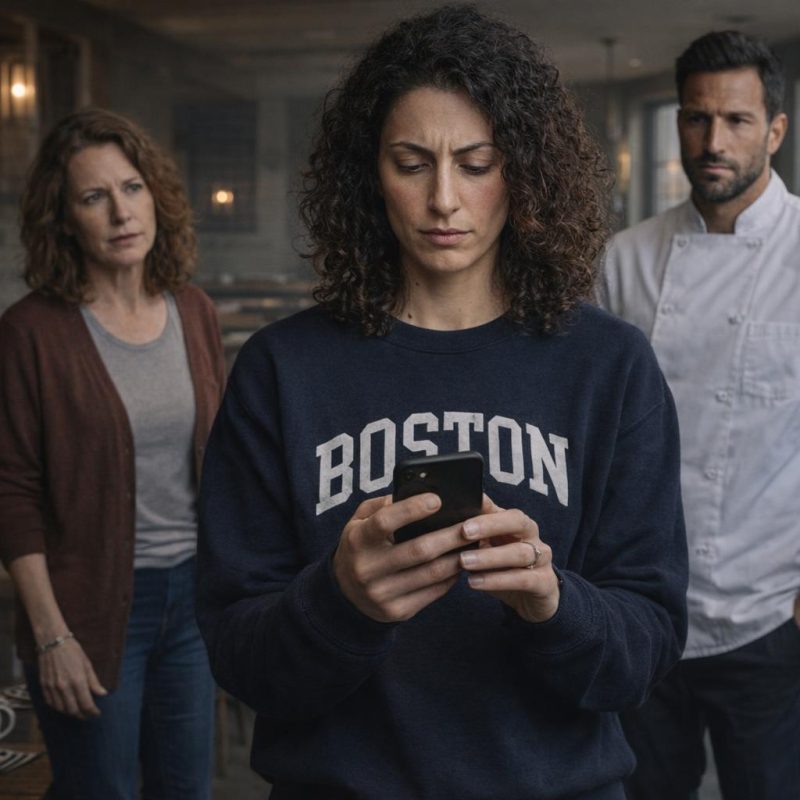 Image by RM AI
The Crisis
Mom started making phone calls with the systematic calm of someone who'd been preparing for crisis management her entire life. She explained the situation to each recipient without drama, not asking for favors but asking if they could help. Her first call went to James Chen at his bakery, and he immediately offered his entire day's production—he'd bake everything we needed for bread service. Sofia Rodriguez answered on the second ring, and within minutes she was redirecting all her food truck supplies, offering fresh produce and prepared items she'd planned to use that week. Other recipients began responding as word spread through the network Mom had built. A restaurant owner offered access to his walk-in cooler. A caterer had backup ingredients she could contribute. A farm-to-table chef sent an employee with fresh vegetables from that morning's harvest. By noon, resources were arriving at Saint & Alder in a steady stream, and Luca's kitchen became a coordination center for the most beautiful display of community I'd ever witnessed. These weren't just scholarship recipients showing up—they were family answering a call. By noon, James had committed his bakery's full production, Sofia was redirecting her food truck supplies, and five other recipients were on their way with whatever they could bring.
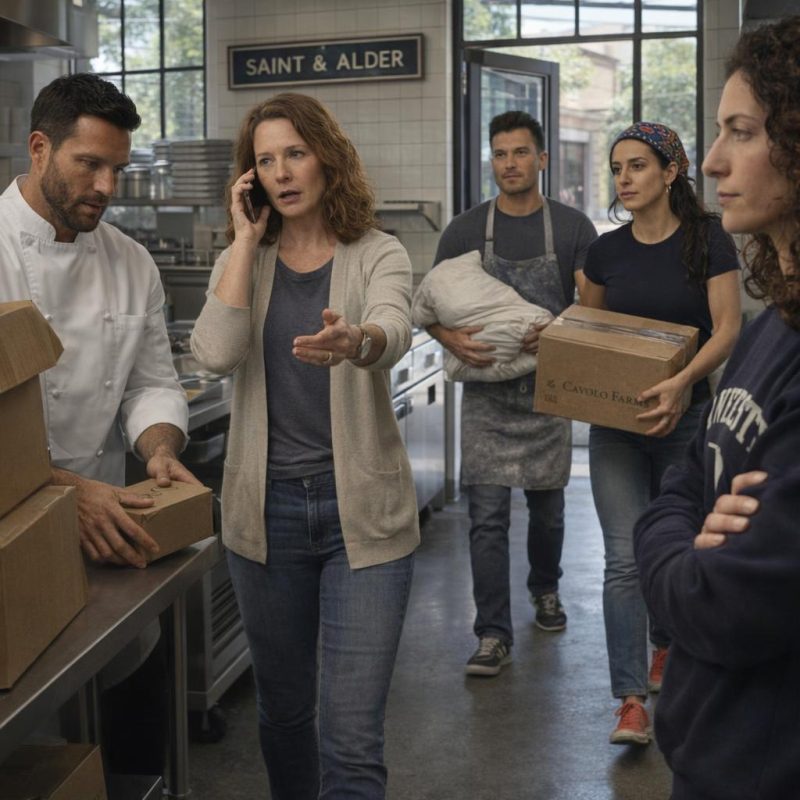 Image by RM AI
The Network Responds
The early afternoon became organized chaos in the best possible way. Recipients continued arriving throughout the day, each person bringing what they could contribute to save the dinner that was supposed to honor them. Fresh bread from James arrived still warm from the oven, filling the kitchen with that incredible yeast smell. Sofia's produce came arranged in professional containers, labeled and ready to use. A farmer showed up with herbs and vegetables. A pastry chef brought ingredients for the dessert course. A restaurant owner sent one of his line cooks to help in the kitchen, and a catering company loaned serving equipment they weren't using that night. I helped coordinate arrivals and storage while Mom moved through the space thanking everyone personally. Each recipient hugged her, and they told me stories about what Mom meant to them, what the foundation had made possible in their lives. By mid-afternoon, the kitchen was fully stocked—not just adequate, but abundant. Luca surveyed the ingredients spread across every surface and began revising the menu, and he actually smiled when he said this version would be even better than originally planned. By three o'clock, we had more help than we needed, and Luca said the menu would be even better than originally planned.
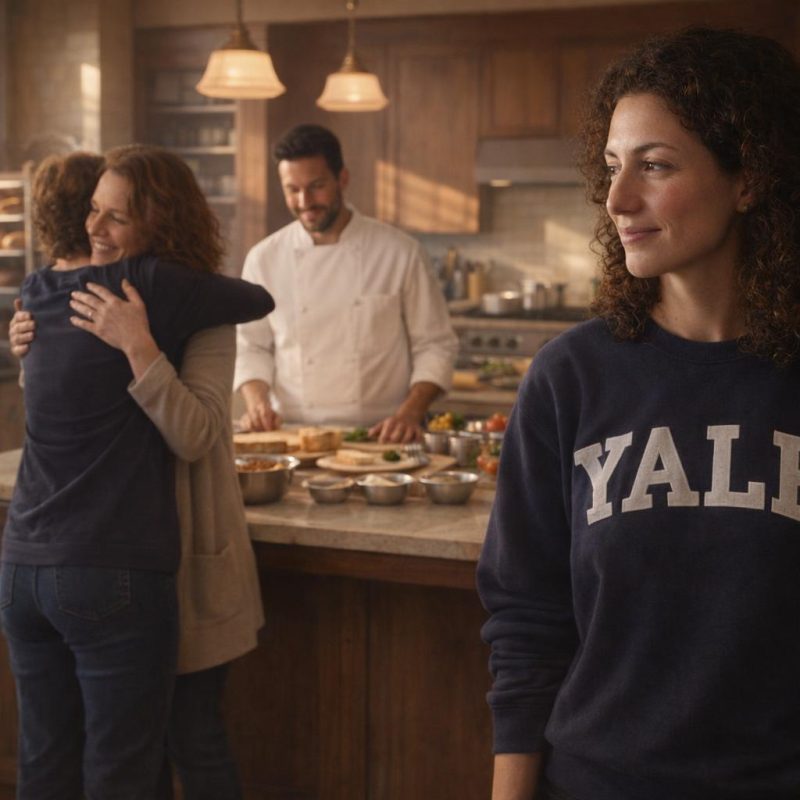 Image by RM AI
The Kitchen
Luca orchestrated the kitchen with the precision of someone who'd spent decades perfecting his craft, and I watched him direct a team that included recipients who had once washed dishes and now ran their own businesses. Former dishwashers prepped at professional stations. Graduates of the culinary program demonstrated skills that would make any chef proud. James oversaw all bread production and baking. Sofia managed vegetable preparation and presentation with the efficiency she'd learned running her food truck. The kitchen operated like a high-end restaurant during peak service, everyone knowing their role and executing it perfectly. Mom stayed out of the kitchen entirely, trusting the network completely, sitting in the dining room reviewing her speech one final time. The foundation staff arrived to handle service coordination, and by five o'clock, the chaos had transformed into order. Every station reported ready. All courses were prepared or in final preparation. Luca did a final walkthrough of the rooftop space, then returned to the kitchen and addressed the assembled team. He wiped his hands on his apron in a gesture that felt like completion, thanked everyone for answering the call, and said we were ready for this dinner. At five o'clock, with an hour until guests arrived, Luca wiped his hands on his apron and said we were ready.
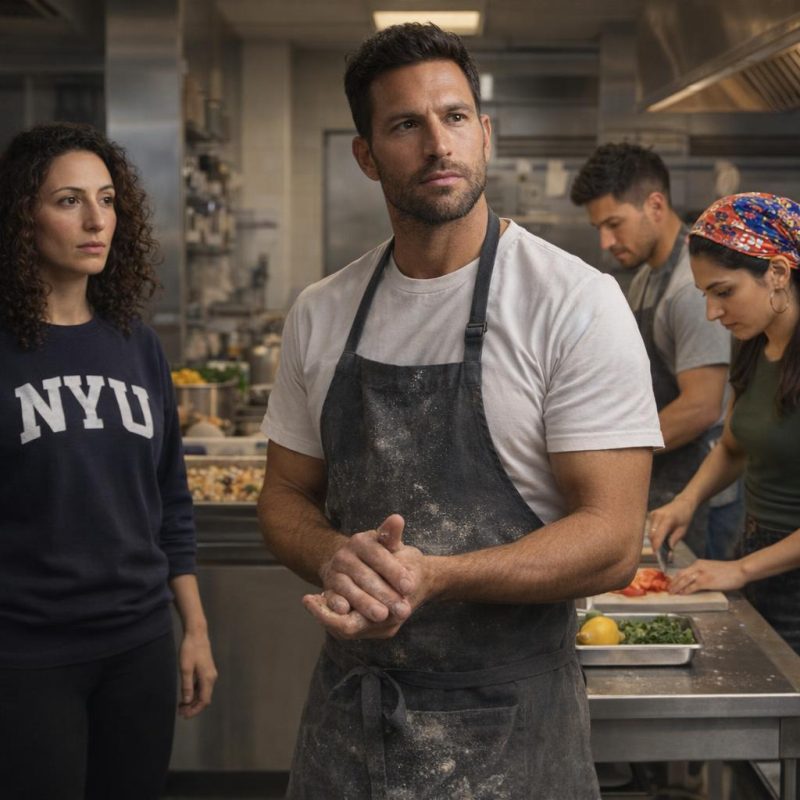 Image by RM AI
The Guests Arrive
At six o'clock, the first guests stepped onto the rooftop garden, and their gasps at the beautiful setting made all the stress of the day worth it. I stood beside Mom at the entrance, and we greeted each arrival together—recipients from across the years coming with their families, culinary school administrators, local politicians and community leaders, food industry press representatives. The tables filled with sixty-five guests, each person representing a connection to the foundation's work. Thomas Bradley arrived and embraced Mom warmly, his presence steady and supportive as always. Rebecca Stone checked final details with the staff, her organizational skills evident in every smooth transition. James and Sofia emerged from the kitchen cleaned up and smiling, joining their families at the recipient tables. The room buzzed with conversation and anticipation as sunset painted the sky behind the city skyline. When the final guest was seated, Mom turned to me and squeezed my hand in silent communication that made my throat tight. When the room was full, Mom squeezed my hand and walked to the podium to begin.
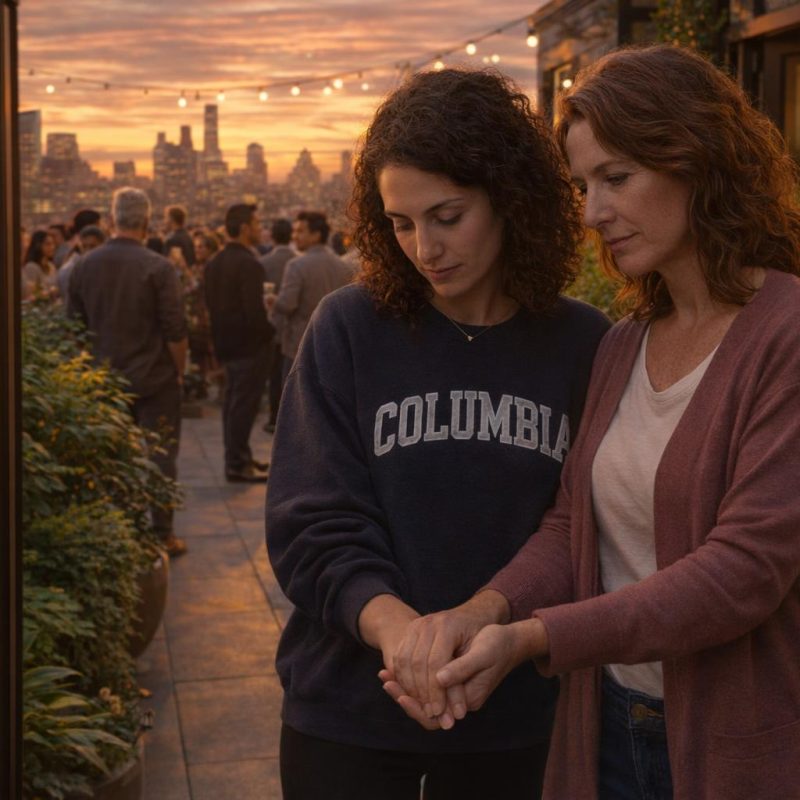 Image by RM AI
Dad's Legacy
Mom stood at the podium looking out at sixty-five faces, and the room went completely silent. She started by talking about Dad—not the successful businessman or the community leader, but the man who loved Sunday dinners and feeding the neighborhood. "Marcus believed everyone deserved the chance to share that gift," she said, her voice steady and warm. "He believed that if you wanted to feed people, to nourish them, you should have the opportunity to learn how." Then she announced it officially: the Hart Culinary Foundation. She described each of the seven programs they'd created together, showed the numbers—127 recipients, eight states, fourteen partner schools. She introduced Rebecca and Thomas by name, acknowledged every staff member. Then she asked the recipients in the room to stand so everyone could see their success. Luca rose first, then James, then Sofia, and others followed until nearly a third of the room was on their feet. Mom's voice caught slightly when she mentioned Dad's death, how he never saw the foundation launch. "But his spirit lives in every person we've helped," she said. The room erupted in a standing ovation, and I watched through tears as my mother received the recognition she'd earned. When she finished speaking, the room rose to its feet, and I understood that my mother had spent three years turning grief into something eternal.
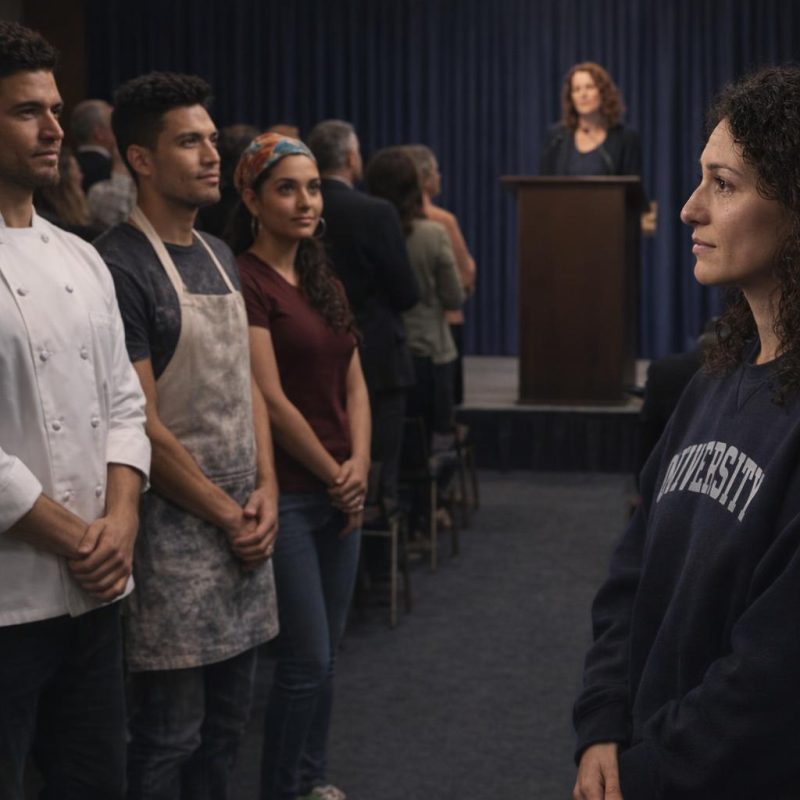 Image by RM AI
The Celebration
The dinner service began after Mom's speech, and each course arrived to appreciative murmurs and genuine delight. Luca announced the collaborative menu credits with each dish—"Bread by James Chen, Hart Scholarship Class of 2019" and "Vegetables from Sofia Rodriguez, Hart Small Business Grant Recipient." Guests appreciated the story behind each plate, and conversations flowed between tables as recipients networked with culinary professionals. The press took photos and interviewed Mom while I gave my own short speech about Dad, sharing memories of Sunday dinners and connecting his personal warmth to the foundation's mission. Several people were crying by the time I finished. Dessert arrived as the sun fully set, city lights sparkling behind the rooftop garden. The evening wound down with coffee and new connections forming all around us. When guests began departing, each person stopped to acknowledge Mom personally. Many mentioned Dad by name, saying he'd be proud. Thomas hugged her and said, "Marcus is here tonight, Evelyn." I stood beside Mom receiving wave after wave of appreciation, feeling profound satisfaction at the evening's success. As guests began leaving, person after person stopped to tell Mom that Marcus would have been proud, and I knew they were absolutely right.
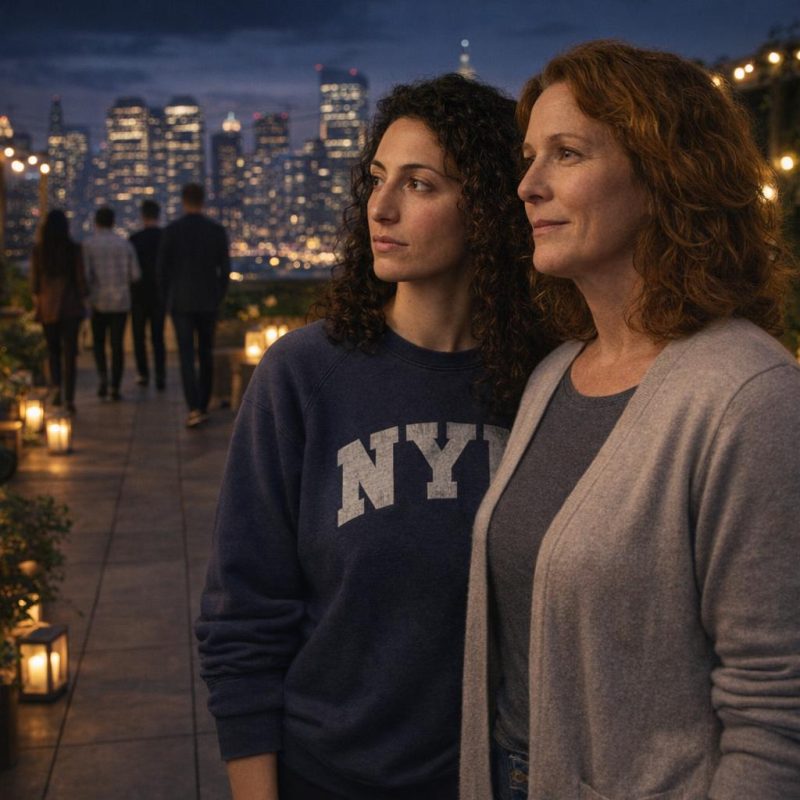 Image by RM AI
Mother and Daughter
After the last guest left, the staff and recipients began cleanup operations while Mom and I found a quiet corner of the rooftop. We sat together looking out at the city lights, and she exhaled deeply, releasing tension she'd held for months. "I wasn't sure we'd pull it off after this morning," she admitted. I told her the crisis had actually proved what she'd built—the community responded because of real relationships, not just transactions. She was quiet for a moment, then said she'd been afraid about my reaction, worried I would never forgive the three years of secrecy. I took her hand and looked at her directly. There was nothing to forgive, I told her. She'd honored Dad in the most beautiful way possible, built something that would help people for generations. "I'm proud to be your daughter," I said, and her eyes filled with tears. We sat in comfortable silence watching the city below, eventually talking about how she couldn't have done this without Dad's dream, and couldn't have finished it without my support. I told her there was nothing to forgive—she had honored Dad in the most beautiful way possible, and I was proud to be her daughter.
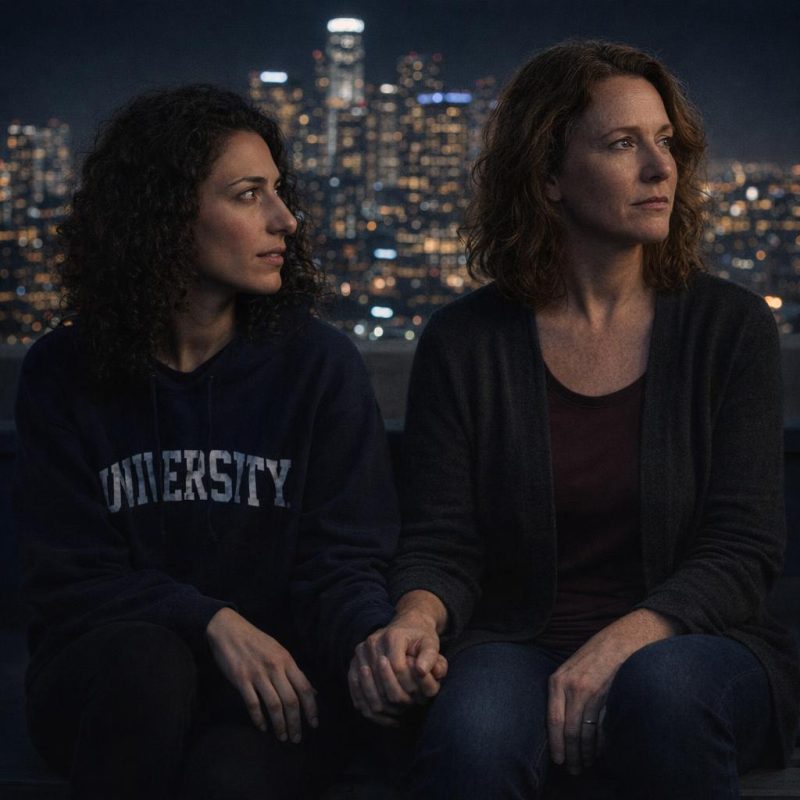 Image by RM AI
The Future
Three months after the launch dinner, I officially joined the Hart Culinary Foundation board, taking my seat at the quarterly meeting. The foundation had received significant attention and support, expanding the endowment substantially and selecting additional scholarship recipients for next year. Rebecca reviewed legal and financial updates while Thomas reported on strategic partnerships. They introduced a new staff member for recipient support, and I watched Mom run the meeting with the same quiet authority I'd seen her use everywhere else. I remembered that Saturday morning months ago when I'd thought I was keeping a lonely widow company on boring errands, expecting nothing memorable from the day. Now I sat on the board of a major philanthropic organization, understanding that Mom had never been weak or lost—she'd been building, planning, honoring Dad's memory in the most meaningful way possible. I looked around the table at people committed to this mission, knowing the foundation would continue growing and helping, Dad's legacy secure and our family purpose clear. As I watched Mom open the quarterly board meeting with her usual quiet authority, I remembered the Saturday morning I'd thought I was keeping her company on boring errands, and I smiled at how wrong I'd been about everything.
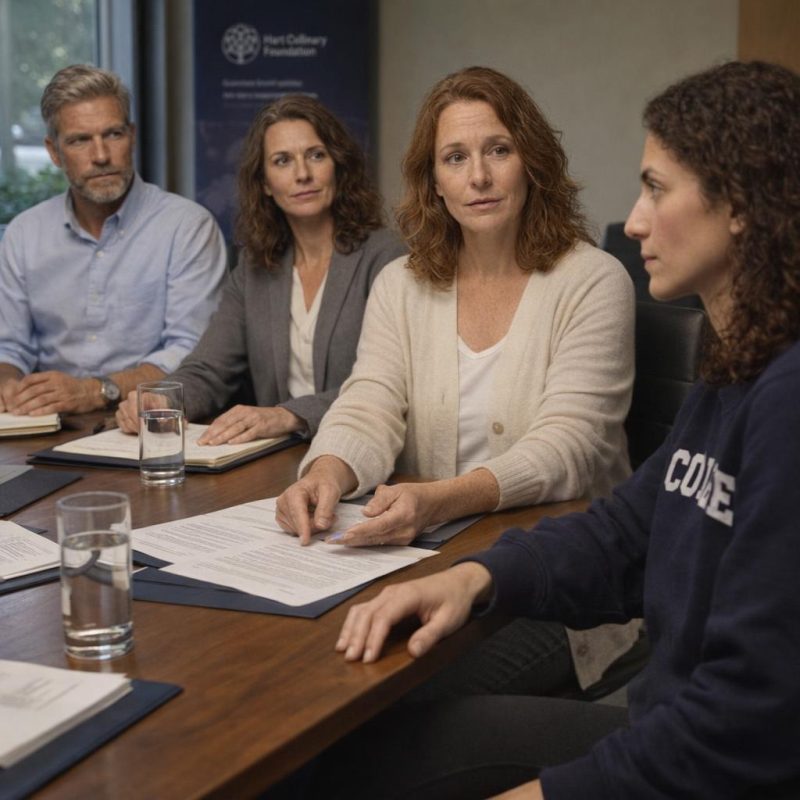 Image by RM AI
KEEP ON READING

The Origins Of 3 Common Sayings You Still Use Today
Etienne Boulanger on UnsplashMany of the phrases you use every…
By Rob Shapiro Apr 28, 2026
Was Caligula The Most Ruthless Roman Emperor?
Artur Matosyan on UnsplashRoman Emperor Caligula is one of ancient…
By Rob Shapiro Dec 18, 2025
1 Weird Fact About Every President
Washington, Lincoln, FDR. Most people know something about the lives…
By Robbie Woods Dec 3, 2024
10 Accidental Discoveries That Changed Maps & 10 That Changed…
Mistakes That Mattered. A lot of major discoveries did not…
By Cameron Dick Apr 15, 2026
10 Actors Who Perfectly Played a Historical Figure & 10…
Which Performance is Your Favorite?. Playing the role of a…
By Rob Shapiro Sep 15, 2025
10 Actors Who Perfectly Played a Historical Figure & 10…
Portraying a real person from history is one of the…
By Noone Dec 17, 2025