

I Stayed Silent When They Promoted Him Over Me—Until I Found The Files That Explained Everything
I Stayed Silent When They Promoted Him Over Me—Until I Found The Files That Explained Everything
The Announcement
I remember sitting in that conference room, watching Marcus announce Ryan's promotion to Senior Director, and honestly, my brain just kind of stalled. Everyone around the table clapped—polite, measured applause—and I did too, because what else do you do? Ryan smiled that modest smile of his, thanked everyone for their support, and I kept thinking there had to be something I'd missed. Maybe an email I hadn't read properly, or some project I hadn't known about. He'd been at the company for three years. I'd been there for seven. His performance reviews were solid but nothing exceptional. Mine had been consistently rated as exceeding expectations for the past four cycles. I wasn't trying to be arrogant about it, but the math just didn't add up in my head. I forced my expression to stay neutral, nodded when Ryan caught my eye, and tried to look like someone who wasn't completely blindsided. Then Marcus leaned over, his hand briefly on my shoulder, his voice low enough that only I could hear. 'Don't make this awkward,' he whispered, and I felt something cold settle in my stomach. And when Marcus leaned over and whispered not to 'make this awkward,' I knew something was very wrong.
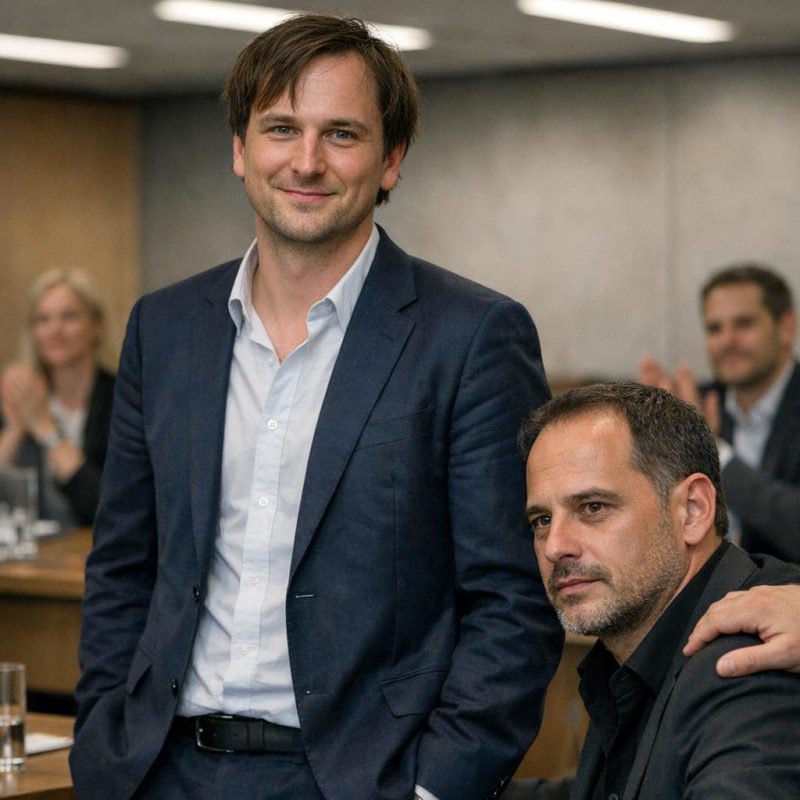 Image by RM AI
The Math That Didn't Work
That night, I pulled up every piece of data I could access from my work laptop. Project completion rates, client satisfaction scores, revenue generated, team leadership metrics—I went through it all like I was preparing for a performance review that actually mattered. My numbers were better across the board. Not by a little, either. I'd brought in two major clients in the past year that accounted for nearly fifteen percent of our division's revenue. Ryan had managed existing accounts well, sure, but he hadn't landed anything new. I'd mentored four junior team members who'd all gotten promoted themselves. I'd led the restructuring initiative that everyone agreed had streamlined our workflow. On paper, this decision made absolutely no sense. I even pulled up the leadership competency framework that Marcus himself had created last year, the one that was supposed to guide promotion decisions. I met or exceeded every single criterion. Ryan met maybe half. I sat back in my chair, staring at the spreadsheet on my screen, feeling like I was missing something obvious that everyone else could see. Because if this was about performance, I should have been celebrating—not sitting here trying to figure out what I'd missed.
 Image by RM AI
The Silent Witnesses
The next morning at the office felt different. People kept giving me these looks—you know the kind, where they make eye contact for just a second too long and then quickly glance away. Alicia passed my desk and squeezed my shoulder without saying anything, which somehow felt worse than if she'd just ignored me entirely. In the break room, conversations would pause when I walked in, then resume a little too enthusiastically. Everyone knew. Everyone saw what I saw. But no one was saying it out loud. I grabbed my coffee and headed back to my desk, trying to ignore the weird tension that seemed to follow me through the office. During the afternoon status meeting, I noticed Elena sitting across the conference table, and when our team updates finished, she caught my eye. She didn't smile, didn't nod, didn't do anything obvious. But her expression—this mix of sympathy and frustration and something that looked almost like solidarity—it hit me harder than any words could have. She saw it too. She knew this didn't make sense. Elena caught my eye across the room, and her expression said everything her mouth wouldn't.
 Image by RM AI
The Feedback Session
I scheduled a one-on-one with Marcus for Thursday afternoon. I told myself I'd go in calm, professional, genuinely seeking to understand what I could improve. No accusations, no bitterness—just a straightforward conversation about my career development. When I sat down in his office, I asked him directly what areas I needed to work on to be considered for senior leadership. He leaned back in his chair, doing that thing where he taps his pen against his desk, and said my performance was 'excellent, truly excellent.' So I asked what had made Ryan the better candidate. Marcus shifted in his seat, gave me this thoughtful look that felt rehearsed, and started talking about 'executive presence' and 'strategic thinking at the enterprise level.' I asked for specific examples of where I'd fallen short in those areas. He couldn't give me any. Instead, he pivoted to talking about 'intangibles'—leadership qualities that were hard to quantify but essential for the role. I pressed a little more, trying to understand what these intangibles actually meant in practice. He used the word 'intangibles,' and I felt the conversation shift from explanation to deflection.
 Image by RM AI
The Warning
I wasn't trying to be difficult, but I needed something concrete. 'Can you help me understand what specific intangible qualities Ryan demonstrated that I should focus on developing?' I asked, keeping my voice level. Marcus's expression tightened. He set his pen down and folded his hands on the desk. 'Jordan, I appreciate your commitment to growth, but the decision has been made. We need to move forward.' I sat there for a moment, processing that non-answer. 'I'm just trying to understand what I need to do differently next time,' I said. He stood up then, a clear signal the meeting was over. 'These decisions involve factors you're not privy to. Leadership considerations that go beyond individual metrics.' I stood up too, feeling that same cold sensation from the conference room settling back into my chest. He walked me to the door, his hand on my shoulder again—that same gesture that was probably meant to be reassuring but felt more like a warning. 'Don't make this awkward,' he said again, and I understood I wasn't going to get the truth from him.
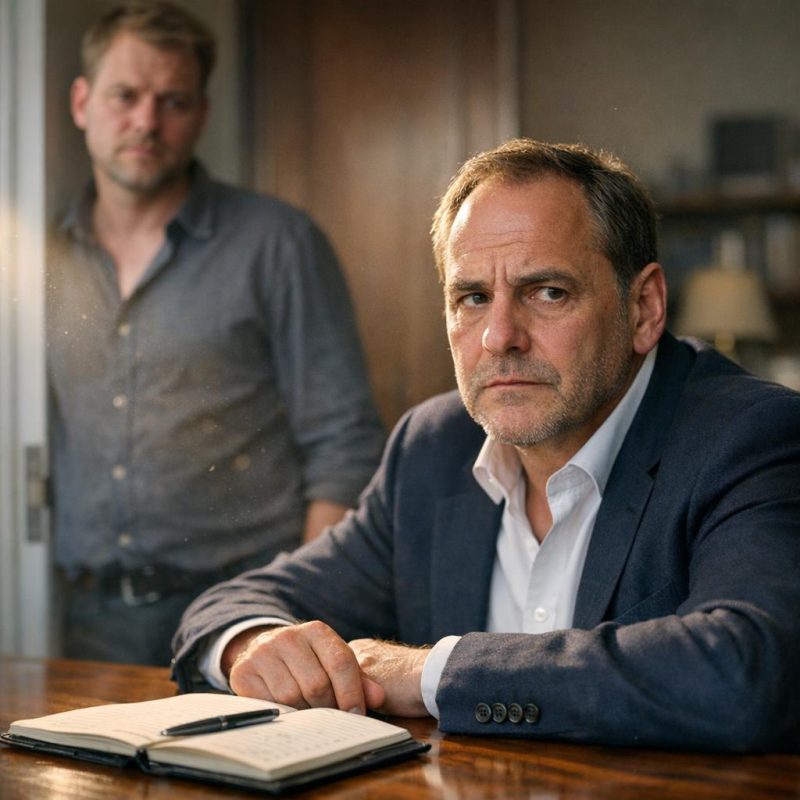 Image by RM AI
The Pattern Begins
After that meeting, I stopped asking questions out loud and started paying attention instead. I noticed things I'd probably overlooked before—small details that suddenly seemed significant. Ryan's calendar, which was visible on our shared team schedule, showed meetings I wouldn't have expected someone at his level to attend. Strategy sessions with the executive team. Budget planning meetings for divisions he didn't work in. I saw him walking into the VP suite on Tuesday afternoon, casual as anything, like he belonged there. On Wednesday, I passed the executive conference room and saw him sitting at the table with the C-suite leadership, nodding along to whatever they were discussing. I checked the meeting invite later—it wasn't on the general calendar, which meant it was restricted access. No one else from our department was in there. Just Ryan, sitting two levels above where his org chart position should have placed him. I mentioned it to Alicia in passing, carefully casual, and she just shrugged and said, 'Yeah, he's in a lot of those lately.' He was in a meeting two levels above his role, and no one seemed to think that was strange.
 Image by RM AI
The HR Non-Answer
I figured HR might at least give me some insight into the process, so I scheduled a discreet meeting with Sarah. I'd worked with her before on team hiring decisions, and she'd always been straightforward and helpful. I framed it carefully—not as a complaint, but as someone trying to understand how to position myself better for future opportunities. Sarah listened while I walked through my concerns, nodding occasionally, her expression professionally sympathetic. She pulled up some notes on her computer, asked a few clarifying questions about my recent projects, and made it seem like she was genuinely considering my perspective. Then she sat back and gave me what I can only describe as the most polished non-answer I'd ever received. 'Promotion decisions are ultimately leadership prerogative,' she said. 'They consider a wide range of factors, including organizational needs and strategic fit.' I asked if there was any feedback I could receive about those factors. She smiled and said she'd see what she could do, which we both knew meant nothing would happen. She listened, nodded, and then said promotion decisions were 'leadership prerogative'—which told me exactly nothing.
 Image by RM AI
The Email Thread
I started noticing the email patterns about a week later. I wasn't trying to spy—we all used the same shared project management system, and email threads were visible to team members who were looped in. But Ryan kept appearing on distribution lists that made no sense for his role. Executive strategy discussions about five-year planning. Confidential emails about potential acquisitions. Board meeting preparation threads. At first I thought maybe it was an oversight, someone accidentally including him on sends meant for senior leadership. But it kept happening, across different topics, different senders. I pulled up one thread about restructuring our European operations—something that wouldn't affect our department for at least two years—and there was Ryan's name, right alongside the VP of International Operations and the CFO. He wasn't contributing to the discussion, just copied on everything. I sat at my desk, staring at the CC line, trying to make sense of it. What had he done to earn that kind of access? What did Marcus and the other executives see in him that warranted including him in conversations that were several levels above his position? Why would someone at his level need access to executive strategy discussions?
 Image by RM AI
The Coffee Shop Conversation
Elena caught me in the parking lot after work, about three days after I'd started noticing the email patterns. She walked up to my car with this careful look on her face, like she was trying to decide whether to say something. 'Can we talk for a second?' she asked, glancing back at the office building. We ended up at the coffee shop two blocks away, the kind of neutral territory where people go when they don't want to be overheard. She stirred her latte for what felt like forever before finally speaking. 'Look, I know this might sound paranoid,' she started, 'but have you noticed anything... off about Ryan's promotion?' I felt this wave of relief wash over me—I wasn't imagining things. She'd seen it too. The inexplicable access, the way Marcus treated him differently, the rapid advancement that didn't match his actual contributions. We spent twenty minutes comparing notes, keeping our voices low, both of us visibly tense. Other people had noticed too, she told me. Whispered about it in small groups. But everyone was afraid to raise questions officially, afraid of being seen as bitter or unprofessional. 'I'm not the only one who thinks this is weird,' she said quietly. 'But no one wants to be the one to say it.'
 Image by RM AI
The Project File
That conversation with Elena stayed with me all weekend. On Monday, I found myself going back through old project files, the ones from initiatives I'd led six or eight months ago. I'm not even sure what I was looking for—maybe just reassurance that my work had been solid, that I hadn't imagined my own contributions. I pulled up the final report from our Q2 customer retention project, something I'd practically lived and breathed for three months. The executive summary looked familiar, but something felt slightly off. I clicked into the version history, a feature I'd never had reason to check before. My stomach tightened as I scrolled through the timestamps. There were edits from dates I hadn't worked on the document. Subtle changes—a phrase here, a credit attribution there. Nothing dramatic enough to trigger alerts, but enough to shift the narrative. Where I'd written 'led by Jordan with support from the analytics team,' it now read 'collaborative effort spearheaded by the analytics team with strategic input from Ryan.' Ryan, who'd joined the project in its final two weeks. Ryan, who'd attended exactly three meetings. The version history showed edits I hadn't made—changes that shifted credit in subtle but unmistakable ways.
 Image by RM AI
The Lunch Observation
I started paying attention to Marcus and Ryan in a way I hadn't before. Not actively spying, just... watching. Two days after discovering the file edits, I was running an errand during lunch when I spotted them through the window of a bistro about six blocks from the office. They were at a corner table, leaning in close, talking in that animated way people do when they're comfortable with each other. Marcus was smiling—really smiling, not the tight professional expression he wore in meetings. Ryan said something and Marcus laughed, this genuine, unguarded laugh I'd maybe heard twice in three years. I stood there on the sidewalk, pretending to check my phone, unable to look away. The way they sat, the easy familiarity, the lack of any visible hierarchy between them. It wasn't the careful dynamic of a boss mentoring a promising employee. There was something else there, something I couldn't quite name. An intimacy that felt out of place for their professional relationship. I watched Marcus reach across the table to emphasize a point, watched Ryan nod with this knowing expression. They looked comfortable in a way that felt less like boss and employee, more like something else entirely.
 Image by RM AI
The Executive Meeting
Victor Chen was one of those senior executives who rarely left the seventh floor except for important meetings. So when he appeared at my desk on a random Thursday afternoon, I assumed he needed something urgent. He stood there for a moment, just looking at me with this expression I couldn't quite read. 'Jordan, right?' he said, though we'd been introduced at least five times over the years. I nodded. 'Good work on that retention project last quarter. I remember reviewing your preliminary findings in March.' I thanked him, confused about why he was bringing it up now. He glanced toward Marcus's office, then back at me. 'I was surprised by the promotion announcement,' he said casually, like he was commenting on the weather. 'When Marcus first mentioned expanding the senior analyst role, I assumed—' He paused, seeming to reconsider his words. 'Well, let's just say the decision caught a few of us off guard.' My heart started pounding. He knew. The executives had expected me to get that position. Before I could formulate a response, before I could ask what he meant, he was already turning away. 'You know, I expected you in that role,' he said, then walked away before I could respond.
 Image by RM AI
The Parallel Track
I couldn't stop thinking about what Victor had said. That night, I went through my email archives with new eyes, looking for anything I might have missed. I found it in a thread about the departmental restructuring from two months ago. The messages referenced a call that had happened on a Tuesday afternoon—a call I'd never been invited to, never even knew about. But the follow-up emails assumed I'd been part of it. 'As we discussed in Tuesday's planning session,' one message from Marcus began, going on to outline decisions that directly affected my projects. I checked my calendar. I'd been in the office that Tuesday, at my desk most of the afternoon. No one had called me. No one had included me. I started searching for other references, other mentions of meetings or calls I'd apparently missed. They were everywhere. Strategy sessions, planning discussions, decision-making conversations—an entire parallel track of communication I'd been excluded from. And in nearly every follow-up email, every summary, every action item list, Ryan's name appeared. Sometimes as a participant, sometimes just copied, but always present. There was a whole layer of communication happening that I couldn't see—and Ryan was at the center of it.
 Image by RM AI
The Late Night at the Office
I started staying late at the office, waiting until most people had left before I really dug into the shared drives. It felt slightly paranoid, maybe even wrong, but I needed to understand what was happening without anyone looking over my shoulder. On a Wednesday night, around eight-thirty, I navigated through our department's file structure, clicking into folders I normally had no reason to access. Budget planning documents, meeting notes, strategic planning files—all the administrative backbone stuff that I'd never paid much attention to before. That's when I noticed a folder buried three levels deep in the organizational planning directory. It had one of those generic names designed to be ignored: 'Archive_Misc_2019-2023.' The date range alone was weird—we'd only started using this shared drive system in 2021. I clicked it open, my mouse hovering over the contents. Everything was meticulously organized, subfolders arranged by quarter and topic. Professional development. Performance evaluations. Succession planning. My hand was actually shaking slightly as I moved the cursor. And then I saw it, near the bottom of the list: a folder labeled 'Personnel_Confidential_RK.' RK. Ryan's initials. I found a folder I'd never seen before, and the name on it made my stomach drop.
 Image by RM AI
The Mislabeled Archive
The folder name was deliberately misleading—'Personnel_Confidential_RK' sat inside what looked like routine HR archives, the kind of thing you'd scroll past without a second thought. But when I opened it, my screen filled with documents that had nothing to do with standard personnel files. Draft announcements. Multiple versions of the promotion memo that had eventually gone out to the department. Early org charts showing different reporting structures, different names in key positions. I clicked on a file called 'Talking_Points_v3' and started reading. It was a script, essentially—prepared responses to potential questions about Ryan's promotion. Explanations for why he was qualified despite his shorter tenure. Justifications for the accelerated timeline. Rebuttals to concerns about experience gaps. Each answer carefully worded, tested, revised. Someone had put serious effort into anticipating objections, into crafting a narrative that would withstand scrutiny. I opened another file, then another. Email drafts that didn't match what had actually been sent. Meeting agendas that referenced decisions already made. Everything documented, everything planned. Inside were drafts of communications that didn't match what had been publicly shared—and Ryan's name was everywhere.
 Image by RM AI
The Strategy Notes
I spent almost an hour reading through the files in that folder, my coffee going cold on my desk. The most revealing documents were labeled 'Strategic_Planning' with dates going back almost eight months—well before the promotion had been announced, before the position had even been officially created. These weren't just notes or ideas. They were detailed roadmaps outlining exactly how to position Ryan for advancement. Which projects to assign him. Which meetings to include him in. How to gradually increase his visibility with executives. When to introduce the idea of expanding the senior analyst role. There were even contingency plans for potential objections, specific strategies for handling questions about qualifications or experience. And in the margins, in the metadata, in the version histories—Marcus's name appeared over and over. He'd created most of these documents. Revised them. Refined them. This wasn't opportunistic favoritism or a spur-of-the-moment decision. This was systematic, deliberate, planned months in advance. Every step of Ryan's rise had been carefully orchestrated, and I'd been watching it happen without understanding what I was seeing. Someone had been framing decisions in a very specific way—and it all pointed back to Marcus.
 Image by RM AI
The Coaching Sessions
I went back into the calendar syncs next, looking for patterns in how Marcus allocated his time. What I found stopped me cold. There were recurring one-on-one meetings between Marcus and Ryan, scheduled three times a week, every single week, going back seven months. Not the typical monthly check-ins that the rest of us got. Not even the weekly touchbases reserved for senior team members on critical projects. Three. Times. A. Week. I cross-referenced with my own calendar, with Elena's, with the schedules of people who'd been at the company far longer than Ryan. Nobody came close to that level of access. The meetings were usually thirty minutes, sometimes an hour, often scheduled early in the morning or late in the afternoon when fewer people were around. The subject lines were vague—'Check-in,' 'Project Discussion,' 'Strategy Review.' But the sheer volume was impossible to ignore. This wasn't standard management. This wasn't even aggressive mentorship. This was something else entirely, something that went way beyond what any other analyst—hell, what any other employee at Ryan's level—had ever received. They met three times a week, every week, for months—far more than Marcus met with anyone else.
 Image by RM AI
The Falsified Contributions
I started cross-referencing project records after that, pulling up old reports and comparing them to the versions that had been submitted to leadership. That's when the real picture came into focus. In report after report, my contributions had been systematically reframed to highlight Ryan's involvement. A market analysis I'd spent two weeks developing? The final version credited him as 'lead researcher' while I was listed as 'supporting.' A client presentation I'd drafted from scratch? His name appeared first on the slide deck submitted to executives, with a note about his 'strategic insights.' I pulled up email threads, version histories, project logs. The pattern was everywhere. Work I'd done was being quietly, methodically reassigned in the documentation. Not blatantly—it was too careful for that. But piece by piece, my portfolio was being transferred to his. On paper, Ryan looked like a star performer with an impressive track record of high-impact work. In reality, he'd been handed a carefully constructed résumé built from other people's efforts—primarily mine. Work I'd done was being attributed to him, piece by piece, until his portfolio looked impressive on paper.
 Image by RM AI
The Ally's Warning
My phone buzzed around eleven that night. I almost ignored it, but the preview showed Elena's name. Her message was short: 'We should talk. Not at work.' I stared at the screen for a long moment before typing back. 'About what?' Three dots appeared, disappeared, appeared again. Finally: 'About what you're looking into. I know the signs.' My stomach dropped. I hadn't told anyone what I'd been doing. 'How do you—' I started, but she cut me off with another message. 'Just trust me on this. Be careful who you talk to. Be careful what you put in writing.' I was about to ask what she meant when one more text came through, and this one made my blood run cold. 'Be careful,' she wrote. 'People have asked questions before. It didn't go well for them.' I sat there in the dark of my apartment, phone glowing in my hand, trying to process what she was telling me. This wasn't just about my situation anymore. Other people had noticed things. Other people had pushed back. And something had happened to them. 'Be careful,' she wrote. 'People have asked questions before. It didn't go well for them.'
 Image by RM AI
The Research
I couldn't sleep after Elena's message, so I did what any obsessive person would do at one in the morning—I started digging into the employment history of people who'd worked under Marcus. LinkedIn became my rabbit hole. I found three people who'd been in similar positions to mine, all of whom had left the company within the past three years. The first, a senior analyst named David, had gone from regular posts about project wins to complete radio silence, then a vague announcement about 'pursuing new opportunities' six months after questioning a promotion decision in a team meeting I found referenced in old Slack archives. The second, Michelle, had been transferred to a satellite office doing grunt work after she'd raised concerns about resource allocation. Her profile hadn't been updated in two years. The third, Ahmed, had simply disappeared from the company directory with no farewell announcement, no LinkedIn update, nothing. I found him eventually, working at a much smaller firm for probably half the salary. The pattern was unmistakable. People who challenged Marcus didn't just lose battles—they lost careers. Two had left within months, one transferred to a dead-end role, and all of them had stopped updating their LinkedIn profiles.
 Image by RM AI
The Presentation
The quarterly review meeting started normally enough. Standard agenda, standard attendees, Marcus at the head of the table looking pleased with himself. Then Ryan stood up to present the market segmentation analysis. I recognized it immediately—the framework, the data visualization, even the specific phrasing of the recommendations. Because I'd written every single word of it three weeks earlier. I'd sent it to Marcus for review, and he'd responded with vague praise and a note that he'd 'incorporate it into our strategic planning.' Apparently 'incorporate' meant 'hand it to Ryan and let him present it as his own work.' Ryan clicked through my slides with complete confidence, fielding questions about methodology I'd developed, explaining insights I'd uncovered. He didn't stumble once. He'd clearly been coached, probably in one of those three-times-a-week meetings. And Marcus—Marcus sat there watching him with this expression I couldn't quite name at first. Proud. Delighted. The way you'd look at someone you were personally invested in succeeding. He delivered my analysis word for word, and Marcus beamed at him like a proud father.
 Image by RM AI
The Confrontation Urge
My hand was halfway raised before I caught myself. Every muscle in my body wanted to interrupt, to stand up and announce to everyone in that room exactly whose work Ryan was presenting. I could feel the words forming, hot and sharp, ready to cut through his polished delivery. But something made me stop. Maybe it was Elena's warning still echoing in my head. Maybe it was the memory of those LinkedIn profiles going dark, those careers quietly dismantled. Or maybe it was just the cold realization that outrage without evidence is just noise—and Marcus had spent months building a paper trail that supported Ryan's narrative. If I spoke up now, in this moment, fueled by nothing but anger and recognition, I'd look exactly like what Marcus could easily paint me as: bitter, jealous, unable to accept that someone else had succeeded. They'd see emotion, not facts. They'd see sour grapes, not systematic fraud. I needed documentation. I needed timestamps and version histories and irrefutable proof. I needed to be strategic, not reactive. So I lowered my hand, kept my face neutral, and let Ryan finish. Because confronting him without proof would make me look bitter—and I needed more than feelings to back this up.
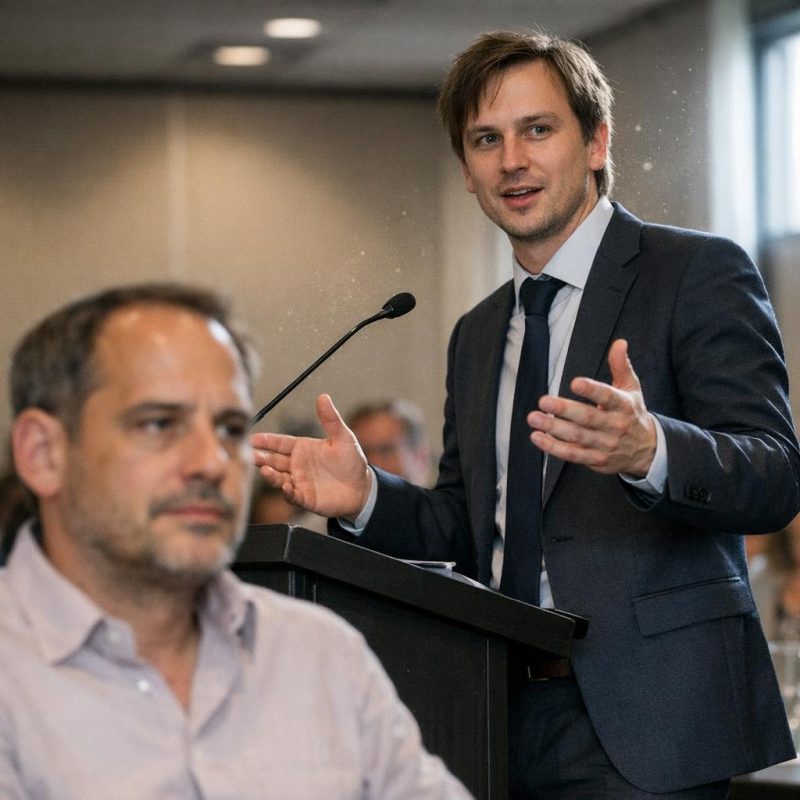 Image by RM AI
The Digital Breadcrumbs
That night I created a spreadsheet that would've made a forensic accountant proud. Column A: dates. Column B: events. Column C: supporting documentation. Column D: people involved. I went back through everything—the calendar entries, the project files, the reassigned credit, the strategic planning documents, the meeting frequencies. I added the timeline of Ryan's promotion, the dates when key decisions had been made, the moments when my own trajectory had mysteriously stalled. I color-coded it: green for confirmed facts, yellow for strong circumstantial evidence, red for gaps I still needed to fill. The pattern that emerged was unmistakable. Every advantage Ryan had received, every opportunity that had opened for him, every door that had conveniently swung wide—they all traced back to Marcus's direct intervention. This wasn't luck. This wasn't merit. This was orchestration on a scale that required sustained effort and planning. But here's what drove me crazy: I still couldn't figure out why. What did Marcus gain from this? Why invest so much political capital, take so many risks, go to such elaborate lengths for one mediocre analyst? The pattern was undeniable—but the reason behind it was still just out of reach.
 Image by RM AI
The Slip-Up
The staff meeting two days later should have been routine. Budget updates, project timelines, the usual administrative updates. Marcus was talking about resource allocation for Q3 when Ryan interjected with a suggestion about the Singapore expansion. 'We should probably hold off on that,' he said casually, 'given the board's concerns about the timing.' The room went quiet. Marcus's face did something complicated. Because here's the thing—the Singapore expansion was still confidential. The board had discussed it in a closed session three days earlier, and the decision to delay hadn't been communicated to staff yet. It wasn't scheduled to be announced for another week. I watched Ryan's face as he realized what he'd said, watched the color drain from his cheeks as he understood his mistake. He'd referenced a decision that hadn't been announced yet—and several people in the room had clearly noticed, exchanging glances, eyebrows raised. Marcus jumped in quickly, smoothly redirecting the conversation, but the damage was done. Ryan had knowledge he shouldn't have had, access to information that should have been above his pay grade. He referenced a decision that hadn't been announced yet—and then his face went pale when he realized what he'd said.
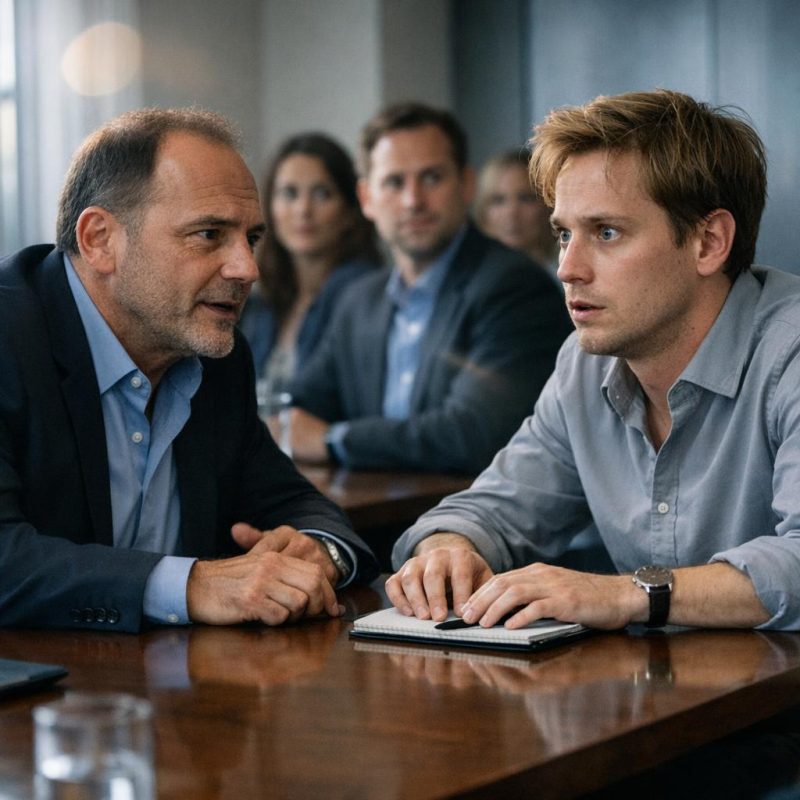 Image by RM AI
The Redirect
Marcus recovered faster than I would have thought possible. 'Right, well, as Ryan mentioned—and yes, there are some discussions happening at the board level—we're always evaluating our expansion timeline,' he said smoothly, pivoting to a completely different topic about vendor contracts before anyone could process what had just happened. But I was watching the room. Alicia had stopped taking notes, her pen frozen above her notepad. Elena's eyes had narrowed slightly, that look she gets when something doesn't add up. A couple of the senior staff exchanged glances. The moment passed quickly—Marcus is good at what he does, always has been—and within thirty seconds people were nodding along to whatever he was saying about procurement processes. But here's what I caught that I don't think anyone else did: the look Marcus and Ryan exchanged right after Marcus jumped in. It was brief, maybe two seconds, but it was there. A warning look from Marcus, a barely perceptible nod from Ryan. Not the kind of look you give a subordinate who just made an embarrassing mistake. The kind of look you give someone you're protecting. Someone you're coordinating with. But I saw the look they exchanged, and it confirmed they were coordinating more than just work.
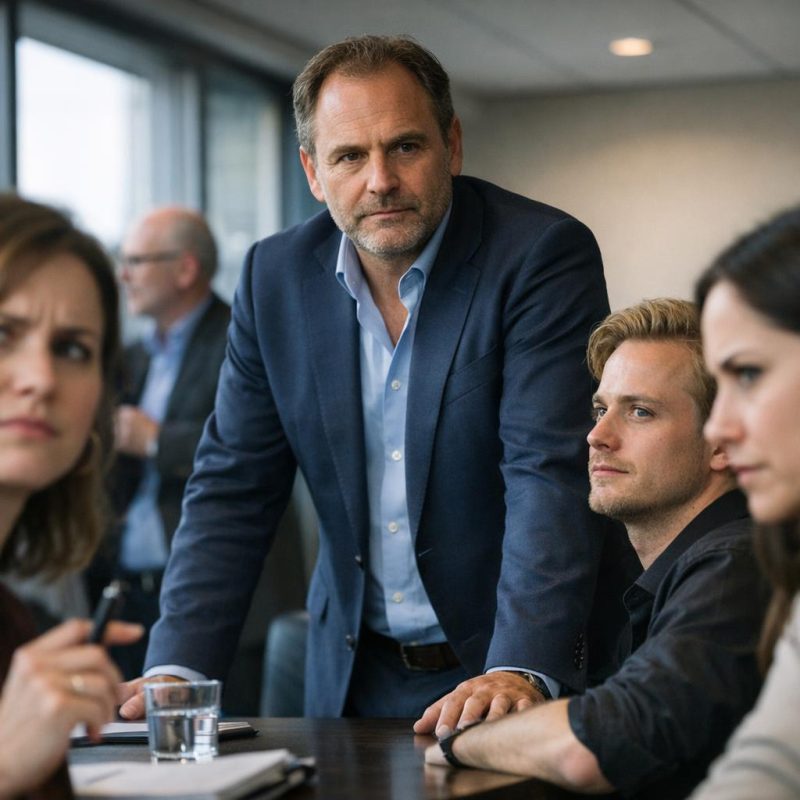 Image by RM AI
The Second Opinion
I asked Elena to grab coffee that afternoon, somewhere off-site where we wouldn't be overheard. We ended up at that little place three blocks from the office, the one with the terrible espresso but good privacy. I didn't show her everything—I'm not an idiot—but I showed her enough. The email timestamps that didn't make sense. The meeting notes with Ryan's handwriting on documents he shouldn't have seen. The pattern of Marcus redirecting conversations whenever Ryan's knowledge gaps became too obvious. Elena read through it all twice, her expression getting progressively more serious. She's not someone who jumps to conclusions, never has been, which is exactly why I trusted her opinion on this. When she finally looked up, she set the papers down carefully, like they might explode. 'Jordan,' she said quietly, 'you need to be very careful with this.' I asked what she meant. She glanced around the coffee shop, then back at the documents. 'Because if you're right about what this shows—and I think you might be—this isn't just corner-cutting or poor judgment.' She paused, choosing her words. 'This is bad,' she said quietly. 'Like, career-ending bad. For someone.'
The Office Party Announcement
The email from HR came two days later. Subject line: 'Join us for Q3 Celebration!' You know the kind—mandatory fun, cheese cubes, cheap wine, everyone pretending we're a family instead of people who happen to share office space. Normally I'd groan and show up late, make an appearance, leave early. But as I read through the details—Friday evening, main conference room, all staff expected to attend—something clicked into place. This wasn't just another tedious networking obligation. This was an opportunity. Public setting. Casual atmosphere. Senior leadership would be there—including Victor, who I knew was flying in from Paris for quarterly reviews. Enough people present that whatever happened would have witnesses, would be on the record, couldn't be quietly swept away or reframed later. Marcus and Ryan would both be there, relaxed and off-guard, probably having a drink or two. The kind of environment where people let things slip, where confrontations feel less formal but carry the same weight. I saved the email and started mentally mapping out how this could work. It was the perfect opportunity—casual, public, with enough witnesses that no one could make it disappear afterward.
 Image by RM AI
The Final Pieces
I spent the next week in a kind of controlled obsession. Every lunch break, every evening after work, I was cross-referencing documents, printing copies, organizing everything into a timeline that even someone with no context could follow. I made a spreadsheet. Multiple spreadsheets, actually. Dates, times, meetings Ryan attended that he shouldn't have known about. Decisions he influenced before he had the authority to be in the room. The Singapore delay he'd referenced before it was announced. The budget approvals with his notes in the margins. Marcus's interventions whenever someone questioned Ryan's presence or knowledge. I organized it all into a folder—physical and digital copies, because I'm not taking chances. I backed everything up in three different places. Then I went through it again, looking for holes, trying to see it the way Marcus would see it, the way HR would see it, the way Victor would see it. Where could they claim coincidence? Where could they say I was reading too much into normal office dynamics? I plugged every gap I could find, added documentation for every claim. By the time I was done, the case was airtight—impossible to dismiss, impossible to explain away.
 Image by RM AI
The Rehearsal
I started practicing in my apartment that weekend. Sounds ridiculous, I know, but I needed to get this right. I stood in front of my bathroom mirror and ran through different versions of how the conversation could go. 'Marcus, I need to talk to you about some discrepancies I've noticed.' Too vague. 'I have evidence that Ryan has been receiving preferential treatment.' Too accusatory—they'd get defensive immediately. I tried softer approaches, harder approaches, questions versus statements. I recorded myself on my phone and played it back, listening for any hint of emotion that could be used against me. Because here's what I knew: the second I sounded angry or bitter or jealous, I'd lose. They'd frame it as sour grapes, a disgruntled employee who couldn't handle being passed over for promotion. The evidence had to speak for itself. My tone had to be neutral, almost curious. 'I've noticed some patterns I wanted to bring to your attention.' Professional. Measured. Just presenting information and asking for clarification. I practiced until my voice was steady, until I could run through the key points without my hands shaking. It couldn't be emotional, couldn't be accusatory—it had to be factual, calm, and undeniable.
 Image by RM AI
The Doubt
Thursday night I barely slept. I kept running through everything in my head, and suddenly all the certainty I'd built up started crumbling. What if there was a legitimate explanation for all of this? What if Ryan really was just that good, and I was so blinded by jealousy that I'd constructed this elaborate conspiracy out of normal office politics? Maybe Marcus had a good reason for protecting him. Maybe the board had expanded Ryan's access for reasons I didn't understand. Maybe I was about to walk into that party and humiliate myself in front of everyone who mattered, tank my own career over a misunderstanding. I got up around three in the morning and pulled out the files again, went through everything one more time. Looking for the explanation I'd missed. The piece that would make it all make sense. But I couldn't find it. The pattern was too consistent, too deliberate. Still, the doubt gnawed at me. Because what if I was wrong? What if there was something I'd missed that made all of this make sense?
 Image by RM AI
The Morning Of
Friday morning I woke up at six-thirty and the doubt was gone. Just—gone. I made coffee, sat at my kitchen table, and looked at everything I'd compiled one final time. Not searching for holes anymore. Just seeing it clearly. The evidence was solid. The pattern was real. And even if somehow there was an explanation that made this all legitimate—which I seriously doubted—I still deserved to know what it was. Everyone who'd been watching this situation unfold deserved to know. We'd all been operating under the assumption that we worked in a meritocracy, that promotions and access and opportunities were earned. If that wasn't true, if there was something else going on, we had a right to understand what we were actually dealing with. I showered, dressed carefully—professional but not overly formal, nothing that would signal this was a bigger deal than a normal office party. I put the folder in my bag. Backed up everything one more time. Then I went to work. I wasn't wrong. And even if I was, I deserved answers—and so did everyone else who'd been watching this unfold.
 Image by RM AI
The Party Begins
The conference room had been transformed with the usual corporate party decorations—string lights that didn't quite reach the corners, a table with wine and beer and sodas, those little appetizer plates that no one ever really wants. People started filtering in around six, already loosening up, grateful it was Friday. I got there early, positioned myself where I could see the whole room. Elena arrived and gave me a small nod—she knew something was coming, even if I hadn't told her exactly what. Alicia was talking to someone from accounting. Victor stood near the bar setup, jet-lagged but making conversation. The room filled up gradually, voices getting louder, laughter becoming more genuine as people started drinking. And then Marcus arrived with Ryan right behind him, both of them smiling, working the room like this was just another evening, just another celebration. Ryan grabbed a beer. Marcus poured himself wine. They separated, each making the rounds, shaking hands, entirely comfortable and confident. I sipped my drink and watched them move through the crowd, noted who they talked to, how long they stayed in each conversation. I watched Marcus and Ryan circulate the room, relaxed and confident, and I waited for the right moment.
 Image by RM AI
The Positioning
I moved carefully through the crowd, drink in hand, folder tucked under my arm. People were loosening up now, the wine flowing, conversations getting louder. I worked my way toward the corner where Marcus had settled in with a group that included Ryan, a couple of senior managers, and someone from legal. They were laughing about something, completely relaxed. I positioned myself just outside the circle at first, close enough to join naturally when the moment came. The folder felt heavier than it should have—just paper and printouts, but it represented everything I'd been carrying for months. I caught fragments of their conversation, watched Marcus gesture with his wine glass, saw Ryan lean in with that easy confidence he always had. They looked so comfortable together, so assured of their place in the room. I waited for a natural pause in the conversation, stayed calm, kept my breathing steady. This had to be done right. No anger, no emotion—just facts and questions they couldn't deflect. Elena caught my eye from across the room and gave a small nod—she knew what was coming.
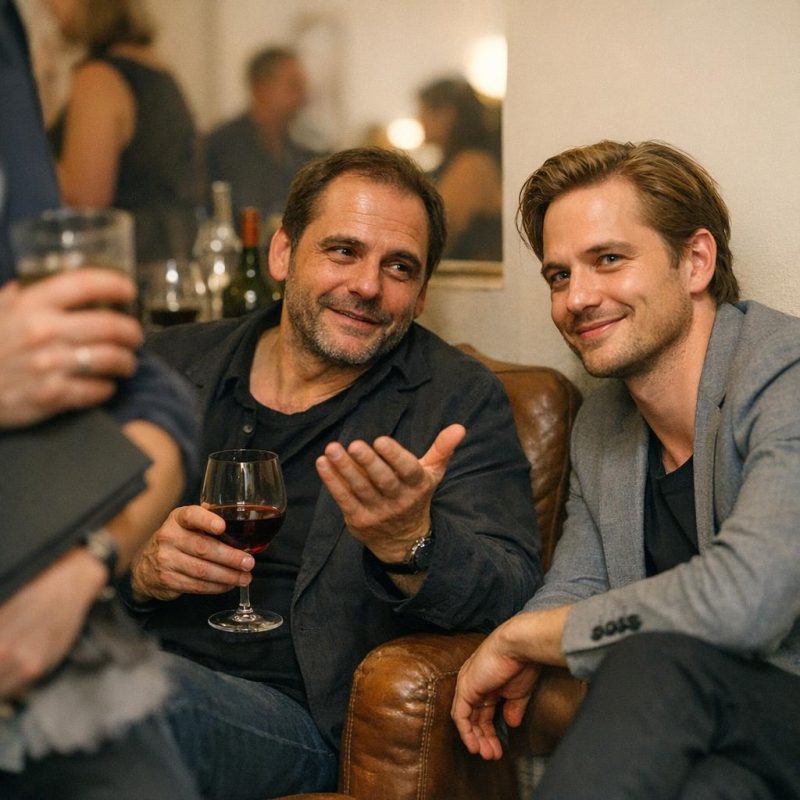 Image by RM AI
The Opening
I stepped forward into the circle during a lull in the conversation. 'Marcus, Ryan—do you have a minute?' My voice was calm, conversational, like I was just joining in. They both turned, Marcus with his corporate smile already in place, Ryan with that slight tilt of his head he always did. 'Jordan,' Marcus said warmly. 'Of course. Enjoying the party?' I didn't answer that. Instead, I reached for the folder under my arm and opened it slowly, deliberately. People around us were still chatting, still drinking, not paying attention yet. I pulled out the first few documents—just enough to show there was substance here, not just talk. Marcus's smile faltered slightly. Ryan's eyes dropped to the folder. I stepped closer to the high-top table where they'd set their drinks and laid the folder down between us, pages visible, organized, undeniable. The conversation in our immediate circle stopped first, then rippled outward. I set it down on the table between us, and the conversation stopped.
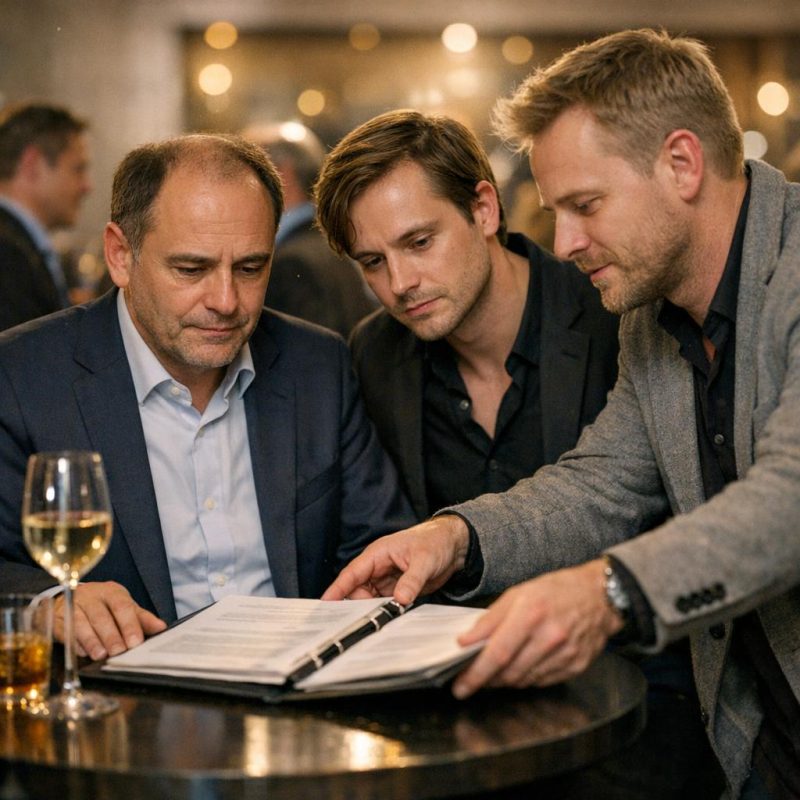 Image by RM AI
The Question
I looked at both of them, kept my voice level and clear enough that people nearby could hear. 'I've been going through some files from the past several months,' I said. 'Project documents, meeting calendars, email access logs. And I'm hoping you can help me understand how all of this aligns with the promotion decision.' I tapped the folder lightly. 'Because what I'm seeing here doesn't quite match the narrative we've all been told about merit and performance.' Marcus's face did something I'd never seen before—it just went completely blank, like someone had unplugged him. Ryan stared at the folder like it might actually explode. Neither of them spoke. The silence built and built, spreading through the people around us. Alicia had turned to look. Someone from another department stopped mid-sentence. I could feel Victor somewhere behind me, could sense the shift in the room's energy as more people registered that something significant was happening. Marcus's face went blank, Ryan looked at the folder like it might explode, and no one said a word.
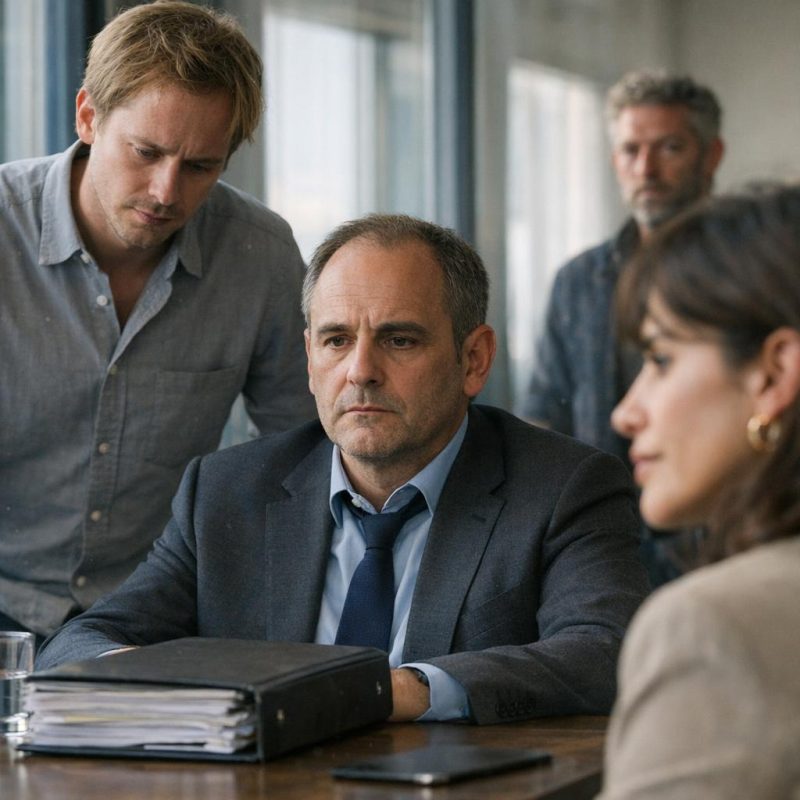 Image by RM AI
The Silence
The silence kept stretching. I didn't fill it—I just waited, let it build. More heads turned our direction. The background noise of the party dimmed as people picked up on the tension, the sudden stillness in our corner. Marcus opened his mouth, closed it again. Ryan's hand was frozen halfway to his beer. I could see Alicia moving closer, Elena staying back but watching intently. Someone whispered something to the person next to them. The circle around us had grown without anyone consciously deciding to join—people just drifted over, sensing something was happening, curious about the sudden change in atmosphere. I kept my eyes on Marcus and Ryan, kept my posture relaxed but firm. This was exactly what I'd needed—witnesses, attention, a public forum they couldn't escape from. Then I heard footsteps behind me, measured and deliberate. Victor stepped closer, moving into my peripheral vision, his executive presence cutting through the party atmosphere. I saw the exact moment he registered what this was about.
The Deflection Attempt
Marcus recovered first, his corporate instincts kicking in. 'Jordan, I think—this isn't really the time or place for this kind of discussion.' His voice had that smooth deflection tone, the one he used in meetings when he wanted to table something uncomfortable. 'Why don't we schedule something Monday morning, talk through whatever concerns you have privately?' He started to reach for the folder, that automatic gesture of someone trying to regain control of a situation. Ryan nodded quickly, too quickly. 'Yeah, definitely. Monday works.' A few people in the circle shifted, like maybe they were about to drift away, let this dissolve back into party noise. But I'd anticipated this exact move. I put my hand flat on the folder before Marcus could touch it. 'No,' I said clearly, loud enough that everyone nearby could hear. My voice stayed calm but absolutely firm. 'This concerns everyone here. These documents show patterns that affect how this entire department operates, how decisions get made, who gets credit for work.' I looked directly at Marcus, then at Ryan, then let my gaze sweep the growing audience. 'We can talk about it now.'
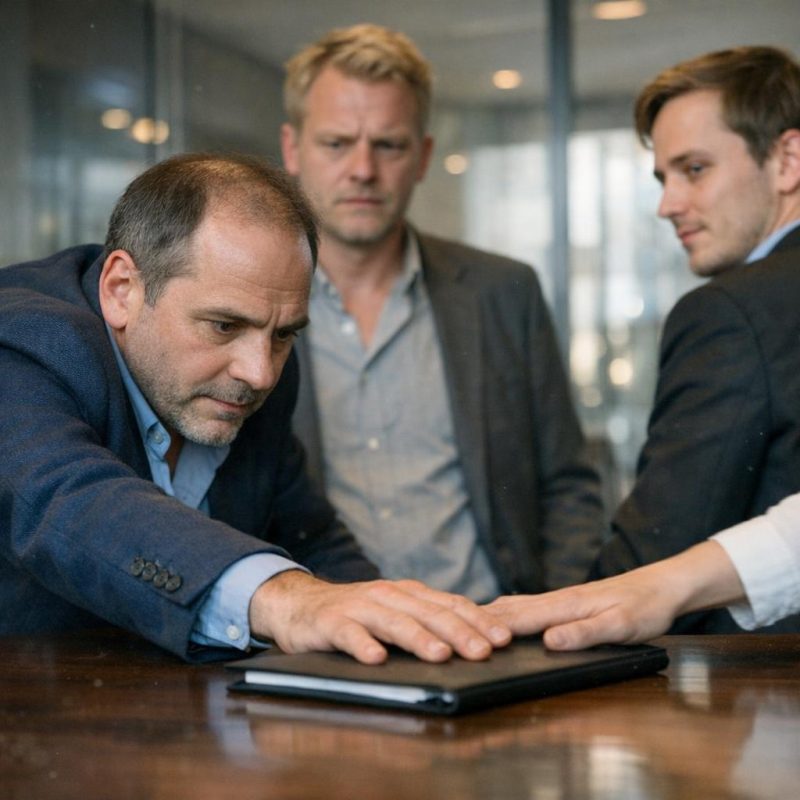 Image by RM AI
The First Document
I opened the folder fully and pulled out the first set of documents—the project files I'd spent hours comparing. 'These are from the Hendersen account,' I said, holding up the printouts so people could see the headers, the dates, the version numbers. 'Original versions and final versions, submitted for review.' I laid them out on the table, pointed to the key sections. 'The original files show my work, my analysis, my recommendations. But somewhere between my submission and final review, edits were made.' I traced the changes with my finger, showed the metadata timestamps. 'Sections were reworded, attribution was changed, my name was moved from lead to contributor.' Ryan's face had gone pale. Marcus was trying to maintain his composure but I could see the calculation happening behind his eyes. 'The system logs show when these changes were made—and by whom.' I looked at Ryan directly. 'These edits weren't made by me—but they changed who got credit for the work.'
 Image by RM AI
The Calendar
I set those documents aside and pulled out the meeting calendar printouts. 'And then there's this,' I said, spreading the pages where everyone could see the highlighted entries. 'Marcus's calendar for the past six months.' The yellow highlighting made the pattern impossible to miss—Ryan's name appearing over and over, scheduled sessions that filled the calendar like clockwork. 'One-on-ones, strategy sessions, project check-ins,' I read off some of the meeting titles. People were leaning in now, actually looking at the evidence. Alicia's expression had shifted from curious to troubled. Victor was studying the calendar with the focus of someone who understood exactly what he was seeing. 'Three times a week, every week, for six months,' I said, letting that sink in. I looked around at the other faces in the crowd—people who worked just as hard, who delivered just as much, who got a fraction of this kind of access. 'While the rest of us were lucky to get one check-in a month.'
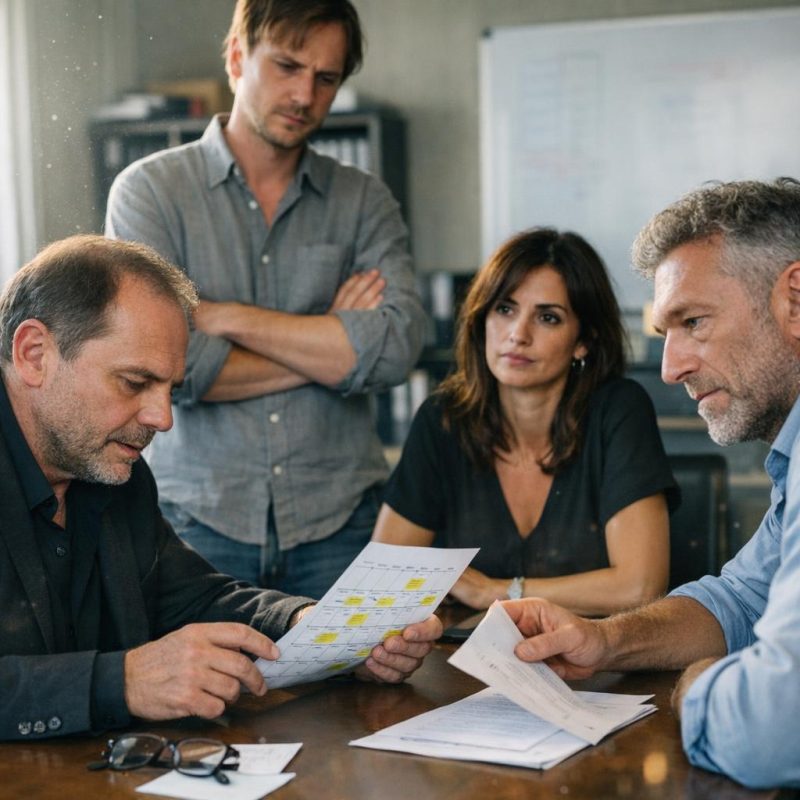 Image by RM AI
The Email Access
The final piece was the email access logs. I pulled out the printouts I'd made from IT's records, the ones that showed Ryan's permissions across the system. 'And this might be the most interesting part,' I said. 'Email distribution lists and access permissions.' I held up the pages, pointed to the highlighted entries. 'Executive strategy discussions, budget planning sessions, personnel decision threads.' The list went on—senior leadership communications, client acquisition strategies, competitive analysis that was normally restricted to director level and above. 'Ryan's been copied on all of this. Not forwarded after the fact, not brought in for specific relevant items—full access, ongoing, at the distribution level.' I looked at Victor, saw his jaw tighten as he recognized some of the thread titles. Then I turned back to Marcus and Ryan, kept my voice calm but let the question hang heavy. 'Why would someone at his level need to see any of this?'
 Image by RM AI
The Coordination
I pulled out the next set of documents—emails I'd recovered from the audit trail, messages that technically went through official channels but told a very different story when you lined them up. 'Let's talk about timing,' I said, spreading them across the table. 'Here's Marcus emailing Ryan two days before my project deadline, asking for a 'check-in' on team dynamics.' I tapped the first page. 'Here's Ryan responding with specific observations about my communication style—concerns that would later appear almost verbatim in my performance review.' I pulled out another. 'Three days before the promotion announcement, Marcus schedules a one-on-one with Ryan to discuss 'leadership development opportunities.'' I looked up at them. 'And here, the morning of the decision, Ryan sends Marcus a summary of what he calls my 'limitations in stakeholder management'—using the exact phrasing that would justify the choice.' I watched Marcus's face, saw the color draining. Ryan had gone completely still. 'These aren't coincidences,' I said quietly. 'They weren't just meeting—they were building a narrative, step by step, to justify a decision that had already been made.'
 Image by RM AI
The Demand
I set the last document down and looked directly at Marcus, kept my voice level even though my heart was pounding. 'You told me the promotion was based on performance metrics, on leadership potential, on objective evaluation.' I let that hang in the air for a moment. 'But everything I've shown you today proves something else entirely.' I gestured to the files spread across the table—the manipulated reports, the access permissions, the coordinated messaging. 'Ryan had advantages I never had. He had information I never saw. He had someone actively working behind the scenes to shape the narrative in his favor while undermining mine.' I watched Marcus's face, saw him struggling to find words. Ryan looked like he wanted to disappear into the floor. 'This wasn't a fair process. It wasn't even close.' I kept my eyes locked on Marcus, didn't let him look away. 'You knew what he was doing—the emails prove you were part of it. You gave him access he shouldn't have had. You coordinated your story.' My voice stayed calm, but I made sure every word landed. 'So I'll ask you again: explain how this lines up with the decision you made.'
 Image by RM AI
The Hesitation
Marcus opened his mouth, then closed it again. His eyes darted to Ryan, just for a second, but it was enough—I saw something pass between them, some unspoken understanding that went deeper than I'd realized. He looked back at me, and I watched him trying to formulate an answer, saw the wheels turning as he searched for some explanation that would make sense. But the pause stretched too long. He wasn't just scrambling for a professional justification—there was something else happening, something more personal in the way his expression shifted when he glanced at Ryan. It wasn't the look you'd give a protégé or even a favorite employee. There was a weight to it, a kind of instinctive concern that felt out of place in this context. I felt my mind starting to turn over the pieces I'd been so focused on proving—the coordination, the access, the manipulation. But standing there, watching Marcus struggle with what to say while Ryan watched him with an almost desperate intensity, I started to wonder if I'd been looking at this all wrong. And in that glance, I saw something I hadn't fully understood until that moment—this wasn't just favoritism.
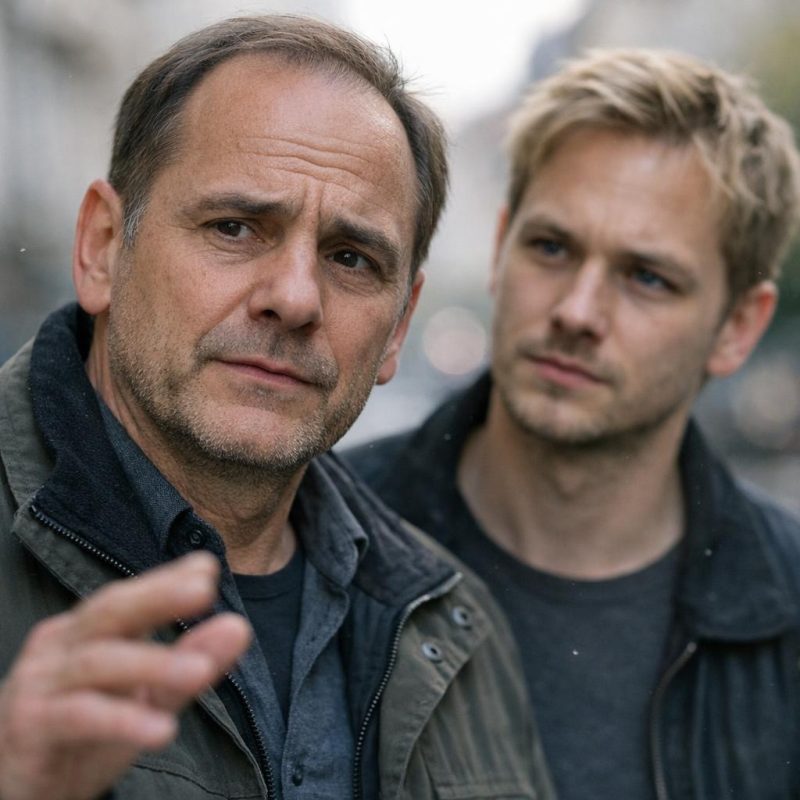 Image by RM AI
The Protective Instinct
That's when Marcus did something small but unmistakable. He shifted his position, moving just slightly to his left—placing himself between me and Ryan, not obviously, not dramatically, but enough that I noticed. It was subtle, almost unconscious, the kind of movement that comes from instinct rather than strategy. Like he was shielding Ryan from the confrontation, putting himself in the line of fire. And the thing is, you don't move like that for a colleague. You don't have that kind of reflexive response to protect someone who's just an employee you happen to like. I'd seen mentors defend their mentees before—that was professional, calculated, about reputation and judgment. This was different. This was personal in a way that went beyond workplace dynamics. I watched Ryan's eyes follow Marcus's movement, saw a flash of something grateful and terrified at the same time. Victor was watching too, I noticed, his expression shifting as he picked up on the same strange energy I was feeling. Elena had gone very still beside me. And I stood there, files in hand, feeling like I'd walked into this meeting to expose one truth only to stumble onto something much bigger. It was protective, almost parental, and suddenly a lot of small things started clicking into place.
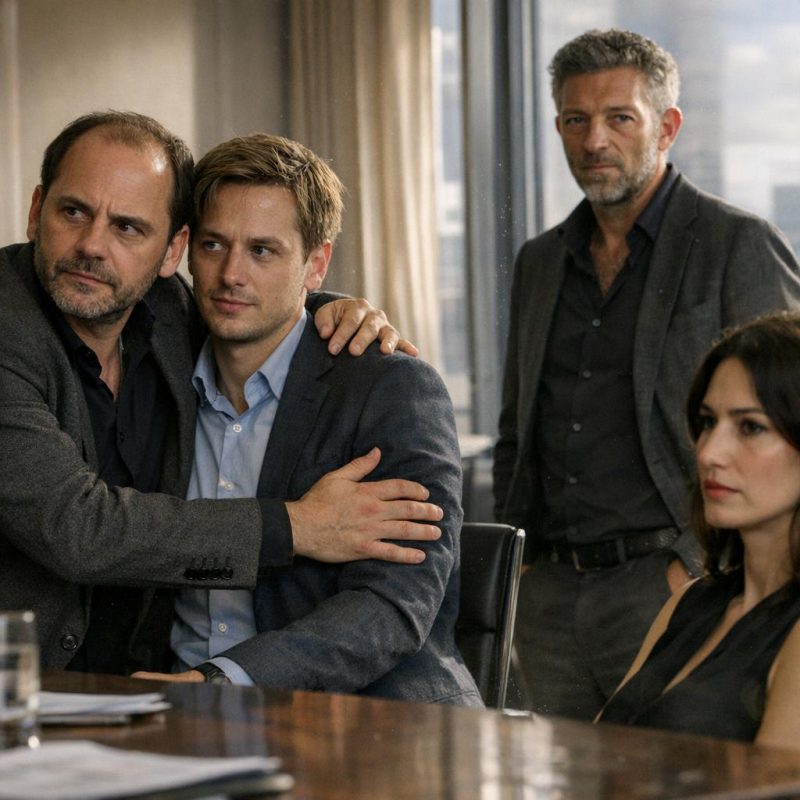 Image by RM AI
The Physical Resemblance
I looked at them standing there together—Marcus with his protective stance, Ryan slightly behind him—and for the first time, I actually looked at them. Not as boss and employee, not as conspirators, but as two people in the same physical space. And once I started seeing it, I couldn't unsee it. The jawline first—that same angular structure, the way it caught the light from the conference room windows. Ryan's was younger, less defined, but the bones underneath were identical. Then the eyes—not the color, but the shape, the way they both narrowed slightly when they were thinking, that same small crease at the outer corners. The way they both stood with their weight shifted slightly to the right. The way they both had this habit of pressing their lips together when they were stressed, creating the same thin line. Even their hands—I glanced down—the same long fingers, the same way of holding tension in their knuckles. How had I worked with both of them for two years and never noticed? How had nobody noticed? Or maybe they had, and I'd just been too focused on my own career, my own projects, to pay attention to office rumors. The same jawline, the same way they both tilted their head when thinking—how had I never seen it before?
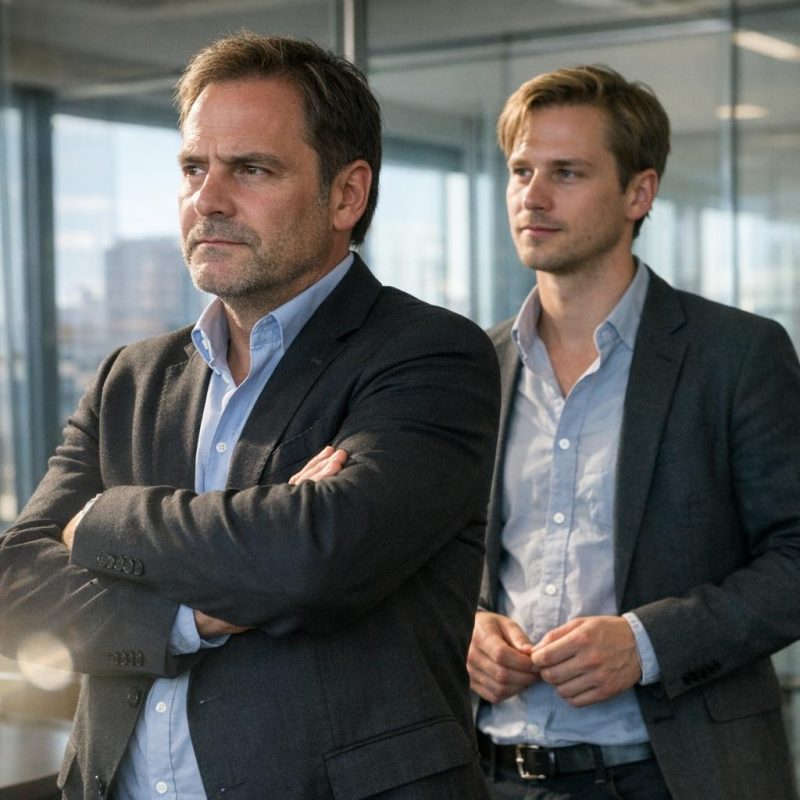 Image by RM AI
The Question That Changed Everything
The silence in the room had changed. I felt it before I heard anything—that shift when everyone simultaneously realizes something without anyone saying it out loud. Elena had straightened in her chair, her eyes moving between Marcus and Ryan with new understanding. Alicia had gone pale. And Victor—Victor was leaning forward in his seat now, his executive training kicked in, that careful political calculation I'd seen him use in board meetings. He cleared his throat, and everyone turned toward him. His voice was measured, neutral, but there was steel underneath. 'Marcus,' he said, and I heard the weight he put on the name. 'I think we need to pause here and address something directly.' He let that sit for a moment, his eyes moving from Marcus to Ryan and back again. 'I'm going to ask you a question, and I need an honest answer.' Marcus's face went gray. Ryan looked like he might be sick. 'The favoritism Jordan's documented here—the access, the coordination, the protection—it suggests a relationship that goes beyond professional mentorship.' Victor's voice stayed level, but his words were precise, deliberate. 'Marcus, is there something about your relationship with Ryan that might be relevant here?'
 Image by RM AI
The Breaking Point
Ryan's head snapped toward Marcus, and I saw naked panic in his eyes—that kind of fear that goes beyond career consequences, beyond professional embarrassment. He was silently begging Marcus for guidance, for instruction, for some signal about what to do next. His mouth opened slightly, but no sound came out. He looked young suddenly, younger than his twenty-nine years, like a kid caught in something way over his head and desperately searching for the adult to fix it. Marcus stared back at him, and I watched something shift in his expression—the corporate mask cracking, the careful professional distance crumbling. His shoulders sagged. His hand came up to his face, pinched the bridge of his nose like he was trying to ward off a headache or maybe just delay the inevitable. I'd seen people break in meetings before—seen them confess to mistakes, admit to poor judgment, acknowledge failures. But this was different. This was the moment when someone realizes they can't protect something they've been hiding anymore, when the walls close in and there's nowhere left to run. The room held its breath. Victor waited, patient and relentless. And Marcus's shoulders dropped in a way that told me the truth was about to come out—whether he wanted it to or not.
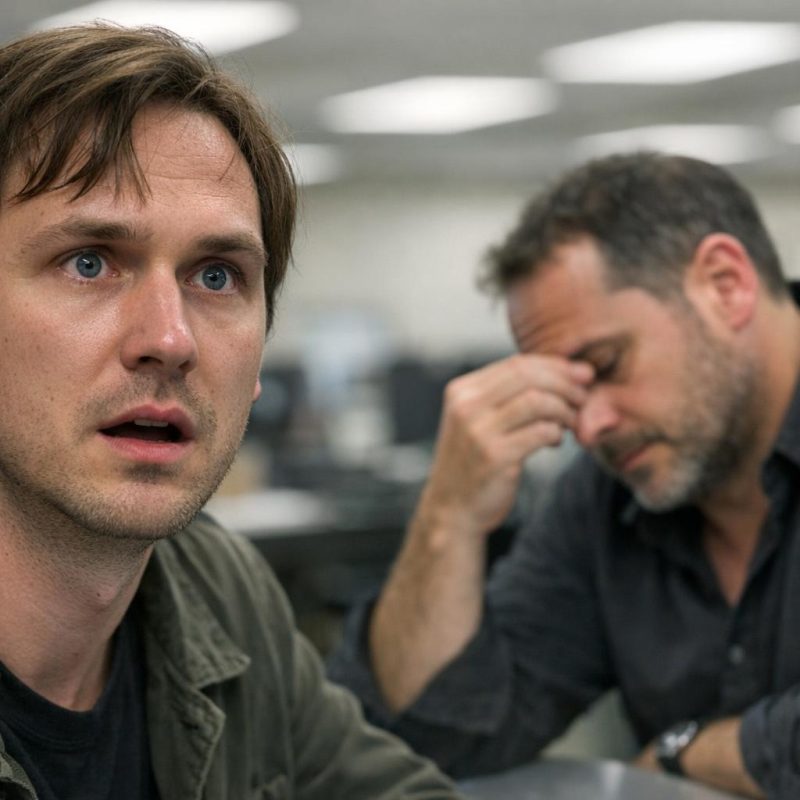 Image by RM AI
The Truth
Marcus's voice, when it finally came, was barely audible. 'He's my son.' The words fell into the silence like stones into still water, and I felt the impact ripple through everyone in the room. Elena's hand flew to her mouth. Alicia made a small sound of shock. Victor closed his eyes briefly, like he'd suspected but hoped he was wrong. And me—I just stood there, feeling everything I'd uncovered suddenly rearrange itself into a picture that was so much worse than I'd imagined. Not just favoritism. Not just unethical mentorship or boundary violations. Actual nepotism. A father promoting his son over more qualified candidates, manipulating performance reviews to justify it, coordinating behind the scenes to make it look legitimate. I thought about Ryan's last name—different from Marcus's, which made sense now in the worst possible way. I thought about Marcus's wife, the woman I'd met at company events. I thought about every meeting, every decision, every lie. The room went completely silent, and suddenly every decision, every meeting, every edited file made horrifying sense.
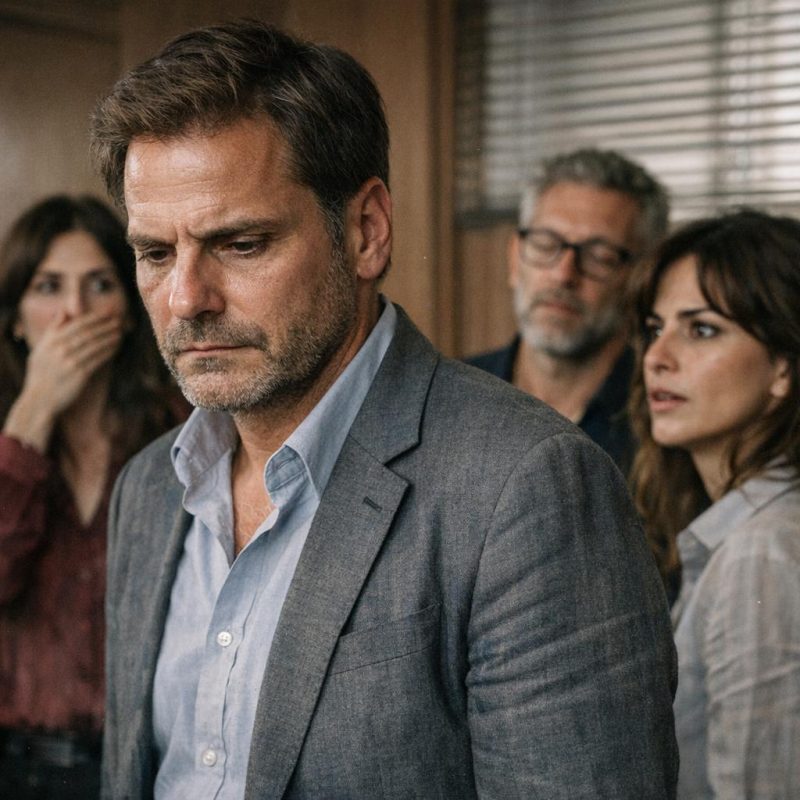 Image by RM AI
The Reframing
I stood there trying to process what Marcus had just admitted, and suddenly every interaction from the past months started rearranging itself in my head. The coaching sessions that always happened behind closed doors. The access Ryan had to projects and meetings that should've been above his level. The way Marcus defended every mistake, reframed every failure as a learning opportunity. I'd thought it was favoritism, maybe even inappropriate mentorship—but this was something else entirely. This was a father systematically clearing a path for his son, consequences be damned. I thought about all those times I'd questioned myself, wondered if I was being paranoid or overly sensitive. All those moments when Elena had looked uncomfortable during meetings and I'd noticed but said nothing. The pattern had been there all along, but I'd been looking for professional explanations when the answer was personal. Ryan wasn't Marcus's protégé. He was his kid. And every qualified person in that department—me included—had been collateral damage in a family project. The coaching sessions, the access, the protection—it was never about Ryan's potential. It was about blood.
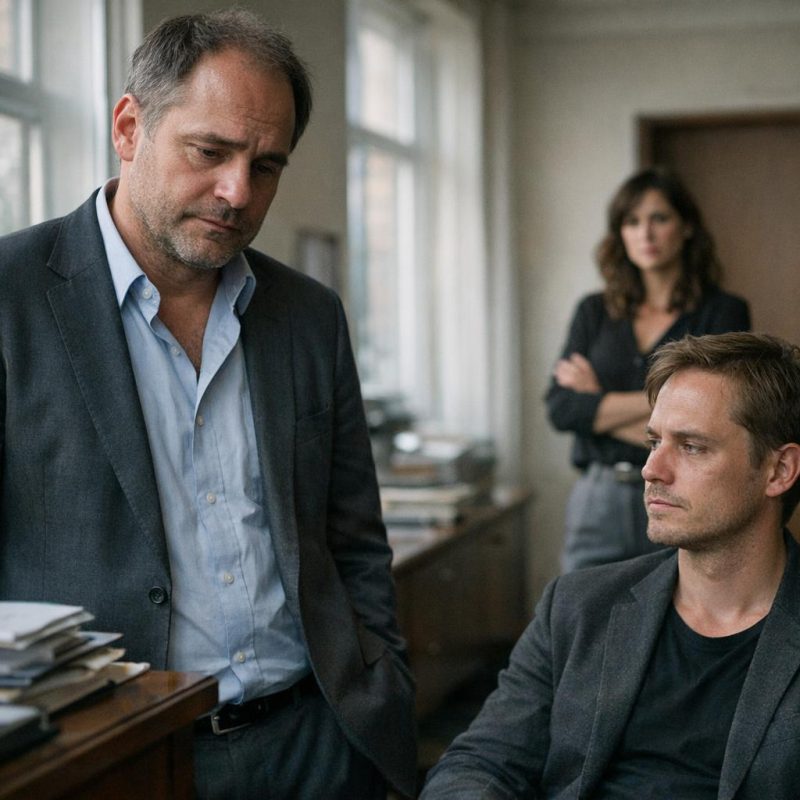 Image by RM AI
The Fallout Begins
Victor stepped forward immediately, and suddenly the easygoing executive I'd known was gone. This was the guy who ran entire divisions, who made calls that affected hundreds of employees. 'Marcus,' he said, and his voice had this edge I'd never heard before. 'This is a serious breach of company policy and ethics standards.' Marcus looked up, and I swear he seemed smaller somehow, like the admission had physically deflated him. Ryan hadn't moved from where he stood near the wall, his face completely blank. Elena and Alicia were watching everything unfold like they couldn't quite believe this was happening. Victor pulled out his phone, typed something quickly, then looked directly at Marcus. 'We need documentation of this conversation. I'm calling Sarah from HR and our legal counsel.' The words hung in the air, official and final. This wasn't just office drama anymore—this was about to become an actual corporate investigation. Victor's expression didn't soften even slightly as he looked between Marcus and Ryan. 'This is a conversation we need to continue—in my office, right now, with HR present.'
The Emergency Meeting
Within an hour, I was sitting in a conference room with Victor, Sarah from HR, and a woman named Patricia from legal counsel. Sarah looked older than I remembered from that initial meeting months ago, more tired maybe, but her eyes were sharp and focused. She had a notebook open in front of her and was taking notes by hand, old school. Patricia had a laptop and was already pulling up policy documents. Victor sat at the head of the table, completely serious. 'Jordan, we need you to walk us through everything you found,' he said. 'Every file, every email, every instance of what you believe to be misconduct.' So I did. I showed them the performance reviews with tracked changes showing Marcus's edits. The meeting notes I'd photographed. The email threads between Marcus and Ryan that proved coordination. I explained the pattern I'd documented, the systematic way certain people were favored while others were overlooked. Sarah's pen moved constantly across her notebook. Patricia asked pointed questions about dates, file locations, witnesses. And the crazy thing? They actually listened this time. They wanted to know everything—and this time, they were actually listening.
The Company Investigation
By the next morning, everything had changed. Sarah called me at 8:47 AM to let me know the company was launching a formal investigation. Not an informal inquiry. Not a 'we'll look into it' brush-off. An actual, official investigation with external auditors brought in to review department files and interview staff. 'This is being treated with the utmost seriousness,' Sarah said, and I could hear papers shuffling in the background. 'We're bringing in a third-party firm to ensure objectivity.' I sat at my desk trying to process the speed of it all. By 10 AM, there was an email announcement: Marcus had been placed on administrative leave effective immediately, pending the outcome of the investigation. By noon, another email: Ryan's promotion was being suspended pending review. People were coming by my desk in whispers, asking if I knew what was happening. Elena gave me this look that said she knew exactly what was happening and was proud I'd finally pushed back. The office felt different, like the air pressure had changed. Marcus was placed on administrative leave, and Ryan's promotion was suspended pending review.
The Testimony
The formal statement took three hours. Sarah and two investigators from the external firm sat across from me in a conference room, recording everything. They asked me to walk through my findings chronologically, starting from when I first noticed discrepancies. I explained how I'd found the performance review files, how I'd documented the pattern of meetings and decisions. They asked about specific instances, wanted exact dates and times when I could provide them. One of the investigators, a woman named Claire, kept asking follow-up questions that showed she actually understood what I was describing. 'And you have documentation of all this?' she asked. I did. I handed over copies of everything I'd collected—the files, the notes, the timeline I'd built. They took it all, added it to their evidence file. Then Sarah leaned forward. 'Jordan, we need you to know—we've found additional instances of favoritism in our preliminary review. Instances that predate your documentation.' My stomach dropped. It was worse than I'd thought, went back further than I'd known. They confirmed what I'd found—and uncovered even more instances of favoritism I hadn't discovered.
 Image by RM AI
The Coworkers Speak
Elena came to my desk two days into the investigation, looking nervous but determined. 'They want to talk to me,' she said quietly. 'About what I've observed working with Marcus and Ryan.' She wasn't the only one. Over the next week, I learned that Alicia had given a statement. So had David from finance. Three people from other departments I barely knew had reached out to investigators with their own observations. Apparently, everyone had noticed things but nobody had felt safe enough to say anything until now. Elena told me later that she'd documented several instances where Ryan had been given credit for work he didn't do, including a client presentation she'd mostly prepared. Alicia talked about how her own performance reviews had mysteriously declined after she'd expressed concerns about Ryan's handling of a project. The pattern wasn't just clear—it was damning. I met Elena for coffee during lunch and she looked exhausted but relieved. 'I'm glad you did this,' she said. 'I should have spoken up sooner.' Turns out I wasn't the only one who'd noticed—I was just the only one who'd been willing to document it.
 Image by RM AI
The Apology That Wasn't
The email from Marcus arrived on a Thursday afternoon. Subject line: 'I owe you an explanation.' I stared at it for a full minute before opening it. The message was long, rambling, full of justifications about how difficult it had been watching Ryan struggle early in his career, how he'd just wanted to give his son the same opportunities he'd had, how he never meant for it to affect other people's careers. 'I was trying to give my son a chance,' he wrote, like that somehow made it okay. Like his paternal instincts justified manipulating performance reviews, stealing credit from colleagues, systematically blocking other people's advancement. There was no real apology in the email. No acknowledgment that what he'd done was fundamentally wrong. Just explanations and justifications and this underlying tone that suggested he thought I should understand, maybe even sympathize. I read it twice, feeling my anger build with each sentence. He was still doing it—still trying to reframe his actions as somehow reasonable, as a father's natural protective instinct rather than a massive abuse of power. He called it 'trying to give my son a chance'—as if that justified stealing mine.
 Image by RM AI
The Decision
Victor called me into his office exactly two weeks after that conference room confrontation. Sarah was there too, along with Patricia from legal. Victor's expression was serious but not hostile. 'Jordan, the investigation has concluded,' he said, gesturing for me to sit. 'I want to walk you through the findings and the actions we're taking.' My heart was pounding. Sarah opened a folder and started reading from what was clearly an official decision document. The investigation had found clear evidence of nepotism, favoritism, and misconduct. Marcus had violated multiple company policies regarding fair employment practices, performance evaluation integrity, and ethical management standards. 'Marcus's employment is being terminated effective immediately,' Victor said. 'He will not be eligible for rehire.' I felt something tight in my chest loosen slightly. 'Ryan's promotion has been permanently revoked,' Sarah added. 'He'll be returning to his previous role, and his performance will be monitored closely going forward.' Then Victor leaned forward, and his expression shifted to something almost apologetic. 'Jordan, we need to discuss your future with the company. The position you were passed over for—the senior analyst role—is being reopened.' Marcus was being terminated, Ryan's promotion was revoked—and they wanted to discuss my future with the company.
 Image by RM AI
The Offer
Victor sat back in his chair, hands folded on the desk. 'Jordan, the senior analyst position is yours if you want it,' he said. 'The salary increase, the responsibilities, the team leadership—everything that should have been offered six months ago.' I should have felt triumphant. This was what I'd wanted, what I'd worked for, what I'd been unfairly denied. But sitting there in that office, looking at Victor's earnest expression and Sarah's carefully neutral face, I felt something different entirely. It was relief mixed with exhaustion mixed with something sharper—resentment, maybe, or just bone-deep distrust. Because where was this offer six months ago when I'd earned it? Where was this accountability when I'd first raised concerns about Marcus's decisions? It had taken me finding those files, building a case, risking everything—and even then, it had almost gone nowhere. 'I need some time to think about it,' I heard myself say. Victor looked surprised but nodded. 'Of course. Take the time you need.' They shook my hand and I left the office with the promotion I'd wanted finally within reach. But after everything I'd been through, I wasn't sure this was still the company I wanted to work for.
 Image by RM AI
The Reflection
I took a week off. Used some of the vacation days I'd been hoarding because I'd been too busy trying to prove myself to actually rest. I spent those days thinking, really thinking, about what I wanted and what I was willing to accept. The promotion was tempting—not just for the money or the title, but because it felt like validation. Proof that I'd been right, that my work had mattered, that the fight hadn't been for nothing. But every time I imagined accepting it, I felt this nagging doubt. Could I trust a company that had let Marcus operate unchecked for so long? Could I work for executives who'd dismissed my concerns until I'd handed them irrefutable evidence? And what about the next person who got passed over unfairly—would they have to go through what I went through? I made lists. Pros and cons. What I'd gain versus what I'd be accepting. I talked to exactly two people: my sister, who told me to trust my gut, and a former colleague who'd left the company last year and said she'd never been happier. By the end of that week, I knew what I needed to do. Because accepting the promotion meant choosing to believe the company had learned something—and I wasn't sure I did.
 Image by RM AI
The Choice
I went back to Victor's office with a list I'd written out the night before. 'I'll accept the position,' I said, 'but I have conditions.' He raised an eyebrow but gestured for me to continue. I took a breath and started reading. Transparent promotion criteria published company-wide. Mandatory bias training for all managers. A formal appeals process for performance reviews. Regular audits of promotion decisions to identify patterns. And an open-door policy that actually meant something—not just lip service, but a genuine commitment that concerns would be investigated promptly and seriously. Victor listened to all of it. Then he leaned forward. 'I'll take this to the executive team,' he said. 'But Jordan, I want you to know—we do want to do better. What happened with Marcus... it showed us gaps in our systems we can't ignore anymore.' Two days later, he called me back. They'd agreed to everything. Every single condition. I signed the paperwork and shook his hand, and this time it felt different. Not like I'd won something, but like I'd claimed something that should have been mine all along. They agreed—and I made it clear that if I ever saw favoritism like that again, I wouldn't stay silent for a second.
The New Beginning
My first day in the new role, Elena stopped by my office—my actual office now, not a cubicle. 'Congratulations,' she said, and I could tell she meant it. 'Thanks for everything you did,' I told her. 'I wouldn't have made it through this without you.' She smiled. 'So what's your first priority as senior analyst?' I'd thought about this a lot during that week off. It would have been easy to just focus on the work, prove I deserved the position, make sure nobody could question my qualifications. But that wasn't enough anymore. 'I'm reviewing our current promotion pipeline,' I said. 'Making sure the criteria are actually clear and that everyone knows what's expected. And I'm checking in with the junior analysts—really checking in, not just the surface stuff.' Elena nodded slowly. 'Making sure what happened to you doesn't happen to anyone else.' Exactly. I'd learned something through all of this that went beyond performance metrics and visibility politics. Leadership wasn't just about doing great work or managing upward or playing the game better than everyone else. Because it wasn't just about performance or visibility—it was about making sure everyone else had the same fair shot I'd had to fight for.
KEEP ON READING

20 Times in History Fashion Trends Were Genuinely Dangerous
Looking Stylish Hasn't Always Been a Safe Hobby. Fashion has…
By Emilie Richardson-Dupuis Apr 8, 2026
20 Historical Figures Who Were More Dangerous Than They Seemed
Power Hidden Behind a Calm Face. History is full of…
By Annie Byrd Apr 8, 2026
20 Historical Figures You Probably Share DNA With
Do You Have Famous Ancestors?. It’s easy to think of…
By Sara Springsteen Apr 8, 2026
20 Brilliant Minds History Forgot to Credit
The Overlooked Figures Who Quietly Shaped History. History often celebrates…
By Rob Shapiro Apr 8, 2026
Public Executions Were Once the Most Attended Events in Town…
Georg Heinrich Sieveking on WikimediaFor centuries, a public execution could…
By Breanna Schnurr Apr 2, 2026
When This Thing Fell From Space, Everyone Knew the World…
Alessandro Ferrari on UnsplashOn a crisp October evening in 1957,…
By Sara Springsteen Apr 7, 2026