

I Sold My House to Save My Sister From Medical Debt. Then I Found Out What She Really Spent the Money On.
I Sold My House to Save My Sister From Medical Debt. Then I Found Out What She Really Spent the Money On.
The Call That Changed Everything
The phone rang at 11:47 on a Tuesday night, and I knew from the ringtone it was my sister. I almost let it go to voicemail — I had work in the morning and I was already half asleep. But I picked up, and the sound on the other end stopped me cold. Elena was crying so hard she could barely get words out. Not the kind of crying you do when you're frustrated or sad. The kind that comes from somewhere deeper, somewhere scared. It took a few minutes before I could piece together what she was saying. A procedure that hadn't gone the way it was supposed to. An insurance technicality that left her holding a bill she never saw coming. A number so large it made my stomach drop — six figures, she said, and the house was on the line if she couldn't cover it. I didn't ask her to slow down and explain the details. I didn't ask for paperwork or policy numbers. I just sat there in the dark of my bedroom, listening to my sister fall apart, and I heard myself say, 'I'm going to fix this.' I didn't know how yet. I hadn't even looked at my bank balance. But I meant it with everything I had. The weight of it settled into my chest like something permanent, and I let it.
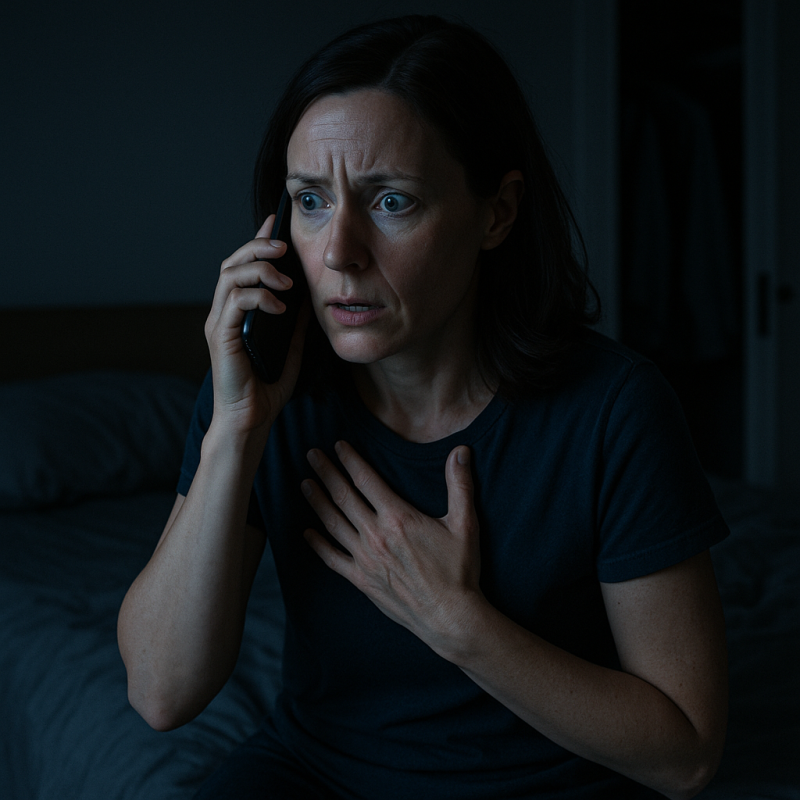 Image by RM AI
The Mathematics of Sacrifice
I was up before six the next morning, sitting at my kitchen table with a cup of coffee I barely touched and my laptop open to my bank accounts. I told myself I just needed to look at the numbers clearly. Maybe it wouldn't be as bad as I thought. It was exactly as bad as I thought. My savings account had a little over eighteen thousand dollars in it. My investment portfolio, which I'd been building slowly for years, came to just under thirty-two thousand — and most of it wasn't liquid without penalties. Even if I cashed everything out and ate the fees, I was looking at maybe forty-five thousand dollars total. Elena had said the debt was somewhere north of a hundred and twenty thousand. I sat there and did the math four different ways, hoping I'd made an error somewhere. I hadn't. I went through every other option I could think of — personal loans, payment plans, borrowing against my retirement. The numbers kept coming back wrong. There was only one asset I had that was large enough to matter. I'd bought my house seven years ago, put work into it, and the equity alone was worth more than everything else I owned combined. I pulled up a real estate listing website and stared at the search bar for a long moment before I started typing.
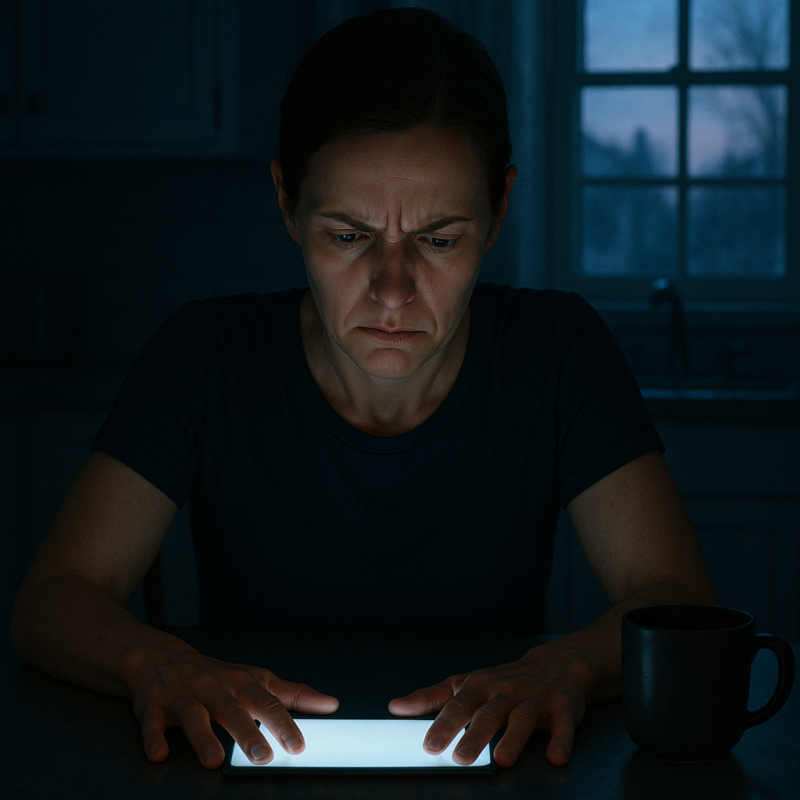 Image by RM AI
Putting It on the Market
The agent arrived on a Thursday morning, clipboard in hand, and I walked her through every room like I was giving a tour of someone else's house. She was professional and efficient, pointing out what would photograph well and what buyers in this market were looking for. She didn't ask why I was selling, and I didn't offer an explanation. We talked square footage and comparable sales and the small updates I'd made to the kitchen a few years back. She gave me a listing price that was higher than I expected, which should have felt like good news. Mostly it just felt like a number. I signed the listing agreement at my dining room table, the same table where I'd eaten a thousand meals and spread out work projects and hosted the occasional holiday dinner. My hand didn't shake when I signed. I was a little surprised by that. The agent left, and about an hour later a man came to plant the For Sale sign in the front yard. I watched from the window as he drove it into the ground with a rubber mallet. Then I went outside and stood in the driveway and looked at my house — really looked at it — for the first time in years. The sign was just a sign. The house was still the house. And somewhere underneath the ache of it, there was something that felt almost like peace.
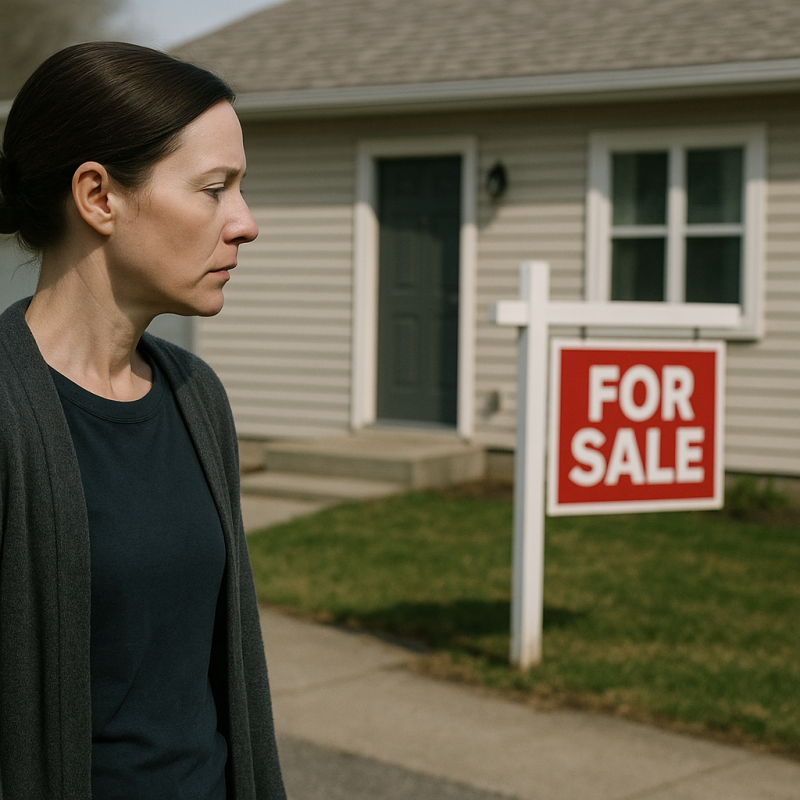 Image by RM AI
The First Transfer
The house sold in three weeks. I hadn't expected it to move that fast, but the agent said the market was hot and the offer was clean, and before I'd fully processed what was happening, I was sitting at a closing table signing my name over and over again. The wire transfer hit my account two days later — a number I'd never seen in my personal finances before, and probably never would again. I sat at my laptop that evening and pulled up my bank's transfer portal. I typed in Elena's account number, which she'd texted me weeks earlier, and I entered fifty thousand dollars as the first amount. I sat there for a minute with my finger over the trackpad. Not because I was second-guessing it. I just wanted to feel the weight of the moment before it passed. Then I confirmed the transfer and watched the balance drop. I called Elena right after. She picked up on the second ring, and when I told her the money was on its way, she went quiet for a second before she started crying. Good crying this time — the kind that sounds like relief. She kept saying thank you, over and over, and I kept telling her it was okay, that this was what family did. When I hung up, I sat back in my chair and felt something I hadn't expected: a deep, uncomplicated satisfaction at being the person who could make that call.
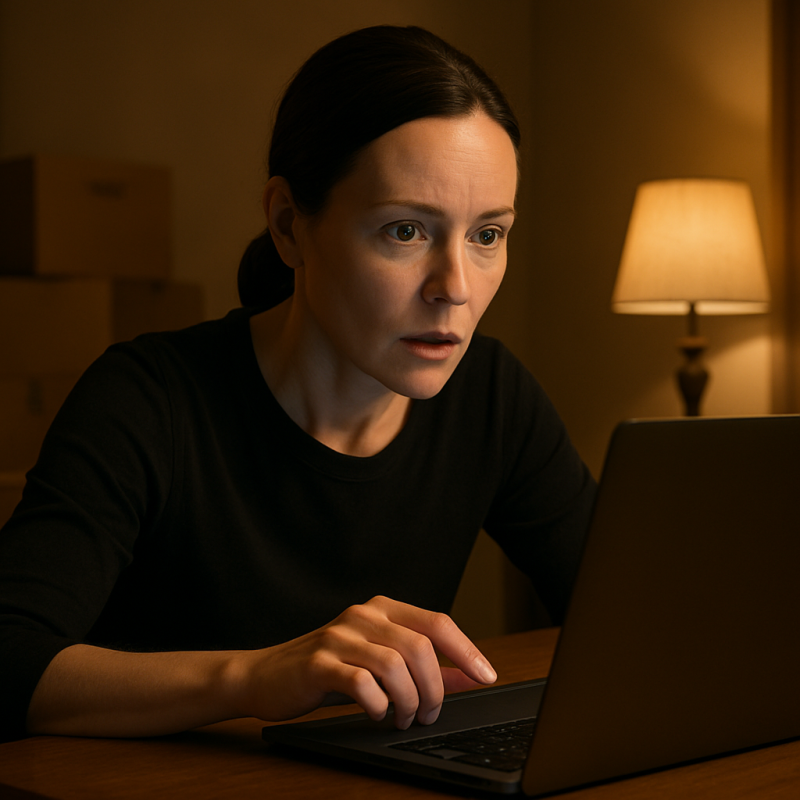 Image by RM AI
Boxing Up a Life
Packing up a house you've lived in for seven years takes longer than you think, and not because of the volume of stuff. It's because every box you fill is a small decision about what your life used to look like. I sorted everything into three piles — keep, donate, sell — and the keep pile was the smallest by far. The dining room set went to a neighbor who'd admired it for years. I didn't have room for it in a studio apartment, and honestly, watching her load it into her truck felt better than leaving it on the curb. The piano was harder. I'd had it since my twenties, a secondhand upright I'd taught myself to play badly and loved anyway. A family with two young kids came to pick it up on a Saturday morning, and the little girl ran her fingers along the keys before they even got it out the door. I told myself that was a good ending for it. I kept telling myself things like that all week — that Elena needed this more than I needed a piano, more than I needed a dining room set, more than I needed the extra bedroom I'd used as an office. It was true. I believed it. I packed the last box on a Friday afternoon, did one final walk-through of every empty room, and then I pulled the front door shut behind me and heard the latch click into place.
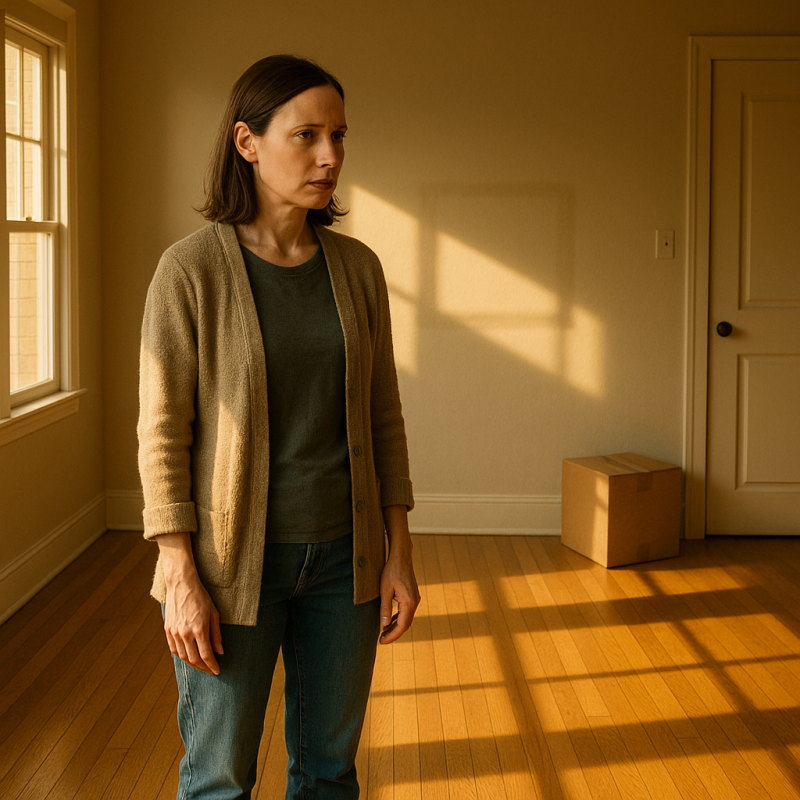 Image by RM AI
Four Hundred Square Feet
The moving truck fit everything I'd kept into about a third of its cargo space, which told me something about how much I'd given away. The studio was on the fourth floor of a building downtown with no elevator, and by the time I'd hauled the last box up the narrow stairwell, my legs were shaking. I unlocked the door and pushed it open and stood in the doorway for a moment. Four hundred square feet. I'd known the number before I signed the lease, but knowing a number and standing inside it are two different things. There was a kitchenette along one wall, a bathroom barely big enough to turn around in, and the rest was a single open room where I was supposed to fit my bed, my desk, my clothes, and whatever passed for a living area. I spent the afternoon figuring out what went where, which mostly meant accepting that several things couldn't go anywhere and would have to be stored or let go. By evening I had the essentials arranged — bed against the far wall, desk wedged near the window, a single chair that served as both reading spot and extra seating. I sat on the edge of the bed and looked at the whole apartment in one glance. Back home, I'd needed to walk from room to room to see my own house. Here, I could take it all in without moving. That was the difference now, contained in a single look.
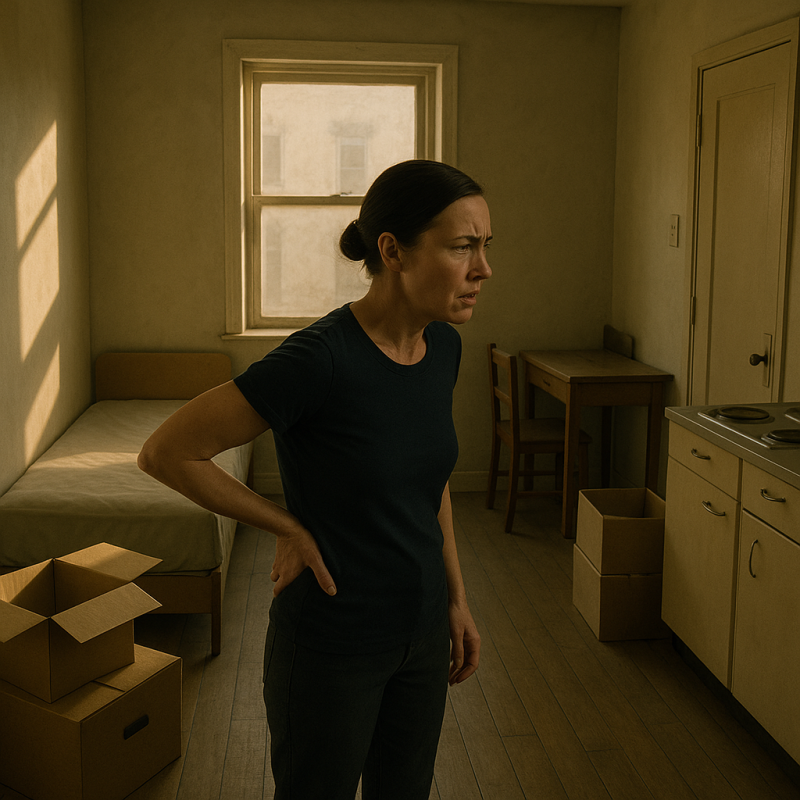 Image by RM AI
The First Week
The first week in the studio taught me things about myself I hadn't expected to learn. I discovered that I cook differently when the kitchen counter is eighteen inches wide — mostly I stopped cooking and started eating things that required one pan or no pan at all. The walls were thin enough that I learned my neighbor's alarm went off at 5:15 every morning and that he watched television until midnight. My morning routine shrank to fit the bathroom, which meant no more spreading out, no more taking my time. I found a coffee shop two blocks away that had big tables and reliable wifi, and I started going there in the mornings to spread out my work papers the way I used to do at home. It helped. I took long walks in the evenings, partly to clear my head and partly because the apartment felt smaller after dark. I kept reminding myself that this was temporary in the sense that mattered — Elena was getting better, the debt was being handled, and I had done something real and lasting for someone I loved. By the seventh evening I'd settled into something that almost felt like a routine. I was sitting on the edge of my bed, reading, when the phone lit up on the nightstand beside me and I heard Elena's ringtone fill the small room.
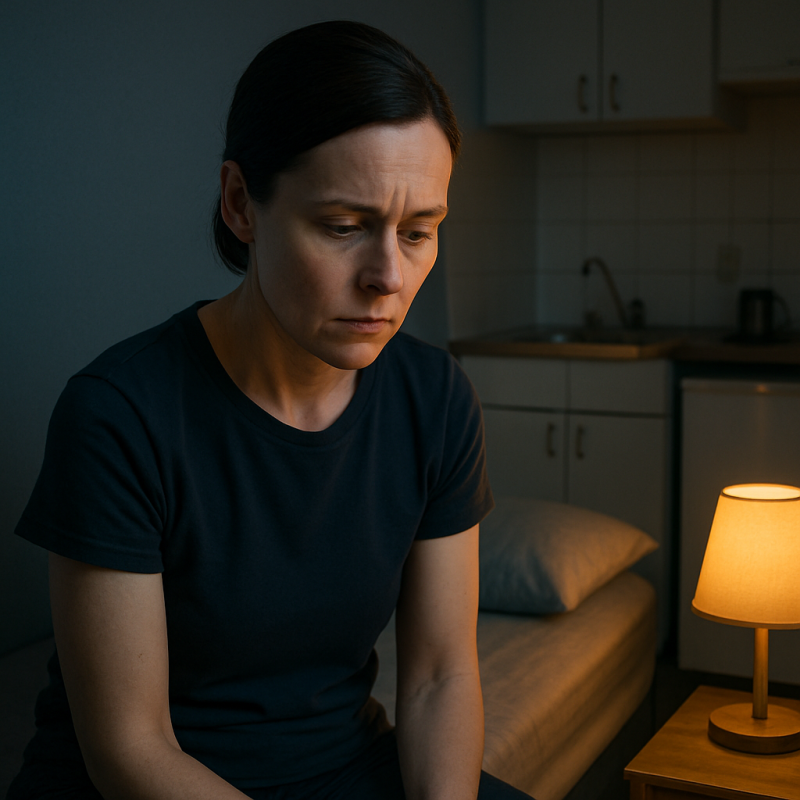 Image by RM AI
Guardian Angel
We talked for just over an hour. Elena sounded different than she had in weeks — lighter, steadier, like something that had been pressing down on her had finally lifted. She told me the first payment had gone through and that the hospital's billing department had confirmed receipt. She said she'd been able to sleep through the night for the first time since the whole thing started. And then she said things that I didn't quite know how to receive. She called me her guardian angel. She said I was the only person in the world who truly understood what family meant, that I was her hero, that she didn't know what she would have done without me. I kept deflecting — saying it was nothing, saying anyone would have done the same — but she wouldn't let me brush it off. She kept coming back to it, circling around to gratitude every time the conversation drifted somewhere else. I'm not sure I'd ever felt so needed by another person in my adult life. There was something almost overwhelming about it, being seen that clearly by someone you love. When we finally said goodnight and I set the phone down on the nightstand, the apartment felt different than it had an hour before — smaller in its dimensions, maybe, but somehow less empty, filled up with the warmth of knowing I had been exactly what my sister needed.
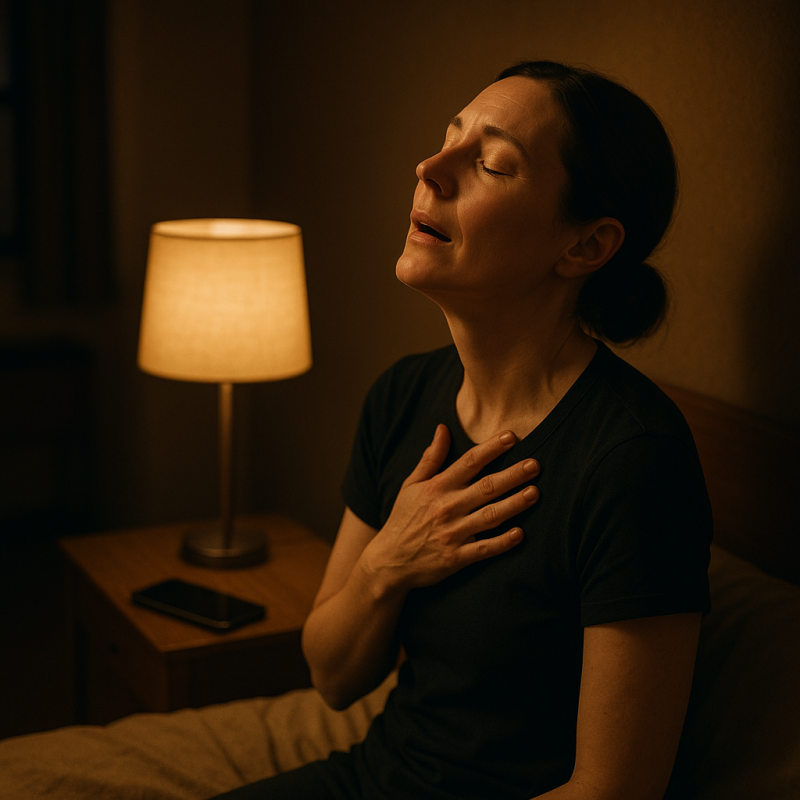 Image by RM AI
The New Normal
The first week in the studio apartment, I made a list. Not a feelings list — a numbers list. Rent, utilities, groceries, transit. I went through every line item and cut anything that wasn't load-bearing. Coffee shop stops were the first to go. I bought a thermos from the dollar bin at the drugstore and started brewing at home, carrying it to the office in my bag like a small act of defiance against my old spending habits. Dinner most nights was canned soup — tomato, lentil, whatever was on sale — heated on the two-burner stove and eaten standing at the kitchen counter because I hadn't replaced the table yet. I started walking to work instead of driving, which saved me about sixty dollars a month in gas and parking. Forty-five minutes each way, rain or shine. I tracked every dollar in a spreadsheet I kept open on my laptop, updating it each evening before bed. There was something almost meditative about it, honestly. The smaller my life got, the more manageable it felt — like I'd stripped away everything unnecessary and what remained was just the clean, quiet shape of what I actually needed.
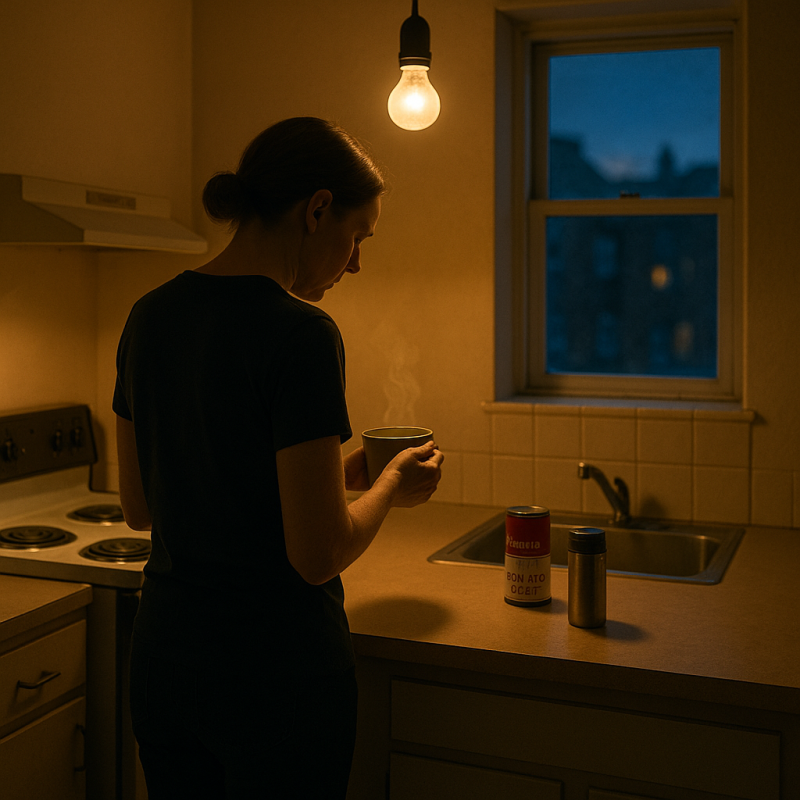 Image by RM AI
The Second Request
It was a Tuesday evening when Elena called again, about six weeks after the first transfer. I could hear it in her voice before she even got to the point — that tight, controlled quality that meant she was trying not to sound as scared as she was. She said the collectors had gotten aggressive. Not just calls anymore — they were sending certified letters, threatening legal action, talking about timelines. She said the word 'lien' twice. She needed another twenty thousand dollars, she said, to satisfy the next portion of the debt before they escalated further. Thirty days, or they'd move forward. I didn't ask her to send me documentation. I didn't ask for the collector's name or a case number. She was my sister and she sounded terrified, and that was enough for me. I told her I'd figure it out. After we hung up, I sat at my kitchen counter for a moment, then opened my laptop and pulled up my brokerage account to see what I had left to work with.
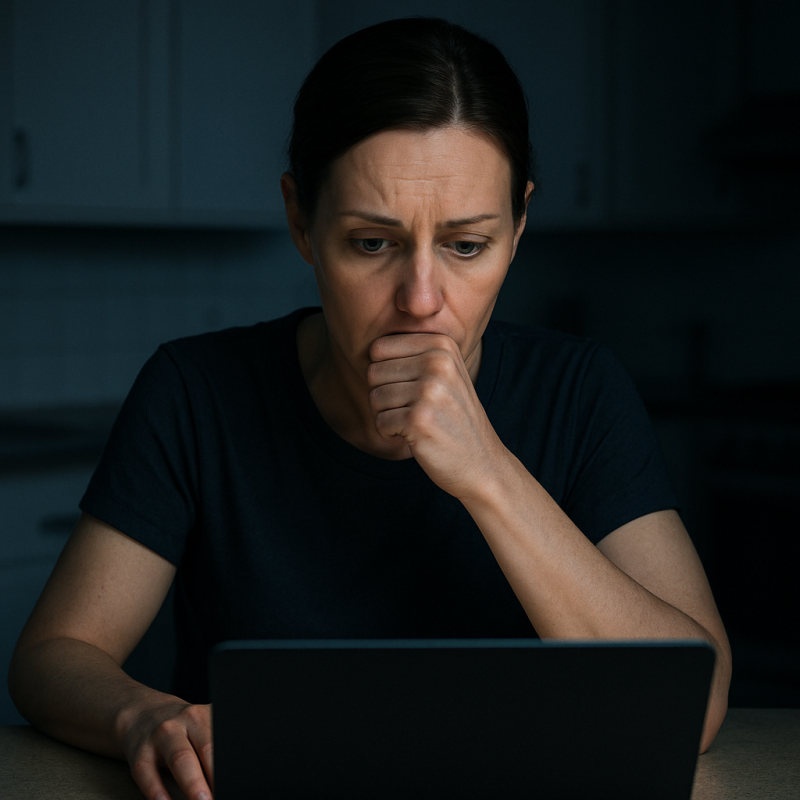 Image by RM AI
Liquidation
The piano went first. I'd had it since my late twenties — a used upright I'd hauled up two flights of stairs with a friend who threw out his back helping me. I posted it online on a Thursday and had a buyer by Saturday morning. Two men I'd never met carried it out of the storage unit while I stood in the parking lot watching, and I kept my hands in my jacket pockets so I wouldn't do something embarrassing like reach out and touch the side of it one last time. After that came the rest of what was in storage — the dining table, the reading chair, a set of bookshelves I'd built myself from a kit. Each one sold for less than I'd hoped and more than I'd feared. I liquidated a portion of my investment portfolio to close the gap, watching the account balance drop in real time as the sell orders processed. Then I transferred exactly twenty thousand dollars to Elena's account and closed the laptop. The studio felt quieter after that, though nothing in it had actually changed — it was just me and the same four walls, and a little less of my former life left anywhere to put.
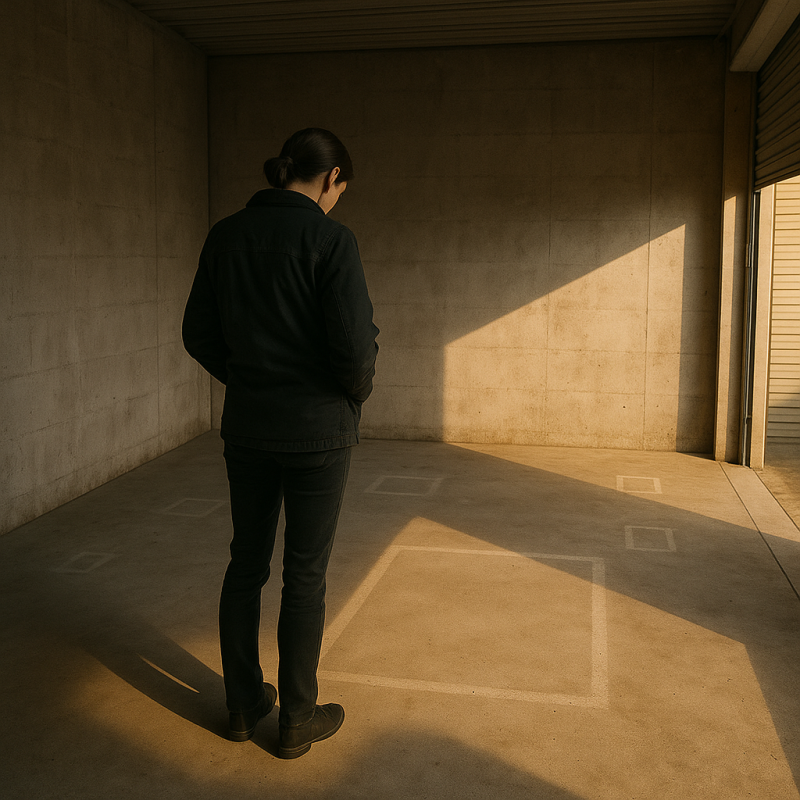 Image by RM AI
Aggressive Tactics
She called on a Wednesday, right in the middle of my lunch break. I was eating at my desk — soup from a thermos, same as most days — and I almost let it go to voicemail, but something made me pick up. Elena sounded worse than she had in weeks. She said the collectors had started calling before seven in the morning and after nine at night, that she'd stopped answering numbers she didn't recognize, that she was barely sleeping. She said they'd threatened to place a lien on the house if the next payment wasn't received within thirty days. Her voice had a frayed quality to it, like she was holding herself together through the conversation by sheer effort. I told her I was going to find the money. I told her not to worry about the timeline. I meant every word of it. But after we hung up and I sat there with my thermos going cold on the desk, something snagged at me that I couldn't quite name — a shift somewhere in the call, a moment where her voice had changed, moved into a different register, something I couldn't read clearly. I turned it over once, then set it aside. She was under enormous pressure. Of course she'd sounded strange.
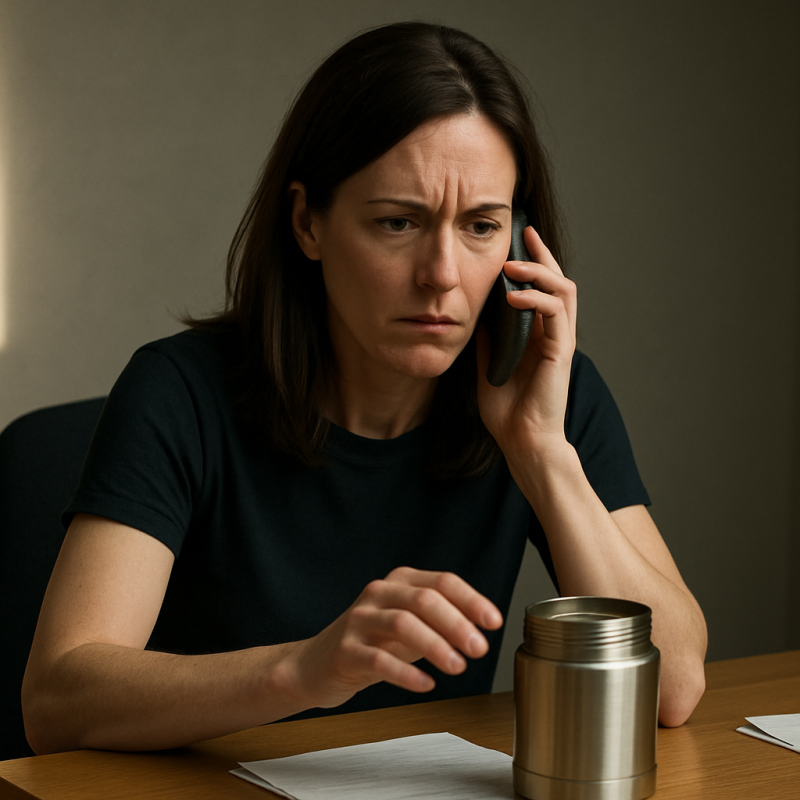 Image by RM AI
Cutting Ties
It started with small declines. A friend texted about a dinner reservation at a place we used to go every few months — nothing fancy, maybe twenty-five dollars a plate — and I typed back that work had been brutal lately, maybe next time. Another friend called on a Sunday afternoon and I kept it to ten minutes, said I had things to catch up on, promised I'd reach out soon. I stopped going to the weekly get-together I'd been part of for almost three years — a loose group of people who met at a bar near my old neighborhood, nothing formal, just a standing thing. I told myself I'd go back once things settled down. The real reason was simpler and harder to say out loud: I couldn't afford the tab, and I couldn't explain why without explaining everything, and explaining everything meant talking about Elena's situation, which wasn't mine to share. So I went quiet instead. I watched the group chat fill up with plans I didn't respond to. I watched the check-in texts come in and sent back short, cheerful replies that said nothing. The shame of it was specific — not about being broke, exactly, but about becoming someone my friends no longer quite recognized, and not being able to tell them why.
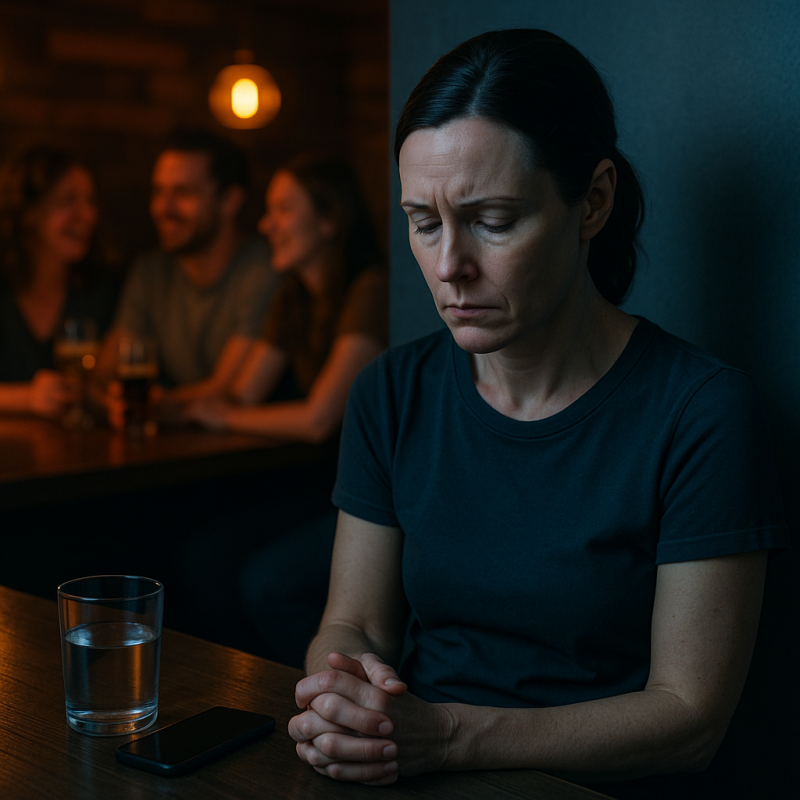 Image by RM AI
The Third Transfer
Elena called on a Friday afternoon with the same urgency in her voice that I'd come to recognize by then — that particular pitch that meant the number was going to be large and the timeline was going to be short. Another payment was due. Another portion of the debt the collectors were pressing on. Twenty thousand dollars, same as before. I logged into my brokerage account while we were still on the phone, scrolling through what remained of the portfolio I'd spent a decade building. I sold off another block of holdings, watching the balance drop as the orders went through. After we hung up I completed the transfer, then sat there with the confirmation screen open. I did the math in my head — what I'd sent so far, what was left, how long the remainder would last if I kept living the way I was living. The number that came back wasn't frightening exactly, but it had a new quality to it, a kind of thinness I hadn't felt before. I closed the laptop and told myself it was still enough. But the account balance stayed with me the rest of the evening, smaller than it had been that morning, smaller than it had been the month before, smaller each time I looked.
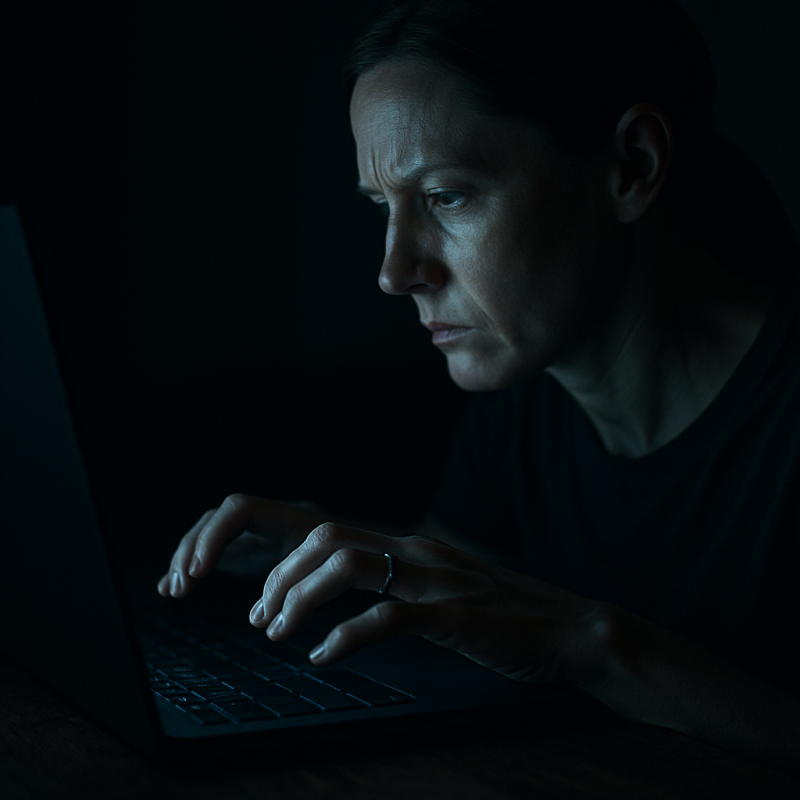 Image by RM AI
The Questions I Didn't Answer
By the end of that month, the texts had started stacking up. A friend from my old neighborhood wanted to know if I was coming to her birthday dinner. Another one sent a voice memo asking if I was okay, said she hadn't heard from me in a while and it wasn't like me. A third one — someone I'd known since college — sent a message that just said, 'Hey, are you alive over there?' I answered all of them with some version of the same thing: work was overwhelming, I was heads-down on a project, I'd resurface soon. It wasn't entirely a lie. Work had been fine, actually, but the excuse felt close enough to plausible that I kept reaching for it. The guilt was there, though. I felt it every time I typed out a deflection and hit send — this low, persistent awareness that I was lying to people who genuinely cared about me, and that I was doing it to protect a situation I couldn't fully explain. I told myself it was temporary. I told myself Elena's privacy mattered more than my discomfort. I was still telling myself that when my phone lit up with a message from my college friend: 'Seriously though — is everything okay?'
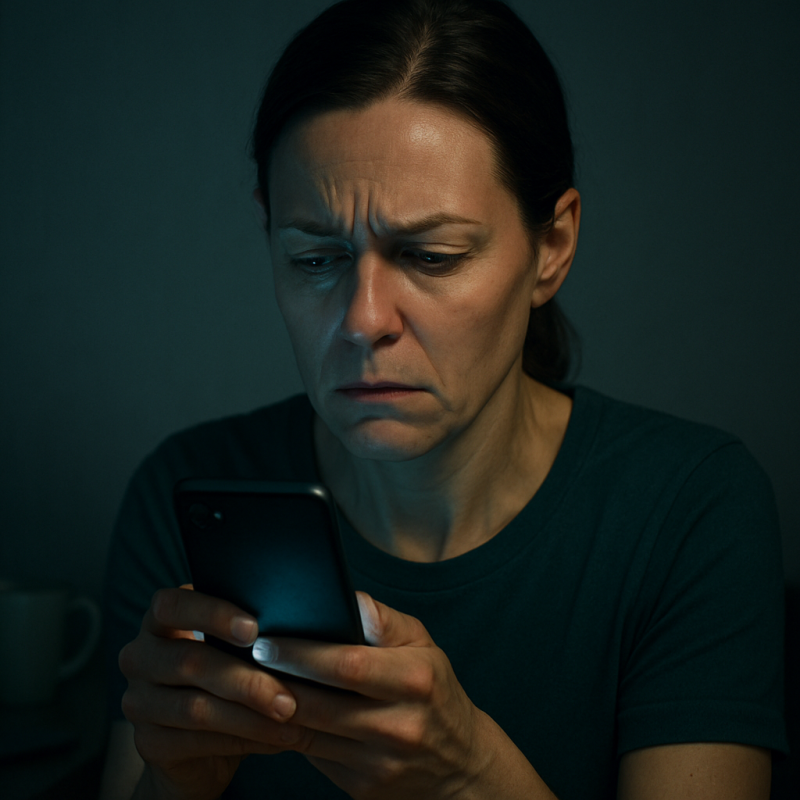 Image by RM AI
Too Busy
I typed 'too busy, sorry' and hit send before I'd even finished reading her message all the way through. That was when I noticed it — I'd used some version of that phrase five times in the past month alone. Too busy. Swamped at work. Heads-down on a project. The words came out of my fingers automatically now, the way you type your own address without thinking about it. I didn't have to pause and construct the excuse anymore. It was just there, ready, waiting. Friends had started asking less frequently, which I told myself was a good sign — that they understood I was going through a busy season and weren't taking it personally. I knew that wasn't quite right, but it was easier to believe than the alternative. I was protecting Elena's privacy, I reminded myself. Her medical situation wasn't something I had any right to broadcast, and the only way to keep it private was to keep everything private. The distance between me and the people I cared about kept widening, and the lie that was widening it had stopped feeling like a lie at all — it had just become the thing I said.
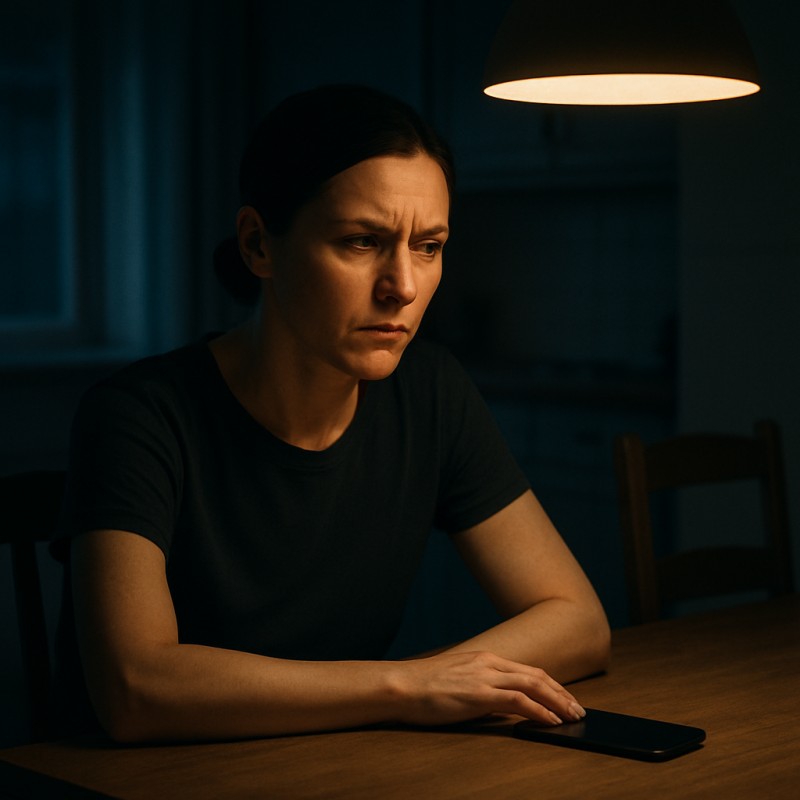 Image by RM AI
New Complications
Elena called on a Tuesday evening, which wasn't unusual. What was unusual was the way she opened — not with her normal sigh-and-update routine, but with a long pause that made me pull the phone away from my ear to check if the call had dropped. She said the doctors had found something during a follow-up scan. A secondary issue, she called it, related to the original procedure but separate enough that the insurance company had classified it as a new claim. Which meant the denial letter had come again. She described it in the kind of medical language that sounds specific but that I couldn't verify — something about scar tissue and a secondary intervention they hadn't anticipated. I asked if she was okay. She said she was scared. That was the word that got me every time — scared — because Elena didn't use that word lightly, or at least I'd never thought she did. I told her we'd figure it out. I asked her what the doctors were recommending. She walked me through the timeline, the urgency, the window they had to act before it became something worse. And then she told me the amount she needed.
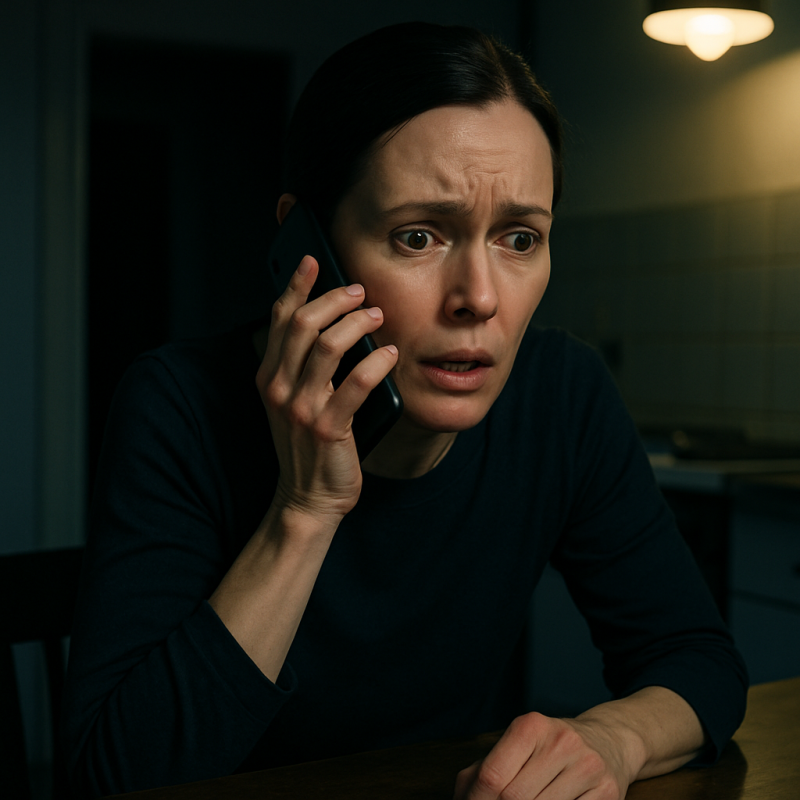 Image by RM AI
Selling the Future
I logged into the brokerage account the next morning before work, still in the clothes I'd slept in. The balance sat there on the screen the way it always had — patient, indifferent — and I started selling. The mutual funds went first. I'd held some of them for eleven years, through two market corrections and one stretch where I'd checked the balance every single day just to make sure it was still there. Then the index funds. Then the last of the small-cap positions I'd picked up years ago when I thought I was going to be the kind of person who paid attention to that sort of thing. Each sale confirmation came through with a little timestamp and a transaction ID, very clean, very final. When the transfer to Elena's account cleared, I sat back in my chair and did the math I'd been avoiding. What remained in the retirement account was less than a fifth of what had been there six months ago. I was forty-one years old. I told myself people rebuilt. I told myself there was still time. The apartment was quiet around me, and I sat with the numbers until the light outside the window changed.
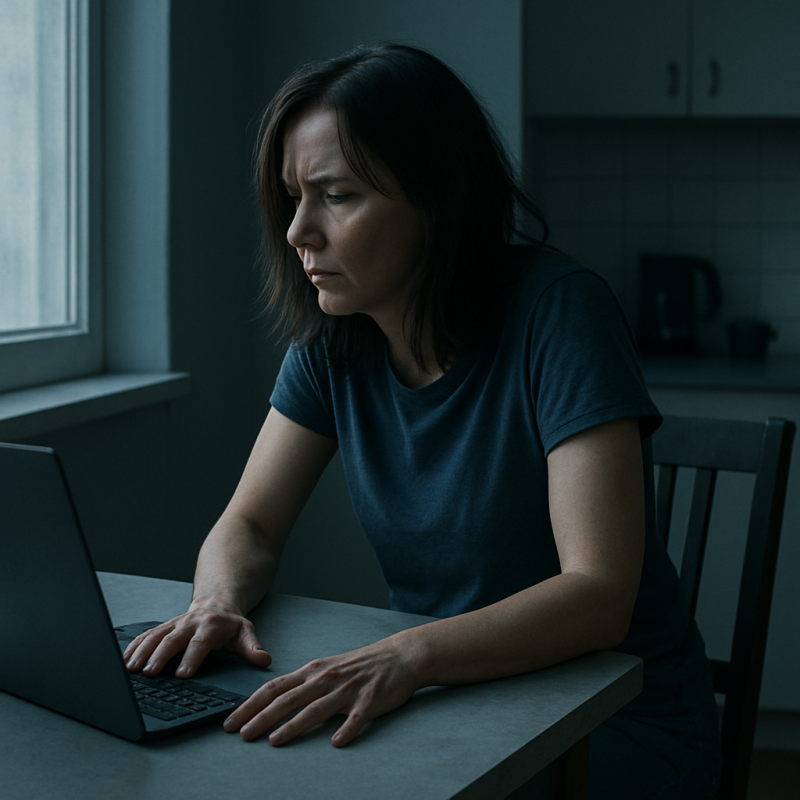 Image by RM AI
Canned Soup and Worn Shoes
Dinner that week was lentil soup from a can, same as the week before, same as most of the week before that. I'd gotten good at making it feel like a choice rather than a constraint — a little hot sauce, eaten out of the good bowl instead of the pot. I walked to work every morning, forty minutes each way, in a pair of sneakers that had started separating at the left toe. I'd wrapped the gap with a strip of duct tape on the inside, which held well enough as long as it didn't rain. Lunch was whatever I'd packed the night before: usually rice and whatever vegetable had been on sale, in a reused takeout container I'd washed so many times the lid didn't quite seal anymore. I hadn't bought new clothes in four months. I tracked everything in a spreadsheet — groceries, transit, the occasional over-the-counter medication — down to the dollar. There was something almost satisfying about it, the precision of it, the way the numbers behaved when you paid close enough attention. Every dollar I didn't spend was a dollar that had gone somewhere it needed to go. I kept the spreadsheet open on my laptop most evenings, and the tightness of it felt, in a strange way, like proof that I was doing something right.
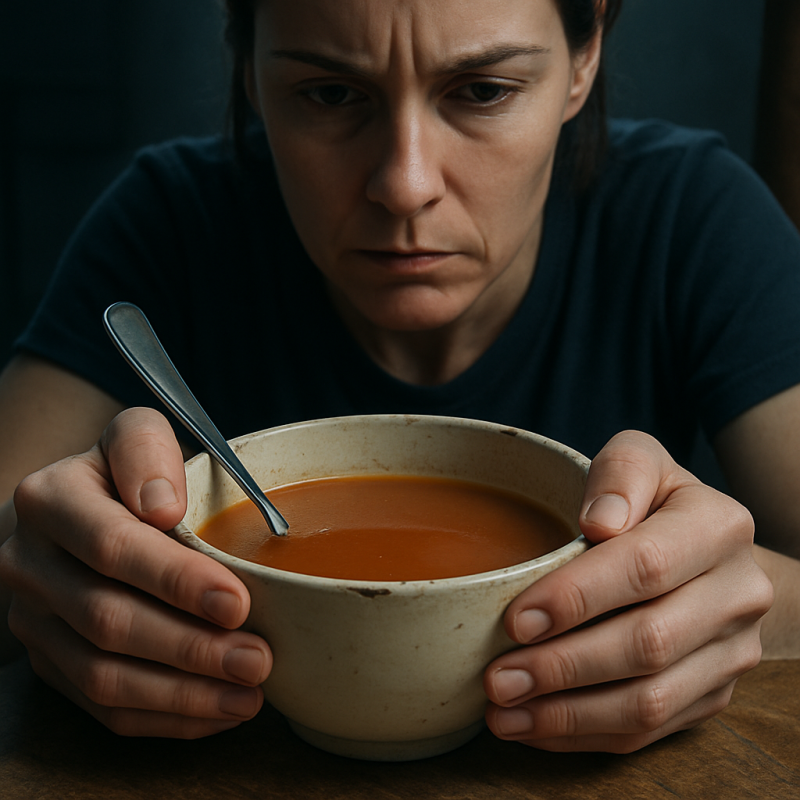 Image by RM AI
The Weekly Call
Elena called on Sunday at the usual time, right around seven, the way she had every week for the past few months. I'd started to count on it — not because the calls were easy, but because the regularity of them felt like evidence that things were moving forward, that there was a process underway even if it was slow. She gave me the update in her usual order: doctors, insurance, billing department. She still sounded tired. More than tired, actually — there was a tightness in her voice that hadn't been there in the earlier calls, or maybe it had always been there and I'd stopped noticing it. I asked if the last payment had helped. She said yes, but that the situation was more complicated than she'd expected. I asked what that meant. She said the billing office had been difficult to work with, that the paperwork kept getting rerouted, that she was doing everything right but the system kept pushing back. The call was shorter than usual — she said she had to get Leo to bed. I said okay, I'd talk to her next week. I was already setting the phone down when she mentioned, almost as an aside, that the debt collectors had started calling again.
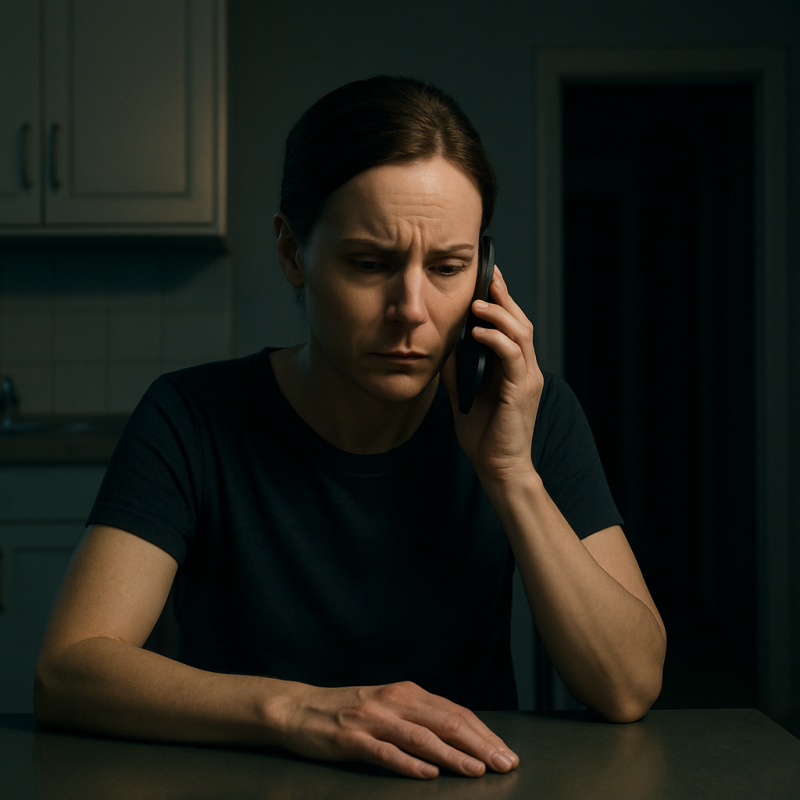 Image by RM AI
The Fifth Transfer
Elena called three days after the Sunday check-in, which she almost never did. She said there was a new charge — a specialist consultation that had been billed separately from the main procedure, and the insurance company had denied it on a technicality she didn't fully understand. The number she gave me was smaller than the previous ones, which somehow made it harder to say no to. I logged into the investment account and looked at what was left. It wasn't much. A few positions I'd held onto mostly out of inertia, a small bond fund, some cash sitting in the settlement account from the earlier sales. I sold it all. The whole thing took about twelve minutes. I watched the balance drop to just under four hundred dollars and then I initiated the transfer to Elena's account. The confirmation screen came up with the transaction number and the estimated arrival date, and I sat there looking at it for a long time. I didn't feel panicked, exactly. I felt the way you feel at the end of a very long task — not relieved, not proud, just finished. The apartment held its silence around me, and I left the laptop open on the confirmation screen without closing it.
 Image by RM AI
Running on Empty
I opened the banking app on a Wednesday night because I needed to pay my electric bill and I wanted to make sure the timing worked. I checked the checking account first — four hundred and twelve dollars. Then the savings account, which I hadn't looked at directly in a few weeks because I'd been avoiding it the way you avoid stepping on a scale when you already know the number. Two hundred and eighty-seven dollars. I sat with that for a minute. Then I opened a notes app and added them up with the small amount still sitting in the brokerage settlement account. Just under eight hundred dollars total, across everything. My rent was nine hundred and forty. My phone bill was due in ten days. I did the math three different ways, as if one of the attempts might come out differently. My monthly expenses, stripped down to the absolute minimum I'd been living on, ran just over fourteen hundred dollars. I had maybe five weeks of runway, possibly six if I was careful. I set the phone face-down on the table and stared at the ceiling. The numbers sat there behind my eyes, patient and exact, refusing to rearrange themselves into something more manageable.
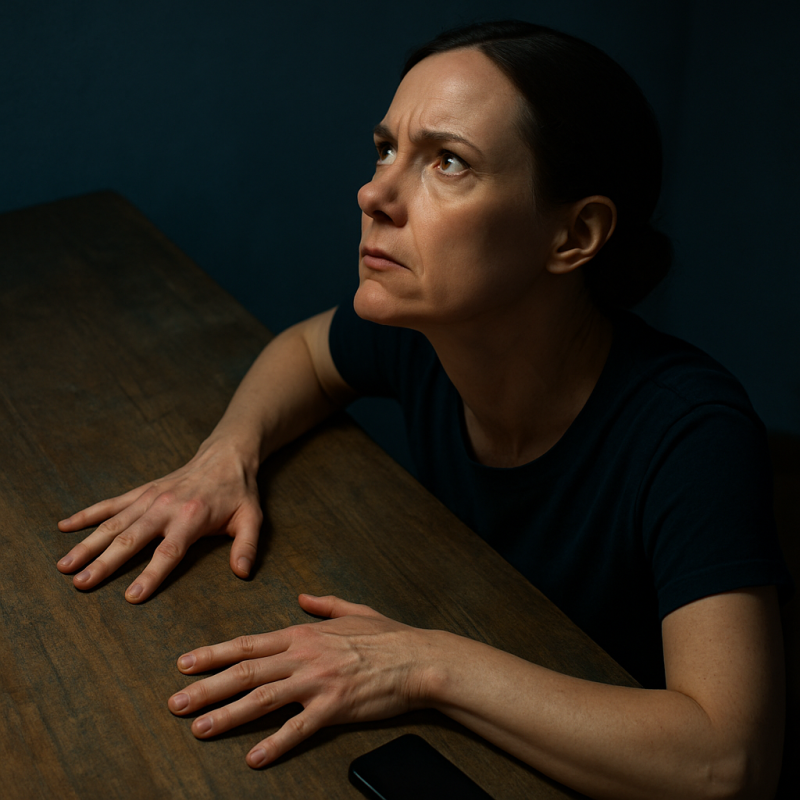 Image by RM AI
The Lien Threat
Elena called on a Friday afternoon, and I knew from the first syllable that this was different. Her voice was high and fast in a way I hadn't heard before — not the tired, worn-down stress of the previous months, but something sharper. She said the collection agency had sent a formal notice. They were filing a lien against the house. The childhood home, the one our parents had paid off before they died, the one Elena had inherited and that I had always thought of as the one stable thing in both our lives. She said she'd called the agency and they'd told her the account was past the point of payment arrangements — that they needed a lump sum or they were moving forward with the paperwork. I asked how much. She told me. I asked when. She said they'd given her until tomorrow. I felt something cold move through my chest. I thought about that house — the kitchen with the yellow walls, the backyard where we'd grown up — and I couldn't make myself think clearly about anything else. Elena's voice dropped, and she asked if there was any way, any way at all, that I could find emergency funds before they filed the paperwork tomorrow.
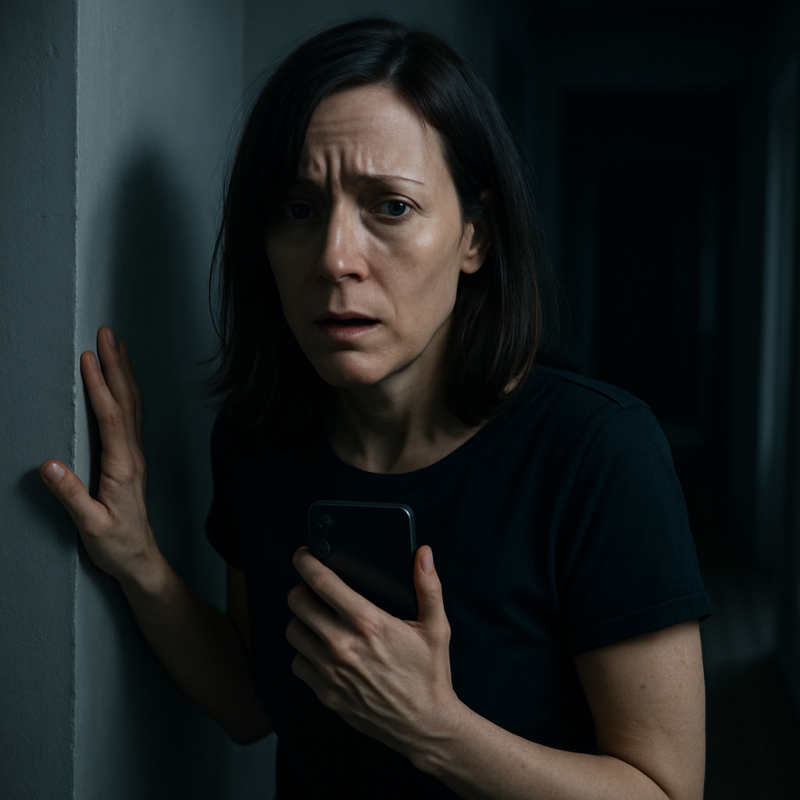 Image by RM AI
Emergency Measures
I spent that evening going through every drawer and shelf in the apartment. I found a pair of gold earrings I'd forgotten about, a camera I hadn't used in three years, a tablet that still powered on. I posted all of it online within the hour, priced low enough to move fast, and by ten o'clock I had two buyers confirmed. That covered part of it. The rest I put on the credit card — a cash advance, which I'd always told myself I would never do because of the interest rate, but I did it anyway, standing at the kitchen counter with the card in one hand and my phone in the other. I transferred the camera money from the buyer's payment app. I moved the cash advance. I pulled the small remainder from what was left in checking. It took four separate transactions to reach the total Elena had given me, and I completed each one in order, methodically, the way you do when you've stopped letting yourself feel the full weight of what you're doing. The last transfer went through at eleven forty-seven. The confirmation number appeared on the screen in small gray text, and I stared at it until the screen dimmed.
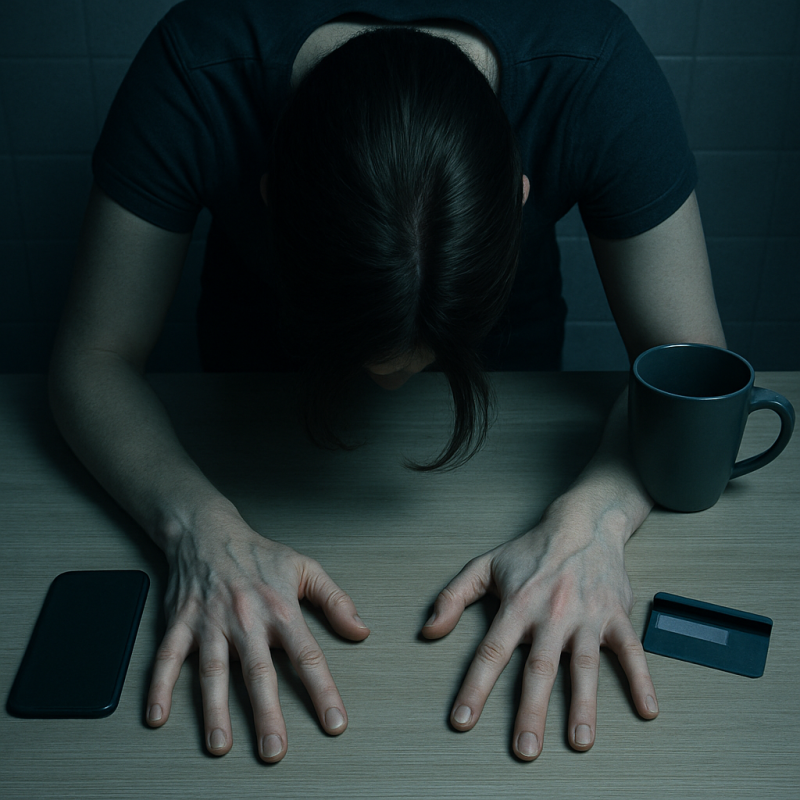 Image by RM AI
The Meaning in the Sacrifice
I sat on the edge of my bed that night and looked around the studio apartment — the bare walls, the single shelf of books I hadn't been able to part with, the folding chair I used as a second seat when I needed one. I'd given up a lot. I knew that. But I kept coming back to the same question I always came back to when the doubt crept in: what kind of person walks away from their sister? I thought about growing up with Elena, sharing a bedroom in our parents' house, the way she used to knock on my door when she had a nightmare and I'd let her sleep on the floor beside my bed without making a big deal of it. That was just what we did. You showed up. You didn't calculate the cost first. I'd spent years building a life that looked stable from the outside — the house, the portfolio, the careful savings — and I'd always told myself it was security. But security for what, exactly? For a moment like this one. For a sister who needed me. I wasn't going to be the person who had everything lined up and still said no. I lay back on the mattress and stared at the ceiling, and the doubt that had been sitting in my chest all evening quietly settled back into something that felt, finally, like certainty.
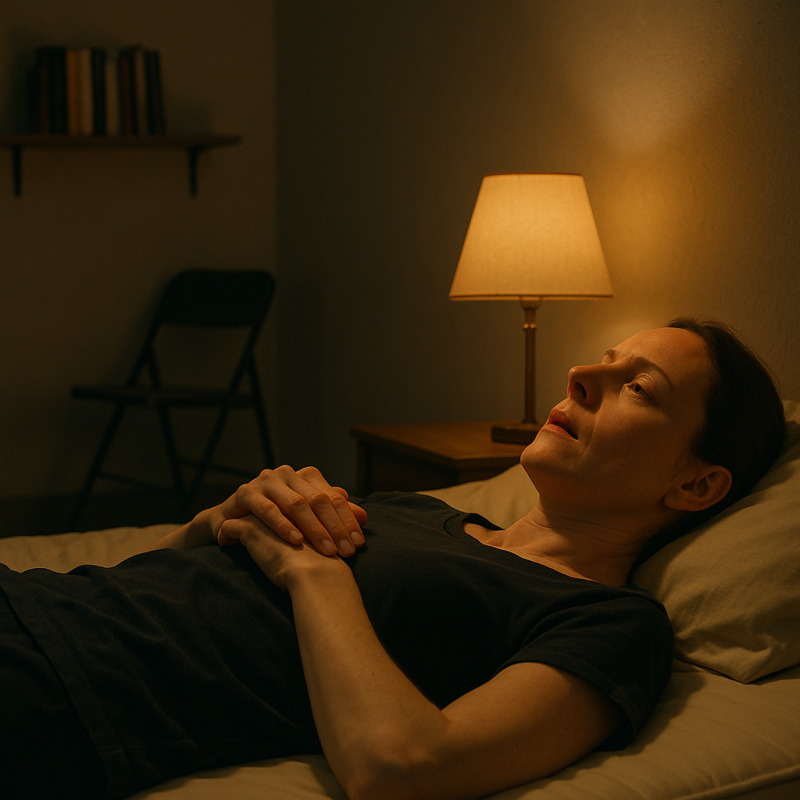 Image by RM AI
Too Stressed for Visitors
A few days after the last transfer, I called Elena and mentioned that I'd been thinking about coming to see her. I said it casually, like it was just an idea — maybe a weekend, nothing formal, just to check in and see how she was holding up in person. There was a pause on her end, and then she said no, not right now. She said she was too overwhelmed for company, that having anyone in the house would add to the stress instead of helping it. She said she needed to keep her head down and focus all her energy on getting through this. I told her I understood. I did understand, or I tried to. I knew what it felt like to be so deep in a problem that even kindness felt like an intrusion. I just missed her. I missed having a sister I could sit across a table from, not just a voice on the phone. But I didn't push. She was dealing with something enormous, and the last thing she needed was me making it about my feelings. I told her to call whenever she needed anything, and she said she would. After we hung up, I sat with the phone in my lap for a while, and the quiet in the apartment felt like something I'd just have to get used to.
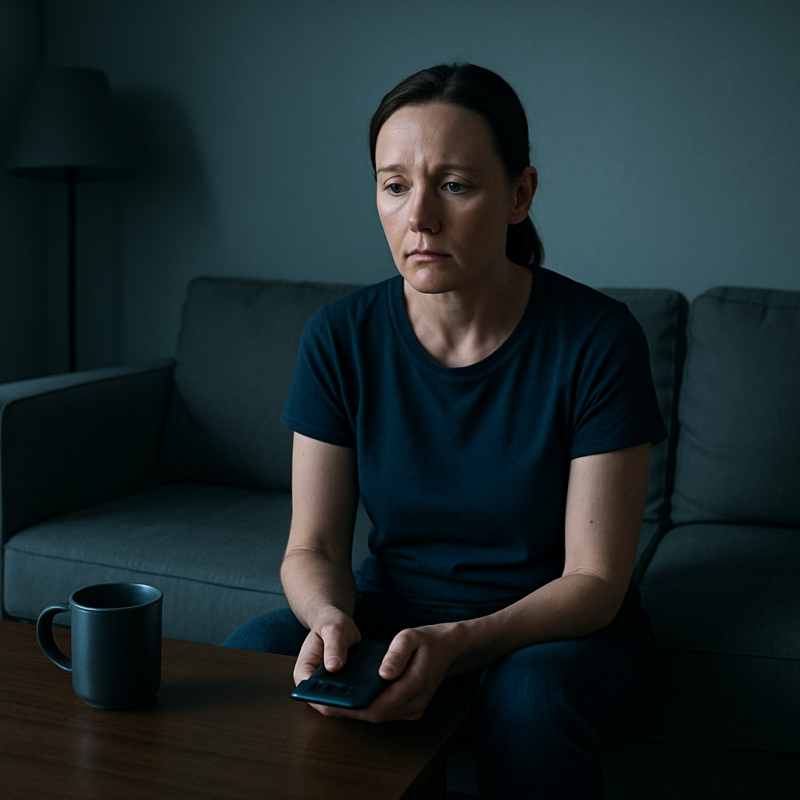 Image by RM AI
Liquidation Proceeds
The liquidation proceeds hit my checking account on a Tuesday morning — a number I'd watched grow over years of careful, boring, consistent investing, now sitting in my account as a single lump sum that felt both large and heartbreakingly finite. I looked at it for a long time before I did anything. Elena called that afternoon, her voice tight, asking whether there was anything left I could send — one of the collectors had come back with a new demand, she said, and she was trying to hold them off. I told her I had something. I didn't tell her it was the last of it. I didn't tell her that after this transfer there would be no portfolio, no safety net, no number I could point to and feel okay about the future. I just opened the app and moved the money. The transfer went through in under a minute. I sat there watching my account balance settle into a number so small it barely looked real — a few hundred dollars and some change, the kind of balance I hadn't seen since my mid-twenties. I'd spent fifteen years building that cushion. It was gone in a single afternoon, and the apartment felt very still around me.
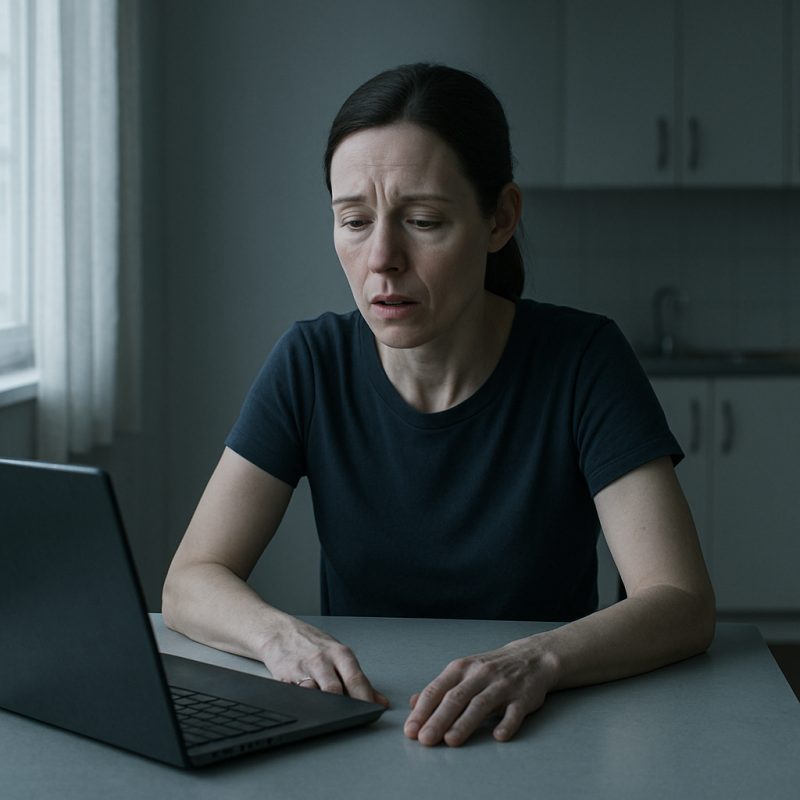 Image by RM AI
Bare Essentials
By that point my days had a kind of stripped-down rhythm to them. Breakfast was oatmeal — the plain kind in the big canister, which worked out to about twelve cents a serving. Lunch was whatever I could put together from what was already in the cabinet, usually crackers and peanut butter, sometimes nothing at all. I walked to work every morning in a pair of shoes that had developed a hot spot on the left heel, and I kept meaning to buy a bandage for it but kept deciding the dollar was better spent elsewhere. I wore the same rotation of clothes until I had enough for a full load of laundry, because running the machine half-empty felt wasteful. In the evenings I sat in the apartment with the overhead light off and used the lamp by the bed instead, which I'd read somewhere used less electricity. It sounds extreme when I write it out like that. At the time it just felt like math — every dollar I didn't spend was a dollar I still had, and having dollars felt important when you had so few of them. I wasn't miserable, exactly. I was just very, very careful. I was sitting in the near-dark one evening, eating crackers and reading a library book, when my phone buzzed on the table beside me with a message from a friend I hadn't heard from in months.
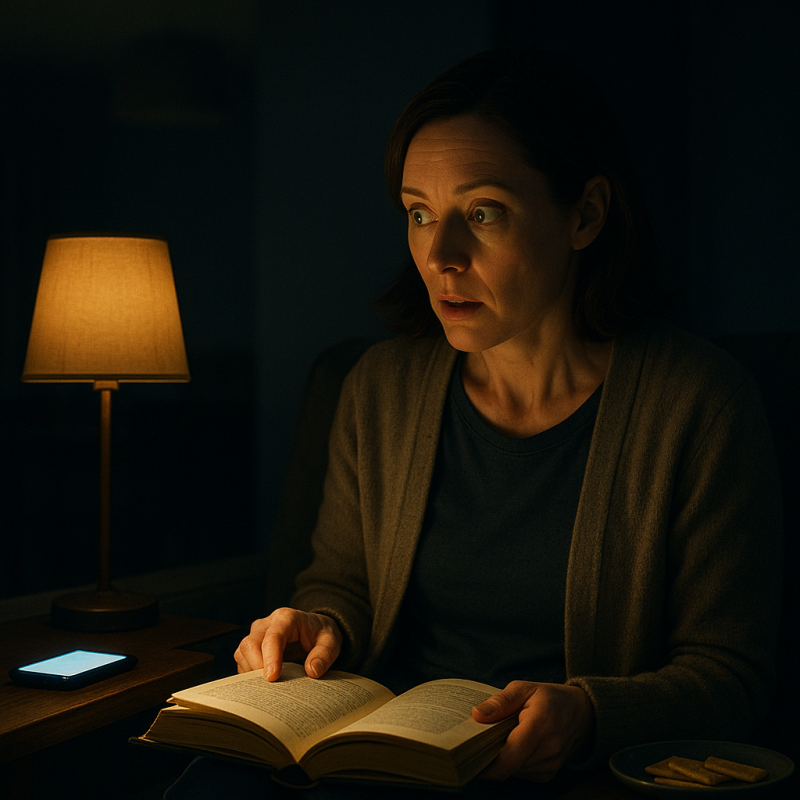 Image by RM AI
Good News
Elena called on a Thursday evening, and I could tell within the first few seconds that something was different. Her voice was lighter — not the careful, controlled lightness she sometimes put on, but something that sounded more like actual relief. She said the recent payments had made a real dent. The collectors who had been calling most aggressively had backed off, she said. One of the larger accounts had been satisfied entirely. She said for the first time in months she could actually see a path through it, that it didn't feel like a hole with no bottom anymore. I sat down on the edge of the bed and just listened. I hadn't realized how much tension I'd been carrying in my shoulders until I felt some of it leave. I asked her if she was okay, really okay, and she said she thought she was getting there. We talked for a while longer about nothing in particular — she mentioned Leo had a good week at school, that the weather had finally turned — and it felt almost normal, the way our calls used to feel before all of this started. After we hung up I stayed where I was for a few minutes, not doing anything, just sitting with the quiet. The relief was so unfamiliar it almost felt foreign, but I let it settle over me anyway.
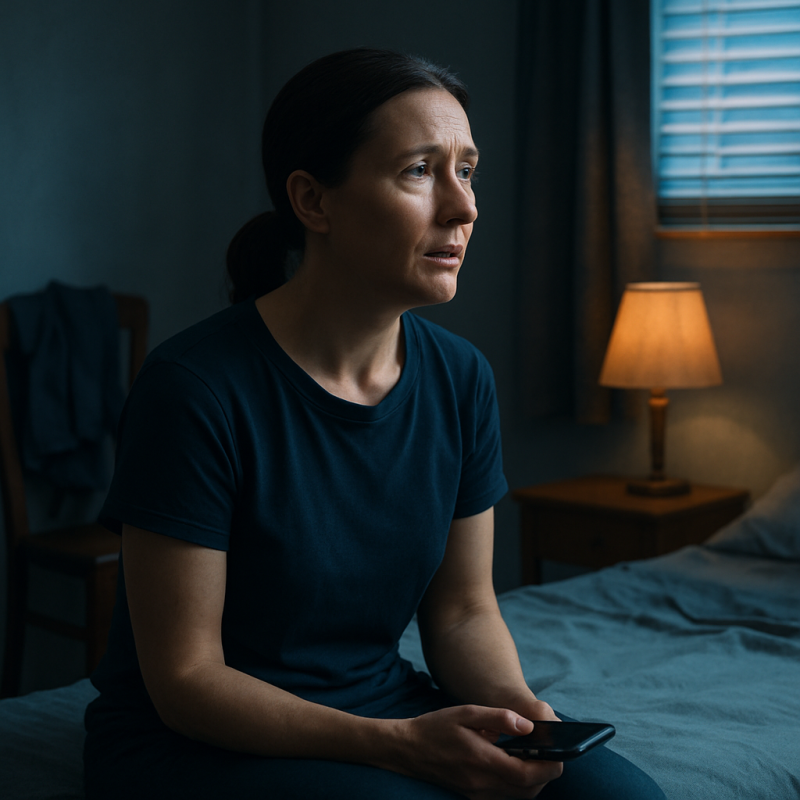 Image by RM AI
Validation
I thought about Elena's call for the rest of that week. I'd go through my stripped-down days — the oatmeal, the walk to work, the lamp instead of the overhead light — and every so often I'd come back to what she'd said, that she could finally see a path through it. That one sentence did something for me that I hadn't expected. It made the math feel worth it. Not just bearable, but actually worth it. I went through the list in my head the way I sometimes did when I needed to remind myself why I was living the way I was living: the house, the portfolio, the earrings, the camera, the cash advance, the liquidation proceeds. Every item on that list had a number attached to it, and every number had gone toward keeping my sister in her home and out from under something that would have crushed her. I thought about Elena in that house — the one we'd grown up near, the one she'd built her life in — and I felt something I could only call pride. Not in a showy way. Just the quiet kind, the kind that comes from knowing you did the hard thing when it mattered. I sat in the apartment that evening with the lamp on and the window cracked, and the feeling that settled over me was something close to peace.
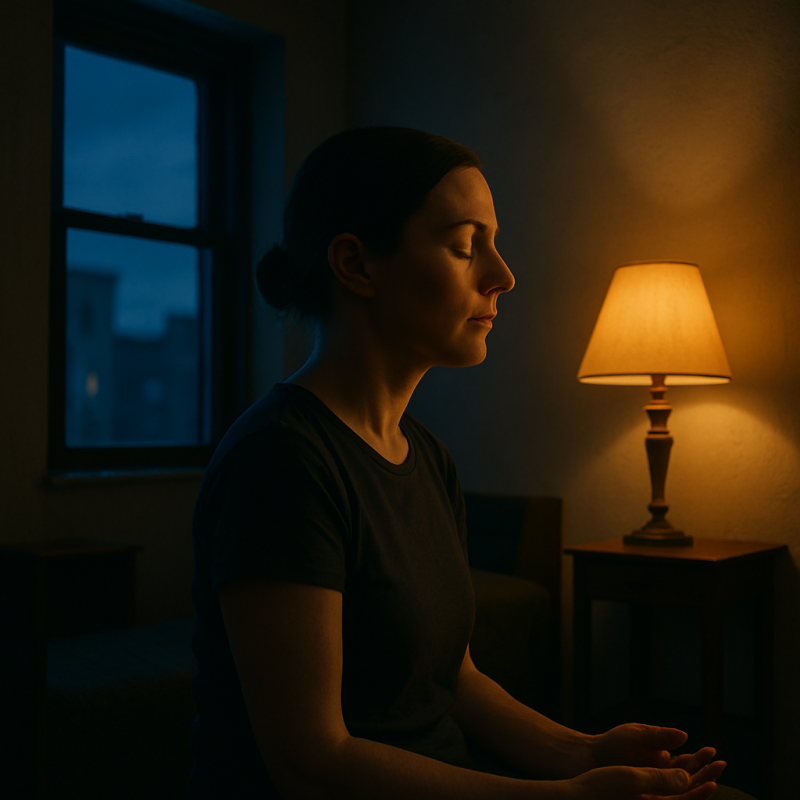 Image by RM AI
Sophie's Graduation
Elena called again about a week later, and her voice had that lighter quality again — the one I'd started to recognize as her version of good news. She said she wanted to tell me about Sophie. My niece was graduating high school next month, she said, and she was planning a real celebration for her. A party at the house, family and friends, the whole thing. She sounded genuinely excited, the way she used to sound before all of this started — animated and warm and a little bit proud. I asked how Sophie was feeling about it, and Elena laughed and said Sophie had opinions about everything, the cake, the decorations, the playlist. I laughed too. It felt good to talk about something ordinary, something that had nothing to do with debt or transfers or collectors. Elena said she'd send me an invitation, that she wanted me there. I told her I wouldn't miss it. After we hung up I sat for a moment thinking about my niece — I hadn't seen Sophie in person since before I sold the house, which meant it had been the better part of a year. A graduation party felt like exactly the kind of thing that could make the distance feel smaller again. A few days later, I came home from work to find an envelope in my mailbox with Elena's return address in the corner.
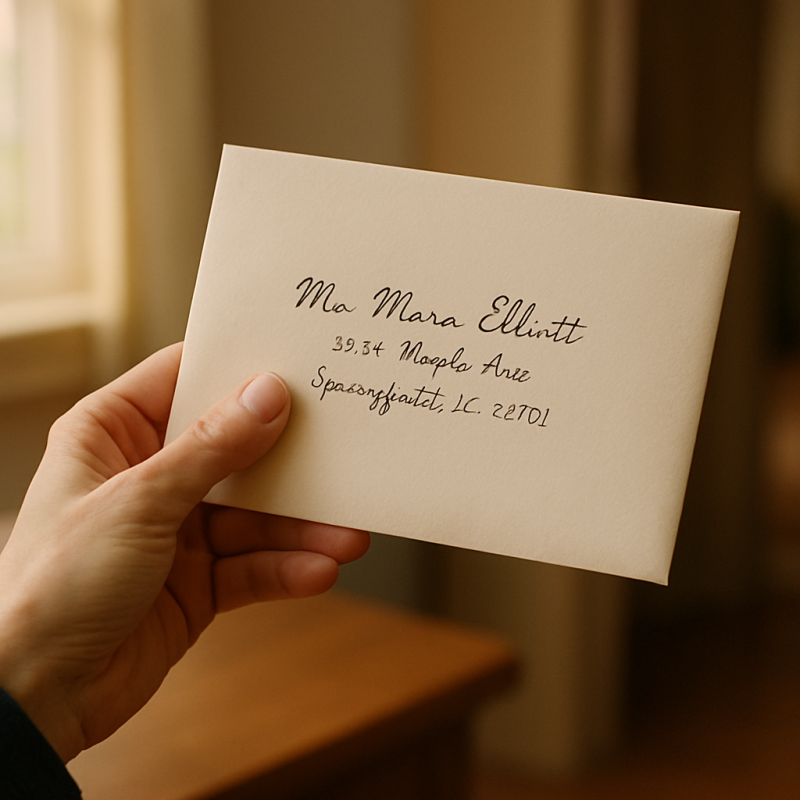 Image by RM AI
The Invitation
I opened it standing right there at the mailbox, not even waiting until I got upstairs. It was a proper printed invitation — thick card stock, Sophie's name in a clean script font across the top, the date and address and start time laid out neatly below. There was a small handwritten note from Elena tucked inside that just said, so glad you can be there. I read it twice. I hadn't realized until that moment how much I'd missed being included in something. The past several months had been so narrow — work, the apartment, the phone calls, the transfers — and this felt like a door opening back onto something larger. I thought about seeing Sophie walk across a stage, about sitting in a backyard with family around me, about being somewhere that wasn't this studio apartment with its folding chair and its single lamp. I thought about how long it had been since I'd hugged my sister. I went upstairs, set the invitation on the kitchen counter, and pulled the small paper calendar I kept on the fridge. I found the date, and circled it.
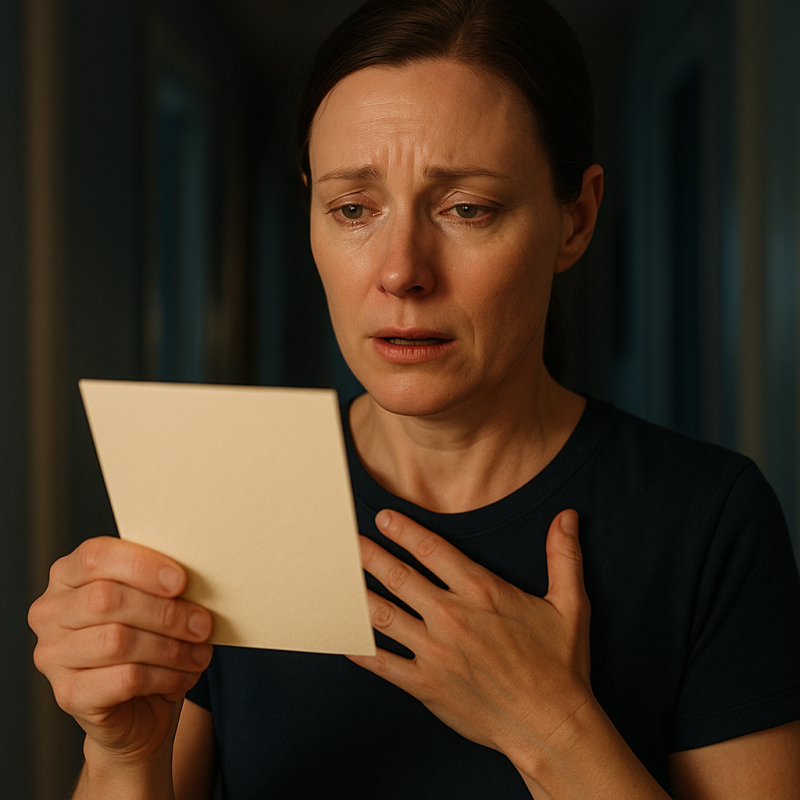 Image by RM AI
Looking Forward
I spent the whole week thinking about it. Not obsessively, just — warmly, the way you think about something you've been looking forward to for a long time. I'd pull out the invitation and look at it while I was eating breakfast, propped against the salt shaker on my little folding table. I thought about what I'd wear — I had one decent blouse left from before, a navy one I'd kept because it still fit and still looked like something. I thought about seeing Elena's face when I walked in, about hugging Sophie and telling her congratulations, about Leo probably being too tall now and pretending not to care that I was there. I thought about the house. I hadn't seen it since before everything happened, and there was something I wanted — needed, maybe — about seeing it still standing, still theirs, still worth what I'd given up. I told myself that was enough. That being part of this day was the return on everything. I looked up the bus route on my phone three times that week, even though I'd already saved it. Forty-two minutes, one transfer downtown, stop right at the corner of Maple and Birch. I had the whole thing mapped out.
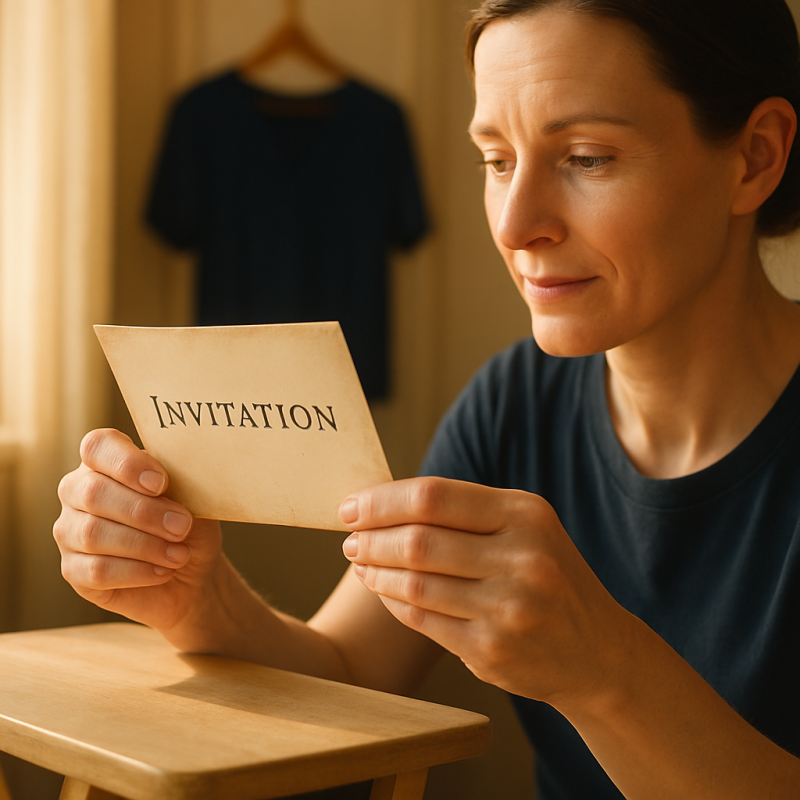 Image by RM AI
Reluctant Host
I called Elena four days before the party just to confirm I was coming. I didn't want to show up and have her scrambling for an extra chair or whatever — I wanted her to know I was there, that I was part of this. She picked up on the third ring and I told her I had the bus route figured out and I'd be there by noon. There was a pause. Not long — maybe two seconds — but I noticed it. Then she said, of course, yes, come, it starts at one so noon is perfect. Her voice was warm enough. She gave me the details about where to park — which I didn't need, obviously — and mentioned there'd be food from around two onward. Everything she said was right. But that pause sat with me a little after I hung up. I told myself she was probably just distracted, probably had a dozen things going on with party prep and Sophie's family coming in from her husband's side. That made sense. People get busy. I set my phone down on the counter and looked at the invitation still propped against the salt shaker. The pause before her answer stayed somewhere in the back of my mind, quiet and unresolved.
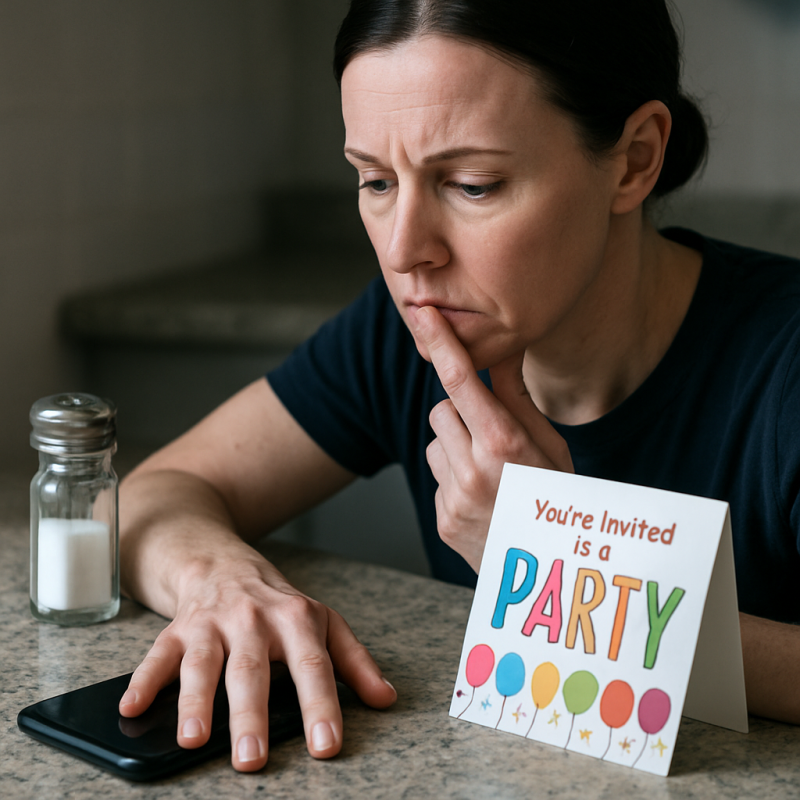 Image by RM AI
The Bus Ride
I was on the bus by eleven-thirty, which gave me plenty of buffer. I'd packed a card with a small gift card inside — fifty dollars, which was more than I should have spent, but it was Sophie's graduation and I wanted it to mean something. The bus downtown was fine, the transfer was easy, and then I was heading out toward the suburbs and the city started to change around me. The storefronts gave way to gas stations, then to subdivisions, then to the kind of quiet tree-lined streets where the houses had driveways and actual yards. I watched it all go by through the window and felt something loosen in my chest. I hadn't been out this way in months. I'd forgotten how different it felt — the space, the quiet, the way the light came through differently when there weren't buildings blocking it. I thought about the last time I'd visited Elena's house, before everything fell apart, when I'd sat on her back porch and we'd had coffee and it had felt easy between us. I wanted that again. I wanted to walk in and have it feel like nothing had changed. The bus rounded the corner onto her street, and through the window I could see the row of old oak trees lining the road, their branches arching overhead just the way I remembered.
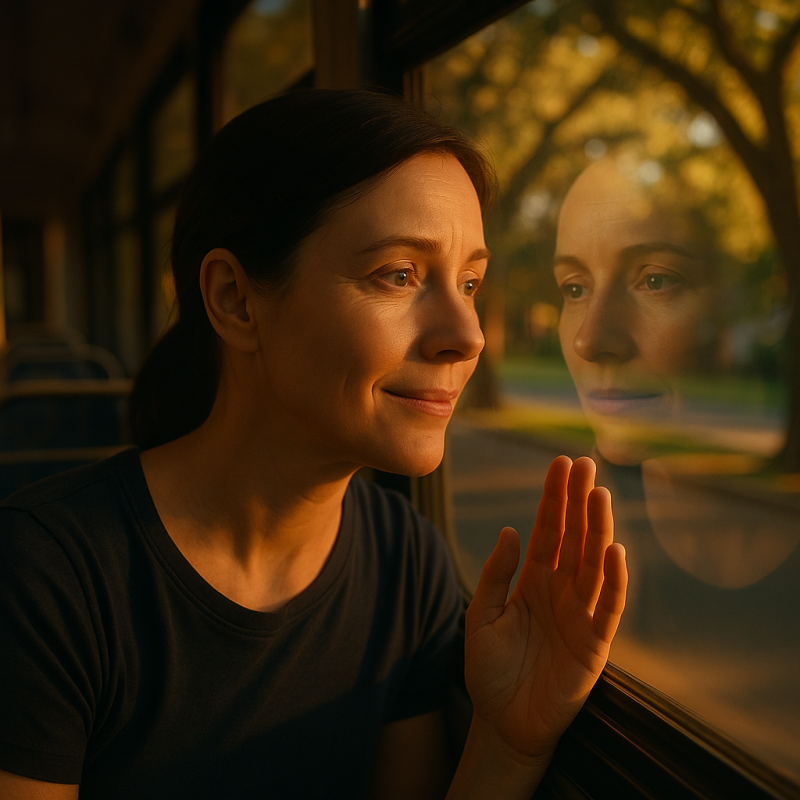 Image by RM AI
Fresh Paint
I got off at the corner and walked the half block to Elena's house. I was looking at it before I even meant to — it just came into view and I stopped walking for a second. The house looked different. Not dramatically different, but noticeably. The exterior had been painted, a clean warm gray that I didn't remember, with the trim done in white. It looked sharp. Professional. The front yard had new landscaping too — low ornamental shrubs along the foundation, a stone border around the flower beds, everything neat and intentional in a way it hadn't been before. I stood there on the sidewalk and tried to work out when she'd had time for all of this. Then I told myself she probably did it herself. Elena was capable when she wanted to be, and maybe she'd had help from neighbors, or maybe she'd done it in stages over the summer. People found ways. And honestly, the house looked beautiful. I'd sold my home so this one could stay in the family, and standing there looking at it — freshly painted, tended, alive — I felt something that was almost pride. Whatever confusion I had about the timing, I let it sit underneath that. I stood on the sidewalk a moment longer, just taking in the beauty of the house I had saved.
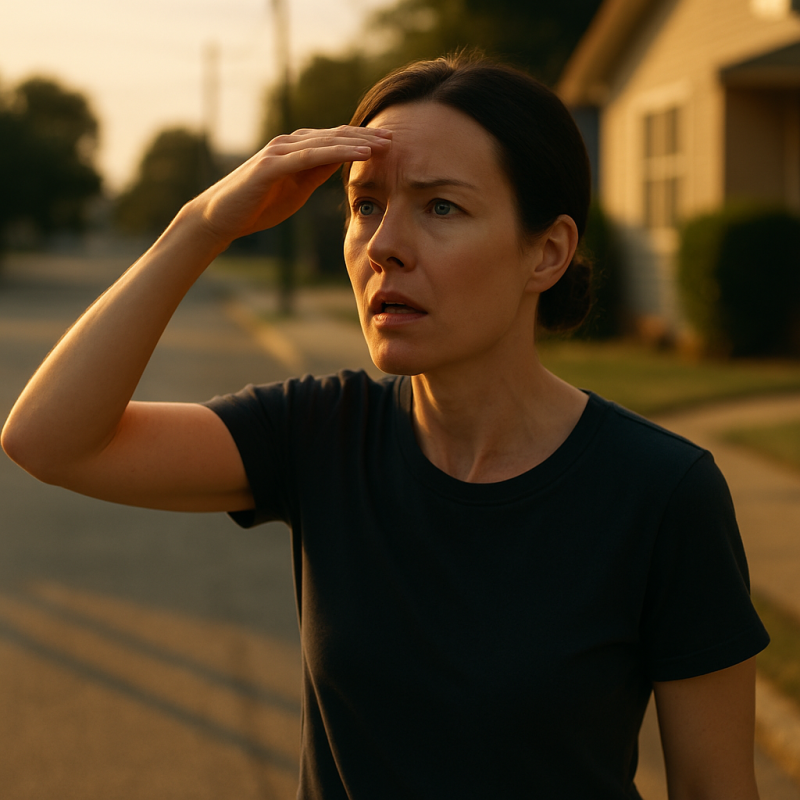 Image by RM AI
The Greeting
Elena opened the door before I even knocked — she must have seen me coming up the walk. She pulled me into a hug, quick and firm, and said it was so good I could make it. I hugged her back and meant it. But when she stepped back I noticed her eyes were already moving past me toward the yard, toward the other guests scattered across the lawn with plates and drinks. She looked good. Really good. Tan, rested, her hair done in a way that looked like she'd had it professionally blown out. I'd expected her to look tired — she'd sounded tired on the phone for months, worn down by everything she'd been carrying. This wasn't that. Sophie came bounding over almost immediately, bright and happy in a sundress, and I hugged her and told her congratulations and she thanked me and was already turning back toward her friends. I got introduced to a couple of cousins from Elena's husband's side, shook hands, smiled, said the right things. The party was lovely. The food smelled good, the yard looked beautiful, there was music playing from somewhere. I kept telling myself to just be here, just enjoy this. But something about Elena's demeanor — the quickness of the hug, the way her eyes moved — left me with a feeling I couldn't quite name and couldn't quite put down.
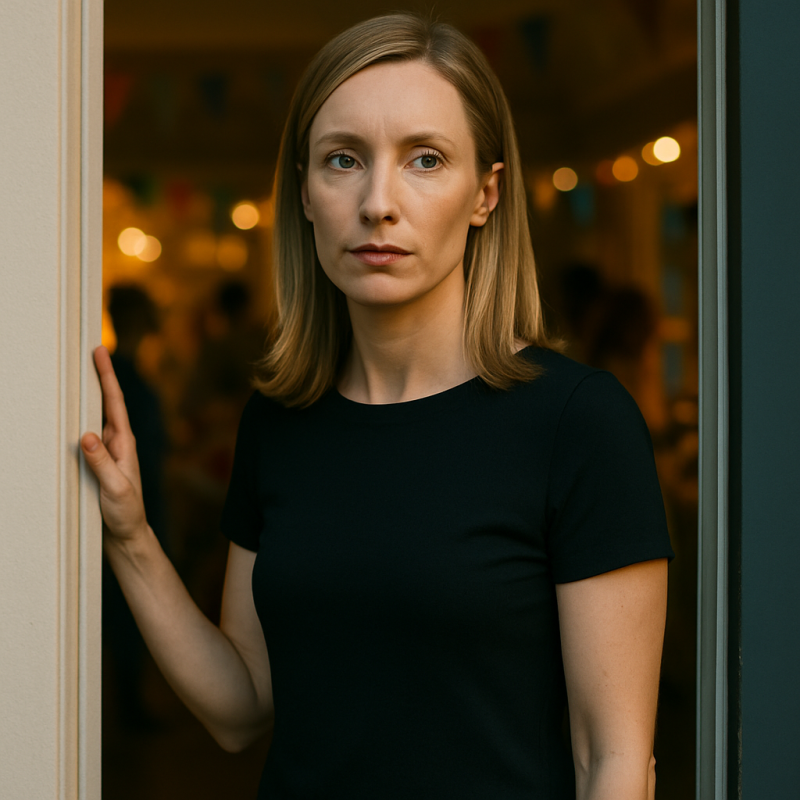 Image by RM AI
The Watch
I ended up near the food table talking with one of the cousins — a woman I'd met once years ago at a Christmas thing. We were talking about nothing in particular, potato salad, the heat, whether Sophie had decided on a college yet. Elena was moving through the crowd the way good hosts do, touching shoulders, laughing at the right moments, keeping everything flowing. I watched her cross the yard toward a group near the fence. I kept talking, kept nodding. A few minutes later Elena circled back through the yard and raised her hand to wave at someone across the lawn — and that's when the afternoon light caught her wrist. A watch, gold-toned, with a face that looked substantial and clean in a way that cheap things don't. I looked away and kept talking. I told myself it was probably a gift. Her husband, maybe, or a friend. Or it was a knockoff — you could get convincing ones online for thirty dollars. There were explanations. I was not going to be the person who stood at her niece's graduation party cataloguing her sister's accessories and building a case out of nothing. I focused back on the conversation, on the potato salad, on the music. But Elena kept moving through the crowd, and a moment later the afternoon light caught the watch again.
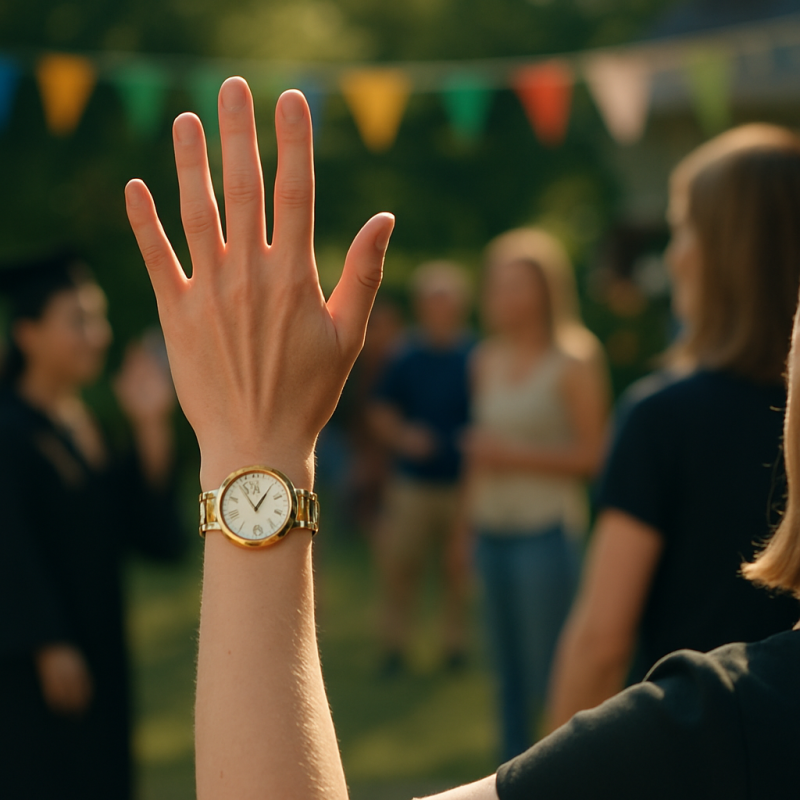 Image by RM AI
Pushing Down Doubt
I kept moving through the party, kept talking, kept smiling. I had a plate of food and it was good food — catered, or close to it, not the kind of thing you threw together yourself. I noticed the patio furniture was new, or at least newer than I remembered — a matching set with cushions that still looked clean and unworn. I noticed the string lights overhead were the nice kind, the warm Edison bulb ones that cost more than the plain white ones. I noticed all of it and then I told myself to stop noticing. There were explanations for everything. Maybe she'd borrowed the furniture. Maybe the lights were on sale. Maybe the watch really was a gift. Elena had been in real distress — I'd heard it in her voice, I'd seen the numbers she'd sent me, I'd made the decision I made because it was the right thing to do for family. Thinking otherwise felt like a betrayal of something I wasn't ready to betray. Sophie was laughing across the yard with her friends, genuinely happy, and I focused on that. I focused on the reason I was here. I carried the weight of all the small things I'd noticed and chose, for now, not to open any of them up.
 Image by RM AI
The Soccer Ball
Leo found me near the drink table sometime around three. He was twelve and all limbs, exactly as I'd imagined, and he gave me a side-hug that was more elbow than anything else and then immediately started telling me about a goal he'd scored at his last game. I listened and laughed and it was the most uncomplicated I'd felt all afternoon. Then one of the other kids kicked a soccer ball too hard and it sailed over the low fence along the side of the house into the narrow strip of yard beyond. Leo looked at it, looked at me, and I said I'd get it. It was easier than watching him try to climb the fence in his good clothes. I slipped through the gate at the side of the house and walked along the path toward the back of the property. The ball had rolled up against the base of the fence near the detached garage at the far end. I walked toward it, and as I got closer I noticed the garage's side door was propped open a few inches, a wedge of shadow visible inside. I picked up the ball and stood there for a moment. The garage door sat propped open ahead of me, still and quiet in the afternoon heat.
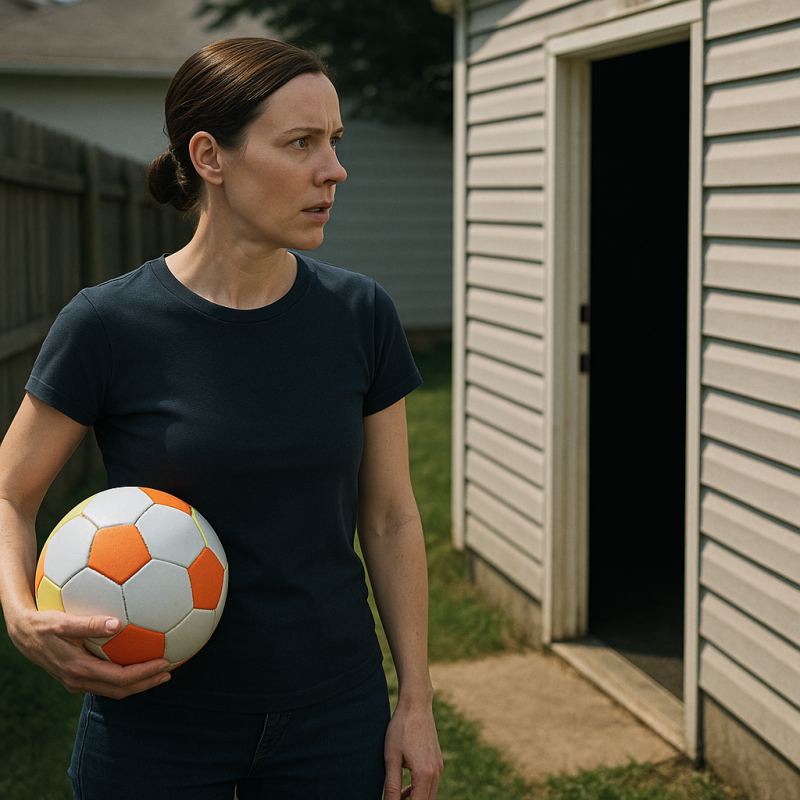 Image by RM AI
Curiosity and the Garage
I already had the ball in my hands when I noticed the breeze. It was faint, just a thread of cooler air coming through the propped-open side door of the garage, but it was enough to make me pause. Elena had mentioned something at some point — months ago, maybe longer — about furniture she was storing out here, pieces she'd picked up and planned to sell. I remembered her saying it casually, the way she said most things, like it was barely worth mentioning. I hadn't thought about it since. Standing there in the afternoon heat with the soccer ball tucked under one arm, I found myself thinking about it now. I didn't have a reason to go in. The party was still going on twenty feet away, and Leo was probably already wondering where I'd gotten to. But the door was right there, and the cool shadow beyond it felt like a small relief from the sun. I told myself it would only take a second. I set the ball down against the fence post, walked to the garage door, and stepped inside.
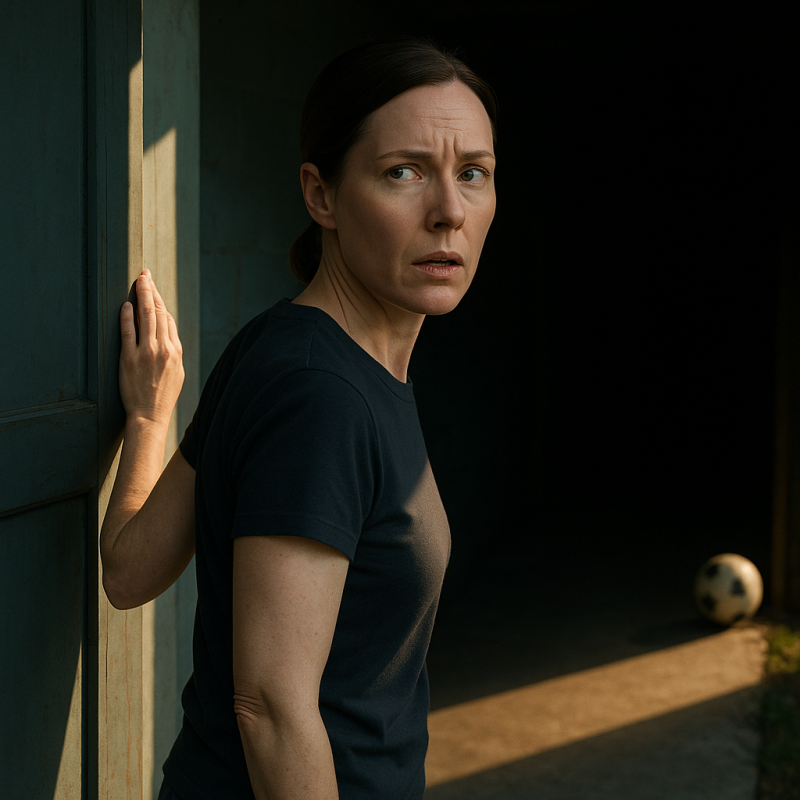 Image by RM AI
Electric Blue
The air inside was cooler and close, smelling of concrete and something else I couldn't immediately place. My eyes were still adjusting from the bright afternoon when a shaft of sunlight came through the small window on the far wall and hit something in the middle of the garage floor. A curve of metal. Polished, electric blue, catching the light like it was designed to. I stopped walking. The smell hit me a second later — new leather, the kind that still has that showroom edge to it, sharp and clean and unmistakable. My heart did something strange in my chest, a kind of stuttering lurch that I didn't have a name for yet. I told myself it was probably nothing. A motorcycle, maybe. Something Elena had picked up at an estate sale. There were a hundred explanations. I took another step forward, and the shape in the shadows began to resolve itself into something I wasn't ready for.
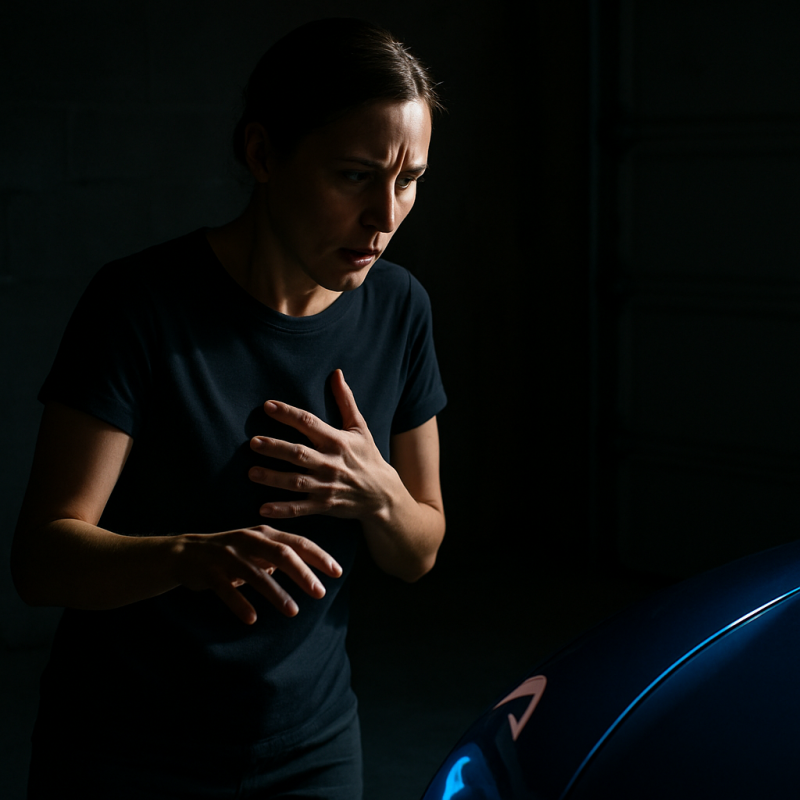 Image by RM AI
Showroom Fresh
It was a Porsche 911. Electric blue, not a scratch on it, sitting in the middle of Elena's garage like it had just been driven off a lot. The leather interior was a pale cream color, and even from where I was standing I could see there was no wear on it anywhere — no scuff on the door sill, no smudge on the dash. The tires still had the small rubber nubs on them that wear off in the first few hundred miles. My breath caught somewhere in my throat and stayed there. I stood very still, the way you do when your body understands something before your mind catches up. The garage was quiet except for the muffled sound of the party outside — someone laughing, a kid shouting, music from a speaker. None of it felt real. I don't know how long I stood there before I noticed the workbench along the side wall, and the manila folder sitting on top of it.
 Image by RM AI
The Sales Contract
My hands were shaking when I picked up the folder. I told myself I was probably misreading the situation, that there was going to be a simple explanation inside, something that would make me feel foolish for even being in here. I opened it. The first page was a sales contract. I read the buyer name at the top: Elena Chen. The date was printed clearly below it — three months ago, almost to the week. I knew that week. I had been eating canned soup that week. I had transferred the largest single amount I'd ever sent her that week, the one that had nearly emptied what was left of my savings after the house sale. I looked at the purchase price printed at the bottom of the contract. The number sat on the page, clean and precise, and it matched what I had sent her almost exactly.
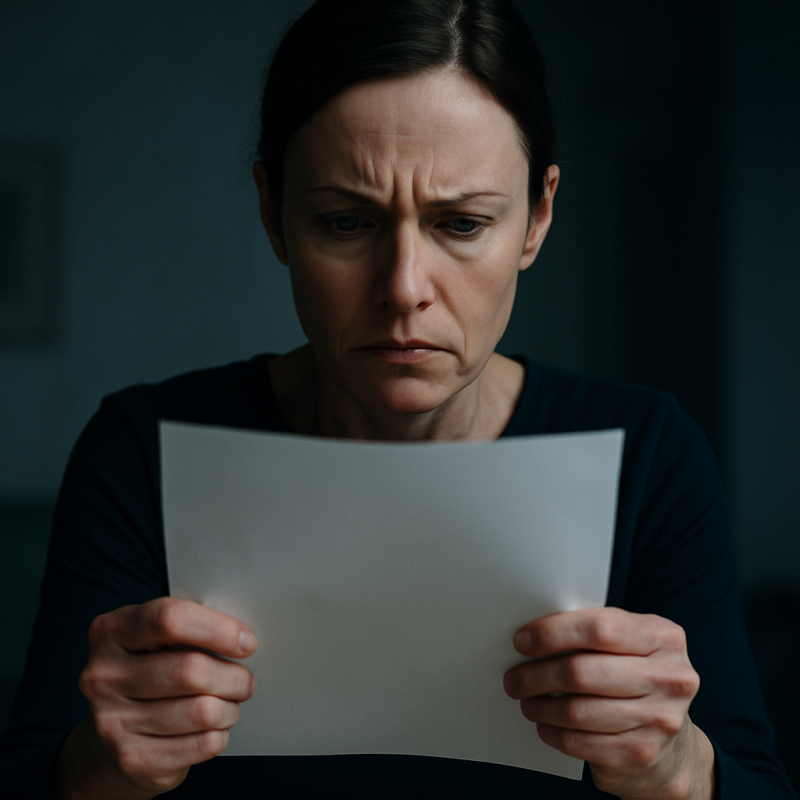 Image by RM AI
The Car I Bought Her
I stood there holding the contract and I understood. Not in pieces, not slowly — all at once, like a floor giving way. I had sold my house. I had moved into a studio apartment and eaten canned soup for months and told myself it was worth it because my sister needed me. And she had taken that money and bought a car. I thought about the crying, the panic in her voice, the specific details about which bills were overdue and by how much. I thought about the debt collectors she'd described, the midnight calls, the hospital billing department threatening collections. I had rushed to the phone every time she called. I had given more each time she asked. I had asked fewer questions because asking felt like doubting her. I set the contract down on the hood of the Porsche, and the metal was cold and smooth under my fingers, and there was never a medical crisis at all.
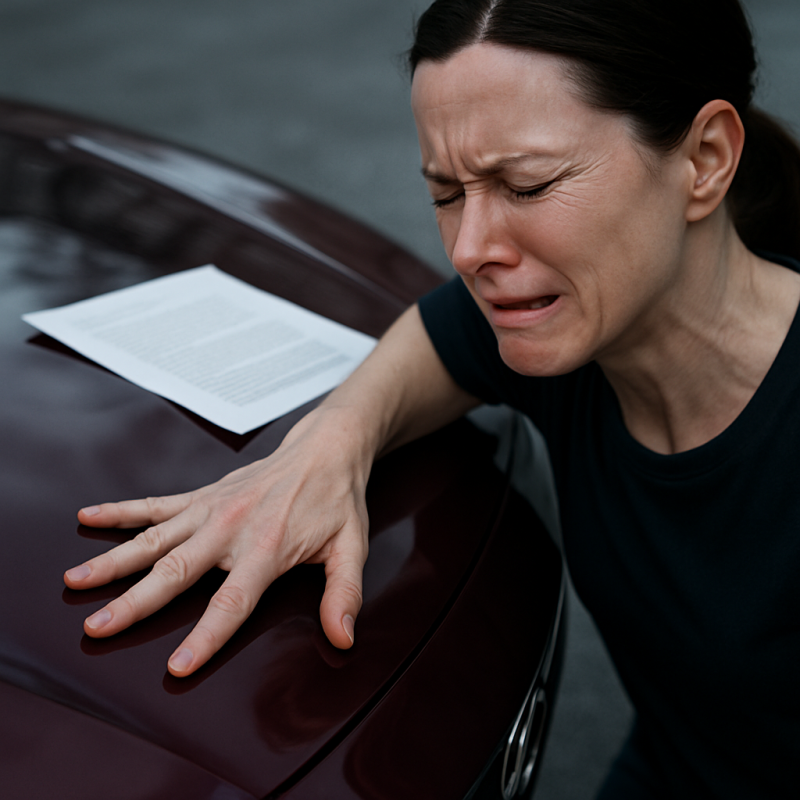 Image by RM AI
Standing in the Shadows
I didn't move for a long time. I just stood there with the contract in my hands, the paper slightly damp now from my palms, while the sounds of the party drifted in through the propped door. Someone was laughing — a big, easy laugh, the kind you make when nothing is wrong. I heard Sophie's voice somewhere in the yard, bright and carrying. I heard Leo shout something about a rematch. I thought about the first phone call, Elena's voice breaking on the other end of the line, the way she'd said she didn't know what she was going to do. I thought about every thank you, every I don't know what I'd do without you, every time she'd told me I was the only person she could count on. I thought about the studio apartment, the single burner, the way I'd stopped buying coffee because four dollars felt like too much. I set the contract back in the folder. I set the folder back on the workbench. The numbness had spread all the way to my hands by then, and I couldn't feel my fingers at all.
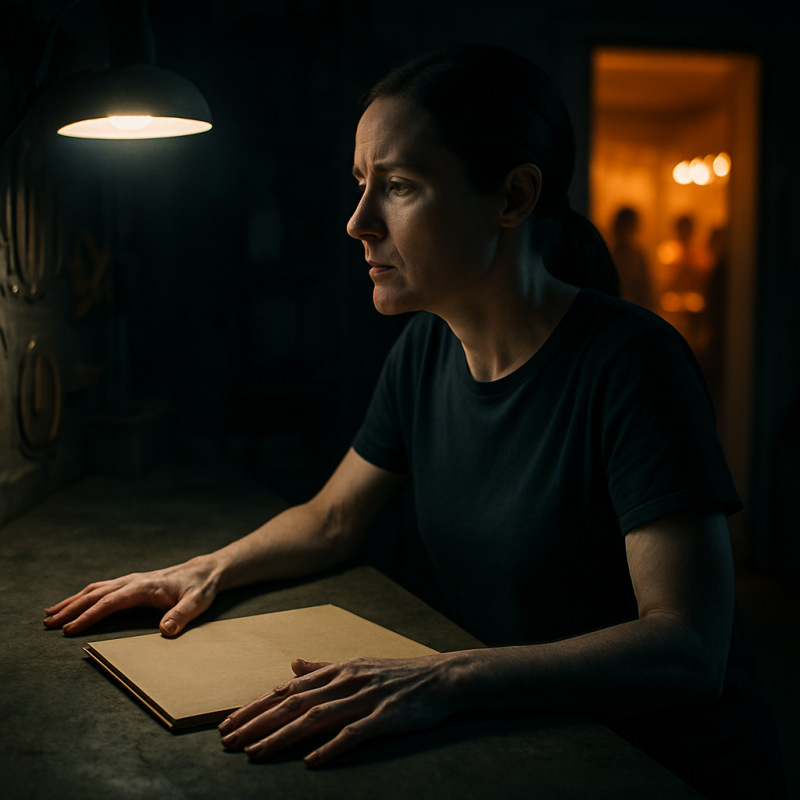 Image by RM AI
Walking Away
I walked out of the garage and back through the side gate into the yard. The party was still going — people clustered in small groups, kids running, someone refilling a drink at the table near the back. I kept my eyes down and moved toward the front of the house. I didn't stop. I didn't look for anyone. I heard Sophie say something to a friend, heard Leo call out to someone across the yard. I kept walking. I was almost to the front when I heard Elena's voice behind me, louder than the rest. She said my name — once, then again, with a note in it I couldn't quite read, something between surprise and something else. I didn't turn around. I walked through the front gate and out onto the sidewalk, and the noise of the party fell away behind me, and there was nothing left but the sound of my own footsteps on the pavement.
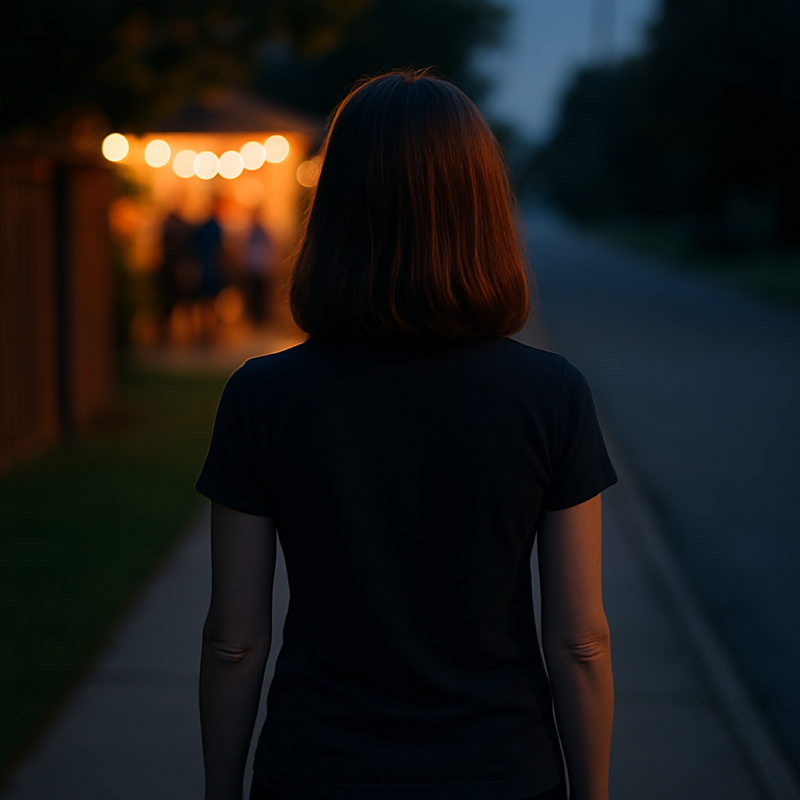 Image by RM AI
The Bus Stop
The street was quiet and wide and suburban, the kind of street where nothing looks wrong from the outside. I walked toward the bus stop at the corner and I let myself think. I thought about the first call — Elena's voice cracking, the way she'd said the number out loud like she could barely stand to. I thought about every follow-up call after that, each one with a new detail, a new urgency, a new reason why it had to be now. I thought about the debt collector stories, the ones with specific names and callback numbers that I'd never thought to verify. I thought about how I'd rushed to the phone every time she called, how I'd felt grateful that she trusted me enough to ask. Every single piece of it had been handed to me, and I had taken it without question because she was my sister and I loved her and I had believed that was enough of a reason. I was still standing there, turning it all over, when the bus came around the corner and pulled up to the curb.
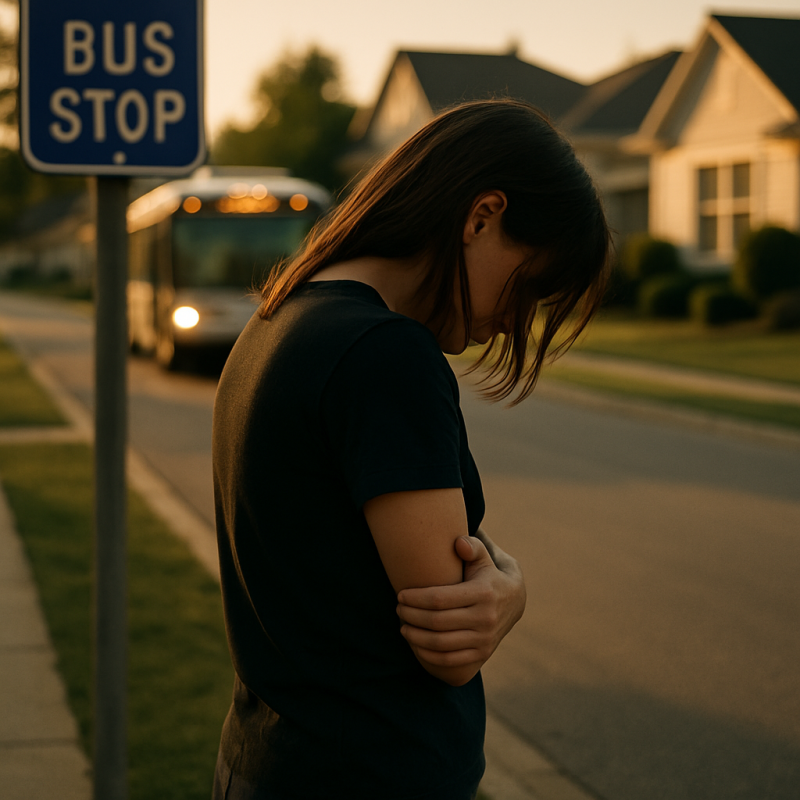 Image by RM AI
The Ride Home
I got on the bus and found a seat near the back and stared out the window as the wide suburban streets started giving way to smaller lots, then storefronts, then the dense gray of downtown. I did the math in my head the whole ride. The house had sold for three hundred and twelve thousand dollars after fees. I'd liquidated my retirement account — forty-seven thousand, minus the early withdrawal penalty. I'd cleaned out my savings. I'd sold the piano my mother left me for eight hundred dollars to a family in Glendale because I needed the cash and couldn't afford to move it. I'd given away the dining table, the good couch, the bookshelves I'd built myself over a weekend with a friend who was no longer in my life. I'd moved into four hundred square feet and told myself it was temporary. I'd told myself Elena needed me. I'd told myself that's what family does. The bus lurched to a stop at a red light and I watched a woman on the sidewalk push a stroller past a coffee shop, completely unbothered, completely ordinary. I had nothing left. Not the house, not the savings, not the furniture, not the version of my life I'd been building for fifteen years. Just the hollow feeling sitting in my chest where all of it used to be.
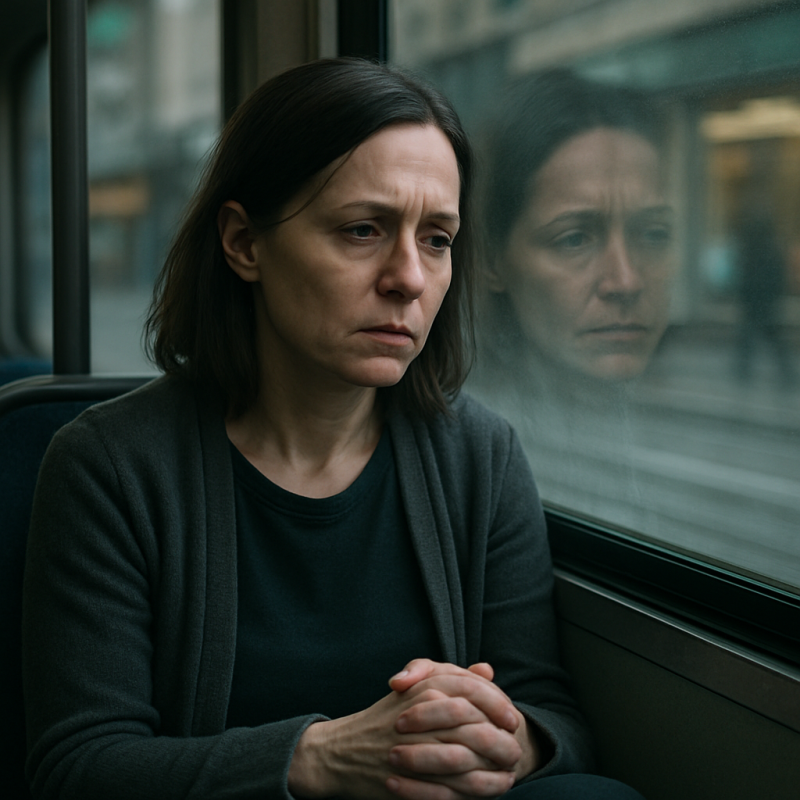 Image by RM AI
Four Hundred Square Feet of Truth
I unlocked the door to my studio apartment and stood in the doorway for a second before I went in. Four hundred and twelve square feet. A bed against one wall, a hot plate on the counter, a bathroom you could barely turn around in. I used to have a three-bedroom house with a yard and a porch and a kitchen where I'd cooked Thanksgiving dinner for twelve people. I used to have a guest room with a real bed in it. I used to have a life that looked like something. I sat down on the edge of the mattress and I just — fell apart. I cried in a way I hadn't let myself cry since this whole thing started, the ugly kind, the kind where you can't catch your breath. I cried for the house and the piano and the retirement account and the fifteen years of careful, boring, responsible saving that I had handed over because my sister told me she was dying and I believed her. And then, underneath the grief, something else started moving. It wasn't sadness. It was harder than that. It was the kind of anger that doesn't shake — it just sits there, cold and certain, waiting. I wiped my face with the back of my hand and I thought: she doesn't get to walk away from this.
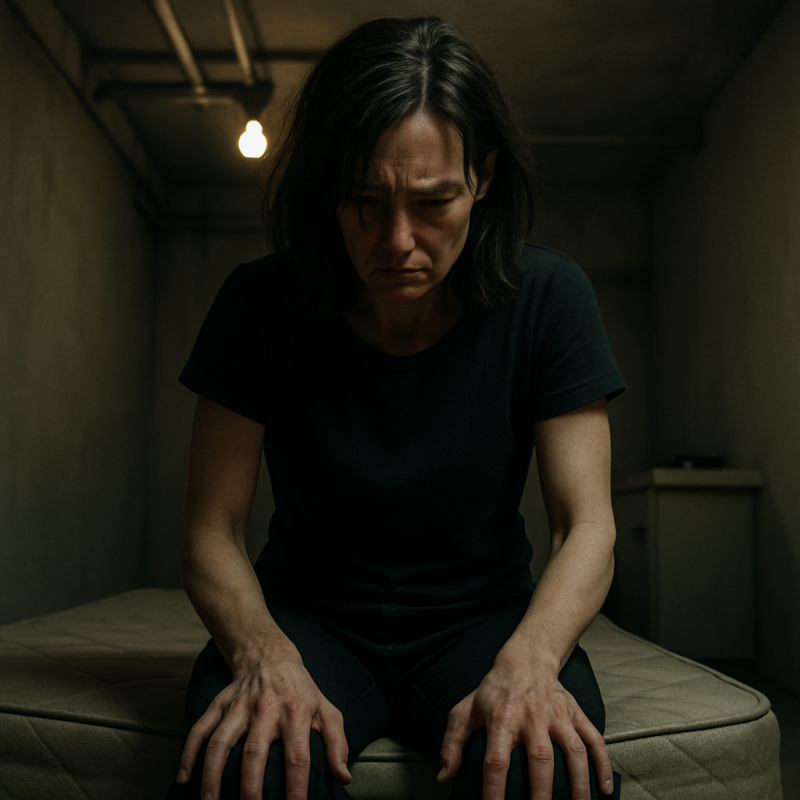 Image by RM AI
The Decision
I didn't sleep. I lay on top of the covers in the dark and I let myself think through every piece of it — the calls, the fake debt collectors, the urgency, the way she'd always had a new detail ready when I started to hesitate. I thought about the Porsche sitting in that garage, white and clean and completely real. I thought about Sophie's party, the catering, the flowers, the DJ. I thought about what Elena had said to me the last time we talked, how she'd sounded tired and grateful and a little fragile, and how I'd felt relieved that she was doing better. She'd been doing better because she'd spent my money. By the time the sky outside the window started going gray, I knew what I had to do. I wasn't going to send a letter. I wasn't going to text. I was going to call her and I was going to say exactly what I'd seen and exactly what I knew, and I was going to make her answer for it out loud, in real time, with no room to compose herself first. I wasn't scared. I wasn't even shaking. I just lay there in the early morning quiet, waiting for a reasonable hour, and the waiting felt almost peaceful.
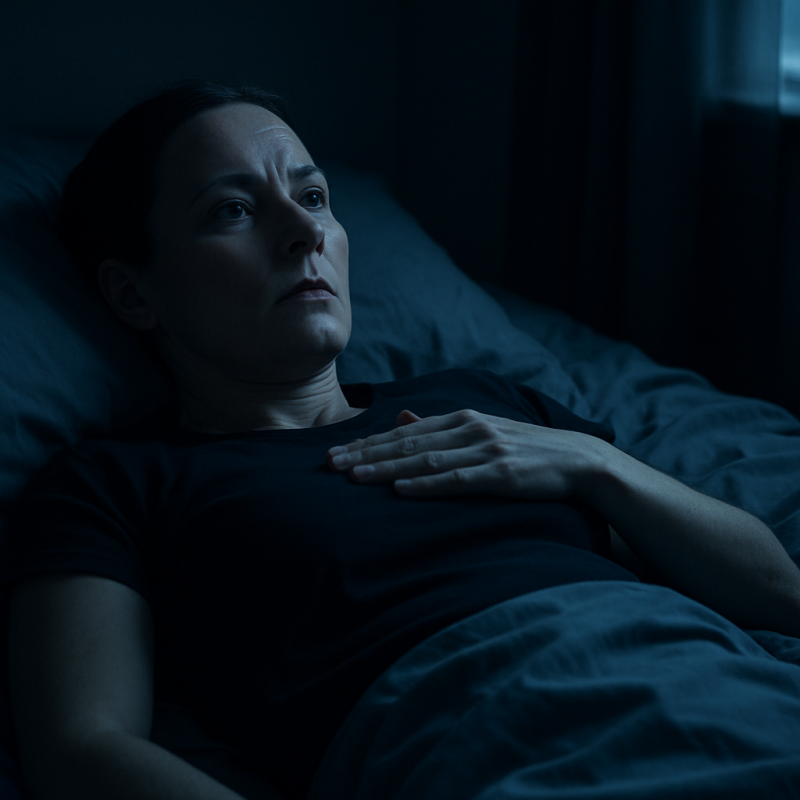 Image by RM AI
The Phone Call
I called her at eight-fifteen. She picked up on the third ring, her voice warm and a little sleepy, like it was just a normal Tuesday. She said my name like she was happy to hear from me. I let her finish the greeting and then I told her I'd been at her house yesterday. I told her I'd seen the garage. I told her I'd seen the Porsche. There was a pause — not long, maybe two seconds — and then she said she didn't know what I was talking about, which was such an automatic, reflexive denial that it almost made me laugh. I told her I was standing in the driveway when the garage door opened. I told her I saw the car with my own eyes. I told her I'd looked up the registration. I said her name on the sales contract was pretty hard to misread. I kept my voice level. I'd practiced this in my head all night and I wasn't going to let her hear me fall apart. I told her I wanted an explanation — not a story, not a version of events, an actual explanation — for where my money went and why she lied to me. I pressed the phone against my ear and waited. The line was completely silent.
 Image by RM AI
Denials and Deflections
She said the Porsche was a gift from a friend — someone I wouldn't know, someone who'd come into some money and wanted to do something nice. I told her I'd seen the sales contract with her name on it as the buyer. She said the friend had put it in her name for insurance reasons, which didn't make any sense and she had to know it didn't make any sense. I asked her about the medical debt. I asked her about the collection calls, the specific names she'd given me, the callback numbers. She said things had been complicated, that she'd been under a lot of pressure, that she'd meant to explain everything when she was in a better place. I asked her what that meant. She said she'd been going to tell me. I asked her when. She didn't answer that. I told her I'd given her everything I had — my house, my retirement savings, my piano, three hundred and fifty thousand dollars of my life — and she had spent it on a car and a party and whatever else she'd decided she deserved. The line went quiet. And then she said it again: a gift from a friend, like saying it twice would make it land differently.
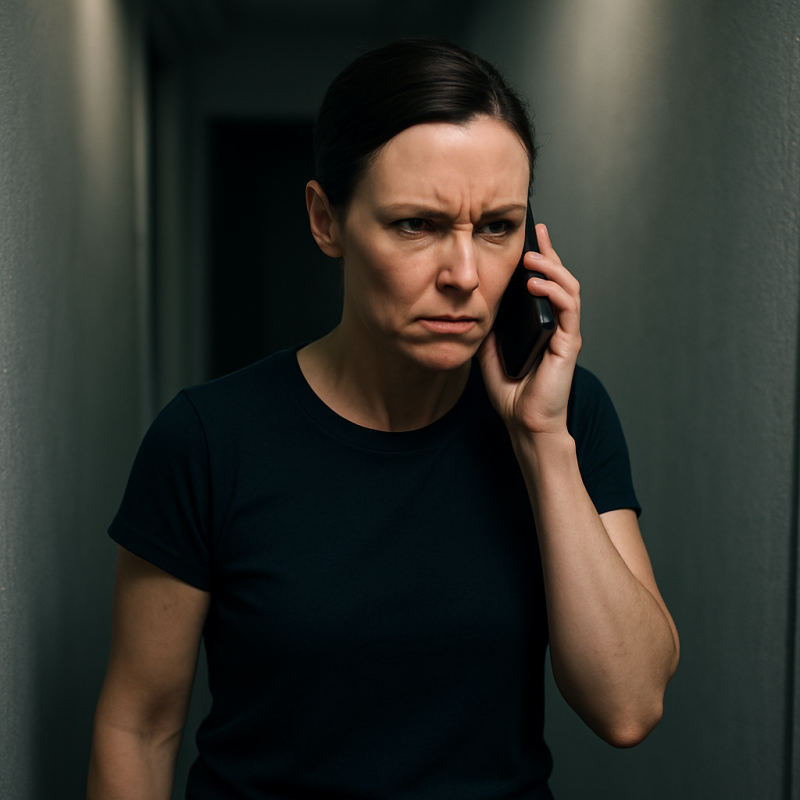 Image by RM AI
Fraud and Consequences
I told her I'd been talking to a lawyer. That wasn't entirely true yet — I'd looked up a number, I hadn't called — but I said it anyway because I needed her to understand I wasn't just venting. I told her what she'd done had a name. I told her fabricating a medical emergency to obtain money from a family member was fraud. I told her I had the wire transfer records, I had the sales contract, I had every text message and voicemail she'd ever sent me about the debt. I told her I had enough documentation to make a very clear case. She went quiet in a different way than before — not the silence of someone composing a lie, but something tighter, more careful. I told her I wasn't calling to threaten her, I was calling to give her the chance to explain herself before I made any decisions. I said I deserved that much. I waited. And then her voice came back — not warm, not sleepy, not the easy Elena I'd been hearing my whole life. It came back flat and measured, like she was choosing every word before she let it out.
 Image by RM AI
Blaming the Victim
She said she'd never forced me to do anything. She said I'd made my own choices. I felt something go very still inside me, the way things go still right before they break. She said I'd wanted to be the one who saved her, that I'd liked the feeling of being needed, that maybe I should think about why I'd been so eager to help without asking any questions. She said she wasn't the only one who'd gotten something out of the arrangement. I couldn't speak for a moment. I was trying to find the words for what it felt like to be told that my trust was a character flaw, that my love for my sister was a vanity project, that the loss of everything I'd built was somehow a consequence of my own weakness. She said if I'd been serious about protecting myself, I would have asked for proof before I sent a single dollar. I found my voice. I told her that was the most obscene thing anyone had ever said to me. She didn't apologize. She said, in that same flat careful tone, that I should have known better.
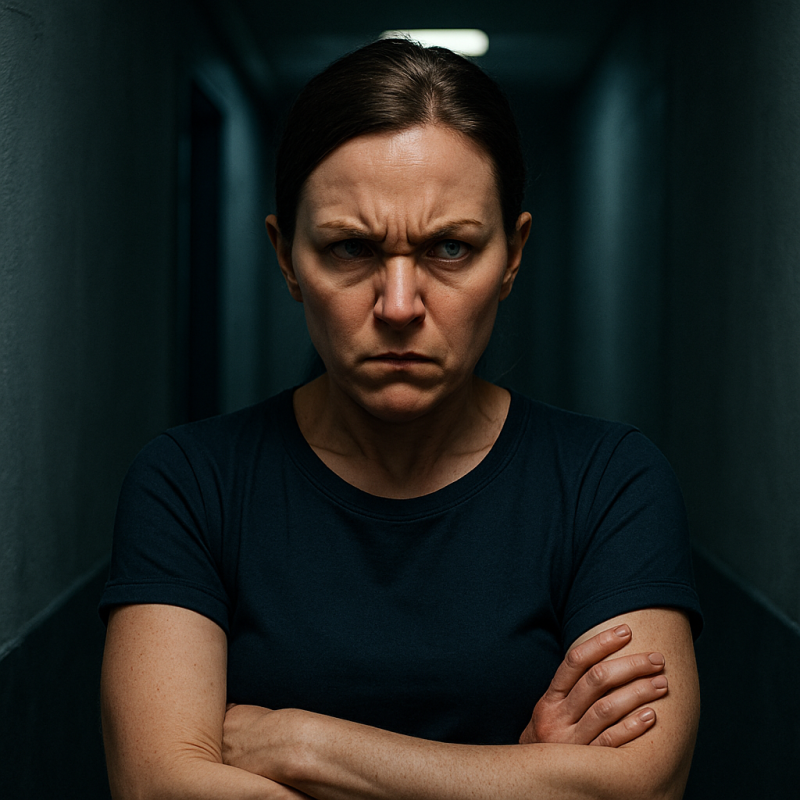 Image by RM AI
Family Fractures
The calls started coming in that same afternoon. My aunt called first, her voice careful and diplomatic, saying she'd heard there was some kind of misunderstanding between me and Elena and that family needed to stay together. I asked her what Elena had told her. She said Elena was very upset and that whatever had happened, these things could be worked through. Then my cousin called and said I was going to destroy the family over money. Then another cousin sent a text saying Elena had been through a lot and I needed to have some compassion. One person — just one, my mother's oldest friend who'd known us both since we were children — called to say she believed me and that she was sorry. Everyone else was either defending Elena or asking me to let it go for the sake of keeping the peace. I sat on the edge of my bed in that tiny apartment and I listened to message after message, and I understood that Elena had gotten to them first, had shaped whatever story they were hearing, and that I was already the difficult one, the one making trouble, the one who couldn't forgive. The family I thought I had — the one I'd sold my house to protect — had already become something I didn't recognize.
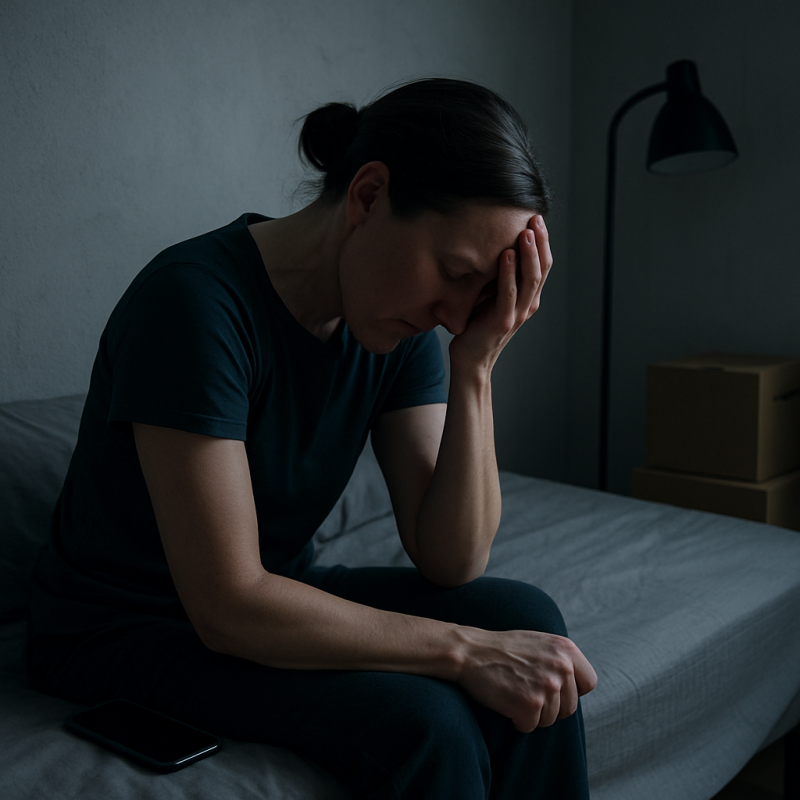 Image by RM AI
The Final Confrontation
I took the bus back to Elena's neighborhood on a Tuesday morning. I didn't call ahead. I rang the doorbell and stood there on the front step with my hands steady at my sides, which surprised me, because I'd expected them to shake. Elena answered in about thirty seconds, and when she saw me her expression shifted — not to guilt, not to anything I could call remorse, just a kind of careful blankness, like she was deciding how to play it. I told her I wasn't there to argue. I told her I wanted her to look me in the face and acknowledge what she had done with the money I gave her. She said I was being dramatic. She said she had used the money for the family and that I had always had a problem with how she managed things. I stood there and let her finish. Then I told her we were done — not angry, not crying, just done. I said she was no longer my sister. She started to say something else and I turned and walked down the front path. Behind me, I heard the door close.
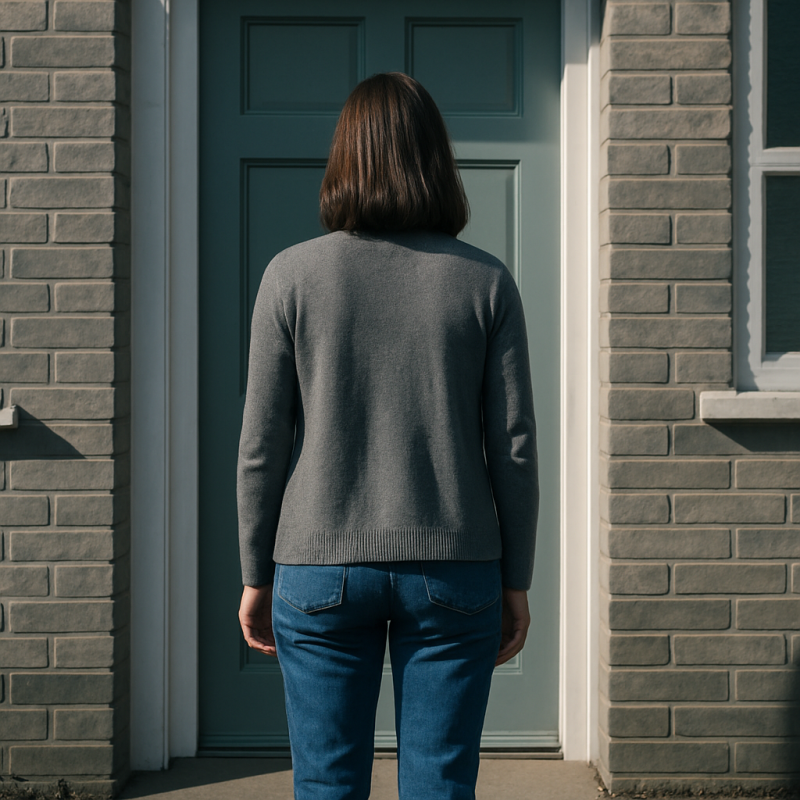 Image by RM AI
Legal Options
A friend from work had given me the name of a lawyer who handled civil cases, and I made an appointment for the following week. His office was downtown, small and practical, the kind of place that didn't waste money on decor. I brought everything I had — the wire transfer records, the sales contract, the text messages where Elena had described the medical debt in specific numbers. He read through it carefully and then leaned back and told me what I was up against. Proving fraud in civil court required showing intent to deceive, not just that the money was misused. Without a recorded admission or documented evidence that she had fabricated the debt from the start, it would come down to my word against hers. A civil suit was possible, he said, but it could take two to four years, cost me ten to twenty thousand dollars in legal fees, and there was no guarantee I'd recover anything even if I won. He wasn't discouraging me, he said. He just wanted me to understand what I was choosing. I drove home and sat at my kitchen table with his business card in my hand, and the weight of that choice settled over me like something physical.
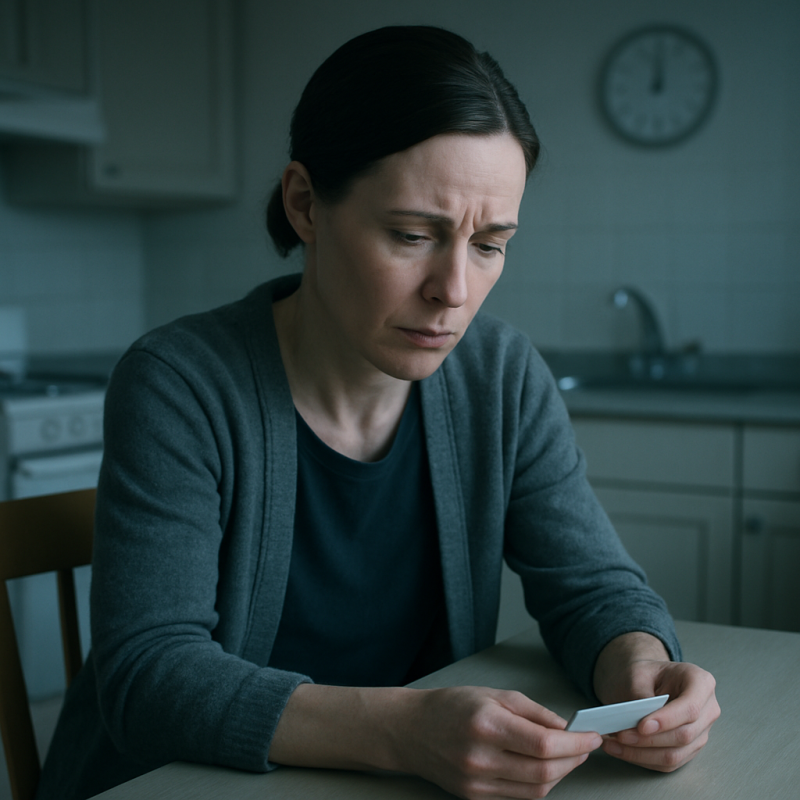 Image by RM AI
Choosing the Path Forward
I spent about two weeks going back and forth on it. I made lists. I looked up similar civil cases online at midnight and read through forums where people described years of depositions and continuances and legal bills that outlasted the original dispute. I thought about what it would mean to spend the next three years of my life in a process that kept Elena at the center of everything, kept me tethered to the worst thing that had ever happened to me. The money was gone. I knew that. Even if I won, I'd likely spend years getting there and come out the other side with a judgment I might never collect on. What I had left was my time and my energy, and I could pour both of those into a courtroom, or I could use them to actually rebuild. It wasn't a dramatic decision. There was no single moment where everything became clear. I just woke up one morning and knew I wasn't going to file. I was going to find a second job, pay down what I owed, and start saving again from zero. It wasn't the ending I'd wanted. But it was the first real step I'd taken toward something that was actually mine.
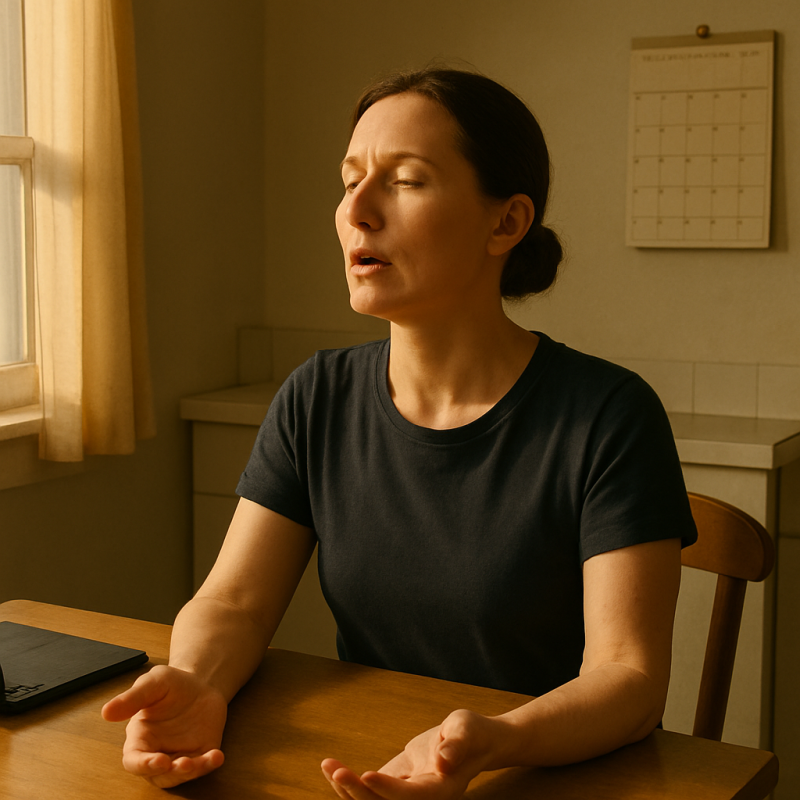 Image by RM AI
Hard Lessons
It's been almost a year since Elena first called me crying about the medical bills. I lost the house I'd spent six years paying into. I lost most of my savings. I lost the sister I thought I had, which turned out to be the version of her I'd constructed in my own head — the one who loved me back the way I loved her. Those losses are real and I'm not going to dress them up as anything else. But I also learned things I couldn't have learned any other way. I learned that loyalty without limits isn't a virtue — it's a vulnerability. I learned that the story I tell myself about who my family is can be completely disconnected from who they actually are. I learned to ask harder questions before I act, to slow down when someone's urgency is pushing me toward a decision I haven't fully thought through. I have a smaller life now in some ways — a smaller apartment, a tighter budget, fewer people I call family. But the people still in it are there because they've earned it. I'm not the same person who sold her house on a phone call and a feeling. I'm still figuring out who I am instead, but for the first time in a long time, I'm not afraid of the person I'm becoming.
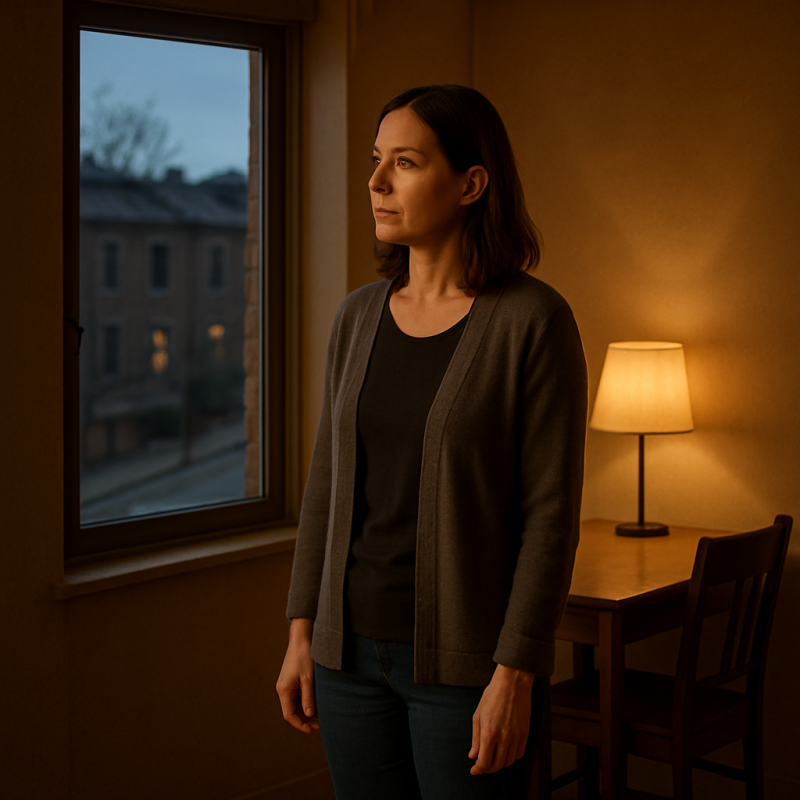 Image by RM AI
KEEP ON READING
The 20 Most Recognized Historical Figures Of All Time
The Biggest Names In History. Although the Earth has been…
By Cathy Liu Oct 4, 2024
10 of the Shortest Wars in History & 10 of…
Wars: Longest and Shortest. Throughout history, wars have varied dramatically…
By Emilie Richardson-Dupuis Oct 7, 2024
10 Fascinating Facts About Ancient Greece You Can Appreciate &…
Once Upon A Time Lived Some Ancient Weirdos.... Greece is…
By Megan Wickens Oct 7, 2024
20 Lesser-Known Facts About Christopher Columbus You Don't Learn In…
In 1492, He Sailed The Ocean Blue. Christopher Columbus is…
By Emilie Richardson-Dupuis Oct 9, 2024
20 Historical Landmarks That Have The Craziest Conspiracy Theories
Unsolved Mysteries Of Ancient Places . When there's not enough evidence…
By Megan Wickens Oct 9, 2024
The 20 Craziest Inventions & Discoveries Made During Ancient Times
Crazy Ancient Inventions . While we're busy making big advancements in…
By Cathy Liu Oct 9, 2024