

The Call That Changed Everything
The phone rang at 11:47 on a Tuesday night, and I knew before I even looked at the screen that it was Denise. My oldest daughter only called that late when something had gone terribly wrong. I could hear her voice shaking before she even got the words out—she was crying so hard I had to ask her to repeat herself twice. 'Mom, we're being evicted,' she finally managed to say. 'The landlord says if I don't have the full amount by Friday, we're out. All of us. The kids and everything.' My stomach dropped. Friday was three days away. She told me she needed $8,400 for back rent and deposits, and that she'd already called everyone she could think of. Nobody had that kind of money just lying around. I sat there in my kitchen, still in my pajamas, listening to my daughter sob on the other end of the line while my grandchildren slept, completely unaware that their whole world might be packed into garbage bags by the weekend. I knew what I had to do, even though it meant breaking a promise I'd made to myself years ago.
 Image by RM AI
The Grandmother Who Couldn't Say No
I didn't sleep that night. I just kept picturing Mason, Lily, Jacob, and little Sophie—ages 9, 7, 5, and 3—trying to understand why they had to leave their home. I'd seen a documentary once about family homelessness, and the image of children clutching stuffed animals while social workers tried to find shelter space had stuck with me for years. That couldn't be my grandchildren. I couldn't let that happen to them. Denise had always struggled, I'll admit that. She'd made some bad choices, picked the wrong partners, couldn't seem to hold down a steady job for more than a few months at a time. But those kids didn't ask for any of this. They deserved stability, a roof over their heads, a chance at a normal childhood. I paced my kitchen until dawn, running the numbers in my head over and over. My savings account had maybe $2,000. My checking account had $843. I couldn't take out a loan—my credit was already stretched thin from helping Denise last year. There was only one place I could get that kind of money quickly, and Emily would never forgive me if she found out.
 Image by RM AI
The Daughter Who Always Knew Better
Emily had warned me about this exact scenario. Just six months earlier, we'd been sitting at her apartment, and she'd looked me straight in the eye and said, 'Mom, you need to stop enabling Denise. Every time you bail her out, you're teaching her that she doesn't have to face consequences.' She'd been so firm about it, so certain. My younger daughter had always been like that—responsible, clear-eyed, the one who finished college on time and landed a good job right after graduation. She'd been saving up to go back for her master's degree in education, talking about it constantly, showing me brochures from different programs. I'd started the college fund for her years ago, back when her father was still alive and we'd agreed both girls deserved the same opportunities. It had grown to $34,000, just sitting there in that account, waiting for Emily to be ready. 'Denise will keep having crises until you let her figure it out herself,' Emily had said. But Emily was young and didn't understand what it meant to be a mother—at least, that's what I told myself as I logged into the account.
 Image by RM AI
The Transfer
The transfer took less than five minutes. I sat at my desktop computer in the spare bedroom, my reading glasses slipping down my nose, and moved $8,400 from Emily's education fund into my checking account. Then I immediately transferred it to Denise. My hands were shaking the whole time. The confirmation screens kept asking me if I was sure, if I wanted to proceed, and I kept clicking 'yes' even though everything in me was screaming to stop. I took a screenshot of the transaction and texted it to Denise. She responded within seconds: 'Mom, thank you thank you thank you. I love you so much. I'm calling the landlord right now.' I stared at that message for a long time. The education fund still had $25,600 left in it, which seemed like plenty. Emily wasn't planning to start her program for at least another year, maybe two. I had time to replace what I'd taken. I could pick up some extra hours at the library where I volunteered, maybe sell some things, figure something out. I told myself I'd find a way to replace it before Emily needed it—I had time, or so I thought.
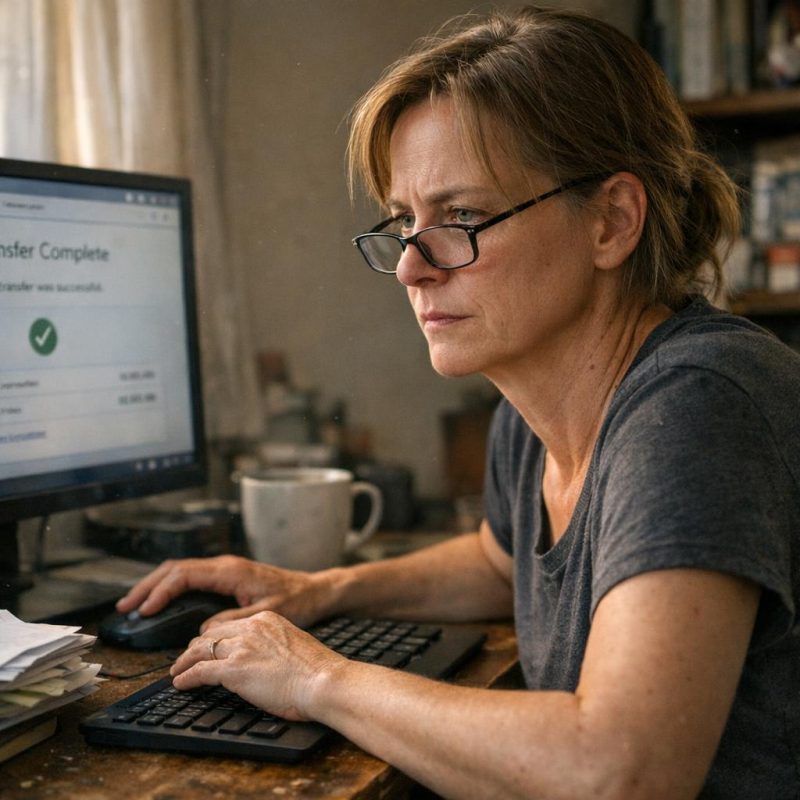 Image by RM AI
Crisis Averted, For Now
Denise's landlord confirmed the payment the next morning, and I drove over to help her get everything sorted out. She looked exhausted but relieved, her eyes still red from crying. The kids were at school, thank God, so they'd been spared the worst of the panic. We sat at her kitchen table drinking terrible instant coffee, and she held my hands across the table. 'I mean it this time, Mom,' she said. 'I'm going to get my act together. I've already got a lead on a better job, and I'm going to start budgeting properly. No more crisis calls at midnight.' I wanted to believe her so badly. She looked sincere, more determined than I'd seen her in years. She even showed me a budgeting app she'd downloaded on her phone, with all her expenses laid out in neat little categories. We spent two hours going through her finances together, figuring out where she could cut back, how she could build up an emergency fund. It felt good, like maybe this really was a turning point. Like maybe this time would be different. She promised this was the last time, that she'd finally turned a corner—and I wanted so badly to believe her.
 Image by RM AI
The Secret I Couldn't Keep
I put off telling Emily for three days. Every time I picked up the phone, my throat would close up and I'd set it back down. I practiced what I'd say in the shower, while I was driving, lying in bed at night staring at the ceiling. I tried different approaches in my head—straightforward and apologetic, defensive and justified, casual like it was no big deal. None of them sounded right. I knew she'd be upset, but I kept telling myself she'd understand once I explained about the kids, about the eviction, about how urgent it all was. She was Emily, my sweet, sensible daughter. She'd see that I'd had no choice. On Saturday afternoon, I finally called her and asked if I could come over. 'Sure, Mom,' she said, sounding a little surprised but pleasant enough. 'Is everything okay?' 'We just need to talk about something,' I said, trying to keep my voice steady. I drove to her apartment rehearsing one last time, my hands gripping the steering wheel so tight my knuckles went white. But when I finally sat her down, no amount of rehearsal could have prepared me for the look on her face.
 Image by RM AI
The Betrayal
We were sitting on her couch, and I'd barely finished the first sentence—'Denise was being evicted, and I had to help her'—when Emily's expression started to change. I watched the color drain from her face as I explained about the $8,400, about the college fund, about how I'd had no other option. She didn't interrupt me once. She just sat there, perfectly still, her hands folded in her lap. When I finished talking, there was this awful silence. I tried to explain about the grandchildren, about how I couldn't let them end up homeless, about how there was still money left in the account. 'How much did you take?' she asked quietly. '$8,400,' I repeated. 'But there's still $25,000 left, honey, and I'm going to—' 'That's not the point,' she said, and her voice was so flat, so unlike her usual warmth. She looked at me like she was seeing someone she didn't recognize. She didn't yell or cry—she just stared at me with this hollow expression and said, 'You chose her. Again.'
 Image by RM AI
The Cold Anger
The real anger didn't come until later that evening. Emily had been quiet for maybe twenty minutes, just sitting there processing, and then she started asking questions. Each one was measured, controlled, like she was cross-examining me. 'Did you even consider asking me first?' she asked. 'Did it occur to you that this was my money, my future?' I tried to explain that there hadn't been time, that it was an emergency, that I'd panicked. 'There's always an emergency with Denise,' she said, and her voice was so cold it made me flinch. 'There's always some crisis that's more important than everything else. More important than promises. More important than me.' I reached for her hand but she pulled away. 'How could you do this, Mom?' she asked. 'I worked so hard. I saved every penny. I did everything right, and it doesn't matter because Denise will always come first.' I opened my mouth to defend myself, to explain that it wasn't like that, that I loved them both equally. She asked me how I could do this to her, and I had no answer that didn't sound like an excuse.
 Image by RM AI
She Packed Her Bags
Within three days, she was gone. I came home from work to find her bedroom half-empty, the closet bare except for hangers swinging from where she'd yanked clothes off them. There was no note, no final conversation, nothing. She'd just packed what she could carry and left while I was out. I called her immediately, and it went straight to voicemail. I texted. I waited. Nothing came back. I knew she was angry, but this felt different—this felt permanent in a way that made my stomach turn. I drove to her apartment, but her roommate said she'd cleared out her things that morning. 'She didn't say where she was going,' the roommate told me, avoiding my eyes like she'd been instructed not to engage. I asked her to please tell Emily I needed to talk to her, that I was sorry, that we could work this out. She just nodded and closed the door. She went to stay with a friend, somewhere I didn't know, and suddenly my youngest daughter had disappeared from my life.
 Image by RM AI
The Longest Weeks of My Life
The days blurred together after that, each one identical to the last. I'd wake up and the first thing I'd feel was this weight in my chest, this heavy reminder that Emily was gone and it was my fault. I kept my phone next to me constantly, checking it every few minutes like some desperate teenager. I sent texts that got no response. I left voicemails that she never returned. I even showed up at the medical office where she worked as a receptionist, but the woman at the front desk said Emily had requested that I not be allowed back. That hurt more than anything—knowing she'd actually told her coworkers to keep me away. I tried Facebook, Instagram, anything to get through to her. She'd blocked me on everything. My sister told me to give her space, that she'd come around eventually, but weeks kept passing and that silence just stretched on. The guilt sat with me every morning when I woke up and every night when I couldn't sleep. I tried texting, calling, even showing up at her workplace—but she'd made it clear she wanted nothing to do with me.
 Image by RM AI
The Weight of the Wrong Choice
Somewhere around week three, I stopped trying to justify what I'd done. I'd been telling myself the same stories over and over—it was an emergency, I had no choice, Denise would've been homeless—but none of it made the situation any better. The truth was simple and ugly: I had taken money that belonged to Emily and given it to Denise. It didn't matter that I'd panicked. It didn't matter that I'd planned to pay it back someday. I'd made a choice, and that choice had told Emily exactly where she stood in my priorities. I sat in her empty bedroom one afternoon, looking at the photos still on her wall from high school, from college visits, from all those years she'd worked so hard. She'd done everything right. She'd saved her money, stayed out of trouble, made good grades, and I'd still found a way to punish her for it. I'd rewarded Denise's chaos and penalized Emily's responsibility, and I'd been doing it for years without even realizing it. Emily had been right all along—I'd enabled Denise's pattern, and this time the cost was too high.
 Image by RM AI
The Only Way to Make It Right
I made a decision that night. I was going to replace every single dollar I'd taken from Emily's fund, no matter what it took. I sat down with a calculator and my bank statements, trying to figure out how I could possibly come up with twenty-three thousand dollars. I worked part-time at the grocery store, twenty-five hours a week, making twelve dollars an hour. After taxes and my own bills, I could maybe save two hundred dollars a month if I was really careful. I did the math three times because I didn't want to believe the answer. At that rate, it would take me nearly ten years to save enough. Ten years. I'd be seventy-one years old before I could make this right, and Emily would be almost forty. By then she might have her own kids, her own life completely separate from mine. The number made me feel sick, physically ill, like I'd swallowed something toxic. I couldn't wait ten years. I couldn't even wait one year. I needed to fix this now, before the distance between us became something that couldn't be crossed. I started calculating how many years it would take to save that amount, and the number made me sick.
 Image by RM AI
The Man I Almost Married
That's when I thought of Richard for the first time in probably twenty years. We'd been engaged back when I was twenty-four, before I met the man who became my husband. Richard was from a family with some money, and his parents had gifted us a small piece of land upstate as an early wedding present. It was supposed to be where we'd build a house someday. But the engagement fell apart after about eight months—we were too young, wanted different things, the usual story—and we went our separate ways. I got married a few years later, had the girls, built a completely different life. The property had just sort of faded from my memory, this relic from a relationship that felt like it belonged to someone else entirely. Richard had told me when we split that I should keep the land, that his parents wanted me to have it regardless. I'd signed some papers, put them in a box, and then never thought about it again. Life got busy. Kids happened. The years piled up. I hadn't thought about that land in decades—I'd completely forgotten it existed.
 Image by RM AI
Digging Through Old Paperwork
I spent the entire weekend tearing through my garage, pulling down boxes I hadn't opened since we moved into this house fifteen years ago. There were old tax returns, birthday cards from people I didn't remember, photographs from vacations I'd forgotten we took. My back ached from lifting and sorting, and dust made me sneeze every few minutes. I went through three boxes before I found the one labeled 'old stuff' in my own handwriting from decades ago. Inside were programs from plays I'd been in during college, letters from my grandmother, a dried corsage from some dance. And underneath all of it, folded into a yellowed envelope, was the deed. I pulled it out with shaking hands, hardly believing it was real. The property was still in my name—five acres in Ulster County, deeded to me in 1986. I sat on the concrete floor of the garage, holding this piece of paper that represented a chance I'd thought I'd lost. When I finally found the deed, covered in dust and folded into an envelope marked 'old stuff,' I felt like I'd been handed a lifeline.
 Image by RM AI
A Modest Miracle
I spent the next day researching the area where the property was located. Ulster County had grown over the years—what used to be completely rural was now dotted with small towns and weekend homes for people escaping the city. I looked up recent land sales in the area and felt my heart start racing. Comparable properties were selling for anywhere from twenty to forty thousand dollars depending on location and condition. My five acres appeared to be near a state forest, which would make it desirable for privacy. I pulled up satellite images and saw nothing but trees, which meant it was exactly as I'd left it decades ago—untouched, undeveloped, just sitting there waiting. I did the math again, this time with hope instead of despair. If I could sell it for even twenty-five thousand, that would cover what I'd taken from Emily's fund and maybe leave a little extra. It felt almost too good to be true, like the universe was giving me a second chance I didn't deserve. It felt like a miracle, like a second chance handed to me just when I needed it most.
 Image by RM AI
Contacting the Agent
I found a real estate agent in Kingston who specialized in land sales and called her first thing Monday morning. Her name was Patricia, and she sounded competent and professional on the phone. I explained the situation—not the whole messy family drama, just that I owned property I'd forgotten about and wanted to sell. She asked for the address and parcel number from the deed, and I could hear her typing on the other end. 'Okay, I've got it pulled up here,' she said. 'Beautiful area. Let me run a title search to make sure everything's clear, and then we can talk about pricing and listing.' I felt lighter than I had in weeks, already imagining the conversation I'd have with Emily once the money was back in her account. I'd call her, tell her I'd fixed it, prove that I understood how badly I'd messed up. She'd have to talk to me then, wouldn't she? She'd have to at least give me a chance to apologize properly. The agent said she'd run a title search and get back to me within a few days—it seemed simple enough.
 Image by RM AI
Complications With the Title
Patricia called me back three days later, and I could tell from her tone that something was wrong. 'So, I ran the title search like I promised,' she said, 'and we've got some complications.' My stomach tightened. 'What kind of complications?' She explained that there had been activity tied to the property over the years—permits filed, agreements logged with the county, some kind of business dealings that showed up in the public records. None of it made any sense to me. I kept thinking about how I'd inherited that land when I was twenty-one and basically forgotten about it after Richard and I split. 'Are you sure you have the right property?' I asked. 'I haven't set foot near that land since my twenties.' She was patient but firm. 'I'm looking at the records right now, Mrs. Patterson. Your name is on the deed, but there's definitely been activity. You're going to need to look into this before we can list it.' My hands were shaking when I hung up. I told her that didn't make sense—I hadn't set foot near that land since my twenties—but she insisted I needed to look into it.
 Image by RM AI
Richard's Shadow
I called Patricia back the next morning and asked her to send me copies of whatever documents she'd found. She emailed them over within an hour, and I sat at my kitchen table with my laptop, clicking through PDFs that might as well have been written in another language. There were lease agreements, business permits, something about timber rights. All of it official-looking, all of it stamped and filed with the county. And all of it supposedly authorized by me, even though I'd never seen any of these papers before in my life. I kept scrolling, my chest getting tighter with each page, until I found a signature I recognized. It wasn't mine. It was Richard's, scrawled at the bottom of a lease agreement dated eight years ago, right below where my name was typed as the property owner. There were more documents with his signature, going back years. He'd been doing something with my land, using my name, and I'd had no idea. When I saw Richard's signature on one of the documents, my stomach dropped.
 Image by RM AI
Leases I Never Authorized
I spent the rest of that day on the phone with Patricia, then with a lawyer she recommended, trying to understand what I was looking at. The lawyer explained it carefully, like he was talking to a child, which maybe I needed at that point. Richard had been quietly leasing the property for years, signing agreements that technically required my authorization as the property owner. Some of the deals were legitimate enough—renting the land to hunters, selling timber rights—but the paperwork was messy, borderline fraudulent. My name was all over everything, but I'd never signed a single document. 'Could I be held responsible for this?' I asked. The lawyer paused. 'Possibly. If someone claims they were misled or if there's a dispute over the agreements, you're the owner of record. That makes you liable.' I felt like the floor had dropped out from under me. What had seemed like a miracle solution—this forgotten property that would fix everything—now looked like a ticking bomb. I could be held responsible for whatever he'd done, and suddenly my 'miracle' looked more like a liability.
 Image by RM AI
Tracking Down Richard
I knew I couldn't just ignore this and hope it went away. I needed to talk to Richard, to hear him explain what the hell he thought he was doing using my property without permission. The problem was, I hadn't spoken to him in over thirty years and had no idea how to reach him. I started with social media, but he wasn't on Facebook or anywhere else I could find. Then I called my sister, who still lived near where Richard and I had grown up, and asked if she knew anyone who might know him. It took two days of dead ends and awkward phone calls to people I barely remembered before I finally got a number from someone who'd gone to high school with Richard's brother. I sat staring at my phone for twenty minutes before I worked up the nerve to dial. It rang four times, and I almost hung up, but then he answered. 'Hello?' When I finally reached him by phone, his voice was exactly as I remembered—smooth, reassuring, and somehow that made it worse.
 Image by RM AI
The Meeting
Richard suggested we meet in person, said it would be easier to explain everything face-to-face. Part of me wanted to refuse, to handle this over the phone where I wouldn't have to see him, but I also knew I needed answers he probably wouldn't give unless I pushed. We agreed on a coffee shop in Kingston, neutral territory, the next afternoon. I got there fifteen minutes early and sat in a corner booth, my hands wrapped around a cup of tea I couldn't drink. Then he walked in, and it was like seeing a ghost. He looked older, obviously—we both did—but he still moved with that same easy confidence, scanning the room until he spotted me. He smiled, this big warm smile like we were old friends meeting for lunch, and walked over. Before I could say anything, he pulled me into a hug. I stood there stiffly, my arms at my sides, every muscle in my body wanting to pull away. He looked older but still had that confident smile, and when he hugged me like we were old friends, I had to resist pulling away.
 Image by RM AI
No Big Deal
We sat down, and I got straight to the point. 'I know what you've been doing with the property,' I said. 'I've seen the paperwork.' Richard didn't even flinch. He just leaned back in his chair and waved his hand like I was worrying about nothing. 'Oh, that. Yeah, I've been taking care of things over the years. Someone had to, Carol. You weren't using it.' I felt my jaw tighten. 'Taking care of things? You forged my signature on lease agreements.' He shook his head. 'I didn't forge anything. I managed the property. And honestly, you should be grateful—the land's worth way more now than when you inherited it. I made that happen.' Patricia, my real estate agent, had warned me he might try to spin this as doing me a favor, and she was right. He kept talking, explaining how he'd kept the property taxes paid, how he'd maintained access roads, how he'd 'protected my investment.' But there was something in his tone, a casualness that felt rehearsed, that made me realize he wasn't being entirely honest.
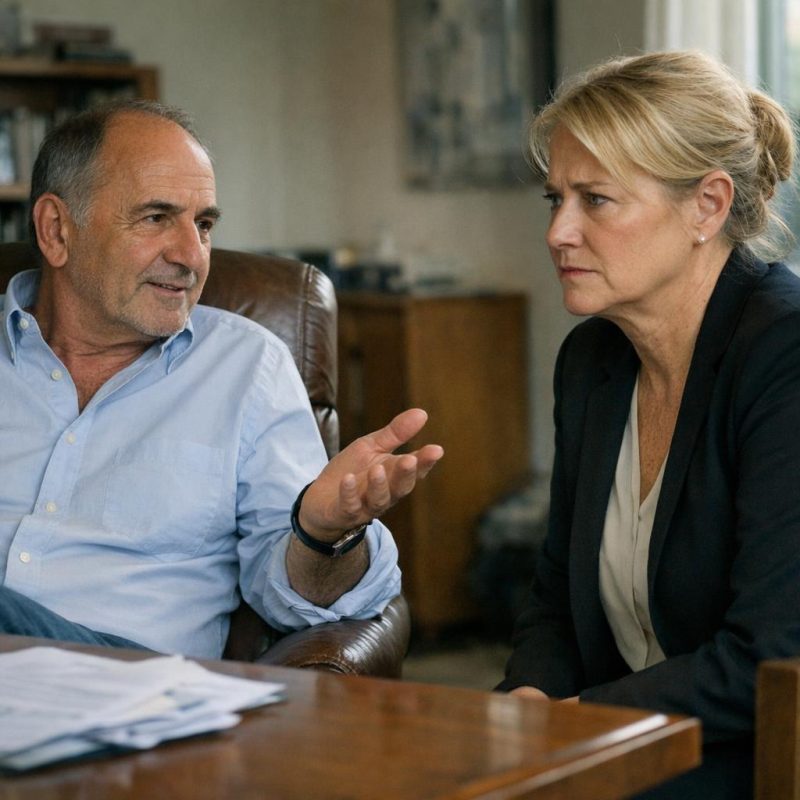 Image by RM AI
The Charm That Used to Work
Richard shifted tactics then, turning on the charm that had worked on me when I was twenty-one. He leaned forward, gave me that old familiar smile, told me I looked good, asked about my daughters with what seemed like genuine interest. And for just a second, I felt myself starting to soften, remembering the version of him I'd once loved. But then I looked at his eyes, really looked, and saw what I'd been too young to see back then—the calculation behind the warmth, the performance of sincerity. I wasn't that naive anymore. I'd raised two daughters, survived a divorce, built a whole life without him. I could recognize manipulation now. 'So here's what I'm thinking,' he said, pulling out his phone like we were business partners. 'We sell the land together, split the profit fifty-fifty. You get your money, I get compensated for all the work I've put in. Everybody wins.' I stared at him. He suggested we sell the land together and split the profit, as if the past thirty years and his unauthorized use of my property meant nothing.
 Image by RM AI
Questions Without Answers
I pushed my tea aside and looked him straight in the eye. 'I want to know exactly what you've been doing with that land. Every lease, every agreement, every person you've dealt with. I want names and numbers.' Richard's smile faltered just slightly. 'I mean, it's been a lot of years, Carol. I'd have to dig through records.' 'Then dig,' I said. He started explaining in these broad, vague terms about 'standard land management' and 'routine transactions,' talking in circles that sounded reasonable but didn't actually answer my questions. Every time I asked for specifics—who, when, how much—he'd deflect or redirect. 'Does it really matter at this point?' he kept saying. 'What matters is moving forward.' But it did matter. It mattered a lot. I pressed harder, asking about the lease I'd seen from 2015, the one with the timber company. He got defensive then, his voice taking on an edge. 'You're making a big deal out of nothing, Carol. I was helping you.' When I pressed harder, he got defensive, saying I was making a big deal out of nothing—but if it was nothing, why wouldn't he just explain?
 Image by RM AI
The Business Name I Didn't Recognize
I pulled out the documents I'd printed and spread them across the table between us. My finger landed on one line item—a business name I'd never heard of before. 'What's this?' I asked, pointing. 'Millbrook Holdings LLC. I don't remember agreeing to lease the land to them.' Richard's eyes flicked down to the paper, and for just a second—maybe half a second—his expression changed. It was subtle, like he'd been caught off guard, a tiny crack in that smooth, confident demeanor. Then he recovered, shaking his head with a dismissive wave. 'Oh, that. It's just a holding company I set up years ago for tax purposes. Standard stuff, Carol. Makes everything cleaner for the paperwork.' He said it so casually, like it was the most obvious thing in the world. But the way he'd flinched when I first showed it to him—that told me something different. My stomach tightened. 'Why would you need to set up a holding company for my land?' I asked. He started talking about tax benefits and liability protection, using all these business terms that sounded impressive but felt hollow. I didn't believe him.
 Image by RM AI
Walking Away Empty-Handed
I left that café feeling worse than when I'd walked in. The afternoon sun felt too bright, almost mocking as I sat in my car in the parking lot, gripping the steering wheel. I'd gone there hoping for transparency, for honest answers about what had been happening with my land all these years. Instead, I got deflections and vague explanations that didn't add up. Richard had been managing my property for nearly three decades, and I'd trusted him completely. Now I could see how naive that had been. He'd been using me—using my trust, my ignorance about business matters, my willingness to let him handle things. Every evasive answer, every redirected question, it all pointed to the same conclusion: he'd been doing something with that land I wasn't supposed to know about. I started the car and pulled out onto the main road, my mind racing through everything he'd said and, more importantly, everything he hadn't said. The Millbrook Holdings name kept circling in my thoughts. But what I didn't know yet was how much deeper the deception went.
 Image by RM AI
Emily's Silence
That evening, I pulled up Emily's contact on my phone and hit call. I needed to tell her what I was doing, that I was fighting to make things right. The phone rang once, then went straight to voicemail—that automated message in her voice, polite and distant. My heart sank. 'Hi, sweetie,' I said after the beep, trying to keep my voice steady. 'I know you're still upset with me, and you have every right to be. But I wanted you to know I've found a way to get your money back. I'm working on it right now.' I paused, staring at the wall of my kitchen. There was so much more I wanted to say—about Richard, about the documents, about the business name I didn't recognize. But how could I explain all that in a voicemail? How could I tell her that fixing my mistake had led me into this complicated mess I didn't fully understand yet? 'I'll explain everything soon,' I said finally. 'I love you.' I hung up and set the phone down, feeling more alone than I had in years. I didn't mention how complicated it had become.
 Image by RM AI
Denise Checks In
The next morning, my phone rang and Denise's name appeared on the screen. I answered, grateful for the distraction from my swirling thoughts about Richard and the property records. 'Mom, hi!' she said, her voice bright and cheerful. 'I just wanted to call and thank you again for everything. You really saved my life.' Hearing the warmth in her voice loosened something in my chest. 'Of course, honey. I'm your mother. That's what I'm here for.' She went on about how she'd been able to pay her rent and keep her apartment, how relieved she felt. Then she mentioned something that made me pause. 'I've actually been looking into some opportunities to improve my situation,' she said. 'Some things that could really turn everything around for me.' The word 'opportunities' hung in the air strangely. Something about the way she said it—casual but deliberate—made the hair on the back of my neck stand up. 'What kind of opportunities?' I asked. She laughed lightly. 'Oh, just some ideas I'm exploring. Nothing concrete yet.' We chatted for a few more minutes before hanging up. Something about the way she said 'opportunities' made me pause, but I told myself I was being paranoid.
 Image by RM AI
Digging Deeper Into the Records
I needed facts, not Richard's smooth-talking explanations. So I went online and submitted a formal request to the county recorder's office for all documents related to my property—every transaction, every lease, every filing dating back as far as they had records. It took three days for them to process it, and when I got the email saying my documents were ready for pickup, I drove straight there. The clerk handed me a thick manila envelope, and I spread everything out on my dining room table that afternoon. Page after page of transactions, going back years. Lease agreements I'd never seen. Amendment forms I'd never signed. Property use permits filed in my name that I knew nothing about. My hands trembled as I flipped through them, trying to make sense of the timeline. Some of the agreements dated back to the late nineties, others were more recent. Then I came to a document from 2019—a lease modification for timber rights. At the bottom of the page, in the contact information section, there was a phone number listed as an alternate contact. I recognized that number immediately. When the documents arrived, I found transaction after transaction dating back years—and I recognized one of the associated phone numbers.
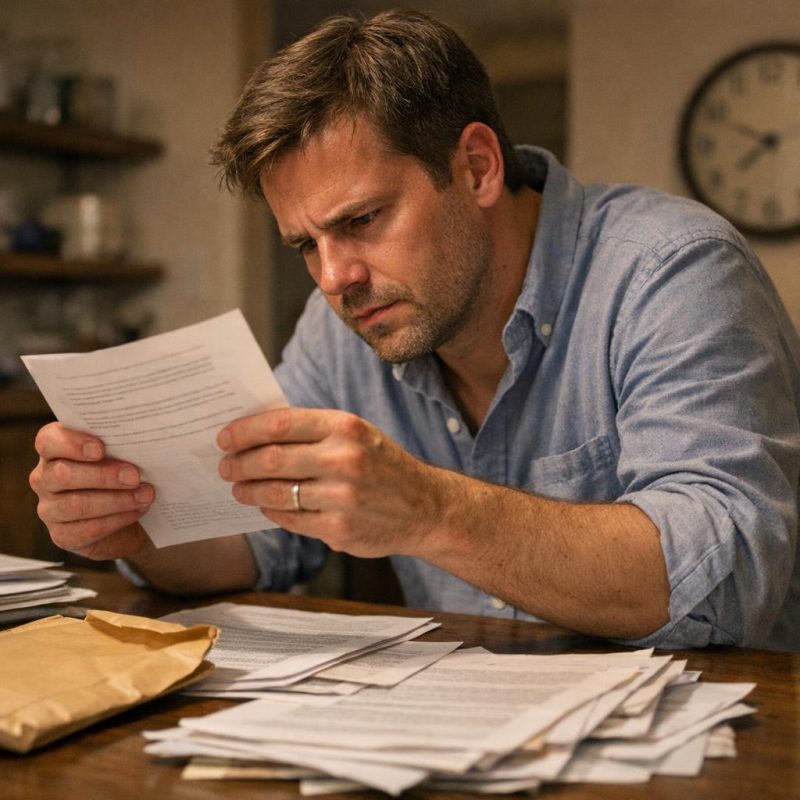 Image by RM AI
The Phone Number
I grabbed my phone and pulled up my contacts, my heart hammering in my chest. I compared the number on the document to the one saved under Denise's name. They matched. Digit for digit. Denise's phone number was right there on a property document from 2019, listed as an alternate contact for a lease agreement that Richard had supposedly handled on my behalf. I read the line again, then again, thinking maybe I'd made a mistake. But no—it was definitely her number. Why would Denise's phone number be connected to my property records? She'd never had anything to do with the land. She'd never even asked about it until recently, when I'd mentioned selling it to help her. Had Richard involved her in something? Had she known about these deals? The questions came rapid-fire, each one more unsettling than the last. I thought about her call yesterday, about those 'opportunities' she'd mentioned. My stomach twisted into knots. None of this made sense. My hands started shaking as I tried to make sense of why my daughter's number would be connected to Richard's dealings with my property.
 Image by RM AI
Confronting Denise
I didn't waste time. I called Denise immediately, my thumb hitting her contact before I could second-guess myself. She answered on the third ring. 'Hey, Mom, what's up?' Her voice sounded normal, casual. 'I need to ask you something,' I said, trying to keep my voice level. 'I've been going through property records for the land I sold, and I found your phone number listed on some documents. Documents from 2019, connected to Richard's name. Why would that be?' The silence that followed felt like it lasted forever. I could hear her breathing on the other end of the line. 'Oh,' she finally said. 'That. Yeah, I was going to mention it.' My heart sank. 'Mention what?' 'I met Richard a few months ago,' she said slowly. 'At a financial planning seminar downtown. We got to talking, and when I mentioned my situation—you know, the money troubles—he said he might be able to help. He mentioned he managed some property for you.' I pressed the phone harder against my ear. 'And you didn't think to tell me this?' Denise went quiet for a long moment, then said she'd met Richard a few months ago at a financial planning seminar and he'd offered to help her with her situation.
 Image by RM AI
Too Many Coincidences
After we hung up, I sat there staring at my phone, trying to process what she'd told me. A financial planning seminar. Richard offering to help her. It all sounded reasonable enough when she explained it, but something felt off. The timing was too perfect, too convenient. Denise meets Richard at a seminar 'a few months ago,' right before her eviction crisis. Richard happens to manage property for me. Richard happens to offer help right when Denise desperately needs it. Then I empty Emily's college fund, and suddenly selling the land becomes the obvious solution—the very land Richard has been managing and making deals with for years. I got up and paced my kitchen, my mind connecting dots I didn't want to connect. Maybe it really was just a coincidence. Maybe Richard genuinely wanted to help, and Denise had just been in the right place at the right time. But that phone number on the 2019 document—that was three years before this seminar supposedly happened. How did her number end up in property records from 2019 if she only met Richard recently? I wanted to give her the benefit of the doubt, but a voice in my head kept saying that something didn't add up.
 Image by RM AI
The Financial Planning Seminar
The next morning, I couldn't stop thinking about that financial planning seminar. Denise had mentioned it so casually, like it was just a normal detail. I grabbed my laptop and started searching. She'd said it was at the Riverside Conference Center, some wealth management thing in early spring. I checked their website, looked through their event archives, even called their main office. The woman who answered was really helpful—she pulled up their booking records for the entire year. 'I'm sorry,' she said after a few minutes, 'we haven't hosted any financial planning seminars this year. We had a few corporate retreats and a wedding expo, but nothing like what you're describing.' I thanked her and hung up, feeling that familiar tightness in my chest again. Maybe I'd gotten the venue wrong? I tried searching for any financial planning seminars in our area around that timeframe. Nothing matched what Denise had described. I expanded my search to neighboring cities. Still nothing. My hands were shaking as I closed my laptop. She'd lied to me about where she met Richard. When I called the venue Denise had named, they told me they'd never hosted any such event.
 Image by RM AI
Sleepless Nights
I didn't sleep that night. I just lay there in the dark, replaying every conversation I'd had with Denise since she'd come back into my life. The crying phone call about the eviction. Her reluctance to let me help at first—was that even real, or was it just part of making it seem more believable? I kept thinking about how she'd explained everything so smoothly, always had an answer ready. How she'd mentioned Richard so naturally, like he was just this helpful guy who'd offered assistance. I got up around three in the morning and made tea I didn't drink, just held the warm mug and stared out my kitchen window. Had she seemed surprised when I offered to help? I tried to remember her exact reaction. No, she hadn't been surprised. She'd been... prepared. Like she knew what to say, how to accept it gracefully. And the more I thought about it, the more I realized something that made my stomach drop. I kept thinking about how quickly Denise had accepted the money, how she hadn't questioned where it came from—as if she'd expected it.
 Image by RM AI
Checking the Eviction Notice
I needed to see proof. Real, physical proof that this eviction had actually happened. I texted Denise the next afternoon, keeping my tone light and casual. 'Hey, my accountant is asking for documentation of that payment I made for you. Could you send me a copy of the eviction notice? Just need it for my records.' I watched those three little dots appear and disappear several times. Finally, her response came: 'Oh sure, no problem! I'll have to dig through my files though, I think I packed it away somewhere. Let me look for it tonight and I'll send it over tomorrow.' Tomorrow came and went. No eviction notice. I waited three more days before following up. 'Hey, any luck finding that notice?' I texted. Another delayed response: 'I'm so sorry, I've been swamped at work. I'll definitely get it to you this week!' But the week ended with nothing. I tried calling, but she let it go to voicemail. When she finally texted back, she said she was 'still looking' and would send it 'as soon as possible.' Denise hesitated, said she'd have to look for it, and promised to send it later—but it never came.
 Image by RM AI
The Landlord Who Never Called
Something else hit me while I was waiting for that eviction notice that would never arrive. Denise had told me her landlord called her to confirm receiving the payment. I'd felt so relieved when she'd said that, like everything was officially handled. But sitting at my kitchen table, I realized something that made me feel incredibly stupid. I'd never actually spoken to the landlord myself. Never got a name, a phone number, any direct confirmation. Denise had just told me it was taken care of, and I'd believed her without question. What kind of financial transaction works that way? I'd given her eighteen thousand dollars, and I hadn't verified a single detail with anyone except Denise herself. I thought about all the other things I'd accepted at face value. The eviction timeline. The amount she needed. Richard's involvement. Her entire story about the financial crisis. I hadn't asked to see a single piece of documentation, hadn't made one independent phone call to verify anything. I'd just... trusted her. Because she was my daughter. Because I felt guilty. I felt sick thinking about all the details I'd simply accepted without verifying.
 Image by RM AI
Sarah's Warning
Sarah called me on a Tuesday afternoon. I almost didn't answer because I was so wrapped up in my own spiraling thoughts, but something made me pick up. 'Carol, hi,' she said, and I could hear something uncertain in her voice. 'I wanted to let you know—someone's been calling the office asking about your property. Wanting to know when it might be available for sale, asking about the acreage and what it might go for.' My throat went dry. 'Who was it?' There was a pause. 'Well, that's the thing. She said she was a family member, that she was calling on your behalf to get preliminary information. She gave her name as Denise.' I had to sit down. 'When was this?' I managed to ask. 'About a month ago, actually. I didn't think much of it at the time—family members call for each other all the time. But then when you came in to discuss selling, I realized... you hadn't mentioned that anyone else knew about it.' A month ago. Before I'd even told Denise about needing to sell the land. Before the whole crisis had escalated. When I asked who it was, Sarah said the inquiry came from someone claiming to be a family member—and she'd given my daughter's name as Denise.
 Image by RM AI
Hiring an Investigator
I knew I couldn't handle this alone anymore. I needed someone who could actually investigate, who knew how to find the truth buried under all these lies. I found Marcus through a recommendation from my neighbor whose husband had used him during a business dispute. We met at a coffee shop downtown—he was in his early fifties, quietly professional, with kind eyes that had probably seen every version of human deception. I told him everything. The whole messy story just poured out of me. He listened without interrupting, taking notes on a small pad. When I finished, he was quiet for a moment. 'I'll need access to whatever documentation you have,' he said. 'Bank statements, phone records if you can get them, any texts or emails from Denise and Richard. I'll start by verifying their connection, looking into this so-called seminar, checking if there's any paper trail linking them before this crisis started.' I gave him everything I had. He looked through it carefully, and I watched his expression—completely neutral, giving nothing away. Marcus said he'd need a week, maybe two, and warned me that whatever he found might be hard to hear.
 Image by RM AI
Waiting for Answers
Have you ever waited for news that you knew would change everything? That's what those next days felt like. I couldn't focus on anything. I'd start doing laundry and forget what I was doing halfway through. I'd sit down to read and realize I'd been staring at the same page for twenty minutes. Every time my phone buzzed, my heart would jump, but it was never Marcus. Just spam calls and grocery store coupons and texts from Emily that I couldn't bring myself to respond to properly. How could I talk to her when I still didn't know the full truth of what I'd done? The nights were worse. I'd lie awake imagining what Marcus might find. Maybe I was wrong about everything—maybe there was a reasonable explanation and I'd been paranoid for nothing. But then I'd remember that fake seminar, that eviction notice that never came, Denise asking about the property before I'd mentioned it. Each piece of evidence felt like a weight pressing down on my chest. I kept checking my phone, hoping for an update, but also dreading what it would say.
 Image by RM AI
Denise's New Expenses
I wasn't trying to spy on Denise. I really wasn't. But I couldn't help checking her social media—something I rarely did before all this. What I saw made my blood run cold. Photos from the weekend. Denise at some trendy restaurant downtown, the kind of place where appetizers cost thirty dollars. She was with friends I didn't recognize, everyone dressed up, cocktails on the table. The caption read: 'Finally treating myself! 🥂' There were more posts. New shoes—I recognized the brand, the ones that cost several hundred dollars. A picture from what looked like a spa day. Another from a boutique hotel an hour away, tagged as a 'much-needed getaway weekend.' These were all from the past two weeks. Two weeks after I'd given her eighteen thousand dollars to save her from eviction. Two weeks after she'd called me crying about losing everything. I sat there staring at my phone, scrolling through image after image of someone who clearly wasn't in any financial crisis. The photos showed her laughing at an expensive restaurant, and I couldn't reconcile that image with the desperate woman who'd called me crying about eviction.
 Image by RM AI
The First Report
Marcus called me three days after I'd hired him. I was sitting in my car in a grocery store parking lot, staring at a shopping list I couldn't focus on, when my phone rang. His voice was careful, measured in that way people use when they're about to deliver bad news. 'Carol, I've got a preliminary report for you,' he said. 'I've documented multiple meetings between your ex-husband and your daughter over the past six months.' Six months. The word hung in the air between us. 'This was well before any eviction crisis,' he continued. 'They met at least seven times that I can confirm—coffee shops, a restaurant, once at his office.' My hands were shaking. I gripped the steering wheel to steady them. 'What were they discussing?' I asked, though I wasn't sure I wanted to know. 'I'm still working on that,' Marcus said. 'But Carol, there's more. Much more. I want to verify everything before I give you the full picture, but I thought you should know this much now.' He said there was more, much more, but he wanted to verify everything before giving me the full picture.
 Image by RM AI
Pieces Falling Into Place
I couldn't sleep that night. Instead, I sat at my kitchen table with a notebook and started creating a timeline. On one side, I wrote down everything I could remember about Richard's activities on the land—when the surveying started, when the equipment showed up, when the environmental testing happened. On the other side, I wrote down Denise's crisis: the first panicked call, the eviction notice, the desperate pleas. I drew lines connecting events, noting dates and sequences. The surveying had intensified in January. Denise's first call about being behind on rent came in February. The environmental testing happened in early March. The eviction notice arrived in mid-March. Richard's permits were filed in late March, right after I'd given Denise the money. Each event flowed into the next with precision. There were no gaps, no pauses, no randomness. Looking at my timeline spread across the table, the pattern was undeniable. The timing aligned too perfectly to be coincidence—it looked choreographed.
 Image by RM AI
The Email Trail
The email arrived from Marcus the next morning. No subject line, just 'See attached.' I opened the PDF on my phone and started reading. They were email exchanges between Richard and Denise, dating back months. 'The property situation is more complicated than expected,' Richard had written in January. 'We need to approach this carefully.' Denise's response: 'She doesn't even remember she owns it. If we can get her to act quickly, she won't have time to research the value.' Another exchange from February showed them discussing tactics. 'Create urgency,' Richard advised. 'Make it personal, emotional. That's how we get the owner to act without thinking.' The owner. They kept using that word. The owner. Never 'Carol.' Never 'your mother.' I was a problem to solve, an obstacle to work around, a target to manipulate. I scrolled through page after page of cold, calculated discussion about how to handle me, manage me, exploit me. I was 'the owner,' and I realized they'd been talking about me like I was a problem to solve, not a person.
 Image by RM AI
The Fake Crisis
Marcus called again that afternoon. 'I need to tell you something,' he said, and I could hear the tension in his voice. 'The eviction notice—I tracked down Denise's landlord. She's never been late on rent. Not once in three years.' The words hit me like a physical blow. 'What?' I managed to whisper. 'There was no eviction,' Marcus confirmed. 'The notice was fabricated. I'm not sure how she created it, but it's not legitimate. She was never in danger of losing her apartment.' I thought about that night she'd called me, sobbing so hard she could barely speak. The fear in her voice when she talked about her children being homeless. The desperation, the shame, the way she'd said she'd never forgive herself if I helped her. Every word, every tear, every moment of that phone call played through my mind with new clarity. My daughter had staged an entire crisis, complete with tears and fear, knowing exactly how I would react.
 Image by RM AI
The College Fund Was Always the Target
It was like a puzzle suddenly coming into focus, all the pieces I'd been staring at finally forming a clear picture. Denise hadn't needed eighteen thousand dollars because she was in trouble. She'd needed me to drain Emily's college fund. Specifically that. Why? Because I didn't have eighteen thousand dollars in savings—I'd told her that immediately. The only way I could come up with that amount quickly was by liquidating the fund. And once the fund was empty, once that safety net was gone, I'd have no choice but to sell the land when the environmental remediation bill came due. She'd known about the land all along. She'd known what Richard was planning. She'd known I wouldn't be able to afford both the college fund repayment and the cleanup costs. The eviction was never the point—it was the mechanism. It wasn't about saving her from eviction—it was about creating the crisis that would make me liquidate the one asset I'd forgotten I had.
 Image by RM AI
How Long Has She Known?
The question kept circling through my mind like a vulture: how long has she known? Not just about the land—that timeline was becoming clear. But about everything. How long had she been aware that I'd respond to her crises by emptying whatever resources I had? How many of her past emergencies had been real, and how many had been tests, experiments to see what I'd sacrifice? There was the car repair crisis three years ago when I'd drained my vacation savings. The medical bill two years ago that I'd covered by taking on extra shifts for months. The rent shortage last Christmas that I'd solved by returning my own gifts and cashing in gift cards. Had any of those been genuine? Or had she been learning, practicing, perfecting the art of extracting money from me while making it look like maternal love? Each memory felt contaminated now, suspicious and untrustworthy. I started second-guessing every rescue, every late-night phone call, every tear-filled plea over the years.
 Image by RM AI
The Full Report
Marcus arrived at my house with a folder three inches thick. We sat at my kitchen table, and he walked me through everything, page by page. Phone records showing dozens of calls between Denise and Richard starting last November. Text messages coordinating their meetings. Emails discussing 'the plan' and 'the timeline.' Bank records showing Denise had received five thousand dollars from Richard in January—probably to cover her participation. There were photographs of them meeting, documents showing Richard had researched the land's value and development potential months ago. Marcus had even found the real estate agent they'd been working with. 'They had a buyer lined up,' Marcus explained, sliding another document across the table. 'A development company willing to pay two hundred thousand for the property—well above its current assessed value. Richard would handle the sale as your representative since you'd given him power of attorney. Denise would get a cut. And you?' He paused, meeting my eyes. 'You'd be left holding the environmental liability while they split the profit.' But the worst part was what he showed me next: evidence that they'd already lined up a buyer willing to pay above market value, and they planned to split the profit while leaving me with the legal liability.
 Image by RM AI
The Orchestrated Betrayal
I sat alone in my house after Marcus left, staring at the evidence spread across my table, and the full picture crystallized with horrible clarity. This wasn't a series of unfortunate events or bad decisions. This wasn't Richard being opportunistic and Denise being desperate. This was orchestrated. Denise had worked with Richard for months, planning every detail. She'd known about the land from the beginning—probably Richard had told her about it, maybe even offered her a cut if she could help get me to sell. She'd created the eviction crisis knowing I didn't have the cash, knowing I'd have to drain Emily's college fund, knowing that would leave me vulnerable when the environmental bill came. She'd timed her crisis perfectly, cried on cue, played her part flawlessly. And I'd done exactly what she'd calculated I would do, because that's what mothers do—we sacrifice everything to save our children. My daughter hadn't made a mistake or fallen into crisis—she'd coldly calculated how to exploit my love for her and my grandchildren, and she'd almost gotten away with it.
 Image by RM AI
The Confrontation I Couldn't Avoid
I picked up my phone and called Denise before I could talk myself out of it. My hands were shaking, and I could barely keep my voice steady when she answered. 'We need to meet,' I told her. 'I know everything, Denise. I know about you and Richard, about the planning, about all of it.' There was silence on the other end, and I braced myself for tears, for denials, for the desperate voice I'd heard so many times before. But when she finally spoke, her voice was completely different—calm, almost flat. 'Okay,' she said simply. 'Where?' No shock. No panic. No crying about misunderstandings or begging me to believe her. Just that cold, steady tone, like we were scheduling a routine appointment. 'The coffee shop on Main Street,' I said. 'Tomorrow at two.' She agreed without hesitation, and we hung up. I sat there staring at my phone, and the reality hit me like a punch to the gut: Denise agreed to meet, but her voice was cold and steady, with none of the tears or desperation I'd heard before—because she'd never been desperate at all.
 Image by RM AI
Face to Face With the Truth
I got to the coffee shop early and chose a table in the back corner where we wouldn't be overheard. When Denise walked in, she looked composed, almost bored, nothing like the frantic mother I'd rescued from eviction. I laid out everything Marcus had uncovered—the phone records, the timeline, the coordination with Richard, the fact that she'd never actually been facing eviction at all. I watched her face carefully, looking for some crack in her composure, some hint of shame or regret. She listened without interrupting, her expression barely changing. When I finished, she was quiet for a moment, then she shrugged—actually shrugged—and said, 'You always helped me anyway, Mom. You always gave me money when I needed it. So what does it matter how I asked?' I felt like I'd been slapped. No apology. No denial. Just this casual dismissal, like manipulating me had been a perfectly reasonable thing to do. 'It matters,' I said, my voice shaking, 'because you made me believe you needed saving.' She took a sip of her coffee and looked at me with something close to pity, like I was the one who didn't understand how the world worked.
 Image by RM AI
The Decision to Go to Authorities
I drove straight from that coffee shop to the police station. My whole body felt numb, like I was watching myself from outside. This was my daughter. I'd raised her, loved her, sacrificed for her. And now I was about to turn her in. The detective who met with me was professional and patient, listening as I explained the entire situation—the fake eviction, the coordination with Richard, the way they'd manipulated me into draining Emily's college fund and selling the land under duress. I showed him the evidence Marcus had gathered. He took careful notes, asked clarifying questions, and didn't judge me for being fooled. When I finished, he looked up from his notepad and said, 'Mrs. Henderson, what they did—the fraud, the misrepresentation, the unauthorized land dealings—these could result in serious charges. You understand that?' I nodded, my throat tight. 'I understand,' I said. And I did. I understood that I was about to destroy what was left of my relationship with Denise. I understood that her children might never forgive me. But I also understood that letting this go would mean accepting that love could be weaponized without consequences.
 Image by RM AI
Untangling the Property
The legal process that followed was exhausting. I spent weeks working with attorneys and investigators, going through every document related to the property sale, proving that Richard had acted without proper authorization and that I'd been deliberately misled. They subpoenaed phone records, email exchanges, and financial transactions. Each meeting felt like reliving the betrayal all over again, but I kept going because clearing my name meant clearing the path to making things right with Emily. My attorney was a sharp woman in her fifties who reminded me a little of myself—tired but determined. She walked me through each step, explaining how we'd prove I wasn't complicit in Richard's scheme, how we'd document Denise's involvement, how we'd untangle the mess they'd created. Some days I wanted to give up, to just accept the loss and move on. But every time I thought about Emily's face when she'd learned what I'd done with her college fund, I found the strength to keep pushing. The process was slow and painful, but with each document cleared, I felt like I was taking back something that had been stolen from me.
 Image by RM AI
Richard's Consequences
The day the authorities formally charged Richard with fraud and unauthorized use of property, I was asked to be present at the courthouse. I hadn't seen him since our final meeting at his office, and when he walked in flanked by his attorney, he looked smaller somehow, diminished. His usual confidence was gone, replaced by the hunched posture of someone who knew the game was over. He glanced at me once, and I saw something in his eyes—not remorse exactly, but maybe acknowledgment. The charges were read aloud: multiple counts of fraud, misrepresentation, unauthorized property transactions. His attorney tried to argue about technicalities and misunderstandings, but the evidence was overwhelming. I sat in that courtroom watching the man I'd once trusted face the consequences of his actions, and I felt this complicated mix of emotions I couldn't quite name. Part of me felt vindicated—he'd tried to exploit me, to profit from my desperation, and now he was being held accountable. But another part felt sad for the time I'd lost believing in people who'd only wanted to use me.
 Image by RM AI
Denise's Choice
Denise's attorney reached out to negotiate a plea deal. In exchange for testimony against Richard and full repayment of the money she'd received from their scheme, the prosecutors would reduce her charges. But there was one non-negotiable condition: she had to publicly acknowledge what she'd done, in court, on the record. I was present the day she accepted the deal. She walked into the courtroom dressed conservatively, her expression neutral, accompanied by her lawyer. The judge asked her directly if she understood the terms and if she was admitting to her role in defrauding me. 'Yes, Your Honor,' she said clearly, without hesitation. The judge went through each element of the plea agreement, and Denise confirmed them all—the fake eviction, the coordination with Richard, the deliberate exploitation of her relationship with me. Through the entire proceeding, she never once looked in my direction. Not when she acknowledged the fraud. Not when she agreed to repay the money. Not when the judge accepted her plea. When she took the deal, she didn't look at me once—and I realized my daughter had become someone I didn't recognize.
 Image by RM AI
The Property Finally Sells
With the criminal charges resolved and the title finally cleared of Richard's fraudulent claims, I was able to put the property back on the market—this time legitimately. The process was straightforward this time, transparent, with proper documentation and legal oversight. The buyer was a development company that had actually been interested in the land all along, before Richard had manipulated the situation. They paid fair market value, which was substantially more than Richard's initial 'deal' would have given me. When the money transferred into my account, I just sat there staring at the number on my screen. It was enough to fully restore Emily's college fund, enough to cover the environmental remediation costs I'd been dreading, enough to rebuild my savings and have some security again. I should have felt relief, maybe even joy. Instead, I felt hollow. The money came through, enough to restore Emily's college fund and then some—but I knew the money wasn't the hardest part to replace.
 Image by RM AI
Reaching Out to Emily
I drafted and deleted about twenty different messages to Emily before I finally found the words. 'Emily, I know I don't deserve your time or your forgiveness, but I'm asking if you'll meet with me. I want to explain everything that happened—the full truth about Denise and Richard, about the property, about why I made the choices I did. I've restored your college fund in full. I know that doesn't fix what I broke between us, but I want to try to begin making things right. Please.' I hit send before I could overthink it, then watched my phone obsessively for the next hour. Nothing. The next day, still nothing. By the third day, I'd started to accept that Emily might never forgive me, that some betrayals are simply too deep to overcome, that I'd have to live with having lost both my daughters in different ways. I was making dinner, trying to distract myself, when my phone finally buzzed with a response. My hands shook as I picked it up and read her message: 'Okay. But I want the full truth.'
 Image by RM AI
The Meeting I'd Been Dreading
We met at a small café on the edge of town, the kind of place where no one would recognize us or interrupt. Emily was already there when I arrived, sitting at a corner table with her hands wrapped around a coffee cup like she needed something to hold onto. I sat down across from her and just started talking. I told her everything—about the land sale, about Richard's fraud and the fake property values, about Denise orchestrating the whole thing to destroy our family. I explained how I'd taken the college fund in desperation, how I'd believed I was saving one daughter while I was actually being manipulated. I didn't try to make excuses or soften the truth. She deserved to hear it all, exactly as it happened. Emily listened without interrupting, her face completely unreadable, and I couldn't tell if she was processing or shutting down. When I finally finished, there was this long, terrible silence. Then she looked directly at me and said, 'You should have told me the truth from the beginning,' and I knew she was right.
 Image by RM AI
Restoring What Was Taken
The financial restoration took less than a week to complete. I transferred every dollar back into Emily's college fund account, plus additional money to cover what the fund should have earned over the years if I'd left it alone. I calculated the interest, the potential investment growth, everything I could think of to make the numbers right. It came out to more than the original amount, but that felt appropriate—she'd lost more than just money. When I showed her the bank statement, sitting in my kitchen with the paperwork spread between us, she studied it carefully. Her finger traced down the columns of numbers, checking each line. Then she nodded slowly, and for a moment I thought maybe this was enough. But she looked up at me with those serious eyes she'd had even as a child, and she said it would take more than money to rebuild what we'd lost. The words weren't angry or cruel—they were just honest. And somehow that made them harder to hear.
 Image by RM AI
Small Steps Forward
Over the following months, we started meeting for coffee every few weeks. Emily set the boundaries—when we'd meet, what we'd talk about, how much contact felt manageable. I followed her lead completely, grateful for whatever time she'd give me. Our conversations were different now. Instead of the surface-level updates we'd always exchanged, we talked about real things. She told me how betrayed she'd felt, how the money wasn't even the worst part—it was discovering that I hadn't trusted her enough to tell her the truth about what was happening. I apologized, over and over, but I also listened. I learned things about my daughter I'd never known because I'd never really asked. We talked about her work, her friends, her life that had continued without me in it. Sometimes the conversations were uncomfortable. Sometimes we'd sit in silence, both of us unsure what came next. But slowly, carefully, something was rebuilding between us. It wasn't the relationship we'd had before—it was something different, something built on truth instead of assumptions, and in some ways that made it stronger.
 Image by RM AI
The Lessons That Cost Everything
Looking back now, I understand that the worst consequences aren't always the ones you see coming in the moment. They're the ones tied to choices you made years ago, decisions that seemed reasonable at the time, quietly compounding in the background until the day they finally catch up to you. I'd spent so long trying to keep everyone happy, trying to be the peacemaker, that I'd never learned to set real boundaries or demand honesty—from others or from myself. Denise had exploited that weakness perfectly. She'd known I'd exhaust every option before I'd ever confront her directly. And she'd been right. I'd lost one daughter to her manipulation and nearly lost another to my own poor choices. But in the wreckage of everything that fell apart, I found something I'd been missing all along: the courage to face hard truths, and the understanding that real love sometimes means letting go of the people who refuse to change.
 Image by RM AI
KEEP ON READING

20 Weirdest Historical Objects in Museums
Check Out the Pickled Heart of a Saint. Museums carry…
By Rob Shapiro Oct 1, 2025
20 Ocean Mysteries We Still Haven’t Solved
Unanswered Questions Of The Ocean. The ocean covers most of…
By David Davidovic Sep 1, 2025
10 Phenomenal Mythical Creatures & 10 That Are Just Plain…
Legends Both Majestic And Peculiar. Do you ever wonder why…
By Chase Wexler Oct 1, 2025
20 Historical Predictions That Turned Out To Be True
Crystal Ball Moments In History. Do you wonder what it's…
By Chase Wexler Sep 1, 2025
10 Presidents Who Never Served In The Military & 10…
Commanders And Civilians In Office. Power can rise from very…
By David Davidovic Sep 1, 2025
20 Wars That Could Have Ended Much Sooner Than They…
Wars That Lasted Far Too Long. Wars are often remembered…
By David Davidovic Sep 1, 2025