

I Signed My Husband's Predatory Divorce Papers Without a Fight—He Didn't Realize He'd Just Trapped Himself for 12 Years
I Signed My Husband's Predatory Divorce Papers Without a Fight—He Didn't Realize He'd Just Trapped Himself for 12 Years
The Rhythm of Tuesday
Tuesdays had their own rhythm in our house, and I'd come to depend on it. I had the cutting board out by five-thirty, the onions already halved, the garlic pressed flat under the side of the knife. From the living room I could hear Leo narrating a battle between his stegosaurus and a T-rex, complete with sound effects — the little roars he made in the back of his throat that never failed to make me smile. The kitchen smelled like olive oil and thyme, and the late-afternoon light came through the window at that low, golden angle that made everything look warmer than it was. I checked the clock above the stove: six-ten. Mark usually pulled into the driveway around six-thirty, sometimes six-forty-five if the 405 was bad. I set a fourth burner to low and wiped my hands on the dish towel hanging from the oven handle. Leo's dinosaurs clattered against the hardwood floor, and he laughed at something only he understood. The house felt the way it always felt on a Tuesday — ordinary, contained, mine. I turned back to the stove and let the quiet settle around me.
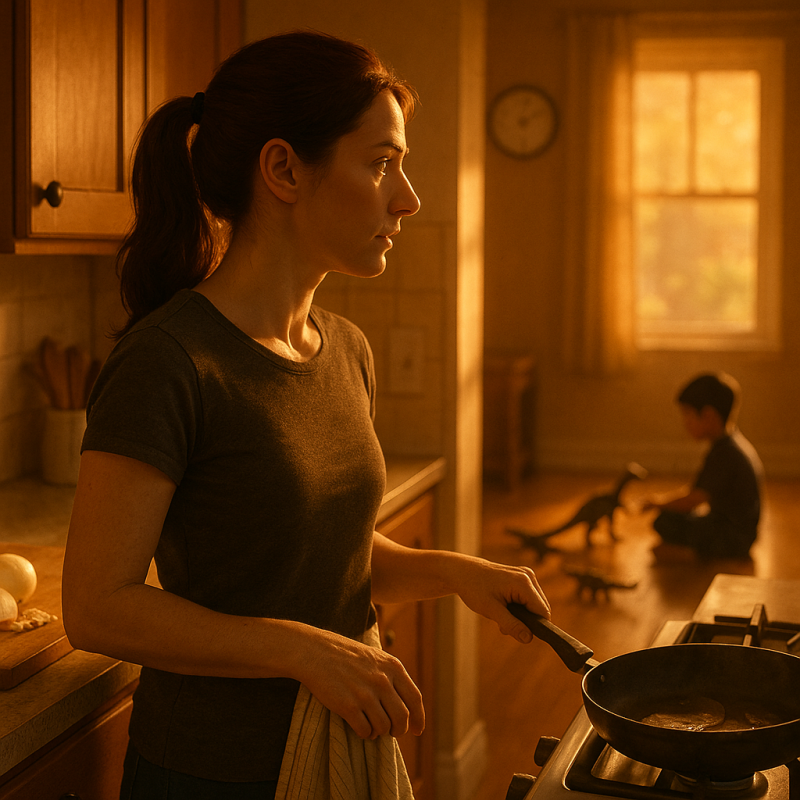 Image by RM AI
The Weight of Silence
I heard the front door open at six-forty-two — I remember because I'd just glanced at the clock again. I called out a hello without turning around, the way you do after ten years, expecting the usual response: his keys hitting the bowl by the door, maybe a comment about traffic, the sound of him loosening his tie. None of that came. I turned from the stove and he was already in the kitchen, still in his coat, moving past the island without looking at me. Not a glance. Not a nod. I said his name, and he didn't answer. He set something down on the oak table — I registered it as a folder, manila, thick — and then he just stood there with his back to me for a moment before he pulled out a chair. I'd seen Mark come home tired before. I'd seen him come home frustrated, distracted, checked out after a brutal week. This was different, though I couldn't have said exactly how. The air in the room felt heavier than it should have. He sat down and pulled out the chair across from him, and when I took a step toward the table, he still hadn't looked at me once.
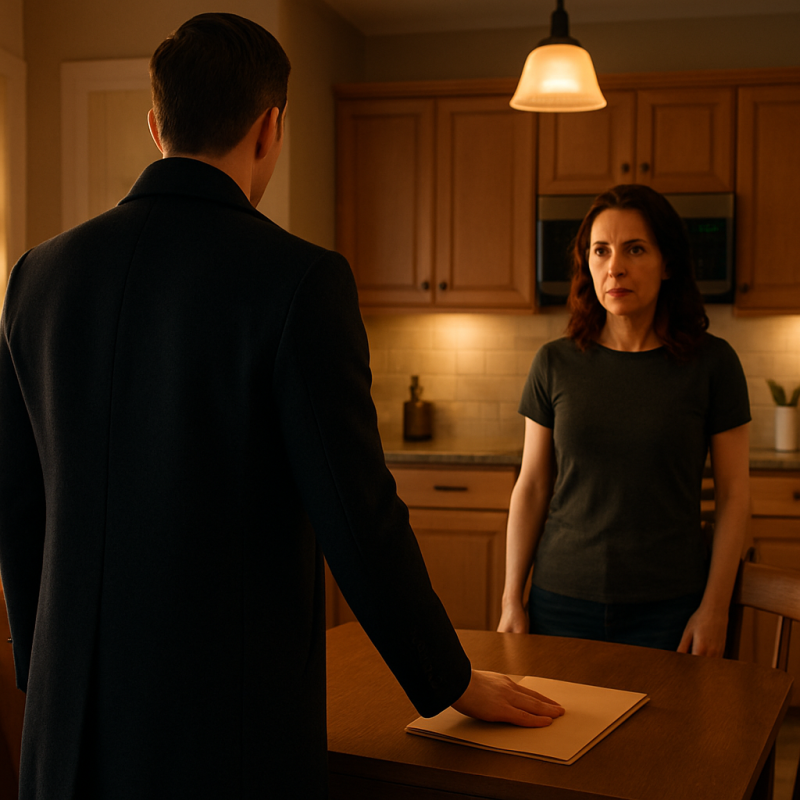 Image by RM AI
The Folder
I set the knife down on the cutting board and wiped my hands on the dish towel, more out of habit than anything else. The folder was sitting in the middle of the oak table, centered almost deliberately, a rubber band around it. I looked at it, then at Mark's face. He was staring at the table just past the folder, jaw set, not offering a word. My mind started cycling through possibilities the way it does when something feels wrong but you can't name it yet — a problem at work, maybe, something legal, something with his parents. I took a step closer to the table and stopped. The folder had a law firm's name printed in the upper left corner, small and neat, and something about seeing that made my stomach drop before I'd even processed why. I looked at Mark again. He hadn't moved. Hadn't shifted in his chair, hadn't looked up, hadn't given me anything to work with. The stove was still on behind me — I could hear the low simmer of the sauce — but the kitchen felt colder than it had a few minutes ago. I stayed where I was, and the folder sat between us, and neither of us said a word.
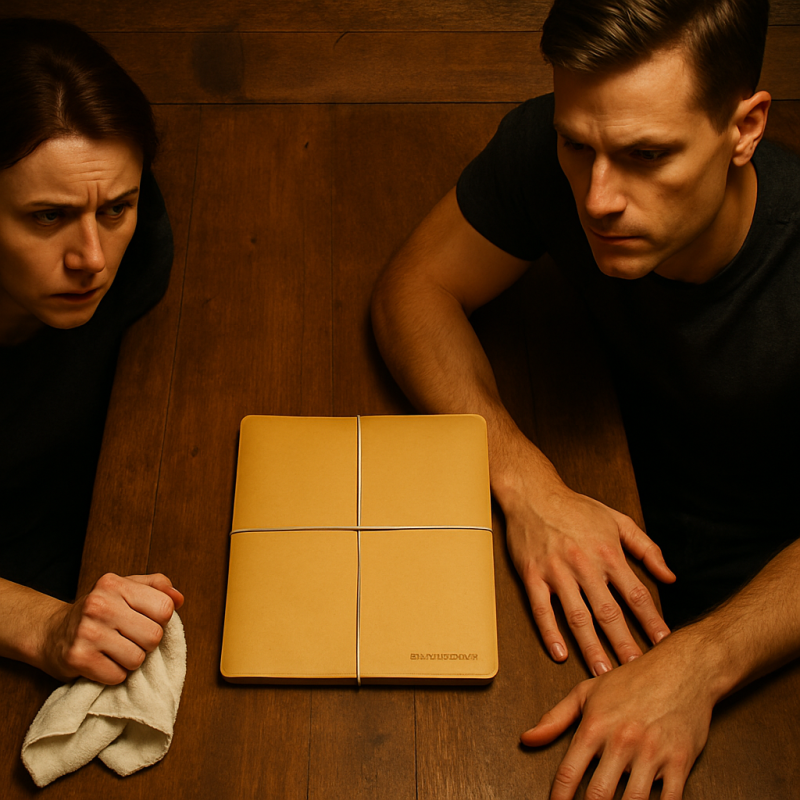 Image by RM AI
Clean Break
He spoke without looking up. 'I want a divorce.' Just like that — four words, flat and even, the way you'd read a line off a spreadsheet. I felt my breath catch somewhere in my chest and stay there. He kept going before I could find any words of my own. He said he'd thought about it carefully, that he wasn't interested in counseling or a trial separation, that those things only prolonged the inevitable. He used the phrase 'clean break' twice. He talked about 'moving forward' and 'restructuring' like he was presenting a quarterly report to a board room. I was still standing by the counter, one hand resting on the edge of it, and I remember thinking that I should sit down, that my legs felt strange, but I didn't move. His eyes stayed fixed on the folder the entire time. Not once did he look at me — not when he said the word divorce, not when he said my name in the middle of a sentence about assets, not when he finally stopped talking and let the silence come back in. He reached out and tapped the folder once with two fingers, a small, precise gesture, like he was directing my attention to an exhibit. I couldn't stop hearing the way he'd said it — all of it — like none of it cost him anything at all.
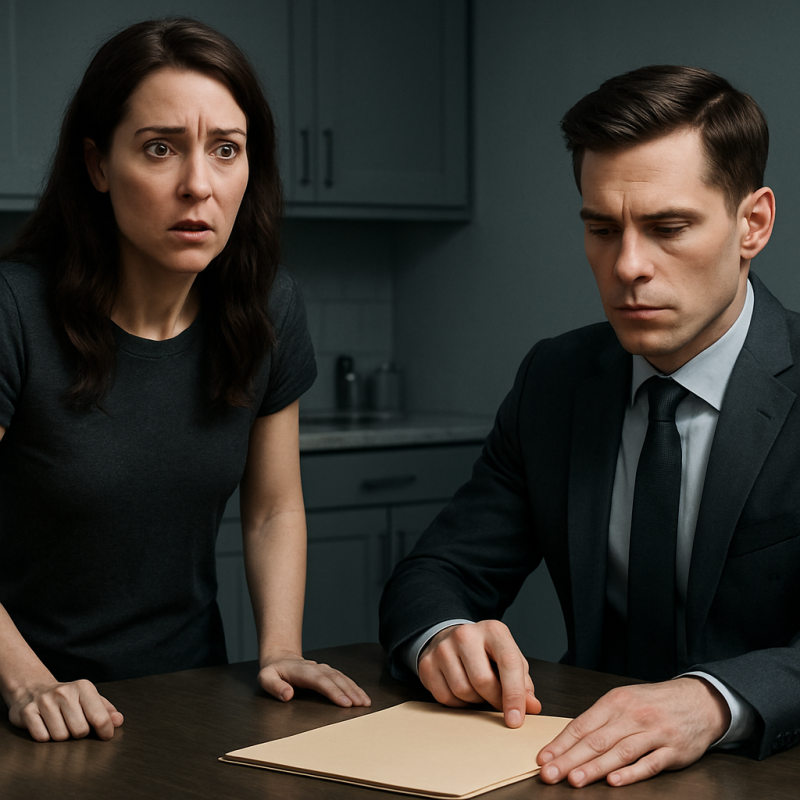 Image by RM AI
Opening the File
My hands were shaking when I reached across the table and pulled the folder toward me. I had to work the rubber band off twice because my fingers kept slipping. Mark sat back in his chair and crossed his arms, watching, and I made myself not look at him. The cover page was on law firm letterhead — a name I didn't recognize, an address in Century City. Below that, in bold type, were our full names: his first, then mine, then the word 'Dissolution.' I turned to the next page. There was a heading that read 'Division of Marital Assets' and below it a numbered list that started with the house. I read the first entry and then the second and then I stopped and went back and read them again, because I wasn't sure I was understanding what I was seeing. Mark hadn't moved. I could feel him watching me from across the table, arms still crossed, waiting with a patience that felt practiced. I turned to the next page, and the list continued. Then the next page, and it continued again. The assets stretched across three full pages, each line itemized and assigned, and I kept reading because I couldn't make myself stop.
 Image by RM AI
Scorched Earth
The house was listed under his name. Both cars — the Audi I drove every day and the Range Rover he kept in the garage for weekends — listed under his name. The mountain cabin we'd bought the year Leo was born, the one where we'd spent every Thanksgiving for six years, listed under his name. The joint savings account, the investment portfolio we'd built together over a decade, the money market account I'd helped fund by going back to work part-time when Leo started preschool — all of it, his. I read each line slowly, thinking I must be misreading something, that there had to be a page I was missing that balanced this out somehow. Mark hadn't moved from his chair. I could hear the sauce still simmering on the stove behind me, and some distant part of my brain registered that I should turn it off, but I couldn't make myself stand up. I turned to the final page of the asset section and ran my finger down to the last line. Under my name, in the same clean legal font as everything else, was a single entry: the furniture from the guest bedroom and a checking account with a balance I recognized as just enough to cover two months of groceries.
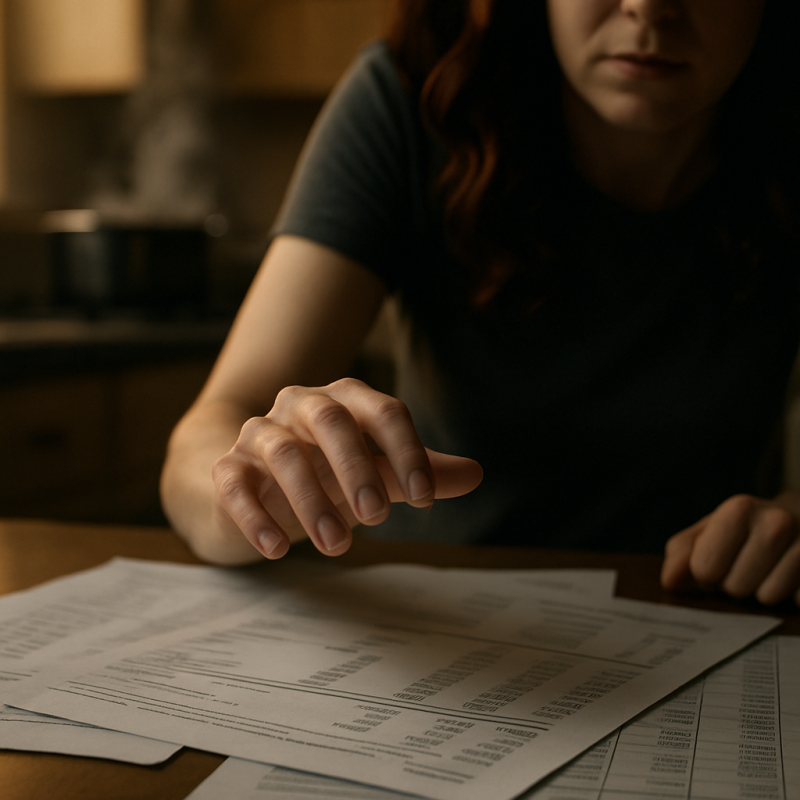 Image by RM AI
The Custody Page
I don't know how long I sat there staring at that last line. Long enough that the sauce on the stove started to smell like it was catching. I turned the page anyway. The next section was headed 'Custody and Parental Responsibilities,' and I felt my heart start to pound the moment I saw Leo's full name typed out in that same cold legal font — his whole name, middle name included, the one we'd chosen together in the hospital. I read the first paragraph slowly, then again faster, trying to make sure I was understanding it correctly. The document granted me full physical custody. It granted me full legal custody. Mark's column under visitation said only 'to be determined,' three words that somehow managed to say almost nothing at all. I looked up at Mark. He was still sitting across from me with his arms crossed, expression unchanged, like he was waiting for me to finish a document he'd already read a hundred times. I looked back down at the page. Leo's full name was right there in the middle of it, in bold, and the words directly beneath it read: full physical and legal custody to mother.
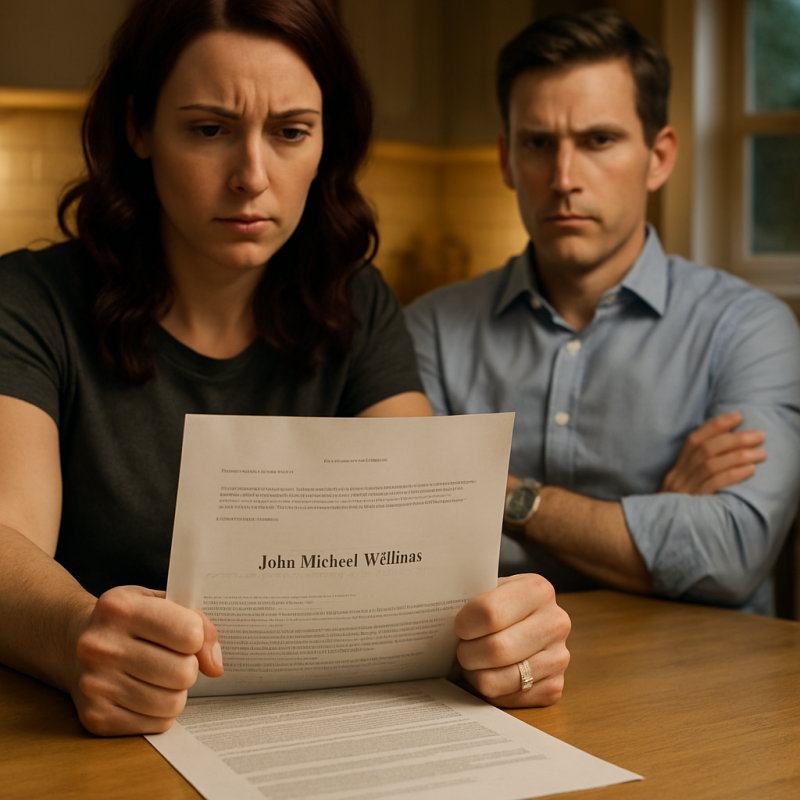 Image by RM AI
Career Trajectory
I looked up from the page and found Mark's face. He was already watching me, and when our eyes met he started talking, the same flat, measured tone as before. He said his professional obligations had become significant. He said his career trajectory over the next several years would require a level of availability and travel that wasn't compatible with the rigors of primary parenthood — he used that phrase, 'rigors of primary parenthood,' like he'd rehearsed it. He said he was being generous by ensuring Leo stayed with me, that it was the most stable outcome for everyone involved. I sat there and didn't say anything. I'm not sure I could have. From the living room, I could hear Leo humming to himself, some tuneless little song he'd been making up all week, the sound of his sneakers scuffing the floor as he moved his dinosaurs around. Mark didn't glance toward the doorway. He didn't pause when the humming got louder for a moment. He just kept talking about logistics and timelines and what he called 'the transition period,' and his voice stayed exactly the same the whole time — the same even, businesslike register he'd used for all of it, with nothing in it that sounded like a father talking about his six-year-old son.
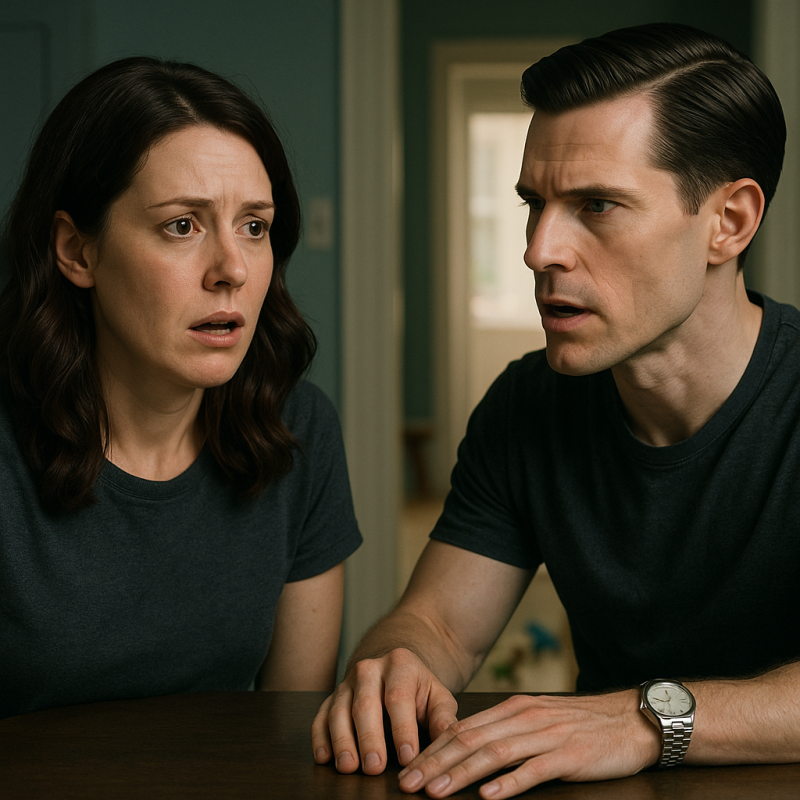 Image by RM AI
The Long Night
I don't know what time I finally stopped watching the ceiling. The clock on my nightstand said 2:14, then 3:07, then 4:52, and I just lay there between those numbers with my eyes open and my hands flat on the blanket beside me. Mark had moved his things to the guest room sometime after dinner — quietly, efficiently, the way he did everything — and I'd heard the door click shut down the hall and that was that. Ten years. I kept turning that over in my head, not dramatically, just the plain fact of it. Ten years and he'd sat across from me and talked about Leo like he was a scheduling conflict. I thought about Leo down the hall in his dinosaur pajamas, one arm probably thrown over the edge of the mattress the way he always slept, completely unaware that anything had shifted. I didn't have answers. I didn't have a plan. I didn't even have the right questions yet. I just had the dark and the clock and the sound of the house settling around me in the quiet.
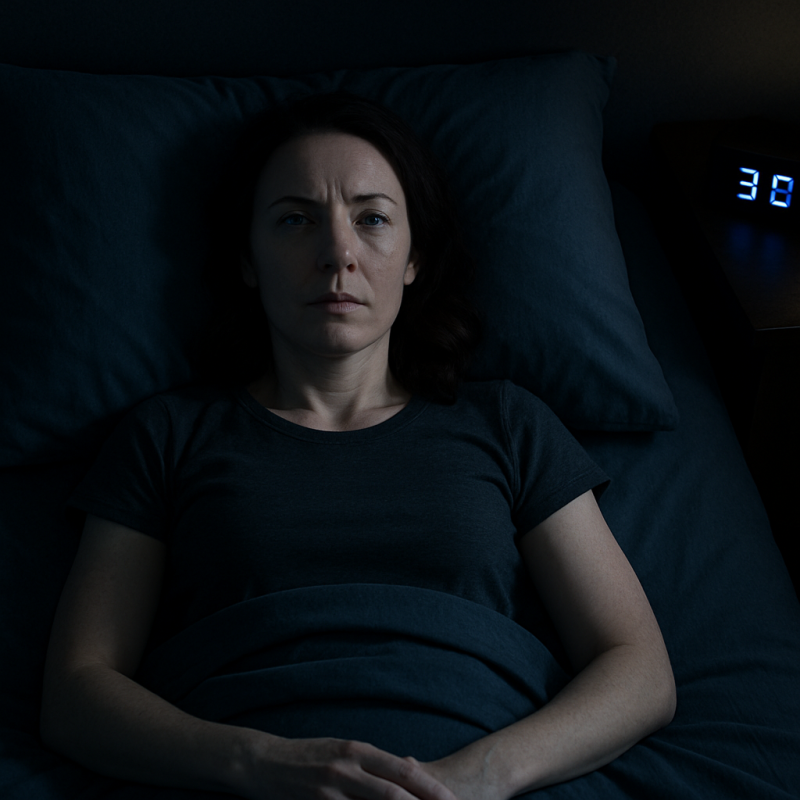 Image by RM AI
Henderson's Office
I hadn't slept more than two hours and I could feel it in my hands as I pushed through the glass door of Henderson's office building the next morning. The receptionist led me down a hallway lined with framed case citations to a mahogany-paneled office that smelled like old paper and leather. Henderson stood to greet me — silver-haired, reading glasses already perched on his nose, a three-piece suit that looked like it had seen a hundred courtrooms. He asked me to sit and I handed him the manila folder without saying much. He put on his glasses, opened the folder, and started reading. I watched his face. For the first page he was neutral, professional, the kind of careful stillness that comes from years of reading bad documents. By the second page his eyebrows had moved. By the third, there was a small tightening around his mouth. He turned each page slowly, going back once to reread a section, and I sat across from him with my coffee going cold in my hands. He reached the last page, set it down, and then he picked up the entire document and dropped it onto the desk in front of him.
 Image by RM AI
Predatory Agreement
Henderson picked up a red pen from the cup on his desk and held it like he'd been waiting for it. He told me to listen carefully because he was going to explain some things about marital property law that I needed to understand. He walked me through equitable distribution — what it meant, what it required, what Mark's proposal did to it. He pointed to the asset division section and shook his head slowly. He used the word 'predatory.' He said it plainly, without drama, the way you'd describe a weather pattern. He said the terms were structured to leave me with the minimum possible while Mark retained the maximum, and that whoever drafted this had done it carefully. He circled the section about the house in red ink. He circled the retirement accounts. He circled the investment portfolio. I tried to follow all of it, writing things down in the small notebook I'd brought, but the numbers kept blurring together and I kept having to ask him to repeat himself. He was patient. He said we would file a countersuit immediately, that we had grounds, that this was not a document I should sign under any circumstances. I looked across the desk at the red marks spreading across the pages, and the pen still in his hand, poised above the next section.
 Image by RM AI
The Countersuit Strategy
Henderson pulled a fresh legal pad from his drawer and spread it open on the desk alongside the marked-up proposal. He walked me through the timeline — response filing within thirty days, then discovery, then depositions. He said we'd subpoena Mark's financial records going back five years, that asset valuation on the business interests alone would take months, that he'd bring in expert witnesses if it came to that. He was confident in a way that felt almost physical, like the room had more gravity when he was talking. I asked about cost. He said we could work out payment arrangements, that he'd seen worse situations turn around, that I shouldn't let the financial piece stop me from protecting what was mine. I nodded and wrote things down and tried to feel what he was feeling, but underneath the notes I kept thinking about eighteen months of this — eighteen months of filings and hearings and Mark's attorney across a conference table, eighteen months of Leo asking questions I didn't know how to answer. I asked Henderson if there was any other way. He looked at me over his reading glasses and said that if I wanted to fight for what I was owed, we were going to drag this through every court available to us.
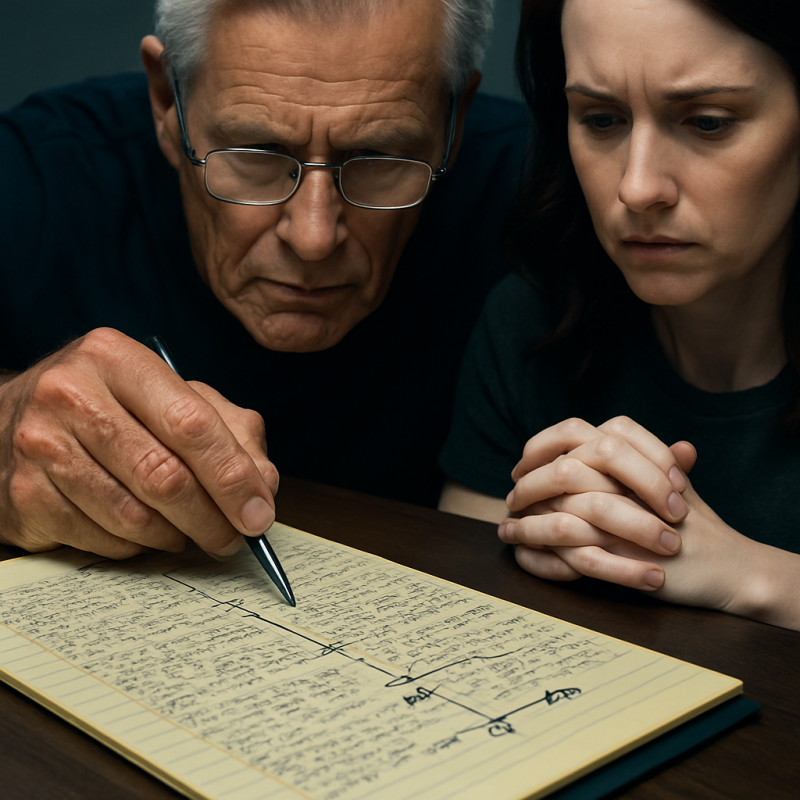 Image by RM AI
Late Night Research
Leo had asked for the dinosaur book twice before he finally went still, one hand curled under his cheek, breathing slow and even. I stood in his doorway for a moment longer than I needed to, then went back downstairs. The kitchen was dark except for the light over the stove. I opened my laptop at the table and started searching — marital property division, equitable distribution, divorce law by state, custody arrangements and modification standards. I found legal aid websites and bar association guides and forum threads from people who sounded exactly as lost as I felt. I took notes in a spiral notebook, underlining things, putting question marks next to terms I didn't understand. I read about how courts weigh contributions to the marital estate, about what 'dissipation of assets' meant, about the difference between legal and physical custody. None of it was simple. None of it resolved into a clear answer. I kept reading anyway, one article leading to the next, the notebook filling up with half-understood fragments. At some point I noticed the clock on the microwave said 1:17 and I hadn't moved in hours. The house was completely quiet around me, and the only light in the room was the pale glow of the screen.
 Image by RM AI
Coffee with Rachel
Rachel was already at the corner table when I walked in, both hands wrapped around a mug, and she stood up the moment she saw my face. We hugged for longer than we usually did. She didn't ask what was wrong right away — she just flagged down the server and waited until I had coffee in front of me. Then she asked. I told her about the papers, about the asset division, about the way Mark had explained the custody arrangement like he was describing a business restructuring. I told her about Henderson and the red pen and the word 'predatory.' Rachel listened without interrupting, which was not something she did easily, and I could see her jaw tightening as I talked. When I finished she reached across the table and put her hand over mine. She said she knew what this felt like — she'd been through her own divorce three years ago, and she said the first weeks were the worst, that the ground felt like it was gone from under you and you just had to keep moving until it came back. She said she wasn't going anywhere. She said whatever I needed. I looked at her across the table, the steam rising from both our cups, and something in the steadiness of her eyes made the tightness in my chest ease just slightly.
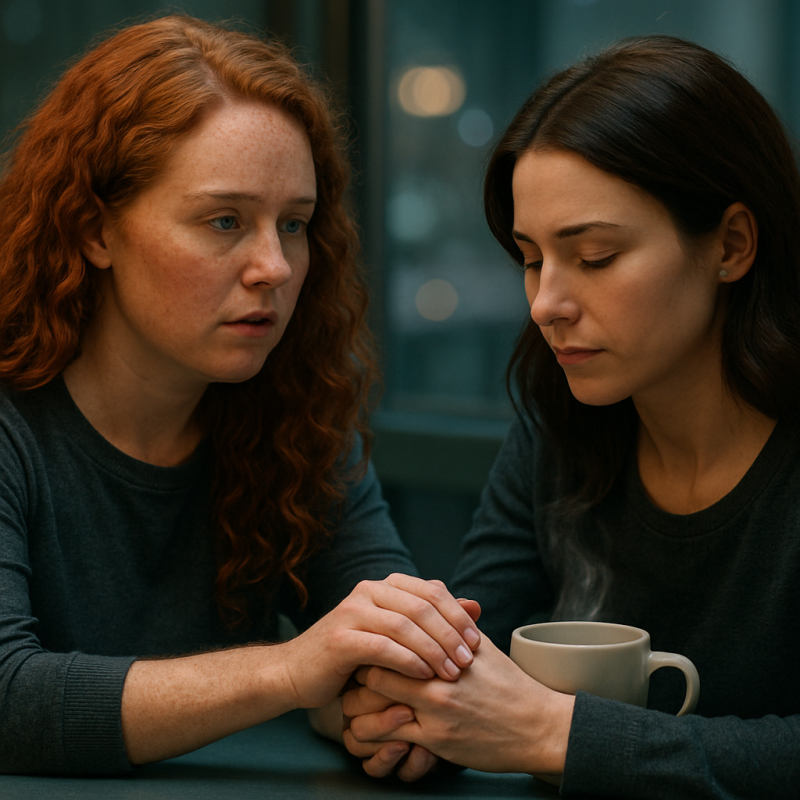 Image by RM AI
The Second Phone
I was looking for the property tax documents — I needed them for Henderson — and I knew Mark kept that kind of thing in the bottom drawer of his study desk. Leo was upstairs with his building blocks, and I could hear the occasional thud and clatter through the ceiling. The drawer was unlocked. I found the tax folder near the back, but underneath it was a stack of credit card statements I didn't recognize — a card I'd never seen before, in Mark's name, with a billing address I didn't know. I almost put them back. Instead I sat down on the floor right there and started reading. There were hotel charges. Restaurant charges on evenings I could place — a Tuesday in October when he'd texted me that his client dinner was running long, a Thursday in November when he said he'd be at the office until midnight. I went through the pages slowly, matching dates to memories, and the picture they made together was not complicated. I took my phone out and photographed every page, front and back, then put the statements back exactly as I'd found them. I was still sitting on the floor when I got to the last page and found a hotel charge from the specific night he'd called me at ten o'clock to say he was sleeping at the office because of an early morning meeting.
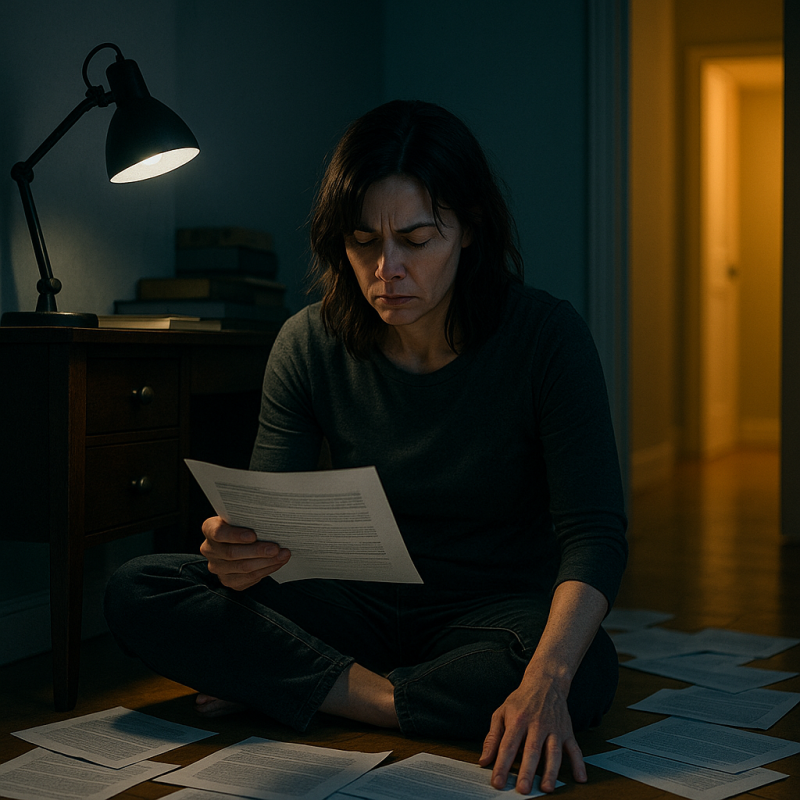 Image by RM AI
The Question
Leo was at a playdate and the house was quiet when Mark came through the front door. I was standing in the kitchen. I had my phone in my hand with the photographed statement already on the screen, and I held it up when he walked in so he could see it without me having to explain. He stopped. He set his bag down on the counter and looked at the screen for a moment, then looked at me. I asked him if there was someone else. He was quiet for long enough that I thought he might try to explain the charges away, find some angle, give me something to push back against. Then he nodded once. Just that — one small, clean nod, like it was a minor point of clarification. I asked how long. He said it didn't matter now. I asked again. He looked past my shoulder toward the window and said, 'Long enough,' and his voice came out flat and even, the same register he'd used when he talked about Leo's custody, the same tone he used for everything that had already been decided.
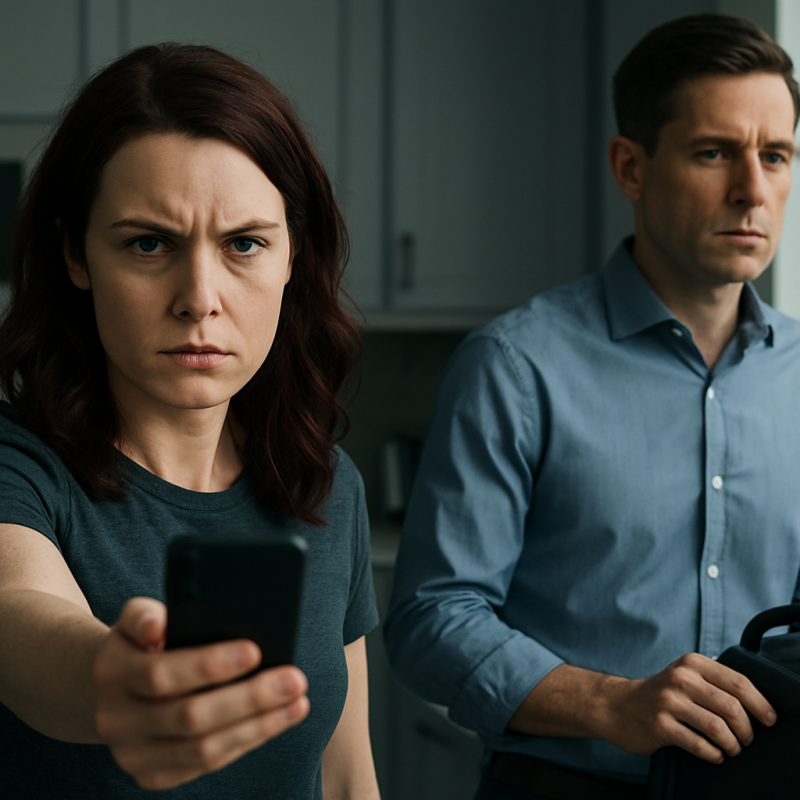 Image by RM AI
It Doesn't Matter Now
I asked him who she was. He picked up his briefcase from the counter and said it didn't matter. I told him it mattered to me. He said the relationship was over regardless of the details, and his voice had that same flat, even quality it always got when he'd already closed a door in his head. I asked if it was someone from his office. He said that wasn't relevant to the legal process. I asked if this was why he wanted the divorce — if this had been building for a long time — and he looked at me the way you look at someone who's asking the wrong questions. He said he was simply moving forward with his life and that I should focus on the paperwork. I stood there with my hands pressed flat against the counter, not shaking, not crying, just watching him. He told me to get a good attorney. Then he picked up his briefcase, turned toward the stairs, and walked away.
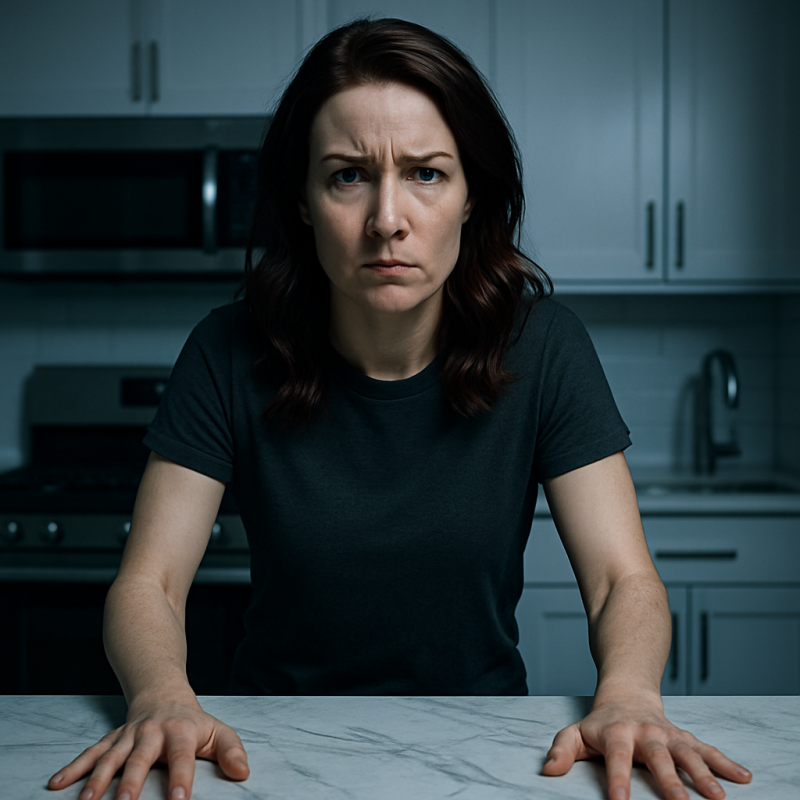 Image by RM AI
Why Doesn't Daddy Play Anymore
Leo and I were building a block tower in the living room that afternoon, the good kind where he'd hand me a block and I'd place it and he'd watch it with total concentration like the whole thing might collapse at any second. He'd been quiet for a while when he looked up at me and asked why Daddy didn't play blocks anymore. I kept my hands steady on the tower. I told him Daddy was very busy with work right now. Leo thought about that for a moment, then said Daddy used to do bedtime stories. He said it the way kids say things — not as an accusation, just as a fact he was trying to fit somewhere. Then he asked, in a voice so small it nearly undid me, if Daddy was mad at him. I pulled him into my lap right there on the floor, blocks scattering everywhere, and I told him no, absolutely not, that Daddy loved him so much. Leo leaned his head against my chest and went quiet again. He didn't ask any more questions. He just looked up at me with those big brown eyes, patient and trusting, waiting for the world to make sense.
 Image by RM AI
Age-Appropriate Words
A few days later I sat down with Leo on the couch after dinner, when the light was going golden through the windows and he was still in his dinosaur shirt from school. I told him that Mommy and Daddy were going to be living in different houses soon. He went very still. The first thing he asked was if he did something wrong. I took both his hands in mine and told him no, that this was about grown-up things, nothing he did, nothing he could have changed. He asked where he was going to live. I told him he'd stay here, in this house, in his room with all his things. He asked if he'd still see Daddy. I said yes, and I meant it, even though I didn't know yet what that would look like. He nodded slowly, the way he does when he's filing something away to think about later. He didn't cry. He just leaned into my side and asked if we could watch a movie. I put my arm around him and said of course. The television came on and the room filled with cartoon noise, but the weight of what I'd just told my six-year-old son settled over everything, quiet and heavy and impossible to lift.
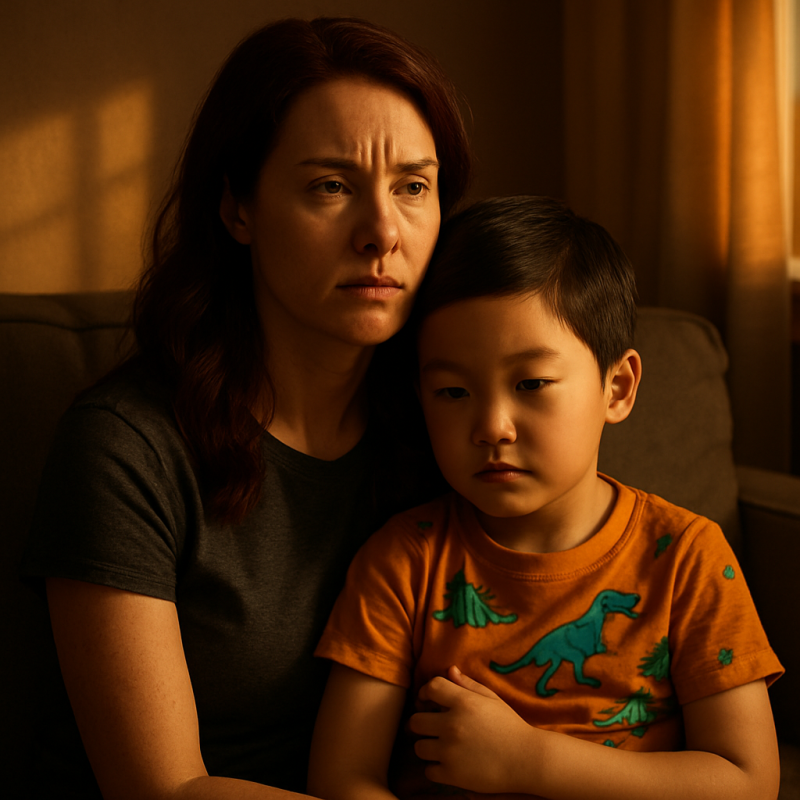 Image by RM AI
Bethany
Leo was in the cart, holding a box of crackers he'd talked me into, when I turned down the produce aisle and saw Mark. He was standing near the apples, and there was a woman beside him — tall, blonde, expensive workout clothes, the kind of put-together that takes real effort to look effortless. She was laughing at something he'd said, her head tilted back slightly, completely at ease. Mark's hand rested on the small of her back like it belonged there. I stopped the cart. Leo said, 'Mommy, there's Daddy,' in his clear, carrying voice, and Mark looked up. He saw me. He gave me one small nod — the same nod he'd given when I asked him if there was someone else — and then his eyes moved away. The woman followed his gaze toward me, and her smile dimmed just slightly before she looked back at him. I turned the cart around and headed toward the next aisle. Leo asked why we didn't say hi to Daddy. I told him Daddy looked busy. But I could still hear her laughing — bright and easy, the sound carrying all the way around the corner.
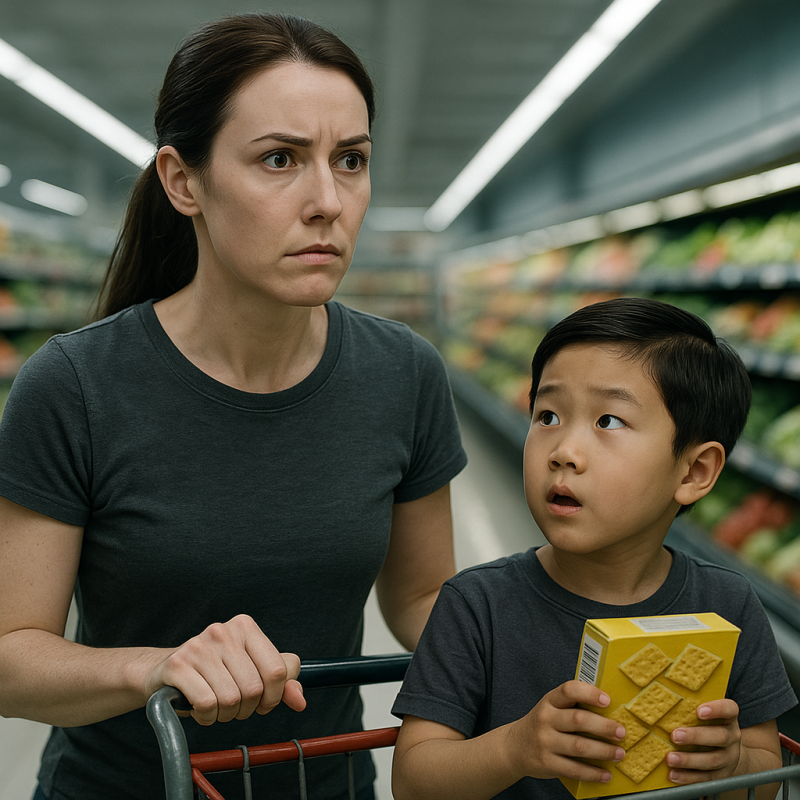 Image by RM AI
Henderson's War Plan
Henderson spread the draft countersuit documents across the conference table like he was laying out a battle map. He walked me through the discovery process — depositions, subpoenas, requests for financial disclosure going back seven years. He talked about hiring forensic accountants to trace every asset, about deposing Mark's business associates one by one. He said we'd need expert witnesses for the valuation of the investment portfolio and possibly the cabin. He outlined a timeline: twelve to eighteen months minimum, possibly longer if Mark's side played hardball, which Henderson said they would. There would be court appearances, mediation sessions, filing fees, and his hourly rate on top of all of it. He said it plainly, the way he said everything — no softening, no apology. He told me this was the only way to get what I actually deserved, that the original agreement Mark had handed me was designed to leave me with almost nothing. I believed him. I just sat there looking at the stacks of paper fanned out in front of me — motions and exhibits and financial affidavits — all of it representing months of my life I hadn't planned to spend in a courtroom.
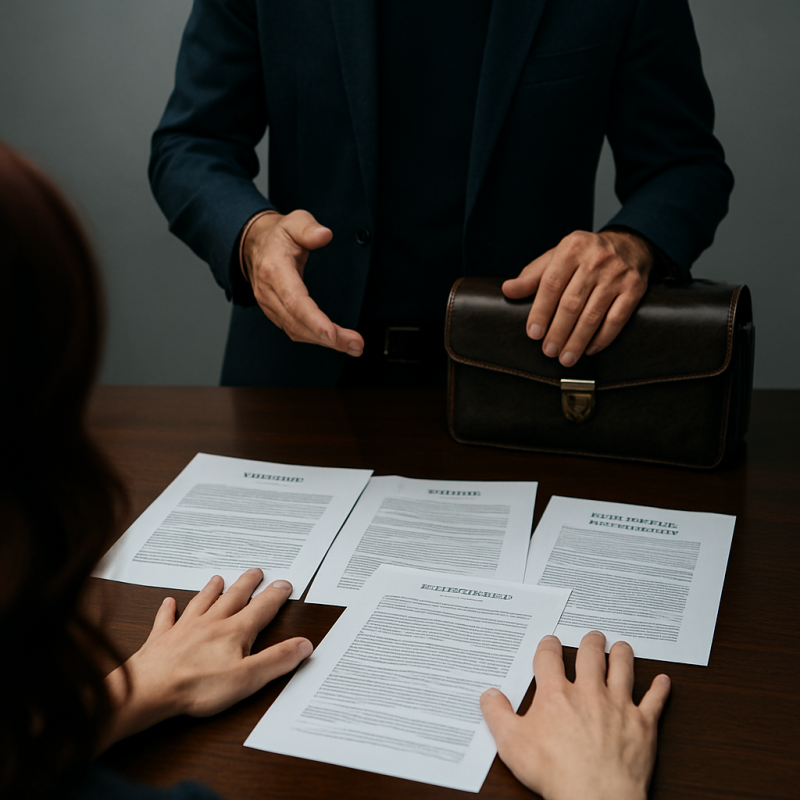 Image by RM AI
The Asset Inventory
Henderson pulled out a spreadsheet at our next meeting and set it in front of me without preamble. Ten years of a marriage reduced to rows and columns. The house: eight hundred thousand. Both cars together: ninety thousand. The mountain cabin we'd bought the year Leo was born: three hundred fifty thousand. Retirement accounts: over four hundred thousand. The investment portfolio Mark had always handled himself: six hundred thousand. Joint savings: two hundred thousand. Henderson walked me through each line, explaining how equitable distribution worked in this state, what I could reasonably expect to receive, what Mark's side would fight hardest to protect. He said my share, properly litigated, should land somewhere near fifty percent of the total. I did the math in my head while he was still talking. It was more than I'd let myself think about. I'd spent the last several weeks focused on Leo, on getting through each day, on not falling apart in front of my son. I hadn't let myself sit with the full picture of what was at stake. I looked down at the bottom of the page where Henderson had written the total in plain figures, and I just sat there with it.
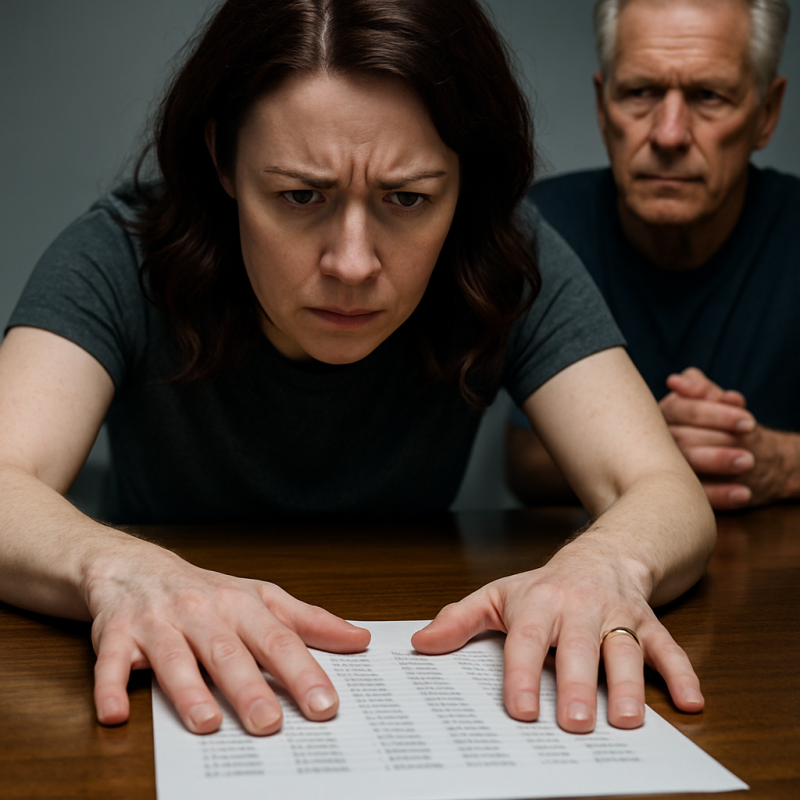 Image by RM AI
The Offshore Discovery
Henderson called me back in two days after our asset review, and I could tell from the way he set his reading glasses down on the table that something had shifted. He said his investigator had been going through the preliminary financial disclosures Mark's attorney had submitted, and there were gaps — places where the numbers didn't connect the way they should. He slid a printed page across the table toward me. His investigator had traced the discrepancy to accounts registered in the Cayman Islands. I looked at the page. I asked how much. Henderson said over three hundred thousand dollars, possibly more depending on what else turned up. I sat back in my chair. In ten years of marriage I had never heard Mark mention these accounts — not once, not in passing, not during any of the conversations we'd had about retirement or savings or Leo's college fund. Henderson said that concealing marital assets in a financial disclosure could constitute fraud, that it would significantly strengthen our position in court. I heard him. I understood what he was saying. But mostly I was just staring at the account statements on the table in front of me, the words Cayman Islands printed in clean black type at the top of the page.
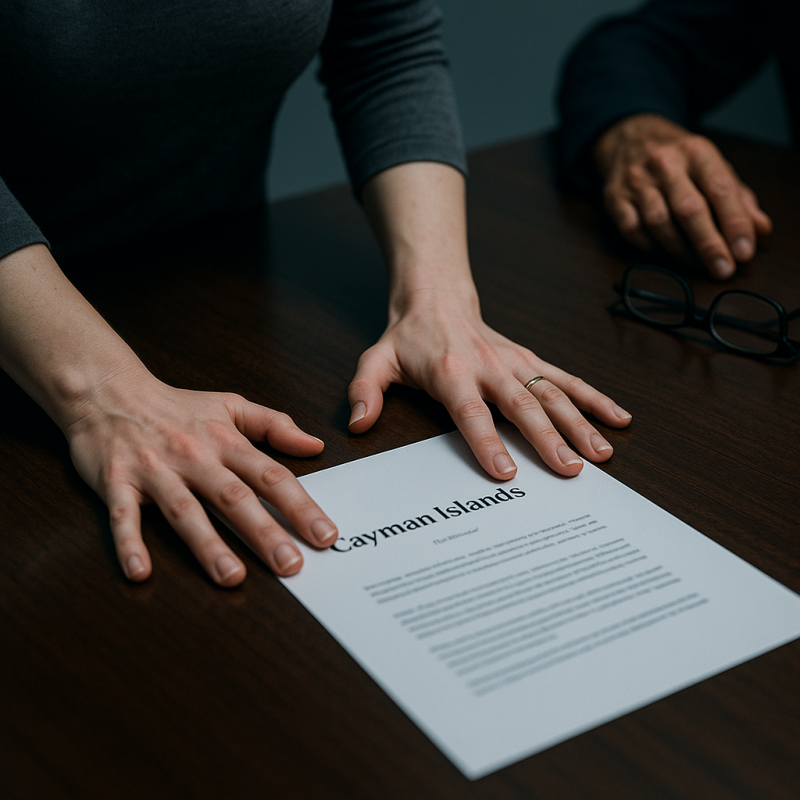 Image by RM AI
The Pressure Campaign
We were still sitting with the offshore account documents spread between us when Henderson's phone rang. He glanced at the screen, then held up one finger and answered it on speaker. The voice on the other end was smooth and unhurried — Mark's attorney, David, introducing himself like we were all meeting for the first time. He said he was calling as a courtesy. He said Mark had been more than fair with the original agreement and that the offer would be withdrawn if I hadn't signed within forty-eight hours. He used the word generous twice. Henderson leaned back in his chair and told David, in a tone that didn't change at all, that we were in the process of preparing a countersuit and that the original agreement was no longer on the table. There was a brief pause. David said litigation would be expensive and lengthy and that I should think carefully about what I was putting my family through. Henderson said he'd pass that along and ended the call. He set the phone down and looked at me. He said David was running a pressure tactic, that the forty-eight-hour deadline was designed to make me panic and sign before I understood what I was giving up. I nodded. But I looked at the clock on the wall anyway — forty-eight hours, already counting down.
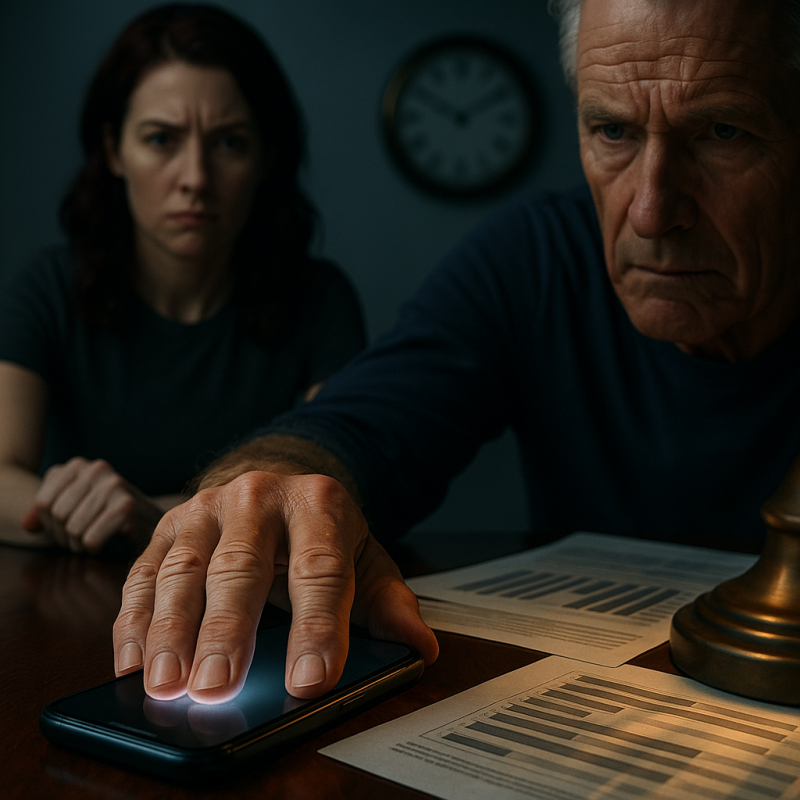 Image by RM AI
The Countersuit Draft
Henderson slid the folder across the desk without ceremony. He said it was the final draft and that I should take my time reading it before we talked about next steps. I pulled it toward me and started at the beginning. The language was aggressive in a way that made my chest tighten — words like fraudulent concealment and willful misrepresentation sitting right there in black and white, attached to Mark's name. The document demanded a fifty-fifty split of all marital assets, and it listed the offshore accounts by name, by number, by estimated value. It requested that Mark's legal fees be paid out of his share. Henderson had highlighted three sections in yellow and left a sticky note on the last page that said review and confirm. I asked him how long something like this would take if Mark fought it. He leaned back and said at least a year, possibly closer to two if David decided to make it difficult. I looked down at the highlighted sections again. A year. Maybe two. Leo would be seven, then eight. I turned to the last page and found the signature line waiting for my name.
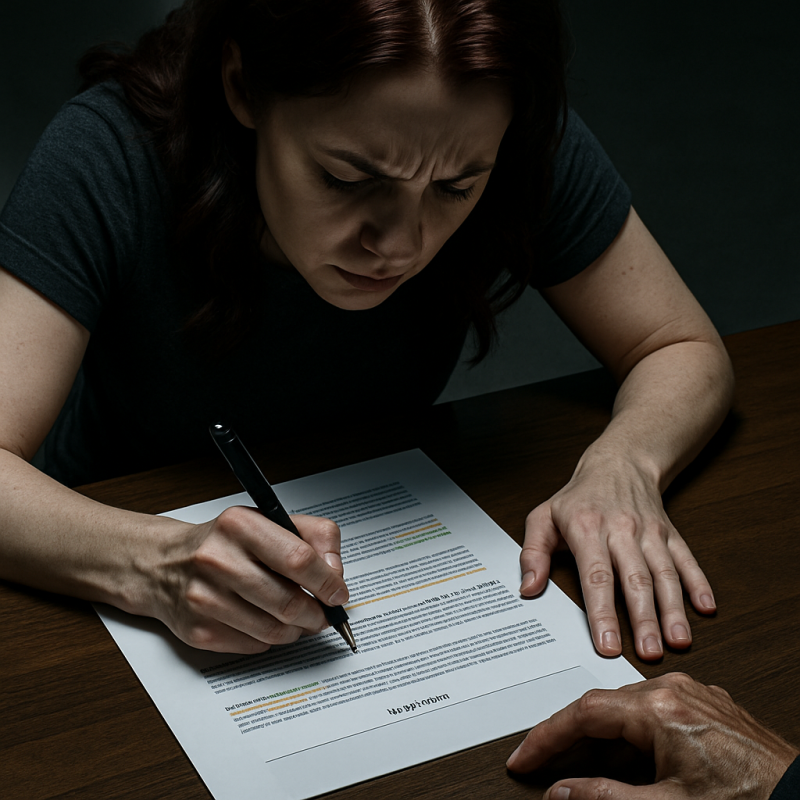 Image by RM AI
Rereading the Custody Clause
Leo had been asleep for almost an hour before I finally sat down at the kitchen table. I could hear the hum of the refrigerator and nothing else. I'd brought Mark's original agreement home in my bag, and I pulled it out now and set it flat on the table under the overhead light. I'd read it before, but I turned to the custody section this time and read it slowly, the way you read something when you're not sure what you're looking for. Most of it was what I expected — primary residence, visitation schedule, decision-making rights. But there was a phrase near the bottom of the third page that I kept coming back to. Something about maintaining Leo's standard of living and ensuring his environment remained consistent with what he had known. I read it twice. Then I read the asset maintenance clause that followed it, the one that tied the house and the accounts to Leo's ongoing stability. I wrote a question mark in the margin next to it. I didn't know what bothered me about the wording exactly. I just knew something did. I sat there with the pages spread in front of me, the words beginning to blur at the edges.
 Image by RM AI
Late Night Analysis
I spread the custody pages across the table the next night and started over. I highlighted the phrase about primary caregiver responsibilities in yellow and circled the asset maintenance section in pen. Then I pulled up my laptop and searched for standard custody agreement language, just to see what was typical. Most of what I found was straightforward — support calculations, visitation frameworks, basic stability provisions. Mark's version used similar terms but the phrasing was more specific, more layered. Where a standard agreement might say support adequate for the child's needs, his said assets sufficient to maintain the child's existing standard of living without material disruption. I tried drawing a rough diagram on a notepad, connecting the custody clause to the asset clause with an arrow, trying to see what the relationship between them actually was. The arrow just sat there on the page, pointing at nothing I could name. I read both sections again, slowly, out loud this time, like hearing the words might shake something loose. It didn't. I set the pen down and rubbed my eyes. Whatever was bothering me about the connection between custody and asset ownership, I still couldn't see it clearly enough to say what it was.
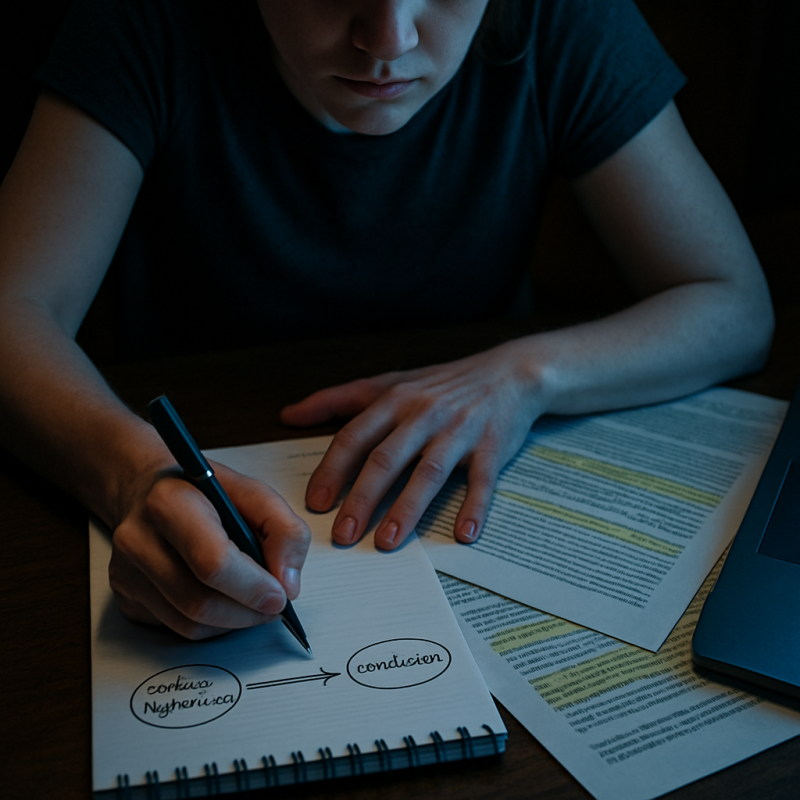 Image by RM AI
Rachel's Divorce Story
Rachel was already at the corner table when I got to the coffee shop, both hands wrapped around a mug, her curly red hair pulled back. She asked how things were going and I told her I'd been reading the same pages over and over for three nights and still felt like I was missing something. She nodded like that made complete sense. She said she'd done the same thing during her own divorce, three years ago, and that it hadn't helped her the way she'd hoped. I asked what she meant. She set her mug down and told me about it — how her ex's attorney had found a piece of language in their separation agreement that she'd read a dozen times without catching. A clause about property maintenance that seemed routine on its face. She said she hadn't understood what it meant until it was too late, until the judge read it out loud in the courtroom and her own attorney went quiet. I asked her what happened. She looked at the table for a second, then back at me. She said she lost the house.
 Image by RM AI
Corporate Lawyer Tactics
Rachel wrapped both hands around her mug again and kept going. She said the thing that had caught her off guard was that her ex hadn't used a family law attorney. He'd used someone from his corporate firm, someone who handled mergers and acquisitions and thought about divorce the way he thought about any other contract — as a question of ownership and control, not fairness. She said those attorneys write differently. They're precise in ways that family law attorneys sometimes aren't, but they can also miss things, because family law has its own logic that doesn't always map onto corporate contract thinking. She said her attorney had eventually found a counter-argument buried in the same language, but by then the damage was mostly done. I listened and thought about Mark's legal team — David with his bespoke suit and his unhurried voice, the kind of attorney who probably spent most of his time in boardrooms. I hadn't thought about it that way before, the idea that the same precision that made corporate lawyers dangerous might also make them blind to certain things. I didn't say that out loud. I just held onto it, turning it over quietly, the way you hold a thought you're not ready to examine yet.
 Image by RM AI
The Contradiction
I was back at the kitchen table after midnight, the pages spread out the same way they'd been for the past three nights. I read the asset ownership clause first — Mark gets the house, the accounts, the investments, everything of material value. Then I read the child maintenance clause directly below it. Leo's environment must remain unchanged. His primary residence must be maintained at its current standard. His daily life must not be materially disrupted. I read both sections again, one after the other, and then I set them side by side on the table. Mark would own the house. But the agreement also said Leo's home environment had to stay the same. Leo lived in that house. I lived in that house with Leo. I read the line about primary residence again. And then I read the one about asset ownership again. I picked up my pen and drew a slow line connecting the two clauses on my notepad. I sat back and looked at what I'd drawn. The clause that linked asset ownership to Leo's stability sat there on the page between them, and something about the way those two things pointed at each other made me go very still.
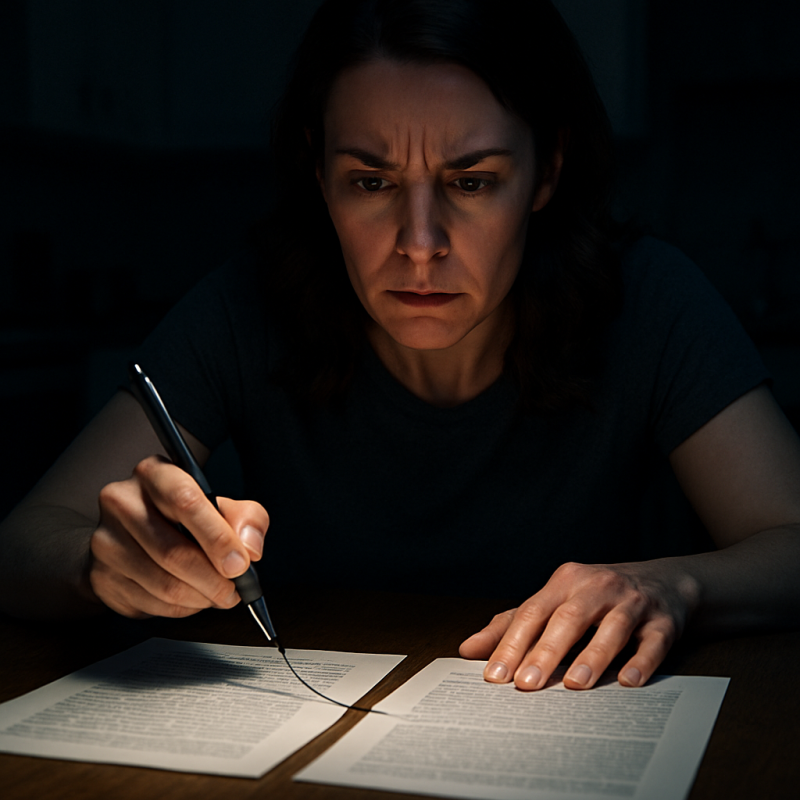 Image by RM AI
Maintenance Obligations
I didn't sleep much that night. The next evening I sat back down with the pages and my laptop and started looking up legal definitions. I searched maintenance obligations, standard of living clause, primary residence requirements for minor children. I found court summaries, legal dictionaries, a few family law blogs written for people who couldn't afford to ask an attorney every question. What I kept finding was that maintenance obligations in custody agreements weren't just about money — they were about continuity. Courts took seriously the idea that a child's home environment shouldn't be disrupted, that stability had a legal weight attached to it. I found one case summary where a judge had ruled that a parent couldn't sell the family home without court approval because the custody agreement required the child's primary residence to remain intact. I wrote that down. I made notes on each clause, numbering them, writing out what each one seemed to require on its own. The pieces were there on the page in front of me. I could feel the shape of something forming at the edges of my thinking, something I couldn't quite hold steady yet. I sat with the legal weight of the maintenance clause, and the quiet of the house pressed in around me.
 Image by RM AI
The Loophole Takes Shape
I drew a new diagram the following night, slower this time. On the left side I wrote what the asset clause said: Mark owns the house. On the right side I wrote what the custody clause said: Leo's home environment must remain unchanged. Leo lives in the house. I live in the house with Leo. I drew an arrow from the left side to the right. If Mark owned the house, he was responsible for maintaining it. If Leo had to stay in the house for stability, Mark couldn't simply sell it or empty it or walk away from it. I wrote out the timeline on a separate line at the bottom of the page. Leo was six. He wouldn't turn eighteen for twelve years. I stared at that number for a long moment. Then I read both clauses again, carefully, checking my reading against the actual words on the page. I wasn't sure yet. I didn't want to be sure yet and be wrong. But I sat back in my chair and looked at the diagram, and the possibility that had been forming at the edges of my thinking for days settled quietly into the center of it.
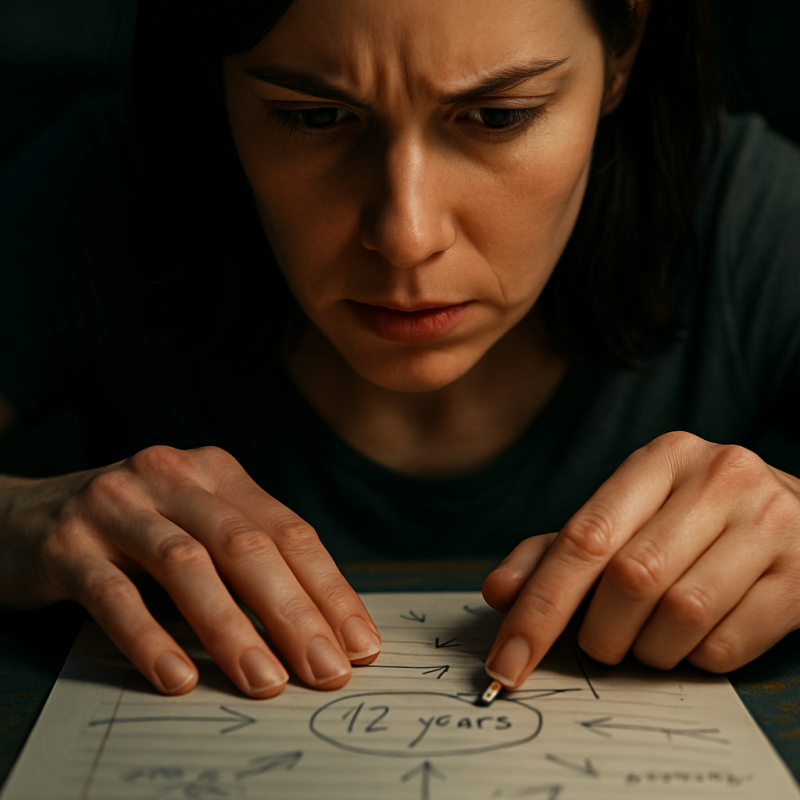 Image by RM AI
Precedent Research
I started with the free legal research tools first, the ones anyone could access without a bar card. I typed in combinations — custody, primary residence, occupancy rights, asset ownership — and worked through the results slowly, the way you do when you're not entirely sure what you're looking for but you'll know it when you see it. Most of what came up was too general, or too old, or from jurisdictions so different from ours that the reasoning wouldn't carry. I kept a notepad beside the laptop and wrote down case names anyway, anything that touched on the intersection of property ownership and a child's right to stable housing. Leo had fallen asleep two hours earlier. The apartment was quiet except for the hum of the refrigerator and the occasional sound of a car passing outside. I refilled my coffee and kept going. I was on my fourth search variation, somewhere past midnight, when a case summary stopped me mid-scroll. A father in a neighboring state, five years ago. Two children. A custody agreement with language about primary residence stability. I clicked through to the full opinion and started reading from the beginning, my notepad already open to a fresh page.
 Image by RM AI
Similar Cases
The first case held up all the way through. The father had owned the family home outright, and the court had ruled that the custody agreement's stability language created an enforceable occupancy right for the mother as primary caregiver — he couldn't sell, couldn't displace her, couldn't stop paying the carrying costs while the children were minors. I read it twice, then went looking for anything that cited it. That's when things got interesting. There was a second case, different state, similar facts. Then a third, from a jurisdiction two states over, where the court had gone even further and spelled out the maintenance obligations in detail — taxes, utilities, structural repairs, all of it. I sat back and looked at what I had. Three cases. Three different courts. All of them landing in roughly the same place: when a custody agreement prioritized a child's residential stability, and the asset-owning parent had agreed to those terms, the courts treated that agreement as binding on the property itself. I wrote the case names in a column and drew a line underneath them. The pattern across those decisions was not subtle.
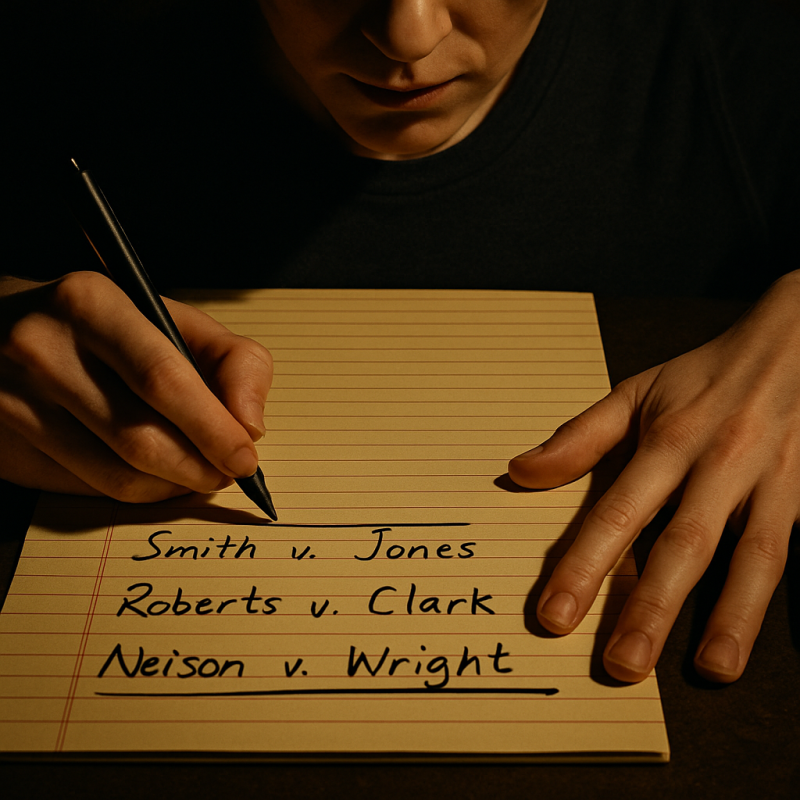 Image by RM AI
Henderson Pushes for Trial
Henderson called at half past four on a Tuesday, which told me everything about his mood before he said a word. He didn't bother with small talk. He said Mark's deadline was in less than forty-eight hours and that if I didn't sign the countersuit by end of business tomorrow, we'd be handing David's team a narrative about a hesitant, indecisive client. I told him I needed a little more time. There was a pause on his end that felt deliberate. He said time was the one thing we didn't have, that the offshore account documentation alone was worth fighting for, that I was entitled to a settlement that would actually support Leo and me for years. I said I understood that. He asked me what was holding me back. I said I was still thinking through the implications. Another pause, longer this time. He said he'd been doing this for thirty years and that hesitation at this stage almost always cost his clients something they couldn't get back. I told him I heard him. I said I just needed until tomorrow morning. He said fine, tomorrow morning, but that we needed to talk before I made any decisions. When he hung up, I could still hear the frustration in the silence he'd left behind.
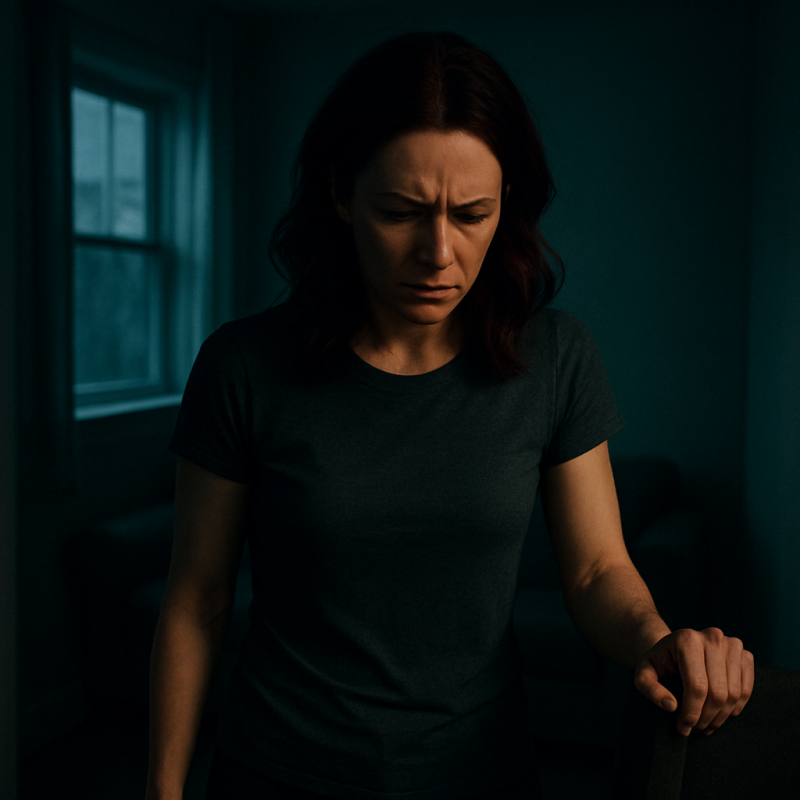 Image by RM AI
Keeping Cards Close
I met Henderson at his office the next afternoon. He had the countersuit laid out on the conference table before I even sat down, a pen placed beside it at a precise angle. He asked me directly — what was I waiting for? I told him I was still processing everything, that the last few weeks had been a lot to absorb. He leaned forward and reminded me about the offshore accounts, walked me through the numbers again, said the word millions with the careful emphasis of someone who wanted it to land. I nodded. He asked if I was afraid of Mark. I let the question sit for a moment before I said that fear was part of it, yes. It wasn't entirely untrue. He seemed to accept that, or at least to file it somewhere useful. He said fear was understandable but that it couldn't be the thing that drove my decisions. I said I knew that. We talked for another twenty minutes, circling the same ground, and I left without signing anything. Walking back to my car, I turned the folder over in my hands. Henderson was fighting hard for me, and he deserved better than what I was giving him. The thing I was keeping from my own attorney sat quietly in my chest the whole drive home.
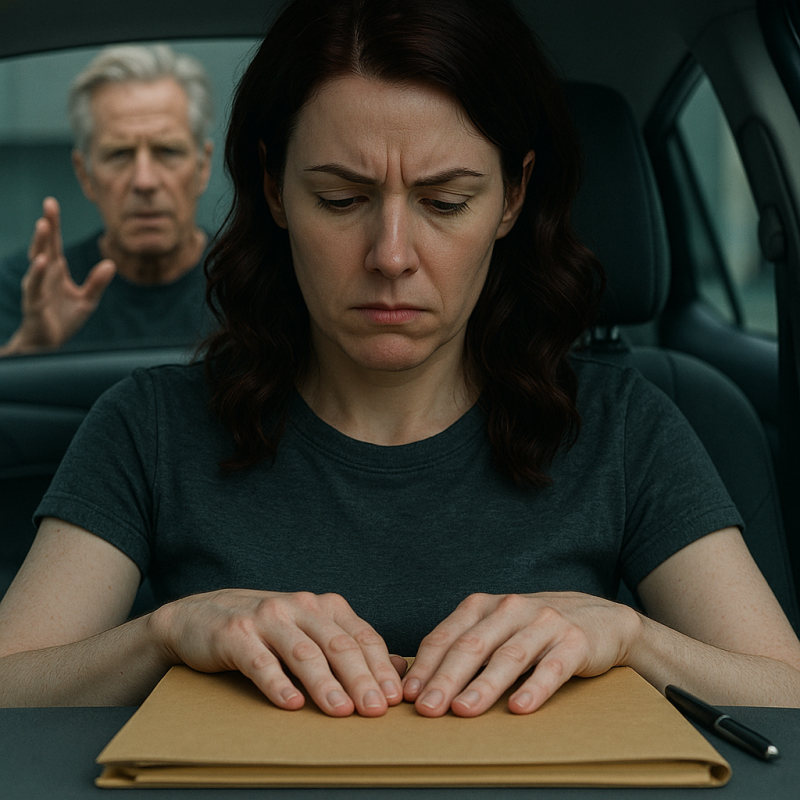 Image by RM AI
Drafting the Addition
I waited until Leo was asleep and the dishes were done and the apartment had gone fully quiet before I opened the laptop. I pulled up a blank document and sat with the cursor blinking for a moment. Then I started writing. The first sentence addressed primary residence stability — that the child's established home environment would be maintained without interruption for the duration of the custody arrangement. I worked on the wording for a while, checking it against the language in the cases I'd found, adjusting until it felt precise rather than vague. The second sentence addressed the asset-owning parent's maintenance obligations — taxes, utilities, structural upkeep, all of it tied directly to the stability requirement in the first sentence. The third sentence was the one that took the longest. It linked the two concepts together in a way that left no daylight between them: the obligation to maintain the asset was inseparable from the obligation to maintain the child's stability, and both ran until Leo turned eighteen. I revised that third sentence six times. I read all three sentences aloud twice, slowly, the way Henderson had once told me to read anything before signing it. Then I saved the document in a password-protected folder and closed the laptop. The words sat somewhere behind my sternum, quiet and exact.
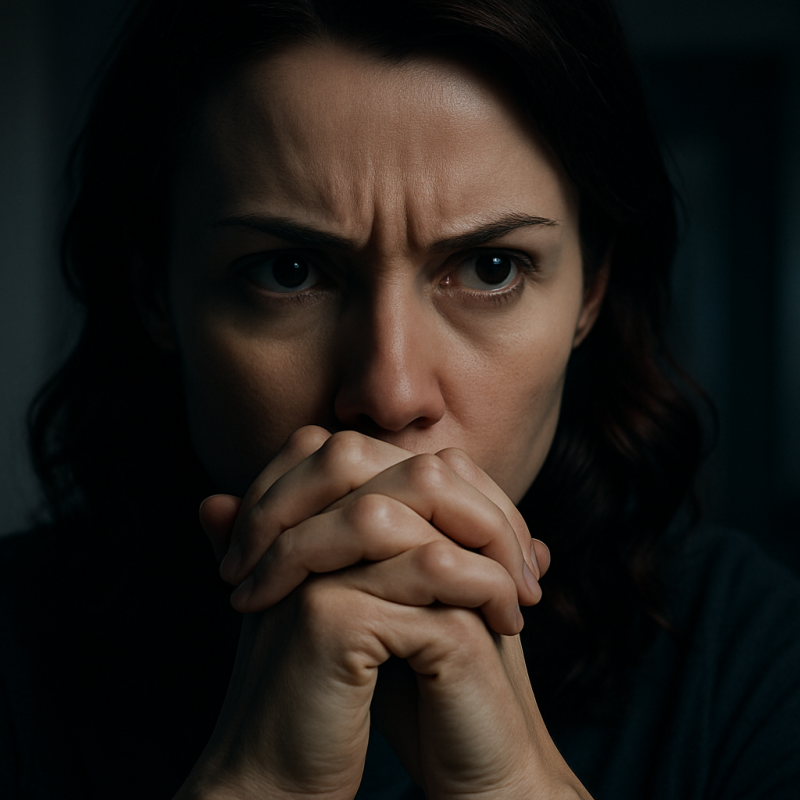 Image by RM AI
The Complete Picture
I spread everything across the kitchen table the following morning after Leo left for school — the original divorce papers, my research notes, the printed case opinions, and the three-sentence addition I'd drafted. I went through the logic one more time, start to finish. The custody clause required Leo's home environment to remain unchanged. The asset clause gave Mark ownership of the house. My three sentences, if accepted, would bind those two clauses together in a way that was already supported by the precedents I'd found. Mark would own the house, but he couldn't live in it — Leo's stability required that I stay as primary caregiver. He couldn't sell it, because the court would treat the custody agreement as an encumbrance on the property. He would be responsible for every carrying cost — taxes, utilities, maintenance — for as long as the custody arrangement held. I wrote out the timeline again at the bottom of the page. Leo was six. Eighteen was twelve years away. I sat with that number and let it settle. Then I looked at the asset clause again, at the language Mark's own attorney had drafted, and I saw what those words, taken together, actually meant.
 Image by RM AI
The Decision
I sat at the kitchen table for a long time after that, the papers still spread out in front of me. I thought about what Henderson would say when I told him. I thought about the countersuit, the offshore accounts, the years of litigation that path would cost — in money I didn't have, in energy I couldn't spare, in the slow grinding toll it would take on Leo to grow up inside a legal war. I thought about what happened if my reading of the clauses was wrong, if a judge looked at my three sentences and found a gap I hadn't seen. That possibility was real and I didn't push it away. I sat with it. Then I thought about Mark in some conference room with David, probably satisfied that the terms were settled, that I'd taken the deal out of exhaustion and had no idea what I'd agreed to. I thought about Leo in his dinosaur t-shirt asking me last week if we were going to have to move. I stacked the papers into a neat pile and set them beside the laptop. The risk was real. The alternative was worse. I closed my eyes for a moment, and when I opened them the decision had already settled into something that felt less like a choice and more like solid ground beneath my feet.
 Image by RM AI
Committing to the Risk
I called Henderson's office first thing in the morning and asked for the earliest available slot. His assistant said he had a nine o'clock opening and I took it. After I hung up I sat at the table and went through everything one more time, not because I was uncertain but because I wanted to be ready. I thought through the objections Henderson would raise — that the addition was too aggressive, that it would blow up the negotiation, that Mark's team would never accept it. I wrote out my responses in the margin of my notepad, short and specific, grounded in the case law. I printed the three-sentence addition on a clean sheet of paper and placed it on top of the stack. I printed the three case opinions behind it. I thought about Henderson's face when I put it in front of him, the way his reading glasses would come down to the end of his nose, the careful silence he kept when something surprised him. He was going to push back. I was counting on it, actually — if he couldn't find the hole in my argument, then the argument was solid. I slid everything into a folder, set it by the door, and went to check on Leo. Tomorrow morning, I would walk into Henderson's office and put the folder on his desk.
 Image by RM AI
Revealing the Strategy
Henderson's office smelled the same as it always did — old paper and coffee and something faintly like cedar. I set my folder on the edge of his desk and sat down before he could ask me how I was doing, because I didn't want to spend time on that. He settled into his chair and looked at me over his reading glasses, waiting. I told him I'd made a decision. I said I wanted to accept Mark's original agreement. The room went very quiet. Henderson's pen stopped moving. I watched him set it down slowly, the way you set something down when you need your hands free to think. He asked me if I understood what I was saying. I told him I did. Then I said there was one addition — three sentences to the custody clause, nothing more. He asked me to repeat myself. I did. He leaned back in his chair and looked at me the way you look at someone when you're trying to figure out if they've lost their mind or if you've missed something important. I kept my hands flat on the folder and held his gaze. The silence stretched between us, and I let it. I had nothing left to add — not yet. The confusion spreading across his face was exactly what I had expected, and I let it settle there.
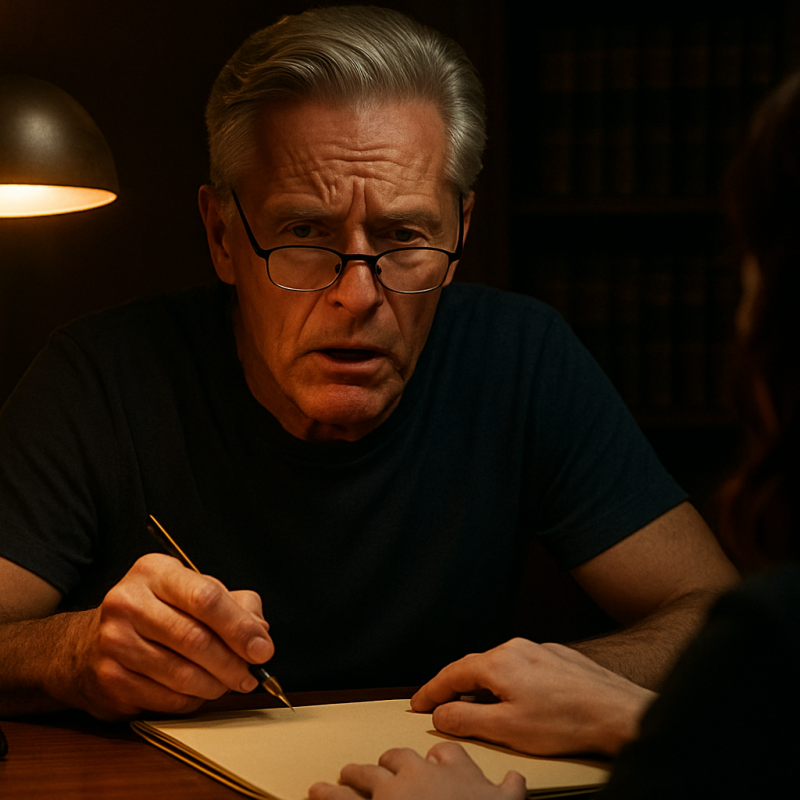 Image by RM AI
Millions on the Table
Henderson pulled the asset inventory from his drawer like he'd been waiting for a reason to use it. He spread it across the desk between us and started at the top. The house — eight hundred thousand, conservatively. The offshore accounts Mark had disclosed under pressure. The retirement funds, the investment portfolio, the deferred compensation. He went line by line, his finger moving down the page, and when he reached the bottom he looked up and said the number out loud. Over two million dollars. He asked me what I thought Leo's college would cost in twelve years. He asked me what I thought I'd be living on. He wasn't being cruel — I could hear the genuine worry underneath every word, the way a person sounds when they're trying to talk someone back from a ledge. He said I had leverage I would never have again, and that walking away from it wasn't brave, it was just loss. I listened to all of it. I didn't interrupt. I didn't argue. When he finished, I told him I understood everything he was saying. He asked me to take another week. I shook my head. He sat back and rubbed his face with both hands, and the weight of everything he believed I was throwing away seemed to press down on the whole room.
 Image by RM AI
The Three Sentences
I reached into the folder and pulled out the single printed page. Three sentences, double-spaced, centered on the sheet. I slid it across the desk without saying anything. Henderson picked it up, settled his reading glasses, and went still. I watched his eyes move across the first sentence — the one about primary residence stability for the minor child. Then the second, the one referencing the asset maintenance obligations tied to the property. Then the third. His brow came together. He read it again, slower this time, his lips barely moving. When he looked up, the confusion on his face was different from before — less alarmed, more careful, like a man who has just heard a word in a language he almost speaks. I told him I'd walk him through it. I said the three sentences weren't just a custody provision. They were a mechanism. The first established where Leo lived. The second established who was responsible for maintaining the asset. The third was the hinge — it linked the custody arrangement directly to the property ownership in a way that created an obligation Mark's own team hadn't anticipated. Henderson set the page down flat on the desk. He looked at me. Then he looked back at the page. I asked him to read it one more time while I explained the logic, and I watched him lower his eyes to the first sentence again.
 Image by RM AI
Henderson's Reluctant Agreement
I laid the three case opinions on the desk in the order I'd found them. Henderson read the first one without speaking, his reading glasses pushed to the end of his nose, one finger tracing the relevant paragraph. He moved to the second. Then the third. I didn't rush him. I'd spent enough nights with those pages to know where the pattern emerged — the moment when custody stability crossed into occupancy rights, when the court had looked at a property ownership clause and found a maintenance obligation hiding inside it. Henderson saw it too. I could tell by the way he stopped moving. He set the third opinion down and stared at the ceiling for a moment, then picked up a legal pad and started writing. He traced the logic out loud — primary residence, asset obligation, the link between Leo's custody arrangement and the house Mark would technically own. He calculated the timeline. Leo was six. Eighteen was twelve years away. He said the legal theory was sound. Then he said if it failed, I would have nothing — no house, no settlement, no fallback. I told him I understood. He looked at me for a long moment, then looked back at the documents spread across his desk. He uncapped his pen and pulled the draft agreement toward him.
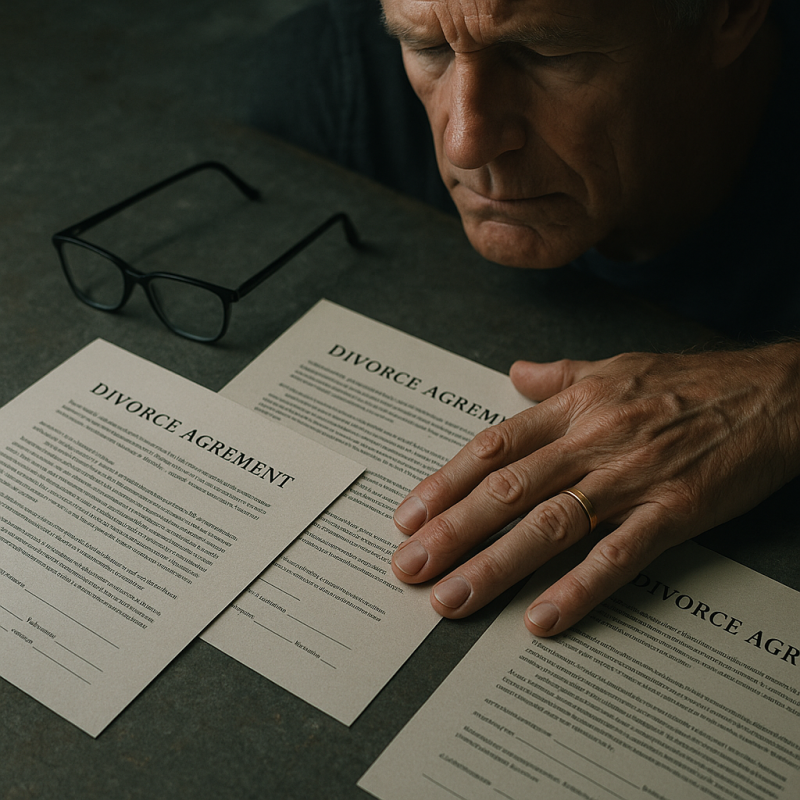 Image by RM AI
The Trap Revealed
It had started in chapter thirty, the night I'd sat on the kitchen floor with the agreement spread around me and noticed the contradiction — the way Mark's terms gave him the house on paper while requiring Leo to stay in it. I hadn't said anything to Henderson that night. I'd just folded the pages back up and started reading. Every night after that, while everyone around me thought I was drowning, I was in the case law. Occupancy rights. Custody stability doctrine. The handful of jurisdictions where courts had looked at exactly this kind of arrangement and found that ownership without the right to occupy was ownership with a twelve-year bill attached. I drafted the three sentences in the third week. I revised them in the fourth. I held back from Henderson's countersuit strategy not because I was afraid, but because a countersuit would have forced Mark's team to look harder at the agreement — and I needed them comfortable. I needed them certain they had won. Mark's lawyers were corporate attorneys. They were brilliant at protecting assets and completely uninterested in the custody clause, which they'd treated as a formality. That was the gap. Three sentences, tucked into a formality, citing obligations his own team had written. Mark had handed me the structure. I had just found what was already inside it. Henderson now had the documents. The occupancy notice was next.
 Image by RM AI
Preparing the Documents
Henderson drafted the Notice of Occupancy and Maintenance while I sat across from him, and he read each section aloud as he wrote it. The document cited the custody clause by paragraph number — the exact language Mark would sign. It specified that Leo would remain in the family home as his primary residence until he turned eighteen. It listed property taxes as Mark's obligation. Utilities. Maintenance. Structural repairs. Henderson included a schedule of the legal precedents as supporting documentation, attached as exhibits, each one flagged with a tab. He was thorough in the way that only someone who has been surprised in court before can be thorough. I reviewed every word. I asked him to change two phrases for precision and he made the changes without argument. We agreed on the timing: the notice would be served within twenty-four hours of the signing, before Mark had a chance to consult anyone about what he'd agreed to. Henderson printed four copies and stacked them in a separate folder. I held the final version in my hands and read it through one more time, slowly, feeling my pulse in my fingertips. Then Henderson slid a second document across the desk — a supplemental maintenance schedule his paralegal had drafted that afternoon, itemizing every foreseeable expense category for a twelve-year period.
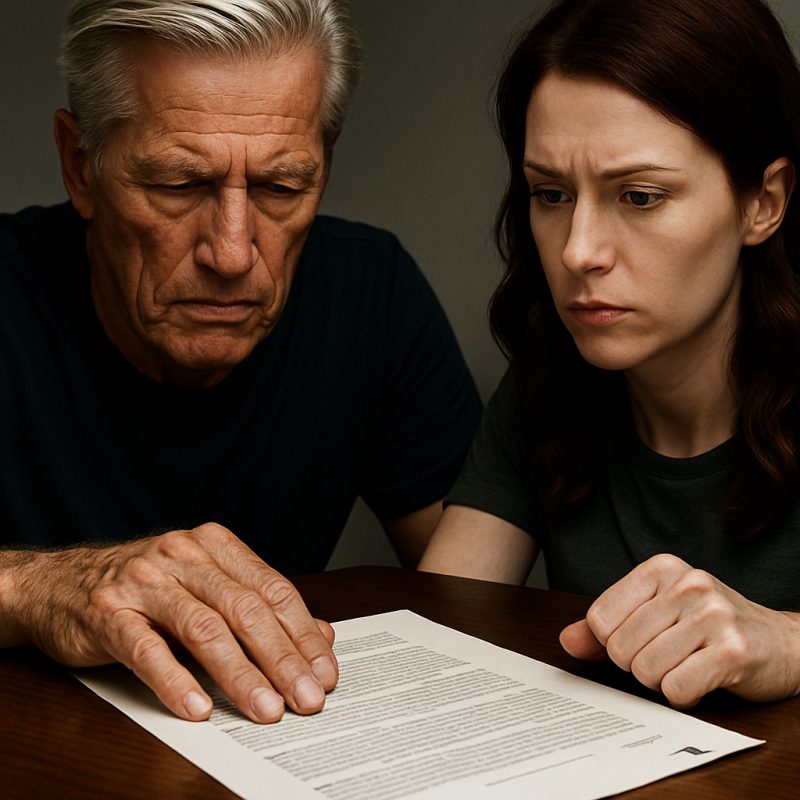 Image by RM AI
The Morning Of
I was up before my alarm. I lay there for a moment in the dark, listening to the house, and then I got up and went to the kitchen. I made Leo's oatmeal the way he liked it, with the brown sugar stirred in before it cooled, and I called him twice before he came padding down the hall in his dinosaur shirt and light-up sneakers, still half asleep. We sat together at the table and I watched him eat and talked to him about nothing — his teacher, the book they were reading in class, whether dinosaurs could swim. I drove him to school and walked him to the door and held on a few seconds longer than usual when he hugged me. He didn't notice. He ran inside. I sat in the car for a moment after he disappeared through the doors, and then I drove home. I showered. I stood in front of my closet and chose carefully — something composed, nothing that asked for sympathy. I reviewed the documents one final time at the kitchen table, though I already knew every word. I called Henderson to confirm the time. Then I set the folder by the door, the same way I had the night before, and stood in the quiet kitchen with my coffee going cold in my hands, and the morning held still around me.
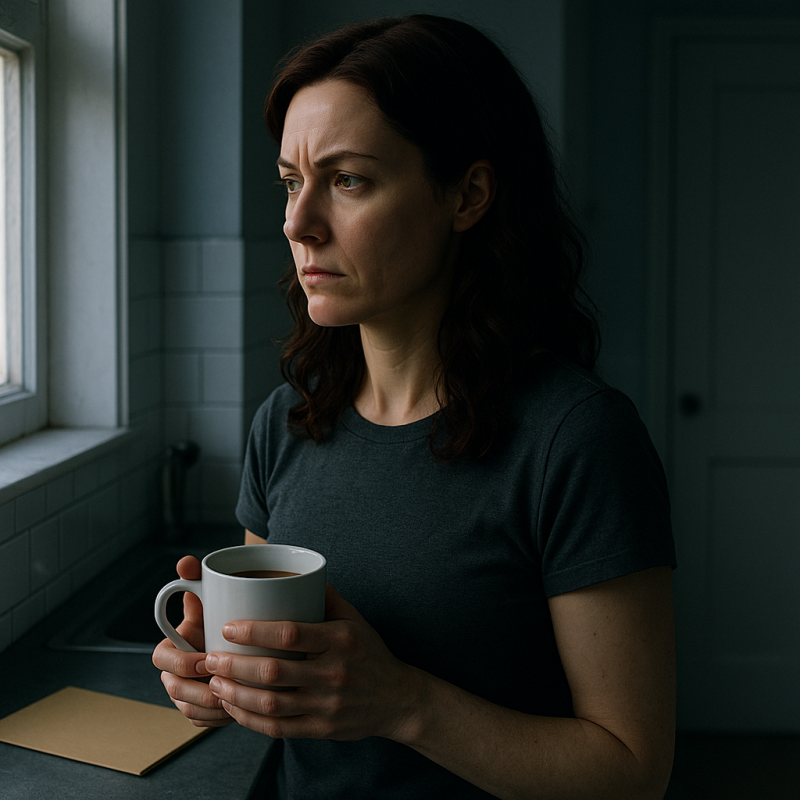 Image by RM AI
Mark's Smugness
The conference room was on the fourteenth floor, all glass and gray carpet and a long table that reflected the ceiling lights. Mark was already seated when I walked in, David beside him with the documents arranged in neat stacks. Henderson came in just behind me and took the chair to my left. Mark had on a charcoal suit I recognized — he'd bought it the year before last, for a client dinner he'd said I wouldn't enjoy. His wedding ring was gone. I noticed that first, the pale band of skin where it had been, and then I noticed the way he was sitting — leaned back, one arm resting along the chair, the posture of a man who has already decided how the afternoon ends. David began walking through the signing procedure in his measured, practiced way. Mark barely glanced at me when I sat down. At one point he said something low to David and David nodded, and the two of them shared a brief, contained smile. Henderson set his hand flat on the folder in front of him and said nothing. I kept my face still and my hands in my lap. Mark reached forward and straightened the stack of documents in front of him, unhurried, like a man tidying up after a meal he'd already finished. The ease in his shoulders, the angle of his jaw — all of it settled into the room like he'd already won.
 Image by RM AI
The Custody Clause
David turned to the custody section with the same unhurried efficiency he'd used for every other page. He read aloud that I would receive full physical and legal custody of Leo, that Mark would retain the right to reasonable visitation, and that the standard of living maintenance clause would apply for the duration of Leo's minority. His voice didn't change when he reached my addition. Three sentences, tucked into the body of the clause like they'd always belonged there, read in the same flat professional tone as everything before them. I kept my hands folded in my lap and my face completely still. Henderson didn't move beside me. Mark had his elbow on the table, two fingers resting against his temple, the posture of a man enduring a formality. David finished the section and looked up. "Any questions about the custody terms?" Mark shook his head without looking at the page. "It's fine," he said. David nodded and reached for the next section. I let myself breathe, just barely. I had watched Mark's eyes travel across that page, and they had moved right over those three sentences without slowing down.
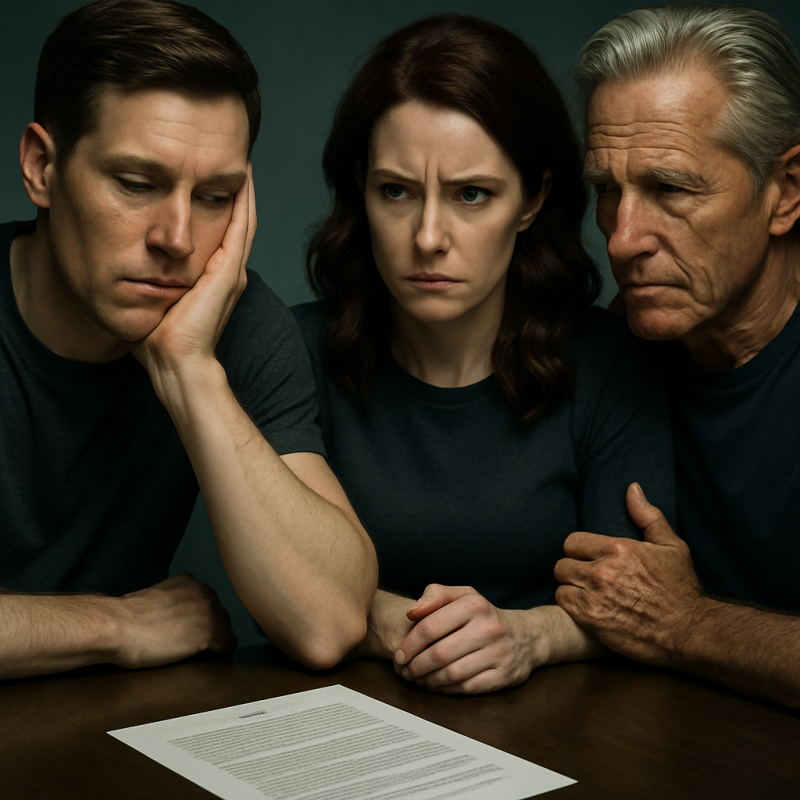 Image by RM AI
The Signatures
David set the signature pages in front of Mark first. Mark reached into his jacket pocket and produced a pen — heavy, matte black, the kind that costs more than most people's grocery bills — and signed his name across the bottom of each page with long, unhurried strokes. Confident. Almost bored. David witnessed each one and slid the stack across the table to me. I picked up the pen Henderson had placed beside my folder. My hand was steady. I hadn't expected that — I'd half-prepared myself for trembling — but my hand was completely steady as I signed my name on the first page, and the second, and the third. Henderson witnessed each signature without a word. David collected the documents and began organizing them into two sets. Mark was already standing, buttoning his jacket, reaching for his briefcase with the ease of a man who had just concluded a transaction that had gone exactly as he'd planned. He tucked his copy inside and clicked the latch shut. I stayed in my chair. The ink on Mark's signature had barely dried.
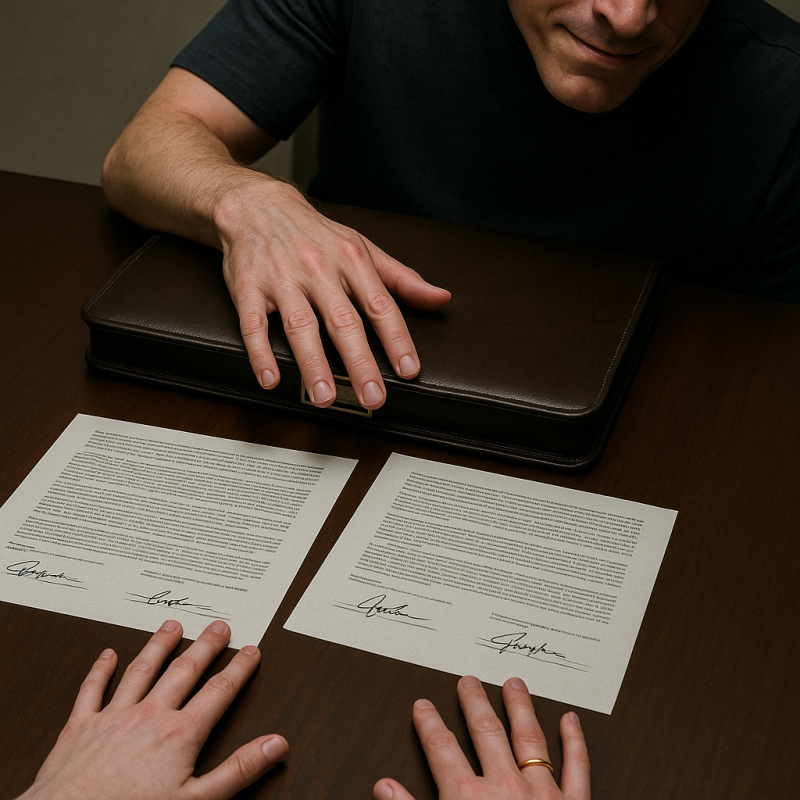 Image by RM AI
The Second Document
Mark lifted his briefcase from the table and turned toward the door. That was when I reached into my folder. I pulled out the Notice of Occupancy and Maintenance — Henderson had prepared three copies, each one clean and properly formatted — and I slid one across the table toward Mark. He stopped. He looked down at it with the mild, slightly impatient expression of a man who has been handed something he doesn't expect to matter. "What's this?" he said. I told him it was notice of occupancy rights under the custody agreement he'd just signed. Mark picked it up the way you pick up a piece of junk mail — one hand, barely glancing at it. David reached across and took his own copy. I watched David's eyes drop to the first paragraph. Mark was still scanning the top of the page, unhurried, not yet reading carefully. Henderson sat with his hands folded on the table. David turned to the second page. Nobody spoke. The room had gone very quiet, and in that quiet I sat with my hands in my lap and waited.
 Image by RM AI
The Color Drains
David read it twice. I could tell because his eyes tracked back to the top of the second page after he'd reached the bottom, moving more slowly the second time. Then he set the notice down and picked up the signed custody agreement. He found the page with my three-sentence addition. He read it. He looked back at the notice. He flipped to the asset division section — the part that confirmed Mark retained ownership of the house — and I watched his face go through something I hadn't quite anticipated. It wasn't anger. It was the particular pallor of a man who has just understood a mistake he cannot undo. His hand came down flat on the edge of the table. He opened his mouth, closed it. He looked at Henderson, and Henderson looked back at him with an expression that gave nothing away. Mark was still reading the notice, one finger moving slowly down the page, not yet there. David looked down at the signed agreement in his hand, then back at the custody clause, then at his client who didn't know yet. The color had left his face entirely.
 Image by RM AI
Mark's Realization
Mark looked up from the notice. I watched the shift happen — confusion first, then a kind of stillness, then something moving behind his eyes as the pieces connected. He looked at the custody clause. He looked at the asset division page. He set the notice down on the table very carefully, like a man who needs a moment before he speaks. "She lives in my house," he said. Not a question. David didn't answer. Mark's jaw tightened. He looked at me. "I own the house and you live in it. I pay the taxes. I pay the utilities. I pay for maintenance." He was working through it aloud, his voice dropping lower with each item. "Until Leo turns eighteen." He did the math. I could see him doing it. Twelve years. His hands curled on the table in front of him. Henderson shifted slightly in his chair but said nothing. Mark's voice came back up, sharp and tight, demanding to know how this had happened, demanding an explanation, his words coming faster now. I met his eyes and I didn't look away, and I didn't say a word. The rage building behind his gray eyes was something I had been prepared for.
 Image by RM AI
Searching for Escape
David spread the agreement across the table — all of it, every page, laid out in sequence. He and Mark went through it together, David's finger moving quickly from section to section while Mark leaned over his shoulder. I watched them work. David checked the custody clause against the asset division terms, then against the maintenance schedule, then against the definitions section at the back. Mark kept asking questions in a low, clipped voice and David kept reading before answering. At one point Mark asked if they could argue the addition was inserted without proper disclosure. David read the clause again and said nothing for a long moment. Mark asked about fraud. He asked about duress. He asked if the signing could be challenged on procedural grounds. Each time, David read something, turned a page, read something else. Henderson sat beside me with his hands folded and his reading glasses pushed up on his nose, watching them with the patience of a man who already knew every answer they were going to find. Finally Mark straightened up and looked at David directly. David looked back at him, and then slowly, without a word, he shook his head.
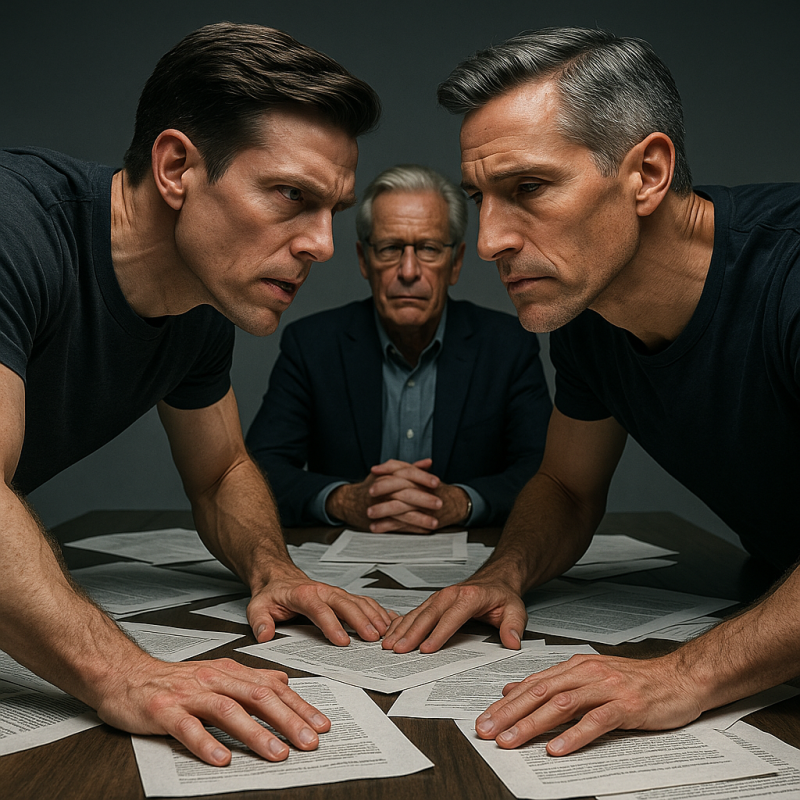 Image by RM AI
Ironclad
Henderson reached into his briefcase and produced a slim folder. He set it on the table and opened it without hurry. "There are two cases I'd like to draw your attention to," he said, in the same measured tone he used for everything. He cited the first — a family court ruling from five years prior, in this jurisdiction, in which a judge upheld an occupancy rights clause nearly identical to mine on the grounds that disrupting a child's primary residence constituted material harm to the child's stability. He cited the second, from a neighboring jurisdiction, which had reached the same conclusion through a different line of reasoning. David picked up the copies Henderson slid across the table. I watched his eyes move down the first page. His expression didn't change, but his shoulders dropped slightly. Henderson explained that courts in this state had ruled consistently on the side of residential stability for minor children, that the maintenance obligations attached to ownership were well-established in precedent, and that the agreement as signed gave me full standing to enforce every term through the court. Mark turned to David. "Why didn't you catch this?" David set the case copies down on the table and had no answer. Henderson folded his hands. "The agreement," he said, "is ironclad."
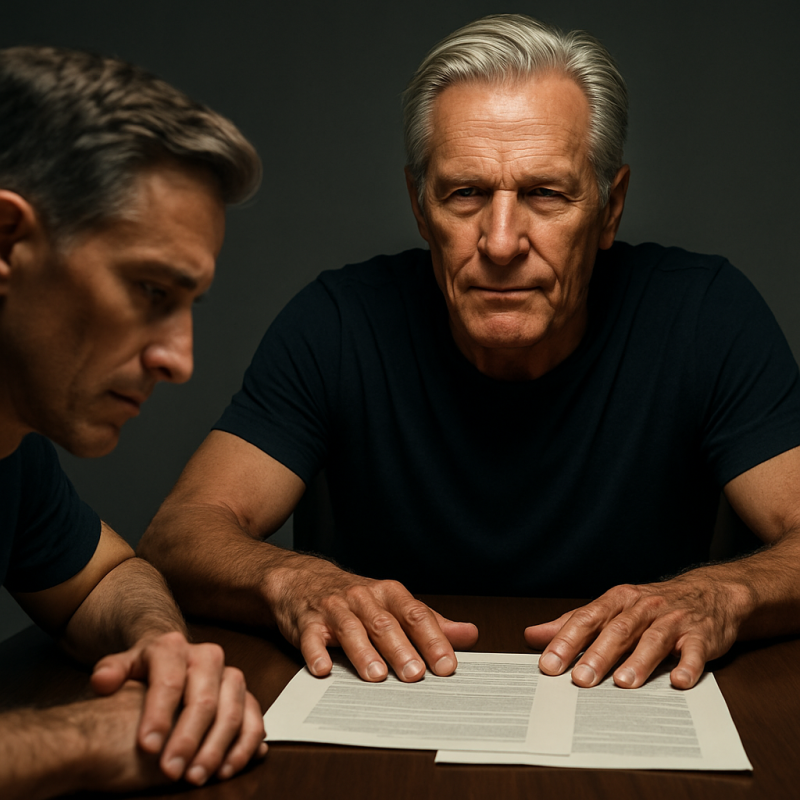 Image by RM AI
Threats and Accusations
Mark's chair scraped back hard against the floor as he stood. He pointed at me across the table and said I had tricked him, that I had buried language in a document his attorneys had drafted, that what I'd done was fraud and he intended to prove it in court. His voice had an edge I recognized — the one that used to appear at the end of long arguments, when he'd run out of the quieter tools. Henderson said, evenly, that I had added a clause to an agreement Mark's own legal team had reviewed and approved for signature, and that Mark had been represented by counsel throughout. David put a hand on Mark's arm and said something low. Mark shook it off. He looked at me and said I was going to renegotiate, that he would make the next twelve years very difficult if I didn't, that I had no idea what he was capable of when he decided to fight. I looked back at him and said no. Just that. No. Henderson told Mark to lower his voice. David said Mark's name once, quietly. Mark's hands came down flat on the table, and his voice rose to a shout that filled the glass-walled room.
 Image by RM AI
Walking Away
Mark was still talking when I stood up. I didn't interrupt him. I didn't raise my hand or ask for a pause. I just pushed my chair back, reached across the table, and picked up my copy of the signed agreement. I slid it into my folder, smoothed the edge closed, and picked up my bag. Mark's voice climbed higher — something about courts, something about making me regret this, something about what he was going to do next. I heard the words the way you hear traffic from inside a building. Henderson was already gathering his materials on the other side of the table, unhurried, methodical. I looked at Mark one last time. Not with anger. Not with satisfaction. Just looked, the way you look at something you used to be afraid of and aren't anymore. Then I turned toward the door. My heels were quiet on the carpet. Henderson fell into step behind me. Mark's voice followed us into the hallway, still going, still insisting. Henderson reached past me and pulled the door shut behind us, and the latch clicked into place.
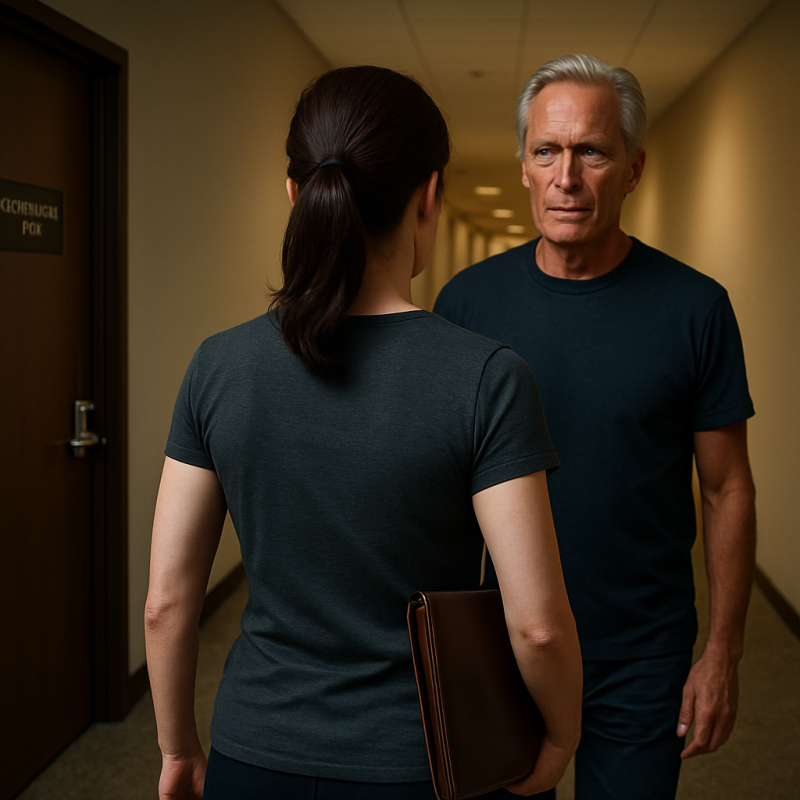 Image by RM AI
Coming Home
Leo came running out of his classroom with his backpack half-unzipped and a drawing of what he told me was a pterodactyl, though it looked more like a very confident triangle. I buckled him into his booster seat and drove us home, and when I turned onto our street I felt something I hadn't felt in months — maybe longer. The house was still standing there the way it always had, same shutters, same front walk, same pot of herbs by the door that I kept forgetting to water. But it felt different when I unlocked it. It felt like mine. Leo kicked off his sneakers in the entryway and disappeared toward his room, already narrating some game to himself. I walked through the kitchen, the living room, the hallway. I ran my hand along the doorframe of his bedroom. I made dinner — pasta, his favorite — and he sat at the counter and told me everything about his day in the particular way six-year-olds do, where every detail carries equal weight. I tucked him in that night and stood in the doorway watching the slow rise and fall of his breathing, and the house settled quietly around me.
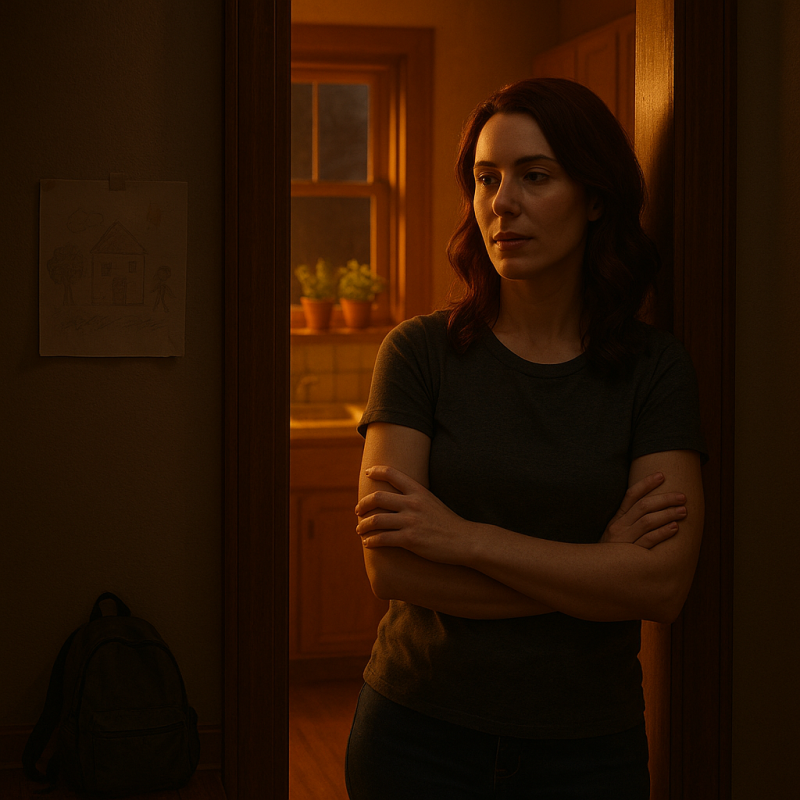 Image by RM AI
The New Normal
Weeks passed, and they were good weeks. Leo started soccer on Saturday mornings — he'd been asking since the fall — and he was terrible at it in the most joyful way possible, all enthusiasm and no aim. I signed the permission slips and bought the shin guards and stood on the sideline in the cold with the other parents, and I didn't mind any of it. Rachel came over on a Thursday evening with a bottle of wine and a grocery bag of cheese and crackers, which is her version of a formal celebration. She sat across from me at the kitchen table and said she was proud of me, and the way she said it — direct, no qualifiers — made my throat tighten in a good way. We talked for three hours. She told me about her own divorce, the parts she'd never said out loud before, and I told her things I hadn't said to anyone. At some point Leo wandered in from the backyard, grass-stained and breathless, wanting to show us a bug he'd found in a jar. Rachel made the appropriate noises of admiration. He ran back outside, and through the window I could hear him laughing at something — nothing, everything — and the sound of it filled the whole room.
 Image by RM AI
What Matters
Some mornings I sat at the kitchen table with my coffee before Leo woke up, and I thought about the night Mark set that folder down in front of me. I thought about the assets I hadn't fought for — the investment accounts, the vacation property, the portfolio he'd spent years building. There were moments, early on, when the size of what I'd walked away from felt staggering. But then Leo would come padding down the hallway in his dinosaur socks, hair still flattened from sleep, asking if we had the good cereal, and the math would rearrange itself completely. I had the house. I had twelve years of support locked into a document that Mark's own attorneys had drafted and his own hand had signed. I had my son in his own bedroom, in his own school, with his own friends, in the only home he'd ever known. I had learned something about myself in the past year that I couldn't have learned any other way — that I could be patient when everything in me wanted to react, that I could think clearly when I was most afraid. Mark had handed me a document designed to leave me with nothing, and I had turned it into the floor we were standing on. Leo looked up from his cereal bowl and grinned at me, and I understood, with the particular clarity that only comes after a long fight, that I had chosen exactly right.
 Image by RM AI
KEEP ON READING

The Origins Of 3 Common Sayings You Still Use Today
Etienne Boulanger on UnsplashMany of the phrases you use every…
By Rob Shapiro Apr 28, 2026
Was Caligula The Most Ruthless Roman Emperor?
Artur Matosyan on UnsplashRoman Emperor Caligula is one of ancient…
By Rob Shapiro Dec 18, 2025
1 Weird Fact About Every President
Washington, Lincoln, FDR. Most people know something about the lives…
By Robbie Woods Dec 3, 2024
10 Accidental Discoveries That Changed Maps & 10 That Changed…
Mistakes That Mattered. A lot of major discoveries did not…
By Cameron Dick Apr 15, 2026
10 Actors Who Perfectly Played a Historical Figure & 10…
Which Performance is Your Favorite?. Playing the role of a…
By Rob Shapiro Sep 15, 2025
10 Actors Who Perfectly Played a Historical Figure & 10…
Portraying a real person from history is one of the…
By Noone Dec 17, 2025