


I Let My Neighbor Fix My Porch for Free—Then He Asked for Something That Made My Blood Run Cold
I Let My Neighbor Fix My Porch for Free—Then He Asked for Something That Made My Blood Run Cold
The Storm and the Stranger's Offer
So last April, we got absolutely hammered by this freak spring storm—the kind that comes out of nowhere with winds that rip shingles off roofs and send trash cans rolling down the street like tumbleweeds. My front porch took the worst of it. Three boards cracked clean through, one railing post snapped at the base, and the whole thing looked like it'd been through a boxing match. I'm sixty-six years old and Raymond's been gone four years now, so the idea of finding a contractor, getting estimates, dealing with all that hassle? It exhausted me just thinking about it. That's when Tom from next door knocked on my door the morning after the storm. He'd lived there about eight months by then—quiet guy, maybe mid-fifties, always nodded hello when he got his mail. 'Carol,' he said, 'I used to do carpentry work before I retired. Let me fix that porch for you. No charge. We're neighbors.' I remember feeling this wave of relief wash over me. It felt like one of those rare moments when someone just does something kind without expecting anything back. I said yes, thanked him maybe three times, and he smiled this gentle smile that made me feel like I'd made a friend. As he measured the first broken board, Tom asked casually how long I'd lived here—thirty years, I told him, never imagining that number would matter.
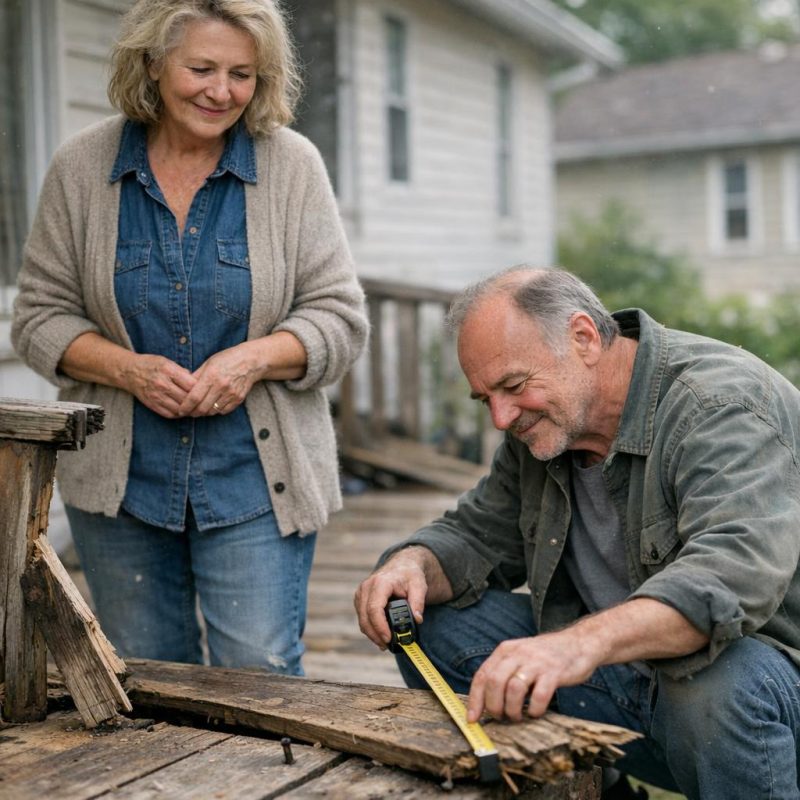 Image by RM AI
Lemonade and Small Talk
That first weekend, Tom showed up early Saturday morning with his toolbox and a bundle of new boards he'd already bought. The sound of his saw cutting through wood became this comfortable background noise while I worked in my garden. Around noon, I brought him a pitcher of cold lemonade and some crackers—it just felt like the right thing to do, you know? He took a break and we sat on the porch steps together, and he started asking these gentle questions about the neighborhood. What it was like back in the nineties. Which families had been here the longest. Whether the street had changed much. Honestly, it felt nice to talk to someone. Most of my neighbors these days are younger couples who smile politely but never really stop to chat. Tom seemed genuinely interested in the history, like he was trying to understand the place he'd moved into. I told him about the Hendersons who used to live across the street, and the big oak tree the city cut down in '02. Normal stuff. He listened carefully, nodding along. He paused mid-sip and said he'd heard the street used to have some drama about property lines—did I remember any of that?
 Image by RM AI
The Old Boundary Line
I told him I vaguely remembered something about a dispute way back, but honestly? I'd never paid much attention to that kind of thing. Raymond had always handled anything involving property or paperwork. That's when Tom mentioned the boundary line between our two houses specifically. He wondered aloud if I remembered where it was officially marked decades ago, back when the neighborhood was first developed. The question felt innocent enough at the time—just a new homeowner trying to understand his property, right? I laughed a little and admitted I didn't really know the details. 'Raymond took care of all that stuff,' I said. 'The surveys, the measurements, any disputes with neighbors. I just signed whatever he put in front of me.' Tom was sanding down one of the railings while we talked, and he stopped for a moment when I said that. He looked thoughtful, almost curious in a way I couldn't quite read. 'That makes sense,' he said, very calm, very measured. 'A lot of wives trusted their husbands with that kind of thing back then.' Something about the way he said it felt slightly off, but I brushed it aside. I told him I didn't really know—my husband Raymond had handled all that—and Tom nodded slowly, like my answer was exactly what he'd expected.
 Image by RM AI
A Perfectionist's Touch
Over the next few days, I watched Tom work with this meticulous attention to detail that impressed me. He didn't just slap some boards down and call it good. He measured twice, cut once, sanded every edge smooth. He even insisted on repainting all the railings to match, said it'd look 'unfinished' otherwise. I found myself checking on his progress throughout the day, bringing him water or just chatting while he worked. My daughter Karen called one evening and I told her about Tom fixing the porch for free. She seemed happy I had a helpful neighbor, said it was good I wasn't alone dealing with everything. By the second week, I'd started to really trust Tom's thoroughness. The porch was going to look better than it had in years. He worked quietly, never rushed, never complained. One afternoon while applying the second coat of paint, he stood back to admire his work. 'I want this to last another thirty years,' he said with a smile. Then he turned to me with this casual curiosity and asked if I planned to stay here that long, or if I'd thought about selling.
 Image by RM AI
Memories of Raymond
That night I couldn't sleep, and I found myself thinking about Raymond. Not in a sad way, exactly—just remembering how he'd always been the one who handled everything outside the house. The bills, the taxes, the property documents. Any time a neighbor had a concern about a fence line or a tree branch, Raymond would deal with it. He'd come to me with a paper and a pen and say, 'Just sign here, Carol, it's routine,' and I'd sign it without really reading what it was. I trusted him completely. Why wouldn't I? We were married forty-one years. But lying there in the dark, I started thinking about all those documents I'd signed over the decades. Easements, maybe? Survey updates? Boundary agreements? I honestly had no idea what half of them were. Raymond would handle a dispute with a neighbor, shake hands, and that'd be the end of it. I never asked questions. It wasn't that he was secretive—it just felt like his domain, you know? The man stuff. I realized I'd signed things over the years without really reading them—Raymond would just say it was routine, and I'd trusted him completely.
 Image by RM AI
The Second Weekend
Tom came back the following Saturday to finish up the railings and apply a final protective coat. I'd baked oatmeal cookies the night before—seemed only fair since he was still refusing to let me pay him. I brought out a plate with some coffee, and we sat together on the nearly finished porch while he took a break. The morning was warm, and the neighborhood was quiet except for someone mowing their lawn a few houses down. Tom took a cookie and complimented my baking, then started asking about his own house's history. Specifically, the people who'd owned it before him. He asked if I ever talked to the previous owners, the family who'd lived there back in the eighties. I thought about it for a moment. 'No,' I told him honestly. 'They moved away before Raymond and I really got to know them. I think they were only here a couple of years.' Tom nodded thoughtfully, sipping his coffee. 'Did you know their names?' he asked. I shook my head. 'I barely remember them, to be honest. Raymond might've talked to them once or twice.' He asked if I ever talked to the previous owners of his house, the ones who lived there in the eighties—I said no, they'd moved before I really knew them.
 Image by RM AI
A Job Well Done
By Sunday afternoon, the porch was finished. I stood on the front walk and just stared at it—the smooth new boards, the crisp white railings, the whole thing solid and beautiful. It looked better than it had in twenty years, honestly. Better than when Raymond and I first moved in. Tom packed up his tools and I tried one more time to pay him, pulling out my checkbook. He waved me off with that gentle smile. 'Neighbors help neighbors,' he said. 'Just a handshake and your thanks.' So I shook his hand and thanked him from the bottom of my heart. I meant it, too. I felt lucky to have someone like him next door. We stood there for a moment admiring his work together, and I was about to invite him in for dinner as a thank-you when his expression shifted slightly. Got a little more serious. He cleared his throat. 'Carol,' he said carefully, 'there's something I need to talk to you about—something important.' He glanced at his watch. As I admired his work, he said there was something he needed to talk to me about—something important—and asked if we could sit down tomorrow.
 Image by RM AI
The Sit-Down
Tom showed up the next afternoon right at two o'clock. I'd made iced tea and set out some cookies, thinking maybe he wanted to talk about some other repair project or neighborhood issue. We sat on the porch—my beautiful, newly repaired porch—and for a moment he just looked out at the street, like he was gathering his thoughts. Then he turned to me and his whole tone changed. Got formal. Almost businesslike. 'Carol, I need to be honest with you,' he said. 'My help wasn't just about being neighborly. It was an investment.' I remember my stomach dropping. An investment? What did that even mean? He went on to say that he'd done his research, that he knew about the property history, about things that happened decades ago that I probably didn't even remember. Things involving Raymond. Things involving boundaries and agreements. My mouth went dry. He leaned forward slightly, his expression serious but not exactly unfriendly. Still, something had shifted. The gentle neighbor was gone. He said he needed my cooperation with something, and the way his voice changed made my stomach knot with worry.
 Image by RM AI
The Real Reason
Tom shifted forward in his chair, hands clasped together. 'I've been trying to sell my house,' he said. 'I've got a buyer lined up, great offer—except we keep hitting a snag.' I must have looked confused because he explained that the title company found something buried in the old property records. Something involving my house. Something involving an agreement from decades ago that was never properly resolved. He spoke carefully, like he was trying not to alarm me, but I could feel my pulse picking up. What kind of agreement? What did my house have to do with his sale? I asked him to explain, but he just shook his head slightly. 'It's complicated,' he said. 'Goes back to when Raymond was alive. There were some disputes, some boundary issues that got—well, they got messy.' My palms started sweating. I hadn't dealt with property issues in years. Raymond handled all of that. Then Tom reached into a manila folder he'd brought with him and pulled out a stack of photocopied documents. 'There's a note,' he said quietly. 'A note you signed years ago, something that's now blocking my sale—and I had no memory of it.
 Image by RM AI
The Forgotten Signature
He slid the photocopy across the small table between us, and I picked it up with trembling fingers. It was a handwritten note on yellowed paper, just a few sentences really. The handwriting was distinctive, looping and careful—Raymond's handwriting, no question. I'd seen it on grocery lists and birthday cards for forty-three years. But at the bottom, there it was: my signature. Carol Brennan. The ink had faded to brown, but it was definitely mine. I stared at it, trying to trigger some memory, any memory of what this was about or when I'd signed it. Tom watched me quietly while I read it twice, then three times. It mentioned something about property lines and an agreement to settle a matter without further action. Legal language that meant nothing to me. 'Do you remember this?' Tom asked gently. I shook my head slowly, feeling ridiculous. How do you forget signing something legal? But I genuinely had no recollection. 'I don't understand what this is,' I admitted. The handwriting wasn't mine—it was Raymond's—but the signature was, and I couldn't remember what it was for or why I'd signed it.
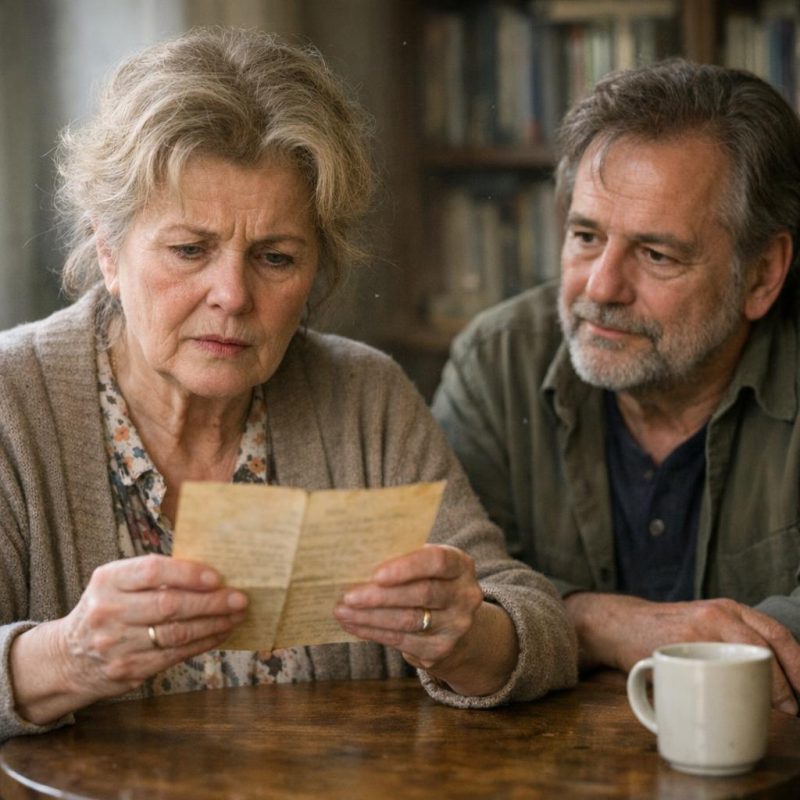 Image by RM AI
An Old Dispute
Tom leaned back and let out a long breath. 'This note,' he said, 'was part of a settlement. A settlement after something pretty ugly happened in this neighborhood.' He explained that back in the late nineties, there was a scandal involving a boundary line dispute. A fence had been moved—or someone claimed it had been moved—and a family on this street was accused of fraud. Accused of deliberately shifting the property line to steal land from the adjoining lot. I vaguely remembered hearing something about it, the kind of neighborhood gossip that spreads fast and then disappears. Tom's voice got quieter. 'There was an investigation. Accusations flying everywhere. People took sides. It got vicious.' I nodded slowly, fragments of memory starting to surface. There had been tension, I remembered that much. 'The family that was accused,' Tom continued, watching my face carefully, 'they were driven out. Lost everything. Their reputation, their home, their standing in the community.' He paused, and I could see something painful in his expression. 'A family was accused of moving a fence to steal land, he said—and that family was his, and they were driven out because of it.
 Image by RM AI
Digging Through the Past
I couldn't sleep that night. I kept thinking about what Tom had said, about his family being driven out, about that note with my signature. Around midnight I gave up and went down to the basement. We'd converted part of it into storage years ago, and I'd shoved all of Raymond's old paperwork down there after he died. Filing cabinets and banker's boxes stacked against the wall, all labeled in his neat handwriting. I found the box marked 'Property Records' and pulled out folder after folder. Tax documents, inspection reports, mortgage refinancing papers. Then I found one labeled 'Neighborhood—1998' in faded ink. My hands were shaking as I opened it. The note was there, the same one Tom had shown me, only this was the original. But underneath it there was another page, one Tom hadn't shown me. A second page I'd never seen before, or at least didn't remember seeing. The paper was just as yellowed, stapled to the first. I carried both pages upstairs to the kitchen where the light was better. Buried in a folder labeled 'Neighborhood—1998' I found a yellowed copy of the same note, with a second page I'd never seen—one that made my hands shake.
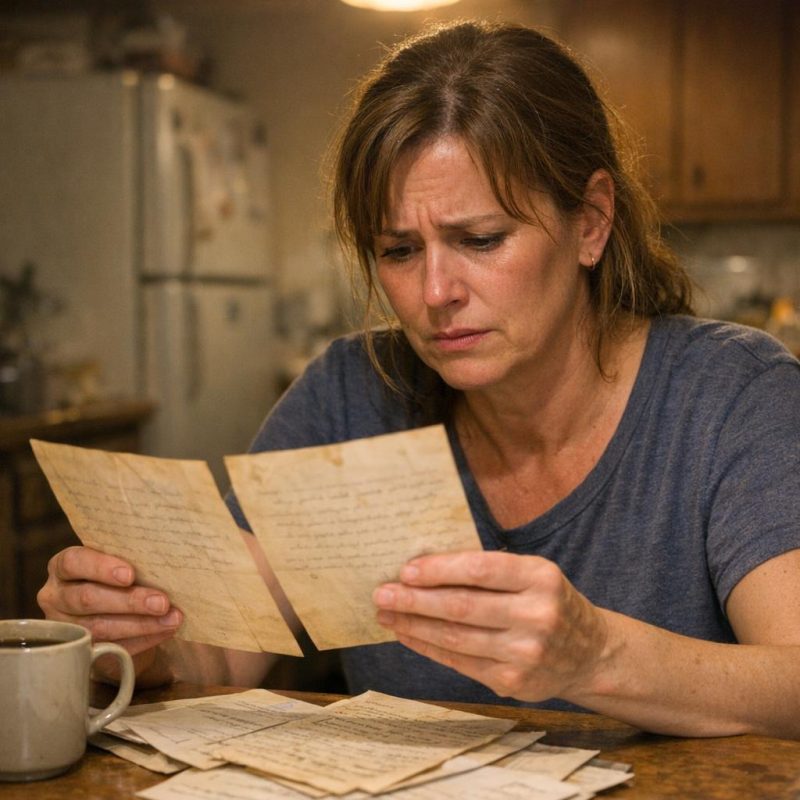 Image by RM AI
The Second Page
I sat at the kitchen table under the bright overhead light and read the second page slowly. It was some kind of memo, written in what looked like formal business language. It referenced an easement dispute and included a list of names—neighbors I vaguely recognized from decades of living on this street. The Hendersons, the Chius, the Martins. People I'd waved to at block parties and borrowed sugar from. Some were still here, some had moved away or passed on. But one name was circled in blue pen, the ink still bright against the yellowed paper. Victor Keller. I remembered that name now. He was the one accused of moving the fence, the one at the center of the scandal Tom had mentioned. The one whose family had been driven out. Next to his name, in the margin, someone had written additional notes in pencil. I squinted at the faint handwriting and my stomach dropped when I recognized it. Raymond's handwriting again, smaller and hastier than the careful script on the first page. One name stood out—Victor Keller, the neighbor accused of fraud—and next to it, in Raymond's handwriting, were the words 'handled quietly.'
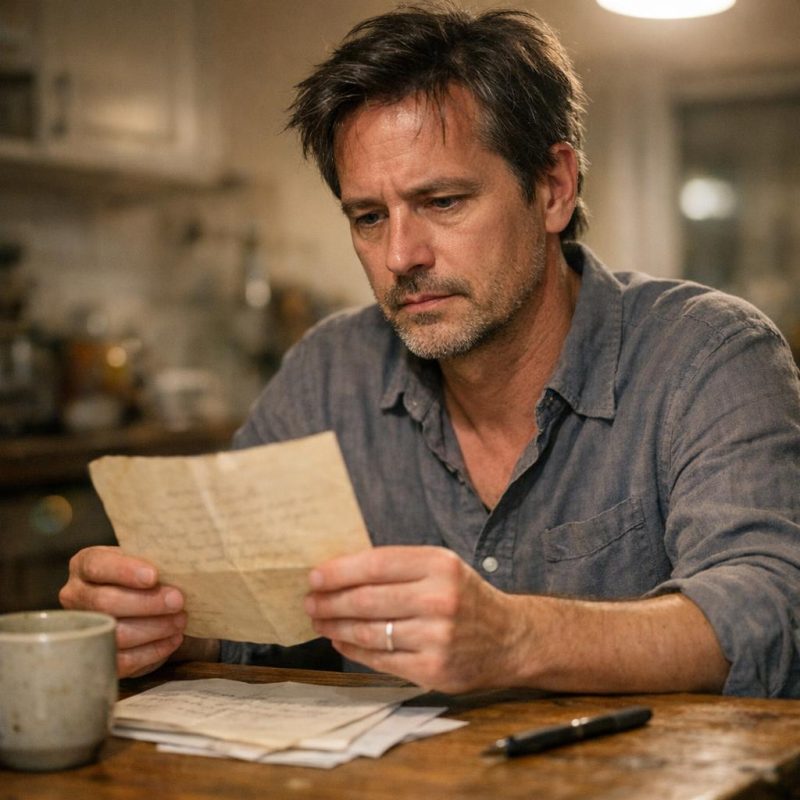 Image by RM AI
A Vague Memory Surfaces
I sat there at that kitchen table until nearly three in the morning, trying to force my memory to work. The scandal came back in pieces, like watching a movie with half the scenes missing. I remembered whispers at the grocery store, neighbors clustered in driveways talking in low voices. I remembered a moving truck on our street one Saturday, and a woman—Mrs. Keller, I assumed—who wouldn't look at anyone as she supervised the movers. She'd kept her head down, shoulders hunched like she was trying to disappear. There'd been children too, teenagers maybe. I remembered feeling sorry for them. But what had actually happened? What had Raymond's role been? I pressed my fingers to my temples and forced myself to think. Then it came to me, sudden and clear. Raymond coming home late one evening, his jaw tight the way it got when he was stressed. He'd poured himself a scotch—unusual for him on a weeknight—and told me we had to sign something to 'put the matter to rest.' I remembered Raymond coming home tense one night and saying we had to sign something to 'put the matter to rest'—but he never told me what the matter was.
 Image by RM AI
Tom's Request
Tom came back two days later, right around dinnertime. I'd been expecting him, dreading it really. I invited him in and we sat in the living room this time, not the porch. It felt too exposed out there, too open. He got straight to the point. 'Carol, I know this is a lot to take in,' he said. 'But what I need from you is actually pretty simple.' He explained that if I would just sign a new statement, a brief document affirming the old boundary agreement, it would finally clear his family's name. Clear the record that had been wrong for twenty-five years. 'It's just correcting the record,' he insisted. 'Nothing more than that. Just stating what actually happened back then, that the accusations were false.' It sounded reasonable when he put it that way. A simple correction. Justice delayed but not denied. But something in my gut twisted. Maybe it was the way he watched me as he spoke, too intent, too focused. Maybe it was the weight of that second page I'd found, Raymond's cryptic note about handling things quietly. He said it was just correcting the record, nothing more—but the look in his eyes told me there was more to it than that.
 Image by RM AI
Hesitation
I took a breath and told him I needed time to think about it. To process everything he'd told me, to maybe talk to someone who knew about legal matters. Tom's expression tightened for just a moment, then smoothed out again. 'Of course,' he said, standing up slowly. 'Take your time. I understand this is complicated.' But then he gestured toward the front window, toward the porch visible beyond it. 'I just want you to know,' he said carefully, 'how much work I put into that porch. How much effort. I did that because I trusted you'd want to do the right thing.' The implication hung in the air between us. The porch had been a gift, but maybe not freely given. Maybe it had always had strings attached. I walked him to the door, feeling smaller somehow, diminished. As he stepped out onto that beautiful porch—my beautiful porch that suddenly felt like a trap—he turned back. 'My daughter's counting on this,' he said quietly. 'She's grown up carrying the shame of something that never happened. Living with a lie.' As he left, he said his daughter was counting on this—that she'd grown up ashamed of a lie—and I felt the weight of his expectation settle over me.
 Image by RM AI
A Sleepless Night
I didn't sleep that night. I lay in bed staring at the ceiling, replaying every conversation Tom and I had ever had. The initial offer to fix the porch. The casual way he'd mentioned the property line. That supposedly spontaneous discovery of my old note in his basement. Each moment felt different now, viewed through the lens of what he'd asked me to do. But was I being paranoid? Tom had been nothing but kind and helpful for months. He'd spent hours working on my porch, refusing payment, being a good neighbor. Maybe his story was exactly what he said it was—a man trying to help his daughter heal from an old injustice. Maybe I was overthinking this because I'd been alone too long, because I'd grown suspicious of kindness. George used to tell me I was too trusting, but maybe the opposite was happening now—maybe widowhood had made me too guarded, too quick to see deception where there was only genuine need. I wanted to believe Tom. I really did. But something kept nagging at me, a detail I couldn't quite pinpoint, like a word on the tip of your tongue. I couldn't shake the feeling that something about his story didn't add up, but I had no proof—just a gnawing doubt.
 Image by RM AI
Asking Linda
The next morning, I walked three houses down to Linda Martinez's place. Linda's been on this block for thirty-eight years, even longer than George and I lived here. She knows everyone, remembers everything. Over coffee at her kitchen table, I asked her what she remembered about the Keller scandal. 'Oh God, that was ages ago,' she said, stirring her cup. 'Let me think. Early nineties? The husband—Victor, I think—he was accused of something with the property boundaries. Real nasty business. They moved away pretty quickly after that.' I nodded, trying to sound casual. 'Tom next door mentioned his family went through it. That they were the Kellers.' Linda's spoon stopped mid-stir. She looked at me with genuine confusion. 'Tom's family? No, honey. The Kellers left in, what, ninety-four? Ninety-five? Tom's only been here maybe fifteen years. Different family entirely.' My coffee suddenly tasted bitter. 'Are you sure?' I asked. 'Positive,' Linda said. 'I remember when Tom moved in. Nice enough guy, but he bought that house from the Brennans, not the Kellers.' Linda frowned and said she remembered the Kellers leaving in disgrace—but she also said Tom's family wasn't the Kellers, they came later.
 Image by RM AI
A Conflicting Account
I sat there at Linda's table feeling the floor shift beneath me. She went on, trying to be helpful, explaining how the Brennans had owned Tom's house for maybe ten years before selling it to him around 2008, 2009. 'The Kellers moved somewhere up north, I think. Haven't heard from them since. Why?' Linda asked, leaning forward with concern. 'Did Tom say he was related to them?' I fumbled for words. How could I explain that my neighbor had spent months befriending me, fixing my porch, and then asked me to sign a legal document based on what was apparently a complete fabrication? How could I say that without sounding completely paranoid, or worse, ungrateful for all his help? 'Oh, I must have misunderstood him,' I said, forcing a smile. 'You know how it is. Sometimes I get things mixed up.' Linda looked at me with that gentle concern people give widows, like we're fragile things that might shatter. I changed the subject to her grandkids, finished my coffee too quickly, and excused myself. Walking back home, I felt more lost than ever. She asked why I was asking, and I didn't know how to explain without sounding paranoid—so I changed the subject and left feeling more lost.
 Image by RM AI
Checking Public Records
I needed facts. Not memories or suspicions, but hard evidence. So that afternoon, I drove to the county clerk's office and asked how to access property records. The woman at the desk was patient with me—I'm not great with these official processes—and showed me how to search by address. I pulled up Tom's house and traced the ownership history back four decades. There it was in black and white. Victor and Margaret Keller had owned the property from 1987 to 1999. They'd sold it to James and Patricia Brennan, who'd owned it until 2008. Then Thomas Reardon purchased it on March 15, 2008. No inheritance. No family trust. No indication of any blood relationship between the Kellers and Tom. I asked the clerk if there was any way family connections would show up in these records, and she said not necessarily, but any inherited property would typically note the transfer type. This was a standard sale. Market price. Nothing suggested Tom had any connection to the Keller family whatsoever. I made copies of everything, my hands shaking slightly as I fed quarters into the machine. The Kellers sold to a couple named Brennan in 1999, who sold to Tom in 2008—there was no family connection, no inheritance, nothing.
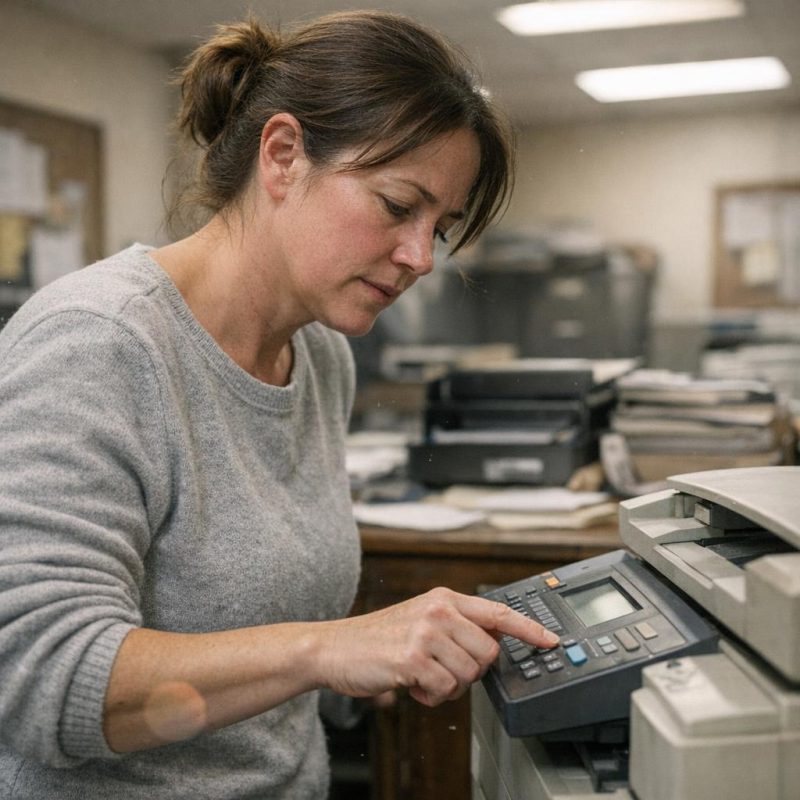 Image by RM AI
Confronting the Lie
I sat in my car in the county clerk's parking lot with those papers spread across my passenger seat, feeling physically ill. Tom had lied to me. Not a small misunderstanding or a detail misremembered—a complete, deliberate fabrication. He wasn't related to the Kellers. He had no daughter who'd grown up ashamed of her grandfather's actions. The entire story was false. But why? That's what I couldn't understand. What possible reason would someone have to invent a connection to a family that everyone had forgotten, to a scandal from thirty years ago that nobody cared about anymore? It wasn't like the Keller name carried weight in this town. They'd been gone for decades. Most people probably didn't even remember the details of what happened. So what did Tom gain from this elaborate lie? And why involve me? I thought about the porch, about all those hours he'd spent working on it. Was that part of the lie too? Had he befriended me specifically because of something I had—the old note, my memory of the property line? The thought made my skin crawl. But I still didn't understand why—what did he gain from pretending to be connected to a family everyone had forgotten?
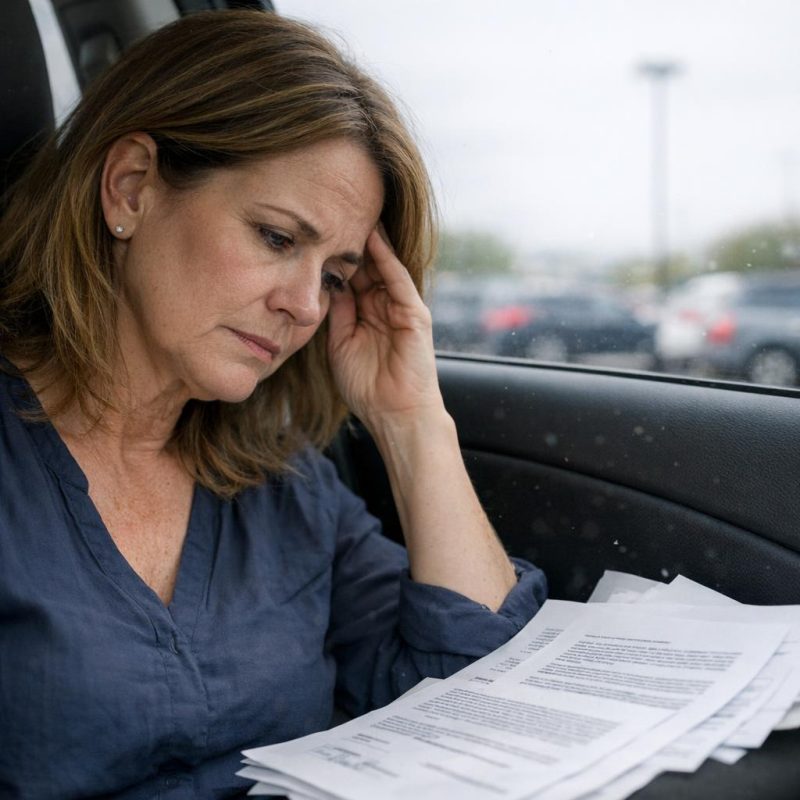 Image by RM AI
The Unsigned Statement
When I got home, I dug out the statement Tom had left with me. I'd barely glanced at it before, too overwhelmed by his emotional story to really examine what he was asking me to affirm. Now I read it carefully, word by word. It started normally enough, confirming that I'd lived at my address since 1985 and that I'd observed the property line between my house and the neighboring property. But then the language got specific. Very specific. It claimed that Victor Keller had 'knowingly and deliberately relocated the fence to encroach upon property that rightfully belonged to the Keller family.' It stated that I had 'witnessed this deceptive action' and that Victor Keller had 'acted with fraudulent intent to obscure the true property boundary.' I felt cold reading it. My original note from 1992 had said nothing like that. I'd simply written that I'd seen the fence moved and noted where the old boundary had been. I hadn't accused anyone of fraud or deception. I hadn't claimed to know Victor's intentions. This statement was asking me to lie. It didn't just affirm the old boundary—it asserted that Victor Keller had moved the fence knowingly, something my original note never claimed.
 Image by RM AI
A Trap Disguised as Justice
I sat at my kitchen table, really thinking it through for the first time. Tom wasn't trying to clear a family name. He was trying to build a legal case against someone—but who? And for what? I opened my laptop and searched for Victor Keller's name along with our town. It took a few tries, but I found it—an obituary from five years ago. Victor Keller, aged 71, passed away peacefully. Survived by his wife Margaret and daughter Susan. The funeral had been held in Vermont, where they'd apparently settled after leaving our town. He was dead. He couldn't defend himself against whatever Tom was constructing. And that's when it clicked into place. Tom didn't need the Kellers to admit anything or apologize for anything. He needed them silent. He needed documentation that would make Victor Keller look like a criminal, a fraud, someone who'd intentionally stolen property. And he needed statements from people like me to make it official, legal, believable. But for what purpose? What was he really after? I didn't know yet, but I understood one thing clearly: I'd almost signed a document that would have made me complicit in whatever he was doing. Victor Keller died five years ago, I learned from an online obituary, which meant no one could contradict whatever Tom was building.
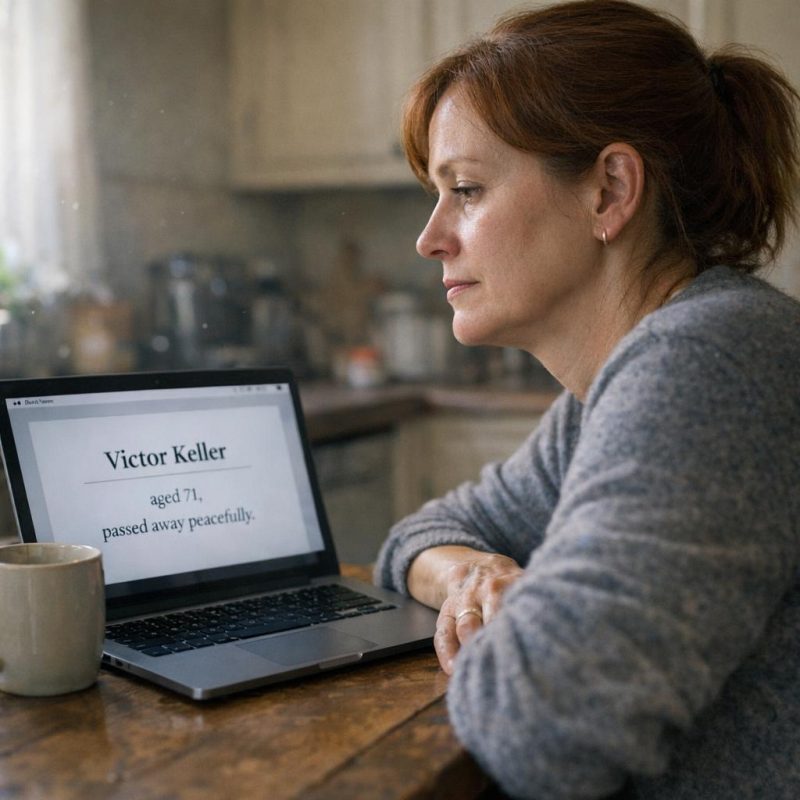 Image by RM AI
Tom's Follow-Up
My phone rang two days later. Tom's name lit up the screen, and my stomach clenched. I almost didn't answer, but that seemed cowardly. 'Carol! How are you doing?' His voice was warm, friendly. 'I wanted to check in about that statement. Have you had a chance to think it over?' I told him I was still considering it, that I wanted to be careful about signing legal documents. There was a pause, just a beat too long. When he spoke again, his tone had shifted—still pleasant on the surface, but with an edge underneath. 'I understand being cautious,' he said. 'But this is pretty straightforward, Carol. You already wrote about the fence back in ninety-two. This just makes it official.' I said I needed more time. Another pause. 'Look, I've been patient,' he said. 'I've been a good neighbor to you. Fixed your porch, never asked for anything in return. I'm just asking for this one small thing to help my daughter.' The word 'return' hung there. Like the porch had been a transaction all along. 'I'd hate for our good relationship to be damaged over something so simple,' Tom continued. He said he'd hate for our good relationship to be damaged over something so simple—and the word 'damaged' felt like a threat.
 Image by RM AI
A Neighbor's Warning
Linda called me that evening. I could tell from her voice something was wrong. 'Carol, I need to tell you something,' she said. 'I've been hearing things around the neighborhood.' She'd run into Betty from the corner house at the pharmacy, and Betty mentioned that Tom had stopped by her place asking questions about the old property lines. Then Linda ran into Paul from two streets over at the grocery store—same thing. Tom had been making the rounds, going door to door to anyone who'd lived here long enough to remember the Keller situation. 'He's asking everyone to write statements,' Linda said. 'Saying it's for his daughter's sake, that he needs documentation for the house sale.' My chest tightened. It wasn't just me. He'd been working the whole neighborhood systematically. 'There's something else,' Linda said, her voice dropping. 'Mrs. Henderson down the street—you know her, the one with the rose garden? She already signed something for him a few weeks ago.' I asked if Mrs. Henderson was okay with it. Linda hesitated. 'That's the thing. She called me yesterday, really upset. She said old Mrs. Henderson down the street had already signed something for him—and now she regretted it.'
 Image by RM AI
Mrs. Henderson's Regret
I walked down to Mrs. Henderson's house the next morning. She's eighty-three, lives alone since her husband died, and she seemed relieved when I explained why I'd come. 'Oh Carol, I'm so glad you're here,' she said, leading me to her kitchen table. 'I've been worried sick about this.' Tom had come by three weeks earlier with his warm smile and his sad story about his daughter. He'd told Mrs. Henderson that he needed statements from longtime residents to clear up title issues for the sale—just routine paperwork, nothing to worry about. 'He was so nice about it,' she said. 'He even helped me carry my groceries in from the car.' She'd written what he asked and signed it. But then her son visited last weekend and looked at the document, and he got concerned about the legal language. She showed me what she'd signed. I felt my skin go cold as I read it. The wording was nearly identical to what Tom had asked me to sign—the same phrases, the same structure, even the same apologetic tone about Victor Keller. She showed me what she'd signed, and it was nearly identical to mine—word for word, like he was following a script.
 Image by RM AI
The Pattern Forms
I sat in my living room that night with Mrs. Henderson's statement beside the one Tom had given me. The similarities were impossible to ignore. Tom wasn't just collecting random memories from neighbors—he was gathering identical testimonials, like he was building a case file. I counted in my head: me, Mrs. Henderson, probably Betty and Paul from what Linda had said. How many others? The statements all confirmed the same narrative: that we'd believed Victor Keller moved the fence illegally, that we'd supported the city's action against him, that we now understood it was a family dispute. It felt coordinated, methodical. Tom had been working on this for weeks, maybe months, moving through the neighborhood with his friendly demeanor and his story about his daughter. Each statement added another layer to whatever he was constructing. I wondered if there were others I didn't know about yet. The pattern was clear now—too clear to be coincidence. But what was he really building? I kept coming back to that question. Selling a house didn't require this kind of documentation, this many witness statements about events from thirty years ago. But I still didn't know what he was really after—selling his house didn't require this level of documentation.
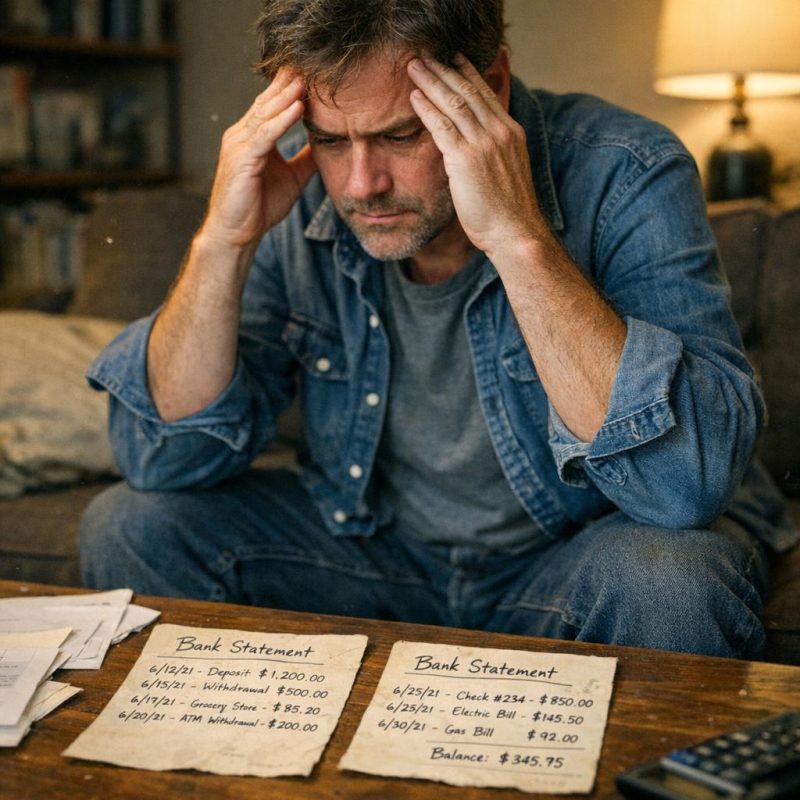 Image by RM AI
Raymond's Role Revisited
I couldn't sleep, so I went back to Raymond's files around midnight. I'd been through them before, but this time I was looking for something specific—any connection between Raymond and the city, anything that might explain why he'd been so insistent about signing that note back in ninety-two. That's when I found it: a memo tucked into a folder marked 'City Planning 1991-1993.' Raymond had worked for the city planning office. I'd forgotten that—or maybe I'd never really paid attention. He'd taken the job after he retired from the engineering firm, part-time consulting work. The memo was dated August 1992, just before the Keller scandal exploded. It was in Raymond's handwriting, notes from a meeting. The words 'boundary review' and 'political sensitivity' appeared multiple times. At the bottom, Raymond had written: 'Told to expedite resolution. No prolonged investigation. Settlement preferred regardless of technical findings.' I read it three times. Raymond had worked for the city planning office—and the memo suggested someone with power wanted the scandal buried, no matter the truth.
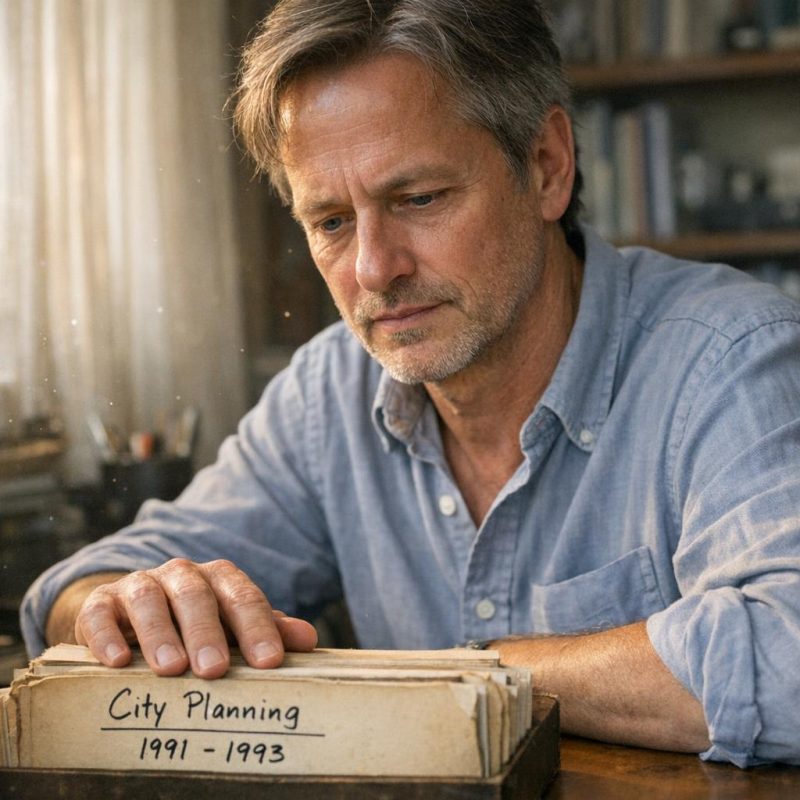 Image by RM AI
The City Official's Name
I kept digging through Raymond's notes, my hands shaking now. There were more memos, more references to pressure from above. And then I found a name: Gerald Moss. He appeared in several documents—a city councilman in the early nineties, apparently involved in the boundary dispute review. In one memo, Raymond had written: 'Moss called again. Insists on signed statement supporting city position. Says he has information about the Henderson contract.' I had no idea what the Henderson contract was—some work project Raymond had done, maybe? But the next line made my blood run cold: 'Cannot refuse. Too much at stake. Will sign what he wants.' The handwriting in that section looked different from Raymond's usual neat script. The letters were cramped, uneven. I'd seen Raymond write thousands of notes over our marriage, and I'd never seen his hand look like that. It looked like fear on paper. The leverage was never spelled out, but Raymond's handwriting looked shaky, almost scared, when he wrote about signing the note.
 Image by RM AI
Looking Up Gerald Moss
I searched for Gerald Moss online the next morning. It didn't take long to find him—or rather, to find his obituary. He'd died in 2015 at seventy-eight. The write-up was carefully worded, the kind of obituary that says a lot by saying very little. 'Longtime city councilman' and 'controversial figure' appeared in the same sentence. There was a reference to 'allegations that were never substantiated' and 'zoning decisions that drew scrutiny.' I dug deeper, finding old newspaper articles. Moss had been investigated twice by state ethics boards, once in 1994 and again in 2003. Both times he'd been cleared, but the articles made it clear that people suspected him of taking bribes from developers. One article mentioned a land deal in the Riverside district that netted his brother-in-law two hundred thousand dollars. Another referenced 'irregularities in boundary determinations' that benefited commercial interests. He'd been slippery, this Gerald Moss. Smart enough to avoid prosecution, connected enough to weather the scandals. The obituary mentioned his involvement in several zoning scandals—and I wondered if the Keller dispute was one of them.
 Image by RM AI
The Real Scandal
I pulled out the old property maps again, the ones I'd found in Raymond's files. This time I looked at them differently, not focusing on Victor Keller's fence but on the entire block. That's when I saw it: a thin strip of land, maybe fifteen feet wide, running along the back of all our properties. On the 1985 map, it was clearly marked as private property, part of each homeowner's lot. On the 1993 map—the one drawn after the scandal—that strip had been reclassified as a city easement for 'public utility access.' But there were no utility lines there. Never had been. I checked current property records online. That strip of land had been sold to a private developer in 1998, six years after the Keller dispute. The developer built a small access road and used it to connect a commercial property to the main street, increasing its value significantly. The real scandal wasn't Victor Keller's fence at all. Victor Keller had been the scapegoat, blamed for moving the fence when he'd actually been trying to prove the city was stealing land from all of us.
 Image by RM AI
The Weight of Silence
I sat at my kitchen table as the morning sun came through the window, and I felt sick. Victor Keller had been right. He'd tried to tell everyone that the property lines were being manipulated, that the city was taking land that didn't belong to them. And we'd called him crazy. We'd signed statements against him. We'd watched him lose everything—his reputation, his neighbors' respect, eventually his home—and the whole time he'd been telling the truth. Raymond had known something was wrong. That's what the shaky handwriting meant, the scared notes about Gerald Moss. He'd been pressured to go along with it, and he had. And I'd stood beside him and never asked questions, never pushed back, never demanded to know why he was so frightened. I'd trusted the system, trusted that the city and the officials knew what they were doing. I'd been comfortable in my silence. Thirty years later, that silence felt like a weight I could barely carry. And now Tom was trying to use that same silence, that same fear, to build something new on top of old lies.
 Image by RM AI
Meeting Claire
Tom showed up at my door two days later with a young woman I'd never seen before. 'Carol, this is my daughter Claire,' he said, and she gave me a small, tired smile that looked genuine. She was maybe thirty, dressed simply, and there was something fragile about her that made me want to invite them in before I could think better of it. We sat in my living room, and Tom explained that Claire had been dealing with harassment online, people digging up old accusations about her grandparents and the boundary dispute. Claire nodded, her eyes getting red. 'I didn't even know about any of this until a few months ago,' she said quietly. 'I found forum posts calling my family frauds, saying my grandparents stole land. My kids asked me why people were saying terrible things about us.' Her voice cracked, and I felt something twist in my chest. Tom put his hand on her shoulder, playing the protective father. 'That's why we need to clear this up,' he said. 'For Claire. For her children.' I wanted to feel moved by her distress, I really did. But then I caught Tom watching me over her shoulder, his eyes sharp and calculating, measuring whether his strategy was working.
 Image by RM AI
Claire's Story
Claire continued talking, describing how she'd grown up with whispers about her family but never understood what they meant. 'My grandmother died ashamed,' she said. 'She wouldn't talk about what happened here, wouldn't explain why we never visited this neighborhood.' It sounded heartfelt, the kind of pain that comes from real family wounds. I felt myself softening despite my suspicions. But then Claire started getting specific. She mentioned the exact lot numbers involved in the dispute, the precise measurements of the contested footage, the timeline of when the surveys were done. These weren't the kinds of details you'd pick up from family stories passed down over dinner. These were things you'd know from reading legal documents, from studying the case files. I glanced at Tom, and he was nodding along as if this was perfectly natural. 'How do you know all that?' I asked carefully. Claire blinked. 'Oh, well, I've been researching everything, trying to understand.' But her answer came just a beat too slow, like she'd been caught off guard. The specifics she'd mentioned weren't in any public records I'd found online—they were buried in the archived court documents Linda had shown me.
 Image by RM AI
Testing Claire
Something made me push a little harder. 'What were your grandparents' names?' I asked Claire, keeping my voice casual and friendly. It should have been an easy question, the kind any grandchild could answer instantly. But Claire hesitated. Her mouth opened, then closed. She looked at Tom, just for a second, and that second told me everything. 'Victor and Martha,' Tom said smoothly, answering for her. 'Martha passed first, then Victor a few years later.' I felt my chest tighten. Victor and Martha Keller. But Linda had told me something important when we'd talked about the case, something I'd almost forgotten in all the chaos. The Kellers had been elderly when the dispute happened, already in their seventies. And Linda had mentioned it specifically because it had made the whole thing even sadder—they'd had no children, no one to fight for them after they were gone. The Kellers had been childless. Which meant Claire couldn't possibly be their granddaughter. I looked at her sitting on my couch, and I didn't know if she was Tom's accomplice or just another person he was using.
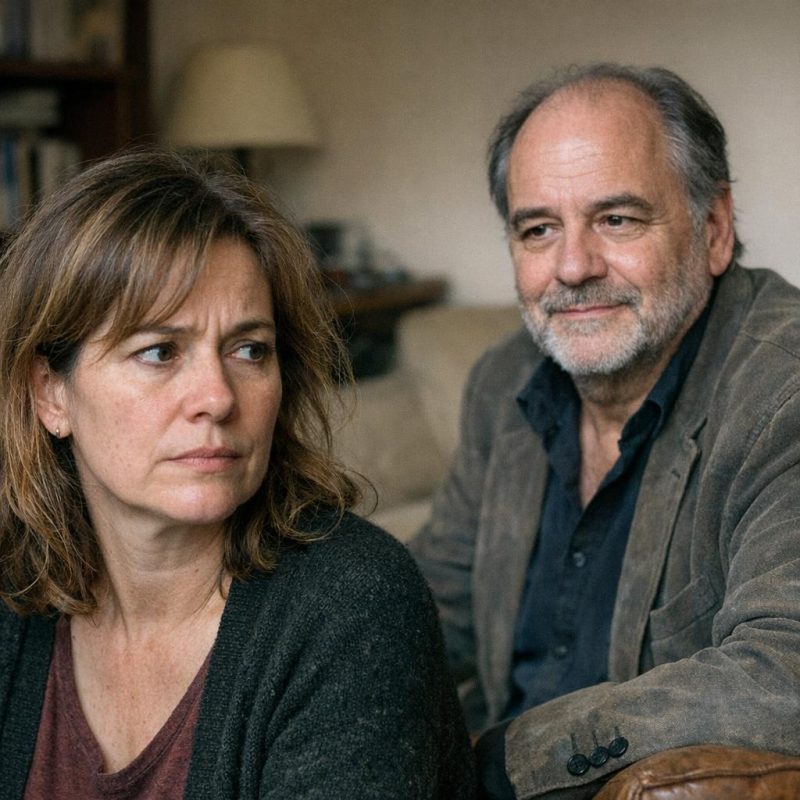 Image by RM AI
The Performance Cracks
I kept watching them as they talked, and something about their interaction felt off. Tom would start a sentence, and Claire would finish it in exactly the right place, like they'd timed the handoff. When she talked about her 'grandmother's' shame, Tom nodded at precisely the right moments, his expression shifting from sympathy to righteous anger right on cue. It felt rehearsed. Not badly rehearsed, but practiced enough that the edges were too smooth, too perfect. Real conversations between family members have messiness, interruptions, corrections. This was a performance. Then Claire excused herself to use the bathroom, and the moment she left the room, Tom's whole demeanor changed. He leaned forward, elbows on his knees, and gave me a businessman's smile. 'So, Carol, I think you can see why this matters so much to us. If you're ready, I've got the statement drafted—we could sign it today and start making this right for Claire and her kids.' Just like that. From grieving father to salesman in the space of a breath. The shift was so instant, so complete, that I actually felt a chill run down my spine.
 Image by RM AI
A Firm Refusal
I stood up, needing to put some distance between us. 'I need more time to review everything,' I said firmly. 'This is a big decision, and I want to make sure I understand all the implications.' Tom's smile stayed in place, but it never reached his eyes. They went flat and cold for just a moment before he recovered. 'Of course,' he said, his voice still friendly but with an edge underneath. 'Take all the time you need. We're not going anywhere.' But I could tell he was angry, that my hesitation wasn't part of whatever script he'd planned. Claire came back from the bathroom, and Tom stood immediately, saying they should get going and let me think things over. As they walked to the door, I felt a mix of relief and unease. Then, just as Tom stepped onto the porch, Claire turned back. She caught my eye and mouthed two words: 'please help us.' Her expression was desperate, pleading. And I stood there frozen, unable to tell if she was acting or if she was genuinely trapped in Tom's scheme, being used just like he was trying to use me.
 Image by RM AI
Searching for the Kellers
After they left, I went straight to my computer and started searching for any surviving Kellers. I spent hours going through obituaries, social media, white pages listings, anything I could find. Victor and Martha Keller had died decades ago—that part was true. But what about extended family? Siblings? I finally found a reference in an old church newsletter to a Samuel Keller, listed as Victor's brother, who had moved to Florida in the nineties. I tracked down a phone number through one of those people-search websites, my hands shaking as I dialed. An elderly man answered, suspicious at first when I said I was calling about Victor. But when I explained I'd been a neighbor during the boundary dispute, he softened a little. 'Victor was my older brother,' he said quietly. 'What he went through destroyed him.' I asked the question I was terrified to hear answered: Did Victor have any children? Samuel was quiet for a moment. 'He had one son. Martin. He still lives in the state, actually, up near the Canadian border.' He gave me a phone number, and I wrote it down with a hand I could barely keep steady.
 Image by RM AI
The Phone Call
It took me two days to work up the courage to call Martin Keller. I must have picked up the phone a dozen times before I finally let it ring through. A man answered, his voice cautious. I introduced myself, explained that I'd been a neighbor when his family lived on the street, that I was looking into what had happened during the boundary dispute. There was a long silence on the other end of the line. So long that I thought maybe he'd hung up. Then he spoke, and his voice was carefully controlled. 'I remember your name,' he said. 'Carol Henderson.' My maiden name. He remembered. 'How?' I asked, though I was afraid I already knew. 'My father kept documents,' Martin said. 'Boxes of them. Surveys, letters, legal filings. He spent years trying to prove his innocence, trying to clear his name. Your name is on some of those documents. You signed a statement saying he was trying to steal city property.' I closed my eyes, feeling sick. 'Martin, I'm so sorry. We didn't know. We believed what we were told.' He didn't respond right away, and the silence felt like an accusation I absolutely deserved.
 Image by RM AI
Martin's Bitterness
Martin's voice when he finally spoke again was raw with an anger that had been simmering for decades. 'You didn't know,' he repeated, and it wasn't a question. 'My father lost his business. Did you know that? He was a contractor, had built half the houses in three neighborhoods. After the dispute, no one would hire him. They said he was dishonest, that he couldn't be trusted with property lines.' I listened, barely breathing. 'We lost our savings paying legal fees. We lost our house. My mother's health collapsed from the stress—she had a stroke two years after we moved away. And my father?' His voice cracked. 'He died still trying to prove he'd been telling the truth. Still believing that eventually someone would listen.' I wanted to say something, anything, but what words could possibly be enough? Martin continued, quieter now. 'I moved past it years ago. Had to, for my own sanity. But you want to know something?' He paused. 'I haven't. Not really. Some wounds never really close, Carol.' The way he said my name, with all that pain and bitterness behind it, made me understand exactly what Tom's scheme had really cost.
 Image by RM AI
Sharing the New Threat
I told Martin everything. About Tom collecting statements from neighbors, about the careful way he'd framed his questions to make the Kellers sound like the problem. About how he'd called my husband's credibility into question while building this narrative that Victor had been dishonest. The words tumbled out faster than I could organize them, months of unease finally finding a sympathetic ear. When I finished, there was another long silence on the line. Finally, Martin spoke. 'What is he actually trying to do, Carol?' His voice had shifted from angry to analytical, like he was working through a puzzle. 'I mean, what's the endgame here? Why does he need these statements?' I gripped the phone tighter. 'I don't know for certain,' I admitted. 'But whatever it is, it requires burying your father's memory even deeper, and that feels wrong.'
 Image by RM AI
The Document Request
Martin was quiet for a moment. Then he said something that changed everything. 'I have boxes of my father's papers in storage. Surveys, photos, letters he wrote to the city. Everything he collected trying to prove his case.' My heart started pounding. 'After he died, I couldn't bring myself to throw them away. They documented everything—how the city surveyor made the error, how the boundary markers got moved, how Gerald Moss pressured people into signing statements against my dad.' He paused. 'The truth is all there, Carol. The whole damn truth that no one wanted to hear back then.' I could barely breathe. 'Would you... would you send them to me?' Another pause. 'I can do that,' he said slowly. 'But you need to understand something. Looking at them means you'll have to decide what to do with the truth. And that's not an easy burden to carry.'
 Image by RM AI
The Evidence Arrives
The package arrived three days later, a Priority Mail box that felt heavier than it should. Inside were manila folders stuffed with papers—surveyor's reports with official stamps, photographs showing fence lines and property markers, copies of letters Victor had sent to city officials. I spread everything across my dining room table, my hands shaking as I read through decades-old correspondence. Victor's handwriting was meticulous, his arguments clear and logical. He'd documented everything, taken photos from multiple angles, gotten independent surveys. The evidence was overwhelming. Then I found a letter dated October 1997, and my blood went cold. It outlined exactly how Gerald Moss had gone door to door pressuring neighbors to sign statements blaming Victor for the boundary dispute. And at the bottom of the list of neighbors who'd signed, written in Victor's careful script, was my husband's name.
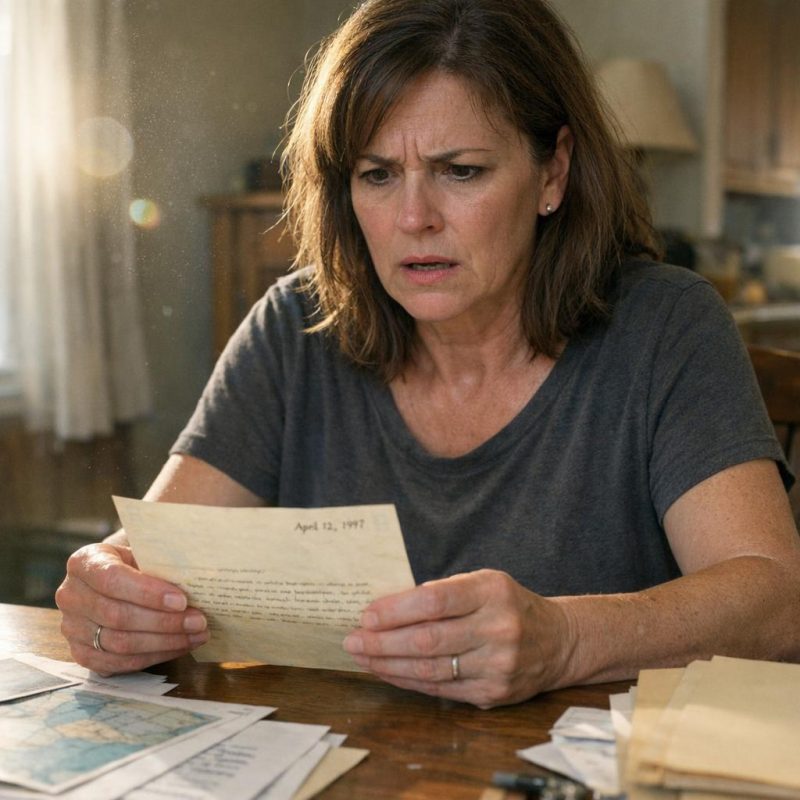 Image by RM AI
Martin's Visit
When Martin called to say he was driving down to see me, I wasn't surprised. Some conversations need to happen face to face. He arrived on a Saturday morning, looking older than I'd imagined from his voice—graying hair, tired eyes that had seen too much disappointment. We walked the street together, and I showed him where everything had been. Tom's house, where the Keller place once stood. My house. The ones that had belonged to other families back then. He stopped in front of Tom's driveway and just stared. 'I learned to ride my bike right there,' he said quietly, pointing to the sidewalk. 'My mom used to garden along that fence line.' I stood beside him, letting him have the moment. Then he said something that made my stomach drop. 'We never sold willingly, you know. The bank called our loan early. We had ninety days to come up with the full amount or lose everything.' His voice was barely above a whisper. 'We were forced out.'
 Image by RM AI
Confronting Tom Together
I don't know which of us suggested it first, but suddenly Martin and I were walking toward Tom's front door together. I rang the bell, my heart hammering. When Tom opened the door and saw us standing there, his face went completely pale. His eyes locked on Martin, and I watched recognition flash across his features. 'Martin Keller,' Martin said, his voice steady. Tom's mouth opened, then closed. He took a small step backward. 'I... I wasn't expecting—' 'No, I imagine you weren't,' Martin said. Tom's hand tightened on the doorknob, and for a second I thought he was going to slam it in our faces. Instead, he started to push it closed slowly, like he could make us disappear if he moved carefully enough. But Martin put his hand against the door, firm but not aggressive, and said, 'We need to talk about the statements you've been collecting.'
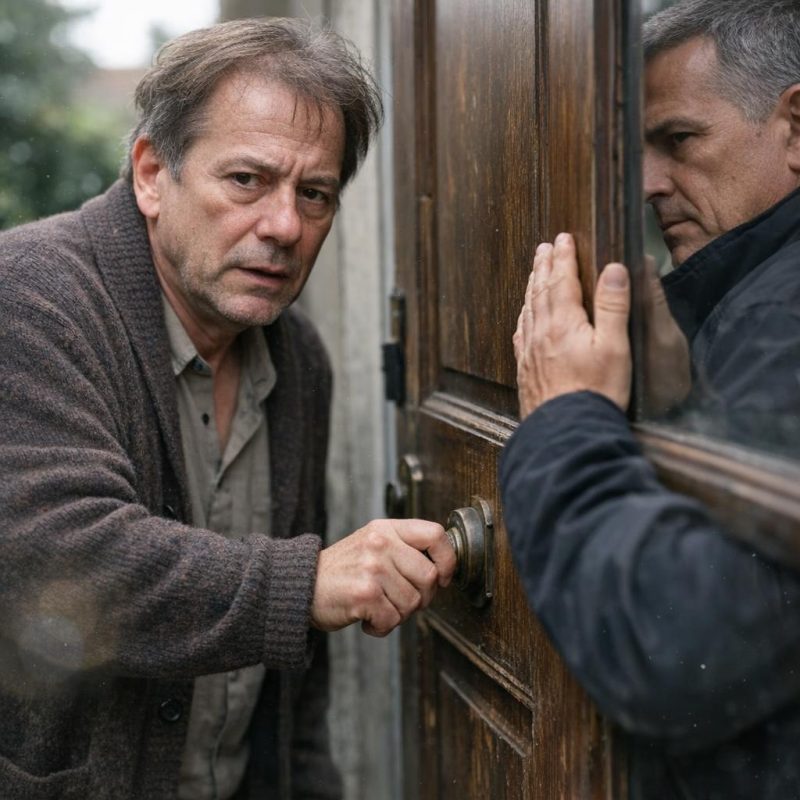 Image by RM AI
Tom's Defense
Tom stood there for a long moment, his face unreadable. Then he stepped back and opened the door wider. 'Come in,' he said, though his voice was tight. We followed him into his living room—immaculate as always, everything in its place. He didn't offer us seats. 'I'm not doing anything wrong,' Tom said, crossing his arms. 'I'm just trying to clear up some inconsistencies in the property records. There are issues that are blocking my sale, and I need documentation to resolve them.' It sounded rehearsed, like he'd been preparing this explanation. Martin stood very still, studying Tom's face. 'Inconsistencies,' he repeated flatly. 'That require blaming my father for problems the city created?' Tom shifted his weight. 'It's more complicated than—' 'Are you related to anyone who lived on this street in the nineties?' Martin interrupted. The question hung in the air. Tom's eyes darted between us. The answer should have been immediate, automatic. But it wasn't.
 Image by RM AI
The Admission
Tom finally spoke, his voice carefully controlled. 'No. I'm not related to the Kellers or anyone else who lived here back then.' The admission should have felt like a victory, but somehow it only made things worse. 'I may have... simplified things when I first talked to Carol,' he continued. 'But you have to understand, people are more willing to help when there's a personal story involved. It made the conversations easier.' Martin's jaw tightened. 'So you lied.' 'I streamlined the narrative,' Tom corrected. My hands were shaking. 'What do you really want the statements for, Tom?' He looked at Martin for a long moment, and something shifted in his expression—something calculating, like he was weighing his options. Finally, he said, 'A lawsuit.' The word landed between us like a bomb. 'Against who?' Martin demanded. Tom straightened his shoulders. 'The city,' he said.
 Image by RM AI
The Lawsuit Revealed
Tom took a breath and continued, his voice taking on a clinical tone that made my skin crawl. 'I discovered that the city illegally seized portions of several properties in this neighborhood during the boundary dispute in the nineties. They covered it up by blaming homeowners like Victor Keller. But if I can prove the city's culpability and establish that the original property owners—like the Kellers—were actually at fault for separate issues, it creates a clean alternative narrative.' Martin's face had gone white. 'You need us to blame my father—' 'To protect my compensation claim,' Tom finished. 'If the narrative stays muddy, if your father's innocence remains a question mark, the city can argue they were just resolving legitimate disputes. But if neighbors confirm he was the problem, it isolates the illegal seizure as a separate issue. One I can sue over.' I felt sick. He wasn't seeking justice for anyone. He was using the Keller family's suffering as cover to pursue a payout, and he'd manipulated us all to build his case.
 Image by RM AI
Martin's Fury
Martin's hands were shaking. I could see them trembling against the table as he stared at Tom with something that looked like pure disbelief. 'My father spent fifteen years trying to clear his name,' he said, and his voice cracked on the last word. 'Fifteen years writing letters, filing appeals, talking to lawyers who couldn't help him. He died bitter and broken, convinced the whole neighborhood thought he was a thief and a liar.' Tom didn't even flinch. Martin leaned forward, his face flushed. 'And now you want me to help you cement those lies? To say my father actually was at fault, just so you can get your payout?' I watched Tom's face for some sign of shame, some flicker of recognition that what he was asking was monstrous. Nothing. He just sat there with that same calm expression, like Martin was being unreasonable for getting emotional. 'I understand this is difficult,' Tom said slowly, like he was explaining something to a child. 'But your father is gone. This could actually benefit—' 'Benefit who?' Martin's voice rose. 'You?' Tom shrugged, and the casual gesture made my stomach turn. 'History is written by whoever files the paperwork first,' he said simply. And I realized with absolute clarity that he felt no shame at all.
 Image by RM AI
The Porch as Leverage
Tom turned to me then, and his expression shifted into something that might have looked like friendliness if I hadn't just watched him try to destroy a dead man's reputation. 'Carol,' he said, and I hated how familiar he sounded using my name. 'You've been very quiet. I hope you're considering what I've said.' I didn't answer. My throat felt tight. He leaned back in his chair, relaxed, confident. 'I put a lot of work into your porch. Quality work. Materials, labor, expertise—thousands of dollars worth, really.' There was a pause that felt deliberate. 'It would be a shame if code enforcement happened to notice it wasn't properly permitted.' The words landed like a slap. Martin's head snapped toward Tom. 'Are you seriously—' 'I'm just pointing out the reality of the situation,' Tom interrupted smoothly. 'Unpermitted structures are a liability. The city takes them seriously. Fines, forced removal, it gets complicated.' He looked at me with those calm, reasonable eyes. 'But neighbors who work together? They look out for each other. No one needs to get code enforcement involved.' I stared at him, this man I'd welcomed into my home, whose work I'd praised to everyone on the block. He was threatening me now, openly, using my gratitude against me like a weapon. And the beautiful porch I'd been so grateful for suddenly felt like chains.
 Image by RM AI
Walking Away
I stood up. My chair scraped against the floor louder than I expected, but I didn't care. My heart was pounding so hard I could feel it in my throat, but I kept my voice steady. 'I won't sign anything,' I said. Tom's eyebrows rose slightly, like he was surprised I could form words. 'And I'm prepared to tell everyone on this block exactly what you're doing. Mrs. Henderson, Linda, all of them. They deserve to know.' For a moment, nobody moved. Then Tom's face changed. That friendly mask he'd worn for months—the helpful neighbor, the skilled craftsman, the man who just wanted to do the right thing—it dropped completely. What was underneath was cold and hard and made me take a step back. 'You'll regret choosing the wrong side,' he said quietly, and there was nothing neighborly in his tone anymore. It was a promise. Martin stood up fast, his chair nearly tipping over, and moved between us. He was taller than Tom, broader, and I saw something shift in Tom's expression—not quite fear, but calculation. 'I think you should leave,' Martin said, his voice low. Tom looked at both of us for a long moment, then walked out without another word. The door closed behind him with a soft click that somehow felt louder than a slam.
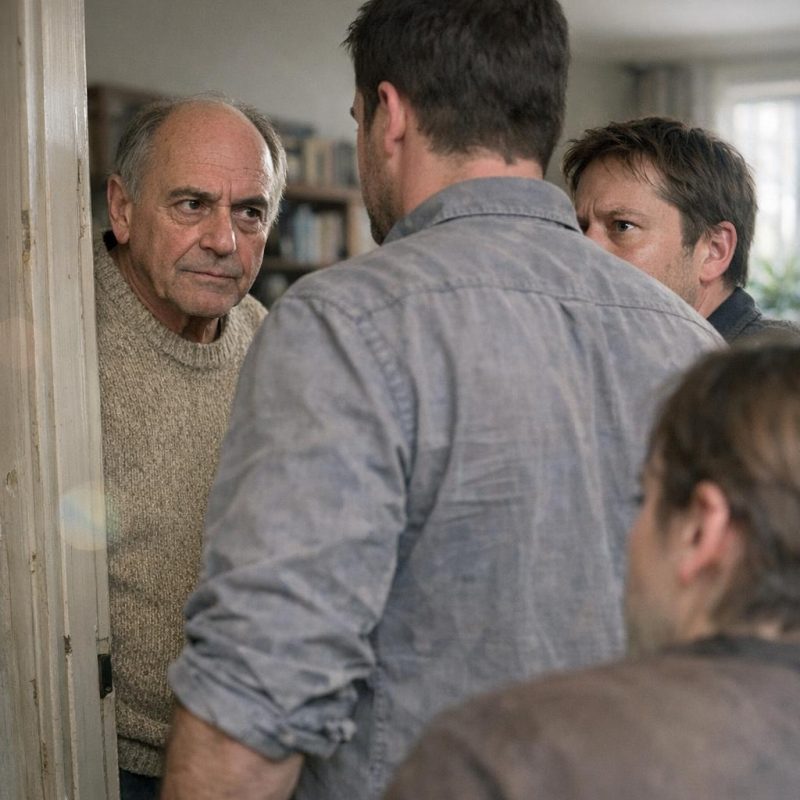 Image by RM AI
The Neighborhood Meeting
Martin and I spent the next two days calling everyone Tom had approached. We organized a meeting at Linda's house because she had the biggest living room and, honestly, because she was the one neighbor everyone trusted. Seven people showed up—everyone Tom had asked to sign something. We sat in a circle with coffee and pastries that nobody touched, and one by one, people started talking. Linda went first. She explained how Tom had framed the statement as a neighborhood improvement initiative, never mentioning lawsuits or the Keller family. Mrs. Henderson nodded vigorously. 'He told me it was just to help with property records,' she said. 'That the city had made mistakes and needed our help correcting them.' Another neighbor, Jeff, who lived two doors down from me, admitted Tom had visited him three times before he finally signed. 'He kept saying everyone else had already agreed, that I was holding up the process,' Jeff said. 'I felt like I was being difficult.' The pattern was so clear it made me sick. Tom had isolated each of us, fed us different stories, made us feel like cooperation was the neighborly thing to do. Mrs. Henderson started crying then, dabbing at her eyes with a tissue. 'I trusted him because he reminded me of my son,' she whispered. 'He was so helpful, so polite.' And that's exactly what Tom had counted on.
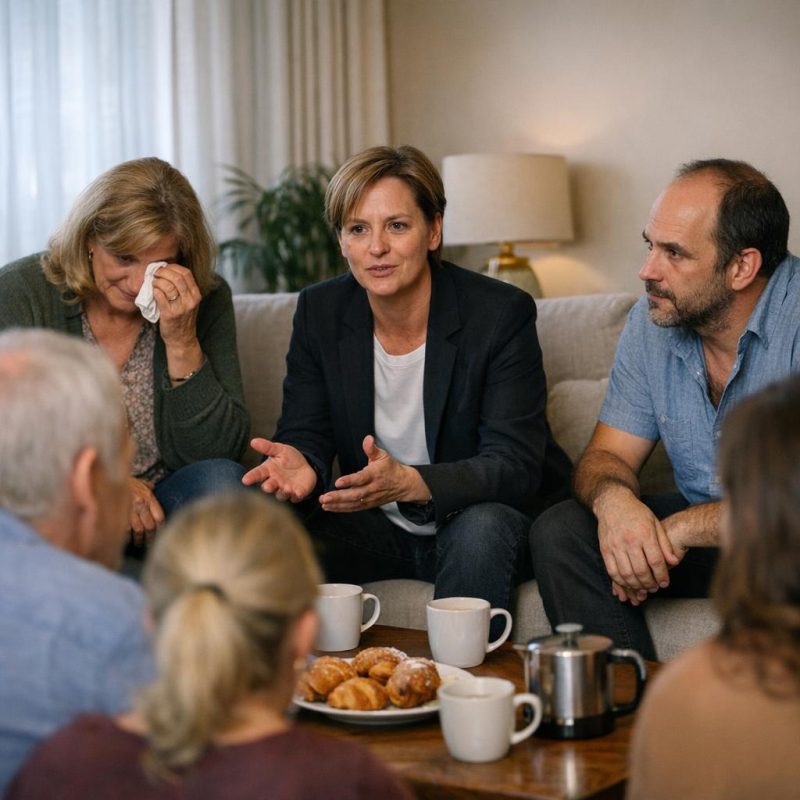 Image by RM AI
Recanting the Statements
Martin's lawyer helped us draft a template letter. It was simple and clear: we recanted our signatures, explained we'd been misled about the purpose of the statements, and withdrew our support for any claims being made using our testimony. Every single neighbor who'd signed one of Tom's documents wrote one. Mrs. Henderson's handwriting was shaky but determined. Linda typed hers and printed it on professional letterhead from her real estate office. Jeff wrote his in careful block letters, like he wanted to make absolutely sure every word was legible. We gathered at Linda's dining room table one evening and signed them all, witnessed them, made copies. It felt like something bigger than paperwork. It felt like taking ourselves back. Martin packaged everything up—copies of the original statements Tom had collected, our recantations, a timeline of Tom's visits to each of us. We mailed one set to Tom with signature confirmation required. One set went to the city attorney's office. One went to Martin's lawyer, who'd agreed to help with whatever came next. When we dropped the envelopes in the mailbox at the post office, Linda squeezed my hand. 'Now we wait,' she said. We mailed copies to Tom, to the city attorney, and to Martin's lawyer—and waited to see what Tom would do next.
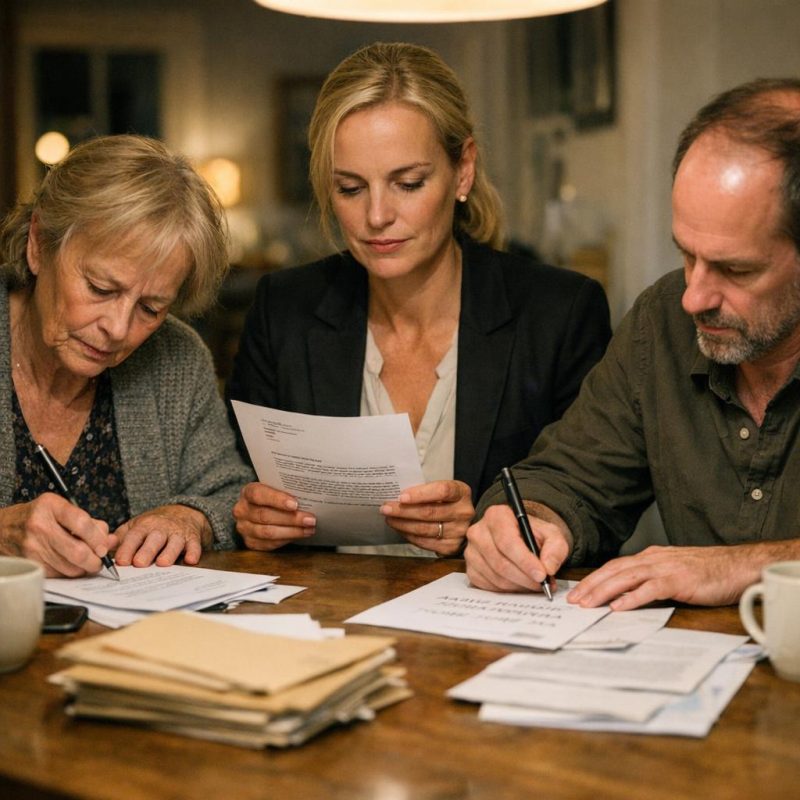 Image by RM AI
Tom's Retaliation
Tom didn't wait long. Four days after we mailed the letters, a man in a city vest knocked on my door with a clipboard. He introduced himself as a code enforcement inspector and said he'd received a complaint about unpermitted construction on my property. My porch. Of course. The inspector was thorough and apologetic. He measured, took photos, checked against building codes that apparently had changed since Tom built it. 'You'll need to apply for retroactive permits,' he explained. 'And based on what I'm seeing, there are some modifications that'll be required to bring it up to current standards. The railing height is off by two inches, and the footings may not meet current frost-depth requirements.' I felt exhausted just listening to him. He filled out his forms while I stood there trying not to cry. Before he left, he paused at the door and looked back at me. His expression was uncomfortable, almost embarrassed. 'Ma'am,' he said quietly, 'this isn't the first complaint we've received from Thomas Renner. In the past two years, he's filed seven complaints against various neighbors. Just... thought you should know.' He handed me the violation notice and walked back to his truck. The inspector looked sympathetic and quietly said this wasn't the first complaint Tom had filed against neighbors who crossed him.
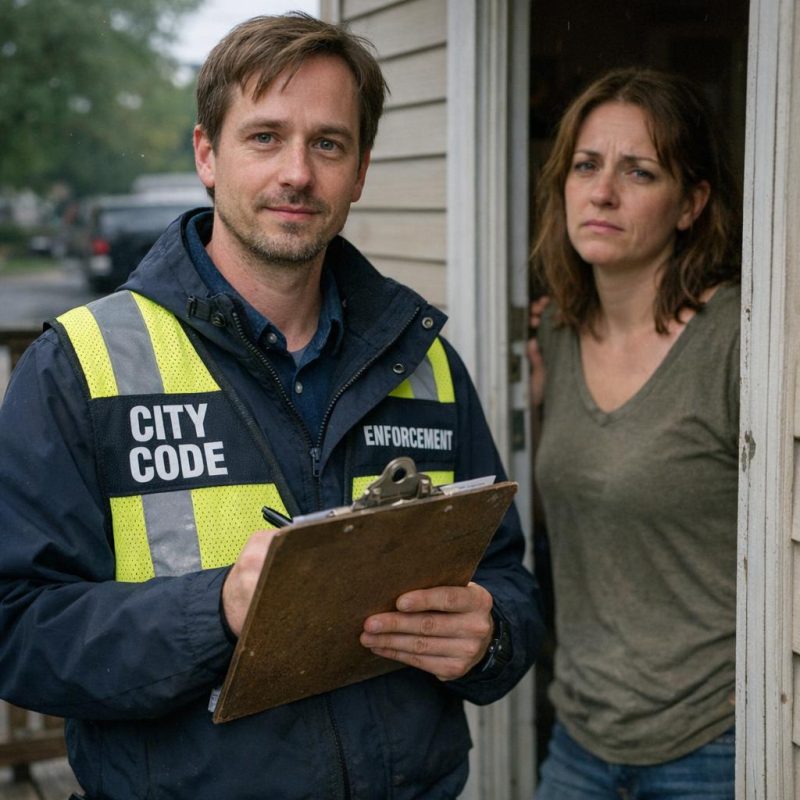 Image by RM AI
Facing the Cost
I called three contractors before I found one willing to handle retroactive permits. He came out, looked at the porch, and gave me an estimate that made me sit down. Between the permit application fees, the engineering reports required for retroactive approval, and the modifications needed to bring everything up to current code, we were looking at close to eight thousand dollars. For a porch I'd thought was free. I sat at my kitchen table that night staring at the estimate, doing math in my head. My fixed income could handle it, technically, but it would wipe out most of my emergency savings. I'd have to be careful for months. When I mentioned it to Linda the next day, she immediately pulled out her checkbook. 'I'm helping with this,' she said firmly. 'Tom manipulated all of us. You're just the one paying for it.' Mrs. Henderson called that evening and said the same thing. She wanted to contribute a thousand dollars. I tried to refuse, but she wouldn't hear it. 'That porch has become something bigger than wood and nails, dear,' she said. 'It's about standing up to bullies. Let us stand with you.' I cried after I hung up. Linda offered to help with the cost, and Mrs. Henderson said she would too—and I realized the porch had become a symbol of something bigger.
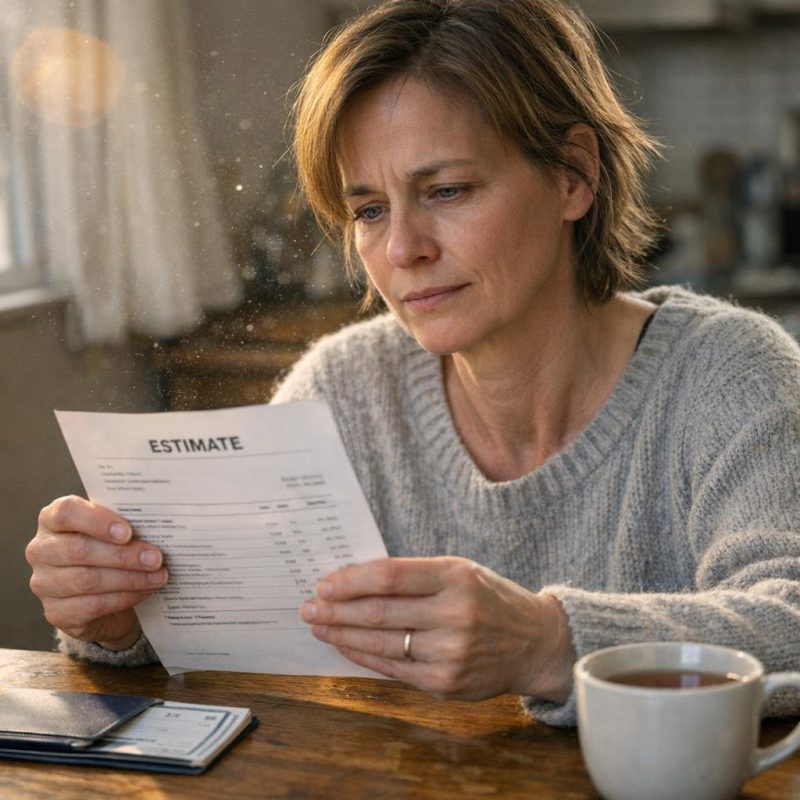 Image by RM AI
Martin's Lawsuit
Martin had been quiet for a week, and I wondered if he'd decided to let the whole thing go. Then he called and asked me to come over. When I arrived, his dining room table was covered in documents—his father's papers, the letters we'd recanted, newspaper clippings from the nineties. 'I'm filing a lawsuit,' he said. 'Against the city, for the illegal seizure and for the damage to my father's reputation. And I'm asking if you and the other neighbors would be willing to testify.' Not about his father being at fault. About Tom. About the coercion we'd experienced, the manipulation, the way Tom had tried to use us to build a false narrative. Martin's lawyer thought it would strengthen the case—showing that Tom's claims were based on manufactured evidence, while Victor Keller's documentation was real. We all agreed immediately. Martin filed the next week. The lawsuit laid out everything: the original property seizure, the decades of Victor trying to clear his name, Tom's scheme to manipulate the narrative for his own gain. It was detailed and damning and backed up by Victor's meticulous records. Three days later, my phone rang. It was Linda. 'Turn on the news,' she said. The local paper had picked up the story, and suddenly the neighborhood scandal from thirty years ago was news again—this time with the truth.
 Image by RM AI
Tom Leaves
The 'For Sale' sign went up on Tom's lawn three weeks after Martin filed the lawsuit. Not just for sale—drastically reduced. I saw it when I went to get my mail, and the price was at least forty thousand below market value. He wanted out fast. Linda came over that afternoon and said she'd heard through Mrs. Henderson that Tom hadn't even bothered staging the house. Just listed it as-is and took the first offer. Within two weeks, a moving truck appeared. I watched from my window as they loaded boxes and furniture, half expecting Tom to come knock on my door one last time. But he didn't. He got in his car and drove away without a word to anyone on the street. No goodbye, no explanation, nothing. The house sat empty for a few days before the new owners arrived—a young couple with a toddler who waved at me from their front yard. Linda called me that evening. 'I heard he moved to another state,' she said. 'Probably looking for a new neighborhood to exploit.' I felt relieved, honestly. But also sad in a way I couldn't quite explain.
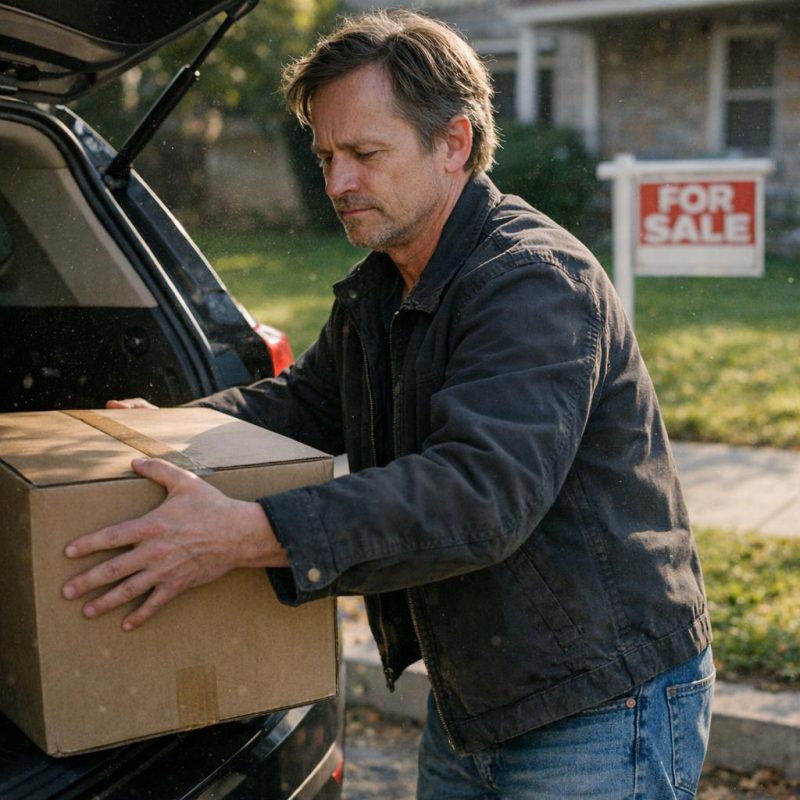 Image by RM AI
The Settlement
The city settled Martin's lawsuit two months later. No fanfare, no press conference—just a quiet payment and a one-paragraph statement buried on page six of the local paper. The statement acknowledged 'errors in property record handling and documentation procedures' from the 1990s, and promised improved oversight going forward. That was it. No apology to Victor Keller's memory, no admission of wrongdoing in the seizure itself. Martin called me the day after it was finalized. 'It's done,' he said, and his voice sounded lighter than I'd heard it in months. The settlement wasn't much money—enough to cover his legal fees and a bit more—but he said that wasn't the point. 'My father spent thirty years trying to prove he wasn't a crook,' he told me. 'Now there's something official that shows the city screwed up, not him. That's enough.' I asked if he felt vindicated, and he was quiet for a moment. 'I feel like I can stop fighting,' he said. It wasn't vindication or justice, really—but Martin said it was enough to let him stop fighting, and I understood that.
 Image by RM AI
The Permitted Porch
My porch passed its final inspection on a Tuesday morning in early October. The inspector was a different man this time—younger, more thorough—and he checked every beam and rail before signing off on the permit. When he left, I stood there for a moment just looking at it. It was exactly what I'd wanted: sturdy, beautiful, with room for chairs and a small table. That afternoon, I invited Linda and Mrs. Henderson over, and we sat there drinking lemonade while the leaves started turning gold in the trees. We talked about everything—about Tom, about Martin, about how strange it was that something as simple as a porch could unravel so many secrets. Mrs. Henderson said she'd learned to trust her instincts more, that she'd never ignore that feeling in her gut again. Linda laughed and said she'd learned that free help always costs something eventually. I didn't say much, just listened and sipped my lemonade and felt the October sun on my face. The porch was beautiful and legal now—but it would always remind me that kindness offered with conditions isn't kindness at all.
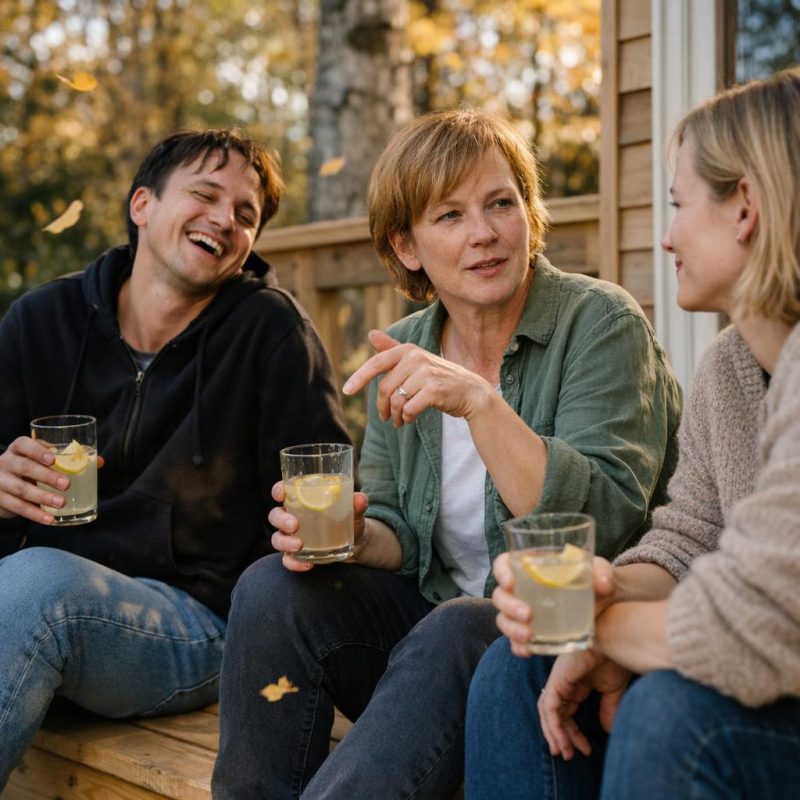 Image by RM AI
The Cost of Silence
I wrote Martin a letter a week later. Not an email—an actual letter, handwritten on nice stationery I'd bought years ago and never used. I apologized for my role in what his family had suffered, for signing that paper without asking questions, for being too afraid to speak up when it might have mattered. I told him I was sorry for all the years his father spent fighting alone. I mailed it before I could second-guess myself. His response came ten days later. It was short—just half a page in careful, slanted handwriting. He thanked me for the apology but said he didn't need it. 'Forgiveness is a gift we give ourselves, not others,' he wrote. 'You were manipulated, just like the rest of us. The only person who needed to know better was Tom.' He signed it simply: Martin. I cried when I read it, then folded it carefully and put it on my refrigerator under a magnet shaped like a lighthouse. I see it every morning now when I make my coffee. I keep his letter on my refrigerator, a reminder that the most scandalous thing I ever did wasn't signing a paper—it was staying silent for so long.
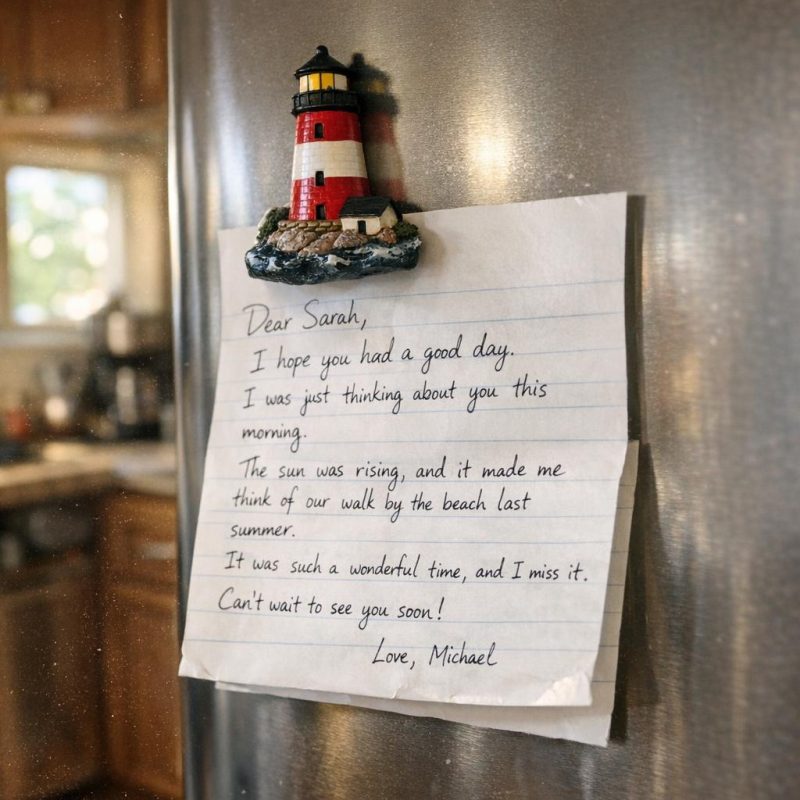 Image by RM AI
KEEP ON READING
The 20 Most Recognized Historical Figures Of All Time
The Biggest Names In History. Although the Earth has been…
By Cathy Liu Oct 4, 2024
10 of the Shortest Wars in History & 10 of…
Wars: Longest and Shortest. Throughout history, wars have varied dramatically…
By Emilie Richardson-Dupuis Oct 7, 2024
10 Fascinating Facts About Ancient Greece You Can Appreciate &…
Once Upon A Time Lived Some Ancient Weirdos.... Greece is…
By Megan Wickens Oct 7, 2024
20 Lesser-Known Facts About Christopher Columbus You Don't Learn In…
In 1492, He Sailed The Ocean Blue. Christopher Columbus is…
By Emilie Richardson-Dupuis Oct 9, 2024
20 Historical Landmarks That Have The Craziest Conspiracy Theories
Unsolved Mysteries Of Ancient Places . When there's not enough evidence…
By Megan Wickens Oct 9, 2024
The 20 Craziest Inventions & Discoveries Made During Ancient Times
Crazy Ancient Inventions . While we're busy making big advancements in…
By Cathy Liu Oct 9, 2024