

I Hid a Camera in My Mom's Hospital Room. What I Found on the Footage Made Me Question Everything About Her 'Routine' Surgery.
I Hid a Camera in My Mom's Hospital Room. What I Found on the Footage Made Me Question Everything About Her 'Routine' Surgery.
The Routine Surgery
I sat in the waiting room at St. Catherine's Medical Center, watching the clock and trusting completely that my eighty-four-year-old mother was in the best possible hands. Eleanor had raised three children, buried a husband, and still lived independently in her downtown apartment. She was stronger than most people half her age. The gallbladder surgery was supposed to be straightforward—Dr. Morrison had explained it all with such calm professionalism that I'd barely felt a flutter of concern. Routine, he'd called it. Laparoscopic. Minimal recovery time. I'd nodded and signed the consent forms without hesitation, the way you do when you trust the system and the people running it. My mother had joked before they wheeled her in, saying she'd finally have an excuse to skip her bridge club for a week. I'd laughed and kissed her forehead, watching as they pushed her gurney through those double doors. Three hours later, Dr. Morrison emerged in his scrubs, pulling down his surgical mask with a practiced gesture. 'It went perfectly,' he told me, his eyes crinkling with professional warmth. 'No complications whatsoever. She'll be in recovery shortly.' I thanked him, felt my shoulders drop with relief, and texted my daughter Sarah the good news. But as I walked toward the recovery area, I felt something I couldn't quite name—a small, cold knot forming in my stomach that made absolutely no sense given what I'd just been told.
 Image by RM AI
Day One Recovery
Dr. Morrison made his rounds the next morning while I sat beside my mother's bed, and he seemed genuinely pleased with how things were progressing. Eleanor was groggy, her face pale against the hospital pillows, but she squeezed my hand when I spoke to her. 'Exactly what we expect to see at this stage,' Dr. Morrison said, checking her vitals on the monitor with practiced efficiency. Her blood pressure was stable. Her incision sites looked clean. The numbers all made sense to him, and I took comfort in his confidence. He explained that the first twenty-four hours were always the hardest, that disorientation and fatigue were completely normal after anesthesia. My mother drifted in and out of sleep while he talked, her breathing steady and even. 'She's doing beautifully,' he assured me, his hand briefly touching my shoulder in that way doctors do when they want to convey both competence and compassion. I wanted to believe him—I did believe him. He'd performed this surgery hundreds of times. The hospital had excellent ratings. Everything about the situation screamed 'routine' and 'safe.' After he left, I sat there watching my mother sleep, her chest rising and falling with mechanical regularity. A nurse came in to check her IV and make notes on her chart, smiling at me with practiced kindness. She was tired and disoriented, but stable—exactly what they'd promised.
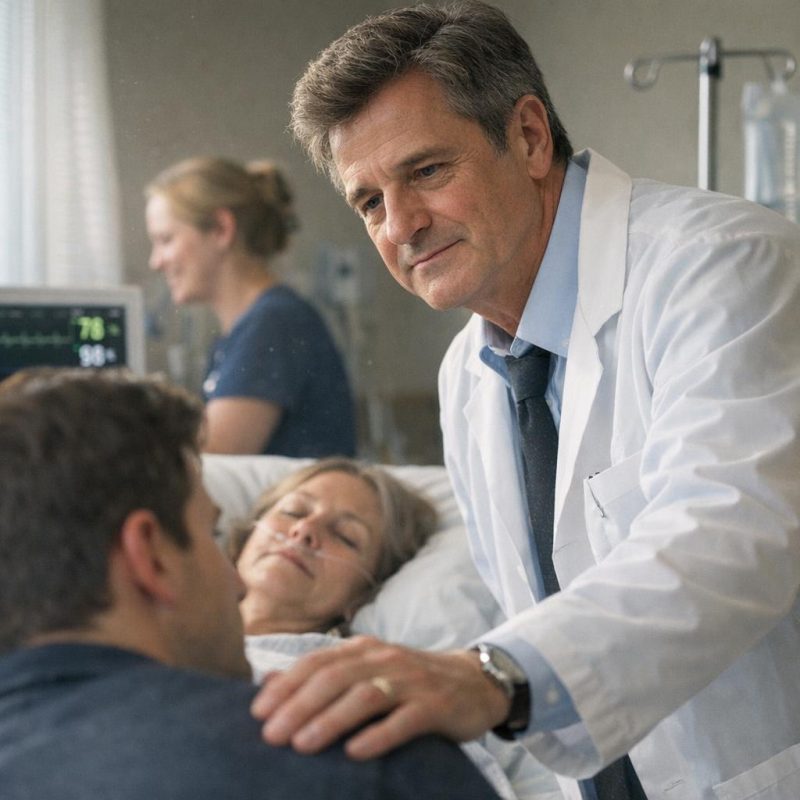 Image by RM AI
The First Morning
When I arrived on the second morning with fresh flowers and my mother's favorite crossword puzzle book, I stopped short in the doorway. Eleanor looked worse than she had the day before—significantly worse. Her skin had taken on a grayish pallor, and her eyes, when she managed to open them, seemed unfocused and confused. She didn't recognize me right away. 'Mom?' I said, setting down the flowers and moving to her bedside. She blinked slowly, as if trying to remember who I was. The transformation from the previous evening was stark enough that I immediately pressed the call button for the nurse. Amy, the day nurse, arrived within minutes, her scrubs decorated with cheerful cartoon cats. She checked my mother's vitals and flipped through the chart with the kind of calm efficiency that's supposed to be reassuring. 'Everything looks fine,' Amy said, giving me that practiced smile healthcare workers perfect over years of dealing with anxious family members. 'Post-surgical recovery isn't linear. Some days are harder than others.' But my mother had barely been able to lift her head. She'd mumbled something incomprehensible when I'd asked if she was in pain. 'Shouldn't someone examine her?' I asked, trying to keep the edge out of my voice. Amy assured me the doctor would be by on his rounds, that confusion was common, that I shouldn't worry. The day nurse checked the chart and smiled reassuringly, but something in my mother's eyes didn't match that smile.
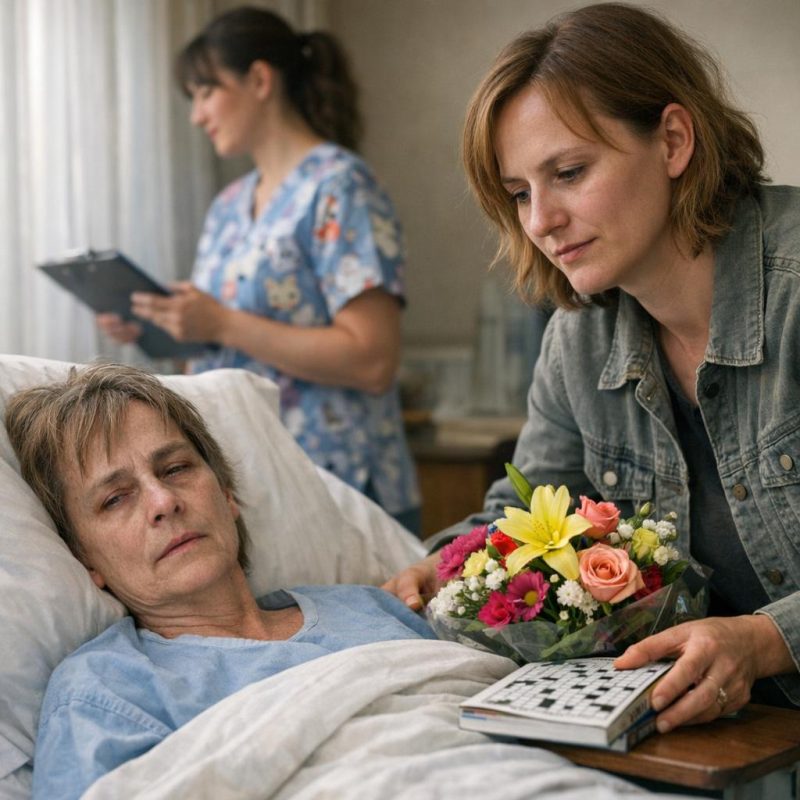 Image by RM AI
The Afternoon Improvement
I stayed all morning, watching my mother with growing anxiety, but then something strange happened around two in the afternoon. Eleanor's color started to return. The grayish pallor faded, replaced by something closer to her normal complexion. Her eyes grew clearer, more focused. She even managed to ask me for water in a voice that sounded like her own. By three o'clock, she was sitting up slightly, complaining about the terrible hospital coffee in that sharp, witty way that was so characteristic of her. 'They call this food?' she said, pushing away her lunch tray with a weak but definite gesture of disgust. I felt my anxiety drain away, replaced by relief and a strange sense of confusion. Had I overreacted that morning? Maybe Amy had been right about the non-linear nature of recovery. Maybe I was just being an anxious daughter, seeing problems where none existed. My mother even made a weak joke about her surgeon's eyebrows, which made me laugh despite myself. We spent the rest of the afternoon watching game shows on the small television mounted to the wall, and she correctly answered three questions on Jeopardy. When visiting hours ended, I kissed her goodnight and walked to my car feeling cautiously optimistic. I told myself it was just the natural rhythm of healing, but I couldn't shake the oddness of the timing.
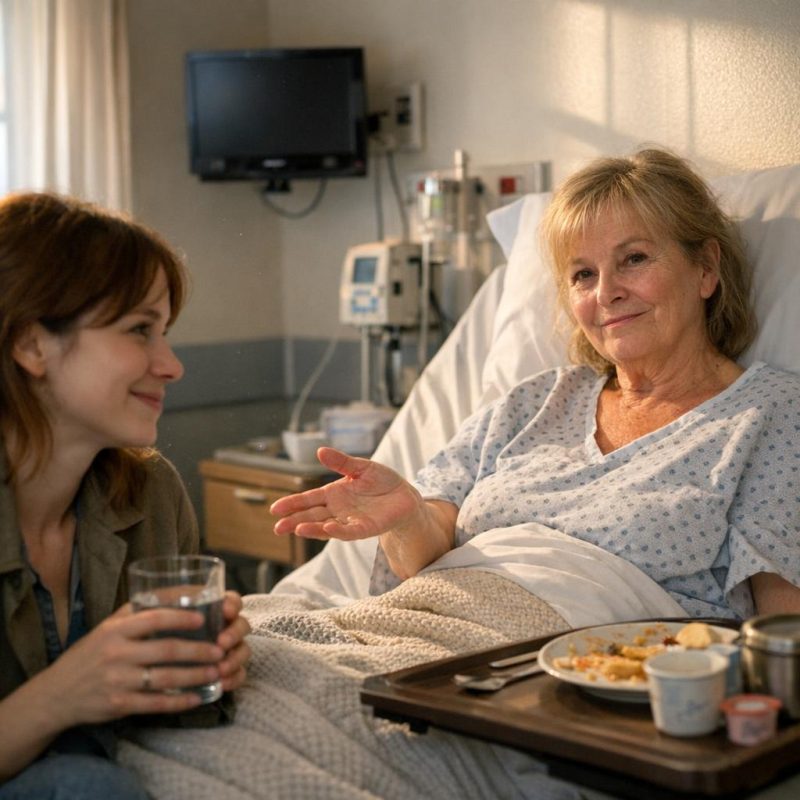 Image by RM AI
Sarah's Reassurance
Sarah came by that evening after work, still in her business clothes, and I shared my concerns about the morning's episode while Eleanor slept. My daughter listened patiently, but I could see the skepticism in her eyes—the same look she'd given me when I'd worried excessively about her own childhood illnesses. 'Mom, she's eighty-four and she just had surgery,' Sarah said gently, touching my arm. 'Of course she's going to have good hours and bad hours. That's how bodies heal.' She reminded me that I'd done the same thing when Sarah's son had been hospitalized with pneumonia two years ago, seeing patterns and problems that the doctors had dismissed as normal. 'You're doing that thing where you catastrophize,' she said, not unkindly. We stood in the hallway outside Eleanor's room, and I tried to articulate what felt wrong about the morning's dramatic decline and the afternoon's equally dramatic improvement. But hearing myself explain it out loud made it sound thin, neurotic even. Sarah had to get home to her family, but she hugged me before leaving and promised to visit again soon. 'Try to trust the process,' she said. 'The doctors know what they're doing.' I watched her walk down the corridor toward the elevators, her heels clicking on the polished floor. Maybe Sarah was right—maybe I was just being an overprotective mother myself.
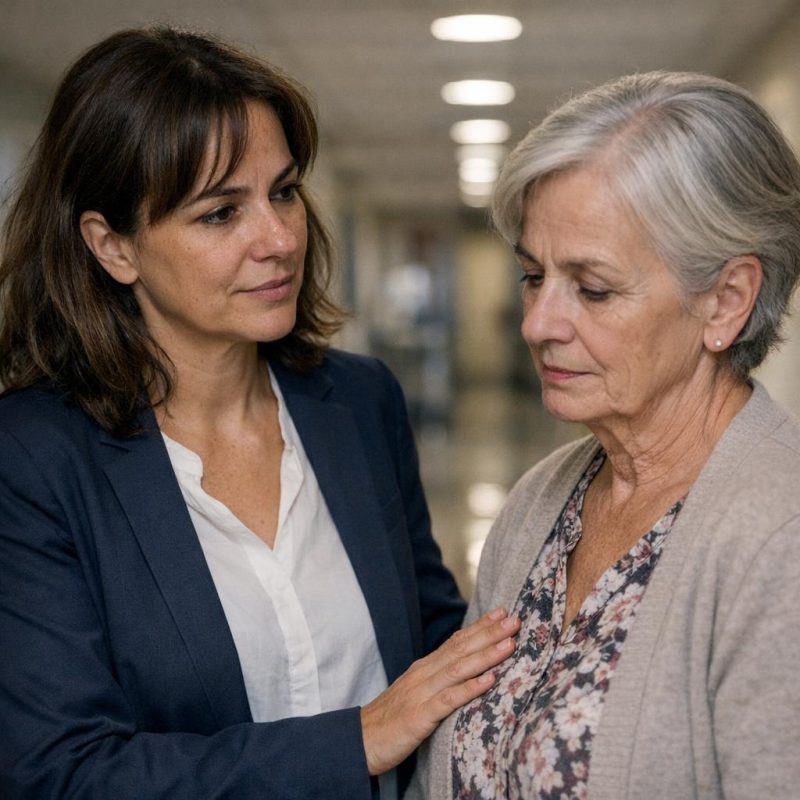 Image by RM AI
The Second Morning Pattern
On the third morning, I arrived early, before seven, and found my mother in nearly the exact same condition as two days prior. The grayish pallor had returned. Her confusion was profound. She called me by my sister's name—my sister who'd been dead for five years. This time I didn't wait for the nurse. I stood by the bed and really looked at the pattern I'd been trying not to see. Monday morning: severely weakened. Monday afternoon: improved. Tuesday morning: severely weakened. Tuesday afternoon: improved. Now Wednesday morning: severely weakened again. The consistency was undeniable once I allowed myself to see it. I pulled out my phone and started making notes with timestamps, documenting what I was observing. My mother's hand felt cold in mine, and when I squeezed it, her response was barely perceptible. This wasn't the random ebb and flow of healing that Sarah and the nurses kept describing. This was something else—something with a rhythm, a pattern, a predictability that made the hair on the back of my neck stand up. I thought about asking for tests, demanding answers, making a scene if necessary. But I also knew how I'd be perceived: the hysterical middle-aged daughter who doesn't trust medical professionals, who thinks she knows better than trained experts. Better during the day, worse every morning—it was too consistent to be coincidence.
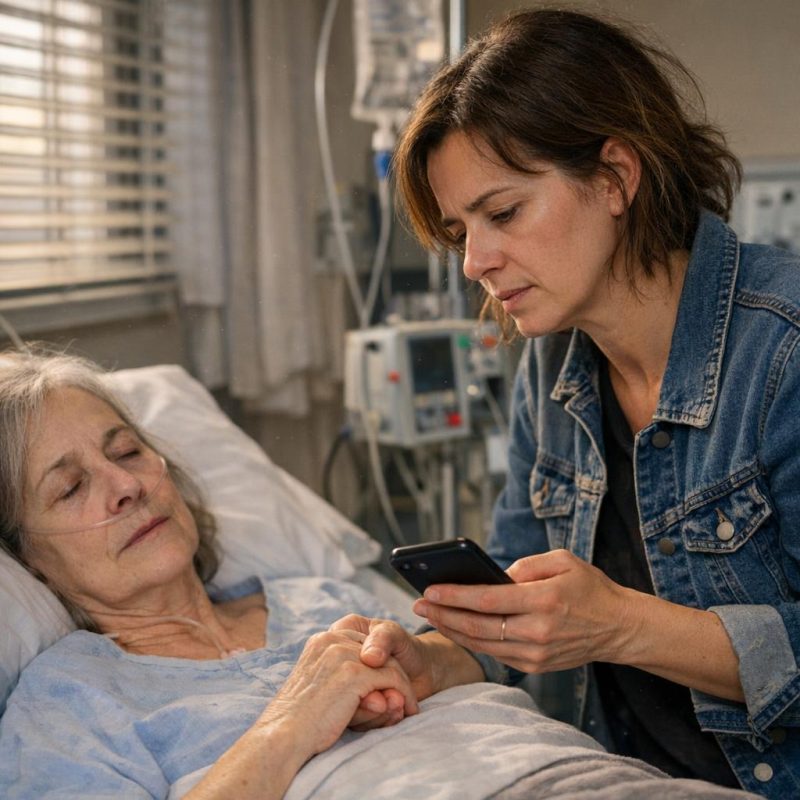 Image by RM AI
Asking Questions
I cornered Amy during her shift and asked directly about overnight changes, trying to keep my voice level and rational. 'What happens to my mother at night?' I asked. 'Who checks on her? What medications does she receive?' Amy pulled up Eleanor's chart on the computer and scrolled through it with professional efficiency. 'She receives her scheduled pain medication and antibiotics,' Amy explained. 'The night nurses do checks every four hours. Everything's been completely routine.' I pressed further, asking if there'd been any incidents, any changes, anything unusual documented. Amy's smile remained pleasant but became slightly more fixed. 'Nothing unusual in her chart,' she repeated. I asked to see the night nurses, to speak with whoever was on duty during those crucial hours when my mother seemed to deteriorate. Amy explained that the night shift ended at seven, that they'd already gone home, that she could leave a message but couldn't guarantee when I'd hear back. The frustration building in my chest felt like something physical, something I had to actively swallow down. I tried asking Dr. Morrison similar questions during his afternoon rounds, but he gave me the same reassurances, the same appeals to trust the process. 'Surgery affects everyone differently,' he said, his tone gentle but dismissive. They kept saying 'nothing unusual in her chart,' but what I was seeing felt very unusual.
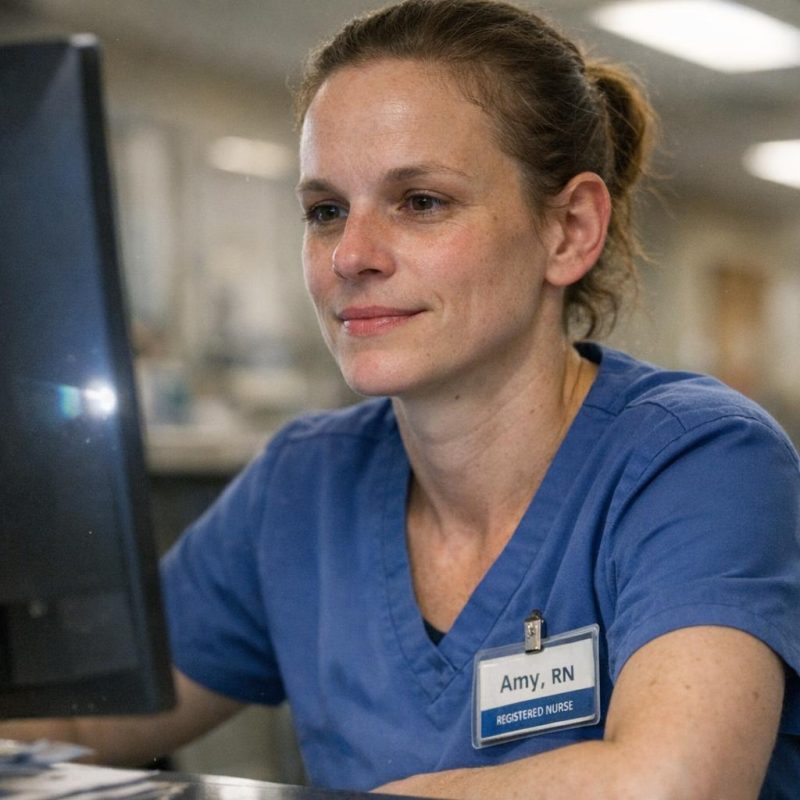 Image by RM AI
The Camera Decision
I sat in my car in the hospital parking lot for twenty minutes, staring at my phone, before I finally searched for 'hidden camera small portable.' The results filled my screen—dozens of options, tiny devices designed to look like phone chargers or alarm clocks. I'd never done anything like this in my life. I'd always been the person who followed rules, trusted authority, believed that systems worked the way they were supposed to work. But my mother was getting worse every night and better every day, and no one would tell me why. I drove to an electronics store and stood in the security camera aisle feeling like a criminal. The young salesperson tried to help me, and I mumbled something about home security and pet monitoring, unable to admit what I was actually planning. I bought a small camera disguised as a digital clock, paid cash like I was doing something illegal, and drove back to the hospital with it in my purse. My hands were shaking slightly when I set it up on my mother's nightstand that evening, angling it to capture the bed and the door. Eleanor was sleeping, peaceful in the golden hour before dinner. I told myself I was being protective, not paranoid. I told myself any good daughter would do the same. I felt ridiculous buying it, like I was crossing a line I'd never imagined crossing—but I had to know.
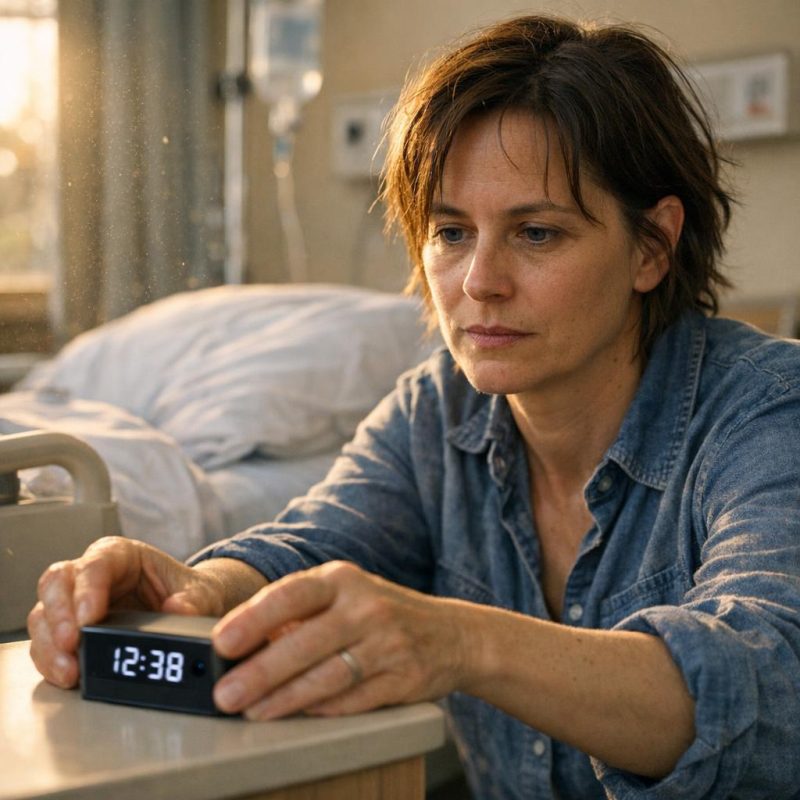 Image by RM AI
Setting the Camera
I waited until Eleanor was asleep before I really adjusted the camera. The little digital clock sat on her nightstand, perfectly ordinary-looking, its lens hidden in the display panel. I turned it slightly, pretending to check the time, angling it so it captured the bed, the IV stand, and the doorway. My mother stirred but didn't wake. The evening light was fading, turning everything in the room that particular hospital shade of blue-gray. I checked my phone—the camera was recording, streaming to an app I'd downloaded. I could see the feed from anywhere. Part of me felt ashamed, like I was violating some unspoken rule of trust. But another part of me, the part that had watched Eleanor deteriorate every single night only to rally every single morning, felt justified. I kissed her forehead and told her I'd see her tomorrow. She mumbled something I couldn't make out. At the door, I paused and looked back at the clock, so innocent-looking on the nightstand. The red recording light was invisible unless you knew exactly where to look. I wondered if I was crossing into paranoia, if this whole thing would turn out to be nothing, if I'd look back on this moment and feel ridiculous. As I walked out, I glanced back one more time—wondering if I'd just made a terrible mistake or the smartest decision of my life.
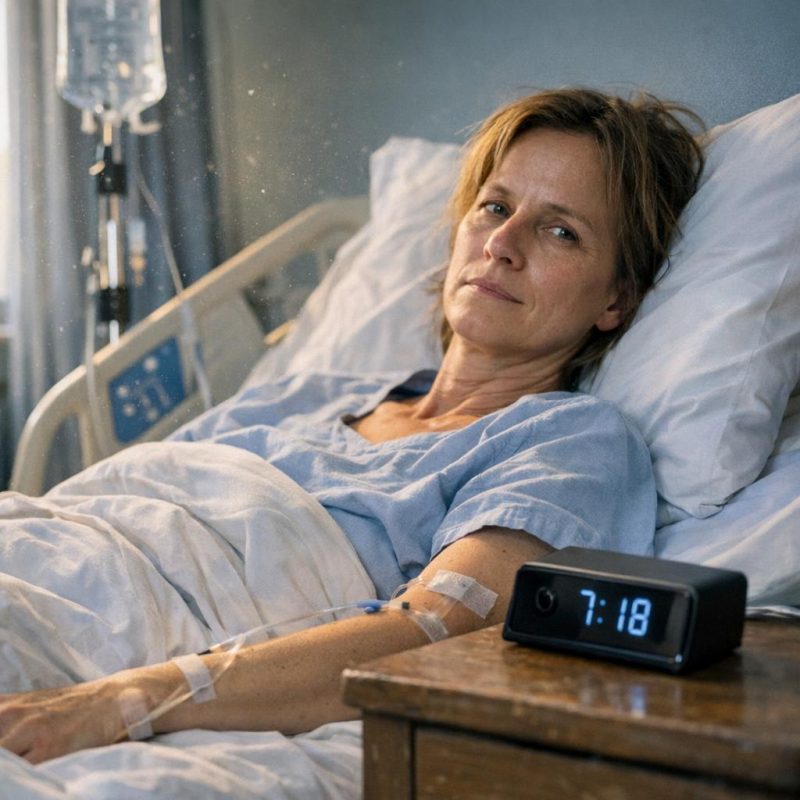 Image by RM AI
The Morning After
When I arrived the next morning, Eleanor looked worse than I'd ever seen her. Her skin had this grayish pallor, and her breathing was shallow and rapid. The monitor above her bed showed her heart rate jumping erratically—110, 115, dropping to 95, spiking again. I grabbed her hand and it felt cold. 'Mom?' She opened her eyes but seemed to look through me rather than at me. Amy, the day nurse, came in with her usual cheerful efficiency, checking the IV, noting something on her tablet. 'How was she overnight?' I asked, trying to keep my voice steady. Amy glanced at the monitor, then at Eleanor, then back at her tablet. 'Vitals were stable through the night,' she said. 'Nothing unusual documented.' I watched her face for any sign of concern, but she was already moving on to her next task, adjusting the bed angle, checking the catheter output. Eleanor's hand twitched in mine. I wanted to scream that this wasn't stable, that my mother looked like she was barely holding on, but I nodded instead. My purse sat by my feet, and I could feel my phone inside it, could almost feel the weight of the footage waiting to be reviewed. The day nurse assured me nothing had changed overnight, but the camera in my bag felt heavier than it should.
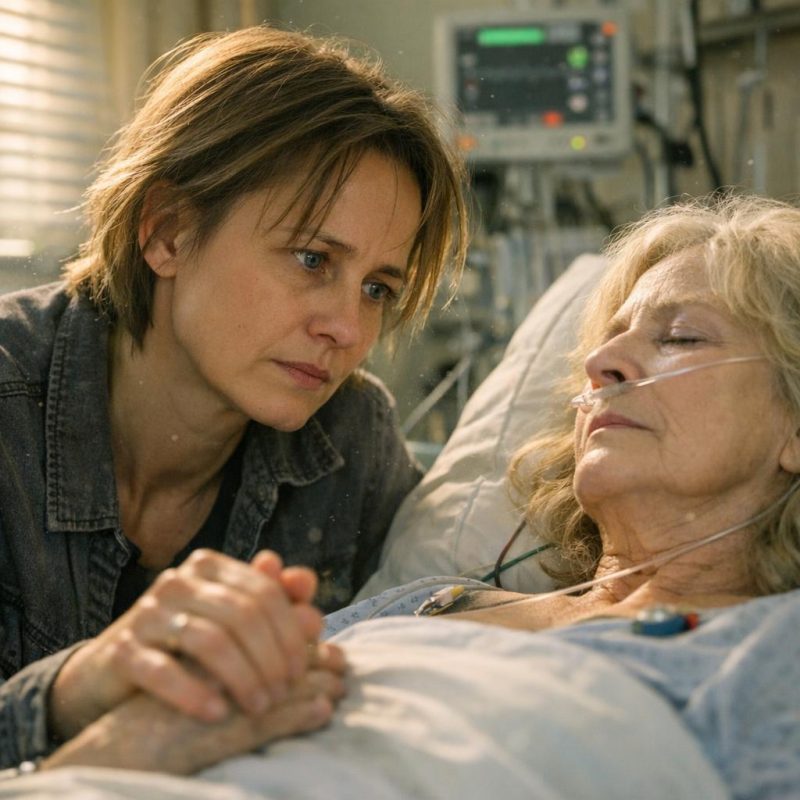 Image by RM AI
Reviewing the Footage
I sat at my kitchen table that afternoon with my laptop open and a cup of coffee going cold beside me. The footage started at 8 PM, right after I'd left. For the first hour, nothing happened—just Eleanor sleeping, the monitors blipping, shadows from the hallway passing across the doorway. At 9:15, a nurse I recognized came in, checked the IV, made a note, and left. Standard. At 10:30, another check. Standard. I sped through the next hour at double speed, watching the timestamp tick forward. My eyes were starting to hurt from staring at the screen. This felt ridiculous. I'd spent money on a spy camera to watch completely normal hospital care. Maybe I really was just a paranoid daughter who couldn't accept that recovery wasn't linear, that old bodies don't heal the way we want them to. At midnight, I nearly closed the laptop. I had hours more footage to review, and it all looked the same—periodic checks, vital signs recorded, Eleanor sleeping. I rubbed my eyes and thought about making dinner instead. But something made me keep watching, maybe just stubbornness. I was about to fast-forward through the rest when a figure appeared on screen—someone I didn't recognize.
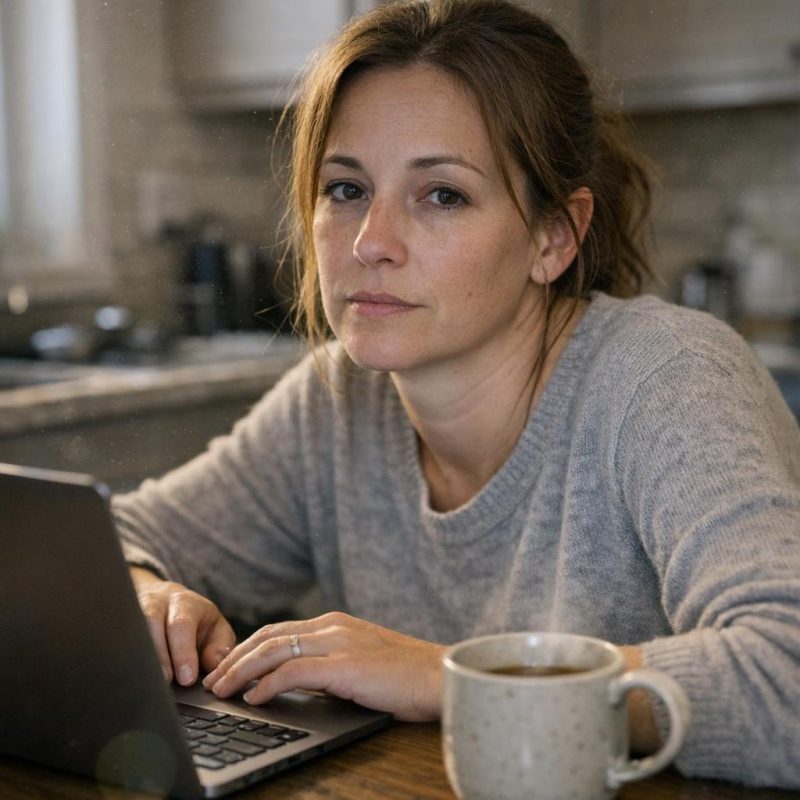 Image by RM AI
The Unknown Nurse
The woman who entered Eleanor's room at 12:47 AM wasn't someone I'd seen before. I paused the footage and leaned closer to the screen. She wore scrubs like everyone else, moved with the same professional efficiency, carried herself like she'd done this a thousand times. But I'd been at that hospital every single day for two weeks, and I'd never seen her face. I pressed play again. She walked straight to the IV stand without checking on Eleanor first, without looking at the monitors. That struck me as odd. Every other nurse had checked my mother before doing anything else—listening to her breathing, touching her forehead, glancing at the vital signs. This woman went directly to the equipment. She did glance at the door once, a quick look over her shoulder, but the hallway was empty. Then she focused on the IV bag, examining it closely. Her movements were calm, practiced. She didn't fumble or hesitate. She pulled something from her pocket—I couldn't quite see what—and reached up toward the bag. The camera angle made it hard to see exactly what she was doing, but she was definitely doing something to Eleanor's IV. The whole interaction lasted maybe ninety seconds. Then she left, pulling the door almost closed behind her. She moved with such confidence, like she belonged there—but I had never seen her before.
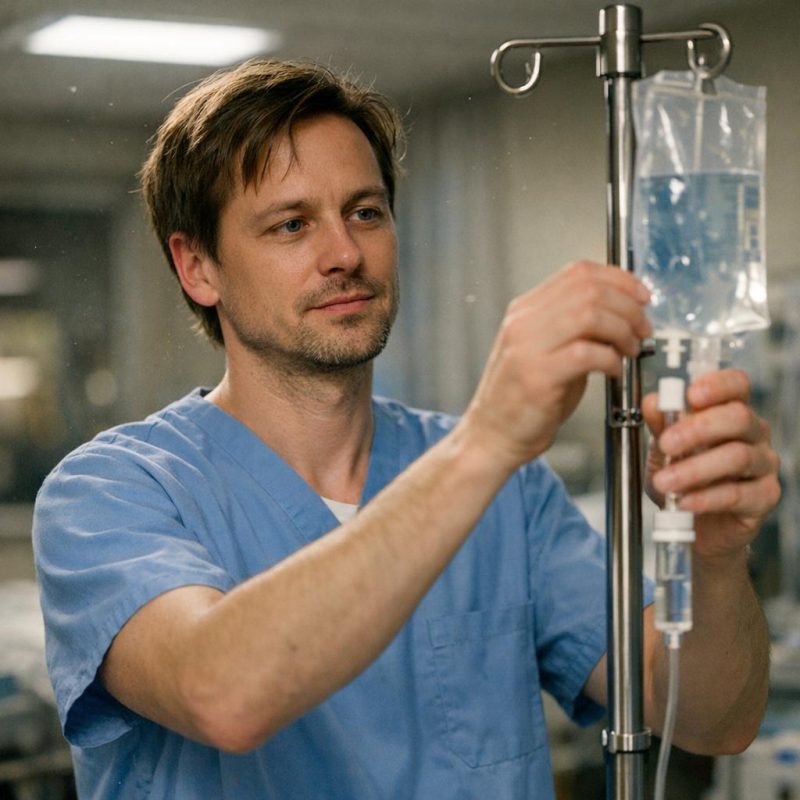 Image by RM AI
The IV Swap
I replayed the footage five times, trying to understand what I was seeing. On the third viewing, I figured out how to zoom in on my laptop, and that's when I caught it. The woman wasn't just checking the IV bag—she was replacing it. She disconnected the line, removed the existing bag, and hung a new one from her pocket. The swap took maybe thirty seconds. She was efficient, clearly knew exactly what she was doing. But why would a nurse change an IV bag in the middle of the night without documenting it, without anyone knowing? I zoomed in further on the bags themselves. The one she removed and the one she hung looked nearly identical—same size, same general shape, same color of fluid inside. But when she angled the new bag toward the light, I could see the label. I took a screenshot, expanded it, squinted at my screen. The printing was slightly different. The font maybe, or the spacing. Something about it didn't match. I pulled up the screenshot from earlier in the evening, when the regular nurse had checked Eleanor's IV, and compared the two labels side by side on my screen. The labels looked almost the same—almost, but not quite.
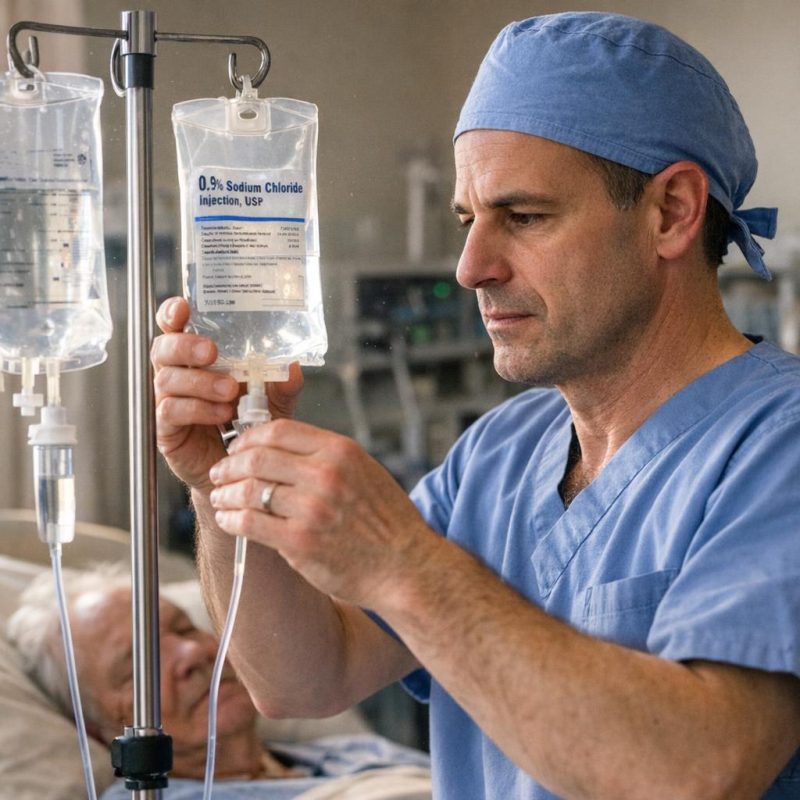 Image by RM AI
No Documentation
I went back to the hospital that evening and found Sandra, the charge nurse, at the nurses' station. She was reviewing charts on a computer, and I waited until she finished before approaching. 'Can I ask you something about my mother's care?' Sandra looked up, professional and patient. 'Of course.' I kept my voice casual. 'Were there any changes to her IV overnight? Between midnight and 1 AM?' She clicked through Eleanor's electronic chart, her eyes scanning the documentation. 'No changes noted,' she said. 'The bag was checked at 10:30 PM and again at 6 AM. Why do you ask?' I felt my stomach tighten. 'I just... I thought I remembered someone mentioning something. Maybe I misunderstood.' Sandra gave me a sympathetic look, the kind you give to worried family members who are grasping at straws. 'Everything's documented in real-time. If an IV bag is changed, there's a scan, a notation, a timestamp. There's nothing here.' She turned the monitor toward me, showing me the overnight log. She was right—there was nothing. No record of anyone entering the room at 12:47 AM. No documentation of an IV swap. Sandra looked at me like I was confused, but I knew what I'd seen—and it wasn't in any chart.
 Image by RM AI
Second Night of Surveillance
That night, I made sure the camera was still positioned correctly. Eleanor was sleeping again, looking slightly better than she had that morning—the pattern holding. I adjusted the clock one more time, just a fraction of an inch, making sure the angle captured everything I needed to see. My mother's breathing was steady, her color improved. In twelve hours, she'd probably be worse again. I'd stopped trying to understand how that was medically possible. Now I just needed to understand who was making it happen. I kissed Eleanor goodnight and headed for the door. The hallway was quiet, just the usual sounds of a hospital at night—monitors beeping in other rooms, distant conversations at the nurses' station, someone's TV playing too loud. I passed Sandra on my way out and she smiled at me. I smiled back. Everything looked normal. Everything looked fine. But I knew what I'd seen on that footage, and I knew what the chart said—or didn't say. I sat in my car in the parking lot for a few minutes before starting the engine, staring up at the third floor where Eleanor's room was. If it happened again, I'd have proof it wasn't a one-time mistake.
 Image by RM AI
Pattern Confirmed
I reviewed the second night's footage the next morning at home, my coffee untouched beside me again. I'd barely slept. For the first few hours, everything looked routine—the same nurses I recognized, the same standard checks. But at 12:43 AM, four minutes earlier than the previous night, she appeared again. The same woman. The same purposeful walk. The same direct path to the IV stand. I watched her glance at the door, check the hallway, then reach for the IV bag. The swap was identical to the night before—smooth, practiced, quick. Disconnect, remove, replace, reconnect. Maybe forty seconds total. She adjusted the drip rate slightly, something I hadn't noticed the first night. Then she left, pulling the door closed the same way. I sat back in my chair and felt something cold settle in my chest. This wasn't a mistake. This wasn't a nurse correcting someone else's error or responding to a change in Eleanor's condition. This was deliberate. This was planned. This was happening on a schedule. I checked the timestamps again: 12:47 AM the first night, 12:43 AM the second night. Roughly the same time. Roughly the same actions. It wasn't a mistake—it was something else entirely.
 Image by RM AI
Taking Notes
I bought a notebook that afternoon—one of those composition books with the black-and-white cover that my daughter used to use in school. Something about putting pen to paper felt more real than typing it all out. I needed this to be real. I started with the timestamps: 12:47 AM first night, 12:43 AM second night. I wrote down everything I could remember about the nurse—her height (maybe five-foot-six?), her hair color (dark, pulled back), the way she moved (confident, practiced). I noted the IV bag swaps, the adjustment of the drip rate, the glances toward the door. I compared what I saw on the footage to what was documented in Eleanor's official medical records. The records showed routine overnight checks at 1:00 AM and 4:00 AM. Nothing at 12:47. Nothing at 12:43. No mention of IV bag changes on either night. I drew little diagrams of the room layout, marking where the camera was positioned, where the nurse stood, what she could and couldn't see from each angle. I wrote down questions: Who is she? Why isn't she in the records? What's in those IV bags? My handwriting got messier as the pages filled up, but I didn't care. Every detail mattered now—I was building a case, even if I didn't know yet what I was proving.
 Image by RM AI
The Night Shift Supervisor
I went back to the hospital that evening, not to Eleanor's room but to the nurses' station on the third floor. The night shift supervisor, Karen, was just starting her rounds. She had kind eyes and the sort of calm demeanor you develop after years of handling emergencies. I asked if I could speak with her privately, and she led me to a small office near the supply room. I described the nurse I'd seen on the footage—dark hair, maybe early forties, confident walk, methodical in her movements. I said she'd been in my mother's room around 12:45 AM on multiple nights. Karen listened carefully, nodding as I spoke. Then she pulled up the night shift roster on her computer and scrolled through it slowly. She checked the schedules for the past week, cross-referencing with staff photos in the system. After a few minutes, she looked up at me with genuine confusion. 'I'm sorry,' she said. 'No one matching that description works night shift on this floor. Are you sure about the time?' I was sure. I was absolutely sure. Karen's confusion looked genuine, which somehow made everything worse.
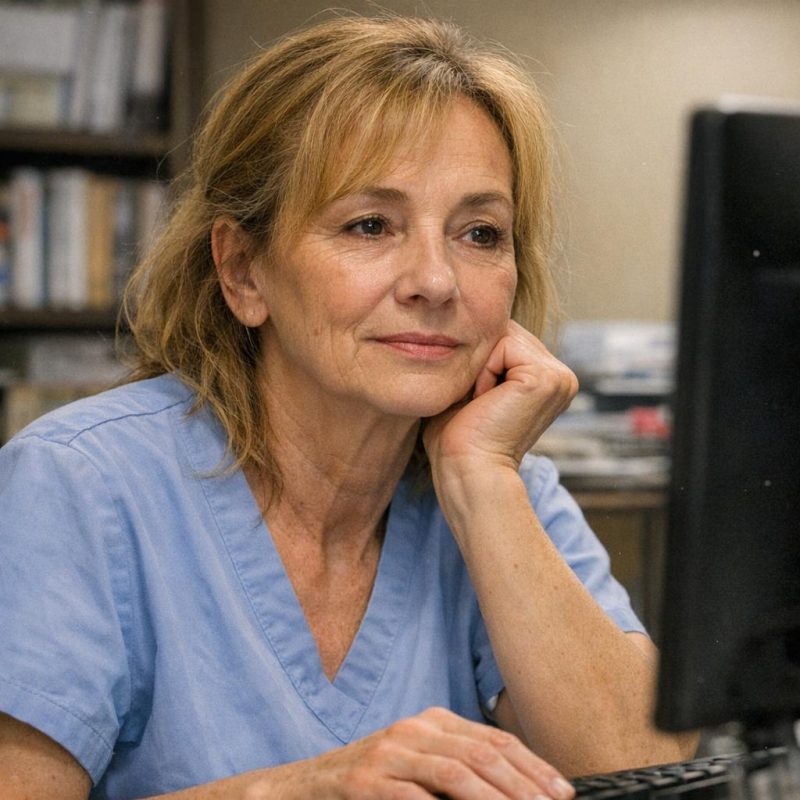 Image by RM AI
Third Night, New Detail
I watched the third night's footage when I got home, my notebook open beside me. The same nurse appeared at 12:39 AM—she was getting earlier each night, I realized. The same routine: check the hallway, move to the IV stand, disconnect the bag. But this time I saw something new. Before she swapped the bags, she pulled something small from her pocket—it looked like a smartphone, but thicker, with a different shape. She held it near the IV stand for maybe ten seconds, watching the screen, then tucked it back into her pocket before making the swap. The device had a small blue light on one edge that I could just barely make out in the dim room. It wasn't a hospital pager. It wasn't a standard phone. It looked almost like some kind of scanner or monitoring device, something technical and specific. She seemed to be checking something, verifying something, before proceeding with the bag exchange. The whole sequence felt even more calculated than before, more scientific. Whatever that device was, it wasn't hospital equipment—and that bothered me more than anything else.
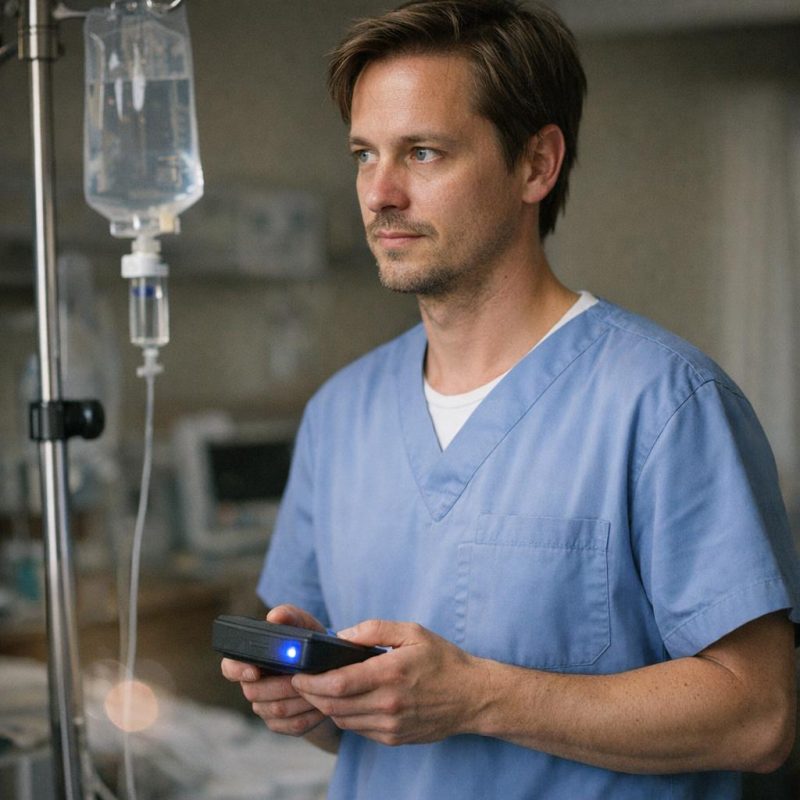 Image by RM AI
The Look Toward the Camera
I must have watched that third night's footage a dozen times, rewinding and pausing, trying to catch every detail. That's when I noticed it—just before she left the room, after replacing the IV bag and adjusting the stand, she paused. For maybe two seconds, her head turned slightly to the left, toward the corner where I'd hidden the camera behind the flower arrangement. She didn't stare directly at it. She didn't walk over to investigate. But her gaze swept across that section of the room in a way that felt deliberate, careful. Then she left, pulling the door closed behind her with the same controlled movement as always. I replayed that moment over and over, zooming in as much as the footage quality allowed. Was she looking at the flowers? At the wall? At the camera? I couldn't tell for sure, but something about her body language in that instant felt different—more alert, more aware. My hands went cold as I sat there staring at the frozen frame. She didn't look directly at it—but close enough that I wondered if she knew it was there.
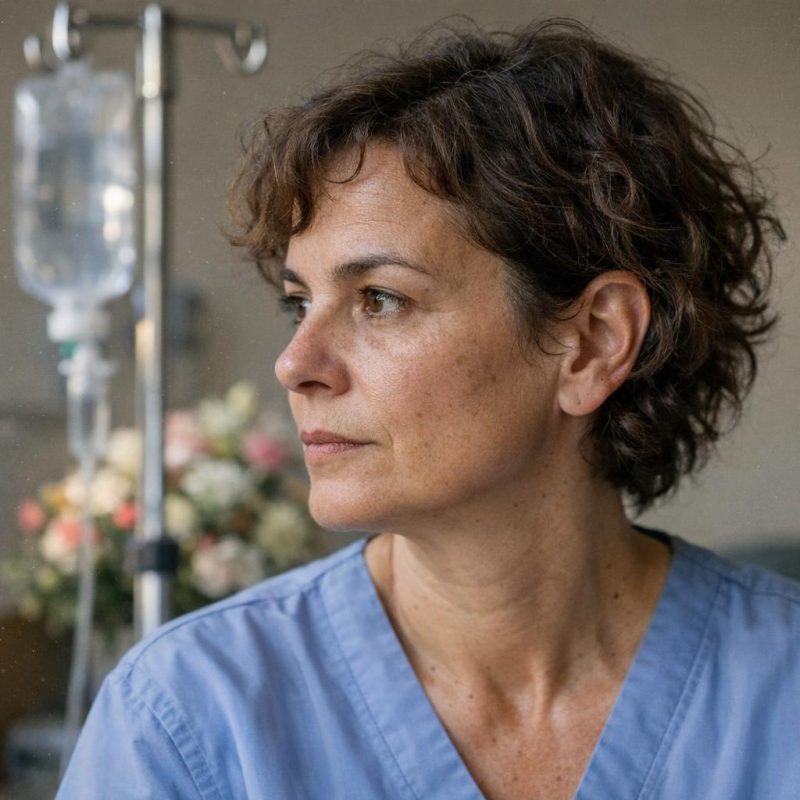 Image by RM AI
Meeting with Administration
I called the hospital administrative office first thing Monday morning and requested a formal meeting with the hospital administrator. The receptionist tried to schedule me for the following week, but I pushed back. 'This is urgent,' I said. 'It concerns patient safety.' Those magic words got me an appointment for that afternoon. Mr. Garrett's office was on the first floor, all dark wood and diplomas on the walls. He was maybe mid-sixties, silver hair, expensive suit—the kind of administrator who probably spent more time managing budgets than talking to actual patients. I sat across from his large desk and laid out my concerns as clearly as I could. Unauthorized access to my mother's room. A nurse no one could identify. IV bags being swapped in the middle of the night with no documentation. He listened with his hands folded on the desk, his expression professionally neutral. I could see the skepticism forming behind his eyes—another worried family member, probably confused about standard procedures, probably misunderstanding what she saw. 'Mrs. Chen,' he began, in that careful tone people use when they're about to dismiss you politely. That's when I cut him off. 'I have footage,' I said. He listened politely, but I could see the skepticism in his eyes—until I mentioned I had footage.
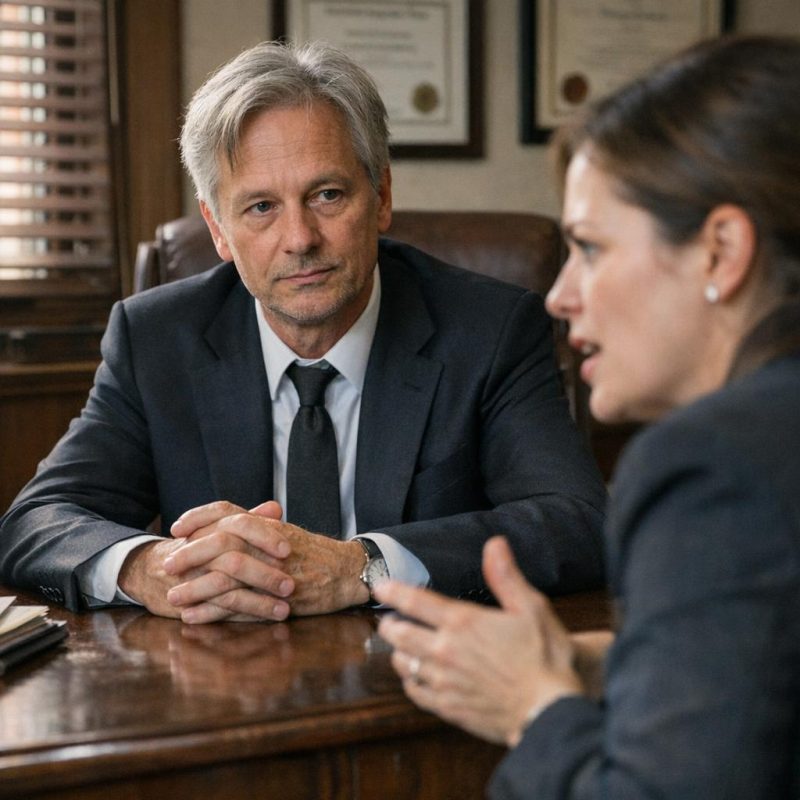 Image by RM AI
Showing the Evidence
Mr. Garrett called in Charge Nurse Sandra and two other senior staff members. We gathered in a small conference room down the hall, and I set up my laptop on the table. My hands were shaking slightly as I pulled up the first night's footage, but my voice stayed steady. I narrated what they were watching—the timestamp, the nurse entering, the IV bag swap. Then I showed them the second night. Then the third. I pointed out the device she used, the way she checked the hallway, the consistency of her routine. No one spoke while the videos played. Sandra leaned forward, her eyes fixed on the screen. One of the other nurses whispered something to the person beside her. Mr. Garrett's professional neutrality had disappeared—his jaw was tight, his fingers drumming against the conference table. When the third video ended, I looked around the room. The doubt I'd seen earlier was gone, replaced by something else. Concern. Maybe alarm. Sandra reached for the laptop. 'Can you replay that second night?' she asked quietly. I did. The room went silent as they watched her swap the IV bag—and I knew they couldn't explain it away anymore.
 Image by RM AI
Searching the Roster
Mr. Garrett immediately pulled up the night shift schedules on his tablet while Sandra called down to HR for personnel files. They worked methodically, cross-referencing every nurse, technician, and aide who had access to the third-floor ward during those overnight hours. They compared the woman in the footage to staff photos. They checked recent hires, temporary workers, float pool nurses who covered multiple departments. Sandra knew most of the night staff personally and studied the footage carefully, pausing on the clearest frames of the woman's face. 'I've never seen her before,' Sandra said finally. 'Not on my floor, not in this hospital.' One of the other staff members suggested maybe she was from a different department, but they checked those rosters too. Nothing. No matches. Mr. Garrett's expression had gone from concerned to genuinely alarmed. 'This doesn't make sense,' he said, more to himself than to us. 'Badge access is required for patient floors after 9 PM. Security logs every entry.' But there she was on my footage, clear as day, moving through my mother's room like she had every right to be there. If she wasn't on the roster, then how was she getting into patient rooms?
 Image by RM AI
Badge Access Question
Mr. Garrett picked up his desk phone and called hospital security directly, not waiting for the meeting to end. I listened as he explained the situation—unauthorized access, unidentified individual, patient safety concern—and requested an immediate audit of all badge access logs for the third-floor ward. He wanted every entry and exit logged during the overnight hours for the past week, cross-referenced with staff schedules. He wanted it flagged as priority. When he hung up, he turned to me with an expression I couldn't quite read. 'We'll have the access logs by tomorrow afternoon,' he said. 'If someone entered that ward, there'll be a digital record. Every badge swipe is tracked.' Sandra looked less certain. 'Unless the system malfunctioned,' she offered. 'Or unless someone bypassed it somehow.' Mr. Garrett shook his head firmly. 'That's not possible. The system has redundancies.' But even as he said it, I could see the doubt creeping in. Because somehow, this woman had gotten in. Somehow, she'd accessed my mother's room multiple times without anyone noticing. They promised me answers within 24 hours, but I had a sinking feeling those answers would only lead to more questions.
 Image by RM AI
Security Chief Raymond
Security Chief Raymond had that look I'd seen before—the expression of someone who'd found something they really didn't want to find. He sat across from Mr. Garrett and me in the same conference room where this had all started, his laptop open in front of him. 'The access logs show something irregular,' he said, choosing his words carefully. 'Every entry into your mother's ward overnight was made with a valid hospital badge.' He paused, and I felt my stomach drop. 'But one of those badges shouldn't have been active.' Mr. Garrett leaned forward. 'Explain.' Raymond turned his laptop so we could see the screen—rows and rows of access records, timestamps, badge numbers. He pointed to one that repeated throughout the nights my mother had gotten worse. 'This badge was issued to a nurse who left the hospital four months ago. Standard protocol is immediate deactivation upon termination.' He looked between us. 'This one was never deactivated. It's been active this entire time.' I stared at the numbers on the screen, my mind racing through the implications. Someone had kept that badge, or found it, or maybe never given it back in the first place. They'd been using it to move through the hospital like they still worked here, invisible in the system because technically, according to the database, they did. 'Who was the nurse?' I asked, my voice steadier than I felt. Raymond glanced at Mr. Garrett before answering. The badge belonged to a nurse who'd left months ago—but someone was still using it.
 Image by RM AI
The Former Employee
Mr. Garrett excused Raymond and closed the conference room door behind him. The shift in atmosphere was immediate—we'd moved from security breach to something more sensitive, more complicated. He pulled up a personnel file on his computer, but kept the screen angled away from me. 'The badge belonged to Rebecca Haines,' he said, watching my face for recognition I didn't have. 'She was a night nurse here for almost three years. Left in November.' I waited for more, but he seemed to be weighing how much to tell me. 'Why did she leave?' I asked. 'Was she fired?' Mr. Garrett's expression tightened. 'Her departure was... complicated. There were concerns about her performance, disagreements about patient care protocols. Nothing criminal,' he added quickly. 'But the separation wasn't amicable.' I felt frustration building in my chest. 'So you're telling me that a nurse who left on bad terms somehow still has access to this hospital, and you don't know why?' He shifted uncomfortably. 'I'm telling you what I can without violating employment privacy laws. What I can say is that her termination was disputed. She filed a grievance. It was settled internally.' The way he said 'settled' made it clear there was a whole story I wasn't getting. 'I need to know more than that,' I said. 'This woman was in my mother's room. Multiple times. Doing something to her.' Mr. Garrett nodded slowly. 'I understand your frustration, Patricia. But there are legal constraints on what I can disclose about former employees.' They wouldn't tell me why she left, only that it had been 'complicated.'
 Image by RM AI
Comparing Faces
Raymond returned an hour later with a printed photo pulled from hospital HR records. 'This is Rebecca Haines,' he said, sliding it across the table to me. 'Taken about eight months ago for her badge renewal.' I picked up the photo with hands that had started shaking. There she was. The same face I'd seen on that grainy hospital footage. The same sharp features, the same way of holding her shoulders slightly forward. In the photo she looked professional, even pleasant—dark hair pulled back, slight smile for the camera. Nothing about her appearance suggested anything sinister. But I'd watched her on that footage, watched her move through my mother's room with that unsettling familiarity, and now I had a name to attach to those movements. 'That's her,' I said quietly. 'That's definitely her.' Raymond nodded, taking notes. 'We've flagged her badge in the system now. If it's used again, security will be notified immediately.' He paused. 'We've also requested that local police do a welfare check at her last known address.' Mr. Garrett, who'd rejoined us, looked troubled. 'Rebecca was a good nurse, by most accounts. That's what makes this so difficult to understand.' I stared at the photo, trying to reconcile the professional healthcare worker with the person who'd been secretly accessing my mother's room night after night. It was her—the same face, the same movements—but why was she coming back?
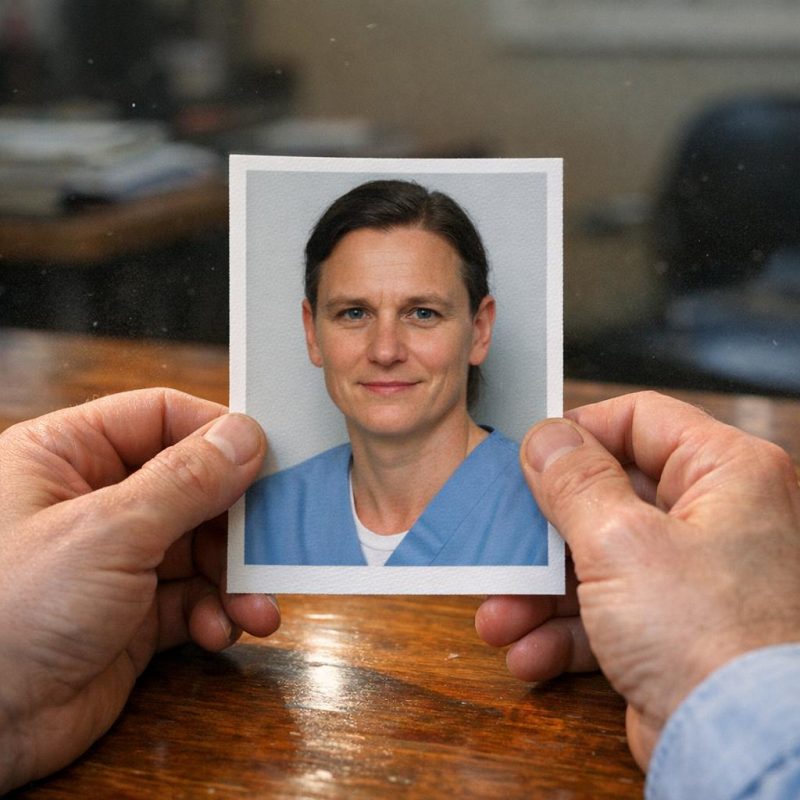 Image by RM AI
Eleanor's Improvement
Two days after we'd identified Rebecca, my mother opened her eyes and asked me what day it was. Her voice was hoarse but clear, her confusion genuine and normal—not the disturbing fog that had settled over her before. Dr. Stevens seemed genuinely relieved during his afternoon rounds. 'Her blood work is stabilizing,' he told me, reviewing her charts. 'Whatever was causing the setbacks appears to have resolved.' I didn't tell him that I knew exactly what had caused those setbacks, or that 'resolved' just meant someone had finally stopped interfering. Security had been stationed outside her ward around the clock now. New protocols had been implemented—every person entering the floor had to verify their identity with the charge nurse, even staff members everyone recognized. It felt simultaneously reassuring and horrifying that such measures were necessary. I sat with Mom in the afternoons, watching her strength return incrementally. She'd started eating solid food again. Her color had improved. The tremors in her hands had stopped. She didn't remember much from the worst nights, which I took as a mercy. 'You look tired, sweetheart,' she said to me one afternoon, reaching for my hand with fingers that no longer shook. 'Have you been sleeping?' I lied and told her I had been. What I didn't tell her was that I lay awake most nights, thinking about Rebecca Haines and that badge and all the access she'd had. She was getting better, finally—but I couldn't shake the feeling that we'd only uncovered part of the story.
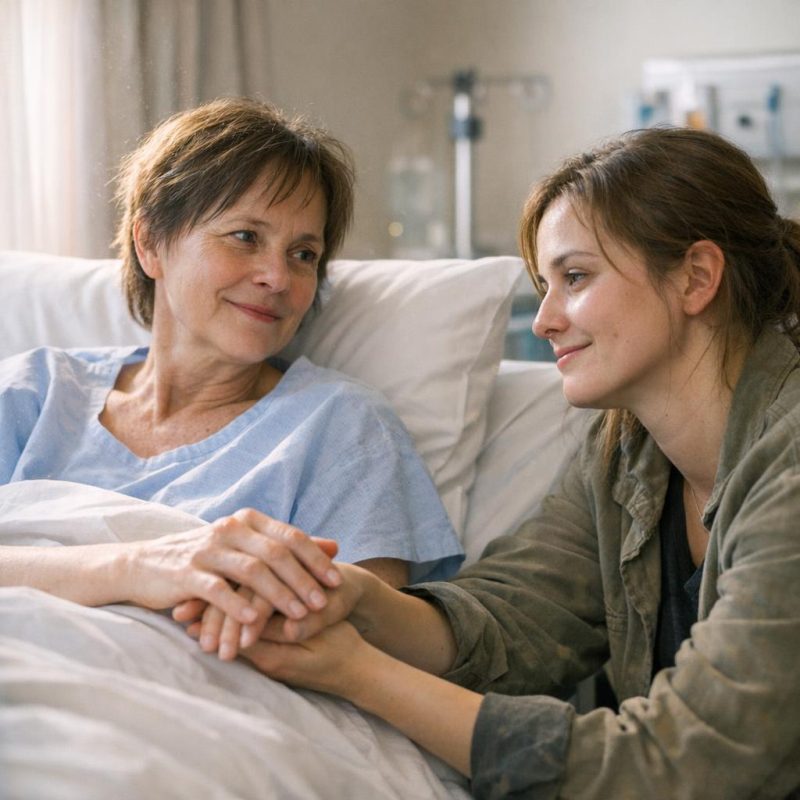 Image by RM AI
The IV Label Analysis
Mr. Garrett called me back to the hospital three days later, even though Mom had been transferred out of intensive monitoring and into a regular recovery room. 'We've brought in someone from pharmacy,' he explained as he walked me to a different conference room, one with better lighting and larger monitors. 'Dr. Lisa Park. She's our senior pharmaceutical specialist, and she's been reviewing the footage you provided.' Dr. Park was younger than I'd expected, maybe early forties, with the focused intensity of someone who took their work very seriously. She'd loaded several stills from my camera footage onto the large monitor—clear shots of Rebecca standing beside my mother's IV pole, her hands on the bags. 'I've been analyzing these images,' Dr. Park said, zooming in on one particular frame. 'Looking at the medication labels, the bag configurations, the drip rates.' She moved through several images methodically, pointing out details I'd never have noticed. 'Here,' she said, freezing on a shot that showed Rebecca holding an IV bag at an angle where the label was partially visible. 'I can make out portions of the drug name and dosage information.' She zoomed in further, and I watched the pixels sharpen into readable text fragments. Dr. Park went very still, her mouse hovering over the image. She zoomed in once more, leaning closer to the screen. Then she straightened slowly and turned to look at me, and something in her expression made my pulse spike. The specialist zoomed in on the label and went very still—then looked up at me with an expression I couldn't read.
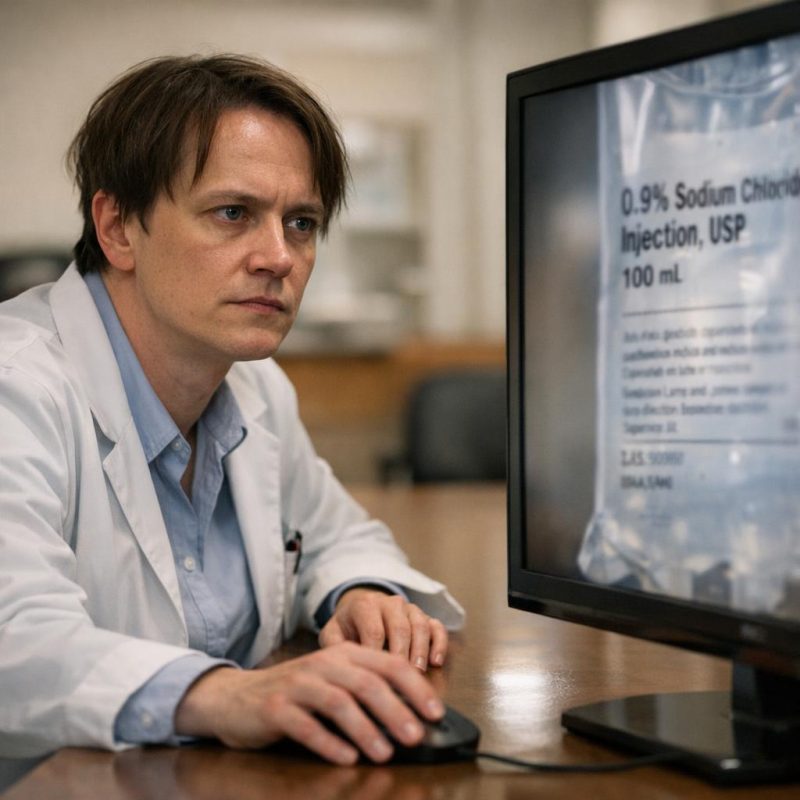 Image by RM AI
Wrong Medication Confirmed
Dr. Park pulled up my mother's official treatment plan on a second monitor, setting it beside the enhanced footage image. 'Your mother was prescribed a standard post-surgical protocol,' she said, her voice carefully neutral. 'Antibiotics, pain management, anti-inflammatory medication. All appropriate for her procedure and recovery.' She pointed to the IV bag in Rebecca's hands on the footage. 'This is not any of those medications.' Mr. Garrett had gone very pale. 'What is it?' Dr. Park zoomed in on the partial label again. 'Based on what I can read here—the drug name fragments, the concentration, the bag color coding—this appears to be a medication typically used for cardiac patients. Specifically, for managing arrhythmia.' She looked at me. 'Your mother doesn't have a cardiac condition, does she?' 'No,' I said, my voice sounding distant to my own ears. 'She's never had heart problems.' 'Then there's no medical reason this medication should have been in her IV line,' Dr. Park said flatly. 'It's not just off-protocol. It's contraindicated for someone in her condition. It could cause exactly the symptoms you described—confusion, weakness, blood pressure irregularities.' Mr. Garrett was making notes rapidly. 'Could this have been a pharmacy error? Wrong medication sent up to the floor?' Dr. Park shook her head. 'Not possible. This specific medication isn't stocked on surgical recovery floors. Someone would have had to obtain it from a different unit.' The implications hung in the air between us. It was a medication for an entirely different kind of case—and none of them could explain why it was being used.
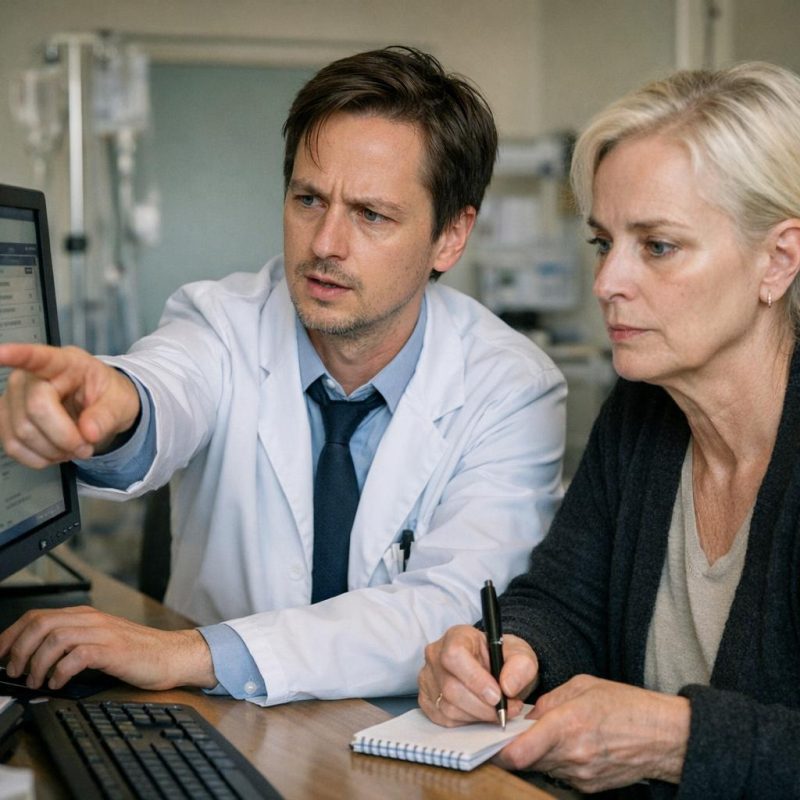 Image by RM AI
Legal Involvement
Ms. Chen from legal arrived the next morning, which told me this had escalated beyond security protocols and medical review. She was composed and precise, carrying a leather portfolio and wearing an expression that gave nothing away. Mr. Garrett made the introductions briefly, then Ms. Chen asked if we could speak privately. Just the two of us. She led me to a smaller office, closed the door, and spent several minutes reviewing documents before she even looked up. 'Mrs. Patricia,' she began, her accent slight but precise, 'I want you to understand that the hospital takes these allegations extremely seriously.' 'They're not allegations,' I said quietly. 'I have footage. Your own pharmacy specialist confirmed the medication was wrong.' 'I understand,' she said, still making notes. 'What I'm doing now is documenting the timeline, the evidence, and the hospital's response. For legal purposes.' She asked me detailed questions—when I'd first noticed changes in my mother's condition, when I'd installed the camera, who I'd contacted and when. She wanted to know if I'd shared the footage with anyone outside the hospital. If I'd consulted with an attorney. If I'd contacted media. I answered everything honestly, watching her record it all in precise handwriting. 'What happens now?' I asked when she finally closed her portfolio. Ms. Chen looked at me directly for the first time. 'Now we determine the full scope of what occurred, and who bears responsibility.' Her tone was carefully neutral, but something in her eyes suggested she already suspected the answers were worse than anyone wanted to admit. Ms. Chen said very little, but the way she took notes told me this was bigger than anyone had initially thought.
 Image by RM AI
Previous Case Mention
I ran into Mr. Garrett in the hallway outside Mom's new room two days later. He looked like he hadn't slept much either. We stood there awkwardly for a moment before he glanced around and lowered his voice. 'There's something you should know,' he said. 'Off the record, for now.' I waited, my stomach already tightening. 'Last month, we had another case. A patient in orthopedic recovery who experienced unexplained complications. Confusion, irregular vital signs.' He paused. 'We did a medication review then, found an inconsistency in their IV protocol.' 'And?' I prompted when he hesitated. 'We attributed it to a pharmacy labeling error. Retraining was conducted, new verification procedures were implemented. We believed it was resolved.' His expression was deeply troubled. 'The patient recovered once the medication was corrected. We documented it internally but didn't escalate it further.' I felt something cold spreading through my chest. 'You're telling me this happened before? To someone else?' 'Once that we know of,' he said quietly. 'But now, with your mother's case, we're going back through records. Checking for any other similar incidents that might have been dismissed as isolated errors.' He met my eyes. 'Ms. Chen has requested a comprehensive audit going back six months.' Six months. Before Rebecca had even left the hospital. The implications were staggering. My blood ran cold—if this happened before, how many others had been affected?
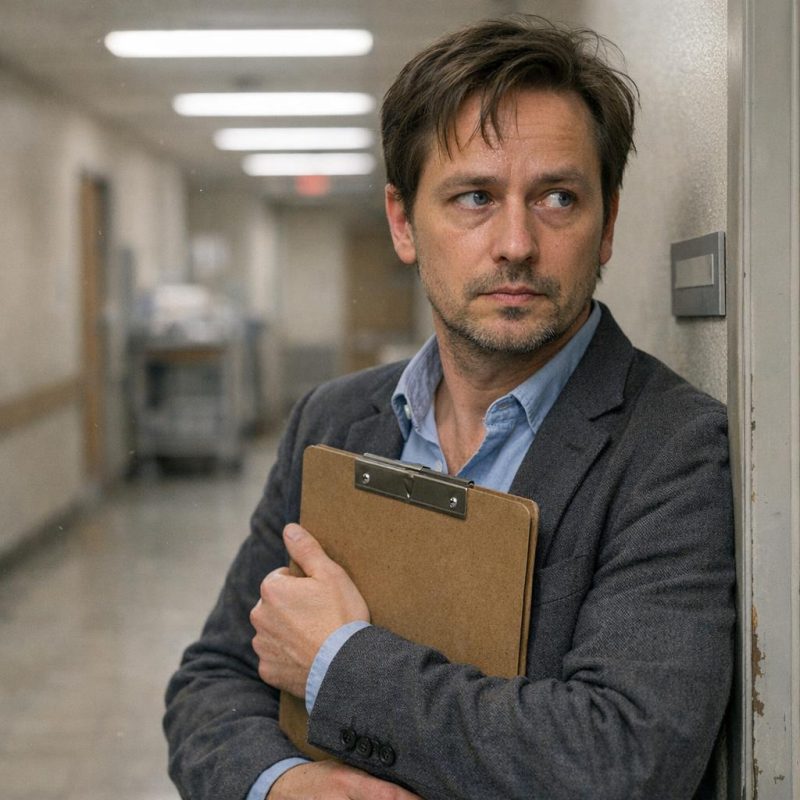 Image by RM AI
Reviewing Other Patients
Mr. Garrett called me into a small conference room near the administrative offices three days after our conversation. He looked even more exhausted than before, if that was possible. 'We've begun the confidential review,' he said, sliding a folder across the table without opening it. 'I can't share specific details, but I wanted you to know we're taking this seriously.' I leaned forward. 'How many patients are you looking at?' He hesitated, his fingers drumming once against the table. 'I can't disclose that. The review is ongoing, and we need to protect patient privacy while we investigate.' 'Patient privacy,' I repeated slowly. 'Or hospital liability?' His jaw tightened. 'Ms. Morgan, I understand your frustration. But there are protocols we have to follow. Legal considerations.' I wanted to argue, to demand full transparency, but I could see in his face that he'd already said more than he was supposed to. He was trying to do the right thing within a system that was designed to protect itself first. 'Can you at least tell me if you've found other cases?' I asked. 'Cases that match what happened to my mother?' 'We're reviewing incidents that may have been incorrectly attributed to other causes,' he said carefully. 'That's all I can say right now.' I left that meeting feeling more frustrated than before. They wouldn't tell me how many cases they were looking at, but the number had to be significant.
 Image by RM AI
Sarah's Apology
Sarah called me that evening. I almost didn't answer—I was emotionally drained and didn't have the energy for another argument. But something made me pick up. 'Mom,' she said, and her voice was different. Softer. 'I owe you an apology.' I sat down on the edge of my bed, surprised. 'I was wrong to dismiss your concerns,' she continued. 'I should have listened to you. I should have trusted your instincts instead of assuming you were just stressed or overreacting.' Her words hit me harder than I expected. 'I was so focused on being practical, on managing the situation, that I didn't really hear what you were saying. And I'm sorry.' 'Thank you,' I managed. We talked for over an hour after that. She offered to come stay with me for a few days, to help with Mom's care when she was discharged. She asked questions about the investigation, really listened to my answers. It felt like having my daughter back. But after we hung up, I sat there in the quiet of my apartment and thought about how close I'd come to giving up. If I hadn't hidden that camera, would I have eventually convinced myself everyone else was right? Would I have stopped pushing, stopped questioning? I appreciated her apology, but part of me wondered if I'd have given up without that camera—if I'd just accepted what I was told.
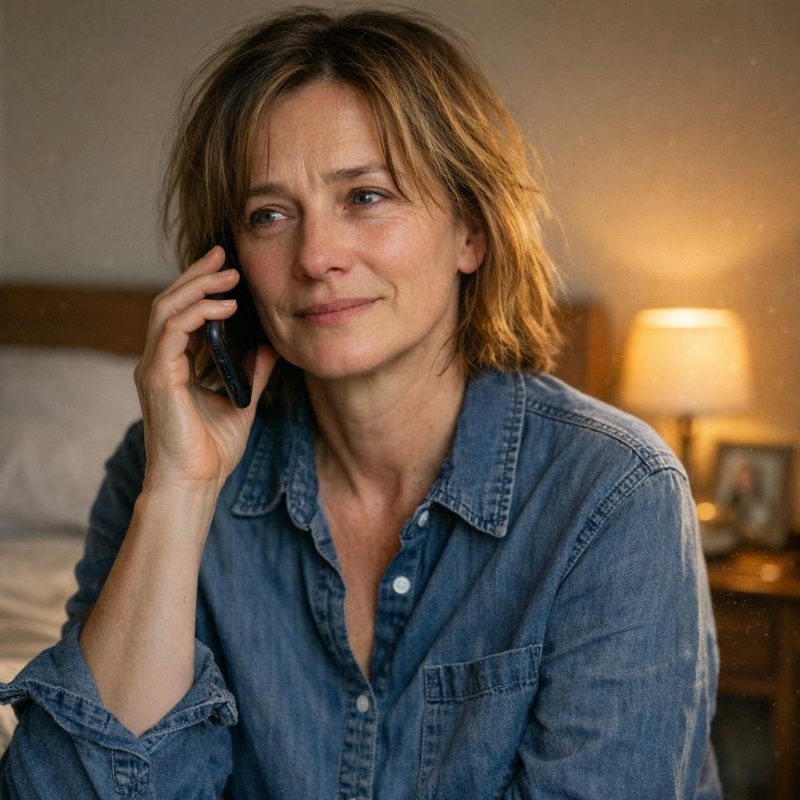 Image by RM AI
The Hospital's Quiet Panic
I went to visit Mom the next afternoon and stopped by the cafeteria first to grab coffee. The hospital cafeteria is one of those places where staff feel invisible, where they talk freely because nobody's really paying attention to the random woman in line behind them. Two administrators were standing near the condiment station, voices lowered but not quite low enough. 'If this becomes public before we have a communication strategy in place,' one of them was saying, 'we're looking at a catastrophic PR situation.' The other one nodded grimly. 'Legal is already preparing for potential lawsuits. They want to limit our exposure, contain the narrative.' 'What about the patients?' the first one asked. 'What about informing them?' 'That's being discussed. But we need to be careful about how we frame it. Admission of systemic failure versus isolated incidents—the wording matters.' I stood there with my empty coffee cup, feeling something cold and hard settling in my chest. They were talking about my mother. About other people's mothers, fathers, loved ones. And their primary concern wasn't the harm that had been done but how to spin it, how to protect the hospital's image. I walked out without getting the coffee. The conversation kept replaying in my head all afternoon, making me feel sick. They were more worried about their reputation than about what had happened to the patients.
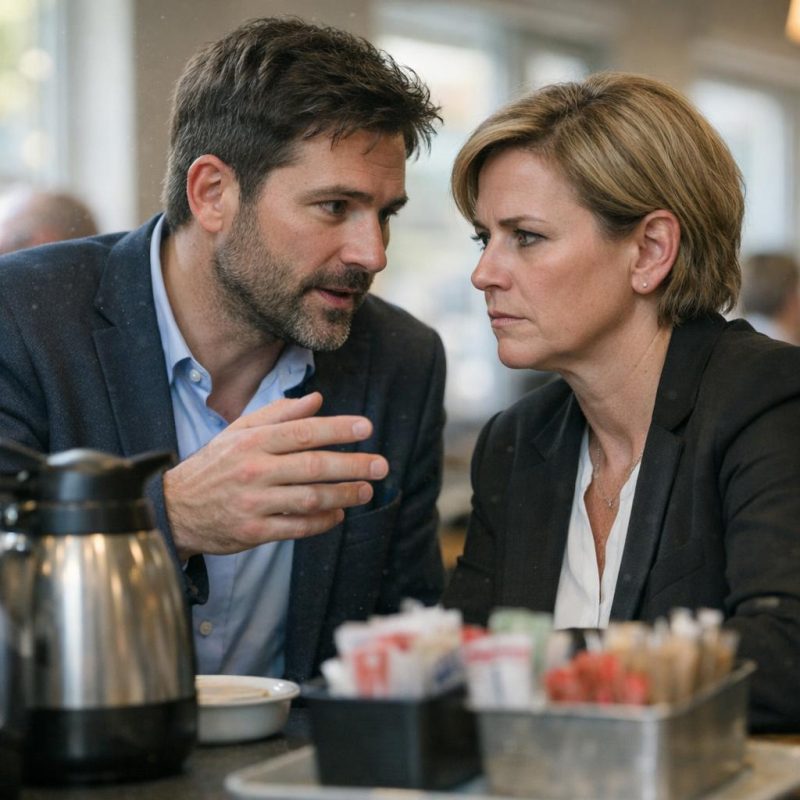 Image by RM AI
Security Footage Gap
Raymond, the security chief, asked to speak with me two days later. We met in the same small room where Mr. Garrett had briefed me on the review. Raymond looked uncomfortable, which immediately put me on edge. 'We've been pulling all the security footage from the relevant time periods,' he began, 'cross-referencing with the incidents we're investigating.' He paused, choosing his words carefully. 'And we've discovered some irregularities.' 'What kind of irregularities?' I asked. 'Gaps in the footage. Periods where the recordings are corrupted or simply missing. The backup systems that should have preserved redundant copies apparently failed during the same timeframes.' He met my eyes. 'It's possible it's a technical malfunction. Our digital storage system has had issues before. But the timing is suspicious.' My stomach dropped. 'You're saying the only evidence of what happened to my mother is on my camera.' 'Your footage is the most complete record we have, yes,' he confirmed. 'The official hospital surveillance from those nights is either incomplete or unusable.' I thought about how easily I could have talked myself out of hiding that camera, how paranoid it had seemed at the time. If I'd listened to that voice of doubt, if I'd decided I was being ridiculous, there would be nothing. No proof, no investigation, no answers. Without my camera, there would have been no evidence at all—and that terrified me.
 Image by RM AI
Badge Deactivation History
Raymond came back the following week with more findings. He'd been digging into the badge deactivation protocols, trying to understand how Rebecca had maintained access after leaving. What he'd found clearly disturbed him. 'Our system for processing departing employees is fundamentally broken,' he said bluntly, sitting across from me in the small conference room we'd started using regularly. 'When someone leaves—whether they quit, retire, or are terminated—their badge is supposed to be collected and immediately deactivated in our system. HR handles the paperwork, security handles the physical badge and system access.' He pulled out a spreadsheet. 'But there's no verification step. HR assumes security has deactivated access. Security assumes HR has collected the badge. If an employee just doesn't return their badge, it can take weeks or even months before anyone notices it's missing.' 'And in Rebecca's case?' I asked. 'Her badge was never collected. HR marked her file as processed. Security was never notified to deactivate it. She walked out with full access to the building, and nobody knew.' He shook his head, looking genuinely angry. 'We've now identified at least seven other former employees whose badges were never properly deactivated. They could walk in here tomorrow, and the system would let them through.' It wasn't just one mistake—it was a flaw in the entire system, and she'd exploited it perfectly.
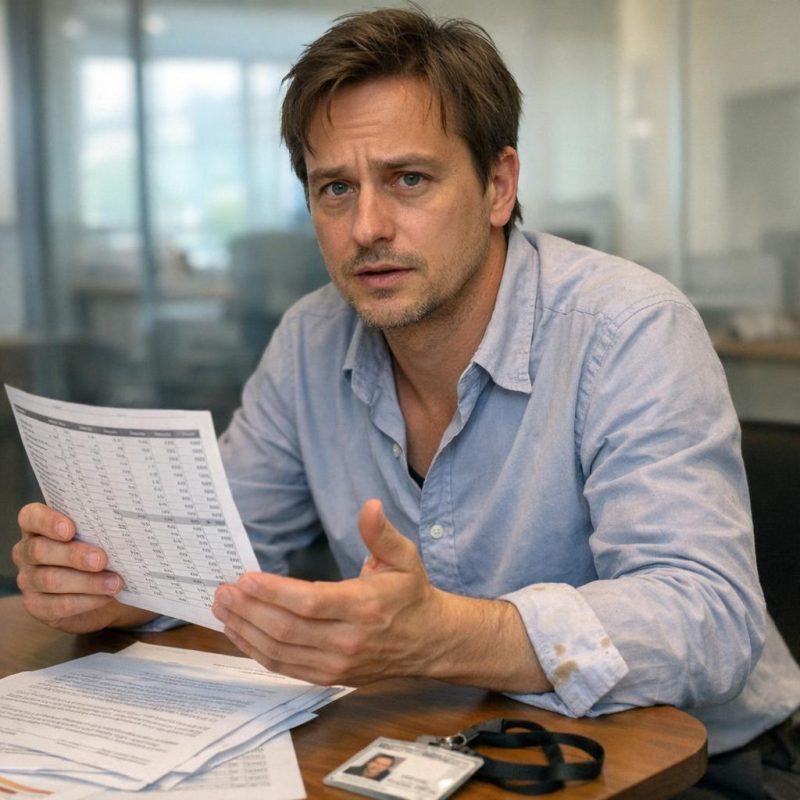 Image by RM AI
Eleanor's Questions
Mom was moved out of intensive monitoring into a regular recovery room, and by the end of the second week, she was almost back to her normal self. Sharp, observant, asking questions I wasn't prepared to answer. 'Something happened, didn't it?' she said one afternoon, fixing me with that look she'd perfected over eight decades. 'During the surgery or after. Something went wrong.' I'd been dreading this conversation. 'Why do you say that?' I asked, stalling. 'Because you have that face you get when you're protecting me from something. You've had it since you were twelve and broke my favorite vase.' She reached for my hand. 'And because the nurses look at me differently now. Carefully. Like I'm evidence instead of a patient.' I didn't know what to say. How do you tell your elderly mother that someone had been deliberately poisoning her? That a person in a nurse's uniform had been making her sick, night after night, for reasons we still didn't fully understand? 'There was a complication with your medication,' I said finally. 'But it's been resolved. You're going to be fine.' She studied my face for a long moment. 'You're not telling me everything.' 'No,' I admitted. 'I'm not. Not yet.' She squeezed my hand. 'But you will. When you're ready.' I nodded, grateful for her patience. I didn't know how much to tell her—how do you explain that someone was deliberately making you sick?
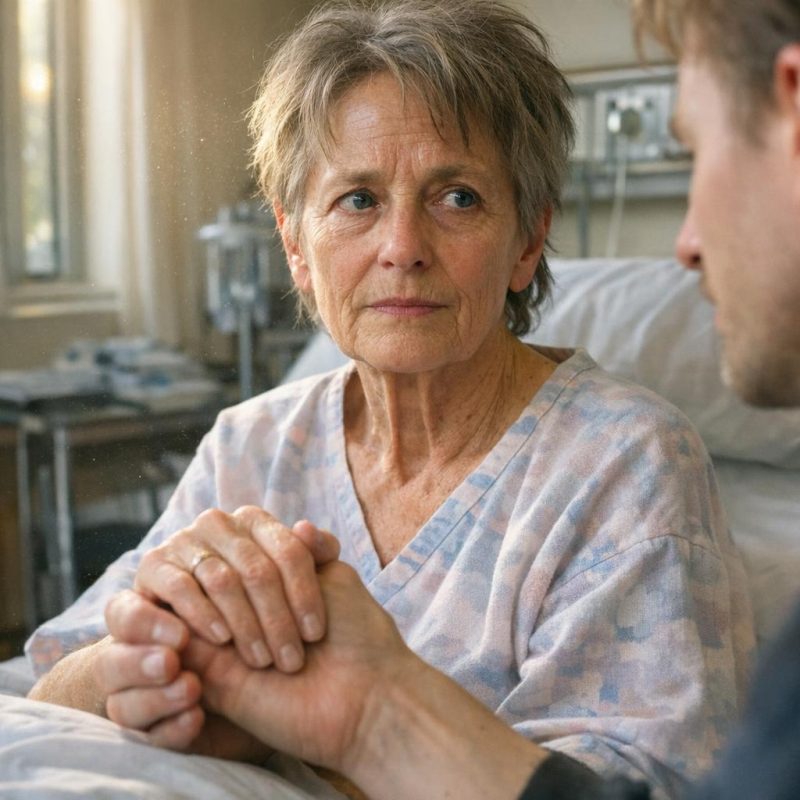 Image by RM AI
The Name Revealed
Mr. Garrett called me into his office a few days later. It was the first time I'd actually been in there—a cramped space with stacks of files and a window overlooking the parking lot. He gestured for me to sit. 'I think it's time you knew who we're dealing with,' he said. 'The former nurse who accessed your mother's room. Her name is Rebecca Townsend.' He watched my face, clearly expecting some reaction. I shook my head. 'That doesn't mean anything to me. Should it?' 'Not necessarily,' he said, but something in his expression suggested otherwise. 'She worked here for six years. Exemplary record for the first four. Then something changed.' 'What changed?' I asked. He hesitated, choosing his words carefully. 'Her performance became erratic. There were complaints. Patient care issues. Eventually, circumstances led to her departure.' 'You mean she was fired,' I said. 'The circumstances of her departure are complicated,' he said, which wasn't really an answer. 'There were grievances filed on both sides. It didn't end well.' The way he said it made my skin prickle. This wasn't just about a disgruntled former employee. There was history here, layers of it, and he was only showing me the surface. The name meant nothing to me, but the way he said it—with a kind of resigned dread—told me it should.
 Image by RM AI
Rebecca's Personnel File
I insisted on seeing Rebecca Townsend's personnel file. Mr. Garrett resisted at first, citing privacy concerns and legal restrictions, but I pushed back. 'She targeted my mother,' I said firmly. 'I have a right to understand why.' He finally agreed to let me review a redacted version in his presence. The file was thinner than I expected—or maybe it had just been heavily edited. The first four years showed exactly what he'd described: excellent performance reviews, patient commendations, a steady, unremarkable career. Then a gap, followed by a series of incidents that had been blacked out. The details were gone, but the dates told a story of escalating conflict. What caught my attention was near the end, in a section labeled 'Termination Documentation.' Most of it was redacted, thick black lines obscuring whatever had happened. But one phrase had been left visible, probably by accident: 'grievance filed against administration—unresolved.' I read it three times. 'What was the grievance about?' I asked. Mr. Garrett shifted uncomfortably. 'I can't discuss that. It's part of a confidential HR matter.' 'But it was never resolved?' 'No,' he admitted. 'It wasn't.' I stared at that single visible phrase, feeling like I was looking at the tip of something much larger beneath the surface. The file was heavily redacted, but one phrase stood out: 'grievance filed against administration—unresolved.'
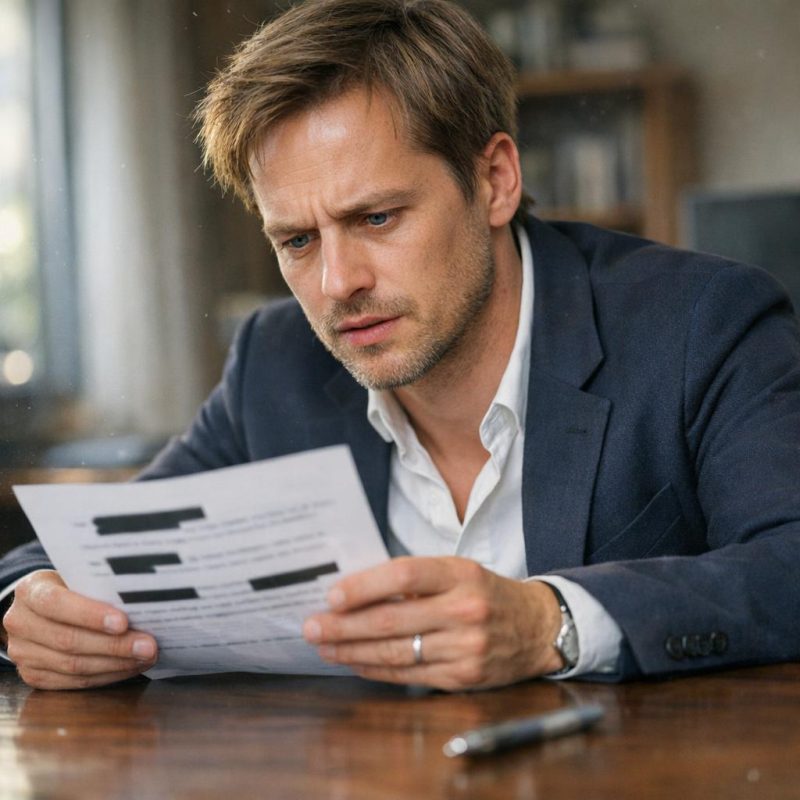 Image by RM AI
Police Involvement
Detective Walsh arrived two days later. He was the kind of cop who looked like he'd heard everything twice, professional in that quiet, unimpressed way that somehow made you want to tell him the truth. We met in a conference room—me, Mr. Garrett, and the detective, who spread his notebook on the table like he was settling in for the long haul. I walked him through everything. The camera footage. The badge logs. Rebecca's unauthorized visits. My mother's overnight decline and daytime improvement. He took notes without interrupting, occasionally nodding, his expression giving away nothing. When I finished, he looked up from his notebook and studied me for a long moment. 'This is helpful,' he said. 'We'll need copies of everything you showed Mr. Garrett.' I nodded, feeling something like relief wash over me. Someone official was finally taking this seriously. Then his pen tapped once against the page, a thoughtful, deliberate motion. 'I need to ask you something, Mrs. Patricia,' he said, his voice careful. 'Based on what you observed, the timing, the pattern—do you think she targeted your mother specifically?' The question hung in the air between us. I opened my mouth, then closed it again. The detective listened to everything I had to say, then asked me the question I'd been dreading: 'Do you think she targeted your mother specifically?'
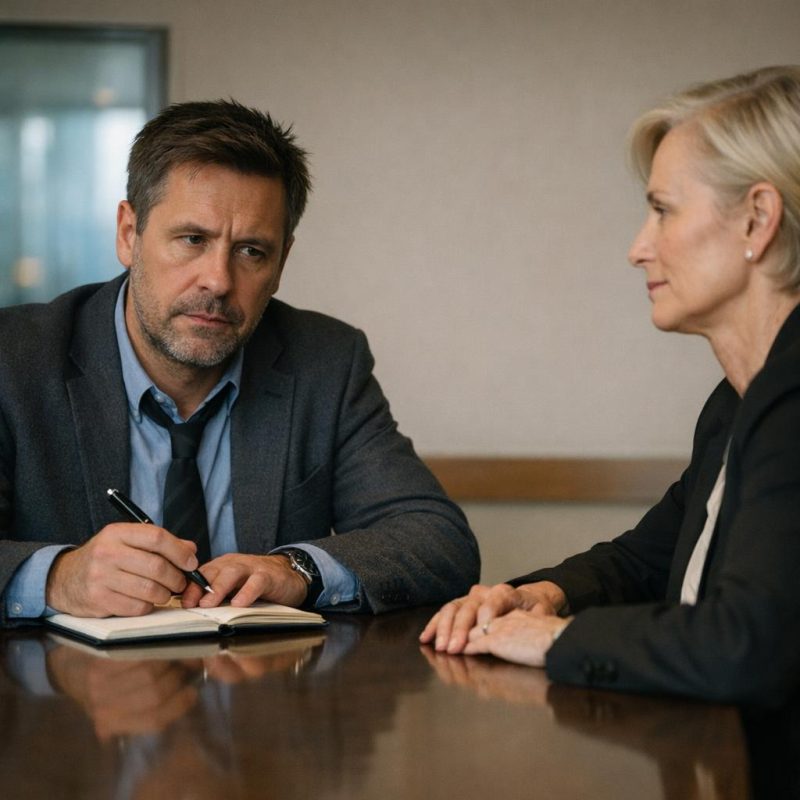 Image by RM AI
Other Victims Contacted
I didn't have an answer for him. Not then. Detective Walsh seemed to expect that. He closed his notebook and leaned back in his chair. 'We're going to be contacting other families,' he said. 'Patients who were on the same ward during the timeframe Rebecca had unauthorized access.' The words took a moment to land. 'Other families?' I repeated. 'How many?' 'We're still reviewing the badge data,' he said. 'But based on what we've found so far, there are at least six other patients who may have been affected.' Six. The number made my stomach turn. I'd been so focused on my mother, on what had happened to her, that I hadn't fully processed the scope of what Rebecca might have done. 'Have you spoken to any of them yet?' I asked. 'We're starting today,' Walsh said. 'Some families may not have noticed anything unusual. Others might have similar concerns to yours.' He paused. 'If there's a pattern, we'll find it.' I sat there trying to absorb it—trying to imagine six other families sitting in rooms like this one, realizing their loved ones had been compromised. I wasn't the only one—and that somehow made everything feel both more real and more terrifying.
 Image by RM AI
The Medication Effect
Mr. Garrett called me back in the next afternoon. This time he had someone with him—a medical consultant the hospital had brought in to review the footage and my mother's chart. The consultant was clinical, methodical, the kind of person who spoke in measured statements rather than speculation. 'Based on what we've seen,' she said, 'the symptoms you described are consistent with a specific type of medication error.' She pulled up my mother's chart on the screen. 'If someone administered a sedative or muscle relaxant that wasn't prescribed, it would cause exactly what you observed—weakness, confusion, inability to stay awake or alert.' I leaned forward. 'And then it would wear off?' 'Depending on the dosage and the drug, yes,' she said. 'By morning, most of it would be metabolized. The patient would appear to recover, at least temporarily.' It was the first time someone had given me a concrete explanation that matched everything I'd seen. The overnight crashes. The morning rallies. The cycle that had made me feel like I was losing my mind. 'So she was giving my mother something,' I said. The consultant hesitated. 'That's the working theory. We can't prove it without a toxicology screen from that specific timeframe, but the pattern fits.' It would cause weakness, confusion, and rapid decline overnight—and then, once it wore off during the day, temporary improvement.
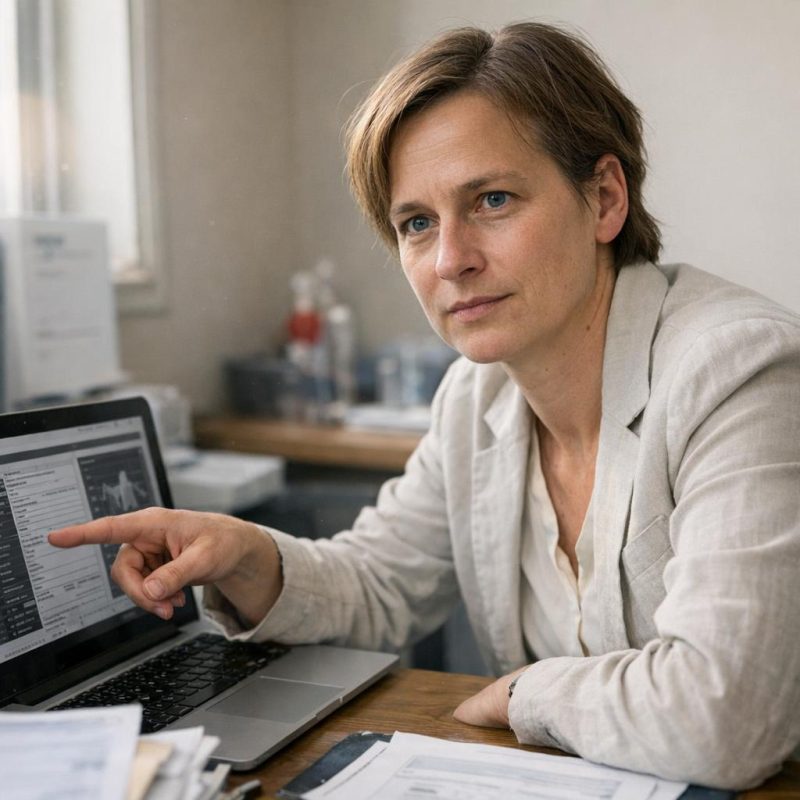 Image by RM AI
Rebecca's Grievance Details
Ms. Chen appeared in the doorway while I was still processing the consultant's explanation. I hadn't seen her since the initial security review weeks ago. She looked tired, like she'd been working through too many late nights. 'I think you need to see something,' she said. We moved to a smaller office. She opened a file on her laptop—Rebecca's personnel records, but this time with fewer redactions. 'I've been authorized to share more context,' Ms. Chen said. 'Rebecca filed multiple grievances before her termination. All of them related to patient safety protocols.' I scanned the documents. Complaint after complaint, each one detailed and specific. Staffing shortages on night shifts. Inadequate medication verification procedures. Failures in the badge access system. 'She was trying to fix things,' I said slowly. Ms. Chen nodded. 'She went through the proper channels. Filed reports. Requested meetings with administration. Everything by the book.' 'And?' 'And nothing happened,' Ms. Chen said. 'Her complaints were reviewed, filed, and essentially ignored. When she pushed harder, she was labeled as difficult. Eventually, she was terminated for what the hospital called 'insubordination.'' I stared at the screen. She'd tried to do things the right way—and when that failed, maybe she decided to prove her point differently.
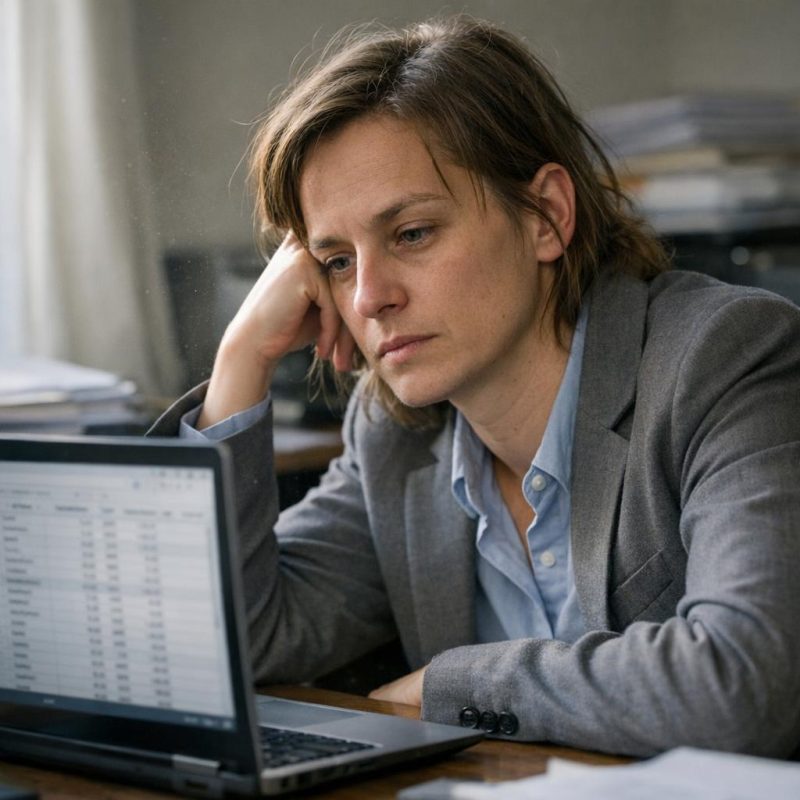 Image by RM AI
The Liability Timeline
Ms. Chen wasn't finished. She pulled up another document—a timeline she'd been assembling over the past few days. 'Look at this,' she said, turning the laptop toward me. The timeline started with Rebecca's termination date and extended forward several months. Marked along it were a series of incidents: a patient fall that resulted in a fracture, a medication error that led to an allergic reaction, a post-surgical infection that shouldn't have occurred. Each one was flagged with a date, a brief description, and a notation about the hospital's liability exposure. 'These all happened after she was fired,' I said. 'Correct,' Ms. Chen said. 'And they all occurred during night shifts.' I felt something cold settle in my chest. 'You think she caused these?' 'I think there's a correlation worth investigating,' Ms. Chen said carefully. 'Each of these incidents created liability for the hospital. Bad press. Lawsuits. Damaged reputation.' She scrolled down, highlighting another column. 'And when we cross-reference with the badge access logs, every single one of these incidents occurred on nights when Rebecca's old badge was used to access restricted areas.' Every incident had happened during night shifts—and every one could be traced back to those missing badge logs.
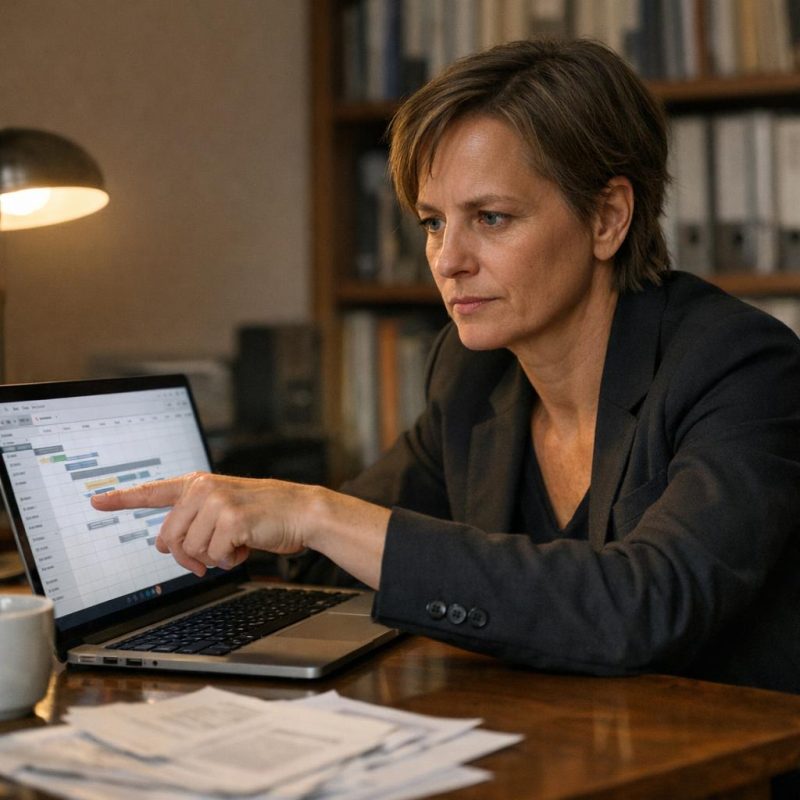 Image by RM AI
Detective Walsh's Theory
Detective Walsh came back the following day with a theory. We sat in the same conference room, but this time his notebook was filled with considerably more notes. 'I've been looking at the pattern,' he said. 'The timing, the incidents, the families we've contacted. And I think I understand what we're dealing with here.' I waited. 'Rebecca Townsend was a good nurse,' Walsh said. 'By all accounts, she genuinely cared about patient safety. When the hospital ignored her complaints, it wasn't just professional frustration—it was personal.' 'So she what, decided to get revenge?' I asked. 'Not revenge exactly,' Walsh said. 'Vindication. She wanted to prove she'd been right all along. That the hospital's protocols were dangerous. That patients were at risk.' He tapped his pen against the table. 'So she created the incidents she'd been warning about.' The logic was horrifying and somehow perfectly clear. 'She was making it look like the hospital was negligent,' I said. Walsh nodded. 'Every incident damaged their credibility. Every lawsuit proved her point. She wasn't trying to hurt the patients specifically—she was trying to hurt the institution.' It wasn't about the patients, he said—it was about the institution that wronged her.
 Image by RM AI
Rebecca's Social Media
Detective Walsh pulled out his phone and scrolled to a series of screenshots. 'We've been reviewing Rebecca's social media,' he said. 'Most of it's private, but we were able to access some of her posts through the investigation.' He turned the screen toward me. The posts were cryptic but pointed. Comments about institutional corruption, accountability, systems that protected themselves instead of the people they were supposed to serve. 'She never named the hospital directly,' Walsh said. 'But the subtext is pretty clear.' I scrolled through them, feeling increasingly unsettled. One post talked about whistleblowers being silenced. Another questioned how many people had to be harmed before institutions faced consequences. They were the words of someone who felt profoundly wronged, someone who'd lost faith in the system entirely. Then I saw it. A post dated the week before my mother's surgery. Walsh had already highlighted it. I read it once, then again, my hands going cold. The words were simple, direct, chilling in their clarity. One post, dated the week before my mother's surgery, read: 'Sometimes the only way to expose a broken system is to let it break.'
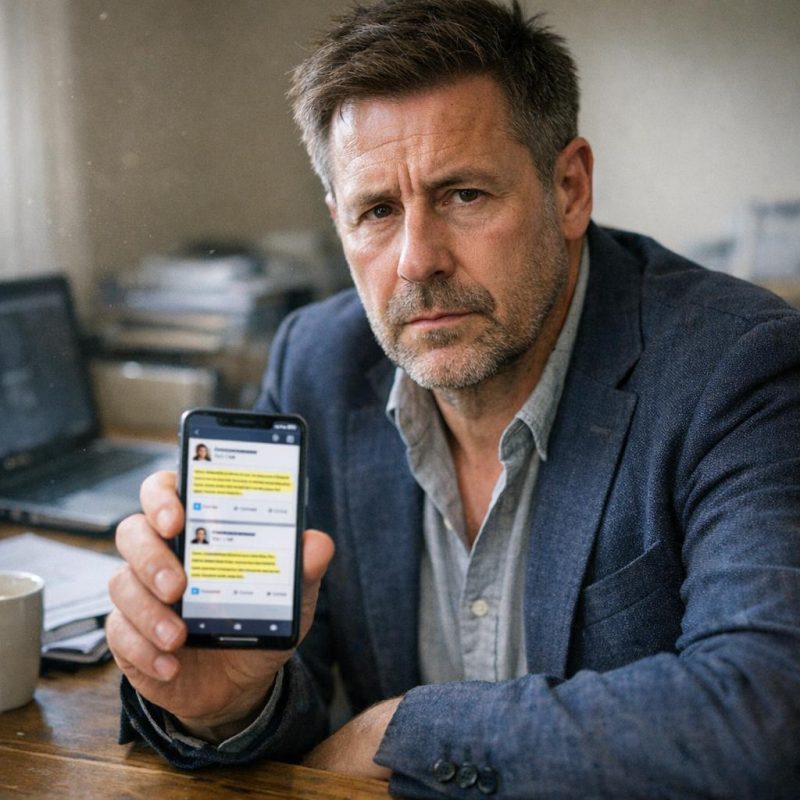 Image by RM AI
The Full Pattern Revealed
Detective Walsh laid it all out for us in that conference room—me, Mr. Garrett, and Ms. Chen. He had the complete picture now, evidence organized into a pattern that was impossible to deny. Rebecca had systematically altered patient treatments over a span of months. Small changes. Medication errors. Protocol violations. Nothing dramatic enough to kill anyone, but everything calculated to create incidents that would generate complaints, lawsuits, investigations. 'She was building a case,' Walsh said. 'Not in court—in public opinion. Every incident damaged the hospital's reputation. Every family that questioned their care proved her original complaints had merit.' I felt sick. 'My mother,' I said. 'She was never the target,' Walsh said. 'None of them were, not personally. Rebecca chose patients based on opportunity—who was on the ward, who had procedures scheduled, who would be vulnerable during night shifts when she had access.' Mr. Garrett looked like he'd aged ten years. 'She was destroying us deliberately.' 'Methodically,' Walsh corrected. 'She knew exactly what she was doing. Creating liability. Generating distrust. Making the hospital look negligent, dangerous, untrustworthy.' I sat there trying to process it. She wasn't trying to kill anyone—she was trying to make the hospital look negligent, dangerous, untrustworthy—and my mother was just one piece in a much larger plan.
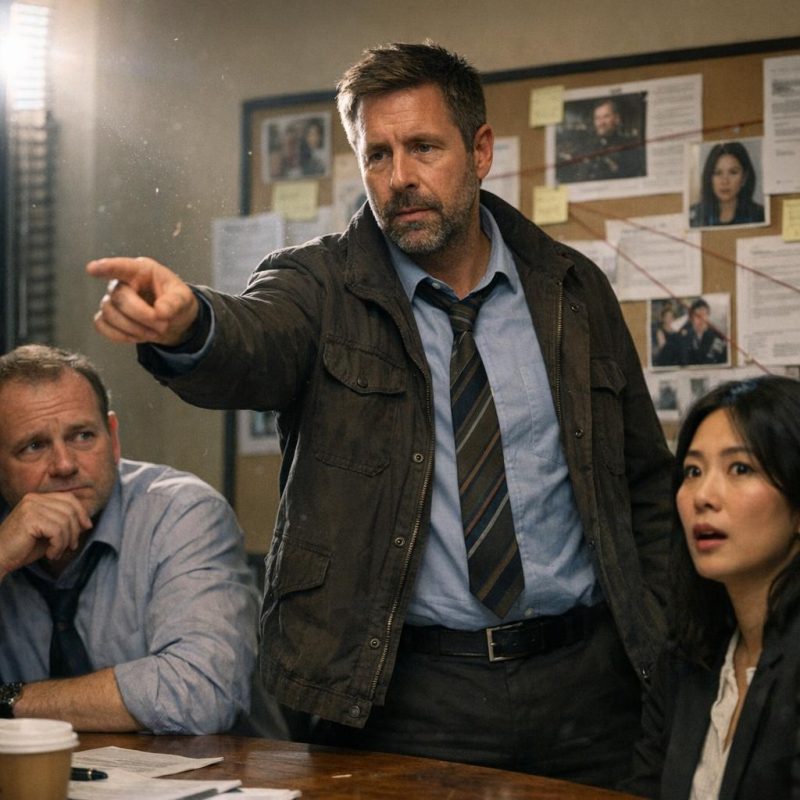 Image by RM AI
Patricia's Reframing
I went back through everything after that meeting—every moment I'd watched on that camera, every conversation I'd replayed in my head. The overnight medication changes weren't mistakes. The vague explanations weren't incompetence. Rebecca standing in my mother's room at 2 AM with that tablet wasn't carelessness or distraction. It was all deliberate. Every single thing I'd questioned had been a choice she'd made, a step in whatever plan she'd been following. When she'd hesitated over Mom's IV, she wasn't confused—she was calculating. When she'd adjusted dosages without documentation, she wasn't being sloppy—she was creating evidence. I felt this wave of anger wash over me, hot and sharp. All those nights I'd told myself I was being paranoid, that I was just a worried daughter seeing problems where there weren't any—I'd been right. My instincts had been screaming at me, and I'd kept second-guessing myself because who questions a nurse? Who assumes malice instead of human error? But this wasn't error. This wasn't negligence. Every detail I'd questioned—every vague answer, every overnight change—had been part of a calculated plan to make the hospital fail.
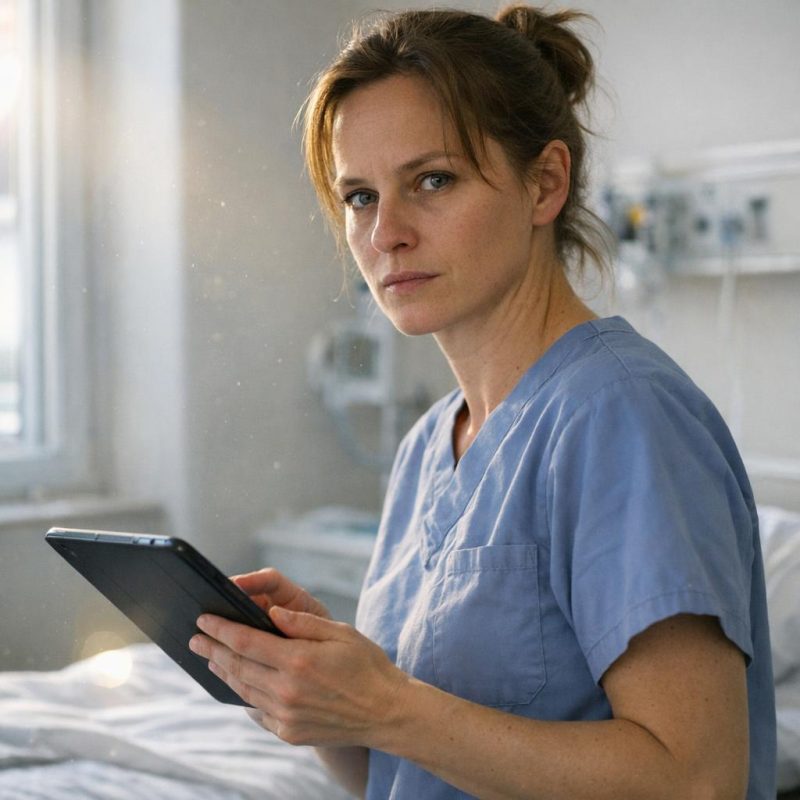 Image by RM AI
The Arrest Warrant
Walsh called me two days later with an update. 'We've secured the warrant,' he said. 'Multiple charges—criminal trespass, patient endangerment, fraud, falsifying medical records.' I was sitting in my car outside the hospital when he told me. I'd just finished visiting Mom, who was finally being discharged the next morning. 'What happens now?' I asked. 'Now we find her,' Walsh said. 'She hasn't shown up for work since the last incident. No forwarding address at her listed residence. But we've got her photo circulated, alerts at border crossings, financial tracking in place.' 'She ran.' 'She got cautious,' Walsh corrected. 'There's a difference. She knew the investigation was closing in. She's smart enough to disappear for a while, but smart people make mistakes too. They use credit cards. They contact family. They think they're being careful, but there's always a trace.' I wanted to feel relieved, but mostly I felt tense. A warrant was just paper. It didn't undo what she'd done, didn't protect the next patient if she decided to start over somewhere else with a new identity, a new grudge. They had her name, her face, her motive—now they just had to find her.
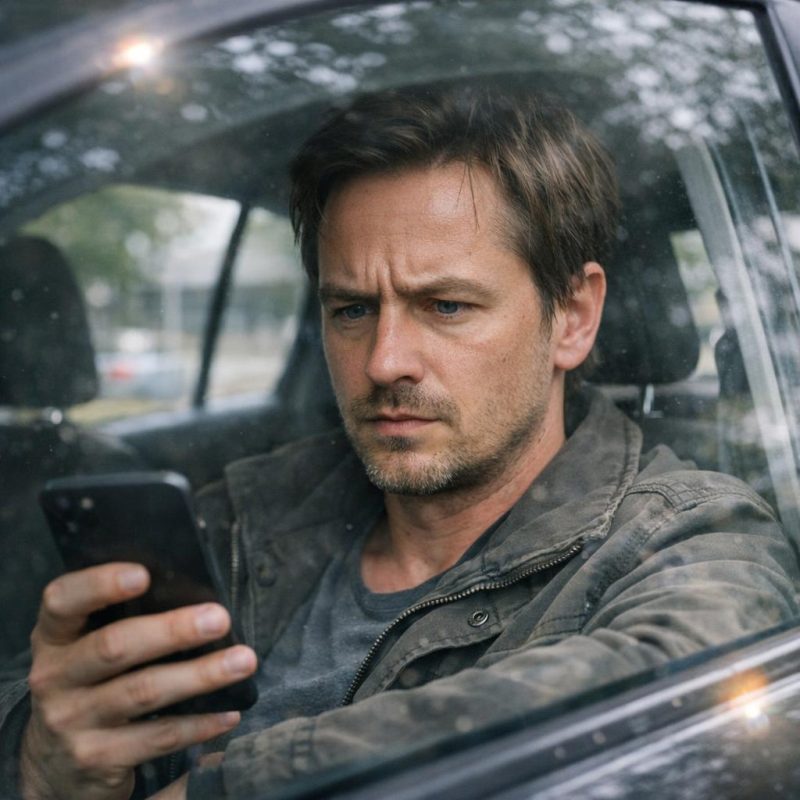 Image by RM AI
Tracking Rebecca
Walsh moved fast once they had the financial trail. Rebecca had been paying rent on a property two towns over—a small furnished apartment she'd rented under her real name three months ago, right around the time she must have started planning this whole thing. 'Credit card transaction yesterday at a grocery store four blocks from the address,' Walsh told me over the phone. 'She's still there. We're coordinating with local police now.' 'When?' I asked. 'Soon. Today. I'll call you when it's done.' I couldn't concentrate on anything after that. I tried to work, tried to sort through the discharge paperwork for Mom, tried to make lunch, but my hands were shaking. Every time my phone buzzed I jumped. This was it—the end of whatever nightmare we'd been living through. Or at least I hoped it was the end. Part of me kept imagining her slipping away again, disappearing into another identity, another hospital, another set of patients she could use as pawns. Walsh had said she was smart. Smart people were hard to catch. But they'd found her. They knew where she was. The call came at dawn—they'd found her and were moving in.
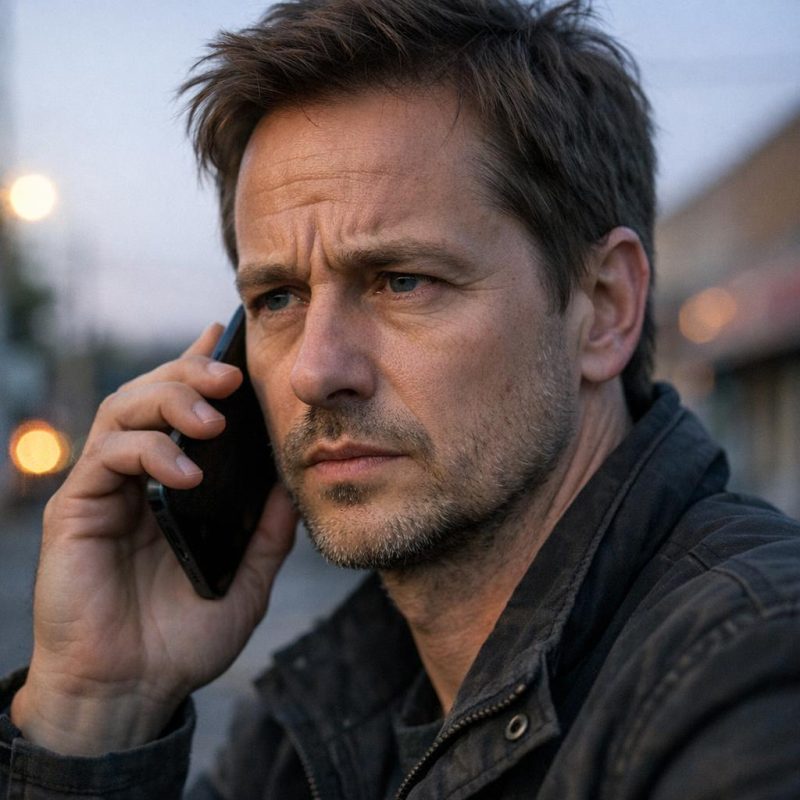 Image by RM AI
The Confrontation
Walsh sent me the bodycam footage later—not officially, but he thought I deserved to see it. Rebecca answered the door in sweatpants and a T-shirt, coffee mug in hand, like it was any ordinary morning. She didn't run. Didn't resist. Just set the mug down carefully and held out her wrists. 'I've been expecting you,' she said. That's what got me—the calm. The complete absence of panic or remorse. They read her rights, cuffed her, walked her to the car, and she never stopped looking composed. Professional, even. Like she'd just clocked out of a shift. At the station, she waived her right to a lawyer initially and gave a statement that Walsh described as 'chillingly articulate.' She laid out her entire rationale—the hospital's history of covering up complaints, the administrator who'd dismissed her concerns, the pattern of negligence she believed was systemic. 'I didn't hurt anyone,' she told them. 'I exposed the truth. I proved they couldn't be trusted with vulnerable patients.' Walsh said she showed them documentation—notes, records, dates—like she'd been building a case file the whole time. As they led her away, she looked directly at the camera and said, 'I just proved what they've been hiding for years.'
 Image by RM AI
Rebecca's Statement
Walsh let me read parts of Rebecca's official statement a few days later. I think he wanted me to understand what we were really dealing with—not just what she'd done, but how she thought about it. She'd written pages. Detailed, methodical pages about hospital negligence, systemic failures, patterns of dismissal when staff raised safety concerns. Some of it was probably true—hospitals aren't perfect, and I'm sure complaints get ignored sometimes. But then she described what she'd done to my mother, to those other patients, and the language shifted. They weren't people anymore in her narrative. They were 'data points.' 'Case studies.' 'Evidence of systemic vulnerability.' She wrote about selecting patients based on 'optimal impact potential'—which meant choosing people whose families would complain, whose cases would generate attention. She detailed every medication change, every protocol violation, every deliberate gap in documentation as if she were writing a research paper. Clinical. Dispassionate. Completely detached from the fact that these were human beings whose lives she'd put at risk to prove a point. She described every patient she'd affected not as a victim, but as evidence—and that made my stomach turn.
 Image by RM AI
Victim Impact Count
Mr. Garrett called me in for another meeting once the internal review was complete. Ms. Chen was there too, looking exhausted. 'We've identified fourteen patients,' Garrett said quietly. 'Fourteen confirmed cases where Rebecca made unauthorized medication changes or protocol violations during her time here.' Fourteen. I'd known there were others, but hearing the actual number felt different. Heavier. 'Are they all okay?' I asked. 'Most experienced minor complications,' Ms. Chen said. 'Delayed recovery, unexpected reactions, nothing life-threatening in the end. But three required extended stays. One developed an infection that should have been prevented. Another had a medication interaction that caused significant distress.' She slid a folder across the table. 'We're contacting all the families. Full disclosure. Offering support, counseling, legal consultation if they want it.' I opened the folder and saw the list—names, ages, procedures, dates. My mother's name was fifth from the top. Just one entry among fourteen others. Each one representing a family that had trusted this place, that had believed their loved one was safe. Fourteen families who deserved to know what had happened—and my mother was just one of them.
 Image by RM AI
Media Attention
The story broke three days later. I don't know who leaked it—maybe someone from the police department, maybe a hospital employee, maybe one of the other families. Suddenly my phone was ringing constantly. Journalists wanting interviews. Local news stations parked outside my house. A producer from some true crime podcast left four voicemails. 'You're the one who caught her,' one reporter said when I finally answered by accident. 'The daughter who installed the camera. People want to hear your story.' I hung up. I didn't want to tell my story to strangers. I didn't want to be the face of this nightmare, the example everyone pointed to. 'See? This is why you can't trust hospitals. This is why you need cameras everywhere.' That wasn't the point. The point wasn't that I was smart or vigilant. The point was that something had gone horribly wrong, and fourteen families had paid the price. My neighbor texted me a link to an article—'Rogue Nurse Caught by Daughter's Hidden Camera.' Another one called it 'Hospital Horror: How One Family Exposed a Dangerous Infiltrator.' I didn't want to be famous for this—I just wanted my mother to be safe.
 Image by RM AI
Hospital Reform Announcement
Mr. Garrett held a press conference a week later. I watched it from home, couldn't bring myself to be there in person. He stood at a podium with the hospital logo behind him, looking serious and measured, announcing a comprehensive overhaul of security protocols, staff verification procedures, and patient monitoring systems. 'We are implementing mandatory badge scans for medication access,' he said. 'Enhanced background checks for all clinical staff. Real-time oversight of treatment changes. And we are establishing a patient family hotline for concerns that will be reviewed by an independent committee.' It sounded good. It sounded like they were taking it seriously. He talked about accountability, transparency, patient safety as the highest priority. Then he thanked me—by name, publicly—for my vigilance, for trusting my instincts, for taking action that ultimately protected other patients. People in the press room actually applauded. I felt sick. Because the real question nobody was asking was: how long had these gaps existed? How many other people could have done what Rebecca did if they'd wanted to? How much of this reform was genuine change, and how much was damage control? He thanked me publicly for my vigilance, but I couldn't help wondering if any of this would have changed without a camera.
 Image by RM AI
Rebecca's Arraignment
I went to Rebecca's arraignment. I don't know why, exactly—maybe I needed to see her face one more time, needed to understand what kind of person does what she did. The courtroom was smaller than I expected, fluorescent lights buzzing overhead, that institutional smell of floor cleaner and tension. Rebecca walked in wearing a navy blazer, hair pulled back neatly, looking more like someone heading to a conference than facing criminal charges. Her lawyer stood beside her, confident and polished, arguing that she was a whistleblower who'd been trying to expose what she believed were harmful conventional treatments. That she'd acted out of deeply held convictions about patient welfare. That she never intended harm. The prosecutor pushed back hard—tampering with medications, falsifying records, endangering lives—but Rebecca's lawyer kept reframing it as civil disobedience, as principled resistance to a broken system. Rebecca herself said nothing beyond 'not guilty,' her voice steady, her expression calm. No remorse. No doubt. I sat there in the back row, gripping my purse, thinking about my mother's face when she couldn't breathe, about the hours I'd spent wondering if I was losing my mind. Watching her stand there, calm and composed, I realized she truly believed she'd done nothing wrong.
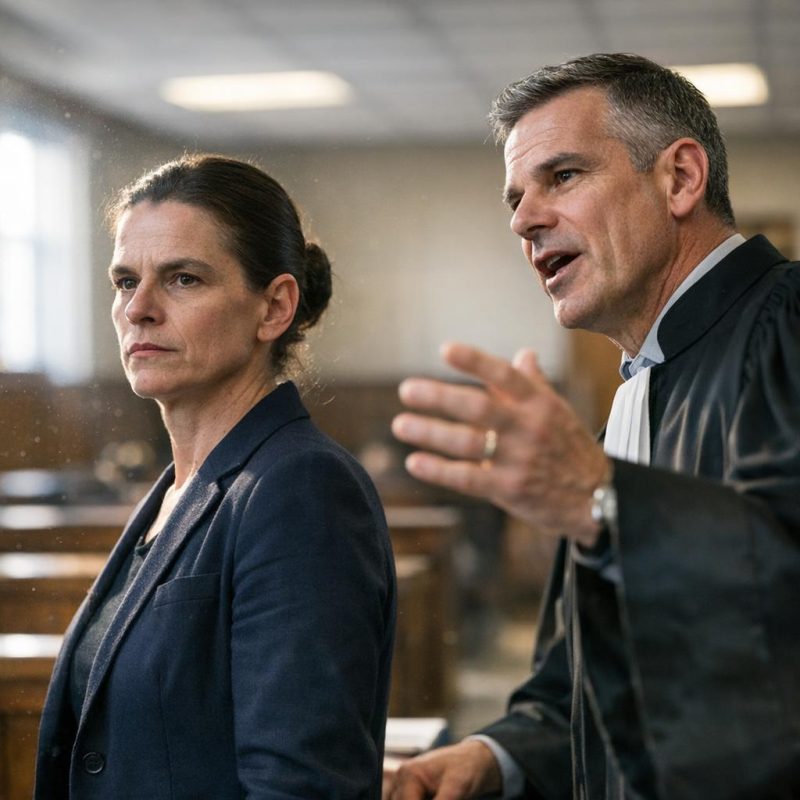 Image by RM AI
Eleanor's Full Recovery
Three weeks after that press conference, Mom was discharged. Fully recovered. Her blood pressure stable, her heart rhythm normal, all her levels exactly where they should be. I picked her up on a Wednesday morning, drove her back to her house with the windows cracked because she wanted fresh air. She looked thin but strong, tired but clear-eyed, more herself than she'd been in months. We didn't talk much during the drive—she dozed a little, and I just kept glancing over to make sure she was really there, really okay. When we pulled into her driveway, I helped her out of the car, carried her overnight bag, unlocked the front door to the house that had felt so empty without her. She moved slowly but steadily through the hallway, touching the walls like she was reacquainting herself with home. I made tea. We sat in her kitchen, sunlight coming through the window over the sink, and she told me about the flowers Sarah had sent, about the card from her book club, about how good it felt to sleep in a bed that didn't beep. Normal conversation. Safe conversation. Then, as I helped her into the house earlier, she'd squeezed my hand and said, 'You saved my life, you know.'
 Image by RM AI
Reflecting on Instinct
I've spent a lot of time since then thinking about how close I came to dismissing my instincts. How many times I almost convinced myself I was overreacting, being paranoid, letting anxiety get the better of me. Everyone around me—the nurses, the doctors, even my own daughter at first—had made it clear that I should trust the professionals, that they knew what they were doing, that my concerns were just the worried imaginings of someone who didn't understand medicine. And I'd almost believed them. Almost. If I hadn't ordered that camera, if I hadn't watched the footage, if I'd just kept telling myself to calm down and let the experts handle it—my mother would have died. Rebecca would have continued her 'treatments' on other patients. The system would have kept running exactly as it was, with its gaps and blind spots and opportunities for someone determined enough to exploit them. I wasn't some detective with special skills. I was just a daughter who knew something felt wrong and refused to let that feeling go. I thought about all the times I'd been told to trust the professionals, to not question authority—and how that almost cost us everything.
 Image by RM AI
Trust, But Verify
So here's what I want you to take away from all this: trust your instincts. Even when everyone around you is telling you you're wrong, even when you feel like you're being ridiculous, even when the people in charge seem confident and competent and like they have everything under control. Sometimes they do. Most of the time, honestly. But sometimes there's a gap, a crack in the system, something nobody else is seeing because they're not looking from your angle. That camera cost me forty-nine dollars. Forty-nine dollars to save my mother's life. I'm not saying you should spy on everyone or assume the worst about healthcare workers—most of them are genuinely trying to help, genuinely care. But I am saying that when something feels off, when the explanations don't add up, when your gut is screaming at you that something's wrong—listen to it. Look closer. Ask questions. My mom is alive today because I did. She's in her kitchen right now, probably doing a crossword puzzle and drinking too much coffee, and Sarah calls her every Sunday, and we're planning Thanksgiving like nothing ever happened. I still trust doctors, and I still respect professionals—but I also trust myself now, and that small camera reminded me that sometimes, the most important person to listen to is the voice inside telling you something isn't right.
 Image by RM AI
KEEP ON READING
The 20 Most Recognized Historical Figures Of All Time
The Biggest Names In History. Although the Earth has been…
By Cathy Liu Oct 4, 2024
10 of the Shortest Wars in History & 10 of…
Wars: Longest and Shortest. Throughout history, wars have varied dramatically…
By Emilie Richardson-Dupuis Oct 7, 2024
10 Fascinating Facts About Ancient Greece You Can Appreciate &…
Once Upon A Time Lived Some Ancient Weirdos.... Greece is…
By Megan Wickens Oct 7, 2024
20 Lesser-Known Facts About Christopher Columbus You Don't Learn In…
In 1492, He Sailed The Ocean Blue. Christopher Columbus is…
By Emilie Richardson-Dupuis Oct 9, 2024
20 Historical Landmarks That Have The Craziest Conspiracy Theories
Unsolved Mysteries Of Ancient Places . When there's not enough evidence…
By Megan Wickens Oct 9, 2024
The 20 Craziest Inventions & Discoveries Made During Ancient Times
Crazy Ancient Inventions . While we're busy making big advancements in…
By Cathy Liu Oct 9, 2024