

I Gave My Son $40,000 for His Dream House—Then His Wife Told Everyone Her Parents Paid for It
I Gave My Son $40,000 for His Dream House—Then His Wife Told Everyone Her Parents Paid for It
The Tuesday Call
Daniel called on a Tuesday evening, which wasn't unusual. We talked most weeks — nothing scheduled, just the kind of easy check-ins that had become our rhythm since his mother passed. I was in the kitchen when the phone rang, half-watching the news, and I picked up expecting nothing in particular. He asked how I was doing, and I told him fine, and then there was a pause that lasted just a beat too long. I'd known my son long enough to recognize the sound of him working up to something. He told me about the house on Maple Street — a three-bedroom colonial, good school district, wide porch, the kind of place he and Amanda had been looking for since before Sophie was born. They'd been outbid three times already, he said, and this one had come back on the market and they couldn't let it go again. His voice was careful, measured, the way it gets when his pride is in the room with him. I could hear something in the background — a drawer closing, maybe Amanda moving through the kitchen — but she didn't come on the line. I asked him what he needed. He was quiet for a moment. Then he said it: forty thousand dollars for the down payment. I didn't say anything right away. The number sat between us on the line, and I let it.
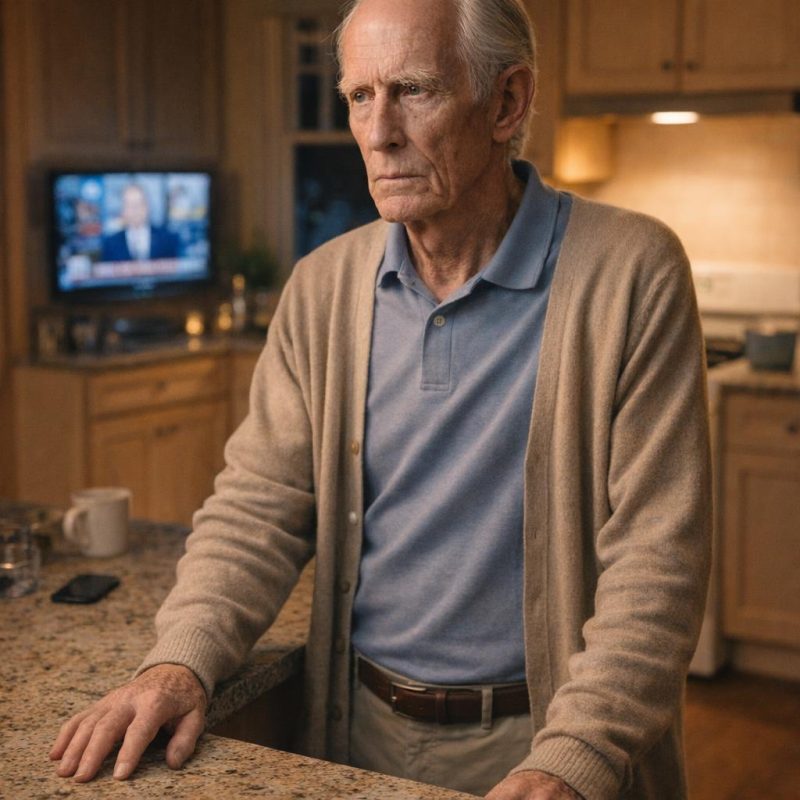 Image by RM AI
The Decision
I didn't sleep well that night. I lay there running the numbers the way I always do — methodically, honestly, without letting sentiment cloud the arithmetic. Forty thousand dollars was not nothing. It represented years of careful accumulation, money I'd set aside in increments through decades of work, money I'd always thought of as a buffer against whatever old age decided to bring. Taking that much out would leave me thinner than I liked. I thought about that for a long time. Then I thought about Daniel and Amanda and the kids crammed into that rental on Birchwood, and Emma doing her homework at the kitchen table because there was nowhere else, and I thought about what it means to have something to give when the people you love need it most. I called Daniel back the next morning. I told him I'd been thinking it over and that I wanted to do this right — not as a gift, but as a loan, with a repayment schedule we both agreed to and a simple written agreement so there'd be no confusion later. I said the paperwork wasn't about distrust; it was about protecting what we had between us. He said he understood, and I could hear the relief in his voice before he even finished the sentence. I told him we'd make it work.
 Image by RM AI
The Kitchen Table Agreement
They came over on a Thursday evening, and I had the document printed and waiting on the kitchen table. I'd kept it simple — one page, clear language, no legal jargon that would make it feel adversarial. The amount was stated plainly: forty thousand dollars. The monthly repayment figure was there, the start date, a line for each signature. I made coffee and set out cups, and we sat down together the way families do when something important needs to be handled. Daniel picked up the document and read it the way I'd hoped he would — slowly, line by line, not rushing past anything. Amanda sat across from him. She didn't reach for the paper. She looked toward the window once, then back at the table, turning her coffee cup in small rotations. I explained that the agreement was there to protect all of us, that putting things in writing was just good sense between people who trusted each other. Daniel nodded. Amanda said something brief and agreeable, and then she signed where I indicated, and Daniel signed after her. I signed last. I set the pen down and looked at the three signatures on that single page — something careful and considered, a record of what we'd agreed to, the quiet formality of putting family trust on paper.
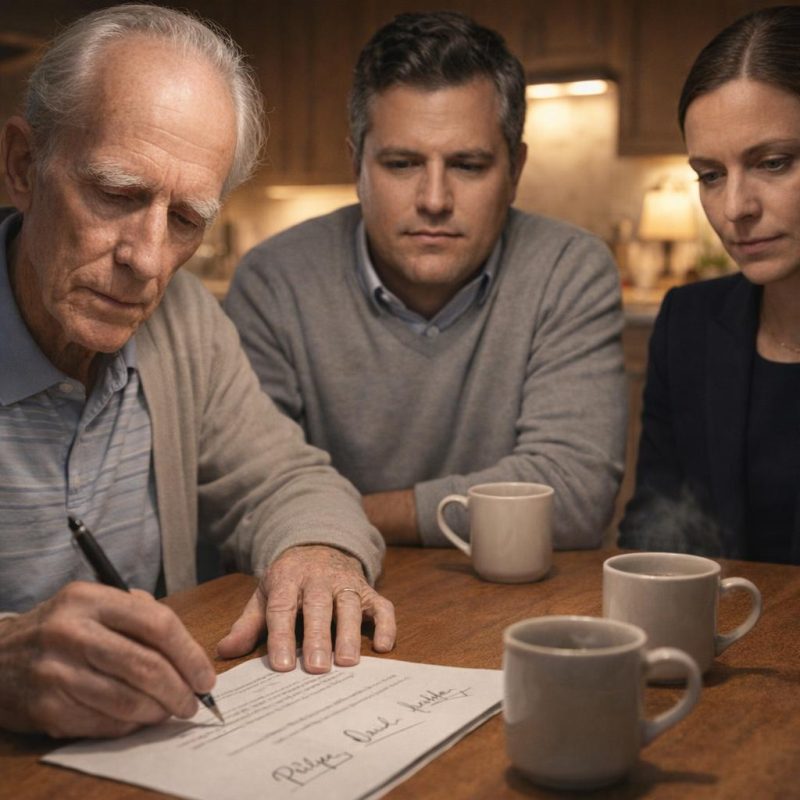 Image by RM AI
The Request for Silence
It was Amanda who brought it up, a few minutes after we'd finished with the paperwork. Daniel had gone to refill his coffee, and she leaned forward slightly and lowered her voice in the way people do when they want something to feel like a confidence. She said her parents — Linda and Robert — placed a great deal of importance on financial independence. It was something they'd instilled in her growing up, she said, a point of real pride for them. If they knew that she and Daniel had needed help with the down payment, it would embarrass them. Not because of anything I'd done, she was quick to add — just because of who they were and how they'd raised her. She asked if I'd be willing to keep the arrangement between us. I thought about it for a moment. I'd met Linda and Robert a handful of times — formal people, careful about appearances, the kind of couple who kept their house immaculate and their feelings tidier still. I understood that kind of pride. It wasn't so different from Daniel's own reluctance to ask in the first place. I told Amanda I had no intention of discussing their finances with anyone. She thanked me with a small, genuine-seeming smile, and Daniel came back with his coffee, and the evening settled into something easy and ordinary, the small promise feeling like nothing more than simple kindness.
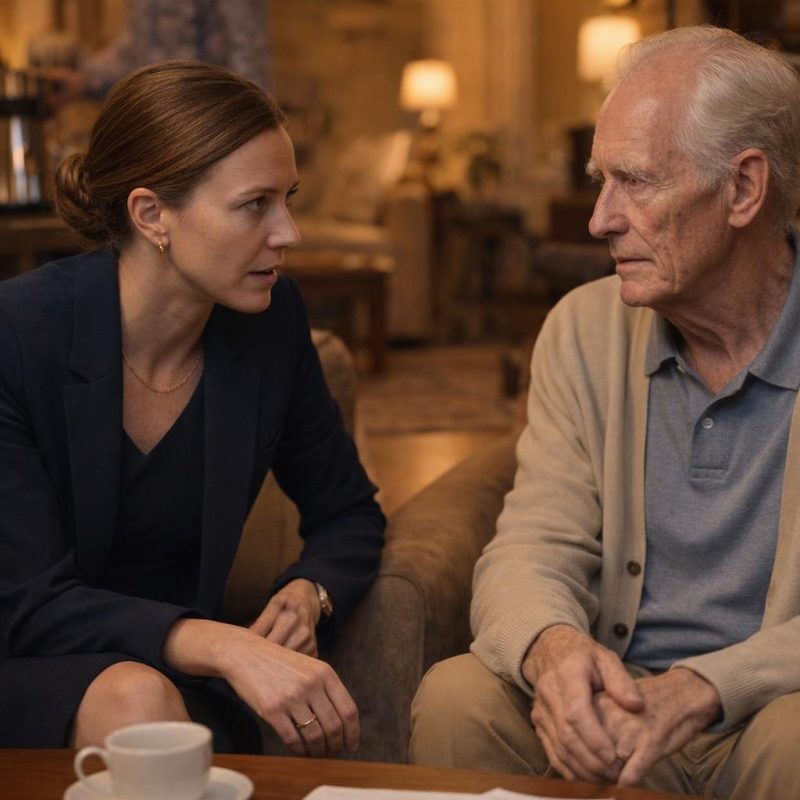 Image by RM AI
The Closing
The closing was scheduled for a Wednesday morning, and I stayed home. It wasn't my place to be there — the paperwork was theirs, the moment was theirs, and I'd already done what I could do. I kept myself busy with small things: a walk around the block, some reading I'd been putting off, lunch I barely tasted. I checked my phone more than I needed to. Around noon, a text came in from Daniel — just a photo, no words at first. Two keys on a plain metal ring, held up in someone's palm against the backdrop of what looked like a title company's conference table. A second message followed: *We got it, Dad. Thank you.* Then one from Amanda: *We are so grateful, Philip. Truly.* I sat with those messages for a while, reading them again. Then my phone buzzed once more, and this time it was a photo of the house itself — the front porch, the oak trees, the afternoon light coming through the branches — and Daniel had written simply: *Maple Street is ours.*
 Image by RM AI
First Visit to Maple Street
I drove over on a Saturday morning with a potted fern and a card I'd written the night before. The house looked better in person than in the photo — a proper colonial with white trim and a wide covered porch, two old oaks out front throwing good shade across the lawn. Daniel was waiting at the door before I'd even made it up the front walk, and he had the kind of energy he used to have as a boy on Christmas morning, moving fast and talking faster. He took the fern from me and set it on the porch railing and then pulled me inside. The rooms were empty and echoing, the way new houses are before life fills them in. He walked me through every one — here's where the couch goes, here's the kitchen tile we're replacing, here's the window that gets the best light in the afternoon. Amanda was there too, warm and gracious, pointing out the built-in shelving in the dining room and the deep closets in the hallway. I stood in the center of the main room and looked at the high ceilings and the original hardwood floors and the afternoon light coming through the tall windows. The floors were solid beneath my feet, the walls freshly painted, the whole structure sound and real — forty thousand dollars made visible in every square foot of it.
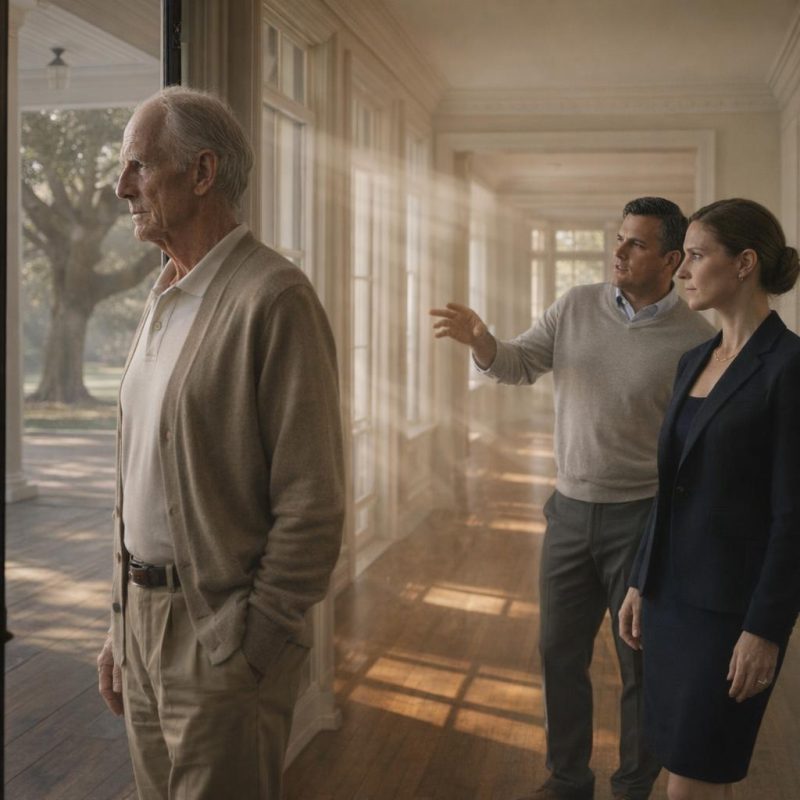 Image by RM AI
Emma's Room
I hadn't been upstairs five minutes before Emma found me. She came at a full run down the hallway, her sneakers squeaking on the bare floor, and grabbed my hand with both of hers and said, "Grandpa, come see my room, you have to come see it right now." She was nine years old and entirely certain that whatever she was about to show me was the most important thing in the house. I let her pull me along. The room was empty — just walls and windows and afternoon light — but Emma walked into it like she already owned every corner. She pointed to the far wall and told me that's where her bookshelf was going, the tall one with the glass doors. The corner by the window was for her drawing desk, she said, because the light was perfect there in the morning. She described the color she wanted to paint the walls — a specific shade of blue-green she'd seen somewhere and never forgotten. Daniel stood in the doorway with his arms crossed and a quiet smile on his face, watching her. I watched her too. She spread her arms out wide and turned in a slow circle in the center of the empty room, her face tipped up toward the ceiling, completely at home in a space that held nothing yet but everything she was imagining.
 Image by RM AI
Settling In
I visited four or five times over the following weeks, and each time the house looked more like somewhere people actually lived. The first visit after move-in, there were still towers of boxes in the hallway and the living room furniture sat at odd angles, waiting to be decided on. By the third visit, the boxes were mostly gone, pictures were up on the walls — leveled carefully, I noticed, which was Daniel's doing — and the kitchen had taken on the particular organized chaos of a family that actually cooked. That was the first time I met Sophie properly, not just in passing at a holiday. She was six years old and quieter than her sister, watching me from behind the kitchen island with serious eyes before she decided I was acceptable and came to sit beside me. Lucas was four and had no such deliberation — he climbed onto my lap within thirty seconds and immediately began explaining something about a toy truck with great urgency. Amanda moved through the rooms with a clipboard at one point, directing where things should go, efficient and purposeful. Daniel was on a stepladder hanging a shelf. I sat at the kitchen table with a cup of coffee and watched the whole operation, and the house around me felt less like a building and more like something breathing — walls that had been bare and silent slowly filling with the particular noise and warmth of a family finding its shape.
 Image by RM AI
Saturday Morning Routine
Somewhere around the third or fourth Saturday, it stopped feeling like a visit and started feeling like a routine — which is the best thing a visit can become. I'd pull up around nine in the morning with two bags of groceries from the market on Clement Street, always the same things: milk, a rotisserie chicken if they had a good one, whatever looked fresh in the produce section, and a box of cheddar crackers for Emma. That last item was non-negotiable. She'd figured out early on that I was the one who brought them, and by the fifth or sixth week she'd started appearing at the front door before I'd even made it up the porch steps, as if she had some internal alarm calibrated to the sound of my car. Amanda would greet me warmly, hold the door, take one of the bags without being asked. Daniel was usually somewhere in the middle of a project — repainting a baseboard, adjusting a door hinge that had been sticking. I'd put the groceries away while Amanda made coffee, and we'd talk about nothing in particular: the weather, the neighbors, what the kids had been up to that week. There was nothing dramatic about any of it. That was exactly the point. I'd drive home on Saturday afternoons with the particular quiet satisfaction of a man who knows where he is needed and when to show up.
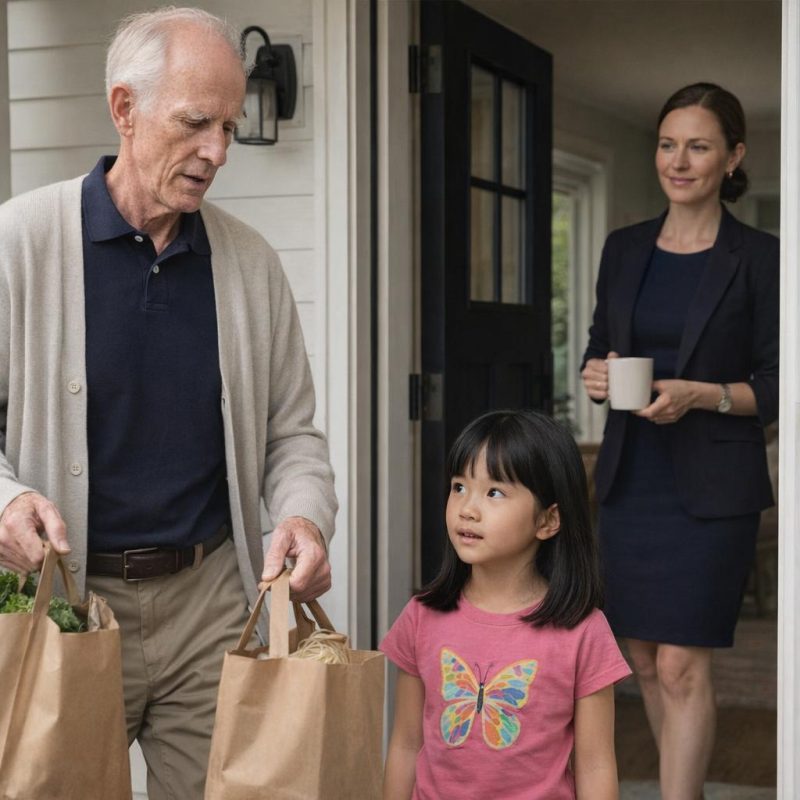 Image by RM AI
The First Payment
The envelope arrived on a Tuesday, about six weeks after they'd moved in. I recognized Daniel's handwriting on the front — careful, slightly cramped, the way he'd always written since grade school. Inside was a check for the exact amount we'd agreed on, folded around a single sheet of notepaper. The note wasn't long. He thanked me for making the house possible, said he and Amanda were committed to honoring the arrangement, and that he wanted me to know he didn't take what I'd done lightly. He signed it simply: Daniel. I read it twice standing at the kitchen counter, then a third time sitting down. There's something about a handwritten note that a text message can't replicate — the effort of it, the permanence. I found a manila folder in my filing cabinet, labeled it with the date and the property address, and slid both the check and the note inside before heading to the bank. The amount was right. The timing was right. The note said what it needed to say without saying too much. I drove home from the bank that afternoon feeling something I hadn't expected to feel quite so strongly: that I had trusted the right person, and that the trust had been returned in kind.
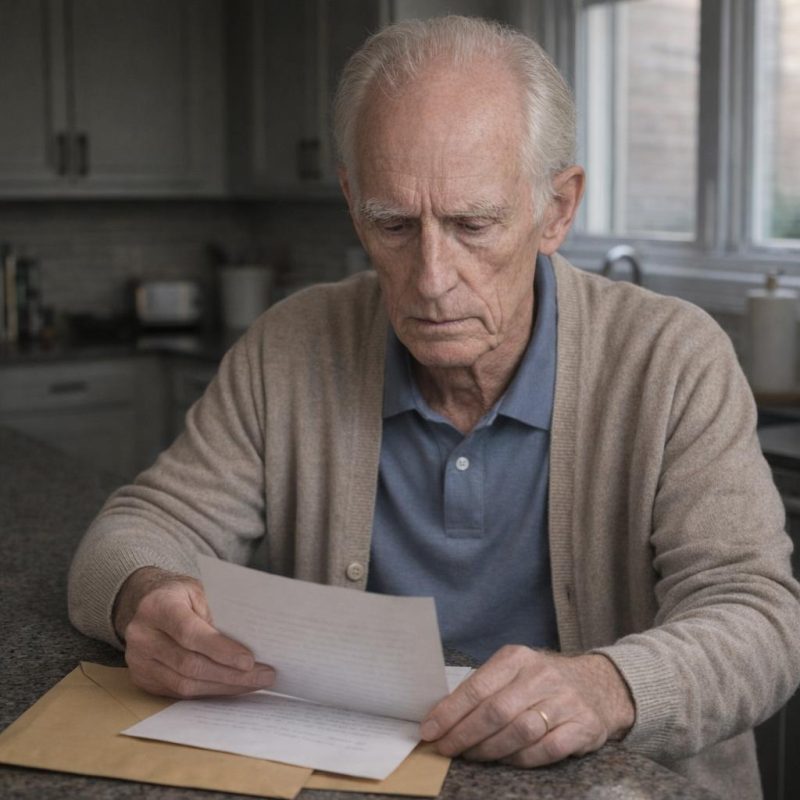 Image by RM AI
Family Dinners
By autumn the dinners had become as regular as the Saturday mornings. Two, sometimes three times a week I'd get a call from Daniel around four o'clock — 'We're doing pasta tonight, come over' — and I'd be there by six. The table in the dining room seated six comfortably, and with all three grandchildren present it was rarely quiet. Emma had opinions about everything and shared them freely. Sophie sat beside me most evenings, not saying much, but occasionally leaning over to show me something she'd drawn at school, watching my face carefully to see if I understood what I was looking at. Lucas required a booster seat and a great deal of patience and was worth every bit of both. Amanda cooked well — she had a way with simple things, roasted vegetables, good pasta sauces, a chicken dish with lemon and herbs that I asked about more than once. I helped where I could, setting the table, washing up afterward, keeping Lucas occupied while the plates were cleared. Daniel and I talked about his work, about the house, about things we'd never quite gotten around to discussing when he was younger. I drove home on those evenings along streets I'd known for forty years, and the familiar route felt different somehow — not like going home, exactly, but like leaving one place I belonged and returning to another.
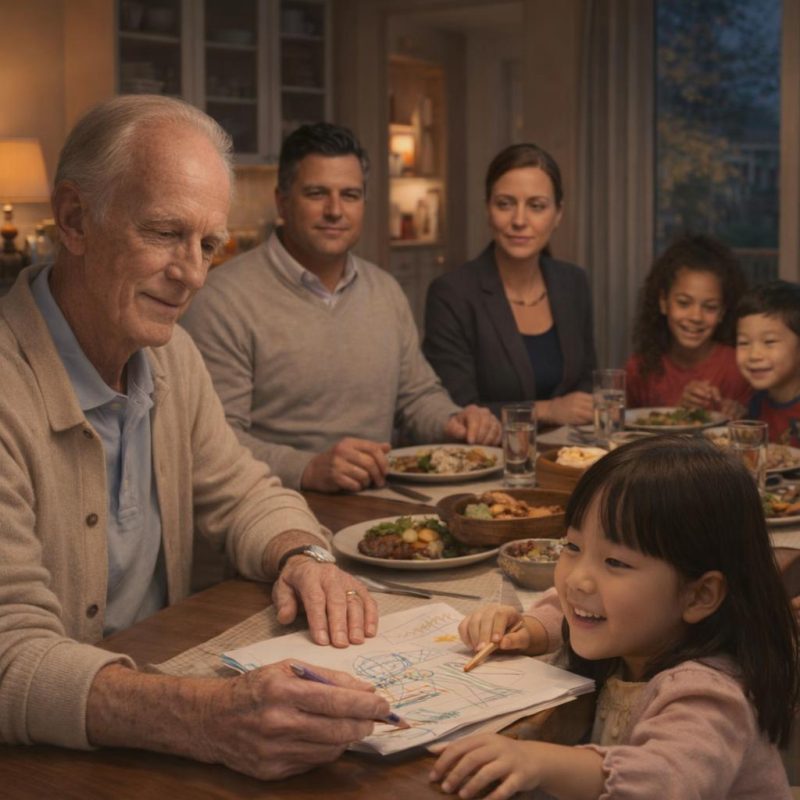 Image by RM AI
Home Improvement
Daniel called on a Saturday in October and asked if I still had my old drill. I told him I had the drill and the level and the stud finder and whatever else he needed, and I showed up an hour later with my toolbox in the back of the car. We spent the morning installing a run of shelving along the wall of his home office — the kind of project that sounds straightforward until you're standing in front of a plaster wall trying to decide whether the stud finder is lying to you. I'd done enough of this over the years to know the tricks: tap first, trust the hollow sound, mark twice before you drill once. Daniel listened without the impatience younger men sometimes have when their fathers offer advice, which I appreciated more than I said. In the afternoon we moved to the front porch, where a section of railing had worked itself loose over the winter before they'd bought the place. We pulled the old hardware, reset the post, and drove new screws in at the right angle. Amanda brought lemonade out around two o'clock and set it on the porch steps without interrupting us, which was exactly the right thing to do. By four the railing was solid and the shelves were level, and I handed Daniel the level and watched him draw the pencil line for the final bracket along the wall.
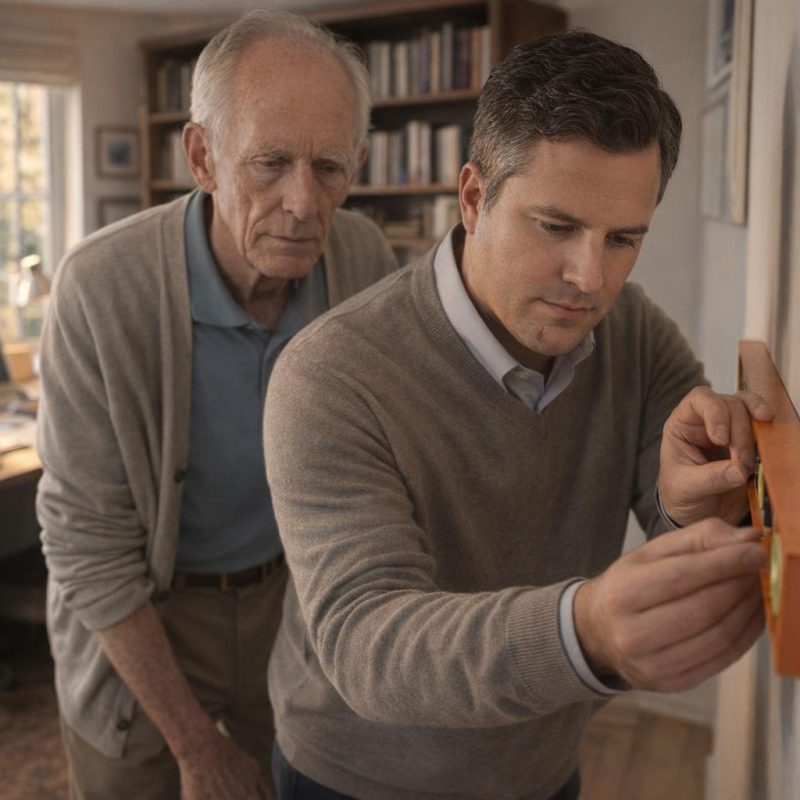 Image by RM AI
Payments Two and Three
The second payment arrived on a Wednesday, same as the first — same careful handwriting on the envelope, same exact amount inside. No note this time, but I hadn't expected one. The note had said what needed saying. I deposited the check that afternoon and updated the small ledger I'd started keeping in the back of the manila folder: date received, amount, running balance. It was a simple system, the kind my own father would have approved of. Several weeks passed. The third payment came on a Thursday, one day off from the pattern, which I noticed only because I'd been watching for it — not with anxiety, just the mild attentiveness of someone tracking something that matters. It was the right amount. I deposited it, updated the ledger, and filed the envelope with the others. Three payments in, the arrangement had the feel of something that had found its own rhythm. I hadn't raised the subject during any of my visits, and Daniel hadn't either, and that silence felt right — not avoidance, just the quiet confidence of two people who had agreed on something and were both holding up their end. I sat at my kitchen table that evening with the ledger open in front of me, the column of figures steady and even, and felt the particular calm of a thing proceeding exactly as it should.
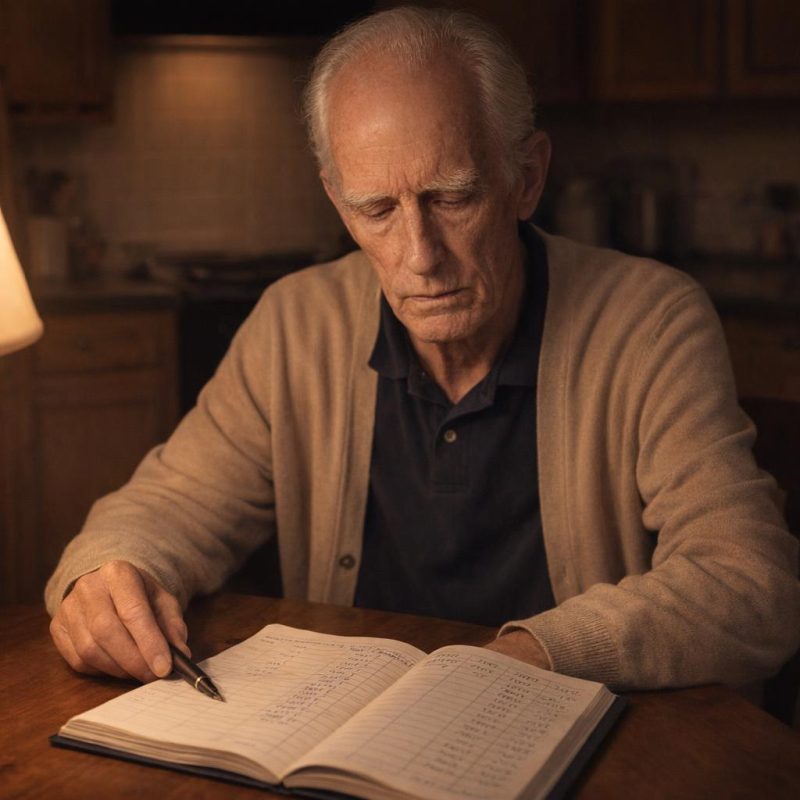 Image by RM AI
The House Comes Alive
There was a visit sometime in November when I walked through the front door and understood, in the way you understand things that have happened gradually, that the house had finished becoming itself. The walls that had been bare in July were covered now — framed photographs, a large print above the fireplace that Emma had apparently chosen herself, a row of hooks by the door where the children's backpacks hung in descending order of size. The kitchen shelves held actual things: cookbooks with cracked spines, a ceramic jar full of wooden spoons, a small plant on the windowsill that Amanda had managed to keep alive. Lucas's toys had colonized the corner of the living room in the cheerful, unapologetic way that four-year-olds colonize spaces. Sophie's drawings were taped to the refrigerator in overlapping layers. Daniel's tools were organized in the garage, visible through the door he'd left open. Every room had settled into its own particular character, the way rooms do when people stop arranging them and simply start living in them. I stood in the hallway for a moment before anyone noticed I'd arrived, just taking it in — the smell of something cooking, the sound of the television in the other room, the low hum of a house fully inhabited. What had been a possibility in March had become, by November, simply a home.
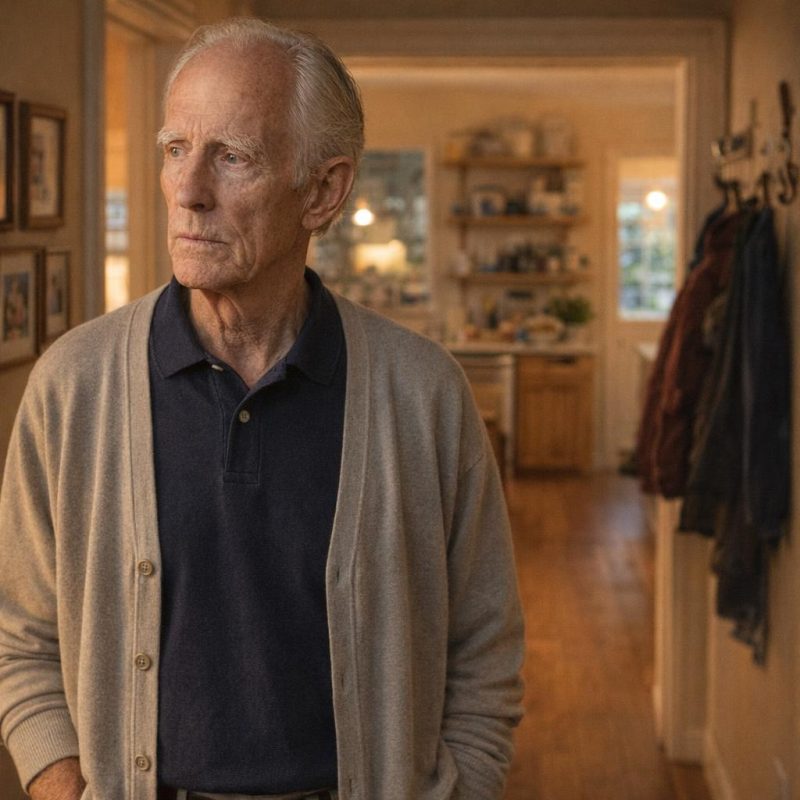 Image by RM AI
Daniel's Deck
Daniel had been talking about the deck since August, sketching dimensions on graph paper at the kitchen table, pricing lumber, watching videos on his phone about proper joist spacing. I'd offered advice when he asked and stayed out of it when he didn't, which is the correct approach with a grown son who wants to build something himself. He called me on a Saturday morning in late November and said it was done. I drove over after lunch and he met me at the side gate with the particular expression of a man who has finished something difficult and wants someone to see it. The deck ran the full width of the back of the house — twelve feet deep, he told me, with a slight slope built in for drainage. The boards were laid in a clean diagonal pattern, freshly stained a warm cedar color that picked up the tone of the house's trim. The framing underneath was solid; I crouched down and looked, because that's where the real work shows. Amanda had already set out two planters on either side of the steps, filled with ornamental grasses that moved in the November wind. Daniel walked me through the construction details — the footings, the ledger board, the hardware he'd used at the connections — and I listened and asked the right questions. Then he stepped back, gestured toward the stairs, and I set my foot on the first board of the finished deck.
 Image by RM AI
Planning the Housewarming
It was a Sunday afternoon in early December when Amanda brought up the housewarming party. We were sitting at the kitchen table after lunch, the children in the other room, and she set down her coffee cup and said she'd been thinking about it for a while. The way she described it, it wasn't going to be a small gathering. She had a list — she actually produced a list, handwritten on a yellow legal pad — of neighbors, colleagues from her office, a few couples from Daniel's firm, people from the children's school. Forty people, maybe fifty. She wanted to string lights along the back porch and the new deck, set up tables in the yard if the weather held, do a proper spread of food rather than just appetizers. Daniel nodded along, adding a name here and there. She turned to me and said she'd love my help with the setup, and I said of course, whatever they needed. There was something genuinely warm about the way she asked — inclusive, as if my being part of it was simply assumed. We talked through dates and settled on the second Saturday in January, which gave them six weeks to prepare. I drove home that afternoon thinking about the house full of people, the deck lit up in the winter dark, and the particular pleasure of watching something you helped build get properly celebrated. Amanda's list, I remembered, had been two pages long.
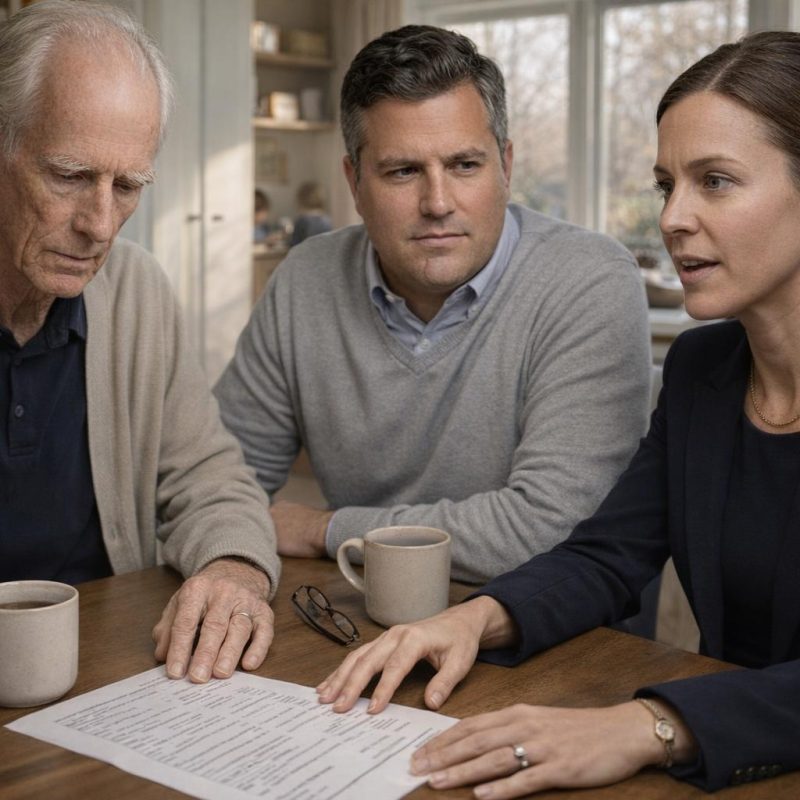 Image by RM AI
Party Preparations
I got there by eight in the morning, two hours before the first guests were expected, and Amanda had already been at it for a while. The kitchen counter was covered end to end — trays of bruschetta, a cheese board that looked like something out of a magazine, little skewers of melon and prosciutto arranged in careful rows. She had her hair pulled back and was moving between the counter and the refrigerator with the focused efficiency of someone who had been planning this in her head for weeks. The back porch looked exactly as she'd described it that afternoon in December — white lights strung along the railing and up into the eaves, the deck furniture arranged just so, a string of lanterns running the length of the yard. Daniel was outside in the cold setting up folding chairs, his breath visible in the January air. Emma came tearing down the stairs in her party dress at least three times before nine o'clock, too excited to stay in one place for more than a minute. I felt genuinely useful — carrying things, unwrapping platters, finding extension cords when Amanda needed them. It was the kind of morning that reminds you what a house is actually for. Then the doorbell rang for the first time, and I was still carrying a platter of smoked salmon toward the kitchen when the voices started filling the front hall.
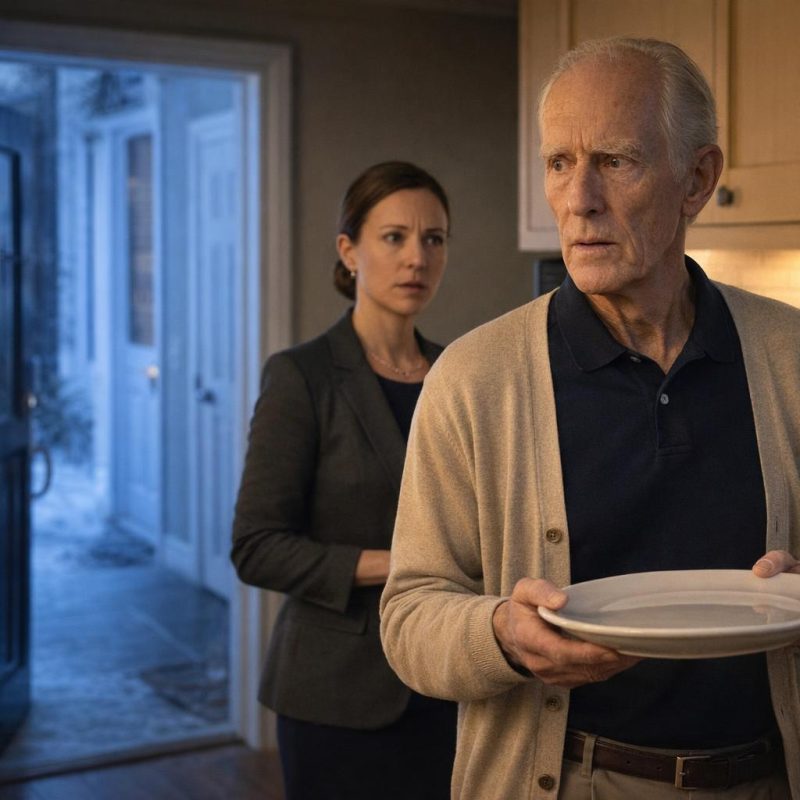 Image by RM AI
The Party Begins
By noon the house was full in the best possible way. Neighbors I recognized from the block, a few couples I'd met at Daniel's firm holiday party the year before, women from Amanda's office who laughed easily and complimented everything. The kitchen became my territory — I refilled the cheese board twice, kept the drinks moving, made sure the platters didn't sit empty for long. It gave me something to do with my hands and kept me from hovering in the living room like a piece of furniture. Daniel and Amanda's younger children found their own rhythms in the crowd — one tucked into a quiet corner near the bookshelf watching everything with wide eyes, the other spending most of the afternoon being chased around the backyard by two boys from down the street, shrieking with the particular joy of a child who has no idea what a housewarming party is but knows it involves running. Emma, meanwhile, had appointed herself the official guide of the house and was already leading her third or fourth group up the stairs with the gravity of a museum docent. Daniel circulated, shook hands, accepted congratulations with a modest smile. Amanda moved through every room like she'd been hosting parties her whole life, which maybe she had. I stood in the kitchen doorway at one point and just listened — the overlapping conversations, the children outside, the music low under all of it — and the warmth of it settled over me like something I hadn't known I was waiting for.
 Image by RM AI
Emma the Tour Guide
I watched Emma do it four times over the course of the afternoon, and each time she was more confident than the last. She would collect a small group — two or three guests who'd wandered near the staircase — and announce, with complete authority, that she was going to show them the house. Not ask. Announce. Then she'd lead them up, one hand trailing along the banister, narrating as she went. I caught pieces of it from the bottom of the stairs: the guest room had a window seat, she told them, and you could see the whole backyard from it. Her room had blue walls, which she had picked herself, and a shelf for her chapter books that her dad had built. She described the bathroom tile as if she'd selected it personally. The guests — grown adults, some of them — followed her with genuine attention, asking questions, nodding at her answers. One woman came back downstairs laughing softly and said to me, she's something else, that one. I agreed. Daniel caught my eye from across the room and smiled, the first easy smile I'd seen from him all day. Emma came back down the stairs, spotted another cluster of guests near the fireplace, and immediately changed course toward them with the look of someone who still had work to do. I stayed where I was, not wanting to move, just holding onto the sound of her voice carrying down from the landing — certain and bright and entirely her own.
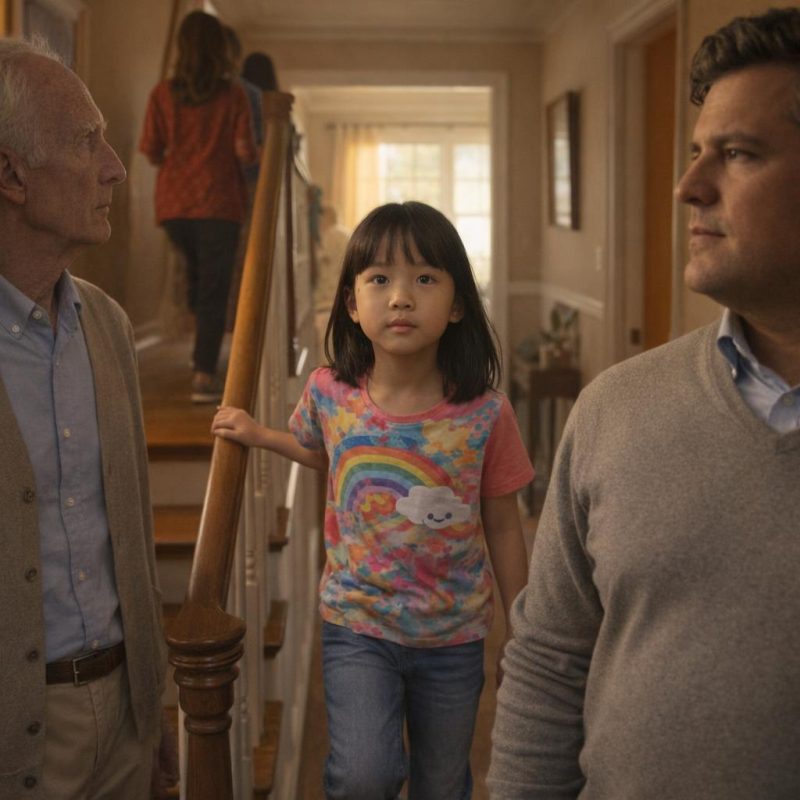 Image by RM AI
Amanda's Speech
Sometime around two o'clock, Amanda tapped a wine glass with a spoon and asked everyone to gather near the fireplace. The room pulled together the way rooms do when someone takes charge — conversations trailing off, people drifting in from the kitchen and the back porch, the children quieting without being asked. Amanda stood with her back to the mantle, composed and unhurried, and began to speak. She talked about what the house meant to them, about the neighborhood they'd chosen and the life they were building here. She talked about the years it had taken — the budgeting, the discipline, the small sacrifices that added up over time. She said they had worked hard and saved carefully and that standing in this house felt like proof that patience pays off. The guests listened with the kind of attention people give when they recognize something true being said. There was applause when she finished, warm and genuine. I clapped along with everyone else. Daniel was standing off to my left, holding a glass he hadn't touched, his eyes somewhere near the floor. I told myself Amanda was simply being modest — that some people prefer not to make a production of private arrangements, that it was her party to narrate however she chose. But I stood there in the applause with a small, quiet feeling I couldn't quite name, listening to her describe years of disciplined saving as if that were the whole story.
 Image by RM AI
The Omission
The applause faded and the room broke back into conversation, and I stayed where I was for a moment longer than I needed to. Amanda was already moving through the guests, accepting congratulations, touching arms, laughing at something a neighbor said. She was gracious and warm and entirely at ease. I tried to locate what was bothering me and couldn't quite get hold of it. She hadn't said anything wrong, exactly. Everything she'd described was true — they had worked hard, they had saved, the house was theirs. I told myself that people don't typically announce the details of private financial arrangements at a party. I told myself it would have been awkward, maybe even embarrassing for everyone, to bring up a loan in front of forty guests. These were reasonable explanations and I believed them, or tried to. Daniel hadn't moved much. He was still standing near the edge of the room, his drink in his hand, not quite part of any conversation. He caught my eye once and gave a small nod, the kind that doesn't mean anything in particular. I nodded back. The party continued around us, warm and full of noise, and I stood in the middle of it with a feeling I couldn't justify and couldn't entirely dismiss — the faint, shapeless sense of an absence where something might have been.
 Image by RM AI
Daniel's Silence
I kept finding my eyes going back to Daniel as the afternoon wore on. Amanda was in her element — moving from group to group, refilling glasses, drawing people into conversation with the ease of someone who genuinely enjoys a crowd. Daniel was doing something different. He'd found a spot near the back wall of the living room and seemed to have decided to stay there. Guests approached him — of course they did, it was his house — and he responded, smiled, answered whatever was asked. But he didn't initiate anything. He didn't cross the room to join a conversation or pull anyone aside to show them something he was proud of. He just stood there with his drink, eyes moving without landing anywhere in particular. I thought about going over to him. I decided against it. Some people find this kind of event genuinely exhausting, I told myself — the sustained performance of it, the expectation that you'll be cheerful and present for hours on end. Daniel had always been quieter than Amanda, more comfortable in smaller settings. It wasn't unusual, not really. I watched Amanda laugh at something across the room, bright and effortless, and then I looked back at Daniel, still in his corner, still holding the same drink. The distance between them — not physical, something else — was the thing I noticed and then set aside, because I didn't know what to do with it.
 Image by RM AI
The Drive Home
I said my goodbyes around seven. Amanda hugged me at the door and said it had been a perfect day, and I agreed that it had. Daniel walked me out to the porch and we stood there for a moment in the cold, the string lights still on behind us, and he said thanks for all the help, Dad, and I said it was nothing, I was glad to be there. He went back inside before I reached the car. The drive home was quiet in the way that feels different from ordinary quiet — not peaceful, just empty. I turned the radio on and then off again. I kept going back to Amanda's speech, running through it the way you run your tongue over a sore tooth. The words about hard work and saving. The years of discipline. All of it true, as far as it went. I told myself I was being thin-skinned, that expecting public acknowledgment of a private loan was unreasonable, that I'd given the money freely and without conditions and that was exactly what I'd meant to do. Daniel's face kept coming back to me too — that stillness, the drink he never finished, the way he'd looked at the floor during the applause. I turned onto my street and told myself I was reading too much into an ordinary evening. I pulled into my driveway and sat there with the engine off, and the questions I couldn't quite form sat with me in the dark.
 Image by RM AI
The Following Week
I went back the following Saturday, same as always. I stopped at the grocery store on the way and picked up the things I usually brought — a rotisserie chicken, some fruit, the cheddar crackers Emma liked. Amanda answered the door in her weekend clothes, easy and pleasant, and said come in, come in, the house smelled like coffee. Emma appeared from the hallway almost immediately, holding a drawing she'd made at school — a house with a yellow sun in the corner and five stick figures out front, all of them smiling. She held it up and said it was our family, and I told her it was the best house I'd ever seen. Daniel was in the garage working on something, and Amanda called out to him that I was there, and he came in wiping his hands on a rag and said hey, Dad, good to see you. We put the groceries away together, the three of us moving around the kitchen the way families do when they've done it enough times that it doesn't require thought. The conversation was fine. Normal, even. But something in the texture of it felt slightly off — not wrong enough to name, not right enough to ignore. I drove home afterward and sat with it, the way you sit with a sound you heard in another room and can't be sure you actually heard. The Saturday visit that had always felt easy now carried a weight I couldn't account for.
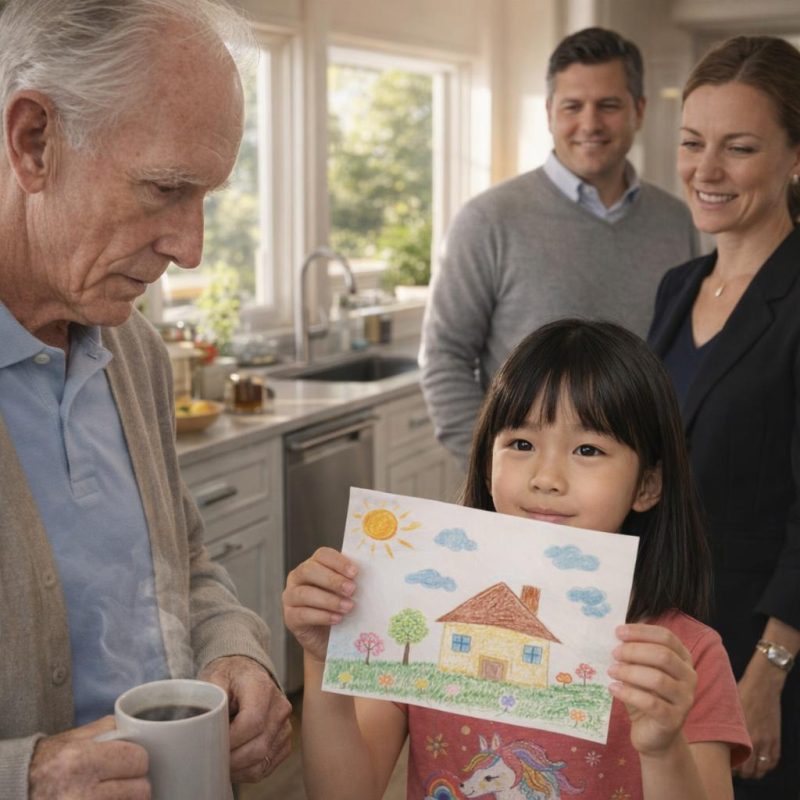 Image by RM AI
Payments Six and Seven
The sixth payment arrived on a Tuesday, tucked inside a plain white envelope with Daniel's handwriting on the front. I recognized it before I even picked it up from the pile — same size, same careful lettering. I opened it at the kitchen table the way I always did, smoothing the envelope flat before setting it aside. The check was there, made out correctly, for the right amount, dated on time. I held it for a moment and felt something loosen in my chest. The arrangement was working. Whatever awkwardness had crept into our Saturday visits, the financial side of things was holding. I deposited it that afternoon and told myself that was what mattered. Several weeks passed. The seventh envelope arrived the same way — same handwriting, same careful fold, correct amount, on time. I opened it standing at the counter this time, expecting the same quiet relief. The check was right. Everything was right. But I stood there longer than I needed to, turning the envelope over in my hands, because there was no note inside — not this time, not the last time either — and I wasn't sure why that small absence stayed with me the way it did.
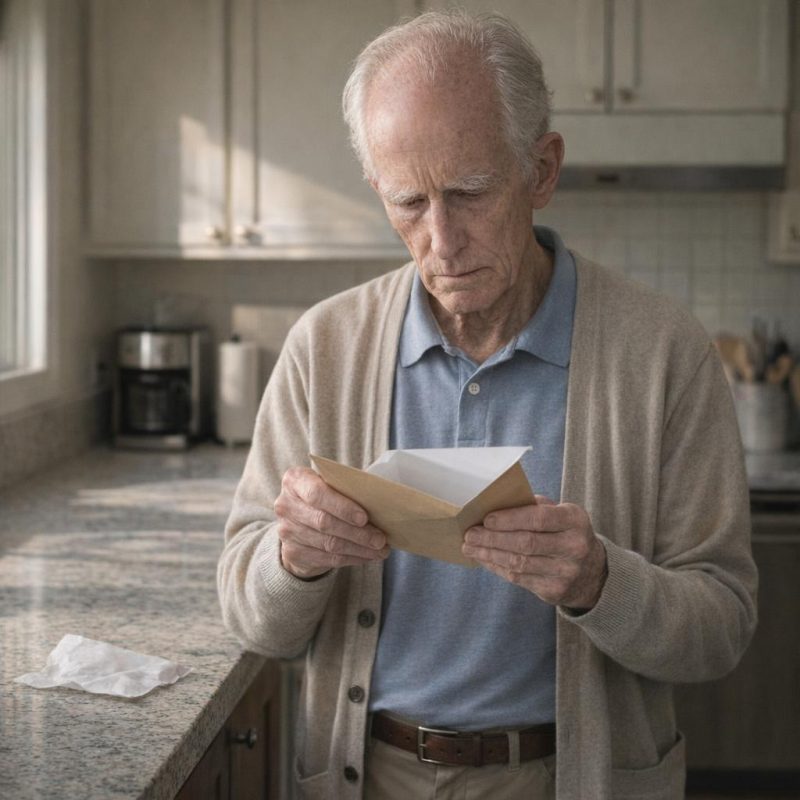 Image by RM AI
Summer Arrives
Summer came in the way it does when you've been waiting for it — all at once, warm and generous, the kind of weather that makes everything feel more forgiving than it probably is. I had the windows open most mornings and was spending more time in the garden, which helped. Then Amanda called on a Wednesday afternoon, her voice easy and bright, and said they were planning a backyard barbecue for the following Saturday and would I like to come. She mentioned the new deck, said it was perfect for exactly this kind of thing, and that the kids had been asking about me. I said yes without hesitating. I wrote it on the calendar in the kitchen and found myself looking at it more than once over the next few days. I planned to bring a pasta salad — the cold tortellini one I'd made for years, the one Daniel used to request as a boy. There had been a stiffness between us lately that I hadn't been able to name or shake, and something about the invitation felt like an opening. A barbecue was easy. A barbecue was just family in the backyard on a warm afternoon, and maybe that was all we needed — the ordinary ease of a summer Saturday to find our way back to each other.
 Image by RM AI
The Backyard Gathering
I arrived a little after noon with the pasta salad covered in foil, and the backyard stopped me for a moment at the gate. They had done something real with it — planters along the fence line, climbing vines just starting to take hold, the deck Daniel had built running the full width of the house and already full of people. The smell of charcoal was in the air and the kids were shrieking through a sprinkler set up in the far corner of the lawn. Emma spotted me first and came running, wet feet slapping the grass. I set the salad on the table and said hello to a few neighbors I recognized from previous visits. Linda and Robert were there too, settled into chairs near the railing with drinks in hand, looking comfortable and at home. It was a good afternoon. For a while, it genuinely was. I went inside to refill my lemonade somewhere around the second hour, and that's when I heard Amanda's voice carrying from the living room — warm and unhurried, the way she sounded when she was telling a story she'd told before. I stopped just inside the doorway. She was speaking to a small group that included her parents, and she was talking about the house, about how they'd managed the down payment, about the years of careful saving it had taken. I stood very still in the kitchen, the pitcher cold in my hand, and the afternoon outside went on without me.
 Image by RM AI
The Lie Takes Shape
I didn't move. I'm not sure I could have. Amanda's voice continued from the living room, unhurried and warm, describing her parents' discipline and sacrifice — the years they'd set money aside, the way they'd quietly planned for exactly this kind of moment. Linda made a soft sound of modest acknowledgment. Robert said something I couldn't fully hear, and one of the neighbors responded with genuine admiration, the kind of thing you say when someone's generosity moves you. The story Amanda was telling was complete. It had a beginning and a shape and it left no room for anything else. I stood at the kitchen counter and felt something cold settle in my chest — not anger yet, not quite, just a kind of stillness that comes when something you trusted shifts beneath you without warning. My name was not mentioned. The loan was not mentioned. Forty thousand dollars had been quietly replaced in the telling by a different family's sacrifice, and the neighbors were nodding along, and Linda and Robert were accepting the credit without a word of correction. I looked across the room toward the far end of the kitchen. Daniel was standing near the bookshelf with a magazine open in his hands, his back to the living room doorway, his eyes on the page. He turned a leaf without looking up.
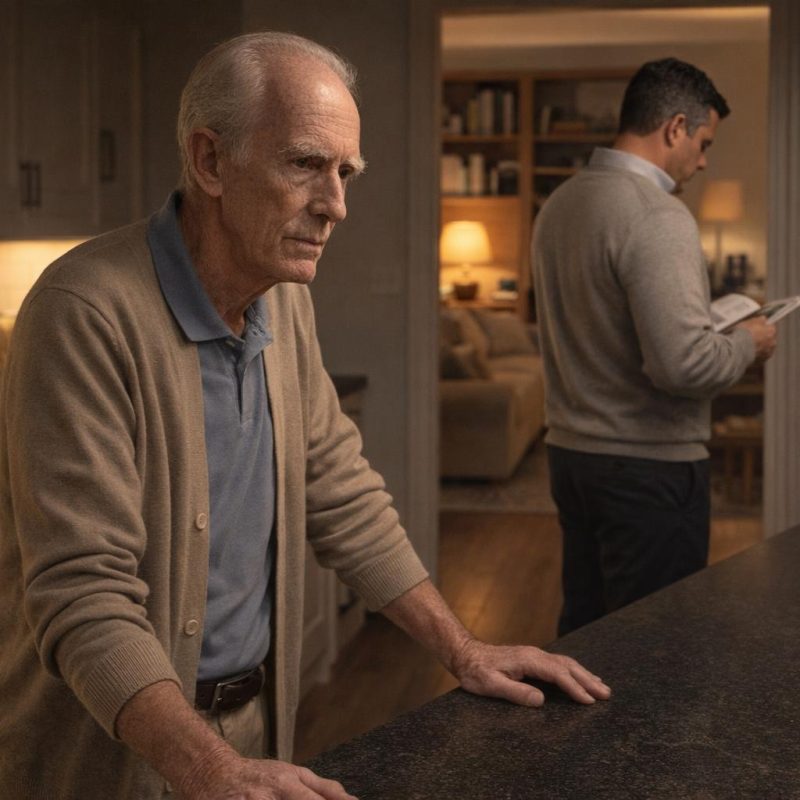 Image by RM AI
Silent Departure
I walked back outside. I don't remember deciding to — I just found myself on the deck with my lemonade, sitting down in one of the chairs near the railing. The afternoon was still beautiful. The sprinkler was still going, and Lucas was running through it with his arms out, laughing at nothing in particular the way four-year-olds do. Sophie sat at the edge of the grass pulling at a dandelion with focused concentration. Emma came past at a run, her hair wet, and called out something to her sister without slowing down. I watched them and tried to hold onto the warmth of it. I told myself the money had done what it was supposed to do. The house existed. The deck beneath me was real and solid, built by my son's hands. The children were happy. I tried to make those things feel like enough. But the story I'd just heard kept sitting in the middle of everything, and I couldn't find a way around it. It wasn't just that the credit had gone elsewhere. It was the completeness of it — the way the telling had left no gap, no uncertainty, no version of events that included me at all. I stayed through the rest of the afternoon and said the right things when people spoke to me. No one seemed to notice that I had gone quiet. The space where something solid had been felt different now, and I couldn't unfeel it.
 Image by RM AI
The Night After
I drove home without the radio on. The streets were still bright with early evening light, but I didn't notice much of it. I let myself into the house and stood in the kitchen for a moment before I did anything else. Then I went to the filing cabinet in the spare room and pulled out the folder with the loan agreement. I sat at the desk and read through it — the terms, the repayment schedule, both signatures at the bottom. Daniel's handwriting. Mine. The paper was exactly what it had always been. I put it back and went to sit in the living room, and I stayed there a long time turning the afternoon over in my mind. I replayed Amanda's words, the neighbors' responses, the way Linda and Robert had accepted the praise without hesitation. I thought about Daniel standing at that bookshelf with his back turned. I considered calling him that night. I picked up the phone once and set it back down. Maybe there was an explanation I hadn't considered. Maybe Amanda had spoken without thinking and Daniel hadn't known how to interrupt. I didn't believe either of those things fully, but I wasn't ready to close the door on them either. What I decided, sitting there in the quiet of my own house, was that I would wait. I would watch. I would give Daniel the chance to bring it up himself before I said a word.
 Image by RM AI
The Test
The following Saturday I brought groceries the same as always — the cheddar crackers, some fruit, a good loaf of bread. Daniel was in the kitchen when I arrived, and we fell into the usual rhythm of putting things away together. I waited until there was a natural pause and then mentioned the loan the way you mention something ordinary — casually, without weight, the way you'd reference any standing arrangement. I said something about the repayment schedule, that it was holding up well, that I appreciated how consistent he'd been. I kept my voice even and watched his face. Something moved across it — a small tightening around the eyes, a slight shift in his posture. He didn't meet my gaze. He said the payments were on track, yes, mumbled it more than said it, and then he went quiet. I waited. I gave him the space a person needs if they want to say something they've been carrying. The barbecue had been two weeks ago. He knew I'd been there. I stood at the counter and waited for him to bring it up — the story Amanda had told, the neighbors, any of it. He didn't. Amanda's voice came from somewhere down the hall, calling his name about something with the children, and the relief on his face when he heard it was immediate and unmistakable. He set down what he was holding and moved toward the doorway without quite meeting my eyes.
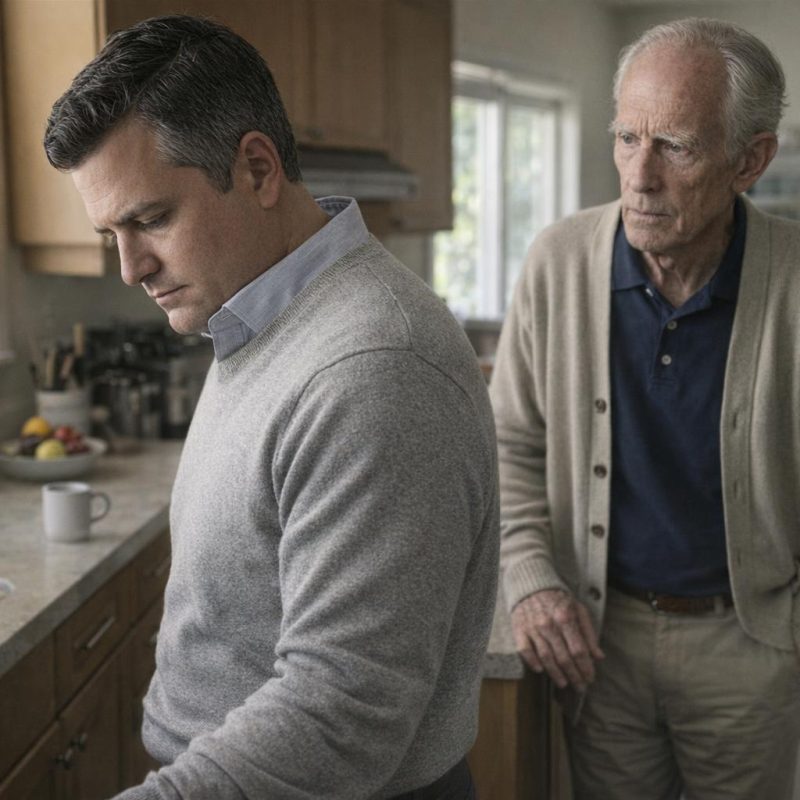 Image by RM AI
The Quick Exit
He was gone before I'd finished putting the bread away. I heard his footsteps move down the hall, then the low murmur of his voice somewhere deeper in the house, and then nothing. I stood at the counter alone with the groceries half-unpacked and finished the job myself — fruit in the bowl, crackers in the cabinet, bread on the board. The kitchen was quiet. Upstairs I could hear Amanda's voice and the children moving around, the ordinary sounds of a Saturday afternoon that had nothing to do with me. I had given Daniel every opening I could without forcing one. I had kept my voice neutral, left the door wide, and waited. He had walked through a different door entirely. I didn't feel angry standing there, not exactly. What I felt was something closer to clarity — the kind that arrives not with a revelation but with the slow accumulation of small, observable things. The avoidance. The mumbled answer. The relief at being called away. I put the last item in the cabinet and said my goodbyes a little earlier than usual, keeping it brief and pleasant. I didn't linger. The kitchen sat behind me as I walked to the door, quiet and ordinary, holding nothing it hadn't held before.
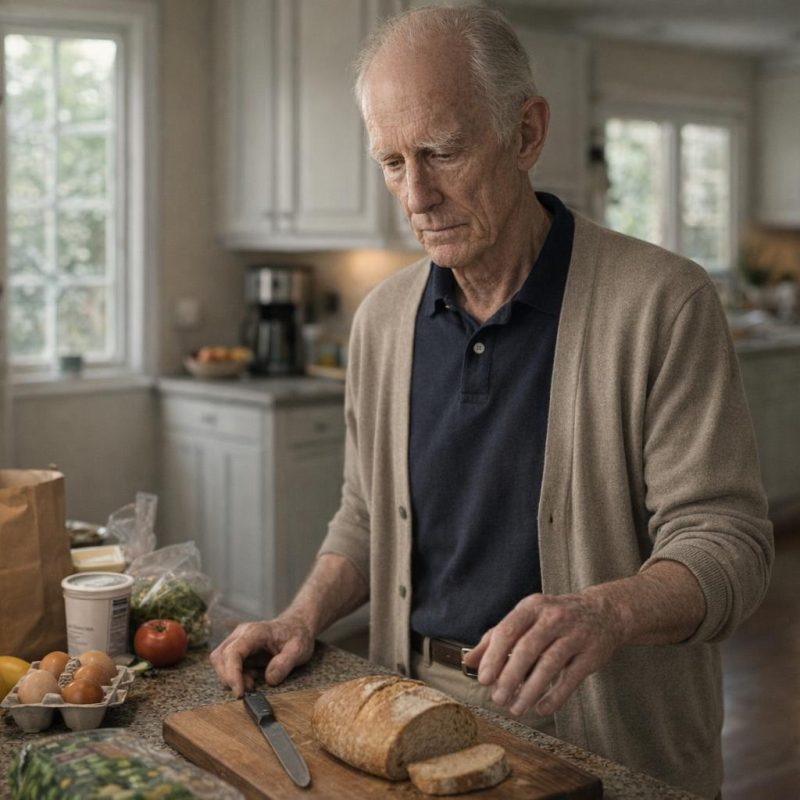 Image by RM AI
Growing Distance
The change was gradual enough that I might have talked myself out of noticing it, if I hadn't been paying attention. Over the following weeks, my Saturday visits took on a different texture. Amanda still answered the door, still said hello, still offered coffee — but the warmth that used to come with it had been replaced by something more careful. Her smiles arrived on schedule and departed just as quickly. Conversations that once wandered comfortably now had edges, and she had a way of steering them toward their conclusion before they'd really begun. She was busy with something in another room, or the children had an activity, or there was a call she needed to return. I noticed she stopped asking me to stay for meals. I noticed the invitations to sit down came less often, and then not at all. Emma still ran to me the moment she heard my voice, still grabbed my hand and pulled me toward whatever she'd been drawing or building, and that part remained unchanged and genuine. Daniel hovered at the margins of each visit, pleasant enough but never quite present. I told myself I was reading too much into it. Then one afternoon, as I was putting on my coat to leave, Amanda said I didn't need to come every single week — that I must have plenty of other things to keep me busy.
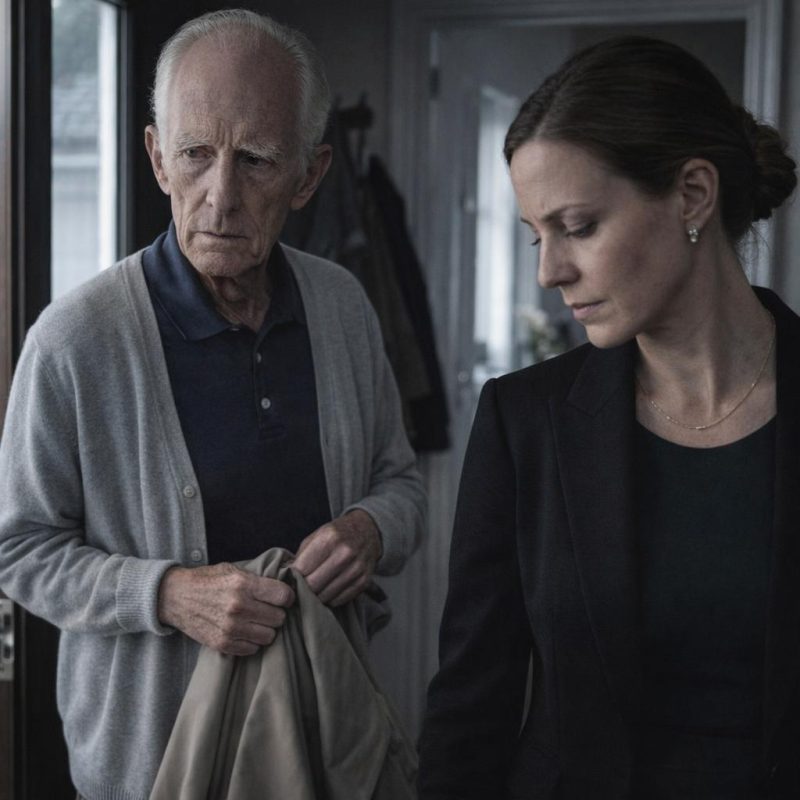 Image by RM AI
The Late Payment
I had kept a simple record from the beginning — nothing elaborate, just a small notebook where I logged each payment as it arrived. Date received, amount, check number. Seven entries, each one landing within a day or two of the first of the month. Daniel had been punctual in a way that felt almost deliberate, like he was making a point of it. So when the eighth due date came and went without an envelope in my mailbox, I noticed. I checked the mail each morning with more attention than usual. A week passed. I went back through the notebook and confirmed what I already knew — every previous payment had arrived on time, without exception. I told myself there was probably a simple explanation. Banks had processing delays. People forgot to mail things. Life got complicated. I gave it another week. Then, fourteen days after the due date, an envelope arrived. The check inside was for the correct amount. There was no note, no apology, no acknowledgment that anything was different. I held it for a moment before setting it on the table. Seven payments like clockwork, and then this — late, unexplained, and quiet as a door closing in another room.
 Image by RM AI
Fewer Invitations
I didn't notice it all at once. That's the thing about gradual changes — they don't announce themselves. It was only when I sat down one evening and looked at my calendar that the pattern became visible. Three weeks had gone by without a dinner invitation, without a casual call asking if I wanted to come by on Sunday. Before, we had gathered easily and often — sometimes twice in a week, sometimes more. I had taken it for granted the way you take for granted anything that has always been there. I called Daniel on a Tuesday evening and suggested I come by that weekend. He said they were busy — Emma had a birthday party to attend, Amanda had scheduled something for the younger ones. I offered a different day. He was vague about it, said he'd have to check, said things were hectic right now. I kept my voice easy and didn't push. We ended the call without settling on anything. I sat with the phone in my hand after he hung up, turning over the conversation in my mind. It had been perfectly polite. He hadn't said no. He just hadn't said yes either, and somehow that was worse. Three weeks, and I hadn't even realized it until I counted.
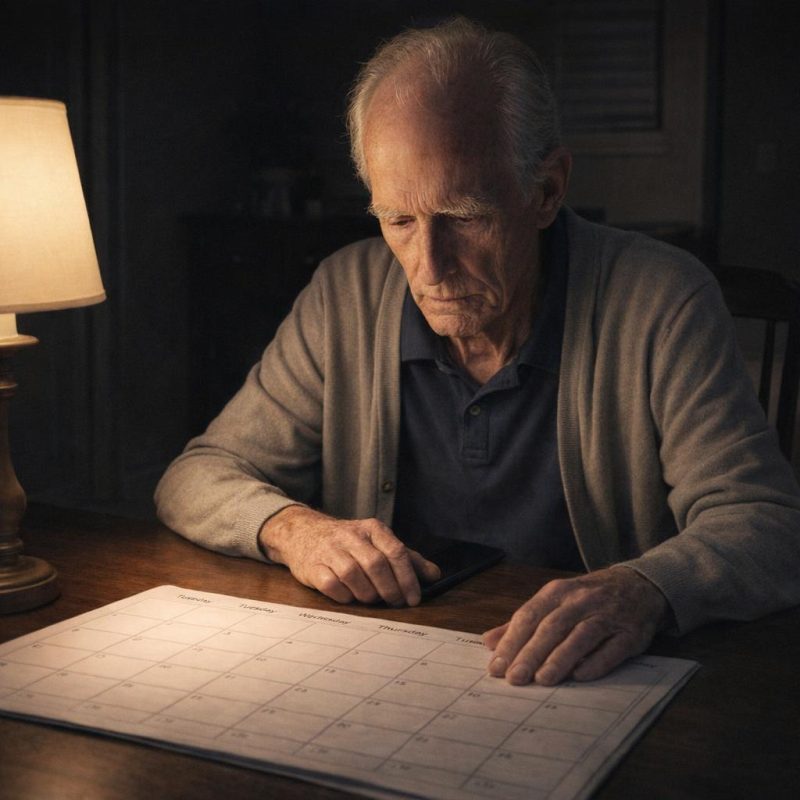 Image by RM AI
The Repeated Story
The invitation came unexpectedly — a gathering at Daniel and Amanda's house, extended family and a few friends, the kind of afternoon that used to feel easy. I arrived hoping the stiffness of recent weeks might loosen in a crowd. For a while I moved through the rooms quietly, refilling my glass, watching the children chase each other through the backyard. Then I heard Amanda's voice carry across the living room, warm and unhurried, holding a small group of people in comfortable attention. I drifted close enough to hear. She was talking about the house — how they'd found it, what it had taken to make it theirs. And then she said it, the same way she'd said it before: her parents had been so generous, had made it all possible, had given them the foundation they needed to start this chapter of their lives. The words were nearly identical to what I'd heard at the barbecue months ago. Linda and Robert stood nearby, nodding at the right moments, their expressions settled and untroubled. The people listening smiled and said what people say — how wonderful, how lucky. Daniel was across the room, his back half-turned. Nobody corrected anything. I stood there holding my glass, and what struck me most wasn't the anger, or even the hurt. It was how effortless it sounded — the whole story, smooth and complete, as though it had always been true.
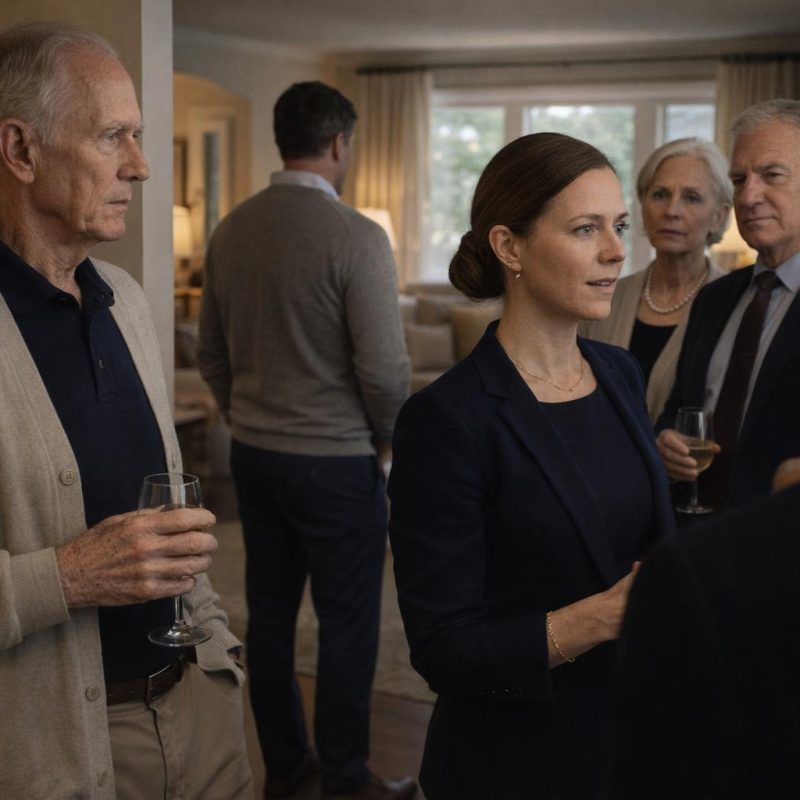 Image by RM AI
Reviewing the Evidence
I came home from that gathering and went straight to the filing cabinet in my study. I knew where everything was — I had always been careful about that — but I needed to see it laid out in front of me. I spread the loan agreement on the table and read through it slowly, every clause, both signatures clear and unambiguous at the bottom. Then I pulled out the payment envelope I kept in the back of the drawer, the one holding each month's record. I arranged them in order: the date of each payment, the check number, the amount. Seven payments received on time. The eighth, late by two weeks, no note. I got out a legal pad and wrote down the running total — what had been paid, what remained outstanding. Then I made copies of everything: the agreement, each payment record, the full ledger. The originals went back into the filing cabinet. The copies went into a separate folder I labeled simply with the date. I sat at the table when I was done, the folder closed in front of me. I hadn't wanted to need any of this. That was the part that sat heaviest — not the paperwork itself, but what it meant that I'd felt compelled to organize it so carefully, proof of something that should never have required proving.
 Image by RM AI
The Missing Payment
The ninth payment was due on the first of the month. I checked the mail that day out of habit, the same way I always had, and found nothing from Daniel. I told myself it was early — the postal service had its rhythms. I checked again the next day, and the day after that. By the end of the first week I had stopped telling myself anything and simply waited. The second week passed the same way. I went back to my notebook and looked at the entry for the eighth payment — late by fourteen days, no explanation. This was different. That one had at least arrived. I sat at my kitchen table one evening and looked at the folder I'd assembled after the gathering, the copies of the agreement and every payment record lined up in order. The math was straightforward. The situation was not. I thought about waiting another week, giving it more time, finding a reason not to make the call I knew I needed to make. I had been patient. I had been careful. I had given every benefit of the doubt I had. I picked up the phone, found Daniel's number, and dialed.
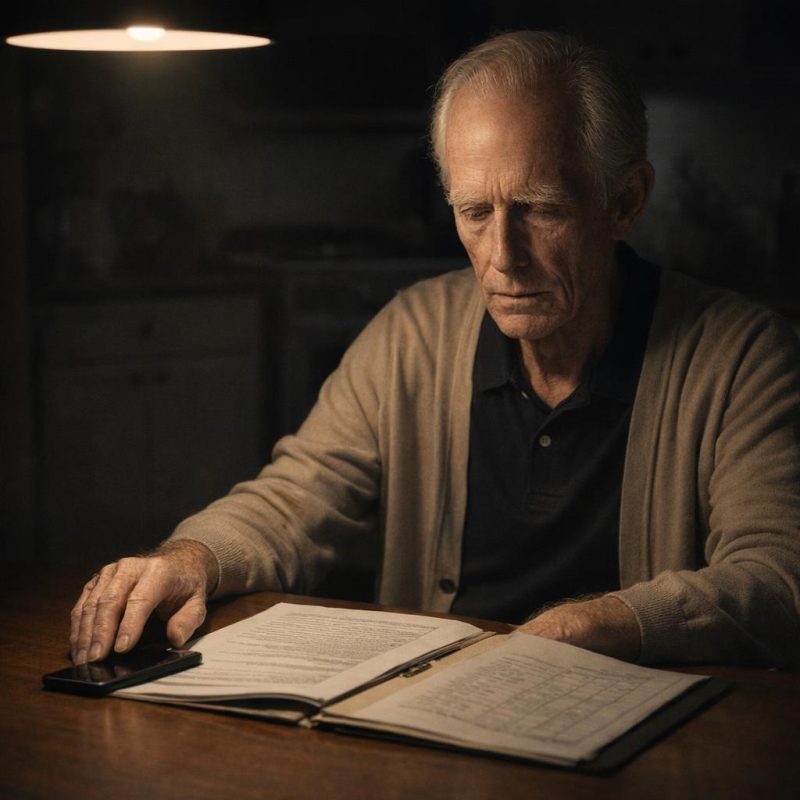 Image by RM AI
Vague Explanations
He answered after four rings, his voice carrying that particular quality it had taken on in recent months — careful, slightly flattened, like someone choosing each word a half-second before speaking it. I kept my tone even and asked about the payment. He apologized right away, said things had been tight, that there had been some unexpected expenses he hadn't anticipated. I asked what kind of expenses. He was vague — just things that had come up, costs that had caught them off guard. I asked when I could expect the payment. He said soon, that he'd get it sorted out. I mentioned the agreement we'd both signed, not as a threat, just as a reference point. He said he knew, he hadn't forgotten, he would take care of it. His voice stayed apologetic throughout, which should have been reassuring and wasn't. I didn't press him for specifics he clearly wasn't going to offer. We said goodbye the way people do when a conversation has reached its limit without actually resolving anything. I set the phone down on the counter and stood there for a moment. He had said all the right things. He had promised. But a promise without a date, without a reason, without a single concrete detail to hold onto — it didn't leave much to stand on.
 Image by RM AI
Two Months of Silence
The payment Daniel had promised did not come that week. I gave it ten days before I called again and left a message, keeping my voice neutral, asking him to call me back when he had a chance. He didn't return it. The following month's due date arrived and passed without an envelope, without a call, without so much as a text. I called a second time. The phone rang through to voicemail. I left another message, shorter this time, just my name and a request to be in touch. Nothing came back. I went to my study and opened the folder — the agreement, the payment records, the ledger I'd written out by hand. Eight payments received. Two months now with nothing. I sat at the desk and looked at the numbers without any particular feeling, or rather with a feeling that had moved past the agitated stage into something quieter and more settled. I had wondered, after the late payment, whether it was a temporary disruption. I had wondered, after the first missed month, whether something had genuinely gone wrong in their finances. By the second missed payment date, the wondering had run out of room. The loan agreement lay open on the desk, both signatures visible at the bottom of the page, and two unreturned calls sat in my log.
 Image by RM AI
The Waiting Ends
Two more months passed the same way the previous two had — in complete silence. No envelope arrived. No call came back. I stopped leaving messages after the third one went unanswered, not out of defeat exactly, but because I understood that more messages would not change anything. I opened my folder again in early November and laid the records out on the desk: eight payments received, four months with nothing, a balance that remained largely what it had been when the payments stopped. I did the arithmetic carefully, the way I do most things, and wrote the total in the margin. The number was not abstract to me. It represented months of careful saving, a decision made in good faith, a conversation I had believed was between two people who trusted each other. I sat with the folder open for a long time. The signed agreement was still there, both names at the bottom, the terms as clear as the day we had written them out together. I had spent four months waiting for something that was not going to arrive on its own. The folder sat open on the desk, and the silence around it had long since stopped feeling like a question.
 Image by RM AI
The Meeting Request
I called on a Tuesday morning, when I knew Daniel was likely to be home. The phone rang six times before he picked up. His voice was careful in the way voices get when someone has been expecting a call they would rather not receive. I told him I needed to sit down with him in person to discuss the loan repayment — not over the phone, not by text, but face to face. He said something about being busy, about how they could probably sort it out with a quick call, about how things had been complicated lately. I let him finish and then repeated myself. I said I needed to meet with him directly, and that I would appreciate it if he could make time. There was a pause on his end that lasted longer than it should have. He said fine, they could meet. He said he would check with Amanda about the schedule. I told him I would follow up with a specific time and that I expected him to be available. We said goodbye without warmth. I set the phone down and sat for a moment in the quiet of my kitchen. The reluctance in his voice had been unmistakable, and I turned it over in my mind without arriving anywhere useful.
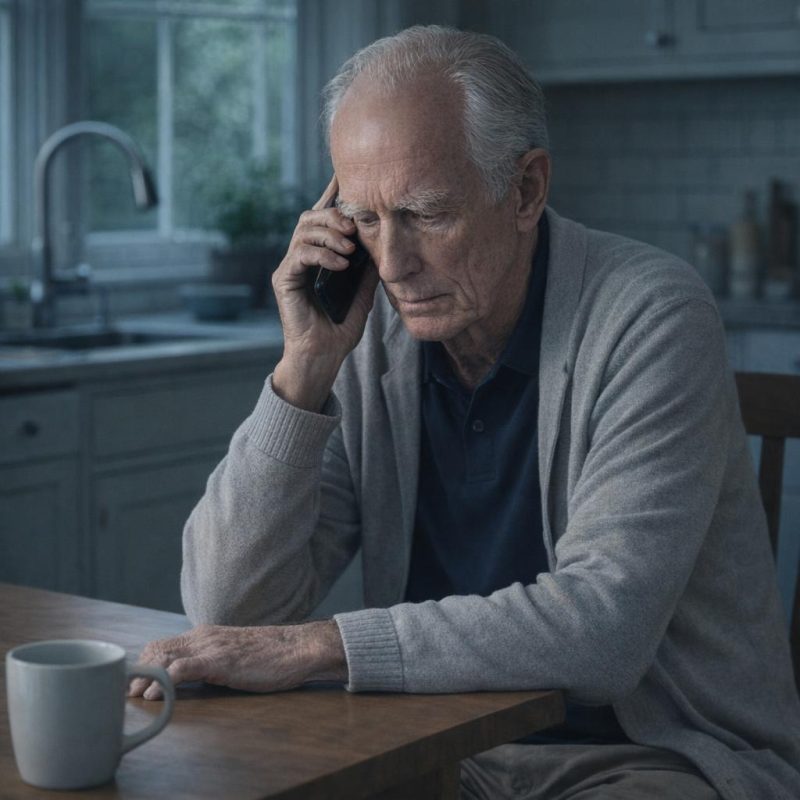 Image by RM AI
The Suggestion
The house on Maple Street looked the same as it always had — tidy front walk, curtains drawn against the afternoon light. Daniel answered the door and led me into the living room without much conversation. Amanda was already seated, composed, her hands folded in her lap. I sat across from them and began by stating the matter plainly: four months without payment, no returned calls, a balance that needed to be addressed. I had barely finished the sentence when Amanda spoke. She said she thought there might be some confusion. She said it gently, with a small tilt of her head, the way someone speaks to a person they are trying not to embarrass. She mentioned that memories can become unreliable over time, particularly as we get older. Daniel sat beside her and said nothing. I looked at him and then back at her. She said she wanted to be sensitive about this, that she understood it might be difficult to hear, but that she had always understood the money to be a gift. She said the word clearly, without hesitation. A gift. I felt something go very still inside me, and I kept my expression level while I worked out what to say next.
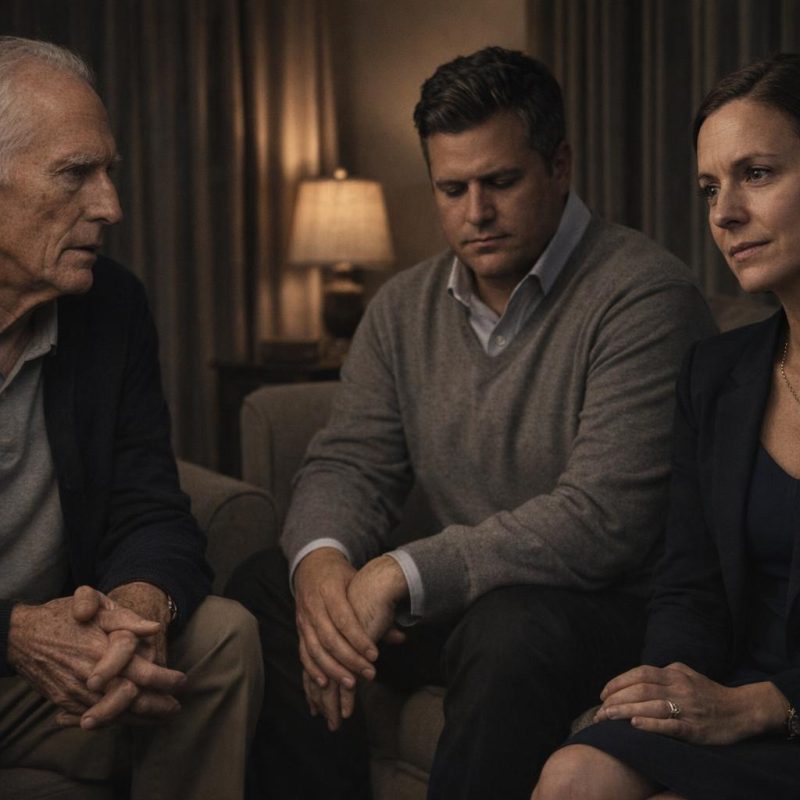 Image by RM AI
The Agreement
I did not raise my voice. I stood up, told them I had brought documentation, and walked out to my car. The folder was on the passenger seat where I had left it. I carried it back inside, set it on the coffee table between us, and opened it to the loan agreement. The amount was there in plain figures — forty thousand dollars. The monthly payment schedule was listed beneath it. I pointed to the bottom of the page without speaking. Both signatures were there in black ink: Daniel's in his familiar hand, Amanda's beside it. I watched Amanda's face as she looked at it. Something shifted in her expression, a small adjustment, quickly controlled. Daniel looked at the paper and then at the table. I said that the document made the nature of the arrangement clear, that both of them had signed it, and that I expected the matter to be treated accordingly. Amanda recovered her composure and said, in the same measured tone she had used before, that a document did not always tell the whole story. Daniel still had not spoken. I looked at the two signatures in black ink and waited.
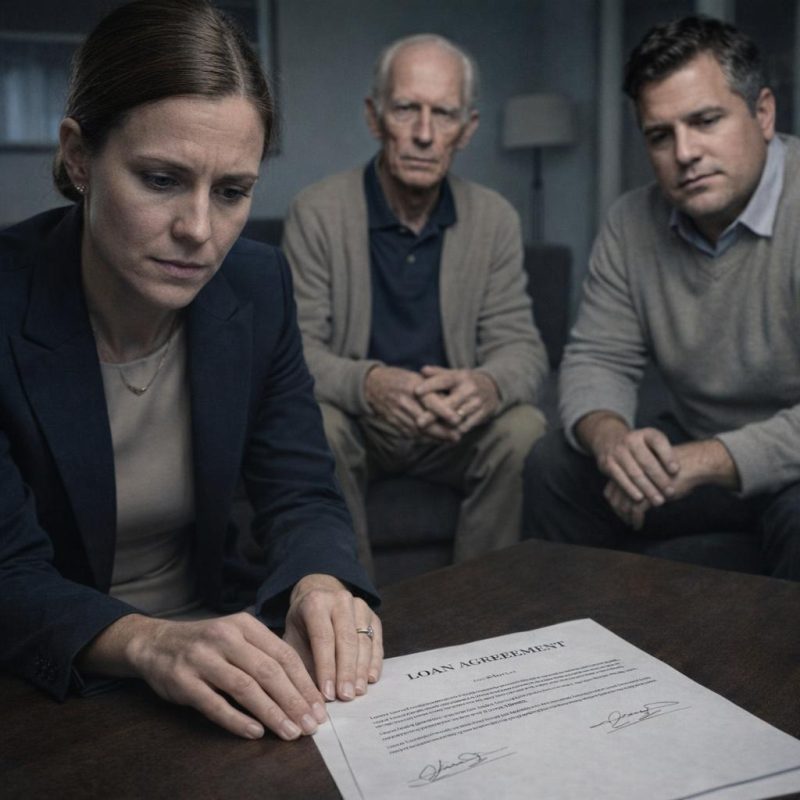 Image by RM AI
The Full Picture
Amanda looked at the loan agreement the way someone looks at an obstacle they have already planned around. She said the document did not matter — not because it was invalid, but because it no longer reflected the reality she had built. She had been telling people for months that her parents had provided the money for the house. The neighbors believed it. Her friends believed it. Linda and Robert had supported the story, she said, and there was documentation — bank records, a letter — that showed a gift from her parents. She said this without apology, without hesitation. I looked at Daniel. He was looking at the floor. I asked him directly if he had known. He didn't answer immediately, and his silence was its own answer. Amanda said the request for secrecy had made things simpler — if no one outside the immediate family knew about my involvement, there was nothing to contradict. The payments had stopped because, in her telling of it, there was nothing to repay. She had been saying this to everyone around her for months, and Daniel had let her. I sat in that living room and saw, with a clarity that felt like cold water, exactly how far the story had spread.
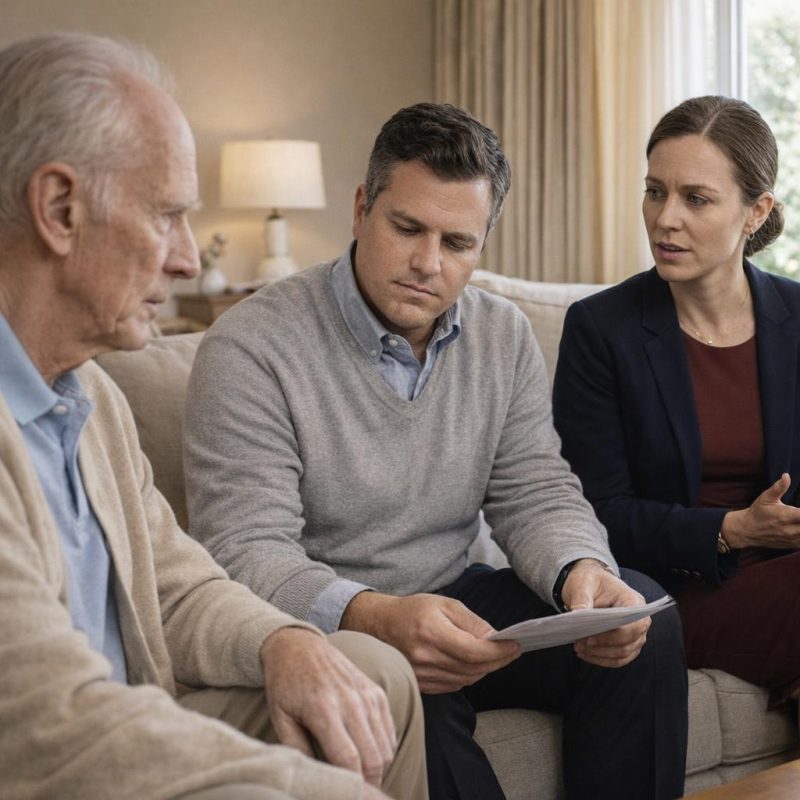 Image by RM AI
The Attorney
I picked up the folder, stood, and walked out of the house on Maple Street without another word. I did not slam the door. I simply closed it behind me and got into my car. I had called an attorney's office that morning — something in me had known the meeting might go this way — and they had agreed to see me that afternoon. I drove there directly. I spread everything on the conference table: the signed loan agreement, the payment records showing eight months of deposits followed by four months of nothing, the ledger I had kept by hand. The attorney read through it carefully and asked me several questions. I explained what Amanda had said in the living room — the false narrative, the coordination with her parents, the documentation they claimed to have assembled. He made notes. He asked if I had any written communication from Daniel acknowledging the loan. I showed him two text messages and a card Daniel had sent with the third payment. The attorney set his pen down and looked at me across the table. He said I had a strong case, that the signed agreement combined with the payment history established the loan clearly and that my position was legally sound.
 Image by RM AI
The Legal Path
The attorney walked me through the process in plain terms. A formal demand letter would go first, giving Daniel and Amanda a defined window to respond. If they refused or ignored it, small claims court was a straightforward next step given the documentation I had. He said the signed agreement was the kind of evidence that made cases like this relatively clear-cut. Then he paused and said there was something else I should think carefully about. He said that in his experience, when family members were taken to court over money, the person being sued almost always chose their spouse over the truth. He said I should be prepared for Daniel to align fully with Amanda's version of events, publicly and permanently. He mentioned the grandchildren — not to discourage me, but because he said I deserved to understand the full picture before I decided anything. I sat with that for a moment. Emma's face came to mind, and Sophie's, and Lucas. The attorney asked what I wanted to do. I told him I needed a day to think. I drove home in the early evening and sat in my kitchen, and the weight of being entirely right about everything settled over me without bringing any comfort with it.
 Image by RM AI
Daniel's Choice
I called Daniel two days later and asked him to meet me alone — not at the house, not with Amanda present. He agreed, and we sat across from each other at a coffee shop neither of us had any particular attachment to. I asked him directly: when had he known about the story Amanda was telling people. He looked at his coffee cup for a moment and then told me he had known from early on. Amanda had talked through the plan with him, he said, and he had agreed to go along with it. He said it had seemed easier at the time to let people believe her parents had helped. I asked him about the payments stopping. He said Amanda had convinced him that the money had really been a gift, that I had given it in the spirit of a parent helping a child, and that the loan agreement had been a formality. I pointed out that he had signed that formality. He had no answer for that. He said he was sorry, and the word sat between us without doing much. He said he had meant to keep paying me privately, but I could see he did not fully believe that himself. I drove home and thought about the boy he had been, and the man sitting across from me had not resembled him at all.
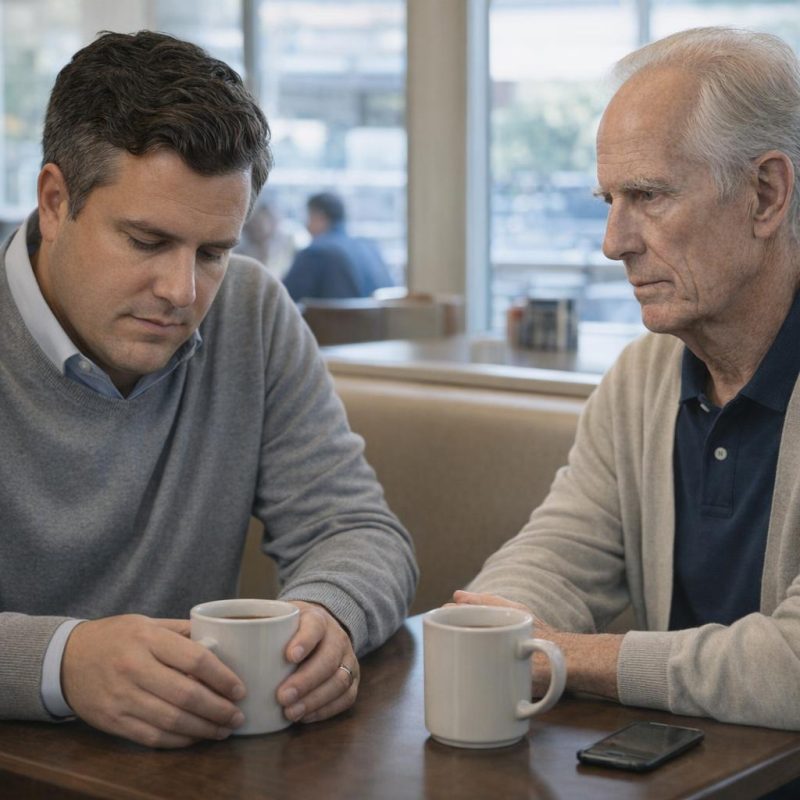 Image by RM AI
The Ultimatum
I sat at my kitchen table that evening with the loan agreement in front of me and a cup of tea I never touched. I had been over the documents so many times I could have recited the terms from memory. The numbers were clear. The signatures were clear. What was not clear was what I was supposed to do with the rest of it — the part that had nothing to do with money. I thought about Emma showing me her bedroom that first afternoon, spinning in the middle of the floor with her arms out. I thought about Sophie sitting quietly on the back steps, watching the yard. I thought about Lucas running through the hallway like the walls were a suggestion. Those children had done nothing. They were not the ones who had looked me in the eye and called a loan a gift. But I also thought about what it would mean to let the lie stand permanently — to have it become the settled version of events, passed down, repeated, believed. I had spent forty years being careful with money and more careful with my word. I was not willing to watch both of those things be taken from me without consequence. I set the agreement back in its folder, squared the edges, and made my decision. I would send the formal demand letter.
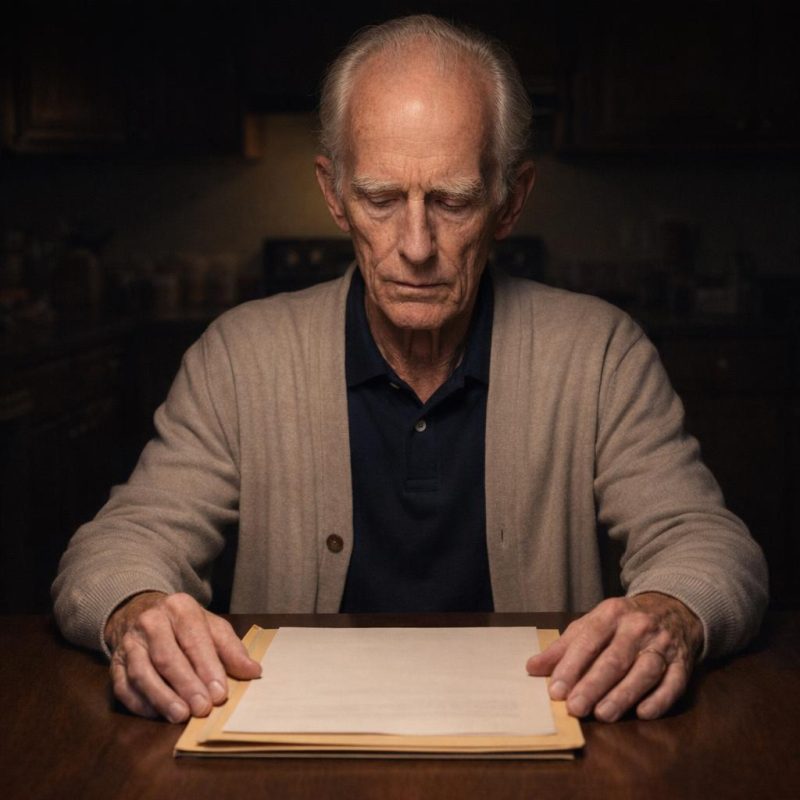 Image by RM AI
The Demand Letter
My attorney's office was quiet that morning, the kind of quiet that makes every small sound feel deliberate. We sat across from each other and went through the letter line by line. It named the loan amount. It referenced the signed agreement by date. It stated the outstanding balance and demanded full repayment within thirty days. My attorney explained that this was the required first step before any court filing — that it established my position formally and gave them the opportunity to respond without litigation. I told him to send it. He asked me once if I was certain. I said I was. I drove home and waited. The tracking information came through that afternoon — certified mail, signature required. I set my phone on the counter and looked at the confirmation number for a long time. There was no satisfaction in it, only the particular weight of something that cannot be undone. I had not wanted to be the kind of father who sent legal letters to his son. But I had not wanted any of this. The tracking page showed the letter in transit, moving toward the Maple Street house, carrying everything I had not been able to make them hear any other way. Two days later, the delivery confirmation came through: signed for and received.
 Image by RM AI
The Response
The email arrived four days after the delivery confirmation, and it was from Amanda, not Daniel. I noticed that immediately. The subject line read: Worried About You. She opened by saying she had received a letter from my attorney and that she was concerned — not about the letter itself, but about me. She wrote that she understood I had been under a great deal of stress since my retirement, that living alone could be isolating, and that sometimes memory and perception could be affected by age and loneliness. She said she had spoken with Daniel and they both felt I might benefit from speaking with someone, perhaps a doctor, and that they would be happy to help arrange that. She offered this with apparent warmth. Every sentence was constructed to sound like care. But the message underneath was perfectly legible: she was calling me confused, possibly incompetent, and she was doing it in writing, in a tone that would read as kindness to anyone who didn't know what she was actually saying. She did not mention the loan agreement once. She did not acknowledge the signed document or the payment records. She simply suggested, gently and thoroughly, that I had imagined the entire arrangement. I read it three times, then forwarded it to my attorney without comment. The cruelty of it was in how carefully it had been dressed to look like the opposite.
 Image by RM AI
The Confrontation
I drove to the Maple Street house on a Tuesday morning without calling ahead. I had a folder under my arm with copies of everything — the signed loan agreement, the payment records, the bank transfers, the original correspondence. Amanda answered the door and her expression shifted through several things in quick succession before settling into something composed. I walked in without waiting for an invitation. Daniel was in the living room, standing near the window, and he did not move when I came in. I set the folder on the coffee table and opened it. I laid out the loan agreement first, then the payment records, then the bank statements showing each transfer. I told Amanda I was not confused. I told her I was not experiencing memory problems. I told her that whatever she had written in that email, the documents on the table in front of her were real, they were signed, and they were dated. I asked her to look at them. She did not look down. She kept her eyes on me, and I could see the calculation happening behind them — the assessment of how to respond, what angle to take. Daniel looked at the floor. The room held a particular kind of silence, the kind that comes when pretense has run out of places to go and everyone in the room knows it.
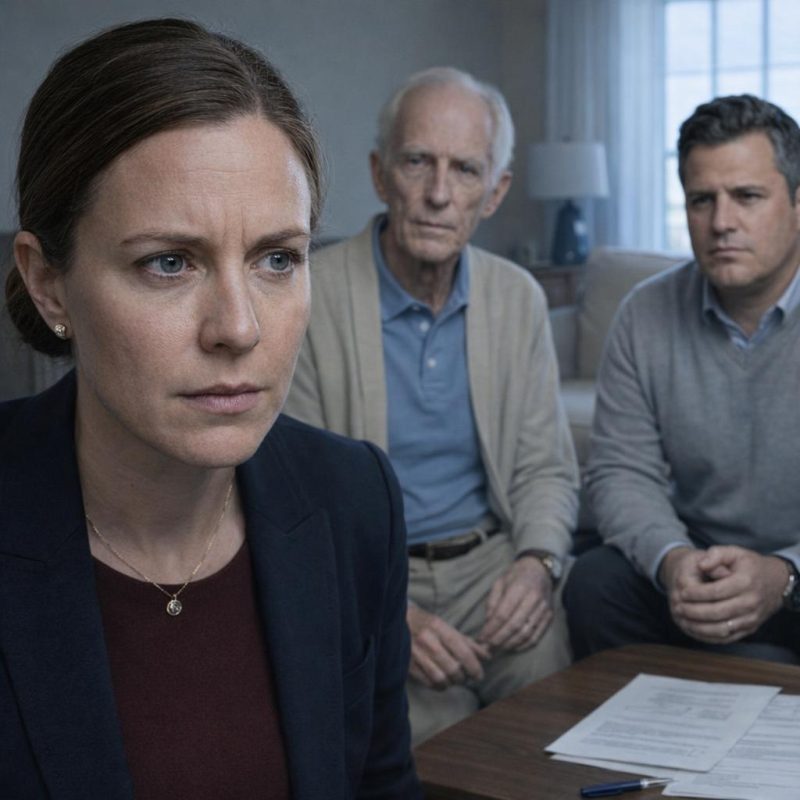 Image by RM AI
The Mask Falls
Amanda's voice changed first. The warmth drained out of it the way color drains from a face, and what replaced it was flat and certain. She told me the house was theirs. She said what I was calling a loan was a gift, that I had given it freely, and that no court was going to side with an aging father trying to take a house from his son's family. She mentioned my age twice. She said she had witnesses — her parents, the neighbors, people who had heard the story from the beginning — and that all of them would say the same thing. She said I was being vindictive. She said I was trying to punish Daniel for building a life she approved of. Daniel sat on the couch through all of it and said nothing. He did not correct her. He did not look at me. I watched him and thought about the conversation we had had at the coffee shop, the apology that had sat between us without doing anything. Amanda kept talking, and I let her finish, because there was nothing left to interrupt. I had spent months wondering whether I had misread her, whether there was some version of events in which her behavior made a different kind of sense. Standing in that living room, I understood I had not misread anything. What I was seeing now was simply what had always been there, without the effort of concealment.
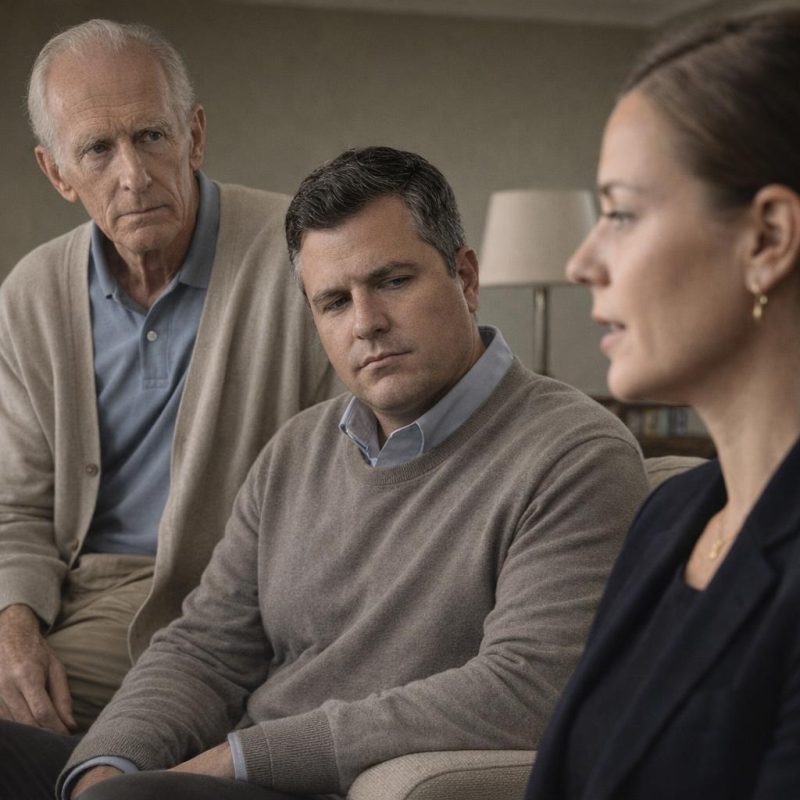 Image by RM AI
Daniel Speaks
I turned away from Amanda and looked directly at my son. I told him I wanted to hear it from him. Not from her — from him. Daniel looked at Amanda first, a quick sideways glance, and then he looked at me. He was quiet for a moment. Then he said yes, he had known. He said Amanda had suggested the gift narrative before the housewarming party, that it would be simpler, that people would ask fewer questions. He said he had agreed because it had seemed easier at the time. He acknowledged the loan agreement was real. He said he had signed it knowing exactly what it was. He told me he had intended to keep making payments privately, but that Amanda had convinced him the money had been given in the spirit of a gift and that continuing to pay would only create confusion. He said he had chosen to support her version publicly because she was his wife and he had to choose his wife. He said it plainly, without drama, as if the logic of it were self-evident. I stood there and listened to my son tell me, in his own words, that he had known what he was doing from the beginning and had done it anyway. I had already known it. But hearing him say it out loud was something else entirely.
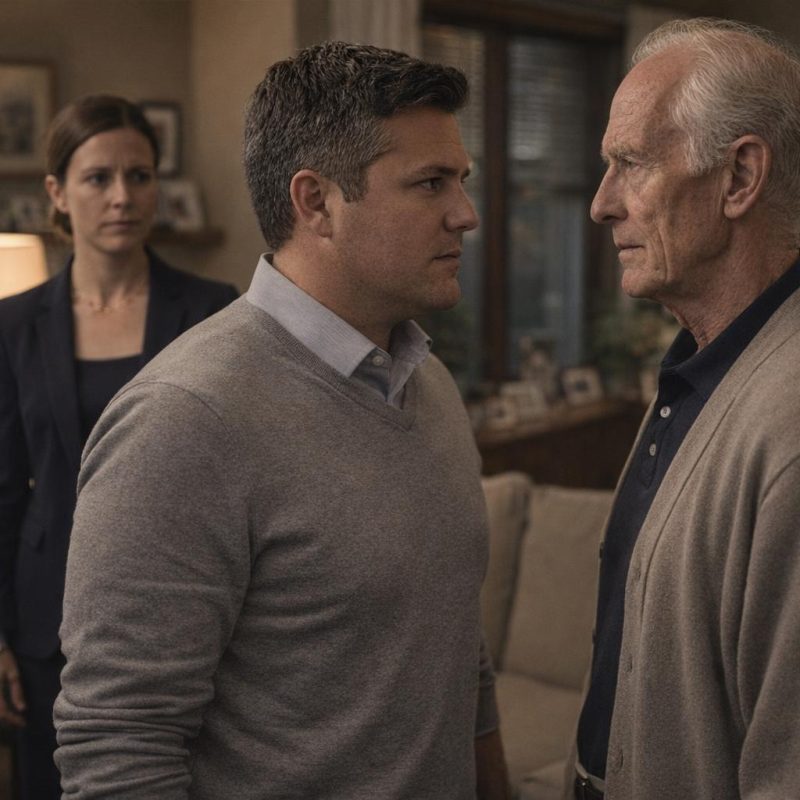 Image by RM AI
The Mitchell Conspiracy
Amanda had been watching Daniel speak, and when he finished she turned back to me with something close to composure. She told me I could not win this. She said her parents had known the truth from the very beginning — that she had told Linda and Robert about the loan immediately after we signed the agreement, and that they had all agreed together the gift narrative was the better story. She said her parents had written letters describing their financial contribution to the house. She said they had bank records showing transfers in amounts that matched the timing of the purchase. She said Linda and Robert would testify without hesitation that the money had come from them. She said this without apology, without lowering her voice, as though she were explaining something obvious to someone slow to understand. I stood there and let the full shape of it settle over me. This had not been Amanda acting alone. Linda and Robert had sat across from me at that housewarming table, accepted my congratulations, and said nothing. They had constructed a parallel record. Multiple people, across months, had coordinated to replace what I had done with something that erased me entirely. Amanda watched me take that in. She did not look away.
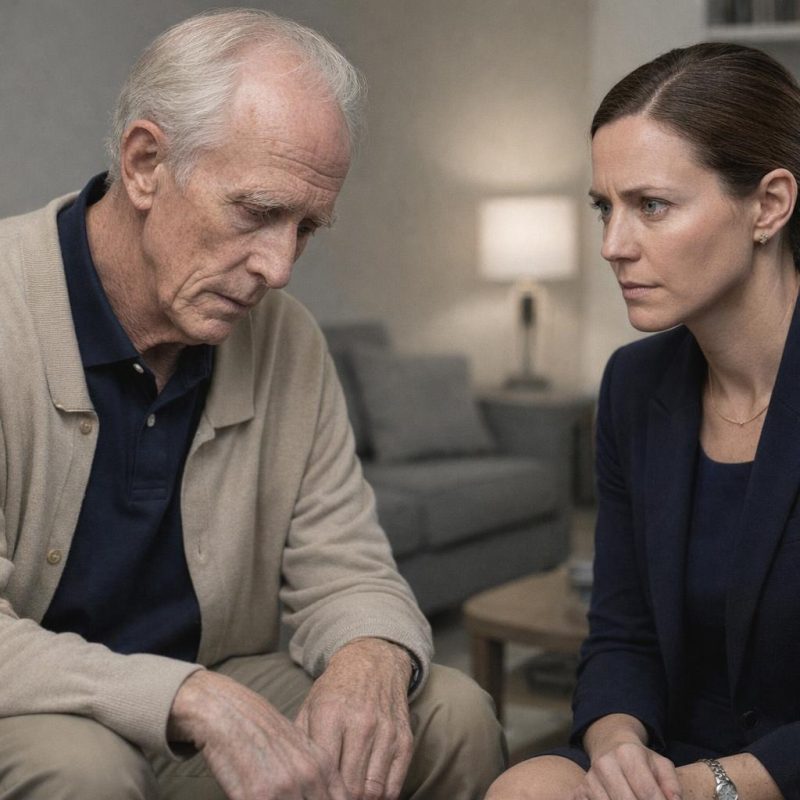 Image by RM AI
The Ultimatum Delivered
I picked up my copies from the coffee table and squared them back into the folder. I told them I would be filing in small claims court if the balance was not repaid within the thirty-day window specified in the demand letter. I told Amanda the loan agreement was legally binding regardless of what letters her parents had written or what story the neighbors had heard. I turned to Daniel and told him this was his last opportunity — that he could acknowledge the truth, publicly and directly, or he could let a court examine the documentation and decide. Amanda said I was destroying the family. I told her the family had been destroyed the morning she decided a signed agreement was optional. Daniel looked between us and said nothing. I waited long enough to be certain the silence was his answer. Then I told them both not to contact me unless they were prepared to tell the truth. I gathered my folder, walked to the front door, and stepped outside into the cold morning air. The door closed behind me, and I walked to my car without looking back at the house on Maple Street.
 Image by RM AI
The Final Choice
I gave it four days. I kept my phone nearby, not because I expected Daniel to call, but because I wanted to be wrong about him. On the fifth morning, my attorney asked how I wanted to proceed. I told her to prepare the filing. That afternoon, an email arrived from Daniel. It was three short paragraphs. He said he understood my position. He said he knew the agreement was real. But he could not go against Amanda publicly — those were his exact words. He said the family had to come first, and that he would pay me back eventually, privately, when things settled down. He asked me not to pursue legal action. He promised the money would come. He just needed time, and he needed me to let the story stand. I read it twice. I sat with it long enough to be certain I understood what he was choosing. Then I forwarded it to my attorney with four words: please proceed with filing.
 Image by RM AI
The Separation
Saturday mornings used to mean something. I would drive over to Maple Street with coffee in a travel mug, and Emma would hear my car in the driveway before I even reached the door. That was gone now. I did not call Daniel. Daniel did not call me. The small claims filing had been confirmed, and a court date was set for six weeks out. I organized my documentation on the kitchen table — the signed agreement, the wire transfer records, the demand letter, the email Daniel had sent. Everything in order, everything real. But the paperwork was not what kept me up at night. I thought about Emma and Sophie and Lucas. I wondered what they had been told, what story had been offered to explain why their grandfather had stopped coming around. I thought about Emma's voice, the way she used to shout my name from the top of the stairs. I had lost my son a long time before I lost him. Those empty Saturday mornings made that plain.
 Image by RM AI
New Boundaries
I started going to the library on Saturday mornings. It sounds small, but it helped. I volunteered to help with a reading program for younger children, and there was something steadying about sitting across from a seven-year-old who just wanted to know what happened next in the story. I reviewed my documentation for the hearing until I could recite the dates from memory. The case was straightforward — a signed agreement, a wire transfer, a demand letter ignored. I had lunch with an old colleague I had not seen in two years. I called my sister for the first time in months. I was not pretending the loss was not there. I thought about my grandchildren most days, and the ache of that did not go away quickly or cleanly. But I had made my choice with clear eyes, and I did not regret it. The truth had mattered more to me than the comfort of pretending. Some mornings I sat with my coffee and felt the quiet of the house settle around me, and it was enough.
 Image by RM AI
The Foundation That Cracked
The court ruled in my favor. The loan agreement was valid, the documentation was clear, and the judge said so plainly. Daniel and Amanda were ordered to repay the full amount. I knew collecting would be its own long road, but the record existed now — official, public, undeniable. A few weeks after the judgment, Amanda arranged for Emma to meet me at a park near the library. I do not know what prompted it. Emma ran to me the way she always had, and I held on longer than I probably should have. We sat on a bench and fed the ducks, and after a while she looked up at me and asked why I did not come to the house anymore. I told her I loved her very much. I told her some things between grown-ups were complicated, but that had nothing to do with how I felt about her. She seemed to accept that the way children sometimes do — not fully, but enough to keep going. I drove home with her voice still in my ears. I had chosen the truth, and the truth had cost me the table we used to sit around together, and I was learning to live with both of those things at once.
 Image by RM AI
KEEP ON READING
10 Wars Won By Deception & 10 Lost By Overconfidence
When Strategy Matters More Than Strength. Military history is filled…
By Rob Shapiro Jun 19, 2026
The Day the Sun Didn’t Rise: The Unexplained New England…
Alina Nichepurenko on UnsplashImagine waking up on a spring morning,…
By Sara Springsteen Jun 18, 2026
20 Facts About Animal Symbolism In Paintings
The Sacred Clues Across History. Animal symbolism is a detail…
By Elizabeth Graham Jun 18, 2026
How a Single Telegram Pushed America Into World War I
Sammie Sander on PexelsThe year is 1917, and the United…
By Cameron Dick Jun 18, 2026
The Marriage Bed As A Political Object
Fæ on WikimediaA bed is naturally a private space—it's where…
By Elizabeth Graham Jun 18, 2026
How Early Navigation Techniques Guided Explorers Across Oceans
Maël BALLAND on PexelsLong before satellites, digital maps, and advanced…
By Rob Shapiro Jun 18, 2026