

I Gave My Daughter $50,000 to Start Her Dream Bakery—At Her Grand Opening, She Thanked Someone Else
I Gave My Daughter $50,000 to Start Her Dream Bakery—At Her Grand Opening, She Thanked Someone Else
The Call on a Drizzly Tuesday
It was a Tuesday, gray and drizzly, the kind of afternoon where you just want to get home and take your boots off. I was still in the truck, parked in the driveway, when my phone buzzed on the seat beside me. Claire. I picked up and she was already talking before I could say hello — something about a corner unit on Main and Elm, big windows, original hardwood floors, the kind of space she'd been describing to me in pieces for years. She said the landlord had two other interested parties and the window was closing fast. I could hear it in her voice, that particular frequency she's had since she was about nine years old and wanted something so badly she could barely breathe around it. She told me she'd saved up half from her catering work, that the bank had been slow and noncommittal, that she just needed to know if there was any path forward before the week was out. I didn't say much. I mostly listened, watching the rain streak down the windshield in thin lines. When we hung up, I sat there for a minute with the phone in my lap, and what stayed with me wasn't the numbers or the timeline — it was the frantic heartbeat in her voice.
 Image by RM AI
The Weight of Retirement Statements
That night I pulled out the retirement folder I kept in the filing cabinet beside the desk — the one I hadn't opened in a few months because looking at it too long made me feel the years in a way I didn't always want to. I spread the statements out under the lamp and sat there with a yellow legal pad and a pen that was almost out of ink. The balance was decent for a man who'd spent thirty years in trades work, but it wasn't a number that had any room for carelessness. I started writing figures. What I'd need to carry me through if I stopped working at sixty-two. What a reasonable cushion looked like. What I could pull without touching the part that had to stay untouched. Claire had been grinding for years — catering weekends, farmers markets, custom cake orders she'd fill at two in the morning. The bank's silence wasn't a surprise to me. First-time entrepreneurs without collateral don't get the benefit of the doubt, no matter how good their product is. I knew that. I'd lived that. I stared at the column of numbers for a long time, and somewhere in the middle of all that arithmetic, the figures stopped feeling like figures. Then I reached across the desk and opened the retirement account statement to the last page.
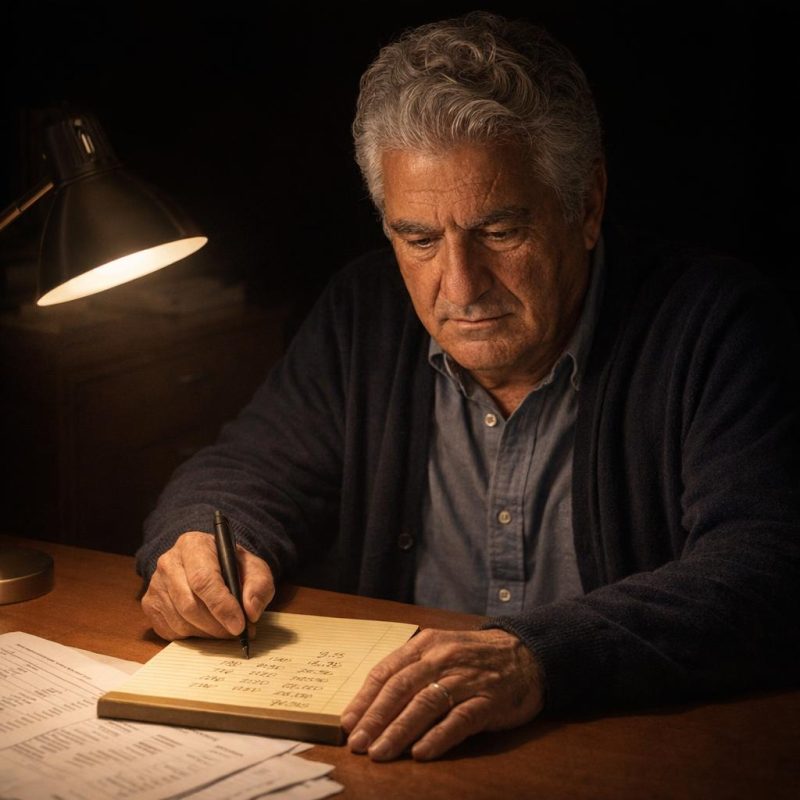 Image by RM AI
A Father's Math
I looked at that final page for a long time. The number sat there, plain and patient, the way numbers do when they've been earned slowly over decades. Fifty thousand dollars. It wasn't everything, not even close to everything, but it was a real piece of what I'd built, and I knew exactly what it had cost me to accumulate it — the overtime winters, the weekends I didn't take, the vacations that never happened. I thought about what that money was doing sitting in an account, growing at a rate that felt almost apologetic. And then I thought about what it could do out in the world, in Claire's hands, in a corner storefront with big windows and hardwood floors. She wasn't reckless. She wasn't chasing a fantasy. She'd been building toward this for years with the kind of quiet discipline that doesn't get enough credit. The bank had looked at her paperwork and seen risk. I looked at the same information and saw my daughter. I set the pen down. I didn't need to run the numbers again. There was a kind of stillness that came over me then, not the stillness of resignation but something closer to clarity — the quiet certainty that I was doing exactly what I was supposed to do.
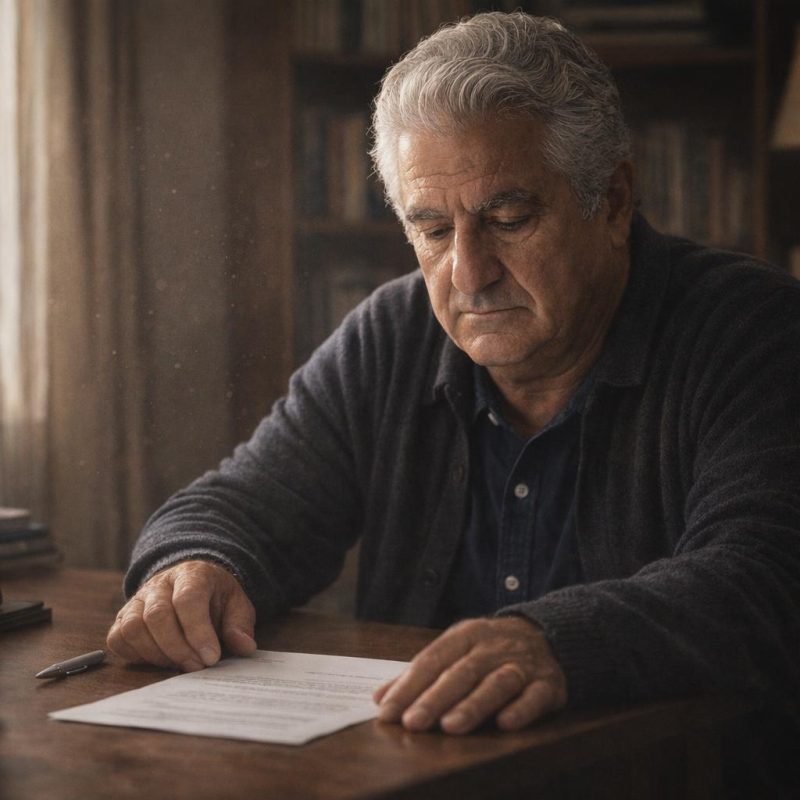 Image by RM AI
The Kitchen Table Agreement
Claire came over on a Thursday evening, and we sat at the kitchen table the same way we used to when she was in high school and needed help with algebra. Same table, same two chairs, same lamp throwing yellow light across the wood. I'd written out a simple repayment structure — five years, with a six-month grace period to give her time to get the business breathing before she had to think about paying me back. I slid it across to her and told her I wanted it in writing, not because I didn't trust her, but because I'd seen money quietly ruin relationships between people who loved each other, and I wasn't willing to let that happen to us. She read it carefully, which I appreciated. She asked a couple of questions. Then she looked up at me and her eyes were wet, and she said, 'Dad, I don't know how to thank you for this.' I told her she didn't have to thank me, she just had to make something good. She came around the table and hugged me the way she used to when she was small, both arms tight around my neck, and I held on for a moment longer than I probably needed to. When she finally pulled back and sat down again, I felt something I hadn't felt in a while — the simple, uncomplicated warmth of being needed by someone you love.
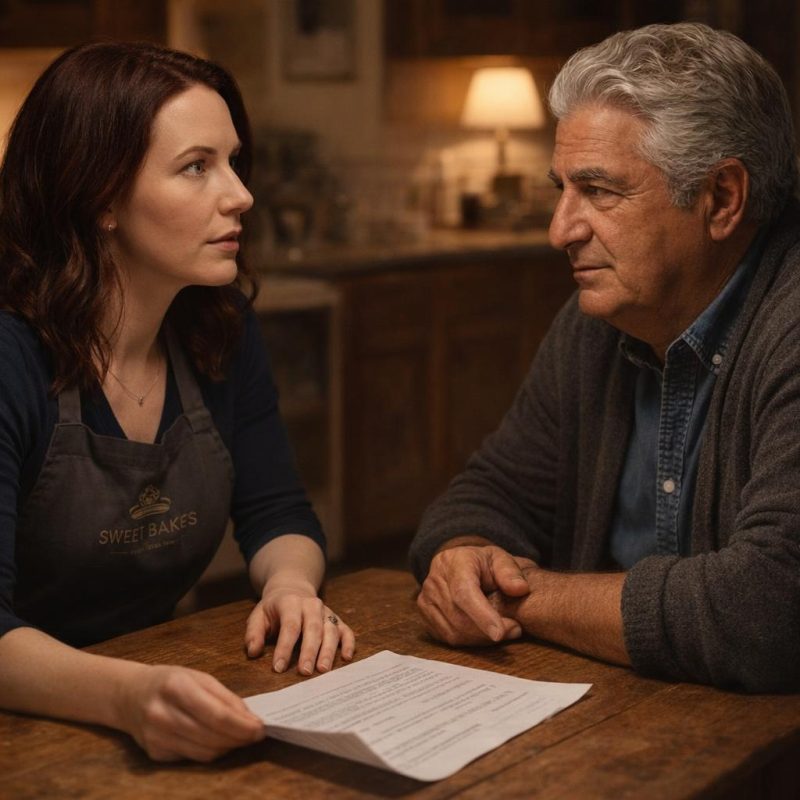 Image by RM AI
The Request for Privacy
We were still at the table, the signed agreement between us, when Claire got a little quieter. She folded her hands around her coffee mug and looked at me in that careful way she has when she's working up to something. She said she wanted to ask me a favor. I told her to go ahead. She said she'd prefer if we kept the financial specifics between us — not the fact that I'd helped, necessarily, but the details, the amount, the arrangement. She said she'd worked so hard to be taken seriously in the local food community, and she was worried that if people knew her father had bankrolled the whole thing, they'd see her as someone who'd had a door opened for her rather than someone who'd earned her way in. She didn't want to be the girl with a safety net, she said. She wanted to feel like she'd built something real. Her cheeks went a little pink when she said it, the way they always do when she's asking for something that costs her some pride just to ask. I understood it completely. I'd felt that same thing at her age — the need to stand on your own two feet without anyone knowing how shaky the ground was. I told her I respected that, and I meant it. I watched her shoulders drop with relief as I slid the signed agreement into the envelope I'd bring home to my safe.
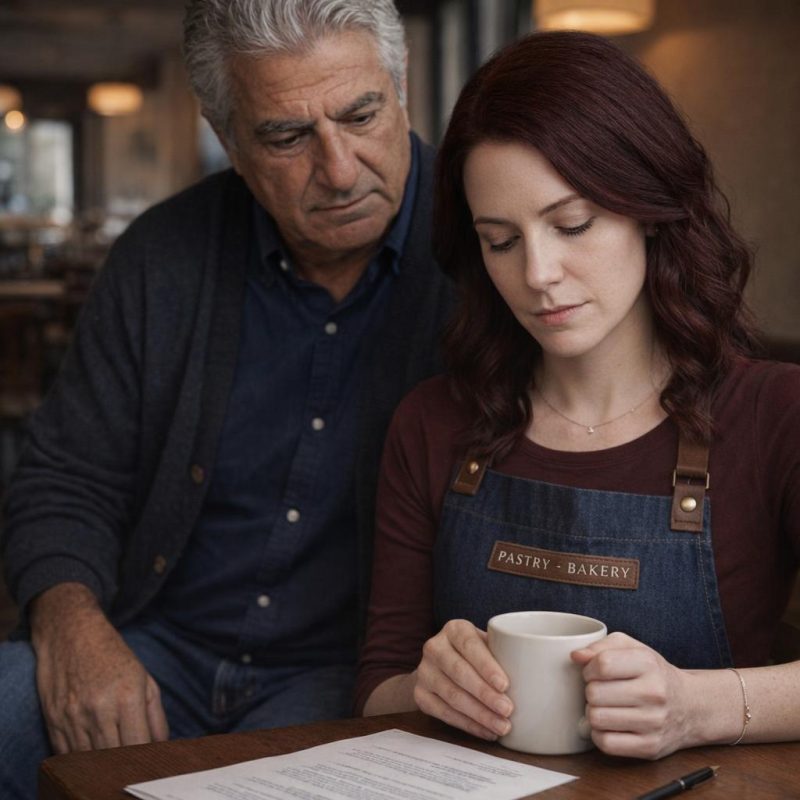 Image by RM AI
The Wire Transfer
I went to the bank on a Friday morning, the kind of clear autumn day that makes everything feel like it has some momentum behind it. The wire transfer took about twenty minutes to set up, and I sat across from the bank officer while she walked me through the confirmation steps with the careful patience of someone who does this a hundred times a week. When it was done, she slid a printed confirmation across the desk and I folded it and put it in my jacket pocket. I called Claire from the parking lot. She picked up on the second ring and when I told her the money was on its way, she went quiet for a second and then said, 'Dad,' in a voice that didn't need anything else attached to it. I told her to go get her bakery. She laughed, a little watery, and said she'd already called the landlord. On the drive home I was thinking about the storefront, about what it would look like once the equipment was in, and I offered to come help with whatever physical work needed doing — painting, moving, whatever she needed. She said she'd take me up on that. I felt lighter than I had in months, like I'd finally done something with weight and purpose. Back at my desk that evening, I pulled the confirmation slip from my pocket and smoothed it flat — fifty thousand dollars, transferred, complete.
 Image by RM AI
The Golden Grain
Claire had the key by the following Wednesday, and she called me that same afternoon to ask if I wanted to come see it. I drove over after work, still in my work clothes, and found her standing outside the corner of Main and Elm with her hands in her jacket pockets and a look on her face I recognized — the look of someone trying to stay calm about something that is making them anything but calm. She unlocked the door and we walked in together. The space was empty, just bare floors and white walls and afternoon light coming through those big front windows she'd described on the phone. She walked me through it like she'd already lived there in her head a hundred times. She pointed to where the display cases would run along the front wall, where the prep counter would go, where she wanted to knock out a small pass-through to the back. She talked about sage green walls and floating wooden shelves and a chalkboard menu above the register. I stood in the middle of the room and turned slowly, trying to see what she was seeing. And I could, actually. I could see it. The floors were good bones. The windows were generous. The ceiling was high enough to breathe. I didn't say much, just listened and nodded, and the empty room around us carried the particular smell of old wood and plaster and something that felt, in that moment, very much like possibility.
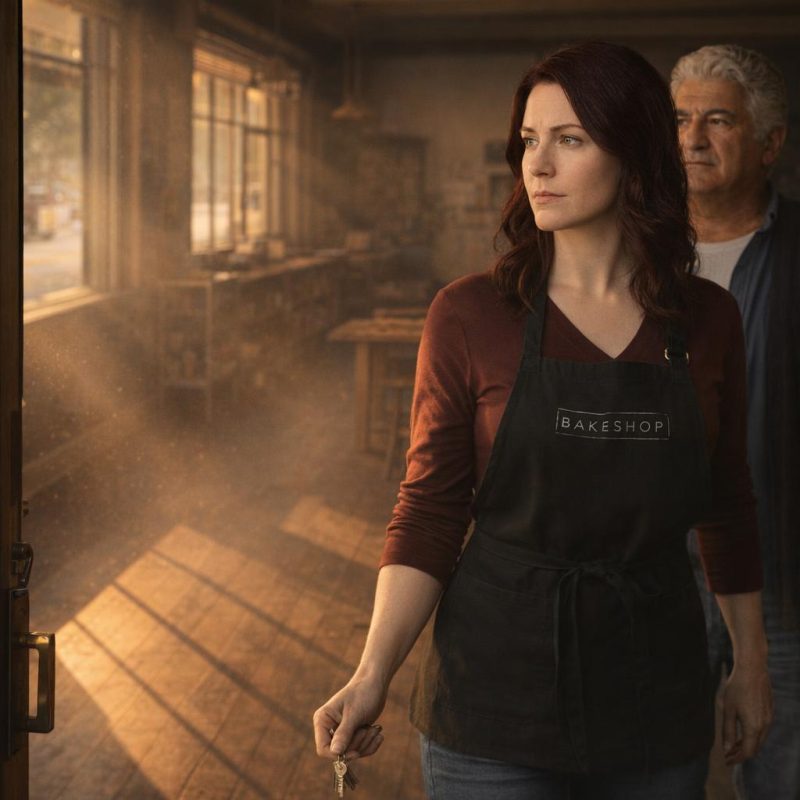 Image by RM AI
Sage Green Walls
I showed up that first Saturday with a truck bed full of drop cloths, rollers, and two gallons of the sage green Claire had picked out from the paint store. She was already there when I arrived, hair pulled back, old sweatshirt on, looking like she meant business. We worked well together the way we always had — she cut in along the trim and I rolled the broad sections, and we fell into a rhythm without having to talk much about it. By mid-morning the first wall was done and the room was already starting to look like something. Around eleven, the front door opened and a man came in carrying two coffees and a paper bag. Claire introduced us — this was Ryan, her husband. He was well-groomed even on a Saturday, the kind of put-together that looks effortless but probably isn't, and he shook my hand with a firm, easy grip and said he'd heard a lot about me. He looked around at the walls with what seemed like genuine appreciation, said it was coming together great, and set the coffees on the windowsill for us. He stayed maybe twenty minutes, asked a few questions about the timeline, then said he had some things to take care of and headed out. Claire watched him go and then picked her brush back up without comment. I turned back to the wall and kept rolling, and somewhere around noon Ryan's son-in-law presence settled into the background of the day.
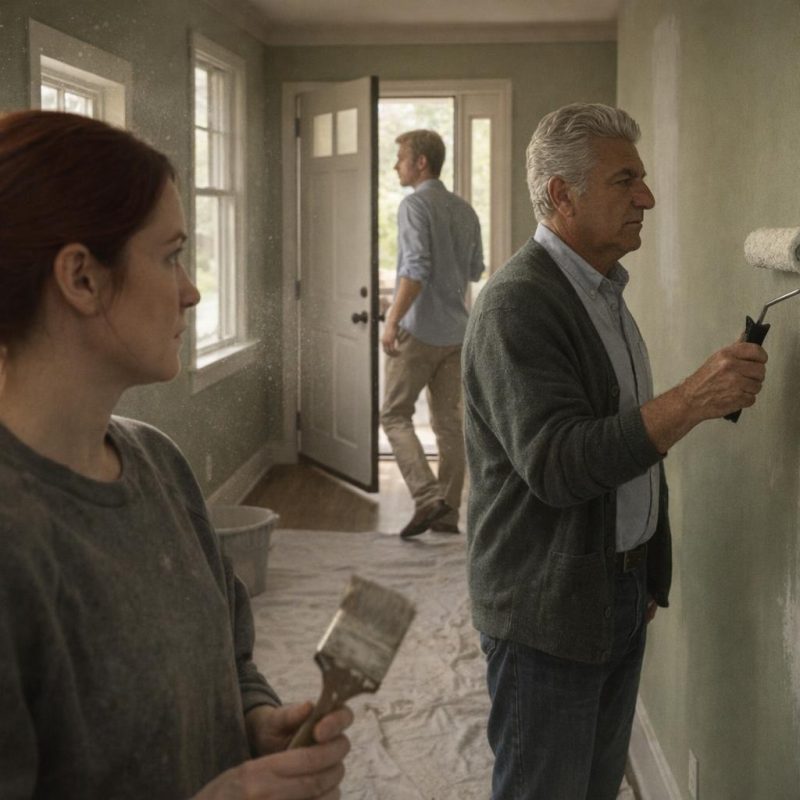 Image by RM AI
Floating Shelves and Heavy Crates
The floating shelves were Claire's idea — she'd torn a photo out of a magazine and handed it to me like a homework assignment. Three tiers, staggered heights, enough room for bread baskets and the little chalkboard signs she'd been designing on her phone. I measured twice, drilled the anchors into the studs, and by early afternoon the first set was up and level. Claire stood back and looked at them the way you look at something you've been imagining for a long time finally existing in the world. That was enough for me. The heavier work came after — a delivery had arrived while I was drilling, and there were six crates of flour stacked near the back door waiting to be moved into the storage room. I grabbed the first one and carried it through, then the second. By the fourth I was moving slower, taking my time, telling myself it was because the floor was uneven. Claire offered to help and I waved her off. She had enough to do organizing the dry goods shelves. I picked up the fifth crate, got it settled against my chest, and felt something in my lower back pull tight and sharp.
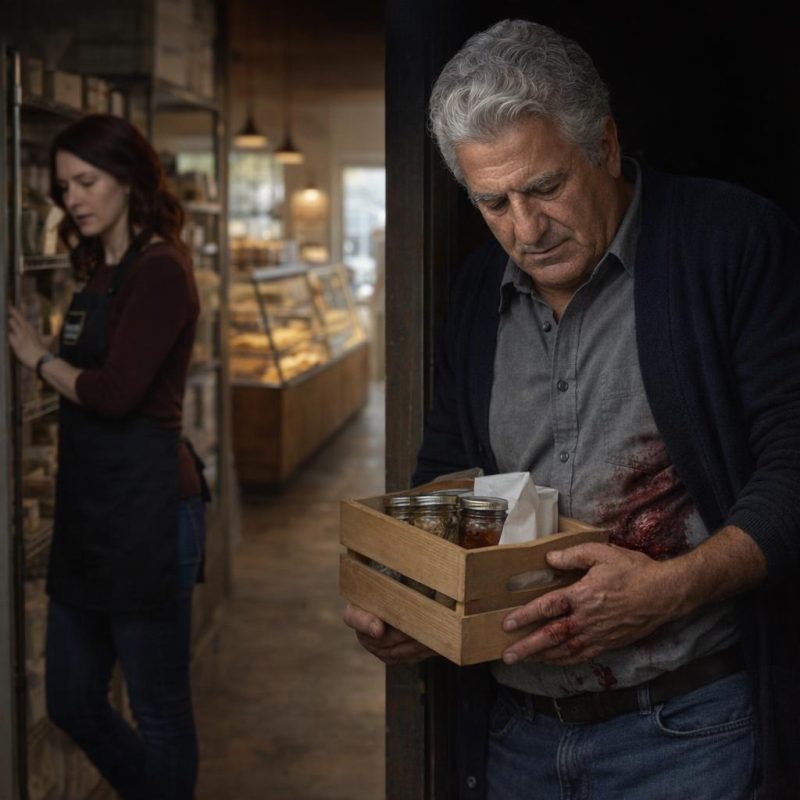 Image by RM AI
Four in the Morning
I don't know what made me drive over there that early. It was barely past five, still dark, and I told myself I just wanted to check on the space before the day got away from me. But when I pulled up, the lights inside were already on. I sat in the truck for a second, just looking at the warm glow coming through the front window. When I went in, Claire was at the worktable with her back to me, arms moving in that steady, practiced rhythm that bakers get — the kind that doesn't waste a single motion. She had flour on her forearms up to the elbows and her hair was pinned back tight. She told me without turning around that she'd been there since four. I asked if she'd slept and she said enough. I didn't push it. I found a stool near the counter and just sat there watching her work through the first batch of dough, the mixer running, the smell of yeast and warmth already filling the room. She moved like she knew exactly what she was doing, because she did. I sat quietly in that early morning light and watched my daughter work, and something in my chest went still and warm in a way I hadn't felt in a long time.
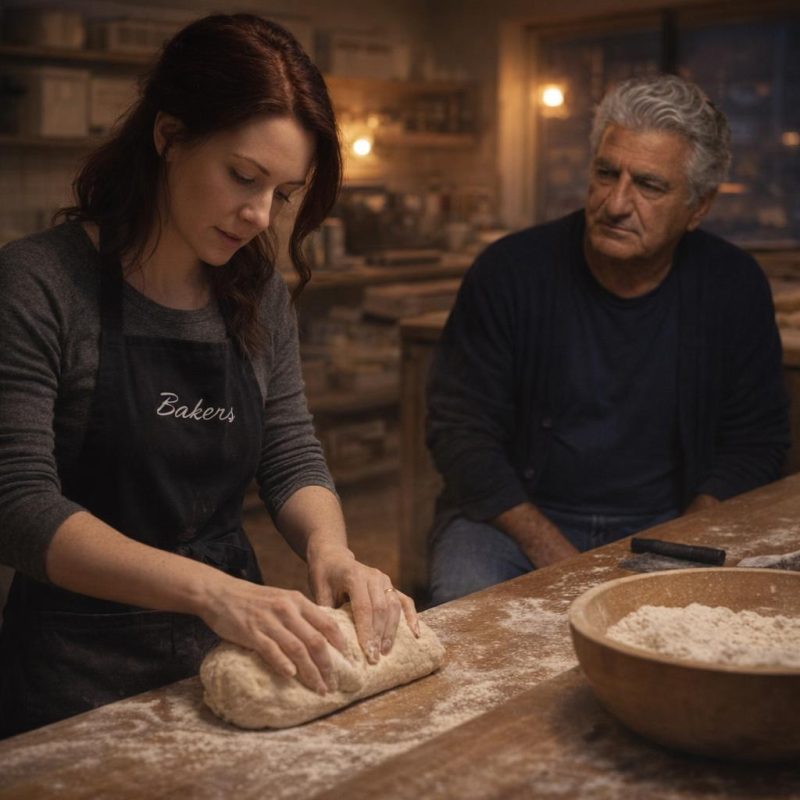 Image by RM AI
Croissants and Coffee
It became a thing without either of us deciding it would. I'd show up around seven, sometimes a little before, and Claire would already have a tray of croissants cooling on the rack near the window. She'd hand me one without asking — still warm, the layers pulling apart the way good pastry does — and I'd pour us both a coffee from the little machine she'd set up on the side counter. We'd stand there for maybe twenty minutes, talking through whatever needed doing that day, or sometimes not talking much at all. She'd tell me about a supplier she was trying to negotiate with, or I'd mention something I'd noticed about the shelving that needed adjusting. Small things. Practical things. But it was the best part of my morning, and after a while it was the best part of my week. I'd spent years eating breakfast alone after her mother and I split, and before that we'd all been too busy rushing kids out the door to actually sit still. This was different. This was unhurried. The croissant was always perfect, the coffee was always strong, and for those twenty minutes I felt closer to her than I had in years — the two of us standing in that quiet kitchen, the day not yet started, nothing else pressing in.
 Image by RM AI
The Back Storage Room
The back storage room had been ignored long enough. I'd been walking past it for weeks, stacking things wherever there was floor space, and it had gotten to the point where you had to turn sideways to get to the shelving unit in the corner. I cleared everything out first, swept the floor properly, and then spent the better part of a morning building two new shelf units from the flat-pack lumber I'd picked up at the hardware store. Claire was out front working on the display case arrangement and checking in every so often to see how it was going. By early afternoon I had a real system in place — dry goods on the upper shelves, heavier supplies on the lower ones, everything labeled and accessible. It felt good, the kind of satisfaction that comes from turning a mess into something that works. I was fitting the last board into the back corner when it shifted slightly and I noticed a gap behind it, a narrow space between the board and the wall. I reached in to check if the stud was solid and my fingers touched something flat and smooth — a photograph, face down, left behind by whoever had been in this space before us.
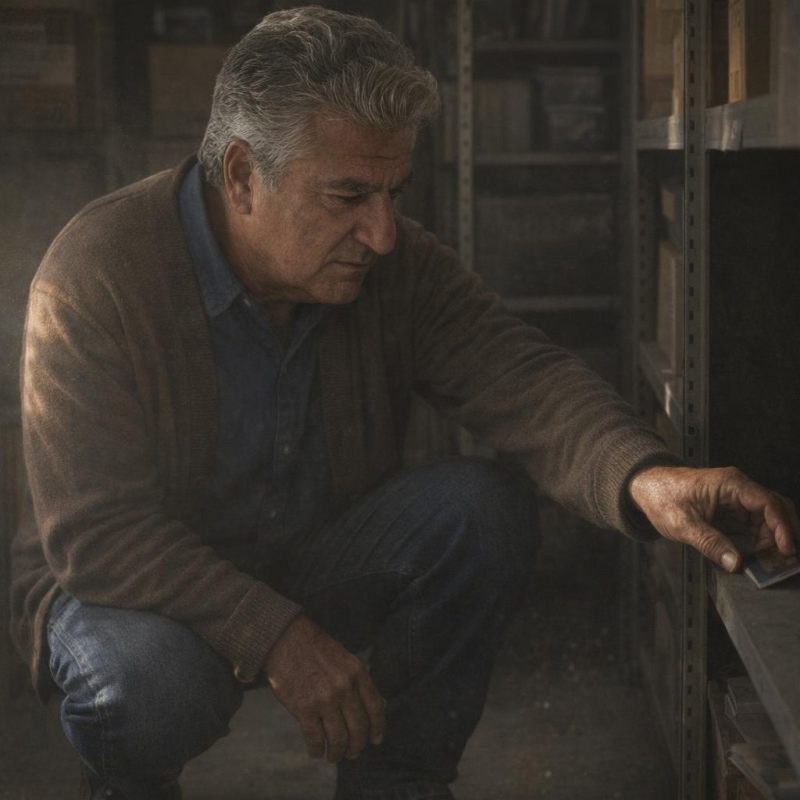 Image by RM AI
Taking Shape
There was an afternoon, maybe two weeks before the opening, when I walked in through the front door and just stopped. I'd been in and out of that space so many times I'd stopped seeing it the way a stranger would. But that day the light was coming through the front windows at the right angle and it hit everything at once — the sage green walls, the floating shelves with their bread baskets and little chalkboard signs, the white subway tile behind the counter, the pendant lights Claire had picked out hanging in a row above the display case. She'd added some framed botanical prints near the entrance and a small chalkboard menu board that she'd lettered herself. It looked like a real bakery. Not a project, not a renovation, not a dream someone was still working toward. A real, finished, beautiful bakery. I stood there with my hand still on the door, not quite ready to move. Claire came out from the back and asked if I was just going to stand in the doorway all day. I told her I was taking it in. She smiled and went back to work, and the light held steady across those green walls like it had always belonged there.
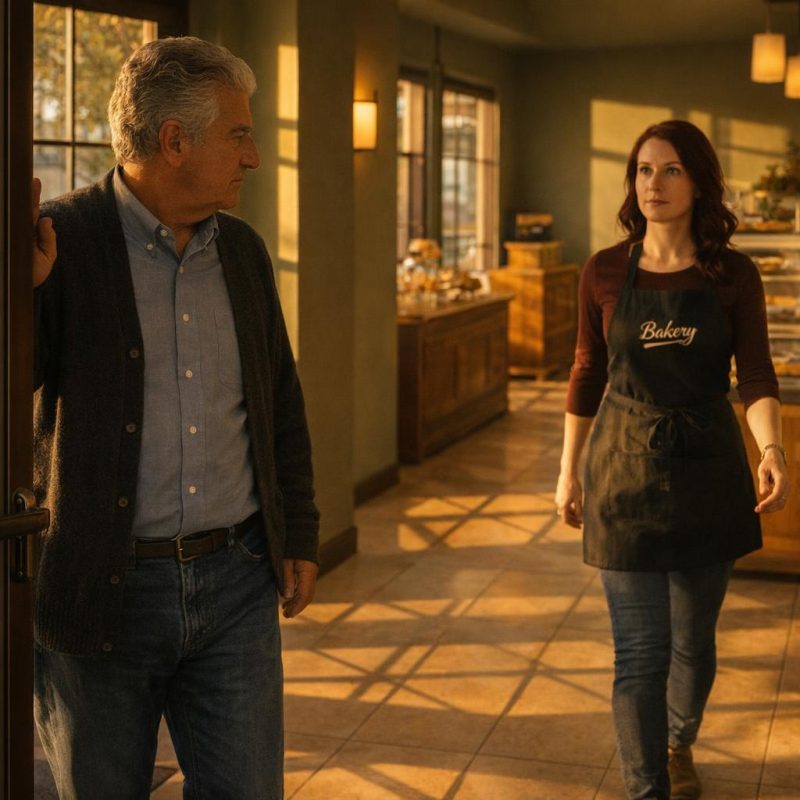 Image by RM AI
The Ovens Arrive
The delivery truck showed up on a Tuesday morning, earlier than scheduled, and I was glad I'd come by because Claire needed an extra set of hands to coordinate the crew. Two men in work shirts brought the ovens in on a dolly, one at a time, and I helped guide them through the back entrance while Claire directed where each one needed to sit. The installation took most of the morning — gas lines, ventilation connections, the leveling that took three adjustments before the technician was satisfied. Claire watched every step with her arms crossed and her eyes moving over each connection like she was reading a language she'd spent years learning. I remembered her telling me, back when she first laid out the budget, that the ovens were the heart of it. Everything else could be adjusted, she'd said, but the ovens had to be right. Standing there watching the technician run the first ignition test, I thought about how far she'd come to get to this moment. When the pilot caught and the units came to life, there was a low, steady hum that moved through the floor and up through my boots, and Claire put her hand flat against the side of the nearest oven and closed her eyes for just a moment, and the room felt full of something it hadn't held before.
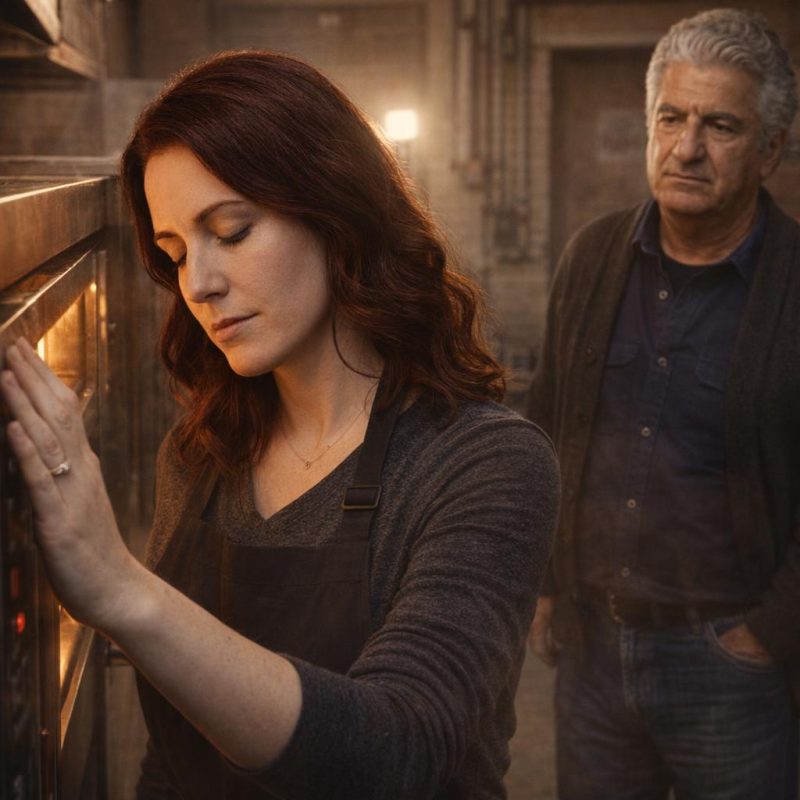 Image by RM AI
First Batches
She'd been planning the test batches for days, making notes in that spiral notebook she kept on the counter, adjusting hydration ratios and timing based on what she'd read about the new ovens. I showed up that morning not knowing quite what to expect. Claire moved through the prep with the same focused quiet I'd seen at five in the morning — measuring, folding, shaping the loaves with her hands like she was having a conversation with the dough. She loaded the first rack and set the timer and then we both just waited. The smell came first, that deep, yeasty warmth that fills a room slowly and then all at once, and I found myself standing closer to the oven than I needed to be. Claire checked the internal temperature twice, adjusted the rack position on the second batch, and didn't say much. When the timer went off she pulled the door open and reached in with her mitts, and she set the first loaf on the cooling rack — golden brown, evenly risen, the crust already crackling softly in the cooler air.
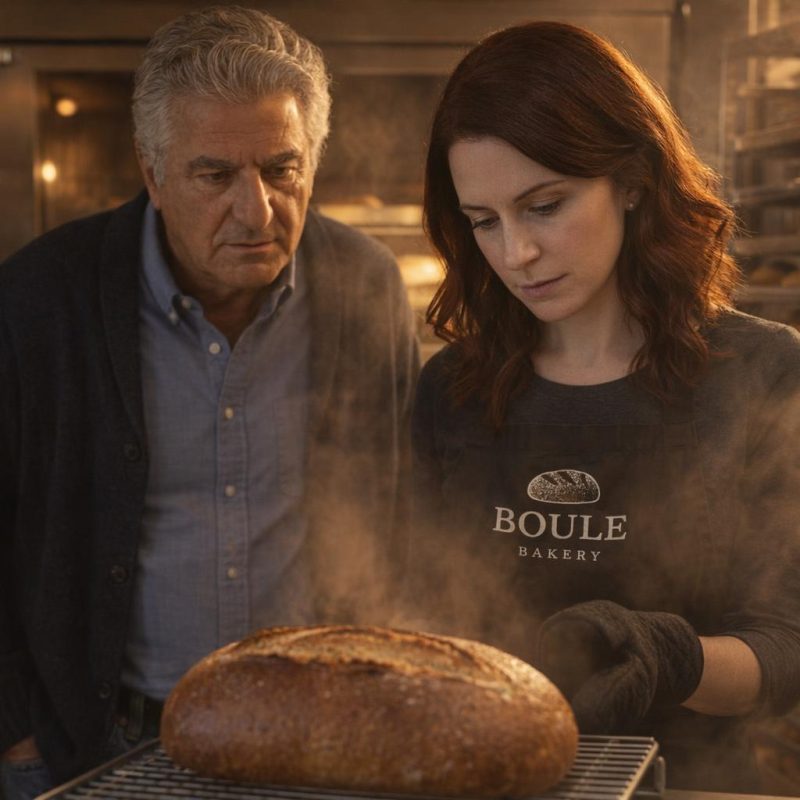 Image by RM AI
The Plumbing Leak
It started as a drip. Claire noticed it first — a small dark spot on the bathroom floor that she'd assumed was a splash from the sink. By the time I got there the next morning it had spread, and when I crouched down and looked under the vanity I could see the pipe fitting was weeping steadily at the joint. I called a plumber I'd used before, a reliable man who didn't pad his estimates, and he came out that afternoon. He looked at it for about two minutes and then stood up and told us the fitting was the least of it. The pipe running behind the wall had a hairline fracture, probably from age, and the moisture had been working its way into the drywall for longer than any of us had known. He pulled back a section of the baseboard and the drywall behind it came away soft in his hand — not just damp at the surface, but soft all the way through, the kind of damage that meant tearing out and starting over.
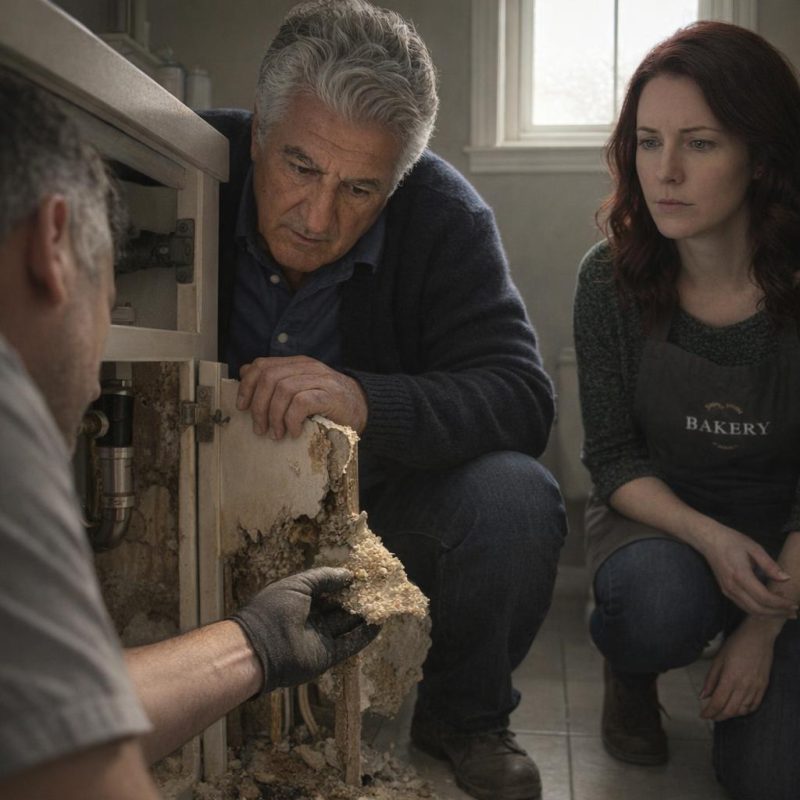 Image by RM AI
The Social Media Strategy
I'd watched Claire bake since she was nine years old, standing on a step stool to reach the counter. But this — this was something else entirely. She had her phone mounted on a little tripod she'd ordered online, and she was arranging a row of croissants on a slate board like she was setting a stage. She'd move one a quarter inch, step back, look at the screen, move it again. I asked her once why it mattered so much, and she looked at me like I'd asked why breathing mattered. 'People eat with their eyes first, Dad,' she said, and went back to adjusting. She had a whole system — certain filters, certain times of day to post, certain words she used in the captions that she said made people feel like they were already there. She'd answer comments within minutes, call followers by name, ask them what flavors they wanted to see next. I didn't understand half of it, but I understood results. She showed me the account one evening, scrolling through the numbers, and I watched the follower count tick upward in real time — then I checked again the next morning and it had jumped by several hundred overnight.
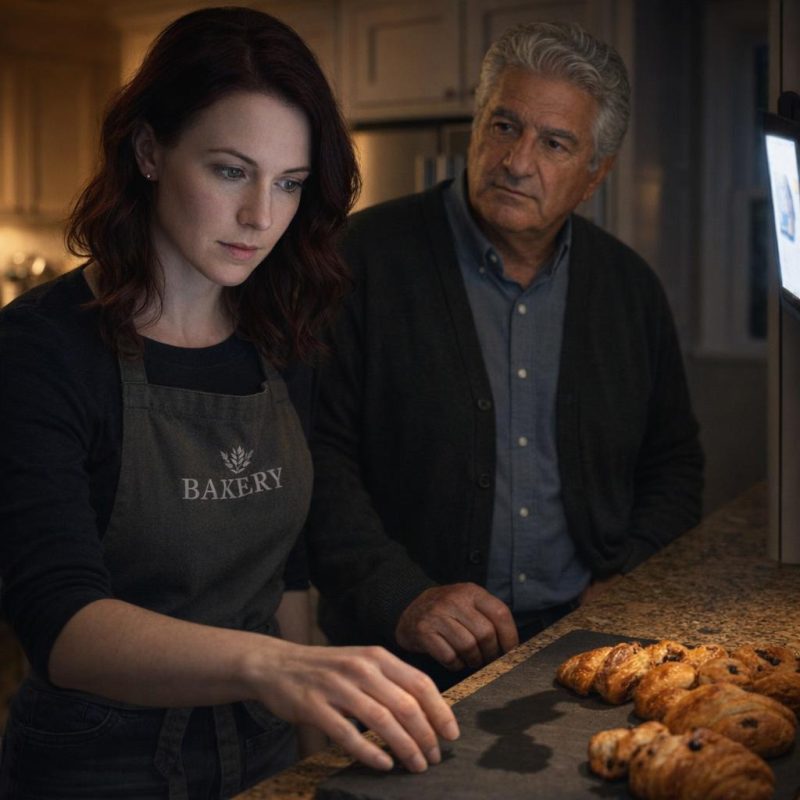 Image by RM AI
Main Street Buzz
I stopped into the hardware store on a Tuesday to pick up some weatherstripping, and before I'd even made it to the right aisle I heard the bakery come up in conversation between two men I barely knew. One of them was describing the croissants from Claire's social media page to the other like he'd already tasted them. I kept my head down and listened, and I felt something warm settle in my chest that I didn't quite have a word for. It happened again at the post office, a woman telling her friend she'd already marked the grand opening on her calendar. Claire had built something real out of nothing but photographs and captions and showing up online every single day, and the town had responded. I drove past the bakery that afternoon and saw a small cluster of people stopped on the sidewalk, peering through the front window at the interior. None of them knew me. None of them had any reason to. I sat in my truck for a moment before pulling away, watching the way they leaned in toward the glass, and I thought about how a thing you pour yourself into can take on a life of its own — how it can start to belong to everyone at once.
 Image by RM AI
The Soft Opening
The soft opening was on a Thursday evening, just friends and family and a handful of neighbors Claire had personally invited. I got there early out of habit, the way I always arrived early to things that mattered, and I stood near the back with a small plate of samples I kept refilling because I didn't know what else to do with my hands. The space looked better than I'd imagined it would — the lighting was warm, the cases were full, and Claire moved through the room like she'd been doing this for years. Ryan was there too, working the room in his easy, unhurried way, shaking hands and laughing at the right moments. I watched a woman take her first bite of one of the almond tarts and close her eyes, and I watched Claire notice it from across the room and smile — not the practiced smile she used for photos, but the real one, the one I recognized from when she was small and something had genuinely delighted her. People kept stopping her to say things, and she kept listening like each one was the first compliment she'd ever received. By the time I drove home that night, I wasn't worried anymore. The dream was working.
 Image by RM AI
The First Payment
We'd agreed on the fifteenth of each month, a number she'd chosen herself when we sat down and worked out the repayment schedule on a legal pad at my kitchen table. I hadn't pushed for a specific date — she'd been the one to name it, and I'd written it down. I'll be honest: I didn't spend much time thinking about it as the date approached. I trusted her, and trust has a way of making you stop watching the clock. I was sitting in the living room that evening, not doing much of anything, when my phone buzzed on the side table. I picked it up expecting nothing in particular — a weather alert, maybe, or a news notification. But it was my bank's app, and the deposit notification sat there on the screen, Claire's name attached to it, the amount exactly what we'd agreed on, arriving on the exact date she'd promised.
 Image by RM AI
Validation in Numbers
I called her the next morning, not because I needed to, but because it felt right. She picked up on the second ring, and her voice had that particular quality it gets when things are going well — easy, unhurried, like she had room to breathe. I told her I'd seen the deposit and that I was proud of her, and she laughed a little and said she'd had it scheduled for a week already, that she wasn't going to let that date slip. I believed her. I still do. There's a kind of pride that doesn't announce itself — it just sits in you quietly, like a stone that's been warmed by the sun. I'd spent a long time wondering if I'd made the right call, if the money was too much, if the risk was too great for a man my age with no real safety net left. But sitting there with the phone in my hand, listening to her sound confident and settled and genuinely happy, I felt the doubt go quiet. I'd known she could do it. That morning, she'd proven it.
 Image by RM AI
Early Business Challenges
I stopped by on a Friday morning about six weeks in, not to check on anything in particular, just because I was in the neighborhood and the coffee at the bakery was better than anything I made at home. The place was humming. There was a line out the door by eight-fifteen, and Claire was behind the counter coordinating her two staff members with the kind of calm efficiency that doesn't come from a book. I watched her redirect a new hire who'd started boxing the wrong order, correct it without breaking stride, and then turn to greet the next customer with a full smile. A supplier van pulled up mid-morning with a delivery that was short by two cases of butter, and I saw her jaw tighten for just a second before she got on the phone. By the time I finished my coffee she'd already arranged a secondary pickup from a restaurant supply place across town and adjusted the afternoon's production list on the whiteboard. She didn't ask for my opinion. She didn't need it. I left through the side door and walked back to my truck, and the steadiness she'd shown in there stayed with me the whole drive home.
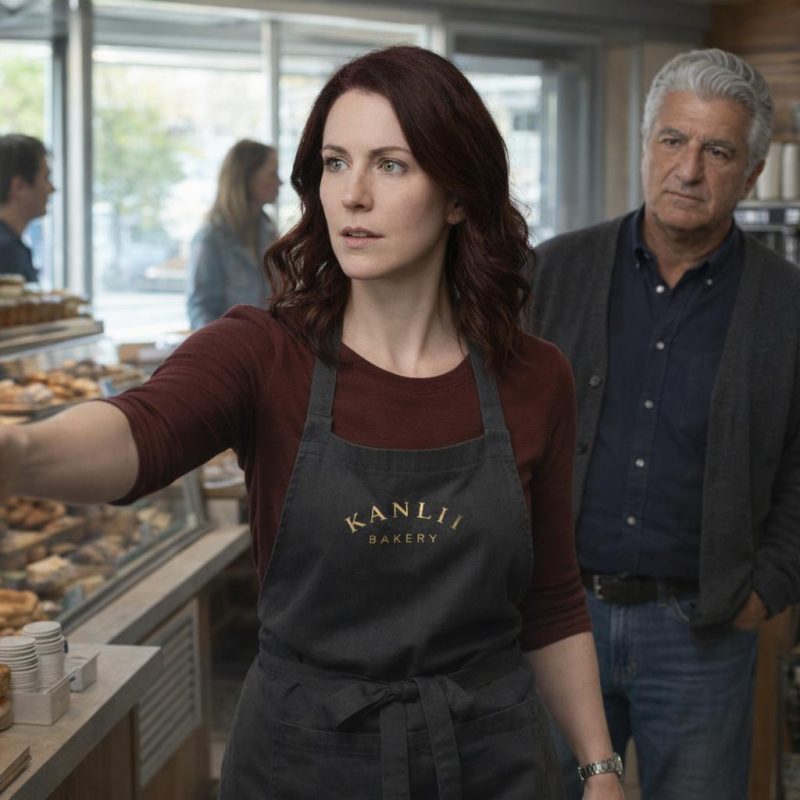 Image by RM AI
The Handyman's Routine
Saturday mornings had become mine in a way I hadn't expected. I'd show up around seven with my toolbox, before the real rush started, and Claire would have a coffee waiting on the prep counter without me asking. It had become a rhythm — I'd work through whatever small things had come up during the week, and she'd move around me prepping dough and portioning fillings, and we'd talk in the easy, interrupted way you talk when both people are doing something with their hands. That particular Saturday she'd mentioned a cabinet hinge in the kitchen that was pulling loose from the frame, and I'd fixed that in about ten minutes and moved on to tightening the hardware on the storage shelves. I was packing up my tools and thinking about heading out when she called me over to the front of the shop. She pointed to the main display case — the big one, the centerpiece of the whole room — and showed me where the lower hinge had started to separate from the glass panel, just enough that the door was sitting crooked in its frame. I crouched down and looked at it, and I could see right away that the mounting screws had stripped out of the wood.
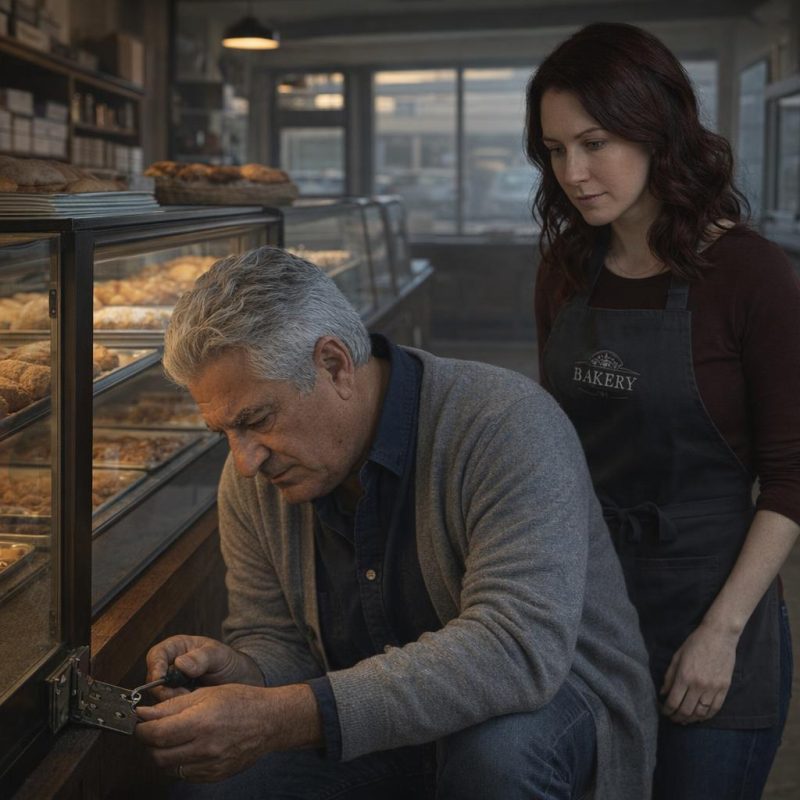 Image by RM AI
Young Entrepreneur Rising
I found it on a Wednesday, tucked inside the local paper I'd picked up at the gas station mostly out of habit. I almost missed it — I'd flipped past the front section and was heading for the crossword when her photo caught my eye on the business page. It was a good photo, the kind where she looked like exactly who she was trying to become: confident, capable, a little flour on her apron like she'd come straight from the kitchen. The headline called her a young entrepreneur breathing new life into Main Street, and the article went on for most of the page. They talked about her vision, her attention to detail, the way she'd built a following before she'd even opened the doors. I read it through twice, then a third time, slower. I clipped it out with the kitchen scissors and set it on the counter, smoothing the edges flat. She'd worked for this — every early morning, every adjusted recipe, every comment she'd answered on her phone at ten o'clock at night. The article didn't mention me, and I hadn't expected it to. I sat at the kitchen table with the clipping in front of me, and the pride I felt had no edges to it.
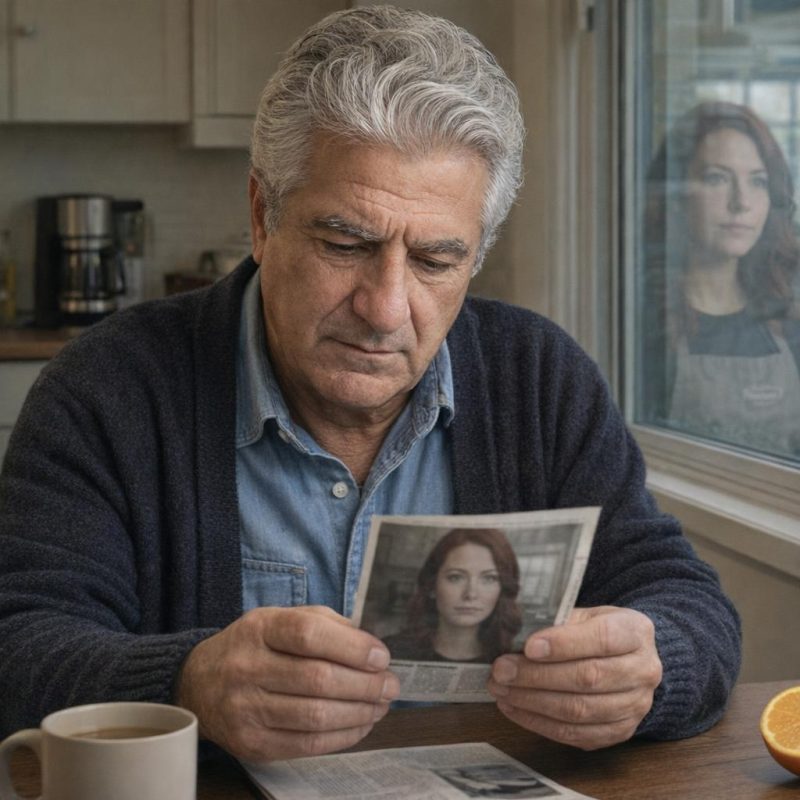 Image by RM AI
The Unnamed Contributor
I read it a fourth time that evening, slower than the third. The article was thorough — two columns, a sidebar about her signature items, a quote from a neighbor who'd watched the space sit empty for two years. Claire came across exactly as she'd worked to come across: self-made, driven, someone who'd scrimped and saved and bet on herself. The piece mentioned her culinary training, her market research, the months she'd spent perfecting her sourdough starter. What it didn't mention was any family support. No mention of a loan. No mention of anyone helping her get the doors open. I set the clipping down and reminded myself that this was what we'd agreed to. She'd been clear about it from the beginning — she didn't want people thinking she'd had a leg up. She wanted to stand on her own in the public eye, and I'd told her I understood that. I did understand it. I folded the article carefully and slid it back under the fruit bowl where I'd been keeping it. Then I picked it up again and read through it one more time, my finger moving slowly down the column, pausing at every paragraph — looking for my name, or any word that might stand in for it.
 Image by RM AI
Accepting Anonymity
I thought about it for a few days after, the way you turn a small stone over in your hand without quite knowing why. The article had done its job — it told the story Claire wanted told, and that story was hers to tell. I'd made my peace with that before the ink was even dry, or at least I thought I had. The loan was private. We'd shaken on it, more or less. She'd wanted to build something people would respect on its own merits, not because her father had written a check. I understood that impulse. Lord knows I'd spent enough years doing work that nobody noticed, and I'd never needed a plaque for it. There's a kind of satisfaction in knowing what you contributed even when nobody else does. I told myself that was enough. I told myself it more than once, standing at the kitchen sink, watching the yard go gray in the early evening. The money was out there doing what it was supposed to do. The bakery was real. Claire was building something. My name didn't need to be on the wall for any of that to be true, and I settled into that thought like it was a chair I'd chosen for myself.
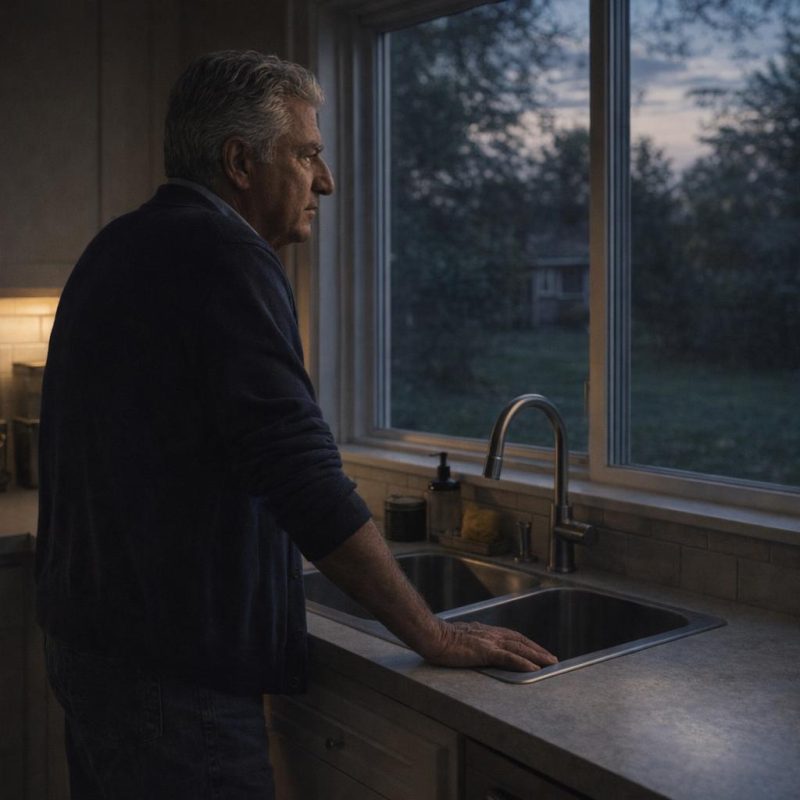 Image by RM AI
Payment Number Two
The second payment came in on a Tuesday, same as the first — same amount, same quiet efficiency, like a clock ticking over. I'd been checking the account every couple of days as the date approached, not out of worry exactly, more out of habit. When I saw the deposit sitting there that morning, something in my chest loosened a little. There's a difference between trusting someone and having that trust confirmed, and this was the confirmation. The arrangement was working. Claire was managing her books, keeping her word, running the place the way she'd said she would. I sent her a quick text — just told her the deposit had come through and that I appreciated it. She replied within a few minutes: a thank you and a small red heart. That was it, and that was fine. We weren't the kind of family that needed a lot of words for things. I set my phone down on the counter and made myself a second cup of coffee. The bakery had been open just over a month, and already the rhythm of it felt steady and real. I pulled up my banking app one more time, and there it was — the number sitting exactly where it was supposed to be.
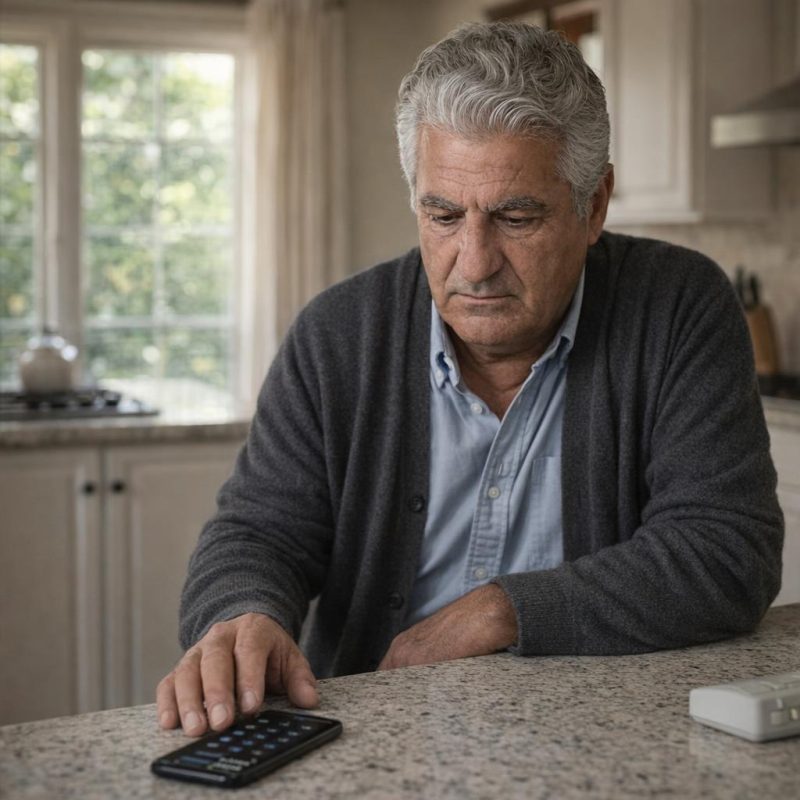 Image by RM AI
Grand Opening Preparations
She had me there by eight in the morning, two days before the VIP preview, and the place was already humming. Claire moved through the bakery like she was conducting something — clipboard in one hand, phone in the other, stopping to redirect a delivery driver, then pivoting to approve a table arrangement before the sentence was even finished. Ryan was there too, quieter than she was, methodically shifting chairs and unboxing centerpieces without being asked. I found my own rhythm pretty quickly: a loose hinge on the display case door, a baseboard that had pulled away from the wall near the entrance, a light fixture in the back hallway that flickered when you walked past it. Small things, the kind that nobody notices until a room full of important people is standing in them. Claire thanked me twice without looking up from her clipboard, which was about right. By late afternoon the place had transformed. The cases were polished, the tables were dressed, the smell of a test batch of pastries had settled into every corner of the room. I stood near the front window for a moment, watching the last of the afternoon light come through the glass and fall across the counter, and the whole place felt like something that had been waiting a long time to become exactly this.
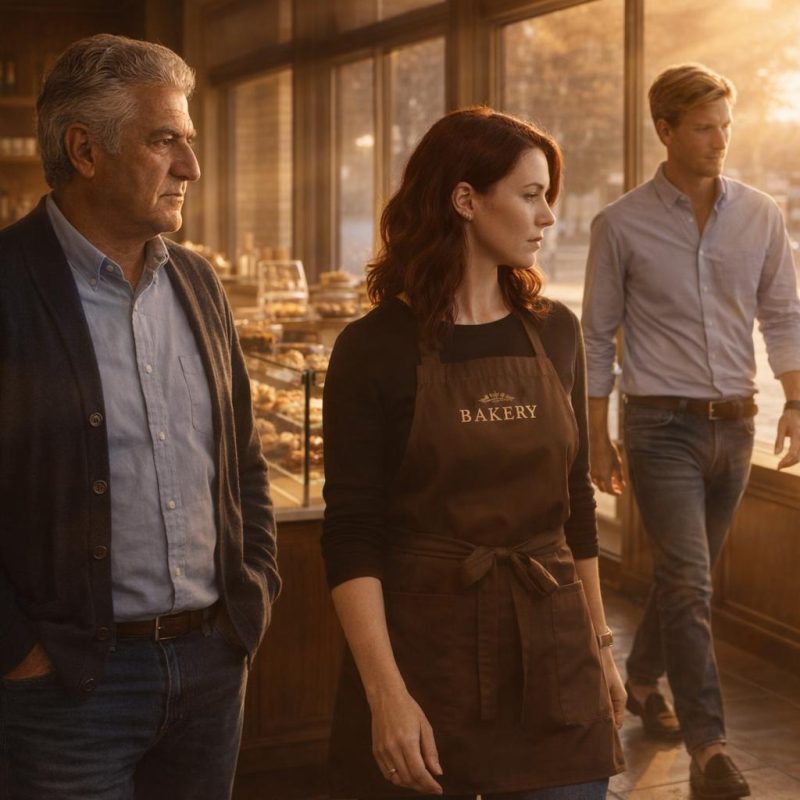 Image by RM AI
The Guest List
She showed me the guest list on her phone while we were taking a break, both of us leaning against the prep counter with cups of coffee going cold in our hands. I scrolled through it slowly. The mayor was confirmed. Three members of the business council. A food writer from the regional paper. Half a dozen local bloggers with followings I couldn't quite picture but that Claire clearly could, because she knew each one by name and what they tended to post about. There was a woman from the chamber of commerce, a couple of restaurant owners from the next town over, someone she described only as a very connected person in local development. I handed the phone back and didn't say much for a moment. I'd imagined a nice opening — some neighbors, maybe a few of her regulars, a ribbon and a photograph. I hadn't imagined this. She'd been building toward something much larger than what I'd pictured, working connections I hadn't known she had, and the list in my hand was the proof of it. I looked around the bakery — at the pressed linens, the hand-lettered menu boards, the careful arrangement of every small detail — and let the full weight of what she'd put together settle over me quietly.
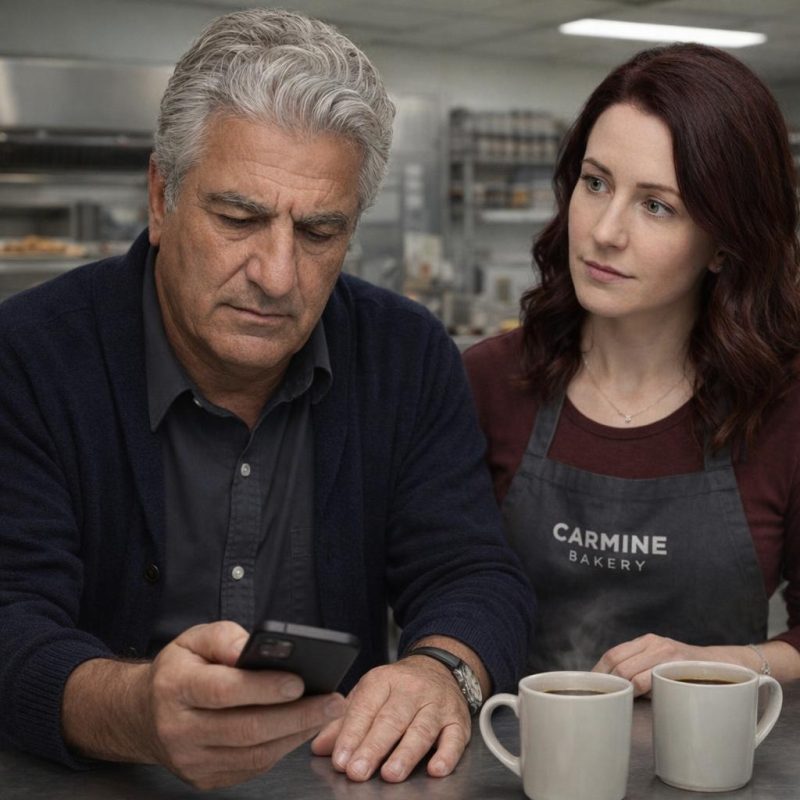 Image by RM AI
Influencers and Investors
I was on my knees behind the counter the next morning, tightening a bracket on one of the lower shelves, when I heard her voice shift into the tone she used for calls that mattered. She'd stepped into the back hallway, but the acoustics in that space carried more than she probably realized. I caught fragments — something about the opening, something about the coverage she was expecting, and then the word investors, said with a kind of careful emphasis, the way you say a word when you want the person on the other end to hear it land correctly. I didn't catch the full sentence. I went back to the bracket, turned the screwdriver another half rotation. Claire was smart about the business side of things, always had been, and it made sense that she'd be thinking ahead to what came after the opening — expansion, maybe a second location, outside backing to grow the brand. That was the kind of thinking that separated people who opened one bakery from people who built something lasting. I set the screwdriver down and listened for another moment, but her voice had dropped and I couldn't make out the words anymore. Then she said the word investors one more time, and I heard something else follow it — a name I couldn't quite catch before the hallway went quiet.
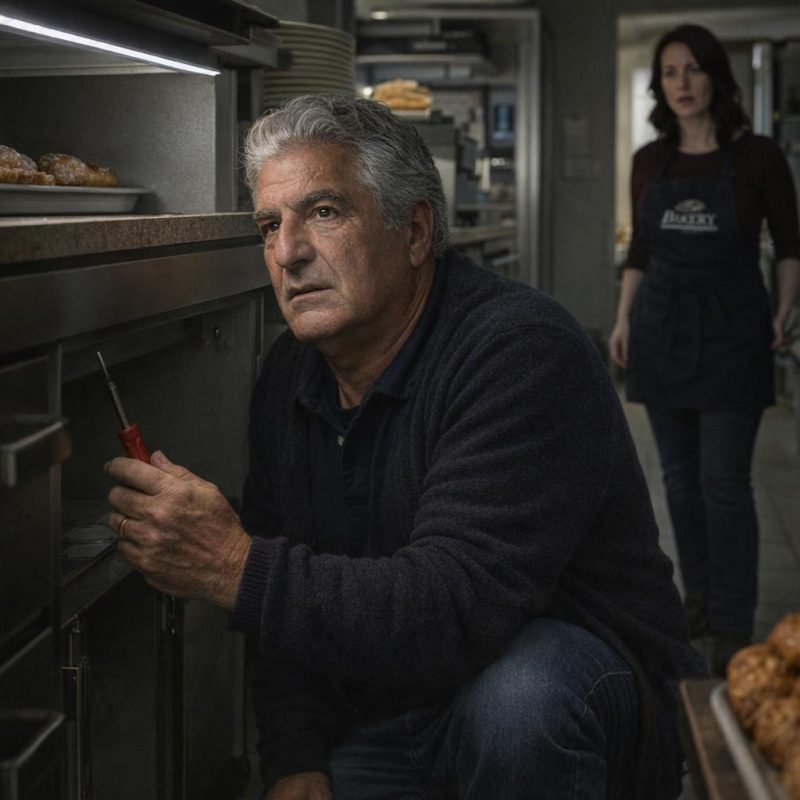 Image by RM AI
The New Suit
I hadn't bought a new suit in probably twelve years. The one I'd worn to Ryan and Claire's wedding still hung in the back of the closet, but I'd tried it on the week before and the jacket pulled across the shoulders in a way that made me look like I was bracing for something. So I drove to the department store on a Thursday afternoon and let a young salesman with a measuring tape talk me through my options. He was patient about it, didn't make me feel like I was wasting his time, and eventually we landed on something in a dark charcoal gray that he said was versatile and I said was fine. I tried it on in the fitting room under the fluorescent light and stood there for a moment looking at the man in the mirror. The jacket fit properly. The trousers had a clean line. I looked like someone who belonged at an event like this, which was the point, even if I didn't quite feel like it yet. I bought it without deliberating too long, added a tie that the salesman suggested, and drove home with the garment bag laid flat across the back seat. That evening I hung it on the bedroom door and left the lamp on low, and the unfamiliar shape of it in the quiet room was the last thing I saw before I turned in.
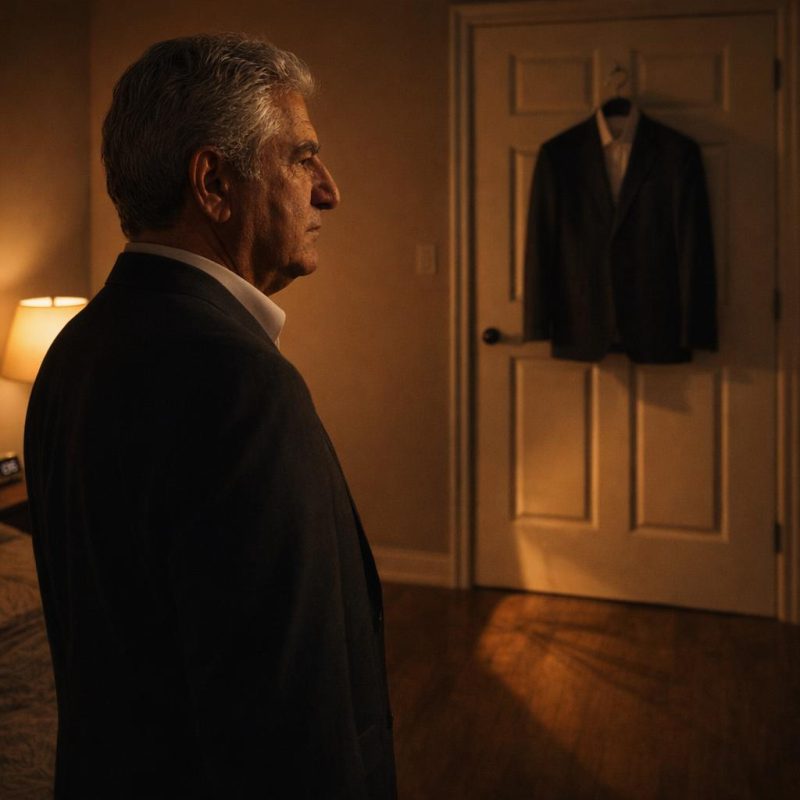 Image by RM AI
Final Touches
I was there by seven the morning before the opening, before Claire, before Ryan, before anyone. I had a key she'd given me weeks earlier for exactly this kind of thing, and I let myself in and stood for a moment in the dark before I found the light switch. The place was nearly perfect already — she'd done most of the final arranging the night before — but there was still a short list she'd texted me: a wobbly leg on one of the VIP tables, a scuff on the baseboard near the door that needed touching up, a small framed print that had gone slightly crooked on the wall above the window seat. I worked through the list methodically, the way I'd always worked, one thing at a time. Ryan arrived around nine and spent an hour arranging the seating cards and adjusting the small floral pieces on each table without saying much. Claire came in at ten, walked the room slowly, checked every surface and corner, and made two small adjustments that I wouldn't have noticed. Then she stood in the center of the room and went still for a moment, and I watched from near the doorway as she took it all in. I'd spent months getting to this morning — the money, the work, the early calls, the quiet worry — and standing there in that finished room, all of it felt exactly like enough.
 Image by RM AI
Edison Bulbs and Glass Cases
I went back that evening, a few hours before the VIP preview was set to begin, and I almost didn't recognize the place. The sun was dropping low outside and the light coming through the front windows had gone amber, and someone — Claire, I assumed — had switched on the Edison bulbs strung along the ceiling. They cast everything in this warm, honeyed glow that made the whole room feel like it belonged in a different world than the one I'd been living in. The glass cases along the counter were filled now, really filled, with rows of pastries arranged so carefully they looked less like food and more like something you'd find behind velvet rope in a jewelry store. Croissants with a lacquered shine. Little tarts with fruit fanned out in perfect spirals. Macarons stacked in graduated towers of color. Claire was adjusting a small chalkboard sign near the register and Ryan was straightening a stack of branded paper bags by the door, and neither of them had noticed me come in yet. I stood just inside the entrance and didn't say anything. I'd spent months imagining what this place would look like when it was finished, but standing there in that light, I understood that I hadn't imagined it anywhere close to this.
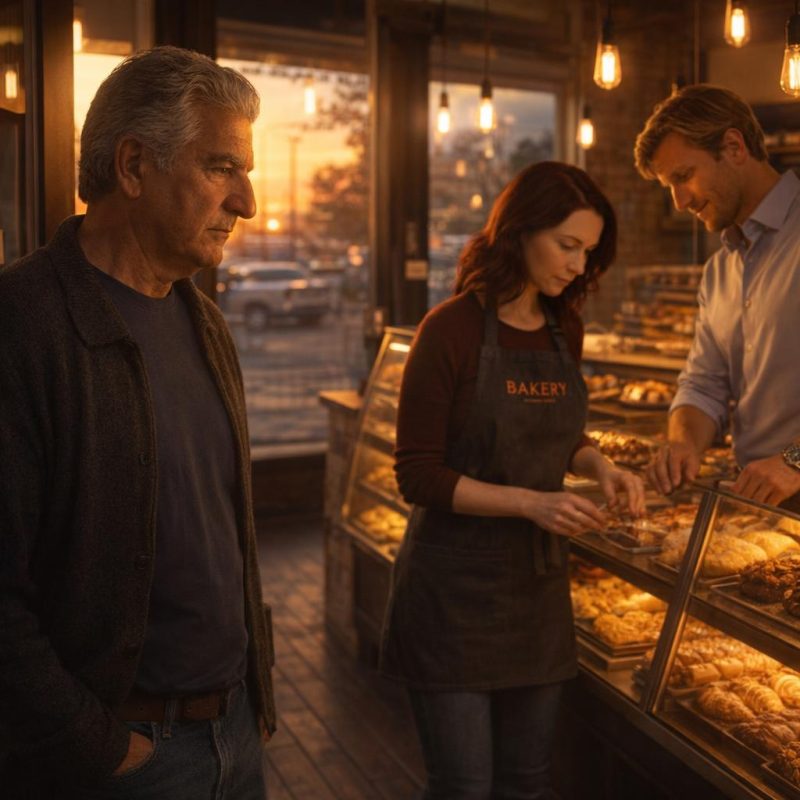 Image by RM AI
Background Plans
Claire noticed me eventually and came over, and we talked for a few minutes about the timeline for the evening — when the first guests were expected, where she wanted the staff to position themselves, small logistics. She was focused and calm in a way that made me proud. At some point I told her I was planning to stay near the back of the room during the event, out of the way, and she nodded like that made sense without really responding to it. I'd already made up my mind about it before I even arrived. This was her night, her room, her crowd. The people coming through that door were her future — investors, local figures, the kind of connections that could carry a small business from a good opening to a real institution. The last thing she needed was her father hovering at her elbow, making introductions awkward or pulling her attention sideways. I was there to watch her succeed, not to be part of the success. There's a difference, and I knew which side of it I belonged on. I found a spot near the far wall, close enough to see everything, far enough to stay out of it, and I settled in.
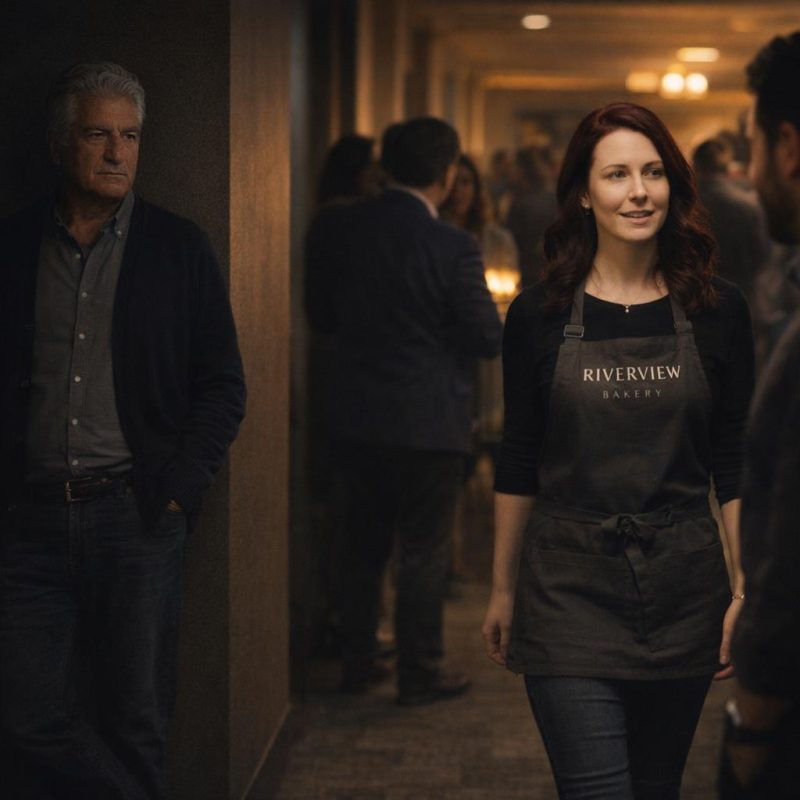 Image by RM AI
The Day Before
I woke up the morning before the grand opening and lay in bed for a while without reaching for my phone. I was thinking about a Tuesday in early spring, drizzly and gray, when Claire had called me out of nowhere and said she wanted to open a bakery. I remembered exactly where I was standing — in the kitchen, still in my work clothes, a cup of coffee going cold on the counter. I remembered the way her voice sounded, that mix of excitement and nerves she'd had since she was a kid whenever she was about to ask for something big. I thought about the empty storefront, the contractor walk-throughs, the permit delays, the weekend I spent painting the back hallway because the quote for a painter came in too high. I thought about the spreadsheets and the supply orders and the early morning phone calls when something wasn't right and she needed to talk it through. All of it had led to tomorrow. I got up, made coffee, and sat at the kitchen table with the morning quiet around me. I wasn't anxious. I wasn't second-guessing anything. Tomorrow she would open the doors, and everything I'd put into this would be standing right there in that room with her.
 Image by RM AI
Elite Arrivals
I wore the suit I'd bought for Ryan and Claire's wedding three years earlier. It still fit, more or less, though I'd had to take it to a tailor for a minor adjustment at the shoulders. I felt self-conscious in it from the moment I walked through the door. The guests who were already there when I arrived were the kind of people who wore suits like that every day without thinking about it — tailored things in fabrics I couldn't have named, shoes that probably cost more than my monthly car payment. The mayor arrived about twenty minutes in and the room shifted slightly, the way rooms do when someone important enters. Claire greeted her near the door with a warmth and ease that I found genuinely impressive. They embraced like they'd met before, which maybe they had — I didn't know all of Claire's connections anymore. Business owners, local figures, a few people I recognized from the newspaper, all of them moving through the room with the comfortable confidence of people who belonged exactly where they were. I found a spot near the window and held my coffee cup and watched. I didn't feel unwelcome, exactly. It was more that the room had its own gravity, and I wasn't part of it.
 Image by RM AI
Watching Her Work the Room
I watched Claire work the room and I want to be honest — she was good at it. Better than I'd expected, and I'd expected a lot. She moved from group to group without any of the hesitation I remembered from when she was younger, the way she used to go quiet at family gatherings when the conversation turned to things she didn't know. That was gone. She shook hands and leaned in and laughed at the right moments and asked questions that made people stand up a little straighter. Ryan stayed close but not too close, the two of them moving through the crowd with an ease I hadn't seen before. I felt proud watching her. Genuinely proud, the kind that sits warm in your chest and doesn't ask for anything back. But there was something else underneath it, something I couldn't quite name. She seemed so at home in this room, with these people, in a way that felt slightly separate from anything I recognized in her. I told myself that was a good thing. That was the whole point — she was building something, becoming someone. I kept watching as she crossed the room toward a cluster of well-dressed guests near the far window, and her laugh carried back to me, easy and bright.
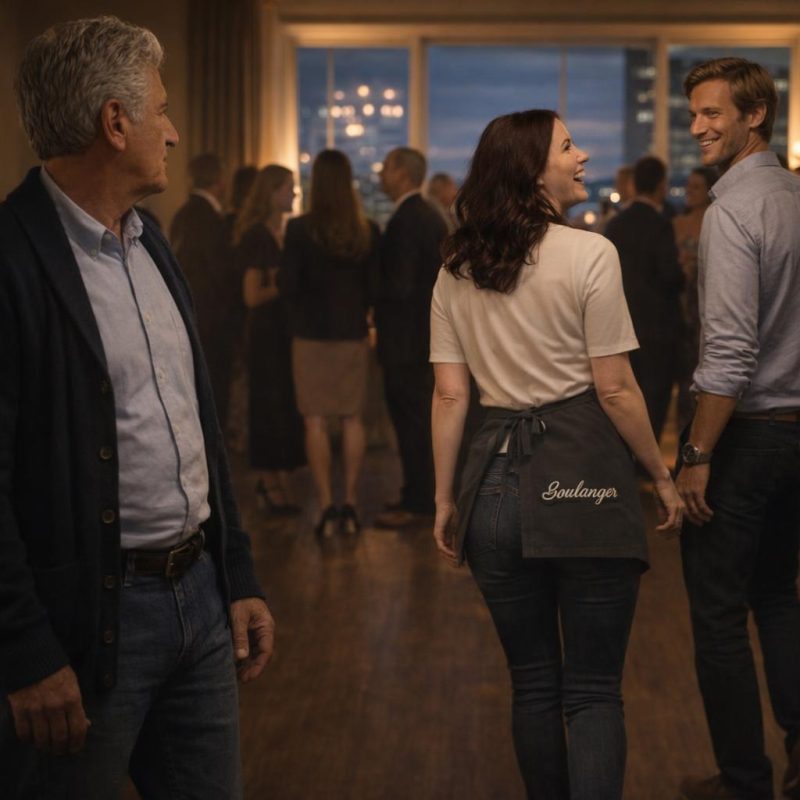 Image by RM AI
The Espresso Machine
I'd refilled my coffee twice by then and was starting to feel like a piece of furniture. The espresso machine was near the back counter, and I'd claimed a spot beside it mostly because it gave me something to do — waiting for a refill, adjusting my cup, small gestures that made standing alone look intentional. Nobody came over to talk to me. A few people made brief eye contact and moved on, the way you do at a party when you can't place someone's face. I didn't blame them. I wasn't anyone they needed to know. Across the room I could see Claire surrounded by a small cluster of guests, all of them leaning in slightly, the way people do when they're genuinely interested in what someone is saying. Ryan was nearby, talking to a man in a dark blazer I didn't recognize. The room was full and warm and loud with the kind of conversation that has momentum behind it, and I was standing at the edge of all of it with a ceramic cup in my hand. I wasn't miserable. I want to be clear about that. But there was a particular kind of quiet that came with being in a crowded room where no one knew your name, and I felt it settle over me like something familiar.
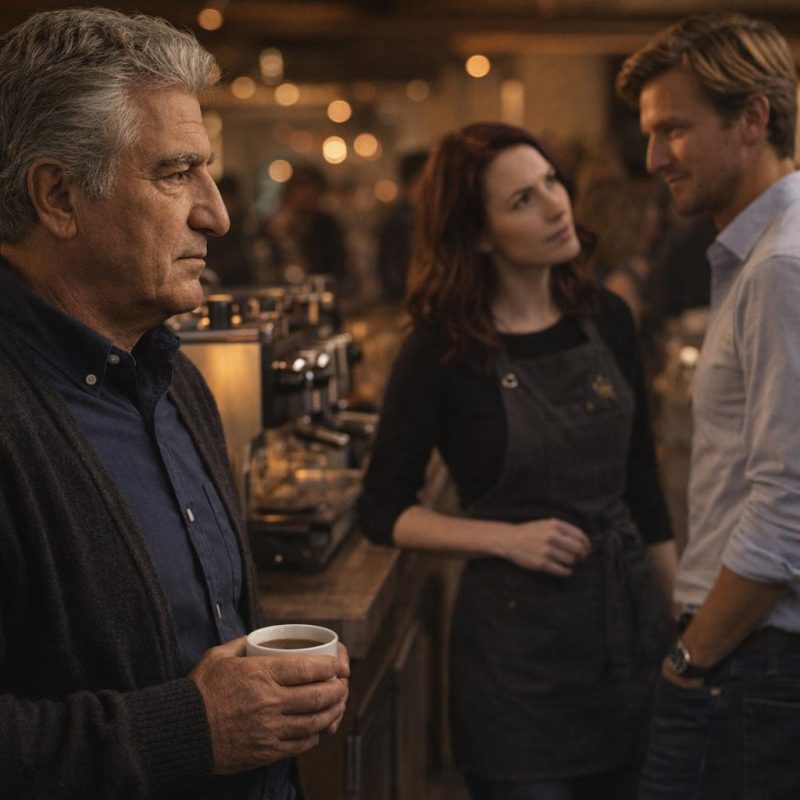 Image by RM AI
Questions About Capital
I was on my third cup of coffee and had started paying less attention to the room when I heard Claire's voice rise slightly above the general noise — not loud, just distinct, the way a voice you know cuts through a crowd. I turned and saw her standing with a small group near the center of the room. The Business Council Head was there, a man I'd seen in the local paper a few times, and a couple of others I didn't recognize. The mayor was nearby, half-turned toward the same conversation. I couldn't hear everything, but I caught enough to understand the shape of it — they were asking Claire about the bakery, about how she'd gotten it off the ground. Someone used the phrase startup capital, and I heard it clearly because it was the kind of phrase that lands differently when you're the one who provided it. Claire smiled and tilted her head slightly, the way she does when she's about to say something she's thought through. I shifted my weight and held my cup a little tighter. I'd heard her answer this kind of question before, the vague version about savings and planning and taking a leap. I waited to hear which version she'd give tonight.
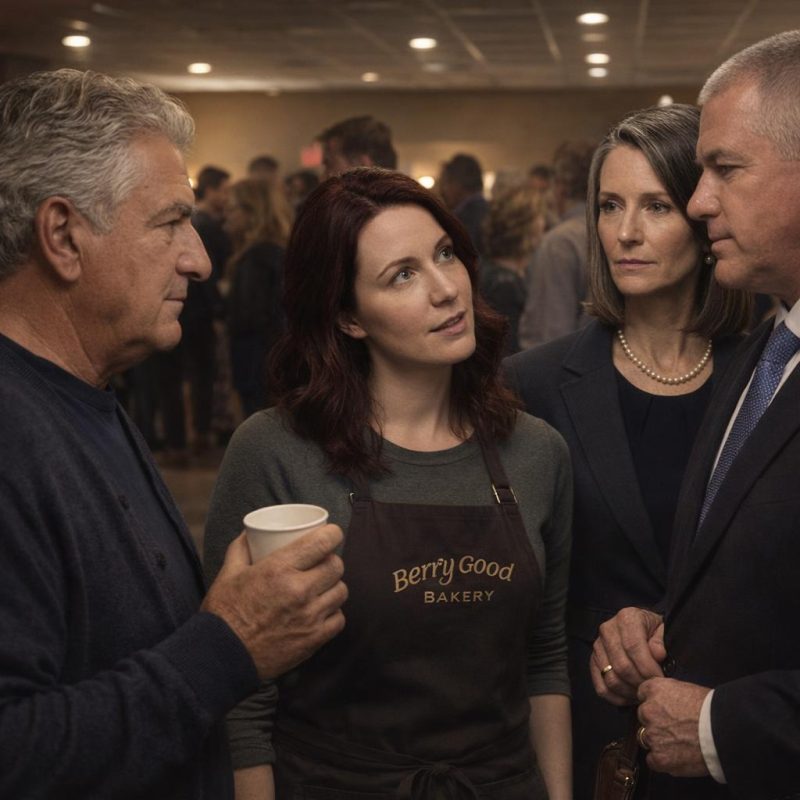 Image by RM AI
The Wrong Name
She said she'd been lucky to have family support behind her from the beginning. That part I expected. Then she said she wanted to take a moment to acknowledge the person who had really made it possible — her father-in-law, Marcus Whitfield, who had believed in her vision and stepped in as the primary angel investor when it mattered most. She said something about Marcus understanding the value of investing in local commerce, in family, in the kind of business that builds a community. I heard her say his name twice. I saw Marcus across the room — I hadn't even noticed him arrive — standing near the far wall with a glass in his hand, nodding with the measured grace of someone receiving something they'd expected. The Business Council Head shook his hand. The mayor smiled in his direction. And I stood beside the espresso machine with my coffee going cold, the name Marcus Whitfield still hanging in the air where I'd expected to hear something else entirely.
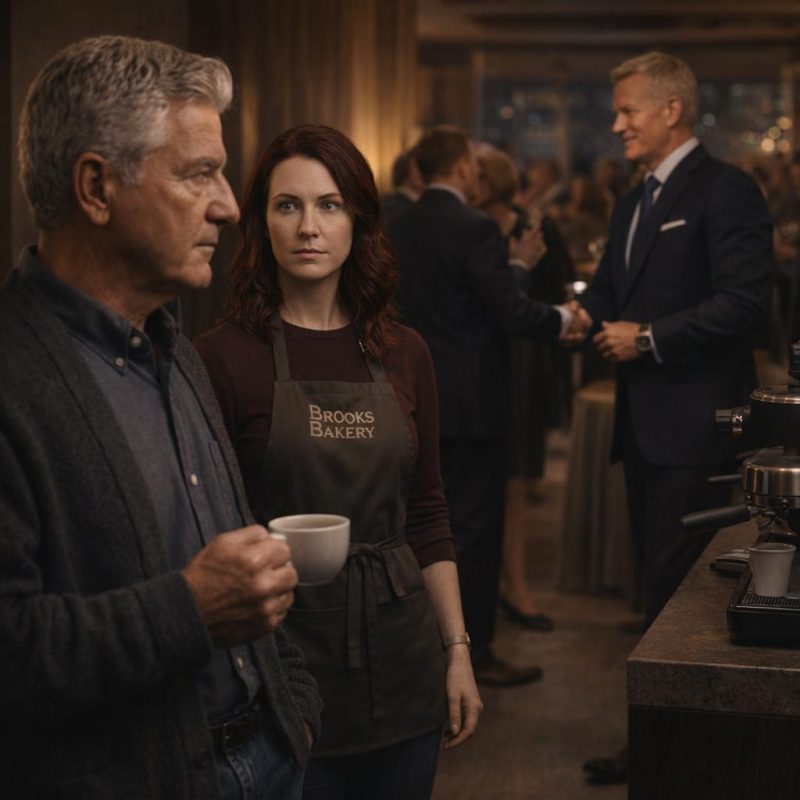 Image by RM AI
The Question of Capital
I was still standing near the espresso machine when the Business Council Head turned toward Claire with the kind of smile that meant he had a real question coming. He'd been working the room all evening — shaking hands, nodding at the display cases, making the right noises about community investment. But now he squared up to her directly and asked how a first-time bakery owner managed the upfront capital requirements in an economy like this one. He said something about commercial leases, equipment costs, the gap between a dream and a balance sheet. It was a pointed question, the kind that gets asked in front of an audience because the answer matters to everyone listening. Claire smiled and touched her hair the way she does when she's composing herself. The mayor tilted her head slightly. Marcus stood a few feet away, swirling whatever was in his glass. I set my coffee cup down on the counter behind me and waited, the question still hanging in the warm air of the room.
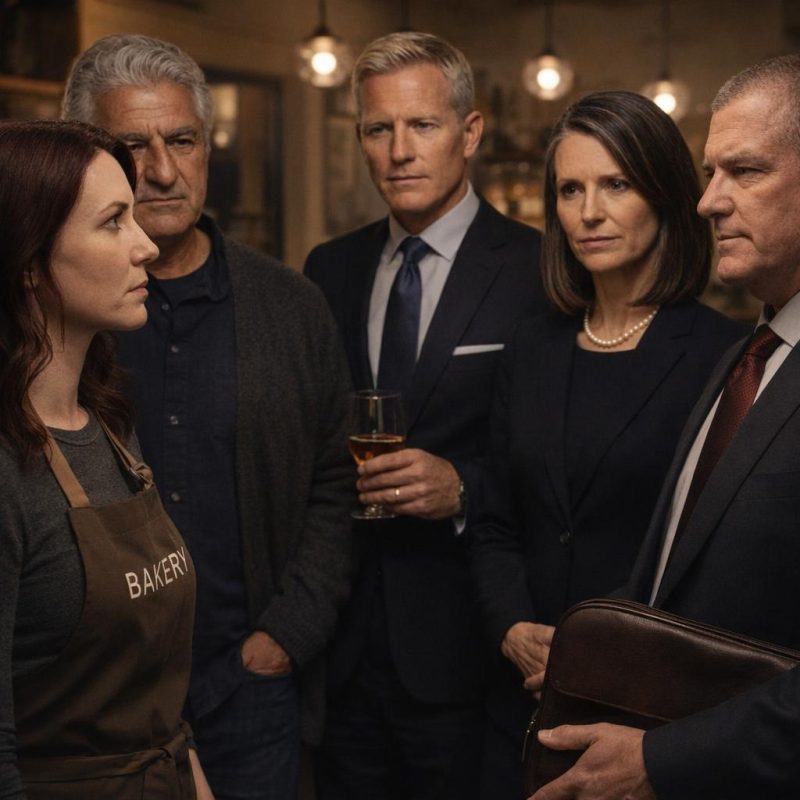 Image by RM AI
The Rehearsed Moment
I'd heard Claire answer versions of that question before — at the farmers market pop-up, at the small business workshop she'd attended last spring. She had a line she liked. Something about disciplined saving over years, about keeping overhead lean, about private arrangements that let her move at her own pace. It was vague enough to sound modest and specific enough to sound credible. She'd practiced it until it came out smooth. I knew the rhythm of it. I could have said it alongside her. She took a breath — that small, deliberate breath she takes before she's about to perform composure — and the group around her leaned in just slightly, the way people do when they sense something worth hearing is coming. The Business Council Head had his hands clasped behind his back. The mayor was still smiling. I stood where I was, already half-listening for the familiar shape of the answer I expected, the room quiet around the moment before she spoke.
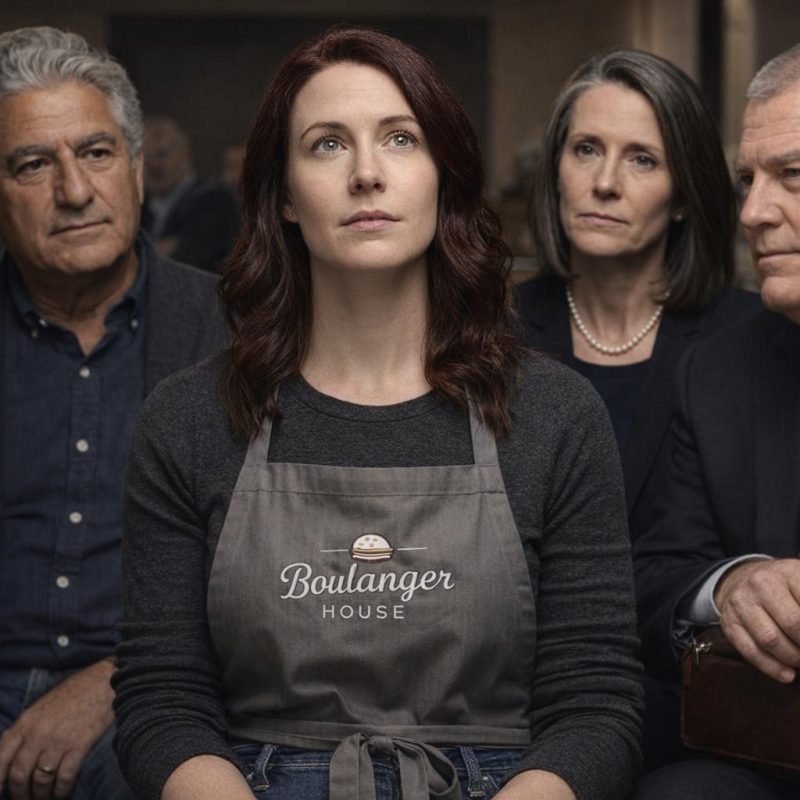 Image by RM AI
Fortune and Family
Claire opened her mouth and the first few words came out the way I expected — measured, warm, the practiced cadence of someone who has told a story enough times to make it feel spontaneous. She said she'd been incredibly fortunate. That part fit. Then she said she'd had real family support behind her from the very beginning. I felt something shift in my attention, a small tightening I couldn't quite name. It wasn't the word she usually used. She usually said private arrangements, or careful planning, or something that kept the details at arm's length. Family support was different. It was specific in a way her usual answer wasn't, and it pointed somewhere. The Business Council Head nodded encouragingly. The mayor's smile held steady. I straightened slightly where I stood, my coffee forgotten on the counter, waiting to hear whose name was about to follow hers.
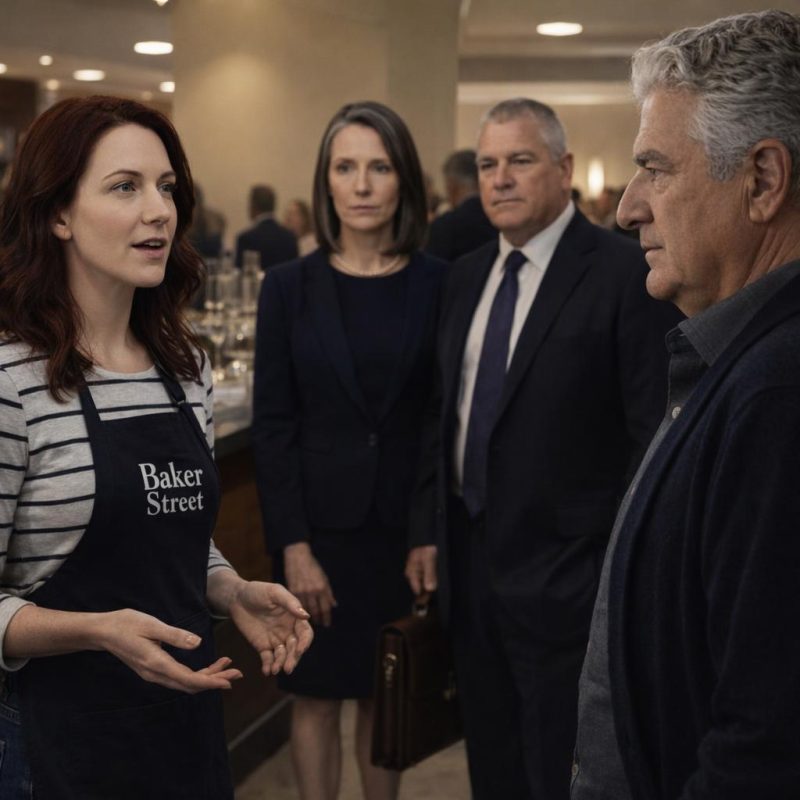 Image by RM AI
The Angel Investor
She kept going, her voice steady and warm, the kind of warm that fills a room without effort. She said she'd been fortunate to have a true believer in her corner — someone who understood what it meant to invest in local commerce, in family, in the kind of business that puts down real roots in a community. She said the startup capital hadn't come from a bank. She said it had come from an angel investor who saw the vision before anyone else did. I felt my chest go still. Then she said his name. Marcus Whitfield, her father-in-law, who had stepped in as the primary investor when it mattered most. She said it clearly, without hesitation, the way you say something you've decided is simply true. The Business Council Head nodded. The mayor smiled. And I stood beside the espresso machine with my hands at my sides, hearing a name that was not mine.
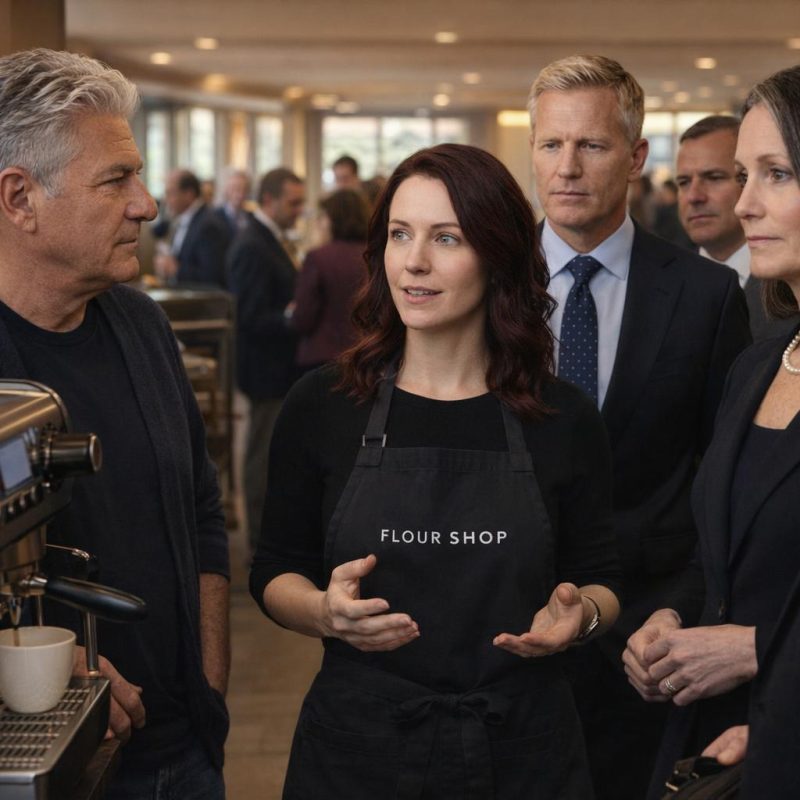 Image by RM AI
The Man Who Took Credit
I looked across the room at Marcus. He was standing near the far wall with a champagne flute in one hand, his silver hair catching the warm overhead light, his suit the kind that doesn't wrinkle. When Claire said his name, something moved across his face — not surprise, not discomfort, just a slow, composed settling, like a man receiving something he'd been expecting for a while. He nodded once, solemnly, the way you nod when a room full of people turns toward you and you want to appear humble about it. The group around him murmured. The Business Council Head said something appreciative. The mayor glanced in his direction with that practiced warmth she carries everywhere. Marcus didn't correct anything. He didn't look toward me. He just stood there holding his glass, accepting it all with the quiet grace of a man who had earned every word of it. And then he nodded again, slow and certain, and I felt something go cold in my chest that didn't warm back up.
 Image by RM AI
The Man Who Never Saw a Flour Bag
I kept my eyes on Marcus while the room buzzed around him. I tried to think of a single time he had set foot inside this bakery before tonight. I couldn't find one. I thought about the construction phase — the weeks Claire and I had spent measuring walls, hauling equipment, arguing over the placement of the display cases. Marcus hadn't been there. I thought about the flour bags stacked in the back room, the industrial mixer we'd driven two hours to pick up secondhand, the deposit check I'd written from the account I'd been building since Claire was in middle school. Marcus hadn't contributed to any of it. What I knew about him was car dealerships — three of them, spread across the county — and the kind of confidence that comes from never having had to explain where the money came from. The Business Council Head crossed the room toward him, hand extended, and Marcus took it with a firm, easy grip, the two of them shaking hands like men who understood each other perfectly.
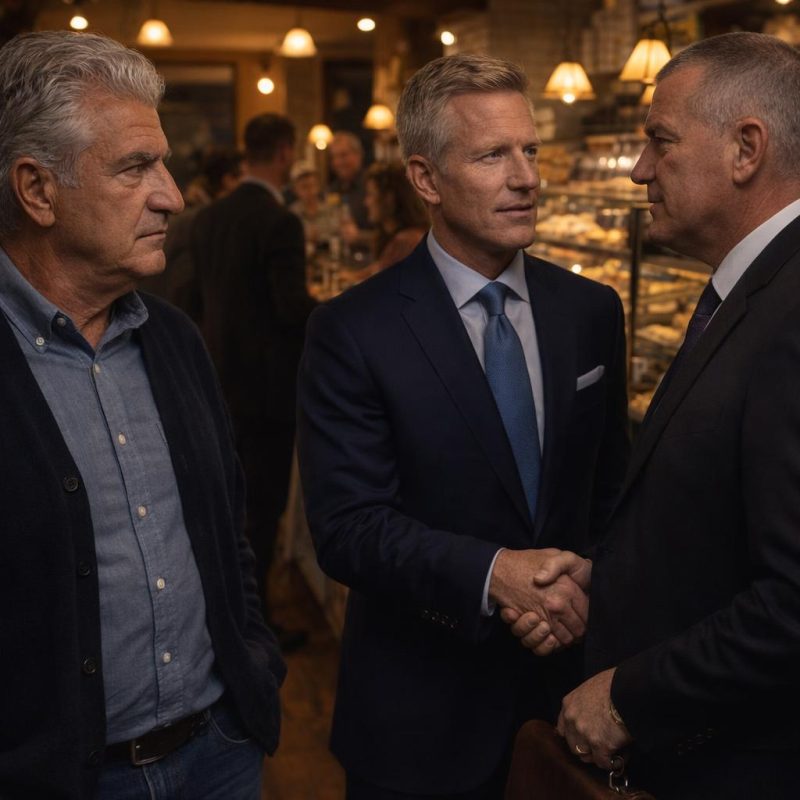 Image by RM AI
The Real Reason for Secrecy
I stood there and let it settle, the way you let cold water settle after you've dropped something into it. Claire had asked me to keep the loan between us. She'd said it was about independence, about not wanting people to think she'd had an easy path. I'd respected that. I'd told myself it made sense, that she was proud and didn't want the story to be about her father's money. But standing in that room, watching Marcus accept a handshake he hadn't earned, I turned the request over differently. She hadn't wanted secrecy to protect her independence. She'd wanted secrecy to protect the image — the one where she was already part of the Whitfield world, already operating at that level, already the kind of woman whose father-in-law believed in her enough to write the check. My money was the foundation she'd built on. His name was the story she wanted told. The two things had never been meant to occupy the same room, and I understood now, with a quietness that felt heavier than anger, exactly which one of them she'd always planned to keep out of sight.
 Image by RM AI
Walking Out
I picked up my coffee cup from the counter, looked at it for a moment, and set it back down. I didn't finish it. I didn't look for Claire. I didn't cross the room toward Marcus or the Business Council Head or the mayor. I just moved, quietly, toward the door — the same door I'd helped Claire prop open on the first day we brought equipment in, when the space still smelled like fresh paint and possibility. Nobody turned. Nobody called my name. The room was full of voices and warm light and the smell of sugar, and I walked out of all of it without a word. Outside, the evening had gone drizzly, a fine mist settling over the parking lot the way it had on the Tuesday morning Claire first called me with the idea. I stood on the sidewalk for a moment with my hands in my pockets, the bakery light glowing gold through the front window behind me, and the quiet of the street settled around me like something I had always known was coming.
 Image by RM AI
The Heavy Silence
I got into my car and sat there for a moment before I even turned the key. The bakery light was still glowing behind me in the rearview mirror, warm and gold, like nothing had happened in there at all. I pulled out of the lot slowly, and the rain started almost immediately — not a downpour, just that steady, patient kind that doesn't let up. The wipers went back and forth and I let them do their work without turning on the radio, without calling anyone, without doing anything except keeping my hands on the wheel and my eyes on the road. There was nothing to say out loud anyway. The words I might have used were somewhere behind my sternum, packed in too tight to move. Every stoplight felt like it lasted ten minutes. Every familiar street looked like it belonged to someone else's town. I kept thinking I should feel something sharper — anger, maybe, or the urge to turn around — but there was just this weight, sitting across my chest and shoulders like a wet coat I couldn't take off. I turned onto my street. I pulled into the driveway. I cut the engine, and I sat there in the dark with the rain tapping the roof and didn't move.
 Image by RM AI
The Weight Settling
I didn't turn on a single light when I came inside. I just walked through the dark to my chair — the old one by the window, the one I've sat in for twenty years — and I lowered myself into it like I was made of something breakable. I didn't take off my jacket. I didn't make tea. I just sat. And in the quiet, her voice came back to me, clear as anything: the way she'd said it into that microphone, easy and warm, thanking the Whitfields, thanking Marcus, thanking the community — and not once, not even in passing, saying my name. I saw Marcus's face again. That small, composed nod, like a man accepting something that was always his. I thought about the kitchen table where we'd signed nothing, shaken hands on nothing, just looked at each other and I'd said, I trust you. I thought about the morning she called me crying because she didn't think she could do it, and I told her she could, and I meant every word. I thought about the retirement account I'd cracked open like a piggy bank because she was my daughter and that's what you do. The darkness in the room didn't feel empty. It felt full — full of everything I'd given and everything that had just been handed to someone else.
 Image by RM AI
Reviewing Everything
I started going back through things the way you do when the ground shifts under you — carefully, one memory at a time, looking for what you missed. The kitchen table conversation. She'd asked me to keep it between us, and I'd thought that was modesty, maybe a little pride about doing it on her own terms. I didn't question it. I should have. The morning coffees when she'd come by to talk through the menu, the suppliers, the layout — I'd thought those were just our time together, the way we'd always been. Now I turned them over and looked at the undersides. The hugs at the end of those visits. The thank-yous that came easy and often. I'd taken all of it at face value because she was my daughter and I loved her and it never occurred to me to audit her affection. But sitting in that dark room, I couldn't stop the question from forming: how much of it was real, and how much of it was just keeping me quiet and close enough to be useful? I didn't have an answer. I wasn't sure I wanted one. What I had instead was the slow, grinding ache of every warm memory turning slightly cold in my hands.
 Image by RM AI
The Hollow Payment
The deposit hit my account on a Thursday morning, same as always. I was sitting at the kitchen table with my phone when the notification came through — the third payment, right on schedule, the exact amount we'd agreed on. I stared at it for longer than I needed to. The number was correct. The timing was correct. Everything about it was correct, and none of it felt like anything good. I thought about what that money represented now. Not a daughter honoring an agreement. Not proof that she was responsible and grateful. It felt more like a transaction — clean, efficient, impersonal. Like she was paying off a contractor she'd already stopped thinking about. I set the phone face-down on the table and looked out the window at the yard. The grass needed cutting. The gutters needed clearing. All the ordinary things that keep a life running, and I was out here tending to mine while somewhere across town my daughter was building a story about herself that didn't include me anywhere in it. The money was real. The account balance was real. But I felt like a footnote that had already been edited out of the final draft, and no deposit in the world was going to change that.
 Image by RM AI
The Pattern Continues
A few weeks after the opening, someone shared a local news segment in a neighborhood Facebook group — one of those feel-good small business features, three minutes long, filmed inside the bakery with the sage green walls bright behind her. I watched it on my laptop at the kitchen table. Claire looked comfortable in front of the camera, the way she always does, talking about her vision and her process and what the bakery meant to the community. Then the interviewer asked about funding, about how she'd gotten started, and I leaned forward a little without meaning to. Claire smiled and said she'd been lucky to have family backers who believed in her from the beginning — people with deep roots in the local business community, people who understood what it meant to invest in something real. She gestured, just slightly, in a way that meant nothing and everything. She didn't say the Whitfield name outright this time, but she didn't have to. The framing did the work. I watched it twice. The second time I wasn't looking for something I'd missed — I already knew there was nothing to find. My name wasn't there. It wasn't going to be there. This wasn't a mistake she kept making. It was the story she had decided to tell, and she was telling it consistently, every time someone pointed a camera at her.
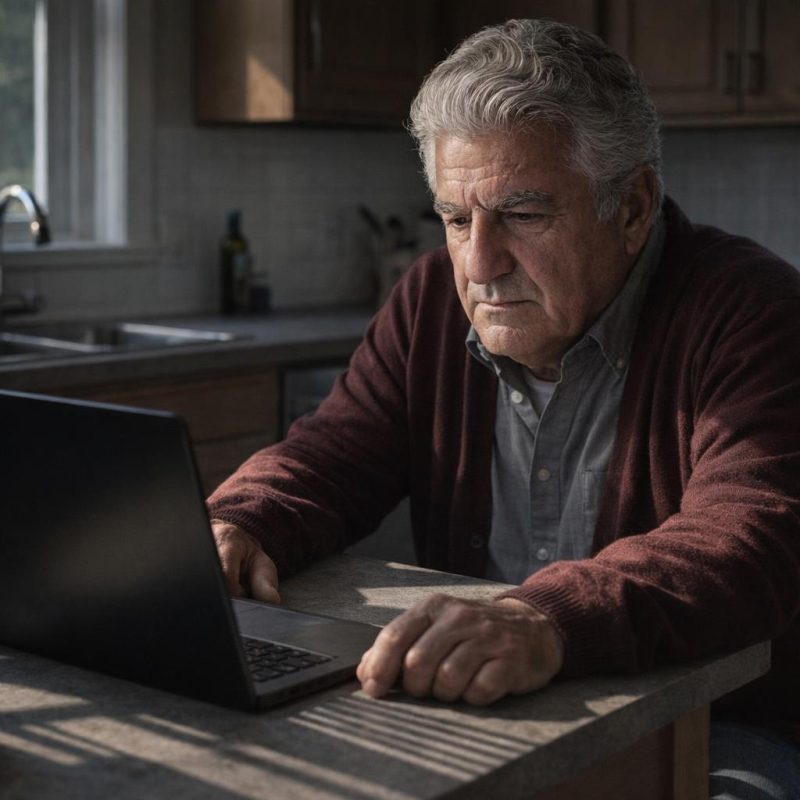 Image by RM AI
Always the Whitfields
It wasn't just the news segment. A few weeks later I was at the barbershop and there was a regional business magazine on the side table — the kind that profiles local entrepreneurs and chamber of commerce types. I almost didn't pick it up. Then I saw her photo on the inside spread, flour dusted on her apron, smiling like she'd built the whole thing from nothing but willpower and good recipes. I read the piece slowly. She talked about the importance of community investment, about how fortunate she was to have the support of established business families in the area. There was a pull quote from Marcus — something about the next generation carrying forward a legacy of entrepreneurship. His name was in the article four times. The bakery's address was there. The opening date was there. The names of two suppliers were there. I folded the magazine closed and set it back on the table and looked at the wall for a moment. The barber called my name and I stood up. I thought about all the Saturdays I'd spent in that bakery space before it opened, painting walls and moving equipment and believing I was part of something. Then I read the line again in my head: *the support of the Whitfield family and their car dealership legacy* — and my name was nowhere on the page.
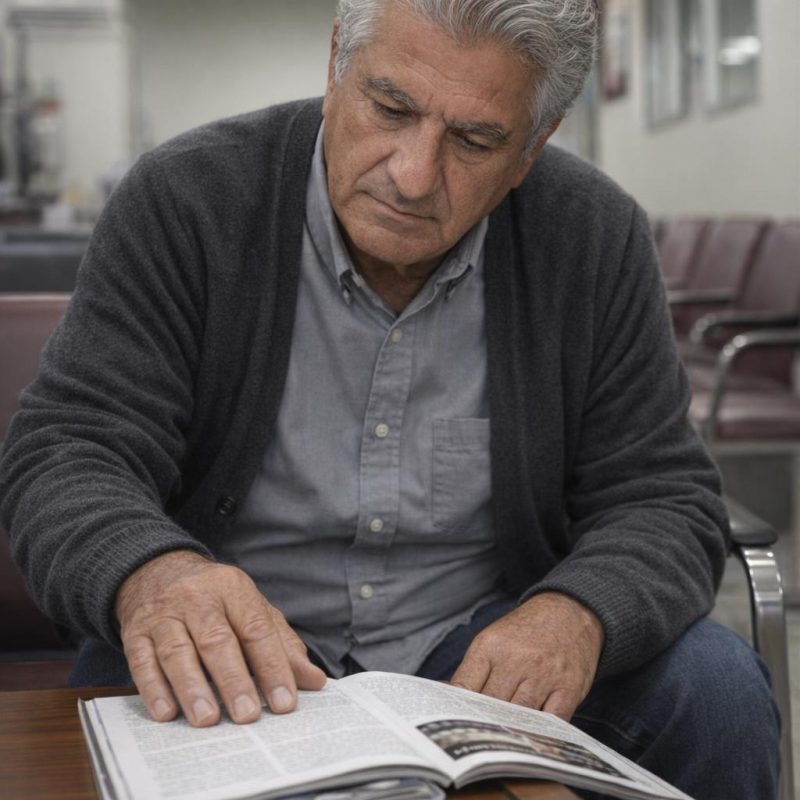 Image by RM AI
The Decision to Speak
I sat with it for another week after the magazine. I told myself I was being patient. I told myself I was giving her space, giving myself space, waiting until I could think clearly before I did anything. But somewhere around the middle of that week I stopped believing that was patience and started recognizing it for what it actually was — avoidance. I was afraid of what a real conversation would cost us. I was afraid she'd cry, or get defensive, or say something that would make it worse, and I'd end up apologizing for bringing it up at all. That's what I'd always done. Smoothed things over. Let things go. Told myself it wasn't worth the fight. But this was fifty thousand dollars and my name erased from a story I'd helped write, and I was done letting it go quietly. I wasn't angry in a hot way anymore. It was something steadier than that — a cold, clear sense that I had earned the right to be heard, and that staying silent any longer wasn't dignity, it was just disappearing. I picked up my phone and sent her a message asking if we could meet. Just the two of us. At the bakery, after closing. I said I had some things I needed to talk through. She replied within the hour: *Of course, Dad. When works for you?*
 Image by RM AI
The Meeting
I drove over on a Wednesday evening, about forty minutes after she'd locked up for the day. The CLOSED sign was turned in the window but the interior lights were still on, that warm amber glow I'd seen from the parking lot the night of the opening. I stood outside for a moment before I knocked. The sage green paint on the door frame was the same color I'd rolled on with a brush on a cold Saturday in February, my knees aching, Claire handing me coffee and telling me it was going to look perfect. It had looked perfect. It still did. That was the thing — nothing about the place had changed. The hand-lettered sign above the door, the little chalkboard in the window with the day's specials, the brass handle I'd helped install because the original one was loose. All of it exactly as we'd left it. I was the only thing that didn't fit the picture anymore. Claire opened the door before I could knock, already smiling, already saying hey, already moving to hug me like this was any other visit. I let her. I hugged her back. And then I stepped inside, into the smell of sugar and warm bread and all those months of work.
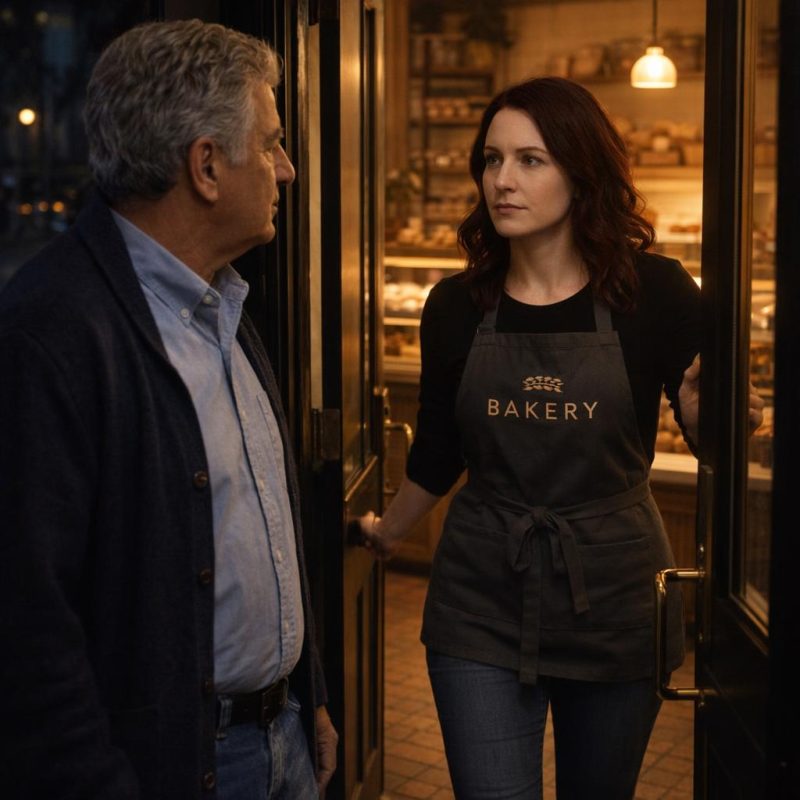 Image by RM AI
Image Management
I didn't ease into it. I told her I'd heard every word of that speech — the Whitfield family's vision, Marcus's belief in her, all of it. I told her I'd stood in that room with fifty thousand dollars of my retirement savings in the walls around me and listened to her thank a man who hadn't written a single check. She went quiet for a moment, and I could see her working through something behind her eyes. Then she said it. She said she needed the Whitfields to see her as an equal, not as someone who'd needed her dad to bail her out. She said Ryan's family had a certain way of looking at things, and that if they knew the money had come from me — from a guy who drove a service truck for thirty years — it would have changed how they saw her. She told me she knew I'd understand because I'd always understood. She said it doesn't change what you did for me, Dad, like that was supposed to land as comfort. Her voice was even and certain, no waver in it, no apology underneath the words.
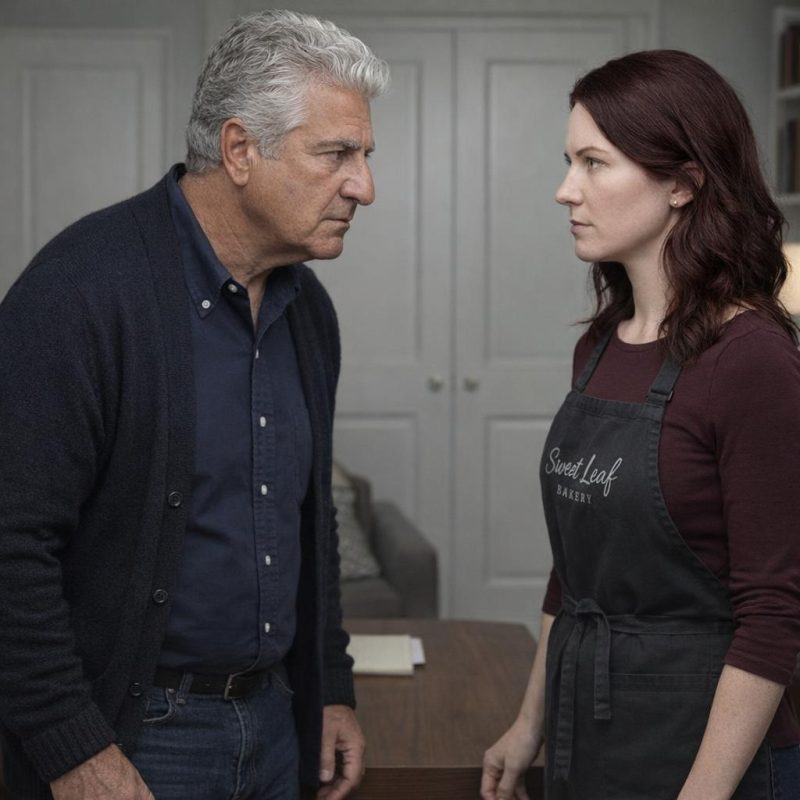 Image by RM AI
Justifications
She kept going after that. She told me about the pressure — how Marcus expected to be seen as the family patriarch, how every holiday dinner had a kind of unspoken accounting of who contributed what and who owed whom. She said Ryan's inheritance wasn't guaranteed, that Marcus held it loosely and could redirect it if he felt disrespected or sidelined. She said she'd been protecting her marriage, protecting their future, and that she hadn't seen another way through it. She told me the loan agreement between us hadn't changed, that she was going to keep making payments exactly as promised, that nothing about our arrangement was different. Then she asked me to try to understand her position. I stood there in the bakery I'd helped build, in the smell of the bread I'd watched her learn to make, and I listened to all of it. Every reason she gave was real. I could follow the logic of each one. And that was the worst part — understanding exactly how she'd gotten there, and feeling the weight of it settle into the room around us like something that had always been there.
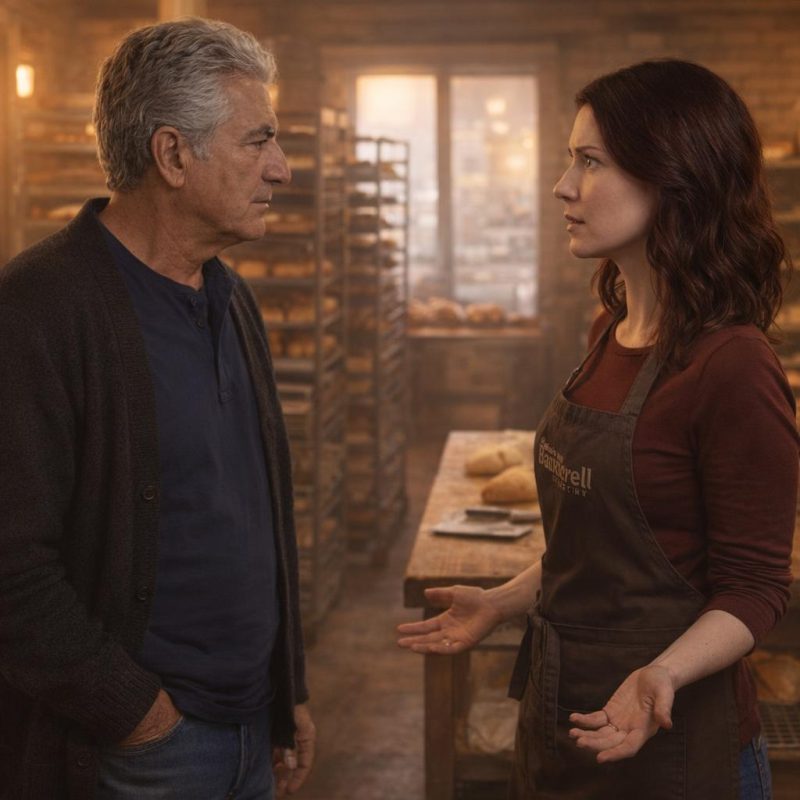 Image by RM AI
Permanent Change
I told her I understood her reasoning. I meant it. I could see the corner she'd felt backed into, the math she'd done, the choice she'd made. But I told her that understanding it didn't mean I could carry it the same way I used to carry things for her. I said I couldn't be erased from the story of something I'd built alongside her and then act like it hadn't happened. She asked if we could move forward, and the way she said it — like forward was a place we could just agree to go — told me she didn't fully see what had shifted. I told her the payments could keep coming. I told her I wasn't going to blow up what she'd built. But I said the thing I needed her to hear: that trust, once it goes, doesn't come back just because both people are still standing in the same room. We hugged before I left, the way you hug someone when there's nothing left to negotiate. She held on a beat longer than I expected. I drove home with the windows down, and by the time I pulled into my driveway, the grief had settled into something quieter — not gone, just permanent, the way a scar is permanent.
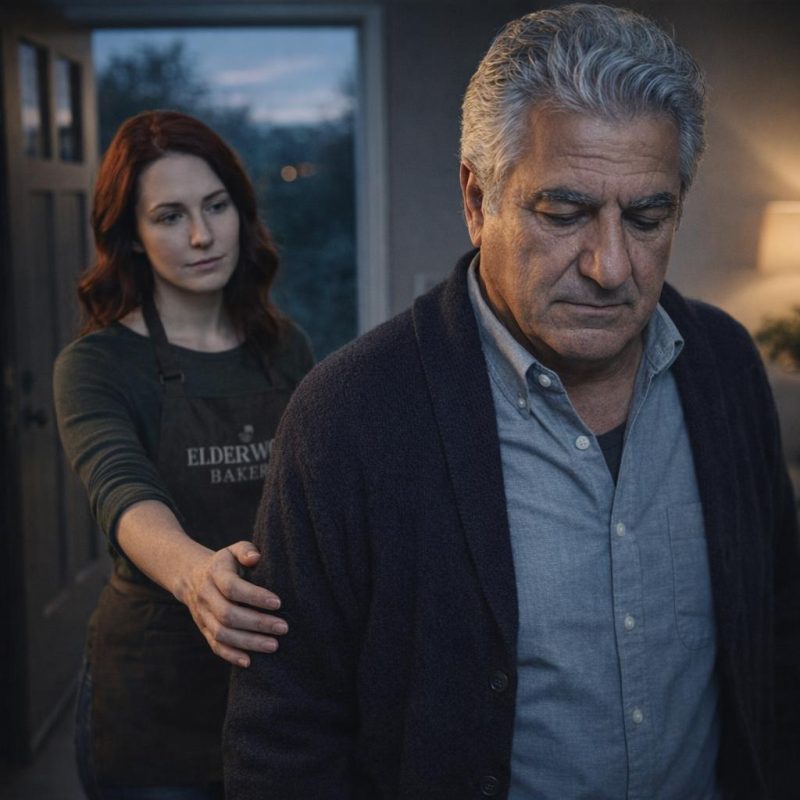 Image by RM AI
The Ghost
The payments came every month, right on time, deposited clean into my account like clockwork. I'd see the notification on my phone and feel nothing much — not relief, not pride, just the fact of it. Claire's bakery kept growing. I'd see her tagged in local news pieces, a feature in the regional lifestyle magazine, a segment on the morning news about small businesses making good. Marcus's name appeared in one of the articles, a quote about believing in family and investing in the next generation. I didn't visit the bakery anymore. I'd drive past it sometimes, see the line out the door on a Saturday morning, the chalkboard in the window with the day's specials in Claire's handwriting. I'd helped paint that door frame. I'd carried those shelving units in from the truck. I knew which floorboard near the back counter had a soft spot because I'd been the one to notice it. None of that was in any article. None of it was in any speech. The deposits kept arriving, and I kept living at the edge of a story I had helped write, my name nowhere in it.
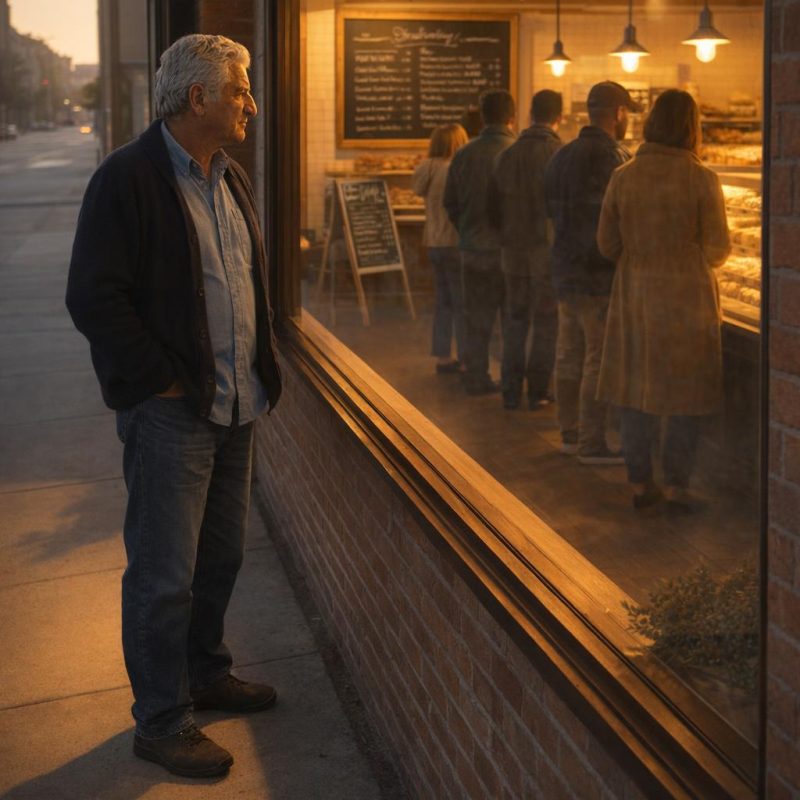 Image by RM AI
KEEP ON READING

The story of Ching Shih, the Woman Who Became the…
Unknown author on WikimediaFew figures in history are as feared…
By Emilie Richardson-Dupuis Dec 29, 2025
Einstein's Violin Just Sold At An Auction—And It Earned More…
A Visionary's Violin. Wanda von Debschitz-Kunowski on WikimediaWhen you hear…
By Ashley Bast Nov 3, 2025
This Infamous Ancient Greek Burned Down An Ancient Wonder Just…
History remembers kings and conquerors, but sometimes, it also remembers…
By David Davidovic Nov 12, 2025
The Mysterious "Sea People" Who Collapsed Civilization
3,200 years ago, Bronze Age civilization in the Mediterranean suddenly…
By Robbie Woods Mar 18, 2025
10 Wars Won By Deception & 10 Lost By Overconfidence
When Strategy Matters More Than Strength. Military history is filled…
By Rob Shapiro Jun 19, 2026
20 Soldiers Who Defied Expectations
Changing the Rules of the Battlefield. You’ve probably heard plenty…
By Annie Byrd Feb 10, 2026