

I Accepted My Future Father-in-Law's $85K Bribe to Leave His Daughter—Then Used His Own Money to Expose Him at Their Anniversary Gala
I Accepted My Future Father-in-Law's $85K Bribe to Leave His Daughter—Then Used His Own Money to Expose Him at Their Anniversary Gala
The Ring and the Wrench
I finished the last joint on a corroded supply line around two in the afternoon, wiped my hands on a shop rag, and stood back to look at my work. Clean. Solid. The kind of repair that'll outlast the house if the next guy doesn't mess with it. Five years of building my own plumbing business, one job at a time, and I still get a quiet satisfaction from a fix done right — no shortcuts, no callbacks. I loaded my tools into the van, locked up the client's side gate, and headed across town to the jeweler on Maple. I'd put the ring on layaway four months ago, adding to it every week like a bill I was happy to pay. The woman behind the counter smiled when she saw me come in, pulled the velvet box from under the case without me even saying a word. I opened it right there at the counter. Small diamond, clean setting, nothing flashy — but it was real, and I'd earned every cent of it. I had a plan for tonight. A park bench, the one where Sophia and I had our first real conversation, and a question I'd been rehearsing in the truck for three weeks. I slipped the box into my jacket pocket and walked back to the van. The weight of it sat against my ribs the whole drive home.
 Image by RM AI
She Said Yes
I got to the park early and sat on that bench for twenty minutes, turning the ring box over in my jacket pocket like a worry stone. When Sophia came around the path and saw me standing up to meet her, she already had this look on her face — like she suspected something and was trying not to smile about it. I didn't have a speech. I'd planned one, but when she was right there in front of me, all of it went out of my head. I just got down on one knee, opened the box, and told her she was the best thing that had ever happened to a guy who fixes pipes for a living. She laughed and cried at the same time, which I took as a good sign. She said yes before I even finished the sentence. We sat on that bench for a long time after, her head on my shoulder, talking about everything — where we'd live, whether we'd get a dog, what kind of wedding made sense for two people who didn't need anything fancy. It was the best hour of my life, no contest. Then she sat up, looked at the ring on her finger, and said we had to tell her parents tonight. Her voice was bright, excited — but something moved across her face for just a second, quick as a cloud shadow, before the smile came back. She said, "They need to hear it from us first."
 Image by RM AI
The Hartley Estate
The Hartley house wasn't a house. It was the kind of place you see behind iron gates in neighborhoods where the streets don't have sidewalks because nobody walks anywhere. I parked my van on the circular drive and immediately wished I'd borrowed a car. Patricia met us at the door in a cream blouse and a smile so practiced it could've been laminated. She kissed Sophia's cheek, shook my hand with both of hers, and said how lovely it was to finally meet me — all in one smooth motion, like she'd rehearsed the welcome. Richard came out of a side room a few minutes later. His handshake was firm and slow, the kind that's measuring something. He looked at me the way a contractor looks at a foundation — checking for cracks. Dinner was set in a dining room with a table long enough to park my van on. The food was excellent and the conversation was careful. Richard asked about my business — how long I'd been running it, how many employees, what my service area was. I answered straight. I told him I'd been at it five years, that it was just me and one part-time guy, and that I did residential and light commercial work. Patricia refilled wine glasses. Richard nodded slowly. When I said I was self-employed, the table went quiet in a way that had nothing to do with chewing. That silence settled over the room like a drop in temperature, and nobody moved to fill it.
 Image by RM AI
The Country Club Lunch
The country club had the kind of quiet that money buys — thick carpet, low voices, staff who appeared and disappeared without being noticed. Patricia introduced me to her friends with a smile that was perfectly correct and about ten degrees cooler than the one she'd used at the front door. The women were polished in the way that takes real effort to look effortless. The men talked about golf courses I'd never been to and schools I'd never heard of. At some point someone asked where I'd gone to school, and I told them trade school, then a two-year apprenticeship. There was a small pause. Patricia said something smooth about how skilled tradespeople were so hard to find these days, and the conversation moved on like a river rerouting around a rock. Sophia squeezed my hand under the table. I squeezed back. I wasn't embarrassed about trade school — I'd built something real with what I learned there. But I was aware, in a way I hadn't been before, of my hands resting on the white tablecloth. The calluses. The knuckle I'd split last Tuesday on a pipe fitting that had healed into a small ridge of scar. I reached for my water glass and caught two of Patricia's friends glancing down at the same moment, then back up at each other, and I felt the weight of that small, wordless exchange settle somewhere in my chest.
 Image by RM AI
Sophia's Defense
Sophia walked Patricia back inside while I waited by the car. I leaned against the hood and checked my phone, not really seeing anything on the screen. Through the tall front window I could see them in the entryway — Sophia's posture straight and deliberate, Patricia's hands folded in front of her. I couldn't hear anything, but I didn't need to. Sophia's chin was up the way it gets when she's holding her ground. After a few minutes her voice rose just enough to carry through the glass, though the words blurred into tone rather than meaning. Patricia stayed composed, barely moving. Then Sophia said something short and final, and Patricia's expression shifted — not angry, just settled, like a door closing quietly. I caught a fragment through the window glass when Sophia stepped closer to the door handle: Patricia's voice, low and even, something about being realistic about your future. The door opened before I could catch anything else. Sophia came down the steps with her shoulders back and her jaw set, the ring catching the afternoon light. She told me everything was fine, that her mother just needed time to adjust. She smiled when she said it, and I believed her — mostly. I put my arm around her and we got in the car, and I told myself that parents came around eventually. Most of them did.
 Image by RM AI
The Family Gathering
The weekend gathering at the Hartley estate was the kind of event that had a caterer and a parking attendant but was still technically called casual. I shook a lot of hands and learned a lot of names I immediately forgot. A few of Sophia's cousins were genuinely easy to talk to — one of them had done some renovation work on his own place and we spent twenty minutes talking about load-bearing walls and why you never trust a previous owner's plumbing. That felt like solid ground. Richard moved through the afternoon the way a host does when he's also the center of gravity — everyone orbiting, nobody quite relaxed. He was cordial to me when our paths crossed, asked if I'd found the bar, said the weather had held nicely. Nothing you could point to. During cocktail hour, I was mid-conversation near the fireplace when I noticed Richard cross the room toward Sophia. He said something close to her ear, quiet enough that the people around them kept talking without pausing. Sophia's expression shifted — not alarmed, just careful, the way she gets when she's thinking fast. She set her glass down on a passing tray and followed him toward the hallway that led to his study. I watched the door close behind them from across the room, and I stood there holding my drink, making small talk I couldn't have repeated five seconds later.
 Image by RM AI
The Cold Shoulder
I told myself it was nothing personal. That's what I kept saying in my head through the next two family dinners — it's nothing personal, some people are just reserved, give it time. But there's a difference between reserved and what Richard was doing. Every time I tried to bring him into a conversation — his business, the news, anything — he'd give me two or three words, check his watch, and find somewhere else to be. Not rude enough to call out. Just enough to feel. Sophia noticed. She'd steer things back, ask her father a question that pulled him in, try to build a bridge between us with her bare hands. Patricia kept the surface smooth, asking me about work, laughing at the right moments, filling every gap with practiced ease. But her warmth had a ceiling on it, and I'd found it weeks ago. At the last dinner I tried one more time. I'd read something about a development project downtown — the kind of commercial real estate Richard's firm handled — and I brought it up, thinking it was neutral ground. He looked at me for a moment, then glanced at his watch, said he had a call to take, and walked out of the room before I'd finished my second sentence. I stood there with the rest of the table pretending not to have noticed, and I didn't know what to do with any of it.
 Image by RM AI
The Summons
I was under a kitchen sink in Glendale, replacing a corroded P-trap, when my phone buzzed against the tile floor. I almost let it go to voicemail. When I saw the name on the screen I sat up too fast and caught my shoulder on the cabinet frame. Richard never called me. We'd exchanged numbers at some point — Sophia's doing — but they'd sat unused in both directions. I wiped my hands and answered. His voice was measured, unhurried, the way someone sounds when they've decided exactly what they're going to say before they dial. He said he thought it would be good for us to sit down, just the two of us, and talk. He had an office downtown. Thursday worked well for him, if it worked for me. I said Thursday was fine. He said good, and gave me the address, and that was more or less the whole call — two minutes, maybe less. I sat on the kitchen floor for a moment after I hung up, back against the cabinet, looking at the ceiling. Part of me wanted to call Sophia right then. But something made me hold off — I wanted to know what this was before I brought her into it. I told myself it was probably nothing. Maybe he wanted to clear the air. Maybe this was the conversation I'd been hoping for. But I kept coming back to the way he'd said we needed to discuss the situation, and that word — situation — sat with me the rest of the evening.
 Image by RM AI
Eighty-Five Thousand Dollars
Richard's office was exactly what I expected — floor-to-ceiling glass, a view of downtown that probably cost more per square foot than my entire apartment, and a desk that looked like it had never seen a single piece of actual work. He offered me coffee. I said sure. He poured it himself from a carafe on the credenza, which I think was supposed to signal something about how civilized this was going to be. We talked about Sophia for a few minutes — her education, her ambitions, how much she meant to both of us. He was smooth about it, I'll give him that. No raised voices, no obvious contempt. Just a man having a reasonable conversation. Then he shifted. He said something about practical realities, about the kind of life Sophia was accustomed to, about how love wasn't always enough to bridge certain gaps. I kept my face neutral and let him talk. He opened his desk drawer, set a check on the surface between us, and slid it across with two fingers like he was passing a business card. Eighty-five thousand dollars. My name was already on it. He said it was enough to start fresh somewhere new, that he wasn't trying to be cruel, that this was simply the most sensible path forward for everyone involved. I picked it up. I looked at the number. I sat there holding it, and the coffee went cold between us.
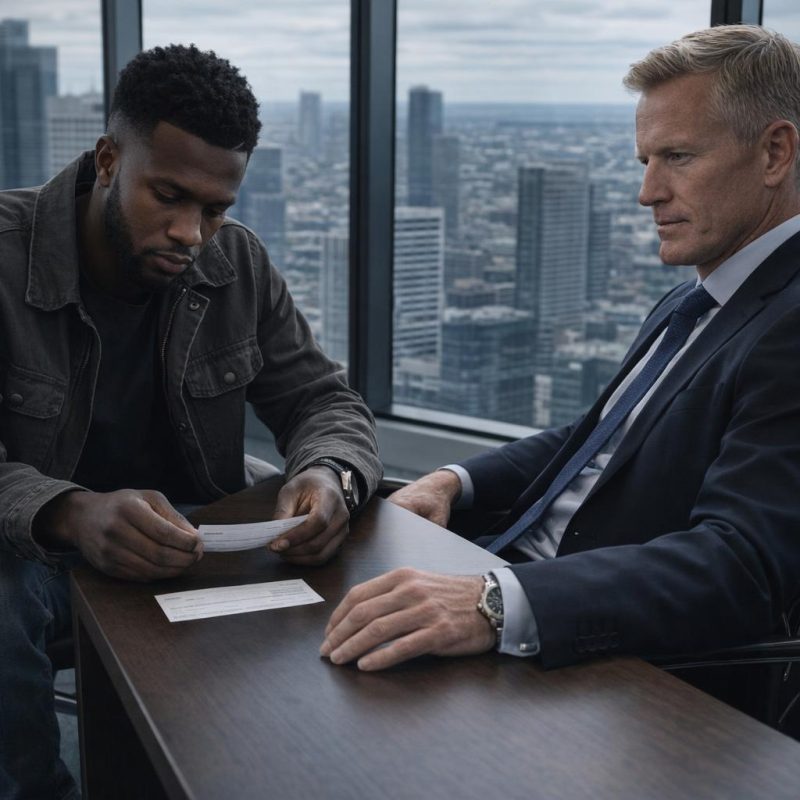 Image by RM AI
The Account Number
Richard was already standing when I folded the check once and slid it into my shirt pocket. He extended his hand across the desk like we'd just closed a deal on a commercial property. I shook it — I don't even know why, muscle memory maybe — and he walked me to the elevator himself, said something about wishing me well, and the doors closed between us. I sat in my truck in the parking garage for a long time without starting the engine. The check was in my pocket and I could feel it there, which made no sense because paper doesn't have weight, but it did. I took it out and unfolded it on the steering wheel. Eighty-five thousand dollars. My name in the payee line, Richard's signature at the bottom, clean and confident. I looked at the bank details printed along the lower edge — routing number, account number, the standard information. But the account name above the numbers wasn't Richard Hartley or Hartley Enterprises or anything I would have expected. It read Hartley Family Trust 2847-B.
 Image by RM AI
The Weight of the Offer
I drove for maybe an hour without going anywhere in particular. North on the 2, then east, then I looped back through Pasadena without stopping. The city just moved past the windows while I tried to think straight. Eighty-five thousand dollars. I kept running the number. That was two years of solid work for me, maybe more after a slow winter. It was a new truck, a real equipment upgrade, a down payment on a small commercial space I'd been eyeing in Burbank. It was a way out of the kind of financial pressure that had been sitting on my chest since I was nineteen. I thought about what it would feel like to just go — pack a bag, drive to Phoenix or Denver, start something new where nobody knew my name or my tax bracket. And then I thought about Sophia. The way she laughs when she's actually surprised. The way she reaches for my hand in the car without thinking about it. I pulled into a strip mall parking lot and sat there with the engine running. I took the check out again and held it with both hands, thumbs on either edge, and I felt the paper give just slightly under the pressure. Something stopped me. I'm not sure what exactly. I put it back in my wallet and stared at the windshield for a while, not moving.
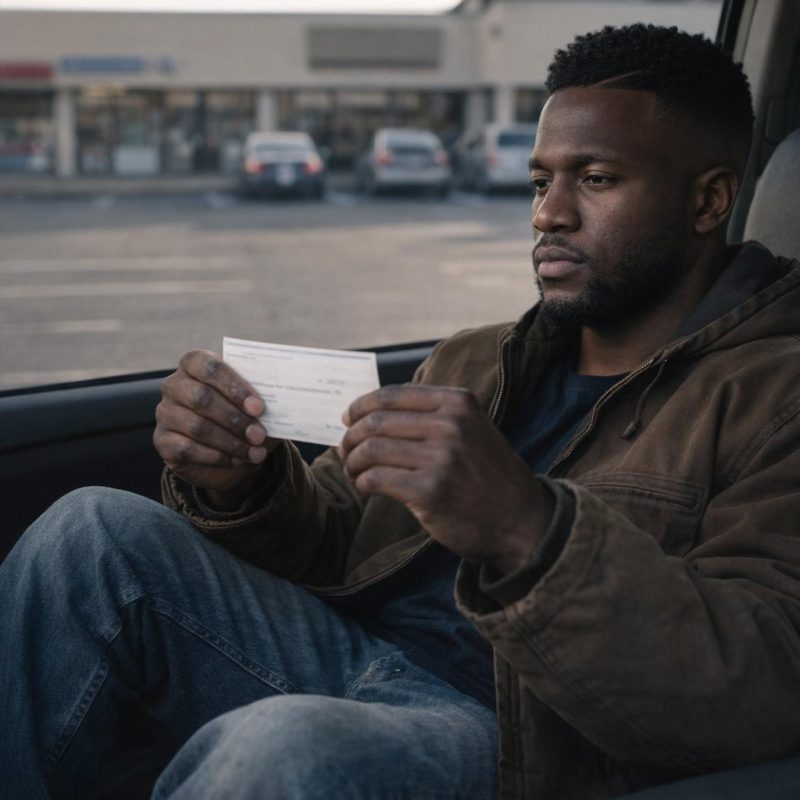 Image by RM AI
The Fine Print
Back home, I spread the check flat on my kitchen table under the overhead light and just looked at it. Really looked at it this time, the way you look at something when you're not sure what you're actually seeing. The signature was clean — Richard's handwriting, confident and practiced. The amount was spelled out in full on the line below, no ambiguity there. The bank was a private wealth institution I'd never heard of, which wasn't surprising. But the account designation kept pulling my eye back. Hartley Family Trust 2847-B. I took a photo of the check with my phone, front and back, and set it on the counter. I thought about depositing it. I thought about tearing it up. I did neither. Instead I sat there turning one question over in my head: why would someone pay eighty-five thousand dollars out of a trust account? I didn't know much about trusts — they were the kind of financial instrument that existed in a world I'd never had reason to enter. But something about it felt off, the way a repair job feels off before you can name the specific problem. I opened my laptop and typed trust account into the search bar.
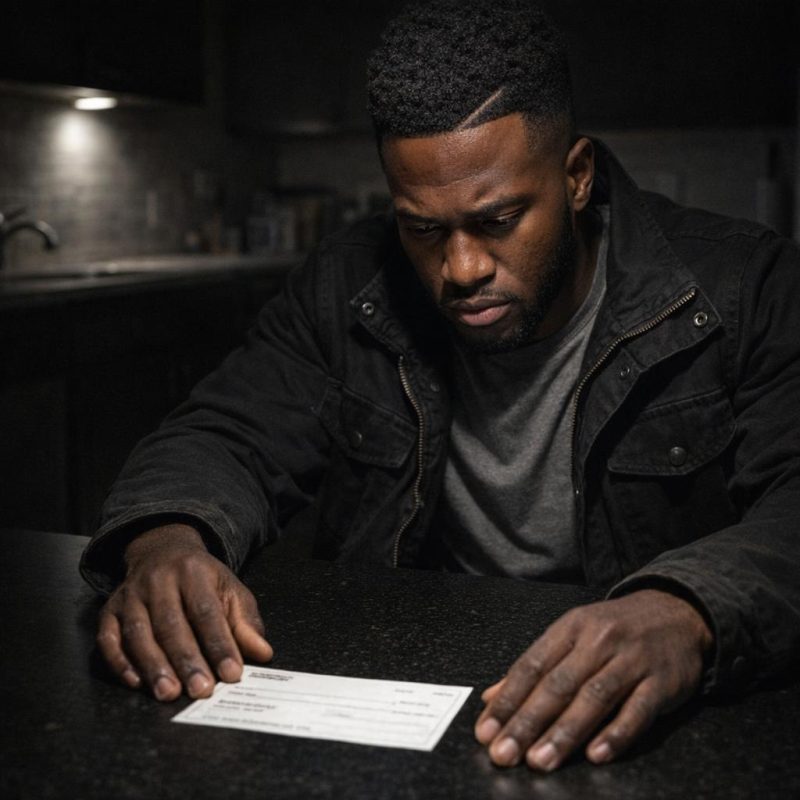 Image by RM AI
Basic Research
I spent about two hours reading things I probably should have learned in a finance class I never took. Family trusts, revocable trusts, irrevocable trusts, estate planning basics. Most of it was dry and dense, written for people who already understood half the vocabulary. But I kept at it. What I pieced together was this: trust accounts are set up to hold and protect assets for specific beneficiaries — usually family members, usually across generations. The person managing the trust, the trustee, has a legal obligation to use those funds in ways that serve the beneficiaries. Not themselves. Not their own interests. The beneficiaries. There were articles about what trustees could and couldn't do with the money, and the lists of prohibited uses were longer than I expected. Personal expenses. Gifts. Payments that benefit the trustee rather than the people the trust was created to protect. I sat back and looked at the check photo on my phone. I wasn't a lawyer. I didn't know the specifics of Richard's arrangement. But I kept coming back to one question I couldn't shake: would paying me eighty-five thousand dollars to disappear even fit inside what a trust account was supposed to be used for? I didn't have an answer. The question just sat there with me, heavy and unresolved.
 Image by RM AI
Public Records
The next evening I went looking for whatever public records existed on the Hartley family business holdings. It took longer than I expected and most of what I found was dense corporate language that required three re-reads to parse, but it was there — state filings, registered entities, annual disclosures. Richard had his name attached to a lot of structures. Hartley Capital Group was the main one, but branching off from it were several subsidiary entities and, listed separately, multiple trust designations. I found Trust 2847-B in a filing from several years back, listed alongside two others — Trust 1103-A and Trust 3391-C. I wrote them all down in a notebook I'd dug out from a kitchen drawer. The filing dates were spread across different years, and the stated purposes were vague in the way legal language tends to be vague when it's trying to cover a lot of ground without saying much. Some of the numbers I found in the filings didn't line up cleanly with each other — asset values that shifted in ways I couldn't follow, reporting periods that seemed to overlap. I wasn't sure if that was normal for complex financial structures or not. I stared at my notes for a long time, and the more I looked at them, the less the whole picture seemed to add up.
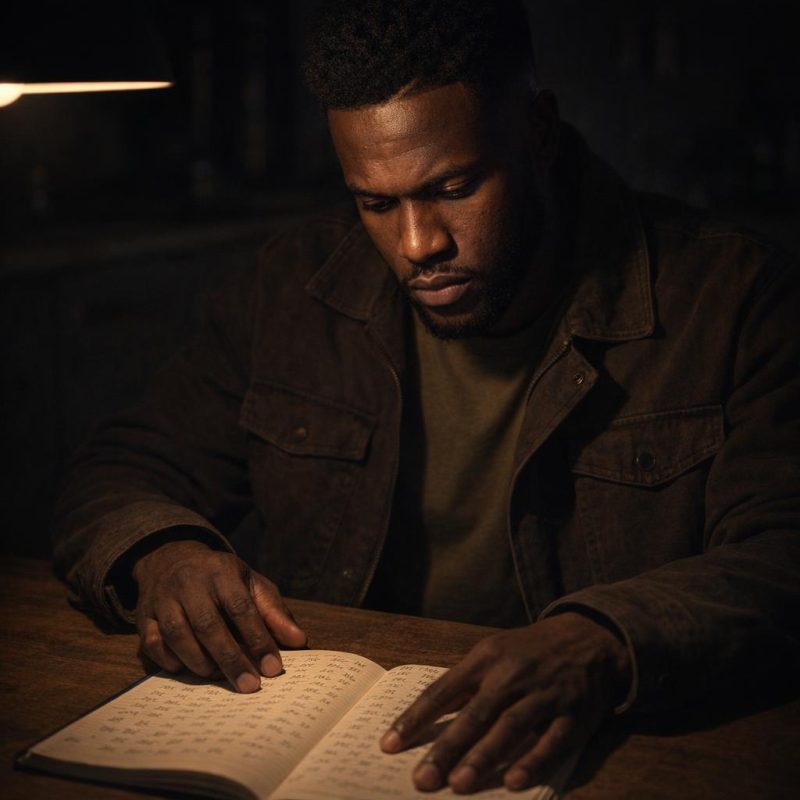 Image by RM AI
Trust Account 2847-B
I went back to Trust 2847-B specifically and started pulling every public document I could find attached to it. Most were routine — registration filings, annual disclosures, the kind of paperwork that exists to technically satisfy a legal requirement without telling you much. But one document stopped me. It was a state filing from the county recorder's office, the kind of thing that gets uploaded to a public database and sits there unread for years. The document listed Trust 2847-B by its full legal designation, and in the classification field, in plain bureaucratic language, it was identified as an irrevocable trust. I had to read the word twice. I'd come across irrevocable trusts in my research the night before — they were a different category entirely from the standard family trust. Once established, the assets inside were legally locked. The trustee couldn't dissolve it, couldn't redirect the funds freely, couldn't treat the money as a personal resource. The protections were strict because the beneficiaries had a legal claim to those assets. I printed the filing on my home printer, the ink slightly streaky because I never remember to replace the cartridge. I set it next to the check on the kitchen table and looked at both of them side by side.
 Image by RM AI
Fiduciary Duty
I kept reading. Fiduciary duty turned out to be a phrase with a lot of legal weight behind it — more than I'd expected when I first typed it in. A trustee managing an irrevocable trust isn't just handling money. They're legally bound to act in the exclusive interest of the beneficiaries. Not their own interest. Not the interest of their business. The beneficiaries. I found a law review article that had been summarized into plain English on some estate planning blog, and one passage in particular made me stop scrolling. It read: a trustee who uses trust assets for personal benefit, to settle personal disputes, or to advance personal interests unrelated to the trust's stated purpose has committed a breach of fiduciary duty, which may constitute civil fraud or criminal misappropriation depending on jurisdiction and intent. I read it again. Then I looked at the check on the table beside my laptop — eighty-five thousand dollars drawn from an irrevocable trust account, written to me, to make a personal problem go away. Something cold settled in my chest, and I wasn't sure yet what it meant, but I couldn't make the two things sit separately in my head anymore.
 Image by RM AI
The Pattern Emerges
I pulled up every public filing I could find tied to Trust 2847-B and started going through them one by one. It took a while — the records weren't organized in any user-friendly way, and I had to cross-reference a few different databases before the picture started coming together. But it did come together. I opened a spreadsheet and started logging what I found: dates, amounts, account references. The withdrawals went back years. Not one or two. Years. Some were in the fifty-thousand range. A few were over a hundred thousand. I kept my face neutral, like I was just doing data entry, like this was any other Tuesday. But my hands were moving faster than usual, and I kept double-checking entries I'd already confirmed. The total I was building in the right-hand column kept climbing, and I hadn't even gotten through half the records yet. I told myself there had to be an explanation — legitimate trust distributions, maybe, or legal fees, or something I didn't understand yet about how these accounts worked. Then I scrolled to a filing from three years back and found a single withdrawal for just under two hundred thousand dollars.
 Image by RM AI
The Scope of It
I added the last entry and let the spreadsheet do the math. Then I stared at the number it gave me. I deleted it and re-entered everything manually, column by column, just to make sure I hadn't fat-fingered something. The number came back the same. Over two million dollars. Pulled out of a single trust account across a span of years, in amounts large enough that each one would've been a life-changing sum for most people I knew. I sat back in my chair and looked at the ceiling for a second. I'm not a financial guy. I work with my hands. I know what a hard day's pay feels like and what it doesn't. But I didn't need a finance degree to understand what two million dollars missing from an account meant. Somewhere out there, whoever was supposed to benefit from that trust had been getting robbed, slowly and consistently, for years. I didn't know who they were. I didn't know what the trust was supposed to cover. But the number at the bottom of my spreadsheet sat there like a verdict, and I couldn't look away from it.
 Image by RM AI
Documentation
I gave myself about ten minutes to sit with it, and then I got to work. If this was going to mean anything, it had to be documented properly — not just a spreadsheet I'd thrown together at my kitchen table, but something organized enough that someone else could follow it. I pulled screenshots of every public filing I'd accessed and saved them in a folder sorted by date. I went back through my spreadsheet and added a notes column — trust law references, the fiduciary duty language I'd found the night before, anything that gave context to the numbers. I built a timeline tab that laid out the withdrawals in chronological order so the pattern was visible at a glance. Then I backed the whole thing up to a cloud drive and a USB stick I dug out of my junk drawer. I'm not usually the type to be precious about files, but something told me this wasn't the kind of thing I wanted to lose to a hard drive failure. When I was done, I sat there looking at the folder structure on my screen — clean, labeled, cross-referenced. I moved my cursor to the main folder, right-clicked, and typed the name before I could second-guess it: Hartley Trust Evidence. I hit save, and the name just sat there, looking more serious than anything I'd done in a long time.
 Image by RM AI
The Decision to Act
I went through everything one more time, start to finish. The check. The filings. The spreadsheet. The timeline. I sat with it long enough that the numbers stopped looking like numbers and started looking like a decision I had to make. Part of me thought about the easy version of this — break things off with Sophia quietly, hand the check back, walk away from the whole Hartley world and never look back. I could do that. Nobody would know I'd found any of this. But then I thought about whoever was on the other end of that trust. Two million dollars doesn't just evaporate. Somebody lost it. Somebody who had no idea it was gone, or who'd been told some version of events that made the missing money make sense. I couldn't unknow what I knew. That's not how I'm built. The problem was, I'd hit the edge of what I could figure out on my own. I understood the broad shape of what I was looking at, but the details — the shell structures, the accounting methods, the way these things got hidden — that was a different language. I needed someone who spoke it fluently, and I needed to trust them completely.
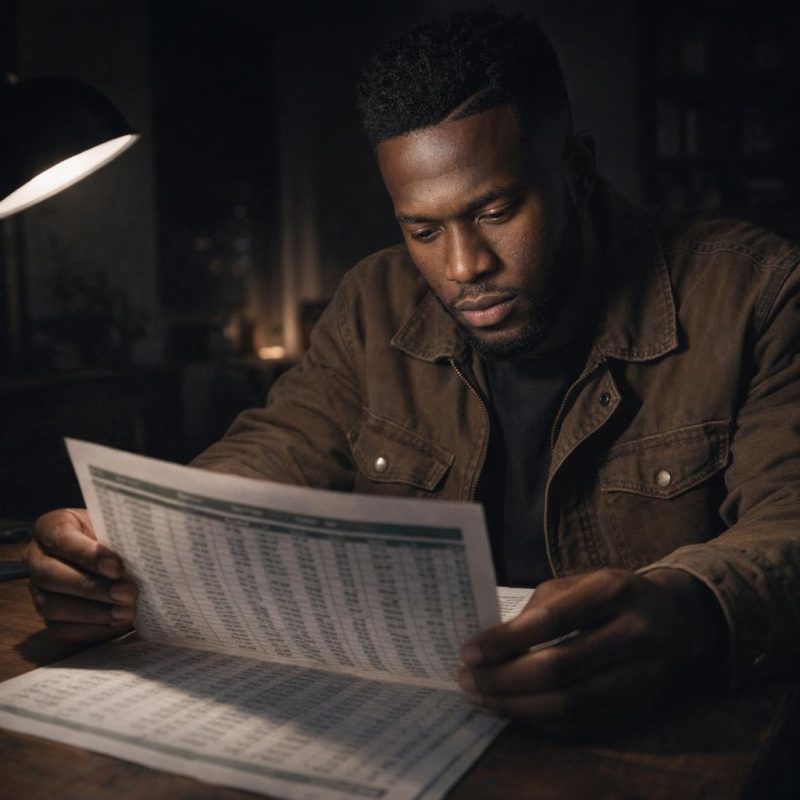 Image by RM AI
Marcus Chen
Marcus picked up on the second ring, which told me he wasn't in a meeting. I asked if he could do coffee, in person, soon. He said he could do tomorrow morning and didn't ask why, which is one of the things I've always appreciated about him. We met at a place near his office — corner booth, loud enough that nobody would overhear us. I slid the folder across the table before I'd even finished my coffee. He opened it without a word and started reading. I watched his expression shift from casual to careful somewhere around the second page. He asked a few questions — where I'd pulled the filings from, whether I'd touched anything beyond public records, how long I'd been sitting on this. I told him everything except the part about the check and my connection to the Hartley name. I wasn't ready to go there yet. Marcus set the folder down and looked at me the way he used to look at bad quarterly reports — like he was already calculating what it meant three steps out. He said the withdrawal pattern looked wrong. Not wrong like a clerical error. Wrong like something someone had worked at. He said he wanted to pull deeper records, the kind his database subscriptions could reach. I said yes before he finished the sentence, and we sat there for a moment with the weight of what I was asking settling between us.
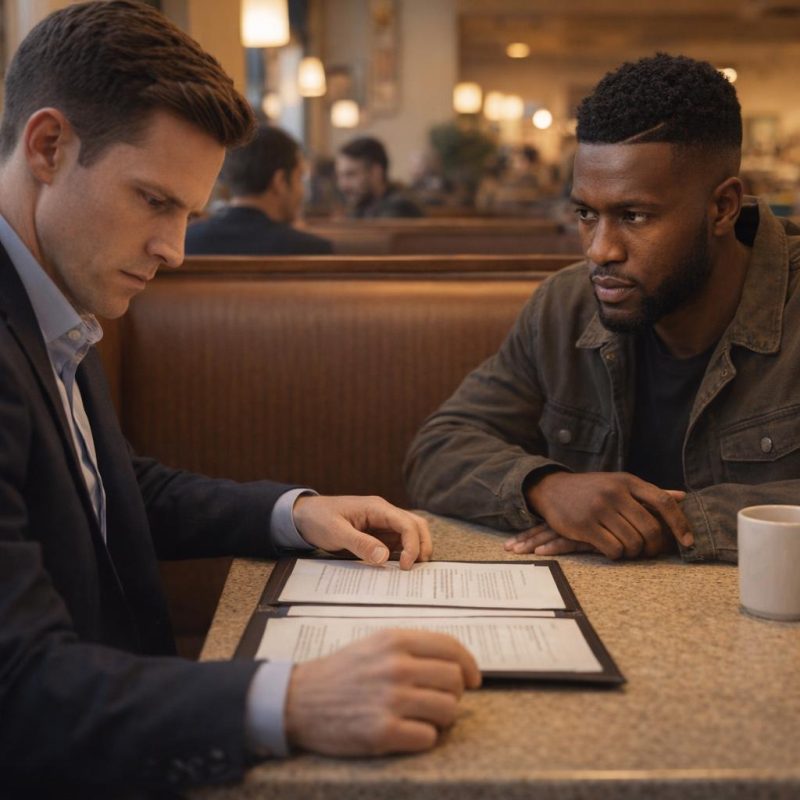 Image by RM AI
The Deep Dive
Marcus's office was quieter than I expected for a Tuesday afternoon — just the hum of his monitors and the occasional click of his keyboard. He logged into two different financial research platforms while I pulled up a chair beside him. He didn't narrate much while he worked, which I respected. He'd pull something up, scan it, cross-reference it with another tab, and occasionally write a number on the legal pad between us. What came up over the next hour was more layered than anything I'd found on my own. There were additional accounts connected to the same trust structure — not just one pool of money but several, linked through what Marcus called intermediary arrangements. He found quarterly reports filed with the trust administrator that didn't line up with the withdrawal records I'd already documented. The gaps weren't small. He circled one discrepancy on the legal pad — a six-month period where the reported balance and the actual transaction record were off by nearly four hundred thousand dollars. He said that kind of gap doesn't happen by accident. He said when accounting methods are set up to make transfers hard to trace, it usually means someone put thought into making them hard to trace. He didn't editorialize beyond that. He just kept working, and I kept watching, and neither of us said anything for a long time after that — just the silence as Marcus stared at his screen.
 Image by RM AI
The Timeline
Marcus built the timeline in a fresh spreadsheet while I read dates off the documents we'd compiled. He was methodical about it — one row per transaction, color-coded by account, with a running total in the far right column. When we plotted everything out visually, the pattern was hard to argue with. Large withdrawals, spaced irregularly enough that they didn't look like scheduled distributions, but frequent enough that they formed a clear rhythm over more than a decade. Twelve years of records. The amounts had grown over time — earlier entries in the fifty-to-seventy-thousand range, later ones climbing well past a hundred. Marcus said that kind of escalation was consistent with someone who'd tested the water early and found it safe. I didn't say anything to that. I just kept cross-referencing dates against the notes I'd made about major purchases tied to the Hartley name — a property acquisition, a club membership, a renovation project that had made the local business pages. Some of the withdrawal dates sat within weeks of those. Marcus printed the timeline on a single wide sheet and laid it flat on the desk between us. I scanned back to the beginning of the chart, looking for the earliest entry, and found it at the top of the page — a withdrawal dated just months after the trust had first been established.
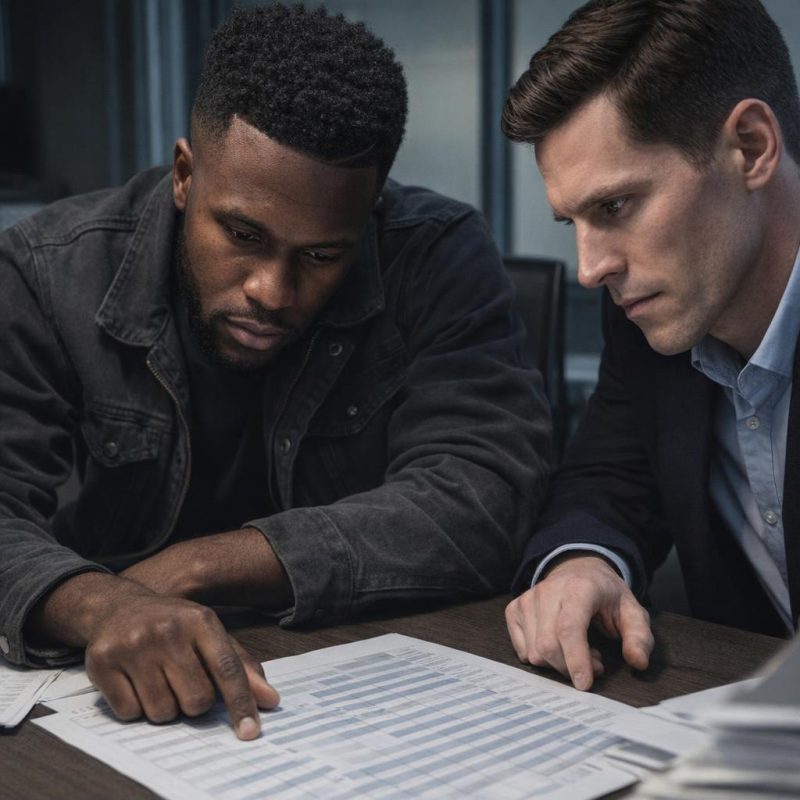 Image by RM AI
Two Point Seven Million
Marcus ran the final calculation three times. He used two different methods — once in the spreadsheet with the formula, once on a calculator app, once with a pen on the legal pad — and all three came back to the same number. Two million, seven hundred forty-three thousand dollars. I asked him if he was sure. He turned the legal pad toward me without saying anything. I asked what that number meant legally, for whoever had done this. He leaned back and said it meant federal jurisdiction, not state. He said at that scale, with documented intent to conceal, you weren't talking about civil penalties. You were talking about wire fraud, breach of fiduciary duty, potentially criminal misappropriation — the kind of charges that came with mandatory sentencing guidelines. I asked what kind of time someone would be looking at. He said it depended on the jurisdiction and the judge, but that a number like this, with a paper trail this clear, made a strong case for prison. Not a fine. Not probation. Prison. I sat with that for a second. Then Marcus uncapped a red marker and drew a circle around the total at the bottom of the legal pad — $2,743,000 — and set the marker down.
 Image by RM AI
The Question of the Beneficiary
I stared at the circled number for another few seconds, then asked Marcus the question that had been sitting in the back of my throat since we started: who was the money supposed to go to? He looked up from the legal pad and said that every trust has a designated beneficiary — someone the assets are meant to protect or provide for. That was the whole point of a trust. I asked if we could figure out who that was from the documents we already had. He spread the papers across the table and went through them page by page, running his finger along the column headers. Nothing. No beneficiary name, no designation, no reference to an individual. He said that kind of information usually lived in the original trust formation documents, not in the transaction records. I asked if those would be public. He said it depended — sometimes trusts were filed with the state and accessible through public records, sometimes they were held privately by a law firm and sealed tight. Either way, we didn't have them. I asked how we'd get them. He said we'd have to dig — state filings, probate court records, maybe a contact at a firm. Then he said the beneficiary information should be in the original trust documents, and that finding those was our next move.
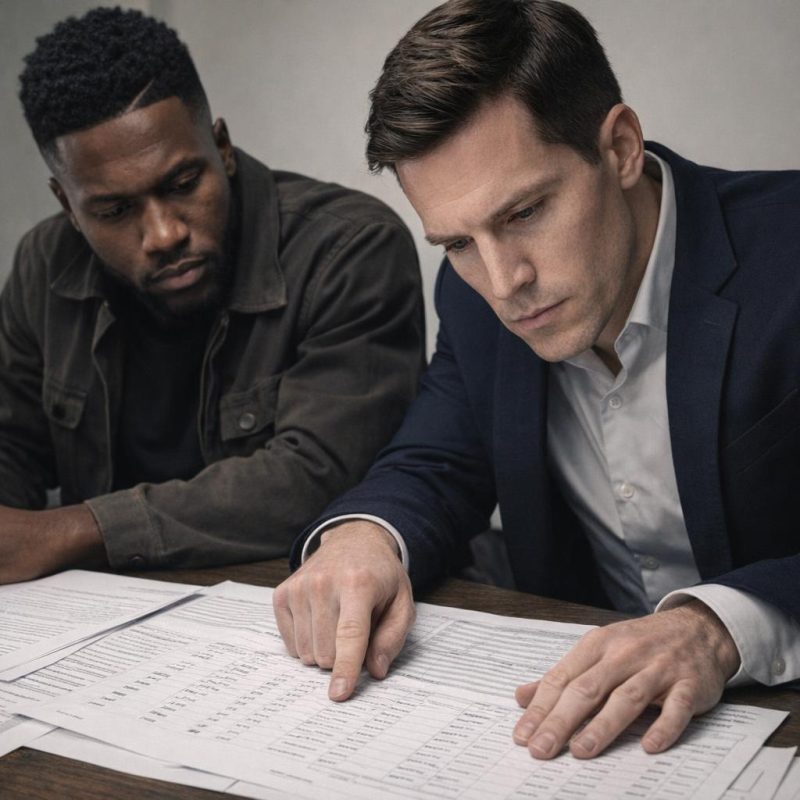 Image by RM AI
The Personal Question
Marcus leaned back in his chair and crossed his arms. He asked me, pretty directly, how I'd come across a check like that in the first place. I told him someone had written it to me and left it at that. He waited. I didn't fill the silence. He asked why I cared so much about where the money came from — most people who got handed eighty-five thousand dollars didn't immediately start pulling on threads. I told him I had my reasons and that I'd explain everything eventually, I just couldn't right now. He studied me for a moment the way he used to study balance sheets — looking for the line that didn't add up. Then he said fine, but that whatever was driving me, the evidence didn't need a reason. It stood on its own. He said if I wanted to keep digging, he was in, no questions asked for now. I told him I appreciated that more than he knew. He nodded and started stacking the papers into a neat pile. I watched him and felt the words sitting right there — Sophia's name, the engagement, all of it — and I kept them back. The moment passed, quiet and unfinished, and I let it go.
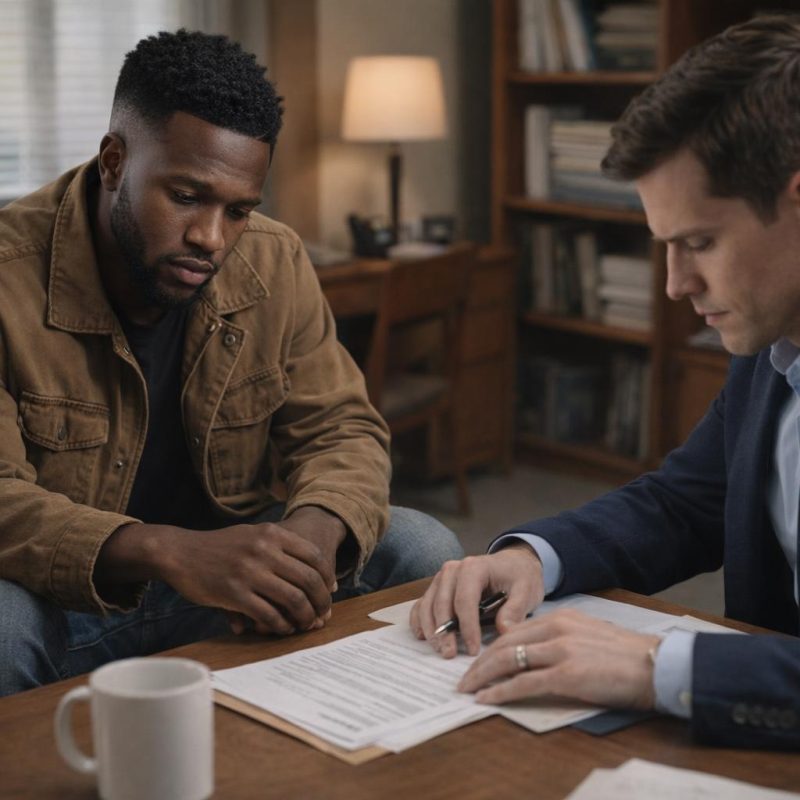 Image by RM AI
Alone with It
I got back to my apartment a little after ten and sat down at the kitchen table without turning on more than the one lamp by the door. I spread the copies Marcus had made across the table and just looked at them. Two point seven million dollars, moved in pieces small enough to avoid flags, over the better part of a decade. Richard had sat across from me in that office and handed me a check like I was a problem he was solving, and the whole time this was sitting underneath everything he owned. I thought about going straight to the police. I turned it over a few times. But I kept coming back to the same thing — I didn't have the full picture yet. I didn't know who the money was supposed to protect. I didn't know what Richard had told people, or what he'd built around himself to make sure no one looked too closely. Going in half-informed felt like handing him a way out. I thought about Sophia. I thought about how any of this might touch her life once it unraveled — she trusted her father completely, and that trust was going to cost someone. I owed it to whoever the beneficiary was to understand everything before I moved. The lamp hummed. The papers didn't move. The apartment held the kind of quiet that doesn't let you off the hook.
 Image by RM AI
The Anniversary Gala
I spent the next morning going through everything I could find on Richard's business circle — press releases, trade publications, a few society columns I'd never have read under any other circumstances. Most of it was the usual noise: ribbon cuttings, charitable donations, quotes about market confidence. Then I found it, buried in a society page from a local lifestyle magazine. A full announcement, with a photo of Richard and Patricia looking exactly as polished as you'd expect. The Hartley thirtieth wedding anniversary gala, scheduled for three weeks out, at the Grand Meridian Hotel ballroom downtown. The article called it one of the season's most anticipated private events. It mentioned the guest list in the kind of language that was meant to impress — prominent figures from the regional business community, long-standing investment partners, key stakeholders in Hartley Capital's portfolio. I read that sentence twice. These were the people who trusted Richard with their money. Some of them, for all I knew, were connected to the same accounts Marcus and I had been pulling apart. I sat back and stared at the screen. The idea wasn't fully formed yet — more like a shape in the dark — but I could feel it starting to take up space. The guest list included Richard's major investors and business partners, all of them in one room, three weeks from now.
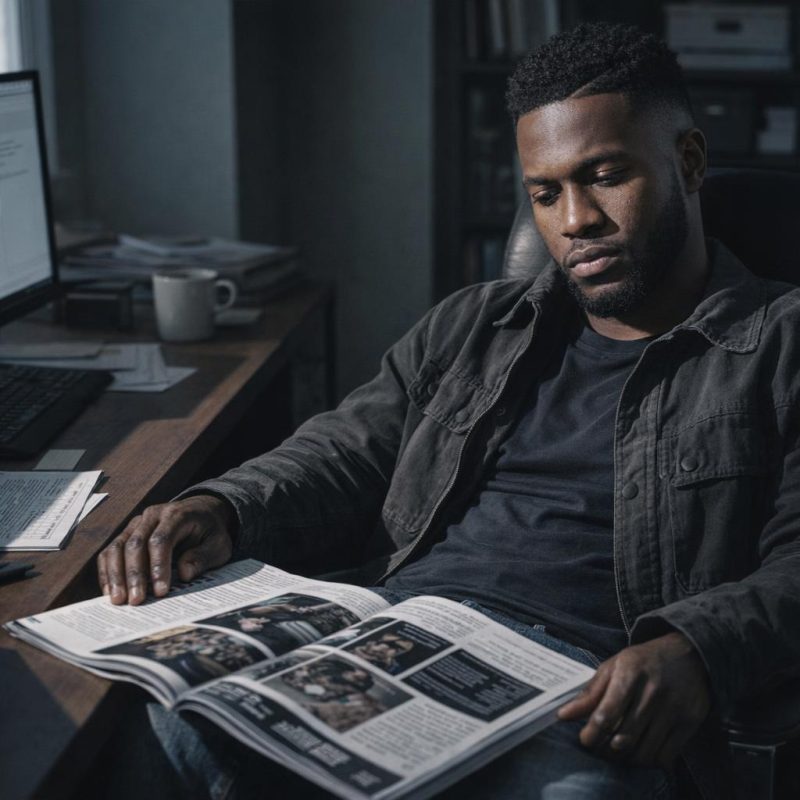 Image by RM AI
The Idea Takes Shape
I kept coming back to the gala. Not because I wanted to crash a party, but because I kept thinking about what that room actually represented. Richard's entire world in one place — the people who believed in him, who'd handed him their trust along with their capital, who toasted him and shook his hand and called him a man of integrity. I thought about what it would mean for all of that to unravel in front of them, not in a courtroom months from now with lawyers and delays and Richard's team controlling the narrative, but right there, in real time, with nowhere to redirect and no press release to soften it. Going to the police felt right in principle. But I'd seen enough to know that money and lawyers could slow almost anything down. A public confrontation was different. It was immediate. It was something Richard couldn't manage from behind a desk. The investors in that room deserved to know what they were actually invested in. That felt like justice in a way that a quiet tip to a regulator didn't. I wasn't thinking about revenge — or I was trying not to. I was thinking about the person whose money had been taken, whoever they were, and what they were owed. The image of Richard's face in that ballroom, in front of everyone who trusted him, settled over me and stayed.
 Image by RM AI
The Plan
I made the decision somewhere around two in the morning, sitting at the same kitchen table with the same lamp on. I was going to be in that ballroom. The question was how. I spent an hour reading about how exclusive private events worked — venue security, guest credentialing, the whole infrastructure that kept uninvited people out of rooms like that. What I found was that high-end events didn't rely on bouncers. They used professional security firms, the kind that vetted vendors, managed access points, and coordinated with venue staff. You didn't sneak past that. You got inside it. I needed legitimate access, which meant I needed a reason to be there that held up to scrutiny. I turned that problem over for a while. Then I opened my wallet and looked at the check. Eighty-five thousand dollars, signed by Richard Hartley, made out to me. It had been sitting there since the day he handed it across his desk like I was a transaction he was closing. I'd never cashed it. I'd never planned to. But I'd kept it, and now I understood why it had felt wrong to throw it away. The number on that check was more than enough to hire the kind of help I needed. Richard's own money, used to walk through his own door.
 Image by RM AI
Security Research
I started with a broad search — security firms serving private clients in the region, companies with experience at high-profile social events. There were more than I expected. I went through their websites one by one, looking at the language they used, the events they listed, the clients they were willing to name. Most of them were fine. Professional enough. But one name kept surfacing when I cross-referenced Hartley Capital in the society pages and event announcements I'd already pulled. Holloway Security Services. They'd handled the venue security for a Hartley Capital investor dinner two years back. A charity gala the year before that. One article mentioned them by name as the firm Patricia had personally requested for a fundraiser she'd chaired. I pulled up their website. Clean, minimal, the kind of design that communicated discretion without having to say the word. Their specialty was private events for high-net-worth families — exactly the world Richard moved in. The testimonials read like they'd been written by people who valued silence as much as service. I saved their number and sat back. There was something almost satisfying about it — Richard's preferred firm, right there, available to anyone willing to pay for it.
 Image by RM AI
The Call to Holloway
I called the next morning, early enough that I figured I'd get a receptionist and have to leave a message. Instead, the line picked up on the second ring and a man's voice came through — measured, unhurried, the kind of voice that didn't waste syllables. He said his name was James Holloway. I told him I was looking for a consultation on a sensitive matter involving access to a private function. He didn't ask me to clarify right away. He just said they handled a range of private event services and asked what kind of function I had in mind. I said it was an anniversary gala, high-end venue, and that I needed discreet, professional access — not as a guest, but in a capacity that would hold up to scrutiny on the night. There was a brief pause. He said they had considerable experience with that type of arrangement. He asked if I had a timeline. I gave him the date. He said he had availability the following afternoon and suggested we meet in person. I agreed. When I hung up, I sat for a moment with the phone still in my hand. I'd kept my voice even the whole way through — practical, direct, like a man who made calls like this every week. It surprised me a little, how steady I'd sounded.
 Image by RM AI
The Holloway Meeting
Holloway's office was exactly what I expected — clean, minimal, nothing on the walls except a framed security certification and a clock. No small talk. He gestured to the chair across from his desk and I sat down. I told him the event was the Hartley anniversary gala, private venue, black-tie, roughly three hundred guests. He typed something without looking up and asked if I was on the guest list. I said no. He asked if I had legitimate business to conduct there. I said yes, and that I needed to be in a position to conduct it without interference. He looked at me for a moment — not suspicious, just measuring — then said the arrangement I was describing would run forty thousand dollars. I didn't flinch. I reached into the bag I'd brought and set it on his desk. He unzipped it without ceremony, pulled out the stacks, and started counting. The bills were crisp and banded, straight from the bank where I'd cashed Richard's check. I watched his hands move through the stacks — methodical, unhurried — counting out Richard's money, dollar by dollar.
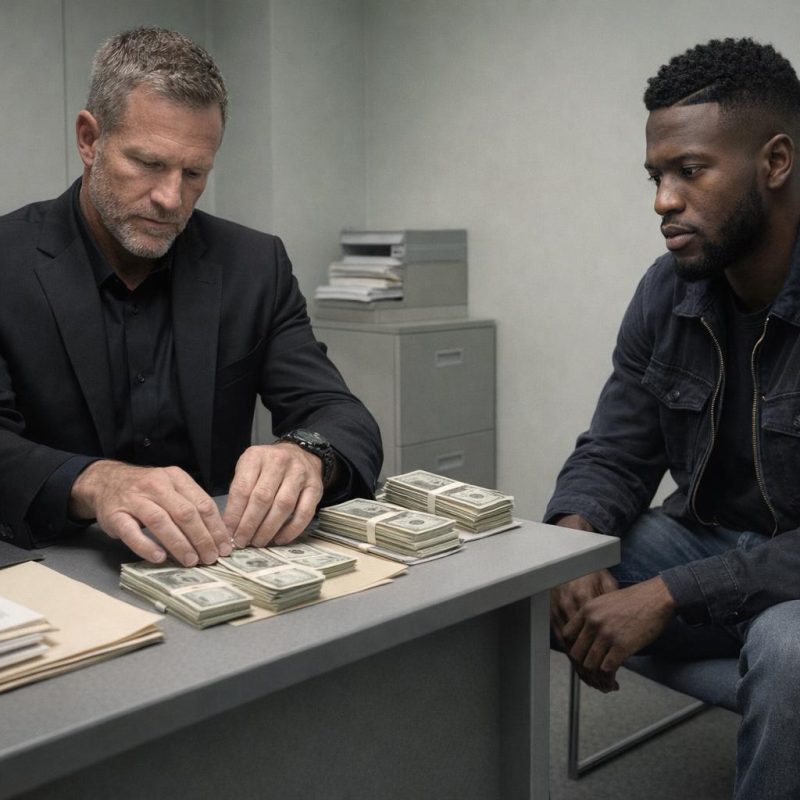 Image by RM AI
Access Secured
Holloway finished counting, set the last stack down, and zipped the bag closed without a word about where the money came from. That was the thing about him — he didn't ask questions that weren't his business. He pulled a folder from his desk drawer and laid it open between us. Inside was a floor plan of the venue, printed clean with sections labeled in small block letters. He walked me through it methodically: main entrance, service corridor, ballroom perimeter, staff staging area. He said I'd be listed as supplemental security under a contracted firm name, which meant I'd clear the front checkpoint without issue. He said I needed to stay in the public areas, avoid the private rooms on the east wing, and not engage with the primary security team unless spoken to first. I told him I understood. He said discretion wasn't optional — it was the product. I nodded. He reached into the same drawer and slid a laminated credential card across the desk, followed by a printed event brief with my assigned position and arrival window. I picked up the credential and turned it over in my hand — my photo, a firm name I didn't recognize, and a title that would get me through every door I needed.
 Image by RM AI
The Evidence Package
I spread everything across my kitchen table and started organizing it the way Marcus had suggested — chronological, clean, nothing out of order. The original check went into a clear sleeve at the front. Behind it came the trust filing copies, the withdrawal records sorted by date, and then Marcus's analysis — three pages of annotated figures with a timeline running down the margin. I wrote a summary myself, two pages, plain language, no legal jargon. Just the pattern: dates, amounts, account numbers, what the filings said versus what the records showed. I ran the total twice to make sure I had it right. Then I made three copies of the entire package — one for the IRS submission, one for certified mail, one stored at Marcus's place in a sealed envelope he didn't open. I used a fresh folder for each set, labeled them on the spine, and stacked them on the table. When I was done I sat back and looked at what I'd built. It wasn't dramatic. It was just paper — but it was the kind of paper that didn't lie, didn't soften, and didn't leave room for a different explanation. I picked up the top folder and felt the weight of it in my hands.
 Image by RM AI
The Anonymous Tip
I used a library computer three blocks from my apartment. Logged in as a guest, cleared the browser history before I started, and pulled up the IRS whistleblower submission portal. The form was straightforward — more straightforward than I expected, honestly. I filled in the trust account number, Richard's name and firm, the nature of the irregularities, and a description of the withdrawal pattern. I kept the language factual. No editorializing, no personal history, nothing that could trace back to me. When it asked for supporting documents I uploaded the scanned copies I'd saved to an encrypted drive — the withdrawal records, the trust filings, the annotated timeline Marcus had put together. I read through the submission twice before I hit send. The page refreshed and a confirmation screen appeared with a reference number and a note that the submission had been received by the whistleblower office. I wrote the number down on a folded piece of paper and tucked it into my jacket pocket. Then I sat there for a moment, hands flat on the desk, the library quiet around me. Whatever happened next was no longer entirely up to me. The confirmation number sat in my pocket like a small, irreversible fact.
 Image by RM AI
The Full Submission
I printed the cover letter that morning — one page, addressed to the IRS Criminal Investigation Division, laying out the embezzlement scheme in plain terms and referencing the whistleblower submission number. I paper-clipped it to the front of the full evidence package, slid everything into a padded envelope, and sealed it. I wrote the address by hand. At the post office I waited in line behind a woman mailing a birthday package and a guy returning something in a beat-up Amazon box. When I got to the counter I asked for certified mail with tracking and return receipt. The clerk weighed it, printed the label, stamped it, and called out the total. I paid, took the receipt, and stepped back from the counter. I watched her lift the envelope and set it in the outgoing bin behind her — one motion, no ceremony, like it was any other piece of mail.
 Image by RM AI
The Guest List
Holloway sent the guest list as a PDF attachment, no message, just the file. I opened it at my kitchen table with a cup of coffee going cold beside me. Three hundred and fourteen names. I went through it slowly. Richard's senior partners were there — four of them, the ones whose names appeared on the firm's letterhead. Three board members from the charitable foundation he chaired. A state assemblyman I recognized from a fundraiser photo I'd seen in a news article. Wealth managers, estate attorneys, two hedge fund principals. Patricia's garden club, her charity committee, the women she lunched with every other Tuesday. The kind of people who shaped reputations with a single conversation at the right cocktail party. I set the list down and looked at the ceiling for a moment. This wasn't going to be a quiet room with a few witnesses. This was going to be the room — the one Richard had spent thirty years building, the one where his name meant something. Every person on that list was someone whose opinion he'd cultivated, whose trust he'd traded on. I picked the list back up and read through it one more time, sitting with the weight of every name on it.
 Image by RM AI
The Final Days
Three days out, I stopped second-guessing the plan and started living inside it. I went through every step the way I used to go through a job site before a big pour — checking each piece, making sure nothing was loose. I pulled out the credentials and confirmed the arrival window. I reviewed the floor plan until I could picture the ballroom layout without looking at it. I rehearsed what I was going to say to Richard — not a speech, just the key points, the ones that needed to land clean and fast before anyone could interrupt. I thought through the ways it could go sideways and what I'd do in each case. I wasn't nervous exactly. It was more like the feeling before a storm you've been watching build for days — you know it's coming, you've done what you can, and now there's nothing left but to stand in it. I ate, I slept, I went through the checklist again in the morning. By the third night I wasn't running through contingencies anymore. I sat at the kitchen table in the quiet of my apartment, and what settled over me wasn't dread or excitement — it was the stillness of knowing exactly what I was going to do.
 Image by RM AI
The Morning Of
I was up before six. Showered, shaved, took my time with it. I laid the suit out the night before — dark charcoal, the one I'd bought for a job interview two years ago and worn exactly once. I dressed slowly and checked the credentials in the mirror, clipped to the breast pocket where they'd be visible at the checkpoint. I went through the floor plan one last time, then folded it and left it on the counter. I didn't need it anymore. I made coffee, drank half of it standing at the window watching the street below come to life — delivery trucks, a dog walker, a woman in scrubs heading to an early shift. Regular people having a regular morning. Mine was going to be something else. I rinsed the mug, put on my jacket, and checked the inside pocket where I'd stored the credentials and the event brief. Then I opened my wallet. The check was still there, folded once, Richard's signature at the bottom in that heavy, deliberate hand. Eighty-five thousand dollars he'd written to make me disappear. I took it out, smoothed it flat, and held it.
 Image by RM AI
The Original Documents
I spread everything across the floor of my apartment like a crime scene — which, I suppose, is exactly what it was. The bank statements Marcus had pulled, the withdrawal timeline we'd built together, the IRS submission confirmation with its timestamp, the photocopies of every key document arranged in chronological order. I got down on one knee and went through it all slowly, piece by piece, the way you check your gear before a job where mistakes cost you. The withdrawal pattern was consistent — regular, deliberate-looking amounts pulled in ways that wouldn't trigger automatic flags. The total, when I added it up again, sat just under two point nine million dollars. Someone out there had trusted Richard with that money. Someone had no idea it was gone. I checked the IRS confirmation one more time, made sure the submission reference number matched my copy. It did. I sat back on my heels and looked at the whole picture spread out in front of me — every page, every number, every date. I didn't have the beneficiary name yet. That gap sat in the middle of everything like a missing piece I could feel the shape of but couldn't quite see. Still, what I had was real. The weight of it settled over the room like something physical.
 Image by RM AI
The Trust's Origin
I'd been through the state trust registration database twice before, but I went back in one more time. I wasn't sure what I was looking for exactly — just that the beneficiary question kept pulling at me. I typed in the trust number Marcus had flagged: 2847-B. The search returned a single result. I clicked through to the filing record and leaned closer to the screen. The original establishment date was right there at the top of the document: May 1998. The trust type was listed as irrevocable, which meant once the money went in, it was supposed to stay protected. The trustee line read Richard Hartley, plain as anything. I scrolled through the first page — standard legal language, funding structure, administrative provisions. Then I hit the bottom of the page and the document cut off. A note at the bottom said the full filing included additional pages, and there was a link to access the complete record. I clicked it. A login prompt came up, then a document access page. The full filing was available — scanned from the original, multiple pages. I sat there for a moment, looking at the date the trust was established, May 1998, and something about it nagged at me in a way I couldn't quite name.
 Image by RM AI
The Second Page
The link to the complete filing sat right there on the screen. I clicked it and a new page loaded — a document access portal, the kind county records offices use when they've digitized old paper filings. The full trust establishment record was listed as a scanned PDF, seventeen pages total. A progress bar appeared, slow at first, then picking up speed. I watched it fill — twenty percent, forty, sixty. My knee was bouncing under the desk and I made myself stop. Eighty percent. The file was pulling in cleanly, no errors. I'd been chasing this particular thread for days, and now it was right there, almost in my hands. Ninety-five. I held my breath. I clicked the download button for the full trust establishment filing.
 Image by RM AI
Page Seven
The legal language blurred after a while — standard trust provisions, distribution schedules, amendment restrictions, all the boilerplate that lawyers charge by the word to produce. Page four. Page five. I scrolled past a section on trustee powers that ran nearly two full pages on its own. Page six came and went. Then page seven loaded on my screen and I stopped scrolling. The section header sat at the top of the page in bold capital letters: BENEFICIARY DESIGNATION. My hand went still on the mouse. I took a breath — slow, deliberate — and held it for a second. The name was right there, one line below the header. I could see the line. I could see there was text on it. My eyes moved down from the bold header toward the line below it.
 Image by RM AI
Sophia's Trust
Sophia Marie Hartley. I read it twice. Then a third time, because my brain kept trying to reject it. The trust had been established in May 1998 — Sophia would have been two years old. The document described it as a vehicle for her future security and inheritance, funded initially at three million dollars. Three million dollars set aside for her when she was a toddler, meant to grow, meant to be there when she needed it. I scrolled back to the withdrawal timeline I'd printed and laid beside the laptop. Nearly two point nine million dollars, gone. Richard hadn't been stealing from some anonymous investor or a business partner who'd trusted him. He'd been stealing from his own daughter. From the time she was a child. The eighty-five thousand dollar check sitting in my jacket pocket — the one he'd handed me across that restaurant table like I was a problem to be solved — that was Sophia's money. He'd used her inheritance to try to buy me away from her. I sat there with the document open on my screen and the check on the table beside me and I couldn't move. I looked back at the screen, at the line that hadn't changed, at her full name listed as the sole beneficiary of a trust her father had spent twenty-five years quietly emptying.
 Image by RM AI
Her Money
I picked up the check. I'd handled it a dozen times since Richard slid it across that restaurant table, but holding it now felt completely different. Eighty-five thousand dollars. I turned it over in my hands. Richard had sat across from me in that booth, calm and polished, and handed me money that wasn't his to give. He'd reached into his daughter's future and pulled out a chunk of it and used it to try to drive me away from her. The trust was supposed to give Sophia independence — real independence, the kind that means you never have to ask anyone for anything. Instead, Richard had been quietly dismantling it for twenty-five years while playing the role of devoted father. Every school year, every birthday, every holiday where he smiled at her across the table — all of it built on top of what he was taking. The anniversary gala tomorrow night was going to celebrate thirty years of marriage. Thirty years of this. I set the check back down on the table and stared at it. Eighty-five thousand dollars of Sophia's money, written out in Richard's heavy hand, meant to send me away and keep her from ever finding out what he'd done — her money, used to drive me away from her.
 Image by RM AI
What He Took From Her
I pulled the withdrawal timeline back out and went through it again, but this time I wasn't looking at the numbers. I was looking at the dates. The first withdrawal came in 2000 — Sophia would have been four. Then a gap, then another pull in 2004, the year she would have started school. More in 2009, 2010, 2011 — her middle school years. A cluster of larger amounts between 2014 and 2018, right across her high school and college years. The trust had been designed to fund her education, her start in life, the kind of foundation that means you don't begin adulthood already behind. Richard had taken it instead. Every year she grew up, every milestone she hit, there was a corresponding withdrawal on this timeline. He'd sat at her graduation. He'd given speeches about how proud he was. He'd written the tuition checks himself — probably from accounts that had nothing to do with the trust — while the trust money went somewhere else entirely. I thought about Sophia, the way she talked about her father, the trust she'd always had in him. She had no idea that the security he'd always projected was built on something he'd been hollowing out since before she could read. The years of theft lay mapped across the whole of her life, from childhood through everything that came after.
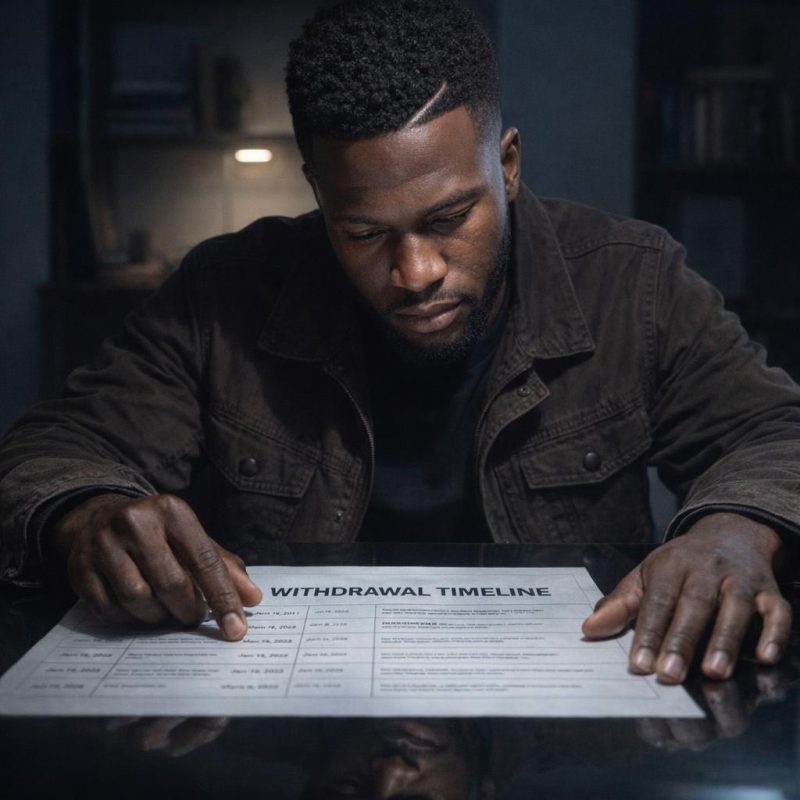 Image by RM AI
The Night Before
I sat at my kitchen table that night with the lights low and everything laid out in front of me one last time. The documents, the timeline, the check. Tomorrow I'd walk into that gala with credentials that said I belonged there, and I'd make sure Richard couldn't walk away from what he'd done. I thought about Sophia. I thought about what it was going to do to her — watching her father's image come apart in a room full of people who'd spent decades admiring him. There was no version of tomorrow that didn't hurt her. I'd accepted that. What I hadn't accepted, and wouldn't, was the alternative: letting Richard keep the secret, keep the money, keep the control. She deserved to know what had been taken from her. She deserved to make her own choices with the truth in front of her, not the version of her father he'd carefully maintained. The IRS investigation was already moving. The documents were already filed. Tomorrow was just the moment it all became impossible to ignore. I stacked the papers neatly, turned off the kitchen light, and sat in the dark for a while. Not anxious. Not second-guessing. Just still — the stillness of knowing exactly what I was fighting for.
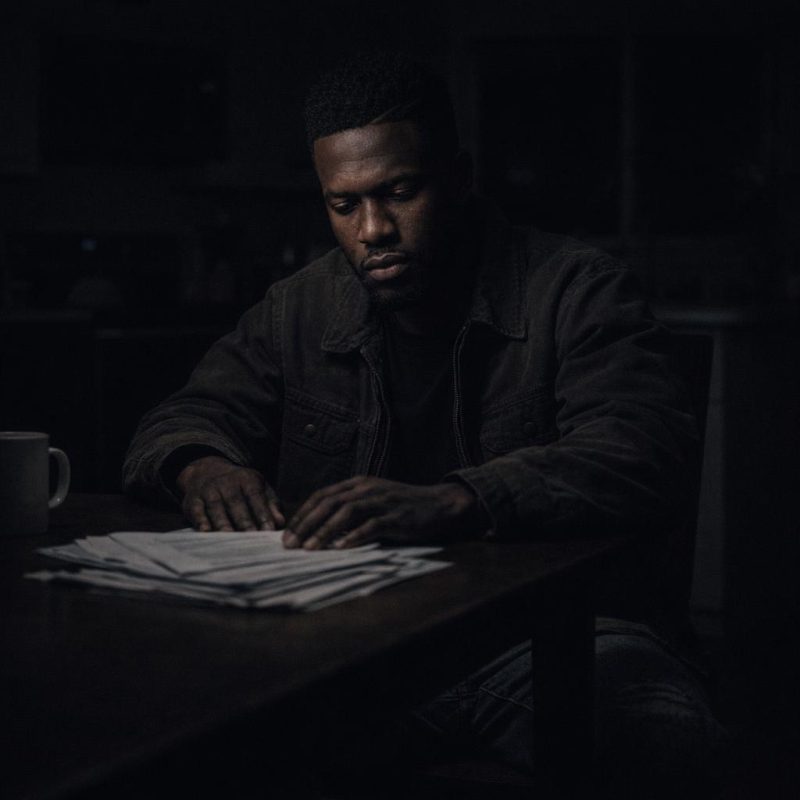 Image by RM AI
The Drive
I change into dark slacks and a charcoal button-down around six — professional enough to pass, plain enough not to stand out. The Holloway Security badge goes on my belt clip. I check it twice, then a third time, because that's the kind of night it is. The check is folded once and tucked into my inside jacket pocket, right against my chest, where I can feel it every time I breathe. I've been carrying it for weeks. Tonight I give it back. The drive into the city is quiet. I take the long way without meaning to, looping past the neighborhood where Sophia and I used to get coffee on Sunday mornings, the diner with the busted neon sign, the park where I told her I loved her the first time. None of that is gone. I just need to make sure she gets to keep it with the truth attached. The hotel appears about a mile out — all lit up, glass and gold light spilling onto the street, the kind of place that costs more per night than I make in a month. I pull into the parking structure, cut the engine, and sit there for a moment in the dark and the quiet.
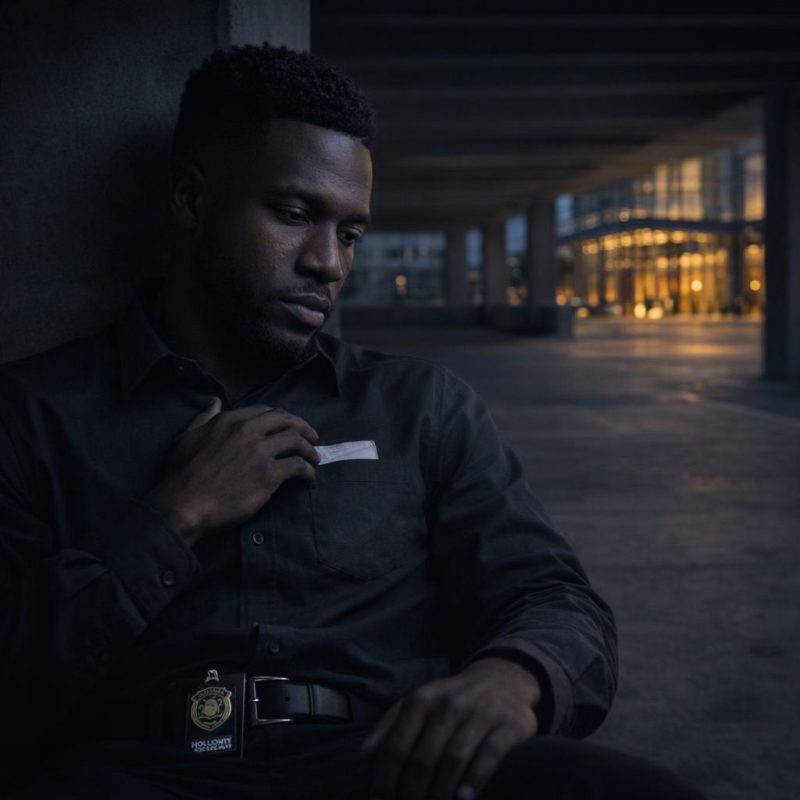 Image by RM AI
Inside
The lobby is exactly what I expected — marble floors, a string quartet somewhere out of sight, staff in black moving like they've rehearsed it. I walk in through the side entrance, the one Mr. Holloway's team uses for event security, and I don't hesitate. Hesitation is what gets you stopped. The woman at the staff check-in desk barely looks up when I show the badge. She runs a finger down her clipboard, finds the name, and waves me through with the kind of efficiency that tells me she's done this a hundred times. I take the elevator to the fourth floor. The doors open and the sound hits me first — low music, the clink of glassware, the particular hum of a room full of people who believe they've earned their place in it. Two other security guys nod at me from their posts near the stairwell. I nod back. I find a position near the main entrance to the ballroom and stand the way Mr. Holloway's people stand — weight even, hands loose, eyes moving. Then someone opens the ballroom doors from inside, and the full light and noise of the celebration rolls out into the corridor.
 Image by RM AI
The Celebration
The room is something. Chandeliers throwing warm light across round tables draped in white linen, centerpieces that probably cost more than my truck payment, a dance floor where a few couples are already moving. Three hundred people, easy, and every one of them dressed like they belong on a magazine cover. I recognize faces from the guest list Marcus pulled — a state senator near the bar, two of Richard's largest investment partners by the windows, a hedge fund manager I'd seen in a financial quarterly. They're all here. Richard has assembled everyone who matters to him in one room, and he's standing at the center of it like he was born for exactly this moment. He probably thinks he was. He's in a black tuxedo, silver hair perfect, working the room with the ease of a man who has never once doubted his own version of events. Patricia is beside him — elegant, composed, smiling at the right moments, touching the right arms. They look like a portrait of success. Thirty years of marriage, thirty years of carefully maintained appearances. I watch Richard accept a handshake from one of his investment partners, the man's face open and admiring, and I feel something settle cold and quiet in my chest.
 Image by RM AI
Positioning
I move along the perimeter of the room, staying close to the wall, keeping my pace even and unhurried. Nobody looks twice. In a dark jacket with a badge on my belt, I'm just part of the furniture — the kind of presence people register and immediately forget. I pass a cluster of guests laughing about something, a waiter balancing a tray of champagne flutes, two women comparing notes on a recent trip abroad. None of them give me a second glance. I work my way around until I have a clear sightline to Richard and a clear path through the crowd between us. He's still holding court near the center of the room, surrounded by four or five of his business partners, gesturing with a glass of scotch, telling some story that's making everyone laugh. The timing isn't right yet. I wait. I reach into my jacket pocket and close my fingers around the check. The paper is warm from being against my chest all evening. I hold it there, not pulling it out, just feeling the weight of it — eighty-five thousand dollars drawn from his own daughter's trust fund, folded twice, about to complete the longest round trip of its life. I find my position. I wait for Richard to turn. And then he does, and our eyes meet, and I step into his line of sight.
 Image by RM AI
Recognition
He sees me and the smile doesn't fall — it freezes. That's the difference. A man who was just surprised would drop the expression entirely. Richard's face does something more controlled than that: it locks in place, the muscles holding the shape of confidence while everything behind his eyes goes somewhere else entirely. I watch him process it. The recognition, then the calculation, then the thing underneath the calculation that he can't quite hide — something that looks a lot like fear. Patricia catches it first. She's spent thirty years reading that face, and she turns to follow his gaze before he's even taken a step. Her expression shifts too, though hers goes somewhere quieter — a careful blankness, the kind that comes from long practice. The guests nearest to them don't understand yet. They're still smiling, still mid-conversation, still holding their champagne. Richard takes one step toward me, then stops. Maybe he's thinking about the room. Maybe he's thinking about the four hundred eyes that could turn his direction at any moment. I don't move. I just stand there, holding his gaze across the space between us, and I let him look at what he paid eighty-five thousand dollars to never see again.
 Image by RM AI
The Approach
I start walking. Not fast, not slow — the pace of someone who has already decided how this ends. The crowd shifts around me without really parting, and I move through the gaps the way you learn to move through tight spaces when you've spent years on job sites. Richard's business partners notice me first. I can see it in the way their conversation trails off, the way their eyes track from me to Richard and back again, trying to read the situation. Patricia's hand finds Richard's arm. Her fingers close around it — not affectionate, something tighter than that. Richard doesn't move. He's doing the math, I can tell, running through his options in real time and not liking any of them. There are too many people. Too many faces he needs to keep. He can't make a scene without becoming the scene. I stop directly in front of him, close enough that I don't need to raise my voice, and I bring the check out of my jacket pocket and hold it up between us where the light catches it and anyone standing nearby can see exactly what it is.
 Image by RM AI
The Return
I keep my voice level and clear. Not loud enough to reach the whole room, but loud enough that the six or seven people standing within arm's reach can hear every word. "I'm returning this," I say, holding the check so the amount faces outward. "You wrote it to me six weeks ago. I think you remember what it was for." Richard's jaw tightens. He opens his mouth and closes it again. "The thing is," I continue, "I did a little research into where the money actually came from. Turns out it wasn't yours to spend." One of his business partners shifts his weight. Patricia has gone very still. "This check was drawn from Trust 2847-B," I say. "That's a private trust account. Set up for a beneficiary who had no idea her father was using it as a personal slush fund." I watch the words land on the people around us. A woman in a silver dress stops mid-sip. The man beside Richard takes a small step back. "The beneficiary is Sophia," I say. "His daughter. This is her inheritance." The name drops into the room and the quiet that follows it is the kind that spreads — one person going still, then the next, then the next — when I say the words *Sophia's trust fund*.
 Image by RM AI
The Announcement
The quiet holds for maybe two seconds. Then it breaks into murmurs, and the murmurs spread fast. I don't wait for Richard to find his voice. "Six weeks ago I took this check and I started asking questions," I say, loud enough now that the circle around us has grown without anyone meaning to join it. "What I found is that the embezzlement from that trust goes back years. The total is over two point seven million dollars." Someone gasps. I hear it clearly — a sharp intake of breath from somewhere to my left. Richard's two largest investment partners exchange a look that has nothing friendly in it. "I've already filed a full report with the IRS," I say. "Documentation, account records, transaction history. All of it. It went in three days ago." Patricia makes a sound I can't quite name. Richard's face has gone the color of old concrete. His partners are stepping back now, creating distance the way people do when they've just realized the building might be on fire. I hold the check out and press it into Richard's hand, and I watch his fingers close around it by reflex — eighty-five thousand dollars of his daughter's money, returned to the man who took it, in front of every person whose opinion he has ever cared about, as his world comes apart in real time.
 Image by RM AI
The Collapse
The murmurs turn into something louder and less polite within about thirty seconds. I watch it happen in real time — the way a room full of people recalibrates all at once. Richard's two largest investment partners are already moving toward each other, heads bent, voices low. One of them pulls out his phone. A woman in a silver gown says the word 'lawyer' clearly enough that the people around her go quiet. Richard tries to speak. He gets maybe four words out before his voice cracks and he has to stop. He tries again. 'This is completely fabricated,' he says, but it comes out thin, and nobody in that circle looks like they believe it. Patricia stands a few feet away from him, perfectly still, her champagne glass held at an angle that suggests she's forgotten it's in her hand. She doesn't look at Richard. She doesn't look at me. She stares at a fixed point somewhere past the centerpiece like she's trying to locate a version of this evening that makes sense. One of the partners says something sharp to Richard — I catch the words 'exposure' and 'immediately' — and Richard's shoulders drop a full inch. The silver-haired man who walked into this ballroom owning every inch of it now stands in the middle of his own anniversary party while his guests quietly decide he is no longer someone they can afford to know.
 Image by RM AI
Sophia
I leave before the caterers start breaking down the tables. The drive to Sophia's apartment takes twenty minutes and I spend most of it figuring out where to start. There's no good version of this conversation. I knock and she opens the door in sweats, confused, a little worried — she can read my face well enough to know something happened. I ask her to sit down. She does, and I sit across from her and I tell her everything. The check first. Then what I found when I started digging. The trust fund her grandmother set up. The withdrawals going back years. The two point seven million. I watch her face move through about six different expressions and I don't rush any of it. She shakes her head twice. She says 'that's not possible' once, quietly, like she's saying it to herself more than to me. I pull out my phone and show her the documentation — the account records, the transaction history, the dates. She goes very still. Then she puts her face in her hands and stays there for a long time. When she looks up, her eyes are wet and her voice is steady in the way that means she's working hard to keep it that way. She says she's glad I told her. She says it like she means it. I reach across and take her hand, and I don't say anything, because there's nothing left to say that would make the look on her face hurt any less.
 Image by RM AI
The Investigation
The IRS moves faster than I expected. Within two weeks of the gala, we get word that the investigation is formally open and Richard's accounts are being examined. Sophia gets a call from a federal investigator asking her to come in and go over the trust documentation. She goes. She sits across from a stranger in a government office and explains her grandmother's estate and answers questions about her father for two hours, and when she comes home she's quiet in a way that takes up the whole apartment. Over the following weeks we learn that some of the money may be recoverable — not all of it, but enough to matter. Richard's assets are frozen. His attorneys are working overtime. Patricia files for divorce six weeks after the gala, and Sophia finds out from a cousin, not from her mother directly. That one lands hard. We talk about it late one night at my kitchen table, her hands wrapped around a mug that's gone cold, and I let her say everything she needs to say without trying to fix any of it. She's grieving something that was already gone before she knew it was missing — a father she thought she had, a family she thought was solid. I can't give that back to her. What I can do is stay. So that's what I do. The weight of all of it settles around us both, and we sit with it together.
 Image by RM AI
Starting Over
Four months out from the gala, Richard is indicted on three federal counts. I read the news on my phone at six in the morning before work, sitting on the tailgate of my truck in the parking lot of the job site. I text Sophia. She texts back two words: 'I know.' She'd already seen it. A portion of the trust — just over a million dollars — is flagged for potential recovery pending the outcome of the case. It's not everything, but it's real. Sophia and I are still engaged. We pushed the wedding back, not because we're uncertain about each other, but because we wanted to plan it ourselves, on our own terms, without any of the machinery that used to surround her family's idea of what our life should look like. We found a venue we both actually like. We made a guest list that fits on one page. She picked a dress without anyone's approval but her own. Some evenings we sit on her balcony and she talks about her father — not with anger every time, sometimes just with a kind of tired sadness — and I listen. We're not the same people we were before any of this started. I don't think we'd want to be. What we're building now has our names on it, and nothing underneath it that isn't true.
 Image by RM AI
KEEP ON READING
The Brutal Realities Of Gladiator Life Beyond the Arena
David Cruz asenjo on PexelsWhen most people think of gladiators,…
By Rob Shapiro Mar 31, 2026
The Volcano Winter That Nearly Toppled Europe
Collin Ross on UnsplashMost people, if asked to name a…
By Cameron Dick Mar 31, 2026
From School Plays To Starting A Cult: 20 Of The…
The Books That Made Us. Many people will tell you…
By Farva Ivkovic Jan 31, 2025
20 Facts About Jane Grey, The Forgotten Queen Of England
A Quick, Messy, and Tragic Reign. Lady Jane Grey never…
By Maria Cruz Jan 31, 2025
20 Priceless Historical Art Pieces Rescued By The Monuments Men
Protecting Human History. While the soldiers on the front lines…
By Sara Springsteen Mar 31, 2026
Almost Every Ancient Statue Has a Missing Nose, And It's…
Gary Todd from Xinzheng, China on WikimediaWalk through the classical…
By Elizabeth Graham Mar 31, 2026