

I Came Home From Work to Find Someone Had Completely Redecorated My House... And Moved Into My Life
I Came Home From Work to Find Someone Had Completely Redecorated My House... And Moved Into My Life
The Wrong Living Room
I drove home on autopilot, the way you do after a day that wrings you out completely. I was already mentally sorting through whatever was left in the fridge, already dreading the laundry pile on the bedroom chair, when I turned onto my street and noticed the porch light was on. That stopped me cold. I never leave the porch light on during the day — never, not once in three years of living there. I sat in the car for a second, engine idling, telling myself I must have forgotten. I grabbed my bag and walked up the front steps anyway. The moment I pushed the door open, something hit me — not visually, not at first. It was the smell. Lemon floor wax, sharp and chemical, where my vanilla candle scent should have been. Then I looked up. The sofa was against the wrong wall. The family photos were gone, replaced by large abstract landscape prints in muted grays and greens. I walked further in, heart thudding, and spotted the peeling corner of wallpaper near the baseboard — my wallpaper, the one I'd been meaning to fix for two years. The long scratch in the hardwood by the window, the one my moving guys left — still there. This was my house. But where my favorite velvet armchair had always sat, angled toward the window the way I liked it, there was a sleek modern recliner I had never seen before in my life.
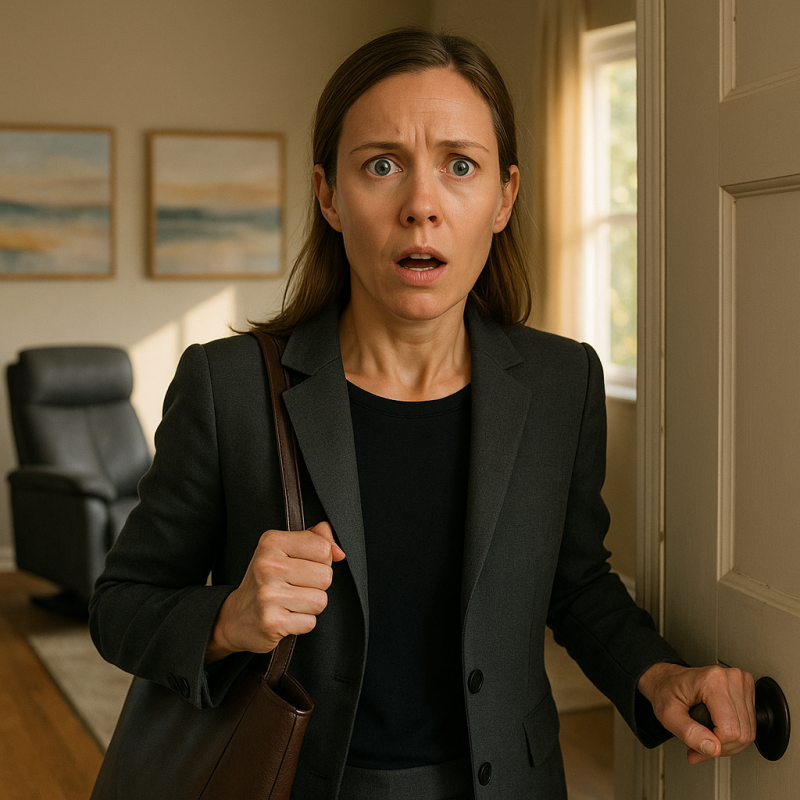 Image by RM AI
Every Room a Stranger
I stood there long enough that my bag slipped off my shoulder and hit the floor, and I didn't even flinch. I made myself move. I walked through the living room and into the kitchen, my footsteps sounding different — hollow, too clean, like the floors had been freshly waxed. My mismatched dishes were gone. In their place, a neat stack of slate-gray plates sat in the open cabinet, uniform and expensive-looking. Professional-grade cookware hung from a rack I'd never installed. On the counter sat an espresso machine that probably cost more than my monthly car payment, gleaming like it had never been touched. I opened cabinet after cabinet, running my fingers along shelves that smelled like cedar and someone else's choices. Then I went to the bedroom. My clothes were gone. The closet held a row of tailored suits and silk blouses in muted, sophisticated colors, arranged by shade. The bed was a low platform frame with white linen I didn't recognize. I went back to the kitchen because I needed something to hold onto, something ordinary. I pulled open the refrigerator — I'd left it nearly empty that morning, just some leftover pasta and a half-empty bottle of sparkling water. But it was packed. Organic produce stacked in the crisper, specialty cheeses wrapped in paper, glass jars of things I couldn't name lined up on every shelf.
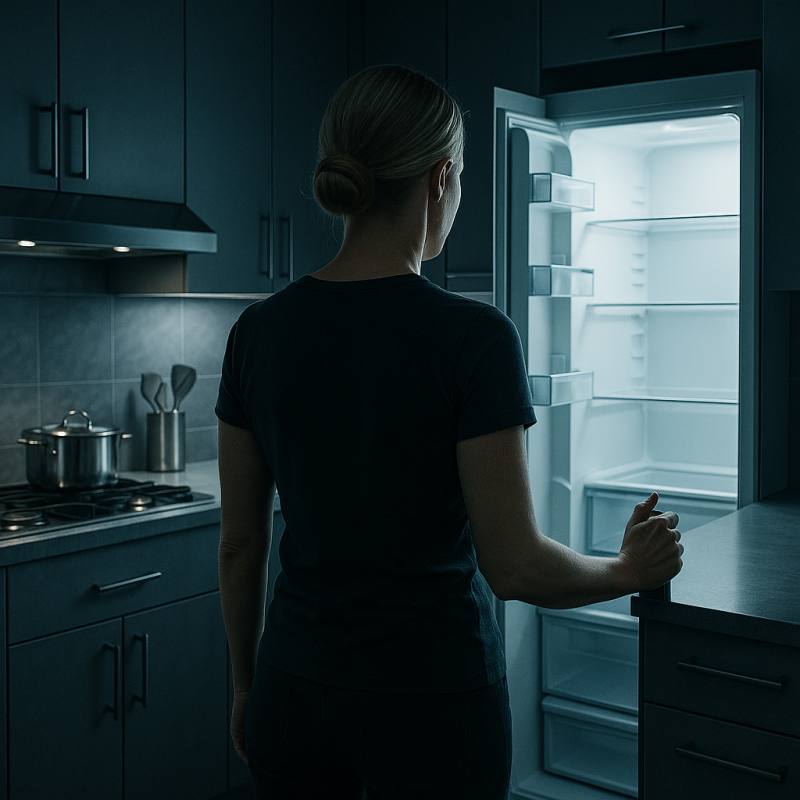 Image by RM AI
The Lease with My Signature
I grabbed the rolling pin from the counter — my rolling pin, at least, still in the same drawer — and I moved through the rest of the house with it clutched in both hands, my palms damp. I checked the bathroom, the hall closet, the back bedroom I use as an office. Nobody was there. But the office had changed too. My laptop was gone. My desk had been cleared and wiped down, and sitting in the center of it, perfectly centered like someone had placed it with care, was a blue folder. I stood in the doorway for a moment before I made myself walk over and open it. Inside was a residential lease agreement, printed on clean white paper, every field filled in with neat, precise type. The tenant name read Elena Vance. I didn't know that name. The property address was mine. The lease was dated three days ago — three days ago, while I was here, while I was sleeping in that house and going to work and living my life. I flipped to the signature page. There were two lines. The tenant signature was a name I didn't recognize. The landlord signature — the one that was supposed to be mine — I had to read it twice. Then a third time. It looked exactly like my handwriting. Not close. Not similar. Exactly like mine, down to the way I loop the tail of the last letter.
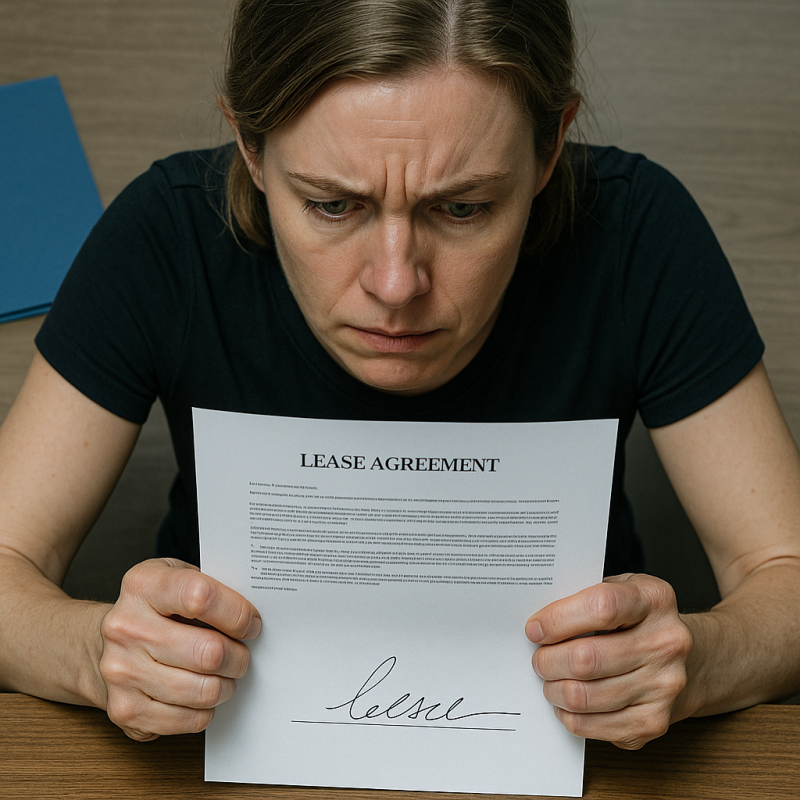 Image by RM AI
The Empty Safe
My legs gave out and I sat down on the office floor, back against the desk, the lease still in my hands. I checked the date again. Three days ago. I'd been here three days ago. I pulled out my phone and opened my banking app, scrolling through every transaction, every line — I don't know what I was looking for, a deposit maybe, something that would make this make sense. There was nothing unusual. Just my regular balance, my regular bills. I put the phone down and made myself stand up. I went to the bedroom closet, pushed past the unfamiliar suits to the back corner, and crouched down. The floor safe was there, right where it always was, the carpet square still covering it. I punched in the code with fingers that kept slipping on the keypad. The door swung open. I already knew before I looked. Empty. My passport was gone. My birth certificate, the original. The property deed. The spare keys I kept for emergencies. All of it. I sat back on my heels and stared into that small dark space. The thing that hit me hardest wasn't the missing documents — it was the realization that I hadn't opened that safe in months. Whoever had taken those things hadn't done it today. They'd been inside my house, moving quietly through my rooms, long before any of this.
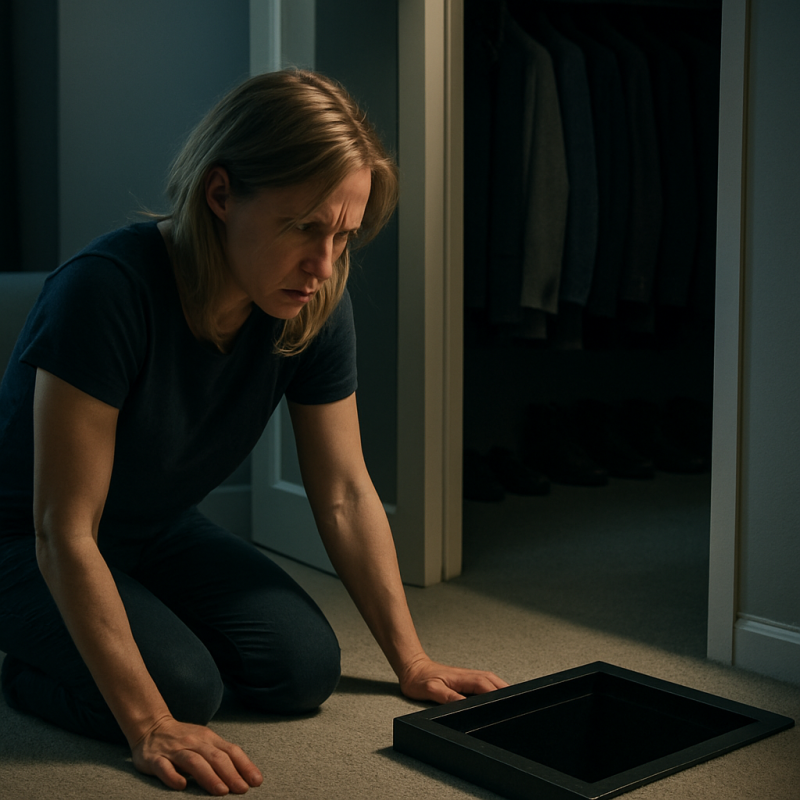 Image by RM AI
The Property Manager's Confirmation
I called my sister Sarah from the kitchen floor, sitting with my back against the cabinets because I didn't trust my legs. My voice cracked on the first word and didn't really recover after that. I told her what I was seeing — the furniture, the clothes, the lease, the name Elena Vance. Sarah didn't hesitate. She said call the police, right now, don't touch anything else. I wanted to. But I kept thinking about that signature, how perfectly it matched mine, and I couldn't figure out how to explain that to a dispatcher without sounding like I'd lost my mind. So I did something that felt more concrete. I called the number printed on the lease — Mainline Property Management. A woman answered on the second ring, professional and pleasant. I told her I was the property owner and there had been a massive misunderstanding involving my home. I heard typing. She said they'd processed the paperwork on Friday. She said my representative had come in personally, that a woman named Elena had brought the keys and signed the authorization forms. She said Elena had explained I was relocating abroad for a year and needed someone to manage the transition. I asked her to repeat that. She did. Then she told me Elena had arrived with power of attorney, that everything had been notarized, and that Elena had presented my original deed and a copy of my passport.
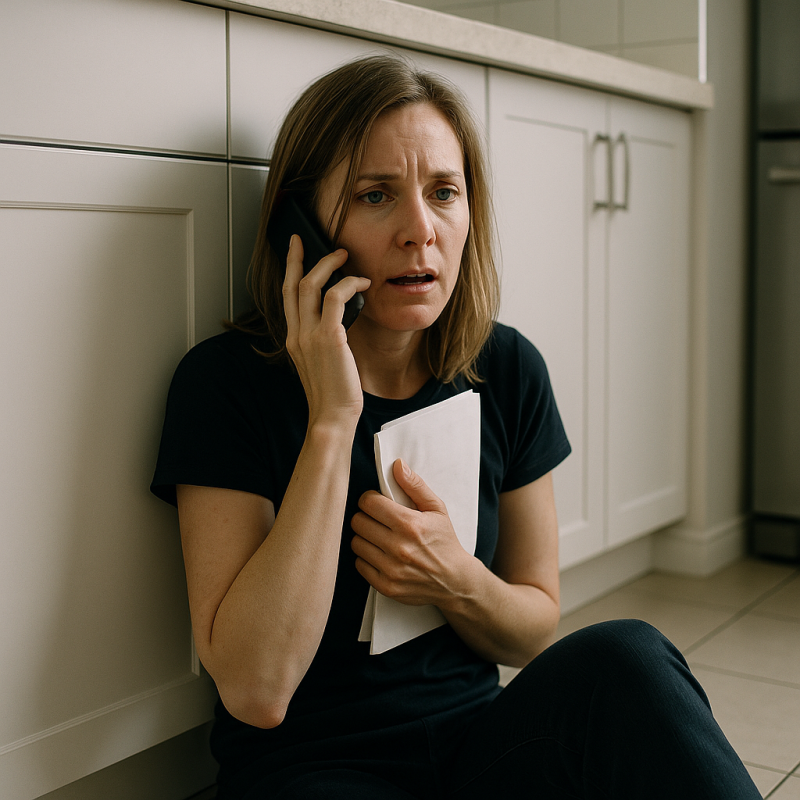 Image by RM AI
Verified and Notarized
I hung up without saying goodbye. I don't even remember putting the phone down. I was already moving, back through the hallway, back to the bedroom closet, dropping to my knees in front of the safe like maybe I'd missed something the first time. I hadn't. The safe was empty. I ran my hand along the interior anyway, fingers brushing bare metal. Nothing. I sat back on the floor and tried to breathe. The property manager had said original deed. Original passport. Not copies — originals. Which meant whoever had walked into that office on Friday had been carrying documents that were supposed to be locked in this safe. And those documents hadn't been taken today, or yesterday, or even last week. The safe had been sitting untouched for months. I thought about my routines — the same parking spot, the same coffee order, the same hours at the office, the same Saturday morning run. I thought about how predictable I was, how I'd never once considered that predictability as a vulnerability. The documents from that safe had been gone long enough for someone to build an entire paper trail around them. Someone had been inside this house, moving through my rooms, learning the shape of my days, and I had never once felt it.
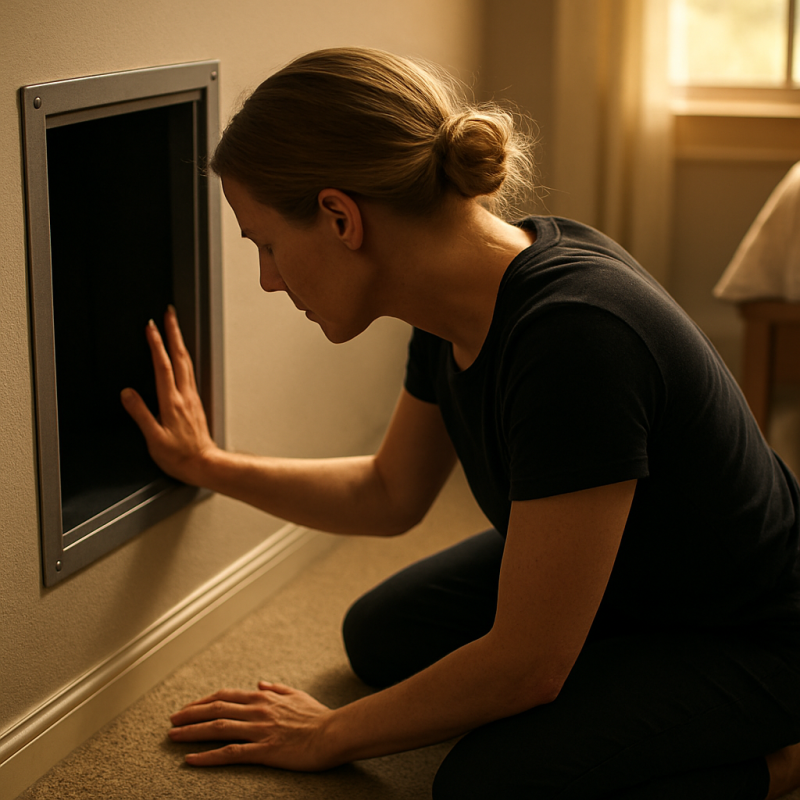 Image by RM AI
Bought in My Name
I paced the living room for a while, picking things up and setting them down — a throw pillow I didn't own, a candle I'd never bought, a book I'd never read. I was looking for something, anything, that might tell me who Elena Vance actually was. I went through the kitchen methodically, opening drawers, checking shelves. In the trash can under the sink, tucked beneath a paper towel, I found a receipt. It was from a boutique on Meridian Street, the kind of place I'd walked past a hundred times but never gone into. The date on the receipt was yesterday. I looked at the payment line. The name on the card wasn't Elena Vance. It was mine. My name, on a purchase I never made, at a store I'd never entered. I stood there reading it twice, three times. The recliner in the living room, the organic groceries in the fridge, the silk blouses hanging in my closet — bought with my credit, while I sat at my desk at work. I started checking more carefully after that, pulling open drawers I'd already looked through, checking the recycling bin, looking behind things. There were more receipts. A home goods store. A specialty grocer. A spa. Each one dated within the past two weeks, each one carrying my name, each one for something now sitting inside my house.
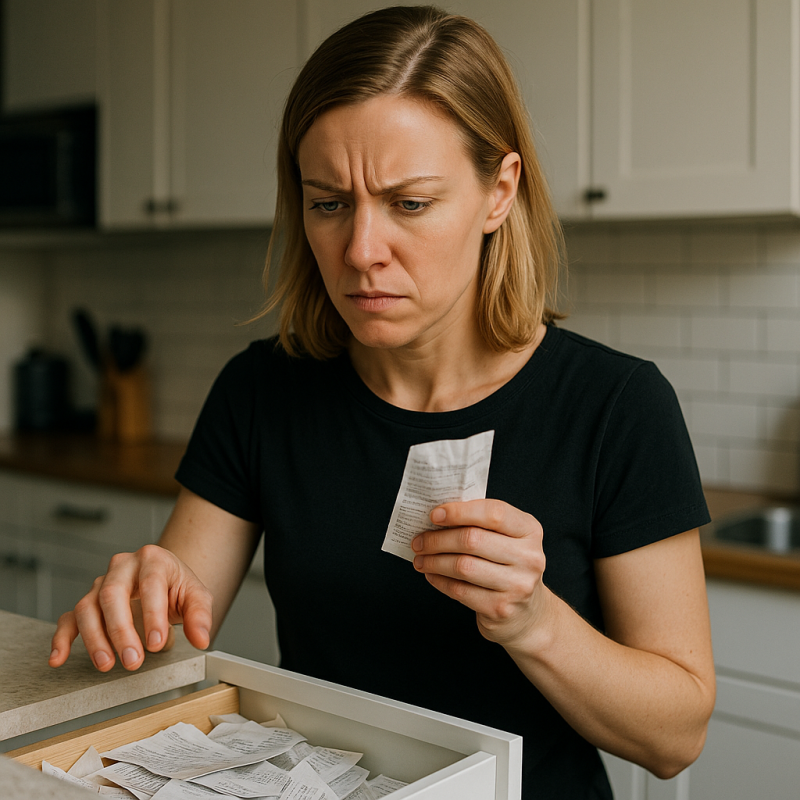 Image by RM AI
She Has My Keys
The light in the living room had gone amber and long by the time I heard it — tires on the driveway, slow and unhurried. My stomach dropped. I moved to the window and pulled the edge of the new heavy drape back just enough to see. A silver sedan had pulled in behind my car. A woman stepped out. She was tall, dark-haired, wearing one of the silk blouses from the closet — I recognized the cut of it immediately. She moved with an ease that made my chest tighten, unhurried, like she was exactly where she was supposed to be. She reached back into the car for a bag of groceries and a rolled yoga mat. Then she reached into her pocket and pulled out a key ring. Even from across the room, through the glass, I could see it — the small brass Eiffel Tower, the one I'd bought from a street vendor in Paris six years ago. I backed into the hallway and pressed myself against the wall, rolling pin in both hands, heart slamming. I heard the key in the lock — my lock, the one I'd used every day for three years. The door opened. She came in humming something low and tuneless. I watched through the gap in the hallway door as she set the groceries on the counter and began moving through the kitchen, opening cabinets, sliding things into place, her hands going exactly where they needed to go without a moment's hesitation.
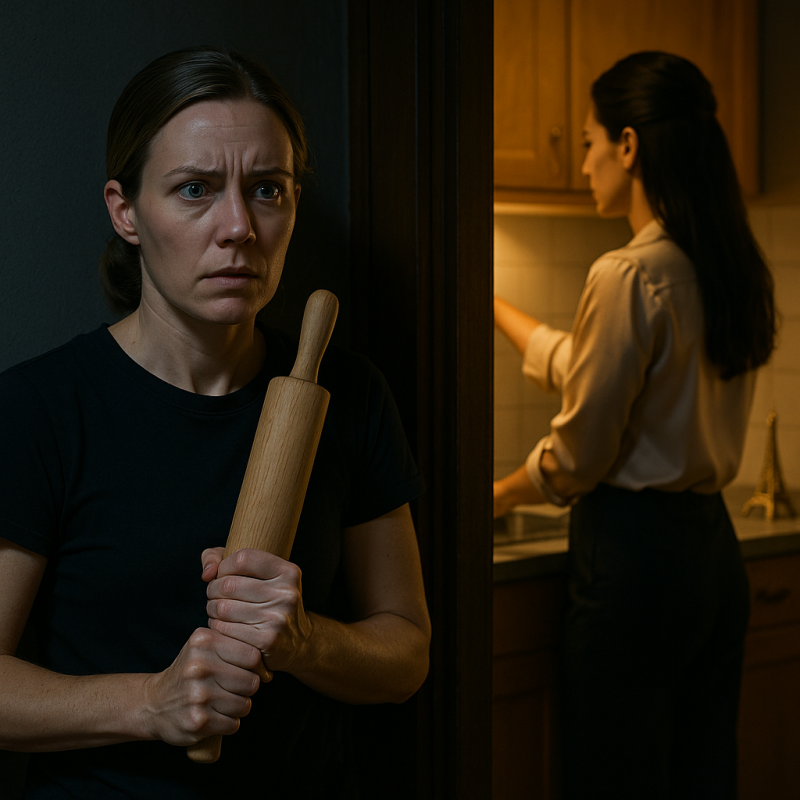 Image by RM AI
You're Home Early
I stepped out of the hallway and into the kitchen light. My hands were still wrapped around the rolling pin, but I kept it low at my side. Elena didn't scream. She didn't even flinch. She just stopped placing eggs in the refrigerator, turned to look at me, and let out a slow breath through her nose — like I was a minor inconvenience, like a neighbor who'd knocked at the wrong hour. "You're home early," she said, in a voice so smooth it made my skin crawl. "I thought you'd stay at the hotel a few more days. Process everything." My mouth went dry. I asked her who she was and what she was doing in my house. She sighed, crossed her arms, and leaned back against the counter like she'd done it a thousand times. She said the lease was in the office and the power of attorney was on file with the property management company. She said if I called the police, they'd see a woman with the right paperwork and a woman having a breakdown. I wanted to throw something. I wanted to scream. And then I saw it — mounted on top of the refrigerator, angled down at the kitchen: a small black camera, its tiny red light blinking steadily in the warm light of my own home.
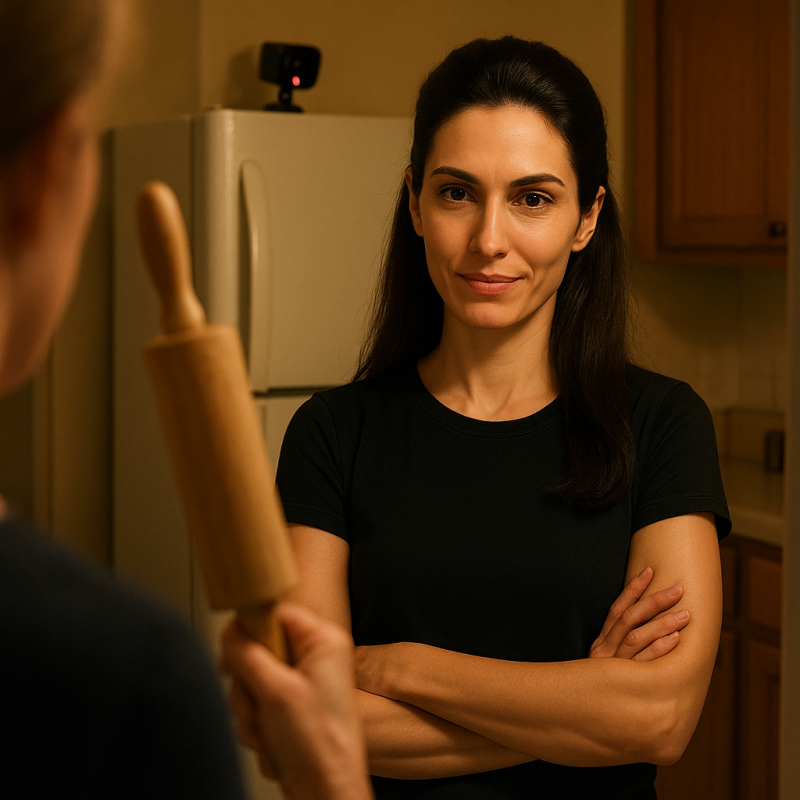 Image by RM AI
The Hotel on Maple Street
I didn't swing the rolling pin. I didn't scream. Every instinct in my body was telling me to do both, but I could see that camera blinking, and I understood that was exactly what she wanted. Instead, I slid my phone out of my pocket and hit record — slow, deliberate, keeping the lens on Elena's face, on the kitchen, on the camera mounted above the refrigerator. Elena watched me do it without a word. I walked out of my own front door and didn't look back. I drove six blocks to the hotel on Maple Street, the one I'd passed a hundred times without ever thinking I'd need it. The woman at the desk ran my credit card and it went through, which felt like the only small mercy the night had offered. I sat on the edge of the bed in room 114 and played back the footage — Elena's calm face, the groceries on my counter, the blinking red eye above the fridge. She'd wanted me to lose control. She'd wanted footage of me threatening her in a house the paperwork said was hers. The new lease wasn't just theft. It was a trap, and I'd almost walked straight into it. I set the phone face-up on the nightstand and stared at the water-stained ceiling, the weight of it settling into my chest like something I couldn't put down.
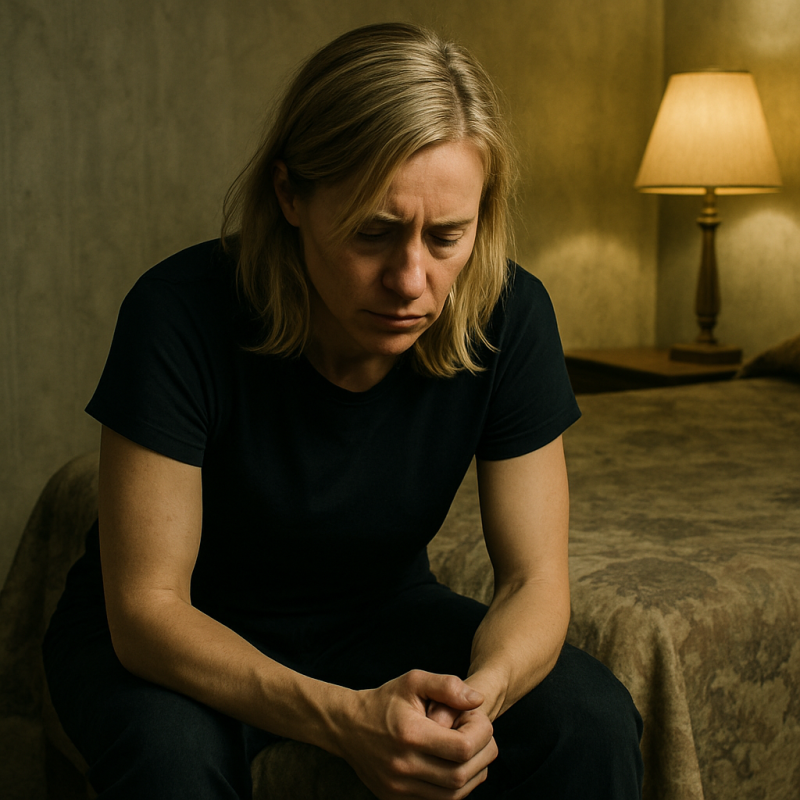 Image by RM AI
Building the Case
I didn't sleep. The hotel's front desk lent me a laptop without much fuss, and I sat cross-legged on the bed until past two in the morning building a timeline. I wrote down the last date I'd accessed the safe — three weeks ago, a Tuesday, I was certain of it. I noted that the lease was supposedly signed three days ago, while I was still living in that house, still sleeping in my own bed. I photographed every receipt I had, every document I'd managed to grab before leaving, and I took pictures of the lease agreement with Elena's name typed neatly where mine should have been. I listed every piece of furniture that had been replaced, every personal item that was gone, every new thing that had appeared in its place. I wrote down what the property manager had told me about the power of attorney, about the original deed, about the passport copy she'd presented. The list kept growing. By three in the morning I had four pages of notes and a folder of photographs. Then I pulled up the lease signature and held the screen close. The handwriting was mine. The loops, the slant, the way I always pressed harder on the downstroke — it was all there. I sat with that for a long time, the cursor blinking in the silence, because I had no idea how to prove something was forged when it looked exactly like the real thing.
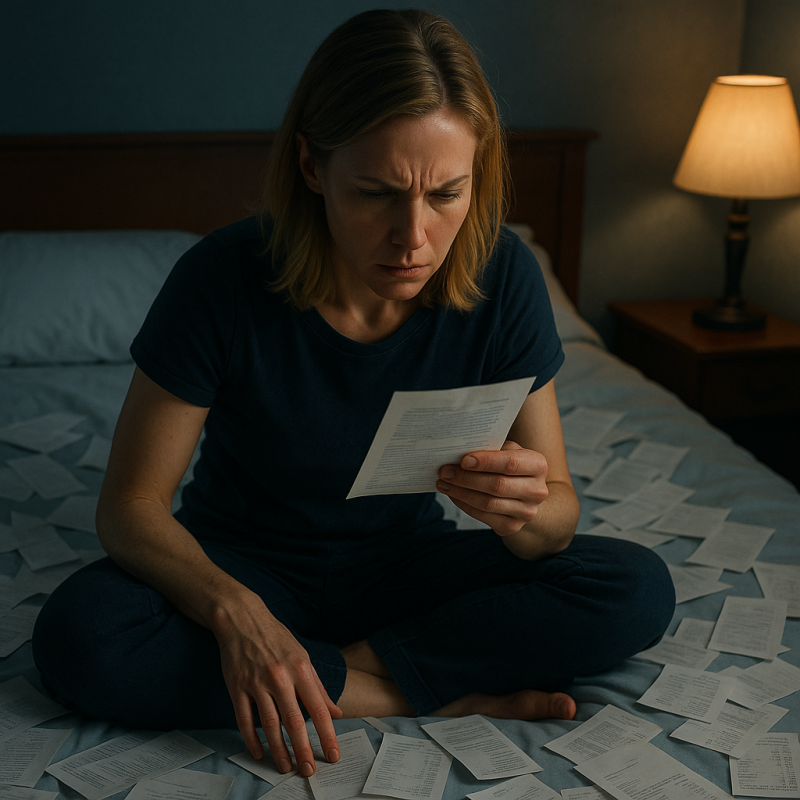 Image by RM AI
Rachel Chen Takes the Case
I spent the next morning searching for attorneys who handled identity fraud — not the general practice firms, but specialists, people who'd seen this kind of thing before. Rachel's name kept coming up: civil cases, fraud, a track record that looked serious. I called her office at eight-fifteen and told the receptionist it was an emergency. By nine-thirty the next morning I was sitting across from Rachel in her downtown office, watching her read through everything I'd brought — the timeline, the photographs, the lease, the receipts, the property manager's notes. She didn't rush. She studied the forged signature for a long time, then asked me exactly when I'd last opened the safe and whether I'd ever given anyone access to my documents. She reviewed the power of attorney language line by line. She asked about the property management company's verification process. I answered everything as precisely as I could. When she finally set the papers down and leaned back in her chair, her expression had shifted into something focused and very still. She said the documents showed a level of preparation she didn't often see. She said she'd been handling identity theft cases for fifteen years, and she'd never seen anything this thorough.
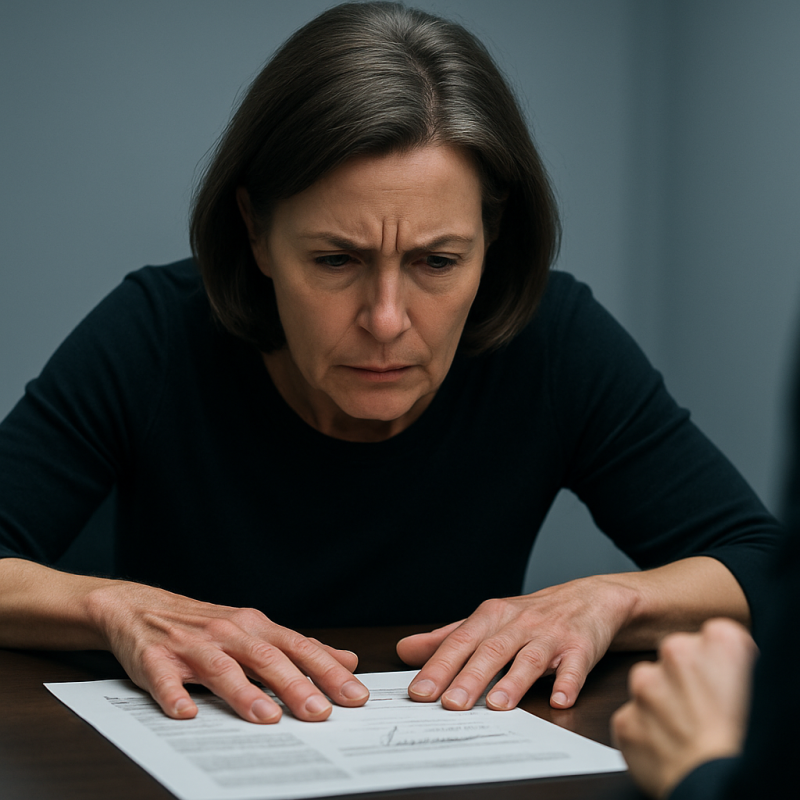 Image by RM AI
The Paper Trail
Rachel moved fast. She sent a formal request to the property management company for copies of every notarized document Elena had presented, and she told me to pull my full credit report the same afternoon. I sat in the hotel room with my laptop and did it. The first result stopped me cold — three credit cards opened in my name over the past four months, none of which I'd ever applied for. I scrolled further and found a bank account, opened two months ago, with a handful of small transactions already posted to it. I recognized some of the purchase amounts. I cross-referenced them against the photographs I'd taken of the new furniture and kitchen items in my house. The numbers matched. I called Rachel and read her the account numbers one by one. She told me to document everything and said we'd need to dispute each account individually, that the process would take time and patience and that I needed to be prepared for that. I told her I understood. What I didn't say was that the word "months" kept echoing in my head — four months of credit cards, two months of bank activity, all of it accumulating while I'd been living my ordinary life without any idea. That evening I sat in the thin light of the hotel room lamp, the bank statement open on the screen, the account number printed in clean black type above a name that was mine and a history I had never lived.
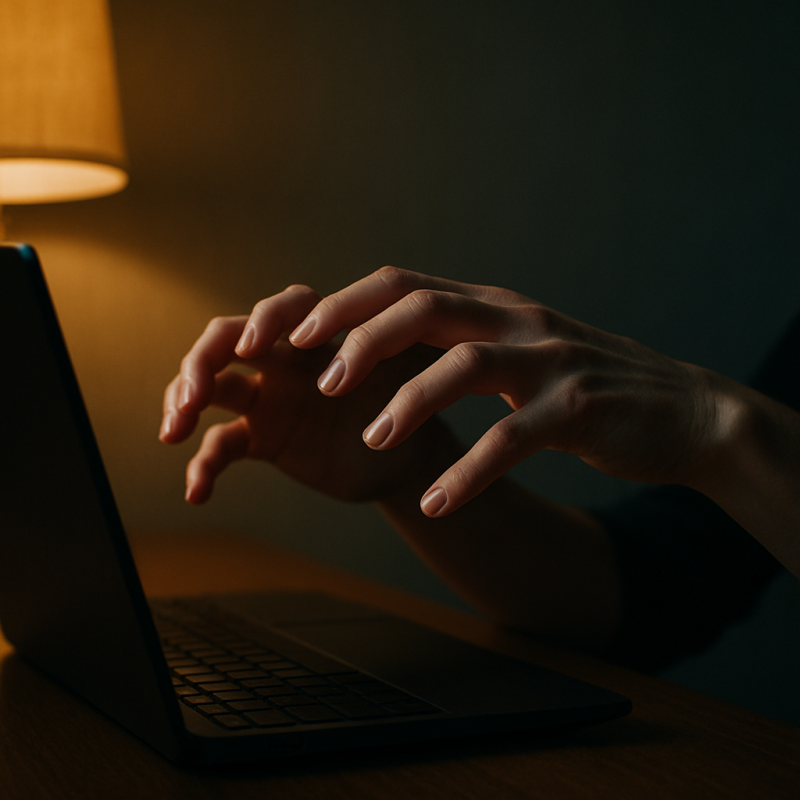 Image by RM AI
Unauthorized Activity
I called the bank fraud department first thing in the morning. The representative walked me through the verification process — security questions, account details, date of birth — and I answered every one correctly. Then she told me the account on file had the same security answers. She said the signature matched my verified signature on record. I told her I hadn't opened the account. There was a pause, and then she asked me to hold. When she came back her voice was careful and neutral in a way that made my stomach drop. I called the first credit card company next, then the second, then the third. Each conversation followed the same pattern: I'd explain, they'd verify, they'd find that the signatures matched, that the security information matched, that everything on file looked consistent with my history. One representative asked if I might have opened the account during a stressful period and simply not remembered. I filed formal fraud reports with all four institutions. I wrote down every representative's name and the time of each call. But by the time I set the phone down, I could feel how thin my credibility was getting — I had no way to explain how those security answers had ended up on someone else's account. The last representative's question sat in the room with me long after the call ended, quiet and unanswerable: was I sure I hadn't opened the account myself?
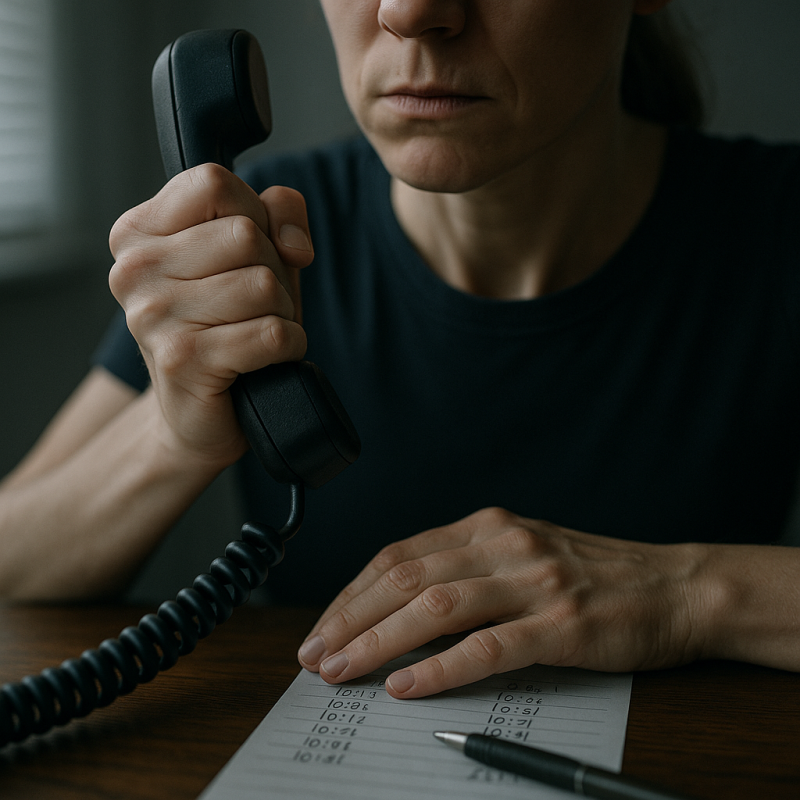 Image by RM AI
The Restraining Order Denied
Rachel filed the emergency restraining order two days after our first meeting. She was confident going in — the timeline was solid, the fraud reports were filed, and she'd put together a clear argument that Elena was occupying the property under forged documentation. The hearing was scheduled fast, which felt like a good sign. I sat beside Rachel at the plaintiff's table in the county courthouse and watched the judge review the lease agreement and the power of attorney, turning each page slowly, examining the notarization stamps. Rachel laid out the argument methodically: the documents were forged, Elena was an identity thief, and I needed immediate relief while the civil case proceeded. The judge listened. He asked Rachel several questions about the evidence of forgery. Rachel answered each one, but I could see from the way he kept returning to the documents that something wasn't landing. He noted that the notarization stamps appeared legitimate and properly executed. He said the lease gave the occupant legal right to the property. He said my claims required more substantial proof than I'd been able to present that morning, and that the appropriate path was through the civil process. Then he denied the restraining order, and I watched him rule that Elena had the legal right to remain in my home.
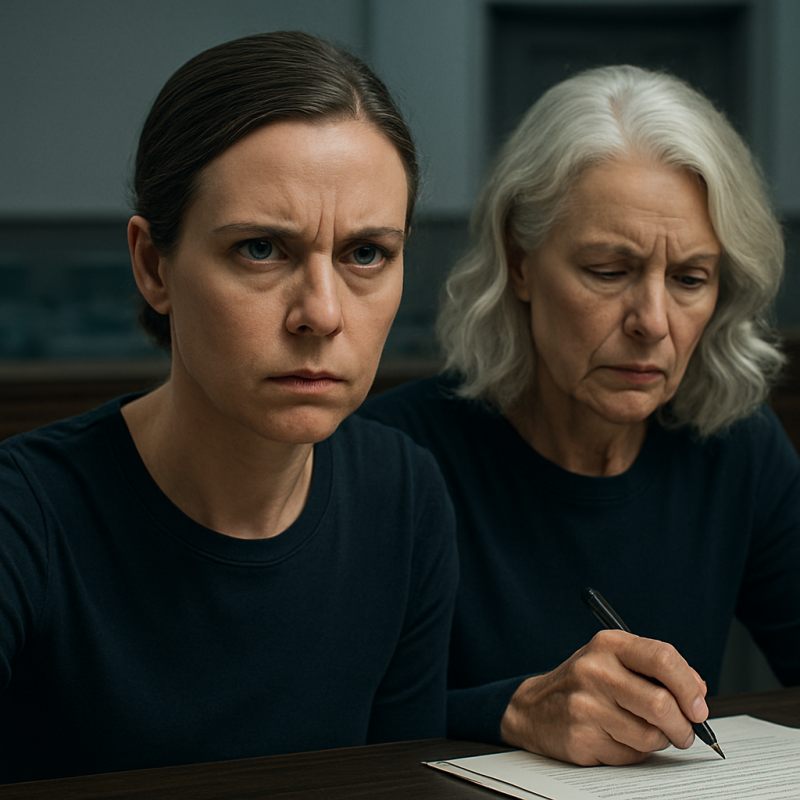 Image by RM AI
Perfect Documentation
After the courthouse, Rachel didn't let us stop moving. She spent the next two days requesting copies of every document Elena had presented at every institution — the property management company, the bank, the credit card issuers. When the copies came in, we spread them across Rachel's conference table and went through them one by one. Every notarization stamp was legitimate. Every signature matched. Every document had been executed through proper channels, with proper identification presented at the time of filing. Rachel called the DMV to request copies of the identification Elena had used to open the bank accounts. The DMV records showed that the license had been issued through standard procedure, with proper supporting documentation on file. When the copy arrived by fax, I picked it up from Rachel's machine and stood there holding it. The name on the license was mine. The address was mine. The date of birth, the height, the eye color — all mine. The photograph was Elena's.
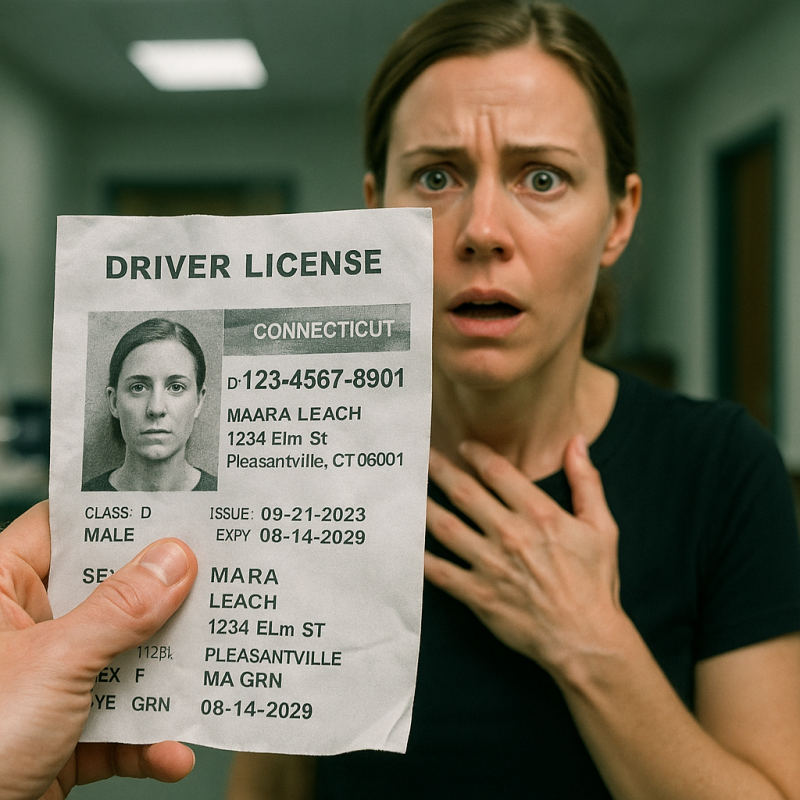 Image by RM AI
Questioned Identity
I went to the DMV on a Tuesday morning because I needed something normal to do — something routine that would remind me I still existed in the world as myself. I took a number, waited forty minutes on a plastic chair, and when my number was called I walked up to the counter and slid my license and paperwork across to the clerk like I had done a dozen times before. She typed my information into the system, and I watched her expression shift. Not dramatically. Just a small tightening around the eyes. She typed something else, scrolled, typed again. Then she looked up at me. She said the system was showing that my license had already been renewed. Two months ago. I told her that was impossible — I hadn't been to a DMV in over a year. She turned the monitor slightly toward me, and there it was: a renewal record dated eight weeks back, processed and complete. I said it again, louder than I meant to: that wasn't me. That was fraud. The people in line behind me had gone quiet. The clerk's voice dropped to something flat and careful when she asked if I was the actual license holder, or if I was attempting to obtain a duplicate fraudulently. I started to answer. She reached for her phone and said that since the system already showed a valid renewal on file, she had no choice but to call security.
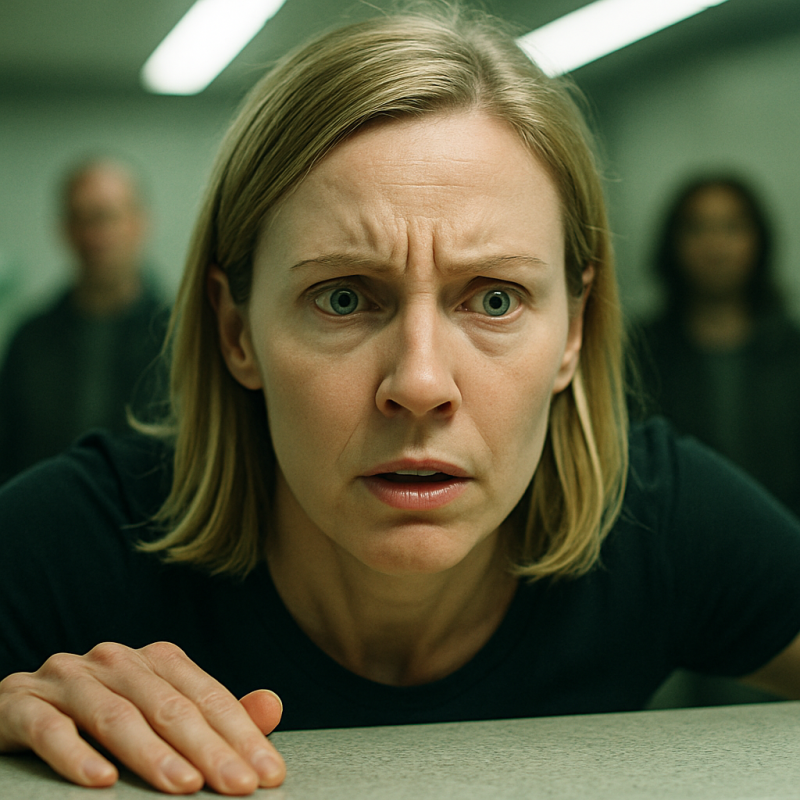 Image by RM AI
Detective Hayes Listens
I filed the police report the same afternoon I left the DMV, still shaking. The officer at the front desk sent me to a side room, and twenty minutes later Detective Hayes came in — graying hair, worn jacket, the kind of tired eyes that have heard every story twice. He sat down across from me and folded his hands on the table and listened. I could tell from the way he held his face that he was reserving judgment, which I appreciated more than I could say. I laid everything out: the lease, the bank accounts, the credit cards, the driver's license copy with Elena's photograph and my name. He picked up each document and read it carefully, which not everyone had done. When he got to the license copy he held it for a long time without speaking. He said it sounded like a civil matter. I told him it was fraud and theft and that someone was living in my house. He set the license copy down and asked me to walk him through the timeline again, slower this time. He asked when I had last accessed my safe. He asked how someone could have obtained my security codes. His pen moved steadily across his notepad. Then he leaned forward, elbows on the table, and asked how long Elena had access to my house before I noticed anything was wrong.
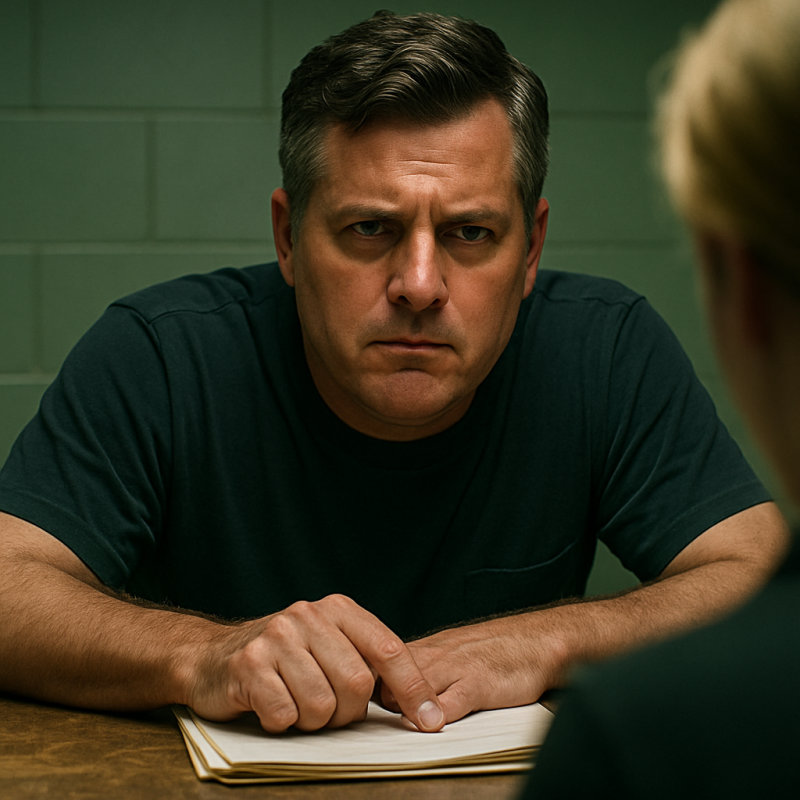 Image by RM AI
The Scope Expands
Rachel and I spent the next week pulling on every thread we could find. The electric company confirmed that the account for my address had been updated to list a new primary account holder three months ago — my name, but not my request. The gas company showed the same thing. Then Rachel got the phone records back from the carrier, and there it was: a cell line opened in my name, active for three months, with call logs I had never seen and texts I had never sent. I sat at Rachel's conference table going through page after page of activity on a phone I didn't own. Rachel traced the billing address on the cell account to a post office box at a branch about two miles from my house. She submitted a records request, and the post office confirmed the box had been rented in my name three months ago. They provided a list of the senders whose mail had been delivered there. I went through it slowly: credit card statements, bank correspondence, insurance documents, a utilities summary. Every piece of it addressed to me, routed somewhere I had never been. Elena hadn't just taken my house and my accounts. She had built an entire second version of my life, piece by piece, and for three months she had been the one receiving the mail that proved it was real.
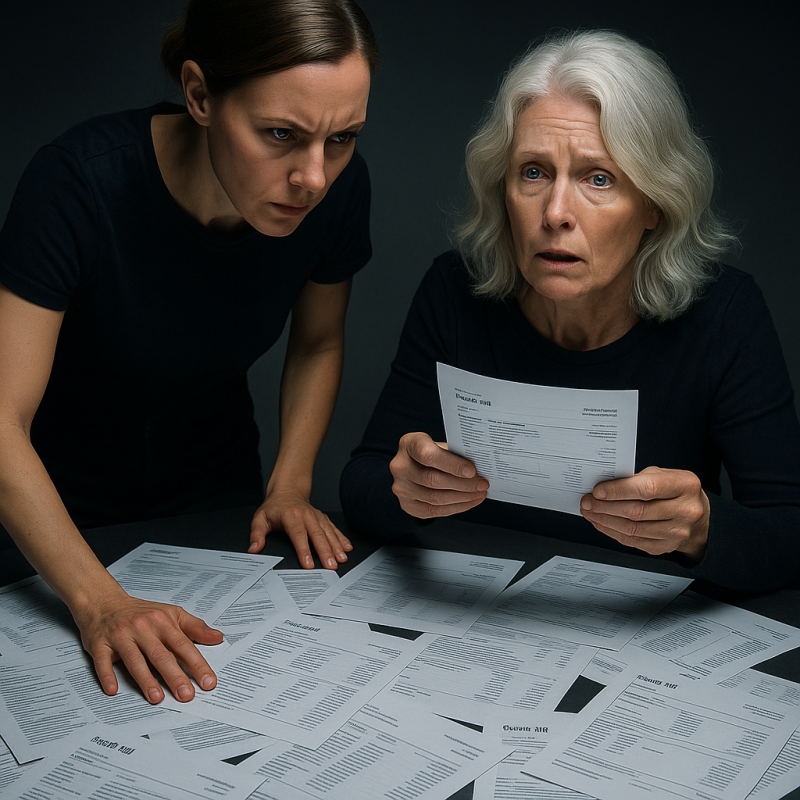 Image by RM AI
The Identity Hearing
Rachel filed the motion for an identity verification hearing on a Thursday, and by Friday the court had set a date three weeks out. She explained what we'd need: childhood records, school transcripts, employment history going back as far as I could document, letters from former employers, medical records with my name and date of birth. I spent the weekend pulling boxes out of my storage unit and photographing every document I could find. I called my college registrar, my first employer out of school, my dentist's office. Everyone was cooperative. Everyone remembered me. It felt, briefly, like solid ground. Then on Monday Rachel called and her voice was careful in a way I had learned to pay attention to. She said Elena had retained an attorney. I asked what that meant for the hearing. Rachel said we needed to talk, and that I should check my email. The notice from Elena's attorney was already in my inbox — a counter-motion arguing that I was the one attempting to steal an established identity, that I was experiencing a mental health crisis and making false claims against her client, citing every document Elena had filed over the past months as evidence of her legitimacy.
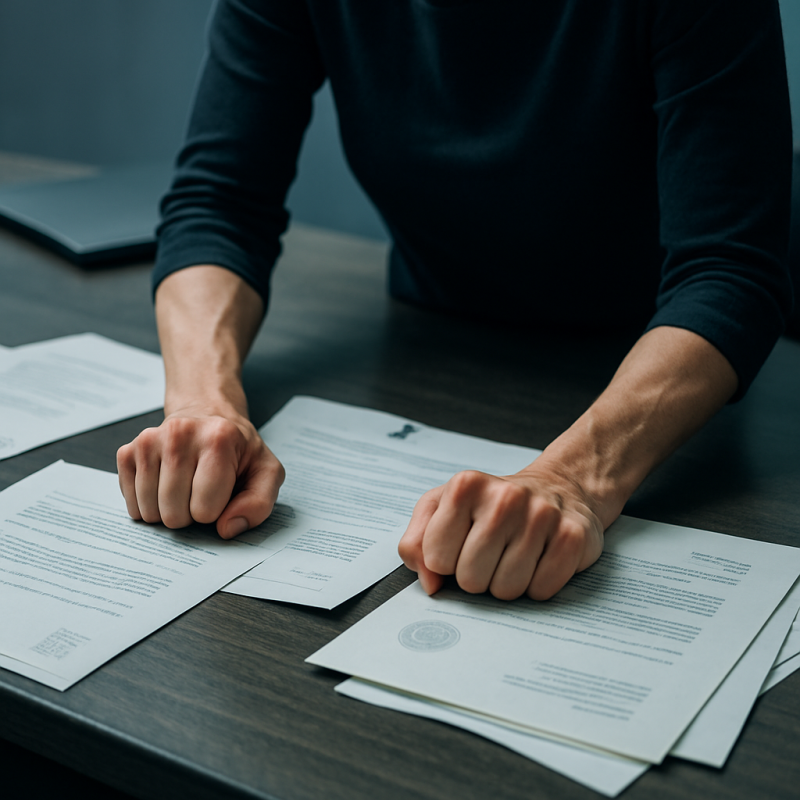 Image by RM AI
Marcus Webb Takes the Case
A colleague had mentioned Marcus Webb's name once, in passing, during a conversation about a corporate fraud case. I had written it down without knowing why. I found the note in my phone three weeks into this and called him the same day. His office was on the fourth floor of a building downtown that smelled like old carpet and printer ink. He was in his early fifties, weathered in the way that suggested he had spent years doing work that required patience rather than speed. He shook my hand, gestured to the chair across from his desk, and waited. I laid out everything — the lease, the license copy, the bank records, the court filings, the counter-motion. He read without interrupting. He asked about the timeline in the same methodical way Hayes had, but where Hayes had been cautious, Marcus was precise. He asked for dates, addresses, names of institutions. He said he would start with public records and work backward — employment history, previous addresses, any documentation that predated Elena's appearance in my life. He said he had worked cases where people had constructed new identities, and that the construction always left edges if you knew where to look. I asked how long it would take. He said two to three weeks for a thorough search. He said he would start that afternoon. Sitting across from him in that quiet office, I felt something I hadn't felt in weeks — like someone was finally looking in the right direction.
 Image by RM AI
The Background Search Begins
Marcus called me eight days later and asked me to come in. He had a folder on his desk when I arrived, maybe a quarter inch thick, and he opened it without preamble. He had run Elena Vance through every public records database he had access to — utility accounts, rental history, credit inquiries, employment filings, voter registration. He walked me through each category. There was a utility account in her name at a previous address, a rental agreement for an apartment she had apparently lived in before moving into my house, a credit report showing several accounts. He laid the pages out in order and then pointed to the dates. Every single record began approximately eighteen months ago. Not seventeen months, not two years — eighteen months, clustered tightly, as though someone had pressed a start button. Before that date, there was nothing. No employment history. No prior addresses. No birth certificate on file in any state database he could access. No social security records predating that window. He said he had double-checked the search parameters three times. I picked up the preliminary report and read through the timeline myself, line by line. The earliest date on any document was eighteen months ago. Everything Elena Vance appeared to be had started there, and nowhere before it.
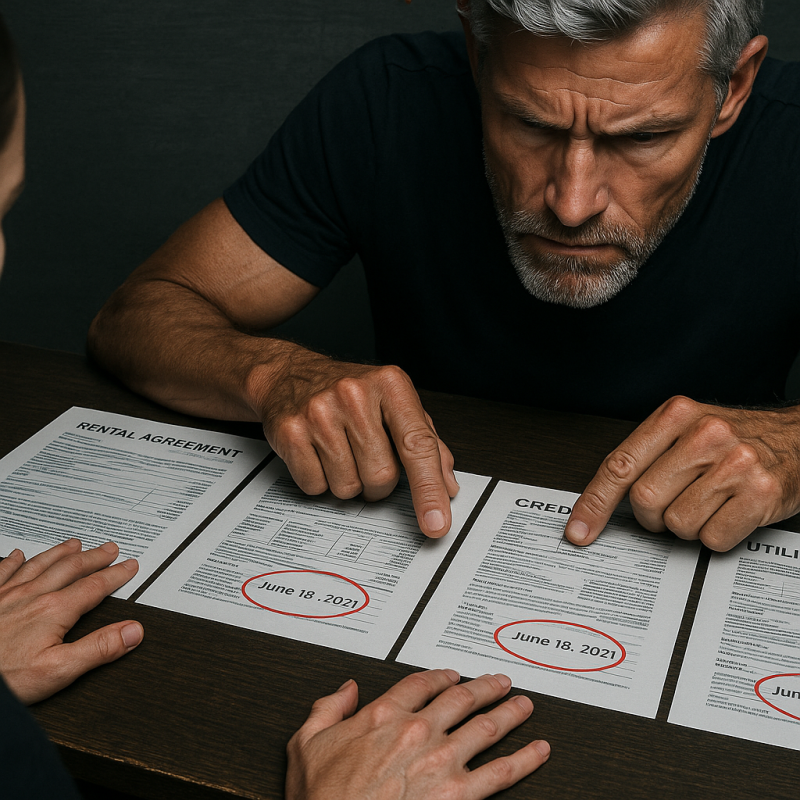 Image by RM AI
The Clean Slate
Marcus called again two days later, and this time his voice had a different quality — quieter, more deliberate. He had gone deeper. He had run Elena Vance through criminal databases in all fifty states and found nothing. No arrests, no charges, no traffic violations, not even a dismissed case. He had searched every major social media platform — Facebook, Instagram, LinkedIn, even older platforms — and found no profiles, no tagged photos, no mentions in anyone else's posts. He had tried to verify the employment history listed on her rental applications and found that the employers had no record of anyone by that name. He had checked professional licensing databases, alumni directories for the colleges listed on her applications, voter registration records. The voter registration was recent. Everything else was either recent or absent. I asked him what that meant. He said that most people, even people who are careful about privacy, leave traces — an old account, a mention in a local news story, a record from a previous landlord. He said the complete absence of anything before eighteen months ago was not normal. He said it was the kind of clean that takes effort. I asked if Elena Vance could even be her real name. He said that was exactly what he was trying to determine. Then he said the thing that stayed with me after I hung up: that a background this clean, this consistent, this empty — it wasn't the absence of a life. It was too perfect to be real.
 Image by RM AI
Months of Planning
Marcus asked me to come in person for this one. When I sat down across from his desk, he had a manila envelope already open in front of him. He said he had traced the address of the apartment Elena had rented eighteen months ago — the one that appeared to be her first documented residence. It was three blocks from my house. He had interviewed two former neighbors from that building. One of them mentioned that the woman in that unit kept unusual hours and spent a lot of time near the front window facing the street. Marcus had then pulled security footage from businesses in the area — a pharmacy, a dry cleaner, a parking garage — and reviewed weeks of recordings. He had compiled the relevant frames into a printed report. He slid it across the desk to me. The photographs were grainy in the way that security footage always is, but the figure was consistent across all of them: same height, same dark hair, same deliberate posture. The timestamps spanned six months. There was footage of her on the sidewalk outside my house at seven in the morning, at noon, at dusk. There was a still from the parking garage camera showing a car parked across the street from my office building, and through the windshield, a face turned toward the entrance. I sat there holding the pages, looking at image after image of Elena outside my workplace and my home.
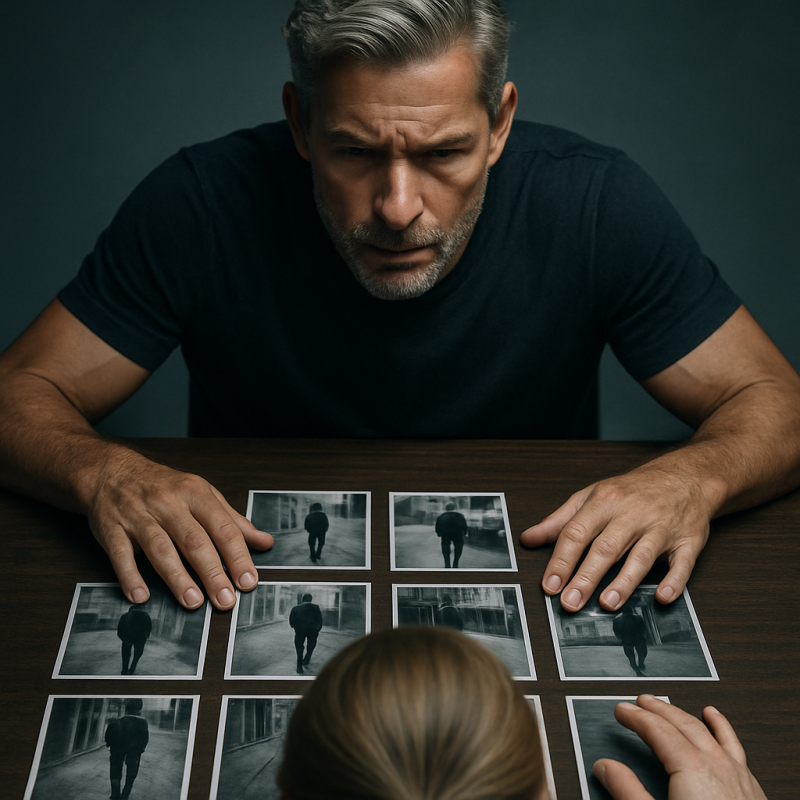 Image by RM AI
The Apartment Search
Detective Hayes had the warrant in hand by nine that morning. Marcus met us outside the building — a three-story walk-up that looked like it hadn't been updated since the nineties, beige walls and a buzzing fluorescent light in the lobby. The landlord, a heavyset man in a flannel shirt, let us in without much conversation. He'd already told Hayes on the phone that the tenant had been a quiet one. Model renter, he said, like that was supposed to mean something. The unit was on the second floor, end of the hall. When he unlocked the door and pushed it open, I stepped in first. The apartment was completely empty. Not just cleared out — scrubbed. The walls were bare, not even a nail hole. The closets had nothing in them, not a wire hanger, not a scrap of paper. Marcus went through every cabinet in the kitchen, every drawer in the bathroom. Hayes crouched and checked under the baseboards. Nothing. The landlord confirmed she'd moved out two weeks before the lease ended, returned the keys in person, paid the last month in cash. No forwarding address. I stood in the middle of that hollow room and understood that Elena had left nothing behind — not a single thing that could tell us who she actually was.
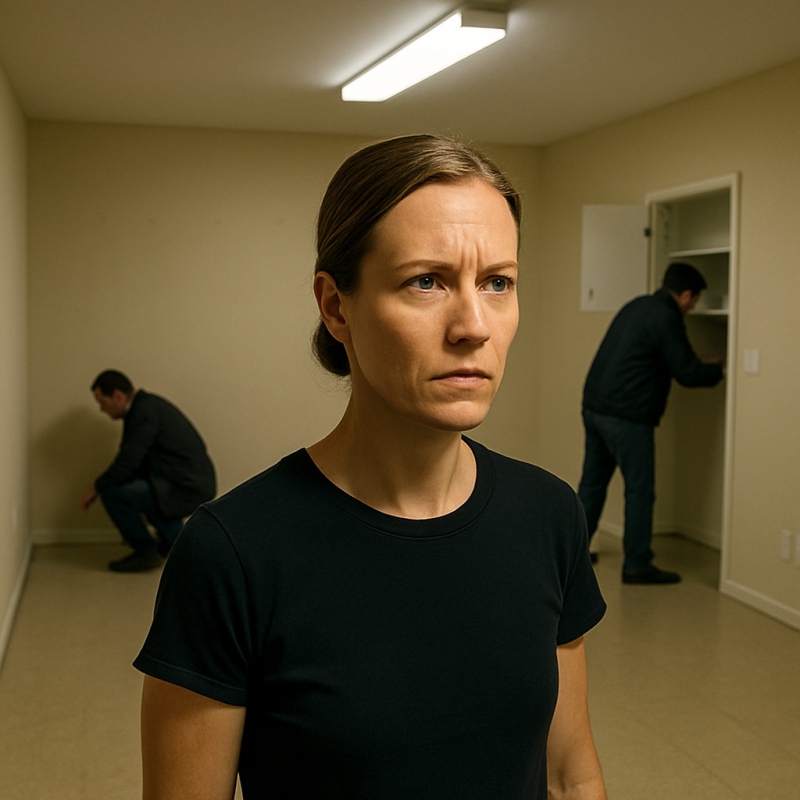 Image by RM AI
The Surveillance Photos
Marcus had traced a payment record to a storage facility about four miles from my house. Hayes got the warrant the same afternoon. The three of us drove over together, and the facility manager walked us to unit forty-seven without asking questions. Marcus cut the padlock and rolled up the door. I don't have a clean way to describe what I saw when the light hit the inside of that unit. The walls were covered. Not wallpaper, not shelving — photographs. Printed photographs, taped in overlapping rows from floor to ceiling on three sides. Every single one of them was me. Me leaving my front door in the morning. Me at the coffee shop on Clement Street. Me in the parking lot outside my office. Me at the grocery store, at the gym, walking the block around the corner from my house. Marcus found a plastic bin near the back wall containing printed notes — pages of them — detailing my schedule, my routines, the times I typically left and returned. Hayes started photographing everything methodically, calling out timestamps. The earliest photo in the collection was dated fourteen months ago. I stood in the center of that unit, surrounded on three sides by my own face, and the air felt very still.
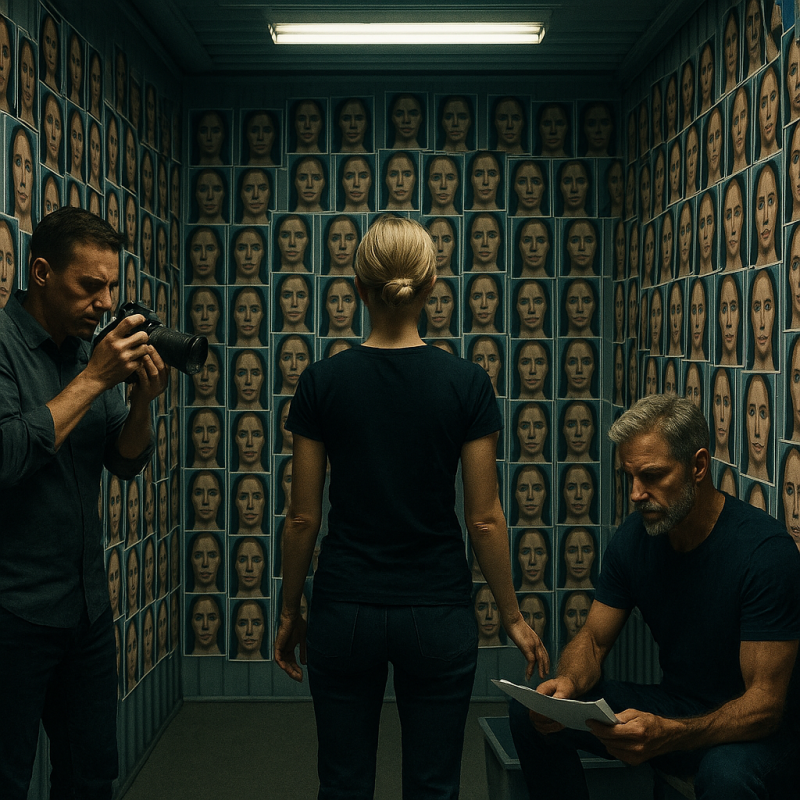 Image by RM AI
Personal Obsession
We spread everything across the conference table at the station — the photographs, the printed notes, the timeline Marcus had reconstructed. Rachel had driven over from her office and stood at the far end of the table, working through the pages in order. Hayes picked up one of the note sheets and read from it without any particular expression: my preferred parking spot at the gym, the brand of coffee I ordered, the route I walked when I went to the farmers market on Saturdays. Rachel set down the pages she was holding and said this wasn't a profile built for financial gain. Hayes agreed. He said most identity theft cases he'd worked involved opportunistic targeting — someone who found a wallet, someone who bought stolen data online. This was different. The surveillance had started more than a year before Elena made any move on my house or my accounts. Marcus said the level of documentation went far beyond what any financial motive would require. Rachel asked me directly whether I recognized Elena from anywhere — a former job, a neighborhood, a class, anything. I went through it again in my head, the same way I had a dozen times already. Nothing. I picked up one of the note pages and read my own habits back to myself in a stranger's handwriting, and I had no answer for any of them.
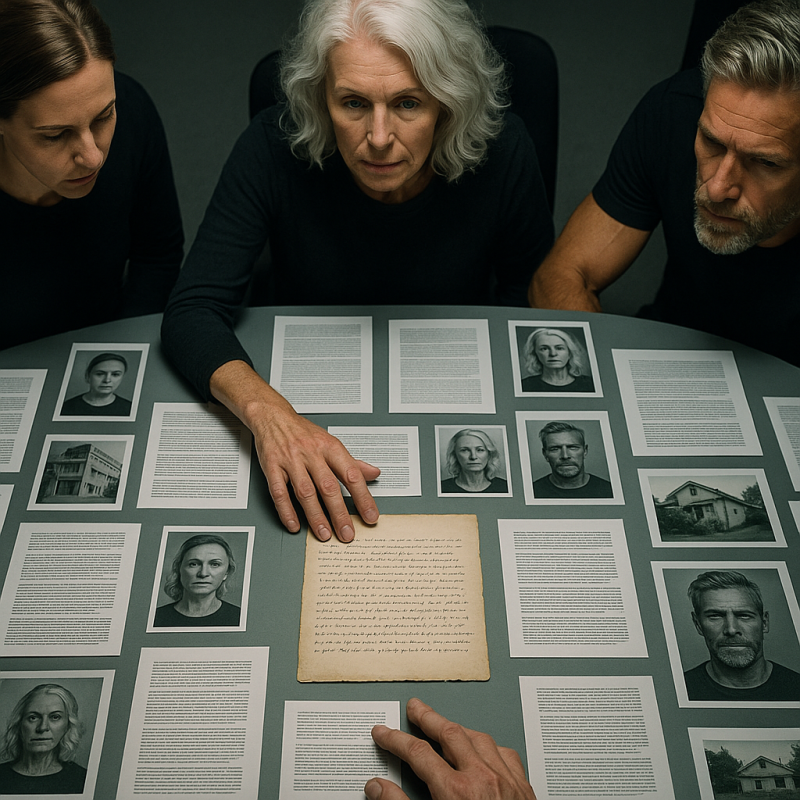 Image by RM AI
Not Random
Hayes called the meeting for ten o'clock. When Marcus and I arrived, there were two detectives I hadn't seen before already seated at the table. Hayes introduced them briefly — Reyes and Cho, both from the financial crimes unit — and then got straight to it. He said the case was being officially reclassified. It was no longer being treated as standard identity theft. The surveillance evidence, the storage unit, the timeline — all of it pointed somewhere beyond a random financial crime. He said the department was assigning additional resources and that the immediate priority was establishing who Elena actually was before she became Elena Vance. Marcus told Hayes he was already pulling threads on her life prior to eighteen months ago and finding almost nothing — no employment records, no utility accounts, no social media presence that predated her appearance in my neighborhood. Hayes said fingerprint analysis had been ordered on items recovered from the storage unit and that results should come back within the week. He said once they had prints, they could run them against state and federal databases regardless of the name she'd been using. I asked what happened if the prints came back clean. Hayes looked at me steadily and said that would tell them something too. Then he turned back to the board and said they needed to find out who Elena was before she became Elena Vance.
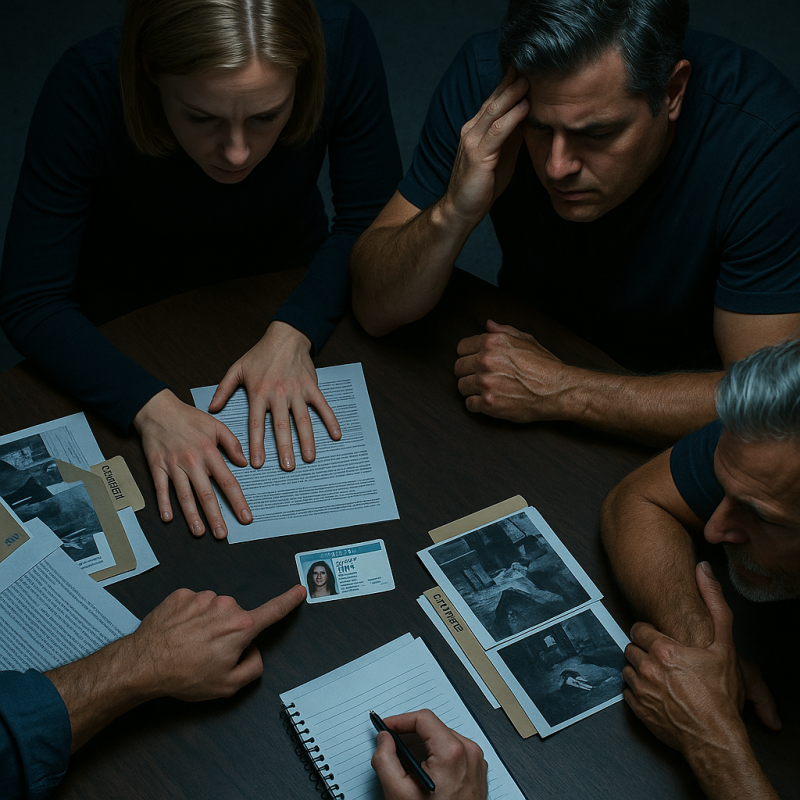 Image by RM AI
The Waiting
The hotel room on Maple Street had started to feel like a waiting room I couldn't leave. I kept the curtains open during the day because the alternative was sitting in the dark, which felt worse. I drove past my house twice that week — I told myself it was on the way, which wasn't entirely true. Elena's car was in the driveway both times, and the lights were on inside. My lights, in my windows, in the house I'd owned for six years. I checked my credit reports every morning. New charges kept appearing — a clothing boutique, a restaurant, a home goods store. Rachel had advised me not to dispute them yet, said it would be cleaner to let the record build. I understood the logic. It didn't make it easier to watch. I called Rachel on Thursday and she said the hearing date was confirmed and that the evidence package was coming together. I searched Elena Vance online again that night, the same search I'd run a dozen times, and got the same result: almost nothing that predated eighteen months ago. I sat on the edge of the hotel bed with my laptop open and the room quiet around me, and I thought about the fact that somewhere across town, someone was sleeping in my bed, and I was the one who felt like I didn't exist.
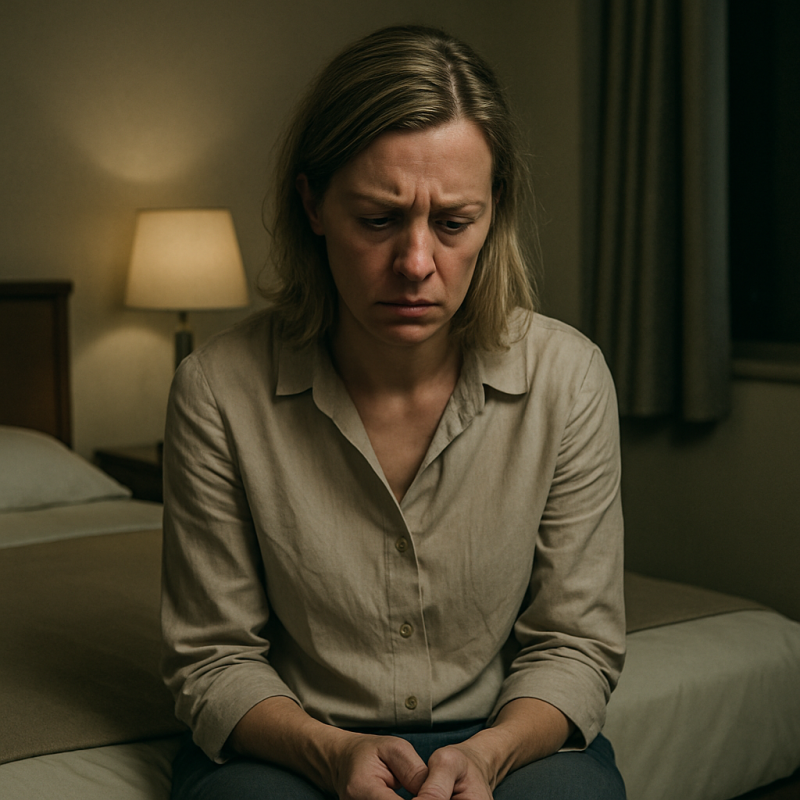 Image by RM AI
The Court Date Approaches
Rachel had booked a conference room at her firm for the strategy session. When I arrived, the table was already covered in organized stacks — subpoenaed bank records, employment files, the documents I'd been gathering all week. I'd pulled everything I could find: childhood photographs, report cards, my college transcripts, tax returns going back ten years. I'd called my former supervisor at the architecture firm where I'd worked before starting my own practice, and she'd agreed to submit a written statement. My doctor's office had sent over records going back fifteen years. Rachel walked me through the structure of the hearing, explaining that the judge would be evaluating credibility and documentation from both sides. She said Elena had filed a counter-motion claiming I was the one attempting fraud. Hearing her say it out loud still landed strangely, even after everything. I asked about the fingerprint results and Rachel said Hayes had told her they were still processing. The court date was one week out. I sat at that conference table after Rachel stepped out to take a call, looking at the stacked folders that represented thirty-six years of my own life, and felt the weight of having to prove it.
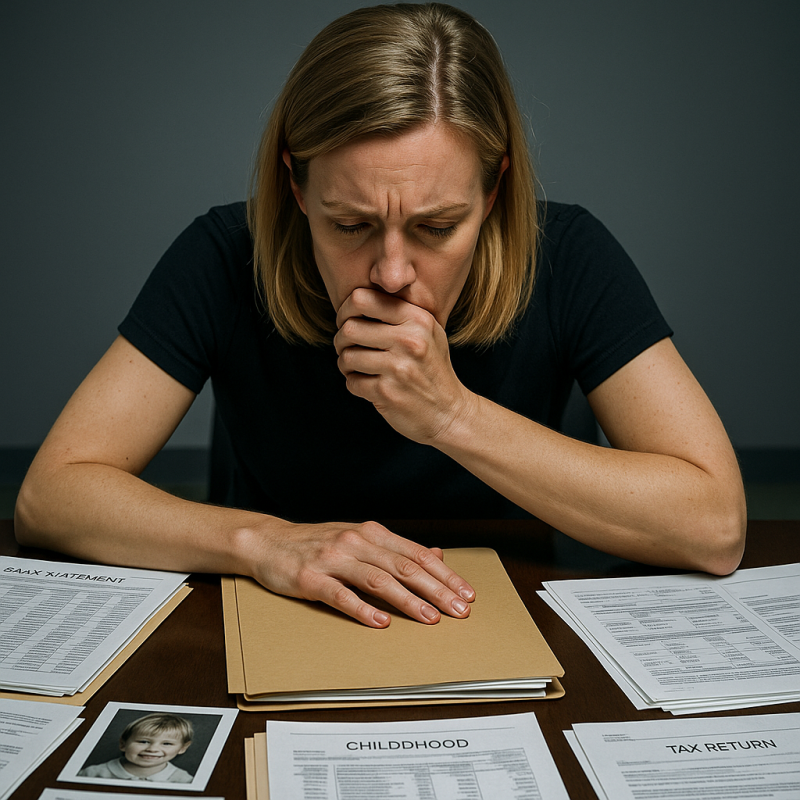 Image by RM AI
The Sealed Records
Marcus called on a Wednesday afternoon while I was sitting in the hotel room going through documents for the third time that day. He said he'd found something, but that it was going to take more time to access. During his search of county records connected to Elena's previous addresses, he'd come across a reference to sealed adoption records — a filing from approximately thirty-four years ago, originating from the same county where Elena's earliest documented addresses appeared. He said the timing fit her approximate age. I asked him what that meant for the investigation. He said he couldn't tell me yet, because the records were sealed and would require a court order to open. He was already working with Hayes to file the petition, but the process had its own timeline — another week at minimum, possibly longer depending on the court's docket. I asked if he thought the records were connected to Elena. He said the location and the timing were worth pursuing, but that he couldn't confirm anything until they were unsealed. I sat with the phone in my hand after we hung up, turning the information over. Another delay. Another locked door between me and an answer. The thought that somewhere in a sealed file there might be something that explained all of this settled over me and stayed.
 Image by RM AI
Family History
I started pulling at my own family history that night, sitting cross-legged on the hotel bed with my laptop and a box of documents I'd already gathered for the hearing. I wasn't sure what I was looking for exactly — some overlap, some point of contact between my life and Elena's that I'd missed. I went through old family photographs first, then moved to documents. My parents' marriage certificate. My father's employment records, which were straightforward and unbroken. Then my mother's. She'd worked as an administrative coordinator for most of my childhood, and I'd always thought of her work history as unremarkable. I pulled up the timeline I'd reconstructed from her old tax filings and the employment records I'd requested. The years lined up cleanly — until they didn't. There was a gap. Six months, roughly thirty-four years ago, when my mother would have been in her mid-twenties. No employer listed. No tax record for that period. I went back through the box looking for anything from those months — a photograph, a letter, a document of any kind. There was almost nothing. I sat there staring at the gap in the timeline, a six-month silence in my mother's records that I had never once thought to question before now.
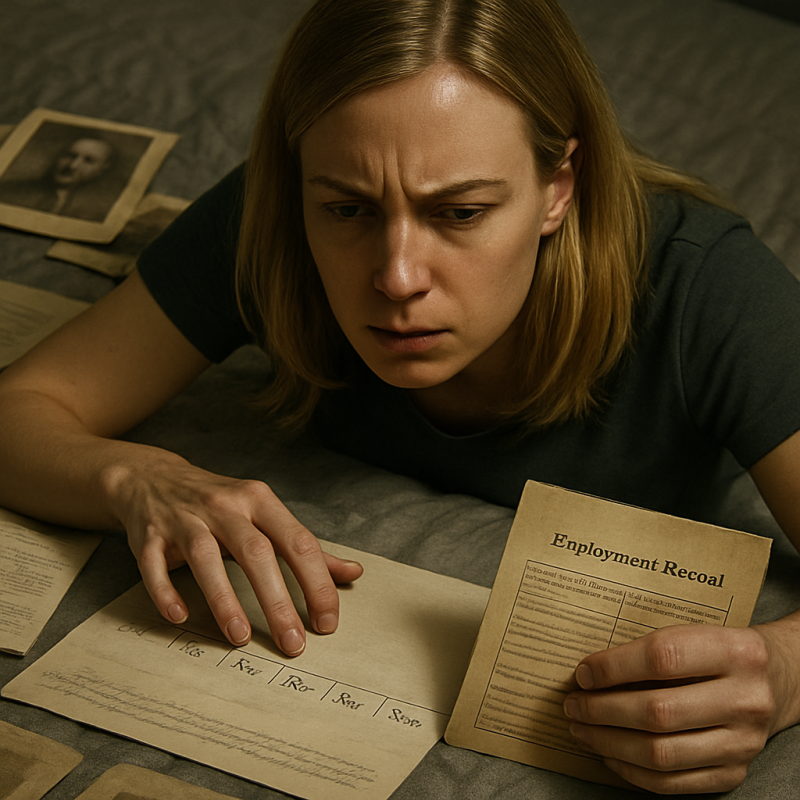 Image by RM AI
The Uncomfortable Questions
I called my mother from the hotel room just after ten, keeping my voice easy and light, the way you do when you're trying not to spook someone before you've even started. We talked about ordinary things for a few minutes — how she was sleeping, whether the neighbor's dog was still barking at all hours. Then I eased into it. I told her I'd been going through some old family documents for the case and had a few questions about her work history. She said sure, of course, whatever I needed. I asked about her time as an administrative coordinator, and she answered without hesitation. Then I asked about the gap — the six months, roughly thirty-four years ago, when there was no employer listed and no tax record. There was a pause. Not long, maybe two seconds, but I felt it. She said she didn't remember the details from that far back, that it was a long time ago. I pressed gently, asking what she'd been doing during those months. Her voice shifted — tighter, higher, clipped at the edges in a way I hadn't heard before. She asked why I was asking about that. Said it was a difficult time she didn't like to discuss. Then she said she had to go and ended the call before I could respond, and the line went quiet in my hand.
 Image by RM AI
The Confrontation
I was in the car twenty minutes after she hung up. I told myself I was being reasonable, that I just needed to see her face when she answered. My mother's house is forty minutes from the hotel, and I drove most of it without the radio on. She answered the door in her housecoat, surprised to see me, and I could tell from the way her eyes moved that she'd been hoping I'd let it go. I didn't. We sat at the kitchen table and I asked her directly about the six months. She said it wasn't important, that it had nothing to do with what was happening to me now. I told her it might. I explained that gaps in family history could be relevant, that I needed to understand the full picture. She asked why I was pushing this. I told her I had a right to know my own family history. She went quiet for a long time after that — long enough that I stopped trying to fill the silence. Then she set her hands flat on the table and said there were things she had never told me or Sarah. Things she'd kept private for reasons that made sense to her at the time. I asked what she was hiding. She said it was complicated. It was painful. And then her face crumbled, and I watched thirty years of composure come apart in about four seconds.
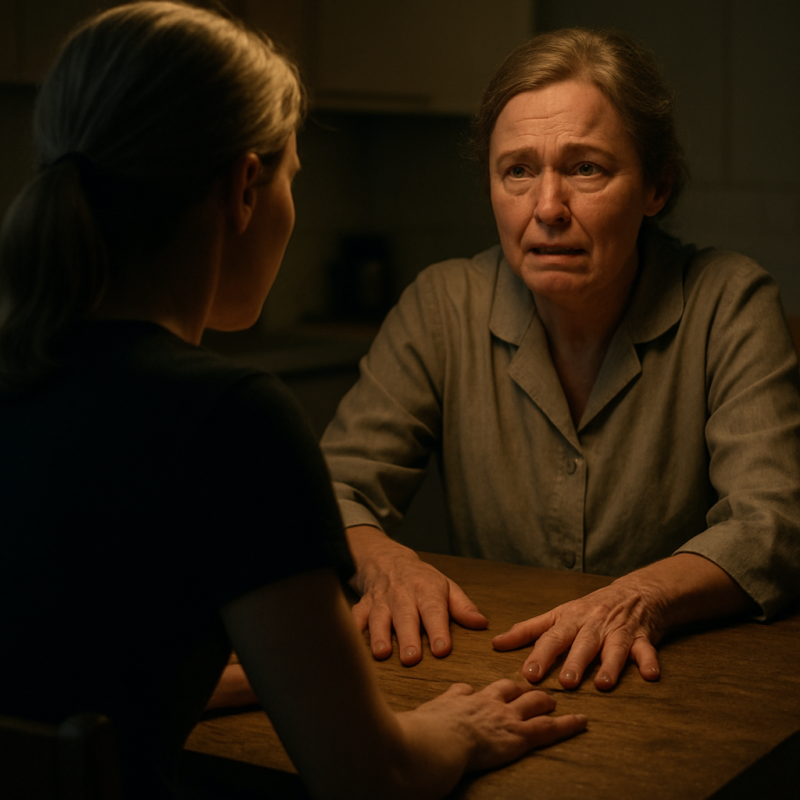 Image by RM AI
The Child She Gave Away
She cried for a while before she could speak. I sat across from her and didn't push. When she finally started talking, her voice was barely above a whisper. She told me that before she met my father, before she had me or Sarah, there had been another baby. A girl. She'd been very young — twenty-three — and alone, and she hadn't been able to see a way through. She said the pregnancy fell during those six missing months, that she'd taken a leave from work and moved in briefly with a cousin two states away so no one in her life would know. The adoption was arranged through a private agency. She signed the papers when the baby was four days old. She said she never told anyone — not the man she later married, not her own mother, not a single person from her life before or after. She'd tried to move forward, she said, the way you do when you don't have another option. She met my father two years later. Had me. Had Sarah. Built the life she'd always wanted. But she said she thought about that baby girl over the years. Wondered if she was okay. Wondered if she was loved. I sat there at my mother's kitchen table and couldn't find a single word to say, because somewhere out there I had a half-sister I had never known existed.
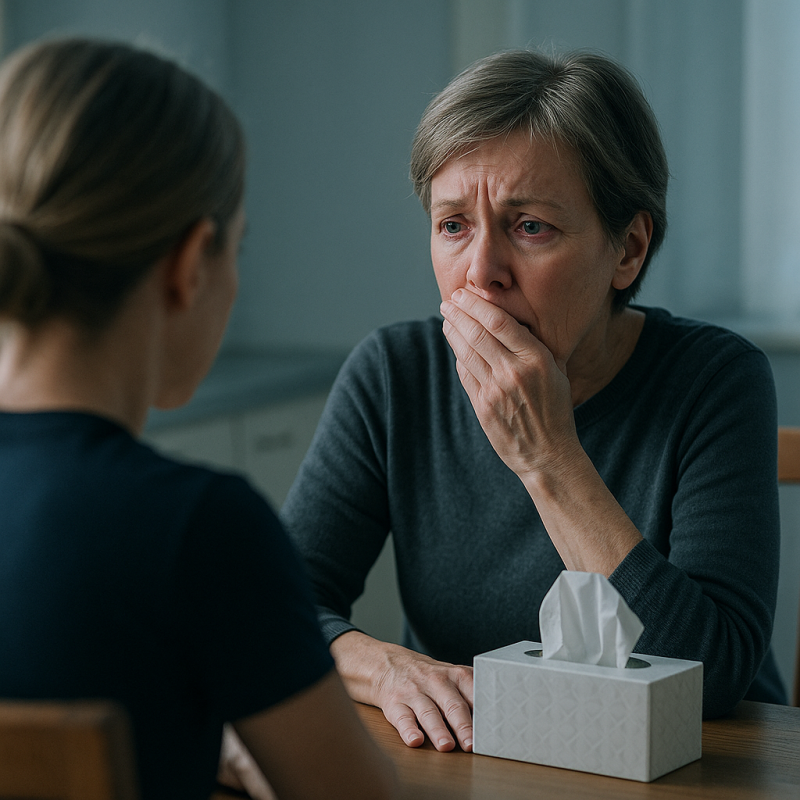 Image by RM AI
The Age Matches
I asked her for the date. The exact month and year. She told me, and I did the math right there at the table without reaching for my phone. The child my mother gave up for adoption would be thirty-four years old now. I sat with that number for a moment, turning it over. Thirty-four. Elena was thirty-four. I'd seen it in the background check Marcus had pulled weeks ago — I'd barely registered it at the time as anything more than a data point. Now it sat in the middle of everything like something I couldn't look away from. I asked my mother if she'd ever tried to find the child. She said the adoption had been closed, that the agency gave her nothing — no name, no family, no updates. She'd been told the baby went to a good home and that was the end of it. I asked if she knew what the adoptive family's name was. She shook her head. I asked her to describe what the baby looked like. She said she'd only held her for a short time before they took her, but that she had dark hair. Fine and dark. I looked at my mother across the table, and the dread that had been building in my chest since the night before settled into something cold and very still.
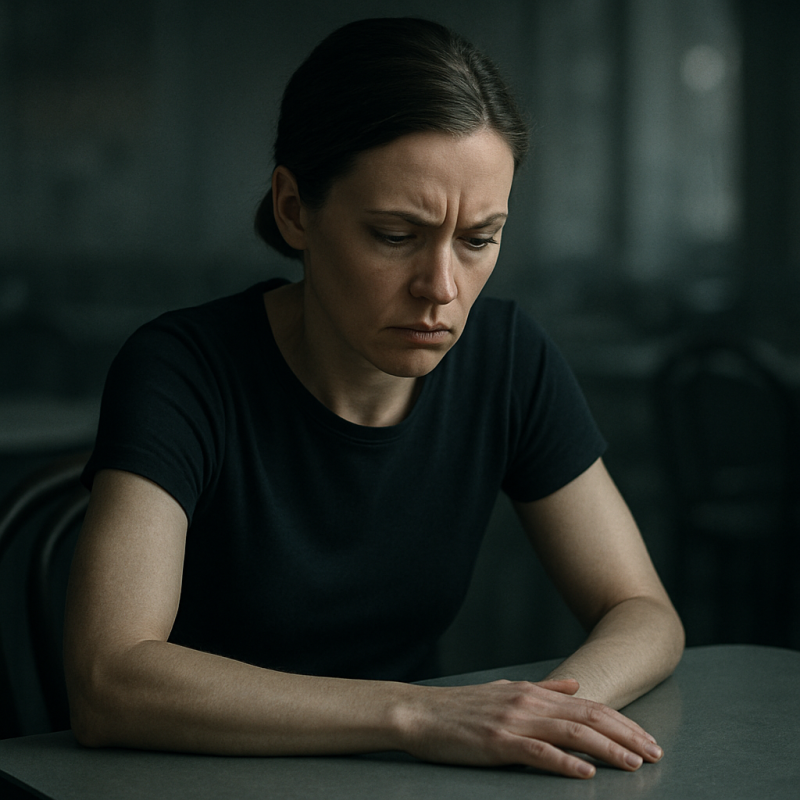 Image by RM AI
DNA Comparison
I told my mother I needed something from her, and I tried to say it as calmly as I could. I explained that the woman who had taken over my house, my accounts, my identity — Elena — was thirty-four years old, had dark hair, and had come at me with a level of personal obsession that had never fit the profile of a random crime. I told her I thought there might be a biological connection. My mother stared at me. She asked if I was really saying what she thought I was saying. I said I didn't know for certain, but that I needed to find out. I explained that a DNA comparison between her and Elena could confirm or rule out a biological relationship. She asked how we would even do that. I told her Marcus could help — that if I could get her sample and a sample from something Elena had touched and discarded, a private lab could run the comparison. My mother's hands were shaking when she nodded. I took a cheek swab kit from my bag — I'd stopped at a pharmacy on the way over, half-hoping I wouldn't need it — and she opened her mouth without me having to ask twice. I told her I'd be in touch as soon as I had anything. She grabbed my wrist before I reached the door and asked, in a voice I barely recognized, whether her daughter had come back to hurt us, and I told her honestly that I didn't know.
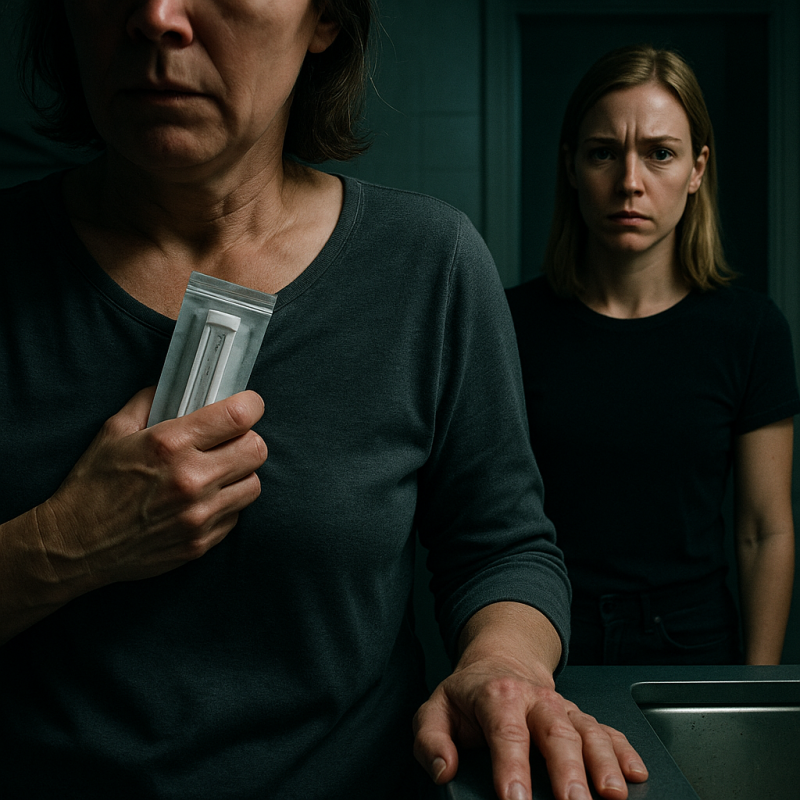 Image by RM AI
Obtaining the Sample
I called Marcus from the parking lot outside my mother's house and laid out the whole theory. He listened without interrupting, which with Marcus means he's already thinking three steps ahead. When I finished he said he could work with it. He'd been keeping loose tabs on Elena as part of the ongoing investigation, and he knew her routine well enough to move quickly. Two days later he called to tell me he had what he needed — he'd followed her to a coffee shop near the property, waited while she finished her drink, and retrieved the cup from the trash after she left. He said he'd handled it carefully, that it was properly preserved. He took both samples — the cup and my mother's swab — to a private DNA testing laboratory that afternoon. The technician told him results would take three to five business days. I thanked him and hung up and sat on the edge of the hotel bed staring at the wall. There was nothing left to do but wait. I tried to eat. I tried to sleep. I went through case documents I'd already read three times just to give my hands something to do. The question that kept circling back wasn't whether the results would come — it was what I was going to do with them when they did, and whether I was actually ready to know.
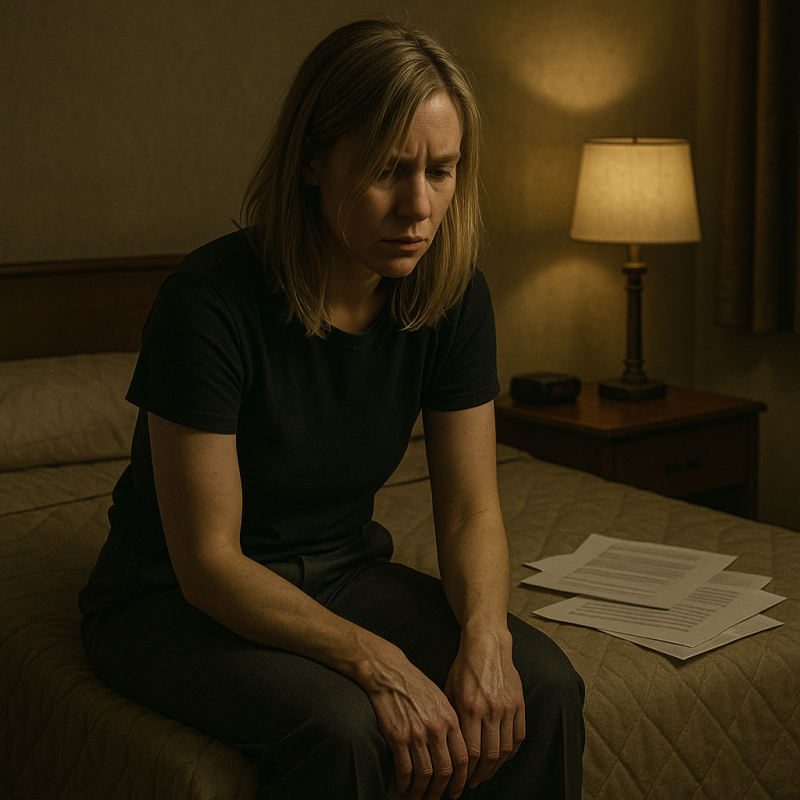 Image by RM AI
The Results Arrive
Three days is a long time when you're waiting for something that could rewrite your entire understanding of your own life. I barely slept. I ate when I remembered to, which wasn't often. I kept my phone face-up on the nightstand and woke up reaching for it before I was fully conscious. I went through the motions — answered emails from Rachel about the hearing prep, checked in with Sarah twice, tried to read. None of it stuck. On the morning of the third day Marcus called at eight forty-seven. I know the exact time because I'd been staring at the clock for the previous hour. He said the results were back and asked me to come to his office. His voice was even, the way it always is, but there was something underneath it — a kind of weight — that made my stomach drop before I'd even said yes. I told him I'd be there in thirty minutes. I drove with both hands on the wheel and the radio off, the same way I'd driven to my mother's house. I parked outside his building and sat in the car for a moment with the engine off, watching the entrance without moving. Whatever was on that report had already been decided. The results existed whether I walked through that door or not, and the only thing left was to go in and let them land.
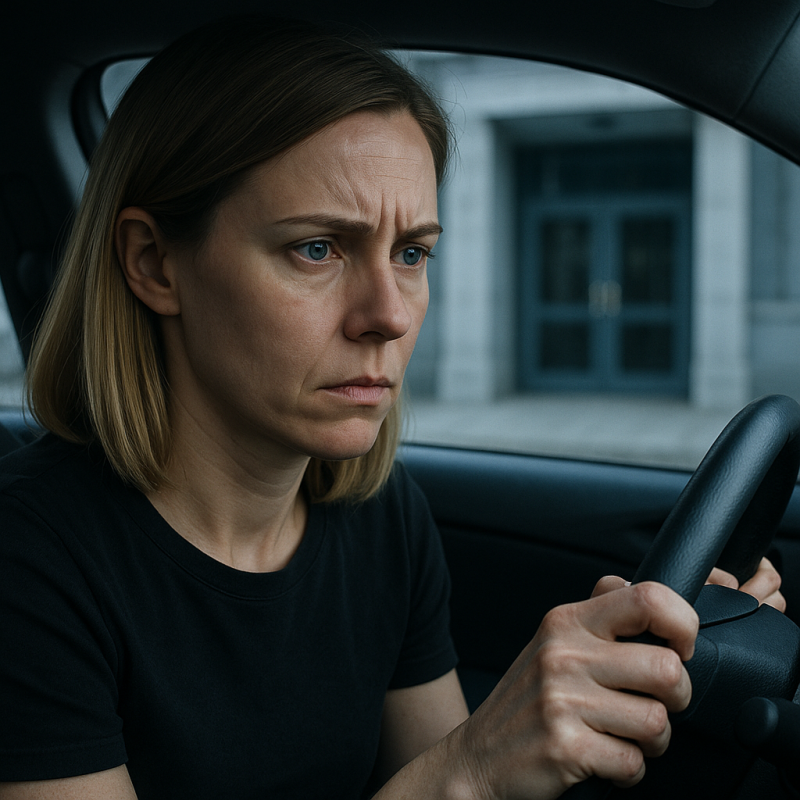 Image by RM AI
Biological Half-Sisters
Marcus had the report on his desk when I walked in, face-up, a single highlighted section near the top of the second page. He didn't make me wait. He said the results were definitive — a confirmed biological match. He turned the report toward me and pointed to the highlighted line. Elena and I shared the same biological mother. The DNA showed we were half-sisters, different fathers, same maternal line. I stared at the page. The numbers and percentages were there in clean black type, and they didn't leave any room for interpretation. Marcus said the match was strong enough that there was no reasonable alternative explanation. He said this confirmed that Elena was the child my mother had given up for adoption thirty-four years ago. I kept staring at the report. The identity theft, the surveillance, the meticulous dismantling of my entire life — none of it looked random anymore. Marcus said quietly that Elena may have grown up believing she was given away while I was kept, and that what she'd done to me might have felt, to her, like something she was owed. I didn't answer him. I just sat there with the report in my hands, reading the same highlighted line over and over, and I couldn't put it down.
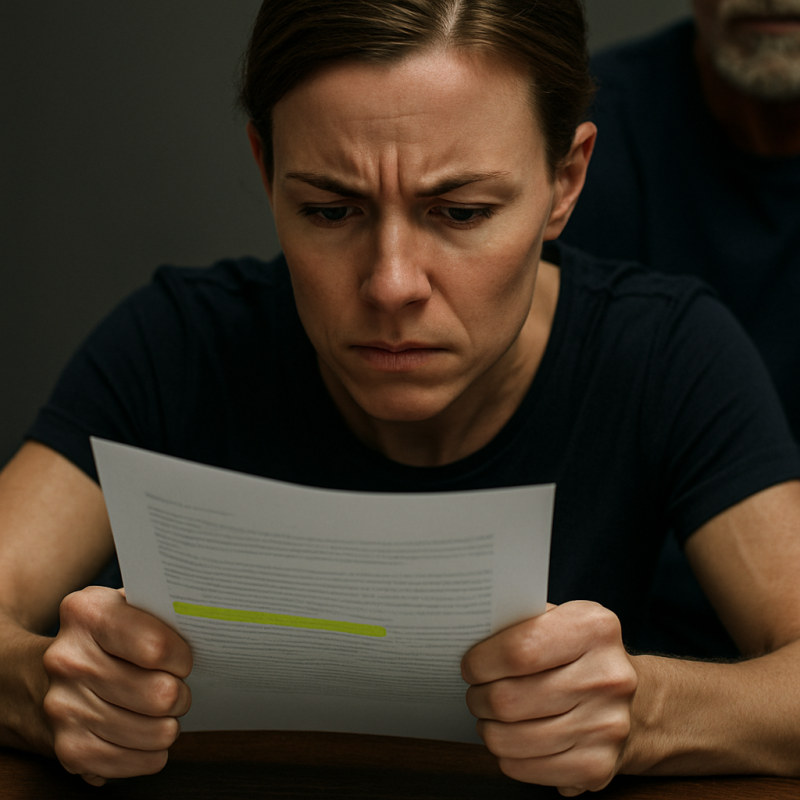 Image by RM AI
The Judge Questions Everything
I walked into that courtroom with Rachel beside me and told myself I was ready. I wasn't. Elena was already seated at the opposite table when we came in, her dark hair perfect, her posture relaxed, her hands folded in front of her like she was waiting for a business meeting to start. Her attorney had a leather portfolio open and a stack of documents arranged in a neat row. Rachel had our evidence too — my childhood photos, employment records, bank statements going back twelve years — but something about the way Elena's side of the room looked made my stomach drop before the judge even entered. The judge reviewed both sets of documents without expression. Elena's attorney presented lease agreements, a power of attorney, notarized letters, all of it clean and properly executed. Rachel presented my records and argued clearly, but I could see the judge's eyes moving back and forth between the two stacks with something that looked like doubt. Elena's attorney argued I was experiencing a mental health crisis, that my accusations were unfounded and delusional. Rachel objected. The judge overruled her. Then the judge looked directly at me over his glasses and asked, in a measured, careful voice, whether I had ever considered seeking a psychiatric evaluation.
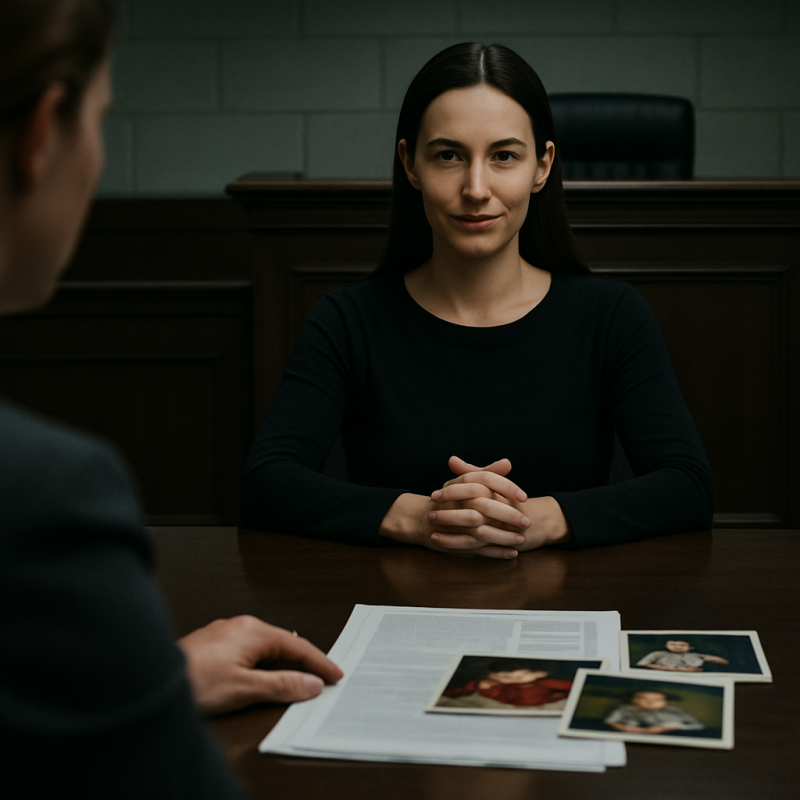 Image by RM AI
Marcus Reports Ready
I made it down the courthouse steps before my legs gave out. I sat down on the cold stone and just stayed there, Rachel standing beside me with her hand on my shoulder, not saying anything because there wasn't anything useful to say. The judge's question was still ringing in my ears. Psychiatric evaluation. Like I was the one who had done something wrong. Rachel said we weren't finished, that we still had options, but her voice had that careful quality people use when they're not sure they believe what they're saying. I stared at the pigeons on the sidewalk below and tried to think. My phone buzzed in my coat pocket. It was Marcus. I answered and he didn't waste time on pleasantries — he said the second lab had completed their verification and the documentation was ready to submit as formal court evidence. Rachel was watching my face. I held the phone out slightly so she could hear. Then he said it plainly, the way he said everything: they had proof that Elena Vance was my biological half-sister.
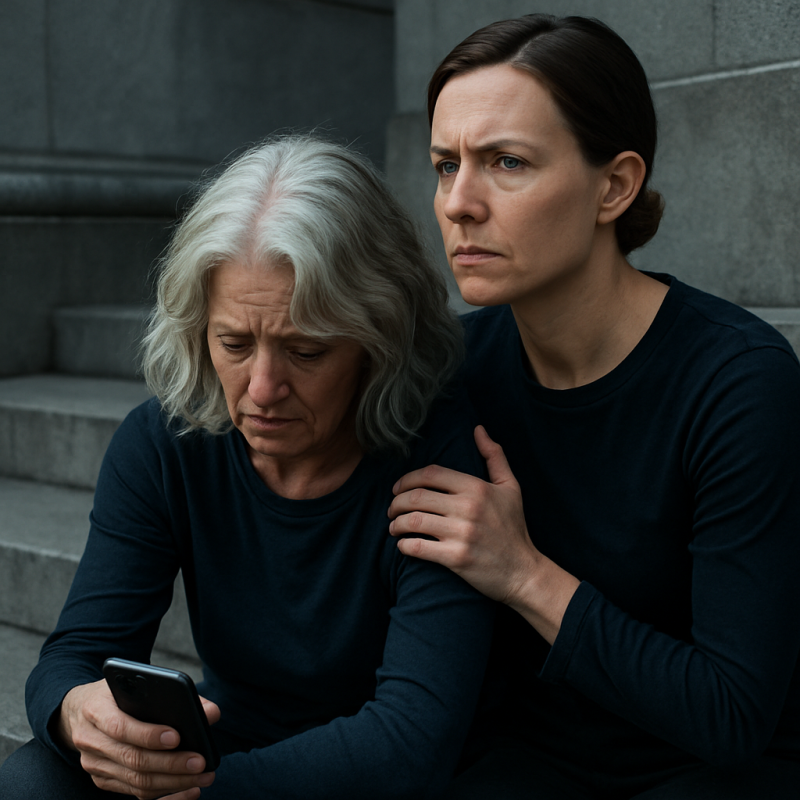 Image by RM AI
Emergency Motion Filed
We were back in Rachel's office within the hour. Marcus spread the full DNA report across the conference table — both lab verifications side by side, the chain of custody documentation, his investigative findings about our mother's adoption records. Rachel read through it quickly, turning pages with the focused efficiency I'd come to rely on. She said the biological relationship established clear personal motive, that this wasn't a random identity theft case anymore and the court needed to understand that. She drafted the emergency motion while Marcus and I sat across from her, and she talked through it as she typed — the DNA evidence, the shared maternal line, the adoption records, the timeline of Elena's actions following our mother's death. She filed it electronically at 4:47 in the afternoon. The court clerk sent an automated confirmation within minutes, and Rachel said emergency motions with this kind of evidentiary weight typically got a hearing date within two to three days. I asked her if this would finally be enough. She said the judge would have to reconsider. I sat in the chair across from her desk after she said it, the confirmation number on her screen, the report still open on the table beside me, and the office settled into a quiet that felt different from the silence of the courthouse steps.
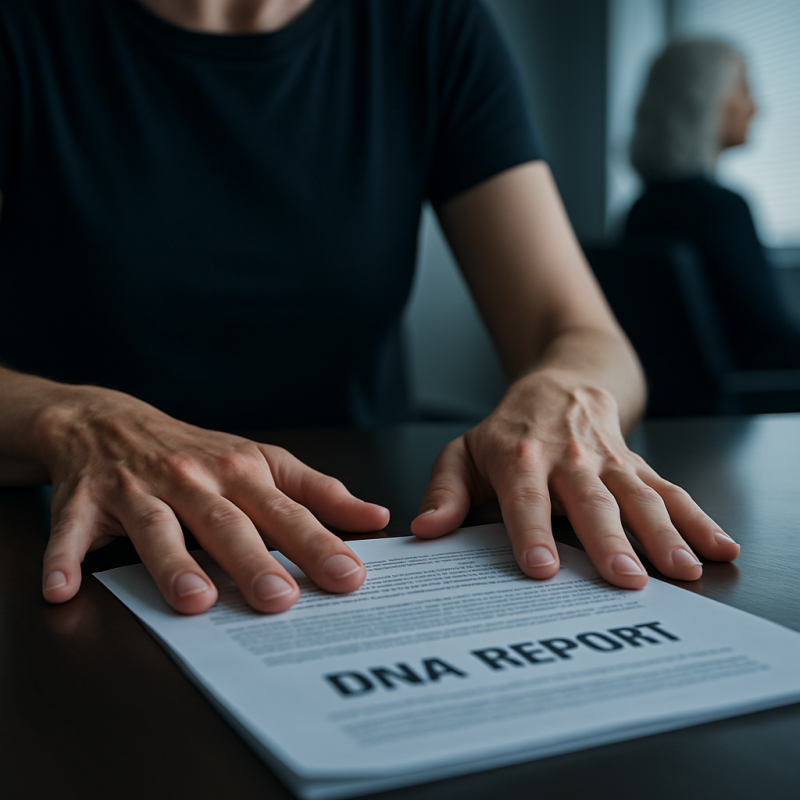 Image by RM AI
The Hearing Is Set
Rachel called at eight the next morning. The court had scheduled the emergency hearing for ten o'clock the following day. The judge had reviewed the motion and agreed to hear the new evidence and any testimony related to it. I sat on the edge of the hotel bed and wrote down the time on the notepad on the nightstand, pressing the pen harder than I needed to. Rachel walked me through what to expect — Elena's attorney would likely challenge the DNA methodology, request time to retain their own expert, argue the evidence was circumstantial. Rachel said to let her handle the objections and to stay calm no matter what Elena did or said in that room. I asked if Elena knew. Rachel said the court had notified Elena's attorney that morning and provided a full copy of the DNA report as required. I spent the rest of the day in the hotel room going over everything — the timeline, the documents, the photographs Marcus had pulled, the adoption records. I thought about our mother. I thought about what it meant that she had made the choices she made and never told me. I was still sitting there when my phone lit up with a text from Rachel: Elena's attorney had confirmed receipt of the DNA report, which meant Elena had seen it.
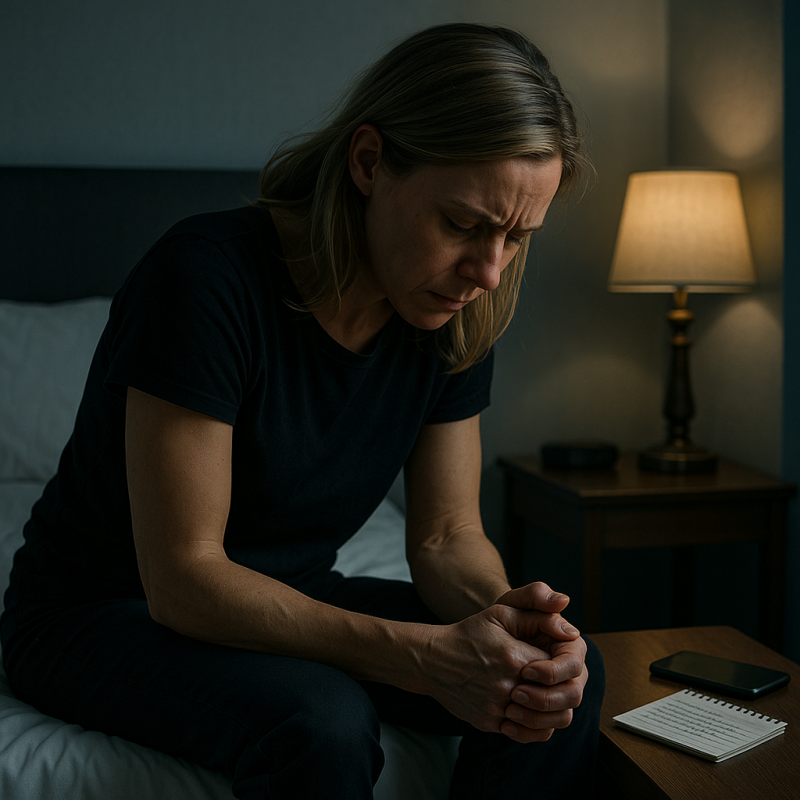 Image by RM AI
The Sister Who Came Back
Elena looked different when I walked into the courtroom that morning. The composure was still there but it sat differently on her — tighter, like something underneath it was pushing against the surface. Rachel presented the DNA report to the judge methodically, walking him through both lab verifications, the shared maternal line, the timeline. The judge asked Elena's attorney to respond. The attorney leaned over and spoke quietly to Elena for a long moment. Then Elena stood up. She said she would not be contesting the DNA results. The room went very still. She said she was the daughter my mother had given up for adoption thirty-four years ago. She said she had found out six months ago, after our mother died, when an estate lawyer contacted her and she received a box of documents — her original birth certificate, the adoption records, and the inheritance paperwork showing that my mother's estate went to me and to my sister Sarah. She said she had spent months after that learning everything about my life. She said I had the family, the home, the history that should have been hers. Detective Hayes, seated near the back wall, was writing steadily in his notebook. Elena's voice stayed flat and controlled as she looked across the room at me and said our mother had chosen to keep me and throw her away.
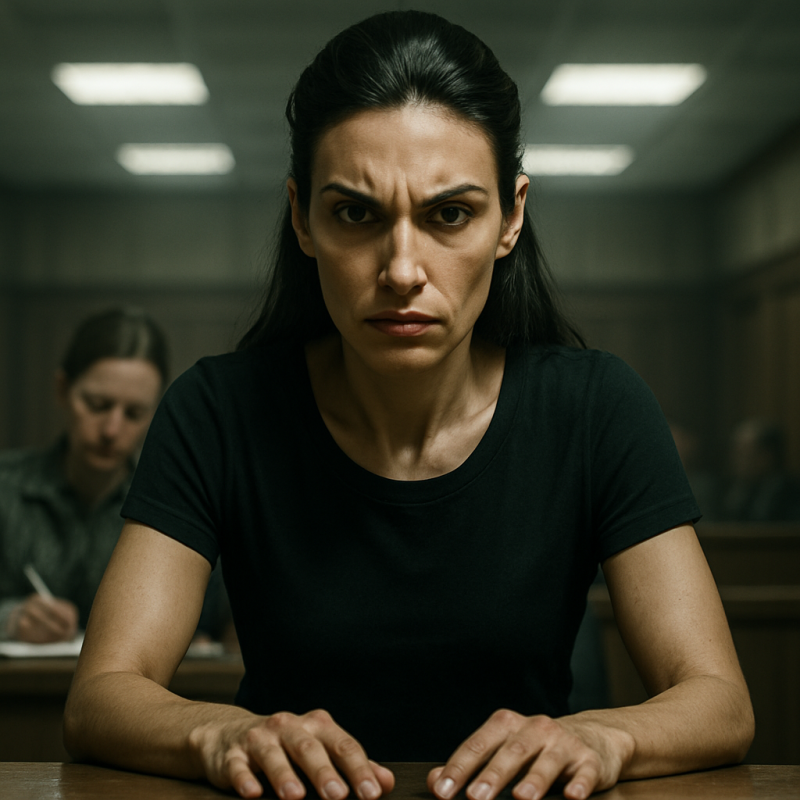 Image by RM AI
The Abandoned Child
The judge asked Elena to continue, and she did, in that same flat voice. She said her adoptive parents had been good people. She said they died in a car accident when she was eight years old, and after that there was no one — no grandparents, no aunts or uncles willing to take her, no one. She went into the foster care system and stayed there, moving between homes, never landing anywhere long enough to call it hers. She aged out at eighteen with a garbage bag of belongings and a bus pass. She said she built a life anyway, working two jobs through her twenties, teaching herself things no one had bothered to teach her. Then six months ago an estate lawyer called and told her a woman named Carol had listed her as a potential biological heir. She drove to the lawyer's office and came home with a cardboard box. Inside it was her original birth certificate with her mother's name on it. Inside it were photographs of a family she had never been part of — birthday parties, holidays, a backyard she had never stood in. Inside it were documents showing that the same woman who had given her away had gone on to raise two daughters in a stable home and left them everything she had. I sat at the plaintiff's table and listened, and the weight of what she was describing settled over the room like something that had always been there, waiting to be named.
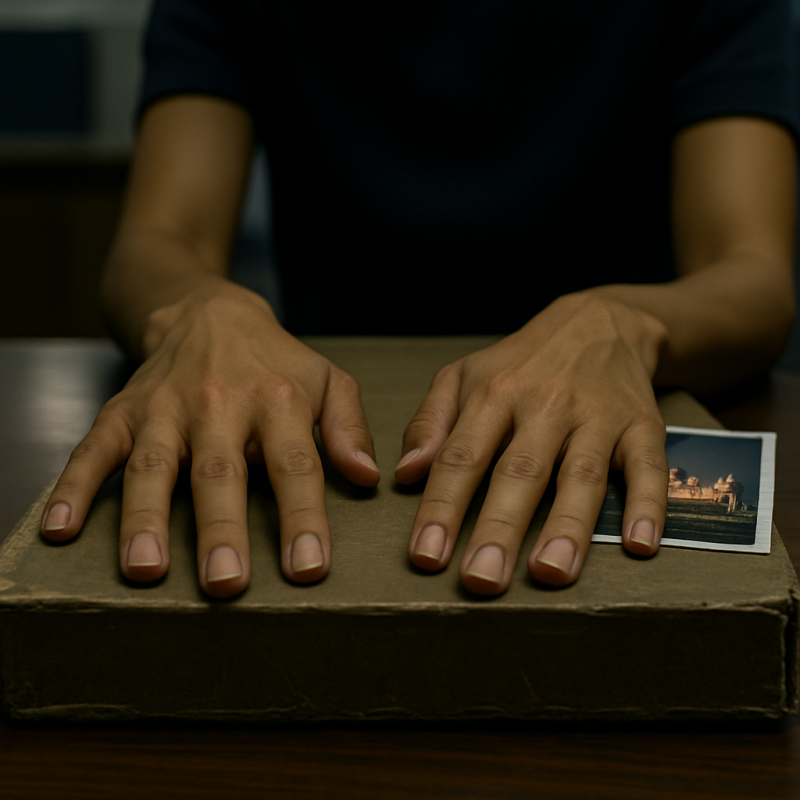 Image by RM AI
The Inheritance Documents
Elena's attorney submitted the inheritance documents to the court as exhibits. The judge reviewed them without comment. The estate had been divided between me and my sister Sarah — the house, the savings, the personal property. Elena had been excluded from the will entirely. What she had received instead was a sealed envelope, which the estate lawyer had handed her at the end of that meeting. Elena said she had sat in her car in the parking lot and opened it. She read portions of the letter aloud in court, her voice staying controlled in a way that sounded like it cost her something. Our mother had written that she was very young when Elena was born, that she was alone and frightened and believed she was doing the right thing by choosing adoption. She wrote that she had hoped Elena would have a better life than she could have given her. She wrote that she had thought about her over the years. The letter ended with an apology and a wish that Elena had been happy and loved. There was no phone number. No address. No invitation. Elena said reading it made something in her go cold. She said our mother had moved on, built a new life, raised a family, and written a letter that was meant to close a door, not open one. The judge asked her to pause, then directed the clerk to mark the letter as a court exhibit, and I saw it for the first time — a single folded page in our mother's handwriting, passed across the room toward the bench.
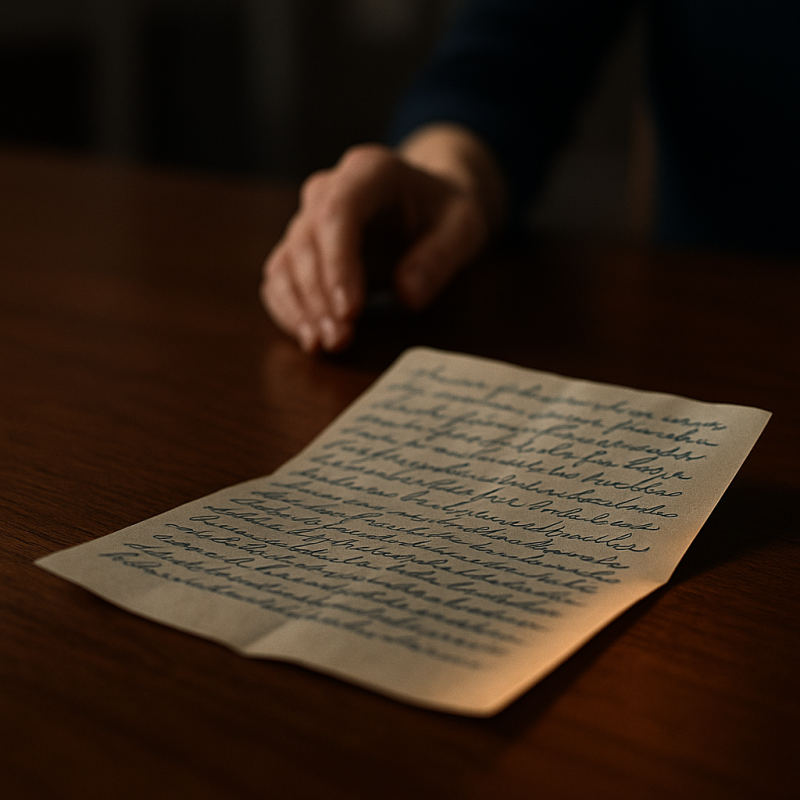 Image by RM AI
The Plan for Revenge
The judge asked Elena to describe how she had carried out the identity theft, and she answered without hesitation, without apology, in the same methodical tone she had used for everything else. She found my address through public property records. She rented an apartment six blocks away and spent over a year watching my routines — when I left for work, when I came home, which days I ran errands, which nights I stayed late. She photographed me from a distance, studied my handwriting from envelopes I'd left in the recycling bin, and practiced my signature until she said she couldn't tell the difference herself. She broke into my house on four separate occasions while I was at work. She found the safe on the second visit and watched me enter the combination through the window on the third. On the fourth visit she took what she needed — my passport, my birth certificate, the deed. She used those documents to build the power of attorney, had them notarized with a false ID, and opened accounts in my name over the following months. Detective Hayes filled two pages of his notebook. Rachel sat perfectly still beside me. Elena said, at the end, that she had wanted me to understand what it felt like to have your life taken from you, to look for yourself and find nothing there. I sat with that sentence long after she stopped speaking, because every lock she had picked, every signature she had copied, every document she had lifted from my house had been aimed at exactly that.
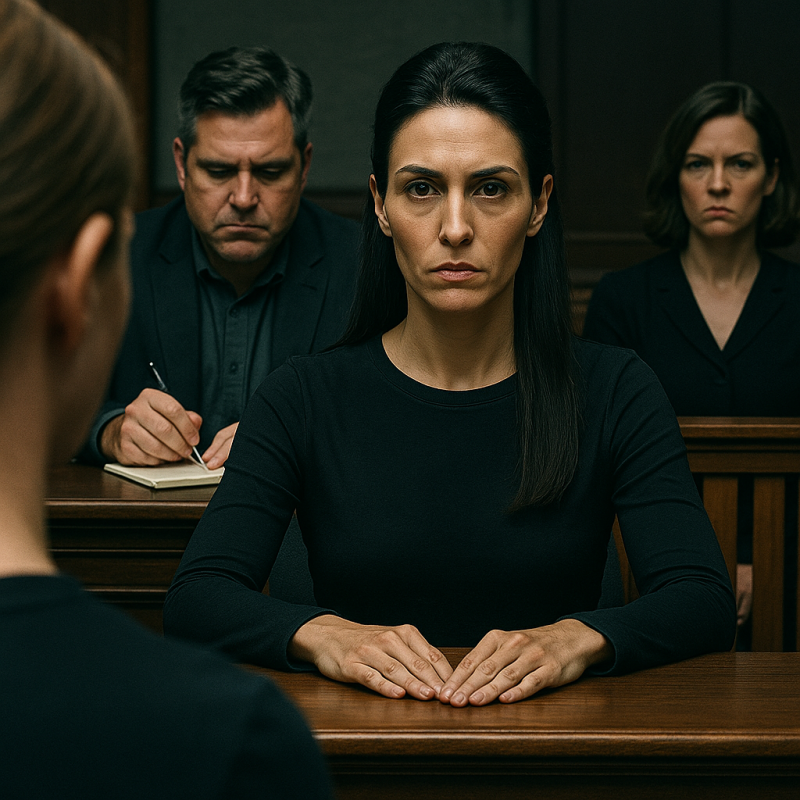 Image by RM AI
No Remorse
The judge asked Elena directly — did she feel any remorse for what she had done? Elena paused for exactly one second, the way someone pauses when they're deciding how honest to be, and then she said no. No remorse. She said I had lived in the house with our mother, gone to the schools our mother paid for, worn the name our mother gave me, and that every good thing in my life had come at Elena's expense. She said our mother made a choice, and I had benefited from that choice every single day without ever knowing the cost. The judge asked if she understood she had committed serious crimes. Elena said she understood perfectly. She said the law called it identity theft and fraud and burglary, and she accepted those labels, and she would do it all again. Rachel leaned close and whispered that Elena's statement would help the criminal case enormously. I nodded, but I wasn't thinking about the case. I was thinking about the word again — that she would do it all again — and how completely it closed every door I hadn't even known I was still holding open. The courtroom felt very still around me, and I sat with that word like a stone in my chest.
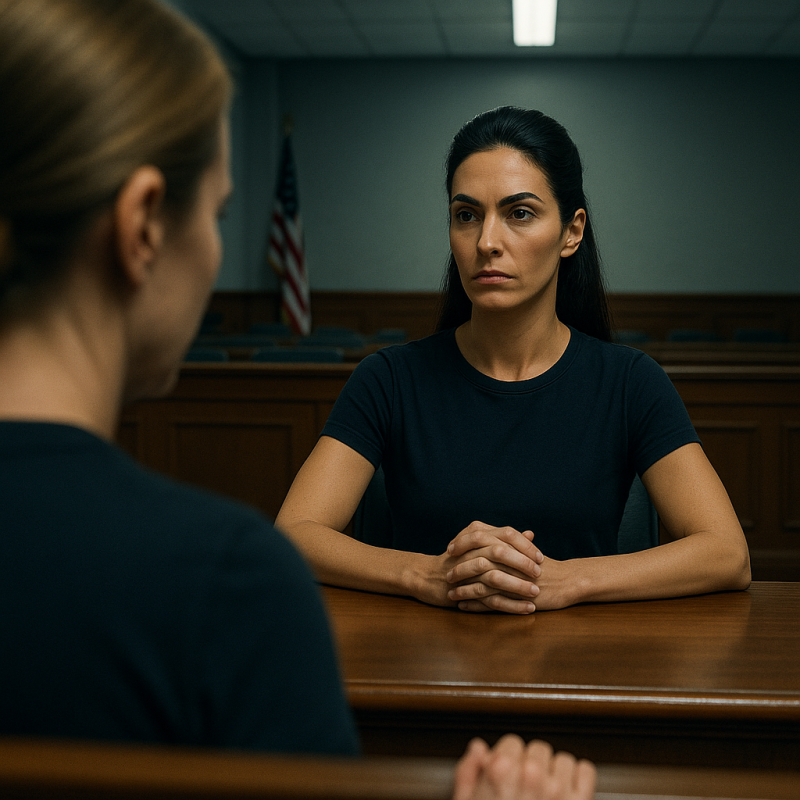 Image by RM AI
The Ruling
The judge returned to the bench after a twenty-minute recess and the room went quiet in the way rooms do when something final is about to happen. He said he had reviewed all evidence and testimony carefully. He said the DNA results were unambiguous, the forensic analysis of the documents was conclusive, and the testimony given that morning left no reasonable interpretation other than deliberate fraud. He declared all documents Elena had presented — the power of attorney, the notarized transfers, the identification — fraudulently obtained and legally void. He stated for the record that I was the true and lawful holder of my identity and all associated property rights. He ordered Elena to surrender every document, key, and piece of identification in her possession. Rachel reached over and pressed my hand once, firmly. Detective Hayes was already on his feet. The judge referred the matter to the district attorney for criminal prosecution and listed the charges — identity theft, fraud, forgery, burglary — reading each one in the same level tone. Then he looked at Elena and said she was to vacate the property within twenty-four hours, and that law enforcement would ensure compliance.
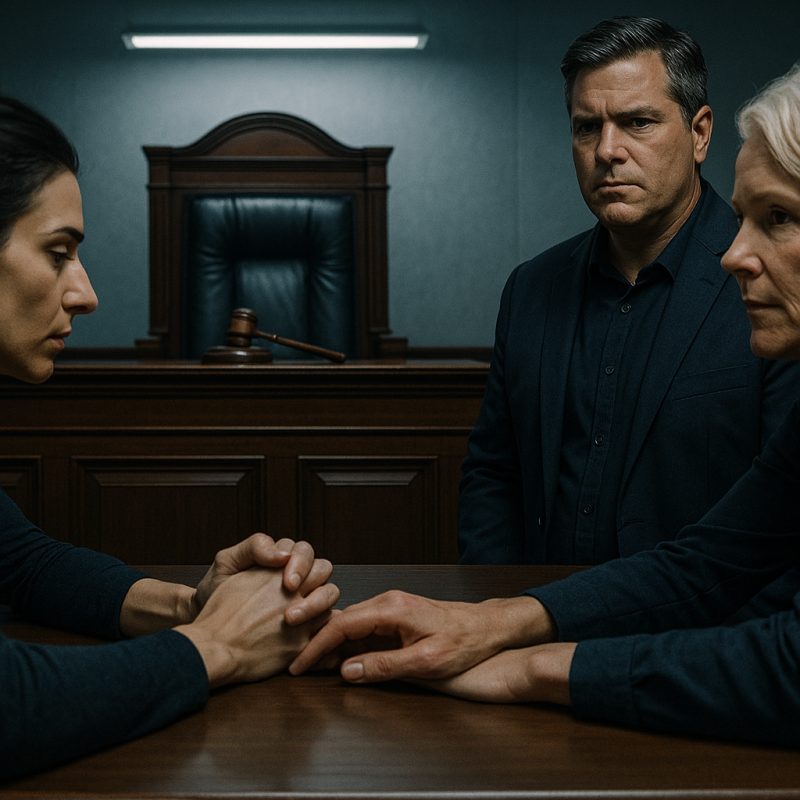 Image by RM AI
The Arrest
Detective Hayes crossed the courtroom floor with the quiet, unhurried pace of someone who had done this many times before. He told Elena she was under arrest for identity theft in the first degree, fraud, forgery, and multiple counts of burglary. He read her rights in a steady voice while he secured the handcuffs, and Elena stood perfectly still through all of it, her posture unchanged, her face giving nothing away. Rachel was already beside me, explaining in a low voice that the arraignment would happen within forty-eight hours, that bail would likely be set high given Elena's demonstrated ability to construct false identities, that with the confession already on record the prosecution's case was exceptionally strong. I heard the words. I understood them. Hayes guided Elena toward the courtroom exit, one hand at her elbow, and at the door she turned and looked back at me. Her expression was the same one she'd worn through the entire hearing — cold, contained, certain of something I couldn't name. Then the door swung shut behind her, and the courtroom settled into a silence that felt much larger than the room itself.
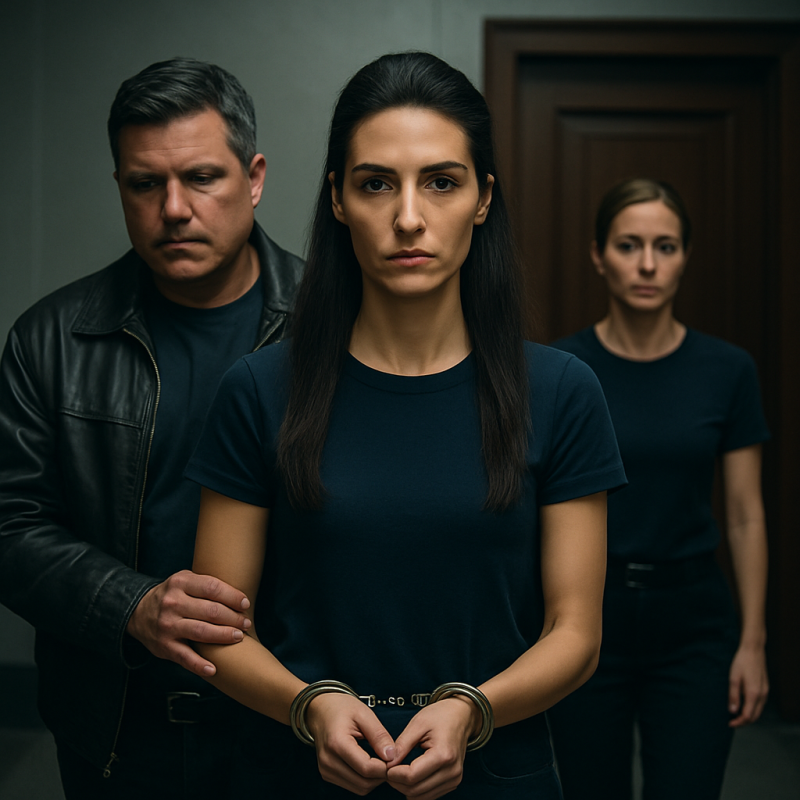 Image by RM AI
The DNA in Court
The arraignment courtroom was fuller than I expected. Reporters filled the back rows, and I could see phones and notepads moving every time someone new spoke. Rachel sat beside me and kept her eyes forward. The district attorney stood and presented the charges against Elena — identity theft, fraud, forgery, burglary — and then introduced the DNA evidence. She explained it plainly: a biological test had confirmed that Elena and I shared the same mother. She described how our mother had placed Elena for adoption while keeping me, how Elena had discovered this years later, and how that discovery had preceded the surveillance, the break-ins, the forged documents. Elena's public defender entered a not-guilty plea without elaborating. The judge reviewed the flight-risk argument — Elena's ability to construct multiple false identities, her access to forged documents, her demonstrated willingness to operate outside the law for years — and set bail at five hundred thousand dollars. I watched the reporters writing. I understood, sitting there, that the story of my family — my mother's choice, Elena's childhood, everything that had happened between us — was no longer something I controlled. Then the prosecutor turned to address the court one final time and said that Elena Vance had targeted her own sister out of revenge.
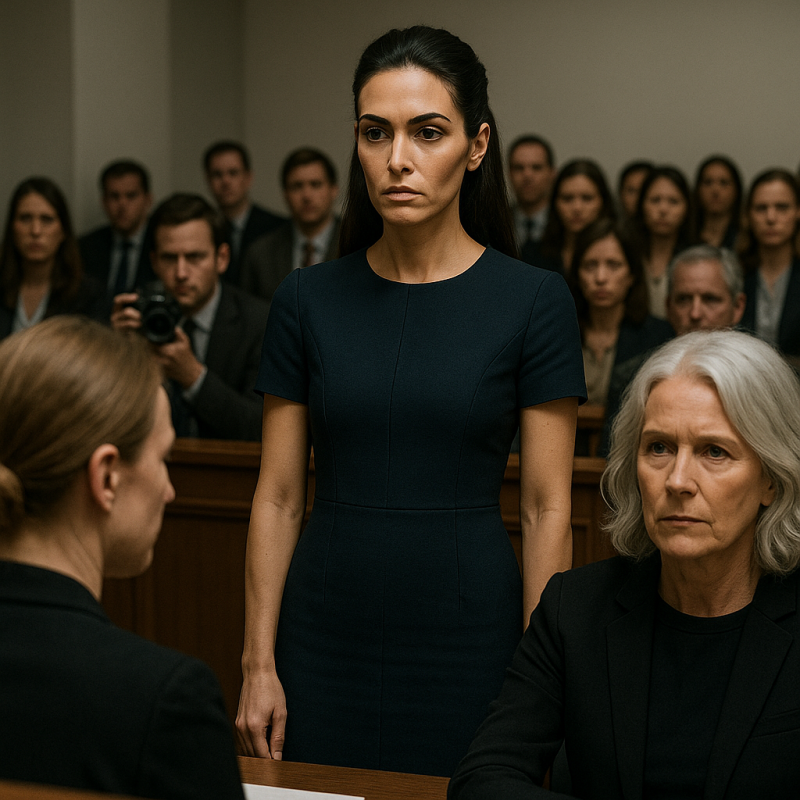 Image by RM AI
The Forgeries Exposed
The forensic document examiner was methodical in the way that expert witnesses are when they've testified many times — precise, unhurried, careful not to overstate. She explained that the notarized documents Elena had used were not outright forgeries in the traditional sense. The notary stamps were real. The seals were genuine. What was fraudulent was the process behind them. Detective Hayes took the stand next and laid out what the investigation had uncovered. A notary public named Gerald Chen had been paid by Elena to notarize documents without properly verifying her identity. Chen had accepted the payment, recorded false verification entries, and handed back paperwork that looked entirely legitimate to any institution that received it. Every bank, every title office, every government clerk who had processed Elena's documents had done so in good faith because the notarizations appeared valid. Chen had since been arrested on fraud charges. Rachel cross-examined the forensic examiner about the sophistication required to execute the scheme, and the examiner said it clearly: this required detailed knowledge of how notarization systems work and how institutions rely on them. The notary stamps on Elena's documents were real — but Gerald Chen had signed off on her identity without ever confirming who she actually was.
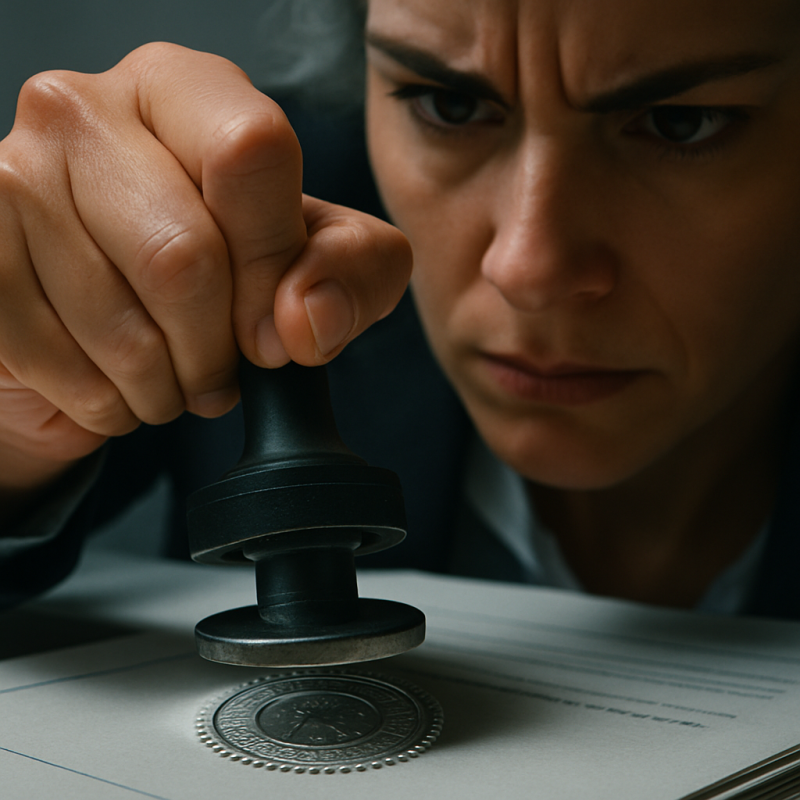 Image by RM AI
The Accomplice Network
Detective Hayes returned to the stand the following morning with a second set of findings, and the picture he described was larger than I had understood. Gerald Chen, the corrupt notary, had not been Elena's only contact. After Chen's arrest, investigators had traced his communications and found a connection to a professional document forger named Thomas Reilly. Reilly had produced the driver's license Elena used — my information, her photograph — along with a set of backup identification documents she had kept in reserve. Hayes presented financial records showing Elena had paid Chen and Reilly a combined total of over fifteen thousand dollars. The money had come from credit cards opened in my name. Both men had been arrested and were cooperating with the prosecution in exchange for reduced charges. Rachel leaned toward me and said their testimony would significantly strengthen the case, that Elena's defense would have very little room to argue she had acted impulsively or alone. I sat with that for a moment — the timeline, the payments, the backup documents held in reserve. Then Hayes stated that the investigation had confirmed Elena had connected with Reilly through an established network of individuals who specialized in identity fraud for hire.
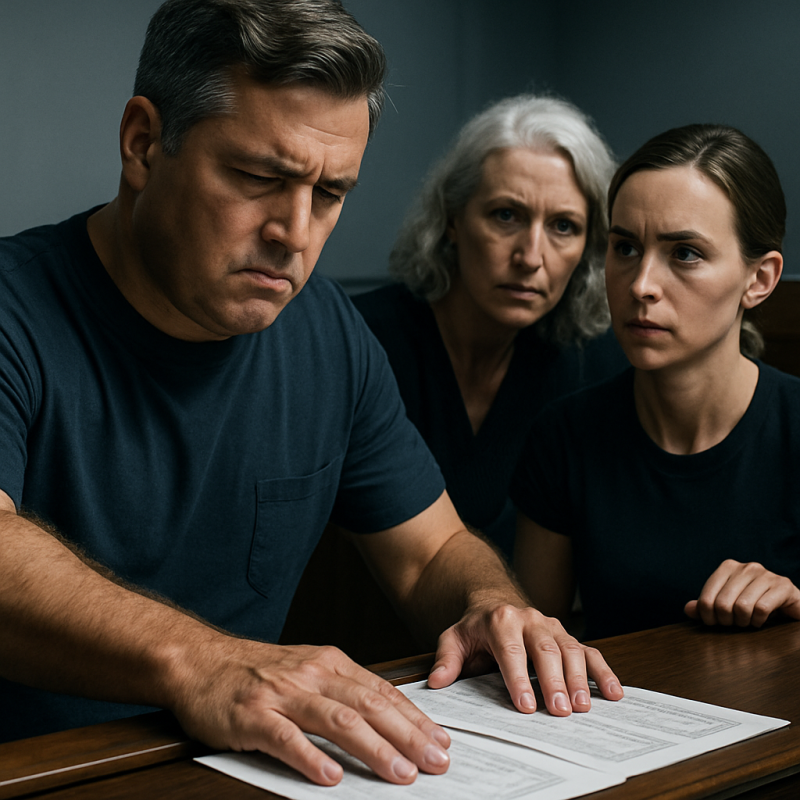 Image by RM AI
The Verdict
The trial ran three days. I testified on the first morning — described coming home to find my house changed, finding the forged lease, opening the safe and finding it empty. I kept my voice level and looked at the jury when I spoke. Detective Hayes testified about the investigation, the arrests, the financial records. Chen and Reilly both took the stand and described what Elena had asked them to do and what she had paid them. The DNA expert confirmed the biological relationship between Elena and me in terms the jury could follow. Elena's attorney argued that her childhood had been marked by abandonment and instability, that her actions were the product of profound emotional damage, and asked the jury to weigh that against the charges. Elena did not testify. She sat at the defense table through all three days with the same expression she had worn in every courtroom — still, contained, giving nothing away. The jury was out for four hours. When they came back in, the room went very quiet. The foreman stood and read the first verdict — guilty on the identity theft charge — and then continued through every count that followed, fraud, forgery, burglary, each one the same word, and Elena did not move, and I sat with my hands folded in my lap and let the verdicts settle over me one by one.
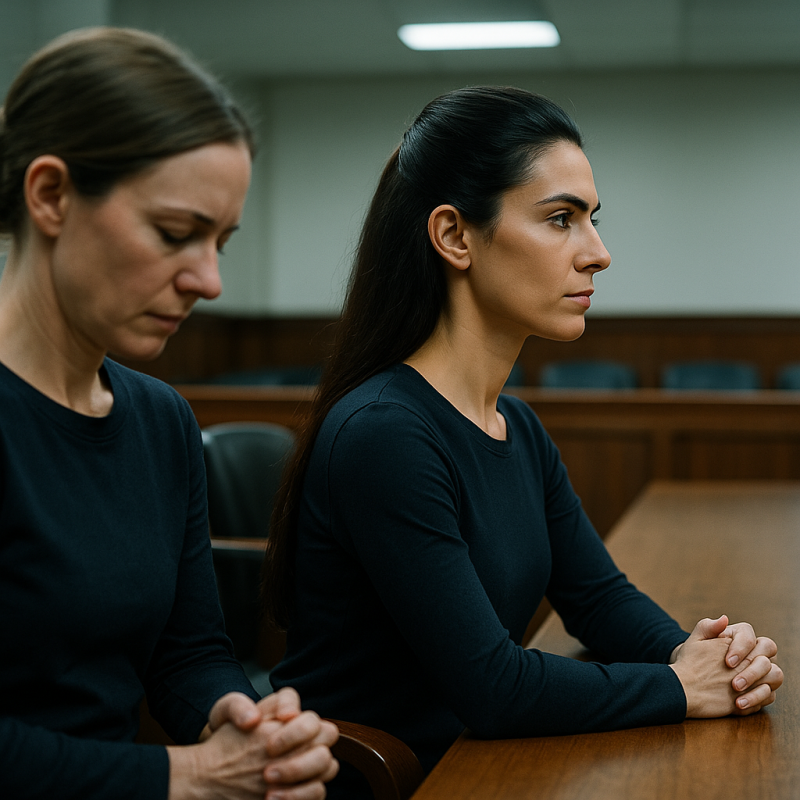 Image by RM AI
Face to Face
I asked Rachel if it was possible to speak with Elena before the sentencing date, and she made the arrangements. A guard brought Elena into a small conference room off the holding area and sat in the corner while we faced each other across a narrow table. I spoke first. I told her I understood that she had grown up without the things I had taken for granted — stability, a name, a mother who stayed. I told her I hadn't chosen any of it, that I hadn't known she existed, that if I had known I would have wanted something different for both of us. Elena listened without expression. She said I had lived the life that belonged to her. She said our mother had looked at two daughters and decided one was worth keeping, and I had spent forty years benefiting from that decision without ever being asked to account for it. I asked if there was any possibility, even a small one, of forgiveness. She said no. She said it without hesitation and without cruelty, the way someone states a fact they stopped questioning a long time ago. I told her I was sorry — for what our mother had done, for what Elena had lost, for all of it. She didn't answer. I stood, and the guard moved toward the door, and I looked at Elena one last time across that narrow table, knowing I would not sit across from her like this again.
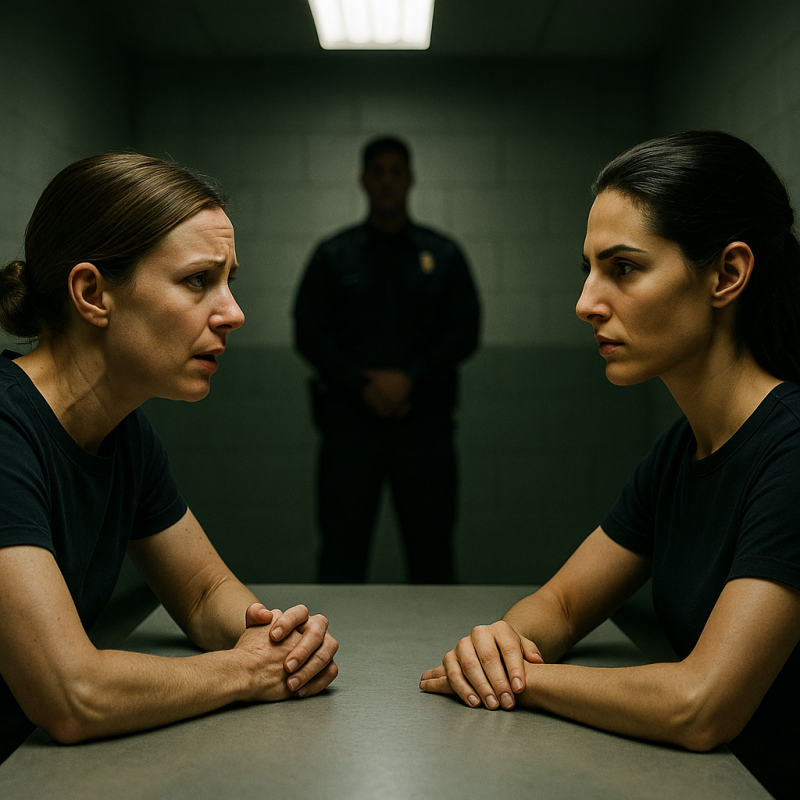 Image by RM AI
The Victim Statement
The courtroom was quieter than I expected when the judge invited me to speak. I stood, smoothed my blazer, and walked to the podium with my notes in hand — though I barely looked at them. I told the court what it felt like to come home and find my life had been hollowed out and replaced. I described standing in my own doorway not recognizing a single thing inside. I talked about the months of being doubted, of proving I existed, of watching people look at me like I was the one who had something to hide. I said the word violation out loud and meant every syllable of it. Then I paused, because the next part was harder. I told the judge that Elena had grown up without a mother who stayed, without a name that was chosen for her, without any of the things I had simply inherited by accident of birth. I said our mother made a choice that neither of us had any say in, and Elena had carried the weight of that choice her entire life. I looked at Elena when I said it. There were tears on her face — the first I had ever seen from her. I turned back to the judge and said clearly, for the record, that I was not asking for the maximum sentence.
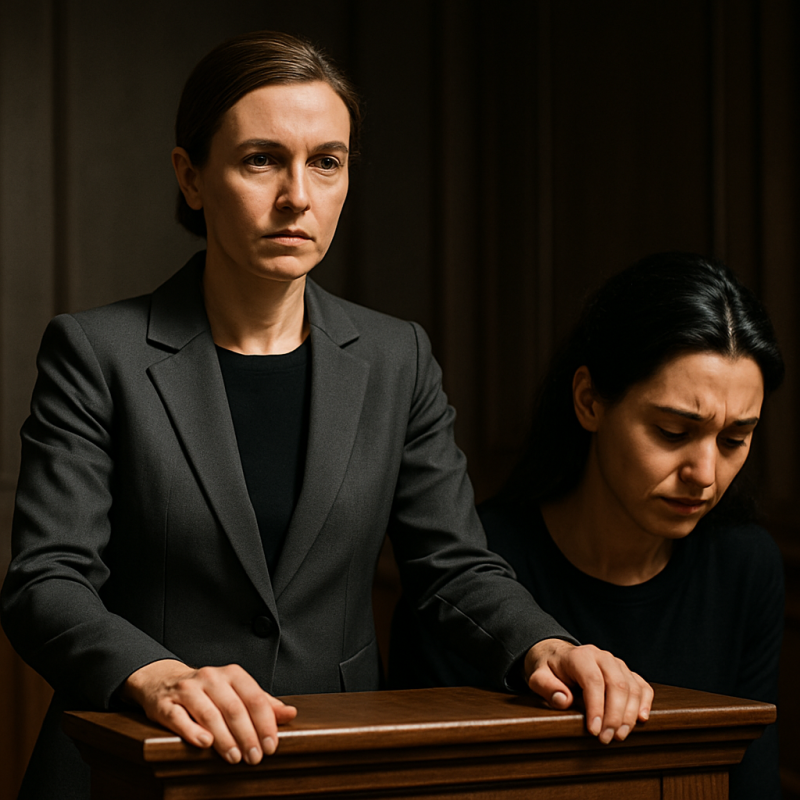 Image by RM AI
Coming Home
The judge sentenced Elena to eight years, with mandatory psychological counseling built into every stage of her incarceration. I sat very still when he said it. Rachel put her hand briefly on my arm. Elena was led out through a side door without looking back, and then it was over — or at least that part of it was. Sarah was waiting for me outside the courthouse, and we drove to the house on Elm Street together without saying much. I unlocked the front door and stood in the threshold for a moment before stepping inside. Elena's furniture was still there — the modern recliner, the slate-gray dishes stacked in the cabinet, the abstract prints on the walls that had never belonged to me. Sarah started pulling things toward the door while I stood in the middle of the living room trying to locate myself in the space. We worked through the afternoon. A storage unit Elena had rented still held some of my original pieces, and we made three trips hauling them back. By evening, my old reading chair was back in the corner by the window where it had always lived. Sarah stayed that first night, and the next, and we ordered takeout and talked about nothing important. When she finally left on the third morning, I stood alone in my living room, and the house was quiet around me in a way that felt, for the first time, like mine.
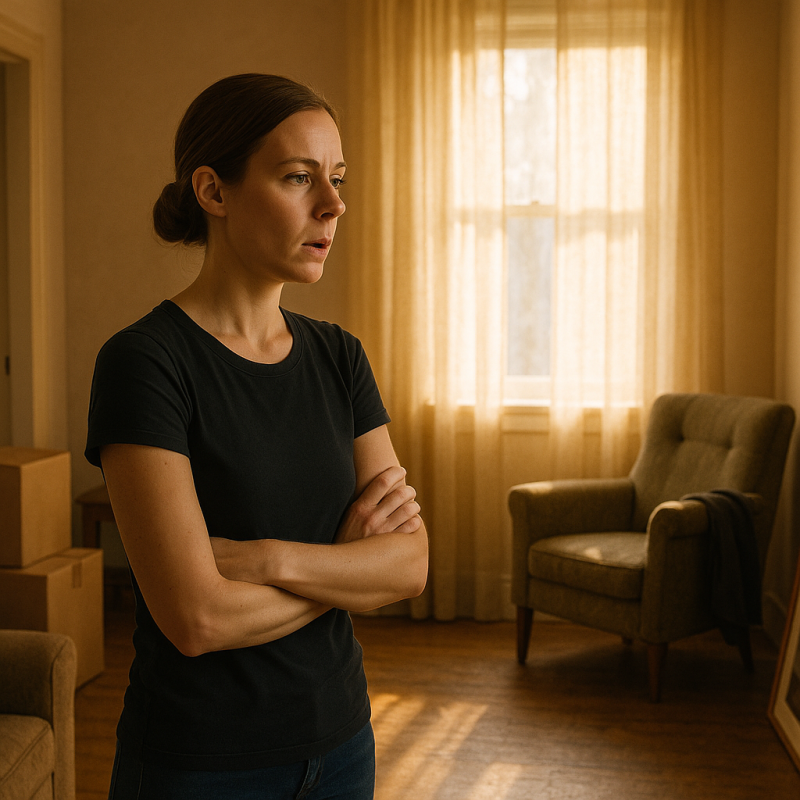 Image by RM AI
The Complex Truth
I invited my mother and Sarah over about two weeks after I moved back in. We sat in the living room — my living room again, with my furniture and my books and the lamp I'd had since my first apartment. My mother looked smaller than I remembered, or maybe I was just seeing her differently. She said she had been young and frightened and had told herself it was the right thing, that Elena would have a better life somewhere else, that she could move forward and not look back. She said she had been wrong about all of it. Sarah asked her why she had never told us, and my mother said she had spent so long not saying it that the silence had become its own kind of wall. I told her I understood the fear, even if I couldn't fully understand the choice. I said the hardest part wasn't the secret itself — it was knowing that the secret had grown into something that nearly destroyed everything. We sat with that for a while. My mother said she wanted to write Elena a letter, and I told her I thought she should. Then the room went quiet again, and my mother looked at me across the coffee table with something careful in her expression, and asked me if I thought I would ever visit Elena in prison.
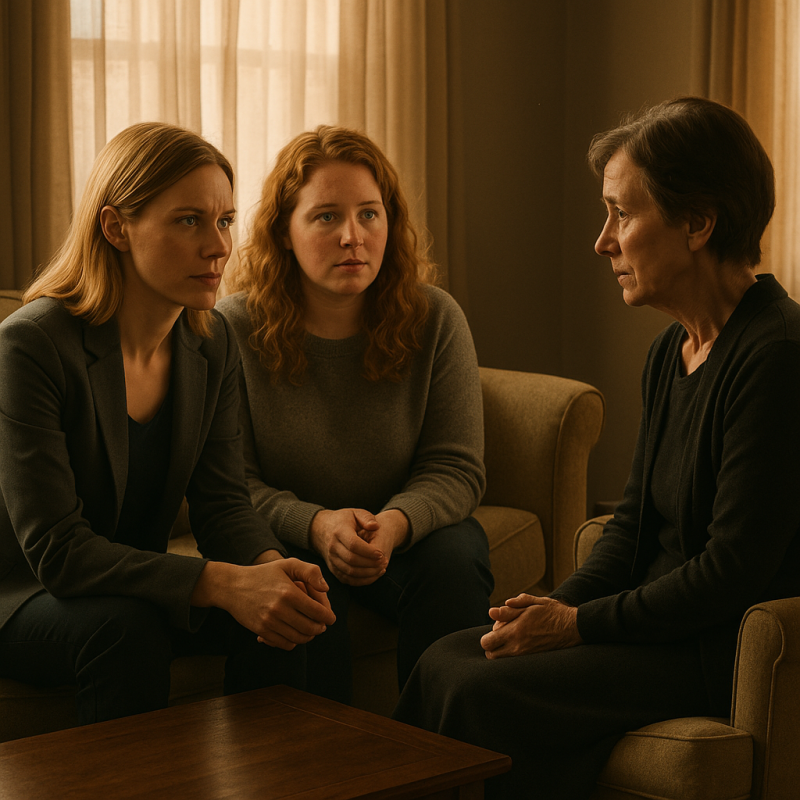 Image by RM AI
Six Months Later
Six months passed the way recovery tends to — slowly at first, then all at once. I went back to work. I rebuilt the professional reputation that had frayed during the months I'd spent fighting to prove who I was. The credit issues were resolved, the identity flags cleared, and my name was mine again in every database that mattered. I started seeing a therapist on Tuesday afternoons, and I kept going even after I stopped feeling like I needed to. I talked to Sarah most weeks and had dinner with my mother once a month, and those things felt like enough. Then one afternoon I came home to find an envelope in the mail with a prison return address. Elena's handwriting was careful and small. She said the counseling had been harder than she expected and more useful than she wanted to admit. She said she had started to understand that what our mother had done was not something I had chosen or controlled. She didn't apologize — not exactly — but she asked if I would be willing to write to her. I read the letter twice, then set it on the kitchen table and left it there for three days. I talked about it with my therapist. I thought about the woman across that narrow conference table, and the tears I had seen at sentencing. I wasn't ready. But I opened the kitchen drawer, placed the letter inside, and left it there — not thrown away, not answered, just held.
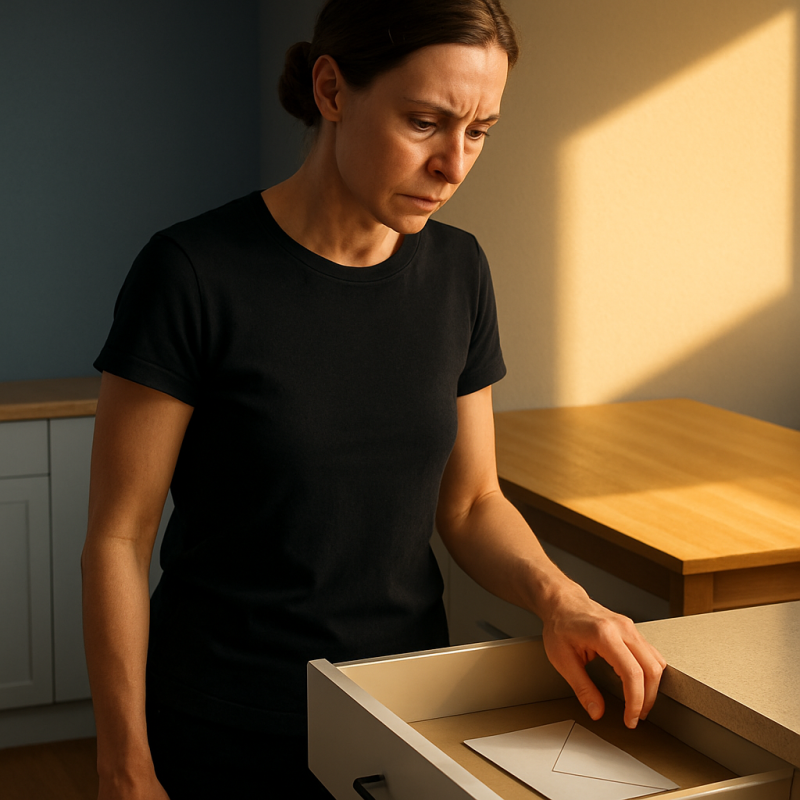 Image by RM AI
KEEP ON READING
20 Historical Figures Who Went by Fake Names
Famed Pseudonyms. Here's a fun fact for you: Pablo Picasso's…
By Christy Chan Jun 1, 2026
20 Famous Deaths That Created Centuries of Rumors
Some Endings Refuse to Stay Quiet. History loves a mystery,…
By Emilie Richardson-Dupuis Jun 1, 2026
10 Self-Proclaimed Historical Geniuses & 10 That Were Actually Smart
Changing History or Saying You Changed History. Genius is one…
By Elizabeth Graham Jun 1, 2026
20 Forgotten Historical Inventors Who Need More Credit
Stepping Out of the Shadows. We all know the famous…
By Sara Springsteen Jun 1, 2026
20 Historical "Hustlers" Who Went from Rags to Riches
Chasing the Ultimate Dream. History is packed with individuals who…
By Sara Springsteen Jun 1, 2026
20 Historical Figures Who Were Punished For Being Right Too…
History Has Always Hated a Know-It-All. There's a particular kind…
By Cameron Dick Jun 1, 2026