

I Altered My Niece's Wedding Dress and Found a Locket That Proved My Sister Killed My Fiancé 30 Years Ago
I Altered My Niece's Wedding Dress and Found a Locket That Proved My Sister Killed My Fiancé 30 Years Ago
The Call
Sophie's call came on a Tuesday afternoon while I was finishing a hem on Mrs. Patterson's christening gown. I almost didn't pick up—my hands were covered in chalk dust and I was in that particular flow state where the needle becomes an extension of your fingers. But something made me wipe my hands and answer. 'Aunt Martha?' Her voice was thin, stretched tight like organza pulled on the bias. 'I need your help with my dress.' I'd known Sophie was engaged, of course, but we'd never discussed her wedding plans in detail. Elena kept her daughter close, always had. 'Of course, sweetheart,' I said, tucking the phone against my shoulder. 'When's the big day?' There was a pause, just a beat too long. 'Six weeks. I know it's rushed, but...' She trailed off. 'The dress is already made. Mom gave it to me. From her special collection.' My hand stilled on the fabric in front of me. Elena didn't have a special collection—at least not one she'd ever mentioned to me. And in all our years of complicated sisterhood, she'd never shown the slightest interest in sentimentality or tradition. Something cold settled in my stomach, heavy as a pattern weight.
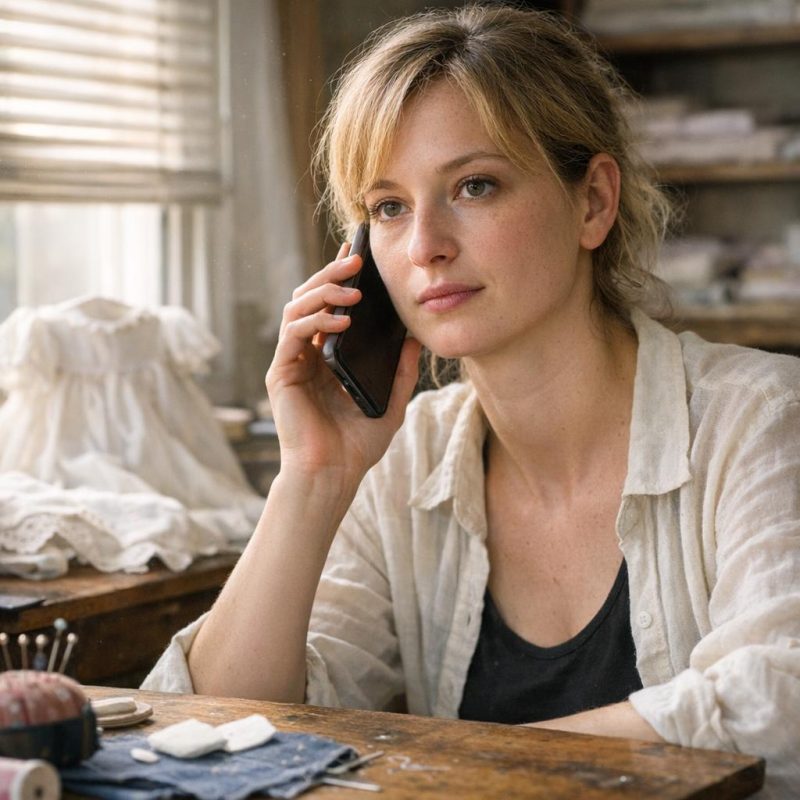 Image by RM AI
The Dress Arrives
Sophie arrived at my studio two days later carrying a garment bag that looked expensive, the kind with reinforced handles and satin lining. She was thinner than I remembered, her collarbones sharp beneath her sweater. 'Hey,' she said, not quite smiling. I cleared space on my cutting table, pushing aside a stack of pattern tissue. She laid the bag down carefully, almost reverently, then unzipped it with fingers that trembled just slightly. The ivory gown spilled out like cream, layers of silk and tulle catching the afternoon light. 'It's beautiful,' I said automatically, reaching for it. Sophie stepped back. She wouldn't meet my eyes, kept looking at the dress, then at the window, anywhere but at me. 'Mom said you could make it fit perfectly. She said you're the only one who could.' I lifted the bodice, ready to assess the alterations needed, my professional instincts already cataloging what would need to be taken in. The moment my fingers touched the fabric, I recoiled. It was cold—unnaturally cold, like it had been stored in a freezer rather than a closet. The silk seemed to drink the warmth from my skin.
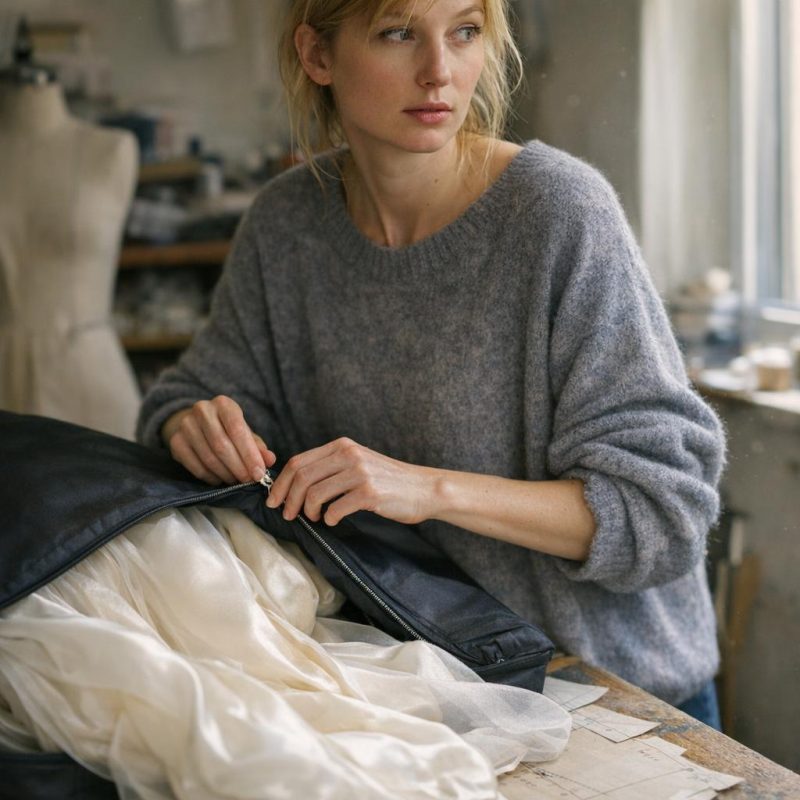 Image by RM AI
Elena's Shadow
I tried to shake off the unsettling sensation while Sophie perched on the edge of my workbench. 'Mom was really insistent about this,' she said quietly. 'She kept saying I needed to wear something with history. Something meaningful.' I smoothed the dress across the table, forcing my hands to cooperate despite the lingering chill. 'That doesn't sound like your mother,' I said, trying to keep my voice neutral. Elena had mocked my wedding plans thirty years ago, called my carefully chosen traditions 'bourgeois sentimentality.' She'd shown up to my ceremony in black, actually black, like she was attending a funeral. Sophie's laugh was brittle. 'I know, right? But she's been... different lately. Focused on family legacy and tradition and all this stuff she never cared about before.' I felt the old familiar weight settling on my shoulders—that particular pressure that came with Elena's attention. My sister had always been magnetic, brilliant, and utterly unpredictable. When she decided something mattered, she pursued it with an intensity that left scorch marks. 'Did she say where the dress came from?' I asked carefully. Sophie's eyes slid away from mine again. I wondered why Elena would suddenly take such an interest in wedding traditions after mocking mine thirty years ago.
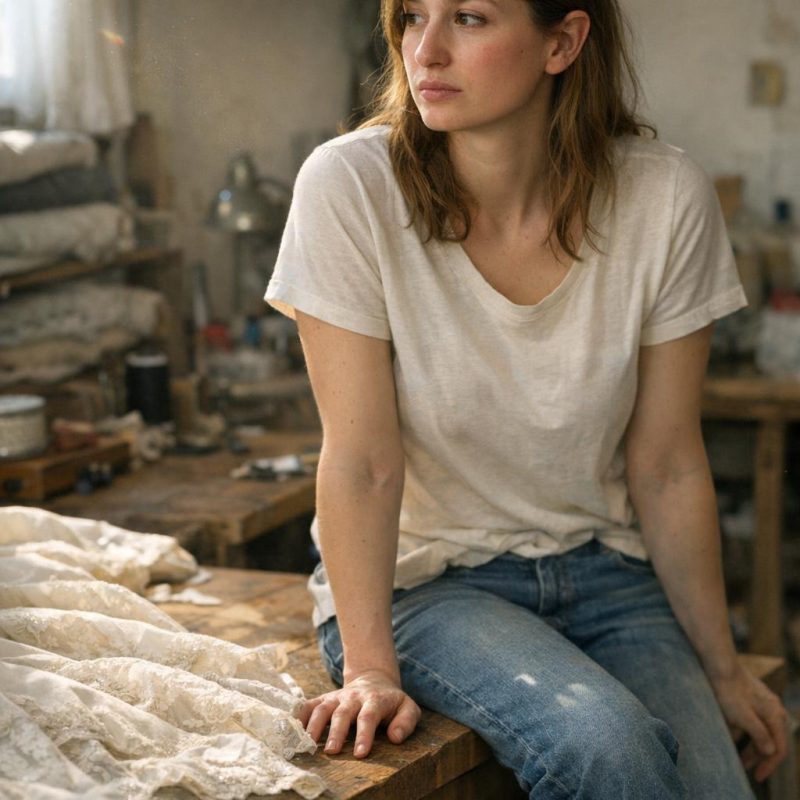 Image by RM AI
Patchwork History
After Sophie left, I positioned the dress under my studio lights for a proper examination. That's when I started to see it—really see it. The bodice was modern, maybe ten years old, with princess seams and a sweetheart neckline. But the sleeves were different, distinctly vintage, probably from the seventies based on the cut and the way the silk had aged. And the lace overlay—God, that lace was genuinely antique, the kind of Chantilly work you only find in estate sales or museum collections. Someone had assembled this dress from pieces spanning decades. I traced the seams where the different elements joined together, and my professional pride recoiled. The stitching was frantic, uneven, the kind of work you'd see from someone sewing in poor light or with shaking hands. Some sections were machine-sewn with brutal efficiency, others hand-stitched with irregular, desperate-looking stitches. Whoever made this hadn't been thinking about beauty or longevity. They'd been thinking about... what? Hiding something? Preserving something? The pattern didn't make sense, the construction defied every principle of good dressmaking. As if someone had sewn in a frenzy or in darkness.
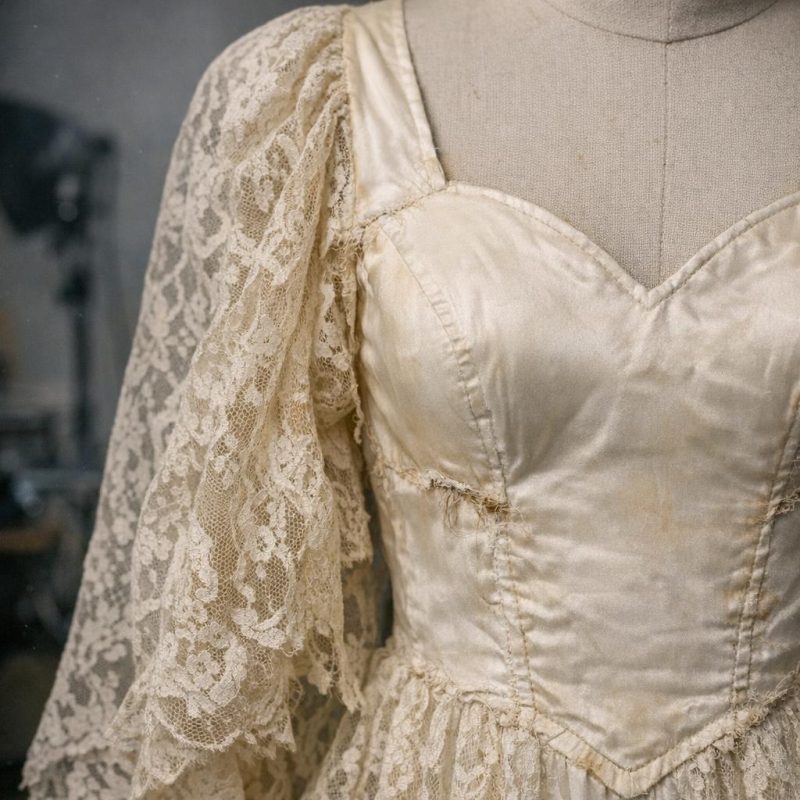 Image by RM AI
Sleepless
I couldn't sleep that night. I lay in bed staring at the ceiling, my mind circling back to the dress hanging in my studio like a ghost in ivory silk. I kept telling myself I was being ridiculous—it was just a garment, just fabric and thread. I'd worked with hundreds of wedding dresses over the years. Some had stories, sure, but they were just clothes in the end. Except this one felt different. This one felt wrong in a way I couldn't articulate, not even to myself. I thought about fabric memory, that phenomenon where cloth seems to hold the shape and energy of its wearer. Old seamstresses talk about it sometimes, usually late at night over tea, half-joking but not really. Maybe that's what I was sensing—some residue of emotion woven into the fibers. But whose emotion? And why did it feel so dark? I kept seeing Sophie's face, the way she couldn't meet my eyes. I kept hearing Elena's name like a warning bell echoing in my head. Around three in the morning, I gave up on sleep and went to make tea, but even in my kitchen, miles from the studio, I could feel that dress waiting for me.
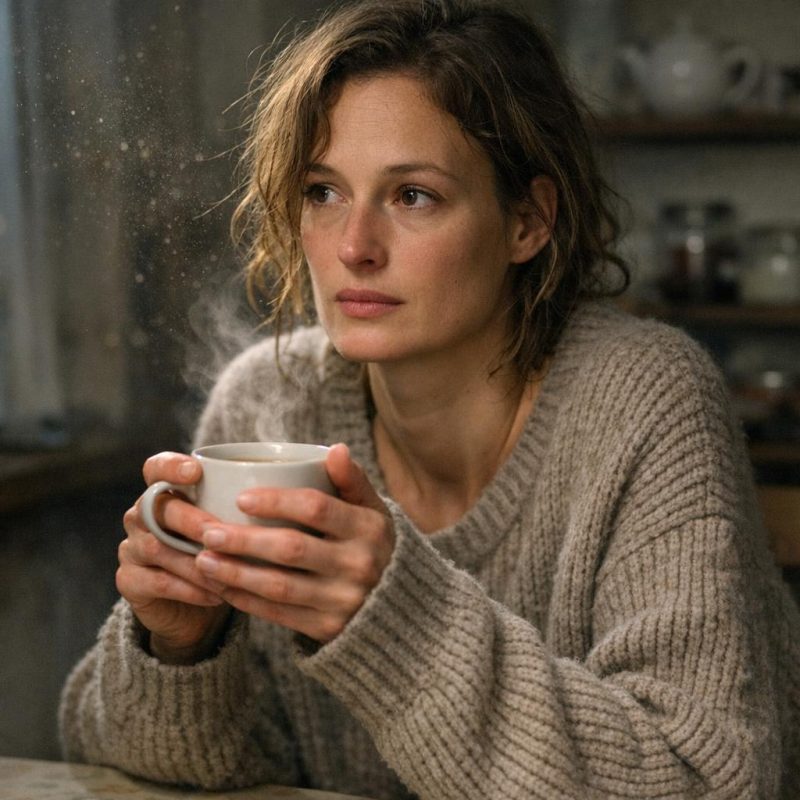 Image by RM AI
The Seam
The next morning, I started the alterations. Sophie needed the waist taken in about two inches and the hem shortened—she was petite like her mother, while whoever wore this dress first had been taller. I began with the side seams, carefully unpicking the stitches to access the interior. That's when I noticed the bulky seam near the ribcage, on the right side where it would sit just below a bride's breast. It didn't make structural sense. There was no reason for that much bulk in that location. I worked my seam ripper into the stitches, planning to smooth it out, make it lie flat. The tool caught on something hard beneath the layers. Not boning—I knew the feel of boning, and this was different. Flatter. More rigid. I unpicked more carefully now, my curiosity shifting into something sharper, more urgent. The dress had a silk lining, then a layer of tulle, then the outer silk. Between the lining and the tulle, my fingers found it—a hard, flat shape that definitely didn't belong in a wedding dress. My hands trembled as I felt the edges of whatever had been deliberately sewn into the garment.
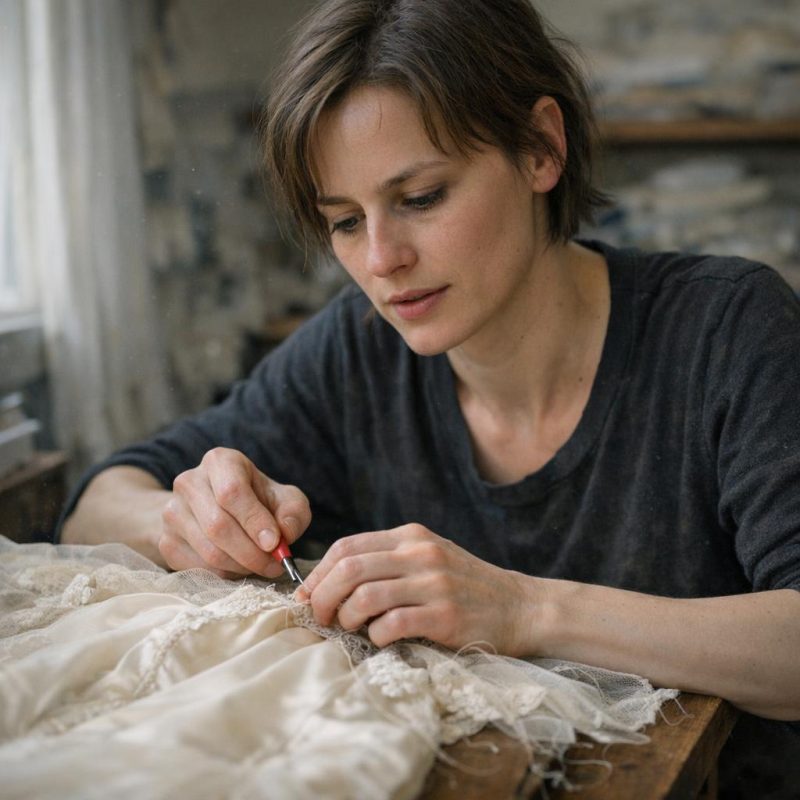 Image by RM AI
Oilcloth
I fetched my smallest scissors and cut the interior stitches one by one, working with the kind of precision I usually reserved for the most delicate repairs. Whatever was hidden in there had been placed intentionally—the stitching around it was tight, reinforced, meant to keep it secure and hidden. After ten careful minutes, I could slide my fingers into the opening I'd created. The object was wrapped in something waxy, stiff with age. I eased it out slowly, millimeter by millimeter, until it came free. Oilcloth. Dark green oilcloth, the old-fashioned kind people used to waterproof important documents or protect treasures from moisture. Someone had wrapped this carefully, deliberately, wanting to preserve whatever was inside. My heart was hammering so hard I could feel it in my throat, in my fingertips. I unfolded the oilcloth with shaking hands. The fabric crackled, brittle after what must have been years sealed inside that dress. Inside was something small, metal, darkened with tarnish. I tipped it into my palm, and the world seemed to tilt sideways. The tarnished silver locket fell into my palm, and I stopped breathing.
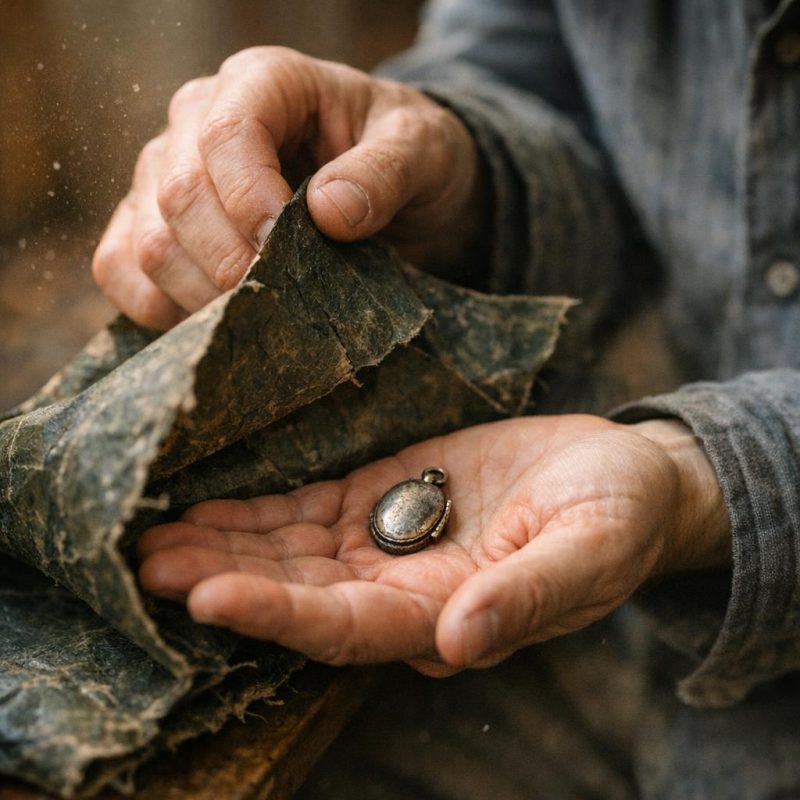 Image by RM AI
Thomas's Face
I knew that locket. Even after thirty years, even tarnished almost black, I knew it. My fingers found the tiny clasp by muscle memory, though they were shaking so badly I nearly dropped it twice. The hinge was stiff, resisting, but finally it opened with a click that sounded impossibly loud in my silent studio. Thomas's face stared back at me. God, he was so young in that photograph—twenty-eight, same as Sophie was now. Dark hair falling across his forehead, that crooked smile that used to make my stomach flip. This was the photo he'd carried, the one he'd shown me the day he bought the locket, saying he wanted to keep me close to his heart. But I'd never given him my photo to put in the other half. We were supposed to exchange them on our wedding day. The wedding day that never happened. The day he left me standing at the altar in my antique Chantilly lace, surrounded by wilting flowers and pitying faces. Elena had been the one to tell me he was gone, that he'd taken his things and run. And now, thirty years later, here was his locket—the man who abandoned me at the altar—why was his locket sewn into my niece's wedding dress?
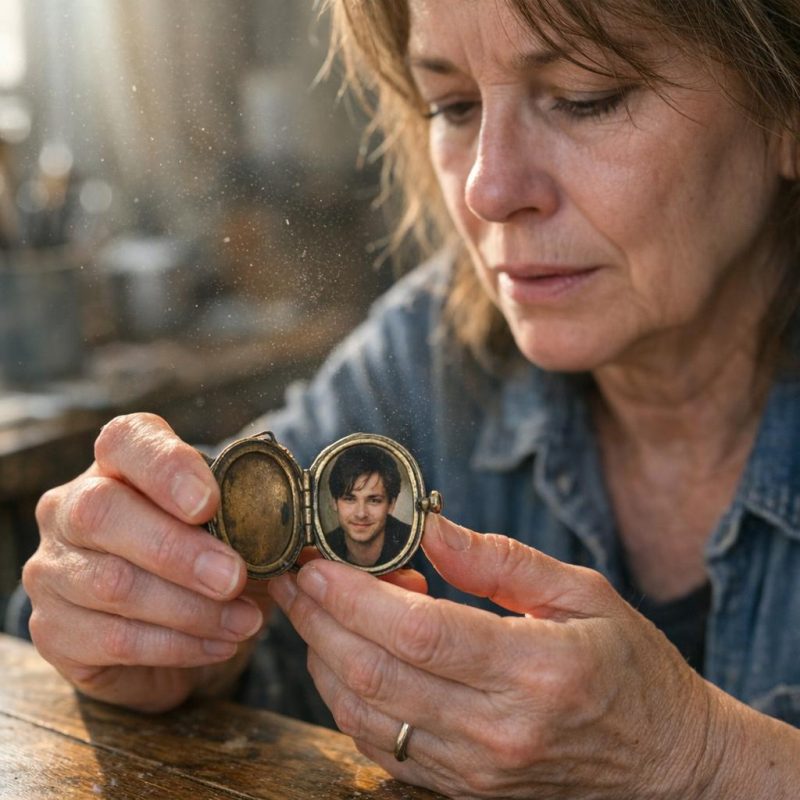 Image by RM AI
Thirty Years Ago
I sat there in the dark studio for I don't know how long, just clutching that locket like it might dissolve if I let go. The memories came flooding back—not gentle like a summer rain, but violent, like ice water thrown in your face. I could see myself in that antique Chantilly lace dress I'd spent months finding, standing at St. Catherine's with wilted roses everywhere and two hundred people staring at me with those awful pitying faces. The organist had stopped playing after forty minutes. My father had taken off his boutonniere and set it on the pew like a surrender flag. And Elena—God, Elena had been the one to come into the bride's room where I was still waiting, still hoping. She'd held my hands and told me Thomas was gone. That his apartment was empty, his clothes missing, his car vanished from the lot. 'He just couldn't go through with it,' she'd whispered, and I'd believed her because why wouldn't I? She was my sister. She held me while I literally shattered, helped me out of that dress, drove me home in silence. Elena had been the one to tell me Thomas was gone, to hold me while I shattered.
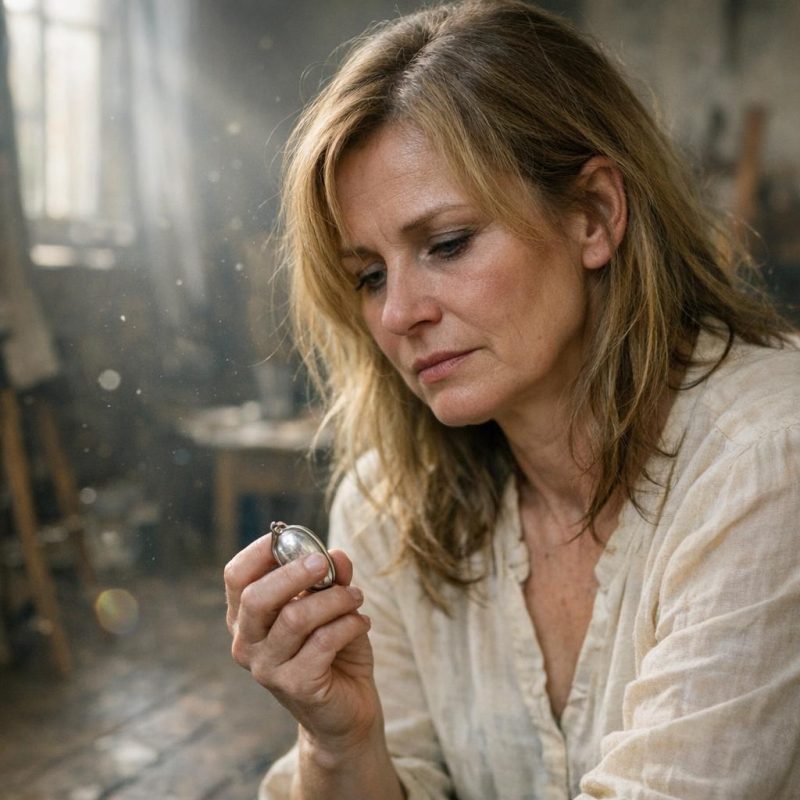 Image by RM AI
Questions in the Dark
I turned on every light in the studio because the dark was making my thoughts spiral. The dress sprawled across my cutting table looked different now, almost sinister under the bright work lamps. What was Elena doing? Was this some sick reminder of what I'd lost, disguised as a generous gift to her daughter? Maybe she wanted me to find the locket, wanted me to remember that pain. But that felt too deliberate, too cruel even for the complicated relationship we'd had over the years. Elena could be controlling, sure, dismissive of my choices, but this? This was something else entirely. Unless it wasn't Elena's message at all. I stared at the bodice where I'd found the locket sewn into the boning. What if Sophie had put it there? What if my niece had discovered something about her mother, about Thomas, about that day thirty years ago? Maybe she couldn't say it out loud, couldn't confront Elena directly, so she'd hidden it where she knew I'd find it during alterations. Or was this Sophie's cry for help, hidden in silk and secrets?
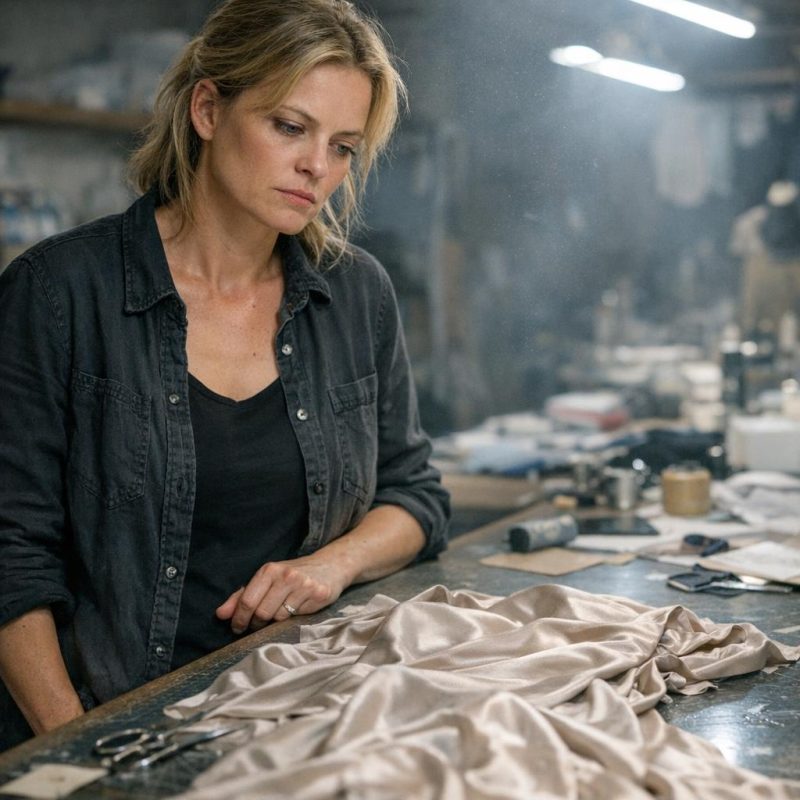 Image by RM AI
Robert's Memory
I found Robert's number in an old address book I'd kept in my desk drawer, the ink faded but still legible. My hands shook as I dialed. We hadn't spoken since Thomas's funeral—except there had never been a funeral, had there? Just a memorial service two years after he vanished, when Robert finally accepted his brother wasn't coming back. The phone rang four times before he answered. 'Robert, it's Martha,' I said, and heard his sharp intake of breath. 'Martha. My God, it's been—' 'Thirty years,' I finished. 'I need to talk to you about Thomas.' The silence stretched so long I thought he'd hung up. Then: 'What about him?' His voice sounded older, weathered. I told him about the locket, about finding it in Sophie's dress. I didn't mention my suspicions yet, just asked him to tell me what he remembered about that day. About Thomas leaving. 'I remember thinking it made no sense,' Robert said slowly. 'Tommy was terrified of commitment, sure, but he loved you. He'd already moved half his stuff into your apartment.' Then his voice cracked, and what he said next made my chest tighten: 'I never believed he'd just leave you, Martha.'
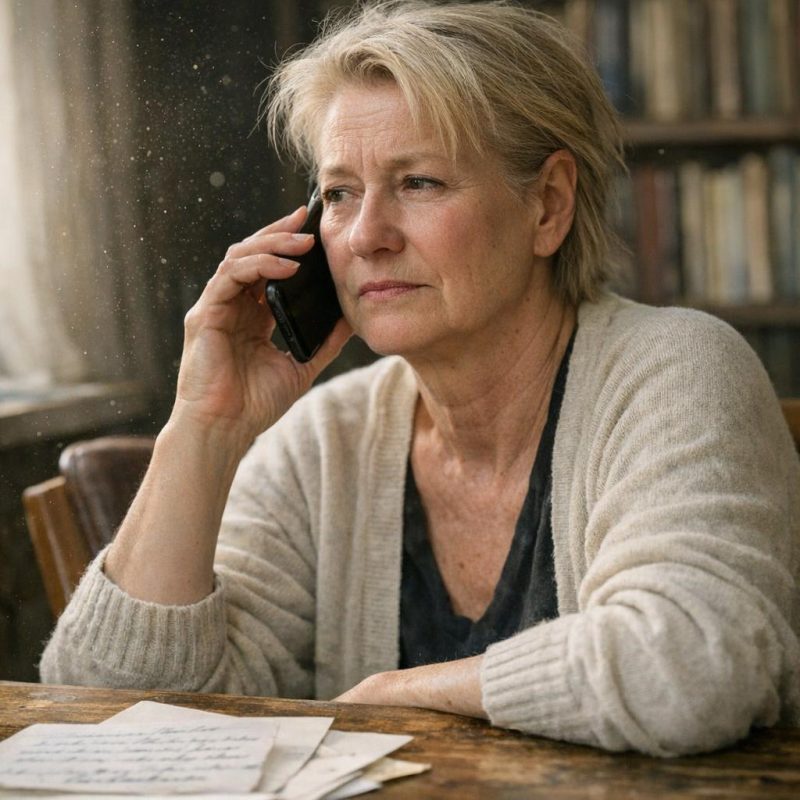 Image by RM AI
The Ultraviolet Light
After I hung up with Robert, I forced myself back into seamstress mode. I had work to do, alterations to complete, and sitting here spiraling wasn't going to help anyone. I brought out my UV lamp from the supply cabinet—it's this handheld thing I use to check for invisible stains or previous alterations on vintage fabrics. You'd be surprised what shows up under ultraviolet light that's invisible to the naked eye: food stains, perspiration marks, even old repairs that used different thread. It's a routine step I do on almost every garment, though honestly I'd almost skipped it this time given everything else going on. I plugged in the lamp and switched off the overhead lights, letting my eyes adjust to the dimness. The UV bulb glowed purple-blue, casting everything in an eerie wash. I ran it slowly over the bodice first, checking my own work on the alterations, then moved to the skirt panels. Standard procedure. Nothing unusual. Then I passed it over the ivory satin underlayer of the bodice, the foundation beneath all that lace. Under the purple glow, the ivory satin revealed something that made my stomach turn.
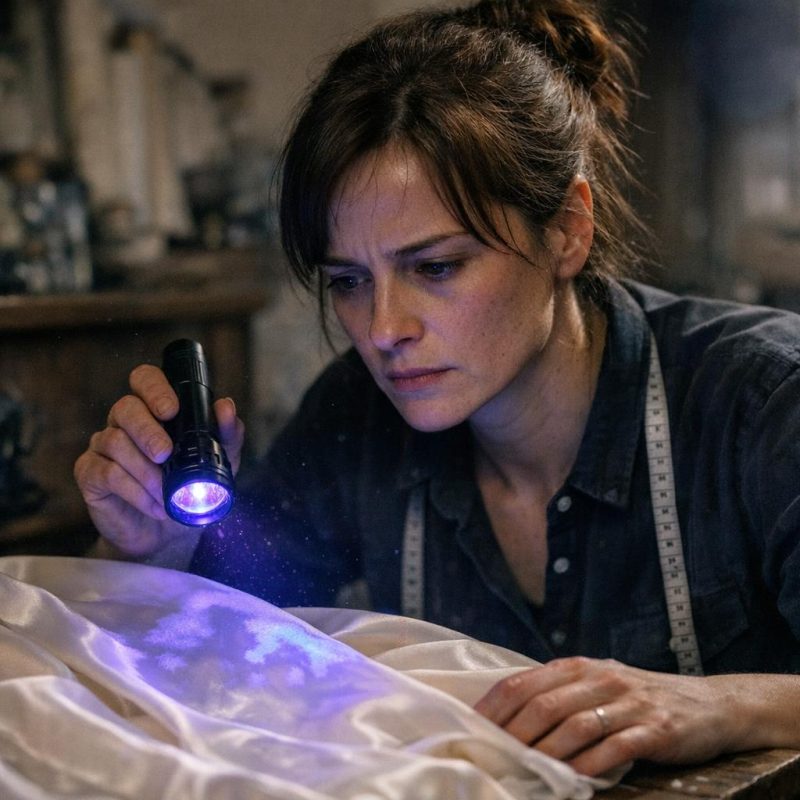 Image by RM AI
Not Ivory
The splatters glowed a sick greenish-white under the UV light, scattered across the satin in a pattern that was unmistakable once you knew what you were looking at. Someone had bleached this fabric professionally, carefully, the kind of chemical treatment that would fool the naked eye completely. But ultraviolet light doesn't lie. I'd seen enough vintage garments to recognize the fluorescent signature of old blood, even when someone had tried desperately to hide it. My hands were steady as I examined the pattern—not the huge dramatic stains you see in movies, but small splatters, the kind that come from cast-off or impact. They clustered near the waist and across the lower bodice. I set down the UV lamp and turned the overheads back on, staring at the dress in normal light. It looked innocent again, just ivory satin and delicate lace. But I knew better now. I tested a tiny hidden seam with a hemostasis reagent I kept for fabric analysis—the swab turned pink immediately. This wasn't a wedding dress—it was something that had witnessed violence.
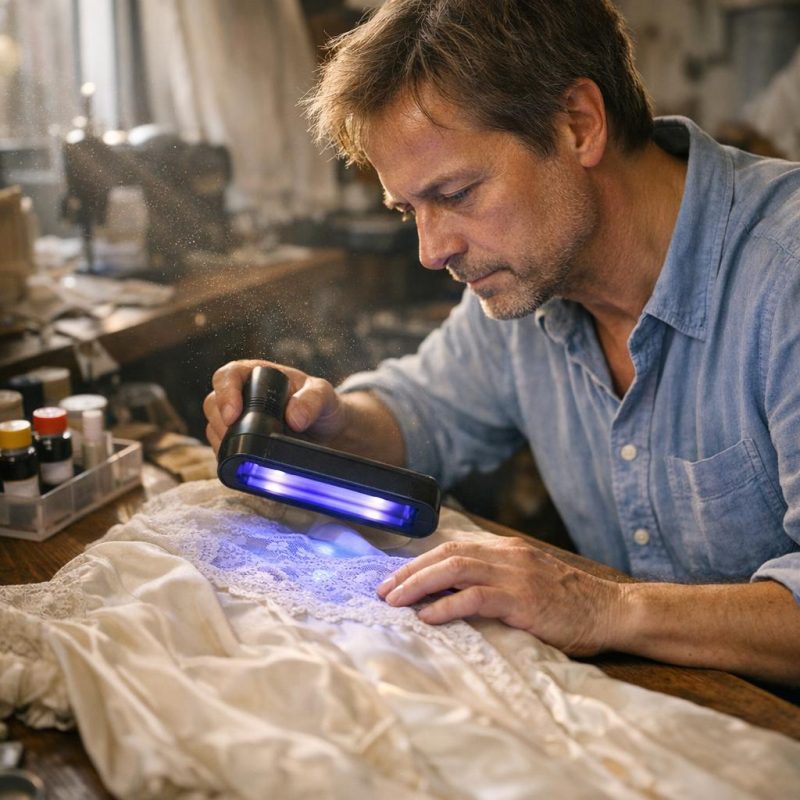 Image by RM AI
The Lace Pattern
I needed to focus on something concrete, something I could control, so I pulled out my magnifying glass and examined the antique lace overlays more carefully. The pattern was intricate—Duchesse lace with a rose motif, the kind you don't see much anymore. I studied the points where the lace met the satin, looking at the tatting technique, the thread weight, the specific way the petals connected to the leaves. Then my breath caught in my throat. I knew this pattern because I had designed it myself as a twenty-six-year-old woman, sitting in my first real studio apartment, dreaming of my wedding day. I'd tatted each rose by hand over six months, my fingers cramping, my eyes straining, creating something beautiful and unique. This wasn't just similar lace. This was MY lace, from MY dress. I could see the tiny imperfection in the third rose where I'd had to redo a picot. I recognized the exact shade of ivory thread I'd special-ordered from Belgium. I had tatted this pattern myself as a young woman—this was lace from my own wedding dress.
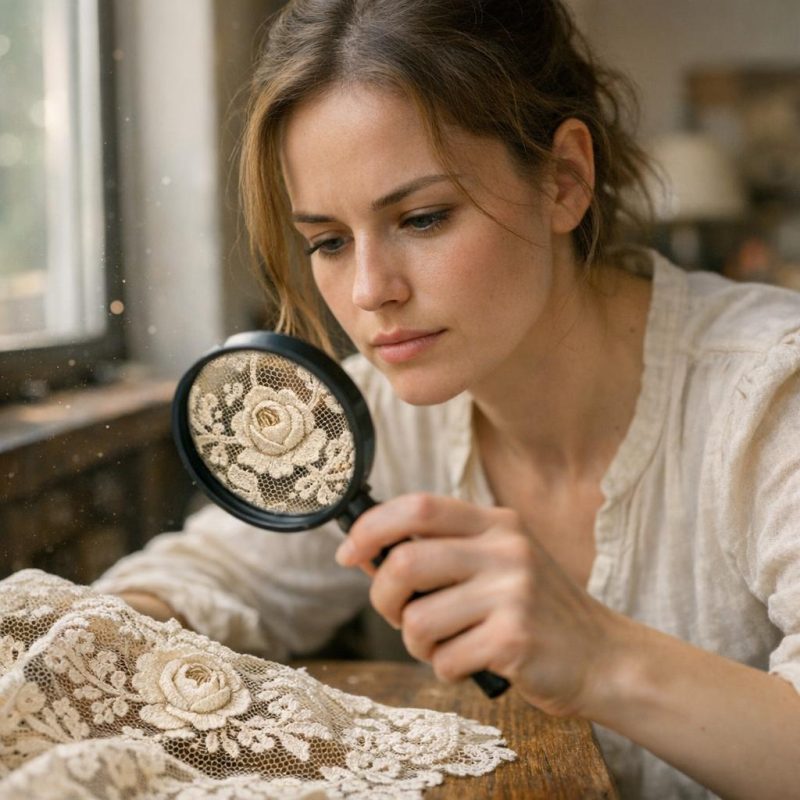 Image by RM AI
The Cleansing Fire
The memory hit me so hard I had to sit down. Two weeks after Thomas left, when I was still barely functional, Elena had come to my apartment. She'd found my wedding dress hanging in the closet, still in its preservation bag. 'You can't keep this,' she'd said firmly. 'Every time you see it, you'll remember the pain.' I'd been too numb to argue. She'd insisted on a 'cleansing ritual,' one of those new-age things she was into back then. We'd driven to her cabin upstate—the one she'd just bought—and she'd built a fire in the yard. I remembered standing there in the October cold, watching her pull my dress from the bag. The Chantilly lace had glowed in the firelight. 'This will help you heal,' Elena had said, and I'd nodded because I was desperate to believe anything would help. She'd fed it to the flames piece by piece while I cried. I'd watched the lace blacken and curl, watched six months of my handiwork turn to ash. Or so I'd thought. I had watched the flames through tears, but now I knew—she had lied about that too.
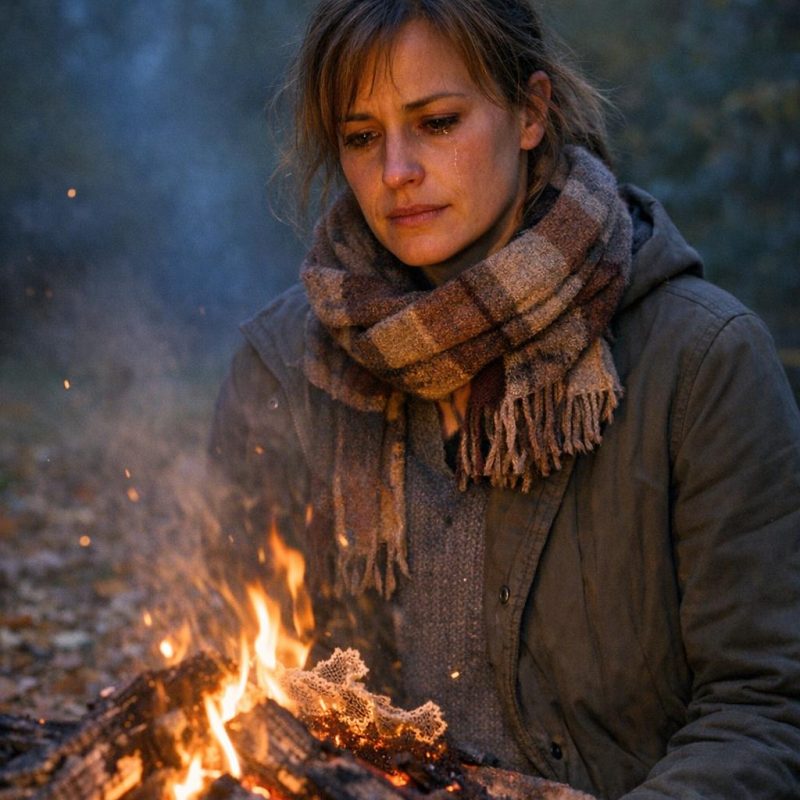 Image by RM AI
Sophie's Return
Sophie came by the studio the next morning to check on the alterations, breezing in with coffee and that bright energy she always carried. 'Just wanted to see how it's coming along,' she said, setting a latte on my desk. I watched her face carefully as she approached the dress, searching for any flicker of recognition, any sign she knew what she was wearing. Any hint that she'd hidden that locket deliberately. But she just smiled and ran her fingers over the lace, admiring the beadwork I'd added to the sleeves. 'It's so beautiful, Aunt Martha. Mom said this dress has been in storage forever, some vintage piece she'd been saving.' Her voice was casual, genuine. No shadows in her eyes, no weighted pauses. I asked her if her mother had told her anything about the dress's history, where it came from, why she'd kept it. Sophie just shrugged. 'You know Mom—she's weird about sentimental stuff. Won't talk about it.' She touched the bodice right where I'd found the locket, completely unaware. She seemed genuinely oblivious, which somehow made everything worse.
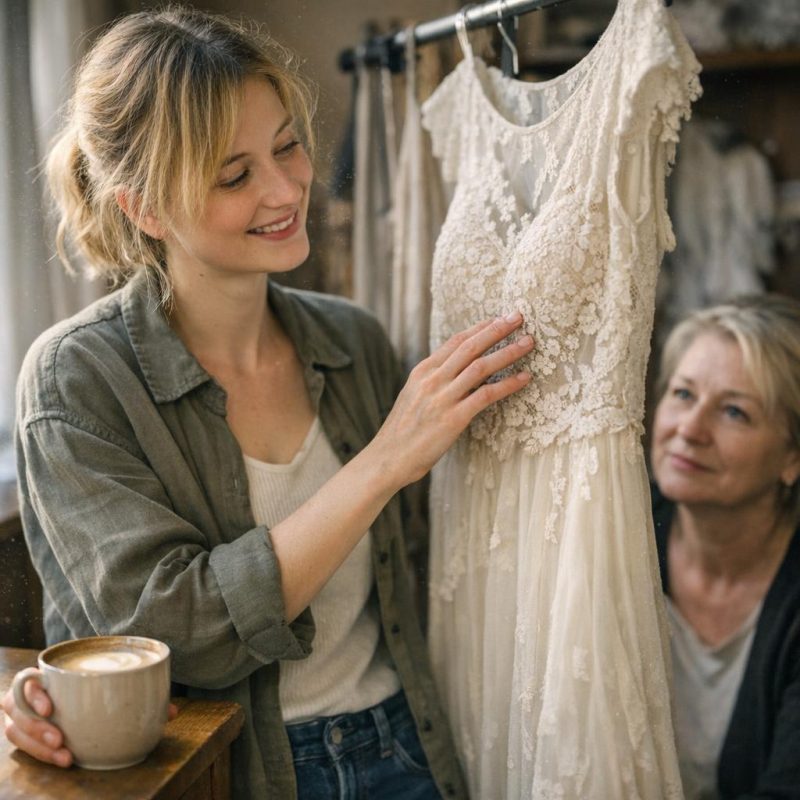 Image by RM AI
The Golden Girl
I sat in the studio that night with the lights off, just thinking about Elena. My beautiful, golden sister who'd always moved through life like she was made of something finer than the rest of us. She'd dated the quarterback in high school while I hemmed her homecoming dress. She'd borrowed my car and returned it with an empty tank and a dent she never mentioned. She'd worn my grandmother's pearls to a party and lost them, shrugging it off with that luminous smile that made everyone forgive her instantly. I'd spent decades cleaning up after her carelessness, mending the small damages she left in her wake. Our parents had always made excuses—Elena was sensitive, Elena was going through something, Elena needed understanding. I'd been the steady one, the dependable one, the one who didn't require special handling. And I'd accepted that role, honestly. I'd worn it like one of my own well-tailored jackets, comfortable in its familiar lines. But sitting there in the dark, turning that locket over in my mind, I felt something shift in my understanding. This wasn't just a broken promise or borrowed dress—this felt like something darker.
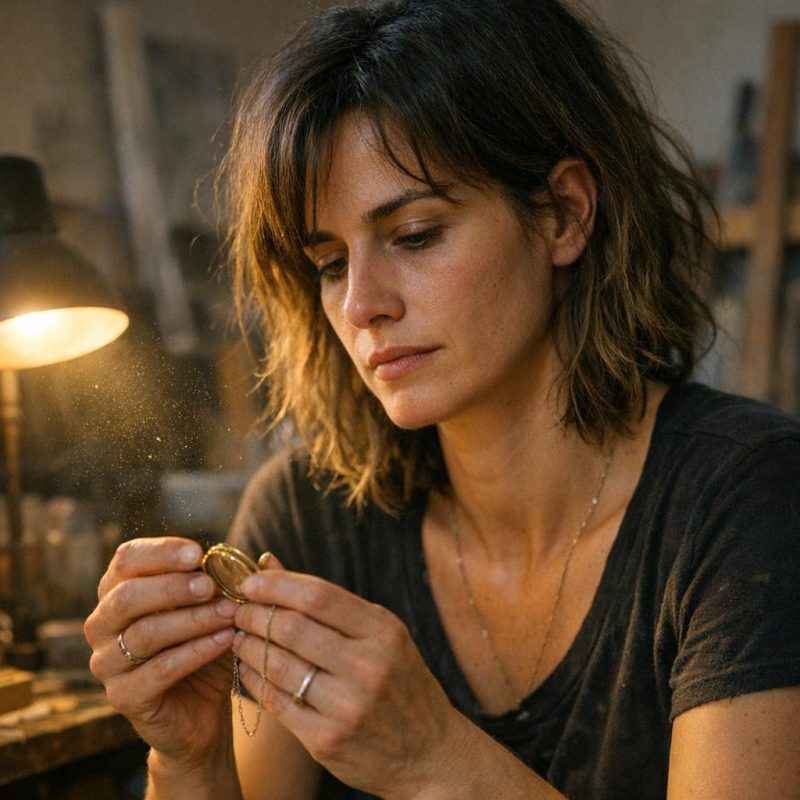 Image by RM AI
Night Research
I stayed up until dawn searching online archives for any news about Thomas's disappearance thirty years ago. My laptop screen glowed blue in the dark studio, reflecting off the glass-fronted cabinets. I tried every combination I could think of—his full name, variations of his name, the date he vanished, the week after, the month after. I searched newspaper databases, missing person registries, even old forum posts from people looking for lost loved ones. My eyes burned and my coffee went cold three times. I found nothing. Not a single article, not one missing person report, not even a mention in a police blotter. It was like he'd simply walked out of my life and off the face of the earth without anyone bothering to notice. I knew Robert had tried to file a report back then—he'd told me as much. But where had it gone? Who had taken it seriously, or not taken it seriously? I pulled up county records, trying to trace any official documentation. Still nothing. The sun was coming up when I finally closed the laptop, my neck stiff and aching. There was nothing—no missing person report, no investigation, as if he had simply ceased to exist.
 Image by RM AI
Elena's Visit
Elena appeared at my studio the next afternoon, completely unannounced, carrying a bottle of champagne with a gold ribbon tied around its neck. 'Martha, darling,' she said, sweeping in like she owned the place. 'I just had to stop by and see how Sophie's dress is coming along.' She was wearing white linen, perfectly pressed, her hair catching the afternoon light. I forced a smile and gestured to the dress form, trying to keep my hands from shaking. She circled it slowly, her fingers trailing over the lace I'd spent hours repairing. 'It's stunning,' she murmured. 'You've always had such gifted hands.' I thanked her, keeping my voice neutral, professional. She asked about the beadwork, about the alterations to the train, about whether the bodice would need any adjustments. Her questions felt normal enough, but there was something underneath them, some current I couldn't quite identify. She moved closer to my cutting table, where I'd laid out my notes and sketches. Her gaze swept across everything, lingering just a moment too long on the papers. Her eyes lingered on my cutting table, and I suddenly felt like prey.
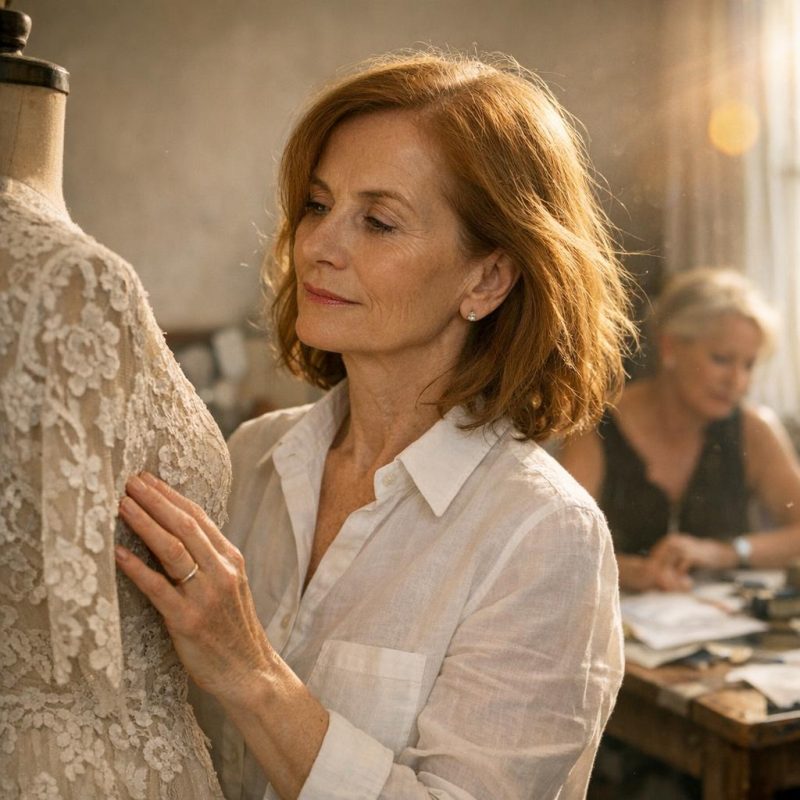 Image by RM AI
Sisterly Lies
Elena pulled up a chair without being asked, settling in like she planned to stay awhile. She opened the champagne even though I hadn't offered glasses, pouring into two paper cups from my water dispenser. 'Remember that awful time after Thomas left?' she said, her hand landing on my shoulder like a brand. 'You were so devastated. I worried about you constantly.' Her thumb pressed into the muscle near my neck, presumably comforting. I felt my jaw tighten. She continued talking about how difficult those months had been, how she'd tried so hard to help me move forward, how she'd been relieved when I'd finally stopped asking questions about where he might have gone. 'You built such a beautiful life for yourself after that,' she said, her voice honey-sweet. 'This studio, your reputation. You didn't need him after all.' I sipped the champagne I didn't want, feeling it sit wrong in my stomach. She talked about Sophie's wedding, about how meaningful it was that I was doing the dress, about the importance of family bonds. 'I'm so glad Sophie has you—someone who understands heartbreak,' she said, and her smile didn't reach her eyes.
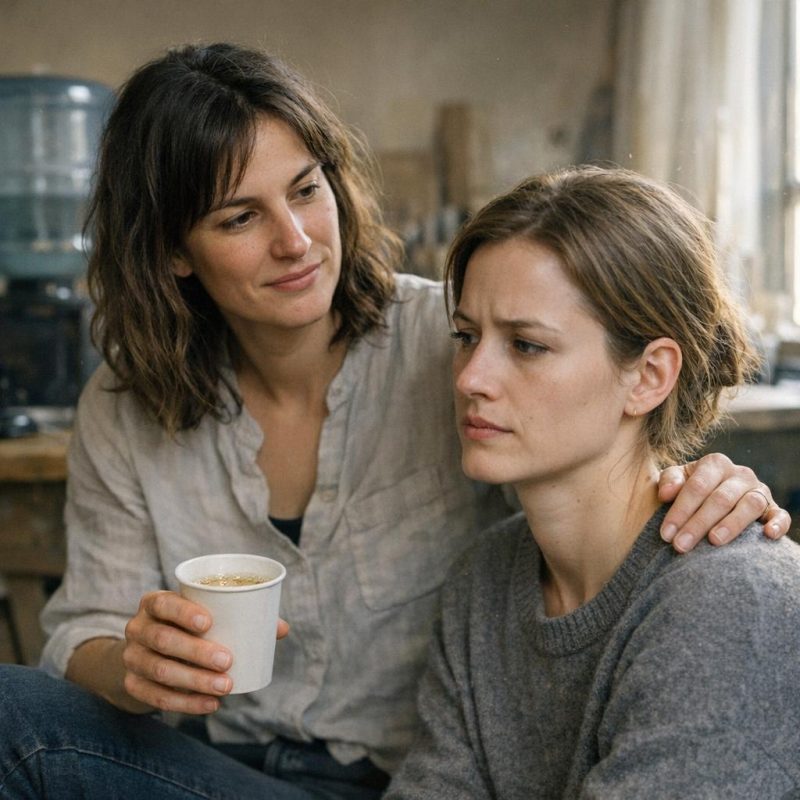 Image by RM AI
 Image by RM AI
The Bodice Construction
After Elena left, I locked the door and went back to the dress with fresh eyes and a magnifying lamp. I'd been so focused on the vintage lace overlay that I hadn't fully examined the modern bodice construction underneath. Now I looked closer, really looked. The stitching was professional but not particularly skilled—functional rather than beautiful. The boning channels were uneven in places. This wasn't couture work. I carefully opened a seam at the side and found what I'd suspected—this bodice had been constructed from a completely different dress, one that had been taken apart and refashioned. The satin was good quality but had small marks on it, faint discolorations that suggested it had been worn before. I found the label inside, tucked into a seam allowance where it had almost been cut away. 'Belmont Bridal, Est. 1962.' The name triggered something in my memory, something I couldn't quite grasp. I looked it up on my phone. The shop had closed fifteen years ago. The label inside was from a bridal shop that had closed fifteen years ago after a scandal I couldn't quite remember.
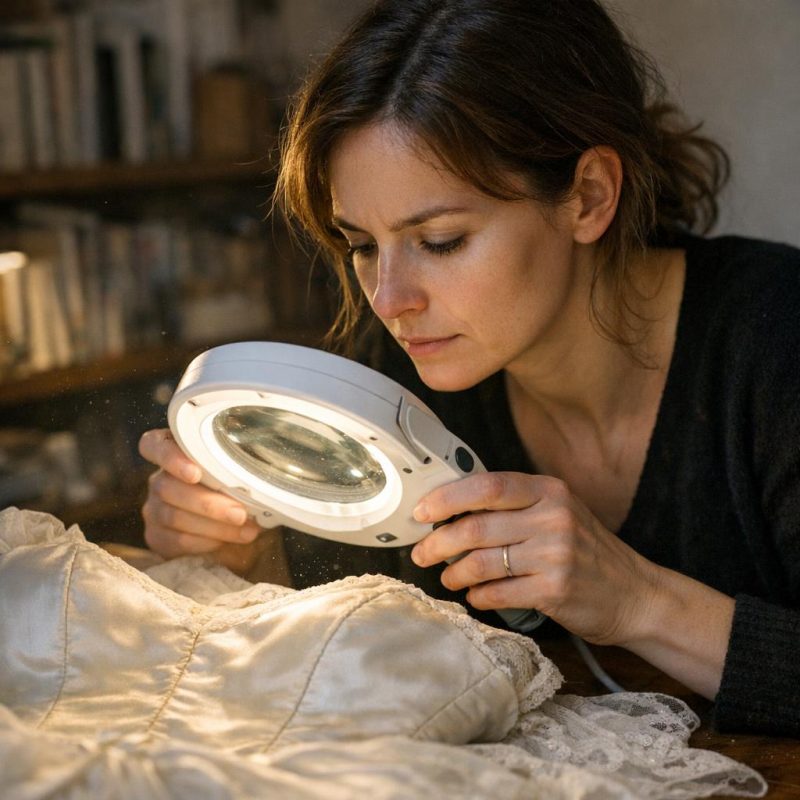 Image by RM AI
Robert's Story
Robert came to my studio two days later, looking older than I'd ever seen him. He was carrying a cardboard box, the kind that gets soft and worn at the edges from being stored too long. 'I should have given you these years ago,' he said, setting it on my work table. 'I kept them thinking... I don't know what I was thinking.' Inside were Thomas's belongings—a watch, a wallet, some photographs, a journal. Things Robert had collected from Thomas's apartment after he disappeared. My hands shook as I lifted each item, touching things my fiancé had touched three decades ago. The watch still had his scent somehow, or maybe I was imagining it. Robert pointed to an envelope at the bottom. 'I found this in his jacket pocket,' he said quietly. 'The jacket he was wearing the day before your wedding. I kept it because I didn't know what else to do with it.' My name was written on the envelope in Thomas's handwriting. The seal had never been broken. Among them was a letter Thomas had written to me the night before our wedding, one I had never received.
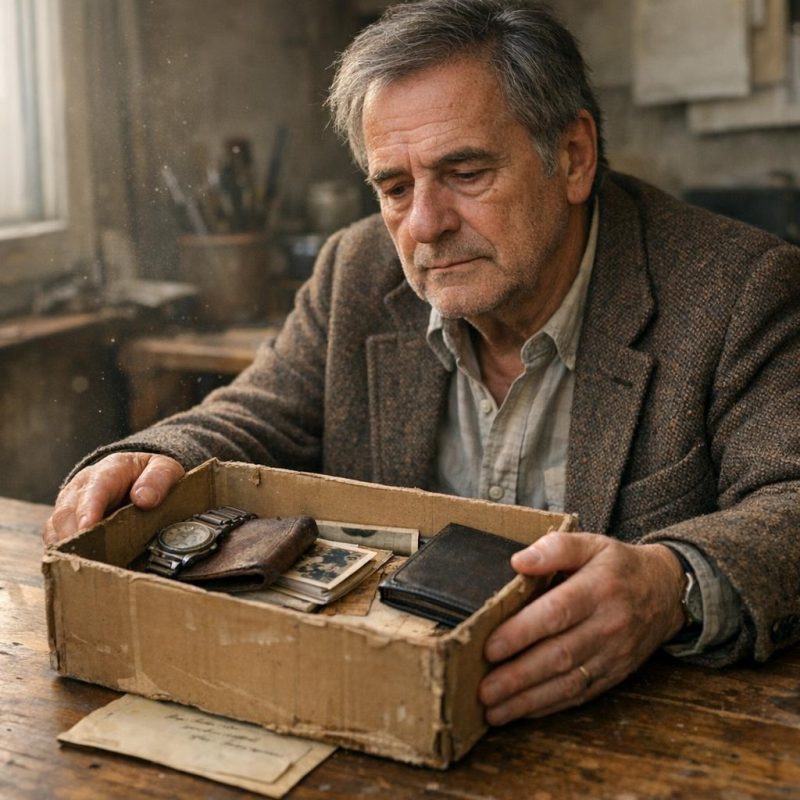 Image by RM AI
Words from the Dead
I waited until Robert left before I opened the letter, my hands trembling so badly I almost tore it. The paper was yellowed, the ink slightly faded, but Thomas's words were clear. He wrote about our future, about the cabin where we'd spend our honeymoon, about waking up next to me every morning for the rest of his life. He wrote about the house we'd buy, the garden I'd plant, the workshop he'd build. His handwriting got messier toward the end, like he was writing faster, trying to get everything down. 'I can't wait to marry you tomorrow,' he wrote. 'I've never been more certain of anything.' I had to stop reading for a moment, pressing the letter against my chest. He hadn't wanted to leave. He'd been planning our life together hours before he vanished. Then I reached the final paragraph, and my blood went cold. He mentioned that Elena had visited him that evening, asking to talk, and he couldn't shake an odd feeling about it.
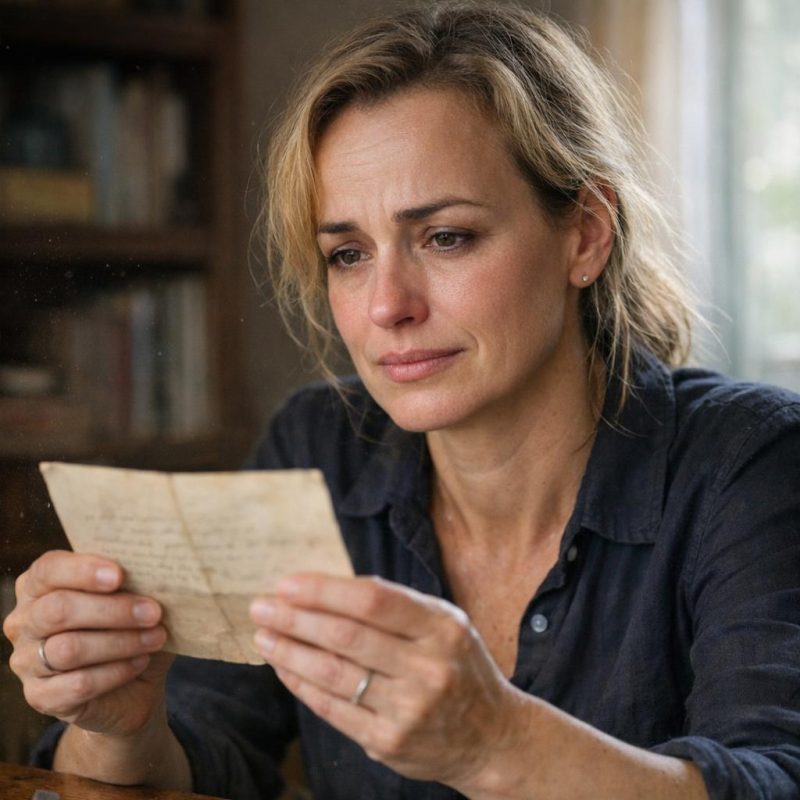 Image by RM AI
The Family Cabin
I sat there staring at Thomas's words until they blurred. Elena had visited him. The night before our wedding. The last night anyone saw him. I tried to remember if she'd mentioned it at the time, if she'd said anything about seeing him. I couldn't recall. Everything from that period was a haze of grief and shock. Then another memory surfaced, sharp and clear. The cabin. The old family cabin up in the mountains where Thomas and I had planned to spend our honeymoon. It had belonged to our parents, and after they died, Elena had claimed it. I'd asked to visit a few times over the years, thinking maybe it would bring me some closure to see the place we'd meant to go together. Each time, Elena had made excuses. She was renovating. The road was washed out. She was using it for a personal retreat. Eventually, I'd stopped asking. I remembered the last time I'd mentioned it, maybe five years ago. She'd looked at me with an expression I couldn't quite read and said, 'It's my sanctuary, Martha. Some places need to stay private.' She had always refused to let anyone visit, claiming it was 'her sanctuary.'
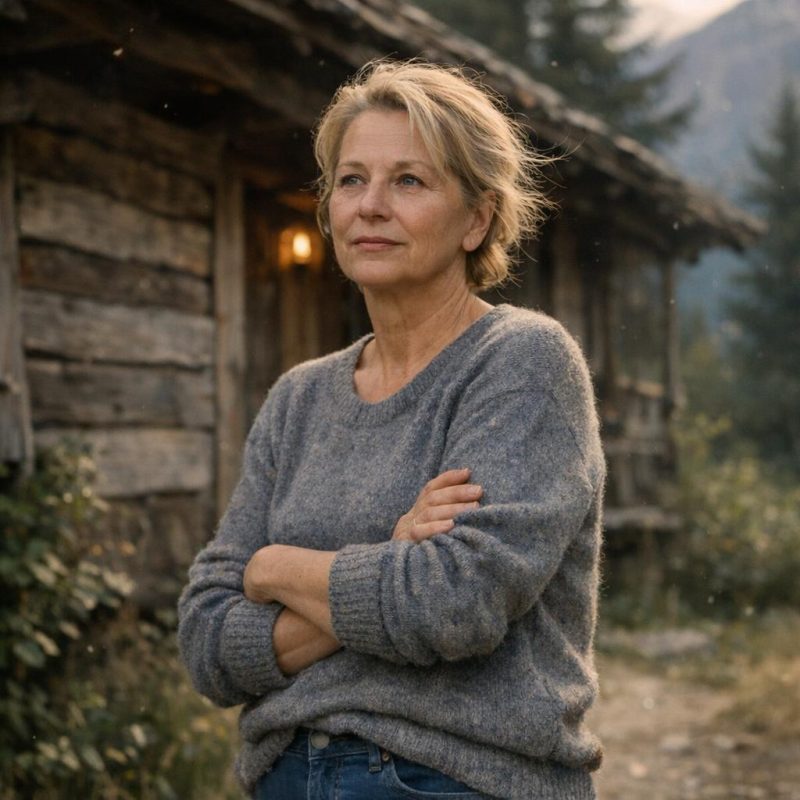 Image by RM AI
Sophie's Confession
It was past eleven when I heard the knock. I'd been sitting at my sewing table, staring at the dress without really seeing it, my mind circling around that cabin and Thomas's journal and Elena's face when she'd refused me access. Sophie stood in the hallway, mascara streaked down her cheeks, still in the sweater and jeans she'd probably been wearing all day. 'I'm sorry it's so late,' she said, her voice breaking. 'I just—I couldn't sleep. I keep thinking about the dress.' I pulled her inside, guided her to the couch. She looked so young sitting there, hugging her knees. 'I know it sounds crazy,' she whispered, 'but it feels cursed, Aunt Martha. Like something terrible is attached to it.' I brought her tea, my hands steady even though my heart was racing. I couldn't tell her what I'd found—not yet, not until I understood it myself. But then she said something that made my blood run cold. 'Mom's been so strange since she gave it to me. Almost excited. She keeps asking me how I feel about it, if I love it, if it makes me feel special.' Sophie looked up at me with frightened eyes. 'It's like she's happy about something, and I don't know why.'
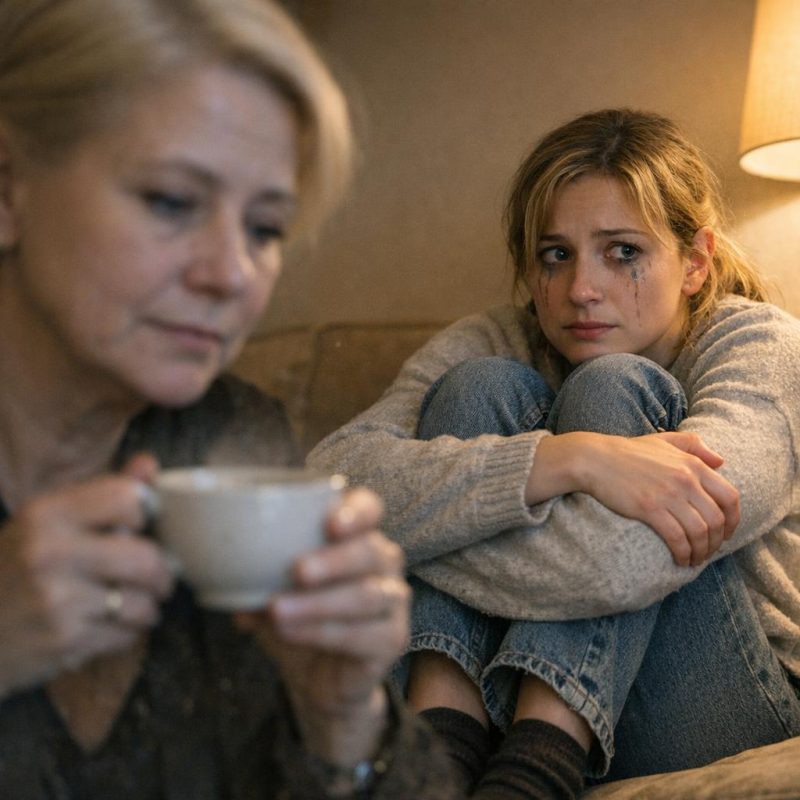 Image by RM AI
The Sleeves
After Sophie left, I took the sleeves to my work lamp and adjusted the magnifier I use for delicate repairs. The fabric told its own story if you knew how to read it. I found the tiny darning stitches first—almost invisible repairs in thread that matched perfectly but was slightly newer than the original weave. Someone had mended these sleeves over years, carefully preserving them through repeated wear. The seams showed the subtle stress patterns that come from actual use, not storage. The cuffs had been reinforced at the pressure points where a wrist rests against a table. This wasn't a dress that had been burned and forgotten. This was a dress that had been worn, loved, maintained like a living thing. I thought about my own dress, the one I'd imagined wearing as I walked toward Thomas. I'd pictured the weight of the silk, the way the light would catch the beading. Someone had experienced that. Someone had worn this dress again and again, feeling the fabric move against her skin. The repairs spanned decades—some stitches were old and slightly yellowed, others relatively fresh. These sleeves had been worn lovingly, carefully, for thirty years.
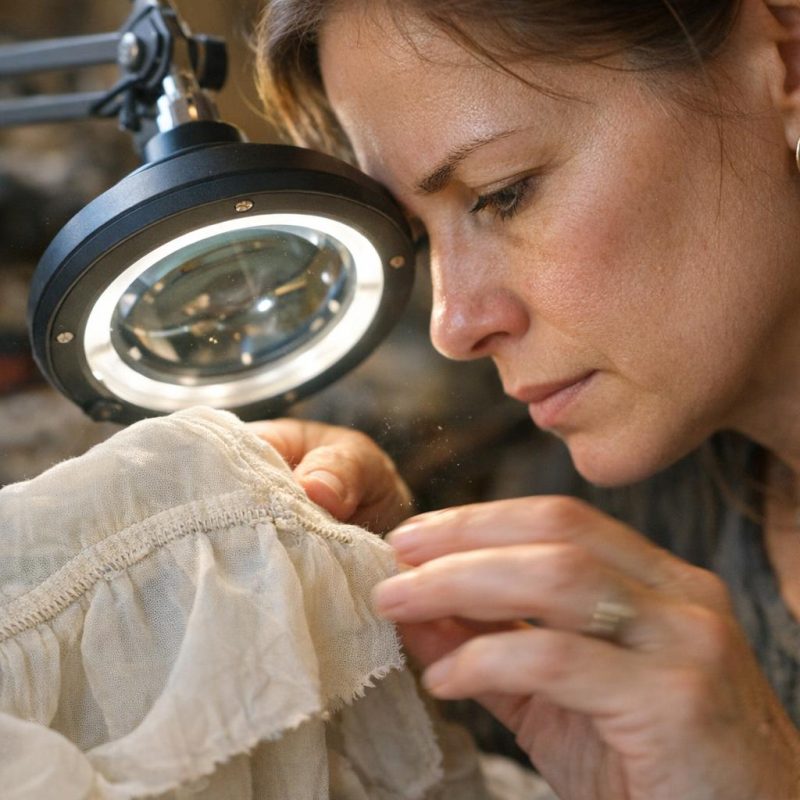 Image by RM AI
Elena's Collection
The next morning, Sophie called to apologize for her late visit. Her voice sounded calmer, embarrassed. 'I was being silly,' she said. 'Mom explained where all the pieces came from. She's kept this trunk of sentimental items from when you both were young—old fabric, buttons, bits of lace from your grandmother. She said she'd been saving them for something special, and my wedding felt right.' I gripped the phone tighter. A trunk. Elena had a trunk of preserved items from decades ago. 'Did she show you what was inside?' I asked, trying to keep my voice casual. 'No, she said it was too emotional for her to go through again. But she seemed so pleased with herself for putting it all together.' After we hung up, I sat there thinking about what kind of person keeps a locked trunk of 'sentimental items' for thirty years. What kind of person carefully preserves fragments of the past but never mentions them, never shares them, just hoards them in darkness? And what else might Elena have saved from that time—what other pieces of my life had she locked away? I wondered what else was in that trunk, and why she'd chosen now to open it.
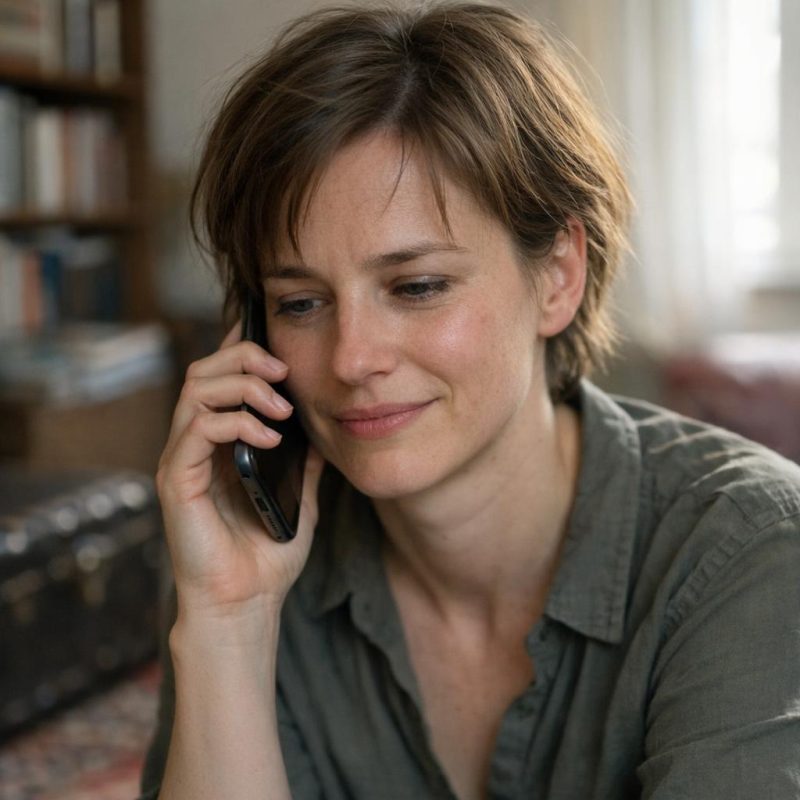 Image by RM AI
Robert's Theory
Robert came by that afternoon with groceries he'd picked up for me, though I suspected it was an excuse to check on me. He'd been doing that more often since I'd started asking questions about Thomas. We sat in my kitchen, and I found myself telling him about the journal, about Thomas's last entry. 'He mentioned Elena visiting him,' I said. 'The night before he supposedly left.' Robert was quiet for a long moment, his weathered hands wrapped around his coffee mug. 'Martha,' he said slowly, 'what if Thomas didn't leave at all?' The words hung between us like a held breath. 'What if something happened to him? Something that prevented him from coming back?' I felt my chest tighten. This was the thought I'd been circling around, the fear I couldn't quite voice. 'You mean an accident?' Robert's eyes met mine, and I saw something there—knowledge, suspicion, maybe even certainty. 'I mean something,' he said carefully. 'Something that would explain why he vanished so completely.' I asked him directly: 'Do you suspect someone?' But Robert just looked down at his coffee, his jaw tight, and the silence that followed was heavier than any accusation. His eyes had gone dark with something unspoken.
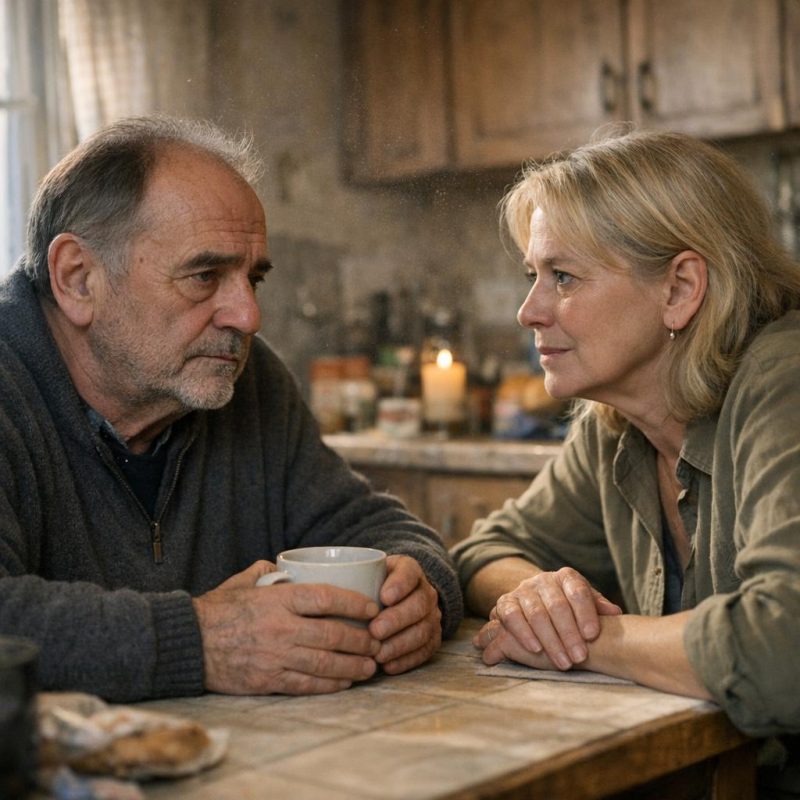 Image by RM AI
The Hem
That night, I turned the skirt inside out and began unpicking the hem with my seam ripper. The stitches were tight, resistant, like they didn't want to give up their secrets. When the hem finally released, I found more stains—larger this time, darker, spread across the underlayer of fabric that would never show when the dress was worn. I brought my lamp closer. These weren't the scattered drops I'd found before. These stains formed a pattern, a smeared trail across the silk like something had been dragged across the fabric. Like the dress had been worn while moving something heavy, something that left dark streaks along the skirt. I thought about the physics of it—the way fabric moves when you're walking versus when you're pulling or dragging. These marks suggested effort, strain, the dress pressing against something as weight was shifted. My hands started shaking as I held the fabric under the light. Someone had worn this beautiful white dress while doing something that left blood in deliberate patterns. Not spatter. Not drops. Drag marks. Someone had worn this dress while moving something—or someone—heavy.
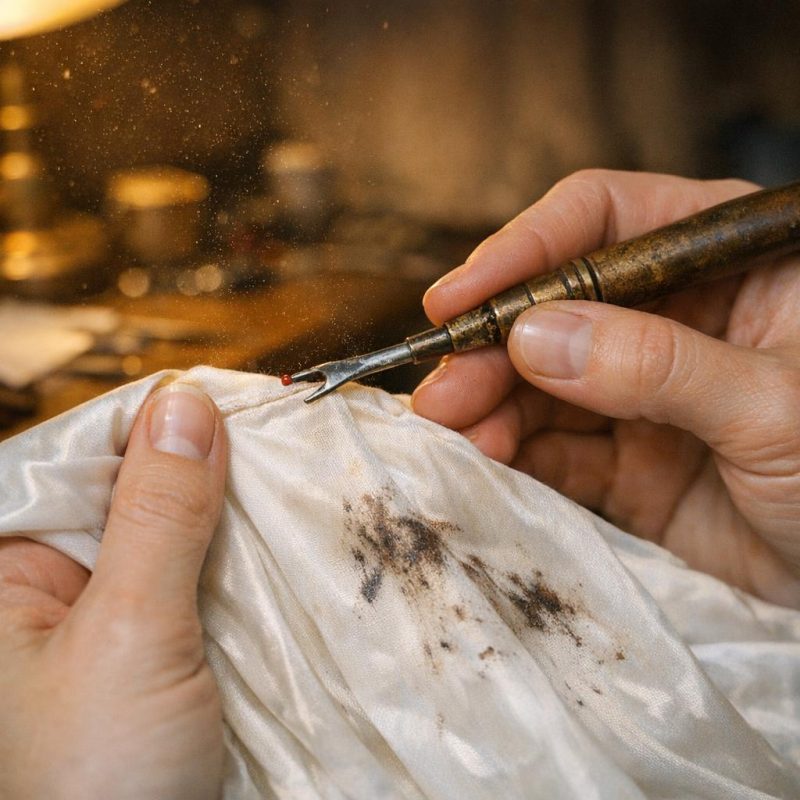 Image by RM AI
Wedding Photos
I couldn't sleep, so I did what I always do when I need to understand something—I went looking for evidence. My old photo albums were in the hall closet, buried under years of other memories I'd tried not to revisit. The week before my wedding, someone had taken pictures at the engagement party Elena had thrown for us. I found myself looking at images I hadn't studied in decades. There we were—Elena and me, arms around each other, both so young. Thomas and me, his hand on my waist, both of us glowing. But then I turned the page and found a photo I didn't remember. It must have been taken during a quiet moment when most guests had drifted away. Thomas was talking to someone off-camera, his profile to the lens. And there in the background stood Elena, partially hidden by a doorframe, watching him. I'd never noticed her expression before. Maybe I'd been too focused on Thomas, too wrapped up in my own happiness to see what was right there in the frame. But now, thirty years later, I recognized it instantly. The way she was looking at him wasn't sisterly affection or friendly warmth. It was hunger.
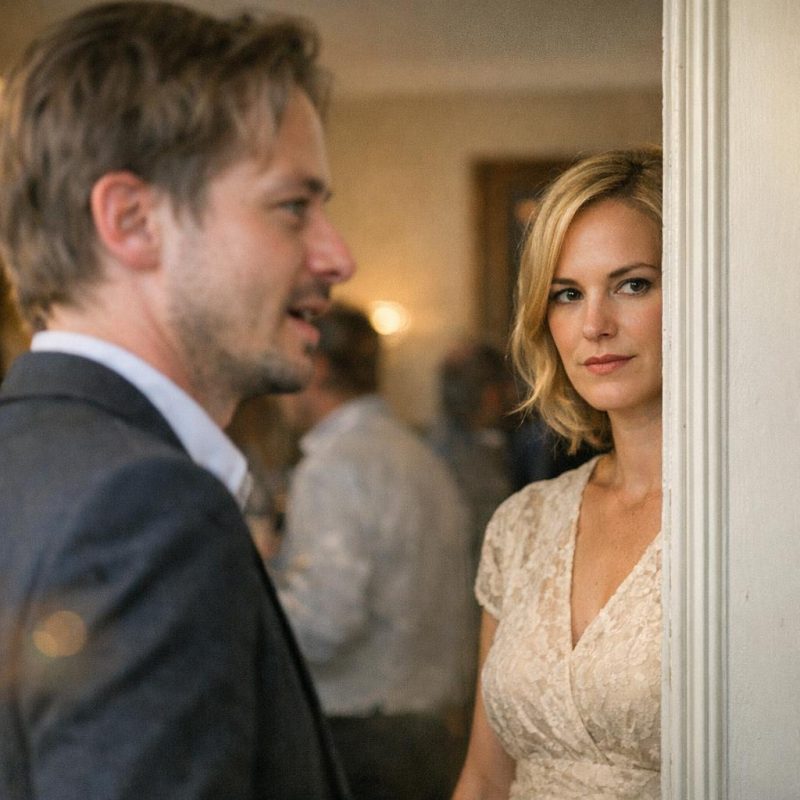 Image by RM AI
The Other Woman
I remembered the story Elena had told me, the one that had shaped my grief for three decades. She'd come to me two days after Thomas disappeared, her face pale with what I'd thought was sympathy. 'I saw him, Martha,' she'd said quietly. 'At the train station. He was with another woman.' She'd described her—young, beautiful, laughing. 'They looked... close. I'm so sorry.' That story had poisoned everything. It had turned my grief into humiliation, my loss into rejection. I'd spent thirty years believing Thomas had chosen someone else, that our love hadn't been enough. But now, staring at that photograph of Elena's hungry expression, a different truth crystallized. There had been another woman at the center of Thomas's disappearance. Just not the one Elena had described. The 'other woman' had been Elena herself. She'd wanted him. Maybe she'd even told him so that night when she'd visited. Maybe she'd expected him to choose her instead of me. And when he hadn't—when he'd stayed loyal to our engagement—what then? I felt rage rising in my chest, hot and sharp. Now I understood—there had been another woman: Elena herself.
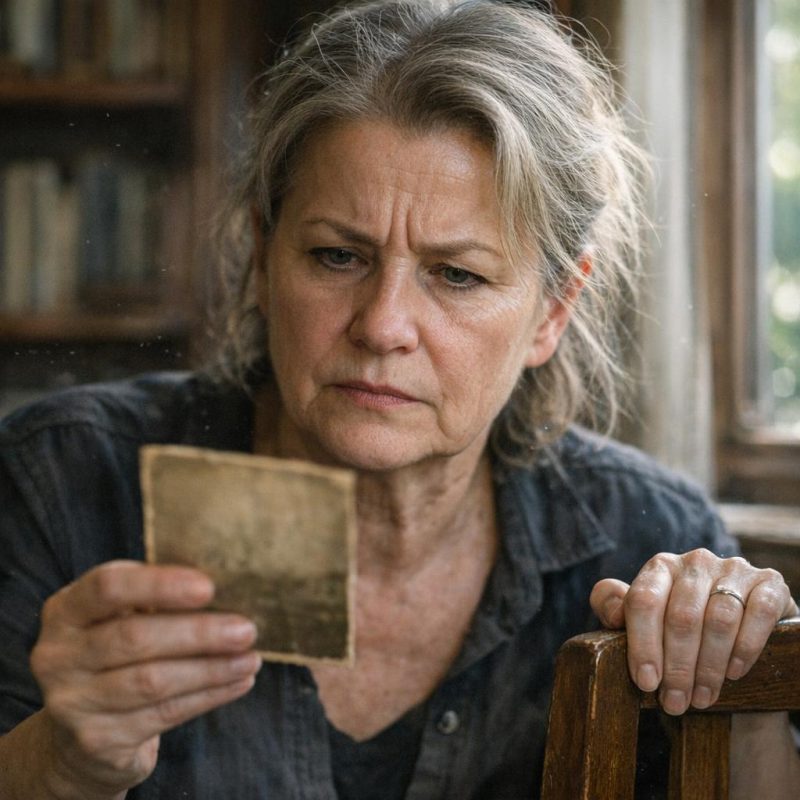 Image by RM AI
Sophie's Fear
Sophie's call came just after dawn, her voice tight with panic. 'Aunt Martha, I need to talk to you.' She arrived within the hour, looking like she hadn't slept. 'Mom came over last night,' she said. 'She wanted to see the dress, to check on how your alterations were going. She asked so many questions—exactly what you'd unpicked, what you'd found in the seams, whether anything seemed unusual about the fabric.' Sophie's hands were trembling. 'It was like she was interrogating me, but trying to make it sound casual. And when I said I didn't know the details, that you were being very careful and professional, she got this look on her face. Aunt Martha, I've never seen her look like that. She was angry, but also... scared?' I felt my stomach drop. Elena knew I'd been examining the dress. She was tracking my progress, using Sophie as her eyes. 'What did you tell her?' I asked. 'Just that you were taking your time, being thorough. But she kept pushing, asking if you'd mentioned anything strange, if you seemed upset about anything.' Sophie looked at me with frightened eyes. 'Why does she care so much? What's she so worried about?' I realized Elena was monitoring every stitch I made, every seam I opened. She sounded terrified, and I understood why: Elena was watching my progress.
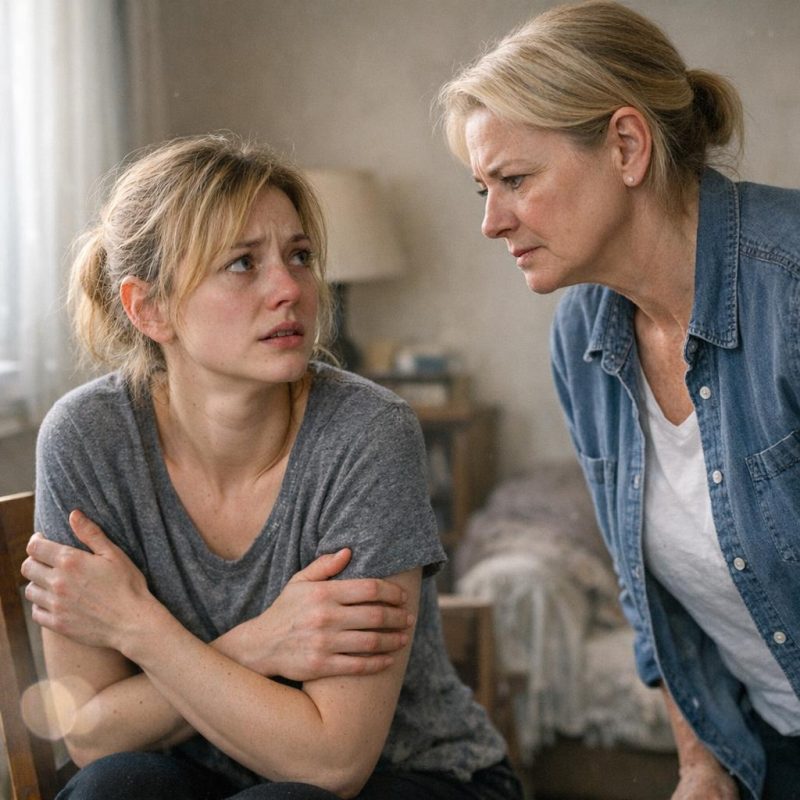 Image by RM AI
The Lining
I worked through the night removing the entire lining from Elena's dress, my hands steady even as my heart hammered. Each careful snip revealed more of what lay beneath—not just fabric, but intention. When I finally spread the lining flat across my worktable under the bright studio lights, I saw what had been hidden all these years. There was an inner layer, sewn with strange precision, following the shape of a human form. The stitching formed a silhouette, deliberate and exact, like those burial shrouds I'd seen in museum exhibitions of Victorian mourning customs. The fabric itself was different here—heavier, more substantial than any wedding dress required. I touched the center panel where a body would rest and felt my stomach turn. This wasn't about beauty or celebration. The construction made no sense for a garment meant to be worn and admired. Every choice Elena had made—the weight distribution, the reinforced seams, the way the fabric was cut to lie flat rather than drape—pointed to a single, terrible truth. This dress had been designed not for a wedding, but for a burial.
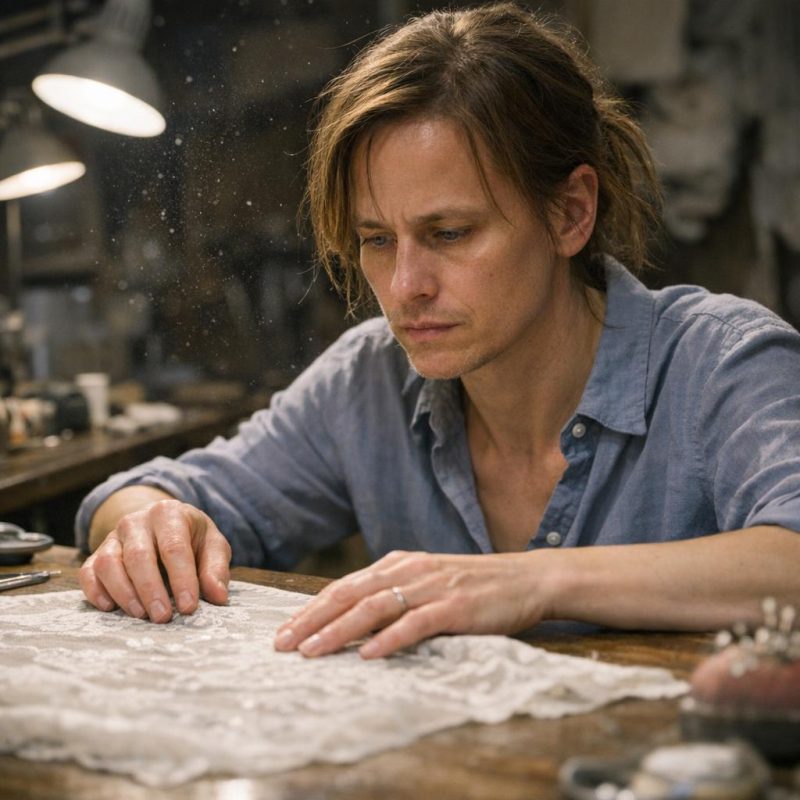 Image by RM AI
Robert's Warning
Robert's call came while I was still staring at the dress spread across my table. 'Martha, we need to talk,' he said, his voice tight. 'Elena contacted me yesterday. She wanted to know about my visits to your studio—how often I'd been there, what we'd discussed, whether you'd shown me anything unusual.' I gripped the phone tighter. 'What did you tell her?' 'Nothing specific, but Martha, she wasn't just curious. She was fishing for information, and when I wouldn't give her details, she got aggressive. Started implying that you might be unstable, that grief over Thomas was making you see things that aren't there.' I could hear traffic in the background—he was calling from his car. 'She knows we're talking. She knows you're investigating something. And the way she spoke about you...' He paused. 'Martha, I've known your sister for thirty years. I've never heard that tone from her before.' 'What tone?' I asked, though part of me already knew. He said, 'Martha, be careful—I think she's dangerous.'
 Image by RM AI
The Stitching Pattern
I went back to the dress with fresh eyes, this time examining not what Elena had hidden, but how she'd hidden it. The stitching throughout the garment was inconsistent—frantic in some places, methodical in others, like the work had been done over many sessions in different emotional states. I recognized the technique immediately. Those tight, nearly invisible stitches along the bodice, the way the corners were reinforced with triple-threading—these were Elena's signature moves from when we were teenagers learning our craft together. I pulled out an old photo of a quilt we'd made together in 1985 and compared the stitching patterns under my magnifying lamp. Identical. The same slight leftward slant, the same tension variation. My sister had sewn this dress herself, probably in secret, probably over months or even years. Not some random seamstress, not a purchased garment she'd modified—Elena had constructed this from scratch with her own hands. And she'd done it with the skill and patience of someone who had plenty of time to get it right, someone who was planning something that required absolute precision. She had sewn this herself, in secret, for reasons I was only beginning to understand.
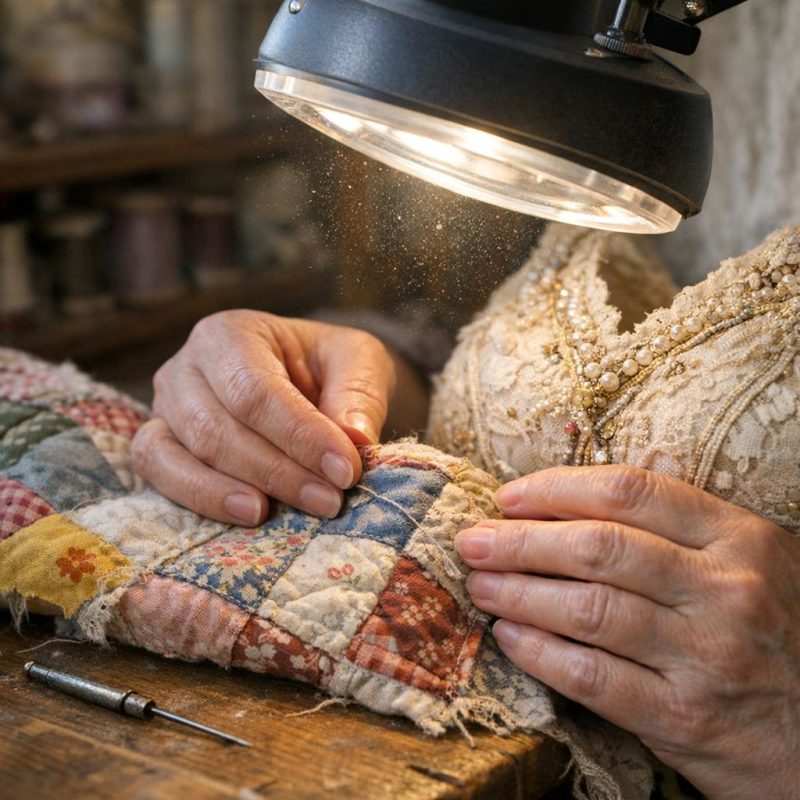 Image by RM AI
The Trunk
Sophie called me from her mother's house, whispering. 'She's gone for the afternoon. If you want to look, now's the time.' I drove over in fifteen minutes flat. The trunk sat in Elena's bedroom closet, locked with an old brass padlock that Sophie opened with a key she'd found in her mother's jewelry box. My hands shook as I lifted the lid. Inside were layers of our family history—but twisted, curated through Elena's perspective. Photographs of Thomas I'd never seen, including several where I'd been carefully cut out of the frame. Letters in his handwriting, addressed to me at our old apartment, postmarked but never delivered. A small leather journal filled with Elena's cramped writing, documenting Thomas's schedule, his habits, his routines from thirty years ago. And there, nestled in silk cloth at the bottom, was another locket—identical to the one I'd found in the dress hem, the same Victorian design, the same tarnished silver. I opened it with trembling fingers. Inside was a photograph of me, younger, smiling at the camera with Thomas cropped out beside me. Inside were photographs, letters, and a second locket—identical to the one I'd found, but containing my picture.
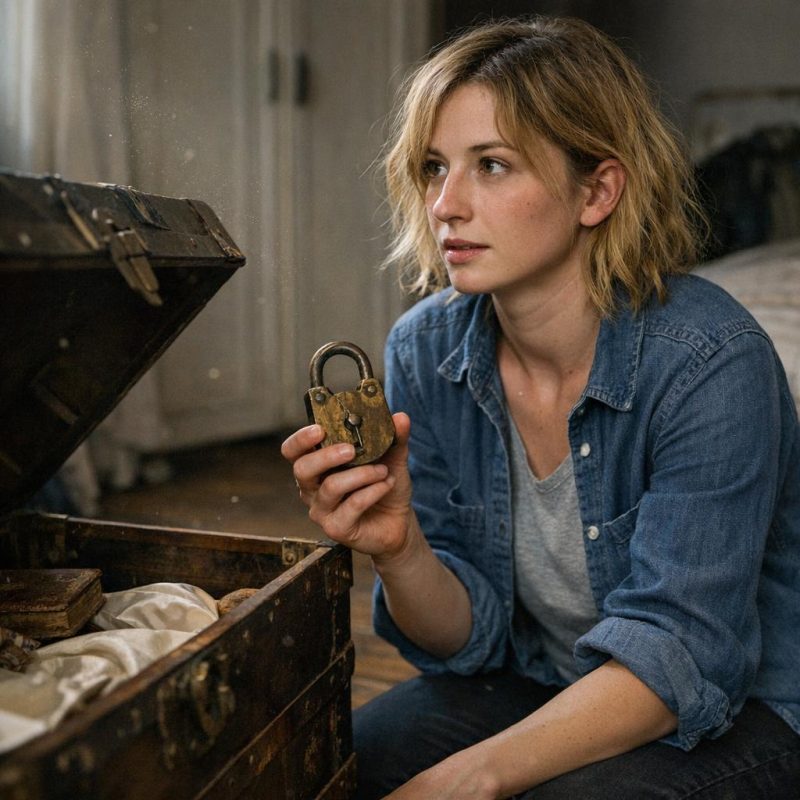 Image by RM AI
Love Letters
I sat on Elena's bedroom floor and read the letters, one after another, my hands shaking so badly I could barely hold the paper. Thomas's handwriting, familiar as my own heartbeat, covering page after page with words meant for me. 'My dearest Martha, I can't wait until Saturday when I see you again...' 'Martha, I've been thinking about what you said, and you're right...' 'I'm counting the days until we can finally be together...' Letters from the months before he disappeared, intimate conversations I'd never been part of because I'd never received them. He'd written to me twice a week those last few months—I'd thought he'd gone silent, pulling away. But no, he'd been reaching out, sharing his thoughts, his fears, his plans for our future. And Elena had taken them. She'd intercepted our mail, stolen our private words, read every confession and endearment meant for my eyes alone. I found notes in the margins in her handwriting, analyzing what he'd said, questioning his sincerity, circling phrases with angry pen strokes. She'd consumed our love story like it was written for her. Elena had intercepted our correspondence, reading every intimate word, stealing our love story.
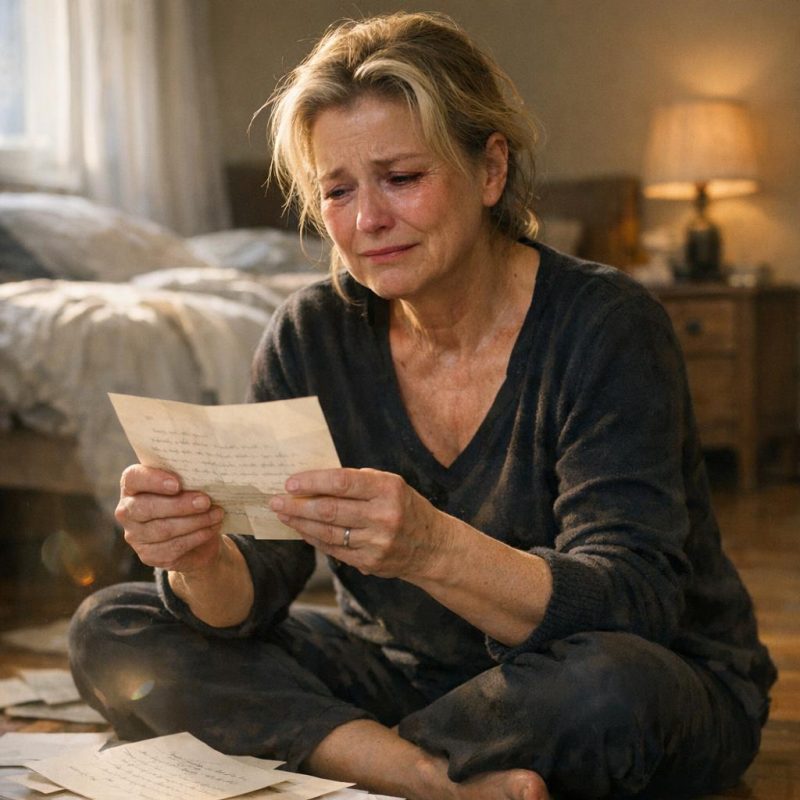 Image by RM AI
The Photograph
At the very bottom of the trunk, beneath layers of newspaper clippings about Thomas's disappearance, I found a photograph I'd never seen before. It showed Thomas and Elena standing outside our family's old cabin in the woods—the place where Thomas had supposedly gone camping alone that last weekend. But he wasn't alone in this picture. And he didn't look happy. His face was twisted in anger or frustration, one hand raised mid-gesture like he was arguing. Elena stood close to him, too close, her expression intense and strange. The photo quality was poor, slightly blurred, like it had been taken quickly by someone else or with a self-timer. The shadows suggested late afternoon, and there was something desperate in the composition, in the way they stood. I turned the photograph over with numb fingers. On the back, in Elena's distinctive handwriting, dated three days before Thomas disappeared: 'The last conversation.' My vision tunneled. Thomas had gone to the cabin, but not alone. Elena had been there. They'd fought about something—something significant enough that she'd kept this photograph for thirty years. On the back, in Elena's handwriting: 'The last conversation.'
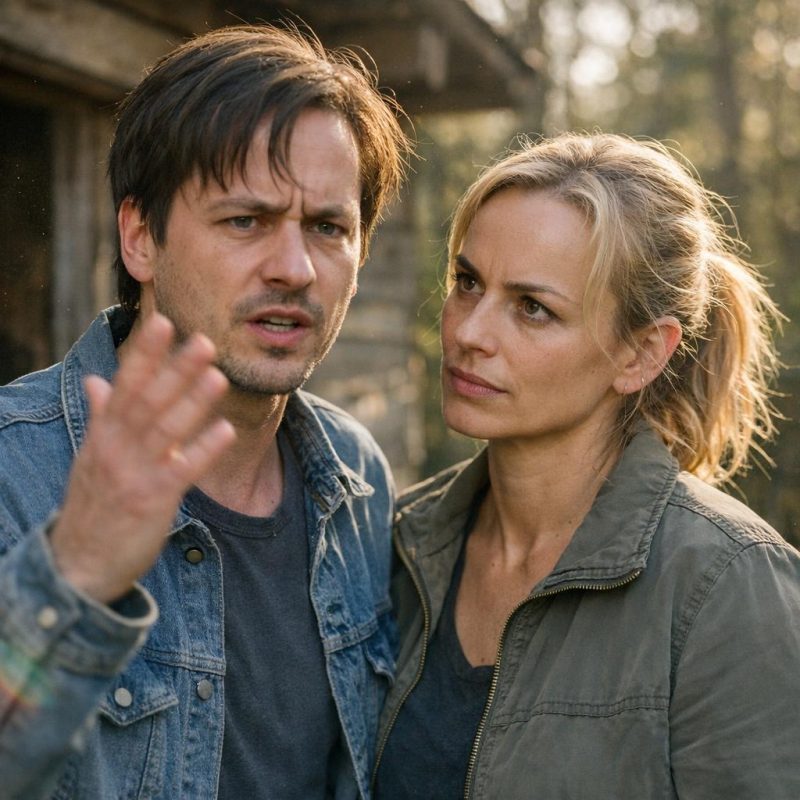 Image by RM AI
Sophie's Decision
Sophie found me in her mother's bedroom, surrounded by the contents of the trunk, tears streaming down my face. She took one look at the letters, the photographs, the matching lockets, and went pale. 'I don't want to wear it anymore,' she said quietly. 'The dress. I can't. I don't even want it in my apartment. Aunt Martha, I'm afraid of it. I'm afraid of what it means. I'm afraid of...' She couldn't say it, but I knew. She was afraid of her mother, of what Elena might be capable of. 'You need a dress you can actually wear to get married in,' I said, pulling myself together. 'Something new, something with no history.' 'Will you make it?' she asked. 'Of course. But Sophie, I need you to let me keep working on this one. I need to understand what your mother made and why.' She nodded, relieved to have the decision made. 'Just promise me you'll be careful. Promise me you won't confront her alone.' I made the promise, even as I knew what I had to do next. I promised I would make her a new dress, but first, I needed to finish uncovering the old one's secrets.
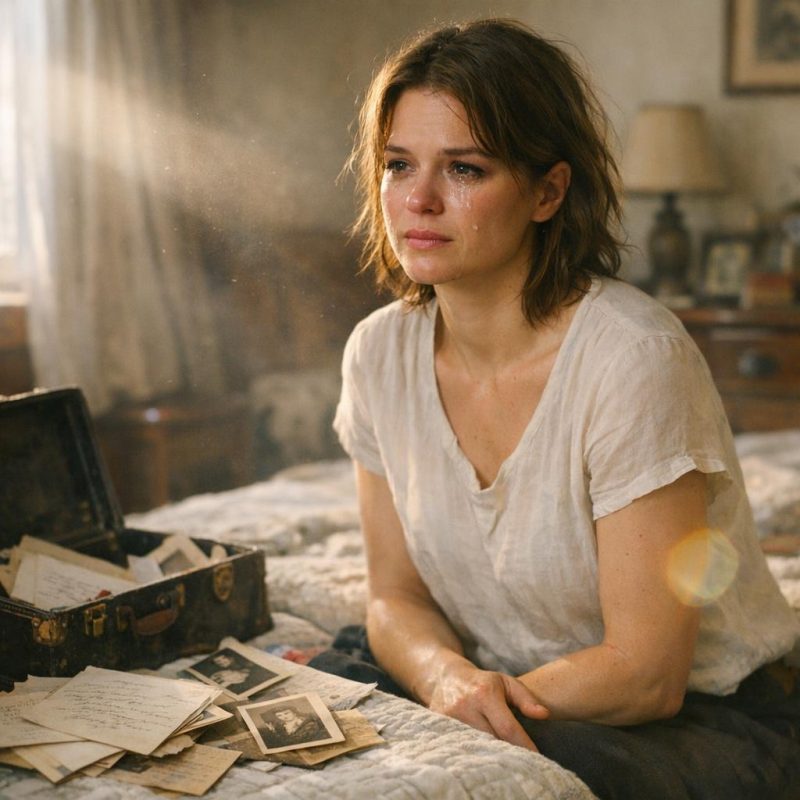 Image by RM AI
Image by RM AI
The Cabin Plan
I called Robert from my car outside Sophie's apartment. 'I found a photograph. Thomas was at the cabin with Elena right before he disappeared. She wrote that it was their last conversation.' The silence on the other end stretched so long I thought we'd been disconnected. 'We have to go there,' he finally said. 'To the cabin?' 'Martha, if something happened there, if there's any evidence left after thirty years, we need to find it before...' Before Elena destroys it, I thought. Before she realizes how much we know. The cabin had been in our family for generations, abandoned now for decades, deep in the state forest two hours north. 'When?' I asked. 'Tomorrow. First light. And Martha—don't go alone. Whatever we find there, you shouldn't face it by yourself.' I agreed, though part of me wanted to drive there immediately, to know the truth tonight. But Robert was right. If we were going to face what Elena had hidden in those woods for three decades, we needed to face it together. Robert agreed to go with me, both of us knowing we might find something we could never unsee.
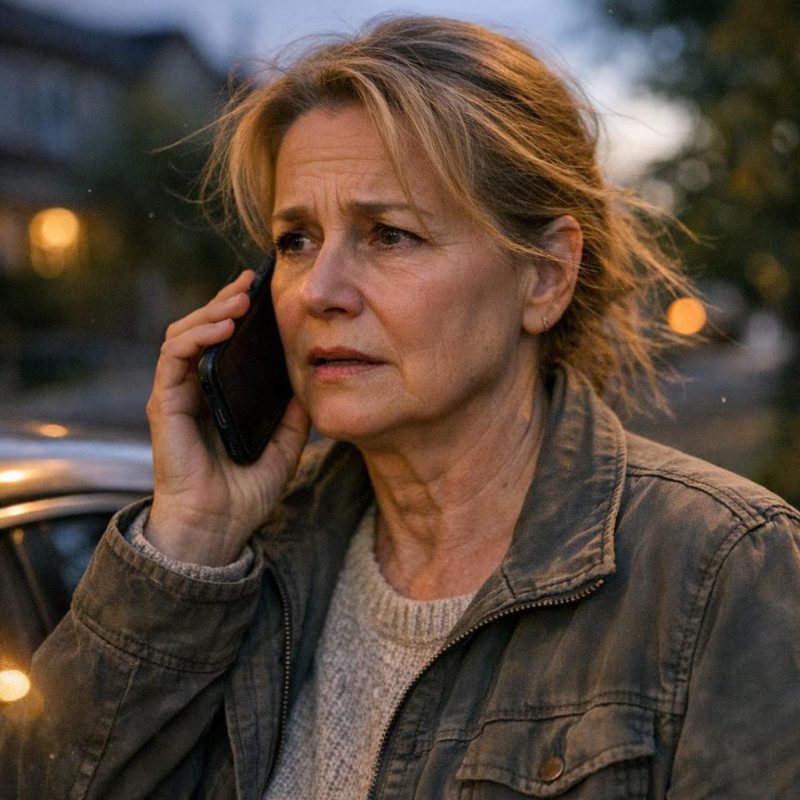 Image by RM AI
The Drive
Robert picked me up at dawn, and we drove north in his old sedan. Neither of us spoke much. What was there to say, really? The trees thickened as we climbed into the mountains, the morning light filtered green through the canopy. I kept thinking about that photograph, about Thomas standing in front of the cabin with his hands in his pockets, looking uncertain. Elena had written 'last conversation,' and I'd spent thirty years not understanding what that meant. The road narrowed to gravel, then dirt. I'd been up here maybe twice in the last three decades. The family had stopped using the cabin after my parents died—too isolated, too many repairs needed. Or maybe we'd all sensed something wrong there without knowing why. Robert's hands tightened on the steering wheel as we rounded the final curve. The cabin appeared through the trees, its gray wood weathered to silver. 'Martha,' Robert said quietly, pointing. I saw them immediately—fresh tire tracks cutting through the mud near the entrance, the edges still sharp. Someone else had been here recently.
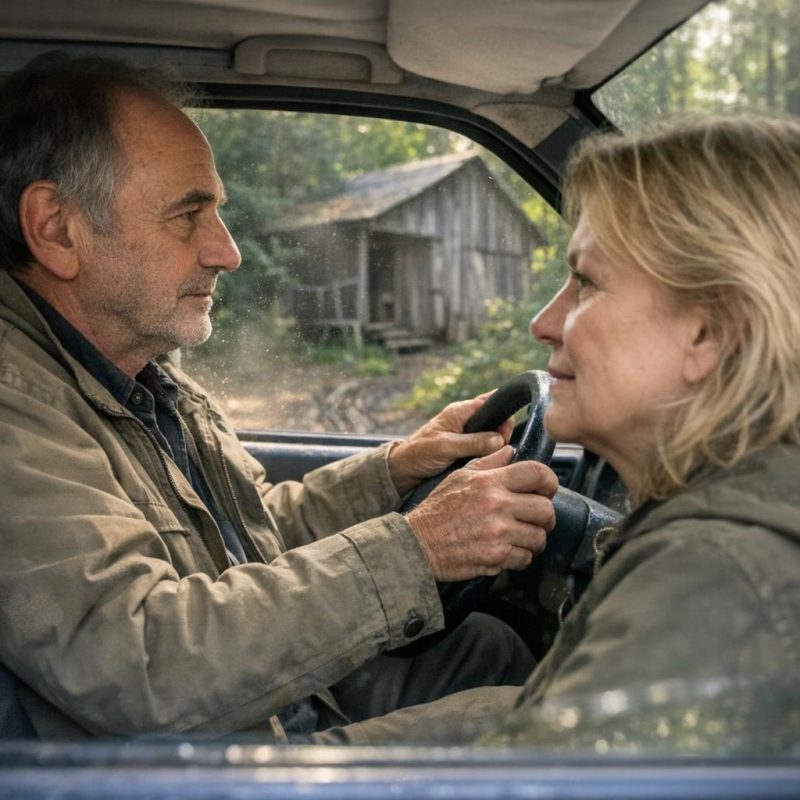 Image by RM AI
Inside the Cabin
The cabin door swung open when I pushed it, no resistance, no locked bolt. Inside smelled like decay and old wood and something sharper—turpentine maybe, or paint thinner. Dust covered everything, thick as felt on the old furniture, the table, the kitchenette counter. But in the far corner, near the stone fireplace, the dust had been disturbed. Someone had moved the chair there, scraped it across the floor. The pine boards beneath showed clean wood where feet had stood repeatedly in one spot. Robert stepped past me, his breath visible in the cold air. 'Look at this,' he whispered. The braided rug that used to sit in front of the fireplace had been rolled back, pushed against the wall. Beneath it, several floorboards looked different from the others—lighter wood, less weathered, like they'd been removed and replaced. Recently. And beside those boards, catching the dim light from the window, lay a crowbar, its edge still marked with fresh wood splinters. My blood turned to ice.
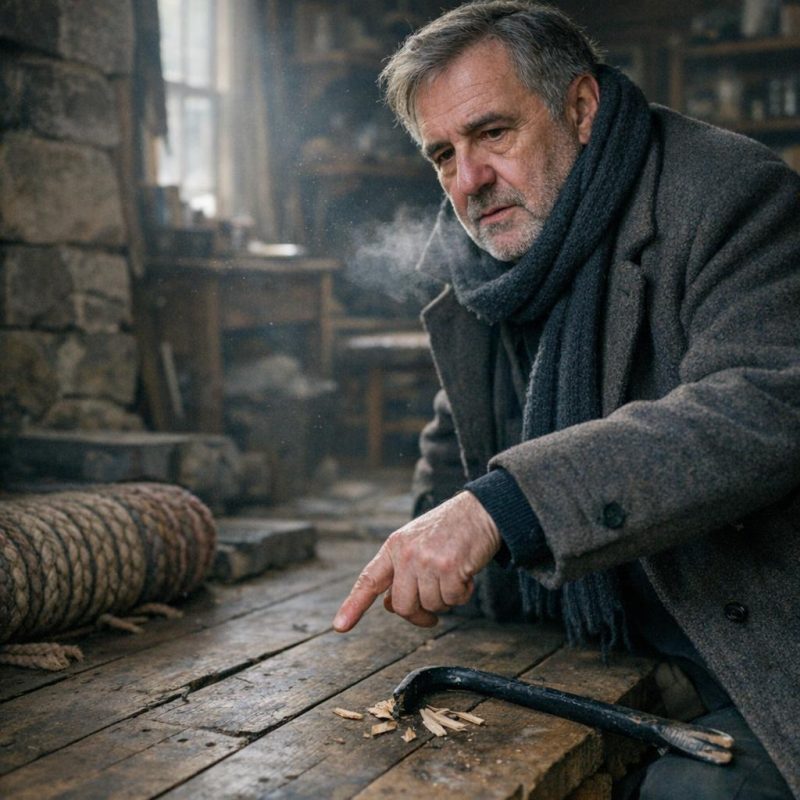 Image by RM AI
The Floorboards
Robert picked up the crowbar with shaking hands. I knelt beside him on the cold floor. We didn't discuss it, didn't debate—we both knew we had to see what was beneath those boards. The first one came up easily, too easily, the nails already loosened by whoever had been here before us. Then the second. The third. My hands were trembling so badly I could barely grip the wood. Robert's face had gone pale, his jaw set in that way people do when they're forcing themselves to continue something unbearable. We were crossing a threshold, you know? Some things, once you know them, you can never unknow. The boards came away revealing dark earth, disturbed recently by the look of it. And then the smell hit us. It rose from that space beneath the cabin like something alive, something that had been trapped there for decades. Earth and rot and decay and something else, something chemical and sweet and absolutely wrong. I turned away and retched, my stomach heaving, while Robert covered his mouth with his sleeve.
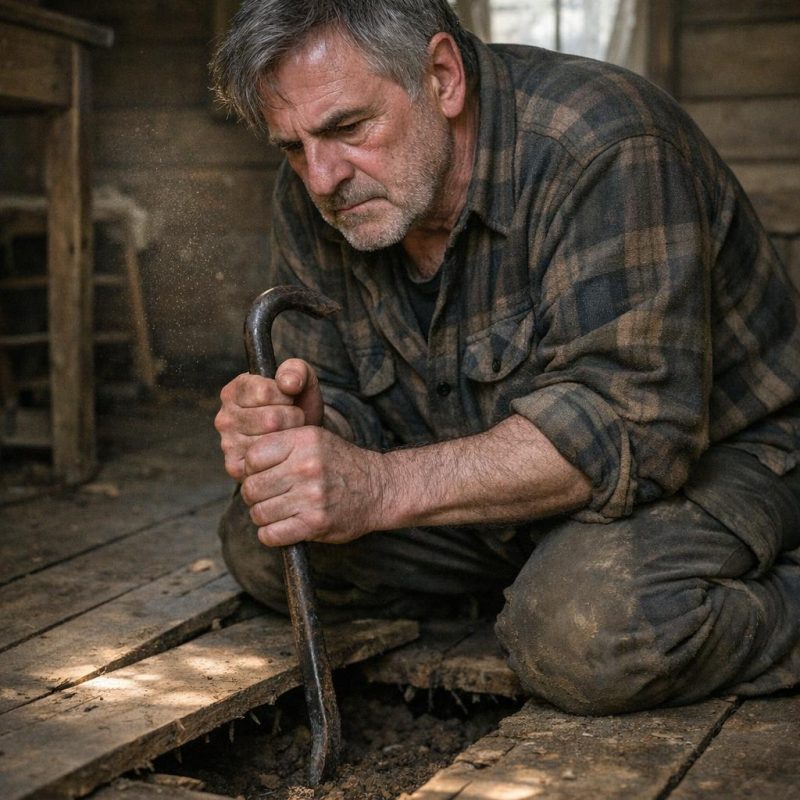 Image by RM AI
Bones
Robert had a flashlight in his car. We used it to look into the shallow grave beneath the floorboards. The beam caught fragments first—pale curves that resolved into bone as my eyes adjusted. Human remains, there was no mistaking it. They were wrapped in rotted fabric, dark with age and earth. I could see what had once been clothing, the tatters of a shirt maybe, denim that had deteriorated into threads. A belt buckle, still intact. A watch that had stopped decades ago. My mind was cataloging details the way it does with fabric—identifying pieces, constructing the whole from fragments. But this wasn't fabric. This was a person. This was someone who had been buried here in secret, hidden beneath family property for thirty years. Robert made a sound beside me, a choked sob that turned into something deeper. He fell to his knees on the dusty floor, the flashlight dropping from his hands, and he was crying, really crying, his shoulders shaking. 'Thomas,' he whispered. 'Oh God, Thomas.' And I knew. We had found him.
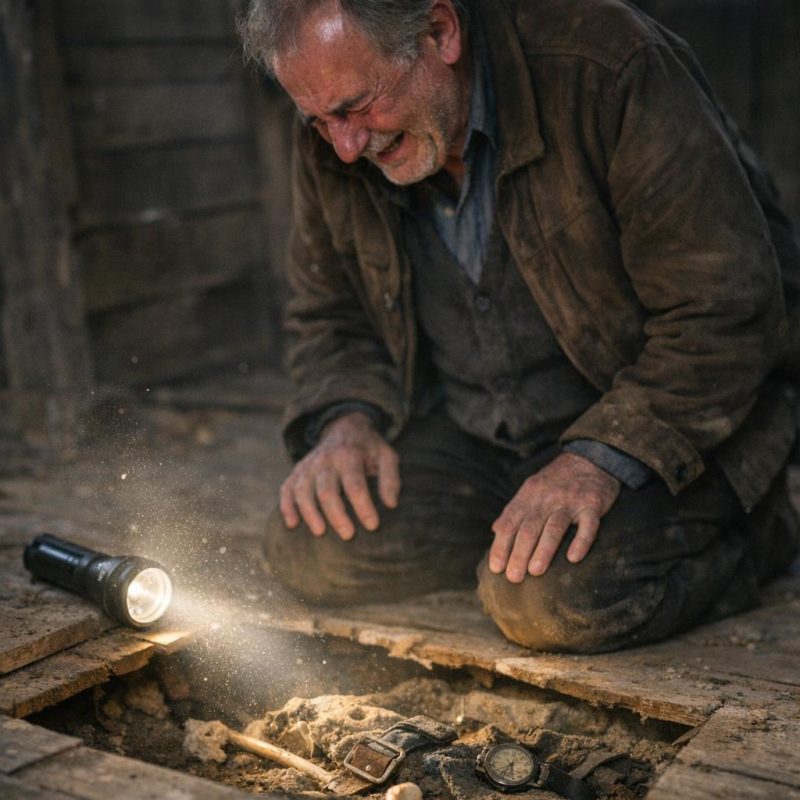 Image by RM AI
Evidence of Violence
I picked up the flashlight with numb fingers and directed it back into the grave. The skull was partially visible, turned to one side as if looking away. And there—my seamstress eye caught the detail immediately, the way I'd notice a broken thread or torn seam. The back of the skull showed damage, a clear depression, fracture lines radiating outward. Blunt force trauma. I'd learned enough from crime documentaries over the years to recognize it. This wasn't an accident. Beside the remains, half-buried in the earth, lay a fireplace poker. Rusted now, but heavy iron, the kind that had hung beside the cabin's stone hearth for generations. I could see dark stains on the business end, even after thirty years in the ground. Someone had struck him. Someone had killed him and buried him here and let the world believe he'd simply left. Thomas hadn't abandoned me. He hadn't chosen freedom over our future together. He'd been murdered in this cabin, and someone had hidden the truth for three decades while I grieved a phantom.
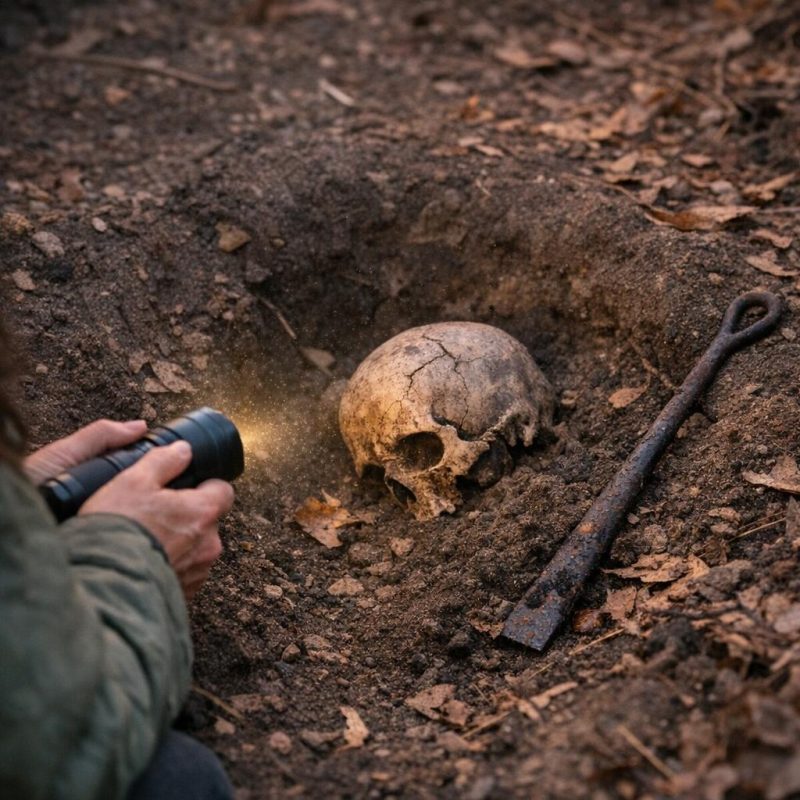 Image by RM AI
Elena's Handwriting
I climbed down into the shallow grave, my feet finding purchase on the dirt walls. Robert tried to stop me, but I had to see everything. Had to know. The rotted fabric that wrapped the remains was coming apart in my hands as I carefully examined it. And there, tucked between layers of what had once been a jacket, I found paper. A note, protected somehow by the oiled canvas that had been wrapped around it. The paper was stained and fragile, but the handwriting was perfectly clear—that distinctive European script Elena had learned in her boarding school in Switzerland. I'd recognize those letters anywhere, those perfectly formed capitals. The note contained just three words: 'He chose wrong.' I read it twice, three times, my brain refusing to process what my eyes were seeing. My sister. My sister had written this. My sister had put this note with Thomas's body. Elena had killed the man I loved, struck him down in this cabin with the fireplace poker, buried him beneath the floor, and then came home and let me believe for thirty years that he'd abandoned me.
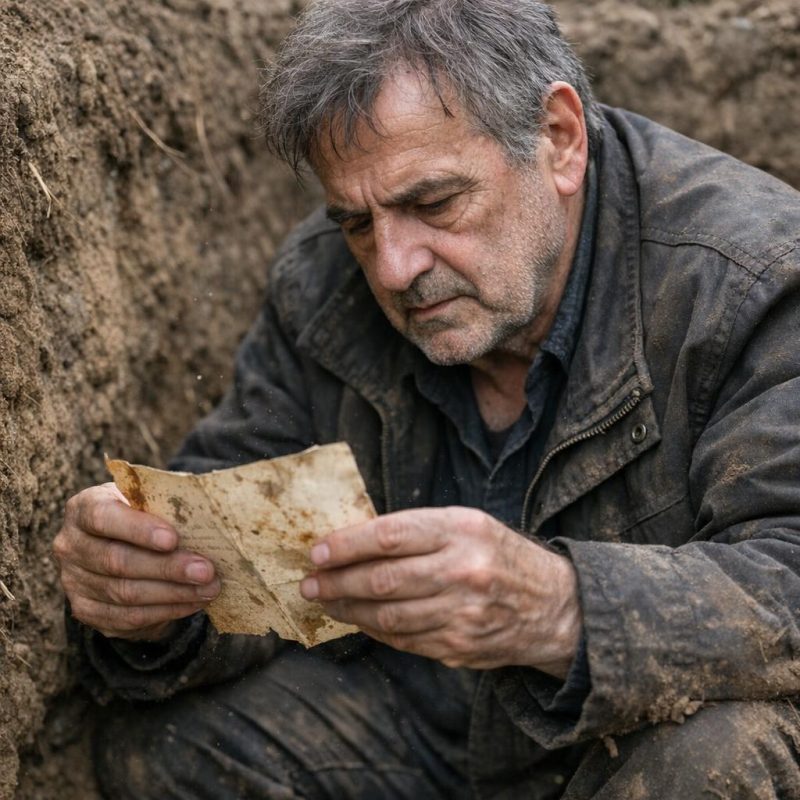 Image by RM AI
The Phone Call
My phone rang in the silent cabin, the sound so jarring that Robert actually jumped. I fumbled it from my pocket with dirty hands, saw Elena's name on the screen. For a moment I considered not answering, but some instinct made me swipe it open. 'Martha? Darling, I hope I'm not interrupting.' Her voice was sweet, casual, like she was calling to chat about the weather. 'I was just wondering if you'd made any progress on Sophie's dress? The wedding is getting so close.' I couldn't speak. Couldn't form words. I was standing in a grave, holding evidence that she'd murdered Thomas, and she was asking about the dress. 'Martha? Are you there?' A pause. 'Oh, I see you're up north. Near the old cabin. The cell signal is always terrible up there.' She knew. She knew exactly where I was. Her voice shifted slightly, took on a quality I'd never heard before—almost pleased, almost satisfied. 'I do hope you're finding everything you need.' And then I understood. She had wanted me to find this.
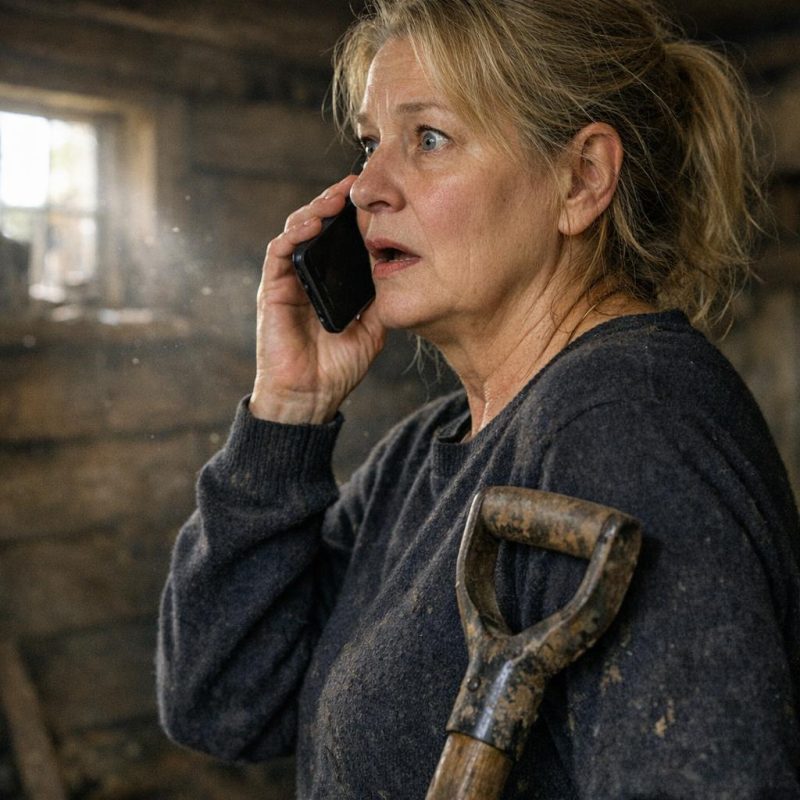 Image by RM AI
The Pattern Revealed
I stood there in that cabin, holding my sister's note, standing beside my fiancé's grave, and everything suddenly aligned like pattern pieces finally meeting at the seams. Elena had killed Thomas. Not in a moment of panic or accident, but because he'd refused her. The photograph proved they'd met here, that 'last conversation' where she'd propositioned him—run away with me, choose me instead of Martha—and he'd said no. He'd 'chosen wrong,' as she wrote. So she'd struck him down with the poker, buried him beneath the floorboards, and driven home. Then she'd come to my apartment and held me while I cried, wondering where he'd gone. She'd attended his memorial service. She'd watched me grieve for thirty years, never once slipping, never once showing guilt. And she'd kept my wedding dress all this time—the dress I'd made for the wedding that never happened—kept it as a trophy of what she'd taken from me. Then she'd given it to Sophie, completing some sick cycle, forcing me to alter it, to touch it again, knowing eventually I'd find the locket, the photograph, the trail that led here. This wasn't grief or madness or some old crime she'd tried to forget. This was calculated cruelty, thirty years in the making.
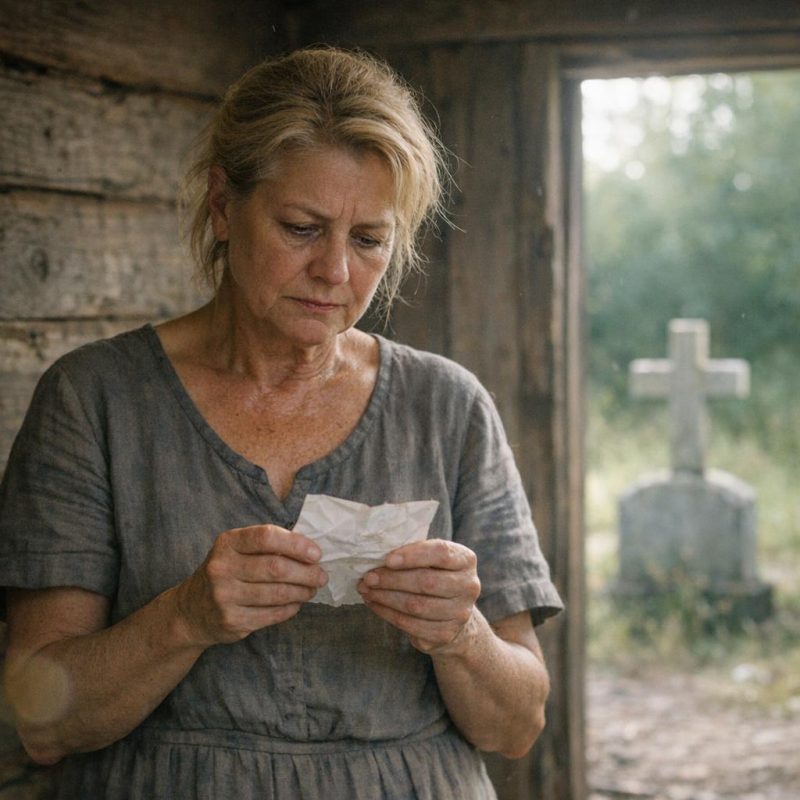 Image by RM AI
Robert's Rage
Robert wanted to drive straight to the sheriff's office. He stood there in that cabin with his phone already out, ready to call 911, his face flushed with anger. 'Martha, we have evidence. We have her note. We have Thomas's remains. We call them now.' But I put my hand on his arm and told him no. Not yet. I needed more than evidence—I needed a confession. I needed Elena to say it out loud, to admit what she'd done, in front of witnesses who couldn't be dismissed or manipulated. Robert stared at me like I'd lost my mind. 'She killed him,' he said. 'She buried him under the floor and let you suffer for thirty years. Why would you wait?' Because Elena was careful, I told him. Because she'd kept this secret perfectly for three decades, and if we gave her warning, she'd find a way to twist the narrative. She'd claim she'd been protecting me from Thomas's infidelity, or that I'd planted the evidence, or some other lie that would unravel everything. I needed her trapped, exposed, with no escape route sewn into the seams. The wedding was in three days, and I had a plan that would expose her in front of everyone she cared about.
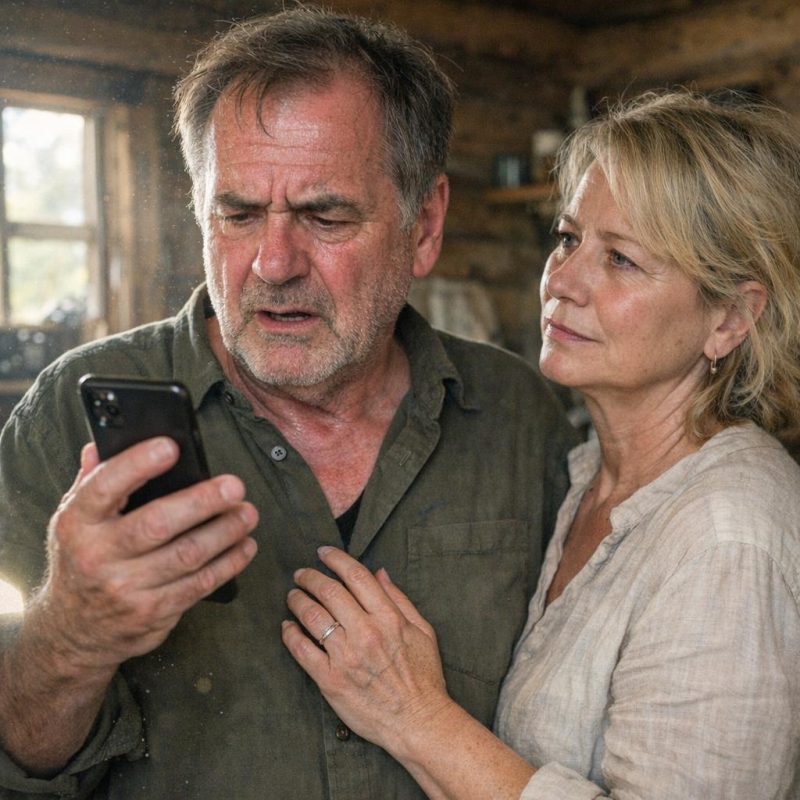 Image by RM AI
The New Dress
I drove home and went straight to my workroom. For two nights, I barely slept. I cut and pinned and stitched a new dress for Sophie—something simple and beautiful, a white linen sundress with a fitted bodice and flowing skirt. Nothing borrowed from the past. Nothing tainted by Elena's poison. Sophie deserved to start her marriage in something pure, something made with love instead of twisted obsession. The fabric moved easily under my hands, responding to each stitch the way good material should. I thought about Sophie wearing it, about her walking down that garden aisle without carrying my sister's darkness on her shoulders. Between seams, I rehearsed what I would say to Elena. I practiced the words in my head, smoothing them like fabric under an iron until they lay flat and true. 'I found the locket. I found the cabin. I found Thomas.' No accusations she could deflect. No emotions she could dismiss as my usual sensitivity. Just facts, laid out like pattern pieces that could only fit together one way. As I sewed the final hem at three in the morning, I planned exactly what I would say to my sister when the moment came.
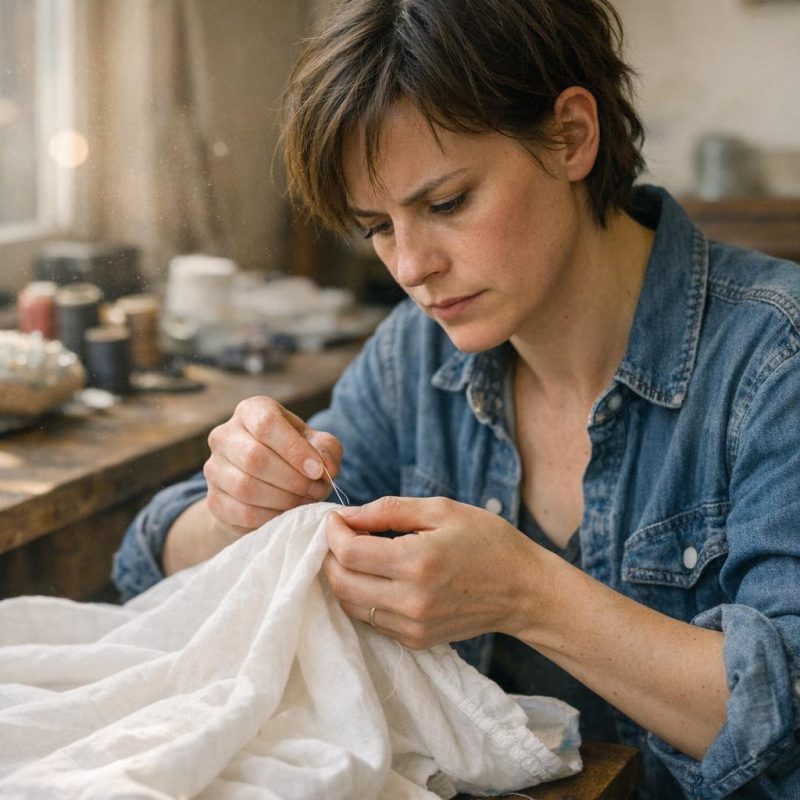 Image by RM AI
Wedding Day Morning
On the morning of the wedding, I loaded everything into my car with the precision of a general preparing for battle. The new white dress hung in a garment bag in the back seat. The old dress—Elena's dress, my dress, the trophy she'd kept for thirty years—was carefully folded in a box. The oilcloth package with the locket and photograph sat in my handbag. I'd printed copies of the note, just in case. I arrived at the venue two hours early, while caterers were still setting up tables and the florist was arranging centerpieces. The garden looked beautiful in the morning light, all white roses and trailing ivy, the kind of setting I'd once imagined for my own wedding. I found the event coordinator and told her I needed to speak with Elena privately before the ceremony. She looked at my face and didn't ask questions. Then I checked my phone for the confirmation text I'd received the night before. Sheriff Carver would be attending as a 'guest,' positioned near the garden entrance where he could hear everything. I had also made a phone call the night before—Sheriff Carver would be attending as a 'guest.'
 Image by RM AI
Elena in the Garden
I found Elena in the garden, holding court like the queen she'd always believed herself to be. She stood near the rose arbor where Sophie would take her vows, sipping champagne at eleven in the morning, wearing an elegant cream suit that probably cost more than my car. She was laughing with Sophie's future mother-in-law, gesturing gracefully with her free hand, looking triumphant as she surveyed the wedding preparations. This was her moment—the culmination of whatever sick game she'd been playing. Her daughter wearing my dress, marrying in a garden, everything a mirror of what I'd lost. I watched her for a moment from the pathway, this woman who'd murdered my fiancé and then comforted me through my grief. This woman who'd sat across from me at a thousand family dinners, who'd held my hand at our mother's funeral, who'd never once let her mask slip. Sheriff Carver stood near the entrance, looking like any other wedding guest in his dark suit, but I could see his hand resting near his pocket where I knew he'd placed his recorder. She smiled when she saw me, unaware that her kingdom was about to collapse.
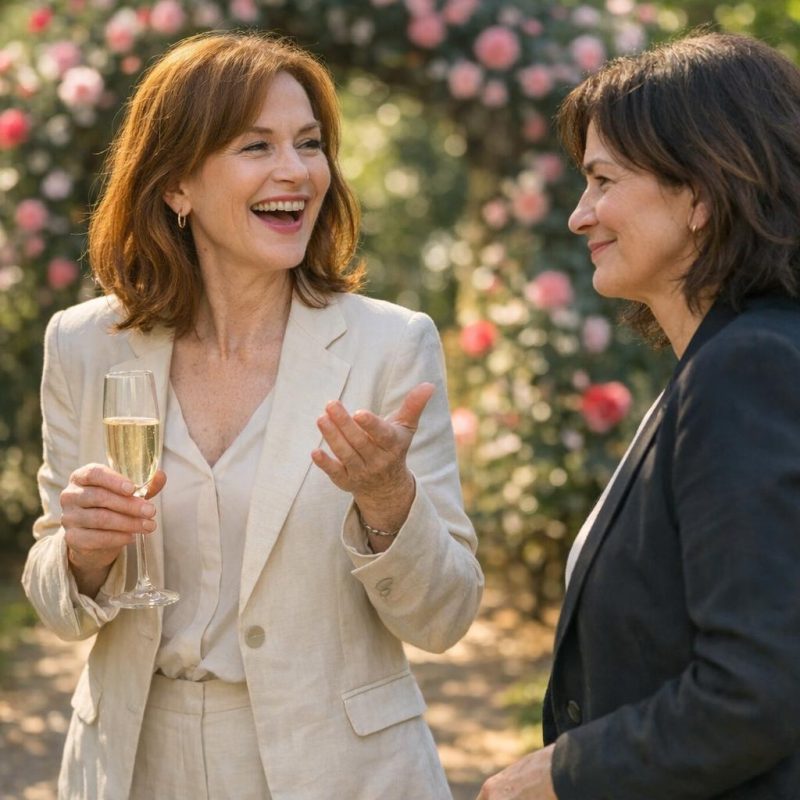 Image by RM AI
Image by RM AI
The Whisper
I walked across the grass toward her, each step deliberate and measured. Elena excused herself from her conversation and met me halfway, still smiling, still playing the gracious hostess. 'Martha, darling, you're early. Is everything all right with the dress?' Her voice was warm, concerned, the perfect performance she'd given for three decades. I stepped close to her, close enough that no one else could hear, close enough to see the fine lines around her eyes and the careful application of her makeup. Close enough to watch her face when I delivered the blow. I leaned in, my lips nearly touching her ear, and whispered the words I'd been rehearsing for two days. 'I found the locket, Elena. The one with Thomas's photograph. I found the cabin where you killed him. I found the floorboards where you hid the rest of him.' For a moment, she didn't move. Didn't breathe. Then the champagne glass began to tremble in her hand. The color drained from her face, leaving her a ghostly grey, and for the first time in thirty years, I saw real fear in her eyes.
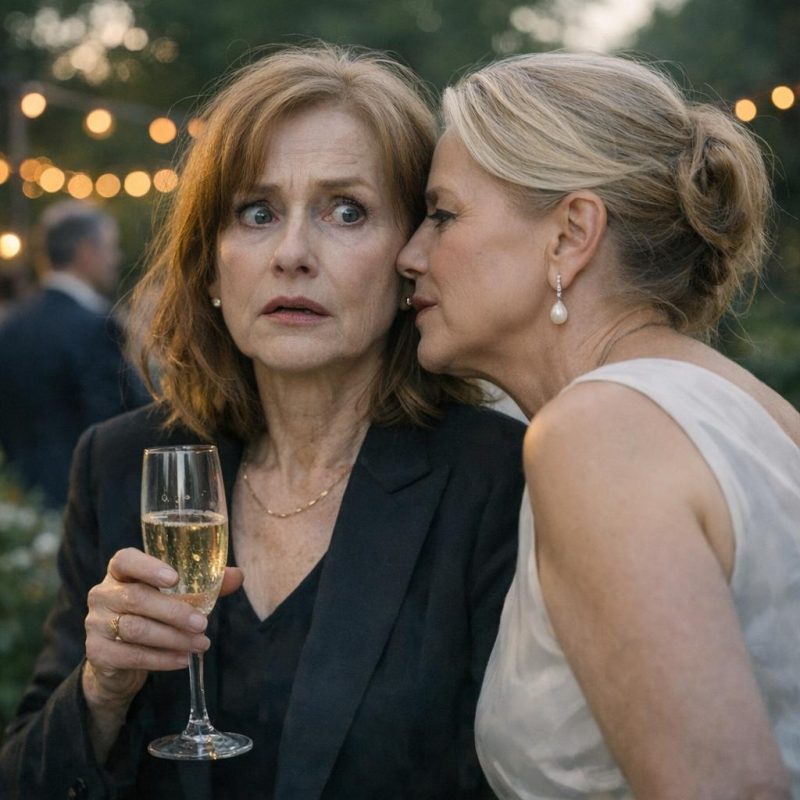 Image by RM AI
Elena's Denial
Elena tried to laugh, but the sound came out strangled and false. 'Martha, that's absurd. You're—you're not well. The stress of the alterations, the memories, they've made you—' But her hands were shaking so badly she dropped her champagne glass. It shattered on the flagstone path, sending crystal shards scattering across the garden. The other guests turned to look, concerned, but Elena waved them away with a gesture that was supposed to be casual but came out jerky and desperate. 'I'm fine, just clumsy,' she called out, her voice too high. Then she turned back to me, and I saw panic flooding her features. 'You don't know what you're talking about,' she hissed, but there was no conviction in it. I reached into my handbag and pulled out the oilcloth package, the fabric still stained after all these years. I held it between us, just visible enough for her to see. Her eyes went wide with recognition—the same look she must have had when she wrapped it thirty years ago. I pulled out the oilcloth package and watched her eyes go wide with recognition.
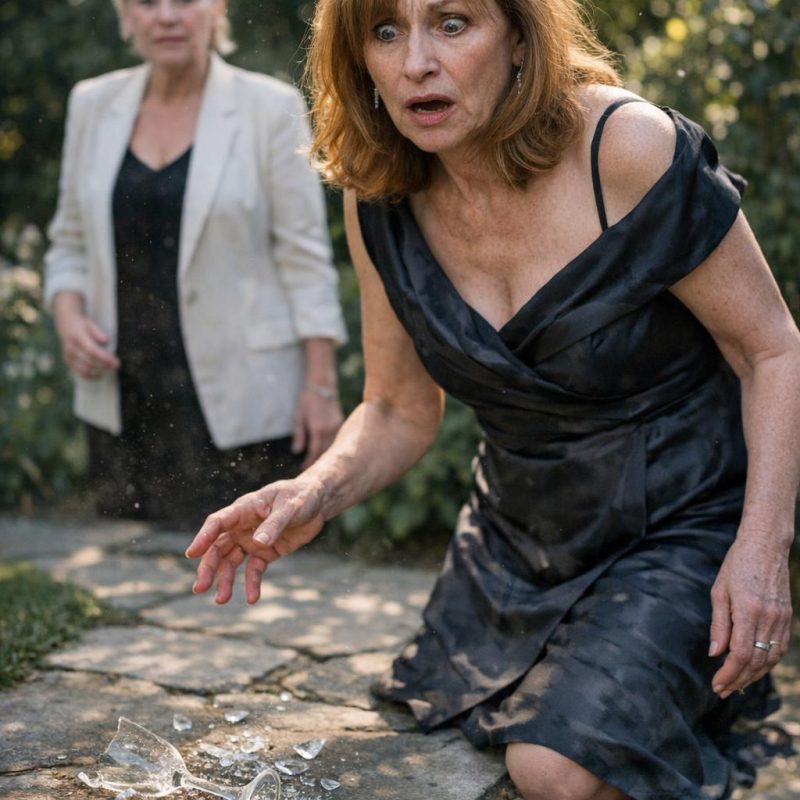 Image by RM AI
The Confession
Something broke inside her then. The careful facade she'd maintained for three decades cracked like old varnish, and what emerged was raw and ugly and true. She grabbed my arm, her fingers digging in hard enough to bruise, and pulled me further from the other guests. Her voice came out in a venomous hiss. 'He was supposed to choose me. I was always better than you, always more beautiful, more interesting, more everything. You were nothing, Martha. You were plain and quiet and boring, and he still picked you.' The words tumbled out like they'd been dammed up for years. 'I offered him everything—a real life, passion, adventure—and he looked at me like I was crazy. He said he loved you, that you were kind and real and all these pathetic virtues that didn't matter. He chose wrong.' Her face was twisted with an old rage that had never really faded. 'So yes, I hit him. I buried him. And I never regretted it because he deserved it for being too stupid to see what I was offering.' Sheriff Carver stepped forward from the shadows, his recorder still running.
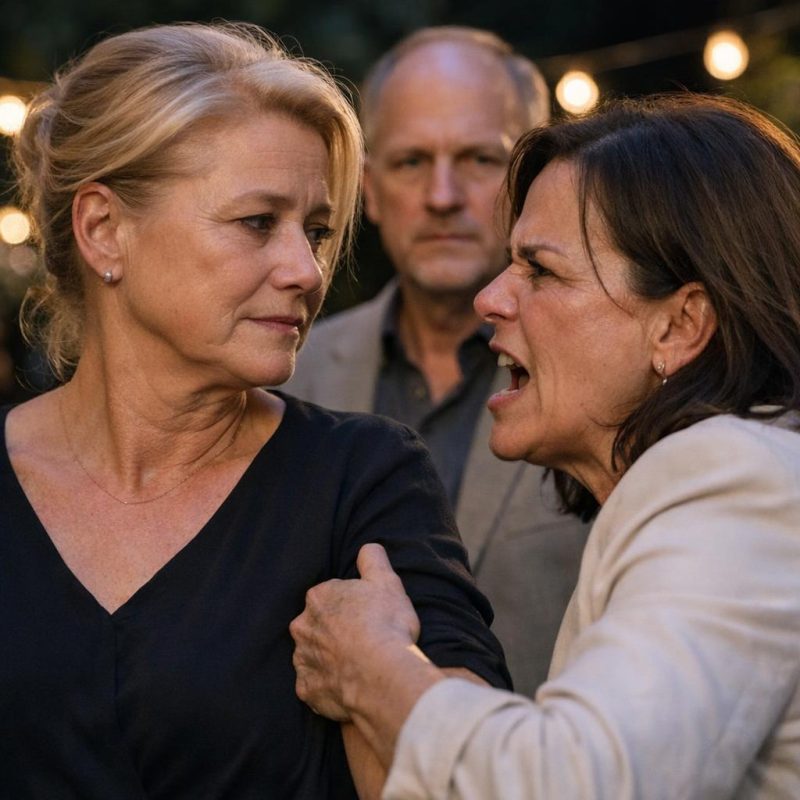 Image by RM AI
The Arrest
Elena's eyes darted to the sheriff, then back to me, and I watched realization flood her features. She'd been recorded. Trapped. But even then, even as deputies moved in from both sides of the garden, she couldn't stop herself from delivering one final blow. She looked straight at me with pure hatred burning in her eyes and said, 'I gave that dress to Sophie so you would know. I kept it all these years waiting for the right moment. I wanted you to touch it again, to remember what you'd lost, to finally understand that I won. I took him from you and you never even suspected. I've been winning for thirty years.' The deputies took her arms, and she didn't resist. Sophie appeared from somewhere behind me, her face white with shock, and I felt Robert's hand on my shoulder. Elena kept her eyes locked on mine as they led her away, still trying to claim victory even in defeat. But she hadn't won—she had destroyed herself trying to possess what was never hers.
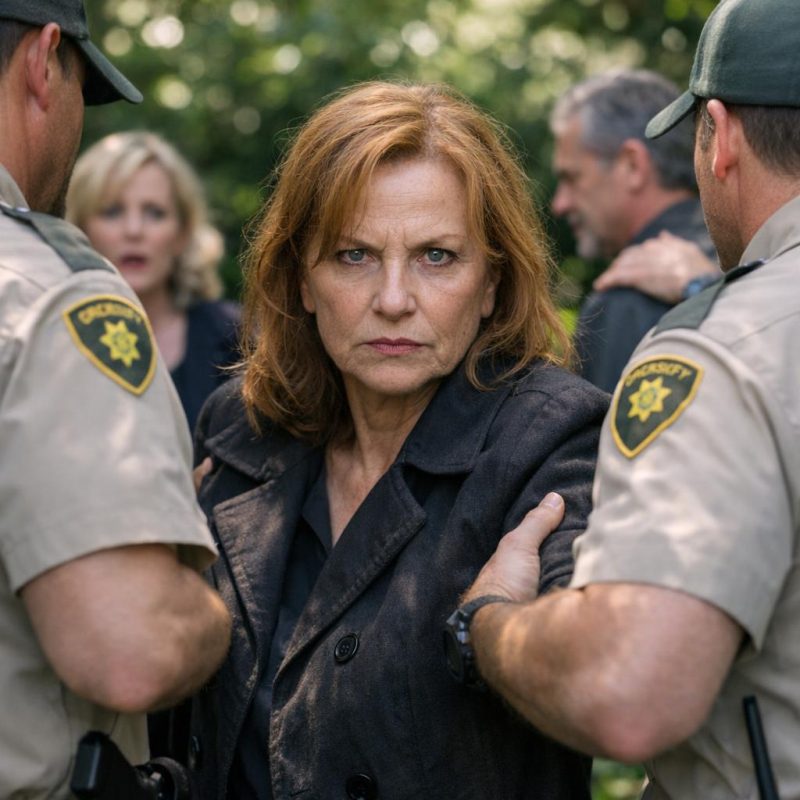 Image by RM AI
Sophie's Tears
Sophie ran to me the moment they put Elena in the police car. She was sobbing so hard she couldn't speak, couldn't even stand properly, and I caught her before she collapsed right there on the garden path. I wrapped my arms around her and felt her whole body shaking against mine. 'I didn't know,' she kept saying. 'Martha, I didn't know.' Her wedding makeup was running down her cheeks, black mascara mixing with tears, and she looked about twelve years old. I stroked her hair the way I used to when she was little and scraped her knee. Robert stood a few feet away, giving us space, his face full of grief for both of us. The guests had scattered, whispers spreading like wildfire through the garden. I could hear car doors slamming, engines starting, people fleeing the scene like they couldn't get away fast enough. But I held Sophie tighter. She wasn't Elena. She had her father's gentle heart, his capacity for genuine feeling. The sins of the mother didn't transfer through blood like some cursed inheritance. I pressed my cheek to her hair and whispered that we would get through this, that she was not her mother, that love doesn't have to be poisonous.
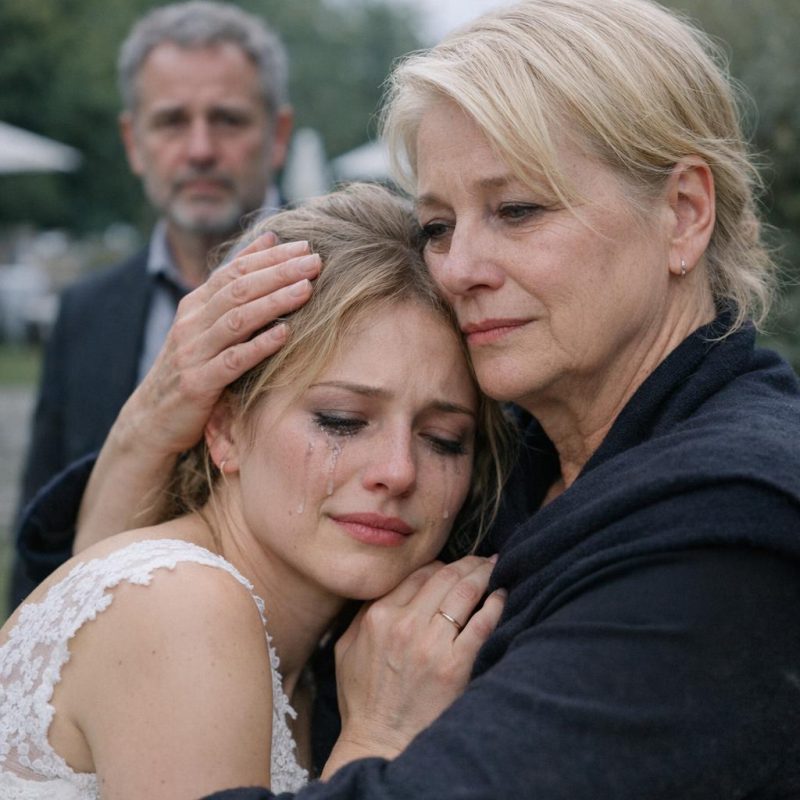 Image by RM AI
The Simple Dress
Two hours later, Sophie walked down the aisle in the white sundress I'd made for her birthday last year. It was simple cotton with cap sleeves, nothing like a proper wedding gown, but it was clean and untainted by lies. Her face was still streaked with tears, her eyes swollen, but her shoulders were straight. Maybe thirty people remained from the original hundred—close friends, a few relatives who understood that love doesn't stop just because the world falls apart. Her fiancé took her hands at the altar and they spoke vows they'd written themselves, raw and honest, promising to build something real. I stood beside Robert in the front row, his hand warm in mine. The ceremony lasted maybe ten minutes. No string quartet, no elaborate readings, just two people choosing each other despite the wreckage all around them. When they kissed, a few people clapped quietly. Sophie turned and looked at me, and I nodded to her. She smiled through fresh tears. The wedding was smaller, quieter, but it was real—built on truth, not buried lies.
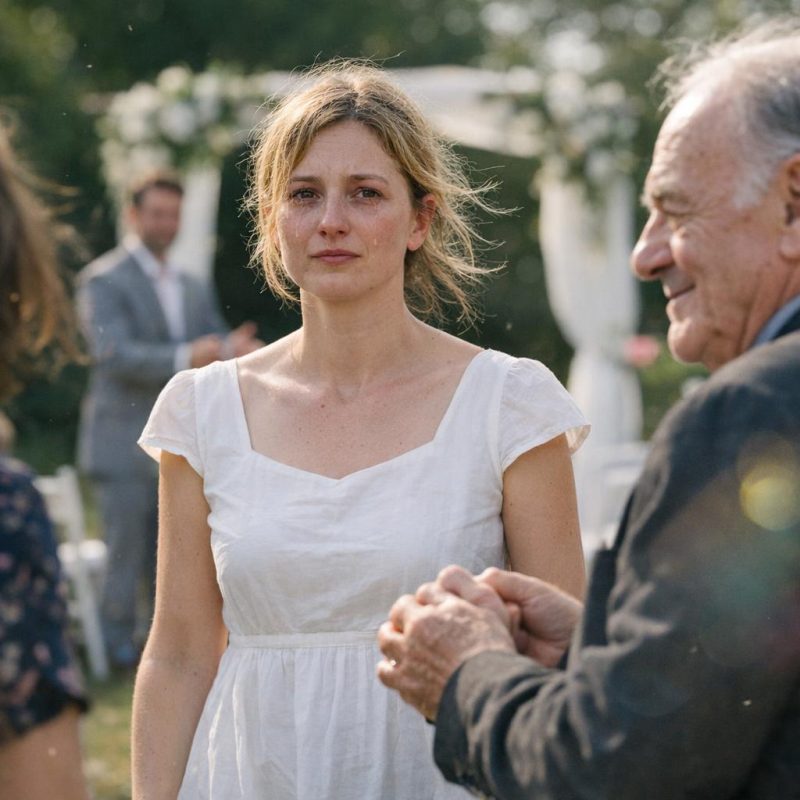 Image by RM AI
Thomas's Burial
A week later, Robert and I attended Thomas's proper burial in the cemetery where he should have rested thirty years ago. The medical examiner had confirmed cause of death: blunt force trauma to the back of the skull, exactly what Elena had confessed to. Sheriff Carver had released the body to Thomas's elderly sister, who arranged a simple service. There were maybe a dozen people there, most of them strangers to me—his family, people who'd known him before I did. I stood beside his sister and listened to a pastor who'd never met him speak generic words about eternal peace. The casket was closed, polished wood gleaming in the autumn sunlight. When they lowered it into the ground, I felt something release in my chest that I'd been holding tight for three decades. Robert handed me a white rose. I stepped forward and placed it on the casket before the first shovel of earth covered it. 'I'm sorry,' I whispered. 'I'm so sorry I didn't know.' The breeze carried my words away. I placed a white rose on his grave and whispered goodbye to the man I had loved, finally able to grieve him honestly.
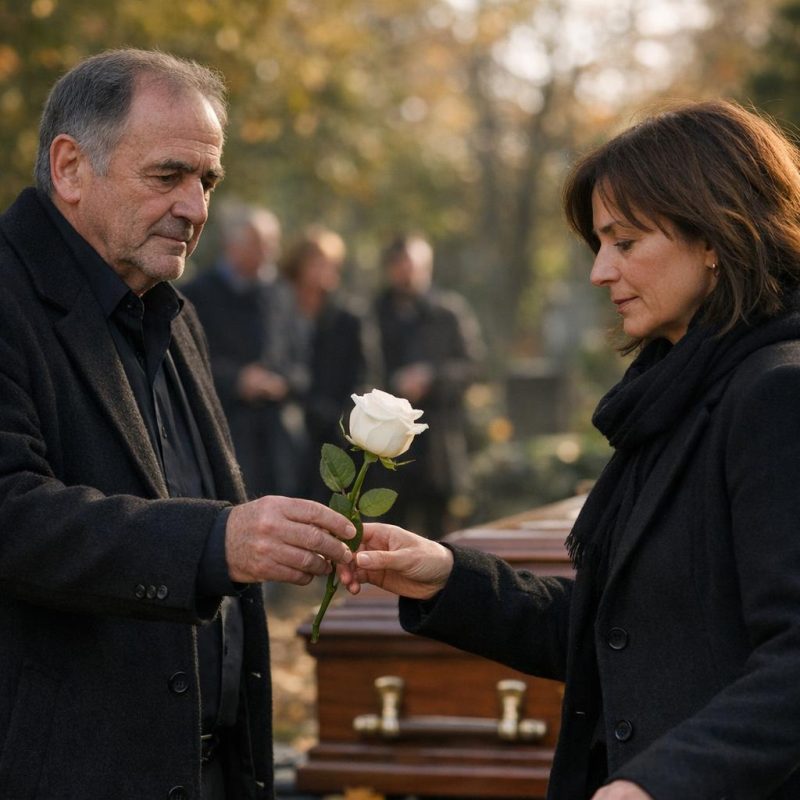 Image by RM AI
The Last Stitch
Back in my studio, I burned the cursed wedding dress in the metal trash barrel behind my building. The 1960s lace caught fire immediately, flames eating through the delicate fabric like it had been waiting all these years to be destroyed. I watched the ivory silk blacken and curl, the beading cracking in the heat, sending up sparks. The smoke smelled acrid, chemical, nothing like the sweet scent of clean fabric. Thirty years of lies turning to ash. I thought about all the hours I'd spent examining that dress, how close I'd come to missing the truth entirely. The locket was in evidence now, along with Elena's recorded confession. She'd be going to prison for a very long time. Sophie had called me yesterday, her voice stronger, asking if we could have lunch next week. Robert had asked me to dinner tomorrow. Thomas was at peace. The dress collapsed into gray ash, and I stirred it with a metal rod until nothing recognizable remained. Some things are beyond mending, but the truth, like a sharp needle, always finds its way through the fabric—and so does love, if you give it time.
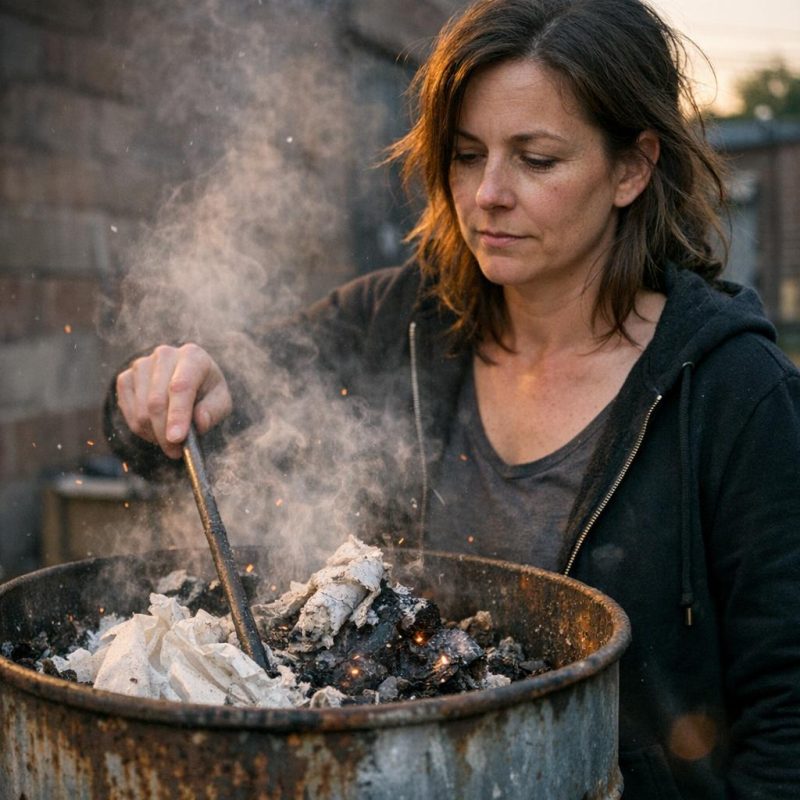 Image by RM AI
KEEP ON READING
The 20 Most Recognized Historical Figures Of All Time
The Biggest Names In History. Although the Earth has been…
By Cathy Liu Oct 4, 2024
10 of the Shortest Wars in History & 10 of…
Wars: Longest and Shortest. Throughout history, wars have varied dramatically…
By Emilie Richardson-Dupuis Oct 7, 2024
10 Fascinating Facts About Ancient Greece You Can Appreciate &…
Once Upon A Time Lived Some Ancient Weirdos.... Greece is…
By Megan Wickens Oct 7, 2024
20 Lesser-Known Facts About Christopher Columbus You Don't Learn In…
In 1492, He Sailed The Ocean Blue. Christopher Columbus is…
By Emilie Richardson-Dupuis Oct 9, 2024
20 Historical Landmarks That Have The Craziest Conspiracy Theories
Unsolved Mysteries Of Ancient Places . When there's not enough evidence…
By Megan Wickens Oct 9, 2024
The 20 Craziest Inventions & Discoveries Made During Ancient Times
Crazy Ancient Inventions . While we're busy making big advancements in…
By Cathy Liu Oct 9, 2024